2324, 2026
2324, 2026

JOIN US AT THE COURTYARD MARRIOTT & THE MISSOURI STATE CAPITOL, JEFFERSON CITY, MO

MONDAY, FEBRUARY 23 (8:00 AM – 5:00 PM)*
Why Advocacy Matters in Family Medicine
Advocacy Foundations: Understanding the Landscape
Legislative Advocacy 101
Inside the Capitol: Issues Review and Meeting with Lawmakers
Lunch & Fireside Chat
Personal Advocacy: When the Issue Is You or Your Patients
Digital & Community Advocacy
Workshop: Craft Your Personal Advocacy Plan
Bonus Interactive Advocacy Experiences Throughout the Day!
Evening: Virtual Legislative Briefing for All MAFP Members
TUESDAY, FEBRUARY 24
MAFP Board Meeting
Legislative Meetings

REGISTER ONLINE: WWW.MO-AFP.ORG/ADVOCACY/ADVOCACY-DAY/
We encourage you to invite a colleague, medical student, or resident to join you to promote the importance of family medicine and primary care. This is your opportunity to educate your State Senator and State Representative on issues that affect you, your profession, and your patients.
Make your lodging reservation at the Courtyard Marriott, 610 Bolivar Street, Jefferson City, MO 65101, (573) 761-1400. Be sure to reference the Missouri Academy of Family Physicians to receive the discounted rate of $154 per night. The last day to make a reservation in our block is January 22, 2026. Any reservations made after that date are subject to availability.
Questions? Contact MAFP by calling (573) 635-0830 or emailing office@mo-afp.org.
YOU ARE THE VOICE OF MISSOURI FAMILY PHYSICIANS!
*Schedule is subject to change.
EXECUTIVE COMMISSION
BOARD CHAIR Natalie Long, MD (Columbia)
PRESIDENT Beth Rosemergey, DO, FAAFP (Kansas City)
PRESIDENT-ELECT Lauren Wilfling, DO, FAAFP (St. Louis)
VICE-PRESIDENT Rachel Hailey, MD, FAAFP (Kansas City)
SECRETARY/TREASURER Julia Flax, MD, FAAFP (Springfield)
DISTRICT 1 DIRECTOR Arihant Jain, MD, FAAFP (Cameron)
ALTERNATE Brad Garstang, MD (Kansas City)
DISTRICT 2 DIRECTOR Robert Schneider, DO, FAAFP (Kirksville)
ALTERNATE Kelsey Davis-Humes, DO (Memphis)
DISTRICT 3 DIRECTOR Christian Verry, MD (St. Louis)
DIRECTOR Kento Sonoda, MD, FAAFP (St. Louis)
ALTERNATE Stacy Jefferson, MD (St. Louis)
DISTRICT 4 DIRECTOR Vacant
ALTERNATE Jennifer Scheer, MD, FAAFP (Gerald)
DISTRICT 5 DIRECTOR Amanda Shipp, MD (Versailles)
ALTERNATE Jared James, MD, FAAFP (Jefferson City)
DISTRICT 6 DIRECTOR David Pulliam, DO, FAAFP (Higginsville)
ALTERNATE Misty Todd, MD (Sedalia)
DISTRICT 7 DIRECTOR Chad Byle, MD, FAAFP (Kansas City)
DIRECTOR Vacant
ALTERNATE Vacant
DISTRICT 8 DIRECTOR Andi Selby, DO, FAAFP (Branson)
ALTERNATE Barbara Miller, MD, FAAFP (Buffalo)
DISTRICT 9 DIRECTOR Douglas Crase, MD (Licking)
ALTERNATE Vacant
DISTRICT 10 DIRECTOR Jenny Eichhorn, MD (Jackson)
ALTERNATE Vacant
DIRECTOR AT LARGE Eric Lesh, DO (Jackson)
RESIDENT DIRECTORS
Karstan Luchini, DO, MS (UMKC)
Thomas Cassimatis, MD (SSM/SLU FMR) – Alternate
STUDENT DIRECTORS
Taylor LaVelle (UMC)
Courtney Shubert (AT Still University) – Alternate
AAFP DELEGATES
Peter Koopman, MD, FAAFP
Kate Lichtenberg, DO, FAAFP
Sarah Cole, DO, FAAFP (Alternate)
Jamie Ulbrich, MD, FAAFP (Alternate)
MAFP TEAM
EXECUTIVE DIRECTOR Bill Plank, CAE
MEMBER EXPERIENCE MANAGER Andrea Holloway, MA
MEMBER COMMUNICATIONS Brittany Bussey
The information contained in Missouri Family Physician is for informational purposes only. The Missouri Academy of Family Physicians assumes no liability or responsibility for any inaccurate, delayed, or incomplete information, nor for any actions taken in reliance thereon. The information contained has been provided by the individual/organization stated. The opinions expressed in each article are the opinions of its author(s) and do not necessarily reflect the opinion of MAFP. Therefore, Missouri Family Physician carries no respsonsibility for the opinion expressed thereon.
Missouri Academy of Family Physicians, 722 West High Street Jefferson City, MO 65101 • p. 573.635.0830 • f. 573.635.0148
Website: mo-afp.org • Email: office@mo-afp.org
Welcoming a New Year of Service and Collaboration
The I-SHLAFF Intake Framework: A Brief Initial Interview for Integrated Care Settings
A Rare Presentation of Medication Induced Eosinophilic Cholecystitisin a 51-Year-Old Female
Case Report: The Nonspecific Ocular and Otic Manifestations of Neurosyphilis
Allergic Rhinitis in Pediatric Patients
Officer Annual Reports
Congress of Delegates Reports
MAFP 2026 CME Events
Student Essay Contest
Membership Milestones
MAFP Annual Fall Conference Recap: Connections, Renewal, and the Power of Community
Dr. Heidi Miller Presented with Inaugural Presidential Award for Excellence in Family Medicine
Dr. Kelly Dougherty Named 2025 Outstanding Resident of the Year
Dr. Darryl Nelson Honored with 2025 Distinguished Service Award
in the News
February 23-24, 2026
MAFP Advocacy Day - Jefferson City, Missouri www.mo-afp.org/advocacy/advocacy-day/ February 24, 2026
MAFP Board of Directors Meeting
May 29-30, 2026
Strategic Planning Session – Old Kinderhook, Camdenton, MO
May 30, 2026
MAFP Board of Directors Meeting
August 28-29, 2026
Women’s Health in Family Medicine Symposium – Springfield, MO https://www.mo-afp.org/cme-events/annual-fall-conference/ November 13-14, 2026
34th Annual Fall Conference – Margaritaville, Lake of the Ozarks https://www.mo-afp.org/cme-events/annual-fall-conference/ November 15, 2026
MAFP Board of Directors Meeting

Natalie Long, MD Board Chair
Columbia, MO
Happy New Year, MAFP! 2026 has begun and with it comes a lot of exciting changes and programming for Missouri family physicians. As Board Chair, I am thrilled to continue leading this organization as we transition and grow. I’m also extremely grateful to be working alongside an amazing team filled with individuals who value the dedication and commitment of the hardworking physicians we represent.
Community is more than just a place you live or the population you serve. It goes deeper, to the relationships built over time, the trust gained by listening to and knowing the values and priorities of your patients, and the shared experience developed through longitudinal and continuity care. As family physicians, we understand the importance of investing in community to improve health outcomes, create stronger relationships and build a sustainable future for care.
and celebrating the incredible work happening across our state. My hope is that 2026 becomes a year where every member feels seen, valued, and connected—not just professionally, but as part of a larger family medicine community that cares deeply about one another.
MY HOPE IS THAT 2026 BECOMES A YEAR WHERE EVERY MEMBER FEELS SEEN, VALUED, AND CONNECTED—NOT JUST PROFESSIONALLY, BUT AS PART OF A LARGER FAMILY MEDICINE COMMUNITY THAT CARES DEEPLY ABOUT ONE ANOTHER.
Though we may work in different communities and settings, we also benefit from having a community of colleagues to connect with and learn from, as having a shared purpose strengthens resilience in an increasingly complex healthcare environment. This year, we at MAFP will continue strengthening the spaces where our members can learn, grow, and feel supported, whether at conferences, through leadership opportunities, or in the everyday conversations that unite our community.
I am looking forward to hearing your perspectives, learning from your experiences,
Mission Statement:
Maintaining a membership with MAFP provides many benefits including CME, advocacy and collaboration. I encourage you all to explore the ways MAFP can support you, and how you can support MAFP. Our Academy is full of outstanding leaders and inspiring family physicians. With the updates to our board structure, all members should consider applying to serve on the board or volunteer to serve on the nominating committee. Our Advocacy, Education and Member Services Commissions are fantastic avenues to engage with MAFP and impact the priorities and direction our organization moves. Participating in live CME events is a great way to come together to earn CME credit while also connecting personally with others. We have excellent conferences planned for this year with a Women’s Health Symposium in Springfield followed by the Annual Fall Conference at Margaritaville. I hope to see you there!
Thank you for the privilege of serving as your Board Chair this year. I’m grateful to be surrounded by an incredible group of family physicians, advocates and leaders who embody our community and show up every day to care for others during moments of vulnerability, uncertainty and hope. I’m excited for what we will build together in the year ahead.
The Missouri Academy of Family Physicians is dedicated to optimizing the health of the patients, families and communities of Missouri by supporting family physicians in providing patient care, advocacy, education and research.


Dixie Meyer PhD, LPC
Professor, Saint Louis University School of Medicine
Family and Community Medicine
Medical Family Therapy


Mohammed T Alshamrani, PhD
Department of Family and Community Medicine, Saint Louis University

Annalise Bernardino, MA Department of Family and Community Medicine, Saint Louis University

McKenna E. Walsh, MA
Department
of Family and Community Medicine, Saint Louis University

Wenjin Wang, MA
Department of Family and Community Medicine, Saint Louis University
With the majority of mental health care needs being met within primary health care settings, medical facilities need to implement integrated care approaches. To enhance integrated care approaches behavioral health counselors/consultants(BHCs), often begin with a brief and thorough intake. This paper provides an overview of the I-SHLAFF (Identity, Safety, Home Environment, Lifestyle Behaviors, Adherence to Treatment, Family Relationships, and Feelings in the context of the patient’s emotional experience) Intake Framework, developed specifically for BHCs working in integrated care settings. The I-SHLAFF gathers vital, comprehensive patient intake information when providing holistic care in medical settings. Guided by the biopsychosocial model, BHCs using the I-SHLAFF framework are encouraged to use a cultural humility and trauma-informed care approach. Successful use of the I-SHLAFF requires seamless transitions between sections and an overarching focus on patient strengths.
Primary care clinicians provide the majority of mental health care needs in the U.S. (Jetty et al., 2021). To bolster the support for patients with mental health needs, many medical facilities have adopted integrated care (IC) to include behavioral health consultants/counselors (BHCs), on the care team (Reitz et al., 2011). IC uses a team-based coordinated effort with physicians, nurses, care managers, psychiatrists, and BHCs (Mancini, 2021). A proven successful approach to healthcare (Milano et al., 2022), IC increases the number of patients served, and patients report numerous benefits including more comprehensive care, fewer mental health symptoms, and improved communication with their medical providers (Shettler et al., 2023). IC effectively reduces patient noshow rates, increases patient and provider care satisfaction, and lowers overall healthcare costs (Curtis & Christian, 2012).
BHCs communicate with medical professionals about a host of patients’ concerns, including the psychosocial and environmental factors that may impede the patient’s treatment (Goodrich et al., 2013). Patients expect their BHCs to provide counseling,
psychoeducation, medication management, lifestyle support, and to integrate the family into services to ensure the family helps rather than detracts from the patient’s health (Baird et al., 2017; Milano et al., 2022). To enhance the caliber of care, BHCs begin with an initial interview or intake. Intakes are a fundamental component of behavioral health services. In traditional mental health counseling settings, programmatic paperwork often exists to guide the initial session. Typically, intake paperwork is comprehensive and covers a host of historical information. In agency settings, initial interviews may last an hour or longer; however, initial meetings in IC need to be brief, yet comprehensive. In a short time, in addition to gathering patient background information, BHCs need to work on patient goals, develop a treatment plan, and perform an essential intervention prior to sharing patient information with the treatment team.
In medical settings, intake forms, not specifically designed for BHCs, capture the patient’s biological concerns but may neglect depth addressing psychosocial concerns. The I-SHLAFF Intake Framework, based on a biopsychosocial model, was developed specifically for BHCs. When conducting the I-SHLAFF Intake, BHCs are encouraged to build a therapeutic alliance, use a culturally humble perspective, and apply trauma-informed care practices as they gather information. Letting these three principles guide the intake interview ensures patient needs are at the forefront of clinical work.
The biopsychosocial model (BPSM; Engel, 1977) is a comprehensive theory for understanding the multifaceted nature of health and illness. The BPSM integrates biological, psychological, and social factors, moving beyond the traditional biomedical model that primarily focuses on biological aspects of disease. This holistic approach acknowledges the complex interactions between the dimensions and their influence on an individual’s overall health and well-being (Bolton & Gillett, 2019). The biological aspect of the BPSM emphasizes the importance of genetics, neurobiology, and physiological processes. It examines how genetic predispositions, infections, and neurochemical imbalances contribute to health and disease (Bolton & Gillett, 2019). For example, hormonal imbalances may manifest as depression. The psychological dimension includes emotions, thoughts, behaviors, and mental health. This aspect recognizes that an individual’s mental state can significantly impact physical health. Psychological factors such as stress, personality traits, coping mechanisms, and psychological disorders are considered crucial in understanding health outcomes. For example, chronic stress can lead to physiological changes that make individuals vulnerable to various diseases, demonstrating the interplay between mind and body (Bolton & Gillett, 2019).
The social dimension emphasizes the role of social environments, relationships, and cultural contexts in health. This includes socioeconomic status, community, family dynamics, and social support networks. Social factors influence health behaviors and access to healthcare resources. Social determinants like poverty, education, and social cohesion significantly shape health outcomes. For example, people from disadvantaged backgrounds often face higher health risks due to limited access to healthcare and nutritious food (Bolton & Gillett, 2019).
Cultural sensitivity and humility are fundamental to effective patient interviews. The intake process can evoke strong feelings. It is critical the assessor adopts a supportive and nonjudgmental stance (Treiman et al., 2021). However, there exists a gap in addressing patients’ values and strengths in an unbiased and inclusive manner
in intake forms, even when providers emphasize strength-based models of care or convey neutrality (Liang & Shepherd, 2020). For example, asking typical questions from an intake such as questions about substance usage may feel judgmental and stigmatizing for a patient from an historically marginalized population. A culture acknowledging approach aligns with the biopsychosocial model by recognizing how culture influences the patients’ health and illnesses and its impact on the patient-provider relationship. It also recognizes that all members of the IC team come from diverse cultural backgrounds and hold individual values and biases that may affect the treatment process and collaboration.
Over 60% of the U.S. adult population has experienced at least one adverse childhood experience (Swedo et al., 2023). Exposure to traumatic events is associated with a range of adverse physical (e.g., chronic health conditions) and mental health outcomes (e.g., anxiety; Keyes et al., 2013; Scott et al., 2013; Spitzer et al., 2009). Trauma-informed care aims to avoid revictimizing the patient while using a culture acknowledging lens, understanding that everyone’s experiences are shaped by their context, and many maladaptive behaviors begin as coping skills (Edelman, 2023). SAMHSA (2014) developed guidelines to encourage BHCs to recognize trauma symptoms, to respond to patients with traumas using evidencebased practices, and to be sensitive to prevent retraumatizing patients. SAMHSA’s (2014) guidelines follow core principles to ensure patients feel safe and build trust providers. Guidelines encourage providers to be transparent in their actions, to engage peer support, to build collaboration, to empower patients, and to recognize the patient’s cultural contexts.
BHCs learn who patients are and how patients identify themselves. Giving patients an opportunity to express their salient identities may increase patient comfort. Research shows that incorporating one’s identities into treatment is imperative and essential to cultivating the therapeutic alliance (Asnaani & Hofmann, 2012). When patients’ identities are acknowledged and brought into the therapeutic space, the individual is more likely to feel heard, validated, and respected. Using a culturally humble approach precipitates a conversation around identity. Identity includes an individual and societal historical context where individuals may feel subjugated in healthcare (e.g., abuse of African Americans such as Henrietta Lacks in a medical setting). BHCs should disrupt power differentials as they learn who the patient is to create a space focused on fostering an egalitarian relationship.
It may be difficult for individuals to broach their personal experiences around their identities. This may be especially evident with individuals from historically marginalized populations who may question their ability to be vulnerable in a medical setting. Providers should take a curious approach to learning about the patient’s experiences as this can disrupt the power imbalance that may affect the patient’s ability to open up to the provider. The I-SHLAFF Intake Framework emphasizes the importance of understanding a patient’s cultural identity and the strengths and challenges associated with a host of identities. Cultural sensitivity involves recognizing and respecting diverse cultural backgrounds, while cultural humility involves approaching relationships to honor and respect others’ beliefs, customs, and values (Tervalon & Murray-Garcia, 1998).
Conversations related to safety address danger to self and others. BHCs should assess for suicidality, homicidality, and ensure the patient feels safe at home. Safety concerns are an essential task for
the BHCs role in triage for psychiatric concerns to determine the level of care needed for the patient (i.e., in-patient hospitalization or out-patient services). These basic safety concerns should be assessed at all initial and subsequent consults as needed. Aside from thoughts of harm to self and others, BHCs should ask about intimate partner violence, including physical harm, emotional abuse, financial abuse, and controlling behaviors that could suggest other forms of abuse. BHCs may need to help patients find safe housing or develop safety plans if the patient fears partner abuse.
The patient could be a perpetrator, so listening for how patients interact interpersonally may demonstrate if child or elder abuse is occurring. BHCs need to consider that what the patient shares may not be accurate. If there is suspected abuse, the BHC must inquire further. If a situation feels questionable, calling statewide hotlines responsible for determining abuse and neglect may be necessary. It is better to err on the side of caution rather than not to act in a case of suspected abuse. What child and elder protective services may find during an investigation may differ from what the patient reported. If safety concerns are evident, without a need to hotline, the BHC may need to provide resources and share emergency contacts (e.g., domestic violence, human trafficking hotline) with the patient. Some IC facilities may employ social workers to attend to resource concerns or BHCs may need to prepare their own easily accessible emergency resource document to have available when needs arise.
Conversations related to the home environment should address how the home environment could impact the patient’s health. For example, poor living conditions that can negatively affect health include unsanitary conditions, if the patient is living in a high crime area, or disruptive living conditions. Conditions like mold, roaches, and rodents in the home can lead to health concerns (i.e., mold can contribute to asthma, headaches, and allergies; roaches can worsen asthma, allergies, and gastrointestinal concerns). Inquiring about the home environment or how the patient lives may take some finesse. Depending on what is learned about the home environment, a call to child protective services may be warranted (e.g., hoarding conditions). Patients who live in high crime areas may not feel safe at home. In addition to the chronic stress of feeling unsafe, sleep may also suffer. For example, patients may be easily awakened by unexpected sounds. Disruptive living conditions (e.g., unstable housing, non-family inconsistently in the home) may put the patient in a state of chronic stress. Finally, BHCs should learn about patients’ ability to meet their basic needs. If financial concerns may put patients in danger of losing their homes or affording food, heat, or air conditioning, BHCs may need to help the patient locate resources that offer support.
Aside from conditions that can make people sick, learning how the patient’s environment can contribute to their health is equally important. BHCs will want to inquire about places to exercise and safely be outdoors as that may be part of the treatment plan. Research demonstrates the significant positive impact of being outdoors on mental health (Engemann et al., 2019). Being outdoors may reduce blood pressure, heart rate, overall sympathetic nervous system activity, inflammation, oxidative stress, depression, anxiety, and insulin resistance and promote immune functioning and parasympathetic nervous system activity (Vermeesch et al., 2024).
Lifestyle Factors assess how the patient is maintaining their wellbeing. While research is often cited about the importance of health habits for chronic health concerns (Corlin et al., 2020), mental health concerns are also significantly reduced by engaging in healthy habits (e.g., healthy diet, exercise, sleep, limiting substance use; Awick et al., 2017). BHCs should inquire about diet habits such as fruit and vegetable intake and how frequently they may eat ultraprocessed or fast foods. A growing body of research demonstrates
that our microbiome, informed by our diet, affects our mood (Nikolova et al., 2021) and health (Armour et al., 2019). For example, scientists identified a relationship between depression, anxiety disorders, schizophrenia, and bipolar disorder when specific gut bacteria are depleted or in abundance (for a review, see Nikolova et al, 2021). BHCs need to learn about exercise habits and if the patient can exercise. Regular exercise is linked to reduced depression and anxiety (Rebar et al., 2015). BHCs need to learn about sleep habits, including disrupted sleep and insomnia. The sequelae of chronic sleep deprivation affecting cardiovascular health, glucose, and lipid levels, respiratory functioning, emotion regulation concerns, memory, and the cognitive decline demonstrate sleep predicts chronic health conditions (Liew & Aung, 2021).
Aside from traditional health habits, learning about sexual health (e.g., if the patient is engaging in safe sex practices) is important. Not only are unsafe sex practices (i.e., not using a condom with unfamiliar partners) a concern, but sexuality and psychiatric conditions often coincide (e.g., propensity for individuals with bipolar disorder to engage in risky sex; Montejo, 2019). Learning about substance use and substance use history is essential. BHCs need to determine if treatment (i.e., in-patient/out-patient) for substance use disorder is warranted. For example, if patients are abusing alcohol, in-patient treatment may be needed (Reif et al., 2014). BHCs may need to learn if the patient is a candidate for a medication for substance use, such as varenicline or bupropion for tobacco use, acamprosate or ondansetron for alcohol use disorder, buprenorphine or methadone for opioid use disorder, or naltrexone for opioid or alcohol use disorder (Douaihy et al., 2013). An interdisciplinary, stepped-care process may be needed to help patients with substance use disorder (Reif et al., 2014). The American Society for Addiction Medicine (2020) routinely produces guidelines organized by substance to guide practice.
Adherence reviews the patients’ current treatment adherence, their ability to adhere to treatment, and any concerns about being able to adhere to a proposed treatment plan. BHCs need to solicit the illness story to understand the patient’s journey (McDaniel et al., 1992). Gathering a narrative from the patient informs practice. The illness story may reflect treatment history including whether those treatments were successful. The illness story may also highlight the patient’s ability to permanently adhere to their treatment plan (i.e., attend appointments, afford medications, treatment engagement motivation, understand the plan). BHCs may learn if the patient is a candidate for telehealth, if transportation is a concern, side effect concerns, perceived treatment efficacy, and familial barriers to treatment. If financial concerns inhibit treatment adherence, BHCs could provide resources for obtaining medications (e.g., government, non-profit, or pharmaceutical lead assistance programs).
At the initial or subsequent sessions, BHCs may need to develop an adherence care plan. van Dulmen and colleagues (2007) noted four (multifaceted/complex, technical, behavioral, educational) effective interventions to employ with patients to improve adherence. Patients may need technical assistance to improve adherence (Dulmen et al., 2007). BHCs, as care partners, may need to help patients manage medication, such as planning how and when to take medications. This may be important when patients take medications with intricate directions, such as timing, food intake, or substance or medications to avoid within a specific window of taking the medication (e.g., some antipsychotic medications). BHCs may work with patients to create behavioral interventions (Dulmen et l. 2007). For example, patients may prefer reminder devices (e.g., pill boxes, diaries methods, phone alarms) or other associative methods (e.g.,visual or behavioral cues) to improve adherence. Patients may need an educational intervention, that may or may not be outside of the BHCs’ scope of practice, to improve adherence (dietary intervention for diabetes, directions for taking
respiratory treatments). Lastly, patients may need multifaceted or complex interventions (Dulmen et al., 2007). Mental Health Clinicians (MHC) should learn about cumbersome side effects and any substances patients are using alongside their medications that may cause a drug interaction (e.g., alcohol with antidepressants). Patients may need to be empowered to share medication concerns with the prescriber. Behavioral Health Clinicians (BHC), in their supportive role, may partner with patients to help them voice or share their concerns with their prescriber.
BHCs need to learn about patients’ interpersonal relationships, as the family may help to alleviate or exacerbate symptoms. The patient and family are interconnected, and the medical concern may be rooted in the familial relationship (Holt-Lunstad et al., 2010). The quality and quantity of interpersonal relationships predict health benefits (Holt-Lunstad et al., 2010). Romantic partnerships are protective of health and may help buffer the severity of mental health symptoms (Robles et al., 2014). The couples’ health is interrelated (Meyer et al., 2024). When one person is healthy, their partner is more likely to be healthy (Meyer et al., 2019). In contrast, poor romantic partnerships are linked to and worsen many chronic concerns (e.g., cardiovascular disease, immune functioning; Grewen et al., 2003), as well as reduce treatment adherence (Trief et al., 2004).
Patients with supportive families have better immune functioning, cardiovascular reactivity, neuroendocrine functioning, and lower levels of inflammation helping individuals live longer, happier lives (Waldinger & Schulz, 2023). These health benefits are seen multi-generationally (Ruiz & Silverstein, 2007). Deducing how to utilize family relationships to promote rather than detract from health is imperative. Families may be included in health interventions from eliciting additional family supportive, educational or addressing behavioral changes (Shields et al., 2012). Research shows utilizing the family in interventions may be beneficial across a spectrum of conditions (e.g., neurological, diabetes, cancer; Sheilds et al., 2012). If patients do not have good familial relationships, helping the patient foster friendships and community relationships may promote health. Individuals who feel a greater sense of belonging rate their health higher and report better mental health (Michalski et al., 2020).
Feelings assess the patient’s present mental health concerns, what brings the patient into treatment, and the reason for the referral. Primary care physicians are the default mental health care provider (Moise et al., 2021) for several reasons, including stigma, mental health literacy, mental health professional shortages, and that patients often prefer to see their primary care physician for mental health concerns (Poghosyan et al., 2019). Heightened emotions may be expected as health concerns can be distressing, but some emotional responses may be pathological, demonstrating an underlying mental health condition. Even if a diagnosis is already present, rarely do all emotions neatly fall into one diagnosis. Determining a differential diagnosis is necessary. Aside from mental health diagnoses, a host of physical health conditions have coinciding mental health symptomatology (Ferber et al., 2022). For example, depressive symptoms are common with diabetes, anxiety symptoms are common with cardiovascular concerns (Ferber et al., 2022), and both depressive and anxious symptoms may be present with neurological (Rickards, 2006) and endocrine conditions (Alblooshi et al., 2023; Soares & Zitek, 2008).
Part of completing an intake with a patient is to detect areas of concern that may be negatively impacting the patient and thus, could be a target behavior in care (i.e., emotional distress related to a health condition). Often patients need help regulating their emotions and may lack the skill set needed to identify and manage their emotions as well as identify coping mechanisms to promote
well-being. As integrated care is often time limited, the BHC needs to be intentional with utilizing brief techniques that focus on emotion regulation (e.g., mindfulness, cognitive restructuring). Research shows some of the best techniques for improving emotion regulation target reducing maladaptive strategies and promoting adaptive strategies (Kraiss et al., 2020). For example, BHCs may help patients identify emotion avoidance and rumination and work with the patients to build reappraisal and acceptance skills (Kraiss et al., 2020).
The I-SHLAFF Intake Framework is a comprehensive intake that guides the initial patient interview. The I-SHLAFF framework seeks to identify a significant amount of patient information, and the patient’s input is invaluable. The I-SHLAFF sections are designed to prompt often overlooked information (e.g., home environment, treatment adherence, relationship quality). Providers need to transition across each topic seamlessly. Because each topic is unique, it may be necessary to provide caveats at the beginning of the initial interview that a variety of topics will be covered. This can help the patient recognize that if questions feel disjointed, they are purposeful. Patients may not have information to share from each section or some of the information identified to gather from the I-SHLAFF may already be available in the patient’s chart (e.g., do they feel safe at home). Providers will want to make sure they are using the patient’s time effectively and ensure inquiries are about information missing from the patient’s chart. Many patients may be reluctant to share information with someone they do not know. If the BHC is professional, focused on patient comfort, and making efforts to build a relationship, the patient may feel more at ease sharing sensitive information. The BHC can further cultivate a relationship with the patient by focusing on strengths. The BHC should listen intently to each topic from the I-SHLAFF to identify strengths. Strengths can help the MHC to develop a feasible treatment plan that capitalizes on the patient’s previous successes. BHCs may want to consider including the family or a romantic partner in the intake session. This collaborative involvement can give BHCs a unique perspective on the patient’s concerns. Often, when patients feel reluctant to share symptoms or concerns, a family member may recognize the importance of sharing the information. A family member may also have vital information about the patient’s health and wellness that the patient has overlooked (e.g., nocturnal sleep behaviors). If treatment plans developed from an intake include a family member, the patient will more likely adhere to the treatment plan, fostering a sense of shared responsibility and support.
Assessment may continue after the I-SHLAFF. If specific concerns are identified (e.g., undiagnosed mental health disorder), a follow-up measurement may be needed. A reliable instrument with evidence of validity might be necessary to confirm or learn more about symptoms. For example, if a substance use disorder is suspected, following the Screening, Brief Intervention, and Referral to Treatment (SBIRT; ONDCO, 2012) protocol, a proven and effective method, may help MHCs determine the level of treatment a patient needs, to provide a clear and confident path for treatment decisions. Other instruments such as the Patient Health Questionnaire (PHQ-9, Kroenke et al., 2001) or the General Anxiety Disorder (GAD-7; Spitzer et al., 2006) may already be part of the intake paperwork making assessing mood concerns easier.
The I-SHLAFF Intake Framework is designed to be flexible and adaptable across different integrated care (IC) settings, as no two settings are identical. Variations in patient demographics, available resources, and clinical team structures can necessitate modifications. For instance, in rural settings where resources may be more limited, sections assessing access to transportation or
treatment adherence might require additional questions to identify barriers. In contrast, urban settings may prioritize different factors, such as addressing environmental accessibility concerns like access to the outdoors or if they live in a food desert.
Stigma is often a concern when discussing mental health symptoms. Asking questions about one’s mental health, particularly with someone who has chosen to use a medical model for their mental health, may be difficult as the patient may not want to address their distress. Normalizing the process and concerns may help the patient open up in a discussion. The nature of having another person whom the patient has just met ask personal questions can be challenging for anyone, but this may be fundamentally inconsistent with many cultures or personalities. Taking a curious and culturally humble approach may alleviate some patient concerns, but this will often not be a panacea. Patients who experienced trauma may feel reluctant to open up, especially if the patient feels out of control when discussing their traumatic experiences (Van den Berk-Clark et al., 2021). Future research should seek to validate the I-SHLAFF Intake Framework and
determine if this plan could be more standardized. Determining if a systematic protocol could be generated from this intake may be helpful, especially for clinicians new to behavioral health.
Evidence demonstrates including a biopsychosocial framework enables better patient outcomes. The I-SHLAFF Intake Framework is a tool that empowers patients to bring their holistic concerns into primary care by considering their unique identity, safety concerns, home environment, lifestyle, adherence concerns, interpersonal relationships, and emotional experience from a trauma-informed, culturally sensitive framework. Behavioral and physical health are intertwined, and intake interviews need to reflect this overlap. The I-SHLAFF assessment enables BHCs to contribute as an integral part of an IC team to provide better outcomes for the patient, the patient’s families, and the IC team.
I-SHLAFF Patient Intake Framework sheet is on pages 10 - 11.
References found on page 38.
As the Missouri Academy of Family Physicians looks ahead, we want to be guided by what matters most to you. MAFP leadership will gather for a strategic planning session in late May to reflect on where we are and, more importantly, where we should go next. Your input will play a vital role in shaping that conversation.
We invite all MAFP members to complete a brief survey designed to gather your perspectives on priorities, opportunities, and challenges facing family medicine in Missouri. The survey was designed to be completed in under three minutes by using intuitive sliders to rank how MAFP should prioritize what matters to you. It also gives respondents the ability to expand their thoughts in text boxes as they wish. Whether you’re early in your career, well-established in practice, or somewhere in between, your experiences and ideas will help ensure MAFP’s work remains relevant, responsive, and physician-driven by providing quantitative and qualitative data to our strategic planning session. The survey is open to all current and future family physicians in Missouri.
The survey is short, confidential, and impactful. Taking just a few minutes now will help guide decisions that influence MAFP’s advocacy, education, and support for family physicians in the years ahead.
Thank you for your engagement, your leadership, and your continued commitment to family medicine. We’re grateful for your voice—and we look forward to putting it to work.

Identity- Assess Patient Identities.
Potential Information to Gather: Where do they draw strengths from their identities? Are there identities they may have difficulty sharing with you or others? How do their identities affect how they navigate their world?
Potential Questions to Ask: Can you tell me about yourself. When you think about what makes you uniquely you, what stands out? What aspects of your identity are most important to you?
Safety- Assess Patient Safety.
Potential Information to Gather: Is the patient a danger to self or others? Patient safe at home? Hopefulness in the future? Any concerns about personal well-being?
Potential Questions to Ask: Do you feel safe at home? Do you think everyone in your home feels safe at your home? Are there any conflicts at home? ____________________________
Home Environment- Assess home environment.
Potential Information to Gather: Any environmental factors hurting the patient or keeping the patient sick? Sleep well at home? Unsanitary conditions- mold, roaches, mice? High crime area?
Potential Questions to Ask: Can you tell me about your home environment. Can you tell me about any concerns you have about your living situation? Do you notice any health symptoms at your home that you don’tnotice when you are in other locations?
Lifestyle Factors- Assess patient’s lifestyle.
Potential Information to Gather: Exercise? Diet- enough fruits and vegetables. Alcohol usage? Substance abuse? Smoking status? Safe sex practices? Sleep?
Potential Questions to Ask: Can you tell me about your exercise habits. What do you typically eat on an average week? How much alcohol do you drink on an average week?
Adherence: Assess treatment adherence.
Potential Information to Gather: Factors impeding adherence? Understand the treatment regimen? Afford to adhere permanently? Transportation to appointments? Family support/help for treatment?
Potential Questions to Ask: Can you tell me about what medications or health habits were discussed with your doctor? Can you share with me what concerns you may have about your prescribed medication. How supportive is your family when it comes to the changes you are making for your health?
Family Life: Assess family relationships.
Potential Information to Gather: Romantic partner present? Rate relationship quality? Any relationships causing distress? Use the family to help heal the patient? Family contributing to illness?
Potential Questions to Ask: Can you tell me about your relationship with your partner and other family members. Who are the people in your life that you feel like you can count on? Can you tell me about how your family is involved in your health.
Feelings: Assess patient emotional state.
Potential Information to Gather: Any depressive symptoms? Anxious symptoms? Feelings about health conditions? Is the medicine/health condition influencing emotions?
Potential Questions to Ask: How are you feeling today? Have you notices in recent changes in your mood? How stressed have you been feeling?

Efren Shahabeddin, MD, PGY3
St. Luke’s Family Medicine Residency Program
St. Louis, MO

Olivia Cossins, DO, PGY1
St. Luke’s Family Medicine Residency Program
St. Louis, MO

Amy Deveydt, MD, PGY1
St. Luke’s Family Medicine Residency Program
St. Louis, MO

Kyle Toti, DO
St. Luke’s Family Medicine Residency Program - Core Faculty
St. Louis, MO

Nicholas Faron, DO
St. Luke’s Family Medicine Residency Program - Core Faculty
St. Louis, MO
Eosinophilic cholecystitis (EC) is an uncommon inflammatory condition of the gallbladder characterized by significant eosinophilic infiltration. It often presents with clinical features akin to acute calculous or acalculous cholecystitis, making preoperative diagnosis challenging. This report describes the case of a 51-year-old female with a background of hypertension, insomnia, asthma, and newly diagnosed type 2 diabetes mellitus, who presented with right upper quadrant (RUQ) abdominal pain. Imaging initially revealed a distended gallbladder with moderate sludge, but no definitive gallstones. Following laparoscopic cholecystectomy, pathology confirmed eosinophilic cholecystitis. We discuss the clinical presentation, diagnostic challenges, and possible etiological considerations regarding druginduced or immunologic hypersensitivity in the setting of recent medication changes. The patient had a subsequent readmission with abdominal pain, elevated white blood cell count, and febrile episodes, ultimately attributed to pneumonia. She recovered with antibiotic therapy and continued her home medications, including a GLP-1/GIP receptor agonist (Mounjaro). This report offers insight when considering eosinophilic cholecystitis in the differential diagnosis of RUQ pain with acalculous findings and underscores the importance of thorough histopathological evaluation in atypical presentations.
Eosinophilic Cholecystitis is a distinct type of cholecystitis that was first described in 1949 and reported in a limited number of case studies as it has a very low incidence. It is defined as an inflammatory condition of the gallbladder in which the infiltrate is composed predominantly of eosinophils so that their presence clearly overshadows the presence of any other inflammatory cell component. The incidence ranges from 0.02 to 6.4% of cholecystectomies, but it is postulated that the incidence may be lower. Pathologically, it is defined as greater than 90% density of eosinophils, however some case reports and series have included subacute eosinophilic cholecystitis which contain 50-75% eosinophils in the total incidence as well. Here we describe a case of eosinophilic cholecystitis without peripheral eosinophilia.
A 51-year-old female with a past medical history of hypertension, insomnia, asthma, generalized anxiety disorder, major depressive disorder, tobacco use, nonalcoholic fatty liver disease and newly diagnosed type 2 diabetes mellitus (T2DM) presented to the emergency department (ED) with four days of progressively worsening right upper quadrant (RUQ) abdominal pain. She also reported associated nausea and vomiting over the same period, with her last meal approximately four days prior to presentation.
Her essential hypertension has been well-controlled with losartan and hydrochlorothiazide, and mild intermittent asthma, managed with as-needed albuterol metered-dose inhaler. Additionally, the patient has been diagnosed with generalized anxiety disorder and major depressive disorder, both of which are stable on duloxetine (Cymbalta). Insomnia is managed effectively with clonazepam.
The patient was recently diagnosed with type 2 diabetes mellitus approximately seven weeks prior to presentation. Initial management included initiation of metformin 1000 mg twice daily, followed by the addition of tirzepatide (Mounjaro) 5 mg once weekly, a dual GLP-1/GIP receptor agonist, introduced one week later for glycemic control and adjunctive weight management.
• Medication History: Metformin 1,000mg BID, Mounjaro 5mg
Q weekly, Losartan 50mg QD, Hydrochlorothiazide 25 mg QD, Cymbalta 60mg daily, Clonazepam 1.5mg nightly.
On physical examination, the patient exhibited RUQ tenderness without peritoneal signs. She was afebrile and dehydrated with dry mucous membranes. She was hemodynamically stable at the time of presentation.
Labs:
White blood cell count:
7.5x10^3µL
Eosinophils: 0.0%
Hemoglobin: 15.8g/dL
Platelet count: 174x10^3µL
Chemistry:
Potassium 2.7 mmol/L
Mg 1.7 mmol/L
GFR: 105 ml/min/1.73m2
GLU 111 (H)
Total bilirubin 1.3 mg/dL
ALT 80 U/L (H)
AST 71U/L (H)
Reference Range:
(4.0-10.5x10^3µL)
(0-5%)
(13.8 -17.2 g/dL) (150-450x10^3µL)
Reference Range:
(3.5-4.9mmol/L)
(1.6-2.7 mmol/L) (>90 ml/min/1.73m2) (74105mg/dL)
(0.2 - 1.3mg/dL) (<35 U/L) (<36 U/L)
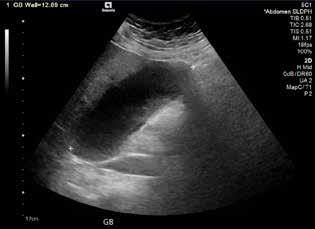
Image 1: Right Upper Quadrant Ultrasound
Ultrasound of the right upper quadrant revealed a distended gallbladder with moderate intraluminal sludge, suggestive of biliary stasis. No gallstones were identified. The common bile duct (CBD) was noted to be mildly prominent, which coincided with liver function tests and clinical symptoms. Additionally, the liver demonstrated increased echogenicity consistent with hepatic steatosis.
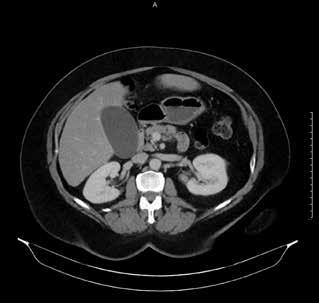
Image 2: CT Abdomen/Pelvis
CT imaging of the abdomen confirmed gallbladder distension without evidence of definitive gallstones. The liver exhibited diffuse low attenuation, consistent with hepatic steatosis (fatty liver changes). Additionally, a 3 mm non-obstructive calculus was identified in the left kidney, without associated hydronephrosis or signs of urinary obstruction.
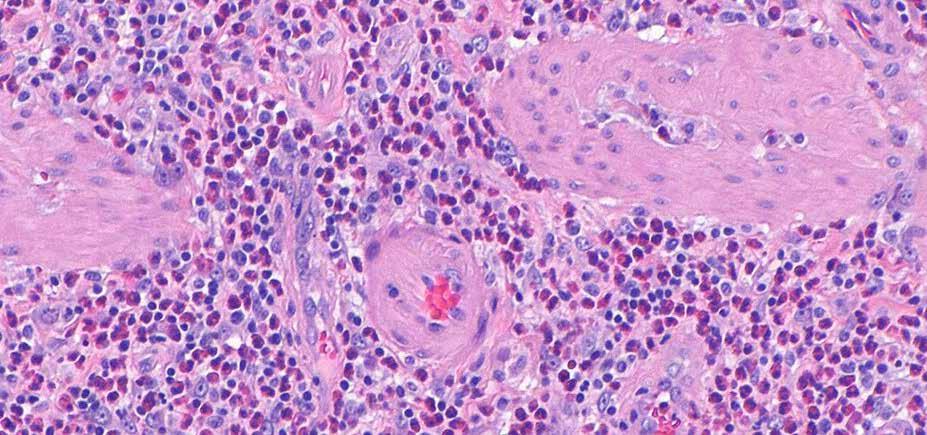
Given her persistent RUQ pain and imaging findings suggestive of gallbladder pathology (though acalculous), the patient underwent an uncomplicated laparoscopic cholecystectomy. She tolerated the procedure well and was monitored overnight for electrolyte replacement. Pathological analysis of the excised gallbladder revealed significant eosinophilic infiltration, confirming eosinophilic cholecystitis.
Three weeks post-discharge, the patient returned to the hospital with recurrent abdominal pain, nausea, and vomiting that started approximately two weeks after her initial discharge. She was febrile with a white blood cell (WBC) count of 21.9 × 10^3/µL. The patient also reported a new onset of mild shortness of breath.
• Workup:
o CT Pulmonary Angiogram: Negative for pulmonary embolism.
o Chest X-ray: Subtle lower lung infiltrates, raising suspicion for pneumonia.
o CT Abdomen/Pelvis: No acute abdominal findings, no fluid collections.
o Magnetic Resonance Cholangiopancreatography (MRCP): Negative for biliary stones or obstruction, consistent with the recent diagnosis of EC (no recurrent gallstones or other obstructive processes).
Blood cultures grew Klebsiella pneumoniae, which was presumed to be the causative organism for pneumonia and her elevated WBC count. She improved with IV Zosyn. She was discharged on cefadroxil, with clinical improvement noted thereafter.
The patient was continued on her existing medication regimen, including Mounjaro, and experienced no further episodes of biliary pain. Four months after starting Mounjaro, she successfully lost sufficient weight to undergo surgical repair of her right medial meniscus without complications.
Eosinophilic cholecystitis (EC) is a rare variant of cholecystitis, characterized by the infiltration of eosinophils into the gallbladder wall, typically comprising > 50% of the total inflammatory cell count.[1,2] It accounts for a small fraction of cholecystitis cases and can mimic both calculous and acalculous cholecystitis clinically. Though the pathophysiology remains poorly understood, proposed mechanisms include drug-induced hypersensitivity reactions, parasitic infections, and systemic eosinophilic disorders.[3]
In the present case, the patient had started two new antidiabetic therapies—metformin and Mounjaro—within seven weeks of her initial presentation. While metformin has a lower incidence of hypersensitivity reactions, newer GLP-1 or dual GIP/ GLP-1 receptor agonists have occasionally been reported to provoke hypersensitivity responses in rare cases.[4] However, there are no widely established direct links between these agents and eosinophilic cholecystitis. Instead, it remains possible that the patient’s underlying atopic predisposition (e.g., asthma) or another subclinical trigger contributed to the eosinophilic infiltration.
Notably, the patient’s second admission highlighted the importance of considering infectious causes and other complications postoperatively, especially with elevated WBC counts and fever.
The discovery of Klebsiella pneumoniae in her blood cultures and subtle chest X-ray changes supported the diagnosis of pneumonia, rather than a direct complication of the gallbladder surgery.
Despite its rarity, diagnosing EC relies heavily on pathological evaluation of the gallbladder specimen. Imaging findings and clinical presentation alone typically do not differentiate it from other forms of cholecystitis. The definitive diagnosis is made histologically, demonstrating eosinophil-predominant inflammation.[5]
This case underscores the importance of considering eosinophilic cholecystitis in patients presenting with RUQ pain and acalculous imaging findings, especially those with potential atopic backgrounds or recent medication changes. Although a causal relationship between Mounjaro and EC cannot be conclusively established in this single case, clinicians should remain vigilant for rare hypersensitivity reactions in the setting of new drug initiations. Importantly, thorough histopathological analysis of gallbladder specimens remains crucial for accurate diagnosis. The patient’s successful postoperative recovery and subsequent readmission highlight the value of a broad differential diagnosis, prompt evaluation of alternative causes of abdominal pain, and the effective management of possible infectious complications.
References found on page 39.



Seeking BE/BC physicians Details
• Locations include Springfield, Missouri, and surrounding communities
• Top 100 Integrated Health System
• Voted Modern Healthcare Best Places to Work five times Benefits
• Competitive salary
• Comprehensive benefits package
• Sign-on bonus
• Relocation allowance


Kailyn Baalman, MD, PGY3
St. Luke’s Family Medicine
Residency
St. Louis, MO

Britt Herrin, DO
St. Luke’s Family Medicine
Residency - Assistant Program Manager
St. Louis, MO

Alexander Holbrook, DO, PGY2
St. Luke’s Family Medicine Residency
St. Louis, MO

Lauren Elliott-Mullens, MS4
Lincoln Memorial UniversityDeBusk College of Osteopathic Medicine
Harrogate, TN
Neurosyphilis is a rare but serious manifestation of syphilis that can present with nonspecific ocular or otic symptoms, leading to diagnostic delays.
Case Presentation: We report a 47-year-old male with a history of hypothyroidism, hypertension, and alcohol abuse who presented with progressive blurry vision, halos, photopsia, and concurrent left-sided hearing loss with tinnitus. Workup demonstrated bilateral retrobulbar optic neuritis, a positive RPR (1:128), and reactive Treponema pallidum antibodies. Cerebrospinal fluid analysis showed lymphocytic pleocytosis, elevated protein, and negative VDRL, consistent with neurosyphilis.
Intervention: The patient received intravenous penicillin G for 14 days, followed by intramuscular penicillin G. He was counseled regarding alcohol cessation and provided pharmacologic support for alcohol use disorder.
Outcome: Visual symptoms completely resolved and hearing improved. RPR titers decreased fourfold (1:128 → 1:32) on follow-up, consistent with successful treatment response.
Conclusion: This case highlights the importance of considering syphilis in the differential diagnosis of unexplained visual and auditory symptoms. Rising syphilis incidence in the United States underscores the need for timely recognition, prompt treatment, and integrated management of behavioral risk factors such as alcohol use.
Syphilis is a sexually transmitted infection caused by the obligate human pathogen, Treponema pallidum. The bacterium relies on serologic testing, direct visualization or molecular detection of Treponema pallidum, as culture is limited to specialized research settings and routine microscopy is inadequate(1). The pathogen is spread sexually via direct contact with syphilitic sores typically present on the genitalia, anus, or mouth, vertically from infected mother to fetus through the placenta, and rarely from direct inoculation(2) .
Despite having a simple treatment course, this disease remains a significant public health concern due to increasing prevalence and potential for severe complications when untreated. In fact, there are rising incidence rates in high-risk populations, particularly among men who have sex with men, and individuals with multiple sexual partners(3) .
The disease progresses through four stages—primary, secondary, latent, and tertiary. The primary stage begins as a papule at the site of inoculation that develops into a 1-2 cm ulcer with raised, indurated margins that spontaneously heals in 3-6 weeks. Due to being painless, treatment is not always pursued, increasing likelihood of transmission. The secondary stage presents as a variety of symptoms including disseminated macular or papular rash, condyloma lata, alopecia, hepatitis, and lymphadenopathy(4). Latent syphilis is usually asymptomatic, and may be transmitted to sexual partners through lesions that were recently active but are no longer present. Tertiary syphilis, which occurs years after initial infection, can lead to severe complications, including cardiovascular and neurological involvement.
Neurosyphilis is a manifestation of tertiary syphilis in the CNS and can present with vision changes, uveitis, optic neuritis, tinnitus, and hearing loss. This is a rare but serious complication, and if left untreated can result in permanent visual impairment(5). Despite its potential severity, syphilis-related manifestations are often underrecognized, leading to delayed diagnosis and treatment. This case report discusses a 47-year-old male with neurosyphilis presenting with visual disturbances and otic involvement.
Patient Description: A 47-year-old male with a medical history of hypothyroidism, hypertension, and alcohol abuse presented to his primary care physician (PCP) with a 6-8 week history of progressive visual disturbances. He described his vision as blurry, with the presence of dark spots, halos, and occasional flashes of light, which were often exacerbated by head movement. The patient also reported left-sided throat discomfort, decreased hearing in the left ear, and tinnitus.
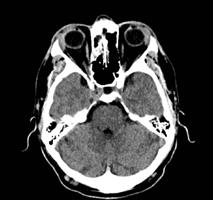
Case History: The patient, who had no prior history of sexually transmitted infections, had been engaging in sexual activity with multiple partners. He had not been screened for syphilis in recent years and had no history of genital lesions. He had previously visited the emergency department (ED) for his visual complaints, where an ultrasound of his eyes revealed an increased diameter of the optic nerves, although the results were inconclusive. A CT Head without contrast showed normal orbits and globes, near-complete opacification of the right frontal sinus, and no acute intracranial processes (Figure 1). The ED physician suspected optic nerve involvement but the patient left the ED against medical advice (AMA) before further testing could be performed. The patient continued to experience visual disturbances and sought follow-up care with his PCP.
Physical Examination Results: Upon examination, the patient appeared well-nourished and in no acute distress. Vital signs were as follows:
• Temperature: 98.2oF
• Blood Pressure: 162/92 mm Hg
• Pulse: 85 bpm
• Respiratory Rate: 16 breaths per minute
• Oxygen Saturation: 97%
On examination, there were no obvious ophthalmic abnormalities but the patient had decreased visual acuity. Neurologically, the patient was alert and oriented, with no evidence of focal weakness or sensory loss. There was tenderness to palpation along the left side of the neck with lymphadenopathy, but no signs of acute infection. The left ear showed slight gross hearing loss with reported mild tinnitus. The patient was referred for urgent ophthalmic evaluation and labs were drawn. An MRI of the head was ordered.
Figure 1. Head CT without contrast. Axial 5.0, Series 3 Image 11. This image depicts the patient’s head with no acute intracranial processes. The visualized portions of the orbits and globes are normal. There is near-complete opacification of the right frontal sinus.
The patient was examined by an opthamologist the following day. Bilateral optic nerve heads (ONH) appeared normal on fundoscopic examination, with no evidence of optic disc edema, hemorrhages, or enlargement. Humphrey Visual Field (HVF) testing demonstrated scattered depressions that were neither distinct nor symmetrically distributed. Optical Coherence Tomography (OCT) of the optic nerves showed no signs of edema or optic disc drusen. The exam was consistent with retrobulbar optic neuritis. The opthamologist agreed with the MRI for further evaluation. Laboratory tests resulted that same day and showed the following:
• Rapid Plasma Reagin (RPR): Positive, titer 1:128
• Treponema pallidum antibodies: Reactive
• Complete blood count (CBC): Unremarkable
• Complete metabolic panel (CMP): Unremarkable
• Sedimentation Rate- 13 mm/hr (0-15)
• C-Reactive Protein, Quant- 3 mg/L (0-10)
• TSH 2.580 uIU/mL
• Anti-nuclear antibodies (ANA): Negative
Given clinical suspicion for neurosyphilis, the patient was instructed to present to the Emergency Department for admission, lumbar puncture (LP), imaging, and initiation of intravenous (IV) antibiotics at the direction of the infectious disease physician.
Lumbar puncture revealed:
• Opening pressure: 27 cm H₂O
• CSF WBC: 21 (reference: 0–5)
• Segs: 5%, Lymphocytes: 95%, Monocytes: 0%
• Glucose: 57 (reference: 40–70)
• Protein: 68 (reference: 12–60)
• HSV PCR: Negative
• VDRL: Nonreactive (CSF VDRL can be falsely negative in up to 70% of cases)(6)
• CSF appeared colorless and clear, without xanthochromia
• MRI brain/brainstem with and without contrast revealed: [Figure 2]
• Paranasal sinus disease, notably right frontal opacification
• Mild diffuse cerebral atrophy, nonspecific, with no evidence of mass, hemorrhage, ischemia, or abnormal enhancement
Laboratory findings included:
• RPR titer: Positive at 1:32
• HIV, Hepatitis C, Gonorrhea and Chlamydia: Negative
• CBC: Within normal limits
• CMP: Mild electrolyte abnormalities
Treatment Plan: Given the diagnosis of tertiary syphilis with ocular involvement, the patient was started on intravenous penicillin G (4 million units every 4 hours) for 14 days. Additionally, the patient was educated about the risks associated with alcohol consumption during treatment, as alcohol could affect the efficacy of penicillin. He was started on acamprosate and Librium for alcohol use disorder and supplementation with folate and B-complex vitamins. A health department representative was involved for reporting purposes. After completing the IV penicillin course, the patient was also administered intramuscular penicillin G (2.4 million units) as part of the treatment regimen at the local health department.
Expected Outcome of the Treatment Plan: The expected outcome was complete resolution of the visual disturbances and any associated symptoms, such as tinnitus and throat discomfort, following appropriate treatment with penicillin. Improvement in the patient’s RPR titer was anticipated, indicating successful treatment. The patient was also expected to benefit from alcohol cessation counseling to prevent further complications and ensure treatment adherence.
Actual Outcome: After 14 days of intravenous penicillin G, the patient showed significant improvement in his symptoms. His visual disturbances completely resolved, and he reported no further episodes of flashes of light or halos. His tinnitus and left-sided throat discomfort also resolved. A repeat RPR test performed at follow-up showed a fourfold decrease in the titer (from 1:128 to 1:32), indicating a positive response to therapy. However, the patient continued to experience challenges with alcohol use and discontinued the medications prescribed at discharge. He was referred to AA and given resources from his PCP. The patient was advised to continue regular follow-up with the PCP and infectious disease team, with RPR tests scheduled every 3 months for continued monitoring.
Discussion: While syphilis is a well-known sexually transmitted infection, it remains underdiagnosed and often misinterpreted due to its varied presentations. Neurosyphilis, a rare but serious complication of tertiary syphilis, can present with nonspecific symptoms such as visual disturbances, which are commonly attributed to more common conditions. In some cases, ocular syphilis may occur in the absence of other classic signs of syphilis, such as genital lesions or rashes, making the diagnosis more challenging(7). Ocular syphilis has become an increasing concern in recent years, particularly with the rise of syphilis cases in the United States. In Missouri alone, the number of early syphilis cases reported by the Missouri Department of Health and Senior Services increased by 259% from 2015 to 2021(8). Several studies have highlighted the growing prevalence of ocular involvement in syphilis, with cases often presenting with uveitis, optic neuritis, or retinitis, and sometimes leading to permanent vision loss if not promptly treated(9-11). Such as with this patient, the combination of visual
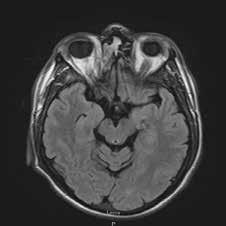
Figure 2. MRI Brain Without Contrast. F2
Axial Flair, Image 11. This image depicts the patient’s brain with findings of mild diffuse cerebral atrophy, which is nonspecific without evidence of mass, bleed, ischemia or abnormal enhancement. There is also right paranasal sinus disease.
symptoms, neurological complaints, and a positive RPR test led to the eventual diagnosis of neurosyphilis, highlighting the need for a high index of suspicion when evaluating patients with unexplained visual changes, particularly in high-risk populations. This case corroborates existing literature on the importance of early recognition and treatment of ocular syphilis. While the patient’s symptoms of blurry vision and visual disturbances were initially nonspecific, the positive RPR and T. pallidum antibody results, along with the lumbar puncture findings, confirmed the diagnosis of neurosyphilis. The resolution of visual symptoms after appropriate penicillin therapy aligns with reports in the literature,
where timely treatment with penicillin G has been shown to result in favorable outcomes in ocular syphilis.
This case reinforces the value of a comprehensive approach to syphilis management, including the use of penicillin therapy and appropriate monitoring through RPR titers. The case further emphasizes the need for healthcare providers to assess social and behavioral risk factors, such as alcohol abuse, that may impact patient outcomes and treatment adherence. Regular follow-up care and patient education are critical to ensuring long-term resolution of the infection and preventing recurrence.
This case underscores the critical importance of considering neurosyphilis in the differential diagnosis of patients presenting with unexplained visual disturbances, particularly in those with risk factors such as alcohol abuse and multiple sexual partners. Ocular syphilis, a manifestation of neurosyphilis, can present with nonspecific symptoms and may be easily overlooked if not considered. Timely diagnosis and treatment with appropriate antibiotics, such as penicillin, are essential for effective management and preventing further complications. Clinicians should maintain a high index of suspicion and conduct thorough evaluations, including serologic testing, in patients with suggestive symptoms. Additionally, addressing underlying behavioral factors, such as alcohol abuse, is crucial to ensure adherence to treatment and improve patient outcomes. Regular follow-up and monitoring are necessary to assess treatment efficacy and prevent recurrence.
References found on page 39.


www.magmutual.com/innovation

Matthew Rumsey, MD Emergency Department Pediatrician Children’s Healthcare of Atlanta Assistant Professor of Pediatrics
Emory University School of Medicine

Allergic rhinitis is a common complaint and a common diagnosis in pediatric patients. In fact, it is the most frequently occurring chronic illness in the pediatric population, and the economic impact of the disease in all ages is estimated to be billions of dollars every year.
Allergic rhinitis is primarily a clinical diagnosis. The American Academy of Otolaryngology-Head and Neck Surgery (AAOHNS) guidelines for the diagnosis and treatment of allergic rhinitis in adults and in children ages two years and older recommend a diagnosis of allergic rhinitis in patients experiencing sneezing, nasal congestion, rhinorrhea, or nasal pruritus who also have physical findings consistent with an allergic cause of the symptoms. These include clear rhinorrhea, nasal congestion on examination, pallor of the nasal mucosa, and erythematous, watery eyes.i Guidelines for the diagnosis of allergic rhinitis in children produced by the European Forum for Research and Education in Allergy and Asthma (EUFOREA) require the presence of two or more common symptoms to make a diagnosis of allergic rhinitis.ii
Clinicians should remember that children (especially younger children) may have difficulty articulating these classic symptoms, so direct questioning may be required. Some children may present with only non-specific fatigue and malaise. Cough may also be present.
The age of the child is of particular importance when considering a diagnosis of allergic rhinitis as the condition is rare in children under age two. A prospective birth cohort trial in Germany found a very low prevalence of allergic rhinitis early in life and suggests that children require at least two seasons of exposure to allergens before symptoms develop.iii Even in children who have asthma, the mean onset of rhinitis symptoms is just before the third birthday.iv
Often, parents wish to know the exact allergen that is responsible for their child’s symptoms; however, this information is not required to begin treatment. AAO-HNS guidelines recommend considering specific immunoglobulin E testing (skin prick or serum testing) if there is inadequate response to initial treatments. Imaging (including computed tomography) is not recommended.
There are two major pharmacologic classes that are used to treat allergic rhinitis: antihistamines and intranasal corticosteroids. While intranasal corticosteroids are probably more effective, both classes of agents generally provide good treatment for the symptoms of allergic rhinitis.v The AAO-HNS guidelines favor starting treatment with intranasal corticosteroids, especially when symptoms affect the patient’s quality of life. A provision for trying antihistamines is made if the primary symptom is sneezing. The EUFOREA guidelines for children recommend trying antihistamines first, reserving intranasal corticosteroids for patients with nasal obstruction or in whom antihistamines are not adequately effective.
When considering oral antihistamines to treat allergic rhinitis, a number of choices are available. First generation antihistamines (e.g., diphenhydramine and hydroxyzine) were developed in the middle of the 20th century and are potent medications that have a marked anti-allergic effect; however, their use is generally limited by their significant side effects including sedation and anticholinergic effects. In most patients, including children, newer, second-generation antihistamines are preferred as they provide adequate symptom relief without unwanted side effects or increased potential for poisoning.vi Among the available secondgeneration antihistamines, cetirizine is a particularly good choice. It is as effective as older, first-generation antihistaminesvii without the same sedative effects and has a quicker onset of action than loratadine and fexofenadine.viii A 2013 review of second-generation antihistamines found that cetirizine was preferred by both patients and researchers when treating and studying allergic rhinitis.ix Intranasal antihistamines are also available and are particularly useful for quick relief of intermittent symptoms of allergic rhinitis.
Montelukast is a leukotriene receptor antagonist and is FDAapproved for the treatment of allergic rhinitis in children. There is evidence that montelukast provides at least some benefit when combined with an antihistamine;x however, the AAO-HNS guidelines do not recommend use on montelukast by itself as first-line treatment for allergic rhinitis.
For patients with more severe allergic rhinitis, subcutaneous immunotherapy, or “allergy shots” may be helpful for long-term control of symptoms. Pediatric patients who require subcutaneous immunotherapy should typically be referred to an allergist to begin this treatment.xi
In summary, allergic rhinitis is a common pediatric condition encountered by family physicians and other primary care providers and has a significant impact on children’s well-being. Clinician working with children should be vigilant about recognizing and promptly treating this common childhood diagnosis.
References found on page 39.

As I prepare to step down from my role as Chair of the Missouri Academy of Family Physicians, I am filled with both gratitude and pride for the journey we’ve shared since I first joined this organization in 2015. What began as a commitment to serve family medicine in Missouri has become one of the most rewarding professional experiences of my career.
Over the past decade, I’ve witnessed—and been privileged to help guide—the Academy through times of both challenge and remarkable growth. Together, we have strengthened MAFP’s advocacy voice, expanded our educational programs, and deepened our support for family physicians across the state.
Some of the highlights I’m especially proud of include:
• Advocacy & Policy Impact: We have elevated our presence in Jefferson City and Washington, ensuring that family physicians’ voices are heard on critical issues such as Medicaid expansion, primary care funding, and public health policy.
• Education & Professional Development: Through our CME events, annual conferences, and recently our obesity medicine symposium, MAFP has continued to equip physicians with the tools and knowledge to provide exceptional care in every corner of Missouri.
• Membership Growth & Engagement: We’ve worked hard to strengthen our pipeline—from students and residents to seasoned practitioners—ensuring that the future of family medicine in Missouri remains strong.
• Leadership & Collaboration: Our partnerships with the AAFP, other state chapters, and allied organizations have allowed us to be both a thought leader and a unifying force for family medicine in our region.
None of these accomplishments would have been possible without the dedication of our members, the vision of our board, and the tireless efforts of our staff. To our executive team and administrative staff—thank you for your steady guidance, your professionalism, and your unwavering support. To my fellow board members—thank you for your insight, your collegiality, and your shared belief in the power of family medicine to improve lives and communities.
As I pass the gavel, I do so with full confidence in the strength and stability of this organization. The Missouri Academy of Family Physicians is well-positioned to continue its mission: to promote and protect the specialty of family medicine and to ensure that every Missourian has access to compassionate, comprehensive, and continuous care.
I look forward to watching MAFP’s next chapter unfold and will remain an active advocate and supporter of our collective mission. It has been an honor to serve alongside each of you.


This year serving as President of the Missouri Academy of Family Physicians has been a challenging, rewarding and productive time. While many things have been unpredictable in our state and country, one thing has remained constant – a dedicated team determined to continue to work together to better the health of our patients and improve the practice of family medicine for our members.
Earlier this year, our executive commission attended the Annual Chapter Leadership Forum in Kansas City. We spent two days immersed in board governance and structure. While our board is filled with passionate and hard-working members who function well and care deeply about our organization, we identified several areas of improvement to make our board more focused, efficient and effective in the future. The executive commission left this conference energized and ready to explore how we could modernize our organization. We began with a bylaws review – calling together an energetic and diligent group including past presidents, emerging leaders, current board members and members at large to meet regularly and review, prune and adapt the bylaws to better meet the current needs of our organization and propel it into the future.
We want to ensure that our board is comprised of leaders who represent the many facets of family medicine – including scope of practice, location, style, and background. Being intentional to ensure that all voices and perspectives have representation is a priority for the nominating committee. Change can be hard, but remaining stagnant prevents growth and innovation. As John D. Rockefeller said, “Don’t be afraid to give up the good to go for the great.”Months of review, discussion, debate and persistence have created the proposed bylaws that will be voted on during the annual meeting. Immense gratitude to all those who contributed to this masterpiece!
During a time when it can feel like scientific evidence is losing value and uncertainty looms in all directions, I have observed how essential advocacy at both the state and federal level will continue to be. Family physicians have the foundation of knowledge, communication skills and insight into our patient’s lives needed to guide and enlighten policy makers and the general public. Join us for Advocacy Day, provide testimony, share your experiences as a front-line patient care expert!
I was also able to attend the AAFP Congress of Delegates for the first time. What an amazing few days connecting with leaders across our country and watching priority policy objectives be determined for the coming year. Some of the resolutions discussed included policy that can be controversial and dividing. Yet the testimony submitted was respectful and thoughtful. Watching groups from different sides of the aisle collaborate to
rewrite resolutions so that action could be taken and consensus reached was inspiring. Working together we can achieve so much more.
Another important area of focus over the past year and beyond is developing a pathway to identify and inspire future family physicians. Starting with middle and high school students is one strategy we are employing. This past March, I was able to attend the HOSA event in Rolla, MO as a judge for the Family Medicine competition. Don’t underestimate how valuable sharing your experience and time with students can be. Hearing from family doctors about the joys and impact of practicing family medicine is an essential part of recruiting medical students into our specialty.
I was able to join many of you in Hermann, MO this fall for our first symposium focused on Obesity Medicine. This innovative approach to CME was a huge success, thanks to the hard work of the education commission and our dedicated staff. Continuing to be thoughtful regarding how to best meet the educational needs of our members and being creative in content delivery is crucial. I have no doubts that more exceptional programming is to come. Our Annual Fall Conference continues to be our main event to reconnect and learn together, and as it continues to evolve, I am confident that it will be a worthwhile and productive meeting for our members.
It has been a huge honor serving as President of MAFP this year. I am proud of all that we have been able to accomplish as an organization. Our team is what makes our organization so strong. The executive commission has been exceptionally engaged and motivated to initiate some major updates to our board and operations. I have appreciated their insights and dedication. Our chapter staff is continuously striving for betterment, and I cannot think of a more well-suited group than Bill, Andrea and Brittney. Thank you for caring so deeply for family physicians and MAFP. We are entering a new cycle of strategic planning starting in 2026, and I am excited to see what the future holds for MAFP. The ongoing involvement of our members is essential to our success and I encourage you all to consider how you can contribute to MAFP as well.
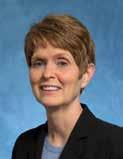
President
This has certainly been a busy year for the Missouri Academy of Family Physicians.
As president-elect, I am honored to work alongside an outstanding group of leaders working to address key issues facing family physicians, our learners and our patients across our state and the country. In November of 2024 we hosted our Annual Fall Conference at the Intercontinental Hotel in Kansas City. This was a tremendous feat for our staff, adapting to change after decades in the same venue. The education was top notch, the venue was beautiful and the awards/installation Roaring 20’s themed event was a wonderful celebration highlighting the work of outstanding Family Physicians and Resident of the Year, welcoming a new slate of officers and honoring the awesome tenure of our Executive Director, Kathy Pabst as she transitioned
into well-deserved retirement. We are so fortunate to have Bill Plank who has stepped into the Executive Director role so well prepared, passionate for Family Medicine and full of energy. The whole event set the tone for a year embracing change while standing on the shoulders/work of so many dedicated folks and honoring our rich history as an academy.
Next up for me was Advocacy Day in Jefferson City in February. We had the highest attendance ever and the event was well organized, informative and engaging! You cannot help but be inspired, seeing the numbers of students and residents participating in our Advocacy efforts knowing we are growing future leaders right there and then. This event offers us all the opportunity to make connections with our legislators so that we can affect positive change in Missouri for our physicians, patients, learners and our communities. One of the highlights of advocacy efforts that I feel will have the longest impact is the work done on expanding primary care residency training positions which leads to more family physicians practicing in Missouri.
In April, I along with our executive commission and chapter exec, attended the AAFP’s Annual Chapter Leadership Forum. I was also able to take advantage of a pre-conference workshop “When Everyone Leads: Tackling Challenges in Healthcare Leadership” which presented a new look at embracing change management as a team sport. The Forum this year was focused on Board Development. It was such a wonderful opportunity to network with other chapter leadership from around the country and learn best practices from industry experts on highfunctioning boards. Truly high value and time well spent.
In June I traveled with our strong group of advocates from Missouri to the AAFP Family Medicine Advocacy Summit in Washington DC. The work being done advocating with our national representatives is vital to the health of our nation. If you have ever thought about advocacy- now is the time. I encourage you all to participate in advocacy and have your voices be heard at whatever level you are able to engage.
Over the summer the executive commission has continued to meet and work on advancing our Chapter forward, envisioning our future and continuing our great work for Missouri Family Physicians.
Thank you for the opportunity to represent Family Medicine in these leadership roles. I look forward to seeing you in KC at our Annual Fall Conference and starting my service as President of the MAFP. This event is a great opportunity for everyone to participate in shaping our future by engaging in our annual meeting where we will chart the course for strategic planning in 2026. Please join us in moving Family Medicine forward!

When I reflect on my tenure as Vice President of MAFP this past year, I can’t help but to first remind myself of all the amazing people I’ve encountered, programs I’ve attended, and ideas that I’ve been fortunate to be a part of and how formative those experiences have
been in my development as a MAFP leader. We are fortunate to have such hard-working and dedicated chapter staff and physician co-leaders to help us walk through what was a very important transitional year for our organization.
My tenure as VP started at our officer installation at the 2024 Annual Fall Conference (AFC) in Kansas City, in what was a milestone year as we transitioned AFC away from its historic home of Big Cedar and welcomed our new Executive Director, Bill Plank. While the transition to a new AFC location was not without heartache, we learned a lot of lessons – both educational and logistical- and found a lot of inspiration that will carry the organization forward to meet the future needs of Missouri’s family physicians.
In February, I was able to get a nice respite from St Louis snow to attend the Multi-State conference in San Diego, CA with chapter staff. Here, we were able to participate in a number of conversations with AAFP leaders and leaders from other state chapters regarding common themes in our changing healthcare landscape. That conference immediately transitioned into our 2025 Advocacy Day back in Jefferson City, where we had our largest Advocacy Day attendance in recent memory! It was inspiring to see all those who came out to stand up for the many important healthcare priorities being discussed in our state government.
April brought chapter staff and the executive team together again for the Annual Chapter Leadership Forum (ACLF) in Kansas City. Here, we had inspired conversations about the shape of MAFPs future leadership, particularly centered around Board of Director design and function. These discussions were the impetus for the formation of a Bylaws Review Committee in which I’ve been heavily involved to be able to review and propose a restructuring plan for optimal future organizational success.
In September, I was excited to attend and moderate our Midwest Obesity Symposium in beautiful Hermann, MO, where we kicked off our first (of hopefully many!) smaller format, single-topic conferences. I’m already looking forward to our next similarly formatted conference about Women’s Health in Springfield in Fall 2026!
October allowed me to go to FMX in Anaheim, CA where I was also able to join our Missouri COD attendees for a dinner designed for networking, enjoying colleagues, and choosing our next AAFP leaders. I’ll be geared up to go to COD as an attendee next time!
Throughout the year, I’ve participated in monthly executive commission meetings with our other very talented physician leaders and chapter staff, where we’ve strived to uphold MAFP interests in this very transitional and impactful political and healthcare landscape. I’ve also felt honored to continue to Co-Chair the Education Commission, where we have had a very exciting year of responding to trends in conference innovation and healthcare transitions to be able to deliver greater value to our members, led by our newest MAFP staff, Andrea Holloway. Leading in to AFC 2025, I’m very excited for the events and programs that have been planned, and for the important decisions that will be made regarding the future leadership and Board structure of our organization. I’ll look forward to another important year of transition as we enter a season of strategic
planning for the future of Family Medicine in Missouri!

As we continue the implementation of the Missouri Academy of Family Physicians’ (MAFP) strategic plan, we are looking forward to how to best serve our members’ needs and provide value for their membership. We were originally due for our strategic planning session in 2025, but due to the expense of our audit and anticipated changes for the year, it was decided to hold off until 2026. We have begun planning for our next strategic session for May 2026.
As we entered 2025 with our new executive director Bill Plank, we had some changes with our accounting processes moving to QuickBooks Online for our accounting needs.
This past spring, we completed our financial audit with Evers & Company for the period ending 12/31/2024. During the audit, they identified three small operational changes to provide further safeguards for us to adjust to to help maintain best practice.
We added to our team this year with a Member Engagement Manager, Andrea Holloway and late this year the addition of Jill Barnhart as a bookkeeper and administrative support contractor.
The MAFP programs and operations are funded through member dues, fees for member activities, and support from vendors and sponsors. The MAFP continues to be financially sound.
The membership dues were increased in 2024 from $300 to $325 per year. The AAFP collects membership dues on our behalf.
I want to thank the board and executive commission for allowing me to serve as the Secretary/Treasurer for this organization for the past 7 1/2 years. I have thoroughly enjoyed being a part of this team.
Humana Healthy Horizons® is a Gold Sponsor of the Missouri Academy of Family Physicians Annual Fall Conference, supporting those who care for Missouri families.

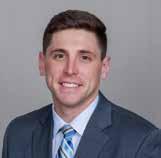
Karstan Luchini, DO
Resident Director

Thomas Cassimatis, MD
Alternate
Resident Director
CAPITAL REGION MEDICAL CENTER FAMILY MEDICINE
CRMC Family Medicine
Program Director: Morgan Schiermeier, MD
APDs: Daniel Gibson, DO (Wellness), MD; Jared James, MD (Academics)
Per Class: Three (3), Four (4), Three (3); 10 total
Social Presence: Instagram: We currently do not have an updated presence in FB, Instagram, or other SM platforms Updates about the program: In the last year, we have expanded our resident clinic to include two rural sites –Versailles and California, MO. Residents at each site enjoy a first-hand, immersive experience in practicing full-spectrum family medicine in an under-served region. We have also integrated a monthly simulation center experience into our didactic that allows our residents to practice managing emergent situations in a state-of-the-art simulation environment.
FAMILY MEDICINE
Program Director: Shelby Hahn, MD
APD: Kristin Crymes, DO; Evan Johnson, MD
Per Class: 11, 10, 10
Chief Residents: Jonathan Bingham, DO; Tessa Tolen, DO, Melissa Medley, DO
Social Presence: Instagram: coxhealthfmr, Facebook: CoxHealth Family Medicine Residency, Website: www.coxhealth.com/fmr
STILL OPTI-NORTHEAST REGIONAL MEDICAL CENTER FAMILY MEDICINE
Program Director: Jill Kerr, DO
APDs: Katherine Holbrook, DO
Per Class: Four (4), Four (4), Four (4); 12 Total
Social Presence: https://www.nermc.com/family-medicineresidency
FAMILY MEDICINE
Program Director: Sarah Cole, DO
APD: Stefanie White, MD
Per Class: 8, 8, 6
Chief Residents:
Social Presence: www.mercy.net/healthcare-education/ graduate/st-louis/family-medicine/ www.facebook.com/groups/mercystlfamilymedresidency/ Mercy STL FM Residency (@mercy_stl_fm) • Instagram photos and videos
RESEARCH FAMILY MEDICINE
Program Director: Kavitha Arabindoo, MD, FAAFP, MPH
APD: Ashley Cefalu, DO
Per Class: Eight (8) residents, total of 24
Chief Residents: Dr. Raven Weiss, MD and Dr. Rachel Murray, DO
Social Presence: http://researchresidency.com/ https://www.instagram.com/researchfamilymedicine/
Program Director: Karen Foote, MD
Per Class: Approved for 18 ACGME slots
Social Presence: https://hcahealthcaregme.com/locations/ lees-summit-medical-center/family-medicine-residency/
Program Director: Elizabeth Keegan-Garrett, MD
Associate Program Director: Jay Brieler, MD
Per Class: 6, 6, 6
Social Presence: https://www.instagram.com/slumedfam/
Program Director: Dr. Joseph Eickmeyer, DO
Assistant Program Director: Dr. Brittany Herrin, DO
Per class: 5, 4, 4
Chief Residents: Kailyn Baalman, MD
Social Presence: https://www.stlukes-stl.com/DesPeres/healthprofessionals/medical-residency.html
Updates: The program has moved to St. Luke’s Chesterfield location 224 South Woods Mill Rd. Suite 680S Chesterfield, MO 63017
Program Director: Erika Ringdahl, MD
Per Class: Fourteen (14) (plus 2 Sedalia R1s)
Social Presence: Instagram: @Mizzoufamilymed; Facebook: University of Missouri Family Medicine Website: https:// medicine.missouri.edu/departments/family-and-communitymedicine/residency
Program Director: Misty Todd, MD
Per class: Two (2)
Chief Residents: ShiAnne Farris, DO and Logan Stiens, MD
Social Presence: www.brhc.org/residency ; Instagram @bothwellruralfmr
Program Director: Barbara H. Miller, MD, FAAFP
Assistant Program Director: Currently Recruiting
Per class: Five (5) per class, 15 total
Chief Residents: Upagya Kompali, MD and Robert Morris, DO
Social Presence: www.freemanhealth.com/graduate-medicaleducation, IG – freemanfmres
Updates: We graduated our first class in June 2025, which was a major milestone! Our graduates are practicing in a wide variety of clinical environments. We recently received a $2.1 million HRSA grant to support educating residents in Street Medicine, and will be actively engaging in providing care to this most vulnerable population.
Program Director: J. Lane Wilson, MD
APDS: Kevin Gray, MD, CAQSM, FAAFP; Jennifer Livingston, MD; Carlie Nikel, PsyD
Per class: 16, 12, 12, 40 total
Chief Residents: Kristy Shang, MD; Philip Dauma, MD; Kirsten Daniel, DO
Social Presence: https://med.umkc.edu/fm/ and https://www.facebook.com/UMKCFM/
Updates: Expansion of program to increase in class size at UMKC to make 16 residents per year including 2 rural track residents per year at Mosaic Hospital in Maryville, MO.
Complete residency report for publication in the Missouri Family Physician magazine.
Description and Responsibilities
1. The Resident and Alternate Resident Director serve a oneyear term on the MAFP Board of Directors. The Director shall be the voting representative on the board with the alternate voting only in the absence of the director.
2. The Resident and Alternate Resident Director shall represent the MAFP at the NCFMRS and will be provided a per diem to offset the cost of expenses at the end of the meeting as well as reimbursement for registration.
3. The Resident and Alternate Resident Director shall receive complimentary lodging (if needed) to attend the three (3) board meetings of the MAFP and are subject to the attendance requirements as outlined in the MAFP Bylaws.
4. The Resident and Alternate Resident Director shall report on the activities of the residency programs in the state at each board meeting and provide a written annual report on activities to submit to the membership each June.
5. The Resident and Alternate Resident Director shall assist with membership activities by recruiting residents in Missouri programs if needed. The Executive Director will contact the Resident and Alternate Resident Directors if such assistance is required.
6. The Resident and Alternate Resident Director shall submit proposed board agenda items to the Executive Director in advance of meetings of the Board of Directors.
7. The Resident Director and Alternate Resident Director shall each serve on a Commission, as assigned by the President of the MAFP to represent the viewpoint of Missouri’s family practice residents.
8. The Resident and Alternate Resident Director shall attend the Annual Meeting each year and assist with efforts to encourage resident members to attend the meeting by contributing to the educational program and other events suggestions for activities that will appeal to residents.

Kisha Davis, MD, MPH, FAAFP (Maryland) won the election for President-Elect and joins current Executive Committee Members of the Board Sarah Nosal, MD, MBA, FAAFP (New York) who was installed as President and Jen Brull, MD, FAAFP (Colorado) who moved to Board Chair. Russell Kohl, MD, FAAFP (Oklahoma) was re-elected as Speaker and Daron Gersch, MD, FAAFP (Minnesota) was re-elected as Vice-Speaker. Russell and Daron announced they will not continue in these roles after 2026.
Medical student Payal Morari at Kansas City University College of Osteopathic Medicine was installed as the Student Director to the Board. She was elected by her peers at the National Conference of Family Medicine Residents and Student in August 2025. Student doctor Morari will be a voting member of the Board and will serve a one-year term. She will also serve as a liaison to one the commissions during her tenure.
Delegate Peter Koopman, MD, FAAFP, served as a member on the Virtual Reference Committee on Organization, Finance and Education and Delegate Kate Lichtenberg, DO, MPH, FAAFP, served on the Rules Committee. Alternative Delegates Sarah Cole, DO, FAAFP and Jamie Ulbrich, MD, FAAFP served as Tellers for this conference. Missouri also remains well represented at the national level with Keith Ratcliff, MD, FAAFP serving his second year of a three-year term on the AAFP Nominating Committee.
Your Delegation appreciates the trust you put in us to represent you to the governing body of the American Academy of Family Physicians, and we welcome your comments and questions.
Respectfully submitted,
Peter Koopman, MD, FAAFP
Kate Lichtenberg, DO, MPH, FAAFP
Sarah Cole, DO, FAAFP
Jamie Ulbrich, MD, FAAFP
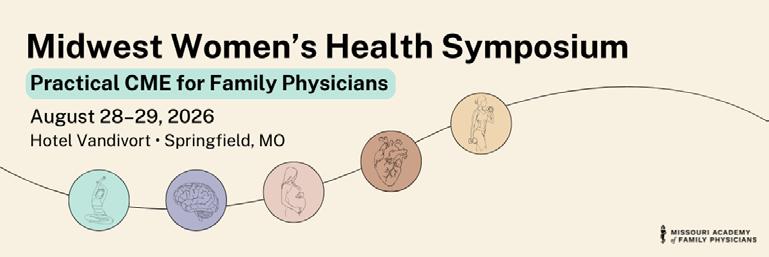

AUGUST 28–29, 2026
HOTEL VANDIVORT
SPRINGFIELD, MO
REGISTER AT HTTPS://MOAFP.FORMSTACK.COM/ FORMS/WOMENS_HEALTH_2026
Caring for women means caring across decades, transitions, and relationships—and family physicians understand that better than anyone. This two-day CME experience is intentionally designed to foster meaningful connection among colleagues while delivering practical, evidence-based education you can immediately apply in your practice.
Held in the intimate, welcoming setting of Hotel Vandivort, the conference prioritizes conversation, shared learning, and time to connect with peers who face the same clinical questions and challenges. Sessions focus on women’s health across every stage of life, with ample opportunities to engage, reflect, and learn from one another—not just from the podium.
Hotel Accommodations – Hotel Vandivort is offering an exclusive discounted room rate for Women’s Health Symposium attendees.
Rate: $199 + taxes per night | Arrival: Friday, August 28, 2026 | Departure: Saturday, August 29, 2026
Reservation deadline: Monday, July 28, 2026 (subject to availability thereafter)
Book your room Hotel Vandivort Booking Link: https://be.synxis.com/?Hotel=47446&Chain=6052&arri ve=2026-08-28&depart=2026-08-29&adult=1&child=0&group=M2SC888

$50 Early Bird Discount if registered before September 1, 2026.
$50 Late Registration penalty if registered within 30 days of conference.

NOVEMBER 13-14, 2026
MARGARITAVILLE LAKE RESORT LAKE OF THE OZARKS OSAGE BEACH, MO
REGISTER AT HTTPS://MOAFP.FORMSTACK.COM/FORMS/ AFC_REGISTRATION_2026
MAFP’s 2026 Annual Fall Conference will bring you two days of highimpact CME, practical clinical updates, and meaningful connections. Set at Margaritaville Lake Resort, the conference will pair top-tier education with a relaxed, resort-style atmosphere complete with lakeside views, modern meeting spaces, great dining, indoor recreation, and plenty of spots to unwind or catch up with colleagues. With local shops, wineries, and scenic areas close by, this event will offer a refreshing blend of learning and leisure that feels energizing, engaging, and anything but routine.
Share your expertise with family physicians across Missouri! MAFP is accepting proposals for the 34th Annual Fall Conference. Submit your proposals by March 1 for consideration.
Members suggested some topics that could be really helpful for anyone considering submitting a proposal for a presentation. Submissions are not limited to the topics on the list.
• Dermoscopy Clinic
• EKG evaluation
• Heart Failure
• Precepting Medical Students
• Billing, practice management.

• Hospice and palliative medicine.
• Behavioral Health
• Alpha-Gal Syndrome
• AI topics
• OMT
• POCUS workshops
• Retirement/Transition
• cardiorenal syndrome
• Pediatrics
• Psych
• Dizziness, Headache
• Physician Burnout
• relationship building for our own well-being
• Lifestyle medicine
• OUD
• Pearls of each specialty clinic resources
• ER
• Holistic Medicine
• Ultrasound Clinic
• Business Practice
Submit here: https://forms.office.com/pages/responsepage.aspx?id=4KzpYk8vSEe2 7fc7mHsIhq4cF3_4CeBAolIvRfPLE-xUMDFaVU1GVEZFS0ZEWkY1OFA0Wko2VTI4Q S4u&route=shorturl.

Dana Alshekhlee, MS4
Saint Louis University of Medicine
“In every life I ever live, I want him with me.”
My patient’s miracle lives in his mother. It’s my first day on my pediatrics rotation, and she gently shakes him in excitement after I introduce myself. My heart drops as she tries to wake him up from a condition that he’s never woken up from before. For twelve years, she fought the odds of his condition. She is the expert in his care.
It’s been thirty minutes of recounting her story: fleeing Syria, living in Turkey, receiving diagnoses, obtaining genetic tests. She encountered language barriers and disrupted healthcare systems. Loud and crowded, the clinics in Turkey had doctors who changed every few months. Each new doctor asked the same questions and her paper records disappeared each time she crossed a border. She holds my hand, and together we trace her family tree. Her sisters still live abroad and she talks to them every day. Her phone is filled with baby pictures of her two sons: one alive, one passed. Both with the same genetic disorder resulting in developmental delays and severe growth restrictions.
My identity surpasses that of a medical student. I sneak into her room every day after rounds to travel again through her memories. The hospital’s constant beeps and clicks and knocks fade in the background as we giggle at my broken Arabic and bond through a shared culture. Nurses came in and out, quietly readjusting the patient’s feeding tube and careful not to disturb us. When we laugh, she reminds me that she has never felt this solace before. I am the first Middle Eastern in the room.
My last day on the pediatrics inpatient service is his twelfth birthday. My patient’s mother is disheartened: She wanted to celebrate at home. Although I could not change his diagnosis or mend her pain, these moments demonstrated the power of presence. I arrive with a card written in Arabic and a soft stuffed animal. Her warm eyes well up.
“No one has ever written him a card in Arabic before: They always come in English.”
Her gratitude over something so simple made me think of what she craved: care in her language, a clinic that understood her culture, a team that followed her son’s history from birth. I imagine how different her journey could have been with a unified home in the healthcare system. Refugee health liaisons can bridge cultures in ways medicine alone cannot. They can accompany families in the clinic, making sure interpreters are
present and specialists hear a family’s full story. They can assist families like hers in navigating insurance and safeguarding a child’s medical history when records are scattered. For mothers like this one, such support would mean that she is not alone in carrying the weight of her son’s care.
In my mind, this family’s needs are the reason the four pillars of primary care exist: a trusted first contact when symptoms arose, a place where care was comprehensive enough to treat both her son’s rare disorder and her own emotional health, coordination between each specialist, and continuity so she never had to relive her losses by starting from the beginning. When I catch my patient’s mother in the hallways a month later, she squeals and shows me a photo of her son with his stuffed animal. Although she continues to await discharge, it serves as a symbol of the familiarity I brought her. For some patients, what may seem like a faint presence might speak the loudest. It is with this level of understanding, empathy, and compassion that I hope to practice medicine.

Saint Louis University of Medicine
Before the Clinic: A Call to Increase Access from an Overstretched Safety Net
“Another patient just arrived in the waiting room. That’s six people now.” The coordinator called out. My eyes shifted to the status board which showed our wait times ticking up past the 1-hour mark. My attention turned to the clock. It was just 10 AM, 2 hours after we opened.
“Alright, yes, we should close the doors now.”
As manager of the clinic, it was my job to decide when we started turning people away. Our student volunteers had only committed to working in the morning, and another clinic would

be taking the space at 1. When we fell behind schedule, we couldn’t accept any more patients without going over our time allotment.
I closed the door and informed the check-in team of the situation. Before I could head back to the office, a man came running down the hall. Panting, he asked if he could still get a physical. He explained that he lost his insurance when he had been laid off, but he couldn’t start his new job without getting a checkup. I apologized. All I could tell him was that he could try coming back next week.
The Health Resource Center was no strangers to a full clinic. Despite only being open for half a day each week, the clinic averaged over 500 patient visits a year. Our patient volume always caught me by surprise, especially when the perception of student-run free clinics can be contentious. Skeptical providers question the preparedness of student administrators, and advocates of underserved populations criticize the practice as taking advantage of the desperate for the sake of learning.1-3 Why would anyone choose this type of healthcare?
In that question lies the answer to why student-run free clinics – and all free clinics – in Missouri are always busy. They are only used by the desperate; it’s not a choice. Only patients who cannot afford to go anywhere else are willing to wait the whole morning just to be seen by students. And in Missouri, not being able to afford healthcare is all too common.
According to the 2023 census, Missouri is among the 20 least insured states in the country.4 With an uninsured rate of 7.5%, this leaves over 450,000 people unable to afford the healthcare they need. Uninsured residents lack the first contact primary care can afford, preventing them from accessing other parts of the healthcare system. This restriction leads to worse clinical outcomes in chronic diseases and denies sicker patients from getting necessary specialist care.5 Patients without insurance may stray to other resources for healthcare, missing out on the complete, comprehensive exams and screenings primary care physicians provide.
Another devastating struggle Missourians face is health insurance being taken away. When patients lose their jobs or no longer qualify for certain programs, they may not be able to go to their trusted, preferred provider. The strong physicianpatient relationship that is so crucial to building rapport in the healthcare system may be lost in an instant because a company decides to lay off its workforce. This inconsistent coverage also scatters patient health information and prevents effective coordination by their providers.
Discontinuous and inconsistent insurance is highly prevalent in Missouri. With the expiration of the Public Health Emergency designation during COVID in May 2023, reports showed that over 400,000 participants lost Medicaid coverage including 200,000 children.6 The reason for this drastic drop was not changes in health or employment status; Instead, it was late paperwork and eligibility confusion. This change was termed Medicaid “unwinding,” and, while it occurred throughout the United States, Missouri was particularly impacted. This was due to participants not realizing they would need to update documents or not being able to sit through long call wait times for assistance. Losing coverage simply because of processing errors is heartbreaking, especially when the loss can have such an immense impact on health. If these unfortunate Missourians needed healthcare, medication refills, or immunizations, where could they go?
The Health Resource Center closed indefinitely. As our team packed equipment into long term storage, we lamented the loss of this resource for the neighborhood. Regardless of what anyone thought of the care we provided, it would
soon be wholly unavailable. According to Ariana Gordillo De Vivero, Senior Director of the National Association of Free and Charitable Clinics, other communities may similarly mourn the closure of their own free clinics despite the growing need.7 We cannot build communities dependent on these safety nets. We must instead take action to improve the insurance system and prevent people from falling through the cracks with changes to public policy.
To ensure current Medicaid enrollees remain covered and more Missourians are able to enroll, the application and eligibility criteria must be simplified. Many social programs require multiple forms to be filled out, causing confusion and stress for both applicants and administrators. This process must improve. By streamlining the application, applicants could save time and effort by utilizing one singular system. This would also ease the renewal process. One advocacy organization, the Missouri Foundation for Health, has previously partnered with the Missouri Department of Social Services to develop a new and improved application process. The project involved a comprehensive application with standardized interviews and consistent communication.8 However, these improvements have not yet been realized due to delays. By implementing this system, more Missourians would be able to apply for these sorely needed programs all at once, and fewer unfortunate people would lose their insurance when situations change. Missouri deserves an upgrade to the system, and the way forward has already been mapped out.
As physicians – especially family physicians – it is imperative that we advocate for policies that increase access to healthcare and prevent the loss of insurance for ridiculous reasons. We serve as the doorway for the most vulnerable people in Missouri. We must make sure the doors stay open.
References: The Role of Point-of-Care Ultrasound
1. Peoples N, Ubel PA. Are Students Ready to Run Student-Run Clinics? JAMA Intern Med 2025;185(1):14-15. DOI: 10.1001/ jamainternmed.2024.4884.
2. Vinarcsik L, Wilson Y. Beyond Good Intentions: Student Run Free Clinics as a Reflection of a Broken System. Am J Bioeth 2022;22(3):2729. DOI: 10.1080/15265161.2022.2027567.
3. Li I, Morehouse CR, Moore CM, et al. Views from patients, students, and preceptors about the ethics of student-run free clinics. J Community Health 2025;50(3):514-526. DOI: 10.1007/s10900-02401438-2.
4. U.S. Census Bureau. Selected Characteristics of Health Insurance Coverage in the United States. In: Tables A-YES, ed. data.census.gov: U.S. Census Bureau; 2023.
5. Institute of Medicine, Committee on the Consequences of Uninsurance,. Care Without Coverage: Too Little, Too Late. Washington DC: National Academy Press, 2002.
6. Halloran L. Missouri’s Medicaid Unwinding kicked nearly 200,000 children off insurance, more than most states. KBIA. KCUR. February 27, 2025.
7. Gordillo De Vivero A, Jones H. Medicaid cuts will further strain free and charitable health clinics. (https://www.statnews. com/2025/07/18/free-health-clinics-medicaid-cuts-financial-supportstate-funding/).
8. Theriault M. Missouri Medicaid Unwinding Post-Public Health emergency June 2023 - January 2024. Missouri Foundation for Health: 2024.
Congratulations to these MAFP Members who celebrated anniversaries in 2025.
Jacquelyn Adele Bailey MD, MPH
Maaroof Islam MD
Marc D Radabaugh MD
Adam Reinagel MD
Lauren Beal DO
Amy Sue Braddock MD
Chadwick Paul Byle MD, FAAFP
Chris Lee Chappell DO
Reshma Eugene MD
Robert Travis Giddings MD
Patrick Antone Granneman DO
Caroline Lucille Martin DO
Huong Thuy Nguyen DO
Jeremy Oliver DO
Silvia Pagoada Vallecillo MD
Caitlin Sue Rogers DO
Drew Zural Satterfield DO
Ryan Jimel Stokes MD
Deanna Justine Chavez Bajala MD
Amy R Lockhert MD, FAAFP
Andrea Lui MD
Ashley Nicole Bell DO
Dallas Mullock DO
Puja Manchira Natesan MD
Jessica Morgan Snyder MD
Helen Suzanne Hill DO, MPH
Peter Lazarz MD
Jessica Rimkus Richter DO, MPH
Jacob Matthew Shepherd MD, FAAFP
Gretchen Rena Stokes MD
Hannah Myrick Anderson MD
Jarrett Glen Dawson MD
Maureen Katherine Weber MD
Colin Arthur McDonald MD
Katherine Dollie Skaggs DO
Ryan Patrick Williams MD
Rachael J Winston MD
Marcia Marie Mains MD
Megan Buri MD
John Louis Heafner MD, MPH
Haleigh Jo Hughes DO
Vincent Gregory Tichenor MD

Addia DeAllie MD
Adam Joseph Legg DO
Diane McDaniel
Lauren Chrstine Mitchell DO
Glenn Andrew Geron DO
Fredric Leroy Melton III MD
Patrick Nakashima-Moran DO
Robbie Harriford MD
Thomas Poole Phillips MD
Ximena Soledad Schnurr MD
Jamie Dee Durfey MD
Brian Jeffery Gillenwater DO
Justin Stephen Legris MD
Robert Rafael Monarez MD
Phillis Marie Parker MD
Afsheen Abdullah Patel MD
Aniesa D Slack MD
Heather Annette Bloesser DO
Jane Phyllis Brunner DO
Krista Michelle Clark DO
Drew Washington Glover MD
Leila Koleiny DO
Kara Rae Meler DO, FAAFP
Jason Thomas Meler DO, FAAFP
Aaron Joseph Whiting MD
Benjamin Matthew Wilson MD
Daniel Herleth MD
Joseph Aaron Marino MD
Rishi Kranth Vasireddy MD
Steven R Ballard DO
Kevin Gary Frazer MD
Kendal Geno MD, FAAFP
Yan-Hua Katy Liu MD, FAAFP
Marlon C Marquino MD
Lindsay J Rice MD
Stefanie Anne Shustek MD
John Andrew Washburn MD
Jennifer Marie Wessels MD, FAAFP
Raoul Chun Yeung Chung MD
Brandy Nicole Glascock MD
Megan C King DO
Andrea A Baxter MD
Michael Leonard Duke MD
Laura Rene Voss DO
Mirha Avdagic MD
Christopher Adams Cooper MD
Nicholas Austin Greiner DO
Lisa Noelle Ruckman MD
Chad W Sharky DO
David W Wood DO
Tara Clark DO
Amanda Louann Allmon MD
Jill Melissa Bosanquet MD
Matthew E Schoenherr MD
Amit Chandrakant Shah MBBS
Sarah Renee Wiederholt MD
Deborah Jo Jarrett DO
Foram A Shah MBBS
Tajudeen O Soyoye MD
Esther F Adade MD
Clarissa J Allen MD
Mary Lynn Hogan MD
Kristina Sue Kaufmann DO, FAAFP
Haikun Li MD
Rimki Rana MD
Jeffrey D Griesemer MD
Amit Mohan MD
Victor Beau Bailey DO
Randall Scott Cramer DO
Pamela L Ralls MD
Roger A Sherwood CAE
Saima Ahmad MD
Daniel Ray Boyce DO
Matthew Wade John MD
Yvonne M Layugan MD
Michael Richardson MD
Crystal L Cook MD

Amy Elaine Brose MD
Julie Lynn Burdin MD
Angela C Clay DO
Coral Lee Couchenour DO
Benjamin Glen Leavitt MD
Allison Ann Heider MD, MPH
John L Abraham MD
Antonette C Acosta-Dickson MD, FAAFP
Paul M Angleton MD
Kathleen M Eubanks-Meng DO
Rhodora K Lee Ho MD, FAAFP
Gazala Parvin MD, FAAFP
Stephanie Marie Revels MD, FAAFP
Aaron Gregory Ellison MD
Barbara Anne O’Brien Schutte DO
Brian Drew Williams MD
Richard Perez Doisy MD
Erica L Yalavarthi MD
Andrew A Post DO
Michelle Ann Stone DO
John Martin Crowe MD, FAAFP
Mark Alan Rosales DO
Regina Marie Aholt MD
Yvonne M Agius MD
Nicolle M Gunter MD
Stephanie Ann Haupt MD
Drew A Smith MD
Cabot Lee Sweeney MD
Julie E Busch MD
Eric Kris Davis DO
Thomas Dennis Kelley III MD, MS, FAAFP
Ronald Scott Kempton MD
Christopher C Conger DO
Rick E Daugherty MD
Todd E Fox MD
Dolores Jacqueline Gunn MD
Angelia D Martin MD
Debra O McCaul MD, FAAFP
Patrick W O’Neil DO, FAAFP
Gary A Vickers DO
Tim J Beth DO
Anne Lyng Hibbard MD
Lori G MacPherson MD
Mona Lynn Brownfield MD
Steven Linn Douglas II, MD
Bridget P Early MD
Anthony J Keele MD
Katrina D Powers MD
Darren E Killen MD
Sean P Tarsney MD
Gordon R Wouters DO
Damon J Thomas MD
Christy Lynn Tharenos MD, MSPH
Jeff J Dyer MD, FAAFP
Rebecca Buskill Kelley MD
Jerome J Mank MD
Rachel M McIntosh-Holt MD
Phillip Bradley Plotz MD
Carolle Silney MD
Jennifer Anne Kelley MD
David J Keuhn MD
Steve C Nelson MD
Craig L Pendergrass DO, FAAFP
Holly J Benedict MD
Debra A M Atkinson MD
Elizabeth A Logan DO
Solomon Noguera MD, FAAFP
Susan Wilson Essman MD
James J Stevermer MD, FAAFP
Peter J Koopman MD, FAAFP
Caroline M Rudnick MD
Thomas C Thomas MD
Barbara Ann Bumberry MD, FAAFP
Donna F Harper DO
LaVert Morrow MD, FAAFP
Robert J Pozzi DO, FAAFP
Kim K Smith MD, FAAFP
Kenneth L Taylor-Butler MD, FAAFP
Susan A Vega DO
George William Carr MD, FAAFP
Neal Allen Erickson MD
Hope I Tinker MD
Romeo Reyes Eugenio MD
Robert David Tague MD, FAAFP
Gary A Thompson MD, FAAFP
Jack C Wells MD, FAAFP
Martin Anthony Kanne MD
David A Voran MD
Robert L Frederickson MD
Michael L LeFevre MD
Steven C Zweig MD
Randall Joseph Cross MD, FAAFP
Louis B Harris MD
Gregory A Markway MD
Shari L Ommen MD
Jay Anthony Pickett MD, FAAFP
Walton Sumner MD
Philip N Wittmer DO, FAAFP
Richard P Bowles MD, FAAFP
David Lee Cathcart MD, FAAFP
Charles Lind Crist MD
Stanley J Crown MD
Stephen L Hawkins MD
Karen Sue Heath MD
Scott T Henderson MD
Kendel L Klein MD
Donald M Lippert MD
Kerry D Vance MD, FAAFP
Jeffrey Lewis Wheeler MD, JD, FAAFP
William E Hines MD, FAAFP
John Edward Goff MD, FAAFP
Carl S Davis MD, FAAFP
R Stephen Griffith MD, FAAFP
Dale M Henselmeier MD, FAAFP
James K Hunter MD, FAAFP
Mark Charles Kasten MD, FAAFP
Daniel H Lischwe MD, FAAFP
Mark W Martin MD, FAAFP
Phillip L Monroe MD
Timothy Allen Wilson MD, FAAFP
Arthur Glenn Freeland MD, FAAFP
Babu R Dandamudi MD
Chennaiah C Nadindla MD, FAAFP
Susan Singer MD, MPH, FAAFP
Natu Bhagabhai Patel MD, FAAFP
Robert Gordon McAfee MD, FAAFP
Marvin L Fowler MD
George David Groce MD
T W Garrison Jr, MD
Bedford F Knipschild MD, FAAFP
Jacob M Gandlmayr MD, FAAFP
L Michael Silvers MD, FAAFP
Claude Franklin Smith MD
Richard R Brummett MD, FAAFP
Carlyn Molstad Kline MD, FAAFP
Wilbur Duane Dabbs MD
Charles H Sincox MD, FAAFP
Melville T Moore MD, FAAFP
Sammy L Farrell MD, FAAFP
Donna Drees MD, FAAFP
Bartolome C Kairuz MD, FAAFP
Curtis Walton Long MD, FAAFP
Ruel T Miciano MD, FAAFP
Earl David Scott MD, FAAFP
Theodore R Baldwin MD, FAAFP
Robert F Dettmer MD, FAAFP
Roger W Hofmeister MD
Thomas James Mitchell MD
H Bryan Rogers MD, FAAFP
Malcolm J Dickerson MD, FAAFP
Fred Caldwell MD
Jack M Colwill MD
Seoung Eun Rhee MD, FAAFP
Robert H Laatsch MD, FAAFP
Jerry Lee Meyer MD
Paul A Spence MD
Merlin D Brown MD, MBA, FAAFP
Patrick B Harr MD, FAAFP
George D Comfort MD
William Frazier Sill DO, FAAFP
Lawrence S Shields MD, FAAFP
Kenneth Lee Derrington MD, FAAFP
The 33rd Missouri Academy of Family Physicians (MAFP) Annual Fall Conference wasn’t just another professional gathering — it was the kind of event that reminded everyone why coming together matters now more than ever. In a year where physicians continued to navigate burnout, workforce strain, rising patient needs, and the emotional weight of practicing family medicine, the conference offered something rare: two days of restoration, camaraderie, and genuine professional connection.
Attendees lit up throughout the weekend as evidenced by photos, reflections, and moments that captured the essence of the conference: not just the learning, but the humanity. The 2025 event reinforced what we all know: family physicians are stronger when they’re together.
A 2025 Conference That Felt Like a Reunion and a Recharge
This year’s Annual Fall Conference buzzed with energy from the moment registration opened. Attendees took photos with colleagues they hadn’t crossed paths with in years like old residency classmates, mentors, former co-workers, and friends from across the state who share the unique triumphs and challenges of family medicine.
Between sessions, the hallways felt like reunions. Laughter, long-overdue hugs, quick catchups that turned into hour-long conversations and “How’s the family?” were seen around every corner. Many attendees commented that simply being surrounded by those who “Get what this job feels like right now” was something they didn’t realize how much they needed.
In a time when primary care feels stretched thin, those connections became one of the most valuable takeaways of the conference.
The CME offerings this year were both relevant and restorative. Workshops and lectures addressed what Missouri family physicians are experiencing every day: OMT with Low Back Pain, Osteoporosis Treatment Options, AI: What’s There for Now and Tomorrow, Primary Care Perspective and Diagnosis for IBS, Mastering Injections in the Office, Dermoscopy Introduction, MO Public Health in Transition, and many more topics.
Attendees snapped pictures of slides, posted their favorite quotes, and shared new clinical insights they were excited to use as

soon as they returned to their practices. The practical focus struck a chord.
This year’s Annual Fall Conference delivered an energizing blend of education, connection, and celebration—earning overwhelmingly positive feedback from attendees. Physicians praised the highquality lectures, noting the strong lineup of knowledgeable speakers and a curriculum filled with relevant, practice-ready topics. The balance of variety and depth stood out, with sessions ranging from OMT review and case-based learning to Missouri updates, transitions-of-care content, and engaging hands-on opportunities. Many highlighted how helpful it was to have intentional breaks built into the schedule, supporting focus and engagement throughout the event.
Beyond the classroom, attendees repeatedly emphasized the power of community. Colleagues enjoyed reconnecting with familiar faces, meeting new peers, and interacting with the Academy’s leadership team. The atmosphere reminded many why the family medicine community feels more like a family than a profession.
Special praise also went to the Great Medsby Gala, a favorite highlight thanks to its festive energy and signature cocktails. Attendees appreciated the excellent food, improved AV experience, flexible seating options, and the convenience of hosting the conference in Kansas City—close to home for many.
Overall, physicians described the conference as informative, wellorganized, welcoming, and memorable, with one attendee summing it up perfectly: “Everything was great.”
But perhaps more importantly, physicians shared how the sessions made them feel: supported, renewed, and not alone.
Physicians described the 2025 conference as grounding, a chance to reconnect with their purpose and the people who help sustain it. In an era of overwhelming patient demand and administrative complexity, the simple act of sitting together learning, laughing, and exchanging experiences felt almost radical.
Coffee breaks turned into impromptu peer support groups. Lunch tables exploded with conversations about how each person was coping with staffing challenges, patient volume, and shifting clinical expectations. Residents used the chance to build relationships with established physicians and ask candid questions about career paths. Members from across the state exchanged problem-solving strategies in ways no webinar or email thread could


ever replicate.
If there was one unspoken theme weaving through the conference, it was this: being in the same room restores something virtual life can’t.
The exhibit hall captured a bustling energy due to an interactive BINGO game focused on person-to-person connection. Physicians stopped for hands-on demonstrations, chatted with vendors about new workflows, and connected with many companies that support family medicine. The exhibit hall became more than a showcase. It was a place for collaboration where physicians could have candid conversations about what actually works in a busy family medicine clinic.
Vendors noted how engaged attendees were this year, often staying longer at booths, asking deeper questions, and making connections for follow-up conversations after the conference. For many physicians, this space offered fresh ideas and tangible solutions to challenges they’re facing right now.
One theme emerged across social media posts and post-conference conversations: the 2025 Annual Fall Conference helped physicians remember why they chose this work — and why Missouri’s family medicine community is special.
Photos captured reflective moments: colleagues smiling after a powerful session, friends gathering for a celebratory dinner, residents posing proudly with mentors. Comments echoed gratitude for the chance to step away from daily demands and be reminded of the bigger picture.
In a difficult time, the conference became a reminder of something essential: physicians need each other.
If the 2025 conference left attendees inspired, the stage is set for an even bigger, more meaningful gathering next year. The 2026 MAFP Annual Fall Conference will take place November 13–14, 2026 at Margaritaville Lake Resort at the Lake of the Ozarks — and excitement is already building.
Why is 2026 shaping up to be a can’t-miss event?
1. Margaritaville Is the Perfect Setting for Recharging Lakeside views. Walkable conference spaces. Resort dining.
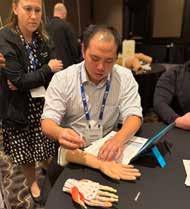
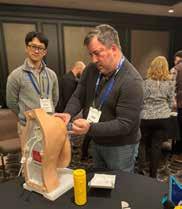

Comfortable rooms. Bowling. An indoor water park. Margaritaville offers the ideal environment for stepping away from the pressure of daily practice and immersing yourself in two days of learning, reconnection, and renewal in the heart of the state.
If 2025 proved anything, it’s that physicians and their families need and deserve a place to breathe.
2. High-Impact CME for an Ever-Changing Healthcare Landscape 2026 will build on what attendees loved in 2025:
• Practical, family medicine content tailored for the needs of Missouri communities
• Updates that matter for real-world practice
• Workshops that build confidence
• Sessions addressing the realities of primary care
You’ll leave with actionable insights and the kind of motivation that carries you through the year.

Present at our 2026 coference! Learn more: https://forms.office.com/pages/responsepage. aspx?id=4KzpYk8vSEe27fc7mHsIhq4cF3_4CeBA olIvRfPLE-xUMDFaVU1GVEZFS0ZEWkY1OFA0W ko2VTI4QS4u&route=shorturl
3. The Connections You Make Will Carry You Forward
Conference friendships and professional networks can change careers and sustain physicians through tough seasons. At Margaritaville, those connections will only deepen. Whether you’re a seasoned physician, early-career doctor, resident, or student, this is the place to find your people.
The 2025 experience proved it: Community isn’t optional. It’s essential.
4. Registering Early Ensures You’re Part of the Story
Early registration means the best room selection, access to limited-capacity workshops, and peace of mind knowing you’ve secured your place before the conference and room block sells out.
Early registration is open until September 1, 2026. Late Registration fees will be assessed, and lodging cannot be guaranteed beginning October 13, so don’t wait! And who knows, there may even be fruity drinks and beach snacks at some of our breaks…
Be part of the group posting photos in your Hawaiian shirt and flop flops instead of watching from the sidelines.
Abbott
ACCESS Family Care
Aetna (Lodging Sponsor)
American Academy of Family Physicians
Axsome Therapeutics
BJC Health System (Gold Sponsor)
Citizens Memorial Hospital (Gold Sponsor)
CoxHealth
Docs Who Care
Dynavax Technologies
evolvedMD
Freeman Health System (Gold Sponsor)
Home State Health
Humana Healthy Horizons (Gold Sponsor)
The Missouri Academy of Family Physicians (MAFP) is proud to present the first-ever Presidential Award for Excellence in Family Medicine to Heidi B. Miller, MD, Chief Medical Officer of the Missouri Department of Health and Senior Services (DHSS). Established in 2025, this award recognizes significant contributions to Missouri family medicine in the previous year.
Dr. Miller has been a strong advocate for primary care, highlighting its essential role in public health, workforce development, maternal health, and access to care. She provides clinical and strategic guidance across DHSS divisions while maintaining a primary care practice at Family Care Health Centers in St. Louis.
Dr. Miller trained at Yale University and Harvard Medical School and completed her residency at Brigham and Women’s Hospital. Her career is marked by numerous honors, including the MHCA Health Care Champion Award, St. Louis Business Journal 40 Under 40, Gold Humanism Honor Society, and St. Louis 2025 Titan 100 recognition.
In accepting the award, Dr. Miller reflected on her early inspiration in primary care, the mentors who shaped her clinical career, and the family physicians who guided her when she began
Jordan Valley Community Health Center (Gold Sponsor)
Kansas City Hospice & Palliative Care
Kowa Pharmaceuticals America
Lakeland Behavioral Hospital
MagMutual (Gold Sponsor)
Missouri Primary Care Association
Missouri Psychiatry Access Programs
Molina (Diamond Sponsor)
Novo Nordisk
SSM Health
The Tasty Balance Dietitians
University of Missouri

practicing in Missouri’s safety-net clinics. She expressed deep gratitude for her partnership with MAFP, noting the Academy’s leadership in driving statewide GME strategy, expanding workforce initiatives, and advocating for evidence-based policy solutions.
“Family medicine physicians remain at the center of Missouri’s health future—grounding communities, uplifting patient voices, and shaping policy with compassion and clarity,” Dr. Miller said. “We need you. Missouri needs you. And we need to listen to you, learn from you, and replicate you.”
MAFP congratulates Dr. Miller on this well-deserved honor and applauds her tireless advocacy for family medicine and dedication to improving the health of all Missourians.
The Missouri Academy of Family Physicians (MAFP) is proud to announce Kelly Dougherty, MD, as the 2025 Outstanding Resident of the Year. A 2025 graduate of the Mercy Family Medicine Residency Program, Dr. Dougherty now serves as a family physician at Compass Health Federally Qualified Health Center (FQHC) in Festus, Missouri.
Dr. Dougherty is widely recognized by colleagues and mentors as a compassionate, dedicated, and inspiring physician whose presence elevates everyone around her. Known for her empathy, determination, and authenticity, she exemplifies the core values of family medicine—comprehensive care, compassion, and a deep commitment to community.
During her training, Dr. Dougherty held numerous leadership and advocacy roles within MAFP—on the Board of Directors and key committees—where she consistently made a meaningful impact.
Her residency career is marked by numerous honors, including scholarships and awards from STFM, AAFP, AFMRD, and recognition for the Best Graduate Medical Education Poster at the Mercy Robert W. Taylor Research Colloquium.
The Missouri Academy of Family Physicians (MAFP) is proud to present the 2025 Distinguished Service Award to Darryl Nelson, MD, FAAFP, recognizing his long-time dedication to advancing, contributing, and supporting both MAFP and the specialty of family medicine. This award honors members, nonmembers, and organizations whose leadership and service have had a lasting impact on family medicine in Missouri.
After a 38-year career with HCA Healthcare, Dr. Nelson recently retired as Chief Medical Officer at Centerpoint Medical Center. Through his work as a physician and healthcare leader, he has set the standard for compassionate care and made a lasting impact on patients, colleagues, and communities in Kansas City and beyond.
A Kansas City native, Dr. Nelson earned his medical degree from UMKC and completed his residency at Research Medical Center. He began his career in 1989 at Lee’s Summit Family Care, providing two decades of patient-centered care, and later served as Division CMO overseeing quality, safety, and clinical operations for 15 facilities across four states.
In addition to his professional work, Dr. Nelson has volunteered and held leadership roles with numerous organizations—including Lee’s Summit Social Services, the American Cancer Society, United Way, Special Olympics, Habitat for Humanity, and more—and has supported MAFP events by donating airplane tours and attending Family Medicine Mixers statewide.

In accepting the award, Dr. Dougherty thanked the Missouri Academy for shaping her leadership journey and credited her mentors, teachers, and husband for their support.
“This award isn’t just recognition of the past—it’s a reminder of the work still ahead,” Dr. Dougherty said. “I will continue to fight for Family Medicine and to advocate for our patients, our colleagues, and the future of our specialty.”
The MAFP congratulates Dr. Dougherty on this well-deserved honor and celebrates her ongoing commitment to strengthening family medicine in Missouri and beyond.

Dr. Nelson is celebrated as a healthcare champion whose dedication and compassion extend far beyond the clinic, positively impacting patients, colleagues, and communities alike.
Reflecting on the honor, Dr. Nelson said, “Serving with MAFP over the years has been one of the most rewarding experiences of my career. Watching our leaders advocate for patients and collaborating with colleagues to improve care has inspired me since my first Academy event nearly 40 years ago. I am grateful to my family, partners, and colleagues for their support, and I am humbled to be recognized for something that has given me so much fulfillment.”
The Missouri Academy congratulates Dr. Nelson on this welldeserved honor and celebrates his decades of leadership, service, and dedication to strengthening family medicine in Missouri and beyond.
















John Paulson, DO, PhD, FAAFP, chair and associate professor of Primary Care at Kansas City University - Joplin (KCU), will serve as interim dean of the College of Health Professions for the next few months.
Dr. Paulson joined KCU in May 2017 as an assistant professor of Primary Care and was promoted to chair of Primary Care in November 2018. In addition to his responsibilities at KCU, he serves part-time as Chief Medical Officer for ACCESS Family Care, a federally qualified health center.
During this interim period, Dr. Paulson will work closely with Dr. Mitchell to support strategic development and resource planning for the Anesthesiologist Assistant (AA) program. Their collaboration will focus on growth projections, strengthening clinical partnerships and ensuring readiness to advance the long-term success of the program.
J. Lane Wilson, MD, FAAFP—Program Director of the UMKC Family Medicine Residency and Associate Professor at the University of Missouri–Kansas City School of Medicine—recently co-guest edited the September 2025 dermatologyfocused issue of Primary Care: Clinics in Office Practice. Dr. Wilson served as primary author on two articles, Neonatal Dermatology and Benign Skin Tumors, and was also a contributing author on Disorders of Pigmentation.
The issue also highlighted the work of UMKC Family Medicine faculty and learners. Associate Professor Bridgid Wilson, MD, PhD, was the primary author of Dermatologic Conditions of Pregnancy, with current PGY-3 and chief resident Kirsten Daniel, DO, serving as a co-author—underscoring the program’s commitment to scholarly collaboration and resident education.
In addition, the UMKC Family Medicine Department was featured in the September/October 2025 issue of Missouri Medicine. Faculty-authored articles addressed timely and impactful topics including the primary care workforce crisis, lifestyle medicine, long-term implications of pregnancy-related conditions, best practices for intravenous fluids in hospitalized patients, and integrating substance use disorder treatment into primary care.
Kento Sonoda, MD, FASAM, AAHIVS, and Galen Hoft, DO (PGY2), SSM Saint Louis University Family Medicine Residency were featured in the December 2025 issue of American Family Physician for their article, “Interventions for Smokeless Tobacco Cessation.” The article highlights evidence-based strategies family physicians can use to support patients in quitting smokeless tobacco, underscoring the important role of primary care in prevention and longterm health.
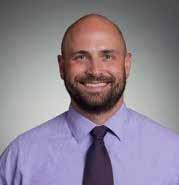

The University of Missouri Columbia Family Medicine residency was recently awarded a HRSA federal residency training grant for curriculum development focusing on rural underserved care.
We love to hear from our members!

Ed Kraemer, MD, has been named the 2025 recipient of the Vision to Action Award by the Center for Practical Bioethics, which honors individuals who demonstrate exceptional leadership in public health, ethics, and community engagement. He was recognized at the Flanigan Lecture on November 12 for his sustained commitment to improving public health and fostering ethical decision-making in medicine.
Dr. Kraemer serves as Assistant Professor of Clinical Medicine at UMKC, Medical Director of the MMS-PA Program, and a longtime leader in medical ethics education. He chaired the University Health–Lakewood Ethics Subcommittee from 2012 to 2023 and continues as vice chair and a member of the UH-Truman Ethics Committee. His career reflects a lasting dedication to ethics, education, and public health—truly embodying the spirit of the Vision to Action Award.
Kevin Gray, MD, MBA, CAQ SM, FAAFP, is the 2025 recipient for the University of Missouri Kansas City School of Medicine (UMKCSOM) Clinical Affiliate Teaching Award. Representing University Health, Dr. Gray is an Associate Professor In the Department of Community and Family Medicine.
This award celebrates a faculty member who is recognized for their clinical teaching at one of the school’s clinical affiliates.
Pamela Ralls, MD, was presented with the Community Preceptor Award which celebrates a community preceptor for their outstanding communitybased patient care while teaching the school’s learners.
Dr. Ralls is a Clinical Assistant Professor in the Department of Community and Family Medicine practicing and precepting medical students at Carroll County Memorial Hospital.

Kristen Hemmersmeier, DO, was awarded first place in the clinical sciences division at the 2025 University of Missouri Health Sciences Research Day for her poster “The Effect of Offering Colon Cancer Screening Options on the Number of Patients over 45 that Complete Screening.”
Dr. Hemmersmeier is a PGY3 at University of MissouriColumbia’s Family Medicine Residency Program.



EmorySchoolofMedicine,Atlanta,GA
Congratulations Logan Steins, MD on matching into a fellowship in Medical Toxicology at Emory School of Medicine, Atlanta, GA.
Congratulations to Dr. Logan Stiens on matching into fellowship. He will complete his residency training this summer and continue his medical training.
Dr. Steins will complete his residency training at the University of Missouri Bothwell Rural Family Medicine Residency and continue his medical training.
























Class of 2026
Class of 2027
Class of 2028
The I-SHLAFF Intake Framework: A Brief Initial Interview for Integrated Care Settings pages 9
1. Alblooshi, S., Taylor, M., & Gill, N. (2023). Does menopause elevate the risk for developing depression and anxiety? Results from a systematic review. Australasian Psychiatry, 31(2), 165-173. https://doi. org/10.1177/10398562231165439
2. American Society for Addiction Medicine. (2020). Clinical practice guidelines. https://www.asam.org/quality-care/clinical-guidelines/national-practiceguideline
3. Armour CR, Nayfach SPollard KS, Sharpton TJ2019.A Metagenomic Metaanalysis Reveals Functional Signatures of Health and Disease in the Human Gut Microbiome. mSystems4:10.1128/msystems.00332-18.https://doi. org/10.1128/msystems.00332-18
4. Asnaani, A., & Hofmann, S. G. (2012). Collaboration in multicultural therapy: Establishing a strong therapeutic alliance across cultural lines. Journal of Clinical Psychology, 68(2), 187-197. https://doi.org/10.1002/jclp.21829
5. Awick, E. A., Ehlers, D. K., Aguiñaga, S., Daugherty, A. M., Kramer, A. F., & McAuley, E. (2017). Effects of a randomized exercise trial on physical activity, psychological distress and quality of life in older adults. General hospital psychiatry, 49, 44–50. https://doi.org/10.1016/j.genhosppsych.2017.06.005
6. Baird, M. A., Hepworth, J., Myerholtz, L., Reitz, R., & Danner, C. (2017). Fifty years of contributions of behavioral science in family medicine. Fam Med, 49(4), 296-303.
7. Bolton, D., & Gillett, G. (2019). The biopsychosocial model 40 years on. The biopsychosocial model of health and disease: New philosophical and scientific developments, 1-43. https://doi.org/10.1007/978-3-030-11899-0_1
8. Corlin, L., Short, M. I., Vasan, R. S., & Xanthakis, V. (2020). Association of the duration of ideal cardiovascular health through adulthood with cardiometabolic outcomes and mortality in the Framingham offspring study. JAMA cardiology, 5(5), 549-556. https://doi.org/10.1001/jamacardio.2020.0109
9. Curtis, R., & Christian, E. (2012). Integrated Care. Taylor & Francis.
10. Douaihy, A. B., Kelly, T. M., & Sullivan, C. (2013). Medications for substance use disorders. Social work in public health, 28(3-4), 264-278. https://doi.org/10.10 80/19371918.2013.759031
11. Edelman, N. L. (2023). Trauma and resilience informed research principles and practice: a framework to improve the inclusion and experience of disadvantaged populations in health and social care research. Journal of Health Services Research & Policy, 28(1), 66-75. https://doi.org/10.1177/13558196221124740
12. Engel, G. L. (1977). The need for a new medical model: a challenge for biomedicine. Science, 196(4286), 129-136. https://doi.org/10.1126/ science.847460
13. Engemann, K., Pedersen, C. B., Arge, L., Tsirogiannis, C., Mortensen, P. B., & Svenning, J.-C. (2019). Residential green space in childhood is associated with lower risk of psychiatric disorders from adolescence into adulthood. Proceedings of the national academy of sciences, 116(11), 5188-5193. https:// doi.org/10.1073/pnas.1807504116
14. Ferber, M., Meyer, D., Heiden-Rootes, K., & Zubatsky, M. (2022). Behavioral Health in Primary Care: Expanding Applications in Practice. Missouri Medicine, 119(3), 237.
15. Goodrich, D. E., Kilbourne, A. M., Nord, K. M., & Bauer, M. S. (2013). Mental health collaborative care and its role in primary care settings. Current psychiatry reports, 15, 1-12. https://doi.org/10.1007/s11920-013-0383-2
16. Grewen, K. M., Anderson, B. J., Girdler, S. S., & Light, K. C. (2003). Warm partner contact is related to lower cardiovascular reactivity. Behavioral medicine, 29(3), 123-130. https://doi.org/10.1080/08964280309596065
17. Holt-Lunstad, J., Smith, T. B., & Layton, J. B. (2010). Social relationships and mortality risk: a meta-analytic review. PLoS medicine, 7(7), e1000316. https:// doi.org/10.1371/journal.pmed.1000316
18. Jetty, A., Petterson, S., Westfall, J. M., & Jabbarpour, Y. (2021). Assessing primary care contributions to behavioral health: a cross-sectional study using medical expenditure panel survey. Journal of primary care & community health, 12, 21501327211023871. https://doi.org/10.1177/21501327211023871
19. Keyes, K., McLaughlin, K., Demmer, R., Cerda, M., Koenen, K., Uddin, M., & Galea, S. (2013). A prospective study to assess the relation between different traumatic events and the risk of six physical health conditions in a populationbased sample. Comprehensive Psychiatry, 54(1), e5. https://doi.org/10.1016/j. comppsych.2012.07.029
20. Kraiss, J. T., Ten Klooster, P. M., Moskowitz, J. T., & Bohlmeijer, E. T. (2020). The relationship between emotion regulation and well-being in patients with mental disorders: A meta-analysis. Comprehensive psychiatry, 102, 152189. https://doi.org/10.1016/j.comppsych.2020.152189
21. Kroenke, K., Spitzer, R. L., & Williams, J. B. (2001). The PHQ-9: validity of a brief depression severity measure. Journal of general internal medicine, 16(9), 606–613. https://doi.org/10.1046/j.1525-1497.2001.016009606.x
22. Liang, Y.-S., & Shepherd, M. A. (2020). A multicultural content analysis of mental
health private practices’ websites and intake forms. Professional Psychology: Research and Practice, 51(4), 325.
23. Liew, S. C., & Aung, T. (2021). Sleep deprivation and its association with diseases- A review. Sleep medicine, 77, 192–204. https://doi.org/10.1016/j. sleep.2020.07.048
24. Mancini, M. A. (2021). Integrated behavioral health practice. Springer.
25. McDaniel, S. H., Hepworth, J., & Doherty, W. J. (1992). Medical family therapy: A biopsychosocial approach to families with health problems. Basic Books.
26. Meyer, D., Ferber, M., Chen, S., Keyvani, S., Samanta, J., Stratman, H., & Wang, W. (2024). Health Behaviors and Health Status in Couples Experiencing Pandemic Stress. The Family Journal, 10664807241226697. https://doi. org/10.1177/10664807241226697
27. Meyer, D., Salas, J., Barkley, S., & Buchanan, T. W. (2019). In sickness and in health: Partner’s physical and mental health predicts cortisol levels in couples. Stress, 22(3), 295-302. https://doi.org/10.1080/10253890.2018.1561843
28. Michalski, C. A., Diemert, L. M., Helliwell, J. F., Goel, V., & Rosella, L. C. (2020). Relationship between sense of community belonging and self-rated health across life stages. SSM - population health, 12, 100676. https://doi. org/10.1016/j.ssmph.2020.100676
29. Milano, N., Petruzzi, L., Covington, E., Jones, B., & Findley, P. A. (2022). Social workers in integrated care beyond primary care: a scoping review. Translational behavioral medicine, 12(11), 1038-1048. https://doi.org/10.1093/tbm/ ibac082
30. Moise, N., Wainberg, M., & Shah, R. N. (2021). Primary care and mental health: where do we go from here? World journal of psychiatry, 11(7), 271. https://doi. org/10.5498/wjp.v11.i7.271
31. Montejo, A. L. (2019). Sexuality and mental health: the need for mutual development and research. In (Vol. 8, pp. 1794): MDPI.
32. Nikolova VL, Smith MRB, Hall LJ, Cleare AJ, Stone JM, Young AH. Perturbations in Gut Microbiota Composition in Psychiatric Disorders: A Review and Meta-analysis. JAMA Psychiatry. 2021;78(12):1343–1354. doi:10.1001/ jamapsychiatry.2021.2573
33. Office of National Drug Control Policy. (2012). Screening, brief intervention, and referral to treatment (SBIRT). [Washington, D.C.] :Office of National Drug Control Policy (ONDCP), Substance Abuse and Mental Health Services Administration (SAMHSA),
34. Poghosyan, L., Norful, A. A., Ghaffari, A., George, M., Chhabra, S., & Olfson, M. (2019). Mental health delivery in primary care: the perspectives of primary care providers. Archives of psychiatric nursing, 33(5), 63-67. https://doi. org/10.1016/j.apnu.2019.08.001
35. Rebar, A. L., Stanton, R., Geard, D., Short, C., Duncan, M. J., & Vandelanotte, C. (2015). A meta-meta-analysis of the effect of physical activity on depression and anxiety in non-clinical adult populations. Health Psychology Review, 9(3), 366–378. https://doi.org/10.1080/17437199.2015.1022901
36. Reif, S., George, P., Braude, L., Dougherty, R. H., Daniels, A. S., Ghose, S. S., & Delphin-Rittmon, M. E. (2014). Residential treatment for individuals with substance use disorders: assessing the evidence. Psychiatric services (Washington, D.C.), 65(3), 301–312. https://doi.org/10.1176/appi. ps.201300242
37. Reitz, R., Fifield, P., & Whistler, P. (2011). Integrating a behavioral health specialist into your practice. Family practice management, 18(1), 18-21. https://www.aafp.org/pubs/fpm/issues/2011/0100/p18.html
38. Rickards, H. (2006). Depression in neurological disorders: an update. Current Opinion in Psychiatry, 19(3), 294-298. https://doi.org/10.1097/01. yco.0000218601.17722.5b
39. Robles, T. F., Slatcher, R. B., Trombello, J. M., & McGinn, M. M. (2014). Marital quality and health: a meta-analytic review. Psychological Bulletin, 140(1), 140. https://doi.org/10.1037/a0031859
40. Ruiz, S. A., & Silverstein, M. (2007). Relationships with grandparents and the emotional well-being of late adolescent and young adult grandchildren. Journal of Social Issues, 63(4), 793-808. https://doi.org/10.1111/j.15404560.2007.00537.x
41. Scott, K. M., Koenen, K. C., Aguilar-Gaxiola, S., Alonso, J., Angermeyer, M. C., Benjet, C., Bruffaerts, R., Caldas-de-Almeida, J. M., De Girolamo, G., & Florescu, S. (2013). Associations between lifetime traumatic events and subsequent chronic physical conditions: a cross-national, cross-sectional study. PLoS One, 8(11), e80573. https://doi.org/10.1371/journal.pone.0080573
42. Shettler, J. A., Ott, R. C., & Reitz, R. S. (2023). Implementation of collaborative psychiatric care in a family medicine clinic: A quality assurance study. The International Journal of Psychiatry in Medicine, 58(3), 190-200. https://doi. org/10.1177/0091217422109251
43. Shields, C. G., Finley, M. A., Chawla, N., & Meadors, P. (2012). Couple and Family Interventions in Health Problems. Journal of Marital and Family Therapy, 38(1), 265-280. https://doi.org/10.1111/j.1752-0606.2011.00269.x
44. Soares, C. N., & Zitek, B. (2008). Reproductive hormone sensitivity and risk for depression across the female life cycle: a continuum of vulnerability? Journal of Psychiatry and Neuroscience, 33(4), 331-343.
45. Spitzer, R. L., Kroenke, K., Williams, J. B., & Löwe, B. (2006). A brief measure for assessing generalized anxiety disorder: the GAD-7. Archives of internal medicine, 166(10), 1092–1097. https://doi.org/10.1001/archinte.166.10.1092
46. Spitzer, C., Barnow, S., Völzke, H., John, U., Freyberger, H. J., & Grabe, H. J. (2009). Trauma, posttraumatic stress disorder, and physical illness: findings from the general population. Psychosomatic medicine, 71(9), 1012-1017. https://doi.org/10.1097/PSY.0b013e3181bc76b5
47. Substance Abuse and Mental Health Services Administration. (2014). SAMHSA’s concept of trauma and guidance for a trauma-informed approach. HHS Publication No. (SMA) 14-4884. http://hdl.handle.net/11212/1971 (Rockville, MD: Substance Abuse and Mental Health Services Administration.)
48. Swedo, E. A., Aslam, M. V., Dahlberg, L. L., Niolon, P. H., Guinn, A. S., Simon, T. R., & Mercy, J. A. (2023). Prevalence of adverse childhood experiences among US adults—behavioral risk factor surveillance system, 2011–2020. MMWR. Morbidity and Mortality Weekly Report, 72. https://doi.org/10.15585/mmwr. mm7226a2
49. Tervalon, M., & Murray-Garcia, J. (1998). Cultural humility versus cultural competence: A critical distinction in defining physician training outcomes in multicultural education. Journal of health care for the poor and underserved, 9(2), 117-125.
50. Treiman, K., Padwa, H., Mark, T. L., Tzeng, J., & Gilbert, M. (2021). “The assessment really helps you with the first step in recovery.” What do clients think substance use disorder treatment intake assessments should look like? Substance Abuse, 42(4), 880-887.
51. Trief, P. M., Ploutz-Snyder, R., Britton, K. D., & Weinstock, R. S. (2004). The relationship between marital quality and adherence to the diabetes care regimen. Annals of Behavioral Medicine, 27, 148-154. https://doi.org/10.1207/ s15324796abm2703_2
52. van den Berk-Clark, C., Gallamore, R., Barnes, J., Oberle, A., Meyer, D., & Schneider, F. D. (2021). Identifying and overcoming barriers to trauma screening in the primary care setting. Families, Systems, & Health, 39(2), 177. https://doi. org/10.1037/fsh0000593
53. van Dulmen, S., Sluijs, E., van Dijk, L. et al. Patient adherence to medical treatment: a review of reviews. BMC Health Serv Res 7, 55 (2007). https://doi. org/10.1186/1472-6963-7-55
54. Vermeesch, A. L., Ellsworth-Kopkowski, A., Prather, J. G., Passel, C., Rogers, H. H., & Hansen, M. M. (2024). Shinrin-Yoku (Forest Bathing): A Scoping Review of the Global Research on the Effects of Spending Time in Nature. Global advances in integrative medicine and health, 13, 27536130241231258. https:// doi.org/10.1177/27536130241231258
55. Waldinger, R., & Schulz, M. (2023). The good life: lessons from the world’s longest scientific study of happiness. Simon and Schuster.
pages 12
1. Issa I, et al. Eosinophilic cholecystitis: A challenging diagnosis. World Journal of Gastroenterology. 2013;19(30):5072-5075.
2. Al-Mofleh I, et al. Eosinophilic cholecystitis: A case report and review of the literature. Saudi Journal of Gastroenterology. 2010;16(4):288-290.
3. Fox A, et al. Eosinophilic cholecystitis: Pathophysiological mechanisms and implications. J Clin Pathol. 2015;68(11):897-902.
4. Taylor SR, et al. Hypersensitivity reactions to GLP-1 receptor agonists: A systematic review. Diabetes Therapy. 2020;11(2):439-455.
5. Matsunaga K, et al. Eosinophilic cholecystitis: A clinicopathological study of 10 cases. Human Pathology. 2021;108:1-7.
Case Report: The Nonspecific Ocular and Otic Manifestations of Neurosyphilis
pages 15
1. Papp JR, Park IU, Fakile Y, Pereira L, Pillay A, Bolan GA. CDC Laboratory Recommendations for Syphilis Testing, United States, 2024. MMWR Recomm Rep 2024;73(No. RR-1):1–32. DOI: http://dx.doi.org/10.15585/mmwr.rr7301a1
2. Stoltey JE, Cohen SE. Syphilis transmission: a review of the current evidence. Sex Transm Dis. 2015;42(1):3–11. PMC5973824.
3. Gupta M, Verma GK, Sharma R, Sankhyan M, Rattan R, Negi AK. The Changing Trend of Syphilis: Is It a Sign of Impending Epidemic? Indian J Dermatol. 2023 Jan-Feb;68(1):15-24. doi: 10.4103/ijd.ijd_788_22. PMID: 37151273; PMCID: PMC10162747.
4. Whiting C, Schwartzman G, Khachemoune A. Syphilis in Dermatology: Recognition and Management. Am J Clin Dermatol. 2023 Mar;24(2):287297. doi: 10.1007/s40257-022-00755-3. Epub 2023 Jan 23. PMID: 36689103; PMCID: PMC9869822.
5. Ha T, Tadi P, Leslie SW, Dubensky L. Neurosyphilis. 2024 Apr 21. In: StatPearls [Internet]. Treasure Island (FL): StatPearls Publishing; 2025 Jan–. PMID: 31082023.
6. Gao, Z-X., Gou, Y., Liu, X-Q., & Peng, L-W. (2022). Advances in laboratory diagnostic methods for cerebrospinal fluid testing for neurosyphilis. Frontiers in Public Health, 10. https://doi.org/10.3389/fpubh.2022.1030480
7. Marx GE, Dhanireddy S, Marrazzo JM, Tuddenham SA, Rompalo AM, Leone PA, Gaydos CA, Rietmeijer CA. Variations in Clinical Presentation of Ocular Syphilis: Case Series Reported From a Growing Epidemic in the United States. Sex Transm Dis. 2016 Aug;43(8):519-23. doi: 10.1097/OLQ.0000000000000477. PMID: 27419818; PMCID: PMC5755588.
8. Missouri Department of Health and Senior Services. (2022, June 15). Update 1: Sustained increase in syphilis cases in Missouri [Health Update]. http://www. health.mo.gov/emergencies/ert/alertsadvisories/pdf/update061522.pdf
9. Reid, G.A., Halmagyi, G.M., Whyte, C. et al. Ocular vs neurosyphilis. are they the same? A guide to investigation and management. Eye 38, 2337–2349 (2024). https://doi.org/10.1038/s41433-024-03150-w
10. Koundanya VV, Tripathy K. Syphilis Ocular Manifestations. [Updated 2023 Aug 25]. In: StatPearls [Internet]. Treasure Island (FL): StatPearls Publishing; 2025 Jan-. Available from: https://www.ncbi.nlm.nih.gov/books/NBK558957/
11. Cheng, H., Zhu, H., Shen, G., Cheng, Y., Gong, J., & Deng, J. (2024). Ocular findings in neurosyphilis: A retrospective study from 2012 to 2022. Frontiers in Neurology, 15. https://doi.org/10.3389/fneur.2024.1472274
pages 18
1. Seidman MD, Gurgel RK, Lin SY, et al. Clinical Practice Guideline: Allergic Rhinitis. Otolaryngology–Head and Neck Surgery. 2015;152(1_suppl):S1-S43. doi:10.1177/0194599814561600
2. Front. Allergy, 13 July 2021 Sec. Rhinology. Volume 2 - 2021 | https://doi. org/10.3389/falgy.2021.706589
3. Kulig M, Klettke U, Wahn V, Foster J, Bauer CP, Whan U. J Allergy Clin Immunol. 2000. 105(5):832.
4. Masuda S, Fujisawa T, Katsumata H, Atsuta J, Iguchi K. High prevalence and young onset of allergic rhinitis in children with bronchial asthma. Pediatr Allergy Immunol. 2008 Sep;19(6):517-22. doi: 10.1111/j.1399-3038.2007.00675.x. Epub 2008 Jan 22. PMID: 18221475.
5. Benninger, Michael et al. Evaluating approved medications to treat allergic rhinitis in the United States: an evidence-based review of efficacy for nasal symptoms by class. Annals of Allergy, Asthma & Immunology, Volume 104, Issue 1, 13 – 29.
6. Verdu E, Blanc-Brisset I, Meyer G, Le Roux G, Bruneau C, Deguigne M. Secondgeneration antihistamines: a study of poisoning in children. Clin Toxicol (Phila). 2020 Apr;58(4):275-283. doi: 10.1080/15563650.2019.1634812. Epub 2019 Jul 4. PMID: 31271318.
7. Campoli-Richards DM, Buckley MM, Fitton A. Cetirizine. A review of its pharmacological properties and clinical potential in allergic rhinitis, polleninduced asthma, and chronic urticaria. Drugs. 1990 Nov;40(5):762-81. doi: 10.2165/00003495-199040050-00009. PMID: 1981354.
8. Parisi GF, Leonardi S, Ciprandi G, Corsico A, Licari A, Miraglia Del Giudice M, Peroni D, Salpietro C, Marseglia GL. Antihistamines in children and adolescents: A practical update. Allergol Immunopathol (Madr). 2020 NovDec;48(6):753-762. doi: 10.1016/j.aller.2020.02.005. Epub 2020 May 21. PMID: 32448753.
9. Zhang L, Cheng L, Hong J. The clinical use of cetirizine in the treatment of allergic rhinitis. Pharmacology. 2013;92(1-2):14-25. doi: 10.1159/000351843. Epub 2013 Jul 18. PMID: 23867423.
10. Wang H, Ji Q, Liao C, Tian L. A systematic review and meta-analysis of loratadine combined with montelukast for the treatment of allergic rhinitis. Front Pharmacol. 2023 Oct 17;14:1287320. doi: 10.3389/fphar.2023.1287320. PMID: 37915414; PMCID: PMC10616259.
11. Barrie Cohen; Allergic Rhinitis. Pediatr Rev October 2023; 44 (10): 537–550. https://doi-org.proxy.library.emory.edu/10.1542/pir.2022-005618
Missouri Academy of Family Physicians
722 West High Street
Jefferson City, MO 65101