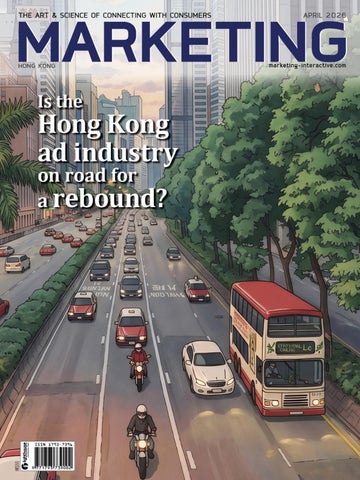
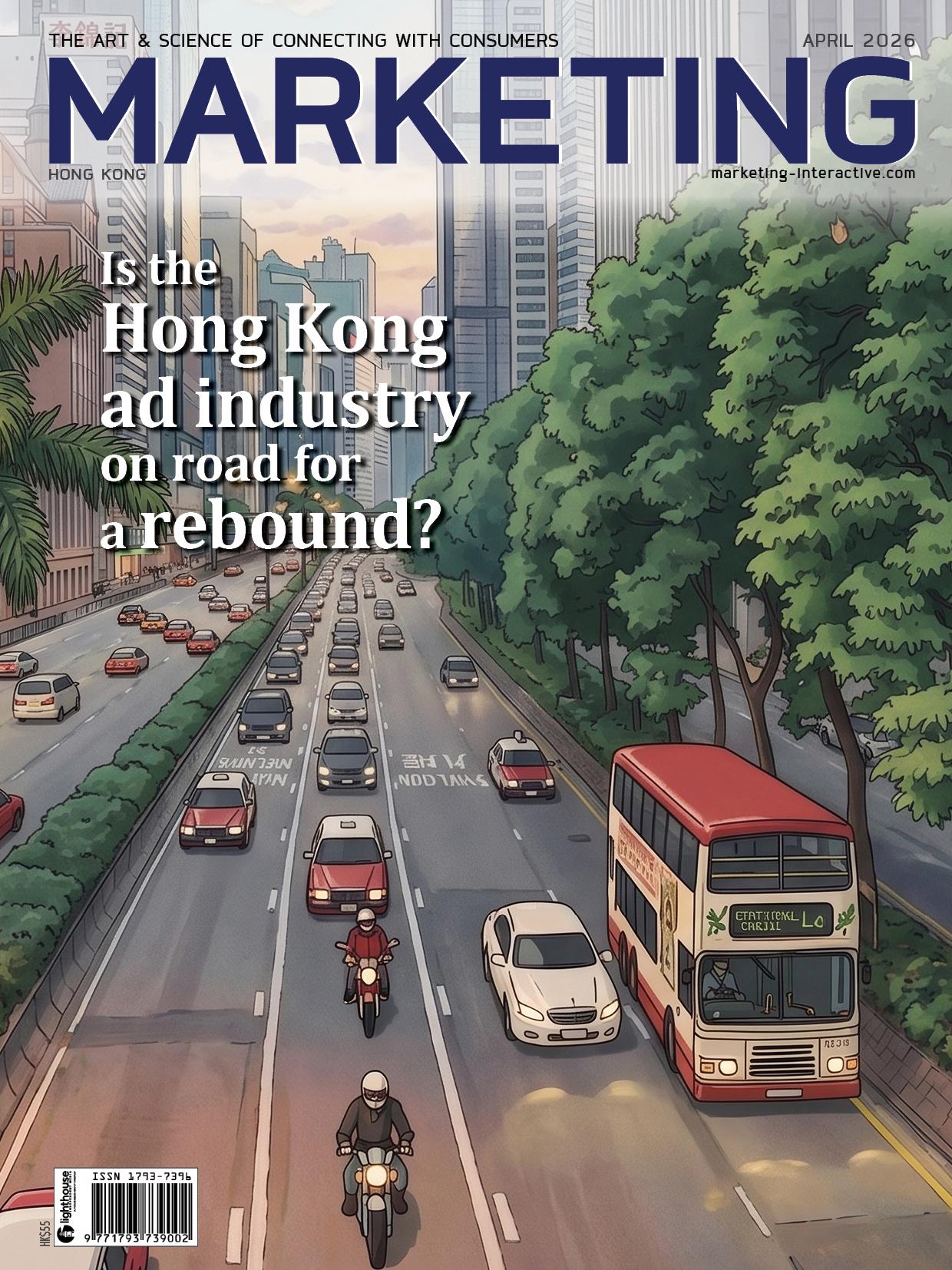
Welcome to our April issue. If the first quarter of 2026 has taught us anything, it’s that the Hong Kong marketing scene is remarkably adept at shedding its skin. After a period of “cautious optimism”, the numbers are finally doing the talking.
With ad spending climbing 12% in the first two months of the year, we find ourselves asking the question on every CMO’s lips: “Is this the definitive rebound?”
Our cover story takes a deep dive into this recovery. While sectors such as travel and banking are fuelling a massive resurgence – with some players reporting quadruple-digit growth in spend – the landscape they are returning to is fundamentally different. It is more social, more fragmented, and increasingly driven by “story-making” rather than just storytelling.
Speaking of transformation, we address the two tech giants currently dominating the boardroom conversation: Google Gemini and OpenClaw.
In our feature story, we explore how Gemini’s localised capabilities in Hong Kong are finally moving AI from a “cool tool” to a core colleague. Read more on page 16.
But the real curveball this year has been the “lobster fever”. Our “OpenClaw for Dummies” guide breaks down why this open-source agentic AI has marketers “farming lobsters” to automate everything from media buying to community management. Whether you’re an early adopter or a sceptic, the “one person company” revolution is no longer a niche geek trend, it’s a productivity mandate.
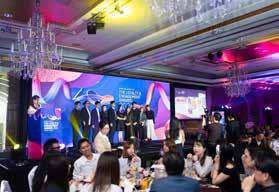
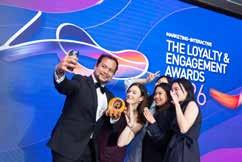
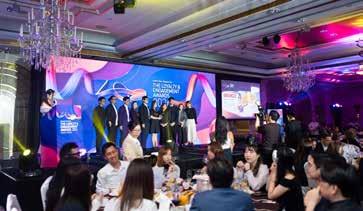
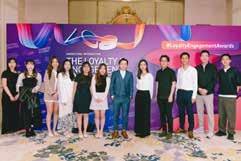
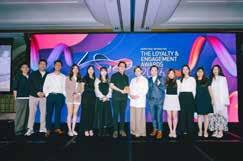
We were also proud to celebrate the spirit of connection at the Loyalty & Engagement Awards 2026. The winners and finalists reminded us that while AI can optimise a funnel, only authentic narratives can win hearts. Congratulations to all the brands and partners recognised this year – your work is a lighthouse for an industry finding its stride again.
Whether you’re a marketer, brand leader or a creative, we hope this issue sparks new ideas and inspires your next big move.
Enjoy the read.
To get in touch with our editorial team editorialhk@marketing-interactive.com
For advertising enquiries
Karen Yung, kareny@lighthouse-media.com
Mandy Ma, mandym@marketing-interactive.com
Sally Hui, sallyh@lighthouse-media.com
Aaron Cheung, aaronc@marketing-interactive.com
Lighthouse Independent Media Ltd. Printed in Hong Kong by Apex Print Limited. For subscriptions, contact circulations at +852 2861 1882 or email subscriptions@marketing-interactive. com. COPYRIGHT & REPRINTS: All material printed in Marketing is protected under the copyright act. All rights reserved. No material may be reproduced in part or in whole without the prior written consent of the publisher and copyright holder. Permission may be requested through the Hong Kong office. Disclaimer: The views and opinions expressed in Marketing are not necessarily the views of the publisher. Hong Kong: Lighthouse Independent Media Ltd, publisher of Marketing magazine 15/F, Golden Star Building, 20-24 Lockhart Road, Wanchai, Hong Kong Tel: +852 2861 1882 Fax: +852 2861 1336 Singapore: Lighthouse Independent Media Pte Ltd 100C Pasir Panjang Road, #05-01 See Hoy Chan Hub, Singapore 118519 Tel: +65 6423 0329 Fax: +65 6423 0117
To subscribe to MARKETING-INTERACTIVE, go to: www.marketing-interactive.com
SCAN TO SUBSCRIBE
Karen Wong Deputy Editor, North Asia
What’s on?
MARKies Awards
What: An annual awards show honouring outstanding marketing campaigns that have demonstrated creative excellence, innovative strategies, and measurable results.
Where: JW Marriott Hotel Hong Kong
When: 29 May
Content360 Hong Kong
What: A conference that aims to foster discussions on the diverse aspects of content marketing, including the latest content trends, content creation processes, audience segmentation, content collaborations, and the customisation of content for emerging marketing channels.
Where: Kerry Hotel, Hong Kong
When: 24 June
“To protect your privacy, you must treat every prompt as a public record: audit your settings, disable chat history, and never share what you wouldn’t want to be publicly known.”
AI CHATBOTS ARE GETTING ‘AGGRESSIVELY’ DATA HUNGRY
Popular AI chatbot apps – including Meta AI, Google Gemini, and ChatGPT – collect a wide range of user information such as contact details, search and browsing histories, and other user content. Meanwhile, 70% of popular AI chatbots now collect user location data, up from 40% last year, according to an analysis by cybersecurity firm Surfshark.
Surfshark analysed the privacy details of 10 popular AI chatbots on Apple’s App Store, looking at what data each collects, whether it’s linked to users, and whether third-party advertisers are included.
According to the analysis, Meta AI continues to collect the most user data among the apps examined, gathering 33 out of 35 possible data types – nearly 95% of the total. It remains the only app that collects data in the financial information category.
Meta AI, alongside Google Gemini, also collects sensitive information, including race, sexual orientation, pregnancy, disability, religion, political opinions, genetic data, and biometrics.
“Unlike traditional search engines, these bots now handle highly sensitive uploads such as tax documents and medical records, which can be shared across massive third-party networks for targeted ads,” said Tomas Stamulis, chief security officer at Surfshark.
Tomas Stamulis, chief security officer Surfshark
• Google Gemini collects 23 of the 35 data types, including personal details, contacts, browsing histories, and precise locations, which many view as excessive and intrusive.
• Apple’s App Store shows ChatGPT may now collect 17 of the 35 data types, a 70% increase from 10 last year, adding coarse locations, health and fitness, search histories, audio, advertising, and customer support.
• Claude, the fourth most data-hungry chatbot, collects 13 of the 35 data types. Some data such as coarse locations and user content may also be used for analytics and advertising, indicating an extensive use of user data.
• DeepSeek is the fifth-hungriest chatbot and collects 13 unique types of data, including user input and chat histories; and claims to retain information for as long as necessary, storing it on servers located in China.
• Unlike other AI chatbots that operate under US federal law and who cooperate with regulators, DeepSeek is not bound by comparable frameworks such as the General Data Protection Regulation. This lack of oversight heightens concerns over accountability and data protection.
Source: Surfshark
AD WATCH
John Koay Chief creative officer, Hong Kong Omnicom Advertising
After walking around town looking at billboards, doom-scrolling on my phone, and watching a bit of TV (yes, I’m that old) to look for a good ad, I finally landed on something I liked. This was a standout winner for me.
I really enjoyed Cathay’s “Nobody does rugby like Hong Kong”. The Hong Kong Rugby Sevens happens every year, and to do something new and refreshing each year isn’t easy. But this was done in an entertaining way that showcased some of the best places in our city.
The casting was superb, and it really made you feel the energy building up to the launch at Kai Tak Stadium.
This, alongside some of the other components of this campaign that started earlier, really hit the mark for me. It was engaging and fun. The film was also shot well, and it showed how much production quality matters. Hats off to the teams who worked on this!
NOT: NARCOTICS DIVISION, SECURITY BUREAU’S “LISTEN TO ME: LET’S STAND FIRM. KNOCK DRUGS OUT!” ANTI-DRUG PUBLICITY CAMPAIGN
I think the winner of this would be the “Listen to me: Let’s stand firm. Knock drugs out!” campaign featuring Aaron Kwok for the Narcotics Division, Security Bureau and the Action Committee Against Narcotics.
No, it’s not bad because of the out-of-home blunder that went viral (that was quite funny), but the fact that this was another public service announcement message that was slapped on a celebrity that had little relevance to the target market.
But before I put this in the bad basket, I had to ask for more opinions outside of our field in case I had missed something or was biased.
I had dinner with a friend with the nickname Ma Ma Day, and even she said it was very “ma ma day” – which means very average in Cantonese. Then another friend said her nieces and nephews in their late teens and early 20s didn’t even know the song it was based on.
I really think we need to think of better ways to accurately reach the target audience, rather than just stick to a famous face that only the decision makers can relate to.
Will Hong Kong’s ad industry rebound in 2026?
Hong Kong’s ad market closed 2025 on a high note, but can it carry that momentum into 2026? After a year of conservative budgets and shifting consumer habits, Q4 delivered a 5% rebound in ad spend, offering a glimmer of optimism for an industry that spent much of 2025 waiting for clarity.
And with banking, travel, and healthcare clients planning more confidently, and digital channels such as Instagram and social video leading the charge, agency leaders are cautiously predicting selective growth ahead. Karen Wong spoke to adland players to find out if 2026 will deliver the rebound everyone’s betting on.
Hong Kong’s advertising market recorded a slight decline in 2025, with total ad spend reaching HK$33.9 billion, according to admanGo’s latest ad spend report. The year followed a “decline-then-stabilisation” trajectory.
Year-on-year (YOY) decreases were observed across the first three quarters, before a notable 5% YOY rebound in Q4, signalling a gradual recovery in advertiser confidence towards the end of the year.
While US tariffs had yet to directly impact local business activity in early 2025, changing
consumer behaviours – including a continued trend of Hongkongers travelling northbound or overseas – led to structural shifts in local consumption.
This prompted advertisers to adopt a more conservative approach to budget allocation. However, positive developments such as the government’s promotion of mega events and interest rate cuts from banks in the second half of the year, helped counterbalance the macroeconomic uncertainties and supported overall consumer sentiment.
As a result, certain sectors, including banking, pharmaceuticals, travel, and toiletries, saw YOY increases in ad spend, reflecting a modest recovery in market confidence.
Kenny Ip, vice president of media and partnership management at WPP Media HK, described 2025 as a cautious year for many advertisers. “We also saw a lot of Hongkongers spending more time and money outside the city – many crossing the border to the north or overseas – which changed where and how brands wanted to invest,” he said.
“That uncertainty only started to ease towards the end of the year, which is why Q4 showed a clearer recovery, as admanGo pointed out.”
“Platforms such as Instagram are ideal for brands in beauty, banking, and travel that need quick scale and measurable performance.”
Echoing his thoughts, David Chan, head of trading and partnership at dentsu Hong Kong, highlighted the shift in Mainland Chinese visitor behaviour, which is now more focused on experiential spending.
“For restaurants, people are spending more on ‘This This Rice’ and most of these are small shops with no advertising budgets at all,” Chan said.
“The bigger QSR (quick service restaurants) and restaurant chains are trying their best to maintain their competitiveness and top-of-mind awareness by offering tactical discounts and offers to encourage repeat purchases.”
Social media leads the way
From a media perspective, social media ranked first in ad spend in 2025, recording a 15% YOY increase, the strongest performance among all media channels. Within social media, Instagram posted a 35% YOY growth in ad spend, the highest growth rate in the category. Mobile, TV, and SEM ranked second to fourth respectively. Among traditional media, TV and outdoor both recorded YOY growth in ad spend.
“Social media is fast, flexible, and close to the consumer,” Ip said.
“Platforms such as Instagram are ideal for brands in beauty, banking, and travel that need quick scale and measurable performance.”
He noted that while print and some traditional formats remain under pressure, they are far from obsolete: “TV and outdoor still hold value, especially for banks and luxury brands seeking strong visibility.”
Social platforms are clearly driving changes in consumer behaviour, not only by providing information, but also by significantly boosting brand awareness and product exposure in ways that resonate strongly with the general public, said Derek Yip, chief operating officer, Omnicom Media Hong Kong.
“Unless innovative ideas emerge to capture audience attention effectively, shifts in budgets are most likely to impact print media rather than TV or OOH advertising, which continue to offer strong reach and visibility,” he said.
Chan added that the return to upper-funnel brand building also contributed to the rebound in traditional media. “Despite the decrease in spending in print in the past few years, we also saw the launching of new titles such as GQ Hong Kong which opened up more targeted options for advertisers.”
Looking ahead
Ip said he was cautiously optimistic about ad spending growth in 2026. “The rebound in Q4 was important, and we are already seeing more positive conversations with clients for 2026, especially in banking, travel, insurance and healthcare. These sectors stayed active in 2025 and are now planning more confidently.
“From a global perspective, WPP Media’s ‘This Year Next Year’ (TYNY) report also points to continued growth in digital, social video, AIdriven advertising and outofhome – areas where Hong Kong is well positioned. We are seeing this play out locally, particularly in digital OOH and social video. Growth will not be explosive, but the direction is positive.”
Based on a review of clients’ activities and ad spend over the past year, Yip is also cautiously optimistic about 2026 growth in Hong Kong.
“A key opportunity is China media solutions such as Xiaohongshu, Douyin, and other drama/short video platforms, which offer expanded reach to both local audiences and Chinese tourists, along with strong eCommerce potential,” he said.
“We expect increased investment in these channels from local clients. We expect increased spending here from local clients. Traditional media is expected to remain resilient amidst broader market pressures and the evolving media landscape. In summary, 2026
is likely to deliver selective, measured growth, with a clear emphasis on digital channels rather than a broad-based expansion.”
With tourism increasing in Hong Kong, Chan said he was seeing the retail, cosmetics and skincare and restaurant industries working hard to reinvent themselves and attract new customers.
“This saw a strong rebound of ad spend in Q4 2025, and I have confidence that investment in Hong Kong will be back to a positive trajectory in the near future. This does, however, depend on the outcomes of the global geopolitical environment and how soon property markets in Hong Kong will see a bounce back.”
SNAPPED
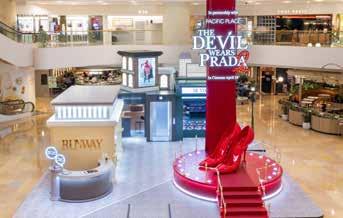
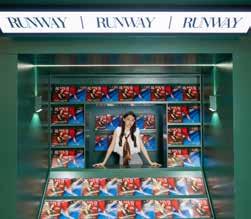
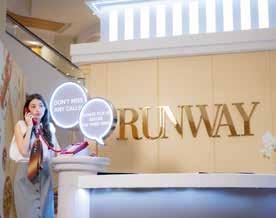
Pacific Place’s “Be Devilishly Fashionable”
DATE: 21 April – 17 May
VENUE: Pacific Place atrium
1. This spring-summer, Pacific Place has teamed up with the hit film “The Devil Wears Prada 2” to become Hong Kong’s fashion hot spot, turning the mall into a glamorous movie-inspired stage.
2. The main attraction is a pair of giant red heels, nearly two metres tall. Bold and dramatic, they capture the film’s glamour and make the perfect photo moment.
3. A lively fashion newsstand brings the media world’s buzz to life, giving visitors a peek into the stories, trends, and culture that drive the industry.
4. Visitors can step into the sleek reception of Runway Magazine to play receptionist and pick up the phone to hear famous lines from the movie.
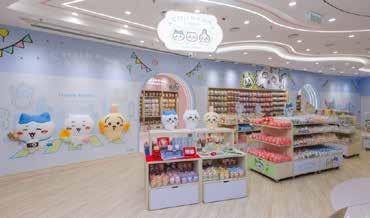
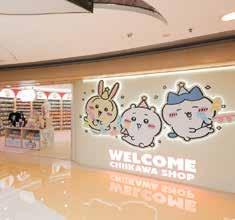
1. “Chiikawa Shop in Hong Kong”, the first permanent Chiikawa shop in Hong Kong, has opened at MOKO with two floors and over 4,000 square feet for photos and shopping.
2. The ground floor shop celebrates the local culture with two exclusive mascot series inspired by Hong Kong icons that are a collector’s gem, plus keychains, tote bags, and files.
3. The “Hong Kong Cha Chaan Teng series” features main characters – plushies – styled as local classics such as wonton noodles, pineapple buns with butter, and egg tarts.
4. Meanwhile, the Level 2 shop rotates themes starting with Magical Chiikawa and Chiikawa Baby, with a giant poster at the entrance greeting fans and setting a joyful mood.
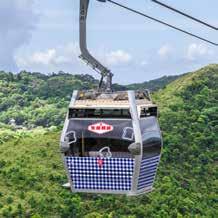
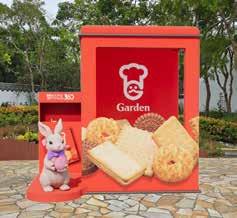
Ngong Ping 360 and Garden present: “Spring Delights Party”
DATE: 25 March – 10 May
VENUE: Ngong Ping cable car and Ngong Ping Village
1. Ngong Ping 360 and heritage brand Garden teamed up for an Easter campaign that tapped into shared nostalgia by reimagining familiar icons.
2. Life Bread-themed cable cars, including two limited-edition Crystal Cabins in the brand’s iconic blueand-white chequered design, travelled between Tung Chung and Ngong Ping.
3. Around Ngong Ping Village, classic Garden products became giant installations, including a fourmetre Easter egg with bunny ears made from the Life Bread bag at Stupa Square.
4. Meanwhile, the classic red can of Garden Premium Assorted Biscuits stood as a giant treasure chest, carrying on the joy of sharing.
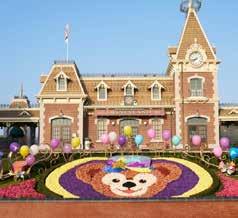
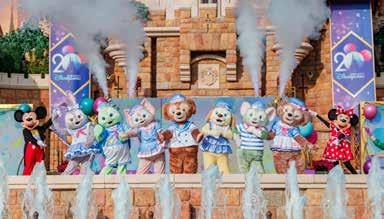
“Duffy and Friends Play Days”
DATE: 20 March – 7 June
VENUE: Hong Kong Disneyland Resort
1. The annual spring event “Duffy and Friends Play Days” has returned to Hong Kong Disneyland Resort, offering new surprises and warm reunions with Duffy and Friends.
2. At the entrance, visitors can take their first group photo with a bright new floral display featuring Duffy wearing his 20th anniversary party hat.
3. At the Castle of Magical Dreams, “Disney Friends Live” features all seven friends together for the first time in new spring sailor outfits for a limited time.
4. And spring tastes sweeter with Duffy and Friends-themed treats. Midtown Delights is offering an ice-cream parfait with chocolate soft serve, mochi, egg puffs, and crunchy toppings.
OpenClaw for dummies:
101 on how marketers can leverage the ‘lobster fever’
Forget chatbots that just talk – China has caught “lobster fever”, and it wants AI that actually does things. OpenClaw, the open-source sensation that lets users remotely control their computers via WeChat, sparked queues around a block in Shenzhen and ignited a global conversation about autonomous agents.
But beneath the quirky nickname and the frenzy of hobbyists and retired engineers lies a tectonic shift for marketers. Karen Wong spoke with industry players to break down what the OpenClaw phenomenon means for brands navigating this new frontier.
China’s latest tech phenomenon has to be OpenClaw – a wildly popular open-source AI agent software that has prompted Chinese technology firms to offer easy and inexpensive access to the software amid the “lobster fever” in the country.
In March, Tencent officially unveiled QClaw, an AI assistant built on OpenClaw that connects directly to its super app, WeChat. Once downloaded and installed on a computer – a process that takes about three minutes – users can remotely control their laptop simply by sending a command through WeChat on their mobile phone, according to the company’s website.
The launch followed a scene earlier in March when nearly 1,000 people queued outside Tencent’s Shenzhen headquarters, eager to have the programme installed on their personal computers. The eclectic crowd – comprising amateur developers, retired
aerospace engineers, homemakers, students, and AI hobbyists – turned out after an invitation from Tencent’s cloud unit, where engineers offered free installations.
The new software has also triggered heated discussions across social platforms globally. Media intelligence firm CARMA has seen a total of 1.5 million mentions and 13.5 million engagements globally over the past month, with 36.4% positive sentiments versus 13.2% negative.
In China, discussion has centred on experimentation and rapid deployment. The social media conversations have generated a 35.3% positive sentiment compared to 9.5% negative. The narratives reflect a developer ecosystem that prioritises building and testing new tools quickly, with users showcasing practical applications and AI-driven automation.
Across APAC, the conversations have been more mixed. The social media conversations
generated a 35% positive sentiment and 12.5% negative. Here, discussions extended beyond developers to include a wider curiosity about how AI agents could reshape knowledge work, according to CARMA.
While many users highlighted productivity gains and automation potential, others raised concerns about the impact of autonomous AI on jobs and the creative industries.
Keywords associated with the software included “model”, “trading”, “agents”, “security”, and “autonomous”, among others.
What is OpenClaw?
Originally launched last year as Clawdbot and later rebranded as Moltbot, OpenClaw is the creation of Austrian developer Peter Steinberger. The open-source autonomous AI agent gained immediate global attention and was recently acquired by OpenAI, the Microsoft-backed US artificial intelligence research organisation.
Unlike conventional chatbots that primarily respond to user queries, OpenClaw is designed to take direct action – executing tasks on a user’s computer system autonomously. Marketed as “the AI that actually does things”, it has captured the public’s imagination by hinting at a future where everyone has their own version of Jarvis, the all-knowing digital assistant from Marvel’s Iron Man films.
In China, the trend has been nicknamed “raise the lobster”, as consumers embrace OpenClaw for a wide range of everyday applications – from stock analysis and report drafting to creating presentations, writing emails, and coding.
The surge in adoption comes despite growing privacy concerns. OpenClaw typically requires broad access to a user’s system to perform tasks, raising the risk of data exposure or misuse.
Speaking at the Morgan Stanley Technology, Media & Telecom Conference in San Francisco, Nvidia CEO Jensen Huang hailed the software, saying: “OpenClaw is the single most important release of software probably ever.”
OpenClaw experienced explosive growth starting in early 2026, becoming one of the
fastest growing open-source projects in history. Its GitHub stars skyrocketed from 150,000 in late 2025 to over 270,000 by March 2026, surpassing projects such as React and the Linux kernel.
Will OpenClaw disrupt the market of DeepSeek?
While DeepSeek is a brilliant, but passive “brain” that reasons and generates text, OpenClaw provides the hands and legs that lets it navigate one’s local desktop, according to Jacky Chan, CTO of Votee AI and Beever AI.
“OpenClaw isn’t a model; it’s an opensource autonomous agent framework that you plug an LLM into. Once connected, it gets system-level access to your files, browsers, and apps to execute continuous, multi-step workflows without waiting for you to type a prompt,” Chan said.
Dominique Rose Van-Winther, founder of Final Upgrade, said the audience is real –developers, researchers, and people curious to see what AI does when all constraints are removed.
“But for any business with a brand to protect? DeepSeek or any other serious LLM
does the same work with far less risk. The 1,000 people lining up in Shenzhen are curious technologists, not procurement teams at HSBC or Unilever,” she said.
“The more important question isn’t which one wins. It’s whether companies will chase the OpenClaw hype before they’re structurally ready for it, because the ones that do will learn the hard way.”
However, Nathan Petralia, country head for Hong Kong at Ogilvy One and Verticurl, noted that every OpenClaw installation needs a language model running behind it.
“The software itself is free – users only pay for the model. So, every new OpenClaw user is a potential new paying customer for DeepSeek, Claude, or whoever wins that model layer.”
OpenClaw doesn’t have its own intelligence, but rather it plugs into a model such as DeepSeek, Claude, or GPT, sends one’s instructions there, gets a response back, and then executes, he added.
“The simplest way I’d put it for your readers: DeepSeek is the engine, OpenClaw is the car. You need both. They do completely different jobs.”
What opportunities lie ahead for marketers?
As the new software is designed to address technical pain points, it also opens up new doors for marketers. Chan said marketers are entering the era of B2A – business-to-agent marketing. OpenClaw allows marketers to automate tedious cross-platform workflows such as crossreferencing local CRM data, drafting localised copy, and routing it to Slack for approval.
“Externally, as consumers start deploying their own agents to research and buy products, marketers must fundamentally optimise their data and content so that autonomous agents – not just human eyes – can discover and parse their brands.”
Petralia said the agent economy is a genuinely new channel.
“We’re watching consumers delegate real tasks – purchasing, research, scheduling, comparison shopping – to software that acts on their behalf around the clock,” he said.
“That means your content, your product pages, your brand presence now needs to be discoverable and evaluable not just by a person scrolling on their phone, but by an AI agent making decisions for them. That’s a fundamental shift on the level of desktop-to-mobile.”
Another door that opens is integration play, he added. “Brands that build pre-packaged workflows – OpenClaw calls them ‘skills’ –that solve real consumer problems (will) get embedded into people’s daily digital lives in a way that traditional apps never achieved. Think automated order tracking, smart budgeting, content creation pipelines. If your brand becomes a default skill in someone’s agent setup, that’s stickier than any app install.”
The marketers who move fastest right now aren’t those running the most autonomous AI, but the ones who have figured out the gray box, said Van-Winther.
“The gray box is AI agents running inside human-defined workflows, with a person still approving before anything goes out. The black box is full autonomy, no review – that’s OpenClaw’s territory.”
The opportunity is in the gray box, and most marketers haven’t touched it yet, she added.
“That’s where you get AI speed without reputational exposure. The ones who get there first and build it properly will be operating at a level their competitors can’t match because they’ll have the discipline to go fast without breaking things.”
“OpenClaw isn’t a model; it’s an open-source autonomous agent framework that you plug an LLM into. Once connected, it gets system-level access to your files, browsers, and apps to execute continuous, multistep workflows without waiting for you to type a prompt,”
The
end of the blank page:
What Google Gemini in HK means for marketers
For years, Hong Kong marketers have operated with one hand tied behind their backs – juggling VPNs, navigating regional restrictions, and watching global competitors leverage AI tools with frictionless ease. That era officially ends today. With Google’s expansion of Gemini to all users in Hong Kong, the city isn’t just gaining access to a new chatbot; it is witnessing the demolition of the final digital barrier.
From slashing production timelines by 50% to rewriting the rules of SEO for an “AIspoke to industry experts to explore how the rollout of Gemini is transforming Hong Kong’s marketing landscape.
In exciting news for Hong Kong marketers –and everyday consumers – Google has announced a significant expansion of its AI accessibility in the region. As part of a broader strategy to integrate advanced AI into daily workflows, the tech giant is bringing its most capable AI tools directly to the local market.
Google will gradually expand the Gemini web app experience to all users in Hong Kong, followed by the Gemini mobile app. This expansion will further realise Google’s mission to organise the world’s information and make it universally accessible and useful.
Gemini’s model capabilities have been integrated into and are constantly powering Google’s ecosystem, while different local communities, including businesses, developers,
educators, students, and more, have been applying these features.
Gemini enables users to directly apply Google’s advanced AI models to help with everyday tasks – whether writing a tricky email, brainstorming ideas for a project or planning the next family trip.
As a multimodal tool, Gemini will bring more possibilities to how people interact with information across text, images, and audio. Users can also generate media – from images to music tracks – to easily express their creativity.
“We believe expanding the Gemini experience will drive more creativity and productivity for the city, and help achieve our commitment of ‘advancing Hong Kong together’,” said Michael Yue, managing director
and general manager of Google Hong Kong.
“Going forward, we will continue to responsibly build a full-stack AI ecosystem, making AI more helpful for everyone.”
The announcement over Gemini has sparked widespread discussion among netizens, with over 1.6K mentions and 31.1K engagements over the past month, according to media intelligence firm CARMA.
Sentiment is strongly positive at 46.6% compared to 12.8% negative, indicating a broadly favourable reception. Positive sentiment centres on availability and the ecosystem expansion, with users reacting to Gemini becoming accessible in Hong Kong and viewing it as part of Google’s broader AI push, said CARMA.
“That’s meaningful. It broadens the creative toolkit across the industry and opens up AI to groups who may not have tried these platforms before,”
The rollout is seen as bringing the market in line with global access to AI tools, reinforcing expectations around integration with existing Google services.
At the same time, negative and neutral commentary reflect early-stage evaluation rather than strong criticism. Users compare Gemini with competing tools and question its differentiation, suggesting that adoption remains tentative and largely exploratory, according to CARMA.
Industry reactions
For years, Hong Kong has been ranked alongside mainland China, Syria, and North Korea as a region where tech firms have been hesitant to roll out AI chatbots. When approached by The Wall Street Journal in 2023, neither OpenAI nor Microsoft commented on why access in Hong Kong had been limited. Some users had to use virtual private networks (VPNs) to access the tool until 2024, when Google’s Gemini was officially made available to paid business users.
For consumers and marketers in Hong Kong looking for more powerful AI tools, the easier access without VPNs or workarounds means more people can now participate in the creative process, said Jeffry Gamble, chief creative officer, Greater Bay Area and Hong Kong, Dentsu Creative Hong Kong.
“That’s meaningful. It broadens the creative toolkit across the industry and opens up AI to groups who may not have tried these platforms before,” he said.
As Google is already central to most digital strategies, having Gemini widely accessible allows agencies and clients to collaborate on the same AI platform, saving time otherwise spent aligning or testing different AI tools separately, according to Ken Cheung, digital director at KREW Digital.
“It streamlines communication and speeds up ideation such as generating multiple YouTube ad variations or search headlines based on real-time consumer intent,” he said.
“This shared ecosystem makes creative development more efficient, data-driven, and agile. For example, we use Gemini to autogenerate social media visuals for our owned media platform, enabling us to reduce human resource requirements by up to 50%.”
While tech-savvy users have already found workarounds, this opens Gemini to the broader public, especially those in the Google ecosystem, said Jeffrey Hau, co-founder and CEO of PRIZM Group. “The real win is Gemini’s native multimodal capability – strong image and video generation built in, making creative ideation faster and more accessible than ever.”
Joy Liu, senior director of marketing at SleekFlow, said the expansion of Gemini in Hong Kong signals the end of the “blank page” era for marketers.
“We’re moving from AI as a search tool to AI as a creative partner. At SleekFlow, we’re already seeing this shift,” she said.
“Since we are subscribing to Google Business Suite, our team uses Gemini to bridge the gap between research and execution –optimising everything from email prioritisation to content drafts.
“With Gemini Pro and Ultra, the ability to generate high-fidelity 4K visuals and complex marketing copy in one workflow doesn’t just save time, it increases creative ‘velocity’. This allows lean SME teams to produce at a level of sophistication previously reserved for global agencies.
“For brands, this isn’t about replacing the creative spark; it’s about providing a highoctane fuel that allows us to test, iterate, and ship campaigns at a pace the market now demands.”
Which sectors benefit most from this?
With Gemini now becoming widely accessible, different industries can leverage the opportunity to optimise their solutions. Andy Wong, cofounder of Digital Zoo, said consumer and eCommerce brands can use Gemini to quickly
generate and localise product copy, visuals, and social content, so even lean teams can behave more like big marketing departments.
“Performance-driven sectors such as finance, travel, property, and education will benefit from being able to read campaign data faster and turn those insights into many testable creative variations across channels,” he said.
“Media, entertainment, and lifestyle brands, which are always repackaging stories, can turn one strong idea into articles, videos, carousels, and email sequences without starting from zero each time.”
Cheung said retail and eCommerce will benefit greatly, as campaigns often require large volumes of creative variations, and Gemini can efficiently generate multiple versions at scale.
“For finance and insurance brands, Gemini stands out for delivering more accurate and structured financial-related content compared to many other AI tools,” he said.
“SMEs will also gain an advantage, as they can produce high-quality, varied creatives without heavy resource investment. For example, we help SME brands such as G&D mint ginger oil to make some visuals with a HK Manga style.”
Jacky Chan, CTO of Votee AI and Beever AI, said all sectors in Hong Kong will benefit –
and it will go beyond business use into personal daily lives. “Imagine checking the best grocery discounts through a simple conversation, or planning your commute with Google Maps integration using natural language.”
What’s important is that AI becomes an enabler across the entire value chain – from data engineering to workflow optimisation – and not just a “creative toy”, said Dentsu Creative’s Gamble. “This aligns with our broader vision at Dentsu: AI studios as engines of innovation that uplift not just marketing, but everyday life across the city.”
How will the search landscape evolve?
While some suggest Gemini’s expansion blurs the line between AI-led creativity and human storytelling, SleekFlow’s Liu sees a return to brand marketing fundamentals.
“AI can provide the structure, the data, and the draft, but it cannot replicate the genuine narrative that connects with a human on an emotional level,” she said.
“The line isn’t blurring; it’s being redefined. AI will handle the commodity of creation, the standard replies, and the SEO-padding while leaving humans to do the high-value work: building trust, crafting original perspectives, and leading with empathy. Storytelling is the ultimate superpower in an AI-saturated world.”
From the SEO agency perspective, Gemini’s rollout isn’t just a creative story, it fundamentally changes how brands in Hong Kong show up in AI-driven discovery, said Digital Zoo’s Wong.
“We’re moving from a world where the only question was ‘where do I rank in Google?’ to a world where we also have to ask, ‘when Gemini answers my customers’ questions, ‘does my brand get cited at all?’”
That means brands need a dual focus on classic SEO fundamentals and what many are calling generative or ‘AI engine’ optimisation structuring content so it’s trustworthy, quotable, and easy for Gemini to surface, he added.
“Practically, that looks like clearer entities, expert-driven content, strong E-EA-T signals, and a broader presence across the open web, not just their own site,” Wong said.” Wong said.
Chan said Google is doing a tremendous job at closing the AI divide, and this expansion in Hong Kong is a meaningful step forward.
“What matters most is making AI accessible to everyone – not just developers or large enterprises. My advice to both businesses and individuals: put AI to daily use. Don’t treat it as a novelty. Make it practical, make it habitual, and it will transform how you work and live.”
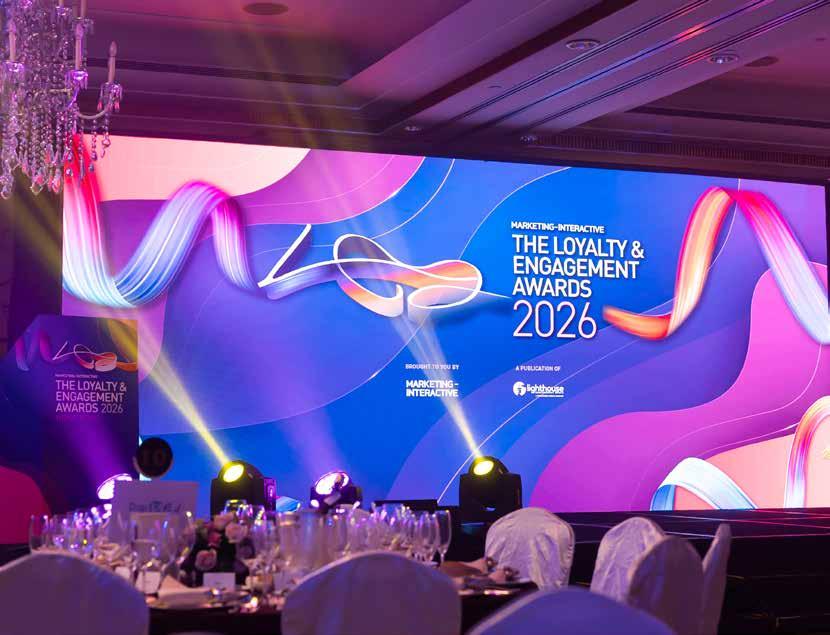
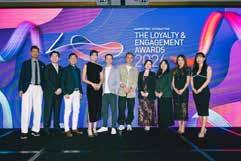
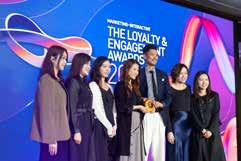
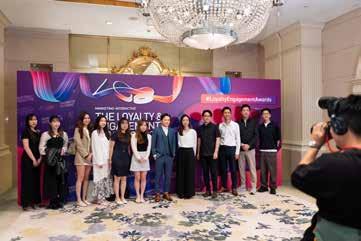
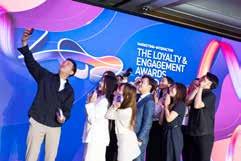
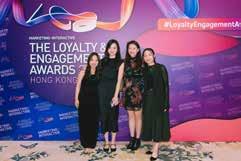
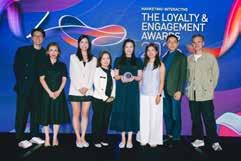
In an era when customer attention is hard to hold and brand loyalty feels increasingly rare, meaningful engagement has become the true measure of success. With this in mind, MARKETING-INTERACTIVE brought back its Loyalty & Engagement Awards to celebrate excellence in customer connection and brand devotion across North Asia.
This year's entries showcased creativity, innovation, and strategic thinking – proving that when brands truly listen, the results can be remarkable. From digital experiences to intuitive loyalty programmes, our finalists redefined lasting customer relationships.
The awards ceremony took place at the Kowloon Shangri-La on 30 April, where industry leaders gathered to find out which companies would walk away with the top honours. With 36 categories recognising a wide range of specialisms, every brand and agency had an opportunity to stand out.
We would also like to extend our sincere thanks to the 25 client-side marketers who generously gave their time and expertise to evaluate each entry.
Congratulations to all our winners and finalists. We are confident they will continue to inspire and lead the way in customer loyalty for years to come.
JUDGES
AMY CHOI
Head of Marketing
Abbott Laboratories
RITA WONG
Head of Customer Centricity and Brand Marketing AIA Hong Kong and Macau
MATTHEW LI
Head of Brand & Marketing Decathlon Hong Kong
GAVIN LAI
Chief Marketing & Digital Commerce Officer
FWD Life Philippines
JACKIE DUNN Director, Marketing & Guest Experience Aqua Restaurant Group
TIM SEDO
Marketing Director, Asia Pacific Deckers Asia Pacific
JUSTIN CHU
Vice President, Customer Loyalty Galaxy Entertainment Group
SUSANNA YIP
Marketing Director Inchcape Greater China
ANNIE CHOW
Marketing Director Merz Aesthetics Hong Kong
KAREN LAU
Senior Director, Marketing and Communications
REIKO KWOK
CBRE Hong Kong
Chief Marketing Officer, Active Trader & General Manager, Hong Kong Exinity Group
PURPLE YAO Director Branding, Marketing & Communications Hong Kong Airlines
GORDON LO Head of Marketing Jebsen Beverage Company
SAM CHAN Head of Brand and Communications OCBC Bank Hong Kong
JESSICA LIAO
Head of Marketing, Mainland China PURE Group
LISA LEUNG
VP, Global Product & Marketing
Tim Ho Wan
EMILY WONG
Cluster Director of Marketing Communications Hyatt Regency
KIKO WONG
Associate Marketing Director Lee Kum Kee (Hong Kong)
CONNIE POON Head of Marketing Pepsi Co.
VANESSA TSANG
Global CRM Strategy Lead Shell
LEEANN LU
Brand Communication Director Value Retail China
LYDIA CHUNG Director, Global Marketing Activation & Partnerships Plaza Premium Group
LORITTA TAM
Head of Retail Marketing Swire Properties
KEVIN TSANG Head of Marketing WeLab Bank
NICK CHAN
Head, Marketing and Branding (Performing Arts) West Kowloon Cultural District Authority
GOLD
Shangri-La Circle
Brand: Shangri-La Circle - Marketing
Campaign: Taste of Shangri-La IP Launch Agencies: V Factor, M9DY
SILVER
Plaza Premium Group
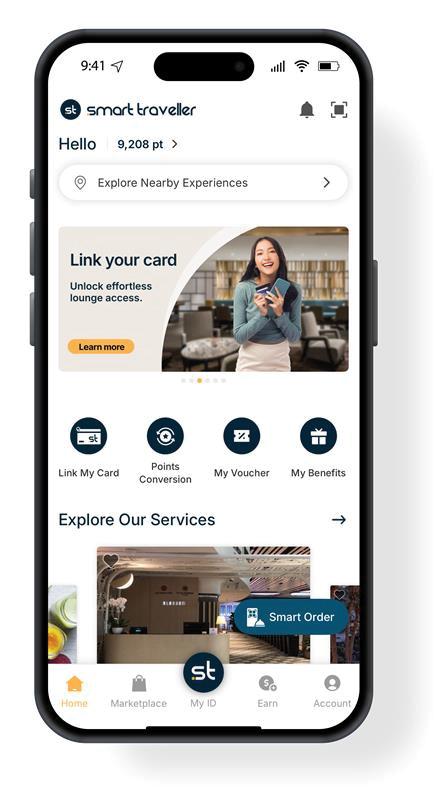
Brand: Smart Traveller
Campaign: “Smart Traveller, One Journey” –
Cross-Regional Loyalty Across Hong Kong, Macau, Taiwan & Mainland China
BRONZE
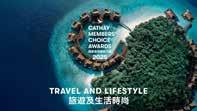
Cathay Pacific Airways
Campaign: Cathay Members’ Choice Awards 2025
Agencies: Cedar Hong Kong, Leo Hong Kong, MSL, Digitas
Campaign: Olympian City × STAYFUN: Animal Care Intern
BRONZE
Sino Group
Brand: S+ REWARDS Campaign: S+ Urban Run
GOLD
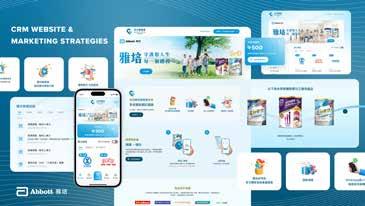
Abbott Laboratories
Brand: Abbott Nutrition VIP Club
Campaign: Abbott CRM-Powered Loyalty Platform & Website Development Agency: DigiSalad
SILVER
Cathay
Campaign: Rewards in the Air
Agencies: Leo Hong Kong, Digitas Hong Kong
BRONZE
The Hongkong and Shanghai
Banking Corporation Campaign: HSBC Reward+
GOLD
Melco Resorts & Entertainment
Brand: Studio City
Campaign: Studio City 2025 Halloween Campaign Agency: The Bread Digital
SILVER
Mastercard
Campaign: Hop around Hong Kong with Mastercard: Priceless
BRONZE
Cityplaza Hong Kong
Campaign: Cityplaza “Sweetmas”
Agencies: ANON, Boxing Promotions, Fevaworks
BEST USE OF EXPERIENTIAL MARKETING
GOLD
Cityplaza Hong Kong
Campaign: Cityplaza x NBA “Live The Game!”
Agencies: Neo-net, Boxing Promotions, Fevaworks
SILVER
SHISEIDO Hong Kong
Brand: Clé de Peau Beauté Hong Kong
Campaign: L'éveil des Sens de Synactif Agency: EX-R International
BRONZE
Standard Chartered Bank (Hong Kong)
Campaign: Save to Play, Play to Save
Agencies: Leo Hong Kong, dentsu Hong Kong
BEST LOYALTY STRATEGY – HEALTH & WELLNESS
GOLD
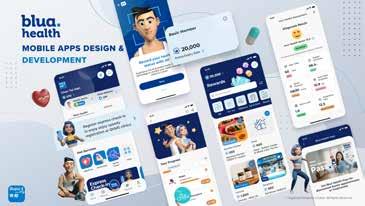
Bupa (Asia)
Brand: Blua Health
Campaign: Together For Your Health – Blua Health AI-powered Loyalty Mobile App Agency: DigiSalad
SILVER
Cityplaza Hong Kong
Campaign: Cityplaza x NBA “Live The Game!” Agencies: Neo-net, Boxing Promotions, Fevaworks
BRONZE
Ego Pharmaceuticals
Brand: QV Skincare Hong Kong
Campaign: QV Skincare’s Private Care Ecosystem: A Personalised Loyalty & Revenue Engine on WhatsApp Agency: Omnichat
BEST USE OF INFLUENCERS
GOLD
Asahi Beer Asia
Campaign: Asahi in Your Area Agency: dentsu X
SILVER
Hong Kong Tourism Board
Campaign: Hong Kong Halloween – Dress Up! Show Up! Agency: Ogilvy Hong Kong
BRONZE Fairwood
Campaign: Thick-Cut US Pork Cutlet: The Crispy Taste of Youth Agency: Hardchi Creative
BEST INTERACTIVE LOYALTY CAMPAIGN
GOLD
Melco Resorts & Entertainment
Brand: Studio City
Campaign: Studio City 2025 Halloween Campaign Agency: The Bread Digital
SILVER MTR Corporation Campaign: MTR Mobile 3.0 Agency: Cheil Hong Kong
BRONZE PrimeCredit
Brand: WeWa Card
Campaign: WeWa Plays Big: Pak Pak Pak World Record Challenge Agency: Project Doloo
Best of Show – Agency DigiSalad
Standing out from the crowd and impressing the jury was DigiSalad, who bagged the Best of Show - Agency award. The agency took home 10 trophies – four golds, five silvers, and one bronze, with two thoughtprovoking campaigns – “Together For Your Health – Blua Health AI-powered Loyalty Mobile App” for Blua Health; and the “Abbott CRM-Powered Loyalty Platform & Website Development” for the Abbott Nutrition VIP Club.
Impressing the judges the most was the campaign for the Abbott Nutrition VIP Club. Launched in January 2025, and still ongoing, it targets individuals and families with health and nutrition needs by centralising Abbott’s scattered digital content and customer data into a single customer relationship management (CRM) driven platform.
Built on a CRM-first approach, the programme provides an intuitive user experience and user interface, a seamless online-to-offline (O2O) scan-and-
earn journey, and personalised engagement to turn everyday purchases into long-term loyalty for both adult and pediatric users.
Given that Abbott’s products are purchased through major retailers such as Mannings, Wellcome, Watsons, and HKTVmall, the campaign has built a closed-loop O2O loyalty programme where consumers can upload receipts via the app to earn points.
To bridge offline purchases with digital engagement, an AI-powered receipt scanning journey automatically reads and verifies in-store receipts, enabling accurate O2O conversions.
Through a centralised CRM platform, Abbott has consolidated customer data across WhatsApp, email, SMS, and digital channels into a single, real-time view. This enables personalised health and nutrition engagement, including triggered health content and WhatsApp one-on-one consultations, supporting deeper engagement and long-term retention beyond rewards.
Best of Show – Brand MTR Corporation
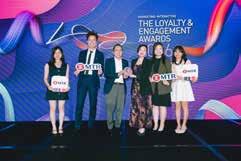
Meanwhile, MTR Corporation was given the esteemed Best of Show - Brand award, which took home 11 trophies – four golds, five silvers, and two bronzes.
It impressed the judges with several thought-provoking campaigns: “MTR Mobile 3.0”; “Chiikawa Days in MTR: Small Surprises, Big Impact”; and “The 18-year-old ELEMENTS CLUB: Growing High Quality Customers during Hong Kong’s Retail Winter”.
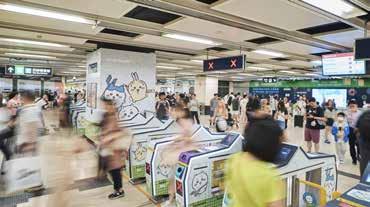
The “Chiikawa Days in MTR: Small Surprises, Big Impact” campaign wowed the judges by turning efficiency into emotion. Running from 12 July to 31 August 2025, the campaign transformed commutes into joyful local experiences as cross-border travel options grew.
To bring emotion into MTR’s railway network, the campaign chose the Japanese manga and anime series Chiikawa. Beneath its cuteness lies “iyashi”, the Japanese philosophy of healing through gentleness. The characters face everyday struggles such as work pressures and failure,
yet they keep going. MTR saw an opportunity: spread Chiikawa’s healing power across the city through its network.
The campaign brought “iyashi” to life across multiple touchpoints, each designed to create surprise and delight for fans. It started with a small, but powerful change: at East Tsim Sha Tsui Station, the usual gate beep was replaced with Chiikawa's signature chime.
In a crowded station, that unusual sound made people stop and look up. Once they looked, Chiikawa characters appeared everywhere – peeking from pillars and greeting passengers at service counters. These unexpected moments turned a routine commute into something worth sharing on social media.
The campaign also featured Chiikawa-themed trains across the Light Rail and Tuen Ma Line, offering passengers a calming escape. Riders could also join a digital quest on MTR Mobile to collect station-themed badges, turning commutes into missions.