
Playing to strengths
AIG New Zealand CEO Toni Ferrier is a firm believer in the leadership mantra ‘we are better together’.
Contents•

05
In the know
Your guide to what you should be reading, watching and learning right now.
22
Are you ready for IFRS 17?
Find out how insurers are preparing for more transparency under a new accounting standard.

06
The Great Resignation
In an industry already challenged by a shallow recruitment pool, how can insurers hook fresh talent?
28
Raising the bar for CSR
In the age of authenticity, corporate social responsibility is high on the agenda. And customers want more than words.

12
Good, better, best
In 2022, two new codes of practice — for life insurers and brokers — will come into play. Here’s what to expect.
34
Upping the ante
Honan Insurance Group CEO Andrew Fluitsma heads up a young team with big plans to further cement their success.

Technical•
CLAIMS
A helping hand
Vulnerability
in
44 BROKING
Betting the farm
From climate change to disrupted supply chains, farm insurance brokers are navigating a new risk landscape.
Wading into the gene pool
The rise of genetic testing has opened up huge possibilities in health care. But insurers must find the right balance between information and privacy.
Key contributors


REINSURANCE
Cyber reinforcements
While the volatile cyber insurance market could benefit greatly from more reinsurance cover, attracting interest has become a challenge.

The Journal is published quarterly by Heads & Tales for the Australian and New Zealand Institute of Insurance and Finance (ANZIIF).
Vol. 45 No. 1 ISSN 144-8505
GENERAL ENQUIRIES
Tel (61 3) 9613 7200 Fax (61 3) 9642 4166
Email customerservice @anziif.com
Web anziif.com
ANZIIF OFFICE
Level 18, 1 Nicholson Street, East Melbourne, VIC 3002 Australia
Tel (61 3) 9613 7200
Email journal @anziif.com
JOURNAL ENQUIRIES
Account director
Scott Elmslie
Account manager
Hannah Louey
Managing editor
Jo Davy
Tel (61 0) 490 091 713
Email jodavy@ hardiegrant.com
Editor
Abigail Murison
Subeditor
Helen Eva
Art direction & design
Dallas Budde and Natalie Lachina
ADVERTISING ENQUIRIES
Nicole Prioste
Tel (61 0) 410 618 331
Email nicoleprioste @ hardiegrant.com
Heads & Tales
Private Bag 1600, South Yarra, VIC 3141 Australia
Tel (61 3) 8520 6444
Web headsandtales.agency
Publication conditions
No responsibility is accepted by ANZIIF or Heads & Tales for the accuracy of any statement or advice contained in the text or advertisements. The opinions expressed in the Journal are those of the authors, not ANZIIF, unless otherwise stated. ANZIIF accepts no responsibility for the accuracy of information in articles and advertisements in the Journal. Article submissions to the Journal by ANZIIF members and others are welcome. Articles are accepted for publication only on the condition that the authors give ANZIIF an irrevocable non-exclusive licence to publish the article and authorise ANZIIF to give permission for production of the article in whole or in part by other persons and organisations for educational and training purposes, as well as on ANZIIF websites. ©Heads & Tales Agency, 2022. All rights reserved.
SUSAN MULDOWNEY
writer



In the know•
Cover all your bases with ANZIIF’s guide to what you should be reading, watching and learning right now.

South Australian Charity Luncheon
13 May 2022 | Adelaide Convention Centre
Rub shoulders with local industry professionals while raising vital funds to support a worthy cause at the annual South Australian Charity Luncheon. This year, ANZIIF is delighted to be partnering with Youth Opportunities, an organisation that creates more opportunities for young people to develop lifelong skills and the confidence to thrive.
R Take me there
Hear the latest industry news, capitalise on new opportunities, identify emerging risks and network with industry peers with us as the New Zealand Business Breakfast returns to Auckland this May. This annual event features some of the best minds in the industry who will provide guidance and advice on the rapidly changing insurance industry landscape.
13 May 2022 Cordis, Auckland
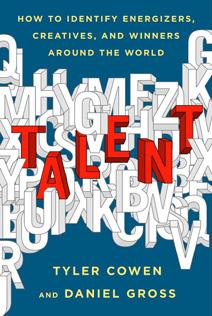

READ // Talent: How to Identify Energizers, Creatives, and Winners Around the World
By Tyler Cowen and Daniel Gross
Much has been written about ‘The Great Resignation’, including our own Chris Sheedy’s feature on how the insurance industry can weather record increases in employee turnover on page 6 of this issue of the Journal. In Talent, US economist Tyler Cowen and venture capitalist Daniel Gross unpack the art and science of finding talent at the highest level, with tips on everything from identifying the right personality traits in a candidate to interviewing effectively via Zoom. Available from May. St. Martin’s Press. GO // NZ Business Breakfast
R Buy tickets
LEARN // ANZIIF Short Courses
ANZIIF’s short courses are a program of online learning solutions that educate participants about specific topics, compliance and regulatory updates, and major changes in the insurance industry. They are crafted by insurance and learning experts who develop AQF formal qualifications, and are reviewed by experienced subject matter experts, which guarantees a high standard of learning.
R Enrol here
LISTEN // Business Made Personal: Gary Seymour
Financial services consultant and insurance professional Mark Silveira talks to insurance industry leaders at the top of their game to find out about the personal decisions that helped them get there in his Business Made Personal podcast. First in the hot seat is Edgewise chairman Gary Seymour, who reflects on a career journey that took him from a gap year working at a small insurer in regional Victoria to sitting at the boardroom tables of some of the largest insurers in Australia.
R Listen here
IN SHORT
› The pandemic has made people take stock of their jobs. Some are simply looking for better pay and benefits, while others are opting out of regular work completely.
› Insurers can use employee value propositions offering tailored flexibility, training and career progression to attract talent on the move.
› Focusing on how insurance can change the world could also attract jobseekers who are searching for more meaning in their work.

THE GREAT RESIGNATION
With the insurance industry already challenged by a shallow recruitment pool, how can companies attract fresh talent?


by Chris Sheedy
When a reported 4.3 million American workers quit their jobs in August 2021, organisational psychologist Associate Professor Anthony Klotz from Mays Business School at Texas A&M University coined the term ‘the Great Resignation’.
At the time, it was seen as a one-off: a unique event that demonstrated how the pandemic had given people pause to re-evaluate their careers and the meaning of work.
‘During the pandemic, there was a lot of death and illness and lockdowns, so we really had the time and the motivation to sit back and say, do I like the trajectory of my life? Am I pursuing a life that brings me wellbeing?’ Klotz said in a media interview.
Then that ‘one-off’ event went beyond one month and into two, three and four. And what started as a US phenomenon is now a global trend — one that could have enormous consequences for the insurance industry.
‘People are suddenly quitting for all sorts of reasons,’ says Aaron McEwan, vice president research and advisory at consulting firm Gartner.
‘The pandemic has caused people to think deeply about what they care about. What they now care about isn’t necessarily aligned with what their employer offers.’
On the move in our region
PwC’s The Future of Work survey, released in late 2021, revealed 38 per cent of Australian respondents intended to move to a new job in the next 12 months. Similarly, 2021 research by AUT Business School showed the percentage of New Zealanders most likely to leave their job increased from 34.7 per cent to 46.4 per cent. According to research lead Professor Jarrod Haar, ‘Perhaps differently from overseas, the biggest driver here is the lure of new job opportunities — more pay, more personal development or more “making a difference”.’
A 2021 Mercer survey polled 850 employers worldwide and revealed that companies in SouthEast Asia have also experienced higher employee turnover than in previous years, especially among mid-career professionals.
Dissatisfaction with pay and the offer of better benefits at a different company were the main reasons employees quit their jobs, according to Mercer’s research. In the US, low-paid service workers who hold down a number of jobs just to
CLAIM YOUR CIP POINTS

pay the rent but who still can’t afford health care are rejecting work and rejecting being treated with disrespect.
Some workers are fleeing what they see as an abusive relationship, whether it’s with a manager, a business or a brand. Others are simply saying, ‘It’s not you, it’s me’.
Finally, there’s what McEwan calls the ‘Groundhog Day group’ — the ones who are sick of doing the same thing every day.
‘They’re quite rightly confident in the job market and they know there are better options,’ he says.
‘Maybe they want to sit on an island for three months before dipping back in to work. I know of a software engineer who quit to work in construction. He just wanted to get away from his computer and get outside.’
None of this should be a surprise, McEwan says.
talent to insurance
By Anna Game-Lopata
‘Pandemics do this. The Black Plague in Europe ended feudalism. Three hundred years of a dominant social and political structure came to an end because there weren’t enough workers to work on farms owned by rich landholders.’
At a time when attracting fresh talent was already a challenge, how does the insurance industry cope with this entirely new threat?
See the opportunity
‘[Insurance] has always been a candidate-short market,’ says Cameron Watson, head of strategy at Fuse Recruitment. ‘The challenges imposed by COVID-19 exaggerate the issue.’
Ironically, one major contributing factor to the shrinking of the talent pool is the fact that insurance companies are getting better at staff retention.
By Domini Stuart
‘Because of this, we’re not seeing the churn of staff that we used to,’ says Watson. ‘That contributes to the lack of talent in the market. So has the fact that people have been aware of job security over the last few years, and that if they were the last person on, they might be the first person off.’
All of this is brought undone by the Great Resignation. Why? Because job security no longer holds as much gravitas and because traditional retention tactics, such as benefits packages and rewards and recognition programs, are fast losing their power over employees.
One clear way forward, Watson believes, is to continue to tackle the lack of awareness around insurance as a career choice. If talent is to be
WANT MORE?



‘The pandemic has caused people to think deeply about what they care about. What they now care about isn’t necessarily aligned with what their employer offers.’
attracted, it needs something to be attracted to.

‘There has been an improved method of attraction and talent management in the industry, but there’s still a way to go,’ he says.
This situation creates opportunities too, Watson says. Employers can identify talent they might not have seen previously, as churn across all industries means there’s more talent in the market.
‘What becomes important in attracting this talent is your employee value proposition,’ he says. ‘That’s all driven by an improved understanding of what the candidate motivators are. It’s about accepting that what we’re looking for now is less about skill and more about cultural fit.’
In Singapore, a separate compensation and hiring survey by Mercer uncovered that while employers were offering better salaries, simply increasing pay was not a sustainable hiring model. Companies needed to use non-monetary benefits such as flexibility, training and job re-design to attract and retain talent.
Personalise your value proposition
The power is in the hands of the candidate, says Carl Piesse, regional director at Hays.
‘Candidates currently have more options and more negotiating power. This means they’re less likely to change their mind on what they’re looking for,’ he explains.
Insurance businesses need to listen more deeply to what candidates want. Number one, Piesse says, is flexibility.

‘Although salary will continue to be one of the main driving factors for candidates, flexibility is increasingly becoming just as important,’ he says. ‘Beyond that, businesses have got to tailor benefits to individuals, so they resonate. What are the learning and development opportunities they desire? Is there clear career progression? Is mental health and wellbeing support available?’
A company’s employee value proposition (EVP) must align and be tailored to candidates’ expectations, says Piesse. It is that value proposition that brings to life an organisation’s purpose. ‘Employees want an EVP to resonate with them as individuals,’ he says.
McEwan agrees that success will require deep personalisation of the EVP. He’s currently working with a global fast-food franchise that employs 16-to-19-year-olds. Many young candidates yearn for adventure but have missed out on their gap year. The business has decided to offer them the opportunity to work anywhere in the world.
‘Employees want to feel valued, which means they want their companies to invest in improving them as a human, not just as an employee,’ says McEwan. ‘This company is thinking that if they’re going to send staff around the world, they should also give them a language.
‘You know what else people that age want? They want their first car. What if the company sets up a financing business that actively helps staff buy their first car? This will create powerful loyalty. How can insurers think the same way?’

CHRIS SHEEDY Freelance writer & editor
‘‘The
fact that nobody plans a career in insurance has long been joked about, and the fact that when people fall into insurance,
they fall in love, has long been recognised. The magic of a career in insurance — the part that makes people want to stay — must be bottled and generously shared if insurers are to benefit from the Great Resignation.’
THE DIGITAL SKILLS GAP
As managing director, Asia Pacific, of P&C insurance software company Duck Creek Technologies, Shaji Sethu
knows a thing or two about tech. Here’s his advice on how to attract tech-savvy candidates to a career in insurance.
Move to mitigation
‘Insurance has to revolutionise itself. It has to move away from risk indemnification and towards risk mitigation and management. That’s a fundamental shift that hasn’t happened in 200 years but can happen now because of technology.
Embrace technology
‘When insurance embraces technology, it can become the cool kid. That’s when attraction will happen. That’s when kids, all of whom are believers in a cause, will come into the industry knowing they’re going to do something meaningful.
Make an impact
‘Finance does this well with ethical investing, meaning they’ve been able to attract young professionals. Insurance has the same power. If insurers decide not to cover coal, for instance, then the coal industry is gone.
Address the age gap
‘In terms of technological skills, in insurance there’s not so much a skills gap as a generation gap. People who know insurance are older. People who know technology are younger. The question becomes: how do you bridge that generational divide?
Be values-led
‘The solution is to move away from functional silos and create agile paths and common problemsolving opportunities in businesses that live their values. By nature, we want to collaborate. By nature, we also want to do meaningful work. Workplaces that offer both are on their way to talent success.’
Work anywhere.
ACCESS EVERY DOCUMENT - ON ANY DEVICE
Locate every document in your business from your phone or tablet with organiseit. It’s easy, secure, and it’ll change the way you work.
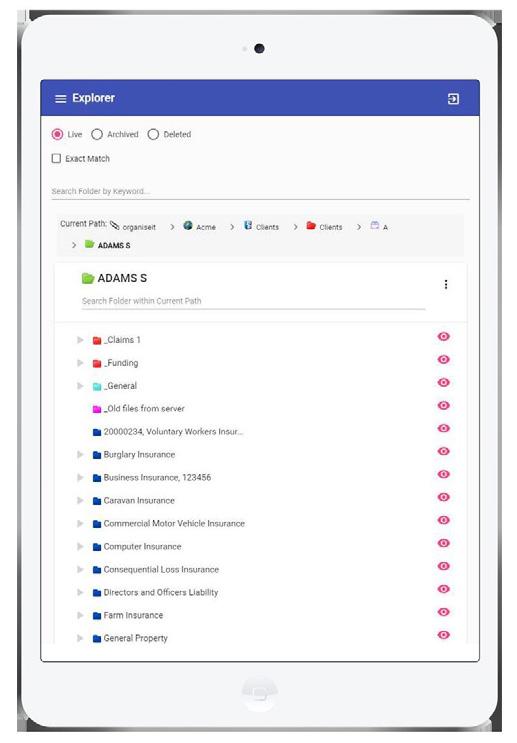

Watch the video.

organiseit
Good, better, best
In 2022, two
new
codes of practice — for life insurers and brokers — will come into play. Here’s what to expect.
It’s been a busy few years for those involved in codes and compliance in the insurance industry. First, the Insurance Council of New Zealand introduced its revised Fair Insurance Code in 2020, and then the Insurance Council of Australia brought in the updated General Insurance Code of Practice in 2021.
Now, the Financial Services Council (FSC) and the National Insurance Brokers Association (NIBA) are looking to complete the set, with revised codes of practice for life insurers and brokers.
Life Insurance Code of Practice
Nick Kirwan, policy director – life insurance, at the FSC, says the latest iteration of the Life Insurance Code was delayed a little in 2021. ‘We had further consultation on the Code and quite a lot of feedback. That’s good, because that’s actually a worthwhile process,’ he says. As a result, the implementation date of 1 July 2022 has been pushed back to early 2023 — and there may still be more wording revisions when the FSC negotiates the enforceable provisions in the Code with the Australian Securities and Investments Commission (ASIC).
In late October 2021, ASIC told the FSC that it was not going to be producing its regulatory guide on having
IN SHORT
› The updated Insurance Brokers Code of Practice will be implemented by November 2022.
› The latest Life Insurance Code of Practice will be implemented in early 2023.
› Both codes have been revised and improved to incorporate 2021 regulatory changes and additional stakeholder feedback.
ASIC approval and enforceable code provisions until at least the next financial year.
‘That means we’re not going to see the final version of the guide probably until at least the end of next year,’ says Kirwan, ‘and that means we won’t be in a position to have our negotiations with ASIC about which provisions will be enforceable and what the process is for ASIC approval.’
Despite the delays, at time of writing the FSC intended to have the new draft Code with the life insurance board in early 2022. The Code will then have a ‘soft launch’ with insurers, with the understanding that updated enforceable provisions may follow when ASIC’s regulatory guide becomes available.
ENFORCEABLE PROVISIONS
Kirwan thinks the whole sanction regime for life insurers is going to be a lot stronger. The FSC needs to ensure everybody can comply with the new Code, so there can’t be any ambiguities if a provision is going to be enforceable.
He anticipates that the timeframes around claims will be one of the ‘handful’ of enforceable provisions. And as far as the process goes, he says the FSC will consult with its members and work out which provisions should be enforceable.
‘Effectively, that gives the FSC the force of law with potential civil penalties. Each one needs to be a provision that goes beyond the law and it needs to be contractual in nature. Then we propose those provisions to ASIC,’ he explains.
As an example, Kirwan points to the cooling-off period provision as a likely enforceable provision. By law, life insurers must give customers a 14-day cooling-off period, during which they can change their mind about their insurance purchase.
The draft Code has a cooling-off period of 30 days.
‘Clearly, the provision goes beyond the law. It’s contractual in nature. It’s very clear,’ he says. ‘None of our members have any problems with that, and they don’t envisage breaching it. If the customer says: “look, I’m changing my mind”, the insurer will simply give the premium back.’
‘This is not the NIBA Code. It’s not the ASIC Code. It’s not the AFCA Code. This is the brokers’ Code.’
Phil Kewin / NIBA CEO
HOW ARE INSURERS MEASURING UP AGAINST THE GENERAL INSURANCE CODE OF PRACTICE?
The Australian General Insurance Code of Practice report card 2019-20 came out in March 2021. Overall, breaches increased by 5 per cent. Three of the five main breach types came down to timeliness — which the General Insurance Code Governance Committee suggested could be partly the result of operational challenges insurers experienced because of the COVID-19 pandemic.
NEW ZEALAND COMPLAINTS UPDATE
The New Zealand Fair Insurance Code has been in force longer than any of the updated Australian codes. According to the Insurance and Financial Services Ombudsman’s 2021 report, while there were fewer complaints overall in 2021 compared with 2020, more of the complaints were accepted by the Ombudsman.
WHAT’S REASONABLE?
As well as working with its members, the FSC has consulted extensively with key external stakeholders and consumer groups to identify potential issues in the Code’s provisions. Suspecting that some response and claims timeframes may become enforceable provisions down the track, the FSC is working hard to clarify what counts as a ‘reasonable’ timeframe.
‘Insurers aim to do things within a certain timeframe, but sometimes circumstances are beyond your control. For instance, if you’ve got a death claim but there’s no death certificate, that’s tricky,’ says Kirwan.
‘People’s views of what’s reasonable may differ. The insurer may think it was reasonable to expect a doctor to write back in 20 business days, but the doctor took a month. If the insurer says that was circumstances beyond their control, the regulator might say, “We don’t think so. You should be planning for that.”’
334
A case in point was the delay with getting information from some doctors during the 2021 pandemic. ‘Members tell me that there’s quite a substantial number of doctors who are not very good at typing,’ says Kirwan. ‘They use their clinic staff to take notes for them. So, if you ask them to write a letter, that’s much harder in lockdown when they don’t have somebody in the office they can dictate a letter to.’
INCREMENTAL CHANGE
Kirwan stresses that the Life Insurance Code of Practice is not a huge departure for life insurance professionals. It simply builds on already-strong processes and practices in the life insurance industry.
‘Our members would say they have been handling claims honestly, efficiently and fairly for hundreds of years. This is not new,’ he says. ‘Claims are always individual, and no two sets of circumstances are ever the same. I think all life insurers have had to build claims processes that can accommodate flexibility for the customers.’
Insurance Brokers Code of Practice
Phil Kewin, the new CEO of NIBA, says the organisation also used 2021 for more consultation with brokers and industry leaders. NIBA released a significant redraft of the Code in October 2021 and launched the finalised Code on 1 March 2022. It will take effect on 1 November 2022, giving brokers eight months to implement the new obligations.
REGULATORY CHANGES IN SINGAPORE
Insurers in the Asia Pacific often look to each other to see what new regulations might be on the horizon in different jurisdictions. One to watch is Singapore’s new environmental risk management compliance requirements, coming into effect in mid-2022.
Insurers and other financial institutions in Singapore have until June 2022 to comply with new guidelines relating to environmental risk management, issued by the Monetary Authority of Singapore (MAS). The guidelines for insurers set out MAS’s expectations in five areas: governance and strategy, risk management, underwriting, investment and disclosures.
Organisations will have to provide evidence they are implementing new processes to monitor and manage risks related to climate change and to environment, social and governance.
The new Code explains how brokers should treat vulnerable clients, as well as RG 271 requirements around complaints handling. It also updates provisions related to the channels brokers use to communicate with their clients — especially in light of how COVID-19 impacted postal and face-to-face communications.
‘We’ve made sure the wording is technology neutral, so brokers can conform to the client communication requirements in the Code, no matter where they’re working from. In other words, you don’t necessarily have to have written letters anymore,’ says Kewin.
ADDRESSING FEEDBACK
Kewin says the Code of Practice is monitored by the Insurance Brokers Code Compliance Committee (IBCCC). The IBCCC released its annual report in August 2021, which gave NIBA valuable feedback on how brokers are performing when it comes to self-reporting breaches. To comply with the new provisions, brokers are obliged to report other brokers if they breach the Code.
‘There are some good examples of breach reporting and there could probably be some more breach reporting,’ says Kewin, ‘but the good thing was no underlying fundamental, systemic issues were uncovered. It’s just minor issues around procedures, policies and staff training, to ensure consistency.’
Among the Code feedback NIBA wanted to address was recommendations from a number of respondents around undertakings and disclosure of remuneration. As part of NIBA’s response, the new Code bans preferential remuneration. Says Kewin: ‘Brokers are remunerated by fees, commissions or a combination of both. They provide a valuable service and that’s how they get paid.
‘We took on board the feedback around commission disclosure and we believe we’ve addressed those concerns in the final Code. I believe we have achieved what is necessary to raise professional standards. But mostly, it’s about meeting community expectations, which are continually evolving.’
GETTING TO THE NITTY-GRITTY
In terms of implementing the new Code, NIBA’s extensive consultation process provided members with a good sense of what is now required, and how the new Code improves upon the old one. NIBA will be providing brokers with support material to help them understand and comply with the new Code provisions.
‘The feedback process identified stress points in terms of the reality of being able to adhere to the Code,’ says Kewin. ‘If there was anything that was impossible to achieve, or impossible to achieve in a reasonable timeframe, that’s been addressed.’
However, he anticipates further feedback when ‘the rubber hits the road’ and brokers have to make concrete changes to meet the Code provisions.
‘Now that we have finalised the Code, it’s about communicating what it is and what it means for brokers. We’ll be working with brokers and the major broking groups, to educate and inform them, help them introduce new practices, and see how their policies and procedures can be improved.’
AHEAD OF THE GAME
While the Hayne royal commission didn’t uncover any significant cases of misconduct among brokers, Kewin stresses that the industry cannot become complacent.
‘That’s why we have updated our Code,’ he says. ‘It does go above and beyond what is required by the law, so we can move forward, acknowledge change and stay ahead in terms of our professional standards.’
At the same time, he emphasises that the Code of Practice belongs to brokers and their clients, not regulators.
‘This is not the NIBA Code. It’s not the ASIC Code. It’s not the AFCA Code. This is the brokers’ Code,’ says Kewin. ‘It has been updated to meet and exceed the expectations of our members and their clients, to ensure that brokers are not only continuing to do the great work that they’re doing, but that there’s a code in place to give consumers the security that there are guidelines by which brokers operate.
‘It’s all about making people feel comfortable dealing with their broker and ensuring that they’ve got the appropriate insurance and risk management in place.’

ABIGAIL MURISON The Journal editor
‘The Australian and New Zealand codes of conduct promise insurance customers a fair go. The FSC and NIBA have done great work in understanding what new regulations mean for insurers and customers, and in explaining the rights and responsibilities in a way everyone can understand.’



TONI FERRIER PLAYING TO STRENGTHS
COMPANY // AIG New Zealand
TITLE // CEO
AIG New Zealand CEO Toni Ferrier is a firm believer in the leadership mantra ‘we are better together’. She’s focused on bringing the company’s corporate expertise to the SME segment at scale.
STORY Anna Game-Lopata PHOTOGRAPHY Mark Smith
Born in Australia and raised in the small town of Kerikeri in New Zealand, Toni Ferrier came from a family that was always struggling to make ends meet.
‘I was constantly told that I’d need to earn my own money as I was never going to inherit any,’ says Ferrier, CEO of AIG New Zealand.
‘I chose law because my 17-year-old brain figured lawyers made money.’
One of the few in her secondary school year level to go on to further education, Ferrier completed her law degree at the University of Waikato.
Making the move into insurance
An opportunity to set up an in-house legal team at Royal & Sun Alliance (now Vero) was the catalyst for her move into insurance, having previously worked in law as a senior associate in New Zealand and the United Kingdom.
The role led to several others across many different functions at the company, including claims, national broker sales and distribution.
More recently, Ferrier has held executive positions at Lumley Insurance through its acquisition by both Wesfarmers and IAG, and at Crombie Lockwood. She has also served as a Commissioner for the Earthquake Commission and has sat on the boards of a range of organisations, starting with Accuro Health Insurance in 2017 (retiring in December 2019) and continuing with tech business Fergus Software, as well as the Insurance Council of New Zealand (ICNZ).
Leading through adversity
Ferrier is a firm believer in the leadership mantra ‘we are better together’. And having taken over the CEO reins at AIG in early 2020 — just as the pandemic was unfolding — it is a mantra that has stood her in good stead.
She is incredibly proud of her team at AIG, who displayed ‘the utmost professionalism when dealing with a new chief executive, other leadership changes and COVID all in the same three months’.
‘There’s nothing like a crisis to bring people together,’ she says.
‘The best thing a leader can ask for is a diverse team of people who all want to make a difference, know how to collaborate and play to each other’s strengths.
‘That’s what I look for in leaders and what I hope I deliver. In addition, great leaders need to be resilient, curious, open minded, commercial and outstanding at selling a clear vision and bringing their team on the journey.’
Targeting the SME market
Ferrier says AIG’s current challenge is to bring its rich heritage and expertise in the corporate segment across several specialist lines into the small to medium-sized enterprise (SME) segment at scale.
‘We’re committed to increasing the number of New Zealand businesses and brokers with access to the insights and products we’ve developed,’ she says.
‘We’ve got a great team that is focused on this shift in our business model and customer focus to better support and benefit our SME customers and their brokers.’
The right person for the job
For Ferrier, being a woman in the insurance industry is not without its challenges.
RISKS IN NEW ZEALAND
Toni Ferrier points to three areas having a major impact on the insurance industry in New Zealand.
‘Cybersecurity is the fastest growing and perhaps most dangerous threat facing organisations today, and boards are increasingly focused on addressing this threat. Many companies have changed their cybersecurity emergency response plans to recognise that cyber breaches are a “when” not an “if” scenario.
‘Climate risk will have an impact on most of us and therefore a big impact on the insurance sector, both in terms of the frequency and scale of weather events in Aotearoa and more broadly around rapidly changing ESG [environmental, social and governance] driven investment strategies. The new mandatory Task Force on Climate-Related Financial Disclosure regime in New Zealand will help build transparency, but as we’re one of the first countries in the world to implement this, it will take time before we really understand what best practice looks like.
‘Insurers are doing a lot more to be truly customerfocused; however, as the industry prepares for the introduction of new legislation in 2023, the recent Financial Markets Authority [FMA] report into conduct and culture identified areas where insurers need to do better. Insurers will work closely with the FMA over the coming months to ensure that both are aligned on how we achieve good outcomes for our customers.’
‘Like many women, I have experienced sexism in the industry, such as speculation that I’ve only been given a particular job because I’m a woman,’ she says.
‘But I have also experienced incredible support, including some outstanding experiences with senior people in insurance.’
The most remarkable of these, she says, was when she was encouraged to apply for a new leadership role by a senior leader at Vero when she was six months pregnant with her second daughter.
‘His words were “if you are the right person for the job, there will be a way to make it work with your maternity leave”,’ Ferrier recalls. ‘This was incredibly open minded and progressive.’
A supportive team
Equally, the professionalism and supportiveness of her team at the time became one of her proudest career moments.
‘It could have been a disaster — I had three months on the job, then went on maternity leave,’ she says.
‘But the team rallied around and not only managed through my maternity leave but were open to a lot of change, with a new leader, a new way of doing things and the merger of two branches into one. Their attitude and engagement were outstanding.’
Another proud moment was navigating a technology transformation with her Lumley Insurance team when the 2010-11 Canterbury earthquakes hit.
‘The team worked tirelessly to respond to the immediate crisis while also responding to reinsurer demands and product changes — all during a technology transformation,’ she says. ‘They were some of the most resilient team members I have come across.
‘I’m also extremely proud of the people who led the setup of the Lumley earthquake recovery unit, with dedicated cross-functional teams that included case managers, construction project managers and quantity surveyors.
‘These teams were designed to rebuild trust with customers and demystify / support them through the repair / rebuild process.
‘It was a tough job carried out amid a lot of negative external market feedback, but they settled claims well ahead of the rest of the market. It was great teamwork across very different functions.’
Diversity and inclusion
Ferrier is clear about the importance of diversity and inclusion. ‘While there’s still more progress to be made, I believe we’re making great strides towards equality across all aspects of diversity,’ she says.
‘As a global company, AIG has a naturally diverse workforce and has a strong focus on trying to harness the benefits this brings to the business as well as

‘Mentors are great at broadening your view of business and challenging you to step outside your comfort zone.’
ensuring that everyone can bring their best to their role.’
To this end, Ferrier sits on AIG’s Asia Pacific Talent Diversity and Inclusion Committee and gives her time as a mentor for youth in the company’s collaborative initiative with the Graeme Dingle Foundation’s Career Navigator program.
‘Mentors are great at broadening your view of business and challenging you to step outside your comfort zone,’ she says. ‘Once I entered the insurance industry, I had several mentors, and looking back, I can see how having a mentor early could have an incredibly positive impact on a young life.’
War on talent
Apart from the ever emerging, salient risks of cybercrime and climate change, Ferrier says the war on talent is a particular challenge in New Zealand. The country’s strict border closures during the pandemic made it more difficult to access the right talent across all aspects of the business, while good talent found it easier to move offshore.
‘I attended a senior leadership forum last year and most businesses [across all sectors] in the room noted this as the single biggest threat to their business in the near term — by far,’ she says.
Ferrier maintains that insurers need to better sell the incredibly broad range of roles available in the sector.
TWO-MINUTE BIO
‘We need to continue to find ways to add value to our customers’ lives and businesses and engage regularly, in a meaningful way.’
‘Generally, young people think of insurance as “boring” — in fact, one of my daughters told me “all you do is go to meetings all day”. We need to share the really rewarding, diverse careers you can have in insurance.
‘We also need to engage more with tertiary entities and high schools. At AIG, we run an active graduate program and get to share the benefits of a multinational business with a range of young graduates, while benefiting from the fresh thinking and new ideas they bring to our business.’
Shifting focus
One of the biggest challenges the insurance sector faces, however, is how to remain not just affordable but truly valued in the future, as the nature and cost of claims continue to increase.
Toni Ferrier was born in Australia and grew up in the town of Kerikeri on New Zealand’s North Island. She came from a family that struggled financially and was one of the few in her school year to pursue a university education.
EDUCATION
Ferrier holds a Bachelor of Laws (Hons) from the University of Waikato, as well as a Diploma of Business Administration from the University of Auckland. She also completed the Company Directors’ Course at the Institute of Directors New Zealand.
CAREER
As a senior associate with law firm Simpson Grierson, Ferrier was offered an opportunity to set up an in-house legal team at Royal & Sun Alliance (now Vero), which led to a variety of roles across claims, national broker sales and distribution. She later held leadership roles at Lumley Insurance during its acquisition by both Wesfarmers and IAG, before accepting an executive position at broker Crombie Lockwood. Ferrier took up the position of CEO at AIG New Zealand in January 2020.
OUTSIDE THE DAY JOB
When Ferrier is not serving as a ‘taxi driver’ for her youngest daughter (including transporting her daughter’s horse), she loves to travel, spend time with family and friends, ski and eat ‘fantastic’ food.
TOP TIP
‘Don’t tackle the elephant in the room on your own or all at one time; get a great team around you and break those big challenges down into achievable milestones’. And ‘find the lesson’.
‘As with any industry, we need to ensure we keep the customer at the heart of everything we do,’ says Ferrier. ‘There is a huge amount of collective knowledge and risk expertise in the insurance industry, but there is an opportunity to improve the way this is communicated. Some products have become increasingly complex over time, and few customers get excited about reading the terms and conditions.’
Ferrier argues that the industry needs to think more about how customers want to interact with insurers and the issues they really worry about. ‘We need to continue to find ways to add value to our customers’ lives and businesses and engage regularly, in a meaningful way.’
She believes there is an opportunity to provide greater insight on the risk landscape, as well as any new products that respond to that environment, so that customers fully understand what these products will and won’t cover.
‘Collaboration with broader ecosystem partners is essential, particularly with those brokers, loss adjusters, lawyers, banks and insurtech companies who have a good sense of what customers value, as well as their pain points.’
FRISS Investigations powered by Polonious

STREAMLINING CUSTOMER SERVICE
SUPPORTING HONEST INSURANCE
SECURING SAFE DIGITALISATION
Adrian Rollins
IN SHORT
› IFRS 17 is a new accounting standard that aims to make insurance contracts comparable and transparent.
› Insurers will have to invest major time and resources to implement the new reporting rules.
› IFRS 17 changes could attract investors, increase competition and improve policy choice.
There’s no doubt: implementing IFRS 17 is going to be a challenging and costly process for insurers. Ultimately, though, companies stand to reap the rewards in the form of greater investment.
T Are you ready for IFRS 17?
he supercomputer in Douglas Adams’ Hitchhiker’s Guide to the Galaxy took 7.5 million years to come up with 42 as the answer to the meaning of life.
The accountants at the International Accounting Standards Board (IASB) may feel that they have been on a similarly mammoth quest.
For the past 20 years, the IASB — the peak global body for setting accounting standards — has laboured to shed light on the opaque world of risk, uncertainty and probability inhabited by the world’s US$13 trillion insurance industry.
Its lofty ambition has been to devise a set of accounting principles that will, for the first time, provide consistency and transparency in insurance contracts, enabling investors to meaningfully compare insurance products and peer into the books of providers wherever they operate.
The IFRS 17 solution
The ongoing lack of transparency and consistency in insurance financial reports has been costly. It has prevented the industry from fully participating in the global flows of capital and finance in the way that other sectors such as manufacturing and banking have been able to do. It has discouraged investors, who have baulked at committing capital to companies and products they don’t fully understand. It has cost insurers ready access to cheaper capital to invest and expand. And it has cost policyholders, in terms of both narrower policy choices and higher premiums than they would otherwise face in a more competitive market.
To remedy this situation, the IASB has been analysing and dissecting thorny concepts arising from the nature and characteristics of insurance contracts. These contracts are complex, combining the features of service agreements and financial instruments, and generating cash flows that can be decidedly lumpy.



LEARN THE LINGO
From 2023, IFRS 17 will bring with it new language, while dropping some familiar terms from financial statements.
Annual premium equivalent (the premium due in current period) — not required under IFRS 17.
Combined ratio (claims and expenses divided by premiums earned) — will be retained in IFRS 17.
Contractual service margin — the yet-to-be-earned profit from a group of contracts. The term replaces new business profit.
Deferred acquisition costs (acquisition costs, including commissions) — dropped from IFRS 17 statements. Acquisition costs will be included in fulfilment cash flows.
Fulfilment cash flows — a riskadjusted present value of future cash flows consistent with observable market information.
Insurance revenue — will replace earned premiums (the proportion of premiums available after risk has expired) and be applied to all contracts (including life insurance).
Liability for remaining coverage — replaces unearned premium reserves (the part of premiums applicable to the unexpired portion of the policy).
Premiums received — similar to the current premiums due term. Gross written premiums will not be presented under IFRS 17.
Underwriting profit (premium income less insurance claims and expenses) and operating profit (commonly including investment income on assets) — will be replaced under IFRS 17 by insurance service result (which excludes investment income and insurance finance expenses).
The standard it has developed, IFRS 17, extends to 116 pages and includes numerous details that insurers need to come to terms with. As Grant Thornton New Zealand national technical director Mark Hucklesby puts it: ‘The standard is in some dimensions deceptively simple but in other ways incredibly complex.’
Accounting for insurance
A fundamental aim of the standard is to unbundle the insurance contract and separate out any non-insurance components. These are then to be accounted for under other standards like IFRS 9, which covers financial instruments.
The IASB seeks to achieve this by combining the current measurement of future cash flow with the profit expected to be gained over the period services are provided. It requires insurance revenue to be presented separately from finance income and expenses.
Insurers are required to recognise profit as they deliver their services, rather than when premiums are received. Acquisition costs (such as commissions and bonuses) — while reflected in the year of the transaction as a deduction from the expected profit — are reported as an expense over the same period as revenue is recognised.
This process of disclosure is guided by a general measurement model. This model has three components — fulfilment cash flows (the riskadjusted present value of future cash flows), past and current claims, and the contractual service margin. The margin is the yet-to-be-earned profit that a company recognises, first in its balance sheet and then releases to profit as insurance services are rendered. And it’s this component that Hucklesby thinks will most interest markets. It gives the unearned profit inherent in an insurance contract at its inception (including future cash flow estimates, discount rates and adjustment for risk) and at each subsequent balance sheet date.
‘The standard is in some dimensions deceptively simple but in other ways incredibly complex.’
Mark Hucklesby / Grant Thornton
Challenges for life insurers
IFRS 17 calls for other departures from current practice: underwriting profits have to be accounted for separately; liability adequacy tests are dropped (replaced by fulfilment cash flows); and insurance revenue will no longer include deductions for reinsurance premiums, which will have to be shown separately in the income statement.
For general insurance products such as vehicle or house insurance that typically offer coverage on an annual basis, insurers have the option of using a simplified premium allocation model that spreads out the revenue over 12 months.
However, Deloitte global IFRS insurance leader Francesco Nagari says life insurers face a much more complicated task in adjusting to the new standard. In fact, he expects those offering life insurance will have to expend triple the time, money and resources to implement IFRS 17 compared with other insurers. The reason lies in the new standard’s rules around accounting for expected profit.
Unlike with most other insurance products, life insurers may have to ‘stand ready’ to settle a claim decades in the future. ‘You have to calculate what is the expected profit from the moment you sell the policy, and there is a whole set of IFRS 17 rules on how to adjust the expected profit over the course of many years to come, as you stand ready to pay claims,’ says Nagari.
These include estimates of the expected value (that is, the probability-weighted mean) of the full range of possible outcomes. The insurer has to be explicit about the assumptions underpinning these estimates and separate out financial and non-financial risks considered in the estimates Furthermore, these estimates have to be adjusted to reflect the time value of money and the financial risks related to these cash flows.
To achieve this, you need ‘lots of data’, Nagari says, including about the policies being written, about policyholders and about the risks the insurer is taking on. This information is of two main kinds — transactional data (about the policy, commissions, claims made and so on) and actuarial data (the models developed by actuaries).
IFRS 17, says Nagari, requires insurers to bring all this data together, and ‘the longer the period of time an insurance contract stays in force, the more complicated it is’.
Devil in the detail
PwC Australia director Will Frawley also warns against underestimating the size of the task. Much of the data insurers will be required to collect they have never captured before, like premiums received.
Photography: iStockphoto
MAPPING PROGRESS ACROSS APAC
PwC surveyed 37 insurance executives across eight territories (Singapore, Australia, Hong Kong, Japan, Malaysia, New Zealand, Philippines, Thailand) in May 2021 about their preparedness to implement IFRS 17. On average, they expect it will take 3.8 years to implement IFRS 17, but a quarter indicated it would take them five years or more.
KEY CONSTRAINTS TO IMPLEMENTING IFRS 17
COMPARING IFRS 17 IMPLEMENTATION COSTS WITH INITIAL ESTIMATES
There is considerable uncertainty about implementation costs, with many insurers experiencing cost overruns


Currently this is usually accounted for on an accrual basis, but Frawley says under the new standard it will have to be reported on a cash receipt basis.
‘If you’re not currently capturing that type of information at a contract level, then you have to amend your accounts receivable process and there’s fairly extensive changes there to be made,’ he says.
CPA Australia senior manager — reporting policy
Ram Subramanian adds that ‘significant judgement, including actuarial input, is needed to estimate the future cash inflows and outflows that are reflected in present-day insurance premiums’.
As a result, estimates put the cost to the global insurance sector at US$20 billion.
Reflecting this complexity, the IASB originally allowed more than three years for insurers to adopt the new standard, setting the implementation date as 1 January 2021. This was later pushed back to 1 January 2023 after some last-minute tinkering.
‘There is no question there is significant work and cost to the insurance industry involved in implementing this fundamental change to their accounting practices,’ says Subramanian.
Although accountants will be at the forefront of this work, he warns that other sections of organisations will have to buy in to the process, including operations, actuarial, IT and sales. The demands for timely disclosure will require far greater interaction between finance, actuarial and IT departments and much faster processes to produce sufficiently detailed information.
IT in the spotlight
Frawley cautions that insurers will, at the very least, need to amend existing IT systems or — more likely — adopt new systems.
This is not just a matter of buying systems and installing new software; it will involve wholesale changes of systems and data repositories. This will require expertise that many are unlikely to have in house, forcing companies to source external consultants or undertake recruitment. Either way, it is likely to be a difficult and expensive process as the competition for such skills, which is already high, intensifies.
Even with data systems and the right mix of skills in place, Frawley warns that insurers will still face big challenges in establishing the financial and IT process necessary to implement IFRS 17. One of the toughest, he says, will be trying to run the current and new standards in parallel to test-run arrangements and troubleshoot problems. Parallel runs will double the workload of the finance team, at the very least.
These difficulties multiply the larger and more diverse the organisation is.
‘If you have 20 underwriting systems, broker networks and agents, to get across all these legacy systems is far more of a challenge than a newer,
By Sonakshi Babbar and Zilla Efrat

smaller insurer which has just one policy admin system,’ says Frawley. ‘You multiply the difficulty with the number of systems you’ve got.’
Timelines slipping
It is little wonder that many countries and companies in the Asia Pacific do not expect to be ready for IFRS 17 by the start of 2023 and are looking for extra time.
Nagari says South Korea is the region’s most prepared country and has used the introduction of IFRS 17 as an opportunity to tighten insurer capital adequacy requirements.
Thailand, though, has put off the start date to the beginning of 2024, while Indonesia and the Philippines are holding off until 2025, the same deadline India is rumoured to be considering.
In mainland China, listed companies are expected to implement IFRS 17 at the start of 2023, in line with all companies in Singapore, Hong Kong, Malaysia, South Korea, Australia and New Zealand, while Chinese authorities have given unlisted companies until 2026. Nagari says Taiwan will implement IFRS 17 in 2026 as will, most likely, Vietnam.
The first financial statements reflecting IFRS 17 are likely to begin appearing in the March quarter of 2023, many of them produced by East Asian entities.
‘Asia is really a hot spot for IFRS adoption,’ Nagari says, ‘because governments in East Asia know that by adopting IFRS [standards], many other sectors of the economy have been receiving the benefit of an easier path to access capital.’
Silver linings
Adopting IFRS 17 may be expensive and painful, but Nagari is confident the payoff in terms of attracting investment and access to cheaper capital will be worth it.
The complexity and opacity of insurance has tended to put investors off, he says.

‘There could be a real virtuous circle, starting with investors being more open to investing in the insurance sector and insurers being able to raise capital with lower cost.’
Francesco Nagari / Deloitte
‘I have spoken to many investors over the years and they always tell me, “You know, life insurance in particular, but insurance in general, is not a sector I like because I don’t understand how they make money”,’ says Nagari.

He hopes the consistency and transparency that IFRS 17 promises to provide could turn that sentiment around.
‘There could be a real virtuous circle, starting with investors being more open to investing in the insurance sector and insurers being able to raise capital with lower cost.’
Frawley thinks greater transparency and comparability will help ‘flush out’ poorly performing products, helping insurers and investors to target capital more effectively and improving the offering to consumers. There will be increased demand for insurance stocks, greater investment, more competition and — potentially — lower premiums and greater choice for consumers.
That, at least, is the hope.
It would be a fitting outcome for 20 years of effort by the standard setters and the big investment of time and resources made by the insurance sector.
ADRIAN ROLLINS Freelance financial journalist
‘The IASB is an independent, not-for-profit member organisation with no powers of enforcement. The fact that 140 jurisdictions around the world (with the notable exception of the US) have already voluntarily adopted its accounting standards shows that many continue to value agreements and institutions that transcend national barriers and facilitate cross-border collaboration.’
IN SHORT
› Corporate social responsibility (CSR) used to be synonymous with philanthropy and was treated as an adjunct to the business. Today, it addresses a range of issues and is widely regarded as fundamental to business strategy.
› APAC insurers have a strong focus on CSR projects and targets related to climate change and sustainability, but are also still making contributions to address financial hardship in their communities.
› With their insight into risk and risk mitigation, insurers are uniquely placed to take a leadership role in CSR.

Domini Stuart

In an age of authenticity and transparency, corporate social responsibility (CSR) has never been more important. Insurers are perfectly placed to address emerging CSR concerns and see the impact of the changes and investments they make.
Raising the bar on CSR
It’s almost 300 years since a few compassionate business owners took steps to improve the poor working and living conditions, low wages, child labour and pollution brought about by the Industrial Revolution. They were the pioneers of corporate social responsibility (CSR), which has been evolving ever since.
‘Over the last decade or so, CSR has changed from being primarily focused on communitybased activities or philanthropy to having a much broader meaning,’ says Sarah Kelly, who has responsibility for CSR at MetLife Australia. ‘CSR can include community support; diversity, equity and inclusion initiatives; environmental considerations; and employee engagement and wellbeing. At MetLife, these all sit under the banner of sustainability.’
Now a preferred umbrella term both inside and outside the insurance industry,

sustainability is also playing a more significant role within organisations.
‘In the past, corporate responsibility was generally treated as a purely operational issue with an adjunct or specific standalone function,’ says Rob Siveter, Suncorp New Zealand’s sustainability manager. ‘Now, it’s being integrated as a critical component of business strategy.’
In addition, a growing awareness of social and environmental issues is shifting both customer expectations around companies’ social licence to operate and regulators’ requirements.
‘There are also many internal drivers, but, from our perspective, the biggest is that sustainability makes good business sense,’ continues Siveter. ‘It creates opportunities for new products and services, better risk management and, ultimately, allows us to meet our purpose of building futures and protecting what matters.’
For example, Vero — which is part of Suncorp New Zealand — is collaborating with suppliers to create a code of practice spanning a variety of environmental and social impacts.
The company is on track to meet its target of reducing carbon emissions in corporate operations by 51 per cent by 2030. It has committed to using 100 per cent renewable energy sources to power operations by 2025 and is in the process of transitioning its car fleet to hybrid vehicles.


‘In the past, corporate responsibility was generally treated as a purely operational issue with an adjunct or specific standalone function. Now, it’s being integrated as a critical component of business strategy.’


Photography: iStockphoto
Rob Siveter / Suncorp
ESG AREAS OF FOCUS
ENVIRONMENTAL
• Climate change & strategy
Biodiversity
Natural resources
Pollution & waste
GOVERNANCE
•
Corporate
Human
Health
Child labour
‘We’re also committed to making our products available to a wider section of society and supporting the resilience of customers experiencing financial vulnerability,’ says Siveter. This includes a fund of up to NZ$10 million to help customers who are facing financial hardship maintain insurance policies, and Drive — a scheme that seeks to provide affordable car insurance to Kiwis on limited incomes, in partnership with social lender Good Shepherd. Siveter sees no conflict between insurers’ commercial and social responsibilities.
‘If we don’t serve our communities, our customers won’t support us over the long term,’ he says. ‘Conversely, if we don’t maintain a level of commercial viability, we won’t be able to support our customers or provide employment and wider benefits to our economy.’
A question of purpose
Ainslie Malcolm, corporate social responsibility manager at Auckland-based AA Insurance, sees many businesses rethinking their purpose and what they stand for.
‘As environmental and societal challenges continue to increase, stakeholders are using their voices and their wallets to support investments, products and services that create better outcomes for all people and the planet,’ she says.
AA Insurance is at the start of its sustainability journey and Malcolm admits there’s a long way to go. However, the company has already moved into a five Green Star-rated building, transitioned over 90 per cent of its fleet to hybrid vehicles, started measuring carbon emissions and set reduction goals aligned with science-based targets.
‘Recently, we were delighted to donate NZ$70,000 to organisations and charities that matter the most to our employees,’ says Malcolm.
Malcolm describes AA Insurance’s CSR priorities as responding quickly and effectively to customers’ needs, caring for employees and communities, and helping the environment.
‘At the heart of these three areas is our foundational approach of doing the right thing,’ she says. ‘For example, reviewing and adjusting our approach to service for customers experiencing vulnerabilities is based on the right thing to do, rather than meeting compliance.’
Ramana James, IAG executive general manager, safer communities, adds that an organisation’s views and actions on social issues are increasingly influential in terms of attracting and retaining employees. He also notes significant interest from investors and analysts in how organisations manage social and environmental issues as material risks to the business and disclose and report on their commitments.
‘There is a growing call for reporting that goes beyond short-term financials to demonstrate performance across the breadth of environmental, social and governance [ESG] issues that are increasingly impacting an organisation’s bottom line,’ he says.
‘Regulators are also outlining higher expectations on ESG issues, including APRA’s recently finalised prudential standard for managing the financial risks of climate change, and the New Zealand Government’s move to become the first in the world to announce mandatory climate risk reporting for financial institutions.’
Abigail Murison
Capco, 2021
ASSIGNING A VALUE TO CSR
Deloitte says one challenge many companies face is assigning a concrete value on CSR. It suggests using six drivers of business value to measure corporate social impact and put a monetary value to it.
1 Brand differentiation — are you able to charge a premium because you’re known for your CSR activity? According to Nielsen, two-thirds of customers will pay more for sustainable brands.
2 Talent attraction and retention — do you have higher staff engagement and lower churn? The Cone Communications Millennial Employee Study found 64 per cent of millennials won’t take a job if the employer doesn’t have strong CSR values.
Across the industry, climate change is a priority for businesses and stakeholders. IAG, for example, focuses on risk assessment, greenhouse gas reduction, adaptation and natural hazard resilience, and how the company can best partner with the wider community for maximum impact.
James says the company invests heavily in climatechange science and is one of the few insurers in the world with a specialist, in-house team of climate scientists and engineers.
‘We share their expertise and our claims data to help inform climate policy,’ he says. ‘Together with the US-based National Center for Atmospheric Research, we have released two editions of the Severe Weather in a Changing Climate report to advocate for changes in disaster recovery and resilience planning.’
IAG’s own climate targets include net zero emissions by 2050, with a 50 per cent reduction in
‘There is a growing call for reporting that goes beyond shortterm financials to demonstrate performance across the breadth of ESG issues that are increasingly impacting an organisation’s bottom line.’
Ramana James / IAG
3
Innovation — have you developed new or improved sustainable products, or are you selling to new market segments? According to the NYU Stern’s Center for Sustainable Business, in 90 per cent of consumer-packaged goods categories, lines marketed as sustainable goods grew faster than conventional lines.
emissions by 2030; to cease underwriting entities predominantly in the business of extracting fossil fuels and power generation from fossil fuels by 2023; and achieve net zero investment portfolio emissions by 2050.
A range of priorities
According to James, another key priority for the insurance industry — and the financial services sector more broadly — is accountability, transparency and consistency in how organisations report on their action on issues impacting their communities.
‘IAG continues to play a leadership role in evolving ESG reporting standards. Alongside other global insurers, we worked with the United Nations Environment Programme Finance Initiative’s Principles for Sustainable Insurance on the first comprehensive guidance for the insurance industry to identify and disclose the impact of climate change on its businesses. We were also a founding member of the Australian Sustainable Finance Institute (ASFI), which is based on the belief that prioritising human wellbeing, social equity and protection of our environment is crucial to achieving a strong, sustainable and resilient economy.’
MetLife’s Sarah Kelly believes that the best CSR work is anchored in a business and plays to its strengths, expertise and purpose.
‘MetLife is a purpose-driven organisation, so building a more confident future for customers, partners, employees and the community is core to our business,’ she says. ‘Our three prioritised areas — Financial Health, Mental Health, and Environment and Community — enable us to focus our efforts in areas that are meaningful and relevant for our customers and employees.’
4
Operational efficiency — what are your savings from cutting carbon emissions and using fewer materials and less energy and water? For example, NZ agency Marx Design reduced its power bill by 40 per cent by moving to offices that were more energy-efficient.
5 Risk mitigation — are you mitigating environmental and social risk that would impact the business in the future? According to QBE, the cost of natural disasters globally has exceeded the 30-year average in seven out of the last 10 years.
MetLife has a longstanding partnership with Habitat for Humanity, which aims to provide safe and secure housing for vulnerable families. During lockdown, the company donated A$10 for every 30 minutes of physical activity logged by MetLife Australia staff.
‘This enabled us to continue our support while in-person volunteering wasn’t possible,’ says Kelly. ‘It also kept our people engaged and supported their wellbeing.’
The project, known as Fit for Humanity, achieved its target donation and 30 per cent of staff participated, completing an average of more than two hours of exercise per week. In a staff survey, around 90 per cent of respondents said they would participate again, 50 per cent increased their physical activity and more than 90 per cent said they felt good about making a positive contribution to the community.
Responding to need
According to Zach Wong, co-founder of Singapore insurance broker Provide, there are four broad areas of concern across South East Asia: environment; health and safety; education; and poverty relief. Different countries then respond to local needs.
‘In Indonesia, for example, there’s widespread support for forest ecosystems,’ he says, pointing to Japanese company Mitsui Sumitomo Insurance, which works with local authorities on the island of Java to protect tropical forests.
‘Thailand has a very high number of traffic fatalities, so there we see insurance companies investing a significant amount in road safety education and other initiatives, such as Thai Life Assurance donating cycling helmets as part of the road safety campaign during the Songkran festival in 2021.
6 Capital access and market valuation — are you attracting greater investment and is your company value growing? For example, ING’s 1 billion euro loan to Philips in 2017 was linked to the company’s sustainability performance. If Philips’ rating goes up, the loan interest rate goes down.
‘In Singapore, we pay more attention to helping underprivileged groups. For example, AIA Singapore’s Better Lives Fund is an initiative that raises funds to support disadvantaged children, youths and their families.’
A leading role for insurers
Every sector has a responsibility to support sustainability. However, insurers have a unique insight into both impact and risk.
‘We see firsthand the devastating effects of natural disasters when we’re on the ground helping our customers and their communities get back on their feet,’ says IAG’s James. ‘We also witness and understand the wider-reaching challenges caused by disasters, including the longer-term impacts on the economy and mental health of a community.’
Malcolm believes that continuing collaboration is the most effective way forward.
‘The Insurance Council of New Zealand’s Climate Change Standing Committee is one example of industry representatives coming together to search for outcomes and solutions that are of value for the sector,’ she says. ‘We all have the same goal of creating a sustainable business and protecting our customers, and we need to help each other where we can.’ ‘Taking

DOMINI STUART Freelance financial journalist
ANDREW FLUITSMA UPPING THE ANTE
COMPANY // Honan Insurance Group
TITLE // CEO
ANZIIF // Fellow

Honan Insurance Group CEO Andrew Fluitsma heads up a young team with big plans to further cement their success in the Asia-Pacific region.
STORY Anna Game-Lopata PHOTOGRAPHY Dean Golja

Touted as one of Australia’s fastest-growing international brokers, Honan Insurance Group boasts a 20 per cent year-on-year growth. It is a young and diverse team — in the Australian market, the average age of Honan people is 29, and 60 per cent of them are women — which CEO Andrew Fluitsma sees as a major advantage.
‘We have a truly authentic brand voice,’ says Fluitsma, one of the oldest people at the company, having recently turned 40. ‘We simplify what we do in a complex market.’
A taste for acquisition
Fluitsma confirms the company’s previously organic strategy has transitioned to one of acquisition, with the backing of US multi-billion-dollar private equity business TA Associates.
Most recently, Honan acquired Modern Risk Solutions, a market-leading insurance and risk advisory specialist in the rapidly growing sectors of emerging tech, start-ups and life sciences.
Fluitsma is passionate about creating a ‘fresh, simple’ business with an energetic voice characterised by a high level of performance in the market.
‘I aim for the organisation to be delivering complex insurance solutions to sophisticated businesses and to be doing it with a lot of energy,’ he says. ‘We want to break away from some of the traditional norms that have defined insurance in the past.
‘I’d love to double the size of this business, and I think we now have the kind of footprint that will enable us to do that.’
All in the family
Fluitsma, who grew up in the Yarra Valley region of south-east Victoria, studied finance and accounting at Deakin University. He was planning to become an accountant, but, fortuitously, his father, a successful loss adjustor who had worked with the likes of McLarens and Cunningham Lindsey (now Sedgwick), convinced him that broking was a much better choice. After completing some vacation work at accounting firms, Fluitsma agreed that broking would offer an
appealing combination of disciplines such as numerical and macroeconomic acumen plus the human interaction he most enjoyed.
In 2003, Fluitsma joined Marsh as a graduate in Melbourne, learning the ropes as he rotated through the larger, more complex ASX risk-managed accounts. He later spent five years at Aon managing a range of client portfolios and working with world-class experts in areas such as risk profiling, accounting, alternate risk financing and facultative reinsurance.
His decade-long journey at Honan began in 2009 as a foundation employee overseeing the growth of the company’s Sydney business, before moving back to Melbourne to take on various leadership roles. He was appointed CEO in 2018.
‘I am incredibly proud to lead the company as we begin to define ourselves as the largest and best privately held insurance advisory firm in Asia Pacific,’ says Fluitsma.
Learning from the Big Four
For its cues on professionalism, Fluitsma says Honan looks to the Big Four consulting and accounting firms — Deloitte, PwC, KPMG and EY — who have created extremely strong brands and positioned themselves as trusted advisers in their markets.
‘They do it by employing the right people, fostering an unbeatable performance culture and training, with the ethos that they’re providing a service of value,’ he says.
As a predominantly fee-based business, Honan doesn’t shy away from that notion, Fluitsma says.
‘The narrative that advisers are just there to get the cheapest deal or to take money without offering value needs to change,’ he says.
‘Insurance broking is not just a transaction, it’s advice. What we do is incredibly important to the sustainability of business, and that’s professionalism to me.’
The name of the game
Fluitsma welcomes continuous regulation that encourages best practice and lessens any misconceptions about the industry.
‘Having ongoing, appropriate education is the most important thing,’ he says. ‘We need to ensure that professionals entering the industry execute on the view that 100 per cent transparency is a critical part of any organisation.’
He is quick to point out that Honan staff are all highly trained and qualified. ‘We provide businesses the ability to forecast for certainty and protect their balance sheet,’ he says. ‘They can’t work without our instrument, and we have to value what we’re providing them.
‘I know that my people care about what they do, and
I know that they value what they do. We’re not in this game to be taking money off people. We’re in this game to be earning what we should be earning for the job that’s done. Everyone needs to know what we do to earn money.’
Continuous improvement
Of the recently unveiled upgrades to codes of practice for insurance brokers, Fluitsma says ‘bring it’.
‘The more codes of practice that come out, the more we’ll improve the professionalism of our organisations and the more we’ll clean up whatever taint there might be around broking as an industry and the way we are remunerated,’ he says.
‘Anything we can do to bring credibility to the industry is totally welcome. I know that it will be an ever-evolving process and it should be.’
At Honan, a team of seven compliance experts keeps the organisation across regulatory changes.
‘This constantly drives our people to demonstrate best practice from a top-down, cultural perspective,’ says Fluitsma. ‘That means we feel totally confident that when we ask for a certain level of remuneration from our clients, we can justifiably demonstrate the reasons for it.’
While he says there will always be challenges around rapid regulatory change, Honan’s commitment means the company is well prepared and resourced for it.
Tech-savvy with a human touch
In addition, Honan sees itself as a progressive, technology-driven organisation, spending up to 5 per cent of revenue on data and technology each year.
‘We’ve won some technology awards that we’re truly proud of,’ says Fluitsma, ‘but I do think we need to spend more time and effort exploring how it can make the client experience better.
‘There is definitely a place for online broking, and we would be naive to think tech isn’t going to have a bigger part to play in the transactional process, especially in the SME space, which we’re currently exploring.
ADVICE FOR YOUNG PROFESSIONALS
‘Be proud of what we do. Understand your clients, understand their business, be entrenched in their business and be proud to be rewarded. To this day, I don’t understand why every university graduate doesn’t want to join the insurance industry. I’ve had the opportunity to travel all around the world. I have met the smartest, best people over the 20 years I’ve been in insurance. It’s a brilliant industry.’
‘I want to create excellent technology portals that can provide real-time information utilising solid data analytics, but dealing face to face with people is still incredibly important. At the end of the day, technology is an enabler, and I don’t see it taking away the human element.’
The DNA of the business
For Fluitsma, professionalism also means committing to more than

just the commercial side of the business. He says the Honan board has made a decision to support environmental, social and governance [ESG] principles, ‘because we want our people to be proud of working in this industry — that kind of pride ultimately filters down to our success as a business.’
Formed in 2020, Honan’s multi-sector ESG committee has pillars covering internal and external community initiatives and with in-built reporting mechanisms.
‘We’re not big enough to clean the ocean, even though we would love to,’ says Fluitsma. ‘But we want to understand impacts and contribute where we can.’
For example, Honan raises money for Very Special Kids, an organisation that provides services for sick children, by participating in its 24 Hour Treadmill Challenge. The company has also been focused on continuing to foster an environment that celebrates the diversity of their employees, proudly showing their support for matters that are important to the team, including the 2022 Sydney Mardi Gras and International Women’s Day.
‘We want to play a massive part in looking after our people and the community,’ says Fluitsma. ‘We believe in both taking actions and being authentic from the top down. And I can absolutely assure you that from the point of view of our business and our board, we take ESG really seriously.
‘This isn’t just about making money and growing. This is about Honan doing its part to be a better corporate citizen and to make the industry a more professional, desired location for young and old and all sorts of people. I’ll keep focusing on making that happen for the rest of my career, because I want to keep working until I’m 100.’
‘We want to play a massive part in looking after our people and the community. We believe in both taking actions and being authentic from the top down.’
TWO-MINUTE BIO
EDUCATION
Bachelor of Commerce (Finance) at Deakin University; Master of Insurance (Risk) at Deakin University; ANZIIF (Fellow) CIP.
CAREER
Andrew Fluitsma started his insurance broking career in 2003 at Marsh in Melbourne as a graduate. He then spent five years at Aon before joining Honan in 2009 as a foundation employee, overseeing the growth of the company’s Sydney business. He moved back to Melbourne to take on various leadership roles and was appointed CEO in 2018.
ANZIIF MOMENT
For Fluitsma, becoming an ANZIIF Fellow was a true privilege and a career highlight. ‘I’ve been adamant about ANZIIF membership and keeping my learning going since I started my insurance career with Marsh, which was aligned with ANZIIF,’ he says. ‘I still remember the day I received my Fellowship certificate in the mail. It was a very proud day for me and my dad, who attained Associate level, and I display the certificate alongside my other degrees. I encourage every one of my people to study and be members of ANZIIF.’
OUTSIDE THE DAY JOB
Fluitsma has two young children, Stella, 7, and Ted, 5, who keep him very busy on the weekends. He also gardens a lot and likes to keep fit by running and cycling about 30 to 40 kilometres a week.
TOP TIP
‘If you’re the smartest person in the room, you’re in the wrong room. You need to surround yourself with intelligent people so you can learn. I’ve been fortunate enough to continue finding smarter people than me to work with. I can safely say I’m not the smartest person in this organisation. And I don’t ever want to be.’

WHAT IS COVERED?

by Jessica Mudditt
IN SHORT
› Insurers have recently heightened their focus on vulnerable customers, in part as a response to codes of conduct being developed in Australia and New Zealand.
› The challenge for claims teams is identifying vulnerability, which is inherently complex.
› Customers are unlikely to share their vulnerabilities, so some claims teams are taking a proactive approach and listening carefully for clues.
A helping hand
Vulnerability can come in many forms, and claims teams are being encouraged to dig a little deeper to support customers facing a tough time.
When a customer phoned Suncorp New Zealand to make a claim for a broken windscreen, it all seemed straightforward enough. However, as the team representative began to gently probe the caller as to the circumstances around the claim, it became evident that a lot more was going on.
‘He had gone through a breakup with his partner with whom he had children, and lost touch with other members of his family. He was also suffering an injury, which meant that he was off work. It was through really leaning in and listening that our team member found out that he was in a vulnerable situation,’ says Gail Saipani, Suncorp New Zealand’s executive manager, customer advocacy and performance.
In addition to paying the claim, Suncorp provided the customer with supermarket vouchers and a Lifeline Connect referral, should he be interested in taking up specialist services.
The customer subsequently wrote to Suncorp to say, ‘I was blown away by the kindness. It gave me hope that life was going to get better.’
Complicating factors
Mathew Hessian, general manager of customer solutions at McLarens New Zealand, says the main challenge is identifying and defining vulnerability, and it is no longer acceptable to simply take the claim event being presented at face value.
‘Vulnerability incorporates a wide range of factors which often overlap or accumulate,’
Illustration: iStockphoto
explains Hessian. This could include age, cultural diversity, family or living situation, as well as factors that are directly related to the event, such as impaired living situations. An event may also exacerbate existing vulnerabilities.
‘The matrix of factors is complex and in order for a claims response to be effective and empathetic to the circumstances, the claims team must be able to firstly identify the circumstance and the various factors that may become relevant to the claim process,’ he adds.
Hessian says that the challenge in identifying vulnerability is balancing the need for sufficient information to manage the claim and circumstance without being seen to be prying into unrelated areas of a customer’s personal life.
Saipani agrees. ‘Most people wouldn’t think to tell their insurance company what they are going through,’ she says. ‘From a customer point of view, insurance can be viewed as quite transactional. It’s also not human nature to ask for help. We therefore need to listen out for cues.’
Family violence situations
In 2021, Allianz adopted a proactive approach to helping vulnerable customers after research revealed that its practices were largely reactive when it came to assisting customers who were possibly experiencing family violence — that is to say, it provided assistance only once it became aware of the issue.
Sadly, insurance products are sometimes used by perpetrators of family and domestic violence to cause further harm, says Sema Musson, Allianz Australia’s general
manager of governance, conduct, customer advocacy and social impact.
‘When there’s a joint insurance policy in place in a family violence situation, one party may contact the insurer and change the amount an asset is insured for, or access or change the details of the policyholders,’ says Musson.
‘If a situation of family violence is made known to us, we can help to put safe words on accounts or manage conversations between the victim and the perpetrator. We can also set up a new policy in the victim’s name and can escalate a policy for special consideration or fast-track a claim.’
Along with the Understanding Family
Violence and Risks of Insurance research paper, Allianz created the Insurance and Family Violence toolkit, which contains practical advice about insurance for Australians who are going through a separation or experiencing family violence.
A measured response
Vulnerability can take many forms and requires a case-by-case response. When a customer with several health issues contacted AA Insurance NZ to report a claim for a damaged tablet that helped them stay connected while they were in hospital, the claims team responded with compassion.
MANAGING STAFF TRAUMA
Eighteen months ago, Allianz established specialist high-care teams so that customers only have to tell their story once, rather than becoming distressed from repeating it.
In October 2021, it released a High Care Self Care package: a mental health program for its frontline employees working in high-care teams. It provides additional training undertaken by a specialist provider on second-hand trauma. It also includes a regular roundtable with a psychologist, where people can sit together and talk about their experiences and how they’re feeling. Staff also have unlimited access to the company’s employee assistance program.
‘We know that high-care teams require additional emotional mental health support, and we know that by supporting our people better, they’re able to support our customers better,’ says Sema Musson, Allianz Australia’s general manager of governance, conduct, customer advocacy and social impact.
In New Zealand, AA Insurance has its own in-house network of volunteers, who are trained to provide guidance to colleagues to ensure there is help and support within reach. There’s also free and unlimited access to trained professionals, who provide wellbeing support.
‘Most people wouldn’t think to tell their insurance company what they are going through ... insurance can be viewed as quite
transactional.
It’s also not human nature to ask for help. We therefore need to listen out for cues.’
Gail Saipani / Suncorp
RED FLAGS
What are some signs a claims consultant is struggling with trauma?
+ Invasive thoughts of a customer situation
+ Fear
+ Anxiety
+ Irritability
+ Frustration
+ Overstepping the boundaries of their role
+ Trying to take on too much responsibility
+ Unable to leave work at work
+ Needing to control work
+ Spending more time alone
+ A lost sense of joy in everyday activities
+ Lower self-esteem
‘It’s about doing the right thing in each situation and going the extra mile when it’s needed.’
Tom Bartlett / AA Insurance
‘Usually, we would have the item assessed to see if it could be repaired but because of their situation, we arranged a replacement for them straight away,’ explains Tom Bartlett, the company’s head of home claims. ‘In another example, a customer advised us they had a stroke and preferred communication in writing as they wanted time to absorb information. We made a note on their customer profile so we could offer to do this for all future interactions.’
AA Insurance NZ also set up a financial hardship team to help its customers struggling financially during the COVID-19 pandemic. Over the past 18 months, it has waived more than NZ$200,000 in premium payments for 1,800 customers who would otherwise have become uninsured.
Heightened focus
While providing a customer-centric focus has always been important in the insurance industry, there is greater awareness of insurers’ responsibility to vulnerable customers. This has come partly in response to codes of conduct being developed in Australia and New Zealand and partly because of the unprecedented disruption and uncertainty caused by COVID-19.
It’s now been more than 18 months since the implementation of the Fair Insurance Code in New Zealand, and there have been many benefits, says Saipani.
‘The Fair Insurance Code has helped with the journey of building trust,’ she says.

JESSICA MUDDITT Freelance journalist
‘The
‘The definitions and best practices have helped expand the horizon in terms of how, as insurers, we view customers and provide a customer-centric service. What has been really interesting is the number of vulnerabilities beyond the claim itself that become visible through applying best practices.’
Concludes Bartlett: ‘It’s about doing the right thing in each situation and going the extra mile when it’s needed.’

by Susan Muldowney

IN SHORT
› Climate change, cyber risk and supply chain disruption are some of the modern challenges facing farmers.
› The risks are creating a new landscape for farm insurance.
› Products are emerging to provide protection, but brokers must work harder to understand the new risks of life on the land.
Betting the farm
More than ever, brokers specialising in farm insurance are having to help their clients navigate new and emerging risks.
Farming has always been a risky business. Drought, flood and fluctuating commodity prices are regular features of life on the land, but now one of the world’s oldest industries is facing modern challenges that are changing the landscape for farm insurance. How can brokers respond?
The agriculture industry includes everything from crop growing to livestock farming and nurseries. In New Zealand, the sector represents almost half of all land use and, as of the year ending March 2021, it accounted for NZ$12.77 billion of GDP.
New Zealand insurer FMG has been providing cover for Kiwi farmers for more than 115 years. The firm’s chief product and pricing, underwriting and claims officer, Nathan Barrett, says farm risks are evolving rapidly.
‘The impact of climate change is increasing,’ he says, pointing to three major weather events in New Zealand in 2021 alone. ‘This means we need to be more focused on how we can prevent claims from happening and recognise new risks when they emerge.’
Droughts and flooding plains
While no industry is immune to the threat of climate change, farmers, in particular, are feeling the impact. In Australia, for instance, agricultural profits have fallen 23 per cent on average over the two decades to 2020 because of climate variability, according to the Australian Bureau of Agricultural and Resource Economics and Sciences.
Strong growing conditions in 2021 and a surge in global commodity prices led to predictions of a bumper crop for Australian
Photography: iStockphoto

farmers, until the Bureau of Meteorology announced in mid-November that a La Niña weather event in the Pacific was likely to persist into 2022. By early March, southeast Queensland and northern New South Wales had seen one of the worst flood disasters in Australian history, devastating farmers with catastrophic losses of livestock and machinery.
While traditional risks such as property, liability and crop failure still exist for farmers, increasing climate-related risks are leading to a rise in insurance premiums However, new products are emerging to help farmers manage climate risk.
Insurance broker and risk adviser Marsh has recently developed a weather index insurance product through its managing general underwriter subsidiary, Victor Insurance. A new form of insurance for agricultural businesses, it uses 60 years
of risk data and medium-term weather forecasts to underwrite exposure to weather hazards at crucial times in the year. It pays out based on an agreed weather trigger, rather than the damage caused, and risks covered include low and high temperature, as well as deficit and excess rainfall.
‘Marsh is always looking to provide innovative risk solutions for the rural market,’ says Cameron Douglas, head of Victor Insurance, Pacific Region. ‘The recent La Niña weather pattern that caused a reported A$1 billion loss to crops in November on Australia’s east coast is an example of a risk that could have been insured against using this new product.’
Shifting supply chain risks
Disease outbreaks often deliver a direct hit to farmers through the contamination of their produce — in 2004-05, a highly contagious strain of avian influenza, or bird flu, led to the culling of tens of millions of birds throughout South-East Asia.
But as the COVID-19 pandemic continues to cause major bottlenecks in farm labour, food processing, transport and logistics, as well as unprecedented shifts in customer demand, farmers are being forced to navigate a new risk profile for their supply chains. The Australian Fresh Produce Alliance recently called on state and territory governments to change the COVID-19 isolation requirements for food, transport and distribution workers that are close contacts due to the industry’s critically low workforce.
‘Supply chain risk for agriculture producers is a big issue and the pandemic has only heightened the impact,’ says Douglas. ‘Getting fresh produce to market in a timely fashion, particularly in the horticulture field, where fresh fruit and vegetables have time-critical windows to get to market, carries obvious risks.’
Douglas notes there are very few insurance products that provide protection against these risks and that agriculture producers need to ‘look holistically at their businesses to make decisions to mitigate loss and manage risk exposures’.
‘Decisions around local versus overseas distribution have also meant that many growers have elected to avoid the vagaries of international sales over the consistency of domestic trade, which is still not without its own risks,’ he says.
‘The obvious insurance products growers could look to involve comprehensive marine insurance and covers such as product recall, but the implementation of various pandemic exclusions by insurers globally, often as a result of reinsurance exclusions, mean growers need good
FARM INSURANCE: EMERGING RISKS AND RESOLUTIONS
1 Climate change: increased risk of extreme weather events and changing temperatures and rainfall, leading to crop failure.
Insurance solutions: weather index insurance; crop failure insurance
2 Agtech: greater use of automation and advanced systems in farming, increasing the cybersecurity risks and equipment failure costs.
Insurance solutions: cyber cover; business interruption insurance; property insurance
3 Supply chains: ongoing disruption from COVID-19 lockdowns and reduced workforces has impacted farmers’ ability to get goods to market on time.
Insurance solutions: marine insurance; product recall insurance; reviewing and renegotiating existing policy exclusions
(From top) COVID-19 caused major bottlenecks in farm labour, food processing, transport and logistics; increasing climate risks are leading to a rise in insurance premiums
advice from a specialist in the area as to whether cover will, in fact, provide the protection they need.’
The technology challenge
A growing reliance on technology — both on the farm and within the agricultural supply chain — is also presenting new risk for farmers.
In June 2021, for instance, global meat processing company JBS Foods paid the equivalent of US$11 million in ransom to end a cyber attack that halted its operations and impacted meat supply chains. In February 2020, a ransomware attack on technology company Talman Software brought Australian and New Zealand wool sales to a halt for several days. The company processes more than 75 per cent of the countries’ wool sales. In Australia alone, wool exports turn over around A$80 million in an average week, and the disruption had a significant impact on growers.
The past decade has also seen a huge growth in investment in agriculture technology (agtech). Data from Juniper Research predicts the global agtech market will exceed US$22.5 billion by 2025. Innovations can help farmers regulate water usage, track soil moisture, remotely control irrigation pumps, help collect genetic information on livestock and drive autonomous machinery.
MOUSE TRAP


The technologies may result in lower costs and improved yields, but they also present cyber threats and the risk of equipment malfunction or failure.
A 2021 report from AgriFutures Australia shows agriculture, fisheries and forestry industries need to proactively manage their cybersecurity, but just 16 per cent have a formalised incident response plan, and only 18 per cent are confident they know who to contact for support during a cybersecurity incident.
‘Agtech is growing and brings with it new assets and exposures to insure,’ says
Last year, cropping regions across eastern Australia were plagued by a booming population of mice so great that the New South Wales Government announced a A$50 million package to help farmers, households and small businesses battle the rodents.
Vermin damage is generally a cost worn by farmers with most farm insurance policies not covering it. However, IAG executive general manager direct claims Luke Gallagher encouraged people affected by the mouse plague to lodge claims to ensure they were properly scrutinised.
Speaking to The Australian newspaper last year, he said that damage caused from vermin or insect plagues is excluded. ‘However, our NRMA Home Policy and WFI Commercial and Rural Plan will cover the subsequent damage caused by mice chewing through electrical wiring or plumbing, for example, if this leads to a fire or water from a pipe flooding an area of the home.’
Barrett. ‘Sadly, we’ve seen farmers who have had ransomware attacks and been locked out of their dairy shed or unable to access critical farm information.’
Taking a proactive approach
Brokers can help farmers source the protection they may need. FMG’s cyber liability insurance, for instance, includes crisis management, business interruption and third party covers. It also provides advice to farming clients about the basic ways to avoid cyber risks.
Marsh also provides cyber cover as part of its general busines cover for agriculture businesses. However, Douglas says growth in agtech also presents a test for brokers.
‘New technology in agriculture creates challenges for brokers to navigate markets that can cover these emerging technologies and keep up with new insurance products covering these emerging exposures,’ he says.
To rise to the challenge, Douglas says brokers must work harder to understand the modern challenges their clients face.
‘To demonstrate their value to the farmer in managing risk exposures, brokers operating in this market need to fully understand their client and the unique risks faced by them,’ he says.
As the landscape continues to evolve, Douglas says brokers need to spend more time ‘on the farm or in the orchard’.
‘Fundamentally, insurance is one way to manage risk, among other options such as avoid, accept and manage,’ he says. ‘FMG starts with advice, so we can help farmers and growers avoid losses and minimise disruption in the first place.
‘The key is to first understand exactly what the assets or challenges are in the business.’

‘Farming has always been at the mercy of the elements, but climate change is creating a new level of volatility across the industry. Brokers have a challenging task to understand the new threats farmers are facing — from climate change to cyber risk — and to find insurance solutions to meet their emerging needs.’
Photography: iStockphoto and Getty Images
SUSAN MULDOWNEY Freelance writer & editor

IN SHORT
› In most Asia-Pacific markets, people do not have anywhere near enough life insurance as measured by the mortality protection gap.

› Interest in life insurance has risen on the back of the COVID-19 pandemic, which cut through complacency about health and longevity.
The perennial problem with life insurance — the stubborn unwillingness of consumers to acknowledge its value and buy it — is alive and well in the AsiaPacific region. Life insurance markets are characterised by the mortality protection gap (MPG) — the measure of the shortfall in financial resources that households need to maintain their standard of living in the event of the death of a primary earner.
According to 2020 research by Swiss Re, the estimated MPG in Asia stood at US$83 trillion and was climbing by 4 per cent a year. Further, 75 per cent of Asian households faced an MPG of about eight times annual household income. As COVID-19 pressured economies, the insurer expected wealth erosion and increased pressure on social systems to widen the gap even further.
It couldn’t happen to me
‘The MPG is heavily driven by consumer perceptions and behaviours of mortality risk and affordability,’ says Leigh Watson, head of
› The mortality protection gap is a big opportunity for life insurers, who are tapping into education, technology and online tools to help them penetrate markets.
life and health, Australia and New Zealand, at Swiss Re. ‘The social security system and life insurance product features are also other factors that drive demand for insurance, and thus the MPG.’
In China, for example, most households say they intend to earn more to bolster protection, while in Hong Kong, South Korea, Singapore, Indonesia, Malaysia and Thailand households place heavy reliance on value from non-primary property assets to cover protection needs.
In any market, human nature also plays a significant role in life underinsurance, says Jenni Baxter, a partner in Deloitte’s Sydney office in the Actuarial Consulting practice.
‘A reluctance to consider one’s own mortality and the possibility of disability or death, let alone the financial consequences of such an event, is a major cause of the MPG,’ she says. ‘It is so much easier to focus on current needs and lifestyle preferences than to consider ones in the distant future.’
A brush with mortality
Life insurers may have a once-in-ageneration opportunity to leverage families’ experiences during the pandemic to drive growth.
‘The COVID-19 pandemic has definitely heightened awareness for protection,’ says Watson.
Digital will be a major front in this strategy, given that South and South-East Asia have seen the number of digital consumers grow exponentially over the past few years — a trend that was accelerated by the COVID-19 pandemic, according to Swiss Re Institute.
‘Insurers today are presented with a unique opportunity to close the online protection gap through developing simple, modular products, streamlining the digital onboarding process, and educating the consumers to enhance greater trust and familiarity with digital insurance offerings,’ Watson says.
In Hong Kong, the Insurance Authority launched a comprehensive set of online
Life on the line
When
Mortality protection gap
by James Dunn

‘A reluctance to consider one’s own mortality and the possibility of disability or death, let alone the financial consequences of such an event, is a major cause of the MPG.’
Jenni Baxter / Deloitte

tools and a mortality gap calculator in December 2021, to help consumers work out their cover needs now and in the future.
Education needed
Andrew Casperson, head of product management at Zurich Financial Services Australia, says ‘consumer education is key’ to the industry’s success in closing the MPG, as is ‘myth-busting around the cost of cover and the likelihood of claims being paid’.
A number of life insurers in the Asia Pacific have recognised that the MPG is a problem that requires a long-term solution: starting with educating children and teens about financial management.
AIA Philippines runs Philam SAVES financial literacy sessions with school children and their parents, and worked with the government and other stakeholders to launch a personal finance education course for college graduates in 2021. Elsewhere, life insurer FWD is working with NGA JA Asia Pacific to educate teens and their parents in financial literacy. The JA SparktheDream program will be launched in Singapore and Hong Kong in 2022, with seven other regions to follow.
‘Insurers can simplify their life products and look to educate customers on how various aspects of insurance work to protect them,’ says Watson. ‘We have a role to play in assisting households to understand their financial exposure.’
MPGs ACROSS THE ASIA PACIFIC
China
US$41 trillion; equivalent to 70% of national protection need
India
US$16.5 trillion; equivalent to 83% of national protection need
Hong Kong
US$400 billion; equivalent to 41% of national protection need
Japan
US$8.4 trillion;
Sources: Closing Asia’s Mortality Protection Gap, Swiss Re, 2020; Closing New Zealand’s Mortality Protection Gap, Swiss Re, 2021.
Indonesia, Malaysia and Thailand
Aggregate
Singapore
US$600 billion; equivalent to 55% of national protection need
insurance covers about 14.8% of mortality protection need
Australia
US$2.8 trillion; equivalent to 54% of national protection need
New
It is increasingly important for insurers to provide bundled offerings ...’
Leigh Watson / Swiss Re
Instant gratification
Some insurers are leveraging behavioural economics to improve their sales, reduce lapse and control fraud. Tactics include sharing data about the likelihood of dying in the next five years, or providing immediate rewards such as rebates or access to discounted health and fitness services.
For example, US insurer Foresters Financial already links its primary life insurance offering with healthier life choices and member benefits such as gift cards, complimentary wills and other legal documents, and donations to charity. Foresters will be launching a mobile app later this year, which will strengthen the program with real-time health tracking, and personalised goals and recommendations.
Other life insurers embracing the socalled ‘insurefitness’ trend include John Hancock, Sproutt and Health IQ. Customers can earn up to 25 per cent discount on their premiums for wellness activities.
Dynamic and digital
With digital channels increasingly the consumer’s first stop, Swiss Re says choice architecture has proven to help individuals make better financial decisions. It suggests customers are influenced by the way life insurance options are presented, including the number of choices, layout and the way attributes are described.
‘It is increasingly important for insurers to provide bundled offerings, including dynamic coverage, mortgage-linked policies and female-friendly solutions as viable concepts to close the MPG,’ Watson says.
For instance, South African bancassurer First National Bank won the 2021 Celent Model Insurer Award for Innovation
Execution, for its dynamic term assurance policy that automatically adjusts customer cover according to the remaining debt in the home loan.
Or how about pay-as-you-go life insurance? DeadHappy (underwritten by Covéa Life Limited in the UK) offers customers the option of choosing and changing their payouts in line with a range of ‘deathwishes’ that include the practical (paying off the mortgage) to the more unusual (scattering your ashes on the edge of space).
Says Watson: ‘We, as life insurers, have a unique opportunity to ensure that our insurance offerings and benefits are sustainably designed and priced, providing value for our consumers and adequately reflecting underlying risks from unexpected events.’
NOT SO SUPER
In Australia, the relatively cheaper life insurance cover that comes with superannuation fund membership is a big reason why voluntary life insurance ownership is the lowest (22 per cent) among the markets that Swiss Re surveys.
For many people, the cover contained in their super is the only insurance protection they have against the financial consequences of death and a permanent or temporary incapacity to work.
While life insurance within super is ‘an important measure to help mitigate

JAMES DUNN Freelance journalist
under-insurance’, says Andrew Casperson, head of product management at Zurich Financial Services Australia, it doesn’t come close to closing the MPG.
‘A super fund member may be unaware that the default sum insured based on their age could be dramatically lower than their needs,’ says Casperson.
‘Our own research demonstrates that across nine large group superannuation plans, the highest average sum insured offered for default death cover is just over A$290,000 — almost half the value of the average loan taken out by new home buyers.’
‘COVID-19 has created a much more receptive market for life insurers. To capture this opportunity, the industry has to lift its game in terms of the simplicity and relatability of its products, in their design, the language they employ and their ease of use. Leveraging digital technology could be the key to capitalising.’

Wading into the gene pool
The risk of genetic discrimination is deterring some people from taking genetic tests that could help them make health and lifestyle changes for a longer, healthier life. Can we find the right balance between information and privacy?
IN SHORT
› While insurers have long been asking questions about family medical histories and pre-existing illness, in most developed countries they are prevented from asking for information from genetic tests.
› Insurers believe moratorium regimes in countries such as the United Kingdom and Australia are working well, but there is still tension between the consumers’ right to privacy and the insurers’ preference to personalise insurance and underwrite for individual risk.

‘The moratorium means that people can take out a reasonable level of cover without having to disclose an adverse result from a genetic test …’
Nick Kirwan / FSC
At the turn of the millennium, a full genetic test cost as much as US$1 million. Today, the cost is generally under US$1,000 and access in developed economies is widespread. For people wanting to know about their risk of disease or seeking to satisfy their curiosity about family ancestry, that is good news — as it is for biomedical researchers building ever larger databases of aggregated genetic information.
In one area, however, the increased accessibility of genetic testing has been problematic. And that is in the insurance sector, where a more personalised understanding — and pricing — of risk has come up against notions of privacy and discrimination.
Pros and cons
When it comes to insurance, many people fear that the disclosure of their genetic information will result in higher premiums that could be prohibitive or that they may be refused cover entirely. The issue can put people off having a genetic test or can put them off even applying for insurance.
From the insurance industry perspective, more information and data is welcome, as underwriters look to more accurately price the risk, but the danger is also commercial if too many people are dissuaded from taking out cover for fear of the consequences of disclosure.
In the past two decades, this dilemma has even created its own terminology: genetic discrimination or GD.
Different approaches
The ethical and commercial balance between individual and insurer has been dealt with differently in various jurisdictions.
In New Zealand, legislative gaps mean that insurers can use the genomic test results to refuse cover or increase premiums for products such as income protection, permanent disability and even travel insurance.
According to head of the Medical Genetics Group at the University of Auckland Professor Andrew Shelling, New Zealand is ‘out of step with the rest of the world in its consumer protection’, particularly given the country’s obligations to improve the health of the indigenous population, who are historically resistant to testing.
Elsewhere, the Japanese insurance industry has established guidelines banning health and life insurers from using genetic testing to discriminate against insurance applicants. However, as in New Zealand, there is no law preventing insurers from requesting and accessing test data.
In 2021, Singapore introduced an openended moratorium on insurers using predictive genetic testing results when assessing any insurance application. The exception is if an applicant wants a level of cover higher than stipulated by the moratorium and they have taken an approved test. The Hong Kong Federation of Insurers has a similar model, with members abiding by a best-practice code governing the use of genetic testing.

HOW ACCURATE IS GENETIC TESTING?
According to the Mayo Clinic, genetic testing can be used to diagnose illnesses, predict your risk of developing disease, find out if you carry a genetic disorder and even determine what medications and dosages will help you best manage health conditions.
However, there is a significant difference in accuracy between genetic testing performed by a laboratory at the request of your doctor and many of the home tests you can buy on the internet.
A 2021 study by Exeter University found that genetic tests that use a single nucleotide polymorphism (SNP) chip can often produce false positives for a range of conditions, such as Lynch syndrome (linked to a heightened risk of colon and endometrial cancers) and the presence of BRCA1 and BRCA2 genetic mutations, which can cause breast cancer.
As Dr Amanda Toland, co-director of the Genomics Shared Resource, concludes in Oncology Times: ‘As is often the case with at-home tests, it’s best to trust the work of qualified healthcare professionals over the results of a test you’ve administered yourself. At the very least, those who use a test involving an SNP chip should follow up with a genetic counsellor to discuss their results.’
Australia also has a moratorium in place. Health insurance is legally protected from genetic discrimination, but life insurance isn’t — although its applications are limited.
In 2019, the Financial Services Council (FSC) followed the United Kingdom and introduced a five-year, self-regulated moratorium on the use of genetic test results — including research findings — for life insurance policies up to certain limits.
The right balance
Halfway through the moratorium period, Nick Kirwan — policy director, life insurance, for the FSC — says he believes the Australian system is getting the balance right. He is a staunch advocate for ongoing industry self-regulation.
‘The moratorium means that people can take out a reasonable level of cover without having to disclose an adverse result from a genetic test,’ says Kirwan.
‘If they want cover which exceeds those limits, they would have to disclose the results and they are also able to voluntarily disclose a favourable test result.’
Kirwan is originally from the UK, where he was involved in that country’s moratorium from its early days in his previous role with the Association of British Insurers.
‘People feel there is a greater good in understanding more about genetics ...’
Duncan Minty / Ethics and Insurance
He is quick to compare the Australian experience against benchmarks set by other countries.
In Australia, the limit for disclosure is a policy of up to A$500,000, while in Germany the limit is 300,000 euros and in Switzerland it is $400,000 Swiss francs.
‘This is more than the median amount of cover which people choose to buy,’ says Kirwan.
‘It lets people choose the amount they would typically buy without disclosure, but it also means that people can’t go nuts with millions of dollars in cover, knowing that they are likely to claim. In that situation, it’s the other customers in the risk pool who

Photography: iStockphoto
would pay for that, so it’s about getting the balance right.’
The Australian approach is up for review at its halfway point this year and Kirwan believes it is a system that is working and an area that does not need legislation.
The FSC plans to add independent oversight when the genetic testing provisions are added to its Life Insurance Code of Practice. It has input from consumer rights organisation the Financial Rights Legal Centre and a compliance committee, which will collect and have oversight on industry data.
Beyond underwriting
While Kirwan believes Australia has the balance right, the UK’s Duncan Minty is not so sure.
Minty worked in the disability insurance area for many years before starting his own firm, Ethics and Insurance. He is concerned that the UK Concordat and Moratorium on Genetics and Insurance agreement between the industry and the government, which is now renewed every three years, is an ‘analogue’ agreement, which is not fit for purpose in the digital era of big data.
‘The UK code hasn’t fulfilled its original intentions, and there have been side doors to get out of and back doors where issues can be ignored,’ he says.
‘One major problem is that it focuses only on underwriting when, in fact, insurance decisions are made in marketing, counterfraud and in claims, and the code has largely ignored this.’
A no-win situation
Beyond the problems Minty sees with the UK approach, such as its voluntary nature, he sees a wider issue that presents almost an existential threat to life insurance.
‘Once you get to the point that people know what their health risk is and so does the insurer, say for example you have cancer and no-one wants to insure you, then that is part of a wider question on the sustainability of the underwriting model for delivering what the public expects the insurance market to provide, which is some form of risk transfer,’ says Minty.
He points to a late 2021 speech by

Piyush Gupta, CEO of Singapore’s DBS Bank, who said that genetic testing and insurance could be a case of ‘careful what you wish for’.
Gupta outlined a scenario where, in the future, insurance companies would use artificial intelligence (AI) and genetic technology to determine if people would remain cancer-free for the rest of their lives.
In this world, people who are going to be cancer-free might not take up insurance and, conversely, insurers could be unwilling to insure those pre-determined to acquire the illness. Other people could be scared off genetic testing for fear of an adverse finding, and this could undermine the advance of medical science.
‘The more individualisation we have in the insurance markets, the more questions arise, because either people can’t get insurance or they don’t want to buy it,’ says Minty.
‘The ultimate result of that would be to close the door on the insurance market, with a sign on it saying: “will the last one out please turn off the lights”.
‘The market feels that whoever grasps this first will be at a competitive disadvantage, so they all carry on towards the cliff together.’
Too much personalisation?
Minty is not an advocate of pooling all risk and averaging it out, saying that would take insurance ‘back to the 1700s’, but he believes that too much personalisation — combined with a tsunami of data in coming years — could see too many people considered uninsurable.
‘People feel there is a greater good in understanding more about genetics than there is a downside, but it is a common refrain that insurance is a constraint on this,’ he says.
Best practice around genetic testing, he says, doesn’t apply just to the insurance industry. We live in a world where medical science needs genetic testing, big data and AI to advance. If not handled successfully, genetic discrimination could potentially compromise the viability of life insurance, while also undermining improvements in human health.
Mandarin feature Interested in reading this article in Mandarin?
P Take me there
‘I’ve attained middle age with a clean bill of health so far, but now I’m balancing up the pros and cons of genetic testing. Should I continue on with a ‘so far so good’ attitude, or will a genetic test drive some lifestyle changes and new medical treatments that could prolong my life beyond its current path? To know or not to know: that is the question I am grappling with and haven’t answered yet.’

LEARN // Ethics and AI
By Dr Theresa Anderson
0.75 CIP pts
R Take me there READ // A win against diabetes in Malaysia
By Susan Muldowney
0.25 CIP pts
R Take me there
LACHLAN COLQUHOUN
Freelance journalist
Cyber risk
by Susan Muldowney

Strengthening the CYBER MARKET
While the volatile cyber insurance market could benefit greatly from more reinsurance cover, it has been a challenge to attract interest.
IN SHORT
› Cyber risk capacity is tightening while demand is increasing.
› Reinsurers are applying a stronger risk manage ment approach in the market and their appetite for cyber may be waning.
› Access to risk capacity from capital markets and / or government-backed schemes may present a solution.
In March 2021, US insurance giant CNA Financial fell victim to a ransomware attack after hackers breached an employee’s workstation using a fake browser update. The attackers spent two weeks exploring CNA’s IT environment undetected. They disabled monitoring and security tools, destroyed company back-up files and copied sensitive data before deploying ransomware that prompted CNA to disconnect systems globally to contain the crisis. Bloomberg reports the insurer paid a US$40 million ransom to regain control of its network.
CNA Financial, which provides cyber insurance, has firsthand experience of the growing threat of cybercrime and the risks it presents to the insurance industry. Among the challenges, however, is limited reinsurance capacity to support cyber insurance growth.
In 2021, insurers increased pricing and improved underwriting controls across the cyber market. Data from Marsh’s latest Global Insurance Market Index shows cyber pricing increased 96 per cent in the third quarter — a 40 per cent increase over the second quarter and the largest lift since 2015.
Michael Parrant, client director and cyber insurance practice leader at Aon, says the cyber market has ‘moved sharply’ to address the threat of ransomware attacks.
‘Controls that are aligned with reducing this threat are now considered essential,’ he says. ‘The market no longer provides leeway for organisations to have a plan on implementing certain controls. Now the market will only consider providing quotations when certain controls are fully implemented and tested.
‘The speed of the change has caught us
‘The speed of the change has caught us all by surprise, and the trend of improving controls will continue throughout 2022 and into the future.’
Michael Parrant / Aon
The role of reinsurance
Data from cybercrime researcher and publisher Cybersecurity Ventures estimates global cybercrime costs will reach US$10.5 trillion a year by 2025, up from US$3 trillion in 2015
The costs include damage and destruction of data, stolen money, lost productivity, theft of personal and financial data, fraud, forensic investigation and reputational harm.
Insurers are also grappling with the emergence of ‘silent cyber’ risks, which refer to potential cyber-related losses stemming from traditional property and liability policies.
all by surprise, and the trend of improving controls will continue throughout 2022 and into the future.’
The question, however, is whether these changes will increase the appetite for cyber risk among reinsurers.
Nick Sordon, head of casualty underwriting — Australia and New Zealand — at Swiss Re, says reinsurers are already helping insurers to limit their losses from cyber claims.
‘Reinsurers currently do heavily support the [cyber] market with risk capacity, perhaps more so than in many other lines of business,’ he says. ‘We estimate roughly 40 per cent of the market premium to be ceded to the reinsurance market.’
CYBER LOSS RATIOS ON THE RISE


According to the National Association of Insurance Commissioners’ 2020 report into cyber risk in the United States, the top 20 groups in the cyber insurance market reported direct loss ratios in the range of 24.6–114.1 per cent. In comparison, the normal loss ratios for auto and property insurance lines are 40–60 per cent.
‘Typically, and this varies across jurisdiction and insurer, a loss ratio of 70 per cent is bordering on unprofitable for the carrier,’ says Aon’s Michael Parrant.
‘Such loss ratios of an individual or group of insurers will almost certainly impact reinsurers’ pricing and availability of capacity and, in turn, cause reinsurers to consider coverage, terms and conditions offered to insurers. This will have a direct impact on the terms and conditions that insurers can offer to direct insureds.’
P Take me there
Sordon estimates the global cyber insurance market for 2021 amounted to approximately US$8 billion and says Swiss Re expects it to increase at a compound annual growth rate of between 20–30 per cent.
‘This is not just in terms of premiums, but also exposure,’ he says. ‘Coupled with the growing catastrophe risk, capacity needs for cyber insurance will therefore increase at a rapid pace.’
However, given the volatility of cyber risks, reinsurers are applying a stronger risk management approach in the market.
‘Despite the efforts of the cybersecurity industry — and, more recently, the growing
‘Cyber is a systemic line of business with the potential for significant aggregation of losses … the potential for such losses clearly exists and insurers need to reconcile short-term profitability with longterm sustainability.’
Scott Hawkins / Munich Re, Australasia
involvement of governmental bodies — to curb these attacks, there is no apparent end in sight,’ says Scott Hawkins, managing director, Munich Re, Australasia.
‘Furthermore, cyber is a systemic line of business with the potential for significant aggregation of losses. While a catastrophic event is yet to materialise, the potential for such losses clearly exists and insurers need to reconcile short-term profitability with long-term sustainability.’
Managing the risk
A 2021 cyber market report from S&P Global Ratings shows reinsurers’ underwriting and modelling expertise could help to build up the market.
Parrant says reinsurers play a key role in bringing data and global understanding to local cyber markets.
‘This enables insurers to determine what risks are able to remain within existing property and casualty portfolios, as well as silent cyber considerations, what costs need to be factored in to limit a social inflation factor, and the risks that need to be removed and insured into the cyber market as direct risks,’ he says.
Sordon says the insurance industry is still building knowledge of evolving cyber risk.
‘Some of the larger scenarios are too big to be borne by the private insurance industry alone,’ he says. ‘It is the right time now to discuss and design specific pools and government-backed solutions to allow for insurers to pay claims sustainably and innovate in this mercurial risk class.’
Sordon says Swiss Re is working with universities and regulators to create the right ‘boundary conditions’ for a sustainable cyber insurance market.
‘We support our clients in the development of cyber insurance products for small and medium-sized companies that require end-to-end cyber solutions to protect their business,’ he says. ‘Similarly, we support our clients in the personal-lines segment by providing a product development toolkit to address key elements across the entire value chain.
‘We do this by providing access to our global expertise and saving our clients time and resources by absorbing the initial cyber insurance product development effort, while sharing the risk.’
Increasing capacity
Despite the challenges, reinsurers say there are opportunities for growth in cyber risk appetite. Parrant says market development requires a collaborative approach.
‘Reinsurers, and the overall market, continue to grapple with significantly large risks within a growing but modest common pool,’ he says.
‘Regionally, there is capital and expertise throughout every level of the market. Those trying to draw equilibrium between client, insurer and reinsurer needs, and allowing access to the upside of sharing cyber risk and not just the downside, are perceived as more likely to succeed longer term.’
Sordon adds that further capacity may be found in capital markets.
‘Cyber risk capacity is tightening while demand is still growing,’ he says. ‘Access to risk capacity from capital markets and / or government-backed schemes for the worst accumulation scenarios are options that should be explored. In order not to exhaust available capacity altogether, new capacity needs to be generated.’
‘When it comes to cybersecurity risk, I think black swan events are over and more organisations are viewing the threat as an inevitability of the digital age. It’s a huge risk for the relatively nascent cyber insurance industry to grapple with and I imagine some of the higher-profile cyber attacks of 2021 captured its attention. If demand outstrips supply and reinsurance risk capacity continues to tighten, government-backed solutions may be an answer.’
By Nicole Pallavicini and Fiona Fong
By Anna Game-Lopata and Zilla Efrat
SUSAN MULDOWNEY
Freelance writer & editor

The browser based
management


OfficeTechNow offers an easy-to-use approach for sharing, distribution and storage of your workplace documentation with all of the standard OfficeTech features including the workflow tasking module, template tasks and more.
Browser based so you can access from anywhere with an internet connection. The result is a paperless environment that will change the way your office operates.
Secure

Visit our website to Register today
technosoftsolutions.com.au

• Fully secure Azure environment




• 2 factor authentication
• Disaster recovery and backups
Client Requirements
• Office 365
• Internet Connection
Full integration with

Technosoft Solutions (Aust) Pty Ltd
+61 39817 8100 info@technosoftsolutions.com.au
Connect with us on Linkedin for product updates

BE YOUR OWN BOSS
It’s time to switch to a network that provides you with:
• Multiple options including 100% ownership or participation in a financial equity model.
• A flexible remuneration structure that rewards hard work and commitment.
• Full transparency and no joining or transactional fees.
• A fully funded and comprehensive PI program.
• Access to Regional Managers who provide technical and placement support.
• Access to in-house IT Help Desk, Claims, Compliance, Marketing and Training solutions.
• Access to Steadfast Member benefits including Client Trading Platform, Exclusive wordings and Legal Support.

To find out more, visit our website www.pscnetwork.com.au complete the form on our website and we’ll get back to you for a confidential discussion.
NEW ANZIIF MEMBERS
ANZIIF would like to extend a warm welcome to its newest members.
*For the period 1 December 2021 to 18 March 2022
FELLOW
Bei Zhu Australia
Beng Gin Lim China (Hong Kong)
Chun Pang Ng China (Hong Kong)
He Yang Australia
Kevin Ng China (Hong Kong)
Melanie Smendziuk Australia
Pasco Emetlis Australia
Tanapong Ratanapatoom Australia
Tobias Pfau Australia
Winnie Poon China (Hong Kong)
SENIOR ASSOCIATE
Aan Solhani Indonesia
Aaron Cheung China (Hong Kong)
Abraham Rajadurai Singapore
Adam Leader Australia
Adriaan Mocke Australia
Amie Chigova Australia
Amrishkumar Patel Australia
August Kyaw Soe Han Myanmar
Aung Ko Ko Tin Win Myanmar
Bambang Trihadianto Indonesia
Bandol Cheng Australia
Benjamin Wilson Australia
Bhavani Visvalingam Malaysia
Bo Tin Jany Sun China (Hong Kong)
Bradley Walters New Zealand
Brett Larkin Australia
Brian Kelly New Zealand
Carly Gray Australia
Carolin McLean New Zealand
Chau Man Hei China (Hong Kong)
Chee Hong Ng Malaysia
Chit Su Tun Myanmar
Christopher Park Australia
Chunhong Li China (Hong Kong)
Cosimo Cirocco Australia
Cuong Quan Vietnam
Dallas Telford New Zealand
Daniel Mathieson New Zealand
Darrell Rajcharan New Zealand
David O’Reilly Australia
David Krichauff Australia
David Bevin New Zealand
David Jaya Indonesia
Daw Mya Yee Soe Myanmar
Devon Hunchak Australia
Diipali Balinski Australia
Emma Rodriquez Australia
Emma Mills Australia
Evan Homan New Zealand
Farhan Bashir Australia
Francine Elliott Australia
Frederick Chen Singapore
Gavin Northmore Australia
Gerhard Egerer Australia
Ghofur Rahmanto Indonesia
Haydon Foord Australia
Heru Panatas Indonesia
Hoi Tak Chan China (Hong Kong)
Htay Htay Myint Myanmar
Huong Nguyen Vietnam
I Lei Chang China (Hong Kong)
I Wayan Karmika Indonesia
Ibnu Khamal Indonesia
Irene Su Ling Low Malaysia
Ivan Neo Singapore
Jacqueline Baldi Australia
Jade McGraw Australia
Jade Sze Wang Malaysia
James Dixon New Zealand
Jarred Bastian Australia
Jason Tassone Australia
Jiefei Wang China, People’s Republic
Joanna Otukolo New Zealand
Joanne Elvey Australia
John Hennegan Australia
Joseline Ooi Malaysia
Joseph Cuzzocrea Australia
Ka Chun Carlos Ma China (Hong Kong)
Ka Hin Chan China (Hong Kong)
Ka Kin Andy Cheung China (Hong Kong)
Kantapon Doungkwan Thailand
Ken Chung China (Hong Kong)
Kerry Davis New Zealand
Khin Myint Myanmar
Khin Maung Win Myanmar
Kin Chung Lo China (Hong Kong)
Koen Ong Singapore
Kristina Upton New Zealand
Kwan Tung Chan China (Hong Kong)
Lau Ka Po China (Hong Kong)
Laura Hart Australia
Lee Cyrus China (Hong Kong)
Lee Wei Malaysia
Leigh Harrington Australia
Leung Ka Yan China (Hong Kong)
Ling Yu China, People’s Republic
Linh Hoang Vietnam
Lisa Sulejman Australia
Louise Hardy Australia
Lukito Porta Indonesia
Mahmood Fatahi Australia
Malee Sawaspakdee Thailand
Marlar Nyunt Myanmar
Masaki Sato Thailand
Matthew Humphries Australia
May Thandar Myanmar
Megan Warner New Zealand
Meifeng He China (Hong Kong)
Michael Green Australia
Moe Pwint Thwe Myanmar
Muhammad Ali Indonesia
Muhammad Asyraf Rosli Malaysia
Muneshwar Dutt Fiji
Naruenart Chaiyata Thailand
Natalie McWaters Australia
Natthaphat Sutheerawongkul Thailand
Nay Chi Htun Myanmar
Nguyen Son Vietnam
Nomayer Hossain Australia
Patrice Lim Kee Chang Mauritius
Paul Breen Australia
Peter Jamieson Australia
Piya Chuvit Thailand
Piyawat Bunsong Thailand
Pujiyanti Indonesia
Rachel Crane Australia
Rezha Syaifullah Indonesia
Richelle McGuire Australia
Rizahan Han Indonesia
Robert White Australia
Romy Abbott Australia
Rui De Sa Australia
Samantha Neo Singapore
Sean Kiddey Australia
Shane Taylor Australia
Sharon Tan Singapore
Sharyn Wing Australia
Shiralee Jayasuriya Australia
Shun Yung Tsui China (Hong Kong)
Sin Man Wong China (Hong Kong)
Soe Kywe Myanmar
Stephanus Stephanus Indonesia
Suet Ting Cheng China (Hong Kong)
Sze Wai Wong China (Hong Kong)
Tanya Stevenson Australia
Tennille O’Brien Australia
Thannicha Piriyawattananon Thailand
Thant Syn Myanmar
Thant Zin Tun Myanmar
Thitirat Kongthong Thailand
Ting Tina Cheung China (Hong Kong)
Torkorn Thanaporn Thailand
Tracy Peterson New Zealand
Trang Tran Vietnam
Tsz Ling Wan China (Hong Kong)
Tu Nguyen Vietnam
Ty Mosconi Australia
Viet Le Vietnam
Wai Lim Kwan China (Hong Kong)
Wai Yan Tang China (Hong Kong)
Wai Yin Woo China (Hong Kong)
Wen Yau Kwong China (Hong Kong)
Windy Apriandy Apriandy Indonesia
Wing Yee Winnie Cheung China (Hong Kong)
Wong Kheong Singapore
Wynn Wynn Myo Myanmar
Ying Zhou China, People’s Republic
Yiu Hong Daniel HO China (Hong Kong)
Zhiying Wu China (Hong Kong)
ASSOCIATE
Charlotte Mason New Zealand
Danielle Powell Australia
Eng Huat Chan Malaysia
Erin Davis Australia
Hinuch Him Hui China (Hong Kong)
Ipili Yapu
Jennifer Manimua
Papua New Guinea
Papua New Guinea
Kam Cheong Au Yeung China (Hong Kong)
Kanokwan Buaban Thailand
Khurram Yousuf Pakistan
Lien Le Australia
Loren Davis Australia
Monnapa Seharach Thailand
Nico Rowandi Indonesia
Piengnate Poolsri Thailand
Sasipa Chainarong Thailand
Scott Tonkin Australia
Sing Weng Yong Malaysia
Sopa Phopluk Thailand
Suphot Saenprom Thailand
Tay Mui Chu Malaysia
Thanyaporn Thinmahasawat Thailand
Theerayut Ngamyingsurat Thailand
Wing On Ng China (Hong Kong)
Xubin Wu China (Hong Kong)
Yuet Tung Ngai China (Hong Kong)
AFFILIATE
Adam Murphy Australia
Ashlee Bradley Australia
Bianca Prewer Australia
Brooke Armstrong Australia
Ciaran Macmillan Australia
Craig Davie Australia
Craig Keevers Australia
Danielle Slight New Zealand
Gareth Bowler Australia
Ian Mundy Australia
Irena Ristevski Australia
Isabel Hinchcliffe Australia
James Gerritse Australia
Janine Shakespeare Australia
Jarrod Petersen Australia
Jean Jabo Australia
John Chambers Australia
Jomar Gatbonton Australia
Jonathan Lam Australia
Leighton Jacques Australia
Mohd Jamal Mohamed Sain Malaysia
Paula Mills New Zealand
Simon Stewart Australia
Skylar Andrews Australia
Stacey Collin Australia
Ziying Chen Australia
ALLIED
Abbey Warren Australia
Adelle Timmins Australia
Adrian Leong Australia
Aimi Carmichael Australia
Alan Black Australia
Alastair Campbell Australia
Alexander Drake Australia
Alexandra Ferlewicz Australia
Alisha Agha Australia
Alison Leonard Australia
Alison Bennie Australia
Allison Thomas Australia
Alyssa Riding Australia
Amber Wild New Zealand
Amber Reeves Australia
Amie McNaughton Australia
Andjela Milivojevic Australia
Andrew Thomas Australia
Andrew Wright Australia
Andrew Milne Australia
Andrew Moore Australia
Anja Linsmaier Australia
Anna Merritt New Zealand
Annabelle Gilmour Australia
Annika Thorsell Australia
Anshal Devi New Zealand
Arlene Elayda Australia
Arunima Mishra Australia
Arvinder Singh Australia
Ashley Moloney Australia
Audry Concisom Australia
Ben De Vega Australia
Bhulesh Devia New Zealand
Bianca Mibus Australia
Boris Guo Australia
Bronia Henty-Smith Australia
Brooke Cooper Australia
Bulou Vukinavanua Fiji
Cael Ordogh Australia
Cameron Livingstone Australia
Camryn McDonald Australia
Carine Dunlop New Zealand
Carly Hendon Australia
Celesta Anderson Australia
Chad Cillie Australia
Chengkai Meng Australia
Chloe Pham Australia
Chris Papakostas Australia
Chris Russell Australia
Chris Dodsley Australia
Christiaan Crawford Australia
Christian Rono Australia
Christine Bryant Australia
Ciara Brady Australia
Clara Jian Australia
Craig Adair New Zealand
Damien Zanon Australia
Dani Carroll Australia
Daniel Sirone Australia
Daniel Ross Australia
Daniel Unger Australia
Danielle O’Neill Australia
Darrell DeCruz Australia
Darren Kwan Fiji
David Ford Australia
David Bryett Australia
Debra Kerr Australia
Debra Marchesini Australia
Demi Tatham Australia
Dilek Izciler Australia
Dionne Nelson Australia
Donna Flack Australia
Edward du Plessis Australia
Ellena Pytches Australia
Elysse Marinovic Australia
Emily Mather Australia
Emma Gleeson Australia
Faye Ayoubi Australia
Fouzia Zia Australia
Fran Darlow New Zealand
Gabby Olsen Australia
Galina Rabinovitch Australia
Gemma Mulligan Australia
Geraldine Gambo Australia
GimhanVithanage Australia
Glen Robinson Australia
Graham Hosking Australia
Grant Donald Australia
Gregory Beale Australia
Hannah Burgess Australia
Hannah Richter Australia
Hiroshi Sakurai Australia
Hugo Haagen Australia
Huyam Hamid Australia
Isaac Brill Australia
Ivana Ilievski Australia
Jack Dew Australia
Jackie-Lyn Richmond Australia
Jacob Muchiri Bermuda
Jade Moscarda Australia
James Musial Australia
James Garrick Australia
James Kehoe Australia
James Needs Australia
James Rosen-Evans Australia
Jamie Waghorn Australia
Jane Ocampo Australia
Jasmine Ali Australia
Jason Flanagan Australia
Jason Tomerini Australia
Jason Smith Australia
Jeremy Childs Australia
Jerry Wong New Zealand
Jesika Novakovic Australia
Jessica Chapman Australia
Jessica Scuderi Australia
Jilna Rajesh Australia
Jing Wang Australia
Joanne Pierce New Zealand
Jodie Humphreys Australia
John Collins New Zealand
John Simmonds Australia
Joneen Houghton-Offer Australia
Joshua McPherson Australia
Juan Florin Australia
Juhi Chhugani Australia
Julian Larsen Australia
Julie Robertson New Zealand
Julie Wilkinson-Jones Australia
Justin Trinh Australia
Jyotshna Guatam Australia
Karim Bizri Australia
Karina Karina Australia
Katarina Vatavuk Australia
Katherine Sheehan Australia
Kathryn McCall New Zealand
Keaton Edwards Australia
Kelsie-Rose Wilson Australia
Kern Shattky New Zealand
Kerry Palleson Australia
Kevin Thai Australia
Khristine Abaya Australia
Lachlan Dickson Australia
Lauren Lagman Australia
Leah Okuniewski Australia
Leanne Farrell Australia
Lena Fischer Australia
Lena Gruner Australia
Liam O’Neill New Zealand
Lieca Skippen Australia
Lisa Jooste New Zealand
Liz Nolan Australia
Mabel Xia Australia
Maddison Giggins Australia
Maddison Nolan Australia
Madison Ridge Australia
Maliolan Rose Papua New Guinea
Maree Thompson Australia
Mareli Vermeulen Australia
Marijana Donev Australia
Mark Thompson Australia
Mark Barnes New Zealand
Mark Hutchison Australia
Martin Stebbings Australia
Mathew Crow Australia
Matthew Cochrane Australia
Matthew Wright Australia
Megan Lenoury Australia
Mel Cruickshank Australia
Melanie Jeffriess Australia
Merry Khouw Australia
Michael Probert Australia
Michael Turner Australia
Michael White Australia
Michael Pham New Zealand
Michael Crouch Australia
Michelle Orange Australia
Michelle Zaloum New Zealand
Michelle Foord Australia
Mikaela Micallef Australia
Mike Carroll Australia
Mike Luong Australia
Mollie Patterson Australia
Nadia Herrmann Australia
Nafiz Khan Australia
Nalin Ranasinghe Australia
Nancy Rayen New Zealand
Naoki Wada Australia
Natalie Andersen Australia
Nicholas Toledo Australia
Nicole Spence Australia
Nicole Ranns Australia
Nivsha Amin New Zealand
Parth Sarvaiya Australia
Patrick Forrest Australia
Patrick Haselhurst Australia
Phil Saunders Australia
Philip Vanzo Australia
Philip Kendall Australia
Priscilla Kwan Australia
Pulkit Vaidya Australia
Pulkit Jain Australia
Rachael Lindsay Australia
Rachael Matthews Australia
Rachael Crick Australia
Renee Hemara Australia
Rhaqeel Sahib Australia
Rhys Dawes Australia
Richard Lance Australia
Richard Watson Australia
Roberta Jones Australia
Roxarna Marks Australia
Royton Browne Australia
Rudolph Gouws Australia
Ruolin Tang Australia
Sabrina Lorente Australia
Sage Noreika Australia
Samantha Gay Australia
Samuel Hill New Zealand
Sanjitha Selvakumar Australia
Sarah Abbott Australia
Sarah Laurie Australia
Seanna Corrigan Australia
Shannon Wiseman Australia
Sharon Naidu Australia
Shilu Koirala Australia
Simon Grant Australia
Simone Wilson Australia
Sophia Whitton Australia
Sophie Clark Australia
Souzen Abnous Australia
Stacy Baxter Australia
Stephen Marshall Australia
Steve Wing Cheung New Zealand
Steven Kim Australia
Sugandi Marjuki Australia
Sumaiya Nur Australia
Suren Missaghi Australia
Tak Kan Australia
Tania Sheldrick Australia
Teodoro Olitan Papua New Guinea
Thomas Cherrington Australia
Thomas Cooper Australia
Tiarne Hutchison Australia
Tim Just Australia
Tim Partridge Australia
Toby Lewis Australia
Tom Williams Australia
Tracey Ferraro Australia
Uine Oliveira Australia
Va’e Ratunigaloa Australia
Vanessa Moss Australia
Varnmarie Lucas Australia
Veronica Grigg Singapore
Vikram Shawl Australia
Vinh Ngo Australia
Virginia Lawler New Zealand
Wai Tong Leung China (Hong Kong)
Wendy Phillips Australia
Xinyu Zhang Australia
Yasmin Brackenbury Australia
Yiwen Sun Australia
Yuelan Wang Australia
Zac Sepulveda Australia
Zachary Johnson Australia
Zoe Gordon New Zealand
Vale: Eddy Lau
We would like to take this opportunity to pay tribute to a long-time ANZIIF member Eddy Lau, who sadly passed away in December 2021.
Eddy was a great friend to ANZIIF and worked tirelessly to promote the professionalism of insurance across the region, including many years served on ANZIIF’s Hong Kong Member Advisory Board.
Eddy was committed to lifelong learning, obtaining a degree in Business Studies – Insurance from the Hong Kong Polytechnic University, an LLM (Chinese and Comparative Law) and an MA (Arbitration and Dispute Resolution) from City University and an L.L.M (Chinese Law) from Renmin University in China.
He was a Fellow of both the Chartered Insurance Institute and the Chartered Institute of Arbitrators, an accredited mediator and had a long and successful career in the insurance industry. He also authored the book Hong Kong and Chinese Insurance Law. In 1994, Eddy joined the Vocational Training Council (VTC), where he supported students in their own educational endeavours, ensuring they were well placed to go on and have successful and meaningful careers.
Eddy will be remembered for his passion and collaborative nature, particularly having established the strong working partnership between ANZIIF and the VTC, which will continue as his legacy.
ANZIIF’S CORPORATE SUPPORTERS
The ANZIIF Corporate Supporter Program brings ANZIIF and the insurance industry together to work on not-for-profit projects that offer long-lasting benefits to the community, the industry and its people. ANZIIF thanks its corporate supporters for their generous support.

























Making it happen with the insurance + technology experts.


ways to improve your LinkedIn profile
Enhance your presence on the world’s largest professional social media platform with these top tips from one of the experts.
by Sonakshi Babbar
Whether you are a top executive or just starting your career, your LinkedIn profile is where many people will get their first impression of you and your professional brand. LinkedIn has almost 800 million members across 200 countries, making it a great platform to generate both local and international professional connections.
We asked Lucy Bingle, LinkedIn strategist at Australia’s leading LinkedIn agency, for her tips to build a credible professional brand on the social platform.
01 // Pick the right photo
Your LinkedIn profile photo is your first chance to communicate your personality and build a connection. ‘People like working with people who look friendly and approachable,’ says Bingle.
You don’t need a corporate headshot taken in front of the white background. ‘Use a friendly headshot photo taken in natural light to showcase the real you,’ she says.
Don’t forget the background image, she adds. ‘A vibrant background image can bring your profile to life. If you use an image with a tagline or words, make sure that it has been optimised for all devices.’
02 // Craft a detailed bio
‘The lost opportunity I see often on the LinkedIn profile pages is that people haven’t completed their “About” section,’ says Bingle, who encourages people to write their introductions in first person to sound more approachable.
‘Don’t just include your job title. Clearly articulate what you do, how you help people and the challenges you solve,’ she says.
Bingle recommends adding links to your website, rich media files and direct contact information in this space.
03 // Adjust your privacy settings
Bingle says turning on certain privacy settings will hide your headshot, engaging intro and rich media snippets, which will stop people from connecting with your profile and brand.
‘I recommend keeping your full profile visible because at the end of the day LinkedIn is where people come to do business,’ she says. ‘When you choose to be anonymous or partly anonymous, you miss a lot of commercial opportunities of being seen by potential employers or customers.’
04 // Engage with your network
‘Once you have optimised your LinkedIn profile and built a network, take that next bold step to share insight and knowledge around your area of expertise by sharing posts wrapped with expert commentary,’ says Bingle.
She also encourages leaders and managers to recognise the work and achievements of the people they work with. ‘This activity demonstrates your organisation’s culture, which, in turn, helps attract top talent,’ she adds.
05 // Request recommendations
When people land on your profile, you want to showcase powerful recommendations that communicate your professional expertise.
‘Seek out recommendations from people you’ve worked with to show to the world that you are easy to work with, that you deliver on time and that you deliver quality work,’ says Bingle.
Illustration: iStockphoto
Join the largest social and networking event for the insurance industry in South Australia.

• Participate in meaningful fundraising opportunities
• Support our charity partner, Youth Opportunities
• Meet like-minded industry professionals
• Give back to the community
• Enjoy great food and drink
To learn more, visit anziif.com/sacharity
Special Deal: Use promo code JOURNAL22 at checkout and take 10% off your tickets. Limited availability – get in quick.