
Recruitment with a conscience
The ethical evolution of better trade solutions
Better Trade
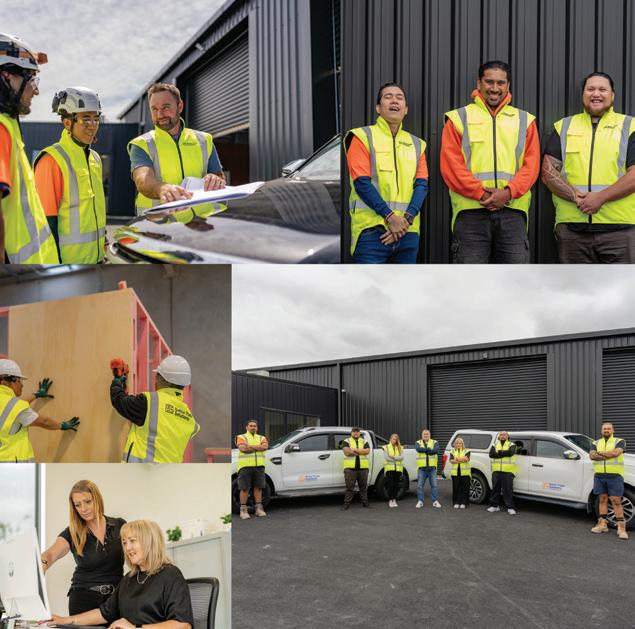
Solutions set out to “do better” when it comes to recruitment for New Zealand’s construction sector.
Richard Giftkins, Founder and National Operations Manager at BTS, has seen cycles come and go, and has more than 25 years of experience in the industry.
For Richard, the solution is not just about filling immediate gaps without considering what might come next. It involves taking a measured approach, responding to the market with the right actions. Being responsible and ethical are a large part of the equation.
Instead of just filling roles, BTS has focused on building real, lasting partnerships. For employers, that means taking care of all the moving parts that tend to slow projects down or create risk when it comes to recruitment and HR. It gives businesses space to focus on delivery, rather than constantly managing workforce issues in the background. For employees, this means having a close personal connection. Despite his workforce growing, Richard still connects one-onone with his staff. He is a boss who cares.
Unlike many other labour hire businesses, BTS started out only employing local talent. That Kiwi-first mindset is a strong pillar for the business that sets it apart from others. There is a genuine focus on building local capability, despite this sometimes being

As an employer myself, I also see the pressure and the stress experienced by employers when businesses face growth or when there just isn’t enough time in the day to take care of recruitment and HR properly.
challenging. Richard enjoys mentoring and developing local talent, and this is how he has built a strong team of senior and permanent workers.
Even with a strong local focus, there will always be gaps. Specialist roles, large-scale projects, or work in remote locations do not always get filled domestically. When it comes to delivering on those challenges, BTS relies on VisaLegal to provide support for their visa processes. BTS and VisaLegal have built a strong foundation, sharing the same set of values and beliefs around what New Zealand’s goals should be and how migrant labour fits into that picture.
“I’ve got teenagers, and it’s pretty easy to see how important it is to invest locally for the future of our workforce,” says Melanie Bradley, founder of VisaLegal.
“As an employer myself, I also see the pressure and the stress experienced by employers when businesses face growth or when there just isn’t enough time in the day to take care of recruitment and HR properly. Visa processes can be onerous on employers who want to recruit their own offshore labour. It can be costly, and there is a steep learning curve involved. That’s where connecting with Better Trade Solutions may be a really good option. Using a third-party
accredited employer takes a lot of that weight off, leaving you with the workers you want, without the hassle of the paperwork.
“We really enjoy working with Richard and the team. They’re highly ethical and, compliance-wise, they are the best of the best, but aside from that, they also understand the bigger picture.”
That bigger picture is what ties it all together. Supporting local workers where possible, bringing in people when there is a genuine need, and doing it in a way that is compliant, responsible, and sustainable.
Better Trade Solutions is not trying to overcomplicate recruitment. It has simply taken a straightforward idea and applied it consistently.
“Our focus is simple. People.” Everything else follows from that.
Emplo
Labour
Work
Settlement Support Resources for your workers and their
Legal Advice on Employer Compliance Matters
Migrant Workforce Planning
Skilled Residence Pathways
Family Visa Applications



‘Build now, fix later’ Overhauling NZ’s shoddy building culture 28 Happy birthday! Master Plumbers celebrates 125 years

Weather watch Fast floodwater a hidden urban danger 36 Call to action Auckland at ‘critical juncture’ as transport infrastructure gap widens
Pothole patrol Government claims early success in $4bn roading problem 44 Warning signs The ageing infrastructure putting Canterbury’s growth at risk
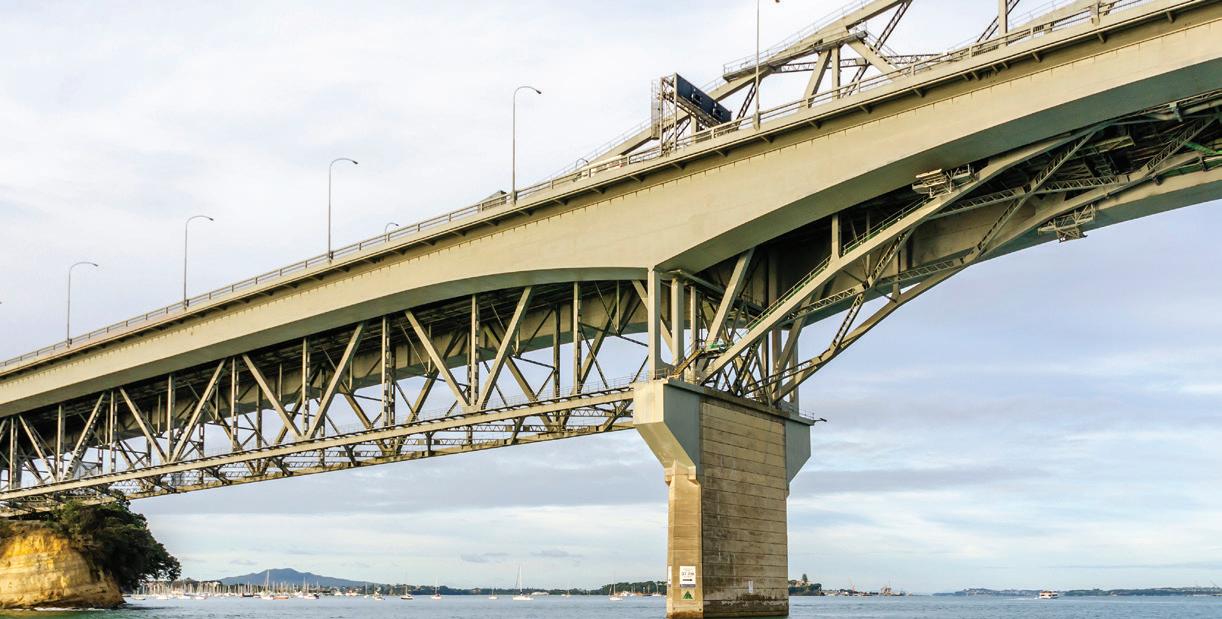
In this edition of Elevate we look beyond individual projects to the bigger systems shaping Canterbury’s future.
Across the region, construction is being asked to do more than deliver buildings and roads; it is being asked to support resilience, productivity and long-term growth. That challenge sits at the heart of two key features in this issue.
Our coverage of the National Infrastructure Plan explores the 30-year roadmap set to influence investment priorities, procurement
settings and the balance between new builds and renewals across New Zealand.
We also bring the focus closer to home, examining the infrastructure risks facing Canterbury’s growth, from ageing bridges and fragile freight links to funding models that no longer match the scale of the task. Together, these articles ask a simple but urgent question: are we planning boldly enough, and wisely enough, for the future now taking shape around us?
stuart@academgroup.co.nz
Markat 38 Lowe Street, Addington, Christchurch 8011
Palermo SALES MANAGER
Elley - (03) 961 5184 sales@markat.co.nz
Jarred Shakespeare - (03) 961 5088
jarred@markat.co.nz
Jessica Ann - Design
Amber Mundy - (03) 961 5075 amber@markat.co.nz
(03) 961 5050 admin@markat.co.nz


From the biggest features to the smallest details, we provide premium painting, decorating and plastering services for homes and businesses throughout Canterbury.



Our skilled team create spaces that both serve their purpose and reflect your personality. Whether it is your cherished home or an innovative office block, or a school, we will carry the project through to completion & ensure our high standards are met.
PAINTING • DECORATING PLASTERING
Office: 03 365 4499
Grant Midgley: 027 221 1595
Richard Kenny: 027 254 3276

Gavin Barnett: 021 761 961 www.chamlang.co.nz


Fuel price drives up construction costs
While demand remains strong and building activity begins to recover, construction costs are starting to feel renewed upward pressure, driven in part by rising diesel prices.
Quotable Value says that although overall cost escalation remains modest, fuel-intensive trades such as excavation, piling, and demolition are seeing sharper increases.
Excavation costs, for example, rose 7.8% in a month due to the diesel spike. QV CostBuilder spokesperson and experienced quantity surveyor Martin Bisset said fuel was the main cost driver right now.
“The increase in the price of diesel has had an immediate impact on areas such as site preparation, excavation and substructure work, where fuel is a significant input for machinery used in these operations. That’s where the most upward pressure is coming from.”
Global oil price movements and geopolitical factors are
contributing to higher fuel and freight costs, adding another layer of pressure to project budgets.
“We’re not seeing the widespread supply chain disruption of recent years, but fuel and freight are certainly re-emerging as important cost drivers,” Bisset said.
These pressures are emerging as the broader cost environment begins to shift.
Residential construction cost growth has started to pick up again, with annual increases reaching 3% in the March quarter, the fastest pace in more than two years. While still below longterm averages, the change suggests a gradual return to a more active phase for the sector.
Construction costs still show a mixed picture. Prices have risen for materials such as plasterboard, insulation and some timber products, while others, such as copper and steel pipework, have eased.
“The key takeaway is that cost growth is still relatively moderate, but volatility has increased,” he said.
Consents signal broader recovery
Rising building consents reinforce signs of a more sustained recovery, with annual approvals reaching a two-year high and pointing to a stronger pipeline of work.
There were 37,534 new homes consented across New Zealand in the year to February 2026, up 12% on the previous year, according to Stats NZ.
“The annual number of new home consents has increased for seven consecutive months,” economic indicators spokesperson Michelle Feyen said. Growth has been driven largely by higher-density housing, with townhouses, flats and units up 15% and apartments rising 34%, while stand-alone houses increased by 7.8%.
Activity remains concentrated in major centres, led by Auckland, followed by Canterbury, Waikato, Otago and Wellington.
While consents do not always translate directly
By Ben O’Connell
into completed builds, they remain a key forward indicator of activity. With approvals trending upward, builders are likely to become busier in the months ahead as projects move from planning to construction.
Despite rising costs, developers appear to be continuing to push ahead, supported by population growth, urbanisation and ongoing housing demand. However, pressure is building at the margins.
Trades reliant on fuel-intensive machinery are particularly exposed, and smaller operators may face tighter margins with less ability to absorb sudden increases in input costs.
As more projects move from approval to construction, those pressures are likely to intensify. The challenge for the sector will be managing rising costs while maintaining the pace of recovery, particularly as demand strengthens and capacity begins to tighten again.


WHY CHOOSE JAN MAREE CLEANING SERVICES
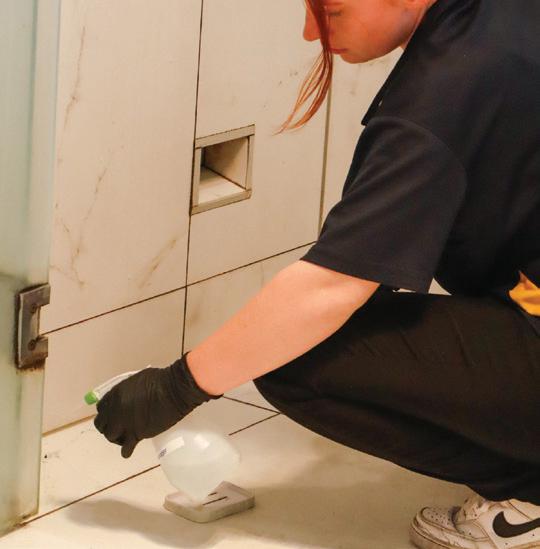
Jan Maree Cleaning services are a small dedicated local team. We specialise in cleaning your home, business and other locations with chemical free cleaning products Enjo. Approachable, thorough and providing your cleaning with a personal touch.
Window Cleaning
Carpet Cleaning
Oven Cleaning
Move Out Cleans
Regular Cleaning
One Off Cleaning
Carpet Cleaning
Builders Cleans
Window Cleaning
Crafting the coastal view
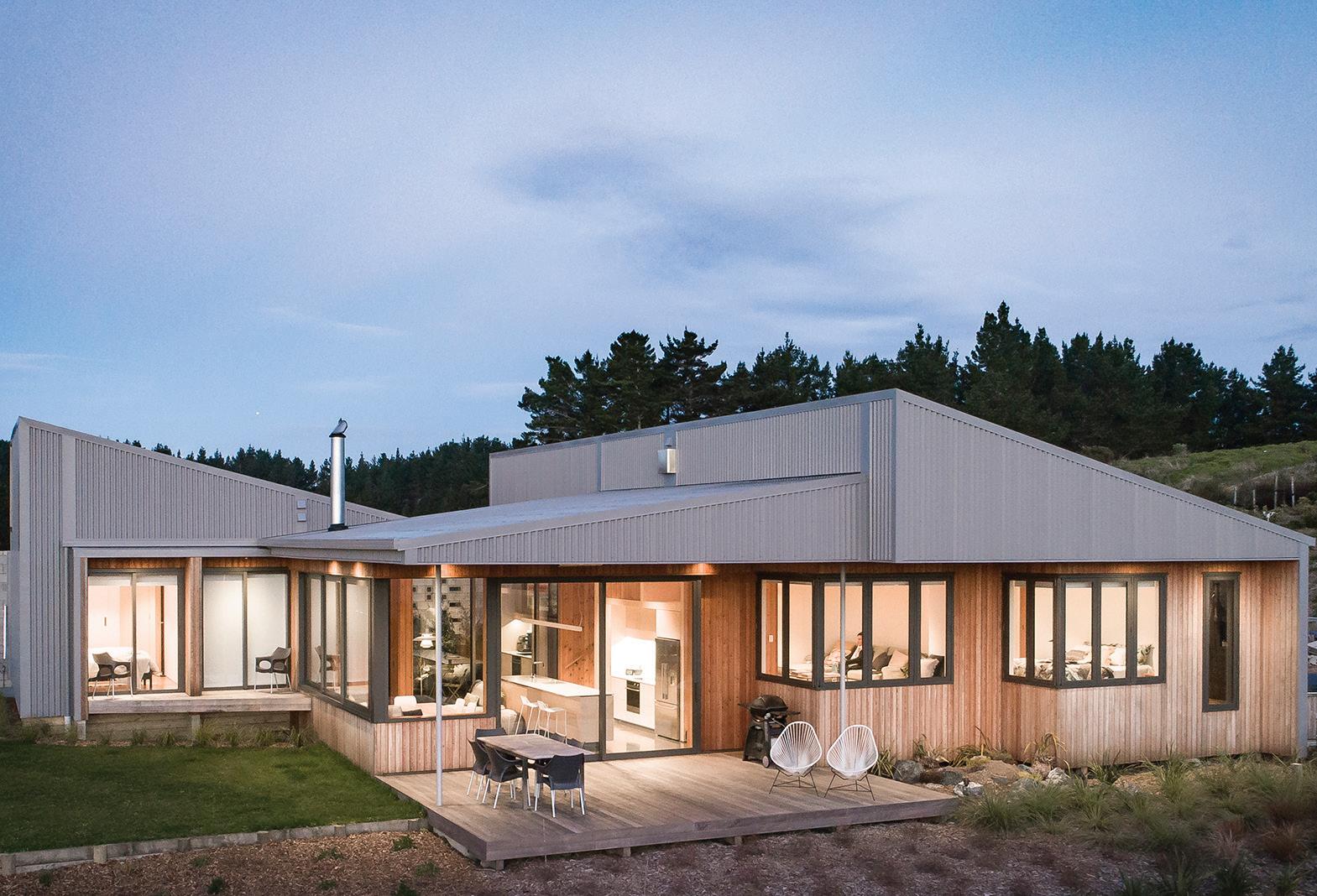
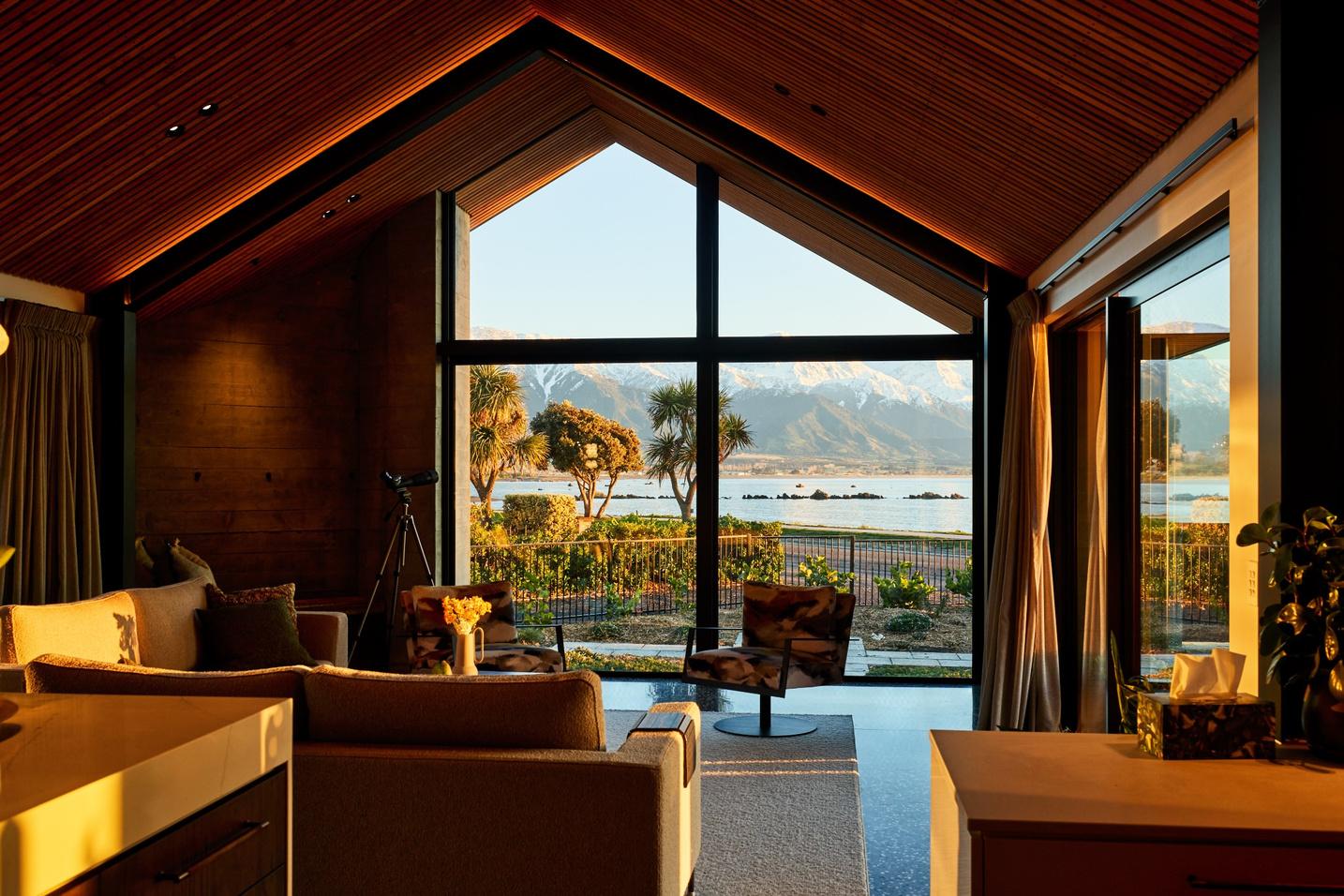
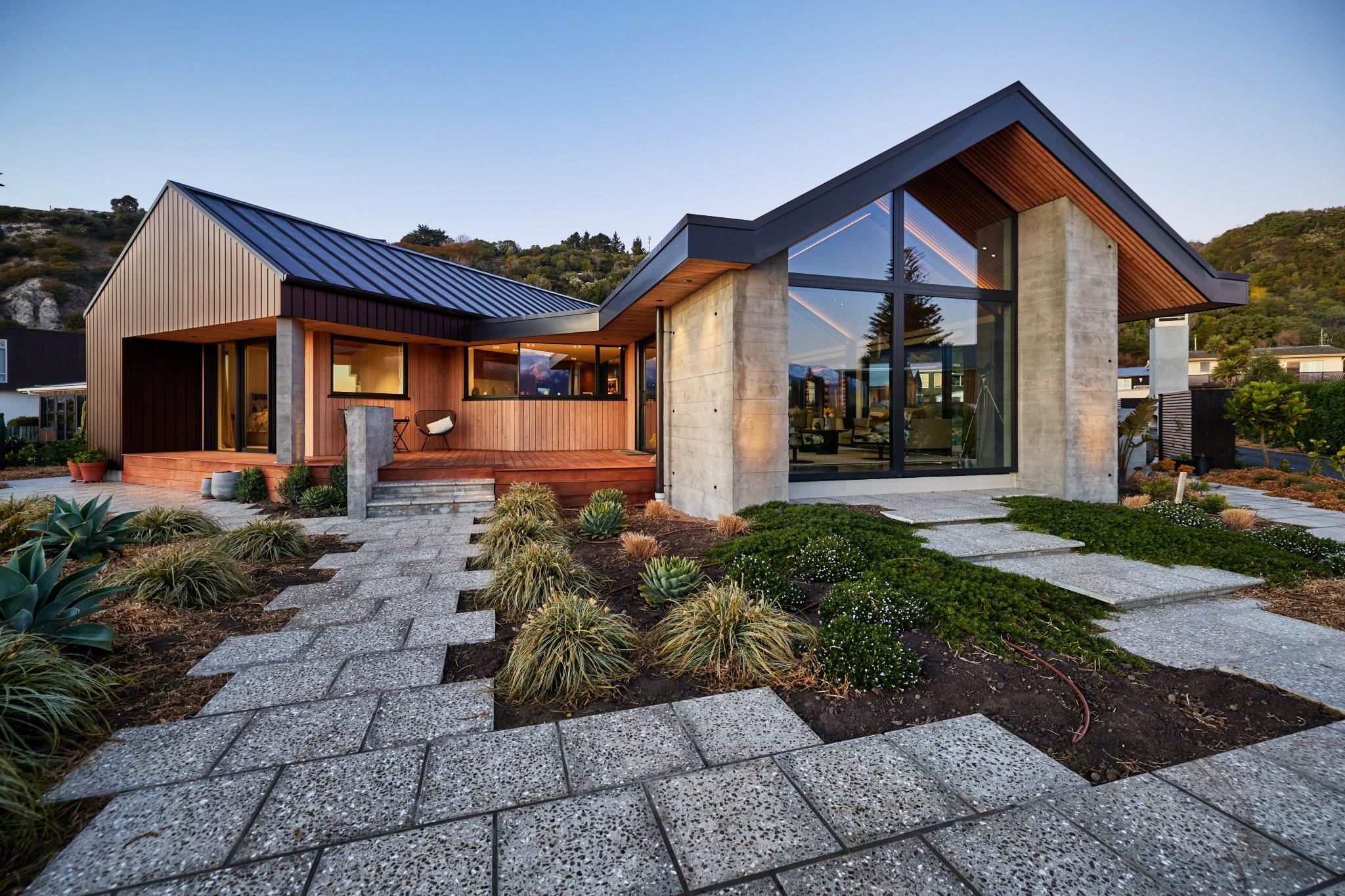
Set against the breathtaking backdrop of Kaikoura’s glimmering coastline, this striking coastal home is a celebration of seamless collaboration between builder, architect and fabrication done at Fairview Concepts Ltd.
Delivered in partnership between Jack Built Construction and Fairview Concepts Ltd, the project reflects the strength of a trusted working relationship and a shared commitment to quality craftsmanship.
Positioned on a highly exposed site and designed for an Extra High Wind Zone, the home demanded careful planning, technical precision and absolute attention to detail from concept right through to completion.
Fairview Concepts Ltd worked closely with Jack Built Construction; every element of the aluminium joinery package was meticulously considered to ensure it could withstand
the harsh coastal environment without compromising on design intent. Salt-laden air, elevated wind pressures and stringent deflection requirements all played a critical role in the specification and fabrication process.
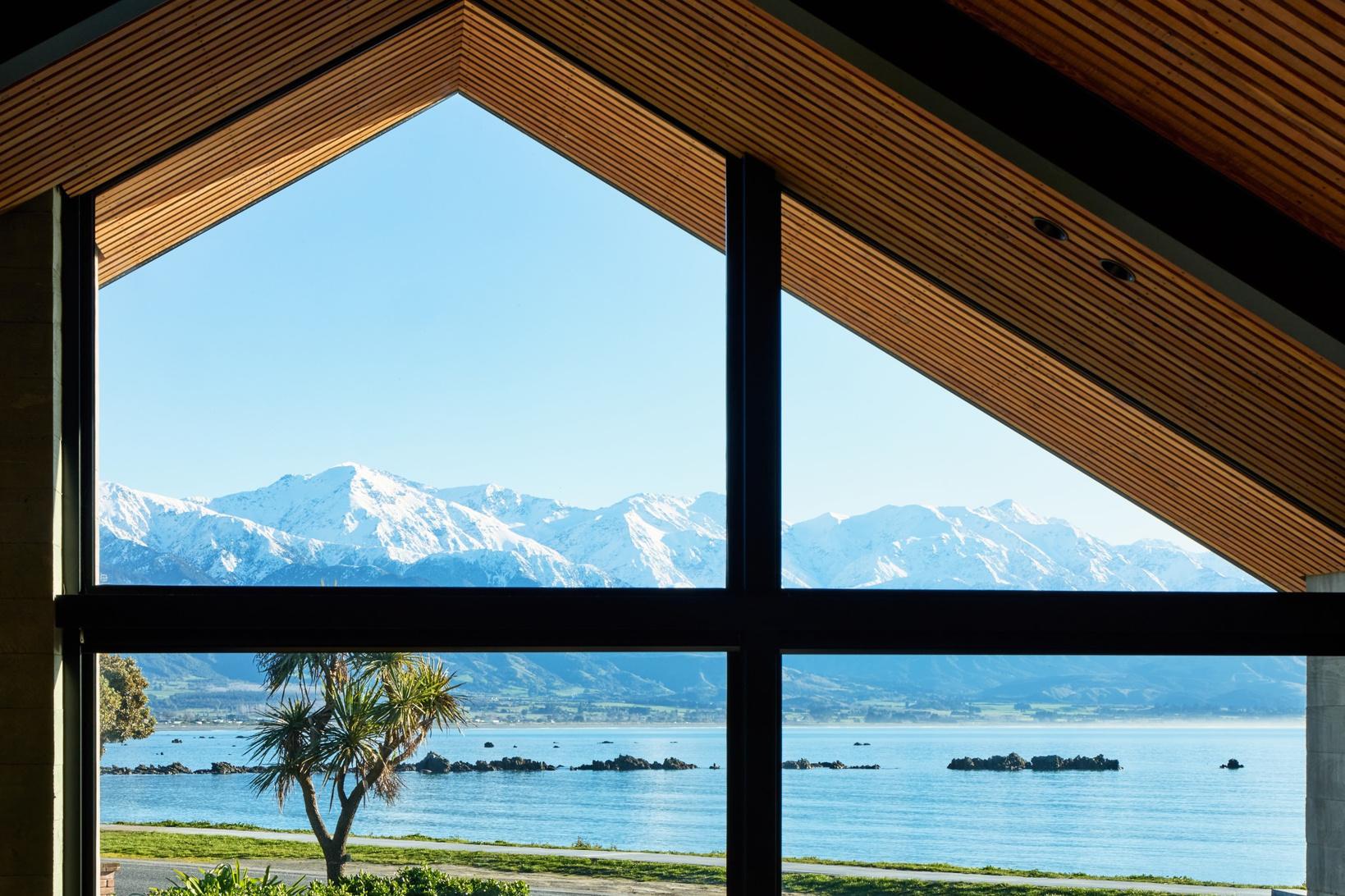
The larger joinery units, including expansive stacker doors and feature windows with offset rakes, were fabricated using Premium Thermally Broken Suites used by Fairview Concepts Ltd. These systems pushed beyond standard configurations to meet the structural demands of the site, while delivering enhanced thermal performance suited to the ever-changing coastal


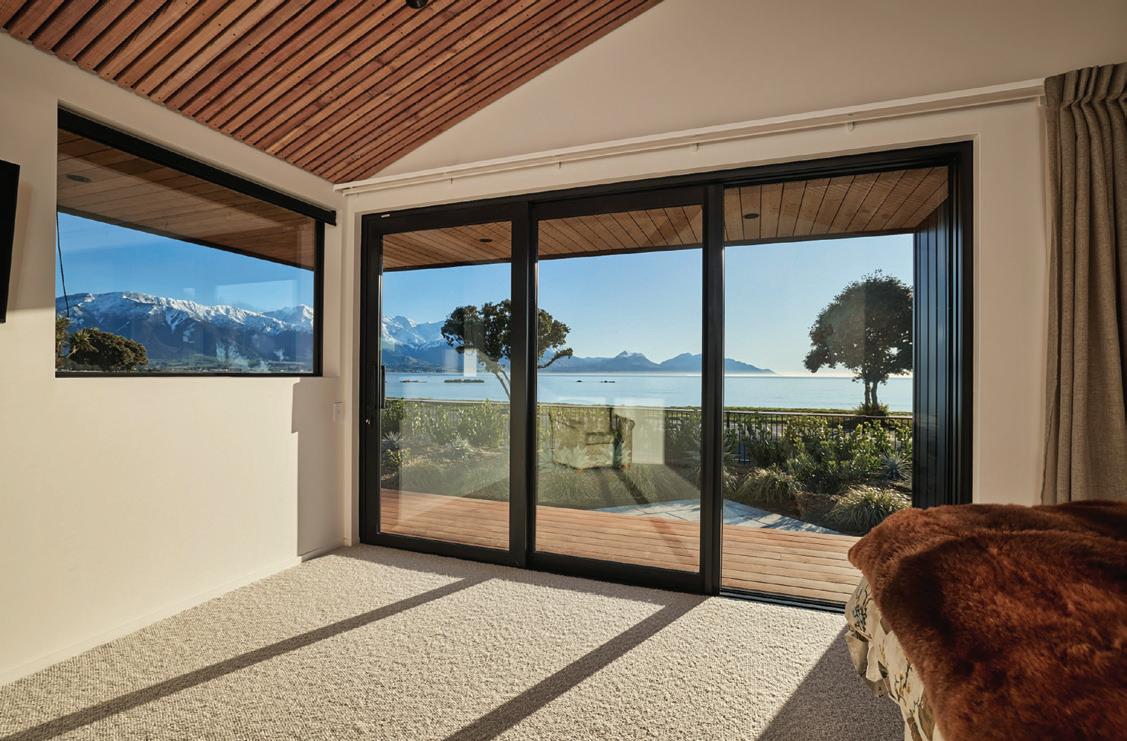
climate. Careful engineering and detailing ensured the oversized units maintained both structural integrity and effortless operation, even under extreme wind loads.
Beyond performance, aesthetics remained paramount. Clean lines, refined profiles and carefully balanced proportions allow the joinery to complement the architectural form while maximising uninterrupted coastal views. The result is a seamless integration of structure and setting, where strength meets sophistication, and where Fairview Concepts Ltd aluminium joinery
doesn’t simply withstand the environment, but in fact enhances it.
This home stands as a testament to what can be achieved when experienced local builders like Jack Built Construction and Fairview Concepts Ltd with trusted fabricators that collaborate closely, ensuring that we deliver a residence that is as resilient as it is beautiful, purpose-built for life on the Kaikōura coast.
Esplanade Kaikoura
Aluminium Joinery by Fairview Concepts

The road ahead
National Infrastructure Plan sets a 30-year course for New Zealand construction
By Jonathon Taylor
Few issues are more central to New Zealand’s long-term prosperity than infrastructure.
From state highways and freight corridors to hospitals, water networks and electricity transmission, the assets that underpin daily life are also the backbone of economic growth. Yet despite sustained investment over decades, the country continues to grapple with ageing networks, rising costs, climate risk and uneven delivery performance.
The release of the National Infrastructure Plan by the New Zealand Infrastructure Commission marks a significant attempt to reset that trajectory. Tabled in Parliament by Infrastructure Minister Chris Bishop on 17 February 2026, the Plan sets out a 30-year roadmap to improve how New Zealand plans, funds, maintains and delivers infrastructure.
For the construction sector, this is more than a policy document. It is a signal about pipeline stability, investment priorities, procurement reform and the balance between new builds and renewals. Framed around systemwide reform and backed by extensive consultation, the Plan has already sparked strong responses from across engineering, freight and local government.
In this in-depth Q&A, we examine what the Plan
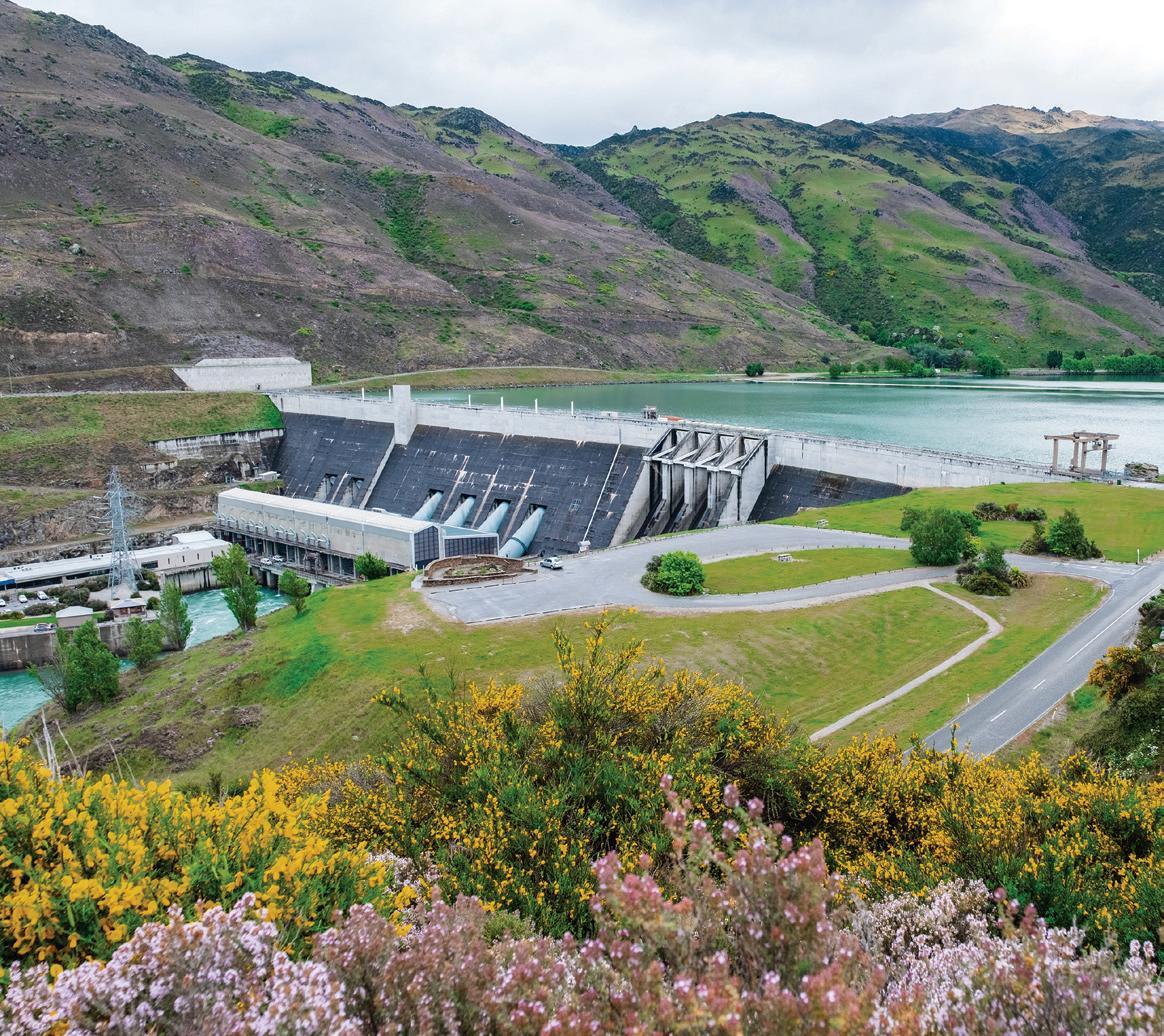
For the construction sector, this is more than a policy document. It is a signal about pipeline stability, investment priorities, procurement reform and the balance between new builds and renewals.
contains, why it matters and what it could mean for the industry over the coming decades.
What is the National Infrastructure Plan and what does it aim to achieve?
The National Infrastructure Plan sets out a practical and affordable pathway for delivering the infrastructure New Zealanders will need over the next 30 years. It
takes a whole-of-system view, spanning hospitals, transport networks, water infrastructure and energy systems.
New Zealand Infrastructure Commission Chief Executive Geoff Cooper describes the Plan as both long-term and urgent in its intent.
“While the Plan looks at the long term, it’s clear that we need to take action now. Weather events and infrastructure failures make very clear the importance of
investing to renew and build resilience into the networks that sustain our way of life,” Geoff says.
The Plan integrates long-term demand forecasting with data from the National Infrastructure Pipeline and the Commission’s Infrastructure Priorities Programme. It identifies where pressures are building, where assets are deteriorating and where investment will deliver the greatest long-term value.
He emphasises that incremental tweaks will not be enough. “We can’t keep doing what we’ve always done.”
At its heart, the Plan is designed to provide decisionmakers and the industry with clarity about direction. It seeks to move infrastructure planning beyond short political cycles and toward a durable, sequenced programme that balances ambition with affordability.
Why is reform necessary when New Zealand already invests heavily in infrastructure?
One of the Plan’s most confronting insights is that high levels of spending have not translated into high levels of performance.
Chris Bishop acknowledges the scale of the challenge. “We spend a lot on infrastructure, around 5.8% of GDP annually over the last 20 years, one of the highest in the OECD, yet
we rank towards the bottom for efficiency, and fourth to last in the OECD for asset management.” And he is candid about the findings.
“The Plan does not sugarcoat things: New Zealand has real challenges ahead.”
According to the Government and the Commission, weaknesses include fragmented assurance systems, inconsistent project governance, limited long-term asset planning and insufficient understanding of what public agencies actually own.
For construction professionals, these shortcomings are not abstract. They translate into late design changes, stop-start procurement, inconsistent specifications and pipeline volatility.
The Plan argues that lifting productivity in infrastructure delivery is as important as increasing capital allocations. It contends that New Zealand likely spends enough in aggregate, but does not
For construction professionals, these shortcomings are not abstract. They translate into late design changes, stop-start procurement, inconsistent specifications and pipeline volatility.
consistently achieve value for money.
What are the key structural reforms proposed in the Plan?
The Plan outlines 16 recommendations across four core themes: Planning what we can afford: Embedding stronger links between long-term demand forecasting and fiscal strategy, and requiring clearer long-term investment plans.
Looking after what we’ve got: Shifting the investment balance toward maintenance and renewals, with up to 60 cents in every capital dollar directed at sustaining existing assets. Prioritising the right projects: Strengthening project
sequencing, assurance and transparency to ensure scarce funding is allocated where it delivers the greatest benefit.
Making it easier to build better: Improving procurement settings, institutional capability and co-ordination across agencies.
The Plan also calls for potential legislative changes, including requirements for long-term asset management plans and the consolidation of assurance functions for major investments.
For contractors and consultants, these system shifts could significantly affect procurement models, risk allocation and the predictability of forward workloads.
What are the 10 priority actions for the next decade?
Alongside long-term structural reform, the Plan identifies 10 areas requiring focused attention over the next 10 years. These priorities aim to deliver visible gains while supporting the broader 30-year transformation. They include:
• Lifting hospital investment to serve an ageing population
• Completing catch-up on water infrastructure renewals
• Restoring affordability in water services
• Identifying cost-effective flood resilience infrastructure
• Prioritising and sequencing major land transport projects
• Implementing time-of-use charging and wider road user charges
• Embedding maintenancefirst investment principles.
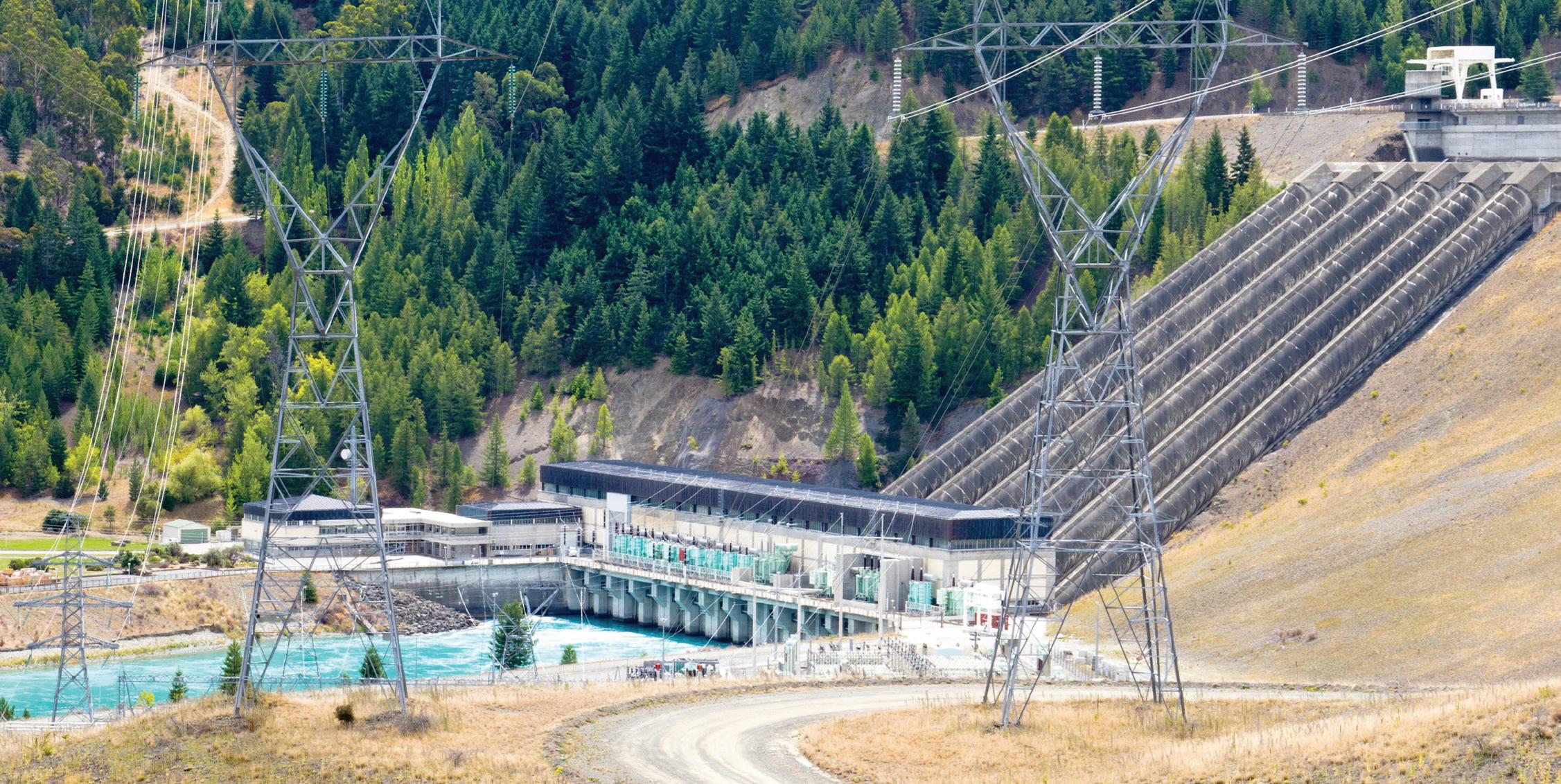
Geoff Cooper explains the logic: “Some of the infrastructure issues we’re facing have been decades in the making – and they’ll take time to fix. But New Zealand also faces acute pressures that require attention now.
“Addressing the top 10 priority areas identified in the Plan will result in visible infrastructure gains and support our longerterm recommendations for the next 30 years.”
For the construction industry, this signals a strong pipeline in health, water renewals, flood resilience works and transport optimisation initiatives.
How is the Government positioning itself in response?
Minister Bishop has welcomed the Plan as aligned with reforms already underway.
“New Zealand’s future prosperity depends on highquality infrastructure. It is central to our quality of life and to the Government’s ‘Going for Growth’ agenda,” he says.
He outlines a range of system improvements introduced over the past two years, including strengthening the Investment Management System, developing long-term capital plans and improving asset management capability across agencies.
The Government has also established new funding and financing mechanisms to better connect private capital with public infrastructure projects, clarified roles and responsibilities, and improved transparency in the national pipeline.
Minister Bishop notes that many of the Plan’s 10 priorities reflect work already in
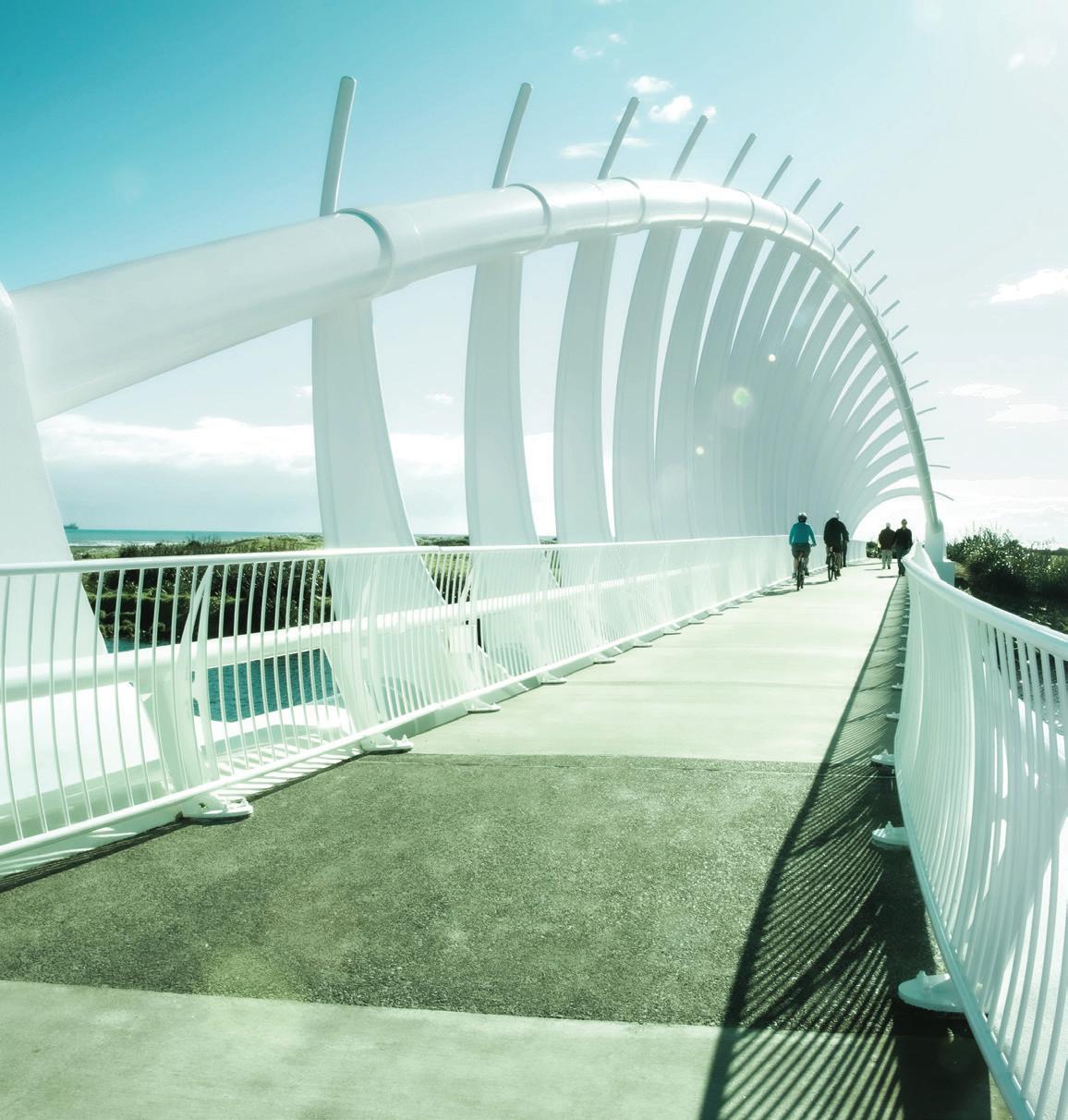
The Government has also established new funding and financing mechanisms to better connect private capital with public infrastructure projects, clarified roles and responsibilities, and improved transparency in the national pipeline.
progress, including hospital investment, water reform, road user charging and transport pipeline publication.
Importantly, the Government must publish a formal response within 180 days of receiving the Plan and Minister Bishop has signalled cross-party engagement.
“Infrastructure lasts for generations. Where we can build durable consensus, we should.”
For industry, bipartisan alignment would be a major step toward stabilising the project environment and reducing politically driven volatility.
road revenue reform, and the importance of ensuring that party politics don’t disrupt the delivery of good infrastructure maintenance and improvements,” he says. He reinforces the Plan’s focus on fundamentals. “What matters is staying focused on the fundamentalslooking after existing assets, delivering projects well, planning efficiently, and being transparent about costs and outcomes.”
For freight operators, recent severe weather events have highlighted the fragility of parts of the network.
“A strong message we hear from our road freight members is the importance of maintaining the existing road network… which has been historically underfunded by successive governments.”
If the maintenance-first approach outlined in the Plan is adopted, it could reshape transport capital allocation, favouring renewals and resilience over speculative expansion.
How are engineers and local leaders responding?
What does the Plan mean for transport, freight and road funding?
Transport reform is a prominent feature of the Plan, particularly the shift toward time-of-use charging and broader road user charging frameworks to better manage congestion and revenue.
Transporting New Zealand la Ara Aotearoa Chief Executive Dom Kalasih has welcomed the long-term approach.
“The Plan emphasises the importance of maintaining existing assets, the need for
Engineering leaders have broadly welcomed the Plan’s shift toward renewals and asset stewardship.
Executive of Engineering New Zealand Chief Executive Dr Richard Templer describes the Plan as encouraging. “A big focus in the plan are recommendations around getting more value from existing assets and keep them working for longer. These recommendations are well founded and a necessary move in our infrastructure investment focus from ribbon cutting to renewal,” Richard says.
However, he also warns of workforce instability. “Once infrastructure work picks up, we are going to need a lot of people. Many of these people are going overseas. It’s frustrating to see great people heading to Australia because they have got their act together around infrastructure planning.”
At the local government level, Auckland Mayor Wayne Brown has embraced the Plan’s candid assessment of megaproject costs. “This Plan contains some hard truths for our infrastructure sector – and for the Government,” he says.
He argues for cost discipline over gold-plating. “We need to focus more on cost and less on world-class. We just want good usable standards.”
Such comments reflect a broader debate about design standards, procurement efficiency and affordability — issues central to construction sector performance.
How is the plan being received?
Across industry groups, the Plan has been largely welcomed as a serious and necessary intervention.
Infrastructure New Zealand Chief Executive, Nick Leggett, describes it as “a serious and substantial contribution to the discussion.”
He identifies productivity as the central issue. “We probably spend enough. But we do not consistently get the return we should. Improving productivity in infrastructure delivery is the challenge we must now solve.”
Nick cautions against limiting ambition solely due to fiscal pressures. “Infrastructure is not simply a cost. It is an
investment in prosperity, productivity and resilience.”
He notes that while the Plan provides a clearer framework and a $275 billion pipeline overview, funding decisions will require hard political choices. From freight to engineering to local government, the consensus appears to be that the diagnosis is accurate. The challenge now lies in implementation and funding certainty.
What happens
from here?
The Plan’s release is only the starting point; a point emphasised by Geoff Cooper. “A plan by itself won’t change anything. The National Infrastructure Plan charts the course, but progress depends on how decision-makers, delivery agencies, industry, and communities use the Plan to do things differently.”
The Government has until June 2026 to publish its formal response. Cross-party engagement is being sought, and Commission officials will brief political
parties to encourage informed debate. The Plan is designed to evolve. Elements will be updated regularly, and the Commission will monitor progress against its recommendations to promote transparency and accountability.
Crucially, the Plan balances immediate pressures with long-term transformation. It addresses demographic change, climate risk and technological shifts while sequencing major investments, from hospitals to rapid transit, within an affordable framework.
By combining maintenancefirst principles with targeted expansion, the Commission argues it has outlined a “fundable and affordable programme of works” capable of futureproofing services while incrementally expanding capacity as the country grows.
For the construction sector, the implications are significant. A more stable and transparent 30-year direction could enable better workforce planning, capital investment in equipment
For the construction sector, theimplications are significant. A more stable and transparent 30-year direction could enable better workforce planning, capital investment in equipment and stronger collaboration across supply chains.
and stronger collaboration across supply chains. Yet the ultimate outcome will depend on execution.
As Minister Bishop concludes: “Now it is up to all of us to do the hard work required to turn ambition into delivery.”
For New Zealand’s builders, engineers, designers and asset managers, the blueprint is now on the table. The next three decades will determine whether it becomes a reality.
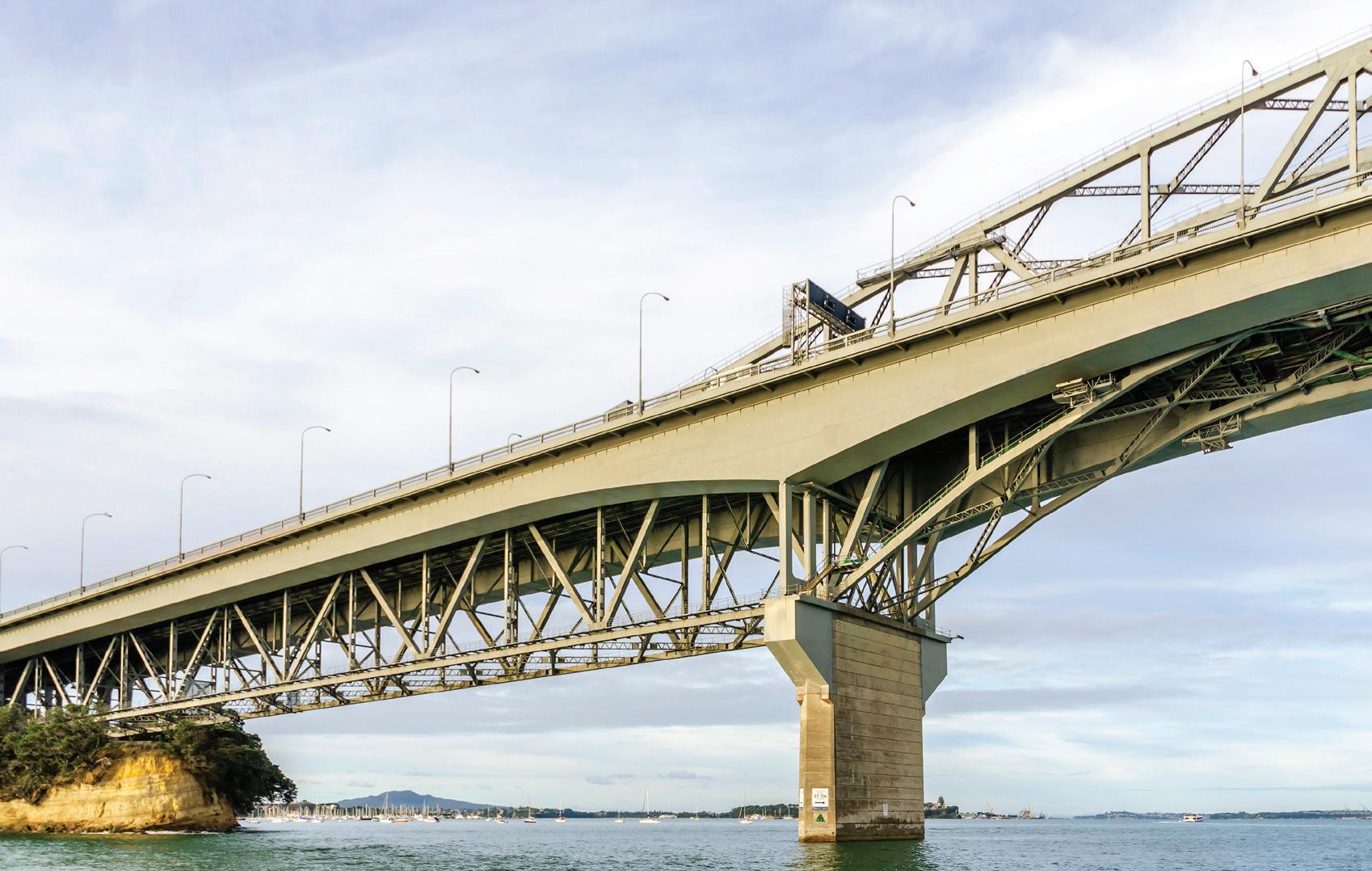

Jason Campbell
"JC Operators provides great trainingThe perfect way to move your career forward"
Training
• Transport
Logistics
• Relief Driving
• Piloting
• Crane Movement
• Heavy Haulage Operating
Cranes
• Crane Operator
• Crawlers
• Rigger Dogman
• Assembly
• Project Management
Features
• Waterview Tunnel
Boring Machine
• Wind Turbine Maintenance
• Building Deans Stand at Ami Stadium
• CTV Building Rrescue Recovery
Christchurch Earthquakes
• Te Reinga Bridge Installation
• Waipipi/Turtia
Wind Farm Installation
• Te Kaha
Christchurch Stadium
Roof Structure Erection
Canterbury gets first rubber road
By Ben O’Connell

The nation’s first rubber road has been laid in Selwyn. The installation on Glentunnel Domain Road uses recycled rubber crumb made locally by Treadlite NZ in partnership with HEB Construction.
The local council is trialling three different rubber surfaces in this location. Options include a rubber surface laid over a conventional aggregate base, a rubber-modified asphalt created by Isaac Construction, and a fully rubberised surface and base layer bonded with a rubber-enhanced agent.
Although each of these products has been applied separately elsewhere in New Zealand, this marks the first time they are being combined to create a complete road surface.
The Council will closely track how all three sections perform. If the trial proves successful, rubberised surfacing could be
The local council is trialling three different rubber surfaces in this location. Options include a rubber surface laid over a conventional aggregate base, a rubber-modified asphalt created by Isaac Construction, and a fully rubberised surface and base layer bonded with a rubber-enhanced agent.
expanded across the district, delivering stronger roads, reduced long-term costs, and innovative local recycling in Selwyn.
Mayor Lydia Gliddon says Selwyn is “determined to not just be building more infrastructure but building better, smarter infrastructure”.
Each year, more than six million tyres reach the end of their life in New Zealand, while nearly 180,000 tonnes of mostly imported bitumen are used for road construction. Replacing just 15% with rubber would use half the tyres that reach their end of life annually.
The product serves as an alternative to traditional
gravel and bitumen, cutting dependence on imported materials while repurposing tyres that might otherwise end up in landfills or stockpiles.
“This is about designing roads that last longer, cost less to maintain, and support local recycling and Kiwi-made solutions” says Council Executive Director Infrastructure & Property Tim Mason.
“Rubber road technology is used increasingly around the world, and this trial gives us the opportunity to test how it performs in Selwyn conditions.”
Since the 1970s, tyre-derived crumb rubber has been used internationally as an alternative
additive to bituminous binders, improving pavement performance while also helping to manage end-of-life tyre waste.
The NZTA says early trials in hot mix asphalt (HMA) and chip seal pavements produced mixed results, but advances in technology, ongoing research, and global best practices have shown that crumb rubber can be successfully incorporated into road surfaces.
In New Zealand, the use of rubber in roads has historically been limited to natural rubber latex or SBS block copolymer, also introduced in the 1970s.
Crumb rubber from waste tyres, however, has largely been confined to research trials and has not yet been widely applied in standard road construction or maintenance projects.
If successful, Selwyn’s rubber road could pave the way for longer-lasting, quieter, and more sustainable roads across New Zealand.
Pain at the pump hits timber supply
By Ben O’Connell
A sharp spike in fuel and freight costs is putting serious pressure on our logging and timber industry – and that squeeze is starting to show up in quotes, lead times, and delivered-to-site timber prices for builders and trade contractors.
Diesel prices have surged roughly 80% in recent weeks, with wholesale diesel now around $2.30–$2.35 per litre, while international shipping rates from key sources such as China have jumped more than 30%.
Logging and haulage are deeply tied to fuel: harvesters, forwarders, log trucks, and
port operations all rely heavily on diesel, so rising input costs quickly erode margins. Forestry companies report that some remote or low -yield forests are already becoming uneconomic to harvest, and many are warning they may need to scale back operations or even shut down parts of their business.
For those on the tools, the impact is threefold. First, there is a risk of tighter supply and longer lead times for seasoned structural timber, especially in regions where export- driven forestry, such as South Canterbury and parts of the Central North Island, feed local and national supply chains.
Second, higher freight costs are being passed through to delivered -to - site pricing, making pallets of radiata, LVL, and engineered products more expensive and more

volatile from month to month. Third, if the fuel - price environment persists, some mills and distributors may prioritise larger volume buyers or tighten allocations, which can squeeze smaller builders and independent contractors who rely on local merchant yards.
To navigate the current fuel - linked environment, builders and contractors should treat timber and transport pricing as inherently more volatile than it was a year ago. That means building in larger fuel and freight allowances when tendering jobs, and, where possible, locking in fixed or
capped - price agreements with preferred timber merchants and structural suppliers.
Early ordering of high -value items, such as framing packages, trusses, and engineered products, can help avoid last- minute supply- chain shocks and keep projects on schedule. Over the longer term, the fuel crisis is also sharpening the business case for leaner logistics, smarter sequencing, and design -for- manufacture approaches that cut unnecessary trips and reduce waste, turning today’s price pressure into a driver of more efficient timber use.
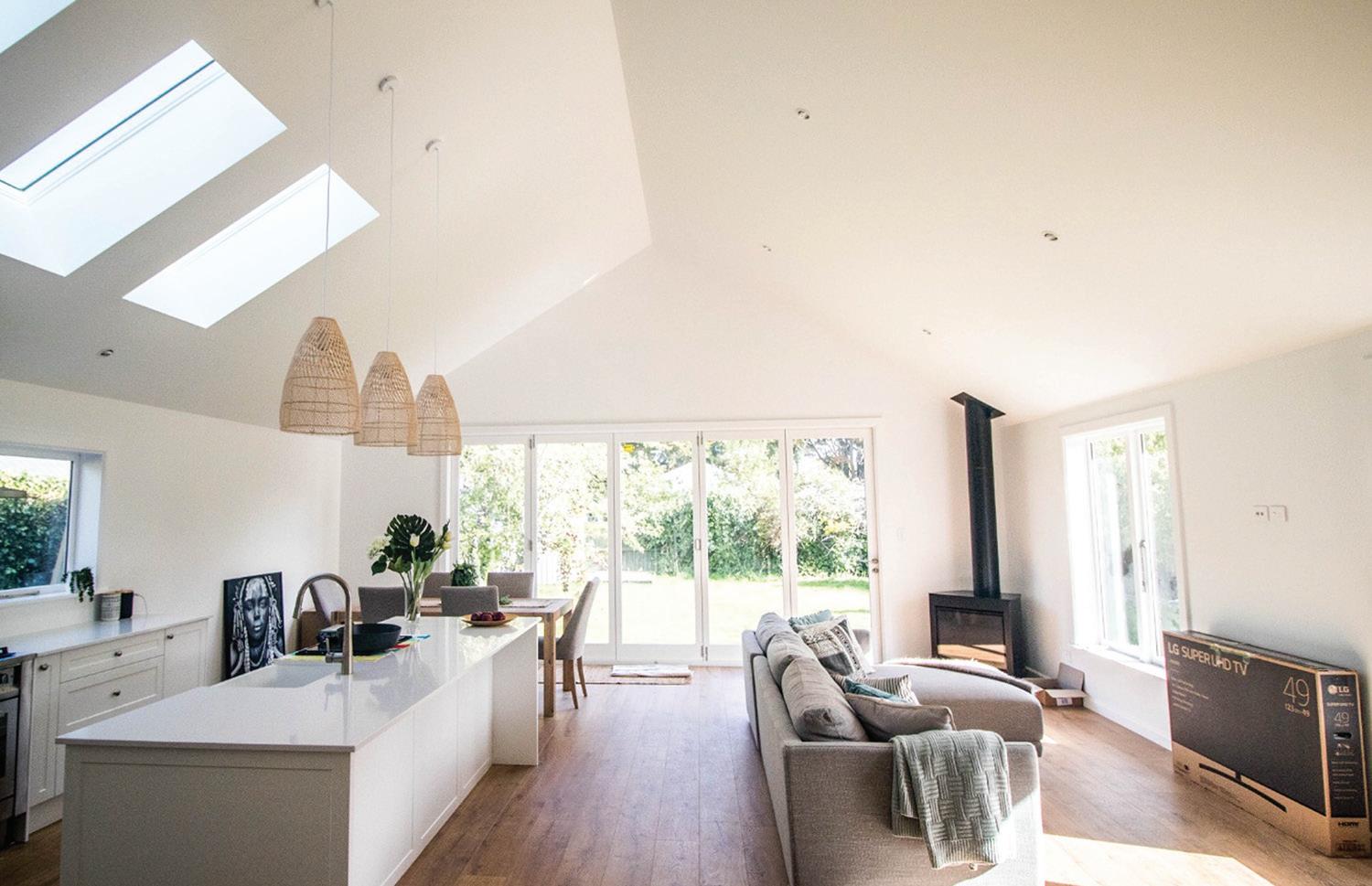

We specialise in all aspects of interior and exterior plastering.
registered and trade qualified with 20 year experience



NZ’s $2.5 billion shoddy building bill: How to fix the ‘build now, fix later’ culture
By Mark Kirby, Construction Industry Consultant, Auckland University of Technology
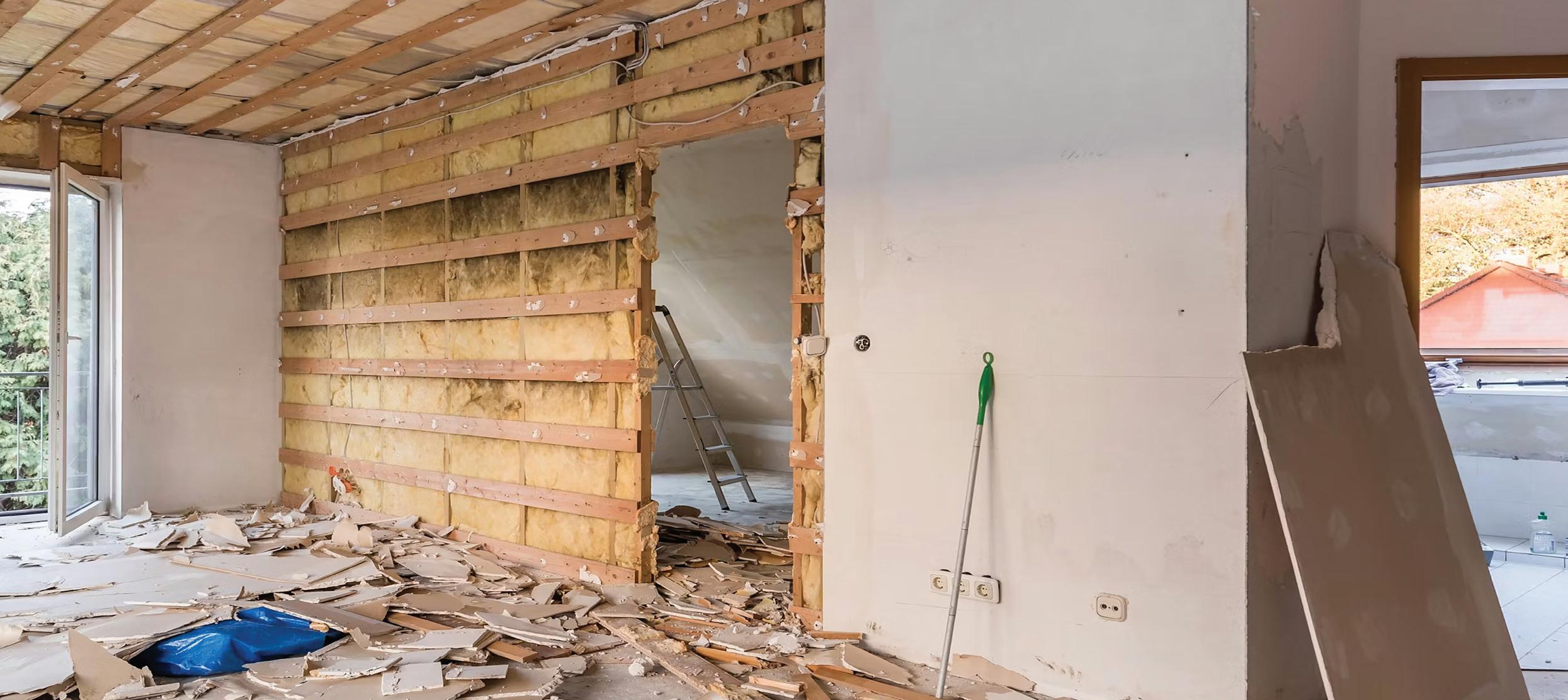
New Zealand’s residential construction industry contributes roughly NZ$26 billion annually to the economy and employs around 70,000 workers. Yet despite its significance and scale, the sector’s productivity levels have flatlined since the mid-1980s.
In housing construction, “productivity” isn’t a simple measure of output per worker; it refers to the industry’s ability to deliver the right quantity of highquality homes without significant delays or flaws.
If a builder spends ten hours rectifying avoidable mistakes , for instance, their productivity for the day is effectively zero. And this has become all too common within the sector.
A 2014 study by the Building Research Association of New Zealand (BRANZ) confirms
In housing construction, “productivity” isn’t a simple measure of output per worker; it refers to the industry’s ability to deliver the right quantity of high-quality homes without significant delays or flaws.
If a builder spends ten hours rectifying avoidable mistakes, for instance, their productivity for the day is effectively zero. And this has become all too common within the sector.
92% of new houses surveyed had compliance defects.
Subsequent analysis carried out for BRANZ by the New Zealand Institute for Economic Research estimated the annual cost of defective building to the overall economy:
“The results show that economy-wide effects of an increase in productivity would see New Zealand’s GDP rise by $2.5 billion, as the industry’s overall costs of production decrease.”
That means nearly 10% of the sector’s total value is lost to systemic quality
failure. Based on the average construction cost of an Auckland house, that loss represents around 5,000 missing homes every year.
Recognising the productivity problem, the government last year introduced major reforms aimed at speeding up consent processes and allocating financial liability for defective buildings to those responsible.
But while poor productivity is often blamed on procurement methods, technology or labour, our research suggests better quality management is key to remedying the industry’s “build now, fix later” culture.
Commercial viability before quality control
We surveyed the views of 106 residential construction professionals, including general managers, construction managers, site managers, project managers and subcontractors.
They were asked about the influence of quality management on improving residential construction productivity, and about the effects of government policy. The views expressed suggested a culture prioritising time and cost over quality is a systemic norm at the industry level.
We then traced the industry’s problems back to the major policy shifts that began in the mid-1980s. Before then, building quality was anchored in the prescriptive standards set by the Ministry of Works
By specifying how to build, the ministry acted as a national governor of technical standards. But by 1988, those standards
To understand why industry performance stalled, we refer to what’s called the “theory of constraints”, which argues a system is only as strong as its weakest link.
were viewed as a barrier to efficient market operation, effectively ending the era of the state as master builder.
The New Zealand Building Code subsequently replaced the previous prescriptive system with a performancebased model focused solely on outcomes.
Without strict procedural guidance, the industry moved towards a culture that prioritised speed and commercial viability over rigorous quality management.
A ‘tick-box’ culture
To understand why industry performance stalled, we refer to what’s called the “theory of constraints”, which argues a system is only as strong as its weakest link.
In New Zealand’s residential construction sector, we argue, the weakest link is not just poor quality control but the absence of a qualityfocused culture in general.
The 1980s shift to a handsoff, self-regulated model helped foster a “tick-box” culture rather than genuine organisational reform. This has meant that with every step forward, the industry is pulled back by the need to fix previous errors, stalling productivity.
On the building site, this manifested as a disconnect between the “work as imagined” (the manuals and checklists from head office)
and the “work as done” by builders and subcontractors.
The worst outcomes are well known. New Zealand is still paying for the nearly $47 billion legacy of the leaky homes crisis , which peaked in the early 2000s. Poor quality, damp and mouldy housing contributes to respiratory illnesses costing $145 million annually in hospitalisations.
While policies such as the healthy homes standards for rental properties now exist, such measures mainly treat the symptoms of a deeper problem.
In Auckland alone, one-third of all projects fail their final inspection. The high volume of remedial work required chokes the entire system’s throughput.
The government must lead
Fixing an annual $2.5 billion problem requires a structural shift. Our research proposes a framework where the state, as the primary funder and driver of major construction, sets the standard the rest of the industry must adopt.
The proposed framework is underpinned by “lean principles” designed to minimise waste and encourage continuous improvement through a “plando-check-act ” cycle. It uses the ISO 9000 standards New Zealand already has in place for exports.
To help achieve this, we argue the government would need to do two things.
• Establish a national construction, productivity and quality commission. This would be a nonpartisan body staffed by industry and academic experts to ensure reform survives beyond three-year election cycles.
• Mandate quality management systems that align with existing ISO 9000 standards for all governmentfunded residential projects.
The aim is to create a trickle-down effect, driving culture change throughout the industry. To win stable government contracts, subcontractors would be forced to up-skill and formalise standards-based oversight of their work.
Improved quality and productivity should not be aspirational. New Zealand has 2.5 billion reasons to create the genuine structural reform required.

From vision to reality
The latest Infometrics data shows Ashburton’s housing market and economy are growing. 28% more homes were sold in Ashburton in the third quarter of 2025, potentially due to population growth of 1% over the past year.
As families, professionals and businesses move in, demand for quality design and construction continues to grow. That’s where Mitchell and Milmine Architectural come in.
Based in Ashburton, Mitchell and Milmine Architectural is a trusted local firm specialising in residential and commercial design. Led by Samantha and Tim, the team is passionate about delivering excellence from concept and design through to construction and
project management. “Our passion lies in the art of design, where every project is a collaborative journey towards creating spaces that inspire and enhance lives.”
With a focus on innovation, functionality, and sustainability, they are helping shape Ashburton’s built future one project at a time. “Our team is dedicated to delivering excellence in every architectural and construction project. With a commitment to quality and a
passion for innovation, we aim to exceed your expectations and bring your vision to life.”
Whether you’re planning a new build, renovation, or commercial fit-out, Mitchell and Milmine offer clear communication, creative problem-solving, and local expertise to make your building experience smooth and stressfree. “We offer a transparent service, and customer service is what we thrive on - along with building beautiful houses.”
Their designs balance beauty with practicality, celebrating natural materials, open layouts, and seamless indoor-outdoor flow to create calm, enduring spaces that feel equally inspiring and liveable. The firm’s commercial work is just as impressive, transforming retail
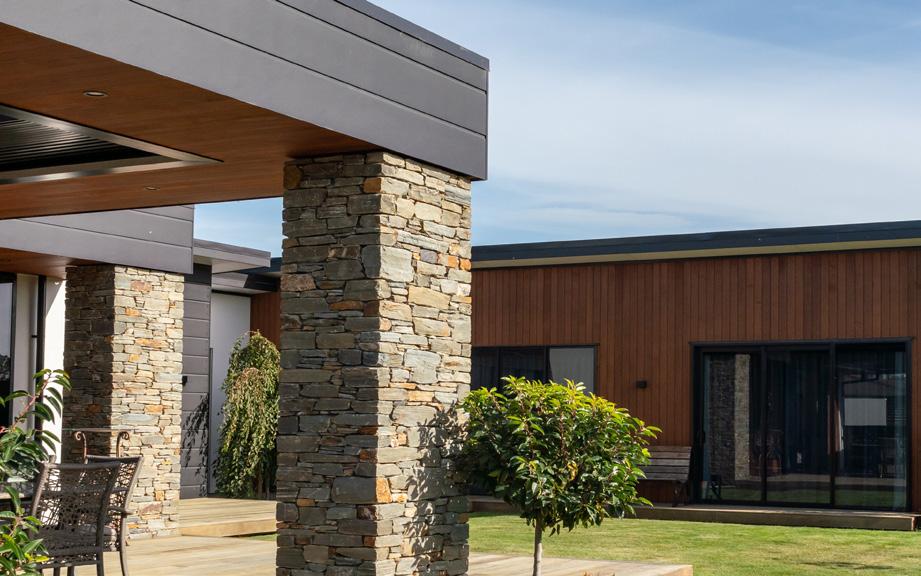
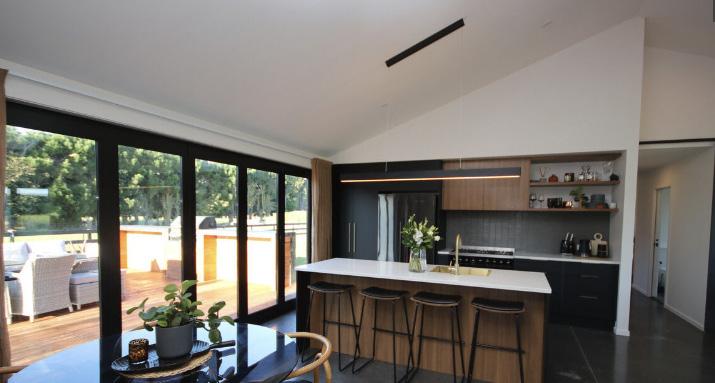


and hospitality spaces with precision and flair.
“We are team players and are committed to working within our community with other locals alike. We are passionate about modern architecture and believe each home tells a different story. This makes us the perfect partners on your next building adventure.”
Mitchell and Milmine also has a construction branch. With both architectural design and construction under one roof, they offer seamless, end-to-end service. Get in touch to begin your journey today.
Explore our innovative designs and expert construction services and take the first step towards realising your dream project.
Begin your project with Mitchell and Milmine. Lets create something exceptional.





Master Plumbers celebrates 125 years
Master Plumbers is marking 125 years of keeping New Zealanders healthy by doing what it does best: fixing problems, lifting industry standards and pushing for regulation that protects public health.
Chief Executive Greg Wallace says the organisation’s work has quietly kept communities functioning and, most importantly, healthy.
“Nowhere is that more obvious at the moment than in Wellington, where the importance of good plumbing infrastructure has been getting quite a bit of attention.”
To celebrate this milestone, Master Plumbers held a special 125th anniversary event at Government House. The function, hosted by
To celebrate this milestone, Master Plumbers held a a special 125th anniversary event at Government House. The function, hosted by Governor General Dame Cindy Kiro and attended by Hon Minister Penny Simmonds and Wellington Mayor Andrew Little.

Governor General Dame Cindy Kiro and attended by Hon Minister Penny Simmonds and Wellington Mayor Andrew Little, brought together more than 250 people, including members from around New Zealand, industry leaders and partners.
The gathering recognised the association’s long-standing contribution to raising plumbing standards and safeguarding public health since its formation in 1901.
“When systems work well, nobody notices. But safe drinking water, healthy homes, effective drainage and modern sanitation all depend on the skills of plumbers, gasfitters and drainlayers throughout New Zealand,” Wallace says.
Many member businesses have played a direct role in shaping New Zealand’s built environment over the decades. Hamilton-based FB Hall & Co Ltd has helped build the Waikato region since 1923, working on everything from dairy farms and factories
to major projects at Waikato Hospital, Waikato University, The Base Shopping Centre and Tristram Precinct.
Brockelsby’s Plumbing and Gasfitting Ltd, which began from a residential house in Lower Hutt in the 1930s, and Mander & Co Ltd, operating from the same Johnsonville site for more than 70 years, have both been Master Plumbers members since the 1940s.
While tools, technology and workforce diversity have evolved, Master Plumbers’ core role as an advocate has remained constant. In 1912, the passing of the Plumbers’ Registration Act, the forerunner of today’s Plumbers, Gasfitters and Drainlayers Act, was driven in large part by lobbying from the national association.
More recently, Master Plumbers has strongly supported New Zealand’s new lead-free product legislation coming into effect this May, and has led calls for plumbers
Looking ahead, the sector faces growing pressure from housing demand, infrastructure renewal and the need for climate resilience, all while managing longstanding workforce shortages. Wallace is optimistic about the calibre of new entrants but says more people are needed.
and drainlayers to be able to certify their own work, a reform expected to be in place later this year.
“Self-certification is a significant step forward that recognises the professionalism and capability of our trades and that skilled, licensed tradespeople can be trusted to stand behind their work,” he says.
Looking ahead, the sector faces growing pressure from housing demand, infrastructure renewal and the need for climate resilience, all while managing longstanding workforce shortages. Wallace is optimistic about the calibre of new entrants but says more people are needed.
“Apprenticeships are increasingly recognised as a smart and rewarding career path, and we see talented young people entering the trades with real ambition and capability. They represent the future of our industry.”
Thoughtfully-designed Outdoor spaces built to be lived in
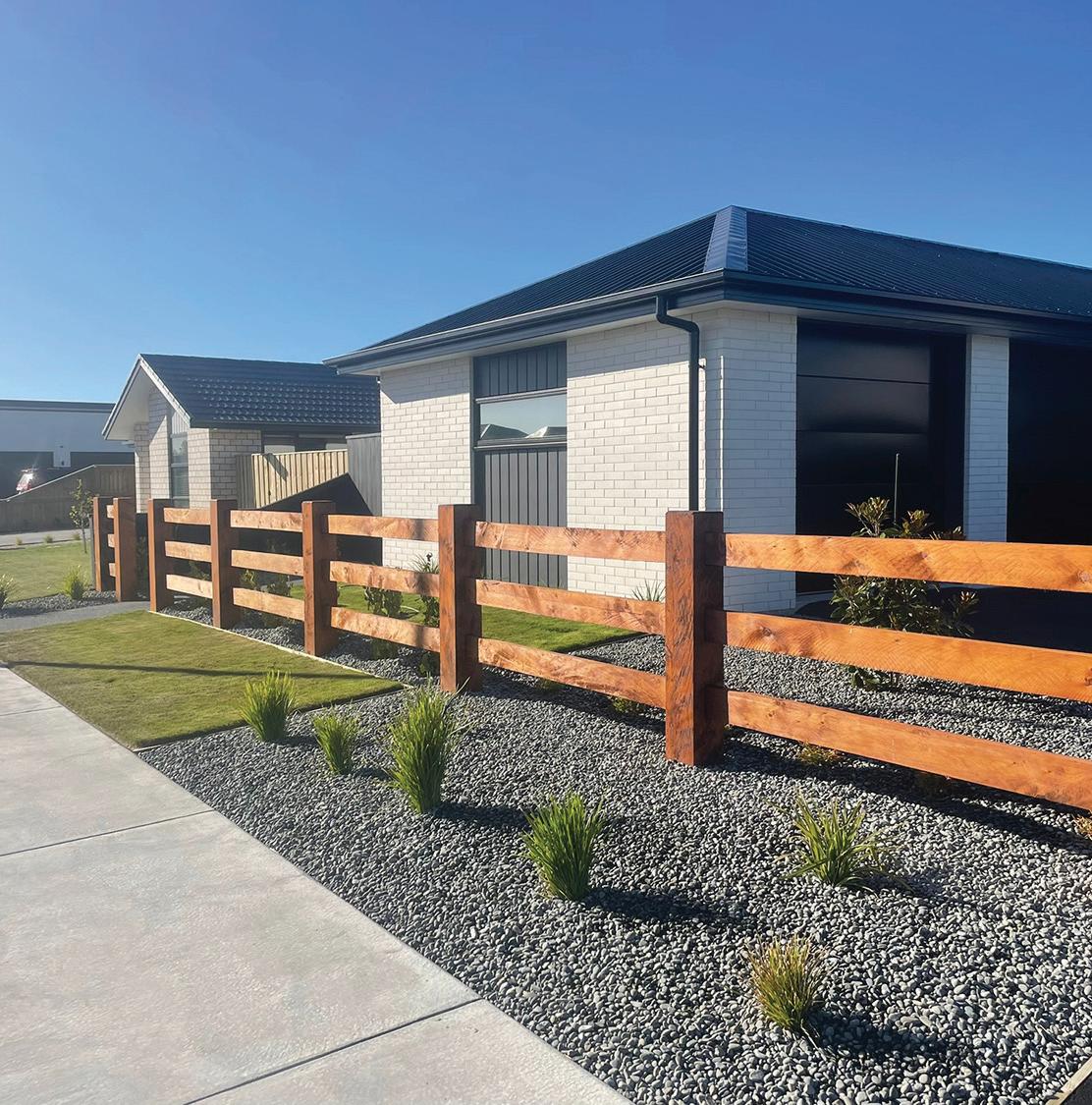
Based in Canterbury and working throughout the Christchurch and Selwyn regions, Dimension Landscapes specialises in creating refined outdoor environments with a strong focus on relaxation spaces and backyard retreats.
From spa and sauna surrounds to intimate garden courtyards and functional outdoor living areas, we design and build landscapes that feel considered, calm and enduring.
As a small, hands-on team, we work directly with you from concept through to completion. Every project is owner-led, ensuring clear communication, attention
to detail and a genuine investment in your property at every stage. While we pride ourselves on our niche focus and craftsmanship, we’re equally capable of delivering projects of any scale.
We regularly work alongside builders, designers and homeowners during the renovation and new-build process, helping ensure
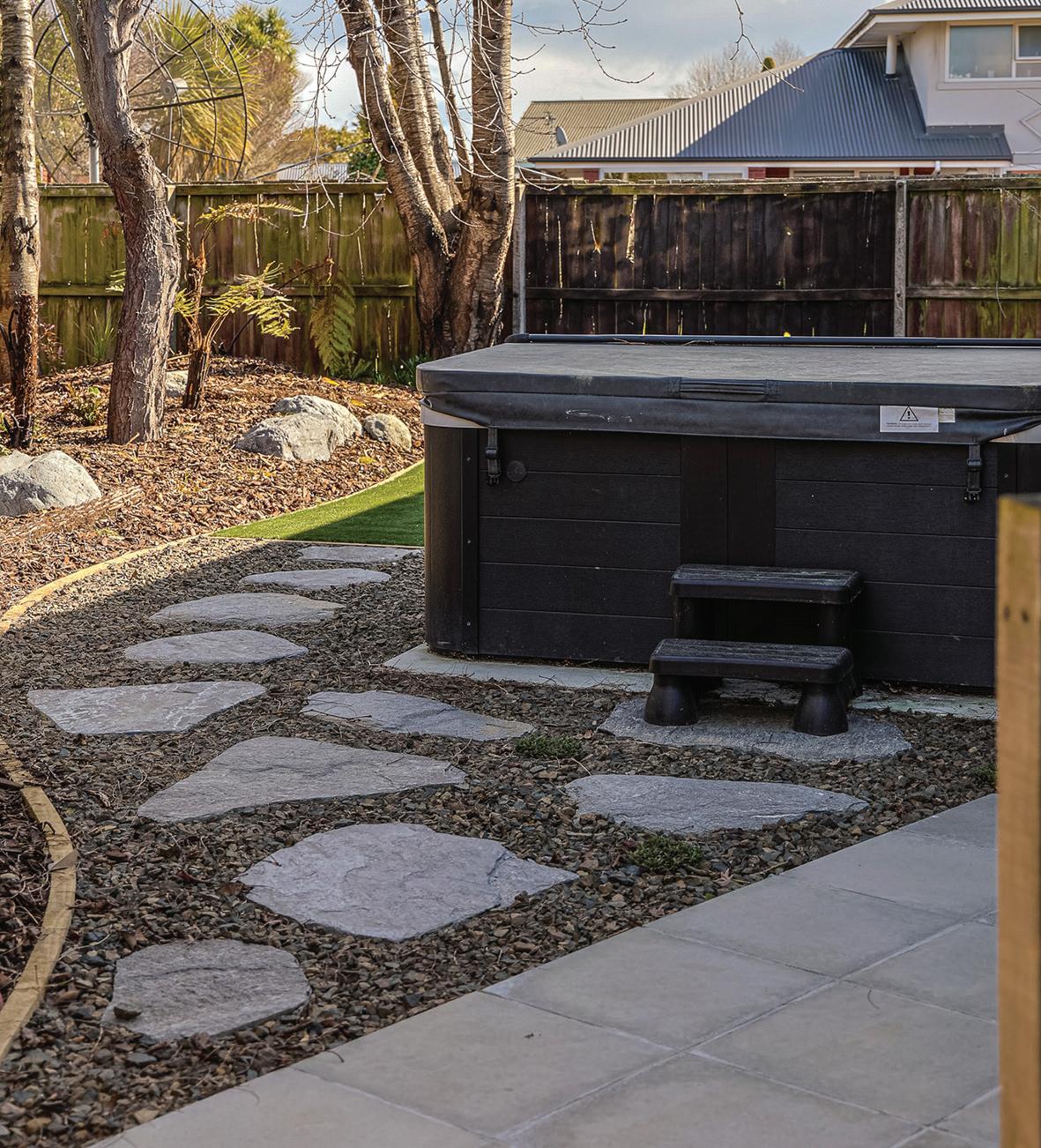
outdoor spaces are considered from the outset rather than added as an afterthought. Early involvement allows us to align levels, materials and finishes seamlessly with the home, resulting in outdoor areas that feel like a natural extension of the build.
Our approach is collaborative and detail-driven, with a strong focus on how each space will actually be used — whether that’s a quiet spa retreat, a sheltered sauna area, or a low-maintenance outdoor zone designed for everyday living. The result is a landscape that not only looks right, but works beautifully long after the project is complete.
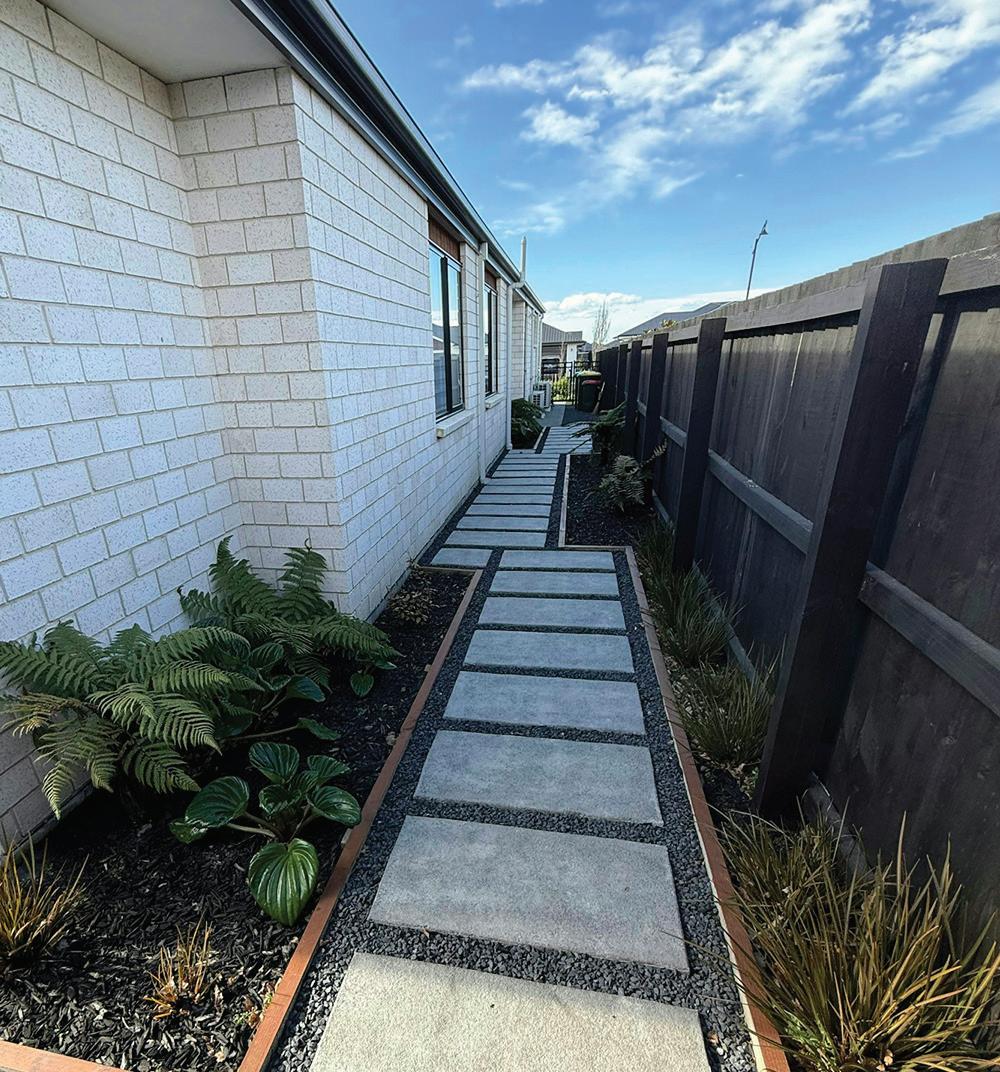

Through long-standing relationships with trusted local contractors across multiple trades, we offer a seamless, one-stop solution for landscape projects. This collaborative approach allows us to coordinate all elements of your outdoor space — from structural work and finishes to planting and final detailing — with consistency and care.
Whether you’re completing a new build, renovating an existing home, or looking to transform a small outdoor area into a private retreat, Dimension Landscapes delivers welldesigned, practical spaces built to enhance the way you live.

Fast floodwater a hidden urban danger
By Ben O’Connell

Fast-moving floodwater dramatically increases the risk to urban pedestrians, new modelling has shown.
A Wellington case study showed that walking and driving routes to hospitals, public transport and essential services can be cut off during peak flooding.
Researchers overlaid flood risk maps onto Wellington’s transport network to assess whether people could reach essential services during the peak of a major flood.
While depth-only flood models suggested most residents still could access key destinations, including water velocity showed that several CBD areas were effectively cut off.
Vehicle access was significantly constrained, where steep terrain and narrow streets created choke points that limited movement and evacuation options.
Leading the new research is Dr Lea Dasallas, a Postdoctoral Fellow in UC’s Department of Civil and Environmental Engineering.
Dr Dasallas says that when floodwater flows quickly, even
Understanding flood velocity is essential to keeping people safe, challenging the common perception that shallow floodwater is safe to cross.
relatively shallow water can be powerful enough to knock people off their feet or sweep vehicles away.
But most public flood maps still focus almost entirely on how deep water gets, not how quickly it flows. The research stresses the need for smarter flood maps and clearer public warnings as extreme rainfall increases.
The modelling was based on an extreme rainfall event simulated under future climate change scenarios rather than current conditions alone.
Dr Dasallas says when flood velocity is included in the assessment, the areas classified as high risk for people walking increased by more than 80%. Medium-risk pedestrian areas, including those for children and older people, more than tripled.
“These are places people still try to drive through or walk across, but once you account for velocity, it becomes clear that those routes are much more
dangerous than they appear.” Identifying safe water in a flood means assessing depth, velocity, and the surrounding terrain together, because fastmoving water, hidden debris, uneven surfaces, and sudden drops can make even ankledeep flooding unsafe to cross.
“We want to help councils, emergency managers, and the public make more informed decisions before and during flood events.
“That could mean more targeted road closures, clearer public warnings, and better planning for access to hospitals and emergency services that would be based on how water actually behaves, not just how deep it gets.”
The UC researchers warn that as storms intensify, relying on outdated flood assessment methods could increase the risk of injury or loss of life, particularly in cities with steep catchments and dense transport networks.
“Understanding flood velocity is essential to keeping people safe, challenging the common perception that shallow floodwater is safe to cross,” Dr Dasallas says.
Beyond identifying hazards, the researchers developed a framework that integrates flood modelling with transport analysis to guide real-world decisionmaking during flood events.
The framework enables the identification of streets to avoid and the calculation of safer alternative routes, laying the groundwork for a floodaware routing system.
As storms intensify, continuing to rely on depth-based flood maps that ignore velocity risks increases injury and loss of life, particularly in cities with steep catchments and dense transport networks.
The research was conducted as part of the Horizon Europe–funded Minority Report project, which focuses on strengthening the resilience of vulnerable urban populations and their built environments to climate-related disruption.

Auckland transport infrastructure gap widens
By Ben O’Connell
A new report from the think tank Committee for Auckland is urging immediate and decisive action on Auckland’s transport system. It warns that delays in reform are compounding costs and constraining growth acros the city’s development pipeline.
The report argues Auckland is at a “critical juncture”, with population growth continuing to outpace transport investment, a gap that is already being felt across construction, freight, and project delivery.
Infrastructure NZ and the Committee for Auckland partnered on the report and say Auckland doesn’t need more plans, strategies or debate; it needs delivery.
Infrastructure NZ chief executive Nick Leggett says progress is falling short. “Auckland’s transport challenges are well understood. What’s been missing is the commitment to follow through.”
Auckland is home to roughly one -third of New Zealand’s population, about 1.8 million people or around 33 % of the nation’s residents, making it by far the country’s largest urban centre.
In economic terms, the region punches above its weight, generating around 38 % of New Zealand’s total GDP and significantly more than any other region. “There is a high degree of alignment
Infrastructure
NZ chief executive Nick Leggett says progress is falling short.
“Auckland’s transport challenges are well understood. What’s been missing is the commitment to follow through.
on priorities, from making better use of what we already have, to progressing key rapid transit corridors and improving connections across the city,” says Committee for Auckland Executive Director Rupert Hodson. The challenge is execution.

A central theme is the disconnect between where housing is being delivered and where transport infrastructure is being prioritised.
Greenfield developments on Auckland’s fringes continue to expand, but without the transport links needed to support them at scale. This has flow-on effects for developers and builders, who are increasingly working in areas where access, labour movement, and material delivery are less efficient.
Another issue is congestion, which is no longer a commuter issue and is now a productivity one, too. Extended travel times are increasing labour costs, delaying site access, and reducing efficiency for trades operating across multiple projects. For freight and materials, unreliable transport networks are adding further pressure to already tight margins.
The report points to Auckland’s continued reliance on private vehicles, combined with limited rapid transit expansion, as a key constraint on network performance.
Rather than small-scale upgrades, the Committee for Auckland is calling for a more integrated and longterm approach, centred on rapid transit investment and
better coordination between government agencies.
“Auckland is too important to Aotearoa’s future for transport policy to remain stop-start,” Hodson says.
It highlights the need to prioritise high-capacity transport corridors that can support both population growth and intensified development, particularly as Auckland continues to push toward higher-density housing.
The report, Transporting Auckland Forward: A Call to Action, comes after a summit of more than 60 senior leaders from across business, infrastructure, and government. “The 30year Integrated Auckland
Transport Strategy that will be developed under the impending Auckland Transport reforms provides a useful mechanism to capture and deliver many of the recommendations from this summit,” Hodson says.
“We cannot keep avoiding the question of who pays,” Leggett says. “We need a clearer, long-term transport vision for Auckland, backed by a sequenced programme of investment and credible funding pathways.”
At a project level, the impacts are already material. Longer travel times across Auckland are reducing the number of productive hours trades can spend on site each day, while increased congestion is adding variability to delivery

schedules that projects are not priced to absorb. For contractors, this is showing up in tighter margins, more conservative programming, and increased risk allowances in tenders— particularly on projects located in outer growth areas.
For developers, the disconnect between housing and transport is also becoming a feasibility issue. Sites that look viable on paper are becoming harder to deliver efficiently, as labour access, subcontractor coordination, and material logistics all become more complex and costly without reliable transport links.
Without a step change in delivery, these inefficiencies are likely to compound. Slower
We cannot keep avoiding the question of who pays. We need a clearer, long-term transport vision or Auckland.
build times, higher costs, and reduced capacity across the sector risk constraining Auckland’s ability to meet both its housing targets and broader infrastructure pipeline.
In that context, the report’s call for execution is less about long-term planning and more about maintaining the viability of projects already in the system.

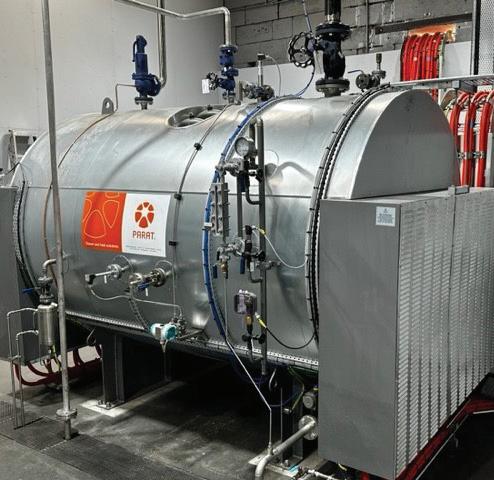


Buy New, Hire, Parts & Service
SHOP / SERVICES
New Electric Boilers
High Voltage Electrode Boiler
Boiler Parts & Service
Hire Boilers
Low Emission Boilers
Technical Specs

By Ben O’Connell
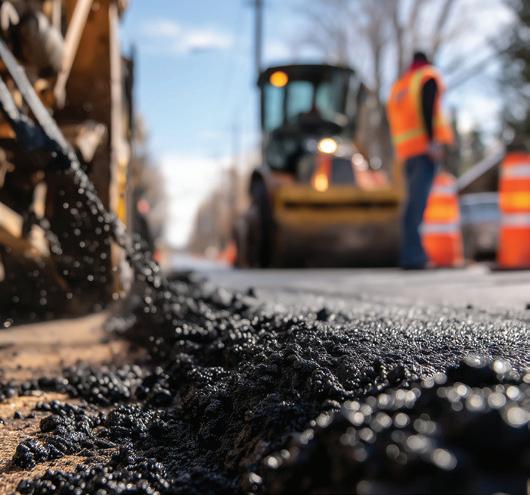
State highway pothole patrol successful
About 98% of potholes on state highways are fixed within 24 hours, according to the New Zealand Transport Agency.
This exceeds government targets set in July, which ordered NZTA to repair 95% of potholes on main state highways and 85% of those on regional state highways within 24 hours of discovery.
Transport Minister Chris Bishop says the result shows how far the Government has come in addressing the pothole problem.
“New Zealanders can now travel more safely and smoothly, with fewer delays and hazards on the road,” the Minister says.
“The improvements are clear. Since the targets came into effect, NZTA has consistently met them each month, supported by smarter repair techniques that make temporary fixes last longer until permanent work can be completed, instead of relying on simple cold-mix patches.”
He says that maintaining a safe, reliable highway network underpins the country’s growth.
“Lifting productivity to help rebuild our economy and build New Zealand’s future remains a major focus for this Government.”
The Government has dedicated $3.9 billion

New Zealanders can now travel more safely and smoothly, with fewer delays and hazards on the roads. The improvements are clear. Since the targets came into effect, NZTA has consistently met them each month, supported by smarter repair techniques that make temporary fixes last longer until permanent work can be completed, instead of relying on simple cold-mix patches.
to a Pothole Prevention Activity Class over three years. Its focus is resealing, rehabilitation and drainage maintenance.
“With roughly $2 billion allocated to state highways, NZTA has been delivering an extensive programme of work,
including consistently high volumes of road rehabilitation, a process that rebuilds full road sections rather than relying on resealing alone.”
Bishop says the Government’s Pothole Prevention Fund is supporting 290 lane kilometres of rehabilitation
work over the summer, similar to the substantial amount completed last year.
“Keeping rehabilitation levels this high will significantly reduce the likelihood of potholes forming.”
Potholes form when water seeps into the cracks, weakening underlying road layers. Repeated pressure from vehicles driving over them causes the road to fall apart.
Freeze-thaw cycles in colder climates can cause more potholes, as water trapped under the surface expands when it freezes, pushing the road upward and creating cracks.
The cost of potholes goes beyond road repair. They can cause flat tyres, bent rims, suspension damage and alignment issues.
Pothole-related vehicle damage costs Kiwi drivers hundreds of millions of dollars annually. Slow traffic, more fuel use, more road accidents and injuries, and delayed commutes and deliveries also reduce productivity and safety.
Report potholes on state highway networks by calling 0800 HIGHWAYS.









DRIVEWAYS, PATIOS AND PATHS new home specialists

ABOUT US
CONCRETE AND ASPHALT SPECIALISTS IN CHRISTCHURCH
Affordable Concrete and Paving are Concrete and Asphalt Specialists located in Christchurch. We service the wider region which includes Rolleston, Rangiora and West Melton.
For over 30 years, the family owned and operated team at Affordable Concrete & Paving have been providing exceptional value when it comes to concreting and asphalt in Christchurch. Whether it be concrete driveways, patios, paths, pool surrounds, playgrounds and car parks. We offer a full hard landscaping package to our commercial, civil and residential clients all over the Canterbury region.
Our mission: To lead the hard landscaping industry with integrity by providing outstanding value, employee development, and client relationships.
With roots in the concrete construction and decorative concrete areas, we have
a real passion for what we do and a deep understanding of the latest local trends.
As we are a family run company, the loyalty and competitive nature of any family extends to our ever growing team. This shines through in our team members. All staff are developed and trained from within the company with our key staff always striving to find ways of adding value to our clients. We aim to provide a perceived, relaxed attitude towards each project to always put the client at ease.
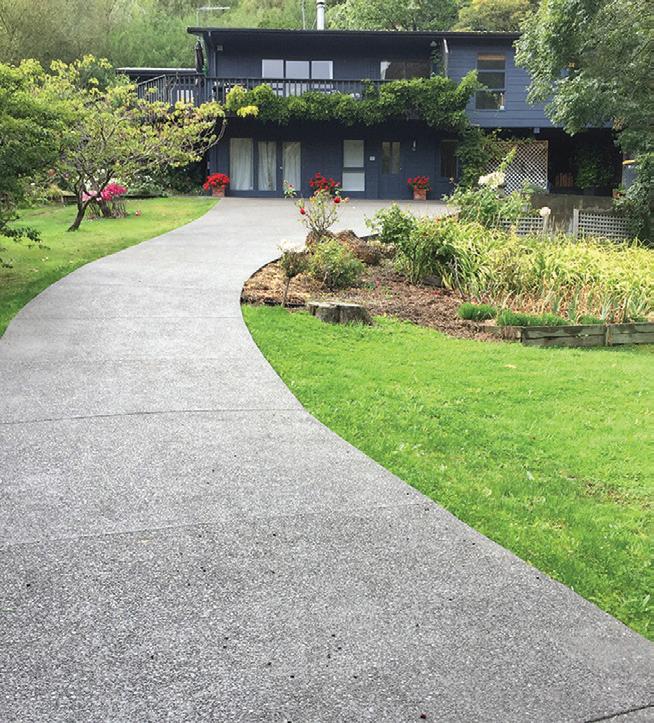
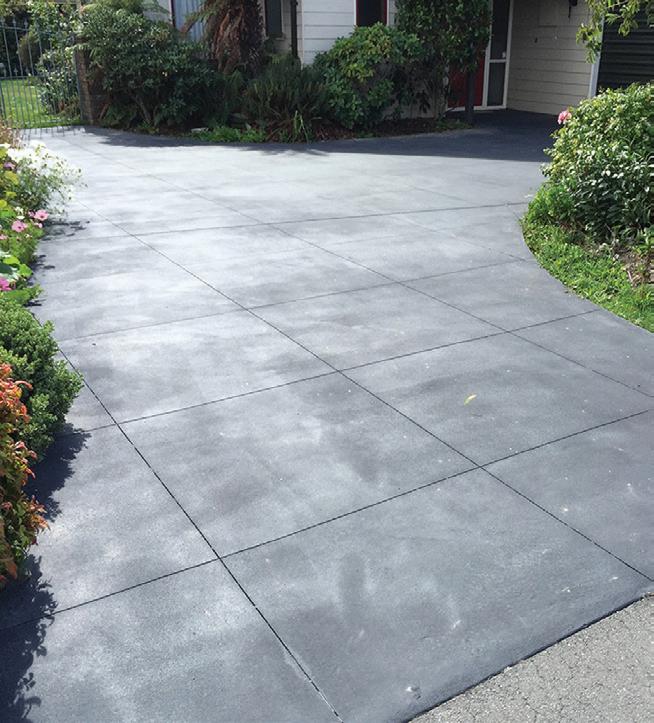
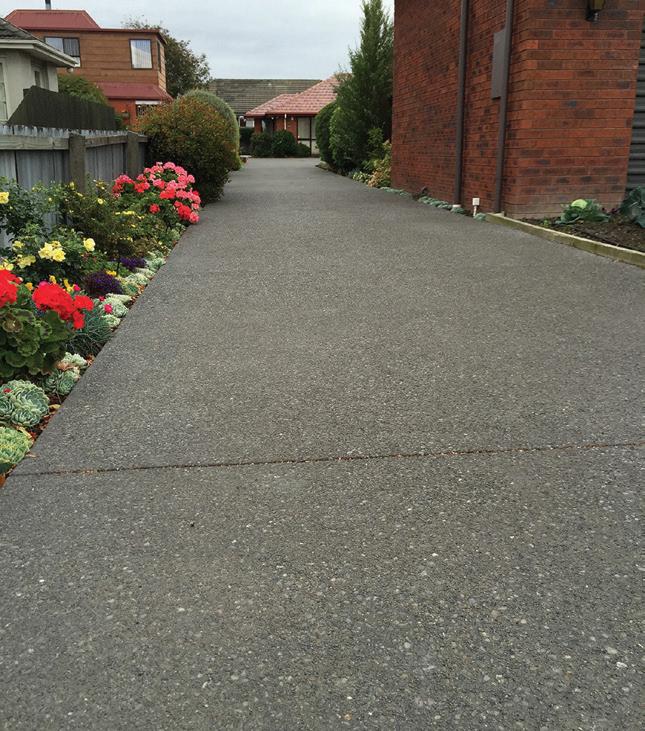
Talk to us about your project. We can price in person or off plans and offer the full service from excavation to completion. We offer plain, exposed aggregate and coloured concrete finishes to suit your taste.
We look forward to hearing about your next project, whether it be a small residential concrete repair, an architectural challenge or major site works. Contact us today!
Coordinating Canterbury’s infrastructure
By Ben O’Connell
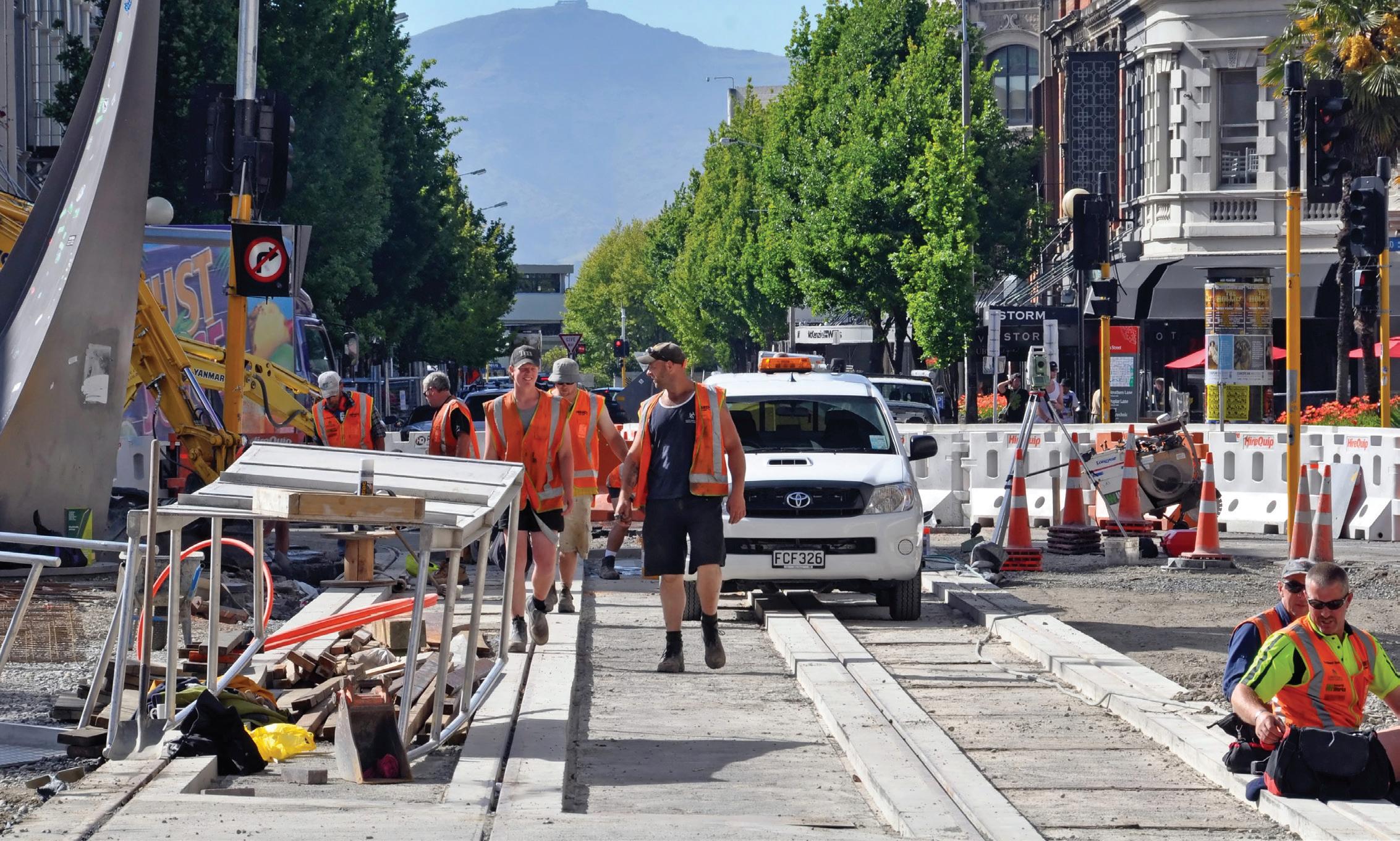
Well over a decade on from the earthquakes, Canterbury’s infrastructure moves into an exciting futurefocused chapter. Yet Canterbury’s infrastructure leaders warn that ageing bridges, fragile freight links and outdated funding models put the region’s future at risk.
A new White Paper, Connecting Canterbury: Strengthening Infrastructure for Growth, prepared by Simpson Grierson and Infrastructure New Zealand with input from iwi, councils and the private sector, calls for a regionwide approach to infrastructure planning and renewal.
Catherine Shipton, Infrastructure Partner at Simpson Grierson in
The report highlights the scale of the challenge.
In one Canterbury district alone, around 100 bridges will need replacement within 30 years at an estimated cost of $400 million. Current funding covers only a fraction of that, creating what industry leaders say is a sustainability gap that local rates alone cannot fill.
Canterbury, says the region can lead nationally, if it acts decisively.
“Canterbury has an opportunity to set the standard in asset management and climate resilience. But that requires central government, councils, iwi and the private sector to align around a coordinated, long-term programme – not isolated projects.”
The report highlights the scale of the challenge. In one Canterbury district alone, around 100 bridges will need replacement within 30 years at an estimated cost of
$400 million. Current funding covers only a fraction of that, creating what industry leaders say is a sustainability gap that local rates alone cannot fill.
Nick Leggett, Chief Executive of Infrastructure New Zealand, says the numbers reveal a systemic issue and that we mustn’t mistake managed decline for resilience. “In parts of Canterbury, we have hundreds of millions of dollars’ worth of bridge assets, with dozens requiring replacement within a generation. The current funding model does not match the scale or lifespan of these assets.”
To close that gap, the White Paper proposes bundling renewal projects into regionwide programmes to achieve scale and attract private capital, backed by a Canterbury Infrastructure Coordination Group to align local and national priorities. It also encourages the use of alternative tools such as public–private partnerships, value capture, and asset recycling.
With freight corridors, ports, and digital systems supporting key industries from manufacturing and agriculture to tourism and aerospace, leaders warn that delay could threaten the very networks that drive Canterbury’s prosperity.
Shipton says the proposal is about preparing for growth, and that the region’s capabilities were proven in the rebuild. “The challenge now is applying the same discipline to safeguarding the region’s lifelines.”
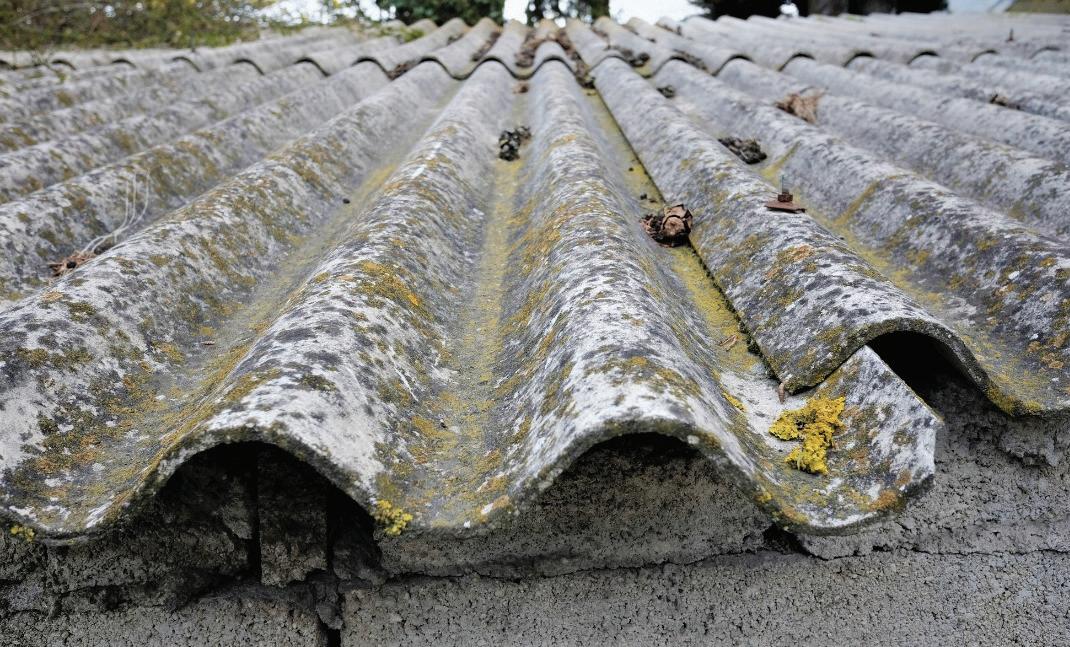
Protect your property with professional asbestos removal
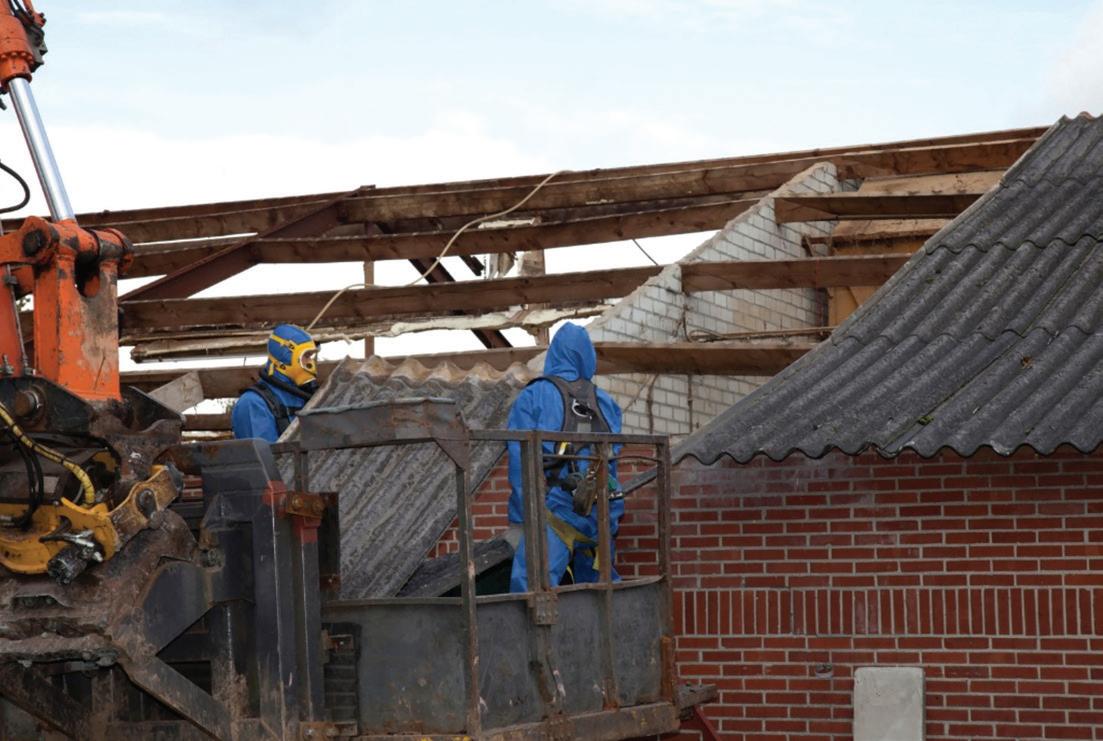
When it comes to asbestos, there’s no room for risk. If your home, rental property, or commercial building was constructed before the late 1980s, asbestos-containing materials may still be present.
Commonly found in flooring, ceilings, sheds, garages, and fencing, asbestos can pose serious health hazards if disturbed during renovations, repairs, or demolition. Professional removal is key to ensuring the safety of everyone on site.
Natural Living Homes & Asbestos Removal provides licensed, specialist asbestos removal services with experienced teams operating throughout New Zealand. With a strong focus on safety, compliance, and best
practice, their accredited contractors manage projects carefully from initial assessment through to safe removal and responsible disposal.
Whether asbestos is uncovered during renovations or identified as part of a planned demolition, their team develops a removal and disposal plan suited to your specific property. They are equipped to handle asbestos removal from residential and commercial buildings, as well as the demolition of smaller structures such as sheds,
Natural Living Homes & Asbestos Removal understands that discovering asbestos can be stressful. Clear communication and professional guidance are central to their approach, helping property owners make informed decisions.

garages, and fences that may contain asbestos materials.
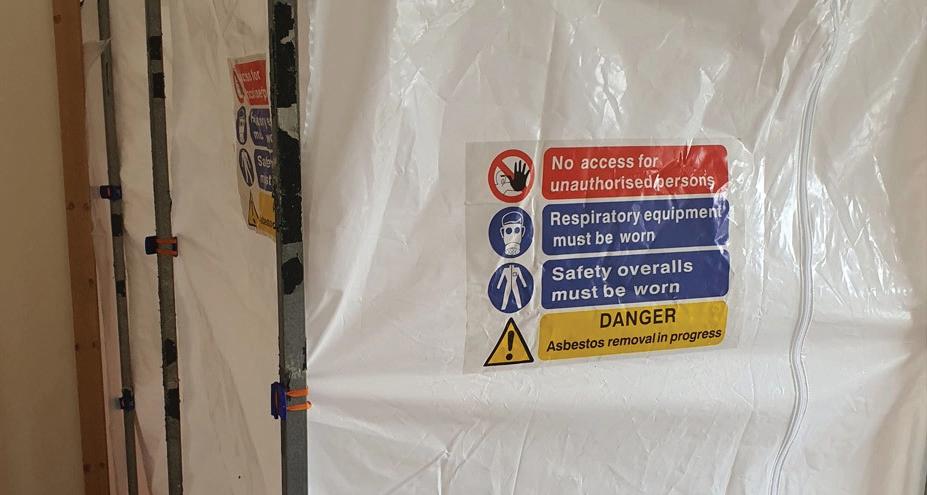
Natural Living Homes & Asbestos Removal understands that discovering asbestos can be stressful. Clear communication and professional guidance are central to their approach, helping property owners make informed decisions while making sure all work is carried out to strict safety standards. Their experienced teams prioritise containment
procedures and careful handling to minimise risk at every stage of the project.
Based in Wellington and Christchurch, and with resources available nationwide, they have built a reputation for dependable, professional asbestos removal support. Every project is treated with precision and care, ensuring your property is safe, compliant and ready for its next stage.
BUILDING SMARTER PUBLIC INFRASTRUCTURE WITH PERMCON
Across New Zealand, councils are being asked to do more with their infrastructure than ever before. Urban intensification, ageing stormwater networks, increased weather events and growing sustainability expectations are all influencing how public spaces are planned, upgraded and maintained.
From footpaths and carparks to cycleways, streetscapes and recreational areas, hard surfaces are a critical part of everyday infrastructure. Increasingly, the challenge is ensuring these surfaces are not only durable and functional but also resilient, future-focused and environmentally responsible.
Permcon permeable concrete – and its low-carbon option, Permcon CarbonLow – can be specified across a wide range of council projects, helping deliver infrastructure that delivers functionality while supporting long-term environmental and asset management goals.
MANAGING STORMWATER AT SOURCE
Stormwater management is a key consideration for councils, particularly in urban environments where large impermeable areas can place significant pressure on drainage networks. Traditional surfaces direct water into these systems, contributing to peak flows, surface flooding and reduced water quality.
Permcon permeable concrete is designed to manage stormwater at source. Rainwater passes through the surface into a specially engineered basecourse, where it is filtered and released slowly into the ground and discharged to the stormwater network in a controlled manner.

This reduces surface runoff, helps mitigate localised flooding, and improves the quality of water entering receiving environments by filtering debris and pollutants. It also supports more resilient infrastructure by reducing reliance on downstream systems.
DURABLE, VERSATILE SURFACES
Public infrastructure places high demands on materials, with surfaces needing to withstand constant pedestrian use, vehicle loading and exposure to the elements.
Permcon provides a hardwearing concrete surface suited to a wide range of applications, including footpaths, shared pathways, carparks, accessways and public open spaces. Unlike some alternative permeable paving options, it delivers the strength and longevity expected of concrete while maintaining its permeability over time.
It can also be used beneath artificial turf and recreational surfaces, including tennis, netball and basketball courts, where a stable, durable base is essential. Its permeability allows water to drain through the pavement rather than pooling, helping surfaces return to use more quickly after rainfall and reducing runoff in sensitive catchments.
In addition, Permcon is considered a pervious surface by most councils across New Zealand, making it a useful tool where site coverage or impermeable surface limits apply.

TREE PROTECTION ZONES
COMMERCIAL CAR PARKS
CORE APPLICATIONS
ARTIFICIAL TURF FOUNDATIONS
SUPPORTING SUSTAINABILITY
Sustainability is an increasingly important consideration in council infrastructure planning and procurement. Reducing environmental impact while maintaining performance is now a key part of project delivery.
Permcon offers environmental benefits over traditional concrete. As well as removing a significant proportion of heavy metals, hydrocarbons and suspended solids from runoff before it reaches waterways, it helps reduce thermal impacts on receiving environments and allows water, air and nutrients to reach the underlying soil.
Permcon CarbonLow provides a practical way to reduce embodied carbon without compromising on structural performance, durability or installation methods. This enables councils to align infrastructure projects with climate strategies and emission reduction targets.
FOOTPATHS
JOALS/ROWS
CYCLEWAYS
CERTIFIED INSTALLATION
Permcon installations are carried out by trained and certified installers, ensuring consistent quality and performance. Each installation is supported by a Producer Statement 3 (PS3), providing assurance that the system has been constructed to specification and will perform as intended over its design life.
HEALTHIER URBAN TREES
Urban trees often struggle in built environments where impermeable surfaces limit water and airflow to roots. Permcon permeable concrete allows water and oxygen to pass through the surface, supporting healthier root systems while still delivering a durable, functional pavement. Ideal for use in tree protection zones, streetscapes and public spaces.
Permcon now delivers a permeable concrete option with up to 62% lower embodied carbon, without compromising structural performance, hydraulic capacity, or specification requirements.
Designed for council delivery, Permcon CarbonLow is Toitū assessed* and 100% compatible with permeable pavement specs – suitable for urban infrastructure including footpaths, carparks and cycleways.
*Contact us for more information.
By Ben O’Connell
The skills the trades workforce needs
The national construction workforce excels in technical skills but could improve in business management, planning, organising and leadership, a new survey has found.
ConstrucTrend 2025 studies skill priorities and gaps, and the emerging technologies New Zealand’s carpenters, plumbers and electricians need to embrace.
The clear message is to focus on continuous learning to help meet rising demand for new technologies and smarter ways of working.
Trade-specific technical skills were widely seen as important, but 15% of employers said they felt recent graduates fell short of their expectations. Employers note skill gaps in forecasting time, costs, and resources, especially among recent graduates
There’s a preference for quick, accessible learning options rather than long in-person courses, highlighting the value of flexible micro-credentials and peer-led learning to keep skills current.

(56% gap) and, to a lesser extent, experienced tradespeople (38%).
Organising and planning remain important, but are where gaps persist, particularly for more senior workers who may have less formal training in project organisation.
Developing constructive working relationships, training others, building trusted teams, coordinating others, and strong internal and customerfacing communication are valued across the board.
Some recent graduates show notable gaps in training others and coordinating work, while experienced tradespeople are generally closer to demand, though leadership and people management were flagged as areas for upskilling.
Managing finances, budgeting, and cash flow are crucial for business owners and are important for many tradespeople who aren’t business owners. Gaps here are more pronounced among non-owners (roughly 23%
self-reported skill gaps) than among owners (about 13%).
Electricians, plumbers, and carpenters report many technology areas as important. EV charging, solar installation, renewable energy integration, smart-home systems, and AI-assisted tasks are among the areas with rising interest and some skill gaps.
Two-thirds of electricians have upskilled in one or more tech areas in the past year; plumbers also show strong engagement.
There’s a preference for quick, accessible learning options rather than long in-person courses, highlighting the value of flexible micro-credentials and peer-led learning to keep skills current.
Nearly half of trade business owners started within five years of completing their apprenticeship. Accounting and marketing skills remain important for those without business ownership, showing the need for early exposure to business
and financial management in training programs.
The implications for leaders Per the survey, to help the trades workforce build stronger skills, apprenticeships should include more realworld business and planning training early on.
Adding practical lessons in estimation, budgeting, scheduling, and project management would better prepare graduates to step confidently into work or start their own business.
Making learning more flexible is also key: short online courses and micro-credentials in areas like EV charging, solar power, renewable systems, smart-home technology, and AI tools for project planning can help tradespeople keep up with fast-changing technology.
Employers can make a big difference, too. Providing easy-to-use templates, training, and software tools for quotes, budgeting, and cashflow management saves time and improves accuracy.
Encouraging leadership development, mentoring, and teamwork helps new tradies grow while giving experienced workers the chance to pass on their know-how.
Fostering collaboration and peer learning ensures everyone builds the communication, coordination, and management skills needed to thrive.
•
•
•
•
•
•
•
Truck Maintenance & Curtainsider Repairs
We Maintain and Repair Trucks and Trailers to a high standard, cost effectively and within a timely manner SERVICES
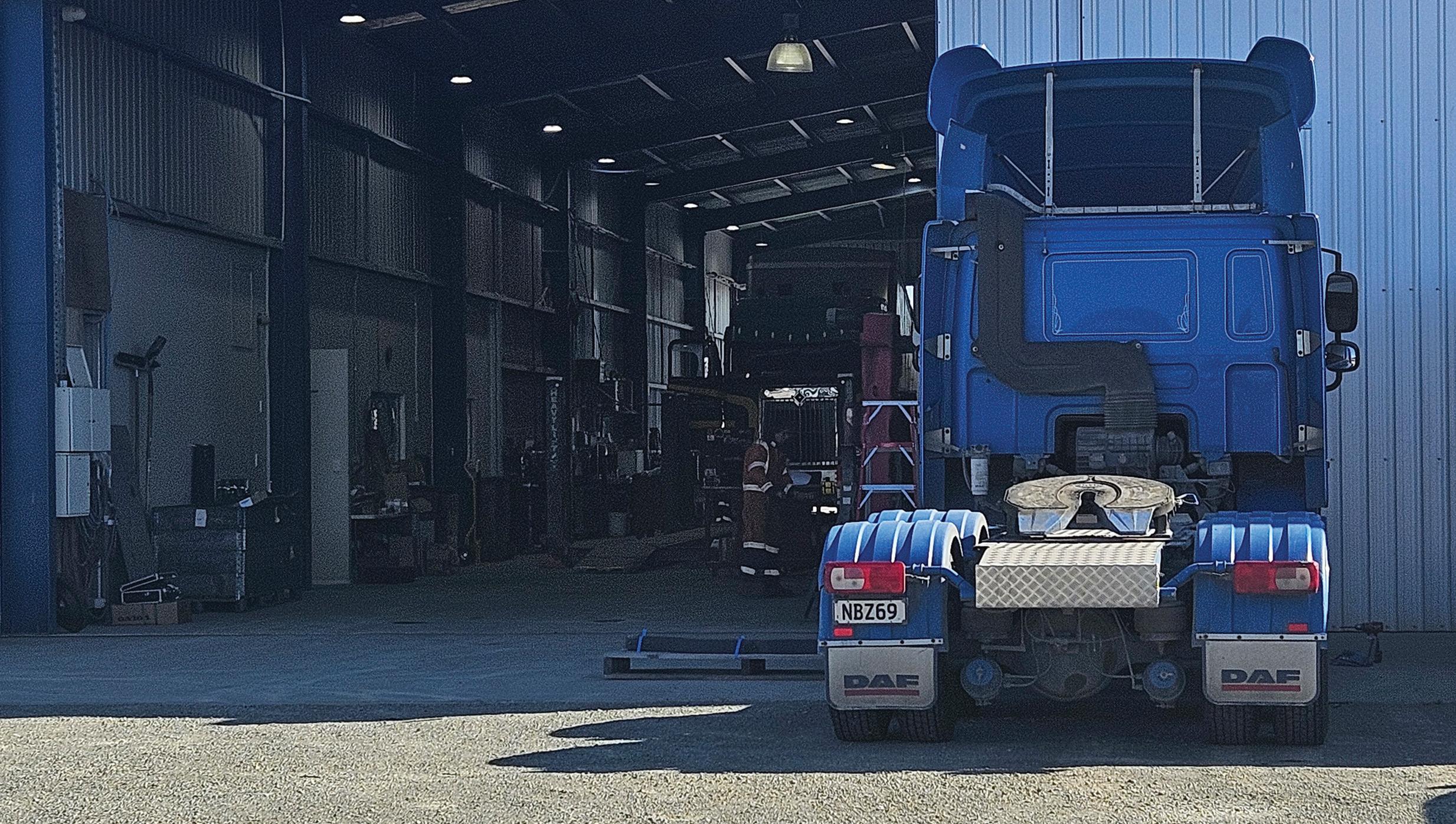
Our Heavy Diesel Workshop can assist you in the South Canterbury Area. NJ & DM Repairs are here for you. Get in touch to find out more information about us today.
Cof Prechecks
Truck General Maintenance
Trailer General Maintenance
Engine Rebuilds
Gearbox Rebuilds
Diff Rebuilds as Needed
Warranty Work on Volvo, Nissan (UD), Mack, Man m 0274733135
o 9 Milward Street, Washdyke, Timaru 7973
40 years of experience in the industry