Inside NZ's 30-year infrastructure blueprint - and what happens next
Plugging the gaps
How the industry is countering the national skills shortage
Building blocks
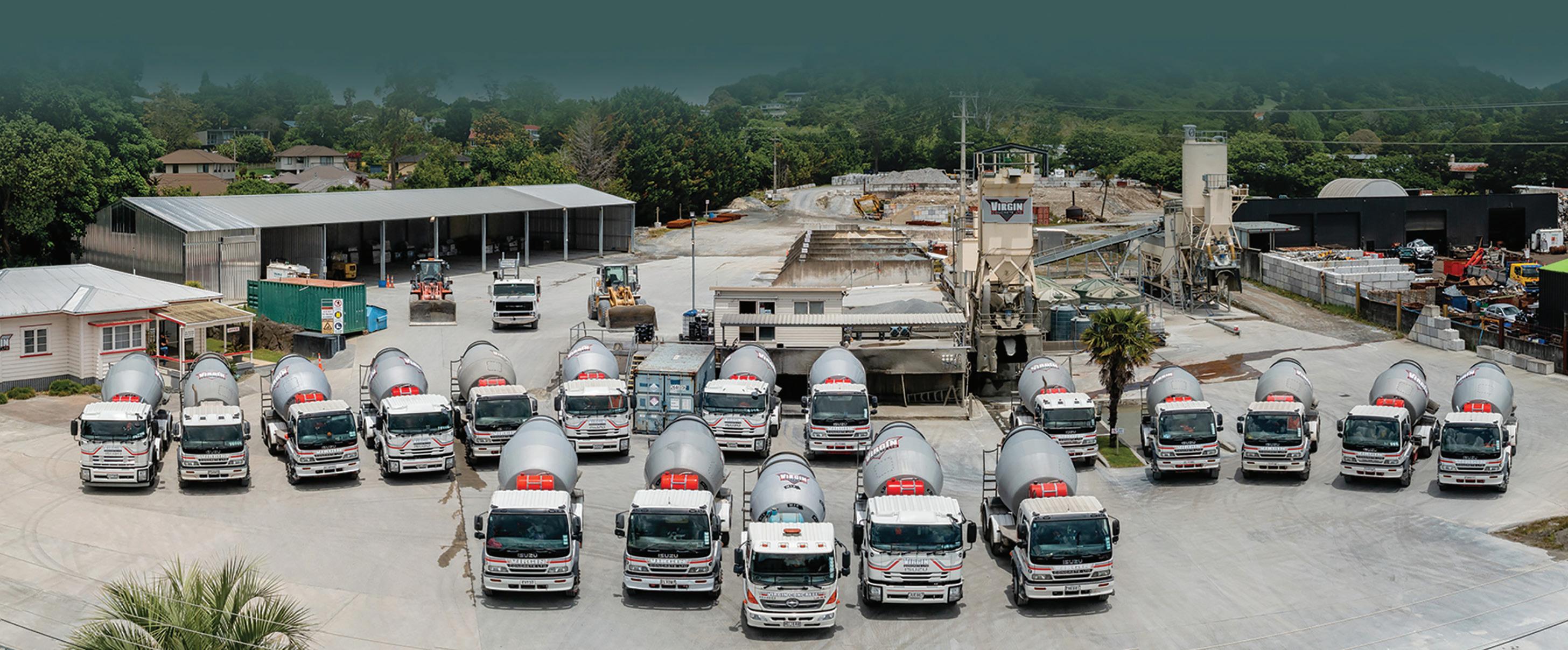
More consents and concrete signal statistics shift for 2026
Money management
Legal warning for construction companies over retention funds
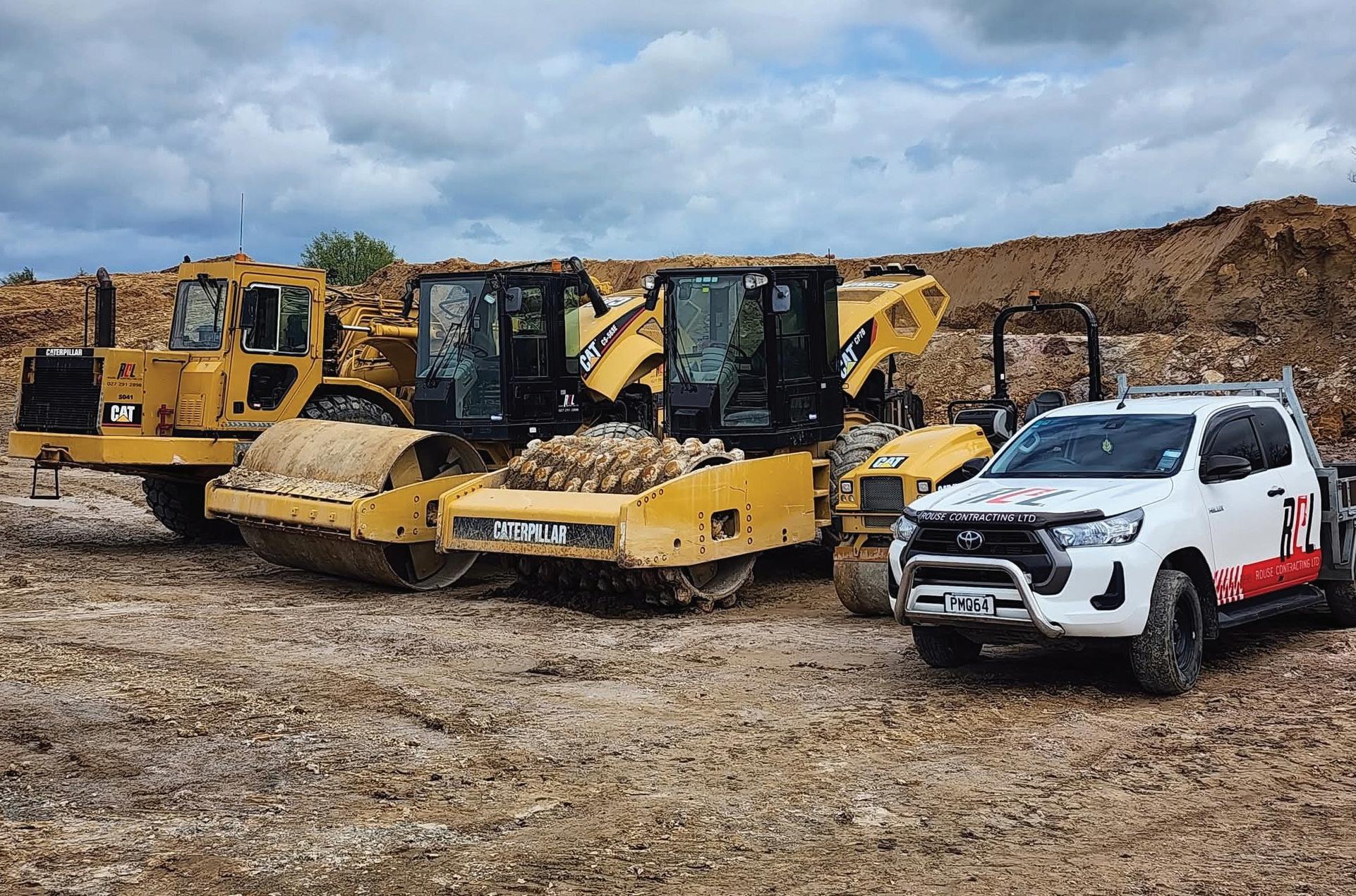
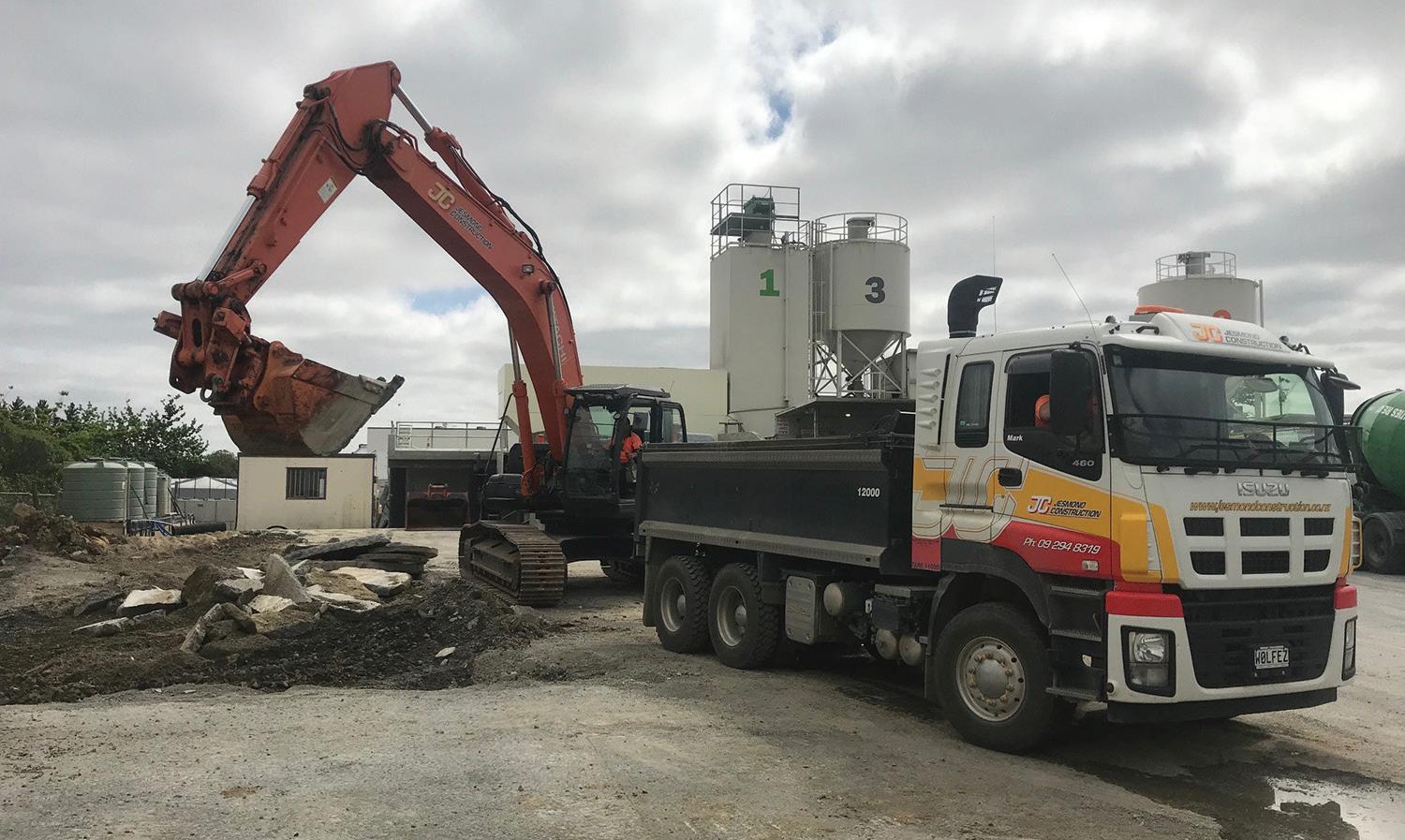
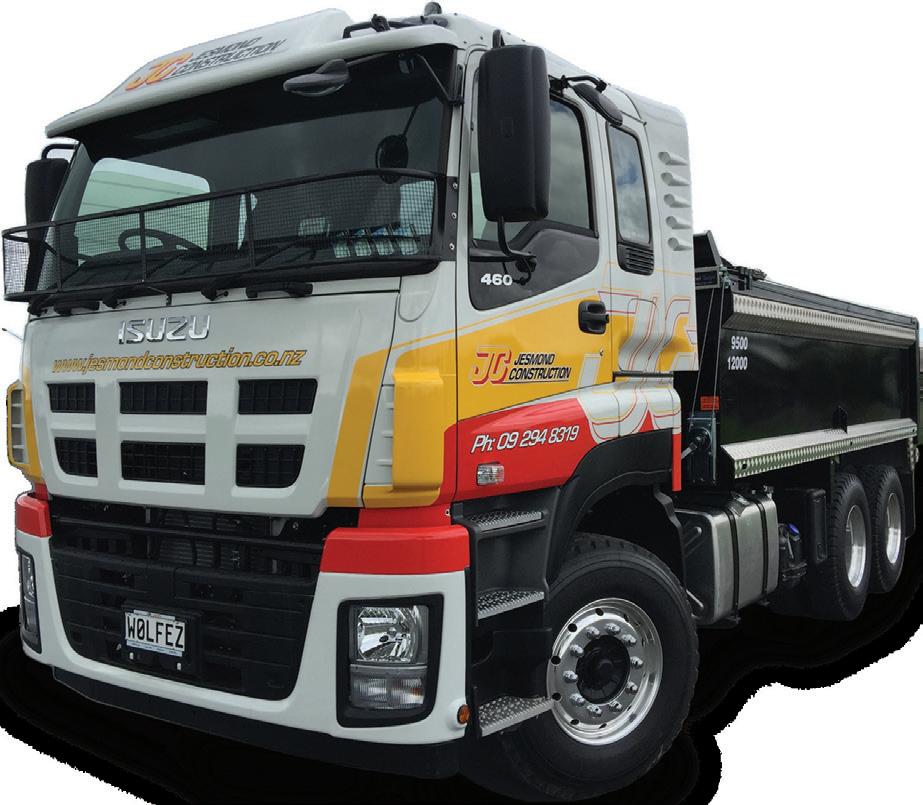
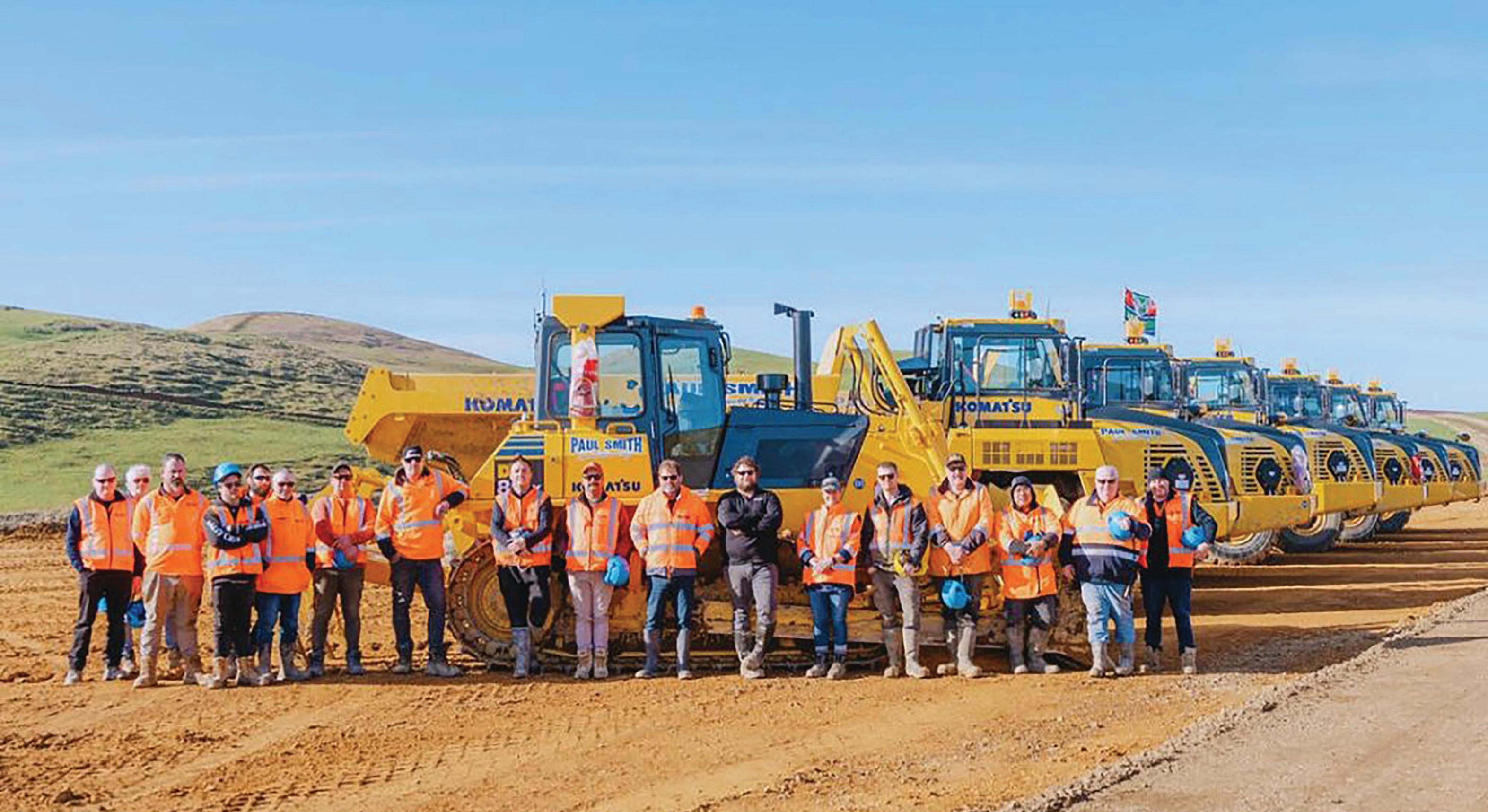
We have a complete range of trucks and machinery that can tackle anything.
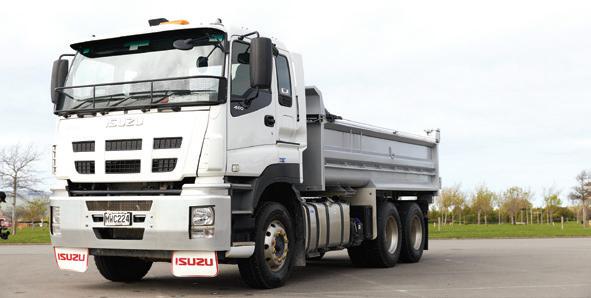
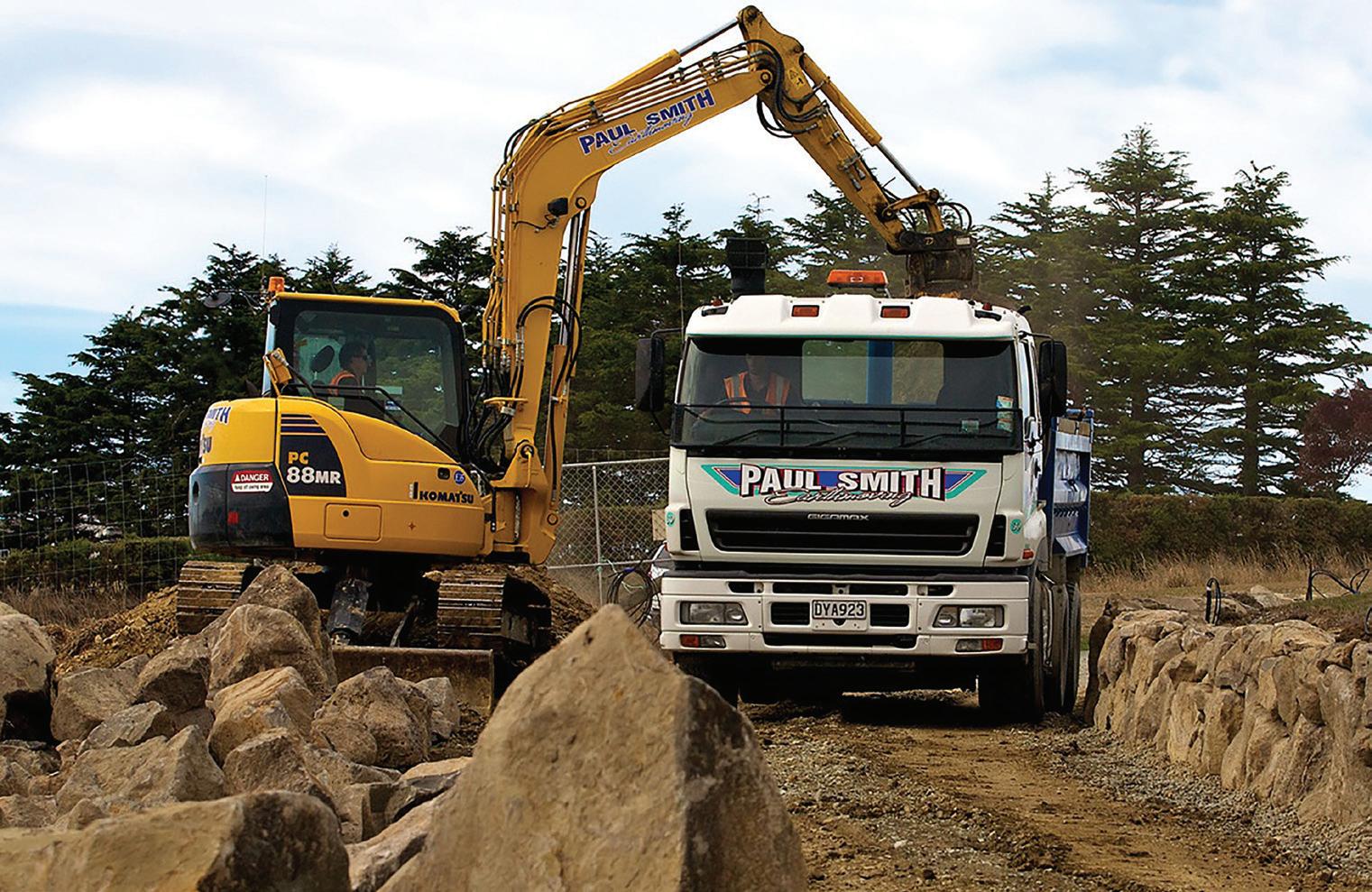
Our modern fleet of trucks comprise of everything from Bulk Tippers, Curtainsiders, Flat Decks, Livestock units and more.
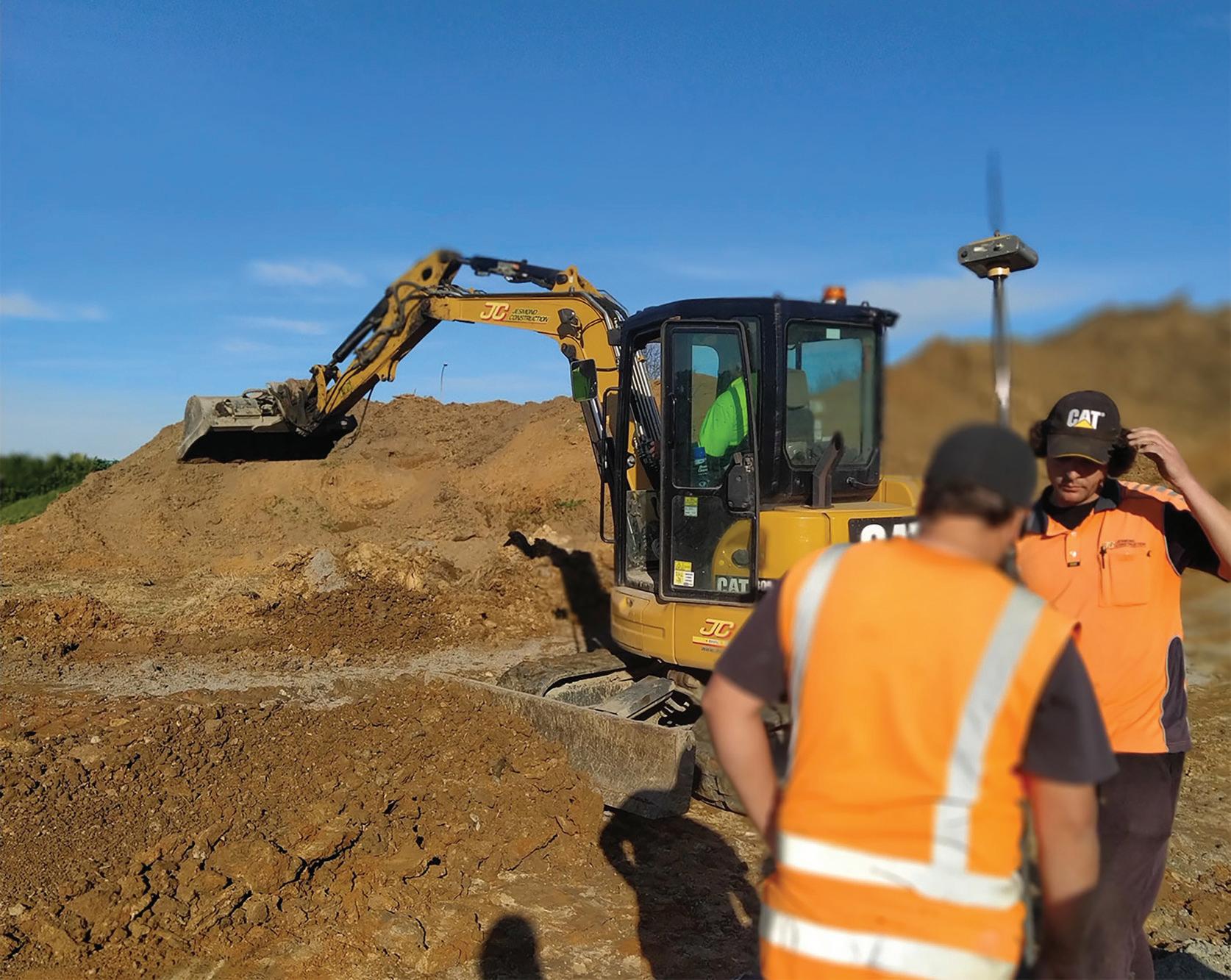
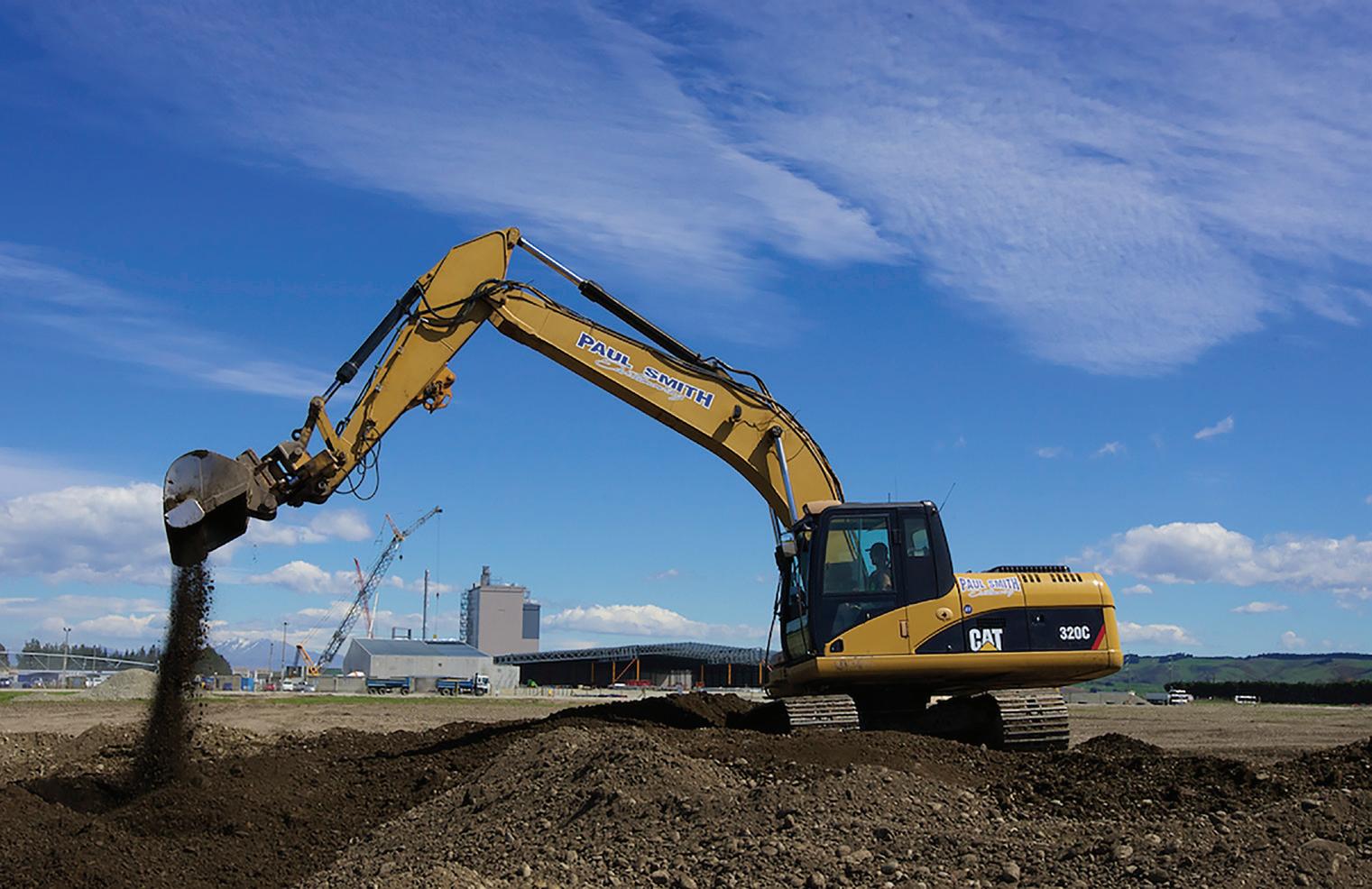
We have a complete range of Contracting Machinery that can tackle anything from Subdivisions to Quarry work.
We supply all types of Gravel, Aggregates, Agricultural Lime, Fertilisers and Dolomite.
the South since 1928
We can do anything
Enabling the success of others by connecting people and products
Our Services
• General Freight
• Bulk Cartage
• Stockfeed
• Storage
• Fertilisers
• Livestock
• Dolomite
• DX50
As New Zealand looks toward the future, few topics are more important to the construction sector than infrastructure and the people needed to build it. This issue of Builders & Contractors explores the recently released National Infrastructure Plan, a document that sets out a 30-year roadmap for how the country will plan, fund and deliver the assets that underpin our economy and communities. From transport networks to water systems and hospitals, the scale of the opportunity for our industry is immense.
Yet a strong pipeline alone will not deliver results. Across the sector, the message is clear: without investment in skills and training, New Zealand risks facing a workforce shortfall just as infrastructure demand accelerates. Encouraging apprenticeships, strengthening industryled training and supporting new pathways into the trades will be critical to meeting this challenge.
Together, infrastructure investment and skills development will shape the future of our industry and the prosperity of the country we build.
Group Editor
Phone: 021 676 320 stuart@academygroup.co.nz
Head Office Auckland Office
38 Lowe Street
Addington Christchurch 8011
Level 3/205 Queen Street Auckland CBD, Auckland 1010
Phone: (03) 961 5050
Email: admin@academygroup.co.nz
Web: www.buildersandcontractors.co.nz
Readers: Construction/building
Nationwide Distribution: Mailed directly to a carefully maintained list of decision makers and subscribers for 25 years.
Disclaimer
6: Viewpoint
There are two key factors to the success of construction take-off, writes the head of BCITO
8: Training day Avoid the tight labour market and train from within
9: Plugging the gaps What we can learn from the national skills shortage survey
10: Supporting apprentices with ADHD How to help neurodivergent staff to thrive
13: KiwiSaver changes What you need to know about April 1 changes
14: The road ahead Inside NZ’s 30-year infrastructure blueprint – and what happens next
20: Building blocks
More consents and concrete mark statistics shift for 2026
30: School of thought New school-based trade training initiative will see students build transportable homes
36: Green light Celebrating 20 years of the New Zealand Green Building Council
40: Careful with retentions Court judgement highlights serious risks
42: Build now, fix later' Overhauling NZ's shoddy building culture
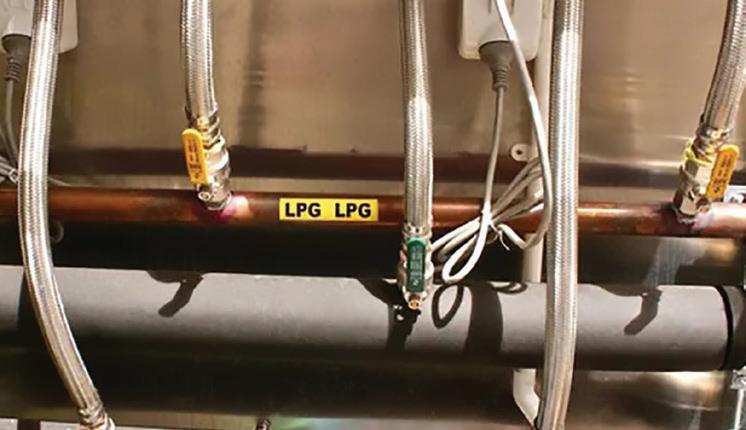
50: WorkSafe warning Gas explosion hospitalises forklift driver
58: Mentorship
Building the next generation of roofing leaders
60:
64: Plumbing and drainage Floodgates open to overseas products after law change
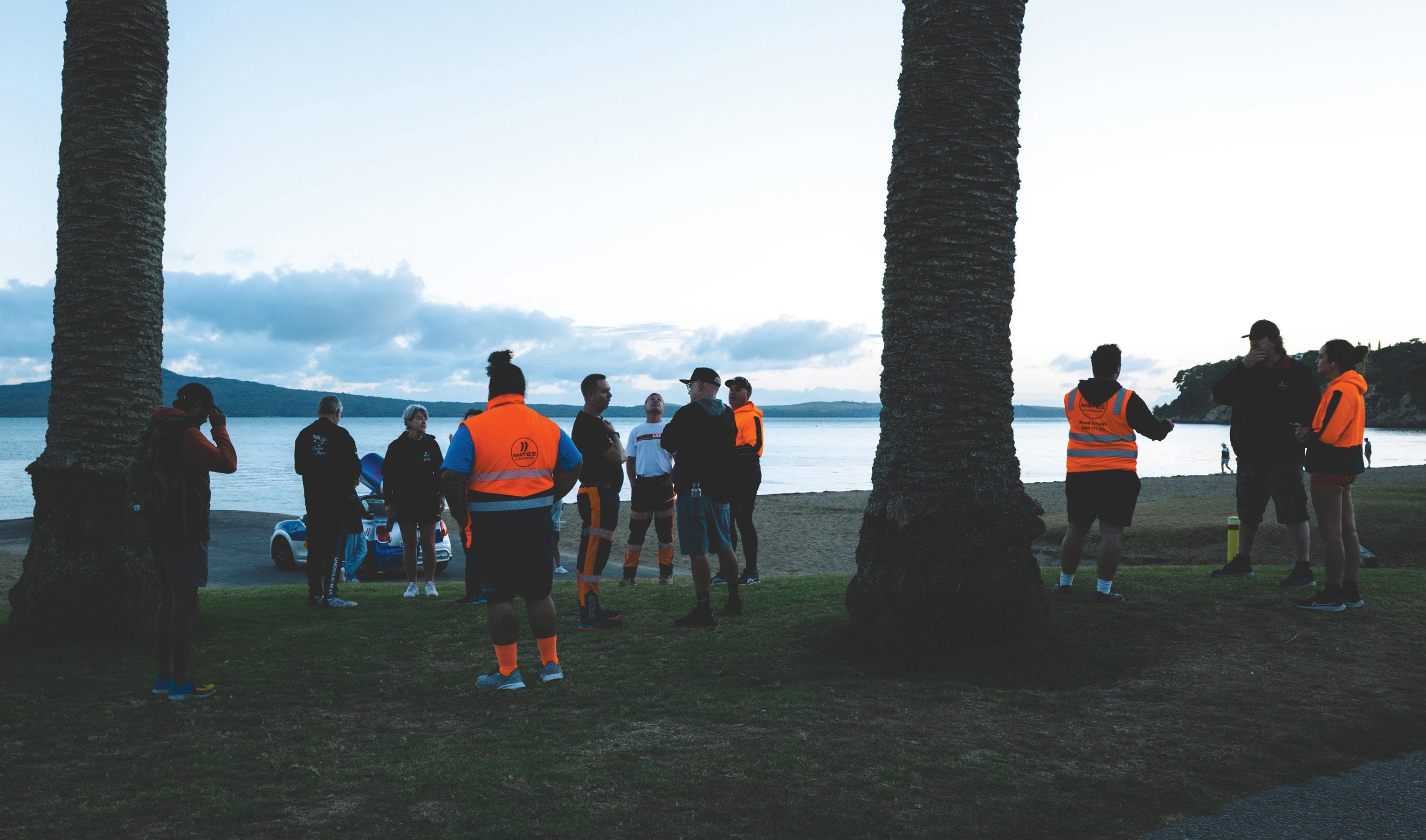
68: MATES in Construction Join the Long Lap in the battle to support mental health in the industry
78: Flood risk New study reveals hidden danger of fast-moving floodwater
82: Cutting red tape New self-certification law aims to back skilled tradies
88: From forest to river Should we view nature
Builders and Contractors, a national trade newspaper targeted directly at New Zealand's building and construction industry. For some time we were aware that, although the building and related trades were generally covered individually by some trade journals, there was no amalgamated news link for trades as a whole, especially on a nationwide basis.
This void has been successfully filled by Builders & Contractors. Distribution is by way of various outlets: PlaceMakers, Mitre 10, Builders Hardware, Site Safe Members, timber companies, hire companies, together with our database direct mail drop to architects, draughting professionals, consulting engineers, building consultants, designers and local Councils. By these means we aim to reach one of the most powerful buying groups in the industry.
Construction is finally taking off — and keeping it on course means investing in the crew
By Phil Brosnan, Board Chair, BCITO
On 1 January 2026, BCITO became a Private Training Establishment, bringing industry training back into the hands of industry. This change brings exciting opportunities – both for the organisation and construction sector. As BCITO looks at the road ahead for the year, Board Chair Phil Brosnan shares his thoughts on the challenges facing building and construction, and what can be done to ensure we have the workforce we need as the economy improves.
After several tough years, there are early signs that New Zealand’s construction sector is beginning to rev its engines again.
Residential building consents for new dwellings in 2025 were up 9 per cent on the previous year, with Christchurch and Queenstown construction markets in full swing. Although the value of non-residential
building consents fell 4.6 per cent overall, a bumper September quarter saw new office building consents the highest they’ve been since records began in 1990. Factories and education buildings also saw double-digit increases. Meanwhile, industry training was put back into the hands of the industry, with BCITO’s transition to a Private Training Establishment (PTE) on 1 January. While the recovery is still uneven, all this is grounds for cautious optimism for the industry, and for New Zealand’s economy.
However, we’ve lost a lot of skilled people over the past few years, and we face a significant skills shortage if we don’t respond now. To ensure the take-off succeeds, there are two key factors to get right.
The first is a stable monetary policy. Construction doesn’t need cheap money overnight, but it does need certainty. If
Residential building consents for new dwellings in 2025 were up 9 per cent on the previous year, with Christchurch and Queenstown construction markets in full swing.
the OCR can remain stable and avoid big fluctuations, confidence will continue to rebuild. The second is people. We will not see sustained demand for housing or infrastructure without population growth. That means immigration settings that attract skills and grow the working population. It also means greater support for those who are already here – our employers, apprentices and those considering careers in the industry.
According to the National Construction Pipeline report, infrastructure activity is forecast to increase from $55.7 billion in 2025 to $65.4 billion in 2030. As activity lifts, the biggest constraint on growth won’t be the availability of work, it will be the availability of skilled people. If employers wait until times are better to take on an apprentice, while apprentices continue heading overseas, we’ll hit a wall when the upswing happens.
Many employers, particularly small businesses, are understandably hesitant to take on an apprentice in the current uncertain environment. Yet employers in the building and construction sector collectively invest around $750 million a year in supporting apprentices (including
We will not see sustained demand for housing or infrastructure without population growth. That means immigration settings that attract skills and grow the working population. It also means greater support for those who are already here – our employers, apprentices and those considering careers in the industry.
supervision, training time and pastoral care) according to the 2025 ConCOVE/BCITO Employer Contribution Report. Supporting employers to take on and retain apprentices is therefore not a “nice to have” but essential to our economy, particularly through better learning support and retention initiatives, whether via ongoing government support or stronger cross-sector collaboration.
We also need a training system that can move quickly. Becoming a PTE allows BCITO to be more agile and responsive to employer needs and market changes, but the current system of designing and approving qualifications through the New Zealand Qualifications Authority (NZQA) will need further refining to speed up our industry’s agility.
We know there’s a lot of work ahead, to ensure training reflects how the industry is actually working today – and where it’s heading. The good news is that as a PTE, BCITO now has greater flexibility to focus on improving learner access, retention and completion and provide joined-up pathways from school right through to supervisor level. Support will increasingly be tailored to create individualised assistance for each employerapprentice combination based on their needs and preferences, rather than one-size-fits-all.
In addition, we’re conscious of the need to attract more apprentices to the industry. One particularly useful step would be refining the Apprenticeship Boost scheme so that apprentices in their first year of the job,
when their earning capacity is lowest, aren’t facing the highest costs. Making the final year of study free makes sense to boost retention in an academic setting, but less so in a work-based learning environment.
Finally, our young people have been encouraged to “move where the work is”. Unfortunately, that is seen to be in Australia. Instead, the message for those struggling to find an apprenticeship straight away is to get a jump-start on a career in building and construction by growing industry-ready skills through relevant study, such as a qualification in construction management, or pre-trades training. New Zealand’s infrastructure pipeline points to demand strengthening in the years ahead. This makes now a sensible time to build the skills needed to take advantage of that demand, and boost employability and earning potential.
Construction is back on the runway for take-off. But a strong, productive industry doesn’t happen by accident. It’s built by people, and by the decisions we make today to support those who train them. With the right support for employers and apprentices now, we can address the skills shortage and build back industry capability in time to meet rising demand – but we must act now. Those who continue investing in training and learning now will be the ones best placed to take advantage when the take-off gathers pace.
A hands-on career development approach
By Ben O’Connell
NZA champions future builders, roofers, joiners and bricklayers in their career journey. With decades of experience in connecting apprentices to the industry, they have become a trusted link between learners and employers across the country.
Nicole Niederer, NZA’s South Island business and administration manager, says that a key part of their work is matching the right apprentices with the right builders. “It’s about fitting the right people into the right placements,” Nicole says. “We are providing something new to the industry. Our approach supports both employers and learners from the very beginning.”
The journey to build these connections has taken decades, and it has been guided by a commitment to fostering strong relationships with industry partners. Still, opportunities can be limited. Many young people apply for apprenticeships, but there are only a finite number of spots available. “We can’t help everyone, and that’s a big issue,” Nicole says.
NZA focuses on equipping applicants with the foundational skills that make them more competitive for available placements. Nicole suggests that workers complete a trade course and establish basic skills first, such as using power tools and meeting health and safety standards.
NZA also recognises that tertiary education isn’t the right path for everyone. There’s no one-size-fits-all approach to entering the workforce. The organisation is committed to supporting young people who are better
suited to practical trade careers, offering guidance, training, and mentorship to help them reach their full potential. “Any way we can support, we should,” Nicole says.
It’s about fitting the right people into the right placements. We are providing something new to the industry. Our approach supports both employers and learners from the very beginning.
Becoming a host business offers employers a unique opportunity to shape the next generation of tradespeople while also benefiting their own teams. Hosting apprentices allows businesses to train individuals in line with their own standards and culture, helping develop skilled workers who are already familiar with the company’s way of working.
It also strengthens industry connections and enhances the business’s reputation as a supporter of career pathways. For companies looking to invest in long-term talent, hosting an apprentice is not only a contribution to the wider trade sector but also a strategic business decision that can bring lasting value. Visit www.nza.org.nz/ for more information.
Can’t find skilled staff? Train them
As building and infrastructure projects begin to move from planning to delivery across New Zealand, one issue continues to concern the industry: where will the skilled workforce come from? For many smaller building and engineering businesses, finding experienced staff is often the biggest barrier to taking on more work. Rather than competing in a tight labour market, some employers are taking a more practical approachbuilding capability from within. By investing in apprenticeships and structured workplace training, companies can develop the skilled people they need while reducing their exposure to persistent labour shortages.
For Canterbury engineering exporter Sutton Tools (NZ), that strategy has proven invaluable.
An unwavering commitment to training and development has helped keep the company competitive through a series of major challenges – including the Canterbury earthquakes, a global pandemic and, in 2022, a fire that destroyed its Kaiapoi factory. Today, the future looks brighter with a new purposebuilt facility in Rangiora and a forward-focused masterplan designed to expand production and deepen technical capability.
Sutton Tools manufactures high-quality cutting tools used across building, engineering and infrastructure industries, with products exported globally from its New Zealand, Australian and European facilities.
A long-standing partnership with industry training organisation Competenz has played a key role in building the company’s workforce capability. Over more than three decades, Sutton Tools - working closely with Competenz - has trained hundreds of staff through apprenticeships and workplace training across engineering, manufacturing, leadership and health and safety.
Production Manager Brian McCallum is one example of how that investment pays off. Now nearing 25 years with the company, he has completed multiple training programmes and is currently working towards his New Zealand Apprenticeship in Mechanical Engineering (Fitting and Machining).
“I went to Sutton for work experience when I was 17 and I never left,” says Brian.
My mum started here when she was 18 as well, and my nana worked here too. It’s fair to say it’s a pretty good place to work.
- Rebecca Hall
“Over the years I’ve been given opportunities to gain qualifications and take on different roles within the business.”
Those opportunities have included temporarily relocating to Australia following the factory fire to support operations at Sutton’s Melbourne plant.
Despite the challenges the company has faced, Brian says the workplace culture has always remained strong.
“I love the culture here and the way they respect and value their employees. It sounds cheesy, but we’re like a family. When people are given opportunities to grow, they feel valued - and that lifts productivity as well.”
Sutton Plant Manager Glenn Morgan, who has been with the company for 32 years, says investing in people is both good business and a personal commitment.
“To me it’s about personal growth,” he says. “You look at someone like Brian - he’s intelligent and capable of achieving anything. Training gives him the chance to develop those skills and build qualifications alongside his experience.”
For Glenn, supporting staff development is also about future-proofing careers.
“If something ever happened and someone had to move on, I want them to have qualifications that back up their experience. It’s about helping people succeed in life.”
Competenz Training Advisor Euan Main works closely with the business and says Sutton Tools stands out for its commitment to workforce development.
“Sutton Tools is a real success story,” he says. “They’re a global exporter operating from a small Canterbury town, yet they’ve consistently invested in developing their people and advancing their skills.”
That culture of learning extends beyond apprenticeships. Shorter traineeships also provide employees with practical skills and formal qualifications that support career development and operational capability.
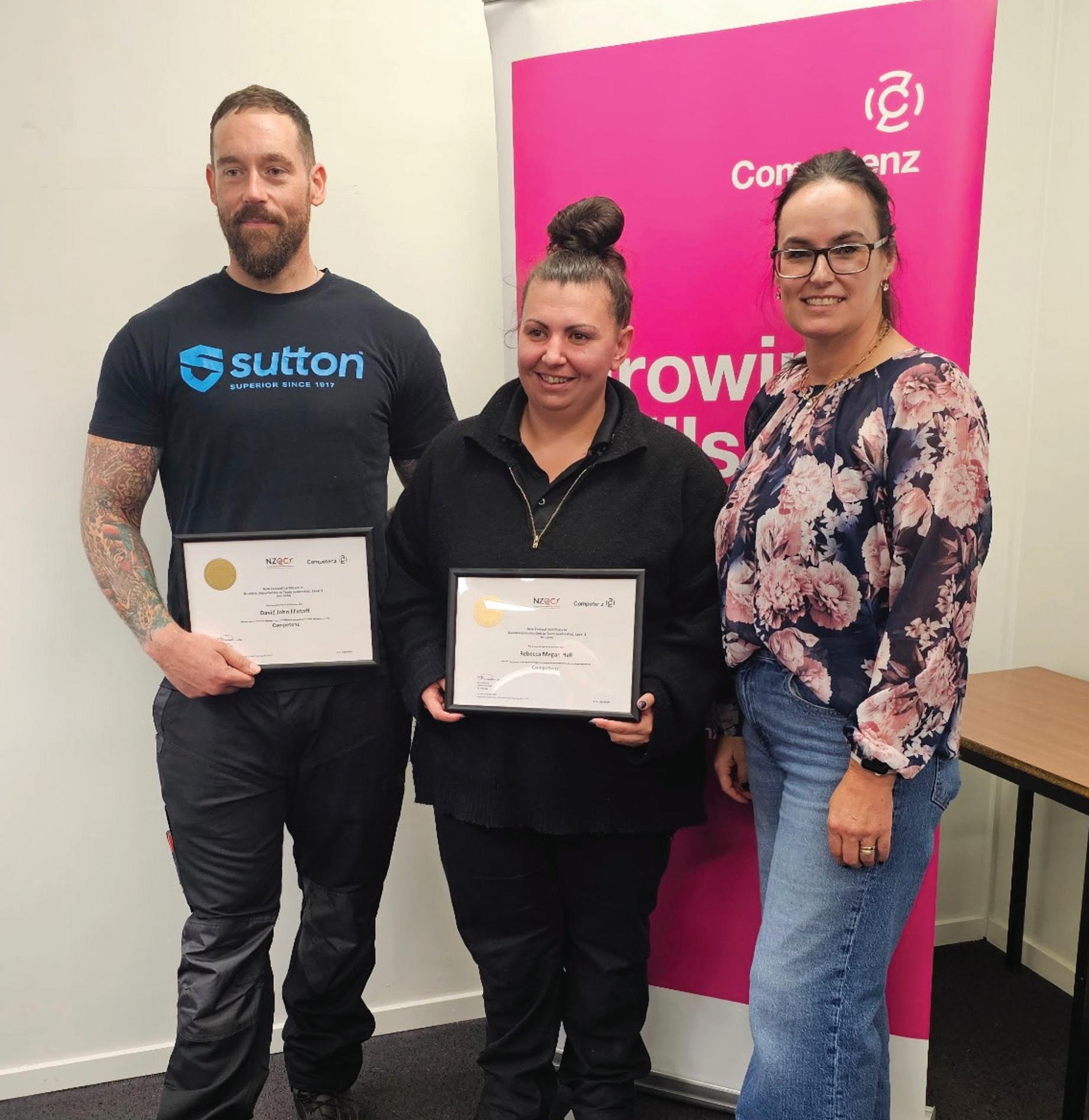
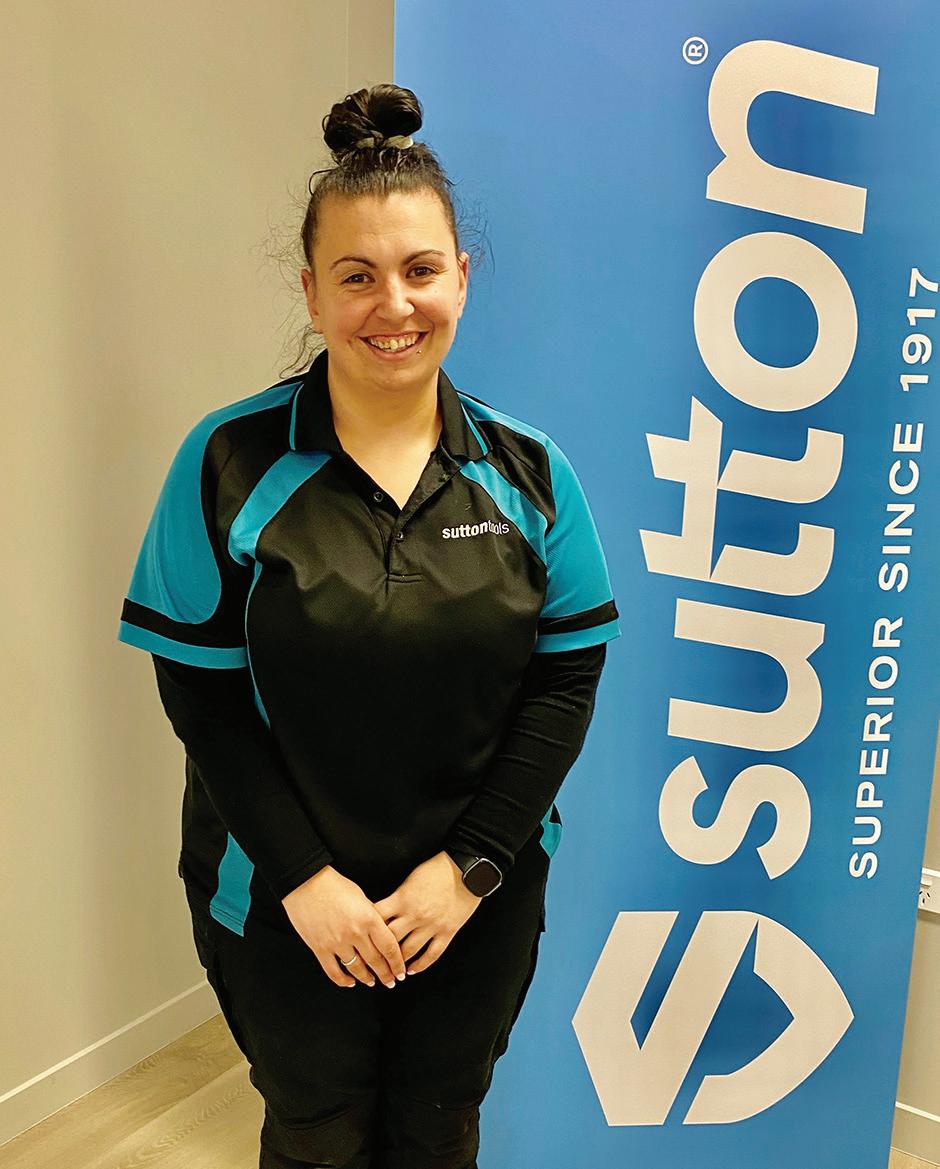
Packing Coordinator Rebecca Hall is currently completing a New Zealand Certificate in Business (Introduction to Team Leadership) Level 3.
“I’ve always wanted to be a team leader and this course is helping me get there,” she says. “It’s teaching me a lot about leadership and giving me the tools I need to do the job well.”
Rebecca joined Sutton Tools at 18 and, like many colleagues, sees her future firmly with the company.
“My mum started here when she was 18 as well, and my nana worked here too. It’s fair to say it’s a pretty good place to work.”
For Sutton Tools, investing in skills is not simply about training it’s about building a workforce capable of supporting the industries that rely on them, including building and infrastructure.
Bec and David completed the NZ Certificate
The skills the trades workforce needs
By Ben O’Connell
The national construction workforce excels in technical skills but could improve in business management, planning, organising and leadership, a new survey has found.
ConstrucTrend 2025 studies skill priorities and gaps, and the emerging technologies New Zealand’s carpenters, plumbers and electricians need to embrace.
The clear message is to focus on continuous learning to help meet rising demand for new technologies and smarter ways of working.
Trade-specific technical skills were widely seen as important, but 15% of employers said they felt recent graduates fell short of their expectations.
Employers note skill gaps in forecasting time, costs, and resources, especially among recent graduates (56% gap) and, to a lesser extent, experienced tradespeople (38%).
Organising and planning remain important, but are where gaps persist, particularly for more senior workers who may have less formal training in project organisation.
Developing constructive working relationships, training others, building trusted teams, coordinating others, and strong internal and customer-facing communication are valued across the board.
Some recent graduates show notable gaps in training others and coordinating work, while experienced tradespeople are generally closer to demand, though leadership and people management were flagged as areas for upskilling.
Managing finances, budgeting, and cash flow are crucial for business owners and are important for many tradespeople who aren’t business owners. Gaps here are more pronounced among non-owners (roughly 23% self-reported skill gaps) than among owners (about 13%).
Electricians, plumbers, and carpenters report many technology areas as important. EV charging, solar installation, renewable energy integration, smart-home systems, and AIassisted tasks are among the areas with rising interest and some skill gaps.
Two-thirds of electricians have upskilled in one or more tech areas in the past year; plumbers also show strong engagement.
There’s a preference for quick, accessible learning options rather than long in-person courses, highlighting the value of flexible micro-credentials and peer-led learning to keep skills current.
Nearly half of trade business owners started within five years of completing their apprenticeship. Accounting and marketing skills remain important for those without business ownership, showing the need for early exposure to business and financial management in training programs.
The implications for leaders
To help the trades workforce build stronger skills, apprenticeships should include more real-world business and planning training early on.
There’s a preference for quick, accessible learning options rather than long in-person courses, highlighting the value of flexible micro-credentials and peer-led learning to keep skills current.
Adding practical lessons in estimation, budgeting, scheduling, and project management would better prepare graduates to step confidently into work or start their own business.
Making learning more flexible is also key: short online courses and micro-credentials in areas like EV charging, solar power, renewable systems, smart-home technology, and AI tools for project planning can help tradespeople keep up with fast-changing technology.
Employers can make a big difference, too. Providing easy-to-use templates, training, and software tools for quotes, budgeting, and cash-flow management saves time and improves accuracy.
Encouraging leadership development, mentoring, and teamwork helps new tradies grow while giving experienced workers the chance to pass on their know-how.
Fostering collaboration and peer learning ensures everyone builds the communication, coordination, and management skills needed to thrive.
Supporting apprentices with ADHD
By Ben O’Connell
Last year, a landmark British study found that half of the building sector identified themselves as neurodivergent.
Awareness of unique brains has been on the rise for a long time, and it’s shaping the way we build and do business for the better.
By breaking down barriers and promoting accessible learning, all apprentices and employers across New Zealand can thrive in construction careers.
The Building and Construction Industry Training Organisation (BCITO) is researching ADHD in trades. They have found that many apprentices manage their symptoms without diagnosis or targeted support.
BCITO director Greg Durkin says that health data reveal 5% of Kiwis have ADHD, but just 2.6% receive treatment.
“If we want more people to enjoy long and rewarding careers in the trades, and attract others to join the industry, we need to be doing more to support our tradies of all backgrounds and abilities.”
The research also highlighted the need for greater awareness and practical resources to help employers and training advisors better understand ADHD and other neurodivergent conditions, enabling them to more effectively support apprentices to succeed in the industry.
The new approach is already leaving a positive impact on tomorrow’s leaders.
One of them is Liam Borren, who was diagnosed with ADHD just before starting his apprenticeship at 21. Yet his diagnosis took almost two years.
Since receiving focused support, the Napier carpenter has learnt how to work with his brain, not against it.
“The journey there was interesting, because I never thought I had anything with a name, I just thought my brain wasn’t as good as other people’s brains, and nobody seemed to pick up on why I was struggling so often,” Liam says.
“It took a serious relationship with someone I love to point out that I should get checked out.
“I have extreme trouble listening, as my brain has terrible retention. At times this was so bad that I would forget the words coming out of people’s mouths immediately after they said them.”
It didn’t stop him from pursuing his goal of entering a building apprenticeship – first in Wellington and then with Maulder Builders in Havelock North.
He found practical ways to work around his challenges, like keeping a notebook on hand to act as his memory.
The diagnosis also opened the door to medication, which helps him stay focused
I have extreme trouble listening, as my brain has terrible retention. At times this was so bad that I would forget the words coming out of people’s mouths immediately after they said them.
- Liam Borren
and makes it easier for him to absorb information. It’s also created a sense of awareness that naturally leads to greater focus and understanding at the workplace.
Liam says the support he’s had throughout his qualification journey has made a world of difference.
After joining Maulder Builders, he began working with BCITO training advisor Andrey Sedgwick.
“When Andrey came on board, I was four years into my apprenticeship. He listened, asked smart questions and helped me refine a clear plan.
“From there, we got into a rhythm of three to five standards each visit. Less than two years later, I was qualified. The BCITO support was there the whole way, and Andrey helped me make the most of it,” he says.
Liam says Andrey’s willingness to understand how he worked made all the difference.
“He vibed with my need to prove myself and was completely supportive and encouraging. He didn’t treat me differently, just fairly.
“By the time he came on the scene, I was more aware of how I learned, so we worked together to make the assessments suit how I process information.
“It’s not about fixing yourself – it’s about finding what works for you,” he says.
BCITO and ADHD partner
Following stories like Liam’s, BCITO has strengthened its partnership with ADHD New Zealand and other support organisations. Assistance is offered on a case-by-case basis, and BCITO is now developing a resource to help employers and training advisors better recognise ADHD in the trades and support apprentices, drawing on recent research.
“Liam shows that with the right attitude and tools in place, workers with ADHD can and do make a fantastic contribution to building and construction,” Greg Durkin says.
Liam enjoys the variety and problem-solving at the heart of his trade, work that keeps his
If we want more people to enjoy long and rewarding careers in the trades, and attract others to join the industry, we need to be doing more to support our tradies of all backgrounds and abilities.
- Greg Durkin
mind engaged while allowing him to support his family.
Now fully qualified, he’s been entrusted with running small projects and has been given his own work vehicle; a gesture he sees as a clear vote of confidence from his employers.
“Employers who understand neurodiversity get the best from their people. We are not broken, we just think differently,” he says.
Liam’s advice to those with ADHD considering a trade is simple.
“Do it. It’s an extraordinarily gratifying line of work, but you owe it to yourself and your employer to understand your brain.
Learn how to regulate, focus and communicate. People want you around if you want to be there, so put your best foot forward. And if you are struggling, ask for help. There is always support out there.”
Fusion Joinery: Bringing your vision to life
Transform your space with custom-crafted joinery from Fusion Joinery. Based in Napier and serving Hawke’s Bay wide, the team at Fusion Joinery specialise in designing, manufacturing and installing bespoke joinery solutions for both homes and businesses. Whether your project is a kitchen remodel, bathroom upgrade, built-in wardrobe, unique furniture piece, or a full commercial fit-out, Fusion Joinery brings your vision to life through precision and quality.
At Fusion Joinery, every project is tailored to your style and functional needs. Services include custom kitchen joinery featuring benchtops, splashbacks, kitchen islands, and integrated lighting solutions. Bespoke bathroom cabinets, built-in wardrobes, custom-made cabinetry and customised furniture are also part of Fusion's repertoire, each crafted with careful attention and personalised design. For commercial clients, the company provides full fit-out services aimed at creating environments that reflect your brand and operate seamlessly.
What makes Fusion Joinery different from the rest is their end-to-end approach. From the initial consultation to manufacturing to final installation, they manage all phases of your joinery project, ensuring all details are taken care of, trades are coordinated, and the final result is finished to a high standard. They emphasise premium craftsmanship and long-lasting material choices, working with trusted brand partners so that your space doesn’t just look great, it also stands the test of time.
Whether you are envisioning a sleek modern aesthetic or a more timeless look, Fusion
Joinery will work closely with you to translate your ideas into functional and beautiful joinery. They take the time to understand how you live or work, customise to your preferences, and deliver results for your home or commercial spaces alike. Serving in the Hawke’s Bay community, they are a locally trusted provider with a strong focus on building relationships and listening to the client’s vision.
From concept to completion, the Fusion Joinery team turns ideas into real-world spaces that are both visually striking and highly practical. Whether you are outfitting
a new property, renovating your existing space or designing a full commercial interior, the process is built around you. Let them bring your vision to life, delivering joinery that reflects your personality and supports the way you want to live or work.
Ready to get started? Reach out to Fusion Joinery today and begin the journey to beautiful, custom-crafted joinery designed for you. From kitchens, wardrobes, and furniture to full commercial fit-outs, their team is here to make your space exceptional.
KiwiSaver changes from 1 April 2026 –
what you need to know
From 1 April 2026, KiwiSaver employer contribution rates are increasing. While the change is modest, it has real payroll, cashflow, and employment agreement implications for those employing staff.
What’s changing?
The default KiwiSaver contribution rate for both employees and employers will increase from 3.0% to 3.5% from 1 April 2026.
This is not a one off; the rate increases again by 0.5% from 1 April 2027, taking the default rate to 4.0%.
Unless an employee has an approved temporary reduction, employers will have to match the higher rate.
Employees can opt to stay at 3% (for now)
Employees who want to remain at 3.0% can apply to Inland Revenue for a temporary rate reduction. If approved, the employer can continue contributing at 3.0% while that reduction is in place.
Important points for employers:
• The employee must apply, not the employer.
• Inland Revenue will notify the employer when a reduction starts and when it ends.
• Once the employee returns to the higher rate, your employer contribution must increase immediately to 3.5%.
A 0.5% increase may sound small, but across all employees it adds up.
Younger workers now count
A significant change for the construction sector is that 16 and 17-year-old employees will now qualify for employer KiwiSaver contributions. If they are contributing from their wages or choose to, you must contribute too.
This will affect:
• Apprentices
• Labourers and entry level roles
• Family members employed in the business
Practical tips for employers
1. Budget ahead
A 0.5% increase may sound small, but across all employees it adds up. Factor the increase into job pricing, labour budgets, and cashflow
forecasts, especially with another increase coming in 2027.
2. Check your employment agreements
Be careful with total remuneration or “inclusive” pay packages. Many agreements assume a 3% employer contribution. Review contracts to avoid unintended cost increases or disputes.
3. Update payroll systems early
Make sure your payroll software is ready for:
• The 1 April 2026 increase
• Temporary rate reductions
• Automatic changes when reductions end
4. Communicate with staff
Revenue. Clear communication reduces payroll confusion and last minute issues.
Final word
KiwiSaver changes are manageable but require planning. Builders and contractors who update agreements, payroll, and budgets early can avoid surprises and be better positioned when the next increase arrives in April 2027.
If you need help, reach out to us and our team can assist.
Let employees know what’s changing and where they can get information from Inland
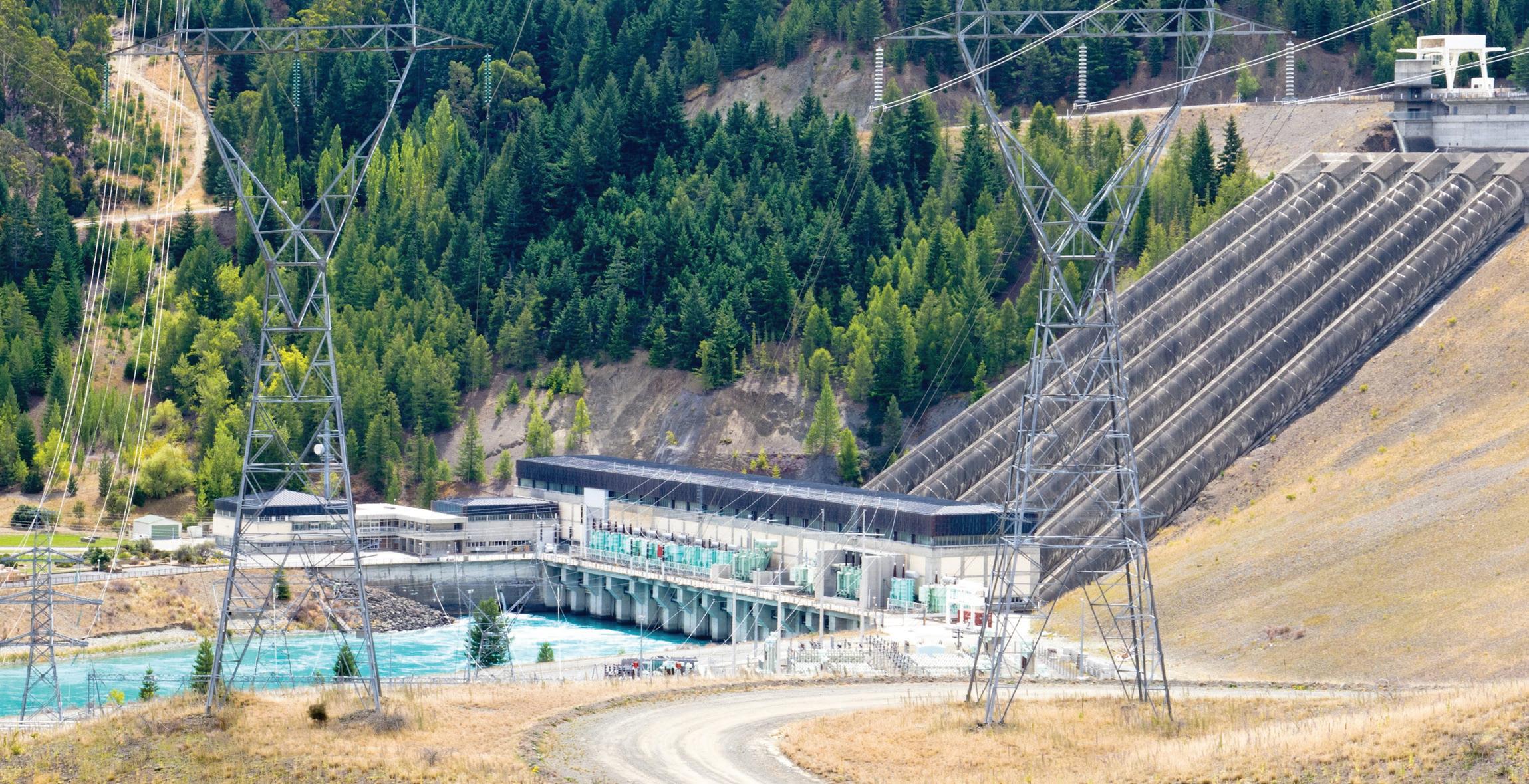
National Infrastructure Plan sets a 30-year course for New Zealand construction
By Jonathon Taylor
Few issues are more central to New Zealand’s long-term prosperity than infrastructure. From state highways and freight corridors to hospitals, water networks and electricity transmission, the assets that underpin daily life are also the backbone of economic growth. Yet despite sustained investment over decades, the country continues to grapple with ageing networks, rising costs, climate risk and uneven delivery performance.
The release of the National Infrastructure Plan by the New Zealand Infrastructure Commission marks a significant attempt to reset that trajectory. Tabled in Parliament by Infrastructure Minister Chris Bishop on 17 February 2026, the Plan sets out a 30-year roadmap to improve how New Zealand plans, funds, maintains and delivers infrastructure. For the construction sector, this is more than a policy document. It is a signal about pipeline stability, investment priorities, procurement reform and the balance between new builds and renewals. Framed around system-wide reform and backed by extensive consultation, the Plan has already sparked strong responses from across engineering, freight and local government. In this in-depth Q&A, we examine what the Plan contains, why it matters and what it could mean for the industry over the coming decades.
What
is the National Infrastructure Plan and what does it aim to achieve?
The National Infrastructure Plan sets out a practical and affordable pathway for delivering the infrastructure New Zealanders will need over the next 30 years. It takes a whole-of-system view, spanning hospitals, transport networks, water infrastructure and energy systems.
New Zealand Infrastructure Commission Chief Executive Geoff Cooper describes the Plan as both long-term and urgent in its intent.
“While the Plan looks at the long term, it’s clear that we need to take action now. Weather events and infrastructure failures make very clear the importance of investing to renew and build resilience into the networks that sustain our way of life,” Geoff says.
The Plan integrates long-term demand forecasting with data from the National Infrastructure Pipeline and the Commission’s Infrastructure Priorities Programme. It identifies where pressures are building, where assets are deteriorating and where investment will deliver the greatest longterm value.
He emphasises that incremental tweaks will not be enough. “We can’t keep doing what we’ve always done.”
At its heart, the Plan is designed to provide decision-makers and the industry with clarity about direction. It seeks to move infrastructure planning beyond short political cycles and toward a durable, sequenced programme that balances ambition with affordability.
Why is reform necessary when New Zealand already invests heavily in infrastructure?
One of the Plan’s most confronting insights is that high levels of spending have not translated into high levels of performance. Chris Bishop acknowledges the scale of the challenge. “We spend a lot on infrastructure, around 5.8% of GDP annually over the last 20 years, one of the highest in the OECD, yet we rank towards the bottom for efficiency, and fourth to last in the OECD for asset management.” And he is candid about the findings. “The Plan does not sugarcoat things: New Zealand has real challenges ahead.”
According to the Government and the Commission, weaknesses include fragmented assurance systems, inconsistent project governance, limited long-term asset planning and insufficient understanding of what public agencies actually own.
For construction professionals, these shortcomings are not abstract. They translate into late design changes, stop-start procurement, inconsistent specifications and pipeline volatility.
The Plan argues that lifting productivity in infrastructure delivery is as important as increasing capital allocations. It contends that New Zealand likely spends enough in aggregate, but does not consistently achieve value for money.
What are the key structural reforms proposed in the Plan?
The Plan outlines 16 recommendations across four core themes: Planning what we can afford: Embedding stronger links between long-term demand forecasting and fiscal strategy, and requiring clearer long-term investment plans.
Looking after what we’ve got: Shifting the investment balance toward maintenance and renewals, with up to 60 cents in every capital dollar directed at sustaining existing assets.
Prioritising the right projects: Strengthening project sequencing, assurance and transparency to ensure scarce funding is allocated where it delivers the greatest benefit.
Making it easier to build better: Improving procurement settings, institutional capability and co-ordination across agencies.
The Plan also calls for potential legislative changes, including requirements for longterm asset management plans and the consolidation of assurance functions for major investments.
For contractors and consultants, these system shifts could significantly affect procurement models, risk allocation and the predictability of forward workloads.
What are the 10 priority actions for the next decade?
Alongside long-term structural reform, the Plan identifies 10 areas requiring focused attention over the next 10 years. These priorities aim to deliver visible gains while supporting the broader 30-year transformation.
They include:
• Lifting hospital investment to serve an ageing population,
• Completing catch-up on water infrastructure renewals,
New Zealand’s future prosperity depends on high-quality infrastructure. It is central to our quality of life and to the Government’s ‘Going for Growth’ agenda.
• Prioritising and sequencing major land transport projects,
• Implementing time-of-use charging and wider road user charges,
Geoff Cooper explains the logic: “Some of the infrastructure issues we’re facing have been decades in the making – and they’ll take time to fix. But New Zealand also faces acute pressures that require attention now.
“Addressing the top 10 priority areas identified in the Plan will result in visible infrastructure gains and support our longer-term recommendations for the next 30 years.”
For the construction industry, this signals a strong pipeline in health, water renewals, flood resilience works and transport optimisation initiatives.
How is the Government positioning itself in response?
Minister Bishop has welcomed the Plan as aligned with reforms already underway.
“New Zealand’s future prosperity depends on high-quality infrastructure. It is central to our quality of life and to the Government’s ‘Going for Growth’ agenda,” he says.
He outlines a range of system improvements introduced over the past two years, including strengthening the Investment Management System, developing long-term capital plans and improving asset management capability across agencies.
The Government has also established new funding and financing mechanisms to better connect private capital with public
infrastructure projects, clarified roles and responsibilities, and improved transparency in the national pipeline.
Minister Bishop notes that many of the Plan’s 10 priorities reflect work already in progress, including hospital investment, water reform, road user charging and transport pipeline publication.
Importantly, the Government must publish a formal response within 180 days of receiving the Plan and Minister Bishop has signalled cross-party engagement. “Infrastructure lasts for generations. Where we can build durable consensus, we should.”
For industry, bipartisan alignment would be a major step toward stabilising the project environment and reducing politically driven volatility.
What does the Plan mean for transport, freight and road funding?
Transport reform is a prominent feature of the Plan, particularly the shift toward time-of-use charging and broader road user charging frameworks to better manage congestion and revenue.
Transporting New Zealand la Ara Aotearoa Chief Executive Dom Kalasih has welcomed the long-term approach.
“The Plan emphasises the importance of maintaining existing assets, the need for road revenue reform, and the importance of ensuring that party politics don’t disrupt the delivery of good infrastructure maintenance and improvements,” he says.
He reinforces the Plan’s focus on fundamentals. “What matters is staying focused on the fundamentals - looking after existing assets, delivering projects well, planning efficiently, and being transparent about costs and outcomes.”
For freight operators, recent severe weather events have highlighted the fragility of parts of the network. “A strong message we hear from our road freight members is the importance of maintaining the existing road network… which has been historically underfunded by successive governments.”
If the maintenance-first approach outlined in the Plan is adopted, it could reshape transport capital allocation, favouring renewals and resilience over speculative expansion.
How are engineers and local leaders responding?
Engineering leaders have broadly welcomed the Plan’s shift toward renewals and asset stewardship.
Executive of Engineering New Zealand Chief Executive Dr Richard Templer describes the Plan as encouraging. “A big focus in the plan are recommendations around getting more value from existing assets and keep them working for longer. These recommendations are well founded and a necessary move in our infrastructure investment focus from ribbon cutting to renewal,” Richard says.
However, he also warns of workforce instability. “Once infrastructure work picks up, we are going to need a lot of people. Many of these people are going overseas.
It’s frustrating to see great people heading to Australia because they have got their act together around infrastructure planning.”
At the local government level, Auckland Mayor Wayne Brown has embraced the Plan’s candid assessment of megaproject costs. “This Plan contains some hard truths for our infrastructure sector - and for the Government,” he says.
He argues for cost discipline over goldplating. “We need to focus more on cost and less on world-class. We just want good usable standards.”
Such comments reflect a broader debate about design standards, procurement efficiency and affordability issues central to construction sector performance.
How is the plan being received?
Across industry groups, the Plan has been largely welcomed as a serious and necessary intervention.
Infrastructure New Zealand Chief Executive, Nick Leggett, describes it as “a serious and substantial contribution to the discussion.”
He identifies productivity as the central issue. “We probably spend enough. But we do not consistently get the return we should. Improving productivity in infrastructure delivery is the challenge we must now solve.”
Nick cautions against limiting ambition solely due to fiscal pressures. “Infrastructure is not simply a cost. It is an investment in prosperity, productivity and resilience.”
He notes that while the Plan provides a clearer framework and a $275 billion pipeline overview, funding decisions will require hard political choices.
From freight to engineering to local government, the consensus appears to be that the diagnosis is accurate. The challenge now lies in implementation and funding certainty.
What happens from here?
The Plan’s release is only the starting point; a point emphasised by Geoff Cooper.
“A plan by itself won’t change anything. The National Infrastructure Plan charts the
course, but progress depends on how decision-makers, delivery agencies, industry, and communities use the Plan to do things differently.”
The Government has until June 2026 to publish its formal response. Crossparty engagement is being sought, and Commission officials will brief political parties to encourage informed debate.
The Plan is designed to evolve. Elements will be updated regularly, and the Commission will monitor progress against its recommendations to promote transparency and accountability.
Crucially, the Plan balances immediate pressures with long-term transformation. It addresses demographic change, climate risk and technological shifts while sequencing major investments, from hospitals to rapid transit, within an affordable framework. By combining maintenance-first principles with targeted expansion, the Commission argues it has outlined a “fundable and affordable programme of works” capable of futureproofing services while incrementally expanding capacity as the country grows.
For the construction sector, the implications are significant. A more stable and transparent 30-year direction could enable better workforce planning, capital investment in equipment and stronger collaboration across supply chains.
Yet the ultimate outcome will depend on execution.
As Minister Bishop concludes: “Now it is up to all of us to do the hard work required to turn ambition into delivery.”
For New Zealand’s builders, engineers, designers and asset managers, the blueprint is now on the table. The next three decades will determine whether it becomes a reality.
See also:
National Plan signals long-term shift for infrastructure delivery p24
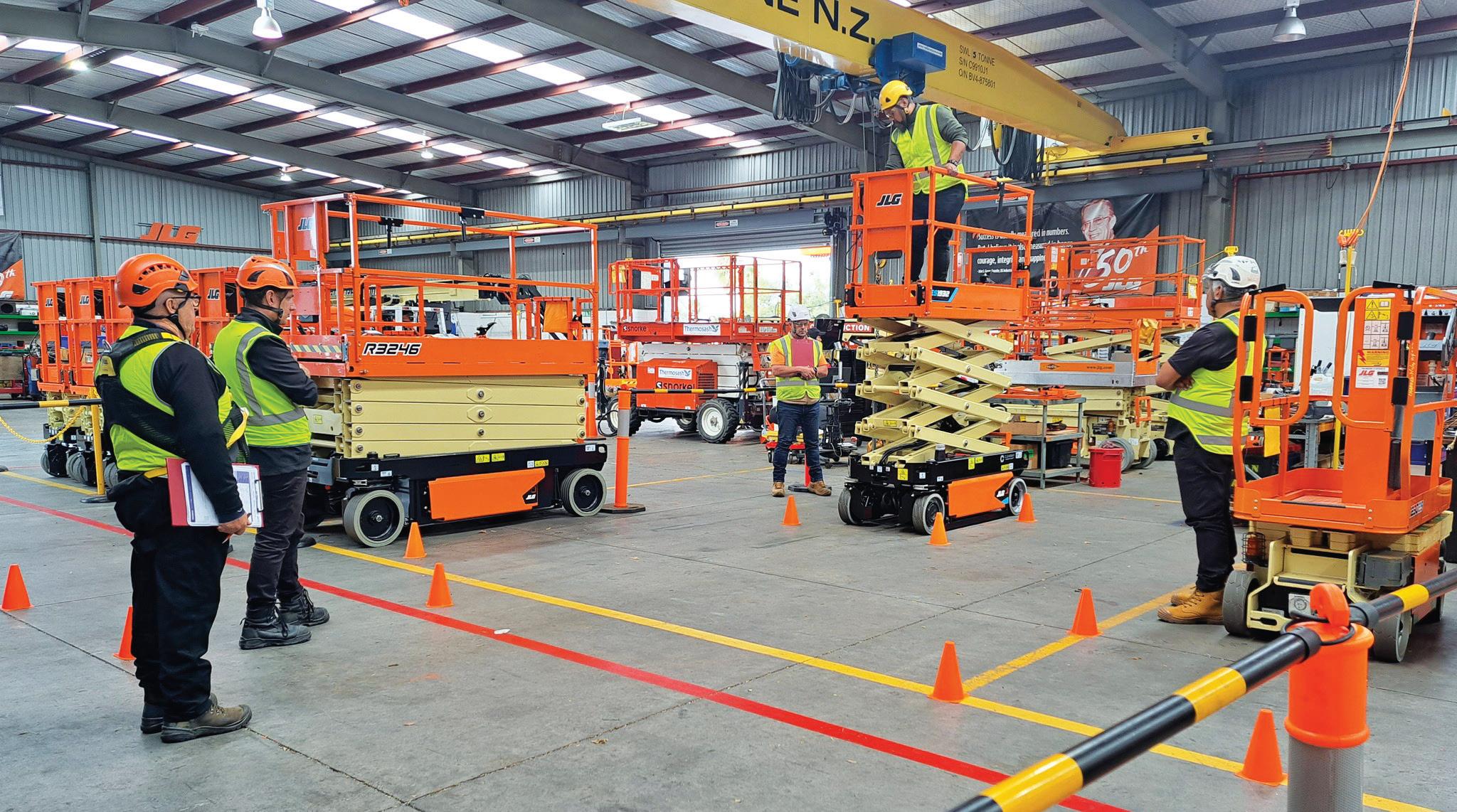
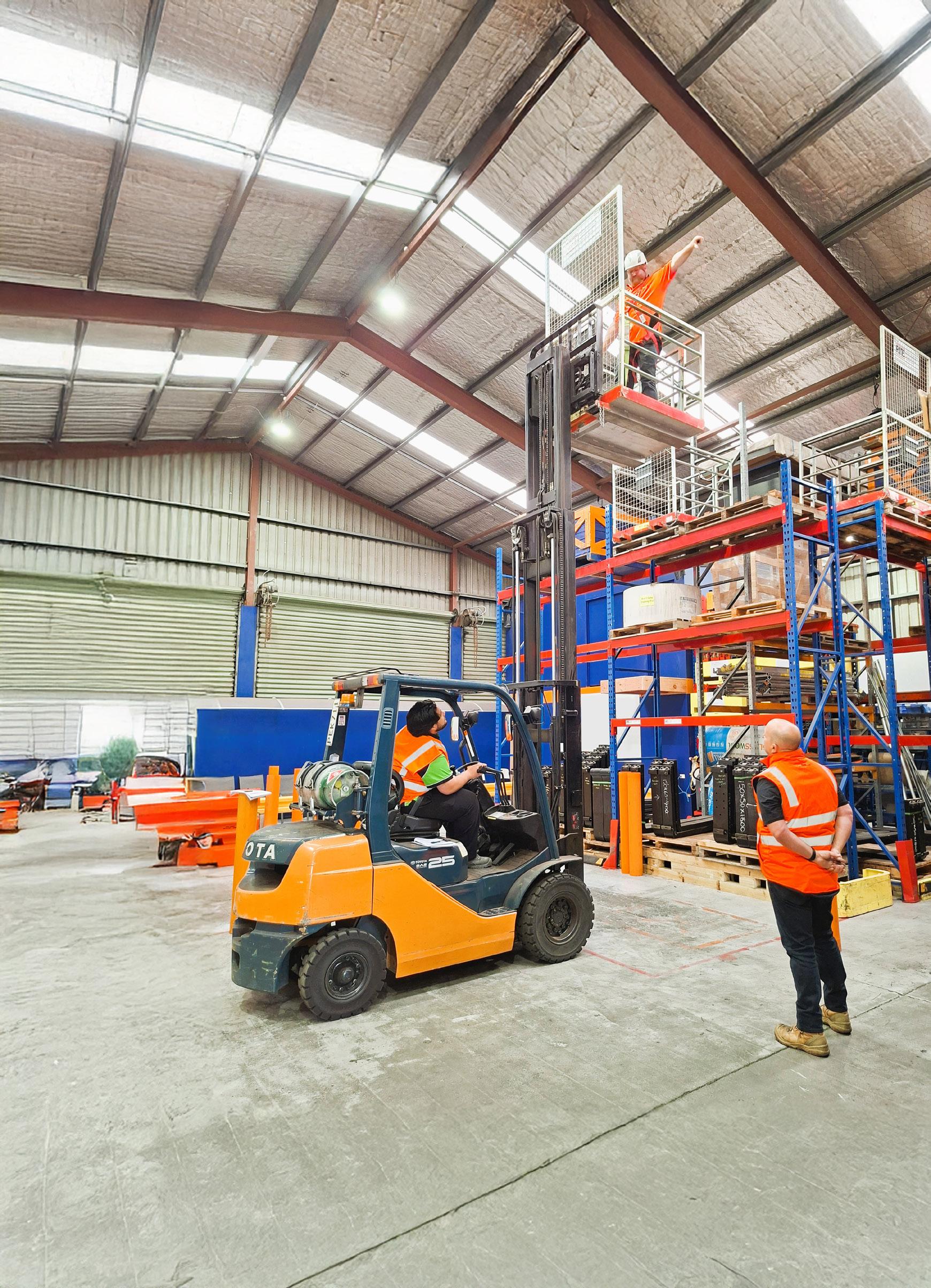
Silvercard MEWP and Forklift Competent Operator Training available via the
Verifying a competent MEWP and Forklift operator on site can be challenging for site managers.
With multiple training and assessment providers in the market—each claiming to offer the best operator training—it can be difficult to determine the authenticity and quality of an operator’s credentials. Operators may also misplace their operator card or fail to carry their certificate of attainment. Delays in obtaining records from employers, or uncertainty around whether an operator has actually been trained, add further complications. On top of that, fraudulent certificates and operator cards are becoming increasingly common.
Silvercard has solved this problem
By downloading the Silvercard NZ App from the Google Play Store or Apple App Store, Silvercard holders can enter their details and have their verified training and assessment information loaded directly into the app. This provides the most current record of their training, including:
• The MEWP and Forklift type they are deemed competent to operate
• Their refresher training due date
• Their trainer/assessor and their contact details
Site managers can also download the Silvercard App and use it to scan a Silvercard Competent Operator’s App QR code. This links directly to the Silvercard website and provides live, real-time verification of an operator’s competency. This eliminates misinformation and prevents the use of fraudulent or falsified training documents. Verification through the
are raising the bar for MEWP and
app ensures confidence and demonstrates a clear duty of care.
In addition to storing training and competency records, the Silvercard app provides valuable resources for operators, including the “Using EWP’s Safely” booklet —a respected reference guide that supports ongoing competency. The booklet covers essential topics such as job planning, pre-operational checks, site hazards, and MEWP selection. It can be viewed in the app or accessed via the Silvercard website.
Verification through the app ensures confidence and demonstrates a clear duty of care.
Visit the Silvercard website to locate a trainer near you, download the app, and gain confidence when verifying MEWP operator competency through the Silvercard system. With Silvercard, you can be assured you have a safe and competent operator on site.
The Silvercard MEWP and Forklift Competent Operator Training Program is owned and managed by the Hire Industry Association of New Zealand (HIANZ). Training and assessment are delivered by independent, accredited trainer/assessors, following WorkSafe’s Mobile Elevating Work Platform Best Practice Guidelines. All assessments use NZQA unit standards to determine competency.
Book a Silvercard course near you, verify your employees' Silvercard status, and download the app today at www.silvercard.co.nz
HEAVY MACHINERY HIRE
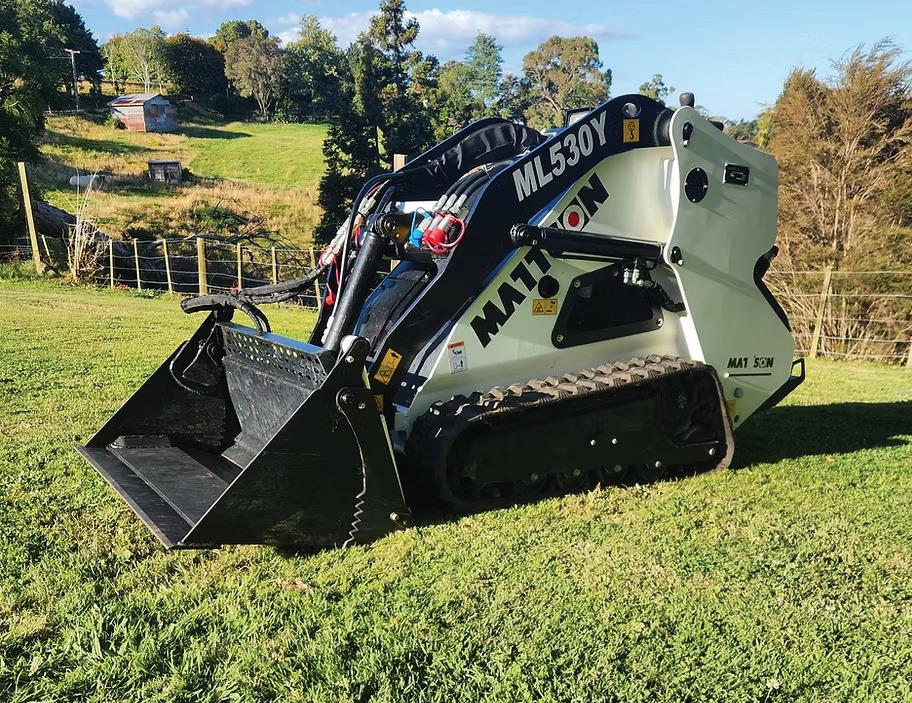
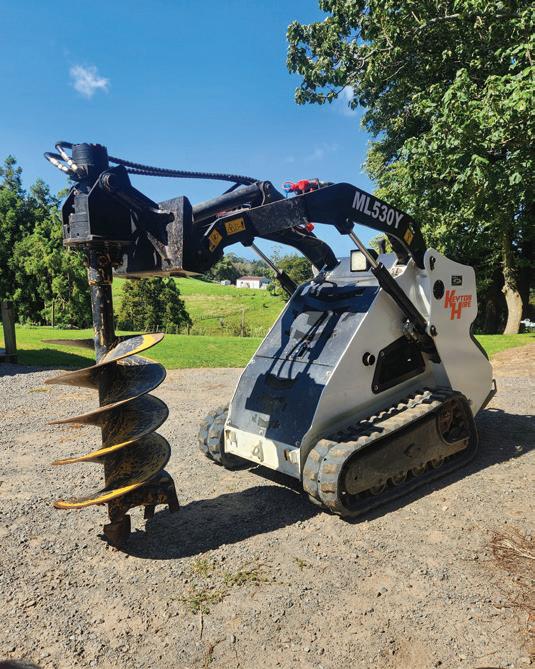
Dennis the Dingo
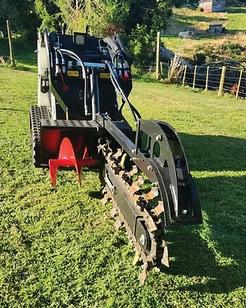
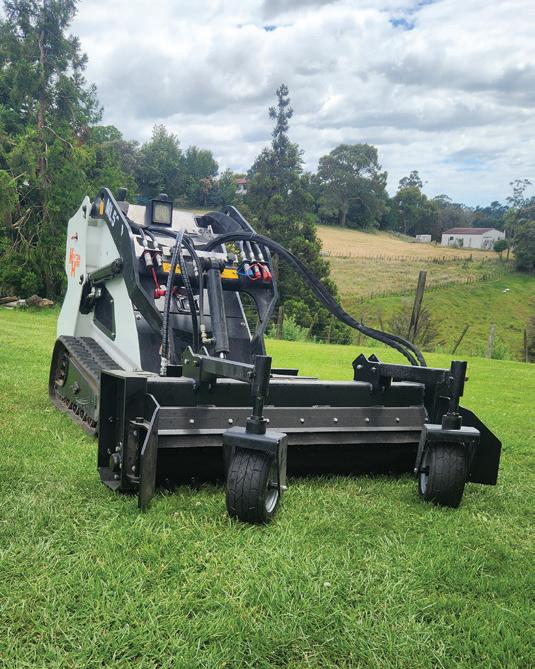
Do you need trenches ripped, earth shifted or holes drilled? Dennis the dingo is your machine. With multiple attachments and more to come, Dennis will get the job done. With very easy to operate controls anyone can hop on and let Dennis do the hard work for you. Currently we have a 4n1 Bucket, Trencher and Auger Drive for Dennis, let us know what you need and Dennis will make the job effortless for you.
DINGO DAY RATE: $250+ GST
ATTACHMENTS DAY RATE:
$50+ GST (Per Attachment)
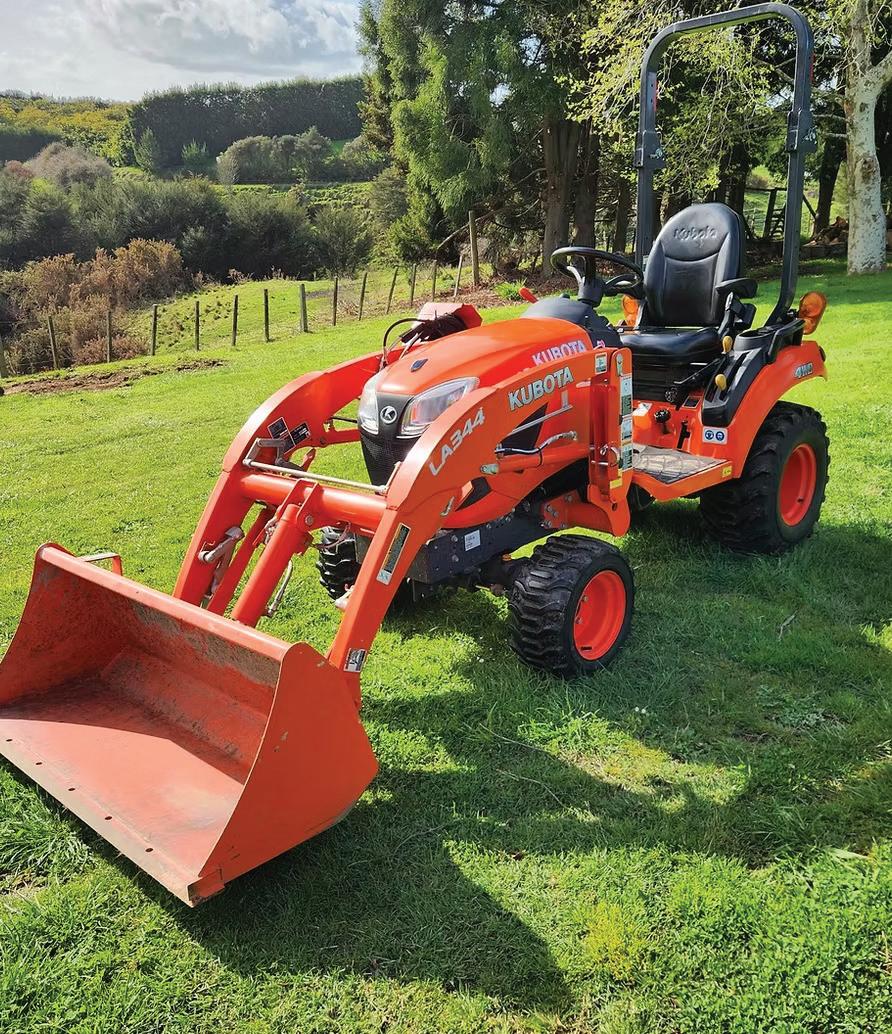
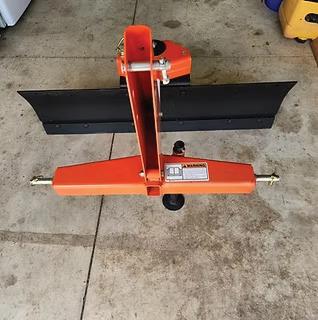
Sherl the mini tractor
Meet Sherl she’s nimble and compact and will tend to all your yard work desires.
She has multiple attachments, so she is ready to meet any needs you have. She’s easy on the eyes and the wallet with very competitive rates.
TRACTOR DAY RATE: $200+ GST Enquire Now: Enquire Now:
ATTACHMENTS DAY RATE: $70+ GST (Per Attachment)
More consents and concrete to start 2026
By Ben O’Connell
More homes are being consented to and more concrete is being poured nationwide, yet non-residential activity continues to decline. Against the backdrop of high inflation and unemployment, the industry has an uncertain future.
36,944 new homes were consented to in New Zealand in the year ended January 2026, says Stats NZ. That’s a 9.3% increase compared with the year ended January 2025.
“New home consents increased over the year, with multi-unit homes continuing to play a significant role in the annual rise,” economic indicators spokesperson Michelle Feyen said.
Townhouses, flats, and units made up nearly half of all new dwellings, climbing 14% to 16,175 for the year. Apartment consents surged 26% to 2,436, while retirement village units slipped 7.7% to 1,585.
The number of standalone houses also rose, up 5% to 16,748, suggesting a modest but broad-based recovery across market segments.
Concrete use signals an uptick in construction activity. After more than three years of annual declines, ready-mixed concrete
production showed its first positive gain, rising 0.4% in the December 2025 quarter from a year earlier, according to Infometrics’ Quarterly Market Insights for Concrete NZ. Non-residential construction, however, continues to contract as earlier declines in consents reduce the pipeline of commercial and industrial projects.
Analysis suggests that new public infrastructure work and stabilising homebuilding are partially offsetting those losses, cushioning the total concrete demand.
Regional patterns show Auckland once again dominating, with 15,779 homes consented, up 13% and responsible for nearly 60% of the national increase.
New home consents increased over the year, with multi-unit homes continuing to play a significant role in the annual rise.
- Michelle Feyen
“Auckland accounted for nearly 60% of the national increase in new home consents over the year,” Feyen said.
Canterbury followed with 7,398 consents (up 12%), while Wellington posted one of the strongest regional lifts at 16%. Waikato and Otago also strengthened, up 8.5 and 11%, respectively.
Concrete stats echo this; the Christchurch metro area, Otago and Southland, and Northland led annual growth.
Monthly, January 2026 recorded 2,528 new dwellings, 15% more than a year earlier. After a quiet December, the seasonally adjusted total rose 1.9%, hinting that the construction sector may finally be turning a corner, albeit cautiously, as the year unfolds.
TRADE TOOLS & EQUIPMENT SUPPLIER
Panel Props & Acrow Props
Raptor Power Trowels
Concrete Vibrators & Screeds
Concrete Mixers
Chemgrout Grout Pumps
Concrete Cutters
Laser Levels
Compounds, Adhesives & Sealants
Concrete Boxing Formwork
Concrete Hand Trowels
Bull Floats & Fresnos
Concrete Tool Handles
Rakes & Spreaders
Concrete Texture Finishing
Concrete Testing Equipment
Construction Chemicals
Personal Protection Equipment
Trade & Industrial Ladders
Work Platforms & Order Pickers
Mobile Scaffolding
Height Safety Equipment
Mapei Tiling Products
Temporary Site Fencing
Solar Lighting Solutions
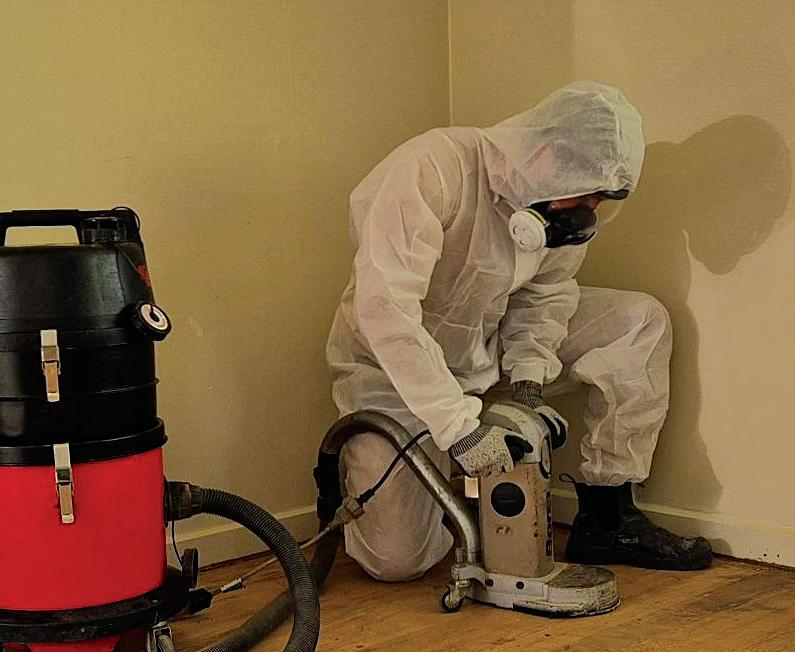
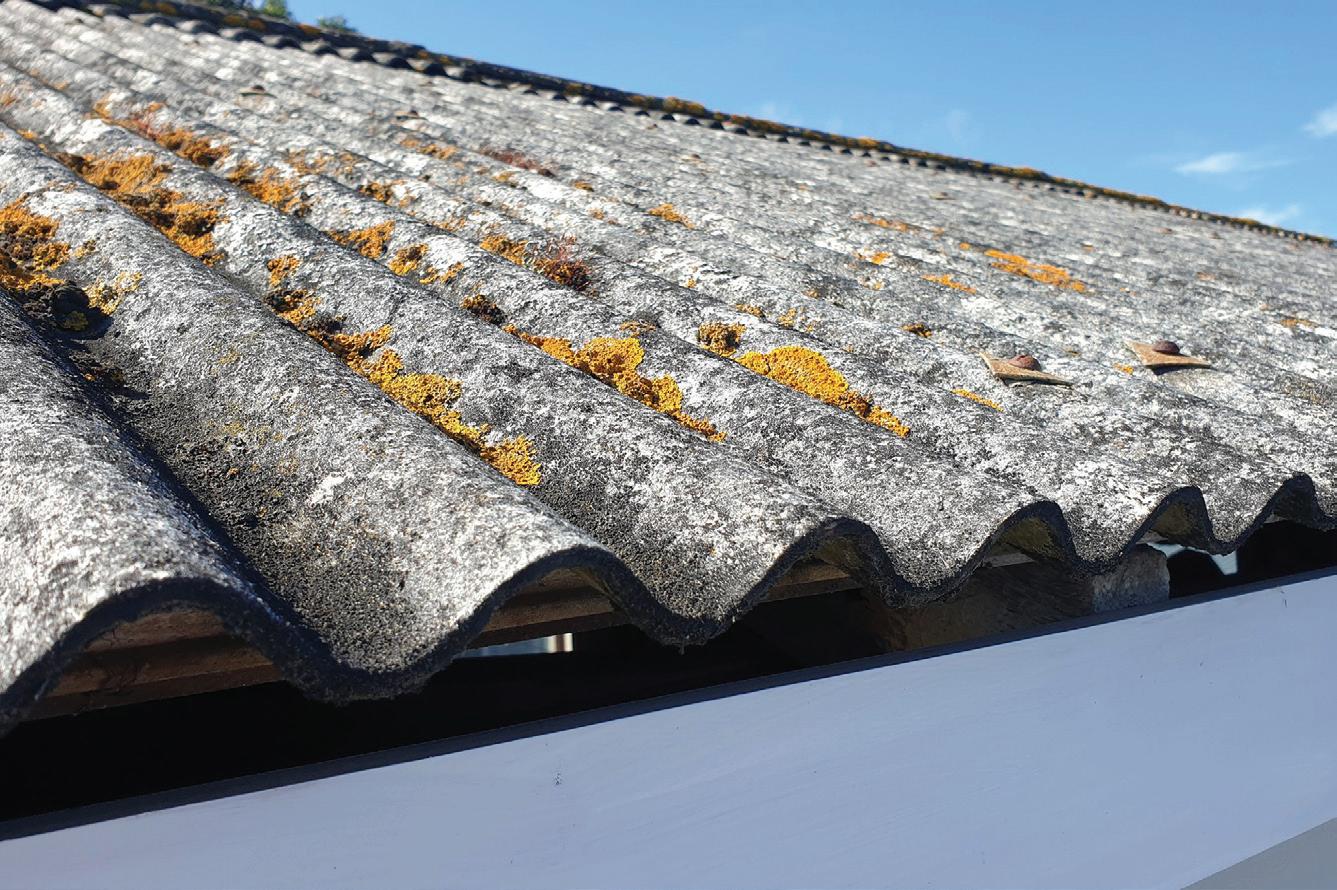
Asbestos Removal Services
Our Company Services
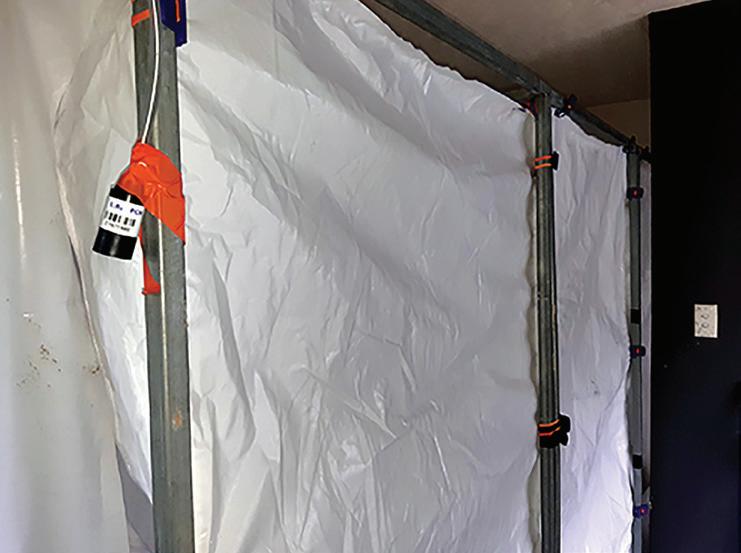
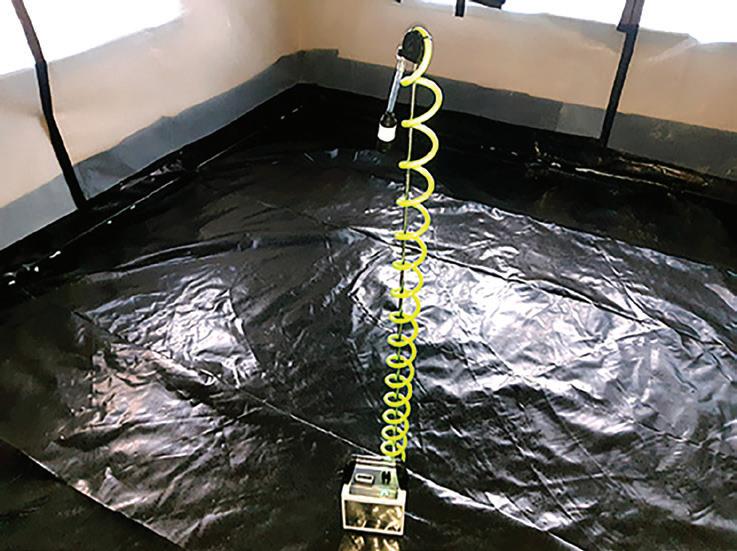
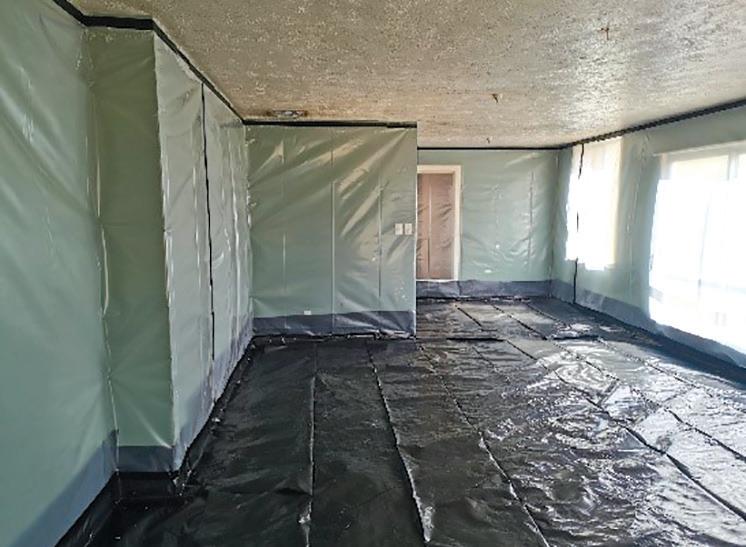
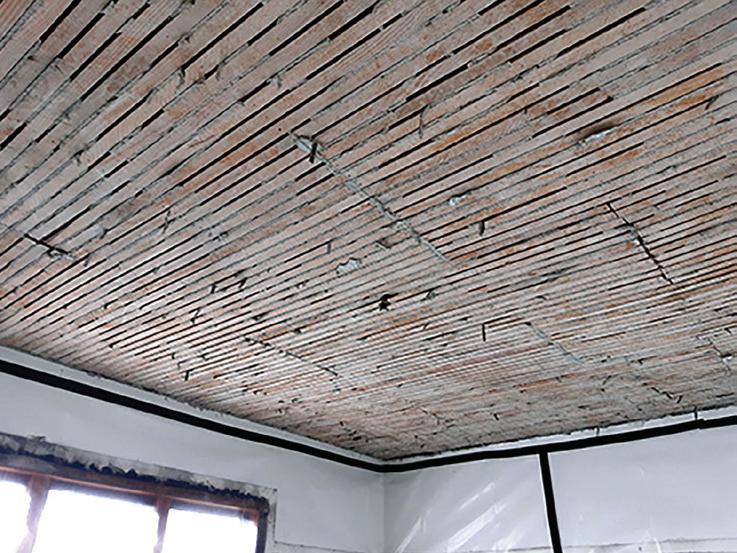
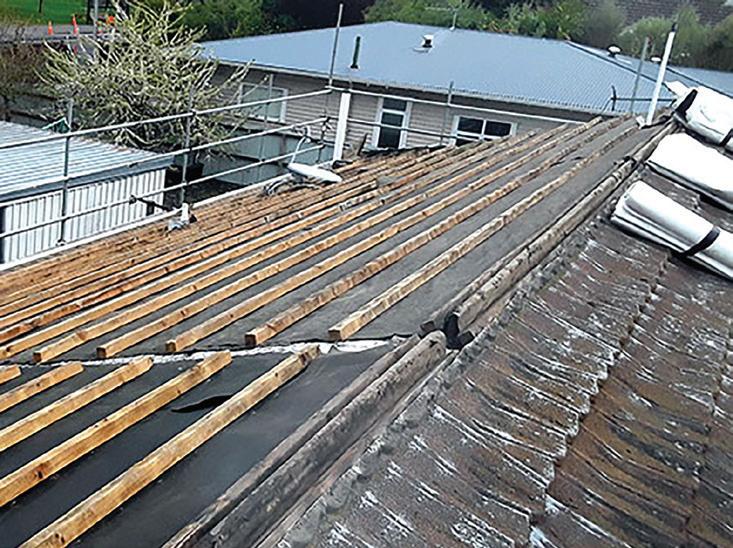
Here at ClearAir, our team consists of highly skilled and committed professionals who take great pride in their work. With licensed supervisors leading the way, and boasting years of experience in asbestos removal, you can rest assured that your project is in safe hands from start to finish.
• Class B Asbestos Removal
• Class A Asbestos Removal
• Demolition
• Oversight Management
• Asbestos Contaminated Soil
• Mould Remediation/Removal
• Methamphetamine Decontamination
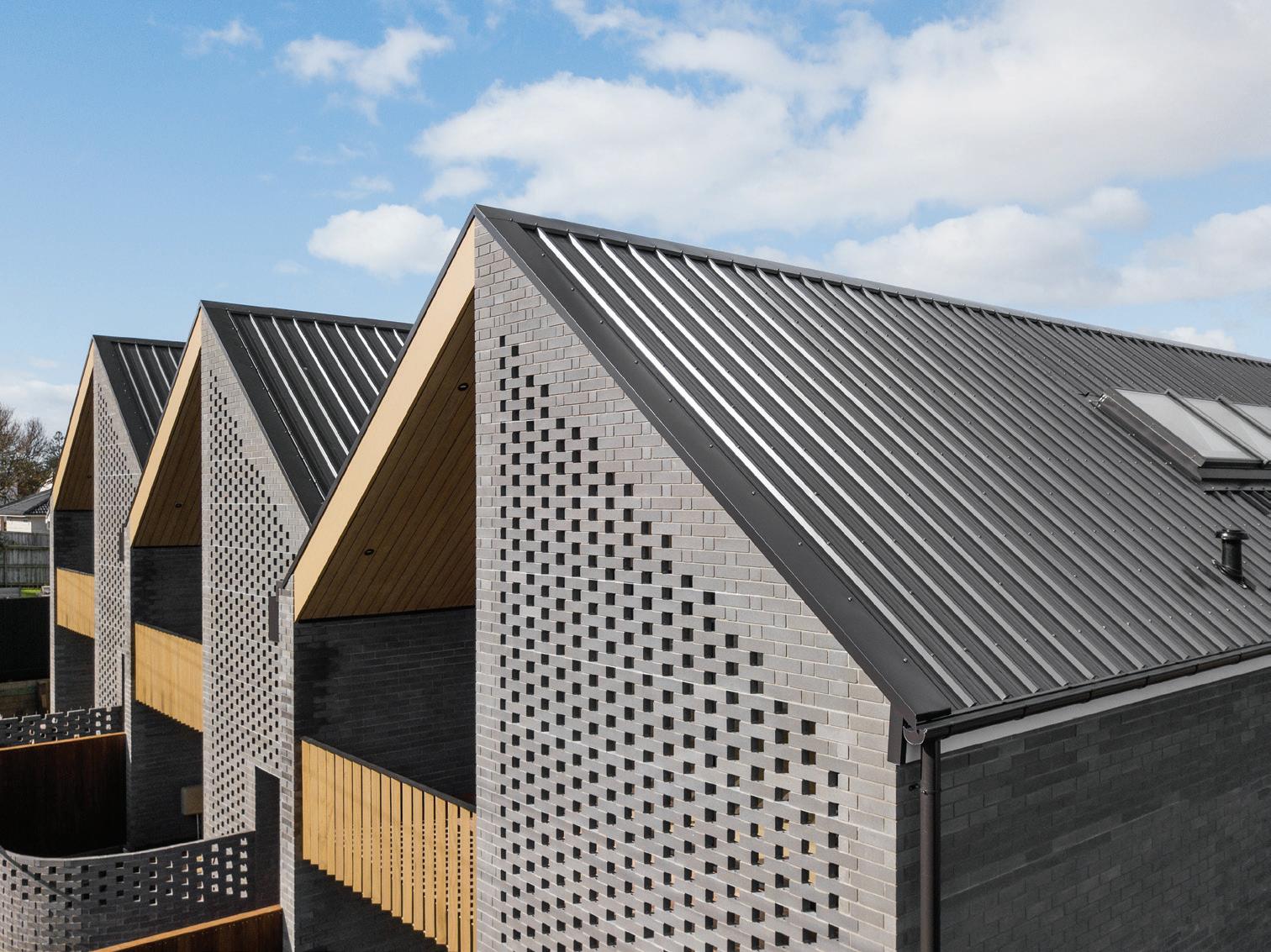
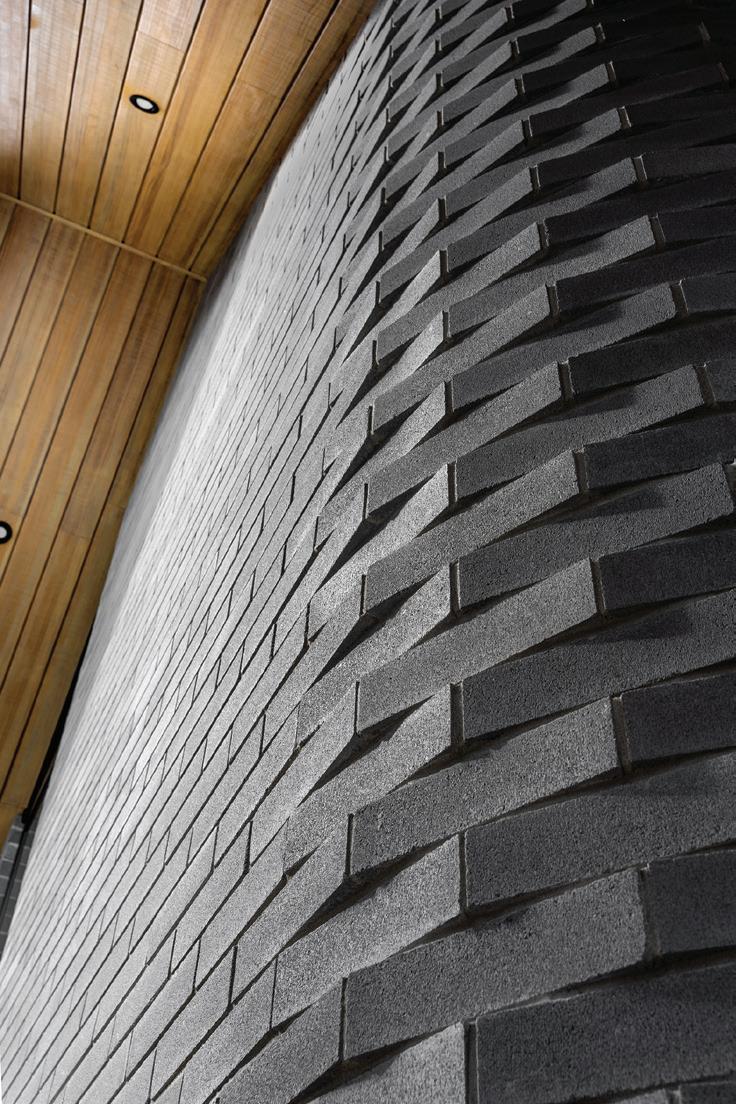
Concrete bricks shown to produce around half the emissions of clay bricks
A desktop study conducted by Concrete NZ’s Masonry Group, drawing on third-party verified Environmental Product Declarations (EPDs), has found that concrete bricks produce significantly lower embodied carbon emissions than traditional fired clay alternative.
The analysis compared the carbon emissions associated with the manufacture of concrete bricks from a New Zealand supplier with fired clay bricks supplied from Australia. On average, the results show that concrete bricks generate around half the carbon emissions of clay bricks.
The difference is largely driven by manufacturing processes. Fired clay bricks require prolonged exposure to very high temperatures, resulting in substantial fuel consumption and higher embodied carbon - typically around 0.5 kg of CO₂ per kilogram of bricks. Concrete bricks, by contrast, are created using a less energy-intensive process, leading to materially lower emissions.
Additional reductions are also achieved through optimised concrete mix design and the incorporation of recycled materials, further strengthening the sustainability credentials of concrete bricks.
Concrete NZ Architect Ralf Kessel says the findings provide timely and practical guidance for the market.
“This analysis gives specifiers and their clients clear, evidence-based information to support informed material choices,” says Kessel.
“Concrete bricks offer durability, aesthetic flexibility and construction efficiency, and this data shows they can also make a meaningful contribution to reducing the carbon footprint of a project - without compromising performance.”
The findings provide designers, specifiers and builders with robust insight into how
material selection can support lower-carbon outcomes, while continuing to leverage the proven durability, appearance and convenience of concrete brick construction.
Visit the Concrete NZ website to download the Concrete Bricks - Half the Emissions of Clay Bricks factsheetwww.concretenz.org.nz
Concrete NZ Conference returns to Wellington in 2026
The Concrete NZ Conference 2026 will take place from 21–23 October at Tākina Wellington Convention and Exhibition Centre, bringing together professionals from across New Zealand’s concrete and construction sectors.
Following the success of last year’s refreshed format, the conference will again feature a dynamic two-day technical programme showcasing leading local and international speakers, alongside lightning talks and opportunities for delegates to present their work.
The event will also include an extensive trade exhibition, the President’s Reception and conference dinner, where industry awards will be presented.
Tākina provides a modern conference venue in the heart of the capital’s vibrant city centre.
For abstract submissions, registration and sponsorship details visitwww.concretenz.org.nz
Concrete NZ seminar focuses on reinforced concrete diaphragm design
Concrete NZ will present a nationwide seminar series in May focusing on the design of reinforced concrete diaphragms in buildings, drawing directly from the Examples of Concrete Structural Design to NZS 3101 –widely known as the Concrete NZ Red Book.
The Red Book provides worked examples demonstrating how compliance with New Zealand’s concrete design standard, NZS 3101, can be achieved in practice. It has become an important reference for structural engineers, designers and students, offering step-bystep model calculations covering common structural elements and building types.
The upcoming seminar centres on Chapter B4, which addresses the design of reinforced concrete diaphragms. These elements play a critical role in the seismic performance of buildings, transferring lateral forces through the structure to the primary lateral loadresisting systems.
Using a detailed worked example of a medium-rise building, the seminar will guide participants through the major steps involved in diaphragm design. This includes demonstrating compliance with NZS 3101:2006 Concrete Structures Standard and NZS 1170.5:2004 Structural Design Actions –Part 5: Earthquake Actions – New Zealand. Participants will gain a practical understanding of how to determine seismic forces acting on diaphragms, including application of the pESA methodology and the derivation of Peak Ground Acceleration (PGA) and overstrength factors. The seminar will also explore modelling approaches used to analyse diaphragm behaviour, including hand-based strut-and-tie calculations and grillage modelling techniques within structural analysis software.
Attention will also be given to reinforcement design and detailing, covering tension load paths, chord reinforcement, collector elements, tension ties and anchorage requirements within floorplates and boundary elements.
In addition to the technical programme, attendees will receive comprehensive seminar notes and have the opportunity to engage with experienced presenters and industry peers.
The seminar is aimed primarily at structural engineers, graduate engineers, designers, specifiers and contractors, although building officials and students may also find the material valuable.
The Reinforced Concrete Diaphragm Design seminar will be held in six centres:
• North Shore – 5 May
• Auckland – 7 May
• Hamilton – 12 May
• Wellington – 14 May
• Christchurch – 19 May
• Queenstown – 21 May
For registration details visit the Concrete NZ website - www.concretenz.org.nz
Images: Firth Industries.
Concrete bricks deliver durability, design flexibility and lower embodied carbon for contemporary construction.
Optimised mix design and recycled materials strengthen concrete bricks’ sustainability.
THE NEXT GENERATION
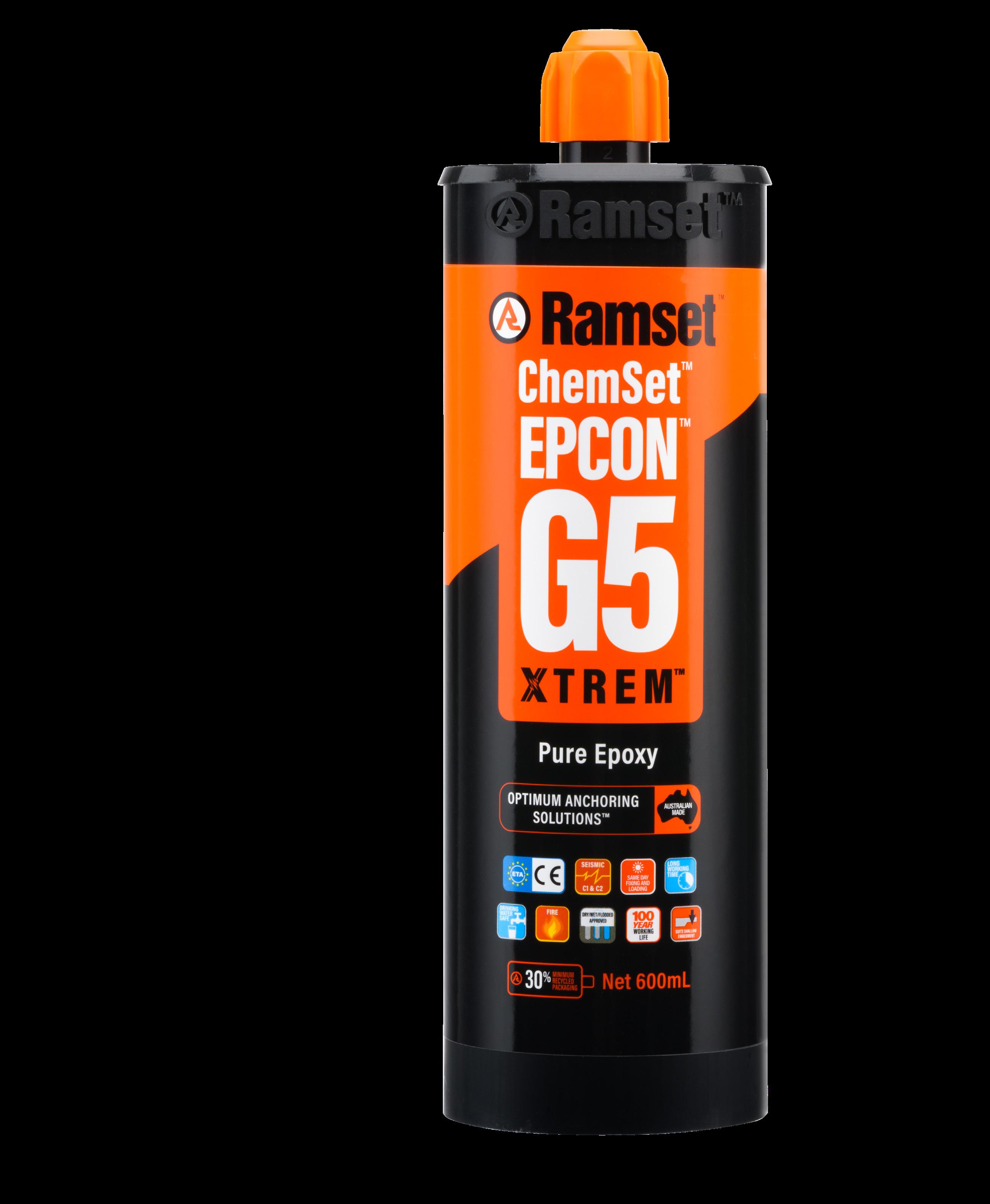
Superior performance in seismic C2 applications. Bold Ramset Orange colour for fast visual identification. ETA approved 100-year working life in dry, wet and flooded holes. All-weather dispensing for consistent results. 100% Australian made and manufactured, ensuring fast lead times & reliable supply. Same day loading with 7-hour curing in dry concrete. Backed by expert engineering support and design assistance at your fingertips.
National Infrastructure Plan signals long-term shift for infrastructure delivery
The release of the 2026 National Infrastructure Plan marks an important moment for New Zealand’s infrastructure system, setting out a 30-year outlook intended to bring greater clarity and discipline to investment decisions.
For many years, infrastructure planning in New Zealand has often been criticised as fragmented or reactive, with projects emerging in response to immediate pressures rather than within a coherent long-term framework. The Plan aims to address this by establishing clearer priorities and providing more consistent signals for industry, government and investors about where effort and resources will be directed over the coming decades.
The document also adopts a frank assessment of the sector’s current challenges. Despite sustained investment
in recent years, concerns remain around delivery efficiency, cost performance and long-term asset stewardship. These issues directly affect the resilience and affordability of the infrastructure systems communities and businesses depend upon.
One of the clearest signals in the Plan is the strong emphasis on renewals and maintenance. While public debate often focuses on new roads, bridges or rail projects, much of New Zealand’s existing infrastructure is ageing and requires upgrading, strengthening or replacement.
Recognising that a significant share of future investment will focus on existing assets reflects a more realistic and economically disciplined approach to infrastructure management. It also places greater importance on the long-term performance of construction materials and systems.
From a concrete industry perspective, this shift reinforces the importance of lifecycle performance. Infrastructure value is determined not only by what is built, but
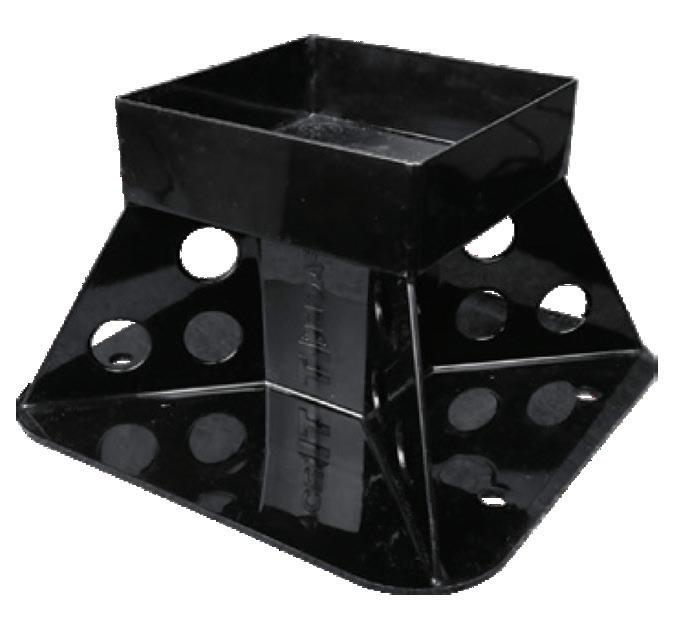
FOUNDATIONS MADE EASY
by how those assets perform over time. Durability, resilience and reliability become central considerations when networks must operate effectively for decades under demanding environmental conditions.
The Plan also reinforces the growing importance of whole-of-life thinking. While upfront construction costs often dominate project discussions, the total cost of an asset over its lifetime – including maintenance, repair and operational performance –increasingly shapes investment choices.
Materials that support longer service life, reduced maintenance requirements and resistance to environmental pressures can help provide greater cost stability over time. This is particularly relevant in sectors such as transport, water, energy and social infrastructure, where assets must perform reliably for many decades.
Resilience is another key theme. New Zealand faces a unique combination of natural hazard exposure, including earthquakes and increasingly frequent extreme weather events. At the same time, population growth and rising electricity demand will place additional pressure on infrastructure networks.
In this context, infrastructure systems must deliver long-term reliability under changing conditions.
Improving delivery efficiency is also a priority. Achieving better outcomes will depend not only on funding levels, but on how projects are designed and delivered. Greater standardisation streamlined design approaches, scalable systems and increased use of prefabrication all have the potential to improve productivity and manage construction risk.
Concrete’s versatility allows it to support a wide range of delivery models, particularly where renewals, upgrades and modular construction approaches are required. At the same time, carbon performance is becoming an integral component of infrastructure planning. Reducing emissions while maintaining durability and long-term performance is increasingly viewed as a combined challenge.
Advances in low-carbon concrete technologies, including greater use of supplementary cementitious materials and improved production processes, are enabling reductions in embodied carbon while maintaining the structural performance required for critical infrastructure.
Taken together, the National Infrastructure Plan signals a gradual but important shift toward long-term, performance-based decision-making across New Zealand’s infrastructure system.
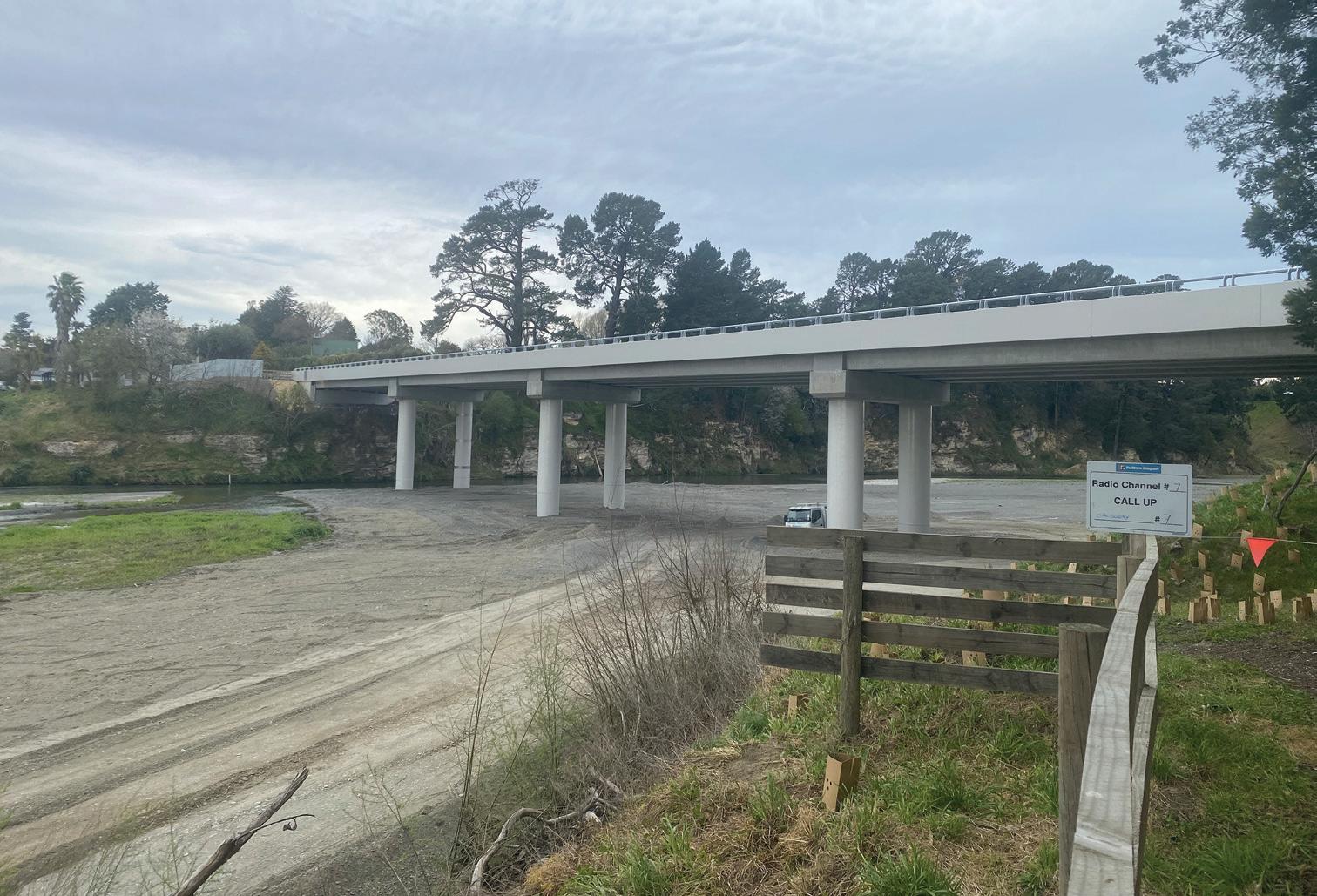
Projects like the Puketapu Bridge rebuild highlight concrete’s role in resilient infrastructure renewal.
Panmure Basin Bridge - Te Kōpua o Hiku - highlights the role of specialist concrete expertise in delivering complex, high-precision infrastructure. Image: Nasser Almesfer.
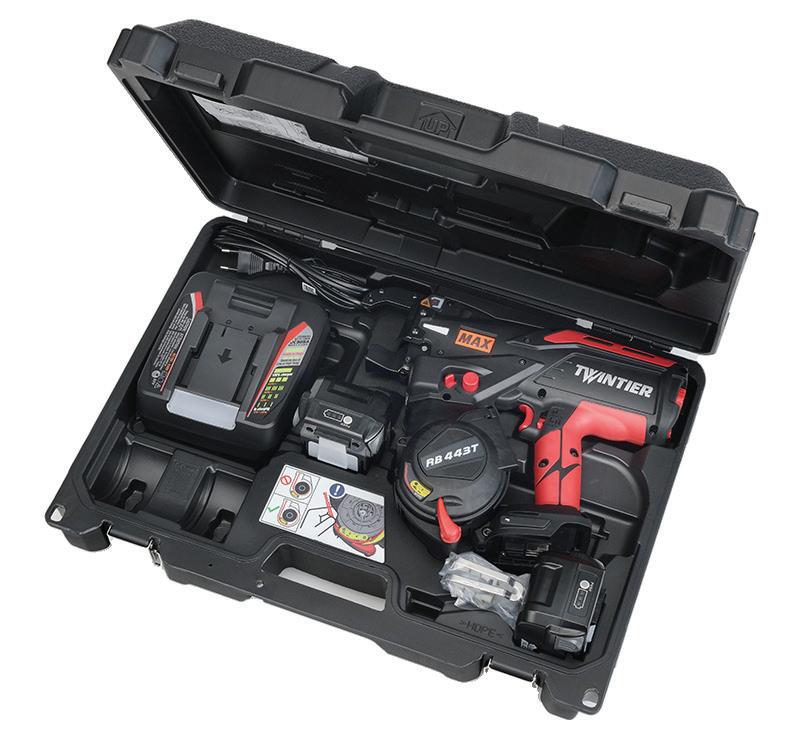
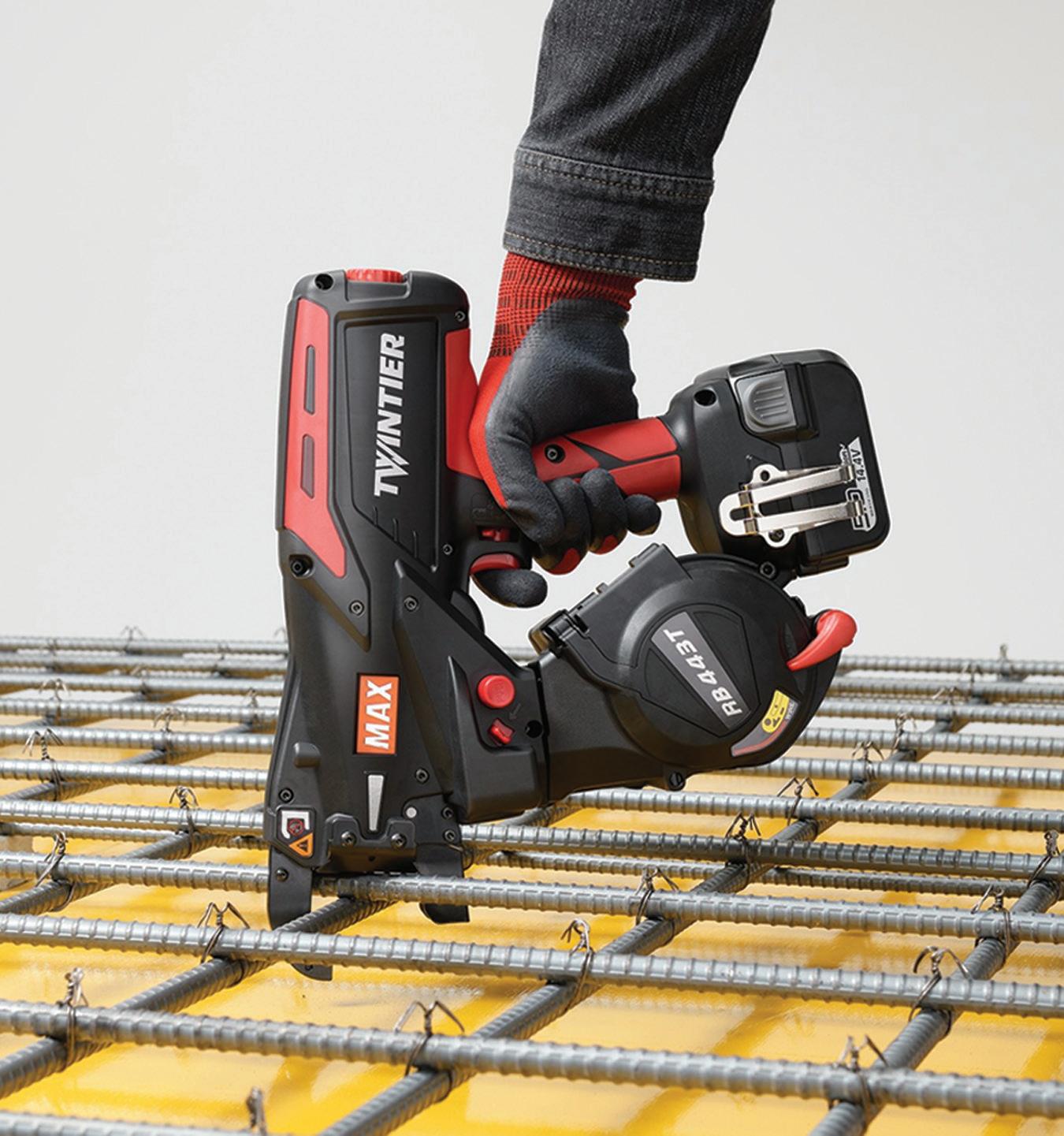
The new MAX ® TWINTIER ™ RB443T Rebar-Tier can tie rebar faster and with more power than ever before!
This is a 7th generation tool from MAX® Japan and by far the best!
This new generation MAX® Rebar-Tier, the RB443T TwinTier™, was introduced with 3 new design features to provide the greatest efficiency and highest level of safety reinforcing ironworkers have ever experienced.
The TwinTier’s “dual wire feeding mechanism” increases tying speed by reducing the time needed to twist and feed the wire, consequently reducing the cost, and shortening the time required for construction. The tool’s dual-wire wrap ensures each tie is reinforced for maximum hold.
The TwinTier’s “wire pull back mechanism” firmly pulls the tie wire in to adjust the tie to the rebar’s size to maximize the strength of the tie. When forming a tie the tool makes a loop with the wire and then pulls the wire to tightly secure and lock the rebar in place.
The TwinTier’s “wire bending mechanism” feeds a precise amount of wire to match the thickness of the rebar being tied and cut down on the use of unnecessary wire. This bending mechanism consistently feeds, pulls
Overall, no matter the application, the MAX TwinTier™ reduces the time it takes to complete a job, saves businesses money by cutting man hours needed for each project and increases the productivity of its workers.
back, twists and releases the perfect sized tie for the each application.
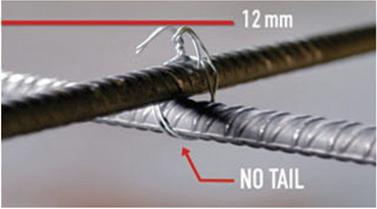
This generation of the MAX® Rebar-Tier produces ties that are approximately 50% shorter in height, allowing for thinner concrete pours. Also, the ends of each tie are positioned downward to increase safety. Additionally, wire spools now produce up to 240 ties (when tying D12 x D12 rebar).
The TwinTier’s added features also include a jaw that is constructed to tie D10 x D10 up to D22 x D22 rebar. This wide jaw accommodates larger gauge rebar while its slim arm offers the freedom to work in tight spaces.
The TwinTier’s quick load magazine makes changing wire spools a piece of cake, and its frontward position provides improved balance/ergonomics, making flatwork easier.
A low “battery power consumption” design allows the tool to produce 5000 ties per charge using a 5.0Ah, 14.4volt Lithium-ion battery, which recharges in 60 minutes.
The tool’s 6-step allows its user to the tie based on the electrogalvanized and Stainless steel wire are all available for use with the MAX® TwinTier™.
The MAX® TwinTier™ works at double the speed and produces double the number of ties from a single roll of wire than the RB398 model and far exceeds that of any of its competitors.
Overall, no matter the application, the MAX® TwinTier™ reduces the time it takes to complete a job, saves businesses money by cutting man hours needed for each project and increases the productivity of its workers. For more information visit the SIFCO website - www.sifco.co.nz
Double the Speed - Double the Ties
Simple to operate - fast to use - wraps 2 x 1.0mm tie wires, tensions and ties tight, with a 50% shorter tie height than other models. Ties a combined size of 20mm, up to 44mm, approximately 240 ties per coil, 5000 ties per charge, with the MAX® 60 minute fast charger. The MAX® RB443T TwinTier Re-bar tier is lightweight, with a compact body.
New 5.0Ah Lithium-ion battery.
Made in Japan. RB443T 7th Generation
Battery operated re-bar-tying tool for:
• Precast concrete products
• Floors and walls
• Building foundations
• Retaining walls
• Road and bridge construction
• Swimming pool walls
Oli high frequency vibrators: power, precision and performance: protecting your investment in high frequency concrete vibrators
In today’s fast-paced construction environment, productivity and finish quality go hand in hand. Nowhere is this more evident than in concrete consolidation.
The Oli High Frequency Internal and External Vibrators range has earned a strong reputation across the building and precast sectors for delivering consistent compaction, improved surface finish, and enhanced structural integrity. However, even the best equipment will only perform at its peak when maintained correctly and operated with care.
High Frequency (HF) concrete vibrators are precision tools designed to remove entrapped air, reduce honeycombing, and ensure proper bonding around reinforcement. When used properly, they significantly increase the durability and strength of concrete structures. But misuse or neglect can quickly compromise both equipment life and pour quality.
High Frequency (HF)
concrete vibrators are precision tools designed to remove entrapped air, reduce honeycombing, and ensure proper bonding around reinforcement.
One of the most common mistakes on site involves internal HF pokers being left running outside the concrete. This practice should be strictly avoided. Running a poker out of the mix causes unnecessary heat build-up and excessive wear on bearings and internal components. Over time, this dramatically shortens the unit’s lifespan. Equally important, HF pokers should never be in contact with steel reinforcement during operation. Direct contact can damage both the vibrator head and reinforcement, while also reducing effective vibration transfer into the concrete.
Post-shift cleaning is not optional, it is essential. HF pokers should be thoroughly washed and cleaned after every pour to prevent hardened concrete build-up. Power plugs must be checked for signs of wear or
damage, ensuring electrical connections remain safe and reliable. The control pipe should be cleaned and carefully inspected for cuts, abrasions, or kinks that may compromise performance or create safety hazards. A small split in the hose today can mean costly downtime tomorrow.
HF electric external vibrators also demand regular inspection and disciplined handling. These units, commonly mounted to formwork, play a vital role in achieving smooth finishes and consistent compaction in precast and in-situ applications. Clamps must be well maintained to ensure a firm and secure fit to the formwork. Worn threads, damaged tightening mechanisms or distorted clamp plates can reduce vibration transfer and create safety risks.
Safety tethers fitted to external vibrators should always be inspected before use. Tethers must be in good condition, free from fraying, corrosion or fatigue, and securely fastened. A properly maintained tether provides critical secondary protection in the unlikely event of clamp loosening during a pour. Taking a few moments to inspect clamps and restraints can prevent serious incidents and costly delays.
Pneumatic external vibrators, often referred to as “screamers,” require the same level of attention. These units should be kept clean, dry, and well lubricated in accordance with the manufacturer’s manual. Moisture is the enemy of pneumatic equipment, filters must be kept clean and free from contaminants, and the vibrator itself should always be stored in a dry condition after use.
Air supply systems are equally critical. Air hoses should be routinely checked for leaks, rubber deterioration, and secure connection fittings. A failed hose or loose coupling halfway through a major pour is more than an inconvenience, it risks cold joints, compromised structural integrity, and expensive remediation.
Concrete placement is time-sensitive and unforgiving. Equipment failure during a pour can carry significant cost and reputational consequences. By maintaining HF internal and external vibrators correctly, using them as intended, and conducting regular inspections, contractors protect not only their investment in equipment but also the quality and safety of every project they deliver.
In concrete consolidation, reliability isn’t accidental, it’s the result of disciplined operation and proactive maintenance.
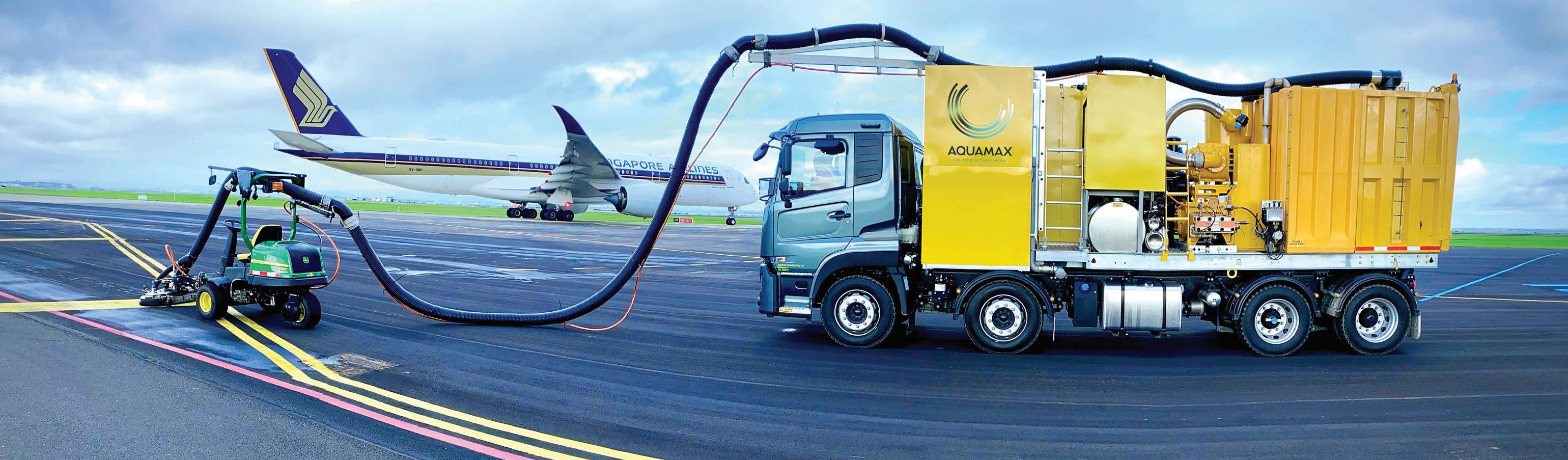
Aquamax introduces Robotic Technology
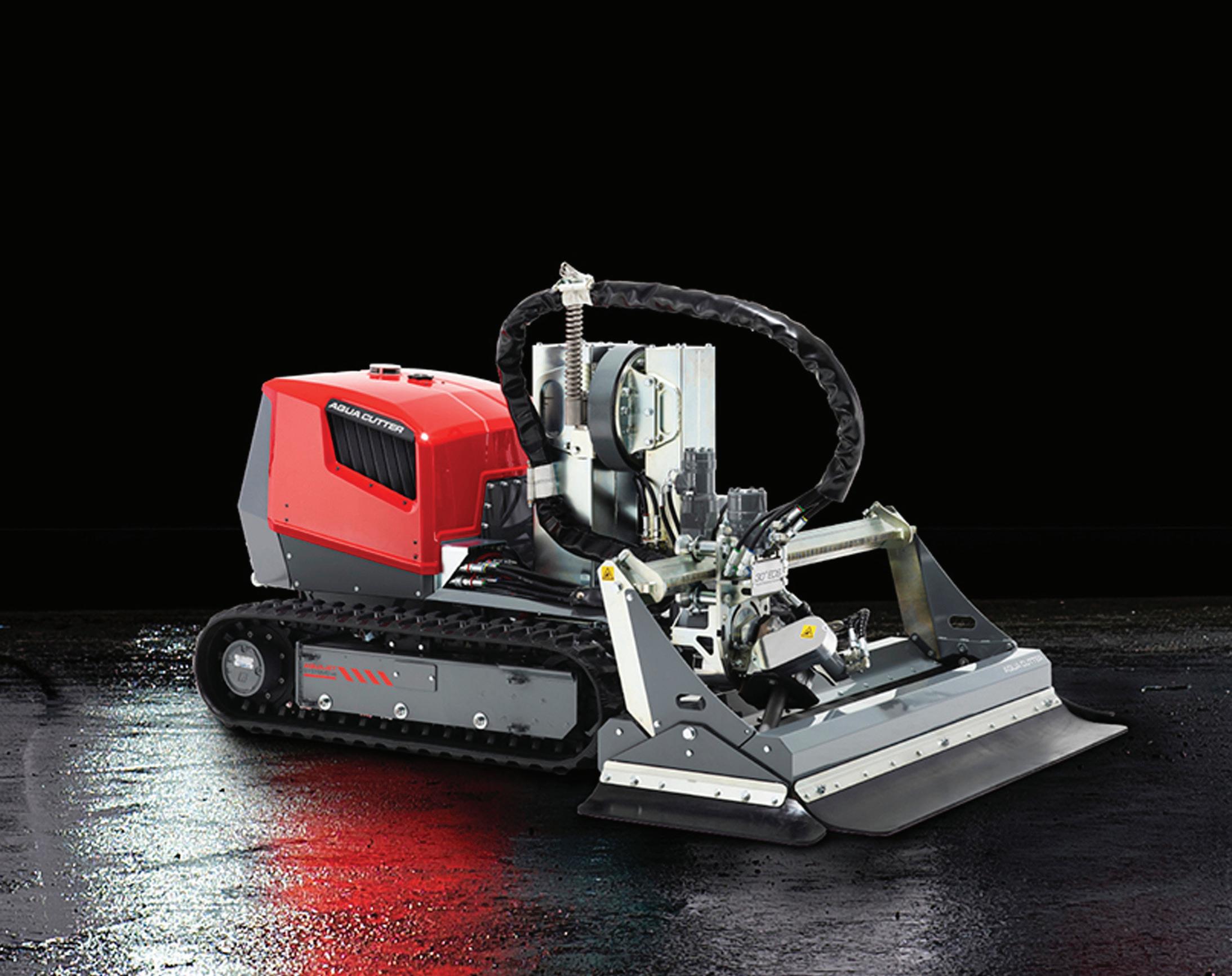
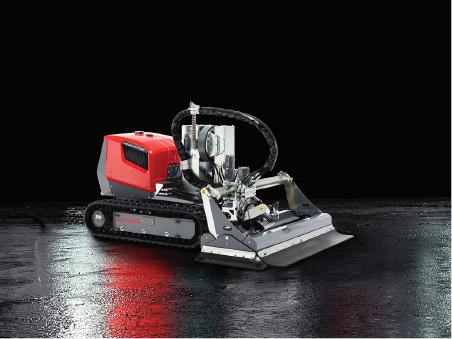
Aquamax has expanded its infrastructure service offering with the addition of an Aquacutter hydro-demolition robot. Aquajet Systems, a Swedish firm, are the world leader in this technology.
Hydrodemolition is a process utilizing ultrahigh pressure (1450 bar or 20,000 pounds per square inch) water blasting to cut away concrete without impact to surrounding structure or damage to steel reinforcing. Engineers specify hydrodemolition particularly when remediating or modifying existing concrete structure. Concrete is stripped away prior to welding in repairs or additions to the existing rebar. The process ensures there is no damage or microcracking of the existing concrete that might weaken the structure or reduce the pull-out performance of the rebar.
Hydrodemolition robots dramatically increase the productivity and safety margins of the hydrodemolition process by taking the operator off the gun. The machine is mounted on a tracked crawler chassis and is electrically powered. The operator controls the machine remotely via a wireless controller.
The machine can handle significantly higher reaction loads arising from the jet lance and therefore much higher fluid flow rates. There is a direct relationship between
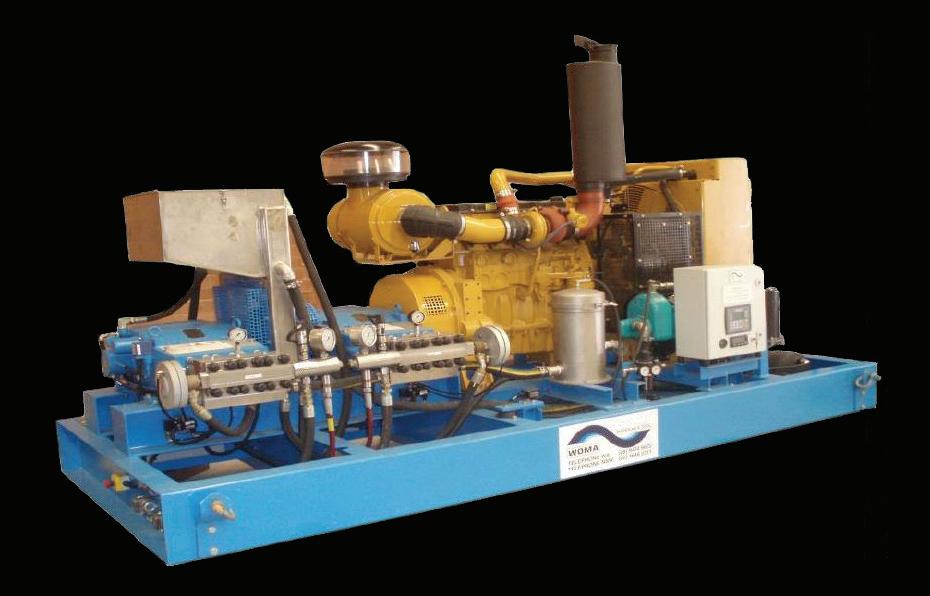
The Aquacutter receives high-pressure water from a large, containerized pump delivering 95 lpm at 20,000 psi. The pump is contained in a purpose-built sound-proof container which can be located up to 150 metres from the robot if required.
Manual gunning can be very tiring and requires operators to take plenty of breaks during the work day. The robot never tires and is just as productive at the end of the day as the beginning of the shift.
Manual blasting can deliver productivity in the range of 0.2 – 0.3 cubic metres of concrete per day. A robot can easily cut one cube per day representing a four to five-fold improvement. Manual blasting still
Hydrodemolition robots dramatically increase the productivity and safety margins of the hydrodemolition process by taking the operator off the gun.
has a role, tidying up or reaching those hard-to-get places.
The robot is programmed to cut complex shapes with varying parameters depending on the situation. The waterjet lance is also ‘wobbled’ to simulate hand-gunning and reduce the likelihood of ‘shadowing’ –leaving uncut concrete behind rebar. The cutting head is mounted on an articulated arm that allows for blasting on horizontal, vertical and overhead surfaces.
In addition to hydrodemolition, the robot can also be fitted with a scabbling head with similar productivity benefits. The machine has been used to scabble large areas of sewer prior to re-surfacing. Weighing around a tonne, the robot is easily craned into tanks or onto upper floors of buildings.
the flow rate and productivity. Doubling the flow rate will result in twice as much concrete removal.
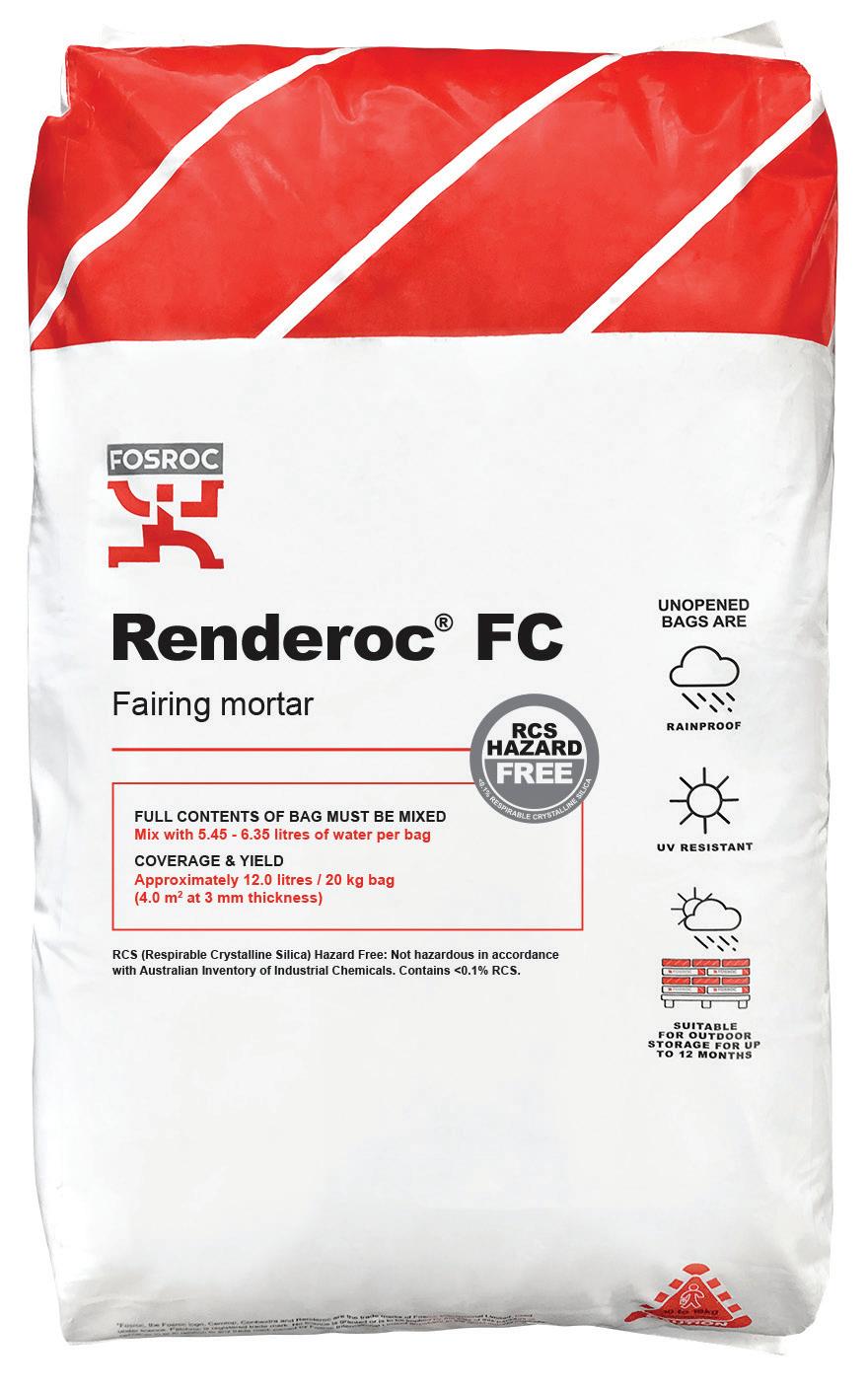
TRUST FOSROC TO MAKE IT BETTER
At Fosroc we take safety seriously.
Our Fosroc cement-based powder products are classified as respirable crystalline silica (RCS) hazard free*, meaning workers will not be exposed to hazardous levels of RCS when mixing the powder with water.
Safer products mean a safer workplace for everyone. It’s another way Fosroc leads the market.
Fosroc. Future Proof.
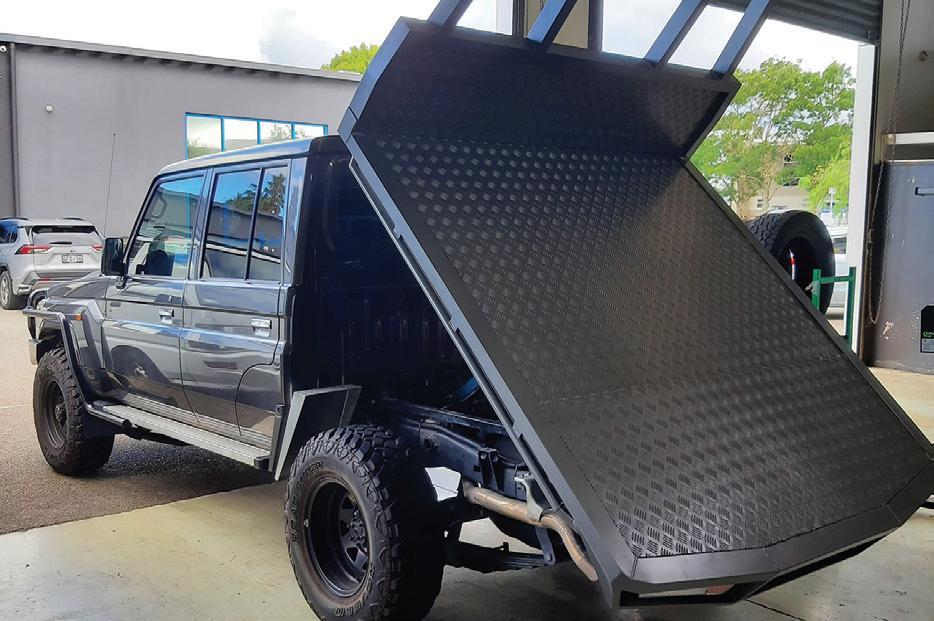
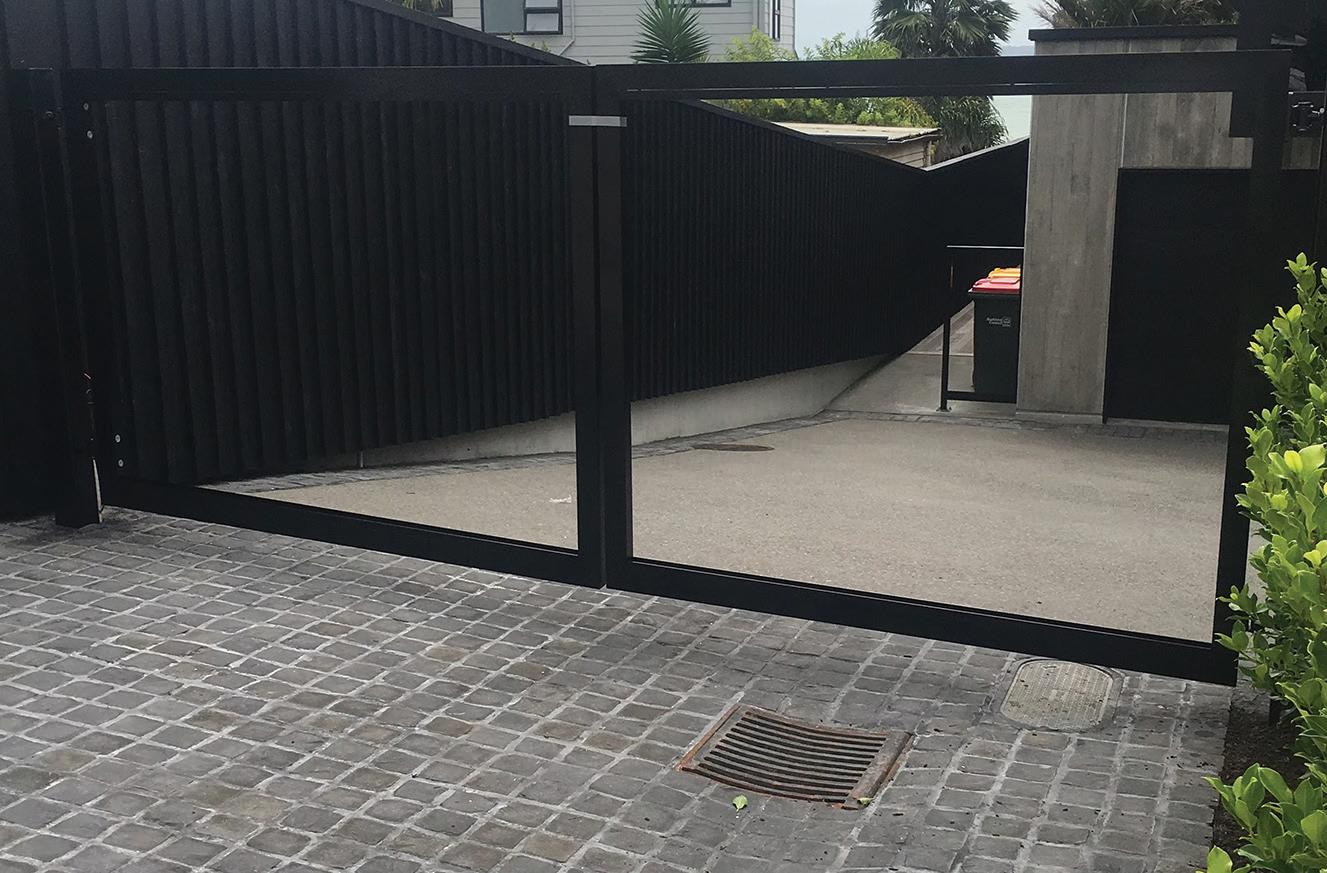
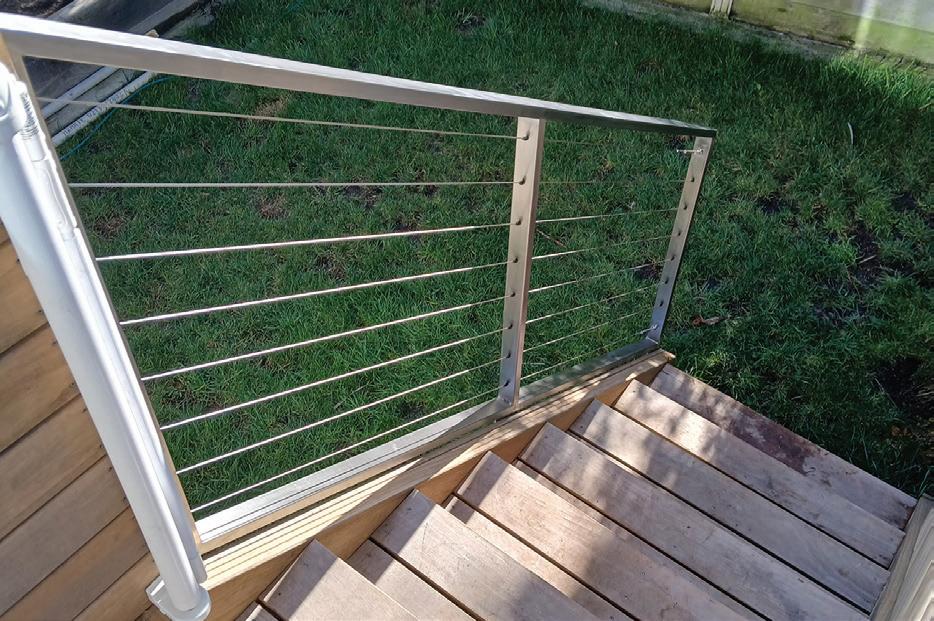
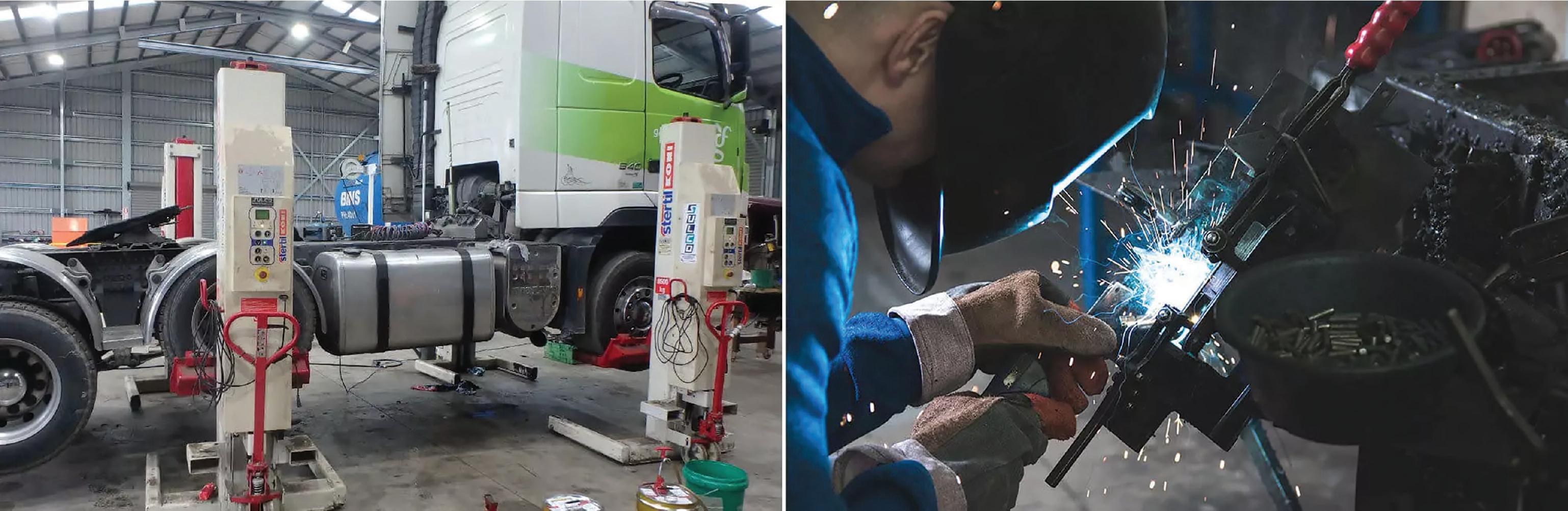
YOUR AUCKLAND METAL FABRICATION SPECIALIST
We are a small family owned business. As husband and wife, we took the business challenge on together in 2015. As we are a small business with minimal overheads, this allows us to be competitive with our pricing.
Infinit is a diverse welding and fabrication company that has experience and knowledge in all fields of steel fabrication. Including aluminium, black and mild steel with our main specialty being stainless steel. We do architectural design and manufacturing from start to finish. If you have an idea but don’t know where to start just get in touch as we can make your vision come to life. We are a highly skilled small team with knowledge and focus on providing only the best workmanship while being efficient with our performance
REPAIRS
Solutions to General Repairs, Specialist Repairs and onsite repairs, we have the skills to work with stainless steel, mild steel , aluminum , brass.
DESIGN & FABRICATE
We will communicate and work with you to understand your vision and bring it to reality
INSTALL/DELIVER
We will provide a top notch service and install or deliver your creation right to your door step
Andrew m 0210 266 1695 k infinitweldingnz@gmail.com www.infinitmetalfabrication.co.nz
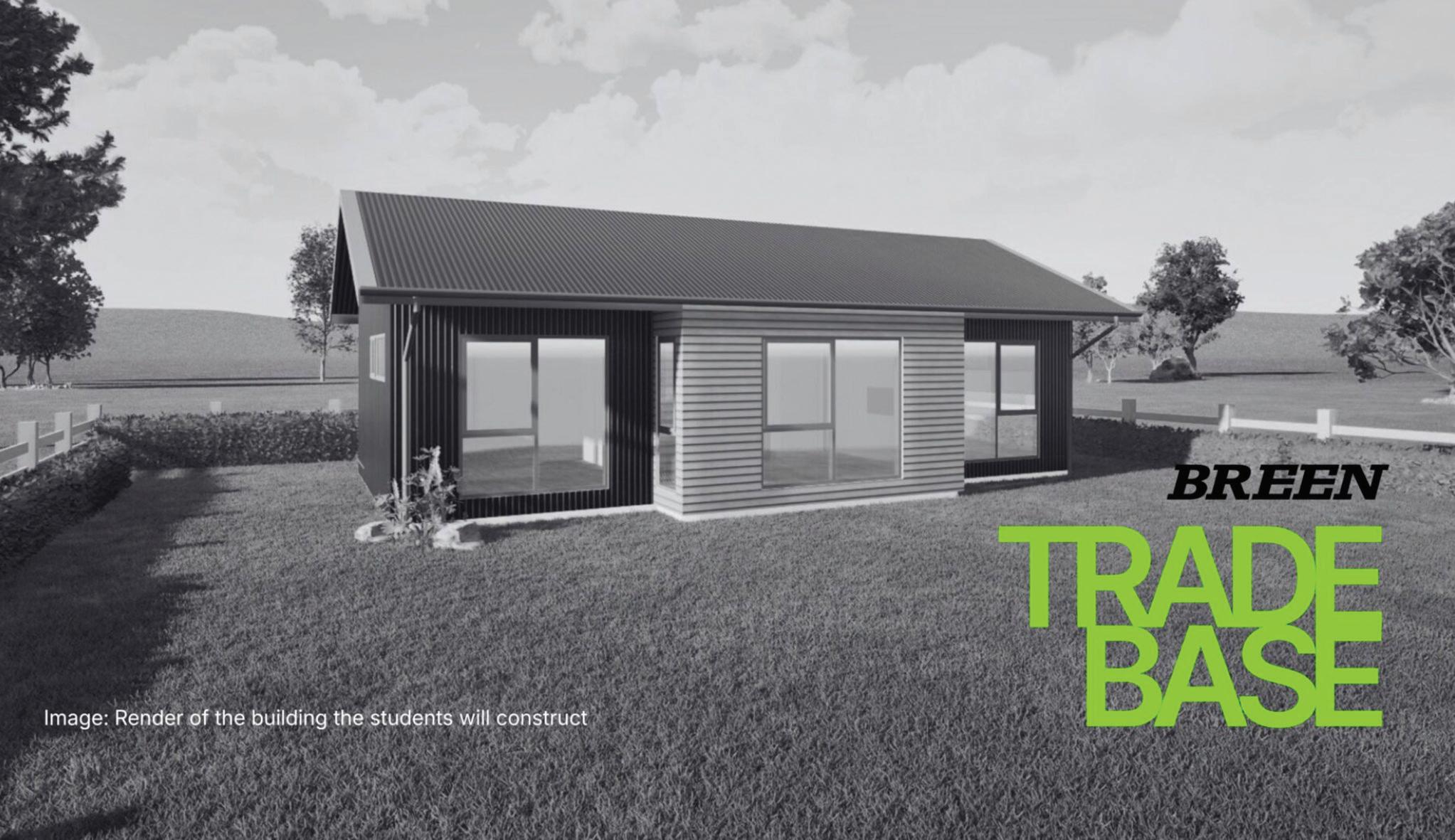
A new school-based trade training initiative will see Central Otago and Queenstown Lakes students build transportable homes.
The TradeBase program sees Breen Construction partner with Dunstan and Wakatipu High Schools, BCITO and the local industry to offer structured, competency-led learning on real Breen construction sites, right on school grounds.
Managing director Lindsey Breen says the industry hasn’t always done well at identifying opportunities for young people. He hopes TradeBase will bridge this gap and give students skills to help them stand out when they enter the workforce.
“The construction industry has always invested in apprentices, but too often our sector is seen as a backstop for school leavers. We want to change that.”
Engaging and inspiring all kinds of learners is a key motivation for Breen. TradeBase sees students gain practical experience, earn Pre-Trade and NCEA credits, and learn what best-in-class workmanship looks like without leaving their school community.
“TradeBase puts construction in front of talented kids who might not be traditional academics, but who are creative, solution focused and practical. TradeBase is being designed to give students are real sense of achievement.”
Students will build 69m² transportable homes on site at each school, removing the need for students to travel long distances
and giving them the rare chance to construct a real, meaningful project. At Dunstan, the completed home will be used for hostel accommodation, while Wakatipu’s build is likely to be sold into the community, with the Dunstan programme also open to Central Otago and Queenstown Lakes students and NEET participants through a 2026 MSD pilot.
“If we succeed, out the other end will come competent trainees who hopefully will want to become apprentices or move into other areas of construction. Our intention with TradeBase is to invest in and raise the bar for our industry and our communities through enabling access to life-long learning opportunities.”
Brands such as Hilti Tools, Aotea Electric, Foleys, Placemakers, Trusstech and many
others have backed the initiative. “We can’t do it without forward-thinking schools, academic partners like BCITO, and our trade partners,” Breen says.
Wakatipu High School Principal, Oden Nathan, says the program is extraordinary for Wakatipu Students and the basin in general. “WHS is thrilled to partner with Breen Construction so that we may continue to offer our students this valuable learning opportunity and to support students with their passions and pathways in the construction industry.”
Alongside Breen and school representatives, students heard from Talent and Development Manager for the Highlanders rugby team, Kane Jury, at the program’s launch event. In a talk titled ‘Practice Like a Highlander,’ the
TradeBase
puts construction in front of talented kids who might not be traditional academics, but who are creative, solution focused and practical. TradeBase is being designed to give students are real sense of achievement.
- Lindsey Breen
athlete highlighted how on-the-job training helps students experience real construction site demands and assess whether they have the stamina, focus, and discipline needed to work safely and accurately.
Breen’s focus is an excellent TradeBase experience for Southland students but the hope is other schools in other locations will adopt the initiative in the future.
“We are open to conversations,” Breen says. “We’re excited to see this programme develop and scale.”
A total of 28 students 14 from Wakatipu, 8 from Dunstan, and 6 MSD participants have enrolled in the program, compared to the equivalent program which had just nine students from the wider Queenstown Lakes and Central Otago region in 2025.
Truck and industrial vehicle servicing and repair specialists
• COF
• Engineering & Hydraulics
• Maintenance & Repairs
• Forklift Repairs
• 24/7 call out service
An established truck servicing company, Levin Truck Services provides machinery and truck owners in the Horowhenua region a range of servicing and repair options including mobile hydraulic repair, diesel servicing and farm machinery repairs.
Our team includes heavy vehicle engineers, hydraulics specialists and in-house Certificate of Fitness inspectors to make sure your trucks and equipment are fully fit for purpose.
Coleman Civil lays solid foundations
Precision, reliability and experience. A hands-on approach, industry knowledge and steady commitment to the trade. With a hands-on approach and deep industry knowledge, the team supports projects from ground preparation through to final pour.
Specialising in foundations, driveways and full-service concrete laying, Coleman Civil undertakes everything from in-situ pours to large-scale structural work. Technical expertise combined with practical on-site experience ensures clean finishes and structurally sound outcomes across a wide range of project types.
The business is led by director Tom Coleman, who began working in the trade at 14 before establishing Coleman Civil at just 22. Under his leadership, the company has grown into a respected contractor delivering highquality residential and commercial projects throughout the Auckland region. Despite this growth, Tom remains closely involved from early planning and client consultation through to on-site delivery, maintaining strong working relationships and consistent standards across every job.
Take the recent Waimauku project which saw Coleman Civil supply and pour approximately 138 cubic metres of concrete to complete the right-of-way access for a large residential development. Done on time, the pour met council consent requirements and kept the project progressing as planned.
Driveways are another core service, with each installation tailored to site conditions, gradients and intended use. In Puhoi, the team constructed a 180-metre concrete driveway across steep terrain, completing the pour in three stages to improve control, minimise cracking risk and achieve a durable, high-quality finish.
With a strong focus on custom-formed, in-situ concrete, Coleman Civil delivers structurally sound elements that integrate seamlessly with surrounding works. Careful planning and experienced execution ensure each pour is completed accurately, safely and on time.
The team’s adaptability was also evident at a private site in Bethells Valley, where Coleman Civil completed a site cut for three retaining walls and a new driveway alongside Auckland Site Works. With limited vehicle access and wet conditions, the job required careful planning and staging to get concrete trucks and pumps on-site safely and keep the project moving without delays. With a strong focus on custom-formed, in-situ concrete, Coleman Civil delivers structurally sound elements that integrate seamlessly with surrounding works. Careful planning and experienced execution ensure each pour is completed accurately, safely and on time.
Beyond technical capability, Coleman Civil places a strong emphasis on planning and coordination, recognising that successful concrete work begins well before any pour takes place. Each project is carefully assessed to account for site conditions, access constraints, weather exposure and sequencing with other trades. This upfront approach allows the team to identify potential challenges early and put practical solutions in place, reducing risk and avoiding costly delays once work is underway.
The company regularly works alongside engineers, surveyors and local councils to ensure all work meets consent requirements and design specifications. From formwork set-out and reinforcing placement through to pour scheduling and finishing, attention to detail is prioritised at every stage. This structured, methodical process provides clients with confidence that projects will be delivered efficiently and in line with regulatory expectations.
Coleman Civil is also well-versed in working on constrained and technically demanding sites, where access, gradients or ground conditions require careful management.
Experience with pumps, staging and traffic coordination enables the team to operate
safely and effectively in environments where margins for error are limited. This capability is particularly valuable on residential developments and infill sites, where minimising disruption to surrounding properties is essential.
Builders and developers value Coleman Civil’s ability to integrate smoothly into wider construction programmes. Clear communication, reliable scheduling and a practical understanding of downstream trades ensure concrete works are completed at the right time, allowing projects to progress without interruption. Homeowners benefit from the same professionalism, with clear guidance provided around preparation, timelines and aftercare.
Across all project types, the focus remains on delivering durable, well-finished concrete that performs over the long term. Whether forming structural foundations, accessways or retaining elements, Coleman Civil applies the same level of care and technical precision to every job. This consistency, combined with hands-on leadership and a skilled team, continues to underpin the company’s reputation as a dependable partner for concrete and civil works across the Auckland region.
From the ground up
Innovative
ways to stabilise, strengthen and sustain structural integrity
Concrete rehabilitation plays a vital role in extending the life of buildings and infrastructure across New Zealand. From residential foundations to commercial floors, bridges and public facilities, concrete structures are constantly exposed to environmental stress, ground movement and daily wear. Over time, these factors can lead to cracking, subsidence, uneven surfaces and reduced structural integrity. Rather than opting for costly demolition and replacement, modern rehabilitation techniques offer efficient, minimally disruptive solutions to restore performance and safety.
One of the most common issues affecting concrete structures is ground movement. Changes in soil moisture, poor compaction, seismic activity and natural settlement can cause foundations and slabs to sink or shift. This movement may present as cracked walls, uneven floors, jammed doors and windows, or visible gaps around skirting boards. In commercial and industrial settings, uneven concrete can create safety hazards and disrupt operations.
Contemporary rehabilitation methods focus on stabilising and re-levelling structures without extensive excavation. Engineered resin injection, for example, is widely used to improve ground conditions beneath slabs and foundations. Small access points are drilled through the concrete, allowing specialised expanding materials to be injected into weak or voided soils. As the material expands, it compacts loose ground, fills voids and gently lifts the structure back towards its original level. Because the process is precisely controlled and fast-curing, it can often be completed within hours, with minimal interruption to occupants.
In addition to addressing subsidence, concrete rehabilitation also includes crack repair and structural strengthening. Cracks in concrete can occur due to shrinkage,
thermal movement, overloading or corrosion of reinforcing steel. While some cracks are cosmetic, others can allow water ingress and accelerate deterioration. Epoxy or polyurethane injection systems are commonly used to seal and bond cracks, restoring structural continuity and preventing further damage.
Waterproofing is another important aspect of rehabilitation, particularly for basements, retaining walls and below-ground structures. Over time, hydrostatic pressure and membrane failure can lead to leaks and dampness. Targeted injection systems can create barriers within the concrete itself, stopping water ingress without the need for large-scale excavation.
In regions prone to seismic activity, strengthening existing concrete structures is also a key consideration. Ground improvement techniques can increase bearing capacity and reduce the risk of further settlement during an earthquake. By enhancing the interaction between soil and structure, rehabilitation solutions can improve resilience without the need for extensive rebuilding.
One of the major advantages of modern concrete rehabilitation is its sustainability. Repairing and restoring existing structures
Contemporary rehabilitation methods focus on stabilising and re-levelling structures without extensive excavation. Engineered resin injection, for example, is widely used to improve ground conditions beneath slabs and foundations.
significantly reduces material waste, transport emissions and the carbon footprint associated with new construction. It also preserves the resources already invested in a building. For property owners, rehabilitation can be more cost-effective than replacement, while maintaining property value and compliance with safety standards.
Effective concrete rehabilitation begins with thorough assessment. Engineers typically use site investigations, monitoring equipment and diagnostic tools to determine the underlying cause of damage. Solutions are then tailored to suit soil conditions, structural loads and the extent of deterioration.
As infrastructure ages and environmental pressures increase, the importance of proactive maintenance and innovative repair methods continues to grow. Concrete rehabilitation offers a practical, efficient and sustainable pathway to restore structural integrity, enhance safety and extend the service life of buildings and assets well into the future.
Problems
Pumping Joints
Sunken or Dished Slabs
Misaligned Slabs
Ponding Slabs
NZGBC celebrates 20th anniversary
By Ben O'Connell
The New Zealand Green Building Council (NZGBC) has marked its 20th anniversary, celebrating two decades of progress as a trusted advisor and influential driver of change for Aotearoa New Zealand’s built environment.
Since being founded by 31 members in 2006, NZGBC has grown into a community of more than 700 member organisations and associates, united by a shared commitment to healthier, more resilient and lower-impact buildings and homes.
Over the past 20 years, NZGBC’s impact includes more than $50bn worth of buildings and homes being built and certified, delivering lower running costs, improved resilience, reduced climate pollution, and healthier places for people, 5.5 million square meters of commercial property covered by green certification, and 16,000 homes certified through Homestar.
Growing market capability relies on a commitment to increasing understanding of sustainable buildings – a key strategic objective for the NZGBC.
Thousands of architects, designers, builders and suppliers to the sector have taken up training, education and events as part of the
NZGBC’s mission to support the delivery of better-performing buildings, fit for New Zealand.
Membership includes people and organisations from across the sector –building owners, banks and investors, along with designers, consultants and architects.
“This milestone is a moment to pause and reflect on what’s been achieved together,” says NZGBC chief executive Andrew Eagles.
“Over the past two decades, our impact has been shaped by the people, partnerships and mahi that have driven meaningful change from homes and workplaces to the communities they support.”
“We continue to put people and the planet at the centre of design, construction, and operations. The strength of interest in green buildings is reflected in the continued growth and commitment of our members.”
“As we begin our 20th anniversary year, we want to acknowledge everyone who has contributed to this collective journey. Your leadership and collaboration continue to move us toward a more sustainable future.”
To mark the anniversary, commemorative decals are being displayed on hundreds of buildings across the motu to proudly display the achievement of green certifications for the benefit of their tenants, employees, and communities.
Continued over page >
The transition to Green Star Buildings NZ has the sector well-placed to address real issues facing Aotearoa, such as climate adaptation and the upcoming focus on embodied carbon targets in 2026.
Andrew Eagles
Safe options for disposal of household and small power-tool batteries in Waimakariri District.
Household batteries deteriorate if not in use and need to be disposed of safely.
Batteries need to be disposed of safely once they are flat or show signs of deterioration – but they are hazardous, rechargeable batteries especially so.
If batteries, or items that contain batteries, end up in a collection truck, rubbish pit or recycling plant, they have the potential to cause fires in the trucks or facilities and harm people and the environment.
Damaged, leaking or rusty batteries can be dropped off for free at the hazardous waste drop-off area in Council’s Southbrook resource recovery park and Oxford transfer station.
Undamaged household and power-tool batteries can be recycled, saving valuable components for reuse. As New Zealand currently lacks the infrastructure to recycle batteries, we’ve partnered with Phoenix Recycling Group to collect undamaged batteries from our sites and ship them offshore under strict hazardous waste permits.
Phoenix works exclusively with approved facilities that are equipped to safely process the batteries, recover valuable materials, and minimise environmental impact.
Loose batteries that can be dropped off for free in the specialised Battery Recycling Units:
• AA, AAA, C and D cell batteries
• Alkaline cell • Lithium
• 9-volt • Cr123 camera batteries
• Dry cell and zinc • Li-ion batteries
• NiCd • NiMH
Lead-acid and Gel car batteries can be dropped off at the Southbrook Resource Recovery Park and Oxford Transfer Station recycling area.
• The country’s largest independent safety-netting specialist.
• Our fall through protection system has been independently tested and certified by Massey University.
• Our system ensures that as a PCBU, you have taken all reasonably practicable steps to ensure the safety of your workforce.
• Bespoke debris and asbestos containment, fall protection system for uninterrupted work processes during industrial property re-roofing.
• A nationwide network of local installers providing exceptional customer-focused fall arrest solutions.
Existing buildings
NZGBC supports not only new design and construction, but also the transformation of existing buildings. Across Aotearoa, nonresidential property owners and investors are mobilising to certify their portfolios to sustainability standards.
More than 500 existing buildings have been rated with Green Star Performance, NABERSNZ, and Net Zero Buildings certifications, supporting better day-today management of building operations for healthier, more productive working environments with measurable improvements in energy and water efficiency, and overall performance.
These tools support owners and operators to understand, manage and continuously improve how buildings perform in use –embedding efficiency in operation, better maintenance practices, and support investment decisions for investors seeking transparency of ongoing performance over time.
Residential
To date, 16,000 homes have been built or are in the process of being built to Homestar certification, meaning thousands of Kiwi families are in homes that are healthier and can cost hundreds of dollars less to run each year.
Independent Infometrics research shows Homestar homes could help homeowners save $64,000 to $100,000 over the life of their mortgage through energy savings and lower interest rates – delivering benefits for both health and household finances.
Beyond individual projects, the benefits of green building are shared across the
wider community. Developers and investors gain more resilient, future-ready assets; homeowners and tenants benefit from healthier, more comfortable and affordable places to live and work; and businesses see stronger performance and lower operating costs across both residential and nonresidential buildings.
Measurable impact
Many New Zealand towns are struggling with a growing waste problem. Around half of all waste sent to landfill is from construction and demolition. Through Green Star and Homestar, NZGBC drives significant reductions in construction waste.
To date, approximately 168,000 tonnes of waste have been diverted from landfills through NZGBC certifications, helping reduce pressure on landfills and save ratepayers money.
NZGBC certifications have helped transform the supply of building materials, accelerating the uptake of lower-carbon options such as green cement, increased use of timber in buildings, and recycled lower-carbon steel, and other recycled products such as flooring, insulation and acoustic materials.
Buildings account for around 15% of New Zealand’s gas use at a time when the country faces a gas supply shortage.
Buildings and homes designed and constructed to current Green Star and Homestar standards support the transition to becoming fossil fuel-free, helping free up gas for industrial uses and supporting jobs, manufacturing and heavy industry.
“Momentum remains strong across Green Star, Homestar, NABERSNZ, and Green Star Communities,” says Andrew Eagles.
“The transition to Green Star Buildings NZ has the sector well-placed to address real
issues facing Aotearoa, such as climate adaptation and the upcoming focus on embodied carbon targets in 2026.”
“We will continue to push hard fora building code that protects all New Zealanders, encourages transparent performance standards, and supports strong leadership on improving our sector.”
From the big jobs to the wheel barrow size jobs
We do it all!
For all your ready mix concrete needs
Driveways
Footpaths and Curbing
Floors and Yards
Pod Flooring and Components
Steel Mesh etc
Concrete Tools
Coloured Concrete
Exposed Aggregate
Interlocking Concrete Blocks
Farmsheds and Feedpads etc.
We supply ready-mix Concrete to commercial, residential, industrial and farming projects throughout Whangarei, from the Bay of Islands to Bream Bay and beyond.
We are preferred suppliers for many homeowners and businesses completing slabs, driveways, post holes, kerbing, footpaths, cow sheds, feed pads, silage pits and small to large construction projects.
From our Kamo site we stock and supply pod flooring, steel mesh, interlocking blocks and concrete tools.
We give each of our customers a quality product and pride ourselves on being available, adaptable and on time for delivery.
Virgin Concrete Ltd has 2 Certified Batching Plans on site.
Our Plant is certified under the Concrete NZ Plant Audit Scheme.
Be careful with retentions: Court judgment highlights serious risks
By
The recent court judgment in Grant v Burt [2025] NZHC 2486 highlights the importance of construction companies, and liquidators, properly managing retention funds.
The judgment serves as a cautionary tale for construction companies, their directors, and liquidators and highlights the risks of failing to hold retentions funds on trust.
Retentions must be held on trust
The Construction Contracts Act 2002 (CCA) provides that retentions funds must be held on trust. The purpose of this is to protect the retention funds so that they cannot be used to pay other debts of the company. If the company holding the retention fails before the retentions are paid out then the retentions are available to be paid out to the specific contractor or subcontractor that they were being held for, even if other debts cannot be paid.
What was the case about?
Stanley Construction Ltd (in liquidation) (SCL) and Stanley Construction (Auckland)
Ltd (in liquidation) (SCAL) were two related construction companies that went into liquidation in 2019. The companies were not holding the retention funds that they were obliged to hold for subcontractors on trust, even though the CCA required them to do this.
The liquidators commenced a claim against the directors of SCL and SCAL alleging breaches of the duties of the directors under the Companies Act 1993 with regards to the companies’ failure to hold the subcontractors’ retentions
trust (as required by the CCA). The liquidators received some funds from a partial settlement of this claim and also obtained some retention funds that were paid out by principals to SCL and SCAL. However, the liquidators applied all of these funds towards their own remuneration expenses incurred in respect of the liquidations generally. This meant that there were still no funds available to pay the retentions due to the subcontractors.
With regards to the payments received settlements in the claims against the directors, even though the claims against the directors were for breaches of the Companies Act 1993 the substance of the allegation was that the directors assisted SCL and SCAL to breach their obligations as trustees of the retention funds held for the subcontractors. The court found that this meant that the settlement payments were a restoration of these trust funds and were also held on trust for the benefit of the subcontractors.
The court found that the retention funds received from the principals were also held on trust for the subcontractors because the directors of SCL and SCAL had passed a resolution just before the CCA retentions
regime took effect in 2017 declaring that this would be the case.
The court reversed the liquidators’ decision to use all of the companies’ recovered retentions and the settlement funds to pay liquidators’ costs and expenses. This means that the funds will be used to pay at least part of the retentions owing. The decision has been appealed to the Court of Appeal so further guidance on the issues explored in the judgment should be issued in the Court of Appeal’s decision in due course.
Key warnings for contractors, subcontractors and others
The retentions regime under the CCA has been reformed since SCL and SCAL went into liquidation so there are now improved protections. However, contractors and subcontractors who are having retentions withheld under construction contracts should still be taking steps to understand their rights and check that any retentions are being held on trust, as per the CCA requirements. If the retentions are not being held on trust, then there is a high risk that there will not be enough funds available to pay out the retentions if the company goes into liquidation.
Jackie Frampton, Special Counsel, Lane Neave lawyers
It is vital that directors of any company withholding retentions funds ensure that the funds are being held on trust in compliance with the CCA regime.
It is vital that directors of any company withholding retentions funds ensure that the funds are being held on trust in compliance with the CCA regime. The directors may be personally liable if the retention funds are not being held on trust. In addition, directors can also be convicted and fined up to $50,000 for failing to comply with the CCA retentions regime.
Staff or others who assist the company holding the retention funds to use them in ways which are not compatible with the CCA requirements (such as using the funds to make payments other than the retentions that the funds were intended to cover) could also be personally liable if they assist the company to breach its obligations as trustee of the funds.
The key takeaway is that anyone dealing with retention funds needs to make sure that they understand the legal obligations around dealing with those funds and fully complies with those obligations.
Our services include:
Business Start-ups
Business Improvement
Business Strategy & Action Plans
Costing Models
Supply Chain Solutions
Financial Management
Commercial Management
Customer Analysis
Capital Planning
Feasibility Studies
Business Optimisation
Business Planning including Business Plans
Business Process Improvement
Process Mapping
Business Transformation / Change Management
Financial Planning including Segmentation Reports
Cashflow Management
Identifying Your Point of Difference and Competitive Edge
Exit Strategies
NZ’s $2.5 billion shoddy building bill: How to fix the ‘build now, fix later’ culture
By Mark Kirby, Construction Industry Consultant, Auckland University of Technology
New Zealand’s residential construction industry contributes roughly NZ$26 billion annually to the economy and employs around 70,000 workers. Yet despite its significance and scale, the sector’s productivity levels have flatlined since the mid-1980s
In housing construction, “productivity” isn’t a simple measure of output per worker; it refers to the industry’s ability to deliver the right quantity of high-quality homes without significant delays or flaws.
If a builder spends ten hours rectifying avoidable mistakes, for instance, their productivity for the day is effectively zero. And this has become all too common within the sector.
A 2014 study by the Building Research Association of New Zealand (BRANZ) confirms 92% of new houses surveyed had compliance defects.
Subsequent analysis carried out for BRANZ by the New Zealand Institute for Economic Research estimated the annual cost of defective building to the overall economy:
“The results show that economy-wide effects of an increase in productivity would see New Zealand’s GDP rise by $2.5 billion, as the industry’s overall costs of production decrease.”
That means nearly 10% of the sector’s total value is lost to systemic quality failure.
Based on the average construction cost of an Auckland house, that loss represents around 5,000 missing homes every year.
Recognising the productivity problem, the government last year introduced major reforms aimed at speeding up consent processes and allocating financial liability for defective buildings to those responsible.
But while poor productivity is often blamed
on procurement methods, technology or labour, our research suggests better quality management is key to remedying the industry’s “build now, fix later” culture.
Commercial viability before quality control
We surveyed the views of 106 residential construction professionals, including general managers, construction managers, site managers, project managers and subcontractors.
They were asked about the influence of quality management on improving residential construction productivity, and about the effects of government policy. The views expressed suggested a culture prioritising time and cost over quality is a systemic norm at the industry level.
We then traced the industry’s problems back to the major policy shifts that began in the mid-1980s. Before then, building quality was anchored in the prescriptive standards set by the Ministry of Works
By specifying how to build, the ministry acted as a national governor of technical standards. But by 1988, those standards were viewed as a barrier to efficient market operation, effectively ending the era of the state as master builder.
The New Zealand Building Code subsequently replaced the previous prescriptive system with a performance-based model focused solely on outcomes.
Without strict procedural guidance, the industry moved towards a culture that prioritised speed and commercial viability over rigorous quality management.
A ‘tick-box’ culture
To understand why industry performance stalled, we refer to what’s called the “theory of constraints”, which argues a system is only as strong as its weakest link.
In New Zealand’s residential construction sector, we argue, the weakest link is not just poor quality control but the absence of a quality-focused culture in general.
In Auckland alone, one-third of all projects fail their final inspection. The high volume of remedial work required chokes the entire system’s throughout.
The 1980s shift to a hands-off, self-regulated model helped foster a “tick-box” culture rather than genuine organisational reform. This has meant that with every step forward, the industry is pulled back by the need to fix previous errors, stalling productivity.
On the building site, this manifested as a disconnect between the “work as imagined” (the manuals and checklists from head office) and the “work as done” by builders and subcontractors.
The worst outcomes are well known. New Zealand is still paying for the nearly $47 billion legacy of the leaky homes crisis, which peaked in the early 2000s. Poor quality, damp and mouldy housing contributes to respiratory illnesses costing $145 million annually in hospitalisations.
While policies such as the healthy homes standards for rental properties now exist, such measures mainly treat the symptoms of a deeper problem.
In Auckland alone, one-third of all projects fail their final inspection. The high volume of remedial work required chokes the entire system’s throughput.
The government must lead
Fixing an annual $2.5 billion problem requires a structural shift. Our research proposes a framework where the state, as the primary funder and driver of major construction, sets the standard the rest of the industry must adopt.
The proposed framework is underpinned by “lean principles” designed to minimise waste and encourage continuous improvement through a “plan-do-check-act ” cycle. It uses the ISO 9000 standards New Zealand already has in place for exports.
To help achieve this, we argue the government would need to do two things.
1. Establish a national construction, productivity and quality commission. This would be a nonpartisan body staffed by industry and academic experts to ensure reform survives beyond threeyear election cycles.
2. Mandate quality management systems that align with existing ISO 9000 standards for all government-funded residential projects.
The aim is to create a trickle-down effect, driving culture change throughout the industry. To win stable government contracts, subcontractors would be forced to up-skill and formalise standards-based oversight of their work.
Improved quality and productivity should not be aspirational. New Zealand has 2.5 billion reasons to create the genuine structural reform required.
Quality Tiny Homes Portable
Competitive Prices
Mark, the owner of MD Builders (2018) Limited, brings more than 20 years of experience to the construction industry. For the past five years, he has specialised in building tiny homes—an increasingly popular housing choice. Tiny homes continue to gain momentum for good reason, offering a smarter alternative to traditional housing through lower costs, a reduced environmental footprint, and the freedom of increased mobility.
17+Years
Tiny Living Builder
Workplace safety isn’t optional
Workplace health and safety
is not just a checklist to tick off or a compliance box to be filled. It is a culture, a shared commitment between employers and employees to ensure everyone goes home safe at the end of the day.
While New Zealand has made strong strides in improving workplace safety standards over the past few decades, recent incidents and industry-specific data show there is still much work to be done.
The cost of getting it wrong
Every year, thousands of New Zealanders are injured or harmed at work. According to WorkSafe NZ, last year, 70 people died from work-related incidents, and over 180,000 new work-related injury claims were also submitted last year, according to ACC.
For businesses, poor health and safety practices can lead to serious financial and reputational damage. Fines, investigations, lost productivity, high staff turnover, and difficulty attracting new talent are just some of the consequences. In a time where consumers and clients are more value-driven, companies that visibly fail to prioritise safety could also lose trust and contracts.
Building a culture of safety
At the heart of good Workplace Health and Safety is culture. Safety culture goes above having the right policies on paper; it is about how safety is lived, communicated, and embedded into daily operations. A positive safety culture is one where:
While all workplaces need a baseline of health and safety practices, high-risk industries require more intensive approaches. Construction, agriculture, forestry, manufacturing, and transport consistently top the charts for workplace injuries and fatalities. These are sectors where heavy machinery, hazardous environments, or physically demanding tasks are part of the daily routine.
• Employees feel empowered to speak up about risk or hazards without worry of punishment.
• Managers lead by example, consistently prioritising safety over shortcuts.
• Regular training keeps safety top of mind, not just something you hear about once a year.
• Reporting systems are easy to use and viewed as tools for improvement, not blame. Health and safety leadership begins at the top. Boards, directors, and senior management need to be involved in Workplace Health and Safety conversations, provide sufficient resources, and integrate safety performance into the overall business strategy. When workers see that leaders genuinely care, and not just when an inspector is due, it builds trust and engagement.
High-risk sectors under the microscope
While all workplaces need a baseline of health and safety practices, high-
risk industries require more intensive approaches. Construction, agriculture, forestry, manufacturing, and transport consistently top the charts for workplace injuries and fatalities. These are sectors where heavy machinery, hazardous environments, or physically demanding tasks are part of the daily routine.
To address this, industry-specific guidelines and targeted safety campaigns have been rolled out, including tools like the Safer Farms initiative, SiteSafe training, and the Forest Industry Safety Council’s leadership resources. Programs like these emphasise the importance of proactive risk assessments, safety planning, and upskilling workers.
Mental health is health and safety, too
In recent years, there has been growing recognition that workplace health and safety should include mental wellbeing. Work-related stress, burnout, bullying and harassment can be in some circumstances, just as harmful as physical injuries. For employers, this means thinking beyond
hazards like cables or machinery to the culture and workloads being placed on staff.
Creating mentally healthy workplaces includes providing clear job expectations, promoting work-life balance, offering access to employee assistance programmes, and supporting open communication about mental health. In some industries, like healthcare or education, where emotional labour is high, peer support and debriefing systems are vital to help staff manage stress and avoid burnout.
A shared responsibility
Workplace health and safety is everyone’s responsibility. While employers need to provide a safe working environment, workers also have obligations to follow procedures, report hazards, and look out for one another. This shared approach helps build a stronger safety culture where risks are identified early and solutions are collaborative.
Involving staff in safety planning, toolbox meetings, and policy development can also boost engagement. Workers on the ground often have the best insights into what’s working and what’s not. The goal should always be to create a workplace where people are not only protected but also respected, where safety is not a compliance chore but a value. Because at the end of the day, no deadline or amount of profit is worth more than a life.
Workplace cocaine detections up 148% - What business’s need
In transport, infrastructure and construction, even a small lapse in concentration can lead to serious issue. The latest workplace drug data from TDDA suggests employers should be paying close attention to emerging risks.
That’s why we recently launched our Q4 Imperans Report, a quarterly workplace drug trends report. The report empowers New Zealand businesses to engage in proactive workplace risk management.
Cannabis remains the most prevalent substance detected in workplace drug testing, although detections eased in many regions following a Q3 peak.
Amphetamine-type substances (ATS), including methamphetamine, detections were up nationwide in Q4, representing a modest quarter-on-quarter increase. Cocaine detections jumped 148% from the previous quarter.
Among all positive TDDA results in Q4:
• Cocaine detections rose sharply by 148% quarter-on-quarter, now present in 3.7% of positive tests (up from 1.5% in Q3)
• Cannabis remains the most prevalent substance, present in 67.5% of positive tests, easing 3.6% from its Q3 peak • Amphetamine-type substances (ATS) were present in 24.5% of positive tests (up 1.2% from Q3).
The data, collected through our Imperans electronic management platform, comes from 27 sterile clinic locations and over 60 mobile clinics throughout New Zealand. And it points to three broad shifts in substance use patterns nationwide: increasing regional divergence in amphetamine-type substances, cannabis remains on top in testing, and a concerning rise in cocaine detections, significantly in Bay of Plenty, Auckland West and Waikato.
TDDA warned employers in previous quarters that cocaine use was increasing across the nation, and Q4 data shows that this trend nearly doubled over the festive season. Businesses in the Bay of Plenty area need to take action immediately, as cocaine detections, which barely registered previously, rose to 9% of positive tests. Cocaine causes overconfidence, reduces
focus and concentration, correlates with bad judgement and causes erratic behaviour. Where businesses are operating heavy machinery and working in hazardous environments, these side effects greatly increase workplace risk.
Our Q4 data also shows that drug use changing from region to region, rather than moving in a single national direction. ATS recorded sharp increases, particularly in Auckland West, Gisborne, Hawke’s Bay, Northland, Southland and Wellington, while easing in some areas including Canterbury, Manawatū-Whanganui and Taranaki. At the same time, cannabis detections declined in many regions after peaking in Q3, although some areas experienced a bounce-back.
Opioids, which are a real threat to transport and infrastructure workforces, use increased across multiple regions, reinforcing the need for closer monitoring. Prescribed or otherwise, these drugs cause loss of focus and drowsiness, significantly degrade a worker's ability to operate heavy machinery, respond to hazards, and make sound judgments under pressure.
What all this data reinforces is the need to stay proactive. As businesses recruit, onboard new staff, or adjust workforce needs,
clear expectations become critical. Fit-forpurpose substance use policies, supported by pre-employment testing, regular testing programmes, and ongoing training and education, help organisations manage risk early and prevent issues from arising on the job.
When growth in detection continues across successive quarters, or when drug trends change significantly, it is a signal employers should not ignore. As summer months continue past the holidays, the priority is stopping trends from becoming established behaviours in your workplace.
For employers managing dynamic worksites and regional operations, reviewing policies, embedding pre-employment testing into recruitment processes, maintaining regular and random testing programmes, and investing in education can help reduce risk and maintain safe, productive projects throughout the year.
For more information, visit www.tdda.com or scan the QR code below.
Rivertown: Safe, reliable, professional
Looking for unparalleled electrical services in the Waikato region? Rivertown Electrical is your go-to, specialising in a wide range of electrical solutions.
Whether you need domestic, rural, commercial, or industrial services, our skilled electricians are ready to deliver toptier and unmatched customer care.
Superior service options
Rivertown Electrical provides an extensive array of services. From routine maintenance checks to complex installations and emergency repairs, our team ensures your electrical systems function flawlessly. Our expertise covers everything from rural installation and servicing to domestic installation, maintenance and servicing. No job is too big or too small for us.
Deep local roots and expertise
Located in Huntly, we are deeply embedded in the Waikato community and understand its unique electrical needs and challenges. Our local knowledge not only helps us deliver effective solutions but also guarantees compliance with regional safety standards, giving you peace of mind that your electrical work is done right.
Customer satisfaction:
Our core commitment
We prioritise our clients’ satisfaction above all else. Rivertown Electrical is dedicated to exceeding your expectations through our responsive customer service, punctuality, and commitment to solving your electrical issues swiftly and efficiently. We listen to your needs and tailor our services accordingly, ensuring a personalised experience every time.
Safety and quality standards
Safety is number one to us at Rivertown Electrical. We adhere to strict safety standards, and all our work is compliant with national regulations. Our electricians are well-trained in the latest safety protocols and use only the best tools and technologies, guaranteeing the highest quality of workmanship.
Our expertise covers everything from rural installation and servicing to domestic installation, maintenance and servicing. No job is too big or too small for us.
Reach out for exceptional electrical services
Don’t compromise on quality and safety. Reach out to Rivertown Electrical for reliable, efficient, and high-quality electrical services. Let Rivertown Electrical power your home or business with skill, dedication, and professional integrity. Experience the best in the business –because when it comes to electricity, only the best will do.
Contact information
Rivertown Electrical
07 828 7240
rivertownelectrical@xtra.co.nz
www.rivertownelectrical.co.nz
30 William Street, Huntly 3700
Hours of operation: 24/7, 365 days of the year
Dave’s Homekill
We offer professional homekill and butchery services
We specialise in slaughtering, butchering, cutting and processing.
From sausages, roasts and mince to chops, steaks and more!
Gas explosion hospitalises forklift driver
By Ben O’Connell
WorkSafe is calling on all industries to follow through on controlling risks once they are identified after a gas explosion burned a forklift driver.
In March 2024, the forklift caught fire, igniting LPG that was being released from condemned cylinders. Several nine-kilogram gas bottles exploded, fuelling the fire. The driver was hospitalised with burns and was off work for nine weeks.
The gas cylinders supplier was imposed a fine of $300,000 and reparations of $5,000 at the Manukau District Court.
WorkSafe principal inspector, David Worsfold says this case isn’t just about flammable gases, but a pattern that transcends any single industry.
“Whether you’re working with flammable gases, operating machinery, managing heights, or dealing with any workplace hazard, the principle is the same: identify the risk, implement controls that actually work, and make sure people follow them.”
WorkSafe says the case highlights a critical gap between knowing what should be done and actually doing it. Worsfold says businesses should ask themselves if their safety procedures are keeping their workers safe. The answer should be a sure, honest yes.
“This worker ended up in hospital because his employer didn’t take simple steps to eliminate an obvious risk. Every business leader should ask themselves: where are we making the same mistake?”
While LPG cylinders are convenient and widely used, they remain potentially dangerous if not handled correctly.
The explosion highlights common risks, including poor hose connections, damaged
or corroded cylinders, placing cylinders near heat, and incorrect storage.
Businesses must eliminate hazards where possible and control them where elimination isn’t feasible.
Practical steps include having gas installations checked annually by a licensed fitter, keeping areas well ventilated and inspecting cylinders for damage.
Whether you’re working with flammable gases, operating machinery, managing heights, or dealing with any workplace hazard, the principle is the same: identify the risk, implement controls that actually work, and make sure people follow them.
Cylinders should be stored upright in compliant enclosures, checked connections regularly, kept cylinders away from heat or flames, and never tampering with valves or refilling cylinders yourself.
WorkSafe emphasizes that simply having procedures isn’t enough. Safety requires planning, monitoring, and enforcing practices every day.
As this case shows, even a clear and obvious risk can cause serious injury if it isn’t managed.
North Drills commitment to our environment, our people, our communities
Caring for the whenua and the natural resources that sustain our communities is something North Drill takes seriously. That responsibility sits at the heart of how the company approaches its work across Te Tai Tokerau. From water infrastructure and renewable energy projects to underground utilities and civil construction, North Drill plays a key role in building the essential services communities rely on. The focus is not just on delivering infrastructure, but on doing the job properly — with respect for the land, the people, and the environment the work sits within.
As a locally owned and operated business, North Drill has built a reputation for delivering practical solutions to complex projects across Northland. Guided by strong values and backed by a capable team on the ground, the company continues to grow its portfolio while remaining committed to the communities it serves.
“We connect communities to essential services and invest in the growth of our people and the wiser community, building a more connected future with every project.”
A clear example of this kaupapa in action, North Drill partnered with Northpower to install over 110 km of underground ducting in an ultra-fast broadband roll-out across 14 towns from Hikurangi to Wellsford, completed 12 months ahead of schedule.
Combining hands-on experience with local knowledge and advanced technology, North Drill has completed over 5000 UFB installations in homes and businesses across the Whangarei and Kaipara districts since 2016. Using trenchless directional drilling techniques, the team installs essential services beneath roads, waterways and private land, with minimal impact to existing infrastructure and the environment
“We believe in fostering innovation, embracing technology, and supporting our staff through upskilling, training, and support.”
Their vast experience in underground installations shines in a range of water projects, including water connections, hydro-excavations and wastewater and stormwater drainage systems. A key part of North Drill’s approach is reducing disruption to the natural environment while delivering complex infrastructure.
North Drill has tackled some of Northland’s most critical challenges. In the Kaitaia Water Emergency Response Project, they mobilised rapidly to prevent the town from running out of water within ten days, installing temporary water pipelines across 4km of farmland and connecting to an iwiowned bore in just seven days.
Alongside emergency responses, North Drill delivers water reticulation design and build, and bore drilling for reliable groundwater access that sustainably supports both residential and commercial needs.
“No matter how big or small the task, we aim to provide a safe, professional and friendly service to our customers in the most efficient way.”
North Drill’s civil construction division has shaped foundational community spaces throughout Te Tai Tokerau. For the Te Pūawaitanga, Waipapa Sports Hub in the Bay of Islands, they transformed open farmland into the base infrastructure for five sports fields and a 10,000 m² car park, laying the groundwork for a major regional recreational facility.
In the Waima Valley Road Papakāinga Development, North Drill worked closely with whānau and local hapū to ensure infrastructure aligned with tikanga Māori and supported culturally meaningful housing outcomes. North Drill provided key civil services including earthworks, utility installation and drainage, ensuring local engagement at every stage.
Their civil work also includes roading, footpaths, concrete and asphalt reinstatement, and wastewater systems, projects that strengthen everyday life and enhance community resilience across diverse terrain.
We believe in fostering innovation, embracing technology, and supporting our staff through upskilling, training, and support.
With a large, specialised fleet and decades of combined experience, the team installs pipelines, conduits and cable routes beneath roads, waterways and developed areas with precision and care. Supported by complementary services such as hydroexcavation, ground-penetrating radar and MDPE butt welding, directional drilling allows North Drill to deliver complicated installations efficiently.
“Our people are our greatest asset. We believe that when our people thrive, so does our business and the communities we serve.”
Alongside water and civil infrastructure, North Drill is also contributing to Northland’s
energy transition through renewable energy projects. Partnering with industry leaders, the team has supported large-scale solar installations designed to generate low-emissions power while integrating seamlessly with existing land use. By providing specialist construction and underground services, North Drill helps enable cleaner energy solutions while supporting long-term regional resilience. Working alongside Northpower, North Drill completed the mechanical and module installation for the 20-hectare Te Puna Mauri O Oamaru – Ruawai Solar Farm, a project set to deliver clean energy to 3,000 Northland homes and enhance regional energy resilience.
From emergency water responses to major digital, civil, and renewable infrastructure projects, North Drill’s work reflects a long-term commitment to both people and place. As Te Tai Tokerau Northland continues to grow and face increasing infrastructure and climate challenges, North Drill remains focused on delivering smart, sustainable solutions to protect New Zealand for generations to come.
Whānau First
North Drill Ltd is a kaupapa-driven civil construction company, grounded in the values of manaakitanga and whanaungatanga. These principles guide how we work, how we support our people, and how we engage with our clients and communities.
Founded in 2015 by Ida-Jean and Bronson Murray, North Drill began with one drill rig, one truck, and a small crew of four. From those humble beginnings, the business has grown into a wellknown Northland industry leader , now employing more than 60 people and delivering projects across Te Tai Tokerau.
While the scale of our work has grown, the heart of the business remains the same. North Drill continues to operate as a whānaufocused organisation, where people come first and success is built collectively. Our team takes pride in the work we deliver, the standards we set, and the relationships we build along the way.
We approach every project with a commitment to doing the job properly, solving problems, and delivering outcomes our clients and communities can be proud of. At the same time, we invest in our people—supporting their growth both personally and professionally, and strengthening the capability of our wider sector and our community.
If you would like more information about the variety of options for utility and infrastructure installation or directional drilling in Te Tai Tokerau Northland, contact the team at North Drill now.
We are committed to providing a timely, cost-effective and high-quality service and we’re a great place to work.
9 29 Rewa Rewa Road, Whangarei
m 0800 167 916
k sales@northdrill.co.nz
K www.northdrill.co.nz
20% of New Zealand’s emissions come from our built environment, with around 10% embodied in building materials alone. New Zealand could cut its annual carbon emissions by over one million tonnes by further tapping into sustainable building practices. That starts with using sustainable materials like reclaimed timber to build a better tomorrow.
Construction waste also makes up nearly two-thirds of New Zealand’s landfill. A typical new home build in New Zealand generates around four tonnes of construction waste. Reusing timber from existing structures offers a practical path toward net-zero targets. Each beam or board salvaged from an old wharf, house, or warehouse embodies stored carbon. Timber left to rot releases harmful greenhouse gases, so giving these materials a new life keeps that carbon out of the atmosphere.
Instead of sending demolition materials to landfill, timber can be salvaged, processed, and reused in new projects, extending its life cycle by decades. Supporting a circular economy minimises waste across the industry. Using reclaimed timber also sends a powerful message: sustainability and performance can coexist. Companies that prioritise reclaimed materials help drive innovation in deconstruction, material recovery, and circular design. The more Homestar and Green Star homes New Zealand has, the better.
The sustainability benefits of reclaimed timber also extend across its entire life cycle. Producing new timber typically requires logging, milling, drying, finishing, and transport, all of which contribute to embodied carbon. Reclaimed timber bypasses many of these stages. Studies suggest repurposed hardwoods can reduce embodied emissions by as much as 50 percent compared with newly processed timber.
Reclaimed timber has visual character that newly milled wood simply doesn’t have. Decades of weathering, natural ageing, and previous use leave behind distinctive grain patterns, nail marks, knots, and patina that give every board its own story. Wabi-sabi and wonderful, these imperfections are celebrated for the warmth, texture and authenticity they bring. From rustic beams to polished flooring, reclaimed timber bridges heritage and contemporary design, adaptable and forgiving.
On this versatility, reclaimed timber works across a wide range of applications. Structural beams, posts, and framing elements benefit from the strength of old-growth hardwoods, while interior uses include flooring, staircases, wall linings, cabinetry, and furniture. Externally, reclaimed
timber is frequently used for cladding, decking, pergolas, and landscaping features. Its durability also makes it suitable for heavyduty applications such as bridges or exposed architectural structures.
Established in 2018, LMA Timber has quickly become New Zealand’s leading supplier of recycled, reclaimed, and sustainably sourced Australian hardwood, importing about 24 tonnes of timber into the country every week. They reclaim Australian hardwood for its significant strength and durability. For example, unlike steel, which has a high carbon footprint, hardwoods offer a costeffective, sustainable, and aesthetic solution.
Australian hardwoods have a reputation for being very versatile, a reliable product and a worthwhile investment, saving clients time and money on maintenance costs in comparison to other softwood products like cedar and thermally modified timber. A large number of hardwood species are just across the ditch. Mainly eucalypts, these woods can handle harsh climates, along with being used in heavy structural applications. While Aotearoa boasts many native trees with specific uses, and radiata pine remains the most common timber in New Zealand, the latter is not naturally durable and requires treatment to endure the outdoor rigours of the country’s harsh outdoor conditions.
Behind every piece of reclaimed hardwood lies a detailed process that ensures the timber is suitable for modern construction. Much of the reclaimed material supplied by LMA Timber originates from large-scale infrastructure such as bridges, jetties,
warehouses and power poles. Once recovered, the timber undergoes extensive preparation. Metal detection equipment is used to locate and remove nails, bolts and other embedded materials before the wood is re-sawn into usable feedstock. These boards are then cut into sizes suitable for cladding, flooring or decking before further processing and drying.
The scale of timber waste across Australia highlights the potential for reclaimed supply. An estimated 1.7 million tonnes of timber waste is generated nationally each year, with the construction and demolition sectors making up the bulk of that figure. Only around 30% of wood waste is recycled, leaving a large volume still headed to landfill. Meanwhile, more than 200,000 hardwood power poles alone become available for reclamation annually, along with beams from older industrial structures. Redirecting even a fraction of this material into building projects keeps significant amounts of timber in productive use and out of waste streams. After all, it’s a global issue.
LMA Timber has four showrooms nationwide that showcase reclaimed timber’s potential with their refined hardwood ceilings and solid hardwood floors. Director Martin Thompson says these showrooms are about more than just providing products, but proving their long-term performance value. With these benefits in mind, LMA Timber builds to last, offering a product range that stands the test of time. As an NZIA-approved CPB provider and ADNZ National Partner, this deep commitment to sustainability continues. LMA work closely with reputable
The sustainability benefits of reclaimed timber also extend across its entire life cycle. Producing new timber typically requires logging, milling, drying, finishing, and transport, all of which contribute to embodied carbon. Reclaimed timber bypasses many of these stages.
Australian hardwood suppliers on both sides of the Tasman.
As pressure mounts to reduce emissions from the built environment, reclaimed timber is gaining renewed attention. Builders, architects and developers are increasingly looking beyond traditional materials in search of solutions that combine performance with lower environmental impact. Reclaimed hardwood offers one such pathway, extending the life of existing resources while reducing waste and embodied carbon.
AUCKLAND | WAIKATO | TAUPO REGION
Formerly known as Auckland Cranes and now proudly operating as Universal Cranes, we’ve emerged as a trusted, leading brand in the industry, drawing on our legacy since 1970. Our track record speaks for itself, with a strong reputation for providing secure and highly efficient solutions for all your lifting and shifting needs.
With locations in Auckland and Hamilton, we offer comprehensive mobile crane rental services, serving diverse industries and businesses. Our commitment to delivering precision lifts remains unwavering, no matter how complex the task.
AUCKLAND
Ph: 09 277 2227
Address: 12 Langley Rd, Wiri, Auckland
Email: enquiries@universalcranes.co.nz
In collaboration with Smithbridge Group and Universal Cranes Australia, our trans-Tasman partnership enhances our service offerings across Australia and New Zealand. This cross-border collaboration leverages our expertise, resources, and knowledge, offering seamless solutions for clients in both locations.
Exciting times lie ahead as the next generation leads us into a new era. Contact us today to discover our extensive national and international fleet and dependable crane rental services.
WAIKATO
Ph: 07 849 3846
Address: 86 Sunshine Ave, Te Rapa, Hamilton Email: enquiries@universalcranes.co.nz
Building the next generation of roofing leaders
Mentorship has always played a quiet but powerful role in the trades. Most roofing professionals in New Zealand can point to someone who took the time to show them a better way to run a job, manage a team, price a contract, or handle a tough client. Structured mentorship takes that informal support and turns it into something even more valuable, a deliberate investment in people, capability, and the long-term strength of the industry.
For tradespeople across New Zealand, mentorship programmes offer practical, measurable benefits. They accelerate professional growth, strengthen leadership skills, and help bridge the gap between technical ability and business success. They also create stronger connections across regions, reduce professional isolation, and ensure hard-earned industry knowledge is passed on rather than lost.
That’s why Roofing Association of New Zealand (RANZ) is proud to introduce its 2025 Mentorship Programme, a six-month initiative designed to support roofing professionals at every stage of their journey. RANZ is committed to developing future leaders within the roofing profession. This programme connects experienced industry veterans with roofers who are ready to sharpen their business skills, expand their leadership capability, and deepen their understanding of the sector.
By bringing members together in structured mentoring partnerships, the programme encourages meaningful knowledge-sharing and fosters valuable industry relationships. Just as importantly, it helps ensure that the wisdom and experience built up over decades in the trade is carried forward to the next generation.
How the programme works
The RANZ Mentorship Programme is structured, yet flexible. Mentors and mentees commit to a six-month engagement. Over that period, they participate in three to four structured sessions. Meetings can take place by phone, video call, or in person,whatever works best for both parties.
RANZ matches mentors and mentees based on: experience, location and the specific areas of focus.
To avoid business competition, mentors and mentees are matched from different regions. Once connected, each pair determines how they wish to structure their conversations, while staying aligned with the overall goals of the programme.
All engagements are confidential and professional. Participants sign indemnity and confidentiality agreements to protect privacy and clarify responsibilities. Mentors participate voluntarily and without remuneration, and RANZ does not take responsibility for advice given.
To ensure consistency and quality, mentor training is provided by RANZ prior to the programme commencing.
What mentees can expect
For those stepping into the mentee role, the programme provides access to realworld insights from experienced roofing professionals and business owners.
Mentees can expect to:
• Gain practical guidance on business development and growth,
• Clarify professional and personal goals,
• Strengthen leadership capability,
• Build confidence in decision-making and problem-solving,
• Deepen their knowledge of roofing industry best practice.
In an industry where many learn by doing, having an experienced professional to
challenge thinking, share perspective, and offer strategic insight can significantly shorten the learning curve.
Why experienced roofers should step forward as mentors
For seasoned professionals, mentorship is an opportunity to give back to the industry that has supported their careers.
Mentors benefit by:
• Making a meaningful contribution to the future of roofing in New Zealand,
• Strengthening their own leadership and communication skills,
• Expanding their professional network across regions,
• Gaining fresh perspectives from emerging leaders.
Mentoring is rarely a one-way exchange. Even the most experienced business owners often gain renewed clarity and insight through guiding others.
Strengthening the roofing profession together
The roofing industry continues to face increasing complexity, from compliance and health and safety obligations to workforce development and evolving client expectations. Technical skill alone is no longer enough. Strong leadership, sound business practices, and industry-wide collaboration are essential.
Through this Mentorship Programme, RANZ is investing directly in the capability and resilience of roofing businesses nationwide. By supporting both emerging and established professionals, the programme strengthens not only individual companies but the roofing profession as a whole.
Roofing professionals who are ready to share their experience as mentors or grow their skills as mentees are encouraged to get involved. Applications can be made through RANZ, or enquiries can be directed to ceo@ ranz.co.nz for more information.
About RANZ
The Roofing Association of New Zealand has been working tirelessly since 1994 to advocate for its members and develop an industry which incorporates communication, regulation, training and much more into its high-skill environment. The RANZ mission is to deliver a high-performing roofing industry that protects New Zealand’s most important assets.
One of RANZ’s most notable achievements was the development and introduction of apprenticeship training and formal roofing industry qualifications registered on the NZQA framework.
RANZ is actively engaged in overseeing the direction of industry training through the Roofing Industry Training Providers, who are responsible for the registration and management of training and the NZ National Certificate in Roofing qualifications.
RANZ members are required to actively support training to ensure a better-skilled and more qualified roofing industry. RANZ also drove the push to have proper workingat-height controls, with support from the Scaffolding, Access and Rigging Association (SARNZ) and WorkSafe.
Roofing Association of New Zealand is pleased to confirm the venue and dates for the 2026 RANZ Conference, which will be held at the Cordis, Auckland from Tuesday 9 to Thursday 11 June 2026.
Located in central Auckland, Cordis offers high-quality conference facilities, on-site accommodation, and a professional setting well suited to RANZ’s flagship annual event. The venue provides an ideal environment to bring together members, partners, and industry leaders for three days of learning, connection, and industry discussion.
Members are encouraged to secure 9–11 June 2026 in their calendars. Further details regarding the conference programme, speakers, and associated events will be shared in the coming months.
Roofing Association of New Zealand (09) 415 0278 info@ranz.co.nz www.ranz.co.nz
Drier roofs, Cleaner Finishes: Meet FleeceCote™
New Zealand’s climate rarely delivers ideal building conditions. Cold nights, high humidity, and rapidly changing weather mean condensation is a persistent challenge for commercial and non-residential roofs. Roofing systems need to perform reliably on real-world sites, helping keep buildings dry, installations efficient, and projects on schedule.
Designed to protect commercial and nonresidential builds against condensation without the need for separate underlays, FleeceCote™ is the answer: New Zealand’s latest fleece membrane technology. Applied to the underside of steel coils at the Auckland ColorCote® site, FleeceCote™ soaks up condensation overnight and releases it during the day as it dries.
“We’re proud to launch FleeceCote™ as a product that challenges the status quo and backs performance with a 15-year warranty on fleece adhesion and absorbency, alongside our standard topside warranty,” Kevan McGuiness, National Sales Manager at ColorCote® , said at the January launch.
FleeceCote™ eliminates the need for separate underlays, reducing the labour required during roofing installation and delivering a cleaner finish. “FleeceCote™ is ideal for commercial and non-residential builds such as canopies, sheds, garages, and carports,” Kevan says.
“It delivers a cleaner look compared to projects using separate underlays, which can sag over time, and absorbs twice as much condensation as traditional underlays, helping to keep buildings drier.”
We’re proud to launch FleeceCote™ as a product that challenges the status quo and backs performance with a 15-year warranty on fleece adhesion and absorbency, alongside our standard topside warranty.
- Kevan McGuiness
ColorCote® is launching FleeceCote™ with confidence, it’s already been successfully trialled on several Auckland-based commercial projects, including a major installation near Auckland Airport on Puhinui Drive.
Managing director of Kiwi Roofing, Paul Connell, says he’s seen the benefits already. “We’re using MagnaFlow 0.55mm DP955 with FleeceCote™ for our Puhinui Commercial Project,” he says.
“While the team was initially cautious about trying something new, FleeceCote™ has helped us manage lead times, reducing the roof installation period by 50% and while in some challenging weather conditions. The customer is happy with progress, and we’ve seen real benefits in scheduling flexibility.”
FleeceCote™ is available in 0.40mm and 0.55mm gauges, with cover widths of 940mm and 1221mm to suit a range of commercial and non-residential applications. The fleece layer delivers high condensation control, with absorbency of up to 1000ml/m² and a fleece weight of 110g/m², while maintaining a bacterial growth index of zero.
FleeceCote™ also improves acoustic performance by reducing low-frequency noise, such as rainfall, by up to 69 dB and absorbing up to 32% of high-frequency sound at 8 kHz, helping to create quieter, more comfortable interior spaces.
Since 1973, ColorCote® has led New Zealand in pre-painted steel and aluminium roofing and cladding, engineered to withstand the country’s diverse climates. Part of Fletcher Steel, the company combines trusted expertise with high-quality materials.
With over 40 years of protecting homes and buildings, ColorCote ensures long-lasting performance by matching the right substrate and paint system to every project.
“Reduced
Paul Connell, Managing Director, Kiwi Roofing
State highway pothole patrol successful
By Ben O’Connell
About 98% of potholes on state highways are fixed within 24 hours, according to the New Zealand Transport Agency.
This exceeds government targets set in July, which ordered NZTA to repair 95% of potholes on main state highways and 85% of those on regional state highways within 24 hours of discovery.
Transport Minister Chris Bishop says the result shows how far the Government has come in addressing the pothole problem.
“New Zealanders can now travel more safely and smoothly, with fewer delays and hazards on the road,” the Minister says.
“The improvements are clear. Since the targets came into effect, NZTA has consistently met them each month, supported by smarter repair techniques that make temporary fixes last longer until permanent work can be completed, instead of relying on simple cold-mix patches.”
He says that maintaining a safe, reliable highway network underpins the country’s growth.
“Lifting productivity to help rebuild our economy and build New Zealand’s future remains a major focus for this Government.”
The Government has dedicated $3.9 billion to a Pothole Prevention Activity Class over three
years. Its focus is resealing, rehabilitation and drainage maintenance.
“With roughly $2 billion allocated to state highways, NZTA has been delivering an extensive programme of work, including consistently high volumes of road rehabilitation, a process that rebuilds full road sections rather than relying on resealing alone.”
Bishop says the Government’s Pothole Prevention Fund is supporting 290 lane kilometres of rehabilitation work over the summer, similar to the substantial amount completed last year.
“Keeping rehabilitation levels this high will significantly reduce the likelihood of potholes forming.”
Potholes form when water seeps into the cracks, weakening underlying road layers.
With roughly $2 billion allocated to state highways, NZTA has been delivering an extensive programme of work, including consistently high volumes of road rehabilitation, a process that rebuilds full road sections rather than relying on resealing alone.
Repeated pressure from vehicles driving over them causes the road to fall apart.
Freeze-thaw cycles in colder climates can cause more potholes, as water trapped under the surface expands when it freezes, pushing the road upward and creating cracks.
The cost of potholes goes beyond road repair. They can cause flat tyres, bent rims, suspension damage and alignment issues.
Pothole-related vehicle damage costs Kiwi drivers hundreds of millions of dollars annually. Slow traffic, more fuel use, more road accidents and injuries, and delayed commutes and deliveries also reduce productivity and safety.
Report potholes on state highway networks by calling 0800 HIGHWAYS.
Over 38,000 plumbing and drainage products approved
By Ben O’Connell
The Government continues to advance more overseas building products into the country, with the MBIE issuing 54 recognition notices that cover around 38,000 plumbing and drainage products already used widely in Australia.
Building and Construction Minister Chris Penk says the second tranche of overseas building products certified under the reputable Australian WaterMark scheme can now be accessed easily by Kiwi tradies and do-it-yourself homeowners.
“While these materials are already tried and tested in Australia and familiar to many tradies in New Zealand, Kiwi builders and
designers previously had to individually demonstrate that each product met Building Code requirements when applying for consent to use it.”
Now, because of amendments to the Building Act through the Overseas Building Products Amendment Bill, MBIE can recognise products already certified in overseas schemes in large quantities.
In October 2025, the first round saw more than 90,000 WaterMark-approved tapware, water service products, and sanitary and stormwater drainage products brought onto the market.
BCAs must accept these products as compliant. Penk says this will reduce unnecessary red tape, costs, and delays while allowing a more diverse range of materials to be used.
We are your double glazing solution experts.
Get your home warm and cozy for winter.
• Retrofit Double Glazing
• Insert Windows
• Full Replacement Windows & Doors
Supply chain shocks and shortages choke building productivity. Better access and greater choice provide the industry with more resilience and increase market competition to put downwards pressure on prices for tradies and homeowners.
“Supply chain shocks and shortages choke building productivity. Better access and greater choice provide the industry with more resilience and increase market competition to put downwards pressure on prices for tradies and homeowners.”
Before these changes, builders and designers had to individually prove that each product met New Zealand Building Code requirements. Tradies and homeowners can check whether a product is recognised under the WaterMark scheme by visiting MBIE’s website or reviewing the official recognition notices.
Minister Penk says tradies and homeowners can expect even better access to key materials such as plasterboard, cladding, windows and doors as the MBIE continues to review and approve overseas building products.
“The Government is focused on fixing the basics and building a better future for New Zealand, and that means making it easier and more affordable to deliver the homes and public buildings that will ease house prices and lift living standards.”
Building protection that lasts
A well-maintained house will last longer than one left to face the elements alone.
At Glamacote 2021 Ltd, we understand that caring for your home’s exterior isn’t just about looks; it’s about protecting your investment.
We are proud to be the main contractor in the mighty Waikato for the STO plaster system, a trusted European plastering method that delivers a strong, durable, and weather-resistant finish. With our commitment to excellence, we’ve completed 1000s of projects, have 10 sites currently in progress, and work alongside many business partners throughout the region. These figures reflect our ongoing dedication to quality workmanship and long-term relationships with our clients and industry partners.
What We Do
At Glamacote 2021 LTD, we offer a range of plastering and painting services designed to safeguard, restore, and enhance your property. Our experienced team handles both residential and commercial projects, ensuring every surface from walls to roofs is finished to the highest standard.
Exterior Plastering & Cladding Installation. We apply high-quality plaster over many different claddings such as AAC Panel/ brick, Lath, Fibre cement sheet and Polystyrene.
We use High quality plasters with Fibreglass mesh inserted in the layers to strengthen the structure. This process reinforces integrity, prevents cracking, and provides a protective outer layer that withstands the elements. The result is a durable, weatherproof finish that lasts.
Exterior Plastering & Painting
Our exterior systems create a solid barrier against the weather, while our painting services add the finishing touch. A fresh coat of paint enhances your home’s aesthetic and helps shield the surface from UV rays, moisture, and daily wear.
Roof Painting
Your roof is one of the most exposed parts of your property, taking constant punishment from rain, wind, and sun. Our specialist roof painting services use coatings that are designed to withstand New Zealand’s conditions, ensuring your roof looks sharp while remaining resilient.
Interior Painting & Maintenance
Inside, our professional painting services refresh your living or working spaces. We use premium paints that not only look great but also protect against scuffs, stains, and damage, ensuring your interiors stay clean and bright for longer.
The Importance of Maintenance
Every day, mould, dirt, and harsh weather attack the outer coatings and sealants that protect your home. Left unchecked, these can degrade materials and lead to expensive
repairs. A regular maintenance programme is the smart way to preserve your property’s condition and value. Glamacote’s proactive approach ensures your surfaces remain in excellent shape, preventing deterioration before it starts.
Commercial & Residential
From private homes to large-scale developments, Glamacote brings consistency, craftsmanship, and care to every project.
Whether you need a touch-up or a complete exterior restoration, our team delivers the same level of detail and professionalism on every job.
Contact & Locations
If you’re ready to start your next project, request a free quote directly through our website. Simply submit your details, and we’ll be in touch to arrange a time that works for you.
MATES’ Long Lap begins
When MATES in Construction
NZ heard from more than 2300 workers through the 2025 Industry Well-being Survey, supported by ASB, the message was clear: connection matters. Not in a vague or abstract way, but in the everyday moments that shape life on site.
In fact, 27% of workers said mateship and social connection positively contributed to their experiences in their workplaces. Workers spoke about the value of taking time to build connections through BBQs, team catch-ups, and informal conversations between jobs. These weren’t described as ‘nice to have’ extras. They were seen as essential.
“While those things might sound small, they take the pressure off and remind you that you’re part of a team.” – Male, 25–44.
That sense of being part of a team, of being noticed, included, and backed by the people around you, plays a powerful role in mental well-being. In high-pressure environments where productivity, deadlines, and safety demands are constant, small moments of connection can act as a release valve. They provide space to reset, to laugh, and to feel understood by people who know the job and its challenges.
The survey findings reinforce what many workers already know from lived experience: culture isn’t built through policies alone. It is built through relationships.
When workers feel connected to their crew, they are more likely to speak up if something isn’t right, whether that is a safety concern, a mistake, or something happening in their personal life. Trust grows through consistent, everyday interactions. A quick check-in.
A shared joke. Noticing when someone is quieter than usual.
“We have a tight team at work just having people check in with me at work is helpful.” – Male, Apprentice.
That kind of environment doesn’t just support individuals; it strengthens the whole team. When people trust each other, they work better together. They look out for each other. They are more willing to ask for help and to offer it.
And yet, despite the evidence from workers themselves, time spent building connection is sometimes viewed by leaders as a distraction, time away from the ‘real work’. Toolbox Talks can feel rushed. Social events can be seen as optional. Informal conversations can be dismissed as banter that slows things down.
The survey tells a different story.
For many workers, those moments are the real work of building a resilient culture.
They are buffers against stress, isolation, and burnout. They create a foundation where mental health conversations feel normal rather than awkward, and where checking in is part of the job, not an afterthought.
The question for us all becomes: how can we intentionally create connection across entire teams?
Connection doesn’t happen by accident; it needs time, permission, and visible leadership. It can be built through simple, practical actions such as:
• Make time to do things together Schedule regular BBQs, site breakfasts, or team catch-ups where there isn’t the pressure to get back to work.
• Create space for real conversations Allow Toolbox Talks and check-ins to include well-being, not just workflow.
• Set shared goals Give teams something to work toward collectively, possibly a challenge away from their usual responsibilities.
• Encourage peer check-ins Normalise asking, “How are you?” and being open to listening and asking further questions.
• Celebrate wins together
Acknowledge effort, progress, and team achievements openly.
Connection underpins everything MATES does, and the upcoming Long Lap is a great opportunity to bring people together and model some of the actions above.
This April, the Long Lap is again getting the industry (and others) moving, in whatever way suits them best, by promoting the benefits of physical activity on our mental well-being.
The campaign is simple; sign up, get a team together, move throughout April, contribute your movement to the collective goal of 75,000km, and fundraise for MATES.
When workers feel connected to their crew, they are more likely to speak up if something isn’t right, whether that is a safety concern, a mistake, or something happening in their personal life. Trust grows through consistent, everyday interactions. A quick check-in. A shared joke. Noticing when someone is quieter than usual.
Last year, the Long Lap saw teams get together for walks and runs. We heard some added in a coffee stop and a checkin to connect away from their daily tasks. Our team love to see small acts like these demonstrate practical, visible ways for leaders and teams to strengthen shared purpose and social interactions.
It doesn’t have to be much to be meaningful. When we move together, we talk. When we talk, we build trust. And when trust grows, so does the confidence to speak up about workload, about safety, or about how we are really doing.
The Long Lap simply creates the structure and shared goal; the real impact comes from the conversations and connections that happen along the way. Long Lap registrations are open - find out more at www.mateslonglapnz.net.nz
Future-proof your build
Weathertightness is key not only for the comfort and health of occupants but also for the longevity and durability of the building itself.
Weathertightness refers to a building's ability to resist the entry of water from the outside environment, like both rain and ground moisture. This is important because water infiltration can lead to a number of problems, such as mould growth, structural deterioration, and insulation damage, which can impact both the integrity and liveability of a structure.
To future-proof buildings against these issues, a number of strategies can be used. First and foremost, the building's design should have sufficient drainage and prevent the possibility of water pooling. This means having properly sloped roofs, decent-sized gutters, and downspouts that lead water away from the building’s foundation.
The selection of materials plays an important role. Materials that are resistant to moisture and can withstand the local climate conditions are more ideal. For example, using water-resistant barriers and seals around openings such as windows and doors makes sure that these points do not become gateways for moisture entry.
Regular maintenance is crucial in maintaining weathertightness. This involves checks and repairs of roofing materials, seals, and drainage systems to ensure they remain in top condition, maintaining water tightness.
Regular maintenance is crucial in maintaining weathertightness. This involves checks and repairs of roofing materials, seals, and drainage systems to ensure they remain in top condition, maintaining water tightness. By using considerate design, choosing suitable materials, and maintaining them, buildings can be properly future-proofed against water damage. This not only increases the structure's resilience but also ensures the health and safety of its occupants, in the long run contributing to the building’s sustainability and efficiency over time.
Building safer, smarter access solutions with Scafftech Solutions
Safety and efficiency go hand in hand. From high-rise commercial builds to residential renovations, the ability to access difficult heights reliably is crucial. Scaffolding has long been a backbone of construction projects and has now evolved beyond simple planks and poles into thoughtfully engineered systems that prioritise worker safety, adaptability, and the speed of installation. Today’s builders need more than functional access; they need solutions that can be tailored to specific sites, meet strict standards and support tight timelines.
This is where Scafftech Solutions Ltd, a Southland-based scaffolding provider, steps in. Established in 2021 in Invercargill, Scafftech has quickly become a trusted partner for projects across the commercial, industrial, and domestic sectors. The company focuses on providing reliable, efficient, and cost-effective access solutions, ensuring that safety and quality remain at the heart of every job. From small residential tasks to large-scale commercial construction, Scafftech offers the expertise and equipment to get the job done safely and on schedule. Among its key offerings, Scafftech provides ringlock scaffolding, a modular and robust system ideal for roof work and complex building geometries. This system can be customised with stair access, ladders, and
engineered design plans to meet sitespecific requirements. For projects requiring flexibility in tight or uniquely shaped spaces, tube-and-clip scaffolding remains a versatile option, allowing crews to adapt quickly to any challenge.
For smaller-scale or mobile projects, Scafftech supplies aluminium mobile scaffold towers, which are lightweight, easy to transport, and quick to set up. Complementing these structures, the company offers a suite of safety solutions, including temporary site fencing, roof fall protection systems, safety nets, and shrinkwrap encapsulation to protect both workers and materials while maintaining project timelines.
“We are incredibly grateful to the team at Scafftech Solutions Limited for donating their gear and time to our project, we appreciate all the support,” says Southland Charity Hospital, one of many happy clients.
Scafftech also supports more complex construction needs with tilt panel props and heavy-duty propping systems, engineered for temporary structural support and available in adjustable sizes with full documentation. Manufactured to meet New Zealand safety
standards, expect quality, compliance, and client peace of mind out of Scafftech’s entire product range.
By combining modern scaffolding solutions with attentive, locally-based service, Scafftech Solutions Ltd delivers not just equipment but confidence. For builders, tradespeople, and homeowners across Southland, they provide the tools and support to make projects safer, smoother, and more efficient.
Quick Start Roofing serves as a leading Roofing Company in the Kaipara Region, NZ.
Covering Warkworth to Whangarei - Ruawai to Mangawhai and everywhere in between, we serve as a knowledgeable team who can tackle everything from complex large building projects to smaller scale roof repairs.
Quick Start Roofing is driven to ensure families across the upper North Island are living in warm, dry homes.
We go the extra mile to make sure clients are informed, involved and satisfied with our work.
Call us today to schedule a free quote!
Digital steel passports: A new chapter for sustainable construction in New Zealand
In the face of rising material costs, tighter sustainability expectations, and global shifts toward circular economy practices, New Zealand’s construction industry is exploring innovative ways to reduce waste and unlock greater value from the materials already in use.
One promising concept gaining traction is the Digital Steel Passport (DSP)—a detailed digital record that follows a steel product from manufacture through to end-of-life, enabling traceability, reuse and more informed decision-making throughout the lifecycle of built assets.
What is a digital steel passport?
At its core, a Digital Steel Passport is a traceable, verifiable digital file containing key information about a steel product that stays with it throughout its lifetime. This can include material composition and recycled content, mechanical properties (like tensile
and yield strength), dimensional tolerances, fabrication records, coating types and conditions, inspection results, and even significant life events such as exposure to fire or seismic activity.
Digital data can be added at every stage— from manufacturing and erection to maintenance and eventual deconstruction— helping designers, asset owners, and reuse specialists to confidently assess and repurpose steel components rather than discarding them. In practice, this means a structural beam installed in a building today could be recovered decades later with all relevant documentation intact, ready for reuse with verifiable performance credentials.
Why DSP matters for Aotearoa
Steel is one of the most widely used materials in construction, yet much of its value is lost once a building is demolished or remodelled. Traditional approaches often fail to capture enough information to safely reuse structural steel, leading to downcycling, landfill disposal, or unnecessary production of new steel— each with significant environmental and economic costs.
Research indicates that reusing structural steel can save up to 97 % of the carbon emissions associated with producing new steel. Moreover, increasing reuse rates alongside improved scrap collection could sharply reduce the volume of steel waste sent to landfill. On a recent Auckland construction project, the absence of a DSP reportedly added approximately $60,000 in costs and delayed the programme by more than three months.
For New Zealand—an economy that imports **hundreds of millions of dollars’ worth of steel annually—improving reuse through better traceability could enhance material security, retain economic value domestically, and align construction practice with national climate and sustainability goals.
Global and local context
The New Zealand initiative is part of a broader international move toward Digital Product Passports (DPPs). The European Union’s Ecodesign for Sustainable Products Regulation will mandate DPPs across many product categories from 2027, requiring producers
to make sustainability data electronically accessible and transparent—a trend that creates both compliance challenges and opportunities for competitive advantage.
Regionally, Australia is already advancing recycled content traceability and circular procurement frameworks. Ensuring New Zealand’s DSP framework is interoperable with these developments could strengthen cross-border supply chains and support wider adoption.
Beyond steel: A template for circular construction
While focused initially on steel, the DSP concept offers a model for tracking and reusing other construction materials, from concrete to timber and composites. If widely adopted, such digital passports could underpin a shift toward truly circular construction practices in New Zealand— supporting resource efficiency, reducing embodied carbon, and future-proofing the built environment for decades to come.
For more information, visit: www.hera.org.nz
CARBOQUICK 201 SG CARBOQUICK 201 SG
A lifecycle approach to corrosion protection
Fundamental to the safety, reliability and appearance of steel and concrete structures, corrosion protection is crucial in harsh coastal and industrial environments such as those found across New Zealand. By reducing corrosion-related failures, protective systems contribute to safer workplaces and a smaller environmental footprint, minimising the risk of leaks, contamination, and unplanned replacement of large steel components.
So, choosing the right coating specification at the design or maintenance stage is a practical and high-value decision that safeguards for decades. According to the World Corrosion Organisation, corrosion costs the global economy trillions each year, mostly on infrastructure.
Organisations such as the Heavy Engineering Research Association (HERA) have been working to strengthen industry capability in coating inspection and quality assurance. Alongside meeting industry standards, HERA encourages fabricators and asset owners to treat coatings as part of the overall steel quality management system and not as a finishing activity.
HERA also promotes a lifecycle approach to corrosion protection. Protective coatings are viewed as engineered systems that must be specified, applied and inspected correctly to achieve the intended design life of the structure. That means considering corrosion protection from design and fabrication through to inspection, maintenance and eventual refurbishment.
For many projects, the biggest opportunity to improve durability occurs before the first coating is even applied. Simple steelwork design decisions, such as providing drainage holes, avoiding water-trapping details, and adequate access for abrasive blasting and coating, can significantly improve coating longevity. These design-for-durability
principles are recognised in guidance associated with standards such as AS/NZS 2312 and SNZ TS 3404.
Asset owners can also adopt lifecycle thinking by designing with inspections and maintenance in mind. Platforms, safe access points and inspection zones allow coating systems to be monitored and repaired efficiently throughout the structure’s service life. Without this access, even minor coating damage can go undetected until corrosion becomes advanced and expensive to remediate.
Coating inspection data is an emerging industry practice. Recording surface preparation, environmental conditions, film thickness measurements and inspection outcomes creates a valuable dataset that can inform maintenance planning years later. This allows infrastructure owners to track coating performance and schedule preventative maintenance rather than reacting to unexpected failures.
By combining strong lifecycle planning with proven coating technologies, manufacturers such as Altex Coatings help engineers, fabricators and asset owners protect critical infrastructure and extend the service life of steel structures. Altex specialise in the formulation, manufacture, and specification of high-performance industrial and marine protective coatings.
Taking an integrated approach not only reduces long-term maintenance costs but also enhances safety, reliability, and sustainability across the lifecycle of every steel structure.
Helping protect New Zealand’s infrastructure
Across New Zealand’s rapidly expanding infrastructure landscape, protecting steel structures is critical to ensuring durability, safety, and long-term performance. From bridges, marine and ferry terminals to convention centres and aviation assets, the demand for high-quality surface protection continues to grow.
At the forefront of this specialised field is Metspray, a proudly Kiwi-owned company whose expertise in surface preparation, thermal spray, and protective coatings has helped safeguard some of the country’s most demanding assets.
Metspray began life in the early 1970s as Metal Spray and Gritblast, founded by Roy Sutherland. Operating from a modest 900sqm facility equipped with a wheel abrader, blast booth, and coating area, the company quickly established itself as one of New Zealand’s pioneers in thermal metal spray technology.
In 2014, Chris and Kim Schultz-Merrick acquired the business and rebranded it as Metspray. Since then, the company has grown significantly, from nine employees to more than 100 and expanded its East Tamaki footprint to include multiple facilities. Throughout this growth, Metspray has remained focused on delivering highquality industrial coating solutions across infrastructure, marine, civil, oil and gas, aviation, and electrical transmission sectors. Central to Metspray’s success is its broad technical capability. The company delivers a full suite of surface preparation and protective coating services designed to extend the life of steel assets operating in harsh environments. These include abrasive blasting and ultra-high-pressure water blasting, thermal metal spray applications using aluminium, zinc and alloy materials, intumescent fire protection coatings, and multi-coat systems for corrosion resistance. Additional services such as specialist linings, engineered wraps, and architectural finishes further expand its offering.
“We have a dedicated AMPP CIP certified quality control team employing the latest
QC technology, to assure compliance of the projects we deliver,” Chris says.
“The quality of our workmanship alongside the performance of the coatings we apply ensures robust protection of assets and maximises return on investment.”
A major milestone in Metspray’s evolution has been the construction of a purposebuilt facility in Drury, south of Auckland. Construction began in October 2023 and was completed in December 2024, with the site becoming fully operational in January 2025.
Spanning approximately 4,000 square metres, the climate-controlled facility represents a significant investment in capability and efficiency. By maintaining precise temperature and humidity levels, Metspray can carry out surface preparation and coating applications within strict specification requirements year-round.
The facility includes two large blast booths with self-recovery grit systems and advanced extraction technology, alongside a dedicated 30-metre thermal spray booth housing four interchangeable spray machines capable of applying aluminium, zinc and alloy coatings.
Six overhead cranes, with lifting capacities of up to 25 tonnes, enable the handling of large structural components, while a central compressor system delivers high-volume air supply throughout the site.
Metspray’s marine-focused capabilities span bridges, ferry terminals, convention centres, and both marine and aviation assets, as the demand for high-quality surface protection continues to grow. While factory capability has expanded, Metspray has also significantly strengthened its presence on-site.
Recognising the need for end-to-end service,
the company established a dedicated Site Team in 2018.
What began as a four-person crew has grown to around 50 specialised staff delivering projects across multiple locations nationwide. Site-based work presents unique challenges compared to controlled factory environments, requiring teams to adapt methodologies to changing conditions, remote locations, and complex project requirements.
“The site market for our industry posed unique challenges compared to what we’d encountered in the factory environment. We had to adapt our well-established methodologies to suit ever-changing application environments over multiple remote sites,” Chris says.
Through the use of mobile plant, specialised containment systems, and flexible workflows, Metspray has successfully delivered coatings across a wide range of environments, from marine infrastructure to large-scale civil developments, positioning itself as a fullservice provider from fabrication through to installation and maintenance.
A defining early project for the Site Team came at the Alexandra Park Apartments development, where Metspray was brought in to remediate protective coatings on structural steel after issues arose with a previous applicator.
“This was a key growth project for Metspray, allowing us to demonstrate our capabilities in site-applied surface preparation and protective coatings,” Chris explains. “With our Site Team and full mobile plant, Metspray provided removal and re-
application of the coating system to bring it up to the current requirements.”
The team abrasive blasted all steel on site before reapplying primer, intumescent coatings and topcoats, developing new techniques to achieve compliant results under challenging conditions.
Another milestone project was the Auckland Downtown Ferry Terminal upgrade, where Metspray demonstrated its ability to deliver both factory-based and on-site services as part of a fully integrated solution.
Today, Metspray continues to deliver major projects across multiple sectors, with a strong pipeline of work in aviation and marine infrastructure. One of its most significant undertakings has been its involvement in the New Zealand International Convention Centre (NZICC), one of the largest structural coatings projects in the Southern Hemisphere in recent decades.
“This is the largest structural protective and intumescent coatings project in the Southern Hemisphere in decades, and Metspray is delivering 90% of it,” Chris says. Since early 2021, the Site Team has worked to reinstate damaged coatings across more than 120,000 square metres of structural steel. Each work area has been fully encapsulated and ventilated to ensure coatings are applied under strictly controlled conditions.
From its early beginnings to its current position as a national leader in industrial coatings, Metspray’s growth has been driven by technical expertise, innovation, and a commitment to quality. As infrastructure demands continue to increase, the company remains focused on delivering durable, high-performance protection for New Zealand’s most critical assets.
Metspray 9 Neales Road East Tamaki, Auckland 9 Bill Stevenson Drive Drury, South Auckland (09) 274 5488 sales@metspray.co.nz www.metspray.co.nz
Fast floodwater a hidden urban danger
By Ben O’Connell
Fast-moving floodwater dramatically increases the risk to urban pedestrians, new modelling has shown.
A Wellington case study showed that walking and driving routes to hospitals, public transport and essential services can be cut off during peak flooding.
Researchers overlaid flood risk maps onto Wellington’s transport network to assess whether people could reach essential services during the peak of a major flood.
While depth-only flood models suggested most residents still could access key destinations, including water velocity showed that several CBD areas were effectively cut off.
Vehicle access was significantly constrained, where steep terrain and narrow streets created choke points that limited movement and evacuation options.
Leading the new research is Dr Lea Dasallas, a Postdoctoral Fellow in UC’s Department of Civil and Environmental Engineering.
Dr Dasallas says that when floodwater flows quickly, even relatively shallow water can be powerful enough to knock people off their feet or sweep vehicles away.
But most public flood maps still focus almost entirely on how deep water gets, not how quickly it flows. The research stresses the need for smarter flood maps and clearer public warnings as extreme rainfall increases.
The modelling was based on an extreme rainfall event simulated under future climate change scenarios rather than current conditions alone.
Dr Dasallas says when flood velocity is included in the assessment, the areas classified as high risk for people walking increased by more than 80%. Medium-risk pedestrian areas, including those for children and older people, more than tripled.
“These are places people still try to drive through or walk across, but once you account for velocity, it becomes clear that those routes are much more dangerous than they appear.”
Identifying safe water in a flood means assessing depth, velocity, and the surrounding terrain together, because fast-moving water, hidden debris, uneven surfaces, and sudden drops can make even ankle-deep flooding unsafe to cross.
“We want to help councils, emergency managers, and the public make more informed decisions before and during flood events.
“That could mean more targeted road closures, clearer public warnings, and better planning for access to hospitals and emergency services that would be based on how water actually behaves, not just how deep it gets.”
The UC researchers warn that as storms intensify, relying on outdated flood assessment methods could increase the risk of injury or loss of life, particularly in cities with steep catchments and dense transport networks.
“Understanding flood velocity is essential to keeping people safe, challenging the common perception that shallow floodwater is safe to cross,” Dr Dasallas says.
Beyond identifying hazards, the researchers developed a framework that integrates
Understanding flood velocity is essential to keeping people safe, challenging the common perception that shallow floodwater is safe to cross.
flood modelling with transport analysis to guide real-world decision-making during flood events.
The framework enables the identification of streets to avoid and the calculation of safer alternative routes, laying the groundwork for a flood-aware routing system.
As storms intensify, continuing to rely on depth-based flood maps that ignore
velocity risks increases injury and loss of life, particularly in cities with steep catchments and dense transport networks.
The research was conducted as part of the Horizon Europe–funded Minority Report project, which focuses on strengthening the resilience of vulnerable urban populations and their built environments to climaterelated disruption.
Guiding the future of New Zealand’s lifting industry
In 2026, the Crane Association of New Zealand (CANZ) is seeing tangible results from the foundational work undertaken in recent years across regulation, training, advocacy and governance.
ACOP Refresh
Updating the Approved Code of Practice (ACOP) has been identified as the industry’s top concern and we have taken direct responsibility for advancing this project.
A working group has been assembled that represents a wide cross-section of the crane community, including business owners, operational leaders, civil contractors, manufacturers, engineers, inspectors, and design specialists. The combined operational and technical expertise within this team ensures the review is grounded in real-world experience.
The group has already met to confirm scope and direction. This is not intended to be a minor edit; it is a comprehensive review designed to provide the clarity and consistency members have been seeking.
Once draft sections are compiled, the full working group will reconvene to review the complete document before engaging external stakeholders and progressing toward a formal draft for wider industry consultation. This is a substantial undertaking, and while it will
take time, it is structured, collaborative and firmly progressing.
Re-drafting of the CANZ Constitution
Behind the scenes, a full re-drafting of the CANZ Constitution is in progress. Recent legislative changes affecting incorporated societies require constitutional updates to meet new governance standards. Compliance is essential, but this review also presents an opportunity to strengthen our organisational foundations.
A modern constitution clarifies purpose, defines roles and responsibilities, and reinforces transparency and accountability. It protects both the association and its members while ensuring we remain effective advocates for the industry.
The process is advancing steadily, with member engagement to follow as the draft nears completion. While less visible than other initiatives, this work is critical to maintaining a credible, futurefocused association.
Conference 2026
Planning for Conference 2026 is also well advanced. We will return to Te Pae in Christchurch, a venue that proved highly effective for our sector.
The conference remains one of the most important touchpoints for our industry. It provides a platform to address key challenges, highlight innovation and reinforce the capability and professionalism of New Zealand’s crane sector. With preparation well underway, we are focused on delivering an event that reflects those strengths.
Our new office
CANZ has relocated to a new office in Wellington, maintaining close proximity to government and regulators. The move provides a modern, functional environment for our team and reflects the evolving scope of our work.
The year ahead
Across these initiatives, a clear theme is emerging: delivery. The ACOP refresh, conference planning, constitutional reform and strengthened operational base are interconnected steps in a broader progression.
Over time, we have built foundations in regulation, training, advocacy and governance, and these foundations are translating into visible progress.
Change is constant within our industry. Our responsibility is to ensure it supports the crane sector’s long-term strength. That means reducing uncertainty, reinforcing governance and creating meaningful opportunities for collaboration and dialogue.
Momentum is building. The direction is set. The work is underway. And 2026 is shaping up to be a year where planning turns decisively into achievement for the Crane Association of New Zealand.
www.cranes.org.nz
Capabilities expected of a heavy-duty machine
Cummins QSL9, 8.9L, 280 kW / 380 HP Engine
Powerful 15.5 t line pull winches with free-fall function and 30mm rope
Additional hydraulic oil cooler (optional) for more reliable continuous operations.
Hydraulic system with outstanding synchronized operation for high-precision excavation work.
Newly designed cab to significantly improve usability and comfort.
Upper House & catwalk handrails for safer access on top of the machine
Sarah and Lou (Support Officer Lou Compton) outside Te Pae during final venue inspection.
➣ Drainlaying Services
➣ CCTV for Drain Blockages
➣ Drain Unblocking
➣ Installation of Septic Tanks
➣ Installation of Effluent Systems and Filters
➣ Installing Wastewater Plants & Servicing
➣ Repair & Maintenance
➣ Earthmoving
Bills backing skilled tradies pass first reading
Legislation that will allow skilled plumbers and drainlayers to sign off on their own work has passed its first reading in Parliament, alongside a second Bill aimed at raising standards and improving accountability for building professionals.
“The Government is cutting red tape in the building consent system to make it easier and more affordable to deliver the new homes and infrastructure we need to raise living standards and grow the economy,” Building and Construction Minister Chris Penk says.
“The system has long been slow and inefficient, with even straightforward plumbing and drainlaying jobs delayed by lengthy inspection wait times, leading to frustrated tradies and homeowners who end up bearing the cost of lost time.
“The Self Certification by Plumbers and Drainlayers Bill has today cleared its first hurdle in the House, and will speed up straightforward residential plumbing and drainage work by allowing approved plumbers and drainlayers with a proven track record to certify their own work.
“It will also ease pressure on the consent system by allowing Building Consent Authorities (BCAs) to focus on processing paperwork and conducting inspections for more complex and higher-risk projects.
This approach has been long called for by Master Plumbers and aligns plumbers and drainlayers with electricians and gasfitters, who have been able to certify their own work for years.
- Chris Penk
“Around 16,000 new standalone houses were consented in 2024, and most of these would likely have included plumbing and drainlaying work eligible for self-certification under the new regime.
“This approach has been long called for by Master Plumbers and aligns plumbers and drainlayers with electricians and gasfitters,
BCITO becomes a PTE
The Building and Construction Industry Training Organisation (BCITO) has welcomed the Government’s confirmation that it could become a Private Training Establishment (PTE) from January 1, 2026.
The decision meant BCITO would deliver training directly to building and construction apprentices across 16 trades, rather than only providing resources, training support, guidance and connections for employers and apprentices under Te Pūkenga.
BCITO director Greg Durkin said the announcement gave the sector confidence and a clear path forward, restoring responsibility for the future of the industry to the industry.
“This was a significant moment for us, and I was proud to bring BCITO to this point. After years of change and uncertainty, this move gave employers, learners and training providers the stability they needed to plan and get on with the job. This decision meant we could continue supporting the sector with clarity and focus, working alongside industry to lift capability where it was needed most.”
Phil Brosnan, Chair of BCITO, said he was pleased to welcome the organisation back to industry.
“This was something we had delivered capably in the past, and we were delighted with the Minister’s decision and the confidence it showed in BCITO to deliver what apprentices, employers and the industry needed. BCITO was ready and able to take on training delivery from January 1 and we were committed to working closely with industry to ensure a smooth shift and the best results for the workforce.”
All of New Zealand’s Industry Training Organisations were transitioning to a new Industry Skills Board structure as they demerged from Te Pūkenga. The aim was to give them time to prepare for training delivery. However, BCITO immediately transitioned from the Board to full PTE status on 1 January 2026, recognising it was already in a position to begin training apprentices. The move was firmly supported by construction industry associations and representatives of each of the 16 trades, who had been engaged throughout the consultation process on the transition.
The timing was significant for construction, which accounted for around 10 per cent of New Zealand’s workforce. While commentary had focused on a slowdown and more tradies heading offshore, the environment was shifting. Government initiatives such as Going for Housing Growth and funding for new schools and hospital facilities, combined with easing finance conditions, meant demand for skilled workers was expected to increase.
A second Bill has also passed its first reading in Parliament today, aimed at further strengthening accountability and standards across the building sector.
“The Building and Construction Strengthening Occupational Licensing Regimes Amendment Bill will support selfcertification by increasing accountability and ensuring consumers have a clear path forward if building work goes wrong,” Chris says.
“New Zealand has a skilled building industry, but high-profile cases of poor workmanship can unfairly tarnish the sector’s reputation. It’s important to address this as more responsibility shifts from BCAs to building professionals.
“The Bill strengthens the disciplinary process by giving the Licensed Building Practitioners Registrar, who oversees the registration of LBPs, additional tools, and by publishing details of practitioners who have been suspended.
who have been able to certify their own work for years.
“The scheme will be voluntary, and only practitioners who meet clear competency and compliance standards will be eligible. It will apply exclusively to straightforward plumbing and drainage work, while BCAs will continue to oversee complex or higher-risk projects to ensure public safety is protected.”
“Complaints processes for licensed electrical workers, plumbers, gasfitters, and drainlayers are being improved by allowing Registrars to initiate investigations more easily and by introducing Codes of Ethics to promote high standards of behaviour.”
“With these two Bills, we are backing tradies who take pride in their work, reducing unnecessary delays, easing pressure on the consent system, and giving Kiwis confidence that the people working on their homes are supported by clear checks and balances.”
“We now have an exciting road ahead, able to put all our focus on improving outcomes for apprentices, employers and the building and construction sector, and lifting productivity. The construction sector would soon be back in full growth mode, with new housing consents already rising more than 27% in September, compared with the same time the previous year. That wouldn’t just affect the industry, but the whole national economy,” Phil said.
“Delivering the new homes and infrastructure needed to meet that growth would require a workforce with the right skills.
We were looking forward to helping build a strong and resilient pipeline of construction talent, and to supporting a strong future for New Zealand.”
About BCITO
The Building and Construction Industry Training Organisation (BCITO) was New Zealand’s leading building and construction apprenticeship provider. Proudly New Zealand-owned, with a 34-year track record, it was a trusted partner in the sector, having delivered more than 55,000 trade-qualified professionals across 16 different trades.
Training is Laser-focused on the future
After more than 30 years in the trade, experienced plumber Geoff Roberts is helping train the next generation of apprentices at Laser Plumbing and Electrical in Hawke’s Bay, with the support of EarnLearn.
Stepping away from the tools and into a management role has been a big shift for Geoff, but watching his apprentices find their feet and thrive in the trade has made it more than worth it.
Alongside his wife Brenda and business partner, Paul Manaena, Geoff employs a range of staff, including one electrical apprentice and three plumbing, gasfitting and drainlaying (PGD) apprentices who are completing their training through EarnLearn.
All three, Geoff says, are already shaping up to be real assets to the business.
“We start the apprentices out very simple, then build them up and challenge them, pushing them out of their comfort zone and getting them to think for themselves. Hopefully by the end of it we have a skilled and qualified tradesperson who’s giving back to the business,” Geoff says.
Having completed his own apprenticeship at the start of his career, Geoff knows first-hand the difference strong training makes and understands the value apprentices bring, not just in the long term but the day-to-day. While it’s not always possible, Geoff would like to take on new apprentices each year for the benefit it brings to their business, the wider industry, and the individual.
“I'm a real stickler for making sure our apprentices are properly supervised and trained by experienced tradies. We work hard to get them upskilled and gain hands-on experience, so they’re able to be out on jobs and have a successful training experience”.
A key part of his apprentice’s success is the support they receive from EarnLearn, particularly through regular contact with local Account Manager, Julia Carmichael.
“Julia really cares about the apprentices. She works really hard for them and she’s only ever a phone call away.”
We work hard to get them upskilled and gainhandson experience, so they’re able to be out on jobs and have a successful training experience.
Geoff and his apprentices meet with Julia every couple of weeks to keep them on track with their training and help sort out any problems. That support can include extra help for literacy or learning challenges like dyslexia, and additional tutoring where needed.
“We work hard to build a good culture here so they can lean on senior tradies, but also to ensure they’re comfortable to speak up when they need help. It’s reassuring to know that support is there from EarnLearn.”
For employers considering taking on an apprentice, Geoff’s message is simple: invest the time early, build the right support around them and the long-term rewards will follow.
To find out how EarnLearn can support your business and your apprentices, visit earnlearn.ac.nz or call 0800 327 648.
Local, honest, and here to help
At Your Local Waikato, we’re all about delivering dependable, down-to-earth service that you can trust. I’m Robbie Stapleton, and alongside my wife Jacina, we’ve built our business on honesty, hard work, and treating every customer like a neighbour. Since joining the Your Local franchise in 2019, we’ve had the privilege of working on more than 3000 properties across the Waikato, and we’re just getting started. Whether it’s freshening up your home’s exterior or tackling stubborn pests, we’re here to get the job done right.
As a small, family-run business, we take pride in doing things properly. That means showing up on time, communicating clearly, honouring quotes, doing the job thoroughly, and treating every person and property with genuine care and respect. These may sound like the basics, but we’ve found that consistently getting the basics right is what keeps customers coming back and recommending us to others.
We offer a wide range of services, including house washing, roof cleaning and treatments,
We’d love the opportunity to help you care for your home or property properly.
gutter clearing and chimney sweeping. On the pest control side, we handle everything from spiders and flies to more persistent problems like bed bugs and borer. We also offer commercial building washing services for local businesses that want to keep their premises looking sharp and professional.
NZs Trusted Home Services
We offer a wide range of professional home services which means you do not have to go looking for a lot of different tradesmen, saving you time and money
At the end of the day, we genuinely enjoy what we do, and we’re always up for a chat after the job’s done. We back all of our services with a 100% money-back guarantee, and for your peace of mind, we’re fully insured and double vaccinated.
If you’d like a free, no-obligation quote, give me a call on 022 413 7583 or email me at robbie@yourlocal.nz.
We’d love the opportunity to help you care for your home or property properly.
About us
Tyre World is an independent and locally owned tyre dealer based in Tauranga, New Zealand.
With over 40 years of combined experience, we take the time to ensure your vehicle is safely fitted with the correct tyres at a competitive price. You can ensure that by trusting us, you will receive a professional and high-quality service with every visit
We service vehicles of all calibres; no matter if you’re driving a Demio, Hilux, Tractor or Truck, we will be able to source and fit the right tyres you need or want!
Here at Tyre World, we do all tyres and all services. If you’re struggling to source the tyres you need, give us a call and we’ll help you find them and fit them!
Opening Hours
Monday to Friday: 7:30am - 5:00pm Saturday: 9:00am - 12:00pm
US Corner of Courtney Road & Wilrose Place, Gate Pa, Tauranga
m 07 578 0256 k info@tyreworldnz.co.nz www.tyreworldnz.co.nz
Open air
It’s never a bad time to upgrade your outdoor living area
Whether you already have an outdoor living area or you’re planning to create one, it’s never a bad time to consider upgrading your outside lifestyle space. Start with the essentials; an outdoor dining table and chairs that allow everyone to sit and relax comfortably while enjoying a meal.
If your current chairs aren’t cushioned, consider adding soft seat pads or outdoor pillows. Small additions like these can make a big difference, ensuring you and your guests stay comfortable during long lunches or evening dinners outside.
For those wanting a more relaxed, loungestyle feel, investing in an outdoor sofa or modular seating could transform the space. Layer it with weather-resistant cushions and throws to create an inviting setting that encourages people to sit back and stay awhile. The more comfortable the area feels, the more likely you are to use it regularly throughout the season.
As temperatures rise, shade becomes essential. You might choose to build a pergola yourself or install an awning or shade sail to provide relief from the midday sun. It’s also worth considering how the sun tracks across your backyard. There’s nothing worse than trying to enjoy dinner while the sun shines directly into your eyes. Even if full-day protection isn’t possible, think about when you’ll use the space most and plan shading accordingly.
While spring and summer bring warmer days, evenings can still be cool, especially earlier in the season. If you’re hoping to make the most of your outdoor area from early spring onward, heating options are worth considering.
A firepit is a popular and enjoyable addition, creating both warmth and atmosphere. It’s perfect for relaxed summer nights spent chatting or roasting marshmallows with friends and family. Just ensure it is positioned safely away from covered structures. Alternatively, an outdoor gas heater can provide consistent warmth, just make sure it’s installed correctly and positioned clear of anything flammable.
Cooking features can also elevate your outdoor living space. A barbecue or pizza oven makes entertaining easy and informal, allowing you to host gatherings without preparing a fully plated meal in advance.
Guests can mingle while food cooks, creating a relaxed, social atmosphere that defines a classic New Zealand summer.
Once the functional elements are in place, consider how you’ll personalise the space. Decorative touches can enhance the mood and showcase your style. Outdoor fairy lights, strung along an awning or pergola, add warmth and ambience as the sun sets. Potted plants, hanging baskets or small garden features can introduce greenery and soften hard surfaces.
CREATE YOUR DREAM BACKYARD
There are countless ways to transform a backyard into a welcoming outdoor retreat. Early spring is an ideal time to tackle DIY projects before the height of summer arrives. With a bit of planning and creativity, you can create a space that’s perfect for hosting family and friends.
If you’re short on ideas, browsing Pinterest or visiting your local homeware or building supply store can inspire. Start by choosing a theme or colour palette, then build your design from there. With thoughtful upgrades and a few creative touches, your outdoor area can become the go-to gathering spot all season long.
Should we see nature as infrastructure?
By Ben O’Connell
Forests, rivers and mountains store and filter water, reduce flooding and erosion, buffer storms and heat, and support the food and energy systems our very lives depend on. So, should our environment be considered infrastructure?
Charitable trust Aotearoa Circle presented its Natural Infrastructure Plan to Parliament last week, saying just that.
Aotearoa Circle convenes public- and privatesector partners to tackle environmental issues. It says that wetlands, forests, dunes, waterways and soils should be treated as productive infrastructure.
Chief executive Vicki Watson says addressing the infrastructure deficit requires urgency and new thinking. “70% of our exports depend on natural resources. Severe weather events are increasing, and they create economic uncertainty. Our natural systems already buffer floods, protect coastlines and support productivity, but we rarely account for their value and invest appropriately.”
The Plan wants natural infrastructure and its economic risks legally recognised. It calls on the private sector to raise awareness of the benefits of natural infrastructure to showcase financial opportunities and potential innovation.
“We can’t afford to rely solely on traditional ‘hard’ engineering solutions,” Watson says.
“Natural infrastructure provides a 1+1=3 opportunity - it can reduce flood and erosion risk, improve biodiversity, all while strengthening long-term economic resilience. It is a valuable tool in the infrastructure toolkit.
“We often believe that growth is at the expense of the environment. This plan shows we can have both.”
Executive chair of engineering consultancy Beca David Carter says that we tend to take the hidden value of natural infrastructure for granted until extreme events occur. “At this point the inability of ‘hard’ infrastructure to provide the required resilience alone is evident for all to see.”
Aaron Hewson is Aotearoa Circle’s Rangatahi Advisory Panel member for the Agricultural and Marketing Research and Development Trust (AGMARDT). He says the Plan presents opportunities for leaders. If we can minimise harm from adverse events, like communities and farms being flooded, then just imagine what that would free us up to invest in instead.
“The opportunities are immense if we genuinely look after nature and recognise the value and opportunity it presents for our infrastructure, our economy, and our futures.”
The risks of nature as infrastructure Framing nature as infrastructure offers benefits but also raises challenges around reliability, accountability and resource allocation.
Engineered systems like pipes and dams provide predictable performance backed by standards and warranties, whereas natural systems such as forests or wetlands may underperform during extreme events, pests or drought due to their biological variability.
Responsibility for maintenance often becomes unclear who funds and manages a wetland or slope when responsibility spans farmers, councils and agencies unlike the defined ownership of built assets.
With NZ facing a $100B+ infrastructure deficit, prioritising restoration could compete with urgent upgrades to existing grey assets, while legal recognition might introduce disputes over liability without assured outcomes.
This approach risks broadening the infrastructure definition, potentially confusing public expectations for consistent, accountable performance from taxpayerfunded essentials.
NHC resilience report echoes sentiment
The Natural Hazards Commission’s 2025 Resilience Highlights Report points to evidence-based investments in resilience as a way to cut long-term costs and speed recovery from disasters.
New research shows buildings designed to higher resilience standards pay for themselves in 10–15 years by avoiding repairs, disruption and carbon-heavy rebuilds after quakes. Homeowners expect more than minimum standards, prompting clearer guidance from the Natural Hazards Commission to meet those needs.
The opportunities are immense if we genuinely look after nature and recognise the value and opportunity it presents for our infrastructure, our economy, and our futures.
- Vicki Watson
In Auckland, scientists uncovered five times more small quakes and hidden faults, refining the city’s risk profile for smarter land-use as it grows. Extreme rainfall clusters unpredictably, while new landslide guidance and zoning models cut vulnerable development by up to 19%, proving proactive planning works.
“We invest more than $10 million a year in research and resilience to strengthen our country’s knowledge base and improve our individual and collective resilience to natural disasters,” says Dr Jo Horrocks, NHC’s Chief Resilience Officer.
“We’re pleased to share this report, which gives a snapshot of the diversity of resilience work underway from uncovering new insights into earthquake and climate risk, to improving building performance and supporting smarter land-use decisions across New Zealand.”
Expert civil construction services for every project
Jesmond Construction is a well-established civil construction company proudly delivering high-quality workmanship and dependable project delivery across the Auckland region. Built on the timeless principles of quality construction, economy, hard work and integrity, Jesmond Construction has developed a reputation for excellence and professionalism that spans decades.
From the moment you contact Jesmond Construction, you will experience a team that fully plans and manages every aspect of your project with effective communication and a commitment to finishing on time and within the agreed budget. Jesmond Construction’s comprehensive project management means that from the initial consultation to project completion, every step is carefully overseen by experienced professionals who understand the complexities of civil construction and infrastructure development.
Jesmond Construction offers a wide range of specialist services adjusted to meet the needs of residential, commercial, and council-level clients. Their roading expertise covers road construction, resurfacing and repair work of any size or scope. With earthworks services that include excavation, landscaping, retaining wall construction, site clearing, driveways, swimming pools,
trenching and concrete breaking, Jesmond Construction has the in-house capabilities to handle every stage of site preparation.
Whether you are planning a subdivision, need drainage installed or require skilled concrete work, Jesmond Construction has the experience to deliver solutions that work. Their subdivision services support drainage, roading and utilities development, ensuring your land is ready for its next phase of use. Concrete services extend to driveways, paths, patios, courtyards and foundation work, always completed with precision and durability in mind. Drainage solutions are available for new installations or replacements, and Jesmond Construction handles all associated trenching and earthworks with efficiency and expertise.
Jesmond Construction also utilises innovative levelling technology, incorporating advanced GPS-controlled
machinery that brings millimetre-level accuracy to surface finishing. This cuttingedge equipment enhances productivity, improves outcome quality and can deliver additional savings in time and construction costs, especially on larger areas such as sports fields and recreational surfaces.
Safety is central to Jesmond Construction’s approach. The company fosters a strong health and safety culture in which all employees participate and remain fully trained. Jesmond Construction has maintained tertiary-level WSMP ACC accreditation since 2002 and consistently passes external OSH inspections, reflecting
a long-standing commitment to safe, environmentally responsible work practices.
Clients repeatedly commend Jesmond Construction for their professionalism, communication and problem-solving capabilities. Testimonials on the company website highlight successful partnerships on a number of projects, including infrastructure upgrades, complex installations, and community works all delivered with professionalism and integrity.
For dependable construction outcomes backed by years of industry experience, Jesmond Construction is a partner you can trust.
Harty Mechanical is Te Awamutu's heavy duty diesel mechanic. Our experienced team of diesel engine mechanics provide inspections, repairs, and maintenance on all diesel engines and moving parts. From full fleet servicing to COF pre checks, and engine inframe rebuilds to brakes, clutches and gearboxes - Harty Mechanical do it all.
Umbrella Group
Abby's got you covered
Deciphering insurance, policy documents, what you’re covered for and how to navigate a claim can be an overwhelming task and experience. Having an Insurance Adviser can really help with ensuring you are covered correctly and having a “go to” person when a claim arises. It’s important to have a relationship with an Adviser because you know they have your best interests at heart and will support you through reviewing different cover options and assisting you through processes, like setting up policies and lodging claims.
Abby Eslerhas been an Insurance Adviser for a little over five years but has a long history with insurance and a clear love for her job. After working as a Claims Case Manager and then a Team Leader in Superannuation Insurance for a large super fund in Melbourne for eight years, Abby has a wealth of knowledge from the claims perspective and knows the importance of having the right covers in place when things go wrong. However, the call for home was strong and Abby had the opportunity to work with her father who has been working as an Insurance Adviser for over 40 years. Growing up with her dad meant she has heard about insurance all her life and saw the industry as a not only a great career choice but also because it meant she got to work with people, helping them when they were in need. When her father decided to retire,
With the recent natural disasters occurring, both abroad and in New Zealand, the importance of having yourself, your assets and your livelihood protected is well illustrated.
Abby took on the responsibility and privilege of looking after her father’s business and clients who are based from Auckland down to Christchurch and everywhere in between.
Abby is one of three Directors of Umbrella Group which has their main office based in Masterton and another office in Greytown.
With the recent natural disasters occurring, both abroad and in New Zealand, the importance of having yourself, your assets and your livelihood protected is well illustrated.
Abby is fully qualified to assist clients in a range of insurances from home, car and contents policies, to a variety of business insurances and commercial covers and
also for Life, Trauma, Income Protection and Health insurance. Umbrella Group has access to a wide range of insurance providers so the best product that suits client’s needs is easily found. Abby is passionate about people having the right covers in place to ensure that when bad things happen, her clients will be looked after, and money is one less thing to worry about.
If you are wanting to review your current insurance covers or discuss taking out insurance cover, give Abby a call.
Noonan Contracting have machines & vehicles to suit any job
•
•
•
•
•
•
•
• Metal & Topsoil Cartage
• Soak Holes
• Race & Farm Work
• and all other types of excavation jobs
Removing debris and asbestos responsibly
When construction or demolition uncovers contaminated materials, enlisting the professionals to handle the issue is a legal, environmental and public health necessity.
Across Canterbury and wider New Zealand, City Salvage Contractors are recognised as trusted specialists in contaminated residential, commercial, and industrial debris management, including the safe and compliant removal of asbestos.
With more than two decades of experience supporting the region’s recovery and redevelopment, the team combines technical expertise, certified training, and a deep commitment to safety on every project.
A NZDAA member, City Salvage operates to strict industry guidelines. Staff are fully trained and certified, ensuring every project meets environmental and occupational health regulations while delivering safe, legally sound outcomes.
Every job begins with a detailed site assessment to determine contamination levels. From there, a tailored removal and decontamination plan is developed. Using specialised protective equipment and containment methods, hazardous materials are isolated, removed, transported, and disposed of responsibly, without endangering workers, occupants, or the public.
NZDD leads initiatives for safe, 100% compliant handling. All activities follow the Health and Safety at Work (Asbestos) Regulations 2016, requiring licensed removalists for jobs exceeding trace asbestos levels, with notifications to WorkSafe NZ at least five days prior.
Asbestos waste must be sealed, transported to approved landfills, and documented to prevent illegal dumping. Site Safe NZ complements this with industry training for demolition and safe debris management.
Clients value the company’s comprehensive, end-to-end approach. From testing and documentation to certified disposal, each stage is meticulously managed to minimise risk and maximise transparency.
Whether working on a large industrial redevelopment, urban regeneration site, heritage restoration, or residential property with legacy asbestos, the same level of care and precision applies.
Architects, developers, planners, and builders rely on City Salvage Contractors to deliver projects on time, on budget, and above standard, providing clarity, confidence, and compliance at every stage.
A NZDAA member, City Salvage operates to strict industry guidelines. Staff are fully trained and certified, ensuring every project meets environmental and occupational health regulations while delivering safe, legally sound outcomes.
Waikato Bay of Plenty Taranaki
Crane and Transport Hire Specialists
Todd McPhee Crane Hire offers a 24/7 on-call service throughout the South Waikato, Bay of Plenty and Taranaki regions.
Crane Fleet
We have a selection of All Terrain, Rough Terrain, Truck Mount and Crawler Cranes rated from 2.5 tonne to 250 tonne.
Transport
We offer a full transport service of general, over-dimensional, heavy haulage and hiab cartage with in house certified load pilots. All our transport operators hold a National Certificate in Heavy Haulage and were in fact the first crane and transport company to achieve this.
The groundwork to greatness: Inside Paul Smith Earthmoving’s commitment to quality
Every successful civil construction project begins with solid groundwork, and Paul Smith Earthmoving has built its reputation on delivering earthworks to the highest possible standard. From the very first cut to final trim, the company understands that quality foundations are critical to the longterm success, safety, and durability of any development. With decades of industry experience and a commitment to excellence, Paul Smith Earthmoving ensures every project quite literally starts on the right footing.
Paul Smith Earthmoving is a leading earthworks contractor offering a comprehensive range of services across multiple sectors. Its expertise spans excavation, track and road maintenance, landscaping, rock supply, landfill management, site clearance and demolition, house foundations, retaining walls, drain laying, water retention ponds, dairy conversions, and truck and transport works. This breadth of capability enables the company to provide complete, endto-end solutions, whether for a small residential build or a large-scale commercial infrastructure project.
The company works with a diverse client base that includes residential homeowners, commercial developers, forestry operators, farmers, and government agencies. Projects range from smaller domestic charge-up works that may require in-house design and flexible scheduling, through to fully tendered contracts delivered in accordance with detailed engineered plans and strict timelines. This versatility allows Paul Smith Earthmoving to adapt to the unique requirements of each client, ensuring practical, cost-effective outcomes regardless of project size or complexity.
In the commercial sector, Paul Smith Earthmoving delivers services either directly to clients or in partnership with consultants and project managers. The company has extensive experience managing and delivering projects for major organisations and construction leaders, often working collaboratively as part of a larger delivery team. Its ability to integrate seamlessly into complex project environments has made it a trusted contractor within the civil construction industry.
Residential clients benefit from the same high standards and professionalism. No job is considered too big or too small. From preparing house sites and driveways to farm track maintenance, drainage solutions, and landscaping, the company provides a full suite of services tailored to homeowners and rural property owners. Importantly, Paul Smith Earthmoving also assists clients with navigating local authority regulations
and consent requirements, offering practical advice to ensure compliance and streamline the approval process. This guidance removes much of the stress often associated with construction projects and adds further value to its service offering.
Plant and machinery
A key strength of Paul Smith Earthmoving lies in its extensive fleet of modern plant and machinery. The company operates a wide range of trucks, trailers, dumpers, and utility vehicles to ensure that personnel, materials, and equipment are transported efficiently and safely to and from job sites. This logistical capability enhances productivity and allows projects to stay on schedule. Its machinery fleet includes excavators ranging from 1.8 to 30 tonnes, as well as graders, loaders, rollers, scrapers, and dozers. Complementing this heavy equipment is a broad selection of small plant, including plate compactors, breakers, water pumps, and generators. Having such a comprehensive in-house fleet means the company can guarantee plant availability when and where it is needed, reducing downtime and improving overall project efficiency. Clients benefit from faster mobilisation, greater flexibility, and the assurance that the right equipment will be deployed for each specific task.
Focus on customer service
Paul Smith Earthmoving attributes much of its significant growth in recent years to its unwavering focus on customer service. The company has steadily evolved into a major force within the South Island’s civil construction industry, building a strong reputation for reliability, collaboration, and delivering on its promises. By working closely with clients from the planning stage through to project completion, the team ensures clear communication, transparency, and alignment on project goals.
Over the past two decades, under the leadership of directors Tony Moir and Bruce Tinnelly, the company has experienced
Residential clients benefit from the same high standards and professionalism. No job is considered too big or too small. From preparing house sites and driveways to farm track maintenance, drainage solutions, and landscaping, the company provides a full suite of services tailored to homeowners and rural property owners.
substantial expansion. Since their purchase of the business, staff numbers have grown from just 15 employees to more than 180. This growth reflects not only increased demand for the company’s services but also the strength of its internal culture and operational systems.
Tony and Bruce credit this success to a consistent focus on understanding and meeting customer needs, alongside a commitment to employing and developing high-calibre staff. By investing in skilled people and fostering a culture of teamwork and accountability, Paul Smith Earthmoving has created a workforce capable of delivering projects safely, efficiently, and to an exceptional standard.
From its origins in Timaru, the company has expanded its footprint across the South Island, establishing branches in Christchurch, Ashburton, Greymouth, Cromwell, and Twizel. This regional presence enables Paul Smith Earthmoving to provide responsive, localised service while maintaining the backing and resources of a larger organisation.
At the heart of the company’s continued success is a strong commitment to building and maintaining long-term relationships with both existing and prospective clients. This approach is underpinned by five core values: customer focus, teamwork, innovative and creative solutions, consistent service delivery, and an unwavering commitment to safety and environmental responsibility. These values guide decisionmaking at every level of the business and shape the way projects are delivered.
Since Tony Moir and Bruce Tinnelly took ownership, they have transformed Paul Smith Earthmoving into a substantial industry player supported by robust systems and structured processes. The company’s accreditations including ISO 9001 for quality management, ISO 14001 for environmental management, and AS/NZS 4801 and OHSAS 18001 for health and safety demonstrate its dedication to maintaining high operational standards. In addition, pre-qualifications such as SiteWise and Impac at the highest levels reflect its proven performance and compliance with stringent industry requirements.
Paul Smith Earthmoving
this provides confidence and assurance that when they engage Paul Smith Earthmoving, they are partnering with a contractor that prioritises quality, safety, environmental responsibility, and professional service at every stage of the job.
Kaiwera Downs Wind Farm
Paul
•
•
•
•
•
•
•
•
•
Project Stage II
Paul Smith Earthmoving is proud to be playing an integral role in Stage II of the Kaiwera Downs Wind Farm, partnering with Mercury Energy in delivering the second and final phase of this landmark renewable energy development.
Located 15 kilometres south-east of Gore, just off State Highway 93 between Clinton and Mataura, Stage II sits adjacent to the already operational Stage I site. Completed in November 2023, Stage I currently generates enough renewable
electricity to power the equivalent of 20,000 homes. With construction of Stage II well underway since June 2024, the project is scaling up significantly.
Stage II will see the installation of 36 additional turbines, lifting total installed capacity from 43MW to 198MW. When completed in 2027, the full 46-turbine wind farm will generate up to 198MW of renewable energy enough to power approximately 93,000 homes nationwide. Upon completion, Kaiwera Downs will stand as the largest wind farm in the South Island.
Activity across the site is now in full swing, reflecting both the scale and complexity of the development. Multiple crews are operating simultaneously across different work fronts, undertaking access road construction, fencing, concrete works, underground cabling installation, substation construction, power pole erection, rock crushing and controlled blasting. On a typical day, around 125 personnel are on site, with workforce numbers rising beyond 200 during peak periods. A central site compound co-ordinates operations, housing essential facilities, equipment and project management teams.
The engineering scope of Stage II is substantial. Each turbine foundation requires approximately 400 cubic metres of concrete, reinforced with a 50-tonne steel cage. To meet demand, two on-site batching plants have been established, each capable of producing at least 80 cubic metres of concrete per hour. A fleet of around twelve trucks ensures continuous pours, safeguarding the structural integrity of each foundation.
Infrastructure development is equally extensive. Upon completion, the site will include 34 kilometres of high-specification internal roading designed to accommodate
heavy transport vehicles and large cranes required for turbine installation and longterm maintenance. To date, 27 kilometres have been completed, with the remaining sections currently undergoing subgrade preparation.
An extensive electrical reticulation network is also taking shape. Approximately 75 kilometres of underground cabling have already been installed, with 90 kilometres required in total to connect each turbine to the on-site substation. Beyond this, transmission infrastructure is progressing toward the main grid connection near State Highway 93, with base tower sections erected and upper sections now being installed by crane.
Stage II of Kaiwera Downs represents not only a major milestone for renewable energy generation in New Zealand, but also a testament to Paul Smith Earthmoving’s capability in delivering large-scale, technically demanding infrastructure projects. Through precision planning, co-ordination across specialised trades, and a commitment to quality execution, the company is helping power the South Island’s renewable future.
The benefits of equipment hire to support the construction sector
The Hire Industry Association of New Zealand (HIANZ) are the champions to advocate the benefits of equipment hire versus the capital expenditure to purchase non-core capital equipment.
There are many reasons why hiring equipment is better than outright purchase, and if you are not exactly sure what equipment to buy, hiring can help in your decision-making process and allow you to test out different types of equipment, makes/ models, before deciding on a purchase.
There are significant benefits to using hire equipment for your construction company, rather than purchasing your machines outright.
Sinoboom range now available. Performance, safety & efficiency.
• High performance access equipment
• Diverse range including scissor lifts, articulated booms, telescopic booms, and vertical mast lifts.
These are the top five reasons hiring equipment may be the right option for your business.
Latest Models & Technology
Equipment hire provides you access to a wide range of equipment types, models, and manufacturers that offer the latest technology and product innovations. Hire companies invest annually in upgrading their hire fleet to ensure their customers have a mix of new models with the latest technology available.
No Maintenance Cost
Hiring avoids the cost of investing in a dedicated maintenance team to support your construction equipment. Hire companies offer fully serviced and maintained equipment to ensure minimal downtime for their customer. The hirer is required to undertake the daily checks, and if any defect
is identified, then the hire company will dispatch a competent service technician or change out the equipment if required.
No Storage Required
Hiring equipment means no need for additional off-site storage, and you hire equipment as needed for a given project. Your local hire company will deliver direct to the site, or, depending on the type of equipment, it can be collected from your local branch.
No Depreciation
Construction equipment rapidly declines in value. Good depreciation policy can offset this cost somewhat, but effective management requires excellent accounting and meticulous record-keeping.
Hiring equipment means you won’t have to worry about depreciation or how wear and tear may affect your machines’ resale value. All you’ll need to worry about it the cost of hiring for the length of the project.
Opportunity to Hire before you Buy
Any capital equipment purchase is a major commitment, not only on your balance sheet but also on your working capital/ cash flow.
It can be hard to know if a specific machine is the right fit for your business and the application on-site. Hiring the equipment will give you a chance to see how it performs in the field with your team’s expertise to put it through its paces.
In addition, if you are considering the same kind of equipment from different manufacturers, hiring will also give you hands-on experience with multiple brands of the same equipment type.
It can be hard to know if a specific machine is the right fit for your business and the application on-site. Hiring the equipment will give you a chance to see how it performs in the field with your team’s expertise to put it through its paces.
Hiring will provide full transparency and feedback from your operators on everything from efficiency to how equipment operates in the field.
Expert advice available
You get expert advice on how to use the equipment from someone who knows what they’re doing. You won’t have to worry about learning how to use the equipment when you hire because the hire company will provide expert advice on the product and application, which can benefit you in many ways.
Final thoughts
Hiring equipment is a great way to try out new equipment and technology without the commitment of purchase. Hire equipment is backed by a dedicated team of service and product specialists who will assist in your decision on which is the right equipment for the application.
Reaching the height of excellence
What goes up must come down safely. Not only do Snorkel’s scissor and boom lifts raise humans into the air, but they also safely bring them back down to terra firma. And they do so again and again, and again. Snorkel’s machines are engineered beyond the industry norm to give everyone peace of mind.
That uncommon yet welcome level of safety and durability places Snorkel at the height of excellence. Their mission? World-class products, safety, service and value through unwavering effort, honesty and commitment.
The focus on innovation remains at the heart of the company’s ethos. Snorkel’s lifts can also be equipped with advanced telematics and safety monitoring systems that allow operators and managers to track usage and maintenance needs in real time, one of many innovations.
Simple to operate and easy to maintain, Snorkel products are built on a deep-rooted culture of quality. Founded by the late Art Moore in 1959, the now international company sets the industry standard for aerial work platforms.
Snorkel New Zealand has its own proud history, manufacturing EWP’s for over 40 years in at its Levin based facility up until October 2024, where it transitioned to solely distribution of Snorkel equipment and spares.
Snorkel New Zealand offers a wide range of aerial work platforms, including electric and rough-terrain scissor lifts, articulated and telescopic boom lifts, mast lifts, towable lifts, and materialhandling equipment.
Snorkel New Zealand continues to offer a wide range of aerial work platforms, including electric and rough-terrain scissor lifts, articulated and telescopic boom lifts, towable cherry pickers, and materialhandling equipment.
These machines are engineered to provide safe, reliable, and efficient vertical and horizontal reach, whether on smooth indoor floors, uneven outdoor terrain, or complex job sites. In addition to equipment, Snorkel
With a focus on ease of operation, durability, and safety, Snorkel combines world-class engineering with local expertise to deliver innovative lifting solutions throughout New Zealand, delivering on its global strengthlocally backed motto.
New Zealand provides spares, customised solutions, NZ wide service agents, and maintenance support, ensuring machines perform at peak efficiency.
Founded in 2005, C Brown Builders has a reputation for precision, reliability, and award-winning results in Southland, Otago and beyond. Owner Craig Brown is a qualified tradesman with 35 years of experience across residential, commercial, and bespoke architectural projects.
Craig recently welcomed business partner Jessica Tinnock, a qualified carpenter who rose through the industry after starting in the Gateway programme. With 15 years’ experience, she has seen the trades evolve and says the sector is now more accepting of women. ‘‘We think differently. There’s no denying that. Having another perspective is definitely not a bad thing.”
From infill housing to new estates, renovations to small repairs, C Brown Builders ensures homes and buildings are finished to a high standard. Contact the team for a free quote today.
AWARDS
2024/2025
Elite Performer
2024/2025
Premier Performer
2023/2024
Chairman’s Elite
2023/2024
Elite Performer
2023/2024
Premier Performer
2022/2023
Elite Performer
2022/2023
Premier Performer
2021/2022
Elite Performer
2021/2022
Premier Performer
2020/2021
Elite Performer
2020/2021
Premier Performer
2019/2020
Premier Performer
2018/2019
Premier Performer
Chairman’s Elite 2024 performertop1% of agents + #2 supreme growth internationally within the Ray White Group and #1 Lower Hutt Agent.
Des Smith has a reputation as a top performer using effective sales methods and marketing strategies across a variety of platforms. He has a large social media following generating huge reach.
Enhancing the elevated level of service he is is kown for, Des now has a team that supports his top-class performance to ensure you get the best communication, honest advice, and supreme negotiation skills along with his market knowledge.
Des has a simple model. Keep client service at the forefront of everything. Stay committed, keep everyone informed, keep things moving and #letsgetSOLD
Heappeys selling Turangi since 1974
In real estate, longevity matters. So does local knowledge, genuine relationships, and an understanding of what makes a place feel like home. In Turangi and the wider Southern Lake Taupō region, few names carry the same depth of connection as Maurice Heappey.
Maurice’s ties to the community stretch back nearly six decades. His family has been part of the Turangi life since 1966, when his parents were among the first milk vendors servicing the Southern Lake Taupō area. That early connection evolved into a real estate legacy in 1974, when Maurice’s father, Jim Heappey, began selling property. Since then, the Heappey name has remained synonymous with real estate in the region, a reputation built on trust, consistency and results.
Educated locally in Turangi, Maurice is also a proud Old Boy of Huntly School in Marton and Palmerston North Boys’ High School. These formative years helped establish lifelong relationships, many of which continue to this day. In fact, several families Maurice has known since his school days have gone on to own holiday homes throughout the Southern Lake area, reinforcing his long-standing understanding of the local market and its appeal.
Beyond real estate, Maurice’s professional experience spans both the ski and boating industries, giving him a broad network of contacts and a practical understanding of the lifestyle that draws people to the
Brimming with solid advice and expert local insight, Maurice offers a sound understanding of property across the board – from commercial investments to business sales through to lifestyle blocks and residential homes.
Central Plateau. In 1984, he established Turangi Boat Storage, a business he continues to run today.
Maurice lives locally with his wife and adult daughter on an equestrian lifestyle property. An avid snow skier, road cyclist, and mountain biker, he genuinely enjoys the outdoor lifestyle that defines the
region and understands the value it brings to both permanent residents and holiday homeowners alike.
Brimming with solid advice and expert local insight, Maurice offers a sound understanding of property across the board – from commercial investments to business sales through to lifestyle blocks and residential homes. His depth of experience, combined with decades of on-the-ground
Maurice Heappey
Covering the Southern Lake Taupo Region
Maurice Heappey, a native of the Turangi Community since 1966, is now working with Bayleys Turangi to connect buyers and sellers of real estate. With a background in the ski and boating industry, he established Turangi Boat Storage in 1984.
Maurice is married, has an adult daughter, and enjoys living in the Central Plateau. With an extensive network of contacts, he promotes the Southern Lake Taupo region’s unique attributes. He offers expert advice, local knowledge, and a comprehensive understanding of property, from commercial investments to lifestyle blocks and businesses.
knowledge, allows him to guide clients with clarity and confidence at every stage of their real estate journey.
Maurice looks forward to meeting both existing and new clients and assisting them with the next chapter of their real estate journey.
Contact Maurice today
Phone: +64 7 386 8686
Email: info@bayleysturangi.co.nz
Residency planning urged for migrant staff
Melanie Bradley, Licensed Immigration Adviser from VisaLegal, explains the issue of time limits on Accredited Employer Work Visas (AEWV), preparing employees to apply for residence, and why she believes the construction sector needs to be ready for a new wave of skills shortages from 2027 onwards.
There is a problem looming that could see New Zealand lose many of our migrant workers in the next 12 to 24 monthshere's why
Mid-2027 will mark five years since the AEWV system began. Migrants who have not secured a pathway to residence may be required to leave New Zealand to sit out a 12-month stand-down period.
Meanwhile, Australia is ramping up preparations for the 2032 Olympics. From next year, a large cohort of migrants who obtained NZ residence following the Covid-19 pandemic will become eligible for New Zealand citizenship giving them easier access to employment opportunities in Australia.
The construction sector on this side of the Tasman is beginning to find its feet, and activity is expected to gather pace over the next year. It seems inevitable that New Zealand will see a new wave of skills shortages in general labour supply, but mostly in technical and specialist roles.
If you do not want your migrant workers to face having to leave New Zealand, planning for residence needs to start early ideally before they arrive, or as soon as they begin employment.
Most residence pathways require one to three years of New Zealand work experience at a specific pay rate. That rate depends on a number of factors, including:
• The occupation
• Qualifications
• Licensing or registration requirements
• Work experience
• The median wage at the time the employment commenced (or at the date of a specific event such as a pay
rise or gaining professional registration).
Some migrants may need to complete further study, validate overseas qualifications with NZQA, or obtain professional registration as part of their plan to obtain NZ residence. These processes take time. The English language requirement for residence is also high, and migrants often underestimate the time and effort required to meet it.
The length of work experience required under the Skilled Migrant six-point system is also being reduced this year, which will bring forward the eligibility date for many migrants.
There is good news. In 2026, the Government is introducing two new residence pathways the “Trades and Technicians” pathway and the “Skilled Work Experience” pathway. These have largely been developed on the back of lobbying from industry groups to address gaps in residence options for the construction sector and other industries where workers do not typically hold Bachelor-level qualifications. The length of work experience required under the Skilled Migrant six-point system is also being reduced this year, which will bring forward the eligibility date for many migrants.
Further details of the occupations which are included (and excluded) under these pathways were released on 5th of March, along with a suite of other "minor" adjustments to policy - some which will make a big difference to the eligibility of some migrants. This news closely follows the announcement of the median wage increase to $35 per hour, effective 9th of March. It's clear that these new pathways will not work for everyone, and despite speculation, there is no indication that English language requirements will be relaxed.
If residence outcomes are important to your business, do not rely solely on what workers believe they qualify for. Immigration settings are technical and increasingly complex. Self-assessment, social media commentary, or feedback from AI are unreliable—and we are seeing this more and more.
VisaLegal provides advice to individual migrants, but we also work with a growing number of employers who want to know whether their employees will qualify for residence. Many construction businesses see this as a key part of workforce planning ensuring they can retain staff they have worked hard to train and develop. We can help determine which pathways will
work, which option is best, and what needs to happen so everything runs its course toward a successful residence application. We will also be honest when residence is simply not going to be possible, so you can plan ahead if your worker may need to leave New Zealand when their visa ends. We are skilled visa specialists, and the other work we do a lot of is in the Accreditation and AEWV space, assisting employers to recruit migrants from offshore, or migrants onshore who are changing their visas.
If you feel lost in a sea of information, we encourage you to pick up the phone and at least have a conversation about how we can help.