What being subject to a code of ethics really means
Navigating cost fluctuations
When does a fixed price not become a fixed price?
Opening up opportunities
Education pathways for the industry
HERA’s 4.0 research programme
Aiming to help improve Aotearoa’s building industry
UNLOCKING TIMBER'S FULL POTENTIAL
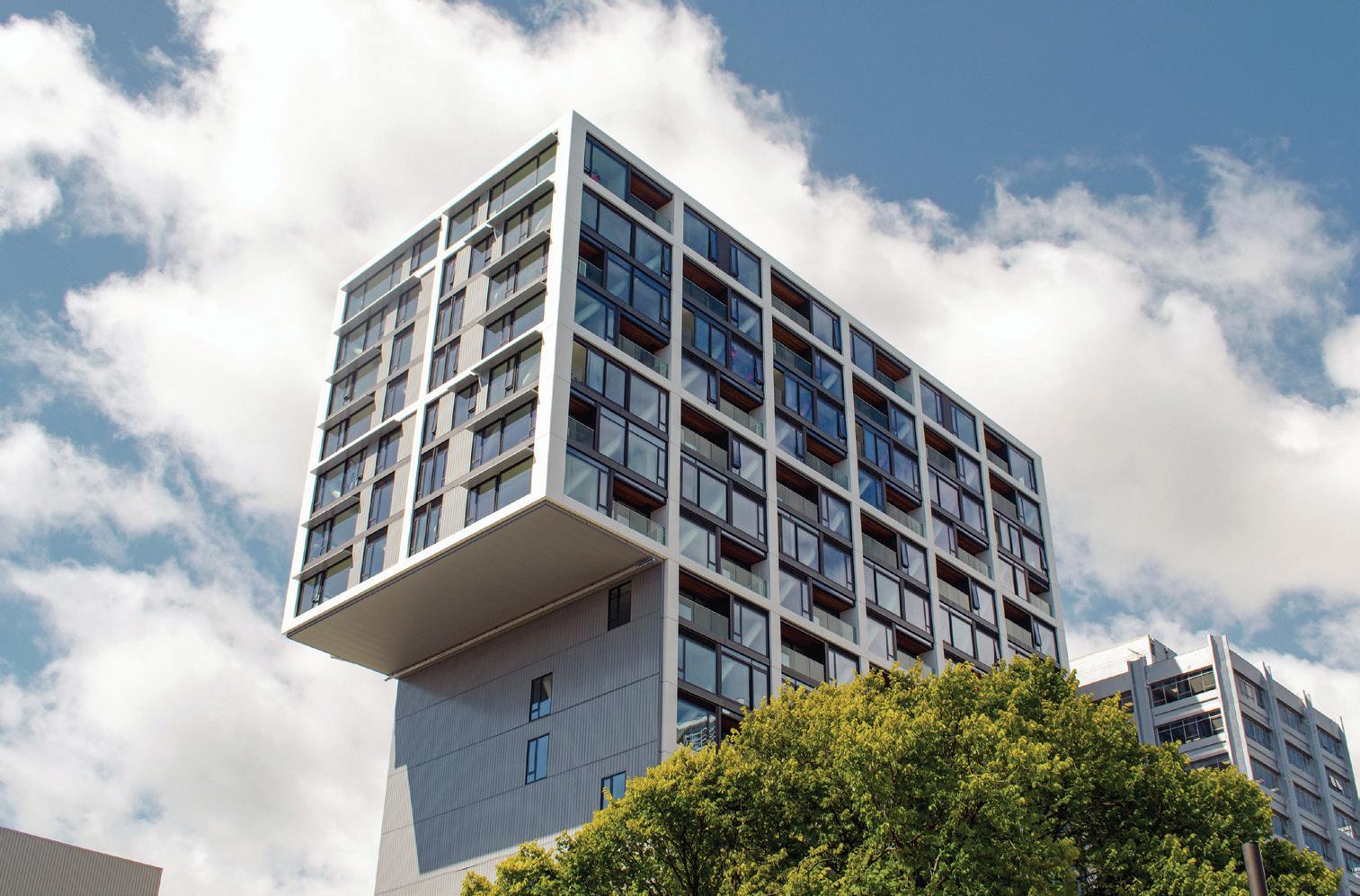
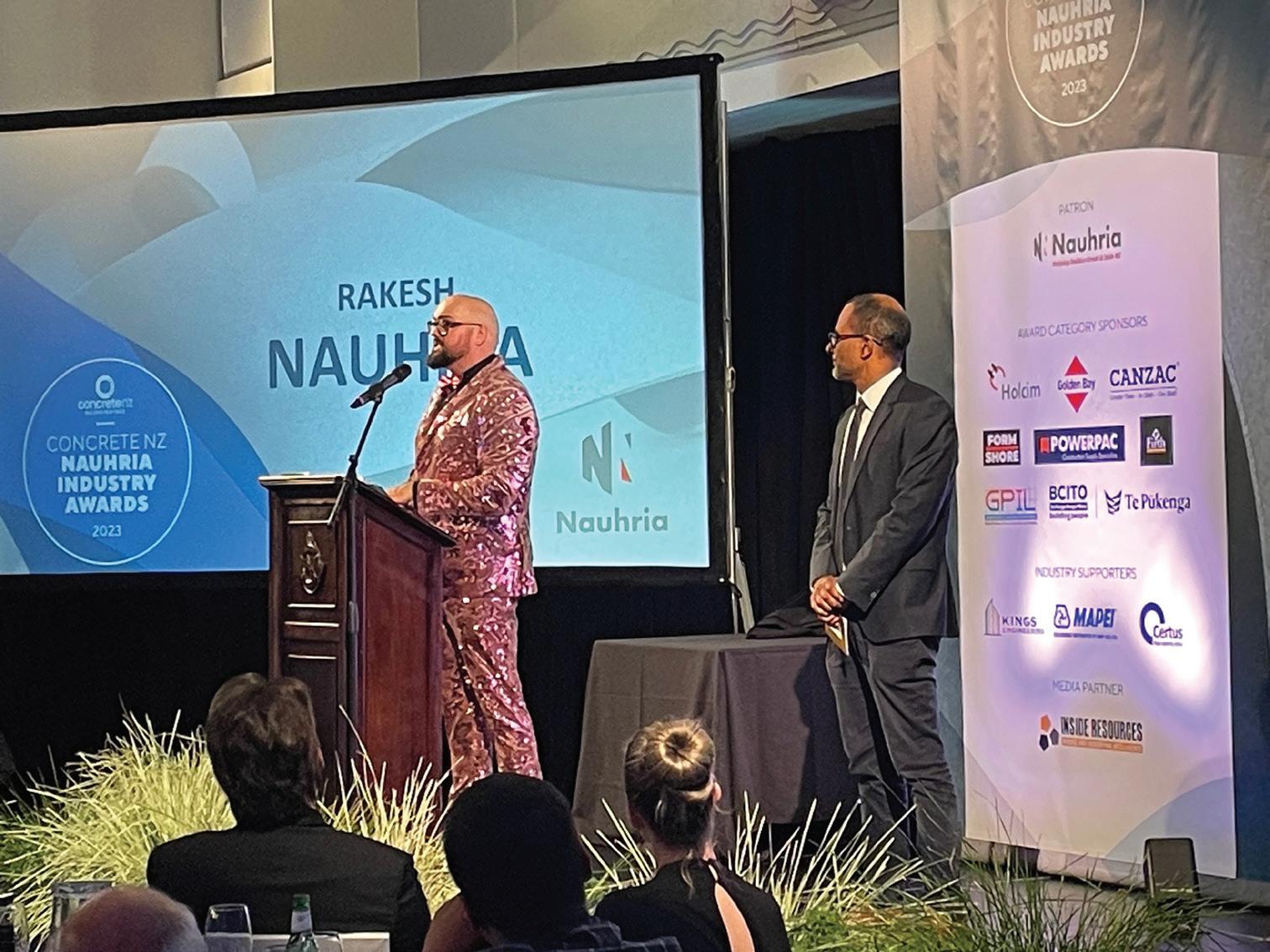
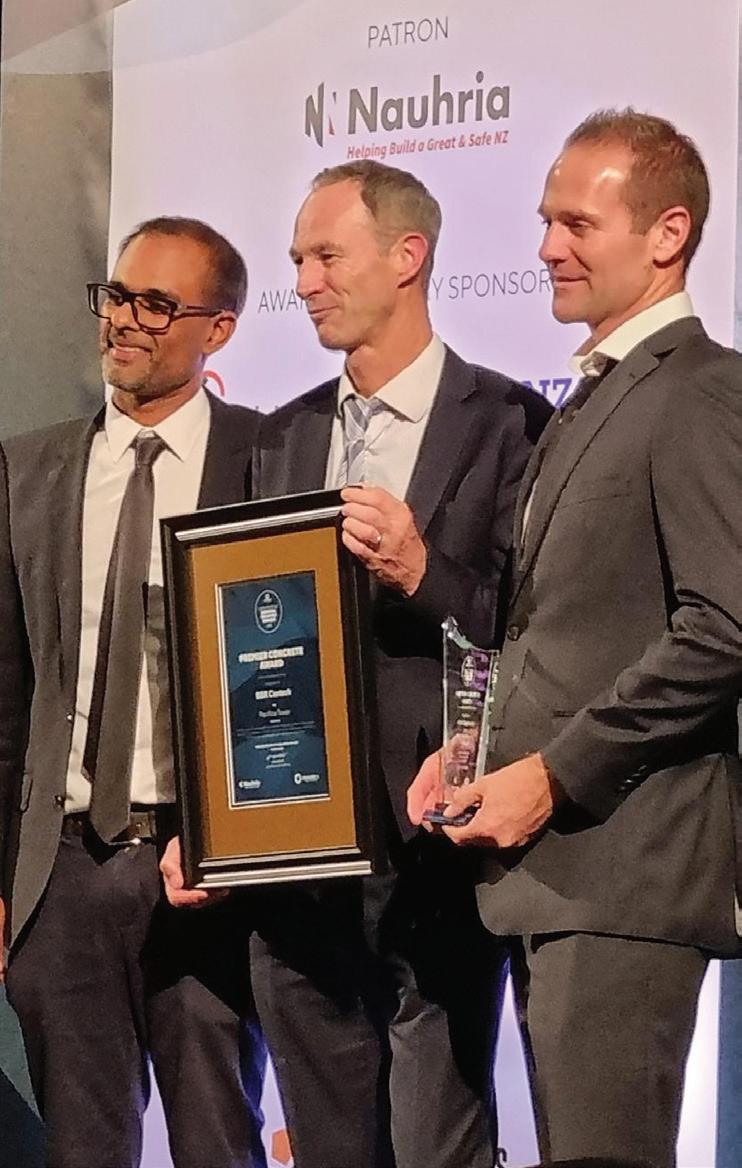
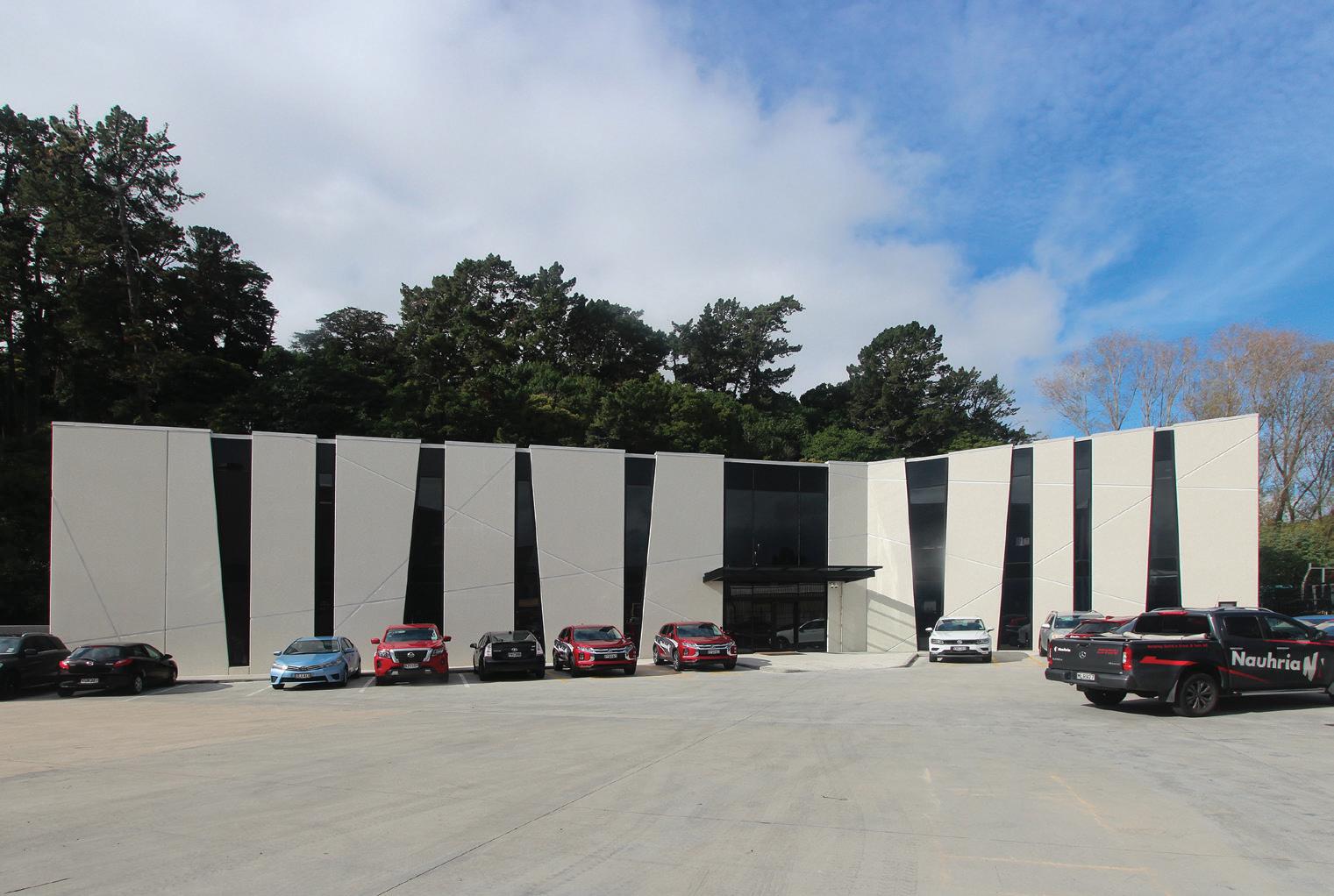
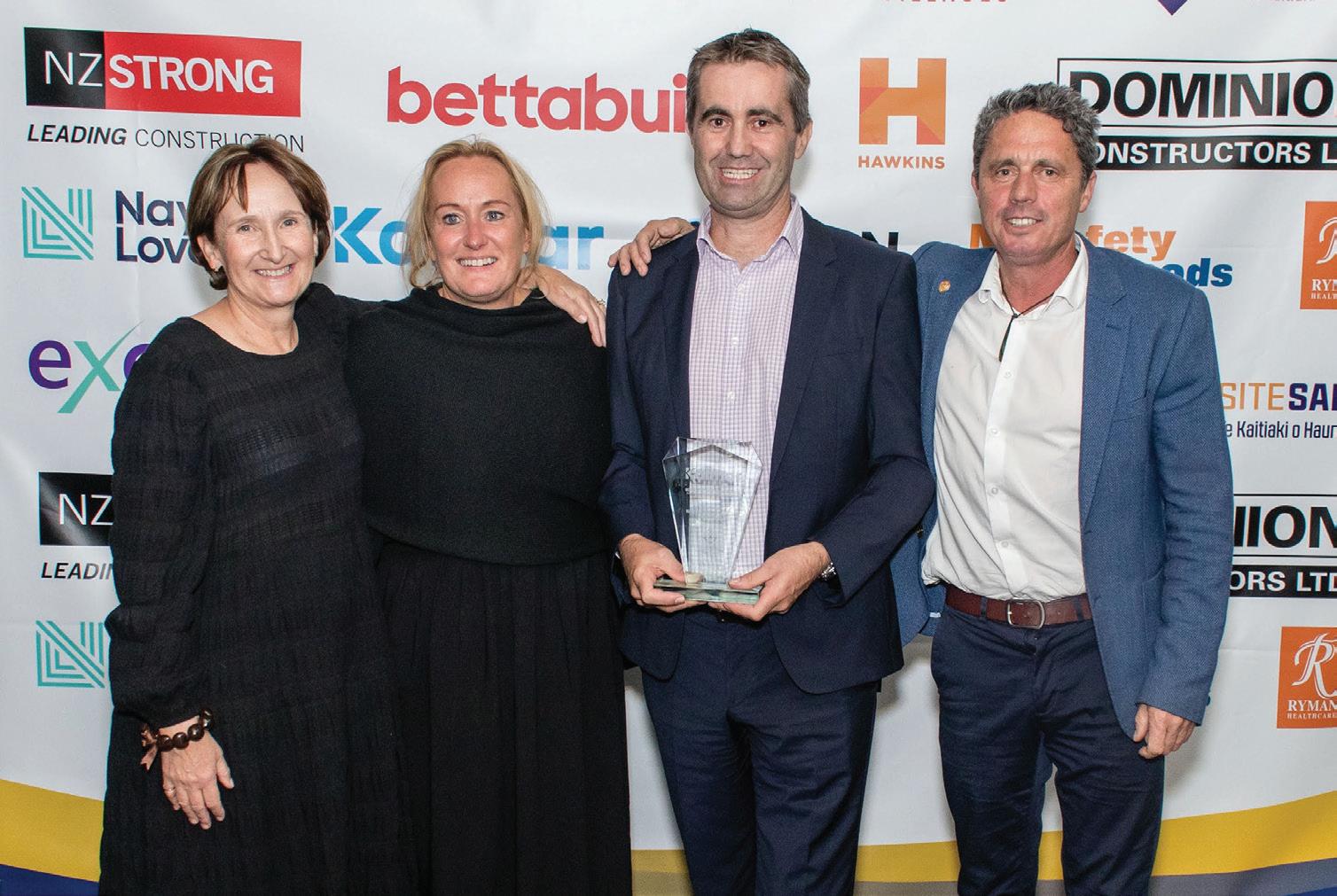
Pacifica Tower takes top honours at concrete industry awards
The importance of having quality conversations
ONLINE
Timber engineering showcase
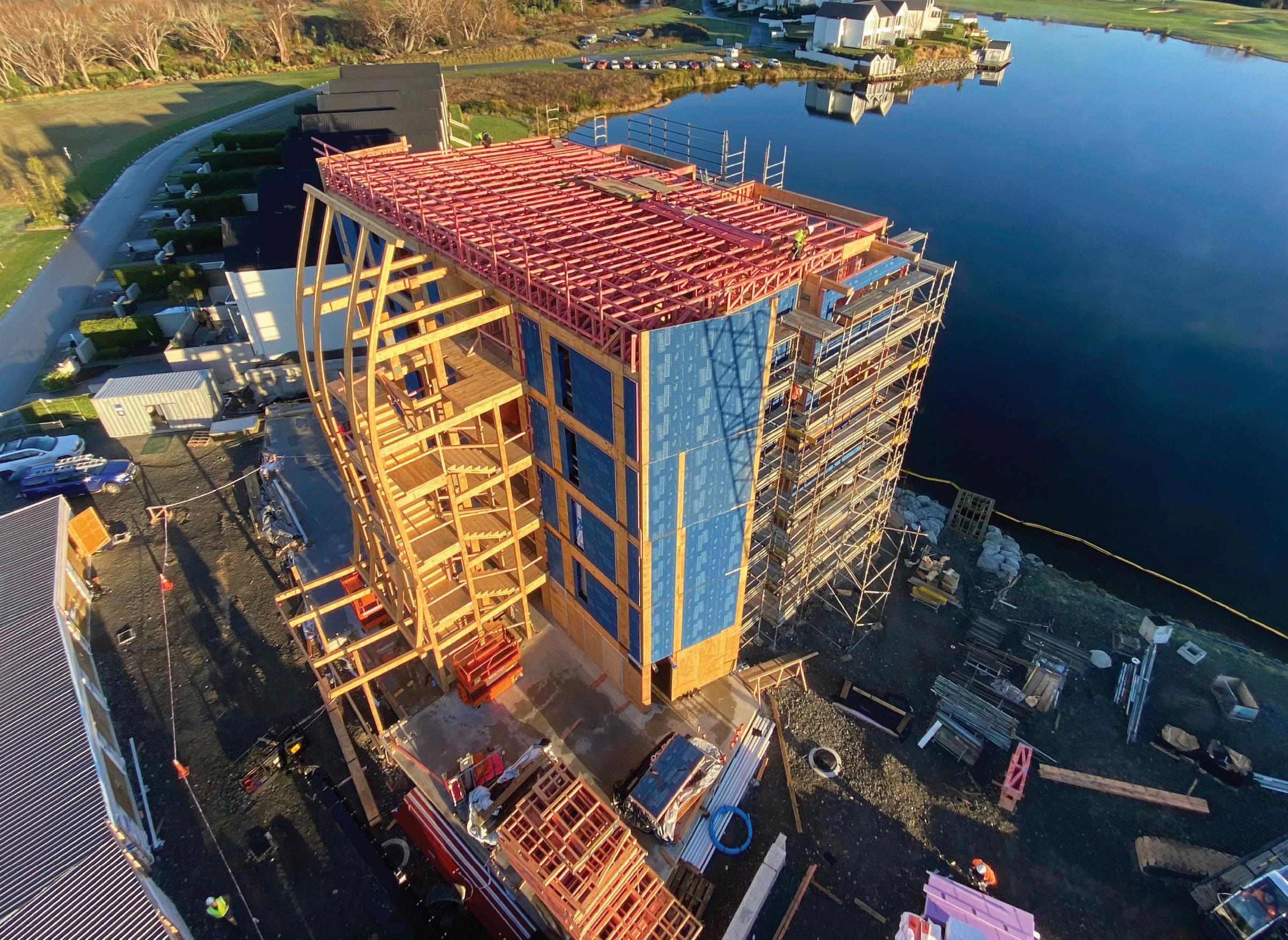
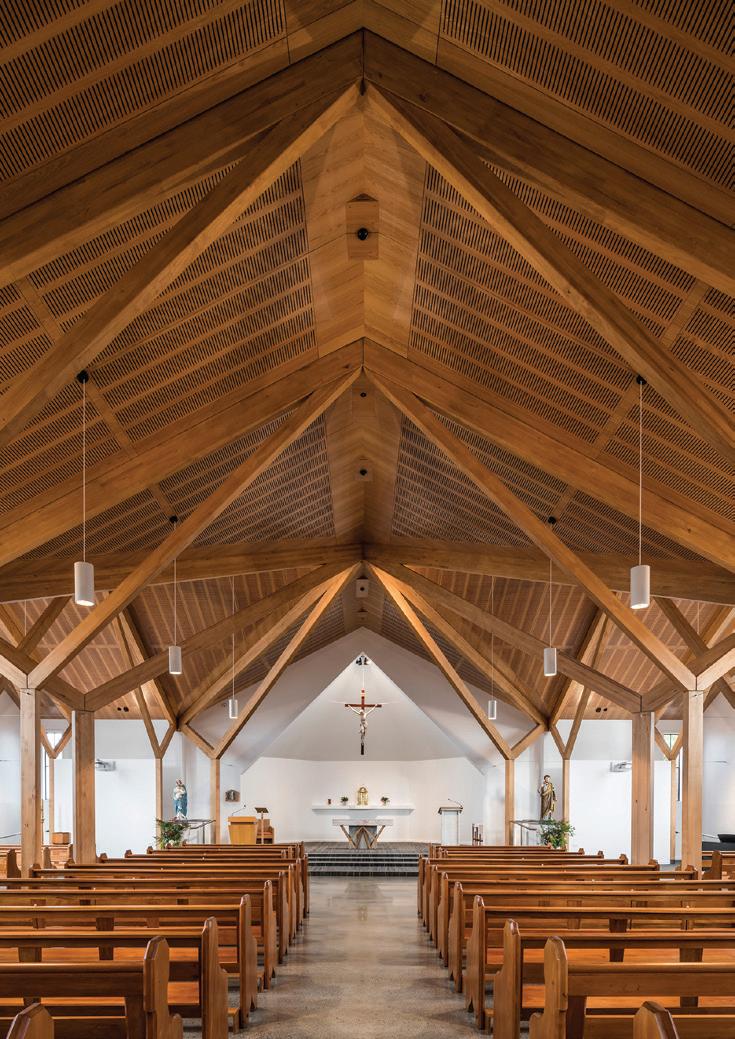
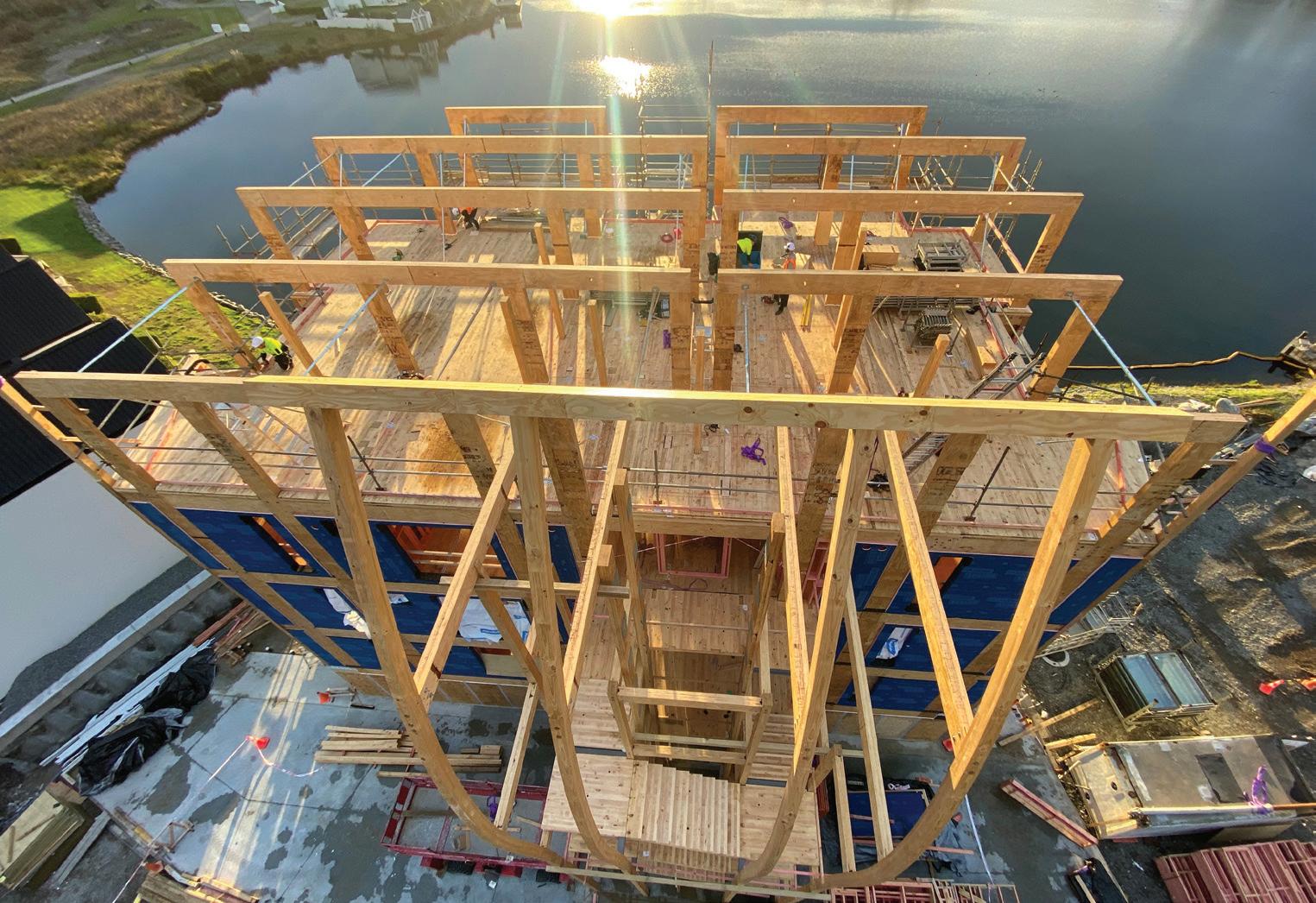
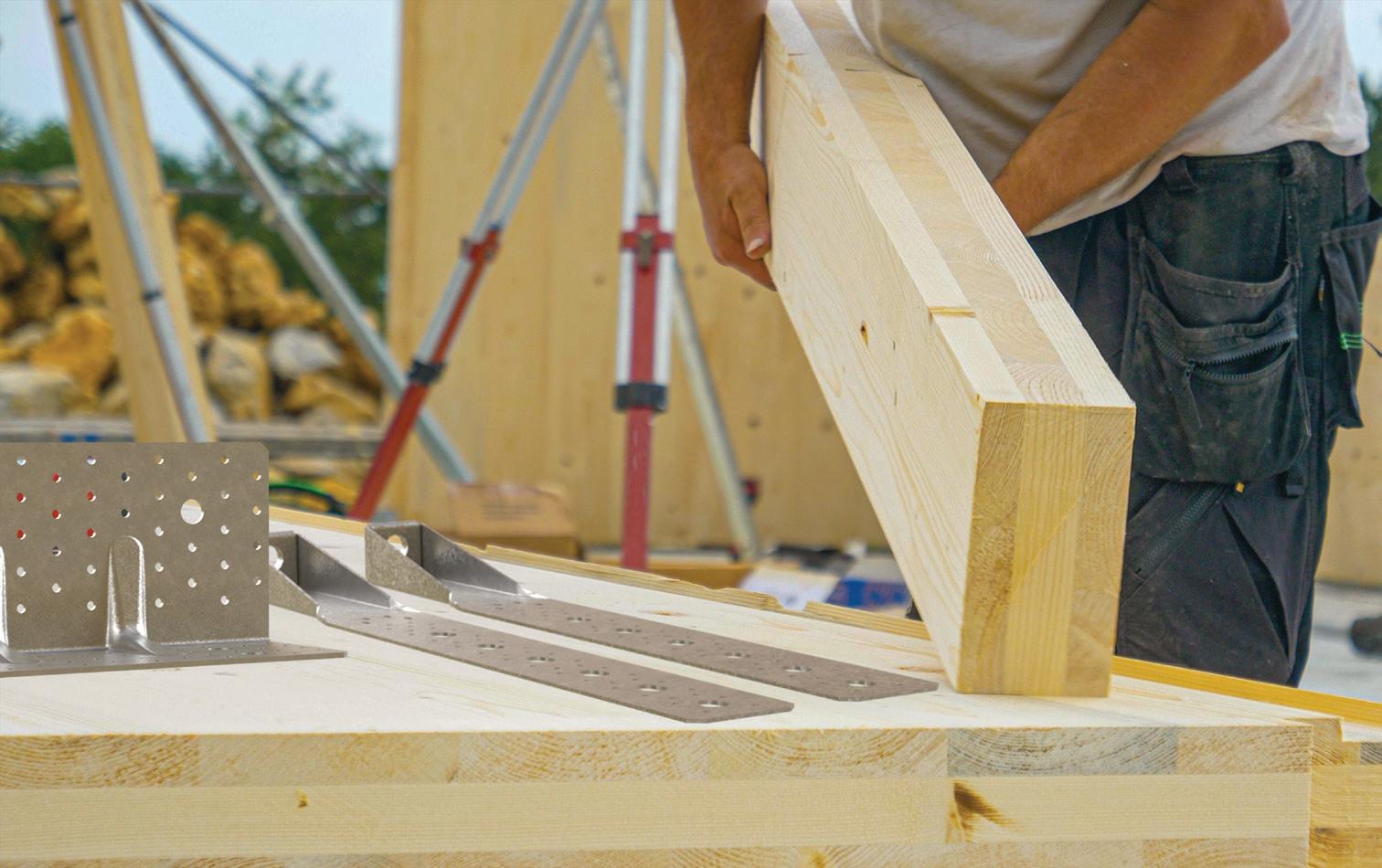
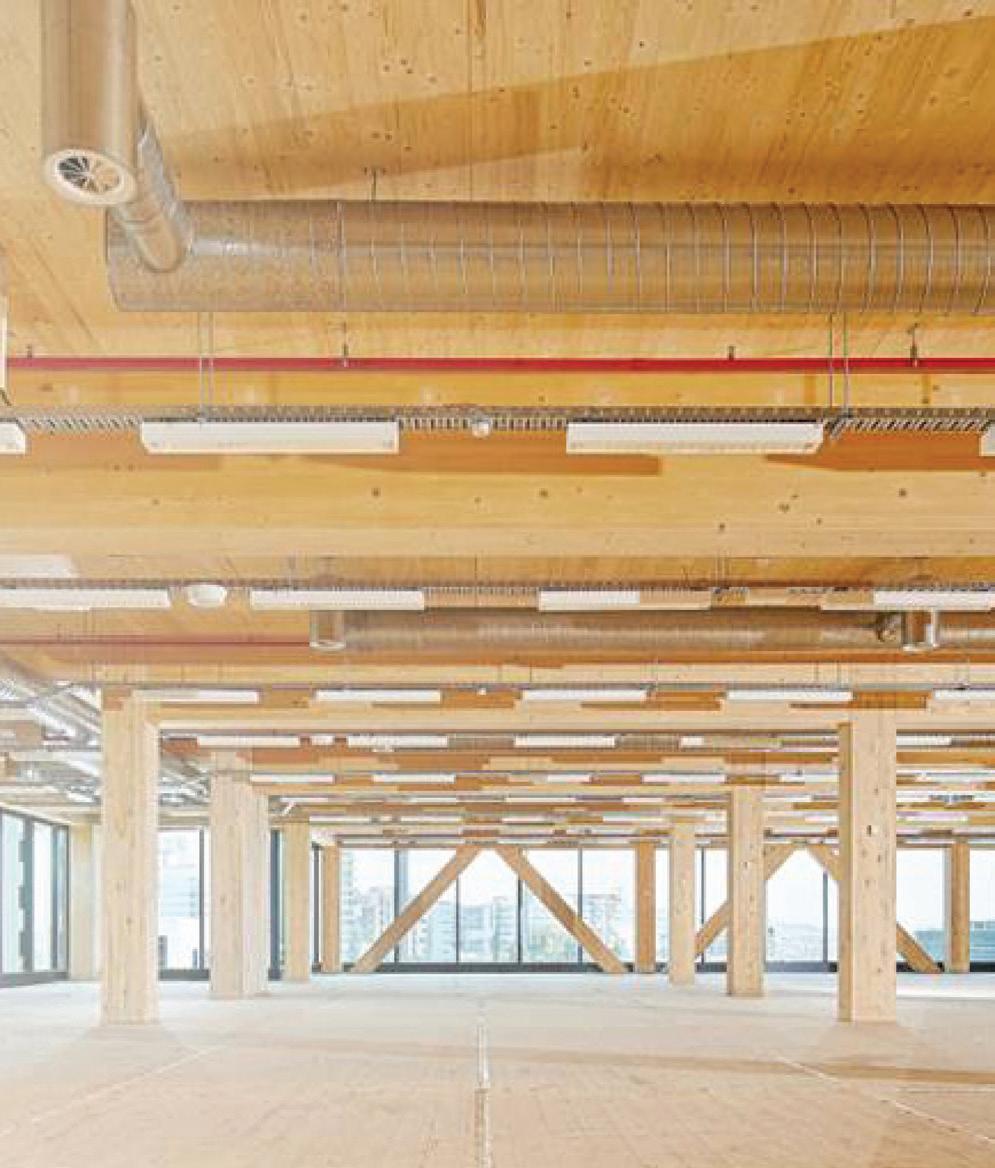
The new five storey Clearwater Apartments in Christchurch –a showcase of the amazing things which can be achieved by modern timber engineering.
Not only was it 15% cheaper to construct than a comparable concrete building, but its carbon
emission reduction credentials are hugely impressive.
The wood continues to store the carbon which the trees sucked out of the atmosphere to grow.
It also means 1000 tonnes of CO2 weren’t emitted – which would have been the case if concrete was used.
www.woodourlowcarbonfuture.nz
Welcome
- publisher's note
In this issue of Builders & Contractors Geoff Hardy breaks down exactly what licensed builders being subject to a code of ethics means.
There’s information on navigating cost fluctuations, the importance of having quality conversations and we look at education pathways opening up for the industry.
We have an overview of HERA’s Construction 4.0 research programme designed to help improve the building industry, and a breakdown of the big winners at the concrete industry awards, as well as the ways to unlock timber’s full potential, and look at how to reduce the carbon footprint while building seismically resilient housing. As always, we thank all our columnists for their expertise, along with the views, opinions and predictions of all those who contributed, to help you manage the risks your face each and every day.
Enjoy
Readers: Construction/building industry leaders and decision makers: government & trade organisations, site safe members, business owners and professionals in the industry.
Nationwide Distribution: Mailed directly to a carefully maintained list of decision makers and subscribers for 25 years.
Contents
6: What being subject to a code of ethics means for licensed builders
8: When does a fixed price not become a fixed price?
10: Opening education pathways for the industry
14: The importance of having quality conversations
16: Wellington’s first base-isolated apartment building unveiled
18: Strengthening occupational regulation regimes
19: Reducing the carbon footprint while building seismically resilient housing
21: HERA’s Construction 4.0 research programme – aiming to help the industry
26: Welding and Engineering’s mission to help Christchurch
28: Alrite Steel and Services is 20 years young and going strong
29: Composite steel floor design to counter strong fires
32: Pacifica Tower takes top honours at concrete industry awards
42: Nauhria – the name behind the nation’s premier concrete awards
44: Unlocking timber’s full potential
52: Red Stag TimberLab’s integrated timber solutions
Builders and Contractors, a national trade newspaper targeted directly at New Zealand's building and construction industry. For some time we were aware that, although the building and related trades were generally covered individually by some trade journals, there was no amalgamated news link for trades as a whole, especially on a nationwide basis.
This void has been successfully filled by Builders & Contractors. Distribution is by way of various outlets: PlaceMakers, Mitre 10, Builders Hardware, I.T.M., Carters, Site Safe Members, Home Ideas Centre, timber companies, hire companies, together with our database direct mail drop to architects, draughting professionals, consulting engineers, building consultants, designers and local Councils. By these means we aim to reach one of the most powerful buying groups in the industry.
Disclaimer
54: Keeping illegal timber products at bay
58: Ensuring future roofers have a solid footing
64: Freeman Roofing’s comprehensive roof, cladding and rainwater cover
68: The Crane Association conference is heading to the garden city
74: Future focus for Master Plumbers
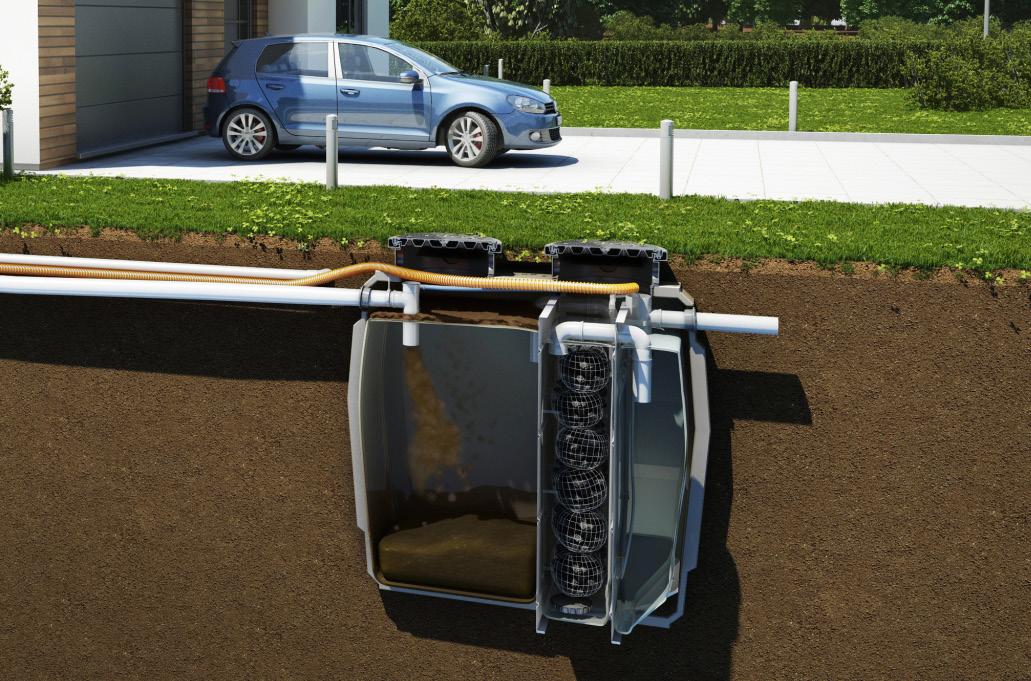
76: Dealing with torrential downpours
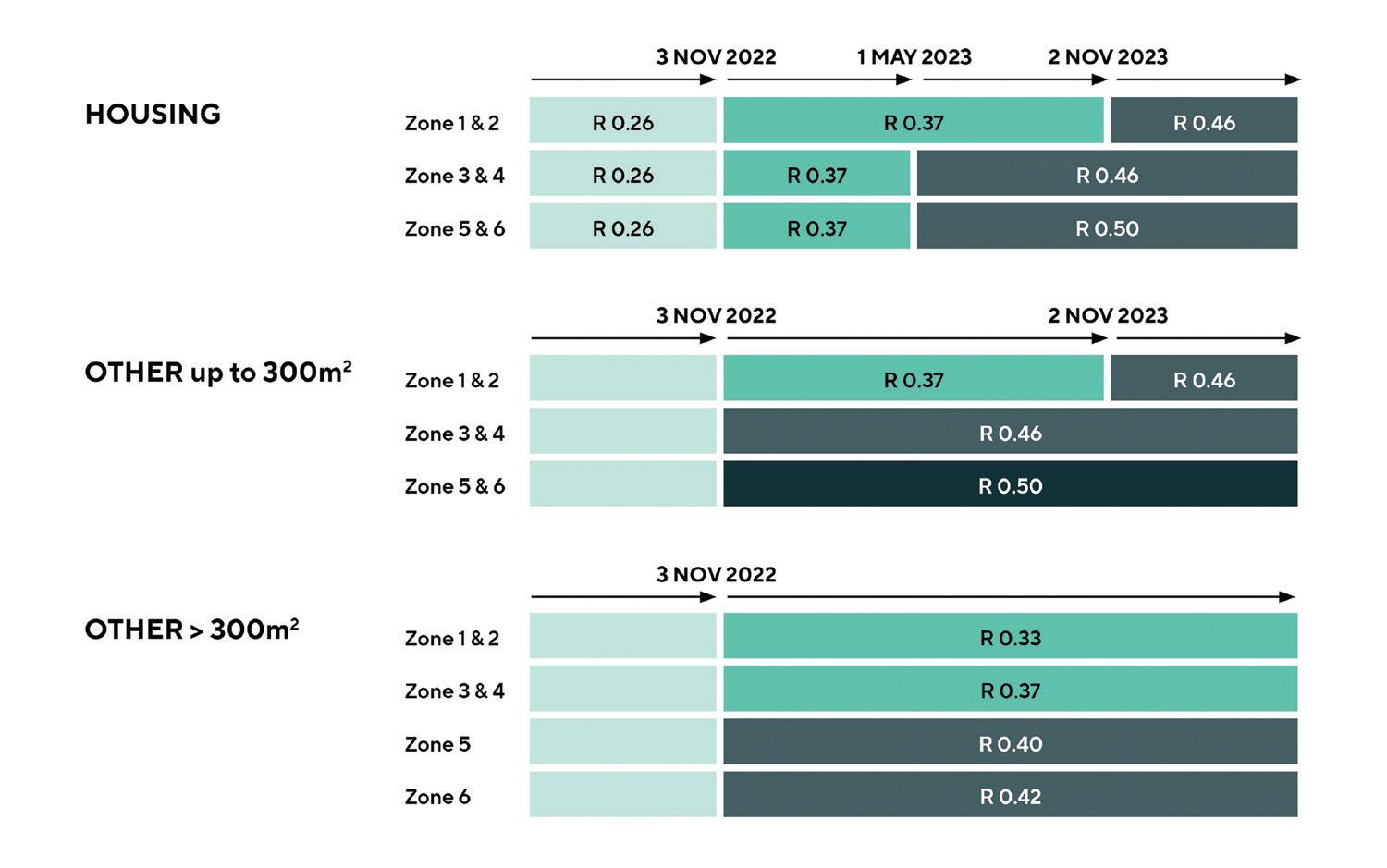
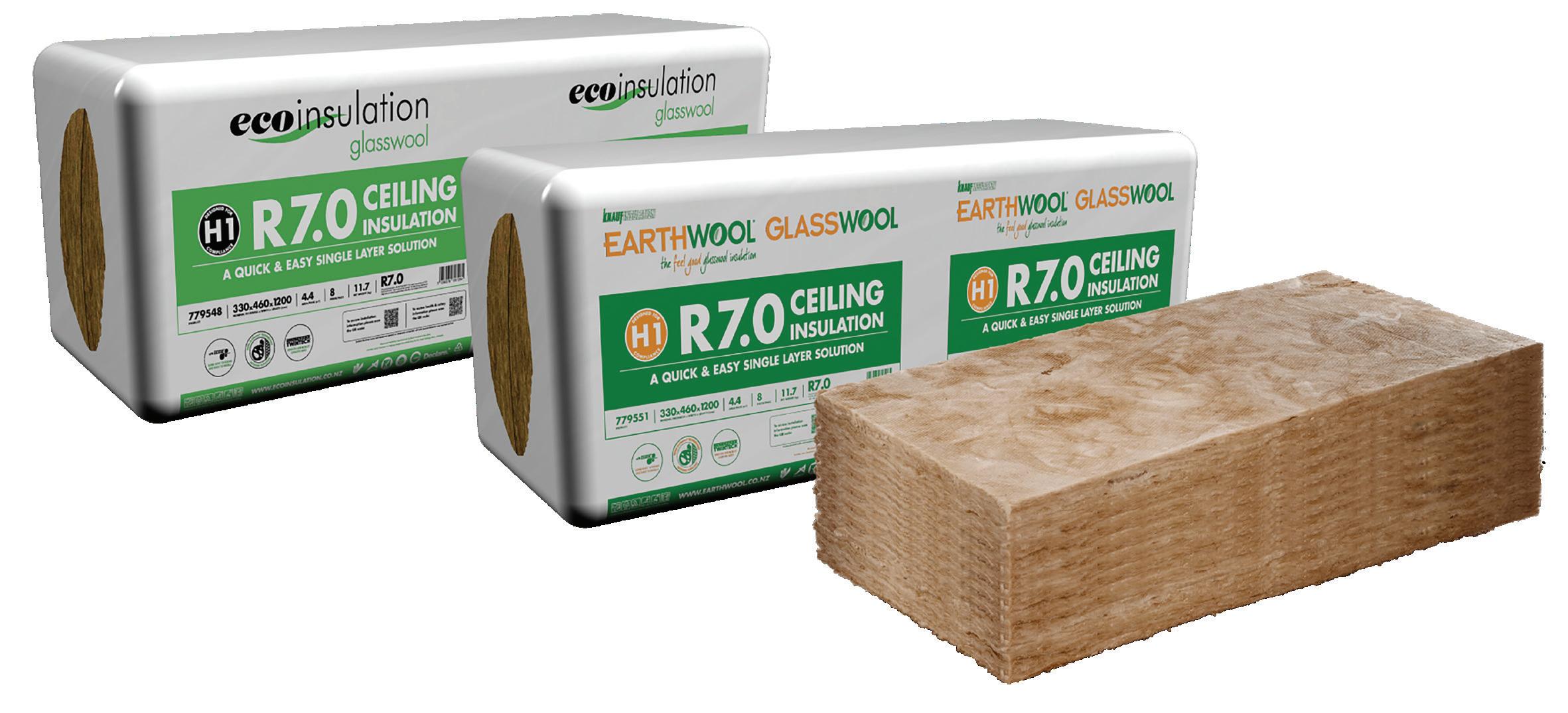
77: Insulation requirements take effect
82: Te Pūkenga’s recent changes and employer advice
86: Building a greener future
88: Taking care of asbestos
90: The right workwear for the job
92: Heavy metal kings battle it out at National Excavator Competition
94: Planning for the future in the Lakes District
96: Upgrading Dunedin’s George Street
Conforming to code
What licensed builders being subject to a code of ethics means
By
As a licensed builder, you enjoy a privilege that isn’t available to anyone else –the exclusive right to do the more complex residential building work. No-one else is allowed to.
But that privilege comes at a price – you have to prove your credentials, you have to keep upskilling, you have to closely supervise your staff, and you have to answer to the Building Practitioners Board (the “BPB”) if anyone files a complaint about you.
However, there’s no point in feeling singled out or hard done by. Every occupation that has been granted a monopoly over their type of work – including lawyers, doctors, dentists, engineers, architects, electricians, plumbers, drainlayers and gasfitters – are all subject to much the same controls.
But the reason I feel sympathy for the licensed builder is that the work that they do is often the biggest investment their clients are going to make in their lives. Which means it’s going to drag on a long time, cost a lot of money, and put the owners under a lot of stress.
Consequently, there’s a much greater risk of the relationship falling apart, and therefore a much greater risk of an eventual complaint, than, for example, when a lawyer prepares a will, or a dentist fills a tooth.
Ever since licensing got underway in 2012, the BPB has been investigating complaints about LBPs and imposing penalties in appropriate cases. But homeowners can’t get the BPB to investigate any old grievance they may have.
The grounds under which the BPB can discipline a LBP are strictly defined under section 317 of the Building Act.
They are limited to such things as being convicted of a serious offence, being negligent or incompetent, working outside the LBP’s licence, not complying with a building consent, failing to submit a record of work promptly, obtaining a licence under false pretences, misrepresenting or working outside of his or her competence, and doing something that brings the LBP regime into disrepute.
Ever since 2012, the LBP has also had power to discipline an LBP for a breach of the LBP Code of Ethics. Only there hasn’t been an LBP Code of Ethics, until 25 October last year.
Now there is one, and it significantly broadens the grounds on which an LBP can be disciplined.
Bear in mind that you are only bound by the Code of Ethics while you hold a current licence that is not suspended. But if you breached the Code while you were fully licensed, the BPB can still discipline you whether or not you are still a LBP.
To avoid straying into an unexpected trap, it pays to know what the Code of Ethics requires of an LBP. Because it goes a lot further than just being a nice person, acting with integrity, upholding high standards, being honest and law-abiding, behaving fairly and reasonably, and similar kinds of things. There are 19 different requirements and you won’t satisfy them all just by applying common sense. Some of them will take you by surprise.
Like all codes of ethics, the LBP Code only requires a standard of behaviour of one party to the project. There is no code of ethics for homeowners, no professional body to discipline them, no repercussions if a complaint turns out to be vexatious or unfounded, and no concession or allowance given to the poor LBP if they have the misfortune to come across a “client from hell”.
A lot of the requirements of the LBP Code of Ethics are uncontroversial. Let’s start with those first.
You have to take responsibility for health and safety. You have to know what restricted building work you are and aren’t allowed to do. You need to ensure your clients have enough information to enable them to make fully-informed decisions about the building project.
You must own up to any defective building work and you must advise your clients of any delays as soon as they become apparent. You must do your work to an “acceptable standard”. You have got to act professionally and treat your clients and colleagues with respect. If a dispute arises you must act in a professional and respectful manner and you must attempt to resolve the dispute in good faith and give everyone a fair hearing.
You have to maintain adequate records of the project. You can’t disclose your client’s confidential information. And, perhaps in recognition of the more enlightened age we live in, you must avoid harming the environment, and you must respect different cultures and values.
Then there are the more demanding obligations. With health and safety, you can’t just be a passive observer of unsafe behaviour or work practices. You have to take some positive action by raising it with the person responsible, and if that doesn’t work, reporting it to a higher authority.
so for a variety of reasons. But if your client remains obstinate, then you are required to betray your client by dobbing them in to some appropriate authority.
When it comes to conflicts of interest with your client, you don’t have to avoid them at all costs, you just have to declare them and manage them. Both of those concepts are fairly alien to a lawyer, who has to observe much stricter standards of client loyalty.
Finally, there are some requirements around the pricing of jobs that perhaps best illustrate the innocence of the authors of the Code of Ethics.
For a start you can’t pay bribes and understandably you can’t quote an unrealistically low price with the intention of winning the job and then overcharging to make up the difference later.
You have to take some positive action by raising it with the person responsible, and if that doesn’t work, reporting it to a higher authority.
And that isn’t the only law you become an enforcer of.
As a supervisor of restricted building work, you become a kind of policeman to ensure your subordinates comply with a whole range of building legislation – Acts of Parliament that even the most versatile lawyer would struggle to have a full understanding of.
Although the Code suggests that all you have to do is raise the issue, and report it if it continues, the Code is also clear that you must “ensure” that these various laws are complied with.
Next, it is your responsibility to become your client’s risk manager. Notwithstanding the fact that the client is an adult who owns a home, and the plans and specifications have been designed by university-educated architects and engineers and approved by a Building Consent Authority, it is your job to inform your client of all design and construction risks and how to manage them.
If a new risk arises during construction, you actually have to inform your client “in writing”.
You are required to follow your client’s instructions at all times, which is fair enough, unless it would be dumb or unlawful to do
Next, when you are asked to quote a price, you can’t assess or estimate it “unfairly” (not carelessly or recklessly), which is fair enough. But the crunch comes when you “become aware that a contract for building work may involve additional costs”. Since when does a building project not involve additional costs – through variations, provisional sums, cost escalations, Covid-19 restrictions, shortages of materials or labour, or delays caused by the client?
The Code of Ethics requires the LBP to advise the client of every additional cost, and not incur that cost unless the client agrees. Does that override what the building contract says? And what do you do in a cost-reimbursement project – notify the client and request their consent every second?
Fortunately this Code of Ethics is going to be enforced by a Board comprised of pragmatic people who are experienced in the construction industry. Thank goodness for that.
Geoff Hardy has 47 years’ experience as a commercial lawyer and is a partner in the Auckland firm Martelli McKegg. He guarantees personal attention to new clients at competitive rates. His phone number is (09) 379 0700, fax (09) 309 4112, and e-mail Geoff.Hardy@martellimckegg.co.nz. This article is not intended to be relied upon as legal advice.
Auckland commercial lawyer
Geoff Hardy, an Auckland commercial lawyer
Navigating cost fluctuations
When does a fixed price not become a fixed price?
When does a fixed lump sum contract become subject to change?
All owners want prices “fixed” where they “do not pay a penny more” and the owners go to great lengths to remove cost fluctuations and variations from the contract. However, the notion of a “fixed price” in the New Zealand construction industry is often seriously misconceived.
Even prior to Covid, a fixed price hardly ever remained so during a contract’s life. There have even been projects where the variations cost more than the original price. Post-Covid, numerous projects have suffered delays and increased prices because of Covid lockdowns, Council consenting processes being delayed, lack of material supplies and resourcing in general leaving many parties wondering who should bear these costs.
Some of the legal basis for fixed prices changing have been set out below.
Variations
This is by far the most common basis for increases to a fixed price contract. While many owners go to the extent of stating that there are to be “no variations whatsoever” and delete all clauses relating to variations, this could have an adverse effect.
Such contracts clearly set out the intention that the contractor is not to make any variations but leaves an unsatisfactory ambiguity for the parties where “ownerled variations” arise from mandatory requirements. This often happens where plans and designs are changed due to Council demands even after the Building Consent is granted, necessitating a design change due to regulations. In such cases, the contractor would ordinarily be entitled to claim variation costs.
Another instance is unforeseen physical conditions that result in price increases as determined by the Engineer under clause 9.5.4. This is another unknown that can arise unexpectedly to the owner and the contractor, for example, asbestos in the soil or remains are discovered in the ground.
Under clause 9.3.5 a “Schedule of Price” is said to “contain prices or rates applicable to the circumstances and nature of work”.
Clause 9.3.7 sets out a basis for variations where “there is no Schedule of Prices” but more notably, “where there is no applicable item in the Schedule of Prices and it would not be reasonable to derive new prices or rates under clause 9.3.6 by reason of
By Marcus Beveridge and Tina Hwang
the Variation” and then the reasons set out include: “(a) Not being similar to the original work; (b) Having to be executed under conditions different from those applying to the original work; (c) Having to be undertaken at a time which affects the Cost of the work; or (d) Involving quantities increased or decreased from the original work or from the scheduled quantities, then the Base Value shall be determined on the basis of Net Cost.”
This appears to give a contractor an “in” to escalate costs in the Covid era where conditions have changed, costs of the work have changed, and prices have increased from the original work.
One thing to note is that if the original Schedule of Prices provided overheads and profits separately, then this will result in adding overheads and profits separately to the Base Rate for variation calculations which may make a significant difference.
Extensions of Time
Ordinarily, an extension of time does not warrant a variation on top. However, where an extension of time has affected the critical path of the project an Engineer can approve variations as well. Moreover, when an extension of time has been granted, there is basis for a contractor to argue that the Schedule of Prices no longer apply if costs have gone up and therefore escalate the costs this way.
Change in Law
As per a previous article, clause 5.11.10 of the NZS 3910:2013 terms provide that changes in statute, regulation or bylaws
that occur after the date of closing of tenders, that result in a price increase, then “the effect shall be treated as a Variation.”
The corollary is that Government introducing new holidays like Matariki (on-going) or the one-off public holiday to commemorate the death of Queen Elizabeth II give rise to variation claims for contractors during this applicable period.
Provisional Sums or Prime Sums
Under clause 12.10.3, a contractor will be paid the actual measured rate for provisional sums as determined by the Engineer, and under clause 12.11.3 an Engineer is to determine the prime sum, so these are obviously subject to change.
It is very common for a Schedule of Prices to include both provisional and prime sums as these are often priced months if not years before a project commences. So, owners should be careful to treat these as variables.
Accelerations
Under clause 10.3.6, an Engineer may grant acceleration costs in lieu of an extension of time. Where acceleration is approved, the contractor will be entitled to the additional costs of acceleration as determined by the Engineer which is another price increase.
Liquidated Damages
One basis to decrease the cost would be to charge the contractor liquidated damages under clause 10.5.2 for late completion, but then the owner would likely have suffered costs from the delay so it would not be a true reduction in the fixed price.
Even prior to Covid, a fixed price hardly ever remained so during a contract’s life. There have even been projects where the variations cost more than the original price.
Engineer’s Instructions
The Engineer can give instructions that affect the price under the contract including under clauses: 5.1.2, 5.11.6, 6.2.3, 9.2.1, 9.3.4, 9.3.7, 9.5.4, 10.3.1, 10.3.6, 10.5.2, 12.3.1, 12.5.6, 12.9.3, 12.10.3, 12.11.3, 13.2.4, 14.1.1 and 14.1.2. So, these are all instances where the fixed lump sum can increase.
As demonstrated above, there are many instances where a fixed lump sum contract will stop being fixed so owners and developers should be careful to factor such variables into their project budget, and contractors should be careful to follow the contract and requirements to notify and provide pricing to the Engineer accordingly.
If you have any property, construction, or litigation queries, please feel free to contact Tina Hwang or Marcus Beveridge at Queen City Law.
We have taken care to ensure that the information given is accurate; however, it is intended for general guidance only and should not be relied upon in individual cases. Professional advice should be always be sought before any decision or action is taken.
Introducing
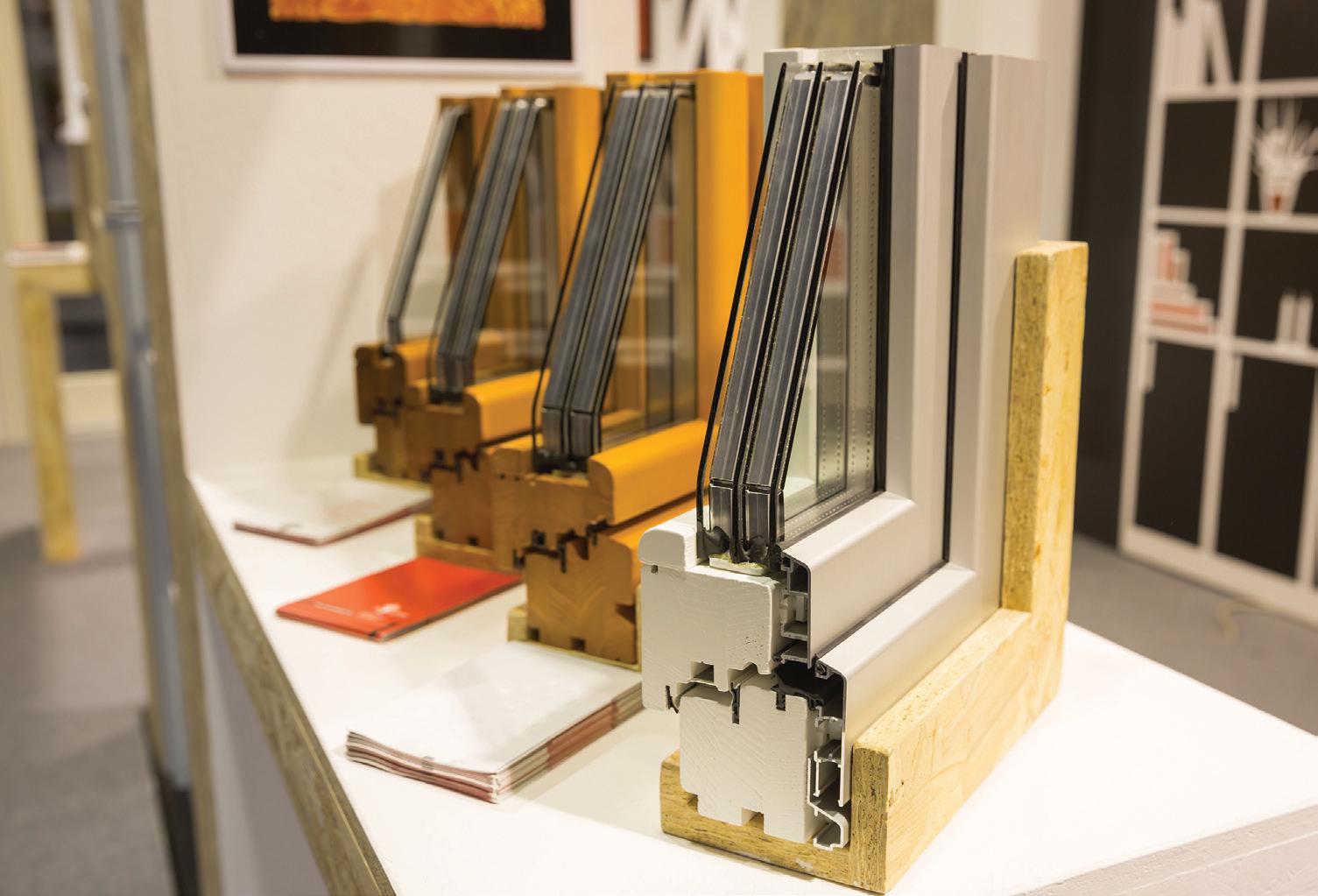
Thermally efficient frames
High performance glass
CentrafixTM installation
*
This is exceptional thermal performance
ThermalHeart+® is our unique window and door system, almost doubling the performance of standard double glazing.* Designed to be warmer, drier and healthier for us and the environments
The future is here. Ready now. Find out more at thermalheartplus.co.nz
Exclusively available through:
Opening up opportunities Education pathways for the industry
Education within the construction sector is vital and engaging young people while they’re still in school helps to continue to bring workers into the industry. Ministry of Education Leader of Operations and Integration, Sean Teddy, says programmes such as the Secondary-Tertiary Programme (more commonly known as Trades Academies) aim to engage students in years 11-13 in education and equip them with the relevant vocational skills they need to succeed in the world of work.
“Course offerings are aligned with the Vocational Pathways to deliver an NCEA (or equivalent) qualification and a programme that leads to a trade related nationally transferrable tertiary qualification levels 1, 2 or 3. Trades Academies are delivered in partnership between schools, tertiary providers, industry, and employers.”
Sean says in 2023, there were 10,250 places are available to 23 programmes operating across the country. These are led by tertiary providers or schools, delivered in partnership with almost 400 schools, wider tertiary provider partners and Workforce Development Councils.
“Last year, approximately 22% (2,133) of the total places were aligned with a building and construction vocational pathway. Wider pathway offerings primarily focus on primary industries, manufacturing/engineering and services,” Sean says.
Of the 23 programmes, the majority offer one or more construction-based courses.
Sean says that there are wider initiatives which also support construction pathways for secondary school students such as the Secondary-Tertiary Alignment Resource and Gateway, the latter funded by the Tertiary Education Commission (TEC).
He says there are also Youth Guarantee Fund programmes (also funded by the TEC) that support young people who have disengaged from school (delivering a range of full-time tertiary programmes, including construction).
The Ministry of Education acknowledges several schools and academies that offer construction-based programmes. Massey High School has the most mature Building Academy Programme (funding through the Trades Academy Funding).
It was first funded in 2012 to support its initial Carpentry Programme. The programme has developed into the current model and in 2018, Kāinga Ora and Massey High School first partnered to build a Kāinga Ora house on the school’s site which would be relocated on completion.
This continues annually, with potential options to scale up. This partnership has also been used as an example for further Kāinga Ora partnerships across the North Island. Kāinga Ora and Massey High School have an MOU for a guaranteed pipeline of 4-6 house builds per school year.
Sixteen houses have been built by Massey High School since the programme started. They now have four houses at various stages of build at any time. Twelve houses were built in 2020-21 across all schools working with Kāinga Ora and 25 houses are projected to be completed in 2022-23 through partnerships with schools.
The ARA Trust construction project is a collaboration of five schools (Manurewa High School, Aorere College, Onehunga High School, Southern Cross Campus and the Manakau Institute of Technology) is a partnership with Kāinga Ora and Auckland Airport.
Auckland Airport provided the land for the construction site and provides mentoring support for the students via Airport employee volunteers. Kāinga Ora provides, at minimal cost, houses that are designed for demolition.
The student construction programme is based around house refurbishment and relocation into the housing demand stream. There are currently 107 students attending this construction programme.
There are currently four houses onsite being refurbished and one being deconstructed as part of the Auckland Council Waste Minimisation Initiative. Auckland Airport and Hawkins Construction are strong supporters of pathways to employment for the graduates of this programme.
City Rail Link also plays a key role in pathways to employment for these students. The ARA Trust has also created a Pacifica Women in Construction for the female school leavers wanting to carry on their construction pathway.
The Taranaki Trades Academy have two courses called “Build a Bach” and “Build a Bridge”. The “Build a Bach” programme was first STP/Trades Academy funded in 2014, supporting various stakeholders from Taranaki Futures, producing bach’s for sale each year.
The programme has been able to scale up since 2014 with increased STP/Trades Academy placements. Partners include the Western Institute of Technology at Taranaki, 10 schools participating across the Trades Academies construction pathway offerings and wider local industry/employer and community groups.
For more information, visit the Ministry of Education website at: www.education.govt.nz
By Timmi Aplin-Barrett
Chain & Rigging
– Sitemate Power Systems Merger
Chain & Rigging Supplies Limited has announced the merging of Sitemate Power Systems, creating a strong platform for continued growth. The amalgamated business now operates under the Chain & Rigging name with the complementary Sitemate® portable power product range added to its portfolio.
Chain & Rigging Division Manager Jackie Edwards said the merging of the two businesses was an exciting strategic decision.
“Both brands are owned by Eltrade Industries and are very closely aligned, providing New Zealand’s construction, infrastructure and transport sectors with safe, reliable, hardware and equipment. The merger enables us to capitalise on these synergies and continue on our growth path.”
Sitemate Power Systems Manager Bruce Bailey said the integration provides opportunity to create further value for its customers.
“We entered the portable power equipment market, providing Sitemate® temporary power products and accessories just over two years ago, and the business has grown rapidly in that time. The range is designed right here in New Zealand for the New Zealand market.
“The integration provides us with the opportunity to expand on this success and invest in a dedicated sales team. Additionally, we can now offer a comprehensive range of quality hardware, lifting and temporary portable power solutions to our wider, combined customer base, under the renowned Chain & Rigging name.”
About Chain & Rigging
Chain & Rigging has been in operation for over 40 years and supplies and distributes quality lifting equipment, chain, commercial hardware and height safety equipment to the industry. It sources the best hardware and lifting equipment globally which complies with New Zealand and international standards for assured quality and safety. These rigorously tested products are then distributed to its expanding list of stockists and customers. The company also provides lifting equipment testing and inspection certification throughout Auckland and the upper North Island. www.chainandrigging.co.nz
Chain & Rigging, is your ‘go to’ supplier and independent tester for chain, lifting equipment and height safety gear. Recently merged with Sitemate® Power Systems we supply a comprehensive range of quality hardware, lifting and portable power equipment for the construction industry.
Located in Penrose, Auckland we offer free shipping* nationwide. Order online through our website or speak with our knowledgeable sales team to help you find the right solution.
*Free shipping is offered on orders over $200.00+GST
Supply Chain Optimisation
By Rob Bellian Sales and Marketing Manager
With the COVID-19 virus still a live threat, the state of the disruption to supply chains continues to be severe as a number of regions and economies emerge into a very different world.
As everyone in business knows, supply chains are critical to supplying goods and services quickly, safely, and securely. The unprecedented supply chain disruptions caused by COVID-19 created severe operational and financial consequences, with enterprises having to address issues including:
● demand drops and surges by segment
● supply shortages
● inventory placement challenges and
● reduced productivity.
Multiple lockdowns continue to slow or even temporarily stop the flow of raw materials and goods. However, to some extent the pandemic has not necessarily created these challenges but has accelerated and magnified problems that already existed in the supply chain.
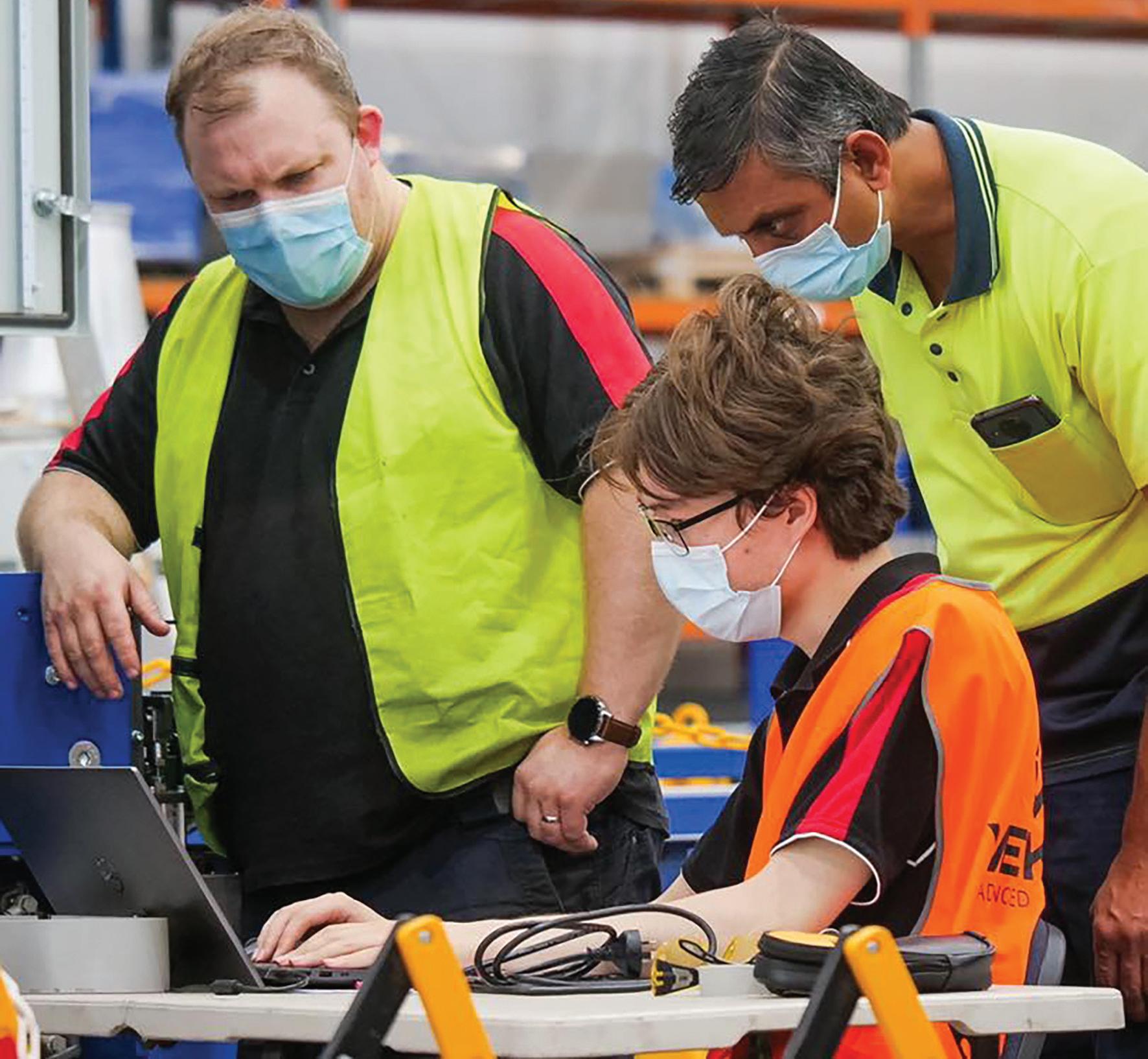
Companies like Vekta are using this challenging period to discover where investments are needed, evolving the supply chain planning function and repositioning the organisation for growth once economies rebound.
In the aftermath of the severe disruption from the COVID-19 pandemic, many enterprises like Vekta are planning to shift supply chain strategies to become more resilient, collaborative, and networked with customers, suppliers, and other stakeholders. To do this, increased investment in supply chain technologies like AI and robotic processes such as automation are of significant priority.
Together with efficiency, the reskilling of supply chain workers is also a top priority over the next few years. This should not be surprising as cost-optimization in the supply chain will always be a focus, even in the face of building out additional resiliency.
We are already seeing a shift from linear supply chains to more integrated networks. Enabling this change are technologies such as IoT devices or sensors that provide valuable
data on where goods are in the chain and their condition.
The supply chain of the future will need to be more agile, flexible, efficient, resilient, and most importantly digitally networked. Current supply chain shortages have proven and exposed the long-standing weaknesses in how we make and move goods.
Fast-changing consumer preferences, more significant environmental factors garnering greater influence, staffing disruptions, and now newer emerging global trade frictions are all key drivers for change. These tensions, particularly those around trade, technology, and innovation, suggest it’s highly unlikely we will simply revert back to the cooperative past.
Companies like Vekta are using this challenging period to discover where investments are needed, evolving the supply chain planning function and repositioning the organisation for growth once economies rebound.
Applying modern technologies to enable greater levels of automation is the answer. By addressing supply chain automation investment, companies will reap the benefit of real-time decision-based information.
Combined with increases in inventory of critical products and components as well as materials wherever possible, dual sourcing and diversifying supply bases as well as localizing supply and production networks are some key points to consider to mitigate risk, build resilience, and overcome disruption.
As we have learned, there are our five key actions that can be taken to build more agility into your supply chain:
1. Identify those products that are most critical for sustained growth and the skills required to support them to develop smarter inventory strategies.
2. Ensure a high level of communication with your workforce to ensure you are addressing their mental well-being as well as their ongoing safety.
3. Understand the implications of these newer challenges on your existing contract provisions in both supply and demand with suppliers and customers.
4. Make fast and accurate decisions on any capital investment required to redeploy or build upon greater flexibility in your processes.
5. Leverage technology platforms and talent wherever possible, including your own and partner ecosystem digital platforms, which will reduce the functional silos that exist.
Overall, supply chain disruption and the volatility of the past few years have tested most enterprises. How we weather these challenges today will position us for continued growth tomorrow. This is why supply chain improvement and visibility are, or should be, a top priority in nearly all organisational business strategies.
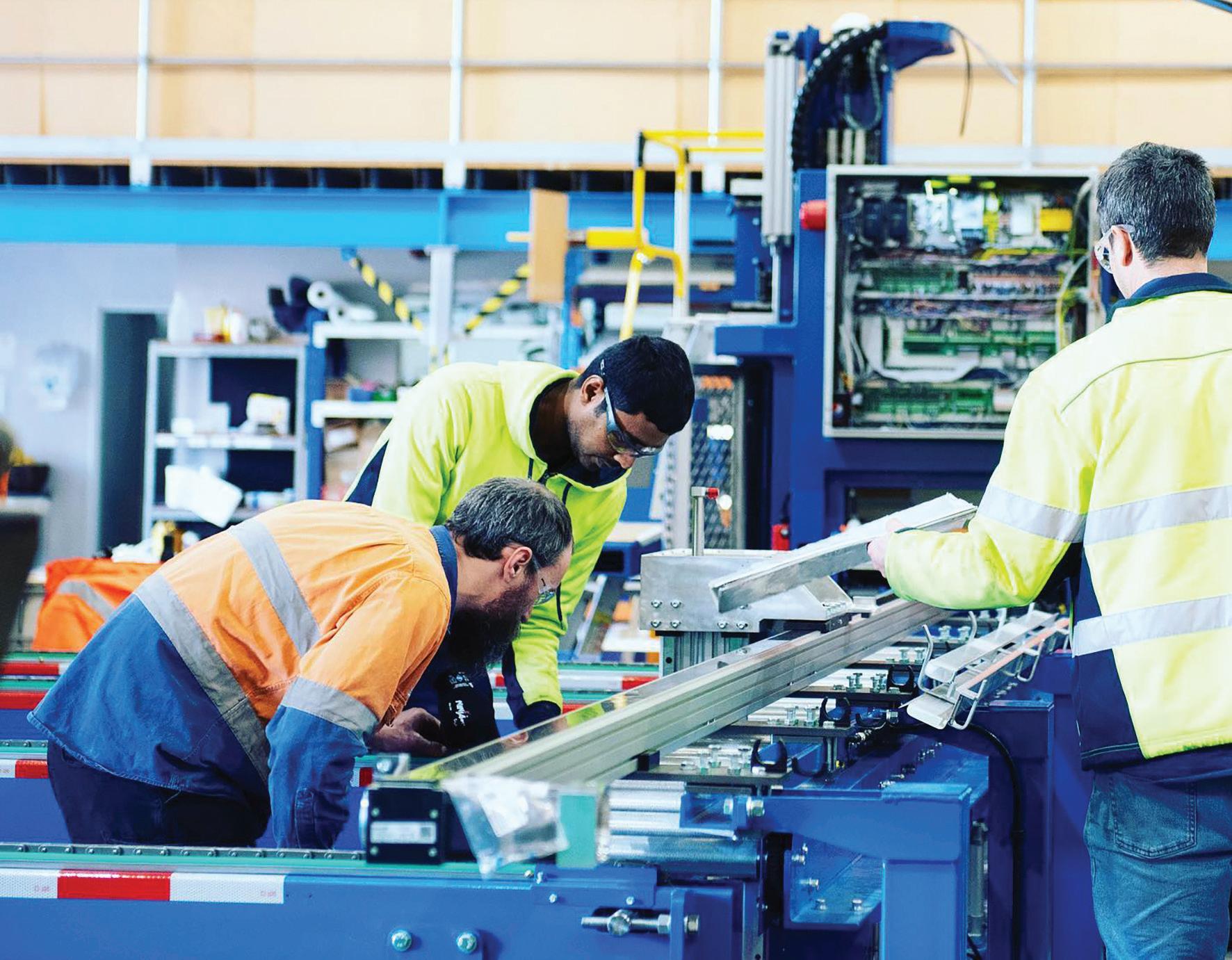
Perth, Australia. Vekta Automation, a global technology solutions leader, specialising in quality automation systems for the Timber Frame & Truss industry.
Framequip boasts a 37 year reputation for providing its clients with innovative and dependable framing line manufacturing system solutions, including its deep domain knowledge across Nog Nailers, Component Nailers and integration of proprietary software automation. Framequip system solutions are currently deployed across a multitude of local plants across Australia.
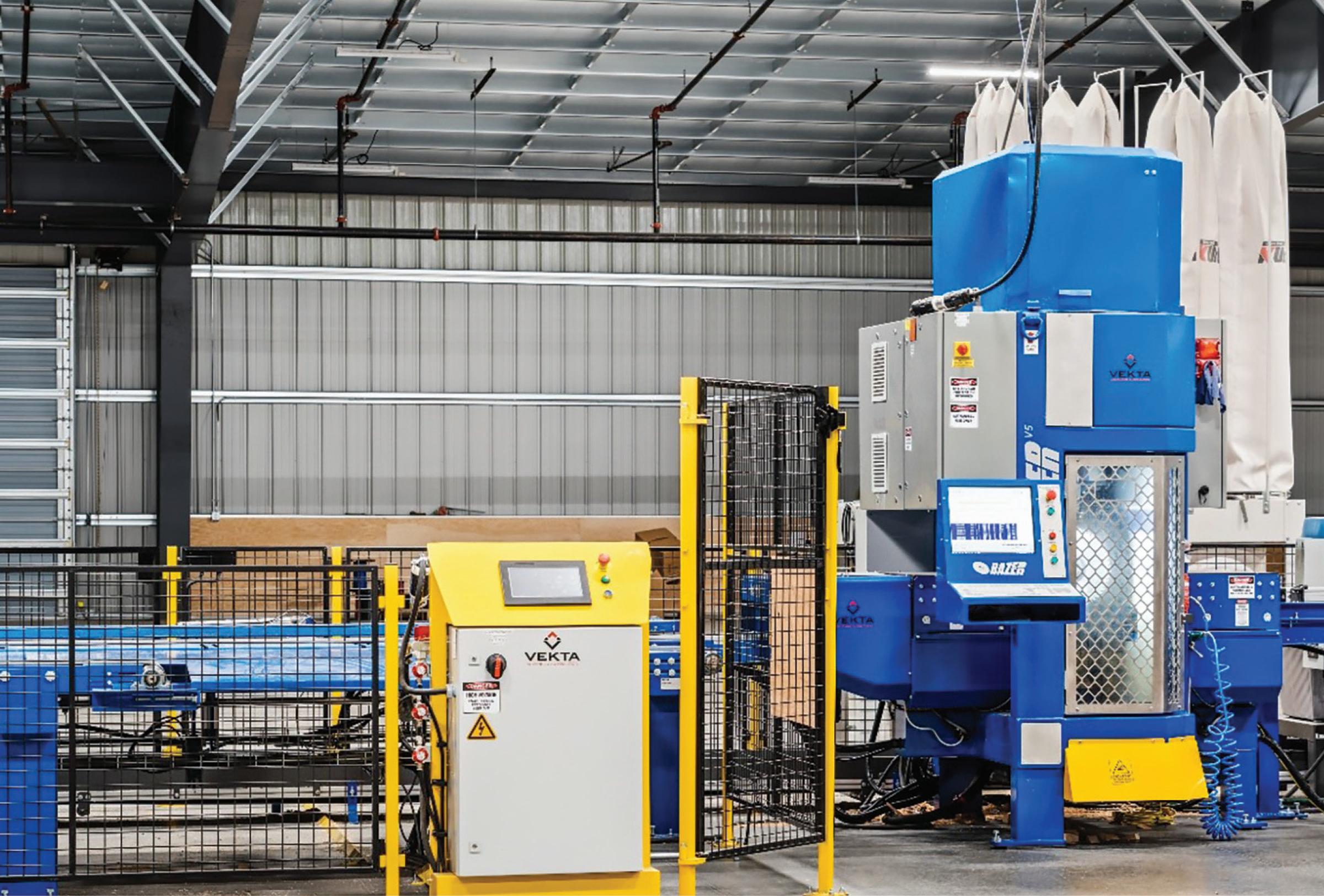
Framequip's expertise and technology solutions will be incorporated into the Vekta Automation portfolio, with enhanced specialised service and support capability.
As a result, Vekta Automation will provide an even greater range of complementary and state-of-the-art technology solutions to the global market.
Ed Serrano, CEO of Vekta, said, "We are delighted to welcome Framequip to the Vekta family. Rob Armour and his team have built a proven Frameline solution business over the years, and their knowledge of manufacturing systems and technology automation offerings will support the growing demands in this sector, as we continue to strive to transform the Frame & Truss industry with leading edge technology.”
Framequip will continue to function under the leadership of founder Rob Armour whilst closely collaborating with Vekta's sales and operations teams. "Joining Vekta is a fantastic opportunity for Framequip," said Rob Armour. "I am thrilled to contribute to Vekta's mission to provide and deliver leading automation solutions & services to support the Timber Frame & Truss industry globally. Systems level disruption will continue to evolve as will Vekta to meet new industry challenges & market forces, whilst investing continually in research & workforce development programs".
The merger is expected to bring significant benefits to both companies and to their clients.
Vekta Automation strengthens its Frame & Truss Solutions offering with the merger of Framequip Is it
Get in touch scan the QR code
VEKTA Automation
32 Millrose Drive Malaga, Western Australia 6090 Phone +61 8 6117 0660 | E: info@vekta.com.au
What on earth are you talking about?
The importance of having quality conversations
Well, it’s been a long time coming, but how exciting is it to see the vibrancy and energy coming into the region again?
Walking through Christchurch central city over the past couple of months, the full trams and queues in local cafes would indicate that business is booming in many places. And while this is obviously good news, ramping things up again quickly comes with its own challenges, especially in terms of staffing.
According to the Canterbury Chamber of Commerce’s Quarterly Business Survey (October 2022), “Labour market shortages continue to wreak havoc, with nearly 50 percent of respondents finding it more difficult to retain staff now than 12 months ago”.
So if we are to make the most of the current situation and avoid the risk of poor customer experience, failure to meet deadlines or even the possibility of having to turn away work, it is clear that we need to engage really well with our people.
The power of genuine connection
Having strong relationships is key to building a healthy organisational culture, particularly when you are asking people to go above and beyond.
Being well-connected to your staff and showing them you care can make your organisation more resilient and adaptable to whatever challenges come your way.
But fostering meaningful connections takes work; having open discussions helps establish and maintain these relationships.
How quality conversations make a difference:
• Connecting with people as individuals and gaining an understanding of their unique circumstances means you can provide personalised support as/when they need it.
• People are more likely to go the extra mile when they know that you genuinely care about them.
• You are more likely to receive honest feedback on aspects of a person’s job when you have established an authentic relationship.
• When change is needed, and particularly when needed fast, the communication channels are already open, the goodwill
is already there and you can more easily adjust things ‘on the fly’.
Quality conversations
Quality conversations involve two-way dialogue; they are not a tick box exercise.
Of course, how and when you are able to organise these in a way that works for everyone will depend on the size and nature of your organisation.
For example, if yours is a small business with one or two staff, you might just have a chat across the room or pop out for a coffee.
If your organisation is larger, you may need to delegate these conversations to your managers, trusting them to keep their finger on the pulse; in turn, you then have quality conversations with them.
Ideally if you can schedule these conversations so that they become routine, you will establish a pattern of regular feedback and connection that naturally builds relationships and improves your organisational culture.
What makes a quality conversation?
There are many aspects that make for a quality conversation, but probably the most important, is the ability to listen openly and ask questions.
If one-on-one intentional conversations don’t come naturally to you, asking people what
they are currently working on is an easy conversation starter.
Not only is this a straightforward question to answer, it also enables you to connect in a work-related context and establish the purpose of the conversation so that it links to them as an individual, as well as to your organisational goals.
When you are listening openly, one question can lead to another and if you are in a more senior position, the more open you need to be to new possibilities that you hadn’t previously considered.
A two-way conversation also allows you to get a sense of where someone is at, whether they are enjoying their job, what they may need help with, whether they’d like to take a step up or do something different. It also helps them to understand what you may need from them as a manager or leader.
This open approach not only ensures that you are more easily able to move the conversation towards its intended purpose, but it will also help facilitate a greater depth of understanding which will better help you to identify problems, explore solutions, and facilitate new ideas and innovation together.
Good chat. Now what?
Research from Gallup suggests that one of the worst things a manager can do for an employee is to ignore them - presumably because they might just leave!
When people feel included and heard they are more likely to be engaged and motivated to make a positive difference in your organisation, so how you feed back any resulting next steps and most of all, how you act on that information really matters.
Not ideal at any time, but particularly precarious when staff are hard to come by.
This means that what you do with the information shared is as important as actually having the conversations in the first place.
When people feel included and heard they are more likely to be engaged and motivated to make a positive difference in your organisation, so how you feed back any resulting next steps and most of all, how you act on that information really matters.
Not only does it form the basis of the next quality conversation, but it allows you to form genuine connections and strengthen your organisational culture; something that will serve you well at any time, and especially when you and your team are under the pump.
So, with that in mind, who do you most need to connect with in your organisation?
And if you’re wondering when you will have time to book it in, the sooner you have these conversations, the quicker you’ll connect, so really... there’s no time like the present!
Rob Clarke, CEO of Learning Architects
base-isolated apartment building unveiled
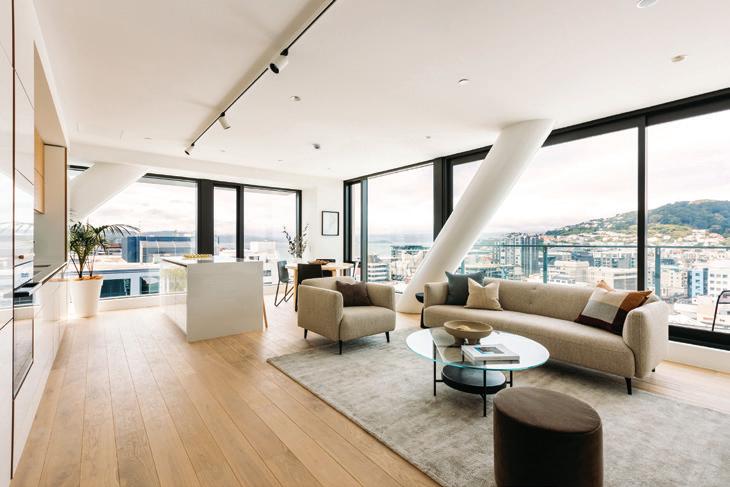
Construction is nearing completion on Willis Bond’s $140 million Victoria Lane Apartments, the first base-isolated apartment building to be constructed in Wellington, with residents expecting to start moving in in March.
Victoria Lane Apartments was one of the first development projects started in Wellington following the country’s first Covid lockdown in 2020. Construction on the 14,000 square metre project began in August 2020 and, despite Covid restrictions, was completed within the anticipated two-and-a-half-year time frame.
Willis Bond managing director (Development), David McGuinness, says the project’s 2023 completion marks a significant milestone for Willis Bond, which this year celebrates its 35th anniversary.
“We’re proud to deliver Victoria Lane Apartments as Wellington’s first baseisolated residential development, of which all but two apartments have been sold. This demonstrates Wellingtonians’ support for residential developments of this calibre in the central city.”
Victoria Lane Apartments is the largest base-isolated residential building in New Zealand. It is founded on 124 driven piles and incorporates 24 base isolators that effectively separate the building’s superstructure from
the ground. This is complemented by the building’s diagrid structure - a diagonal grid of steel that wraps around the building for extra strength.
The building is designed to withstand a 1-in-1,000-year earthquake, compared to conventionally built high-rise buildings, which are generally designed to withstand 1-in-100year seismic events.
“Purchasers have resonated with the base-isolation technology as it gives them the peace-of-mind they need to enjoy premium apartment living in the city,” says McGuinness.
David also notes that the same “gold standard in seismic resilience” will be delivered as part of Willis Bond’s next planned residential development, which is to be located on the corner of Buckle and Tasman Streets, and is aptly named One Tasman – Pukeahu Park.
“We’ve learnt a lot over the last three years delivering this project, and we’re excited to take those lessons with us to our next project which will offer the same level of seismic resilience set within a unique historic, park environment.”
Victoria Lane Apartments is made up of 123 premium one, two and three-bedroom apartments, as well as 3,240 square metres of base-isolated office space and ground floor retail spaces.
Located at 161 Victoria Street, the highly resilient mixed-use development is situated in the heart of Wellington’s Cuba precinct.
The project includes the creation of the state-of-the-art educational facility Te Auaha and the redevelopment of the former Farmers building and two adjoining properties on Cuba Street, which are together now known as 100 Cuba Street and are home to Greater Wellington Regional Council.
Victoria Lane Apartments can be accessed by a newly created pedestrian laneway which provides accessibility and security for residents.
Victoria Lane Apartments were designed by Athfield Architects Limited (AAL), with structural design by Dunning Thornton Consultants (DTC), and construction was undertaken by LT McGuinness.
The development is part of Willis Bond’s wider Cuba precinct rejuvenation project.
Expected post-Cyclone Gabrielle growth
Demand for concrete is expected to continue well into 2023 and 2024, particularly for infrastructure and non-residential construction projects in Northland, Auckland, Tairāwhiti Gisborne, and Hawke’s Bay, says Concrete NZ.
Ready-mixed concrete production, a practical marker of construction and infrastructure activity and general economic health, had already increased 1.5 per cent in the December 2022 quarter on the September 2022 quarter.
Rob Gaimster, Concrete NZ’s CEO says the year-on-year comparison for the December 2022 quarter reflects a “catching up” on the Covid-19 Delta lockdowns in late 2021.
“While the final quarter of 2021 stood out in terms of production, a comparison of volumes in the year to December 2021 versus the year to December 2022 shows production actually rose by 3 per cent in the year to December 2022,” he says.
Rob says as Aotearoa New Zealand considers the resilience of its national built environment in the wake of a month of extreme weather events, he anticipates that the durability, strength, seismic performance, fire resistance, and storm water management properties of concrete will result in increased usage across the board.
While forecasting from the Ministry of
in July of 2022 predicts a flattening in residential construction activity, Rob says planned reforms to the Resource Management Act, combined with increased activity following Cyclone Gabrielle, could potentially alleviate any easing and increase the likelihood of higher residential building consents, or create an equilibrium.
“The industry will be watching very closely to see how the situation evolves. We are aware that the Government is already taking steps to foster greater activity in the residential construction sector. This grows sector confidence as we prepare to weather the Reserve Bank’s predictions of a ‘shallow recession’ in 2023.
“We also know that activity in the nonresidential and infrastructure sectors is expected to see an increase, and given the significant impact of Cyclone Gabrielle, it is likely we will see further growth in the infrastructure sector as rebuild and rehabilitation works come online.”
Rob highlighted that commercial consents were predicted to continue at record levels over the next two years, while the total value of infrastructure projects was anticipated to
“The total value of infrastructure projects in the National Infrastructure Pipeline increased from $72.2 billion to $76.9 billion in November 2022, a 6.5 percent increase when compared with the June quarter.
“This growth is encouraging for the construction sector as a whole, but also
supports wider economic stability and wellbeing as infrastructure drives higher living standards, strengthens the economy, and results in better social and environmental outcomes.
“Pleasingly, we anticipate that this will include increased uptake of the industry’s decarbonised concrete products.”
Rob says the concrete sector is making efforts to reduce its climate impact, with a range of new low carbon concretes coming online that were already planned for projects, such as the Kāinga Ora Bader Ventura development in Māngere.
“Between 2005 and 2018, the concrete sector has already reduced its emissions from cement by 15 per cent. Our objective is to achieve a target of a 30 per cent reduction in carbon dioxide emissions by 2030, and we are on the cusp of releasing our industry roadmap to be net carbon zero by 2050,” he says.
“In addition to concrete’s qualities as a construction material our industry has a number of initiatives in place that will help to decarbonise concrete, and the concrete sector.
“This includes replacing clinker in cement with low carbon natural and recycled alternatives, increasing design efficiencies in the construction of concrete structures, and finding coal replacements for cement manufacture at Golden Bay’s Portland cement works,” he says.
Concrete NZ CEO Rob Gaimster.
MBIE seeks feedback to strengthen building occupational regulation regimes
The Ministry of Business, Innovation and Employment (MBIE) has commenced public consultation seeking feedback on the Licensed Building Practitioner; Plumbers, Gasfitters and Drainlayers; Electrical Workers and Registered Architects occupational regulation regimes.
MBIE Building Policy manager, Amy Moorhead, says “Occupational regulation plays a critical role in our building system, protecting New Zealanders from harm by ensuring services are performed with reasonable and consistent care and skill”.
The consultation proposes further improvements to the Licensed Building Practitioner regime, seeks feedback on potential codes of ethics for the Electrical Workers and Plumbers, Gasfitters and Drainlayers regimes and seeks input into a review of the Registered Architects Act.
“MBIE is seeking feedback from all New Zealanders who work in or use building and construction services,” Amy says.
“People who are licensed or registered members of these regimes benefit from the increased professionalism and skillset of all members, as well as improved public confidence in the work that they do.
“We want to hear from people who work in the building and construction sector to understand what you need to feel safe and supported in your career.
“We also want to understand the perspective of people who use the services provided by those working in the sector – New Zealanders who employ or contract people for their skills and knowledge when building, designing and maintaining homes and buildings.
“Occupational regulation exists to build your trust in the industry and keep you safe when using building and construction services, as well as help ensure that building work is done right the first time and get fairer outcomes if things go wrong.
“Your feedback will help shape the changes needed to ensure occupational regulation in the building and construction sector is fit for purpose and delivers for all New Zealanders.”
A discussion document has been published to the Ministry of Business, Innovation and Employment website.
There are currently six occupations with regulatory regimes in the building and construction sector:
• Chartered professional engineers
• Engineering associates
• Licensed Building Practitioners
• Plumbers, gasfitters and drainlayers
• Electrical workers
• Registered architects.
The consultation focusses on the following four regimes:
• Licensed Building Practitioners
The proposals in the 2023 consultation respond to issues identified by the sector in a consultation MBIE ran in 2021. They focus on improvements to supervision and licence classes in the regime, with the aim to ensure that Licensed Building Practitioners work within their competence, and that consumers understand who is competent to do certain work.
• Electrical Workers regime and Plumbers, Gasfitters and Drainlayers
This consultation seeks early feedback on the scope of potential codes of ethics for the Electrical Workers regime and Plumbers, Gasfitters and Drainlayers regime. The expectations and key principles proposed have been based on the recently introduced code of ethics for Licensed Building Practitioners.
• Registered Architects
This consultation focuses on whether current regulatory settings ensure effective and efficient regulation of architects. MBIE aims to determine if the Registered Architects Act 2005 remains fit for purpose and whether the government should have a continued role in regulating architects. This is the first time the Architects Act has been reviewed since it was introduced in 2006.
Reducing the carbon footprint while building seismically resilient housing
New research wants to find the ‘sweet spot’ for one of the greatest challenges in the construction industry –balancing seismically resilient housing with reduced embodied carbon.
Dr Charlotte Toma from the Department of Civil and Environmental Engineering at Waipapa Taumata Rau, University of Auckland, is leading the team exploring whether the carbon cost of designing seismically resilient structures can be justified in medium to high density residential buildings across Aotearoa New Zealand.
Toka Tū Ake EQC has funded this project as it directly aligns with its focus on improving the resilience of New Zealand’s homes and buildings in a world with significant climate challenges.
“Our focus on building a more resilient Aotearoa starts with housing that can withstand the impacts of natural hazards,” says Head of Research at Toka Tū Ake Dr Natalie Balfour, who explains that building more resilient structures on suitable land is an effective way to lower damage levels
and reduce the social disruption caused by natural hazard events.
“We need to address future disaster resilience challenges, while also contributing towards a net-zero carbon New Zealand, so we are excited to watch Dr Toma’s project unfold.
“Investing in science and research and translating that into tangible outcomes is a critical part of what we do to inform key decision-making and make a difference for New Zealanders,” Dr Balfour adds.
Dr Toma has been investigating a risk-based, lifecycle cost-benefit analysis on multistorey residential buildings in Auckland, Christchurch and Wellington.
The research team is now conducting structural and non-structural estimations on what these redesigned buildings look like, focusing on how seismic performance objectives impact the embodied carbon during construction.
“Climate change mitigation within the building sector is happening, just not fast enough. We really need to push this kind of research or New Zealand won’t meet its net carbon zero targets by 2050,” says Dr Toma, adding that the building sector is responsible for 39 percent of global carbon emissions.
“The study allows us to explore how lower embodied carbon alternatives could be implemented, while still achieving a higher seismic performance target.
“The research will help find a balance between designing stronger buildings that would suffer limited damage but require higher up-front carbon costs during construction, and buildings with lower embodied carbon that could have a significant environmental impact if they need to be torn down or repaired after a seismic event.”
Dr Toma says there’s a push to make our homes more resilient and fortunately some scientists and engineers are focused on
improving seismic resilience, as well as working towards more environmentally friendly techniques and net-zero carbon builds.
“Our aim is to provide evidence that improved seismic resilience can be achieved alongside a shift to embodied carbon considered design, and that sustainable design is not mutually exclusive of seismic resilience – providing a strong argument for legislation so we can start to see change happen.
“We owe it to our children – the next generation of New Zealanders – to see this happen,” says Dr Toma, who is one of 13 researchers funded through the latest Toka Tū Ake EQC Biennial Grants programme.
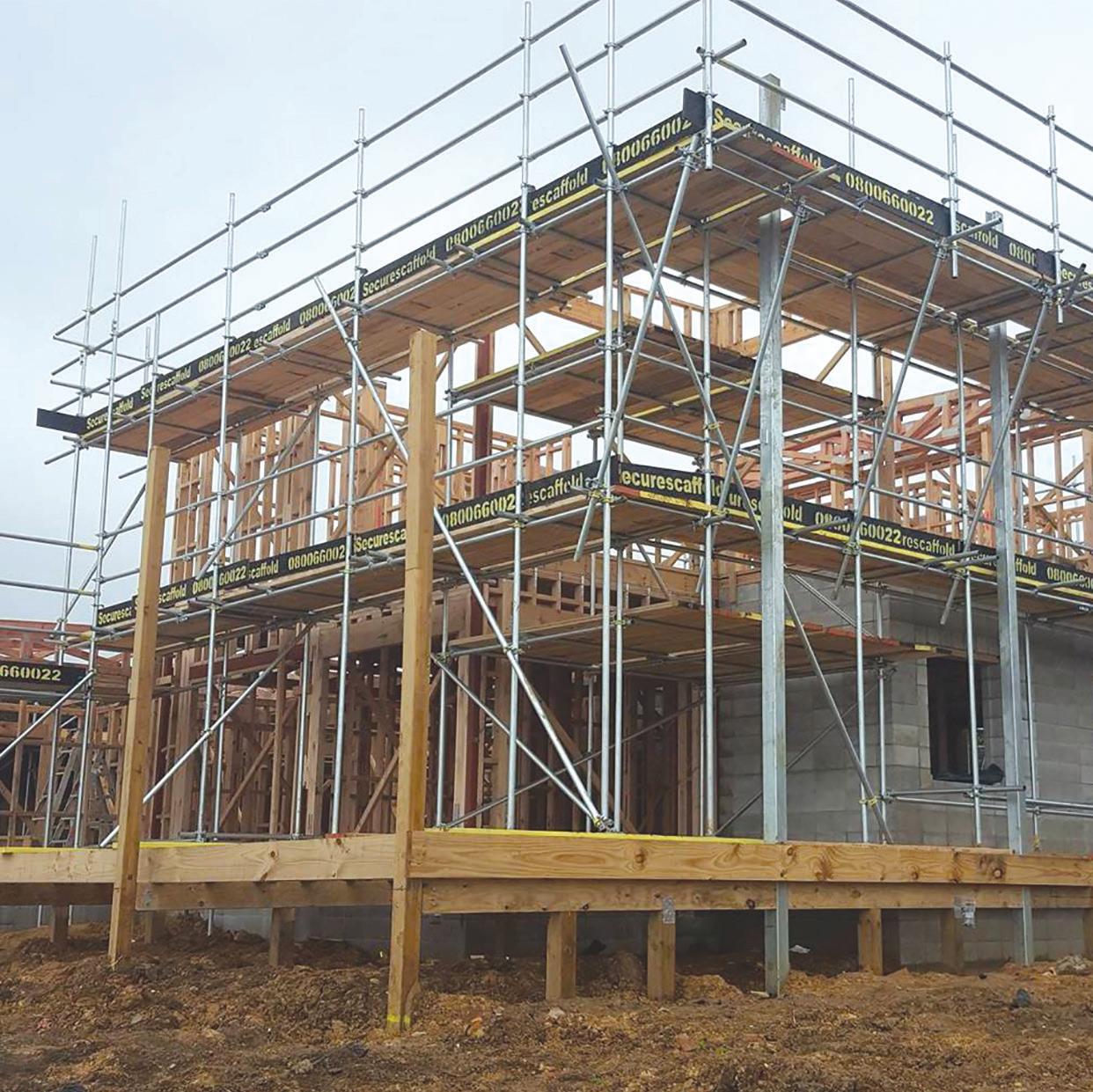
With more than 50 years’ experience in the construction sector we are well aware of the needs of the industry. This means we realise how important the safety of your best asset – your staff – is to you and your company’s future.
So, as a national company servicing New Zealanders in the construction industry, we are committed to the safety of your staff.
And when you deal with us you’re dealing with the owner, which means you receive a superior and speedy service – every time.
Our extensive construction knowledge ensures we understand local compliance issues and we realise how critical your deadlines are and we guarantee to be on time – check out our Secureguarantee.
• We guarantee to beat any written quote by 10%
• We guarantee to return all quotes within 48 hours otherwise you will receive the first week rental FREE of charge!
* Terms and conditions apply to the
By using Securescaffold you can rest assured that your objectives of safety, cost and meeting deadlines are of paramount importance.
All our equipment is rigorously tested to the highest of standards.
Securescaffold covers all NEW Worksafe working height requirements providing fall protection for builders, painters, home handyman and roofers on new and existing home constructions.
Aiming
A report on ‘Developing Construction 4.0 transformation of Aotearoa New Zealand’s construction sector’ was submitted to the New Zealand Society for Earthquake Engineering (NZSEE) for the NZSEE 2023 annual conference.
The report was written by NZ Heavy Engineering Research Association (HERA) Structural Systems general manager Kaveh Andisheh and Welding Centre general manager Michail Karpenko, University of Canterbury Civil and Natural Resources Engineering Professor Gregory MacRae, University of Auckland Civil and Environmental Engineering Senior Lecturer Alice Chang-Richards and Professor of Civil Engineering Charles Clifton, Tufts University Civil and Environmental Engineering Professor Babak Moaveni, and University of New Hampshire Civil and Environmental Engineering Assistant Professor Yashar Eftekhar Azam.
The report is about a new Ministry of Business, Innovation and Employment (MBIE) Endeavour Funded research programme for developing the Construction 4.0 transformation of Aotearoa’s construction industry.
The Construction 4.0 structure and regulations included in the programme aim to take care of difficulties, decrease unsureness, add to exchanging information, and boost communication between construction project collaborators to improve productivity and quality within the construction industry.
The programme will also make a significant change in the construction industry, make new jobs available and upskill the workplace through innovation and/or digital information.
The research’s main idea emphasises technology transfer and policy development and execution. This concept makes sure the research outcomes are ready to be implemented.
The final result will be distributed among published written work and within the industry and practice improvements.
Overview
The report points out that Aotearoa’s construction industry made more than $18.1 billion in 2022 and became the third largest employer in the year ended in June 2022, which has majorly benefited Aotearoa’s economy.
Nonetheless, moving forward the construction industry has a significant part to play in reducing carbon emissions, as well as improving its productivity.
The main difficulty with construction processes is that they are the sum of
complicated choices with extensive outcomes that are currently being resolved with ‘pre-digital age’ practices.
The decision points in the process are usually created in straight silos with little interconnection or obtained data decision support.
The research is focused on using complexity science and Construction 4.0 approaches to find solutions to these long-term restrictions and to transform conventional construction for a better future.
HERA is collaborating with research and industry colleagues to look into the challenge and has successfully obtained MBIE Endeavour Funding to develop the Construction 4.0 transformation of Aotearoa’s construction industry.
The research programme will help transform the industry by aiming to improve construction productivity, quality, adaptability, affordability, and sustainability.
The programme is interfaced with mātauranga Māori with an aim to address the gap of knowledge that exists between it and Construction 4.0 by building a uniquely Māori framework that not only will create new knowledge domestically but will sit internationally as an example of indigenous knowledge being incorporated into sectoral transformation.
The outcomes of this work are to create greater opportunities for Māori partnership
and ensure outcomes are focused on achieving intergenerational wellbeing.
The risen use of Industry 4.0 technologies in the industry will also lead to new types of transformation revolving around statistics collection, management, examination, and advanced development.
The report offers a quality review of the main goals and scope of the research to highlight the positive impacts that will occur from the programme’s successful application.
MBIE stated how much the construction industry contributed to Aotearoa’s wealth last year:
• 6.7 percent of GDP in the year ended in March 2022
• 10.5 percent of employment in the year ended in June 2022, and
• 12.6 percent of business enterprises as of February 2022.
However, the construction industry needs fast and efficient innovation to address areas where it is underperforming.
In May 2018, Thinkstep-anz published a report calculating that the built environment causes up to 20 percent of Aotearoa’s GHG emissions.
The Climate Change Commission Evidence Report notes that buildings contributed three percent of long-lasting greenhouse gas emissions (in 2018) and seven percent of fossil fuel composition for heat, industry and power.
At present, Aotearoa buildings have many restrictions when it comes to the way they are built, and choices are being made depending on restricted statistical inputs.
Construction information utilised to notify choices are usually considered linearly and is a complicated choice-making system that is often more significant than the sum of its components.
In other words, these decision elements often have minimal interconnection or obtained data decision support - the process is deep-rooted and not progressive.
For instance, designers do not have enough quality tools to improve their designs to make manufacturing easier, including the ability to solve the considerations needed to provide design for sustainability, constructability, te ao Māori, adaptability, and affordability all at the same time.
To communicate the current construction challenges and change conventional construction, complexity science and Construction 4.0 procedures (design lead construction processes) are required.
Construction 4.0 needs three changes, which include industrial production and construction, cyber-physical structures, and digital technologies, according to Sawhney, Riley and Irizarry, 2020.
Previous research depicts greater knowledge gaps in the construction 4.0 idea and emphasised there is an essential need for large-scale future research to solve the current construction problems Aotearoa faces, according to HERA R5-90 and Forcael et al., 2020.
Many Small to Medium Enterprises (SMEs) in the country cannot employ digital tools efficiently because there is not enough technical knowledge, according to Allison and Hartley, 2020.
If there was more knowledge on this, the construction industry in Aotearoa would be able to involve more technology more willingly, which will help make things a lot easier during the transformation to Construction 4.0.
This transformation will positively impact the construction industry and will allow the country to have more circular wealth, improve productivity, create highly skilled jobs, and reshape the industry so people become more conscious of technology.
Smart Construction
The report will look into the built-in qualities and constant signatures of construction items, such as footings, slabs, beams, and so on, including their cooperative structural performance to make a new computational design and manufacture programme.
The programme will provide the country with an opportunity to complete the computerisation of prefabrication and modularisation to majorly improve building performance, environmental profile and efficiency in the industry.
Construction 4.0 Technology Transfer
The report will generate a different outcome from traditional linear expertise/technology. It will look into organisation and industryspecific technology transfer qualities in Aotearoa construction.
This modern approach will make use of the concepts of coproducing value and models for expertise flows in innovation ecosystems, as well as the improvement and execution of regulatory governance models and associated policy by and for the industry.
Impacts and advantages of Construction 4.0 adoption
Construction 4.0 will provide exceptional research to be able to successfully make changes to a high-value industry.
The programme will open its doors to innovative thinking, technologies, processes, policies, and building models to make sure the industry moves to Industry 4.0 approaches and provides a significant change in productivity and technology adoption.
The programme will grasp overseas knowledge and overcome challenges to be able to adopt Industry 4.0, including the newly existing expertise on technology readiness of Construction 4.0 generated in Aotearoa and will focus on:
• digitalisation for data, design and interaction optimisation;
• computation of workflow and development;
• training and skills in Industry 4.0; and
• interaction of product data and BIM models.
Conclusions
Construction 4.0 is a developing idea that will use complexity science and breakthroughs in digital and associated technologies.
Construction manufacturing is progressively resorting to sensors, robots and drones to take over jobs, digital twinning and observing for combined product life management associated with the circular design approach. One of the research programmes in Construction 4.0 is Monitoring 4.0, which will hopefully change the measured sensory information to data and support structural health analysis and predictions, structural performance before, during and after major events, construction quality, and more.
Construction 4.0 aims to change areas of the construction industry in many beneficial ways as it will save time and money, increase productivity standards, improve sustainability, and become more environmentally friendly.
HERA’s Endeavour-funded Construction 4.0 Research Programme will help improve Aotearoa’s construction industry.
Heavy Engineering Research Association PO Box 76-134
Manukau Auckland (09) 262 2885 www.hera.org.nz
The Würth Group
The Würth Group is a world market leader in its core business, assembly and fastening materials, and is currently made up of over 400 companies in more than 80 countries, including a growing presence here in New Zealand.
As the Managing Director of our local business, I am proud to be working alongside some of this country’s largest and most reputable companies as a valued supplier and business partner. The Würth Group prides itself on providing a product range globally of over 125,000 products, from screws, bolts, anchors and tools, to highquality chemical & technical products and personal protection equipment.
Here at Wurth New Zealand, we offer more than 25,000 parts to our more than 20,000 customers nationally. We have the most comprehensive and largest fastener range nationally, along with the ability to source custom solutions. This is a responsibility we take seriously and because of this, we employ over 200 sales representatives to serve our customers on a daily basis.
We also understand and are engaged in bringing digitisation to our supply chain,
by way of e-procurement, vending, e-business and racking systems. Globally we have vast experience in the improvement of lean manufacturing and we love to partner with our customers to help improve productivity and reduce inventory held on site.
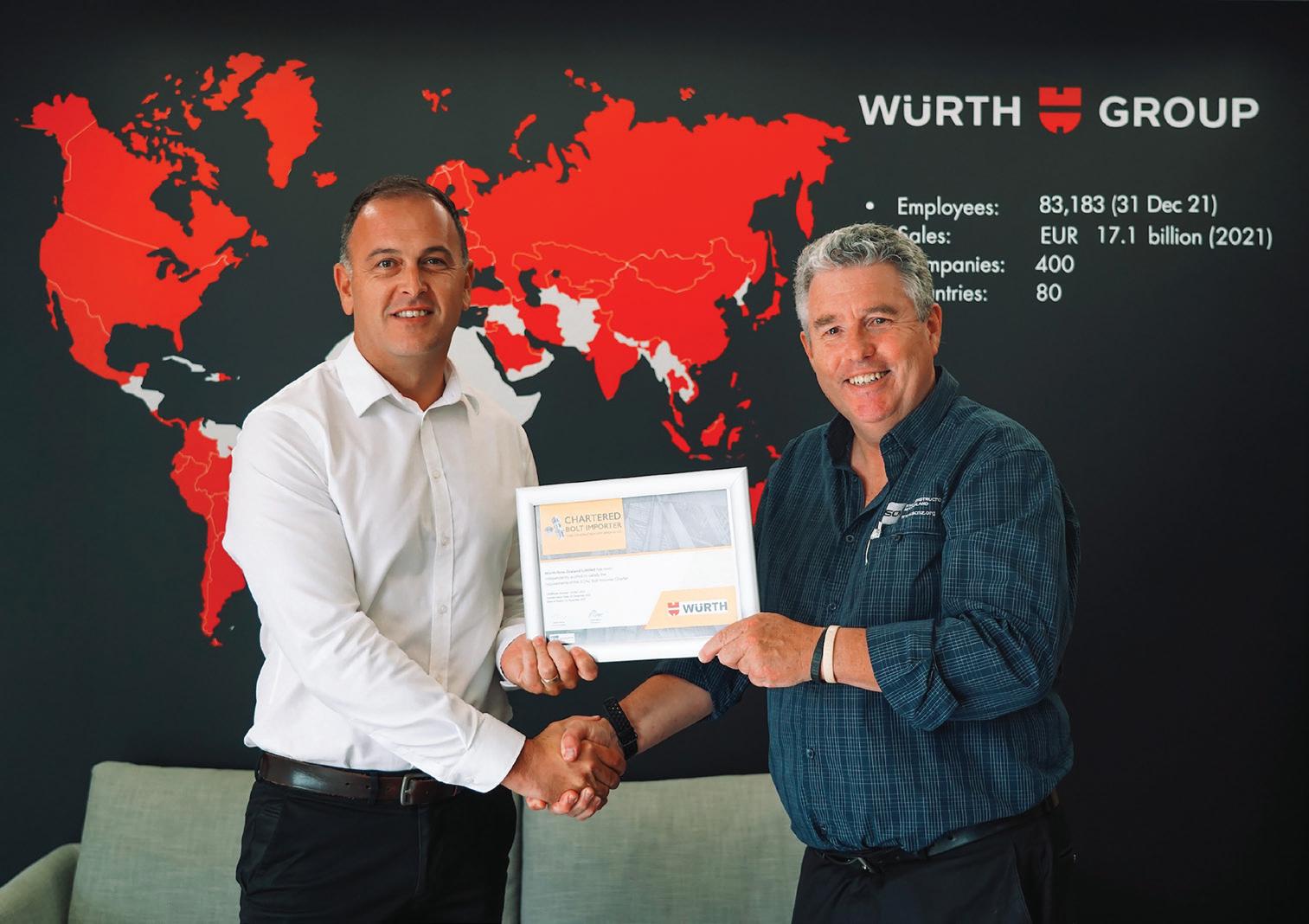
Recently we achieved the highly sought-after accreditation from SCNZ to comply with Chartered Bolt Importer requirements. As the first fastening specific supplier and only second company to meet this standard, we are again confirming our mark of quality and commitment to the Structural Steel industry. The Charter is a steel construction industry quality assurance programme. The Bolt Importer Charter ensures that fasteners and anchor bolts supplied to the local steel construction sector are sourced using good procurement practice and represents a mark of excellence for bolt importers. We have been independently audited to satisfy the requirements of the Charter and are very proud to hold this accreditation.
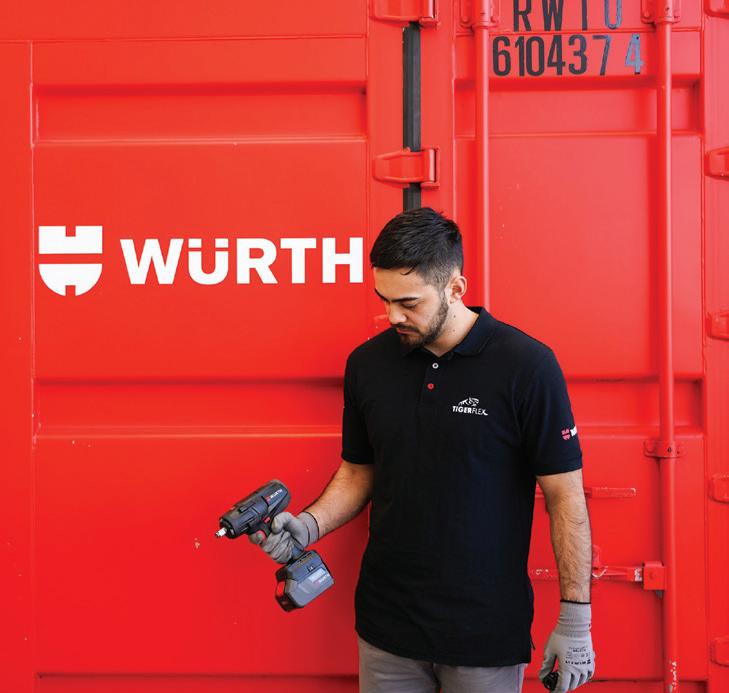
We hope to see you on site soon. Ask our sales reps about how we can help support you in the field with an improved procurement system, e-procurement or one of our customised Red Wurth Container solutions. We are ready for work.
David Paterson, Managing Director, Wurth New Zealand Limited
SCNZ’s Darren O'Riley was delighted to present Wurth New Zealand Limited’s David Paterson with a certificate to celebrate the company attaining the Bolt Importer Charter.
CMUA Te Kaha project
– Steel supply Quality Assurance
Main Contractors BESIX Watpac have appointed Southern QA Ltd as consultants and auditors for the CMUA steelwork supply contract. Fabricated steelwork is being supplied from China and New Zealand by Jinggong Steel International and Grayson Engineering Ltd respectively.
Jinggong Steel produced the steel frame for the Beijing Olympic stadium and has recently supplied the steel for the Seascape project in Auckland. Grayson has a record of delivery to steel projects in New Zealand including the Forsyth Barr Dunedin Stadium and Justice and Emergency Services Precinct in Christchurch.
Southern QA’s role will be to ensure all steel delivered and erected complies with both the New Zealand standards for steel structures and the Specification for the project. Overseas procurement for projects, irrespective of size, presents challenges to ensure that not only is the steel of acceptable
quality, but the specialist processes of fabrication, welding, protective coatings, erection and all the related QA and QC functions are fully compliant with AS/NZS standards.
According to Rob Penney, Southern QA’s Technical Director, many aspects of steel fabrication and erection are treated differently in various other countries. As well as the need for specific seismic design in New Zealand, differences can exist in:
• the meaning of drawing symbols,
• the requirements for sampling of steel
• the extent of weld procedure approvals
• inspection percentages, methods and quality levels
• action in the event of non-conformances
• composition of the manufacturer’s data record
Given these variables, the engagement of SQA as a specialist auditing company is a risk management and quality assurance strategy. While responsibility for compliance of supplied steel rests with the manufacturer, SQA assists in managing the differences in understanding as outlined above, and minimises the risk of rework being required
resulting in delays. Southern QA has already commenced this work before any steel has been fabricated by working with the project team to ensure the Inspection and Test Plan (ITP) fully describes all the quality requirements for the steel structure.
Although it can be tempting to save a few dollars by looking to overseas supply,
structural steel projects both large and small are required to meet the same standards irrespective of the country of manufacture. By adopting a pro-active approach with Southern QA involvement, the project team on Te Kaha will be ensuring the delivery of world class steelwork for a significant project with a high public profile.
Strengthening Christchurch
Earthquake strengthening is being carried out continuously in the garden city, keeping buildings compliant as standards evolve.
The new building standard (NBS) is a moveable feast – buildings that were once considered to be up to standard are not necessarily so now, nor will they be in the future.
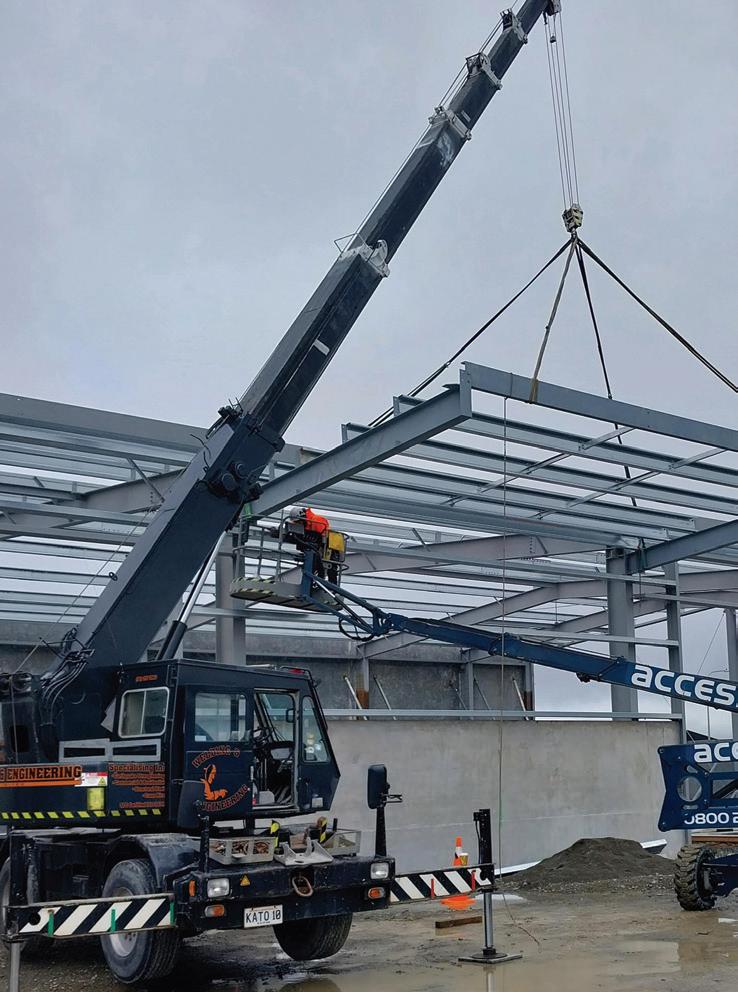
Welding and Engineering Ltd are earthquake strengthening specialists and have several prominent strengthening projects on the go in Christchurch.
Since the 2011 earthquakes, the company has undertaken a number of prominent projects including schools, universities, and other large public spaces.
This includes Christchurch Boys High School, Hillmorton Hospital’s new Child Adolescent Facility, the former IRD building and 66 Oxford Terrace Apartments.
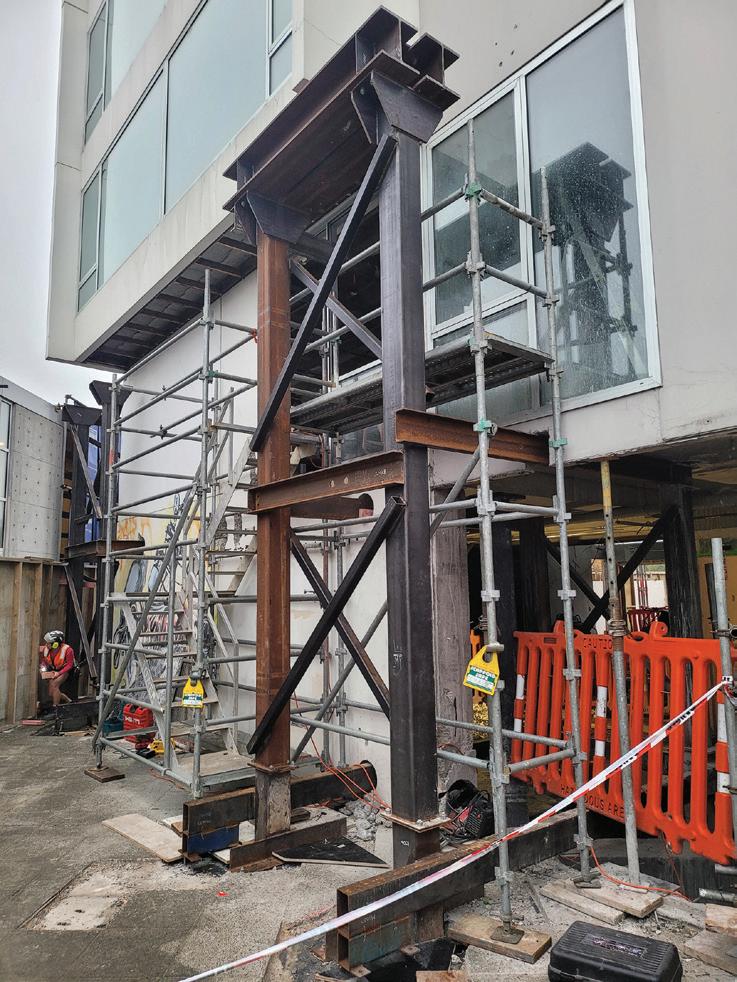
“We have provided the support towers for the Oxford Terrace Apartments,” says Quality assurance manager, Nicholas Coles.
“These have to carry the load of the upper 11 floors while the building was cut through the ground floor to have tectonus devices, shear keys, and rocking planes installed.”
Each tower carries up to 3000kN (300 tonnes) during the construction phase.
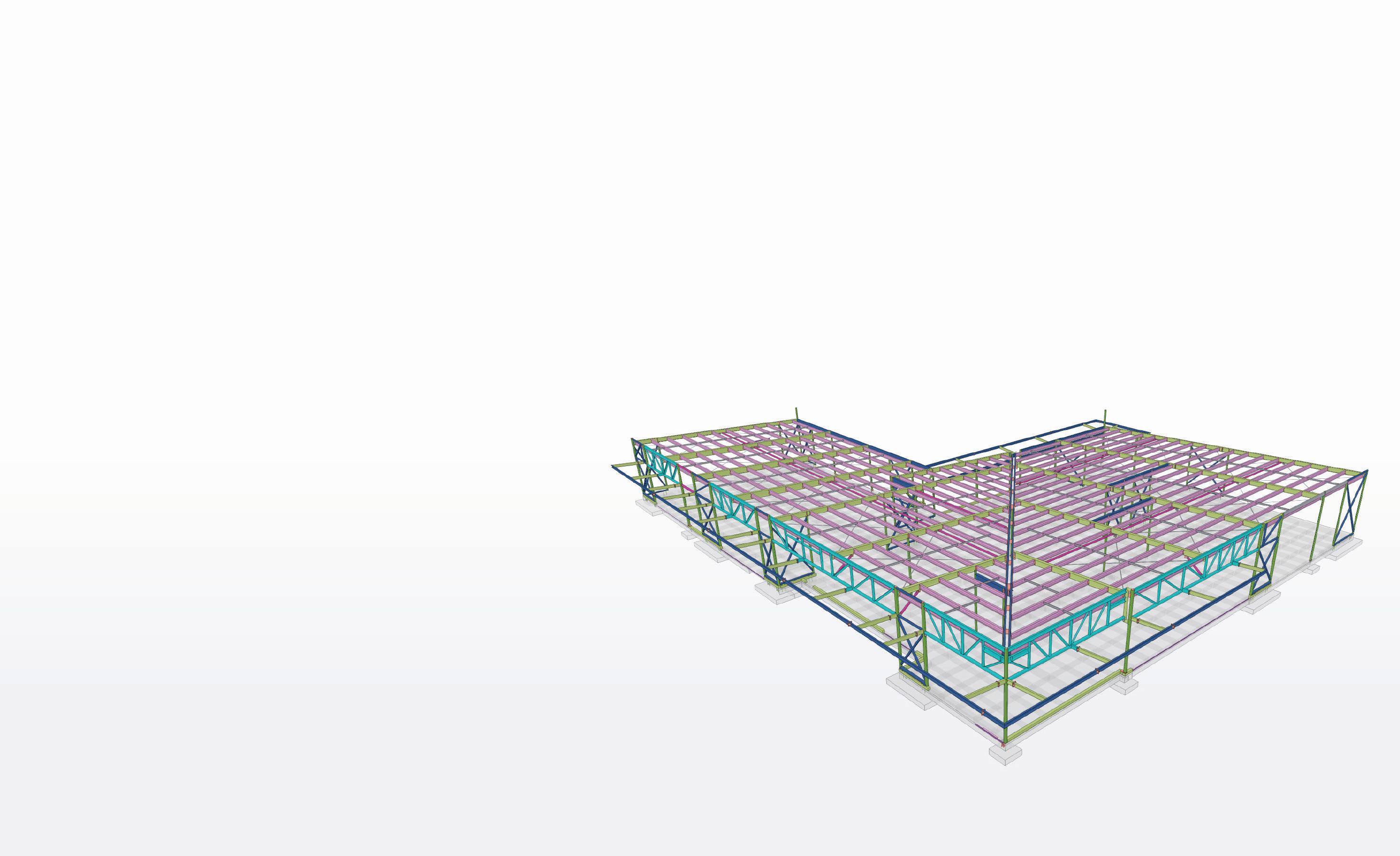
“The towers allow the upper floors to move independently of the ground floor in the event of a serious seismic event.”
Construction
planning and management
The company is certified Construction Category 3 by the Heavy Engineering Research Association (HERA) as part of the Steel Fabricator Certification (SFC) scheme.
This translates to peace of mind for clients, knowing the company complies with all relevant fabrication, welding, and installation standards, and provides:
● Guidance and support to clients, engineers and main contractors
● Identifies design issues and offer solutions
● Determines installation methodologies
● Projects are closed out quickly and effectively within agreed budgets and timelines.
New building standard
The new building standard (NBS) is an assessment of the earthquake rating a property is expected to achieve when constructed to the building code.
Nicholas Coles says “The NBS percentage rating a building achieves through assessment is not a measure of the building’s ability to sustain an earthquake event without damage for insurance purposes – it is focused on protection of life.”
Fast Reliable Detailing
It is the Beamline Ltd team commitment and ease to work with that makes the difference. We are leading the way in structural steel detailing, providing top quality fabrication drawings throughout New Zealand.
� Structural Steel Modelling
� Shop Drawings
� Site Erection Drawings
� BIM Model
� Point Cloud Scan
This focus, means not only will any increase in the NBS rating likely improve the building’s performance, it makes it more attractive to potential tenants.
Earthquake risk or earthquake prone?
An important component of how the NBS rating is awarded is that the lowest defective point in a building determines the NBS percentage.
“So, if there is a component of the structure that is rated at 35 percent of the NBS, the entire building will be rated as 35 percent NBS until the problematic area is addressed.”
● A building rated as less than 67 percent NBS is an earthquake risk
● A building rated as less than 34 percent NBS is earthquake prone.
If a building, or part of a building, is earthquake prone it is considered that it is likely that its design capacity will be exceeded in a moderate earthquake.
“And if it were to collapse,” says Nicholas, “It is likely to occur in a manner that may cause injury or death to persons in or near the building, or injury, death or damage to adjacent properties.”
Welding & Engineering Limited
Unit 32, 105 Bamford St Woolston, Christchurch 8023
Nicholas Coles, quality assurance manager (03) 377 7063 nick@weldeng.co.nz www.weldingandengineering.co.nz
●
●
Twenty years on and going strong
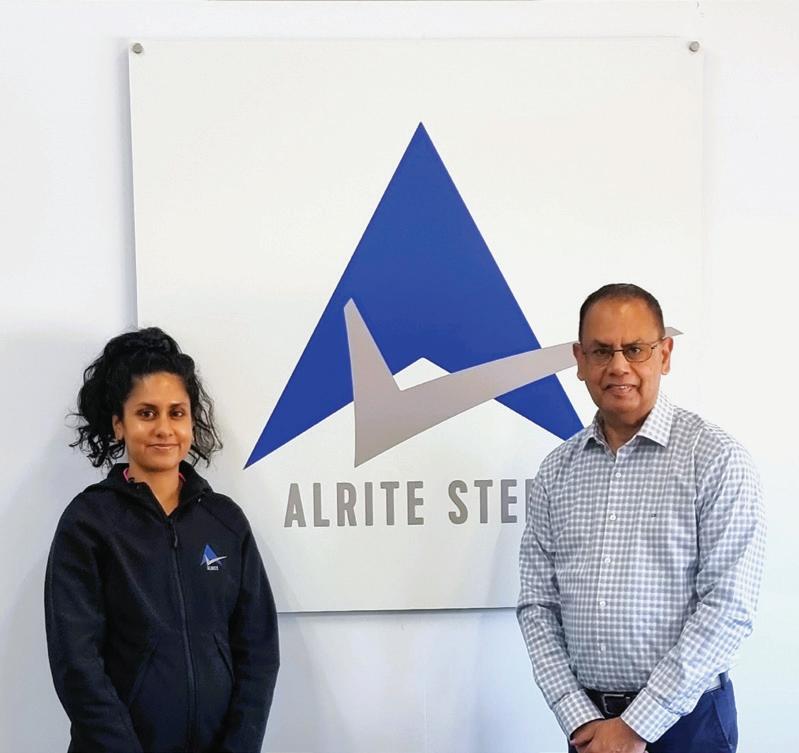
It’s 20 years since Bhaskar Sharma started Alrite Steel in his home office in Auckland.
Today the team at Alrite Steel and Services have a combined 60-years industry knowledge and experience.
They supply products for many major projects around New Zealand and the Pacific region.
As managing director, Bhaskar focused on large project work and whilst daughter Riti Sharma handles the day-to-day work as the Operations Manager.
Riti says she had an interest in business even when she was a young child, growing up around it.
“Then I worked here during the holidays throughout school and university.
“I was always curious in what my dad really did for work as I was unsure how a steel business could be ‘enjoyable’; six years later I think it’s the best industry to be in and love my job.”
Riti got her Bachelor in Commerce majoring in Marketing and Management at the University of Auckland.
She worked in roles at other companies in Canada and New Zealand, before officially starting at Airite in 2018, as a sales and marketing associate.
Riti is pleased to see more women like her in the industry and recently attended the inaugural Steel Construction Women in Structural Steel event, hosted by Michelle Gutierrez-Smith, who is a services coordinator at SCNZ.
Women from different backgrounds, industries and stages in their careers attended the event. “It was a great evening connecting with other women in the steel industry and hearing different stories about their journeys.”
That strong family foundation translates into strong customer connections they’ve formed over those two decades, with clients across the construction industry.
Their whole team goes above and beyond and will work around the clock if they have to get the goods delivered on site.
“We are aiming to keep evolving and looking forward to the next 20-years.”
Quality and safety assured Airite provides products and services that meet customer, statutory and regulatory requirements.
Operations manager Riti Sharma says their products are fully compliant and certified.
“And we’re independently audited to satisfy the requirements of the Steel Construction New Zealand (SCNZ) Structural Steel Distributor Charter.”
Alrite are members of the Heavy Engineering Research Association (HERA), Site Safe and have gold certification from the Sustainable Steel Council.
Alrite is accredited to the ISO standard AS/ NZS ISO 9001:2015.
Alrite Products
● Structural long sections – hot rolled (UB, UC, PFC) and structural hollows, plate product, merchant bars, sections (angle and flat) 100mm and larger, welded sections.
● Flat rolled steel coil products.
Steel framed houses
As a member of the National Association of Steel Framed Housing (NASH) Airite promotes steel framed houses, including steel claddings throughout New Zealand and Pacific Islands.
Alrite Steel and Services in a nutshell
An importer, exporter, stockist and distributor of all types of steel and steel products since 2003.
A family owned and operated business with managing director Bhaskar Sharma and operations manager Riti Sharma – along with their fantastic team.
Over the years Alrite Steel have established strong supply relationships with mills out of Asia and other partners which has contributed to a key competency of the business.
In July 2022, Steel Construction New Zealand congratulated Airite on their third successful renewal of SCNZ’s Structural Distributor Charter. “Alrite has demonstrated their commitment to quality and compliance by ensuring that the structural steel it supplies to the local steel construction sector is sourced using best-practice procurement.”
The Slab Panel Method: Design of Composite Steel Floor Systems for Severe Fire
Significant updates to HERA report R4-131 Design of Composite Steel Floor Systems for Severe Fires (slab panel method (SPM) design guide)
HERA has announced the republication of updated HERA Report R4-131:2022 – Design of Composite Steel floor Systems for Severe Fires.
This updated report has been authored by Associate Professor Charles Clifton of the University of Auckland, along with Fanqin Meng, Dr Kaveh Andisheh, and Reza Kordani of HERA.
The report is the result of significant edits to HERA’s previously published Design of Composite Steel Floor Systems for Severe Fires R4-131, to account for recent research and development and changes to New Zealand Standards since R4-131 was originally published in 2006.
The new design guide delivers an advanced technical solution, which provides a more cost-effective and sustainable solution that increases the safety of buildings in severe fires.
The design guide is part of the HERA project “Updating Slab Panel Method (SPM)”.
The project has three key parts:
1. updating R4-131 to deliver advanced solutions;
2. developing SPM webinars to upskill engineers and other professionals; and
3. updating HERA’s SPM software.
The full report can be accessed here: www. hera.org.nz/product/hera-report-r4-131
Heavy Engineering Research Association PO Box 76-134 Manukau Auckland (09) 262 2885 www.hera.org.nz
Delivering greater fire safety
New Zealand engineers can access an updated version of HERA’s report on the Design of Composite Steel floor Systems for Severe Fires.
The amended report will eliminate confusion around some revised standards, such as NZS 3404, which rendered the Slab Panel Method design guide incompatible with them.
This report is authored by Associate Professor Charles Clifton of the University of Auckland, along with Fanqin Meng, Dr Kaveh Andisheh, and Reza Kordani of HERA.
Dr Andisheh was project leader and coordinated the peer review process, he says the guide is a tool aimed at greatly improving engineering best practice.
“From the building resilience perspective, the update was necessary to deliver an advanced technical solution while taking into account the metal contribution to the slab membrane capacity in severe fires.”
The new design guide delivers advanced technical solutions, based on recent research and development, and provides more costeffective and sustainable solutions that increase the safety of buildings.
Fangin Meng’s role was to update the report based on his PhD study under Prof. Clifton’s supervision, based on the National Institute of Standards and Technology (NIST) test results.
The updated SPM introduces a new concept for the structural fire design of steel elements, the reserve fire resistance. The adoption of this concept allows the steel structures to remain stable even when experiencing severe fire conditions.
The design guide is part of the HERA project Updating Slab Panel Method (SPM). The project has three key parts: updating R4-131 to deliver advanced solutions; developing SPM webinars to upskill engineers and other professionals; and updating HERA’s SPM software.
HERA R4-131 was published in 2005 and since its publication, many revisions and amendments have been made to the design standards.
The updated Slab Panel Method improves metal composite slab capacities in fire, so the updated technical solution improves building resilience.
The design guides include:
• Metal deck contribution to membrane capacity
• Amendment of shear capacities to align with AS/NZS 2327
• An updated design example.
The SPM is an effective way to reduce costs in fireproofing portions of a steel structure where it is not essential.
Fanqin’s study has shown that standard structural design approaches in the fire might be insufficient and contribute to the collapse of buildings. Thus, SPM changes are of the utmost importance.
To purchase the report online, visit: www. hera.org.nz/product/design-of-compositesteel-floor-systems-for-severe-fires
HERA members can borrow a copy from the library, just email: info@hera.org.nz.
Corrosivity mapping tool
HERA has developed a digital corrosion map that can precisely and quickly assist designers and engineers in the correct corrosivity zone of structural steel. The online map improves durability design, so it enhances steel sustainability.
Refer to the Metal Mind tool to gain access to the HERA digital corrosivity map: www.hera.org.nz/steel-innovation.
The actual deformed shape showing the vertical displacement contour plot of part of the Britomart East office building due to natural fire.
The Britomart East building under construction.
Target State
As a business owner, you know that incorporating digital tools and technologies can help you work more efficiently, reduce costs, and deliver better outcomes for your clients. However, it can be challenging to take advantage of these technologies, especially if you’re not familiar with the latest advancements.
That’s where working with a specialist partner can make all the difference. By partnering with a digital transformation specialist, such as Target State, you can get the most out of these tools and technologies. We have the expertise and knowledge to guide you through the process of digital transformation, from selecting the right tools to integrating them into your workflows.
Our team is here to help you reshape your details, processes, skills, and structures to help achieve your business goals.
It’s essential for businesses in New Zealand to have the latest and quality technology for long-term maintainable success. That’s why at Target State we’re all about being fast and efficient, affordable, supportive, experienced, and knowledgeable and we can help you progress your digital roadmap today.
IT projects – no matter how big or small will be done on time, on point and on budget with us by your side.
A Target State advisor can help you identify the digital tools and technologies that are most relevant to your specific needs, such
Our team is here to help you reshape your details, processes, skills, and structures to help achieve your business goals.
as BIM, 3D printing, VR/AR, and wearables. They can also assist you in selecting the right software and hardware to support your workflows, as well as help you understand how to use these tools most effectively.
In addition to providing expert advice, our advisors can also help you overcome any challenges you may face during the digital transformation process. They can provide training and support to your teams, ensuring that everyone is comfortable and confident using the new tools and technologies. This
can help you achieve a smooth transition to a more digital way of working, reducing the risk of disruption to your operations.
Partnering with a specialist in digital transformation can also help you stay up-to-date with the latest trends and advancements in the industry. As technology continues to evolve, it can be challenging to keep pace with the latest developments. Target State will help you stay informed and ensure that you are using the most cuttingedge tools and technologies available.
Partner with us and can ensure that you are using the most effective tools and technologies to deliver better outcomes for your clients.
Visit our website for more information here: targetstate.co.nz
Interested in getting in touch?
Get in touch with us today by calling our team at (09) 832 0833, emailing at info@ targetstate.co.nz, or alternatively heading to our office at Level 26, HSBC Tower, 188 Quay St, Auckland 1010, New Zealand.
Southern Towers is new to the tower crane industry but managing director Graham Millar has worked the length of the country erecting and operating cranes for over 25 years and has a sound knowledge of what tower crane will suit your project the best.
Pacifica Tower takes top honour at concrete industry awards
The project team responsible for the Pacifica Tower in Auckland’s CBD, New Zealand’s highest residential building, has taken home the 2023 Nauhria Premier Concrete Award.
Presented at the Concrete New Zealand (NZ) Nauhria Industry Awards event at the Royal New Zealand Yacht Squadron in Auckland in March, the award celebrated Concrete’s role in one of the first examples of a new high-rise construction method being used in New Zealand.
The judging panel commended the project team, which along with BBR Contech also included Hengyi Pacific, Plus Architecture, BGT Structures, WSP, ICON, and Dominion Constructors, for the adoption of innovative design and construction techniques that are emerging in New Zealand.
The panel felt the use of in-situ posttensioned concrete floors was an
elegant solution to architectural and structural performance requirements for multi-storey buildings.
Concrete NZ chief executive Rob Gaimster believes the Pacifica Tower sets a new standard for multi-storey reinforced concrete builds, demonstrating concrete can be used for the tallest commercial and residential structures in New Zealand.
“The Pacifica Tower is a prominent and celebrated addition to the Auckland skyline, and all those involved can be proud of our biggest city’s newest landmark,” Rob says.
On their way to the top prize, the Pacifica Tower team also won the Firth Industries –Excellence in Commercial Concrete category award.
The awards set a new benchmark for excellence in concrete design, construction, rehabilitation, research, and innovation, while also recognising the leaders and teams who are building and preserving New Zealand’s low-carbon, built environment of tomorrow.
CATEGORY WINNERS
Holcim - Excellence for Architectural Concrete (Monte Craven Award)
Hynds Pipe Systems for Te Pae North Piha Surf Life-Saving Tower, West Auckland
The brief was for the lifeguard tower at North Piha - one of the most beautiful but dangerous surf beaches in New Zealand –to be a robust, low-maintenance building that would withstand the severe coastal environment. As the site is remote, precast concrete was chosen for factory manufacture and assembly on-site. The tower is made up of 10 bespoke elements, with the shaft sitting on an in-situ concrete foundation to support the podium elements that cantilever towards the sea.
Project team: United North Piha Lifeguard Service, Crosson Architects, BGT Structures, Scarborough Construction, and Hynds Pipe Systems.
Golden Bay
- Excellence in Concrete Infrastructure
Fulton Hogan Taylors Joint Venture for the Waimea Community Dam, Tasman
The dam is one of the region’s most important infrastructure projects and the largest dam built in New Zealand in over 20 years. The project team developed new approaches to achieve a high-quality concrete outcome. Key to success was placing over 30 thousand cubic metres of concrete in a remote location that included a diversion outlet, starter dam, plinth, spillway, and the embankment’s concrete face.
Pacifica Tower, Auckland. Image taken by David Calder-Flynn.
Te Pae North Piha Surf Life-Saving Tower. Image taken by Sam Hartnett.
HIGHLY COMMENDED
Downer New Zealand for the Tekapo A, Intake and Shaft, Canterbury
The unique engineering project protects one of the South Island’s key hydropower schemes by allowing the flow of water to Tekapo A, Power Station to be stopped in an emergency shutdown.
Project team: Genesis Energy, Downer New Zealand, AECOM, Parfitt Construction, Kiwi Concrete, and Complete Reinforcing.
The entire complex was conceived as a journey through nature, emulating the context of the Canterbury Plains as they meet the majestic alps. The main feature is the hard landscaping, which uses shotcrete and decorative concretes. A striking element of the facility is the cave system that features complex shapes formed using large bags of sawdust as the backform.
Project team: Methven Adventures, Sheppard & Rout, Bradford Group, Allied Concrete, and Peter Fell Ltd.
Excellence in Residential Concrete
Young Architects for Scarborough Béton Brut, Christchurch
Strong and efficient concrete was used to retain the hillside and for the finished internal walls. The structure was insulated
and left exposed, allowing the concrete’s thermal mass to optimise a passive solar design. Resilient in the face of strong winds and seismic threats, the concrete also offers strong timber grain shuttering giving a raw aesthetic.
Project team: Young Architects, Hoogervorst Builders and ENGCO.
BCITO Te Pūkenga -
Tekapo A, Intake and Shaft, Canterbury.
Ōpuke Thermal Pools and Spa, Methven. Image taken by Lisa Gane from Lumo Photography.
Scarborough Béton Brut, Christchurch. Image taken by Dennis Rademacher.
QUALIFICATIONS THAT FIT WHAT YOU DO
SUPERVISOR
EXTERIOR
FLOORING
FRAME & TRUSS
E2 Code Compliance & Alternative Solutions
E2 compliant Threshold drainage
E2 Building Code
Clause 7.3.2.1 of the E2 Building Code lists the requirements for an acceptable solution for level threshold drainage:
• A channel that is 150mm deep, 200mm wide.
• Maximum channel length of 3.7m.
• 1:200 minimum fall to outlet.
• The grating that sits over the channel must:
• Be able to be fully removed for maintenance.
• Be supported independently of the door frame.
• Have a continuous gap of 12mm.
Looking for an alternative solution? (E1 compliant)
If site conditions allow, a precast grated channel or slot drain can be installed against the building as a level threshold alternative solution, complying with the E1 Building Code.
Each alternative solution needs to be addressed on a project-byproject basis. After providing detail and evidence, of an E2 alternative being fit for purpose at design stage, this will be checked by the designer and then go for council consent.
To meet consent requirements, most councils require manufacturer’s calculations to demonstrate the performance of the system.
• ACO offers a free hydraulic design service.
• Provides product details at all stages of the project.
Each council has different requirements, be sure to check with your ACO representative before choosing a drain to make sure it meets local requirements.
According to the functionality of our ACO products the best practice would be to make sure nothing obstructs the clear flow inside the channel such as legs sitting in the channel base. A blocked channel can even cause water to back up into the cladding.
ACO Cantilever ThresholdDrain
System fully supported by the cantilever arm.
Ideal for tile and paved exteriors. Can be scheduled so the landscaping contractor is not interfering with the installation of the drain.
ACO OnePour ThresholdDrain
• OnePour is a bolted bracket system using the landscaping concrete for its support.
• Perfect for concrete floor finishes.
Both products do not require a rubber spacer or leg for structural integrity.
E1 compliant Threshold drainage
ACO KlassikDrain - grated channel
• E1 alternative solution.
• Often quicker & easier to install.
• Outlets can be spaced up to 80m.
Product selections include ACO KlassikDrain or Brickslot, and PowerDrain for heavy duty traffic applications.
More info at: askaco.nz/aco-thresholddrain Get in touch: 0800 448 080 info@aconz.co.nz
ACO. we care for water
Powerpac GroupExcellence in Concrete for the Community Downer New Zealand for the Downtown Infrastructure Development Programme, Auckland
The 350-million-dollar redevelopment of the downtown area had an ambitious timeline, with America’s Cup and other events on the horizon. There were numerous large concrete-based components erected and cast over the water, and significant architectural concrete finishes that enhance the streetscapes. Notable amongst these were the Te Wānanga Downtown Public Space and the seismic strengthening of the 100-year-old seawall on Quay Street.
Project team: Auckland Transport, Tonkin & Taylor, Aurecon, HEB Construction, Soletanche-Bachy, Downer New Zealand, Allied Concrete, and Firth Industries.
Downtown Infrastructure Development Programme, Auckland.
FormshoreExcellence in Concrete Remediation and Reuse
Downer New Zealand for City Rail Link (CRL) C1, Auckland
The CRL Contract 1 and enabling works involved extending the rail network from Britomart Station underneath the historic Chief Post Office and Lower Queen Street, one of the busiest areas of the Auckland CBD. The construction of twin rail tunnels beneath the Post Office presented challenges, which led to post-tensioning and the construction of concrete diaphragm walls as part of the underpinning works.
Project team: Auckland Transport, Soletanche Bachy, Aurecon, Freyssinet, Downer New Zealand, Allied Concrete, and Acrow.
HIGHLY COMMENDED
Aurecon for Ngā Hau Māngere, Auckland
In partnership with mana whenua, the project team replaced the 105-year-old Old Māngere Bridge with a new, stunning piece of structural engineering which, at 260-metre-long, has an elegant, curved design.
Project team: Waka Kotahi NZTA, Aurecon, Pete Bossley Architects, Isthmus, and McConnell Dowell.
CanzacExcellence in Concrete Innovation
Allied Concrete for e-creteTM
With a reliable supply of ground granulated blast furnace slag now available in New Zealand, Allied Concrete undertook an R&D programme to develop a range of lower embodied carbon concretes known as e-creteTM, which are being used on a limited scale in Auckland. These concretes use SCMs and other concrete mix technology to achieve lower carbon outcomes with cement substitution of up to 60 percent.
Project team: Allied Concrete.
Images kindly supplied by Concrete NZ.
Ngā Hau Māngere, Auckland.
City Rail Link C1, Chief Post Office and Lower Queen Street, Auckland.
SLABX200 is EXPOL’s new generation high performance Expanded Polystyrene Board specifically designed to deliver high compressive strength and improve insulation under concrete slabs.
It delivers an uncompromised compressive strength of 200kPa @ 10% deformation and exceptional Insulation Values.
Specifically engineered for residential and commercial projects, its high performance gives engineers and specifiers peace of mind while increasing the thermal performance of a building.
SLABX200’s durable nature means it will not degrade over time, keeping its integrity for the life of the structure.
SLABX200 waste is actively recycled into other EXPOL products
SLABX200 - the product of choice for specifiers and the construction industry.
Learn more about SLABX200 visit www.expol.co.nz
Call or email our Technical Manager; T: 0800 86 33 73 or E: tech@expol.co.nz
200 k P a STRENGTH @ 10% DEFORMATION 3.0 R-VALUE @100 mm
New from MAX® – The RB611T TwinTier™
Rebar
Tying Tool – Now
The MAX® TwinTier™ RB611T is reportedly the first battery powered tool in its class with the ability to tie D29 x D32 rebar.
TwinTier™ technology’s special attributes include faster tying speed, which further increases productivity; reduced wire consumption, increasing cost savings; and, for end-users, a wire tie that is shorter in height, requiring less concrete to fully cover it.
The MAX® TwinTier™ simultaneously shoots two x 1.0mm wires around rebar intersections, wrapping once to form a tie equivalent to the strength of a hand snap tie. The TwinTier™ uses TW1061T series tie wire, available in black, poly coated, and stainless steel options. The tool’s new 5.0Ah lithium-ion battery will complete approximately 5,000 ties before needing to be recharged.
The MAX® TwinTier™ RB611T’s large jaw allows users to tie D16 x D16 up to D29 x D32 rebar (varying by manufacturer). Its
with 5.0Ah Batteries
The MAX® TwinTier™ simultaneously shoots two x 1.0mm wires around rebar intersections, wrapping once to form a tie equivalent to the strength of a hand snap tie.
"
enclosed design offers greater protection against debris and moisture entering the tool. Like other MAX® rebar tying tools, the simple operation of the MAX® TwinTier™ helps reduce muscular skeletal injuries when compared to manual alternatives — a position supported by NIOSH in USA. Overall, no matter the application, the MAX® TwinTier™ reduces the time it takes to complete a job, saves businesses money by cutting man hours needed for each project and increases the productivity of its workers.
RB611T 6th Generation Double the Speed - Double the Ties - Larger Capacity
Simple to operate - fast to use - wraps 2 x 1.0mm tie wires, tensions and ties tight, with a 50% shorter tie height than other models. Ties a combined size of 32mm, up to 61mm, with 115 to 205 ties per coil, 5000 ties per charge, with the MAX® 60 minute fast charger. The MAX® RB611T TwinTier™ Re-bar-tier is lightweight, with a compact body.
New 5.0Ah Lithium-ion batteries. Made in Japan. • Precast Concrete Products • Building Foundations • Road & Bridge Construction • Floors & Walls • Retaining Walls
Swimming Pool Walls Battery operated re-bar-tying tool for:
The name behind the nation’s premier concrete awards
By Timmi Aplin-Barrett
Nauhria, a company producing high quality precast concrete and reinforcing steel products and services, were the main sponsors for the recent concrete industry awards.
Held on the 23rd of March in Auckland, the awards were a massive success.
The inaugural event, named the Concrete NZ Nauhria Industry Awards, celebrates exceptional projects and initiatives that showcase concrete design, construction, rehabilitation, or research.
Winners spanned a range of concreting projects across the country.
Nauhria CEO, Rakesh Nauhria, says they’ve been in the industry for over 30 years.
“Having previously participated and won several industry awards, they have been a vital part of our journey and we felt it was time to give back.”
He says Nauhria is a real family business that his father, Roshan Nauhria, started in 1991, beginning with reinforcing steel in Christchurch.
The company relocated to East Tamaki in 1994. Rakesh joined in 1999 and, in 2001, precast concrete was introduced.
He says the company drives the family values, which are an important part of the Nauhria DNA.
His father and him have a great partnership, and today, the group has well over 300 amazing staff.
The Nauhria Group comprises of Nauhria Precast Ltd, Nauhria Reinforcing Ltd, Vida Precast Ltd, Stahlton Prestress Concrete, and Balcrom Reinforcing Ltd, which provides coverage throughout New Zealand.
The group is highly proactive in supporting architects, designers and engineers to harness effective solutions, ideas and accurate specifications.
“Through that process, we’ve had a lot of success,” Rakesh says.
“In 2015, we won the Westpac Auckland Business Best of the Best Excellence Awards and have taken out several other key awards in our industry.”
Rakesh says because of their family values, they’ve always been a long-term strategy business.
“Even in tough times, we’ve continued to invest our heart into the business and our people. During the GFC, a very challenging period for our industry, Nauhria almost doubled its market share.
Even during the Covid pandemic that saw many businesses struggling, Nauhria ensured they maintained their full staff numbers.
Rakesh says redundance was not an option and everyone received full pay.
“One of our principles is when times are good, we succeed due to our team, so when times are hard, why should they suffer?
“My father and myself were willing to take a hit to make sure everyone stayed employed and paid in full,” Rakesh explains.
“It helps us on the other side with loyalty and when the market picked up again, we had a strong team.
“A number of staff members have been with us for 10 to 15 years and some have even been here for 25 years. “
Maintaining family values within the company has paid off; Nauhria has seen a great deal of success.
The company’s stated purpose has also driven them to achieve the best that they can. Rakesh says their purpose is ‘Helping Build a Great and Safe New Zealand’.
“We live in one of the greatest countries in the world. We believe it is our responsibility to ensure the next generation of Kiwi’s will not only ‘enjoy’ this extraordinary land, but to help make it the greatest country in the world,” he says
Rakesh says Nauhria has recently opened a purpose-built factory in Papakura for the precast business as well as having purchased Stahlton from Fulton Hogan and relocating this to South Auckland.
“Our reinforcing business moved into new premises with additional investment into new machinery.
“We have also continued to grow our wonderful team both locally and from overseas, increasing our overall capacity considerably and ensure we can meet the demands of our valued clients.”
Nauhria will continue to forge ahead in the precast concrete and reinforced steel industry.
Rakesh says they’re constantly looking at what they can do for clients to help them achieve their goals and the Nauhria purpose; Helping Build a Safe and Great New Zealand.
Creative Precast Concrete Wall Panels
Nauhria
98 Hunua Road
Papakura, Auckland (09) 262 1065
sales@nauhria.co.nz
www.nauhria.co.nz
www.vidaprecast.co.nz
www.stahlton.co.nz
www.balcromreinforcing.co.nz
Unlocking timber’s full potential
Timber Design Centre (TDC), hosted at Scion, is committed to unlocking the full potential of timber construction in Aotearoa with their industry standard advice.
The Timber Design Centre’s purpose is to encourage and facilitate greater use of timber in the design and construction of all building projects.
They are passionate about building belief in the possibilities of working with timber by showcasing and demonstrating what can be done, its infinite benefits and helping to share and grow knowledge, techniques, and skills across the industry.
Their particular focus looks outside the single-dwelling residential building sector to support contractors to use nature’s most sustainable material within the commercial building industry.
Their audience includes a range of contractors such as architects, designers, builders and more.
TDC technical manager, Bjørn Stankowitz, says he coordinates technical projects and
gives quality service support for a greater timber design community in Aotearoa.
“We want timber to be accessible and easy to build with. We can see the [construction industry] wants more of it, therefore we are collaborating with software developers to create better access to design tools that will allow consultants to design more efficiently and consistently.”
There is a distinction between timber used for stick framing and mass timber, which encompasses materials like CLT, Glulam, and LVL.
Mass timber has a high strength-to-weight ratio, meaning it can withstand significant loads while still being lightweight, which is extremely beneficial for countries with risks of large earthquakes.
Another benefit we seem to be exploring more and more in New Zealand is, that timber and mass timber can be prefabricated off-site, which can save time and reduce construction waste. It also
allows for faster on-site assembly and can accelerate the overall construction timeline.
Timber has a hugely appealing visual aesthetic with a softer, more ‘comfortable’ feel and sense of ‘building the natural in'.
Mass timber can also be used to create unique shapes and designs that would be difficult or impossible to achieve with other materials. And it can be used in a variety of applications such as floors, walls, roofs, and even entire buildings and complex bespoke structures.
“To help with our carbon footprint we need more use of timber in new developments where lower weight buildings mean smaller foundations and the carbon in the timber is locked in for the lifetime of the buildings,” he says.
“But to get the maximum benefit from the unique properties of timber and mass timber, it is essential to use them strategically in building developments without trying to force timber into every application. It’s about using it smartly.”
Four generations of thinking outside the box
To help with our carbon footprint we need more use of timber in new developments where lower weight buildings mean smaller foundations and the carbon in the timber is locked in for the lifetime of the buildings.
Saltwater Creek Bridge. Photo supplied by JBT Architects.
He says this is what makes the TDC unique and its fundamental role. Any challenging questions from contractors in the industry around sustainability, fire, acoustics, moisture management, and design for constructability will be answered authentically and honestly.
“We have a brand-new website portal which is very easy and intuitive for people to use.
“For engineers using the recently published structural timber design standards, it will provide guidance but also includes an option to provide feedback on errors and improvements that we collate.”
The portal is free of charge for anyone to enquire to the professionals in the industry about anything timber related.
“We don’t want people to be charged with getting their foot in the door to understand mass timber,” Bjorn says.
“We are a government-funded entity and provide independent technical advice for consultants and contractors. An organisation where collective information, guidelines, and technical support are easy to access for everyone”.
TDC works closely alongside MBIE to ensure the TDC always has up-to-date information regarding timber standards and regulations, and that MBIE keeps up with best industry practice.
“To build correctly with timber you need to use structural forms that maximise the advantages of this natural material and carefully use details to protect exposed wood and enable rapid construction.
“Then, you need to find the best way to deliver this information appropriate to those who are using it such as builders, architects or designers.”
Working with MBIE means TDC are continuously updating and ensuring their information is accurate for designers and suppliers.
TDC encourage contractors to use their newly updated website portal to submit queries regarding timber use.
No query is too big or too simple for the team to answer and they will always try to respond to people promptly to ensure they get the answers when they need them.
“Our experience is that large timber has gained momentum and the new connection options and range of mass timber products are making it a more obvious material to go for in multi-unit and multi-storey structures.”
As the use of timber in commercial buildings is becoming more mainstream, contractors need to ensure they are ‘up to scratch’ on the best practice and advances enabled by updated regulations and installation processes of timber.
Managing aspects such as fire hazards and how to handle the moisture management on site are part of TDC’s remit.
TDC are preparing and maintaining the NZ timber design guidelines up to speed and continuously working on adding new guidelines to the library to ensure everyone is up to speed with the best practice in design and construction.
“If we don’t have the direct information you need, we can refer you to someone else in the industry who has the specific information you’re after.”
He mentions some builders may need to change their approach slightly. Timber
“We really encourage contractors to go to our website to ask any questions they may have.
IBuilt CoreClad
www.timberdesigncentre.co.nz
plywood cladding. Treated to the core.
Are you looking for a grooved or ungrooved plywood cladding in 2440, 2745 or 3050mm lengths?
CoreClad textured, ACQ treated plywood cladding offers strength, durability, and reliability. With sheets up to 3 metres long and no requirements to retreat cut ends, CoreClad is fast and easy to install.
For more product information and technical literature, visit www.ibuilt.co.nz or talk to your local building supplies merchant representative.
Photo supplied by TDC.
Clearwater Quays. Photo Supplied by Logic Group.
Simpson Strong-Tie –Flexible Mass Timber Connection Solutions
You Can Rely On
For more than 65 years, USA based structural systems and technology giant Simpson Strong-Tie has lead the industry in product development, engineering, testing and training. And now, their new Mass timber offer continues that tradition of design flexibility and engineering excellence.
Simpson extensively test their connection solutions to ensure they will perform in the toughest of conditions. Adding this to the quality and variety of product lines gives engineers more freedom to design flexibly, while still having confidence in reliability and performance.
Their connector products comply with the AU/NZ timber connector requirements, and are suitable with AU and NZ sawn timber species, CLT, LVL and other engineered wood products designed by specific engineering design using AS1720, NZS AS 1720.1, or NZS3603, or for prescriptive/conventional connector applications using AS1684 or NZS3604. The characteristic and design values they publish are determined from test and calculation values in accordance with AS1649, AS1720, and NZS 3603 for use with limit state design methods, and consider joint slip. Having published corresponding deflection limits for holddown
connectors enables engineers to design for connection stiffness.
Simpson also offers design parameters for their construction fastener range aligned with the recently published NZ AS1720.1 and Eurocode 5 methodology to further provide flexibility for the designer and to cater for upto-date design methodologies in our market.
If you require project specific guidance, they have a team of experienced worldclass structural engineers that are happy to assist designers with technical support and customer service, and a variety of local projects providing confidence and inspiration for your next mass timber build.
Best of all, when the design is done, you can count on products being readily available as Simpson carry stock of every line in their new Mass Timber Catalogue on the ground here and ready to go when your builder needs it.
Solid Wood is a web-based tool that designs timber connections with nails and screws according to Eurocode 5 (EN 1995-1-1). The software calculates methodically joints of timber to timber, steel to timber or mass timber while helping the user to find the right product for the application.
The software is easy to use and makes it easier to understand and specify the right solutions, based on substrate density, material characteristics, corrosion category and load. The software generates solutions from fasteners that are in stock in New Zealand, and provides a PDF-report that can be used as documentation for the project.
In 4 simple steps, Solid Wood finds a code approved fastening solution which is suitable for the specific project.
• Documentation according to Eurocode 5 (EN 1995-1-1)
• Support for CLT calculations according to ETA-21/0670
• Faster and easier than calculating by hand
• Link to our website (strongtie.co.nz) to easily get more information about the products
solidwood.strongtie.eu
Solid Wood
Straps tested and proven for CLT.
Lab-tested, load-rated CLT tension straps, surface splines and fasteners from Simpson Strong-Tie provide strength, versatility and reliability you can depend on.
To learn more, visit strongtie.co.nz/solutions#cltand-engineered-wood-solutions
Or scan the QR Code
Integrated timber solutions
By Jason Cordes, managing director, Red Stag Wood Solutions Limited
The construction sector is evolving in New Zealand with a significant drive for cost effective, environmentally sustainable materials.
Engineered Wood Products (EWP) tick the box for design performance and sustainability.
EWP or mass timber typically includes Cross Laminated Timber (CLT), Glue Laminated Timber (GLT) and Laminated Veneer Lumber (LVL).
Embracing the transition to EWP, Red Stag has invested heavily over the past five years to establish New Zealand’s largest CLT factory in Rotorua, and purchased Timberlab (now Red Stag TimberLab), based in Auckland, as New Zealand’s longest producing and most iconic GLT manufacturing and LVL processing company.
Rounding out the portfolio for integrated mass and light timber framing solution is Red Stag Wood Solutions in Hamilton, producing and supplying specialty frame, truss and light timber panelisation.
Red Stag’s unique position to design and supply integrated timber solutions and light timber solutions allows for simplified supply, streamlined procurement, and significant cost and time savings.
Henkel is the leading global supplier of 1K PUR adhesives to the Engineered Wood Industry.
Henkel’s Loctite-Purbond 1K PUR adhesives continue to be the leading choice by manufacturers of structural Glulam, CLT and PLT. These adhesives allow manufacturers to deliver superior, innovative products to their customers.
The Loctite Purbond adhesives are formaldehyde and solventfree and contribute to high production volumes due to their moisture curing chemistry, whilst supporting safer working environments.
For more information contact Warren Grigsby Business Manager or Eric Baggen Technical Manager Henkel NZ Ltd – Phone 09 272 6710 Email – warren.grigsby@henkel.com Email – eric.baggen@henkel.com
CLT, less commonly known in New Zealand compared to other EWP has the advantage of being in sheet or panel format, perfectly suited for floor, wall, roof and stair applications. CLT allows for up to 450m2 to be installed per hour.
Although, CLT has been around since the 1990s, the uptake in New Zealand has been slow as there has been no scale domestic producer.
Red Stag’s new $50 million EWP plant in Rotorua incorporates a world scale CLT plant.
Further investment is being reviewed to establish the largest EWP plant in the Southern Hemisphere, allowing CLT to be the backbone in traditional, mid and high-rise buildings.
At the same time, the company is to offer more cost effective and consistent supply of new CLT lintels and beams, as well as bricked GLT beams perfect for the frame and truss sector.
Red Stag Wood Solutions new +$50 million EWP plant in Rotorua.
It is important to note, CLT does not use SG8/SG10 timber, therefore does not reduce the available timber to the domestic construction sector.
CLT typically takes timber that did not quite make the SG8 grade (45 mm thick), removes defects (splits, large wane, large and lose knots, etc), finger joints together and then planes (typically down to 42 mm), ready for gluing and pressing into panels.
Double span CLT panel being lifted into position for a mid-floor.
The benefits of Red Stag’s CLT are:
• Domestically supplied with Red Stag design and supply integration with frames and trusses
• Treated to New Zealand NZS3640 treatment standards: H1.2 Boron; H3.2 CCA
• Panel sizes up to 16.9 m long x 4.9 m wide x 0.42 m thick and anywhere in between (+75 m2)
• Scale CNC machining to precision cut, drill, rebate all requirements to the mm in factory second CNC being installed in June 2023 and a third CNC in September 2023
• Significant improved installations times and reduced labour
• Reduced carbon footprint, site waste and site noise
• Solid stair systems, installed inside 30 minutes, supplied with the midfloor and capable of carrying construction loads and free of creaks.
Red Stag CLT Stairs – completely customisable and ready for supply expediently.
Prior to starting a project where CLT is a solution, please contact Red Stag for support.
Red Stag TimberLab Ltd 9 Bostock Place East Tamaki
Auckland 2013 (09) 253 9349
ewp@redstag.co.nz
www.redstag.co.nz
Figure
Curin Contractors Ltd
Established in 1996, Curin Contractors Ltd started with a single tip-truck and trailer unit to service the local farmers and rural community.
The business is based in Cambridge and has expanded substantially over the years. They now employ over 45 staff who provide a wide range of civil, earthworks and trucking services. Their clients are mostly in the residential, commercial building and farming industry across Waipa the Waikato and the central North Island
Their projects range from; farm works to farm conversions, small projects such as new home builds to new sub-divisions, retaining walls to concrete bridge & underpass construction, demolition and land clearing to large-scale civil construction, driveway construction and maintenance, trucking and transporting a variety of loads.’
Having completed a wide variety of projects over the years means the business has indepth knowledge and innovative solutions for every new project they take on. They have a great team who are trained and competent to carry out tasks assigned.
Curin Contractors Ltd run a modern variety of fleet to suit any job at hand. The fleet includes; a range of excavators from 1.7t to 23t with specialist attachments, two bobcats, two rollers and two bulldozers. Their cartage fleet of 17 trucks includes six-wheelers, truck and trailer units, tippers and two transporters which can cart up to 34t on a widener with the appropriate permits. They also have a full-time mechanic to keep the fleet well-maintained and reliable to get the job done.
Curin Contractors Ltd are an approved council appointed contractor and work closely with the council for civil and earthwork compliance and specifications.
Health and safety of staff and the public along with environmental controls while carrying out projects is an important part of the companies practice procedures.
The team are happy to discuss your needs over the phone or via email. They can also meet you onsite if required to chat about civil construction, earthworks or trucking requirements and provide a no-obligation quote for your consideration.
Phone (07) 827 1869. Email office@ curincontractors.co.nz or send an online enquiry via www.curincontractors.co.nz.
Keeping illegal timber products at bay
The timber industry in New Zealand seeks to trade only in legally harvested timber by way of the Forests (Legal Harvest Assurance) Amendment Bill, introduced to parliament last year.
Under the Bill, timber harvested in New Zealand and overseas, and used in products made here or imported have to be verified as being legally harvested.
“The new system will strengthen the reputation of our forestry and wood processing exports, safeguard our market access, and reduce the risk that we import illegally-harvested timber,” Stuart Nash said at the time the Bill was introduced.
“Our historic Emissions Reduction Plan released this week has spelled out how every sector, including forestry, can play its part to better prepare for a low-emissions future and protect our economic security.
“Global consumers want assurances about our high-quality primary products. The illegal harvesting of wood is a significant problem globally, contributing to deforestation, degradation of ecosystems, and damaging economic and social impacts.
“Voluntary measures have been in place for around 20 years, but protections are incomplete. Under the legislation, log traders, primary processors, exporters, and importers will apply to MPI to be registered in the legal harvest system.
“The system establishes regulations and requirements to confirm timber sourced here and overseas is harvested in compliance with the relevant laws. Anyone purchasing timber and timber products must produce information showing this is the case.
“All registered parties will need to put in place a due diligence system, which MPI will provide guidance on, and which will be regularly assessed. Their names will appear on an online public register administered by MPI. They can also apply for an Exporter Statement, which they can use for overseas market access purposes.
“This information provides evidence of harvest legality when sending products overseas and to their customers. Around a third of our timber or timber product exports go to markets with wood legality assurance requirements.
“Under the Bill, trees or timber products are deemed legal if they are harvested by a person who has a legal right to harvest the trees or plants for use or sale, and the person complies with laws in the place where the harvest occurs.
“This is verified through a declaration the logs are being legally harvested and through due diligence systems. If the harvest occurs in another country or jurisdiction, relevant laws or rules in that location would be applied to specified products imported here.
“The regulatory system contributes to New Zealand and international initiatives to counter trade in illegally harvested timber.
“The Ministry for Primary Industries (MPI) currently uses interim arrangements with several key trading partners to provide assurance.
Our historic Emissions Reduction Plan released this week has spelled out how every sector, including forestry, can play its part to better prepare for a low-emissions future and protect our economic security.
“The bill provides a long-term solution to meet the requirements of trading partners for a robust legal harvest system, and to give confidence and certainty for the forestry and wood-processing sector.
“With increasing international efforts to ensure that traded timber products are from legally harvested timber, we need a robust legislative framework that supports continued market access for our exporters while also preventing the import into New Zealand of illegally harvested timber products,” Stuart Nash said.
We operate the largest, most comprehensive and modern fleet of mobile cranes in the Auckland area and the upper North Island.
Quickly growing a reputation as the go-to crane hire company for simple and complex lifts, Auckland Cranes delivers innovative solutions to vertical logistics 24 hours a day, 7 days a week.
Our fleet includes Frannas, mobile cranes, and self-erecting tower cranes including machines from Demag, Liebherr, Grove, Tadano, Kato and more. We have a highly skilled team of operators, riggers, dogmen, truck drivers and mechanics who know and respect cranes.
Ensuring future roofers have a solid footing
By Timmi Aplin-Barrett
The Roofing Association of New Zealand (RANZ) is focusing on the sector’s most important asset - it’s people.
With everything we’ve endured from the pandemic to natural disasters, well-being and taking care of industry members is vital.
In both mental health and physical health, the association is ensuring they’re bettering the roofing industry for future members.
RANZ CEO, Graham Moor, says it’ll be one of the highlights of their conference coming up in July.
“We’ve got business partners lining up to get there and the lovely Hilary Barry is closing for us.
“It’s another great opportunity to hear from business and sector leaders, roofing technical experts, health and safety speakers and more,” Graham says.
“Well-being is a conversation we’re still evolving. As an industry, we have ample room for improvement in communication, which is significant for mental health in particular.
“Though the number of females in the sector is growing thanks to concerted efforts, construction sector employees are still around 85 percent male, and that’s a factor.
“There’s a staunchness that’s been in our industry and we’ve got a long way to go.”
The conference, set to be held in Nelson 27–28 July, won’t just be highlighting mental health (among the many other roofing related issues) either.
Physical health and looking after your body is something RANZ wants to focus on too.
Graham says they’ve had business affiliates come on board offering memberdiscounted health coaching to support member businesses in motivating and encouraging workers with practical wellbeing approaches.
This includes fitness assessments, looking at diet, stretching and more.
“Most trades can be quite physically demanding but we don’t necessarily get fit for them. By looking after your sleep, nutrition and such, it means you can function better.”
RANZ has done a lot of work with Construction Health and Safety New Zealand (CHASNZ) and their Work Should Not Hurt programme.
The programme aims to prevent sprains and strains in construction.
CHASNZ can look at workspaces within building, scaffolding, roofing, gas fitting, plumbing, drain laying, painting, glazing, electricians and brick and block laying.
Ben Clisby of RANZ member Protech Roofing recently won the Mitre 10 Safety Leadership Award at the 2023 Site Safe Awards, for his help in creating a series of videos for roofers on safer work practices
– a collaboration with CHASNZ that sprung from the networking platform of prior RANZ conferences.
According to CHASNZ statistics, 18,800 tradies were hurt on the job in 2020, 614,000 days off were taken due to injury in 2020, which meant one million square metres of roofing wasn’t laid and there was 270,000 square metres of homes weren’t painted.
“We’ve got to make it easier on ourselves,” Graham says.
“I’m an old tradie, been in the industry for 40 years. I gave up the tools a while ago now but my body creaks and groans.
Well-being is a conversation we’re still evolving. As an industry, we have ample room for improvement in communication, which is significant for mental health in particular.
“When I look at the stuff we are doing today, I sometimes wish we hadn’t been so staunch in the stuff we used to do. I wish we’d looked after ourselves better.”
Graham says the work being done now means new apprentices won’t suffer so much wear and tear.
“Simply put, work shouldn’t hurt. There’s nothing wrong with doing a hard day’s work but it shouldn’t hurt.
“There are better ways of doing stuff. It’s not about softness, it’s about being smart. It’s an ongoing thing.”
Like many trades-based industries, RANZ is still working hard to keep the numbers of new apprentices up.
While ensuring they’ll be kept safe in the workplace, there are other issues to consider when retaining apprentices.
ColorCote roofing and cladding products meet the exacting standards required to fulfil codes of compliance, warranty and durability.
But even better, ColorCote’s product recommendations & warranties are unique to the climatic and geographical conditions of the building. ZinaCore™ for most moderate locations & conditions, MagnaFlow™ for roofs close to the coastline, and AlumiGard™ for very severe marine environments.
Get the right roof for the job, and everyone will sleep easy.
ColorCote - proud member of the Roofing Association of New Zealand. www.colorcote.co.nz or call 0800 279 979
ColorCote®
RANZ CEO, Graham Moor
New Zealand’s trusted leaders in roofing, for over 30 years.
Proudly celebrating being a part of Fletcher Steel’s 100th year anniversary.
Graham says with Fees Free and the Apprenticeship Boost programmes from the government, they’ve seen a lot of uptake.
In fact, they’re seeing the highest level of apprentices they’ve ever had.
While Graham is interested in seeing what the government and opposition will do about the worker shortage, he says the key is training your way out of the issue, and attracting new recruits into the trades.
“We need to make sure the school system is in line with trades. We need to influence a shift in the view around trades with teachers. Academia isn’t the only option,” Graham says.
“We’ve had some obstacles and setbacks with historical apprenticeship programme dissolution and industry training changes but there are so many opportunities in trades and we have a good story to tell.
“We need to package those opportunities and get the word out
Graham says it’s still challenging out there and people of the roofing sector and wider construction have had a lot to deal with in the last three years.
“There’s still work to do and we’re looking at what we do next.”
the full range, or pop into one of our ten branches nationwide to chat with one of our friendly staff.
Chris Polaczuk. Programme Manager Ergonomics, CHASNZ. at RANZ conference 2022.
Site Safe Leadership award-winner Ben Clisby as part of H&S panel with CHASNZ at RANZ Conference 2022 at Te Pae Christchurch.
For over 40 years, we have been creating high-quality steel from rich New Zealand ironsand. COLORSTEEL® turns metal into magic and, with your craftmanship, builds incredible structures. It’s now time to celebrate what we have created together.
Roofer of the Year | $10,000 Prize
New Roofer of the Year | $10,000 Prize
Residential Building of the Year | $10,000 Prize
Commercial Building of the Year | $10,000 Prize
And a special acknowledgement award for Service to Roofing, to recognise those that have made a significant contribution to our industry.
Comprehensive roof, cladding and rainwater cover
By Michaela Pointon
Get ready to be amazed by the story of Freeman Roofing. The company was founded during 1956 in the beautiful town of Nelson.
Starting from humble beginnings, Freeman Roofing has now grown to become New Zealand’s largest family-owned manufacturer of roof, wall cladding and rainwater products.
It’s not just their impressive capabilities that makes Freeman Roofing stand out. They are also industry leaders when it comes to providing guidance and expertise to builders, contractors and clients building anything from tiny houses to large commercial projects.
Recently, Freeman Roofing has undergone a brand refresh to combine all 10 of their brands under one name.
Previously, each branch was known by its individual brand name, but now the company will be recognised nationally as a single entity - Freeman Roofing.
Group Sales, Marketing and Operations manager, Dallas Spence, proudly states their staff numbers have doubled since 2016. In addition, Freeman Roofing has opened four new branches in Queenstown, Wanaka, Tauranga and Whangarei.
Despite the challenges the roofing sector has faced in recent years, Freeman Roofing remains optimistic about the future.
The company has invested significant capital in upgrading its machinery across most of their branches to produce products using the latest state-ofthe-art equipment.
The company’s commitment to quality is evident in its range of roofing products. Freeman Roofing offers a comprehensive range of roofing solutions, including metal roofing, cladding, rainwater products and accessories.
All these products are designed to meet the unique needs of New Zealand’s climate, providing long-lasting protection for homes and buildings.
Freeman Roofing is not just a big company. As Dallas says, “We are nimble and quick to respond to things which are changing in the roofing market because we empower decision making at a local branch level.”
Since 1956 the company has expanded its branches from one to ten locations nationwide, while still maintaining its personal touch for clients.
All branches are staffed by experienced locals who know exactly what it takes to put a quality roof on your project. They only use products specifically designed to suit New Zealand’s climate.
Over the years, Freeman Roofing has earned a reputation for its exceptional customer service.
The company’s staff members are always willing to go the extra mile to ensure customers are satisfied with their products and services.
Whether you need roofing materials for a small residential project or a large commercial building, Freeman Roofing has the expertise and resources to deliver.
With their brand-refresh program in ‘full swing’, Freeman Roofing is looking forward to another successful year.
They understand that roofing is a complex and technical process, which is why they ensure that there are no surprises when it comes to dealing with them.
To learn more about Freeman Roofing and their exceptional products and services, visit their website at www.freemanroofing.co.nz
You can also find your local branch and give them a call to get started on your roofing project today!
Wrapid Man is a proudly Kiwi-owned and operated business that deals with shrink wrap solutions. First established in 2013 in the Auckland region, the company provides services in residential, commercial, and marine shrink wrapping, as well as recladding and leaky buildings.
As full members of SARNZ, the team is fast, efficient and their projects are affordable. They are there to help so that customers feel satisfied and have a peace of mind knowing
years and years so no project is too big or small. These guys are confident they can do jobs that have never been done before while making sure everything has been
houses, and fixing commercial stretch wrapping for interior and exterior projects.
Customers will be pleased with the highquality products used, along with exceptional service and workmanship. The team uses specialised tools and equipment that have been tested and used for many years now. Wrapid Man prides itself on having created efficiencies never before seen in New Zealand. The team continuously sets out to redefine the benchmark for quality service, products and workmanship. Staff have years of experience in a range of trade industries and deliver the best quality item and house wrap materials.
Wrapid Man’s shrink-wrapping solutions are based in Auckland but are becoming well known for being the country’s leading shrink wrap company. The company’s goal is to continue succeeding objectives and ensuring costs are low to offer customers the best competitive prices. The company is proud to be an industry leader in community
and environmental responsibilities as all products are recycled.
The company’s shrink-wrapping skills and expertise can be applied to personal homes, commercial buildings and boats. The team are able to use shrink-wrapping to create environmental containment for commercial buildings. Shrink wrap is particularly effective at adapting to awkward shapes and can be cut and heat-welded to fit perfectly in place.
Plus, Wrapid Man ensures you get their personal three-month installation guarantee.
Wrapid Man’s key mission and first priority is to provide ultimate customer satisfaction to all clients. Get in touch with Wrapid Man to experience excellent communication skills, staff always being on time and providing professional knowledge, advice, and experience in construction.
Enquire now either via phone on 09 213 7267 or email hello@wrapidman.nz
SHRINK WRAP SOLUTIONS
www.aucklandcranes.co.nz
CANZ conference is heading to the garden city
By Sarah Toase, CEO, Crane Association of New Zealand
CANZ is taking its conference back to the mainland for the first time since 2019, and we’re raring to go in the garden city.
Te Pae (the venue) and its state-of-theart facilities will provide a truly seamless experience where exhibitors and machinery will stand side-by-side inside it’s purposebuilt indoor exhibition hall.
This type of indoor exhibition is a first for the conference and is expected to greatly improve the experience of delegates and visitors throughout the event.
It’s the same set-up as the CICA conference held last year in Adelaide and it worked so well – I’m glad to replicate it in Christchurch for the kiwi industry.
You can’t escape the variety, complexity and the sheer number of issues affecting global economies right now.
New Zealand is no exception and we’ll address how these are playing out for the crane industry through the insights from a range of keynote speakers at the event.
The well-used leadership mantra “working on the business not in the business” always sticks in my mind when I think about putting the programme together.
The aim is to offer real benefit to our delegates by selecting expert and engaging speakers to present to our audience.
• Wheels, Tracks & Rollers - (16701,16702,167034)
• Lifting, placing loads with mobile plant (31245)
• Demonstate and apply knowledge of slinging regular loads- (30072)
• Lock out & reinstate machinery in the workplace - (25043)
Truck Loader Cranes - (16617)
• Use a mini crawler crane to lift and place loads - (26505)
• Telehandler - (23637)
• Remote Controlled Overhead Cranes - (3800)
• Cab Controlled Overhead Cranes - (3790)
• Sling Regular Loads and communicate during crane operations - (3789)
• Elevated Work Platforms - (23966,23960,23962,23963,23964,23961)
RML is a New Zealand recognised and registered Training and Assessment Company based in Welligton. Operating since 2002 RML has been working with industry throughout New Zealand to provide flexible training and assessment services to Companies using cranes and lifting equipment. Our knowledge and expertise lays in providing training and assessment services in the safe use of the following: For more information, Contact Richard Roche
Proud Member of the Crane Association of New
ROGMAR LOGISTICS LTD.
The association tries to ensure this once-a-year event really does meet the needs of everybody attending and that the conference provides a real return on investment.
This year, Kevin Biggar opens our conference as the keynote speaker. Kevin has more adventure stories than even the above average kiwi. Coupled with his business acumen, Kevin’s charisma and life experience offer a unique and spellbinding story which will provide the perfect start to our event.
The crane association will also present on its current and future activities; and will be seeking guidance from members and conference delegates on what its key focus should be for the coming year.
The AGM offers members the opportunity to formalise their direction for the association and this year we’ll be presenting a remit to seek a change to the membership structure.
We’re lucky to have such an engaged group of life members and they’ve been very generous in providing their expertise as we work through the options.
I’m hopeful also that there will be a chance to celebrate the achievements of CANZ over the last 12-months.
WELLINGTON OR CHRISTCHURCH, DIRECT TO CHATHAM ISLANDS
Experience 8 days in one of New Zealand’s most remote and unique places. The Chatham Islands are the closest most New Zealanders can get to international travel without packing their passport.
is for 8 days & 7 nights on Chatham X Wellington Tour #47
Make up your party now & take advantage of your preferred accommodation while availability lasts.
Join Merv’s Chatham Island Tours
“An experience you will never forget” - Merv Halliday
A notable moment was in late December when I received a call from a Ministerial Advisor, giving me an hour’s notice that an announcement would made about skilled crane operators being added to the green list.
It was such a great win for our industry to be able to recruit from overseas with the offer of a future residency pathway for international operators.
When I attended the CICA conference in Adelaide last year, it was notable how common the issues where between Australia and New Zealand.
Staff shortages were a clear commonality as was training pathways and staff retention.
One speaker in particular stood out for me – Lou Sapio of Max Services. I have asked him to deliver his presentation to our delegates here in New Zealand at this year’s crane conference and he’s agreed.
I am excited to see the response Lou gets from our members, as the Australian audience wouldn’t let him wrap up his session as so many people wanted to make use of the time with him.
We’ve Expanded Our Hiab Truck Fleet into Rotorua!
Exciting news! Due to the growing demand for our services, McLeod have expanded our fleet of hiab trucks into Rotorua. By operating locally, we can significantly reduce travel time and costs, which translates to more savings for you.
Our hiab trucks are the perfect solution for lifting and shifting building materials, construction equipment, spa pools, swimming pools, and shipping containers. With a range of lifting capacities, we can handle all your lifting needs, no matter how big or small the job is.
Benefits of Our Hiab Truck Services:
• Reduced travel time and costs due to our local presence in Rotorua
• Safe and reliable lifting and shifting of materials and equipment
• Competitive pricing that offers great value for money
• Flexible and customized service to meet your unique needs
• Professional and experienced drivers who ensure timely and efficient delivery
At McLeod, we pride ourselves on providing reliable and affordable hiab service. Our team is committed to delivering the best possible service to meet your lifting and shifting needs.
Contact us today to learn more about how our hiab truck services can help you save time and money on your next lift and shift! We look forward to hearing from you.
Photo by Dirk Jutzas
Our generous sponsors make all of this possible of course and it’s heartening to see so much investment in this industry event – and the association. A sign that business is still going well despite the much spoken of recession.
Of course, this wouldn’t be an industry conference without participation from key manufacturers providing cranes and other machinery here in New Zealand.
Once again we will host the manufacturers panel where delegates will hear directly from manufacturers about their perspective on the key issues facing the crane industry.
They’ll also provide commentary on new machinery, technology and solutions being provided by their brands.
Our generous sponsors make all of this possible of course and it’s heartening to see so much investment in this industry event – and the association. A sign that business is still going well despite the much spoken of recession.
The association tries to ensure this oncea-year event really does meet the needs of everybody attending and that the conference provides a real return on investment.
But it’s not all work and the conference would not be complete without the opportunity to socialise network and celebrate success.
A quality social programme provides some informal networking opportunities and a chance to catch up with peers. Partners
are well catered for with a well-considered partner’s programme available on both days.
Te Pae will play host to the fantastic gala dinner and awards ceremony on the final night which rounds out the event.
What better way to conclude than to celebrate the amazing achievements of our industry!
We truly feel the beautiful Garden City, the incredible Te Pae conference centre and the combined exhibition experience is going to be a fresh look and feel for this event and we look forward to welcoming everybody in July.
www.cranes.org.nz
Photo by Alexandre Lecocq
The best in safety nets
Safety Nets NZ is a preferred safety-netting specialist for supplying all your safety-netting requirements.
Workplace falls are one of the most common causes of injury within the New Zealand construction industry and the easiest thing you can do to mitigate that risk is to choose a trustworthy provider of safety net equipment.
From large commercial and industrial sites to residential home builds, Safety Nets NZ’s fall protection systems are suitable for a range of circumstances to meet your every heightsafety concern.
Supported by a nationwide network of installers, the company is able to offer its solutions to businesses nationwide.
It has over 750,000sqm of nets available for use in different regions, which is the equivalent to more than 5,000 house-lots of nets.
As an industry leader the company has been instrumental in developing and improving industry standards. This includes assisting in the writing the Code of Practice, and together with a team from the Massey University School of Engineering and Advanced Technology, developing a facility to test its safety nets and engineer the only fully independently certified and compliant safety net fall protection system for use on residential construction projects in New Zealand.
From large commercial and industrial sites to residential home builds, Safety Nets
NZ’s fall protection systems are suitable for a range of circumstances to meet your every heightsafety concern.
The Health and Safety at Work Act (2015) states that all PCBUs have an obligation to ensure the health and safety of themselves and others. The act requires all PCBUs to ensure that any system that they are using is without health and safety risk so far as is reasonably practicable.
There is a “duty to test” placed on all PCBUs to ensure and verify that they are certain that the systems, materials, and more that they use are fit for purpose, and capable of performing as expected, without risk to health and safety of the workforce.
By using the systems developed by Safety Nets NZ, which have been independently tested and certified by the team at Massey University, the company’s clients can rest assured that they have discharged their duties in regards to their obligations of the Act.
The company has continued to develop the stable of services that it offers to include a bespoke protection system for use with the removal/replacement of existing roof sheeting on large warehouses.
Our clients’ business processes have been able to continue on unaffected as their roof has been replaced.
The combination of safety net, debris net and plastic sheeting forms a “sandwich” that is proving very popular with clients who are looking to replace aged roofs on their properties.
The system has successfully been established on numerous projects throughout the country with minimal disruption to existing factory processes, meaning that our clients’ business processes have been able to continue on unaffected as their roof has been replaced.
The system has subsequently been further developed to deal with the removal of asbestos contaminated roofing materials.
It is the aim of Safety Nets NZ to offer the most professional, practical and efficient safety net installation solution in the country, with delivery of the highest possible level of customer service being its main focus.
• The country’s largest independent safety-netting specialist.
• Our fall through protection system has been independently tested and certified by Massey University.
• Our system ensures that as a PCBU, you have taken all reasonably practicable steps to ensure the safety of your workforce.
• Bespoke debris and asbestos containment, fall protection system for uninterrupted work processes during industrial property re-roofing.
• A nationwide network of local installers providing exceptional customer-focused fall arrest solutions.
Future focus for Master Plumbers
By Timmi Aplin-Barrett
Through its annual training timetable, Master Plumbers keeps its membership of plumbing, gasfitting and drainlaying businesses ahead of the curve.
Master Plumbers New Zealand continues to forge ahead and provide an industry leadership voice within a rapidly changing world.
From training opportunities to wellbeing support, Master Plumbers ensures its member businesses stay at the top of their game.
As part of its 2023 training timetable, Master Plumbers is currently delivering a hands-on training roadshow with Rinnai New Zealand, with a total of 48 sessions rolling out to 11 locations.
“We want to ensure our membership and the wider industry is upskilled and kept up to date with industry developments,” says operations manager Jason Goei.
“The training we offer is mostly delivered face to face to get the most engagement.”
Master Plumbers is also busy developing training for gasfitters on the renewable gases of the future.
With New Zealand’s goal of reaching zero carbon emissions by 2050, the way we build new homes is changing—and that includes domestic heating and hot water delivery.
Hydrogen gas and biogas already being developed and trialled in New Zealand, and Master Plumbers is spearheading the delivery of training to gasfitters on these new low and zero carbon gases.
“We’re looking at offering training to inform gasfitters on what appliances could run on hydrogen as a fuel source in the residential space,” Jason says.
A transition to renewable gases for residential appliances would be the biggest change to utilities gas since New Zealand started the shift from town gas to natural gas in the 1960s.
Jason says the primary focus of the training is to educate and involve existing gasfitters and apprentices on the concept of hydrogen gas and how it will impact residential installations.
Master Plumbers is also looking at what the regulatory system might look like with regards to hydrogen.
“Gas appliances, such as continuous flow hot water systems, that use 100 percent hydrogen have already been developed overseas,” he says.
“Our training will focus on raising awareness of the future for gas.
“We’re talking to appliance developers and gas network suppliers to understand how these new technologies might be installed and delivered to people’s homes.
“It’s an exciting time and we want to ensure New Zealand’s gasfitters are equipped for the future.”
Find out more about Master Plumbers’ training and events at: www.masterplumbers.org.nz/events.
Wellbeing programme a winner
Master Plumbers has won the Kalmar Mental Health and Wellbeing Award at the 2023 Site Safe Construction Health, Safety and Wellbeing Awards.
The Site Safe awards recognise those making a difference in the New Zealand construction industry, and Master Plumbers was proud to be selected as the winner in this category for the success of its Wellbeing on Tap programme.
Launched in 2019 to support plumbers, gasfitters and drainlayers in the wellbeing space, Wellbeing on Tap has grown to include an 0800 number that Master Plumbers’ members and apprentices can call to chat with the Master Plumbers Wellbeing Guy, who is a registered social worker.
The programme also includes online resources, regular blogs, tips and advice, along with face-to-face Wellbeing Toolbox Talk sessions at locations nationwide.
It’s a sad fact that the construction industry loses on average nearly one person every week to suicide—most of them men.
With its Wellbeing on Tap programme, and as a partner of Mates in Construction, Master Plumbers supports positive mental health and wellbeing in the workplace.
Find out more at: www.masterplumbers. org.nz/about/wellbeing-on-tap
About Master Plumbers
Master Plumbers, Gasfitters & Drainlayers NZ is a membership organisation that represents excellence in these trades.
It started back in 1901 when a dedicated group of plumbers got together to ensure the very highest standards in New Zealand’s plumbing industry.
Today, with 18 branches and associations throughout the country, Master Plumbers is committed to nurturing future generations of skills tradespeople.
This is aided by its Masterlink group apprentice training scheme, which recruits high-calibre candidates and places them with host businesses for the duration of their apprenticeship.
Master Plumbers advocates for members on plumbing, gasfitting and drainlaying issues that impact their business or public health and safety.
Members play a significant role in protecting the health of New Zealanders by contributing to the delivery of clean water and the removal of waste.
Contact Master Plumbers PO Box 6606 Marion Square Wellington 6141 0800 502 102 admin@masterplumbers.org.nz www.masterplumbers.org.nz
Members of the Master Plumbers team,including CEO Greg Wallace (centre) and Wellbeing Guy Kereama Carmody (right) with the 2023 Kalmar Mental Health and Wellbeing Award.
Getting hands-on at the Master Plumbers gasfitting training roadshow, being run in partnership with Rinnai New Zealand.
Practical experience when learning about the Rinnai INFINITY® training sessions.
Dealing with torrential downpours
Aotearoa will cope more efficiently with torrential weather such as record rainfall if it embraces technology faster, NZ IoT Alliance executive director Alison Mackie says.
Much of New Zealand has seen record rainfall this year as mother nature makes herself known.
But Alison is an advocate for technology which can be a solution towards sustainability, and through IoT sensors and data analysis Kiwis can be more equipped as a society to prepare and mitigate the consequences of climate change.
She has tabled a submission on behalf of the alliance to parliament’s finance and expenditure committee on the three waters legislation bill.
The traditional approach to meter reading is out of date, costly, and does not capture accurate or timely data, she says.
“To set out legislation that does not capture the potential use of technology, nor the importance of data is concerning.
“We have a once in a lifetime opportunity to reshape the water industry with the use of technology to set up a thorough water data strategy that could be the key at making New Zealand a leader of the pack.
Responsible,
“With climate change, we are seeing more extreme weather events, droughts, as well as sea level rise.
“Although we cannot stop these extreme consequences of climate change, this impacts and is contributing to the global water crisis, where many countries around the world have been faced with strict water rationing and water shut-downs impacting and limiting access to clean drinking water.
“Although we can point to climate change and global warming as the main contributors to the causes of these crises, the mismanagement of water resources also plays a significant role in our water accessibility.
“The current state of New Zealand’s water management does not encourage or incentivise conservation, and as a result, water is misused and wasted in large measure.
“There is potential for technology to assist in how society manages the effects of climate change; technology allows for data to be utilised to improve the quality of decision making in relation to future infrastructure investment, as well as informing public policy in regard to our global actions towards sustainability.
“However, it is concerning that technology and data were absent from the Three Waters Legislation Bill.
The current state of New Zealand’s water management does not encourage or incentivise conservation, and as a result, water is misused and wasted in large measure.
“Technology such as a smart water network alongside a water data strategy can create efficient systems to reduce and cut energy, waste, and costs to improve our steps toward water sustainability.
“If we look at water and understand the relationship between this resource and the people who rely on it, we can better understand society.
“The rebranding of technology can help as a catalyst to strengthen the bonds between consumers, policymakers, utility companies, and our precious resource of water.
“This is important within the Aotearoa context, as we have a duty to abide by the treaty of Waitangi, where water is more than a natural resource.
“Te Mana o te Wai, mana of the water, shows that water is a spirit in itself. To bring water into the 21st century, technology and utilising water data can be the means by which we pay this respect. “
New insulation requirements take effect
Wall, floor and roof insulation requirements in new homes came into effect on May 1, 2023.
Manager Building Performance and Engineering at MBIE, Dr Dave Gittings, says an extension to the instigation date was granted in recognition of existing pressure on the residential building sector.
“Response to our consultation shows there is a high level of support for the insulation changes and the need for New Zealand to provide higher performing houses while responding to the urgency of climate change however, parts of the sector told us they need some more time to prepare for the increase in insulation.
“Half of all respondents expressed a strong preference to keep to the existing transition period in November 2022 however there were some significant concerns raised by key parts of the system about keeping to this date,” Dr Gittings says.
Architects, designers, suppliers and building owners generally submitted in favour of keeping the transition period as it was, while builders and building consent authorities typically expressed a strong preference for an extension.
All parts of the sector indicated there are existing stresses caused by Covid-19 and the current economic climate. Feedback from builders indicated this would be further amplified by meeting the new insulation requirements from November 2022.
Window suppliers and manufacturers advised they are confident in their ability to meet demand for the existing transition period and many have begun making changes to their operations to meet the demands for these dates.
Given the short shelf-life of specific window elements, many of these products could perish if not installed, resulting in sizeable financial impacts.
“Extending the transition period for changing to using these window types would penalise companies that had prepared for the transition period in favour of those that had not.
“This is why we haven’t applied the same blanket extension for windows and doors and will be progressing with a slight amendment to the previously communicated staged approach,” Dr Gittings says.
The extension only applies to housing. The transition period for commercial buildings, communal residential and communal nonresidential still ended on November 2, 2022.
“The insulation requirements deliver extensive benefits for New Zealand’s homes and buildings,” Dr Gittings says.
“For example, cheaper heating costs will make a particular difference in colder areas of New Zealand, where it is estimated heating costs will reduce by up to 40 percent for a four bedroom stand-alone home built to the new requirements.
Thermal performance requirements
Window & Glass Association of New Zealand chief executive, Brett Francis, says the industry is prepared for the coming increase in demand for ‘Low E’ glazing with new thermal performance requirements coming into effect.
Clause H1 of the New Zealand Building Code, which regulates the energy efficiency of buildings, was updated in November 2021, and the first phase of implementation began in November last year.
This will see initial increases in thermal resistance or R value requirements for roofs, walls, floors and windows and doors in effect for any buildings submitted for consent from this date.
Further increases will follow on May 1 and again on 2 November 2, 2023.
“Any building consents lodged from this Thursday, 3 November 2022, will need to satisfy the first phase of these new requirements,” Brett says.
“And while the increases in R value requirements for windows and doors will vary depending on a building’s type and location, for many, the initial increases will require a change in glazing solutions.”
Tools available to
determine requirements
Brett says three key things are needed to determine the new requirements a building
is subject to: the building type – being housing, other buildings up to 300m2 or other buildings greater than 300m2, the site address of the building to determine which of six new Climate Zones it’s in, and when the consent application will be submitted.
“We’ve created a simple tool for Housing requirements in the H1 Info Hub on the association’s website, and have Quick Reference Guides for all the building types available also.”
For Housing, the first phase of implementation is a move to R0.37 for windows and doors in houses planned for all areas of the country between November 3, 2022 and April 31, 2023.
“This means minimum compliance can be achieved through a change in glazing, and specifically through the use of high performance double glazed Low E IGUs – or
Insulated Glass Units, in aluminium frames as we know them.”
These glazing units use Low E or low emissivity glass, which has a lower rate of heat-loss due to the use of extremely thin layers of silver and/or other low emissivity material on one side of the glass, which is then enclosed in double or triple glazing to protect the coating.
The use of inert gas like argon, rather than normal air, between the layers of glazing further improves the insulating properties of the units.
Thermally broken aluminium, uPVC and Timber frames with double-glazed Low E IGUs will also meet or exceed the standard. “And of course, higher specification solutions are encouraged and will result in more thermally efficient homes.”
“This decision will allow the building and construction sector time to be able to deliver on the biggest energy efficiency changes to the Building Code in over a decade, which aim to support the sector to help New Zealand reach its goal of net zero carbon emissions by 2050, while supporting those parts of the sector that are committed and ready to take action now,” Dr Gittings says.
A doubling in thermal performance ahead
Two more phase-in periods will see further increases in requirements that will result in an overall near doubling of thermal performance for windows and doors in New Zealand homes, making them much more energy efficient.
In Zones 1 and 2, encompassing Auckland where 70 percent of the country’s residential construction occurs, there are no further changes for housing until 2 November 2023, when requirements lift to R0.46 and demand different window frame solutions.
In cooler regions, that move comes earlier, in 1 May 2023, moving to R0.46 in Zones 3 and 4, and R0.50 in Zones 5 and 6.
“At these levels, the cold aluminium frames that are a mainstay in so many New Zealand homes will become a thing of this past. Instead, compliance will require doubleglazed Low E IGUs combined with thermally broken aluminium, uPVC or timber frames.”
A note on other buildings
Most of the changes in the commercial sector – including for the likes of hotels, schools, restaurants, retirement villages and more, are implemented in this first phase. For such buildings up to 300m2, Zones 1 and 2 move to R0.37, and will be the only segment to shift again on May 1 2023 to R0.46. Zones 3 and 4 will sit at R0.46, and Zones 5 and 6 at R0.50.
For buildings greater than 300m2, Zones 1 and 2 will move to R0.33, Zones 3 and 4 to R0.37, and Zones 5 and 6 split into R0.40 and R0.42 respectively.
Knauf Insulation introduces new high performing products for H1 compliance
Creating more liveable and efficient spaces has never been more important with insulation a key consideration.
Knauf Insulation has introduced a range of new roof, wall and floor insulation products to help achieve compliance with the H1 New Zealand building code changes for improved energy efficiency.
The updated H1 code aims to create healthier living conditions in buildings with less environmental impact.
The newly available products are designed to align with the updated H1 code, and will provide builders, designers, and DIYers with the opportunity to choose the best thermal performance for their project needs.
The new products, available in both the Earthwool® glasswool and ecoinsulation® ranges, provide high performance insulation under H1 energy efficiency requirements,
Glasswool is a durable material that can help ensure buildings are well-insulated, reducing the need for maintenance for many years to come.
making them an environmentally responsible option.
The new regulatory requirements mean the energy needed to heat new buildings will reduce by up to 40 per cent in new housing, and 23 percent in large non-residential buildings, all to help create warmer, drier, and healthier spaces with less impact on the environment.
Glasswool is a durable material that can help ensure buildings are well-insulated, reducing the need for maintenance for many years to come.
Ensuring the right insulation in installed from the start is important as it’s more expensive to upgrade a building’s insulation over its lifespan.
Both the Earthwool® glasswool and ecoinsulation® ranges have several revolutionary features using technology that will guarantee 50 years of moisture and water resistance.
This is achieved with advanced DriTherm technology, which is used during manufacture and provides a high level of water resistance. Both products are made using up to 80 percent recycled glass, are non-combustible, and feature ECOSE technology, Knauf Insulation’s unique binder technology which uses no added formaldehyde.
Furthermore, for aesthetics, Earthwool® glasswool and ecoinsulation® products feature TwinTech Technology, a dual forming technique that produces a smooth finish on both sides.
The new products include options suitable for ceilings, skillion roofs, walls, and floors, such as the cost, time and space effective R7.0 Ceiling batt solution.
These thermal ceiling materials are designed as a single layer solution for use in cold roof applications; this is essential in New Zealand where pitched roofs may need to be insulated at ceiling level.
Take a look at the benefits:
• Exceptional thermal and acoustic performance
• Reduces energy bills
• Softer - virtually itch free
• No added formaldehyde
• Odourless
• Naturally brown - no artificial colours added
• Fire resistant
• Manufactured using recycled glass bottles
The skillion batts are designed for use in warm skillion roofs where the roof is insulated at rafter level, offering a combination of great thermal and acoustic performance.
The thermal and acoustic wall batts are designed for use in timber frame applications between studwork, providing thermal performance to meeting evolving construction requirements.
Rivertown Electrical
We started as a small family business in the early 1970’s in Huntly, with Jon taking over the reins of the family business in the late 1980’s, then traded as Beddis Electrical Ltd (in the 1990’s and early 2000’s).
We were invited to join the Laser Franchise in 2004 and for 10 years we traded as Laser Electrical Huntly, up until March 2014. As of April 1st, 2014 (Jon & Sharon Beddis and Clint & Nardia Robinson) were excited to announce the launch of Rivertown Electrical.
In July 2019, Clint and Nardia Robinson had taken over, and to this day are continuing to provide the great service and friendly faces you have come to expect from Rivertown Electrical Ltd.
We are a small/medium sized Electrical Contracting company based in Huntly, with friendly staff that are always willing to go the extra mile.
Specialists in Electrical Installation, Service, and Maintenance on a wide range of Domestic, Commercial, Rural/Agricultural and Industrial sites.
Ranging from oven installations to farm breakdowns and everything in between:
• Rewiring of buildings
• Lighting replacements or upgrades
• Upgrades to switchboards
• Hot water cylinder repairs
• Oven repairs or installation
• Extract fan installations
• Mains cabling upgrades and installations
• Builder’s temporary supplies
• New electrical connections
• Water pump issues
• Cow shed builds, retrofits and breakdowns: Including but not limited to - Platform, backing gate or water supply problems.
• Poultry farm builds, retrofits or maintenance: Including but not limited to –Feedline issues, Auger breakdowns or fan/ motor replacements.
• Industrial machine breakdown service and maintenance.
We strive to give the best advice and service available in the most cost-effective way for our clients.
With over 20 years’ experience and local knowledge, we are a team you can count on to deliver.
Rain, hail, or shine - We are available 24 hours a day/365 days a year with our afterhours breakdown emergency service only a phone call away.
Te Pukenga’s recent changes and employer advice
Te Pūkenga is an education organisation training Aotearoa people ready to learn and experience a specific field.
It unites technology, polytechnics, and training all in one to form a national network to give learners more freedom to decide what, where and how they want to learn.
Recent changes
Their news piece “Construction and infranstructure workforce set to benefit from agreement between Waihanga Ara Rau and Te Pūkenga,” which was posted on the Te Pūkenga website in December last year, discusses the need for a combined industry engagement framework between Te Pūkenga and Waihanga Ara Rau.
Waihanga Ara Rau is the Workforce Development Council for Construction Infrastructure representing various industries such as concrete, construction, electricity, gas, infrastructure, plumbing, roading, telecommunication and water.
Waihanga Ara Rau chief executive, Philip Aldridge, and Te Pūkenga acting chief executive Peter Winder both signed the Terms of Reference for a joint industry engagement structure.
The structure presents the approach, relationships, and levels of engagement with industry organisations and employers.
It also creates part of an agreement that sheds a light on how these organisations, formed as part of the new work-related education system, will cooperate.
It respects the positions they each hold and gives the construction and infrastructure industries a clear structure to have a powerful voice.
Waihanga Ara Rau supports construction and infrastructure in work-related education so it uses its platform to utilise feedback from the construction and infrastructure industries to make sure the education field has the qualifications and skills requirements the industries need.
This structure makes it easier for the industries and employers looking to hire or train to communicate what they need,
including for Te Pūkenga and Waihanga Ara Rau to consider the industry perspective in the way training is carried out.
“It’s important we meet the skills and workforce needs of construction and infrastructure. Our partnerships with industry and our feedback to the education sector means the industry has people with the right skills and people from all walks of life enjoy rewarding careers in our sector.
“Skills shortages in construction do not appear to be diminishing any time soon and attracting more rangatahi (school leavers) and pakeke (career changers) to the industry and into vocational education programmes will take a team effort,” Philip says.
“The agreement is a great outcome and demonstrates how the entities established under the Reforms of Vocational Education (RoVE) are working together at a systems level,” Peter says.
“The partnership with Waihanga Ara Rau respects the roles each entity has and provides the industry with a framework for a strong voice. We need to make it easy for industry and employers to tell us what they need – and for Te Pūkenga and WDCs to reflect what’s heard in the ways we train and the skills we assess.
“Our challenge and our opportunity are to work together with industry, employers and the wider system to fundamentally broaden our thinking to meet learner and employer needs.”
Taking Homework Literally: Students in Auckland Build
New, Healthy Homes
Giving new meaning to “homework”, a group of approximately 100 students at Unitec | Te Pūkenga have built four new transportable homes on their Mt Albert campus – and more are in the immediate pipeline.
Two two-bedroom (82sqm) houses, one three-bedroom (114sqm) house and one four-bedroom (128sqm) house will soon be homes for families in need of warm, dry, healthy and affordable accommodation. All of these homes were built to the New Zealand Green Building Council 6 Homestar standards.
The homes are the product of a special partnership between Unitec | Te Pūkenga and Kāinga Ora – Homes and Communities. The contributing students are enrolled in the School of Trades and Services and their construction work is supervised by lecturer and project manager Joseph Pitovao. There are around 25 students involved in each of the builds.
Mr Pitovao says, “Unitec offers Level 3 students the opportunity to build a house as part of the practical training towards their qualification. This partnership came about after Kāinga Ora approached Unitec in 2021 to contribute to this programme and help resolve the housing shortage in Aotearoa. Kāinga Ora provided the plan and the students did the construction to Healthy Homes Standards.
“Working in partnership with Kāinga Ora to build these homes has given our students the
opportunity to hone their skills and get realworld experience. It engages them in an industry standard with 6 Homestar-quality homes that go directly into the community, giving them a far better connection with their learning. The programme provides a pathway into the industry and trains the next generation of builders while helping to meet an urgent need for more social housing. The results to date have been excellent and the Unitec community is pleased to be playing a role in important mahi that advances the interests of our students along with whānau.”
The partnership that was formed in 2021 between Unitec and Kāinga Ora has to date produced eight homes in total - one five-bedroom home (143sqm) and three two-bedroom (82sqm) homes in 2021 and two two-bedroom homes (82sqm), one three-bedroom home (114sqm) and one four-bedroom home (128sqm) in 2022.
The participating students are enrolled in the Unitec School of Trades and Services and undertake the building work as part of their Level 3 New Zealand Certificate in Construction Trade Skills – Carpentry.
Of the more than 280 students involved in building the first eight houses in the partnership, more than 60 have gone on to the Unitec New Zealand Certificate (NZCC) Apprenticeship programme. One is Josef Chang Tung, who worked on a five-bedroom house through 2021. He says, “I wanted to do some building and found the Unitec course through high school. It was fun and a good course – they gave us lots to do. I learned the basics of house building and it got me into the job I’m in now.”
Yosuf Abid helped build one of the twobedroom homes in 2021, after he switched courses from electrical engineering to construction. He describes the Unitec carpentry course as “hands-on, the theory and also the practical. It gave me a good foundation to go into the building industry.”
While Unitec has included house building in its syllabus successfully for around 14 years, Mr Pitovao says it was in 2020 that
the institution’s leaders decided to drive more value and refine outputs further. “We invested in the building site to bring it to the industry standard and add as much value as possible for our students. This is one of the most successful programmes in the institute, with the majority of the learners being Māori, Pasifika, or under 25. It is an ideal landing pad for school leavers and the perfect pathway into the NZCC Apprenticeship Programme with Unitec.
Visit the Unitec website to find out more about the New Zealand Certificate in Construction and Trade Skills and New Zealand Certificate in Carpentry. Unitec Institute of Technology | Te Pūkenga is one of the largest institutes of technology in New Zealand. It offers a wide range of programmes and short courses, from certificate to postgraduate degree level across a number of disciplines from Architecture to Zookeeping.
Useful employer information
Te Pūkenga can help employers bring new skills to the team as it has all the information and contact details to get in touch with a training provider in Aotearoa listed online: www.xn--tepkenga-szb.ac.nz/ employers/learning-contacts
Some of this information includes how Te Pūkenga can help an employer turn talent into potential.
These days the modern workplace goes through various changes and is accommodating towards staff, so finding the
right talent is essential and can open the doors for the employer’s business.
To build talent an employer needs to give staff the chance to utilise and develop their skills. If an employer supports their employees via an apprenticeship or traineeship then the employer will probably have more confidence in their staff’s capabilities and skills to succeed and even help grow the business.
Te Pūkenga works closely with employers and 200,000 learners every year. They provide educational environments that are based on the requirements of the employer’s business and their employees.
Developing a workplace
The main benefits include:
● Growing the business with qualified staff
● Up-skilling and re-skilling the company’s best employees
● Developing talent that matches the employer’s requirements/desires
● Viewing a value return that exceeds the price
● Decreasing the company’s recruitment costs and boosting its profit
● Training on the job to decrease disruption and maximising effect.
Building the team’s skills
Te Pūkenga can help find talent whether the company already has some potential or whether the company requires new talent. It can personalise a training plan that satisfies the employer’s needs/wants for the company and support the employer’s teams to get nationally recognised qualifications.
Re-skilling, up-skilling or new skills
Training options available range from:
● Online courses
● Introductory programmes
● Full qualification training programmes or apprenticeships.
Te Pūkenga can create a business plan to suit the employer’s company to bring more skills to the workplace. It will also create a personalised workforce training and development plan to help employees gain the skills required. The learning occurs on the job.
For more information on how to build capability in the workplace, head to: www.xn--tepkenga-szb.ac.nz/employers
A Cosy Home Is A Happy Home
NOTHING beats the comfort and ambience of a fire. We can all relate to stepping into a deliciously warm home and letting the golden glow of the fire warm the backs of the legs. Modern log burning fires have also recently improved in leaps and bounds with models giving an overnight burn. Blaze King fires from Hotspot Installations do just that with the new catalytic technology enabling the fire to produce controlled, even heat all day and night long.
“People really enjoy waking up to a warm home without worrying about the fire going out during the night. They can then add more wood to the fire when they get up, turn up the heat and they’re in a cosy home no matter what the time of the day is,” says Hotspot Installations Co-Owner Laura Tily.
Blaze King log burners can last 12 or more hours without having to be stoked up and work by using a clean air technology that raises the temperature of the smoke to burning point. They are also very energy efficient, burning about 30 per cent less wood than a conventional fire.
“Being able to generate heat from otherwise wasted energy in smoke allows for a much cleaner burn, easily meeting and raising the bar for log burners available in New Zealand and Environment Canterbury’s ultra low emission burner (ULEB) standards.”
Customer feedback has been phenomenal with customers saying that they never had a fire that heats the whole home and keeps going all night. Even those who live in rural areas and don’t need to meet the low emission standards buy Blaze Kings.
Blaze King has a 40-year history of making wood fires and a 30-year award winning
history of making catalytic wood fires, mainly to heat homes in the freezing Canadian winter. The Sirocco and Chinook are two models to choose from and have two different sizes each to suit New Zealand homes.
Being part of the NZHHA (New Zealand Home Heating Association), Hotspot Installations have qualified team providing professional advice. To ensure fires are positioned correctly and the right type for the customer’s needs, Hotspot Installations provides detailed onsite consultations and full installation services.
Hotspot Installations Southland showroom is located at 96 Kelvin Street, Invercargill and their Central Otago showroom is located at 1/17 Chardonnay Street, Cromwell. Combined they have over 20 different types of log and pellet burners on display and the team are happy to provide their expert knowledge to ensure you make the right choice for your home and lifestyle.
Give them a call on:
Southland: 03 218 8802 Central Otago: 03 428 3197 or visit their website at www.hotspotinstalls.co.nz
Hotspot Installations have been keeping homes warm since 2015. Locally owned and operated, Hotspot travel throughout the Southland & Central Otago region, installing and servicing fireplaces.
Building a greener future
A high-performance home is an investment in the future –for you, your family, and the local and global community.
When thinking about building a home, people often focus on what it looks like, but what about what it feels like to live in?
Imagine your sanctuary, a place to breathe easy and feel comfortable all year, without worries about drafts, overheating, mould, condensation, or energy bills.
People are demanding more than ever from the buildings they occupy. We have a rising awareness of how we as consumers have an impact on climate change.
What can we do to use resources smartly and more efficiently without compromising on quality?
Covid has shone the spotlight on the indoor spaces that we spend our time in – are they comfortable, fit for purpose, and with appropriate ventilation?
We are lucky in New Zealand that we don’t face the extreme temperatures that other parts of the world do. But then even more so we should question why traditionally our buildings are so cold in the winter, and more and more, overheating in the summer. With any build or house purchase, we need to consider our priorities.
Sometimes we need to reconsider what is essential. Planning a simpler shape or a
slightly smaller house in order to prioritise overall how the building will perform is just smart and forward-thinking.
Passive House is a proven and effective method of creating high-performance buildings that are both energy-efficient and healthy.
A Passive House building is designed and built to the climate, and will have excellent air quality, minimal use of energy required for heating and cooling, and a comfortable temperature maintained year-round.
The name Passive House comes from the German Passivhaus, with haus meaning building, and passive referring to the majority of heating and cooling demand being met through “passive” sources such as the sun, orientation and shading, or the heat emitted by occupants and household appliances.
Often people talk about applying “Passive House principles”. But this is a bit like assembling the ingredients of a cake and then ignoring the recipe.
You may end up with something edible, but it probably won’t be entirely what you expected, and it’s possible that the ingredients won’t interact in the way that was intended at all.
Passive House done right means that the different components of the building and how they interact with each other and the local climate can be modelled, predicted and measured.
Building a Passive House is a collaborative process – every step is considered, evaluated, and checked.
Aiming for Passive House standard means that all the way through the design, build and completion, a skilled professional certifier will be independently checking progress. This makes it much more likely that any errors in design or construction will be noticed and can be resolved much earlier.
And a Passive House designer or builder knows how thoroughly their work will be checked and that they will be held accountable for the performance of the building. And all this of course means that the homeowner can be confident that they get what they paid for – a durable asset with lasting performance, which will continue to perform as highly as expected for lifetimes.
While Passive House has a specific focus on building performance, it is also complementary with other considerations and schemes. For example, achieving Passive House standard automatically means a number of credits towards Homestar.
Homebuilders may also consider things such as locally sourced / low carbon / recycled materials. Other considerations might be minimising construction waste, or making buildings more accessible for old age.
Passive House Institute New Zealand, Te Tōpūtanga o te Whare Korou ki Aotearoa (PHINZ), is the hub of the Passive House community in New Zealand.
Our Te Reo name means the grouping of the houses of vitality, a name which captures the purpose of Passive House beautifully.
Projects such as Ethos Homes’ Bushland Park subdivision demonstrate that we can and should build attractive, healty, comfortable and sustainable living communities.
Passive House – Homes Where People Thrive, is a free brochure published by PHINZ which can be downloaded here: https:// passivehouse. nz/PH-Homes-Thrive
A list of Passive House professionals including designers, builders and component suppliers can be found here: https:// passivehouse.nz/directory/
Wanganui Towing
Rowan Massey has been the owner and operator of Wanganui Towing since May 2019, taking over from Tony & Carolyn Swain who established the business back in 2004.
They were originally based in a smaller location in Wilson Street, moving to 1 Liffiton Street in 2018 to a much larger and more suitable premises. Rowan began his career in Towing & salvage at a young age of 17 with Wanganui towing so pretty much knows all there is to know about the industry.
Rowan is supported by a great team of suitably qualified towing and salvage drivers and office staff who are at the ready to help, whether you need a vehicle towed, a vehicle stored, or roadside assistance or rescue anywhere across the Wanganui region and beyond.
We are key providers to the AA, NZ Police and Roadside Rescue (First Assist) as well as virtually every major insurance company.
No one wishes for an accident or a car breakdown, nevertheless, when it does happen, Wanganui Towing 2019 are available 24/7 to help whenever you need us and offer a fast and reliable service, if you have a flat tyre, need a jumpstart or a tow and ensures that the whole process is
smooth and hassle-free. Both you and your vehicle will be well looked after.
Wanganui Towing have a full fleet of slide deck trucks capable of carting up to five and a half ton and transporting up to three cars at a time in the central North Island. Our specialised crane truck can be used for lifting heavy machinery, immobile vehicles or for serious crash recoveries, it also has an under lift allowing us to lift vehicles from the rear. Our ute is fully kitted out with everything we need whether you have a flat tyre, need a jumpstart or have locked your keys inside the car.
We can handle breakdowns and recoveries of all vehicles in all situations and specialise in the towing and transport of all types of
We strive to be a leader in our industry and go above and beyond what is expected of a towing company, our team are fully licensed and trained to handle all aspects of towing and vehicle recovery.
vehicles from classic cars to caravans, crash and accident recoveries, and a wide range of plant and equipment.
We strive to be a leader in our industry and go above and beyond what is expected of a towing company, our team are fully licensed and trained to handle all aspects of towing and vehicle recovery. We put a lot of pride and care into making sure our trucks are clean and well equipped with high-quality gear, this ensures vehicles are safe and secure whilst being towed and we are always ready to handle any situation you find yourself in, from flat batteries to postaccident towing and more!
Give us a call and let us take the hassle out of your misfortune!
Office: 06 241 7266
24 hours: 027 443 5449
E: info@wanganuitowing.co.nz
www.wanganuitowing.co.nz
Taking care of asbestos
Three organisations dedicated to reducing and eliminating asbestos exposure are calling on businesses and tradies to do better and keep themselves, their workers and others safe.
WorkSafe, the New Zealand Demolition & Asbestos Association (NZDAA) and the Faculty of Asbestos Management of Australia and New Zealand (FAMANZ), have come together to encourage better asbestos management.
“It’s our number one work-related killer, with around 220 people dying each year from preventable asbestos-related disease,” WorkSafe chief executive, Phil Parkes says.
“What we’re seeing today is the legacy of past exposure to asbestos, often while at work. But action must continue to prevent future illness and death through proper asbestos handling and management.”
When kaimahi (workers) are required to work on asbestos-containing material, they must be trained to do the work safely.
This means understanding the risks involved and controls used to suppress or contain any asbestos-containing dust that is generated and how to dispose of asbestos waste safely so that others are not exposed to the dust.
“The dangers of asbestos exposure have been widely known for decades, and it’s important that businesses and tradies manage the risk appropriately. All kaimahi have the right to be kept healthy and safe at work,” Phil says.
“Lung diseases caused by asbestos, such as lung cancer, mesothelioma and asbestosis, have taken a dreadful toll robbing many of their health and time with their whānau. Businesses must manage the risks from asbestos to keep people healthy and safe,” he says.
NZDAA president Helina Stil says the amount of work being carried out in the construction industry, combined with aging residential and commercial buildings, means it’s not a ‘yesterday problem’ – asbestos exposure continues to be a risk.
“The proliferation of asbestos-containing materials in houses, buildings and machinery until the 1990s, combined with the fact these are progressively deteriorating and are approaching or have exceeded their design life, means there remains the potential for accidental exposure by workers, DIYers and others,” Helina says.
“Asbestos removalists are one part of the ecosystem, but it also begins with kaimahi on any site knowing how to identify and manage asbestos. This includes homeowners, landlords and property managers as well. Asbestos should be identified and appropriately addressed in similar fashion as a business would any other health and safety risk.”
FAMANZ is calling on businesses who need to remove asbestos to make sure they’re using quality professionals who belong to an industry body.
“Unsafe levels of asbestos exposure are happening every day because of poor work practices, insufficient identification of hazards prior to works, and a blatant disrespect for health and safety,” says FAMANZ director Bridgette Jennings.
“Cost is cited as being more important than quality in the eyes of businesses when choosing qualified people to survey, remove, and assess asbestos.
“This attitude of price over competence needs to change. Quality must come first to ensure all reasonably practical steps are taken to protect people now and prevent more deaths in the future.”
New Zealand Demolition & Asbestos Association 57 Walls Road Penrose Auckland 1061 0800 469 322 nzdaa@nzdaa.com www.nzdaa.com
Facts about asbestos
• Around 170 people die each year in New Zealand from asbestosrelated diseases
• Exposure to asbestos dust can cause serious health issues, including various forms of cancer such as lung, larynx, and ovarian cancers
• Asbestos in good condition and left undisturbed is unlikely to pose a health risk and doesn’t need to be removed
• If asbestos is present NEVER cut it, drill it, sand it, scrape it, scrub it, waterblast it, or demolish it, unless you have had asbestos awareness training
• If you accidentally damage or uncover asbestos - stop work immediately, keep people away, minimise the spread of contamination and get advice on what to do next
• Never use high pressure waterspray, compressed air or power tools on asbestos or suspected asbestos materials
• Always wear the correct personal protective equipment (PPE) when working with asbestos materials
• All asbestos removal work over 10 square metres must be done by either a Class A or Class B l icensed company
• All friable asbestos must be removed by a Class A licensed asbestos removalist.
Southern Towers is new to the tower crane industry but managing director Graham Millar has worked the length of the country erecting and operating cranes for over 25 years and has a sound knowledge of what tower crane will suit your project the best.
Trade Workwear & Safety started in the small but vibrant Northland community of Dargaville.
Their work and safety wear can now be found on all sorts of work sites throughout the country, including in the workforces of larger companies like Downer, Fulton Hogan, Silver Fern Farms and Ventia.
In 1992, Sean and Jan Broomhall started what became their family business.
Their goal was to meet the needs of the working people of Northland, specializing in footwear, farm, and work clothing, says operations and marketing manager Jeremy Broomhall – Sean and Jan’s son, who joined the company in 2014.
Other members of the Broomhall family are involved too. Dwayne is a key account manager, Rochelle is a print and logo specialist, and accounts manager Gloria Nielsen just celebrated her 16th year, having started with the company in 2007.
It was originally called Kaipara Workwear, and product range and customer base expanded in the following years.
“Since our humble beginnings, we have evolved to become a major supplier of personal and industrial workwear, uniforms, personal protection equipment, and corporate image apparel.”
Like that Dargaville kumara, growth in product lines took off in 1995 and customer demand soared meaning Kaipara Workwear needed to find new, bigger premises.
“And we kept growing.”
Another move was made in 2007 – this time into their own purpose-built premises.
“It includes an embroidery plant to provide custom branding services for our clients. Shortly after that, we also opened our store in Whangarei to serve the industry in that area.
Now a truly nationwide brand, Kaipara Workwear & Safety was re-branded to Trade Workwear & Safety in 2014.
Still expanding, the company is looking to hire more salespeople, and although they aren’t in any overseas markets, they will provide products for overseas clients when requested.
Jeremy says they’re committed to providing safe, innovative and quality clothing and PPE.
“We believe workers deserve to be safe and comfortable all day, every day, and it’s our mission to provide them with the best value and compliant gear in New Zealand.”
They’ve built up their product range and formed longstanding partnerships with suppliers at home and abroad to ensure they keep supplying workers with the right gear for the job.
“And to make sure they enjoy their work and return home safely at the end of the day. We aim to bring safety to the frontline.”
When buying clothing and PPE, consider the guidelines from the Health and Safety at Work Regulations. It needs to be:
• suitable for the nature of the work and any risks associated with that work
• a suitable size, fit, and be reasonably comfortable
• suitably maintained, repaired and replaced when necessary
• compatible with any other PPE.
Workers also need information and training about how to properly wear or use PPE, and how to store and maintain it.
Winter wear
Trade Workwear offers a points rewards system for online customers.
Make sure your team is ready for winter with the best in workwear and safety gear, Check out the range at: www.tradeworkwear.co.nz/clothing
General safety wear
It’s not just clothing and footwear and PPE, Trade Workwear supplies a huge range of equipment from safety signage and tools to document safes and cleaning gear. See: www.tradeworkwear.co.nz/equipment
www.tradeworkwear.co.nz
The correct clothing and PPE for worker safety
Goodwin Tax and Accounting Services Limited
Goodwin Tax and Accounting Services Limited (GTAS) is an affordable, trustworthy and simple-to-use accounting and tax business.
Tina Goodwin the owner of GTAS has over 30 years of experience in the chartered accountancy industry in small and large practices. She’s a mother of three children and has four grandchildren and knows how to have a healthy work-life balance. She likes doing things that give her pleasure.
Tina is experienced, knowledgeable and supportive and wants to help clients build an efficient, fast and efficient system that’ll leave her clients feeling stress-free, as they’re in the right hands when it comes to sorting out their GST, income tax, PAYE, and/or FBT. Client services include:
• Fixed fee plans and monthly payments
• Accounting system created, training and on going continuous support. For instance, with Xero, & Myob.
• On-site help at a time that suits Tina’s clients
• Calculation and processing of various tax types
• Can be contacted anytime for support, 24/7
• Company Office compliance
• Online filing of all GST, PAYE, FBT, RWT, and income tax returns
• Tax query support through CCH
• Audit insurance.
• Tax Management New Zealand.
GTAS has many benefits as:
• Tina can come to her clients (within 20kms of Lower Hutt)
• She can help people with software by installing, training and giving her clients ongoing support
• She offers affordable pricing plans, clients can view and use GTAS’ helpful online accounting tools and resources
• Former clients have only had good things to say about her
• Tina can recommend her clients to her other clients’ services
• She tells clients helpful tax information they may not know about prior to needing it.
Tina knows it can be a struggle for small and medium-sized businesses to focus on their business, while also having to deal with tax and accounting.
On the other hand, she enjoys working with businesses and helps make tax and
accounting a lot clearer to understand for less compared to other tax and accounting firms. She loves supporting her clients to ensure they understand how tax and accounting work, but then she also enjoys seeing her clients become more independent with their business requirements after Tina educates and trains them.
Therefore, clients may only need an accountant for annual work and tax and
specific help. This is why she offers various services to suit her client’s needs at times that work best for them.
Check out Tina’s GTAS website for more information about the business, services provided, contact details, and the blog here: www.goodwintax-accounting.co.nz
Get in touch today and call Tina at 027 2705 685, enquire online, email: goodwintaxandaccounting@xtra.co.nz
AFFORDABLE, RELIABLE, EASY ACCOUNTING & TAX
Heavy metal kings battle it out at National Excavator Competition
Otago’s Troy Calteaux has emerged as ‘top dug’ at the 2023 Civil Contractors NZ CablePrice National Excavator Operator Competition, showing the weight of his mettle to defend his national title against a formidable field of 12 regional finalists.
The Milton local and Andrew Haulage 2011 Ltd employee dug deeper than ever before, securing the win and becoming the first ever three-time national champion. Calteaux’s success this year follows national titles in 2018 and 2021, making him the most successful operator in the competition’s history.
“I put everything into it this year. I focused on each task and it just went mint, that was the best performance I’ve had at the nationals.
“There was a massive crowd, it was so awesome and a great bunch of guys, real camaraderie this year. It just feels like family now.”
The competition saw regional champion excavator operators manoeuvring their 13-tonne Hitachi excavators through a series of high-stakes challenges, including crowdpleasing tests of skill such as uncorking a champagne bottle, pouring the perfect cup of Earl Grey tea, or slam dunking a basketball using the buckets of their machines.
The runner-up this year was Northland champion Steven George, of Steven George Contracting Ltd, who put in an impressive showing at his first shot at the nationals. The 2021 runner-up, veteran Waikato competitor Mike Bowe, of Bowe Brothers Excavating Ltd, placed third.
Calteaux said the standard of competition was high and the newcomers this year were “sharp”.
“On Friday night after the first day of competition my nerves were shot – I was still awake at 2 am and had to go for a walk around the hotel carpark to calm myself.
“Every run is different, the organisers try to throw you and put you through a real pressure cooker.”
Small & Mighty
One of the more job-specific challenges was the Z Energy One-day Job Challenge, where competitors had to demonstrate start-tofinish competence for a common task, such as planning, layout, and execution of a particular job.
George impressed the judges with his seamless approach and took the highly respected trophy home.
The Humes MVP award went to Bay of Plenty regional champion Marni Kemp, of Central Demolition, who demonstrated a willingness to chip in and help others out as well as all round positive approach through the event.
The award recognises teamwork and goes to the person judged to be the one you’d most want to have working by your side.
This year a new award was included to commemorate Geoff Duff of Carterton – a nationals judge and truck driver who passed away last year due to pancreatic cancer.
The Geoff Duff Memorial Trophy goes to the person demonstrating the best scores across the truck-loading challenges featured in the competition and was won this year by Jarrod Hoskins of Fulton Hogan.
CCNZ chief executive, Alan Pollard, congratulated all the competitors for taking part, and Calteaux on his victory.
“Troy put in a tremendous performance - not everyone is able to perform at the top level
The 2023 winners:
Champion: Troy Calteaux, Andrew Haulage 2011 Ltd, Otago.
Runner-up: Steven George, Steven George Contracting Ltd, Northland.
Third Place: Mike Bowe, Bowe Brothers Excavating Ltd, Waikato.
Z Energy One-day Job Challenge: Steven George, Steven George Contracting Ltd, Northland.
Humes MVP Award: Marni Kemp, Central Demolition, Bay of Plenty.
Geoff Duff Memorial Trophy: Jarrod Hoskins, Fulton Hogan, Auckland.
under such pressure against the best of the best. He showed that nothing and no one could throw him off track. Troy is the toast of his peers and an example to the industrythe cream of the crop.”
Pollard said the competitors were the lifeblood at the heart of New Zealand’s civil construction industry. Their skills and the inspiration they provided to the next generation of excavator operators would be critical in the years ahead.
“All the competitors are heroes in my book –both for triumphing at the regionals plus the critical work they do day-to-day maintaining and developing New Zealand’s infrastructure and being front and centre of the response to the recent serious weather events.
The operators should be well proud of themselves – I take my hat off to all of them.”
He also congratulated the CCNZ Manawatū Whanganui Branch for 28 years of delivering the competition, originally conceived by local Manawatū contractor Graeme Blackley of Blackley Construction, and all the hard work put in behind the scenes by Branch Chair Greg Lumsden and his team, as well as the CCNZ national office team, to make this year’s event a success.
The Platinum Sponsor for this year’s competition was CablePrice, which has been a longstanding supporter of the industry and the competition.
CablePrice also provided and serviced the Hitachi excavators the competitors operated during the event. Other major competition sponsors include: Attach2, BeforeUDig, Connexis, First Gas, Hirepool, Humes, Z Energy, Milwaukee, Civil Trades, Contractor Magazine, and Doug the Digger.
The CCNZ CablePrice National Excavator Operator Competition has been running since 1994.
An EPIC Careers Hub also featured at the Central Districts Field Days and featured a VR excavator, truck driving and traffic control experiences, a Connexis digital simulator, an excavator experience, floor talks from infrastructure construction workers and opportunities to meet and be hired by civil infrastructure construction companies.
Planning for the future
The Great South district of Wanaka and Queenstown has endless beauty for locals to explore.
Living in this stunning region is the ultimate kiwi experience with being incredibly close to the breathtaking landscape of Aotearoa and adventures on your doorstep.
Housing
Despite the stunning landscapes, people of the region continue to experience and face the districts housing crisis.
According to the Queenstown Lakes District Council, there have been recent developments in regards to planning and building new homes across the region.
“We all choose to live and stay in Queenstown Lakes District for many reasons.
“The unique environment, outdoor lifestyle, beauty and vibrancy of our places and diverse cultures make it easy to see why so many people want to make this special place their home. Unfortunately, many struggles to find a suitable home,” says the Queenstown Lakes District Council.
They say housing is one of the biggest challenges the community faces. Housing is astronomically expensive in the area because of complex reasons such as supply, choice, availability and quality, making home buying unaffordable for many families.
Queenstown Lakes District Council makes a note that housing is at the centre of creating a connected and well-functioning community. Housing of local people is important to securing the future success of the tourist industry, as well as sustainable and responsive urban development planning.
The Queenstown Lakes Homes Strategy and Action Plan includes a strategic three step plan for the direction and vision of housing in the region over the next decade.
Part one is the ‘draft’ strategy, part two explores local challenges and part three is the action plan.
The supposed Home Strategy outcome looks like a future of building homes where; affordable housing options within the community are increased, a range of housing choices are available, homes in the district are healthy and warm, and partnerships with the government are improved to accelerate housing in the district.
Wanaka’s new community space
Queenstown Lakes District Council Sport and Recreation Manager, Simon Battrick says construction work to transform and fit-out the former Mitre 10 building begins in March 2023.
This significant building project for the Upper Clutha community means they are one step closer for a venue for youth, community and sports within the region.
Simon says, “Redesigning an existing commercial building for varied community uses has presented some challenges but we’re really looking forward to creating an awesome additional space for recreation close to town”.
He says the centre is a much-needed venue home for local clubs and groups. The total budget for the project and re-design of the building is expected to be around $4.2M.
The venue will include two multi-use indoor courts and a separate studio space which could be used for activities such as dance, yoga, fitness classes or a meeting area if needed.
Queenstown Lakes District Council began an initial ten-year lease with additional rights to renew starting from 1 May last year.
Ladies Mile masterplan
Ladies Mile is a very attractive location for urban development in Queenstown.
However, there are a number of challenges which need to be addressed, hence why the Ladies Mile Masterplan has been adopted by Queenstown Lakes District Council.
Queenstown Lakes District Council website says, “A masterplan has been adopted. A District Plan Change will be publicly notified soon.”
A council-led Masterplan for the Te Putahi Ladies Mile area was adopted on 30 June 2022 as a way of ensuring a holistic approach to planning for this growing area of the Whakatipu Basin.
This plan has been extensively signalled and publicly debated since May 2019.
There are some concerns about the developments from locals, including some people considering it to be the ‘rural gateway’ of Queenstown. There are fears this could potentially be demarcated if changes to the rural and urban areas are changed.
There are some further concerns in regards to development creating limited parking and capacity for people to reside in the area, particularly with the lack of facilities in the area.
However, looking ahead this seems to be a positive move for the overall development of the Queenstown area. This appears to be a necessary change to find one solution of many for the areas housing crisis.
Overall, ‘The Great South’ Queenstown and Wanaka areas are a wonderful and stunning place to reside and call home. Like any region where there is an increase of interest in attraction or migration to the region, adaptability is required.
Change takes time and it can be challenging for locals who are living through a state of construction or redevelopmentparticularly when the area has remained the same for years,
Looking ahead to the bigger picture, the changes implemented are creating a bright and positive future for the region, ensuring sustainability and longevity within the infrastructure for the local community to explore.
To find out more about all changes and developments mentioned in this story, make sure to visit the Queenstown Lakes District Council website at: www.qldc.govt.nz.
Upgrading George Street
By Timmi Aplin-Barrett
The major upgrades to Dunedin’s George Street continues with the Great King Street and Malls Block construction segment of the project well underway. Construction for this massive upgrade began at the end of 2021 and is slated to finish in 2024.
time,
Call us today on 027 431 8086 for free advice and quotes.
PLUMBING GASFITTING DRAINLAYING
2 Bellevue Street, Belleknowes, Dunedin
McNab Plumbing provide all services for plumbing, gas fitting and drainage in Dunedin, Otago. We pride ourselves on being punctual, affordable and transparent. With decades of experience and plenty of happy customers - residential and commercial - we get the job done time and again.
www.mcnabplumbing.co.nz
“An important reason for this work is to replace old but essential water, wastewater and stormwater pipes – some of which date back to the late 1800s.
“It’s a priority to ensure we are delivering water services that look after the health and well-being of the community,” the Dunedin City Council says.
“At the same time, we want to create a more people friendly space to reinforce the area’s status as the city’s preeminent shopping area, with new paving, street furniture, lighting and public art so we have a more vibrant central city.
“We’ll be doing this in a way that celebrates Ōtepoti Dunedin’s heritage, while also improving safety and accessibility in the area.”
The council says it’s achieving its vision by incorporating several concepts; putting people first, creating an Ōtepoti Dunedin sense of place, greening the city and having streets as places.
It aims to improve the pedestrian experience of the city, improve safety, celebrate the walkable city, create meeting and resting points and increase pedestrian space.
During the work, the council aims to celebrate the city’s distinctive heritage, culture and character, enhance the city with inputs from its residents and reflect Dunedin’s past and develop its future.
Greening the city will happen by creating a green network of trees and plants in the central city to reduce carbon emissions, green the streets to contribute to stormwater improvements and restore wildlife corridors and habitats for birds and insects.
With this comes creating the sense of streets as place. The council says it will promote George Street as a destination which will create a memorable and distinctive place, an accessible city and places for people to meet.
“The George Street project aspires to rethink how to move through, and around the city centre safely and comfortably.
The wider opportunity for central Dunedin is to provide a main street that re-engages with the natural beauty of the region and reflects the strong sense of place.
It also provides a central destination that people want to spend time in and is lively, active and a prosperous place to do business,” says the council.
It says considerable effort has gone into defining the identity of the city and converting it into the streetscape.
“Interwoven throughout the design is a strong presence of Kāi tahu and recognition of mana whenua. Values are imbued at the macro and the micro scales.
“For example, the individual paving units are bespoke and their shape is based on the very definition of Ōtepoti itself with the larger paving set out referencing the traditional patterns on the windows of Ōtākau marae.”
Already, a key segment has been completed; the upgraded Farmers block between Moray Place and St Andrew Street was finished in November of 2022.
The new design features a range of new trees and other plantings including Tōtara, South Island kōwhai and Tawhai Rauriki Mountain Beech, which the council says together create a “Green Street” full of life.
As of February 2023, underground infrastructure work on Great King Street neared completion and is now nearing the end of its above ground work including resealing of the road and new footpaths.
Also in February of 2023, construction on the underground infrastructure in the Malls Block began.
This is expected to be finished in September of 2023. Construction for Know Row began in October of 2022 and is expected to be completed in August of 2023.
To ensure businesses and individuals are as informed and to minimise the impact of this construction, the council has released several booklets with a wealth of information.
These can be found on the Dunedin City Council website: www.dunedin.govt.nz
The booklets talk about what citizens can expect and what the impact might look like.
“The community can expect to see heavy equipment, materials, our crews and their vehicles,” the George Street booklet says.
“During the construction period, the underground three waters infrastructure (sewerage, drinking water, storm water) will be replaced or renewed. These pipes can be up to five metres deep, so significant excavation using heavy equipment and deep trenches are required.”
It says most of these services are under the roadway, meaning the road needs to be closed to vehicles for the duration of the works.
Some connections and drinking water pipes are under footpath areas and this will mean temporarily narrowing footpaths at times.
This entire project is part of Dunedin City Council’s 10-year plan. While the George Street upgrades continue, other projects that are part of the plan are also ongoing.
The council is currently amidst building the new Mosgiel Pool and giving the iconic railway station some much needed love.
Installations have been keeping homes warm since 2015. Locally owned and operated, Hotspot travel throughout the Southland & Central Otago region, installing and servicing fireplaces.
Cyclone Rebuild: An integrated approach to Construction site security
Good decision making around the best mix of security measures to deploy at your construction site is your best defence against theft writes FIRST Security’s GM Strategic Accounts Brian Switalla.
Disasters and theft
Cost of living hikes and heated competition for building supplies has led to a spate of brazen construction site thefts over the past year, and with the massive scale of the ongoing Cyclone Gabrielle recovery works the thefts may well continue.
In the immediate aftermath of the cyclone, media reported large scale looting and robberies in Eastern District resulting in dozens of arrests. Debates erupted among parliamentarians over the extent of the post-cyclone lawlessness with officials downplaying the situation amid claims by the opposition parties that crime had gotten out of control.
Interesting, the question over whether natural disasters cause an increase – or decrease – in crime has researchers split down the middle. A 2016 study on the 2004 Indian Ocean Tsunami, for example, found that total crime went down following the disaster, yet several studies on the 2008 Hurricane Katrina found significant shortterm increases in thefts and burglaries in the hurricane’s aftermath.
Only time will tell whether the statistics ultimately point to an increase in property crime in communities affected by Cyclone Gabrielle.
What is clear is that 2023 is already a record year for insured losses from extreme weather events in New Zealand, and this will keep the construction sector busy for some time. The scale of the cyclone rebuild will place added demand on already tight markets for building materials, and these conditions are likely to motivate construction site thieves for some time to come.
Integrated security
A big takeaway from property crime over the past twelve months is that thieves’ tactics are both well practiced and brazen, and they’re taking bigger risks. Good fencing, bright lighting, CCTV coverage, or security patrols in isolation are just not going to defeat them.
More than ever, successful construction site security is about identifying the right mix of security measures that together work to deter, detect, and delay an intruder, and to enable quick response in the event of a security incident.
An ‘integrated’ approach involves developing a security plan that harnesses the broad range of available security measures, including (i) physical barriers; (ii) technology; and (iii) people.
(i) Physical Barriers
Perimeter fences, gates, and cages are the most visible indicators of a site’s security. While their presence can serve as a strong deterrent to thieves, poorly maintained fencing and poorly secured gates may have the opposite effect.
And while we’re on the topic of visibility, bear in mind that thieves tend to be turned off by the prospect of being seen, so a good lighting solution can be worth its weight in gold.
(ii) Technology
Security technologies include intrusion detection systems, alarms, CCTV, access control, and visitor management systems.
CCTV, for example, can be an incredibly effective security measure in terms of its ability to deter would-be perpetrators,
detect possible incidents in progress, inform a response, and support recovery from an incident by providing footage for any postincident investigation. Unfortunately, thieves tend to know that most businesses aren’t necessarily ‘watching’ their cameras.
CCTV and other security technologies are only helpful in detecting incidents and informing a quick response when they’re monitored – either onsite, by an offsite monitoring centre, or remotely via a browser/app-based solution.
An excellent example of a monitored solution is VirtualGuard by FIRST Security. Faster than traditional alarm response and cheaper than static guards, this as-a-service solution involves the deployment of a portable pole mounted solar-powered camera system to a customer site, which is monitored by a guard in a control centre 24/7.
(iii) People
As part of an integrated security solution, security personnel are an important security measure, not least because they can play a key role in ensuring that all aspects of the solution – procedural, physical, technological, and human – are working well together.
Security personnel can provide static guarding, mobile patrol, alarm monitoring and response, and incident response services. They are more than just boots on the ground, observing, reporting, and responding when needed.
FIRST Security is trusted to provide security guarding and patrol services for a diverse range of sites across the country. Our officers are trained in detecting risks, threats, and suspicious behaviour, responding to incidents, de-escalating potential conflict situations, and in operating site management and security systems.
YOUR WORK PROTECTSITE WITH VIRTUALGUARD
Are you worried about ongoing security at your work site?
Introducing VirtualGuard, FIRST Security’s new state-of-theart, 24/7 remote monitoring and response service, which coordinates seamless, end-to-end security solutions for businesses.
At 3.45am on Sunday 29 January our control centre officers received an alert from the live VirtualGuard video feed showing offenders attempting to smash the glass entrance doors at a major retailer in Rotorua. This was immediately escalated to Police and a FIRST Security Patrol was dispatched to secure entry points. This real time intervention potentially saved the company thousands of dollars in equipment loss and further property damage.
FIRST Security has an extensive track record of helping businesses protect their staff and property, so get in touch today to find out how we can help your business.
Secure your assets with VirtualGuard & SAVE $$$
Be one of the first 10 businesses to sign up to VirtualGuard for 12 months* and get $500 off per month.
The Northbeam range adds real strength, stiffness and the WOW! factor to any project – commercial, civil or residential.
Tailor-made in lengths up to 7.2m, these largedimension SG8 and SG10 beams and posts come only from mature Radiata pine grown in the north, so it’s stronger, denser and stiffer. Naturally. Northbeam can be ordered and produced in small ‘piece lots’. You order only what you need.
Treated up to H5 standard, Northbeam SG8 and SG10 solves problems for designers and specifiers looking for cost-efficiencies and innovation in their plans. Download our unique SG8/SG10 Span Tables booklet to see how!
For stronger, stiffer solid timber beams and posts, just specify Northbeam on your plans and mention it to your builder or merchant. Northbeam is available nationwide.