
The Golden Circle Area

Page 1

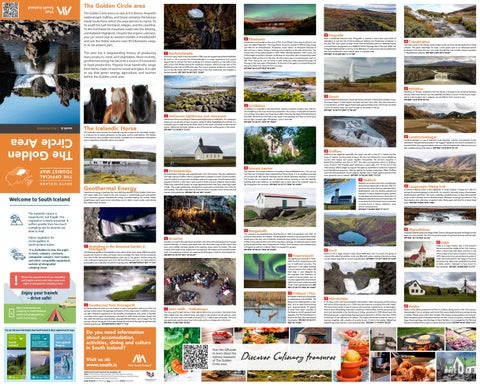
The Golden Circle area The Golden Circle area is as vast as it is diverse. Þingvellir national park, Gullfoss, and Geysir comprise the famous travel route from which the area derives its name. To its south lies lush farmland, villages, and the coastline. To the northeast lie mountain roads into the alluring, uninhabited Highlands. Despite the regions vastness, you can stand near its western border in Þorlákshöfn and see the Hekla volcano over 85 kilometers away, in its far eastern part.

HJÁLPARFOSS

The area has a longstanding history of producing dairy products, meat, and vegetables. More recently, geothermal energy has become a source of innovation in food production. Popular local handcrafts range from items made of wool to wood and glass. It is safe to say that green energy, agriculture, and tourism define the Golden circle area.
8

3

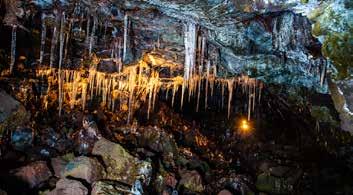
Raufarhólshellir

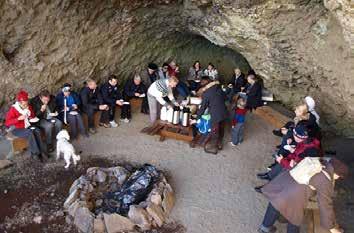
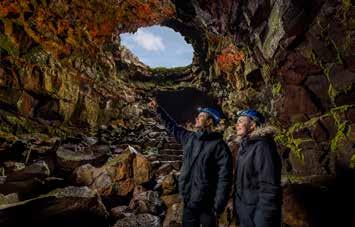
There are many caves in the lava fields in Ölfus and the largest being Raufarhólshellir by road no. 39. A journey into Raufarhólshellir is a unique experience and a great opportunity to witness the inner workings of a volcanic eruption as one walks in the path of lava that flowed during the Leitahraun eruption, which occurred east of the Bláfjöll mountains about 5200 years ago. The cave is a popular location for many films and i.e. the film Noah (2014) was partly shot in the cave. Daily tours are available in Raufarhólshellir. GPS N63° 56.367’, W21° 23.807’

14 Þingvellir

Flóaáveita

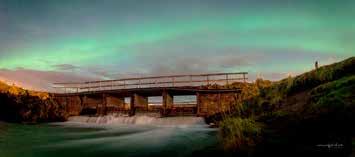
Canals that run throughout the area of Flói, from Ölfusá in the west to Þjórsá in the east, are called Flóaáveita. This magnificent structure consists of 300-km-long canals and 900 km of embankments. Flóaáveita covers about 12 thousand hectares of land and was a major change in farming and production in the area at the time. The construction of the system began in 1922. When officially opened in 1927, it was one of the largest structures in Europe. It still plays an important role in transporting water between fields and farms in the area. An information sign is located beside road no. 303. From that point, you can drive or walk along the newly opened Þórsvegur all the way to the main gate of Flóaáveita. To the east of the gate is a marked hiking trail along the Hvítá river (about 4.4 km one way). GPS N63° 56’ 33.235”, W20° 49’ 0.936”

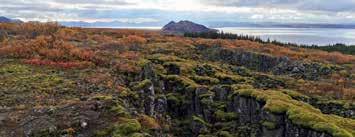
Now a protected historical site, Thingvellir is revered in the hearts and minds of Icelanders. It was the site of the founding of Althingi, the Parliament of Iceland, in the year 930, and a great number of the most remarkable events in Icelandic history occurred there. Designated as a UNESCO World Heritage Site in the year 2004, the Thingvellir National Park is among some 800 sites of cultural and natural significance that are considered to have unique value on a global scale. GPS N64° 16’ 47.504”, W21° 5’ 17.149”

20 Fossabrekkur

The river source of Ytri Rangá, where water comes out from old ash layers from Hekla volcano. The place resembles an oasis, a lush green spot in an otherwise barren landscape. From here, the river runs south through the town of Hella, where it cascades in Ægissíðufoss waterfal. GPS N64° 4.401’, W19° 45.257’

21 Þjófafoss

15 Geysir

9

4

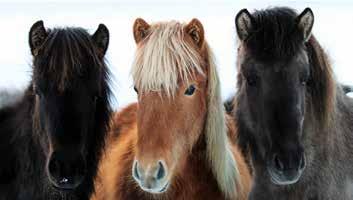
The Icelandic Horse

The Icelandic horse has been the Icelander’s sturdy companion for hundreds of years. It is famous for its sweet demeanor, its five gaits, and its small stature. The Golden Circle area has many excellent horse rentals. A guided tour on horseback is the perfect way to experience Icelandic nature and culture.

Hafnarnes lighthouse and viewpoint

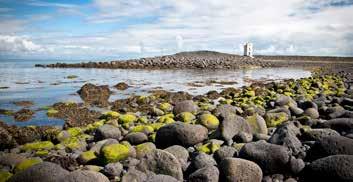
Hafnarnes is the surroundings of Hafnarnesviti lighthouse in Þorlákshöfn. At a viewpoint where you can see the volcanic mountain range of Hekla, Eyjafjallajökull and Katla. It is a peaceful spot to walk along the shore, listen to the ocean and watch surfers ride the waves. Hafnarnes has been ranked as one of the top ten surfing spots in the world. GPS N63° 51.218’, W21° 21.912’

Urriðafoss

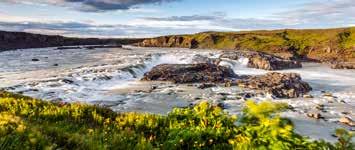
Urriðafoss is a waterfall in the Þjórsá River. Þjórsá is Iceland’s longest river, 230 km. and Urriðafoss is the most voluminous waterfall in the country. In beautiful and serene surroundings, this mighty river drops down (360 m3/sec) by the edge of the Þjórsárhraun lava field. Þjórsárhraun lava field is the result of the greatest lava flow on earth since the Ice Age. Located right off highway 1 and a must-see. GPS N63° 55’ 28.731”, W20° 40’ 19.063”

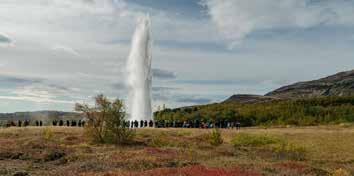
One of Iceland’s best-known natural attractions and part of the famous Golden Circle, The Great Geysir, or Stóri-Geysir, has been dormant since 1916. The area’s attraction is now Strokkur, another geyser that erupts approximately every 10 minutes. Its white column of boiling water can reach as high as 30 meters in the air. GPS N64° 18’ 49.512”, W20° 17’ 58.160”

22 Landmannalaugar

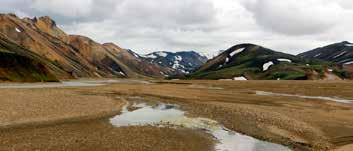
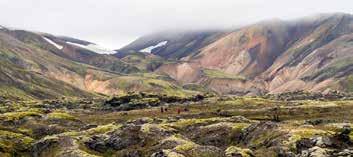
Landmannalaugar is one of Iceland’s most beautiful, colorful, and popular tourist attractions. Despite being located in the rugged Highlands, the road is accessible for standard SUVs from approximately mid-June until mid-September. Daily bus tours are also available during that season. GPS N64° 3.410’, W19° 52.176’

16 Gullfoss

5

south.is

#southiceland

The Golden The Golden Circle Area Circle Area THE OFFICIAL TOURIST MAP

Geothermal Energy
SOUTH ICELAND

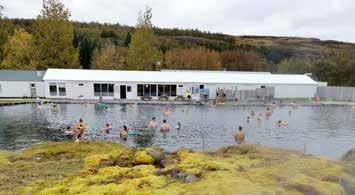
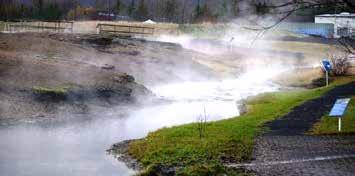
Geothermal energy is perhaps the most defining element of the Golden Circle area. Hot water wells from cracks in the soil, simmers in comfortable pools and gushes up in powerful geysers. Geothermal energy provides heating for homes, keeps greenhouses warm year-round, and allows you to relax in warm pools, even during the coldest days of winter.

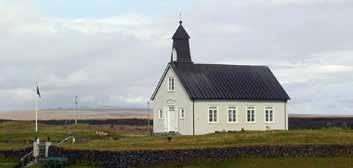
Strandarkirkja

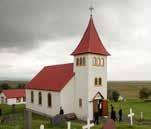
Strandarkirkja in Selvogur was originally built in the 12th century. The story relates that one night a group of sailors tried to navigate back to Iceland in a storm, but the southern coast of Iceland is notorious for its hidden reefs and rough coast. The distressed sailors prayed to God for a safe return and vowed to build a church wherever they landed. When they ended their prayer, an angel appeared before their bow, seemingly made of light. The angel guided them through the rough surfs and led them into a bay for safe landing. The sailors kept their promise and built a wooden church at the site and named it Strandarkirkja. GPS N63° 50.141’, W21° 42.327’

10 Íslenski bærinn

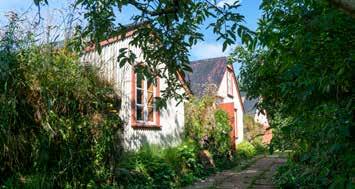
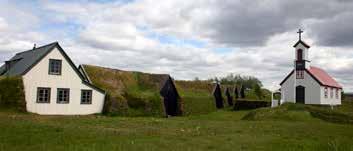
The Icelandic Turf House exhibition is located at Austur-Meðalholt farm. You can see and find one of Iceland‘s best preserved turf farms there. It is an excellent example of a house built with natural materials and an almost seamless extension of nature. Turf houses are an essential part of Icelandic history, showing us the old Icelandic building style and traditions- an excellent way to learn about the Icelandic ways of life throughout the centuries. GPS N63° 52’ 55.171”, W20° 54’ 25.081”

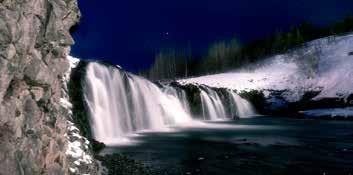
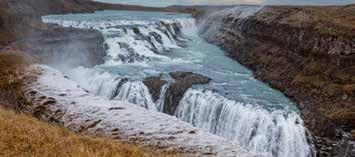
Gullfoss is two separate waterfalls, the upper one with a drop of 11 meters and the lower 21 meters. For thousands of years, the river has followed its course delighting tourists with beauty and power. Sigríður Tómasdóttir, the farmer’s daughter in Brattholt by Gullfoss, was born in 1871. She often accompanied visitors to Gullfoss, many of whom had traveled great distances to catch sight of it. At the turn of the 19th-century, efforts began to acquire the rights to waterfalls in Iceland for industrial and hydroelectric purposes, often by agents for foreign enterprises. When Gullfoss came into the possession of such agents, Sigríður rose to fight against several of the most powerful men in Iceland. GPS N64° 19’ 38.220”, W20° 7’ 8.135”

17 Skálholt

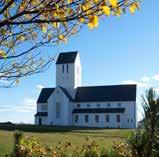
Skálholt is an ancient manor farm and bishopric whose history dates back to the year 1056. For centuries the school that was operated there, Skálholtsskóli, was the leading educational institution in Iceland. Skálholt occupies a position of well-deserved dominance in the history of Medieval Icelandic books and manuscripts, for it was there that the books and manuscripts currently found in library collections were written and preserved. GPS N64° 7’ 36.996”, W20° 31’ 24.14”

6

Reykjafoss in the Botanical Garden in Hveragerði

The Botanical garden in Hveragerði is in the center of the town. Since 1983 it has given people the chance to relax and enjoy nature amongst the trees and the wonderful river Varmá with the waterfall Reykjafoss right next to the garden. Further along the river a hiking trail goes past ruins of an old wool factory and ruins of a hydro-electric powerplant surrounded by colourful hot-spring areas. GPS N64°00’04.2”, W21°11’13.6”

Arnarker

Arnarker is a cave in the Leitarhraun lava field north of the old road leading from Þrengsli towards Selvogur. A marked path leads from the information sign by the road to the cave, and a ladder has been placed at its opening, down some 16 meters. The cave is about 516 meters long. It goes from the opening 100 meters south and 400 meters north. For exploring Arnarker, you need good hiking gear, a helmet, and a headtorch. GPS N63° 53’ 34.757”, W21° 29’ 42.237”

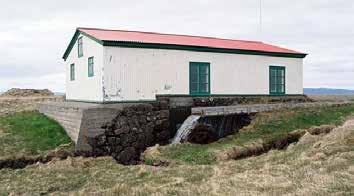
The creamery was established by local farmers in 1905 and operated until 1952. Its products were butter and cheese. The Baugsstaðir creamery was powered by a water wheel and is the only one of Iceland’s creameries that retains its original equipment. A little to the west are the ruins of the creamery’s storage, an icehouse used to store products before they were transported to market. The creamery’s main markets were in England as well as in Iceland. Open on request for groups. GPS N63° 55’ 28.731”, W20° 40’ 19.063”

12 Knarrarósviti

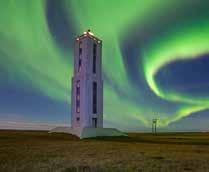
The lighthouse was built in 1938 1939, the first in Iceland to be built out of reinforced concrete. The lighthouse is the tallest building in South Iceland, 26,2 meters (86 feet) high. It was designed by the engineer Axel Sveinsson as a blend of functionalism and art nouveau (jugendstil). Knarrarósviti lighthouse is part of the beautiful South Coast Lighthouse trail. GPS N63° 55’ 28.731”, W20° 40’ 19.063”

13 Friðland í Flóa

2

Geothermal Park Hveragerði

At the Geothermal Park, you are invited to take a self-guided walk around the hot springs to learn about the geology and history of this unique area. In addition, visitors can get a firsthand experience of the benefits of therapeutic clay, which is naturally occurring in the region, by enjoying a clay bath for their hands and feet. Guests can also taste the delicious bread baked using geothermal steam, boil an egg in the hot springs, witness the geyser that erupts frequently, and stroll through the geothermally heated greenhouse. GPS N64°00’04.2”, W21°11’13.6”

You can find more information about South Iceland in these regional tourist maps.

Do you need information about accomodation, activities, dining and culture in South Iceland? Visit us at: www.south.is Published by Visit South Iceland and the municipalities 2025. Photos: Páll Jökull Pétursson, Ásborg Arnþórsdóttir, Eiríkur Vilhelm Sigurðarson, Hótel Geysir, Pétur Reynisson, Sigurdís Lilja Guðjónsdóttir, Þorvarður Árnason, Þórir Kjartansson, Sveitarfélagið Árborg, Sveitarfélagið Ölfus, Flóahreppur, Þráinn Kolbeinsson and others. Design and layout: Páll Jökull Pétursson. Map: Hans H. Hansen. Printing: Prentmet Oddi.

7

Stóri Hellir - Hellisskógur

The cave was formed during a latter glacial period by sea erosion. Sea levels have been higher than now several times, and signs of sea erosion can be seen on more cliffs in the area, which are made of around 0,7-3,1 million-year-old basalt. The cave was previously used to store hay in the back and has a sheepcote in the front. GPS N63° 57.286’, W20° 59.954’

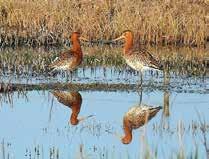
Northwest of the town of Eyrarbakki is a wetland area rich in birdlife. The Reserve has walking paths, a bird hide, and an ideal bird-watching spot. Approximately 70 species of birds have been recorded in the Reserve, and 25 species breed regularly. The Flói Bird Reserve is listed in the Bird Life International Association. GPS N63° 55’ 28.731”, W20° 40’ 19.063”

23 Laugavegur hiking trail

A famous trekking route in the highlands of South Iceland. It leads from the hot springs of Landmannalaugar to Þórsmörk. It is noted for the wide variety of landscapes experienced in just 55 km. The route is typically completed over 2-4 days with potential stops at the mountain huts at Hrafntinnusker, Álftavatn, Hvanngil and Emstrur. The hike requires prior planning, navigation tools, hiking gear, and food for at least three daysr. GPS N63° 59.681’, W19° 3.604’

24 Ægissíðufoss

11 Baugsstaðir

1

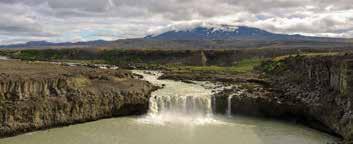
Þjófafoss, or Thieves‘ waterfall in the river Þjórsá, is thought to be named so because thieves used to be thrown into the waterfall, but little is known of the story’s origin. Þjórsá is the longest river in Iceland, around 230 km from source to sea. GPS N64° 3.410’, W19° 52.176’

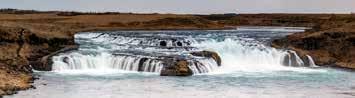
A beautiful waterfall close to the village of Hella. There is a hiking path along the Ytri-Rangá river that leads you to the waterfall. The 2,5-km-long trail is popular among locals and truly worth the walk. GPS N63° 49.119’, W20° 25.184’

25 Oddi

Oddi, is a major historic site. It first became famous around the middle of the 11th Century, when a church was built there, and thus is one of the oldest church sites in Iceland. In the year 1078, Sæmundur the Learned became priest of Oddi. He had studied for the clergy in France (at the Sorbonne). Sæmundur established a school at Oddi, which is believed to have stood for two centuries. GPS N63° 46.608’, W20° 23.170’

18 Kerið

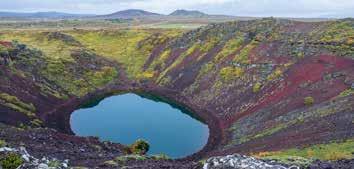
Kerið, is a 55 m deep volcanic crater, about 3000 years old. It is a part of a group of volcanic hills called Tjarnarhólar, and is now filled with water, creating a lake whose steep circular slopes resemble an ancient amphitheatre. GPS N64° 2’ 27.611”, W20° 53’ 5.599”

19 Þjórsárdalur

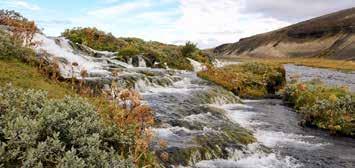
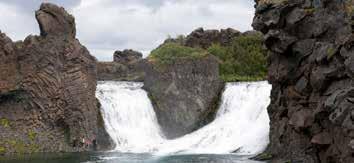
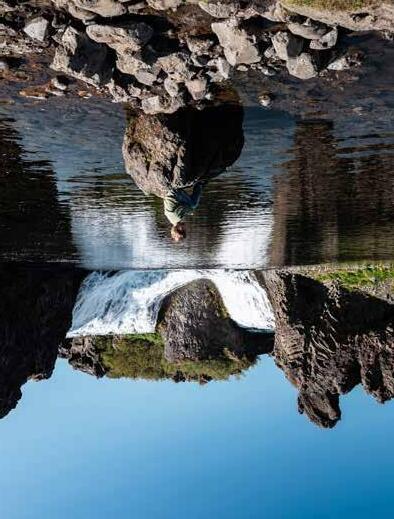
In the days of the old Commonwealth, Þjórsárdalur valley was grassy and flourishing with about 20 farmsteads, but in 1104 it was laid waste by an eruption from Mt. Hekla. The farms buried under a layer of volcanic ash have been a goldmine for archaeologists. Sites of about 40 buildings have been unearthed in Þjórsárdalur, and the best preserved and most remarkable is the farmhouse at Stöng, excavated in 1939. Based upon the Stöng farmhouse, a replica Saga-Age farmhouse was built in 1974 to mark the 1100th anniversary of the settlement of Iceland. The replica farmhouse is open to visitors in summer, together with a replica of an early church. A visit to the nearby Hjálparfoss waterfall (pictured above) is also recommended. GPS N64° 7.114’, W19° 49.325’

26 Keldur

Keldur is the oldest preserved turf farm in Iceland, dating back to the 12th century. Interestingly, it has an underground tunnel that was probably built as an escape during a conflict. Newer parts of the farm include 19th-century living quarters and a church. Many medieval pieces of literature mention the farm and its occupants, including Njal’s Saga, Sturlunga Saga, and the Saga of Saint Þorlákur. It is managed by the National Museum of Iceland and is open to visitors during summer. GPS N63° 49.341’, W20° 4.721’


Turn static files into dynamic content formats.

Create a flipbook
The Golden Circle Area by Markaðsstofa Suðurlands - Issuu