JUNE 2026 ISSUE NO. 22
INTERNATIONAL DAY OF THE SEAFARER
JUNE 2026 ISSUE NO. 22
INTERNATIONAL DAY OF THE SEAFARER
Dear Readers,

Every year on the Day of the Seafarer, we pause to recognize a group of professionals whose contributions are often invisible, yet absolutely essential to our daily lives.
The clothes we wear, the food we eat, the fuel that powers our homes, and the goods that connect nations all have one thing in common. It's likely that they have traveled across the oceans, carried by seafarers.
As someone who has spent over two decades in the maritime industry, I have had the privilege of meeting seafarers from every corner of the world. I have listened to stories of resilience, sacrifice, courage, and determination.
Behind every vessel is a team of individuals who spend months away from their families, going through challenging conditions to ensure that global trade never stops.
This year's Day of the Seafarer theme, "Carrying world trade. Carrying the risks," reminds us that seafarers are more than just workers at sea.
They are people with dreams, aspirations, families, and stories that deserve to be heard. Their well-being, safety, and dignity must remain at the heart of our industry's priorities.
In this special edition of She of Change, we shine a spotlight on remarkable individuals whose stories remind us why maritime remains one
of the most dynamic and meaningful industries in the world. Their experiences showcase leadership, innovation, perseverance, and the power of believing in oneself.
To every seafarer reading this, thank you for your dedication, your professionalism, and your commitment to keeping the world connected. And to our readers, industry leaders, educators, and policymakers, let us continue working together to create a maritime sector that is safer, more inclusive, and more supportive for those who serve at sea.
On this Day of the Seafarer, let us celebrate seafarers but also listen to them, support them, and champion their future. eas.

Founder, Maritime SheEO and She of Change magazine
This edition of "She of Change" honours “The International Day of the Seafarer”, recognizing the vital role that seafarers play in international trade and the global economy. We have gathered a collection of inspiring narratives from women seafarers and other professionals within the maritime sector, who share their insights, experiences, and sacrifices in their pursuit of excellence in this field.
Legacy and Imposter Syndrome are insightful and we recommend you to read them.
Capt. Arvind Shankar from Maersk offers an insightful discussion on the three flags of seafarers, which he feels represent their identity as mariners. This piece is particularly engaging.
This issue highlights pioneering women, including Capt. Naomi Matsushita, Japan's first female Captain. We also highlight women in key leadership positions onboard ships and also in maritime decarbonization and sustainability projects.
One of our regular features is Pilot Diaries, in which Capt. Colleen Moran discusses the ways in which women pilots are transforming the maritime industry through mentorship and by supporting other women pilots. The articles titled Daughters of Maritime
We urge you to explore all the stories in this issue to enhance your understanding of our seafarers, who frequently go unnoticed due to lack of awareness of the dangers they face on the high seas, the sacrifices they make, and their significant contributions to the economy.
Here’s to all our esteemed seafarers. May you always thrive and enjoy safe voyages.



Bhagyashree Ogale First Assistant Engineer at Teekay
When I joined the ship for the first time, I used to look at my first engineer with awe. The way he handled all the problems on the ship, gave suggestions, heard whatever all the crew and engineers had to say, resolved conflicts in a multicultural environment and made sure the engine room was in perfect shape.
My mind made mental notes on what I should do, once I become a leader.
But nothing prepared me for what to expect when I put on those shoes of a First Engineer on a ship. It is a mind blowing and overwhelming experience. You realize that everyone looks at you with a different perspective.
Suddenly you are in charge of deciding what work is going to be done on that day, how specifically it is to be carried out and who is going to do that work. If a

problem comes up everyone is looking at you for a solution. Making a wrong decision is not even an option since so many lives are at stake.
It might feel like you have all the power in the world that you dreamed of having since you were a cadet, but now you have to be mature enough to use it wisely.
There is no room for personal grudges since all your crew are be treated equally like a family. I used to think that it was easy to get work done from someone. The 1st Engineer’s job is so easy. Just give the team ultimatums and the work will get done. I used to feel that being a boss was just giving orders and then relaxing.
The truth being I have never been as busy as I am as a 1st Engineer. Ultimatums hardly ever work and should be used as a last resort.
The ship is a professional environment but since you live on the ship for a couple of months, you have to treat it like you treat your home. The crew must experience a sense of belonging within that environment which will encourage them to regard it as their home and propose suggestions for its improvement.
As a leader you are responsible for making them feel that sense of belonging. They need to feel that their leader is someone that they can approach even when they have the silliest of problems or have not understood something. A leader's progress depends on the growth of his/her team
I have learnt that it is important to invest in your team's growth. Be a leader who is a mentor first instead of being a dictator.
The junior ranks are looking at you for inspiration and so you need to make sure that you are following all the rules of the company which makes them believe in it too. It is important that you ask the juniors to talk in front of everyone about their experiences and suggestions, thus increasing their self confidence and in turn their confidence in your leadership.
Occasionally, insights from cadets who approach a problem with a new perspective have provided solutions to issues that experienced individuals may have missed. Recognizing the efforts of the team is highly valuable.
Continue to express appreciation for everyone for their work, invest in your team and they will show up at times when you really need them. I was recently selected for a Woman Leadership and Empowerment program jointly funded by IMO and WISTA and held at WMU, Sweden. I also got the opportunity to interact with the Norwegian Minister of Fisheries and Ocean Policy, Marianne Sivertsen Næs, at the Maritime SheEO conference in 2025.
I realized that all women who become leaders in a male dominant field faced the same kind of revolt at first. But they each have a unique story of how they overcame it. Leadership styles of men and women are different. It is also a change in atmosphere on the ship when a woman leader takes the place of a 1st Engineer.
In the beginning there is a lot of resistance to the change in styles of leadership and the changes she makes. But when she shows that she is equally capable and invested in the team, acceptability is natural. She gives the room a wholesome perspective and has an empathy factor attached to every decision.
This is part of the reason why many
big companies feel it is important to have gender disparity in every field and are employing more and more women in all industries.
It is important as a leader to become a mentor to your juniors. Talk to them at the beginning of the contract and know what their career goals are. Keep asking them how this contract is going to help them achieve their goals.
Make them spend time with a senior engineer or someone of the next rank to actually see what is in store for them at the next level of work. Keep asking them questions on machinery which they will be responsible for in the next rank.
These few steps will guarantee that you understand their commitment to their work and their future endeavors, while they also begin to know your interest in their progress, prompting them to contribute to your team and, consequently, to you as a leader.
I feel as a leader you need to have a clear vision. You need to make your team understand your vision and their role in helping you achieve it. Your team needs to know what your true leadership core values are. Things that you will never comprise on like safety.
You should also show them how the vision will help them in their growth and give them incentives to work for it. Every team member should feel like he is a leader.
I'd like to end by a quote by Simon Sinek in his book - Leaders eat last "If your actions inspire others to dream more, learn more, do more and become more, you are a leader.”

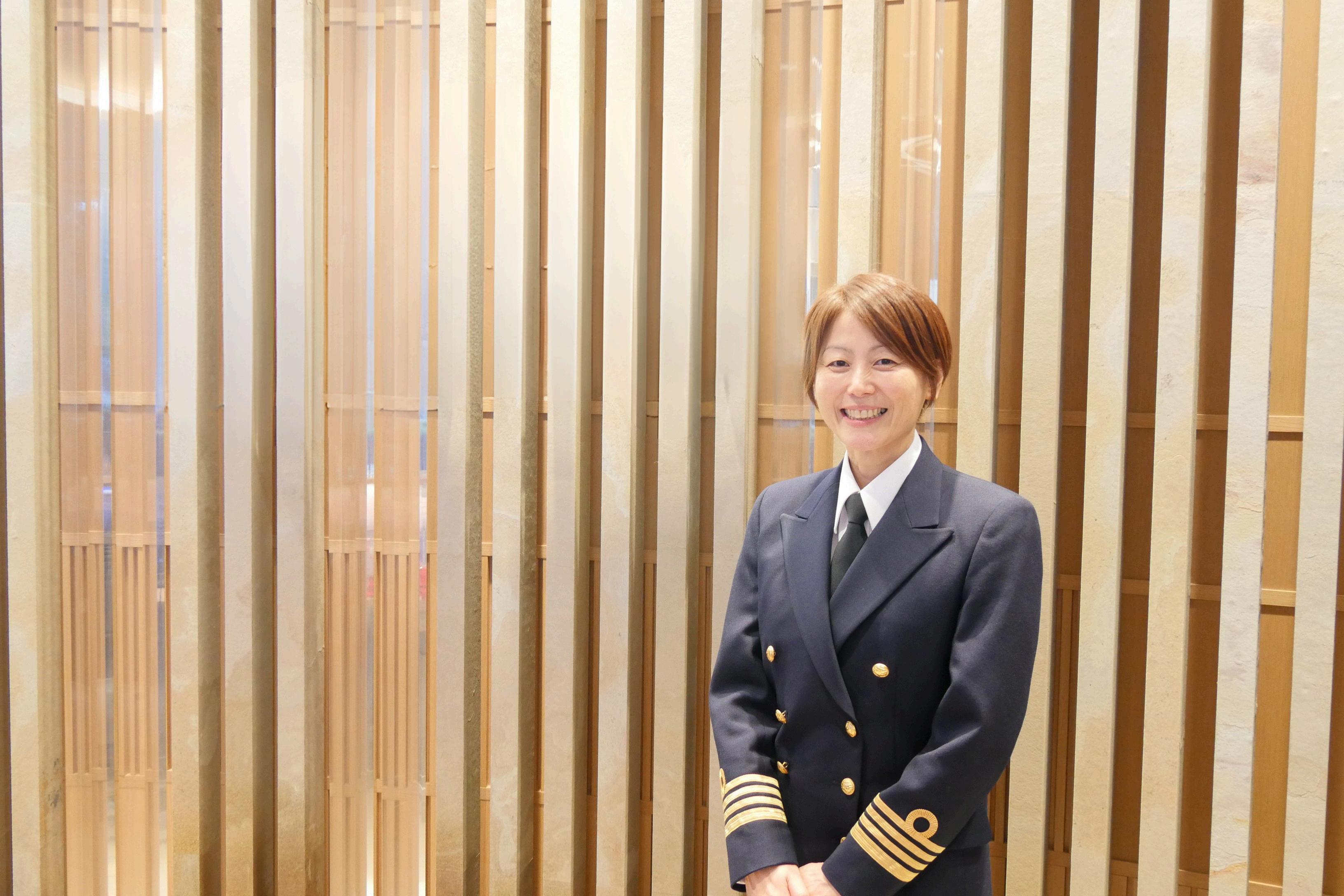

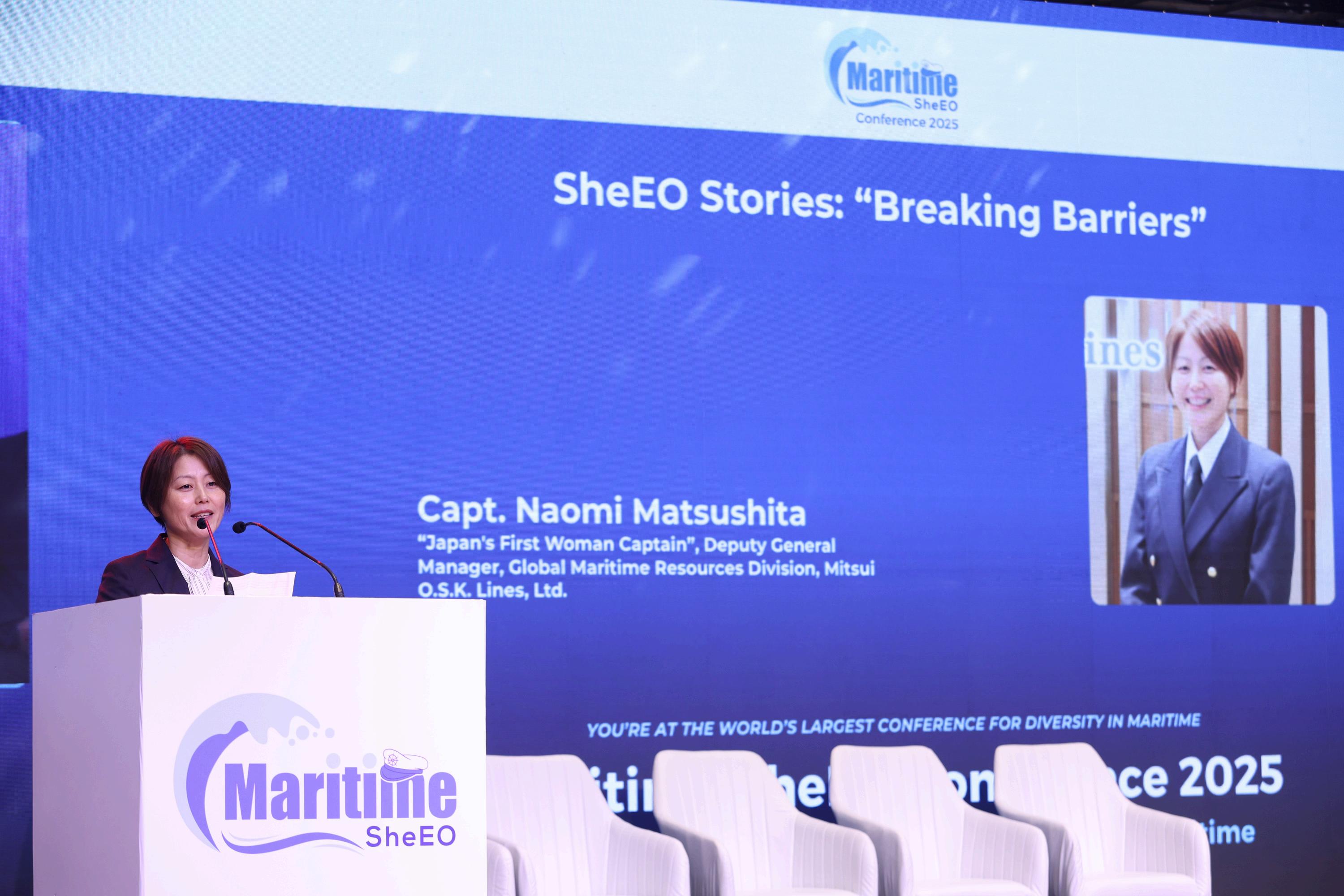
As Japan’s first woman Captain and a respected leader in maritime, her journey represents an important chapter in the industry’s history and its future. Through this interview, we hope to capture both Capt. Naomi’s experiences at sea and her perspective as a leader shaping the maritime industry today.
When you first went to sea, you were stepping into an environment where women had never served before. What were some of the realities or challenges you faced onboard that people outside the industry might not fully understand?
When I first went onboard, it was a time when it was uncommon for women to work at sea. Shared cabins were a rarity, and there were no particular issues with the facilities themselves, however, I believe that for many seafarers, the biggest barrier was simply the experience of sailing with a woman for the first time.
My colleagues were unsure how to interact with
AS THE ONLY WOMAN ONBOARD, IT WAS IMPOSSIBLE TO REMAIN UNNOTICED.
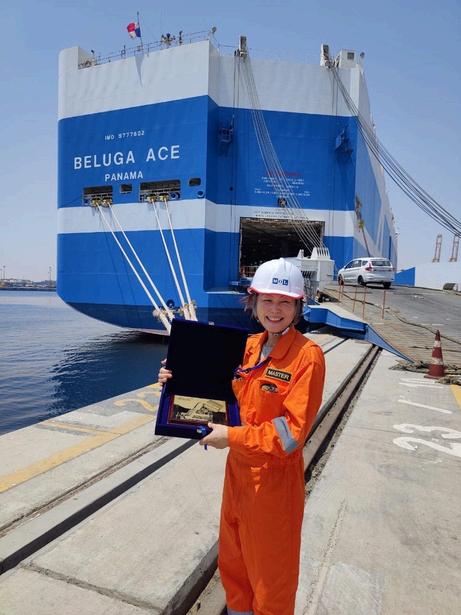
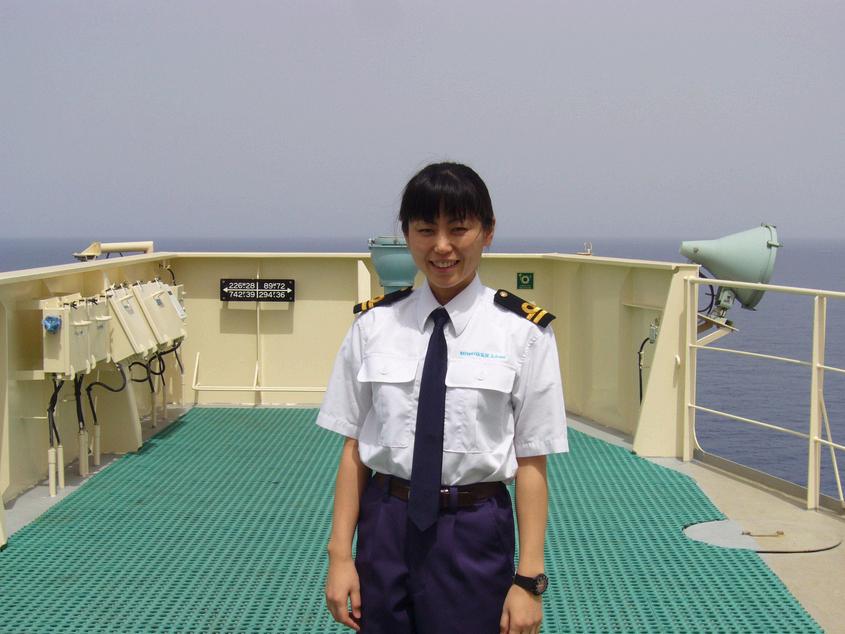
Looking back on your years at sea, was there a particular voyage, experience, or moment that shaped the kind of seafarer and later the kind of leader—you would become?
Rather than a single voyage, I feel that it is the accumulation of everyday experiences that have shaped who I am today. Even in challenging situations, such as heavy weather or unexpected incidents, prioritizing safety and overcoming difficulties as a team have formed the foundation of who I am as a Captain.
At sea, it is essential to fulfill the role and support others, regardless of work position or gender. The lessons I learned through these experiences have had a significant influence on how I approach leadership today.
After transitioning ashore, how did your experiences at sea influence the way you approach leadership and decision-making? At sea, every single decision has an impact or consequences in safety and even to seafarers’ lives. Based on that experience, I have come to value listening
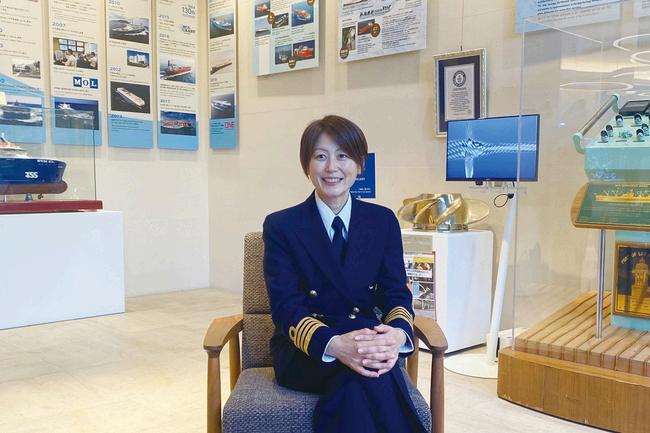
Many maritime policies and workplace practices are designed far from the realities of life onboard. From your perspective, what are the most important things leaders ashore should do to better support seafarers? Paying attention to the voices of seafarers, their families, and those working on the front lines.
It is about having a genuine commitment to understanding the realities onboard. While regulations and rules are important, it is also crucial to ensure that they truly function in practice. I believe that the most meaningful support is to create an environment where seafarers feel safe to speak up, and to build trust so that raising their voices never leads to any retaliation.
As someone who opened doors for women in maritime, how do you see the role of leaders today in creating opportunities and pathways for the next generation?
I believe it is important not to think, “It cannot be done because there is no precedent,” but rather to consider how it can be done. As I experienced myself, when someone shows the way, it leads the next generation to follow that path more naturally.
One word that describes life at sea:
Teamwork
A leadership quality every captain should have: Trusting your team One change you still want to see in the maritime industry: An industry that goes beyond safety and efficiency, but also genuinely considers the lives of those who work for it.
Over the course of your career, how have you seen attitudes toward women in maritime evolve from when you first started sailing to the industry we see today?
I have been able to build my career with the tremendous support of my crews, our company, family, and the people around me. Without their support, I would not be where I am today. Compared to when I first started my career at sea, there are now more supporters, and it is clear that women’s participation in the maritime industry is becoming more widely accepted. At the same time, however, there are still occasions when women are seen as “exceptions” or “special cases.”
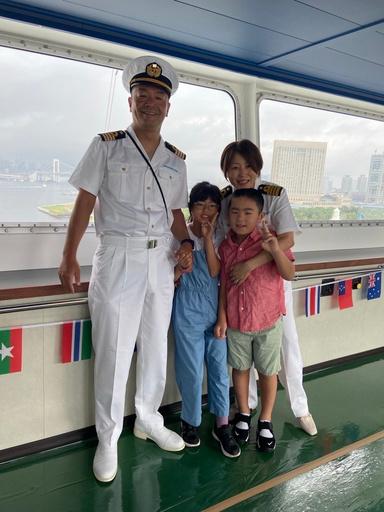
I believe that true progress will be achieved when people are evaluated regardless of gender. In that sense, I feel that we still have more work to do to reach that stage.
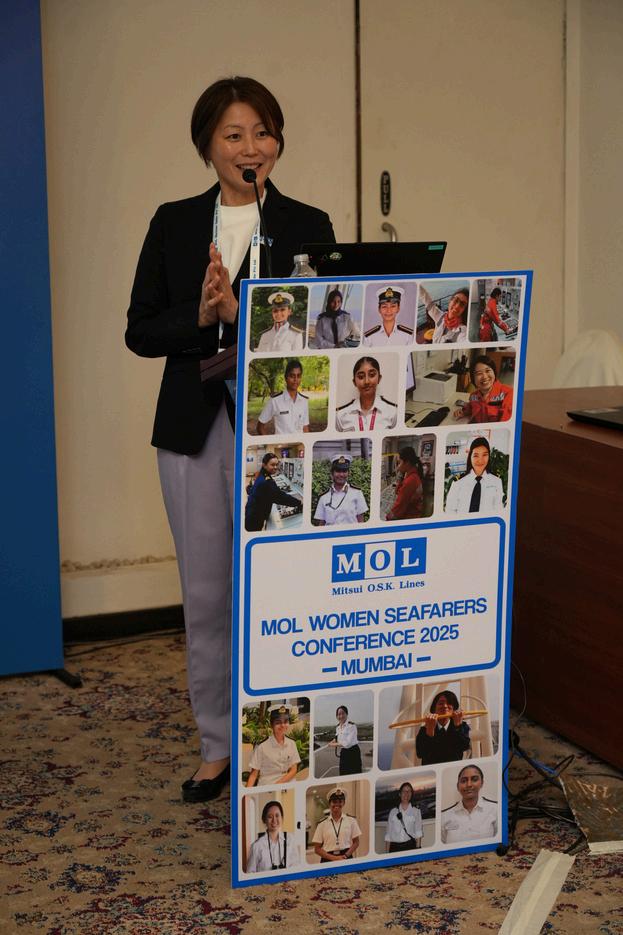
Looking ahead, what do you believe maritime leaders must do differently if the industry truly wants to build a more inclusive and sustainable workforce?
I believe that accepting diverse talent should not be treated as a “special initiative.” Creating an environment where everyone can continue working with a sense of security ultimately enhances the sustainability of the entire industry.
Rather than focusing solely on short-term efficiency, I believe the maritime industry needs to adopt a long-term perspective that values nurturing and protecting people.
A CAREER AT SEA SHOULD NOT BE SEEN AS THE ONLY PATH.
By gaining experience through childcare, further education, or shore-based roles, individuals can broaden their career options and add value to their professional journey. Supporting each person in building their own unique career path, and enabling them to contribute to the company in diverse ways, is essential.
As Japan’s first woman Captain, your journey has inspired many who followed. When you look back on your career today, what part of your legacy matters most to you?
Looking back, what matters most to me is not being “the first,” but helping to make it easier for others to follow.
If my journey helped open doors even just a little for women and diverse talent to feel that career at sea is possible and worthwhile, then that is the legacy I value most.
Shipping is ultimately about people, teamwork, and trust.
If I am remembered as someone who helped strengthen those values onboard and ashore, I would consider that a great honor.
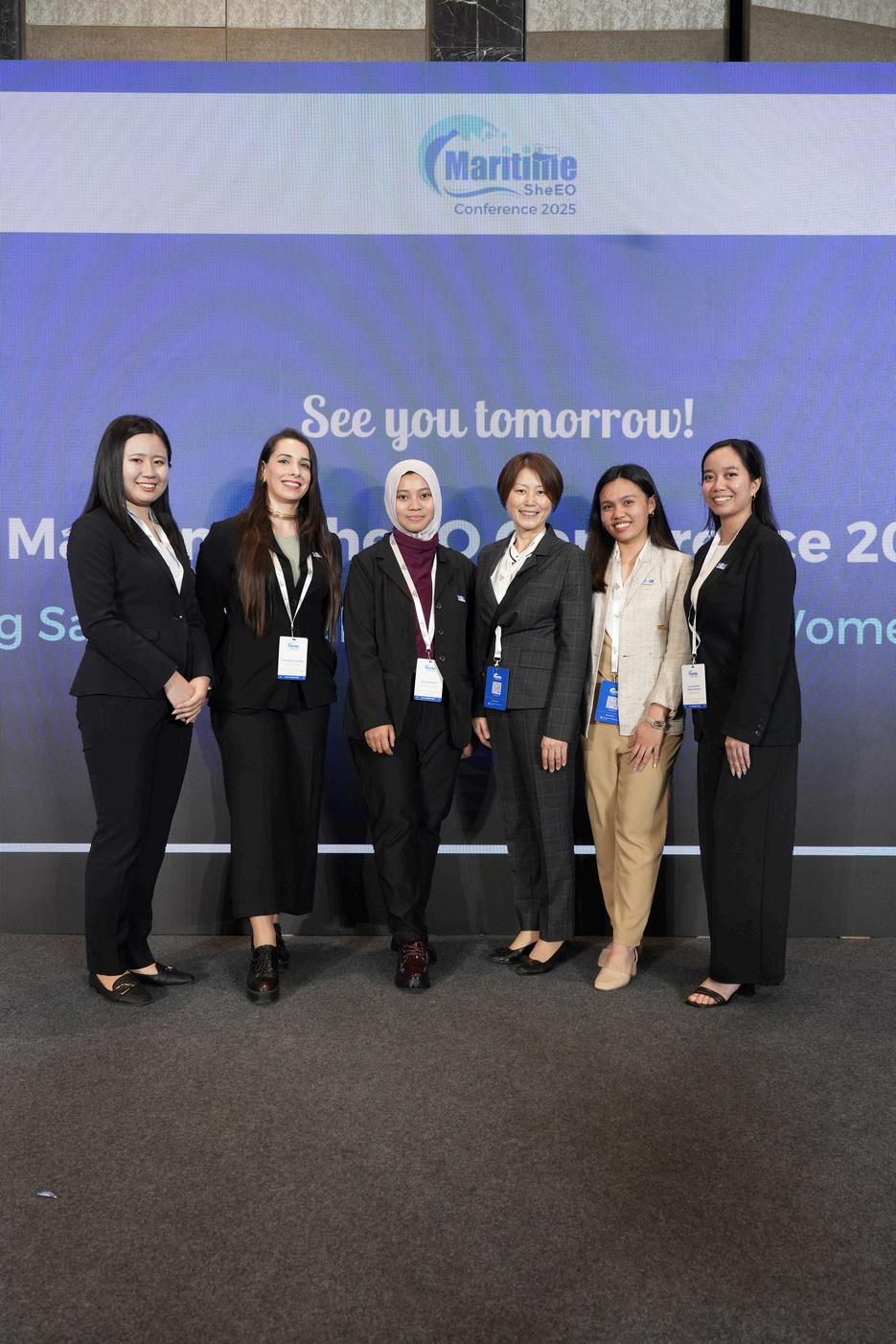
Capt. Matsushita is currently the General Manager of Global Maritime Resources Division, Mitsui O.S.K. Lines, Ltd.
Capt. Arvind Shankar General Manager Recruitment - Maersk FAPI
As I scrolled through LinkedIn, a post caught my eye. While Capt. Shankar’s first batch of cadets graduating from Maersk Centre of Excellence is big news by itself, what particularly caught my eye was the mention of the three flags seafarers raise and the three identities seafarers become all at once, the moment they step into their roles. Below is a snapshot from the post. I hope it reminds you of the flag you carry, and the identity you represent when you step into your role in Maritime.
As you step into the airport's immigration zone, you become three things at once:
The driver at the arrival airport will not remember your name, but will remember that an Indian officer was polite. The port agent will not remember your face. They will remember whether the Indian officer they met knew her job. Every email you send, every conversation you have on board, every word you speak on the VHF becomes the reputation of a nation of 1.4 billion people. That is a heavy load. Carry it responsibly.
Somewhere that night, a mother is folding your old cadet uniform and holding back tears bravely. She cannot believe the child who would run home to her after school is now a cadet at sea.
Somewhere, a father is showing your photograph to his school friends and pretending it is no big deal, while his chest is bursting. You owe them, not money, not gifts. You owe them the dignity of conduct that lets them keep speaking your name with that same tone.
The organisation that hires you is taking a bet. They are betting that the years they spent training you, the dollars they spent on your simulator lessons, the trust they placed in your sign-on, will help you come back to them as a competent officer who doesn't put their vessel on the rocks. Honour that bet.
In a few decades, a day will come when you hang up your boots and walk down the gangway for the last time. The ship will not remember you. The port will not remember you. The cargo will not remember you.
But somewhere on board, a young cadet will stand a little straighter because of how you treated them. That is the only legacy that matters. Not rank, not pay. Not even the stripes on your epaulettes.
The wake you leave behind in the lives of others is the only one worth measuring. Act with respect, and add a smile to the world every day.
Disha Eshwar Cadet Advisor (Maersk)
Onboard a merchant ship somewhere in the Indian Ocean, a seafarer wipes sweat from their brow after a long shift. Isolated from family for months, working in cramped, noisy quarters, they face many pressures. Yet, when asked if they ever feel like quitting, they reply, “This work is hard, but it matters.”
Seafaring is a uniquely dynamic profession. Long contracts away from home, shared living spaces, multicultural crews and multiple crew changes causing occasional interpersonal challenges, and extended time apart from family and friends can make it quite demanding. Studies show that they face serious mental health issues, with up to 40% suffering from burnout and depression.
These problems affect not just well-being; they also endanger operations and disrupt global supply chains. My recent Master’s dissertation involving 330 Indian seafarers revealed dispositional resilience (the capacity to recover and adapt to adversity) is a key psychological resource that significantly reduces burnout.
Quantitatively, seafarers scoring high on resilience experienced approximately 30% less emotional exhaustion and 25% higher personal accomplishment compared to those with lower resilience scores.
Importantly, resilience was negatively correlated with key burnout dimensions such as cynicism and depersonalization, indicating that more resilient individuals detach less from their work and maintain stronger engagement.
Beyond resilience, the study also highlighted the protective effect of a meaningful life purpose. Seafarers who reported a strong sense of meaning experienced a 15% reduction in overall burnout risk and demonstrated better stress coping mechanisms. Meaning in life positively influenced resilience itself, acting as a moderator, suggesting that seafarers who find purpose in their roles cultivate greater resilience over time.
Contrary to expectations, self-esteem which while generally beneficial showed a weak and statistically nonsignificant relationship with burnout reduction in this cohort. This implies that simple feelings of self-worth alone do not buffer the intense occupational stressors faced by seafarers, such as prolonged isolation, demanding physical labor, uncertainty, and cultural challenges onboard.
Additional findings revealed that demographic factors like age and years of experience had moderating effects, with more experienced seafarers demonstrating higher resilience and lower burnout levels. Moreover, qualitative data emphasized that social support from fellow crew and a sense of belonging on board also contributed to burnout mitigation.
For seafarers, the resilience and sense of purpose they discover at work serve as an invisible life jacket. Alongside physical safety, these inner strengths help keep ships steady on course. They navigate life's storms with endurance and meaning.
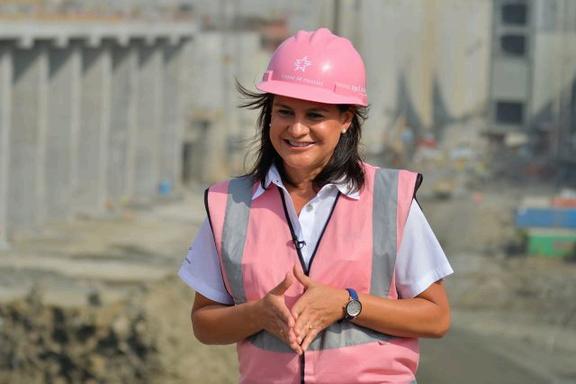
PANAMA CITY (AP) Panamanian President José Raúl Mulino on Thursday announced the appointment of Ilya Espino de Marotta to a seven-year term leading the Panama Canal starting Oct. 1, the first woman to hold that post.
The decision followed a weeks-long review process by the Panama Canal Board of Directors, which considered numerous high-profile candidates.
Before Thursday’s appointment, Espino de Marotta, 64, served as the deputy administrator of the interoceanic waterway since taking office on Jan. 1, 2020.
“I have spoken with the new Administrator of the Panama Canal... to congratulate her and reaffirm the commitment to work in coordination on strategic projects that generate jobs, prosperity and progress for Panamanians,” Mulino wrote on X.
A 35-year veteran of the Panama Canal, Espino de Marotta is widely recognized for both her signature pink hard hat and her leadership on megaprojects, including a massive $5 billion expansion of the waterway.
Among the main challenges for the incoming administrator is the development of two new ports, one at each end of the canal, with tenders scheduled for release in the coming months. These projects, along with upcoming tenders for a natural gas pipeline and a logistics corridor, form the core of the canal’s expansion and diversification strategy.
Espino de Marotta earned a bachelor’s d Marine Engineering from Texas A&M Un and a master’s degree in Economic Eng from the Universidad Santa María La An
Nandana B. Panicker
3rd Year Marine Engineering, AMET Institute of Science and Technology
A young woman stepped out of her hometown for the first time, embarking on a journey to a new and unfamiliar state and city to further her education. With her future in mind, she chose one of the most demanding careers for a woman.
In the city, everything was new for her. Her comfort zone was gone, and reality had begun. Diverse cultures at college, unfamiliar languages, food, and new friendships. Her life began to transform from the very first day she entered her new surroundings at the Maritime University, stepping into the realm of the sea.
As a young woman, individuals in our surroundings frequently evaluate the
career paths we choose. The maritime sector is widely recognized as a field that is male-dominated. Nevertheless, a young woman entered this industry with a determined objective. She wished to become an engineer onboard a ship.
Engineering is inherently challenging and demands strength and courage. In college, she recognized the need to excel among the top tier. In a maledominated classroom, giving up was not an option. She worked hard, and aimed for perfection in her studies.
Although the shipping industry has started welcoming women onboard, many thoughts still run through her mind. Am I good enough to do this job? Will my male coworkers find it difficult to work with me? Am I strong enough?
Many questions arise within her. Women are often emotionally strong, yet stepping into this unknown industry for the first time is never easy.
But she ventured into this industry to bring a change to encourage women to dream big and achieve their goals. She will change the perspective of this massive industry by standing strong and by supporting the courage and ambitions of other young women.
Through her journey, she becomes a voice of hope, proving that women do not just belong in maritime they are here to lead change.
Sofia Fürstenberg Stott Founder and Co-Partner of Fürstenberg Maritime Advisory (FMA)
As we celebrate the Day of the Seafarer, I want to dedicate my chronicle to every child having a mother or a father serving at sea.
I didn’t grow up by the sea. I grew up by the Great Lake. An ice-cold lake with black water in the middle of Sweden. My mother was a teacher. My father worked at a bank. The longest they were ever away from us my sister, brother and I was one or two weeks. It was mainly Mum who was away. Those were weird weeks, where things were not normal. Weeks where Dad cooked unusual things, and where we communicated with Mum through a fax machine. My brother drew skeletons and sent them through the fax, telling Mum that we
were starving (which of course was not true!).
As kids, we never really thought about where stuff comes from. How everything turns up on the shelves in the stores.
At the turn of the 19th century, before the Inland River which connects the Great Lake with the Baltic Sea and is the most water-rich river in Sweden was built out with its many power plants, it was used to transport logs. Not by the use of log ships, but through the courageous effort of men herding logs down the river by running over them. My grandmother had many stories about these men. So, I did know that water was used for transport.
When my niece was five, she asked me what my work was about. I remember telling her that her shoes had probably arrived in Sweden on a ship coming all the way from China, and that I worked with making those ships use less fuel. At the time, I was working as an Innovation Manager at a major shipping company. She thought that sounded “absolutely crazy.”
Mothers and fathers working at sea may not see their family for two months or more. A whole little life happens during such a long time. James Yorkston sings about the sadness of having missed the moment his son found an “upturned crab.” That captures it really well.
I attended a board education earlier this month. In one of the lectures I learnt that the more “in love” you can be with your work at board level, the more creativity, flexibility and kindness you may bring into the company. Sustainable shipping is so much more than finding solutions for using less fuel. Among other things, it is also about love. About caring for the social welfare of seafarers, and for their relationships with children longing for a parent back home.
If there is something I could wish for today, it is that from now on, whenever you buy something from the groceries or the local shopping mall, you send a thought of love and thanks to the seafarer children waiting for a father or a mother back home.
Tatiana Rabat
Barranquilla, my hometown on Colombia’s Caribbean coast, turned 213 on April 7th 2026. The date invites a simple yet powerful question: how well do we really know the city we celebrate? We often navigate its streets taking its economic dynamics for granted, seldom noticing that the heart of its history beats to the rhythm of its river and its port.
For centuries, this waterway has served as the lifeblood connecting the Andean heartland and the capital, Bogotá to global maritime routes. To understand Barranquilla is, inevitably, to understand the river that gave it life.
I had the privilege of studying port management in cities like Le Havre and Rotterdam, where I learned that a port is far more than a site for loading and unloading cargo. It is a daily neighbor, a cultural actor, and a mirror reflecting the city's own identity.
Barranquilla: A City Turning Back to the River
After twelve years in Cartagena, where the port’s historical presence is always part of the landscape, I now look at Barranquilla with a new sense of enthusiasm. The city is finally building bridges through urban renewal projects that turn to face the river. Yet, I believe we still lack a deeper, more cohesive articulation.
Urban experiences such as guided tours in neighborhoods like Barrio Abajo already point in this direction. Even its name, 'the neighborhood below,' referring to its position relative to the river, carries the living memory of a city shaped by maritime commerce.
My experience at the Museo del Río Magdalena in Honda, a historic river port town in central Colombia, serves as a powerful reminder of this potential. There, I understood how river navigability is the master key to interpreting the territory itself.
The goal for Barranquilla should be something similar: creating spaces and narratives that connect its fluvial and port past with its urban present, allowing citizens to recognize themselves in a shared story. This is not an exercise in nostalgia but a strategic bet on the future.
How can Barranquilla and its port align their visions to speak a common language? Perhaps the first step is simple: to look again, this time with intention, toward the river.
Marie Cecilia
The maritime industry is undergoing one of the most significant transformations in its history. As the International Maritime Organization (IMO) advances its ambition of achieving net-zero greenhouse gas emissions by or around 2050, decarbonization has become a central challenge for companies operating across the global shipping value chain.
While discussions surrounding maritime decarbonization often focus on technology, infrastructure, and alternative fuels, the success of this transition depends equally on people and governance.
Maritime transport is responsible for nearly 3% of global greenhouse gas emissions, making its decarbonization a matter of both environmental necessity and economic relevance.
Within this context, the intersection between the Environmental and Social pillars of ESG becomes increasingly evident. Historically, the maritime sector has been characterized by low female representation, particularly in operational roles. Yet the growing presence of women in leadership positions across shipping companies, port authorities, regulatory bodies, and logistics organizations is contributing to a broader transformation in how sustainability challenges are approached.
Research conducted by institutions such as McKinsey & Company suggests that organizations with greater gender diversity in leadership tend to demonstrate stronger innovation performance, enhanced risk management, and improved ESG outcomes.
The increasing prominence of organizations such as the WISTA International illustrates how gender diversity is becoming an integral part of the sector's future. Women have assumed leading roles in initiatives involving green shipping corridors, sustainable finance mechanisms, energy-transition projects, and cross-sector partnerships designed to support the development of new maritime infrastructure.
Ultimately, the path toward Net-Zero extends beyond technological substitution. It requires a redefinition of leadership models, governance practices, and organizational culture. In this regard, promoting gender diversity should not be viewed solely as a social commitment, but as a strategic component of corporate resilience and sustainable growth.
As the maritime sector navigates one of the most complex transitions of the twenty-first century, diverse leadership may prove to be one of its most valuable assets.
with Ayesha Vaz
The Daughters of Maritime Legacy series explores how fathers influence their daughters' career ambitions. It highlights women who, inspired by their fathers' professions, values, and achievements, choose similar paths while building legacies of their own.
In this edition, we feature Ayesha Vaz, a distinguished Master Mariner and the daughter of Capt. Derrick Vaz, a maritime veteran with over 40 years of experience in the shipping industry. After rising through the ranks to become a Master Mariner and spending more than a decade in command at sea, Capt. Vaz went on to serve for 13 years within India's maritime administration under the Directorate General of Shipping, contributing to maritime examinations, safety, and international casualty investigations.
her father's dedication to the profession, Ayesha wn successful career at sea, eventually becoming a ner herself. She shares her experiences, the g he overcame, and the lessons she learned along the way. Her story reflects the enduring influence of family, mentorship, and the powerful bond between parent and child in shaping a meaningful career.
Growing up with a captain as a father, what were some of your earliest memories of the maritime world?
Growing up I had a front row seat to my father’s remarkable career, both at sea and ashore. I witnessed first hand the commitment, leadership and sense of purpose that defined his work, alongwith the lasting impact he had on ships, seafarers, and those around him.
I was raised on a steady diet of sea stories and sailing schedules, and genuinely thought every family measured time in contracts rather than calendars. Through my father's voyages, I was introduced to places many had never heard of and cultures from around the world.
Some of my earliest memories are of standing on the bridge beside him, fascinated by the responsibility he carried for the ship, the crew, the
cargo, and every decision that brought them safely from one port to another. Long before I stepped onto a bridge myself, the maritime world had already anchored itself firmly in my life. Was there a defining moment when you realised you wanted to follow in your father’s footsteps and pursue a career at sea?
There wasn't a single lightning-bolt moment. The more I learned about life at sea, the more I was drawn to the challenge, responsibility, and adventures it offered.
Watching my father lead with confidence showed me that command was about far more than navigation.
Somewhere between the sea stories and the sailing stints, I realised that if maritime adventures were a family tradition, I was overdue for my turn!
What values or lessons from your father have helped shape you as a seafarer and as a leader today?
One of the greatest lessons my father taught me was that rank may be worn on your shoulders, but respect is earned every day. He showed me that true leadership isn't about being the loudest voice it's about being the calmest when everyone else is looking for answers.
He believes that knowledge is a leader's greatest compass, that hard work and integrity never lose their value, and that adversity reveals character! Maritime is often described as a challenging profession. Did your father’s journey inspire confidence in you, or did it make you more aware of the sacrifices involved?
Both. My father's journey gave me the confidence to pursue a career at sea, but it also ensured I had no illusions about what came with it. I had a frontrow seat to the sacrifices involved and learned early on that family plans and celebrations were often subject to sailing schedules.
Watching him balance those sacrifices with his passion taught me that
maritime is far more than a job. The contracts start and end, but the seafarer in you never really signs off!
How has your relationship with your father evolved now that you both share the same profession and understand the realities of life at sea?
Having walked a similar path, I now have a far deeper appreciation of the challenges, responsibilities and sacrifices I only observed as a child. The more experience I gain, the more I realise that his legacy is measured by far more than rank.
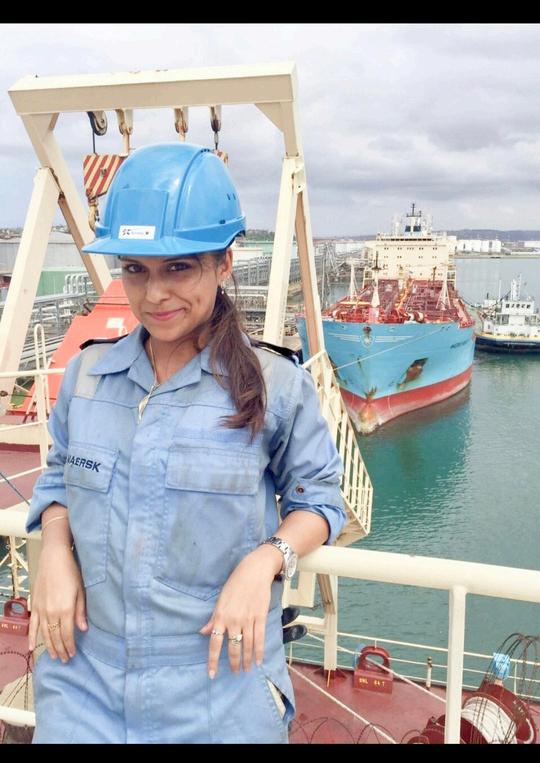
His career extended far beyond sailing as an examiner, surveyor/ auditor/ inspector as well as vessel and drydock owner - he contributed not only to ships, but to the people who sail them. Reaching the same rank was a milestone; earning that breadth of knowledge, experience, and respect is a much longer voyage!
What message would you like to share with other daughters who may be considering a career in the maritime industry?
Growing up, I watched my father build a remarkable career at sea. Today, I'm proud to have charted a course of my own. My message to young women is simple: do not limit your ambitions based on what you do not see around you. Sometimes, being the first person to do something is exactly how change begins. Confidence doesn't arrive before the journey begins it is built one challenge, one voyage, and one achievement at a time.
Captain Colleen L. Moran
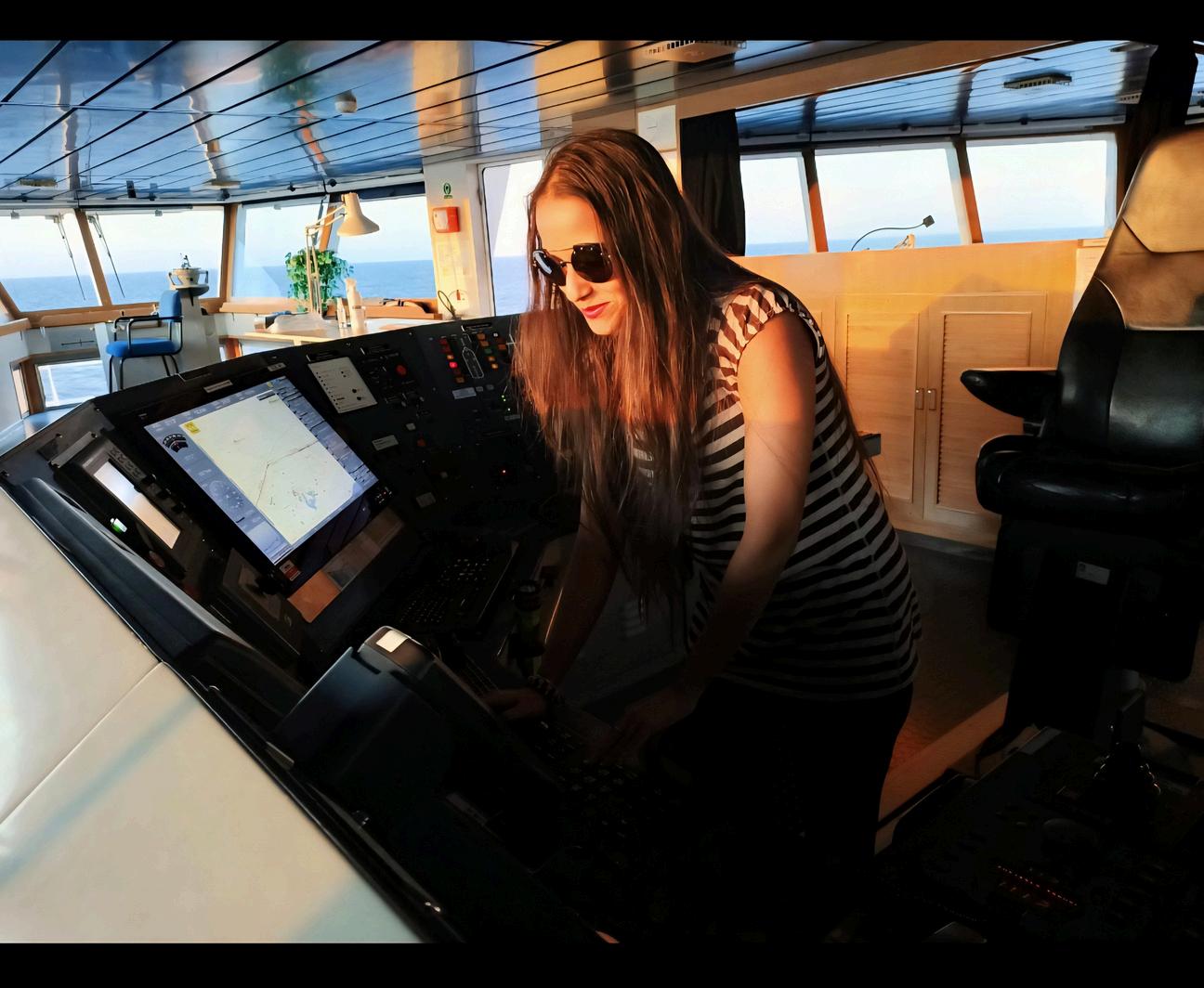
In one of the world’s oldest and most demanding professions, women maritime pilots are proving that success is not achieved alone. Across ports, rivers, bays, and oceans, a growing network of female pilots is reshaping maritime through mentorship, encouragement, and unwavering support for one another.
Maritime piloting has long required resilience, technical mastery, and confidence under pressure. Pilots board massive vessels in darkness,
heavy weather, and difficult sea conditions, responsible for the safe navigation of ships carrying everything from cargo to fuel to passengers.
Historically, women were rare in the profession. That rarity forged deep bonds.
For many women newly entering the maritime industry, seeing a female pilot on the bridge for the first time that is proof there is a place for them in the industry. Today, those of us experienced women pilots are increasingly embracing the responsibility of helping the next generation navigate the waterways and our profession itself.
I started my apprenticeship with the Pilots’ Association for the Bay and River Delaware in 1994, as the first female. I was fortunate to have five “apprentice brothers” in my group who remain some of my biggest champions and supporters my “brothers from another mother.” We grew together - professionally and personally. My journey, though, was different — many of the hurdles I
faced were mine alone. And that is where Captain Allison Ross stepped in to fill a void for me that I didn’t even know existed.
Captain Ross began her apprenticeship in 1992 with the Association of Maryland Pilots. She was their first female and only the second female pilot in the United States. Fortunately for me, she was making an eastbound transit through the Chesapeake and Delaware Canal to Philadelphia as a requirement towards wrapping up her apprenticeship.
It was my second week as an apprentice, and my Association’s President asked me to make sure that Captain Ross was welcomed at our Philadelphia pilot office. That evening’s introduction turned out to be one of the most important encounters of my career.
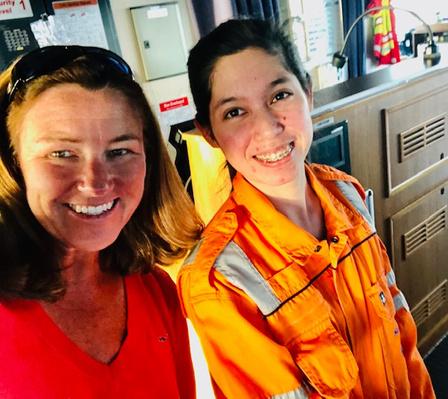
For the next four years, Captain Ross was an unwavering source of guidance throughout my apprenticeship.
As the years pressed on, we would occasionally relieve one another in the C&D Canal, and it was never a traditional pilot exchange. We would embrace in a hug, not a handshake, then briefly update one another on our lives all while the captain observed in amazement.
Although she recently retired from piloting, the friendship we forged will last a lifetime. Captain Ross led by example and gave me the playbook for a successful career. Today our conversations cover fashion and skincare, and rarely involve piloting!
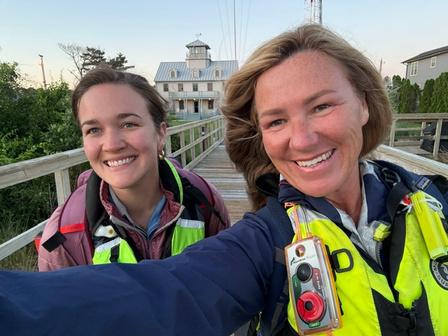
Mentorship among women maritime pilots often extends far beyond technical training. It includes guidance on leadership, balancing family and career demands, overcoming self-doubt, and finding confidence in environments where women may still be vastly outnumbered.
Sometimes the support comes through formal mentorship programs. More often, it happens through a phone call after a difficult transit, advice shared over coffee, and encouragement offered when needed the most.
In 2002, I reached out to Captain Carolyn Kurtz of Tampa Pilots’ Association for guidance on navigating the delicate topic of pregnancy and piloting. At the time, she was the only active U.S. woman pilot I knew of who had worked while pregnant. We discussed everything from Association-backed plans and short-term disability to knowing when it was time to stay ashore. As I climbed up the last ship before I took off on maternity leave, I remembered Captain Kurtz saying, “You’ll know when it’s time because you’ll lose focus.” When I reached the top of the pilot ladder that night, I knew.
No other pilot could have given me what she gave me, and I’m grateful.
In a profession built on trust, women pilots understand the value of having someone who has already weathered the same storms. We celebrate each other’s milestones, advocate for opportunities, and create spaces where younger mariners feel seen and supported.
The impact is increasingly visible around the world. Women now serve as pilots in major ports across the United States, Australia, Europe, and beyond. They command respect through skill and professionalism and push the door open for an inclusive future. Many describe the experience not as competing against one another, but as lifting one another. Success for one woman pilot opens the door a little wider for the next.
Last year, I had the opportunity to participate in a project called SHE SEES. It was a continuation of a collaborative project with Lloyd’s Registry and Lloyd’s Foundation: “Rewriting Women in Maritime History.”
At the heart of it, piloting is about safely bringing others through difficult
passages. Increasingly, women maritime pilots are doing exactly that for each other.
One benefit of my participation in SHE SEES was an introduction by Captain Delisky to the WhatsApp group Maritime SheEO Pilot a worldwide sisterhood of over 100 women pilots helping chart a stronger, more connected future for the maritime community.
The moment I joined, I felt it: these are my sisters. While the work we do may demand independence, no one reaches the bridge entirely alone.


Sofia Fürstenberg Stott Founder and Co-Partner of Fürstenberg Maritime Advisory (FMA)
For a long time, maritime sustainability has largely been framed as a technical transition.
Alternative fuels. New regulations. Efficiency measures. Carbon reporting. Important? Absolutely.
But increasingly, I believe we are asking the wrong question.
The real question is not simply:“How do we decarbonise shipping?”
The real question is:
“WHAT KIND OF MARITIME SYSTEM ARE WE TRYING TO BUILD WITHIN A RAPIDLY CHANGING PLANET?”
Ambiguous as the word may still be, sustainability is no longer only about emissions. It is becoming inseparable from resilience, competitiveness, geopolitics, workforce capability, biodiversity, trust, and long-term business survival.
And perhaps most importantly: uncertainty.
Today, the maritime industry operates in a world where seven out of nine planetary boundaries have already been crossed. Climate disruption, biodiversity loss, resource pressure, geopolitical instability, infrastructure vulnerability, and social fragmentation are no longer abstract future concerns, but operational realities.
Yet much of our industry still approaches sustainability cautiously sometimes even defensively.
We hear statements like:
“We can only do it if it’s good for business.”
“We cannot move too fast.”
“The market is not ready.”
“It is only the big players who can act.”
But what if sustainability is not slowing business down?
What if sustainability is actually becoming the organising logic of future maritime competitiveness?
This is the thinking we have been exploring through our foresight and strategy work.
When we work with maritime stakeholders, we increa think beyond compliance and ask deeper strategic qu
What happens if trust in global systems erodes?
What happens if infrastructure transitions arrive too slowly?
What happens if the industry loses access to digital talent?
What happens if biodiversity collapse begins disrupting trade patterns and coastal economies?
What happens if sustainability succeeds and your organisation is not prepared for the opportunities?
Because every sustainability transition creates both risks and opportunities. In one future, maritime becomes a magnet for talent, innovation, investment, and cross-sector collaboration.
In another, the sector is perceived as slow-moving, fragmented, and increasingly disconnected from societal expectations. The difference between those futures may not primarily depend on technology, but leadership.
The leaders who will shape the next era of maritime are not necessarily those with the largest net-zero commitments. They are the ones capable of navigating complexity with compassion for the planet. The ones capable of systems thinking. The ones willing to connect people, oceans, communities, finance, transparency and energy into one shared strategic picture.
Perhaps this is one reason why a broader range of voices and leadership perspectives in maritime is becoming increasingly important. The challenges ahead are too interconnected to be solved through technical expertise alone.
Maritime sustainability is about rethinking what maritime success looks like in a world operating within planetary boundaries. And that requires something far more difficult than compliance.
It requires imagination.
Mônica Zionede Hall Founder and CEO of FELIZ Consulting
For many women at sea, the job is not just to perform, it is to prove, not one time, but constantly.
On the Day of the Seafarer, we celebrate skill, resilience, and commitment, but behind that recognition is a reality we don’t talk about enough: the combination of external pressure and internal doubt
that many women carry every day on board.
Every seafarer operates in a highperformance environment. The margin for error is small, and the stakes are real, but for women, that pressure is often doubled.
There is the expectation to meet the same standards as everyone else and then the unspoken expectation to represent more than just themselves. Mistakes can feel heavier. Success can feel like it needs to be repeated, again and again, just to be believed.
BEING ONE OF THE FEW WOMEN ON BOARD COMES WITH VISIBILITY. AND VISIBILITY, IN THIS CONTEXT, OFTEN MEANS BEING OBSERVED, EVALUATED, AND REMEMBERED DIFFERENTLY.
There is less room to fail. Less space to learn quietly. More pressure to get it right the first time. Over time, this creates an environment where perfection feels like the minimum requirement, not the goal.
A thought many women carry, often silently, is this: “If I mess up, it won’t just reflect on me.”
That pressure changes behavior. It leads to playing it safe, avoiding risks, and overthinking decisions that should come naturally with experience. Instead of focusing fully on the task, part of the energy is spent managing perception.
To manage this pressure, the key is adaptation. Women work harder, prepare more, and speak less to avoid scrutiny.
On the surface, it looks like dedication. But over time, it can lead to burnout, hesitation, and reduced confidence. The effort to prove oneself becomes exhausting, and the constant selfmonitoring takes a toll.

Where Impostor Syndrome Comes In
This is where impostor syndrome often takes hold. Not as a sign of weakness, but as a response to the environment.
It shows up as the feeling of not being as capable as others think, despite evidence to the contrary. When external pressure is high, internal doubt finds space to grow. The issue is not ability. It is the weight of expectation.
This is not just a personal challenge. It affects how people show up, communicate, and make decisions on board.
Hesitation, overthinking, or holding back ideas can impact teamwork, clarity, and even safety. In an industry where decisions matter, confidence is not a luxury it is essential.
On the Day of the Seaf level appreciation.
As Ivana Kulkarni, the f Master Mariner says: “W not just carrying respo carrying expectations up.”
And that deserves not but understanding, sup What will you do in you industry to help this re celebrate Seafarers not every day?
I am Mônica Zionede H coach, coffee and pickl navigate impostor synd

Shradha Singhania-Goley,
Author / Founder & Director Under The Bodhi Tree HR Services
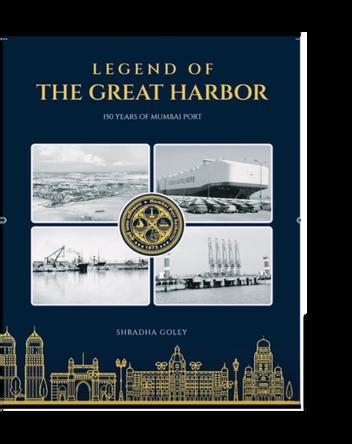
Legend of the Great Harbor is more than a history book; it is a tribute to the institution that shaped the destiny of Mumbai and influenced the maritime development of modern India.
Published to commemorate 150 years of Mumbai Port, the book addresses a growing concern: the fading awareness of the pivotal role ports have played in building cities, economies, and nations. While Mumbai’s growth is celebrated widely, the story of the harbor that made it possible often remains untold.
Drawing upon archival records, historical narratives, rare photographs, and maritime milestones, the book traces Mumbai Port’s journey from its origins to its emergence as one of India’s most significant maritime gateways.
It highlights the enduring legacy of Chhatrapati Shivaji Maharaj, whose naval vision laid the foundation for India’s maritime strength. The narrative is further enriched by the stories of pioneers such as Sumati Morarjee, the First Lady of Indian Shipping, and Anna Rajam Malhotra, India’s first woman IAS officer, whose leadership influenced modern port development.
A valuable read for anyone interested in history, trade, urban development, and maritime heritage, the book offers a deeper understanding of how a great harbor helped build a great city.
The author, Shradha Singhania-Goley, is a maritime professional, author, and researcher whose ongoing work focuses on documenting, interpreting, and bringing to wider audiences the rich and often overlooked stories of India’s maritime heritage.
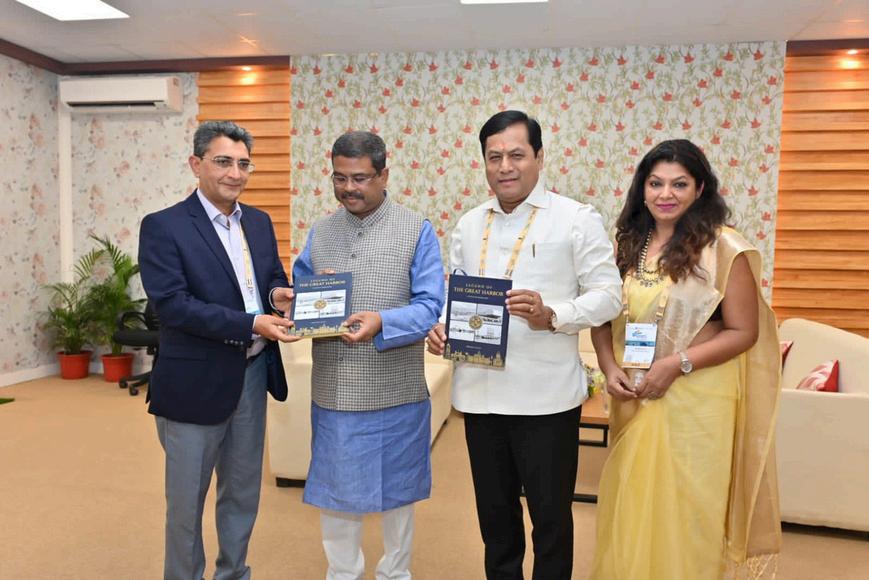
Priyanka Pandey Assistant Manager – FPD Service Delivery, Dry
The sea has always been a part of my life long before I understood its depth or its silence. I grew up listening to its stories, told in the voices of the seafarers in my family. Their absences shaped our festivals, their homecomings shaped our joy, and their sacrifices shaped my idea of strength. I did not realise it then, but every tide they braved was slowly shaping me too.
Thirteen years ago, I stepped into the ship manning industry, thinking it would simply be a profession. Instead, it became a mirror reflecting who I was and who I could become. The maritime world is not gentle. It demands long hours, quick decisions, and a heart strong enough to hold the worries of those who leave home for months. Yet in its unpredictability, I found purpose. In every anxious phone call from a family member, every crew change crisis, every life impacted I discovered my own resilience.
Being a woman here was not always easy. There were moments I felt invisible, moments I felt unheard. But slowly, I learned to anchor myself. I learned to stand firm even when the room felt too heavy, to speak even when my voice trembled, and to trust that empathy is not weakness it is leadership.
And then there is the part of my story that lives beyond my desk. I married a sailor a Chief Officer whose life at sea often leaves our home quietly waiting for him. Loving someone who sails teaches you a different kind of courage: the courage to hope, to wait, to pray, to hold everything together during long silences and distant sunsets. His world on the waves and mine on shore have shown me the emotional truth of this industry that behind every voyage is a family learning to be strong in their own way.
When I look back today, I see a woman shaped not just by the sea, but by the love, loss, longing, and pride that surround it. The sea raised me and I am grateful for the woman it helped me become.