Marist College Canberra - Cyclic Inquiry | Self Review
CYCLIC INQUIRY SELF-REVIEW
1968, Marist Canberra has been a part of and had its footprints on the land of the Ngunnawal and Ngambri peoples. As a College,
the traditional custodians of the land on which we stand.
and the
The Marist Schools Australia Cyclic Review process provides Marist College Canberra with an important opportunity to reflect critically on its strengths, achievements, challenges, and priorities for future improvement. This Self-Review has emerged from a rigorous and consultative process, drawing on contributions from key stakeholders through improvement surveys, the Enhancing Catholic School Identity survey, position statements and extensive staff dialogue
This Self-Review brings together these rich sources of evidence to provide a clear picture of the College’s current strategic context It identifies the strengths on which the College can continue to build, the areas requiring further attention, and the opportunities that will inform the next phase of strategic planning and school improvement.
The information presented in the Self-Review is designed to be snapshots of the broad and diverse educational program, selected after considered dialogue and discussion with staff in key domains, and represent our picture of where we are and where we believe we need to go on our next cycle of school improvement
Marist College Canberra is a Catholic learning community, illuminated by the Gospel of Jesus Christ and founded in the Marist tradition of St Marcellin Champagnat The way of Mary influences our relationships and style of education, as we nurture, teach, gather, reconcile and stand alongside young people, giving each of them reason and means to believe, hope and love St Marcellin Champagnat envisioned Marist schools as communities characterised by family spirit, where people relate to and care for one another as members of a loving family.
Marist College Canberra is governed by Marist Schools Australia Limited The College Advisory Council supports the Headmaster in an advisory capacity and operates within the terms of its Constitution Its purpose is to provide advice and support that enables the Headmaster to lead the College effectively as a Catholic educational community, with an evangelising and educational mission shaped by Marist spirituality and educational practice.
We are a Catholic school in the tradition of St Marcellin Champagnat that strives to make Jesus known and loved through forming young men of strong minds and gentle hearts.
‘I came that they may have life, and have it abundantly.’ (John 10:10)
Underpinned by the knowledge we are deeply loved by God, and with Mary as our inspiration and guide, we endeavour to be authentic witnesses to the Gospel who: dare to engage in the spiritual and intellectual adventure before us safeguard all in our care are anchored in authentic presence through communion, Sacrament and prayer are transformative in educating for truth, depth and choice cherish human dignity.
We live this for the Marist graduate who we hope: is restless for God and alert to the Spirit embraces mystery and seeks a deep relationship with Christ is nurtured by contemplation is committed to intellectual rigour, learning and achievement aspires to live in gratitude with joy encounters the daily company of empathy and forgiveness moves towards and accompanies the least, the lost and the lonely is a steward of creation looks to the future with audacity and hope.
MaristCollegeCanberra ataGlance
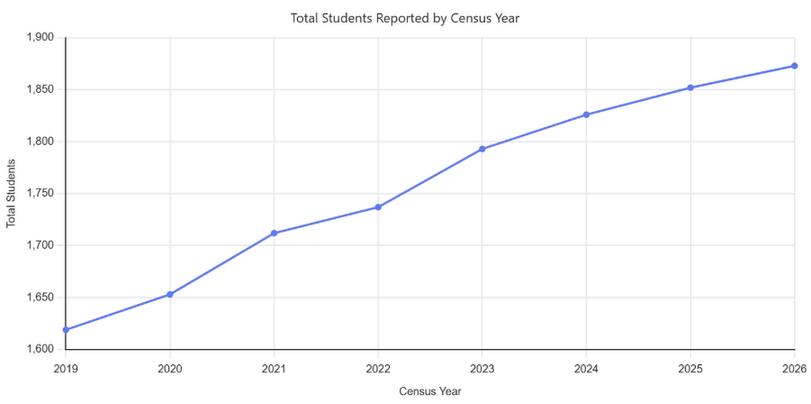
TOTAL STUDENTS REPORTED BY CENSUS YEAR
Student enrolments have grown steadily over the past seven years, increasing from 1,619 students in 2019 to 1,873 in 2026, representing an overall increase of 14 4% since 2019 and an average annual growth rate of approximately 2 3% Demand remains strong for 2027, with 163 applications for 90 Year 7 places and 113 applications for the Year 4 cohort
The growth in student numbers was a deliberate strategic response to reductions in government funding. Changes arising from the Gonski Review and the funding model effectively removed indexation growth in the College’s funding, while an increase in the College’s Capacity to Contribute score resulted in further reductions In response, the College expanded junior-school classes and increased senior-school cohorts from approximately 225 to 250 students. The development of nontertiary and vocational pathways has also supported stronger retention into Years 11 and 12
POST DESTINATION SURVEY
The Post Destination Survey is completed annually and provides another profile of our demographic. In 2025, over 50% of the graduating class had accepted placements at University as a pathway, with 8% taking up a trade qualification An interesting insight is in the number of students who have decided to take a formal gap year, with 15% of the cohort, a figure higher than most other reported MSA governed schools
CATHOLIC IDENTITY AND MARIST SPIRITUALITY
LEARNING AND TEACHING
WELLBEING AND GROWTH
SUSTAINABILITY AND COMMUNITY
Strategic Goals by Year
The College’s Strategic Plan and Annual Improvement Plans were developed collaboratively, with input from stakeholders across the community Over the course of the planning cycle, the process for developing Annual Improvement Plans evolved and became increasingly focused on a smaller number of high-impact priorities.
Key achievements from the most recent strategic planning cycle include:
CATHOLIC IDENTITY AND MARIST SPIRITUALITY
Refined and clarified the College Mission and Vision, distilling the language into a simple, clear and inspiring expression of our shared purpose and identity
Increased student engagement in service, with recorded service hours rising from 17,090 in 2024 to 29,052 in 2025 Students were also provided with expanded opportunities for advocacy and for building meaningful relationships with people on the margins, particularly through work focused on refugees and integral ecology
Built the capacity of staff to embrace and practise a contemplative approach to life and embedded opportunities for reflection and contemplation within the daily prayer life of the College, helping to nurture the spiritual growth and inner life of students and staff
LEARNING AND TEACHING
Continued to strengthen the implementation of the Marist Learning Principles and explicit teaching practices across the College, providing a shared framework for teaching and learning
Developed a low-variance curriculum across Years 4-12, supporting greater consistency in curriculum delivery, assessment and student learning experiences across faculties. Developed a more systematic and consistent approach to NAPLAN preparation, including a clearly defined scope and sequence across year levels
WELLBEING AND GROWTH
Implemented a comprehensive wellbeing framework from Years 4–12, providing a consistent and developmentally appropriate approach to fostering positive mental health and wellbeing
Introduced two additional Houses to ensure that every student is known, valued and supported as College enrolments continue to grow
Developed and implemented the Forming Fine Young Men Framework, creating a clear and shared vision for the formation and growth of boys throughout their College journey Senior students were also trained as Marist Mentors to support delivery of the framework.
SUSTAINABILITY AND COMMUNITY
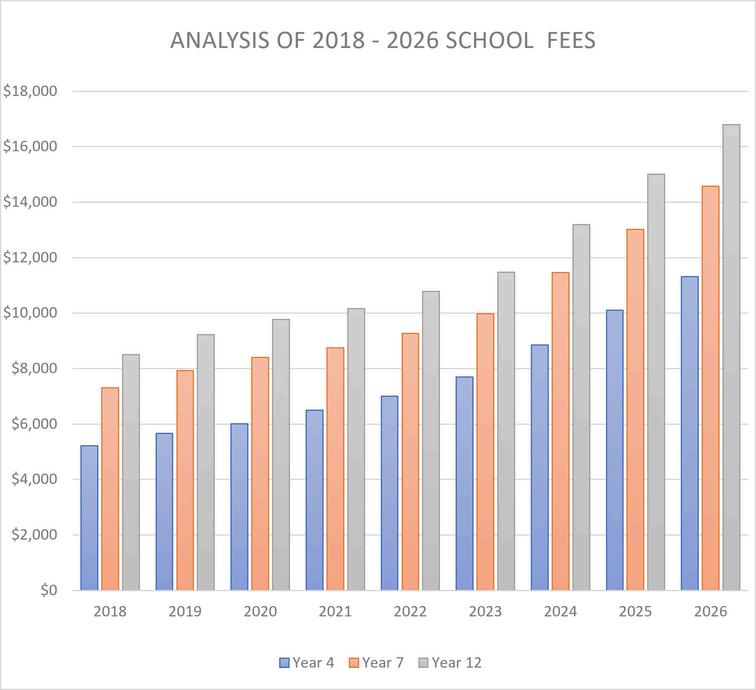
Maintained the College’s financial sustainability through careful management of fee increases and continued enrolment growth, helping to address the ongoing reduction in government funding Implemented targeted strategies to attract and retain high-quality staff, including tuition fee concessions, a positive workplace environment (staff rooms) and a range of non-monetary benefits.
Commenced a review of the project priorities identified in the first five years of the approved Master Plan, including an assessment of existing buildings and facilities to identify opportunities for upgrade and refurbishment
STAFF FAITH FORMATION
Marist College places a significant priority on the faith formation of staff in living out the Marist tradition and spirituality. This includes invitations to engage with introductory, intermediate, leadership, and immersion experiences. The presence of staff in national gatherings, spiritual retreats, and charism focused programs highlights the College’s ongoing investment in nurturing a vibrant and mission driven professional culture This breadth of participation supports Marist College Canberra’s commitment to forming staff who live out the Marist tradition and foster communities of faith, presence, and service.
STUDENT FAITH FORMATION
IMMERSIONS AND SOLIDARITY
In recent years, the College has advanced the strategic goal of deepening relationships with the lost, the least and the lonely through service and solidarity New initiatives include RAID Basketball, METWELL Holiday Program and partnerships with organisations such as Embracing Ministries In 2026, an incredible 31,767 hours of service were completed by Marist College students This included significant collaboration with local community groups including Pegasus Riding for the Disabled, Home in Queanbeyan, mentoring activities such as the Fine Young Men Framework, and coaching College sporting teams. The Game Changers youth ministry program has grown to 118 members, while collaboration with the Junior School laid the foundations for a new Retreat Day model based on Marist Spirituality and peer ministry
There has been a renewed focus on student and staff immersions which provide a significant opportunity to encounter people, listen to their experiences and walk alongside them and deepen spirituality. By entering communities and forming genuine relationships, students move beyond assumptions and begin to recognise the dignity, strengths and shared humanity of every person Student Immersions have visited Solomon Islands and Cambodia, with successful joint immersions held with Canberra Girls Grammar School. Staff Immersions provide a unique opportunity for solidarity within the Star of the Sea Province, including the facilitation of professional development for educators
Across the period 2015-2025, the College’s academic performance remained consistently strong, with stable median and mean ATAR results despite fluctuations in cohort size and student pathways. The proportion of tertiary students remained broadly stable at approximately 80% of the Year 12 cohort. Results in 2025 represented a notable improvement on 2024, including substantial increases in the number of students achieving ATARs above 90 and 95. Longer-term trends also indicate improved outcomes at the lower end of the achievement distribution and a growing concentration of high-achieving students
YEAR 12 COHORT OVERVIEW
There has been significant strategic initiatives to address areas of need in academic results, including an increase to the preparation program for the ACT Scaling Test (AST) and work on the support for the targeted students for the under 65 ATAR group The AST program has been substantially increased, including the use of external presenters, aimed at developing both the critical literacy and thinking skills needed for success in the scaling test. The under 65 group have had a number of key initiatives including academic tracking, a new subject selection academic profile for subject guidance, and a new pathway offered in 2026 that provides an alternative to the tertiary program
YEAR 12 ATAR PERFORMANCE
Staffing has increased in line with sustained enrolment growth, enabling the College to maintain appropriate levels of student support and strong educational outcomes The qualifications of both teaching and support staff have continued to strengthen, with 41% of teaching staff holding a master’s degree or higher and support staff increasingly gaining qualifications relevant to their roles
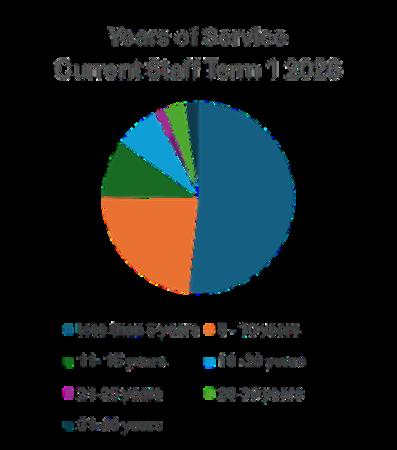
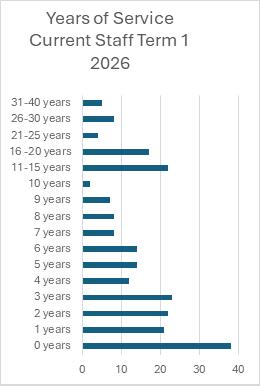
The College continues to achieve strong staff retention, recorded at 90% in 2024 and 87% in 2025 Nearly half of all staff (46%) have fewer than four years of service, reflecting recent workforce growth associated with rising enrolments At the same time, almost 25% of staff have served the College for more than ten years, providing a strong foundation of institutional knowledge and continuity of culture
The years of service profile provides further insight into the workforce While a significant number of staff have served the school for more than 10 years, there has also been substantial staff renewal over the past five years, with more than 50% of employees having less than five years of service This presents both a challenge and an opportunity The challenge of sustaining and embedding the school's culture and spirituality to newer staff, and the opportunity to refresh, strengthen, and evolve that culture through new perspectives and experiences
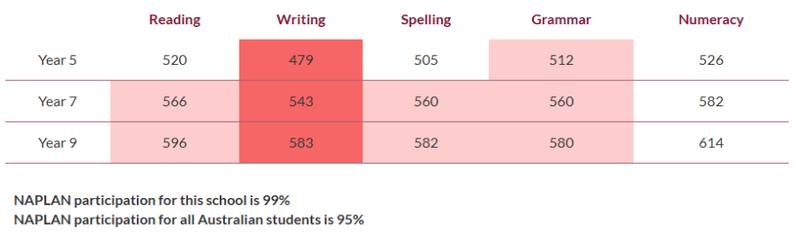
NAPLAN-HistoricalPerformance
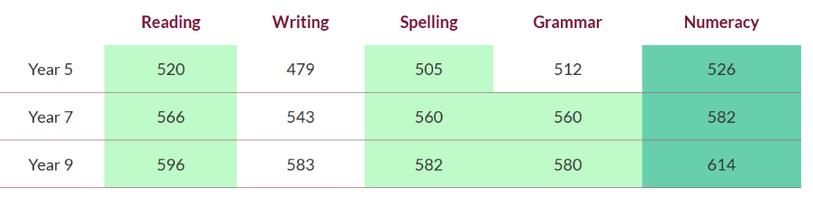
Across the past two strategic plans, the College has implemented a range of initiatives to improve literacy and numeracy outcomes These have included evidence-based pedagogy, the Marist Learning Principles informed by the Victorian High Impact Teaching Strategies, and the development of staff knowledge and expertise in explicit instruction Literacy-specific work has also focused on vocabulary instruction and writing techniques Significant work has taken place since 2024 on strengthening a common approach to writing, with writing frameworks in both persuasive and narrative models developed and embedded across the Year 4 to Year 12 learning experiences. Despite these initiatives, NAPLAN results indicate an ongoing challenge when Marist students are compared with students from similar backgrounds, particularly in writing.
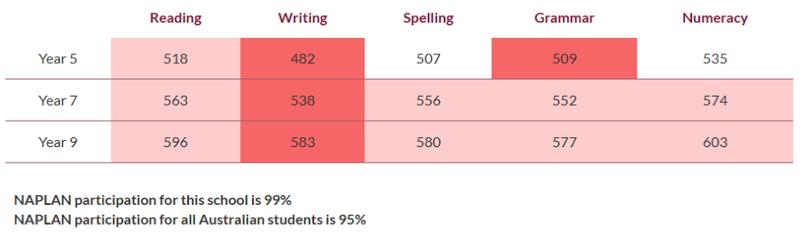
NAPLANPerformance -AllAustralianStudents
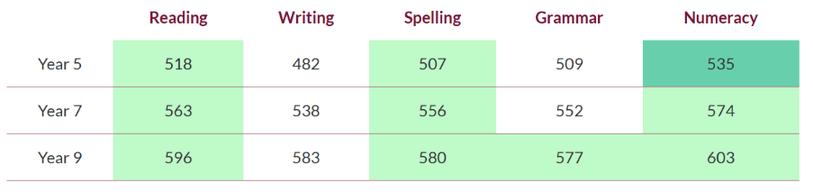
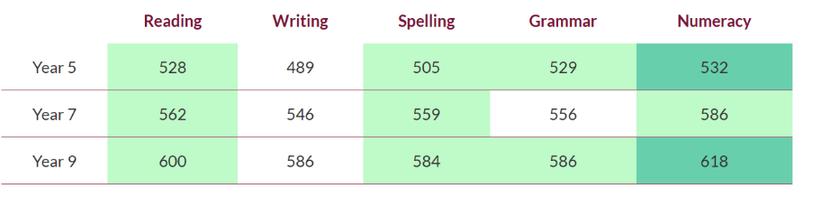
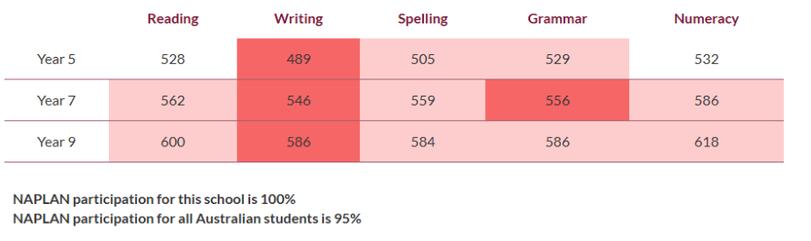
Compared with all Australian schools, Marist students perform strongly against national benchmarks, with average results consistently above the national average However, analysis of growth data against students with similar backgrounds and prior achievement indicates below-average growth, particularly in writing, where growth has been identified as well below expectations. Although targeted initiatives have produced moderate improvement in recent years, writing remains a priority for continued development
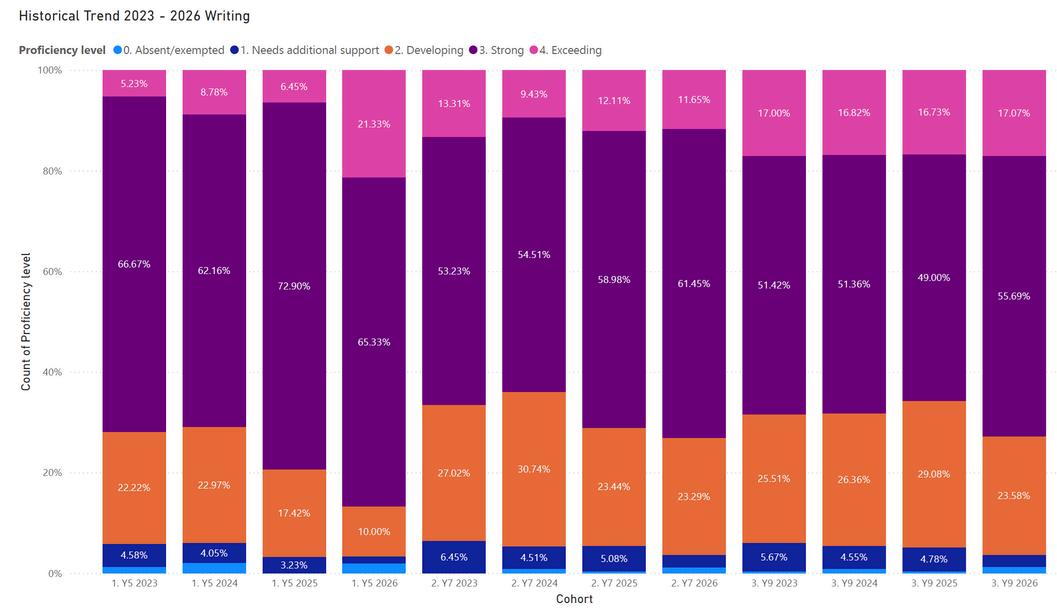
A closer examination of writing outcomes shows encouraging progress The proportion of students requiring additional support has decreased, suggesting that investment in early literacy intervention and targeted support is beginning to have a positive effect This trend indicates that foundational literacy programs are increasingly meeting the needs of students at risk of underachievement.
ComparedwithStudentswithSimilarBackground
NAPLAN-HistoricalPerformance
Despite these gains, extending highperforming students remains a crucial area for improvement.
Across the past three years, fewer students than expected have achieved within the Exceeding proficiency band While intervention strategies are supporting students at the lower end of the achievement spectrum, further work is required to ensure that students in the upper quartile are sufficiently challenged and supported to realise their potential
Stronger differentiation, enrichment opportunities and high-impact writing instruction for advanced learners will be important in improving outcomes at the highest levels of achievement
Socialand Emotional Wellbeing
At Marist College Canberra, the formation of every boy is underpinned by strong relationships and a shared commitment to personal growth. The Marist Wellbeing Framework provides a comprehensive approach to student development across the spiritual, intellectual, physical, relational and emotional dimensions, ensuring each student is known, challenged and encouraged to thrive.
A major focus during 2025 was the expansion of the Marist Mates program Every student in Years 7–12 is paired with another boy within the vertical House structure, creating intentional opportunities for friendship, mentoring and mutual support across year levels The initiative has enhanced the sense of community within Houses while reinforcing the responsibility students have for one another Wellbeing sessions continued through twice-termly House Group sessions led by House Deans and House Group Leaders. These sessions are carefully sequenced and informed by student data, enabling each year level to explore topics that are relevant to their stage of development
The Marist Mentors program also continued to grow, with 150 senior students leading aspects of the Forming Fine Young Men program across Years 4–12 Through peer-led discussions on respect, relationships and positive masculinity, mentors provide authentic leadership while modelling the values and behaviours of being a “fine young man”.
The integration of academic and pastoral care also remained a priority The Marist Tutoring program brings together teachers and senior student tutors to provide targeted academic assistance in small groups while fostering positive learning relationships. Regular SMART goal conversations encourage students to reflect on their progress and recognise the connection between effort, resilience and achievement
STUDENT WELLBEING DATA
The College measures student wellbeing using two nationally recognised instruments: the Social-Emotional Wellbeing (SEW) Survey, developed by the Australian Council for Educational Research (ACER), and The Resilience Project Student Resilience Survey, developed by Resilient Youth Australia in collaboration with the University of Adelaide
SOCIAL-EMOTIONAL WELLBEING (SEW) SURVEY
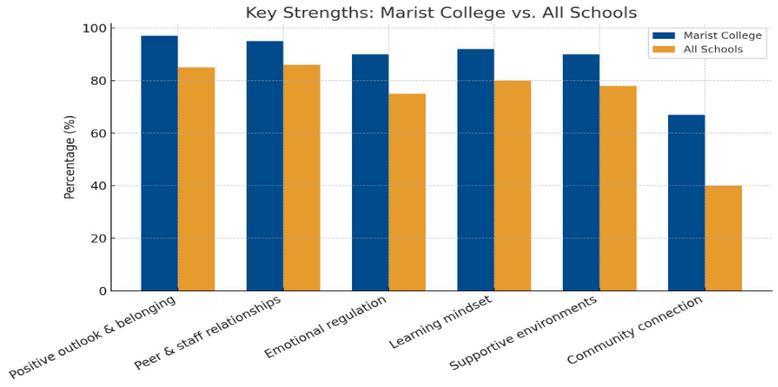
Completed by students in Years 7–12 during August, the SEW Survey provides a comprehensive measure of students' wellbeing, relationships and engagement The results demonstrate that Marist students experience high levels of safety, belonging and connectedness, with outcomes consistently exceeding national benchmarks
HIGHLIGHTS INCLUDED:
97% of students reported feeling happy and safe at school.
Strong relationships with peers and teachers.
High levels of confidence, persistence and effective time management.
More than 90% of students reported feeling accepted and encouraged at home.
Low levels of loneliness, hopelessness and anger.
Community participation well above the national average (67% compared with 40%).
These findings affirm the positive culture that exists across the College and reflect the strength of relationships between students, staff and families
Socialand EmotionalWellbeing
Socialand EmotionalWellbeing
THE RESILIENCE PROJECT STUDENT RESILIENCE SURVEY
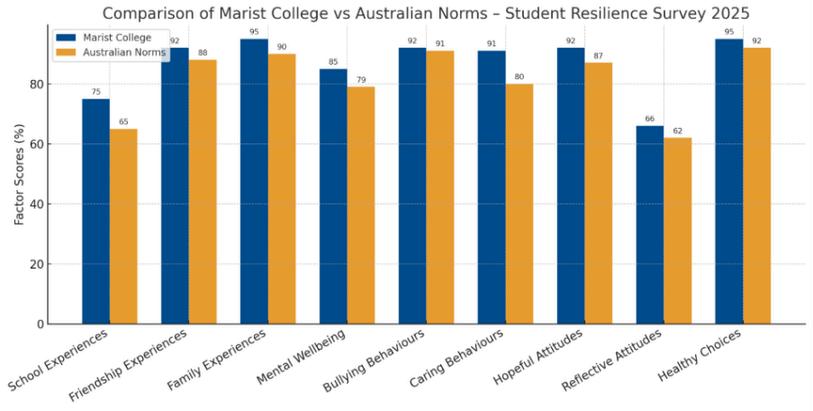
Students in Years 7 and 9 also completed The Resilience Project Student Resilience Survey, which measures resilience, wellbeing and protective factors across a range of domains
The results closely aligned with the SEW data, indicating that Marist students demonstrate strong optimism, gratitude and engagement with school life
Marist students scored above national norms in several key areas:
Family Experiences (+5%)
Caring Behaviours (+11%)
School Connectedness (+10%)
Hopeful Attitudes (+5%)
Together, the survey results provide strong evidence that students experience Marist as a safe, caring and supportive community They also assist the College in identifying emerging needs and ensuring that wellbeing initiatives continue to respond to the changing experiences of young people
Strong relational trust between students and staff was a notable feature of the SEW data, while the TRP results indicated strength in gratitude, empathy and optimism These encouraging outcomes also reinforce the importance of continuing to provide responsive and targeted wellbeing support
The connection between academic and pastoral care continued to strengthen in 2025 The Marist Tutoring program, involving teachers and senior student tutors, provides targeted academic support in small groups and reinforces both learning and connection SMART goal conversations further help students recognise that academic success and personal wellbeing are interconnected and strengthened through effort, reflection and perseverance. Wellbeing at Marist is expressed not only through the Forming Fine Young Men Framework, but also through the quality of relationships, the consistency of care and the intentional structures that support each boy The College remains committed to strengthening these foundations so that every student is known, supported and challenged to flourish
Sustainabilityand Community
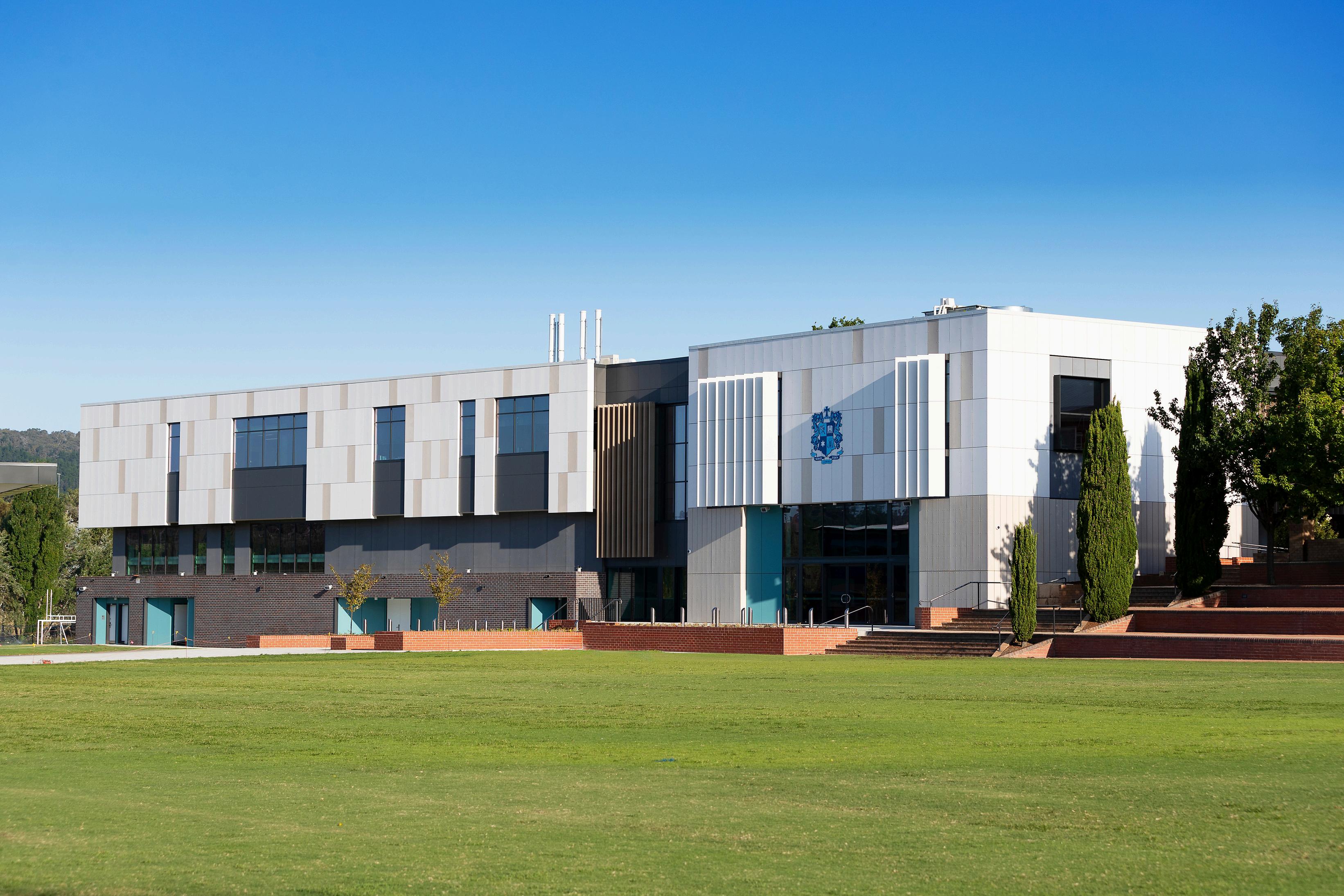
The College completed a significant Master Plan in 2021 which reflected the changing needs of the schools infrastructure and site There have been significant achievements with the opening of the Veritas Building in 2024, creating contemporary science and performing arts learning spaces for curriculum, and co-curricular activities The College will review its 2021 Master Plan to identify strategic opportunities for the refurbishment and development of campus facilities. The revised plan will align future projects with anticipated growth and the priorities of the Strategic Plan, with endorsement sought from the College Advisory Council and Marist Schools Australia.
The College developed and launched its Sustainability Environment Management Plan, including a Sustainability Action Plan, in 2026 The plan outlines the College’s approach to sustainability, the framework and supporting policy, including the establishment of the College’s Sustainability Working Group The College is also engaging with the ACT Sustainable Schools Program
The College has had a continued strategic intent to strengthen its Employee Value Proposition to attract, develop and retain high-quality, mission-aligned staff. Priorities include reviewing remuneration and professional opportunities ahead of the 2027 budget, negotiating the 2027–2029 Multi-Enterprise Agreement, establishing a Staff Consultation Committee focused on wellbeing and sustainable workloads, and continuing the Aspiring Leaders Program to develop future leaders.
The perceptual data gathered through the Diagnostic Inventory of School Alignment (DISA) provides valuable insight into how members of the College community understand its strengths, challenges and degree of alignment. The breadth of responses offers a rich stimulus for reflection, revealing both shared views and important differences in experience across the community. The aim of the DISA is not to be a definitive measurement, rather an opportunity for the College community to reflect and to guide deeper dialogue.
KEY STRENGTHS
Strong reputation as a caring, respectful and professional learning community
Students demonstrate pride in the College and value its well-maintained physical environment
Clearly defined values and a well-promoted school vision
High expectations for student achievement from staff, parents and students
Strong culture of communitymindedness, service and celebration of individual contributions.
High levels of Social Capital among staff and parents.
Positive relationships and strong community confidence in the College.
KEY WEAKNESSES / AREAS FOR IMPROVEMENT
Student engagement in learning is perceived as lower than desired.
Students have limited input into teaching and learning approaches
Insufficient time and structures for reflective professional dialogue
Decision-making processes are perceived as lacking openness and shared ownership
Teachers do not always feel involved in key educational decisions
Weaknesses in flexible use of time, curriculum renewal and external expertise
Professional learning and teacher leadership require strengthening
Considerable variation in staff responses suggests inconsistent experiences
CHALLENGES
Decision-making emerged as a consistent theme Although perspectives varied, the data suggests that members of the community would value greater involvement in shaping the College’s direction and decisions.
A significant outlier was the perception that teachers have insufficient time for reflective practice. This item also recorded the highest standard deviation in the data set, indicating considerable variation in staff experience.
Staff and students shared the view that learners are not yet sufficiently active or engaged in directing their own learning
Staff be provided with an opportunity to actively engage with and dialogue about school successes and challenges.
The 2025 Enhancing Catholic School Identity (ECSI) and Marist Charism study drew on more than 1,300 student, staff and parent responses. It provides a comprehensive picture of the College’s Catholic identity and Marist mission within an increasingly diverse and pluralistic community
STRENGTHS
Staff demonstrate strong commitment to both the Marist charism and Catholic identity, with beliefs and practices closely aligned to contemporary Catholic educational expectations Trust, dialogue, and authentic relationships emerge as defining characteristics across the community
Marist values such as presence, simplicity, and family spirit are widely recognised by students and parents, while the College's cultural diversity offers rich opportunities for dialogue, belonging, and faith development.
CHALLENGES
RECOMMENDATIONS
Student engagement with Catholic faith declines with age, reflected in lower participation in faith practices and more ambivalent attitudes towards religion
Relativism and external critique influence religious meaning-making for many students and some staff
A noticeable gap exists between staff perceptions of their modelling of the charism and students' lived experience, particularly in the secondary years
Additionally, the College is often perceived as more institutional than relational, with teaching and learning experienced as highly academic but not always sufficiently personal or faith-formative.
Strengthen staff formation in Marist identity and Post-Critical Belief. Rebuild a stronger sense of family spirit across the College
Deepen relational and personal approaches to teaching and learning
Enhance student faith formation through dialogical and inquiry-based approaches
Increase the visibility and integration of the Marist charism across all aspects of school life
Develop targeted strategies to engage disconnected or ambivalent students
Improve staff and parent understanding of the College's Marist mission.
As part of the Cycle of Inquiry, the College undertook a substantial process of reflection on progress towards its strategic goals and annual improvement priorities This process drew on DISA and ECSI results, and positioned the College’s progress against the National School Improvement tool
All staff participated in the reflection process, with multiple opportunities for key stakeholders to engage in dialogue about the strengths and challenges of school improvement The resulting position statements were synthesised into the major priorities, or “big rocks”, that inform the next strategic plan
TIME / ENACTING THE VISION
Time and the implementation of the College vision emerged consistently across domains The College should examine how time is used strategically in teaching and learning to support reflective practice, deep evaluation of data and programs, and collaboration around best practice
Guiding question: How can the College more effectively enact its vision for teaching and learning and build collective efficacy?
WRITING
STUDENT ENGAGEMENT AND EXPECTATIONS
Whilst there has been a significant improvement in the preparation for NAPLAN, with moderate improvements in progress scores, the performance when measured against similar students with similar starting points, offers a clear strategic focus.
Guiding question: How can we build consistent, effective writing practices across all students in the College?
Student engagement and expectations for learning emerged as a strong opportunity. Students need to be explicitly supported to take greater ownership of their learning, develop curiosity and set high expectations for themselves
Guiding question: How can the College build on its culture of high expectations and partner with students to strengthen intellectual rigour, engagement and achievement?
OPERATIONALISING THE MISSION AND VISION
COMMUNITY FLOURISHING AND PARTNERSHIP COORDINATION
EQUITY
The College has articulated a rich Mission and Vision that should guide strategic work and help make Jesus known and loved in the way of Mary
Guiding question: How can the Mission and Vision be lived more fully across all aspects of College life?
A flourishing community requires coordination, coherence and strategic intent to capitalise on the College’s strong relationships and community support
Guiding question: How can existing partnerships be leveraged through a simple, coherent and strategic approach?
The continued growth and changing context of Marist College Canberra creates opportunities to reflect on the College’s place within the wider community and the evolving demographics of its student population
Guiding question: How can the College preserve the essence of Marist education within an evolving social and educational landscape?