CAPTAIN’S CHECK LIST
Day of delivery:
Customer’s Name:
(REMOVE FROM BOOK BEFORE DELIVERY)
Boat Model:
Captain: Capt. Signature:
Weather Condition:
Before the Customer Arrives:
Check all fluids, fuel level
Start engine & generator – Bring up to operating temperature. Check all gauges.
Walk through the boat: Turn on hot water heater, A/C, ice maker & refrigerator
Make sure the boat is accessible for customer and is tied up correctly
MM logo is installed, coast guard package, T/P
Set-up of: TV and stereo’s
When the customer arrives:
Greet the customer, review “measuring expectations” and assist them getting to their boat.
Complete delivery in the following order:
1. Explain everything on swim platform and transom locker
2. Review All Engine contents in engine room and the need to check oil in Engine & O/D and how to add oil
3. Review dashboard and engine starting procedure
4. Test Vhf Radio, Depth Finder, Stereo, TV’s
5. Bay test with customer, review trim tabs and trim on out drive. Talk about clogging of speedo
6. Vibration:
Top End Speed: WOT RPM’s
7. Return to slip – tie up and shore power procedure (GFI Locations)
8. Review Cabin – A/C, D/C panel, all accessories, head systems
9. Explain the importance of proper canvas installation – zipper lube, Snap care and Isinglass maintenance
10. Review and sign all delivery paperwork
11. Review 20/100 hour service and other MMAX service’s
Manufactures paper work
Contact team leader that delivery is completed
Review and send punch list to team leader if need be
Punch list items found on vessel:
VESSEL LOCATION (REMOVE FROM BOOK BEFORE DELIVERY)
Customer:
Boat Description:
Boat Name:
Reg/Doc#:
Marina Name:
Dockmaster:
Phone:
Email:
Gate Combo:
Slip Number:
Key#:
Areas of Opportunity After Delivery:
Door#:
Captain Signature:
Customer Signature:
Surveys will be sent out periodically. Very important to fill these out so we can continue to provide our customers with the best service possible.
CUSTOMER RESERVATION

To help you prepare, we offer an opportunity to secure your boat's winter protection ahead of time.
Customer would like to reserve a spot at MarineMax Norwalk for winter storage. Customer submitted a $500.00 non-refundable deposit to hold winter storage spot.
CUSTOMER NAME:
CONTACT NUMBER:
EMAIL ADDRESS:
BOAT MAKE: MODEL:
REGISTRATION NUMBER:
As always, we appreciate your business and thank you for your continued patronage. We hope to serve all of your boating needs as they arise. Please ask our Service Professionals about our comprehensive maintenance programs that can have your boat ready to go in the spring by calling us or emailing this form to customercare@marinemax.com.
Customer’s Signature: Date:



CUSTOMER SURVEY
WELCOME TO THE MARINEMAX FAMILY
We are so happy to have you aboard! You may periodically receive surveys from our boat manufacturers or from MarineMax directly. We wanted to take a moment to let you know how extremely important these surveys are to us. When you fill out these surveys, it allows us to know what we are doing well and what we could improve upon, all to better serve you—our customer!
So, if you could please fill out these surveys when you receive them, we would greatly appreciate it.


MARINEMAX EVENTS
It’s the perfect time to start planning your 2026 events! Let MarineMax take the lead and join us for exclusive events. Look ahead at the schedule and choose the perfect adventure that works for you!

Spots fill fast, so don’t miss out on a good time! For more details and to RSVP, speak to a sales consultant, tap or scan the QR code, or go to marinemax.com.
FIRST YEAR BOAT OWNERS!
SERVICE TEAM FACTS
For your first season of boating, we offer you 1 complimentary Road Call. Any Road Call after will be billed at 1 hour labor ($270/hr) plus round trip mileage.
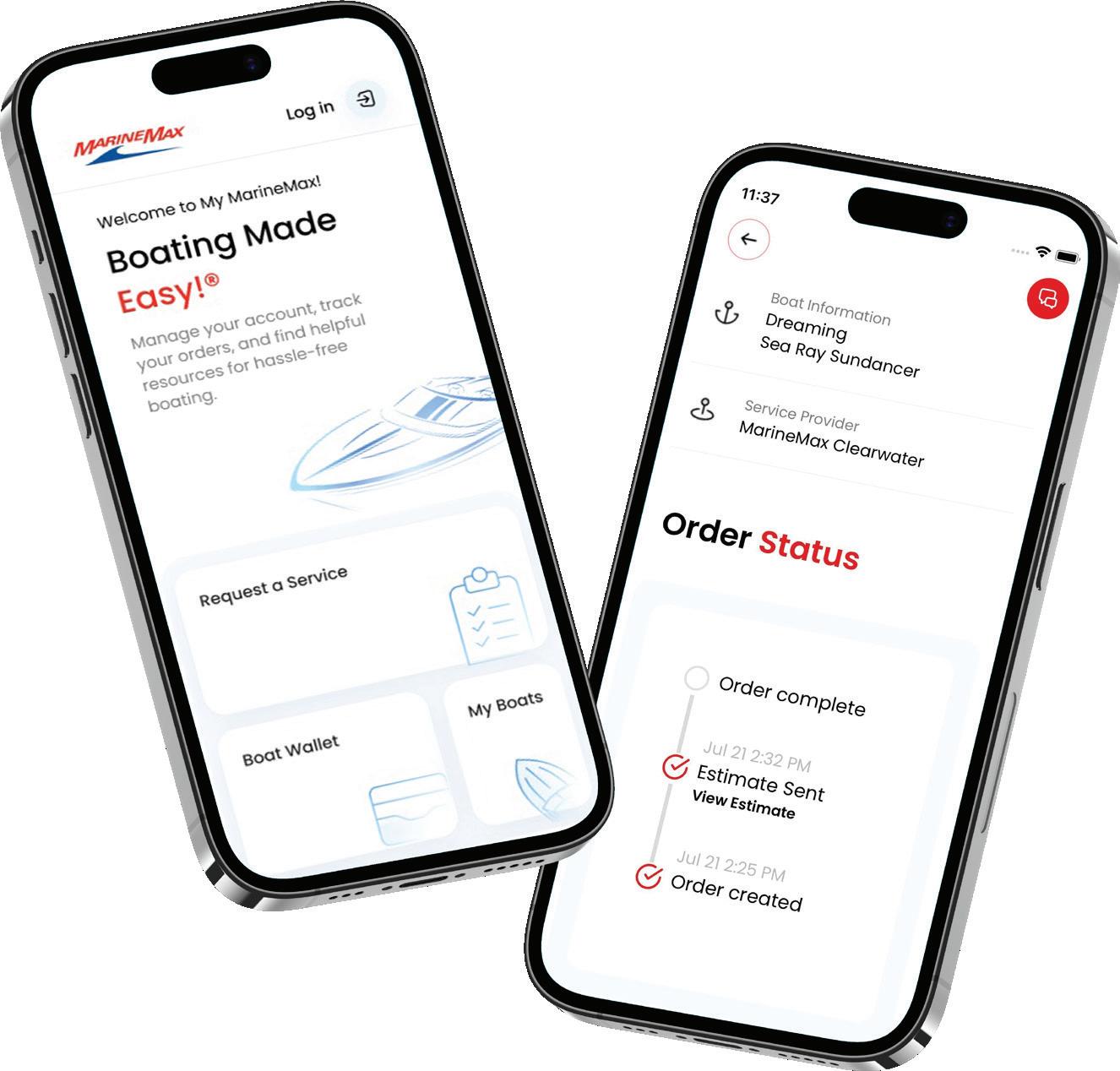
FOR FAST AND EFFICIENT SERVICE, PLEASE EMAIL A PHOTO, VIDEO, AND DESCRIPTION OF YOUR PUNCH LIST ITEM TO CUSTOMERCARE@MARINEMAX.COM OR THROUGH YOUR BOATYARD APP.
Be sure to keep track of your warranty-able items, as dates matter. Warranties are not all inclusive, please refer to your owners manual for more information.
SEASONAL MAINTENANCE
REQUIRED WINTERIZATION SERVICES:
• Engine(s) Winterization
• Oil Change
• Water Systems
• Generator
• Land Storage
• Fuel Filters
• Shrinkwrap
• Zincs
• Drive Service
• Haul Out
REQUIRED SPRING RECOMMISSIONING:
• Battery Service
• Engine Recommission
• Water Systems
• Shrinkwrap Removal
• Wash and Wax
• P/U Timeframe
• Bottom Paint
• Generator
HAPPY
From the Customer Care Team at MarineMax Norwalk.
IF YOU NEED ASSISTANCE PLEASE CONTACT US AT CUSTOMERCARE@MARINEMAX.COM
WELCOME TO THE MARINEMAX FAMILY!
SALES HOURS: MONDAY – SATURDAY: 900AM – 6:00PM | SUNDAY: 11:00AM – 3:00PM
SALES TEAM:
Justin Brisson, General Manager
(860) 661-4918
justin.brisson@marinemax.com
Olivia Grabinski, Marketing Coordinator (860) 661-4983 jameson.brookes@marinemax.com
Charlie Deschapelles, Sales (203) 904-2888 charlie.deschapelles@marinemax.com
Mark DiMatteo, Sales (203) 904-2695 mark.dimatteo@marinemax.com
Sean O’Donnell, Sales (203) 299-2765 sean.odonnell@marinemax.com
Devinn McGale, Sales (860) 938-9783 devinn.mcgale@marinemax.com
Nick Martinez, Brokerage (203) 831-6311 nick.martinez2@marinemax.com
IN-SEASON SERVICE DEPARTMENT HOURS:
MONDAY – FRIDAY: 7:30AM – 4:00PM | SATURDAY: 7:00AM – 2:00PM | SUNDAY: CLOSED
GATE CODE: #1941 BATHROOM CODE: 2026
We have a full service and parts department and strive to be the best in the business! We also offer several amenities such as dockage, racks, fuel, travel lift, winter storage and free Wi-Fi. If you wish to schedule service for your boat after delivery, please contact CustomerCare@marinemax.com. We will make every effort to get to your boat as soon as possible. You can also request service by emailing CustomerCare@marinemax.com or phone listed below.
MAIN PHONE NUMBER
SERVICE DEPARTMENT:
Mark Elliot, Service Manager
(203) 831-6311
(203) 904-2690 mark.elliot@marinemax.com
TJ Spasiano, Asst. Service Manager (203) 904-2691 tj.spasiano@marinemax.com
Maria Dzurilla, Marina Operations (203) 904-2688 maria.dzurilla@marinemax.com
SERVICE ADVISORS/WARRANTY:
Ken Gallagher, Service Advisor (203) 904-2693 ken.gallagher@marinemax.com
Hunter Kertesz, Service Advisor (203) 904-2855 hunter.kertesz@marinemax.com
Janet West, Warranty Administrator (203) 904-2697 janet.west@marinemax.com
Stephanie Rodriguez, Service Coordinator (203) 904-2855 stephanie.rodriguez@marinemax.com
PARTS TEAM:
Christian Scialla, Parts Manager (203) 904-2689 christian.scialla@marinemax.com
Jeff Slater, Parts Assistant (203) 904-2693 jeff.slater@marinemax.com
Kevin Peabody, Parts Consultant kevin.peabody@marinemax.com
Dave Taylor, Captain TO SCHEDULE CAPTAIN LESSONS, PLEASE CONTACT STEPHANIE RODRIGUEZ
(203) 831-6311
HOW TO LAUNCH MY BOAT FROM MARINEMAX
• EMAIL: launchmyboat@marinemax.com
• Launch Times: Monday – Friday: 7:00am – 4:00pm | launch email cutoff time is 2:30pm Saturday – Sunday: 7:00am – 2:00pm | launch email cutoff time is 1:00pm
• Boats are pulled out every morning and put back on the rack
YOU ARE RESPONSIBLE FOR:
• Shutting off battery switch
• Tying boat tight to the dock
• Keeping engines DOWN
• Covering boat and securing with fenders
Launch Service: launchmyboat@marinemax.com
HOW TO OBTAIN SERVICE FROM MARINEMAX
Now that the delivery process is complete you still may have questions. We are here to guide you, help you and get you out on the water! Below is the list of our service/parts associates, technicians and yard staff.
POINTS OF CONTACT:
Service Department:
Mark Elliot, Service Manager
(203) 904-2690 mark.elliot@marinemax.com
TJ Spasiano, Asst. Service Manager (203) 904-2691 tj.spasiano@marinemax.com
Request Service: CustomerCare@marinemax.com
Parts Department:
Christian Scialla, Parts Manager
(203) 904-2689 christian.scialla@marinemax.com
Jeff Slater, Parts Assistant (203) 904-2693 jeff.slater@marinemax.com
SERVICE DEPARTMENT’S PRACTICE
It is our goal to make sure that you are completely satisfied with all aspects of your boating experience, including service. Therefore, we do everything possible to make this as convenient and cost effective as possible.
All work, except emergency work, is scheduled on a first come, first serve basis. Therefore be sure to schedule your work as far in advance as possible. Priority will be given to keeping people “on the water” over cosmetic issues during periods of peak demand.
Estimates will be provided for all work. You will have to authorize such work to be performed through a work order. This will require your signature along with a method of payment, typically a credit card.
The credit card will be pre-authorized in the amount of the work order estimate. You will be advised of the final total and terms of payment upon completion. If you elect to pay cash or by check, the pre-auth of the credit card will be removed immediately upon receipt of payment.
In the event that additional time is required to complete the work, you will be contacted for further authorization before the estimate is exceeded.
SAFETY EQUIPMENT

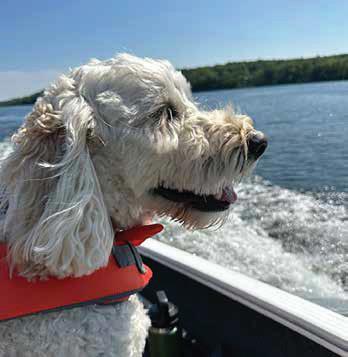
C onn e c t icut L i f e Ja c ke t a nd Pe r s on a l
F l o t at i on Devic e (PFD ) L aws
There must be a wearable life jacket for each person aboard every vessel in Connecticut Each life jacket must be readily accessible and properly t the intended wearer. If the vessel is required to have a Type IV “throwable” PFD (see page 17), it must be immediately available Every year, life jackets must be worn by anyone in or operating a manually propelled vessel from October 1st through May 31st
In addition, life jackets must:
B e U S Coast Guard approved
H ave a legible label
B e in serviceable condition, meaning all straps, buckles, s eams, and material are in good condition, intact, and able to perform.
Further life jackets laws:
Ski belts are not legal life jackets.
In atable life jackets may not be used by persons engaged in hi gh-speed water sports such as riding PWCs or water sk iing and may not be used by persons weighing under 90 lbs. or under 16 years of age.
In atable life jackets may be a Type II, Type III, or V, check the label to determine if it must be worn to count as a personal otation device
Life jackets must be worn by children under 13 years old on any vessel that is underway unless the child is below de ck or in an enclosed cabin
All vessels 16 feet and over must also carry a Type IV throwable device in addition to the required number of wearable life jackets
Sound P r o du c ing Dev i c e s
In various situations, sound is a critical means of communication between vessels. For vessels under 12 meters (about 39 feet) in length, there must be some means of making an e cient sound signal. For vessels at or over 12 meters, a whistle must be carried A whistle is de ned as any sound producing device capable of producing the required sound signals.
F i r e E x t in g u i s her s
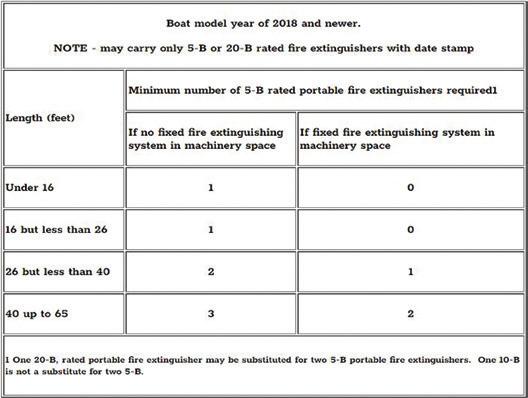
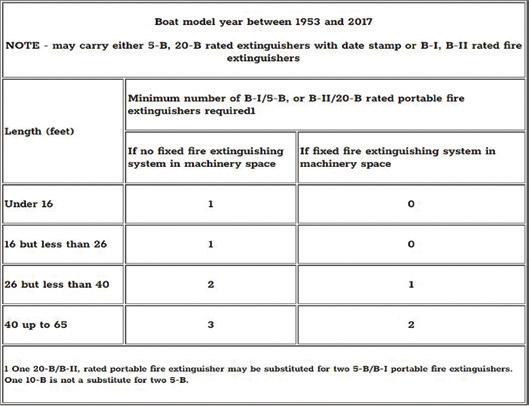
Fire extinguishers kept on vessels must be the correct type and approved by the U S Coast Guard Please see the tables on page 18, for speci c re extinguisher regulations based on a vessel’s length or class Please note that the ratings on new model re extinguishers have changed. The ratings now re ect the material the extinguisher is rated for, which is represented with a letter, and how large of a re the extinguisher can handle, which is represented with a number Refer to the table on page 18 to see if you need re extinguishers on your vessel with the updated ratings. It’s recommended boaters ensure that re extinguishers
SAFETY EQUIPMENT...
are properly mounted where they can be easily reached. Frequently check pressure gauges for proper pressure. Shake dry chemical units to be sure the chemical has not solidi ed and become useless Replace any questionable extinguishers As of April 20, 2022, a re extinguisher is considered expired if it is more than 12 years old Please check the date stamped on the bottom of your re extinguisher
are properly mounted where they can be easily reached Frequently check pressure gauges for proper pressure Shake dry chemical units to be sure the chemical has not solidi ed and become useless Replace any questionable extinguishers As of April 20, 2022, a re extinguisher is considered expired if it is more than 12 years old Please check the date stamped on the bottom of your re extinguisher
Late in 2017, the U.S. Consumer Product Safety Commission published an important recall notice; Kidde Recalls Fire Extinguishers with Plastic Handles Due to Failure to Discharge and Nozzle Detachment: One Death Reported (Recall number: 18-022) All a ected re extinguishers should be replaced. For more information about this recall, go to www.kidde.com and look under Support / Product Safety Notices.
Late in 2017, the U S Consumer Product Safety Commission published an important recall notice; Kidde Recalls Fire Extinguishers with Plastic Handles Due to Failure to Discharge and Nozzle Detachment: One Death Reported (Recall number: 18-022) All a ected re extinguishers should be replaced For more information about this recall, go to www kidde.com and look under Support / Product Safety Notices
Ve nt i l at io n
Ve nt i l at io n
Regulations require ventilation of all enclosed engine and fuel tank compartments on gasoline-powered boats Intake ducting must extend midway to the bilge or at least below the carburetor air intake level Exhaust ducting must extend from the lower bilge to cowls in the open air
Regulations require ventilation of all enclosed engine and fuel tank compartments on gasoline-powered boats. Intake ducting must extend midway to the bilge or at least below the carburetor air intake level. Exhaust ducting must extend from the lower bilge to cowls in the open air.
Boaters must decide which VDS o ers them the most bene ts depending on the boating they do When choosing
a VDS careful consideration should be given to:
R eliability
Disposability
Boaters must decide which VDS o ers them the most bene ts depending on the boating they do When choosing a VDS careful consideration should be given to:
R eliability
Intended waterbody
Disposability
Visibili ty in areas of dense background lights
Intended waterbody
Dangers of burning a VDS
Visibili ty in areas of dense background lights
L ength of useful signaling run time
Dangers of burning a VDS
P ortability
L ength of useful signaling run time
In Connecticut, VDS are not required except when boating on coastal waters
P ortability.
The following vessels only need to carry VDS on coastal waters between sunset and sunrise:
In Connecticut, VDS are not required except when boating on coastal waters
R ecreational vessels under 16 feet
The following vessels only need to carry VDS on coastal waters between sunset and sunrise:
R ecreational vessels under 16 feet
Open sailboats less than 26 feet that are not equipped with propulsion machinery
M anually propelled vessels under 16 feet.
Open sailboats less than 26 feet that are not equipped with propulsion machinery
M anually propelled vessels under 16 feet
All other vessels must carry three daytime and three nighttime VDS while on coastal waters The VDS can be carried as three combination day/night signals Pyrotechnic devices cannot be expired
All other vessels must carry three daytime and three nighttime VDS while on coastal waters. The VDS can be carried as three combination day/night signals. Pyrotechnic devices cannot be expired
Here is more information on VDS:
Visual distress signals must be U S Coast Guard appr oved, in serviceable condition and readily accessible
Here is more information on VDS:
U S Coast Guard approved pyrotechnic visual distress signals and associated devices include:
Visual distress signals must be U.S. Coast Guard appr oved, in serviceable condition and readily accessible.
• Pyrotechnic red ares, hand-held or aerial
U.S. Coast Guard approved pyrotechnic visual distress signals and associated devices include:
• Pyrotechnic orange smoke, hand-held or oating
• Pyrotechnic red ares, hand-held or aerial
• Launchers for aerial red meteors or par achute ares
• Pyrotechnic orange smoke, hand-held or oating
• Launchers for aerial red meteors or par achute ares
N on-pyrotechnic visual distress signaling devices include:
• Orange distress ags
N on-pyrotechnic visual distress signaling devices include:
• Electric distress signals
• Orange distress ags
Other VDS are useful, easy to carry, and are recognized a s distress signals, but do not count as an approved VDS on co astal waters Some examples are:
• Electric distress signals
Other VDS are useful, easy to carry, and are recognized a s distress signals, but do not count as an approved VDS on co astal waters Some examples are:
• Signaling mirror
• Water dye
• Signaling mirror
• Water dye.
Manufacturers install exhaust blowers in engine compartments so that gasoline fumes can be removed before the engines are started. If your boat is installed with an exhaust blower, it is recommended that you turn it on for at least four minutes before starting the engine.
Manufacturers install exhaust blowers in engine compartments so that gasoline fumes can be removed before the engines are started If your boat is installed with an exhaust blower, it is recommended that you turn it on for at least four minutes before starting the engine Vis u a l Di s
( V DS )
Vis u a l Di s t r e s s S i gn a l s ( V DS )
Visual distress signals are used to summon assistance when in distress Be aware that the U S Coast Guard has recognized technological advances in VDS and has approved some electronic signaling devices These devices when used properly are acceptable substitutions for traditional pyrotechnical signaling devices ( ares)
Visual distress signals are used to summon assistance when in distress Be aware that the U S Coast Guard has recognized technological advances in VDS and has approved some electronic signaling devices These devices when used properly are acceptable substitutions for traditional pyrotechnical signaling devices ( ares)
N o person, operator, or owner in a vessel shall display or al low the display of a visual distress signal except when assistance is needed because of immediate or potential danger to the vessel or to persons aboard
N o person, operator, or owner in a vessel shall display or al low the display of a visual distress signal except when assistance is needed because of immediate or potential danger to the vessel or to persons aboard.
NOTE: Exceeding noise levels is a serious problem
Marine Police will be targeting areas, especially on the Connecticut River, to check for compliance Exceeding noise levels will result in a ne of $220
NOTE: Exceeding noise levels is a serious problem
Marine Police will be targeting areas, especially on the Connecticut River, to check for compliance. Exceeding noise levels will result in a ne of $220. Failing to submit to an on-site noise level test will result in a ne of $435 Subsequent failures to submit will result in a ne of $535
Failing to submit to an on-site noise level test will result in a ne of $435 Subsequent failures to submit will result in a ne of $535
PHOTO: SAM MINNITT
PHOTO: SAM MINNITT
SAFETY EQUIPMENT...
CONNECTICUT AND U.S. COAST GUARD MINIMUM REQUIREMENTS
Equipment
Back re Flame Arrestor
Ventilation Boats built before Aug 1, 1980
Ventilation Boats built on or after Aug 1, 1980
Personal Flotation Devices
Class A
The device must be suitably attached to the air intake with a ametight connection and is required to be Coast Guard Approved or comply with SAEJ1928 or UL1111 standards and marked accordingly.
At least two ventilator ducts, tted with cowls or their equivalent, for the purpose of properly and e ectively ventilating the bilges of every closed engine and fuel tank compartment of boats constructed or decked over after April 25, 1940, using gasoline as fuel.
At least two ventilator ducts for the purpose of e ciently ventilating every closed compartment that contains a gasoline engine and every closed compartment containing a gasoline tank, except those having permanently installed tanks which vent outside the boat and which contain no unprotected electrical devices. Also, engine compartments containing a gasoline engine having a cranking motor must be open to the atmosphere or contain power operated exhaust blowers which can be controlled from the instrument panel.
One approved Type I, II, III or V PFD for each person on board or being towed on waterskis, etc. Check label if using Type V.
SoundProducing Devices
Must have some means of making an e cient sound signal.
Visual Distress Signals Required on coastal waters only
Must carry approved visual distress signals for nighttime use when operating at night
One approved Type I, II, III or V PFD for each person on board or being towed on waterskis, etc.; and, in addition, one throwable Type IV device (Type IV not required for canoes and kayaks.) Check label if using Type V.
Must have some means of making an e cient sound signal.
Must have some means of making an e cient sound signal
Must have a whistle audible for at least onehalf mile.
Must carry visual distress signals approved for both daytime use and nighttime use.
U. S. C o a s t Gu ar d Fir e E x t i n g ui s he r Requi r eme n t s
If your boat is less than 26’ feet in length, uses an outboard engine, fuel is in a portable fuel tank, and there are no areas within the boat where fuel vapors can be trapped, the boat is not required to have a re extinguisher.
SAFETY EQUIPMENT...
Di s p o s a l o f Expire d P yr ot e c h nic a l
Vis u a l Di s t r e s s S i gn a l s ( V DS )
Because of their chemical make-up and ammable characteristics, the disposal of expired pyrotechnical VDS is strictly regulated by the US EPA and US DOT. The Boating Division is no longer able to collect expired VDS
Nav i gat ion L i g ht s
All vessels, including manually propelled vessels, must display the proper navigation lights while operating from sunset to sunrise and during daylight times of reduced visibility Please see page 29, to see which lights are required for your vessel
E ng i n e C ut- O S w it c h
An engine cut-o switch stops a vessel’s engine An engine cut-o switch link is the apparatus that attaches the engine cut-o switch to the vessel operator If the operator is ejected from the helm, the apparatus will engage the engine cut-o switch, which stops the engine. After January 1, 2020, certain vessels must be built with engine cut-o switches and engine cut-o switch links. This applies to vessels under 26 feet in overall length and capable of developing 115 pounds or more of static thrust. For reference, an engine around 3 horsepower can produce 115 pounds of static thrust. While on U.S. navigable waters, boaters operating such vessels on plane or above displacement speed must wear an engine cut-o switch link. Boaters must also see that their vessel’s engine cut-o switch system is maintained. If a vessel was built before January 1, 2020, boaters do not need to install an engine cut-o switch system. If the vessel is already equipped with such a system, they must wear the engine cut-o switch link if their vessel meets the length and thrust standards. The engine cut-o link does not need to be worn if the vessel has an enclosed cabin around the helm, regardless of when the vessel was built.
SAM MINNITT
are properly mounted where they can be easily reached. Frequently check pressure gauges for proper pressure. Shake dry chemical units to be sure the chemical has not solidi ed and become useless. Replace any questionable extinguishers. As of April 20, 2022, a re extinguisher is considered expired if it is more than 12 years old. Please check the date stamped on the bottom of your re extinguisher.
Late in 2017, the U.S. Consumer Product Safety Commission published an important recall notice; Kidde Recalls Fire Extinguishers with Plastic Handles Due to Failure to Discharge and Nozzle Detachment: One Death Reported (Recall number: 18-022) All a ected re extinguishers should be replaced. For more information about this recall, go to www.kidde.com and look under Support / Product Safety Notices.
Ve nt i l at io n
Regulations require ventilation of all enclosed engine and fuel tank compartments on gasoline-powered boats Intake ducting must extend midway to the bilge or at least below the carburetor air intake level Exhaust ducting must extend from the lower bilge to cowls in the open air
Manufacturers install exhaust blowers in engine compartments so that gasoline fumes can be removed before the engines are started If your boat is installed with an exhaust blower, it is recommended that you turn it on for at least four minutes before starting the engine
Vis u a l Di s t r e s s S i gn a l s ( V DS )
Visual distress signals are used to summon assistance when in distress. Be aware that the U.S. Coast Guard has recognized technological advances in VDS and has approved some electronic signaling devices. These devices when used properly are acceptable substitutions for traditional pyrotechnical signaling devices ( ares).
Mu e r s
Boaters must decide which VDS o ers them the most bene ts depending on the boating they do When choosing a VDS careful consideration should be given to:
R eliability
Disposability
Intended waterbody
No one shall operate a motorboat on Connecticut waters unless the boat is equipped with a mu er or mu er system allowing it to be operated in compliance with state law. Noise levels range from 90dB(A) for older engines to 88dB(A) for engines made after January 1, 1993 Any marine police o cer who believes a motorboat is being operated in excess of the established noise levels may request the operator to submit the motorboat to an on-site noise level test
Visibili ty in areas of dense background lights
Dangers of burning a VDS
L ength of useful signaling run time
P ortability
No person shall sell a motorboat which does not operate in compliance with the established noise levels Boaters should contact the Boating Division if they are selling a vessel used only in marine races No one shall operate a motorboat on the waters of this state that is equipped with a mu er or mu er system cutout, bypass, or similar device that prevents the motorboat from operating in compliance with state noise levels and without authorization from the Commissioner.
In Connecticut, VDS are not required except when boating on coastal waters
The following vessels only need to carry VDS on coastal waters between sunset and sunrise:
R ecreational vessels under 16 feet
Open sailboats less than 26 feet that are not equipped with propulsion machinery
M anually propelled vessels under 16 feet
B a c k r e F l a m e Arr e s t o r s
All other vessels must carry three daytime and three nighttime VDS while on coastal waters The VDS can be carried as three combination day/night signals Pyrotechnic devices cannot be expired
Internal combustion engines may back re. To safeguard against res, all inboard motorboats with carburetion must have a back re ame arrestor system on each carburetor It is good for boaters to know where they are and keep them clean.
Here is more information on VDS:
Visual distress signals must be U S Coast Guard appr oved, in serviceable condition and readily accessible
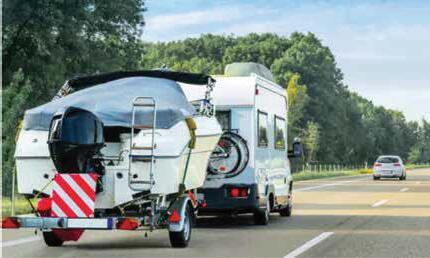
Tr a i l er ing You r B o at
U S Coast Guard approved pyrotechnic visual distress signals and associated devices include:
• Pyrotechnic red ares, hand-held or aerial
The DMV has laws relative to boat trailers Each trailer having a gross weight of 3,000 pounds or more shall, when operated on any public highway, be equipped with a braking system operating on all wheels For trailers having a gross weight of greater than 8,000 pounds, the brakes shall be capable of being controlled or operated from the driver’s seat of the towing vehicle
• Pyrotechnic orange smoke, hand-held or oating
• Launchers for aerial red meteors or par achute ares.
N on-pyrotechnic visual distress signaling devices include:
C ou r t es y
• Orange distress ags
Boating at high speeds is dangerous in restricted or congested areas Each skipper is responsible for spotting and avoiding swimmers and slow-moving vessels. This is also important when picking up or dropping o wateskiers
• Electric distress signals
Other VDS are useful, easy to carry, and are recognized a s distress signals, but do not count as an approved VDS on co astal waters Some examples are:
• Signaling mirror
• Water dye
N o person, operator, or owner in a vessel shall display or al low the display of a visual distress signal except when assistance is needed because of immediate or potential danger to the vessel or to persons aboard
NOTE: Exceeding noise levels is a serious problem
Marine Police will be targeting areas, especially on the Connecticut River, to check for compliance
Exceeding noise levels will result in a ne of $220
Failing to submit to an on-site noise level test will result in a ne of $435 Subsequent failures to submit will result in a ne of $535
Connecticut law limits the width of vehicles and trailers that travel on Connecticut’s highways and bridges to 8½ feet Vehicles or loads wider than this require an oversize vehicle permit Oversize vehicle permits are available through the Department of Transportation: https://portal ct gov/DOT/Permits/Highways/ Oversize-Overweight-Permits
16 2025 Connecticut BOATERS GUIDE
PHOTO:
CHOOSE THE RIGHT LIFE JACKET REQUIREMENTS
• U S Coas t Guard approved wearable life jacket on board for ever y per son on the boat
• Boating safet y ad vocates recommend all boater s and passenger s wear a life jacket at all times while boating
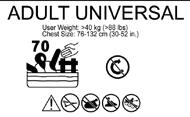
READ THE LABEL
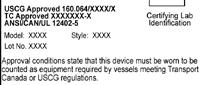
• All life jacket s that are USCG approved have an approval number. Look for it to ensure your life jacket meet s the law requirement s and is safe
• You may see a new label on the inside of new life jacket s with a per formance level icon These are approved for use in the U S and C anada, whereas dev ices with the old labels continue to be approved in one countr y or the other, not both
• Life jacket s you may alread y own may have the old “ t y pe” life jacket label ( Ty pe I –Ty pe V )
• The new label DOES NOT make obsolete life jacket s with the old label ( you can continue to use your life jacket as long as it is in good condition and appropriate for the ac tiv it y)
RIGHT LIFE JACKET
• WEAR IT The best life jacket is one you will wear
• ACTIVIT Y I t should be appropriate for the recreational water ac tiv it y
• FIT A snug fit is a proper fit All s traps, buckles, and zipper s should be secure
• CONDITION Life jacket s with a tear, broken pieces, or buoyanc y loss should be disposed
NEW LIFE JACKET L ABEL
PERFORMANCE LEVEL
Measured in new tons.

TURN ABILIT Y

• Lower level with good flotation, and intended for near shore (calm water) ac tiv ities.
ac tiv ities (greater time to rescue)
• There are areas where you may be boating near shore when rescue is hour s away, and a higher level is needed
• Be hones t about your swimming abilit y Poor swimmer s may need a higher level to s tay upright and easily tread water
INCREASING TIME TO RESCUE CALM OFFSHORE WAVES

Some life jacket s are NOT APPROVED for : Water skiing Tubing


Per sonal watercraf t or wakeboarding


TURN ABILIT Y Life jacket will turn an unconscious wearer face up tes t before use. Life jacket will not turn an unconscious wearer face up WARNINGS

White water paddling
NMMA INDUSTRY SERVICE ANNOUNCEMENT
Industry Service Announcement
Tank swelling will occur and is associated with a New “Low Permeation Compliant” Portable Outboard Marine Fuel Tank!
Many boaters this year are seeing swelling of their new portable outboard fuel tanks, which they have not seen in the past. New EPA regulations have eliminated the traditional venting in these tanks. New portable outboard marine fuel tanks will not vent below 5 PSI with noticeable swelling.
Tank swelling is the new standard condition as a result of Section 213 of the Clean Air Act implemented by the EPA. All manufacturers of Portable Outboard Marine Fuel Tanks must certify compliancy with the EPA standard: (73 FR 59034, October 8, 2008) 40 CFR Part 1060.
Portable Outboard Marine Fuel Tanks being produced and sold into commerce must be tested and certified to these new requirements. In addition, the tank must meet the ABYC H-25 standard, which is the industry design safety standard for these increased pressures.
Since the manufacture of the “old style” twist vent caps are now banned, a newly designed cap is required. The new caps must have: a tether, provide an audible “click “for closure, and seal up to 5 PSI out, but allow vacuum in. Plus the cap needs an external or integrated means to temporarily relieve pressure within the tank prior to fuel filling or connection to the engine.
The new compliant cap will cause the portable outboard marine fuel tanks to swell. The swelling is a result of the fuel vapor building pressure, because the cap must stay sealed up to 5 PSI. Some tanks may vent to atmosphere when pressure reaches 5.1 PSI, some remain sealed beyond 5PSI. All tanks must remain sealed beyond 5PSI during storage and transportation. The new tanks have been tested to remain sealed and safe at these pressures even when swelling is visible.
Additionally there are two other cautions for the user:
1. Fuel Spray
Fuel spray is a very dangerous event that can result from the fuel vapor building pressure within the portable outboard marine fuel tank. Users should relieve all fuel pressure within the tank prior to disconnecting or connecting fuel fittings in order to avoid fuel spray. New portable outboard marine fuel tanks include means to relieve pressure prior to filling or connecting fuel fittings.
2. Engine Flooding and Fuel Spillage
Engine flooding or fuel spillage can occur if a portable outboard marine fuel tank is left connected to an engine. Users should disconnect fuel lines from engines during storage or transportation or take other measures to ensure that pressurized fuel does not reach the engine in accordance with the engine manufacturer’s instructions. Disconnecting the fuel line from the engine is a simple action users can take to prevent engine flooding and fuel spillage.
Be sure to read the manufacture supplied operation information that comes with each portable outboard marine fuel tank!
COMMON THINGS YOU MAY ENCOUNTER
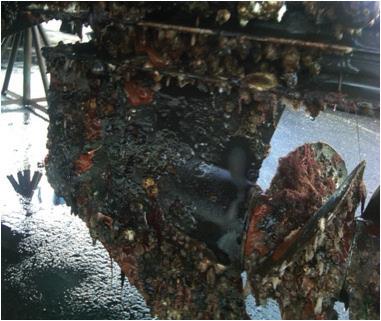
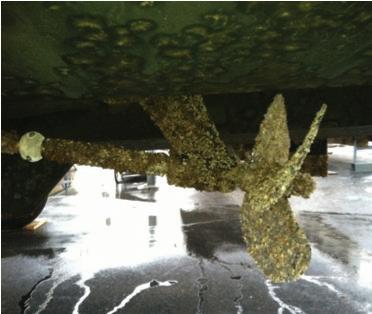
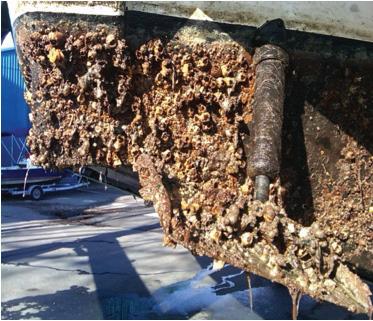
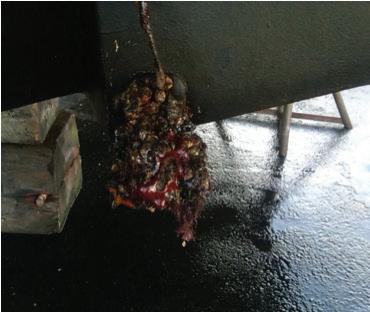
You will get barnacles, we will make every effort to limit the amount you get. We offer mid season haul outs and pressure washes to combat these barnacles. MarineMax wants to keep you on the water and prepared. Unfortunately there are waters in CT, MA and NY that are known to be infested with Zebra Mussels.
Zebra Mussels and barnacles do damage by:
• Clogging water intakes
• Damaging water impellers
• Fouling boats hulls and engines
• Depth finders will read erratically
• Speed gauge will not read speed
• Air conditioning systems will read P5 (low water pressure) and or not cool as it should
• Possibility of engine and generators overheating
• Loss of speed
• Burning more fuel
Fresh Water Tank Issues
If you’re experiencing any of the following symptoms, it’s time for us to visit you. We offer water treatment in the summer. Give us a call to set up an appointment.
• Rotten egg smell
• Stale water
• Damaged water pump
Please contact your service team or email customercare@marinemax.com to assist you in combating mussels and barnacles or any other inconveniences that may arise. We are here to assist you. Happy Boating!
Barnacles and Zebra Mussels
THE IMPORTANCE OF PROPER MAINTENANCE
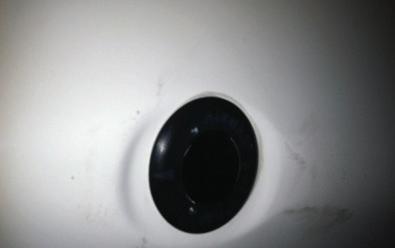
A cleaned transducer.
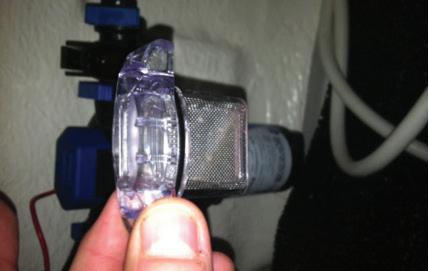
This is a clean water filter. It should be cleaned twice a year. It is found in the bilge attached to the water pump.
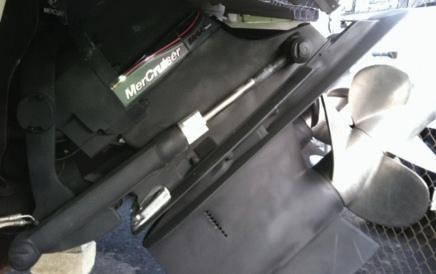
Clean outdrive. At midseason, a recommended haul out, pressure wash to out drive and bottom to maximize your boating experience and to insure proper preventativve maintenance for longevity of your investment.
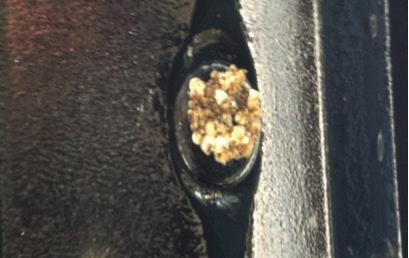
When your transducer looks like this, your depth gage will read erratically and give you false readings. Call for service.

Afresh water filter. When clogged, it will not push water out with full potential. Water tanks will also start to have a sour milk odor. We offer a water treatment in the spring.
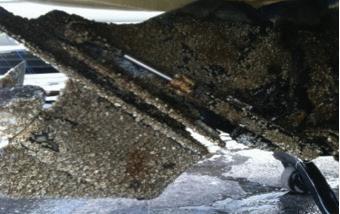
This outdrive has excessive barnacles on it. When this happens, it will cause overheating, slow boat performance, excessive fuel burn and speedo tube not operable. This happpens if you dont use your boat for a couple of weeks, especially in the months of August and September.
THE IMPORTANCE OF PROPER MAINTENANCE
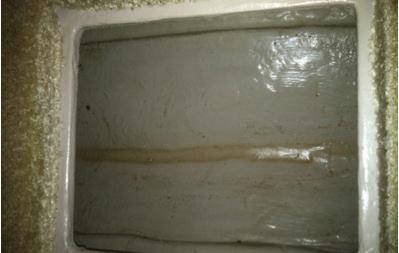

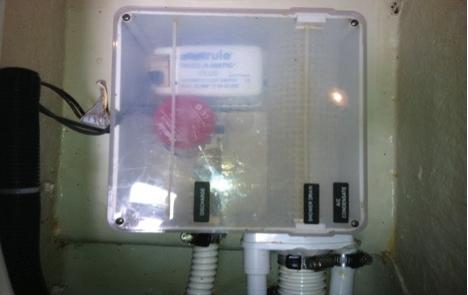
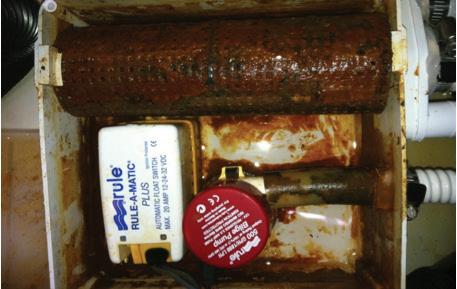
A Dirty
will lead to odor and malfunctioning pumps if not maintained twice a year. Possible overflow will occur.
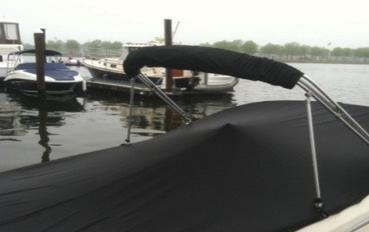
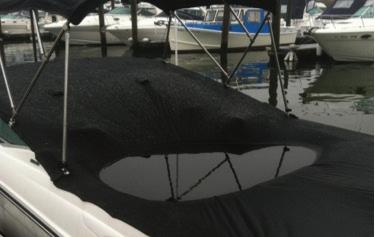
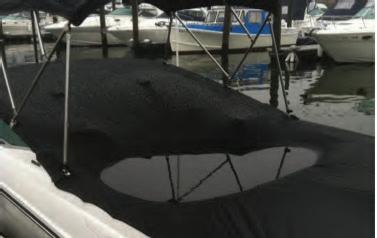
Puddle on canvas causing damage.
Clean Bilge.
Dirty Bilge. Should be cleaned twice a year or mold and odor will occur.
Sump Pump
Clean Sump pump.
THE IMPORTANCE OF PROPER MAINTENANCE


The picture on the left is a clean water intake for inboard engines, generator & air conditioning systems. The picture on the right is the same basket full of barnacles usually prominent in August when the water temperature is at it’s peak. If you get a P5 code for your air conditioner, this indicates that your intake could be clogged, therefore reducing water intake, which can cause overheating. A P5 code indicates low water pressure and the A/C unit is designed to shut off to protect the unit from damage.
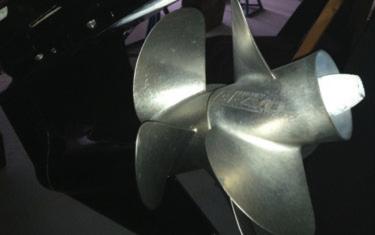
Clean Prop.
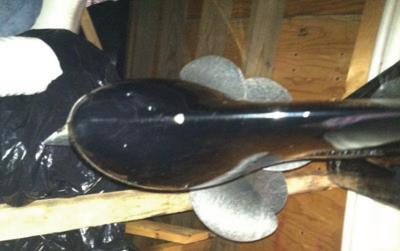
When the speedo gets clogged, it will not work. The speedometer gage will not read out.

Dirty/barnacle filled prop. Symptoms of a dirty prop are: vibration, taking longer to accelerate to plane, slower boat speed, smelling of exhaust. You will experience barnacles in August when the water temperature is starting to peak.
THE IMPORTANCE OF PROPER MAINTENANCE

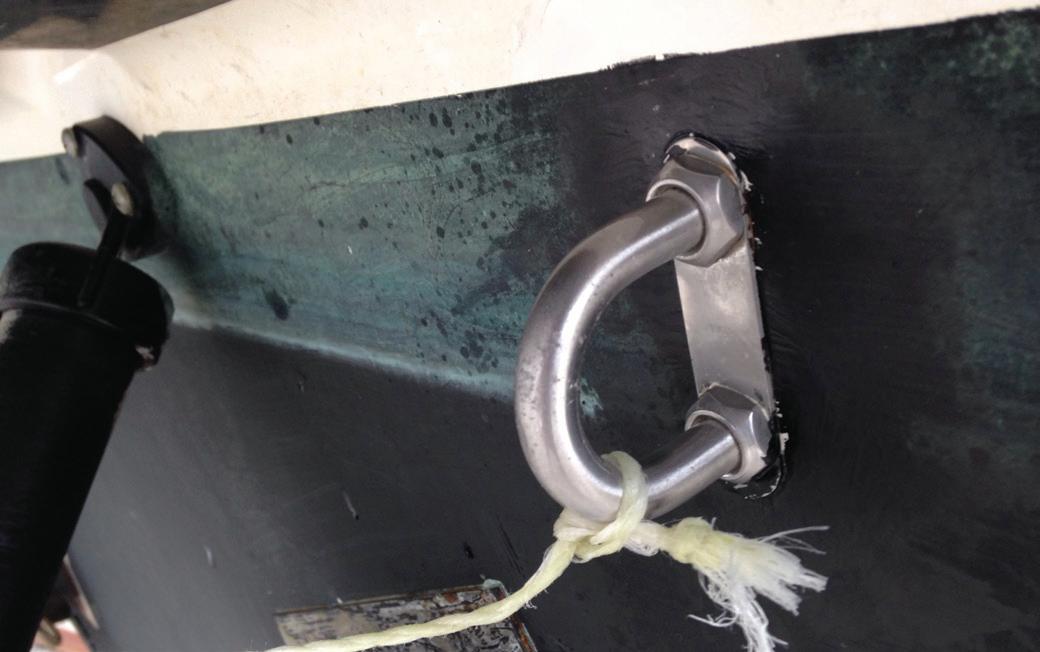
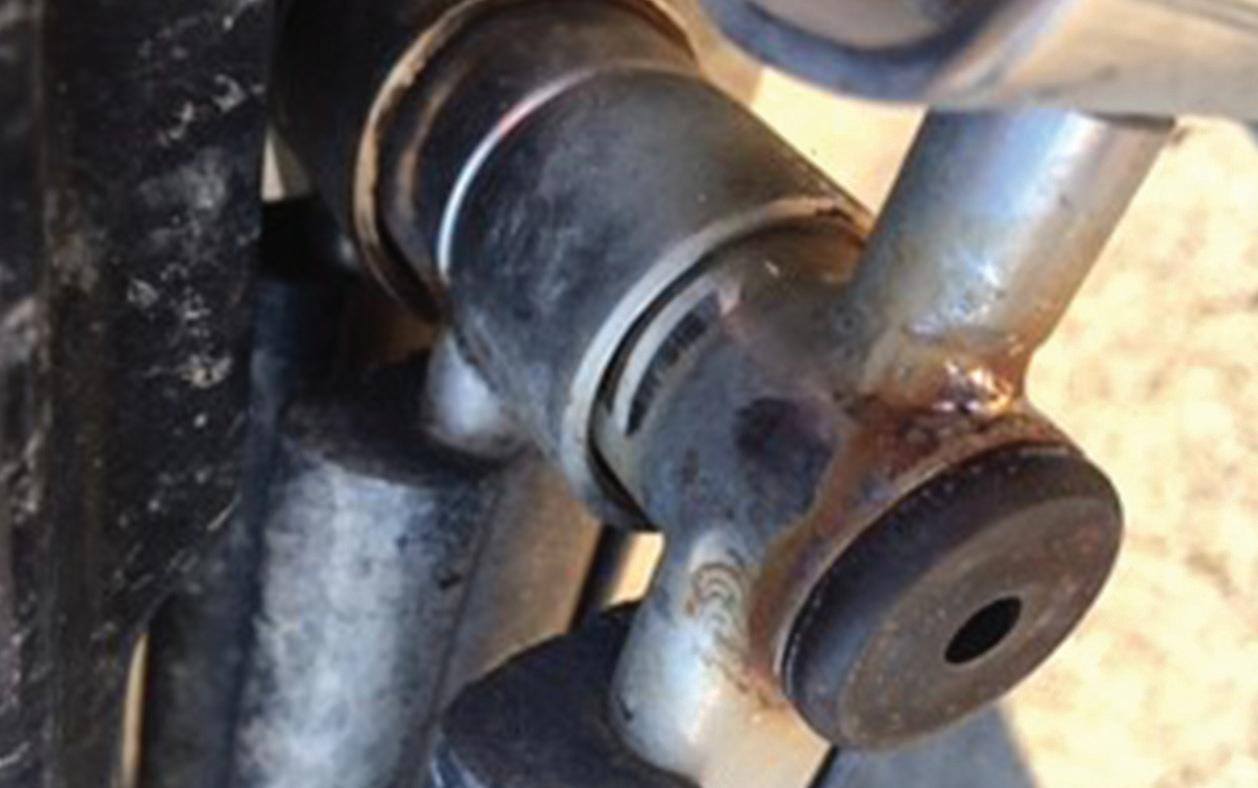
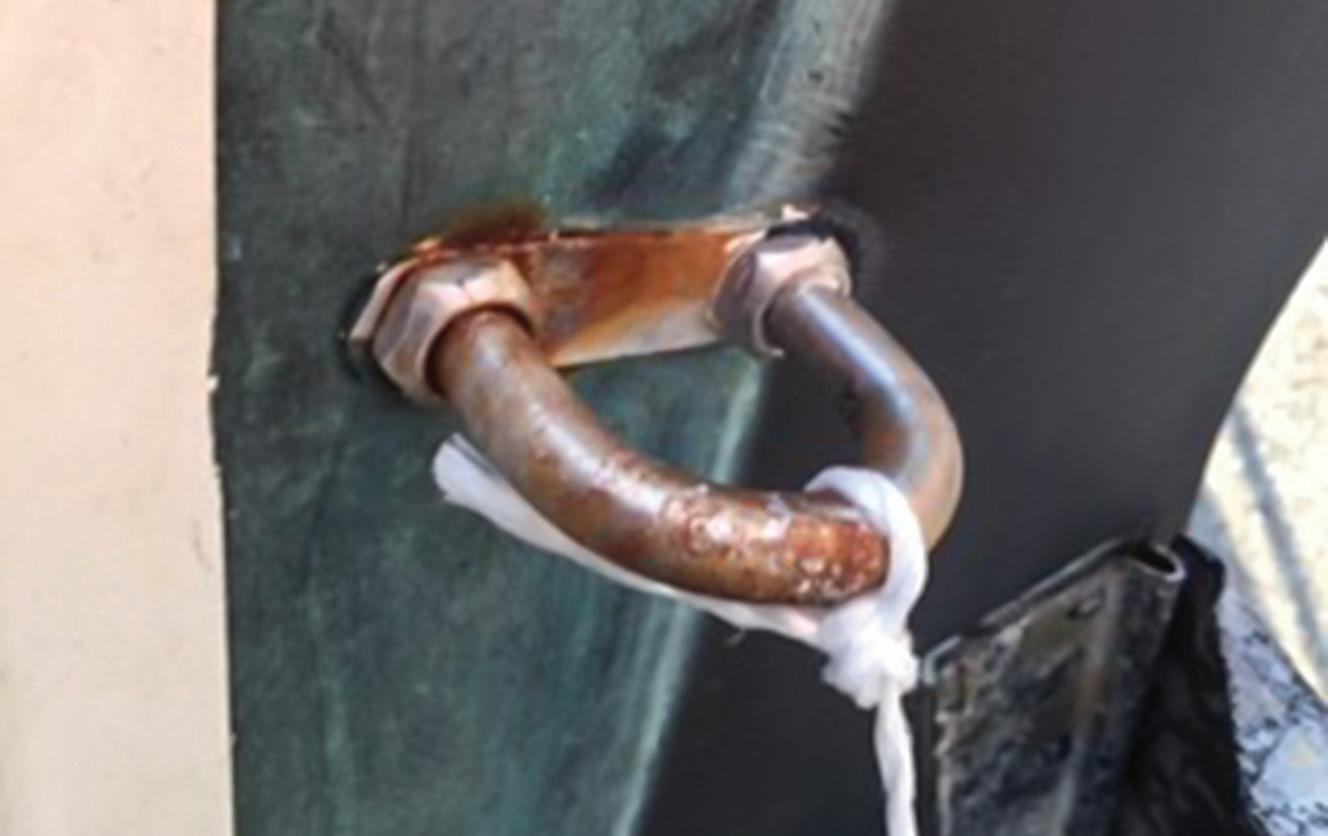
Stainless steel hardware is “stain less” hardware. While the metal has superior anti rust and corrosion properties a salt water marine environment will tarnish the metal making it look as though it has rusted. This is not the case and can be easily cleaned using metal polish or cleaner wax. Keeping your stainless clean and waxed will reduce the tarnishing. ***Purchasing and using a few times a year, a metal care kit from the parts department will greatly reduce the tarnish build up. ***Warranty will not cover the tarnishing nor pay for the cleaning of the metal.
Before rust After rust
Before rust
After rust
HELPFUL TIPS
1. Engine Fluids Levels, Outdrive Reservoir and Power Steering should be checked every 10 hours.
2. Marine grade toilet paper is the only one that you should ever use. And please make sure nothing else is flushed down such as feminine products or paper towels or dental floss, etc. Add head system treatment periodically, mostly after pump-outs.
3. Lubricate all snaps and zippers at least twice a year. MarineMax recommends Star Brite Snap and Zipper Lube, which at your convenience can be purchased in our Parts Department.
4. Your engine requires maintenance:
Stern Drive: Oil change after your first initial 50 hours, then every 100 hours or annually, whichever comes first. Outboard: Oil change every 100 hours or annually, whichever comes first. Please refer to your owners’ manual or contact our service professionals.
5. Battery charger will charge batteries no matter what position the battery switch is in.
6. If Engine alarm sounds, one of the follow problems has occurred:
A. Low engine oil or outdrive oil – check and fill
B. Engine temperature to high – call Service Department (860) 399-5581
C. Transmission overheating – not indicated with gauge – call Service Department (860) 399-5581
D. A malfunctioned sensor – MFD fault, send a photo to customercare@marinemax.com
7. Check barnacle growth on the outdrive and trim tabs, barnacle growth is most prevalent in July and August when the water temperature is highest, and is the most common cause of poor performance. Inspect and possibly replace zincs (sacrificial anodes).
8. You and every guest should know where the safety gear and fire extinguishers are located.
9. Turn battery switch(es) off when leaving vessel.
10. Start planning your winter storage in late August
Have a Great and Safe Boating Season!
FREQUENTLY ASKED QUESTIONS AFTER BOAT DELIVERY
I still have several questions about my boat. What can I do?
Every new boat and most used boats come with a complete owner’s package from the manufacturer. Manuals also can be found on the manufacturer’s website. We encourage you to read this thoroughly. It contains pertinent information about your boat and all onboard systems. Finally, if you still have questions, you are always welcome to inquire with our Service Department. They can answer many questions right over the phone or you can set an appointment for further review.
What can I do to keep my boat looking good for years to come?
The most important thing you can do is to keep your boat free of salt and dirt. Get in the habit of washing it with a biodegradable marine soap and water, then chamois it or let it dry thoroughly before covering it. This will prevent mildew from growing. Manufacturers recommend that a paste wax be applied as frequently as three times per year. Our Parts Department can provide you the cleaners, waxes and treatments for you to purchase.
How do I keep my boat running at peak performance?
Get in the habit of checking your engine’s vital fluids before every day of boating. Engine oil, gear lube (or transmission fluid for inboards), power steering fluid and coolant are the most important. Make sure that fluid levels are in recommended operating range. Routine maintenance of the propulsion system is critical; this includes occasionally verifying and re-conditioning your propellers. Also, frequently visually inspect all mechanicals in the bilge area to identify anything amiss before it becomes a problem. It’s a great idea to carry a spare parts kit, which can be obtained through our Parts Department. Finally, be sure to keep your running surface clean and smooth, even a few barnacles or other growth can have a huge impact on performance and fuel economy.
What are the most common things that people tend to forget about maintenance?
Most people don’t realize how much water they have to add to their batteries if they have a converter. Your batteries need to be checked/filled at least once a season and possibly more frequently in warmer climates. Zincs also need to be checked within the first month of commissioning. Zincs are sacrificial anodes designed to inhibit electrolysis. Their deterioration rate can vary depending on many factors including dock location, other boats in close proximity, dock wiring, etc. Zincs need to be replaced when they are at about 70% deteriorated. Improper zinc maintenance can lead to expensive repairs that are not covered under warranty.
When is my first service interval?
Typically, your first service interval will be at 50 hours of initial service for stern drive engine, or 100 hours for outboard engine. You should consult your engine manual for specifics and other helpful tips. Depending on where you boat, your first service may occur during winterization. Please contact our service department at any time with any questions.
FREQUENTLY ASKED QUESTIONS AFTER BOAT DELIVERY... CONTINUED
What do I do if something goes wrong?
You will probably experience some issues as you enjoy your boat. Minor issues should be recorded on a punch list to accumulate and be addressed in one appointment for your convenience. Please do not let these detract from your enjoyment. Major issues should be addressed immediately through the Service Department. Please request service at customercare@marinemax.com.
My boat won’t start and it’s brand new. What should I check?
This is a common question from new boat owners as well as experienced ones. The answer is usually simple.
• Make sure that your battery switches or solenoids are in the “on” position.
• Every boat is equipped with a neutral safety switch. This feature prevents the boat from being started if it is in gear. Make sure that you are in neutral for the engine to turn over. Sometimes you have to play with the shifter a little, in neutral, to engage the switch.
• If you have a stern-drive or outboard boat, make sure that the safety lanyard is in the run position. This is a “kill switch” designed to cut the ignition circuit when the lanyard end is removed. Re-setting this switch should enable the ignition circuit again.
ALWAYS SEND PHOTOS/VIDEOS TO CUSTOMERCARE@MARINEMAX.COM
GENERAL MAINTENANCE REMINDERS
• Check battery levels every (3) weeks to avoid dead batteries.
• Check Zincs monthly. We recommend you change your zincs midseason if you have a Bravo III.
• Maintain Fluid Levels: engine, outdrive, etc.
• Check for barnacle growth in July, August and September.
• Clean your vessel on a regular basis.
• Don’t forget when leaving the vessel to make sure all hatches and port windows are closed and secured to prevent rainwater from entering the vessel.
Air Conditioning
• Air Conditioners use 120V AC or 240V AC shore power or generator. The air conditioning unit will not operate on battery power.
• Familiarize yourself with the air conditioning touchpad. Under certain conditions, faults will appear on the keypad, which indicates system malfunctions. Refer to the manufacturers operating manual for further details.
• Check air conditioning sea strainers regularly-any blockage may cause the system to shut down.
Batteries
• Always turn off the battery when securing the boat.
• Dual battery boats run on all/both. At rest, switch on 1 or 2.
• Check battery levels every (3) weeks to avoid dead batteries.
• If boat is stored on a mooring we suggest adding solar panels to avoid dead batteries. (Call service team for install.)
GENERAL MAINTENANCE REMINDERS... CONTINUED
Battery Charger/Converter
• It is acceptable to leave the A.C. converter (battery charger) on while the vessel is left unattended.
• The A.C. converter should be switched OFF prior to starting the engines.
• The A.C. converter will charge batteries regardless of the battery switch being on or off.
Blowers: Gas and Diesel
• The blower function transfers gas, diesel, heat and battery acid fumes from the bilge to the outside or exterior of the vessel. This is a mandatory safety precaution and every effort must be made to comply.
• The blower should be operated 5 minutes prior to starting your engine or generator.
• The blower should be operated 5 minutes after engine shut down.
• The blower should be operated 5 minutes after fueling. Do not operate while fueling.
• Open deck hatch after fueling to motor compartment to check for fumes and leaks.
• All cabin windows, hatches and doors should be closed during fueling.
Bow Thruster
• Pause between direction change: Operate at one minute intervals: one minute run/one minute pause.
• Check gear fluid level yearly.
• The thruster option is designed to assist in certain docking conditions and should not be used to “steer the boat”.
Carbon Monoxide Detectors
• A piercing whistle indicates the presence of carbon monoxide. When starting your engines you must keep the cabin door closed so as not to allow fumes to enter the cabin. Any indication of CO in a closed area is considered dangerous and life threatening. Shut down the engines and open port windows and hatches to clear the air.
• Reset the test button on each unit.
• If that fails contact the Service Department immediately. Please note: If the alarm goes off or your alarm is disconnected, your generator will NOT operate.
Electronics
• All electronics must be off while engines are being started.
• All efforts should be made to protect electronics from weather.
• Do not use cleaners on the screen. Use soft dry cloth to wipe screens clean.
• Store with covers on electronics when possible.
GENERAL MAINTENANCE REMINDERS...
Canvas
• All new canvas fits tight. Warmer weather will allow some stretching.
• Start each zipper first, snap down the canvas and lastly go back and close zippers.
• Rinse zippers and snaps frequently with fresh water.
• Lube snaps and zippers twice a year. Starbrite snap and zipper lube is recommended.
• When removing canvas unsnap each snap. Do not pull on canvas to “zip” snaps open.
• Do not fold isinglass. Lay it flat or roll it up.
• Place a towel or sheet between layers of isinglass to keep scratching to a minimum. Make sure plastic curtains are clean and dry.
• Never wipe isinglass without rinsing it with fresh water.
• Never use paper towels. Use only mild soap with warm water and a soft cloth. No Windex and no ammonia based products. It will turn the isinglass yellow.
• All canvas and isinglass must be cleaned and dried before being stored.
• Properly installed canvas with tee pee pole so rain water will roll off and not puddle.
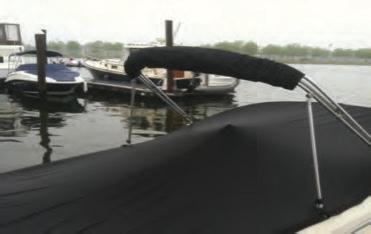
Cleaning
• Always wash and rinse your boat with fresh water.
• Use soft, clean towels.
• Mild boat soap. No abrasive cleaners.
• Improperly installed canvas illustrating puddling that will occur when it rains.
• Do not use thinners, acetone, or ammonia based products on any section of the boat.
• Cleaner wax with no abrasives is recommended.
• No scotch abrasive pads.
Dockside Water
• Never leave dockside water on when vessel is left unattended, even for a short time.
• Turn off fresh water pumps; dockside water bypasses pump system and supplies water to the vessel utilizing the municipality’s pressure.
• Never run hot H20 heater without water in water tank.
GENERAL MAINTENANCE REMINDERS... CONTINUED
Engines Gas: Inboard/Outboard
• An outdrive gear oil reservoir is located on the engine. New outdrives will purge air pockets and consume gear lube from the reservoir. The fluid level in the reservoir should be checked before using the vessel. A low level audible alarm will sound at the helm when the level drops below the add line. Do not ignore the alarm. Simply check and add Mercury Hi-Performance gear lube to the fill line if it is low.
• Outdrives should be left in the down position when the boat is in the water. Do not use the trailer position for any reason other than trailering or possibly beaching. Do not operate the vessel with the outdrive beyond the trim-line position.
• Outdrive zincs must be checked in August and September. Replace zincs when 70% of decay is present. Replace only with Mercury products. All zinc materials are not the same. Alloy mixtures used from one manufacturer to another may vary. Protect your investment using quality Mercury products. This is a customer maintenance requirement and failure to check may void your warranty. Please note: Fresh water zincs are different than salt water zincs.
• Outdrives provide the water to cool the engine. Be sure to keep the outdrive intake clear of any seaweed, plastic bags and barnacle growth. Any increase in temperature beyond the normal ranges or hearing a different sound from the prop or exhaust may be an indication of outdrive fouling. Another indication the outdrive is fouled would be the lack of speedometer reading. One method you may try for cleaning an obstruction is to reverse one boat length then proceed forward. If the condition persists or if you have trouble getting back on plane, turn off the engine, raise the outdrive to the trailer position to inspect the props. After your inspection you must remember to lower the outdrive completely before restarting the engine.
• If you are beached or grounded DO NOT use the engine and outdrives to power off to deeper water. You must turn the engine off, push or tow the boat to deeper water, lower the outdrive to the lowest position, then start and go. Trimming the outdrive and powering through shallow water will clog the outdrive and engine with sand, mud, seaweed etc. possibly causing an overheat condition.
• Engine oils must be checked regularly. If your engine oil pressure is low, an audible alarm will signal at the helm. Check and add if necessary.
• Remember an audible alarm will signal when an overheat condition exists, engine oil pressure is low, or outdrive fluid has fallen below the add lines. Please read your Mercury/Mercruiser engine manual for additional information.
Inboards: Gas and Diesel
• It is the customer’s responsibility to check all fluid levels of engines, generators, steering system, trim tabs, transmissions, bow thrusters and hydraulic platforms. For types of fluids to be used, please refer to the owner’s manual or contact our service or parts department.
GENERAL MAINTENANCE REMINDERS...
• Dripless shaft logs will always drip slightly while underway and should normally be dry when not in use. They are lubricated by water injected from the engines. Any vibration or imbalance caused by damaged props may cause additional leaking and result in premature wear of the shaft logs.
• Transmissions-Fluids should be checked regularly; do not overfill; refer to your owners manual.
• Sea Strainers should be checked every 50 hours.
• Be sure throttles are at idle before shifting.
Engine No Starts
• Check battery switch for on position.
• Check battery voltage with charger off.
• Check shifter for neutral with throttles at idle.
• Check circuit breaker for ignition on.
• Check run/stop switch on throttle for stern drive vessels.
Fresh Water System
• To prime your fresh water system fill the water tank, open the faucet, power up the fresh water system pump. You should hear the pump cycle while water is being drawn.
Fuel Filters
• Should be changed every season.
• Racor dual filters for diesel vessels should be used one at a time and switched after 50 hours of use.
• Refer to your applicable engine manufacturer for further details.
Generator Runs/No Electric
• Check circuit breaker on generator.
• Check GFI in cabin.
GFI Outlets (Ground Fault Interference)
• Know the location of every GFI on your vessel. Test regularly.
• GFI Outlets are inline with other circuits and will shut down those circuits when tripped.
Halon
• The green power light should be on which indicates system readiness.
Head System/Toilet Operation
• Use toilet paper sparingly and use only marine grade paper.
• No foreign objects should ever be placed in the toilet. This includes feminine hygiene products.
GENERAL MAINTENANCE REMINDERS...
• Do not use a stiff brush to clean the toilet- this could damage the rubber seal & gasket material. Use a soft brush or cloth only.
• Do not use harsh or abrasive cleaners.
• Small amounts of water will always remain in the bowl.
• To flush, depress pedal and hold down for 3 seconds. Remove your foot from the pedal allowing it to return to its upright position.
• Clogging of the toilet system by excessive paper or foreign objects are not covered under the warranty provisions. Service to clean an obstruction may cost $125.00 and up.
Holding Tank Sanitation
• Each flush enters the holding tank.
• The overboard discharge seacock will be closed at time of delivery. Please know the location on this valve. It must be open while discharging overboard.
• To discharge overboard, open the seacock, turn on the discharge pump circuit breaker and turn on the discharge pump. After evacuation is complete, shut pump switch and return seacock to the closed position.
• Discharging should only be done when you are a minimum of 3 miles off shore.
• Do not power on the discharge pump with the seacock closed.
• Do not overfill the holding tank. This may clog the vent and vent filter.
• Each time the holding tank is evacuated, sanitizing additive should be added to assist in waste breakdown and deodorizing.
• Briefly rinse freshwater into waste dock fitting after emptying holding tank.
• Certain head systems require de-pressurizing the system during pump out.
Hydraulic Swim Platform
• The optional platform should never be left in the down position. Wave action can place enormous stress on the hydraulics as well as the transom.
• Never use the platform while the vessel is underway.
• The platform should be completely down when launching a dinghy or jet ski and returned to its upright position after use.
Refrigeration
• Boats with 12V DC only-turn the refrigeration ON only when using the boat. It is not to be left ON when the boat is unattended for long periods of time. (more than 6 hours) Be sure the battery switch is on battery 1 or battery 2 while engine is not running, not on “both” batteries.
• Boats with 12V DC shore power or generator-dual voltage refrigeration can be left on as long as there is a source of 120V AC power.
• If your boat does not have a generator you can use the refrigeration as 12V DC refrigeration until you are able to get shore power.
GENERAL MAINTENANCE REMINDERS... CONTINUED
Sea Ray Systems Monitor
• Check the monitor for any indication of system malfunctions.
• Refer to your Sea Ray Operation Manual for additional information.
• DO NOT ignore frequent bilge pumps alarms.
Sea Strainers A/C
• Check frequently, especially if you operate your vessel in shallow water.
• Blocked or partially clogged strainers can diminish engine and/or air conditioning performance.
• Refer to your manufacturer’s operator manual for further details.
Shore Power/Generator
• The load circuit breakers should be OFF when plugging/unplugging the shore power cord and prior to starting and stopping the generator.
• All individual A/C circuit breakers should be turned OFF prior to turning load circuit breakers ON or OFF.
Sump Pumps
• Shower sump pumps should be cleaned regularly. Failure to check and keep clean could result in an overflow condition.
Vinyl Care (seating)
• In general, most common stains can be cleaned using warm, soapy water and clear rinses.
• For stubborn stains, use the following commercially available mild detergents in accordance with manufacturers instructions (Fantastic, Mr. Clean)
• Detergents should never be used on a regular or repeated basis for normal cleaning.
• Use vinyl conditioner (Starbrite) once a month.
Windlass Operation
• It is important that every owner familiarize themselves with the windlass option if applicable on their vessel. Practice using the windlass option in an open area before attempting to anchorin a crowded area for the first time.
• Check your anchor locker periodically for twisted or kinked lines as well as impediments that could block the drain.
• Check for any fraying that could prevent the retrieval of your anchor line/chain.
• Familiarize yourself where the circuit breaker is located in case of a non-operated windless.
• NEVER use the windlass anchor to pull the boat. Drive boat while raising anchor.
GENERAL MAINTENANCE REMINDERS... CONTINUED
Recommended Tools on Board
• Allen wrench set-Sae & Metric (For door handles)
• 5/16” Nut Driver (for hose clamps)
• Black Electrical Tape
• Duct Tape
• Electrical Crimp Connector set
• Adjustable Crescent Wrench
• Adjustable pump pliers (slip joint pliers)
• Diagonal Cutters (dikes)
• #1 & #2 Phillips Screw Drivers
• #1 & #2 Slotted screw drivers
• Medium sized vise grip pliers
• Utility Knife
• Hammer
• Rags (terry cloth)
• Oil Observing Pads
• Marine Silicone
• WD-40/CRC
• Funnel for oils
• Voltmeter/Voltage test light
• At your convenience all these items can be purchased at our Service/Parts Department
HOW TO OBTAIN A MMSI NUMBER
A MMSI number (Maritime Mobile Service Identity) is a nine-digit number that identifies your boat for marine traffic monitoring systems. The unique identifier facilitates VHF communications, customs and border security, emergency response, and commercial call tracking and billing.
The FCC (Federal Communication Commission) and the USCG (United States Coast Guard) have authorized BoatUS to issue MMSI numbers to vessels meeting the following criteria:
• Used for recreation only
• Not required by law to carry a radio
• Do not visit or conduct radio communications with foreign ports
These vessels are not required to be licensed, but may need a MMSI to use with a VHF DSC (Digital Selective Calling) radio, EPIRB, or Class B AIS Transponder. If you meet all of these requirements above, then visit BoatUS at (NEED LINK) to register for an account to acquire a MMSI number.
Alternatively, you can request a form so that you can mail, fax, or email it rather than completing the online form. It’s free. But if you intend to visit foreign ports or have a need to communicate with a foreign port, you must acquire your MMSI number from the FCC.
SUPPLEMENTAL RESOURCES FOR LEARNING
MarineMax
Sponsors a number of educational seminars throughout the year, including programs on electronics, navigation and seamanship. We will also be offering safe boating classes. Your store has information and schedules.
U.S. Power Squadron
Sponsors the “baseline” Squadron Boating Course as well as a full compliment of seminars and educational programs in co·njunction with the Coast Guard Auxiliary. Contact them at www.usps.org for course information and schedules.
Chapman’s Guide to Piloting & Seamanship
A definitive guide and terrific reference manual. You should keep a copy on board at all times. Obtain through the Parts Department.
The Internet
There are numerous sites that provide education on various aspects of navigation that can be accessed through: www.google.com. One specific site is: www.boatsafe.com.
PHONE DIRECTORY
COAST GUARD/GROUP L.I. SOUND MONITORS VHF CHANNEL 16 or (203) 468-4455
DEPENDING ON YOUR MARINE TOWING MEMBERSHIP:
• SEA TOW SOUTHERN CT (203) 259-4197
• SEA TOW CENTRAL CT ................................................. (860) 395-0450
• TOW BOAT US (800) 227-1612
PRE-DEPARTURE CHECKLIST
PERSONAL FLOTATION DEVICES (PFDS)
Have onboard one PFD per passenger, minimum of two
Have onboard a throwable device (for vessels larger than 16 ft.)
Discuss proper use/location of PFDs
SOUND PRODUCING DEVICES
Have onboard a horn that can emit a four-second blast audible for 1/2 mile
Bring a spare can of air or an alternate device
Attach a whistle to each PFD
LIGHTS & SHAPES
Test navigation lights
Check instrument lights
Be sure to use day-shapes (mast-head signals) if your boating activites require day-shapes
Bring a flashlight and spare batteries
DISTRESS SIGNALS
Ensure that flares, day signals, etc., are accessible and stored in a dry location
Discuss location, proper use and safety rules
TOOLS & SPARES
Be sure to have a basic toolbox with boat-appropriate tools
Be sure to bring a spare fuel filter, light bulbs, head parts, through-hull plugs, etc.
FUEL & OIL
Check fuel levels
Check the engine oil and coolant levels
FIRE EXTINGUISHERS
Make sure you have a fully charged, accessible fire extinguisher(s) as specified in Coast Guard rules
Ensure mounts are secure and functional
Discuss location with passengers and crew
VENTILATION
On any powered vessel or vessels using LPG, check that interior spaces are well ventilated
If you smell fuel before ventilating, run blowers for several minutes and re-check before starting If odors persist, shut down the engine and look for the source of the leak
BILGES
Ensure bilges are reasonably dry and pumps are not running excessively
Clean any spilled oil or waste in bilges to prevent overboard discharge
WEATHER FORECAST
Check the weather forecast before departure
Have portable radio onboard for weather updates
BATTERY CARE
For dual charging systems, check that the selector switch is in the proper position
Ensure power is on to the entire vessel
Bring spare batteries for handheld radio, flashlight, portable navigational aid, etc.
Ensure rechargeable batteries are charged
DOCKING & ANCHORING TIPS
Be sure to have one anchor set up and bent-on the anchor line
Bring two or three extra dock lines
Visually inspect lines for chafe or wear
Bring fenders (minimum 2) for docking or towing
RULES & DOCUMENTATION
Bring ship’s papers, radio license, fishing permit, etc.
Bring chart(s) for the area you intend to cruise content provided by BoatSafe.com
RADIO CHANNELS FOR USE ON WATERWAYS
VHF Marine Radio channels for use on the waterways:
Channel 6 – Inter-ship safety communications
Channel 9 – Communications between boats and ship-to-coast
Channel 13 – Navigation purposes at bridges, locks and harbors
Channel 16 – Emergency, distress and safety calls to Coast Guard and others, an to initiate calls to other vessels. Contact the other vessel, agree to another channel and then switch.
Channel 22A – Calls between the Coast Guard and the public. Severe weather warnings, hazards to navigation and safety warnings are broadcast here.
Channels 68, 69, 71, 72 and 78A – Recreational boat channels
Getting and Giving Help — Signal other boaters using visual distress signals (flares, orange flag, lights, arm signals); whistles; horns; and on your VHF radio. You are required by law to help boaters in trouble. Respond to distress signals, but do not endanger yourself.
NOAA Weather Radio All Hazards (NWR) is a nationwide network of radio stations broadcasting continuous weather information directly from the nearest National Weather Service office. NWR broadcasts official Weather Service warnings, watches, forecasts and other hazard information 24 hours a day, 7 days a week. http://www.nws.noaa.gov/nwr/
DISTRESS
CALL PROCEDURES
• Make sure radio is on.
• Select Channel 16.
• Press/Hold the transmit button.
• Clearly say: “MAYDAY, MAYDAY, MAYDAY.”
• Also give: Vessel Name and/or Description; Postion and/or Location; Nature of Emergency; Number of People on Board.
Quick References
Nautical chart related products and information: Interactive chart catalog: Report a chart discrepancy: Chart and chart related inquiries and comments: Chart updates (LNM and NM corrections):
Coast Pilot online:
Tides and Currents:
Marine Forecasts: National Data Buoy Center: NowCoast web portal for coastal conditions:
National Weather Service:
National Hurricane Center: Pacific Tsunami Warning Center: Contact Us:
• Release transmit button.
• Wait for 10 seconds — if no response repeat MAYDAY call.
HAVE ALL PERSONS PUT ON LIFE JACKETS!
http://www.nauticalcharts.noaa.gov http://www.charts.noaa.gov/InteractiveCatalog/nrnc.shtml http://ocsdata.ncd.noaa.gov/idrs/discrepancy.aspx http://ocsdata.ncd.noaa.gov/idrs/inquiry.aspx?frompage=ContactUs http://www.charts.noaa.gov/mcd/updates/LNM_NM.html http://www.charts.noaa.gov/nsd/cpdownload.html http://tidesandcurrents.noaa.gov http://www.nws.noaa.gov/om/marine/home.htm http://www.ndbc.noaa.gov/ http://www.nowcoast.noaa.gov/ http://www.weather.gov/ http://www.nhc.noaa.gov/ http://ptwc.weather.gov/ http://www.nauticalcharts.noaa.gov/staff/contact.htm
PHONE DIRECTORY
SEA TOW
COAST GUARD/GROUP L.I. SOUND
COAST GUARD/GROUP L.I. SOUND .............................................
NEW YORK USCG
SUFFOLK MARINE BUREAU
NASSAU MARINE BUREAU
NYC MARINE BUREAU .................................................................
NORWALK MARINE POLICE
WESTPORT MARINE POLICE
GREENWICH MARINE POLICE ......................................................
STAMFORD MARINE POLICE
EATON’S NECK COAST GUARD
800-473-2869
MONITORS VHF CHANNEL 16
203-468-4401
718-354-4353
631-854-8382
516-573-4450
718-354-4003
203-838-2011
203-454-6151
203-622-8044
203-977-5720
631-261-6959

EAST NORWALK BLUE PUMPOUT PROGRAM
Serving Darien, Norwalk, Westport, and Fairfield
Why is it important to off-load sewage to a pumpout boat to protect the environment? PRESERVE OUR NATURAL HERITAGE
Keep beaches clean • Protect Wildlife • Improve Water Quality
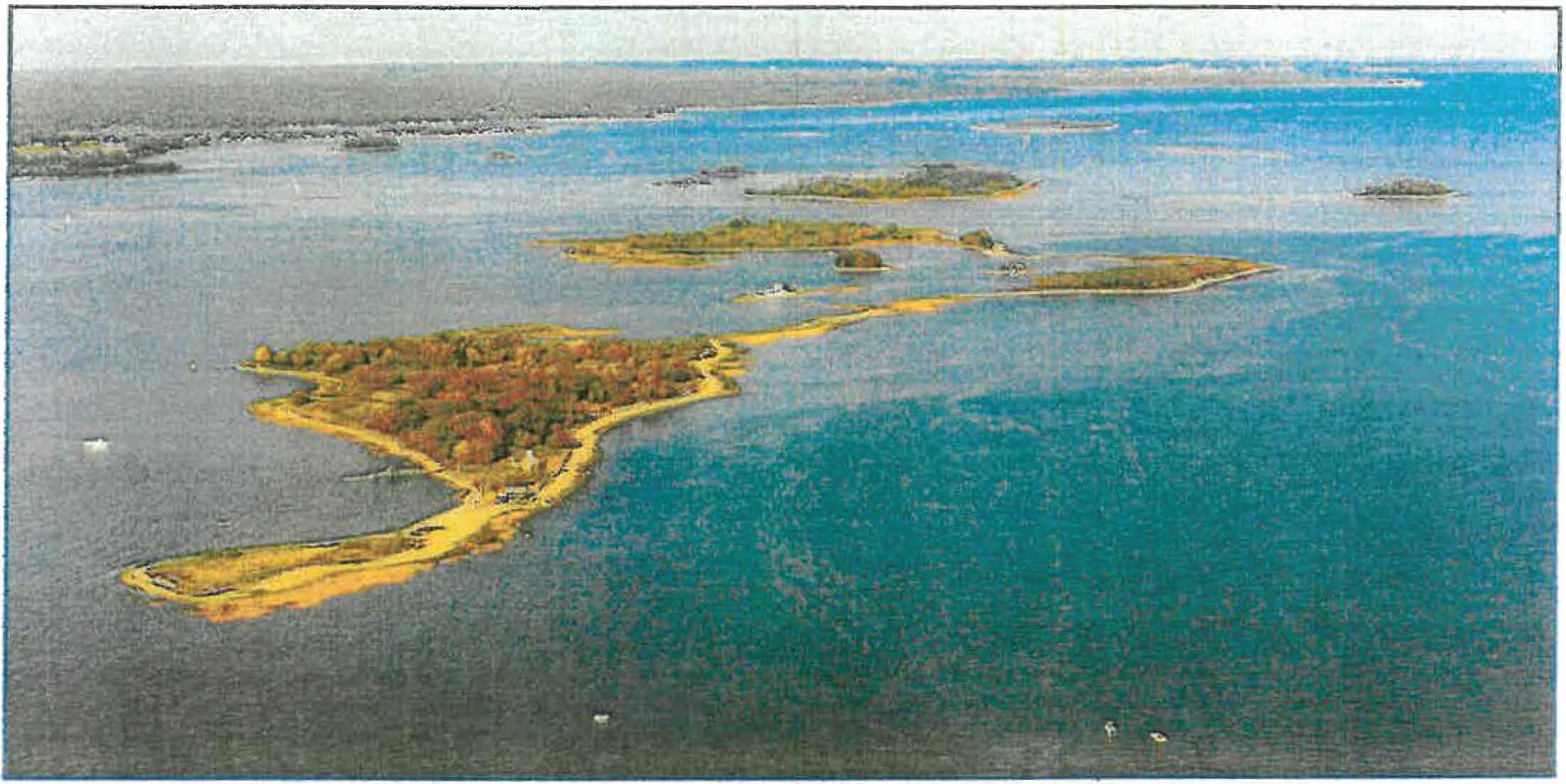
Long Island Sound, its bays, and rivers are environmental and recreational treasures that East Norwalk Blue has committed to enhance and protect.
The pumpout boat fleet plays a vital role in protecting the resources of our local waters and provides boaters with a convenient way to empty their heads to prevent dumping directly into the water.
The EAST NORWALK BLUE PUMPOUT PROGRAM is operating Memorial Day to mid October
To request a pumpout, go to our website at www.eastnorwalkblue.org or hail us on VHF channel 77 on the water.


203-857-1077 info@eastnorwalkblue.org

LIFE IS BETTER ON A BOAT SUMMER 2026
MUST GO TO RESTAURANTS ON THE WATER:
• Crab Shell, 42 Southfield, Stamford, CT
• L’Escale, 500 Steamboat Rd., Greenwich, CT
• SONO Seaport Seafood, 100 Water St., Norwalk, CT
• Walls Wharf, Bayville, NY (right across from Norwalk)
• Steelpointe, Bridgeport, CT
• The Wheel, 4 Star Point Ste. 101, Stamford, CT
• Rowayton Seafood, 89 Rowayton Ave., Norwalk, CT
WHERE TO RAFT UP WITH YOUR CREW:
• Zeigler’s Cove, Darien, CT
• Great Captains, Greenwich, CT
• Cockeone Island, Norwalk, CT
• Shea Island, Norwalk, CT
• Sheffield Island, Norwalk, CT
• Pirates Cove, Port Jefferson, NY
• Oyster Bay, NY
• Northport, NY
DOG FRIENDLY PLACES:
• Cockeone Island
• Harbor Point
• North Bay
KID FRIENDLY PLACES:
• Mini Golf and Calf Pasture Beach @ Cove, Norwalk, CT
• The Maritime Aquarium, Norwalk, CT
• The Children’s Matthews Museum, Norwalk, CT
• Sheffield Island Ferry
• SONO Mall
WHERE TO ADVENTURE OVERNIGHT:
• Port Jefferson, NY
• Huntington, NY
• Block Island, RI
• Montauk, NY
• Martha’s Vineyard, RI
• Nantucket, RI
• Greenpoint, NY
• Watch Hill, RI
• Chelsea Piers, NYC
