
MARILYS CASTRO PORTFOLIO

Page 1


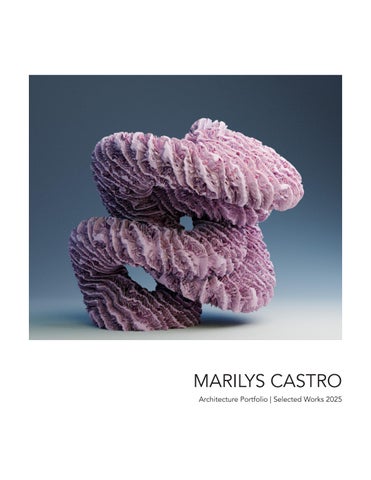
MARILYS CASTRO

Miami, FL 33155 | 786-554-3618 | mcast433@fiu.edu

EXPERIENCE PROFESSIONAL SUMMARY

EDUCATION

SKILLS

REFERENCES

Motivated, hardworking, reliable and a productive professional with the proven ability to deliver high quality work and excellent customer satisfaction, seeking experienced-level position in the design industry. Interfaces professionally and communicates easily with customers and colleagues.

RECEPTION AGENT, THE TRUMP GROUP – THE ESTATES AT ACQUALINA (SALES GALLERY); SUNNY ISLES BEACH, FL — 2021-2022

Providing administrative support to the Real Estate leaders. Coordinating schedules, appointments, dictation and preparing of documentation, computer data entry, filing, tracing, answering and screening phone calls (for entire office as required). Creating and printing reports, maintaining office files and departmental records/logs, etc.

Responsible for ensuring the daily operations within the model showroom. Knowledgeable of the building and units that were for sale and preparing brochures and floorplans.

FRONT DESK AGENT, FIRST SERVICE – ARTECH RESIDENCES; AVENTURA, FL — 2019-2021

Greets and directs residents, guests, and invitees. Monitors Emergency Response System and CCTV. Maintains Front Desk, daily log, complaints, assist with administrative work, and resolves any complaints or issues. Processes incoming parcels/packages.

ADMIN ASSISTANT/SALES ASSOCIATE, SPANISH MARBLE DISTRIBUTORS; DORAL, FL — 2018-2019

Responsible for ensuring the daily operations within the showroom. Successfully assisted customers with product selections and purchases. Handled customer orders; scheduled deliveries. Knowledgeable of all materials and merchandise in store.

SALES ASSOCIATE, MIAMI TWICE; MIAMI, FL — 2013-2018

Responsible for ensuring the daily operations within the store; Focused on delivering great client experience with every interaction. Assisted with visual merchandising; Verbose in product knowledge and current trends/vintage fashion. Accountable for cash register operations.

Florida International University — School Of Architecture

Pathway To Accelerated Master’s Degree

Present (Graduation Spring 2025)

Dean’s List 2023

Miami Dade College — School Of Architecture

AA Degree

December 2018

Study Abroad Barcelona — Dubai May 2016

Sales Customer Service: Problem-solving, Professionalism

Digital: Adobe Photoshop, Indesign, Illustrator, Auto-cad, Rhino, Grasshopper, Revit, Twinmotion, Windows Suite

Microsoft Office: Outlook, Word, Excel, PowerPoint

Social Media: Facebook, Instagram, Twitter, Pinterest, Snapchat, TikTok

Bilingual: English and Spanish

Available upon request

REEF MODULES

MASTER’S PROJECT SEMINAR

SOFTWARE: BLENDER, RHINO

FALL 2024

TYPOLOGY: ARTIFICIAL REEFS

LOCATION: SOUTH POINT PARK

Objectives and Scope

The project focuses on positive anthropogenic development, exploring how to artificially curate marine habitats to enhance biodiversity. It employs innovative methods such as 3D-printed reef structures, living seawalls, and coral nurseries constructed with biorock mesh. These designs act as “host” devices for specific marine species, fostering ecosystems that promote growth and biodiversity while engaging humans in their monitoring, propagation, and interaction.

Design Exploration

The vision centers on a sub-aquatic city composed of interconnected 3D-printed reef modules, with varying densities and features that adapt to environmental needs. These reef structures are aggregated into clusters, forming underwater “villages” that support diverse marine life while setting the foundation for human-reef cohabitation. Inspired by Miami’s coastal infrastructures, such as seawalls and port channels, the project reimagines these as resilient environmental models, integrating them into a broader vision of visionary sub-aquatic architecture.

Broader Implications and Vision

The project extends into architectural strategies that combine eco-tourism, marine biology research, and underwater landscapes. By utilizing computationally simulated ecosystems and large-scale 3D printing, the designs aim to create sustainable underwater barriers and hybrid spaces that encourage marine biodiversity and human interaction. The modular structures incorporate volumetric patterns and systemic heterogeneity, providing microenvironmental conditions that support a wide range of marine organisms. This vision proposes a dynamic response to environmental challenges, fostering a harmonious relationship between human activity, marine life, and the evolving urban landscape.

MODULE SYSTEM GROWTH

MARINE SCIENCE RESEARCH CENTER

DESIGN 10

SOFTWARE: RHINO, REVIT, TWINMOTION

FALL 2024

TYPOLOGY: RESEARCH CENTER

LOCATION: SOUTH POINT PARK

Project Vision and Context

This project, located at South Pointe Park in Miami, envisions an architectural intervention within a complex urban and ecological landscape. It addresses the challenge of balancing contemporary urban life with ecological sustainability along Miami’s western coastal edge. The intervention focuses on coastal resilience and environmental integration, requiring an in-depth analysis of the site’s environmental, socio-cultural, and built context. Through advanced conceptual and analytical tools, the proposal responds to the growing need for architectural solutions that serve both community and ecological goals.

Design Challenge

The central design challenge is to create a Marine Science Information Center for the local community. This facility will include diverse programs such as exhibition spaces, laboratories, educational classrooms, and a café, designed to foster community engagement and environmental awareness. The project emphasizes integrating architecture with the surrounding landscape, enhancing biodiversity through coastal redesign. By reimagining the existing rectangular water inlet and retaining wall, the proposal incorporates architectural and landscape features that promote coral growth and provide habitats for marine species, enriching the site’s ecological balance.

Program and Sustainability Goals

The program includes key functional spaces such as a lobby/reception, café, exhibition galleries, labs, classrooms, and restrooms, with an additional +/- 30% area dedicated to vertical and horizontal circulation. The design excludes on-site parking or loading/unloading zones, which are accommodated in adjacent parking lots. Beyond functionality, the proposal demonstrates a commitment to sustainability by addressing the site’s socio-cultural and environmental conditions. It integrates thoughtful programmatic layouts with resilient coastal strategies, ensuring that the architectural addition complements the existing ecological and urban fabric while inspiring community connection and environmental stewardship.

HYDROBLOOM GARDENS

STUDIO DESIGN 10

SOFTWARE: RHINO, AUTOCAD, TWINMOTION

FALL 2024

TYPOLOGY: VERTICAL FARMING

LOCATION: BRICKELL KEY, MIAMI FL

Problem Statement and Context

Urban expansion has created a disconnect between city dwellers and agriculture, both physically and psychologically. Farmland is replaced by urban developments, driving up land prices and increasing the distance between food production and consumption. This contributes to higher transportation costs, greenhouse gas emissions, and the marginalization of agrarian communities. The loss of connection to agriculture further diminishes the value of the natural world in a time of environmental crisis. Addressing these issues, the Brickell Key Vertical Farm project aims to reconnect urbanites with agriculture while promoting sustainability and ecological awareness.

Project Vision and Site

The Brickell Key Vertical Farm showcases the potential of vertical farming in a dense urban environment. Located at the Miami River’s oceanside entrance, the project integrates horticultural production with restaurant and fresh produce market facilities. Surrounded by luxury residential towers, this aesthetic and functional design will demonstrate how agriculture can coexist with urban life. By using a compact, controlled setting, the project fosters a closer relationship between urban dwellers and their food sources, emphasizing sustainability in an iconic location.

Design Exploration and Methods

The project incorporates advanced vertical farming techniques, including hydroponics, aeroponics, aquaponics, and greenhouse cultivation, to adapt to crop requirements and environmental conditions. It prioritizes domed or enclosed structures to control plant cultivation, drawing inspiration from historical and modern enclosed designs, from Roman architecture to contemporary airports. Greenhouse cultivation, favored for its sustainability and aesthetic value, aligns with Miami’s wind conditions. Unlike Plant Factories with Artificial Lighting (PFAL), the design ensures an emotional connection with the plants, creating a visually engaging and sustainable farming system.

TOP VIEW

SECOND LEVEL FLOOR PLAN

FOURTH LEVEL FLOOR PLAN
GROUND FLOOR PLAN
THIRD LEVEL FLOOR PLAN
FIFTH LEVEL FLOOR PLAN

LONG SECTION

THE CORAL NEST

STUDIO DESIGN 8

SOFTWARE: RHINO, BLENDER, TWINMOTION

SUMMER 2023

TYPOLOGY: BIO-DIVERSITY HOME

LOCATION: CALIFORNIA

Vision and Concept

“The Coral Nest” is a groundbreaking architectural project inspired by the intricate and organic forms of brain corals. Located at McWay Falls, California, this residential structure reimagines sustainable living by integrating architecture with the natural environment. More than a home, it represents a symbiotic relationship between humans and nature, highlighting the potential for beauty, functionality, and environmental stewardship to coexist. Every element of “The Coral Nest” has been thoughtfully designed to minimize its ecological footprint, paving the way for a future where homes actively contribute to the health of the planet.

Innovative Materials and Design

The structure utilizes cutting-edge sustainable materials that exemplify modern eco-friendly design. The foundation is constructed from bio-concrete, a self-healing material embedded with bacteria that produce limestone to repair cracks, ensuring durability and reducing maintenance. The exterior shell is made from algae-based material, offering thermal insulation while actively purifying the air by absorbing carbon dioxide and releasing oxygen. Bio-glass windows, developed through biological processes, provide a transparent, glass-like aesthetic while maintaining sustainability. The undulating shapes of the exterior are constructed using 3D-printed, sustainable materials, echoing the flowing forms of the natural environment.

Environmental and Aesthetic Impact

“The Coral Nest” is not just a residence but a living, breathing entity that supports ecological balance. Its innovative materials and design elements actively engage with the environment, offering thermal efficiency, air purification, and reduced maintenance needs. Inspired by the organic beauty of brain corals, the structure blends seamlessly with its surroundings, paying homage to the breathtaking landscape of McWay Falls. By integrating sustainability with artistry, “The Coral Nest” demonstrates that architecture can serve as both a functional home and a beacon of environmental consciousness, setting a new standard for eco-friendly living.

Turn static files into dynamic content formats.
Create a flipbook
MARILYS CASTRO PORTFOLIO by Marilys Castro - Issuu