
Communications
The provision of information to the community. Communication may occur through one or more channels or methods, selected to suit the purpose of the information and the intended audience.
Community engagement Community engagement is an intentional process that connects Council, the community, and stakeholders to understand local priorities and needs. This helps shape Council decisions and actions, leading to better, community-informed outcomes.
Community Refers to anyone with a stake or interest in the City of Maribyrnong – including but not limited to residents, ratepayers, landowners, workers, businesses and industry representatives, community leaders, community groups and organisations, government agencies, and other members of the community. These may also be referred to as stakeholders (see below).
For an engagement process we will define the specific communities that are impacted, interested or affected in the matter being considered.
Community engagement is a broad term that includes sharing information with and seeking feedback from the community. It sits at the core of Council’s role and purpose. Effective engagement supports meaningful public participation in Council’s decision-making, strengthens relationships, and helps build a more connected community. When done well, it ensures integrity, fosters transparency, and builds trust by making people feel genuinely included in the process.
Community engagement is an intentional process that connects Council, the community, and stakeholders to understand local priorities and needs. This helps shape Council decisions and actions, leading to better, community-informed outcomes.
Communications and Engagement Plan
Stakeholder
Deliberation
A Communications and Engagement Plan documents the process of communications and community engagement, the agreed engagement approach, audience and activities, and its expected outcomes to meet the requirements of this Policy.
An individual or group with a strong interest in the decisions of Council. This could include a community group or organisation, community advisory committee, business, trader association, sporting club or team, or other organisation.
An approach to decision-making in which the community considers relevant facts from multiple points of view, speaking with one another to think critically about options before them and expand their perspectives, opinions and understanding.
Deliberative engagement is a high-influence form of engagement. It brings together a representative group of community members, who consider balanced information, engage in in-depth discussion and thoughtful consideration to provide informed advice to Council on complex matters.
The International Association for Public Participation (IAP2)
In January 2025, the Australasian chapter of IAP2 rebranded to the Engagement Institute to better reflect the modern practice of engagement in the region.
The Engagement Institute is Australasia’s leading authority for community engagement. It seeks to promote and improve the practice of community and stakeholder engagement.
The purpose of community engagement is to include the people who live, work and participate in our City, in shaping the things that affect their daily lives. By drawing on their knowledge, experiences and aspirations, Council can make well-informed, transparent and accountable decisions, and strengthen community confidence in how those decisions are made.
Insights and feedback gathered from community can also include customer service interactions to help improve services and outcomes.
Council’s engagement is guided by Victorian Government legislation, and we are required to follow some processes. A key piece of legislation is the Local Government Act 2020, which requires every council to adopt and maintain a community engagement policy that is developed in consultation with the community. The policy must also guide engagement for local laws, budgets, policy development and long-term plans.
In addition to the Local Government Act 2020, other relevant legislation and guiding documents include, but are not limited to:
• Council Plan 2025-29
• Maribyrnong’s Statement of Commitment
• Victorian Aboriginal Affairs Framework Act 2018
• Charter of Human Rights and Responsibilities Act 2006
• Planning and Environment Act 1987
• Local Government (Gover nance and Integrity) Regulations 2020
• Public Health and Wellbeing Act 2008
• Commission for Children and Young People Child Safe Standards
• Public Administration Act 2004
• Equal Opportunity Act 2010
• Privacy and Data Protection Act 2014
• Freedom of Information Act 1982
• Multicultural Victoria Act 2011
• Climate Change Act 2017
• Subordinate Legislation Act 1994
• Road Management Act 2004
• Gender Equality Act 2020
• Child Safety Act 2015
• Disability Act 2006
• Victorian Privacy and Data Protection Act 2014
• Geographic Place Names Act 1998
• Occupational Health and Safety Policy
• Complaints Policy
• Putting Customers First Strategy 2026-29
This Policy defines Council’s role, commitment and expectations to embed community engagement in how we plan and deliver our work. It sets clear and consistent expectations for when Council will engage, who we will engage, and how we will engage.
This Policy applies to all community engagement activities undertaken by Council, including those planned, delivered or commissioned by Councillors, Council staff, and external consultants. It applies to the planning, design, implementation and evaluation of community engagement activities whether directed by Council, recommended by staff or required under relevant legislation.
This Policy does not replace statutory processes prescribed by other Acts. Where a statutory process applies, Council will follow the relevant legislative requirements for how and when engagement occurs. It does not apply to individual service requests and complaints, or routine statutory/administrative notices where separate processes and requirements already exist.
Community engagement is an important part of Council’s decision-making process. While it provides essential insight into community needs and perspectives, it is one of several inputs to Council decision making. As shown in Figure 1, we consider
community feedback alongside other evidence, such as research, customer data, expert advice, strategic policies, and legislative requirements, to make informed and balanced decisions.
We help people to understand how Council makes decisions, by explaining the process involved, what factors must be considered, and how community input is weighed alongside other evidence.
Council recognises that engaging with the community ensures it is better informed to deliver its work in a way that best supports community needs and expectations. The Victorian Local Government Act 2020 outlines a set of overarching principles that are central to our engagement practice and describe the need for community engagement to be transparent, accountable, meaningfully informed and representative.
We have developed a set of engagement commitments, appropriate to our community and its needs, to demonstrate how we apply these requirements in practice. Our engagement commitments govern the design and conduct of how we engage and are our promise about how we will work with our communities.
Community engagement principles, Local Government Act 2020
A community engagement process must have a clearly defined objective and scope
Our engagement commitment
We will develop a Communications and Engagement Plan that clearly identifies the engagement scope, purpose, timing and activities.
We will be honest about and communicate the level of influence our community has in any engagement activity.
Participants in community engagement must have access to objective, relevant and timely information to inform their participation
We will ensure our community has the information necessary to participate meaningfully, including the project background, the options or directions we have considered, and any implications and trade-offs.
We will provide information that is objective, relevant, timely and easy to understand for our diverse community.
We will provide targeted, accessible information to communities that are affected by decisions.
We will work collaboratively within Council so that the community can easily access consistent information, regardless of which service or staff member you interact with.
We will acknowledge community engagement enquiries within three working days.
We will provide updates throughout the engagement process, including changes to timing, scope or next steps.
Community engagement principles, Local Government Act 2020
Participants in community engagement must be representative of the persons and groups affected by the matter that is the subject of the community engagement
Our engagement commitment
We will identify who is affected by or interested in the subject of the community engagement.
We will reach out to our diverse communities through existing networks and relationships to ensure a broad range of voices are included in our engagement.
We will actively broaden outreach with communities who don’t regularly engage with Council, learn from them, and tailor our engagement approaches.
Participants in community engagement are entitled to reasonable support to enable meaningful and informed engagement
We will consider the needs and perspectives, of all people, including diverse communities and those who may face greater barriers to participation.
We will provide safe and respectful ways for people to participate.
We will tailor engagement tools to genuinely include people in decision-making and make participation equitable, accessible and inclusive.
We will understand how our community wants to engage and reduce physical, social and cultural barriers to participation by providing supports that assist with meaningful participation.
We will communicate and engage with our community using channels, locations and times that work for them.
Participants in community engagement are informed of the ways in which the community engagement process will influence Council decision making.
We will maintain an internal engagement register to record activities undertaken, community participation, and feedback collected.
We will provide an update within four weeks of engagement closing.
We will close the loop with the community by reporting engagement results and outcomes, following a confirmed decision.
We provide informative and accessible updates on decisions, including how feedback has been considered, how it influenced outcomes, and next steps.
We will evaluate and report on the level of community representation, engagement methods used, timing and information.
Respect: You will be treated kindly and fairly. You will be listened to and spoken to with courtesy and care.
Integrity: You will receive honest and clear information. If something can’t be done, we will explain why and we will explain the next steps in plain language.
Courage: You can expect Council to engage with confidence and care.
Community engagement works best when people feel heard, safe and respected, especially when there are different experiences, perspectives and views. We recognise that people may come to engagement from different angles, with different motivations and lived experience.
To support constructive and meaningful engagement for everyone, Council and all participants will aim to:
• listen respectfully
• be curious and ask questions
• focus on the issue and avoid personal criticism
• make space for others to participate safely
• communicate safely and inclusively
• respect privacy.
Where behaviour or language undermines others’ ability to participate safely, Council may pause or close a discussion, or adjust the way input is collected, to ensure the engagement remains constructive and inclusive.

Councillors, management and staff are responsible for ensuring projects, strategies, and decisions incorporate appropriate community engagement.
Councillors Support the engagement commitments outlined in this Policy.
Consider all community feedback to help inform decision making.
At in-person events, observe engagement activities.
Executive Leadership Team Champion best practice engagement through policy, process and leadership. Engage with Councillors around engagement opportunities and process.
Monitor implementation and compliance with this Policy.
Managers Manage areas of responsibility to ensure community engagement is consistent with this Policy.
Customer Engagement Team
Staff and external consultants
Establish and maintain the systems and processes to support Council’s engagement approach, including developing Communications and Engagement Plans.
Support the organisation by providing clear guidance and advice to ensure all community engagement activities comply with this Policy.
Report back the results and outcomes of any engagement to the community and close the loop in a timely manner.
Accountable for supporting the planning and undertaking of engagement activities consistent with this Policy.
Our engagement process is shaped by what is being proposed – its complexity and significance, the level of impact and who will be affected. Our community engagement follows a clear and consistent process to ensure decisions are shaped by informed and meaningful community input.
Plan Identify the purpose of the engagement, including why we are seeking to engage the community and what it aims to achieve through the process.
Understand who we need to hear from, including from relevant and diverse perspectives, and what information or insights we already have through existing data, previous engagement and local knowledge.
Design an engagement approach that responds to the needs of the project, the relevant communities, and includes monitoring and evaluation so delivery can be effectively measured.
Deliver Deliver genuine and respectful engagement that values community voices and encourages open, honest participation.
Monitor the engagement to assess how well it is working and change or adjust if needed.
Analyse Review and analyse feedback consistently and transparently to capture community insights.
Consider the engagement findings.
Close the loop in a timely manner by explaining to the community how their feedback was used, or why it couldn’t be used, and what the next steps are.
Evaluate Evaluate and learn so we can keep improving how we engage with the community.
Share the engagement outcomes and learnings across the organisation to support continuous improvement and future engagement opportunities.
Council recognises the importance of early engagement. We will plan for and implement an engagement process when it is identified that a proposed project or decision will impact all or some of the community.
Council will use a consistent approach and will engage with the community:
• where members of our community may be impacted by a project or decision, a proposed change to Council activities or strategic direction
• where community input can improve a project or enhance decision making
• to help identify community needs not already known
• in response to expressions of community interest
• where Council resolves to engage with the community
• when required by law, policy or by agreement with a government agency or statutory body, and
• when there might be a high risk of impact on the community or Council.
There may be circumstances where Council is only be able to inform the community of decisions and actions, for example when:
• day-to-day operational decisions which have minimal to no impact on the community
• there is an emergency or situation which impacts public safety, where an immediate resolution is required
• an immediate resolution is required
• technical or other expertise is required
• there is a ministerial exemption (for example if the Minister for Planning allows a planning change to proceed without the usual public exhibition period)
• an initiative involves confidential or commercial information (for example when evaluating bids for contracts)
• there are clear and defined legislative responsibilities that must be met, or
• developing or reviewing internal policies and procedures.
There is no one-size fits all approach to engagement – every project and every community is different. Council will choose the level of engagement based on what is being proposed, its complexity and significance, the level of impact, and who will be affected.
A good approach uses a variety of tools and techniques (both online and in-person) to address the engagement objectives and ensure the process is fit-for-purpose and accessible to the wide range of community members that make up our City. Engagement will be undertaken in a respectful way following the engagement principles outlined and having regard to specific legislative requirements. Accessible engagement may look like, but is not limited to:
• Gender Impact Assessments to identify potential inequities
• providing translated materials
• culturally-safe events
• ability-friendly venues
• age-friendly formats, such as use of plain English.
Council considers an adapted version of the International Association for Public Participation (IAP2) Public Participation Spectrum as the framework for determining the level of influence in the decision. The Spectrum is a widely recognised tool that identifies five levels of public participation. For each level there is a corresponding goal, commitment and role for Council and the community in the process. Each level of the Spectrum builds on and includes all preceding levels. For example, Consult includes Inform, and Collaborate includes Inform, Consult and Involve. There may often be more than one level of engagement used across a project’s lifetime, depending on the stage, scope, timeline and community involved, as well as the influence and impact identified.
In the planning stage, Council will identify the appropriate level of engagement and prepare a Communication and Engagement Plan identifying the most appropriate communication tools and timeframes to ensure affected and interested parties are well informed of both the issue and the engagement opportunities.
Following a decision by Council, we will continue to update and inform the community on the progress or implementation of works. This may include some targeted consultation, where appropriate.
Goal To provide our community with objective and clear information that lets them know what is happening and what is planned
Council’s commitment to community
We will keep you informed
To seek and consider community feedback before we make decisions
We will listen to and acknowledge your feedback and let you know how it has influenced our decisions
To work directly with our community to understand and consider their concerns and aspirations where appropriate
We will work with you to ensure your concerns and aspirations are directly reflected in alternatives developed and let you know how your feedback has influenced our decisions.
To partner with our community to identify alternatives and develop solutions
To build the capacity of our community to identify solutions and lead final decisionmaking
We will partner with you to develop solutions, and as much as possible incorporate your advice and proposals into our decisions. We will let you know how your feedback has influenced our decisions
We will work alongside you to realise your decisions and aspirations and implement what you decide
What does this look like
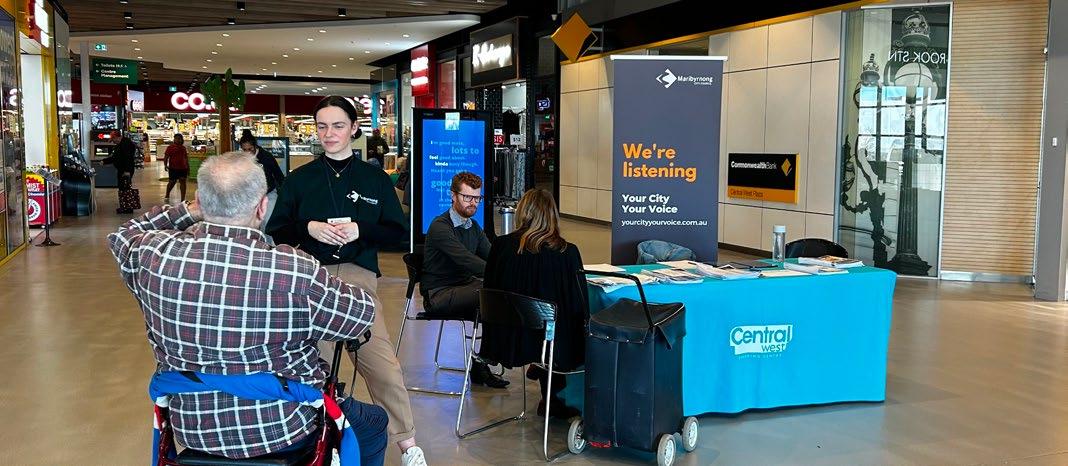
We will communicate with you and share project information through website updates, social media, email, flyers or posters
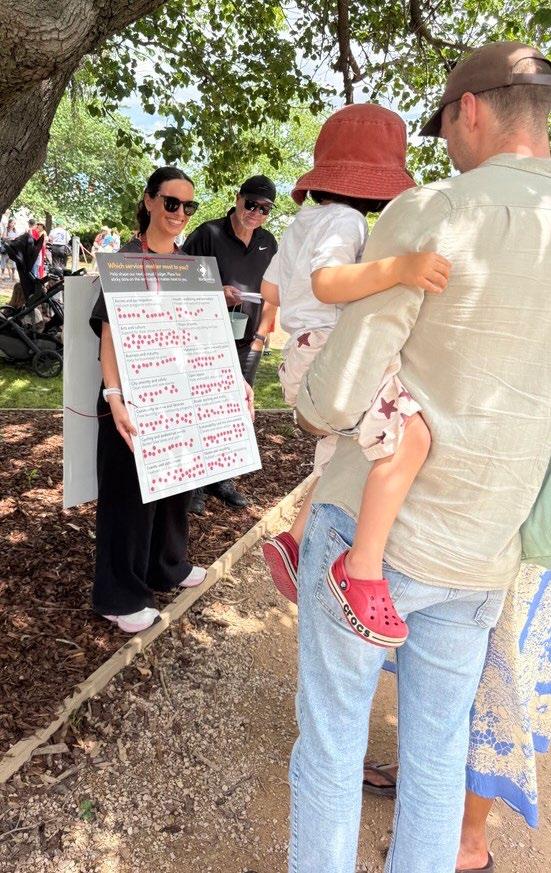
We will ask you questions at pop-ups, in surveys or through online tools on Your City Your Voice
We will discuss options with you at drop-in sessions, focus groups or workshops, or through online tools on Your City Your Voice
We will develop ideas together, at a workshop, or across several workshops through deliberative engagement
We will provide information for you to make considered decisions, usually over several workshops
Deliberative engagement is a high-influence form of engagement. It brings together a representative group of community members, who consider balanced information, engage in in-depth discussion and thoughtful consideration to provide informed advice to Council on complex matters.
The Local Government Act 2020 requires deliberative engagement practices for some processes. For other projects, its use will be considered on a case-by-case basis. Council will undertake a deliberative engagement process to inform the following strategic documents:
• Community Vision
• Council Plan
• Financial Plan
• Asset Plan.
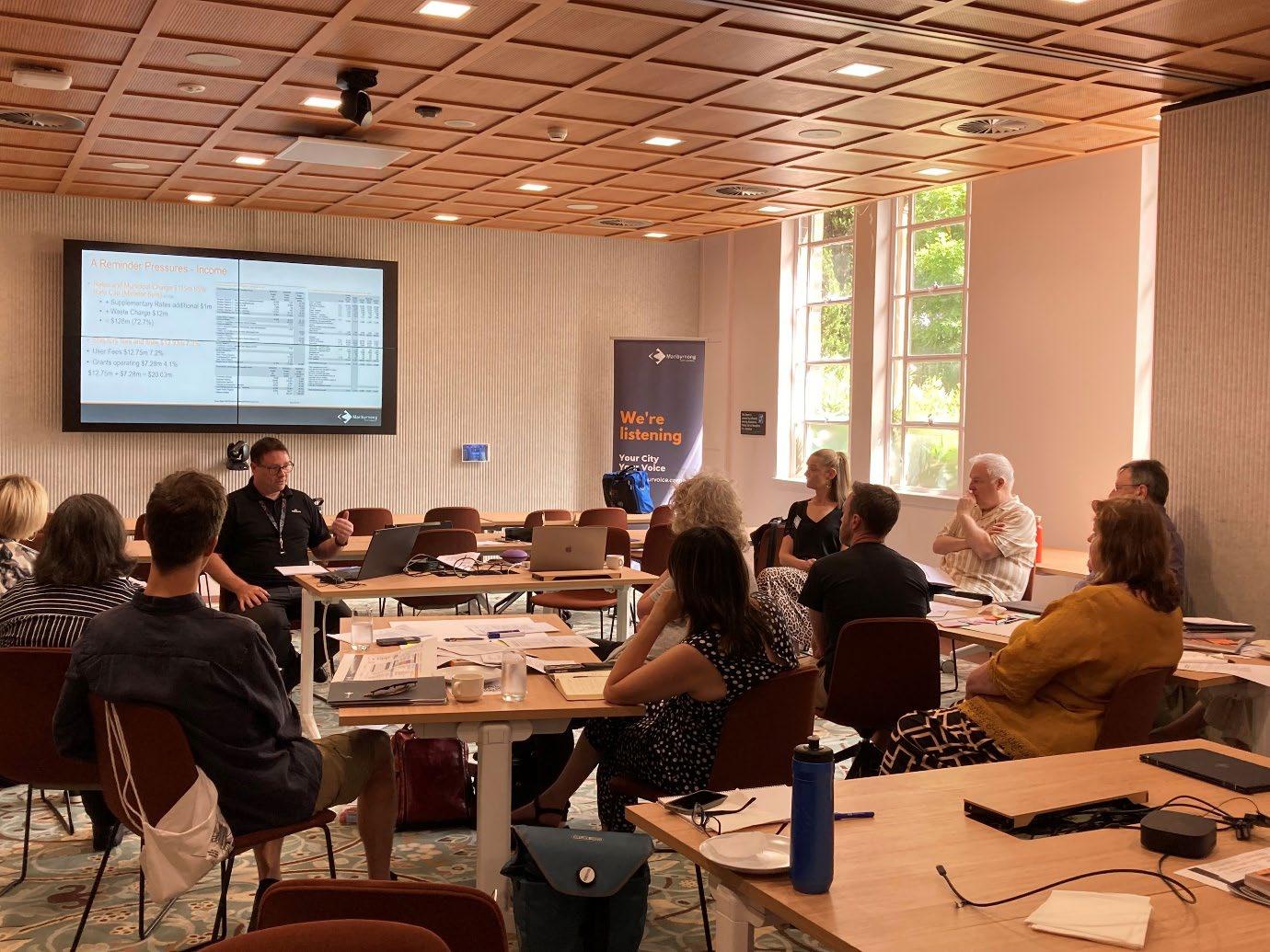
Our community is anyone who lives, works, plays, visits, studies, or is invested in our City, who may be impacted by or interested in Council decisions –whether individually or collectively. This can include:
• residents and ratepayers
• landowners
• workers
• community advisory committees
• businesses and industry representatives
• community leaders such as from cultural or faith groups
• community groups and organisations
• government agencies
• other members of the community who study in or visit our City.
We recognise that people experience and perceive places and spaces in different ways, shaped by their lived experiences, identities and circumstances. When planning engagement, we will identify who needs to be involved and ensure that a diverse range of voices are heard, particularly those who may be directly affected or typically under-represented.
Everyone has the right to be heard. There are some groups within the community who are more likely to experience barriers to participating in engagement. This could be due to time, accessibility, confidence, psychological safety, language barriers, or simply feeling that their voice won’t make a difference. We will use our engagement principles to ensure our efforts include all the communities we serve and are committed to looking beyond traditional tools to enable and encourage their participation.
This Policy is supported by internal teams, systems, and processes to ensure engagement activities are planned, delivered and reviewed consistently, and comply with the Policy’s requirements.
In practice, this means developing Communications and Engagement Plans, following internal procedures and guidelines, as well as tracking and evaluating engagement activities and findings to support continuous improvement.
One of the first actions in our new Council Plan (2025-29) is to review our Community Engagement Policy to understand how we can better reach and hear from our community.
Community feedback, along with internal research and staff engagement, has helped inform the updated Community Engagement Policy.
This Policy will be reviewed in four years to ensure it remains current and responsive to community needs.
Maribyrnong City Council Offices
61 Napier Street, Footscray
Mail address:
PO Box 58 West Footscray 3012
Phone 9688 0200
After hours/emergency 9688 0200
Fax 9687 7793
Email email@maribyrnong.vic.gov.au
Web maribyrnong.vic.gov.au
TIS 131 450
If you are deaf, hearing-impaired, or speech-imparired, please use the National Relay Service
TTY 13 36 77
Speak and listen 1300 555 727 relayservice.com.au
Connect with us
yourcityyourvoice.com.au
/Maribyrnong @cityofmaribyrnong
Maribyrnong is a welcoming and inclusive City where differences are respected, and everyone belongs.
We acknowledge the deep and ongoing connection to Country. We recognise the Traditional Custodians as the first carers of this land.
We are a child-safe organisation. We create environments wehre children and young people feel safe, supported and able to thrive.