MARIAVICTORIA CANEDO
SACD Undergraduate Portfolio University of South Florida
TABLE OF CONTENTS
KIT OF ELEMENTS
1 2 3
INTRO TO DESIGN I
MOVEMENT IN A FIELD INTRO TO DESIGN I
THE LIGHT BOX INTRO TO DESIGN I

KIT OF ELEMENTS
CHADAPHAN HANWISAI
FALL 2024
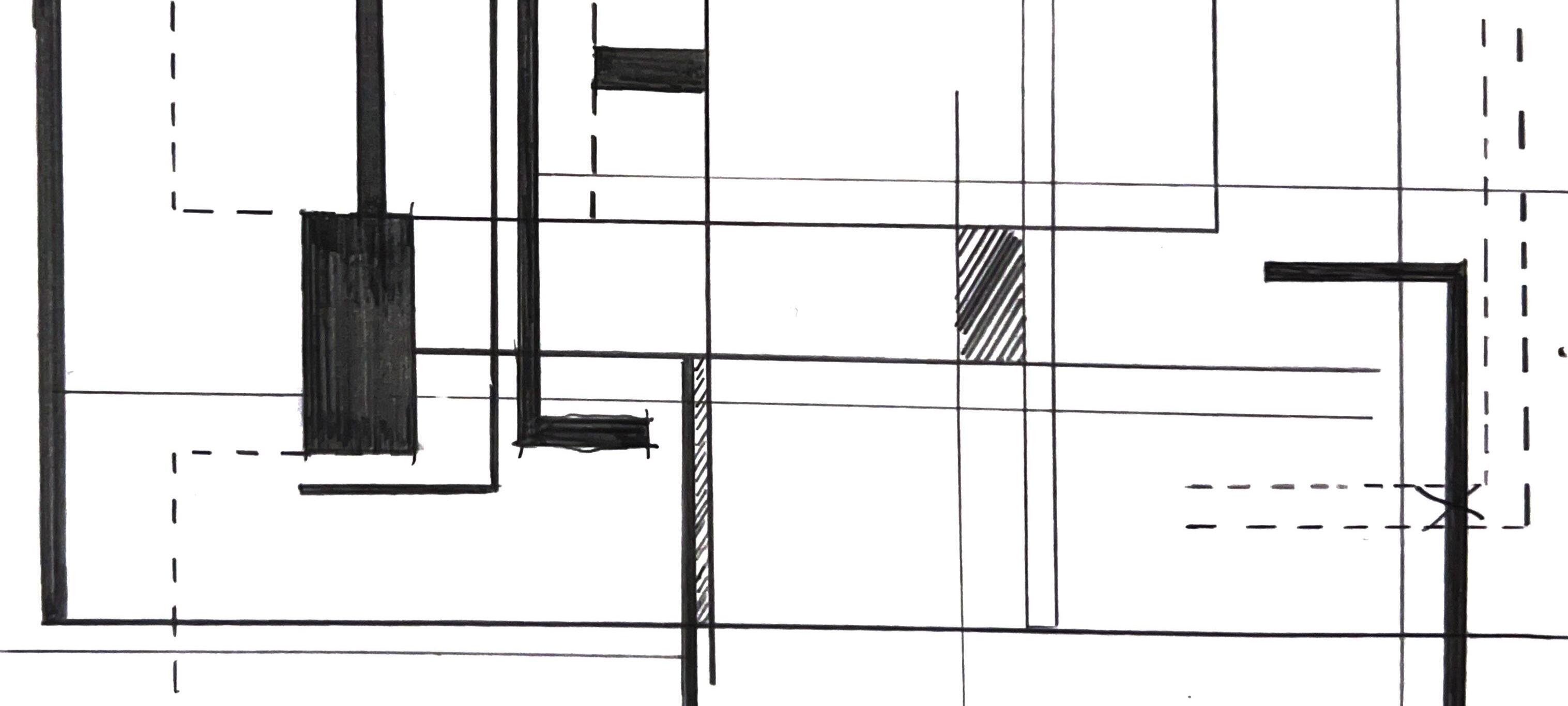
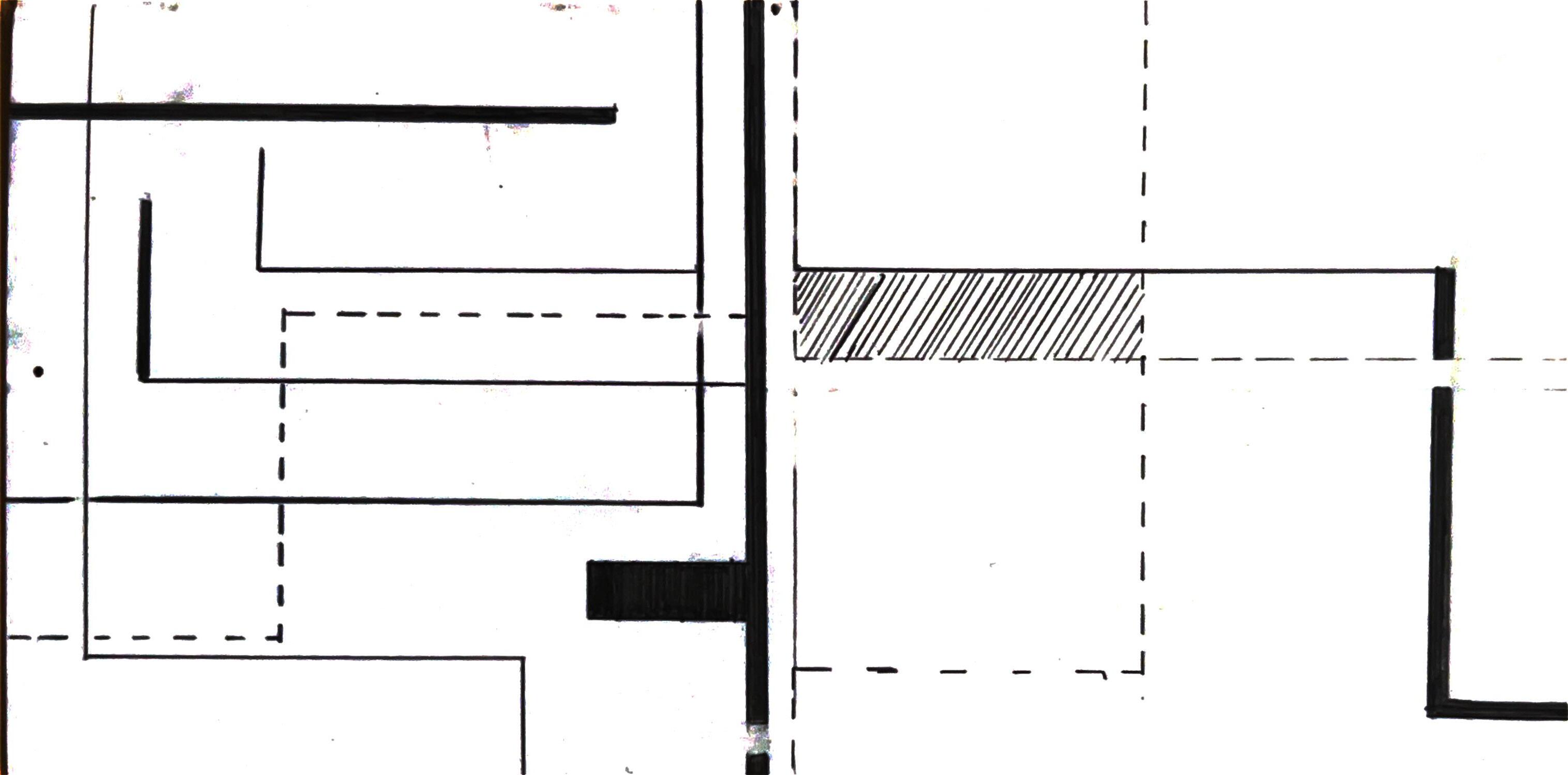
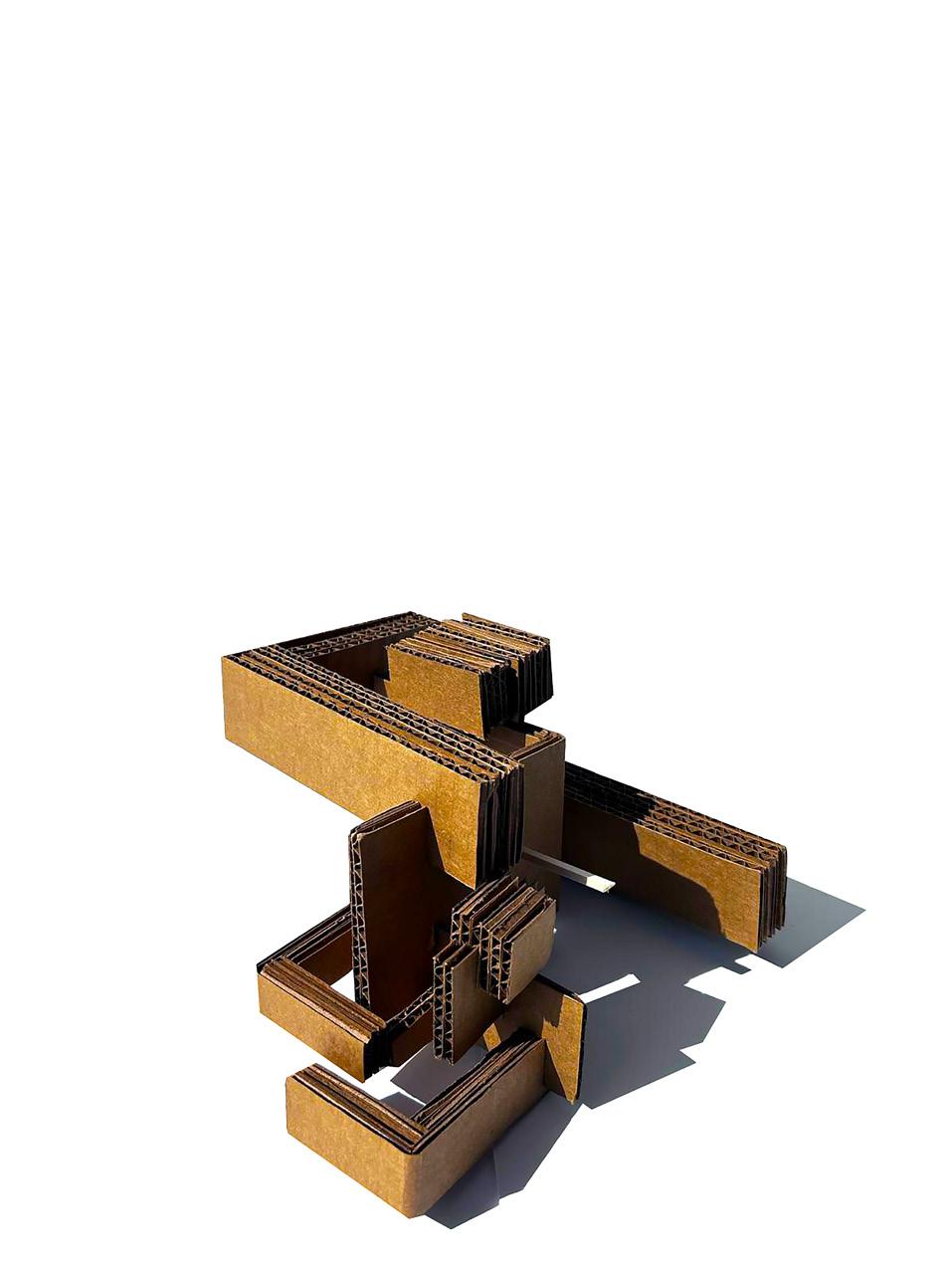
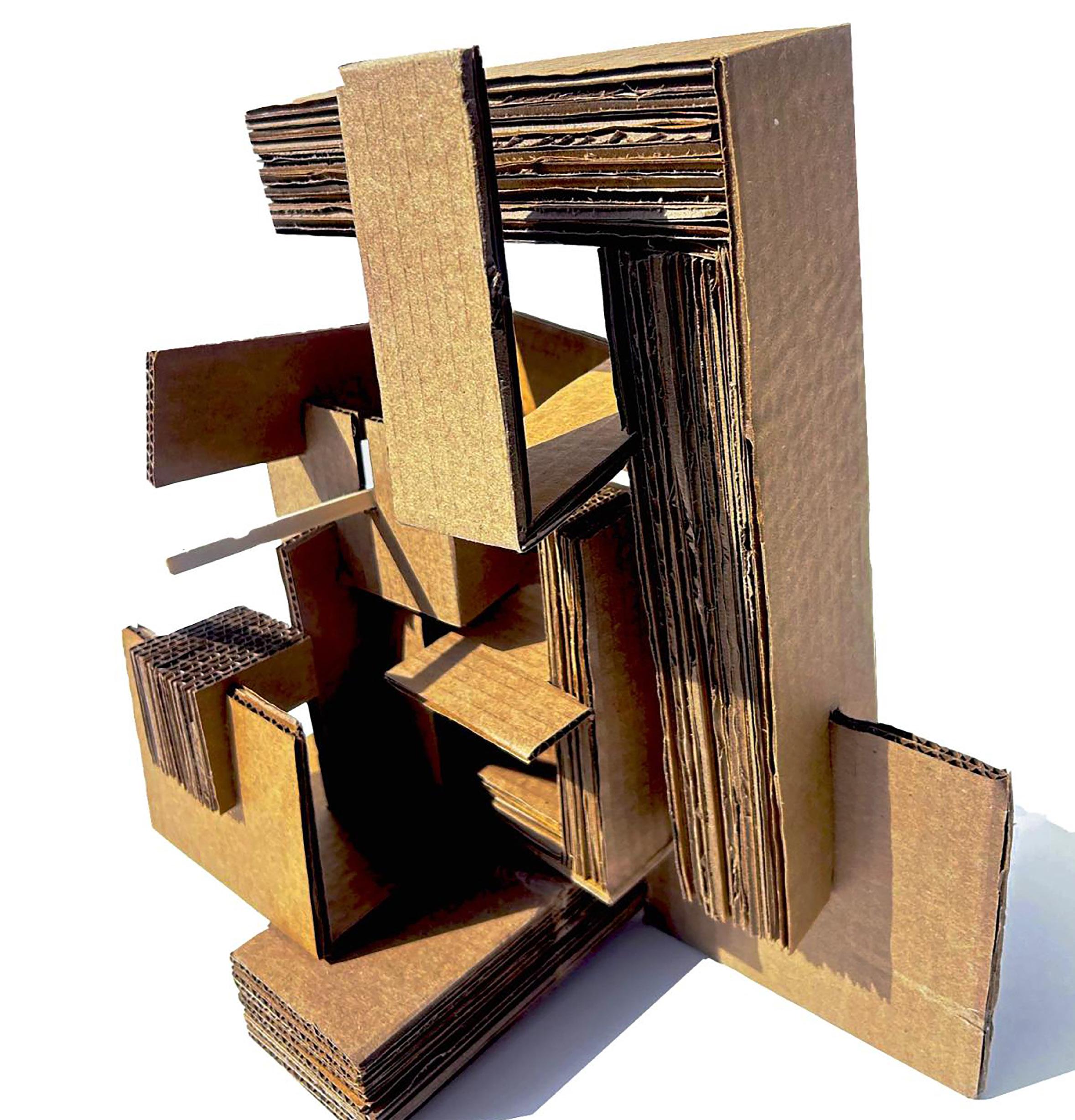
I capture the duality of victory and defeat through a clear spatial contrast. “Win” is expressed as light, open, and smooth—spaces that feel breathable, legible, and calm. “Lose” emerges as darker and more contained, formed by tighter passages and compressed zones where movement slows and awareness heightens.
What matters most isn’t either extreme, but the shift between them. The project is built around transitions— thresholds where light begins to leak in, edges soften, and the space gradually opens or closes. As these elements interact, they create a continuous sequence that mirrors how success and failure actually feel: not separate destinations, but changing states that we move through.
In that way, the model becomes less about winning or losing, and more about becoming. It frames growth as something formed in the in-between, through pressure, release, uncertainty, and clarity—turning an emotional journey into an architectural one.
Process Models:
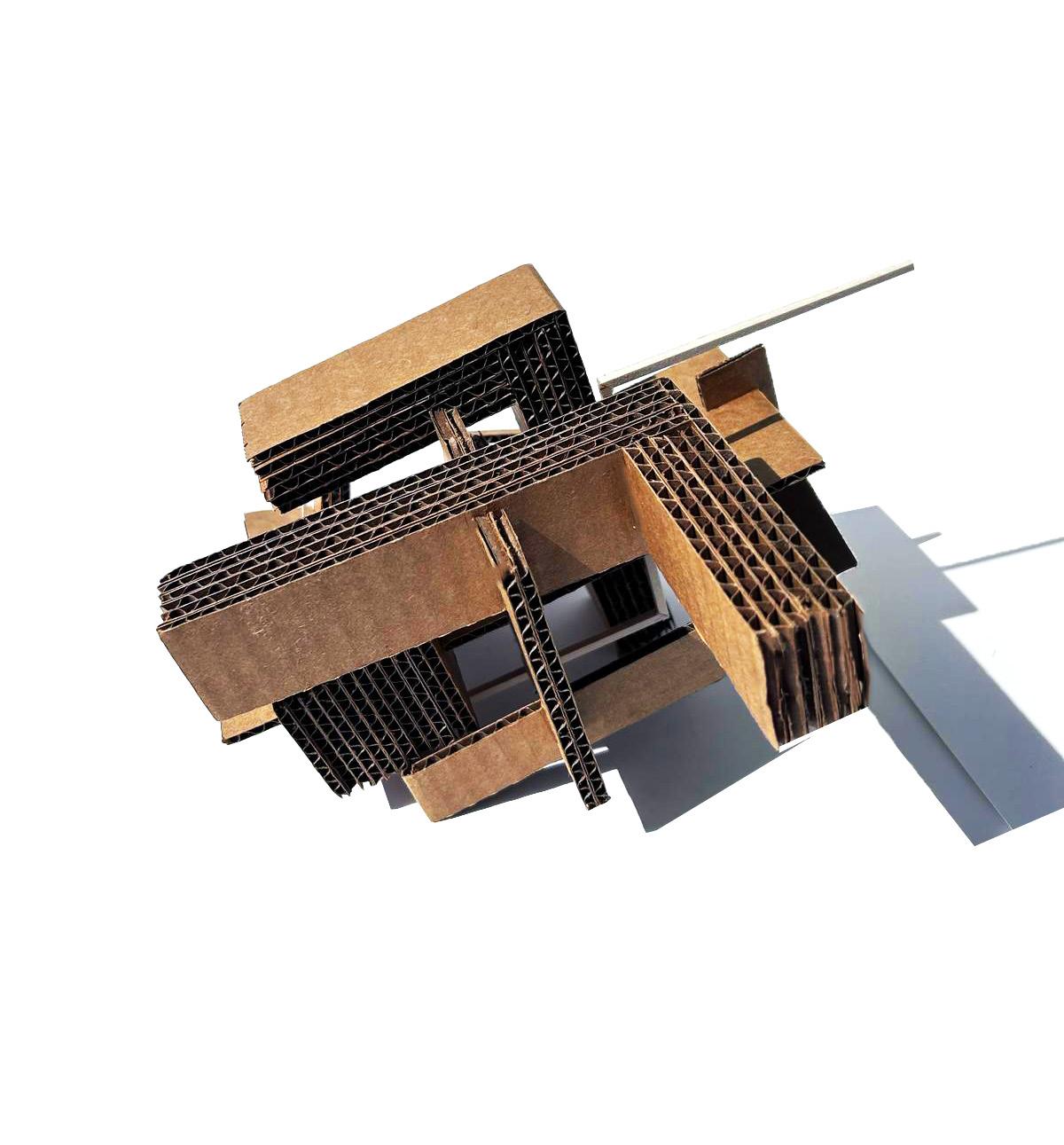
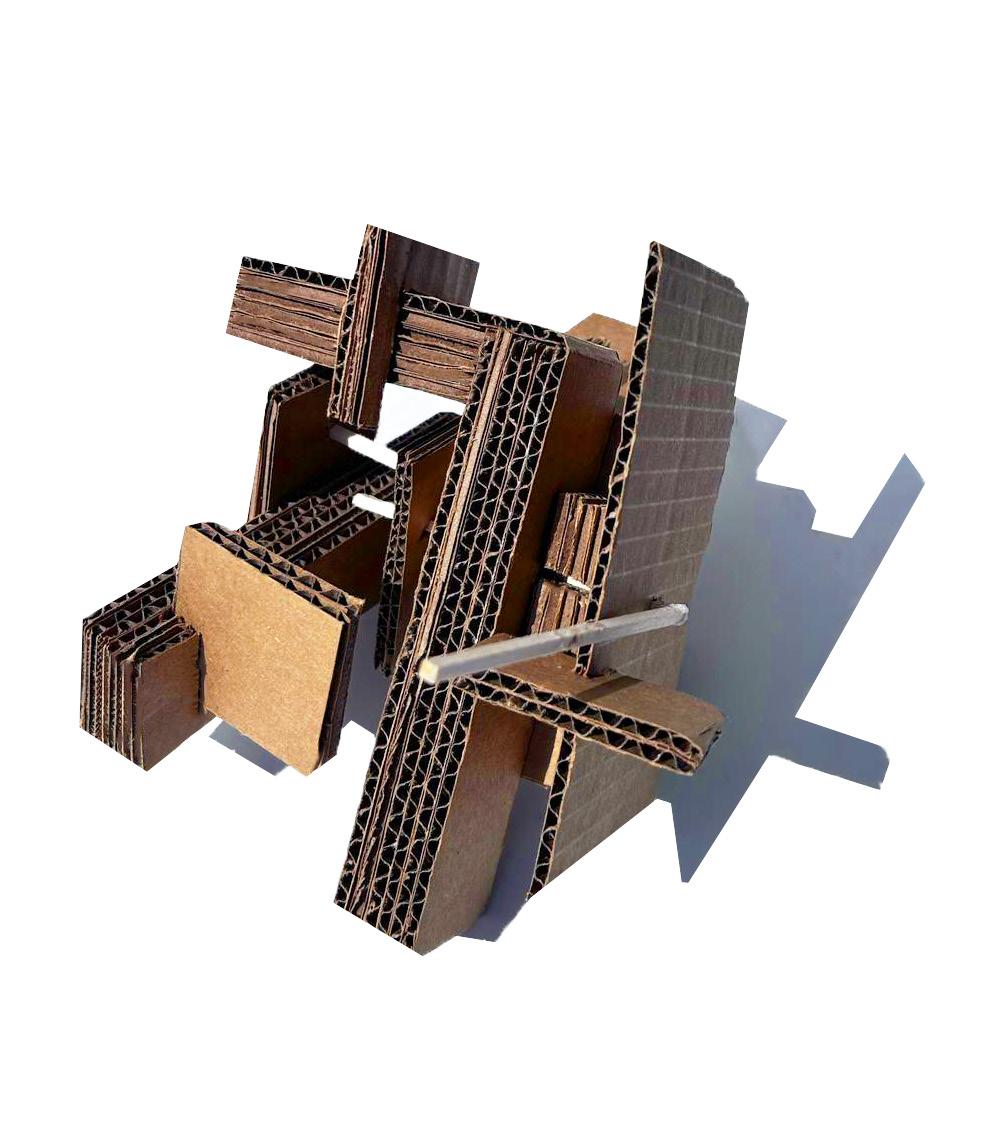
This project started with mini models: small studies that let me test how light, scale, and movement can communicate emotion. Each one explored a different moment of the journey, like a note in a sequence.
The concept is guided by three words: win — motivation — lose.

“Tutto si unisce in una perfetta armonia.”
DATUM DRAWING
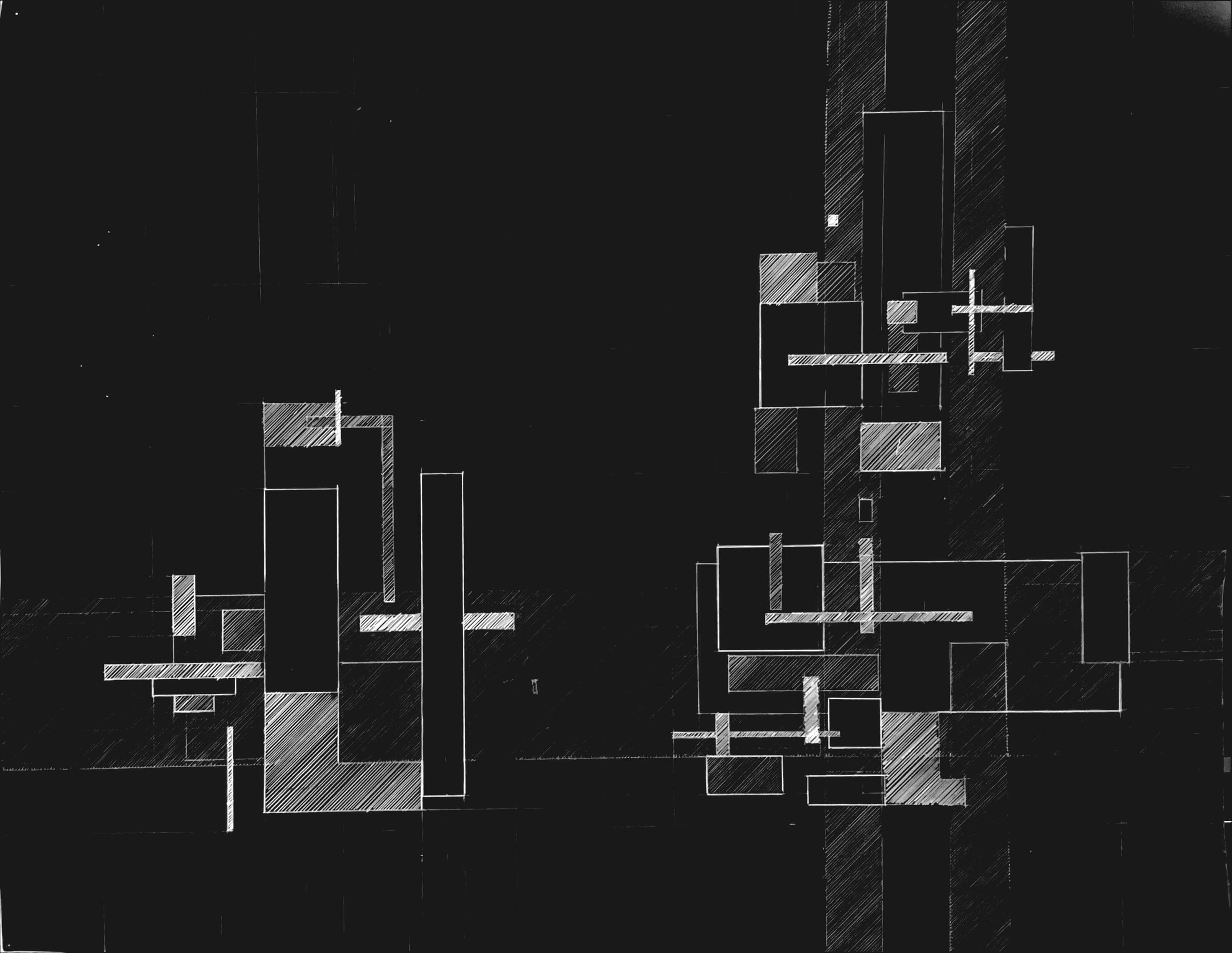
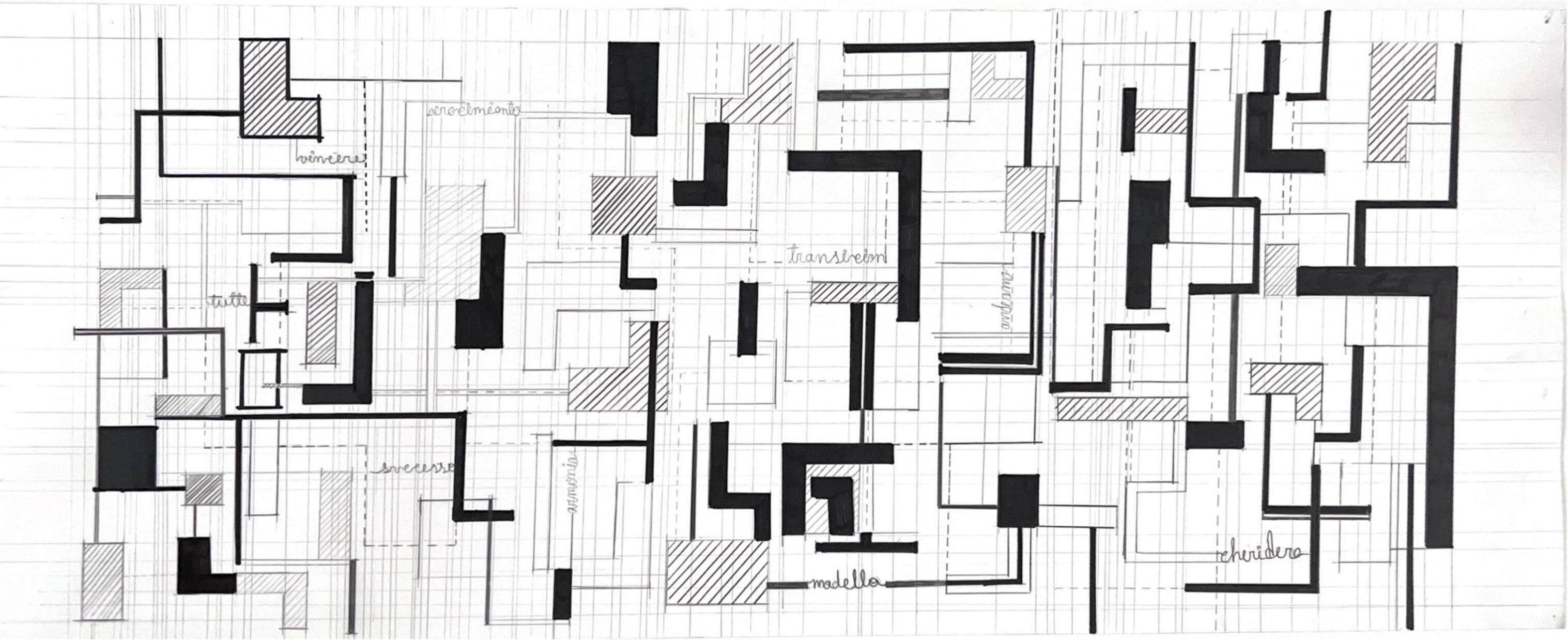
THREE SECTIONS FROM ONE OF THE MODELS CONNECTED WITH HATCHINGS. THE HATCHED DATUM HIGHLIGHTS IMPORTANT SPACES FROM THE MODEL.
Final Model
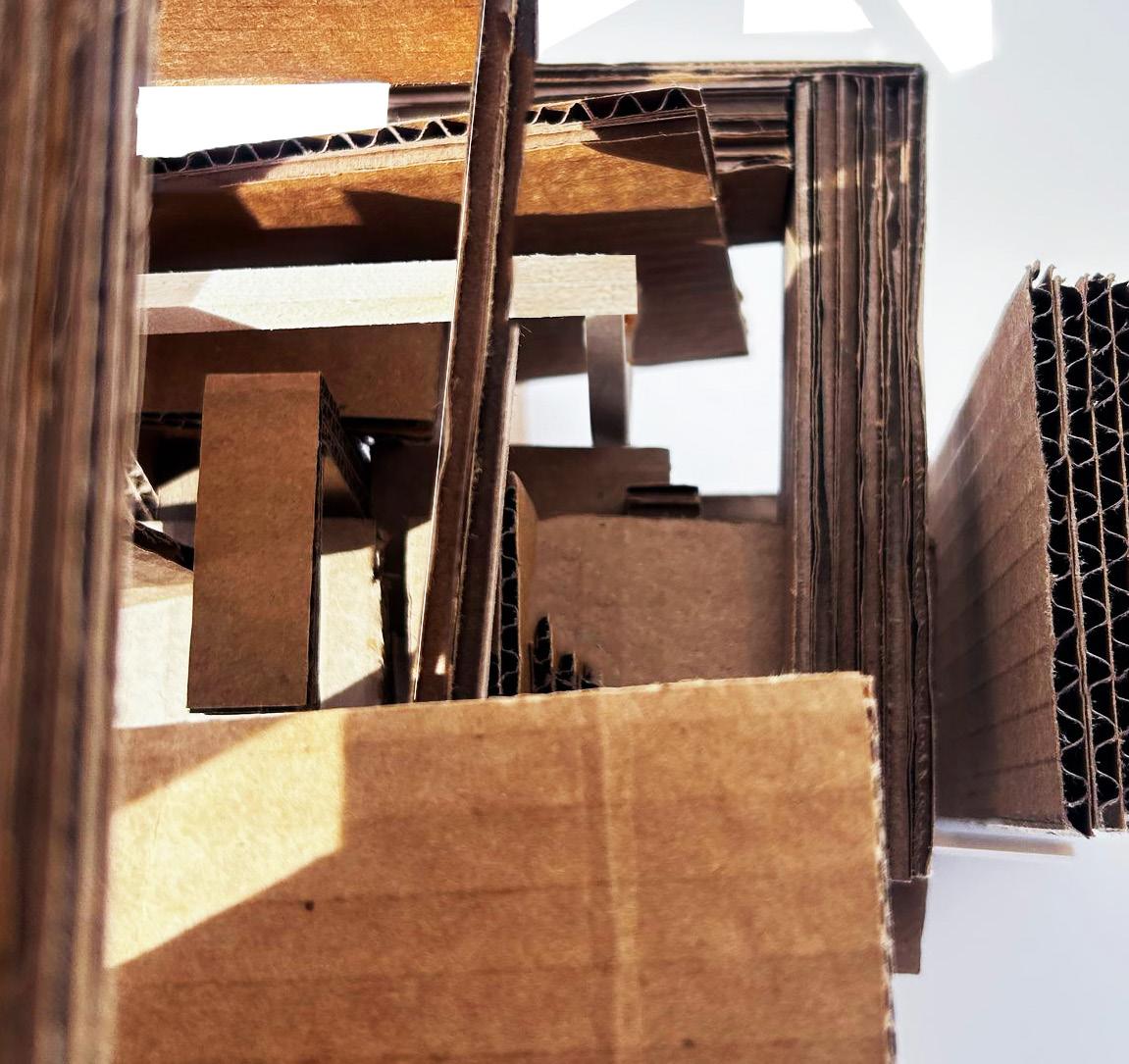
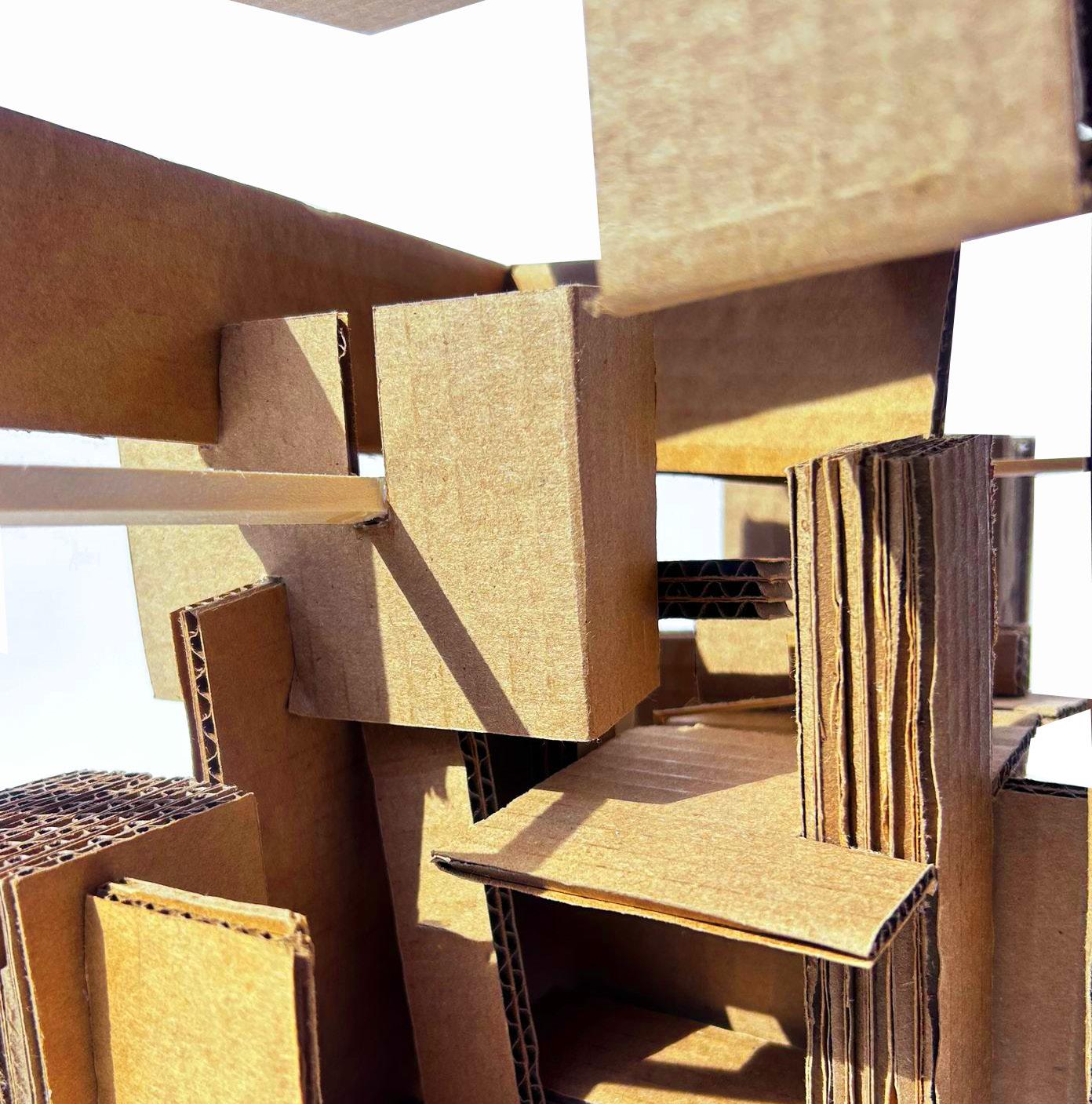
Top view View A
MOVEMENT IN A FIELD
CHADAPHAN HANWISAI FALL 2024
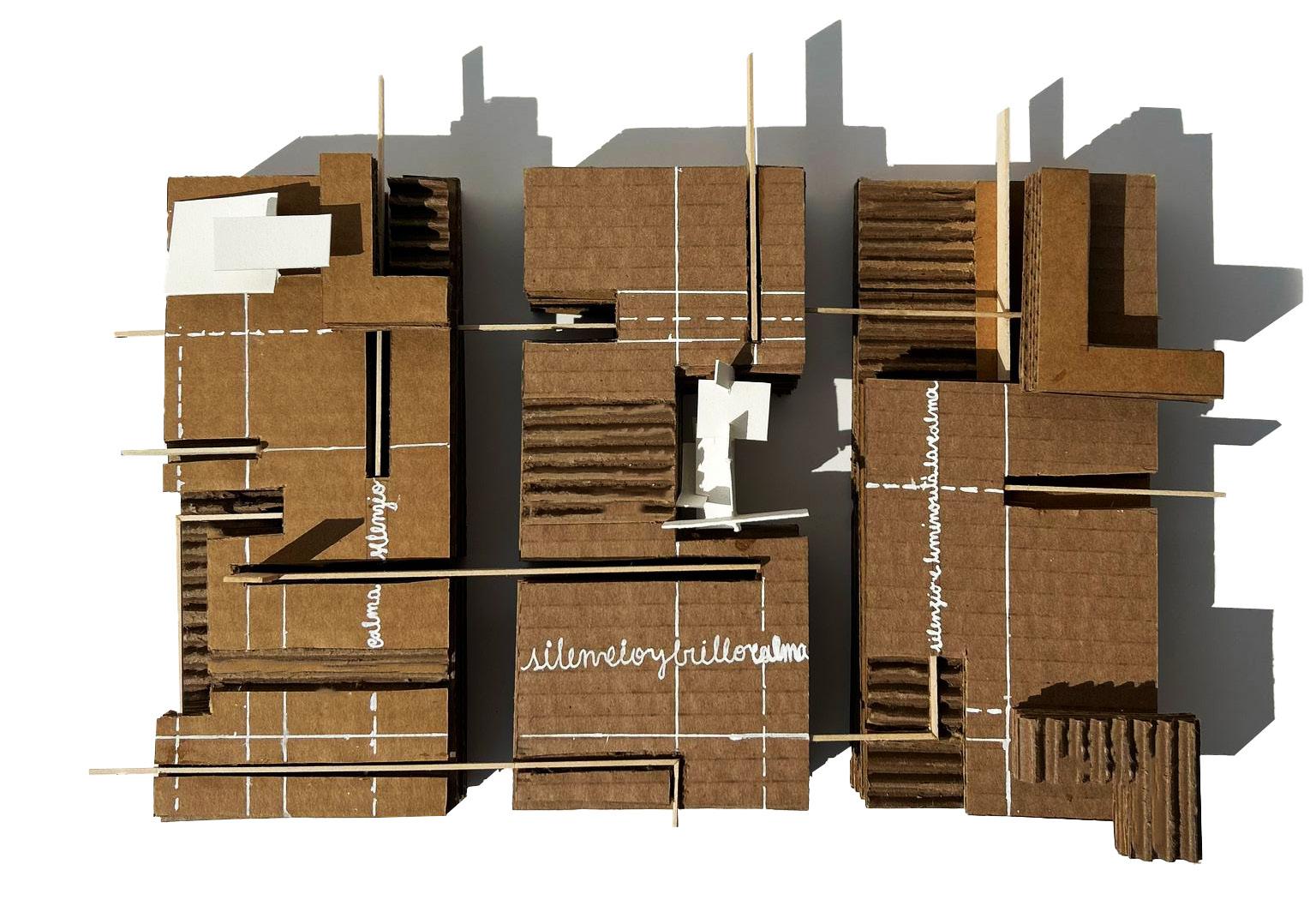
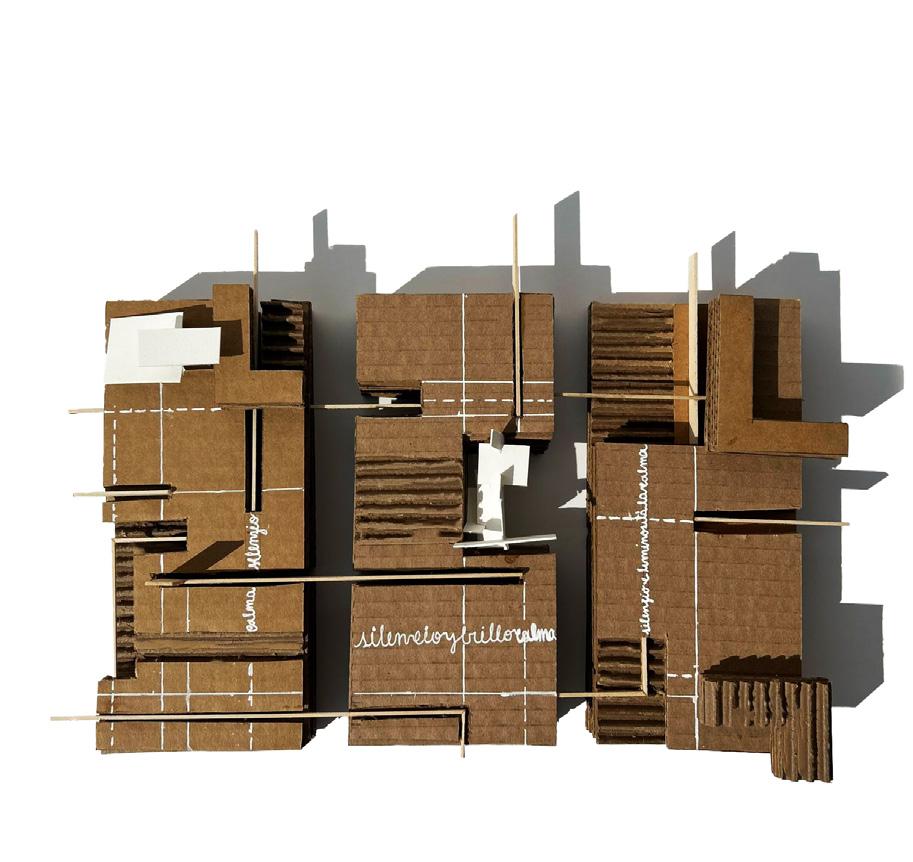
Silence is often mistaken for emptiness, but within it lies a profound brilliance—a space where memories, emotions, and art take form. My concept explores the tension between silence and brilliance, with calm as the bridge between them. Like a silver-framed photograph or a fading star, absence does not signify loss but rather transformation.
SILENT
CALM BRILLIANCE
Ground model
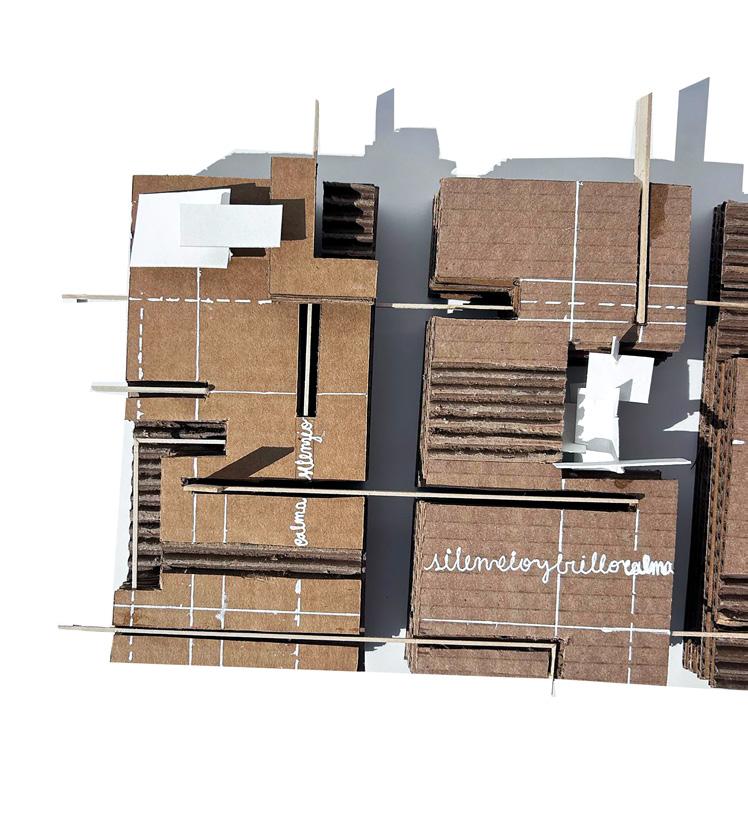
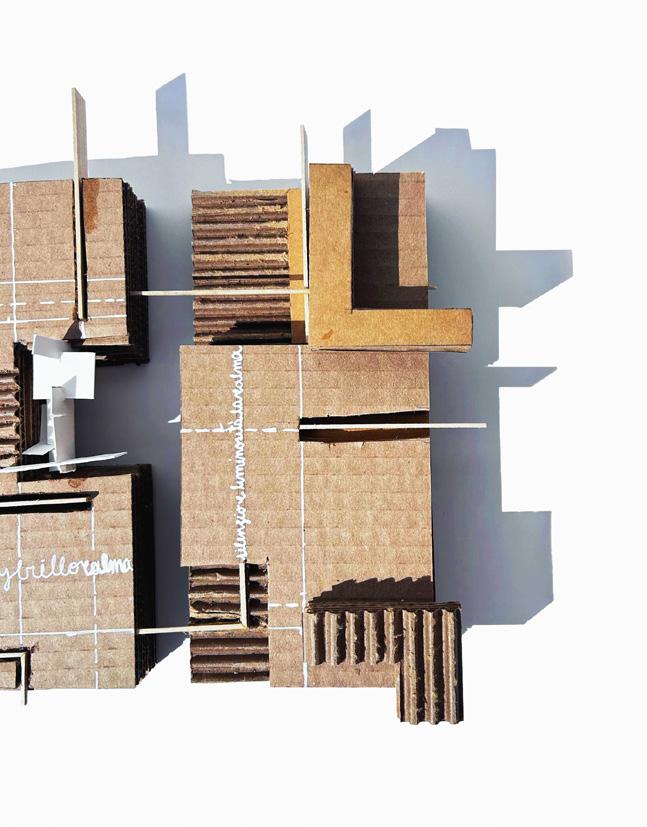
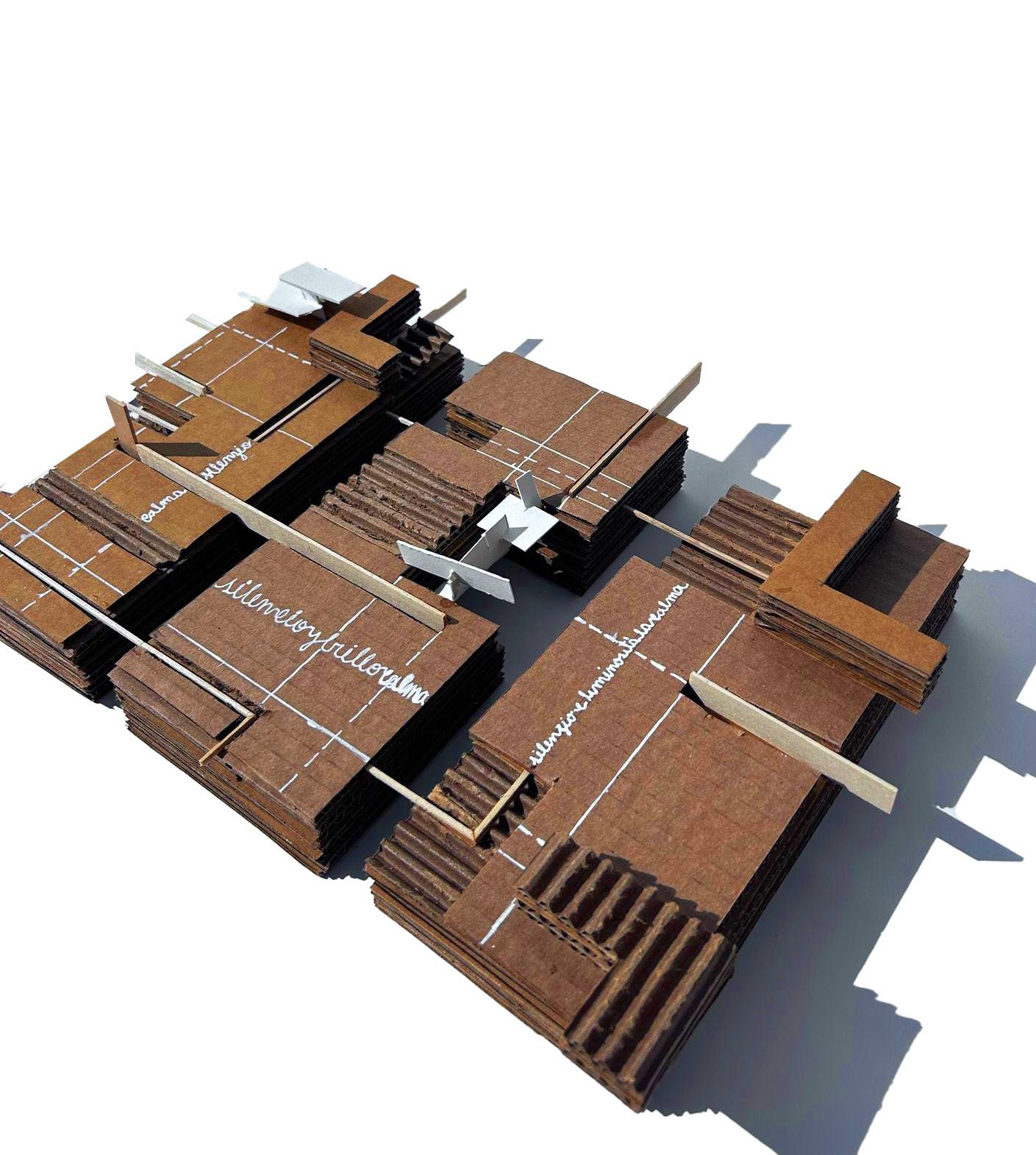
The ground models are made of cardboard, linear pieces, and museum board, and each serves a certain role. Cardboard represents the context by giving a fundamental layer that represents the current context. Linear pieces serve as connectors, linking different portions of the model and directing spatial flow. Museum boards reflect interventions, which are deliberate changes that modify the spatial composition and interaction of the model.
Intersecting Models
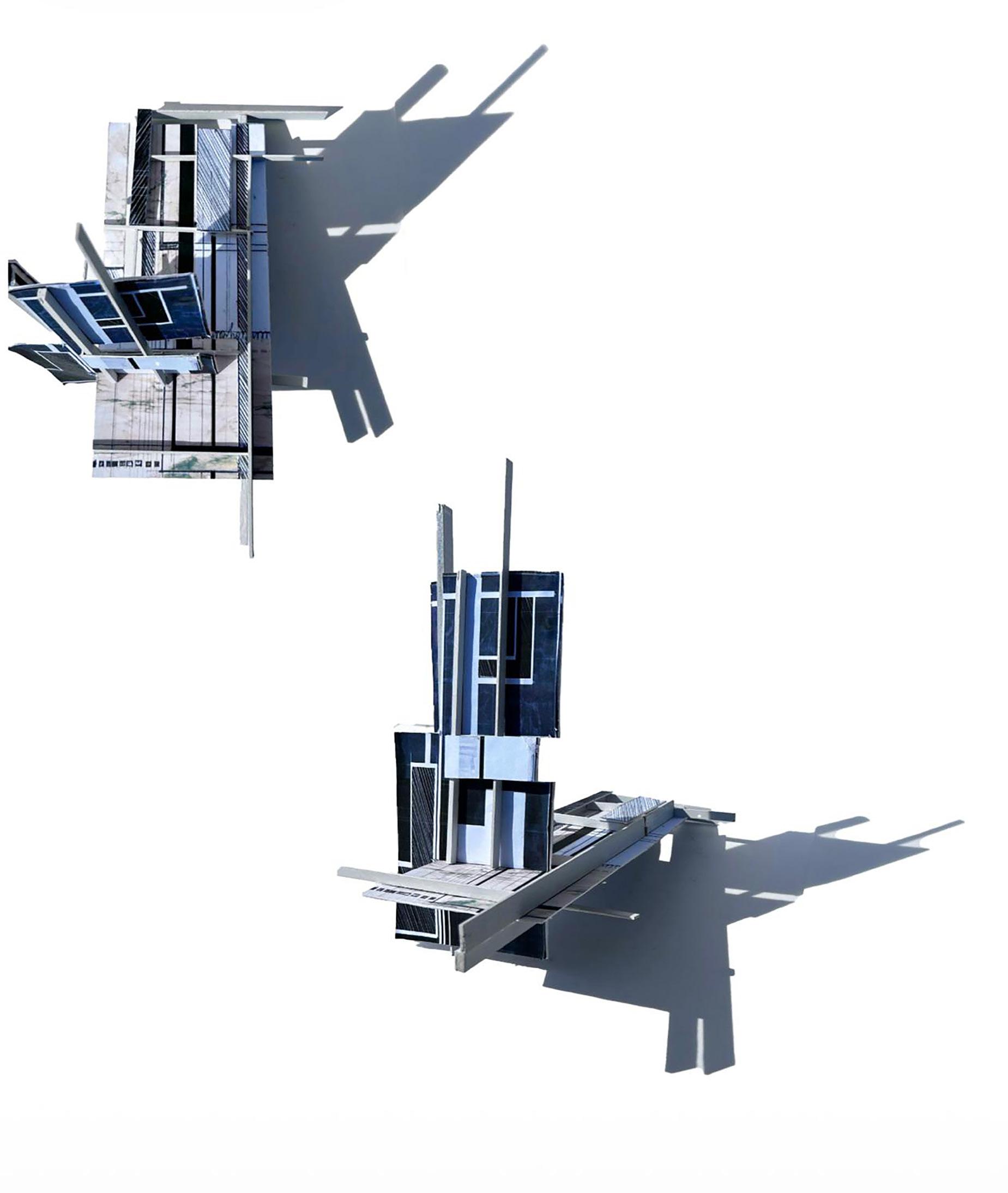
In Silver Frames, no voice is heard, yet every glances sparks louder than words, a star falls dim his world stands still, But love and light, they find him still.
In Silence deep, new dreams take flight, Brillance shines in black and white, In Quiet steps, the past remains, a fading echo, yet not in vain.
For art, though silent, never dies, its brilliance seen in tear-filled eyes.
Nodes Models
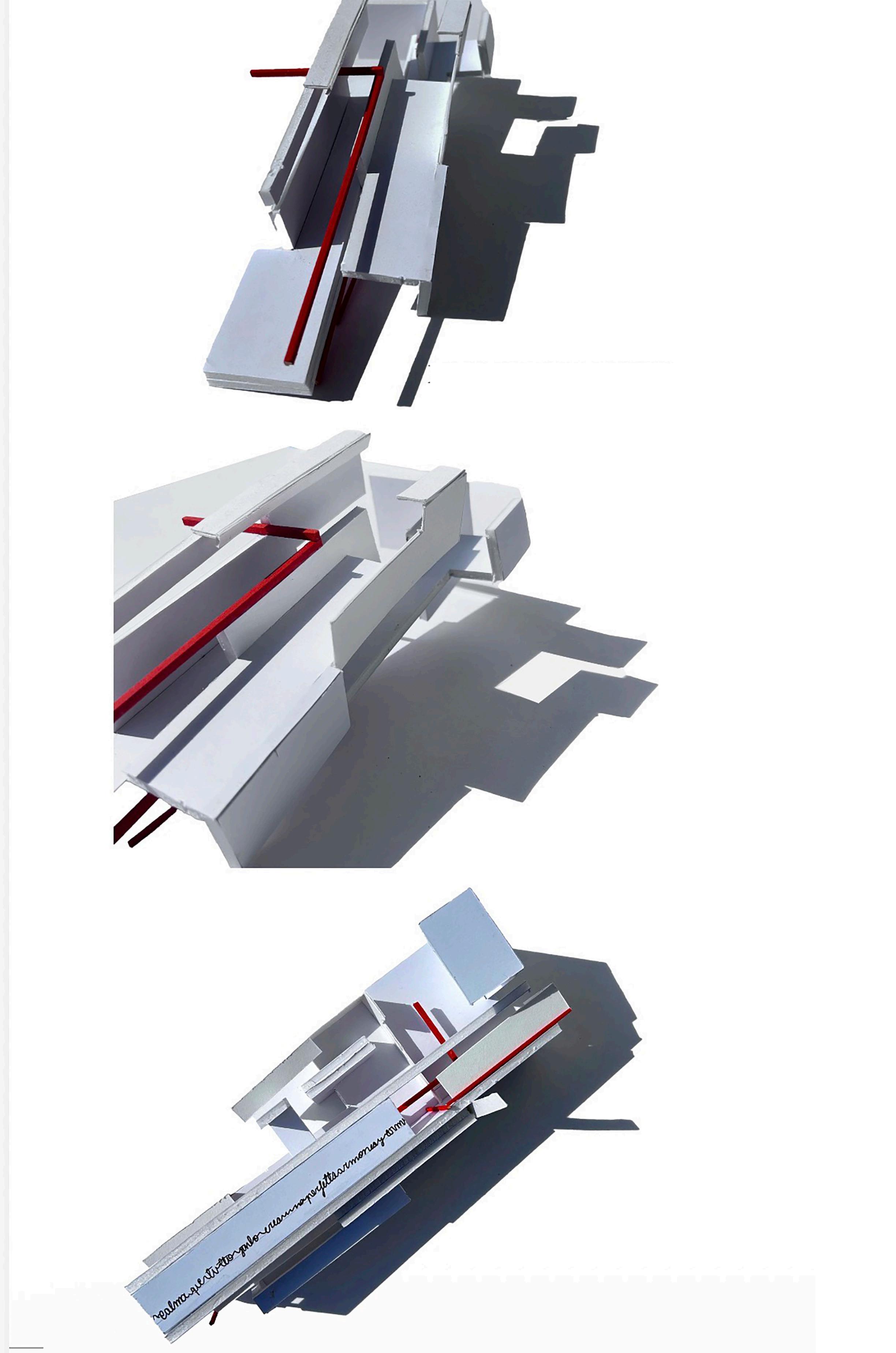
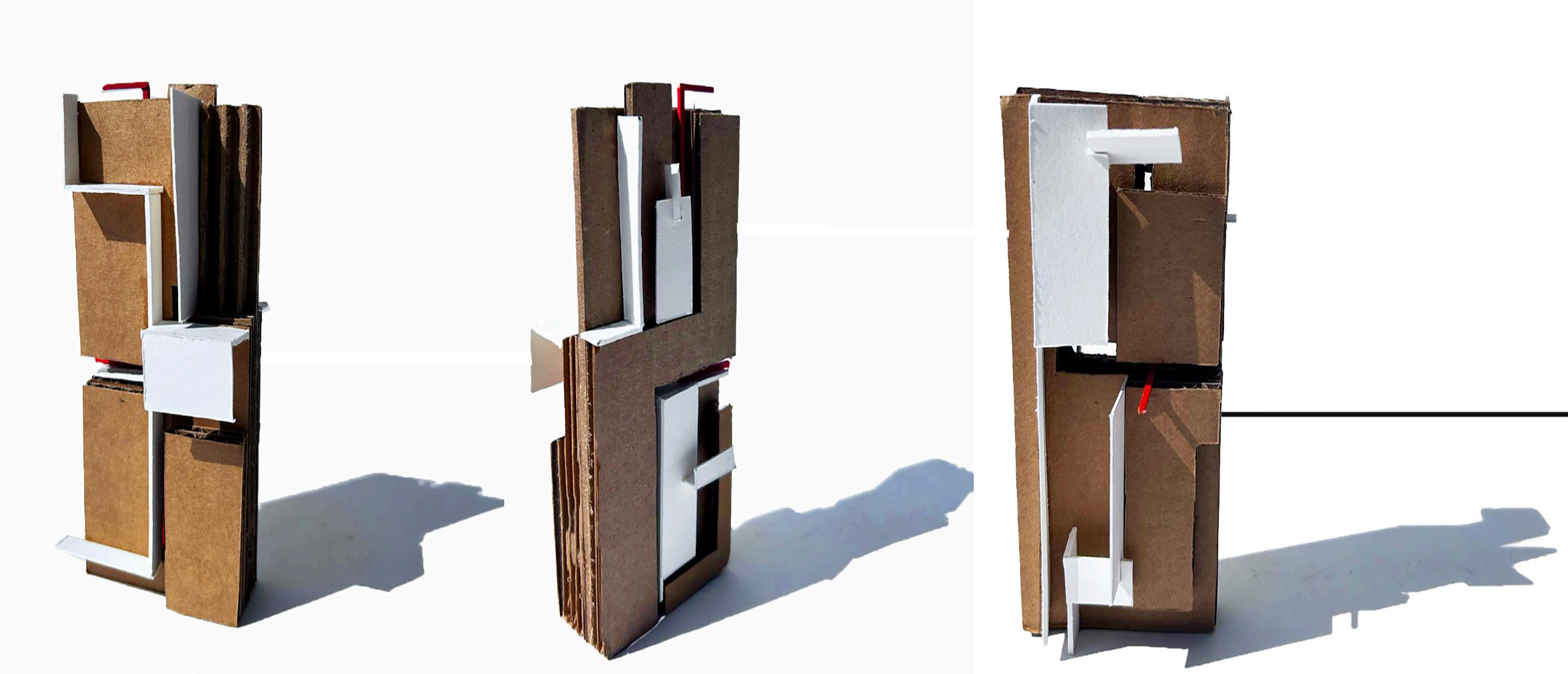
The mini models began like notes—small, focused studies that captured one feeling at a time: a sliver of light, a tight squeeze, a sudden release. Each one was a quick sentence in three dimensions, testing how space can speak before the final story is written.
As I placed them side by side, I started to hear the connections. Lines extended, edges aligned, gaps became passages. The transitions—what happens between one piece and the next—became the real design. Like music, the meaning wasn’t only in the notes, but in the rhythm between them.
By linking the mini models, the final model emerged as a single melody: a continuous journey stitched together through thresholds, tension, and flow—where every connection carries the movement forward.

Concept Graphic
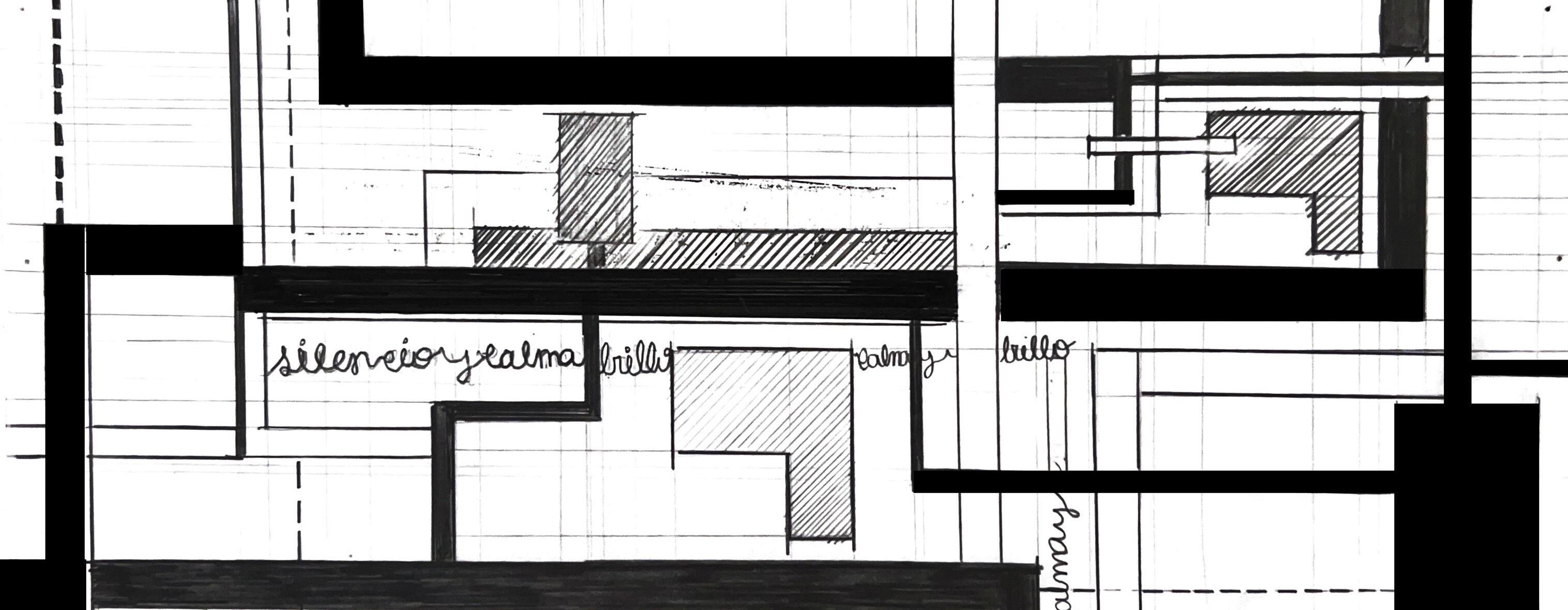
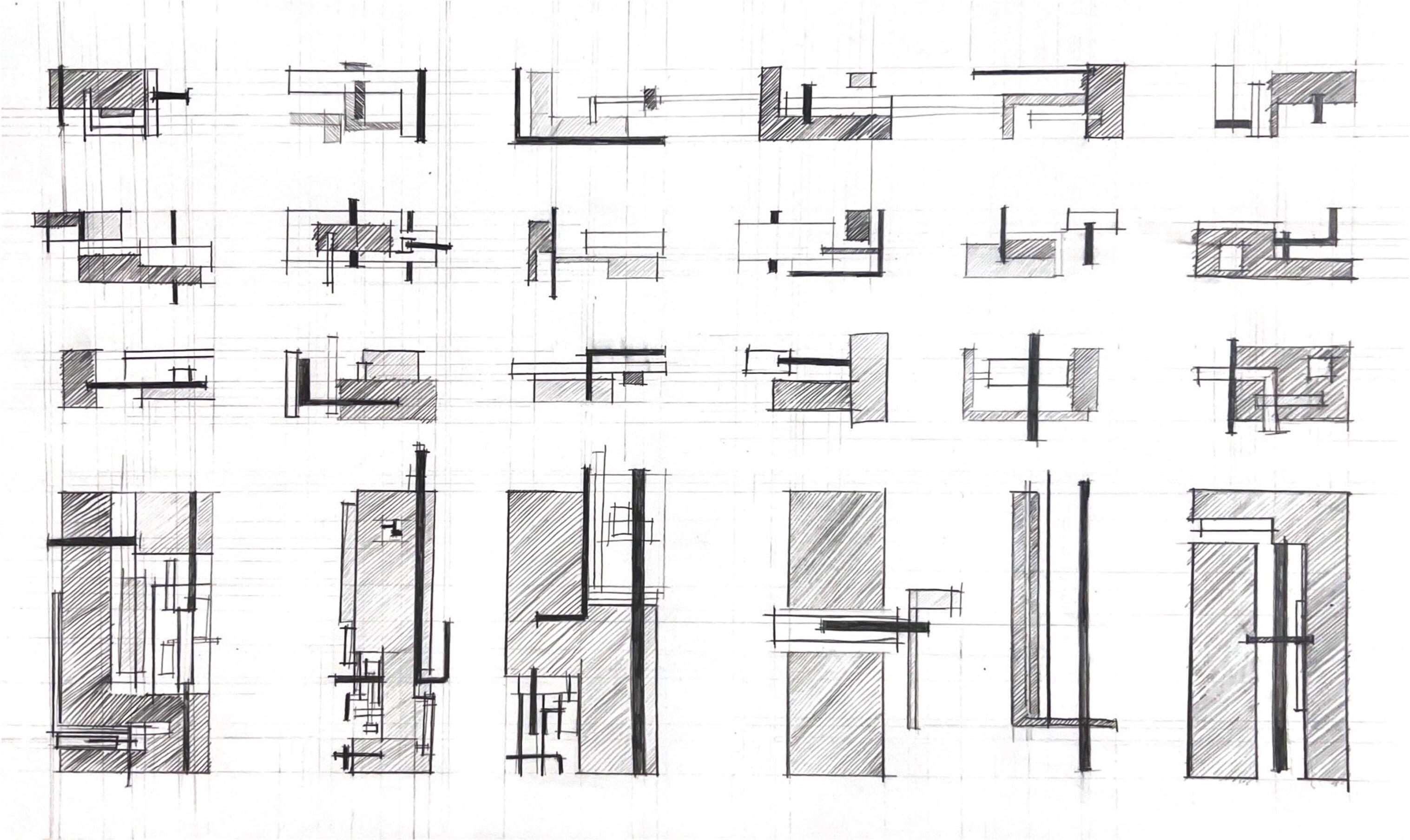
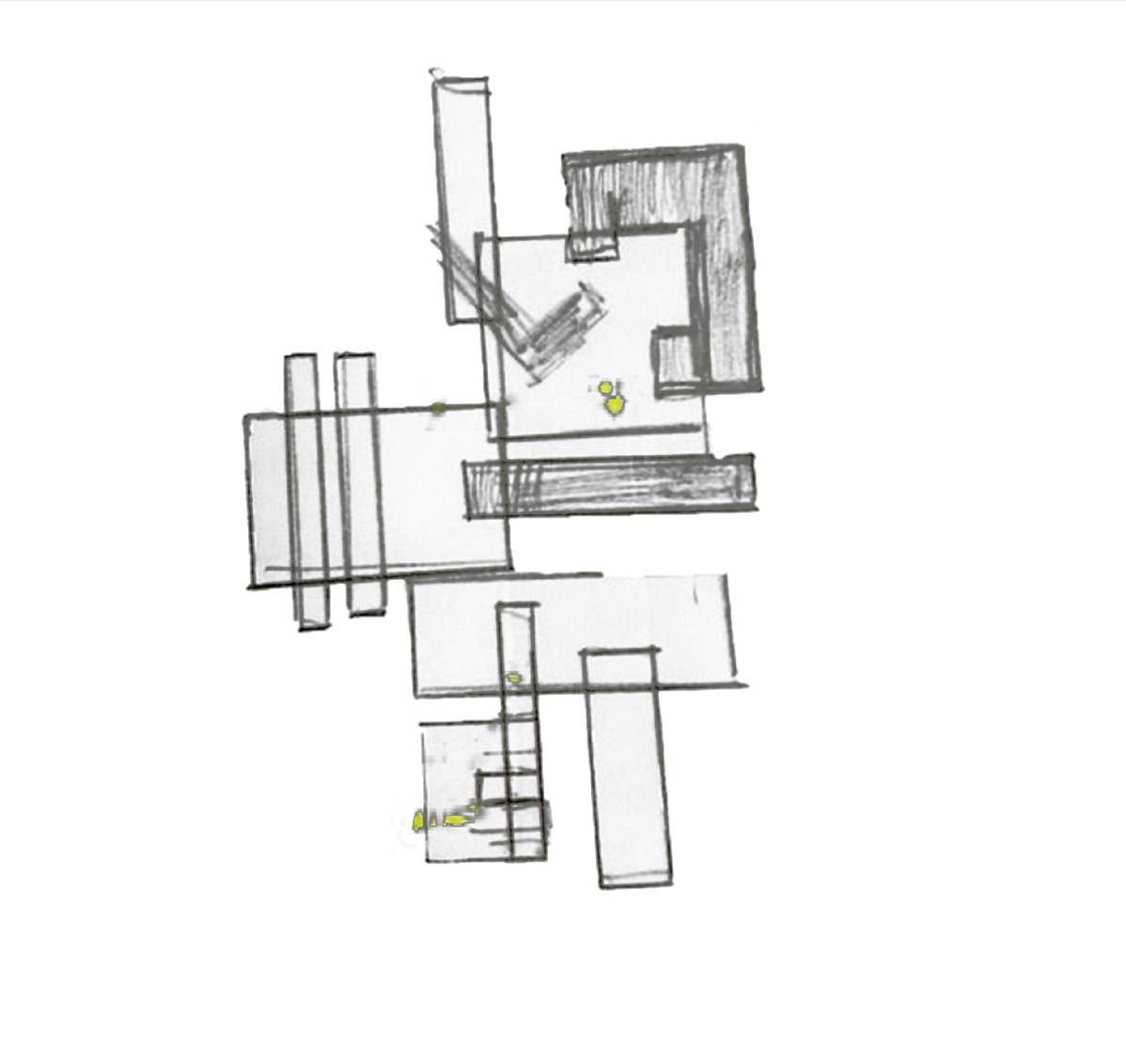
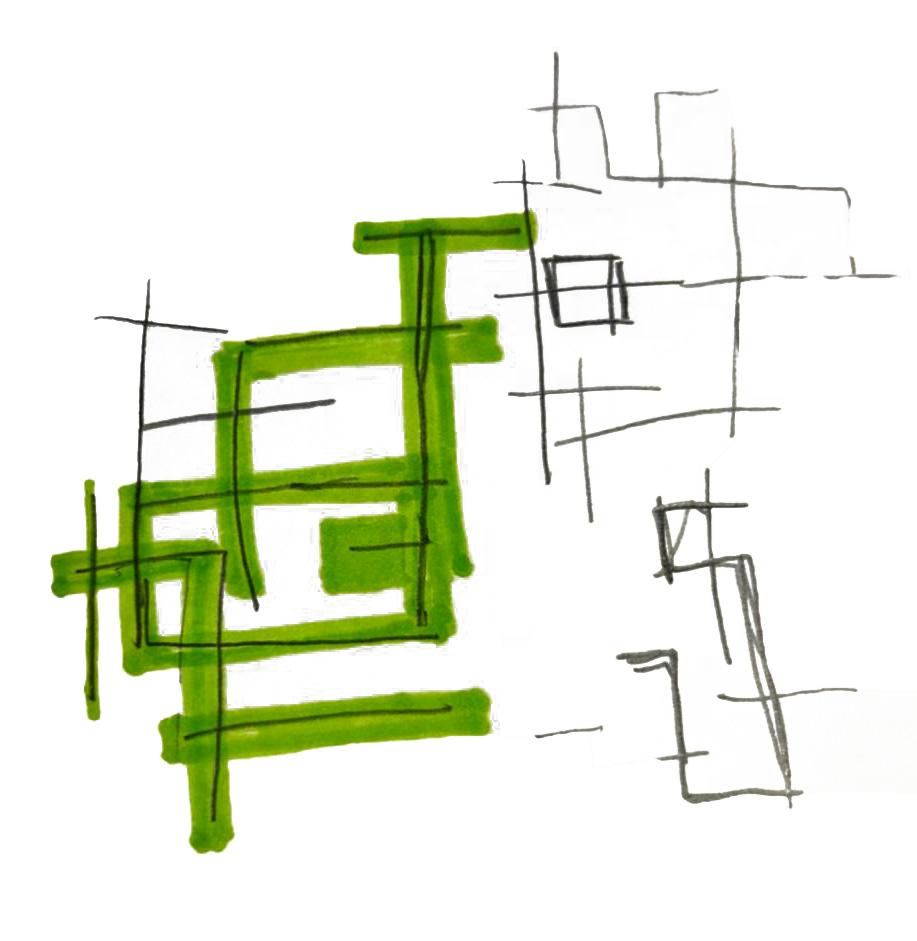
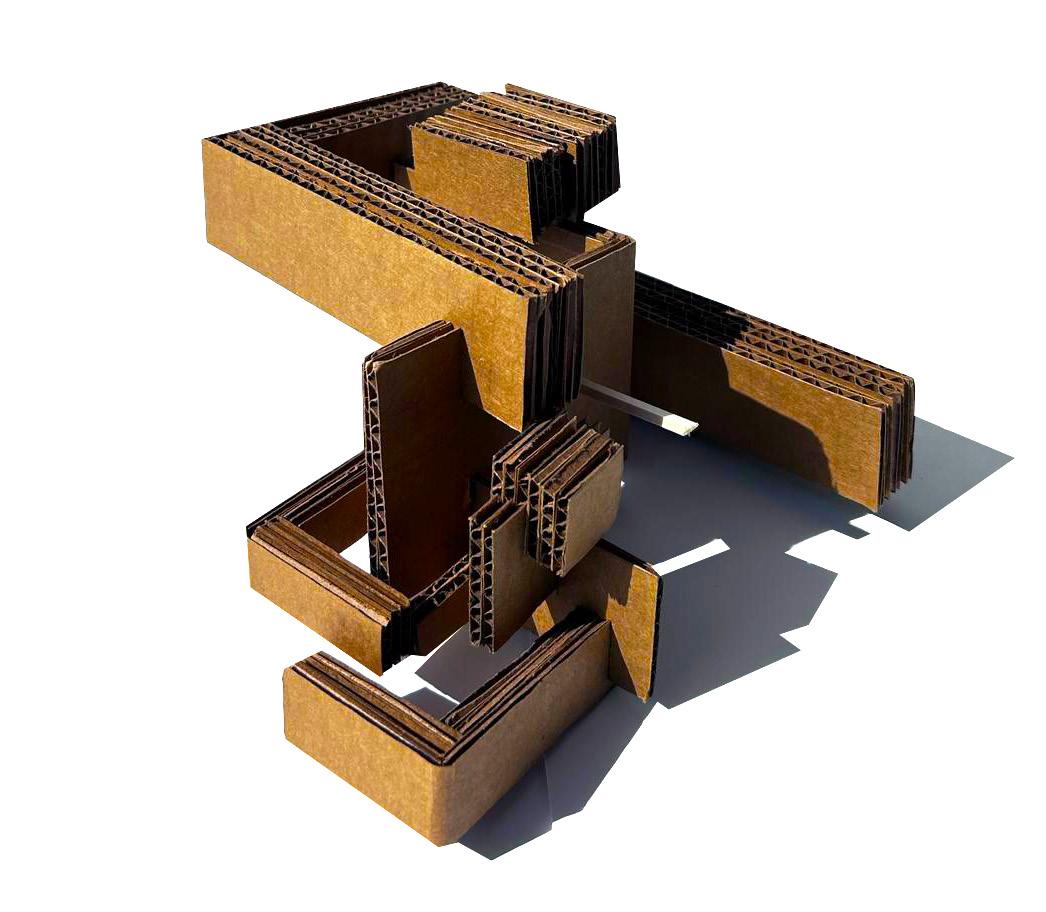
This draft model began as a set of mini studies, small “notes” testing silencio, calma y brillo. Silencio shows up in compact, quiet volumes; calma in the softer transitions and pauses; brillo in the openings where light starts to grow.
By connecting these studies, the draft becomes a single flow—edges aligning and gaps turning into passages, suggesting the melody the final model will refine.
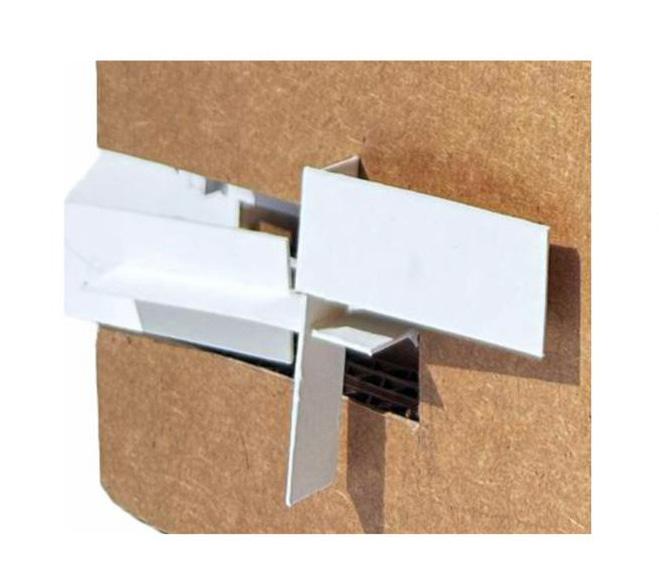
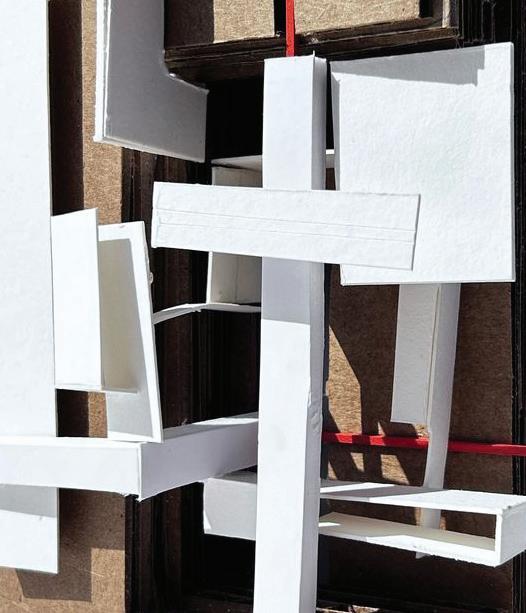
Final Draft
silencio, calma, and brillo become legible through how the composition is assembled and experienced over time. Silencio appears in the intentional gaps, soft transitions, and moments where elements pull back to create “breathing space,” letting the structure feel restrained rather than crowded.
Calma is expressed through a steady organization, clear hierarchy, repeated alignments, and balanced proportions that make the overall form feel grounded and controlled.
Brillo emerges as the climax of the sequence: a concentrated zone where the geometry opens, the scale shifts, or connections become more pronounced, creating a focal point that catches the eye and gives the model direction.
Together, these moves make the final draft read as a spatial progression—from quiet pause, to stable order, to a highlighted presence,so the concept isn’t just named, but physically built into the model’s form, rhythm, and connections.
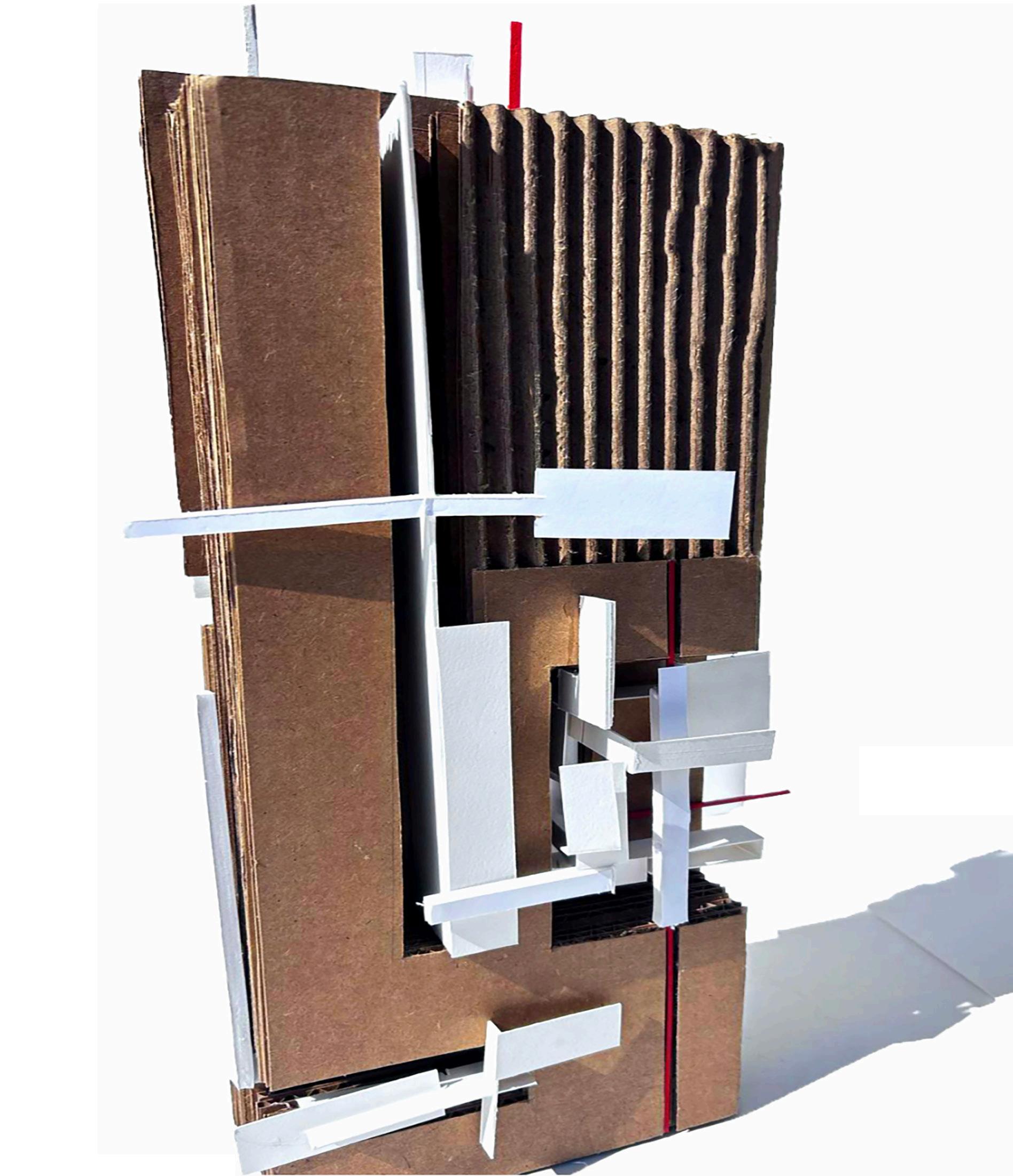
FINAL MODEL
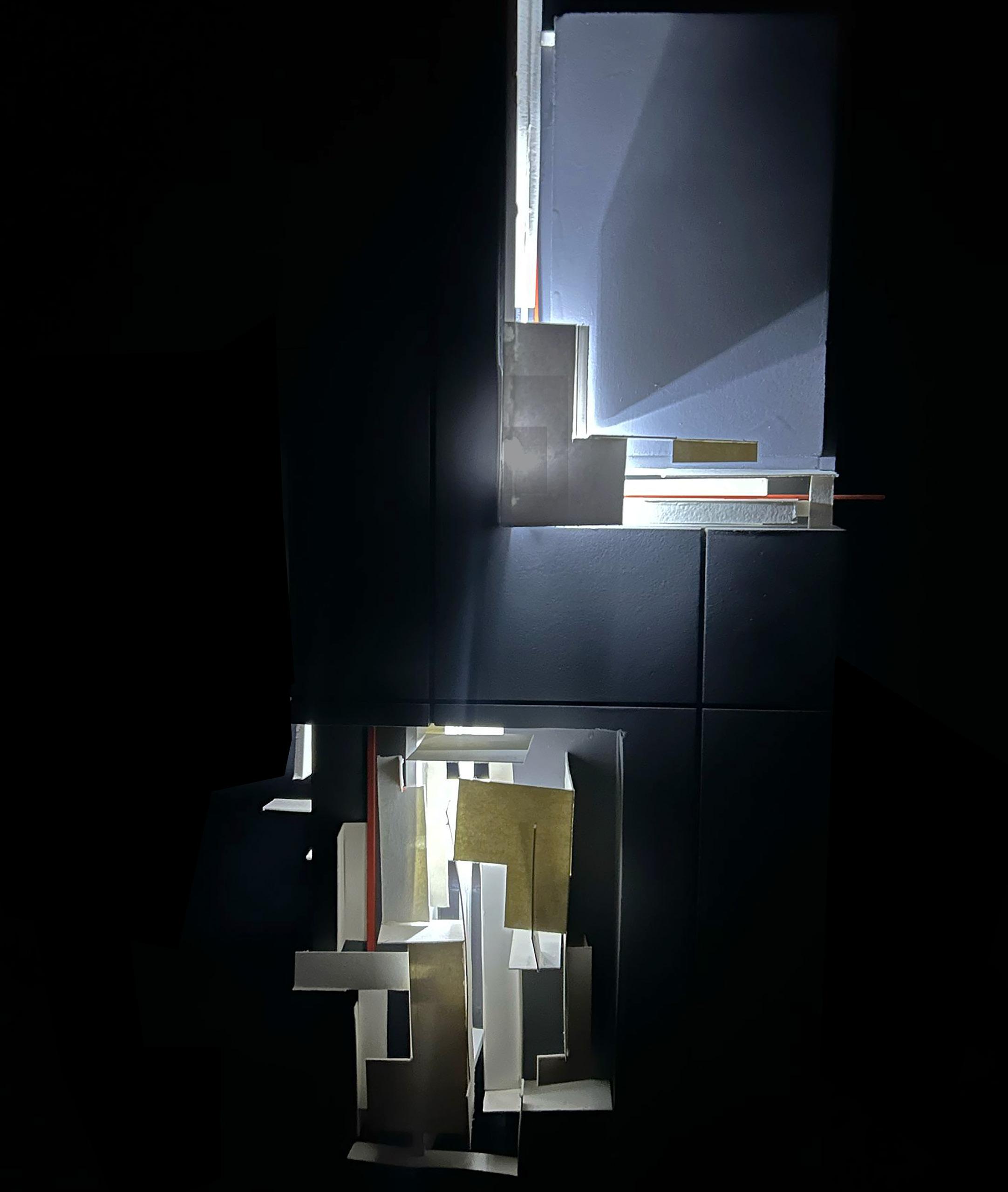
THE LIGHT BOX
CHADAPHAN HANWISAI
FALL 2024
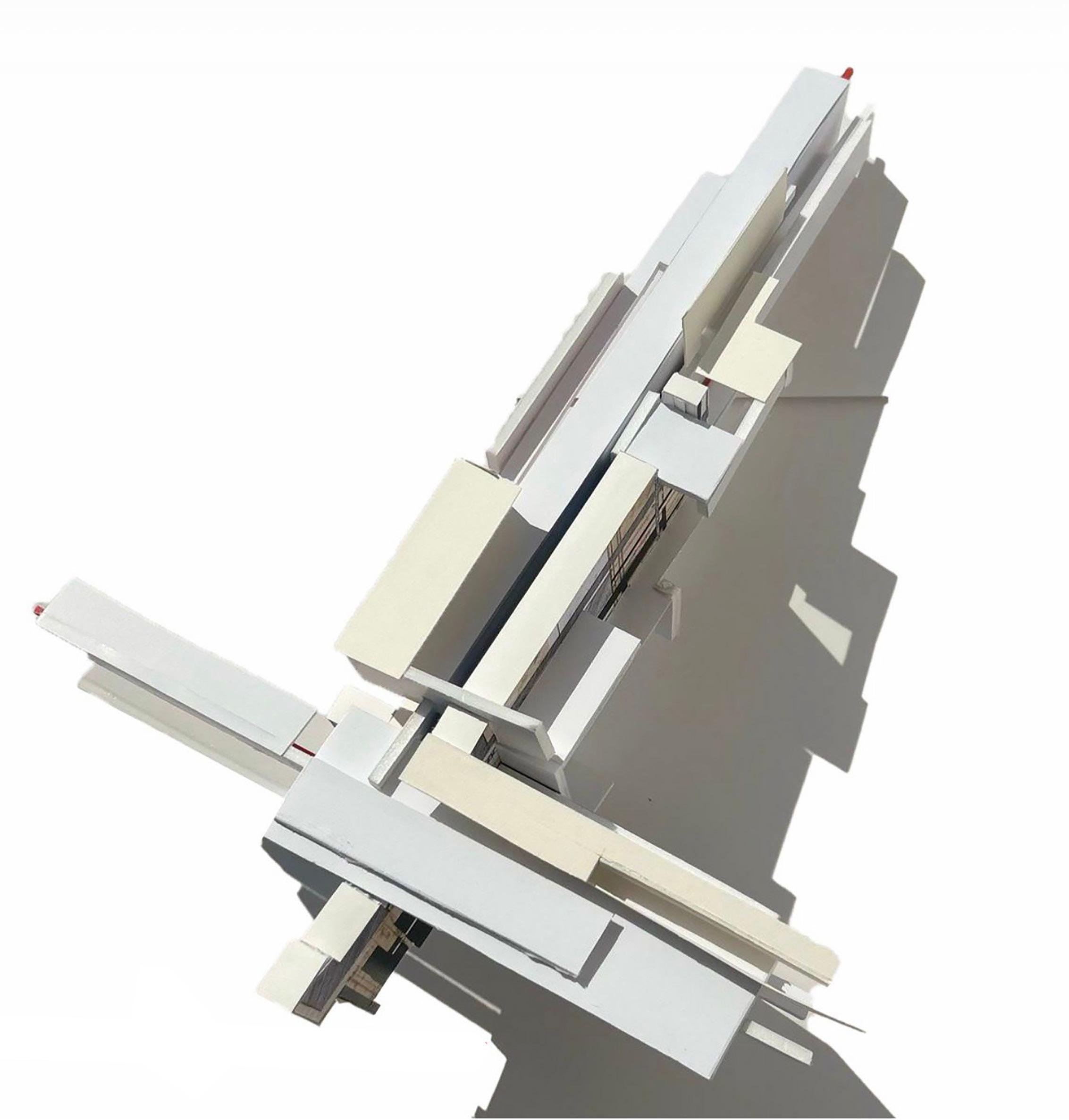
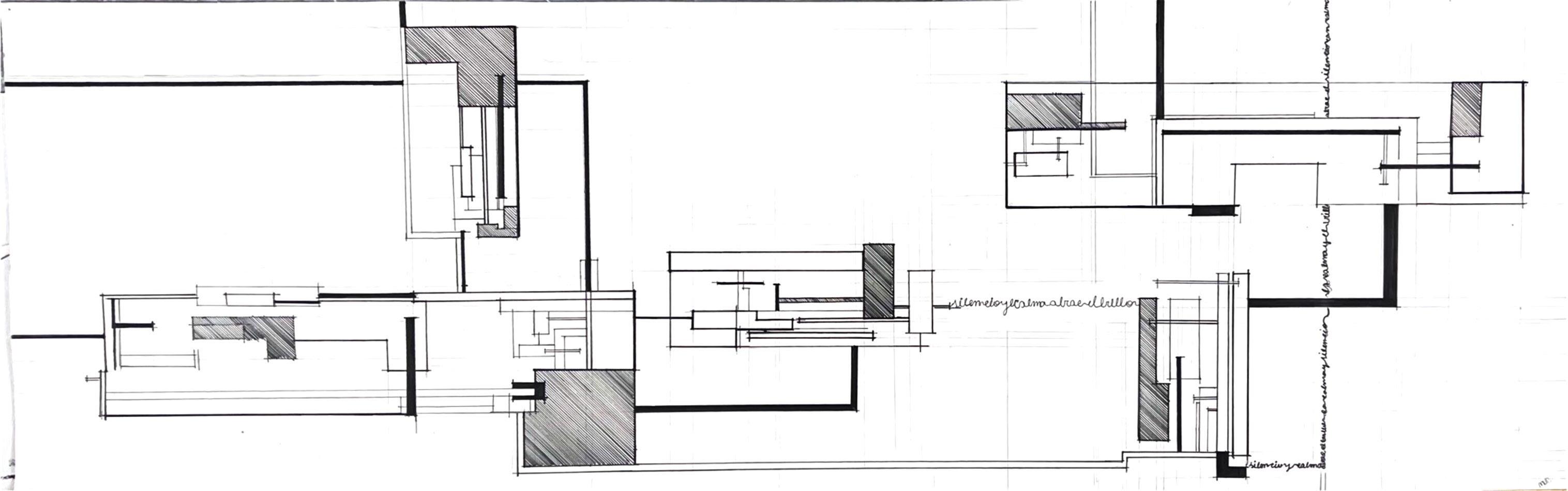
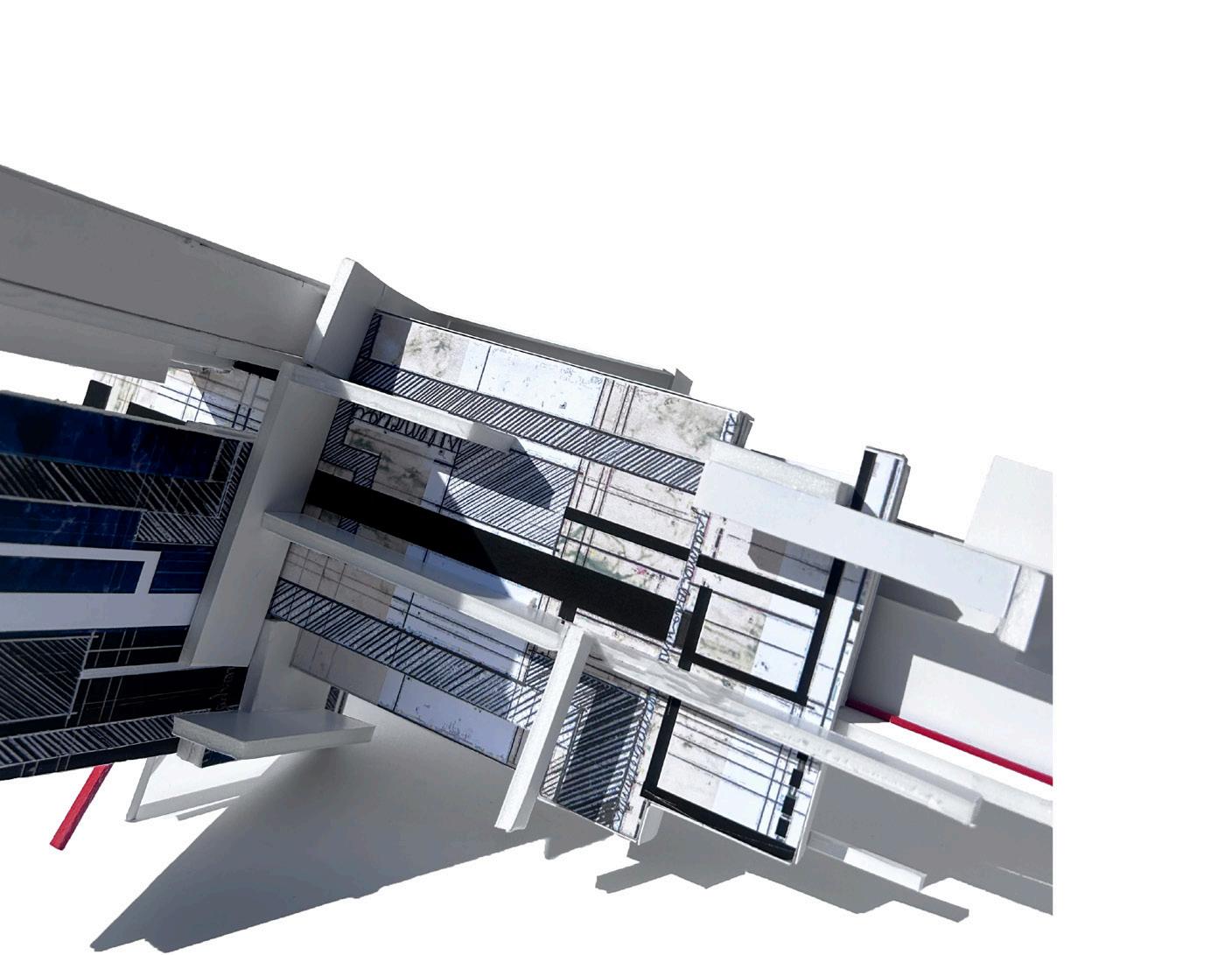
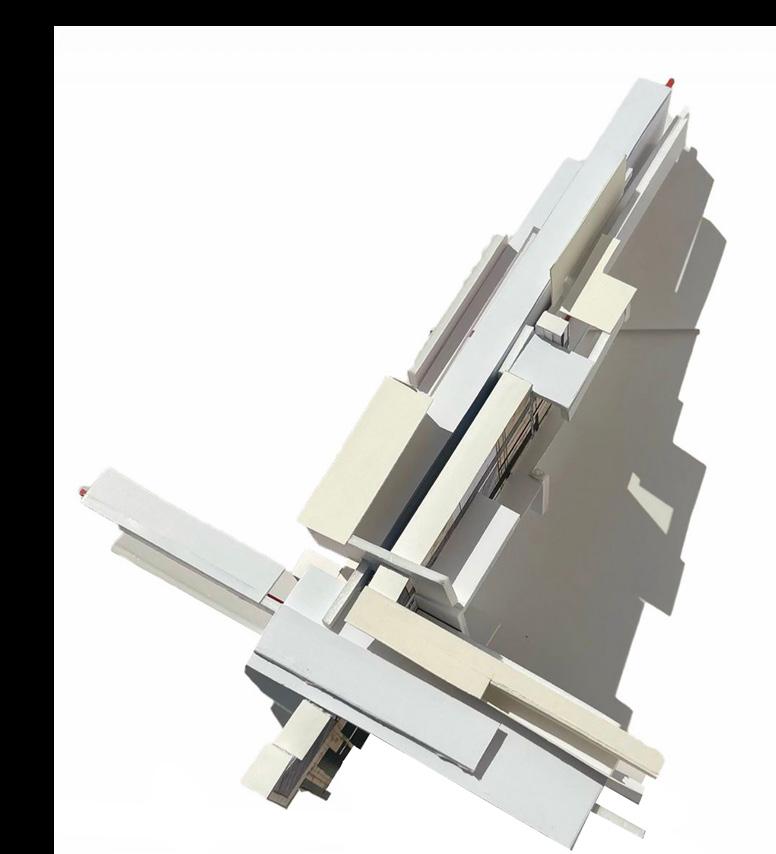
This project is a resolution of Project 2, refining and developing the early ideas into a more defined concept. It builds on the spatial concepts, actions, and connections introduced in earlier stages to clarify relationships and improve overall composition.
Final Model

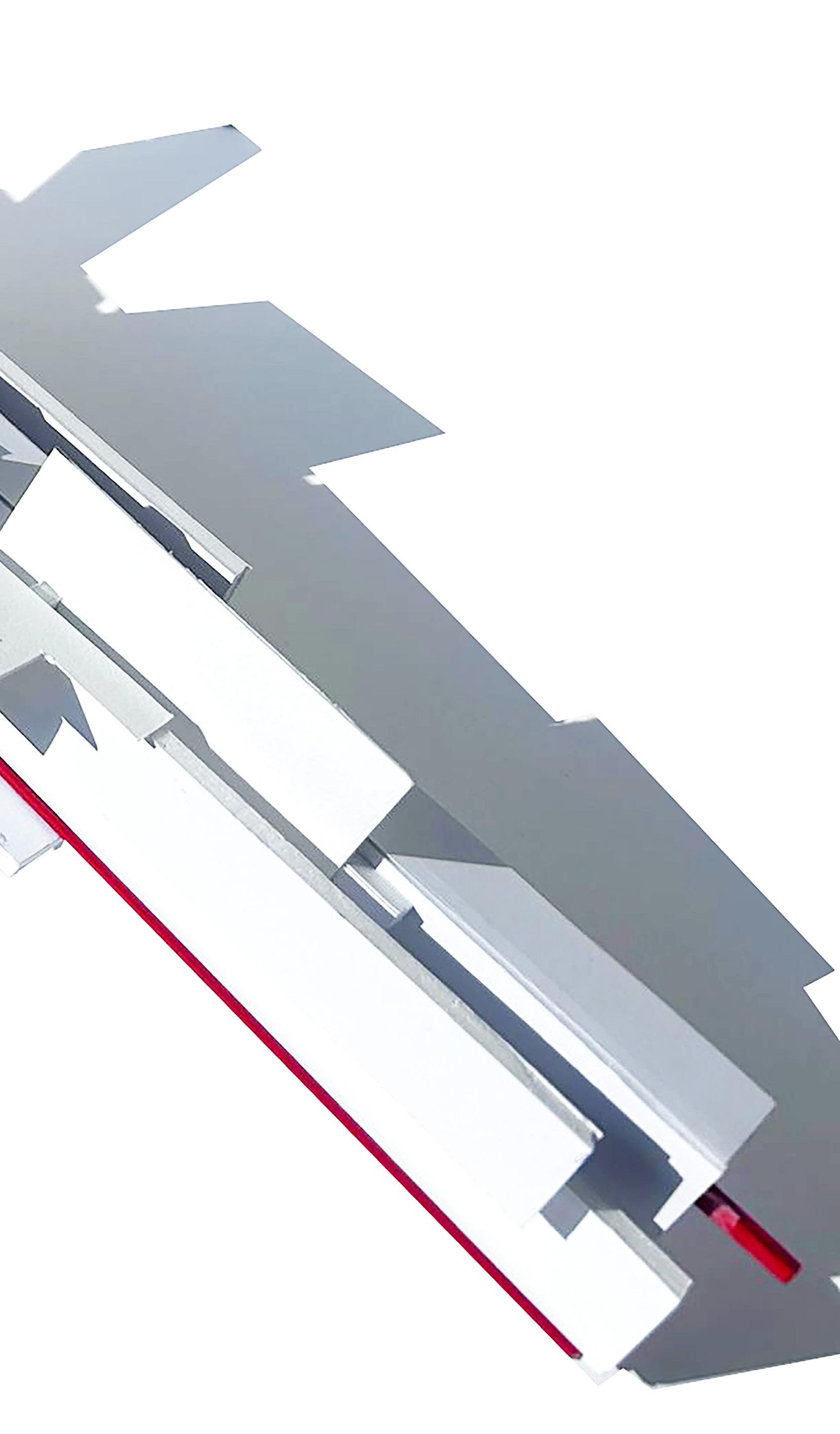
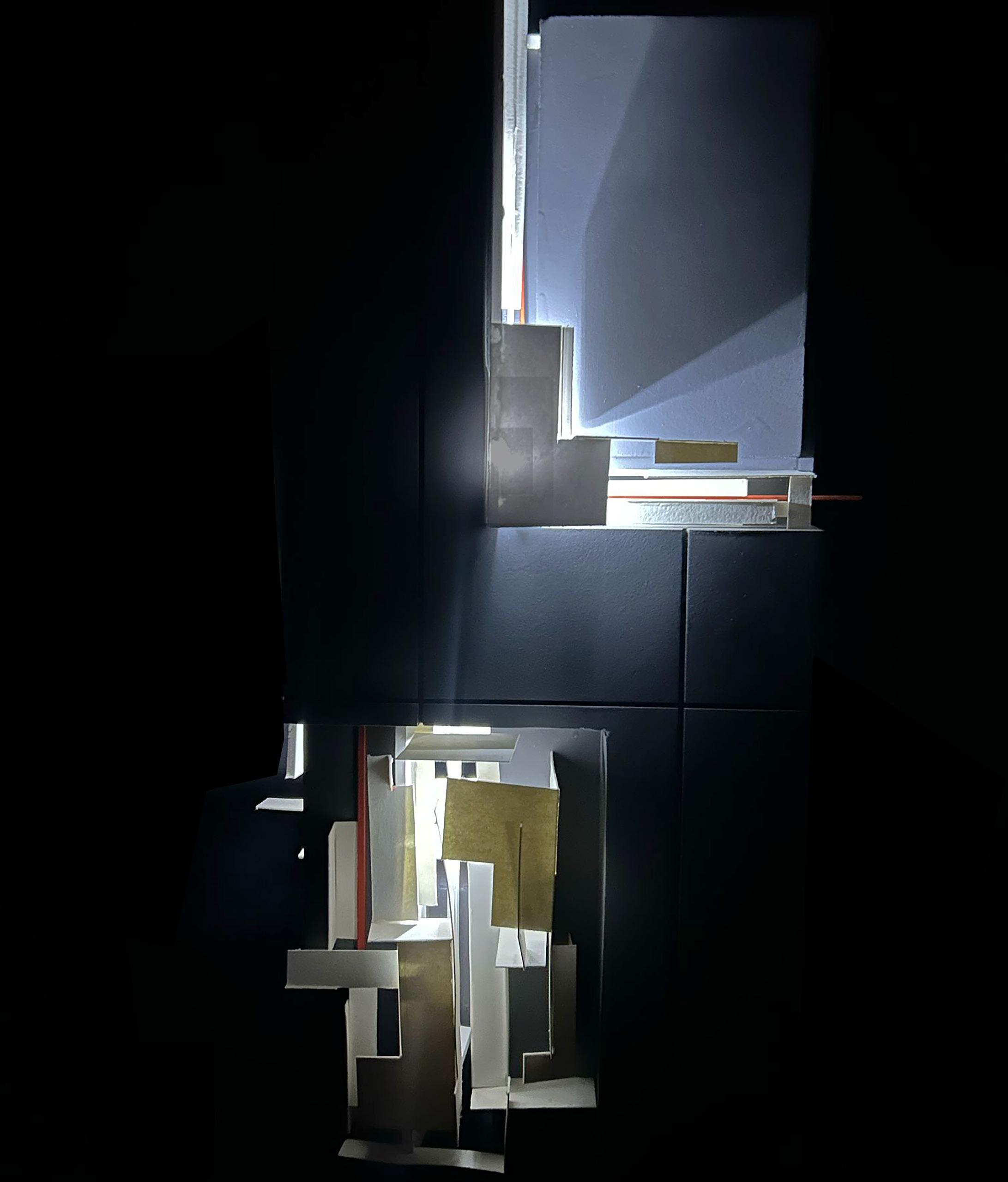
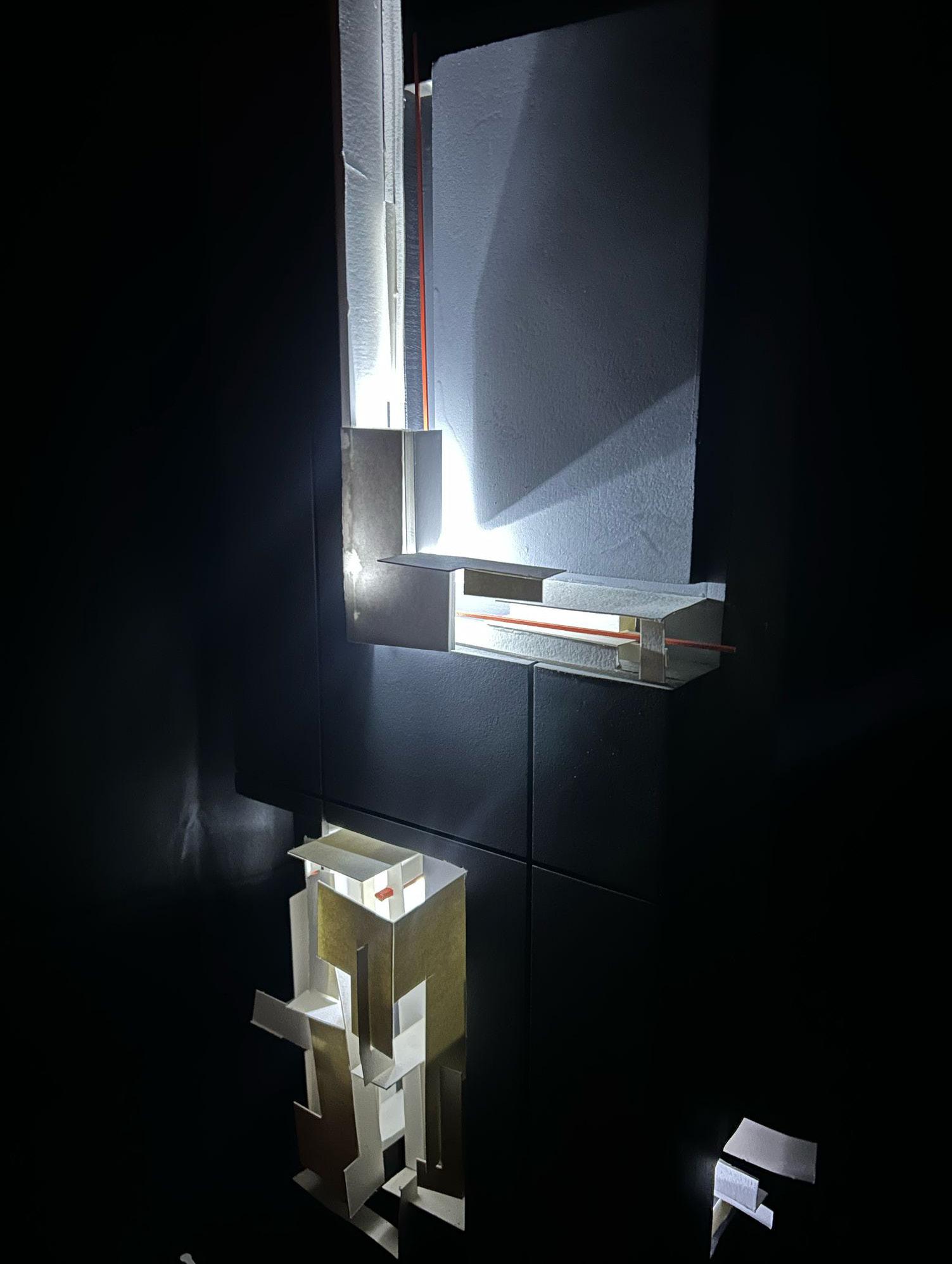
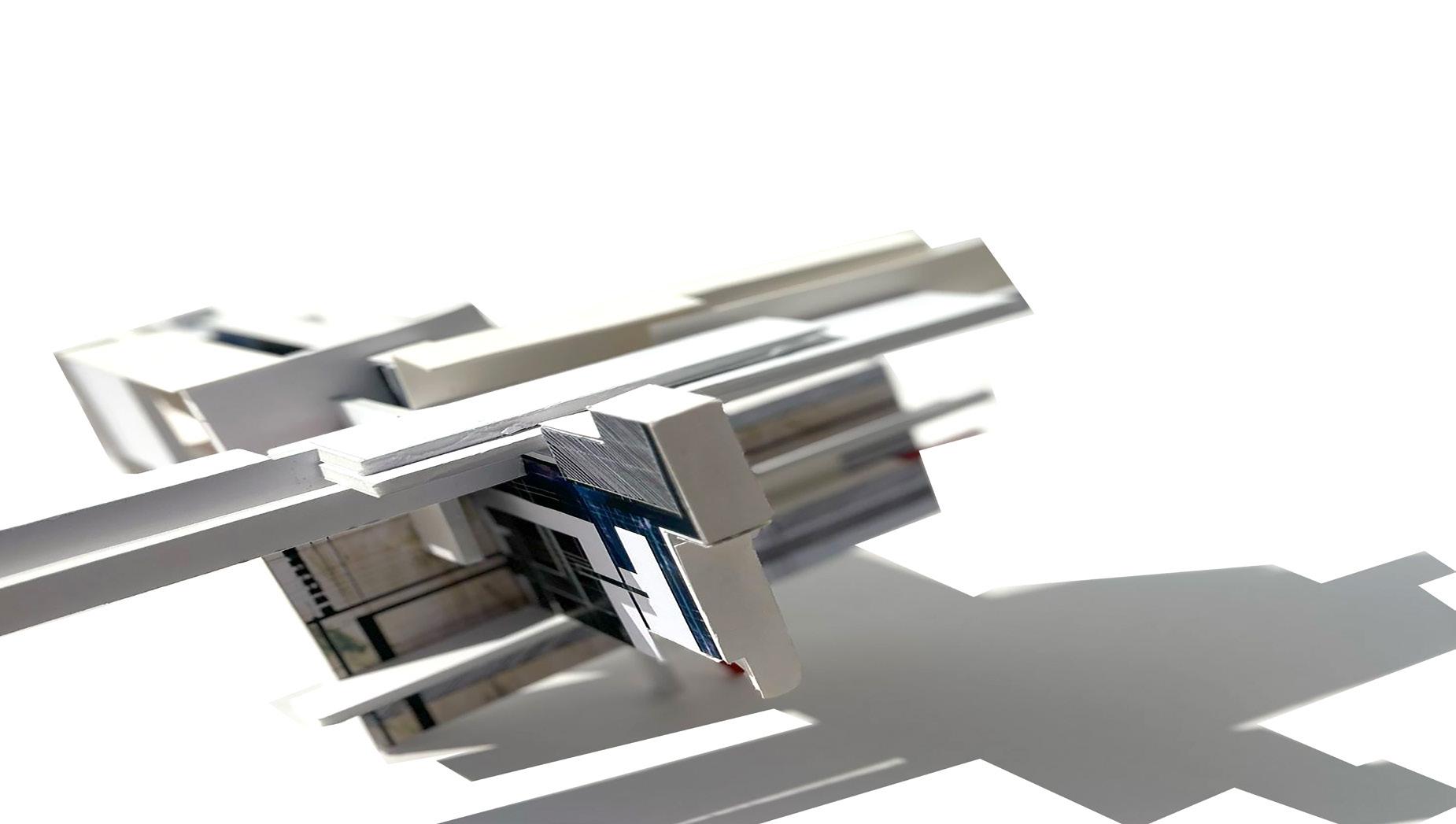
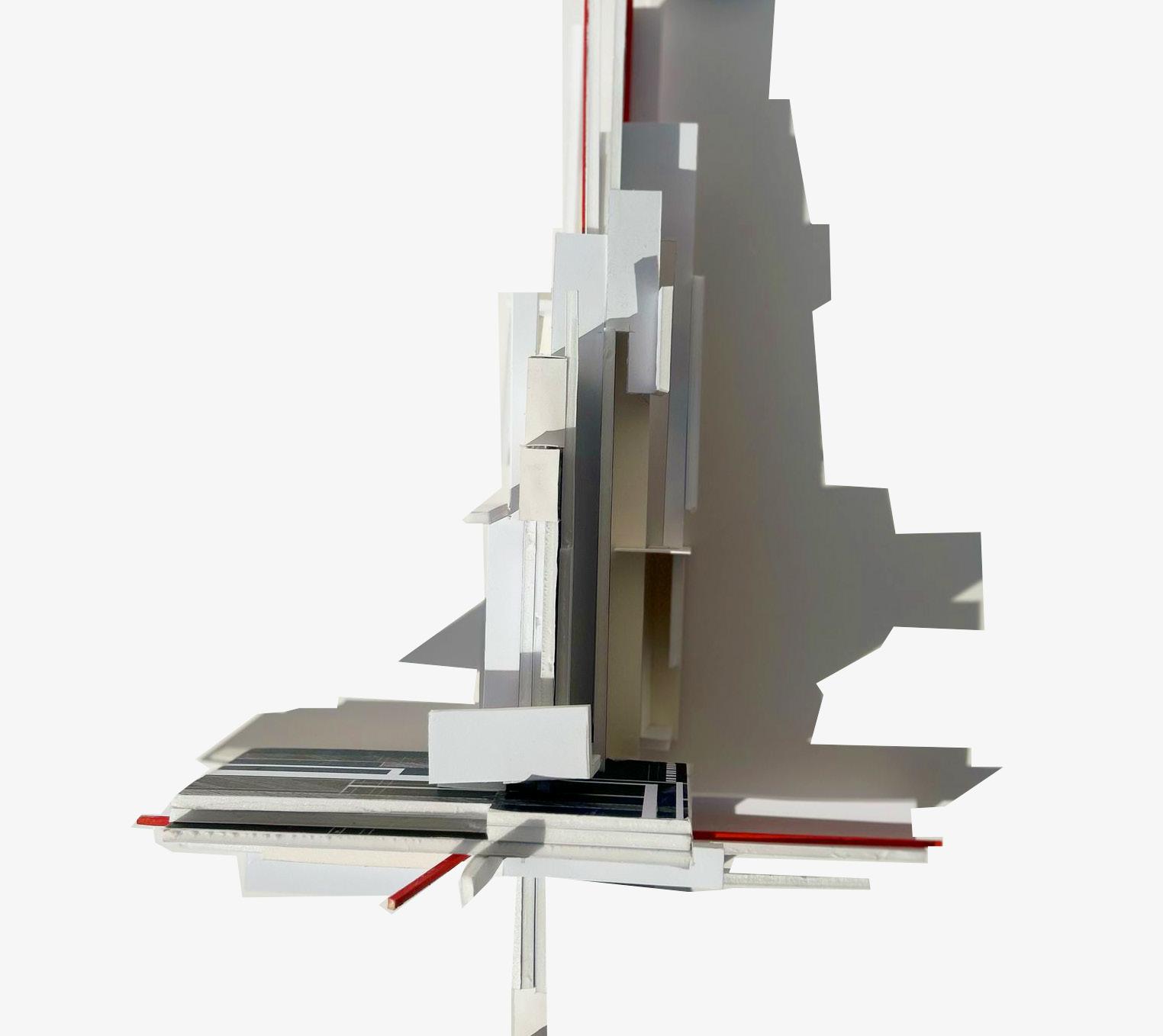
This final model is an exploration of how light can be constructed—not as decoration, but as architecture. The model begins with silencio: a deliberate restraint where voids, pauses, and shadowed pockets create space to breathe.
From that quiet, calma emerges through order and balance—layered planes, repeated frames, and controlled alignments that hold the composition steady, like a structure that knows where it stands. Then brillo arrives as a sharpened moment of intensity: a corridor of illumination and contrast that slips through the layers, catching edges, revealing depth, and guiding the eye forward. The boxes don’t just contain space—they edit it, compressing and releasing rhythm so the experience moves from stillness, to stability, to a luminous climax where form and shadow become one continuous narrative.
LE PETIT CABANON
SPRING 2025
ALAN ZREIK DOS RAMOS
Concept Graphics
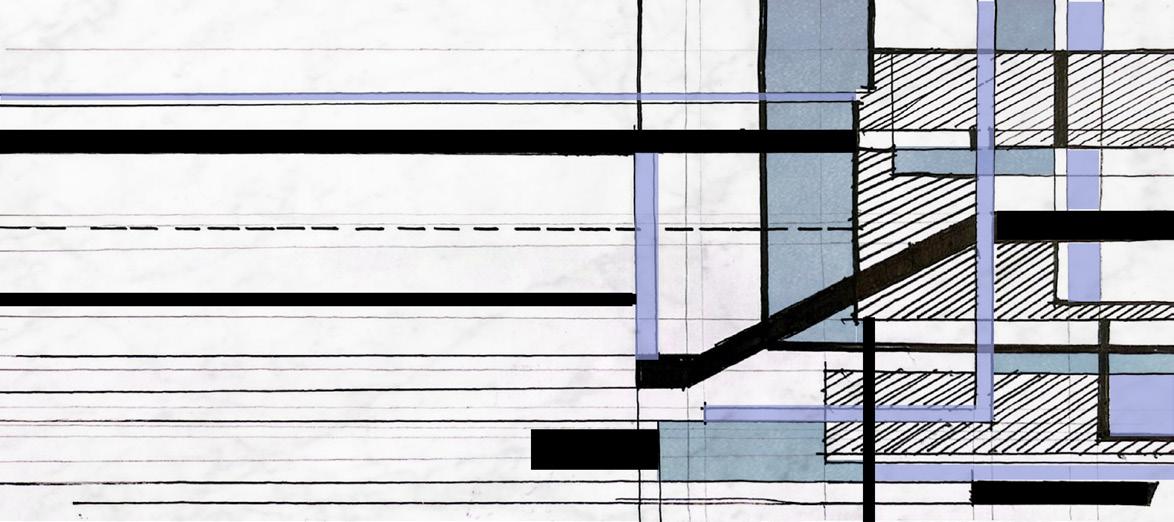
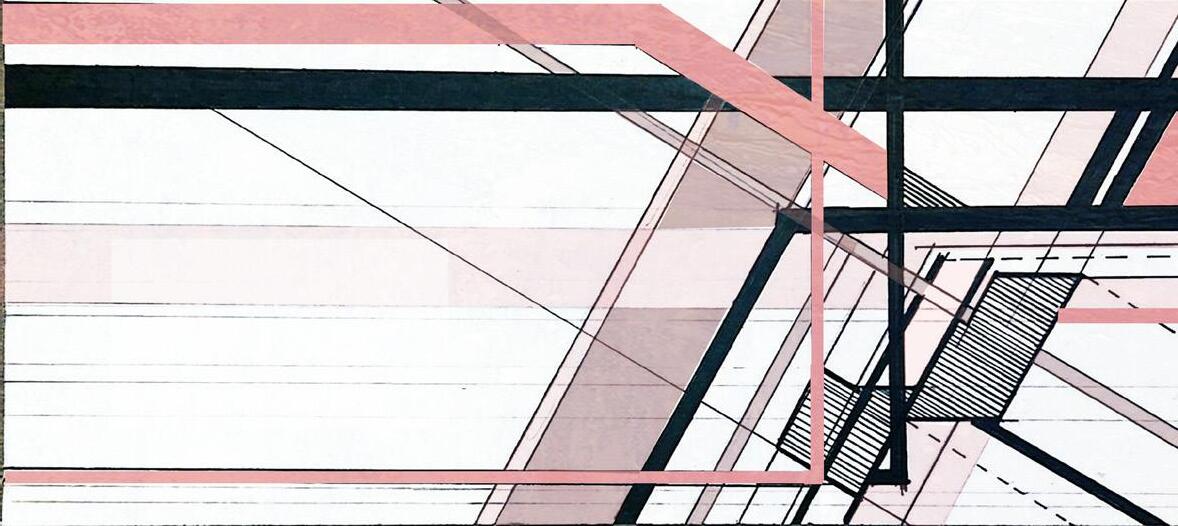
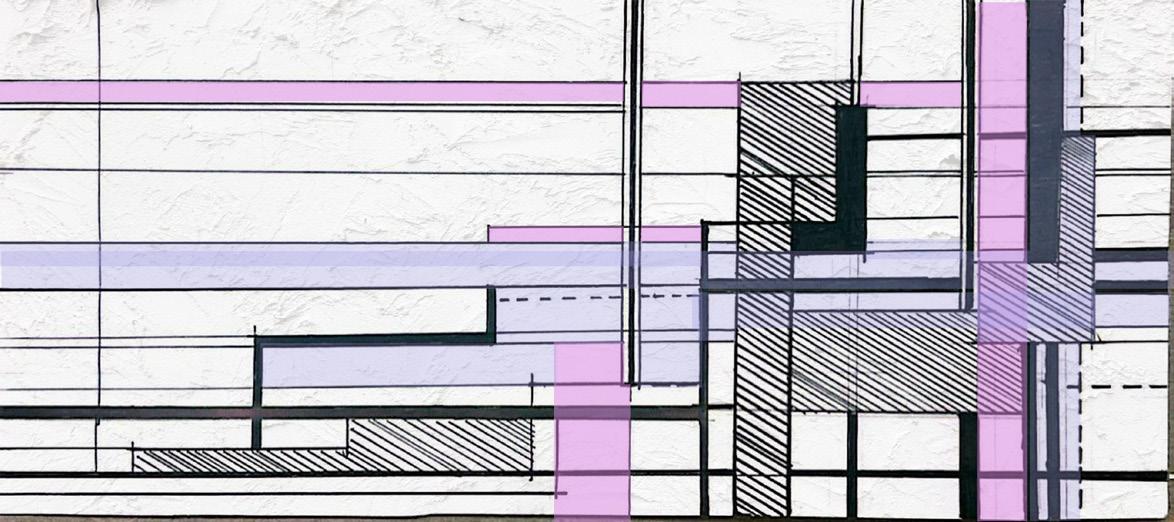
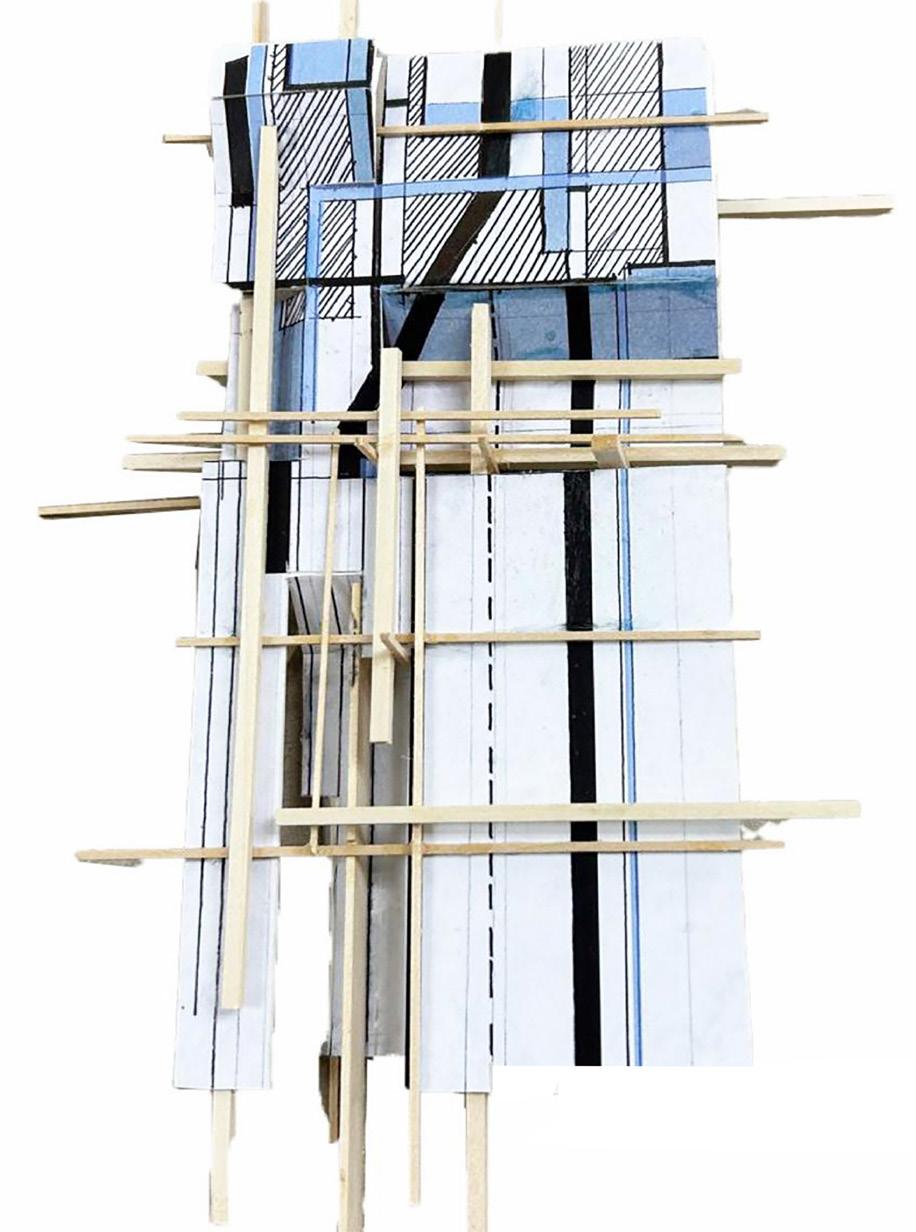
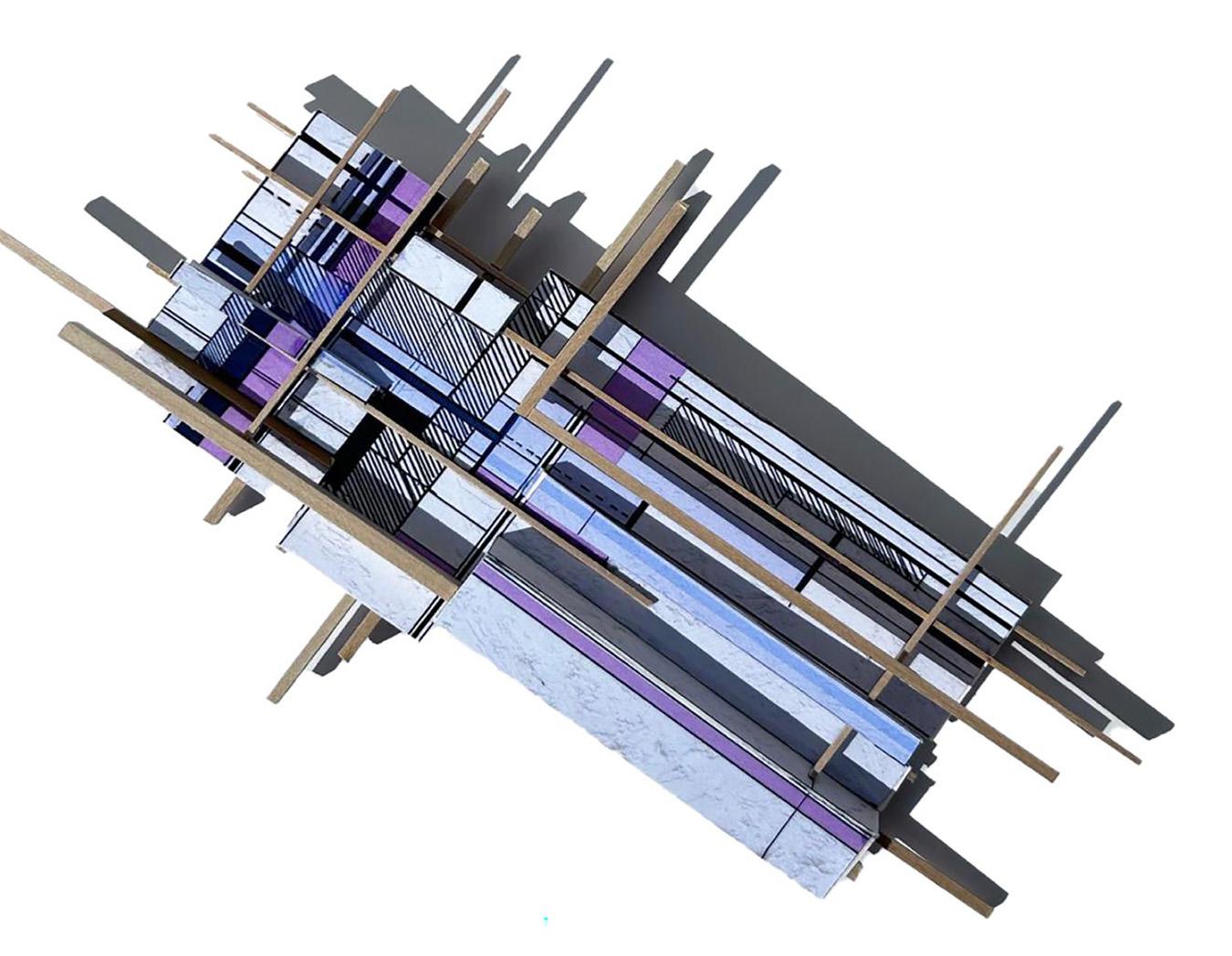
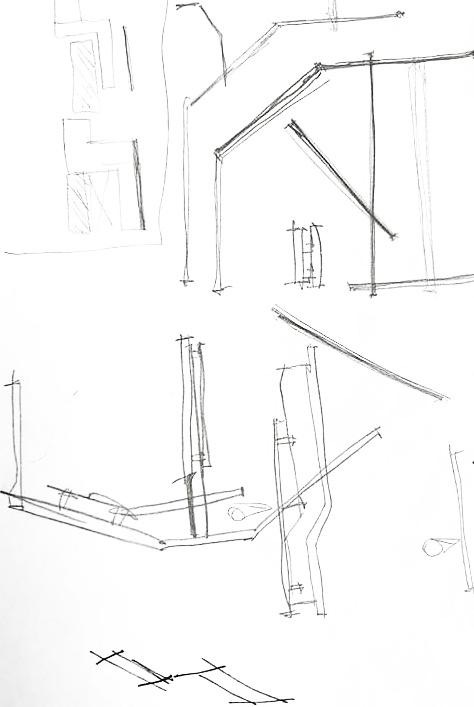
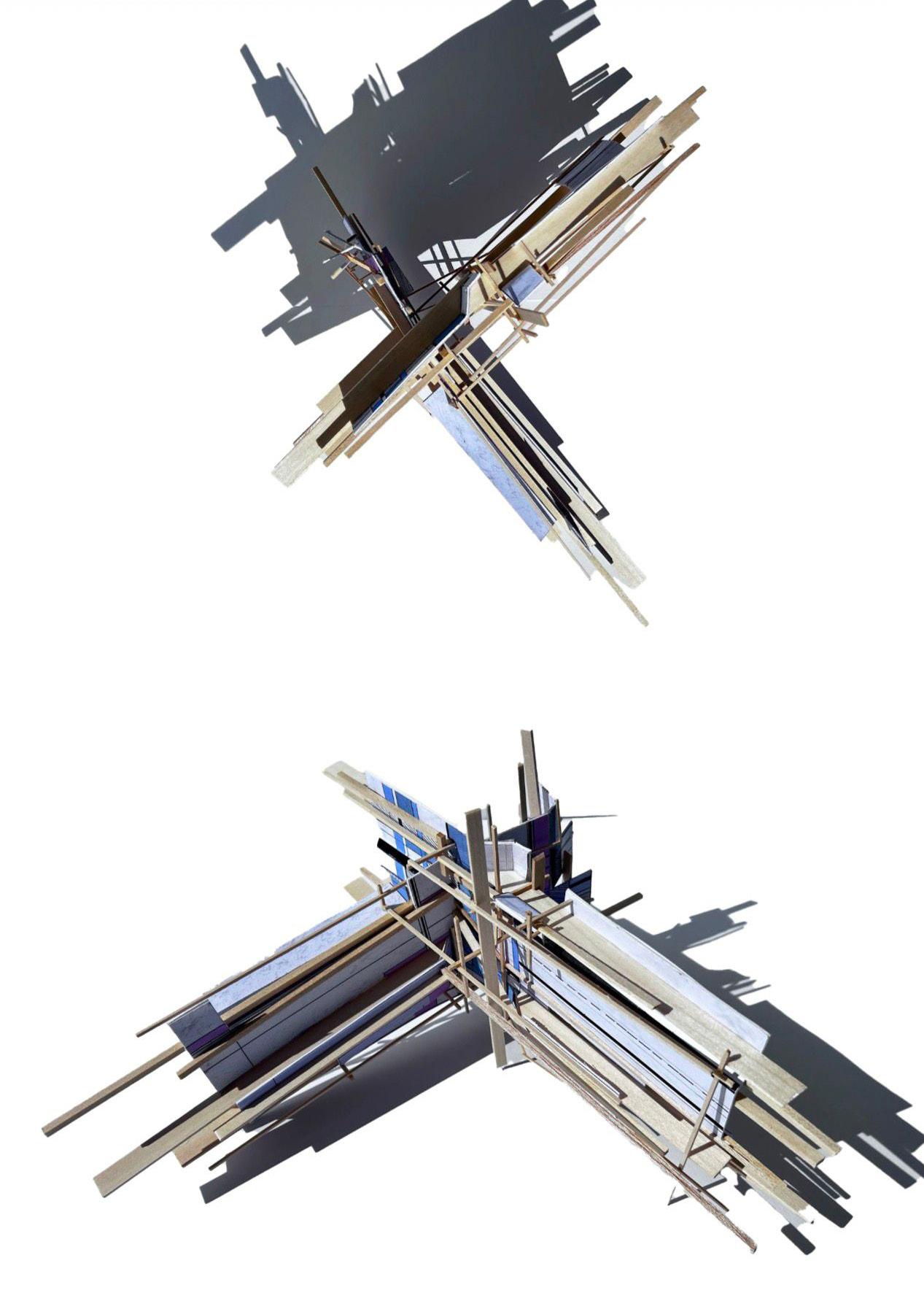
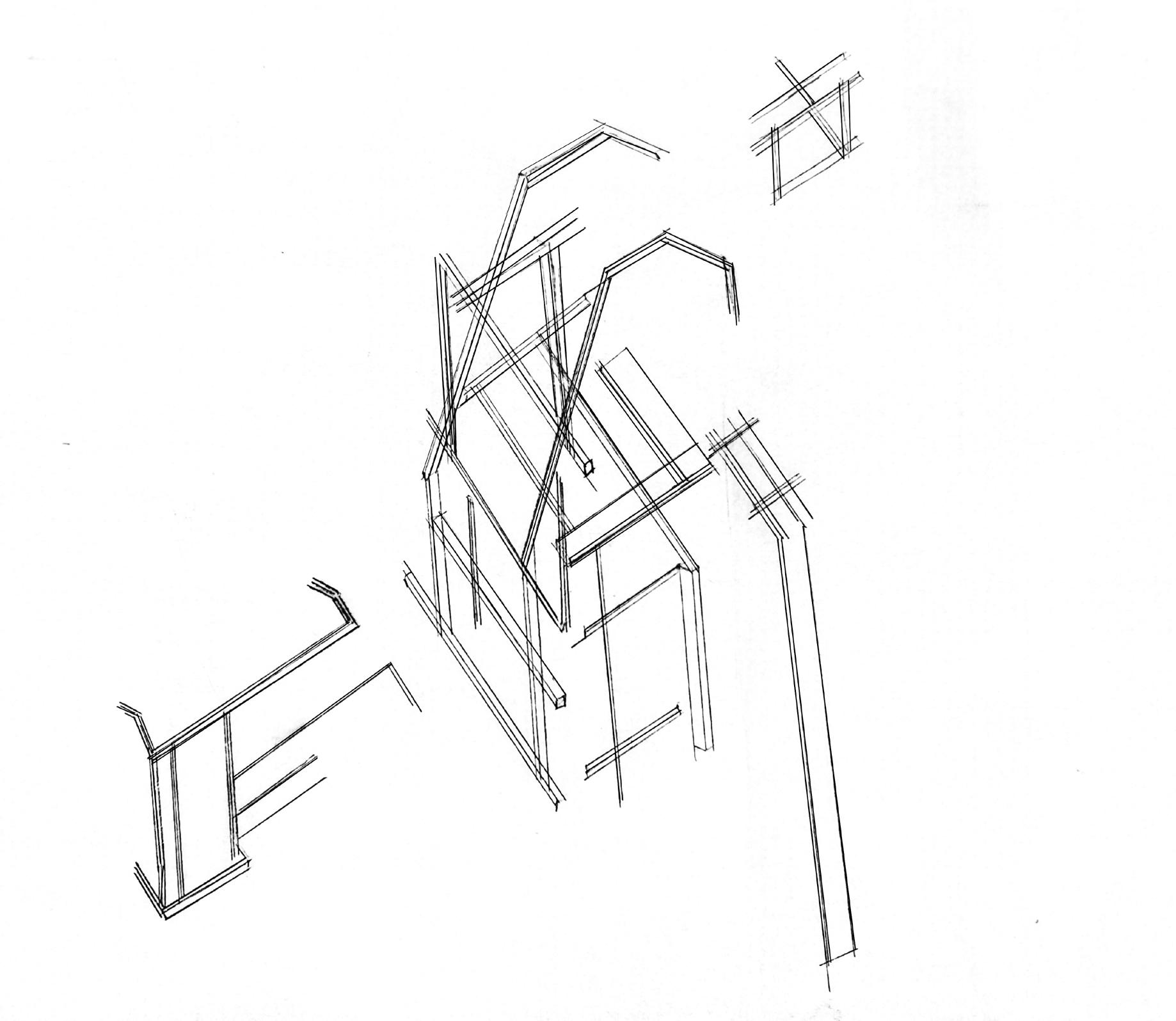
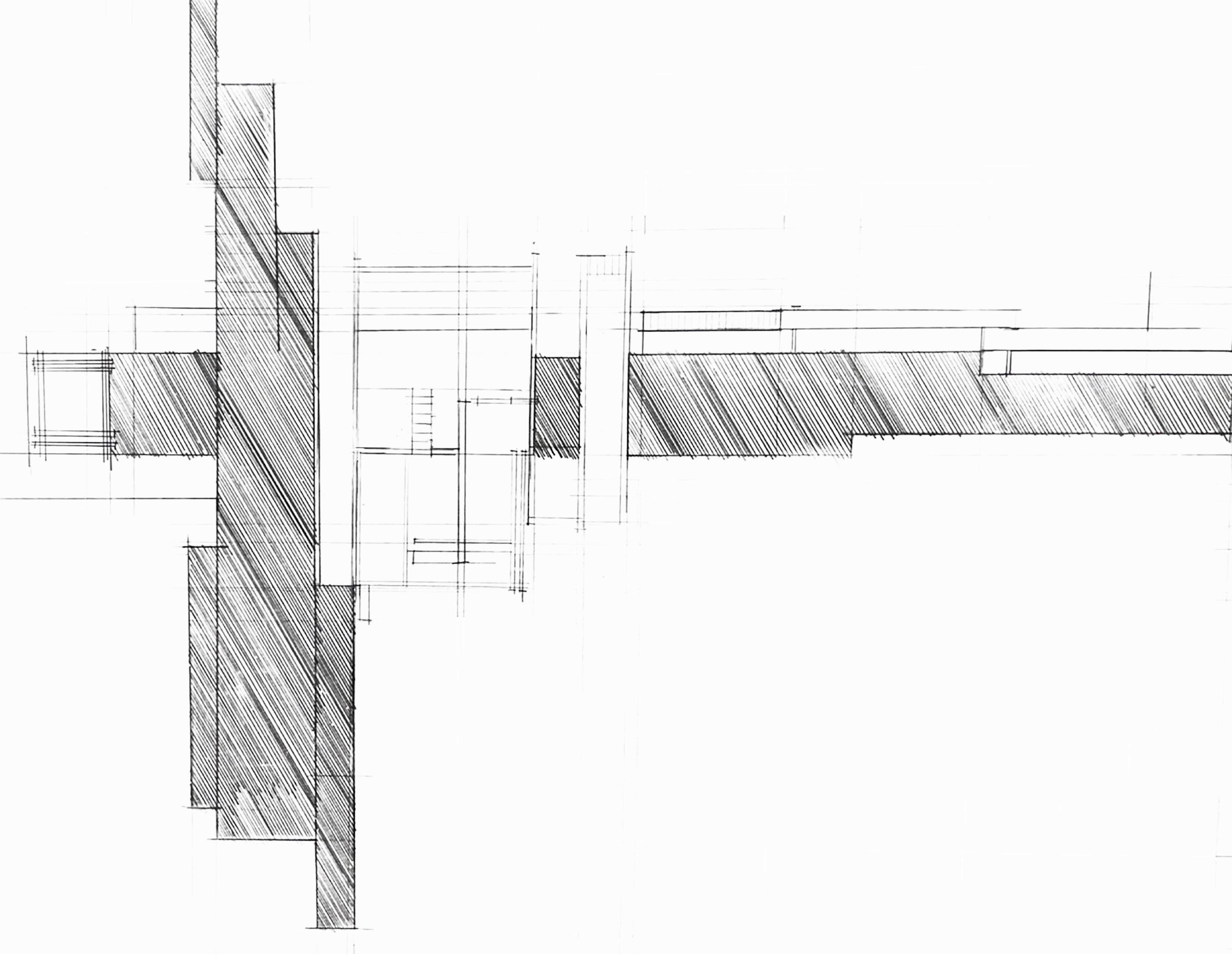
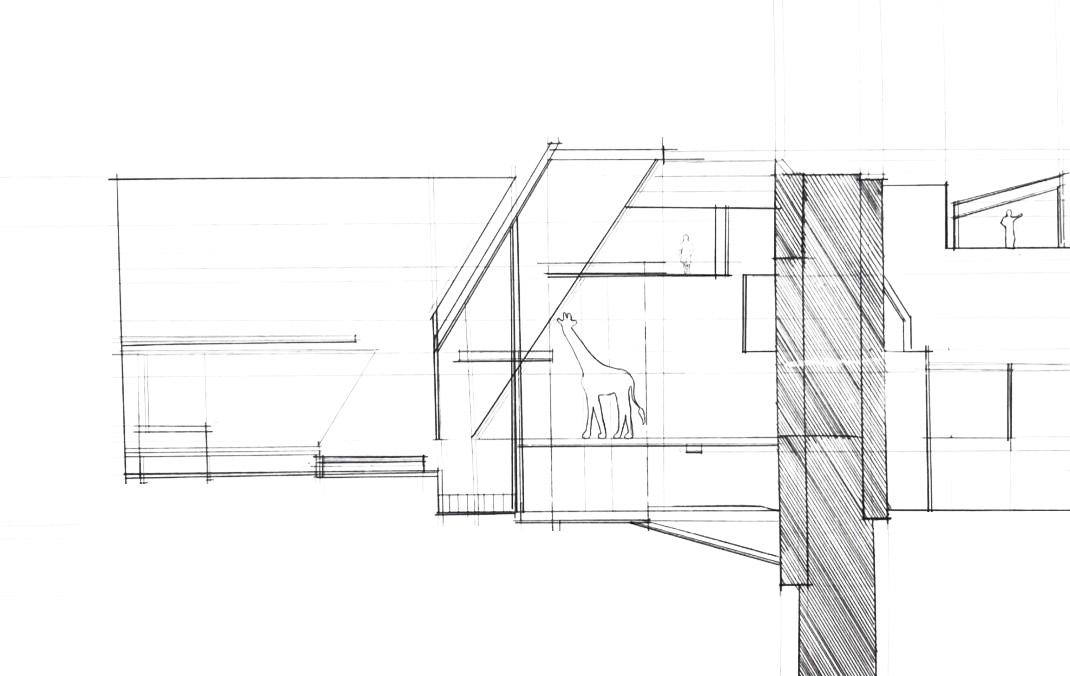
This project is an idea more than a cabin: a small refuge where architecture becomes a way of measuring life. It compresses the world into a few essential surfaces walls, a ceiling, a threshold, and then opens it back up through light, proportion, and a carefully framed view.
Every edge has a purpose, every corner holds a decision, and every opening acts like a pause in a sentence. It shows how a “box” can carry emotion: quiet, protection, and clarity.
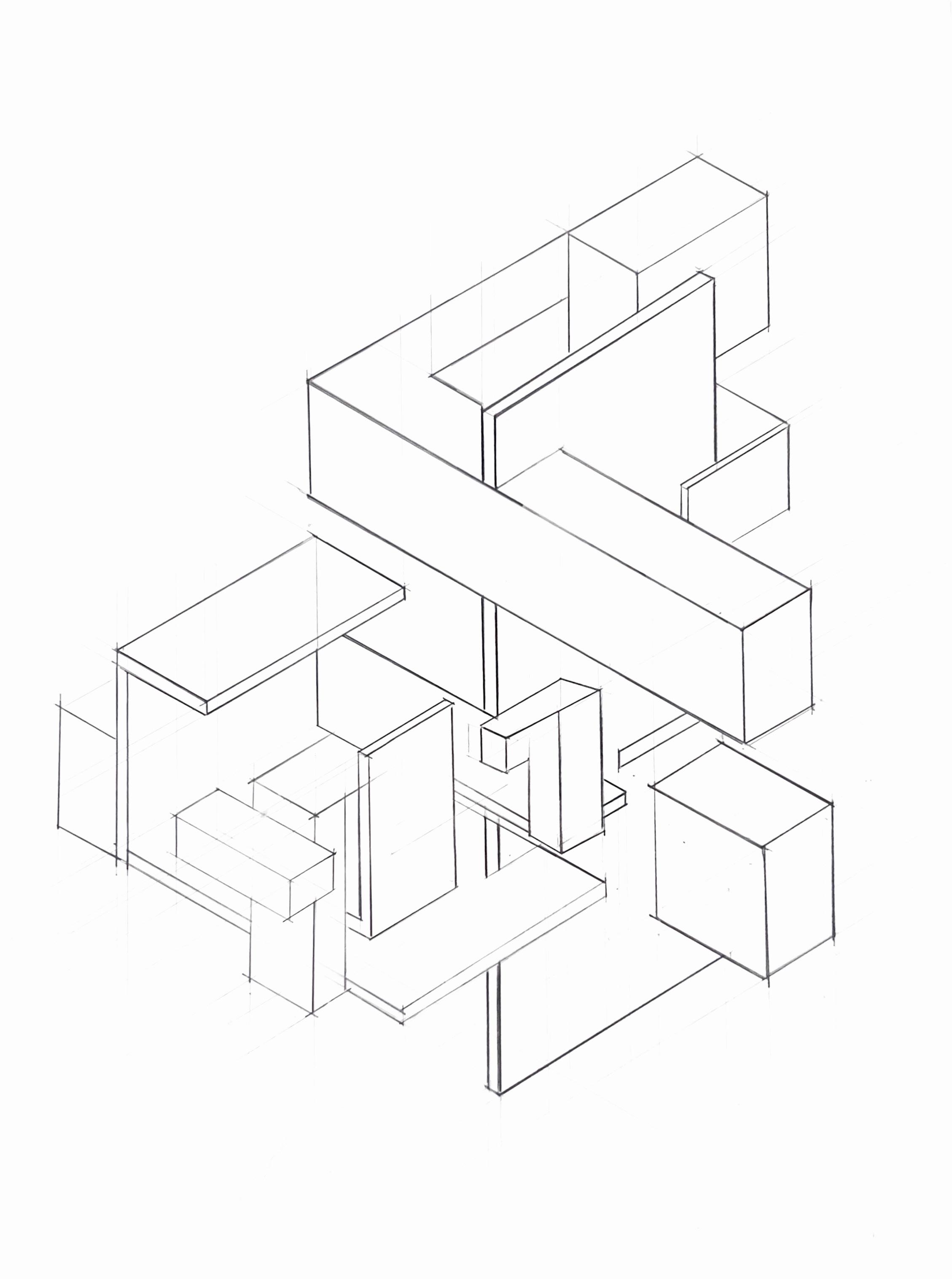
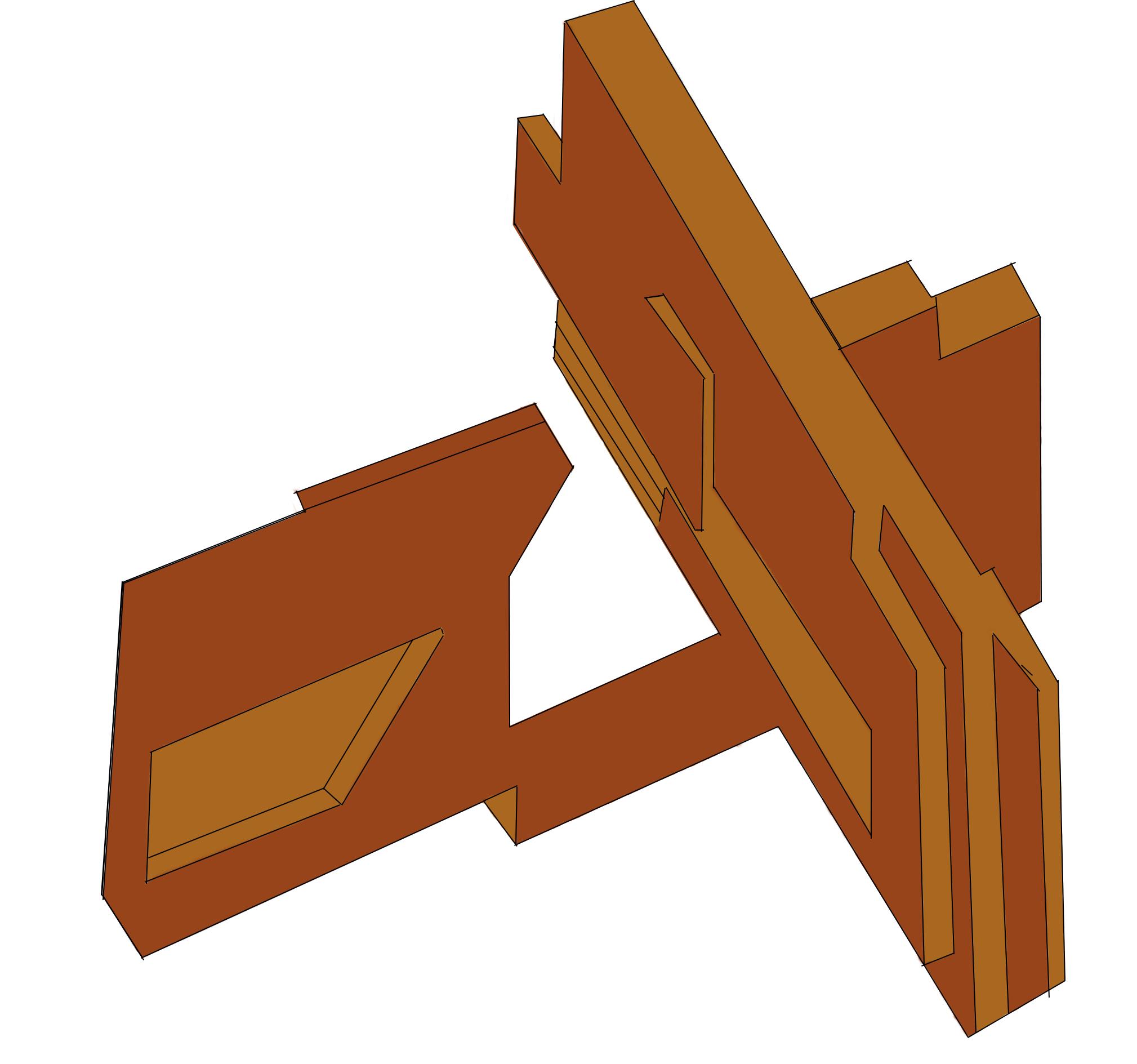
Axonometric Design
Long
Section Plan
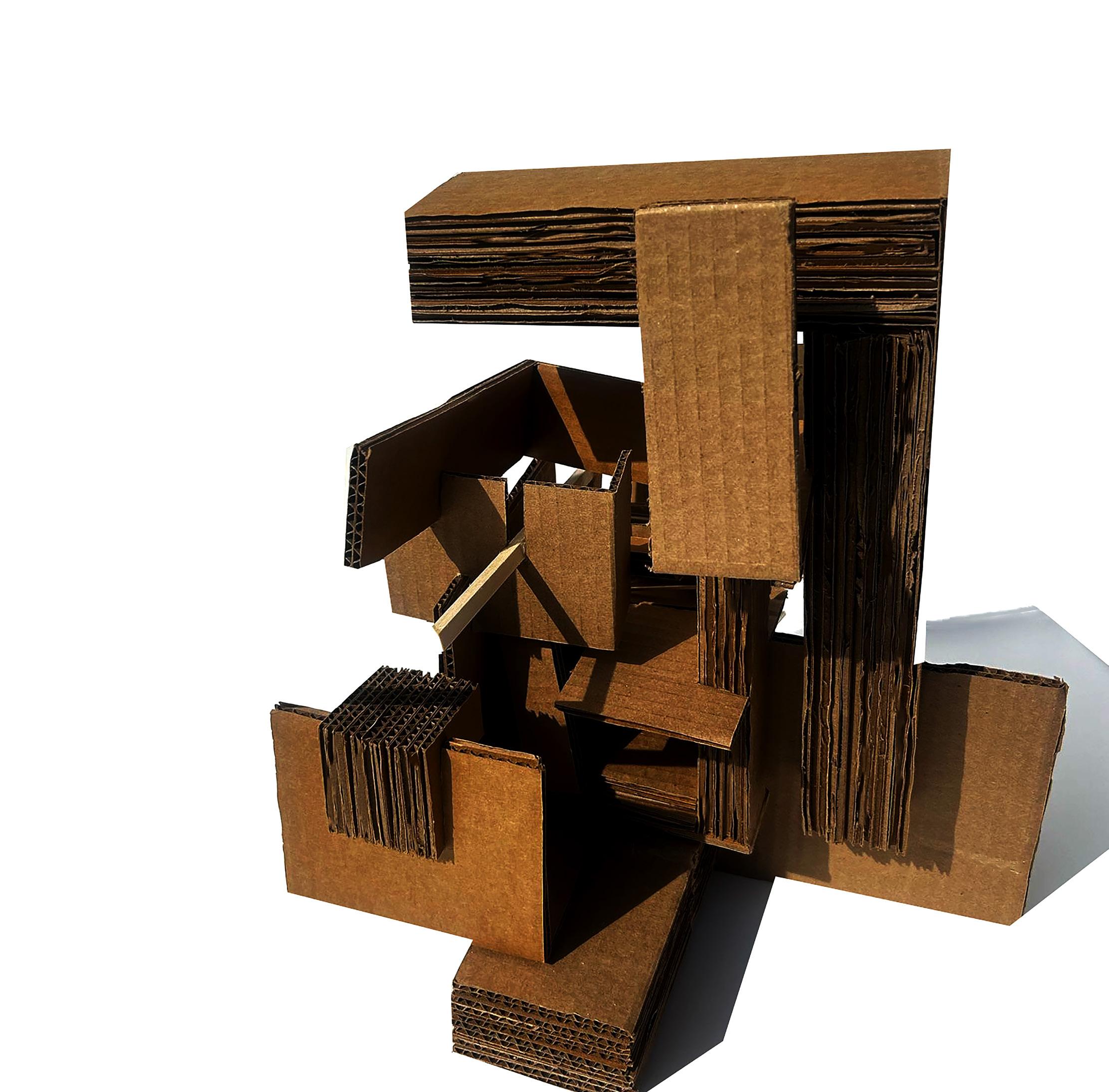
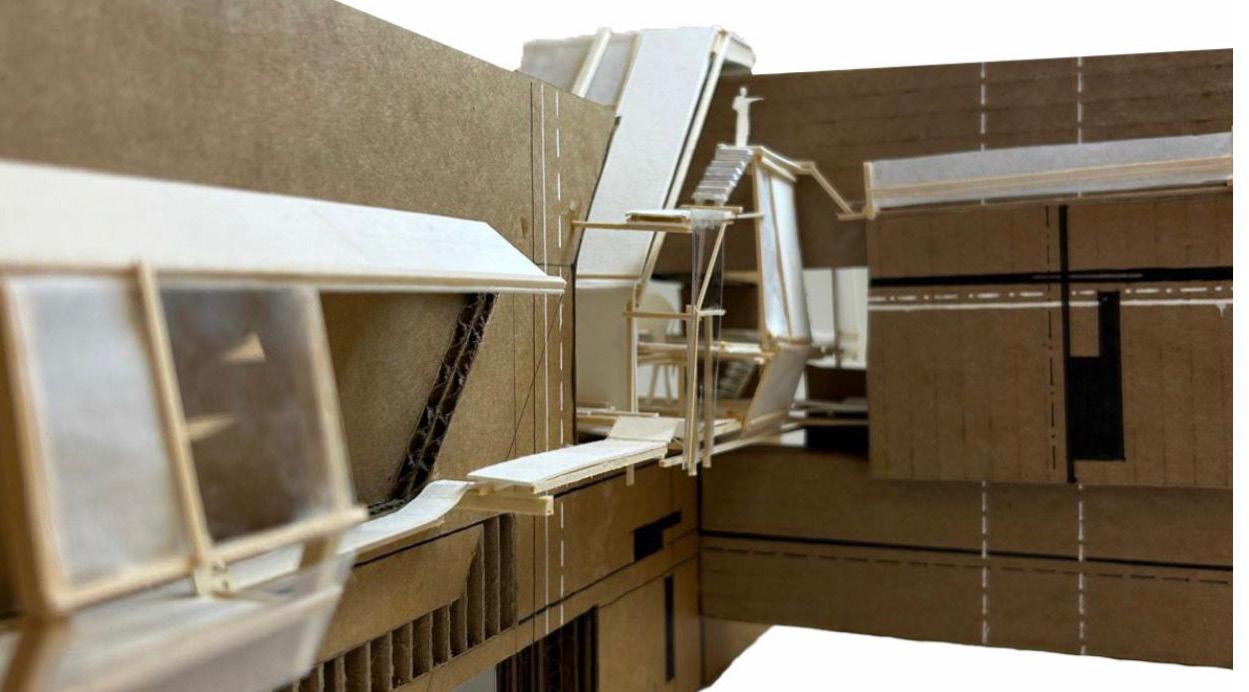
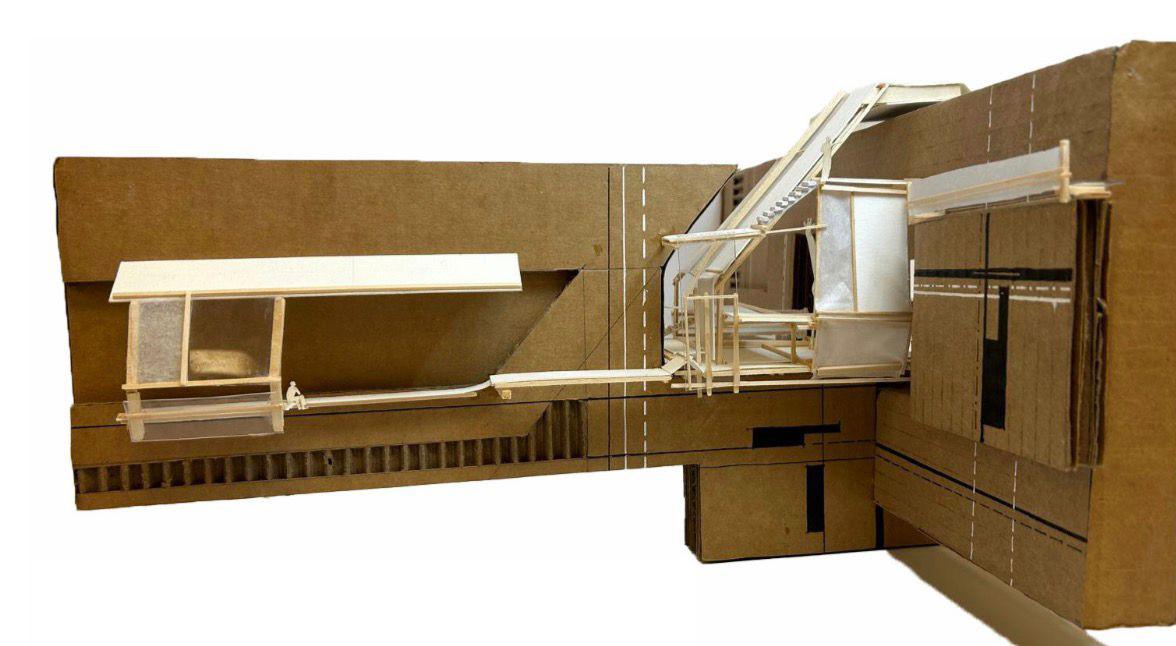
Final Model
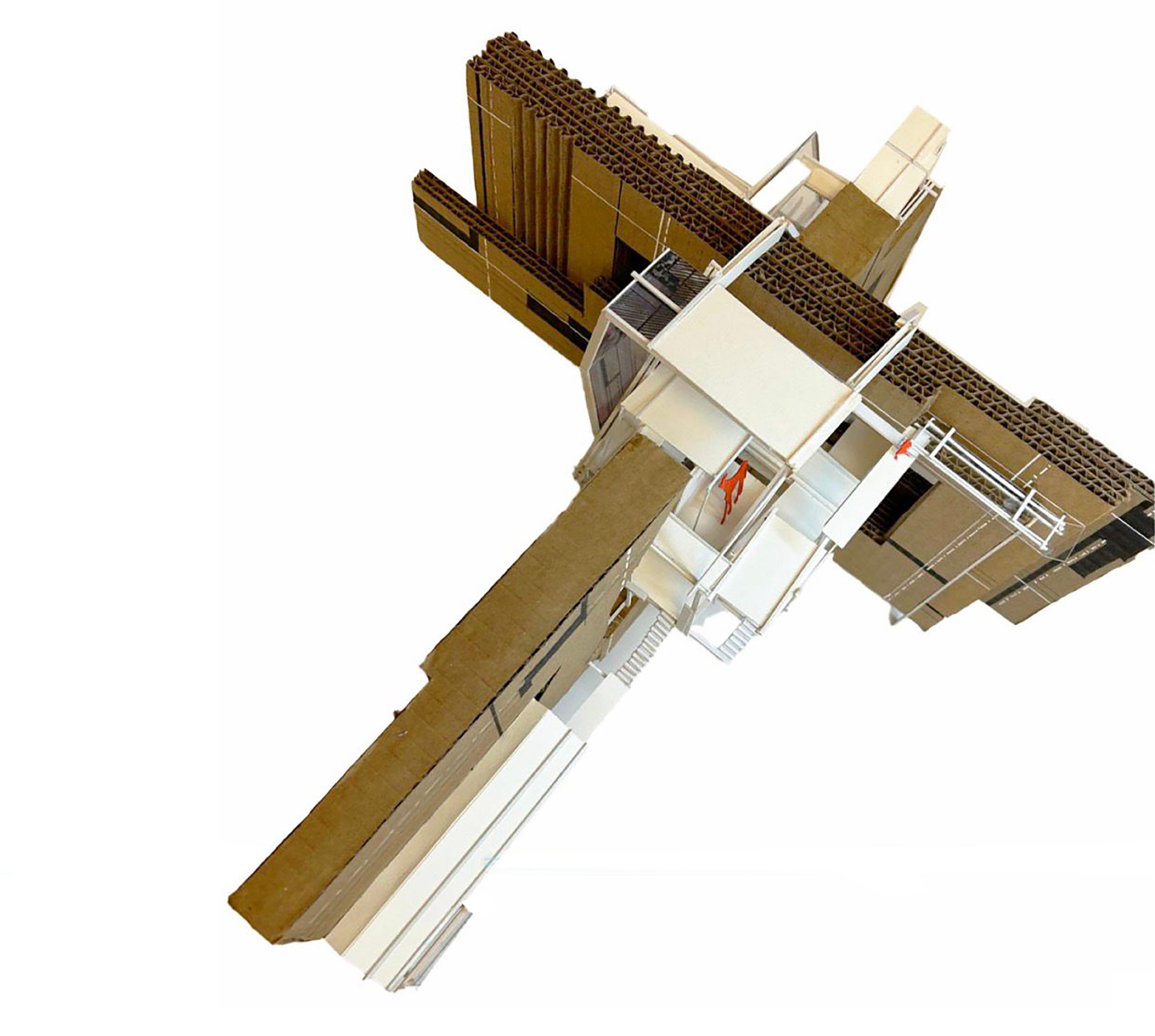
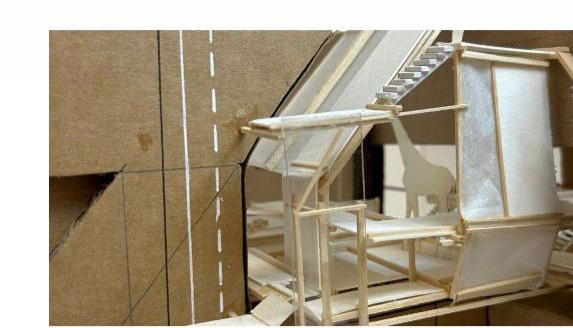
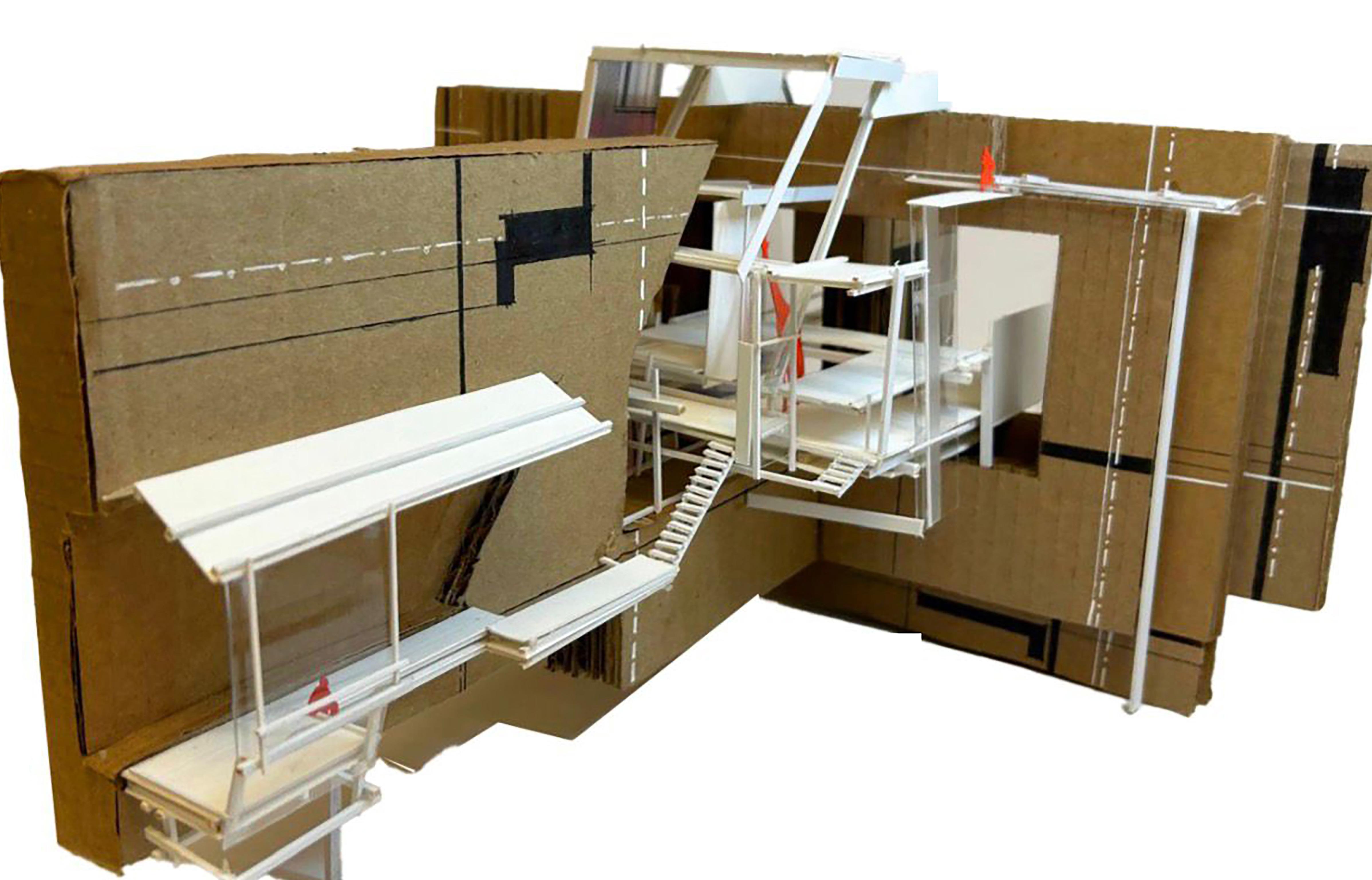
This final model transforms the idea of Le Petit Cabanon into an inhabitable sequence: a small refuge calibrated through proportion, threshold, and view.
The cardboard shell acts as a protective horizon, an outer boundary that holds the project like a landscape while the white framework becomes the lived interior, suspended and precise. Platforms, bridges, and stairs choreograph movement through compression and release, so the experience is built as a progression rather than a single room.
Openings cut into the enclosure create framed moments of exposure turning the “box” into an instrument that edits light, depth, and direction. In the end, the project argues that a minimal architecture can still feel expansive, not by growing in size, but by designing how the body arrives, pauses, and discovers.
THE LIGHT BOX
ALAN ZREIK DOS RAMOS SPRING 2025
Light Pictures
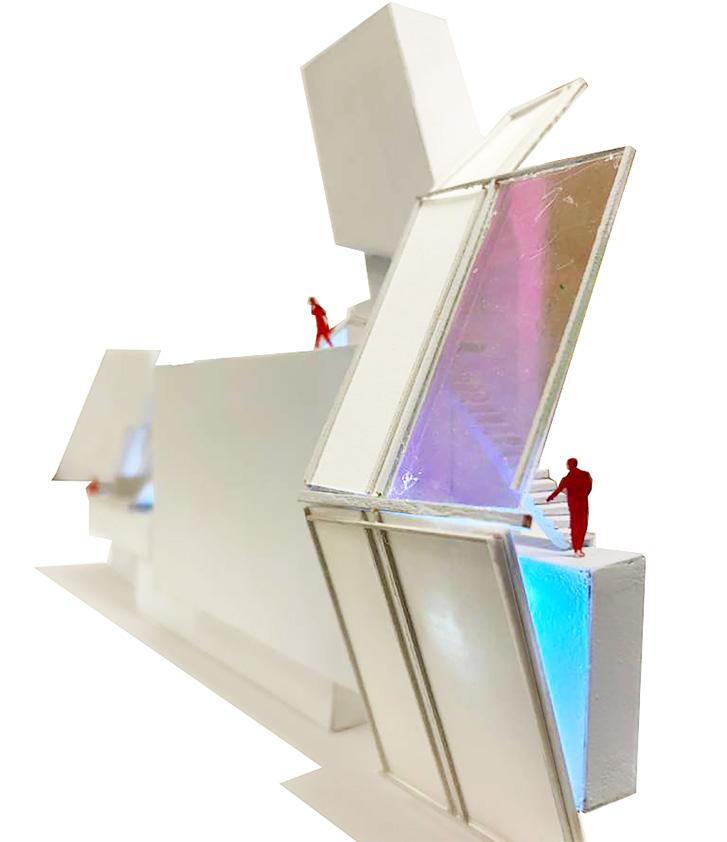
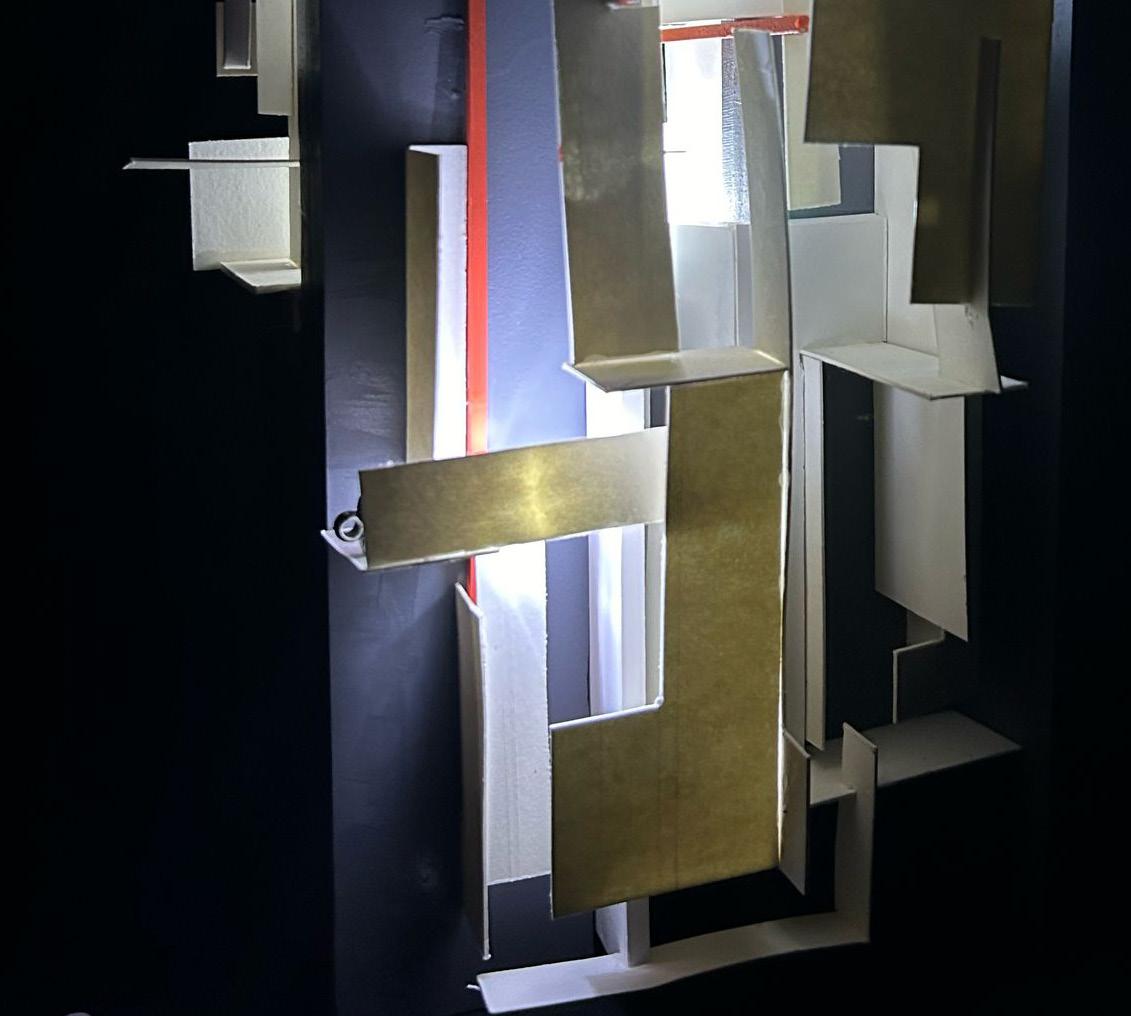
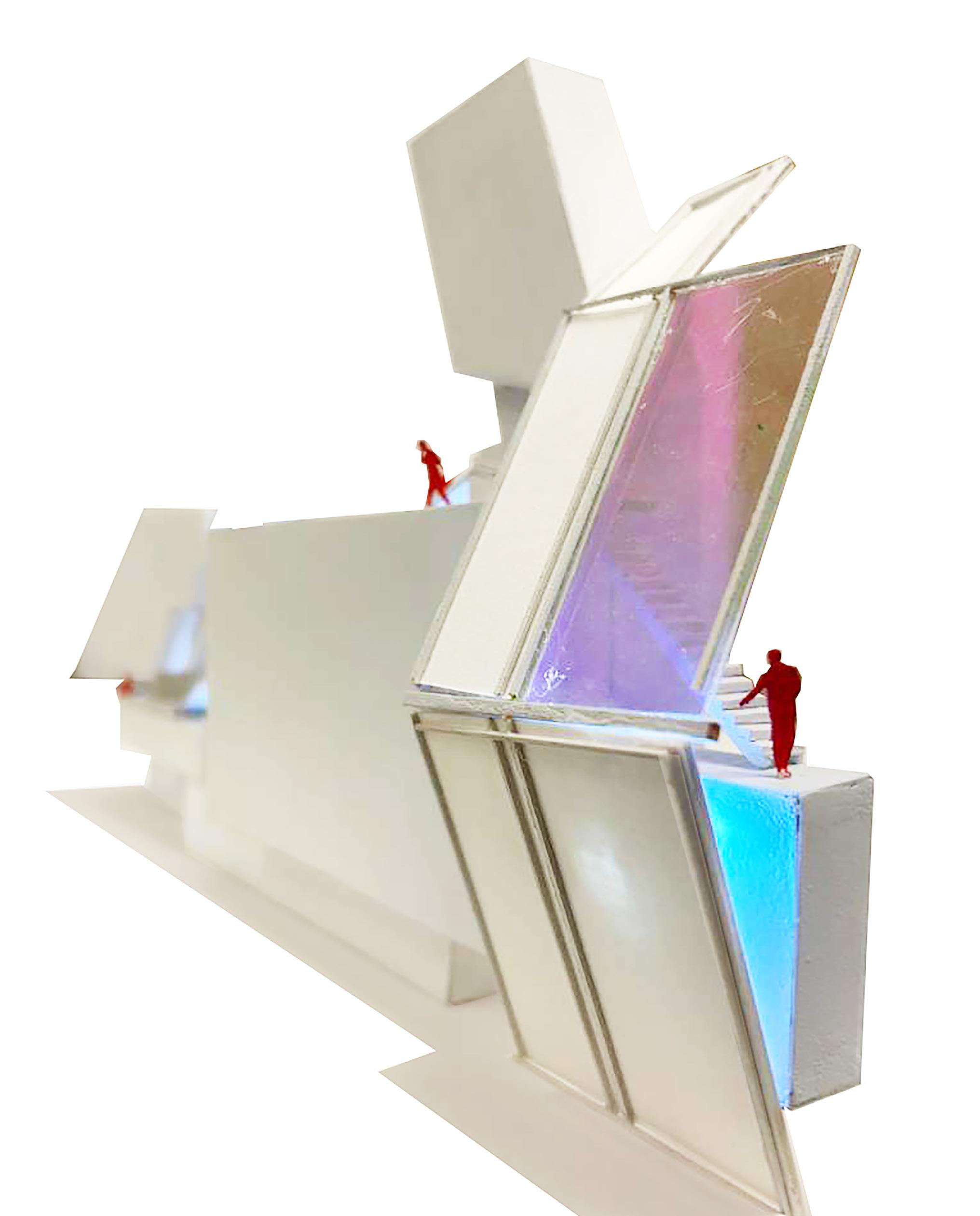
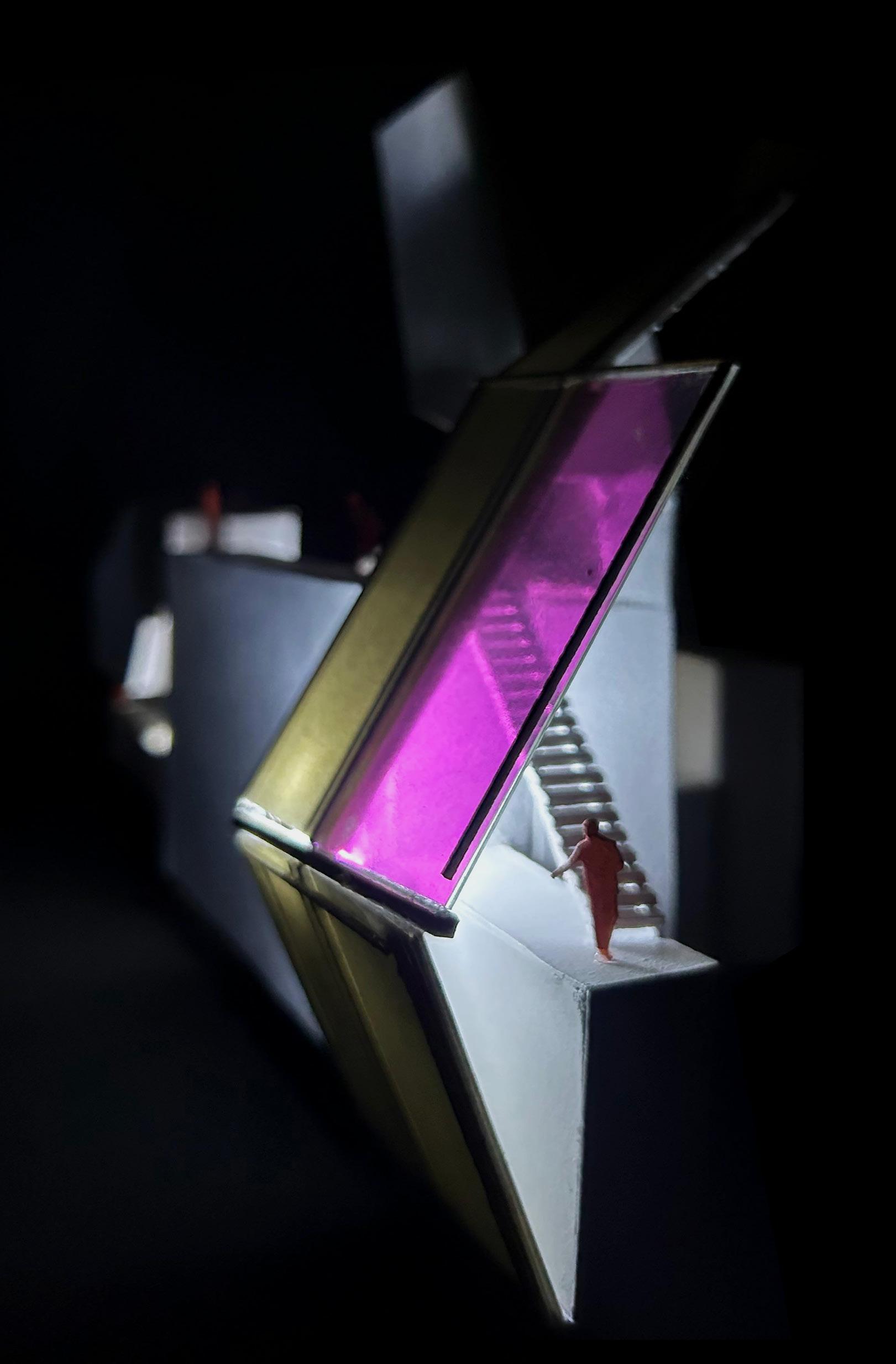
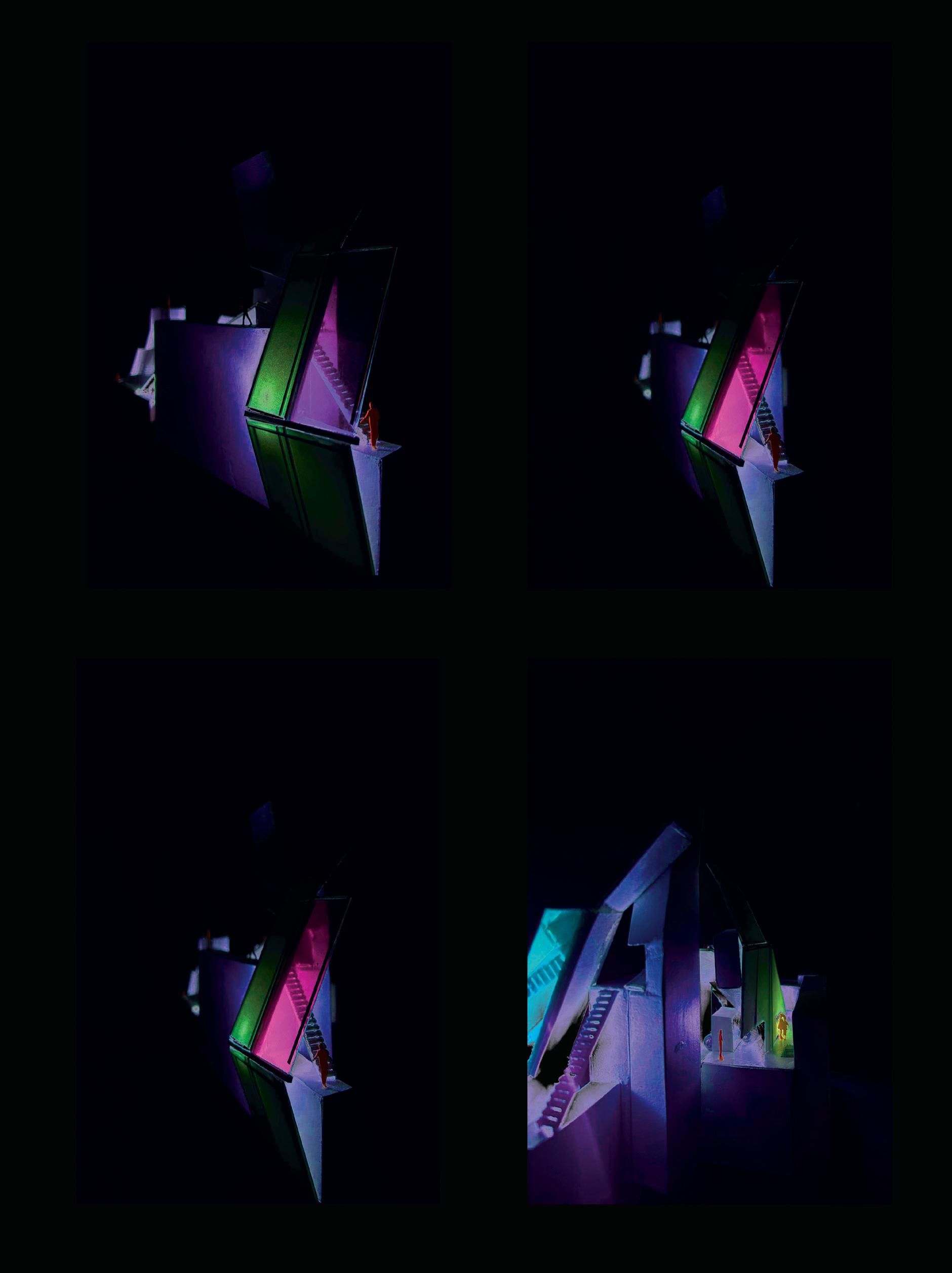
In this pictures, the color light doesn’t just illuminate the model—it activates it, turning planes into gradients and edges into lines of tension. The glow becomes a guide, pulling the eye along the ramp and into the depth of the space, while the surrounding darkness edits out distractions so only the essential moments remain. Instead of showing the object all at once, the color reveals it in fragments, like a quiet sequence, where light becomes material, and the model reads as an experience rather than a sculpture.
Final Model
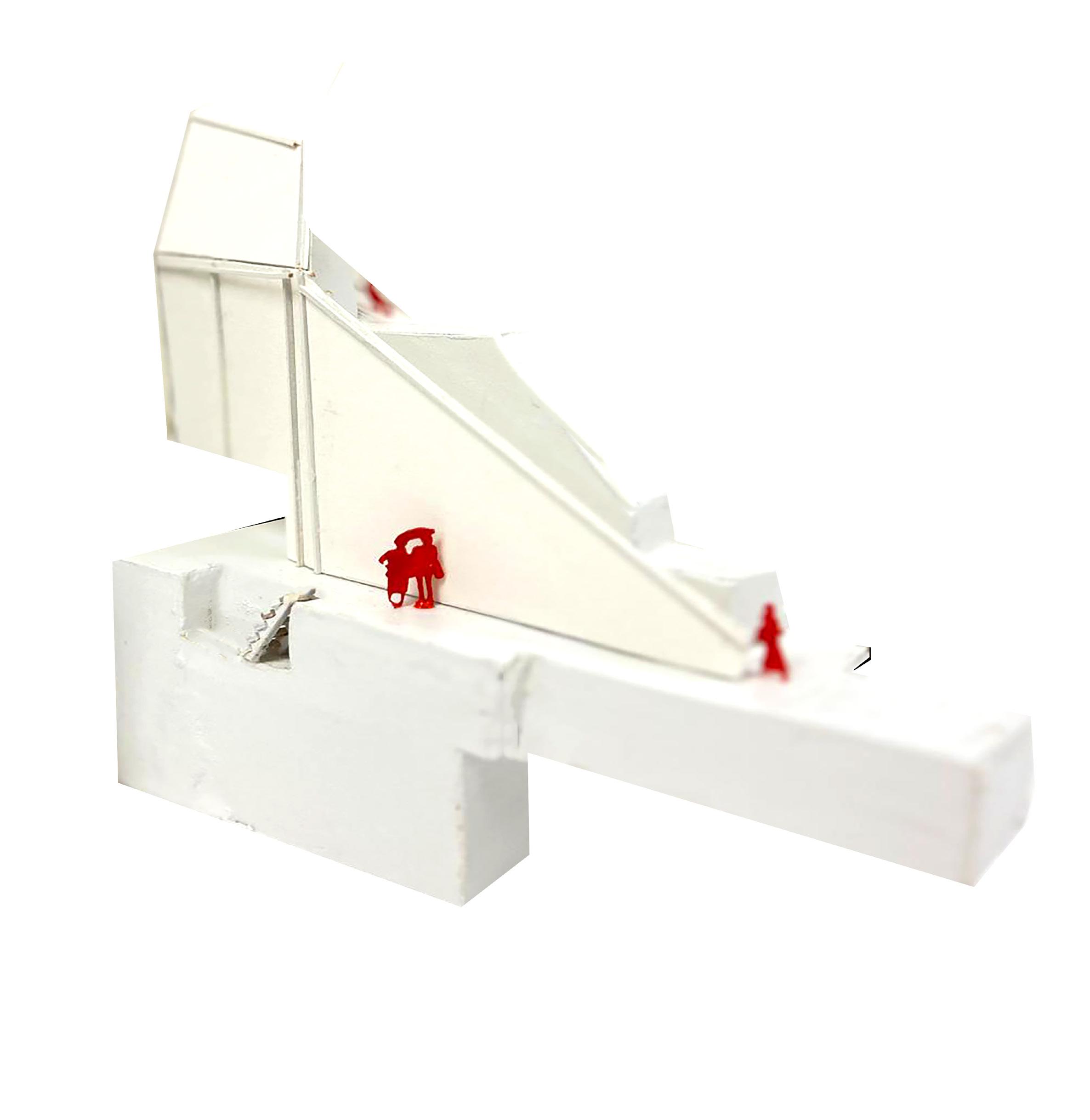
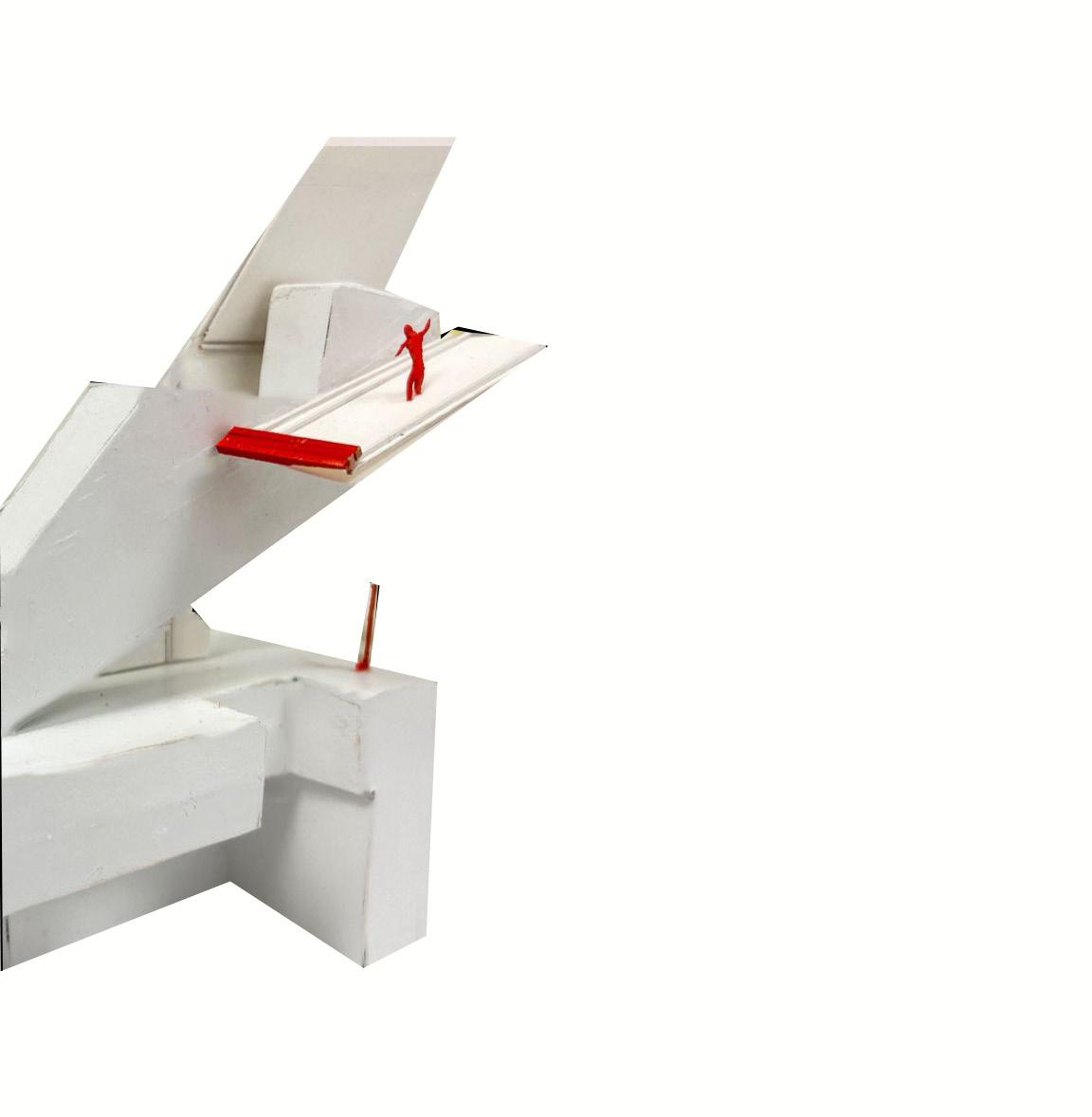
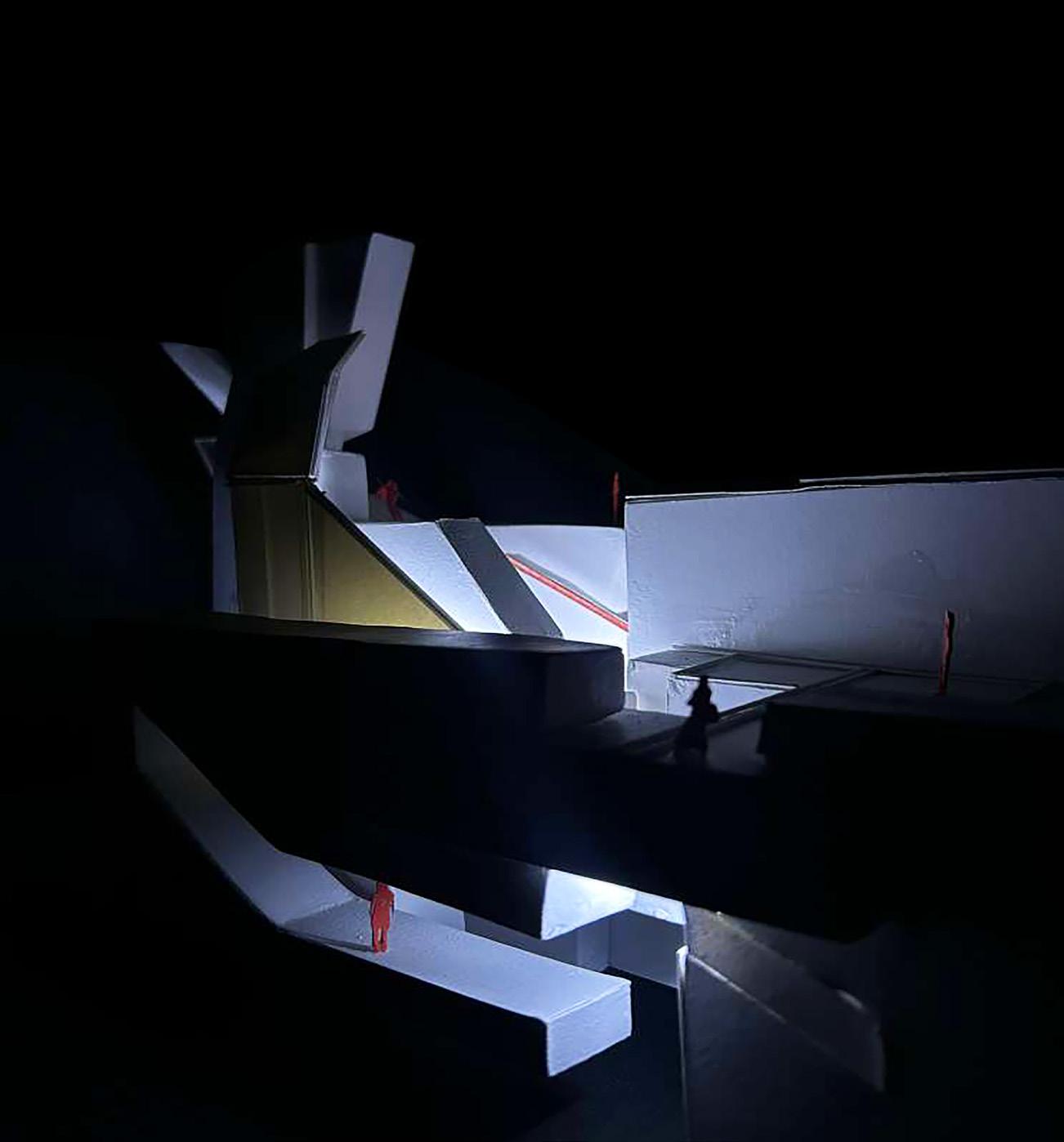
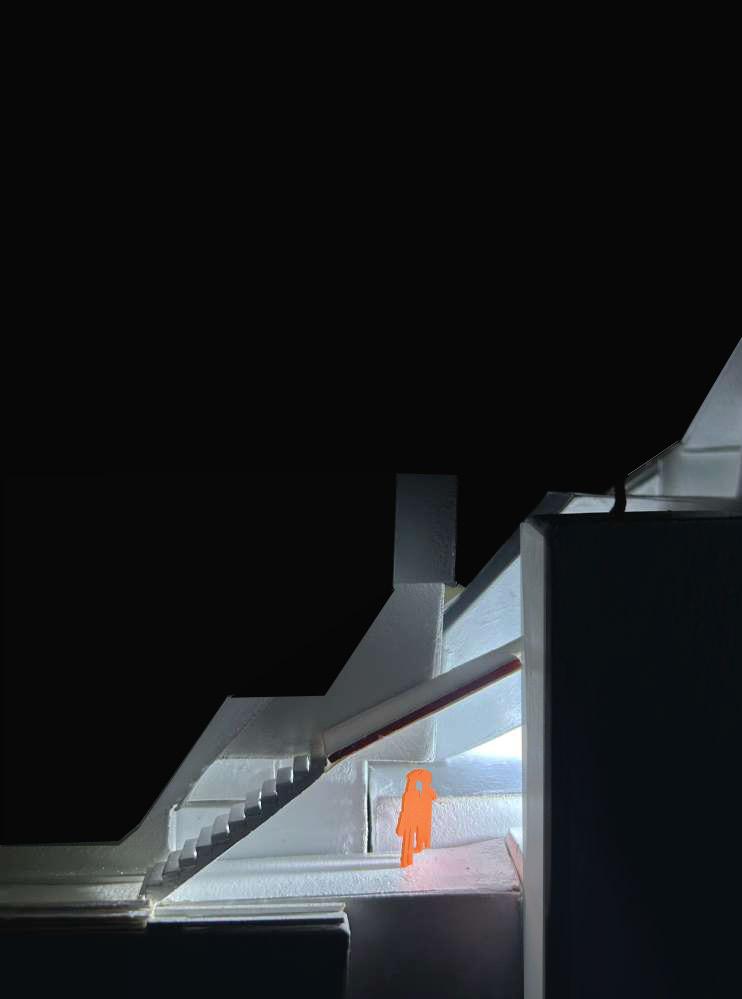
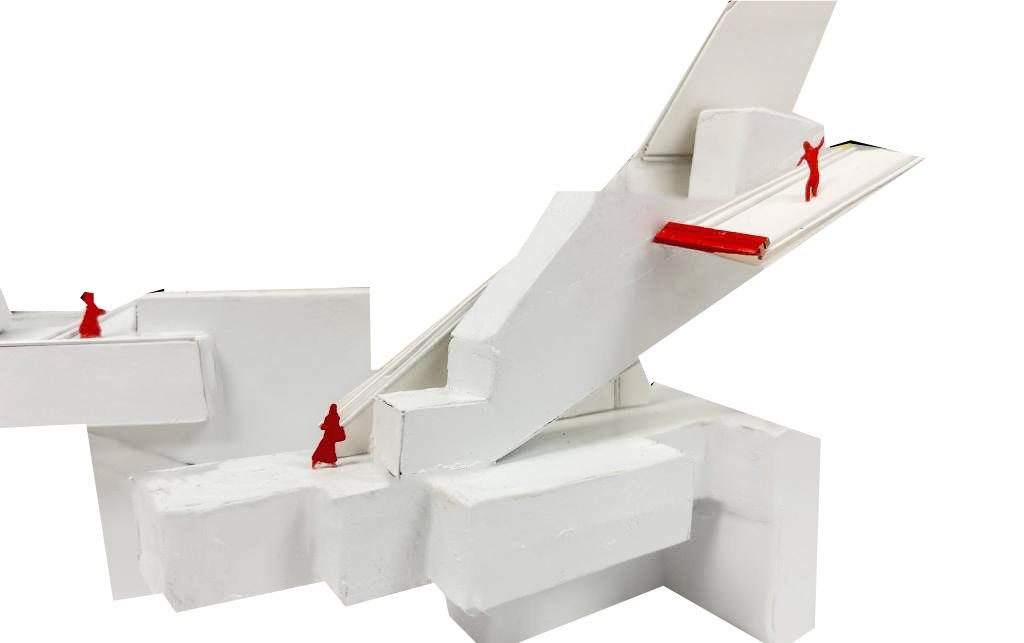
Solid white volumes hold the weight of the space like carved stone, while cuts, ramps, and bridges invite the body to move through light as if it were a material. Shadows slip under the cantilevers, edges glow where surfaces meet, and every step shifts the composition—compression becoming release, heaviness turning into lift. The red figures mark the human scale like punctuation, reminding us that the project isn’t an object to look at, but a sequence to inhabit. In the end, Light Box turns a simple box into a calibrated experience: a quiet landscape of thresholds where light reveals the architecture one moment at a time.

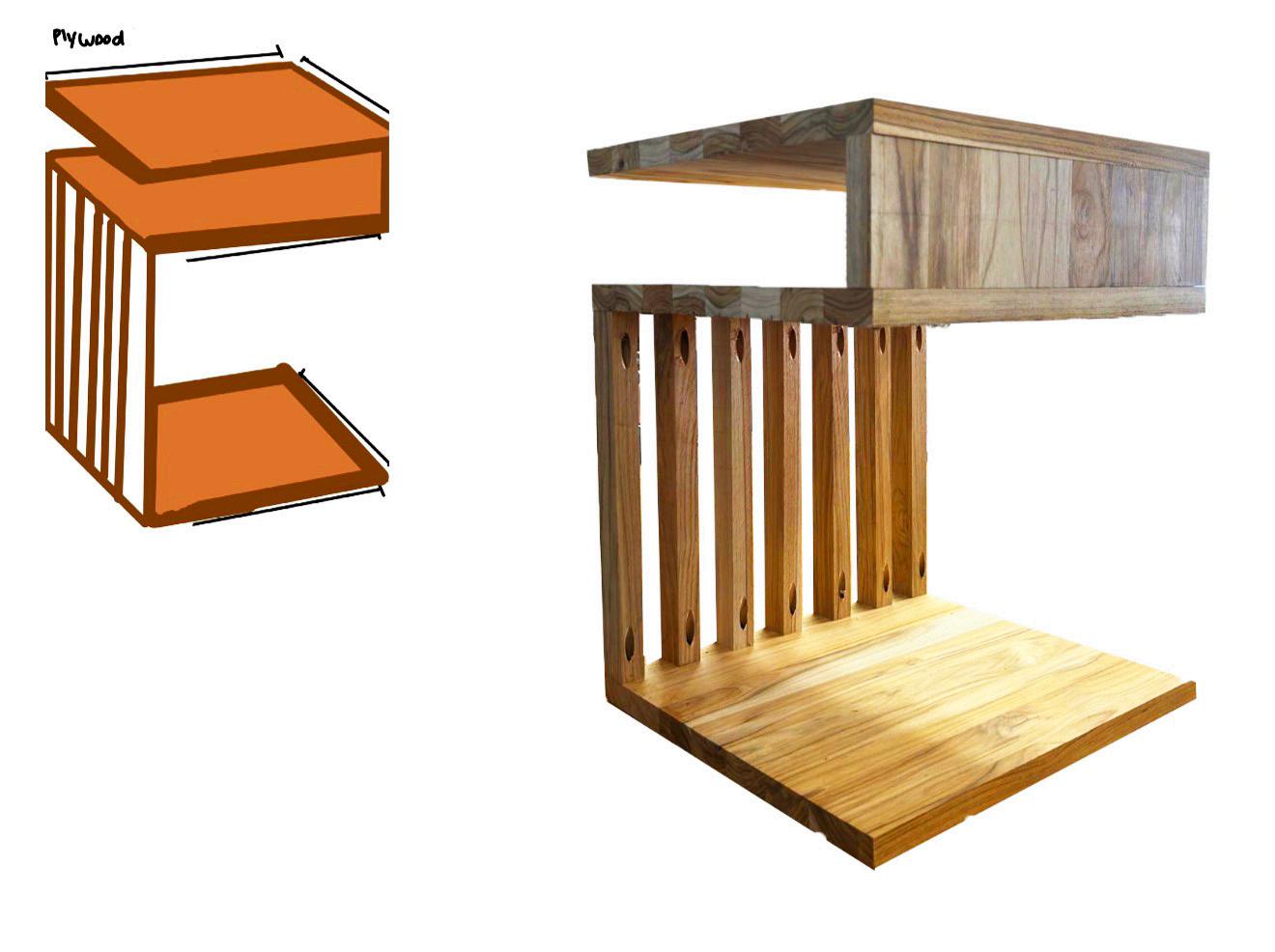
SketchUp / Woodshop work
I started by designing the nightstand in SketchUp, treating it like a small piece of architecture, studying proportion, balance, and simplicity until the form felt intentional. Then I translated the digital idea into real plywood, where the grain, weight, and edges gave it warmth and character.
This project is a bridge between drawing and making: an object built twice—first as a concept, then as something you can touch.
Architecture is the learned game, correct and magnificent, of forms assembled in the light.
Le Corbusier