ZINEPROJECT-DATE:12/16/2025
GROUPMEMBERS: -HECTORSANTIAGO -MARIAAGUILARCRUZ -AIXALILIANAALFARO -LUCASJAMESWASHAM
INSTRUCTOR:RENEBECERRA GROUP1
COURSE:SOC-158(ENVIRONMENTAL SOCIOLOGY)
ZINEPROJECT-DATE:12/16/2025
GROUPMEMBERS: -HECTORSANTIAGO -MARIAAGUILARCRUZ -AIXALILIANAALFARO -LUCASJAMESWASHAM
INSTRUCTOR:RENEBECERRA GROUP1
COURSE:SOC-158(ENVIRONMENTAL SOCIOLOGY)
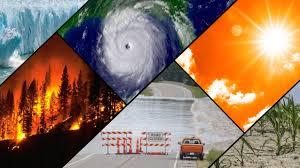
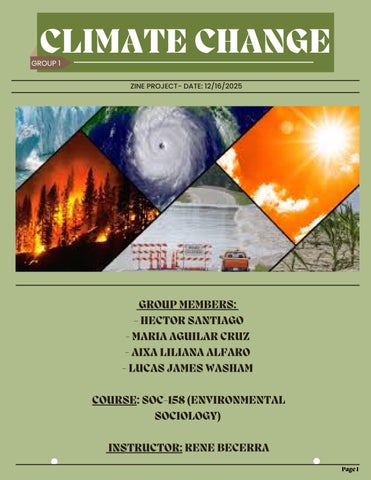
Earth is being threatened by an existential doom powerful enough to endanger all of its inhabitants, yet in spite of this, climate change hardly ever makes a blip in the headlines and even among many activist circles it isn't a high priority issue to tackle Climate change is defined as long-term shifts in temperatures and weather patterns, primarily driven by human activities since the 1800s, particularly the burning of fossil fuels and methane that produce heat trapping gases If these manmade changes go unchecked the results will be devastating: mass displacement, climate disasters, depleted resources, and rampant nationalism will all be staples of the future Regardless of how frequently climate activists like Greta Thunberg get mocked for being “tree-huggers” or “emotional”, we argue that it is in the shared interest of humanity to prioritize confronting climate change In this Special Edition Zine on climate change, we aim to identify key drivers of climate change and explore how the world will experience and respond to environmental collapse
Aixa Alfaro will share her experience at a climate change convention where she met with professor Kirsi Niinimäki and colleagues to gain insights about an industry that is a significant contributor to climate change. Aixa found that fast fashion significantly releases toxic greenhouse gases, microplastics, and other forms of pollutants into the environment while also wasting valuable resources like water, energy, and important chemicals. Aixa explores how seemingly harmless everyday items such as clothing are often produced under inhumane and destructive conditions that greatly contribute to the massive threat of climate change
Lucas Washam sat down for an interview with outspoken political activist and author Naomi Klein, to talk about another industry that holds immense responsibility for climate change: big oil On top of devastating the environment with emissions, the fossil-fuel industry is also responsible for greatly increasing climate change skepticism through immense lobbying by funding rightwink think tanks to spout denialist talking points, create
bogus studies, and mock activists This section will show how the oil industry works relentlessly to protect profits from regulation and to ensure that climate change is not meaningfully addressed
Maria Aguilar met with authors Daniel Faber and Chrisitana Schlegel to discuss how neoliberalism has fueled climate destruction and how climate displacement will explode in the not-so-distant future Maria explains that governmental support for ultra powerful corporations combined with the lack of real restrictions on them has brought us to the brink of environmental destruction Maria learned that climate change will make certain areas unlivable from excessive carbon pollution and climate disasters such as storms and floods. In spite of climate change being born from the greed of the ruling class, the wealthy will be best protected from the harm of climate disaster, and everyone else will be on their own Therefore, climate change is not just a matter of environmental justice, but is also reflective of larger economic inequalities under capitalism
Lastly, Hector Santiago met up with law professor Carmen Gonzalez to discuss how climate change brought great struggle to people's lives, whether directly or not through natural disasters It contributes to the central theme as climate change threatens to destroy people's homes, causing mass displacement worldwide The interview also adds a perspective on social issues by examining how climate change has a long-term effect on foreigners, especially if they moved to another country
Aixa Alfaro
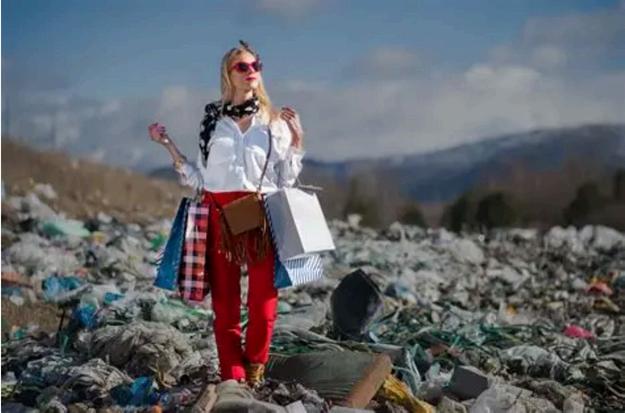
While at a convention regarding climate change, I met a group of six professors, Kirsi Niinimäki, Gregory Peters, Helena Dahlbo, Patsy Perry, Timo Rissanen, and Alison Gwilt, who gave a speech on the importance of fast fashion and its environmental impacts on the world. Their message is done with an intent to prove how fast fashion is something that should come to a halt, and we should resort to slow fashion more. They informed me how fast fashion is causing more harm than good as it not only has its environmental impacts, such as textile waste and microplastic pollution, but an overuse or misuse of chemicals and energy. They stated that, as of 2020, there has been an increase in production, with brands producing almost twice the amount of clothing in comparison to the year 2000. Consumers have also been buying more items and running through them quickly as trends come and go. More especially, fast fashion is responsible for about 8-10% of global CO2 emissions.
We discussed that issue should be a matter of care to the public as there is a limited amount of resources on this planet and how much we can go through and how much harm can be done before it can be reversed. With the overuse of water, there is a scarcity, as water is a heavily used product when clothing is produced, such as for dye, which additionally pollutes the groundwater in turn, which initially surprised me when it was first brought up. “Heavy use of agrochemicals can cause nausea, diarrhoea, can-cers and respiratory diseases, and acute pesticide poisoning is responsible for nearly 1,000 deaths a day and afflicts neurological and reproductive problems, such as infertility,
miscarriage and birth defects” (Niinimäki et al. 2020:193).
The chemicals used to create these products also cause health risks for workers, either during the production process or when taken to the landfill or incinerated, in which they agreed with me that it is an incredibly jarring fact and should be heavily looked into. Niinimäki and her colleagues changed my perspective on just how much damage fast fashion and trends can impact the environment, leading me to hope that consumers and producers can open their eyes to see the global scale of impact there can be throughout the supply chain.
What stood out to me the most when conversing with Niinimäki and her colleagues was just how much damage clothes can cause on climate change. When they mentioned water pollution and waste, I realized that I never took that into consideration, as well as chemical pollution, and the health impacts there can be placed on workers. I agree with these individuals as I believe slow fashion is needed when it comes to the future. My shift of what I think about the environment has not changed from before interviewing them as I still believe greenhouse gas emissions are a huge part of the impact on climate change and as for society, the capitalism within fast fashion must be confronted in order to make an additional change.
Lucas Washam
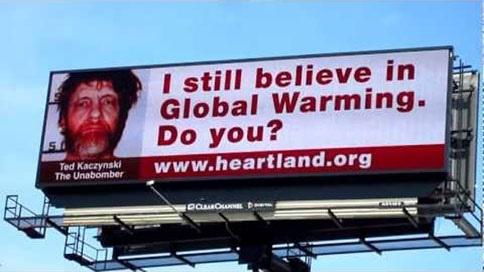
I spoke with author and activist Naomi Klein about the influence of rightwing think tanks on environmental policy Klein emphasised that the anti-climate justice movement has been artificially manufactured, with support from the fossil fuel industry and anonymous dark money. Think tanks like the Heartland Institute and fiery political commentators have succeeded in their mission of increasing climate change skepticism while instilling fears that climate action is simply a cover for an ominous authoritarian communist new world order. Klein also emphasizes the importance of the subject by predicting that a selfish, hypernationalist, and racist ideology will inevitably become “ necessary to justify the hardening of hearts ” as blameless victims who are impoverished, who live in the global south, or are racial minorities will be disproportionately harmed (Klein 2014: 46). Therefore climate change matters because it will exacerbate existing inequalities, between the have-nots and those “ whose wealth offers them a not insignificant measure of protection ” (Klein 2014: 45)
I was disturbed to see the connections Klein made between the deterioration of the environment and the decline of egalitarian perspectives that will coincide, as countries fight for depleting resources I completely agree that this competition will usher in increased colonialism and noncooperation The erection of xenophobic attitudes and fortress-like borders have also
accelerated over the past decade, evidence of rising isolationism and nationalism I believe this “everybody for themselves” style nihilistic world view is already beginning to rear its ugly head, as many prominent rightwing influencers have begun preaching to their audiences that empathy is “suicidal” and a sin. Klein’s statements made me realize how crucial this nihilistic view is for justifying the destruction of the planet and the unequal distribution of damage As frightening as this potential future is, Klein did offer up some hope that gave me a more optimistic view of climate action Right wing think tanks are astutely aware that environmental justice threatens the basis of their worldview: that unregulated greed, freemarket fundamentalism, and capitalism are the best and only governing models we have This is why they spend so many resources slandering climate activists, they are scared of the potential revolutionary power of the movement, because pursuing climate justice would also mean addressing the drastic economic and racial inequalities of our times, as well as the consequences of austerity, globalization, and endless profit seeking Due to the amount of other social issues climate change intersects with, how we respond to this grave threat could mean either humanity's doom or a revolutionary turning point, pushing society away from cold selfishness, towards greater equity, empathy, and sustainability
Maria Aguilar
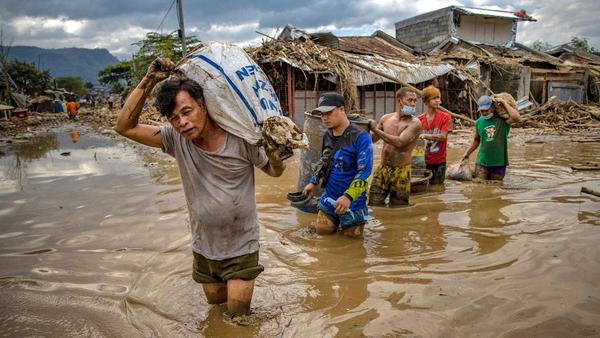
As a field reporter learning about climate change, I met with Daniel Faber and Christian Schelgel, who focus on climate change and how climate refugees are a result of neoliberal capitalism Their main focus really goes off on how many families and people have to leave their homes due to carbon pollution, storms, floods and many more environmental disasters due to capitalism Farber and Schlegel’s main message is that neoliberal capitalism not just creates unfairness but it also structures vulnerability Therefore, capitalism makes the wealthy people have a huge say in climate change, while poorer communities don’t have a say in this because of their status. This instability makes certain people more at risk of becoming climate refugees In addition, this matters because the environment is being destroyed, causing environmental disasters, which really affect those who live in poorer areas, and they tend to suffer most while the rich don’t Their lands flood, their houses get destroyed, their crops go to waste and that forces them to move. They have to learn to adapt to a new environment, which is difficult Their analysis shows that they are trying to help us understand that there needs to be a change in our systems to where it’s fair for everyone The system
also doesn’t help them, they just send them to a new place, and they have to learn to adapt to it Farber and Schlegel did talk about it; they mentioned that, “climate refugees are also victimized by political-economic structures that serve to reduce resiliency and recovery from climate-related stresses” (Farber and Schlegel 2017: 1). This explains that these people are suffering from climate change as well as from an unfair system not helping them
After speaking with Farber and Schlegel, I realized that the system needs change to help those who are suffering Most importantly because Farber and Schlegel also mentioned that there is a Cornell University study that says by the year 2100 about one-fifth of our world could potentially become climate refugees due to climate change, like rising sea levels It really surprises me to think that our world could potentially be very dangerous to live on in the future. The economy plays a huge role in this since the hunger for money hurts our environment, which leads to potential death Overall, Farber and Schlegel’s discussion really connected to climate change, neoliberal capitalism and climate refugees, emphasizing who is most affected and why
Hector Santiago
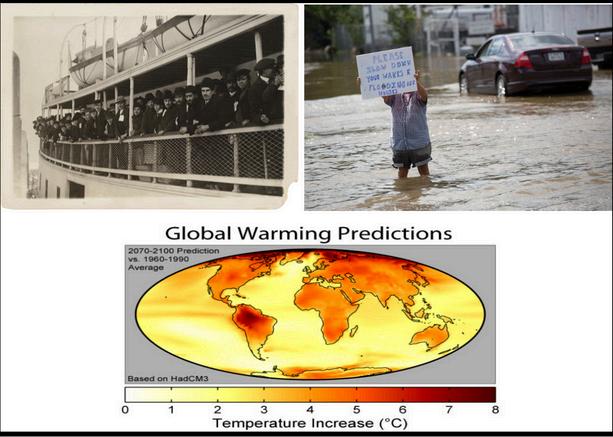
I’m interviewing Carmen Gonzalez, a law professor from Loyola University. We’re here to discuss her work on Climate Change, Race, and Migration, which offers insight on how climate change has driven human displacement on both social and environmental levels.
Professor Gonzalez talks about how climate change was first induced by industries under white supremacy rule, saying that they’ve exploited many countries' resources with vulnerable geological areas and contributed to the sudden rise in global temperature. As a result, climate change has created many environmental disasters that displace millions of people out of their homes; examples include rising sea levels, droughts, and desertification. Current projections even suggest that climate change will displace twenty-five million to a billion people by 2050. Not to mention, climate change also inspires inequality as nations become more hostile towards immigrants who seek refuge. Even though their victims of climate-induced disasters, countries don't feel obligated to give them civil rights based on the following statement “the national security response classifies “climate refugees” as barbarians crashing the gates of civilization, and reinforces racialized distinctions between “us and them, citizen and foreigner, friend and enemy”(Gonzales 2020: 121). Inflicting immigrants with many forms of injustice and racial profiling, such as giving them the most dangerous jobs. The message Professor Gonzalez is trying to say is that industries caused a chain reaction to intensify climate related problems, destroying people's homes and causing immigrants to be socially displaced in foreign countries.
This problem matters because if we can't compromise or stop ourselves from escalating greenhouse gasses then climate change will soon endanger all life on Earth. So far, this interview provides perspective on how climate change affects people not just geographically but also emotionally. Up until now, I didn’t realize that climate change is one of the main causes of migration. As a child of a fellow immigrant, I assume they came to America to find work and earn money But Prof. Gonzalez explained to me that some foreigners didn’t have a choice after being displaced from their homes by natural disasters, forcing them to live somewhere else. In response, the countries treat their immigrants as enemies for occupying their land.
The main drive behind climate-induced disasters are industries, which I agree on as they have a history of neglecting environmental concerns in favor of capital. This ideology is known as the treadmill of production, a structural analysis that shows how economic growth leads to the degradation of the environment. One example that Professor Gonzalez provided was carbon capital, when industries obtain fossil fuel by invading many countries in the Middle East. Which led to the displacement of the Muslim and Arab population and increase in carbon levels within the atmosphere. I always believe humanity is inherently bad and after talking to Prof. Gonzalez, that belief was reinforced. Countries aren’t sympathetic towards immigrants who lost their homes and exploited for labor. Meanwhile, industries often don't take responsibility for causing climate related disasters.
Gonzalez, Carmen. 2020. “Climate Change, Race, and Migration.” Journal of Law and Political Economy. Retrieved September, 2025.
Klein, Naomi. 2014. “The Right is Right: The Revolutionary Power of Climate Change.” Pp.27-55 in This Changes Everything: Capitalism Vs. The Climate. New York, N.Y.: Simon andSchuster.
Niinimäki, Kirsi, Greg Peters, Helena Dahlbo, Patsy Perry, Timo Rissanen, and Alison Gwilt. 2020. “The Environmental Price of Fast Fashion.” Nature Reviews Earth & Environment 1(4):189–200. doi: 10.1038/s43017-020 0039 9.
Faber, Daniel, and Christina Schlegel. 2017. “Give Me Shelter from the Storm: Framing the Climate Refugee Crisis in the Context of Neoliberal Capitalism.” Capitalism Nature Socialism 28(3):1–17. doi: 10.1080/10455752.2017.1356494.