Assault on the Gothic Line 1944: The Allied Attempted Breakthrough into Northern Italy 1st Edition Pier Paolo Battistelli
Visit to download the full and correct content document: https://ebookmass.com/product/assault-on-the-gothic-line-1944-the-allied-attemptedbreakthrough-into-northern-italy-1st-edition-pier-paolo-battistelli/
ASSAULT ON THE GOTHIC LINE 1944
The Allied Attempted Breakthrough into Northern Italy
PIER PAOLO BATTISTELLI ILLUSTRATED BY RAMIRO BUJEIRO
CAMPAIGN 387
ASSAULT ON THE GOTHIC LINE 1944
The Allied Attempted Breakthrough into Northern Italy
PIER PAOLO BATTISTELLI ILLUSTRATED BY RAMIRO BUJEIRO Series editor Nikolai Bogdanovic
ORIGINS OF THE CAMPAIGN 4 CHRONOLOGY 6 OPPOSING COMMANDERS 8 Allied n Axis OPPOSING FORCES 15 Allied n Axis n Orders of battle, 25 August 1944 n Orders of battle, 1 November 1944 OPPOSING PLANS 27 Allied n Axis THE CAMPAIGN 31 BR Eighth Army breaches the Gothic Line n The Battle for Rimini n US Fifth Army pierces the Gothic Line n BR Eighth Army’s offensive on the Romagna plain n The thrust towards Imola n US Fifth Army’s drive on Bologna n BR Eighth Army’s final push n Final operations AFTERMATH 91 THE BATTLEFIELD TODAY 93 FURTHER READING 94 INDEX 95
CONTENTS
ORIGINS OF THE CAMPAIGN
The 1944 Gothic Line campaign in Italy is perhaps one of the most debated World War II operations, historians being divided in their opinions as to whether it was a missed strategic opportunity, or just a repetition of the previous campaign that focused on Cassino.
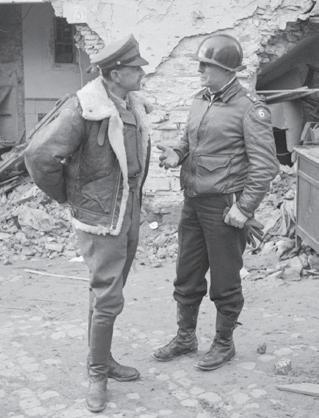
Field Marshal Alexander and US VI Corps commander General John Lucas in discussion at Anzio in early 1944. Alexander was the driving force behind the Allied assault on the Gothic Line. (© Imperial War Museum, NA 12364)
Field Marshal Harold Alexander was the mind behind the Gothic Line campaign, which he advocated as part of a wide-ranging strategic concept. The idea of an offensive through central and northern Italy to reach its eastern borders before advancing into the Balkans dated back to October 1943, although at that point it was conceived merely as a deception. The idea was not discussed until June 1944 when, following the seizure of Rome and the advance into central Italy, Allied commanders began to consider their next steps. There was a basic divergence of opinions about the strategic role of Italy among American and British commanders. The former mostly considered the Mediterranean Theatre as a diversion, the basic purpose of which was to draw reserves away from the Western and Eastern fronts. The British assigned it a fundamental strategic role, and sought to transform the deception into a real plan.
Alexander’s concept was to advance through the Gothic Line defences to the Po River and the northern Italian plain with the aim of exploiting the situation either to the north-west (towards France) or to the north-east (into Yugoslavia and Austria). The latter was more attractive; by exploiting the Ljubljana gap (the plain between the Carinthian and Dalmatian mountain ranges), Allied forces could advance along the line Gorizia–Trieste–Ljubljana–Zagreb–Maribor, and from there turn north to drive towards Graz and Vienna. This would cut off German forces in the Balkans and pave the way for an advance into the Reich from the south.
Alexander’s plan was rejected by the Combined Chiefs of Staff and by the Allied political leaders, who were themselves debating the actual value of Operation Dragoon (initially known as Anvil), the landing in southern France. This was the key issue, in spite of the fact that this plan had been approved during the November 1943 Tehran Conference both by Churchill and Roosevelt. Stalin, who preferred an invasion of northern France, was disinclined to agree. Oddly, so was General George C. Marshall, the American Chief of Army Staff, who argued against any distraction from the main theatre of war in the West.
4
Marshall was not alone in his opinion among the Allied leadership; although General Sir Henry Maitland Wilson, the commander-in-chief (CiC) in the Mediterranean, backed him, Alexander faced opposition from the Chief of Imperial General Staff General Sir Alan Brooke. His opinion on Alexander’s idea was that the Allied armies, having reached Ljubljana by September 1944, would become stuck in the area because of the terrain and bad weather. On 2 July 1944, the decision was made to launch the Dragoon landings in southern France, and on 7 July, Alexander attended a war cabinet meeting to discuss his plan with Churchill. The British Prime Minister agreed to his proposal and placed at Alexander’s disposition the maximum force available. Churchill himself made it clear how vague this promise was by remarking that breaking into the Po valley would have required just half of what had been used for the Dragoon plan.
The Gothic Line campaign thus began as a half-hearted solution, albeit with a wide-ranging strategic aim. It did not take long before this was fundamentally altered. In September 1944, as the Allied armies in Italy broke through the Gothic Line defences, the Germans withdrew from Greece and the Yugoslav Partisan leader Josip Tito, following a German attempt on his life, made a secret visit to Moscow to meet with Stalin. Not only did the developing situation alter the strategic concept of Alexander’s plan, but the close ties between Tito and the Soviets, who were now advancing into the Balkans, pushed the Gothic Line campaign into a new dimension.
The drive through the Ljubljana gap was no longer seen as a strategic solution, but as an attempt by the British to shape the political configuration of post-war Europe. As such, not only did Tito and the Soviets oppose it, rendering its goals almost impossible, but the situation also created the premises for a long-lasting post-war debate.
By the time of the Second Quebec Conference in mid-September 1944, the Gothic Line campaign had already lost much of its importance. Churchill began considering a landing at Trieste, a plan that was never fully developed. Only Alexander held to the original plan, retaining his aim of an advance into the Balkans, until spring 1945 when the Allied armies eventually broke into the Po valley plain.
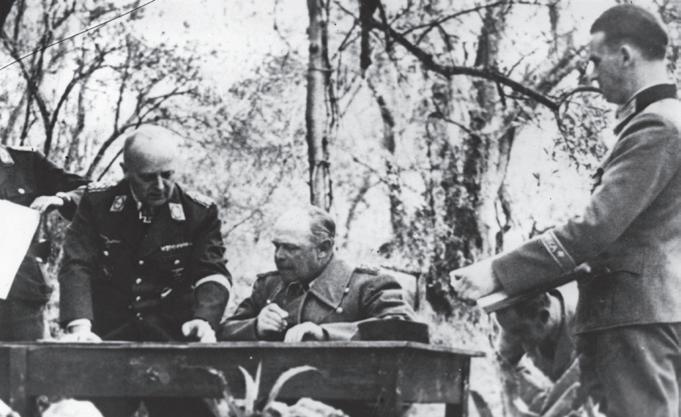
Generalfeldmarschall Albert Kesselring studies a map of the strategic situation. To his right is General Richard Heidrich, commander of 1.Fallschirmjäger-Division. (Keystone/Getty Images)
5
CHRONOLOGY
1944
4 August The plans for Operation Olive are laid down. BR Eighth Army starts regrouping.
15 August Allied landing in southern France, Operation Dragoon.
16–18 August The orders for Operation Olive are issued. BR XIII Corps is placed under the command of US Fifth Army.
25 August Start of Operation Olive. BR Eighth Army attacks the German defensive line on the Metauro River.
1 September BR Eighth Army breaches the Gothic Line. The Germans begin their withdrawal from Greece.
12–16 September Second Quebec Conference between Churchill and Roosevelt.
13 September Start of the US Fifth Army offensive to seize the Apennine mountain passes.
18 September US Fifth Army takes the Giogo Pass, breaching the Gothic Line.
21 September BR Eighth Army seizes Rimini.
22 September US Fifth Army secures the Futa Pass.
26 September As BR Eighth Army crosses the Marecchia River, breaching the Rimini Line, and US Fifth Army advances beyond the Gothic Line, General Henry Maitland Wilson issues orders to occupy Greece.
30 September Soldiers from 16.SS-Panzergrenadier-Division massacre all the inhabitants of Marzabotto, which is then destroyed.
12 October BR 4th Infantry Division and GK 3rd Mountain Brigade are ordered to prepare for transfer to Greece. Athens is seized this same day by British troops.
16 October BR Eighth Army reaches the Pisciatello River.
20 October US Fifth Army reaches Monte Grande on the way towards Imola while BR Eighth Army seizes Cesena.
23 October Feldmarschall Kesselring is injured in a car crash and is replaced by General von Vietinghoff.
6
24 October German withdrawal to the Ronco River. US 34th Infantry Division pushes to within 16km of Bologna to Monte Belmonte. General Wilson declares that the offensive cannot be sustained after 15 November.
25–26 October US II Corps’ offensive is halted first, followed by the stop imposed on BR Eighth Army by heavy rain and river flooding.
9 November BR Eighth Army seizes Forlì and advances towards Faenza.
12 November Field Marshal Alexander appeals to the Italian partisans to cease fighting during winter.
28 November Field Marshal Alexander issues orders for the final offensive towards Bologna, to begin on 7 December.
2–5 December CDN I Corps seizes Ravenna.
12 December Field Marshal Alexander is appointed Supreme Allied Commander in the Mediterranean, replacing General Wilson.
16 December BR Eighth Army seizes Faenza. Allied Armies in Italy HQ is renamed 15th Army Group. General Clark takes over from Alexander. Beginning of the German offensive in the Ardennes.
26–31 December German attack on the Senio River with Italian troops in support (Operation Wintergewitter) against US 92nd Infantry Division.
30 December Field Marshal Alexander halts the offensive, ending the Gothic Line campaign.
1945
4–11 February US 92nd Infantry Division attacks on the Senio and along the Tyrrhenian coast.
19 February US 10th Mountain Division and BRZ 1st FEB launch Operation Encore, the final attack before the pause induced by winter.
7
OPPOSING COMMANDERS
ALLIED
The BR Eighth Army commander General Sir Oliver Leese (right) talks to the commander of CDN I Corps Lieutenant-General Harry Crerar (left). (Keystone/Hulton Archive/Getty Images)
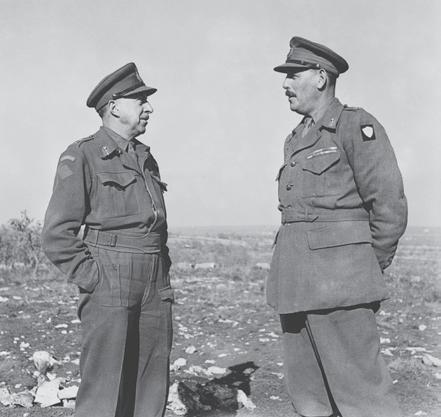
Field Marshal Sir Harold Alexander, Earl of Tunis was born in 1891 into the Irish peerage. He was commissioned in 1910 and served in World War I, being wounded at Ypres and earning a Military Cross and a Distinguished Service Order (DSO). After commanding the 4th Guards Brigade and attending the Staff College and the Imperial Defence College, he served in Turkey and Gibraltar. Promoted brigadier in 1935, Alexander was posted to India where he fought local tribesmen until promoted to major-general in 1937, becoming at 46 the youngest general in the British Army. Serving in France as a divisional commander with the British Expeditionary Force in 1940, Alexander distinguished himself at Dunkirk. Placed in command of BR I Corps, in December 1940 he was promoted lieutenant-general. After heading up Southern Command in Britain and being promoted full general in January 1942 (when he was also knighted), Alexander was posted to Burma, emerging untarnished from the retreat before the Japanese. In August 1942, he replaced Claude Auchinleck as Commander-in-Chief Middle East, with Bernard Montgomery under his command. In February 1943, Alexander became commander of Allied 18th Army Group in Tunisia and, being also General Eisenhower’s deputy, from July commanded the land forces in the invasion of Sicily and Italy. Appointed Supreme Allied Commander in the Mediterranean Theatre on 12 December 1944, Alexander was also retroactively promoted to field marshal. After handing over command in October 1945, Alexander became Governor General of Canada before joining Churchill’s cabinet in 1952 as Minister of Defence. He retired in 1954, and died in 1969.
Field Marshal Sir Henry Maitland ‘Jumbo’ Wilson was born in 1881. He served in South Africa, Egypt, India and in World War I, being appointed General in Command of the British Forces in Egypt in June 1939. Wilson subsequently led, with little success, the Allied forces in Greece and, with distinction, those fighting in Iraq and Syria. Made head of the Iraq
8
and Persia Command, in February 1943 Wilson was appointed Commanderin-Chief Middle East, eventually succeeding Eisenhower as Supreme Allied Commander in the Mediterranean Theatre in January 1944. In December 1944, Wilson was promoted to field marshal and sent to Washington to head the British Chiefs of Staff Mission. He retired shortly after his return back home in 1947, and died in 1964.
Replacing Montgomery in command of BR Eighth Army in December 1943, Lieutenant-General Sir Oliver Leese completed a career path started in September 1942 when he took over command of BR XXX Corps in North Africa. Born in 1894, Leese was commissioned in 1914 and during World War I was wounded three times, mentioned twice in dispatches and won a DSO. After attending the Staff College at Camberley in 1927–28, as a major he served at the War Office before being posted to India. Sent to France in 1940, Leese impressed Montgomery with his performance at Dunkirk. After various training postings in Britain, in 1941 Leese was promoted major-general and given command of BR XXX Corps, soon becoming Montgomery’s favourite corps commander. Finding it hard to adapt to the new theatre of operations, in October 1944 Leese was posted to South-East Asia where his performance in Burma eventually led to his dismissal in April 1945. He retired from the army in 1946, and died in 1978.
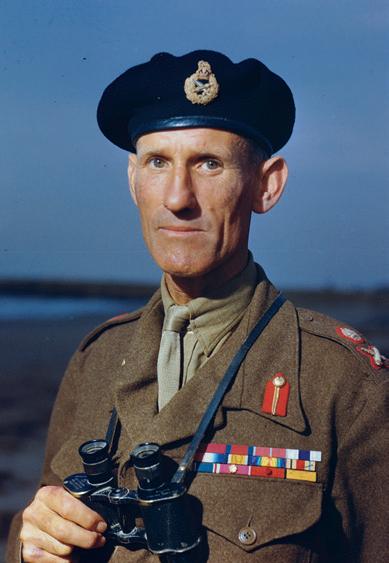
On 1 October 1944, General Sir Richard McCreery replaced Leese as commander of BR Eighth Army. McCreery was born 1898 and commissioned in 1915. Severely wounded during the war and awarded the Military Cross, McCreery attended the Staff College in 1928–29 and was sent to France in 1939, where he took command of BR 2nd Armoured Brigade. After winning a DSO for his action in France, McCreery was promoted major-general and given command of BR 8th Armoured Division, before being sent to Cairo in March 1941 to advise on the use of armoured forces. Here, after his dismissal by Auchinleck, he became Alexander’s chief of staff. Knighted and promoted lieutenant-general in 1943, McCreery was given command of BR X Corps before the landing at Salerno, and was then given command of BR Eighth Army until 1945. Commander of the occupation forces in Austria, he was promoted to full general in 1948. He retired in 1949, and died in 1967.
As commander of BR V Corps, General Sir Charles Keightley was at the forefront of BR Eighth Army during the Gothic Line campaign. Born in 1901 and commissioned in 1921, he served in the Middle East, India and Britain before joining the 1st Armoured Division in France in 1940 as a staff officer. Promoted major-general in 1941, in May 1942 he was given command of BR 6th Armoured Division, which he led during the Tunisian campaign. Promoted lieutenantgeneral in 1944, that August he was chosen by Leese to take over command of BR V Corps, which he led until 1945. After the war Keightley held various positions including commanding the land forces in the 1956 Suez expedition. He retired from the army in 1958 and was Governor of Gibraltar until 1962. He died in 1974.
9
Lieutenant-General Sir Richard McCreery, commander of BR Eighth Army from 1 October 1944. (© Imperial War Museum, TR 2377)
Lieutenant-General Eedson L.M. Burns, commander of CDN V Corps, was the prominent non-British Eighth Army commander during the campaign. Born in 1897 near Montreal, he was commissioned in 1915 and served during World War I as a staff officer on the Western Front, where he was wounded twice and awarded a Military Cross. After attending the Imperial Defence College in 1938–39, he went to Britain with CDN 1st Division before becoming Harry Crerar’s assistant deputy. Made a temporary brigadier in February 1941, six months later he relinquished the rank and returned to Canada and held backwater posts. Promoted again to temporary brigadier one year later, he was promoted major-general in May 1943 and eventually sent to Italy in January 1944 to exert battle command at the head of CDN 5th Armoured Division. In March 1944, now acting lieutenantgeneral, he took command of CDN I Corps which he led with distinction, earning a DSO in September. Clashes with other commanders led to his removal on 10 November, Burns being sent to North-West Europe in charge of the CDN First Army rear echelon. After the war, he headed the Department of Veteran Affairs and formed part of the United Nations’ peacekeeping mission following the 1948 Arab–Israeli War, and was promoted lieutenantgeneral in 1958. Burns died in 1985.
General Charles Foulkes replaced Burns as head of CDN I Corps on 10 November 1944. He was born in Britain in 1903 into a poor family, which emigrated to Canada. A provisional lieutenant in 1923, after his commission in 1926 he served in the Permanent Force. A general staff officer from 1934, he had staff training in Britain until 1936 before returning home in 1939. Promoted brigadier in August 1942, Foulkes fought in France at the head of CDN 2nd Division. He was promoted major-general in January 1944, then lieutenant-general in November when he took over CDN I Corps. He served as Chief of the General Staff after the war, and was promoted full general in 1951 when he was appointed Chairman of the Chief of Staff. Foulkes retired in 1960, and died in 1969.
Probably America’s most controversial commander, General Mark Wayne Clark was born in Madison Barracks, New York, in 1896. Commissioned in 1917, he was wounded while serving in France in 1918. After the war, he served in various staff and training roles, which earned him the reputation of a good trainer of men. Promoted brigadier-general in 1941, in January the following year Clark was appointed Deputy Chief of Staff of the Army Ground Forces, rising to Chief of Staff in May. In April 1942, Clark was promoted major-general, becoming the youngest general in the US Army. Sent to Britain two months later as commander of US II Corps, he worked with General Eisenhower on the feasibility of an Allied landing in Europe. In October, as Eisenhower’s deputy, Clark was assigned to the Mediterranean Theatre, where he relinquished command of US II Corps, and was promoted to lieutenant-general in November 1942. Given command of the newly created US Fifth Army in January 1943, Clark had his baptism of fire in September during the Salerno landings, the first of a series of battles US Fifth Army fought in Italy under his command. Often resented for his rapid career progress, which many attributed to his friendships with Eisenhower and Marshall, Clark was criticized for his handling of crucial battles such as Cassino, Anzio and the May 1944 breakthrough to Rome. Critical of the Dragoon plan, Clark led US Fifth Army during the Gothic Line campaign until, on 16 December 1944, he replaced Alexander as Supreme Allied
10
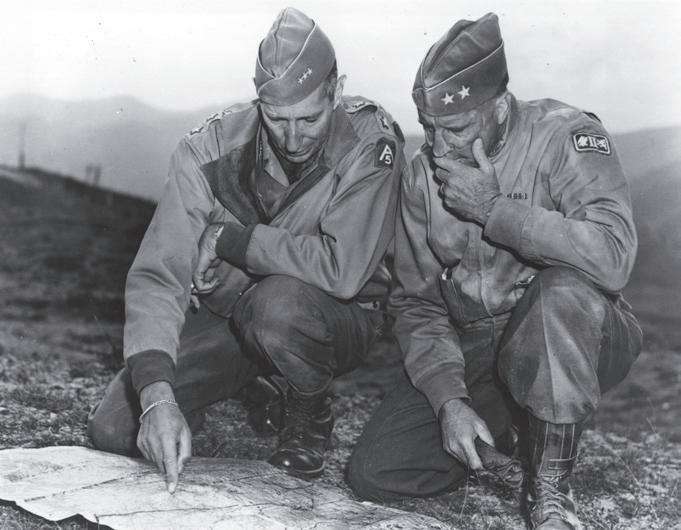
Commander in Italy as CiC of the now renamed 15th Army Group. Promoted full general in March 1945, after the Allied victory Clark commanded US Forces in Austria before serving as deputy to the Secretary of State. In 1952, Clark led the United Nations Forces in Korea, a position he held until 1953, when he retired. He served as president of The Citadel military college in Charleston, South Carolina, until 1965, and died in 1984.
General Lucian K. Truscott, Jr took command of US Fifth Army in December 1944. Born in Chatfield, Texas in 1895, Truscott enlisted in 1917, and received officer training and a commission in October that same year. During the war he remained in the United States, serving in both cavalry and staff assignments until promoted brigadier-general in June 1942. Assigned to Lord Mountbatten’s Combined Staff, Truscott returned to the United States where in November 1942 he was promoted major-general, taking part in the Operation Torch landings. Given command of US 3rd Infantry Division in March 1943 – one of America’s youngest divisional commanders – Truscott fought in Sicily and at Salerno and Anzio before being given command of US VI Corps in February 1944. Following the landings in southern France, in September 1944 Truscott was given command of US Fifteenth Army, an administrative command, until taking over as head of US Fifth Army from Clark. He led US Third Army from October 1945, and retired from the army in 1947. From 1951, Truscott worked as an adviser to the CIA, until his retirement in 1958. He died in 1965.
Major-General Geoffrey Keyes commanded US II Corps, which spearheaded US Fifth Army’s offensive against the Gothic Line. He was born in 1888 at Fort Bayard, New Mexico. Commissioned in 1913, Keyes fought in Mexico and was a language instructor at West Point before being posted to Panama after World War I. A brigadier-general by 1942, that same year Keyes was promoted major-general and given command of US 9th Armoured Division. He took part in the Torch landings and the Sicilian campaign as
US General Mark Clark, soon to become commander of 15th Army Group in Italy, in discussion with US II Corps commander General Geoffrey Keyes in November 1944. (Keystone/Getty Images)
11
Patton’s deputy. In September 1943, Keyes took command of US II Corps, a position he held until the end of the war. He then led the US Seventh and Third armies until his retirement in 1950. He died in 1967.
The US IV Corps was commanded by Lieutenant-General Willis Dale Crittenberger . He was born in 1890 in Baltimore, Maryland, and commissioned in 1913. After attending the General Staff College at Fort Leavenworth and the United States Army War College in Washington, Crittenberger served as a cavalry staff officer until appointed chief of staff of US 1st Armored Division, which he commanded from February 1942, following his promotion to brigadier-general. In August, following his promotion to major-general, he was given command of US III Armored Corps. Redesignated US XIX Corps, it relocated to Britain in January 1944. Crittenberger took command of US IV Corps in Italy in March 1944. Deployed at the front from June 1944, he led this corps until the end of the war. Promoted (temporary) lieutenant-general in June 1946, after the war Crittenberger held several commands until his retirement in 1952, which was followed by a period as adviser to President Eisenhower. He died in 1980.
AXIS
Generalfeldmarschall Albert Kesselring is the German commander most closely associated with the Italian campaign. Born in 1893 in Bayreuth, after his commission in 1906 he served during World War I as an aide to various Bavarian artillery commanders before being promoted captain and serving as staff officer at divisional and corps level. After the war he joined the Reichswehr, serving in the training department of the War Ministry. In October 1934, Kesselring was promoted to Oberst and joined the newly formed Luftwaffe, for which he received the brevet of pilot. Appointed chief of the Luftwaffe Defence Department, in 1936 he was promoted to Generalleutnant and appointed as Luftwaffe Chief of Staff. Promoted to General der Flieger in 1937, the following year Kesselring was given command of Luftflotte 1, which he led during the 1939 Polish campaign, earning the Knight’s Cross. He took command of Luftflotte 2 in January 1940, and fought in the West and in the Battle of Britain, being promoted to Generalfeldmarschall in July that year. After a brief period on the Eastern Front, in December 1941 Kesselring was appointed Oberbefehlshaber Süd (CiC South) for Luftwaffe units in the Mediterranean, and commanded ground units during the campaign in North Africa. In November 1943, Hitler chose Kesselring instead of Rommel to take over command in Italy, from whence he was in charge of German forces in this theatre until his appointment as Oberbefehlshaber West on 11 March 1945. In 1947, Kesselring faced trial for his involvement in the Ardeatine caves massacre in Rome. The death sentence he received was commuted to life imprisonment – from which he was released in 1952. Still a controversial figure, he died in 1960.
On 23 October 1944, Kesselring’s car collided with a towed gun. Invalided until 15 January 1945, Kesselring was replaced by Generaloberst Heinrich von Vietinghoff-Scheel. The latter was born in 1887 and commissioned in 1907. During World War I, von Vietinghoff earned the Iron Cross and promotion to Hauptmann before joining the Reichswehr. Between 1920 and
12
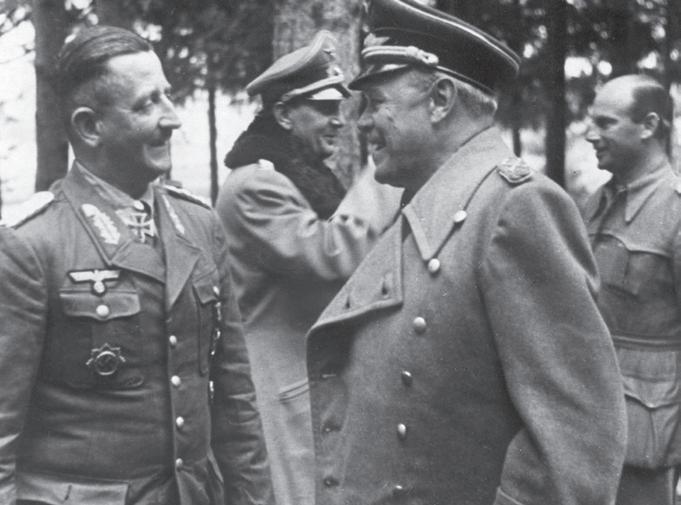
1924, he served in various staff positions, joining the War Ministry in 1929. After commanding an infantry battalion in 1931, in 1933 he was promoted to Oberst, and two years later was given command of the newly formed 1.Schützen-Brigade. Promoted to Generalmajor in 1936, he served with the Wehrmacht’s Inspectorate of Armoured and Motorized Troops until 1938, when he was appointed to command 5.Panzer-Division. Having fought in Poland, he commanded XIII.Armee-Korps during the 1940 French campaign. Promoted to General der Panzertruppe in 1940 and awarded the Knight’s Cross, in November 1940 he took command of XXXXVI.Armee-Korps, which he led in the Balkans and on the Eastern Front. In December 1942, von Vietinghoff took command of AOK 15 in France, and, having been moved to the reserve for health reasons, on 15 August 1943 he was appointed to lead AOK 10 in Italy. After Kesselring’s return, von Vietinghoff became commander of Heeresgruppe Kurland before returning to Italy in March 1945, replacing Kesselring once again. He oversaw the surrender of German forces in Italy the following month. Von Vietinghoff died in 1952.
General der Panzertruppe Joachim Lemelsen commanded AOK 10. Born in 1888 in Berlin and commissioned in 1908, he served in World War I as an artillery officer, joining the Reichswehr at its conclusion. After holding several commands, in 1935 Lemelsen served at the War School in Dresden. Promoted to Generalmajor in 1937, the following year he became commander of 29.Infanterie-Division. He fought in Poland (which earned him promotion to Generalleutnant) and France. In May 1940, Lemelsen was made commander of 5.Panzer-Division, and that August was promoted to General der Artillerie (later changed to General der Panzertruppe ) and was given command of XXXXVII.Armee-Korps on the Eastern Front. In September 1943, after being awarded the Oak Leaves to the Knight’s Cross,
Generalfeldmarschall
Kesselring (second from right), commander of Heeresgruppe C in Italy, in discussion with General Heinrich von Vietinghoff (far left), commander of AOK 10 and his temporary successor. (Narodowe Archiwum Cyfrowe, Public Domain)
General Joachim Lemelsen was the commander of AOK 14 until he replaced General von Vietinghoff in command of AOK 10 in November 1944. (Narodowe Archiwum Cyfrowe, Public Domain)
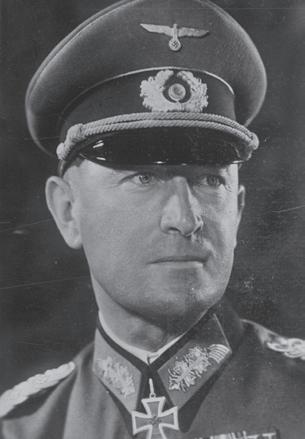
13
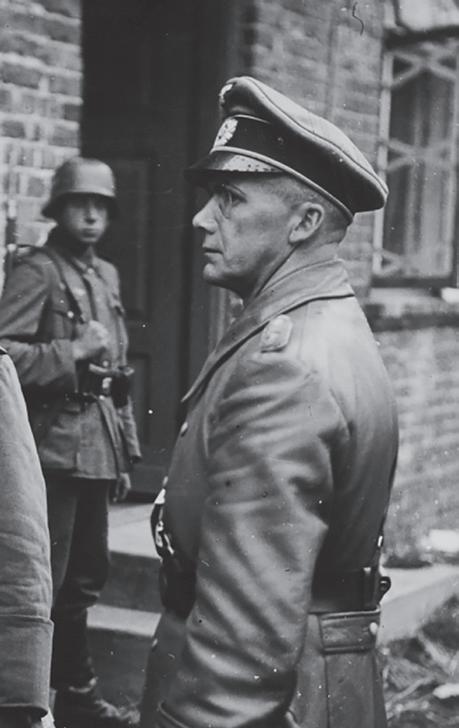
General Traugott Herr was commander of LXXVI.PanzerKorps from June 1943 to November 1944, when he took command of AOK 14. (GHWK –Haus der Wannsee-Konferenz Gedenk- und Bildungsstätte, CC BY 4.0)
he was sent to command LXXXVII.ArmeeKorps in Italy. He led AOK 14 from June 1944, and that October replaced von Vietinghoff as head of AOK 10 before returning to AOK 14 in February 1945. Lemelsen died in 1954.
Lemelsen’s replacement at AOK 14 was General der Panzertruppe Traugott Herr, who until then had led LXXVI.Panzer-Korps. Born in 1890 and commissioned in 1912, Herr was severely wounded during World War I, after which he joined the Reichswehr. He headed a motorized infantry regiment in 1939–40, and in October 1941 was awarded the Knight’s Cross. He commanded the 13.Panzer-Division, and was promoted to Generalmajor in April 1942. Wounded again in October, in December 1942 he was promoted to Generalleutnant . In June 1943 Herr took command of LXXVI. Panzer-Korps, and fought in Italy from then on. Appointed to command AOK 14 on 24 November 1944, on 15 February 1945 he took over AOK 10, replacing Lemelsen. He died in 1976.
General der Artillerie Heinz Ziegler was born 1894 and commissioned in 1914. He fought in World War I, after which he joined the Reichswehr, eventually becoming, in 1939, Commander of the Reserve Army. Promoted to Generalmajor in January 1942, he fought in North Africa and, after various staff positions, took command of AOK 14 in October 1944. He relinquished this command on 22 November that same year, and retired from active duty. Ziegler died in 1972.
Two corps commanders are worthy of mention. General der Panzertruppe Fridolin von Senger und Etterlin, born 1891 and commissioned in 1914, was promoted to Generalmajor in September 1941. The commander of 17.Panzer-Division from October 1942, he fought on the Eastern Front, and was promoted to Generalleutnant in May 1943. Sent to Sicily in June 1943, he fought in Italy, taking command of XIV.Panzer-Korps in October and holding this until the surrender. Von Senger died in 1963. General der Fallschirmtruppe Alfred Schlemm, born in 1894 and commissioned in 1914, was an artillery officer who fought in World War I and served in the Reichswehr before joining the Luftwaffe in 1938. A staff officer promoted to Generalmajor in 1940, in 1942 he took command of a temporary unit on the Eastern Front, being promoted to Generalleutnant in June and given command of 1.Flieger Division. Thereafter, he commanded II.LuftwaffenFeld-Korps, before being promoted in January 1943 to General der Flieger (later General der Fallschirmtruppe). The corps’ entire staff was sent to Italy and the unit renamed I.Fallschirm-Korps. After relinquishing command in November 1944 to General Heidrich, Schlemm was given command of 1.Fallschirm-Armee, and was wounded in March 1945. He died in 1986.
14
OPPOSING FORCES
ALLIED
In August 1944, the Allied armies in Italy were 1.5 million strong with 20 divisions, five of which were armoured. Although an impressive force, it suffered from several weaknesses. The Dragoon operation, which took three American and four French divisions from the Italian theatre in July, affected US Fifth Army and its capabilities. In September, it was left with four American infantry and one armoured division, along with one South African division and BR XIII Corps. However, given the different standards and practices in use by the British and the American armies, it was impossible to interchange these units in the same area, which reduced US Fifth Army’s actual fighting power.
The four American infantry divisions were given the task of breaking through the Gothic Line, while, to the east, US IV Corps was deployed along the Arno River covering 100km with the South African armoured division and Task Force (TF) 45. The latter was formed on 26 July 1944 from the 45th
15
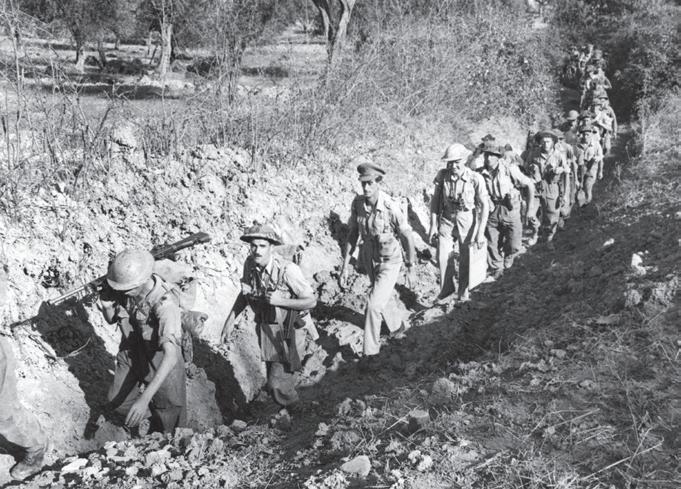
A column of infantrymen from British Eighth Army advances along an entrenched pathway on the Gothic Line defences during Operation Olive in September 1944. (BIPPA/ Keystone/Hulton Archive/ Getty Images)
(European/FPG/ Archive Photos/Getty Images)
Anti-Aircraft Artillery (AAA) Brigade in order to relieve US 34th Infantry Division. Initially made up of the 91st and 107th AAA groups, retrained for use as infantry, the task force had the 2nd Armored Group attached as well as further units (including British and Italian) over time. This impromptu solution was also made necessary by the simultaneous reorganization of US 1st Armored Division, and ended with the division being reduced to twothirds of its original strength.
The BR XIII Corps, comprising one British infantry, one armoured and one Indian division, was deployed east of Florence, with a separate mission. This corps, plus several newly arrived divisions, increased US Fifth Army’s strength from 170,357 on 16 August 1944 to 331,483 on 15 December 1944 (having peaked at 379,588 on 4 June 1944); it would shrink again to 266,513 on 31 March 1945 following the departure of the British units. It is worth noting that American troop strength remained pretty much the same in spite of replacements and reinforcements: 147,014 in August 1944 (having stood at 231,306 on 4 June 1944), 144,476 in December 1944, and 176,392 in March 1945.
This reveals both how hard US Fifth Army fought in the Apennines, and also its weaknesses. The brunt of the fighting fell, almost entirely, on the infantry, particularly at battalion and company level. Although most of the US infantry division’s strength (some 14,000) derived from its three infantry regiments (each 3,200 strong), the number of infantrymen actually fighting was quite limited, and losses hit them hardest. This required each division to have a period of rest and recovery before returning to the front, but, since there were no reserves, US Fifth Army was unable to sustain a high tempo in its offensives.
Even though the number of American replacements sent to US Fifth Army exceeded the losses incurred (19,997 men between 15 August and 15 December 1944, 18,958 between 16 December 1944 and 31 March 1945), the effects of this intake became manifest only in February and March 1945. By then, the American divisions had been reorganized, each
16
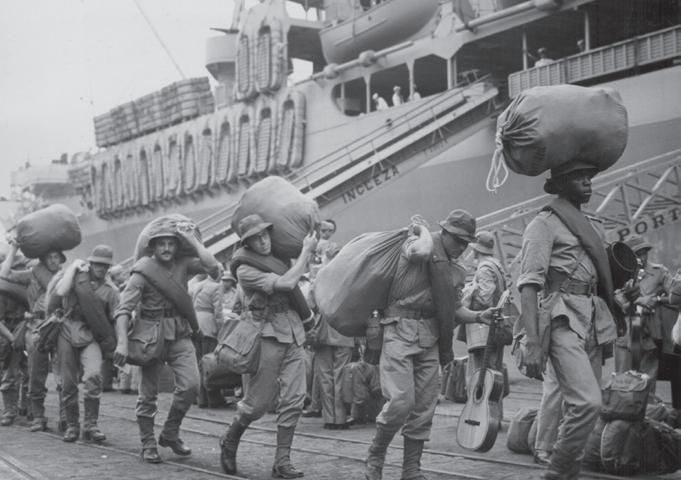
Soldiers of the 1st Division of the Força Expedicionária Brasileira (FEB) arriving in Italy, July 1944.
with 4,500 men above established strength. Also, since losses particularly affected officers and NCOs, necessitating promotion from the ranks, in February 1945 US Fifth Army created an officer cadet school. By then, US Fifth Army was fully capable of carrying out a major offensive.
It is worth noting that US Fifth Army was the only army to receive reinforcements. The 6th Regiment of the 1a Divisão de Infantaria Expedicionária, the army component of the Brazilian Força Expedicionária Brasileira (1st FEB), arrived in Italy in July 1944, and was subsequently deployed to the US IV Corps sector in mid-September. The division, which conformed to American Tables of Organization and Establishment (TOEs), arrived in Italy lacking adequate weapons and training, which greatly delayed its deployment to the front and its effectiveness. The 1st and 11th regiments, which arrived in October 1944, brought the total strength, on 15 December that year, to 13,000 (increasing to 14,230 on 15 March 1945), but the division was not fully operational until 1945.
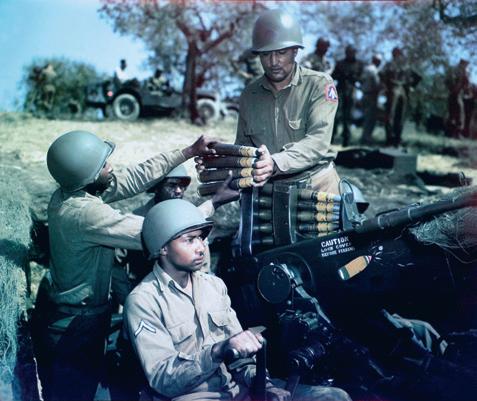
The US 92nd ‘Buffalo’ Infantry Division, made up of African-American soldiers, only included 2 per cent of all the African-American soldiers in the US Army. Recruitment of African-American soldiers began with the 16 September 1940 Selective Service Act. However, US 92nd Division, which had been formed in 1917 and fought in World War I, was reactivated at Fort McClellan, Alabama on 15 October 1942. Its 370th Regimental Combat Team (RCT) arrived in Italy at the end of August and, after being attached to the 1st Armored Division, formed TF 92. Following the arrival of the rest of the division in October–November, the 92nd was deployed to relieve TF 45, and suffered in the December 1944 German counter-attack. The division’s poor early performance was attributed to inadequate leadership and training, with the result that it was reorganized in March and April 1945. Among the 92nd’s units were the African-American 366th Infantry Regiment, the 473rd RCT and the Nisei 442nd InfantryRegiment.
Well trained and well equipped, US 10th Mountain Division was activated at Camp Hale, Colorado on 15 July 1942. Its 86th Mountain Regiment first arrived in Italy on 22 December 1944. The division was deployed to the front in January 1945, and soon distinguished itself in the February–March offensives that concluded the Gothic Line campaign.
With a total of 11 divisions BR Eighth Army was a truly cosmopolitan force, with British (three infantry, one armoured), New Zealand (one infantry), Indian (two infantry), Canadian (one infantry, one armoured) and Polish (two infantry) divisions. Still, they were perfectly integrated thanks to the common standards and practices learnt by British, Commonwealth and Imperial troops during troop and staff training. Armour and firepower were its main strengths; on the eve of the start of the offensive, BR Eighth Army deployed 1,089 Sherman and 187 Churchill tanks, plus 287 light Stuarts, along with 1,055 anti-tank (149 of which were M10 self-propelled) and 1,222 artillery guns.
African-American soldiers also served in Anti-Aircraft Artillery units, part of which would form US TF 45. These men from US 92nd Infantry Division are setting up a Bofors 40mm AA gun. (Galerie Bilderwelt/ Getty Images)
17
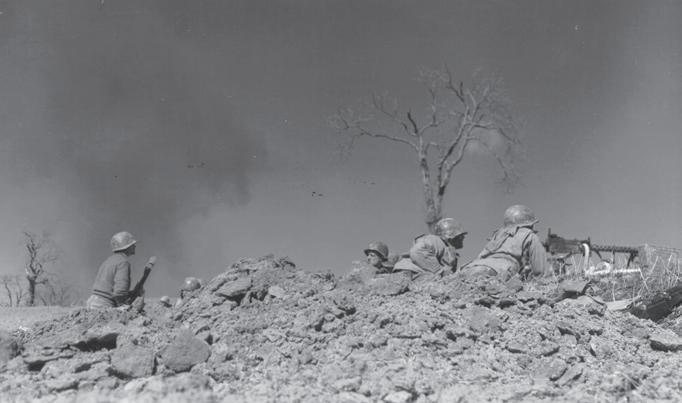
A group of infantrymen from the US 10th Mountain Division fires at the enemy. The man on the left still has the cover on his M1 Garand rifle muzzle. (US Army)
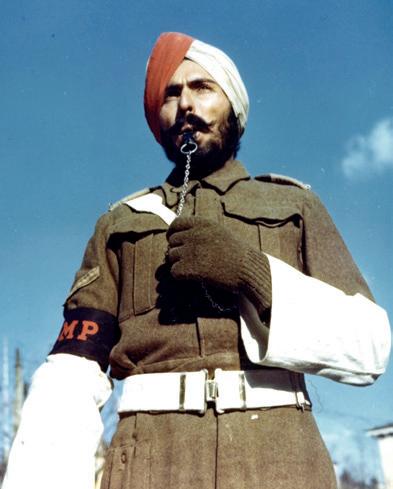
Lance-Corporal Sawaran
Singh, a military policeman with the IND 8th Division, directing traffic in Italy. The often neglected contribution of the Indian Army to the Italian campaign was substantial. (PhotoQuest/Getty Images)
BR Eighth Army’s weakness was its shortage of infantry. Even though in August 1944, 64 of its 71 infantry battalions were at full strength, the British Army estimated that within a month there would be a deficit of 21,000 soldiers in its units alone. The infantry situation was already critical, and steps had been taken. In July, the Canadians decided to convert AAA and reconnaissance units into infantry, forming the 12th Canadian Infantry Brigade, including the Lanark & Renfrew Scots Regiment (formerly an AAA unit), the motorized Westminster Regiment and the 4th Princess Louise’s Dragoon Guards (a reconnaissance unit). Even though CDN I Corps could rely on the manpower pool of its relatively large support units, eventually it had to resort to using light forces to deal with the shortage of replacements.
This shortage was particularly acute for the Polish Corps; it was missing one infantry brigade, and made good the losses suffered at Cassino with 4,000 men taken from service and HQ units. Likewise, the 2nd New Zealand Division was missing one infantry brigade, and only the Indian divisions, relying on an efficient replacement system linked directly to India, were able to maintain their infantry battalions at an average strength of 800 men each.
The British Army suffered the most, for various reasons. The conversion of AAA troops into infantry units began in June with a first batch of 3,400 men, followed by 5,000 in July, 2,000 in August and 6,600 in September, for a rough total of 17,000. Since practically no replacements were sent to Italy, British units soon faced a serious shortage of infantry, caused by losses and desertions. This highlighted the British Army’s manpower crisis, made clear by front-line infantry units’ increasing overall losses as the offensive progressed. A total of 628 deserters in August increased to 944 in September, falling to 905 in October, before rising again to 1,200 in November, 1,211 in December and 1,127 in January 1945. Some infantry divisions were particularly affected, notably the BR 46th (1,059
18
desertions between August and December), BR 56th (990 in the same period) and BR 78th (927 between October and December). It was soon clear that measures were needed to reduce the number of desertions.
On 22 September, Alexander accepted his staff’s proposal to reduce the number of rifle companies from four to three in each infantry battalion, reducing their strength from 845 to 730. Furthermore, BR 1st Armoured Division was broken up and practically disbanded, its BR 18th Infantry Brigade being reduced to cadre and its BR 2nd Armoured Brigade turned into an independent unit. The BR 56th Infantry Division was spared the same fate, because the South Africans provided a second infantry brigade for the Armoured Division, freeing up BR 24th Guards Brigade. Nevertheless, BR 168th Brigade from BR 56th Division was also reduced to cadre, and replaced by BR 43rd Gurkha Lorried Infantry Brigade to add manpower to BR 56th Division.
A last factor was the unexpected shortage of artillery ammunition afflicting BR Eighth Army in the later stages of the offensive, due to mistaken calculations and insufficient supply. This was at a time when US Fifth Army was able to fire an average of 12,000 rounds per day during the offensive, and even the Germans could reply with an average of 400–500. This was the final straw in the decision to transfer units from Italy. Between October 1944 and January 1945, one British and one Indian division were sent to Greece (along with GK 3rd Mountain Brigade), a country by then facing civil war. BR Eighth Army was reduced in size in March 1945 when CDN I Corps and one British infantry brigade were transferred to the Western Front, heralding the end of the Gothic Line campaign.
AXIS
The idea of a fortified position running along the Italian northern Apennines originated with Generalfeldmarschall Erwin Rommel who, as commander of Heeresgruppe B in northern Italy, outlined it to Hitler. Rommel’s strategy envisaged a withdrawal from southern and central Italy in order to gain time and build the line, which, exploiting the natural barrier of the Apennine
19
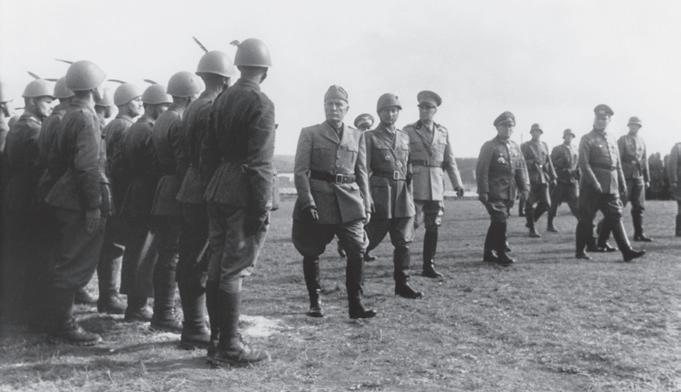
Mussolini inspecting troops of the 4th Mountain Division ‘Monte Rosa’ training in Germany, in mid-1944. Four Italian divisions would be deployed on the Gothic Line. The Monte Rosa arrived at the front in late October, and fought against the Força Expedicionária Brasileira in the Serchio area. (ullstein bild via Getty Images)
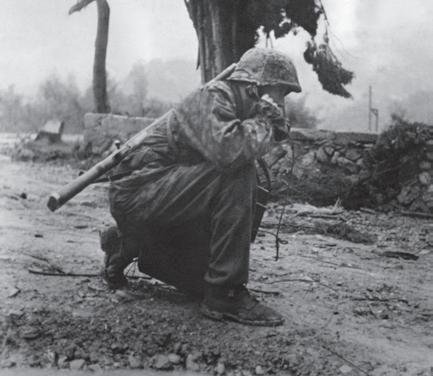
A Waffen-SS soldier receiving orders by field telephone in northern Italy. The only Waffen-SS unit in Italy was 16.SS-Panzergrenadier-Division ‘Reichsführer-SS’, which earned a sinister reputation for crimes committed against civilians. (ullstein bild via Getty Images)
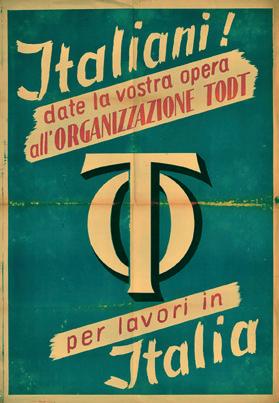
An Organisation Todt (OT) propaganda poster exhorting Italian workers to donate their labour to construction projects in Italy. The initial construction work of the Gothic Line fortifications was undertaken by the OT. (Public Domain)
mountain range, would enable it to halt the Allied advance. The Apennin Stellung (Apennine Position) was to be the last line of defence in Italy before the Alps and the German border. Taking command in Italy in November 1943, Kesselring maintained the idea of the last line of defence, but focused on defending the positions in central Italy for as long as possible.
Unsurprisingly, the development of the Apennin Stellung, renamed the Goten Linie (Gothic Line) in May 1944, proceeded at a slow pace, given the changes in command in the area where it was to be built: AOK 14 (from November 1943) and Armee Gruppe von Zangen (from February 1944). Reconnaissance for the building of fortified positions began in September 1943, with construction commencing two months later, until in February 1944 two engineer commands took over the whole project. It was soon clear that manpower resources, mostly provided by Organisation Todt using Italian workers, were insufficient and inadequate. Yet by March 1944, some 400 fortified fighting positions had been built, mostly in the mountainous eastern area. On 2 June, Hitler ordered an acceleration in the construction of the Gothic Line, focusing on the western area, where the terrain was less suitable for defence.
On 15 June, the Gothic Line was officially renamed the Grüne Linie (Green Line), and on 5 July, the withdrawing AOK 10 and AOK 14 took over the construction of its fortifications. It was soon clear that the Gothic, or Green, Line had many weaknesses. Mistakes were made from the outset, when its future defensive positions were located using reconnaissance from the south. As a result, the various positions, or strongpoints, were not connected to each other, especially in the mountainous areas where troops were required to move downhill and up again to shift from one position to another. Another issue was the shortage of shelters for artillery. It also became clear that the defensive positions mostly focused on the areas best suited for defence, resulting in the less suitable ones remaining undefended.
The major issue was the lack of depth in the line. Only in a few places did strongpoints stretch back to cover a relatively large area, but behind them there was nothing. As a result, on 5 July, Kesselring ordered a reconnoitring of the area in order to construct a second defensive line running between 15 and 40km behind the Grüne Linie. What was to be known as Grüne (Green) II was in fact a series of strongpoints which did not form an actual defensive line. The same applied to the subsequent defensive lines developed by the Germans, which in many cases were only present on maps.
A closer look at the Gothic Line defences in the AOK 10 area in August 1944 shows that they mostly consisted of earthworks, offering little chance of prolonged resistance. AOK 10 reported the availability of only ten strongpoints plus two under construction, with 2,375 machine-gun nests plus 272 others still under construction. However, only 16 machine-gun nests were fortified, and only four of the famous ‘Panther turret’ positions had been
20
completed, with 18 more on the way. Mines were also scarce, with just 72,000 anti-tank T-mines being laid, along with 23,000 anti-personnel S-mines.
German resistance eventually owed more to the availability of forces rather than the use of defensive positions. It is worth noting that, in spite of misconceptions, the Italian front had not been strengthened since the summer of 1944. On 15 August, Heeresgruppe C had a total of 27 divisions under its command, rising to 30 one month later. The breakdown included one Panzer division and only three Panzergrenadier divisions, two having been transferred to the Western Front. The actual increase was down to two second-rate infantry divisions withdrawing from France to Italy, to the transfer of one division from the Balkans and the arrival in Italy of two Italian divisions trained in Germany and rated fit for anti-partisan duties only. Throughout the Gothic Line campaign until December 1944, Heeresgruppe C had between 29 and 30 divisions which, other than the single Panzer and the three Panzergrenadier ones, included two Fallschirmjäger divisions and two to four Italian ones, its infantry divisions shrinking from 22 to 19.
Available data show that the total strength of Heeresgruppe C’s divisions remained more or less at the same level, rising from 258,721 on 1 July (96,288 of whom were combat effective) to 273,697 (of whom 109,887 were combat effective) on 1 November 1944, with basically the same divisions. These figures also show that replacements were regularly sent to Italy, which enabled the divisions to remain up to strength, in spite of losses. The same applied to armoured vehicles and anti-tank guns.
In late July, Heeresgruppe C reported the availability of 263 tanks (136 of which were serviceable; the figures include 56 PzKpfw III tanks all deployed on the north-eastern border), 192 (83 serviceable) Sturmgeschütz, 167 (96 serviceable) Italian self-propelled (SP) guns and 498 (466 serviceable) PAK guns. The 118 PzKpfw IV tanks rose to 166 in November before shrinking to 117 in December, while PzKpfw V ‘Panther’ numbers fell from 39 in November to 32 in December 1944. Available Tiger tanks shrank from 60 in July to 36 in November and December. Sturmgeschütz numbers increased to 191 in November and to 251 in December, while Italian SP gun numbers decreased to 148 in December. PAK gun numbers also increased to 507 in December.
On 20 August, AOK 10 reported the availability of 81 infantry battalions, of which only 23 were at strength (containing 400 men or more), with the remaining 23 at medium strength, 26 at average strength (fewer than 300 men) and nine rated as weak (200 men or fewer). AOK 10 also had 51 Sturmgeschütz, 164 PAK and 351 field artillery guns, numbers that paled in comparison to those in BR Eighth Army. However, the Germans managed their reserves well and were able to keep their units up to strength.
21
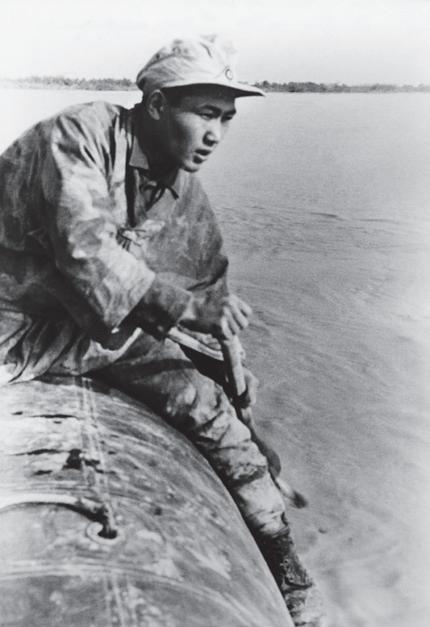
A Turcoman soldier training on a rubber boat. The 162.Infanterie-Division was largely composed of either volunteers or drafted POWs from Turkmenistan. (ullstein bild via Getty Images)
ORDERS OF BATTLE, 25 AUGUST 1944
ALLIED
Supreme Allied Commander, Mediterranean Theatre (General Sir Henry Maitland Wilson)
Allied Armies in Italy (Field Marshal Sir Harold Alexander)
BR EIGHTH ARMY
(Lieutenant-General Sir Oliver Leese, from 1 October 1944 Lieutenant-General Sir Richard McCreery)
Army reserves
NZ 2nd Infantry Division (Lieutenant-General Sir Bernard Freyberg VC)
NZ 4th Armoured Brigade
NZ 5th Infantry Brigade
NZ 6th Infantry Brigade
GK 3rd Mountain Brigade
BR V Corps (Lieutenant-General Charles F. Keightley)
BR 1st Armoured Division (Major-General Richard A. Hull) (broken up in November 1944, disbanded 1945)
BR 2nd Armoured Brigade
BR 18th Infantry Brigade
BR 43rd Gurkha Lorried Infantry Brigade
BR 4th Infantry Division (Major-General Alfred D. Ward)
BR 10th Infantry Brigade
BR 12th Infantry Brigade
BR 28th Infantry Brigade
BR 46th Infantry Division (Major-General John L.I. Hawkesworth)
BR 128th Infantry Brigade
BR 138th Infantry Brigade
BR 139th Infantry Brigade
BR 25th Tank Brigade
BR 56th Infantry Division (Major-General John Y. Whitfield)
BR 167th Infantry Brigade
BR 168th Infantry Brigade
BR 169th Infantry Brigade
BR 7th Armoured Brigade
IND 4th Indian Infantry Division (Major-General Arthur Holworthy)
IND 5th Infantry Brigade
IND 7th Infantry Brigade
IND 11th Infantry Brigade
BR X Corps (Lieutenant-General Sir Richard McCreery)
IND 10th Infantry Division (Major-General Denys W. Reid)
IND 10th Infantry Brigade
IND 20th Infantry Brigade
IND 25th Infantry Brigade
BR 9th Armoured Brigade Group
CDN I Corps (Lieutenant-General Eedson L.M. Burns)
CDN 5th Armoured Division (Major-General Bertram M. Hoffmeister)
CDN 5th Armoured Brigade
CDN 11th Infantry Brigade
CDN 12th Infantry Brigade
CDN 1st Infantry Division (Major-General Christopher Vokes)
CDN 1st Infantry Brigade
CDN 2nd Infantry Brigade
CDN 3rd Infantry Brigade
BR 21st Tank Brigade
POL II Corps (Lieutenant-General Władysław Anders)
POL 3rd Carpathian Infantry Division (Major-General Bronisław Duch)
POL 1st Carpathian Rifle Brigade
POL 2nd Carpathian Rifle Brigade
POL 5th Kresowa Infantry Division (Major-General Nikodem SulikSarnowski)
POL 5th Wilenska Infantry Brigade
POL 6th Lwowska Infantry Brigade
US FIFTH ARMY
(Lieutenant-General Mark W. Clark)
US II Corps (Major-General Geoffrey T. Keyes)
US 34th Infantry Division (Major-General Charles L. Bolté)
US 133rd Infantry Regiment
US 135th Infantry Regiment
US 168th Infantry Regiment
US 85th Infantry Division (Major-General John B. Coulter)
US 337th Infantry Regiment
US 338th Infantry Regiment
US 339th Infantry Regiment
US 88th Infantry Division (Major-General Paul W. Kendall)
US 349th Infantry Regiment
US 350th Infantry Regiment
US 351st Infantry Regiment
US 91st Infantry Division (Major-General William G. Livesay)
US 361st Infantry Regiment
US 362nd Infantry Regiment
US 363rd Infantry Regiment
US IV Corps (Lieutenant-General Willis D. Crittenberger)
US 1st Armored Division (Major-General Vernon E. Pritchard)
US Combat Command A
US Combat Command B
Attached: US 370th Regimental Combat Team, US 92nd Infantry Division (forming TF 92)
SA 6th Armoured Division (Major-General William H.E. Poole)
SA 11th Armoured Brigade
SA 12th Motorized Brigade
Attached: BR 24th Guards Brigade
US Task Force 45 (Brigadier-General Cecil L. Rutledge)
BR XIII Corps (Lieutenant-General Sidney C. Kirkman)
BR 6th Armoured Division (Major-General Horatius Murray)
BR 26th Armoured Brigade
BR 1st Guards Brigade
BR 61st Infantry Brigade
BR 1st Infantry Division (Major-General Charles F. Loewen)
BR 2nd Infantry Brigade
BR 3rd Infantry Brigade
BR 66th Infantry Brigade
IND 8th Infantry Division (Major-General Dudley Russell)
IND 17th Infantry Brigade
IND 19th Infantry Brigade
IND 21st Infantry Brigade
CDN 1st Armoured Brigade
AXIS
Heeresgruppe Süd (Generalfeldmarschall Albert Kesselring, from 23 October 1944 Generaloberst Heinrich von Vietinghoff)1
AOK 10
(Generaloberst Heinrich von Vietinghoff, from 23 October 1944
General der Panzertruppe Joachim Lemelsen)
LI.Gebirgs-Armee-Korps (General der Gebirgstruppe Valentin Feuerstein)
715.Infanterie-Division (Generalmajor Hanns von Rohr)
Grenadier-Regiment 725
Grenadier-Regiment 735
1 Only those units involved in the Gothic Line campaign are listed in the Axis orders of battle that follow.
22
334.Infanterie-Division (Generalleutnant Hellmuth Böhlke)
Grenadier-Regiment 754
Grenadier-Regiment 755
Grenadier-Regiment 756
305.Infanterie-Division (Generalleutnant Friedrich-Wilhelm Hauck)
Grenadier-Regiment 576
Grenadier-Regiment 577
Grenadier-Regiment 578
44.Infanterie-Division ‘Hoch und Deutschmeister’ (Generalleutnant Hans-Günther von Rost)
Grenadier-Regiment 131
Grenadier-Regiment 132
Reichsgrenadier-Regiment ‘H.u.D.’ (Grenadier-Regiment 134)
114.Jäger-Division (Generalmajor Hans-Joachim Ehlert)
Jäger-Regiment 721
Jäger-Regiment 741
LXXVI.Panzer-Korps (General der Panzertruppe Traugott Herr)
5.Gebirgs-Division (transferring to the Alpine front, not involved in the Gothic Line battles)
71.Infanterie-Division (Generalmajor Wilhelm Raapke)
Grenadier-Regiment 191
Grenadier-Regiment 194
Grenadier-Regiment 211
1.Fallschirmjäger-Division (Generalleutnant Richard Heidrich)
Fallschirmjäger-Regiment 1
Fallschirmjäger-Regiment 3
Fallschirmjäger-Regiment 4
278.Infanterie-Division (in the process of replacing 5.GebirgsDivision) (Generalleutnant Harry Hoppe)
Grenadier-Regiment 992
Grenadier-Regiment 993
Grenadier-Regiment 994
Korps Witthöft (General der Infanterie Joachim Witthöft)2
162.Infanterie-Division (Turkestanische) (Generalleutnant Ralph von Heygendorff)
Infanterie-Regiment 303
Infanterie-Regiment 314
Infanterie-Regiment 329
98.Infanterie-Division (Generalmajor Alfred Reinhardt)
Grenadier-Regiment 117
Grenadier-Regiment 289
Grenadier-Regiment 290
2 The Generalkommando Korps Witthöft was given several designations until officially named Befehlshaber Venetianische Küste (Venetian Coast Command) on 15 May.
AOK 14
(General der Panzertruppe Joachim Lemelsen, from 23 October 1944
Generalleutnant Heinz Ziegler)
Army reserves
90.Panzergrenadier-Division (Generalleutnant Ernst-Günther Baade)
Panzergrenadier-Regiment 200
Panzergrenadier-Regiment 361
362.Infanterie-Division (Generalleutnant Heinrich Greiner)
Grenadier-Regiment 956
Grenadier-Regiment 1059
Grenadier-Regiment 1060
LXXV.Armee-Korps (General der Gebirgstruppe Hans Schlemmer)
Festungs-Brigade 135
20.Luftwaffe-Feld-Division (Generalmajor Wilhelm Crisolli, from 1 September 1944 Generalmajor Erich Fronhoefer)
Jäger-Regiment 39
Jäger-Regiment 40
16.SS-Panzergrenadier-Division ‘Reichsführer-SS’ (SS-Gruppenführer Max Simon, from 24 October 1944 SS-Oberführer Otto Baum)
SS-Panzergrenadier-Regiment 35
SS-Panzergrenadier-Regiment 36
XIV.Panzer-Korps (General der Panzertruppe Fridolin von Senger und Etterlin)
65.Infanterie-Division (Generalleutnant Hellmuth Pfeiffer)
Grenadier-Regiment 145
Grenadier-Regiment 146
Grenadier-Regiment 147
26.Panzer-Division (Generalleutnant Eduard Crasemann)
Panzer-Regiment 26
Panzergrenadier-Regiment 9
Panzergrenadier-Regiment 67
Grenadier-Lehr-Brigade
I.Fallschirm-Korps (General der Flieger Alfred Schlemm)
29.Panzergrenadier-Division (Generalleutnant Fritz Polack)
Panzergrenadier-Regiment 15
Panzergrenadier-Regiment 71
4.Fallschirmjäger-Division (Generalmajor Heinrich Trettner)
Fallschirmjäger-Regiment 10
Fallschirmjäger-Regiment 11
Fallschirmjäger-Regiment 12
356.Infanterie-Division (Generalleutnant Karl Fauelenbach)
Grenadier-Regiment 869
Grenadier-Regiment 870
Grenadier-Regiment 871
ORDERS OF BATTLE, 1 NOVEMBER 1944
ALLIED
Supreme Allied Commander, Mediterranean Theatre (General Sir Henry Maitland Wilson, from 12 December 1944 Field Marshal Sir Harold Alexander)
Allied Armies in Italy – renamed 15th Army Group on 16 December 1944 (from 16 December 1944 Lieutenant-General Mark W. Clark, promoted to general on 10 March 1945)
BR EIGHTH ARMY
(Lieutenant-General Sir Richard McCreery) Porter Force
Army reserves
NZ 2nd Infantry Division (Lieutenant-General Sir Bernard Freyberg VC)
NZ 4th Armoured Brigade
NZ 5th Infantry Brigade
NZ 6th Infantry Brigade
BR 56th Infantry Division (Major-General John Y. Whitfield)
BR 167th Infantry Brigade
BR 169th Infantry Brigade
BR 24th Guards Brigade (from February 1945)
CDN I Corps (Lieutenant-General Eedson L.M. Burns, from 10 November 1944 Lieutenant-General Charles Foulkes)
CDN 5th Armoured Division (Major-General Bertram M. Hoffmeister)
CDN 5th Armoured Brigade
CDN 11th Infantry Brigade
CDN 12th Infantry Brigade
CDN 1st Infantry Division (Major-General Christopher Vokes, from 1 December 1944 Major-General Harry Foster)
CDN 1st Infantry Brigade
CDN 2nd Infantry Brigade
CDN 3rd Infantry Brigade
CDN 1st Armoured Brigade
BR 21st Tank Brigade
23
BR X Corps HQ (Lieutenant-General Sir Richard McCreery, from 6 November 1944 Major-General John L.I. Hawkesworth)3
POL II Corps (Lieutenant-General Władysław Anders)
POL 3rd Carpathian Infantry Division (Major-General Bronisław Duch)
POL 1st Carpathian Rifle Brigade
POL 2nd Carpathian Rifle Brigade
POL 5th Kresowa Infantry Division (Major-General Nikodem SulikSarnowski)
POL 5th Wilenska Infantry Brigade
POL 6th Lwowska Infantry Brigade
POL 2nd Armoured Brigade
BR V Corps (Lieutenant-General Charles F. Keightley)
BR 4th Infantry Division (Major-General Alfred D. Ward)4
BR 10th Infantry Brigade
BR 12th Infantry Brigade
BR 28th Infantry Brigade
BR 46th Infantry Division (Major-General John L.I. Hawkesworth, from 6 November 1944 Major-General C.E. Weir)
BR 128th Infantry Brigade
BR 138th Infantry Brigade
BR 139th Infantry Brigade
BR 2nd Armoured Brigade
IND 10th Infantry Division (Major-General Denys W. Reid)
IND 10th Infantry Brigade
IND 20th Infantry Brigade
IND 25th Infantry Brigade
IND 43rd Gurkha Lorried Infantry Brigade
BR 25th Tank Brigade
US FIFTH ARMY
(Lieutenant-General Mark W. Clark, from 16 December 1944
Lieutenant-General Lucian K. Truscott)
US Task Force 92 (from 8 November 1944):
US 92nd Infantry Division (Major-General Edward M. Almond)
US 365th Infantry Regiment
US 370th Infantry Regiment
US 371st Infantry Regiment
US 366th Infantry Regiment (attached from 19 November 1944 to 25 February 1945)
US II Corps (Major-General Geoffrey T. Keyes)
US 1st Armored Division (Major-General Vernon E. Pritchard)
US Combat Command A
US Combat Command B
US 34th Infantry Division (Major-General Charles L. Bolté)
US 133rd Infantry Regiment
US 135th Infantry Regiment
US 168th Infantry Regiment
US 85th Infantry Division (Major-General John B. Coulter)
US 337th Infantry Regiment
US 338th Infantry Regiment
US 339th Infantry Regiment
US 88th Infantry Division (Major-General Paul W. Kendall)
US 349th Infantry Regiment
US 350th Infantry Regiment
US 351st Infantry Regiment
US 91st Infantry Division (Major-General William G. Livesay)
US 361st Infantry Regiment
US 362nd Infantry Regiment
US 363rd Infantry Regiment
US IV Corps (Lieutenant-General Willis D. Crittenberger)
1st Infantry Division, Brazilian Expeditionary Force (Força Expedicionária Brasileira) (Major-General João Batista
Mascarenhas de Moraes)
1st Infantry Regiment
6th Infantry Regiment
11th Infantry Regiment 3
SA 6th Armoured Division (Major-General William H.E. Poole)
SA 11th Armoured Brigade
SA 12th Motorized Infantry Brigade
SA 13th Motorized Infantry Brigade (from 13 January 1945)
BR 24th Guards Brigade (detached February 1945)
US Task Force 45 (Brigadier-General Cecil L. Rutledge)
US 10th Mountain Division (Major-General George P. Hays) (from 24 January 1945)
US 85th Mountain Infantry Regiment
US 86th Mountain Infantry Regiment
US 87th Mountain Infantry Regiment
BR XIII Corps (Lieutenant-General Sidney C. Kirkman)
BR 6th Armoured Division (Major-General Horatius Murray)
BR 26th Armoured Brigade
BR 1st Guards Brigade
BR 61st Infantry Brigade
BR 1st Infantry Division (Major-General Charles F. Loewen)
BR 2nd Infantry Brigade
BR 3rd Infantry Brigade
BR 66th Infantry Brigade
BR 78th Infantry Division (Major-General R.K. Arbuthnott) (from 5 October 1944)
BR 11th Infantry Brigade
BR 36th Infantry Brigade
BR 38th Infantry Brigade
IND 8th Infantry Division (Major-General Dudley Russell)
IND 17th Infantry Brigade
IND 19th Infantry Brigade
IND 21st Infantry Brigade
AXIS
Heeresgruppe Süd (Generaloberst Heinrich von Vietinghoff, from 15 January 1945 Generalfeldmarschall Albert Kesselring)
AOK 10
(General der Panzertruppe Joachim Lemelsen, from 15 February 1945 General der Panzertruppe Traugott Herr)
Army reserve
90.Panzergrenadier-Division (Generalleutnant Ernst-Günther Baade, from 26 December 1944 Generalmajor Heinrich Baron von Behr)
Panzergrenadier-Regiment 200
Panzergrenadier-Regiment 361
I.Fallschirm-Korps (General der Flieger Alfred Schlemm, from 18 November 1944 Generalleutnant Richard Heidrich, from 23 January 1945
Generalleutnant Hellmuth Böhlke)
94.Infanterie-Division (Generalleutnant Bernhard Steinmetz)
Grenadier-Regiment 267
Grenadier-Regiment 274
Grenadier-Regiment 276
16.SS-Panzergrenadier-Division ‘Reichsführer-SS’ (SS-Oberführer Otto Baum)
SS-Panzergrenadier-Regiment 35
SS-Panzergrenadier-Regiment 36
4.Fallschirmjäger-Division (Generalmajor Heinrich Trettner)
Fallschirmjäger-Regiment 10
Fallschirmjäger-Regiment 11
Fallschirmjäger-Regiment 12
XIV.Panzer-Korps (General der Panzertruppe Fridolin von Senger und Etterlin)
65.Infanterie-Division (Generalleutnant Hellmuth Pfeiffer)
Grenadier-Regiment 145
Grenadier-Regiment 146
Grenadier-Regiment 147
29.Panzergrenadier-Division (Generalleutnant Fritz Polack)
Panzergrenadier-Regiment 15
Panzergrenadier-Regiment 71
24
HQ subsequently moved to Greece.
To Greece December 1944.
4
362.Infanterie-Division (Generalleutnant Heinrich Greiner)
Grenadier-Regiment 956
Grenadier-Regiment 1059
Grenadier-Regiment 1060
1.Fallschirmjäger-Division (Generalleutnant Richard Heidrich, from 18 November 1944 Generalmajor Karl-Lothar Schulz)
Fallschirmjäger-Regiment 1
Fallschirmjäger-Regiment 3
Fallschirmjäger-Regiment 4
98.Infanterie-Division (Generalleutnant Alfred Reinhardt)
Grenadier-Regiment 117 (rebuilt from Grenadier Lehr Brigade)
Grenadier-Regiment 289
Grenadier-Regiment 290
334.Infanterie-Division (Generalleutnant Hellmuth Böhlke)
Grenadier-Regiment 754
Grenadier-Regiment 755
Grenadier-Regiment 756
42.Jäger-Division (Generalleutnant Walter Jost)
Jäger-Regiment 25
Jäger-Regiment 40
LXXVI.Panzer-Korps (General der Panzertruppe
Traugott Herr, from 26 December 1944 General der Panzertruppe Gerhard Graf von Schwerin)
715.Infanterie-Division (Generalmajor Hanns von Rohr)
Grenadier-Regiment 725
Grenadier-Regiment 735
305.Infanterie-Division (Generalmajor Friedrich-Wilhelm Hauck, in December 1944 command temporarily held by Oberst Friedrich Trompeter, from 29 December 1944 Generalmajor Friedrich von Schellwitz)
Grenadier-Regiment 576
Grenadier-Regiment 577
Grenadier-Regiment 578
356.Infanterie-Division (Generalleutnant Karl Fauelenbach, from 12 December 1944 Generalmajor Claus Kühl)
Grenadier-Regiment 869
Grenadier-Regiment 870
Grenadier-Regiment 871
278.Infanterie-Division (Generalleutnant Harry Hoppe)
Grenadier-Regiment 992
Grenadier-Regiment 993
Grenadier-Regiment 994
26.Panzer-Division (Generalleutnant Eduard Crasemann)
Panzer-Regiment 26
Panzergrenadier-Regiment 9
Panzergrenadier-Regiment 67
20.Luftwaffe-Feld-Division (Generalmajor Erich Fronhoefer)
Jäger-Regiment 39
Jäger-Regiment 40
Korps Witthöft – renamed 26 November 1944 LXXIII.ArmeeKorps (General der Infanterie Joachim Witthöft)
114.Jäger-Division (Generalmajor Hans-Joachim Ehlert)
Jäger-Regiment 721
Jäger-Regiment 741
162.Infanterie-Division (Turkestanische) (Generalleutnant Ralph von Heygendorff)
Infanterie-Regiment 303
Infanterie-Regiment 314
Infanterie-Regiment 329
AOK 14
(General der Artillerie Heinz Ziegler, from 22 November 1944
General der Panzertruppe Traugott Herr, from 12 December 1944 Generalleutnant Kurt von Tippelskirch, from 23 February 1945 General der Panzertruppe Joachim Lemelsen)
Armee-Korps-Lombardia (deployed on the Ligurian Coast)
LI.Gebirgs-Armee-Korps (General der Gebirgstruppe Valentin Feuerstein)
IT 4th Mountain Division ‘Monte Rosa’ (Major-General Mario Carloni)
IT 1st Alpini Regiment
IT 2nd Alpini Regiment
232.Bodenständige-Infanterie-Division (from December 1944
Generalleutnant Eccard Freiherr von Gablenz)
Grenadier-Regiment 1043
Grenadier-Regiment 1044
Grenadier-Regiment 1045
148.Infanterie-Division (Generalleutnant Otto Fretter-Pico)
Grenadier-Regiment 281
Grenadier-Regiment 285
Grenadier-Regiment 286
25
Strategic situation, 25 August 1944, and Allied plans
26 SAN MARINO XX 4 Ind XX 98 XX 162 T urk XX 46 Br XX 56 Br XX 4 Br XX 2 NZ XX 5 Cdn XX 1 Br XX 9 Br (-) X 3 GK XX 65 XX 20 LW XX 85 US XX 1 US XX 16 SS XX 26 X L X TF 45 US X 135 XX 362 XX 715 XX 356 XX 29 XX 4 XX 8 Ind XX 1 Br XX 10 Ind XX 305 XX 44 XX 334 XX 88 US XX 34 US XX 91 US XX 6 Br XX 6 SA XX 71 XX 278 XX 11 4 Jäg XX 1 Cdn XX 5 Pl XX 3 Pl XX 1 XX 5 X 21 Br Florence Siena Empoli Leghorn Lucca F alterona Altuzzo Urbino Arezzo Sansepolcr o Fa no P esar o Rimini Bologna Ravenna Fo rlì Cesen a Modena Imola Carrara La Spezia Massa Pistoi a Prato Viareggio eLamon Idice Santerno Senio oRonc Enza aScoltenn Secchia oPanar Serchio Reno Arn o Tiber Cesar o Metaur o Fogli a oncaC Marecchia Vara Abetone Radicosa Battaglia Belvedere Giogo Futa Pis a T yrrhenian Sea Adriatic Sea SAN MARINO Gothic Line (Green Line 1) Subsequent axes of Allied advance Green Line 2 Operation Olive plan of attack F ront line, 25 August 20 mile s 20k m 0 0 N
OPPOSING PLANS
ALLIED
By February 1944, BR Eighth Army’s staff had already evaluated the possibilities of a breakthrough into the Po valley, reaching the conclusion that there were two alternatives: an attack across the mountains along the Florence–Bologna axis, or an attack on the eastern coast. The Florence–Bologna axis was deemed best suited to a swift advance aimed at preventing prolonged German resistance, to be achieved using feints and deception measures, which would suggest an advance on the eastern coast and a landing in north-west Italy.
In July, as the Allied armies advanced towards Florence, Field Marshal Alexander gave his support to the idea of the offensive, developed by General Leese and eventually accepted by General Clark. The idea was to attack north-west of Florence towards Bologna, widen the front and then advance to Ferrara to establish a bridgehead on the Po. At the end of July, as the Germans withdrew to the Arno River and units were withdrawn for the Dragoon landings, the plan was fleshed out. On 28 July, Leese issued the relevant orders, the regrouping starting two days later. The plan to reach Bologna called for two British corps to attack from the Florence area, with US Fifth Army attacking along a parallel axis on the west coast.
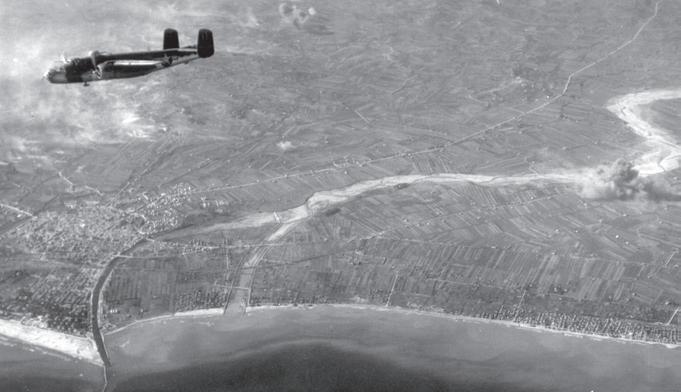
Rimini
27
seen from the air in September 1944 during an Allied bombing raid; a B-25 bomber is visible at upper left. The terrain to the right (north) was deemed better suited to armoured warfare. (NARA)
However, on 4 August, Leese met Alexander to suggest a completely new plan: BR Eighth Army was to attack on the eastern coast, and US Fifth Army would attack in support along the Florence–Bologna axis. This sudden change presented many issues. Apart from having to regroup forces again, which would take time and create confusion, it precisely matched the deception plan. No satisfactory explanation has been given for the change of plans, which some have put down to BR Eighth Army’s (‘tank heavy’) unwillingness to fight in the mountains. In addition, Leese’s jealousy towards Clark suggested the latter would take all the glory for the breakthrough into the Po valley, should the two armies fight shoulder to shoulder.
In fact, BR Eighth Army’s staff had already outlined the pros and cons of this move. The eastern coastal terrain was better suited to armoured warfare, even if the enemy could create a series of defensive lines in the area. Also, the Germans could switch its reserves from one area to another, meaning that if BR Eighth Army was caught by winter in the Ravenna–Forlì area, the attack would bog down. On the other hand, it was now clear that the deception had not worked and that the Germans expected the main enemy thrust to come along the Florence–Bologna axis. According to estimates, this enabled BR Eighth Army, with nine divisions or equivalent and 600–750 tanks, to face an opponent with only seven divisions (some of which were weak) and 230 tanks.
Clark asked for, and received, BR XIII Corps’ attachment to US Fifth Army to secure the right flank, and the final plan was outlined. The BR Eighth Army was to attack with CDN I Corps to break through the Gothic Line defences, the weak Polish Corps supporting its right wing. The BR V Corps would be the pursuit corps, advancing to the left of CDN I Corps towards Bologna as the latter advanced towards Rimini and Ravenna. In the meantime, US Fifth Army was to attack on the Florence–Bologna axis to prevent the Germans from redeploying their forces and to break through the Gothic Line as well.
On 6 August, the orders for Operation Olive were issued; regrouping delayed its start (along with Operation Dragoon) for about ten days, from mid-August to the 25th.
AXIS
On 4 June 1944, as the Allies entered Rome, Kesselring informed Hitler that he wanted to fight a delaying withdrawal in central Italy to buy time and construct the Gothic Line. Hitler did not agree with this plan, and five days later made his mind clear: the Gothic Line was not ready, and a protracted defence further south in central Italy was therefore necessary. On 14 June, Hitler stated that the Gothic Line would form the last stand before
28
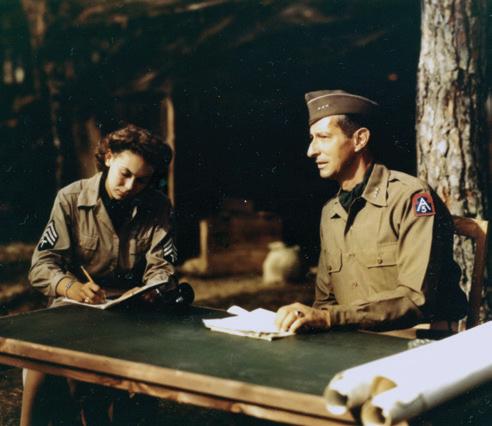
US General Mark Clark with his assistant, Technician Fourth Grade Geraldine Horne, on 1 September 1944. (PhotoQuest/ Getty Images)
the Po River valley, which lies in northern Italy, and losing it would mean losing the entire country. This meant holding central Italy for as long as possible and, to make things clearer, the next day he ordered a change to the name of the Gothic Line to the Green Line.
The Allied advance left no margin for discussion, as the development of the situation imposed a withdrawal, sooner or later, to the Green Line. Eventually, on 5 July, the OKH (Oberkommando der Wehrmacht – High Command of the Armed Forces) authorized Kesselring to defend the Green Line as the last main defensive line in Italy, while holding on for as long as possible in central Italy. Three days later, Kesselring reassured the OKH that this was his intention, making clear at the same time his concern over possible landings on either the eastern or the western coasts that could jeopardize the withdrawal.
That the Gothic/Green Line was considered the last stand in Italy is confirmed by the fact that on 27 July, Hitler ordered the start of the construction of the Voralpen Stellung (Pre-Alps Position), a new defensive line south of the northern Alps. Two days later, Heeresgruppe C headquarters issued orders for Operation Herbstnebel (Autumn Fog), the withdrawal to the northern Alps and the abandonment of Italy.
The Allied landings in southern France and the Allied entry into Florence, followed by the withdrawal of two Panzergrenadier divisions to the Western Front, compelled Kesselring, on 22 August, to accelerate the withdrawal to the Green Line. At this point, knowing that no reinforcements were forthcoming for the Italian front (other than the four Italian divisions training in Germany), he faced a complicated situation. The landings in southern France opened a new front in the Western Alps, while an Allied landing in Italy could not be ruled out. This required the use of troops to garrison all these potential fronts, while defending the main front. Since German intelligence had failed to spot the last-minute BR Eighth Army redeployment, there was no certainty as to whence the enemy attack would come, and the Germans believed this would take place on a wide front with a focus on the Adriatic coast.
The only possible strategy was defence in depth. Not only did Kesselring order the building of the Green Line II while holding an advanced line on the Metauro River on 5 July, but construction of an intermediate line facing BR Eighth Army was also begun. The idea was to buy time while waiting for the arrival of autumn, which would slow the Allied advance, preventing a collapse that would make Operation Herbstnebel unavoidable.
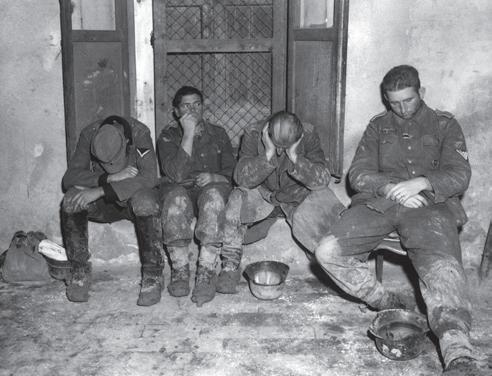
Exhausted German POWs held at Castel del Rio, EmiliaRomagna, in late October 1944. One of the Allied aims of the Gothic Line campaign was to divert German troops from other fronts. (Mondadori via Getty Images)
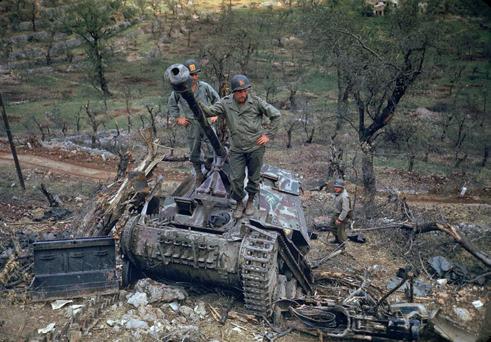
US soldiers inspecting a destroyed Marder III from 71.Infanterie-Division. The terrain made up for the limited availability of German tanks and anti-tank guns. (Photo 12/Alamy)
29
BR Eighth Army advances through the Gothic Line, 26 August–20 September 1944
Gothic Line (Green Line 1) Allied movements 3–12 September Allied movements 26 August–3 September Allied movements 18–20 September Allied movements 12–17 September F ront line, 24 September F ront line, 3–4 September F ront line, 25 August
Green Line 2 Rimini Line 25 August 3–4 September 24 September
Carpegna Montegaudio Monteciccardo Rosciano Metauro Foglia Conca Marano mstrea mstreaAusa streamUso Rubicone Marecchia Montelabate Serrungarina Candelara
SAN MARINO
5 miles
5k m
30 XX 4 In d XX 46 Br XX 4 Br XX 56 Br XX 2 NZ XX 5 Cd n XX 1 Br XX 26 XX 26 XX 90 XX 29 X 3 GK XX 71 XX 71 XX 98 XX 27 8 XX 27 8 XX 27 8 XX 35 6 XX 11 4 Jä g XX 1 Cd n XX 5 Pl XX 3 Pl XX 1 XX 1 XX 1 XX 5
Adriatic Sea
San Costanzo
P orzio
San
F ossombrone
Piano
o
Viserba
Riccione Cattolica
Gradara Monteluro Pe saro T omba di P esaro F ano
Monte
Montemaggiore
Ippolito
Isola del
Urbino Sassocor varo Monte Grunaro Mercato Saracen
Savignano al Rubicone Bellaria
Miramare
Gabicce
Coriano Misano Rimini San F ortunato Montiano Santarcangelo di Romagna Scorticata V erucchio Monte Colombo San Marino Ta volato Montecalvo Mondaino Monte Gridolfo Auditore Pian di Castello Morciano Gemman o
0 0 N
THE CAMPAIGN
BR EIGHTH ARMY BREACHES THE GOTHIC LINE
At 2300hrs on 24 August 1944, CDN I Corps moved through the Polish Corps’ positions to approach the Metauro River, which was soon crossed to establish bridgeheads. Until 27 August CDN 1st Division faced occasional resistance from elements of the withdrawing 71.Infanterie-Division, with the terrain proving equally problematic: roads filled with craters, buildings demolished to block the route, gullies and knolls marking a broken terrain made up of isolated hills. The first serious resistance was met on 27–28 August as the Canadians encountered elements of 1.Fallschirmjäger-Division and the 71.Infanterie-Division defending Monteciccardo.
The POL 5th Kresowa Division was held up on the Adriatic coast while, to the left, BR V Corps’ 46th Division managed to keep up with the Canadian pace of advance, although IND 4th Division’s advance was delayed until 29 August.
On 28–29 August, the Polish and Canadian troops faced a last German defensive line along the Arzilla stream, south of the Foglia River, with elements from 71.Infanterie-Division and Fallschirmjäger-Regiment 4 defending the twin hill towns of Monteciccardo and Montegaudio. The German positions were attacked after heavy bombardment of the area, and as their defences were overrun, withdrawal became necessary. Between 28 and 29 August, the Canadian and Polish troops, as well as the British, were now in sight of the Gothic Line (as the Allies still called it) defences along the Foglia. This turned out to be a major tactical advantage.
Not only had air reconnaissance already identified three-quarters of the Gothic Line positions, mostly running along the main road north of the Foglia,
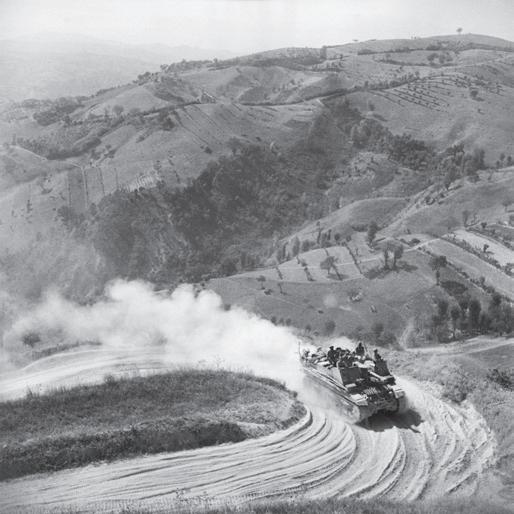
An M7 Priest 105mm SP gun on a road near Mondaino, 6 September 1944. This is the kind of road BR Eighth Army troops had to negotiate in order to redeploy on the Adriatic side of the Appenines. (Photo
31
by Sgt Dawson/ Imperial War Museums via Getty Images)