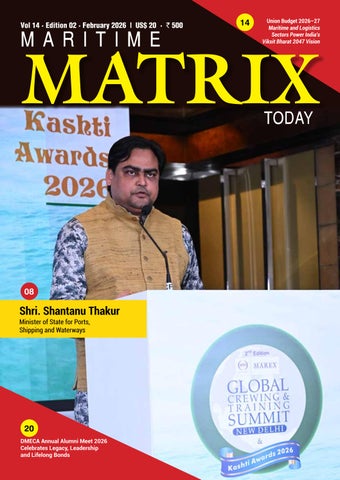
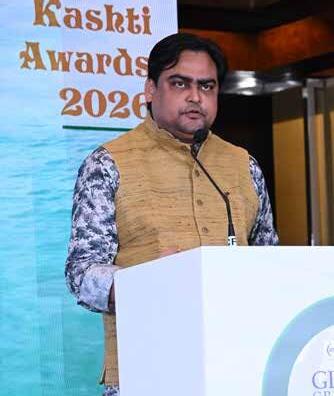
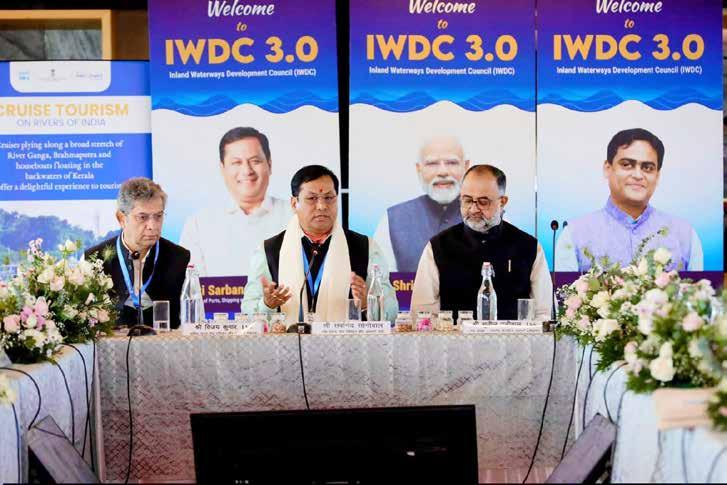
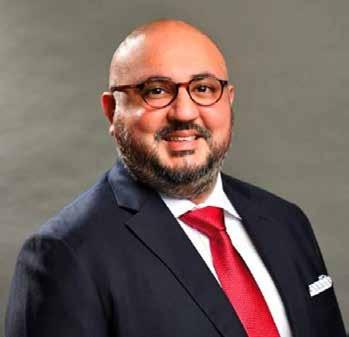
Shri. Shantanu Thakur Minister of State for Ports, Shipping and Waterways
Disclaimer
Economic Outlook Ahead of Union Budget 2026–27: Logistics Industry Pushes for Reforms...
Union Budget 2026–27: Maritime and Logistics Sectors Power India’s Viksit Bharat 2047 Vision
IWDC Push: ₹1,500 Crore Boost to India’s Multimodal Future
Cover Story
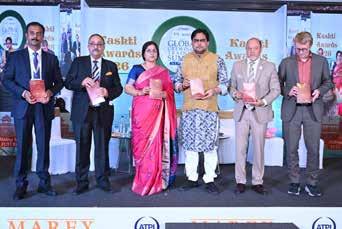
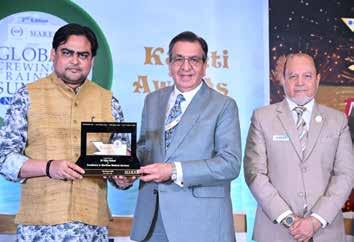
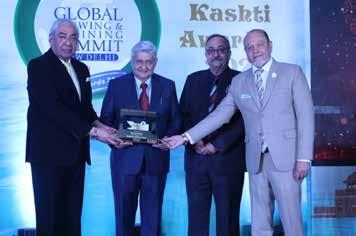
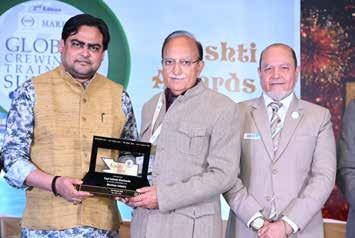
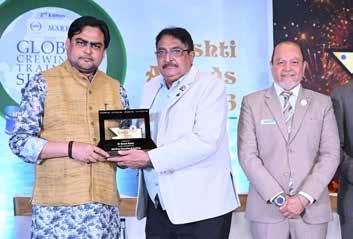
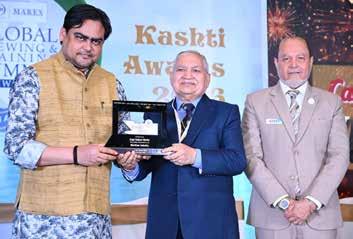
Shri. Shantanu Thakur Highlights Maritime Excellence at Kashti Awards 2026 in New Delhi
MILAAP 2026: India Steps Into the Global Spotlight for Seafarers’ Rights
Future Fuel Risks Why P&I is preparing today
Indian Railways Crosses 1 Billion Tonne Mark as Dedicated Freight Corridors Drive Record Performance DMECA Annual Alumni Meet 2026 Celebrates Legacy, Leadership and Lifelong Bonds
AMET University Conducts Special Convocation Ceremony
2026 - National Mission to Reduce India’s Logistics Costs Transforming Competitiveness and Growth The Caravel Group Appoints Angad Banga as Group Chief Executive Officer
All advertisements in this magazine are placed with no liability accepted by the publisher for the material content therein. No responsibility is accepted by the publisher for omission or error or non-insertion of any advertisements. All advertisements and material in this magazine are subjected to approval by the publisher and are not necessary the opinion of the publisher. No liability is accepted for advertisements that are placed or any information that might be criminally connected. All information is checked to the best of our knowledge and is reliant upon the material submitted not being in contravention of all relevant laws and regulations and within the provisions of the Trade Practices Act.
Reproduction Prohibited
Maritime Matrix Today will not be responsible for the views expressed by contributors in their personal capacity. All rights reserved. Reproduction in part or whole without the permission of the Editor is prohibited.
Readers are recommended
To make appropriate enquiries before sending money, incurring expenses or entering into any commitment in relation to any advertisement published in this publication. Maritime Matrix Today does not vouch for any claims made by the Advertisers of Products and Services. The Printer, Publisher, Editor and Owner of Maritime Matrix Today shall not be held liable for any consequences, in the event such claims are not honoured by the Advertisers.
RNI: MAHENG/2013/50159
Published by Marex Media Pvt Ltd C-209, Morya House, New Link Road, Andheri West, Mumbai 400058 Email: info@marexmedia.com
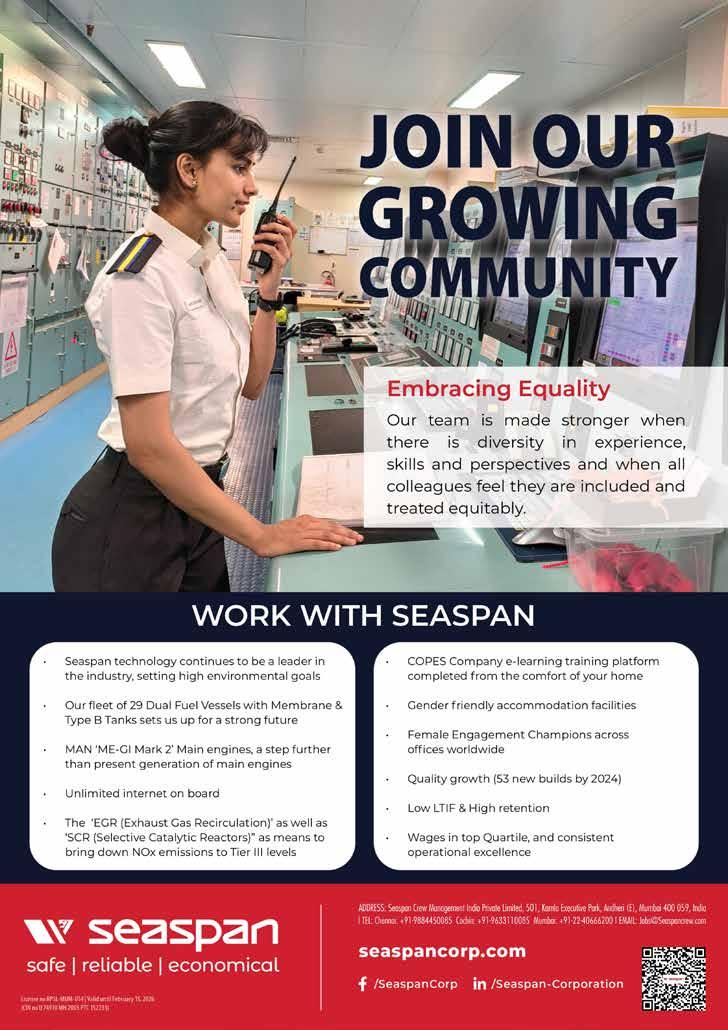
• Seaspan technology continues to be a leader in the industry, setting high environmental goals
• Our fleet of Dual Fuel Vessels with Membrane & Type B Tanks sets us up for a strong future
• MAN ‘ME-GI Mark 2’ Main engines, a step further than present generation of main engines
• The ‘EGR (Exhaust Gas Recirculation)’ as well as ‘SCR (Selective Catalytic Reactors)” as means to bring down NOx emissions to Tier III levels
• COPES Company e-learning training platform completed from the comfort of your home
• Gender friendly accommodation facilities
• Female Engagement Champions across offices worldwide
• Quality growth
• Low LTIF & High retention
• Wages in top Quartile, and consistent operational excellence
Union Budget and the Maritime Sector Steering India Towards Blue-Economy Leadership
As India strides into the next phase of its economic journey, the Union Budget 2026–27 stands out not merely as an annual financial statement, but as a strategic manifesto shaping the next decade of growth. Presented on 1 February 2026 , the budget sought to balance fiscal discipline with aspirational development, while signalling the nation’s intentions to deepen manufacturing prowess and strengthen the economic fabric of its citizens.
The Union Budget has increasingly emerged as a key instrument in shaping India’s maritime ambitions, reflecting the growing recognition that ports, shipping and waterways are no longer peripheral to economic growth but central to it. In an era where global trade routes are being reconfigured and supply chains are under stress, India’s maritime sector stands at the crossroads of opportunity and responsibility. The Budget’s alignment with the Sagarmala Programme further strengthens this narrative. Investments in coastal infrastructure, port connectivity projects and coastal economic zones highlight a holistic approach that integrates ports with industrial clusters and hinterland markets.
Inland Water Transport (IWT), long considered an underutilised asset, also finds renewed attention. Budgetary support for national waterways, cargo terminals and navigational aids reflects an understanding that water-based transport is not only cost-effective but also environmentally sustainable. As climate commitments gain prominence, shifting bulk cargo to waterways can play a crucial role in reducing carbon emissions and easing congestion on roads and railways.
Shipbuilding and ship repair, however, remain areas where the Budget’s impact is still evolving. While policy signals supporting domestic shipbuilding are encouraging, industry stakeholders
argue that fiscal incentives, access to long-term finance and tax rationalisation need further strengthening. Without targeted support, Indian yards risk falling behind global competitors, particularly in specialised and green vessels.
The Budget’s focus on coastal shipping and ferry services is another welcome step, particularly for regional connectivity and tourism. Coastal routes offer an economical alternative for domestic cargo movement and have the potential to decongest major ports. Investments in roll-on/roll-off services, passenger terminals and safety infrastructure indicate a gradual shift towards multi-modal transport planning.
In sum, the Union Budget signals steady progress rather than dramatic transformation for the maritime sector. By reinforcing port-led development, connectivity and sustainability, it charts a pragmatic course aligned with India’s blue economy aspirations. The real test, however, lies in implementation. If budgetary intent is matched with timely execution and policy coherence, India’s maritime sector can indeed become a powerful engine of trade, employment and global influence.
In this milieu of economic direction and national introspection, the Kashti Awards 2026 held on 13th February 2026 in New Delhi emerged as a reminder of the power of excellence beyond pure economic metrics. Organized as part of the ATPI–Marex Global Crewing & Training Summit , the Kashti Awards celebrate outstanding contributions, innovation and leadership across India’s maritime ecosystem.
-Kamal Chadha
Kamal Chadha Group CEO kamal@marexmedia.com
Shirish Kirtane
HOD Graphics shirish@marexmedia.com
Radhika Vakharia CEO & Editor radhika@marexmedia.com
Jagdamba Pandey Manager, Business and Promotion jagdamba@marexmedia.com
Bhavna Pimpale Coordinator bhavna@marexmedia.com
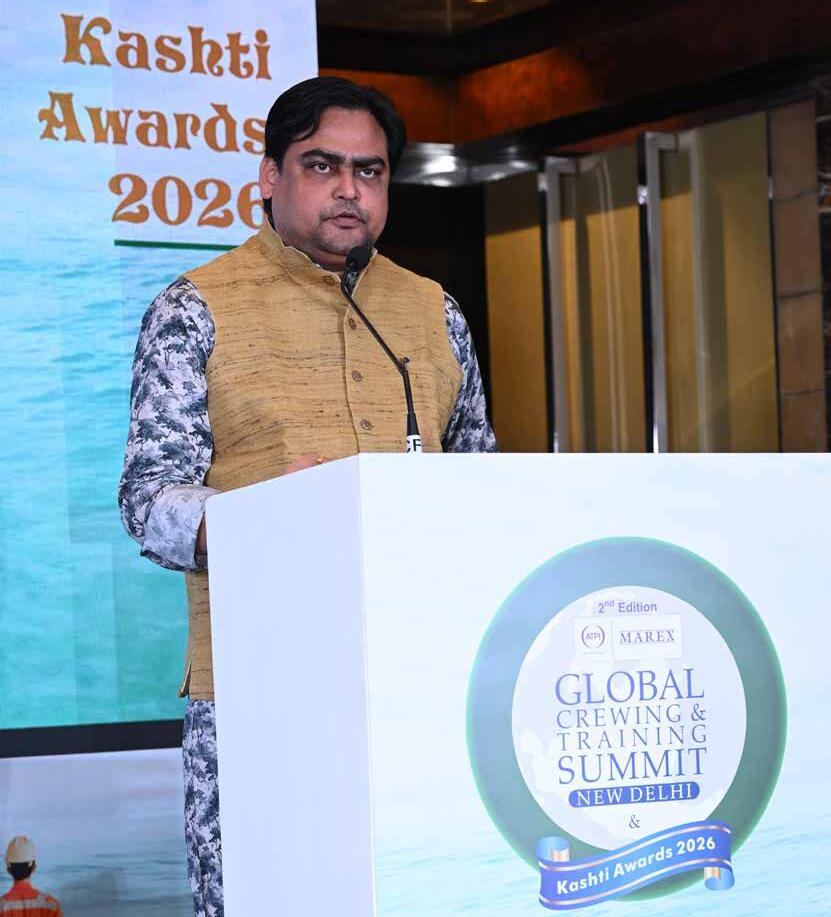
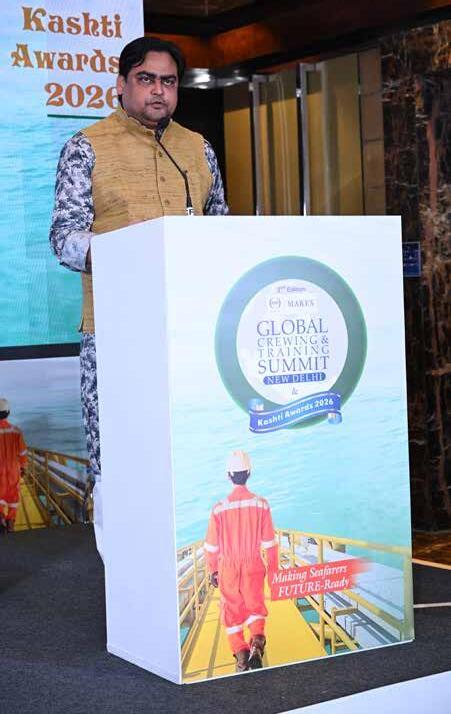
Shri. Shantanu Thakur Highlights Maritime Excellence at Kashti Awards 2026 in New Delhi
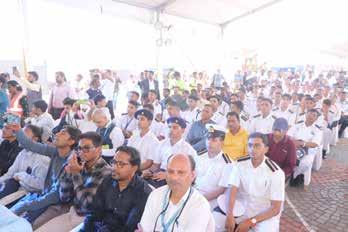
New Delhi witnessed a significant moment for India’s maritime community on February 13, 2026, as the Kashti Awards 2026 brought together industry leaders, professionals, and policymakers to celebrate excellence across the sector. Among the prominent dignitaries in attendance was Shri.Shantanu Thakur, Minister of State for Ports, Shipping and Waterways, whose participation underscored the government’s continued focus on strengthening India’s maritime ecosystem.
The Kashti Awards 2026, organized as part of the Global Crewing & Training Summit, honored outstanding professionals who have made notable contributions to shipping, ports, and maritime services. The event served as a platform to recognize innovation, leadership, and dedication within a sector that plays a critical role in India’s trade and economic growth.
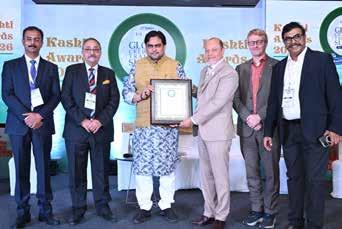
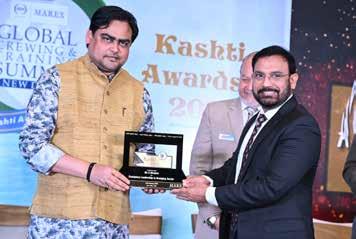
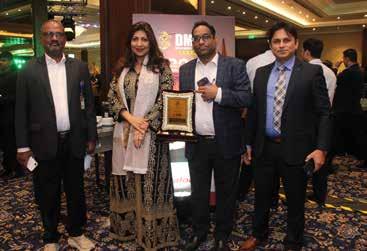
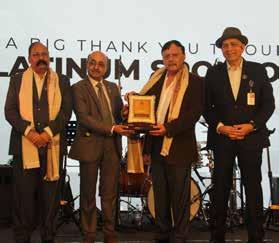
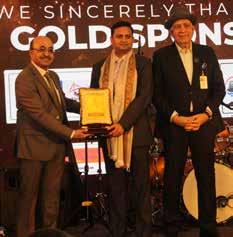
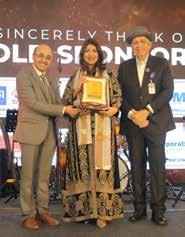
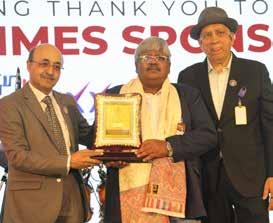
During the ceremony, the Minister took part in recognizing industry achievers and was involved in the presentation of the prestigious Kashti Ratna awards. His engagement with award recipients reflected the government’s appreciation for maritime professionals who work behind the scenes to keep global and domestic supply chains moving efficiently.
Speaking on the occasion, the emphasis was placed on the importance of skilled manpower, modern training practices, and global standards in crewing and shipping operations. The summit discussions aligned closely with India’s broader vision of becoming a leading maritime nation through policy reforms, infrastructure development, and human capital enhancement.
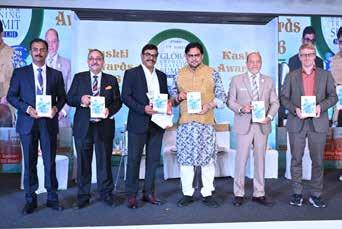
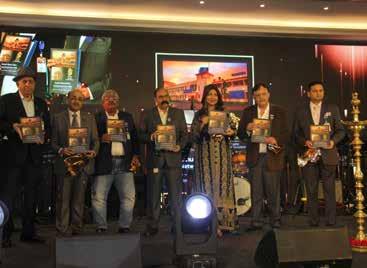
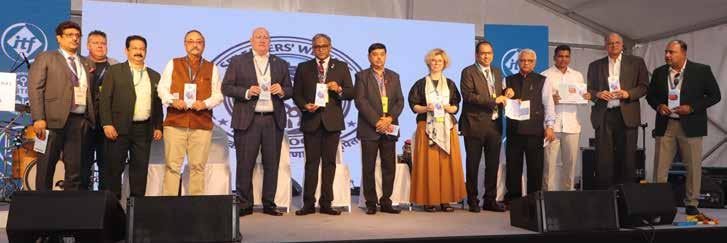
Around the same time, the Minister also unveiled the book titled Blue Bharat, authored by Capt. Gajanan Karanjikar, in New Delhi. The book explores India’s maritime potential and long-term vision, complementing the themes highlighted at the awards and summit.
Navikrit – Rebirth of India’s Maritime Consciousness a book authored by Adv. Manisha Tiwari, was launched in New Delhi . This is a non-fiction work that explores India’s maritime legacy and its evolving role in the global maritime domain. The book seeks to reconstruct India’s historical and cultural connection with the seas, offering a narrative that goes beyond conventional land-centred history to highlight how maritime engagement shaped civilization, commerce, and strategic identity.
Together, the Kashti Awards 2026 and the related engagements reinforced a shared message: India’s maritime future rests on recognizing talent, investing in knowledge, and fostering collaboration between government and industry. The Minister’s presence and participation added both visibility and momentum to these goals, signaling continued support for the professionals steering India’s maritime journey forward.
MMT
Kashti Ratna Awards
Capt. S.
Exemplary Leadership in Dredging Sector
Mr.
Divakar
Dr. Vijay Belani Excellence in Maritime Medical Services
Capt. Percy Master Lifetime Achievement in Maritime and Logistics Industry
Capt. Kharbanda Indresh Lifetime Achievement in Maritime Industry TEAM MAREX
Capt. Daljeet K Mehta Lifetime Achievement in Maritime Industry
Dr. KRN Kanwar Guardian of Seafarers’ Health
Naresh Nanda Excellence in Maritime Education and Training
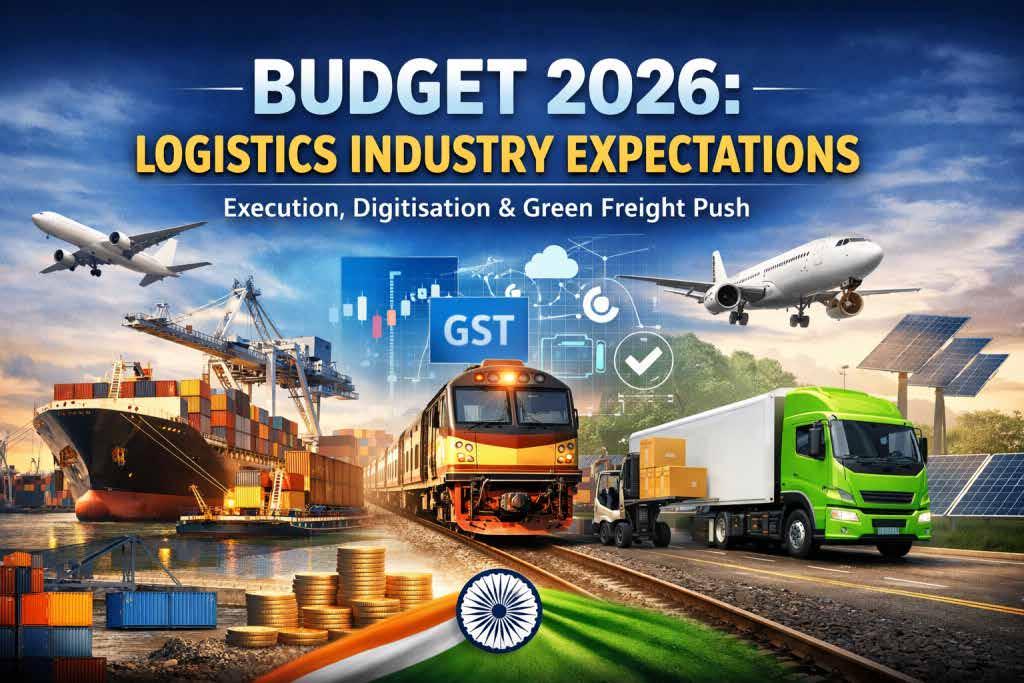
Economic Outlook Ahead of Union Budget 2026–27: Logistics Industry Pushes for Reforms, Cost Efficiency, and Skilled Workforce
As India prepares for the Union Budget 2026–27, the logistics and transportation sector has emerged as one of the most vocal stakeholders, seeking policy clarity and targeted support to sustain growth and improve global competitiveness. With logistics costs estimated at nearly 14% of GDP, significantly higher than the global benchmark of around 8%—the industry views the upcoming budget as a critical opportunity to address structural inefficiencies, simplify taxation, and build a future-ready workforce.
The demands being articulated ahead of Budget 2026 reflect a broader national ambition: to transform India into an efficient, resilient, and technology-driven logistics hub that can support manufacturing expansion, export growth, and inclusive economic development.
Logistics at the heart of India’s growth story India’s logistics sector has gained unprecedented policy attention in recent years, driven by initiatives such as the National Logistics Policy (NLP), the PM Gati Shakti National Master Plan, Dedicated Freight Corridors (DFCs), and rapid expansion of ports, airports, and inland waterways. These initiatives have already begun to deliver tangible benefits, including improved transit times, enhanced multimodal connectivity, and better coordination among infrastructure ministries.Yet, despite these advances, logistics costs remain stubbornly high. Fragmentation, regulatory complexity, skill shortages, and uneven technology adoption continue to weigh on efficiency. As Budget 2026 approaches, industry stakeholders believe the focus must shift from infrastructure creation alone to systemic reforms that improve day-to-day operations and cost structures.
GST clarity for multimodal logistics: A long-standing demand
One of the industry’s top expectations from Budget 2026–27 is greater clarity and simplification of the Goods and Services Tax (GST) framework for multimodal logistics services. While GST was intended to create a unified national market, logistics players argue that ambiguities in tax treatment continue to create compliance challenges and unintended cost burdens.
Multimodal logistics—where cargo moves seamlessly across road, rail, sea, air, and inland waterways—often involves multiple service providers, contracts, and billing arrangements. Differences in GST rates and classifications across transport modes and services can lead to tax cascading, disputes, and delayed input tax credit claims.
Industry bodies are calling for a more uniform GST structure for logistics services, with clearer definitions and simplified compliance requirements. A single GST rate for end-to-end multimodal logistics services, they argue, would encourage integration, reduce paperwork, and align with the government’s stated objective of promoting multimodal transport.Greater GST clarity would also support the adoption of digital freight platforms and integrated logistics solutions, enabling small and medium enterprises (SMEs) to participate more effectively in national and global supply chains.
The bigger goal: Reducing logistics costs to 8% of GDP
At the core of all budget-related expectations lies a single overarching objective: reducing India’s logistics costs from around 14% of GDP to closer to the global benchmark of 8%. Achieving this would not only enhance India’s export competitiveness but also improve domestic market efficiency and attract greater foreign investment.
High logistics costs act as a hidden tax on manufacturing, agriculture, and services. For exporters, even small inefficiencies can erode margins and undermine competitiveness in pricesensitive global markets. For domestic businesses, high transport and warehousing costs translate into higher prices for consumers.
The industry believes Budget 2026–27 should accelerate measures that enable modal shift from road to rail, coastal shipping, and inland waterways—modes that are inherently more cost- and energy-efficient for long-haul and bulk cargo. Continued investment in DFCs, port-led development, and waterway infrastructure will be critical, but equally important is ensuring last-mile connectivity and operational reliability.
Incentives for private sector participation in logistics parks,
multimodal terminals, and warehousing infrastructure are also high on the industry’s wish list. Tax incentives, viability gap funding, and easier access to long-term finance could help scale up modern logistics infrastructure across the country.
Technology as a cost-reduction lever
Technology is increasingly seen as the most powerful tool for reducing logistics costs without compromising service quality. Digital platforms that enable real-time tracking, route optimisation, predictive maintenance, and automated documentation can significantly improve asset utilisation and reduce delays.
Ahead of Budget 2026, industry leaders are seeking greater fiscal support for technology adoption, particularly among small fleet operators and regional logistics players. Targeted incentives for fleet modernisation, telematics, warehouse automation, and data integration could accelerate sector-wide digital transformation.The integration of logistics data across ministries and agencies—envisaged under the Gati Shakti framework—also needs sustained investment. A unified digital backbone can reduce duplication, improve planning, and enable faster decision-making across the logistics ecosystem.
Skilled labour shortage: A growing concern
While infrastructure and technology dominate policy discussions, the industry is increasingly highlighting a less visible but equally critical challenge: the shortage of skilled labour,
particularly heavy-vehicle drivers and logistics technicians. India’s logistics sector employs millions, yet the availability of trained and certified drivers for long-haul and specialised vehicles remains limited. Ageing workforce demographics, demanding working conditions, and limited social recognition have deterred younger workers from entering the profession.
The industry is urging the government to use Budget 2026–27 to significantly scale up investment in skill development, with a focus on what is increasingly referred to as “driver-tech”—a combination of driving skills, digital literacy, safety training, and equipment handling.
Investing in “driver-tech” and modern training
Modern logistics operations require drivers who are not only proficient behind the wheel but also comfortable using digital tools such as GPS systems, electronic logging devices, fleet management apps, and digital documentation platforms. As vehicles become more technologically advanced, the skill requirements for operators are evolving rapidly.
Industry stakeholders are advocating for dedicated funding for driver training institutes, public-private partnerships for skill development, and incentives for companies that invest in upskilling their workforce. Standardised certification frameworks and nationally recognised qualifications could help improve employability, safety standards, and career progression for drivers.Improved training and working conditions could
also help address high attrition rates, enhance road safety, and reduce operational disruptions caused by manpower shortages.
Social and economic impact of workforce investment
Investment in logistics skills has implications beyond the sector itself. A more skilled workforce can contribute to higher productivity, better incomes, and improved quality of life for millions of workers, particularly in semi-urban and rural areas. From a macroeconomic perspective, addressing the driver shortage can unlock capacity across the logistics system, enabling faster movement of goods and supporting economic growth. It can also improve compliance with safety and environmental standards, reducing accidents and emissions.
Expectations from Budget 2026–27
As Budget 2026–27 approaches, the logistics industry’s expectations are clear and pragmatic. Rather than seeking shortterm subsidies, stakeholders are calling for structural reforms that deliver long-term efficiency gains. Key expectations include:
• Clear and simplified GST treatment for multimodal logistics services
• Continued investment in multimodal infrastructure and last-mile connectivity
• Fiscal and policy support for technology adoption and digital integration
• Expanded funding and incentives for logistics skill development and driver training
• Measures to encourage modal shift and private sector participation
The Union Budget 2026–27 presents a defining opportunity to consolidate the gains made under recent logistics and infrastructure initiatives. By addressing GST complexities, accelerating cost-reduction measures, and investing in a skilled, tech-enabled workforce, the government can help move India closer to global logistics benchmarks.
For an economy aspiring to become a global manufacturing and export hub, efficient logistics is not a supporting function— it is a strategic necessity. The choices made in Budget 2026 could determine whether India’s logistics sector becomes a competitive advantage or remains a persistent bottleneck in the years to come.
SDHI Secures Defence Export Order from Oman for Advanced Naval Training Ship
Swan Defence and Heavy Industries Limited (SDHI), India’s largest shipbuilding and heavy fabrication company, has secured a prestigious defence export contract from the Government of the Sultanate of Oman for the construction and supply of a state-of-the-art naval training ship. The vessel, intended to support the Royal Navy of Oman’s (RNO) advanced naval training and maritime operations, is scheduled for delivery within 18 months.
This landmark export order marks a significant milestone for India’s defence manufacturing ecosystem and underscores the growing global confidence in the country’s indigenous shipbuilding capabilities. It also highlights India’s emergence as a reliable and competitive maritime hub, capable of delivering complex naval platforms that meet international standards. The contract further strengthens the deep-rooted bilateral relations between India and Oman, particularly in the domain of maritime cooperation and defence engagement.
Designed to serve as a modern training platform, the vessel will measure 104.25 metres in length with a beam of 13.88 metres and a displacement of up to 3,500 tonnes. The ship
will be equipped with advanced infrastructure to support comprehensive naval education and operational preparedness. Onboard facilities will include modern classrooms, dedicated training offices, and accommodation spaces designed to ensure comfort and efficiency during extended deployments at sea.A key feature of the vessel will be its auditorium, which will provide a world-class learning environment for up to 70 officer cadets simultaneously. This will enable structured theoretical instruction alongside practical seamanship training, reinforcing the RNO’s capability to groom future naval leaders in a real-time maritime setting.
This partnership with Oman aligns closely with India’s broader maritime and defence vision under the Amrit Kaal framework, which aims to position the country as a leading exporter of indigenously designed and built defence platforms. The successful execution of this project is expected to further enhance India’s reputation as a dependable defence partner and open new avenues for future naval exports to friendly foreign nations.
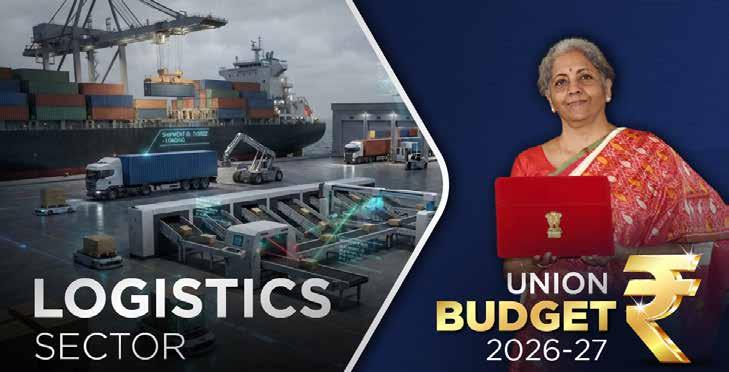
Union Budget 2026–27: Maritime and Logistics Sectors Power India’s Viksit Bharat 2047 Vision
The Union Budget 2026–27 marks a decisive turning point in India’s economic strategy by positioning the maritime and logistics sectors as primary engines of long-term growth. Aligned with the government’s Viksit Bharat 2047 vision, the budget lays out a comprehensive roadmap to reduce logistics costs, strengthen domestic manufacturing, promote sustainable transport, and reorient India’s freight movement toward inland and coastal waterways.
At the heart of this strategy lies a clear and ambitious objective: to double the share of inland and coastal shipping from the current 6% to 12% by 2047 . Achieving this goal would not only reduce logistics costs—currently estimated at 13–14% of GDP but also significantly lower emissions, decongest roads and railways, and enhance India’s global competitiveness.
A Strong Fiscal Signal: Massive Funding and Infrastructure Push
One of the most striking features of the Budget 2026–27 is the 48% increase in allocation for the Ministry of Ports, Shipping, and Waterways , which received ₹5,164.8 crore for FY27. This sharp rise sends a strong fiscal signal that maritime infrastructure is no longer a peripheral concern but a central pillar of India’s development strategy.
a seamless east–west logistics spine, linking the mineral-rich belts of eastern India with the industrial clusters and ports of western India.
The Dankuni–Surat DFC is expected to:
• Reduce transit times for bulk and containerized cargo
• Decongest existing rail routes and highways
• Improve supply chain reliability for export-oriented industries
• Strengthen port-led industrialization along the western coast
By directly integrating mineral extraction zones with manufacturing hubs and ports, the corridor could play a transformative role in steel, power, cement, chemicals, and export manufacturing sectors.
Inland waterways form the backbone of the government’s modal shift strategy. The budget announced plans to operationalize 20 new National Waterways over the next five years , with National Waterway–5 (NW-5) in Odisha taking priority.NW-5, based on
Among the headline announcements is a new Dedicated Freight Corridor (DFC) connecting Dankuni in West Bengal to Surat in Gujarat . This corridor is designed to create
the Mahanadi river system , will link mineral-rich regions such as Talcher and Angul with the ports of Paradip and Dhamra . This is expected to facilitate low-cost, high-volume transport of coal, iron ore, and other bulk commodities—sectors where waterways offer a decisive cost advantage over road and rail.
Over time, the expanded waterways network is expected to:
• Lower freight costs by 20–30% for bulk cargo
• Reduce carbon emissions and fuel consumption
• Encourage private investment in inland shipping and terminals
Beyond infrastructure, the budget places strong emphasis on building domestic maritime manufacturing and services capacity , in line with the broader Make in India and Atmanirbhar Bharat frameworks.India currently imports nearly 2 million shipping containers annually , exposing exporters and logistics operators to global supply disruptions and price volatility. To address this vulnerability, the budget announced a ₹10,000 crore Container Manufacturing Assistance Scheme (CMAS) spread over five years.
The scheme aims to:
• Create domestic manufacturing capacity of 1 million TEUs per year
• Develop ancillary industries such as steel processing, coatings, and fittings
• Reduce foreign exchange outflow and logistics bottlenecks
• Position India as a regional hub for container production
If successfully implemented, CMAS could fundamentally reshape India’s logistics ecosystem and improve resilience in global trade.Recognizing the unique needs of inland shipping, the budget proposed the establishment of dedicated ship repair ecosystems in Varanasi and Patna . These hubs will cater specifically to inland and river-sea vessels, which often face higher downtime due to limited repair facilities.
The new hubs are expected to:
• Lower lifecycle costs of inland vessels
• Improve fleet availability and operational efficiency
• Encourage private operators to enter inland shipping
This initiative complements the government’s long-term vision of building a robust inland shipping industry.In a move that combines connectivity, tourism, and manufacturing, the budget introduced a Viability Gap Funding (VGF) scheme for seaplane manufacturing and operations . The scheme aims to improve last-mile connectivity to remote and island regions, particularly the Andaman & Nicobar Islands and Lakshadweep .Infrastructure and manufacturing initiatives are supported by a set of targeted policy and tax reforms designed to incentivize a shift toward water-based transport.A new Coastal Cargo
Promotion Scheme was announced to encourage industries to move bulk cargo from road and rail to coastal shipping. According to government estimates, this shift could:
In a major relief for shipping operators, the presumptive tonnage tax regime , aligned with the global 5% standard, has been extended specifically to inland and coastal shipping companies . This marks a shift away from conventional income-based taxation, offering greater certainty and global competitiveness to Indian operators.The budget also emphasized trade facilitation through digital reforms. A new Customs Integrated System will be rolled out by April 2026, offering:
• 24/7 automated notifications
• Faster clearances for “trusted importers”
• Reduced dwell time at ports
In parallel, customs duty exemptions for small vessels have been extended until March 2028, while exemptions for large vessels have been withdrawn to encourage Indian flagging and domestic ownership of ships.The maritime push is embedded within a broader logistics and infrastructure framework. The Budget 2026–27 provides for ₹12.2 lakh crore in total public capital expenditure , a 9% increase over the previous year. Of this, ₹5.98 lakh crore has been earmarked for transport and logistics.
Key targets include:
• Doubling the inland and coastal shipping share to 12% by 2047
• Operationalizing 20 new waterways by 2031
• Strengthening multimodal logistics parks and corridors
In a distinctive move, the budget also proposed the development of 15 maritime archaeological sites as tourist destinations. Ancient ports such as Lothal and Dholavira will be developed to showcase India’s maritime heritage while supporting local economies.This initiative reflects a broader vision of integrating culture, tourism, and economic development within the blue economy framework.
A Structural Shift in India’s Growth Model
The Union Budget 2026–27 signals a structural shift in India’s approach to logistics and trade , with water-based transport emerging as a central pillar of economic strategy. By combining large-scale infrastructure investment, domestic manufacturing support, tax rationalization, and digital reforms, the government has laid the groundwork for a more efficient, sustainable, and globally competitive logistics ecosystem.If executed effectively, these measures could significantly reduce logistics costs, strengthen India’s export competitiveness, and transform the maritime sector into a cornerstone of the Viksit Bharat 2047 vision.
IWDC Push: ₹1,500 Crore Boost to India’s Multimodal Future
India’s logistics and transport landscape is undergoing a quiet but significant transformation, with inland waterways emerging as a critical pillar of sustainable and cost-efficient freight movement. This momentum received a major boost recently when the Inland Waterways Development Council (IWDC 3.0) approved projects worth ₹1,500 crore, signalling
strong policy intent to mainstream water-based transport across the country. Among the most impactful decisions is the introduction of a 35% reimbursement of operating costs for cargo owners using inland waterways in select states such as Kerala, aimed at reducing excessive dependence on road and rail networks.
India has over 20,000 kilometres of navigable waterways, yet less than 5% of freight movement currently takes place through inland water transport (IWT). In contrast, countries such as China and several European nations rely heavily on rivers and canals for bulk cargo movement due to their lower cost, higher energy efficiency, and reduced environmental impact. Recognising this untapped potential, the government has been steadily investing in national waterways, terminals, navigation aids, and policy incentives to encourage modal shift.The IWDC, chaired by the Union Minister of Ports, Shipping and Waterways, serves as the apex body for policy direction and inter-ministerial coordination on inland waterways. The approvals under IWDC 3.0 reflect a more executionfocused phase, moving beyond infrastructure creation to active demand generation.
The ₹1,500 crore worth of approved projects span a wide range of initiatives, including development of terminals, dredging works, navigational infrastructure, roll-on/roll-off (Ro-Ro) and roll-on/roll-off-passenger (Ro-Pax) services, and digital systems for traffic and cargo management. These investments are designed to improve reliability, year-round navigability, and lastmile connectivity,key bottlenecks that have historically limited the commercial viability of inland waterways. By addressing both physical and operational constraints, the projects aim to make inland waterways a credible alternative for industries such as cement, fertilizers, coal, foodgrains, steel, containers, and even automobiles. The standout policy decision from IWDC 3.0 is the reimbursement of up to 35% of operating costs for cargo owners who choose inland waterways over traditional modes of transport. This incentive is particularly targeted at states like Kerala, where geographical features such as backwaters, canals, and rivers offer natural advantages for water-based logistics.
High initial costs, uncertainty around transit times, and lack of established cargo aggregation have often discouraged shippers from experimenting with inland waterways. The reimbursement scheme directly addresses these concerns by narrowing the cost differential between road, rail, and waterways, especially during the initial adoption phase.For cargo owners, this translates into lower logistics costs, reduced fuel consumption, and improved sustainability metrics. For the government, it helps accelerate modal shift, reduce highway congestion, lower emissions, and ease pressure on an already stretched rail network.
Kerala’s inclusion as a focus state is strategically significant. With limited land availability for road expansion and high population density, the state faces chronic congestion and rising logistics costs. Inland waterways such as National Waterway-3, which runs through the Kerala backwaters, provide a natural solution for moving bulk and containerised cargo.The reimbursement policy is expected to encourage industries, ports, and logistics operators in Kerala to integrate barges and coastal vessels into their supply chains. Over time, successful implementation in Kerala could serve as a template for replication in other states with similar geographical advantages, such as Assam, West Bengal, Bihar, and Andhra Pradesh.
From an economic perspective, inland water transport is significantly cheaper for bulk cargo over long distances, often costing 30–50% less than road transport. It is also far more fuel-efficient, consuming less energy per tonnekilometre. The shift to waterways can therefore play a crucial role in lowering India’s overall logistics costs, which currently hover around 13–14% of GDP,well above the global average. Environmentally, the benefits are equally compelling. Water-based transport produces substantially lower carbon emissions, noise pollution, and road wear and tear. As India works towards its climate commitments and net-zero ambitions, inland waterways offer a practical and scalable solution.
While the policy push is encouraging, challenges remain. Consistent cargo volumes, private sector participation, skilled manpower, and seamless multimodal integration will be critical to long-term success. The reimbursement scheme must also be implemented transparently and efficiently to ensure industry confidence.Nevertheless, the IWDC 3.0 decisions mark an important inflection point. By combining infrastructure investment with direct financial incentives for users, the government has shifted focus from supply creation to demand activation. If executed well, this inland waterways push could redefine India’s freight movement, making it cleaner, cheaper, and more resilient,one river at a time. -MMT
SDHI Secures India’s First Chemical Tanker Newbuild Order
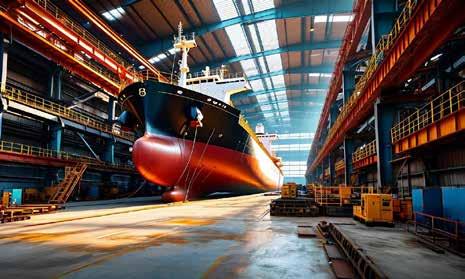
Swan Defence and Heavy Industries Limited (SDHI) has secured a landmark USD 227 million contract to build six 18,000 DWT IMO Type II chemical tankers, marking the first chemical tanker order placed with an Indian shipyard and one of the nation’s largest commercial shipbuilding deals.
The order, from leading European shipowner Rederiet Stenersen AS, is the first newbuild contract at India’s largest shipyard in Pipavav following its revitalization under new management. The agreement also includes an option for six additional vessels.Designed by Marinform AS and StoGda Ship Design & Engineering and classed by DNV, the LNG-ready, Ice Class 1A tankers will feature advanced hybrid propulsion
and high automation. The first vessel is scheduled for delivery within 33 months.The deal underscores growing global confidence in India’s commercial
shipbuilding capabilities and SDHI’s ability to deliver complex, world-class vessels.
Maersk Leadership Change
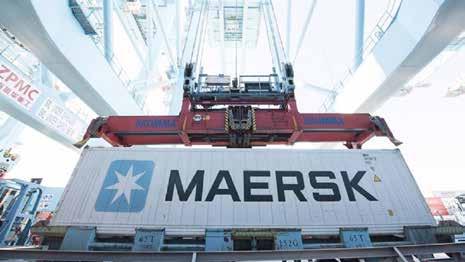
In a strategic move to fortify its presence across emerging markets, A.P. Moller – Maersk has appointed Charles van der Steene as the Regional Managing Director for the Indian Subcontinent, Middle East, and Africa (IMEA). This leadership transition comes at a pivotal time as global trade routes increasingly pivot toward the IMEA corridor, which is currently witnessing rapid infrastructure growth and digital integration.Van der Steene, a veteran with deep expertise in supply chain resilience and commercial strategy, is tasked with driving operational excellence and accelerating Maersk’s evolution into an integrated end-to-end logistics provider. His mandate includes scaling the company’s “integrator” strategy in India—a region central to
Maersk’s global growth—by leveraging the Unified Logistics Interface Platform (ULIP) and expanding warehousing capabilities. This appointment signals Maersk’s commitment to
providing seamless, technology-driven solutions for customers navigating the complexities of one of the world’s most dynamic economic zones.
Allcargo Global Appoints Vaishnav Shetty as Deputy Managing Director
Allcargo Global Limited (AGL), the international supply chain arm of the Allcargo Group, has elevated Vaishnav Shetty to the role of Deputy Managing Director, effective immediately. He has also been inducted into the Board of Directors of Allcargo Global. AGL accounts for nearly 80% of the Allcargo Group’s annual revenue.
Vaishnav Shetty, son of Founder and Chairman Shashi Kiran Shetty, will work closely with Adarsh Hegde, Managing Director, Allcargo Global Limited. His appointment highlights the Group’s structured succession planning and focus on building a digital-first, futureready organisation.
The Board-approved move comes amid the Group’s ongoing restructuring, under which its businesses are being reorganised into four independent entities. As part of this process, the International Supply Chain business has been demerged into Allcargo Global Limited and is proposed to be listed, enabling sharper strategic focus and operational agility.
The leadership transition strengthens Allcargo Global’s management depth as it enters its next phase of growth.
Indo-German Logistics Pact Aims to Boost Bilateral Trade
India and Germany have signed landmark agreements to deepen cooperation in the postal, express, and logistics sectors during German Chancellor Friedrich Merz’s official visit to India in January 2026. The agreements are aimed at strengthening supply chain integration, enhancing operational efficiency, and supporting smoother cross-border movement of goods between the two countries. The pact focuses on collaboration in technology adoption, digital logistics platforms, last-mile delivery solutions, and sustainable transport systems. Both sides have also agreed to promote knowledge sharing, skill development, and best practices in postal and express services to meet the growing demands of global e-commerce and manufacturing supply chains.
Officials estimate that the enhanced cooperation could help boost bilateral trade by nearly 15% over the medium term by reducing logistics costs and improving delivery timelines.
The agreement reflects the shared commitment of India and Germany to resilient, efficient, and future-ready logistics networks, reinforcing their strategic economic partnership.
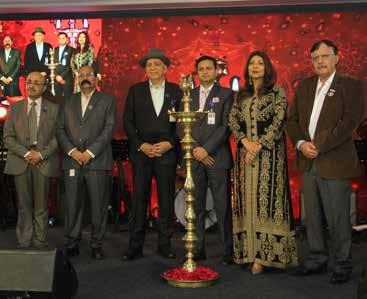
On 10 January 2026, the DMET-MERI Ex-Cadets Association (DMECA) hosted its Annual Alumni Meet & Networking Dinner 2026 at The Leela, Sahar, Mumbai, bringing together over 900 alumni, industry leaders, sponsors and partners from across the globe for an evening marked by camaraderie, celebration and professional engagement. Widely regarded as one of the world’s largest gatherings of DMET alumni, the event saw former cadets from multiple batches converge under one roof, representing a crosssection of the global maritime industry that included senior captains, chief engineers, CEOs, entrepreneurs, policymakers and maritime professionals.
The evening offered a vibrant platform for alumni to reconnect with batchmates, reflect on shared experiences, celebrate professional milestones and expand networks within the wider maritime fraternity. A strong sense of pride and fellowship permeated the gathering, reinforcing the enduring legacy of the DMET/MERI/IMU community and its contribution to India’s merchant navy and the global shipping sector. The event was attended by Mr. Uday Purohit, President of DMECA, and Mr. Mudit Mehrotra, Secretary of DMECA, along with several distinguished industry leaders such as Mr. P.K. Mishra, Managing Director of Indian Register of Shipping (IRS), Mr. Arun Sharma, Executive Chairman of IRS, Mr. Kaushik Seal, President of IMEI, Mr. Sunil Kumar, CTO and Head – T&A at The Great Eastern Shipping, and Capt. Amandeep Bhalla, Marine Head (India) at D’Amico Shipping Group, among many others.
The programme commenced with a warm welcome address by Mr. Uday Purohit, who greeted the alumni and emphasised the central theme of giving back to the alma mater. He spoke about the enduring prestige of DMET and how the institution has stood the test of time, shaping generations of maritime professionals. Expressing gratitude to sponsors, partners and attendees, he encouraged everyone to enjoy the evening’s hospitality, entertainment and the opportunity to strengthen bonds within the fraternity.
A key highlight of the evening was the felicitation of sponsors who played a vital role in supporting the event. The Platinum Sponsors included MIS Ship Repair LLC, Indian Register of Shipping and Kuzey Star Shipyard, while Gold Sponsors comprised Matra Euroasia Marine Services, Axon Developers, Jome Engineering LLC, ISR & Interocean, Prota Marine and
- Pratik Bijlani
MA Corporation. Hexxon Marine supported the event as the Bar & Liquor Sponsor, UMMS as the Dinner & Refreshments Sponsor and Rastek Marine as the Venue Sponsor, alongside several Silver Sponsors, Activity Sponsors and supporters.
Addressing the gathering, Mr. Mudit Mehrotra reflected on DMECA’s journey and evolution over the years. He noted how the association had grown from modest beginnings into a credible and respected body. As he said during his speech, “What began as a small and hopeful gathering has today become a proud, growing institution of over 1,200 members—no longer focused on survival, but committed to building on its own legacy year after year.” He further added, “DMECA has reached a stage where we measure growth not against challenges, but against our own past performances, striving constantly to be better than yesterday.” Mr. Mehrotra acknowledged the continued
support of partners, sponsors and associates, announced an upcoming technical seminar with IRS, and concluded on an emotional note, hinting that this would be his final Alumni Day address as part of present EC.
A special moment of the evening was the felicitation of a DMETian mountaineer who, at the age of 58, achieved the rare feat of summiting the Mount Everest.
The evening concluded on a high note with lively dance performances, karaoke sessions including a special surprise singing performance by a DMET cadet, which resonated strongly with the audience and a captivating singing performance by renowned singer and entertainer Aditya Narayan, leaving attendees with lasting memories of a night that celebrated legacy, leadership and lifelong bonds within the maritime fraternity.
Networking
Echoes of the Alma Mater (interviews with Alumni Members at the Event)
“A Bond Forged at Sea and in Spirit”– Mr. Sanjeev Dhawan, DMET 1980 Batch
“No matter how far life takes us, the bond we share as DMETians remains thicker than blood. Reuniting at DMECA takes us back to our formative years, when discipline, challenges and camaraderie shaped who we became. Those early lessons—thinking on our feet, facing adversity, and standing by one another—prepared us not just for life at sea, but for life itself. That experience is unmatched and deeply fulfilling.”
“Where Ranks Fade and Bonds Last a Lifetime” – Mr. Anirban Bhattacharjee and Mr. Ankit Anand, DMET 2023 Batchmates
“At DMECA, hierarchy disappears and only one identity remains— DMETian. Whether CEO or surveyor, we meet as batchmates, seniors and juniors bound by unity and trust. This ‘batchmate funda’ teaches us teamwork, humility and communication, shaping us beyond technical skills. Staying connected through DMECA allows us to guide, support and create opportunities for future cadets, ensuring the legacy of DMET continues to grow stronger with every generation.”
“When Alumni Dream Together, Institutions Grow Stronger” –Mr. Uday Purohit, President of DMECA
“DMECA exists to give back— to our alumni and to the alma mater that shaped our professional foundations. Every surplus from this event is reinvested into DMET, and that is our greatest pride. What we did differently was think big. When alumni come together under one umbrella, across India and overseas, we become a strong collective voice, one that can mentor cadets, uplift education, and build a lasting legacy for future marine engineers.”
MMT
AI Technology
The Epic Rise of AI
Artificial Intelligence (AI) feels like it just appeared out of nowhere with ChatGPT, but the truth is way more interesting. It’s been a 70-year rollercoaster of genius ideas, massive failures, and “winters” where everyone thought the tech was a total scam. If you want to understand how we got here, you have to look at how we tried to build a digital brain.
The Spark: 1940s – 1960s
It all started in 1943. Two scientists, Warren McCulloch and Walter Pitts, realized that if the human brain is just a bunch of neurons firing electrical signals, we could probably simulate that with math. They created the first Artificial Neuron
In 1958, Frank Rosenblatt took this further with the Perceptron. It was a simple machine that could “learn” to recognize shapes. People went wild—the New York Times even predicted it would eventually walk and talk. But in 1969, a book called Perceptrons proved that these simple networks couldn’t handle complex logic (like the “XOR” problem). Funding was cut, and AI entered its first “AI Winter.” Basically, everyone thought neural networks were a dead end.
The Comeback: 1980s – 2005
In the 80s, a scientist named Geoffrey Hinton (often called the “Godfather of AI”) helped popularize Backpropagation. This was a game-changer because it allowed “Deep” neural networks (networks with many layers) to learn from their mistakes. Around the same time, LSTMs (Long Short-Term Memory) were invented. These were the ancestors of Siri and Alexa because they allowed machines to “remember” sequences of data, like the beginning of a sentence.
However, the tech was still too slow for the real world. Computers weren’t powerful enough, and we didn’t have enough data to train them. This led to a second AI Winter in the 90s. AI became a “dirty word” in science because it promised so much but delivered so little.
The Inflection Point: 2012 and the GPU Revolution
Everything changed in 2012 because of three things: Big Data, GPUs, and the ImageNet competition.
ImageNet was like the Olympics for AI—researchers had to build software that could identify millions of photos. In 2012, a team entered a model called AlexNet. While everyone else was using old-school math, AlexNet used deep neural networks and NVIDIA GPUs.
Why did GPUs matter? Your computer’s CPU is like a genius professor who can solve one hard problem at a time. A GPU is like a thousand high-schoolers doing simple math all at once. Since neural networks are basically just billions of tiny math problems, GPUs made training them 100x faster. AlexNet didn’t just win; it crushed the competition. This was the moment the world realized Deep Learning was the real deal.
The Modern Era: Transformers and LLMs
By 2017, we had a new problem. LSTMs were great, but they were slow because they read text word-by-word. Then Google researchers published a paper called “Attention Is All You Need.” They introduced the Transformer.
Instead of reading word-by-word, Transformers look at the entire sentence at once. They use something called “Attention” to figure out which words are most important to each other. This allowed models to get massive. OpenAI took this architecture and built GPT (Generative Pre-trained Transformer). By the time GPT-3 arrived in 2020 with 175 billion parameters, the AI could write essays, code, and even joke.
Today, we use Multimodal models that can see images, hear voices, and generate text all at once. We’ve gone from a single mathematical neuron in a lab to “digital gods” in our pockets. The rollercoaster is still moving—and it’s only getting faster.
The Author
Vishrut Srivastava Managing Director Yodaplus Technologies Pvt Ltd
If you have any questions or would like to discuss how AI can support India’s journey toward maritime leadership, please feel free to connect at vishrut@yodaplus.com.
MMT
The Caravel Group Appoints Angad Banga as Group Chief Executive Officer
Planned Succession Positions Diversified Conglomerate for Continued Growth
Dr. Harry S. Banga to continue leading the
Group as Founder and Executive Chairman
HONG KONG – January 19, 2026 – The Caravel Group announced the appointment of Mr. Angad Banga JP, as Group Chief Executive Officer, with immediate effect. The appointment follows a carefully planned succession process developed over many years, reflecting the Group’s commitment to disciplined governance and long-term continuity.
As Group Chief Executive Officer, Angad will have responsibility for the performance of the Group’s three core divisions: Caravel Maritime, including Fleet Management Limited; Caravel Resources; and Caravel Asset Management. He will also lead capital allocation, strategy and investments across the Caravel enterprise. He reports to Dr. Harry S. Banga.
Dr. Harry S. Banga will continue to lead The Caravel Group as Founder and Executive Chairman. In this role, Dr. Banga will focus on long-term strategy, governance, and oversight, while remaining actively engaged across all business units. The Executive Chairman will ensure accountability at the highest
level, with the Chief Executive Officer driving performance and operational excellence. This leadership structure reflects the Group’s commitment to disciplined governance while enabling continued growth and evolution.
“It is with immense pride – both as the Founder of this company and as a father – that I extend my congratulations to Angad on this appointment. This transition marks the culmination of years of careful preparation. Angad has earned the respect of colleagues, clients, and industry peers through his own merit, and I am confident that under his leadership, working in partnership with myself and our leadership team, The Caravel Group will continue to thrive while remaining true to the values of Family, Integrity, and Partnership that have always defined us,” said Dr. Harry S. Banga, Founder and Executive Chairman, The Caravel Group.
Angad has been integral to The Caravel Group since joining at its inception, and most recently served as Group Chief Operating Officer from 2016 to 2025. During this period, he was instrumental in the strategic transformation of The Caravel Group into the diversified organisation it is today—building long-term resilience across the enterprise, establishing new business lines, delivering strong investment performance, and enhancing the capabilities of the Group’s core operations. He has advanced the Group’s capabilities in digital transformation and operational excellence, and has prioritised talent development across the organisation, reinforcing the Group’s longstanding central philosophy that it’s human capital is its greatest asset.
Beyond The Caravel Group, Angad recently concluded a very successful tenure as Chairman of the Hong Kong Shipowners Association (2023–2025) during a period marked by significant geopolitical disruption, regulatory evolution, and trade uncertainty for the global maritime industry. He currently serves on the Hong Kong Maritime and Port Development Board, where he is Chairman of the Promotion and External Relations Committee.
The Founder and Executive Chairman and the Group Chief Executive Officer are supported by an exceptional team of senior leaders across all divisions, whose expertise and dedication have been instrumental to The Caravel Group’s success. This leadership team has been intentionally strengthened in recent years and will continue to play a critical role in the Group’s operations and future growth.
“I am deeply grateful to Dr. Banga for his trust and confidence in me, and to the leadership team and colleagues across The Caravel Group whose dedication has made this transition possible. Our commitment to our clients, partners, and people remains unchanged. Together with Dr. Banga’s continued strategic guidance and the strength of our teams worldwide, I look forward to building on the foundations we have established and taking The Caravel Group forward into its next chapter— with continued focus on operational excellence, sustainable growth, and strengthening our position in the markets we serve,” said Mr. Angad Banga, Group Chief Executive Officer, The Caravel Group.
The transition has been designed to ensure full continuity for all stakeholders. Client relationships, operational commitments, and the Group’s strategic direction remain firmly in place. By combining Dr. Banga’s long-term strategic oversight with
Angad’s operational leadership, The Caravel Group is well positioned to sustain momentum while enabling thoughtful evolution.
About The Caravel Group:
The Caravel Group, headquartered in Hong Kong and led by the Banga family, is a privately held and globally diversified group with operations across maritime services, dry bulk commodity trading, institutional investment management, and philanthropy. Its maritime division includes Fleet Management Limited, the world’s second-largest third-party ship manager with over 600 vessels under management, and strategic investments, including a major stake in Pacific Basin (HKEX: 2343). Caravel also owns the International Maritime Institute (IMI) in India, reinforcing its commitment to maritime talent development. Through Caravel Asset Management, the Group invests globally across public markets and private equity, while its philanthropic arm, The Caravel Foundation, supports the education and well-being of underprivileged youth across Hong Kong, China, and India.
www.caravel-group.com
MILAAP 2026: India Steps Into the Global Spotlight for Seafarers’ Rights
- Dr.Radhika Vakharia
Princess Dock in Mumbai is no stranger to history. For more than a century, ships have sailed in and out of its waters, carrying goods, people, and stories across the globe. This week, however, the iconic dock became the centre of a different kind of movement ,one focused not on cargo, but on the lives and rights of the people who make global shipping possible.
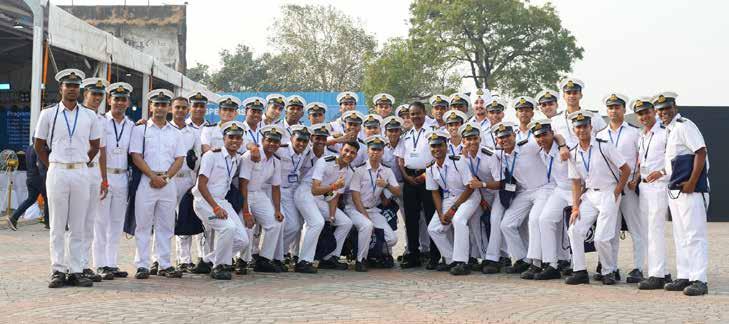
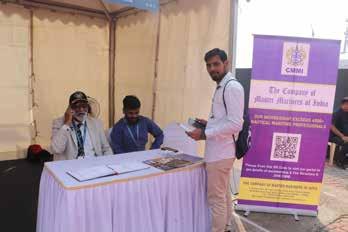
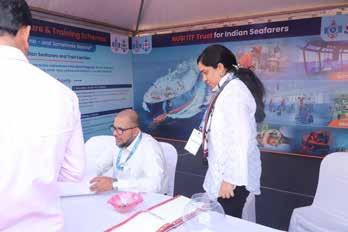
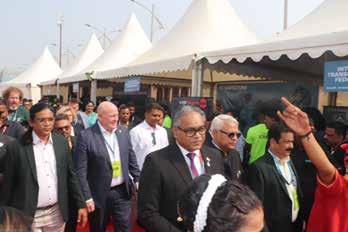
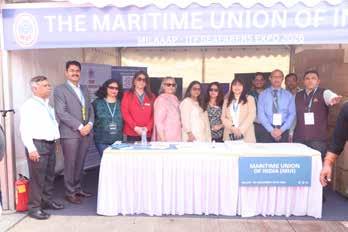
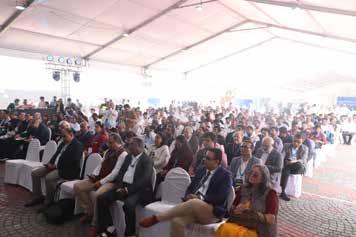
From 29th to 31st January, thousands of Indian seafarers gathered at Princess Dock for the MILAAP – ITF Seafarers’ Expo 2026 , a landmark international event jointly organised by the International Transport Workers’ Federation (ITF) and India’s three affiliated maritime unions: the National Union of
Seafarers of India (NUSI) , the Maritime Union of India (MUI) , and the Forward Seamen’s Union of India (FSUI) .
Held daily from 11:00 to 17:30, the three-day Expo brought together seafarers, trade unions, welfare organisations, shipping companies, regulators, and international labour experts in one of the world’s most important seafaring nations. The scale of the event and the urgency of its message reflected a critical moment for Indian seafarers and for the global maritime industry as a whole.
India is already a powerhouse of maritime labour. Indian seafarers crew vessels across every major trade route, keeping supply chains functioning and global commerce moving. Yet despite their central role, Indian seafarers are facing mounting
challenges.From unethical recruitment practices and wage theft to abandonment in foreign ports.The timing of the Expo was no coincidence. It followed closely on the release of the ITF’s 2025 seafarer abandonment statistics , which revealed another record-breaking year for abandonment worldwide. Indian seafarers were once again the worst affected nationality,as they were in 2024.
“Seafarers move the world — and Indian seafarers are critical to keeping global trade moving every single day.”
— Jacqueline Smith, ITF Maritime Coordinator
According to ITF Maritime Coordinator Jacqueline Smith , hosting the Expo in India was both symbolic and
strategic.“Sadly, we are seeing Indian seafarers get hit hard by abuses of their rights,” Smith said. “That’s precisely why the Expo is so important. Seafarers can speak directly to experts, learn about their rights, and find real support.”
More Than an Expo: A Space for Learning, Support, and Solidarity
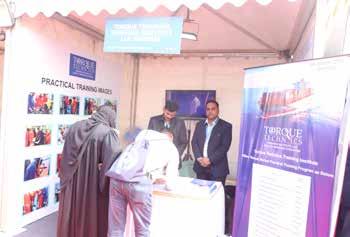
Unlike traditional industry conferences, the ITF Seafarers’ Expo is designed first and foremost for seafarers themselves. Across the dockside venue, stalls and sessions addressed the issues that most directly affect life at sea and ashore: abandonment, fair treatment, ethical recruitment, health and safety, criminalisation, and the future of work in a rapidly changing maritime industry.Organisations hosting stalls included the ITF, Indian and international maritime unions, welfare bodies such as the Mission to Seafarers and ISWAN , industry groups like INSA and FOSMA, and regulators including India’s Directorate General of Shipping (DG Shipping). Alongside expert-led sessions, the Expo was intentionally welcoming and informal. There were games, cultural performances, free food and refreshments and space for seafarers and their families to connect, share experiences, and ask questions without fear or formality.This balance between seriousness and celebration was evident from the opening moments of the event. The Expo launched with cultural performances, a marching band led by
seafarers, and a traditional lamp-lighting ceremon grounding the international gathering firmly in Indian maritime culture.
A Strong Signal from Government
One of the most closely watched moments of the Expo came at its opening ceremony, when India’s Director General of Shipping, Shri Shyam Jagannathan , addressed hundreds of seafarers and stakeholders.His remarks acknowledged a difficult truth.
“While we have great aspirations, our nation is also showcased as the nation with the highest number of abandoned seafarers,” Shri Jagannathan said.
“I seek to reassure all my seafarer brothers and sisters that the maritime administration is committed to your welfare, your dignity, and your safety — 24/7.”
Shri Jagannathan outlined India’s ambition for its seafarers to make up 25% of the global seafarer workforce,alongside a raft of new initiatives aimed at protecting and supporting those already at sea.Among the most significant announcements was the launch of a 24/7 grievance redressal service for seafarers, due to go live in the first week of April. The service will be accessible via a toll-free phone number, WhatsApp, and email — a move designed to ensure help is available regardless of location or time zone.
Additional commitments included:
• Seafarers’ clubs at every port in India, providing spaces for shore leave and welfare support
• A new insurance support framework , offering financial assistance toward medical insurance, critical illness cover, and life insurance for eligible seafarers
India’s growing leadership on seafarers’ rights was underscored by a decision taken just months earlier. In September 2025 DG Shipping announced the blacklisting of 86 vessels linked to repeated cases of seafarer abandonment and abuse — a move described by the ITF as globally unprecedented .
The directive ordered recruiting and placement agencies to:
• Cease recruitment of Indian seafarers for the blacklisted vessels
• Facilitate prompt sign-off and repatriation of Indian crew
• Ensure payment of outstanding wages and welfare entitlements
• Submit detailed compliance reports within 14 days
• Agencies failing to comply face suspension or revocation of their licences.
“This kind of decisive intervention demonstrates that abuse is not inevitable — it is the result of choices,” the ITF said in a statement welcoming the move. “Governments can choose to enforce accountability.”The ITF has urged other maritime nations to follow India’s lead, arguing that coordinated enforcement is essential to ending abandonment globally.
Securing the Future of Maritime Work
Beyond immediate rights and protections, the Expo also looked ahead — addressing how the industry must evolve in the face of climate change, technological shifts, and demographic challenges. Stephen Cotton , General Secretary of the ITF, emphasised India’s growing importance to the future of global shipping.
“When we look at the future, we believe that India will be an even bigger part of the maritime world,” Cotton said.
He highlighted emerging risks, including scams targeting seafarers, the transition to new fuels, and the need for a just transition that does not leave workers behind. Central to that future, Cotton argued, is gender inclusion. “We need more women in maritime on ships, in offices, and in governance. This is critical to our future.”
Sessions throughout the Expo tackled these themes head-on, with speakers from unions, regulators, and international bodies such as the International Labour Organization (ILO) leading discussions on fair treatment, ethical recruitment, and the Maritime Labour Convention.The success of MILAAP 2026 was rooted in collaboration. All three ITF-affiliated Indian maritime unions worked together to co-organise the event — a rare show of unity in a diverse sector.
Union leaders including Savio Ramos (MUI), Milind Kandalgaonkar (NUSI) , and Manoj Yadav (FSUI) joined international and government speakers in reinforcing a shared message: seafarers’ rights are non-negotiable, and collective action delivers results.The scale of attendance reflected that message. The last ITF Seafarers’ Expo, held in Manila in 2023, drew more than 4,000 seafarers over three days.
A Turning Point
“The challenge is not just how we celebrate seafarers,” Stephen Cotton told attendees.“It’s how we secure the future.”
As the Expo draws to a close, its significance extends far beyond Princess Dock. For Indian seafarers, it represents recognition, visibility, and concrete commitments. For governments and industry, it offers a model of how rights enforcement, welfare provision, and dialogue can intersect.Most importantly, it sends a message to seafarers themselves: they are not alone.
Future Fuel Risks
Why P&I is preparing today
Advances in alternative fuel production mean a wider range of applications for greener ship operations – but developments also call for mature mitigation strategies, writes Mark Smith, Loss Prevention Director for Decarbonisation at global mutual NorthStandard
Switching from HFO and MDO to green alternatives –including ammonia, methanol, hydrogen, biofuels, battery power and even nuclear reactors– introduces brand-new risks to the maritime and offshore sectors: instability, toxicity and engine damage, for example. These are major challenges that will stretch operators, crews and P&I clubs alike, raising the prospect of complex claims and uncertain liabilities.
At NorthStandard, we are proactively helping our members to prepare now. By staying up to date on every emerging green marine fuel and technology, rather than limiting our scope to one or two options, our purpose is to stay ahead of multiple deadlines and support the industry’s long-term shift to Net Zero without compromising safety or financial strategies.
Currently, NorthStandard’s members account for about 20% of International Group tonnage, or 150 million gt. The International Group has identified major gaps in liability regimes for alternative fuels carried as bunkers, and NorthStandard has supported a submission to IMO’s Legal Committee on this topic. That item is now formally on its agenda.
Biofuels boom
Already, we are seeing a strong uptake of biofuels. These are genuine drop-in fuels, removing the need for engine and tank conversions and/or dual-fuel system installations. That makes biofuels viable for older ships coming to the end of their operational lives.
Also driving biofuel adoption is the January 2025 introduction of FuelEU Maritime, which offers fleet operators the commercial incentive of a surplus/deficit trade-off scheme. So, ships with better access to biofuels – those working in the Netherlands, for instance – can build up compliance ‘surpluses’, while ships burning fossil fuels, including those operating in areas where biofuel availability is patchy, such as in the Mediterranean, rack up ‘deficits’. Through the FuelEU Maritime pooling mechanism, a biofuel-powered ship could effectively cancel out the deficit of a diesel-powered sister ship, cutting fleet costs relating to FuelEU.
This mechanism is for vessels trading to/ from EU-only for now, with the IMO’s comparable global regime version delayed, after the October 2025 MEPC Extraordinary Session adjournment. To help our members capture the savings already available, NorthStandard negotiated discounted transaction fees to the BetterSea surplus/deficit trading platform between February
and mid-August 2025. The discount equated to a saving of around €42,000 per containership (or more for a cruise ship), on top of the free expert consultation provided. We are now planning the next stage of partnership benefit with BetterSea.
As a club, we are already seeing biofuel-related claims, mostly related to problems with blocked filters and/or purifiers – and P&I clubs can expect more of the same as the uptake continues. In some cases, opportunist vendors may usie lower quality cutter stock to raise their profits by mixing it with fuel blends, thereby compromising personnel safety and vessel and component integrity. This is a trend we noted at NorthStandard post IMO 2020 sulphur cap with very low sulphur fuel oils (VLSFOs).
That is why NorthStandard gives every member free access to our Fuel Insights platform, powered by data from every major bunkering port, provided by its partner VPS. This service provides real-time quality statistics, plus cat-fine alerts, for numerous regions—everything an owner needs to know when deciding where to bunker. In fact, one member recently used the platform to trace contaminated fuel straight back to a supply barge that had already contaminated other ships; this information helped the member to debunker in time, saving a substantial amount in potential repairs and legal costs.
On the technical side, we have also ran webinars highlighting issues like microbial growth from fatty acid methyl ester (FAME) when it sits in tanks for months on end —an issue that short-run trials have only partly explored. Longer voyages will tell the full story, and we are keeping up to date on these developments, so that our members stay informed. We are also about to publish a biofuel guidance paper which will look at quality controls and proof of sustainability concerns because our members have raised these as potential issues.
Nuclear, WAPS and beyond NorthStandard is also preparing for claims related to nuclearfuelled ships. Here, insurability will hinge on reactor design, the emergency planning zone (EPZ – the immediate vicinity around
the reactor for implementing rapid response to radiological incidents, and usually just the vessel itself when using modern SMRs) and the ship’s trading patterns. Today’s compact SMRs have small EPZs, which suggests that they can be insurable and port-friendly. Older, larger designs with extensive EPZs may face restricted port access, soaring nuclear liability premiums and potential entry refusals until the exposure is fully quantified.
Prototype floating nuclear power plants are advancing toward deployment, and will come into being before nuclear merchant vessels. NorthStandard is heavily involved in this research, investigating everything from propulsion integration to offshore mooring. It is simply not enough to speculate: this is why risk assessments must evolve with the technology and the regulations.
To achieve this, NorthStandard has teamed up with the Nuclear Energy Maritime Organisation (NEMO). Launched in 2024, NEMO was created to unite stakeholders across the nuclear and maritime segments, with founding members including Lloyd’s Register, Bureau Veritas, DNV, VARD Group, BWXT Advanced Technologies, CORE POWER and HD Hyundai (KSOE), to name just a few.
I am currently spearheading NEMO’s STCW task force on training and certification for nuclear-powered merchant vessels because crew competencies will be essential for nuclear-powered commercial ships to take off. We cannot rely on yesterday’s P&I
claim assumptions for nuclear ships: the old playbook, based on legacy land-based incidents or Cold War-era naval submarine management, underestimates how differently today’s SMRs function in a commercial setting.
Wind-assisted propulsion systems (WAPS) and hydrogen also demand fresh thinking when it comes to risk assessments. What if wing sails won’t fold in port, or a mechanical WAPS failure impacts on vessel manoeuvrability?
Unknowns keep emerging. For example, hydrogen comes with well-known flammability risks and a wide explosive range. So, we must work in collaboration with class, fuel experts and manufacturers to stay knowledgeable and relevant.
Furthermore, given that the real danger may come years from now if crews grow complacent, establishing a culture of vigilance now is a critical basis for future safe fuel use. That is why NorthStandard runs regular live webinars on evolving regulations and risks, with crew competence always the top priority. We also run seminars to help embed and improve safety culture as well as helping our members to make procedures and safety management systems as useful as possible.
MMT
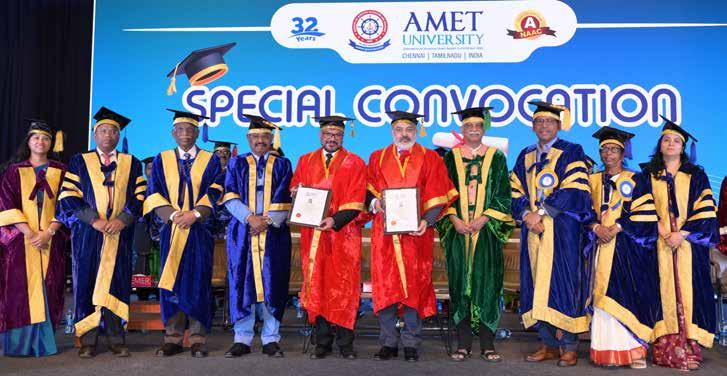
AMET University Conducts Special Convocation Ceremony
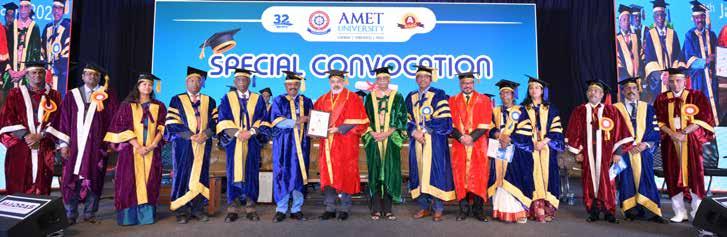
AMET University conducted a Special Convocation; Eminent Maritime Professionals were Awarded ‘Honoris Causa’ Degrees
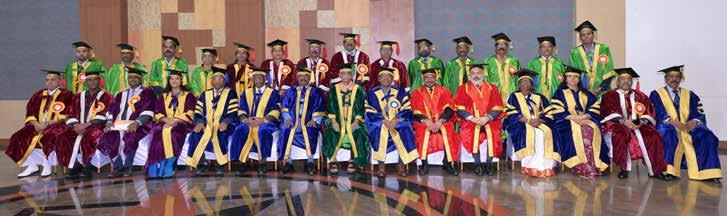
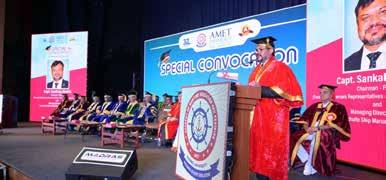
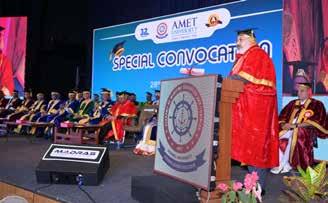
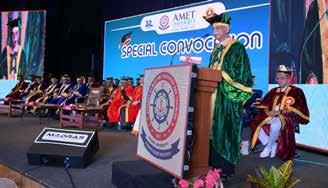
AMET University, Chennai, a premier institution in maritime and allied higher education, successfully conducted its Special Convocation Ceremony on Wednesday, 28 January 2026, at the Anna Centenary Library Auditorium, Kotturpuram, Chennai.
The ceremony commenced with the Welcome Address by Prof. Dr. V. Rajendran, Vice Chancellor, AMET University. The Convocation was presided over by Dr. J. Ramachandran, Founder Chancellor, AMET University, whose visionary leadership has been instrumental in establishing AMET University as a globally respected centre for maritime education, training, and research.
The Special Convocation marked the Conferment of the Degree of Doctor of Science (Honoris Causa) upon two eminent leaders of the maritime industry, in recognition of their exceptional professional contributions, leadership, and service to the maritime sector. The Citations of the ‘Honoris Causa’ awardees were formally read by Col. Dr. G. Thiruvasagam, Provost, AMET University, following which Dr. J. Ramachandran, Founder Chancellor, AMET University, presented the citations and conferred the Degrees of Doctor of Science (Honoris Causa) in a solemn and dignified academic ceremony to:
Capt. Sankalp Shukla, Chairman – FOSMA (Foreign Shipowners’ Representatives and Ship Managers Association) and Managing Director – BSM (Bernhard Schulte Ship Management) India Pvt. Ltd., was honoured for his significant role in advancing maritime operations, enhancing safety standards, and promoting professional excellence at national and international levels.
Capt. Arun Mehta, Managing Director – OSM Thome, India, was honoured for his distinguished leadership in maritime management, manpower development, and his sustained contribution in strengthening India’s maritime human resource capabilities.
The Convocation was graced by Dr. Rajan Welukar, Vice Chancellor, ATLAS SkillTech University, Mumbai, and former Vice Chancellor of the University of Mumbai, Yashwantrao Chavan Maharashtra Open University, Nashik, and AURO University, Surat, who participated as the Chief Guest and delivered the Convocation Address. In his Convocation Address, Dr. Welukar underscored the critical role of higher education institutions in nurturing future-ready professionals, with particular emphasis on academic integrity, interdisciplinary learning, innovation, and leadership amidst rapid global transformation. He said, “Technology is dangerous when it becomes a substitute for Responsibility; but never ever eliminate responsibility. Artificial Intelligence can assist you but you only can author it. So, sail responsibly, lead courageously and live responsibly.”
The Felicitation Address was delivered by Dr. Rajesh Ramachandren, President, AMET University, who highlighted the University’s continued commitment to academic excellence, industry-integrated education, innovation, and sustainability. He encouraged students to pursue lifelong learning and to contribute responsibly and ethically to their professions and to society at large.
Addressing the gathering, the speakers collectively emphasized AMET University’s unique position in maritime education, its strong industry linkages, and its critical role in nurturing globally competent professionals equipped to meet contemporary challenges in the maritime, logistics, and allied sectors.
The Special Convocation Ceremony was attended by members of the Executive Council, Academic Council, Finance Committee, senior administrators, faculty members, industry leaders, parents, and graduating students. The event reflected AMET University’s enduring mission to foster knowledge, leadership, and service, while further strengthening its engagement with the global maritime fraternity.
The ceremony concluded with the National Anthem, marking a memorable, dignified, and inspiring academic occasion for the entire University community.
MMT
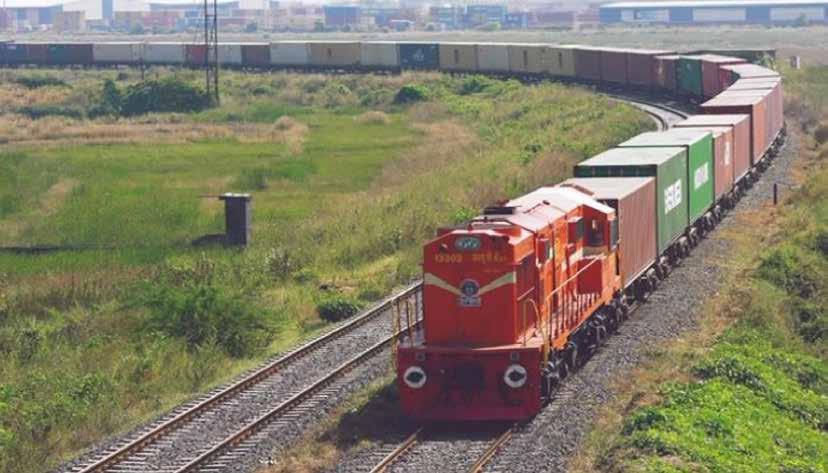
Indian Railways Crosses 1 Billion Tonne Mark as Dedicated Freight Corridors Drive Record Performance
Indian Railways has achieved a significant milestone in FY 2025–26 by surpassing 1 billion tonnes of freight loading, underscoring its growing role as the backbone of India’s logistics and industrial economy. This record performance has been strongly supported by the near-completion and operational stabilisation of the Eastern and Western Dedicated Freight Corridors (DFCs), which are now functioning at close to 96% operational capacity. Together, these developments mark a decisive shift in the way freight is moved across the country.
A historic achievement in freight movement
Crossing the 1 billion tonne threshold places Indian Railways among the world’s largest freight carriers. This achievement reflects not only higher industrial output and infrastructure activity but also sustained policy focus on improving rail’s share in the national freight mix. Traditionally dominated by bulk commodities such as coal, iron ore, cement, and foodgrains, rail freight is
now seeing diversification into containers, automobiles, fly ash, fertilizers, and petrochemicals.The milestone is particularly noteworthy in the context of India’s ambition to reduce logistics costs to global benchmarks and improve the ease of doing business. Railways, with their ability to move large volumes over long distances efficiently, are central to this strategy.
Dedicated Freight Corridors: The game changer
The Eastern and Western DFCs have emerged as the single most important enabler of this performance leap. Designed exclusively for freight operations, the corridors have fundamentally altered capacity availability, transit times, and reliability. With nearly 96% of both corridors now operational, freight trains can run longer, heavier, and faster, without competing with passenger services. The Eastern DFC, stretching from Ludhiana in Punjab to Dankuni in West Bengal, has significantly improved coal and steel movement to power plants and industrial clusters in northern and eastern India. Meanwhile, the Western DFC, connecting Dadri near Delhi to Jawaharlal Nehru Port Authority (JNPA) in Maharashtra, has transformed container and export-import cargo movement, particularly for automotive, electronics, and consumer goods sectors.Average freight train speeds on DFCs have more than doubled compared to conventional routes, reducing transit times by up to 40–50%. This reliability has encouraged shippers to shift cargo from road to rail, contributing directly to the record loading figures.
Operational efficiency and technology adoption
Beyond infrastructure, Indian Railways has focused on improving operational efficiency through technology and process reforms. Advanced signalling systems, centralized traffic control, real-time monitoring of rolling stock, and predictive maintenance have reduced downtime and improved asset utilization. Longer trains with higher axle loads, particularly on DFC routes, have enabled greater tonnage movement with fewer train paths.Digital initiatives such as end-to-end freight tracking, electronic documentation, and integrated customer portals have enhanced transparency and ease of access for freight customers. These measures have helped attract private logistics players and large manufacturers looking for dependable and scalable transport solutions.
The surge in rail freight aligns closely with national priorities such as the National Logistics Policy, Gati Shakti Master Plan, and the push for multimodal connectivity. Dedicated freight corridors are increasingly being integrated with industrial parks, logistics hubs, inland container depots, ports, and special economic zones, creating seamless freight ecosystems.Rail’s improved performance has also eased pressure on highways and reduced congestion at key ports. For bulk cargo and long-haul movement, rail offers a more cost-effective and environmentally sustainable alternative to road transport.
As industries expand and manufacturing clusters grow, this modal shift is expected to deepen further.
From an environmental standpoint, higher rail freight volumes contribute to lower carbon emissions, reduced fuel consumption, and less road wear and tear. Rail transport emits significantly less CO₂ per tonne-kilometre compared to road transport, making it a critical component of India’s climate action strategy.Economically, improved freight performance enhances supply chain reliability, reduces inventory holding costs, and supports timely delivery of raw materials and finished goods. These factors are particularly important for export-oriented sectors that depend on predictable logistics to remain globally competitive.
Despite the impressive milestone, challenges remain. Full commissioning of the remaining DFC sections, expansion of terminal capacity, and improved last-mile connectivity are essential to sustain momentum. Rolling stock availability, skilled manpower, and coordination with state governments and private players will also play a crucial role. Looking ahead, Indian Railways is expected to leverage the success of the Eastern and Western DFCs to plan additional freight corridors, including north–south and east–west routes. Combined with continued reforms and private sector participation, these initiatives could further enhance rail’s share in freight movement.
Exceeding 1 billion tonnes of freight loading in FY 2025–26 marks a defining moment for Indian Railways. Backed by the near-full operationalisation of the Eastern and Western Dedicated Freight Corridors, the achievement reflects a structural transformation in India’s logistics landscape. As rail freight becomes faster, more reliable, and more integrated with multimodal networks, Indian Railways is well positioned to play a central role in powering the country’s economic growth in the years ahead.
2026 - National Mission to Reduce India’s Logistics Costs
Transforming Competitiveness and Growth
India’s economic rise over the past decade has been powered by rapid industrialisation, digital adoption, and ambitious infrastructure expansion. Yet one persistent challenge has consistently restrained growth in manufacturing, exports, and supply chain efficiency: high logistics costs . Traditionally estimated at around 13–14% of GDP , logistics costs in India have been noticeably higher than those in many other major economies. High transportation costs, inefficient modal mixes, fragmented supply chains, and infrastructural bottlenecks have collectively dampened competitiveness and inflated prices for business and consumers alike.
To address this, the Government of India has launched a National Mission to bring logistics costs below 10% of GDP by 2028 — a strategic target intended to streamline supply chains, boost exports, reduce input costs, and strengthen India’s position as a global manufacturing hub. This mission represents a coordinated policy framework
across ministries and states, underpinned by infrastructure investment, digital logistics platforms, and institutional reforms. In doing so, it aligns with broader economic goals , including the vision of a $5 trillion economy and enhanced ease of doing business.
Logistics costs encompass all expenses involved in the movement, storage, and handling of goods , from raw materials to finished products reaching consumers or export markets. They include transportation fees, warehousing charges, inventory holding costs, customs duties, and administrative compliance costs.
High logistics costs can erode industrial competitiveness in several ways:
Export disadvantage: Indian goods face higher freight and handling costs compared to global competitors. For countries like China, logistics costs average 8–10% of GDP, whereas India’s historically hovered above 13%.
Reduced margins for MSMEs: Micro, small and medium enterprises (MSMEs) — the backbone of India’s economy — often operate on tight margins. High logistics costs can squeeze profitability and hinder expansion.
Infrastructure inefficiencies: Congested ports, slow clearance processes, and fragmented warehousing networks add delays and costs that cascade across supply chains.
Modal imbalance: India’s heavy reliance on road transportation — which accounts for the majority of freight movement — is costlier than rail and waterways. The imbalance increases fuel usage, pollution, and transport time.
Baseline and Targets: From 13% to Below 10%
The government’s logistics cost estimates have recently been refined. Traditional industry and external studies pegged logistics costs at around 13–14% of GDP . More recent government-led assessments suggest that integrated methodologies (combining national survey data with economic models) place the cost closer to 7.97% of GDP for the fiscal year 2023–24.
Whatever the baseline , official policy prioritises cost reduction. Statements from transport ministers have frequently referenced ambitions to push costs into the “single digits,” with specific targets to move below 10% by 2025–28 and potentially even to 9% or lower in coming years.
This numerical goal is more than cosmetic; it provides a measurable performance yardstick for policymakers, industry, and investors alike. A sustainable decline in logistics costs to sub-10% levels is expected to bolster India’s global logistics ranking , improve national supply chain resilience, and enhance domestic competitiveness.
Core Pillars of the National Mission
The strategy to reduce logistics costs is multipronged, involving infrastructure upgrades, regulatory simplification, digital platforms, and modal integration. Some major components of the National Mission include:
Infrastructure Expansion and Modernisation
A major driver of cost reduction is physical connectivity . Strategic expansion of highways, expressways, ports, freight corridors, and economic corridors helps reduce transit times and distance travel costs. The government has invested heavily in:
• Greenfield expressways and extension of national highways to improve inter-state connectivity.
• Port modernisation schemes to increase cargo throughput, reduce vessel dwell times, and integrate better with hinterland networks. Investments in ports such as Chennai, Ennore, and Tuticorin are examples of coastal logistics enhancements.
• Efficient road-rail-port interfaces are essential to create seamless supply chain flows and reduce reliance on congested urban or rural bottlenecks.
Multimodal Logistics Parks (MMLPs)
The idea behind MMLPs is to create integrated logistics hubs where road, rail, coastal and inland waterways converge. An MMLP typically bundles warehousing, cold storage, freight terminals, and value-added services in one location ,improving inventory management and reducing handling costs. These hubs serve as consolidation points, enabling economies of scale and faster last-mile delivery.
Digital Logistics Platforms
Digitisation is at the heart of the mission to reduce friction in logistics processes.
• Unified Logistics Interface Platform (ULIP) integrates data from various ministries and agencies, enabling real-time tracking, compliance automation, and analytics.
• E-Way bills , digital tolling (FASTag), and National Single Window initiatives reduce paperwork, streamline customs clearance, and cut delays at state borders.
By leveraging Digital Public Infrastructure (DPI), stakeholders across the logistics ecosystem — from shippers to carriers — can access unified, transparent information that reduces compliance costs and transaction delays.
Policy and Regulatory Reform
The National Logistics Policy (NLP) , unveiled in 2022, provides the overarching framework for cost reduction. Its objectives include enabling data-driven decision making, improving modal shift efficiency, and aligning policy incentives to logistics performance outcomes.
Regulatory measures also streamline interstate movement, reduce red tape, and harmonise infrastructure usage fees,
Logistics
contributing to a more predictable and efficient logistics environment.
Modality Shifts: Roads, Rails, and Waterways
One of the most significant structural targets of the logistics mission is to rebalance freight transport modalities.India’s transport system has historically been skewed towards road freight, which accounted for a disproportionate share of goods movement. Long-haul trucking — while flexible — is costlier and more energy intensive compared to rail and coastal shipping.
Shifting freight to railways and waterways, where scales and distances can reduce per-unit transport costs is central to lowering the overall logistics burden. Rail and water transport have lower fuel costs per tonne-kilometre and reduce road congestion and emissions, making the system more sustainable and cost-efficient.
Sectoral Impacts: MSMEs, Agriculture, and Exports
MSMEs
(Micro, Small & Medium Enterprises)
For MSMEs, logistics costs are often one of the largest controllable operational expenses. Lower logistics costs mean healthier profit margins, better cash flows, and stronger incentives for investment. Streamlined compliance and digital documentation also lower entry barriers for smaller firms to participate in broader supply chains.
Agriculture and Food Supply Chains
Efficient cold chains and modern warehousing reduce post-harvest losses is a chronic challenge in India’s agricultural supply chain. With the implementation of 100,000 modern warehouses and storage facilities, Indian agriculture can tap into value addition, improved price realisation for farmers, and more efficient distribution networks.
Exports and Competitiveness
Lower logistics costs directly improve export competitiveness by cutting the landed cost of Indian goods in global markets. Quicker port handling, faster clearances, and multimodal connectivity reduce transit times and uncertainty — key advantages in just-in-time manufacturing and global supply chains.
Despite notable progress, several challenges remain:
• Fragmented logistics sector: Many small, unorganised players still dominate regional logistics markets, leading to inconsistent service quality and inefficiencies.
• Last-mile connectivity: Rural and peri-urban roads often lag behind major expressways, creating bottlenecks and delay points.
• Skill gaps and technology adoption: While digital platforms are expanding, uniform technology adoption and workforce upskilling remain ongoing tasks.
Addressing these challenges will require sustained investment, policy coherence across states, and continued private sector participation.Tracking performance against the 2028 logistics cost target will depend on clear indicators ,such as average transport costs per tonnekilometre, port dwell times, modal shares (road vs rail vs waterways), and turnaround times at customs and checkpoints.The government’s stated aim to bring logistics costs into the single digits ,possibly even targeting around 9% of GDP in the near term which signals ambition and political commitment.
Moreover, logistics reform is not a siloed objective; it dovetails with national growth strategies including Make in India, boosting manufacturing competitiveness, increasing trade volumes, and strengthening India’s global supply chain footprint.
A Logistics Transformation at Scale
India’s National Mission to reduce logistics costs from historically high levels of around 13–14% of GDP to below 10% by 2028 is a bold agenda that combines infrastructure, digitalisation, policy reform, and institutional alignment. In doing so, India not only addresses a long-standing economic inefficiency but also lays the groundwork for next-generation supply chains that are resilient, costefficient, and globally integrated.
MMT
Zip through supply chain tight spots
Whatever your business, you need a robust supply chain that is the right fit with no slips, busts or disruptions. Unzip a world of possibilities with GAC India‘s logistics resources, expertise and network to close the gaps and open up your business.
GAC Shipping (India) Private Limited
Main office
GAC House, P.B. No. 515, Subramanian Road, Willingdon Island, Cochin 682 003, India