How Force Torque Sensors Improve
Robot Accuracy in 2026
Let’s be real robots are only as good as what they can feel. Sounds odd, but it’s true. In 2026, accuracy isn’t just about better code or faster processors. It’s about sensing. And this is where force torque sensors quietly do the heavy lifting. Most people overlook them. Big mistake. These sensors are the reason a robot arm doesn’t crush a fragile component or miss a precise movement by a millimeter. They give robots something close to “touch,” not human-level, obviously, but enough to make a serious difference. The short answer is simple: better sensing equals better accuracy. But the real story goes deeper than that.
What Are Force Torque Sensors ?
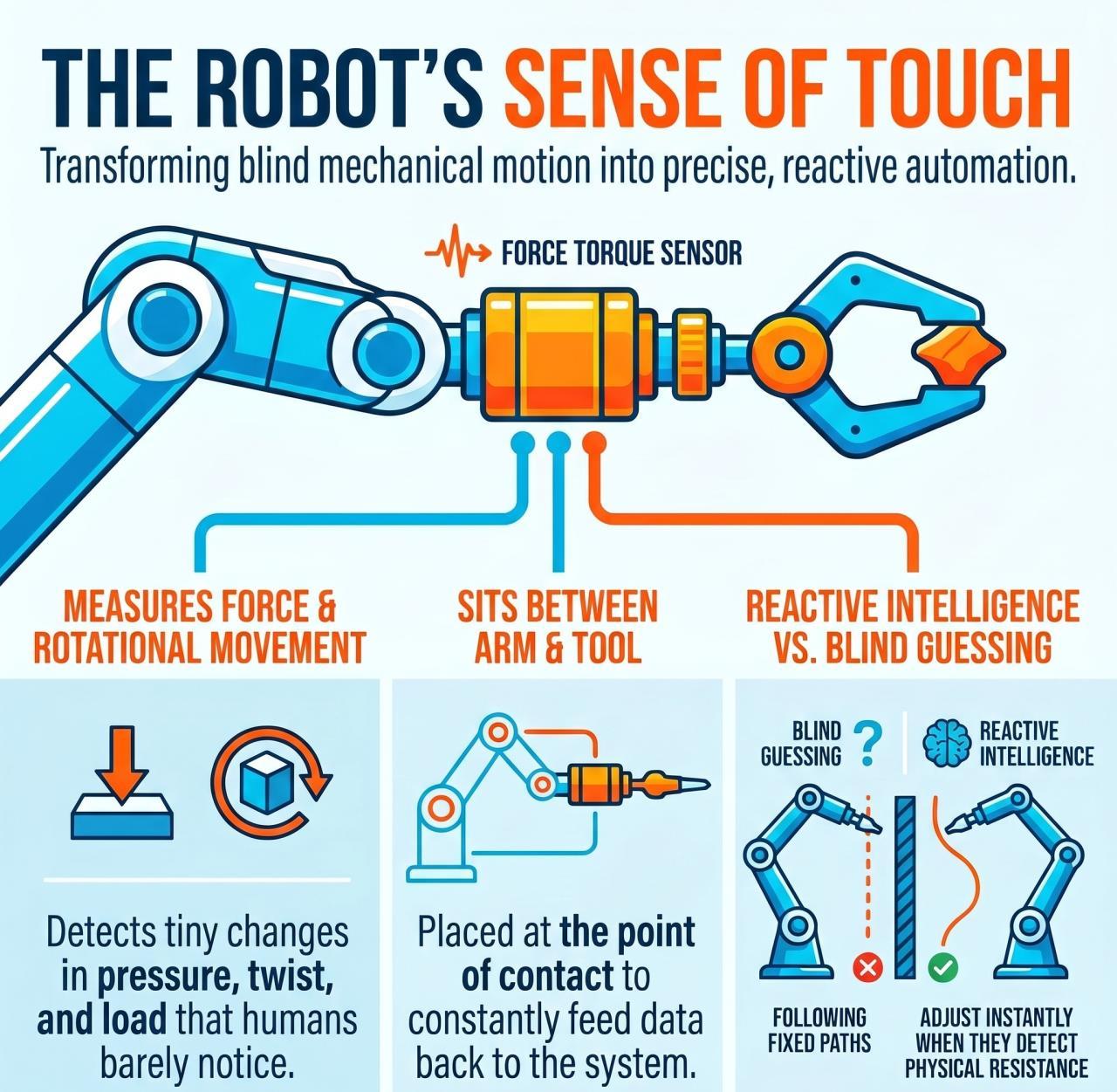
Force torque sensors measure forces and rotational movements acting on an object. That’s it. But don’t let that simple definition fool you. These sensors detect tiny changes—pressure, twist, load—that humans can barely notice. In robotics, they sit between the robot arm and the tool, constantly feeding data back to the system.
So instead of a robot just following instructions blindly, it adjusts in real time. If something pushes back, it knows. If resistance changes, it reacts. Without this, robots are basically guessing. And guessing is not what you want in manufacturing or automation.
How Force Torque Sensors Actually Improve Accuracy
1. Real-Time Feedback (this is the big one)
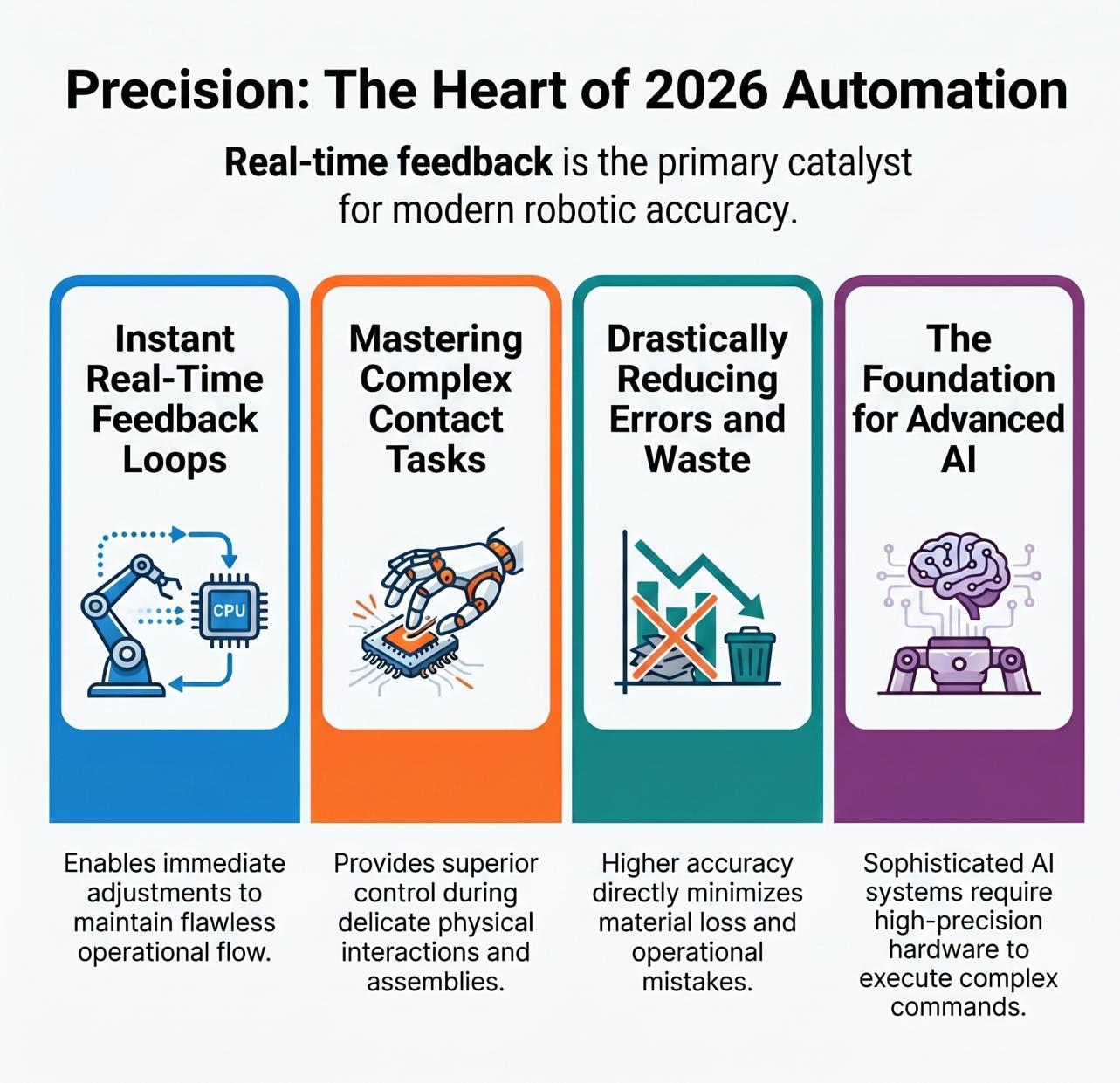
Robots without feedback are basically following a script. Add force torque sensors, and suddenly they can “feel” what’s happening. If a part is slightly off, the robot adjusts instantly. No delay. No reprogramming.
This is huge in assembly lines. Instead of stopping everything for minor issues, the robot adapts on the fly. That’s accuracy in motion.
2. Better Control During Contact Tasks
Think about tasks like polishing, welding, or inserting components. These require contact. And contact means variables.
Force torque sensors help control how much force is applied. Not too much, not too little. Just right. Without them, robots either press too hard or too soft. Both are bad. With them, you get consistent pressure every time. That’s where precision really shows up.
3. Reducing Errors and Waste
Let’s be honest errors cost money. Scrap materials, rework, downtime… it adds up fast.
When robots use high-quality sensors, mistakes drop. Not completely, but significantly. The system catches issues early. Adjusts before things go wrong. That means fewer defective products and smoother operations.
4. Improving Calibration Over Time
Here’s something people don’t talk about enough. Sensors help robots stay accurate over time.
Machines wear down. Parts shift slightly. Calibration drifts. It happens. But with continuous force feedback, robots can compensate. They stay aligned longer without constant manual recalibration. That’s long-term value right there.
5. Supporting Advanced AI and Automation
In 2026, AI-driven robotics is everywhere. But AI needs data. Good data.
Force torque sensors provide that data. Clean, precise, real-time input. This allows AI systems to learn and improve. Without sensors, AI is basically guessing patterns. With sensors, it actually understands physical interaction. Big difference.
Why Quality of Sensors Matters ?
Not all sensors are equal. Some are cheap. Some are costly let’s just say unreliable.
High-quality force torque sensors offer better sensitivity, durability, and accuracy. They don’t drift as much. They last longer. And they perform consistently under pressure literally.
Cutting corners here is a bad move. You might save money upfront, sure. But long-term? You’ll pay for it in errors, maintenance, and downtime. Investing in quality sensors is one of those decisions that just makes sense over time.
Real-World Use Cases (Where This Actually Shows Up)
You’ll see force torque sensors in industries like:
● Robotics assembly lines
● Medical robotics (super precise work)
● Automotive manufacturing
● Electronics production
● Packaging automation
The Long-Term Value You Can’t Ignore
Here’s the truth. Force torque sensors aren’t just about improving accuracy today. They’re about sustaining it.
They reduce wear and tear. Improve consistency. Lower error rates. And help systems adapt over time. That’s not a small thing.
In a world where automation is only getting more complex, having reliable sensing isn’t optional anymore. It’s foundational.
FAQs
What is a force torque sensor in robotics?
A force torque sensor measures force and rotational movement, helping robots understand how much pressure or resistance they are applying during tasks.
How do force torque sensors improve robot accuracy?
They provide real-time feedback, allowing robots to adjust movements instantly and maintain precise control during operations.
Are force torque sensors necessary for all robots?
Not all, but for tasks involving precision, contact, or delicate handling— they’re essential.
Do high-quality sensors make a big difference?
Yes, absolutely. Better sensors offer higher accuracy, longer lifespan, and more reliable performance over time.
What industries benefit the most from these sensors?
Industries like manufacturing, medical robotics, automotive, and electronics see the biggest gains in accuracy and efficiency.