


Shelley Streeby
Explores how feminist science- fiction writers engage with ecological and environmental speculation and memorywork.
Science Fiction Ecologies traces how Octavia E. Butler, Ursula K. Le Guin, and Judith Merril three generations of groundbreaking feminist science fiction writers used ecological imagination and rigorous memory- work to rethink environments, histories, and possible futures. Shelley Streeby mines their expansive personal archives of letters, journals, notebooks, annotated clippings, and other everyday materials to show how each writer documented environmental news, social movements, colonial and imperial legacies, and the accelerating militarism of the late twentieth century. This archival labor, Streeby argues, was not ancillary but central to their worldmaking: a form of “histofuturist” practice that linked creative speculation to the preservation and reimagining of knowledge.
Against a backdrop of shrinking public library budgets, intensifying weapons development, and the rise of privatization politics, Butler, Le Guin, and Merril fought for the survival of libraries and the democratic circulation of ideas. Their activism, along with their contributions to popular sciencefiction culture and their public interventions, reveals how they imagined libraries, archives, and other knowledge spaces as living ecologies shaped by power, identity, and access.
Through speculative documentary methods, Science Fiction Ecologies illuminates the counterhistories embedded in their papers, tracing how their visions challenged ecologies dominated by state power, white Christian nationalism, violent masculinities, and entrenched class and race inequalities. Streeby ultimately shows how these writers’ intertwined lives and works open new ways of thinking about environments, human survival, and the futures we might yet build.
Shelley Streeby is Professor in the Departments of Ethnic Studies and Literature at the University of California, San Diego, and author of Imagining the Future of Climate Change: World - Making through Science Fiction and Activism.
08/25/2026 | Postmillennial Pop | 376 pages | 6 x 9 | Paperback: 9781479833429 | $35 NYUS
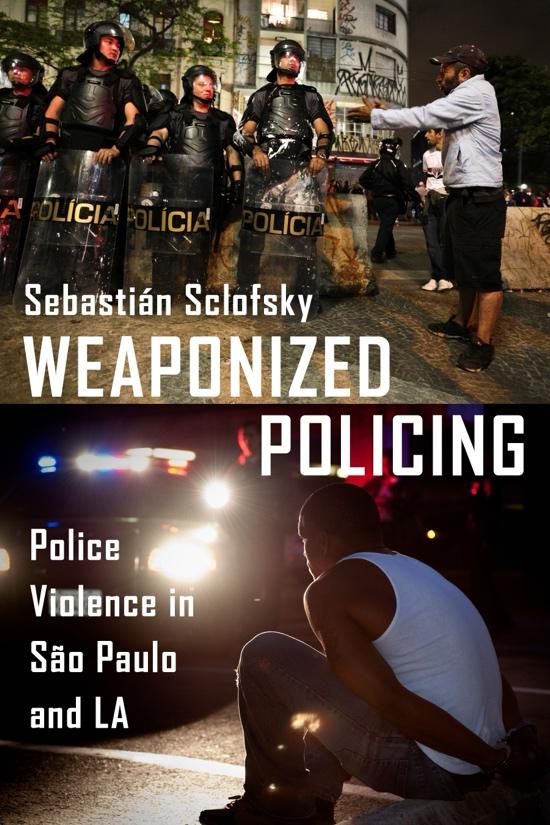
Sebastián Sclofsky
How police reproduce social, spatial, and racial inequalities in two global cities
From Donald Trump to Brazil’s Jair Bolsonaro, political leaders endorsing “law and order” specifically through aggressive policing strategies have supported the formation of carceral states in self - proclaimed democracies.
In Weaponized Policing, Sebastián Sclofsky provides a comparative lens on this dynamic, taking a look at policecivilian violence in the United States and Brazil, and its impact on people’s understanding of race, space, and citizenship.
The book argues that the socio - economic transformations of the last half - century, marked by the rise of neoliberal capitalism, have produced extreme levels of inequality, and created new forms of vulnerability that are managed and reproduced by police. The pacifying processes conducted by the police in their production and reproduction of social order produce the categories of black, poor, and periphery, transforming these subjects into the ultimate “other” against whom police intervention and violence is deemed necessary and justified for the sake of the city’s well- being.
Drawing on hundreds of interviews with politicians, police officers, community activists, and lowincome residents of São Paulo’s periphery and neighborhoods in South L.A., Sclofsky follows the stories of individuals who live, and are policed, on the “peripheries.” He argues that, in both countries, aggressive policing creates authoritarian enclaves within faulty democracies. As a result, residents of color are criminalized, individual rights are systematically violated, and a sense of second- class citizens hip is developed even when people live in a country where political rights are supposedly guaranteed, and free and fair elections do take place.
Sebastián Sclofsky is Associate Professor of Criminal Justice at California State University, Stanislaus.
09/01/2026 | 240 pages | 6 x 9 | Paperback: 9781479807468 | $30 NYUS

Ian Rosenberg
The definitive story of Dominion v. Fox, the battle over election lies that changed the future of democracy
Dominion Voting Systems v. Fox News Network is the watershed media case of the century. After an onslaught of attacks by several Fox News hosts and guests insisting that Dominion’s voting machines were rigged to steal the 2020 presidential election from Donald Trump, the previously little- known voting technology company decided to fight back. Over the next two years, their libel litigation laid bare the inner workings of the seemingly unassailable Fox Corporation and the thoughts of the media conglomerate’s most high- profile stars, guests, and executives.
On the morning the trial was set to begin, the parties reached an unprecedented settlement of $787.5 million. The media lamented that secrets from Fox’s top talent and owners would never come to light, but now the full, shocking truth has finally been revealed. Terrible Stuff Damaging Everybody exposes the true story of the election lies that shook Fox News and the nation. Media lawyer and author Ian Rosenberg transforms thousands of pages of legal documents into a compelling behindthe- scenes narrative. He presents the saga as a riveting three act drama that answers the vital questions: why Fox News broadcasted flagrantly false claims about election fraud; what the legal action uncovered about Fox’s power structure and the actual malice standard; and how the aftermath will fundamentally impact th e future of libel law, the media, and our democracy.
Terrible Stuff Damaging Everybody provides a clear- eyed, expert analysis of this history- making lawsuit, and what it means for our country today.
Ian Rosenberg is a media lawyer who has specialized in First Amendment, libel, and intellectual property law for over 25 years. He is also an Adjunct Associate Professor at Brooklyn College. Rosenberg graduated from the University of Wisconsin- Madison and Cornell Law School. He is the author of The Fight for Free Speech: Ten Cases That Define Our First Amendment Freedoms and Free Speech Handbook (art by Mike Cavallaro), a nonfiction graphic novel.
09/01/2026 | 392 pages | 6 x 9 | Hardback: 9781479833016 | $35 NYUT
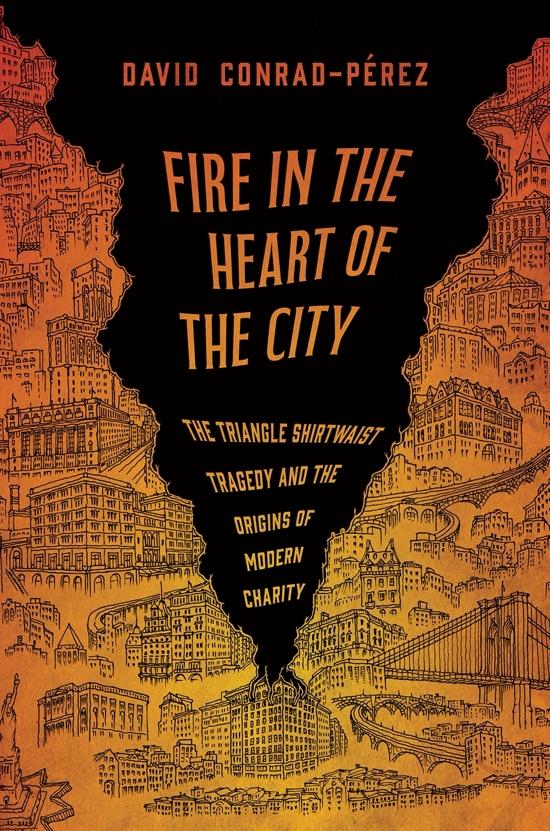
David Conrad - Pérez
How New York's elite claimed authority over social welfare in the wake of the Triangle Shirtwaist Tragedy
In American history, few tragedies have been as consequential and as enduringly misunderstood as the Triangle Shirtwaist Factory fire of 1911. Long remembered as a turning point in the struggle for labor protections, Fire in the Heart of the City shows how the fire also helped transform another cornerstone of modern American life: the rise of modern charity.
Set in early twentieth - century New York, the book tells the extraordinary story of what happened when a catastrophic fire in Greenwich Village threw Adolph Ochs, the ambitious new publisher of the New York Times, and Rose Schneiderman, a defiant young labor organizer, into a momentous struggle over who should organize the city’s response: a rising charity sector led by wealthy financiers and civic elites, or the reform- minded unions and activists of Lower Manhattan.
Drawing on newly released archival documents, interviews with the descendants of Times publisher Adolph Ochs and New York labor organizers, previously confidential reports, and long- overlooked private diaries and correspondence, historian and former journalist David Conrad- Pérez offers a striking new account of the disaster and its aftermath. He shows how a handful of charities on the brink of irrelevance were suddenly recast as New York’s best answer to the social and economic conditions the fire laid bare a watershed moment in the rise of modern charity and elite authority over social welfare in the United States.
In the months after the fire, the Times and its philanthropic allies joined forces to popularize the idea that social crises should be managed not by immigrant reformers, labor advocates, or neighborhood coalitions, but by a select class of elite and suppo sedly “scientific” charitable institutions. In doing so, they elevated a new language of expertise around poverty and public welfare that would leave a lasting mark on American civic life.
A deeply researched and absorbing work of narrative history, Fire in the Heart of the City offers a major reinterpretation of one of the most important urban disasters in American history, revealing how a single catastrophe helped reshape not only the politics of labor, but also the moral and institutional foundations of modern American charity
David Conrad- Peréz is a media historian and the research director of the Center for Media & Social Impact at American University.
09/01/2026 | | 336 pages | 6 x 9 | Hardback: 9781479837700 | $35 NYUA

David Chang
Offers a new First Amendment framework that permits deterring political deceit, while minimizing the chill of honest discourse, by targeting fraudulent intent, not false content
More than ever, influencers and politicians communicate political messages that they do not believe to be true. This political deceit is constitutionally valueless, harms public discourse, and impedes effective public decision - making. Yet, under current doctrine, the Supreme Court would invalidate any regulation of deceitful political advocacy as an abridgement of political speech.
In Deterring Political Deceit, David Chang explores why traditional efforts to target falsity in political speech have been rooted in constitutional error. While the Court has determined that the defamation of public officials is unprotected, it wrongly declared that false statements of fact lack constitutional value, and overlooked the contradiction between deceitful communicative intent and free speech values. Both errors together have prevented reformers from identifying the political fraudsters who should be deterred by law, and r ecognizing the politically sincere who should be protected and respected, even when wrong.
Chang makes a bold and compelling legal argument for why deceitful political speech should be excluded from First Amendment protection. He proposes a dexterous solution: A false political statement is constitutionally valuable, and deserves protection–if the speaker believes their message to be true. A political message that the speaker did not believe to be true, regardless of its content, is constitutionally valueless, societally harmful, and does not deserve protection from regulatory deterrence. Drawing upon fresh, valuable insights, Deterring Political Deceit identifies wrongdoing that challenges the survival of this constitutional democracy, and charts a path for the People’s selfdefense through law.
David Chang is the Theodore Dwight Professor of Law (Emeritus) at New York Law School.
09/08/2026 | 288 pages | 6 x 9 | Paperback: 9781479847365 | $30 NYUS
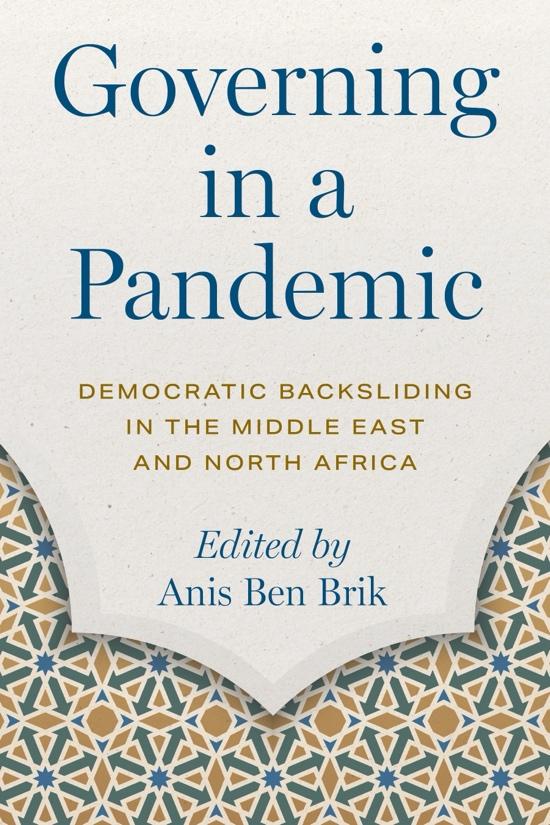
Anis Ben Brik
Explores the lasting echoes of an unprecedented pandemic that continues to shape politics in the MENA region today
From the Maghreb in North Africa to the Levant in the East, the COVID- 19 pandemic dramatically impacted politics - and the promise of democratic governance - within the MENA region. In this edited volume, Anis Ben Brik assembles a group of scholars to expl ore how the Middle East and North Africa grappled with an unprecedented global health crisis that transcended medical dimensions and continues to manifest profound social, political, and economic implications for its people.
Featuring timely original research, including in - depth case studies and cross- country comparisons, contributors take us inside a region already grappling with complex political systems, social structures, and historical legacies. They show us how the pandemic triggered widespread democratic backsliding in the region, as countries like Egypt, Iran, and Saudi Arabia began to adopt emergency measures that extended well beyond the immediate public health crisis, including increased censorship, arrests of activi sts and journalists, and the suppression of political dissent. Contributors also examine how the pandemic impacted perceptions of political legitimacy within the region, shaping people's support and opposition to emergency measures, legislation, and regimes and governments themselves.
Ultimately, the book captures the ways in which a global state of emergency created even more opportunities for political abuse and suppression, enabling authoritarian leaders to further consolidate their power within the region.
Anis Ben Brik is with the Faculty of Communication, Culture and Society, Institute of Communication and Public Policy, Università della Svizzera italiana, Lugano, Switzerland. His research focuses on the political economy of welfare systems, the institutionalization of evaluation, and governance reform in rentier states, the MENA region and Global South contexts. His recent books include Social Welfare in Qatar; Public Policy in the Arab World; and The Institutionalization of Evaluation in the Middle East and North Africa.
09/15/2026 | 304 pages | 6 x 9 | Paperback: 9781479844753 | $30 NYUS
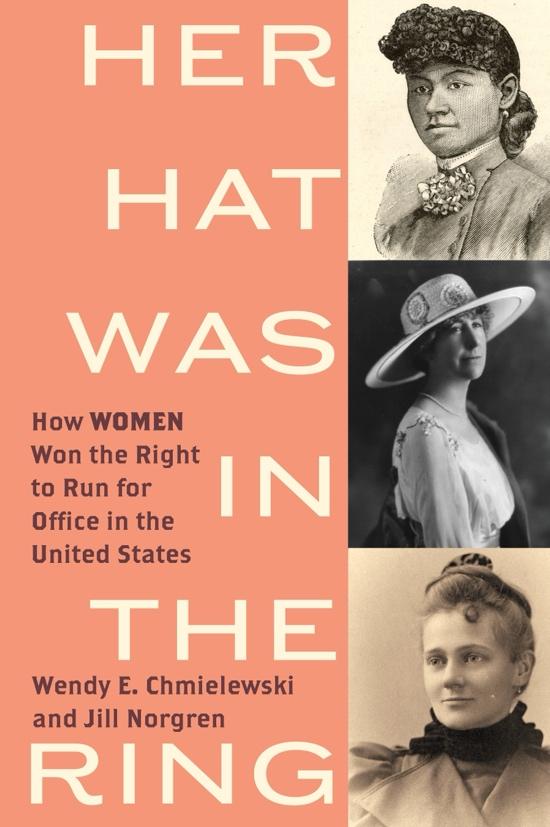
Wendy E. Chmielewski and Jill Norgren
Reveals the untold story of over 6,000 women who ran for office between 1850- 1920, expanding our understanding of women's fight for full political citizenship beyond suffrage
Her Hat Was in the Ring details the fascinating story of the thousands of women who ran for elective office in the United States between 1850 and 1920. Contrary to popular belief, women’s right to vote and the right to hold elective office weren’t always tied to one another. Whether women could become candidates, and for which offices, was determined by each state. For several decades after 1850, women ran for local and some state offices without themselves sometimes having the right to vote, motivated by the desire to advance women’s rights and serve their communities as well as personal ambition.
Drawing on newspapers, state government reports, historical and biographical archives, and other resources, historians Wendy E. Chmielewski and Jill Norgren trace the legal, social, and cultural shifts across the country that made it possible for women to gain election to political office. This history is told through the stories of the trailblazing women candidates who ran in thousands of elective campaigns. Chmielewski and Norgren examine how these women were received in their communities, in maledominated political parties and legislatures, and what administrative and policy contributions they made once elected.
This book expands our understanding of American women’s demand for full citizenship, a struggle that included the successful battle for the right to elective office. At once comprehensive and deeply compelling, Her Hat Was in the Ring illuminates the revolutionary efforts of these candidates throughout this virtually unknown, yet fascinating chapter in American history.
Wendy E. Chmielewski served as the George R. Cooley Curator of the Swarthmore College Peace Collection from 1988 through 2020. She is a co- editor of Jane Addams and the Practice of Democracy and numerous other works. Chmielewski is a co- founder of the “Her Hat Was in the Ring” digital history project.
Jill Norgren is Professor Emerita in the Department of Political Science at John Jay College of Criminal Justice, and the Graduate Center, The City University of New York, and the author of numerous books including Belva Lockwood: The Woman Who Would be President, and Stories from Trailblazing Women Lawyers: Lives in the Law. She is a longtime member of New York’s Women Writing Women’s Lives Seminar and a co - founder of the “Her Hat Was in the Ring” digital history project.
09/15/2026 | 320 pages | 6 x 9 | Hardback: 9781479847051 | $35 NYUA
Heide Castañeda
How an indigenous group from North Africa challenges dominant narratives of race, migration, and belonging in the United States
American Amazigh examines the complex identity negotiations of Amazigh people also known as Berbers as they build community and claim visibility in the American landscape. These distinct ethnic groups, whose histories predate the arrival of Arabs in North Africa, unsettle categories of race and ethnicity in the U.S., challenging dominant assumptions about what it means to be African, Indigenous, and Muslim. Their experiences also disrupt familiar immigration narratives, revealing the complexities and challenges of legal migration processes such as family reunification and the Diversity Immigrant Visa program.
In seeking to make their struggles for recognition legible within the American context, Amazigh communities grapple with conditional belonging while also bearing the legacy of marginalization in their home countries, which is rooted in colonial divisions, postcolonial nationalism, and Arabization policies, fostering systemic discrimination. In the diaspora, Amazigh identity is being actively reshaped as individuals and organizations engage with new ideological frameworks, global Indigenous rights movements, and recent political gains in North Africa, where they have long fought for linguistic, cultural, and legal equality.
The Indigenous perspective has been largely missing from the literature on migration. Drawing on four years of ethnographic research, and framed around the concept of diasporic indigeneity, the book explores how the Amazigh people forge new anchors of belonging and create spaces of social cohesion. By uncovering both the opportunities and challenges presented in the American context, the book moves beyond conventional migration narratives to illuminate how identity and belonging are continually translated a nd reconfigured within new places.
Heide Castañeda is Professor of Anthropology at the University of South Florida and author of Borders of Belonging: Struggle and Solidarity in Mixed- Status Immigrant Families (Stanford University Press, 2019).
09/22/2026 | 336 pages | 6 x 9 | Paperback: 9781479838530 | $30 NYUS

Edited by Perry B. Johnson and Courtney M. Cox
Considers key socio- political moments and figures that highlight the enduring relationship between music, sound, and sport
The collisions of music and sport are so ubiquitous that they often go unnoticed as cultural phenomena. Yet the integration of sound into sport has become inseparable from the experience itself from walk- up songs and seventh- inning sing- alongs in Major League Baseball to the halftime spectacle of the Super Bowl, the “California Sound” of surfing culture, and the percussive traditions of Brazilian Capoeira.
The Sound of Victory: Music, Sport, and Society explores these intersections through close examinations of key moments, figures, spaces, and events that reveal the deep socio - cultural significance and historical reverberations of music and sport. Bringing together interdisciplinary scholars and practitioners filmmakers, journalists, and cultural critics the volume investigates how sound shapes the ways sport is performed, experienced, and understood across diverse contexts from the mid- nineteenth century to the present.
Across eighteen chapters organized into four thematic sections, The Sound of Victory positions the links between music, sound, and sport as a generative lens for exploring questions of power, identity, and belonging. Spanning media, technology, politics, and popular culture, contributors trace how the music, sound, and sporting industries have evolved in dialogue with one another. Together, they illuminate an enduring relationship that continues to define the affective and communal power of modern sport.
Perry B. Johnson is a music scholar, cultural historian, and producer. Johnson is the codirector of The Sound of Victory (with Dr. Courtney M. Cox), an interdisciplinary initiative dedicated to exploring the historic relationship between music, sound, and sport, and cohost of the PBS documentary series Outside the Lyrics. Johnson teaches in the Annenberg School of Communication at the University of Southern California.
Courtney M. Cox is Associate Professor in the Department of Indigenous, Race, and Ethnic Studies at the University of Oregon and author of Double Crossover: Gender, Media, and Politics in Global Basketball. She is also codirector of The Sound of Victory, a multiplatform digital humanities project at the intersection of music, sound, and sport. She previously worked for ESPN, the Longhorn Network, NPRaffiliate KPCC, and the WNBA’s Los Angeles Sparks.
09/22/2026 | 432 pages | 6 x 9 | Paperback: 9781479840847 | $35 NYUS
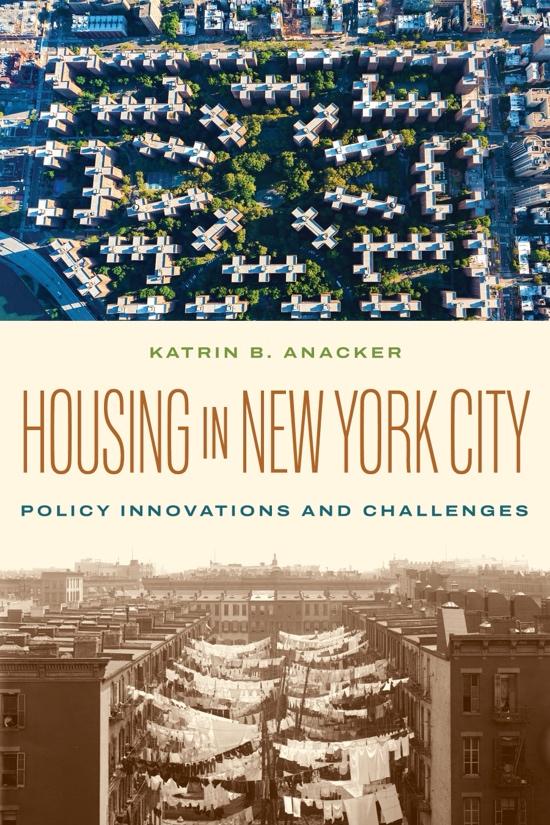
Katrin B. Anacker
Shows how New York has been a national pioneer in developing affordable, equitable, and comprehensive housing policy
In Housing in New York City, Katrin B. Anacker explores how New York City’s policy innovations have impacted the trajectory of a nation. Drawing on historical, policy, and data analysis, she highlights New York City's greatest successes across all five boroughs, including its early popularization of affordable housing and the birth of the modern high- rise.
From the Plan of 1811, which established Manhattan's rectangular street grids, to the 1916 Building Zone Resolution, the first comprehensive zoning ordinance in America, Anacker takes us through many of these key moments in New York City's history, and how its impact was felt beyond the city's limits. She shows us how policy innovations - like the affordable housing movement - not only improved quality of life for New Yorkers, but also made New York City a national role model to other cities, resulting in many additional national, state, and local laws, policies, and programs.
Ultimately, she emphasizes the contrast between the New York City of yesterday, and today, where exorbitant rents and gentrification threaten its historical role as a leader in housing policy. Housing in New York City provides a comprehensive discussion of this history and calls upon policymakers to continue innovating to keep the Big Apple not only affordable, but to preserve its legacy in housing.
Katrin B. Anacker is Professor of Public Policy at George Mason University. She is the editor of The New American Suburb: Poverty, Race and the Economic Crisis and co - editor of Suburbia in the 21st Century: From Dreamscape to Nightmare, The Routledge Handbook of Housing Policy and Planning, and Introduction to Housing .
09/22/2026 | 336 pages | 6 x 9 | Paperback: 9781479828494 | $30 NYUA
Emily K. Abel
How dementia affects those living with the condition, their carers, and their advocacy
In Listening to Dementia, Emily K. Abel demonstrates that recognizing the voices of people with dementia can fundamentally alter our understanding of both their lived experience and the discourse surrounding their care. She focuses on the memoirs of twelve individuals living with the condition who became advocates on their own behalf. The authors challenge reigning understandings of dementia while operating within familiar cultural notions.
Abel addresses topics including the impact of stigma and discrimination on the lives of people with dementia, their portrayal in the vast advice literature for carers, the divergence between the views of carers and those of the people they care for, the reasons some people with dementia seek to end their lives before the disease reaches the final stage, and how dementia advocates react to carers’ attempts to manage behaviors they consider troubling and inappropriate.
Listening to Dementia breaks new ground both by analyzing the memoirs of people with dementia who became advocates and by discussing the administration of antipsychotic medications to manage behavior in the community, where the great majority of people with dementia live.
09/29/2026 | 176 pages | 6 x 9 | Paperback: 9781479846962 | $30 NYUS
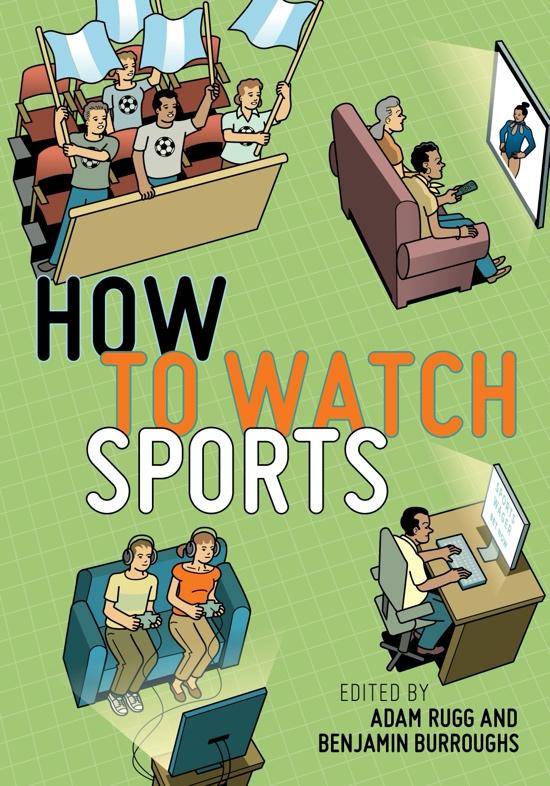
Edited by Adam Rugg and Benjamin Burroughs
36 original essays on sports media and culture
Sports are frequently romanticized as a pure escape from the daily grind, but in reality, the stadium is a mirror reflecting our most contentious cultural and political battles. How to Watch Sports disrupts the comfortable narrative of passive entertainment, presenting thirty - six original essays that challenge readers to critically engage with the global phenomenon of sports media.
Moving beyond the highlights, this comprehensive volume utilizes case studies of iconic teams, athletes, and events to illuminate the unseen structures of the industry. Leading scholars unpack diverse topics, ranging from the aesthetics of Steph Curry’s pl ay style and the cultural impact of Air Jordans to the labor politics inherent in the Madden video game series. The collection fearlessly navigates hot - button issues, including the national debate over trans inclusion, the rise of Barstool Sports and betting culture, and the gender pay gap.
Structured to guide readers through the nuances of form, social representation, industrial practice, and evolving technology, the book demonstrates how media shapes our understanding of athleticism. Whether analyzing the colonial implications of the Olympi cs or Simone Biles’ advocacy for mental health, the authors provide the tools necessary to decode the messages behind the spectacle. How to Watch Sports is an essential field guide for students and fans alike, offering a vital framework for understanding the deeper meanings of sport and reimagining what it means to be an informed, accountable spectator.
Adam Rugg is Associate Professor in the Department of Communication at Fairfield University, where he is also Director of the Sports Media program. His work has been published in Critical Public Health, Communication & Sport, Journal of Sport and Social Issues, and numerous others.
Benjamin Burroughs is Associate Professor & Graduate Coordinator in the Department of Journalism and Media Studies at the University of Nevada, Las Vegas. His writing has been published in journals including New Media and Society, Journal of Broadcasting and Electronic Media, International Journal of Sport Communication, and Games and Culture.
09/29/2026 | User's Guides to Popular Culture | 368 pages | 7 x 10 | Paperback: 9781479830268 | $35 NYUS

Caroline Luce
How a cohort of young Jewish radicals from the borderlands of Eastern Europe was critical in reshaping multiracial left - wing activism in southern California
Yiddish in the Land of Sunshine offers a novel account of Eastern European Jewish immigration and Yiddish public culture in Southern California. It traces the journeys of a cohort of young Jewish radicals as they moved from the borderlands of the Russian empire to the borderlands of the American southwest, exploring their engagement with wellknown labor and left- wing movements in Los Angeles.
Much of the book is focused on Boyle Heights, a residential neighborhood east of the L.A. River once home to the highest concentration of Jews west of Chicago as well as to dozens of other diasporic communities, showing how the neighborhood’s particular ethno- racial diversity shaped Yiddish public culture. Rich wit h new details drawn from previously untranslated Yiddish sources, it examines new relationships and tensions that emerged as the Jewish radicals worked to forge multiracial coalitions in the workplace and the community, including with their Mexican, Asian, and African - American neighbors. It frames the community as a site of convergence, where multiple marginalized populations cultivated their own modes of belonging in overlapping ways, as well as of divergence, where residents’ experiences were differentiat ed by international and domestic political- economic developments.
The book decenters traditional narratives of Jewish immigration and acculturation focused on cities of the northeast, moving Jewish workers in the west from the margins to the center of American Jewish history. It showcases the variety of organizing practices through which Jewish radicals recreated Yiddish public culture in LA, offering a new perspective on the relational dynamics of race and place - making in the American west. Yiddish in the Land of Sunshine recovers the contributions of Eastern European Jewish radicals and trade unionists, demonstrating the ways in which immigrant workers shaped the city of Los Angeles.
Caroline Luce is Project Director with the UCLA Institute for Research on Labor and Employment and formerly Chief Curator of Mapping Jewish Los Angeles, a project of the UCLA Leve Center for Jewish Studies.
09/29/2026 | Goldstein-Goren Series in American Jewish Studies | 312 pages | 6 x 9 Hardback: 9781479838356 | $39 NYUS
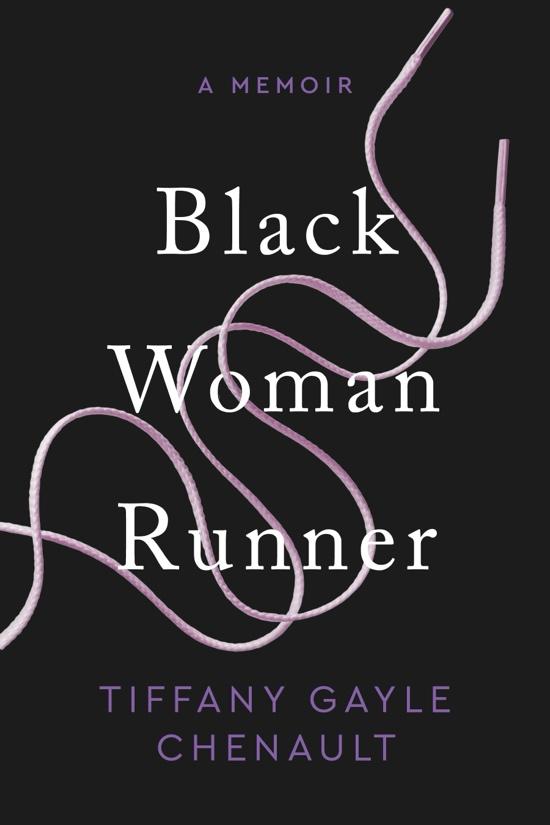
Tiffany Gayle Chenault
One Black woman's transformative journey of running through grief
In the wake of profound grief at the loss of her mother, Tiffany Gayle Chenault decided, at age 40, to run a halfmarathon in all 50 states. Black Woman Runner explores running as a space of survival, healing, joy, while also shedding light on the experiences of Black women who participate in the largely white- dominated world of recreational running.
Chenault unpacks her own lived experience in order to contemplate the racial space of running: not just the physical neighborhoods where casual runners might run, but also where races are held, what the market for products for runners looks like, and how and to whom running is marketed. Deconstructing the stereotype of the "strong Black woman," Chenault investigates the meaning of identity and the embodiment of being a runner, particularly a Black woman runner.
In what she calls her "twenty - first - century Green Book," Chenault offers vivid insights into currentday racial realities while traveling to all 50 states. Ultimately, this is a story about movement through space, emotion, and identity. It’s about the culture of running, but more urgently, about who runs an d why it matters.
Tiffany Gayle Chenault is Professor of Sociology at Salem State University and the author of The Unseen Politics of Public Housing: Resident Councils, Communities, and Change.
10/06/2026 | 232 pages | 6 x 9 | Paperback: 9781479814701 | $30 NYUA

Joseph S. Flipper
Charts the Black Catholic attempt to gain independence within the larger Catholic Church
In 1971, a delegation of Black Catholics traveled to the Vatican seeking a meeting with Pope Paul VI. While they did not meet the pope, they informed Vatican officials of the plight of Black Catholics in the United States. They wished to form their own church governance, independent from the White bishops who oversaw their diocese, so that they could exercise governance over their parishes and schools, which were frequently under threat of closure. Their journey was a chapter in a long history of struggle around African American missions and the place of African Americans in the Catholic Church.
The Black Catholic Movement charts the long arc of the movement among Black Catholics to seek independence within the Catholic Church. Influenced by the Black Power Movement’s struggle for self - determination as well as the Second Vatican Council (1962- 1965), the Black Catholic Movement hoped to establish new ecclesiastical structures that would give them ownership over their church. When American Catholicism proved inflexible to their demands, the break - away Afrocentric Church, Imani Temple, drew thousands of Black Catholics away from Roman Catholicism.
Drawing on interviews and archival research in New Orleans, Detroit, and Washington, DC, the book reconstructs the Black Catholic struggle to maintain distinct Black Catholic communities and to preserve their spiritual, liturgical, and theological heritage . The volume comes up to the present, noting that although allowances have been made for Anglicans to enter the Catholic Church while maintaining their specific Anglican liturgies and traditions, the church has not granted this independence to Black Catholics. The debate about how to navigate unity within the Catholic Church while preserving Black Catholic heritage is still on - going. Ultimately, the book makes the case for the urgency of Black Catholic self - determination and self - governance.
Joseph S. Flipper is Associate Professor in the Department of Theology at the University of Notre Dame. He is the author of Between Apocalypse and Eschaton: History and Eternity in Henri de Lubac.
10/06/2026 | 320 pages | 6 x 9 | Paperback: 9781479841363 | $30 NYUS

Claire McKinney
A powerful call to reconceive women’s reproductive rights by arguing to move beyond Roe for a new feminist politics of abortion
Following the Supreme Court's controversial decision in Dobbs v. Jackson, public debate over one's right to choose has dominated the landscape of American politics. In A Womb of One’s Own, Claire McKinney provides sharp, feminist insight into these shocking developments, exploring how medicine - and the question of abortionhave always shaped women's subordinate social and political roles.
Drawing on rich, archival research, as well as abortion case law, McKinney shows how doctors and other medical experts have been key political actors, either fighting for - or against - abortion access at different points in American history. Examining the 19th century anti- abortion physician’s campaign to criminalize abortion, 20th century movements for the liberalization of abortion, U.S. Supreme Court jurisprudence, and contemporary abortion politics, Claire McKinney shows that the meaning of health, the reproductive body, and the political function of abortion law have often been influenced by what McKinney calls a “medicalized citizenship.” At this moment of extreme uncertainty in abortion politics, this new lens for thinking about how gender is made and remade through encounters with medicine and the law could not be more timely.
McKinney shows how state and medical authorities both clash and collude with one another, drawing and re- drawing the boundaries of gendered citizenship for women and pregnant people. Ultimately, A Womb of One’s Own underscores the surprising influence of m edicine in politics, and its role in determining the proper treatment of women, their bodies, and their social and political roles.
Claire McKinney is Associate Professor of Government at The College of William and Mary.
10/06/2026 | 320 pages | 6 x 9 | Paperback: 9781479844388 | $30 NYUS

Nina Mackert
Traces how the calorie became America’s way to quantify food, police bodies, and moralize behavior
From packaged foods, to lifestyle magazines, and public health discussions, calories are deeply woven into the fabric of everyday life. Promoted as a neutral scientific unit of measurement, they have come to measure more than food energy: from food value, to health, lifestyle, and even personal conduct.
Inventing the Calorie provides the first comprehensive history of the food calorie in the United States. Spanning the late 1880s to the 1930s, the book traces the calorie’s journey through labor disputes, scientific laboratories, wartime rationing, European food aid, and the rise of consumer culture, ending with the emergence of dieting as a popular practice. Nina Mackert explores how the calorie became regarded as not only a unit of measurement, but also a way of creating social differences as it translates to individual bodies and populations. It could address industrial productivity, racial improvement, colonial management, public health, and the anxieties of abundance.
By making food, bodies, and work measurable, the calorie offered a seemingly objective language for negotiating conflicts over the needs of workers, women, Black Americans, and aid recipients. In doing so, the calorie helped define the “consumer citizen” a s responsible for managing diet, weight, and health an ideal that fueled fat shaming and moralized body size while not challenging consumer capitalism. Shedding new light on the history of one of the most popular tools for dieting, Inventing the Calorie reveals how one small number transformed the way Americans think about food, bodies, health and citizenship, and why its legacy still shapes our most personal choices today.
10/06/2026 | 320 pages | 6 x 9 | Paperback: 9781479848850 | $30 NYUS
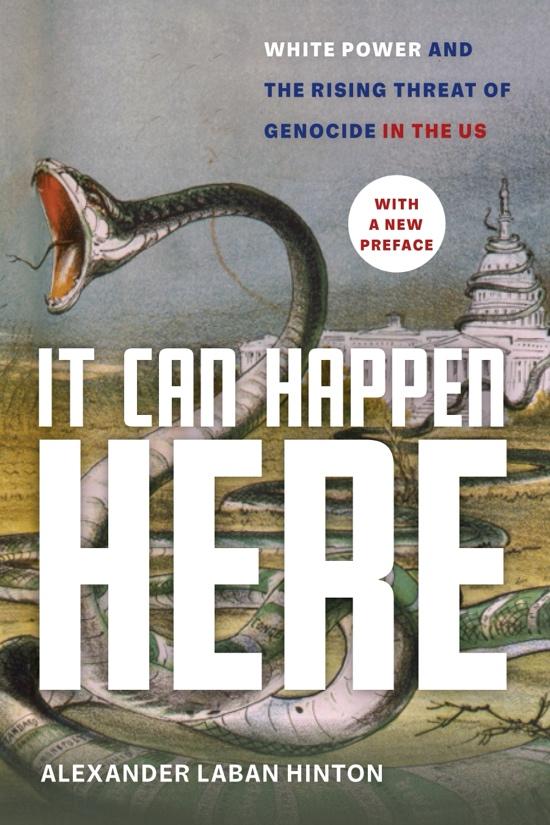
Alexander Laban Hinton
A renowned expert on genocide argues that there is a real risk of violent atrocities happening in the United States
If many people were shocked by Donald Trump’s 2016 election, many more were stunned when, months later, white supremacists took to the streets of Charlottesville, Virginia, chanting “Blood and Soil” and “Jews will not replace us!” Like Trump, the Charlotte sville marchers were dismissed as aberrations crazed extremists who did not represent the real US. This book makes the case that, rather than being exceptional, such white power extremism and the violent atrocities linked to it are a part of American history. And, alarmingly, they remain a very real threat to the US today.
Alexander Hinton is an award- winning author on the topic of genocide in Cambodia who served as an expert witness at the Khmer Rouge Tribunal. In It Can Happen Here , he explains how murky politics, structural racism, the promotion of American exceptionalism, and a belief that the US has achieved a color - blind society have diverted attention from the deep roots of white supremacist violence in the US’s brutal past. Dr awing on his years of research and teaching on mass violence, Hinton details the warning signs of impending genocide and atrocity crimes, the tools used by ideologues to fan the flames of hate, the origins of the far - right extremist ideas of white genocide and replacement, and the shocking ways in which "us" versus "them" violence is supported by structural racism.
Now featuring a substantive updated preface discussing new dynamics related to the second Trump Administration, It Can Happen Here offers an essential new assessment of the contemporary dangers of democratic backsliding, political violence, and white power extremism in the United States. While revealing the threat of authoritarianism and atrocity crimes that loom over the country, Hi nton offers actions we can take to prevent it from happening, illuminating a hopeful path forward for a nation in crisis.
Alexander Laban Hinton is Distinguished Professor of Anthropology, Director of the Center for the Study of Genocide and Human Rights, and UNESCO Chair on Genocide Prevention at Rutgers University, and the author of over a dozen books, including the award - winning Why Did They Kill?: Cambodia in the Shadow of Genocide.
10/06/2026 | 328 pages | 6 x 9 | Paperback: 9781479849376 | $30 NYUS
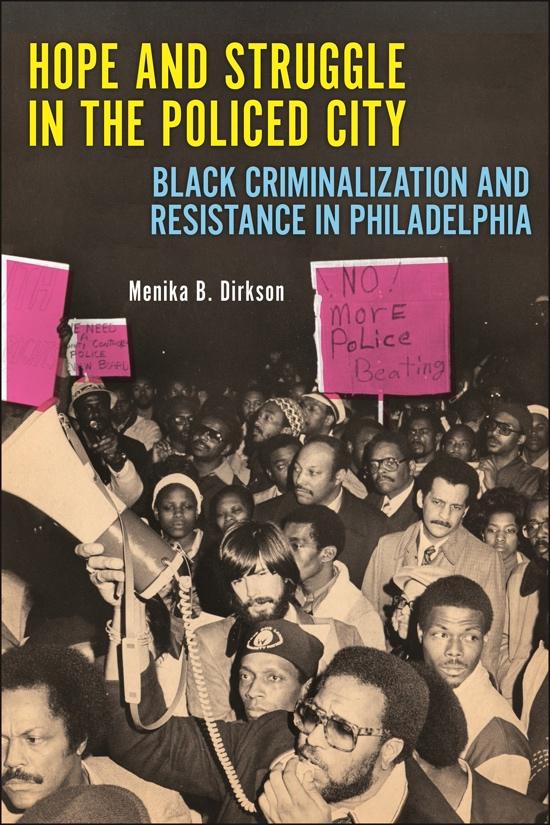
Menika B. Dirkson
New in Paper!
Honorable Mention, 2025 Joe Trotter First Book Award, given by the Urban History Association
Explores how concerns about poverty- induced Black crime cultivated by police, journalists, and city officials sparked a rise in tough - on- crime policing in Philadelphia
During the Great Migration of African Americans to the North, Philadelphia’s police department, journalists, and city officials used news media to create and reinforce narratives that criminalized Black people and led to police brutality, segregation, and other dehumanizing consequences for Black communities. Over time, city officials developed a system of racial capitalism in which City Council financially divested from social welfare programs and instead invested in the police department, promoting a “tough on crime” polici ng program that generated wealth for Philadelphia’s tax base in an attempt to halt white flight from the city.
Drawing from newspapers, census records, oral histories, interviews, police investigation reports, housing project pamphlets, maps, and more, Hope and Struggle in the Policed City draws the connective line between the racial bias African Americans faced as they sought opportunity in the North and the over - policing of their communities, of which the effects are still visible today. Menika B. Dirkson posits that the tough- on - crime fr amework of this time embedded itself within every aspect of society, leading to enduring systemic issues of hyper - surveillance, the use of excessive force, and mass incarceration.
Hope and Struggle in the Policed City makes important contributions to our understanding of how a city government’s budgetary strategy can function as racial capitalism that relies on criminal scapegoating. Most cogently, it illustrates how this perpetuates the cycle of poverty- induced crime, inflates rates of incarceration and police brutality, and marginalizes poor people of color.
Menika B. Dirkson is Assistant Professor of African American History at Morgan State University.
10/06/2026 | 328 pages | 6 x 9 | Paperback: 9781479852383 | $45 NYUS
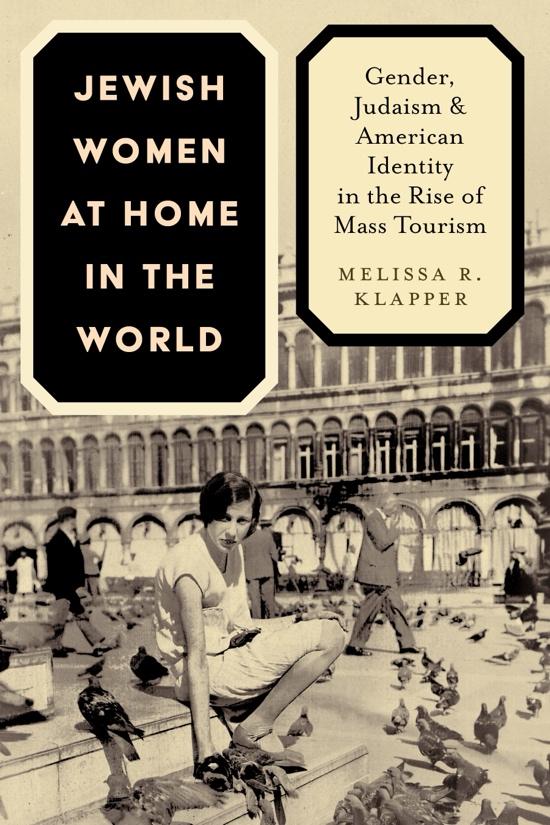
Melissa R. Klapper
Vividly reveals how American Jewish women's travels transformed both their personal identities and the meaning of diaspora itself
While Americans have gone abroad for leisure and education since the early days of American history, the period between the end of the Civil War and the beginning of World War II saw the rise of mass tourism, with changes in the way travel operated opening up the world in new ways for millions of people. It was during this era that a wide range of American Jewish women began to travel more extensively, experiencing their journeys through their unique intersecting national, religious, and gender identities.
In Jewish Women at Home in the World, Melissa R. Klapper documents the remarkable number of American Jewish women who traveled abroad in the mid- 19th to mid- 20th century. These women went to school overseas, visited relatives and hometowns, worked abroad, attended international activist meet ings, and took sightseeing trips alone, with family members or friends, or with organized tour groups. The volume looks specifically at the role that gender and Jewish identity, as well as their American background, played in the women’s choices of where to go, what to do, whom to see, and how to behave.
This highly readable book charts how spending time abroad enhanced American Jewish women' s status and often challenged conventional gender roles by expanding their autonomy. Moreover, it explores how going abroad reinforced their Jewish identity, particularly in the face of unsettling encounters with antisemitism. Drawing on a treasure trove of previously unexamined diaries, memoirs, letters, reports, periodicals, scrapbooks, and photographs, Jewish Woman at Home in the World provides an engaging analysis of travel as a crucial mechanism for solidifying a diasporic identity, allowing American Jewish women to create and maintain connections with Jews worldwide.
Melissa R. Klapper is Professor of History and Director of Women’s & Gender Studies at Rowan University and author of many books, including Ballots, Babies, and Banners of Peace: American Jewish Women’s Activism, 1890- 1940, winner of a National Jewish Book Award.
10/13/2026 | 448 pages | 6 x 9 | Paperback: 9781479842506 | $35 NYUS
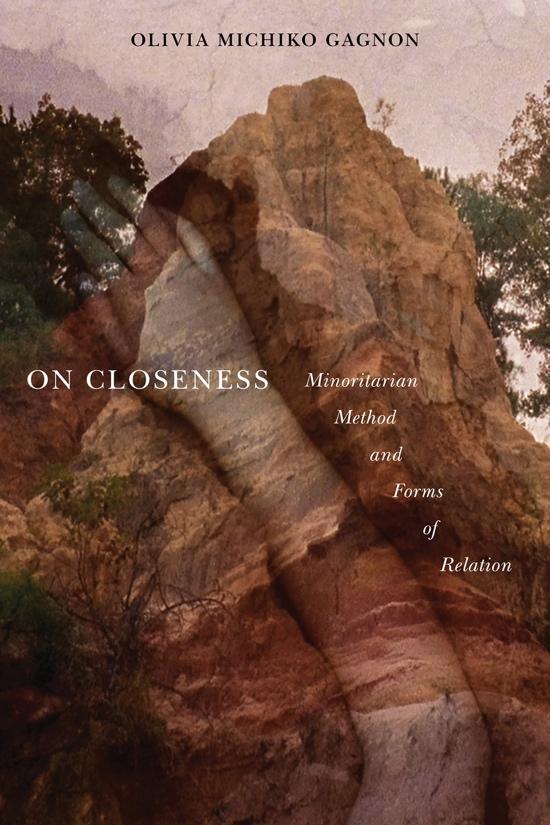
Olivia Michiko Gagnon
Explores closeness as a minoritarian method in contemporary art and performance.
On Closeness explores closeness as a transformative, if sometimes fraught, mode of engagement across aesthetic, social, and scholarly realms. Olivia Michiko Gagnon theorizes closeness as a minoritarian method that refuses knowledge grounded in possession or mastery in favor of relational ethics defined by vulnerability, partiality, and unknowing. Insisting upon the political urgencies of remaining in close proximity across difference, these forms of relation with history and archives, artworks and others privilege embo died and sensuous ways of knowing and remembering that salve historical violence.
Analyzing contemporary artworks and performances by Tanya Tagaq, asinnajaq, Cheryl Sim, Elizabeth M. Webb, Pia Arke, and Monika Kin Gagnon her mother and an influential cultural critic and scholar Gagnon engages entangled histories of colonialism, slavery, migration, and diaspora. Grounded in performance studies and in dialogue with gender and sexuality studies, critical Indigenous studies, Black studies, American studies, critical mixed race studies, Asia n Canadian studies, and film and media studies, On Closeness stages an antiracist, decolonial, and feminist intervention. Adopting closeness as her own method, Gagnon shows how the concept opens up new possibilities for relation across difference, historical sense- making, and knowledge production within and beyond the university.
Olivia Michiko Gagnon is Assistant Professor in the Department of Theatre & Film and affiliated faculty in Asian Canadian and Asian Migration Studies and the Institute for Gender, Race, Sexuality, and Social Justice at the University of British Columbia.
10/13/2026 | Minoritarian Aesthetics | 256 pages | 6 x 9 | Paperback: 9781479831067 | $30 NYUS
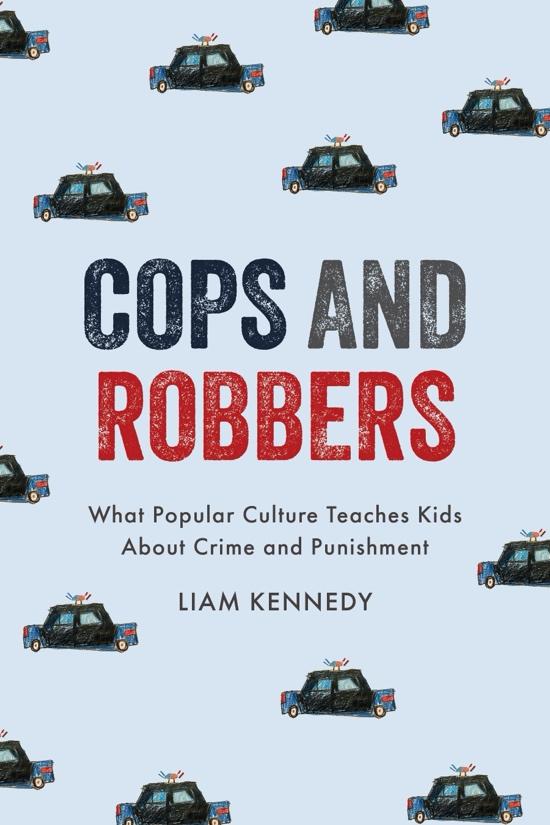
Liam Kennedy
How children’s books, tv shows, cartoons, and films often reproduce stereotypes about “good guys” and “bad guys” in terms of crime, policing, and the role of the criminal justice system in society
In Cops and Robbers, Liam Kennedy examines children's popular culture to provide an understanding of how ideas about crime and the criminal justice system are produced and challenged. Based on an analysis of over 220 books, 12 films, and hundreds of television episodes/short videos geared toward children, Cops and Robbers considers the ideological impacts of children’s crime media messaging about what counts as a crime, the causes of crime, the roles and responsibilities of cops and other crime - fighters, as well as the nature and boundaries of justice.
Kennedy demonstrates how kids’ pop culture works to sustain the status quo and inhibits our ability to imagine alternatives to policing and prisons. He argues that children's crime media teaches them that it is correct to criminalize behaviors designated as threats to the capitalist social order, that the perpetrators of these acts are bad or even evil, unworthy of our sympathy, and usually incapable of change. Further, police and crime - fighters are shown to solve a wide array of community problems, produce peace and happiness, and require endless resources to preserve the social order and quell dissent. Finally, he finds that forced labor and incarceration are routinely framed as inevitable consequences – rather than policy decisions – for bad people who ha ve made supposedly bad choices. Ultimately, Cops and Robbers will encourage social scientists, educators, and parents/guardians to think more critically about how children's crime media shapes ideas about crime, cops, and justice.
Liam Kennedy is Department Chair and Associate Professor of Sociology at King’s University College at Western University Canada. He is the co - editor of Power Played: A Critical Criminology of Sport.
10/20/2026 | 256 pages | 6 x 9 | Paperback: 9781479841615 | $30 NYUS

Jan Haldipur,Calvin John Smiley
The pivotal role of social media in understanding how justice - impacted individuals reconcile the past, establish the present, and project their future mediated lives
What does it mean to be incarcerated in the age of social media? At any given moment, there are close to 2 million people incarcerated in American prisons and jails. This population is detached from friends, family, and, historically, from most technologic al advances. In the early 2010s, digital technology, particularly social media, experienced tremendous growth across the world, as more and more people began to spend time in these spaces, cultivating online personalities across a variety of platforms.
In Prison Hashtags, Jan Haldipur and Calvin John Smiley tell the story of incarceration and reentry in America as seen through the images, videos, audio, and words of a group of people trying to make sense of it all on social media. For over six years, Haldipur and Smiley conducted a digital ethnography of the soci al media carceral landscape. They take an indepth look at what they call the “social media - incarceration cycle,” and how folks both in prison and returning to society post - incarceration utilize social media. Platforms like Instagram are often used to create community and network, as a public- facing digital journal and archive of their carceral odyssey, as well as a means to become entrepreneurs, activists, and so much more.
Ultimately, Prison Hashtags offers an innovative understanding of the role that technology and social media can play in the lives of those who have served time behind bars.
Jan Haldipur is Associate Professor of Sociology at California State University, Long Beach. He is the author of No Place on the Corner: The Costs of Aggressive Policing .
Calvin John Smiley is Associate Professor of Sociology at Hunter College- City University of New York. He is the author of Purgatory Citizenship: Reentry, Race, and Abolition and co - editor of Prisoner Reentry in the 21st Century: Critical Perspectives of Coming Home.
10/20/2026 | Justice, Inequality, and the Digital World | 192 pages | 6 x 9 Paperback: 9781479834549 | $30 NYUS
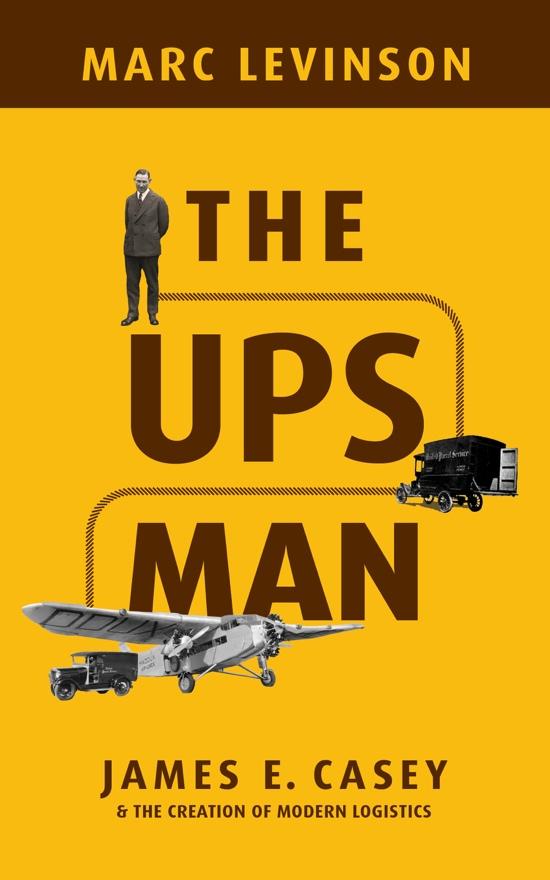
Marc Levinson
How a little- known executive revolutionized the delivery business
James E. Casey was a most improbable revolutionary. Shy and soft - spoken, in his day he was all but unknown to the public at large. Drawing little attention to himself, he laid the foundation of an industry that is fundamental to the modern world economy th e industry that manages businesses’ long - distance supply chains and allows consumers to obtain almost anything from anywhere with just a credit card and a couple of days’ patience.
In The UPS Man, Marc Levinson provides the first- ever biography of the self - taught executive who started a bicycle messenger service in 1907 and built it into a giant of modern logistics. Casey was associated with United Parcel Service for seventy- six years, introducing innovation after innovation into the stodgiest of industries as UPS conquered the retail delivery market, then reshaped itself into the first company able to collect packages from hundreds of thousands of senders and deliver them when promised to recipients far away, and then changed itself yet again to move parcels around the globe. That more than three hundred thousand packages are delivered somewhere in t he world every minute of every day is a monument to Casey’s accomplishments.
While Casey was an inspiring leader, he was also a ferocious competitor and a demanding boss. Under his leadership, UPS frequently acted in ways that it prefers not to include in its corporate mythology. Some of these actions were dubious. Others were flat- out illegal. Certainly some of these actions might not make current employees proud, yet were indispensable to UPS’s emergence as a powerful force in freight transportation. Drawing on previously neglected sources, The UPS Man offers a nuanced portrait of an entrepreneur and executive whose obsession with small parcels still affects our lives today.
Marc Levinson is an independent historian and economist. His seven previous books include The Box , a best - selling and widely translated history of how the simple shipping container made globalization possible.
10/27/2026 | 352 pages | 5 x 8 | Hardback: 9781479848386 | $30 NYUA
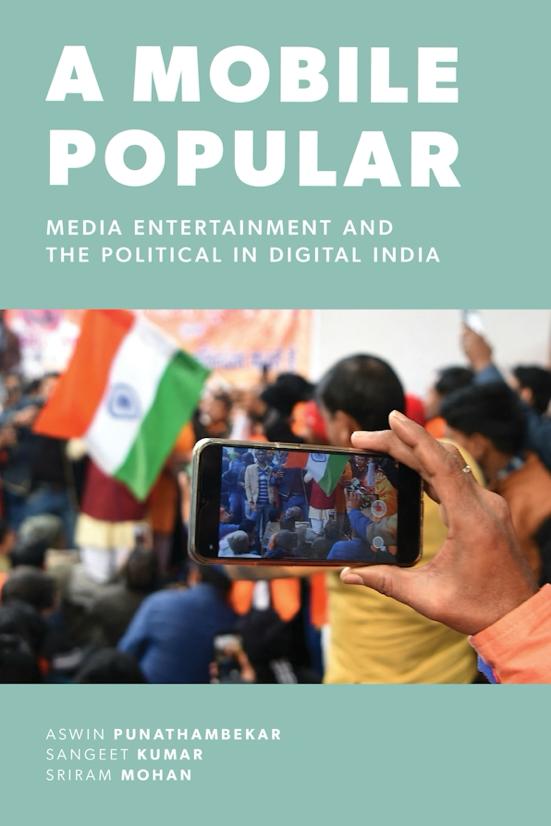
Aswin Punathambekar, Sangeet Kumar, and Sriram Mohan
Explores the entanglement of digital media, popular culture, and political expression in contemporary India.
A Mobile Popular offers a landmark account of how popular culture and political expression have become deeply intertwined in India's rapidly evolving digital landscape. Drawing on extensive fieldwork with content creators, platform executives, and digital activists across southern India, Aswin Punathambekar, Sangeet Kumar, and Sriram Mohan theorize the “mobile popular” as a dynamic mediascape shaped by data -driven platforms, entrenched representational politics, and everyday vernacular creativity. Exploring the intersection of legacy media industries, global platforms, and multilingual digital practices, they trace how entertainment and political culture now circulate through volatile, algorithmically saturated channels. Set against the rise of Hindu nationalism, the expansion of platform capitalism, and the emergence of a global right-wing technoculture, A Mobile Popular reveals how memes, parodies, podcasts, and other digital artifacts generate new temporal experiences, publics, and infrastructures whose political valence cannot be contained within frames of freedom and capture. Rather than valorizing digital democracy or lamenting authoritarian capture, the authors show that digital India is a plural, affectively charged arena where mobile publics continually cohere, fragment, and morph into new collectivities. Through richly detailed case studies from Tamil YouTube satire to activist meme cultures to sonic experiments that unsettle the temporal rhythms of Indian television the book demonstrates how digital media have reshaped cultural belonging and redefined the meanings and performances of citizenship. Essential for students, scholars, and practitioners, A Mobile Popular illuminates the far-reaching implications of digitalization for culture, communication, and politics today.
Aswin Punathambekar is a Professor at the University of Pennsylvania’s Annenberg School for Communication and Director of the Center for Advanced Research in Global Communication (CARGC). He has written and coedited books including From Bombay to Bollywood: The Making of a Global Media Industry, Global Bollywood, Global Digital Cultures: Perspectives from South Asia, Television at Large in South Asia, and Media Industry Studies (with Amanda Lotz and Daniel Herbert).
Sangeet Kumar is Associate Professor in the Department of Communication and the Director of International Studies at Denison University. He is the author of The Digital Frontier: Infrastructures of Control on the Global Web (forthcoming, May 2021).
Sriram Mohan is an independent researcher of digital media platforms and cultures in South Asia.
10/27/2026 | Critical Cultural Communication | 240 pages | 6 x 9 | Paperback: 9781479812998 | $30 NYUS
Emir Estrada, Veronica Montes, Fatima Suarez, and Pierrette Hondagneu-Sotelo
A fascinating and important understanding of the role relational mentoring can play in higher education
The mentor-mentee relationship is one of the most critical aspects of academic training. Mentors provide intellectual and personal support, information about career opportunities, and arrange financial assistance through research assistantships or fellowships. The initiators of The Heart of Mentorship, Emir Estrada, Veronica Montes, and Fatima Suarez have a few things in common that served as the main motivation to write a book on mentorship. First, all three are first-generation college students and children of immigrants from Mexico. Second, they all had an opportunity to be mentored by the same person, Pierrette Hondagneu-Sotelo, whose type of mentorship was instrumental in shaping their own development as scholars and now as mentors. Drawing on the collective mentoring experiences they and other mentees had with Hondagneu-Sotelo during their academic training, along with the reflections of esteemed senior scholars on their own mentoring practices, The Heart of Mentorship examines distinct areas of mentorship from the perspectives of both the mentor and the mentee. Contrary to the traditional “ top-down” hierarchical model of mentorship in the academy, The Heart of Mentorship examines relational mentoring in higher education, offering intergenerational wisdom, strategies, and reflections from PhD scholars across the U.S., with a focus on first -generation Latinx graduate students, addressing both personal experiences and structural barriers through a model that is intellectually rigorous yet infused with reflexivity, passion, connection, equity, and transformative relationships. Essential reading for graduate students, faculty, administrators, and anyone committed to building more inclusive and empowering academic communities, The Heart of Mentorship provides a vital guide to navigating both the challenges and the possibilities of higher education.
Veronica Montes is an associate professor of sociology at Bryn Mawr College and co-director of Latin American, Iberian, and Latina/o studies. Her research has been published in Gender & Society, Gender, Place & Culture, and Latino Studies, among others.
Emir Estrada is associate professor of sociology at Arizona State University. She is the author of Kids at Work: Latinx Families Selling Food on the Streets of Los Angeles, Winner of the 2020 Outstanding Scholarly Contribution Award, given by the Children and Youth Section of the American Sociological Association.
Fatima Suarez is assistant professor of sociology at the University of Nevada, Las Vegas. She is the author of Latino Fathers: What Shapes and Sustains Their Parenting.
Pierrette Hondagneu-Sotelo was the Florence Everline professor of sociology in the Department of Sociology at the University of Southern California, where she is now Professor Emerita. She is the author and co -editor of several books, including Gendered Transitions: Mexican Experiences of Immigration, and Domestica: Cleaning and Caring in the Shadows of Affluence.
10/27/2026 | Latina/o Sociology | 272 pages | 6 x 9 | Paperback: 9781479843329 | $30 NYUA
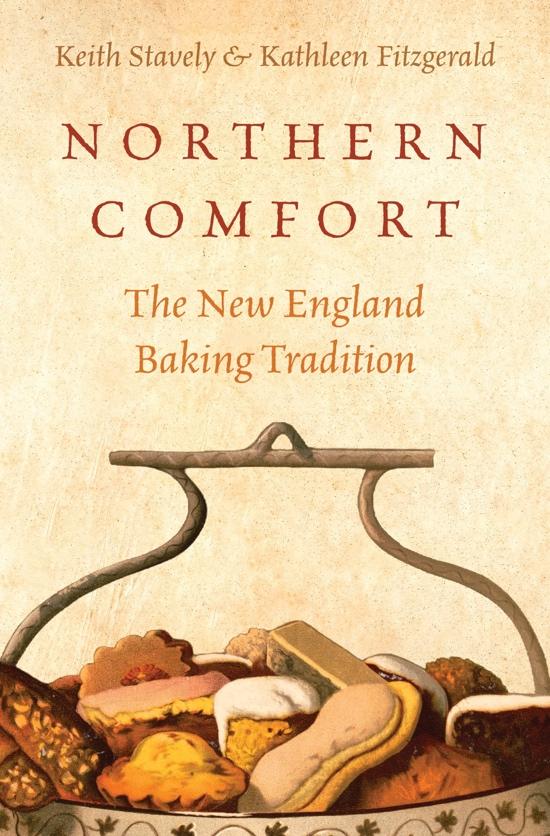
Keith Stavely and Kathleen Fitzgerald
Traces New England’s rich baking tradition with historic recipes, carefully adapted for the modern kitchen
In the wake of the American Revolution, a culinary style formed that would set the standard for American cooking. In Northern Comfort , acclaimed food historians Keith Stavely and Kathleen Fitzgerald draw history lovers and home cooks alike into the kitchen with fifty - two recipes for breads, pies, cookies, and cakes. Readers will bake alongside the abolitionist kneading dough for her immensely popular white bread, the teacher frosting one of the world's first layer cakes, and the housewife cutting through the thick crust of a meat pie. The result is a delicious, intimate journey through the lives of everyday people who built our nation.
From comparing the meals of patriots and loyalists to mediating long - running disputes over the best way to make Johnny cakes, Northern Comfort offers a taste of life in historic New England that is as enticing as the baked goods themselves.
Keith Stavely and Kathleen Fitzgerald, retired library directors in Massachusetts and Rhode Island, are the authors, most recently, of United Tastes: The Making of the First American Cookbook.
11/03/2026 | 288 pages | 6 x 9 | Hardback: 9781479849703 | $29.99 NYUA

Gerald J. Steinacher
How Vatican officials aided Nazi war criminals and undermined Allied justice after World War II
In the aftermath of World War II, the Nuremberg Trials promised a new era of international justice, holding Nazi leaders to account for their crimes. Yet beyond the courtroom, a very different struggle was unfolding one that played out behind the walls of the Vatican.
Provocative and meticulously researched, The Pope Against Nuremberg uncovers how the Vatican shielded Nazi war criminals, undermined the principles of the Nuremberg Trials, and ran ratline networks that spirited perpetrators to safety under the cover of Christian mercy. Drawing on newly opened Vatican archives, as well as government and intelligence records from Europe and the Americas, Gerald Steinacher reveals a campaign that would benefit some of the most notorious Nazi perpet rators by helping them avoid prosecution.
Church officials petitioned Allied leaders, including the U.S. president, submitted statements for the defense, coordinated public relations campaigns, resisted extraditions, and, in some cases, sheltered wanted war criminals on Church property. Meanwhile, Pope Pius XII, long criticized for his alleged public silence during the Holocaust, urged the world to "forgive Germany." Steinacher places these actions within the turbulent politics of early Cold War Europe, when fear of communism increasingly outweighed the pursuit of accountability for mass crimes. Combining groundbreaking research and compelling storytelling, The Pope Against Nuremberg provides new answers to decades- old questions about the role and motivations of church officials in the networks that helped Nazis escape justice.
Gerald J. Steinacher is the James A. Rawley Professor of History at the University of Nebraska–Lincoln. He has published eighteen books, including Nazis on the Run, which won the National Jewish Book Award in the Holocaust category.
11/03/2026 | 368 pages | 6 x 9 | Hardback: 9781479845248 | $35 NYUA

Wendy Mallette
How lesbian feminist theories of sex illuminate public anxieties about sin, guilt, and innocence
Stereotyped as manhating, puritanical killjoys, lesbian feminists have drawn almost as much contempt as the conservative Christian movements to which they are compared. Rather than dismissing this negativity, Lesbian Feminist Killjoys embraces it. The book proposes that the negativity of an earlier era sheds light on irresolvable complicities that shape queer and trans life today.
Grounded in the archives of lesbian feminist movements, Lesbian Feminist Killjoys centers the contributions of four key lesbian feminists: Beverly Smith, Andrea Dworkin, Pat Parker, and Jill Johnston. Author Wendy Mallette unpacks these writers’ understanding of sex as inextricably tied to patriarchy, capitalism, racism, and colonialism. Their thinking is brought into conversation with theorizations of queer negativity and the concept of social sin. By taking cues from Black, womanist, and queer Christian theology, Mallette traces how fantasies of innocence appearing in feminist and queer studies, Christian theology, and debates about sex and race in the public sphere underwrite a violent tendency to disavow guilt and scapegoat other s. Mallette also responds to denials of inherited guilt displayed in recent anti - critical race theory, anti - DEI, and anti- trans legislation. Ultimately, Lesbian Feminist Killjoys reveals how strands of negativity can offer powerful resources to contend with gender and racial oppression.
Wendy Mallette is Assistant Professor of Contemporary American Christianities in the Department of Religious Studies at the University of Oklahoma.
11/03/2026 | Hauntings: Queer/Trans Studies in Religion | 304 pages | 6 x 9 Paperback: 9781479839377 | $30 NYUA
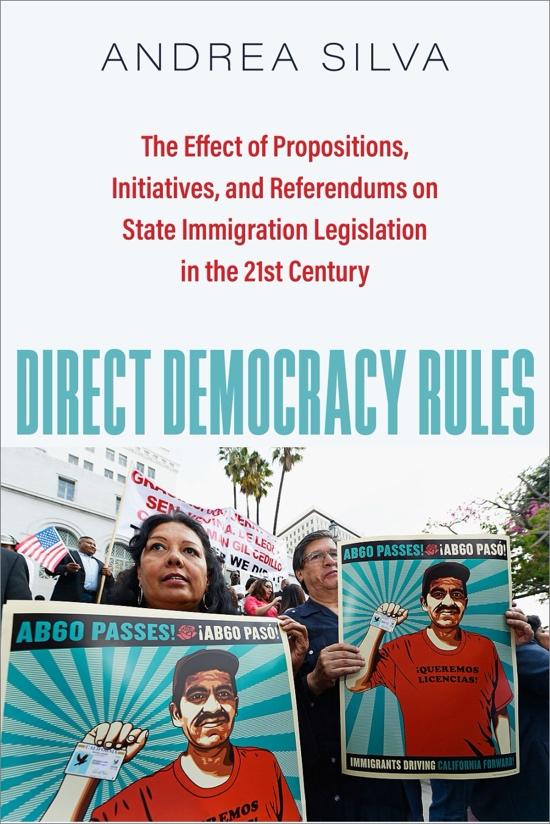
Andrea Silva
An essential guide to understanding how citizen lawmaking reshapes state immigration policy
Since 2010, state legislatures have enacted 1,644 statutes and resolutions regarding immigration, averaging about 329 laws each year. Nevertheless, the most controversial bills, the ones we remember and talk about, usually have some involvement with the di rect democracy process: initiatives, propositions, and referendums designed by everyday citizens with little to no inside knowledge of politics. From driver’s licenses and in - state tuition, to English- only education and access to social services, citizens are fundamentally shaping state immigration policy.
In Direct Democracy Rules, Andrea Silva reveals how the frontlines of U.S. immigration policy have shifted from Congress to the states. While federal authority over immigration is well established, decades of legislative stalemate have created a vacuum that states, and citizens them selves, have rushed to fill. At the heart of Silva’s analysis is the powerful role of direct democracy mechanisms in allowing activists, advocacy groups, and political strategists to bypass legislatures entirely, advancing sweeping policies without compromise. In this system, a single vote at the state level can reshape the lives of millions and influence the national conversation on immigration.
Accessible, timely, and rigorously researched, Direct Democracy Rules ultimately frames these citizen - led battles over state policy as the new terrain of twenty- first century immigration politics.
Andrea Silva is Associate Professor of Teaching in the Department of Political Science at the University of California, Riverside and coauthor of The Presidency and Immigration Policy: Rhetoric and Reality.
11/03/2026
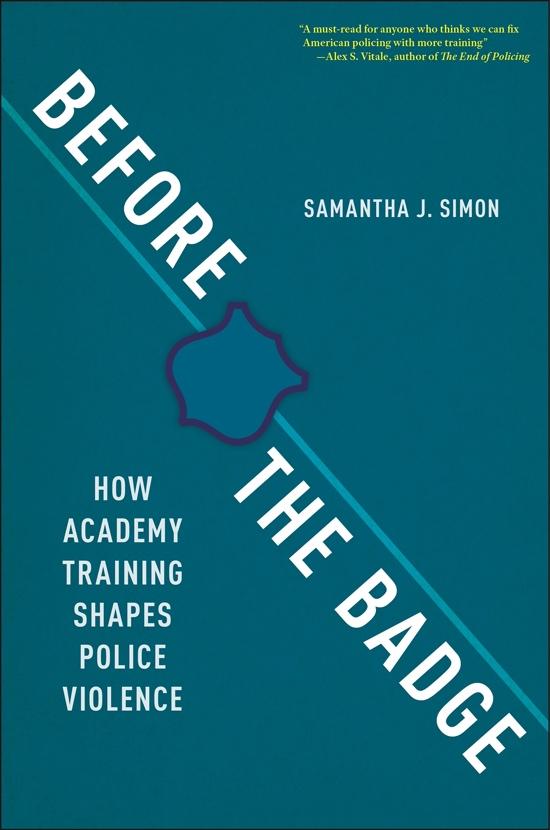
Samantha J. Simon
New in Paper!
An inside look at how police officers are trained to perpetuate state violence
Michael Brown. Philando Castile. George Floyd. Breonna Taylor. As the names of those killed by the police became cemented into public memory, the American public took to the streets in unprecedented numbers to mourn, organize, and demand changes to the cur rent system of policing. In response, police departments across the country committed themselves to change, pledging to hire more women and people of color, incorporate diversity training, and instruct officers to verbally de- escalate interactions with the public.
These reform efforts tend to rely on a “bad apple” argument, focusing the nature and scope of the problem on the behavior of specific individuals and rarely considering the broader organizational process that determines who is allowed to patrol the public and how they learn to do their jobs. In Before the Badge, Samantha J. Simon provides a firsthand look into how police officers are selected and trained, describing every stage of the process, including recruitment, classroom instruction, and tactical training.
Simon spent a year at police academies participating in the training alongside cadets, giving her a visceral, hands- on understanding of how police training operates. Using rich and detailed examples, she reveals that the process does more than test a cadet’s physical or intellectual abilities. Instead, it socializes cadets into a system of state violence. As training progresses, cadets are expected to see themselves as warriors and to view Black and Latino/a members of the public as their enemies. Cadets who cannot or will not uphold this approach end up washing out. In Before the Badge, Simon explains how this training creates a context in which patterns of police violence persist and implores readers to re - envision the future of policing in the United States.
Samantha J. Simon is Assistant Professor in the School of Government & Public Policy and the School of Sociology at The University of Arizona. Her writing has appeared in The Atlantic, among other outlets.
11/03/2026 | 304 pages | 6 x 9 | Paperback: 9781479852406 | $28.95 NYUS
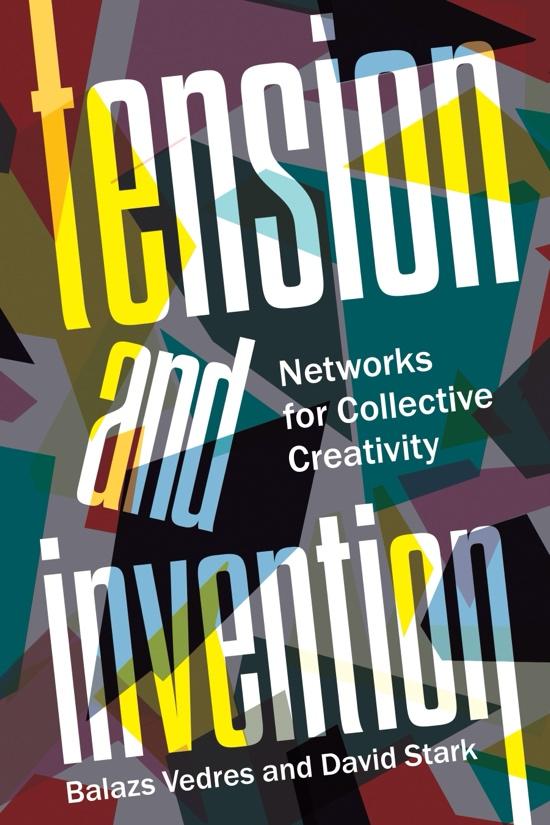
Balazs Vedres and David Stark
How friction, diversity, and tension drive breakthrough ideas in business, technology, and culture
In the popular imagination, innovation is associated with the lone genius. Innovation, however, is never the product of one individual, but rather occurs through the combined efforts of a network of people. But how do these networks operate? In Tension and Invention, Balazs Vedres and David Stark argue that generative tension is the critical, yet often unacknowledged, mechanism that drives innovation.
The authors deconstruct conventional accounts of organizational behavior that equate efficiency with efficacy in creative endeavors. Using a diverse variety of empirical case studies including jazz combos, business groups, and video game developers, Vedres and Stark show how friction, far from being a liability, actively precipitates invention in contexts of radical uncertainty. The result is a theory of innovation on how disjuncture and dissonance, when structurally organized, can be harnessed for discovery.
Offering a compelling theoretical and empirical basis for rethinking the foundations of creative production, Tension and Invention delivers a powerful message: creativity is not born from smoothness or consensus, but from the productive struggles of difference. Invention happens because of tension, not despite it.
Balazs Vedres is Professor in the Department of Networks and Data Science and Professor and Head of Department in the Department of Sociology and Social Anthropology at Central European University. He is the coauthor of The Network Science of Economic Globalization and co - editor of Networks in Social Policy Problems.
David Stark is Arthur Lehman Professor of Sociology and Director of the Center on Organizational Innovation at Columbia University. He is the author of The Sense of Dissonance: Accounts of Worth in Economic Life, and editor of The Performance Complex: Valuations and Competitions in Social Life and Practicing Sociology: Tacit Knowledge for the Social Scientific Craft.
11/10/2026 | 192 pages | 6 x 9 | Paperback: 9781479847792 | $30 NYUS

Daisy Deomampo
Exposes the racial hierarchies in how human eggs are marketed and sold
Conceiving Asian Babies offers a compelling and timely exploration of race, identity, reproduction, and capitalism within the industry of human egg donation. Far from being a purely medical or personal matter, egg donation serves as a powerful lens for understanding how race- based hierarchies and racial capitalism operate within one of our most intimate life processes: creating a family.
Daisy Deomampo examines how racial capitalism fundamentally shapes the market for human eggs. By focusing on the ways the egg donation industry constructs race and identity, Deomampo shows how the demand for "Asian eggs" as a commodity reinforces biogenetic understandings of race. By exploring the overt and subtle ways the egg donor market reifies racial identities, the book illuminates the profound and often troubling links between racial capitalism and reproductive projects.
Centering the experiences of women enmeshed in the industry, the book displays how the egg donation industry reinforces racial hierarchies and shapes notions of family and identity for Asian American communities. Offering a comprehensive and in- depth analysis of how race becomes a source of capital, benefit, and risk in the global reproductive market, Conceiving Asian Babies illustrates the links between reproductive practices and capitalist motivations.
Daisy Deomampo is Professor of Anthropology at Fordham University. She is the author of Transnational Reproduction: Race, Kinship, and Commercial Surrogacy in India.
11/10/2026 | Anthropologies of American Medicine: Culture, Power, and Practice | 192 pages 6 x 9 | Paperback: 9781479839698 | $30 NYUS

Anya Jabour
Chronicles the pioneering reformer whose 1920s study of female sexuality ignited America's first sexual revolution
Decades before Alfred Kinsey released his famous “Reports” on human sexuality, Katharine Bement Davis conducted a pioneering study of female sexuality. Published in 1929, Factors in the Sex Life of Twenty - Two Hundred Women was notable not only as the first major study of women’s sexuality and the first such study conducted by a woman, but also as the first published study of “normal” women’s sexuality what Davis defined as the study of women who were “not pathological mentally or physically.”
In Matters of Sex , Anya Jabour offers an in- depth exploration of Katharine Bement Davis’s life and work, revealing her pioneering efforts to promote scientifically accurate information about sex. Even before publishing her study, Davis was a true trailblazer. One of the fi rst women to earn a Ph.D. at the University of Chicago, Davis worked as a schoolteacher and a social worker before serving as the first superintendent of Bedford Female Reformatory and New York City’s first female Commissioner of Correction. The book trace s her journey as an advocate for female sexuality, exploring her work with birth control and free speech advocates to promote both sex research and sex education.
Jabour showcases how Davis’s candid discussion of women’s sexual behavior from contraception to masturbation to lesbianism challenged prevailing ideas about “pure” and “passionless” women and drove the nation’s first sexual revolution. Drawing from organiz ational records, Davis’s own unpublished memoirs, and family - held materials never before consulted by scholars, Matters of Sex offers a comprehensive and engaging biography of a remarkable woman whose legacy still resonates today.
Anya Jabour is Regents Professor of History at The University of Montana- Missoula and author of Sophonisba Breckinridge: Championing Women’s Activism in Modern America.
11/10/2026 | 384 pages | 6 x 9 | Hardback: 9781479838868 | $35 NYUA
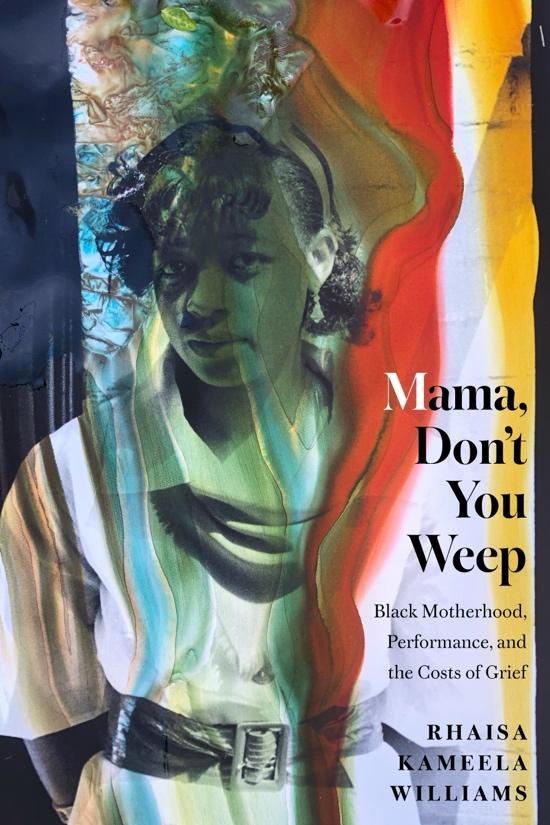
Rhaisa Kameela Williams
In 1955, Mamie Till - Mobley’s decision to display her son’s brutalized body transformed private mourning into public activism, establishing a paradigm of "grief capital." In Mama, Don’t You Weep , Rhaisa Kameela Williams interrogates this phenomenon, arguing that Black maternal grief functions simultaneously as a political and financial commodity and a deeply embodied experience. Williams traces how Black women navigate the "murky waters" where their pain is leveraged as symbolic currency reproducible, marketable, and subject to contract while they simultaneously perform the quiet, ongoing labor of living with loss.
Spanning the years 1955 to 1986, Williams employs performance studies to analyze the shift from the racial liberalism of the Civil Rights era to the rise of liberal multiculturalism. She examines a diverse archive, contrasting the "grief tours" of Mamie Ti ll - Mobley with the debt resistance of the National Welfare Rights Organization and the creative works of Toni Morrison and Gloria Naylor. Williams challenges the "frozen image" of the strong Black mother, distinguishing between grievance the linear, legal demand for justice and grief, which is cyclical, messy, and pervasive. By shifting focus away from the spectacle of murdered Black men and toward the material realities of the women left behind, Mama, Don’t You Weep reveals how Black maternal grief is generative, capacious, and inextricably bound to the nation’s political economy.
Rhaisa Williams is Assistant Professor of Theater at Princeton University and author of various essays published in journals including Transforming Anthropology and College Literature.
11/17/2026 | Performance and American Cultures |240 pages | 6 x 9 | Paperback: 9781479841073 | $30 NYUS
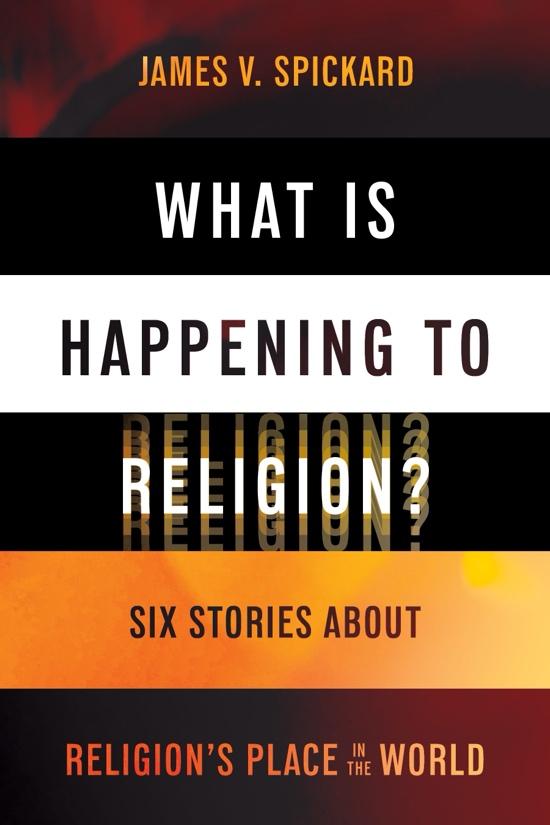
James V. Spickard
Analyzes six major sociological approaches to religion’s role in contemporary society
Sociologists have spent considerable effort analyzing religion’s place in today’s world, yet they have come to no consensus on what is happening to it. Depending on whom you consult, religion is either declining or becoming militantly conservative, is increasingly a matter of individual choice or is one of the few remaining sources of local community, is shaped by market forces or is increasingly international in scope. While there is evidence for each of these trends, no single story explains everything that is going on. Each presents a partial picture of an extremely complex reality. Rather than just presenting raw facts, What Is Happening to Religion? shows how each of these stories involves a leap of imagination that shapes sociologists’ interpretations of those facts and thus shapes their theories about religions’ future.
The volume explores the six major stories that sociologists tell about religion’s role in our contemporary world. It provides an overview of each story, considers what makes it plausible, reviews its major flaws, and introduces recent promising work that addresses those flaws. Moreover, the volume offers key insights to help readers to make sense of how these stories, and ones like them, emerge. And it explains how to critically assess new theories that may arise in the future.
What Is Happening to Religion? provides expert guidance about how to see what our stories about religion are not telling us, and how to expand our vision.
James V. Spickard is Emeritus Professor of Sociology at the University of Redlands and author of Alternative Sociologies of Religion, among other books.
11/24/2026 | 368 pages | 6 x 9 | Paperback: 9781479839568 | $35 NYUA
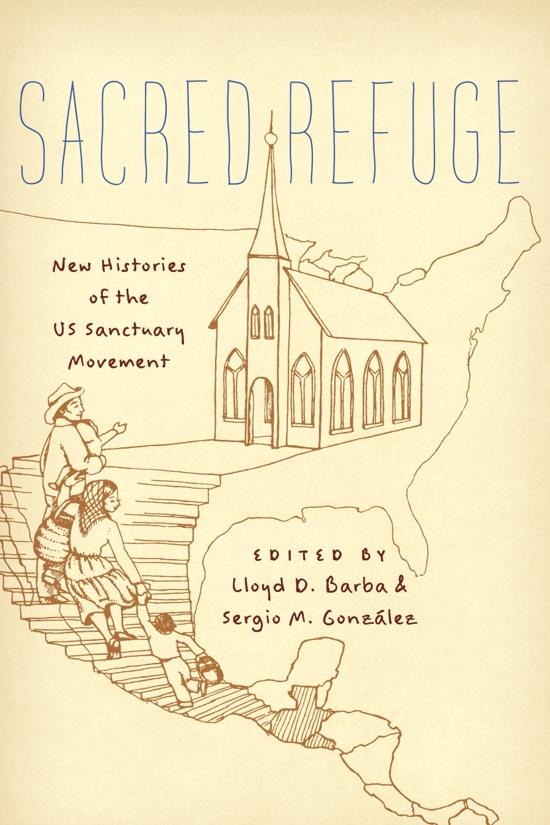
Edited by Lloyd D. Barba and Sergio M. González
Traces America's sanctuary movement across five decades
Sanctuary has become one of the most powerful social and religious movements to push back against state power over the past 50 years, reemerging today at the center of national debates over immigration, religion, and political dissent. Following the electi on of Donald Trump, religious congregations, college campuses, and municipalities across the nation invoked sanctuary as a way to aid undocumented immigrants at risk of deportation and as a public act of resistance to harsh enforcement policies.
Sacred Refuge situates this ongoing struggle with its deeper historical context, situating it, for example, as emerging from movements to shield those seeking to avoid the Vietnam War, and examining how the earlier sanctuary movement of the 1980s, when congregations sheltered Central American asylum seekers fleeing US - backed civil wars, has informed today’s new movement. It also looks at how the particular religious framing of the sanctuary movement distinguishes it from other social movements, as well as highlighting a tendency toward "white saviorism" among church es aiming to help immigrants targeted for deportation.
Bringing together leading scholars in religion and immigration studies, the volume provides a farreaching historical treatment of the U.S. sanctuary movement, uncovering new stories of congregational defiance, activist networks, and animating moral vision s. Together, the contributions trace the movement’s complex origins, the struggles that shaped it, and its reverberations in contemporary campaigns. Timely and accessible, Sacred Refuge offers critical insights for scholars, activists, faith leaders, and readers seeking to understand how sanctuary became - and remains - a sacred refuge in America’s contested political landscape.
Lloyd D. Barba is Assistant Professor of Religion and Core Faculty in Latinx and Latin American Studies at Amherst College. He is the author of Sowing the Sacred: Mexican Pentecostal Farmworkers in California.
Sergio M. González is Associate Professor of History in the Department of History at Marquette University and the author of Strangers No Longer: Latino Belonging and Faith in Twentieth - Century Wisconsin.
11/24/2026 | 304 pages | 6 x 9 | Paperback: 9781479833702 | $30 NYUS

Matthew J. Cressler, Kathleen Holscher, Jack Lee Downey, and Michael Pasquier
Exposes the deep Catholic roots of American horror
From exorcisms to suffocating catacombs, grinning corpses, and electric holy water, Catholicism and American horror go hand in hand. Body and Blood cuts horror open to reveal how the Catholic tradition has shaped its supernatural and grotesque aesthetics in the modern world.
Making the case that it is impossible to understand the enduring popularity of horror without recognizing its religious elements, this volume makes two groundbreaking claims. First, that there is a profoundly Catholic current coursing through modern American horror and that the genre comes alive in new ways when we hold it to the light of the Catholic past. And second, that Catholic history is horrifying in ways that demand our attention, ranging from the supernatural figures who visited children with visions of the apocalypse to settler colonialism and clergy sexual abuse. Catholicism is not exceptional in its capacity to horrify, of course. However, this book shows how contending with the Catholi c dimension of the genre teaches us something important about horror and its hold on audiences in the United States, and it invites us to understand Catholicism anew.
Offering a shocking view of Catholic history as you have never seen it before, Body and Blood presents both scholars and fans alike with an accessible entry into the dark underbelly of America’s religious landscape.
Matthew J. Cressler is an independent scholar, the author of Authentically Black and Truly Catholic: The Rise of Black Catholicism in the Great Migrations, and creator of the educational webcomic series Bad Catholics, Good Trouble.
Jack Lee Downey is Associate Professor of Religion and Classics, and John Henry Newman Chair in Roman Catholic Studies at the University of Rochester. He is the author of The Bread of the Strong: Lacouturisme and the Folly of the Cross.
Kathleen Holscher is Associate Professor of Religious Studies and American Studies at University of New Mexico and author of Religious Lessons: Catholic Sisters and Captured Schools Crisis in New Mexico.
Michael Pasquier is the Jaak Seynaeve Professor of Christian Studies and Professor of Religious Studies and History at Louisiana State University. He is the author of Religion in America: The Basics.
12/01/2026 | | 256 pages | 6 x 9 | Paperback: 9781479845859 | $30 NYUA
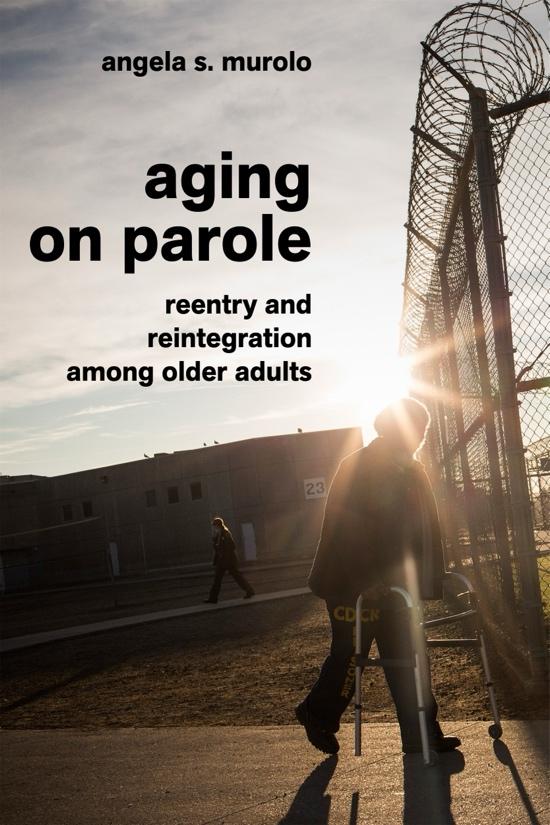
Angela S. Murolo
Analyzes the challenges aging populations face when leaving prison
An increasing proportion of people in prison are over 50 years old, with projections indicating that by 2030, 30% of people in prison will be over 50. Because 95% of people in prison return home, a greater proportion of them will be of advanced age. When r eturning home, older people have lower rates of recidivism compared to their younger counterparts. However, there are challenges that make their reentry particularly difficult, including the possibility of illness and untreated mental health or substance abuse issues, obtaining employment and stable housing at an advanced age, and broken family ties.
Through the lens of redeemability and reintegrative shaming, Aging on Parole examines the needs of people leaving prison in New Jersey and New York, with a focus on people over 50 years old. Through interviews with people on parole, Murolo introduces the importance of successful aging and how the challenges of reentry make that po ssibility difficult. Moving beyond purely correctional or reentry challenges, this book explores what life satisfaction or well - being means for older people returning from prison.
By sharing the stories of the aging parolees' economic and housing struggles, challenges rebuilding family relationships, and health challenges, Murolo creates a deeper understanding of this growing population. The book also provides recommendations, inclu ding age- relevant programming and services to improve reentry outcomes, that provide insight into ways older people can find life satisfaction after parole.
Angela S. Murolo is Assistant Professor in the Department of Law, Police Science & Criminal Justice Administration at John Jay College of Criminal Justice.
12/08/2026 | 288 pages | 6 x 9 | Paperback: 9781479839049 | $30 NYUS
Valli
Rajah, Janani Umamaheswar, and Max Osborn
A long overdue reckoning
With one critical eye on criminology's problematic past and a second hopeful eye on a better future, Anti - Racist Criminology offers a clear vision for how criminologists can transform their work while resisting the racist logics that have informed harmful policies and practices in the criminal legal system.
Drawing a historical line from the eugenicist ideas of Cesare Lombroso and other foundational theorists to contemporary crime control measures such as "stop and frisk," the authors demonstrate how criminological ideas, statistics, and modeling have long shaped and distorted public understanding of crime and punishment, with lasting consequences for communities of color.
The authors go on to offer a "how- to" for academics interested in anti- racist work by answering three central questions: why it's important for criminologists to embrace anti- racism, what antiracist principles criminologists should incorporate into their work, and who should take on this work and in what contexts. Ultimately, Anti - Racist Criminology empowers readers to reimagine how they design research projects, teach, and interact with communities as they participate in a broader movement for social justice and equity.
Valli Rajah is Professor of Criminal Justice at John Jay College of Criminal Justice, City University of New York.
Janani Umamaheswar is Associate Professor in the Department of Criminology, Law and Society at George Mason University and co- editor of the Routledge International Handbook of Sensory Criminology.
Max Osborn is Assistant Professor in the Department of Sociology & Criminology at Villanova University.
12/08/2026 | 248 pages | 6 x 9 | Paperback: 9781479837854 | $30 NYUS

Fan Lu
How Asian, Black, and Latino Americans form and resist political coalitions
Despite sharing similar experiences with racial discrimination and underrepresentation, Asian, Black, and Latino Americans have distinct and nuanced political identities, interests, and goals. In Asian American Political Coalitions , Fan Lu closely explores these communities of color, providing insight into their complex - and promisingpolitical relationships, at a time when common ground is needed more than ever before.
Drawing on post - election and racial identity surveys, as well as case and character studies of activists like Grace Lee Boggs, Yuri Kochiyama, Richard Aoki, and Saket Soni, Lu highlights conflict and coalition- building among Asian American, Black, and Latino communities. She provides a framework for thinking through how these groups can mobilize together, instead of separately, to challenge our country's racial hierarchy.
Lu also provides a fresh lens on key historical and contemporary political events, including Black American responses to Japanese internment, and Asian American perceptions of the Black Lives Matter movement. Asian American Political Coalitions captures both the conflict and common ground among Asian, Black, and Latino Americans, and how these communities must build strong political coalitions for a better future.
Fan Lu is Assistant Professor of Political Science at Queen's University in Canada.
12/29/2026 | 248 pages | 5 1/2 x 8 1/4 | Paperback: 9781479844494 | $30 NYUS
Omaris Z. Zamora
How AfroLatinx artists transform the body into an archive of resistance through a decolonial ciguapa aesthetic
In Ciguapa Unbound, Omaris Z. Zamora reimagines the Dominican myth of La Cigüapa to explore the untold stories of Black Dominican women. Traditionally depicted as an elusive spirit with backwardfacing feet who haunts rural landscapes as a cautionary tale, La Cigüapa is bril liantly repositioned here. Zamora transforms her unbounded mobility, fugitivity, and embodied illegibility into a powerful critical analytic for understanding transnational AfroLatinx feminist thought.
Through the innovative lens of a "ciguapa aesthetic," Zamora foregrounds movement, untrackability, and trance as vital modes of Black feminist knowledge production. The book meticulously analyzes a diverse array of cultural producers, including Nelly Rosario, Ana- Maurine Lara, Loida Maritza Pérez, Josefina Báez, Cardi B, La Bella Chanel, and Firelei Báez. By examining literature, performance, visual art, and digital media, Zamora interrogates how these women navigate intersecting systems of patriarchy, white supremacy, and restrictive definitions of Latinidad across geographic borders.
Central to the book is the theorization of tranceformation, a process through which Black Dominican women navigate and reconstitute their subjectivities across geographic and cultural borders, centering the body, memory, and narrative as vital archives of knowledge production. Engaging with both theoretical analysis and personal narrative, Ciguapa Unbound calls for the reintegration of these feminist voices into a broader interdisciplinary discourse, enriching the study of Black diaspora feminisms with unique insights rooted in the lived experiences of Black Dominican women.
Omaris Z. Zamora is Assistant Professor of LCS and Africana Studies at Rutgers University. Her work has been published in Post45, Latinx Talk, Label Me Latina/o, amongst others and has been featured on NPR’s Alt.Latino podcast.
12/29/2026 | 224 pages | 6 x 9 | Paperback: 9781479845392 | $30 NYUS
David Engel,Gennady Estraikh
Recounts the transformation of Soviet Jewish life between the Six- Day War and the USSR's collapse
At the beginning of the twentieth century, more Jews lived in the Russian Empire than anywhere else in the world. After the Holocaust, the USSR remained one of the world’s three key centers of Jewish population, along with the United States and Israel. Yet while a great deal is known about the history and experiences of the Jewish people in the US and in Israel in the twentieth century, much less is known about the experiences of Soviet Jews. Jews in the Soviet Union, a new multi - volume history, is an unprecedented undertaking. This groundbreaking work draws on rare access to documents from the Soviet archives, allowing for the presentation of a sweeping history of Jewish life in the Soviet Union from 1917 through the early 1990s.
This sixth and final volume in the series covers the social, economic, demographic, political, cultural, and religious aspects of Jewish life in the period between the Six Day War in 1967 and the dissolution of the USSR in 1991. This period saw a change fr om the Soviet regime’s confrontational approach to the Western world to increasing openness during the perestroika years. By the late 1980s, it became possible to establish Jewish cultural and communal organizations, launch publications, and establish free contacts with Jews in Israel, the United States, and other countries.
David Engel and Gennady Estraikh pay attention to the Soviet Jewish emigration movement and its broad international support. They also look closely at the majority of Soviet Jews who found various roles for themselves in a changing economic and cultural e nvironment. At once insightful and comprehensive, The Final Years offers an intricate and multifaceted analysis of the complex relationship between Soviet Jews, the Jewish state, and world Jewry.
David Engel is Greenberg Professor of Holocaust Studies Emeritus and Professor of Hebrew and Judaic Studies Emeritus at New York University. He is the author or co - author of numerous books on various aspects of Jewish history in the nineteenth and twentieth centuries, including Jews in the Soviet Union: A History: War, Conquest, and Catastrophe.
Gennady Estraikh is Professor of Hebrew and Judaic Studies Emeritus at New York University. He is the author or co- author of numerous books including Jews in the Soviet Union: After Stalin, 1953–1967, and Yiddish Literature under Surveillance: The Case of Soviet Ukraine.
01/05/2027 | 336 pages | 6 x 9 | Hardback: 9781479847013 | $35 NYUS
Ramon Lobato
Charts the evolution of the TV from a broadcast - only receiver to the internet age
How did the television set, once a simple broadcast receiver, become a connected, app- enabled platform? In Smart TV: Devices, Platforms, Markets , Ramon Lobato provides a definitive account of this transformation, charting the evolution of television hardware and software in the internet age. As the TV evolves from a “lean- back” appliance to an algorithmically curated marketplace, Lobato traces the technologies, institutions, and cultural practices that have fundamentally reconfigured the medium.
Using a critical media - industries perspective, Lobato explains how the smart TV was conceived, designed, and marketed as a new kind of distribution technology. He shows how its software and platforms were engineered to nudge, monitor and quantify our viewi ng choices. This shift has reconfigured power relations among manufacturers, users, content providers, and platform operators, and has allowed consumer electronics giants like Samsung, LG and TCL to become powerful gatekeepers in television’s new attention economy.
Unpacking the business arrangements of the platform age, Smart TV explains how new advertising formats and data - tracking practices have emerged in the wake of this digital transition. Weaving together trade sources, policy analysis, device testing and audience research, Lobato offers a multi - perspectival analysis of a key device reshaping the global digital ecosystem. Essential reading for scholars and industry professionals, this book illuminates the convergent future of television.
Ramon Lobato is Associate Professor in the School of Media and Communication at RMIT University, Melbourne. He is the author of Netflix Nations: The Geography of Digital Distribution and Shadow Economies of Cinema: Mapping Informal Film Distribution.
01/05/2027 | Critical Cultural Communication | 248 pages | 5 1/2 x 8 ¼ Paperback: 9781479835539 | $30 NYUS
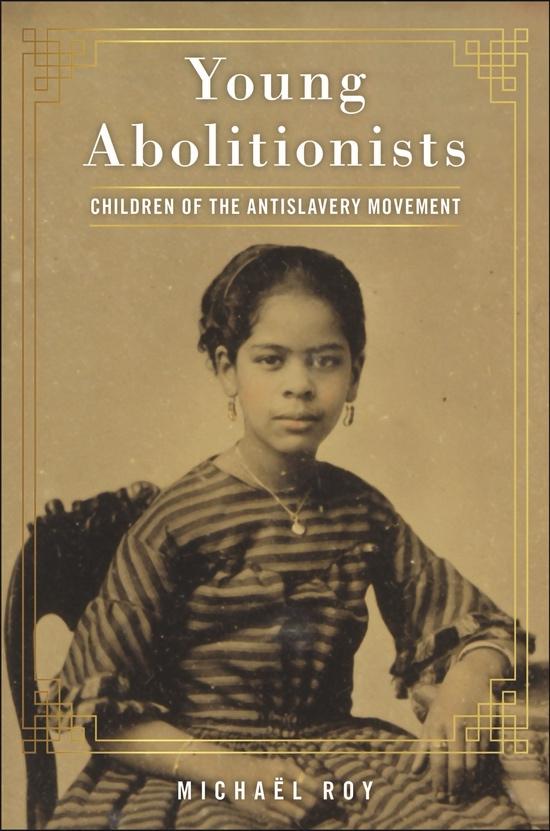
Michaël Roy
New in Paper!
2025 CHOICE Outstanding Academic Title
Shortlist, 2025 Élise Marienstras – RéDEHJA Prize
How children helped abolish slavery
During the antebellum period, several abolitionist figures, including William Lloyd Garrison, the editor of the Liberator; Susan Paul, an African American primary school teacher; Henry Clarke Wright, a white reformer; and Frederick Douglass, the internationally renowned activist, consistently appealed to the sympathies of children against slavery. In 1835, Garrison proclaimed, “If . . . we desire to see our land delivered from the curse of PREJUDICE and SLAVERY, we must direct our efforts chiefly to the rising generation.” This rallying cry found a receptive audience and ignited action.
Despite their limited scholarly exploration, children occupied a crucial position within the US abolition movement. Through a reexamination of archival materials including antislavery newspapers, correspondence, and autobiographies, Young Abolitionists is the first book to center children’s participation in the campaign to eradicate slavery in the United States.
Michaël Roy uncovers how young advocates Black and white alike confidently delivered antislavery speeches within their schools, enrolled in juvenile antislavery societies, and contributed to the editorial process of antislavery newspapers. They aided fugitive slaves, attended antislavery fairs, and engaged in activities commemorating John Brown’s legacy. They even affixed their signatures to antislavery petitions, thus challenging the boundaries of their own citizenship.
Abolitionists saw childhood as a force for social change. With the help of parents and teachers, children acted in concrete ways against slavery and made a meaningful contribution toward its demise. Young Abolitionists honors their contributions and reminds us that children can and must be included in the fight for a better world.
Michaël Roy is Associate Professor of American studies at Université Paris Nanterre and a Fellow of the Institut Universitaire de France. He is the author of Fugitive Texts: Slave Narratives in Antebellum Print Culture, and the editor of Frederick Douglass in Context and Escapes from Cayenne: A Story of Socialism and Slavery in an Age of Revolution and Reaction.
01/05/2027 | 264 pages | 6 x 9 | Paperback: 9781479852376 | $40 NYUS
Robert P. Robinson
Traces the history of the Oakland Community School, the last Community Survival Program of the Black Panther Party
Education for the Revolution offers the first comprehensive historical account of the last standing survival program of the Black Panther Party, the Oakland Community School. First established as the Children’s House in 1970 and operational until 1982, the Oakland Community School provided grade school children with holistic educational and communal practices that oriented them to the Black Panther Party’s political consciousness. Drawing from newspapers, oral histories, and archives, historian Robert P. Robinson links the history of the school to the Black historical tradition of resistance via education, framing the school as a union of Black selfdetermination and education history.
Robinson situates the Oakland Community School within the Black Panther Party’s longstanding commitment to using education as a tool to achieve liberation. Long before terms like restorative justice, gender inclusion, and culturally relevant pedagogy were popular in classrooms, Robinson explores how students of the Oakland Community School were regarded as co- creators of knowledge alongside their teachers, local activists, and parents. Combining personal reflections from parents, students, and former faculty with an analysis of the school’s concrete teaching practices, the book asserts that their histories are vital to present - day educational efforts.
Whereas popular narratives of the Black Panther Party argue that their political activism ceased by the early 1970s, this history of the Oakland Community School illuminates Black Panther women’s continued efforts to grow power through education. At once c ompelling and revelatory, Education for the Revolution cements the Oakland Community School’s legacy as one of the most enduring Black independent education projects for social justice, as well as a fascinating precursor to critical forms of education seen today.
Robert P. Robinson is Assistant Professor of Africana Studies and Gender Studies at John Jay College and Doctoral Faculty in Urban Education, Africana Studies, and Interactive Technology & Pedagogy at The Graduate Center, CUNY.
01/12/2027 | Black Power | 288 pages | 6 x 9 | Hardback: 9781479841974 | $30 NYUA
Andrew Sperling
A comprehensive study of American Jewish responses to twentieth - century antisemitic extremism
Despite significant advances in Jewish civil rights and socioeconomic conditions throughout the twentieth century, American Jews withstood shocking acts of violence and vitriolic propaganda at the hands of right - wing, extremist groups. From the second revival of the Ku Klux Klan in the 1920s to the rise of American Nazi groups, rightwing extremism transformed in symbolism and leadership, all while making Jews a central target of their bigotry.
In The Menace Among Us, Andrew Sperling charts the history of this antagonism throughout the twentieth century US, exploring both the roots of far- right antisemitism and the diverse strategies American Jews employed to counter antisemitic extremists. For too long, the impact of American extremism on Jewish lives has been overlooked because of the false premise that “crackpot” organizations and individuals posed no meaningful threat to Jews. By closely examining Jewish experiences with extremism, this book prompts readers to rethink the role of antisemitism in American society. Relying on organizational records and personal stories often buried in local newspapers, Sperling reveals how extremist organizations mobilized against Jews and how their efforts were often tolerated by local police or dismissed by Jewish or Gentile leaders.
Harrowing yet insightful, The Menace Among Us highlights the belief systems and practices that contributed to right - wing extremism’s ascent, the varied Jewish responses to antisemitic antagonism, and what we can learn from their responses when confronting antisemitism today.
Andrew Sperling is the Historian and Director of Academic Initiatives at the American Jewish Historical Society.
01/12/2027 | Goldstein-Goren Series in American Jewish Studies | 288 pages | 6 x 9
Paperback: 9781479845569 | $30 NYUA
Lauren Levitt
How sex workers and activists engage in non- capitalist care practices to manage precarity, stigma, and criminalization
In Sex Worker Solidarity , Lauren Levitt argues that because of their marginalized status, which makes them outsiders in legal, labor, medical, and social networks, sex workers inevitably care for one another in distinct ways that are outside of traditional material and emotional support structures. Through participant observation and interviews with sex workers and sex worker activists at the Sex Workers Outreach Project Los Angeles (SWOP - LA) and Dungeon X, a large commercial dungeon in New York City, Levitt illustrates how sex workers create forms of value for one another that go beyond the value they create for bosses and clients, providing a model for broader social change in the face of increasing wealth inequality.
Drawing on Marxist and women of color feminisms and queer theory, Levitt reveals how sex workers’ non- biological kinship structures enable them to circulate both material resources and knowledge according to a moral economy distinct from capitalism’s econo my of competition, cementing bonds between workers. Ultimately, Sex Worker Solidarity illustrates the limits and possibilities of extending the informal networks of care emerging in sex work workplaces to a broader group of people through sex worker organizing, and shows how other informal workers can resist capitalist exploitation through alternative forms of labor organizing.
Lauren Levitt is Postdoctoral Researcher at The University of California, Riverside's XCITE Center for Teaching and Learning.
01/12/2027 | 208 pages | 6 x 9 | Paperback: 9781479837007 | $30 NYUS

Patrick G. Watson, Carmen Nave, and Michael Lynch
Investigates the significance of video evidence in criminal trials of police officers charged for on - duty shooting incidents
Lawyers describe video evidence as a “game changer” for achieving criminal accountability in police -involved shootings. Despite a proliferation of videos of police-involved violence that attract considerable public attention and condemnation, trials and convictions remain rare. Once promised as a mechanism for delivering police oversight and accountability, video has yet to resolve complaints and achieve consensus about the lawfulness of use-of-force incidents, especially lethal force disproportionately applied to Black and Indigenous people.
Trial by Video examines eight criminal cases between 2015 and 2020 of police officers charged for on-duty shootings in the United States and Canada, to examine what video brings, and fails to bring, to criminal trials. Video is widely recognized as critical evidence but is highly contested throughout the trials. Whatever the virtues of video, these cases often turn on adversarial arguments about the motive of the accused officer and the “reasonableness” of force.
Watson, Nave, and Lynch interviewed lawyers who worked on these cases, and reviewed court documents, news stories, official reports, and leading case law. While video evidence is thought to “speak for itself,” the book shows how video evidence is mobilize d through litigation to shape courtroom arguments. In the courtroom, video is played, replayed, technically reconstructed, and subjected to expert commentary, but it is also used as an interrogative tool to contest or corroborate the statements of witnesses, including the accused officer. Ultimately, Trial by Video shows how lawyers, experts, and the accused officers themselves can reappropriate video evidence in order to avoid accountability.
Patrick G. Watson is Assistant Professor at the Centre for Criminology & Sociolegal Studies at the University of Toronto.
Carmen Nave has a PhD in Anthropology from the University of Toronto. She has researched and lectured at the University of Waterloo and several other institutions.
Michael Lynch is Professor Emeritus, Department of Science & Technology Studies, at Cornell University. He is the author of many books, including Scientific Practice and Ordinary Action: Ethnomethodology and Social Studies of Science.
01/19/2027 | 280 pages | 6 x 9 | Paperback: 9781479838912 | $30 NYUS

Edited by Elizabeth J. Donaldson, Diana R. Paulin, Ralph James Savarese, and M. Remi Yergeau
Reimagines neurodiversity through intersections of race, disability, and social justice
Neurodiversity has progressed from niche activism to a household term; our culture is now saturated with social media ads promising to "train" ADHD brains and media tropes like the quirky savant. But amidst this barrage of content urging selfoptimization against a neurotypical template, Neurofutures pauses to ask: what comes next? Editors Diana R. Paulin, M. Remi Yergeau, Ralph James Savarese, and Elizabeth J. Donaldson gather a diverse array of scholars and creatives to think through "crip time" sideways, chronic, manic, and executive dysfunction time to reimagine the future of cognitive difference.
Moving beyond a simplistic celebration of diversity, the collection interrogates the intersections of race, disability, and social justice. Contributors offer "mad provocations" that span from Black neurodivergence and Afrofuturism to neuroqueer paradigms and animal liberation. Through analyses of cultural texts ranging from the folklore of "Little Eight John" to the speculative worlds of Octavia Butler and Shirley Jackson the essays deconstruct the violence of neurotypical norms while advocating for the rights of neurodivergent people to full lives and care.
Neurofutures refuses the linear march of progress, instead delving into the complex, often hidden realities of lived experience to map a world that welcomes divergence, dissent, and deep compassion.
Elizabeth J. Donaldson is the Inaugural Director of the School of Applied Sciences and Arts and Professor of English at Arizona State University’s Polytechnic Campus. She is the editor of Literatures of Madness: Disability Studies and Mental Health
Diana R. Paulin is Charles A. Dana Research Associate Professor of American Studies & English at Trinity College and the author of Imperfect Unions: Staging Miscegenation in U.S. Drama and Fiction
Ralph James Savarese is the author of seven books, most recently Herman Melville & Neurodiversity, Or Why Hunt Difference with Harpoons?, and the coeditor of three other collections. He lives in Iowa City, Iowa.
M. Remi Yergeau is Canada Research Chair in Critical Disability Studies and Communication and Associate Professor of Communication and Media Studies at Carleton University. They are the author of Authoring Autism: On Rhetoric and Neurological Queerness
01/19/2027 | Crip | 304 pages | 6 x 9 | Paperback: 9781479848058 | $35 NYUS
Corrine Collins
In Injurious Love: Racial Violence and Interracial Intimacy , Corrine Collins challenges one of the most durable liberal narratives of the late twentieth and early twenty- first centuries: that interracial love functions as a natural antidote to racism. Across the United States and Great Britain, interracial relatio nships and multiracial families have frequently been celebrated as symbols of social progress, intimate proof that racial boundaries have softened. Collins asks what this story leaves out.
Drawing on Black studies, critical mixed race studies, and Black queer feminist thought, Injurious Love examines how intimacy unfolds within the long histories of enslavement and colonization that shape racial life in the Anglosphere. Rather than treating love as a race- neutral force capable of transcending difference, Collins argues that interracial relationships are structured by enduring asymmetries of power and by racialized politics of desire. The book pays particular attention to the figure of the Black multiracial child, often cast as the emblem of a more harmonious future, and shows how this symbolic role can obscure how Blackness is mobilized to stabilize white racial power.
Moving beyond romantic coupling, Collins also investigates the quieter but no less consequential intimacies of family and friendship. Through close readings of memoir, fiction, and poetry by writers including Danzy Senna, Zadie Smith, Bernardine Evaristo, Natasha Trethewey, Jackie Kay, and Catherine McKinley, Injurious Love traces how literary texts expose the injuries, disavowals, and contradictions embedded within interracial intimacy. The result is a provocative rethinking of love, power, and racial formation in contemporary culture.
Corrine Collins is Assistant Professor of English at the University of Southern California. Her articles have appeared in The Journal of Commonwealth Literature and Gastronomica: A Journal of Critical Food Studies.
01/26/2027 | 312 pages | 6 x 9 | Hardback: 9781479836284 | $32 NYUS

Andrew L. Aoki, James S. Lai, and Okiyoshi Takeda
Asian Americans are the fastest-growing voting bloc in the United States, with AAPI turnout hitting a record high in the 2020 elections. Yet, as a political cohort, they are also remarkably complex and diverse, encompassing a number of ethno-racial groups with different languages, religions, and cultures. How, exactly, can we define Asian America? And what insight can we discern from their politics?
In The Battle for Belonging, Andrew L. Aoki, James S. Lai, and Okiyoshi Takeda provide the first comprehensive, up-to-date textbook in over a decade that guides readers through the key political issues, beliefs, and activism that shape the lives of Asian Americans today.
Beginning with the first large waves of immigrants, the authors show Asians in America have fought for equal treatment and opportunity, struggling against individual prejudices and systemic discrimination. While this battle for belonging has been a constant, Asian America has changed greatly. The authors look at how the growing diversity has contributed to a wider range of views, and how the changing circumstances of Asian immigrants has helped drive new forms of political engagement. No longer clustered in inner-city areas, Asian Americans today are often concentrated in suburban cities, mobilizing through online platforms that can be overlooked by more traditional political organizing.
Timely topics include the social media activism of unnaturalized Asian American youth; the role that Asian American community-based organizations play as key political actors; the strategies employed by Asian American political campaigns and office-holders; and recent coalition-building with other people of color, including Black and Indigenous communities. Ultimately, Aoki, Lai, and Takeda provide much-needed, contemporary insight into the changing political identity and actions of Asian Americans.
Andrew L. Aoki is Professor in the Department of Political Science and Chair of the Department of Critical Race and Ethnicity Studies at Augsburg University, and co-author of Newcomers, Outsiders, and Insiders: Immigrants and American Racial Politics in the Early Twenty-First Century.
James S. Lai is a Professor in the Ethnic Studies Department with a courtesy appointment in the Political Science Department at Santa Clara University. He is the author of Asian American Connective Action in the Age of Social Media: Civic Engagement, Contested Issues, and Emerging Identities, Asian American Political Action: Suburban Transformations, and co-editor of Asian American Politics: Law, Policy, and Participation.
Okiyoshi Takeda is Professor in the School of International Politics, Economics, and Communication at Aoyama Gakuin University, Tokyo, and author of Asian American Politics
01/26/2027 | 384 pages | 7 x 10 | Paperback: 9781479844708 | $35 NYUS
Kim Gallon
Uses the life of a notorious early twentieth century Black evangelist to shed light on a transformative era for Black religious leadership and its perceived authority
Power in the Pews explores one man’s meteoric rise to religious fame to illuminate how Black ministers’ power in urban Black life came to be contested in early 20th century America. Before the massive popularity of figures like Father Divine and "Sweet Daddy" Grace, traveling evangelist George Wilson Becton was the first of the charismatic African American religious leaders to enthrall the Black masses in cities across the nation.
"The first known cult leader of Harlem," whose life is now largely forgotten, was a central focus of criticism of Black ministers within the Black Press, especially due to ongoing debates regarding his marital life, sexuality, alleged womanizing, and the likelihood that he was a swindler. George Wilson Becton became emblematic of larger concerns about the authority and the presumed morality of Black ministers and the institution of the Black Church.
This microhistory uses Becton’s life and that of his wife, Josephine Bufford Becton, to illuminate a number of core issues swirling around Black churches of the time, from debates about the legitimacy of the call to preach versus formal religious education , to changing ideas about the authority of clergy versus congregational authority, to the acceptance of female ministers and concerns about ministers’ sexuality morality. The case of this famous and controversial figure illustrates how Black churches evolv ed into spaces of contention, empowering everyday Black people to define what constituted legitimate religious authority.
At once compelling and insightful, Power in the Pews draws on Becton’s ministry to reconsider the role of the Black Church as not merely a refuge of faith and space for personal transformation, but as a site of cultural and social struggle between ministers and Black communities.
Kim Gallon is Associate Professor in the Department of Africana Studies at Brown University. She is the author of Pleasure in the News: African American Readership and Sexuality in the Black Press and co- editor of A Full Measure of Freedom: The Black Press at 200.
02/02/2027 | | 352 pages | 6 x 9 | Paperback: 9781479848645 | $32 NYUS
Lorena Garcia
How newly middle- class Latinx parents navigate social mobility
Latinx Dreams turns attention to Latinx parents who are new to the middle class a group that has received little attention in past research on social class and parenting. How do newly middle- class Latinx parents engage in classmaking through their parenting? What do they prioritize in their socialization of their children and why? And what parenting practices do they use to accomplish their goals? This book tells the story of the parenting strategies Latinxs engage in to negotiate upward mobility and how they think and feel about their approaches to raising their children.
Based on in- depth interviews with middle class Latinx parents who grew up poor and working- class, Lorena Garcia shows how ethnoracial dynamics at the intersection of class, im/migration, and gender inform the lessons they teach their children about mobility, racialization, speaking Spanish, and developing skills for educational and future success. By accounting for the experiences of newly middle- class Latinx parents, this book offers further insight into class reproduction and mobility, and fills a gap in our understanding of how Latinxs who have grown up in the United States experience and navigate socioeconomic mobility.
Lorena Garcia is Associate Professor of Sociology at the University of Illinois at Chicago. She is the author of Respect Yourself, Protect Yourself: Latina Girls and Sexual Identity.
02/02/2027 | Latina/o Sociology | 240 pages | 6 x 9 | Paperback: 9781479803699 | $30 NYUS

Marjorie N. Feld
New in Paper!
Explores the long history of anti- Zionist and non - Zionist American Jews
Throughout the twentieth century, American Jewish communal leaders projected a unified position of unconditional support for Israel, cementing it as a cornerstone of American Jewish identity. This unwavering position served to marginalize and label dissent ers as antisemitic, systematically limiting the threshold of acceptable criticism. In pursuit of this forced consensus, these leaders entered Cold War alliances, distanced themselves from progressive civil rights and anti- colonial movements, and turned a blind eye to human rights abuses in Israel. In The Threshold of Dissent, Marjorie N. Feld instead shows that today’s vociferous arguments among American Jews over Israel and Zionism are but the newest chapter in a fraught history that stretches from the nineteenth century.
Drawing on rich archival research and examining wide- ranging intellectual currents from the Reform movement and the Yiddish left to anti- colonialism and Jewish feminism Feld explores American Jewish critics of Zionism and Israel from the 1880s to the 1980s. The book argues that the tireless policing of contrary perspectives led each generation of dissenters to believe that it was the first to question unqualified support for Israel. The Threshold of Dissent positions contemporary critics within a century - long debate about the priorities of the American Jewish community, one which holds profound implications for inclusion in American Jewish communal life and for American Jews’ participation in coalitions working for justice.
At a time when American Jewish support for Israel has been diminishing, The Threshold of Dissent uncovers a deeper and deeply contested history of intracommunal debate over Zionism among American Jews.
Marjorie N. Feld is Professor of History in the History and Society Division at Babson College. She is the author of Lillian Wald: A Biography and Nations Divided: American Jews and the Struggle Over Apartheid.
02/02/2027 | Goldstein-Goren Series in American Jewish Studies | 288 pages 6 x 9 | Paperback: 9781479829323 | $30 NYUS
Scott D. Landes
In The Counterconforming Body, Scott D. Landes presents a new definition of disability that introduces the idea of the "counterconforming body." This is a body that inherently challenges ableist normative standards and avoids pathologizing disability or positioning the disabled body as passive. Landes's approach recognizes the activity of the disabled body; avoids conflating disability with health status; and allows for a better measurement of disability. Importantly for social scientists and demographers who need reliable data measurements, understanding disability as counterconforming allows for better differentiation between disability, health, and functional limitations, a shift that is necessary to both more accurately count the disabled population and understand the intersections of these distinct experiences.
Landes takes on difficult issues in the disabled community. He shows that while some may argue for "disability pride" as a response to one's body, that position fails to address and provide space to live with and confront the complexity of having a body th at is often uncooperative, full of pain, frequently marginalized by others, and at times incomprehensible even to the disabled person. In contrast, disability as counterconforming provides a way to recognize both the challenges and joys, the good and bad bits, associated with being disabled. Further, defining disability as the body’s inherent counterconformity to ableist prescriptive physical and mental normative standards pivots our understanding of disability to an active, and potentially meaning - generati ng reality, that can further fuel disability advocacy and protest, and lead to more equitable disability measures that help reduce the marginalization of disabled people within an ableist society. Disability as counterconforming aligns with the principles of disability justice, with an emphasis on embracing embodied experience as a critical guide and reference, pointing us toward justice and liberation. Understanding disability as counterconforming also makes room for disabled people who do not embrace disability justice or any other disability identity related movements. Whether integrated into one’s identity or not, the disabled body persists as a body that inherently counterconforms to ableism.
Scott D. Landes is Professor of Sociology and faculty associate in the Aging Studies Institute at Syracuse University. 02/09/2027 |
Joshua Wright
How humor turns the spotlight on our changing religious landscape
In modern America, religion is funny. Not only have skeptical comedians, from George Carlin to Sarah Silverman, lampooned hypocritical preachers and what they see as illogical doctrines, but many religious Americans have satirized unsavory aspects of their own traditions. In Comic Belief, Joshua Wright presents a surprising cultural and intellectual history of the changing relationship between religion and humor in the United States from the early 20th century to the present.
The past century has seen both an explosion of commercial comedy and a significant transformation in the stature and shape of American Christianity. Comic Belief explores a wide range of characters and sources, from iconic stand - up comedians like Lenny Bruce and Richard Pryor, to the evangelical humor magazine The Wittenburg Door , to films like Angels in the Outfield and Monty Python’s Life of Brian.
Wright reveals how both fervent critics and defenders of American Christianity have used comedy and satire to express a widespread, simmering discomfort with overly formal institutional religion. While humor has been instrumental in the rise of the religi ous "nones" and the "spiritual but not religious," it has also played an important though underexplored part in the story of the growth of conservative evangelicalism.
Comprehensive and deeply engaging, Comic Belief provides a groundbreaking exploration of religion and humor over the last century.
Joshua Wright is Assistant Professor of Religion at Hope College.
02/09/2027 | 336 pages | 6 x 9 | Paperback: 9781479846498 | $35 NYUA
C. Lynn Carr
Reveals how some members of liberal American Jewish communities transform their relationships to Jewishness and to each other through engaging in collective mourning rituals —even amid secularization
Today, great numbers of people are turning from traditional religious practices and beliefs of the past. Liberal Jews are among the vanguard of these irreligious and individualist trends. Yet, while many nonorthodox Jews have abandoned religious practices, their engagement with traditional mourning rites turns out to be particularly sticky.
In Judaism rituals around death are communal, and they therefore help to illuminate issues around collective identity. In Facing Death Together , C. Lynn Carr investigates how participants in some liberal Jewish communities engage with religious tradition following a death in the family, both as mourners and as comforters, including through the tradition of shiva and as chanters of the Mourner’s Kaddish. Focusing on current and former members of Jewish Reconstructionist communities, the book considers why, when, and how they engage with Jewish tradition, and what this religious involvement means for their relationships to their communities, to liberal American Jewishness, and to Judaism.
This story- rich ethnographic study weaves together sociological scholarship on religion, mourning, and emotion with knowledge gained from years of observant participation, intimate interviews, and qualitative survey responses. Moreover, it considers how li beral Jewish community members construct themselves as liberal Jewish persons. Discussing contemporary liberal religion and irreligion, death and grieving, belonging and estrangement, emotion and interaction, and engagement with and rejection of Jewish religious tradition, Facing Death Together describes how and why religious community holds transformative potential.
C. Lynn Carr is Professor of Sociology at Seton Hall University and the author of A Year in White: Cultural Newcomers to Lukumi and Santería in the United States.
02/16/2027 | | 256 pages | 6 x 9 | Paperback: 9781479843114 | $30 NYUS

Shawn Francis Peters
The incredible true story of Lord Gordon Gordon, the nineteenth century's most audacious fraudster
Throughout the nineteenth century, a legendary con artist made headlines for perpetrating a series of brazen scams across Europe, the United States, and Canada. He adopted the grand title of "Lord Gordon Gordon." In reality, he was a self - assured and slipp ery fraudster straight from the pages of a novel by Herman Melville or Mark Twain.
In The Lord of the Lies, Shawn Francis Peters traces Gordon across continents as he swindled shopkeepers, bankers, attorneys, and railroad executives alike. Gordon even managed to fool the legendary robber- baron Jay Gould into handing over cash and securities by convincing the canny financier that he was a major stockholder in the Erie Railroad. These audacious efforts earned him a reputation as the “prince of lies” and “king of charlatans,” a man whose real life was as interesting as the fantastical lies he told.
No previous account has pieced together the entirety of Gordon’s complicated story, from his shadowy origins in England through his much- debated death in Canada. Providing the first comprehensive portrait of one of the greatest rogues of the Gilded Age, The Lord of the Lies offers a gripping narrative account of this renowned con man’s life.
Shawn Francis Peters is Distinguished Learning Center Specialist in the Division for Teaching and Learning and a longtime instructor at the University of Wisconsin –Madison. He is the author of, among other works, The Infamous Harry Hayward: A True Account of Murder and Mesmerism in Gilded Age Minneapolis and When Bad Men Combine: The Star Route Scandal and the Twilight of Gilded Age Politics.
02/23/2027 | 256 pages | 6 x 9 | Hardback: 9781479848553 | $35 NYUA
Shenila Khoja - Moolji
Offers a new theory of repair as refiguration through Shia Ismaili Muslim life in North America
Wars and forced migration disrupt people’s sense of continuity in time and place, leaving them out of sync with dominant histories and imagined futures. Thinking Past Crisis examines how Shia Ismaili Muslims in North America have navigated such dislocations across the decades following migrations from East Africa, Central and South Asia, and other sites of Ismaili memory.
Rather than treating repair as return or restoration, Shenila Khoja- Moolji draws on Ismaili cultural and communitymaking practices from 1970 to 2025 to conceptualize repair as refiguration: a spiritual and cultural praxis through which communities reorganize memory, time, and place so that life remains possible amid rupture. Through the work of itinerant preachers, si nger - songwriters, educators, novelists, and archivists, Ismailis create new ways of remembering the past and imagining the future. They multiply historical timelines, pluralize religious aesthetics, build solidarity with other minoritized communities, rete ll the past to confront trauma, and sustain connections across transnational circuits.
At the center of these practices are Ismaili understandings of the nur (light) of Imamat, a source of continuity amid upheaval, along with an ethic of tawhid (oneness), justice, and one jamat (community). By tracing these practices, Thinking Past Crisis reframes repair as a form of ethical obligation, communal care, and place - based responsibility.
Centering a minority Muslim community often left at the margins of scholarship on Islam, the book reorients debates on crisis, migration, memory, and repair in Islamic studies, migration studies, and American religious history.
Shenila Khoja- Moolji is the Hamad bin Khalifa al- Thani Endowed Chair of Muslim Societies and Professor at Georgetown University. She has authored award- winning books, including Rebuilding Community, Sovereign Attachments, Forging the Ideal Educated Girl, and The Impossibility of Muslim Boyhood.
02/23/2027 | 336 pages | 6 x 9 | Paperback: 9781479839506 | $32.50 NYUS
Prithi Kanakamedala
New in Paper!
Longlist, 2025 Brooklyn Public Library Book Prize
Finalist, 2025 Gotham Book Prize
The 2024 Victorian Society Book of the Year
Meet the Black Brooklynites who defined New York City’s most populous borough through their search for social justice
Before it was a borough, Brooklyn was our nation’s third largest city. Its free Black community attracted people from all walks of life businesswomen, church leaders, laborers, and writers who sought to grow their city in a radical antislavery vision. The residents of neighborhoods like DUMBO, Fort Greene, and Williamsburg organized and agitated for social justice. They did so even as their own freedom was threatened by systemic and structural racism, risking their safety for the sake of their city. Brooklynites recovers the lives of these remarkable citizens and considers their lasting impact on New York City’s most populous borough.
This cultural and social history is told through four ordinary families from Brooklyn’s nineteenthcentury free Black community: the Crogers, the Hodges, the Wilsons, and the Gloucesters. The book illustrates the depth and scope of their activism, cementing Brooklyn’s place in the history of social justice movements. Their lives offer valuable lessons on freedom, democracy, and family both the ones we’re born with and the ones we choose. Their powerful stories continue to resonate today, as borough resident s fill the streets in search of a more just city.
This is a story of land, home, labor, of New Yorkers past, and the legacy they left us. This is the story of Brooklyn.
Prithi Kanakamedala is Professor of History at Bronx Community College, City University of New York.
03/02/2027 | 288 pages | 6 x 9 | Paperback: 9781479847587 | $30 NYUS
The Last Author Portrait Sitting with Cormac McCarthy
Beowulf Sheehan
Pu blished by Autof ocus
On a hot August day, Beowulf Sheehan and his assistant Chika arrive at the Santa Fe Institute to meet and photograph Cormac McCarthy, writer of masterpieces such as Blood Meridian, No Country for Old Men, and The Road, auteur of the Southern Gothic, and figure renowned for avoiding the public eye. Their day together takes them from the light of Santa Fe to the shadows of Cormac’s home, exploring his art and life as they go, making what would become Cormac’s author portrait for his novels The Passenger and Stella Maris and, less than one year after they are published, the image used to announce the global news of his passing. The Father of the Man: The Last Author Portrait Sitting with Cormac McCarthy is a recounting of that great day, a photo essay (including many pictures published for the first time), an homage to Cormac and his art, and a reflection of Cormac’s work to serve as a lens through which Beowulf Sheehan better sees, understands, and loves his own father.
Beowulf Sheehan is a photographer of figures in the arts and humanities. To date, he's photographed better than 1,000 writers from more than 60 countries. His work has been published in the likes of Elle, Esquire, L’Uomo Vogue, The New Yorker, People, Time, Vanity Fair, and Vogue and has been exhibited at institutions such as the American Academy of Arts and Letters, Dostoevsky Museum, International Center of Photography, Museum of the City of New York, Museum of Fine Arts Houston, Smithsonian National Museum of African American History and Culture, and The Witliff Colelctions. Author: The Portraits of Beowulf Sheehan, a collection of portraits of 200 writers from 35 countries with a foreword by Salman Rushdie, was published in 2018. The Father of the Man: The Last Author Portrait Sitting with Cormac McCarthy is Sheehan's second monograph. Beowulf Sheehan is the proud son of an immigrant and translator, grandson of a poet and photographer, grandson of a copy editor, first cousin once removed from an editor, and cousin, first cousin once removed, and great - great - nephew of authors. A native of Fort Lauderdale, Florida, he lives in New York City.
09/01/2026 | 80 pages | Paperback: 9781957392493 | $25 NYUT
Mark Leidner
Mark Leidner’s third poetry collection, Elegy for Pangaea, is as funny, strange, and epic as his two previous collections, Returning the Sword to the Stone and Beauty Was the Case that They Gave Me. His new poems explore faith, grief, money, myth, parenting, and poetry itself to create a collection as full of tantalizing ideas and dilemmas as “an enormous library with a waterbed floor.” As mystical as it is satirical, as audacious as it is personal, as hysterical as it is disconcerting, in Elegy for Pangaea, Leidner once again shows us that the only way out of irony is through.
Mark Leidner is the author of two feature films: the sci - fi noir Empathy, Inc. (2019) and the relationship comedy Jammed (2014). He is also the author of the story collection Under the Sea (Tyrant Books, 2018), the poetry collection Beauty Was the Case That They Gave Me (Factory Hollow, 2011), and the book of aphorisms The Angel in the Dream of Our Hangover (Sator, 2011).
09/15/2026 | 96 pages | Hardback: 9781964499697 | $20 NYUT

Esteban Rodriguez
Esteban Rodríguez's At the River asks what it means to live on the border, and how one can come to terms with the symbolic weight of crossing between two worlds.
Combining sharp prose, poetic insight, and a series of incisive black- and - white photographs , At the River journeys to the U.S.- Mexican border in deep south Texas, where our narrator, under his grandmother’s watchful eye, contemplates the geography, people, and cultural characteristics that define the region. Over the course of an afternoon, as we cross from on e country to the next, we come face to face with fatigued security guards, desperate children, eager vendors, ominous receptionists, and a whole range of characters that mimic that indifference and uncertainty that defines this corner of the earth. In Rodríguez’s tender and often humorous style, questions arise about identity, economic privilege, race, the nature of language and silence, and the ways in which belonging becomes more than just the name you were born with. At the River asks not only what it means to live on the border, but how one can come to terms with the symbolic weight of crossing between two worlds.
Esteban Rodríguez is the author of nine poetry collections, most recently The Lost Nostalgias, and the essay collection Before the Earth Devours Us. His work has appeared in New England Review, Seneca Review, Poetry Daily, and American Life in Poetry. He is the interviews editor at the EcoTheo Review, senior book reviews editor at Tupelo Quarterly , and associate poetry editor at AGNI . With Jennifer De Leon and Ben Black, he coedited To Never Have Risked Our Lives: An AGNI Portfolio of Central American and Mexican Diaspora Writing . He and his wife own and operate Love Letter Coffee in McAllen, Texas.
09/22/2026 | 102 pages | 7 x 9 | Paperback: 9781964499727 | $20 NYUT
How your expectations are shattered is as formative as the truth that replaces them. // In the essays of Disenchanted, Kaycie Hall catalogues the most acute shocks of disillusionment to reclaim the complexity and depth of her experiences a stake for identity and sense - making that has found new urgency in motherhood. From boyfriends who hid heroin addictions to a buried rivalry in friendship, from miscarriage to antidepressant withdrawal, Kaycie is prompted to revisit her own poisoned fantasies. With hard- won wisdom and resolute vulnerability, she overcomes the fierce maternal urge to protect her son from the inevitable pains of life, because it is in these heartbreaks and blunders that one becomes a person.
Kaycie Hall is a writer and translator from French. She lives in New York City with her son.
09/22/2026 | 122 pages | 5 x 8 | Paperback: 9781957392509 | $17 NYUT

Return Signal catalogues transness and desire in daydreams and real dreams and distraction, reimagining queer obsession in elegies and lyric sequences.
Return Signal is transmission. Is diversion as determination. Is obsession as communication. Transness and desire are catalogued in daydreams and real dreams and distraction. Testosterone daydreams and phantoms reimagine queer obsession in elegies and lyric sequences. Desire for selfdetermination becomes data for self - surveillance. Months pass in the wrong order. Second selves are passed off as twins, dogs, Blake’s Urizen, wannabe bodybuilders, stars, mirrors, teenagers, and the biblical Adam. Grief and desire act as stand - ins for each other, measured through fantasy repetition. This time, this. And again.
TR Brady is a writer, fiber artist, and editor from Arkansas. He is the co- founder/co - editor of Afternoon Visitor, an online journal of poetry. TR’s writing has appeared in Poetry Daily, Tin House, Bennington Review, New England Review, and elsewhere. TR holds an MFA from the Iowa Writers’ Workshop, where he was awarded a Maytag Fellowship, a Teaching/Writing Fellowship, and a third - year fellowship to teach undergraduate poetry writing. TR teaches at The University of Alabama.
10/06/2026 | 79 pages | 6 x 9 | Paperback: 9781964499765 | $18 NYUT
Laura
Childs Gill
"Writers only know how to begin," Laura Childs Gill declares in one of her many attempts to trace the origin of the desires that upended her comfortable life. Did it begin when she asked B. to get a beer? Or was the impulse inherited along her paternal side, a lineage of writers who'd also fallen in love outside of marriage who'd also always been leaving? // In What a House Can Hold , Gill's meditative essays take form around her inability to neatly narrativize her domestic and creative crises. Visiting the houses of Dickinson, Faulkner, and Fitzgerald, driving through the Florida Keys with her father, the Mojave Desert with her mother, and the American South alone, Gill searches for answers to her questions about how one leaves, and builds, a home. At once about the loss of a previous self and the acceptance of a new one, What a House Can Hold contends with, and exemplifies, what happens when the structures designed to contain us marriages, homes, habits, self - mythologies no longer can.
Laura Childs Gill is an author and teacher living in Miami, Florida. Her essays have been published in AGNI, The Los Angeles Review, West Branch, Washington Square Review, and Electric Literature , amongst others.
10/20/2026 | 160 pages | Paperback: 9781957392516 | $20 NYUT

Hallucinatory, evocative, and surreal in its own idiosyncratic way, Hot Fruit is Erinrose Mager’s longawaited debut volume.
Strange and incantatory, Erinrose Mager’s debut collection Hot Fruit investigates the longing for self, the longing for another, and the longing for connection between the self and another when the other is inherently unknowable. The pieces in this collection constellate sensations of familial loss and longing, class and financial precarity, culinary ritual, fractured memory, and the peculiarity of placelessness, interspersed with a fable cycle that reimagines Korean myths, legends, and contemporary media through the lens of the adoptee experience.
Erinrose Mager was born in Korea. Her work appears in Prelude, The Poetry Project’s The Recluse, DIAGRAM, jubilat, Fence, and elsewhere. She teaches at The Brooklyn Writer’s Foundry MFA Program at St. Joseph’s University in New York. Hot Fruit is her first book.
11/17/2026
David Shields
Published by Autofocus
A SEARING EXPLORATION OF FAILURE PERSONAL AND PROFESSIONAL THROUGH THE LENS OF DOCUMENTARY FILM AND THE PRISM OF SELF // In Failure Is the Only Subject , we encounter David Shields memoirist, novelist, and filmmaker undergoing psychoanalysis in the aftermath of divorce and in the throes of an addictive new relationship. Struggling to piece his life back together, Shields watches (and rewatches) documentaries about human disappointment by such groundbreaking directors as Werner Herzog, Errol Morris, Ross McElwee, Kitty Green, Adam Curtis, and Michael Winterbottom. // Contemplating the filmmakers’ choices, Shields asks painful questions about his life, any l ife, life itself. What happens when the mask falls off and we come face- to - face with the abyss within? Is there a way to bear such harrowing knowledge about ourselves and the world? Renowned for his discomfiting candor, Shields is at his best here: unsparing in his scrutiny.
David Shields is the New York Times bestselling author of Reality Hunger, which Lit Hub named one of the most important books of the last decade. He has written and directed several documentaries; his new film, The Trouble with Men loosely adapted from Reality Hunger will be released in 2027.
02/23/2027 | | 136 pages | 5 x 8 | Paperback: 9781957392424 | $18 NYUT
August Nimtz
Over the last decade, Cedric Robinson’s Black Marxism: The Making of the Black Radical Tradition has had a tremendous influence on scholars and activists alike, deeply shaping debates on the place of race within capitalist societies. Is race subsumed by class, with the latter the sine qua non of capitalism? Do race and class act independently within modern societies? Or does capitalism inevitably express a deeper racial impetus in the West? In this, the first booklength discussion of Black Marxism, Nimtz lays out the limits of Robinson’s much - celebrated text, showing it represents a sophisticated, but ultimately flawed, version of Black nationalism. Nimtz defends Marxism from Robinson’s accusations of myopia on matters of race, suggesting that, in charging Marx and Engels with Eurocentrism, he either failed to understand, or misrepresented, their work and that, in effect, many thinkers inspired by Black Marxism blatantly misrepresented Marxist texts. Especially in his writings about the U.S. Civil War, Marx had far more to say about race than is commonly understood, Nimtz shows.
An authentic Marxism, argues Nimtz, remains the most reliable real - world method for human liberation, not least among peoples of African descent. Speaking for himself as a contemporary of Robinson’s, Nimtz grounds Black Marxism: A Marxist Critique in an account of his own upbringing in New Orleans, and his development throughout the struggles of the 1960s, explaining how and why he came to radically different conclusions. Accessible and engaging,
Black Marxism: A Marxist Critique will be a significant intervention in the race- versus- class debate on the U.S. Left. No doubt, Nimtz’s trenchant critique will generate controversy, highlighting how more possibilities for transracial class alliances exist than ever before and misguided theories like Robinson’s prevent us from seeing that potential. His detailed rejoinder to Black Marxism is much needed.
August Nimtz, Jr. is Professor of Political Science at the University of Minnesota. He is the author of Marx, Tocqueville, and Race in America: The“Absolute Democracy”or “Defiled Republic”; Marx and Engels: Their Contribution to the Democratic Breakthrough; and Islam and Politics in East Africa: the Sufi Order in Tanzania.
10/26/2026 | 208 pages | 5 1/2 x 8 1/4 | Paperback: 9781685901738 | $22 NYUS

Fred Magdoff and John Bellamy Foster
A New York Times headline in early 2026 announced what many workers have known for years: “For Many CashStrapped Americans, ‘Basic Living has become a Burden.’” Living paycheck- to- paycheck, with little or no savings for emergencies, workers are struggling to make ends meet. It should come as no surprise that, without a clear sense of the problem’s source, workers are left blaming easy targets: immigrants, people of color, religious minorities, or damaging decisions by a few, corporate bad apples.
But as Grand Theft Capital demonstrates, workers’ current conditions are the result of a deliberate, long - term effort by the corporate rich to increase their own wealth largely by extracting it from workers’ pockets. The evidence shows that workers’ wages have not kept pace with rising costs and that they’re feeling unhappy and stressed on the job. This partly reflects the weakening of worker power as union membership has declined over the past sixty years reaching levels last seen befor e the major unionization wave of the 1930s. Regardless of what mainstream economists and the Consumer Price Index suggest, successive generations of young workers have been confronting difficult and precarious employment conditions. On top of it all, worke rs of all generations are alarmed at the possibility of job obsolescence given the looming threat of AI and automation.
In the face of this evidence, Grand Theft Capital offers a clear answer to the source of the problem and charts a clear way forward. What workers are facing is nothing less than a class war waged from above; the only solution is an equally determined class war from below.
John Bellamy Foster is a Professor Emeritus of Sociology at the University of Oregon and editor of Monthly Review. He has written many books including The Robbery of Nature (with Brett Clark) and The Return of Nature, which won the Deutscher Memorial Prize.
Fred Magdoff taught at the University of Vermont in Burlington, is a director of the Monthly Review Foundation, and has written on political economy for many years. He is most recently the author (with John Bellamy Foster) of The Great Financial Crisis: Causes and Consequences (Monthly Review Press).
11/26/2026 | 168 pages | 5 x 8 | Paperback: 9781685901776 | $24 NYUS

Richard Hardigan
Why Did I Not Die with My Family? offers an intimate and unflinching account of the so- called European refugee crisis, told first and foremost through the voices of the people who endured it. Refugees from Syria, Afghanistan, West Africa, and beyond describe in their own words the impossi ble conditions that drove them from home, the perilous journeys across the sea, the desert, and along the Balkan route, and the harsh reality of confinement in camps on the Aegean islands. Their testimonies speak of fear and violence, but also of dignity, humor, friendship, and resilience in the face of systemic neglect.
Alongside these personal narratives runs a critical analysis of how European governments responded to the largest forced displacements since World War II. Instead of offering safe passage or honoring international obligations, the EU pursued a so- called Fortress Europe policy whose primary aim was deterrence. Overcrowded camps where asylum seekers were detained in inhumane conditions for years, violent pushbacks at sea and on land, the criminalization of sea rescue, and agreements with countries with dubious human rights records: All were designed to keep people out. These policies, framed using terms like “security” and “national sovereignty,” often amounted to violations of re fugee and human rights law.
By weaving lived experience together with historical and political context, the book exposes the deeper legacies of colonialism, inequality, and global extraction that continue to drive displacement. It challenges the comforting myths of European humanitar ianism, revealing how wealth and security are preserved at the expense of human lives. At the same time, the book insists on hope: the persistence of solidarity networks, the courage of refugees themselves, and the possibility of a more just response. It i s both a record of suffering and a call to remember that behind every statistic lies a human story.
Richard Hardigan is a university professor, journalist, and activist based in California. His writing, which focuses on Israel/Palestine and migration, has appeared in several publications, including Al Jazeera, Truthout, and Mondoweiss . His most recent book, The Other Side of the Wall: An Eyewitness Account of the Occupation in Palestine, was published in 2018.
01/27/2027 | 304 pages | 6 x 9 | Paperback: 9781685901813 | $28 NYUS
The Research Unit for Political Economy
Bill Gates, Nandan Nilekani, the IMF, the World Bank, and the World Economic Forum are all agreed: India’s digitalization process is transformational. Digitalization saves the Indian government money, ensures the poor get their payments, enables healthcare , spreads education, empowers the once excluded, raises productivity, and turbo- charges consumption. Indeed, it sets a blueprint for other countries to follow.
Digitalization in India refutes such magical thinking and looks at the actual process of digitalization in India: its effects on growth, employment, welfare, healthcare, education, urban planning, financial services, and agriculture. It finds that, while digitalization fails to d eliver its promises of greater prosperity, well - being, and inclusion, it succeeds abundantly in tightening the grip of corporations over various sectors of the economy, and the grip of global tech giants over India.
As a case study in what awaits the United States and other countries, Digitalization in India is a warning and wake up call for democracies everywhere.
The Research Unit for Political Economy , based in Mumbai, India, publishes the journal Aspects of India's Economy and a range of research publications in English, Hindi, and other Indian languages.
02/27/2027 | 328 pages | 6 x 9 | Paperback: 9781685901851 | $28 NYUS
Sheila D. Collins
A new edition honoring Jesse Jackson's Rainbow Coalition with an introduction by author Sheila D. Collins
First published in 1986, Sheila Collins’s pathbreaking, firsthand study of Jesse Jackson’s Rainbow Coalition remains a crucial document on the future of multiracial politics and ultimately of democracy in the United States. Collins, a field organizer and national officer during the Jackson campaign, examined the movement in detail, drawing on her own experiences and observations, as well as interviews with people around the country who have worked in the Rainbow Coalition. She pays particular attention to the class and ideological struggles within it struggles not only between party Democrats and grassroots activists, but between alternative visions of black nationalism and multiracial politics. In a new preface, Collins reflects on the lessons and inspiration of her experience forty years later and on the continued challenge to keep Jackson’s vision alive.
Sheila D. Collins is a professor emeritus of political science and a public intellectual. She has authored seven books and numerous book chapters, articles, and encyclopedia entries on American politics and public policy, social movements, and religion.
04/07/2026 | 384 pages | 5 x 8 | Paperback: 9781685901691 |
Yahia Lababidi
Yahia Lababidi wrote the 47 essays for If You Cannot Say GENOCIDE between 2023 and 2026 in response to the ongoing devastation in Gaza, placing this urgent question at its center. These essays are acts of witness shaped by grief, memory, and a refusal to turn away from human suffering.
This is a book of conscience under pressure, written from an Arab American perspective shaped by exile and moral inquiry. It is the work of a poet who could no longer write poems and who feared for his soul if he remained silent. Urgent, searching, and unf linching, If You Cannot Say GENOCIDE asks what fidelity to truth demands when language itself is under siege.
Moving between personal narrative, literary reflection, and cultural critique, the essays consider what it means to speak honestly when the language needed to name violence is contested or constrained. Lababidi reflects on how storytelling can hold experience against erasure, and how public discourse shapes what is seen, acknowledged, or denied. The book remains grounded in the ethical stakes of witnessing and the responsibility of language in moments of collective crisis.
Yahia Lababidi is an Arab American poet and essayist of Palestinian descent and the acclaimed author of sixteen books. His work, often shaped by moral and spiritual inquiry, has been widely published in leading international outlets, including Liberties, Salmagundi, The New Statesman, Sojourners, World Literature Today, The New Arab, DAWN, and The Threepenny Review, and has been featured on NPR and PBS. His writing has been translated into more than a dozen languages and has reached audiences around the world, and he has appeared at literary festivals internationally.
His recent books include Palestine Wail (Daraja Press, 2024), written during the first months of Israel’s assault on Gaza: What Remains to Be Said (Wild Goose Publications, 2025); and Wherever You Are: Essays from East to West (Ayin Press, 2026), a sweeping collection reflecting his distinctive voice across cultures and continents.
10/06/2026 | 256 pages | Hardback: 9781613323045 | $30 NYUS

Nora Cummings
A Métis Elder’s powerful story of lifelong resistance against settler colonial oppression
In her moving memoir, trailblazing Métis activist and leader Nora Cummings shares her remarkable life story. Raised on a road allowance in Saskatoon, Saskatchewan, she credits the leaders and guiding figures in her family particularly its matriarchs for ed ucating her as a pchit fee throughout her adolescence, even while she faced daily harassment from racist teachers at her school.
Raising her own young family in Saskatoon, Nora drew on the resilience, kinship, and pride the li vyeu (Elders) in her family had instilled in her, and these values helped her mobilize her urban Métis community at a time when Indigenous women’s voices were seldom heard. She was one of the founders of the Saskatchewan Native Women’s Association and the Métis Society of Saskatchewan Local 11 in Saskatoon (now Gabriel Dumont Local 11), ran for city council, and became an advocate on the national scene as demands for Indigenous women's rights were building momentum in the 1970s.
Drawn from a series of interviews between Cummings, now a respected li vyeu, and Métis historian Cheryl Troupe, who contributes a thoughtful afterword, this memoir offers a rare glimpse into the genesis of the local resistances that became a national movement demanding reconciliation. At its heart is enn pchit fee Michif, whose determination created a better life for herself and her Métis community.
Born and raised in Saskatoon, Nora Cummings is a respected Métis leader who helped found Gabriel Dumont Local #11 and the Saskatchewan Native Women’s Association. She is a lifelong advocate for Métis women, children, and families and remains active in her community.
Cheryl Troupe is an Associate Professor in the Department of History at the University of Saskatchewan. She has a PhD in History and an MA in Indigenous Studies. She is Métis from northcentral Saskatchewan.
09/01/2026 | 160 pages | 5 x 8 | Paperback: 9781779401540 | $25.95 NYUS

Solomon Ratt
An essential resource for beginner learners of Woods Cree (TH- dialect)
Designed as an introductory workbook, mâci - nîhithawîwin / Beginning Woods Cree complements mâci- nêhiyawêwin / Beginning Cree (Y- dialect) in our Beginning Languages series. The book offers simple and accessible grammar lessons from the animacy of nouns, to pointing words and locative endings of nouns, to the various verb classes that form the foundation of Cree. Each section includes simple sentence structures, clear explanations, engaging exercises, and helpful illustrations.
Using standard roman orthography, the book covers a broad range of concepts including greetings, family, kinship, and more. mâci - nîhithawîwin / Beginning Woods Cree is ideal for both classroom instruction and independent study.
Written by Solomon Ratt, a renowned language expert and educator whose mother tongue is Woods Cree and whose work has been central in the preservation of the Cree language, mâci - nîhithowîwin / Beginning Woods Cree represents decades of advocacy for accessible language and cultural revitalization.
Solomon Ratt is a retired Associate Professor who worked at First Nations University of Canada for many years. He is a member of the Lac La Ronge Indian Band, a survivor of the residential school system, a writer of Cree texts and stories, and a storyteller with many of his storytelling sessions accessible on the Cree Literacy Network (creeliteracy.org).
09/01/2026
Richard Norman
A sharp, stylish, and soul - stirring glide through the unspoken rules of curling.
Intimate reflections from the life of Richard Norman, brought to life by the art of Jon Olbey, set the stage for the chilly welcome racialized players face at the curling rink and the unnerving murmur of lounge talk. This graphic novel cracks open the cult ure of the sport to ask questions about its future and whether clubs are willing to do the work to make their spaces inclusive.
With equal parts insight and irreverence, (re)Pebbling reimagines curling as a site of cultural collision, a space where the house isn’t always a home, and the ice holds stories most haven’t dared to tell. In a visual journey through the world of sport you didn’t know you needed, author Richard Norman honestly reflects on our past, boldly interrogates our present, and dares to imagine what a real future of belonging in sport could look like.
Dr. Richard Norman is a strategist, researcher, and futurist working at the borderlands of sport and society. He works with organizations such as Curling Canada, Hockey Canada, via Sport BC, the Carnegie Initiative, and MLSE LaunchPad to ensure sport is a space to connect, compete, and belong at the highest levels.
09/08/2026 | 192 pages | Paperback: 9781779401007 | $29.95 NYUS
Through a traveler’s poems, echoes of history and myth transform into moments of insight.
Ghost Oracle follows Douglas Burnet Smith’s travels in Greece as the ancient world and modern life collide in wild, rueful, and funny ways: Athenian subways rattle below the Acropolis, fishermen on the Aegean Sea luridly expectorate, and everywhere tourists in fanny p acks accrue like dust on a lens. This subtle and sensuous lyric poetry is alive with the sounds of haunting ruins and bustling streets, the glisten of the sun- drunk sea, and the spell of history.
The classics are considered with an ear for the vernacular, for what Plato and Aristotle’s ideas mean today, and what they would make of the financial crisis, protests, and the socalled death of poetry. Dramatic monologues by the statue of Xeno (who has l ost his member to the frost) and Du Fu, the eighth- century Chinese poet (during a visit to the Acropolis), confront the wonders and horrors of our world. Smith makes music of the loneliness of the traveler and the glory of the journey, music that rings as true as the fragments of Sappho and epics of Homer.
Douglas Burnet Smith is the Governor General’s Award–nominated author of 18 books of poetry. He teaches at St. Francis Xavier University in Antigonish, Nova Scotia and divides his time between Atlantic Canada and Athens, Greece.
09/08/2026 | 96 pages | Paperback: 9781779401472 | $19.95 NYUS

yasser elhariry
Holes command attention. They make us giggle, squirm, and wonder. But what do they really mean to us and why are they so often surrounded by surprising discourses of power and control?
For millennia, the figure of the hole stood as the cornerstone for idioms and expressions that denote emptiness, lack, absences, and voids. Approaching a hole makes one wary of imbalance or depravation. A hole demands to be filled. This Book Is Full of Hol es challenges these hollow associations, offering instead a range of unexpected (and provocative) religious, sociosexual, philosophical, and scientific discourses.
Through an analysis of a wide range of literary and cultural objects, yasser elhariry brings disparate discursive spheres into conversation. He nimbly juxtaposes the holey relationships between ancient Hebrew riddles and Hollywood space movies, ’90s grunge and Black astrophysics, Swiss cheese and philosophy, sacred ritual and postcolonial feminism.
Satirical, dead serious, and deeply personal, elhariry’s treatise on this seemingly dead - end object holes illuminates the paradox that they nonetheless maintain a persistent hold on the imagination. His stylish analysis reveals their overlooked racialized, gendered, homophobic, and corporeal histories. Holes have been weaponized. This Book Is Full of Holes disarms.
yasser elhariry is Associate Professor of French Studies at Dartmouth College. He is the author of Pacifist Invasions: Arabic, Translation, and the Postfrancophone Lyric, and coeditor of Literature as Sound Studies, Re- Membering Hospitality in the Mediterranean, and Water Logics: Materialist Epistemologies for the Environmental Humanities
10/06/2026 | 302 pages | 6 x 9 | Paperback: 9781779401502 | $34.95 NYUS
Edited by Jennifer Hedges, Peter W. Choate, Marlyn Bennett, Don Fuchs, and Jason Albert
Confronting structural inequities in child welfare that have long harmed Indigenous children and families
A decade after the Truth and Reconciliation Commission’s Calls to Action five of which focused directly on the protection of children and in the wake of the National Inquiry into Missing and Murdered Indigenous Women and Girls, systemic failures in Canada’s child welfare system persist. The passing of Bill C - 92, which affirms Indigenous communities’ inherent right to self - governance in child and family services, marks a critical shift away from colonial frameworks that mandated the residential school system and the Sixties Scoop. Yet, despite this progress, Indigenous children remain vastly overrepresented in foster care and Indigenous communities face ongoing oversurveillance. With contributions from social work practitioners, researchers, program planners, and curriculum developers, Parity in Child Welfare shows how this crisis can be addressed head on by foregrounding Indigenous traditional knowledge and leadership practices.
Beyond its contribution to the movement for equity in Indigenous child welfare, this collection also engages with the frontline challenges practitioners face every day. Contributors address widespread stress and burnout, gaps in professional training, the often - overlooked topic of death and grief in child welfare practice, and more. The eighth volume in the Voices of the Prairies series, Parity in Child Welfare offers a comprehensive and timely exploration of the most urgent issues in child welfare.
Dr. Jennifer Hedges is an Assistant Professor at the University of Manitoba Faculty of Social Work Inner City Social Work Program. She is the co - chair of the Prairie Child Welfare Consortium and cochair of the International Association of Schools of Social Work Research Com mittee.
Dr. Marlyn Bennett (WaaWaaTe Ikwe | Northern Lights Woman) is a proud member of the Sandy Bay Ojibway First Nation and an Associate Professor in Social Work and Education at the University of Calgary. She holds a Tier II Canada Research Chair in Indigenous Children’s Wellbe ing.
Dr. Jason Albert (PhD) is an Associate Professor at the School of Indigenous Social Work, First Nations University of Canada, where he has been a faculty member since 2002.
Dr. Peter Choate is a professor of Social Work at Mount Royal University in Calgary.
Don Fuchs is Dean and Professor Emeritus at University of Manitoba, Faculty of Social Work.
10/13/2026 | 345 pages | 6 x 9 | Paperback: 9781779401373 | $39.95 NYUS
Chacachas Treaty Nation with Kenton Storey
An unprecedented look inside a 150 year- long legal battle for independence, land, and justice
In 1874, Chief Chacachas entered a sacred covenant with the Government of Canada by signing Treaty 4 at Fort Qu’Appelle, securing reserve lands for his people at the Crooked Lakes in Southeast Saskatchewan. Only seven years later, the Department of Indian Affairs forcibly displaced Chacachas members onto a joint reserve, amalgamating them into the Ochapowace Band and erasing their identity as an independent band.
The Lost Reserve chronicles the Chacachas Treaty Nation’s unwavering decades - long struggle to reclaim their stolen lands. From early efforts to seek redress in the 1930s, to organizing in the 1970s, to a more- thantwenty- year- long court case culminating in a 2020 judgment affirming the continued existence of the Chacachas Treaty Nation, the book reveals the emotional a nd financial toll of seeking justice in a system designed to stall reconciliation. While the 2020 court ruling restored their legal identity, the battle isn’t over the Chacachas remain in an administrative limbo without reserve lands. Drawing from archival records, legal documents, oral histories from Chacachas Elders, and personal testimonies, the book also includes rare commentary from the judge who presided over the case, revealing the inner workings of the kind of legal battle that is often fought in si lence for fear of retribution.
Written in partnership between the Chacachas Treaty Nation and an expert historian, and featuring a foreword from Chief Charlie Bear, The Lost Reserve is both a history and a reclamation a Nation telling their own story of resilience and resistance. It is a story all too familiar for Indigenous communities everywhere, for whom the legacy of settler colonialism is far from over.
The Chacachas Treaty Nation traces its relationship with the Government of Canada to the signing of Treaty 4 by Chief Chacachas at Fort Qu’Appelle in 1874. Their traditional territory spans the Qu’Appelle river valley, and their offices are north of Whitewood, Saskatchewan.
Kenton Storey is a Winnipeg- based independent settler scholar at Storey Historical Research. Since 2015, he has worked in the field of Indigenous history, researching and writing about land claims, treaty rights, and the Department of Indian Affairs.
10/20/2026 | 336 pages | 6 x 9 | Paperback: 9781779401588 | $32.95 NYUS
Steve McOrmond
Weighing personal loss against collective ecological sorrow, The Shutdown Sequence confronts the impact of human activity on the people and places we call home.
In tech, a “graceful shutdown” refers to the controlled process of stopping a system in an orderly way, allowing it to finish all active tasks before it terminates. As we witness the intensifying anthropogenic impacts on habitats, ecosystems, biodiversity, and climate stability, a graceful shutdown seems less and less likely. The natural order of things has been disrupted. A silent countdown has begun. So, in a time of crisis, how do we withstand an onslaught of bad news and resist being swept away by never - ending doomscrolling?
In The Shutdown Sequence, award- winning poet Steve McOrmond considers the unavoidable rhythms and sequences, both natural and artificial, that govern our lives. In his playful poems, termites commute to work in the dark as we do, and the ghost of Philip Larkin muses about the whereabouts of his porno collection. A son shepherds a father with dementia through his long bewilderment and terror; meanwhile, junk mail piles up on the porches of boarded- up bungalows awaiting reincarnation as upscale condos.
Irreverent yet urgent , The Shutdown Sequence rides the surface tension between hope and despair, boldly turning toward (and not away from) the contradictions and crises of our unprecedented times. Through his poems, McOrmond clings to the belief that, as Gandhi asserts, “Everything we do is futile, but we must do it anyway.”
Steve McOrmond is the author of several collections of poetry including Reckon, The Good News about Armageddon, Primer on the Hereafter, and Lean Days. He is a past recipient of the Alfred G. Bailey Prize, Milton Acorn Award, J.M. Abraham Award (formerly the Atlantic Poetry Prize), and P. K. Page Founders’ Award for Poetry. His work has been anthologized in Best Canadian Poetry and On Occasion: Poems for the People. Originally from Prince Edward Island, he currently lives in Toronto.
02/23/2027 | Oskana Poetry & Poetics | 96 pages | Other | Paperback: 9781779401717 | $19.95 NYUS

Benjamin N Lawrance and Vusumuzi R Kumalo
A powerful literary biography uncovering Dugmore Boetie’s erased legacy, blending archival research, oral history, and decolonial critique to challenge apartheid’s racial and cultural erasures.
Benjamin N Lawrance is Professor of History at the University of Arizona. He is the author of Amistad’s Orphans: An Atlantic Story of Children, Slavery, and Smuggling (2014) amongst other books.
Vusumuzi R Kumalo is Senior Lecturer in History at Nelson Mandela University in Gqeberha. He is author of From Plough to Entrepreneurship: A History of African Entrepreneurs in Evaton 1905 - 1960s (2020) and South Africa’s Struggle for Independent Education (2023).
09/01/2026 | 352 pages | 6 x 9 | Paperback: 9781776149865 | $40 NYUS

Alex Mohubetswane Mashilo
Analysis of South Africa's automotive industry within global production networks, critiquing inconsistent industrial policies and highlighting worker's agency in shaping equitable labor conditions, and a just transition to electric vehicles.
09/01/2026 | | 272 pages 6 x 9 | Paperback: 9781997461142 | $35 NYUS
Rosalind Butler
Expelled is an award- winning drama comedy that unfolds over an explosive week in a privileged South African family.
Lou and Rich have staked everything on their son Alex: he has a place at an elite boys' school, is popular, and is on the first rugby team. His status seems untouchable until a reckless moment with the wrong friends is caught on camera and goes viral.
Overnight, reputations shatter, secrets erupt, and the family fractures. Teenage impulsiveness spirals into betrayal, social media chaos, and wrenching choices where career, status, and business deals outweigh parental loyalty.
With razor - sharp dialogue, punchy scenes, and innovative multimedia projections, Expelled delivers a fast, easy- to - stage takedown of toxic masculinity and entitlement in elite schools. It explores the terror of a viral moment and the desperate drive to protect the perfect image.
Darkly funny one minute, heartbreaking the next, it's a story that every teenager, parent, and teacher will recognize.
Rosalind Butler is a South African scriptwriter whose television drama Home Affairs was nominated twice for Best TV Drama Series at the International Emmy Awards. Her play Expelled won the 2025 Naledi Theatre Award for Best New Script.
09/01/2026 | 88 pages | Paperback: 9781997461258 | $22 NYUS

Johannesburg imaginaries in twenty-first century speculative film and fiction
Timothy Wright
Examines how Johannesburg's 21st - century surge in speculative writing and film & fantasy, comics, sci- fi, noir & reflects the city's mutations, anxieties, and imaginative possibilities.
Timothy Wright is an assistant professor of English Literature at Bilkent University, Türkiye
10/01/2026 | | 288 pages 6 x 9 | Paperback: 9781997461210 | $35 NYUS
Edited by Annie Devenish, Sophie Dulucq, Marie Opplert, a nd Brenda Schmahmann
This beautifully crafted book explores needlework; encompassing sewing, embroidery, weaving, quilting, tattooing and more; as a lens for understanding gendered and marginalised histories and identities. Through case studies from across Africa, it highlights the work of fashion designers, weavers, seamstresses, LGBTQI+ activists and artists. Their work reveals how needlework shapes and challenges identities, gender roles and social structures, offering a platform for selfexpression and historical storytelling. This collection also shows how embroidery, specifically, has enabled economic agency.
Far from trivial, needlework serves as an alternative archive, uncovering voices often sidelined. The book examines how practices like beadwork, tapestry and crochet reflect complex ideas of gender, identity and belonging in African contexts. Each chapter illustrates how these crafts empower makers to tell their stories, blending artistry with cultural and historical significance.
With striking visuals, this volume invites readers to see needlework anew; not as mere craft, but as a vital tool for documenting and reimagining history. It challenges assumptions about its importance, showing how these everyday acts of creation amplify marginalised perspectives. Needlework in Africa is an engaging read for those interested in how textiles and craftsmanship weave powerful narratives of identity and resilience.
Annie Devenish is a s enior lecturer in the Department of History at the University of the Witwatersrand, Johannesburg.
Sophie Dulucq is a Professor of History at the University of Toulouse and a former director of IFASRecherche in Johannesburg (Institut Français d’Afrique du Sud).
Marie Opplert is a project manager at the French Research Centre of South Africa, IFAS- Research.
Brenda Schmahmann is Professor in the Faculty of Art, Design and Architecture at the University of Johannesburg.
10/01/2026 | 308 pages | Paperback: 9781997461005 | $45 NYUS
Srila Roy
This engaging essay collection reflects on transnational feminism in the Global South, exploring solidarity, decoloniality, and feminist knowledge - making across borders.
Srila Roy is Professor of Sociology at the University of the Witwatersrand, Johannesburg. She is the author of Changing the Subject: Feminist and Queer Politics in Neoliberal India (2022). She leads the Governing Intimacies project that promotes new scholarship on gender and sexuality in southern Africa and India.
11/01/2026 | | 188 pages 6 x 9 | Paperback: 9781776149902 | $25 NYUS