FALL 2026

FALL 2026
Subject
African American History / 6
African American Studies / 4
Biography / 7, 16
Civil Rights / 15
Civil War / 8, 11, 13
Educational History / 23
European History / 20
Foodways / 2, 5
Jewish Studies / 7
Journalism / 1
Latin American History / 21
Literary Studies / 20, 22 –23, 25–28
Louisiana / 2, 8 – 9
Media Studies / 24
Memoir / 17
Mexico / 21
Music / 19
New Orleans / 3–7
Poetry / 28–35
Politics / 1, 10, 14
Popular Culture / 3, 19, 24
Religion / 18, 20
Southern History / 12, 14 –15
Southern Studies / 25
Spain and Portugal / 20
U.S. History / 1, 8–13, 16, 18
World War II / 17
Brooks, Louisiana’s Tigers / 8
Byrd, Natchitoches, Louisiana, 1840–1865 / 9
Caison, Record, Document, Archive / 25
Cannon, From Ronald Reagan to Rodney King / 1
Cormier, Boucherie / 2
Delanty, Sweeney Now / 33
DeWitt, How Lincoln Won / 10
Fitzgerald, Shades of Complicity / 12
Fox, Forging Faithful Subjects / 20
Gallagher, With the USO in the Pacific During World War II / 17
García, Inscribing Pilgrimage / 20
Gratz, Fearless Philanthropy / 7
Gregory, Vaudeville’s Wildflower / 16
Guccione, St. Joseph’s Day in New Orleans / 3
Haskin, The Birth of the English Major / 23
Heath, Deep South Democrats / 14
Hertz, The American Songbook from Vaudeville to Hollywood / 19
Hess, Managing the Union Army / 11
Hinrichsen, Record, Document, Archive / 25
Iliff, The Great Communion of Scholars / 18
Jones, The Body and the End of Time / 29 Journey, Wolf Cut / 34
Leithauser, How to Moth / 35
McPherson, Making Creole / 6
Morgan, To Honor the Imagined Whole / 31
Morrison, Making Freedom Work / 4
Nelson, The Boley Rodeo / 30
Packer, Cypher Culture / 24
Rathburn, Broken Houses / 32
Reeves, A Fight for Visibility / 15
Richmond, Carranza’s Victory / 21
Rountree, Record, Document, Archive / 25
Rutledge, Like Hunger / 27
Schmidt, Inscribing Pilgrimage / 20
Schwartz, How Lincoln Won / 10
Songy, Coffee Culture New Orleans / 5
Stavans, Fictional Translations / 28
Stoneman, Cypher Culture / 24
Travisano, The Elizabeth Bishop Phenomenon / 26
Worthen, Paper Screens / 22
Young, Lee’s Army During the Petersburg Campaign / 13

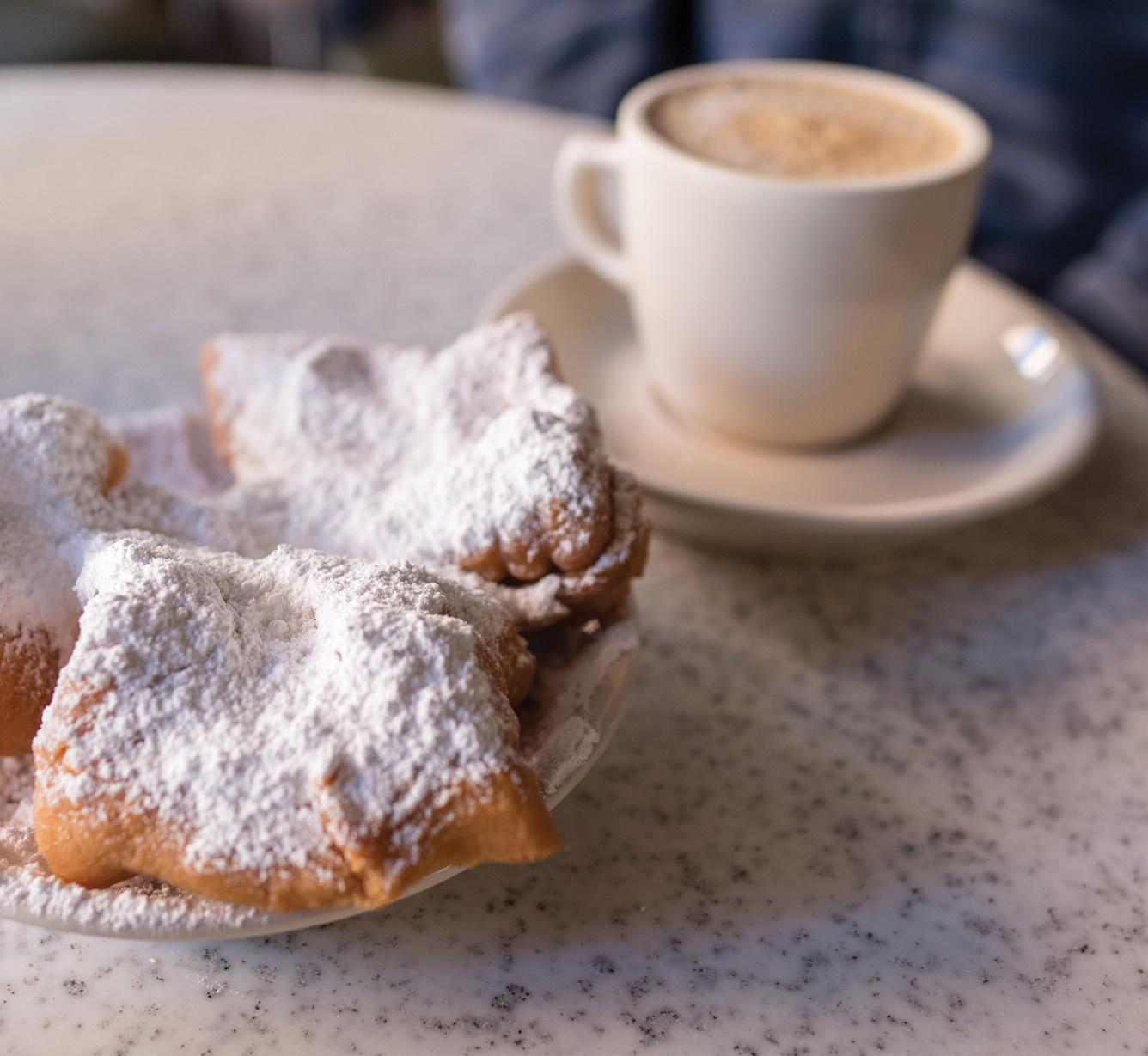
Front cover: Beignets covered with powdered sugar, served with café au lait at the famous Café Du Monde in the French Quarter. Adobe Stock/Page Light Studios
LOU
“Damning with fairness. . . . A model of objective reporting.”
—New York Times
“One of the giants of political journalism.” —Los Angeles Times
“Rigorous, insightful, and a foundational chronicler of the Reagan era.” —The Washington Post
“A great reporter.” —Bob Woodward
“A reporter’s reporter.” —George Will
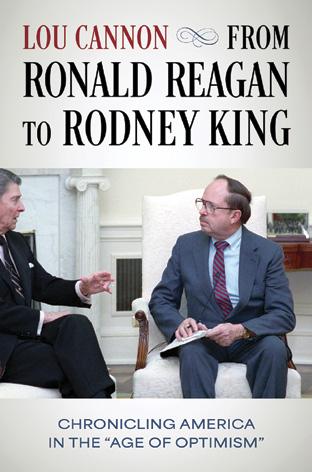
A giant of political journalism, Lou Cannon rose to prominence as state bureau chief for the San Jose Mercury News in the late 1960s, covering then-governor of California Ronald Reagan. In 1972, he became a political reporter for The Washington Post, one of the top newspapers in the United States, where he would remain until 2008. Best known for his coverage of Reagan’s presidency, he also notably covered the brutal beating of Rodney King at the hands of the Los Angeles police department in 1991. From Ronald Reagan to Rodney King recounts Cannon’s lengthy career as a newspaperman during
a period when newspapers of record were the most important source of current events. He had extraordinary access to top newsmakers, and his work had a rippling impact—influencing other journalists, sparking coverage on television, and appearing in newspapers around the globe. Some of the stories he covered—such as the end of the Cold War—changed the world. His journalistic influence in the latter half of the twentieth century was deep and wide-ranging. Cannon is the primary source of his stories, but he was a careful reporter then and a careful historian now. He had the benefit of a written record of every story he covered, and he clearly refreshed his memory when necessary to check the facts. Rather than revealing his own opinions or feelings, Cannon narrates straightforward accounts of what he witnessed on the job. From Ronald Reagan to Rodney King will appeal to historians of twentieth-century journalism, the Cold War, Ronald Reagan, race relations, and policing.
LOU CANNON (d. 2025) was a prominent journalist and Washington Post newspaperman, especially known for his coverage of the political career of Ronald Reagan.
OCTOBER 2026
536 pages, 6 ¹∕ 8 x 9 ¼, 17 halftones
978- 0- 8071- 8712- 8
Hardcover $49.95, ebook available
Journalism / Politics / U.S. History
Media and Public Affairs
John Maxwell Hamilton, Series Editor
AUGUST 2026
120 pages, 5 x 7, 13 color images 978- 0- 8071- 8723- 4
Paperback $22.95, ebook available LSU Press Paperback Original Louisiana / Foodways
978- 0- 8071- 8600- 8 Paperback $21.95
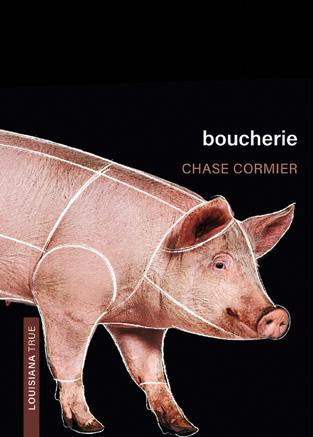
“Boucherie is a book for the heart, the mind, and the belly. Cormier shows us that the boucherie is, like all things Acadiana, not a one-note culinary and cultural monolith. It is made of multiple flavors and sources, all of which deserve to be known and celebrated. The thing I appreciate is that this story fits into a perfect little size and is accessible to a general audience, but it is unafraid to say what matters: Boucherie is not what you think it is, nor does it belong only to who you think it does.” —Simon Thibault, author of Pantry and Palate: Remembering and Rediscovering Acadian Food
Boucherie traces the long evolution of Louisiana’s butchering traditions—from their prehistoric origins to today’s revived ritual celebrations—to reveal how foodways serve as both cultural archive and living performance. Drawing on ethnography, oral history, and memoir, Chase Cormier offers a richly layered portrait of the Louisiana boucherie as a site of labor, language, and identity.
A former butcher turned scholar, Cormier brings a rare insider’s perspective to the work of cutting, curing, and preparing meat. Through firsthand ac-
counts of his apprenticeship in his grandfather’s meat market, he invites readers behind the counter to witness the physical and communal dimensions of a vanishing craft. From the era of rural halle meat lockers to the rise of industrial packaging, Cormier chronicles a century of transformation in how Louisianans produce, consume, and converse about meat. Engagingly written and grounded in original fieldwork, Boucherie offers a rare and compelling study of tradition as a dynamic process. In exploring how a once-essential communal practice has become a symbol of regional identity, Cormier illuminates the fragility and the resilience of cultural memory in the modern South.
CHASE CORMIER holds a PhD in Francophone studies from the University of Louisiana at Lafayette. His first book, Mal (Éditions Perce-Neige, 2024), won the Best Atlantic-Published Book Award in 2025. He is also a recipient of the Neitzel Award in Louisiana Studies for his research on butchering in Louisiana.
“In a city ripe with Twelfth Night lore, it is a bliss-filled epiphany to devour Laura Guccione’s exploration of St. Joseph’s Day, from colonial Creole rituals to the immigrant Sicilian’s spiritual connection to St. Joseph.” —Bethany Ewald Bultman, contributing editor, French Quarter Journal, and author of Compass American Guide: New Orleans
“Laura Guccione’s fresh approach to New Orleans history explores the city’s religious observances and cultural traditions to unveil the mystery of St. Joseph’s Day, giving us a new understanding of an old celebration.” —Al Kennedy, author of Chief of Chiefs: Robert Nathaniel Lee and the Mardi Gras Indians of New Orleans, 1915–2001
“Drawing on her personal connection to the topic, historian Laura Guccione takes a deep dive into a much-loved New Orleans cultural tradition to reveal the interwoven networks of ethnicity, religion, and foodways that make up the everfascinating, complex culture that is New Orleans.” —Connie Zeanah Atkinson, professor emerita, University of New Orleans
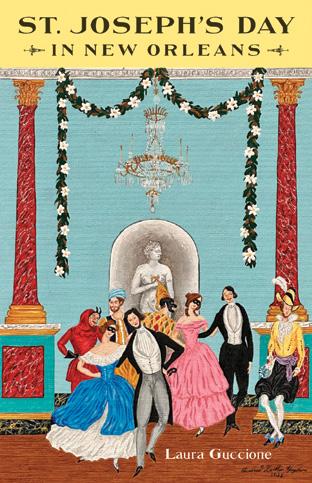
St. Joseph’s Day in New Orleans investigates the origins and evolution of the St. Joseph’s Day holiday, revealing its deep connection to the mid-Lent cele-
bration known as Mi-Carême. Through a meticulous review of historic newspaper accounts, archival resources, and city records, Laura Guccione shows that, in New Orleans, St. Joseph’s Day and mid-Lent were not separate observances but two names for the same festive occasion.
Although St. Joseph’s Day is often seen as a shared celebration between Black masking Indians and Sicilian Americans, Guccione argues that the two groups interpret the day differently: One sees it as part of mid-Lent, while the other views it as a sacred feast day for Sicily’s patron saint. Despite these differences, both groups have historically used St. Joseph’s Day as a platform to assert identity, cultural resistance, and community pride.
Lifelong New Orleanian LAURA GUCCIONE holds degrees in anthropology, urban studies, and culinary arts. She combines scholarship with personal experience to uncover the city’s hidden history. She lives in an 1830s Creole cottage just outside the French Quarter. St. Joseph’s Day in New Orleans is her first book.
OCTOBER 2026
200 pages, 5 1/2 x 8 1/2, 24 halftones
978- 0- 8071- 8641-1
Hardcover $34.95, ebook available New Orleans / Popular Culture
NOVEMBER 2026
248 pages, 5 1/2 x 8 1/2, 8 halftones
978- 0- 8071- 8755- 5
Hardcover $34.95, ebook available
New Orleans / African American Studies
978- 0- 8071- 8590-2
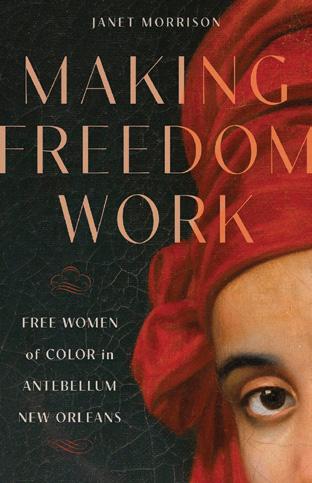
Making Freedom Work tells the stories of five free women of color in antebellum New Orleans. The lives of Eulalie Mandeville, Henriette Delille, Marie Couvent, Cécille Bonille, and Marie Dolores Laveaux reveal the economic, legal, and cultural strategies free Black women used to move through a racially stratified, patriarchal slave society. Janet Morrison argues that free women of color could play a crucial role in the city’s economic, religious, and communal life, even as they navigated and contested the restraints placed upon them by their race and gender. Foregrounding the voices of these women and their families, Morrison recovers stories that have long been marginalized in New Orleans history.
During a period of profound transformation in New Orleans—including French and Spanish colonial legacies, imposed American racial hierarchies after the Louisiana Purchase, and increased mobility within the Atlantic world—these five women found numerous ways to exercise their agency in a world that was not designed for them. They owned businesses, accumulated property, pursued litigation, engaged in philanthropy, and provided religious leadership, all while building durable networks of care, education, and spirituality. Avoiding the dangers of outright rebellion, the women employed strategies of gendered resistance—refusal, adaptation, collabora-
tion—that often proved very successful, carving out space for survival in ways that confounded societal expectations of who they could be and what they could accomplish.
Morrison draws on a rich trove of archival sources such as censuses, city directories, notarial records, wills, successions, and court cases. Recognizing that these records were produced within whitecontrolled bureaucratic systems, Making Freedom Work attends closely to both their evidentiary value and their silences. It also confronts the complexities of slaveholding by free people of color, interpreting it as part of a broader struggle for security, status, and distance from enslavement, while emphasizing the uneven and contingent relationships between enslavers and the enslaved.
Making Freedom Work reintroduces these women —so often dismissed and devalued in their own time— as central historical actors, highlighting their influence as entrepreneurs, community builders, educators, and mothers of the next generation.
After completing her master’s degree, JANET MORRISON worked for the British civil service for many years, eventually teaching English in Spain for six years. She received her PhD in American history at the University of East Anglia.
“Pour a mug of your favorite brew and settle in for the story of how New Orleans became one of the world’s great coffee capitals. In this lively, deeply researched book, Marielle Songy traces the Crescent City’s love affair with coffee— from ships and warehouses to roasters, cafés, and kitchen tables—exploring the history, culture, business, and science of growing, importing, roasting, brewing, selling, and savoring coffee in Louisiana.” —Robert Mann, author of Kingfish U: Huey Long and LSU
“Coffee Culture New Orleans is a revelation: precise, lyrical, and steeped in the city’s sensual pleasures. Through coffee, Marielle Songy presents New Orleans as both stage and player in a sweeping tale of empire, trade, and everyday ritual. In so doing, Songy stands alongside historians like Richard Campanella, writing the city from the inside out.” —David W. Brown, author of The Mission
“New Orleans is a city built on coffee. From chicory to third wave, with many historical cupfuls in between, Marielle Songy boldly tells the story of a bean that continues to define the Crescent City.” —Rien Fertel, author of Brown Pelican
As coffee and other agricultural goods began to flow through the port of New Orleans in the eighteenth century, New Orleans swiftly became a coffee town, and coffee culture infiltrated all corners of the city. Coffee exchanges opened, and venues such as the French Market even enabled enslaved women like Rose Nicaud to buy their freedom by selling coffee from carts in the market. Café du Monde and other coffee stands became integral to New Orleans tourism and culture, and Louisiana coffee brands such as Community Coffee and PJ’s made a name for themselves on grocery shelves across the country. Today, many specialty coffee roasters call New Orleans home, cultivating a heightened interest in farming practices and sustainability. Coffee Culture New Orleans tells the story of the Crescent City’s flourishing coffee traditions from its founding to the present.
MARIELLE SONGY is a writer from New Orleans. Her previous book, The Absinthe Frappé, was published by LSU Press.

AUGUST 2026
256 pages, 5 x 8, 23 halftones
978- 0- 8071- 8621-3
Hardcover $29.95, ebook available New Orleans / Foodways
SoFAB Series on the Culture of Food and Drink
Published with the assistance of The Noland Fund
NOVEMBER 2026
208 pages, 6 x 9, 2 maps
978- 0- 8071- 8676-3
Hardcover $40.00s, ebook available New Orleans / African American History
“Natasha L. McPherson’s Making Creole is an outstanding work that combines broad scope, deep insight, and thorough research and writing to unearth women’s overlooked roles as architects of Creole community power in New Orleans. It shows how Creole women spearheaded community efforts to preserve their identity and heritage by passing down cultural practices, property, and political strategies for navigating Louisiana’s racial hierarchy and exercising full citizenship rights across generations. A truly brilliant book.” —Kidada E. Williams, author of I Saw Death Coming: A History of Terror and Survival in the War Against Reconstruction
“Making Creole is beautifully written and impeccably researched. The book benefits from deep archival work, investigations into census data, church records, legal cases, and a wealth of other source material. Most powerfully, McPherson pays attention to the ways in which ‘private lives . . . emerge in the public record,’ painting an intimate portrait of community and family life.” —LaKisha Michelle Simmons, author of Crescent City Girls: The Lives of Young Black Women in Segregated New Orleans
women, placing them at the center of cultural life and resistance in Jim Crow New Orleans. This book should be mandatory reading for all Louisiana history courses.” —Shannon Frystak, author of Our Minds on Freedom: Women and the Struggle for Black Equality in Louisiana, 1924–1967
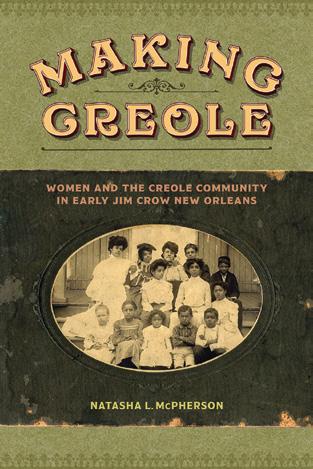
Making Creole examines how Afro-Creole women in New Orleans created networks of kinship, labor, and mutual support as strategies of resistance during the early Jim Crow era. Drawing on more than nine thousand transcribed records, including census data, court documents, and Catholic church registers, Natasha L. McPherson reveals how these women navigated legal and social restrictions through shrewd community building. Using innovative “speculative demography” methodology, the book reads archival silences and omissions to uncover the power and resilience of women whose daily lives often operated through strategic invisibility.
978- 0- 8071- 8382-3
$29.95
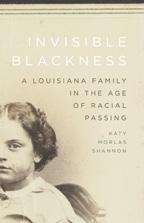
“This study is a vital contribution to the larger historiography of Creole life in Louisiana. McPherson’s narrative is a timely and necessary corrective to the often marginalized work of
NATASHA L. M c PHERSON is assistant professor of history at the University of California, Riverside.
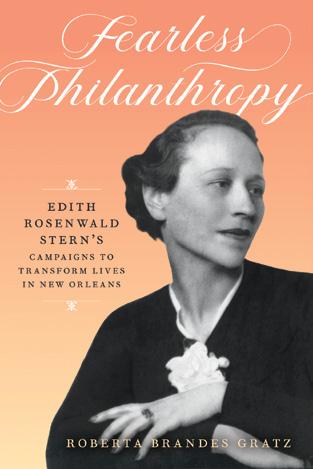
In Fearless Philanthropy, Roberta Brandes Gratz tells the story of Edith Rosenwald Stern—rich, progressive, and Jewish—who arrived in New Orleans in 1921, the wife of successful cotton broker Edgar Bloom Stern. Edith encountered a city rife with racism and antisemitism, and run by a set of entrenched social rules that she was not about to abide by. Her father, Julius Rosenwald of Sears & Roebuck, one of the richest men in America, had begun transforming lives of Black Americans in the South through his efforts to promote Black education. Edith proceeded to follow in his footsteps, and with her willing partner Edgar helped revolutionize aspects of New Orleans still visible today.
In telling the story of the Sterns, Gratz spotlights the outsider category of Jews in New Orleans, the specific impacts of the Mardi Gras social structure upon them, and the Sterns’ influence on education in the South. Edith founded two pioneering educational institutions, while Edgar led a biracial group in the founding of Dillard University and FlintGoodridge Hospital to serve the Black community. In 1947, Edgar purchased New Orleans radio station WDSU for son Edgar Jr. to run, and a year later Edgar Jr. opened WDSU-TV, the sixth major television station in the South. WDSU editorials favoring school integration, together with Edith’s fi-
nancial support of the desegregation campaign of the local women’s group Save Our Schools, had a great impact during a volatile time. Edgar’s rebuilding of the St. Louis Hotel (now the Royal Orleans), begun in the late 1940s and continued throughout the next decade, helped initiate the revitalization of the deteriorating French Quarter. As if that weren’t enough, the Sterns led the development of Pontchartrain Park, the first Black middle-class housing development in the United States backed by the FHA. Gratz’s passionate account of Edith and Edgar Stern, showing how they grappled with issues of Black rights, philanthropy, civil rights, education, historic preservation, and the arts in a political and social climate antagonistic to change, provides a fascinating chronicle of New Orleans during a period of pivotal development.
ROBERTA BRANDES GRATZ is an award-winning journalist, urban critic, lecturer, and author of several books, including We’re Still Here Ya Bastards: How the People of New Orleans Rebuilt Their City. Gratz is a former reporter for the New York Post and has written for The Nation, the New York Times Magazine, the Wall Street Journal, and the New York Daily News. She lives in New York City and New Orleans.
SEPTEMBER 2026
304 pages, 6 x 9, 15 halftones
978- 0- 8071- 8653- 4
Hardcover $39.95, ebook available Biography / New Orleans / Jewish Studies
NOVEMBER 2026
392 pages, 6 x 9, 1 halftone, 9 maps
978- 0- 8071- 8654-1
Hardcover $49.95, ebook available Civil War / Louisiana / U.S. History
978- 0- 8071- 6851- 6
$49.95
“Ross A. Brooks has given us a fascinating look at what may well have been the most unusual unit in the Confederate army. Wheat’s Louisiana Tigers were the scourge of their foes— and sometimes their fellow Confederates. Brooks’s informative account reveals not just the battalion’s battlefield prowess but also the backgrounds and personalities of its ultimate rebels, making their story come alive. This is one of the most interesting unit studies in Civil War history.” —Steven E. Woodworth, author of Manifest Destinies: America’s Westward Expansion and the Road to the Civil War
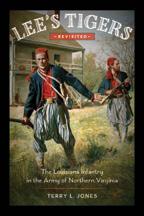
“Ross Brooks does a great job in telling the history of Wheat’s Battalion and, through impressive research, fleshes out the lives of many of its members who have heretofore been rather anonymous. The author’s meticulous study confirms what anecdotal evidence has long suggested: that many of the Tigers were Irish immigrants and northerners by birth, and that some had long criminal histories.” —Terry L. Jones, author of Lee’s Tigers Revisited: The Louisiana Infantry in the Army of Northern Virginia
“Under the leadership of Maj. Chatham R. Wheat, the First Special Battalion of Louisiana Infantry became widely known as the ‘Louisiana Tigers,’ a name that was later adopted by other units from the Pelican State. Lost behind the almost mythical status of the Tigers were the men who made up the
battalion. In this compelling work, Ross Brooks brings many of their individual stories out of obscurity. He has mined scores of fresh primary accounts to bring those long-ago voices back into the limelight.”
—Scott L. Mingus, author of The Louisiana Tigers in the Gettysburg Campaign, June–July 1863
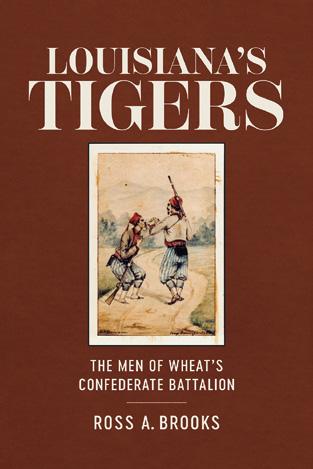
The Louisiana Tigers were widely considered, by northerners and southerners alike, the wildest and wickedest unit in the South—a reputation that has long overshadowed the individual lives of the men who filled its ranks. In Louisiana’s Tigers: The Men of Wheat’s Confederate Battalion, Ross A. Brooks draws on unparalleled research and never-before-seen documents to look beyond battlefield myths, offering a definitive social history of these soldiers from birth to death.
ROSS A. BROOKS holds a PhD in American history from La Trobe University, where he is currently a research associate, and is head of visual arts at a leading independent school in Melbourne, Australia. He is the author of The Visible Confederacy: Images and Objects in the Civil War South.
KATHLEEN M. BYRD
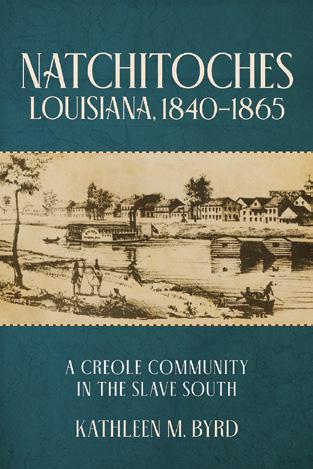
“Challenging familiar images of the plantation South, Kathleen M. Byrd’s study of Natchitoches before and during the Civil War reveals a far more complex antebellum society. Though cotton drove the regional economy, the town’s location along the Red River nurtured a dynamic merchant class and a diverse population. By tracing the experiences of planters, craftsmen, town dwellers, and enslaved people, Byrd presents a nuanced portrait of a community shaped as much by commerce and labor as by place.” —James MacDonald, professor of history, Northwestern State University of Louisiana
“The mythic northwestern Louisiana becomes reality as Byrd sews together the place, people, and time into this multifaceted narrative telling us about the region’s pre–Civil War diversity. Drawn from a myriad of sources, this work charts the beginnings and endings of a dynamic period of Louisiana history. Far from the romance of the antebellum South, it introduces the realities of success and failure in a way that gives voice to all the people and makes Natchitoches and northwestern Louisiana uniquely part of American history.” —Hiram F. “Pete” Gregory, professor of anthropology, Northwestern State University of Louisiana
“Drawing on rich census data, archival records, and firsthand accounts, Natchitoches, Louisiana, 1840–1865 offers a nuanced portrait of a Creole community shaped by cot -
ton, slavery, and cultural diversity on the eve of the Civil War. Byrd moves beyond plantation mythology to reveal the complex lives of farmers, townspeople, free people of color, enslaved individuals, and planters in one of Louisiana’s most distinctive regions.” —Rebecca Blankenbaker, executive director, Cane River National Heritage Area
This book is the sequel to Kathleen M. Byrd’s 2024 study, Natchitoches, Louisiana, 1803–1840: A Creole Community on the American Frontier. Picking up the story of Natchitoches in the 1840s and taking it through the Civil War, Byrd shows in this volume the economic activities of not only the planters and their enslaved workers but also the upland farmers, tradesmen, merchants, and others during the 1840s and 1850s. She then discusses how the disastrous Civil War created challenges for all those living on the home front.
Until her retirement, KATHLEEN M. BYRD was the director of the School of Social Sciences at Northwestern State University in Natchitoches. She has also served as the state archaeologist for Louisiana.
NOVEMBER 2026
344 pages, 6 x 9, 26 halftones, 2 maps 978- 0- 8071- 8659- 6
Paperback $39.95, ebook available LSU Press Paperback Original Louisiana / U.S. History
SEPTEMBER 2026
272 pages, 6 x 9
978- 0- 8071- 8695- 4
Hardcover $45.00s, ebook available Politics / U.S. History
DARIN DeWITT and THOMAS SCHWARTZ
978- 0- 8071- 8521- 6
$49.95
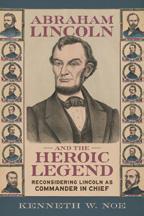
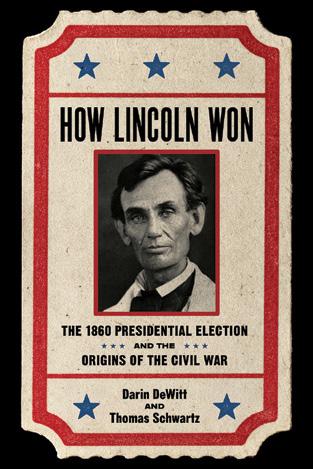
“Lincoln thought his greatest political talent was his skill as a coalition builder, but equally important, as the authors convincingly demonstrate in this important contribution to the Lincoln literature, was his uncanny skill as a coalition divider—of Democrats. In making their case, DeWitt and Schwartz justly emphasize the importance of John Locke Scripps’s 1860 campaign biography of Lincoln as a crucial source for understanding our sixteenth president.” —Michael Burlingame, author of Abraham Lincoln: A Life
“How Lincoln Won is a deeply thoughtful, compelling, and altogether new take on the political battles that took place in the decades before the Civil War and on the ultimate triumph of Abraham Lincoln in the election of 1860. It turns on its head much of the conventional wisdom surrounding Lincoln and this crucial era in American history.” —D. Roderick Kiewiet, author of Macroeconomics and Micropolitics: The Electoral Effects of Economic Issues
“This book changes my understanding of the politics of this era and of Lincoln’s rise to the presidency, and it makes me appreciate Lincoln the strategist even more than Team of Rivals did.” —John H. Aldrich, author of Why Parties? The Origin and Transformation of Political Parties in America
In 1860, Abraham Lincoln pulled off an unthinkable victory for the new Republican Party. In How Lincoln Won, Darin DeWitt and Thomas Schwartz reconstruct Lincoln’s two-year strategy to win the presidency, showing that he succeeded not through moderation, persuasion, or changing the issue agenda but by deliberately dividing the opposition over slavery—most notably through the Lincoln–Douglas debates—thereby fracturing the Democratic Party and opening the path to power. Lincoln’s achievement reveals a novel model of transformative political change, one driven by strategic party division.
DARIN D e WITT is professor of political science at California State University, Long Beach.
THOMAS SCHWARTZ (1943–2024) was Distinguished Research Professor of Political Science at the University of California, Los Angeles, and the author of several books, including The Logic of Collective Choice.
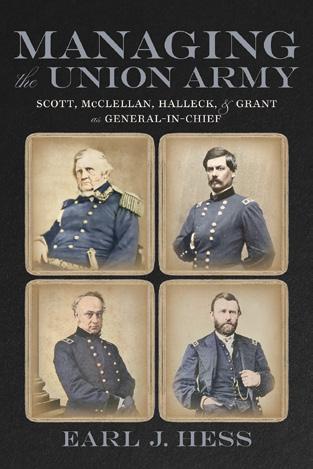
“In his customary fashion, Earl J. Hess asks precisely the questions that were pressing and evident to the war’s participants, but which time and the modernization of warfare have rendered invisible. Managing the Union Army is an important contribution to Civil War military history in particular, and American military history in general.” —Allen C. Guelzo, author of Abraham Lincoln: Redeemer President
“In this volume, Hess examines the often-misinterpreted role of the United States Army’s general-in-chief during the Civil War. Noting saliently that neither constitutional nor legislative authority had authorized the office of general-in-chief, the author crafts an incisive analytical framework in the assessment of the four generals who served their civilian leaders in the management of the largest conflict ever undertaken on American soil. This is a rewarding book, one that will remain essential in understanding the unique, bounded nature of Civil War high- level command.” —Christopher S. Stowe, Command and Staff College, Marine Corps University
“Hess convincingly demonstrates the evolution of a poorly defined position into a crucial Union advantage. This post depended on individuals and did not survive the war, but Henry Halleck provided the hands-on management that Winfield Scott lacked, and Grant delivered the willingness to work with Lincoln, the field experience, and the national strategic plan that his predecessors lacked. This detailed analysis of Union strategy and top-level civil-military relations shows
that McClellan (like the Confederate generals) lacked the national perspective needed, while Grant’s confidence and humility made him the indispensable man.” —Samuel J. Watson, editor of The Oxford Handbook of American Military History
The general-in-chief did not command the millionman Union army that fought in the Civil War, as most historians have assumed; rather, he was a member of a management team that included the president and the secretary of war. In Managing the Union Army, renowned Civil War historian Earl J. Hess upends our understanding of the general-in-chief, his role in the Union military system, and his influence on the conflict’s outcome. Hess reinterprets the accomplishments and failures of the four men who held the position, evaluating Winfield Scott, George B. McClellan, Henry W. Halleck, and Ulysses S. Grant in ways that might surprise many students of Civil War military history.
EARL J. HESS is professor emeritus of history at Lincoln Memorial University and the author or editor of more than thirty books on the American Civil War, including Civil War Cavalry: Waging Mounted Warfare in Nineteenth-Century America.
OCTOBER 2026
488 pages, 6 x 9, 32 halftones 978- 0- 8071- 8523- 0
Hardcover $59.95, ebook available Civil War / U.S. History
NOVEMBER 2026
256 pages, 6 x 9, 9 halftones, 1 map
978- 0- 8071- 8696-1
Hardcover $45.00s, ebook available Southern History / U.S. History
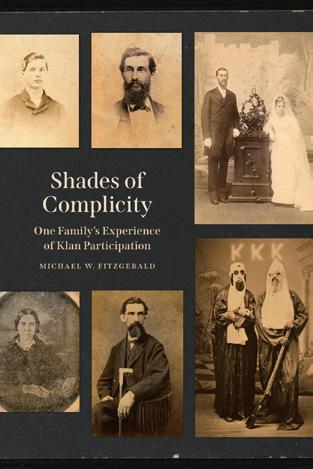
In Shades of Complicity, Michael W. Fitzgerald explores one family’s involvement with the Reconstructionera Ku Klux Klan. Using the newly available Pickens family correspondence housed at the University of South Alabama, he examines the varying roles of family members as terrorists, supporters, and observers.
After the Civil War, the wealthy Pickens family of western Alabama offered a home to Eyre and Murray Damer, the orphaned brothers-in-law of James Pickens, until the disruptive behavior of the young men prompted the Pickenses to apprentice them elsewhere. The Damers became involved with a cluster of terrorists operating out of a newspaper in Eutaw, Alabama, a center of Klan activity. They provided firsthand accounts of violent activities they participated in, with one later writing a Klan memoir.
Fitzgerald reveals how the criminal activities of the Damers affected the Pickens family along age, gender, and class lines. The younger Pickens boys were drawn to the rebellious lifestyle of the brothers-
in-law, expressed through sexual aggressiveness, alcohol consumption, and endorsement of racist violence. Other members of the family also shared the Damers’ political and racial grievances, feeling wrongly dispossessed by defeat in the Civil War. While the whole family resented the financial and psychic losses brought by emancipation and Black suffrage, some of the Pickenses distanced themselves from the violent acts that characterized the Damers and the attitudes expressed by their own younger siblings.
Shades of Complicity provides a unique inside look at how one extended family experienced the Klan, and what came of their involvement afterward.
MICHAEL W. FITZGERALD is a former professor of history at St. Olaf College and the author of several books on Reconstruction and emancipation, including Reconstruction in Alabama: From Civil War to Redemption in the Cotton South.
ALSO OF INTEREST
978- 0- 8071- 8367- 0
Hardcover $50.00s
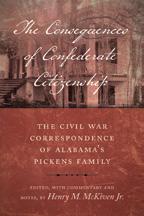
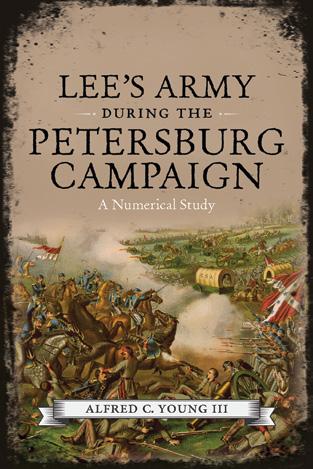
Alfred C. Young III’s Lee’s Army During the Petersburg Campaign is an intensive study of Robert E. Lee’s Army of Northern Virginia during the Sieges of Petersburg and Richmond from the outset of the campaign in June 1864 to the end of the year. Young bases his work on years of research gleaned from the National Archives and numerous other primary sources and provides periodic strength figures for the combat elements of Lee’s army, as well as casualties on the Confederate side during each of the major battles and during siege operations throughout the campaign. His work is not a comprehensive study of the campaign; rather, it is a study of each command or element comprising Lee’s army.
Lee’s Army During the Petersburg Campaign is a companion to Young’s earlier study, Lee’s Army During the Overland Campaign. In addition to a narrative that provides background information on the campaign and a selection of twenty-six maps, the book features ninety-nine detailed tables of casualty data and unit strengths. Until now, accurate information on the strength and casualties in Lee’s army during the latter half of 1864 has mostly been speculative. Young’s work is the first serious attempt to correct this gap in the history.
ALFRED C. YOUNG III is the author of Lee’s Army During the Overland Campaign: A Numerical Study.
DECEMBER 2026
336 pages, 6 x 9, 26 maps
978- 0- 8071- 8652-7
Hardcover $49.95
Civil War / U.S. History
978- 0- 8071- 5172-3
Hardcover $49.95
OCTOBER 2026
336 pages, 6 x 9, 12 halftones
978- 0- 8071- 8655- 8
Hardcover $50.00s, ebook available Politics / Southern History
Making the Modern South

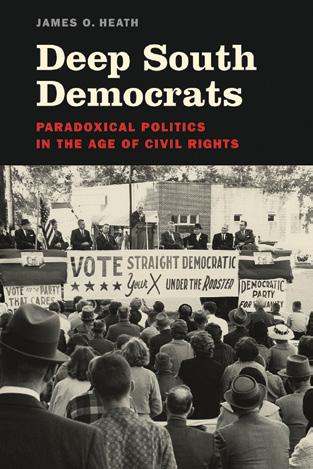
“James O. Heath has done it again. Author of the important To Face Down Dixie, Heath uses an incisive portrait of three pivotal Deep South senators to challenge the categories of racism and liberalism.” —Robert Mickey, author of Paths Out of Dixie: The Democratization of Authoritarian Enclaves in America’s Deep South, 1944–1972
“Heath has written a significant book that redefines our understanding of twentieth- century southern politics by offering much- needed clarity regarding the group some have labeled ‘reluctant racists.’ His engaging analysis of the paradoxical behavior of those regional statesmen who simultaneously supported liberal social programs that elevated African Americans yet bemoaned any step toward racial equality opens exciting new interpretational vistas for future scholars.” —Keith M. Finley, author of From Slavery to Segregation: Reckoning with White Supremacy in the American South
“Were ‘liberal’ Deep South politicians reluctant racists and/ or southern progressives pragmatically working toward economic change? Why and how did they win Black votes and perpetuate Democratic hegemony for so long? In this penetrating study, Heath provides plenty of evidence that permits readers to reach a multitude of answers.” —Laura Kalman, author of FDR’s Gambit: The Court Packing Fight and the Rise of Legal Liberalism
“The central contradiction of white southern liberalism in the Jim Crow era, which for much of the twentieth century was a dominant strain of American liberalism, was how easily reform politics existed alongside racist demagoguery. Heath explores that puzzle anew by examining three littleconsidered stalwarts of the Southern Caucus: Lister Hill, Olin Johnston, and John Sparkman. Heath makes a crucial contribution to our understanding of southern politics.” —Joseph Crespino, author of Atticus Finch: The Biography
“Alabama and South Carolina, the Deep South states infamous for racial demagogues George Wallace and Strom Thurmond, also produced three of the region’s most economically liberal New Deal Democrats. This deeply researched book highlights the trio’s consistent support for federal social welfare programs and labor protections while astutely unraveling the apparent paradox of their ‘reluctant racism’ in defending segregation and opposing civil rights legislation.” —Matthew D. Lassiter, author of The Silent Majority: Suburban Politics in the Sunbelt South
JAMES O. HEATH is the author of To Face Down Dixie: South Carolina’s War on the Supreme Court in the Age of Civil Rights, winner of the V. O. Key Award from the Southern Political Science Association.
DONNA E. REEVES
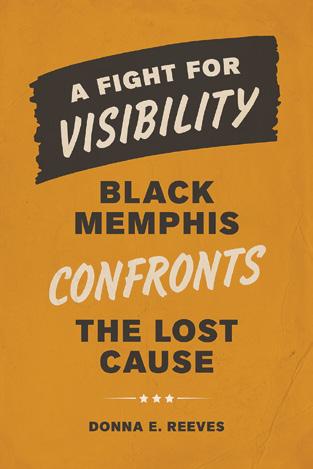
In A Fight for Visibility, Donna E. Reeves explores how Black Memphians fought to maintain dignity and self-respect during the post-Reconstruction period and Jim Crow era by challenging the negative images of African Americans produced by Confederate loyalists as part of the Lost Cause narrative.
After the Civil War, Black Memphians actively struggled against the white Memphis establishment, which tried to shackle the movement and development of various Black communities. The more white Memphians tried to contain African Americans, the more African American residents stood against those efforts. Reeves surveys the history of Memphis in the postwar era, uncovering the motivations behind the Confederate monument–building frenzy at the end of the nineteenth century. She argues that the ceremonies and narratives of this period served to freeze Black people in deferential roles in the minds of white southerners. In response, through subtle and not-so-subtle avenues, Black residents challenged the notion that they were second-class citizens and sought to show that they were just as worthy of citizenship as their white counterparts.
Reeves focuses on two themes emblematic of the city’s racial struggles. The first was the decades-long presence of a statue depicting the infamous Con-
federate general, slave trader, and first grand wizard of the Ku Klux Klan, Nathan Bedford Forrest, in the downtown area. The second was the hosting, beginning in the 1930s, of the Cotton Carnival, an event at which white residents and tourists, greeted by Black women dressed as plantation “mammies,” celebrated the role of cotton in Memphis’s history. When Black Memphians challenged depictions of their race at this annual event, they were not just rejecting demeaning stereotypes; they were also rejecting the white southern mindset that saw Black people in the role of servant and entertainer.
Reeves examines the myriad ways that Black Memphians protested both the continued presence of the Forrest statue and the Cotton Carnival. Black residents, she suggests, wanted more than simply to demand the removal of the statue (which eventually occurred) and to correct the powerful, mythologized memory of slavery. They saw these sites of protest as an opportunity to take control of the image of Black citizens and to challenge the widespread belief that only white people could lead the city in politics and business.
DONNA E. REEVES holds a doctorate in history from the University of Memphis.
AUGUST 2026
232 pages, 6 x 9
978- 0- 8071- 8656- 5
Hardcover $44.95, ebook available Southern History / Civil Rights
Making the Modern South

Vaudeville’s Wildflower uncovers the extraordinary story of one of early twentieth-century America’s most dynamic and overlooked entertainers. Drawing on rare archives, family records, and vivid period accounts, James P. Gregory Jr. restores Cora Youngblood Corson—a trailblazing brass musician, bandleader, and vaudeville performer—to her rightful place in performing arts history. This richly detailed biography showcases a woman who transformed obstacles into opportunities by challenging the gender, ethnic, and cultural boundaries of her time.
tation, race, and gender—sometimes reinforcing, sometimes subtly challenging prevailing stereotypes. Her career longevity stemmed not only from musical brilliance but also from an ability to adapt to a rapidly changing entertainment landscape. Beyond the spotlight, Corson also became a passionate advocate for performers’ rights. A fearless union activist, she fought against powerful theatrical monopolies, enduring blacklisting and setbacks while remaining committed to fair treatment and creative independence for working artists.
JULY 2026
216 pages, 6 x 9, 20 halftones
978- 0- 8071- 8677- 0
Paperback $29.95, ebook available LSU Press Paperback Original Biography / U.S. History
978- 0- 8071-7914-7
From humble beginnings on the Oklahoma plains, Corson rose from small-town prodigy to nationally celebrated figure on the vaudeville circuit through talent, determination, and an unshakable belief in her art. As a virtuosic tuba and euphonium player, she led renowned all-woman brass bands and captivated audiences with elaborate productions that blended Western, military, and Native American themes, reflecting both the imagination and contradictions of her era.
Yet behind the glamour was a story of courage and complexity. Corson’s adoption of a Native American persona reflected both the allure and tension of identity in American popular culture. Through her layered performances, she navigated questions of represen-
Set against the backdrop of vaudeville’s golden age, the First World War, and Oklahoma’s evolving identity, Vaudeville’s Wildflower paints a compelling portrait of a woman ahead of her time. Blending biography, cultural history, and storytelling, this book celebrates a forgotten star whose life continues to inspire audiences and artists while illuminating the broader struggle for equality, artistry, and identity in early American entertainment.
JAMES P. GREGORY JR. is the director of the William A. Brookshire LSU Military Museum. He is the author of numerous books and essays about the military history of the United States.
Edited by GARY W. GALLAGHER
“With the USO in the Pacific During World War II is a marvelous memoir of a young woman who found a way to tap her talents for the benefit of the war. An accomplished accordion player, Shirley Rose Gray performed for sailors, marines, and soldiers and visited with wounded American military personnel at the sites of some of the most vicious battles in the Pacific Theater. The book brings to light the widespread support and far-reaching efforts of those out of uniform to assist the war effort. Beautifully written, skillfully documented, and entertaining to read, With the USO in the Pacific During World War II is an instant classic.” —Joseph T. Glatthaar, author of American Military History: A Very Short Introduction
“During World War II, dozens of USO troupes traveled thousands of miles to offer soldiers and sailors a brief respite from war. One such troupe was headlined by Eddie Bracken, a comedic actor who wisely recruited glamorous and talented young women for the tour. One of them was twenty- twoyear-old Shirley Rose, who kept a diary during the company’s 1945 tour in the Western Pacific and later used it to write about aspects of the war often overlooked by military histori-
ans. Thankfully, her son, the noted historian Gary W. Gallagher, rescued the diary and the memoir and added a thoughtful introduction. The result is a highly entertaining view of the ofttimes less-than-glamorous life of a touring USO troupe in the Western Pacific.” —Craig L. Symonds, author of World War II at Sea: A Global History
“Shirley Rose Gray’s vivid memoir of the USO offers a truly rare perspective on the Pacific War. With her abiding sense of patriotic duty, her commitment to the musician’s craft, and her compassion for her wounded comrades-in-arms, Gray opens a window into how American forces maintained their morale and their cohesion in a time of epic sacrifice and suffering.” —Elizabeth R. Varon, author of Longstreet: The Confederate General Who Defied the South
GARY W. GALLAGHER is the John L. Nau III Professor in the History of the American Civil War Emeritus at the University of Virginia. He is the author or editor of more than forty books on the Civil War and its memory.

NOVEMBER 2026
200 pages, 5 1/2 x 8 1/2, 37 halftones, 4 maps 978- 0- 8071- 8713- 5
Hardcover $29.95, ebook available World War II / Memoir

SEPTEMBER 2026
256 pages, 6 x 9
978- 0- 8071- 8658- 9
Hardcover $45.00s, ebook available U.S. History / Religion
JOEL R. ILIFF
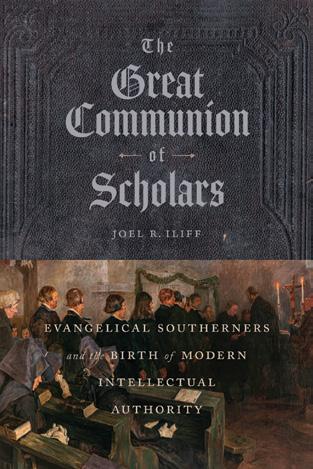
While the modern university is typically viewed as secular, Joel R. Iliff argues in The Great Communion of Scholars that the Protestant architects of the modern university in both the U.S. South and Germany consciously patterned their creation on the Christian doctrine of the communion of saints. By attempting to counteract the perceived secularization of their societies, a network of Awakened Protestants on both sides of the Atlantic contributed to the development of modern institutions of higher education and attendant notions of intellectual and moral authority. Beginning in the 1820s, white southern evangelicals looked abroad and found allies among contemporary religious Awakening movements in Germany. Evangelical southerners and Awakened Germans shared a desire to restore not only intellectual and spiritual order but also social and political order in the wake of the lingering upheavals wrought by the Enlightenment. Eventually, southerners drew analogies between their domestic opponents in the North and the opponents of the Awakened, thus creating the perception of a transatlantic battle between infidelity and orthodoxy, of which the American sectional conflict became one theater. This discourse culmi-
nated in the revolutions of 1848 and the American Civil War, which both evangelical southerners and Awakened Germans interpreted as religious struggles with global ramifications.
Ultimately, the transnational, ecumenical impulse that fueled the communion of scholars, which reached its zenith in the mid-nineteenth century, proved unstable. It fatefully collapsed over the issue of American slavery when Black evangelical abolitionists in the North waged a successful campaign to brand southern slaveholders, ironically enough, as analogous to the religious radicals and infidels that conservative Protestants on both sides of the Atlantic so feared. By exploring the role that antebellum evangelicalism played in the development of the modern university, Iliff not only dismantles much of what we think we know about the South, American religion, and the origins of the modern higher education but also recovers a lost period in Western intellectual history.
JOEL R. ILIFF is assistant professor of history at Regent University in Virginia.
DAVID MICHAEL HERTZ
“There are many reasons that readers will like this book, including the rich historicity of the research and the deep humanity it brings to the process of songwriting. It is a deep dive into the great American songbook and an important compendium of how Black and Jewish people brought American popular music to life. Destined to become a classic.” —Ben Sidran, jazz musician, songwriter, producer, and author of There Was a Fire: Jews, Music, and the American Dream
“The first of David Michael Hertz’s two volumes on the American songbook will inform and entertain any reader curious to know more about this invaluable cultural treasure. Not only does he offer a comprehensive survey of the great songwriters, but Hertz also recognizes the popular jazz singers and instrumentalists who sang and played these timeless songs.” —Geoffrey Block, Distinguished Professor Emeritus of Musicology, University of Puget Sound, and author of Enchanted Evenings: The Broadway Musical from “Show Boat” to Sondheim and Lloyd Webber
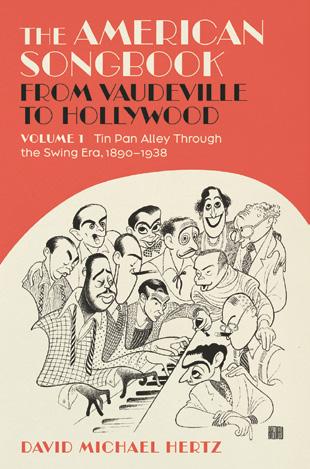
The American Songbook from Vaudeville to Hollywood celebrates the cultural expressions contained in the unforgettable jazz-inflected songs of the twentieth century. Charting the development of songwriting in the context of American culture, David Michael Hertz treats words and music as of equal importance, exploring the mystery of how they work together in
the phrase structures of songs. With a carefully drawn historical chronology, his narrative recounts a story of the evolution of American language as expressed in song lyrics, through which ordinary life becomes poetry. Hertz celebrates the evergreen quality of the songs, as they originate from Broadway shows, Hollywood films, or jazz clubs and then generate many new interpretations over the years.
Written for a general audience of listeners and enthusiasts, The American Songbook from Vaudeville to Hollywood, Volume 1 charts the development of songwriting in the United States from Tin Pan Alley through the swing era with passion, insight, and an ear for the musical and lyrical qualities of a beloved songbook still being performed today.
DAVID MICHAEL HERTZ , professor of comparative literature and affiliate professor of cognitive science at Indiana University in Bloomington, is the author of Eugenio Montale, the Fascist Storm, and the Jewish Sunflower, among other works. A composer and pianist, Hertz studied at Juilliard and the Jacobs School of Music, and has served as a member of the National Council on the Humanities in Washington, DC.
DECEMBER 2026
304 pages, 6 ¹∕ 8 x 9 ¼
978- 0- 8071- 8732- 6
Hardcover $49.95, ebook available Music / Popular Culture
Published with the assistance of The Noland Fund
“Conventional wisdom holds that the accession of the Bourbons to the Spanish throne portended a centralized governing apparatus modeled on French absolutism. Extant interpretations also tell us that this project failed to become a modern fiscal-military state because of institutional weakness and elite resistance. In this bold book, Phillip D. Fox invites us to leave this teleology behind, arguing that in a context of jurisdictional fragmentation, unilateral revenue extraction threatened to alienate subjects and incite revolt. Spain’s first Bourbon king, Philip V, solved the vexing problem of financing war by way of a prudent middle ground: he eliminated the historical constitutions of rebel territories yet preserved the negotiated politics of the Spanish Habsburgs. In deftly telling this story, Fox reveals the Spanish Bourbon state as a successful effort to balance centralization with the preservation of a society based on privilege and patronage, thus avoiding the fragilities of the absolutist model. Undoubtedly, this is a necessary read for scholars of the modern state.” —Fidel J. Tavárez, author of Assembling an Imperial Machine: Spanish Commercial Reform in the Age of Enlightenment
Forging Faithful Subjects presents a groundbreaking interpretation of dynastic change in the Spanish monarchy of the eighteenth century. In contrast to standard narratives of political rupture and decline, Phillip D. Fox uncovers the successful governing strategies and continuity that strengthened the monarchy under Philip V. This bold book explains the dynastic logic behind royal actions that contradict the dominant fiscal-military model used to interpret state formation in eighteenth-century Europe and the Atlantic world. By demonstrating the advantages of Old Regime politics in Spain, Forging Faithful Subjects identifies the actions responsible for the remarkable durability of nondemocratic political structures in the changing world of the Enlightenment.
PHILLIP D. FOX is professor of history at Wayne State College in Nebraska.
DECEMBER 2026 | 296 pages, 6 x 9, 5 halftones, 1 map | 978- 0- 8071- 8728- 9
Hardcover $50.00s, ebook available | European History / Spain and Portugal New Hispanisms: Cultural and Literary Studies / Anne J. Cruz, Series Editor
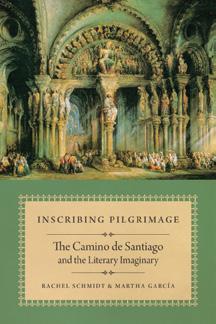
Camino de Santiago and the Literary Imaginary
RACHEL SCHMIDT and MARTHA GARCÍA
“This rich and engaging study explores the cultural and literary significance of the shrine of St. James of Compostela and its famous pilgrimage, the Camino de Santiago. To understand its enduring hold upon the Spanish and Catholic imaginary, Rachel Schmidt and Martha García draw on history, art and architecture, devotional writings, plays, and novels. Such a study of the Camino is long overdue.” —Megan C. Armstrong, author of The Holy Land and the Early Modern Reinvention of Catholicism
“An ambitious synthesis of approaches to the Camino de Santiago, this book enacts the evergreen promise of pilgrimage. It transforms what you thought you knew, ranging across the arts to reveal a Camino no less remarkable as a landscape of the mind—with its forking, perilous paths to renewal, expiation, and liberation—than as a decisive geopolitical reconfiguration of medieval Europe.” —Michael Armstrong-Roche, author of Cervantes’ Epic Novel: Empire, Religion, and the Dream Life of Heroes in “Persiles”
“Schmidt and García offer an interdisciplinary study of the Camino de Santiago, tracing pilgrimage from early Christianity to the present and illuminating the literary and theoretical discourses that shape its cultural relevance. Conveying classical, medieval, and modern perspectives, Inscribing Pilgrimage demonstrates how writers continually reinterpret faith, mobility, and identity, providing an insightful contribution to scholarship on the Camino’s enduring significance.” —David Dominguez Navarro, professor of medieval Iberian literature, Texas State University
RACHEL SCHMIDT is a professor emerita in the Department of Classics and Religion at the University of Calgary.
MARTHA GARCÍA is a professor in the Department of Modern Languages and Literatures at the University of Central Florida.
OCTOBER 2026 | 320 pages, 6 x 9 | 978- 0- 8071- 8736- 4
Hardcover $50.00s, ebook available | Literary Studies / Religion / Spain and Portugal New Hispanisms: Cultural and Literary Studies / Anne J. Cruz, Series Editor
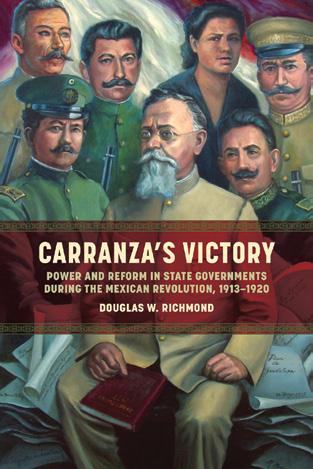
Carranza’s Victory recounts the processes by which state governments loyal to President Venustiano Carranza worked to defeat his rivals and consolidate the carrancista regime during the Mexican Revolution. Combining seventeen studies of state governments with larger considerations of national politics, Douglas W. Richmond establishes why Carranza’s forces triumphed over his more widely lauded villista and zapatista rivals. Drawn from decades of research on a notoriously fraught period of Mexican history, this book offers a significant reinterpretation of the decade-long civil war that changed Mexico dramatically.
Previous accounts overlook Carranza’s successes despite his victory over Victoriano Huerta, Pancho Villa, and Emiliano Zapata. Richmond’s detailed study describes how individuals in the north, center, and southeast of Mexico supported Carranza and his governors, helping his regime remain in power. All the factions that emerged by 1915 began as regional movements; the carrancistas spread successfully beyond their Coahuila power base to gain the support of working-class, rural, and middle-class groups. In his analysis, Richmond focuses on seventeen state governments with discussions of land reform, labor unrest, anti-foreign resentments, progressive social movements, and religious conflicts.
Early chapters describe Carranza’s rise to power in Coahuila, where he established reformist credentials, then detail his victory over dictator Huerta as well as the revolutionary leaders Villa and Zapata. Subsequent chapters explain how Villa’s Chihuahua stronghold collapsed under the weight of carrancista political and military leadership. A counterpoint emerges in the account of Carranza’s bloody and often frustrated effort to subdue the zapatistas in Morelos. Later chapters analyze social reforms enacted by carrancista governments, such as Salvador Alvarado’s expansion of educational opportunities in Yucatán. With trenchant analysis and narrative candor, Carranza’s Victory reveals the extent to which Carranza governed as an authoritarian president who advocated reformism and fought vice, as his state governments varied between implementing socioeconomic reforms and acting with brute force.
DOUGLAS W. RICHMOND is professor emeritus of history at the University of Texas at Arlington. His books include The Mexican Nation: Historical Continuity and Modern Change and Conflict and Carnage in Yucatán: Liberals, the Second Empire, and Maya Revolutionaries, 1855–1876.
SEPTEMBER 2026
464 pages, 6 x 9, 25 halftones, 7 maps
978- 0- 8071- 8711-1
Hardcover $60.00s, ebook available Latin American History / Mexico

DECEMBER 2026
184 pages, 5 1/2 x 8 1/2
978-0-8071-8725-8
Paperback $30.00s, ebook available LSU Press Paperback Original Literary Studies
978- 0- 8071- 8642-8
“Paper Screens is at once vibrantly heteroglossic, rigorously argued, consistently fascinating, and a pleasure to read from beginning to end. Joseph R. Worthen has written a brilliantly insightful contribution to digital humanities and literary studies, and I recommend it wholeheartedly.”—Seo-Young Chu, author of Do Metaphors Dream of Literal Sheep? A ScienceFictional Theory of Representation
“Worthen develops a compelling typology of the ways that novelists explore, celebrate, contain, and undermine information and communication. . . . Each mode of engagement between the novel and what Worthen calls the ‘monomedia texture,’ created by the internet, shows us something crucial about the ways, and the reasons, we read and write today.”—Kathleen Fitzpatrick, author of The Anxiety of Obsolescence: The American Novel in the Age of Television
“Blending close analysis with digital humanities research, Paper Screens offers readers a new vocabulary of genres and styles to help us understand the wide range of Extremely Online fiction. In the process, Worthen illuminates not only the place of technology in contemporary literature but also the place of literature in an increasingly technologized world.”—Alexander Manshel, author of Writing Backwards: Historical Fiction and the Reshaping of the American Canon
Paper Screens tracks the presence of the internet in mainstream and prestige fiction published from 2000 to 2020. Using distant reading methodologies, Joseph R. Worthen constructs a taxonomy of novels directly or indirectly influenced by the internet and provides case studies of emblematic approaches represented by key texts. His analysis moves from morality tales by Dave Eggers and Jonathan Franzen to popular genres such as autofiction and the gothic, before considering the futuristic visions of the post-internet apocalypse novel and the increasing acceptance of the internet as an extension of everyday reality.
With critical rigor and wit, Paper Screens investigates the vanishing microgenres, Luddite diatribes, and stylistic grafts that shaped the slow cultural negotiation between the novel and the challenging frontier of the internet.
JOSEPH R. WORTHEN is the author of the novel All Trap No Bait. Originally from South Carolina, he currently teaches creative writing and literature at Lees-McRae College in Banner Elk, North Carolina.
DAYTON HASKIN
“Among a slew of histories of academic institutions, The Birth of the English Major stands out by moving the spotlight from professorial research to student classroom experiences. Dayton Haskin weaves a gripping story: a must-read for anyone interested in the humanities.” —James Turner, author of Philology: The Forgotten Origins of the Modern Humanities
“This extraordinary book, the result of patient research into teaching archives in college libraries, is both timely and sure to have a long life. . . . A fascinating history packed with detail and human interest.” —Achsah Guibbory, professor of English, Barnard College
“Haskin’s imaginative probing of what he found in students’ notebooks and essays, and in the exam questions they were expected to answer . . . offers a hands-on history of pedagogy that highlights the decisive work done by innovative teachers who made literary study at once productive and pleasurable.” —Rosemarie Bodenheimer, author of Knowing Dickens
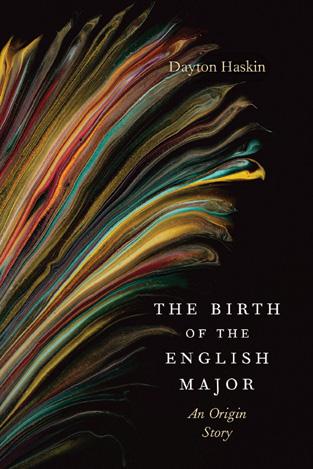
The Birth of the English Major tells the story of how literature written in English became established as a field of study in American universities. Dayton Haskin examines archival materials drawn from more than thirty colleges to explore the transition from prioritizing classical education focused on
Latin, Greek, and mathematics to offering courses on English literature.
By analyzing educational materials such as assignments and examinations, students’ notebooks and essays, faculty lecture notes, and annual catalogs, The Birth of the English Major traces the methods used by imaginative educators to create a new subject for undergraduate study, showing a variety of conceptions about what studying English might entail. The narrative culminates in the 1890s, when the practice of declaring a major emerged in the U.S. and undergraduates made English a widely popular choice.
In our time, as colleges cut programs in the humanities and the popular press declares “the end of the English major,” Haskin’s elegantly written work of cultural history gives hope that the study of English as a global language and of its exponentially ampler literature will be reinvented in various corners of the world.
DAYTON HASKIN, professor emeritus of English at Boston College, is the author of John Donne in the Nineteenth Century and Milton’s Burden of Interpretation, which won the James Holly Hanford Award.
NOVEMBER 2026
232 pages, 6 x 9 978- 0- 8071- 8724-1
Paperback $34.95, ebook available LSU Press Paperback Original Literary Studies / Educational History
SEPTEMBER 2026
248 pages, 6 x 9, 10 halftones
978- 0- 8071- 8734- 0
Paperback $35.00s, ebook available
LSU Press Paperback Original Media Studies / Popular Culture
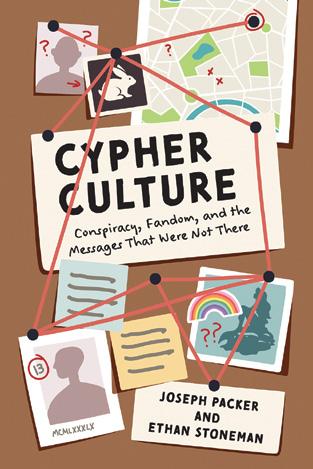
By highlighting the interplay between esotericism, conspiracy theory, and fandom, Cypher Culture examines how marginalized and embattled groups learn to read cultural texts for hidden meanings in hostile environments. Drawing on Leo Strauss’s theory of esotericism, Joseph Packer and Ethan Stoneman argue that “reading between the lines” has moved from classical philosophy into popular culture, where queer fandoms, political extremists, and others uncover whispered messages in mass media. The result is a shared interpretive practice with radically different ethical and political consequences.
Cypher Culture presents a series of case studies capturing a wide spectrum of esoteric fandom, from interpretations of Shakespeare and Disney to analyses of Taylor Swift, The Dark Knight trilogy of Batman films, and the QAnon phenomenon. Exploring the ways groups interact with these texts helps uncover the dynamics of fan culture and its political dimensions. The book’s focus on the interplay of scene, surface, and receiver provides a nuanced framework for understanding how esoteric interpretations take hold
and circulate within fan communities, particularly online.
Pairing close readings of popular media with cultural analyses of their dedicated communities of esoteric readers, Cypher Culture diagnoses the stylistic, contextual, and authorial elements of a text that invite esoteric interpretations. This approach goes beyond traditional views of esotericism, as formulated by Strauss, demonstrating its evolution in the digital age as not just an authorial strategy but a hermeneutic lens through which fans interpret popular culture.
JOSEPH PACKER is a professor in the School of Communication, Journalism, and Media at Central Michigan University.
ETHAN STONEMAN is associate professor and chair of rhetoric and media at Hillsdale College. Packer and Stoneman are the authors of A Feeling of Wrongness: Pessimistic Rhetoric on the Fringes of Popular Culture.
ALSO OF INTEREST
978- 0- 8071- 8258-1
Paperback $33.00s

Edited by STEPHANIE ROUNTREE, LISA HINRICHSEN, and GINA CAISON
“Record, Document, Archive gives us vital tools to begin making our own way toward ‘southern elsewheres’—toward alternative, and maybe only half-knowable, (re)constructions of region built through the complexities of human and morethan-human relationships across time and space. From the precolonial past to the anticolonial present, from lesbian herstories to environmental futures, this volume challenges us to rethink both the objects of study and the acts of studying them.”
—Michael P. Bibler, author of Cotton’s Queer Relations: Same-Sex Intimacy and the Literature of the Southern Plantation, 1936–1968
“A sparkling collection where theoretical sophistication, innovative research, and commitment to social justice combine in a multifaceted examination of how the U.S. South, real, imagined, and anticipated, has been constructed and understood. . . . The book offers new perspectives on a South of many, and often surprisingly contrarian, Souths.” —Brian Ward, author of Martin Luther King in Newcastle upon Tyne: The African American Freedom Struggle and Race Relations in the North East of England
“Record, Document, Archive presents an innovative approach to the act of recording, in all its various interpretations. . . . The essays in the collection effect a thoughtful balance between the material, the abstract, and the ephemeral.”
—Katharine A. Burnett, coeditor of The Tacky South
Record, Document, Archive reconsiders the U.S. South not as a fixed geography but as an ongoing epistemological project shaped through acts and artifacts of recording, documenting, and archiving. The essays deploy interdisciplinary perspectives to explore how objects and processes work dynamically to produce region. By foregrounding the power, limits, and exclusions of archival and documentary practices, this collection opens new ways of understanding how “the South” is made, contested, and comprehended.
STEPHANIE ROUNTREE is associate professor of English at the University of North Georgia and the coeditor, with Lisa Hinrichsen and Gina Caison, of Remediating Region: New Media and the U.S. South and Small-Screen Souths: Region, Identity, and the Cultural Politics of Television.
LISA HINRICHSEN is associate professor of English at the University of Arkansas and the author of Possessing the Past: Trauma, Imagination, and Memory in Post-Plantation Southern Literature.
GINA CAISON , the Kenneth M. England Professor of Southern Literature at Georgia State University, is the author of Erosion: American Environments and the Anxiety of Disappearance and Red States: Indigeneity, Settler Colonialism, and Southern Studies.

NOVEMBER 2026
384 pages, 6 x 9, 21 halftones, 6 line drawings
978- 0- 8071- 8731- 9, Hardcover $90.00s
978- 0- 8071- 8738- 8, Paperback $40.00s ebook available Literary Studies / Southern Studies
Southern Literary Studies
Scott Romine, Series Editor

DECEMBER 2026
336 pages, 6 x 9
978- 0- 8071- 8710- 4
Hardcover $49.95, ebook available Literary Studies
978- 0- 8071- 8610-7

“Under the masterly hand of Thomas Travisano, the acknowledged authority on the many writings of Elizabeth Bishop, The Elizabeth Bishop Phenomenon recounts in breathtaking detail Bishop’s sometimes arduous journey from fine miniaturist poet to one of the major literary figures of the twentieth century. It brought back many of my own buried memories of her as a mentor and friend.” —David Staines, editor of The Cambridge Companion to Alice Munro and The Worlds of Carol Shields
“No scholar is more responsible for consistently recognizing the ‘phenomenon’ Bishop has become, and has always been, from his first—the first—critical overview, to his revelatory book placing Bishop among the major modern ‘confessional’ poets, to his indispensable and profound volume of her complete correspondence with Robert Lowell, to his superb recent biography. These illuminating essays are an extremely welcome addition.” —Lloyd Schwartz, Pulitzer Prize–winning critic, poet, and coeditor of Elizabeth Bishop: Poems, Prose, and Letters
“Travisano deftly tracks the transit of Bishop’s poems in accounts of twentieth-century poetry from the marginalized periphery to the magnetized center: a remarkable story in itself. These essays, grounded in Travisano’s unmatched
knowledge of the Bishop oeuvre, grant us new insights into her continuing influence on contemporary poetry and the practices of archival scholarship, literary criticism, and biography.” —Heather Treseler, author of Auguries and Divinations
“Travisano’s research, writing, and work as an editor have been essential to the recognition of Bishop as one of the twentieth century’s most important poets. Here he has collected foundational essays from across his long career at the forefront of Bishop studies, which explore all facets of her life, writing, and reception. The Elizabeth Bishop Phenomenon is necessary reading for anyone with an interest in the author, from new readers to experienced scholars.” —Susan Rosenbaum, coauthor of Travels with Mina Loy: Navigating the Avant-Garde
THOMAS TRAVISANO is the author of Love Unknown: The Life and Worlds of Elizabeth Bishop and the editor of Words in Air: The Complete Correspondence Between Elizabeth Bishop and Robert Lowell, among other books. He is professor emeritus of English at Hartwick College and the founding president of the Elizabeth Bishop Society.
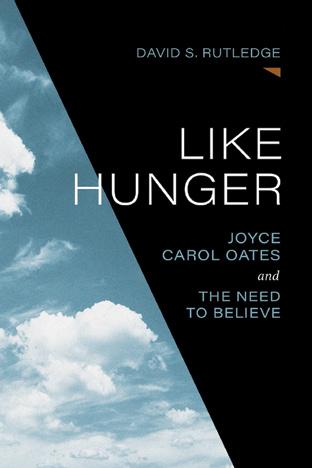
“With meticulous scholarship and an expansive engagement with key texts, David S. Rutledge offers a discerning analysis of the search for belief in a world shaped by mystery. This welcome study is an important contribution to ongoing conversations in Joyce Carol Oates scholarship.”—Randy Souther, editor of Bearing Witness: Joyce Carol Oates Studies
“It’s good to see a new monograph on the writing of Joyce Carol Oates. Like Hunger is a thoughtful study of her work in terms of forms of belief. Rutledge takes full account of the insights of other critics but offers a fresh approach and detailed readings, not least of more recent novels. A welcome addition to discussions of one of the most significant American authors of our era.”—Gavin Cologne-Brookes, author of Dark Eyes on America: The Novels of Joyce Carol Oates
“Like Hunger effectively ends a monograph drought in the field of Oates studies, quenching a thirst that has been accumulating for two decades. Rutledge’s work builds on existing scholarship in an easy prose that will speak to all types of Oates readers, from scholars to those who read purely for pleasure.”—Tanya Tromble, cofounder of the Joyce Carol Oates Society
Like Hunger probes the ways in which Joyce Carol Oates’s characters strive for some kind of faith. When traditional religions become uncompelling, Oates’s characters reach for beliefs that reflect distinctly American values, ranging from faith in celebrities, food, or science to continual efforts at finding an idea of home. Drawing on works throughout Oates’s six-decade career, David S. Rutledge uncovers how hunger often functions as a metaphor for the need to believe, and how this constant and unappeasable desire frequently leaves her characters searching for a narrative to maintain their sense of self and purpose—a story by which to define themselves.
Like Hunger offers an important reassessment of a major American writer, arguing that Oates’s work expresses an underlying faith in storytelling, one of the ultimate values embodied in her art.
DAVID S. RUTLEDGE has taught at the University of New Orleans for more than twenty-five years. His previous publications include Nabokov’s Permanent Mystery: The Expression of Metaphysics in His Works and two anthologies about post-Katrina New Orleans.
SEPTEMBER 2026
264 pages, 6 x 9 978-0-8071-8729-6
Hardcover $45.00s, ebook available Literary Studies
NOVEMBER 2026
216 pages, 6 x 9
978- 0- 8071- 8733-3
Hardcover $39.95, ebook available Literary Studies / Poetry
Published with the assistance of the Sea
978- 0- 8071-7919-2
“One of the truly exemplary writers, thinkers, persons of letters, sustainers of what most matters.” —Jane Hirshfield
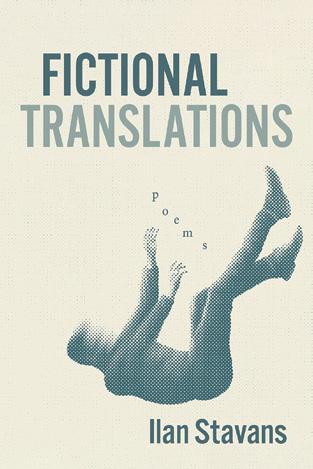
“With all the debates about translation, one question has gone missing: Can it be fun? In this witty book, Ilan Stavans, one of our most cherished denizens of the lands between languages, invents a territory inhabited not by literal words but by the spirits—clashing, absurd, poetic—of different literatures.” —Benjamin Moser
“Nobody thinks and plays language with such depth, verve, and liberatory daring. A polyphonic tour de force that forever unseats the myth of translation as spectral servitude!”
—Frederick Luis Aldama
“In an era of fake news and fragmented realities, this is a timely experiment that creates a literary deepfake to recapture truth and beauty.” —Giannina Braschi
“It is refreshing, in this age of factual horrors and fake truths, to find a poetic voice that takes on the bewilderment of our moment and points to how it, too, can become an originator for creation, invention, and celebration of the imaginative capacities of a human voice.” —Katie Farris and Ilya Kaminsky
“Like two of his greatest models, Fernando Pessoa and Jorge Luis Borges, Ilan Stavans contains multitudes, and in this
madcap literary adventure, he hosts, translates, channels, and reinvents a chorus of great poets who have made their mark in many different languages over the centuries. These imitations and inventions question originality, blur the lines between poetry and translation, and enlarge literature. The result is an anthology unlike anything else I’ve ever read.”
—Edward Hirsch
“Stavans has not only invented excellent plausible counterfeit poems by eminent authors of past and present, but has gone on to admirably fake the translations of those very forged verses into English and, also, as if this were not enough, concocted, to accompany him in this delirious enterprise, a multitude of make-believe translators from different countries and languages, ultimately weaving a Borgean tapestry of beauty and illusions that leaves me breathless with joy at such audacity and beauty.” —Ariel Dorfman
ILAN STAVANS is the Lewis-Sebring Professor of Humanities and Latin American and Latino Culture at Amherst College, the publisher of Restless Books, and a consultant to the Oxford English Dictionary. He is a New York Times bestselling author and the recipient of numerous international awards. His work, translated into twenty languages, has been adapted into film, TV, radio, and theater.
“One of our most necessary poets.” —Natasha Trethewey
“The best accessible poet writing in America.” —Dan Chiasson
“There are not many poets who get as much of American life in their poems as Rodney Jones.” —Charles Simic
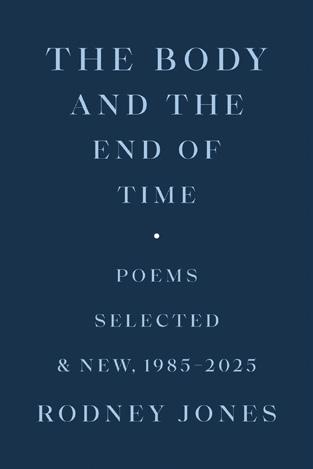
Comprised of poems selected from eleven previous volumes and accompanied by work from the past half decade, The Body and the End of Time represents the distilled evolution of one of the most fluent, generous, and embracing voices to emerge in American poetry since the Vietnam War era. Prophetic in the tradition of William Blake and Walt Whitman and equally suspicious of received wisdom, Rodney Jones is a master of discernment and revelation, driven by an urgency to bring language and witness to the sudden erosion of the local, the obsolescence of the homegrown, the erstwhile mysticism of the makeshift. Redefining the boundaries between narrative and lyricism, “Classical revision and Romantic improvisation,” high and low culture, logic and dream, Jones creates an inimitable full-spectrum poetic vision in a world that has little use for poetry. By turns elegiac and celebratory, provocative and playful, these are love poems dedicated to places and bonds, to manners and accents, but most importantly to the people—the dreamers and farmers, road pavers, running backs, waitresses, and shade-tree existentialists—that form the distinctive music and texture of the American South.
RODNEY JONES , the author of eleven books of poetry, has received the National Book Critics Circle Award and the Kingsley Tufts Poetry Award, and has been a finalist for the Los Angeles Times Book Prize for Poetry, the Griffin Poetry Prize, and the Pulitzer Prize. His work has appeared in The Oxford Book of American Poetry and ten editions of The Best American Poetry. He lives in New Orleans.
Hubris at Zunzal
Nearly sunset, and time on the water of 1984. Language its tracer. No image like the image of language.
I had waded out about thigh deep. Then a shout from the beach.
I held in my hand half a coconut shell of coconut milk and 150-proof rum and dumped it white into the waves when it came on me how sweet it had been, then the idea I was not finished, then the act of reaching down with the idea I would get it back.
OCTOBER 2026
288 pages, 6 x 9
978- 0- 8071- 8740-1, Hardcover $60.00s
978- 0- 8071- 8707- 4, Paperback $34.95
ebook available Poetry
Published with the assistance of the Sea Cliff Fund
DECEMBER 2026
184 pages, 6 x 9
978- 0- 8071- 8739- 5, Hardcover $60.00s
978- 0- 8071- 8726- 5, Paperback $29.95 ebook available Poetry
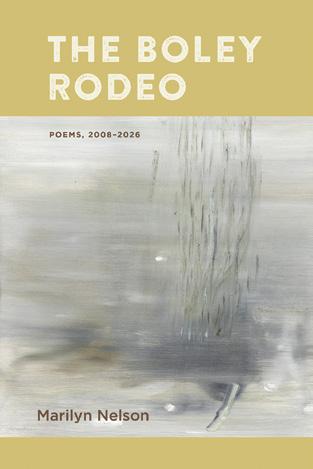
“Marilyn Nelson’s poetry is remarkable for its sheer range of voice and style, for its historical roots, and for its lyrical narratives that, replete with luminous details, unfold with an emotional force that, ultimately, becomes praise. She is a vital ambassador of poetry.” —Arthur Sze, Academy of American Poets citation on her election to its Board of Chancellors
“Nelson has been committed throughout her career to meticulously chronicling the contemporary and historical experience—and contributions—of Black people in America. . . . Everyone who cares about how life is lived and felt in this country should read her vivid and deeply considered work.” —Don Share, Poetry Foundation citation for the Ruth Lilly Poetry Prize
“For decades Nelson has written a poetry that is insightful, moving, and clear, brimming with history but aimed at the future.” —Kevin Young, Academy of American Poets citation for the Wallace Stevens Award
humanism, historical acumen, and honest directness that have characterized her writing over the past five decades. It is a work of great emotion and consummate craft.
MARILYN NELSON is the author of numerous books, including How I Discovered Poetry, Faster Than Light: New and Selected Poems, 1996–2011, and Carver: A Life in Poems. Her honors include three National Book Award Finalist medals, the Poets’ Prize, the Frost Medal, the NSK Neustadt Prize for Children’s Literature, the Ruth Lilly Poetry Prize, and the Wallace Stevens Award. Nelson is professor emerita of English at the University of Connecticut, the former poet laureate of Connecticut, and founder and director of Soul Mountain Retreat.
978- 0- 8071- 4734- 4
Paperback $24.95
Powerful, beautiful, and often deceptively simple, the poetry of Marilyn Nelson takes a polyphonic approach to rendering American lives of the past, present, and beyond. Voices speak from varied times and places, while the sound that results is that of a full-throated choir telling often-forgotten truths about human existence.
With The Boley Rodeo, collecting poems written since 2008, Nelson provides further proof of the deep
What if to taste and see, to notice things, to stand each is up against emptiness for a moment or an eternity— images collected in consciousness like a tree alone on the horizon— is the main reason we’re on this planet?
The food’s here of the first crow to arrive, numbers two and three at a safe distance, then approaching the hand-created taste of leftover coconut macaroons.
The instant sparks in the earth’s awareness.
ROBERT MORGAN
“The poet laureate of Appalachia.” —Kirkus Reviews
“Any new collection of poems by Robert Morgan is a gift.” —Ted Kooser
“Morgan brings to his efforts a timeless sensibility, a perspective bound up less with fleeting fashions than the belief that there may be something universal about the human condition after all.” —New York Times
“One of our keenest poets of lucidity and attention. . . . Morgan stares deeply into that which we rarely consider, as all great poets do.” —Oxford American
Many of the poems in To Honor the Imagined Whole, a new collection of verse from Robert Morgan, evoke music, recalling the notes of an ancestor’s harmonica, a faraway cowbell, a mandolin played by an unpopular step-grandmother, or the discovery by a youth that music surrounds us. Accompanying pieces address the simultaneous sense of lateness and anticipation in our lives, the surprising poetry of the everyday, and the power of family stories. Morgan writes of how people long gone but vivid in memory, through bonds of kinship—sometimes painful, often liberating— create a sense of community and recognition across time.
ROBERT MORGAN has published more than twentyfive books of poetry, fiction, and nonfiction, including the bestselling Boone: A Biography. His novel Gap Creek was a New York Times bestseller and Notable Book, and an Oprah’s Book Club selection. He is the Kappa Alpha Professor of English Emeritus at Cornell University.

What is the human need to set one stone on stone: the loose rocks brought to this particular place and stacked? The scattered slabs will call until they’re found and chosen to lie flat, each slate on slate, like pages of some registry, memorial to the source from which the pieces broke, a cenotaph or elegy that’s held by force of gravity, a sign connecting here with far horizons, but approximate to human form, to show resistance to erosion’s sprawl, with will, among the scree of fragments, yes, a monument to stand above the natural wash and wear of all, to honor the imagined whole.
AUGUST 2026
96 pages, 6 x 9
978- 0- 8071- 8709- 8
Paperback $20.95, ebook available LSU Press Paperback Original Poetry

JULY 2026
90 pages, 6 x 9
978- 0- 8071- 8727-2
Paperback $20.95, ebook available
LSU Press Paperback Original Poetry
978- 0- 8071- 6974-2 Paperback $20.95
“Here is a book that makes me want to believe in ghosts. Chelsea Rathburn is a medium in Broken Houses, able to traverse between the hauntings of both past and future, to summon an Otherworld between these pages. Rathburn digs down to the limestone bedrock of a Florida childhood marked by negotiations of history, class, and family, to ask what—if anything—sprouts from such hard ground? Across four books, Rathburn has proven herself one of the most astute poets of a generation—someone who is able to see clearly the invisible ties between the personal and political—who can juxtapose the large and violent narrative of John Sewell clearing a Tequesta burial mound against the small and quiet terror of a girl left to reckon with ghosts alone. Rathburn wrecks us open, and God, are we better for the wounding.” —Diamond Forde
“This is profoundly precise poetry: there is never an errant word, and the observations are keenly particular to their people and places. Yet the poems are like locksmiths that can open doors to anyone’s contemplations of brokenness, belonging, and beyond. Rathburn has the power to demolish banal ideas about home and expose the unfillable gaps in what we can know of even our own families. She also has the grace to build back poems that are shelters for love and its artful expressions.” —Rose McLarney
CHELSEA RATHBURN is the author of three previous books of poetry, most recently Still Life with Mother and Knife, winner of the Eric Hoffer Award in Poetry. Raised in Miami, she now lives in Macon, Georgia, and teaches at Mercer University. Since 2019, she has served as the poet laureate of Georgia.
We were the kind No Shirt No Shoes No Service signs were invented for, my father shrugging on his tee in the parking lot, me hurrying behind, slipping into flip-flops just outside the convenience store door—or was it just inside?
How else would I know the feel of cold linoleum—like pepper— on the bottoms of my soles, a grit I can recall more clearly than the taste of the neon-red slushies my father sometimes bought me? How shameful it seems now to have ever been that skinny kid sneaking bare feet inside, convinced no one would look twice at her.
“Delanty’s is an important body of work for both sides of the Atlantic, and for English language poetry.” —Daniel Tobin, Agenda
“Delanty remains resolutely sui generis.” —Fiona Sampson, PN Review
“One of the most passionate and ambitious contemporary writers.” —Adrienne Leavy, Reading Ireland
“Delanty has always had an astonishing and rare gift, praised from the beginning by Christopher Ricks and Seamus Heaney.” —Thomas McCarthy, Irish Times
“Everywhere he unleashes unbounded energy and upbeat cheer.” —F. D. Reeve, Poetry
“Poet laureate of the contemporary Irish-in-America, Delanty has cataloged an entire generation and its relationship to exile. He is the laureate of those who have gone.” —Colum McCann, Irish Times
Sweeney Now is based on the twelfth-century texts of the middle Irish poem Buile Shuibhne (The Frenzy of Sweeney), a sequence in both verse and prose, which Greg Delanty uses as a blueprint, a mythic foundation to tell and review what it is like to be a deracinated person and poet today, spending much of his time away from his native Ireland in the U.S.
The Sweeney of these often humorous poems should not be literally mistaken for Delanty him-
self—not entirely, that is. The poems are more like carnival mirrors, with the concomitant exaggerations, distortions, and partial truths of most any reflective autobiography.
GREG DELANTY was born in Cork City, Ireland, and maintains dual citizenship in Ireland and the United States, where he has lived since 1986. He is the author of No More Time and The Professor of Forgetting, among many other poetry collections, and he has received numerous awards for his work, including a Guggenheim Fellowship. He teaches at Saint Michael’s College in Vermont.
Simpatico Sweeney
I get it. You’re blue, concerned for us truly. The bird book says you suffer empathy, pick up on the state, mood, vibe of your company. It is true our hues are graying to black, sick of the world, unable to take the nightly news or open a daily oldspaper, the whole ballyhoo is so beyond even palliative care that we choose to care for just (not that just!) ourselves. We know our ma, Terra mater, Dana, Gaia is shot, everyone mostly in on it. We boast that we do our taxed best: off the grid—our house runs clean and on the sun; we chucked the car, bike to work even in the worst snowstorms. Come, Sweeney give us an old laugh, humor’s the refuge of a desperate man, our epitaph.
SEPTEMBER 2026
88 pages, 6 x 9 978- 0- 8071- 8735-7
Paperback $20.95, ebook available LSU Press Paperback Original Poetry

JULY 2026
216 pages, 6 x 9
978- 0- 8071- 8601- 5
Paperback $29.95, ebook available LSU Press Paperback Original Poetry
ANNA JOURNEY
978- 0- 8071-7661- 0
Paperback $21.95

“Anna Journey’s Wolf Cut is equal parts song and cinema, which is to say a treat for both the ear and the eye. Lush. Rhythmic. Resonant images. Soulful. Searching. Searing. Reading this collection is like watching a Fellini film on mute, ’round midnight, while Sonny Rollins solos from a neighbor’s half-open window.” —John Murillo
“What I’ve always loved most about Journey’s work is how she interrogates the grotesque, uncovers the vulnerable tenderness hiding underneath, and blesses it. What a gift to read this wonderful celebration of one of the most unpredictable and compassionate poets of our age.” —Nicky Beer
“Journey’s poems are big, rangy, expansive in Whitmanesque, democratic ways. They have a narrative charisma but maintain Dickinson’s perversity, independence. Journey is as much a storyteller as a poet. Few write with her variety of emotional, intellectual, and musical muscle.” —Terrance Hayes
“Anna Journey’s poetry is really magical.” —David Lynch
Wolf Cut gathers nearly twenty years of work by Anna Journey, one of her generation’s most fearlessly imaginative poets. From her early work’s baroque lyricism tinged with the southern gothic to her capacious later poems’ signature meditative allure, Journey reminds us that mystery and imagination are the luminous thresholds through which our reckonings must pass.
ANNA JOURNEY is the author of the poetry collections The Judas Ear, The Atheist Wore Goat Silk, Vulgar Remedies, and If Birds Gather Your Hair for Nesting, which was selected by Thomas Lux for the National Poetry Series. She is associate professor of English at the University of Southern California.
I could stay here all evening in the frosted privacy of wolves, scrawl an ancient graffito on the wall like Praise Moa. You know there’s nothing like a good long look to bury something, dig something up.
from “At Wally’s Wine & Spirits, I Recall the Brothels of Pompeii”
HAILEY LEITHAUSER
“With sounds and rhythms at once ancient and pulsing, the poems in How to Moth brilliantly make both love and its loss pleasurable and enticing. They show us how to move from darkness to light—how to moth—and, like Edith Piaf, regret nothing.” —Angie Estes
“How to describe this glorious concatenation of language— the mystery, the ruddy lust, the transformation of nouns into verbs and back again, the dizzying lingo mambo that made me scream, ‘This is what poetry can do!’ Leithauser ropes you in with these generous poems—full meals with aperitifs, amuse-bouches, entrées, desserts, and ending with a wild dance party under the stars. If you want to learn how to volcano, moth, survive a lunar eclipse, swallow the moon, regret nothing, pine, or curse a demon, this is the book for you. Incandescence, your name is Hailey Leithauser. Wow!” —Barbara Hamby
How to Moth celebrates the joys and the griefs of a life of loving wine, women, and song. Working in both established forms and musical free verse, Hailey Leithauser takes us from slovenly blondes to tipsy milkmaids to Attack of the 50 Foot Woman, from pink peignoirs to beds made from burlap sacks, a salver of oysters to a nun’s unset table, a fried surfer dame to the person from Porlock, and running throughout it all, the undeniable and unyielding urge to take a mad bite of the moon.
HAILEY LEITHAUSER is the author of Swoop, winner of the Poetry Foundation’s Emily Dickinson First Book Award and the Towson Prize for Literature, and Saint Worm. Her work has appeared widely in journals and anthologies such as Poetry, AGNI, Yale Review, and four editions of Best American Poetry. She lives in the Maryland suburbs of Washington, DC.
Amuse Bouche
This this, this that, tremendous hat, and is it that I now adore the trappings I deplored before— the chic chitchat, a hairless cat, some worn collegiate sobriquet, a patent city tic, a snore, a peeve without a hint, the slightest sniff of caveat, but then, Please, dearest, do please have some more, drifted from the leather chair and, Thank you, yes, if you can spare, for if you think, O flesh, life isn’t short, be certain it is keeping score.
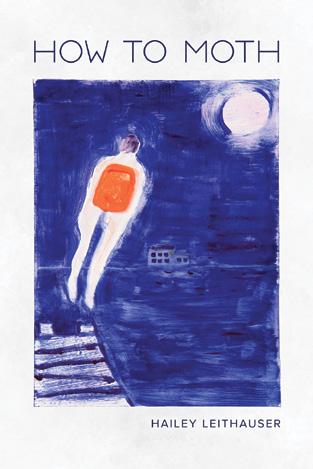
JULY 2026
80 pages, 6 x 9
978- 0- 8071- 8708-1
Paperback $20.95, ebook available LSU Press Paperback Original Poetry
Sewanee Poetry
Leigh Anne Couch, Series Editor Carrie Jerrell, Associate Editor
The Southern Review publishes the best contemporary fiction, nonfiction, poetry, and translation by established and emerging writers. Read original and translated prose from writers like Peter Orner, Choi Eunyoung, Ladee Hubbard, Mesha Maren, Yxta Maya Murray, Miroslav Penkov, and Debbie Urbanski, and many others.
Recent issues include poetry by luminaries such as David Wojahn, Marilyn Nelson, Sharon Olds, Denise Duhamel, Alice Friman, Kwame Dawes, and David St. John, accompanying an array of exciting work by the nation’s top new writers, among
them Maggie Smith, Erika Meitner, Amaud Jamaul Johnson, Jose Hernandez Diaz, Charles Rafferty, and Danusha Laméris.
Since its inception in 1935, The Southern Review has been a significant presence in the contemporary literary landscape. Notable writers who appeared in its pages early in their careers are now among the nation’s most distinguished and important voices.
www.thesouthernreview.org
email: southernreview@lsu.edu (225) 578- 6453 fax: (225) 578- 6461


INDIVIDUAL SUBSCRIPTION RATES:
Single Copy $15
One year (4 issues) $50
Two years (8 issues) $85
Three years (12 issues) $110
Digital Subscription, One year (4 issues) $30
Digital + Print Subscription, One year (4 issues) $60
INSTITUTIONAL SUBSCRIPTION RATES: Single Copy $30
One year (4 issues) $115
Two years (8 issues) $145
Three years (12 issues) $180
Please add $18 per year for international shipping.
The Southern Review is available electronically through Project Muse: http://muse.jhu.edu
Booksellers: Please contact The Southern Review to order ISSN 0038- 4534. Issues are published quarterly.
Requests for sales and discount information should be directed to our sales department (225-578-8282).
Booksellers: Unless otherwise indicated, all books are subject to our trade discount schedule, a copy of which is available from our sales department. Books marked s are short-discount titles. For information regarding the LSU Press Agency Plan, please contact the sales department or a sales representative.
Libraries: Please contact our customer service department (800-848-6224) for the latest discount schedule. Prices, discounts, publication dates, and manufacturing specifications listed in this catalog are subject to change without notice.
LSU Press participates in the Cataloging-in-Publication Program of the Library of Congress.
Inquiries regarding subsidiary rights should be directed to McIntosh and Otis, 235 Main Street, Suite 318, White Plains, NY 10601
https://mcintoshandotis.com/ 212-687-7400 FAX 212-687-6894
DOMESTIC:
LSU Press is represented by Columbia University Press Sales Consortium.
Southeast: Catherine Hobbs Phone: 804-690-8529 | Fax: 434-589-3411 Email: ch2714@columbia.edu
Northeast: Conor Broughan Phone: 917-826-7676 | Email: cb2476@columbia.edu
Midwest: Kevin Kurtz
Phone: 773-316-1116 | Fax: 773-489-2941
Email: kk2841@columbia.edu
West: William Gawronski
Phone: 310-488-9059 | Fax: 310-832-4717
Email: wgawronski@earthlink.net
Canada: Ampersand | Phone: 866-736-5620
Fax: 866-849-3819 | Online: www.ampersandinc.ca
Canada (Orders): UTP Distribution | Phone: 800-565-9523 Fax: 800-221-9985 | Online: www.utpdistribution.com
Europe and all other regions: Mare Nostrum Group Phone: +44 (0)1423 562232 | Online: https://marenostrumgroup.co.uk.
Digital review copies of select titles are available for a limited review period at: https://www.edelweiss.plus/ Contact our sales department for additional information on digital review copies: 225-578-8282.
If your bookstore has already placed an order for 10 or more copies of a title, ONE (1) free desk copy will be provided. To order please include the name of the bookstore, the number of books ordered, the name of the course, and your daytime phone number. A desk copy should not be requested if an examination copy has already been received.
Qualified instructors of appropriate courses may request examination copies of books they wish to consider for classroom use (only three titles per instructor per semester, please). Paperback books are available free of charge upon receipt of a $6.00 per title shipping and handling fee. We will extend a 20% professional discount on cloth editions.
Prepayment (check, money order, VISA, Master Card, Amex, or Discover) must accompany your request and must include a shipping and handling fee of $6.00 for the first book plus $1.00 for each additional book ordered.
Requests must be made on departmental letterhead or from a university email address and include the title of the book, the name of the course, projected enrollment, your mailing address, and your daytime phone number. Please allow 4 weeks for delivery. Please mail examination copy requests to: Longleaf Services, Inc., 116 S. Boundary St., Chapel Hill, NC 27514-3808, fax to (800) 272-6817, or email to orders@longleafservices.org.
Orders and inquiries regarding stock availability, accounts, invoices, and shipping should be directed to our customer service department (800-848-6224)
Orders