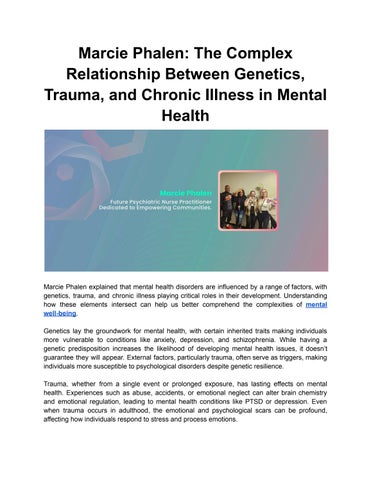
Marcie Phalen: The Complex Relationship Between Genetics, Trauma, and Chronic Illness in Mental Health
Marcie Phalen explained that mental health disorders are influenced by a range of factors, with genetics, trauma, and chronic illness playing critical roles in their development. Understanding how these elements intersect can help us better comprehend the complexities of mental well-being. Genetics lay the groundwork for mental health, with certain inherited traits making individuals more vulnerable to conditions like anxiety, depression, and schizophrenia. While having a genetic predisposition increases the likelihood of developing mental health issues, it doesn’t guarantee they will appear. External factors, particularly trauma, often serve as triggers, making individuals more susceptible to psychological disorders despite genetic resilience. Trauma, whether from a single event or prolonged exposure, has lasting effects on mental health. Experiences such as abuse, accidents, or emotional neglect can alter brain chemistry and emotional regulation, leading to mental health conditions like PTSD or depression. Even when trauma occurs in adulthood, the emotional and psychological scars can be profound, affecting how individuals respond to stress and process emotions.