MARA COLOSIMO
Fall 2024 - Present | Wentworth Institute of Technology
Fall 2024 - Present | Wentworth Institute of Technology
Studio 03 | Fall 2025 | Professor
Michael Cook



















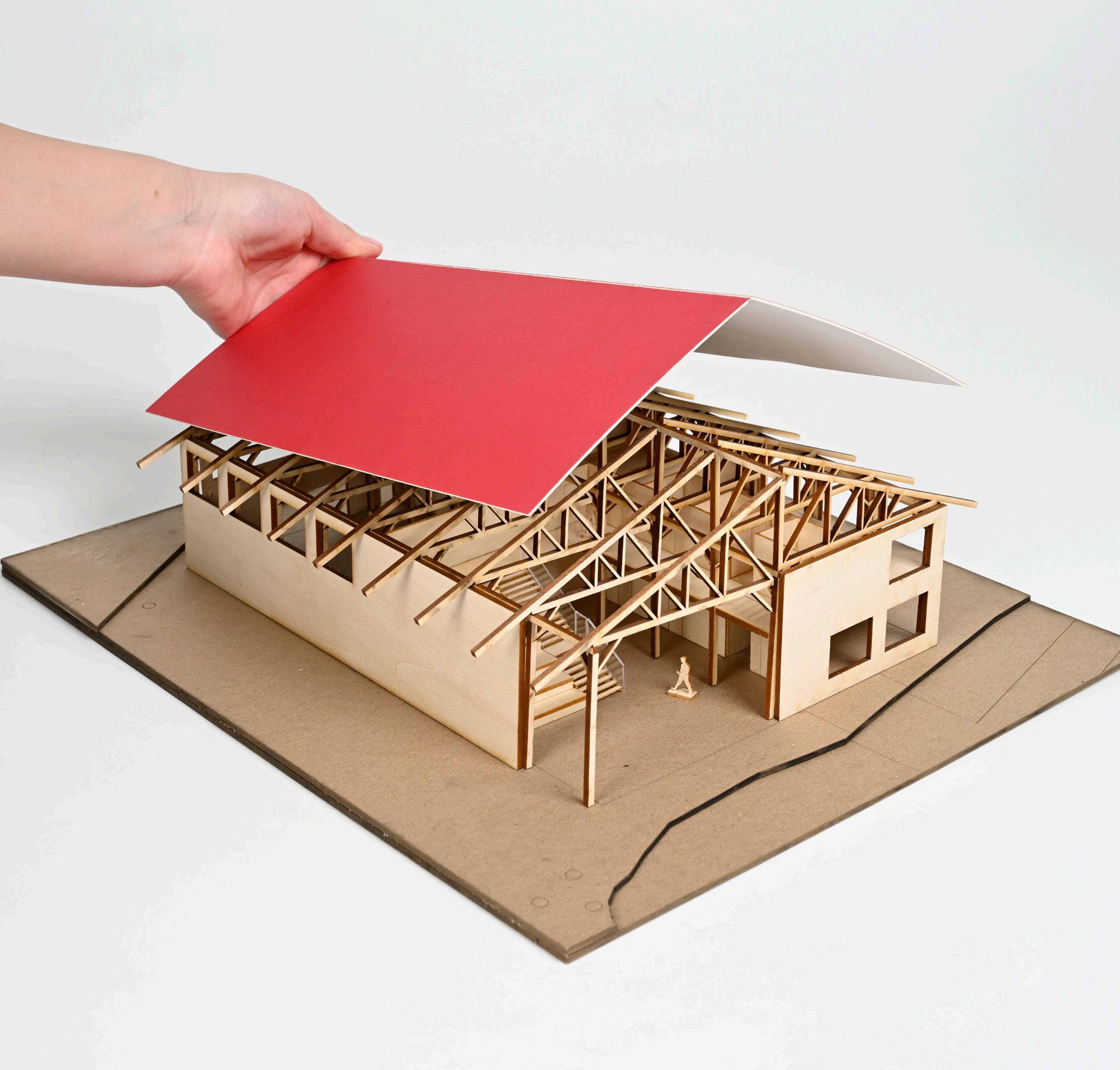
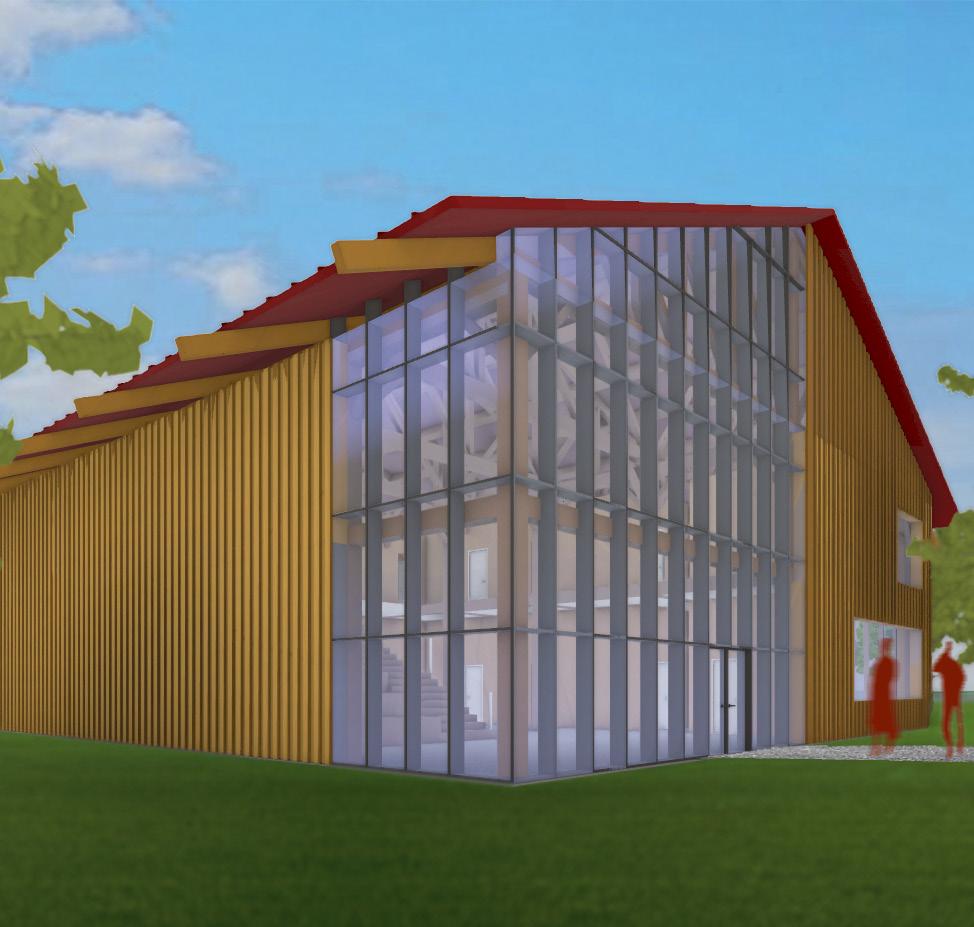
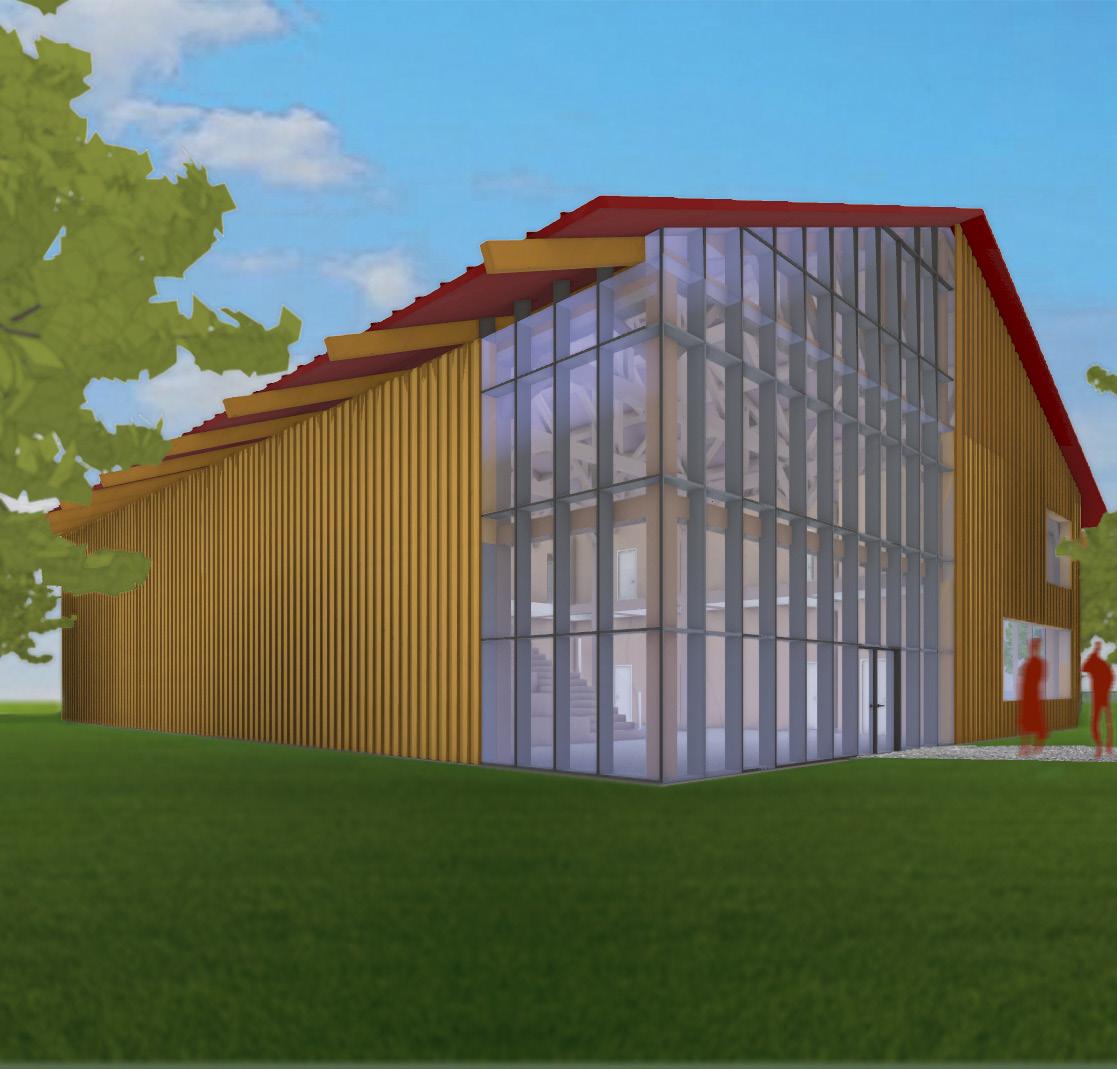
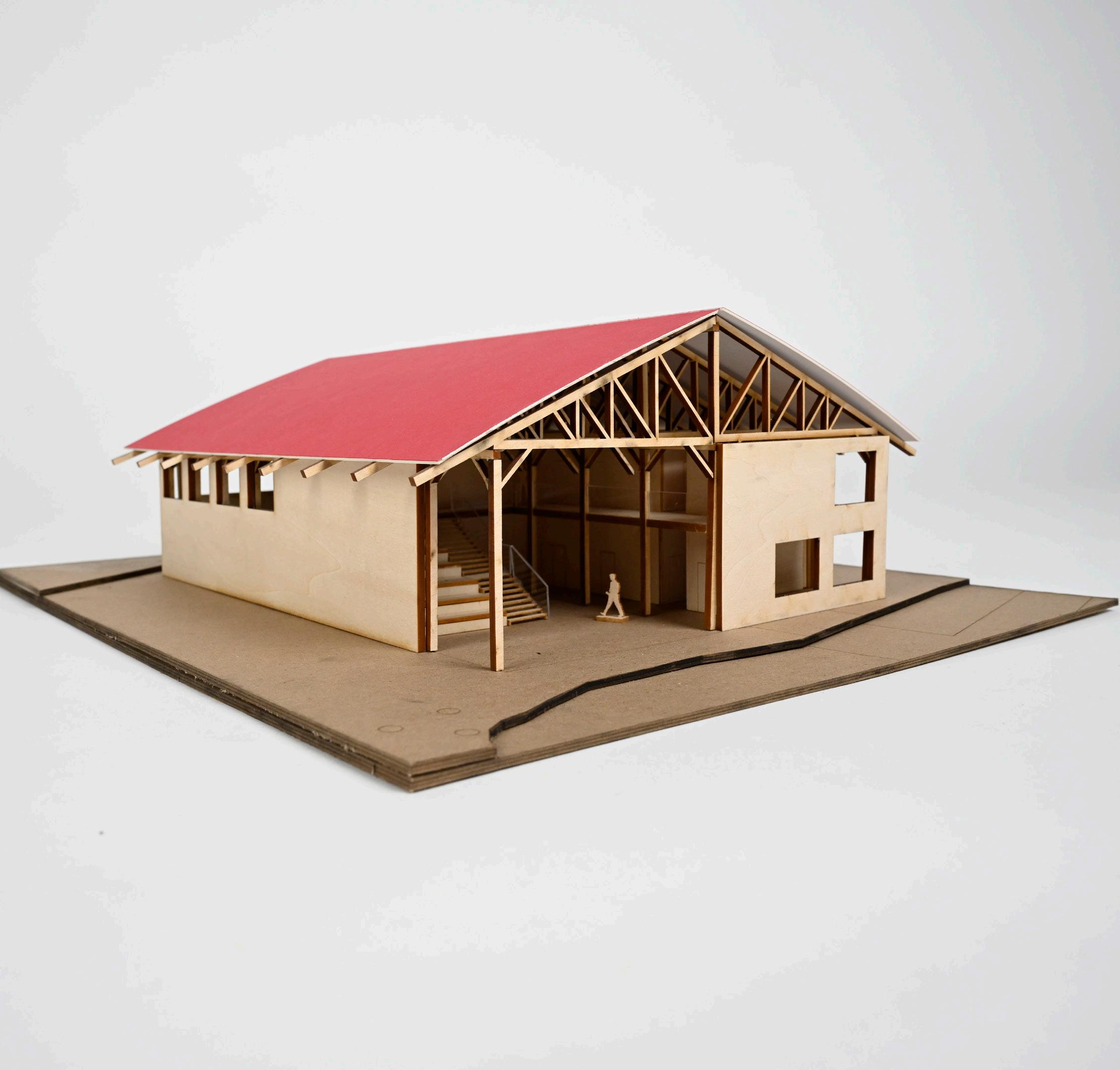
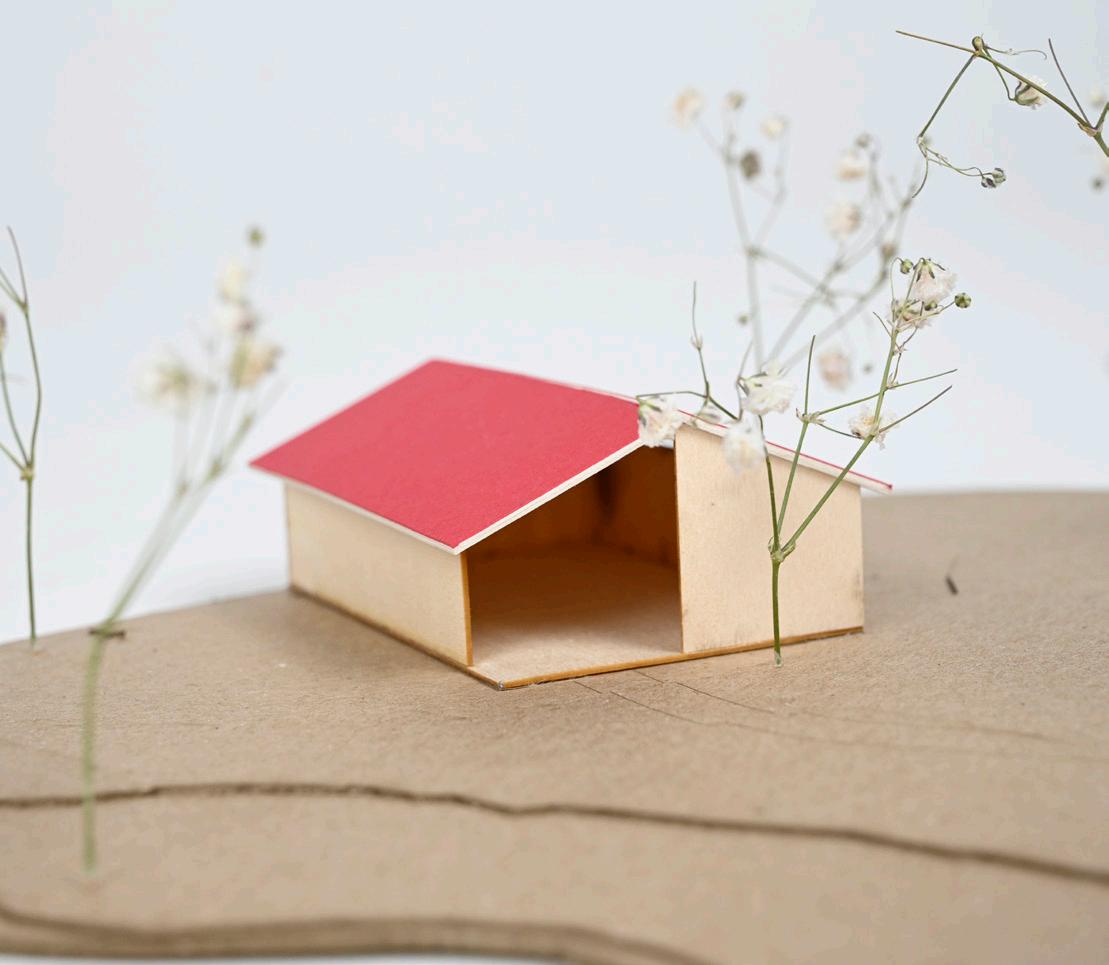
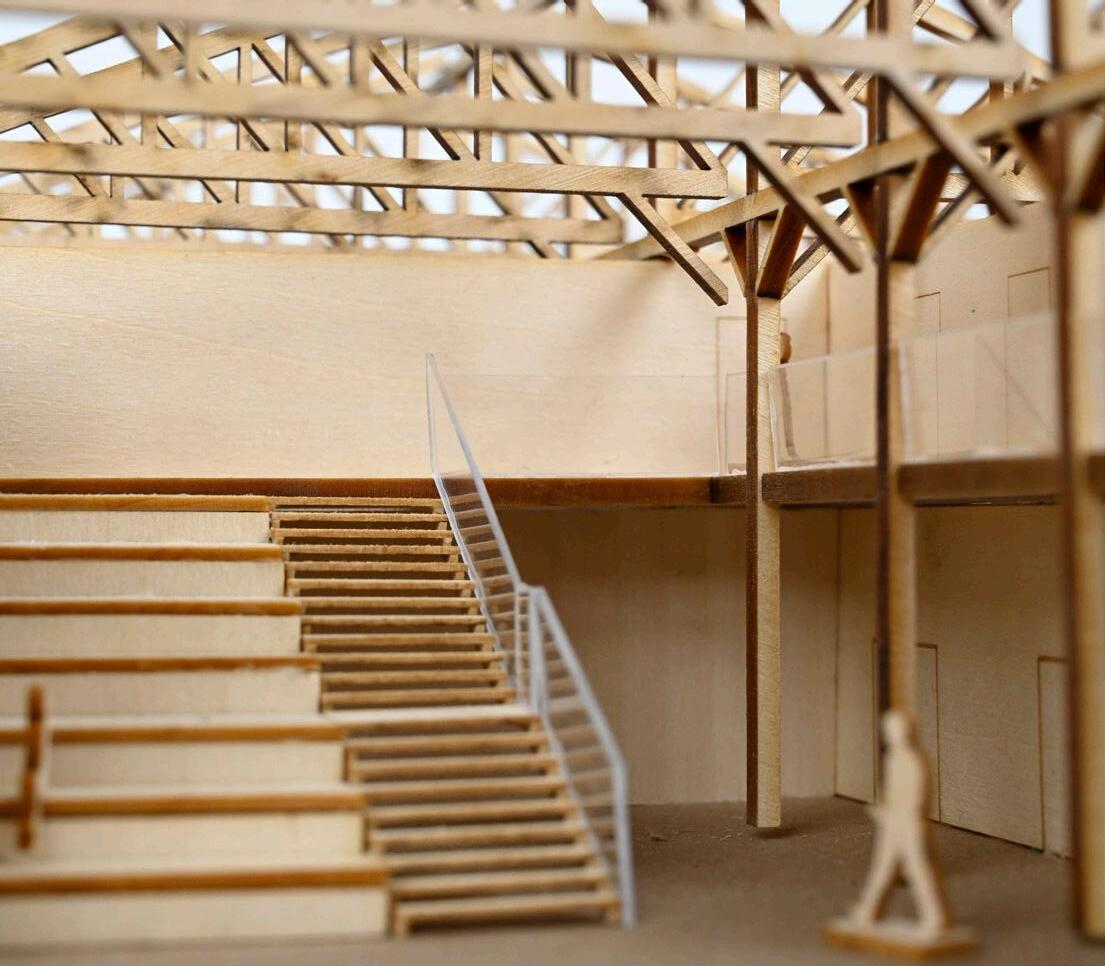
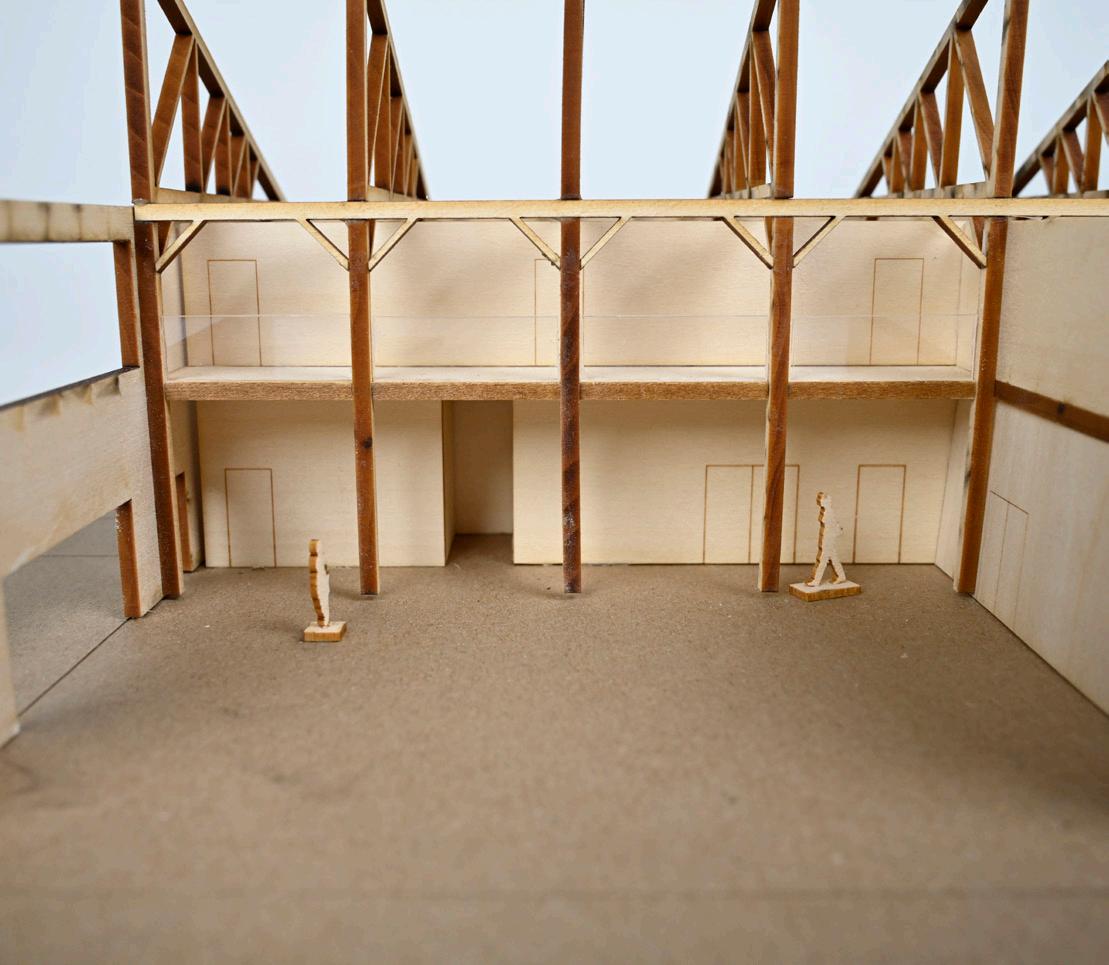
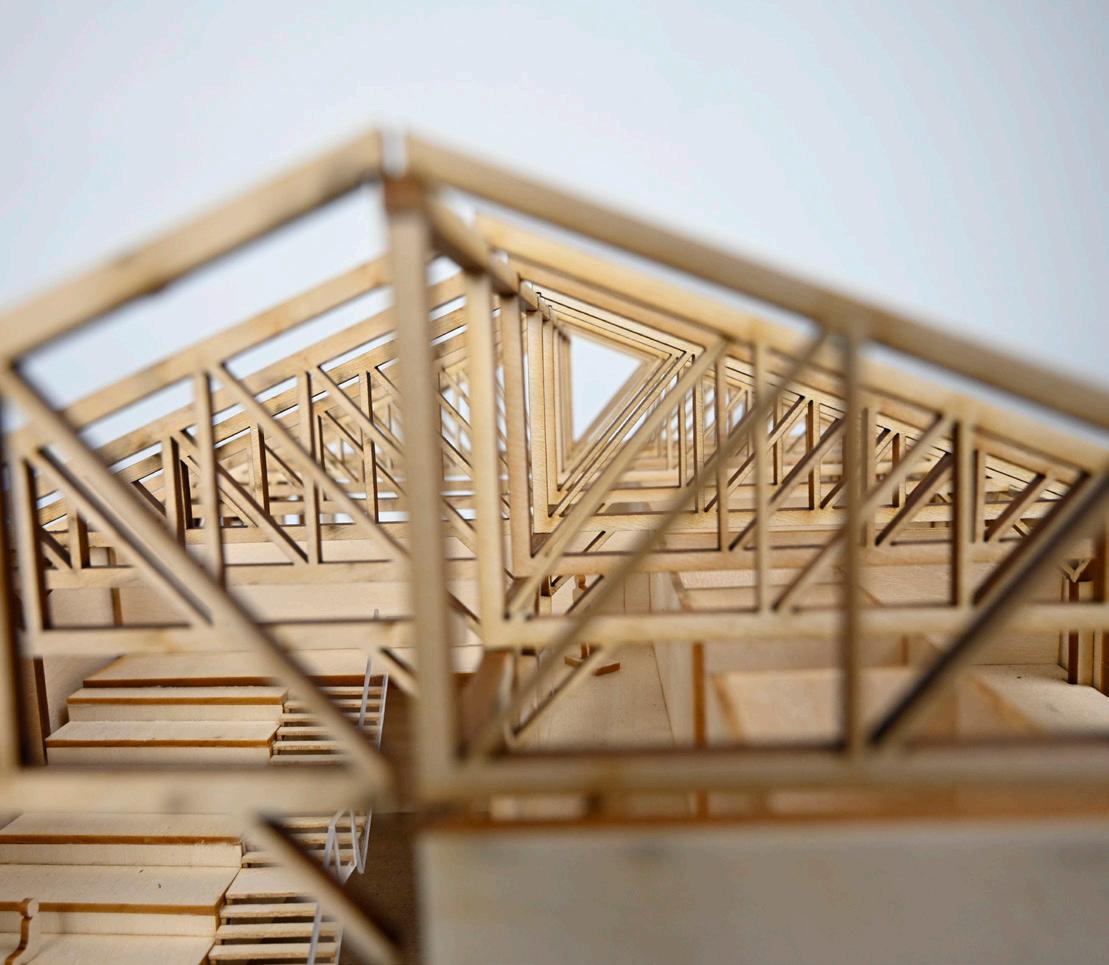
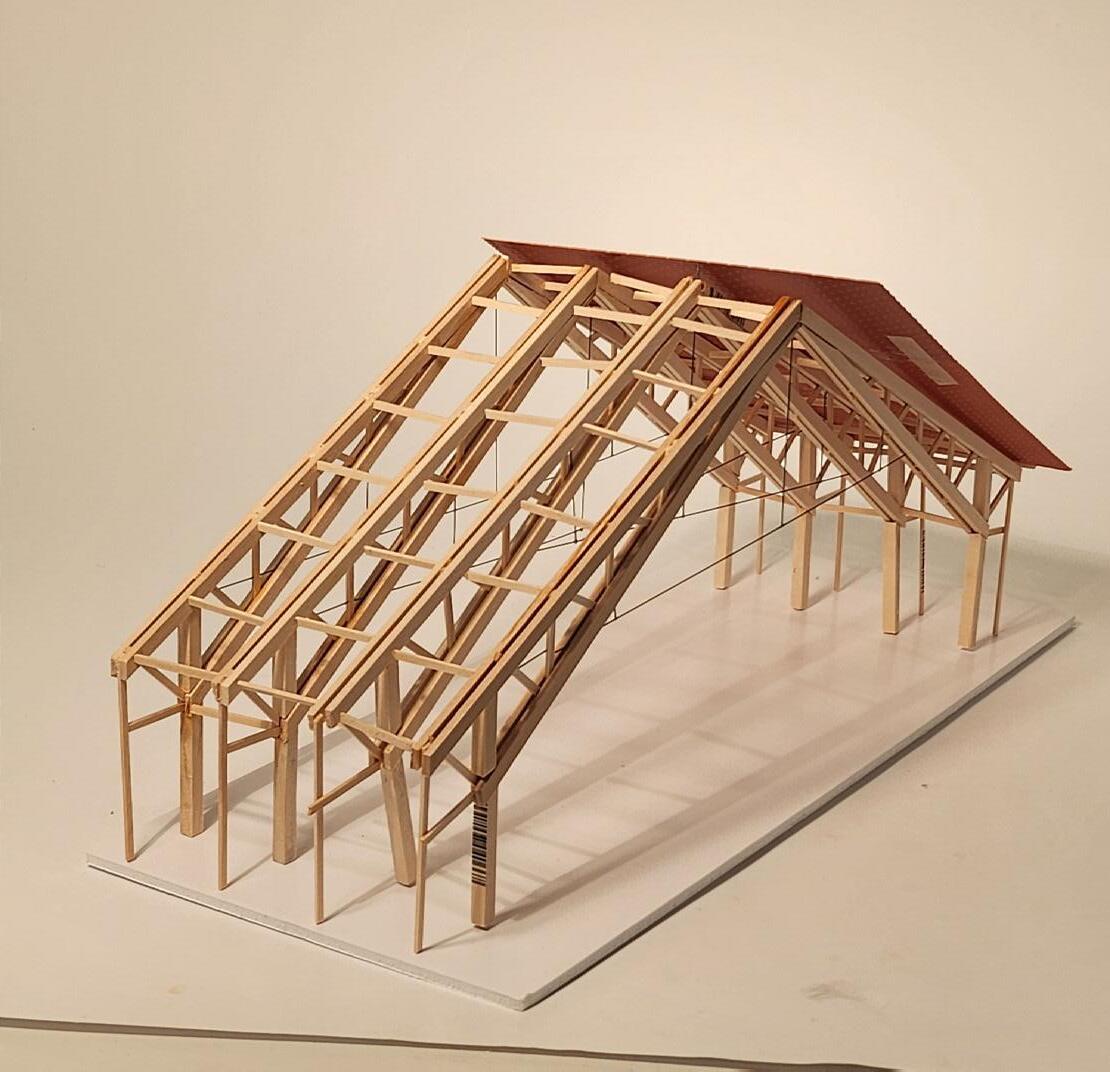
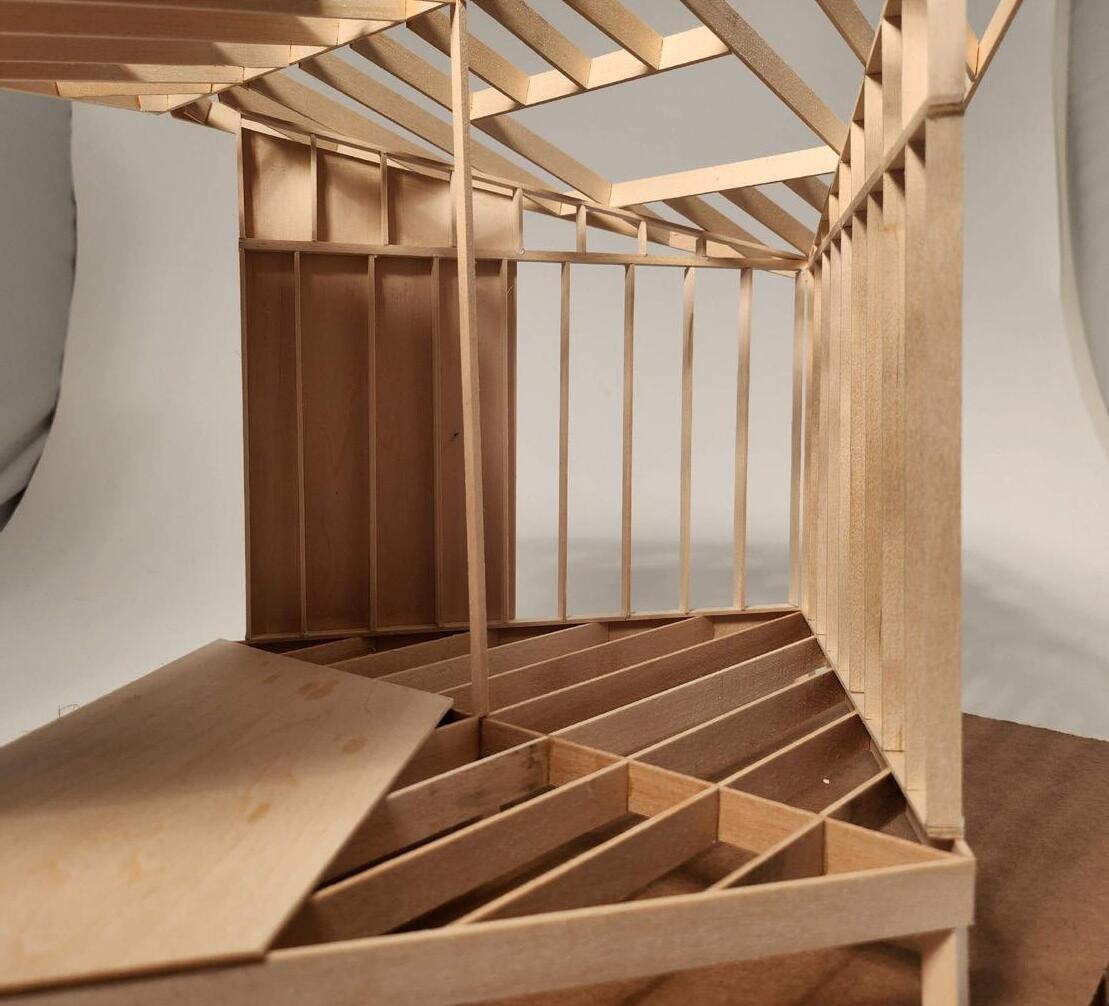
A central focus of this project is the atmosphere of the woodshop itself. Woodshops naturally possess a rough, tactile, and rustic character, the scent of raw lumber, dust suspended in sunlight, and the textured grain felt beneath the hand. Placing this craft within a sterile, overly modern environment would diminish its authenticity. Instead, by shaping the building as a barn, the design embraces this character and reinforces a connection to traditional woodworking. The barn typology evokes openness, durability, and material honesty, aligning naturally with the traditions of wooden boat building.
The program organizes workshops, classrooms, and communal spaces into a cohesive and interconnected sequence. Each space flows into the next, ensuring that no function feels isolated. Because boat building depends on collaboration and shared knowledge, the architecture reflects this collective process. Light, ventilation, and environmental performance work in harmony with the exposed structural frame, echoing the breathable and functional qualities of historic barns. Ultimately, The Barn becomes a living classroom, in which structure, craft, and atmosphere work together to shape learning.

a-a
b-b


Floor Plan
Floor Plan
Studio 03 | Fall 2025 | Professor Michael Cook |
In Collaboration with Ligert Hoxha
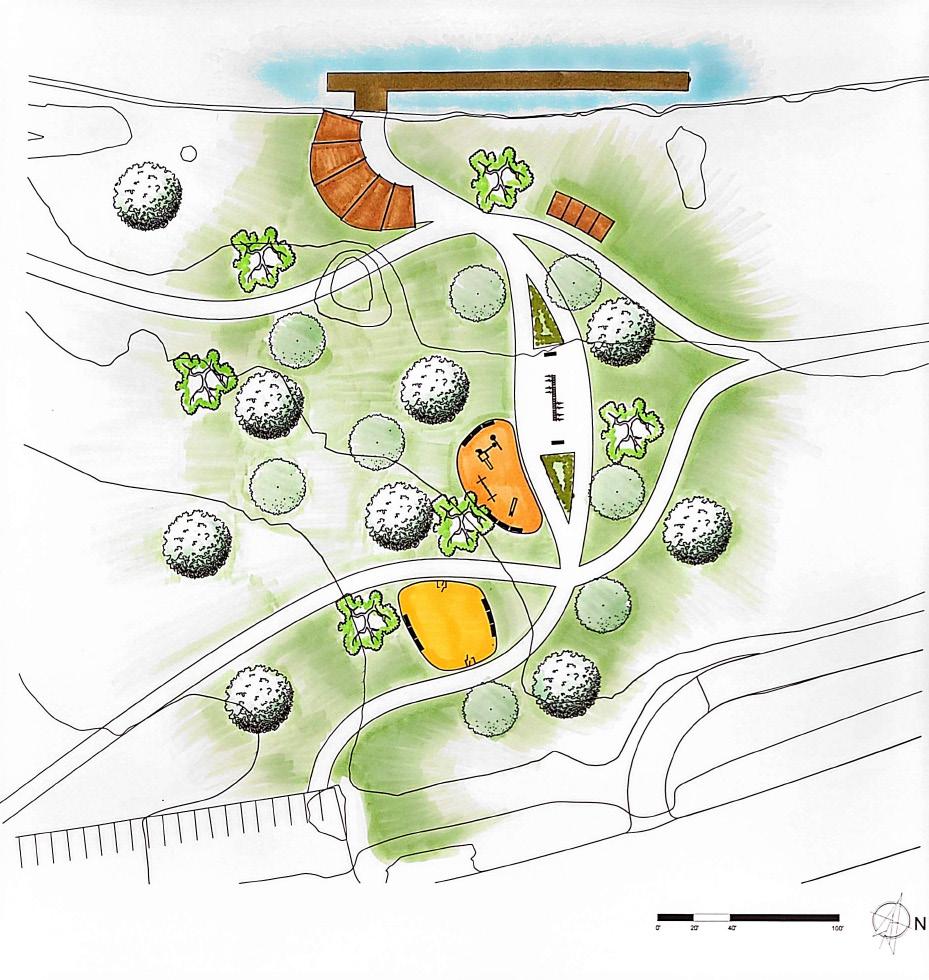
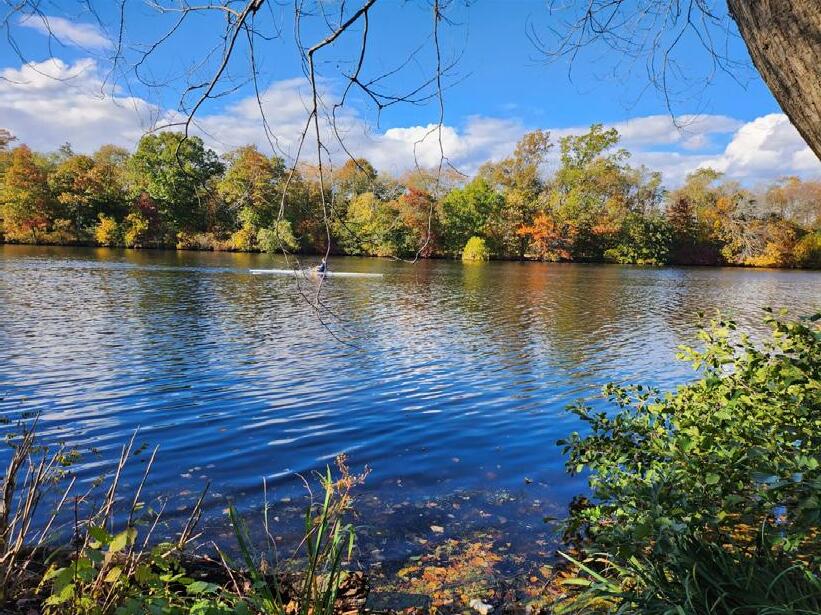
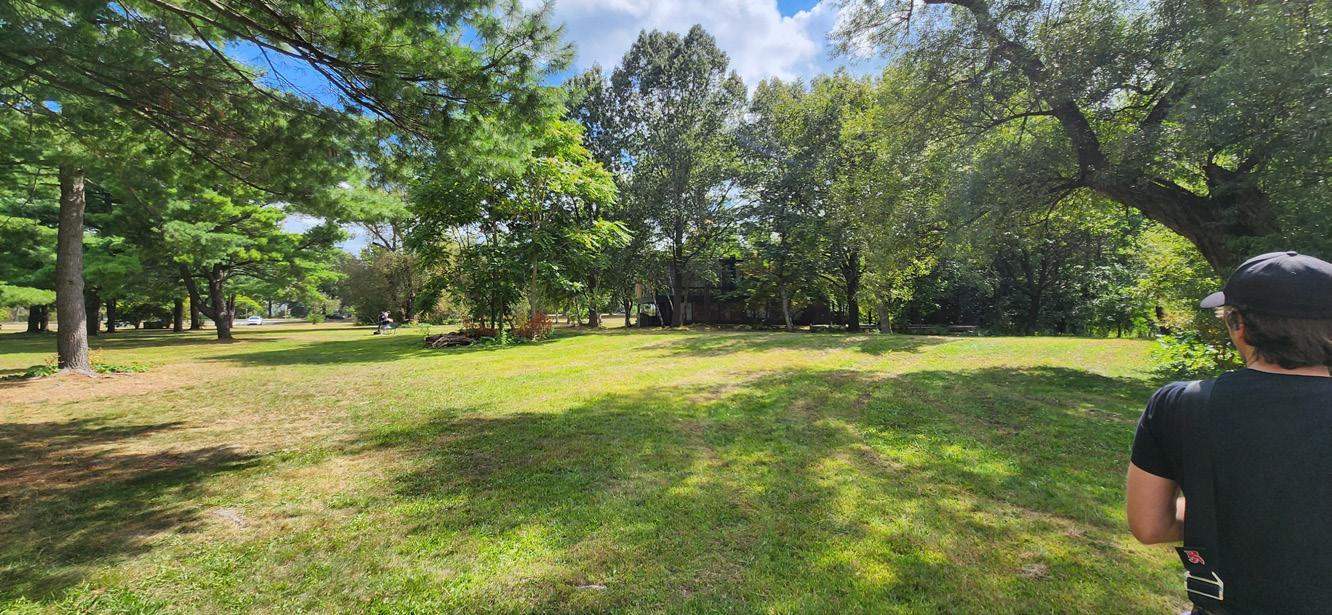
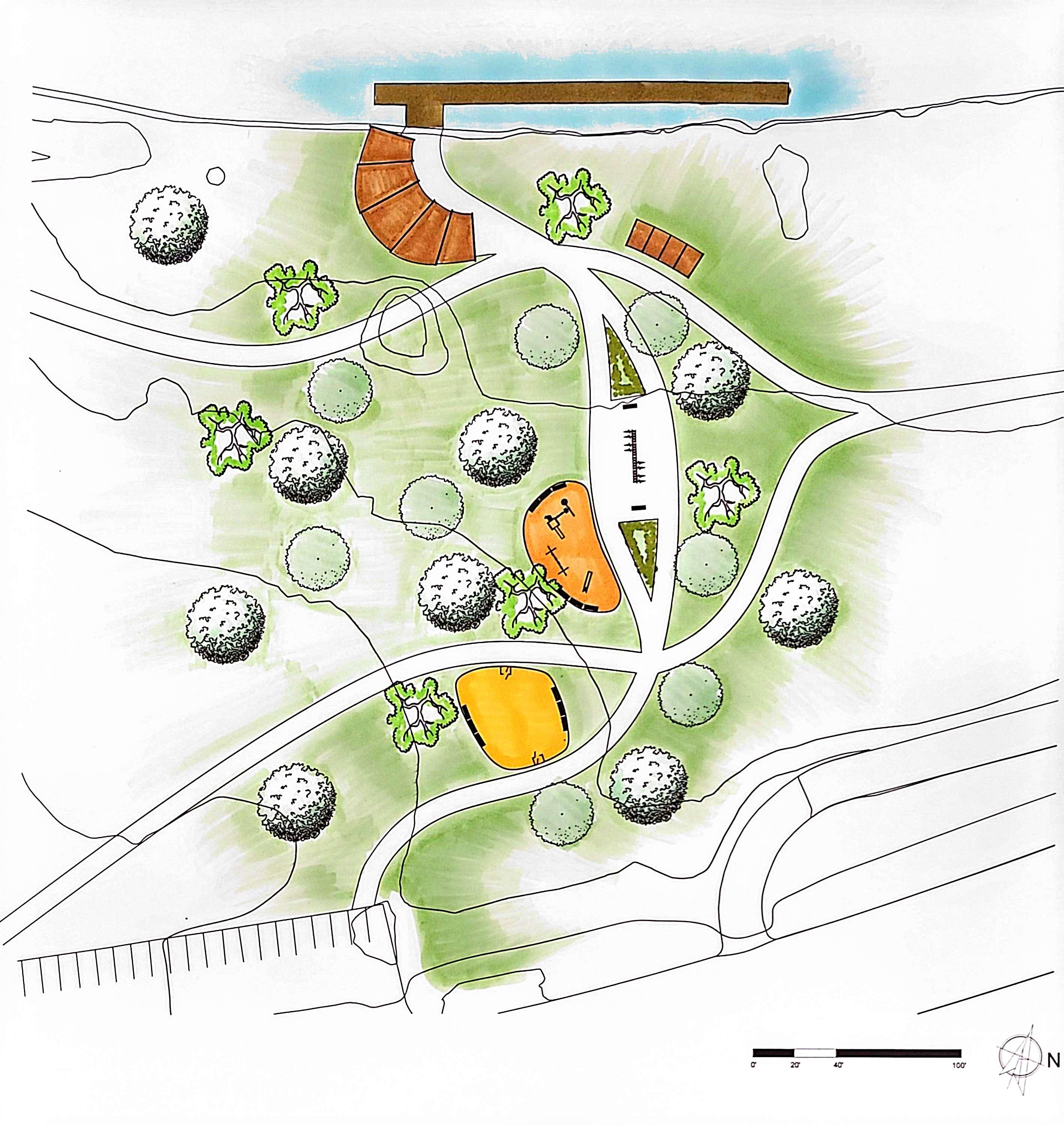
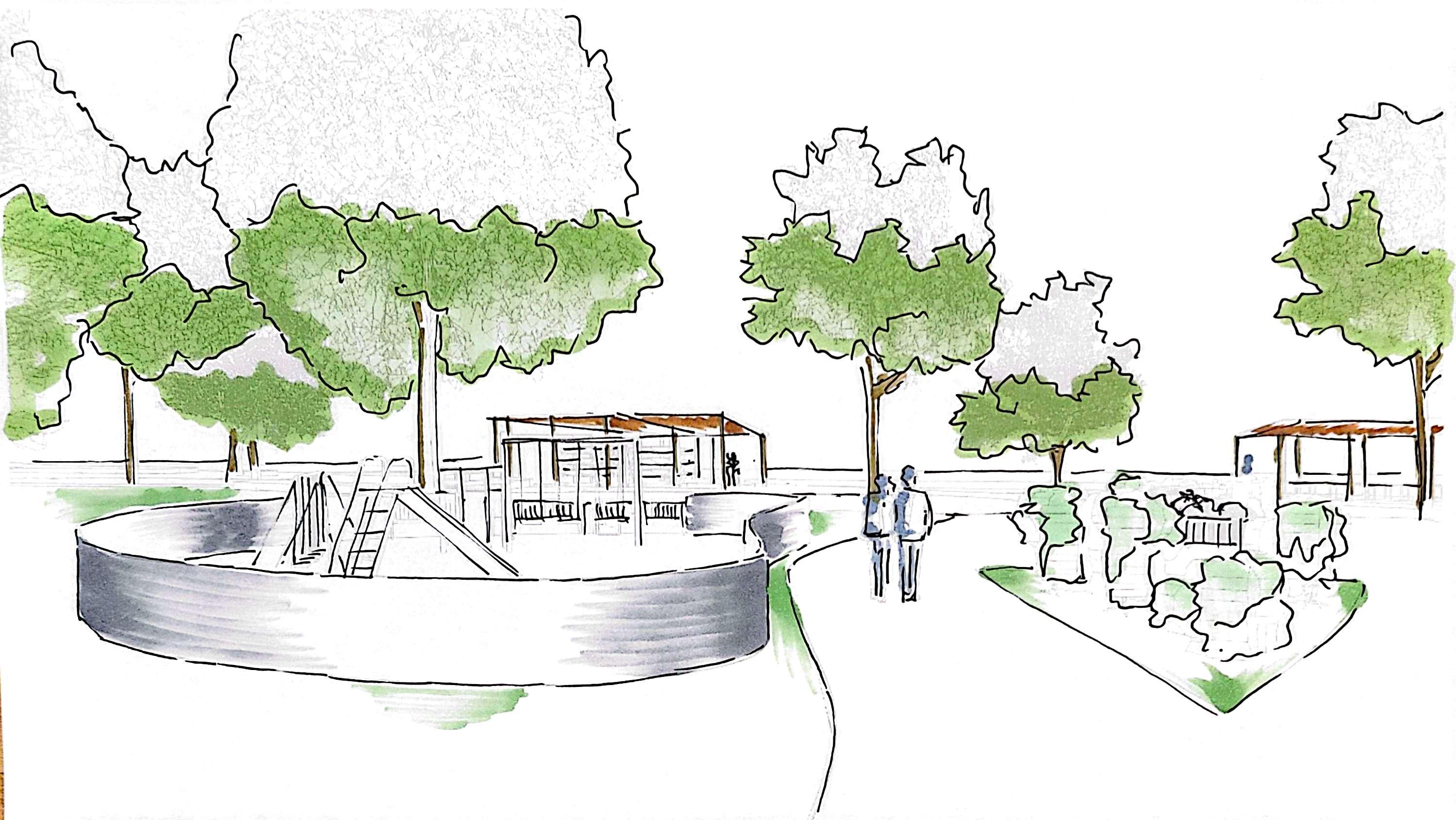
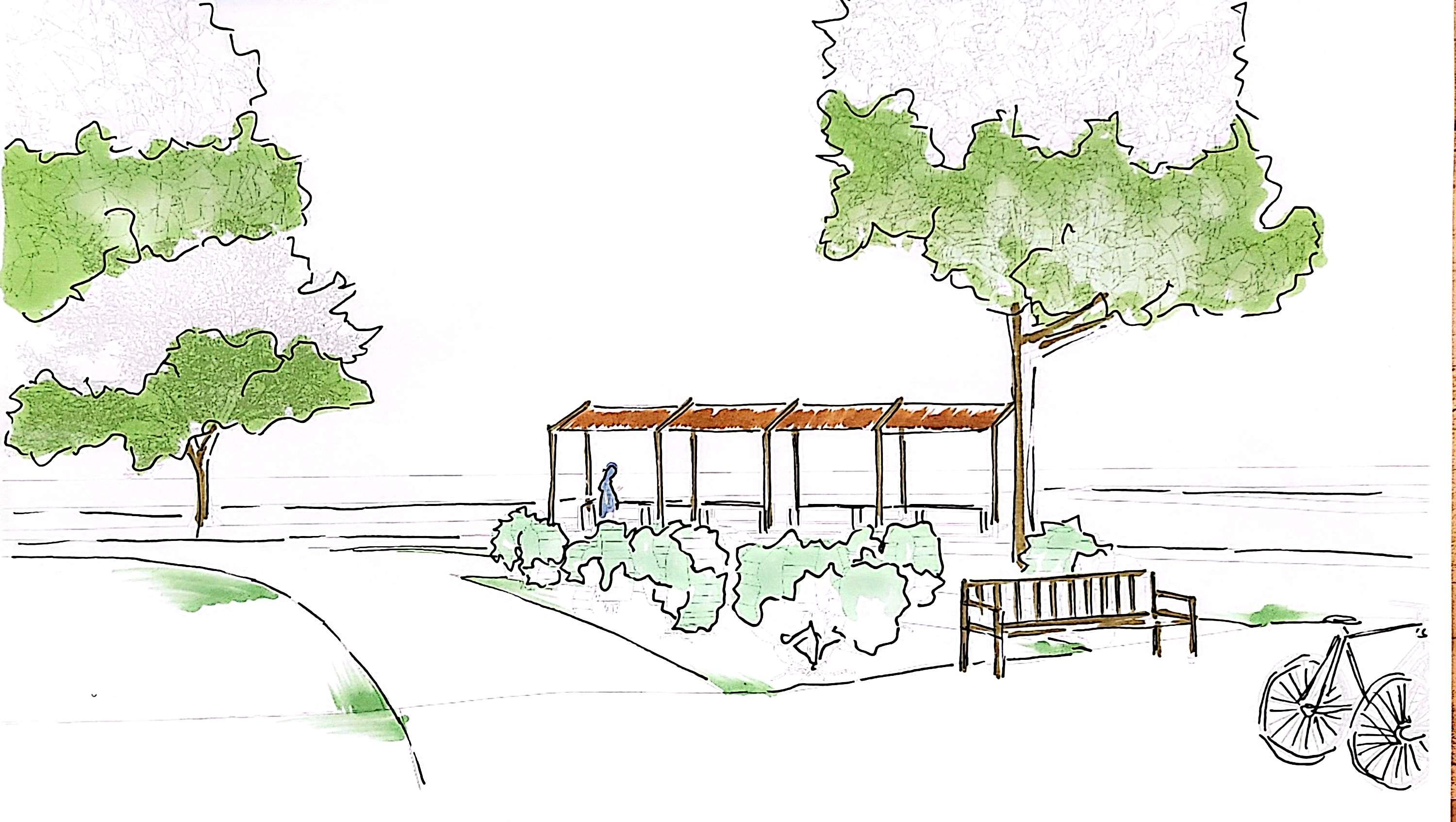
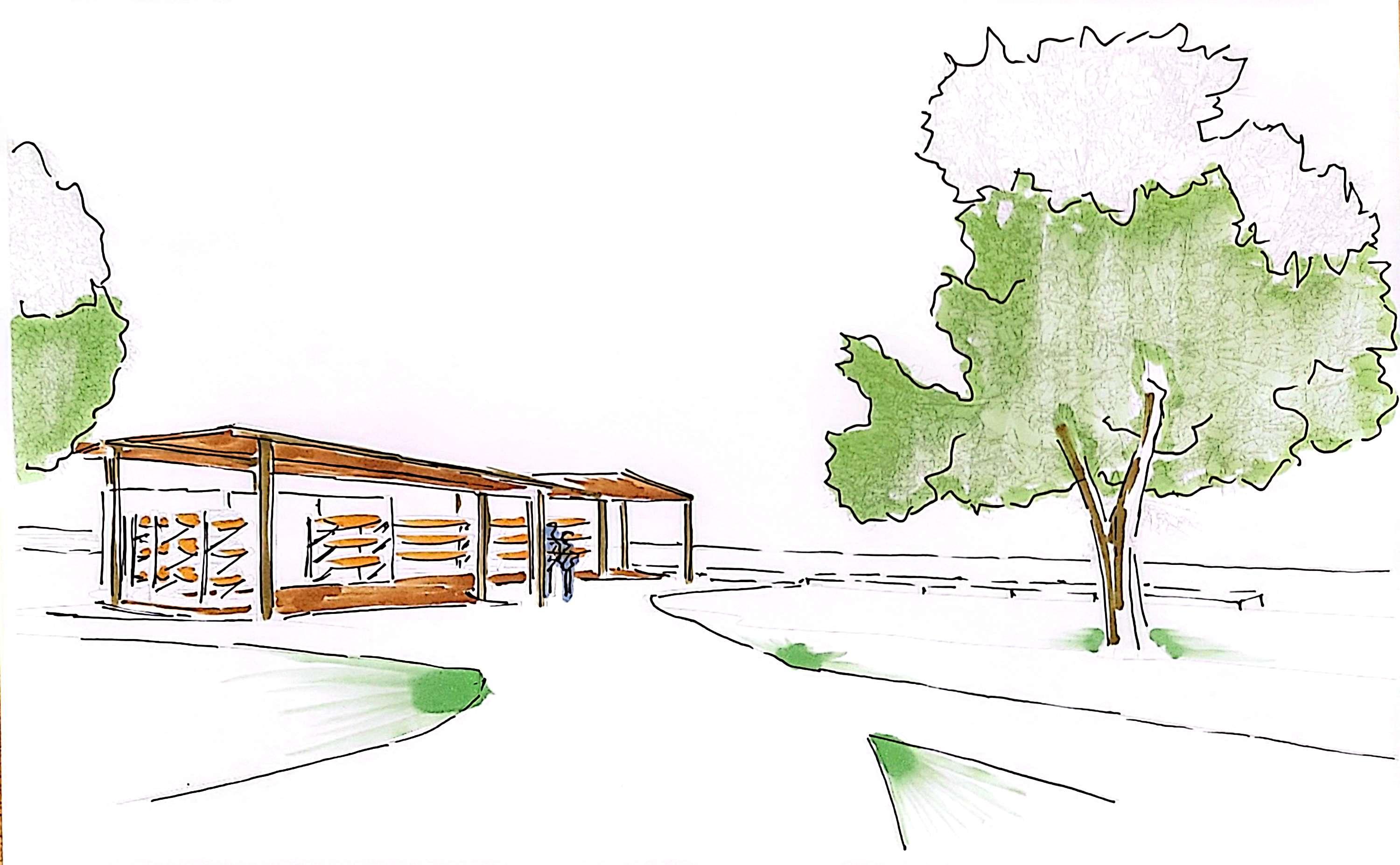
This project uses circulation as a central design strategy, organizing the park around a dynamic, winding path that connects the riverside pavilion, boat storage and dock, dog park, playground, and outdoor classroom together. More than a route for movement, the pathway acts as a connective spine, shaping user experience and responding to the flow of the Charles River.
The paths curve gently across the site, creating moments of pause, interaction, and changing views of the river and landscape.This allows users to experience the park as a continuous journey, with shifting perspectives that showcase the river, open lawns, and programmatic nodes. Each program is strategically placed along this network to encourage activity and connection, from the social waterfront pavilion to family-oriented and educational spaces.
By prioritizing circulation, the project emphasizes fluidity, and connectivity. The resulting park is not a collection of isolated functions but a cohesive landscape where programs and pathways merge to create an active, adaptable public space along the river’s edge.
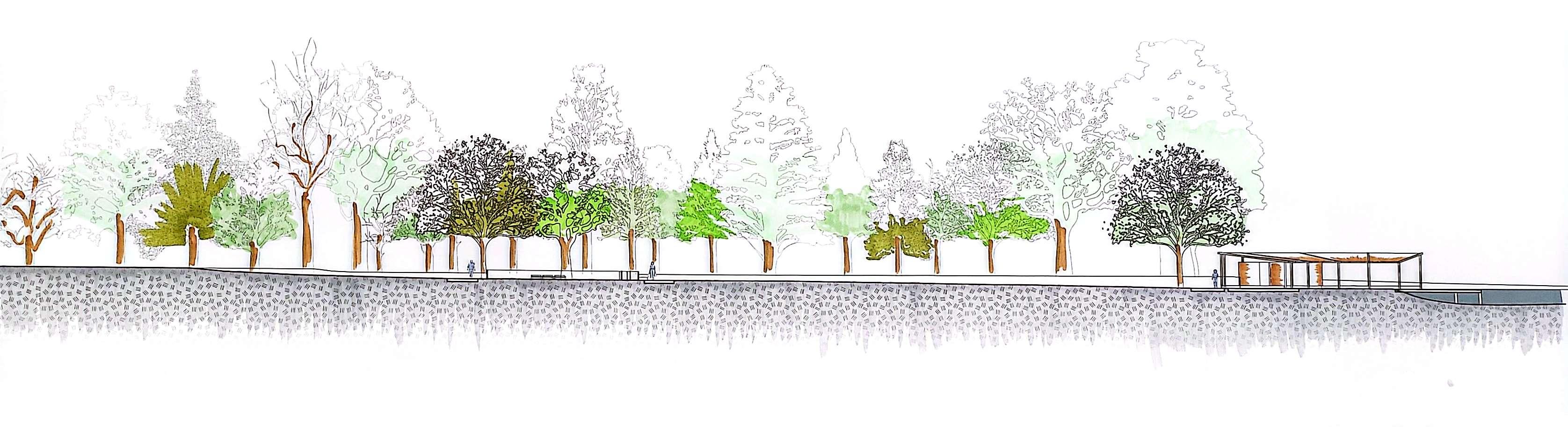
Section
Site Section
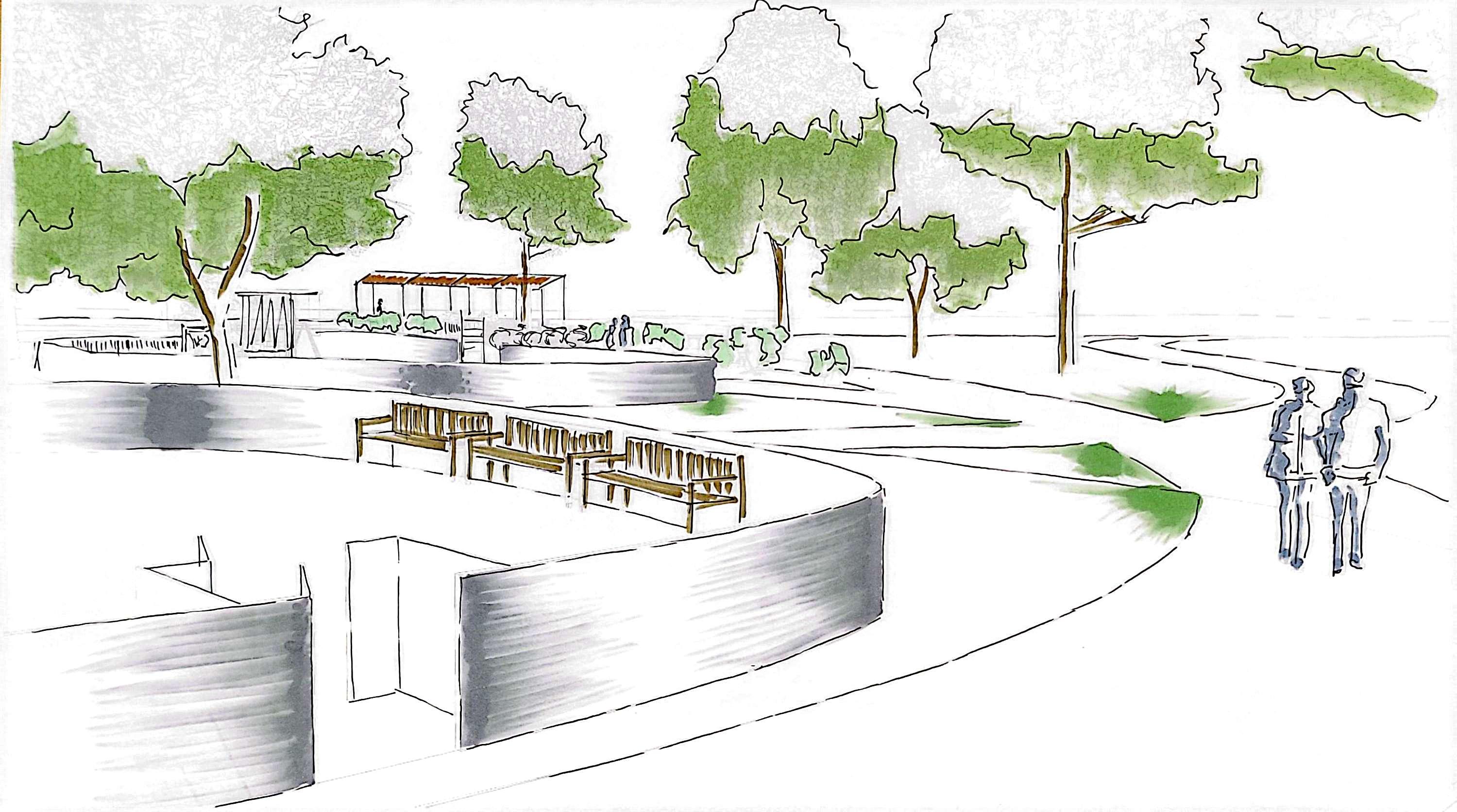
Perspective Drawings
Studio 02 | Spring 2025 | Professor Ingrid Strong
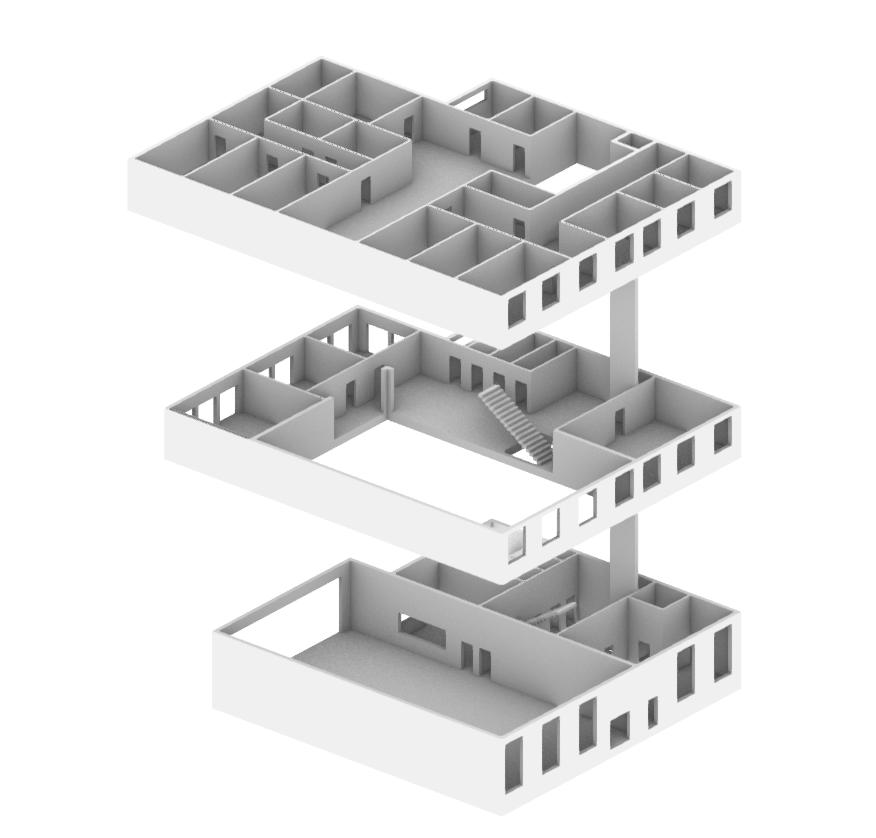
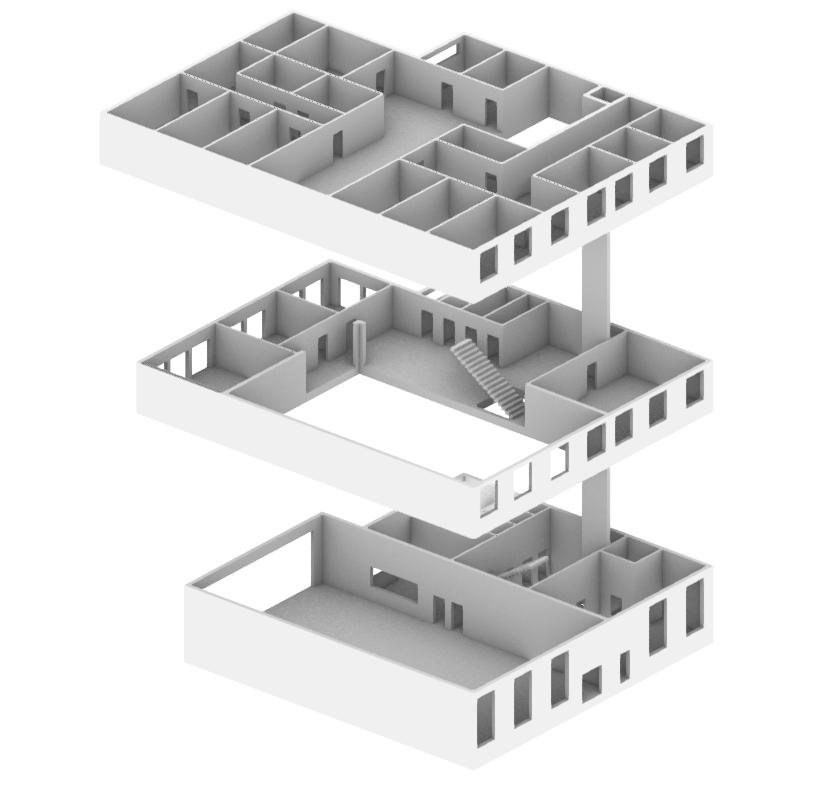
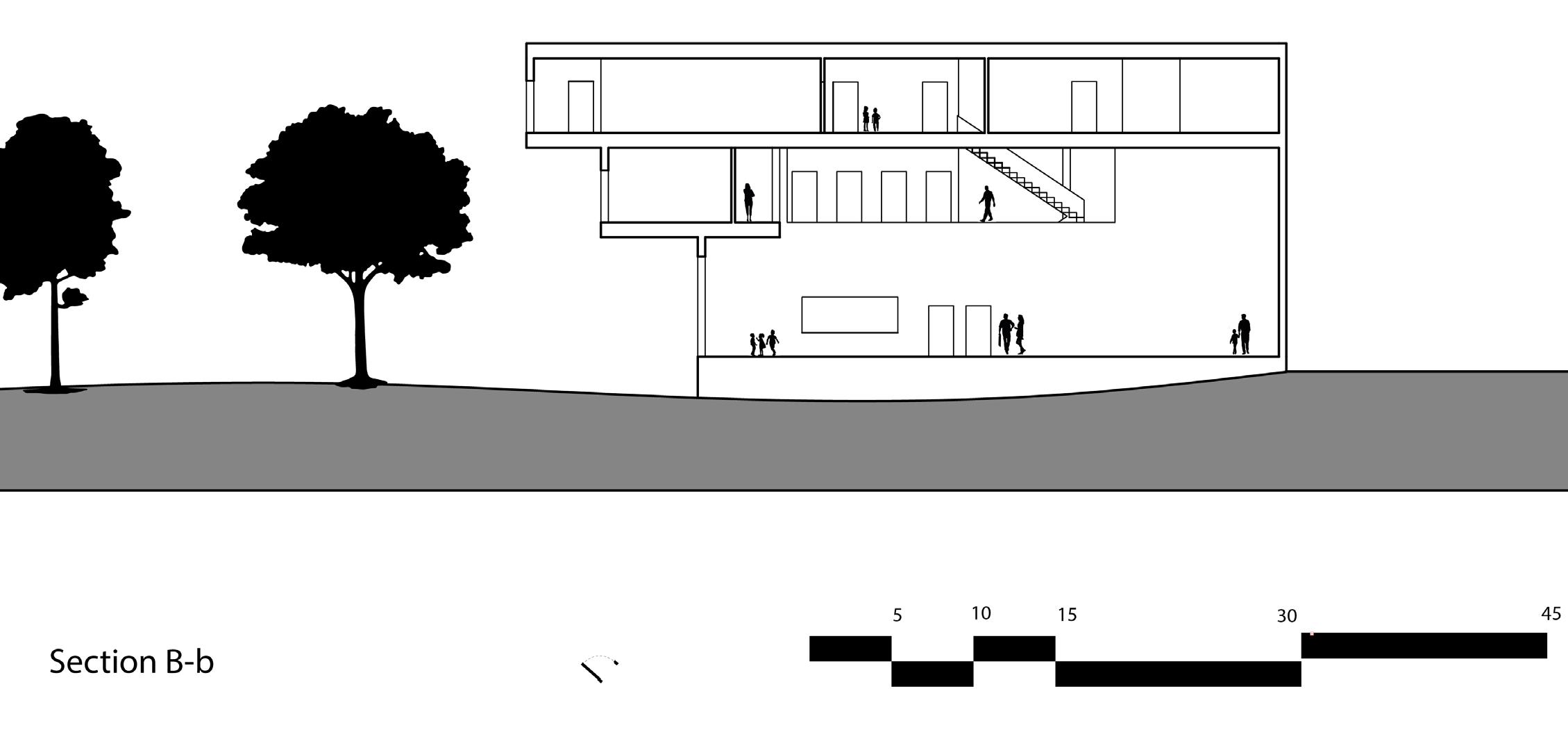
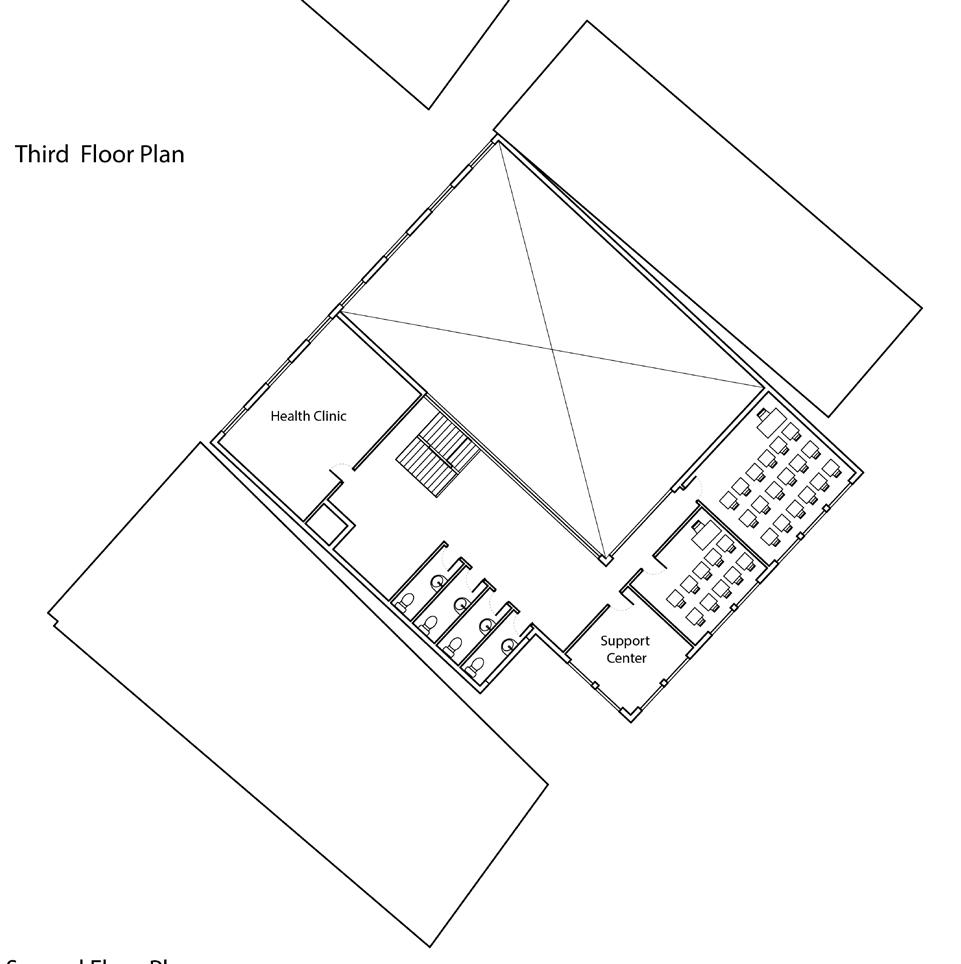
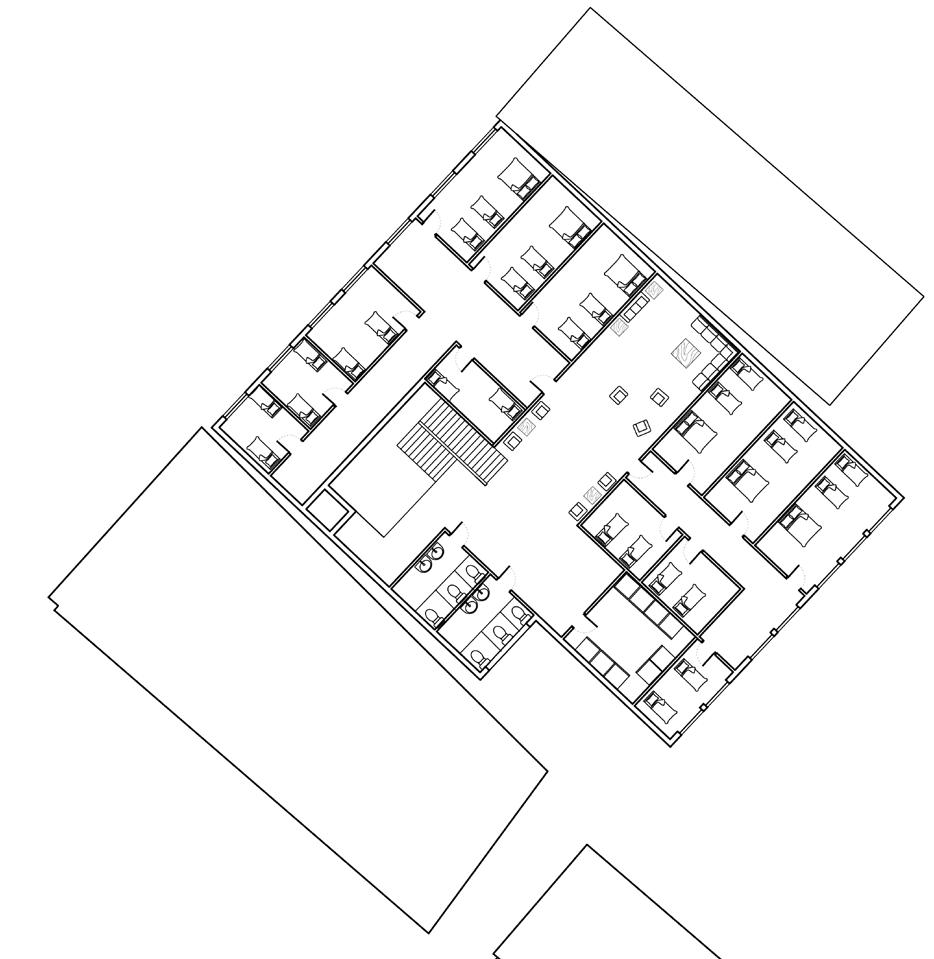
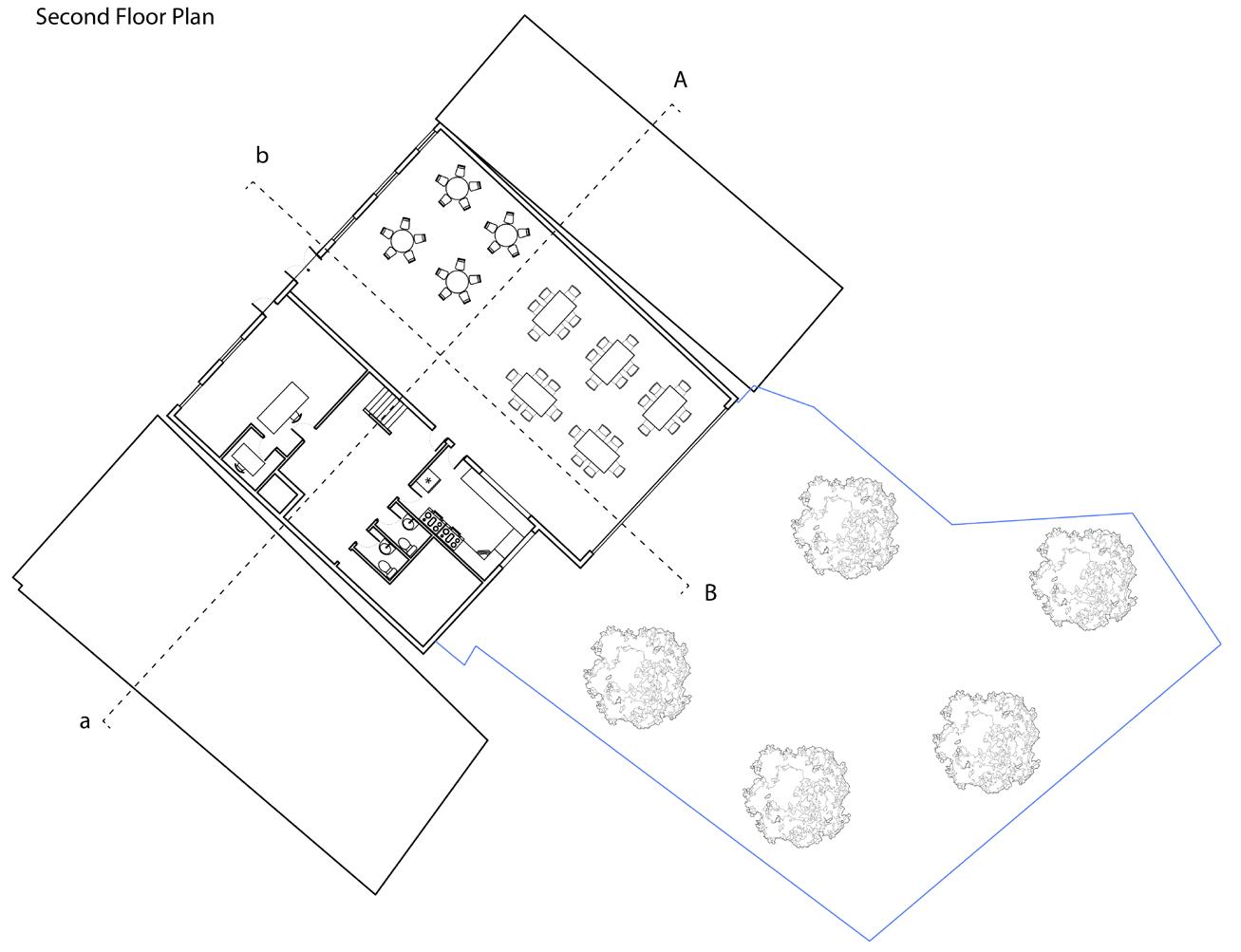
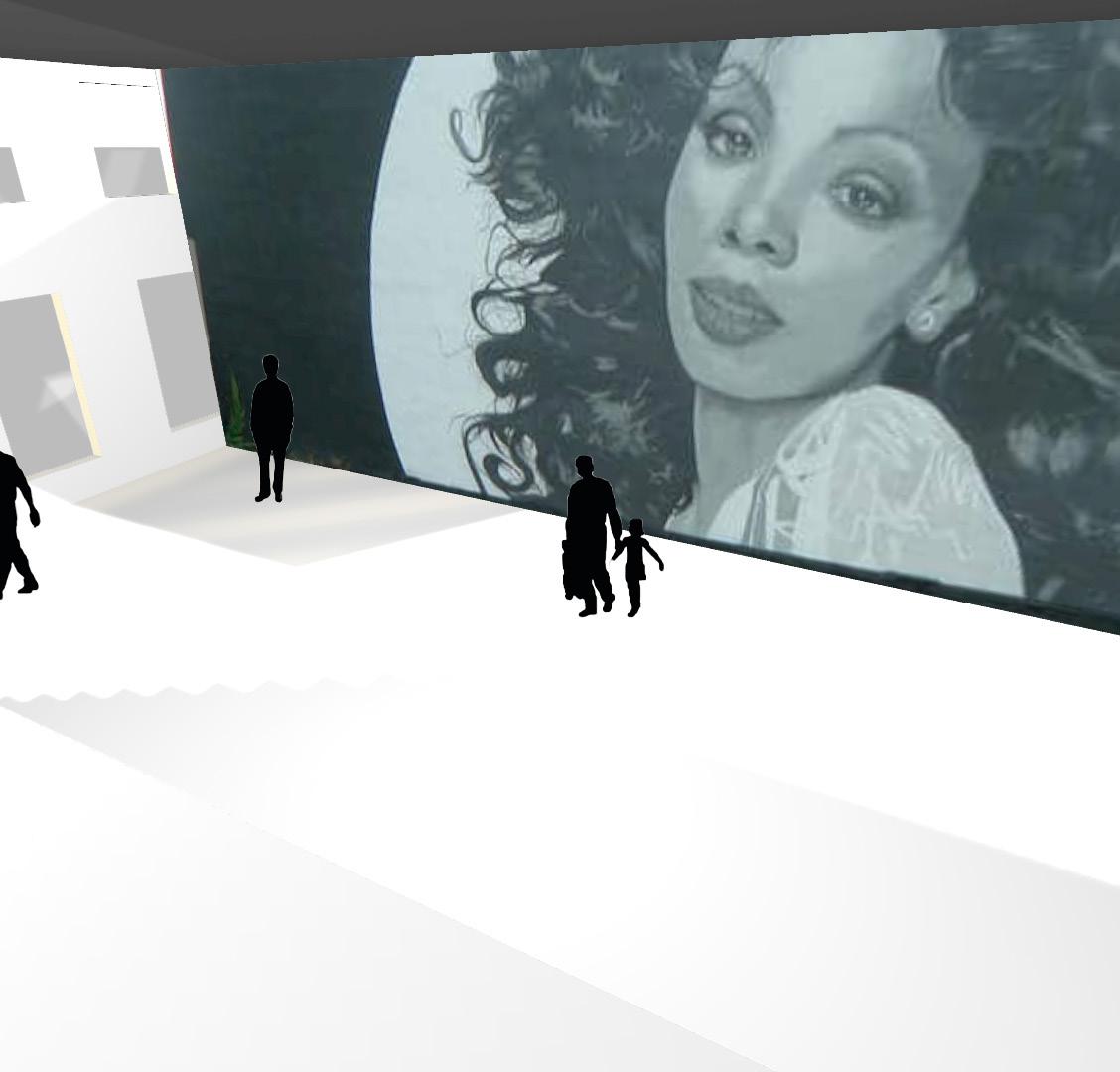
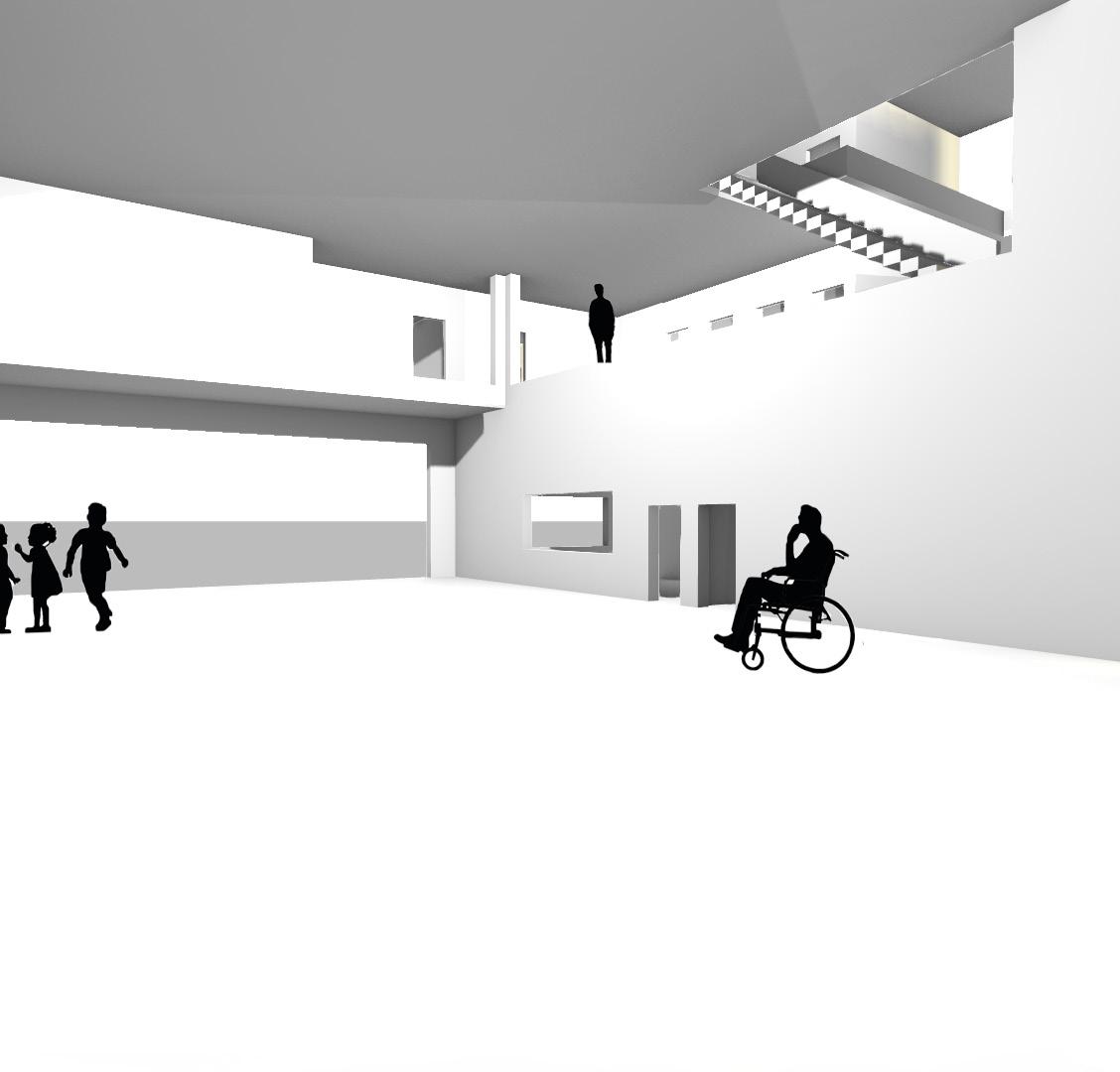
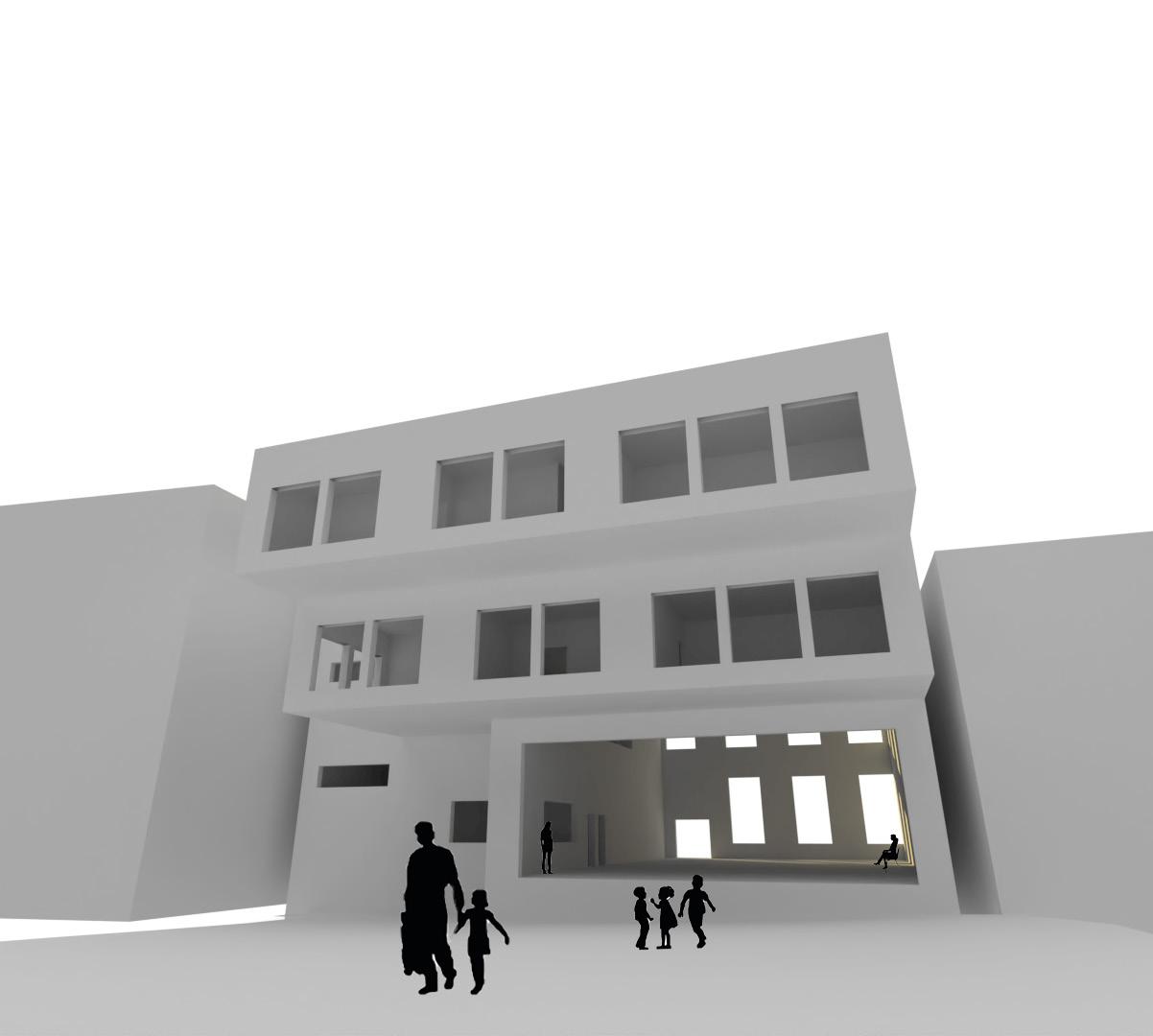
This project proposes a Migration Center that supports residents relocating from Brazil’s Pantanal region while also creating a shared third space for both newcomers and the surrounding Nubian Square community in Boston. The building is designed to integrate seamlessly into its urban context of historical brick buildings. It respects the neighborhood’s scale and character on the outside, while opening into a large, modern, and welcoming interior.
The building is organized vertically to reflect varying degrees of privacy needed. Communal and public spaces are located at ground level, anchored by a central gathering area that encourages interaction between new residents and neighbors. Classrooms and learning spaces occupy the second floor, providing a balance between openness and focus, while private living spaces are placed on the third level, offering residents a sense of retreat and security.
Double-height spaces are used to promote openness and connection between floors, fostering comfort and belonging. By balancing accessibility with privacy, the Migration Center becomes both a point of arrival and a place of long-term community and resilience.
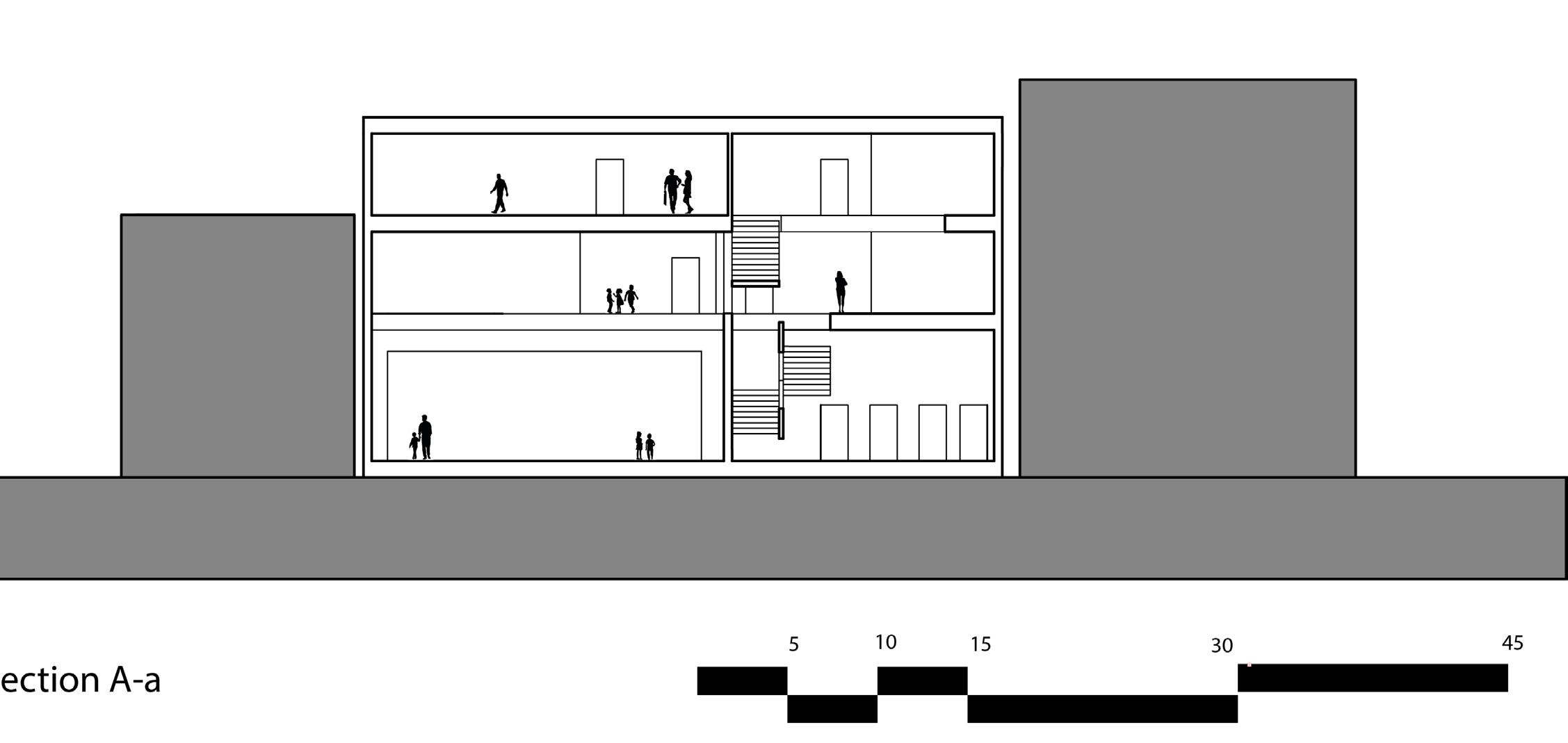
Section a-a (top)
Section b-b (bottom)

Private vs. Public Diagram

Studio 01 | Fall 2024 | Professor Elizabeth Van Dyke
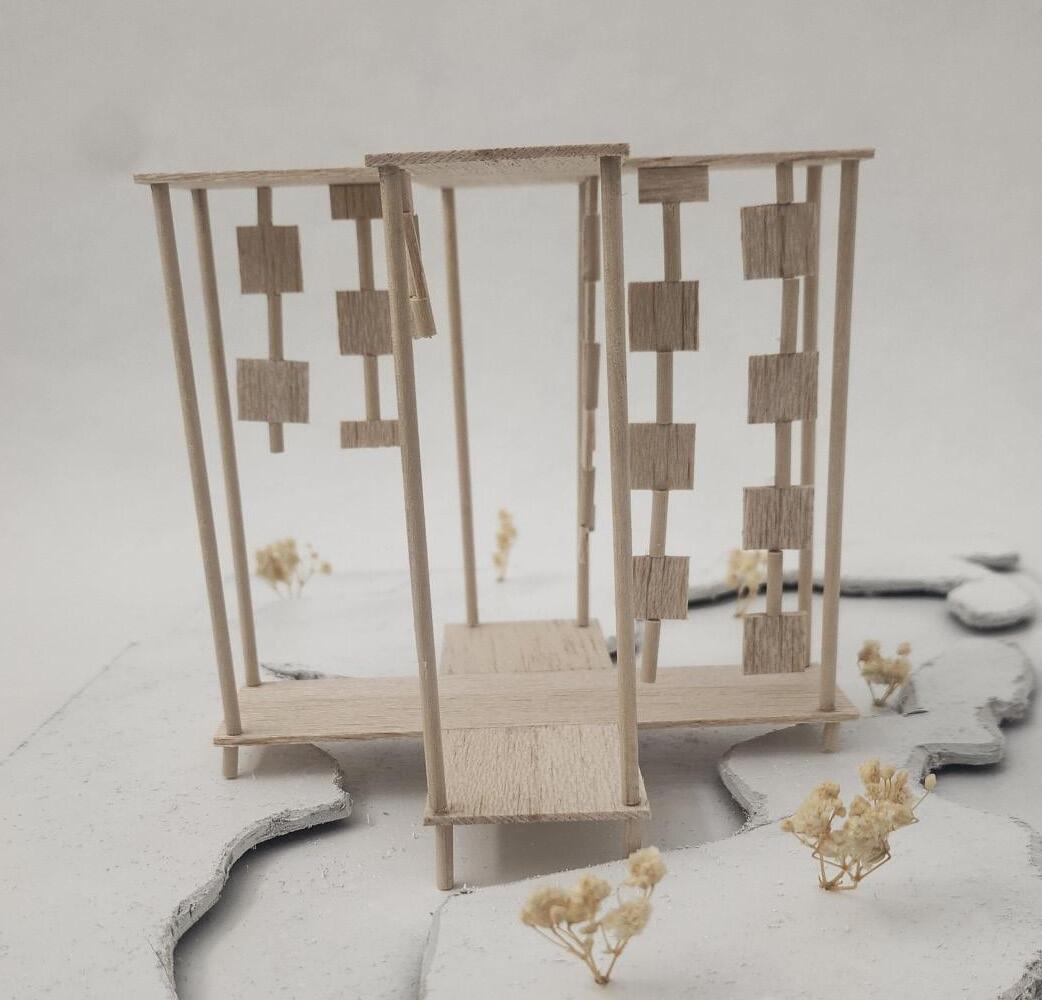
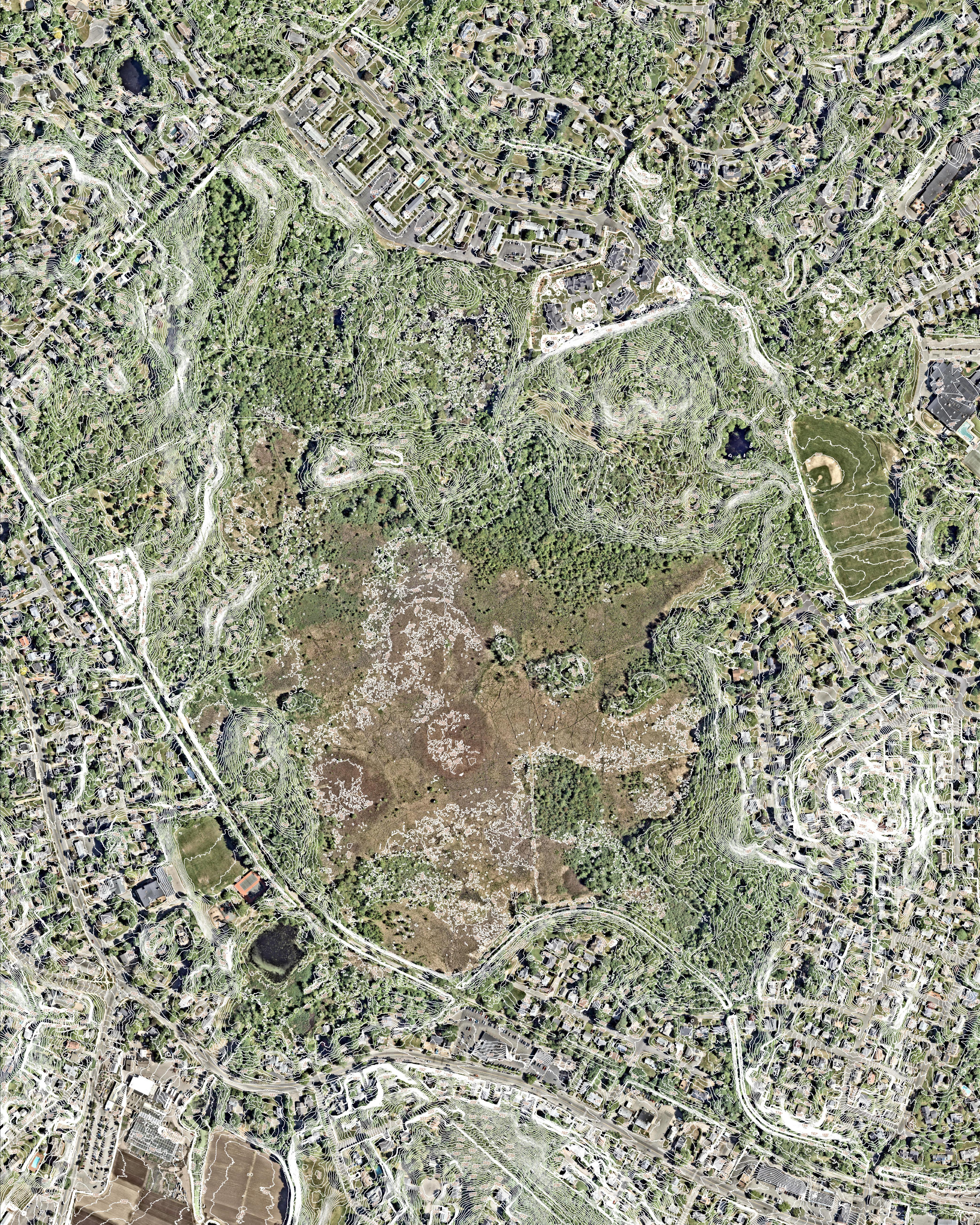
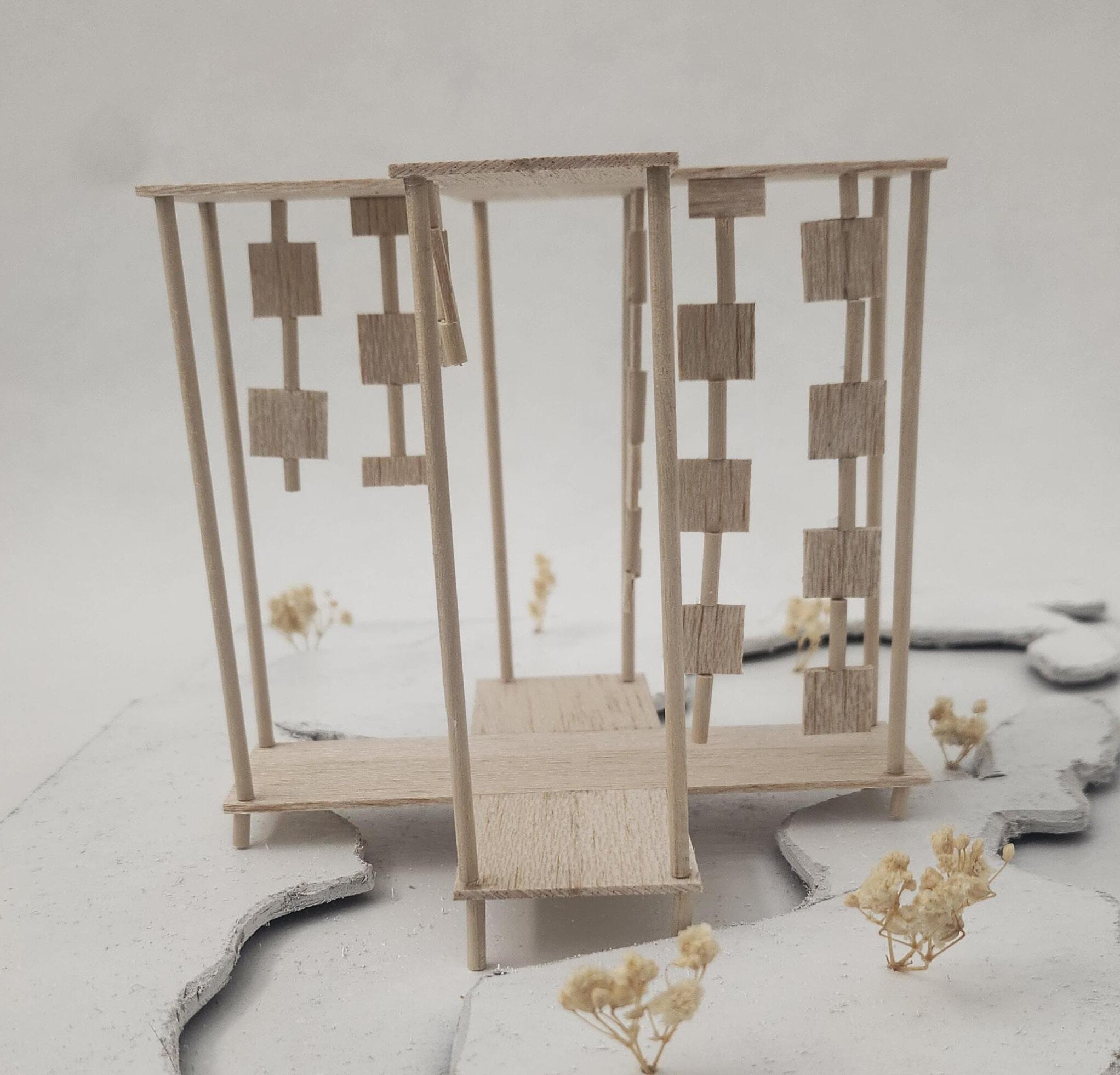
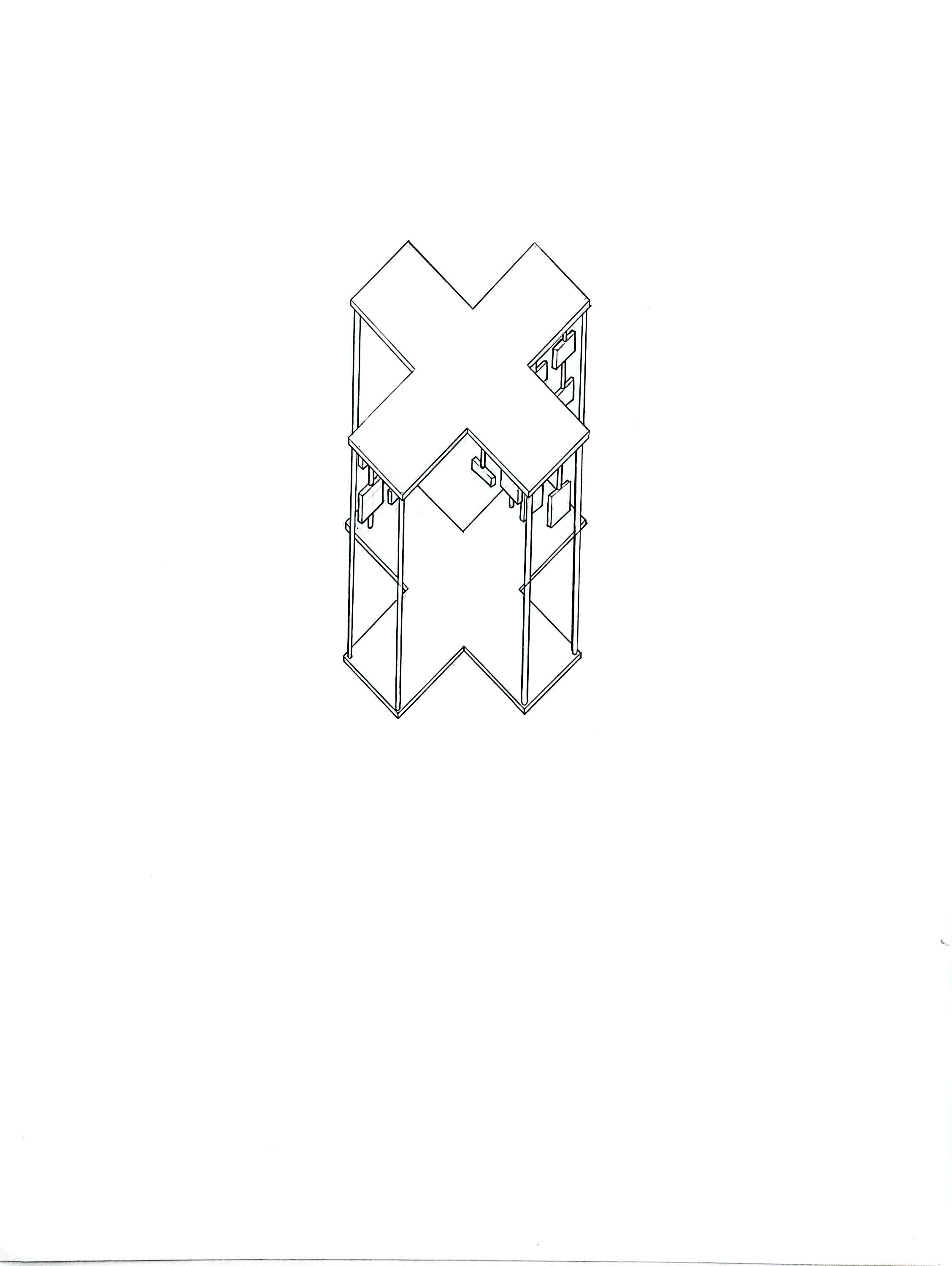
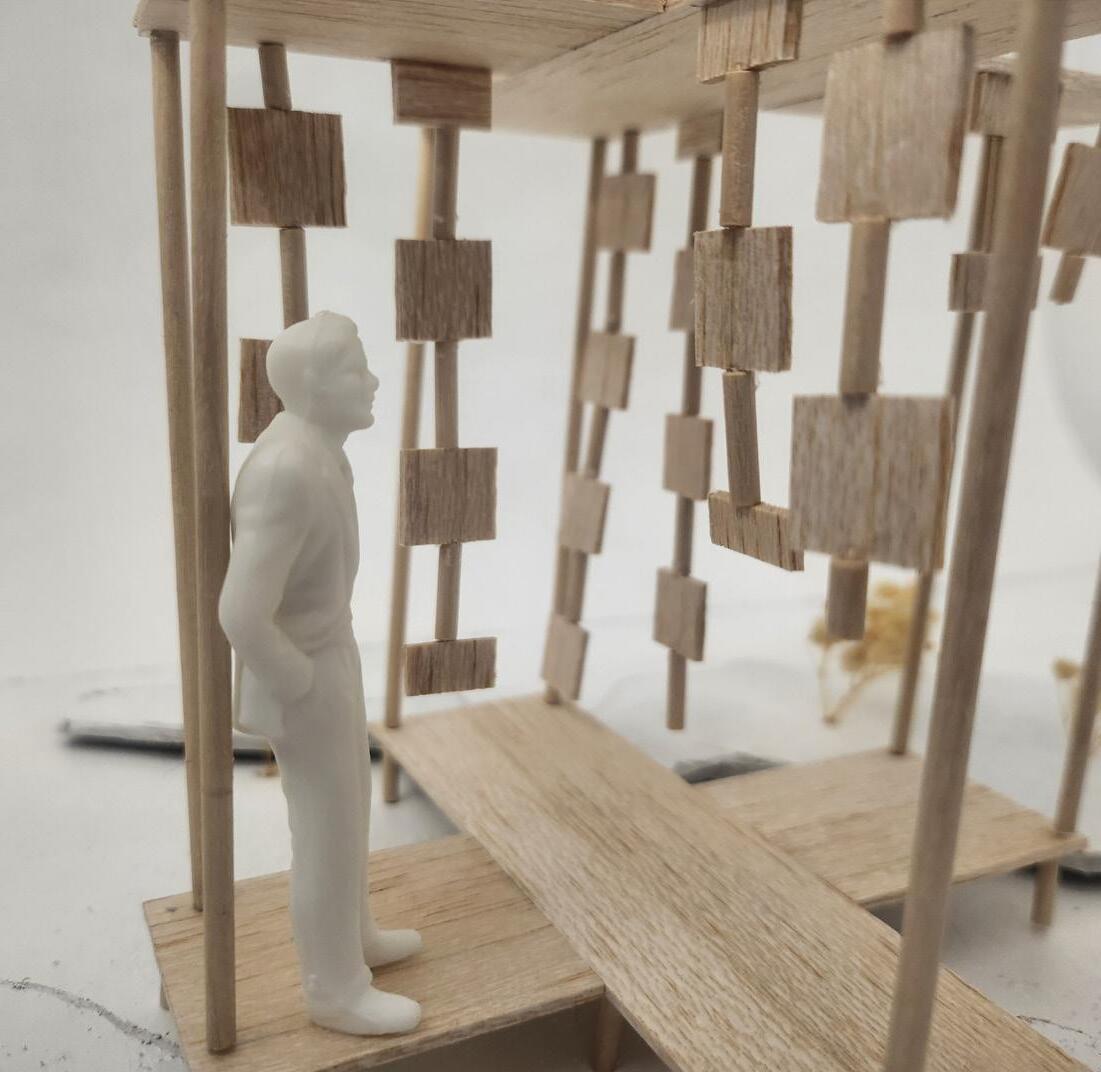
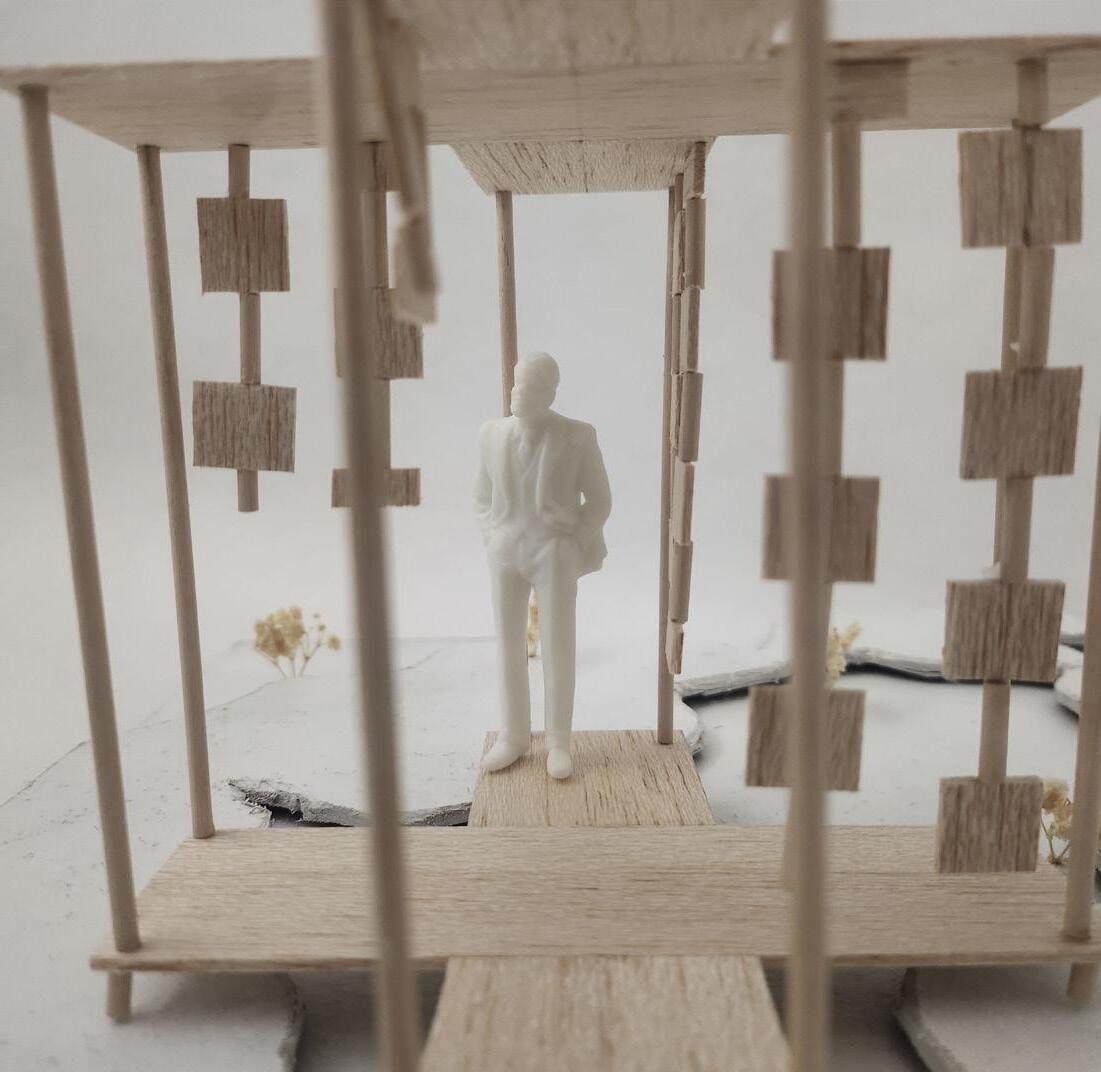
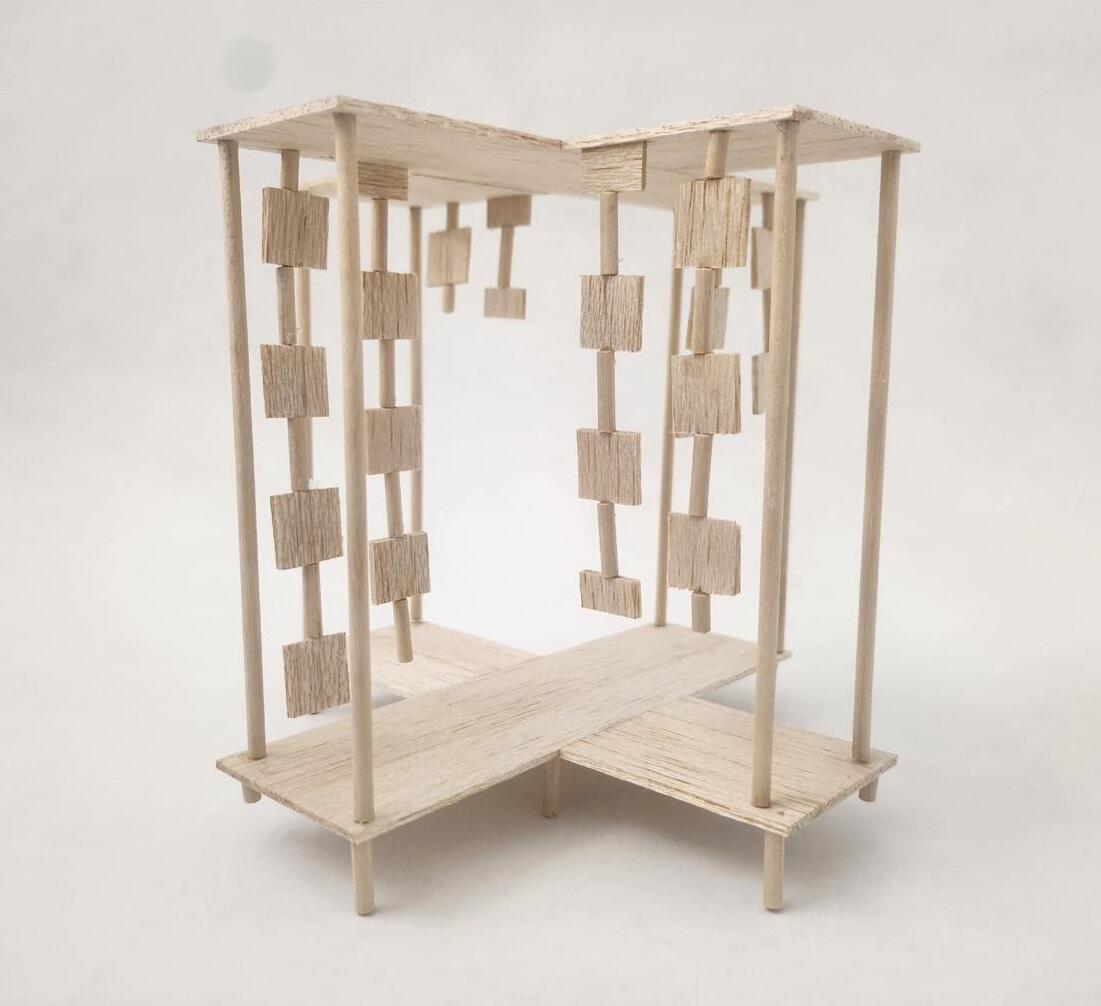
The Pavilion is conceived as a light, site-responsive intervention within the landscape of Arlington Great Meadows. Its form emerges from an exploration of the “plus sign” or cross shape. This geometry becomes both a spatial organizer and a symbolic gesture, extending arms toward the surrounding meadow while maintaining a minimal footprint on the land.
Sited deliberately along an existing path, the pavilion avoids disturbing the ecology of the meadows. By occupying a naturally open clearing, it respects established habitats while taking advantage of the wind flows. These winds activate the pavilion’s defining feature: its wind-chime curtains, suspended along one side of each arm of the plus. As breezes pass through, the chimes sway gently, creating a sensory overlay that heightens one’s awareness of movement, air, and sound within the meadow. Each chime is carefully oriented to frame and direct views. Rather than acting as random decorative elements, they function as visual guides, nudging visitors’ attention toward specific features of the landscape. By tuning both sight and movement, the pavilion offers an experience that is contemplative, interactive, and deeply connected to the site.
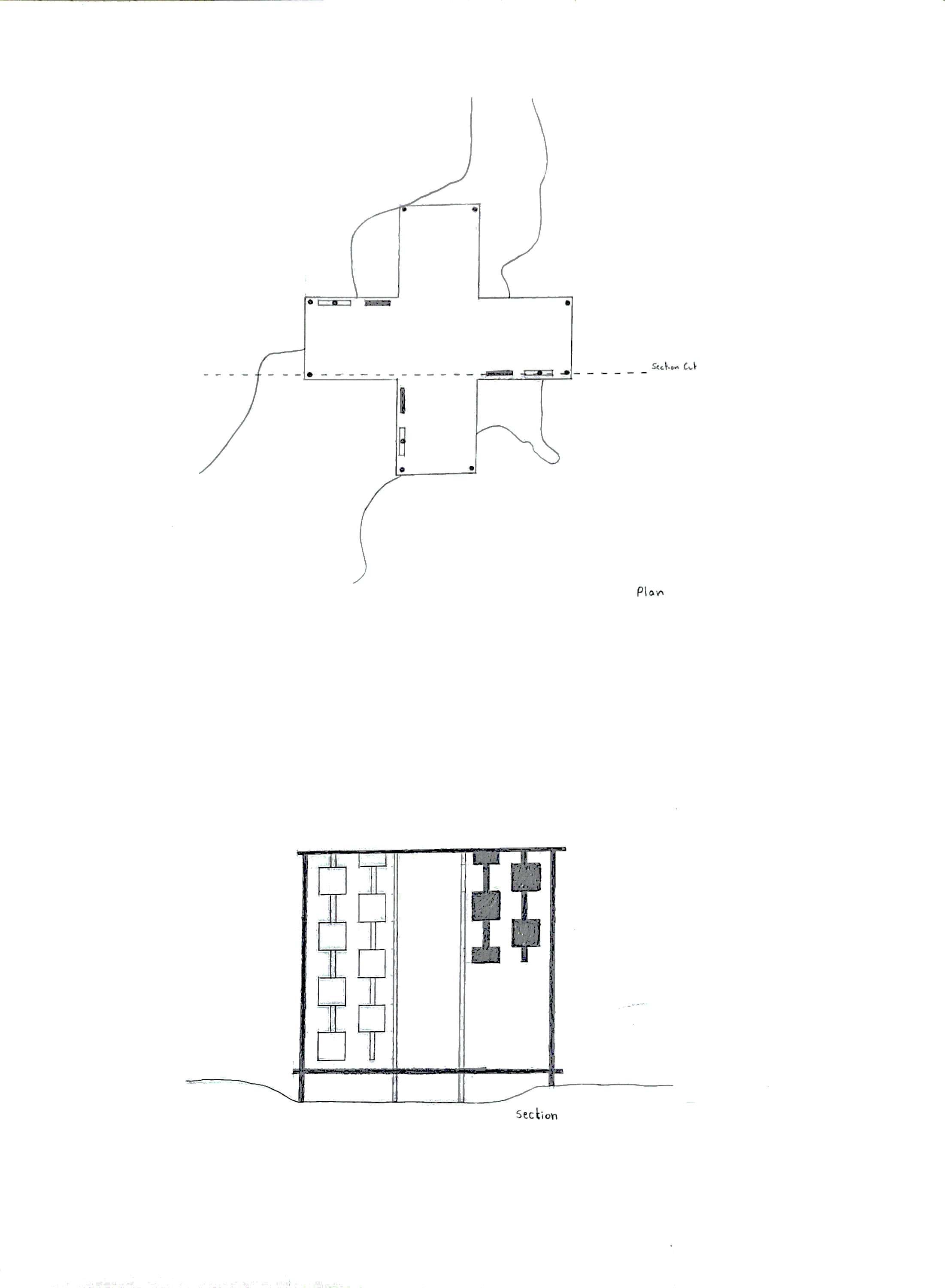
Hand Drawn Plan

Fall 2024 - Fall 2025





Fall 2023 - Fall 2025 | Arlington High School