Engineering and Architectural Design Student
PORT FOLIO Manqi Zhang
Contact: zhangmanqi77@gmail.com

Engineering and Architectural Design Student
Contact: zhangmanqi77@gmail.com
I see myself as a curious and driven designer interested in how structure and environmental thinking can shape design.
I am a multi-tasker. I am able to balance academic work with design competitions and independent project experience, while maintaining First Honours and contributing to award-winning work.
Bartlett School of Architecture, University College London MEng Engineering and Architectural Design







Modelling: Rhino | AutoCAD | Revit | Grasshopper | Maya | D5 Render | Enscape | Vray | Fusion 360 |Twinmotion |ReCap | Analysis: Robot Structural Analysis | ArcGIS | Design Builder | ETABS | Programming: MATLAB | Python | C# |
Other software: Procreate | InDesign | Photoshop | Illustrator | Excel | Powerpoint
Other skills: Data Review | 3D printing | laser cutting | welding | Painting | Watercolour | Photography
Freelance Architecture Designer, The Philippines
6/2025-present Interior designer
Developed an interior concept and spatial strategy for an 8-storey mixed-use private project (~3,200 m² total), balancing functional requirements, circulation and spatial clarity
Xiamen Architecture and Urban Planning Organisation, China
6/2024-9/2024 Architecture assistant
Conducted site and urban analysis using GIS tools to inform early-stage design decisions. Developed 3D visualisations (models + renders) and coordinating drawingsto communicate concept intent clearly for internal critique and client presentations.
Winner, International Association for Bridge and Structural Engineering (IABSE) British Group Future of Design 2025 Led a team of 4 in developing large-span roof proposal integrating bridge structures, daylight and sustainability improvements.
The University of Hong Kong summer program for architectural landscape studies 2022 Explored landscape and urban designing
Tsu Chi Charity Foundation member 2018-present
Organized and hosted a charity promotion campaign in 2022 and volunteer across The Philippines and China.
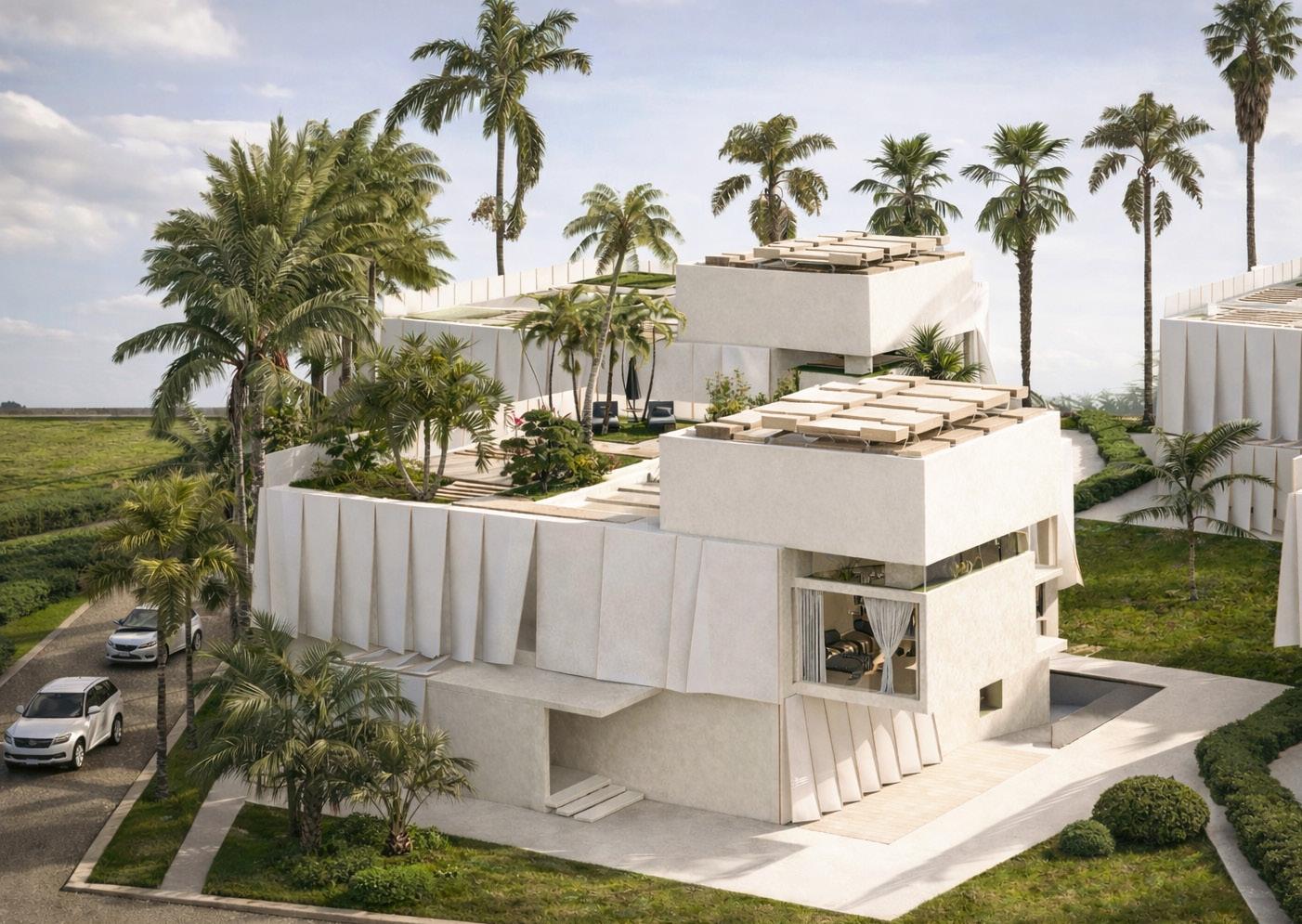
Residential project- House of Future
SITE: UAE
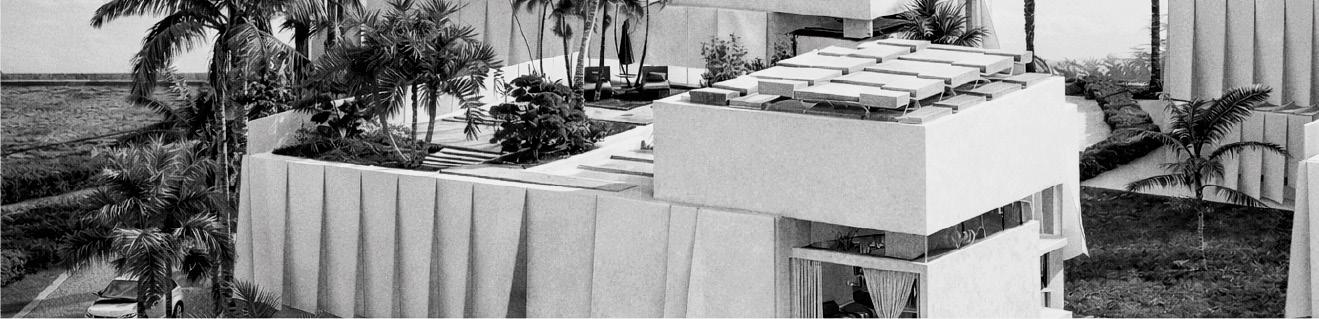
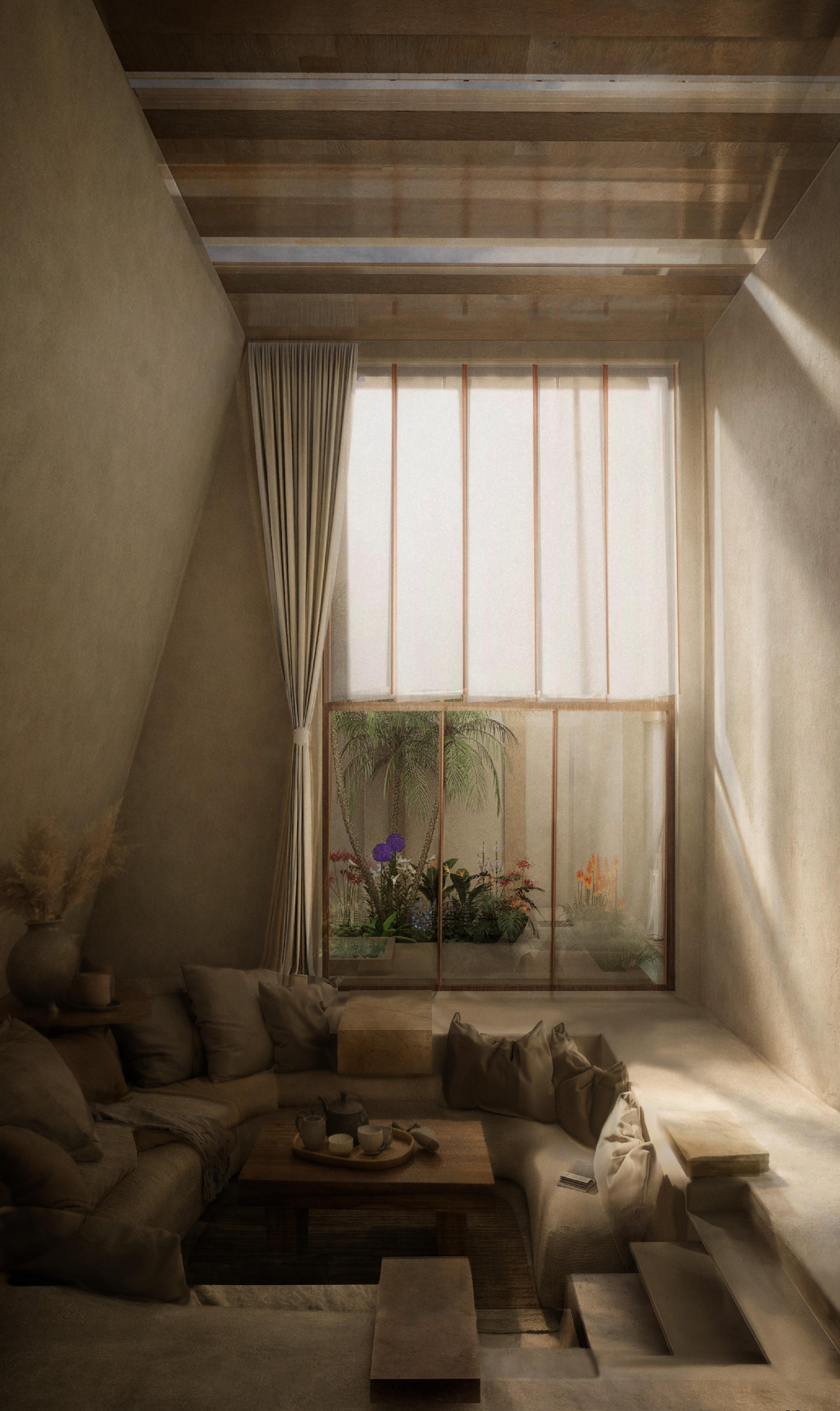
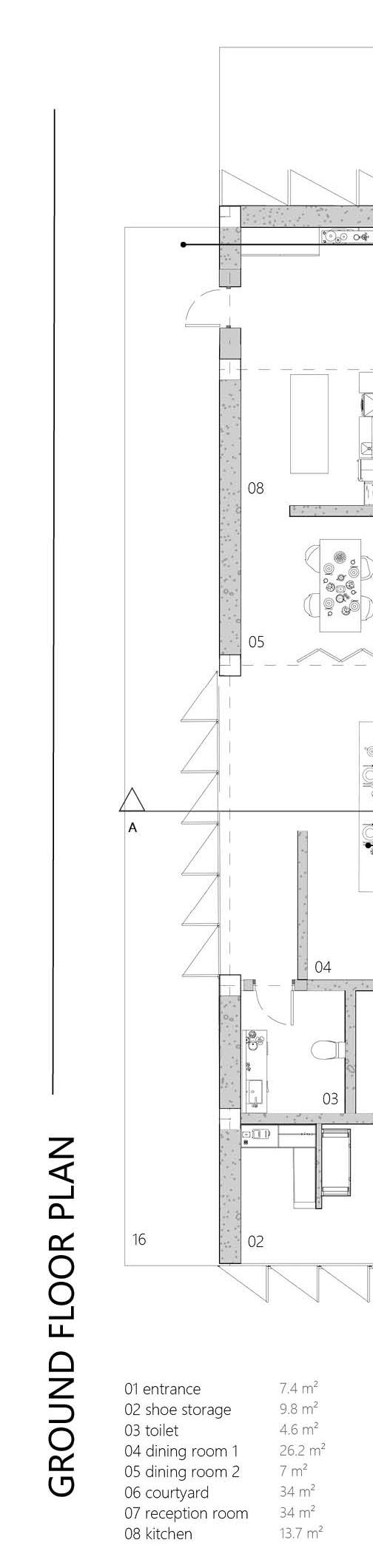
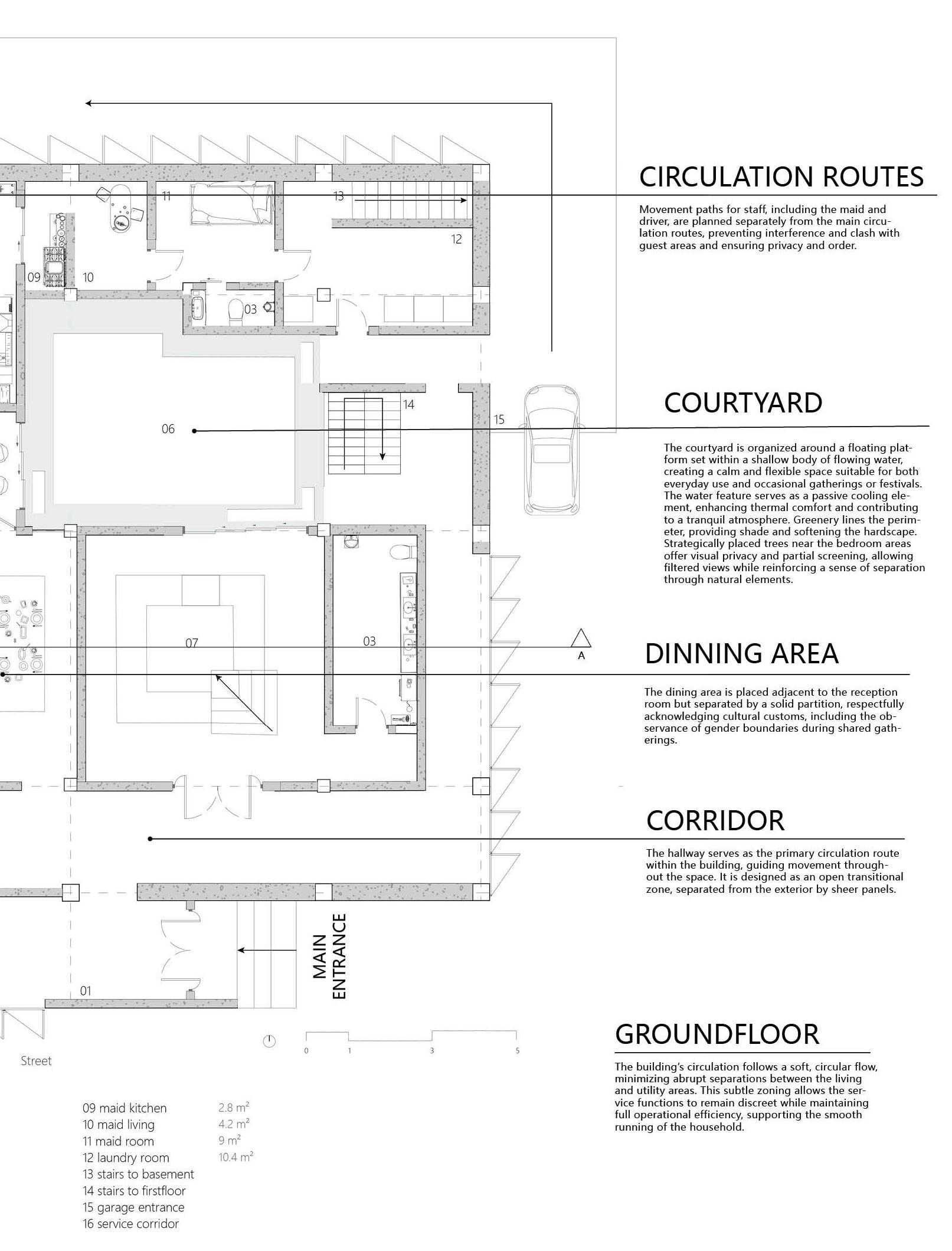
This project proposes a single-family housing prototype for contemporary living in the UAE, designed for a standard 450 m² plot.
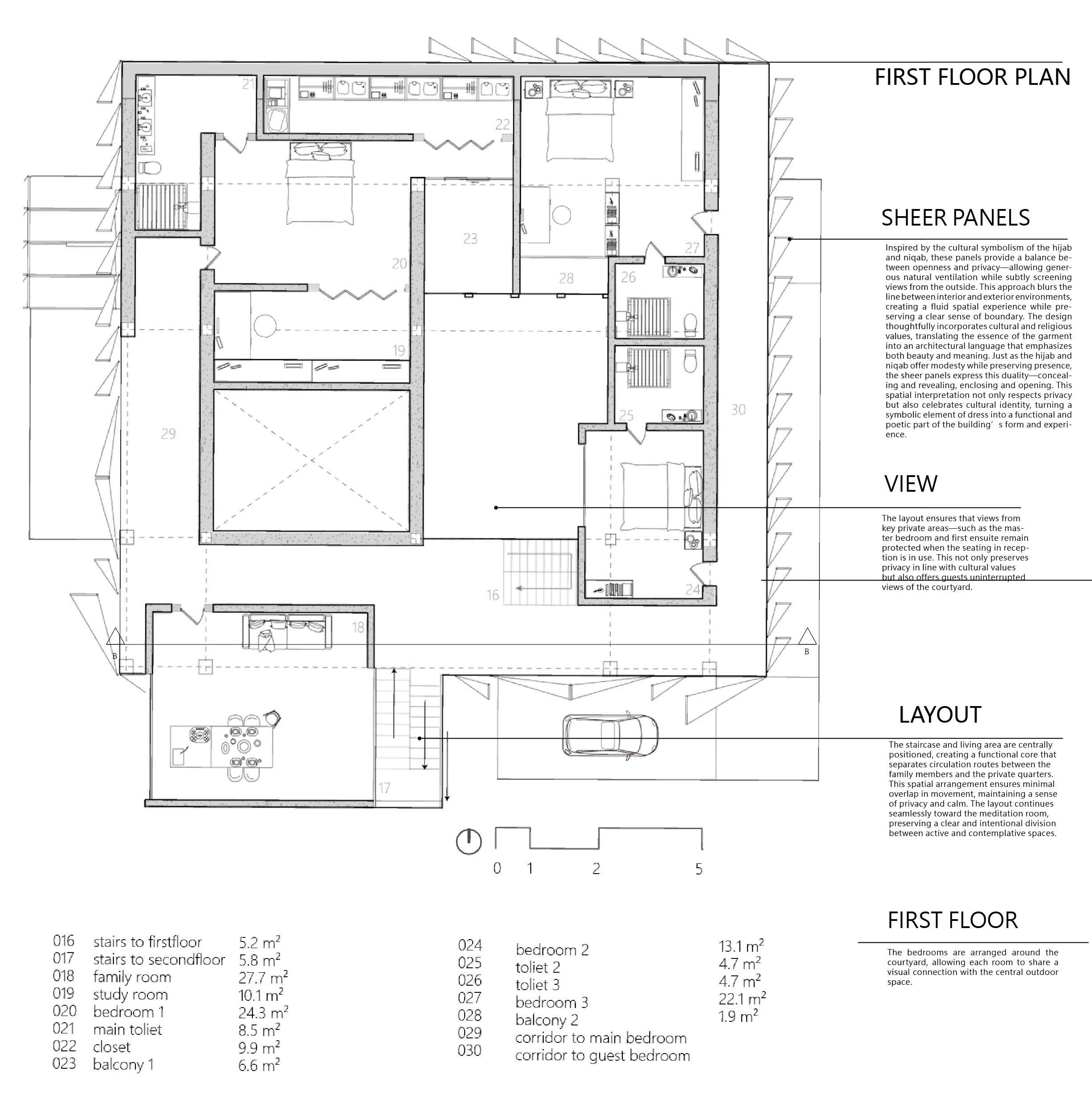
Inspired by the cultural meaning of the Hijab, the design uses a layered veil-like façade to reinterpret ideas of protection, modesty, and identity. This lightweight outer skin filters light, air, and views, creating privacy, improving comfort, and reducing solar heat gain.
The aim is a sustainable and culturally rooted home that balances openness with enclosure.
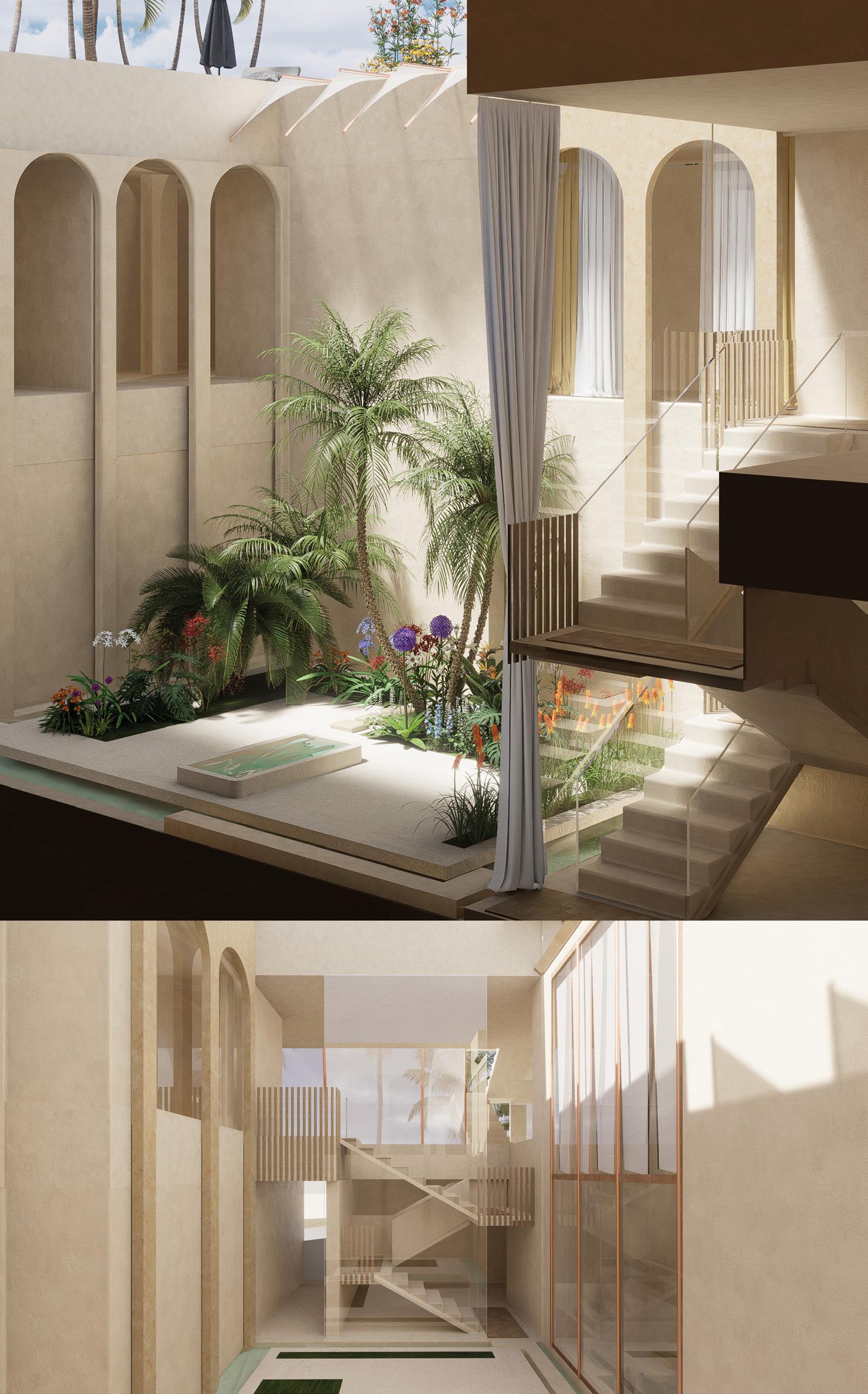
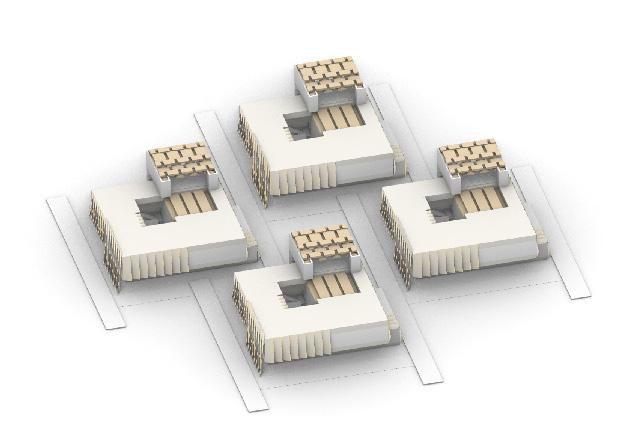
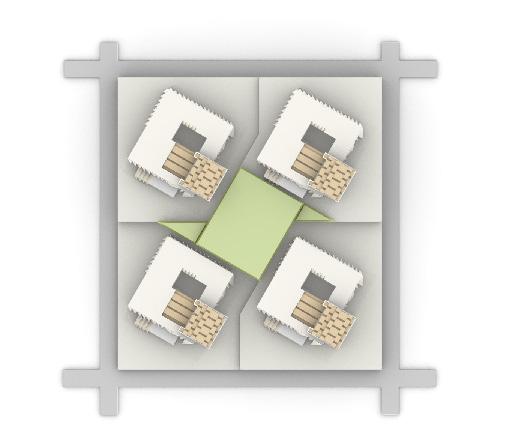
The scheme explores a compact residential model that supports future expansion while responding to local patterns of privacy, family life, and climate.
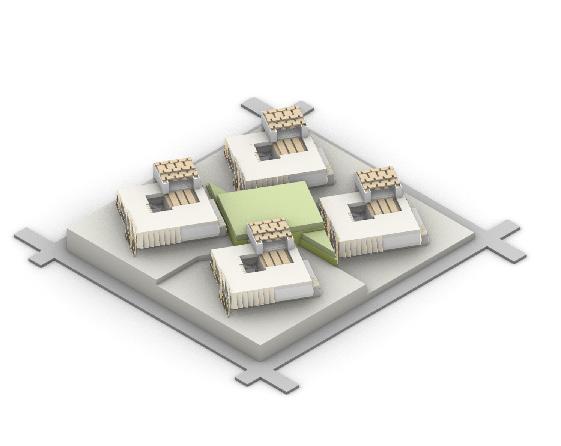
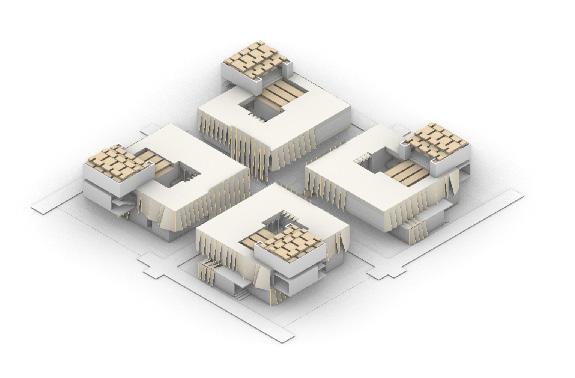
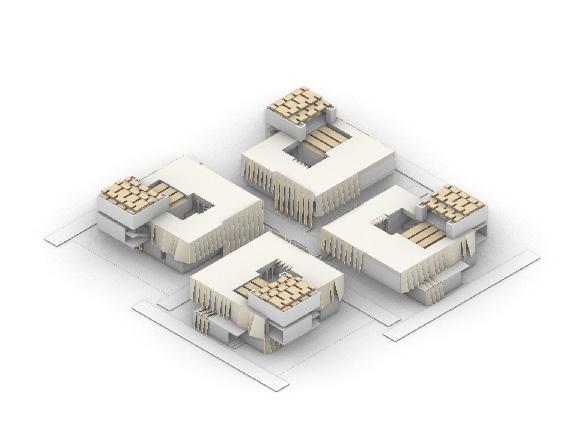
Final intent for community expansion: a garden between four buildings. Maximise privacy and enable green living
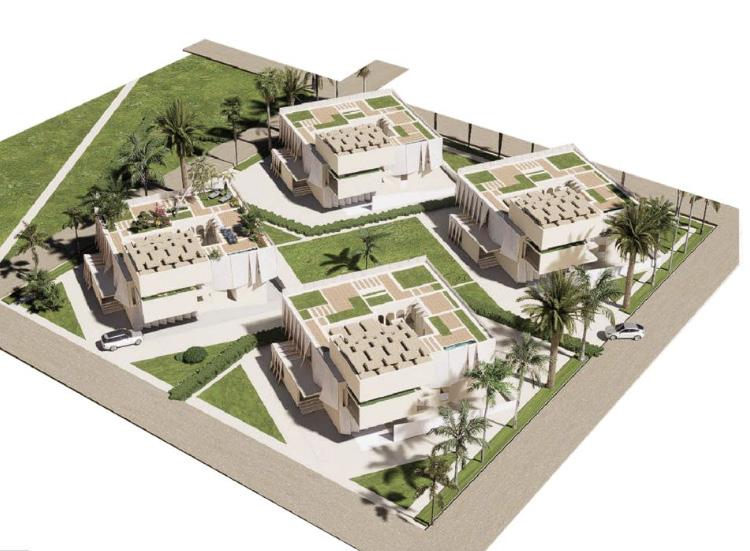
Homes are arranged around shared green spaces that encourage people to interact while still keeping privacy. The modular design also allows the houses to grow over time as families get bigger.
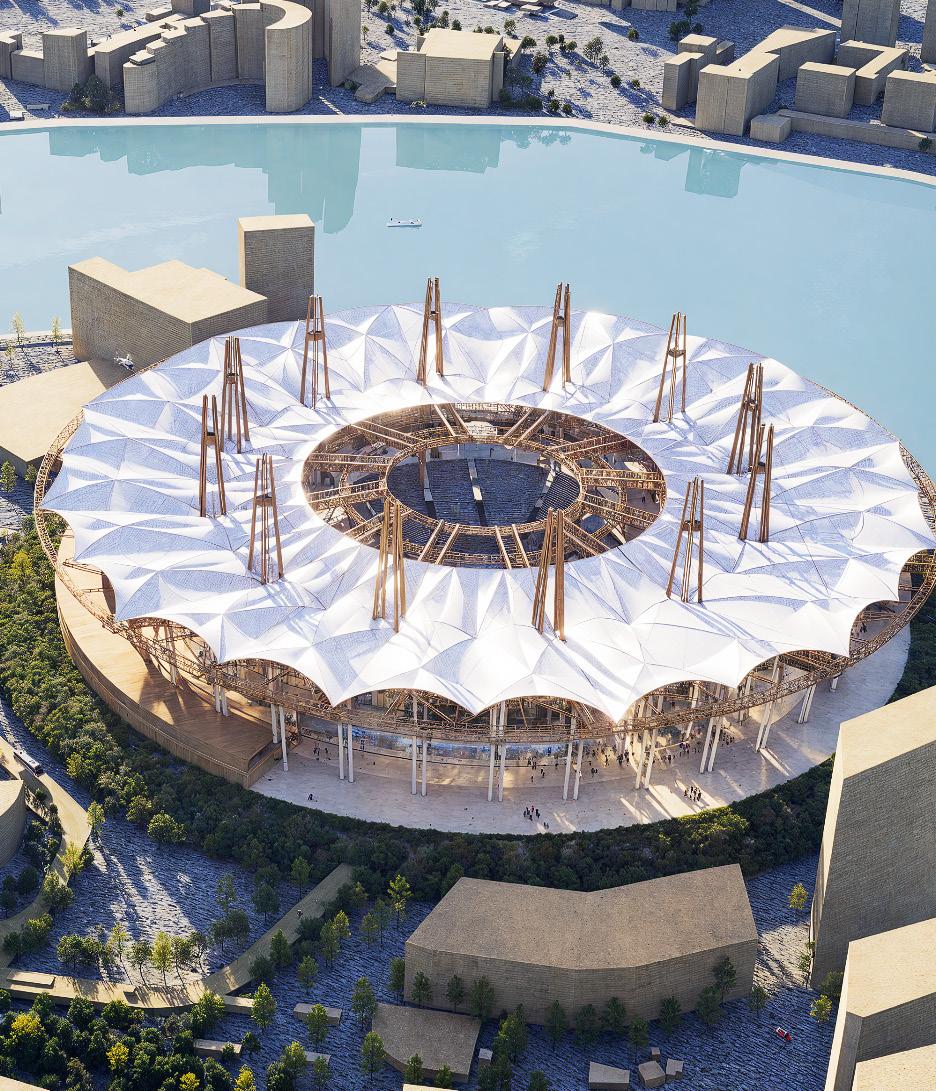
Redesigning the Millenium Dome
SITE: London, UK
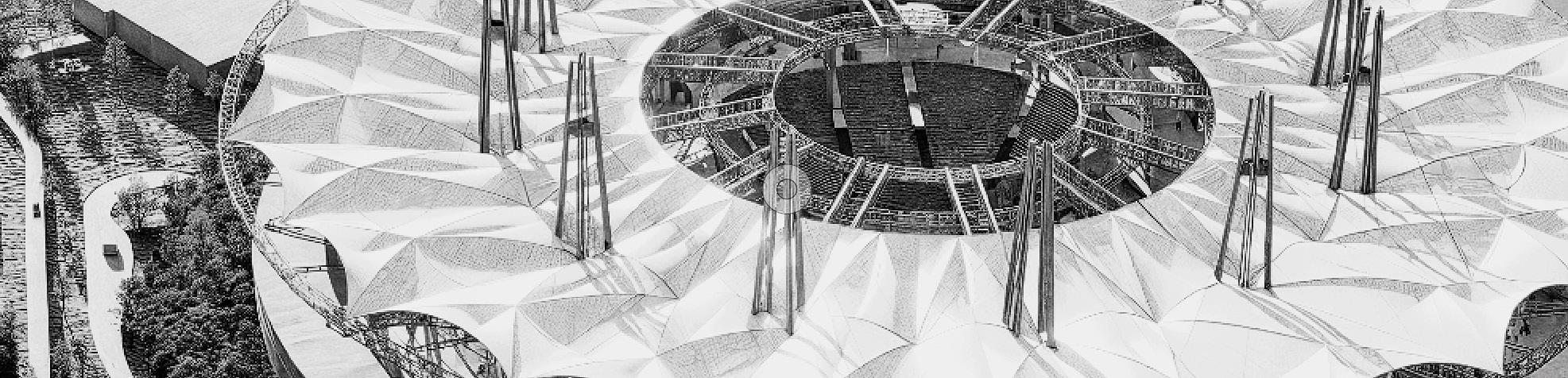
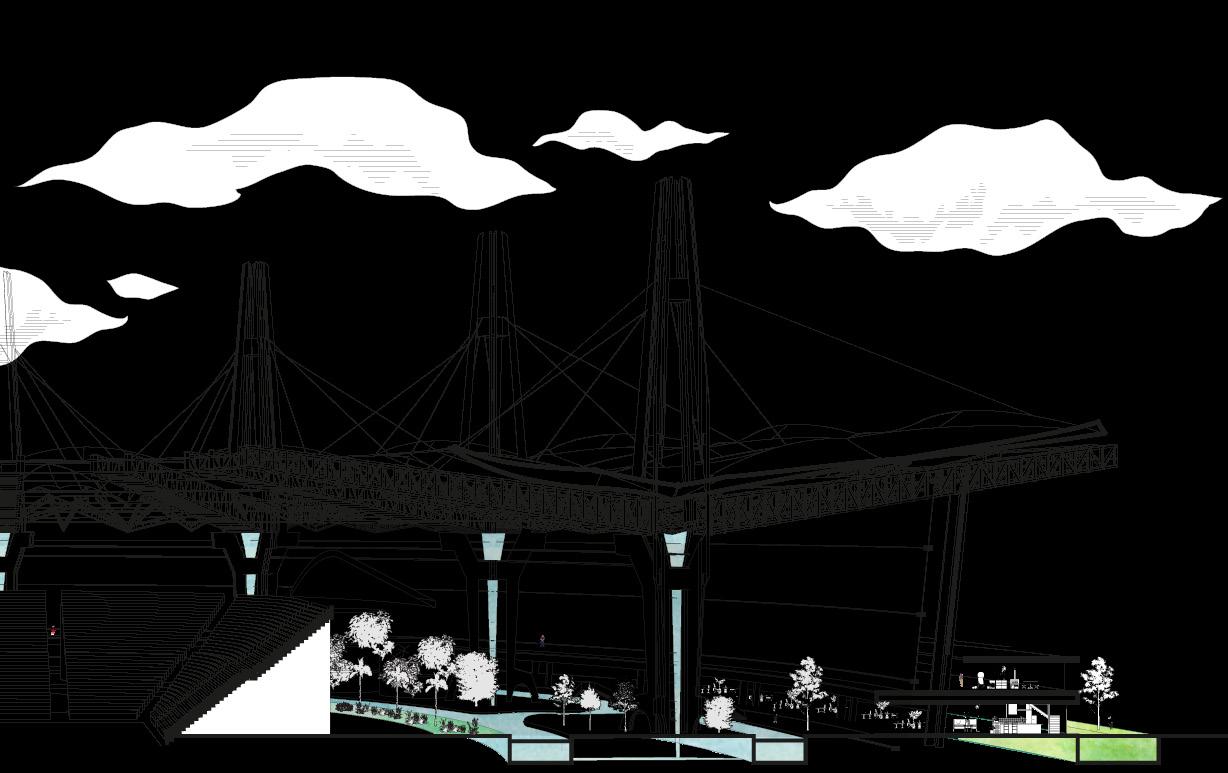
The Millennium Dome was once conceived as a closed egg, holding hope and potential at the dawn of the year 2000. In this redesign, the shell opens and its ETFE skin lifts upward to express growth, openness, and renewal. Set on the Prime Meridian, the world’s zero point of time, the Dome becomes a marker of global rhythm. Inside, an eco-garden brings greenery and biodiversity, transforming it into a living environment. Once a vessel of hidden promise, it is reborn as a welcoming beacon for 2050, where culture, technology, and nature coexist.
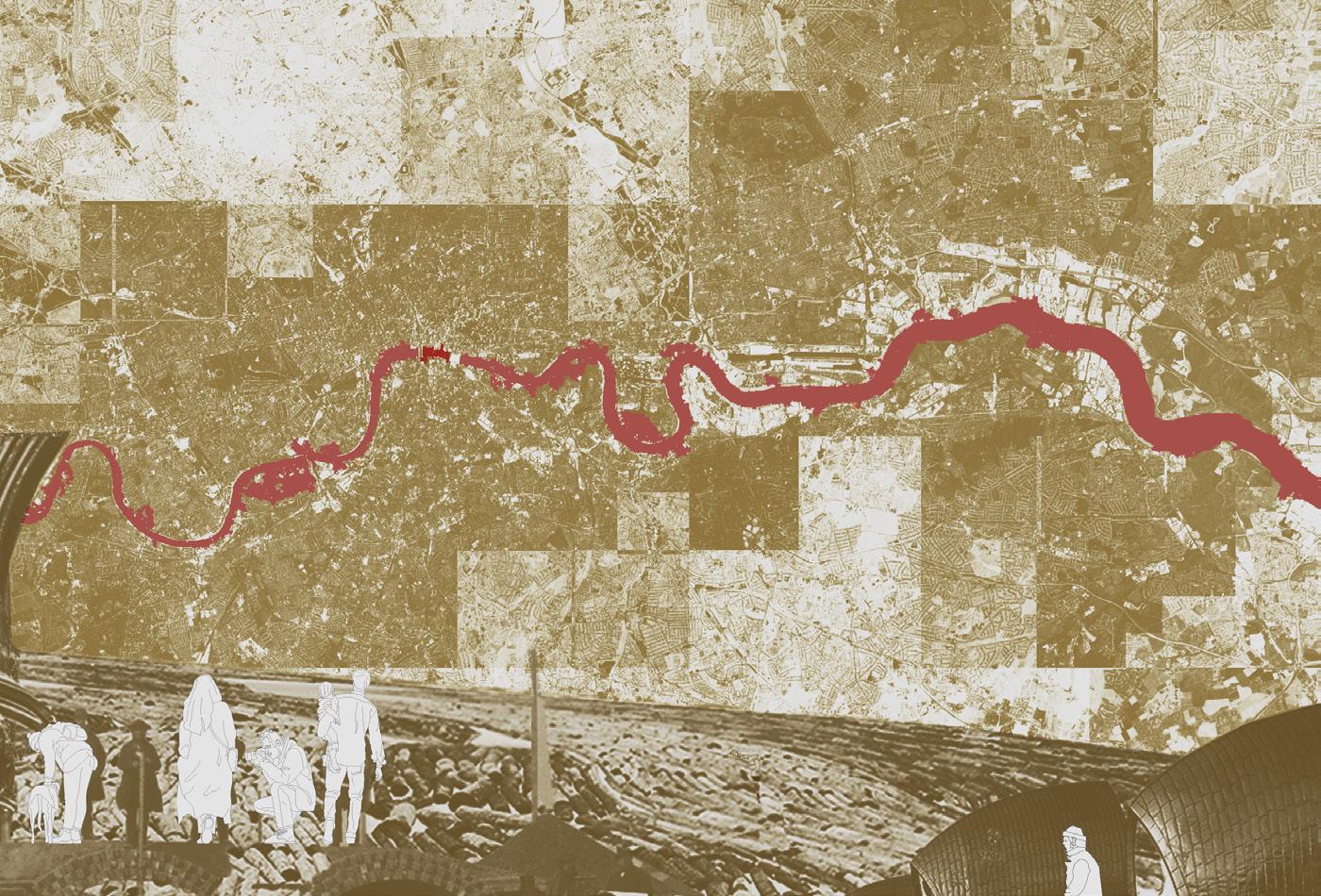
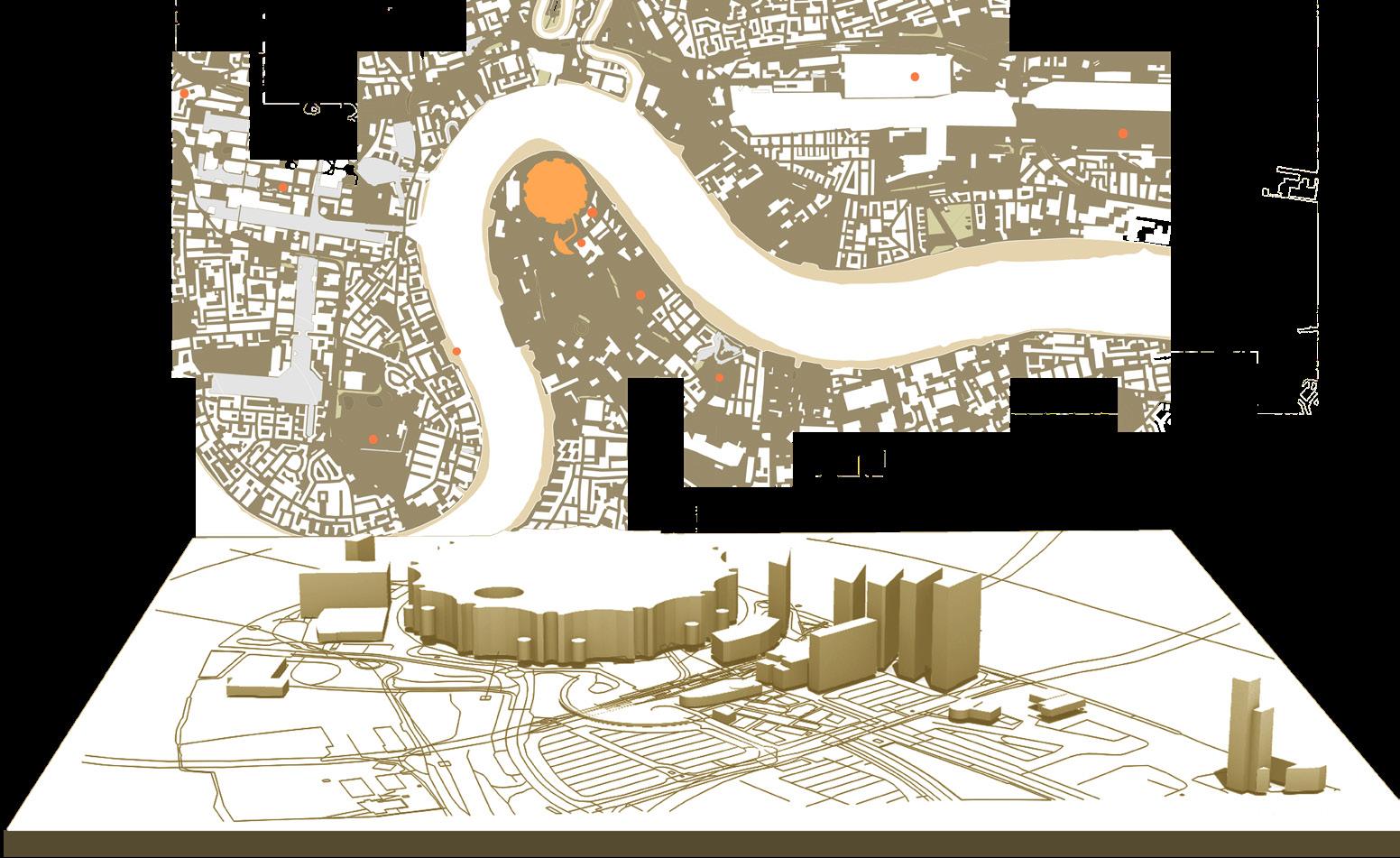
Surrounded by dense housing, the O2 today serves mainly as an event venue, disconnected from everyday community life. In London’s cold, damp climate, the redesign proposes an indoor eco-garden — transforming the Dome into a yearround green refuge where residents as well as visitors can gather.
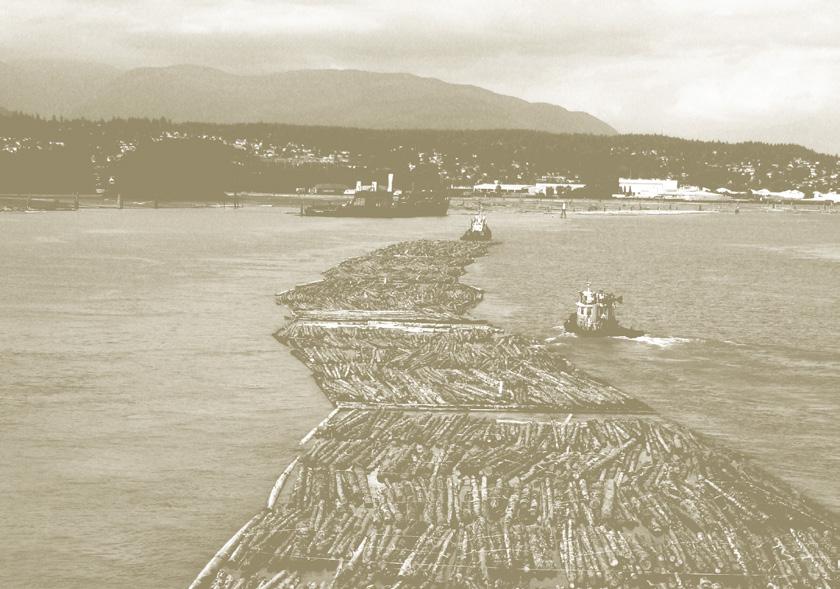
Timber rafting brought essential materials for shipbuilding and construction, supporting the city’s expansion during the Industrial Revolution.
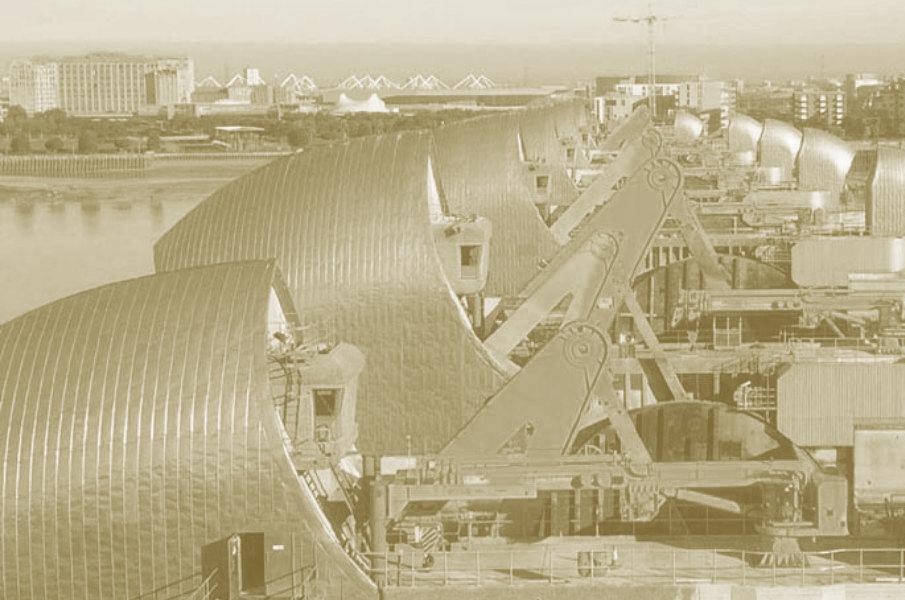
Thames Barrier (1982) was constructed to defend London from tidal flooding, marking the river’s continued role in protecting and sustaining the city.
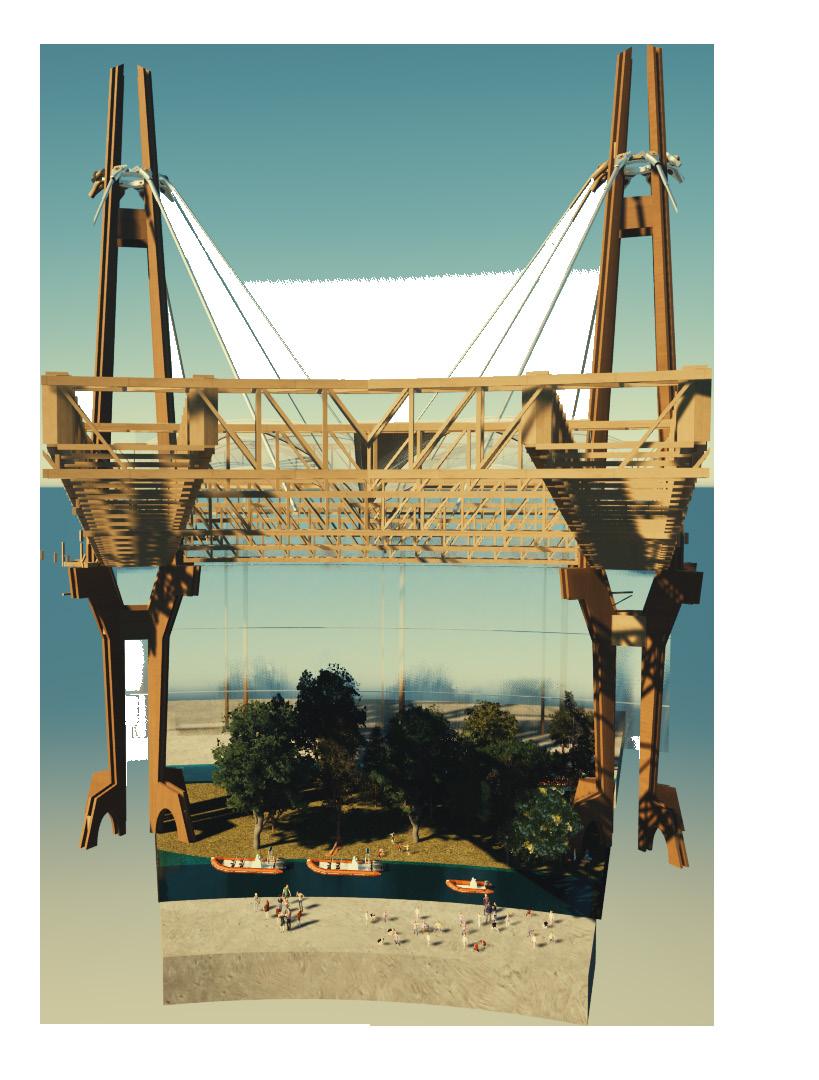
Timber is used instead of steel because it is renewable, has a lower carbon footprint, and suits prefabrication for efficient onsite assembly. Exposed timber also creates a warm, natural aesthetic that improves comfort and supports a more humancentred environment.
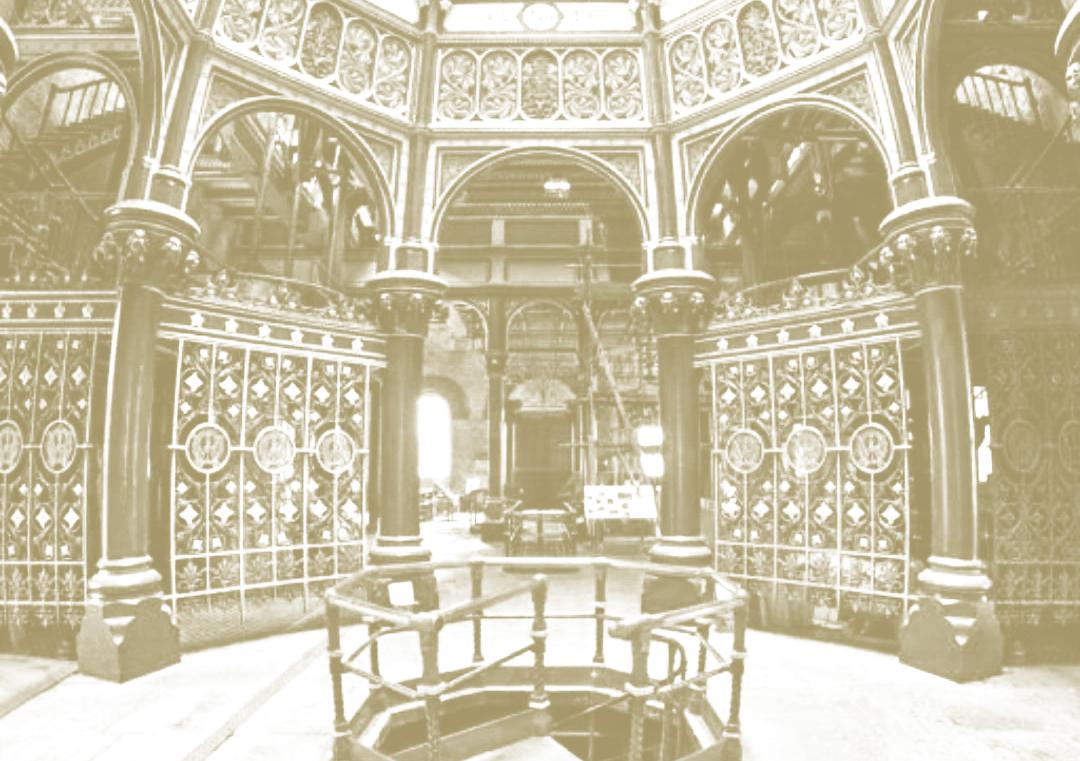
As pollution worsened, the Crossness Pumping Station (1865), part of Bazalgette’s sewer system, was built to clean the river and improve public health.
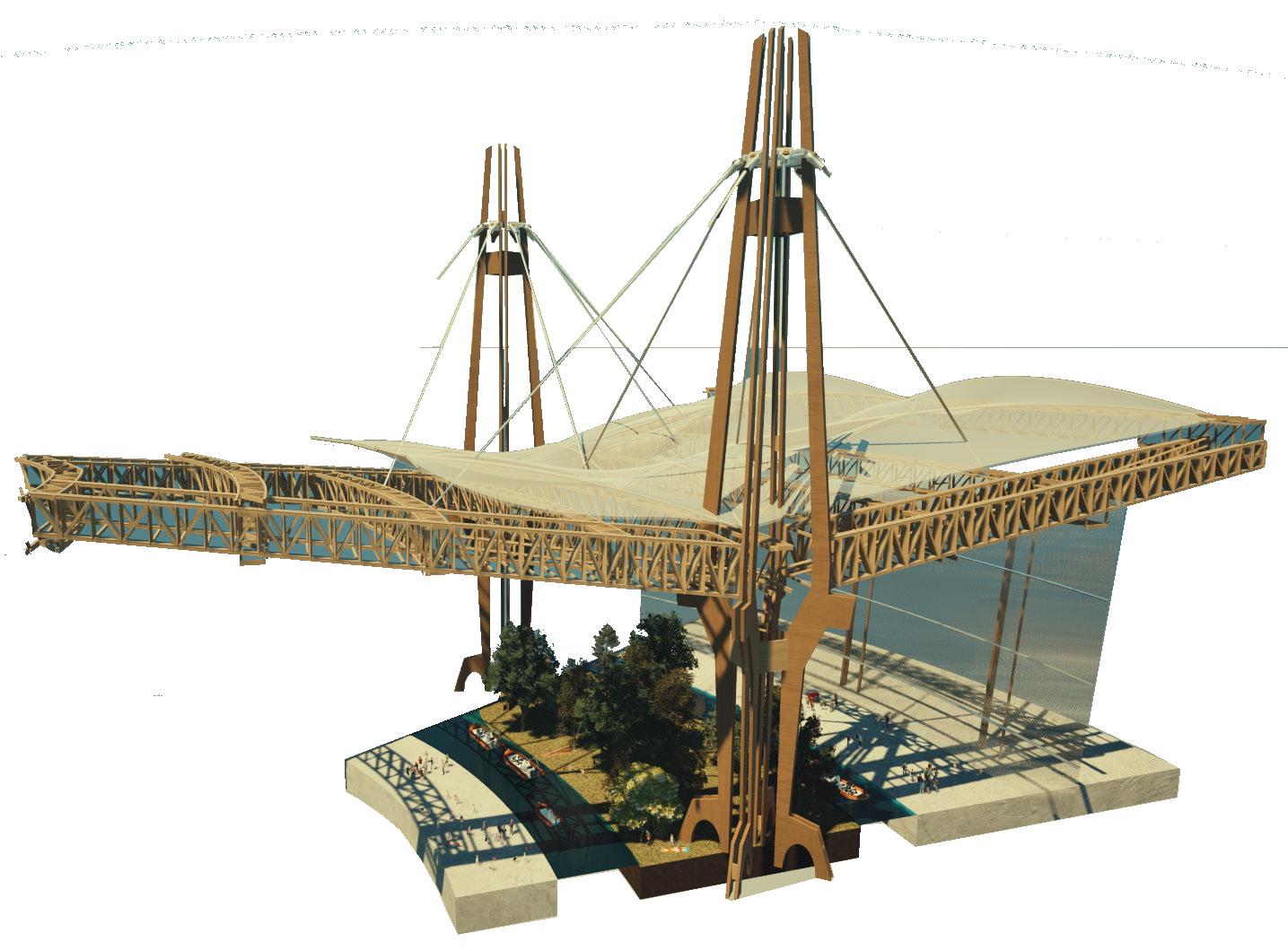
The original O2 was a temporary cable-supported structure with tall masts and deep foundations. In our permanent design, trusses reduce mast height and foundation depth, improving structural efficiency and simplifying maintenance.
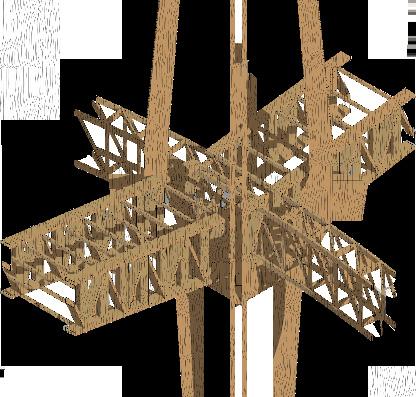
The new design of the O2 incorporates primary and secondary timber trusses, which are supported by a timber-tower mast. This is implemented in addition to the modular cable-stayed structure, enhancing the building’s resilience and modularity.
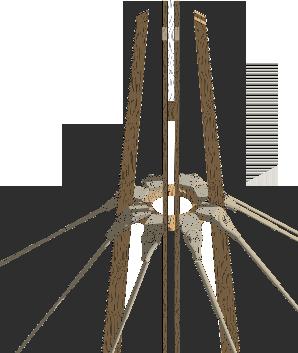
A new rainwater collection methodology is developed based on the new design, utilising the dip in the new structure to collect water to echo the ambitious water collection and recycle system developed when the millienium dome was built.
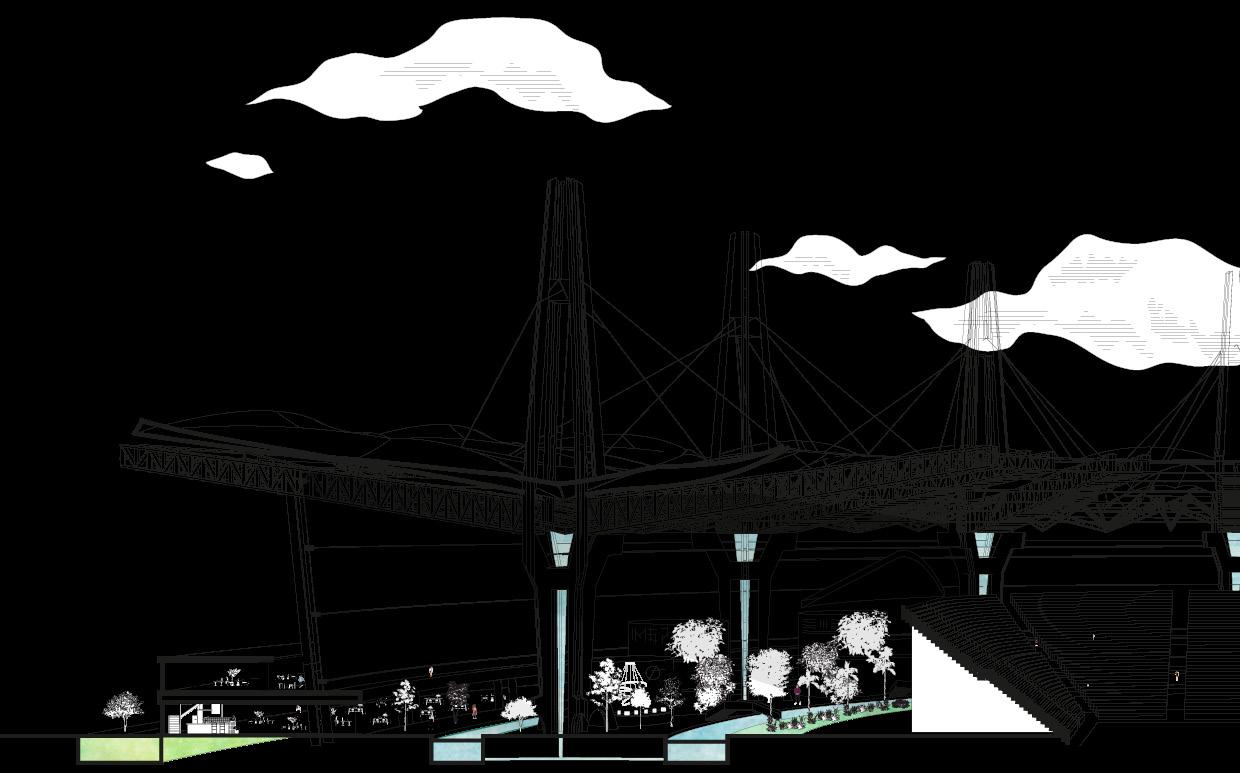
Inside the Dome, time is made spatial: twelve columns mark the months, while the river branches into four parts to symbolise the seasons. Together, they form a living calendar, where water cycles and greenery turn the building into a shared rhythm of nature and community.
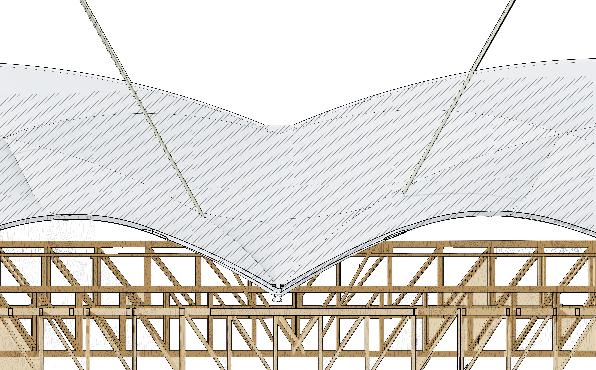
The structure remains lightweight by relying primarily on a cable system, echoing the original O2 design. This approach reduces the need for heavy elements, enhancing material efficiency while preserving the visual and structural language of the original.
ETFE (ethylene tetrafluoroethylene) is used, while PTFE is stiffer and more opaque, ETFE offers improved insulation and daylighting performance. The ETFE membrane is typically tensioned and attached to the timber trusses or a secondary frame using clamping systems. A double-layer ETFE system with printed patterns can be used to enhance performance—allowing natural ventilationwhile reducing solar gain, thereby helping to prevent overheating during summer.
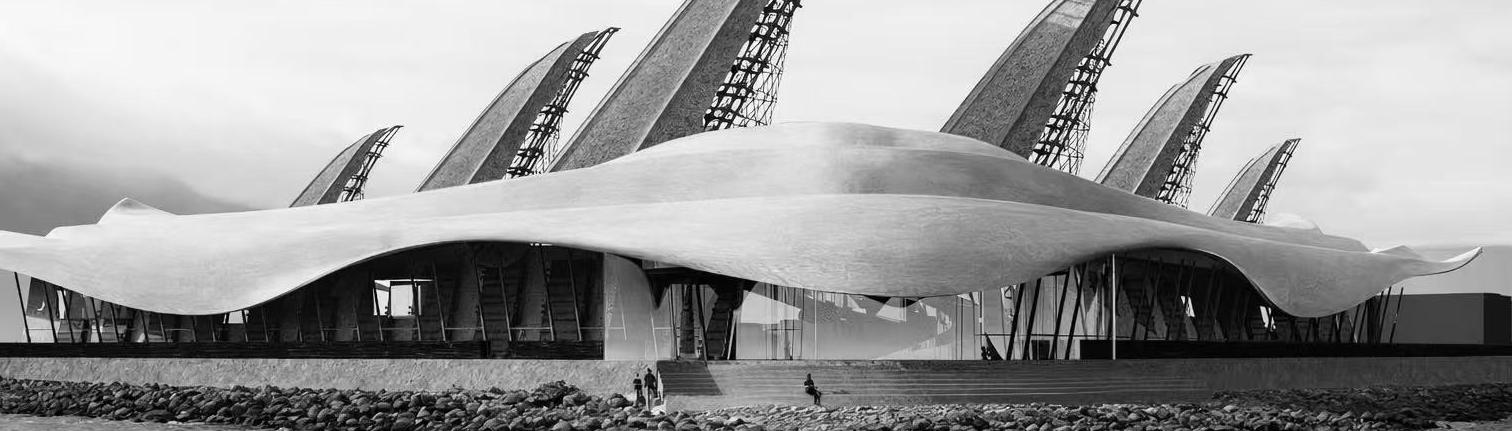
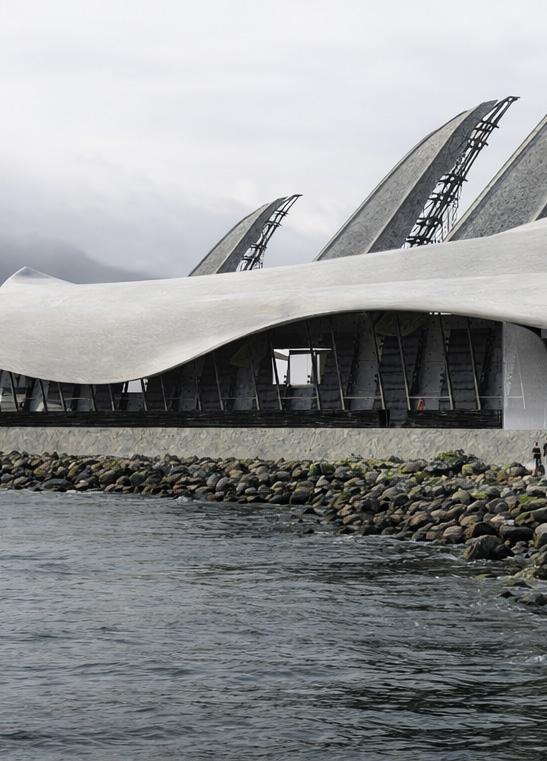
The Tidal Archives begins with a moment of rupture: the 1944 aircraft collision that forever marked Canvey Island’s collective memory. The project weaves this history together with the ritual of mudlarking: an act of uncovering, collecting, and re-reading fragments of the past. These two narrative threads knot together to form the architectural concept. The island’s relationship with water, its vulnerability to rising tides, and the expressive potential of concrete become the material and spatial foundations for a building that both celebrates sustainability and offers visitors a tactile encounter with history.
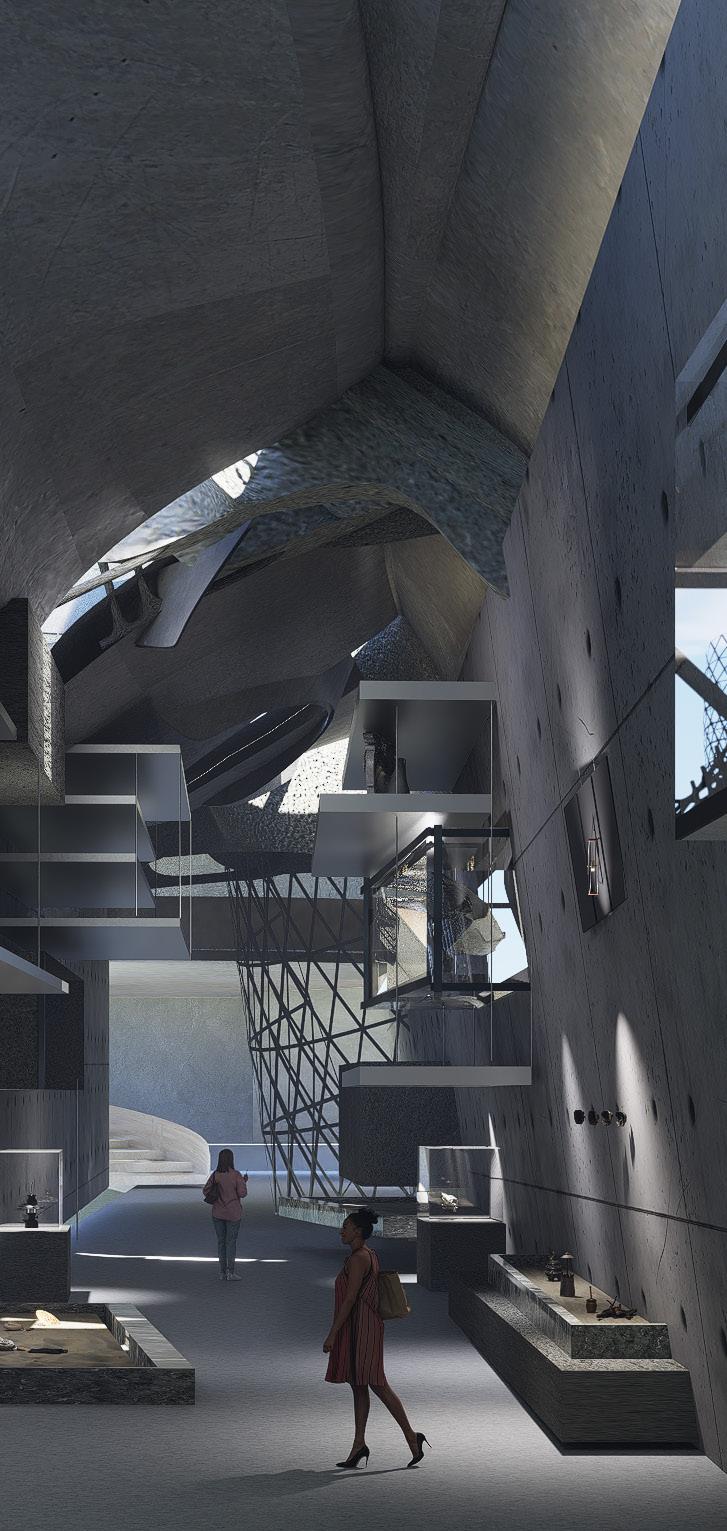
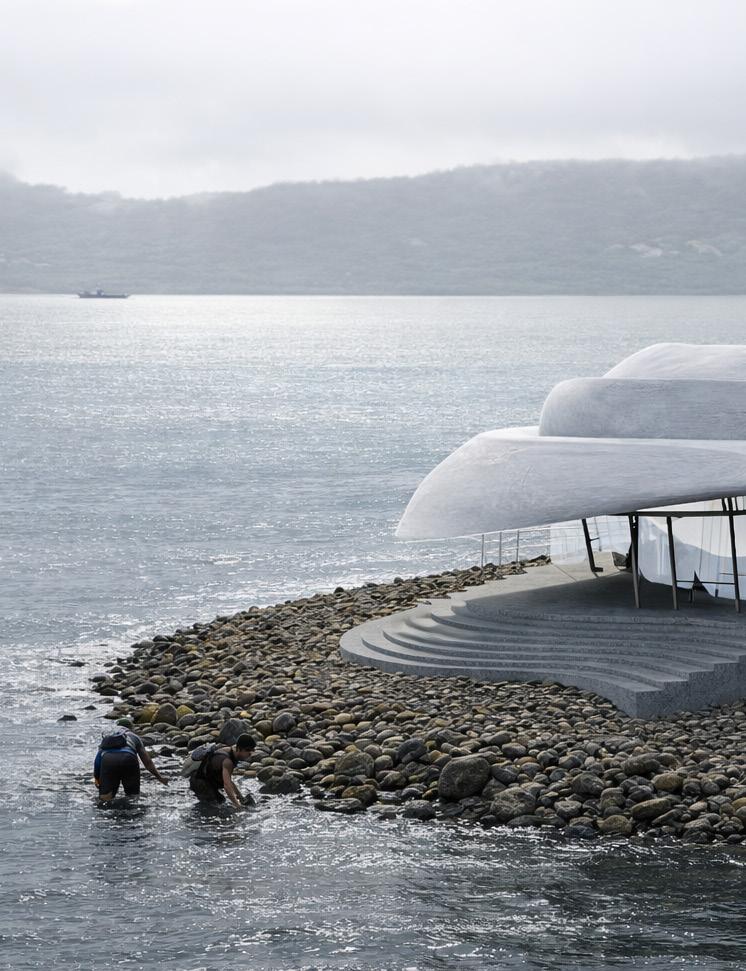
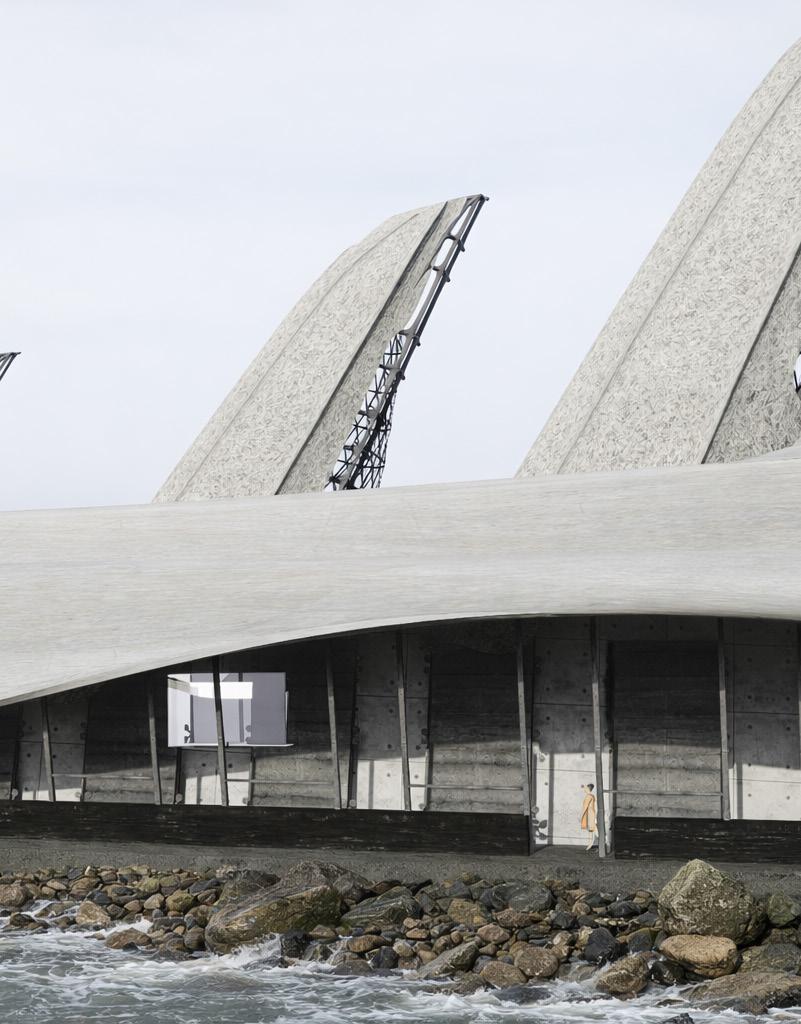
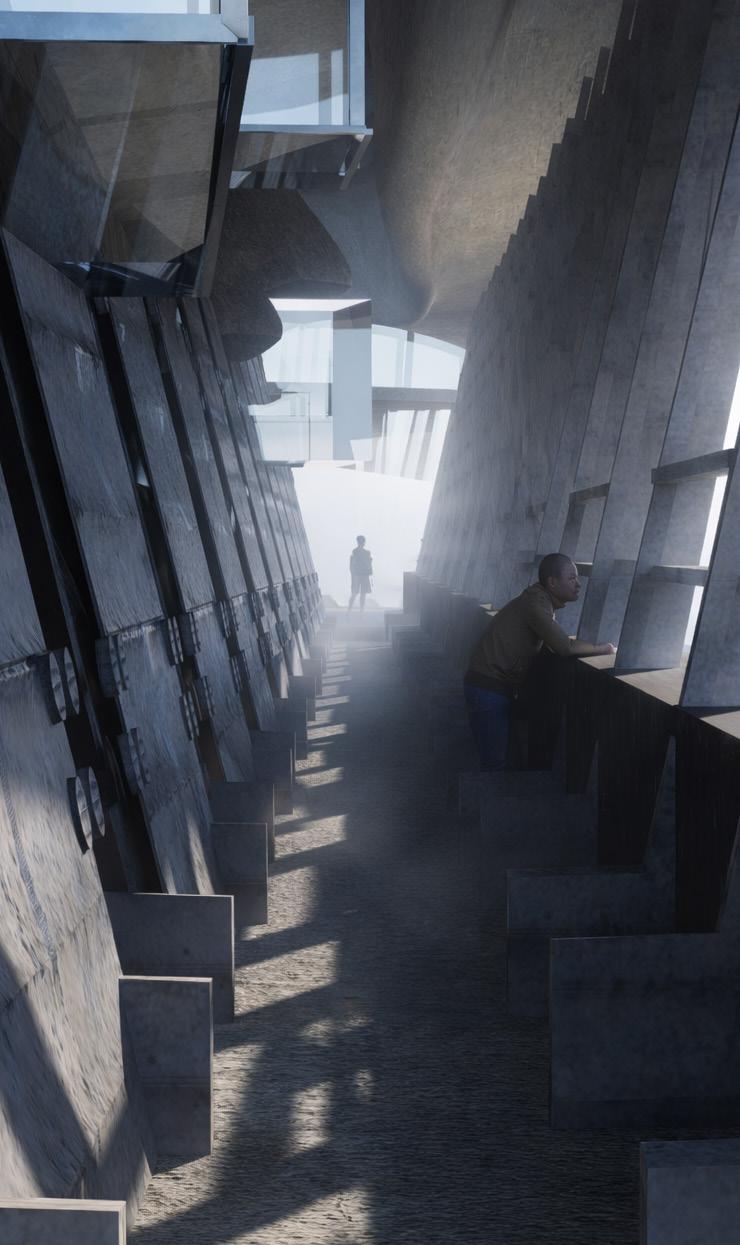
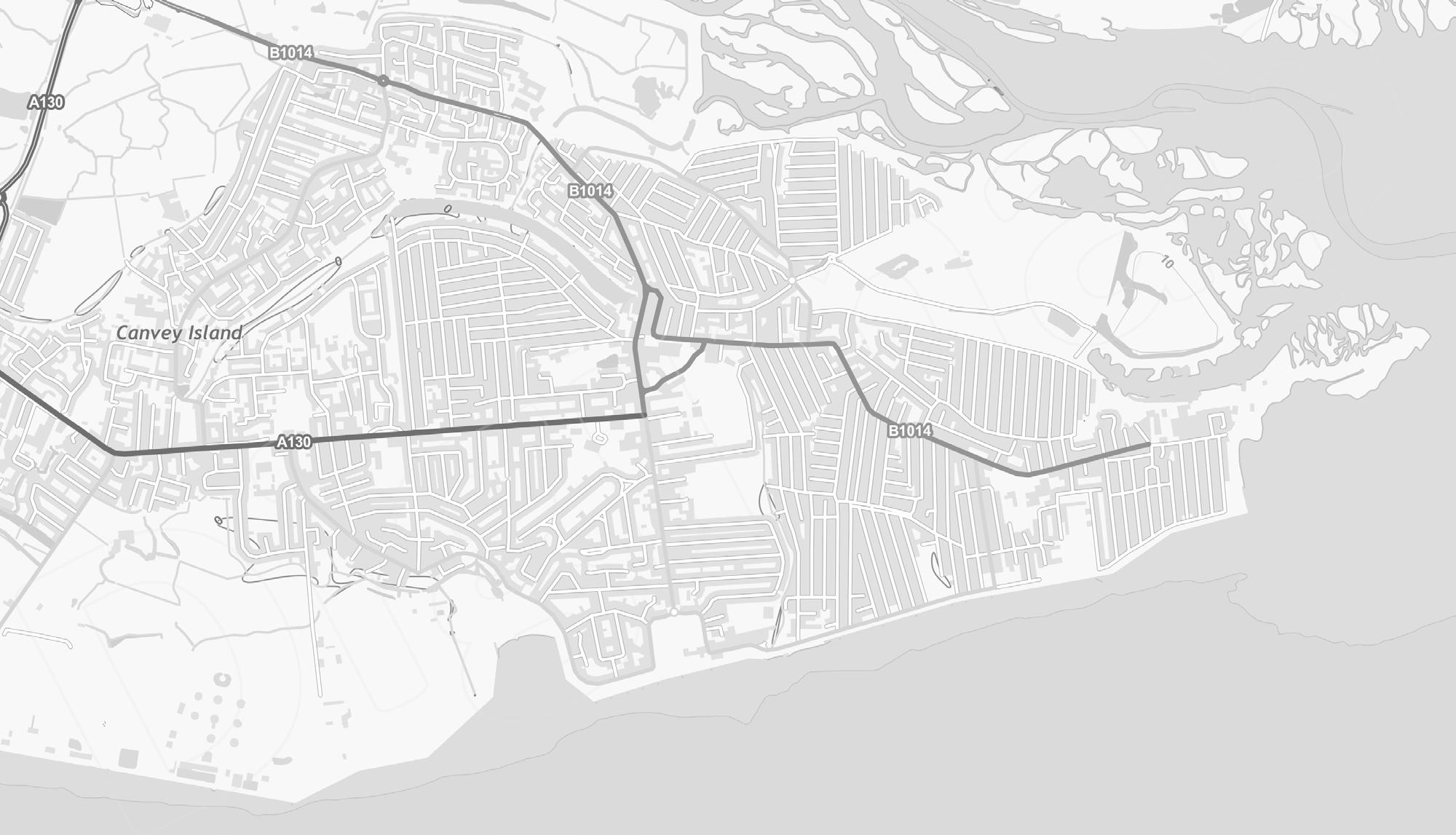
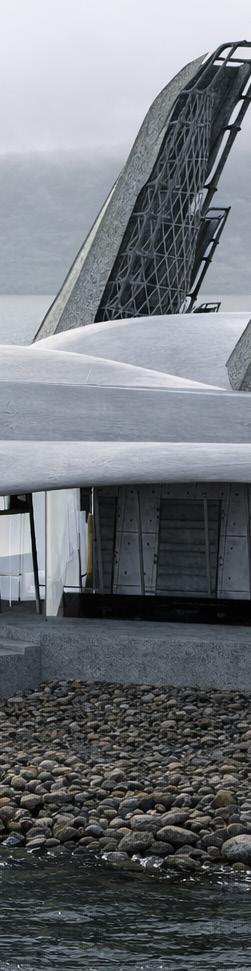
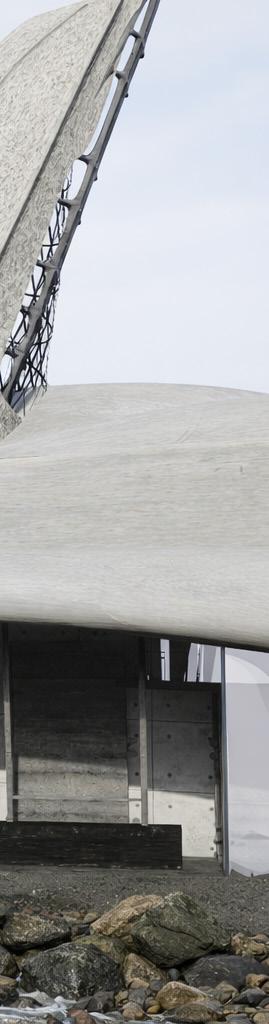

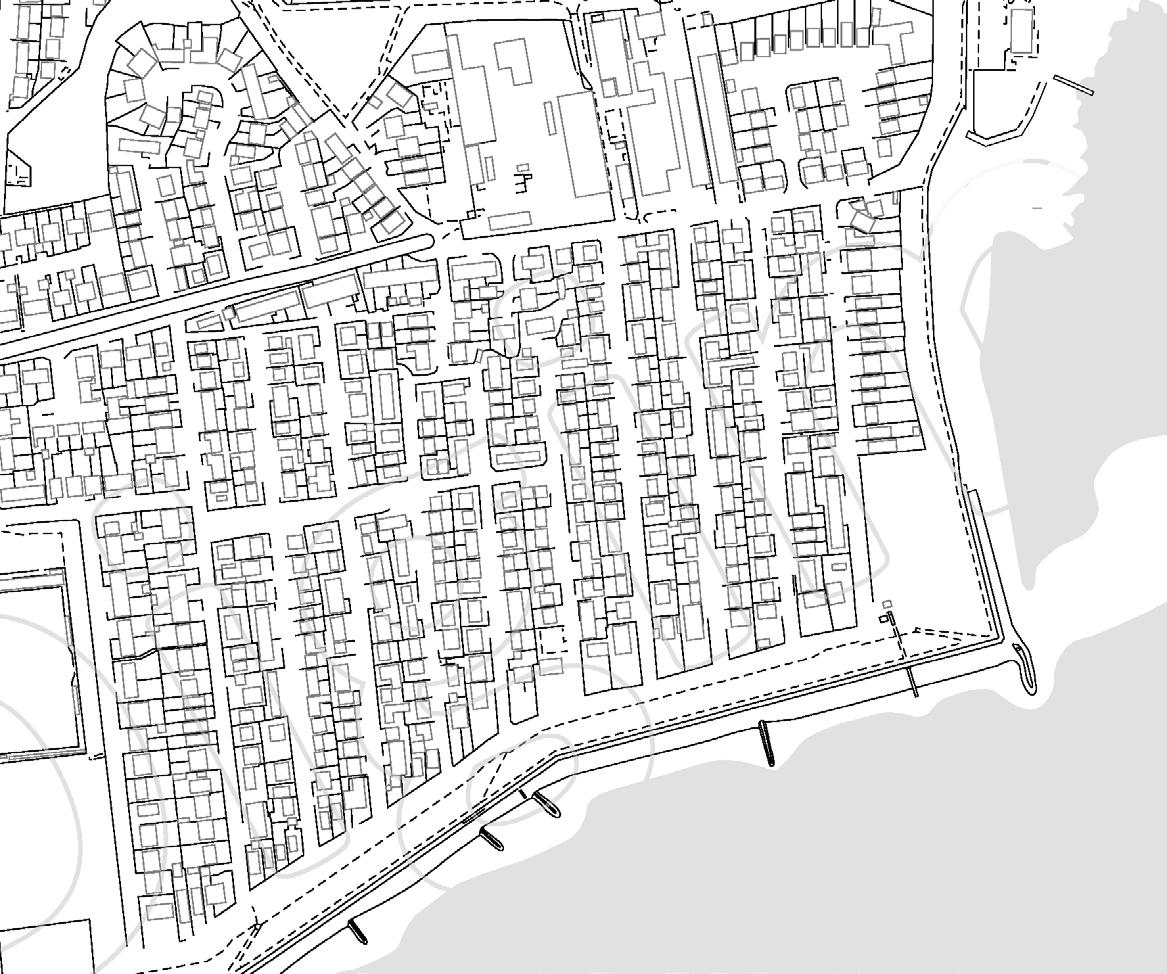
Canvey Island sits almost two metres below the Thames Estuary’s daily high tide and depends on fragile engineered defences. Flooding therefore remains a constant risk. Yet this low-lying condition also supports mudlarking, an activity shaped by shifting shorelines and layered sediment. The building responds through an evolving surface that marks environmental change and highlights the island’s vulnerability to climate change. Sustainabil-
A central driver of the project is the tragedy of the 1944 crash, embedded in local memory. The wing-shaped chimney becomes a spatial and symbolic response: a passive ventilation tower that orchestrates natural airflow while standing as a sculptural memorial to those lost. It channels wind, light, and remembrance through a single architectural gesture.


The design incorporates exposed concrete surfaces. These act as thermal reservoirs, absorbing heat during the day and releasing it slowly as tempera-
Prevailing south-westerly winds shape the natural ventilation strategy. The wing-shaped chimney opens toward the opposite direction to harness airflow while preventing backdraft.
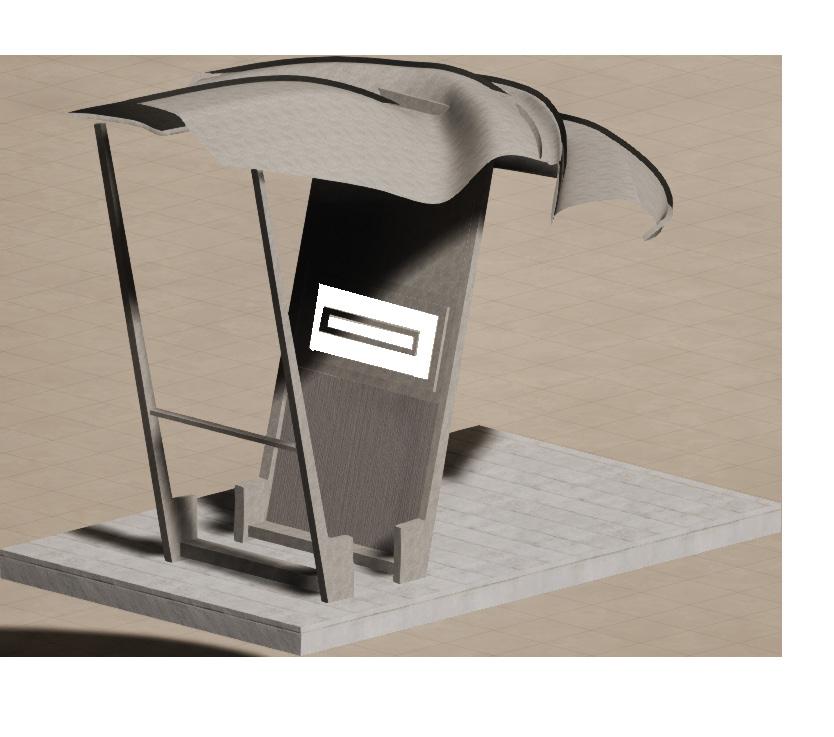
DURING CONSTRUCTION
The building utilizes a high-performance hybrid system: Cast-inplace (poured) concrete columns provide a rigid structural “skeleton,” while precast ribbed roof shells and facade sandwich panels act as the “precision skin.”
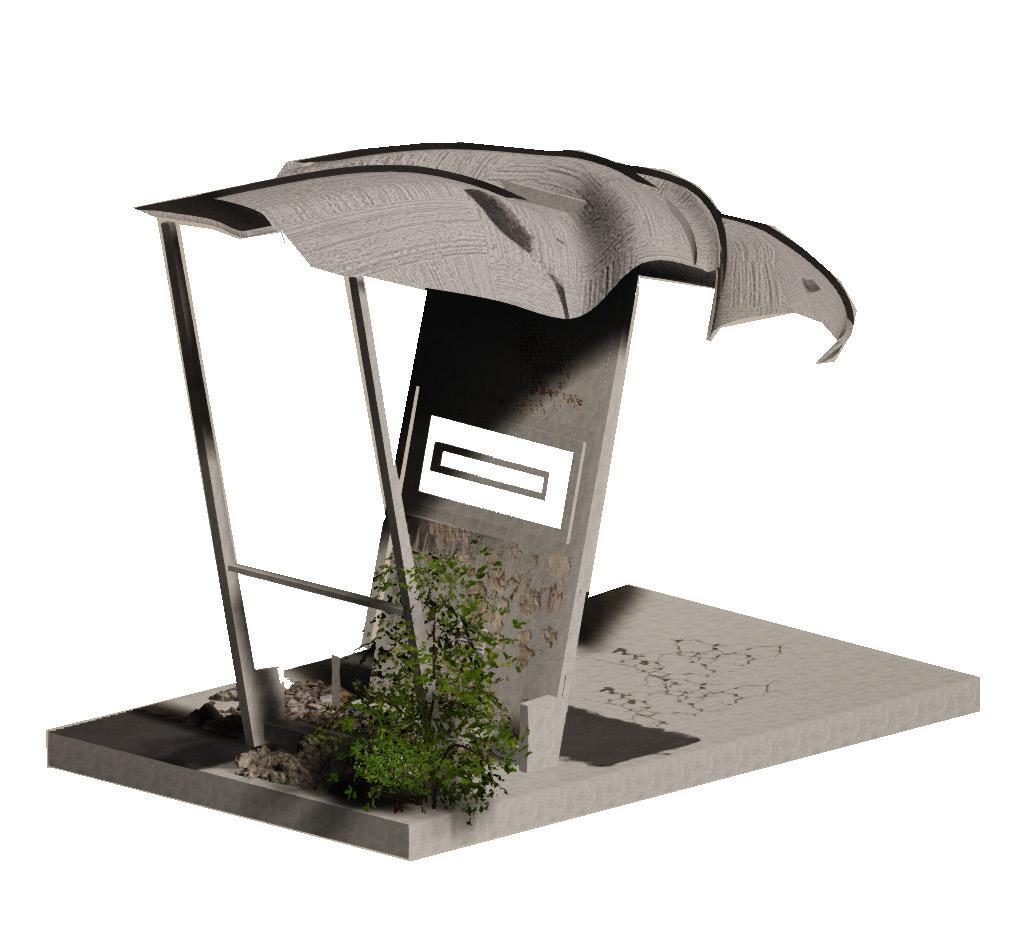
5 YEARS
Minor weathering begins to settle into the recessed joints, highlighting the rhythmic geometry of the facade. The structure has fully “settled,” with the poured columns and precast shells working in perfect harmonic load-transfer.
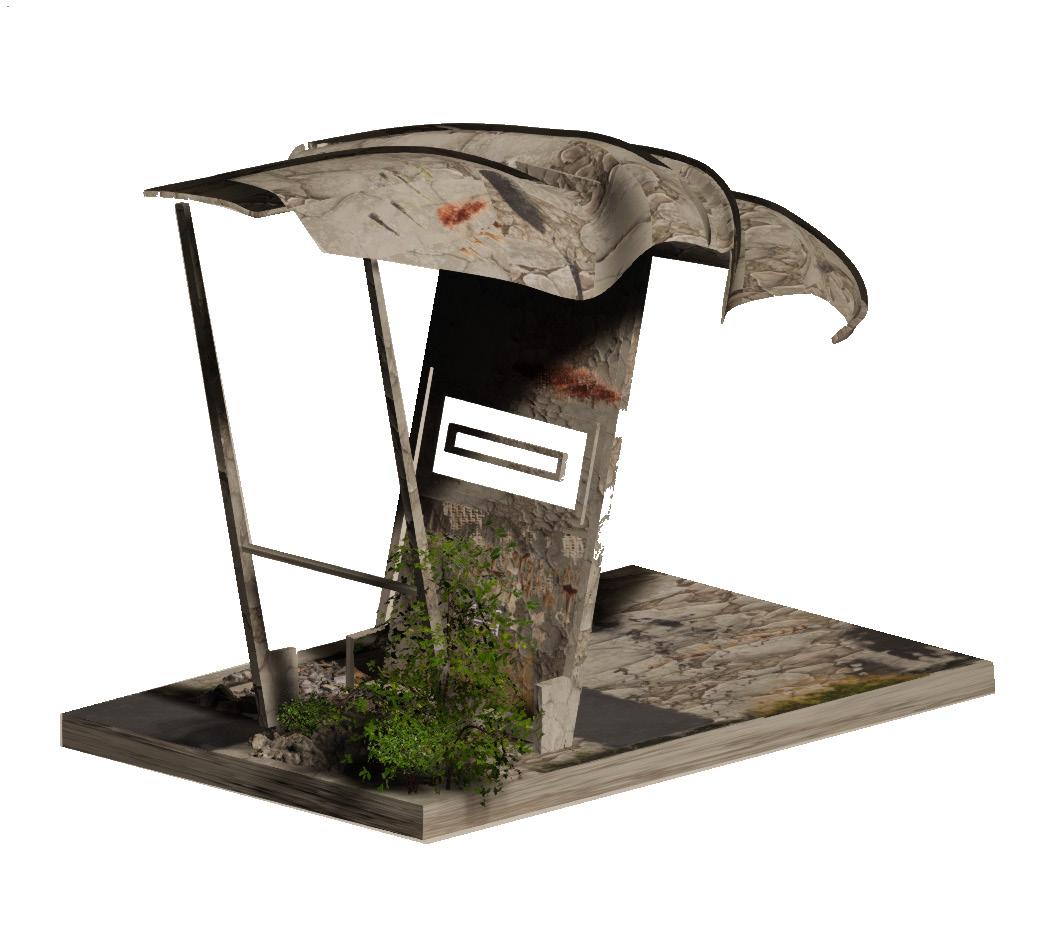
50 YEARS
The visible carbonation and sealant aging invite a strategic retrofit, where worn facade panels can be unscrewed and replaced with next-generation materials.
CONSTRUCTION TECHNIQUE
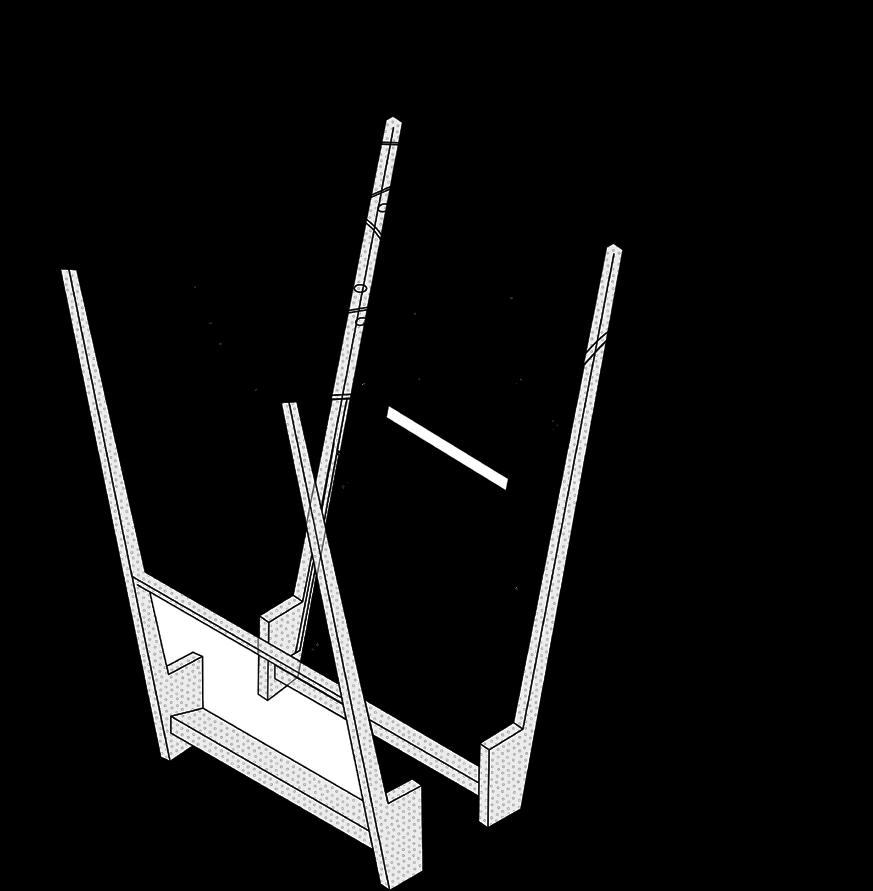
STRUCTURE
The image demonstrates the use of a V-shaped concrete frame structural system, which provides both vertical load-bearing capacity and lateral stability. The inclined geometry enhances structural stiffness, allowing the frame to efficiently resist horizontal forces while maintaining a clear and open spatial configuration.
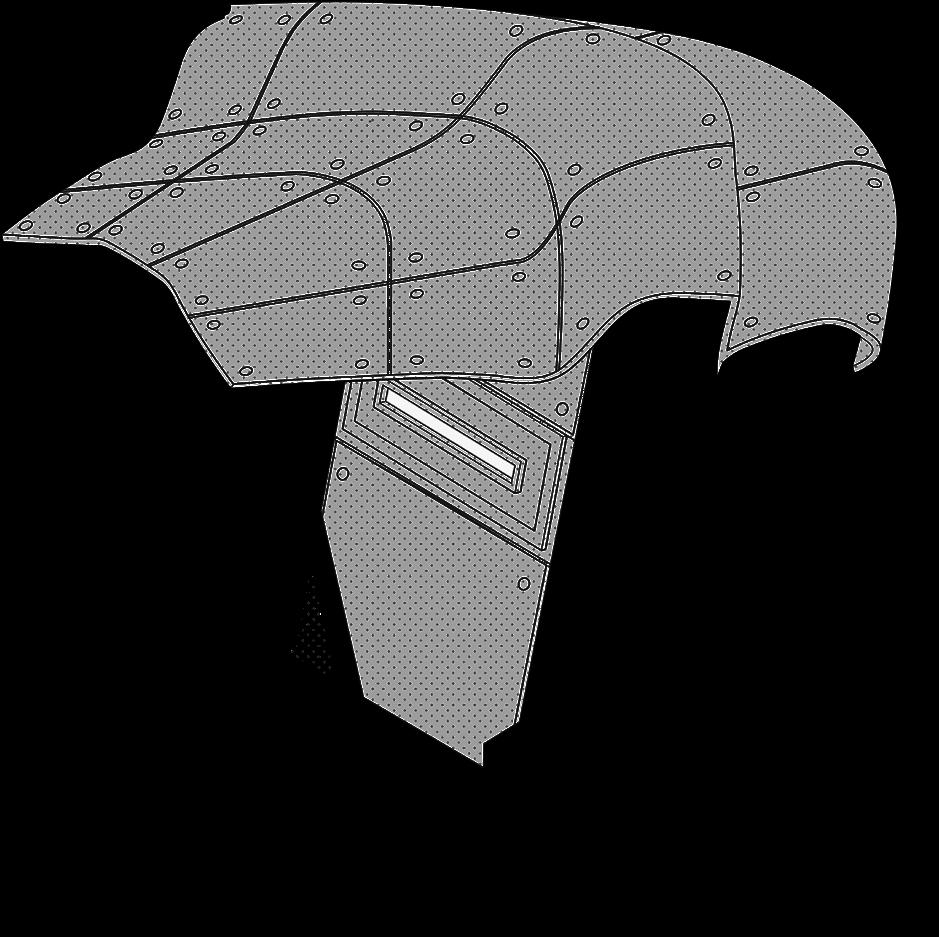
CONSTRUCTION TECHNIQUE
SHELL
The image illustrates the construction technique of prefabricated Glass Fibre Reinforced Concrete (GFRC) panels, demonstrating how individual elements are joined to form a continuous shell structure. This system is employed for the roof to significantly reduce the need for temporary timber formwork during construction.
CONSTRUCTION
The mudlarking area is designed as an open and accessible landscape, allowing visitors to freely move through and explore. Rather than a fixed route, it encourages wandering, discovery, and personal engagement with the artefacts.
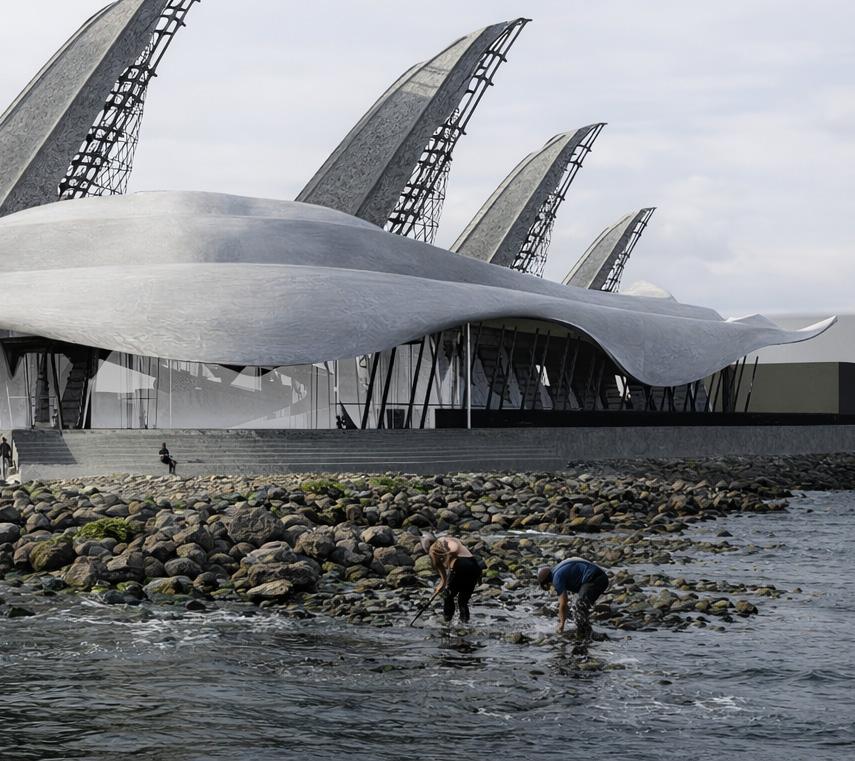
Along the tideline, new oysters grow upon the remains of older shells, forming natural, erosion-resistant accretions.