








MAKING A MEASURABL DIFFERENCE IN PROPTECH


For decades, we have built a real estate practice unparalleled in the US. Now, as the global legal powerhouse HSF Kramer, we are so much more. As the only law firm ranked in Chambers Band 1 on three continents, we continue to transform skylines and reshape landscapes. Please visit our website to learn more. Kramer Levin is now HSF Kramer


















































EDITORIAL
Editor
Debra Hazel
Director of Communications and Marketing
Penelope Herrera
Director of
Newsletter Division
Kristen Pooran
PRESIDENT/CEO
Jeff Mann
ART
Art Director
Virginia Sanchez
Cover Photography Courtesy of Measurabl
John Conway
Michelle Jeffrey Delk
Frank DeLucia
Hantz Févry
Jessica Gonzalez
Brian Hull
Tricia McCaffrey Hyon
Kris Kiser
Bob Knakal
Jack Macejka
Brad Pilgrim
Jeremy Price
Stuart Saft
Carol A. Sigmond
Adi Z.
Technology Consultant Eric Loh
Distribution Mitchell’s Delivery Service
DIGITAL MEDIA
Designers
Virginia Sanchez
Editors
Debra Hazel
Penelope Herrera
Rose Leveen
Web Developer
CS Designworks
West Coast Office: 578 Washington Blvd., Suite 827
Marina Del Rey, CA 90292 866-306-MANN (6266) mannpublications.com


East Coast Office: 450 7th Ave, Suite 2306
New York, NY 10123 212-840-MANN (6266)

It’s no secret that I’m very proud of my family’s achievements over the years, especially in the promotion of women in business. My dad’s apparel business had many female executives at a time when few women held senior posts in any industry. I was one of the first men to join the Association of Real Estate Women (now CREW Network), and our team at Mann Publications is (with the exception of yours truly) all-female.
That one reason I’m thrilled to feature Maureen Waters, CEO of Measurabl, on our cover, combining a salute to women in business with a tribute to proptech and innovation. As you’ll see in our story, women remain a minority in tech and in proptech. But Measurabl is changing that one hire at a time — 50% of its staff are women — and helping to lead the way internationally. Brava, Measurabl, and I hope that more companies follow in your footsteps.
Elsewhere in this issue, you’ll see some new columnists, including my dear friend Jack Macejka of WeMove.ai, offering their thoughts on the state of the industry. Look for even more new voices in coming months.
you’ll see photos from the Real Estate Board of New York’s annual gala, where a fine time (and some major networking) was had by all. CoreNet’s annual New Year’s gala remains an industry highlight, as was the International Facility Management Association (IFMA) Greater New York City Chapter’s 2025 Holiday Party.
Keep us posted on the new and innovative ways you’re changing and growing this dynamic business!

“Innovation is the specific instrument of entrepreneurship. It is the act that endows resources with a new capacity to create wealth.” — Peter Drucker





















At Peninsula Property Management (PPM), we do more than manage properties—we elevate them. With a leadership team that is deeply involved, hands-on, and responsive, PPM is redefining the standard for property management in New York City. Our mission is simple: deliver results with integrity, precision, and a hospitality-first approach.

Proactive Management
Stop issues before they start — from Local Law 97 to vendor oversight.
Financial Clarity
Clean, timely financials. No surprises –just strategic planning and transparency.
NYC Compliance Expertise
DOB, HPD, LL88, LL97, FISP we navigate every regulation so you don’t have to.
New Development Services
Schedule B, TCO phasing, hiring of staff, punch-list, insurance implementation.
Smart Cost Control
Energy savings, bulk contracts, vendor negotiations we cut waste, not corners.
Track requests, tasks, and reports live through our integrated digital platform.
Welcome to our Innovation issue, one in which we conform to MerriamWebster’s definition of the term as a “new idea, method or device.”
You’ll find plenty of that here, as our contributors discuss new technologies, or new ways of thinking about real estate.
Michelle Jeffrey Delk rethinks civic space, while Parity’s Brad Pilgrim describes how tech can revolutionize HVAC and PRRS’ John Conway tells us about new possibilities for more productive parking technology.
Our columnists also take on new methods and ways of thinking. WeMove’s Jack Macejka describes how technology can aid in the moving process, Geolava’s Hantz Févry discusses the importance of “spatial intelligence,” and Jessica Gonzalez of InformedIQ.com explains the potential of AI in tenant evaluation.
Other topics include how to rethink the role and qualities of second homes, alternatives to tariffs and more. It’s a smorgasbord of the new!
Keep the innovations coming!

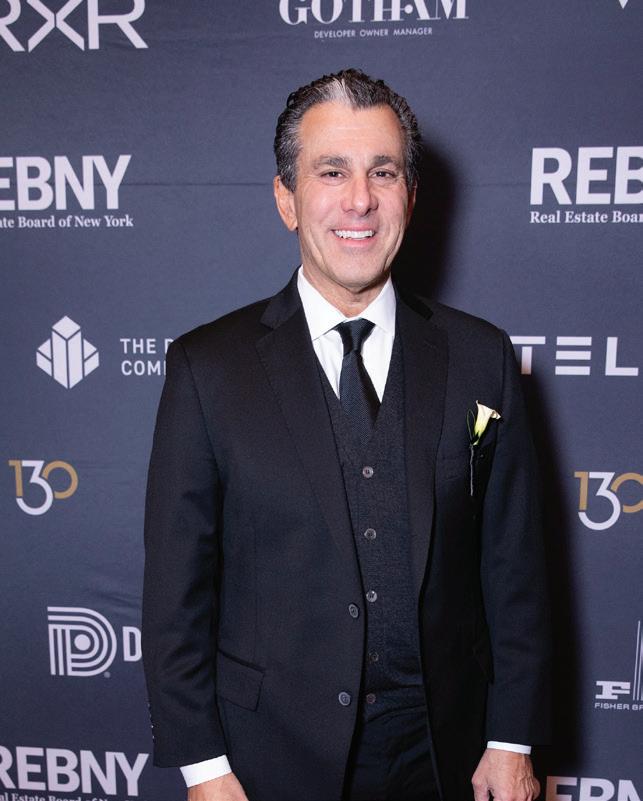
The Real Estate Board of New York (REBNY) hosted more than 1,100 leaders from real estate, government, labor, economic development and other major New York City business sectors for the 130th REBNY Annual — the premier networking event for the region’s real estate industry.
Hosted at the Waldorf Astoria New York, the event featured the presentation of REBNY’s 2026 honorees for commitment and contributions to New York City and its residents, remarks from New York Governor Kathy Hochul, in addition to appearances by hundreds of top business executives and a wide array of other public officials across New York City, State and federal government.
The event kicked off with red carpet press interviews showcasing REBNY’s annual honorees and other industry leaders, followed by two cocktail receptions alongside. Guests then enjoyed a three-course dinner prepared by Chef Michael Anthony, chef partner of Lex Yard at the Waldorf Astoria and executive chef and partner of Gramercy Tavern.
“New York City’s foremost industry leaders, public officials, and civic stakeholders came together yesterday for a night of recognition, celebration, and commitment to meet the opportunities and challenges facing our City’s economy in 2026 head on,” said REBNY President James Whelan. “I am extremely grateful for our team for designing a memorable event that fully championed the spirit of REBNY in its 130th year, as well as our honorees for setting the bar for civic and professional excellence that we can all aspire to in the year ahead.”
The program also featured a video produced by REBNY highlighting the vital role that the real estate industry plays in supporting housing in New York City from development to building management to brokerage to construction.
“On its 130th anniversary, the REBNY Annual is the industry’s premier event for all those dedicated to New York City’s future as an ideal place to live, work, grow a business and

raise a family,” said REBNY Chairman Jed Walentas. “The REBNY Annual always presents an excellent opportunity to take stock of our industry’s goals, the challenges New York City faces, and the leaders going above and beyond to make our city the best it can be.”
The Harry B. Helmsley Distinguished New Yorker Award was presented to Anita Laremont and David Karnovsky, partners at Fried, Frank, Harris, Shriver & Jacobson LLP, for exceptional accomplishments in the profession and invaluable contributions to New York’s civic welfare.
The Bernard H. Mendik Lifetime Leadership in Real Estate Award was presented to Jeffrey R. Gural, chairman and principal of GFP Real Estate, for exceptional service to the industry and remarkable professional accomplishments over the course of his career. The Kenneth R. Gerrety Humanitarian Award was presented to Winston C. Fisher, partner at Fisher Brothers and CEO of Area15, for outstanding service to the community.
The John E. Zuccotti Public Service Award was presented to Christine Quinn, president and CEO of Women in Need (WIN), for exceptional accomplishments and service to the public’s interest. The George M. Brooker Management Executive of the Year Award was presented to Kevin Hoey, executive vice president of L&L Holding Company, recognizing exceptional career accomplishments as well as service to the profession and the broader community. The Louis Smadbeck Memorial Broker Recognition Award was presented to James R. Wacht, managing principal of Lee & Associates, recognizing a REBNY broker with personal and professional integrity, long-term leadership and prominence in the brokerage community and participation in REBNY’s committees. The Young Real Estate Professional of the Year Award was presented to Camille McGratty, assistant vice president, head of real estate at Hospital for Special Surgery, for professional achievements as a rising star of the industry and for civic leadership.
A portion of proceeds raised by the REBNY Annual will go to funding social impact initiatives.









CoreNet Global New York City Chapter hosted its 2026 Annual New Year’s Party at Gotham Hall in Midtown Manhattan. The members-only event brought together hundreds of leaders from across CoreNet NYC chapters’ network, including end users, service providers, developers, investors and industry partners, for an evening of connection, celebration and community building.
As part of the program, the chapter presented its CoreNet NYC Star Volunteer Awards, recognizing outstanding volunteer members who demonstrated exceptional leadership, dedication and service to the organization throughout the year.
The 2026 celebration highlighted CoreNet Global NYC’s ongoing commitment to fostering meaningful connections among corporate real estate leaders while reinforcing the chapter’s position as the leading voice for real estate professionals in the New York market, the organization said.
The evening also reflected the chapter’s broader mission to deliver year-round programming, education and thought leadership across workplace strategy, sustainability, technology, capital markets and the future of the built environment.
PropTech Committee
Kevin Zalewski, Viva Railings LLC
Membership Committee
Doug Link, Horticultural Creations Inc.
Special Events Committee (New Years Party)
Elizabeth Beyer, Creative Office Resources
Special Events Committee (REmmys)
Corrin Thompson, Cushman & Wakefield
Special Events Committee (Golf Outing)
Kelly Merino Ryan, KGO Green
Sustainability Committee
Maxime de Scheemaeker, JUUNOO
End User Forum
Kovi Reichman, JLL
Marketing & Communications Committee
Adrielle Slaugh, Studios Architecture
Public Policy Committee
Marcus Rayner, Colliers


Young Leaders Committee
Dylan Schedler, VVA
Awards Committee
Melissa Rizzo, Avison Young
Women's Leadership Committee
Iris Bensch, TD Bank
Sponsorship Committee
Brian MacKenzie, Creative Office Resources
Landlord Committee
Alyssa Zahler, Two Trees Management
Learning & Development Committee
Jaime Feuerborn, Savills
Governance & Nominating Committee
Loren Beas, Structure Tone
Strategic Planning Committee
Paul Giordano, Savills
Diversity, Equity, Inclusion Committee
Neha Patel, Waldner’s Strategy & Portfolio Planning Committee
Chris Lung, FTI Consulting





























The International Facility Management Association (IFMA) Greater New York City Chapter’s 2025 Holiday Party brought together facility management professionals for a festive evening of networking and celebration at Penn6 in New York City. Attendees enjoyed lively conversation, strengthened industry connections and toasted a successful year while engaging with peers and valued sponsors from across the FM community. The evening underscored the chapter’s strong sense of community and the important role of its partners in fostering professional growth within the built environment.

















Simone Development Companies was represented by in-house leasing and legal teams; the Bronx Chamber of Commerce was also represented in-house.
“Simone Development Companies has long been a committed partner in the Bronx’s economic growth, and our decision to expand within Hutchinson Metro Center reflects the strength of that relationship,” said Bronx Chamber of Commerce President Lisa Sorin. “Their continued investment in creating a high-quality, mixed-use campus has helped foster a dynamic business environment that supports employers, institutions and community organizations alike. As the Bronx Chamber grows its footprint to better serve our members, we are proud to do so at a campus that embodies innovation, accessibility and long-term commitment to the borough.”

Simone Development Companies has signed a new, long-term lease with the Bronx Chamber of Commerce for 1,841 square feet of offi ce space at 1200 Waters Place, part of the Hutchinson Metro Center in The Bronx, N.Y. The Bronx Chamber of Commerce, currently located within the building, is relocating to the new space as part of an expansion that nearly doubles its footprint.
1200 Waters Place is a 433,000-square-foot Class A building featuring medical, academic and office space and a landscaped courtyard, fitness center, teleconference center and free parking. Tenants include Mercy University, Montefiore, New York GI Center, ENT and Allergy Associates, The New Jewish Home, Adams Clinical and federal, state and city agencies. Retail tenants include Chipotle, LA Fitness, Dunkin’, A-Z Nutrition, Tower Café and a Residence Inn by Marriott.
“The Bronx Chamber of Commerce plays a vital role in supporting local businesses and driving economic growth throughout the borough, and we are proud to accommodate their expanding needs within our Hutchinson Metro Center campus,” said Joe Simone, president of Simone Development Companies. “1200 Waters Place continues to attract a diverse roster of tenants, offering the modern, flexible space and strategic location they need.”
Rendering courtesy of Hard Rock International

The development will honor the soul and rhythm of San Juan, while striking a bold new chord for the future. Designed by Klai Juba Wald and CMA Architects, the space will be inspired by the island’s cultural and musical heritage, integrating work from community artists.
“The launch in San Juan of the first hotel, casino, and residential complex by the prestigious firm Hard Rock International, with construction set to begin mid-year, opens a world of possibilities for economic development,” said Governor of Puerto Rico Jenniffer González-Colón. “This significant $850 million investment, in addition to generating jobs and becoming another attraction for the island, helps continue positioning Puerto Rico as an ideal destination in the Caribbean — a destination for tourism, living and global investment.”

Hard Rock International has partnered with Misla Hospitality, Stonecrest Investment Management and The Interfin Companies to develop the Hard Rock Hotel & Casino San Juan, its first in Puerto RIco. The $850 million, new-build project is slated to open in 2029, with construction commencing in mid-2026.
Offering views of both San Juan Bay and the Atlantic Ocean, Hard Rock Hotel & Casino San Juan will feature approximately 415 rooms, 58 suites and 186 Branded Residences. The property will amplify the island’s music culture by introducing event venues, a recording studio and local memorabilia. It will be the first integrated casino in Puerto Rico for a complete travel-entertainment experience.
“Music is at the heart of both Hard Rock and Puerto Rico, making this a perfect union,” said Jeff Hook, chief operating officer at Hard Rock International. “San Juan is a natural extension of our portfolio, creating a seamless Hard Rock experience for guests traveling between our international properties. We’re honored to create a destination that celebrates Puerto Rico’s rich music and arts scene, and we look forward to welcoming visitors and locals alike to experience the island’s dynamic cultural landscape.”








Tavros, a privately owned real estate investment management and development firm based in New York City, has closed on the acquisition
of 250 Water Street for $143 million. The one-acre, mixed-use development project is one of the last remaining full-block development opportunities in lower Manhattan.
Tavros is planning a 600-unit ground-up residential asset, with 25% of the apartments to be affordable, and of that 25%, 80% will be deeply affordable. A five-story podium with ground floor retail and four floors of commercial space will anchor the base of the building. Tavros plans to use the façade and massing previously designed by Skidmore, Owings & Merrill; going forward, Fogarty Finger will be the design architect and architect of record.
“The South Street Seaport is one of the most historically significant locations in New York City and it has evolved into a dynamic residential neighborhood,” said Nicholas Silvers, a founding partner of Tavros.
JLL represented the seller in the transaction and advised the new ownership on the pre-development loan provided by BDT &MSD Partners. Atlas Capital provided an equity investment alongside Tavros.
The JLL Capital Markets team that arranged the sale was led by Senior Managing Directors Andrew Scandalios and Ethan Stanton and Senior Director Nicco Lupo. JLL’s Debt and Equity team advised the buyer and included Senior Managing Director Christopher Peck and Senior Director Nicco Lupo.

























Black Diamond Capital Management announced that certain investment funds under its management have acquired Palisades Center in Nyack, N.Y., one of the largest shopping and entertainment destinations in the Northeast. Local reports place the purchase price at $175 million. The Black Diamond funds plan to be long-term owners of the 2.3 millionsquare-foot property and to invest in the center.
Black Diamond brings a 30-year history of acquiring, investing in and maximizing performance of underperforming assets. The
firm’s investment philosophy emphasizes long term ownership and opportunities where new capital investment and disciplined management can drive outsized returns — themes that underpin its plans for Palisades Center. Black Diamond has improved dozens of companies and assets over its history.
“Palisades Center is an irreplaceable asset serving one of the most affluent and densely populated trade areas in the Tri-state region,” said Stephen H. Deckoff, founder and managing partner of Black Diamond Capital Management. “We see significant value in this property and intend to reinvest in the center, enhance the tenant mix and position Palisades for long term success.”
The acquisition is the latest chapter in a four-decade-long saga that began when Pyramid Corp. announced plans to build a $200 million mall at Routes 303 and 59 and the Thruway close to the New Jersey state line. Locals expressed concerns about traffic congestion, but construction was completed in 1997 in a controversial Brutalist style and the mall opened in 1998.
But rumors of structural instability plagued the four-level center, with rumors of its parking deck sinking persisting, despite strong denials. A renovation in 2013 softened the exterior, and the center was fully occupied in 2017. The closure of anchor tenants JCPenney and Lord & Taylor later in the decade and temporary closure due to COVID-19 resulted in the mall’s appraisal declining to $425 million, down from $881 million in 2016. In 2023, mortgage holder Wilmington Trust filed a foreclosure complaint. Spinoso Real Estate Group came on as the exclusive operating partner in September 2024 and in October 2025 Black Diamond purchased the debt. Pyramid ceded the center completely. Spinoso Real Estate Group will continue as the property's exclusive operating partner.

The typical U.S. homebuyer’s down payment fell 1.5% year over year to $64,000 in December 2025, the first decline in five months, according to a Redfin analysis.
The median home sale price rose slightly (0.5%) in December, but down payments fell in dollar terms, partly because the typical homebuyer put down a lower percentage of the purchase price than a year earlier. In percentage terms, the typical homebuyer put down 15.2% of the purchase price, compared with 16.7% a year earlier.



“Down payments may be falling in part because Americans are seeking out more affordable homes due to high prices, elevated mortgage rates and economic uncertainty,” said Redfin Principal Economist Sheharyar Bokhari. “Sellers typically prefer buyers who make large down payments because it signals financial stability, but sellers don’t have much say in today’s market. Buyers hold the negotiating power because there are more homes for sale than people who want to buy them.”
While mortgage rates remain more than double the all-time low hit during the pandemic, they have come down in recent months. The average 30-year-fixed mortgage rate now sits at 6.09%, just shy of the lowest level since 2022. That has helped bring down monthly mortgage payments, which may bring more homebuyers off of the sidelines this year, Redfin said.
a luxury portfolio exceeding $34 million in active listings.
“Jeffrey Glass ... brings a rare blend of strategic sophistication, investment intelligence and global perspective that is essential in today’s ultra-luxury market,” said Gary, associate broker, Keller Williams NYC. “Beyond representing a $34 million-plus portfolio of trophy assets, Jeff understands real estate as an investment vehicle and is able to thoughtfully guide high-net-worth clients on portfolio strategy, asset positioning and long-term value creation. His ability to pair data-driven analysis with discreet, white-glove execution meaningfully strengthens our advisory platform and elevates how we serve sophisticated buyers and sellers across South Florida’s and New York’s most prestigious markets.”



Keller Williams New York City (KWNYC), part of the Keller Williams franchise, has welcomed Jeffrey Glass, sales associate/luxury real estate advisor, as a strategic member of Associate Broker, Nicole Gary’s Florida expansion team out of The Miami Portfolio Collection, a Keller Williams franchise based in Florida.
Glass has formally entered the Florida real estate market via work on Gary’s team, which expanded into the state in 2022, bringing with him
Upon licensure, Glass assumed leadership of a high-value real-estate portfolio that includes several notable trophy properties. Among them are Unit 10A at Faena House on the market for $25 million and a duplex penthouse at Paramount Miami World Center, a landmark property in the heart of Downtown Miami’s most ambitious mixed-use development for $5.5 million.
His background working with Fortune 500 brands and high-net-worth stakeholders translates seamlessly into representing sellers who expect precision, privacy and performance.
Glass will be housed in Keller William’s Miami Portfolio South Florida location as he continues to expand his presence across South Florida’s luxury market.
The Nicole Gary Team currently holds over $125 million in listing inventory in New York and Miami. Keller Williams NYC is now home to over 540 licensed salespeople and brokers who work with clients to buy, rent, or sell real estate throughout New York City.

















Olympia DUMBO, the sail-like Brooklyn condominium tower at 60 Front St., has reached a major milestone with the signed contract of Penthouse B. Last listed at $17.5 million, the sale will be among the most expensive condominium transactions in Brooklyn’s history, according to its team. PHB now represents the second-highest asking price for a condominium in Brooklyn and the highest on a price-persquare-foot basis.
Penthouse B was recently featured as Denzel Washington’s home in Spike Lee’s A24 thriller, “Highest 2 Lowest.”
Designed by IMG, the full-fl oor penthouse spans 4,928 square feet across the 32nd fl oor and features fi ve bedrooms, a separate home offi ce and four-and-a-half baths. The home offers 360-degree views and a private, 552-square-foot terrace.
Olympia DUMBO features over 38,000 square feet of indoor and outdoor amenity spaces spread over three fl oors, including indoor and outdoor pools, New York City’s highest private outdoor tennis court with views over the Brooklyn Bridge, a fi tness center curated by Gronk Fitness, sauna and steam room, a movement studio, a separate spin studio and a juice bar. Olympia DUMBO’s youngest residents have access to a playroom, outdoor shipwreck-themed playground, bowling alley, private park and waterpark. The home offers an optional private garage for an extra $1 million.
Penthouse B at Olympia DUMBO is listed by Jessica Peters and Carl Ekroth of The Jessica Peters Team at Douglas Elliman, Karen Heyman and Casey Heyman of Sotheby’s International Realty and Fredrik Eklund and John Gomes of the Eklund|Gomes Team at Douglas Elliman, with marketing by Douglas Elliman Development Marketing.
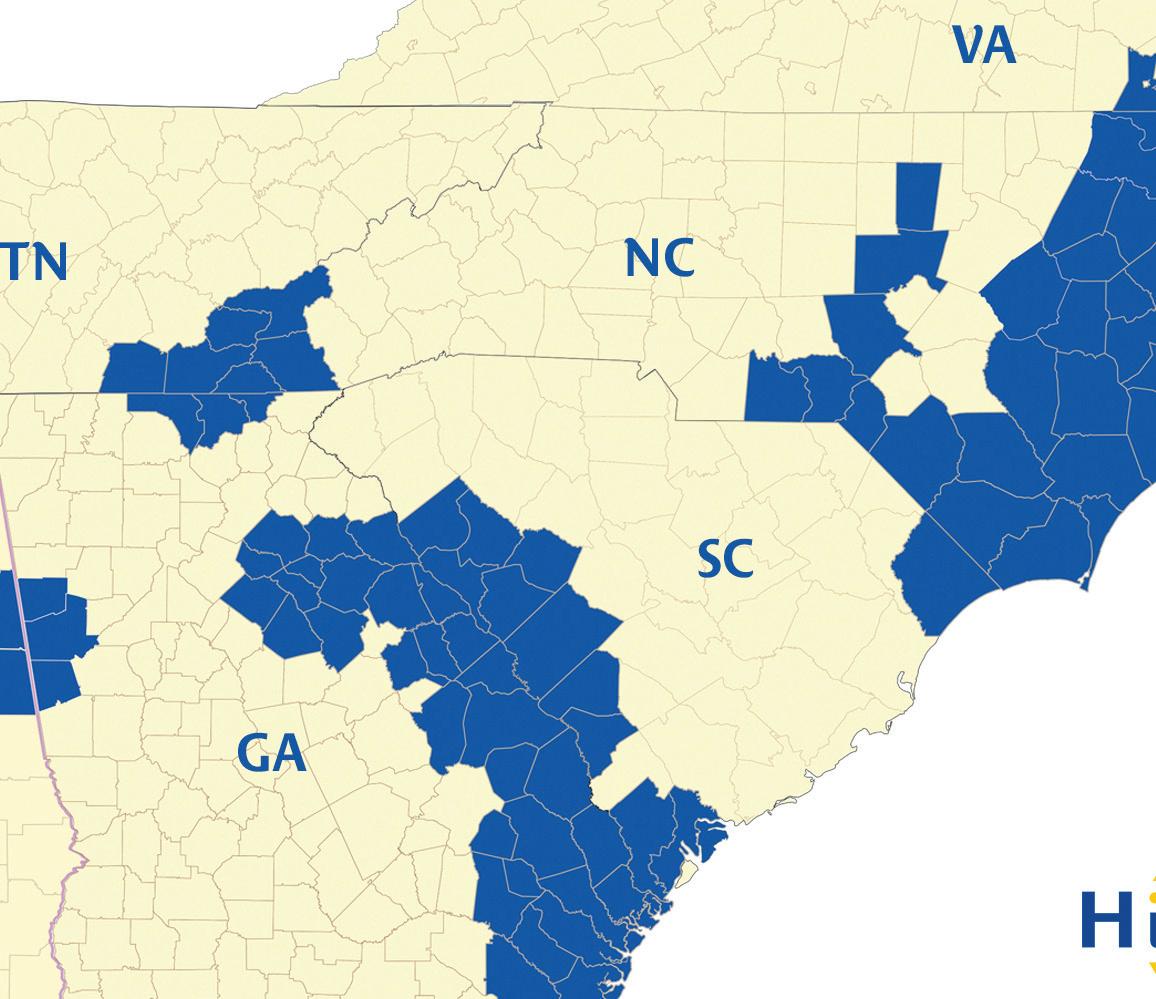
property owners across Carroll, Haralson and Heard counties in western Georgia, as well as portions of Alabama in Randolph, Clay and Cleburne counties. As Hive MLS approaches its 10th anniversary this year, West Metro’s milestone addition advances Hive’s ongoing expansion.
“West Metro joining Hive is a powerful example of what our cooperative model is all about,” said Daniel Jones, CEO of Hive MLS. “They share in our belief in the strength of community, where associations gain influence by working together, the value of collaboration across markets to support brokers and agents with better tools, and the importance of connectivity through modern systems and seamless data exchange. We look forward to West Metro helping to strengthen our Hive.”

Hive MLS, one of the nation’s fastest-growing Multiple Listing Services (MLS), today announced that West Metro Board of Realtors has officially joined its cooperative. West Metro becomes the 20th member of the Hive MLS cooperative model and expands Hive’s footprint into Alabama, continuing the company’s steady growth across the Southeast.
The West Metro Board of Realtors (WMBOR) serves members and
Hive MLS’ wholesale cooperative model enables local Realtor associations and MLSs to maintain their branding, leadership and policy-making authority while benefiting from shared infrastructure, support and training. This empowers associations to scale strategically, without sacrificing local control.
According to West Metro, its decision to join the Hive cooperative reinforces the growing demand for scalable MLS infrastructure that strengthens, rather than replaces, local governance and leadership.
“West Metro always prioritized delivering strong member services while protecting the values and voice of our local real estate community,” said Reggie McCrary, RCE, chief executive officer of West Metro Board of Realtors. “Joining Hive MLS allows us to enhance what we offer our members without giving up who we are. This partnership gives us access to the tools, technology and support we need to grow while staying firmly connected to the communities we serve.”

law and cross-border matters, Hernandez provides advisory services designed to support informed decision-making, risk management and long-term value creation. The platform is geared toward domestic and international investors seeking professional guidance in acquisitions, dispositions and real estate strategy.
Hernandez is affi liated with Keller Williams New York City and operates through ARH Real Estate Advisory Group LLC, maintaining headquarters in Midtown Manhattan. His advisory approach emphasizes market analysis, ownership structure considerations and clear communication throughout the transaction process.

Alejandro Hernandez, a New York–based real estate advisor and lawyer, has launched a strategic real estate advisory platform focused on helping investors navigate residential and investment opportunities in New York City.
Drawing on his background in real estate transactions, business
“New York City real estate requires more than market knowledge,” said Hernandez. “Investors need strategic guidance that accounts for structure, timing, and long-term objectives. This platform is designed to bring clarity and confi dence to those decisions.”
In addition to his real estate and legal background, Hernandez has professional experience in radio and television broadcasting, including appearances on national Spanish-language media outlets. This communications background informs his client-focused approach and ability to translate complex market dynamics into clear, actionable insight.
The launch refl ects Hernandez’s continued focus on advisory-driven real estate services for investors seeking disciplined and informed participation in the New York City market.
the lobby, “A:: Light,” is among the most technically and conceptually ambitious artworks ever realized in a commercial office building, Brookfield said.
“Presenting this important, interactive work by Pierre Huyghe marks a pivotal moment for the next chapter of One Liberty Plaza,” said Alex Liscio, senior vice president, asset management, Brookfield Properties. “The lobby’s redevelopment was envisioned to complement his artwork, underscoring our commitment to activating our properties with dynamic experiences and museum-quality art.”



Brookfield Properties has unveiled a major work by acclaimed artist Pierre Huyghe at One Liberty Plaza, a 54-story, 2.3 million-square-foot, trophy office tower centrally located in Lower Manhattan. The recently reimagined double-height lobby features Huyghe’s “A:: Light,” which transforms the soaring ceiling into a video game.
Visible from across neighboring Zuccotti Park and playable by visitors to
“A:: Light” takes as its starting point the first commercially successful video game, Pong, which simulates a game of ping pong as each player controls a paddle that moves across the left or right side of the screen. Huyghe transposes this onto the grid of a drop ceiling, with each ceiling tile corresponding to a pixel on the gameboard and wired controllers inviting visitors to play. As two people engage, the space is transformed: illuminated tiles flash on and off as the paddles move back and forth across the ceiling, bouncing the cursor across the lobby and evoking both the wonder of early video games and a digitized, cybernetic future.
“With great cunning, Pierre transforms the gridded drop ceiling — which is so ubiquitous in postwar office buildings — into a site of play, interaction and wonder,” said Jacob King of Fine Art Concepts LLC, who advised Brookfield on the purchase and installation of the artwork.
Huyghe, who is considered one of the most influential living artists in any medium, was represented by Marian Goodman Gallery.






































marking the latest in a list of several project wins that contribute to the general contractor’s Las Vegas operations.
An expanded leadership team and a new offi ce east of The Strip will further strengthen Suffolk’s ability to deliver complex, high-profi le projects across the region, the company said. To support its growing operations, Suffolk will relocate to 3800 Howard Hughes Parkway in early 2026.

Construction giant Suffolk has been selected to lead the renovation and expansion of the Flamingo Las Vegas for Caesars Entertainment,
Since establishing its Las Vegas presence in 2023, Suffolk has built a portfolio of projects including the Four Seasons Private Residences Las Vegas, where the team recently completed a major 12-hour concrete pour totaling more than 4,500 cubic yards of concrete, supported by Suffolk’s advanced Virtual Design and Construction (VDC) and Building Information Modeling (BIM) modeling to enhance coordination and planning across all phases of construction. Additional work in the region includes Campus for Hope, a 20-plus-acre campus providing comprehensive services to address homelessness, and the Flamingo renovation, which includes comprehensive upgrades to the lobby and casino areas, a new lobby bar and improvements to both the main and VIP registration spaces.
“The momentum we’ve built in Las Vegas speaks to the trust our clients and partners place in Suffolk,” said Pete Tuffo, president of Suffolk’s Gulf Coast region, national gaming and Las Vegas. “We’ve assembled a best-in-class team, invested in the market and proven our ability to deliver highly complex projects on aggressive schedules. As Las Vegas continues to evolve, Suffolk is uniquely positioned to help shape its next generation of landmark destinations.”







Yazaki Innovations Inc., a subsidiary of Yazaki Corporation, will bring its prefabricated electrical wiring system, PreFab Home Wiring, to the U.S. residential construction market in 2026 — offering builders what it calls a faster, more efficient alternative to traditional on-site wiring.
PreFab Home Wiring simplifies construction by delivering fully preassembled, load-tested and code-compliant electrical assemblies that replace the traditional rough electrical installation process. Each system is custom engineered directly from the builder’s plans and produced in an ISO-certified Texas manufacturing facility.
The PreFab Home Wiring systems are delivered fully assembled, precisely measured, cut, stripped and ready for installation. Fully compliant with NFPA NEC 70 and applicable state and local codes, PreFab Home Wiring helps streamline inspections and accelerate project timelines through clear, color-coded installation diagrams.
Yazaki Innovations combines the attributes and strengths of Yazaki Corp.’s global product portfolio, product development, manufacturing and business strengths with a quick, agile approach to innovation. The PreFab Home Wiring solution is backed by 85 years of expertise in the design and manufacturing of automotive wiring harnesses and more than 30 years of success in the Japanese housing market.
To date, Yazaki Innovations has successfully installed the first-ever prefabricated residential wiring systems in three homes in Florida.

Suite construction edition is Intuit’s first industry-specifi c ERP.



Global financial technology platform Intuit announced the launch of a new construction edition for Intuit Enterprise Suite, an AI-native, endto-end enterprise resource planner (ERP) built specifi cally for the $2 trillion construction industry.
Purpose-built for mid-market construction businesses, the new solution brings project, financial and operational workfl ows together in one place, helping customers streamline operations, improve cash fl ow and deliver real-time visibility into performance.
Intuit Enterprise Suite is helping businesses run the way they actually operate, with customizable, industry-specifi c KPIs and dashboards for field services, healthcare, nonprofit and manufacturing. Intuit Enterprise
“Construction businesses are naturally complex, with dozens of projects to track and ensure their profitability, rising material costs to monitor and limited visibility into overall business and multi-entity performance,” said Ashley Still, executive vice president and general manager, mid-market, at Intuit. “Data is siloed and trends are diffi cult to spot. That’s why we’re investing heavily in industry solutions, starting with construction, so these businesses can benefit from our powerful, AI-native, ERP solution that automates workflows, delivers data insights and trends and manages all aspects of a project, from proposal to payment, driving faster deal closure and accelerating growth.”
Unlike other ERP systems retrofi tted for vertical use, the construction edition for Intuit Enterprise Suite is built to refl ect how construction businesses work. Combined with the AI-native capabilities of Intuit Enterprise Suite, it addresses meets the needs of construction finance leaders head-on: unifying workfl ows, automating key processes and delivering AI-driven insights that help businesses operate with greater speed, accuracy and control. It also includes the ERP capabilities within Intuit Enterprise Suite required by modern finance teams, including AI-driven insights and multi-entity dashboards.
The new construction capabilities are currently available in beta for Intuit Enterprise Suite customers in the construction industry at no additional cost and are generally available as a paid add-on for QuickBooks Online Advanced customers.

invoice validation, reporting and supervisory work. Facilio’s autonomous agents are built to take off a big chunk of that workload, operating on top of existing CMMS and finance systems. The result is simple: faster cycles, fewer misses, tighter controls and an operational backbone that doesn't depend on who’s online.”

Facilio Inc., a facilities operations and maintenance platform for largescale enterprise portfolios, has launched its Autonomous AI Agent Suite — Facilio Atom, bringing fully autonomous execution to some of the most manual, back-offi ce workfl ows in facilities management.
The new purpose-built AI agents are designed to actively execute and coordinate facilities operations, not just document them, thereby automating up to 40% of repetitive work. Facilio’s Agentic AI spans across three high-impact areas of facilities operations: help desk dispatch, compliance automation and finance and control.
“The most immediate impact of AI in FM isn’t another chatbot or a dashboard, it’s removing the drudgery for humans involved in FM operations,” said Raj Subramanian, chief product offi cer and cofounder, Facilio Inc. “There’s enormous repetitive work in facilities that requires humans to do intake and triage, coordination, approvals,
Traditionally, FM operations rely on CMMS platforms that act as systems of record, documenting work and depending on humantriggered workfl ows. Facilio’s Autonomous AI Agents go a step further, actively driving workfl ows forward by continuously executing routine tasks, while keeping humans involved for oversight and exceptions where needed.
“AI is moving from analysis to action, shifting work from being humandriven to system-driven. Facilities management is one of the last large operational domains still reliant on manual coordination,” said Prabhu Ramachandran, Facilio chief executive offi cer and co-founder. “It is high time that FM operations evolve from being centered around a mere system of record into a system that keeps operations moving continuously. With autonomous agents, Facilio is enabling a new operating model where service delivery, compliance, reporting and management run with consistency at scale. We’re entering the autonomous era in facilities and it’s about to redefine the standard for operational performance.”
Facilio’s Autonomous AI is intentionally built to be a tool-agnostic solution. These agents can be deployed independently, layering on top of existing CMMS, ERP and finance systems, thereby allowing FM teams to automate their workfl ows immediately, without rip-andreplace projects.


Breezy — an AI operating system built exclusively for residential real estate professionals — announced its official launch, bringing AIpowered workflows and client-ready tools to one of the world’s largest yet most underserved professional sectors.
To accelerate product development and prepare for launch, Breezy raised an oversubscribed $10 million pre-seed led by Ribbit Capital with participation from Fifth Wall, DST Global, Liquid 2 Ventures, Eyal Ofer’s O.G. Venture Partners, OpenAI’s CEO of Applications Fidji Simo and Lightspark’s Co-founder and CEO David Marcus, among others.
Founded in early 2024 by top-producing agent James Harris, Afterpay Co-founders and seasoned technology entrepreneurs Nick Molnar and Anthony Eisen and venture capitalists the Khalili Brothers, Breezy plans to give agents back control of their time and deal flow.
Breezy has been shaped by a curated community of more than 200 highly influential real estate agents across the country, representing a cross-section of brokerages and production levels. Their real-time feedback as active practitioners has been embedded directly into the platform’s functionality, ensuring the product reflects how agents actually work.
“I wanted a tool that could think like I do — adjust comps, track client needs and automate repetitive tasks — so I could focus on delivering the best experience for my clients and growing my business. That wish became Breezy’s mission,” said Harris. “After 25 years in luxury real estate, I was still burning hours bouncing between half a dozen tools to prepare for one client meeting. None of them were built with agents in mind. That was the spark for Breezy. From that moment, I became obsessed with building a platform entirely for agents, one that gives them back their time, helps them win more business and becomes their ultimate competitive advantage.”
As part of this commitment, Breezy is also launching Underbuilt, a proprietary data platform that reveals the true building potential of residential properties.
The platform has been incubated by Harris for nearly two years inside his own real estate practice, developed alongside his active brokerage work and refined through continuous use across live client engagements.
“James has lived and breathed real estate at the highest level for over two decades. His obsession with elevating agents and improving the way that they work is exactly why Breezy is going to change the game,” said Micky Malka, founder of Ribbit Capital. “This isn’t just another proptech tool — it’s founder-market fit meets cutting-edge technology: James’ lived experience, reimagined through AI, to solve problems agents have battled for years.”
Headquartered in Los Angeles, Breezy will use the capital to strengthen its product and data foundation, expand its engineering and design teams and invest in security, go-to-market and brokerage-wide rollout readiness, the company said.
An exclusive waitlist is open, with a broader U.S. launch slated for the first half of 2026. The platform is being built with international expansion in mind, with near-term opportunities in Canada, the United Kingdom, Australia and Dubai.
“The industry has hit a wall with black-box algorithms that leave homeowners financially vulnerable,” said Knize. “Our architecture protects the homeowner’s position by providing the verified precision required to manage equity, while fueling the AI-driven mortgage and brokerage sectors with reliable Truth Data.”


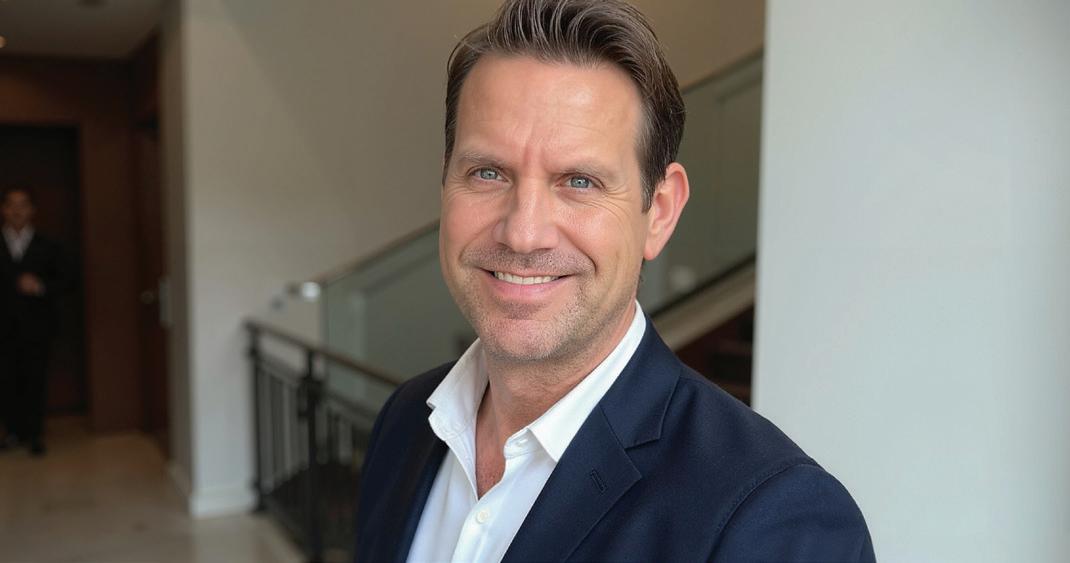
Jeff Knize, a certified appraiser and proptech architect, has announced the launch of Buyrego and the debut of Bestimation, a first-of-its-kind category in home valuation bridging the “Accuracy Gap” between a home value estimator and professional-grade reality.
Central to the launch is Bestimation, addressing market variances that 2026 case studies have shown to reach as high as 33% compared to standard automated valuation models (AVMs) in high-volume corridors like Cook and DuPage Counties. By providing a four-tier audit — spanning from r-CMA (Expert Review) to i-CMA (Interior Audit) — Bestimation delivers a level of accuracy previously unavailable in the instant-valuation space, the company said.
The Buyrego roadmap is scaling toward a 3,000-town national rollout, powered by infrastructure vetted for the Google Cloud Scale AI Tier.
Homeowners and enterprise partners can analyze local accuracy and find out their home value at buyrego.com.

With over 75 years of experience and deep understanding of industry challenges, IDB’s Commercial Real Estate team supports property owners, developers and builders across every type of financing requirement. We can help you keep pace with changes in the marketplace, while maintaining high credit quality levels and providing the personalized service, efficiency and flexibility to fit your specific needs.
For more information about financing solutions that meet your specific needs, visit idbny.com.












Tishman Speyer announced two new leases and one renewal for 600 Fifth Avenue, located at Rockefeller Center. King & Wood Mallesons, an international law firm, and Legends Global, a global sports and entertainment company, signed leases for new spaces for 8,000 square feet each. Sumitomo Electric U.S.A. Holdings renewed its lease for 8,000 square feet.
King & Wood Mallesons is an international law firm with deep roots in Asia and a global footprint, advising corporations, financial institutions
and governments on complex cross-border transactions, disputes and regulatory matters. The space is on the 27th floor of 600 Fifth Avenue.
Legends Global is a partner to live events, venues and brands, offering a fully integrated solution of premium services, including feasibility and consulting, owner’s rep, sales, partnerships, venue management, hospitality, merchandise and content and booking. The space is on the 19th floor.
Sumitomo Electric U.S.A. Holdings is the regional holding company for Japan-based Sumitomo Electric Industries, a global manufacturing company that operates in diverse sectors, including automotive, communications and energy, with a focus on long-term value creation. The 8,000-square-foot space is on the 18th floor.
“These three leases underscore the continued demand for 600 Fifth Avenue and reflect the strength and diversity of Rockefeller Center’s campus,” said EB Kelly, senior managing director at Tishman Speyer and head of Rockefeller Center. “Companies across industries are drawn to an environment that offers more than just office space: Rock Center is a community with world-class amenities, cultural energy and a campus experience that supports collaboration, creativity and longterm growth.”
600 Fifth Avenue is a 26-story office building situated at the intersection of West 48th Street and Fifth Avenue in Midtown Manhattan and was completed in 1952 as the final addition to the original Rockefeller Center complex.
Rockefeller Center is 98% leased.
Recent studies by the American Property Casualty Insurance Association (APCIA) show that about two out of every three homes nationwide may be underinsured. Residents often discover this only when it is time to file a claim. This can lead to significant extra costs, frustration and even affect neighbors with property damage or disruptive projects.
FirstService Residential’s program aims to address these challenges by making insurance more accessible, transparent and tailored to the needs of every resident.



FirstService Residential announced the launch of a new resident insurance solution designed to close the insurance coverage gap, offer more choice and simplify life for residents and boards at the communities it manages. This new program is delivered through a partnership between its affiliated company FS Insurance Brokers and Viu by Hub, an omnichannel insurance platform developed by Hub International.
“We are always looking for new ways to add value and simplify life in the communities we serve,” said Andrew Lester, president of FS Insurance Brokers. “Our new resident insurance solution is available whenever your residents need it. There’s no obligation, just convenience when insurance decisions arise.”
Residents can compare quotes from top national insurers for home, auto and more, all in one place. As a brokerage, Viu by Hub offers neutral advice to tailor insurance to match each resident’s needs. The individual licensed agents of Viu by Hub provide expertise, guidance and quotes in seconds from 50-plus top-rated carriers, with coverage across the U.S.
“Property managers see firsthand what happens when residents are underinsured. It affects the whole community,” said Bryan Davis, president of Viu by Hub. “FirstService Residential recognized that gap and is taking a proactive approach to help residents protect themselves and their neighbors.”


$800+ Million Originated. Built for Bor rowers.





Integritas Capital was built to serve independent sponsors. As developers and operators, we understand the needs of builders and owners.
Founded by Stephen Palmese, the firm leverages two decades of brokerage relationships, development, and real estate lending.
In the last 18 months, Integritas has originated $811 million in loans, financing adaptive-reuse, construction, and transitional projects.
Disciplined underwriting underpins our selection process across our robust pipeline.
We deliver professionalism: speed, structure, and certainty to close. We back independent sponsors with institutional execution.
Loan sizes typically range from $25 million to $300 million.



Bambi Baby, a family-owned baby furniture and gear retailer with nearly 50 years of experience, announced the opening of its new store in the heart of New York City. The newly opened location, at 655 Sixth Ave., offers a curated selection of the best-in-class baby products and personalized services to families throughout the city and beyond.
What started as a small store in West New York, N.J. in 1976 has grown into an established retailer with locations across New Jersey, Florida
and now, New York City. Bambi Baby offers the extensive, premium assortment of a big box store while redefining baby gear shopping through a luxury showroom experience where expertise and personal touch guide every decision.
“Opening in New York City is a dream come true for us,” said Enelio Ortega, CEO and operator of Bambi Baby. “We are thrilled to welcome families into our store, and we look forward to providing the same high level of service and care that has earned us the trust of parents for nearly five decades.”
The new New York City store is more than just a shopping destination — it’s an extension of Bambi Baby's legacy of customer service, the company said. Whether the shopper is a first-time parent or an experienced caregiver, the Bambi Baby team offers expert advice.
From selecting the perfect crib to recommending the best stroller for navigating New York City streets, the staff brings decades of combined industry expertise.
The New York City store offers a wide selection of premium baby furniture and gear from trusted brands including Nuna, Uppababy, Storytime, Maxi-Cosi, Sorelle, Natart and more. It also provides personalized consultations with expert staff, including certified car seat technicians to assist with proper installations.



LightBox, a provider of commercial real estate data and technology solutions, announced the launch of City Directories in LightBox Live, a next-generation solution purpose-built to improve the quality, defensibility and efficiency of Phase I Environmental Site Assessments.
Environmental professionals and lenders rely on historical research to assess risk. Yet traditional city directory workflows often depend on manual searches, inconsistent adjoining property definitions and disconnected data sources, leaving room for missed records, incomplete analysis and unnecessary delays.
LightBox City Directories is the solution fully aligned with ASTM E152721 standards for historical research. Using advanced technology, the platform:
• Systematically defines adjoining properties in accordance with ASTM guidance.
• Accurately geocodes and maps historical addresses with rooftop-
level precision.
• Automatically identifies historically sensitive uses, such as dry cleaners and gas stations.
• Integrates directories directly with Sanborn maps, historical aerials, tax parcels and other critical datasets.
Rather than just relying on manual interpretation or static images, environmental engineers can now conduct a more consistent, comprehensive and defensible review, focused precisely where risk may exist.
“This is a step change in how historical research should be conducted,” said Eric Frank, chief executive officer at LightBox. “By aligning directly with ASTM standards and eliminating manual gaps, we are enabling environmental professionals to produce more reliable Phase I assessments with greater confidence.”
For lenders and capital providers, the quality of a Phase I report directly affects risk management and underwriting decisions.
LightBox City Directories enhances report reliability by:
• Improving the completeness of adjoining property coverage.
• Reducing the likelihood of overlooked historical uses.
• Increasing transparency through mapped, visualized analysis.
• Standardizing research workflows across consultants and markets.
The result is clearer insight into environmental risk exposure and greater confidence in lending decisions in much less time.
“The new LightBox City Directory dramatically accelerates historical property research,” said Albert Lojko, president of LightBox. “By replacing manual processes with intelligent technology, we are helping consultants deliver higher-quality reports while improving turnaround times for clients.”










By Debra Hazel
With women holding just 9% of C-suite positions in commercial real estate, according to the National Association of Realtors, and just 12.4% of similar posts in STEM fields, per the World Economic Forum, it shouldn’t be too surprising that women comprise approximately 10% of senior roles at proptech firms. A major exception, however, is Maureen Waters, newly appointed CEO of Measurabl, a sustainability data management platform for real estate.
In many ways, her journey has mirrored that of the real estate industry — including the growing acceptance of technology, sustainability and women in power in the business.
Waters was used to being the only woman in the room from her earliest roles in real estate.
“When I started in real estate, going back to my Cushman days, technology was viewed as optional. Sustainability was thought of as a certification exercise,” she recalled. Even as sustainability became a standard, thanks to the “green” movement and its importance in reporting, “The rooms where the decisions were made were predominately male, and innovation was talked about but not really a part of the conversation. Today, real estate really has fundamentally shifted and is being digitized.”
Data now has the potential to influence asset value, underwriting and capital allocations.
“It has moved from being on the margins to influencing portfolio strategy,” Waters said. “Data has always been a critical element of real estate, but now that data is shifting that mentality to being more outcome-focused. That fits nicely into diversity and leadership.”
With a college background in architecture and design, Waters joined Hines in Houston at a time when significant development was taking place.
“I was very passionate about real estate and ended
up going on the services side to be impactful around change,” she recalled.
After selling a startup to CBRE, she joined that firm, then moved to Cushman & Wakefield, where she spent 15 years serving in business development and marketing and, eventually, as executive vice president of brokerage in New York City.
But in time she was looking for a change of scenery. A client offered the opportunity to move to Seattle to run Microsoft Founder Bill Gates’ real estate investment arm.
“That’s where I got the technology bug and saw how technology could make real estate more efficient,” she said. But after completing her work for Gates, she quickly discovered that her real estate background wasn’t a natural fit for most tech companies.
She opted to take a step back career-wise and joined Ten-X, an online real estate transaction platform and marketplace, combining her new interest with her history. The opportunity to change the mindset of an industry that had historically been slow to embrace tech, and become a part of that adoption curve, appealed.
Ironically, real estate was an industry that was harder to diversify than tech, she said.
“In technology, there is more diversity, and a lot more diversity in sustainability and sustainable technology,” she said.
By the time Ten-X was sold to CoStar Group in 2020, she was serving as its president — just in time for what she called a real inflection point in the relationship between real estate and technology. Upon Ten-X’s acquisition by CoStar Group in 2020, she joined MetaProp, bringing a new aspect to her career — working with venture capital investors to select technologies, technology implementations and advising early proptech innovators.

One of those innovators was Matt Ellis, co-founder of Measurabl. The rest was history.
“I got to meet the team, and became passionate about what they were doing,” she said. “I committed to Matt and really helped him institutionalize the business.”
She joined Measurabl in 2023 as chief growth officer, was named president in September 2024, and CEO in December 2025, with Ellis moving into the post of executive chairman.
“Over the last 13 years, we built Measurabl into the world’s most widely adopted sustainability data platform for real estate. But that was only the beginning. Maureen is the CEO to do what’s next: break down paywalls for unprecedented, widespread adoption, assemble a deeper, broader ecosystem of partnerships and integrations and pave a clear path to being the industry’s source of truth for investment-grade sustainability data,” Ellis said in the announcement of her most recent promotion. “For two years, Maureen has been a driving force behind our strategy and disciplined execution. She’s the right leader and now is the right time for her to take the helm as we work to be the industry’s trusted sustainability data partner — delivering the highest-quality, standardized, decision-grade data on which real estate owners, capital partners and service providers of all types can rely.”
Focusing on the planet was a homecoming of sorts. Sustainability had long been important to Waters — she had grown up in a city with air quality problems with parents who were committed to environmental issues.
“We had equipment in our backyard measuring the air quality in our city,” she recalled. “I am also passionate about the climate and leaving the planet in a better place for future generations.”
She has moved quickly. At Measurabl, she has led the development of the company’s three-year strategy, 1Measurabl, and continues to drive cross-functional execution. She oversaw the launch of Navigate in 2024, the most significant product release in the
company’s history, and launched the company’s Free Sustainability Solution in 2025, which has already seen adoption across 14,000 buildings across 47 countries.
She also has deepened collaborations across the real estate ecosystem spanning owners, managers, lenders, investors, policymakers, NGOs, nonprofits and solution providers. The company recently announced partnerships with GBCA (Green Building Council of Australia), USGBC California and S&P Global.
Today, Measurabl works with more than 1,000 organizations across 90plus countries, representing more than 22 billion square feet and $3 trillion in assets under management— to measure, manage and objectively report on performance.
Now, she’s charged with orienting Measurabl even more closely to its consumers by supplying even more of their needs, something she saw was necessary during her venture capital days.
“You can’t just take one pain point out of a transaction and still complete it,” she said. “You have to automate it from end to end or otherwise it breaks down. But to get funded, you had to be featuredriven. We ended up having a lot of startups that were featuredriven. Now we’re in a phase where customers want comprehensive solutions. What we’re seeing now is a demand for us to consolidate into one platform the things we needed. Matt, as a visionary, always felt it should be an end-to-end solution.”
Her first steps as CEO in 2026 include conducting a 90-day, 17-city, multinational “listening tour” to meet in-person with 70 current and potential clients.
“I believe in-person is the best way to have conversations,” she said. “Listening to customers right now is critically important. We’re in year three of my three-year plan, to shift our mind set to a customer first culture, not our view of it, but what the customer would say.”
She continues to pioneer women in business, too. Emerging from the male-dominated real estate world, it followed that proptech, too, has been a man’s world.
“Appointments like this matter because the pipeline is still constrained — women-founded companies receive only about 2% to 3% of venture capital, which directly impacts how many women ultimately reach CEO roles,” observed Marissa Limsiaco, president of Otso, a proptech firm that automates and streamlines tenant screening for commercial real estate leases. “Research also shows that women-led startups generate higher revenue per dollar invested, so the opportunity isn’t about capability — it’s about access. Leadership moves like this help normalize women at the top of proptech and expand what the next generation sees as possible.”
Women comprise half of Measurabl’s team, not too surprising given
that many pioneers in sustainability in corporate real estate have been women.
“I have progressed from a very male-dominated world to a very female-dominated world,” she said. “I hadn’t realized sustainability was very female-dominated. It was a pleasant, and welcomed, surprise. Matt actually is an exception, as many of our customers are women, as they lead the charges within their companies.”
But women are increasingly taking the reins via entrepreneurship, said Nikki Greenberg, founder and global ambassador of Women in Proptech.
“Some of the most groundbreaking proptech companies in the U.S. right now are being led and founded by women — from EliseAI to Tulu and Alfred, to name a few,” she noted. “Their success isn’t accidental. They’ve won because they’re solving real operational problems in ways that are both innovative and meaningful. Expect to hear a lot more from this next wave of female founders — they’re not just participating in the industry; they’re shaping its future.”
At press time, Waters was hoping to host a roundtable on women in proptech on International Women’s Day (March 8) connected to MIPIM, the global real estate conference in Cannes, France. And she continues to advise women looking to grow in their careers.
“As a woman, I get asked all the time: How do I advance my career path? How do I have the opportunity to be a CEO one day?” she said. “Mentorship and sponsorship matter.”
Mentorship should come from someone outside the business, who can look objectively at a company and the mentee’s performance. Sponsorship, she noted, should come from within the company.
“It’s really important to have someone inside the company who’s willing to help you internally, and that is not necessarily a woman.”
But both real estate and proptech are making progress.
“It’s moving in the right direction, certainly in the capital markets,” she said. “And if you look at the proptech and VCs that are led by women, it’s becoming more streamlined.”
“I got to meet the team, and became passionate about what they were doing,” she said. “I committed to Matt and really helped him institutionalize the business.”
—Maureen Waters



























Zetlin & De Chiara LLP, one of the country’s leading law firms, has built a reputation on counseling clients through complex issues. Whether negotiating a contract, resolving a dispute, or providing guidance to navigate the construction process, Zetlin & De Chiara is recognized as a “go-to firm for construction.”



By Debra Hazel

Individual boutiques may have some distinct advantages over their larger brethren — less bureaucracy, a closeness to their customers and the opportunity to express a unique point of view. But they also face special challenges, including cash flow, structure and how to effectively compete with chain retail.
The most recent MAGIC Las Vegas, held in February at the Las Vegas Convention Center, saw several boutique owners discuss how they are continuing to survive and thrive, including pursuing proprietary goods.
But the first task is to worry about profit as well as cash flow, said Christyne Gray, founder and CEO of She Profits Now, a consultancy to small retailers.
New retailers, who may have started the business as a hobby or for a different lifestyle, frequently focus on the selling itself — not on
the money they keep, she said.
“The question is how that money will serve you rather than you serving the money,” Gray said. “Look at what you’re building, and what season of life you’re in, where you want to be emotionally and tactically.”
Speaker Abby Lane launched her store, Cherie Lane, four years ago as a college project, went into the corporate world while retaining an online shop and opened her first brick-and-mortar store in late 2025. The business had struggled as a part-time venture, she acknowledged. Then her dream physical location became available.
“A specific center had a space available,” Lane said. “As entrepreneurs, we always want to push.”
Geordian Abel, Owner of Flourish In Frills, founded her store six
years ago, and initially focused on “growth, growth, growth. It was about how much we were bringing in.”
Now, with two very small children, she took a step back and realized she should focus on turnover.
“I want inventory to move as fast as I possibly can, not just sit on dead inventory,” she said.
Abel also has launched a “Mommy and Me” line, which has proven far more profitable, with pre-orders a “saving grace,” she said.
Private label was a main point of discussion at a session on “The Future of Men’s Retail,” part of a strategy to combat sameness.
“We’re living in a copy-and-paste society,” said Kwassi ByllCataria, co-owner of Atlanta luxury boutique Moda 404. “The U.S. is known for urban streetwear. I’ve noticed that Europe is being creative. [In] the U.S., you have the same thing over and over in your wardrobe. I’ve created boutique shopping, searching for the unique pieces that are cool.”
Activations also are key. While attending Art Basel, Byll-Cataria approached an artist about displaying work in the store. The result — two sold paintings and a new relationship.
Local artists are repurposing vintage pieces and are being sold by Robert Rosenthal, owner of Xhibition and president of Next Stores, a four-unit specialty retailer in Cleveland. Next focuses on streetwear for young adults, while Xhibition takes that concept to a more sophisticated consumer. Pure Minds is its luxury concept.
“We were early with the urban brands such as Rocaware,” Rosenthal said. “We always wanted to be first. Today, the world is very flat. If you can tell the right story, brands want to be in your door. It’s a constant battle to get the best brands. Over the years, we’ve been able to figure out how to curate the right assortment.”
That can change quickly. Giving new designers and lines a chance is critical, Byll-Cataria said.
“I’m looking at local brands that are up and coming and a 30day chance to display,” he said.
Rosenthal is pursuing private label.
“We’re always trying to lead our customer, buy into our [store] assortment, not necessarily a brand’s assortment,” Rosenthal said. “Now, we’re building our own product. Because we have a lot of experience, it’s never been more available for a retailer to build their own product. The consumer is not nearly as brand conscious — they’re product conscious. I’ve never seen a consumer more willing to do new things.”
Rosenthal said he hopes to have private label comprise 50% of his business by year end. The company is already manufacturing French terry garments for his more mature customers in California, he said.
“You can buy an $1,100 hoodie from Satoshi, or one for $300 from me with great fit and a great fabric,” he said. He’s also
launching a skincare line for his Gen Z customer.
Whether it’s proprietary products or unique events, the key for entrepreneurs is to keep innovating.
“If you’re not trying to build your own product, try it,” Rosenthal advised. “You know about fit; you know about fabric. There are some amazing manufacturers — we’re building in China, Los Angeles, Pakistan and Turkey. You won’t hit a home run out of the gate but once you do, you won’t be competing with everybody.”


By John Conway
Parking is one of the most overlooked revenue assets in U.S. real estate. Across commercial and residential properties, parking contributes an estimated $110 billion to $145 billion each year to property owners. That total reflects not only direct parking fees, but also residential rent premiums tied to bundled parking and the embedded value parking adds to commercial leases.
Despite its scale, a significant share of this revenue never makes it to owners’ balance sheets. Industry estimates indicate that private parking facilities lose up to $1.3 billion each year because of unpaid or underpaid sessions. As parking operations move away from traditional barriers and toward fully automated, gateless designs, these losses are growing. And these sums are becoming more difficult to ignore.
Gateless parking is one of the parking industry’s most important trends. In fact, it is rapidly becoming the standard across mixeduse developments, airports, universities, healthcare campuses and dense urban properties. Removing gates and ticket dispensers lowers upfront capital costs, reduces maintenance burdens and improves traffic flow. It also aligns parking with patron expectations for speed, simplicity and digital convenience. But while the operational upside is clear, revenue protection has not always kept pace.
From the driver’s point of view, the benefits of gateless parking are immediate. Vehicles move in and out without stopping, lines disappear and the entire experience feels more intuitive and convenient. For owners, eliminating physical access equipment reduces breakdowns, staffing requirements and customer complaints, while also delivering sustainability benefits through reduced idling and internal congestion.
The challenge arises at the point of payment. Many gateless facilities still rely on mobile prepayment models that ask drivers to estimate how long they will stay. The problem is that meetings run long, appointments stack up or events spill over. The result is that drivers often forget to extend their parking sessions (if that’s even an option in the facility) or assume that the system will know when they leave and charge them accordingly. When that happens, nonpayment is treated as a violation rather than a predictable outcome of human behavior.
This dynamic creates friction on all sides. Drivers receive costly penalties that feel punitive rather than corrective. Owners absorb reputation damage, customer complaints and administrative overhead. And enforcement vendors become a necessary but costly backstop. Meanwhile, legitimate parking revenue is lost to disputes,
write-offs and noncompliance that could have been avoided with better system design.
As more properties adopt gateless parking, these gaps are no longer edge cases. They represent a significant ongoing challenge to managing revenue effectively.
Nowhere are these dynamics more pronounced than in New York City. With hundreds of thousands of off-street parking spaces serving office towers, residential buildings, hospitals, universities and mixed-use developments, New York City represents one of the largest private parking markets in the country. Based on national averages scaled to New York’s inventory and utilization, off-street parking in the city likely generates several billion dollars annually in direct and embedded value. Even modest nonpayment rates of just a few percentage points can translate into hundreds of millions of dollars in lost revenue each year.
Estimates vary, but it’s likely that New York parking owners lose anywhere from $150 million to $200 million to nonpayment and underpayment each year. In a market defined by short stays, unpredictable schedules and high turnover, payment models that rely on estimation and manual action are particularly vulnerable.
The ideal gateless parking approach would be based on automationfirst payment strategies rather than the enforcement-centric models that have dominated in the past. Rather than requiring drivers to manage the parking transaction, it makes more sense to offer automated systems that capture the actual length of stay, charging drivers for precisely the time they use. This approach removes guesswork, eliminates overstay penalties caused by simple human error and dramatically improves payment compliance.
With the recent introduction of automated parking payment technology, that’s now possible. Automated parking payment systems rely on AI-enabled vehicle detection to accurately record when a vehicle enters and exits a facility, enable parking sessions to begin and end automatically, and then automatically bill drivers for the exact length of the parking session.
Critically, automation doesn’t require locking owners into proprietary payment ecosystems. Open-network architectures allow facilities to integrate with the owner or operator’s preferred payment provider. The software can even accommodate multiple payment providers, providing flexibility while accommodating drivers who prefer different mobile apps or digital wallets.

This shift reframes compliance as a natural outcome of convenience rather than a function of enforcement.
Fully automated systems must also account for a diverse user base. While frequent parkers may already be registered with preferred payment platforms, occasional visitors may not be. Hybrid models that support both automated billing and easy post-entry registration ensure that no customer is excluded.
By allowing drivers to retroactively register and pay for the exact time they parked, facilities reduce friction while encouraging future adoption of automated payment options. Over time, this approach increases participation without forcing behavior change through penalties.
For developers and owners, the benefit is twofold: higher capture rates across all user segments and reduced dependency on punitive enforcement mechanisms.
As gateless parking continues to scale, several best practices are emerging:
Prioritize automation over enforcement. This is the surest way to improve compliance and customer satisfaction simultaneously. It also provides operational advantages. Enforcement is expensive to manage, requiring a costly combination of personnel and staff. It makes more sense to rely on technology that you can set and forget.
Capture actual length of stay, rather than relying on prepayment estimates. It doesn’t make sense to operate off-street parking spaces as if they were metered spaces. Traditionally, on-street spaces had to rely on “guesstimates” because, unlike spaces in parking lots and structures, they couldn’t be regulated by gates, license plate recognition or other tools that manage access, egress, and payment. But that’s not how off-street parking should be managed. Automated parking payment platforms
provide a cost-effective, accurate and customer-friendly way to manage parking.
Maintain payment flexibility by integrating with multiple, non-proprietary platforms. Just as some people prefer Coke over Pepsi (or vice versa), people have their personal preferences when it comes to parking payment apps. And most people don’t like having to clutter their smart phones with multiple payment apps. Integrate your payment system with multiple payment apps to permit your parkers to pay with their preferred app. If you do, they are more likely to continue parking with you (and paying when they do).
Design for inclusivity, supporting both registered and unregistered drivers. Providing flexibility includes allowing your parkers to not use any app at all. Some people are just app-adverse and prefer to pay directly with a credit card.
Treat parking as a customer journey, not a transactional afterthought. Your parking facilities provide the first and last experience with your building, complex or campus. Providing a convenient and pleasant parking experience will improve parkers’ perception of your entire property — and encourage them to return.
When implemented correctly, these principles protect revenue while reinforcing parking as a positive extension of the overall property experience.
Gateless parking is here to stay. In fact, it is rapidly becoming the norm, rather than an exception. As adoption accelerates, so do the financial stakes. Owners who rely on legacy enforcement-heavy models risk intensifying revenue leakage and customer dissatisfaction.
The path forward is straightforward. By pairing AI-driven accuracy with open, automated payment systems, parking owners and developers can deliver the seamless experience drivers expect while ensuring that revenue is captured fairly and consistently. In an industry that’s responsible for tens of billions of dollars of revenue each year, optimizing gateless parking is a financial imperative.
John Conway is co-founder and chief business officer of PRRS, which recently introduced Autostart, a platform-independent automated parking payment technology. He can be reached at jconway@ prrsparking.com

By Michelle Jeffrey Delk, FASLA Partner, Discipline Director – Landscape Architecture, Snøhetta and Laurie Olin Professor of Practice at the University of Pennsylvania
Infrastructure corridors, institutional campuses, postindustrial waterfronts — these are rarely considered destinations, yet they occupy enormous physical space in our cities and therefore have tremendous potential. Sites that are messy, overlooked or shaped by forces over time tend to hold the most opportunity for a transformative purpose. At Snøhetta, a global transdisciplinary design firm, my work has focused on reframing these environments not as single-purpose systems, but to unlock their potential as civic spaces that invite people in, reveal layered histories and support multiple forms of public life.
Landscape architecture is about supporting and shaping relationships — those between buildings and land, infrastructure and people, even past and future. I’ve always been passionate about working with land itself, inspired as much by artists who engage directly with the earth as I am by traditional design precedents. What truly motivates me is the continuum between simplicity and complexity.
Infrastructure offers a clear example of the productive tension inherent in such transitional spaces. So much funding and space is dedicated to these organizational facilities that the benefits should extend beyond utility alone. Too often, infrastructure is undermaintained, deteriorating, or treated as invisible.
At Snøhetta, I see infrastructure as an opportunity to achieve multiple goals at once: better transportation and connections, new destinations for neighborhoods, cultural expression, ecological repair and public space.
Projects like the Speer Boulevard and Cherry Creek Visioning Study in Denver embody this approach. Rather than treating the roadway and creek as separate systems, or as barriers dividing the city, we explored how reconfiguring streets, improving the health of the creek, unlocking site for new development and creating welcoming, functional public spaces could work together. Though the project remains unbuilt, it has been foundational to thinking about infrastructure as civic armature rather than urban scar.
That same thinking extends to projects like the West End Waterfront Vision Plan, the Willamette Falls Riverwalk and the Neal S.


Blaisdell Center Master Plan. In each case, we’re working within environments shaped by decades or centuries of layered use. These are not clean slates. No site ever is. They carry stories, often invisible or forgotten, that may be revealed rather than erased. Designing for these places means listening carefully, interpreting what we hear and then bringing something meaningful to the table, not simply reflecting feedback, but shaping it into a cohesive vision.
Much of my work also exists in spaces that aren’t officially public. Cultural institutions, corporate campuses and privately owned sites often play an outsized role in civic life, even if they aren’t labeled as public space. Outdoor spaces become extensions of the institution, places where people can gather, linger and feel comfortable before ever crossing a threshold. That experience can lower barriers, making institutions more accessible and inclusive through spatial generosity alone. Projects like the transformation of the 550 Madison Privately Owned Public Space (POPs) demonstrate how public space, associated with a private building, generously activates private environments as meaningful public realms.
This idea of invitation has guided my career. I grew up in a rural area and was drawn early on to cities and the density of activity and ideas. I chose to study landscape architecture in downtown Denver to be immersed in urban life while remaining connected to the broader landscape. Over time, I’ve become increasingly interested in less dense cities and smaller communities, where complexity often comes not from scale or money, but from constraints. Places with fewer resources can be incredibly rich and engaging if approached thoughtfully. Projects like the National Norwegian-American Museum and Folk Art School master plan and expansion in northern Iowa, not far from where I grew up, reinforced how impactful cultural and civic spaces can be outside major metropolitan centers.
Snøhetta’s transdisciplinary foundation, established by architects and landscape architects from the very beginning, has been critical to this work. We don’t bring design disciplines together at the end; we start together. Site planning is where the constraints and opportunity intersect, this a creative moment that is often under-appreciated. Understanding context early allows us to shape relationships between buildings, landscapes and infrastructure in ways that are inventive and deeply rooted. Designers often assume they share a language, but true collaboration emerges only with patience and curiosity to understand what others mean when they share ideas.
Teaching has become another means through which I explore these ideas. As the Laurie Olin Professor of Practice at the University of Pennsylvania, I work with students who already have strong foundations. My goal isn’t to give them answers, but to challenge how they see sites and context, especially those that seem ordinary or degraded. I think about this as Transformative Adaptation. By recognizing the realities of the past held by the places we are working in, we can understand vast opportunities for social and ecological transformation. At Penn, we talk openly about erasure, memory and how design can enrich rather than overwrite what is held within the physical space and the stories of the people who spend time there.
Ultimately, my work explores what civic space can be. Across infrastructure, institutions and overlooked land, I see a shared responsibility for teachers and designers to shape environments that connect people to opportunities, to one another, to history and to the places they inhabit every day. When infrastructure is asked to do more than just function, cities become not only more efficient — they become more humane.




By Tricia McCaffrey Hyon, Executive Vice President of Sales, IMI


The world has shifted. Time has become the ultimate luxury, and homeownership, particularly in resort destinations, has taken on new meaning. For today’s affluent buyers, a second home isn’t just an escape or occasional indulgence. It’s about connection, legacy and investing in something both emotionally fulfilling and financially sound.
At IMI Worldwide Properties, we’ve witnessed this transformation firsthand across our portfolio of luxury resort communities. Buyers are seeking more than stunning views; they want places to live fully, reconnect with loved ones and feel part of something extraordinary.
Two properties in very different climates — Finale in Breckenridge, Colo. and Jack’s Bay in Eleuthera, Bahamas — illustrate why demand for resort real estate continues to accelerate, even as broader markets have cooled.


Every era has its defining destinations, and today’s most coveted communities share three traits: authenticity, scarcity and a sense of belonging. Finale embodies all three. Set on the last remaining land available for development in one of America’s most iconic ski towns, Finale offers an unmatched opportunity to live slopeside, resortadjacent or in the heart of downtown Breckenridge.
Designed for year-round living with seamless access to both the slopes and vibrant town center, Finale appeals to discerning buyers seeking authentic mountain living and alpine luxury without compromise. Its mix of upscale townhomes, condominiums, ski chalets, single-family homes, home sites and a luxury hotel makes it truly irreplaceable.

Luxury real estate is uniquely resilient. High-net-worth individuals are often insulated from economic volatility, and resort properties offer both recreational enjoyment and important investment benefits, including appreciation potential, diversification and reliable income. Tangible assets like these can hedge against inflation and long-term market swings.
Community-provided hospitality management programs now make passive income seamless. At Finale, for example, Imperial Hotel homeowners can join a rental program managed by Breckenridge Grand Vacations, ensuring their property is cared for by a trusted local team while generating consistent revenue when not in use.

Similarly, Jack’s Bay in Eleuthera pairs natural beauty with refined design, favoring low density in lieu of overdevelopment. Crafted by world-renowned architects and designers and anchored by Tiger Woods’ TGR Design and Nicklaus Design golf courses, the private oceanfront community delivers barefoot luxury at its highest level. Residences here aren’t just homes, but experiences defined by place and purpose.
A true “oasis for the soul,” Jack’s Bay feels worlds away yet is easily accessible from major East Coast hubs like West Palm Beach and Fort Lauderdale. Its exclusivity comes from intention — you must seek it out to find it, but once there, you’re rewarded with an unmatched sense of peace and belonging.


Demand for premier vacation rentals continues to drive strong nightly rates and occupancy, translating to lucrative returns. Over time, ownership in sought-after resort destinations typically brings long-term appreciation and favorable resale value. Before Finale’s official sales launch, Breckenridge doubled its sales of $6 million-plus homes to 17 transactions in 2024, ranking among the three most expensive small towns in the country. This momentum shows no signs of slowing.
The Bahamas saw a 54% year-over-year increase in sales activity in Q4 2024. At Jack’s Bay, limited inventory, favorable tax conditions (no income, capital gains or inheritance taxes) and the tranquility of Eleuthera also position buyers for strong long-term value and growth.

The timing is ideal. Over the next 20 years, an estimated $84 trillion in wealth will transfer from older Americans to Gen X and Millennials. Tangible, legacy-driven assets like resort real estate properties will remain one of the most trusted vehicles for preserving and growing that wealth.

In short, today’s owners want to “have their cake and eat it too,” enjoying a private retreat while generating meaningful returns. Combined with long-term appreciation, this makes resort properties one of the most resilient and rewarding asset classes of the past decade.
For high-net-worth individuals, emotional return now carries as much weight as financial return. In a post-pandemic world, people crave more time with family in places that restore and inspire.






The rise of flexible, work-from-anywhere lifestyles has made second homes truly year-round destinations. Buyers now expect primaryhome functionality, such as spacious kitchens, great rooms for entertaining and expansive outdoor spaces that celebrate the setting, paired with the tranquility of a retreat.
Wellness has become central, not optional. From cold plunges, home oxygenation systems, red-light therapy and saunas to access to mountain trails, beaches and open-air gathering areas, today’s homes are designed to support physical and emotional well-being. Developers that integrate wellness both indoors and out are seeing that message resonate deeply with buyers.


Most importantly, resort homes nurture legacy living. They become multi-generational sanctuaries — places where families gather, celebrate and connect. Over time, they transform into heirlooms, treasured not only for their financial value but for the memories they hold.
Resort ownership today is defined less by excess and more by intention. Buyers now are seeking genuine experiences, convenience and ease and connection to nature. They value experiences over extravagance, privacy over publicity and meaningful time over material things.



For those of us bringing these properties to market, success starts with the storytelling. Buyers fall in love with the macro, which is the destination, the lifestyle and the “why now,” but sales are sealed at the micro level, when an individual residence aligns with a buyer’s aspirations and identity.
Every interaction must convey both the tangible and intangible: the security of a sound investment, the ease of turnkey ownership and the promise of more time with those who matter most. The most powerful motivator remains the simplest one: the desire to slow down, reconnect, and belong somewhere extraordinary.
Strategic, story-driven marketing is what ignites that emotion and brings buyers to the table. When they arrive inspired by vision and grounded in trust, communities like Finale and Jack’s Bay don’t just sell, they thrive.







By Brad Pilgrim, Co-founder and CEO, Parity



The built environment is under pressure that it was never designed to absorb. Energy prices are volatile, grids are increasingly constrained and policy timelines are tightening fast. Most buildings were not built for any of this.
In New York City alone, Local Law 97 — part of the 2019 Climate Mobilization Act — now requires most buildings over 25,000 square feet to meet strict carbon emissions caps, with penalties of $268 per ton of CO2 emitted above the limit.
According to the Urban Green Council, while roughly 9% of covered properties currently exceed their 2024 caps, approximately 57% are presently above thresholds set for 2030.
The conundrum for most property owners is that their properties were designed, built and equipped decades before real-time grid interaction was a concept, let alone a compliance requirement.

Innovation, then, cannot wait for replacement cycles. It must work within what is already there. That means pairing existing hardware with software-based ingenuity.
Let’s start with the most obvious and customary option, at least up until the past decade or so: manual controls. While manual control is, obviously, the lowest lift, allowing property owners to continue utilizing the same processes they’ve been accustomed to, it’s an approach that’s virtually untenable.

Manual controls are reactive, labor-intensive and inherently unable to account for real-time grid pricing or dynamic occupancy, meaning that they lock buildings into rigid performance frameworks in a market that increasingly rewards flexibility.
Moving past the manual option, the most typical automated

approach has generally been a hardware-based solution. Hardwarebased systems are expensive and time-consuming to install, though in some cases, those investments are warranted.
But the traditional hardware-heavy model carries structural problems, and vendor lock-in sits at its foundation. Since the early 2000s, building owners who invest in proprietary building management systems (BMS) — hardware-integrated controls that tie HVAC management to a single provider — often find that they cannot competitively bid on servicing, upgrades or expansions.
So, if the original contractor’s technicians move on, or the manufacturer discontinues support, the building is left with a system that cannot be modified, integrated or handed over to another provider.
Moreover, proprietary BMS platforms cannot be expanded, integrated with ancillary systems such as metering or security and often cannot execute the kind of energy-control programs now required by regulation.
Timing is also an issue. Installing proprietary hardware takes time, so for a building already inside a compliance window, that timeline may be constrained — if available at all. And even if timing isn’t an issue, there’s the matter of prudent investment: hardware updates depreciate from the moment they’re installed.
Open and software-led systems are the alternative. Not only are they more affordable to install and maintain, but they’re also fundamentally more adaptable, allowing owners to evolve capabilities without an ongoing series of hardware swap-outs.
Intelligent Solutions Interacting in Real Time Software presents perhaps the most interesting innovation in HVAC in recent years, specifically in platforms that allow existing systems and building management systems to interact with the grid in real time.
Rather than replacing equipment, a software-led approach focuses on understanding how a building interacts with the grid at any given moment and adjusting performance accordingly.
A platform connects to an existing BMS, HVAC equipment or metering system, and uses that live data to calibrate load intelligently. Nothing proprietary needs to be installed, and the software layer sits above what is already there.
The energy management impact is measurable. We have found that software-driven, data-led HVAC management frameworks can reduce peak power demand by more than 25% during cooling operations and significantly more than that during heating under certain conditions.
A separate analysis of building energy optimization models published by arxiv.org found that grid-aware software that intelligently aligns HVAC operations with low-cost energy periods has the potential to reduce energy costs and reduce a building’s carbon emissions.
For a large commercial asset that faces Local Law 97 exposure, these are more than marginal gains — they can be the difference
between compliance and paying six-figure fines every year.
This approach also relieves additional load on the grid wherever possible. Traditional building operations create demand spikes during peak periods and place acute strain on the grid. This drives energy prices higher for everyone in the market.
Software-led demand management balances that load. Rather than consuming at peak, a grid-aware building shifts or reduces consumption when demand pressure is highest.
According to Memoori’s 2024 market analysis, the global market for energy management software in grid-interactive buildings is projected to grow from approximately $3 billion in 2023 to nearly $5 billion by 2029, driven by a combination of regulatory pressure and the growing sophistication of newer management platforms.
For property leaders managing existing assets at scale, the softwarefirst model has a specific set of advantages that hardware-centric approaches cannot match.
A software platform that integrates with existing BMS and HVAC infrastructure can be operational in a fraction of the time required to install and commission new physical controls. Across a large portfolio, that speed compounds and faces none of the friction of hardware installation.
Building owners can also enjoy more agency through softwaredriven approaches. They retain the ability to service, upgrade or change equipment without being held back by proprietary systems’ dependencies. Tech evolves virtually without physical changes to a building.
This intelligence from a single asset can be scaled consistently across dozens of buildings, with centralized control and performance data. That is a fundamentally different proposition from hardware upgrades, which must be purchased, installed and commissioned asset by asset.
This all matters as extreme weather events increase in frequency and intensity, and as grid infrastructure faces growing strain. Much aging infrastructure will require substantial global investment to refurbish, according to the International Energy Agency, so flex and adaptability in an asset is no longer a nice-to-have, but has become a core function.
Meaningful progress in building performance today does not require replacing the tools that already exist. It requires making them smarter, more responsive to real-time conditions and better aligned with how energy is priced.
For property leaders, this represents an opportunity to unlock measurable value without the disruption, cost or lock-in risk of hardware-heavy upgrades.
Many property owners may not realize it, but they already have most of what they need to optimize their HVAC and comply with local regulations. It’s not the equipment that matters, but how you — or the software you install — put it to use.




Please contact Neil B. Garfinkel, Managing Partner, to see how AGMB can assist you. Abrams Garfinkel Margolis Bergson, LLP is a full-service law firm dedicated to smart, practical and cost-effective counsel.

B. GARFINKEL, ESQ.
Broker Counsel to REBNY Abrams Garfinkel Margolis Bergson, LLP (212) 201-1173
Efax: (646) 778-3710 ngarfinkel@agmblaw.com www.agmblaw.com

Carol A. Sigmond Partner Nossaman LLP
12 East 49th Street
22nd Floor
New York, NY 10017
On Friday, February 20, 2026, the Supreme Court issued its eagerly awaited decision in Learning Resources, Inc. v. Trump, President of the United States, No. 24-1287 and consolidated cases. Technically, the Learning Resources appeal was dismissed for procedural reasons. In the companion case, Trump, President of the United States v. V.O.S. Selections, Inc., No. 25-250, the decision of the Federal Circuit in favor of V.O.S. Selections invalidating the International Economic Emergency Power Act (IEEPA) tariffs was affirmed by a vote of 6 to 3.
In addition to the majority opinion, written by Chief Justice John Roberts, and joined in by Justices Amy Coney Barrett, Neil Gorsuch, Ketanji Brown Jackson, Elena Kagan and Sonia Sotomayor, which found that the IEEPA did not authorize President Trump to impose tariffs, there were four concurring opinions and three dissents. That is likely why the court needed 3.5 months to issue a decision.
The opinions are a fascinating look at the jurisprudential views of eight of the nine justices. Only Sotomayor did not write separately, although she joined in the concurrences of Jackson and Kagan. While lawyers and scholars will ponder these eight opinions, condominium and cooperative boards of managers have more practical questions: what will happen to construction and maintenance services pricing and if is there any chance of refunds.
Only some tariffs have been impacted by this decision. These include steel (50%), aluminum (50%), autos and auto parts (25%) copper parts (50%), timber and lumber (10%), cabinets and vanities (25%), upholstered furniture (25%), heavy-duty trucks (25%), buses (10%) and certain semiconductors and chip-making equipment (25%).
In addition, there are also some tariffs on food and other products. These tariffs, under section 232 of the 1962 Trade Expansion Act (National Security Tariffs) and section 122 of the Trade Act of 1974 (Unfair Trade Practices Tariffs), are limited as to duration, product or amount. There are reports required from the Secretary of Commerce (National Security Tariffs) or, in the case of the Unfair Trade Practices Tariffs, proof of an overall balance of payments issue from the U.S. Trade Representative.
Specifically, there must be factual justification for the tariffs. National Security Tariffs are limited to specific items that are critical to national security as determined in a study by the Department of
Commerce. The National Security Tariffs have no cap and no set duration, but are limited to specific products. The Unfair Trade Practices Tariffs are limited to “fundamental international payment problems,” are capped at 15%, and may last only 150 days without action by Congress.
The new tariffs are likely to be challenged, and the Trump administration will have issues in defending the Unfair Trade Practices Tariffs. The United States does not have a balance of payments issue — the payments are nearly equal, such that the requirement of “fundamental international payment problems” may not be present.
Whether Congress will vote by July 24, 2026 to retain the tariffs is yet another question. The National Security Tariffs are likely to be challenged on a product-by-product basis — query whether a cabinet, vanity or upholstered furniture is essential to national security. Likely, the importer community and their attorneys will turn to attacking aspects of the National Security and Unfair Trade Practices Tariffs in court, probably in the Court of International Trade.
Importers will also be seeking refunds of the IEEPA tariffs. These refunds belong to the importer who paid them, unless the importer has, by contract, agreed to refund or rebate them to customers. Unless condominium and cooperative buildings previously negotiated for rebates or refunds, none are likely.
The tariffs that remain generally impact construction, so prices for construction materials are likely to remain high.
Coupling that with the labor issues posed by the administration’s policy of seeking deportation of all undocumented workers, labor shortages will continue in construction which will also keep prices higher. (At the start of the current administration, approximately 20% to 25% of the U.S. construction labor force was undocumented.)
For future reference, condominium and cooperative boards should include a clause in contracts requiring refunds of voided tariffs if available. Generally, that will not be the case, but on direct purchases of generators or other major equipment or significant materials, like windows, it may be available.
This column presents a general discussion. This column does not provide legal advice. Please consult your attorney for specific legal advice.













Frank DeLucia Executive Vice President
Hub International Northeast
frank.delucia@hubinternational.com (212)338-2395
Modern building codes and structural engineering have made our buildings extremely safe places to live and work. However, buildings require ongoing maintenance and, when signs of structural damage appear, immediate action is essential. According to the National Institute of Building Sciences, deferred maintenance costs can escalate by 3% to 4% annually, making proactive inspections critical to both safety and cost management. The stakes are high — structural failures, while rare, can result in catastrophic consequences for building occupants and owners alike.
The following are five primary actions that building owners should take to prevent major structural issues:
1. Conduct comprehensive annual inspections. Third-party professionals should perform annual inspections to identify issues that could lead to deficiencies or damages. Research from the Building Owners and Managers Association (BOMA) indicates that buildings with regular professional inspections experience 30% to 40% fewer emergency repairs compared to those inspected irregularly. Major structural components should be assessed by structural engineers with specific experience in building evaluations. When issues are identified, corrective actions should be documented and implemented promptly.
Inspectors conducting building assessments should review any changes following renovations, additions or alterations that may affect the building’s structural integrity. Adding loading to a roof, relocating walls or other modifications can adversely impact a building’s stability. All renovations or upgrades must receive proper signoff from authorities.
Post-event inspections following major weather events are equally important. The Federal Emergency Management Agency (FEMA) reports that 90% of natural disasters in the United States involve flooding, making drainage system checks critical to preventing water damage.
2. In high-rise towers, prioritize concrete integrity monitoring. Regular inspections should include identification of concrete spalling, where concrete has fallen off or detached, particularly in structural columns. The American Concrete Institute notes that corrosion of reinforcing steel is responsible for approximately 40% of structural deterioration in concrete buildings. If reinforcing steel deterioration is present, immediately engage a structural engineer to assess the damage.
Carefully monitor wall cracks, as new buildings may settle. Cracks that grow, spread or show ongoing deterioration require immediate professional evaluation. In coastal areas or regions with freeze-thaw cycles, concrete deterioration can accelerate, making vigilant monitoring even more
critical. Building owners should maintain detailed records of crack locations, sizes and progression to help engineers identify patterns that may indicate serious underlying issues.
3. Dedicate financial reserves for capital improvements . The International Facility Management Association recommends allocating 2% to 4% of a building’s replacement value annually for maintenance and repairs. Postponing known issues due to funding constraints places buildings and occupants at significant risk. Deferred maintenance can increase repair costs by 500% to 600% over time, per industry research.
Building owners should develop long-term capital improvement plans that anticipate major system replacements and structural upgrades. This ensures that funds are available when critical repairs are needed and demonstrates responsible ownership. This can positively impact property values and insurance premiums.
4. Implement early risk detection protocols. Building management should maintain familiarity with their properties through regular assessments. Training maintenance staff and leadership to recognize potential warning signs can help identify issues between formal inspections. The Building Research Establishment found that facilities with trained maintenance personnel identify structural concerns an average of six to eight months earlier than those without specialized training.
Documenting assessments creates a record that reduces both property and liability risk. Building staff should be trained to recognize common warning signs such as unusual sounds, vibrations, visible deflection in structural members, water stains or changes in door and window operation that might indicate shifting or settlement.
5. Review insurance coverage annually. Owners should never reduce coverage as a costcutting measure. Industry data shows that 40% of businesses never reopen following a major property loss, often due to inadequate insurance coverage. Have a formal review of insurance policies and coverage completed by a trusted insurance professional to ensure protection aligns with current property values and risk exposure.
As building values increase and renovation work adds value to properties, insurance coverage must keep pace. Additionally, emerging risks such as climate-related weather events may require policy adjustments to ensure adequate protection.
Taking these five measures cannot guarantee a building will avoid a catastrophic event, but they substantially reduce risk. Studies by FM Global demonstrate that buildings with comprehensive maintenance and inspection programs experience 60% fewer major loss events compared to those with reactive maintenance approaches.













Kris Kiser
Outdoor Power Equipment Institute
TurfMutt Foundation Equip Expo
1605 King St. Alexandria, VA 22314 turfmutt.com opei.org (703)549-7600
As spring rolls in, homeowners are shifting their attention from their indoor living spaces to their outdoor ones. Transitioning the yard into a functional sanctuary requires more than just enthusiasm; it requires the right strategy and the right tools. Completing outdoor jobs is always easier with outdoor power equipment, getting the work done faster and enabling you to spend more time enjoying your yard.
This spring, get backyard ready with these tips:
Look at your yard with fresh eyes. Before rushing to the hardware or home improvement store, take a moment to survey your outdoor area. Draw a sketch of your yard and include existing features: the aging oak tree, the overgrown boxwoods and the kids’ play set. Be honest in your assessment of your existing outdoor space.
Map out tour dream yard. Next, layer in your goals. Do you want to plant a butterfly garden? Are you planning to add some shade trees? Or maybe you need to plant tougher turf grass to stand up to your dog’s zoomies? By mapping it out, you can identify what equipment you need to get the job done.
Assess your existing equipment. Pull out all your outdoor power equipment. Evaluate what stays, what needs a tune-up and what needs to be replaced or upgraded.
Mowing matters. If your lawn has expanded or your time has shrunk, you might need to swap out your mower. A standard push mower is great for most lawns, but a zero-turn riding mower can turn a two-hour chore into a twenty-minute job for acreage.
Use precision tools. A string trimmer is essential for that crisp edge along fences and walkways. For those with mature trees, a pole pruner allows you to trim high-reaching limbs safely from the ground.
Manage debris. A leaf blower is especially effective for clearing leaves, grass clippings and other debris off driveways and patios.
Weather the storm. The best time to prepare your property for a storm is before one hits. Can you manage downed trees and limbs? Pump out unwanted water? What about a generator to power appliances, water wells and recharging stations?
Outdoor power equipment can help you weather the storm, so get what you need before bad weather
hits. Check out Weather It Better (opei.org/ weatheritbetter) for more information.
Research the modern market. There are more options for outdoor power equipment now than ever before. Battery and electric mowers and blowers are incredibly powerful and quiet. For bigger properties or heavy-duty clearing, gas machines are a great option. For the tech-savvy homeowner, robotic lawn mowers maintain a consistent height daily and can be operated from your mobile device.
Take the “fit” test: Armed with your research, head to your local dealer or home improvement store to handle the equipment personally.
Is it right sized for you? Easy to handle? Do the safety features match your needs? Be sure to ask about the manufacturer’s recommended service intervals now so you won’t be surprised later.
Protection and Preservation: Your equipment is an investment in your property’s value. To protect it, find a cool, dry place to store your equipment.
Remember Safety First: Before you fire up your lawn mower, trimmer and other yard gear for the first time this season, remember to keep safety top of mind:
• Follow manufacturer’s instructions. Pro tip: if you’ve misplaced your owner’s manual, you can usually find it online.
• Never disable, modify or remove safety devices/features.
• Inspect your equipment before use. Check oil and air filters and look for missing or damaged parts.
• Use fresh fuel. Buy only the amount you need and don’t store your equipment with fuel in the tank. Storing fuel in hot, humid conditions makes fuel grow stale more quickly.
• Charge batteries with the appropriate charger. Use the charger that came with your equipment and follow the manufacturer’s instructions for charging and storing batteries.
• Always keep kids and pets away from operating equipment.
• Clean equipment after each use before storing it in a clean, dry place.
By planning your needs and matching them with the right equipment and technology, you can get backyard ready for spring and summer. To learn more, go to opei.org.






North Las Vegas, NV 89084
(201)618-5247
It’s amazing — but not surprising — what a lack of new construction will do. Case in point: the U.S. retail market at year-end 2025, according to JLL’s “Retail Market Dynamics” report.
More than a decade of construction discipline continues to pay off for real estate landlords and investors, as prices hold up because there is almost literally nowhere for a new retailer go.
The market showed positive net absorption of 11.9 million square feet in the fourth quarter of last year, more than twice the absorption of 5.2 million square feet in the third quarter, the report said. And there should be no sign of that changing, given that construction remains at historic lows.
JLL reports that just 52 million square feet of new retail space is under construction — just 7.1 million square feet broke ground in 4Q 2025, down 44% year-over-year. Construction costs remain high and other sectors such as multifamily (desperately underbuilt in many markets) are competing for manpower, materials and investor interest.
“The practical impact is a continued squeeze on supply,” the report said. “In strong areas, tenants may have fewer new choices, which may push them toward existing centers or waiting longer for the right space.”
That could be slowing leasing volume, which declined 25% YoY to 38.4 million square feet, probably because of the lack of quality space. The average time to lease rose slightly to 7.6 months from 7.4 a year ago.
“Approximately 40% of available space is at or below two stars (out of a possible five) and much of that space was built before the 21st century,” the report observed. Can some obsolete space be torn down and rebuilt? It’s hard to say given that the same costs that are strangling new development would also come into play here.
Despite the challenges, total vacancy remains solid at just 4.3%, with top retailers leasing space focused on fitness and value: Crunch, Rural King, Planet Fitness, Burlington, TJX and Kroger. Clearly, people want their basic needs fi lled, at a good price.
But the giants aren’t dominating the lease scene the vast majority of leases were signed by smaller stores in terms of size — nearly 70% of leases were for 2,500 square feet or less, 90% were 5,000 square feet or less.
Trends will favor the luxury sector — the rich,
truly, are always with us, benefiting A++ malls, lifestyle centers and top retail thoroughfares.
“With wealth more concentrated at the top, consumers in the highest brackets have disproportionate purchasing power, particularly for luxury goods, experiences and premium services,” the report said. “U.S. luxury goods market is expected to reach $196.2 billion by 2033, with a CAGR of 6.1% from 2025 to 2033.”
Lower-income consumers will continue to pursue value, simply because they must. As has been the case for nearly my entire career writing about and analyzing retail, the mid-market will be the hardest pressed, also looking for value.
Freestanding stores continue to be a favored location for leasing, with a vacancy rate of just 2.6%, the report said. Neighborhood and community centers also continue to see net absorption. Malls remain challenged, with negative absorption, though I suspect that largely is an issue at Class B malls. Top performers seem as strong as ever.
The bottom line, literally, is that competition is driving rents up in many major markets, albeit at a slower pace than previously. Charlotte saw rates rise 7.8%, followed by Nashville (+5.4%), Phoenix (+5.2%), Orlando (+5.2) and Minneapolis (+4.7%). New York City ranked 13th, with a 2.3% rise, while Detroit, Los Angeles, Philadelphia and San Francisco saw declines.
As a result, despite competition from multifamily, retail continues to draw interest from institutional investors, who now comprise 20% of all retail investment, the highest in a decade, the report said. Some are searching for diversification, others for yield.
Transaction volumes in the sector reached $60 billion, up 27% from 2024. Transaction volume for 2025 outpaced the long-term annual average of $54 billion. The fourth quarter posted $17 billion in investment, which is the largest fourth quarter investment in retail since Q4 2021.
But as supply remains constrained, investors may be finding that there simply isn’t enough good product to satisfy demand.
Going forward, the report said, expect leasing to continue, as well as certain leasing trends, with value and luxury retail doing well, and the midmarket continuing to be squeezed.
Overall, it’s still a good time to be in retail.
Langsam Property Services Corp. is a Bronx-based real estate management company. These buildings are located in the Bronx, Manhattan, Queens, Brooklyn, and lower Westchester County.
Langsam is designated as an Accredited Management Organization (AMO), a standard of excellence in management conferred by the Institute of Real Estate Management (IREM).
1601 Bronxdale Avenue
Bronx, New York 10462
Tel: 718. 518. 8000
Fax: 718.518. 8585


Jeremy Price Managing Director
CBIZ Technology National Cybersecurity Advisory Services Practice
8811 S Yale Ave #300 Tulsa, OK 74137
Artificial intelligence (AI) is reshaping the built environment. In office, retail, multifamily and industrial properties, smart building technologies are enhancing energy efficiency, predicting equipment failures, improving tenant experiences and boosting physical security. AI-driven systems can now analyze data from thousands of connected systems in real time, allowing buildings to operate more efficiently and independently than ever before.
While the operational benefits are evident, so are the dangers. As innovative technologies become more common, they have significantly increased the digital attack surface across real estate portfolios.
Smart buildings are no longer just physical assets — they are complex digital ecosystems. Building management systems, IoT sensors, access controls, surveillance cameras, elevators and HVAC systems increasingly work together, often connected to cloudbased analytics platforms and enterprise networks. AI helps these systems adapt to occupancy patterns, environmental conditions and usage trends with minimal human intervention. However, the same connectivity that allows for optimization also creates new vulnerabilities, especially when systems were not originally designed with cybersecurity in mind.
The scale of connected devices dramatically increases exposure. A single commercial property can host thousands of network-connected devices, many of which use outdated software or default credentials, or lack basic security measures. Unlike traditional information technology (IT) assets, building systems are expected to operate for decades, while cyber threats constantly change.
Owners often lack a complete inventory of what is connected, where data flows or who has access. Each device represents a potential entry point, and attackers usually target the least protected system rather than the most critical one.
The convergence of IT and operational technology (OT) increases vulnerability. Previously isolated, building systems are now integrated with enterprise IT networks, enabling centralized management, remote monitoring and advanced analytics. While this integration boosts efficiency, it also opens pathways for lateral movement. A breach in a lighting system or HVAC controller can spread to tenant networks, financial systems or cloud platforms, turning a local building incident into an enterprise-wide problem.
Data introduces another layer of exposure. Smart buildings generate continuous streams of information about occupancy, movement, access patterns, energy use and tenant behavior. AI systems depend on this data to operate effectively, which means sensitive information is constantly collected,
transmitted and stored. For attackers, this data can be monetized, manipulated or used for surveillance. For owners, mishandling it introduces privacy, regulatory and reputational risks, especially as data protection expectations grow.
AI introduces unique challenges. Many smart building solutions rely on third-party “black box” models, offering limited transparency into decision making or how models are secured. Manipulated or poisoned data can cause AI systems to make unsafe or inefficient choices, such as mishandling environmental controls or disabling security features.
Over-relying on automated decision-making can also hide accountability when systems fail. As AI-driven building systems start to affect physical conditions and occupant safety, the boundary between cyber risk and operational risk becomes more unclear.
Another major challenge is the lack of transparency in the governance of innovative building technology. Responsibility for these systems often falls between facilities, IT, security, ownership and third-party vendors, with no single group accountable for managing risk from start to finish. Facilities teams may focus on uptime and performance, while IT teams prioritize network security and data protection, creating oversight gaps.
Without defined ownership, security standards and escalation procedures, vulnerabilities can go unnoticed. As buildings become more autonomous and interconnected, establishing transparent governance and cross-functional accountability is crucial to effectively managing both cyber and operational risks.
Mitigating these risks requires a shift in perspective. Smart buildings must be treated as critical digital assets, not just physical infrastructure. Cybersecurity and AI risks should be incorporated into enterprise risk management frameworks rather than handled separately. The first step is visibility — understanding what devices are deployed, how systems connect, and where data flows across properties. Equally important is managing third-party risks, given the reliance on external vendors, platforms and service providers that support smart building operations.
Smart buildings are now the norm, not the exception. The question is no longer whether AIdriven technologies will be adopted, but how they’ll be governed, secured and integrated responsibly.
Organizations that identify the increased attack surface early and invest in governance alongside innovation will be better positioned to protect assets, tenants and long-term value. In a more intelligent built environment, resilience and trust are as important as efficiency and automation.



Jessica Gonzalez Vice President of Customer Success
1550 Tiburon Blvd Suite G 312, Belvedere Tiburon, CA 94920
The current conversation regarding Artificial Intelligence (AI) in housing often centers on a familiar anxiety: the fear that automated “black boxes” will simply digitize old prejudices. While these ethical considerations are essential, the debate frequently overlooks a critical reality. It wrongly assumes that the manual systems AI aims to replace are the gold standard for fairness.
In truth, the alternative to automation is a fragmented, manual process prone to error. For decades, “human judgment” has often acted as a mask for inconsistent logic and unconscious bias. To foster true equity, we must recognize that traditional manual reviews frequently disadvantage qualified candidates more than automated systems do.
The Fallacy of Manual Neutrality
Despite the surge in real estate technology, manual screening remains surprisingly common, with 51% of property managers still verifying applicants and documents by hand, according to InformedIQ’s November 2025 survey of more than 2,500 multifamily professionals.
Interestingly, nearly a third of these professionals maintain a deep-seated trust in these legacy methods. However, this confidence is often misplaced, as human underwriters are frequently swayed by gut feelings that have no place in a financial risk assessment.
In a manual setting, it is standard practice for reviewers to investigate an applicant’s digital footprint, such as LinkedIn or social media. This often leads to snap judgments based on political views, lifestyle or even a pet in a photo — none of which predict a tenant’s ability to pay rent.
AI, conversely, is immune to these digital distractions. By sticking strictly to verified data, AI ensures every candidate is measured against the same objective standard.
Correcting the “Bad Data” Narrative
A frequent critique of automated screening is the potential for inaccuracy. Yet these errors are typically a result of poor data, not the algorithm itself. In fact, human reviewers often worsen these issues; statistics show that underwriters manually decline 10% to 12% of documents due to perceived mistakes. These rejections are often triggered by simple layout variations or unfamiliar formatting from specific payroll providers.
• Human Perception: To a person, these variations may look like attempted fraud.
• AI Precision: Advanced AI has processed
millions of document types, allowing it to recognize these nuances as legitimate.
• Applicant Protection: In this way, AI acts as a safeguard, preventing the “false negatives” that occur when a tired reviewer rejects a file out of caution.
Manual processes are inherently reactive. For instance, if managers notice tenants hiding pets to avoid fees, the manual response is often to increase individual scrutiny, leading to biased denials. AI lets the industry pivot toward identifying systemic trends instead. If data indicates a rise in nondisclosure, AI helps stakeholders understand the underlying cost drivers. This enables managers to fix the root cause — such as adjusting fee structures — rather than adopting a “detective”mindset that treats every applicant as a suspect.
The flaws of manual screening go beyond bias into operational fatigue. Industry data highlights several pain points:
• Efficiency: 27% of managers find the manual verification process incredibly timeconsuming.
• Reliability: 18% struggle with data quality, while 17% deal with inconsistent results.
• Security: Nearly one in four managers report that 25% of their applications involve some fraud.
In a manual environment, the rush to stop fraud while maintaining speed creates the very inconsistencies that cause qualifi ed applicants to be overlooked. The real threat to housing equity is not technology, but the persistence of “gut checks” that lack a clear paper trail or standardized logic.
Moving to AI-driven screening isn’t about cold automation; it’s about professionalizing the industry. When nearly half of managers say that they are still using manual verifications, an applicant’s housing stability may depend entirely on which clerk happens to review their file. AI off ers the transparency that manual reviews lack because an algorithm’s logic can be audited and refined for bias.
The goal is not to eliminate humans, but to redefine their role. Humans should serve as the final arbiters of empathy and policy, while AI handles the complex calculation of risk. By adopting AI, we move toward a world where success is determined by meeting criteria, not the subjective whims of a reviewer.


Bob Knakal Chairman and CEO
BKREA
New York City
(917)509-9501
On February 14, 2024, I was fired by JLL.
There is no elegant way to dress that up. After 40 years in the brokerage business, after thousands of transactions, after producing at the highest levels of the industry, I was told I was no longer wanted. Getting fired without cause is not something anyone aspires to experience. It does not feel good. It is not supposed to feel good.
For a day or two, it didn’t.
The Story That Came Back to Me
Then I remembered a story that has always resonated with me — the story of Michael Jordan after he was cut from his high school varsity basketball team.
Jordan has said that moment put a permanent chip on his shoulder. He didn’t sulk. He didn’t complain. He didn’t blame the coach. He turned it into fuel. Every workout became personal. Every drill became purposeful. Every slight became motivation.
Greatness is rarely built on comfort. It is built, instead, on response.
The Unexpected Gift
My deal at JLL was structured around my earnings from 2013 to 2017 — a five-year stretch of unprecedented sales volume in New York City. But markets change. The COVID-19 era changed everything. Deal volume contracted dramatically.
When I was terminated, I was suddenly free of the handcuffs that those ill-advised long-term deals come with.
Objectively, it was a gift.
Emotionally, it still stung.
The Decision
I made a decision quickly: I would treat that moment the way Jordan treated getting cut. I would turn it into an advantage.
Within days, my disappointment turned into clarity. I asked myself a simple question: If I were starting over today with 40 years of experience and 2,331 transactions behind me (at that time), what would I want to build?
The answer was obvious.
The Blueprint
I would build a company with no conflicts of interest. I would build a company focused only on sellers. I would build a company that only works on an exclusive basis.
I would build a company that only dealt with development sites, conversion properties and user deals (everything you can do with a vacant building).
I would build a company that had the first-of-its-kind Policy & Zoning SWAT Team to fully understand all of the new laws and regulations that surround development.
I would build a company that only sells properties in New York City.
I would build a company that gives clients an information advantage no one else can replicate.
I would build a company that uses unparalleled analog information with the most cutting-edge AI the industry has ever seen.
That clarity became the foundation of BKREA.
The Shift
Getting fired did not diminish my confidence. It intensified it.
There is a powerful psychological shift that occurs when you stop playing defense and start playing offense.
Instead of preserving a position and constantly having my entrepreneurial spirit suppressed, I began building something enduring. Instead of operating within a restrictive corporate structure that ran investment sales more like a mortgage business — which are fundamentally and profoundly different — I designed one from scratch. Instead of navigating internal politics, I focused entirely on client outcomes.
What felt like rejection became liberation.
The Chip on My Shoulder
I often tell younger brokers that adversity is an amplifier. It either magnifies your excuses or it magnifies your effort.
For me, February 14, 2024 was not an ending. It was a catalyst.
Jordan used getting cut as proof he would never be outworked again.
I used getting fired as proof that I would never be constrained again.
And that mindset propelled me into the future.
“Greatness is rarely built on comfort. It is built on response.”


Stuart M. Saft Partner and Real Estate Practice Group Leader Holland & Knight LLP
787 Seventh Avenue, Suite 3100 New York, NY 10019
stuart.saft@hklaw.com (212)513-3308
The Supreme Court’s decision holding that President Trump did not have the Constitutional right to unilaterally impose tariffs was not a surprise. But those of us who worked with the president when he was a real estate developer and owner in New York City know that he never gives up and will come up with another way to use the economic power of the United States to balance our trade deficit.
What the tariffs demonstrated was that the United States had to find a new and creative way to deal with China’s industrial might. Tariffs put a spotlight on a long-festering problem — our trade deficit and our national debt. Tariffs were a short-term solution that would not do anything other than drive away our trading partners, making goods unavailable and more expensive in the United States because we can be strangled by China, other countries in Asia and the potential economic power of Africa.
We need to rebuild our industrial might. We need to produce in the United States the kind of infrastructure that China has produced in the last three decades.
The answer is not tariffs, which is a short-term solution, but to use the federal government to underwrite the redevelopment of the Rust Belt, including northern New York State, into a chain of modern factories tied together with rapid transit and light rail. These will not rely on trucks and highways where there are always disruptions and which are too dependent on gasoline.
Perhaps the United States cannot become a global factory, but we can start producing everything we need in the United States, and if we assisted Canada and Mexico in developing their industrial might, there would no longer be millions of people trying to get into the United States.
We have seen that relying on getting merchandise over the ocean from Asia means that the movement of goods and raw material into the United States can be stopped at any time. The Chinese have developed the largest navy in the world, and there is little doubt that it was done to close off our supplies from overseas whenever they feel like it.
We are like drug addicts, with an insatiable need for
merchandise — but we want it as cheap as possible, saving 50 cents on a tee shirt because the Chinese people are cogs in the machine, when we should be spending the 50 cents here to support the growth of our own country. Our parents and grandparents, the Greatest Generation, sacrificed everything to survive and build what FDR dubbed the “Arsenal of Democracy,” and produced the weapons that ended a war that killed 50 million people.
We need to focus on the grave economic threat our loss of factories has caused. We are giving away the economic strength they secured for us. As the son and grandson of soldiers in the two World Wars and having served in the army myself, I am not about to close my eyes when we are already fighting a war for our survival.
There will come a time when the flow of goods into the United States will be stopped, we will be fighting with each other for all our needs and scarcity will cause the prices to go up. President Trump’s experiment with tariffs demonstrated the serious nature of the problem. We stopped the flow of Chinese goods into the United States by imposing higher tariffs on them and China’s cargo ships were sent to other parts of the world. We also learned from this experiment that there are items, such as rare earth elements, that are critical to our defense that the Chinese control and we ignored.
If the U.S. is serious about defending the homeland, then rebuilding our industrial infrastructure should be the government’s highest priority. If the left and the right could stop fighting over insignificant issues long enough to realize the long-term disaster in front of us, their priority would be on rebuilding our infrastructure. If that could happen, we could rebuild our factory towns, provide higher paying jobs and neighborhoods for America’s children could grow in safety. All we hear about is complaints about affordability. The lack of affordability is about the loss of high-paying jobs and the failure of schools to teach young people skills.
Fighting about tariffs is the equivalent of rearranging the deck chairs on the Titanic. The president has shown us the money that can be raised through tariffs, but $200 billion is chicken feed compared to the windfall of being an economic powerhouse.



More than 35 years of real estate, condominium & cooperative experience
WilkinGuttenplan uses expert industry knowledge in accounting, audit, and tax services to assist New York City real estate owners, developers, and investors of commercial and residential properties identify opportunities and guide them on implementing strategies to stay ahead of changing times.








Brian Hull President and Broker
Martis Camp Realty
7951 Fleur Du Lac Truckee, CA 96161
(530)550-3200
In luxury real estate — particularly in remote, second-home markets — success isn’t about “build it and they will come” because demand rarely appears on its own. Buyers don’t simply discover these places by accident. They need to be compelled to look, visit and act.
For agents and developers working outside major metropolitan markets, the work is less about waiting for traffic and more about generating exposure, engagement and momentum. Over the years, my experience at Martis Camp, a 2,177-home residential community just outside the Lake Tahoe basin, has reinforced a simple truth: demand must be created intentionally, long before true market momentum emerges.
Creating a Market
Many new second-home communities are off the beaten path and not naturally aligned with an established buyer market. Agents and developers must then focus on a broader value proposition, rather than solely the real estate itself. Helping buyers fully understand what is to come in terms of lifestyle, community and long-term vision is essential to creating meaningful demand.
The takeaway for agents:
• If your property lacks a single, headlinegrabbing feature, stack value through lifestyle, access and experience.
• Buyers need a clear answer to the question, “Why here instead of somewhere else?”
In practice, this means:
• Defining what makes the community meaningfully different.
• Consistently reinforcing that message across every touchpoint.
• Most importantly, getting buyers on site.
Second-home markets are unique. People vacation, fall in love with a place and start imagining themselves owning a slice of it because the emotional attachment almost always happens in person. But you can’t wait for that realization to happen organically. The goal of marketing therefore, isn’t just awareness — it’s physical tours of the property. Every campaign and outreach effort should ultimately support that outcome.
Marketing as an Investment, Not an Expense
One of the most common mistakes in luxury development is expecting marketing to get instant results. Marketing is a long-term play and functions more like compound interest.
For agents and brokerages, this means:
• Shifting expectations away from immediate ROI.
• Measuring progress through engagement, database growth, repeat visits and referrals, not just closed deals.
• Staying consistent.
Long-term exposure builds familiarity, and familiarity builds trust. Over time, even prospects who never purchase can amplify your message through their networks.
How to apply this:
• Track engagement over time, not just conversions.
• Reinvest in channels that consistently bring qualified prospects into your ecosystem.
• Treat your database as a long-term asset, not a short-term sales list.
Macro Vision + Product Excitement
Successful buyer acquisition blends two core elements:
1. The Macro: Consistent messaging of the broader lifestyle and community story —why this place, why now, what does it feel like to be here.
2. The Micro: The individual property — the product that stirs emotion, matches aspiration and drives action.
Agents often lean too heavily on one or the other. The strongest strategies integrate both. It’s important for agents to lead with lifestyle to create aspiration, then follow up with product specifics to create action and maintain consistent messaging so prospects stay engaged before, during and after their visit.
At Martis Camp Realty, this strategy is woven into everything we do, from our messaging cadence to our technology stack.
Evolving with the Market
Market cycles change, sometimes abruptly, and we have seen these shifts become more dramatic, especially in the last decade. Demand surges, then stabilizes. In these moments, the instinct to pull back on marketing is understandable, but it’s often counterproductive because you can’t just throw capital at a project and expect success. Momentum, once lost, is difficult to rebuild.
For agents and developers, the lesson is clear:
• Marketing should expand and contract strategically, not disappear.
• Fully integrated sales, marketing and PR efforts help stabilize demand across cycles.
• Visibility during quieter periods often positions a project to outperform when conditions improve.
Hope is not a strategy, and pipelines must be built deliberately. After 19 years, our Martis Camp Realty team is proud to still represent 96% of all home sellers while, perhaps even more impressive, generating over 83% of all buyers to the community.
The Bottom Line
In second-home and resort real estate, success requires thinking beyond construction and inventory. Demand follows clarity of vision, consistency of messaging and commitment to experience.
For agents, the most valuable shift is mental: stop waiting for the market to show up and start designing the path that brings the right buyers to the table.
When done well — and sustained over time — that investment doesn’t just generate sales. It builds destinations.

Adi Z. Owner Avant Garde Moving
360 McGuinness Blvd. Brooklyn, NY 11222
(929)282-4882
For property managers in New York City, the first of the month is rarely a calm day.
It’s Move-In Day.
While tenants see moving day as the start of a new chapter, property managers know the reality: blocked entrances, tied-up elevators and the constant risk of damage to common areas.
A poorly managed move-in doesn’t just annoy existing residents. It exposes the building to real liability. Scratched marble in the lobby, broken elevator sensors, a mover slipping on a wet floor — these turn into expensive repairs and insurance claims fast.
As a moving company owner who works in hundreds of buildings across the Tri-State area, I’ve seen the difference between buildings with solid protocols and ones running on chaos.
Here’s what every condo and co-op board should have in place.
1. The Certificate of Insurance (COI) is NonNegotiable. This is your building’s first layer of protection regarding moves, and it’s the step that gets botched most often.
Many tenants assume that hiring a “professional mover” means insurance is automatic. It’s not.
Don’t accept a generic COI that the tenant hands you. The certificate must explicitly list the building management company and the unit owner as “Additional Insured.” And verify that the policy is actually active. We’ve seen fly-by-night movers show up with expired certificates.
Make this rule absolute: no COI, no elevator key. If a mover puts a hole in the drywall or damages the freight elevator, you need that coverage.
2. Protect the Path of Travel. Damage to common areas is the most frequent complaint after a move. Tenants focus on the inside of their apartment, but the real damage happens on the journey from the curb to the unit.
Carpet film isn’t enough. For tiled or marble lobbies, require that movers lay down Masonite sheets. A heavy dolly loaded with boxes can crack a tile right through plastic film. Masonite distributes the weight.
Also, make sure your super hangs the elevator pads before the truck shows up. Once the crew starts unloading, they won’t want to pause for pad installation.
3. Manage the Elevator Gridlock. In a high-rise building, the elevator is everything. Lock off one car for a move and wait times for other residents will go through the roof.
Don’t allow open-ended move-ins. Assign strict fourhour windows, like 9 a.m. to 1 p.m. or 1 p.m. to 5 p.m. For larger units or buildings with limited freight access, consider extending to six-hour windows but charge accordingly.
If a move runs over, it throws off the whole building. Consider a deposit system where late finishes result in a fee. It motivates tenants to hire efficient movers instead of slow hourly labor.
One more thing: coordinate with your doorman or concierge to track when the movers actually arrive. If a crew is 45 minutes late, that cuts into everyone’s schedule. Having a log helps you hold the right party accountable when things go sideways.
4. Communicate with Existing Residents. Nothing generates complaints faster than a surprise move-in blocking the main entrance. Send a blast email or post a lobby notice 24 hours before: “Freight elevator in use tomorrow, 9 a.m. to 1 p.m.”
When residents know ahead of time, they adjust. When they’re caught off guard, they get angry.
5. Post-Move Inspection. The job isn’t done when the truck pulls away.
Before returning any move-in deposit, your super needs to walk the path of travel. Check the elevator door frames for dents. Look at the hallway walls for scuffs. Inspect the flooring near the unit entrance. Don’t forget stairwells if the movers used them for overflow or smaller items.
If there’s damage, document it immediately with photos. That’s your evidence for a claim against the mover’s insurance, or the tenant’s deposit.
Do this inspection within 30 minutes of the move ending. If you wait until the next day, tenants will argue the damage was already there or caused by someone else.
Timing matters to protect your building.
The Bottom Line
A smooth move-in sets the tone for the tenant’s entire residency.
Enforce strict COI requirements, protect your building’s physical assets and you’ll reduce liability while keeping shareholders happy.


Hantz Févry Founder and CEO Geolava
San Francisco, CA
hantz@geolava.com
Have you ever noticed how the value of a city can change from one block to the next? You walk through an area, and it’s buzzing. Cafés are full of people, offices are crowded and apartments are leased. Then you cross a single street and the energy shifts: storefronts are empty, capital hesitates and demand evaporates.
Such discrepancies are often categorized as “market anomalies,” but they’re not really anomalies. They’re the visible reflection of invisible forces colliding: supply, demand, regulation, infrastructure, materials and human behavior.
The built world is a dynamic system. Yet the real estate industry is often characterized as digitally stagnant. It’s plagued by manual tasks that leave blind spots exposed.
Most artificial intelligence (AI) systems today are built on language models. They identify patterns in historical data. But real estate is not a language problem. It is a physical system governed by constraints, geometry and time.
A new category of AI, often referred to as “spatial intelligence,” approaches the problem differently. Instead of correlating past inputs to future outputs, these systems simulate how environments evolve. As spatial intelligence pioneer Fei Fei Li has observed, we are entering an era where machines can act as “true partners.” This paradigm is often discussed in the context of healthcare or robotics. However, its implications for commercial real estate, while similarly far-reaching, are rarely considered.
Fortunately, that’s about to change.
The Snapshot Problem
As an asset class, global real estate represents roughly over $379 trillion in value, according to Savills, yet it is still evaluated largely through point-in-time indicators: comparable sales, trailing income, annual inspections and periodic appraisals.
This issue isn’t a lack of data. The information exists, but it lacks coherence. We have dashboards. We have digital twins. But most systems still only describe assets, rather than reason about how they behave.
Buildings are treated as points on spreadsheets instead of volumes in space. Risk is framed as historical rather than dynamic. Inspections are episodic, even though deterioration, regulation and demand evolve continuously.
Two office buildings can show identical cap rates. On paper, they are interchangeable. But over the next decade, one may sit under tightening emissions regulations and declining pedestrian flow. The other may benefit from infrastructure expansion, flexible zoning and adaptive reuse potential. When performance declines, we call it repricing. This was predictable; it just wasn’t modeled.
From Language Models to Spatial Intelligence
Spatial intelligence is the dynamic model that the
real estate industry deserves. It observes a building’s current state, applies a hypothetical action — a renovation, a zoning change, a climate event — and models the resulting future state.
Pattern recognition can tell you that rents have increased for five consecutive years. Spatial reasoning can assess whether the physical and regulatory conditions supporting that growth are strengthening or eroding. It can model how materials age. How compliance pressure compounds operating costs. How land-use constraints limit optionality long before investors realize it.
It moves from description to analysis and forecasting.
At Geolava, we built Property IQ around this principle. Rather than layering more data into dashboards, our perception layer fuses close to real-time, high-definition satellite and human-level imagery, augmenting it with regulations, taxes, permits, traffic and hundreds of contextual data points to enable true spatial reasoning.
Property IQ enables investors to gain earlier visibility into repricing risk. Owners identify repositioning opportunities before occupancy falls. Lenders and insurers begin underwriting exposure as a forwardsimulated variable rather than an annual adjustment. It removes the blindfold.
One of the most expensive bottlenecks in commercial real estate lies in our current models of building evaluation: through fragmented, largely manual processes that struggle to keep pace with asset complexity. As a result, capital allocation tends to follow visible deterioration, addressing problems once they surface, rather than anticipating failure before value erodes.
Spatial intelligence introduces a reasoning layer across fragmented inputs, zoning, land use, tax exposure, structural condition and hundreds of other contextual data points and models how they interact over time.
From office-to-multifamily conversions to asset risk analysis, this shift changes workflows. It accelerates diligence, surfaces exposure earlier and highlights future upside before it becomes obvious — in other words, when it’s most valuable.
The next chapter of real estate innovation will not be defined by more dashboards and data layers. It will be defined by living models — systems that reflect how assets behave, not just how they are priced.
For decades, we accepted snapshots as the best we could do. But the world does not pause between reporting periods. It moves. And now, finally, our models can move with it.
After years of focusing on algorithms, chatbots and automation, leading companies are shifting their attention to spatial intelligence that understands not just data, but the physical world it lives in.


















Jack Macejka Chief Business Development
Officer
WeMove.ai
jack@wemove.ai (347)712-0862
Today, real estate transactions move quickly. Closings are compressed. Lease turnovers are tight. Corporate relocations operate on fixed timelines. Yet one of the most critical components of the entire process, the physical move, often lags behind the sophistication of the rest of the industry.
Despite advances in property technology, brokerage platforms and building management systems, the moving experience for residents and businesses frequently remains fragmented, manual and unpredictable. That disconnect creates friction not only for movers, but for property managers, brokers, landlords and corporate real estate teams.
The question facing the industry is: how can moving evolve to match the digital expectations and operational standards of modern real estate?
The Hidden Friction in Residential Turnover For multifamily operators and condo boards, moveins and move-outs are operational pressure points. Elevator reservations, certificates of insurance, tight loading dock windows and coordination with building staff require precision. When moving companies operate without standardized digital processes, communication gaps arise. Schedules shift. Documentation gets delayed. Residents grow frustrated.
At scale, these inefficiencies impact more than a single tenant. They affect staff time, building operations and overall resident satisfaction. In a competitive market where retention and reputation matter, the move experience becomes an extension of the property brand.
The solution is not simply better movers. It is better coordination, supported by technology that creates transparency among all stakeholders.
Corporate Relocation in a Hybrid Era
Corporate moves introduce even greater complexity. Human resources teams and corporate real estate leaders require visibility into costs, timelines, compliance and reporting.
Yet many corporate moves are still managed through email threads, spreadsheets and disconnected vendors. Without centralized systems, there is limited ability to forecast demand, manage capacity or analyze cost performance across multiple relocations. In dense urban markets or large corporate campuses where logistics are inherently complicated, inefficiency quickly becomes expensive. The industry is recognizing that moving must become data-driven, not just service-driven.
The Case for a Connected Moving Ecosystem
Real estate has embraced digital leasing, smart building systems and integrated property management platforms. Moving should follow the same trajectory. A connected moving ecosystem would include:
• Digital inventory and quoting tools that create pricing transparency from the outset.
• Shared dashboards that allow property
managers, residents and movers to coordinate schedules in real time.
• Automated document management for certificates of insurance and compliance requirements.
• Capacity visibility for moving companies to match supply with demand more efficiently.
• Analytics that allow corporate clients to evaluate performance and costs over time.
The moving industry has been composed largely of regional operators with varying levels of digital infrastructure. Margins can be thin, and investment in technology has not always been prioritized.
However, market expectations are shifting. Consumers used to real-time ride tracking and instant digital payments expect similar visibility when relocating their homes. Corporate clients expect vendor platforms to integrate with procurement and HR systems. Property owners expect partners to comply seamlessly with building policies.
Technology is becoming a competitive differentiator.
Forward-thinking operators are beginning to implement centralized platforms that connect consumers, property managers and moving companies within a single workflow. Digital surveys reduce estimate inaccuracies. Automated scheduling minimizes dock conflicts. Real-time communication tools replace fragmented emails. Data dashboards provide previously unavailable insight.
The result is not only operational efficiency but a better overall experience. When time is compressed and expectations are high, that matters.
This broader industry shift toward connectivity is where companies like WeMove are focused. Our platform was built to create the digital infrastructure that links consumers, corporate clients, property stakeholders and moving companies within one coordinated ecosystem.
By combining intelligent quoting tools, workflow automation, document management and marketplace connectivity, WeMove supports residential and corporate moves with greater clarity and efficiency. For moving companies, it provides moving companies operational structure and access to demand. For property and corporate partners, it provides visibility and control.
The goal is not to replace the human element of moving. It is to support it with systems that reduce uncertainty and eliminate avoidable friction.
As the industry continues to modernize, integrating digital tools into the moving process will increasingly define which companies lead. The opportunity is clear: bring moving into alignment with the real estate ecosystem and make the experience simpler, smarter and more predictable for everyone involved.






Honoring
FEDERICO CHECO
Chief Executive Officer
Prestige Wellness Group Inc.
Gala Chair
JENNIFER L. WIDAY
Kaback Service, Inc.
Chairs Emeriti
KATHY A. CHAZEN, CLU, ChFU
Trustee, National Jewish Health
ROGER A. SILVERSTEIN
Silverstein Properties, Inc.
Trustee, National Jewish Health
BENEFITING




Thursday May 7, 2026 | 6:30 p.m.
Ascent Lounge New York
Register at njhealth.org/NYAir or contact Mattie Shepheard: ShepheardM@njhealth.org or 212.297.0857 @ nyair society


























The Bronx might be the last place you’d expect to find timber, but that’s exactly what Landow and Landow has just completed at State University of New York, (SUNY) Maritime College - the William Austen Marine Education and Seamanship Center, the first building in the entire SUNY system to utilize a sustainable mass timber structural system.
The Center is located in The Bronx at the entrance to the College’s East River pier, directly below the Throgs Neck Bridge, and is home to the training ship Empire State. Serving as both an academic hub and a milestone
in sustainable design, the Center’s mass timber system significantly reduced the amount of embodied carbon found in more commonly used concrete and steel.
All structural elements are intentionally left exposed, offering students a clear view of how the innovative material functions. The building is also fully electric, underscoring SUNY Maritime’s commitment to energy efficiency and sustainability.
The first floor of the Center, elevated a half-story above grade in response to FEMA floodplain requirements, contains a state-of-the-art wet science laboratory, creating
a dynamic hands-on learning environment for students. Above, the second floor provides classroom space for the college’s Marine Transportation Department. The design takes full advantage of the waterfront setting, with expansive views of the Throgs Neck Bridge, the Empire State ship and the New York City skyline, further reinforcing the connection between the academic program and the maritime environment.
“This project represents a true milestone for SUNY Maritime and the entire SUNY system,” said Glen J. Landow, AIA, NCARB, LEED AP, partner at Landow and Landow Architects and lead designer of the building.
“By integrating mass timber, advanced laboratory systems and sustainable design strategies, as promoted by the College’s forward-thinking administration and facilities staff, we created a building that is not only environmentally responsible but also serves as a living classroom, teaching students about systems and innovation in real time.”
The exterior of the building combines glazing with an engineered wood panel rainscreen, emphasizing both transparency and the warmth of natural materials. Inside, all utilities and building systems are left visible, allowing engineering students to study the building’s functional components. The result is an academic facility that not only serves its educational mission but is itself a teaching tool.
The project’s journey was complex. Originally envisioned as a single-story laboratory and boathouse built above the pier, it was relocated to a parking lot at the pier entrance to satisfy New York City environmental agencies. The new site presented significant construction challenges, including its position a half story below the FEMA floodplain, and a foundation that bridges over a buried steam tunnel running directly beneath the building footprint, while avoiding the buried support buttresses of a 200-year-old seawall above which it cantilevers.
Initially considered for prefabrication, the building was ultimately constructed fully on-site. When relocated, the college’s president seized the opportunity to expand the program, adding a second floor with maximized glazing to take advantage of the waterfront setting. A detailed energy analysis shaped the final design, integrating both glass and solid elements to balance views and performance.
The project was led by SUNY Maritime College as owner, with Landow and Landow Architects serving as architects and interior designers. The design and construction team included Severud Associates as structural engineer, Setty & Associates as MEP engineer and LaBella Associates as civil engineer. CANY acted as building envelope consultant, AB Consulting provided vertical transportation consulting, and Paul Petretti served as surveyor. Construction was carried out by AWL Industries as general contractor. Together, this collaborative team brought the William Austen Marine Education and Seamanship Center to life, creating a model of sustainable innovation, technical ingenuity and academic advancement that reflects SUNY Maritime College’s mission to prepare the next generation of maritime professionals, the team said.












From financing considerations, to property performance metrics, today’s real estate business is inundated with both challenges and opportunities.
PKF O’Connor Davies has decades of experience working with a variety of assets including industrial, office and residential sites. Our experience in this complex field gives us the expertise to deliver strategic advice that drives real value.
With the PKF O’Connor Davies Real Estate Team, our clients know greater service, know greater insights, Know Greater Value.

Edward O’Connor, Partner 201.712.9800
eoconnor@pkfod.com







“Proper”










Rosso Development, Midtown Development and Proper Hospitality have unveiled the Penthouse Collection at Midtown Park Residences by Proper, a limited collection of ultra-luxury homes topping the highly anticipated 28-story residential tower. Designed by Arquitectonica with interiors by Meyer Davis, the tower marks the first Proper-branded residential project in Miami. Rising at 3055 North Miami Ave. in the heart of Midtown Park, the residence anchors a transformative $2 billion, five-acre mixed-use district in Midtown Miami.
The Penthouse Collection will feature limited-edition triplex and duplex residences with sweeping 360-degree views of the city and bay. Ranging from approximately 2,486 square feet to 5,000 square feet, with three- to five-bedroom + den layouts, penthouses boast up to 24-foot ceilings, expansive private rooftops with lush gardens, a private pool and a summer kitchen, with a goal of delivering a rare indooroutdoor living experience in the center of the city.

that elevate everyday living into a design experience. Penthouse buyers who elect the Teyo upgrade, can select from custom Roman travertine and Italian Verde Alpi marble palettes, integrated with bespoke cabinetry and Sub-Zero and Wolf appliances. The primary bathrooms feature bespoke glassenclosed double showers, a monolithic carved-stone soaking tub, floating custom stone vanities and Hansgrohe brass fixtures.
“Collaborating with Meyer Davis on Midtown Park has been exceptionally rewarding,” said Matthew Auerbach, founder and principal of Teyo. “Working closely with their team, we were able to translate their clear design vision into highly tailored, material-led spaces. Each kitchen and bathroom is conceived as a bespoke composition rather than a template, allowing us to showcase the full depth of our craftsmanship while creating environments that feel architectural, personal and enduring. With Midtown Park just steps from our showroom, we have the opportunity to work closely with homeowners in a truly one-to-one, specialized process.”


refined, hospitality-driven interior design by Meyer Davis, with buyers
Each penthouse is delivered with a refined, hospitality-driven interior design by Meyer Davis, with buyers offered the opportunity to further personalize their homes through optional, fully bespoke kitchen and bath upgrades by Miami-born stone atelier Teyo.


homes
Residents of Midtown Park Residences by Proper will enjoy access to more than 40,000 square feet of private lifestyle amenities, including a tropical pool deck with a signature restaurant and bar, wellness and fitness facilities, co-working lounges and curated cultural programming through Proper Hospitality’s signature concierge experience.
“This collection of homes offers a rare combination of exceptional design, generous living spaces and meaningful indoor-outdoor living that creates a real connection to the city,” said Carlos Rosso, founder and CEO of Rosso Development.
meaningful indoor-outdoor living that creates a real connection to the city,” said Carlos Rosso, founder of

“The creative partnership between Proper, Meyer Davis and Teyo speaks to a shared vision of timeless luxury we are bringing to Midtown Park.”


The design introduces monolithic
The design introduces monolithic kitchen islands, custom stone millwork and showpiece elements
“From the earliest stages of conceiving Midtown Park, our goal was to create a sense of sanctuary that remains in constant dialogue with the city,” says Will Meyer, co-founder of Meyer Davis. “The overarching vision emphasizes light, proportion, and materiality to establish an atmosphere that feels refined yet deeply livable – one that supports a sophisticated, modern way of life.”



Play well, now live well. Apogee, the 1,200-acre private golf and lifestyle destination in Martin County, Fla., has completed its first collection of member villas, with architecture and landscape design by interdisciplinary studio Hart Howerton. Now, the club has opened its first villas for members to stay on the property as the broader campus continues to take shape with courses and facilities already in operation.

The initial phase includes 14 completed villas, with additional two- and four-bedroom villas under construction. Located near key amenities including the West Clubhouse, the villas are centrally located, allowing members to move easily between their accommodations, golf, dining and wellness offerings.
Hart Howerton leads the master planning, architecture and landscape architecture for Apogee, starting with the master planning of the three championship golf courses and two short courses for the West and East Clubhouses, Performance Center, Pool and Spa Club, Racquet Club and member villas. The firm conceived the villas as an extension of the club’s larger design ethos — rather than traditional golf cottages, the villas are designed to deliver the experience of a five-star hotel suite within a private club setting.
The master plan organizes Apogee into a series of distinct precincts, each shaped by the site’s natural ecologies and topography. The west side preserves mature oak hammocks and palm clusters, where golf fairways
wind through older-growth vegetation. Buildings are nestled into the canopy, borrowing shade and reflecting across nearby created lakes. The east side, once a ranch, was graded to create a new central lake and network of elevated pads that establish long, open vistas. Circulation is both practical and experiential, linking play, wellness and private zones through winding pathways and shaded corridors. The landscape is the unifying element with mature specimens and dense native plantings creating an instant impact from the club’s opening day.
Architecturally, the villas are intentionally restrained. Off-white stucco forms, shaded porches and deep roof overhangs allow the buildings to sit quietly within the landscape, creating privacy while maintaining strong visual connections to fairways, lakes and gardens. Large openings frame views and encourage indoor-outdoor living, while the scale and massing reinforce a sense of calm and intimacy in contrast to the club’s larger social buildings. Interiors by Meyer Davis complement the architecture through a hospitality-driven approach that emphasizes warmth, comfort and livability.




















Extensive years of Industry Experience covering Deposits, Lending and Technology.
At Webster Bank, you’ll find products designed for the property management industry – and a team of professionals with the experience to put them to work for you. Your Webster Bank Relationship Manager and Property Management Team know the challenges you face and give you access to the tools you need to e ectively manage them.
Value, solutions and service – put our resources to work for you.


908.720.4223 rguanlao@websterbank.com

917.231.6758 afusgorniak@websterbank.com

jkowalski@websterbank.com



TPG Architecture LLP announced the promotions of Emma Lazarus, Jeffrey Mitcheltree and Jennifer O'Meara to managing associate.
“Emma Lazarus, Jeffrey Mitcheltree and Jennifer O’Meara have each flourished into talented collaborators and trusted team leaders, demonstrating the power of TPG's team-of-teams philosophy, where project partners come together and operate as one,” said Thomas Hughes, managing executive of TPG Architecture. “They bring rigor, accountability and a deep understanding of the full project lifecycle — strengthening collaboration and client trust from day one to final handover.”
Since joining TPG in 2014, Lazarus has built expertise in the strategic frontend of workplace planning. Leading the firm’s programming, planning and workplace strategy practice, she is the first point of contact for clients, guiding organizations through the earliest and most critical phases of their projects.
Previously a senior associate, Lazarus blends qualitative insight with datadriven analysis to support confident real estate decision-making. Her client list includes Associated Press, McCann Worldgroup, Cohen & Steers, Macmillan and National Hockey League.
Mitcheltree brings more than 20 years of experience in the architecture
and design industry to his work at TPG Architecture, where he is known for providing strong process leadership across complex projects.
Previously a senior associate, he led projects for clients in legal, fashion and apparel, financial services, insurance, real estate, media, development and nonprofit sectors. His project experience includes work for Boston Properties, Beveridge & Diamond, Octagon, Sompo International and CohnReznick.
O’Meara began her career at TPG in 2004 as an associate and returned in 2015, building a career marked by over 13 years of growth and leadership within the firm. With more than 28 years of experience in commercial interiors, she is known for her precision, consistency and ability to guide projects from inception through execution.
Previously serving as senior associate, O’Meara led all aspects of project design and delivery, coordinating with consultants and vendors.
In her new role, she will continue to lead projects with a client-focused approach, providing guidance and organization for multifaceted initiatives by translating competing priorities into actionable plans, setting clear expectations and fostering collaboration across teams. Her client roster includes Lexington Partners, Vanbarton Group and Silverstein Properties.
Global project and cost management consultancy MGAC appointed Nicholas Muir to senior director in the firm’s New York office. Muir joins MGAC with more than three decades of international experience in establishing, building and managing property portfolios across 13 countries and comprising a combined value exceeding $12 billion.
Muir specializes in owner’s representation for highprofile projects across a range of asset types, bringing a robust background in development, construction and operations. He has led project ranging from luxury hospitality to Tier 4 data center ventures, as
well as pioneered modular construction.
“Muir joins us at a pivotal time as we deepen our commitment to the Tri-State market,” said Bob Pell, executive managing director, MGAC. “What truly sets him apart is his rare talent for shaping highlevel strategy while remaining deeply focused on the granular details of project execution.”
Muir’s work follows a family legacy in the industry that dates back to the early 1800s. He is a Chartered Surveyor from the Royal Institution of Chartered Surveyors (RICS).



Building materials manufacturer USG Corporation announced that President and Chief Executive Officer Christopher Griffin will retire later this year after more than 30 years of service to USG. Christopher Macey, currently USG’s chief operating officer, will become president and CEO, effective April 1, 2026.
Macey brings more than 30 years of experience in the building materials industry and a strong record of operational leadership and commercial execution. As COO at USG, he led the company’s manufacturing, supply chain and digital transformation initiatives. Previously, he served in several senior leadership roles, leading CGC (Canada) and USG Mexico/LATAM and more recently, as president of USG’s Gypsum Division.
In his new role as President and CEO, Macey will be responsible for driving USG's strategic priorities,
including continued investment in manufacturing, customer service excellence and talent development.
A veteran of the industry for more than 35 years, Griffin’s career with USG spans more than three decades, during which he oversaw a period of historic growth and the company's successful transition to private ownership under the Knauf Group. He will retire effective June 30.
Under Griffin’s leadership, USG navigated its transition to a privately held company under Knauf Group ownership, while significantly expanding its marketleading positions in wallboard and ceilings.
His tenure has been defined by a “customer-first” philosophy and a commitment to safety and employee engagement that has consistently surpassed industry benchmarks.
Commercial real estate investment firm Clarion Partners LLC has appointed two new senior team members, Tim Olivos and Natalie Wynn, both as senior vice president of transactions, to expand the firm’s healthcare real estate business. The two join Clarion from Ventas Inc., where they each gained deep industry expertise across healthcare property types, investments and operations.
Olivos, who will focus on outpatient medical, inpatient rehab and life sciences, most recently served as an investment officer at Ventas.
During his tenure he led the acquisition and development of over $10 billion in senior housing, medical office and life science investments in North America and Europe. He will be based in Clarion’s Chicago office.
Wynn will focus on senior housing. She most recently
served as director of investments at Ventas, where she led the acquisition, disposition and development of over $6 billion in senior housing, medical office and life science investments. She will be based in New York.
Clarion’s growing $3 billion healthcare platform, which currently has some $600 million in additional transactions underway, focuses on investments in senior housing, medical office, inpatient rehabilitation and related assets across the risk spectrum.
“Our commitment to strengthening our healthcare team reflects Clarion’s deep conviction in the sector’s longterm fundamentals,” said Clarion Partners President Josh Pristaw. “We look forward to leveraging our broad resources and robust operator relationships to optimize execution across the risk spectrum on behalf of our clients.”
Prime X, a Uniondale, N.Y.-based provider of title and settlement services, appointed Toni Carasig-Carlos as underwriting counsel. Carasig-Carlos will leverage more than two decades of legal and industry experience to support the firm’s commercial real estate (CRE) portfolio in the New York City metro area and nationwide.
Carasig-Carlos joins Prime X with a background in commercial title underwriting, litigation management and regulatory compliance. She previously held senior leadership roles at Fidelity National Financial and Westcor Land Title Insurance Company.
“Toni’s arrival marks a significant milestone in our
commitment to providing world-class underwriting expertise to our clients,” said Michelle Didio, operations manager at Prime X. “Her unique combination of litigation experience and deep technical knowledge in title insurance makes her an invaluable asset to the attorneys and developers we serve.”
Carasig-Carlos served as a Continuing Legal Education (CLE) instructor for the New York State Bar Association and held leadership positions within the New York State Land Title Association. In addition to her legal credentials, she is slated to graduate in March 2026 with a professional doctorate in Adult Education, a unique move that will provide leadership in training and development.

































Since 1999, Joshua Caspi, CEO of Caspi Development, has led over $2 billion in real estate transactions spanning development, acquisition, repositioning and restructuring. His early signature projects include luxury developments such as The Retreat in South Beach in Miami and The Waverly in Clinton Hill, Brooklyn. He began his career working on concrete superstructures in Manhattan, contributing to Columbia University’s expansion, and supported the development of a New York Public Library branch. In the mid-2000s, he expanded into South Florida with a series of high-end condominium projects.
Caspi attended Boston University and serves on the boards of White Plains Hospital, the Mental Health Association of Westchester, the Greenwich Public School Building Committee and the advisory board of First Bank of Greenwich.
How long have you been in the business?
Caspi Development was founded in the 1950s by my grandfather, Joseph Caspi, and expanded by my father Steven in the 1990s. Since 1999, I have been the thirdgeneration principal of the firm, developing over $2 billion in high-end hospitality, luxury residential and commercial projects.
Who inspires you?
Enzo Ferrari is my North Star. When you examine the sheer output and genius of his early years — developing machinery against a backdrop of immense adversity — you see a man forged from pure steel and determination. He didn’t just build a car company; he created arguably the most iconic iconography of the
20th century.
In our industry, it is Barry Sternlicht, the ultimate financier-hotelier. He possesses an unmatched capacity to see around corners, predicting the zeitgeist before it arrives. His ability to utilize keen instinct to create brands and then monetize them on a global stage is the benchmark. He understands the alchemy of combining high finance with high design.
How has the hospitality sector evolved from more than just a nice place to sleep and eat?
Hospitality is no longer a sector; it has become the defining “operating system” for the entire real estate industry. We are no longer just talking about hotels; we are injecting the DNA of hospitality — design, amenity, service — into offices and residential condominiums, transforming static properties into lifestyle centers for well-being.
I was among the first to pioneer this in Manhattan during the office boom of the 2010s. By hiring top-tier hospitality designers to envision what a workspace could be, we proved that you can command significantly higher premiums by adding a layer of lifestyle enhancement.
What types of amenities appeal?
Today, health and longevity are the new baseline. Driven by a sophisticated social awareness, the desire for life extension has pushed hotels to become wellness clinics. We are seeing demand for hyperbaric chambers,
Joshua Caspi Principal Caspi Development
NAD+ IV drips, private meditation sessions and hamams paired with fragrance therapy.
However, the “Ultra Amenity” is access. It’s not just a concierge; it’s providing private access to the Formula One paddock, an invitation to the red carpet at Cannes or a seamless appointment at Hermès to secure a bag that is otherwise unobtainable. In the ultra-luxury sector, we don’t just sell service; we sell access to a closed world.
How do design, service and programming work together?
It is a symphony. Design sets the stage and dictates the energy. Programming is the script. But service is the performance. Without the team executing flawless service, the design is just a beautiful, empty shell.
How will it continue to evolve?
We will see a sharp bifurcation. Corporate conglomerates will produce conservative design and “safe” programming to satisfy shareholders. This creates a massive opening for creative, independent brands in the luxury sector to take bold risks and achieve significantly higher rewards. Luxury will morph into something even more bespoke.
What keeps you up at night?
The homogenization of luxury. We are witnessing massive conglomerates with bottomless wallets acquiring unique restaurants, retail houses and hotels and slowly stripping away their souls. What gets me out of bed is the fight against that sameness.



The financial backing of a global bank, and the streamlined structure and agility of a boutique bank that will keep your business moving forward.
BHI offers full commercial banking services that combine the personal attention of a prestigious boutique bank with the expertise and financial strength of Bank Hapoalim – the leading financial institution in Israel.
With a footprint in the largest U.S. metropolitan areas, we are committed to creating innovative funding solutions for your short– and long-term needs and providing convenient banking and liquidity products for your everyday business needs.
www.bhiusa.com

Every real estate conference and conversation, it seems, is discussing the potential of artificial intelligence (AI), and has been for the past few years. Now, we are beginning to quantify — and project — just what AI brings to the industry in terms of ROI and e ciencies. And those gains are encouraging further investment and adoption. The role and value of AI will only continue to grow, as we can see by the numbers.


92%
e percentage of commercial real estate teams that have begun piloting arti cial intelligence as of July 2025, compared to 61% in July 2024. (JLL Global Real Estate Technology Survey 2025)
$34 billion


e operating e ciencies achieved by AI’s automation of 37% of real estate tasks. (Morgan Stanley, “How AI Is Reshaping Real Estate”)
$4 trillion
e projected value of AI in real estate (McKinsey, October 15, 2024, “What the real estate industry needs to know about data centers”)
61%




e percentage of CRE rms that still rely on legacy technology infrastructures (Deloitte, “2024 Commercial Real Estate Outlook”)
$1.303 trillion
e projected value of AI in real estate market by 2030, based on a compound annual growth rate of 33.9% on the 2025 value of $301.58 billion. ( e Business Research Company, “AI in Real Estate Market Report 2026”)
82%
e percentage of Americans who use AI for housing market information (Realtor.com)