
































As one of the nation’s leading providers of factoring and financing, we match our 100-plus years of experience with flexible solutions and actionable insights. Our team has the financial savvy to help companies unlock liquidity and manage credit risk so they can fulfill business demands and keep growing stronger. Let’s explore how we can put our experience to work for you.











































Whether you are an apparel manufacturer or a fashion owner, IDB understands the changing dynamics of the retail environment including the growth of e-commerce and stands ready to assist you with financial solutions tailored to your needs. Our dedicated bankers not only specialize in Apparel & Consumer Products, but also leverage their strong client relationships and extensive global connections to deliver new opportunities, as your preferences, supply channels and fashions evolve. To




visit






PRESIDENT/CEO
Jeff Mann
EDITORIAL
Editor
Rose Leveen
Editorial Consultant
Debra Hazel
Associate Editor
Penelope Herrera
Director of Communications and Marketing
Penelope Herrera
Graphic Design
Virginia Sanchez
Director of Newsletter Division
Kristen Pooran
West Coast Office: 578 Washington Blvd., Suite 827 Marina Del Rey, CA 90292 866-306-MANN (6266)
ART DIRECTOR
Virginia Sanchez
COVER PHOTOGRAPHY
Isaiah Gill
CONTRIBUTORS
David Harouche
Debra Hazel
Dora Lau
Krieger Worldwide
Merilee Kern
Nicole Brackett
Ron Friedman
Shahrooz Kohan
BUSINESS
Technology Consultant
Eric Loh
DISTRIBUTION
Mitchell’s Delivery Service
California Distribution
MD Service
West Coast Advisor
Daniella Platt
DIGITAL MEDIA
Virginia Sanchez
Web Developer
CS Designworks
East Coast Office: 450 7th Ave, Suite 2306 New York, NY 10123 212-840-MANN (6266)


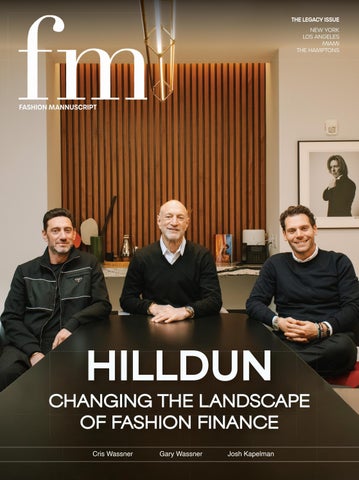
Hi there. Welcome to the March issue of Fashion Mannuscript. This month’s theme is “legacy,” in honor of our cover story about a family-founded company with an important legacy in the fashion world.
Hilldun Corp has been serving the fashion industry as a highly respected financing firm for decades. The company has worked with some of the most well-known names in luxury fashion, like Betsey Johnson, Marc Brown and Tommy Hilfiger. I came to learn about Hilldun through my friendship with Jeff Kapelman, who joined the firm in the 1980s. He worked alongside Gary Wassner, and they turned the family business into a high-caliber company that helped many luxury designers succeed and grow over the years.
I have been close with Jeff Kapelman and his family for decades. In the late 1990s, when this magazine was just beginning, I even featured Jeff and Gary, who is now the CEO of Hilldun, on the cover. After nearly three decades, it’s exciting to bring Hilldun back to Fashion Mannuscript, especially because leadership is now also in the hands of Josh Kapelman, Jeff’s son, and Cris Wassner, Gary’s son. With Cris and Josh on the team, this story is about business and fashion legacy, but it’s also about family legacy.
My family also has a long and successful legacy in the fashion industry, going back over 100 years. My father, Irving Mann, was an icon among the New York fashion community. He took a risk to create the petite dress, which became a wild success because over 80 million American women ar under 5 feet, 4 inches. Fashion Mannuscript is a part of my family’s fashion legacy as well, and it means a lot that we get to share about Jeff and Gary’s family legacy in this magazine.
The Kapelman and Wassner families are among the many wonderful relationships the Mann family has built over the years, especially with others in the fashion industry. So many of my friends are now contributors to the magazine, and we often work closely with their companies on major industry events. These personal connections are such a big reason that Fashion Mannuscript has the impact and recognition it does, and that’s because we have strong relationships with many of the brightest, most forward-thinking leaders in fashion.

“It can be a challenge, but my legacy, at least for the people who came before me, is you don't run from challenges because that's more comfortable and convenient.”
— Bryan Stevenson

Welcome to the March 2026 issue of Fashion Mannuscript! This year is already going by so quickly; it feels like just yesterday I was writing the January letter to you all.
This is an exciting month for the magazine, as we step into the past and reconnect with a company that was on the cover back in the 1990s. Hilldun was a new name to me, but Jeff has been friends with the family that runs the firm for decades. Hilldun is in the “fashion finance” business, supporting designers and brands through the company’s factoring services.
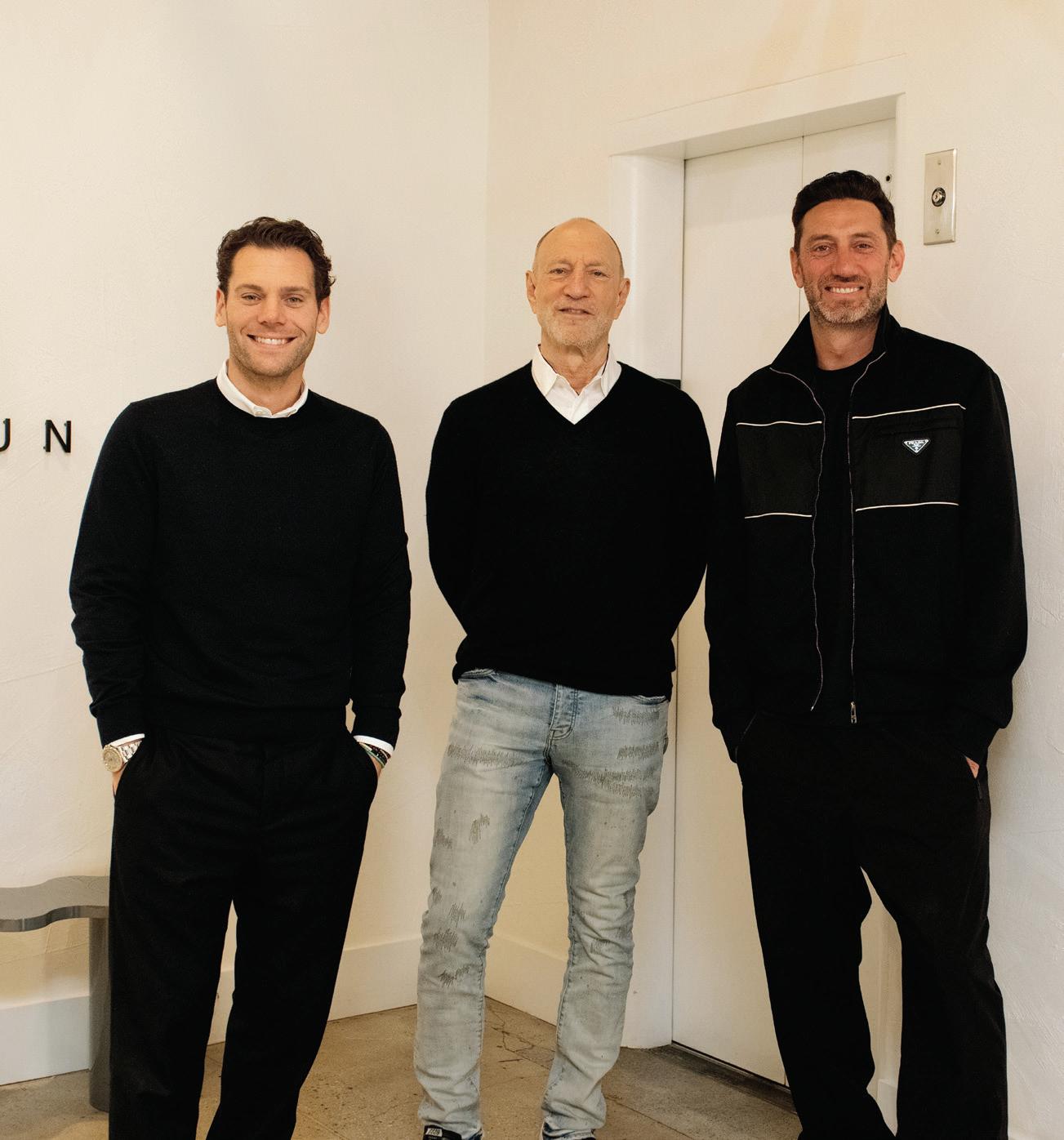
I had the opportunity to speak with Josh Kapelman, Hilldun’s managing director, about his family, Hilldun’s history and why the firm’s work matters. Josh is one of three successors who now lead the company. He works alongside Gary Wassner, CEO, and Cris Wassner, also a managing director. With origins dating back to 1932, Hilldun is both a thriving business and an inspiring family legacy.
This month, you’ll also get to see recent New York Fashion Week presentations and events, recaps of February trade shows, a growing collection of articles by logistics and supply chain experts, and some fashion brand features to build your excitement for spring.

























Entrepreneurial financing and credit protection for contemporary, designer and luxury brands.
For decades, we have safeguarded receivables and protected companies from unnecessary credit risk. Quietly. Reliably. Since 1932.


















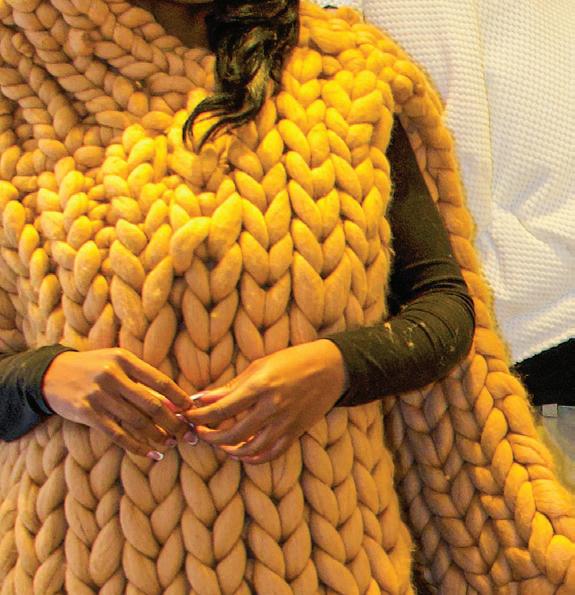
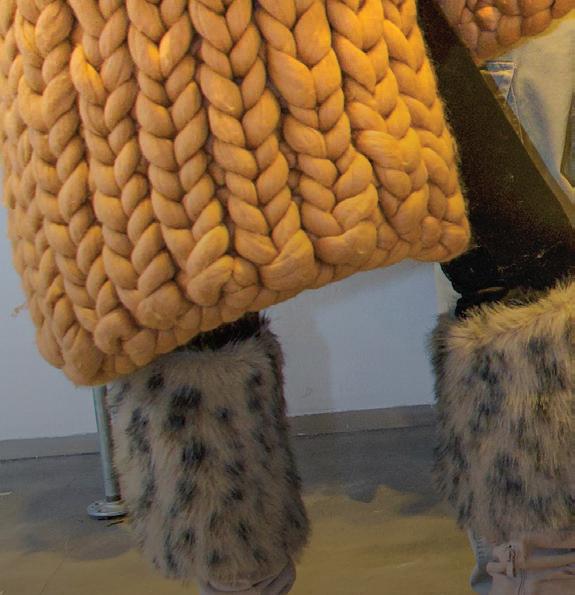


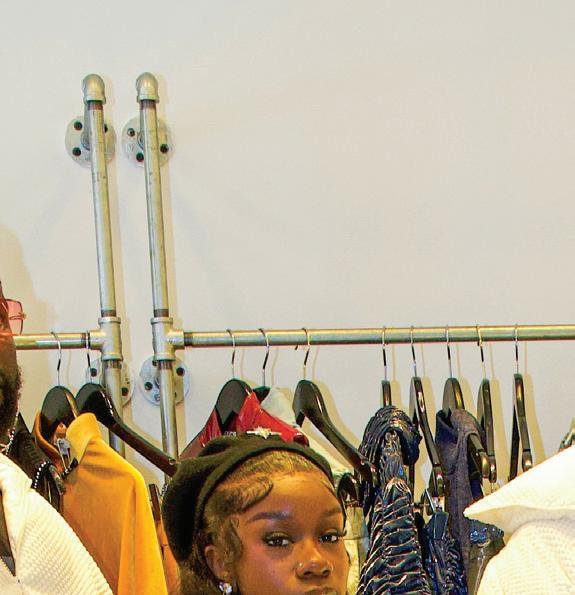


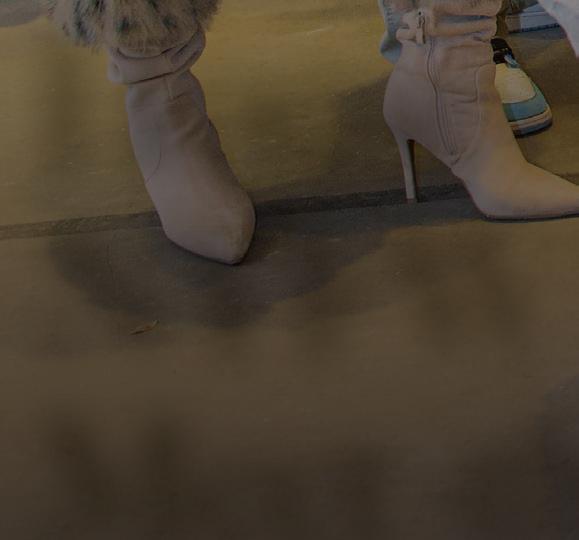

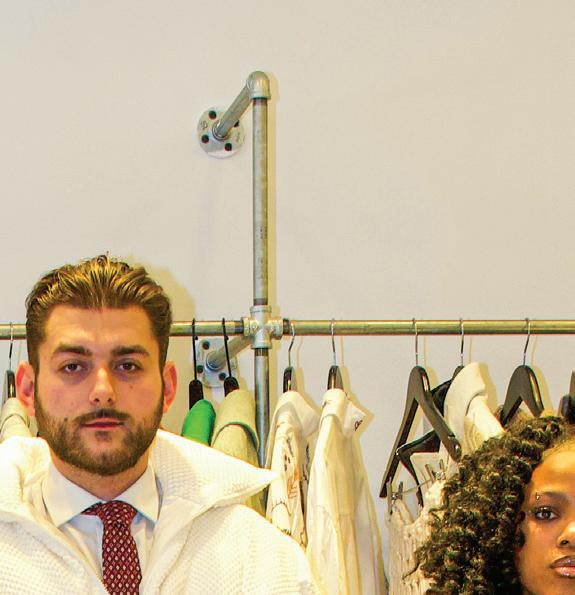
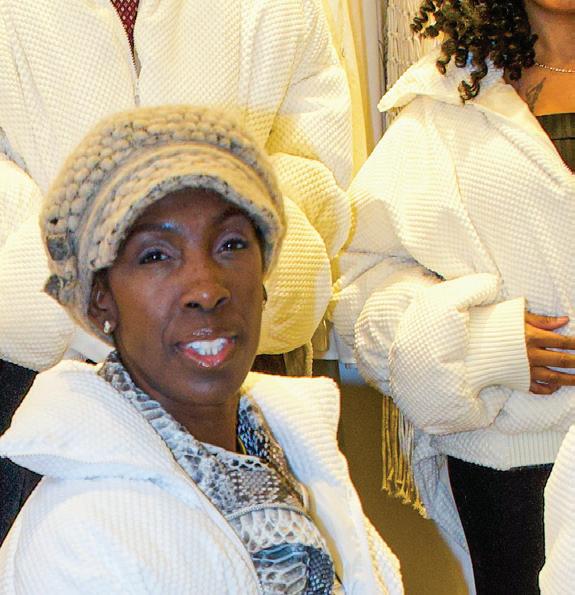
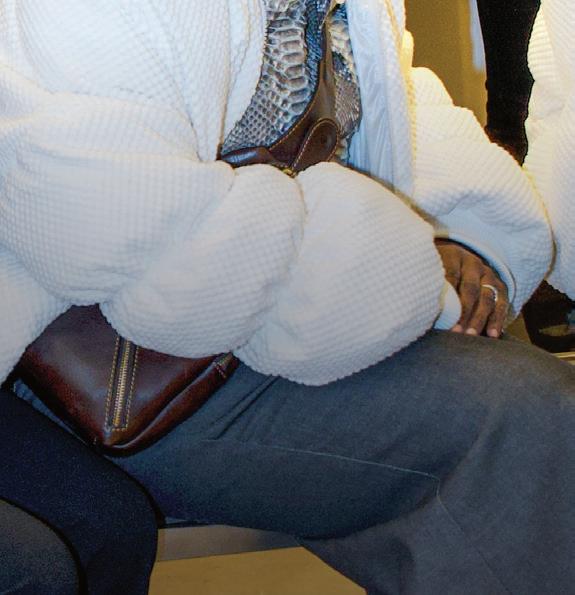




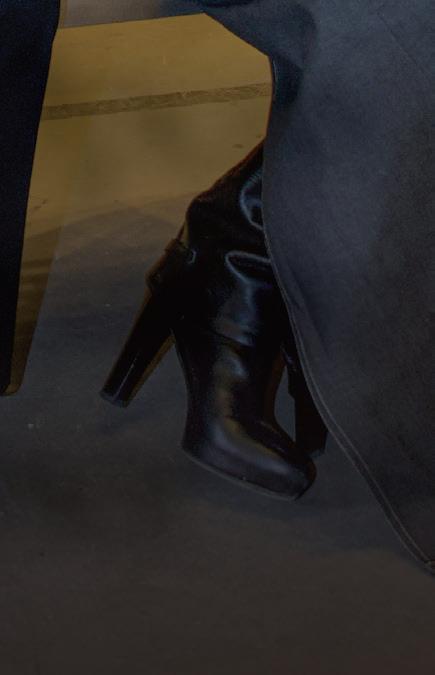
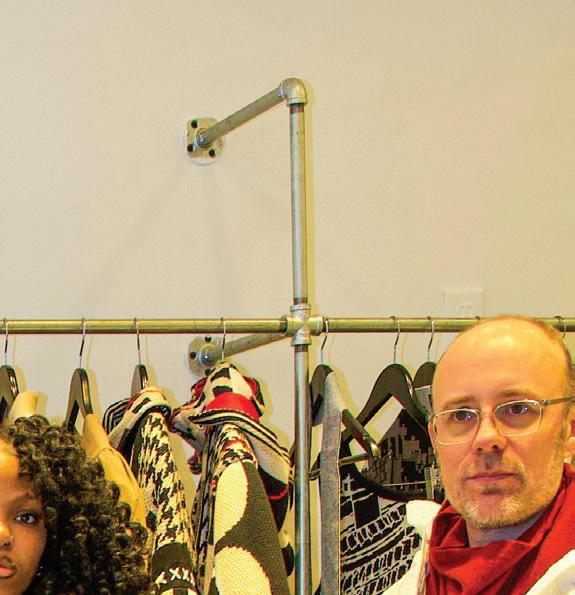
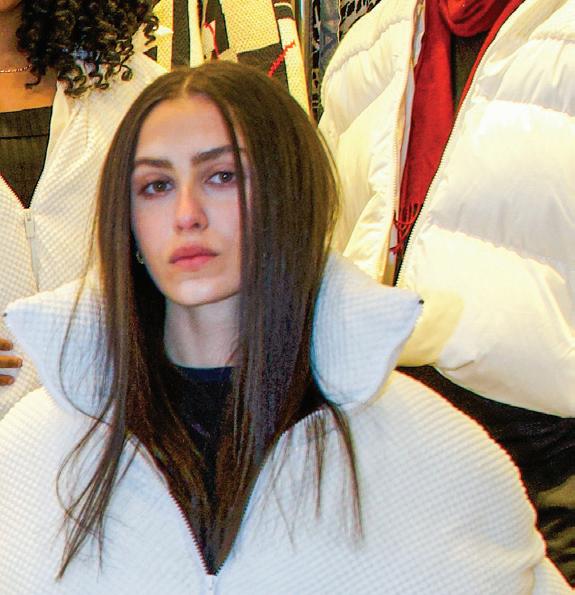





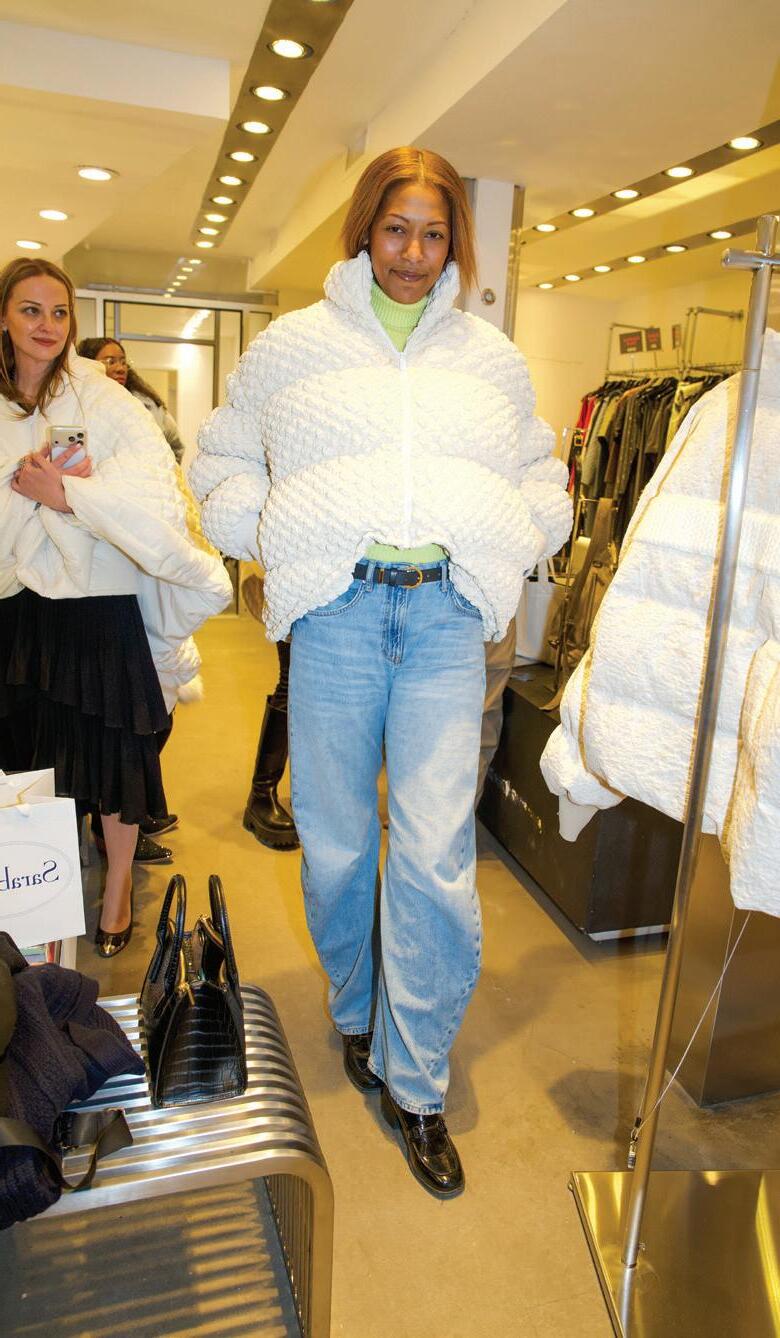
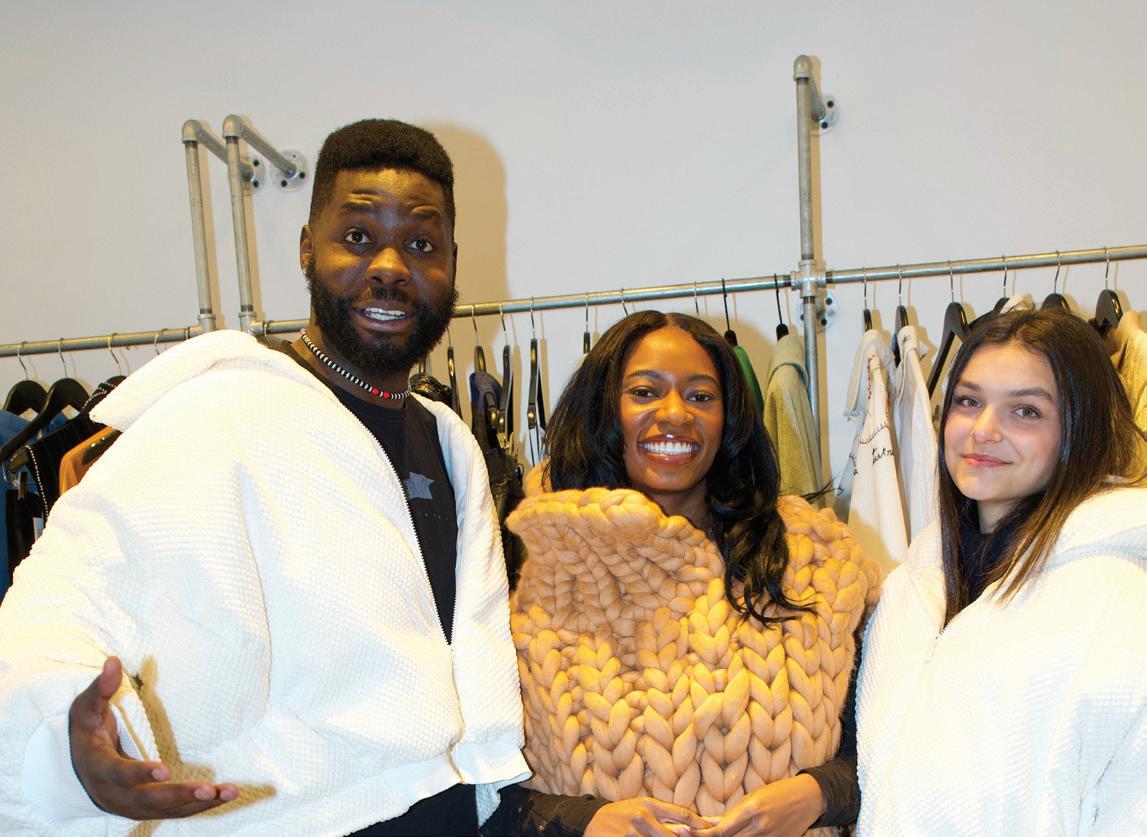
Jamaican-born, New York-based award-winning designer, futurist and psychologist-turnedcreative visionary, Nova Lorraine, kicked off New York Fashion Week with an intimate meetthe-designer event, where guests connected personally with her groundbreaking work and experienced her exclusive capsule coat collection firsthand.
House of Nova, the couture house founded by Lorraine, is deeply rooted in emotional intelligence, cultural memory and futureforward living. Lorraine approaches fashion as emotional architecture, intentionally weaving behavioral science into every design. Drawing on her master’s in clinical psychology and her fashion design degree from FIT, she integrates psychological principles into the creative process, crafting garments that nurture the wearer’s inner state, identity and personal evolution.
Her mission extends beyond trend cycles. Each piece is designed to address the human conditions of transition, uncertainty, confidence, rest and becoming—elevating a sense of self and overall well-being with every wear.
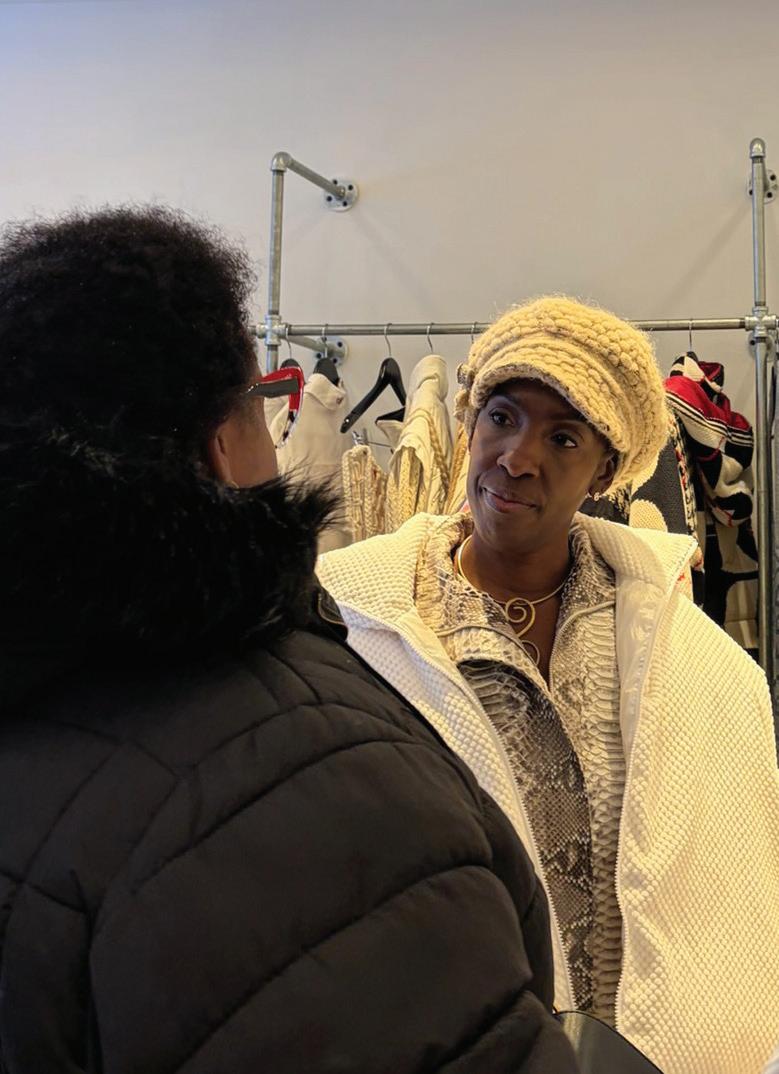
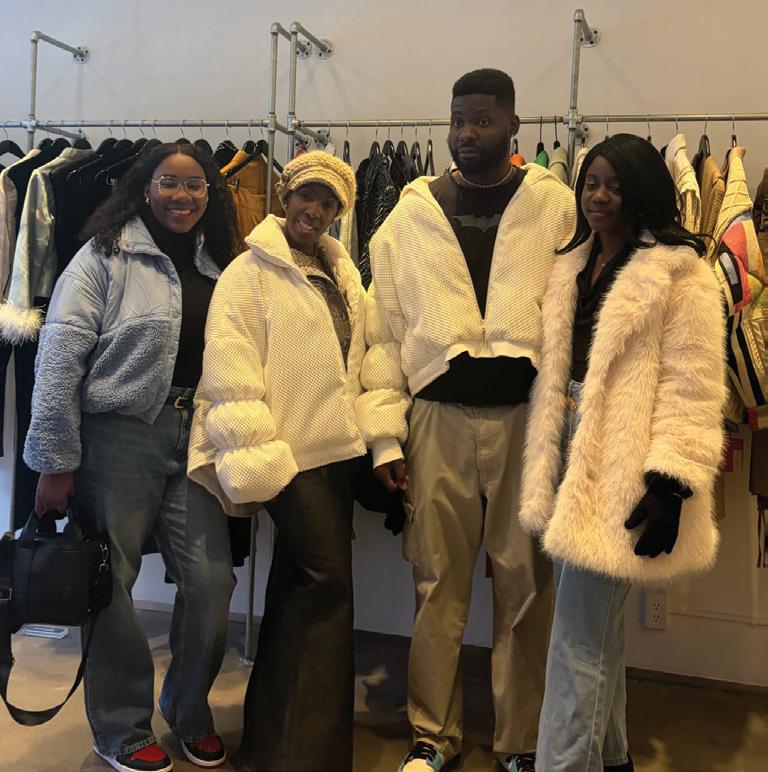
The SoHo gathering at Doors NYC created an atmosphere of openness and exchange. Guests tried on coats, engaged directly with Nova Lorraine and participated in a thoughtful Q&A exploring her inspirations, methodology and the emotional intention behind the collection.
The evening naturally evolved into a vibrant networking hub, drawing fashion week producers, models, stylists, industry insiders and curious walk-ins who quickly became admirers.
Topo Chico and sparkling apple cider added a celebratory touch as attendees slipped into the designs.


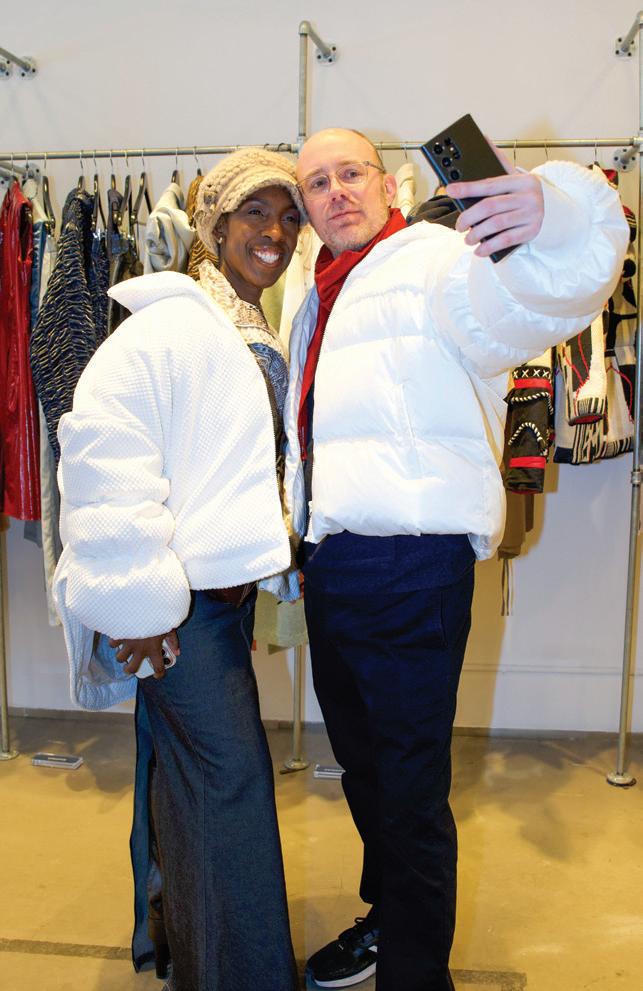


The response was immediate and visceral:
“This is so warm.”
“This is so soft.”
“This feels so good.”
“It’s easy to wear.”
“I love how it feels.”
“I love how this looks on me.”
“I love the fabric.”
“I love the texture.”
“I love the weight of the coats.”
One attendee declared, “That is the warmest coat I own.”
Lorraine observed something deeper unfolding: the garments revealed an unexpected universality.
“Although it wasn’t the initial intention, the coats became unisex once I saw the samples for the first time,” she shared. “I wanted everyone to be able to experience this level of beauty and confidence, and it was evident in everyone who tried them on.”
The silhouettes adapted effortlessly across bodies, reinforcing Lorraine’s philosophy that couture can be both elevated and transformational.
House of Nova continues to define itself as more than a fashion label. It is a house built on psychology, self-expression, technology and human-centered storytelling.
This thoughtful New York Fashion Week kickoff embodied the brand’s ethos: luxurious couture infused with purpose, emotional intelligence and future-forward vision.
The evening set an innovative, empathetic tone for the season ahead, positioning House of Nova not only as a design house but as a cultural force shaping how fashion feels.





















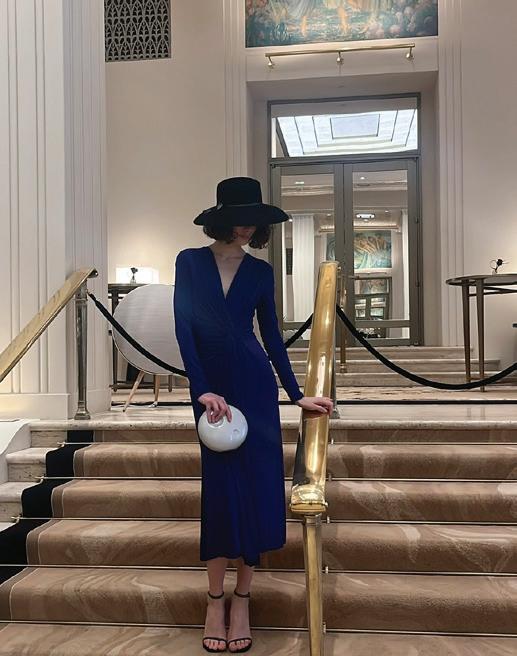
On Friday, Feb. 13th, and Saturday, Feb. 14th, the iconic Peacock Alley at the newly reopened Waldorf Astoria New York was transformed into a romantic retail destination for a twoday pop-up, curated and presented by the Accessories Council in partnership with Cannon Media Group.
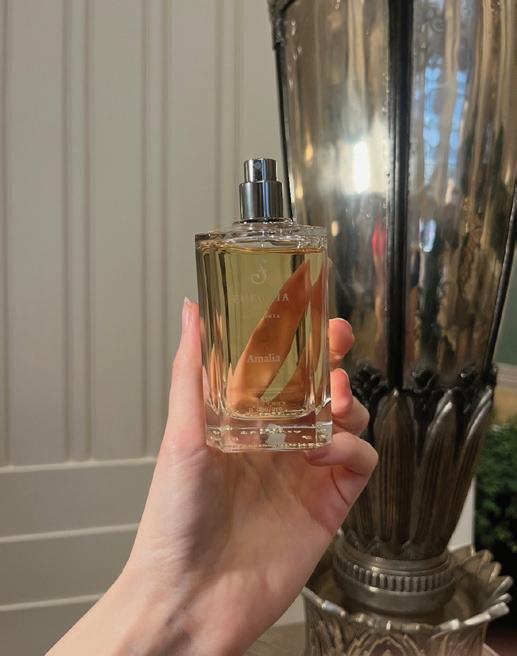
Set beneath the grandeur of the hotel’s historic interiors, guests of the Waldorf Astoria and visitors from across the city were invited to celebrate Valentine’s Day with an elevated shopping experience featuring a carefully selected roster of luxury and emerging brands. The pop-up offered an inspired mix of jewelry, millinery, fragrance, beauty and home—perfect for meaningful gifting or personal indulgence.
Participating brands included Avermore, Binata Millinery, Deepa Gurnani, Eittem, Fueguia, Fleurish, Guerlain, Jorja, Meertens Luxury, Roseate and Selima Optique.
The curated assortment reflected a shared commitment to craftsmanship, creativity and thoughtful design— hallmarks of both the Accessories Council community and the Waldorf Astoria brand.
Adding to the romance of the occasion, guests received beautiful bouquets of roses, enhancing the sensory experience and reinforcing the spirit of the holiday. Many attendees also took the opportunity to visit the newly opened Guerlain Spa, seamlessly extending the theme of indulgence and self-care.
The pop-up once again demonstrated the power of thoughtful collaboration—bringing together storied brands and innovative designers within one of New York City’s most celebrated landmarks.


With a Retrospective Event and Anniversary Collection in Miami

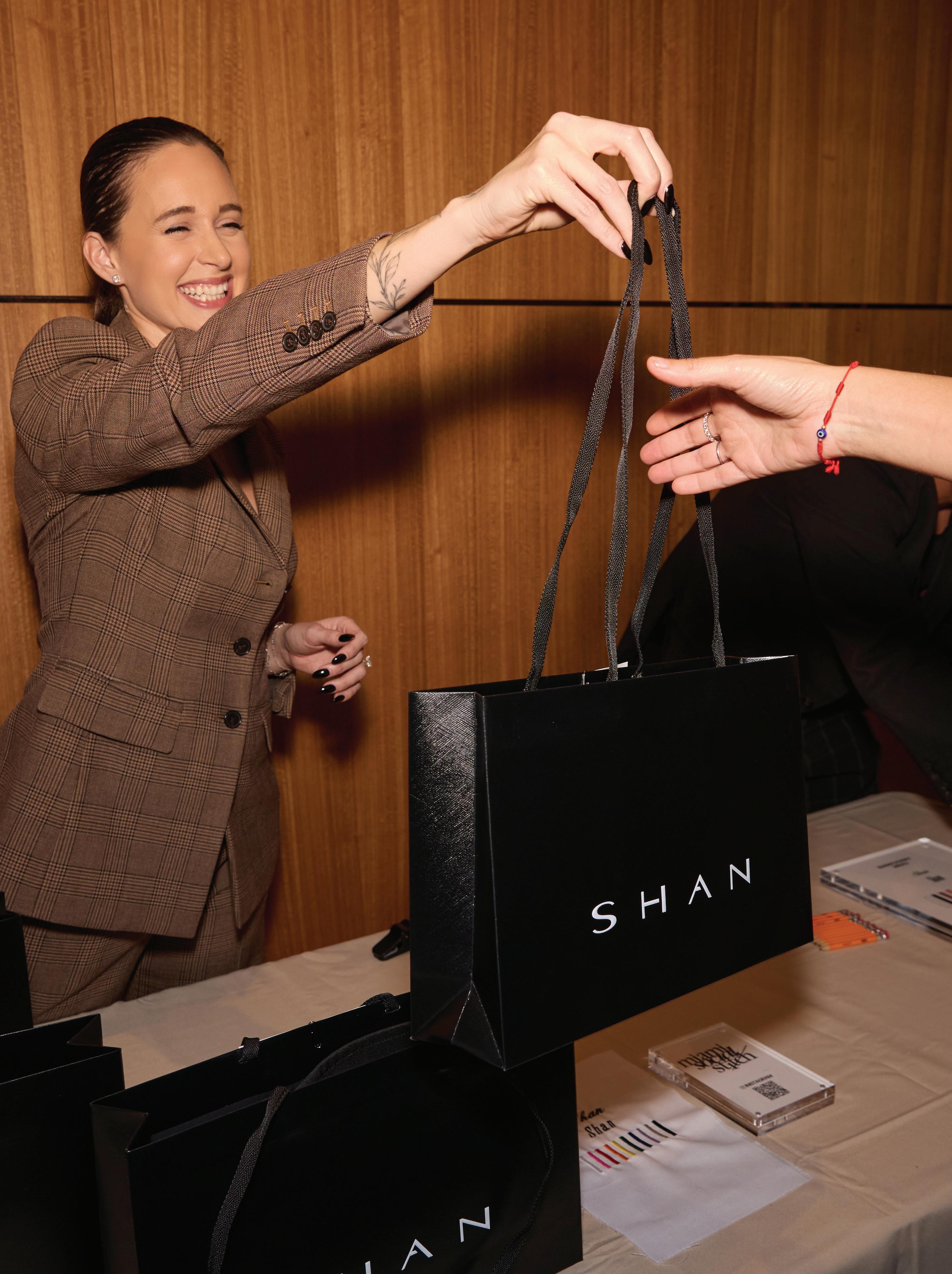
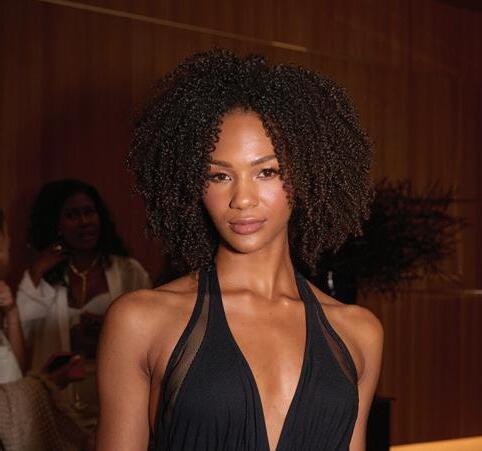


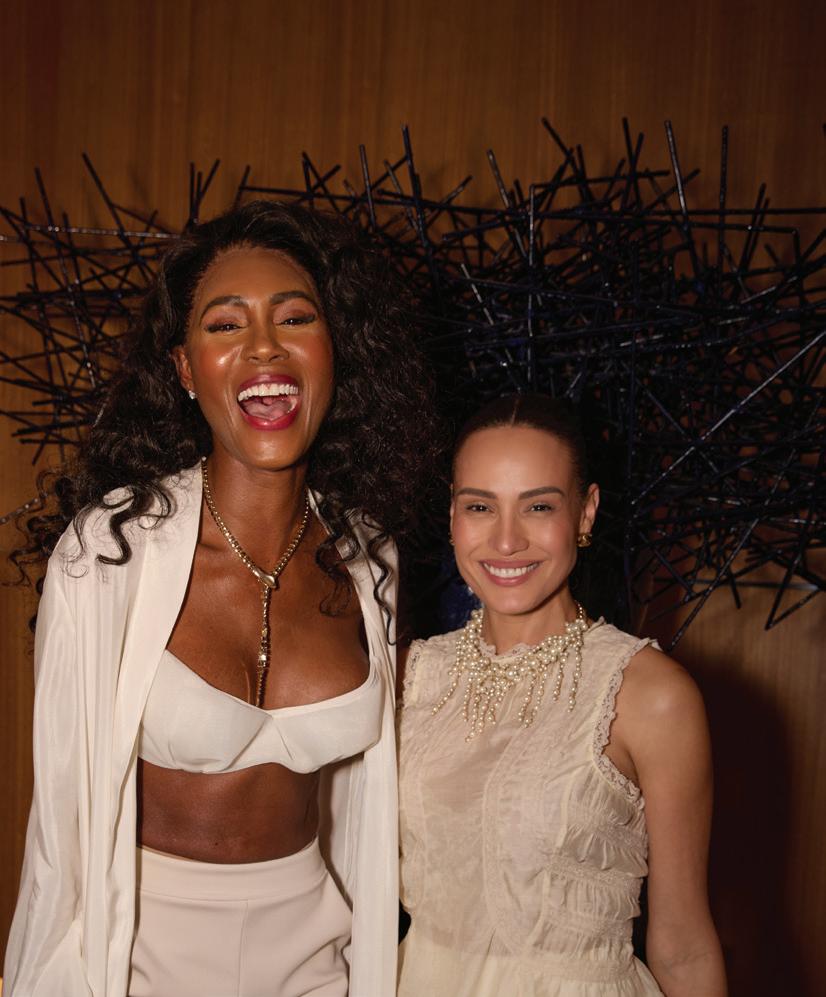
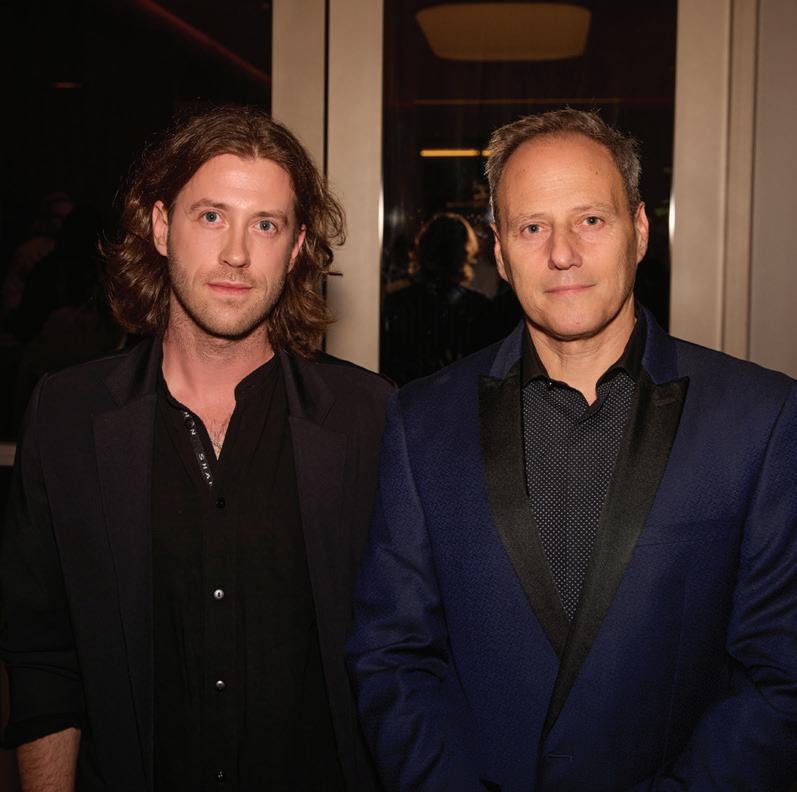


Luxury Canadian fashion brand Shan celebrated its 40th anniversary with an intimate retrospective event and archival fashion presentation in Miami, honoring four decades of craftsmanship, design innovation and familyled heritage.
Hosted at the oceanfront sales gallery of the St. Regis Residences Sunny Isles Beach, the event brought together media, industry leaders and longtime friends of the brand for an evening reflecting on Shan’s past, present and future. The striking seaside setting provided a refined backdrop for the celebration, while supermodel Chanel Iman added a distinguished presence alongside notable guests from fashion and media.
meticulous craftsmanship that have defined its collections for four decades.
Founded in 1985 by Levesque, Shan remains proudly family-run, with creative direction led by her son, Gilbert. All design and manufacturing continue to take place at the brand’s headquarters and atelier in Laval, just outside Montreal, allowing Shan to maintain full control from fabric selection through final production. This approach supports limitedrun collections that prioritize quality, ethical manufacturing and minimized overproduction.
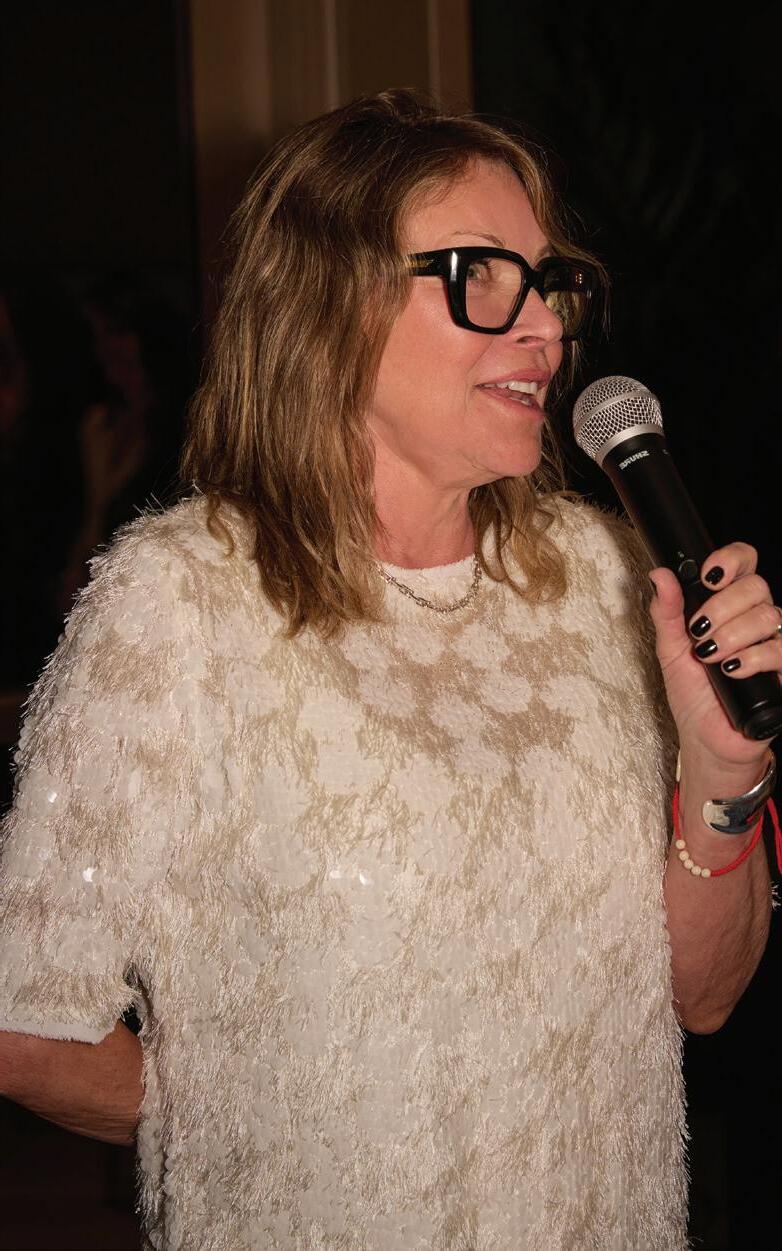

The evening unfolded as an immersive experience, with guests enjoying champagne, specialty cocktails by Campari and hors d’oeuvres throughout the space. Attendees were welcomed by Sebastian Sangranichne and Isabella Holguin of the St. Regis Residences Sunny Isles Beach, followed by remarks from Chantal Levesque, founder of Shan, and Nathan Gilbert, creative director of Shan. Interactive elements—including a photo booth by Gala Photo Booth and live embroidery by Miami Social Stitch—added a personalized touch, while a special raffle punctuated the evening. Guests departed with curated gift bags assembled in collaboration with event partners, including French beauty brand Sothys, with hair and makeup provided by Miami-based Lahh Salon.
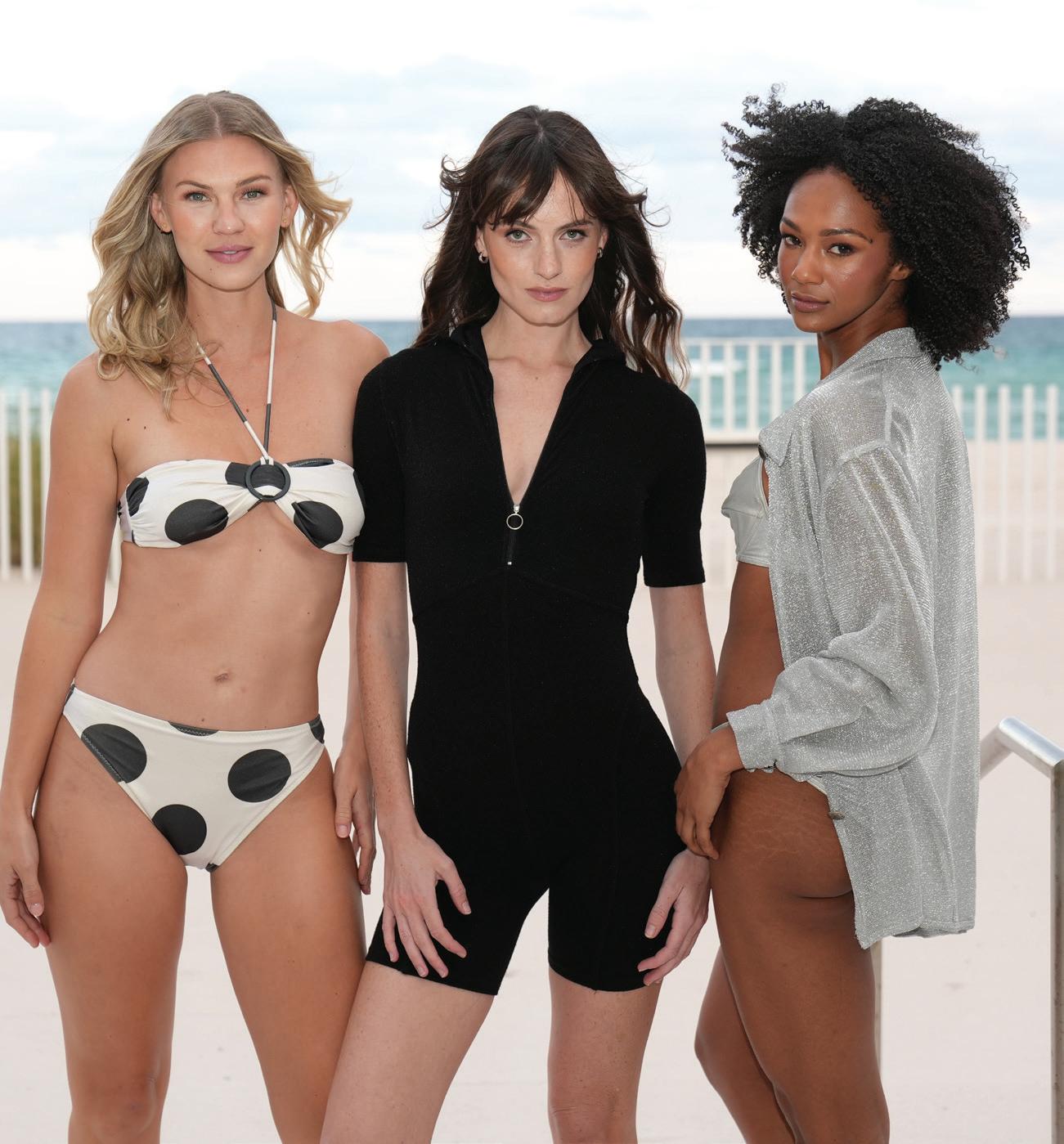
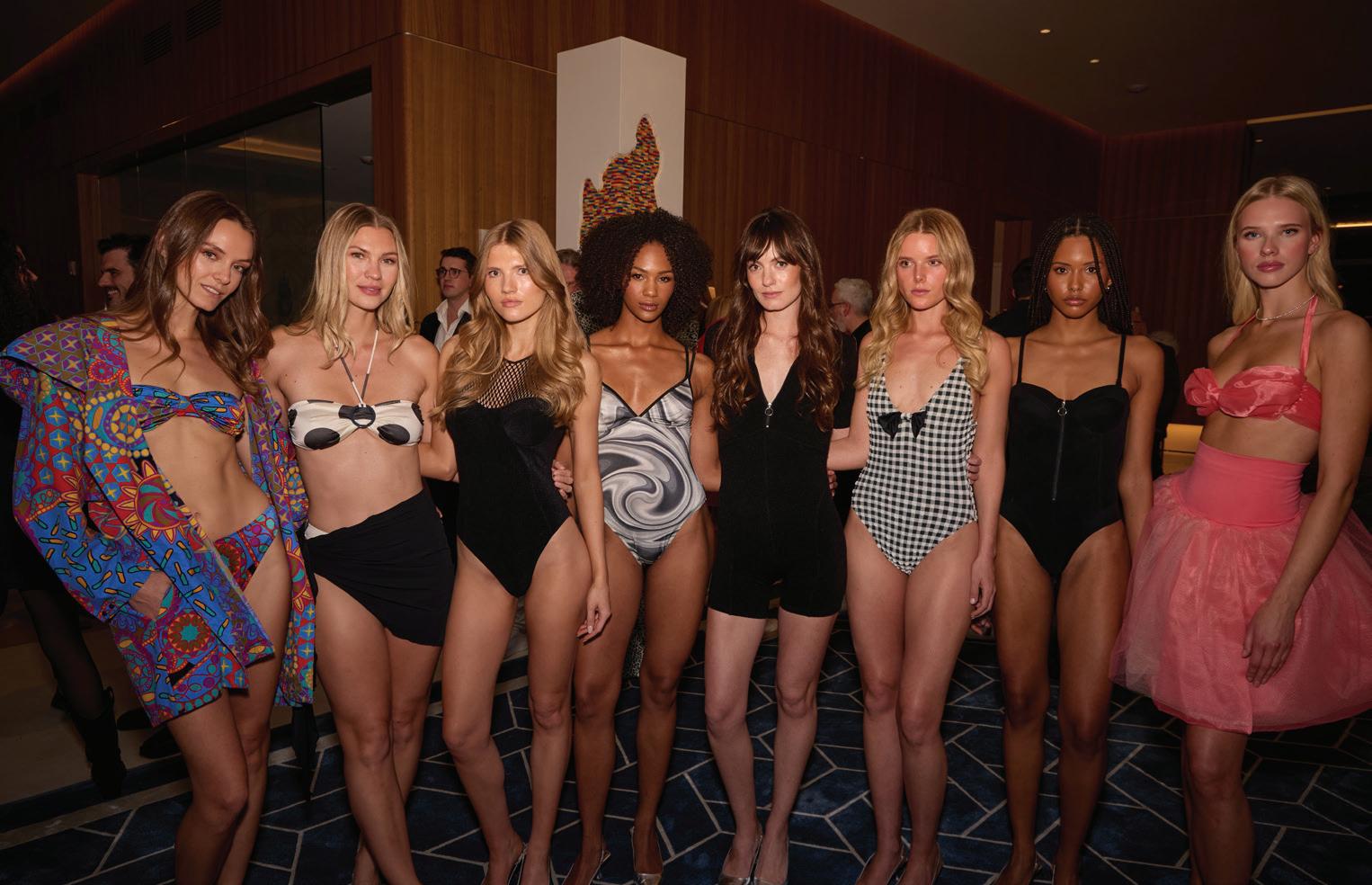
Models from Ford Models Miami presented three looks each, wearing signature pieces from the 1980s through today. The retrospective showcased archival designs spanning from 1985 to the present, offering a visual narrative of Shan’s evolution while highlighting the brand’s signature silhouettes, refined color palettes and
Throughout its 40-year journey, Shan has cultivated a loyal international clientele drawn to its elevated resort wear, swimwear and readyto-wear designs that transition seamlessly from day to evening. The brand’s presence at leading luxury retailers and flagship boutiques— including locations in Miami Beach, Palm Beach, East Hampton and select global destinations—has solidified Shan’s position within the global luxury market.
The retrospective coincided with the launch of Shan’s Cruise 2026 collection, which reflects the brand’s modern approach to resort dressing. The collection features sculptural swim silhouettes, elegant cover-ups and versatile ready-to-wear pieces, complemented by in-house prints and rich hues ranging from crisp white silks to deep burgundy mesh.
“Celebrating Shan’s 40th anniversary was a powerful moment for our family and our team,” said Gilbert. “Looking back at four decades of design and craftsmanship reinforced the importance of evolving while staying rooted in our values—from maintaining production in Canada to partnering with those who share our commitment to quality and integrity.”






courtesy of Ashley

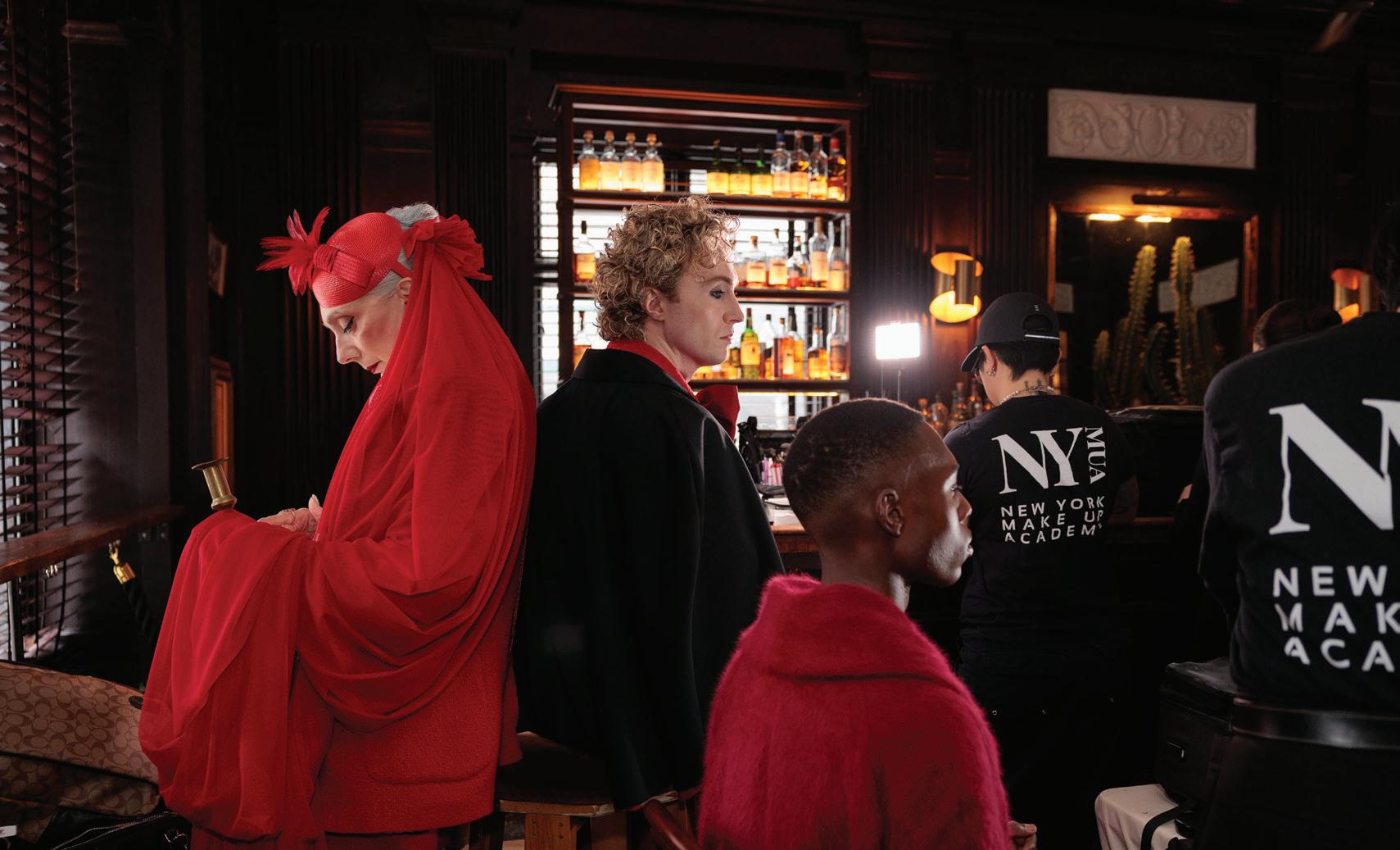
Inside Sivan’s ‘Murder at Sivan Manor’ at New York Fashion Week





Sivan delivered one of New York Fashion Week’s most theatrical moments with its Fall/Winter 2026 runway show, Murder at Sivan Manor, transforming the Georgia Room, where the show took place, into a seductive 1930s whodunnit staged through tailoring. The presentation marked the brand’s most seductive outing yet—an immersive scene where sharply dressed suspects drifted through a narrative thick with intrigue, moral ambiguity and impeccable craft.
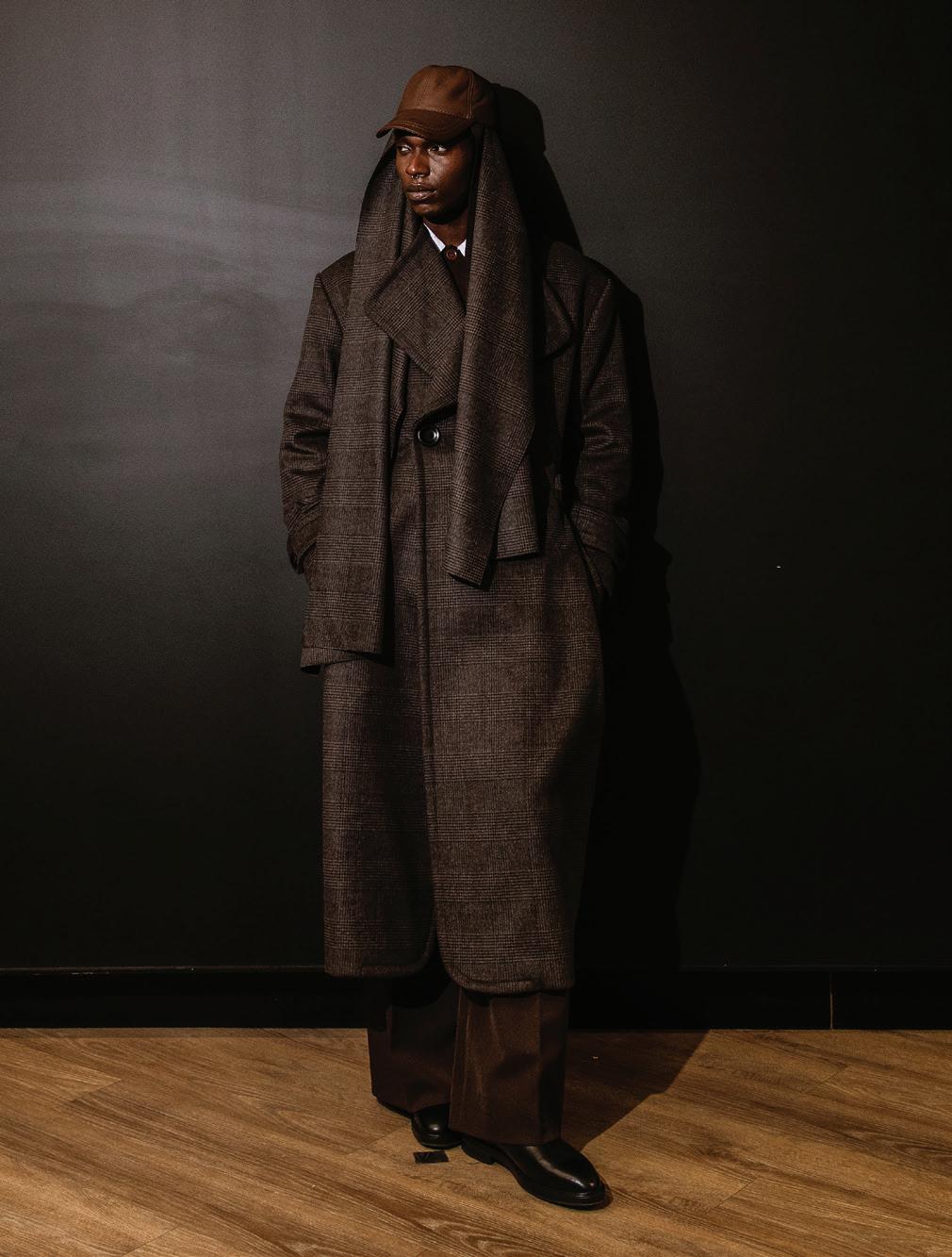
On the runway, designer Jack Sivan unfolded a tightly edited lineup of 25 looks, each conceived as a character in a larger mystery set inside an imagined Upper East Side mansion. Fabric remained the foundation, with wool and deadstock textiles anchoring the collection in sustainability and craft. Meanwhile, colorful tweeds, an ongoing Sivan signature, evoked English countryside heritage with a metropolitan edge.
This season’s palette marked a deliberate shift. Darker and more restrained than prior collections, Fall/Winter 2026 allowed rich reds to punctuate the narrative. Used sparingly, the hue acted as a visual clue—signaling suspicion, hinting at guilt or serving as a cleverly placed red herring. Among the most memorable looks was “the detective,” cut from a rare vintage wool in a caramel-toned tartan flecked with copper, embodying the collection’s character-driven ethos.
The show also introduced a nuanced evolution: intentional womenswear designs that reexamined classic forms, including the little black dress, through Sivan’s tailoring lens. As always, inclusivity remained integral, with casting shaping garments from inception.
The front row also reflected the label’s growing cultural reach, with guests dressed in Sivan, including Grammy-nominated musician Bilal, actors Ato Essandoh, David Rysdahl and Kevin Chacon, and athletes such as NFL stars Joshua Kaindoh, Jarrian Jones and Jarvis Brownlee Jr.
With Murder at Sivan Manor, Sivan proved that even in fashion’s most dramatic narratives, the sharpest statement is still a perfectly cut suit.

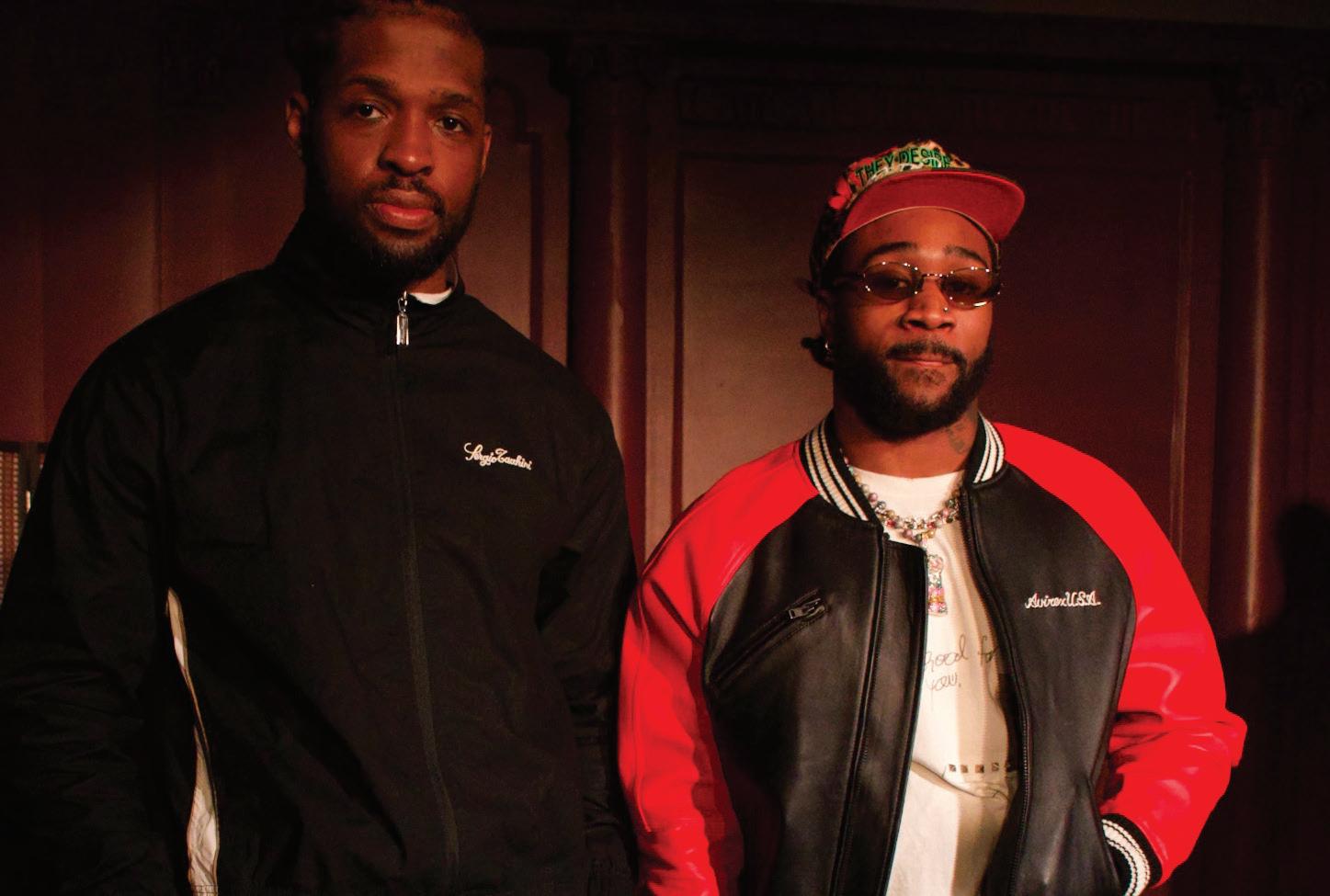


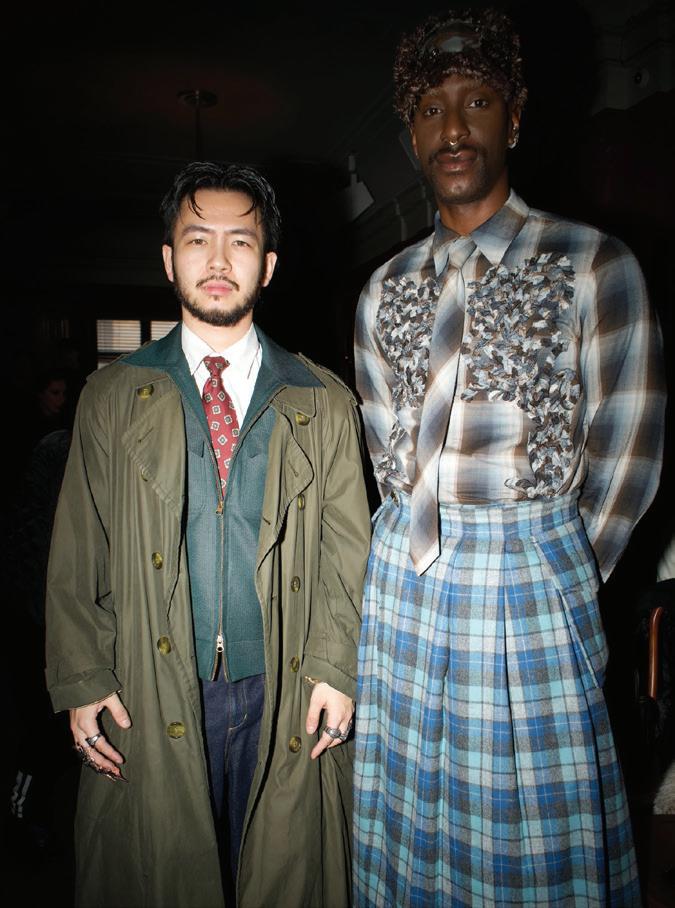




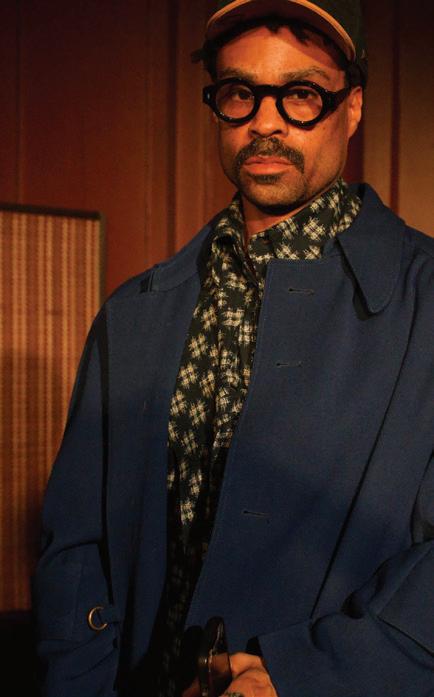




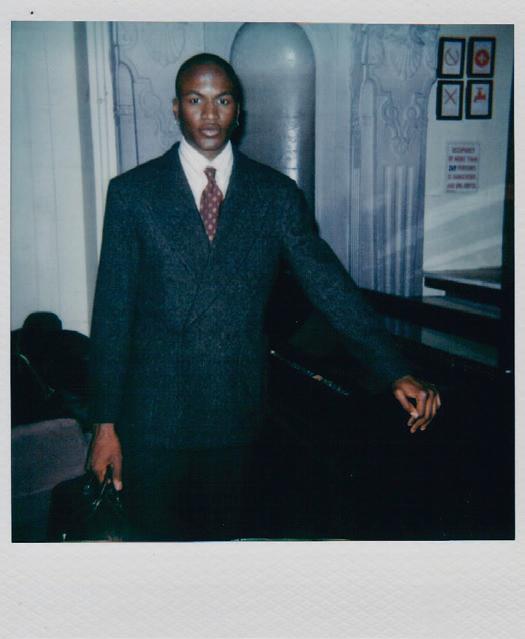











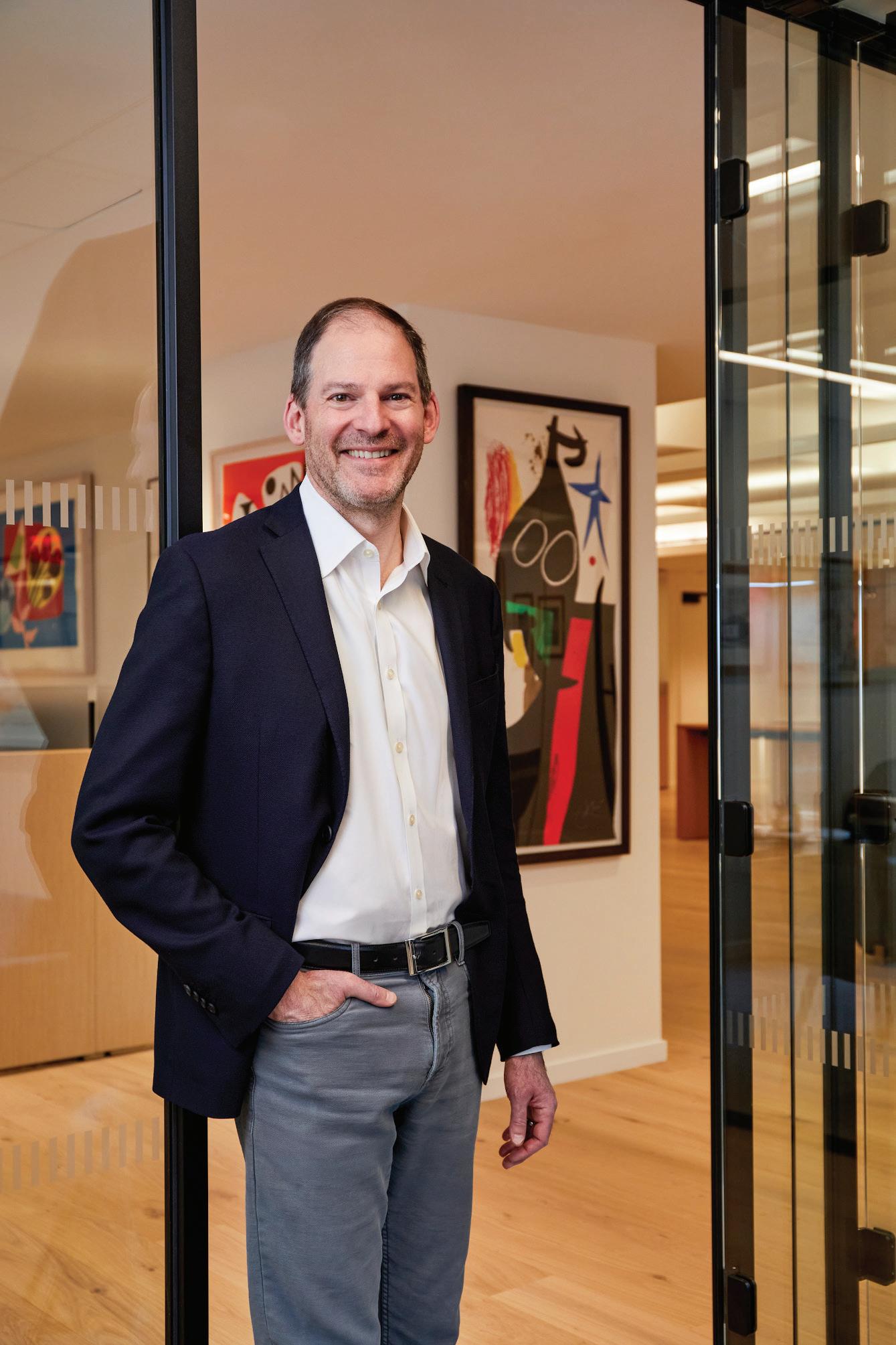

The Fashion Institute of Technology (FIT) welcomed Jason S. Schupbach as the college’s seventh president. An accomplished leader in both art and design in higher education and government support of the arts, Schupbach was unanimously appointed by the State University of New York (SUNY) board of trustees following an eight-month nationwide search led by FIT trustees, alumni, students, staff and faculty.
Schupbach succeeds Joyce F. Brown, whose leadership spanned nearly three decades. Under Schupbach’s stewardship, FIT will build on its access mission and its legacy as a preeminent center for academic excellence.
As Schupbach began his term, he said, “I believe that FIT, as a laboratory for creative careers for the 21st century, finds its greatest opportunities in collaboration across disciplines, across schools and through building meaningful partnerships with [the] industry. I look forward to working with the FIT community to build on that incredible foundation and open even more pathways for academic rigor, entrepreneurship, innovation and student success.”
John B. King Jr., SUNY chancellor, noted, “FIT is a powerhouse in higher education, and we are thrilled to welcome President Schupbach as he takes the helm and leads this renowned SUNY institution. His dedication to academic excellence and drive to support our students’ success make him well-positioned to take FIT to new heights.”
“I am delighted to officially welcome Jason Schupbach as the new president of FIT,” said Robin Burns-McNeill, chair of the FIT board of trustees. “With a distinguished background in both higher education and creative and cultural entities, and as a recognized leader in managing complex organizations and advocating for the arts, President Schupbach will be an invaluable asset in advancing the mission of this world-class institution.”
Preceding his position at FIT, Schupbach was the dean of the Antoinette Westphal College of Media Arts and Design at Drexel University. He is a nationally recognized expert on support systems for creatives and on the nexus of creativity and comprehensive community development.


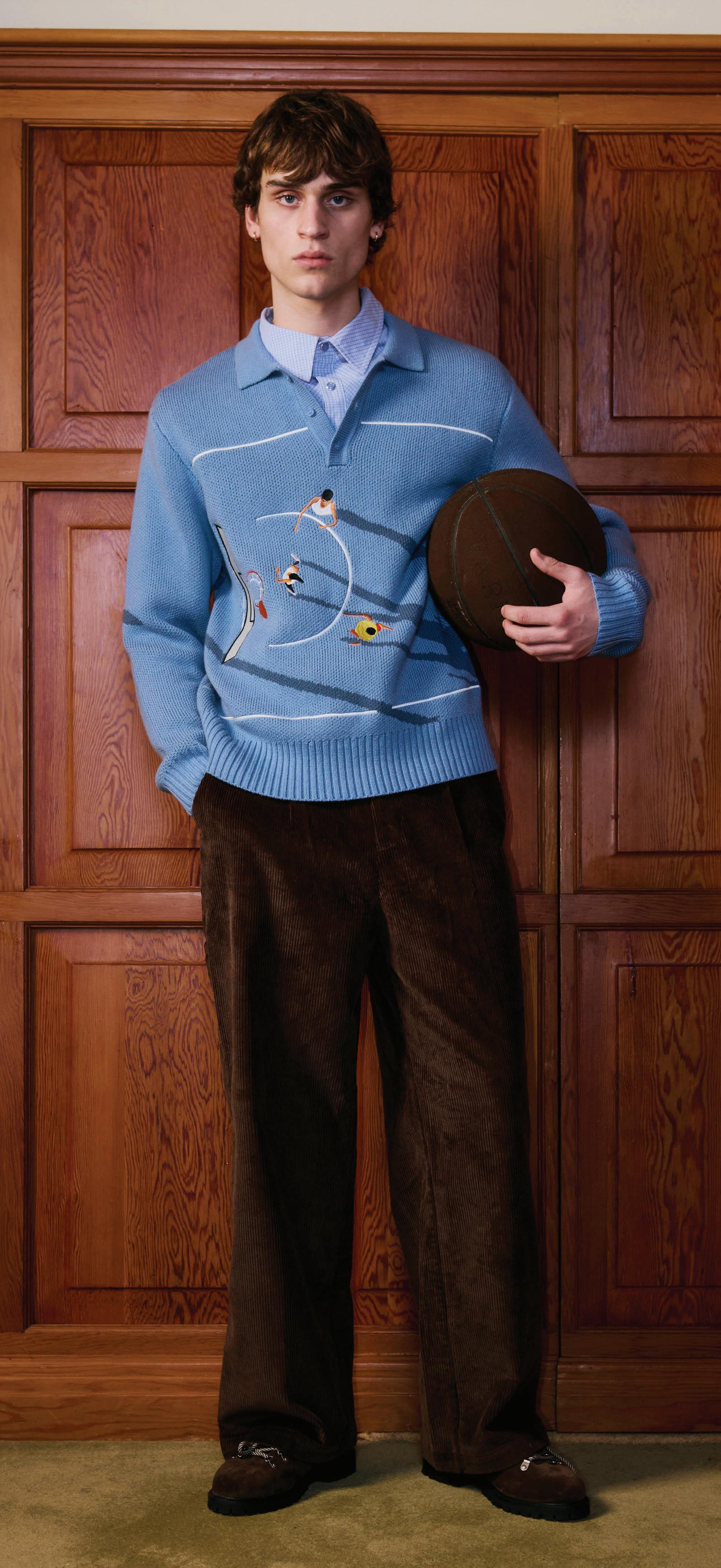
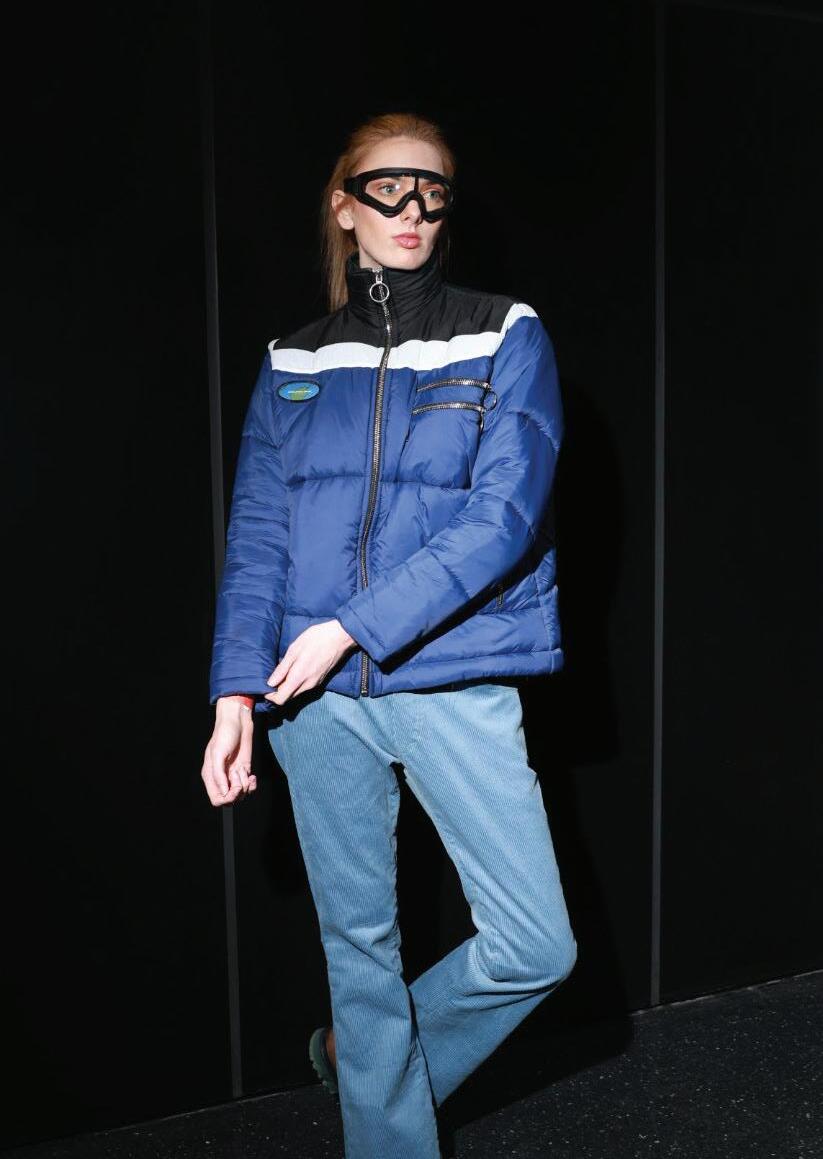
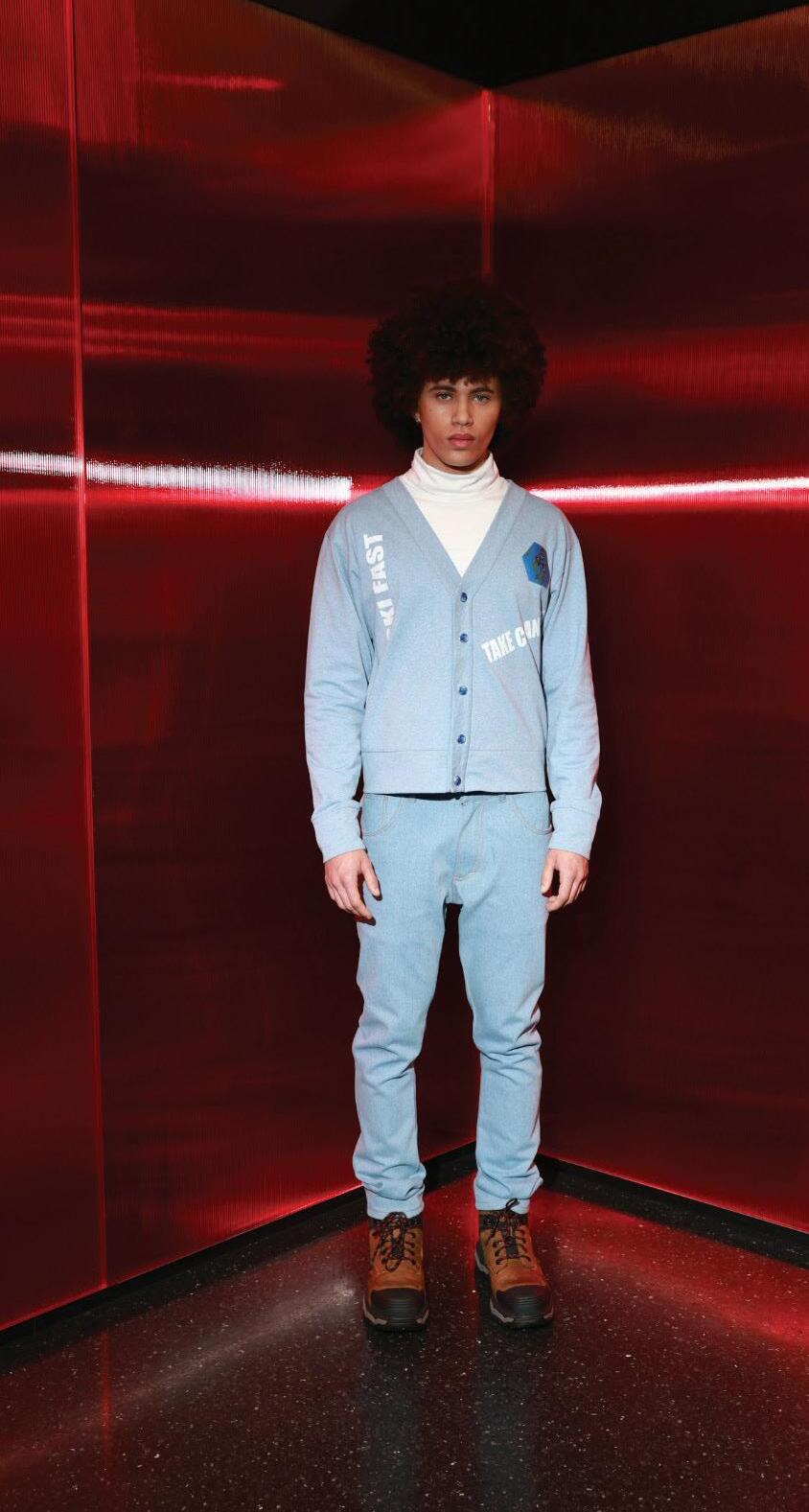
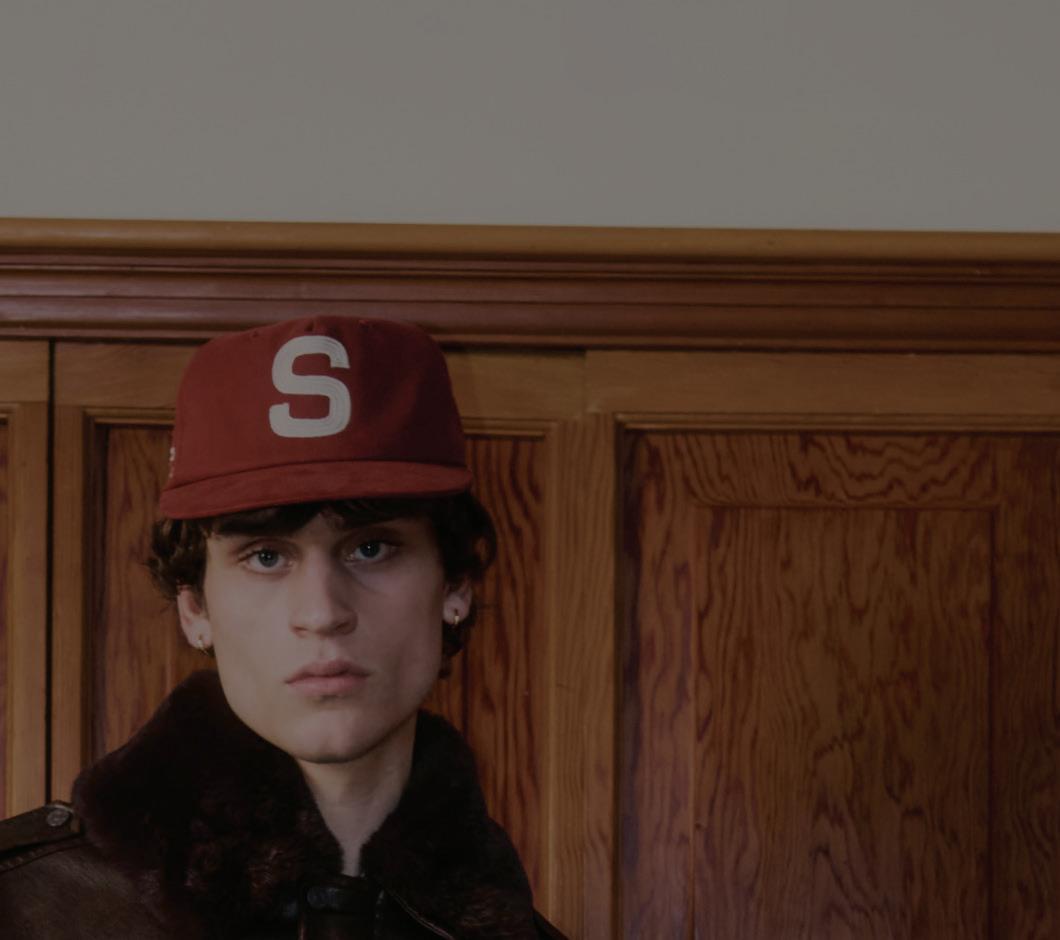
London-based cult fashion brand House of Sunny has set its sights higher than ever with the preview of its Autumn/ Winter 2026 menswear collection, Mountains Should Be Climbed, a bold nod to explorers, lone wolves, modern adventurers and sports lovers alike.
Inspired by rugged landscapes and the quiet romance of the great outdoors, the collection reframes work and practical wear as a declaration of independence, styled for conquering whatever mountains stand in the way. It channels a spirit of resilience and self-reliance, balancing utility with a playfulness that has become synonymous with the brand.
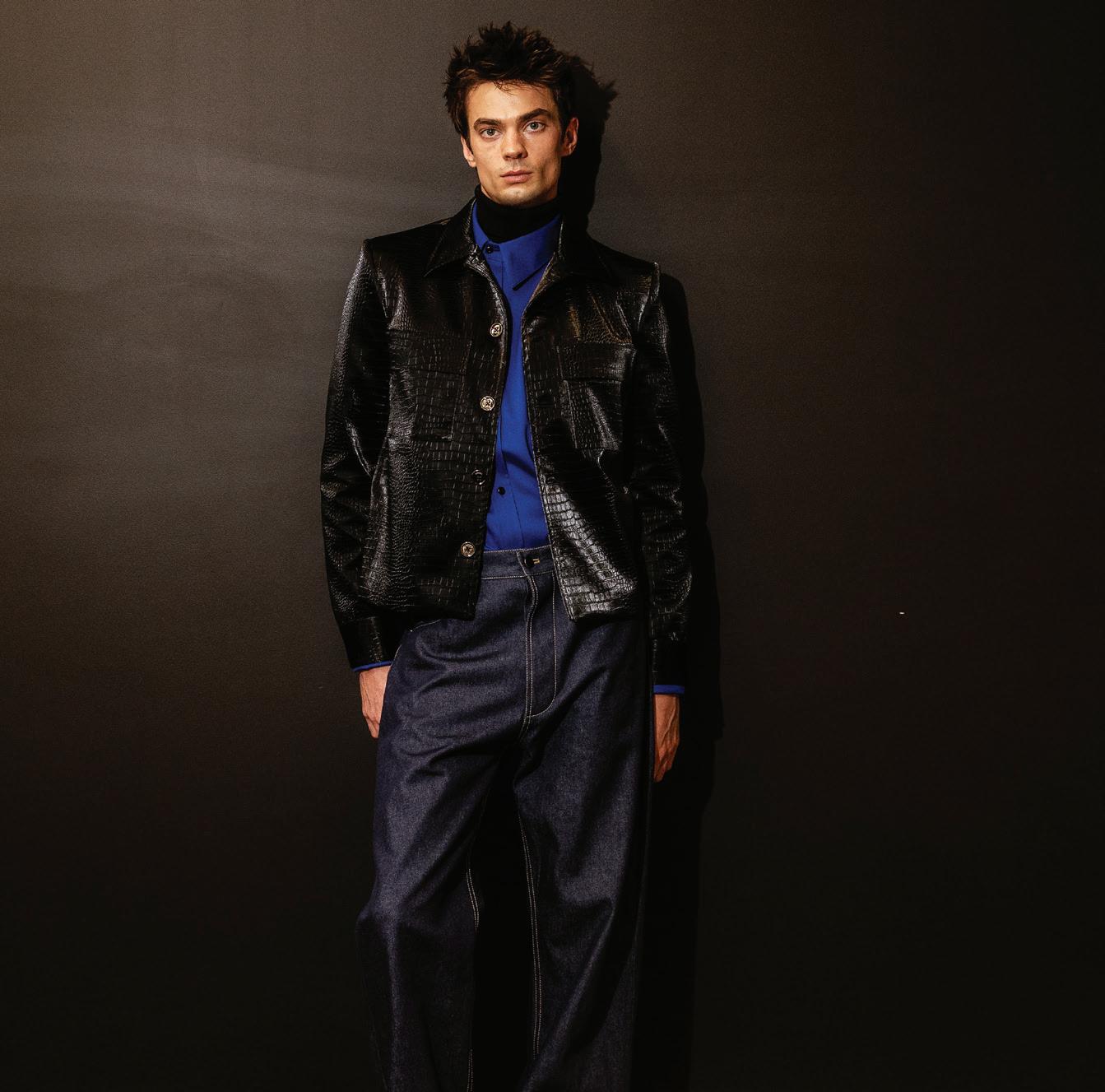
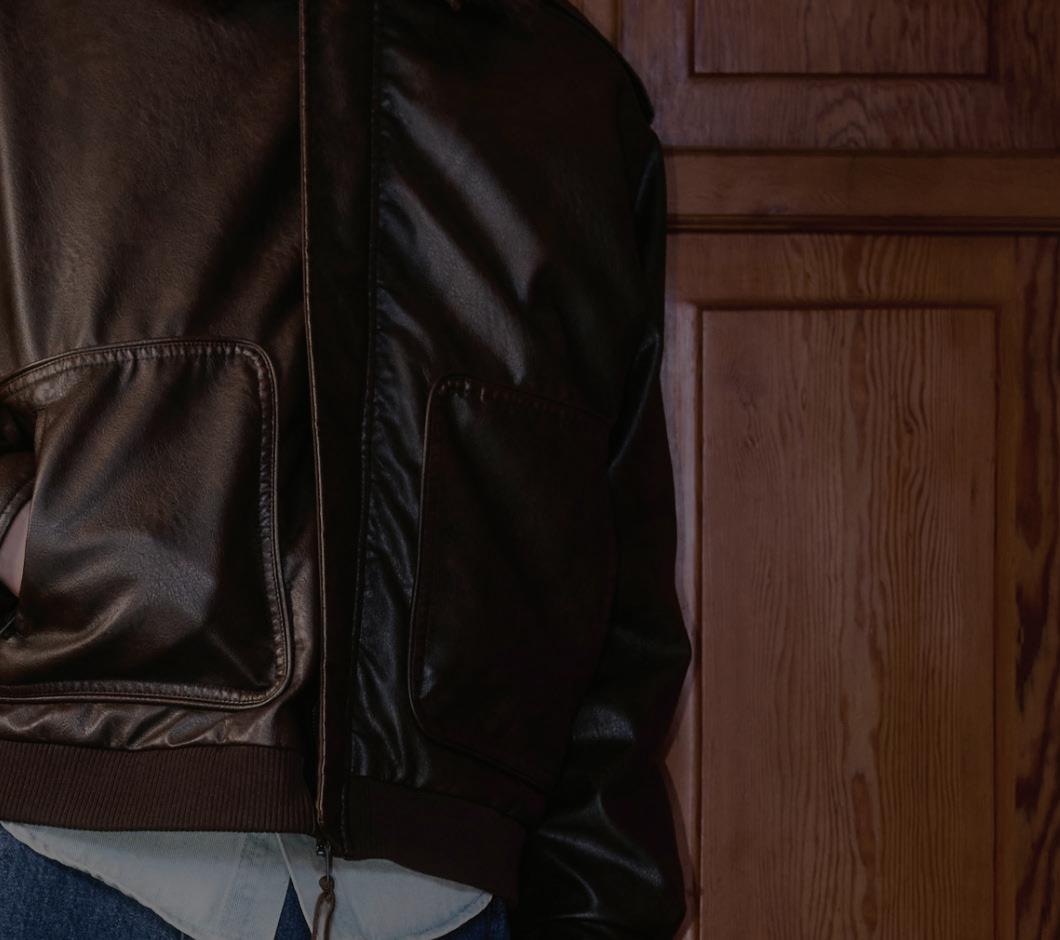
Corduroy, leather and denim jackets are cut in refined silhouettes that blend function with sharp detailing, while relaxed wide-leg trousers are designed for ease, comfort and movement. Shirts feature classic Western-style stitching and an easy, lived-in feel, and tailored layers are crafted to handle the elements without sacrificing style. It is practical dressing reimagined with texture, confidence and classic House of Sunny attitude.
“I was really drawn to the self-reliance and quiet strength I saw while watching the TV series ‘Yellowstone,’” said Sunny Williams, founder and creative director. “It has very much been the inspiration for this collection. It’s about dressing with confidence and hitting your peak performance. Clothes that feel capable, grounded and ready for whatever the day brings.”
Founded in Hackney in 2011, House of Sunny has built a reputation for timeless yet distinctive design, rooted in craftsmanship and a commitment to slow fashion. Now run by husband-and-wife team Sunny and Camilla Williams, the East London-based label has cultivated an inclusive community of loyal supporters, affectionately known as “homies,” while securing stockists such as Liberty and Selfridges and attracting celebrity fans, including Kendall Jenner, Dua Lipa and Bella Hadid.
“For us, it has always been about creating pieces that last emotionally as well as physically,” Williams added. “Mountains Should Be Climbed reflects that mindset. It speaks to resilience, joy and to pushing forward while staying true to yourself.”
In an era of noise, Light Stone Jewellery defines quiet luxury through architectural silence. Presented as a “wearable culture map,” the brand curates designer jewelry as cultural coordinates—bridging modern structural rigor with the resonance of Eastern antiquity.
Light Stone speaks to the contemporary woman who rejects trend-driven fashion and chooses the permanence of a modern heirloom. Each necklace and earring is conceived as a geographical coordinate—where historical gravity meets aesthetic ease—carrying a quiet power: composed, inward strength on the modern body.
Urban Planner’s Eye: Structure and Void
Founder Jingjing Yuan’s background in urban planning, a master’s in management from ESCP Europe and Gemological Institute of America (GIA) certifications shape the brand’s architectural logic. She approaches jewelry as “spatial composition.” “A piece of jewelry is a coordinate,” said Yuan. “I work with balance, void and tension—so the wearer can inhabit the design, rather than simply display it.”
The Celadon Tianqing (天青) Collection: The Brutality of Perfection
At the core of Light Stone’s designs is the Celadon Tianqing collection, built on two elements: the nearly lost Ru kiln technique and Longquan celadon. Ru kiln pieces are exceptionally rare: firing exceeds 2,516 °F, and agate is infused into the glaze to achieve the legendary “sky after rain” hue. The volatile process yields a high failure rate, and Light Stone collaborates with master ceramicists, selecting only 5% to 10% of beads per batch—those with perfect “ice crackle” texture and jade-like warmth.
The wearable culture map is currently expressed through four collections—Silk Road (Dunhuang), Totem (Majiayao), Filigree (Huasi) and Celadon (Tianqing)— with Celadon offering a tactile serenity that cools the skin and calms the mind. The journey continues with an upcoming exploration of lacquer.

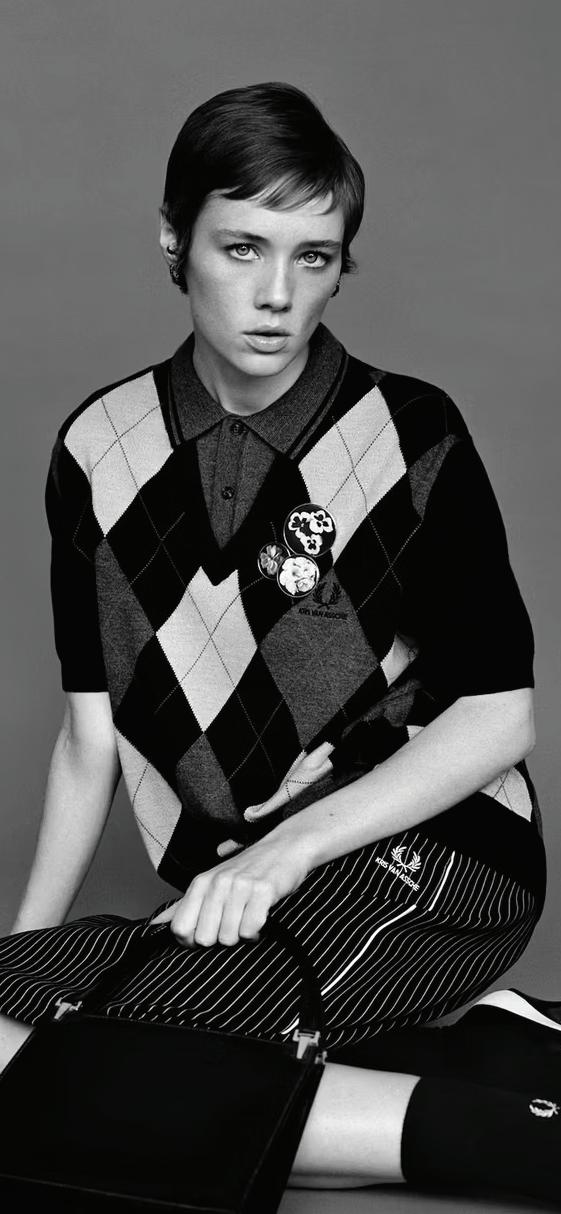
Fred Perry announced the launch of Uniform of Youth, a new 13-piece capsule collaboration with Belgian designer Kris Van Assche, reimagining the codes of British heritage sportswear through the lens of contemporary tailoring.
For Van Assche, former artistic director of Dior Homme and Berluti, Fred Perry has long been a reference point. Youth culture, sportswear and subcultural identity have consistently informed his work, making the partnership a natural progression. With this project, he brings his minimalist and tailored design language to one of Britain’s most recognizable heritage brands.
At the heart of the collection is a dialogue between discipline and rebellion, formality and ease. Fred Perry’s iconic staples are subtly reimagined. The classic piqué polo is transformed into a buttoned dress shirt with a slender, pre-tied black tie, referencing pivotal comingof-age moments. The traditional tracksuit is reimagined as a pinstriped version, combining the comfort of sportswear with the structure and detailing of formal tailoring. Knitwear incorporates trompe-l’oeil effects to create the illusion of layered uniforms, while sweatshirts merge with poplin shirting in hybrid silhouettes.
Rather than breaking with tradition, the collection stretches Fred Perry’s established codes while maintaining the integrity of its DNA. In a time when traditional dress codes are increasingly fluid, the capsule proposes an evolution rather than a disappearance of the suit and the uniform.
A recurring floral motif, drawn from Van Assche’s personal photography archive, appears as badges pinned to polos and caps, introducing a romantic counterpoint to the brand’s sharp subcultural references. The designer’s visit to the Fred Perry archives further informed the collection, including the reinterpretation of an archival knit featuring a flower motif, now rendered in monochrome.
The narrative also draws on the legacy of founder Fred Perry, whose use of clothing as a tool of self-presentation and social mobility adds historical depth to the concept of uniform. The collection explores how young people use shared dress codes to define identity while personalizing them to express individuality.
Designed to be worn across genders, the pieces blur the boundaries between sportswear and tailoring, casual and formal, heritage and modernity. The result is a refined yet rebellious wardrobe that elevates the uniform of youth.


















Integritas Capital was built to serve independent sponsors. As developers and operators, we understand the needs of builders and owners.
Founded by Stephen Palmese, the firm leverages two decades of brokerage relationships, development, and real estate lending.


In the last 18 months, Integritas has originated $811 million in loans, financing adaptive-reuse, construction, and transitional projects.
Disciplined underwriting underpins our selection process across our robust pipeline.
We deliver professionalism: speed, structure, and certainty to close. We back independent sponsors with institutional execution.


Loan sizes typically range from $25 million to $300 million.
















By Ron Friedman


Hello again! Spring is just around the corner, and football season has come to an end with the Seattle Seahawks winning in a defensive battle. New England could not handle the Seahawks’ great defense. I think the two best teams played together two weeks before the Super Bowl, when Seattle beat the Los Angeles Rams. These teams are favorites to make it to the Super Bowl next year. Now it is on to baseball season and the Dodgers getting their third World Series in a row. Best team money can buy!
Now, on to the history of the apparel industry in Los Angeles. This month highlights the career of my partner, Marty Josephson, as the next icon.
Marty Josephson is best known as a founding partner of Stonefield Josephson, an influential California-based accounting firm that ultimately merged with Marcum LLP, one of the largest independent public accounting and advisory services firms in the United States. Several years after Marty’s retirement, Marcum was acquired by CBIZ Inc.

Marty’s journey as a certified public accountant (CPA) began with a vision for personalized service and deep industry expertise, which he learned while working at a New York-based accounting firm focused on the apparel industry. Marty moved to Los Angeles in 1960, joining the small office the New York firm maintained there, which also served the apparel industry. In a prior article, I explored leaders serving the apparel industry in Los Angeles. Marty is one of those icons. In 1975, he teamed up with Joel Stonefield to establish a new accounting firm in Los Angeles. When it came time to decide whose name would appear first on the firm’s letterhead and who would occupy a corner office, the two partners took a lighthearted and democratic approach. They flipped a coin. The winner of the flip had first choice. The result— favoring Joel Stonefield—gave rise to the iconic name: Stonefield Josephson.
This anecdote reflected the spirit of their partnership—a blend of professionalism, mutual respect and entrepreneurial energy that would define the firm’s culture. From

its inception, Stonefield Josephson served creative and entrepreneurial clients in the apparel industry, becoming recognized for its innovative approach and commitment to highgrowth businesses.
Throughout his career, Marty was widely respected for his technical expertise, dedication to client relationships and mentorship of young professionals. I was one of those young professionals. Under his leadership, Stonefield Josephson gradually grew to serve a variety of businesses in multiple economic sectors. The firm was recognized as a “best place to work” and as one of California’s top local accounting firms. It earned national attention for its industry specialization, innovative practices and commitment to community engagement. Marty believed in the importance of giving back to the community. He had a strong connection with the City of Hope through the professions and finance associates. He served as president and was honored in 2003 with the Spirit of Life Award by the City of Hope apparel industry group.



In 2010, Stonefield Josephson merged with Marcum LLP, allowing the firm to expand its resources, expertise and reach on a national scale. Marty Josephson and his partners managed the transition smoothly, preserving their firm’s entrepreneurial culture while leveraging Marcum’s capabilities.
Marty’s legacy is characterized by entrepreneurship, innovation and unwavering dedication to his clients and his profession. He is remembered for helping countless businesses grow and thrive, nurturing talent within his firm and shaping Stonefield Josephson’s reputation as a respected name in public accounting. The memorable coin flip that determined the firm’s name serves as a testament to the collaborative spirit that made Stonefield Josephson—and Marty Josephson himself—a lasting force in the industry.
What To Expect From the Federal Reserve in 2026
1. Rate Cuts on the Horizon?
As of June 2024, the Federal Reserve (Fed) had

maintained higher interest rates to combat inflation. By 2025, there was growing speculation in financial markets and among economists about the timing and pace of eventual rate cuts. By the end of 2025, the Fed cut interest rates by 75 basis points.
If inflation remains moderate and economic growth continues at its current pace, the Fed may begin lowering rates in 2026 to stimulate investment and consumption. With a new Fed chairman joining in May, we should begin to see a series of interest rate cuts, but not until he comes on board.
Cuts in interest rates will stimulate the economy and reduce the cost of borrowing.
The Fed’s decisions will depend on a complex mix of factors, including inflation trends, the strength of the labor market, global economic stability and financial market conditions.
Forward guidance from the Fed may signal a willingness to reduce rates, but the precise timing and magnitude are difficult to predict.

It is unlikely that the current Fed chairman will cut interest rates.
3. Planning for Multiple Scenarios
Cash managers should be prepared for both continued high rates in the first half of 2026 and a gradual shift downward. Stay agile by using short-term products and maintaining flexibility in your investment and borrowing strategy. Once they see whether the new Fed chairman begins lowering interest rates, business leaders can make decisions about growth and expansion for their businesses.
Until next time, remember what I always conclude with—if you are not having fun, then do something else!

By Krieger Worldwide
The U.S. Supreme Court’s recent decision holding that the International Emergency Economic Powers Act (IEEPA) does not authorize the president to impose tariffs is one of the most significant trade rulings in recent history. While the decision itself is clear, what remains unclear—and what matters most to importers—is what happens next. The immediate question across the trade community is whether refunds are coming, how they will be processed and how long the process will take.
At this stage, there is no official mechanism in place for refunds. The Supreme Court addressed the legality of the tariffs but did not establish a refund structure, timeline or administrative process. The matter now returns to the U.S. Court of International Trade (CIT), where the procedural framework will begin to take shape. In our professional opinion, the CIT is likely to take a position favorable to importers regarding improperly collected duties. However, even with a favorable outcome, this should not be mistaken for an automatic or immediate reimbursement process. Historically, matters of this magnitude move slowly, and we anticipate a structured, documentation-heavy path forward rather than a simple credit back to importers.
Importers should not assume refunds will be automatic. Duty recovery in cases of overturned tariffs has typically required affirmative action through formal channels such as post-summary corrections (PSCs), protests under 19 U.S.C. §1514 or other administrative refund procedures through the Automated Commercial Environment (ACE). Each of these mechanisms involves strict timelines and detailed supporting documentation. As we await formal guidance, preparation—not passivity—should be the strategy.
One issue that deserves immediate attention is the exposure created by Delivered Duty Paid (DDP) transactions. Businesses that purchased goods under DDP terms and were not listed as the importer of record (IOR) may find themselves unable to pursue refunds directly. In DDP structures, the foreign seller or intermediary often serves as the IOR and pays duties under its own bond. If refunds become available, the legal standing to claim them may belong solely to the IOR. This means companies that relied heavily on DDP arrangements to streamline purchasing could face significant challenges in recovering duties paid. Now is the time to review entry documentation carefully, confirm who was listed as IOR, determine whose bond was used and assess whether your organization has standing to pursue potential claims.
Beyond Incoterms exposure, importers should be conducting a thorough internal audit of all entries that were subject to IEEPA tariffs. This includes reconciling entry numbers, dates of entry, liquidation status and the total duties paid. Monitoring liquidation timelines is critical, as protest rights are tied directly to liquidation. Missing deadlines could permanently eliminate recovery opportunities. Companies should also confirm that their ACE accounts are active and properly configured, including refund accounts and authorized users, so that they are prepared to act quickly once U.S. Customs and Border Protection (CBP) issues procedural instructions. Equally important is preserving all documentation that may be required to support a claim, including commercial invoices, entry summaries (CBP Form 7501), proof of duty payment, bills of lading and contracts confirming importer status.
It is also important to manage expectations. Even if the CIT issues guidance favorable to importers, the administrative process through CBP will likely take time. There may be additional motions, clarification orders or even appeals before a final procedural framework is established. Once guidance is issued, CBP will need to implement structured processes, likely with strict deadlines and formal filing requirements. This will not be an overnight reimbursement event. Importers should prepare for a multiphase process rather than an immediate resolution.
In this environment, working closely with an experienced customs broker is not optional—it is essential. Importers should be partnering with a customs broker that has a long-standing relationship with CBP, a strong focus on customs compliance and deep proficiency in PSC and protest filings. Precision will matter. Filing errors, missed timelines or incomplete documentation could eliminate eligibility for recovery. This is a compliance-driven event, not merely a financial one. Krieger Worldwide’s reputation

for compliance-focused operations serves our clients well in this turbulent supply chain climate, and we are available to answer any of your questions as we continue through this challenging trade landscape.
The Supreme Court’s decision is a major milestone, but it represents the beginning of the next chapter rather than the end of the story. While we believe the CIT will take a position favorable to importers, there is currently no official refund mechanism in place, and we anticipate a deliberate and potentially lengthy process. Companies that act now—auditing exposure, confirming IOC status, organizing documentation and aligning with experienced compliance professionals—will be in the strongest position to respond when formal guidance arrives.
In moments like this, the difference between recovery and loss often comes down to preparation. Krieger Worldwide is ready to support your business as your supply chain experts.


By Shahrooz Kohan, CEO, Aims360
For decades, Excel has been the backbone of decisionmaking in the fashion industry. From sell-through analysis and inventory planning to margin reviews and channel performance, spreadsheets have played a central role in how teams understand their business.
And Excel isn’t going away.
But as fashion operations grow more complex—across thousands of stock-keeping units (SKUs), multiple sales channels, diverse retail partners and increasingly
In many fashion companies, answering a seemingly simple question still follows a familiar pattern. Data is exported from multiple sources. Spreadsheets are combined. Formulas are added or repaired. Tabs are duplicated. Versions are emailed, renamed and debated.
By the time an answer is produced, the data may already be outdated—or inconsistent across departments.
This isn’t just a time issue. It’s a risk issue.
Manual spreadsheet workflows introduce silent errors: a missed filter, an incorrect join or a formula copied incorrectly. As teams scale, these small issues compound, often leading to conflicting conclusions and delayed decisions.
AI is beginning to change how fashion teams access operational insight.
Instead of building reports or stitching together spreadsheets, teams can increasingly ask business questions directly and receive answers immediately from live operational data. The goal isn’t more dashboards or more data exports—it’s reducing the manual effort between the question and the answer.
tight margins—spreadsheets are starting to show their limits. What once worked for a smaller operation now introduces friction, delays and risk.
The next evolution in fashion business intelligence isn’t about eliminating Excel entirely. It’s about replacing a percentage of manual, repetitive spreadsheet work with AI, allowing teams to focus more on decisions and less on data assembly.
In practice, this allows businesses to explore questions such as:
• Which SKUs are selling quickly versus sitting idle?
• Which sales channels and retail partners deliver the highest sellthrough?
• Which partners drive replenishment velocity versus one-time buys?
• Are top-selling SKUs actually delivering the profit the business expects?
These questions aren’t new. What’s changing is how quickly and consistently they can be answered—without relying on exports, spreadsheet work or custom reporting requests.
Traditional business intelligence has focused on dashboards and predefined reports. While useful, dashboards require teams to anticipate which metrics matter in advance, and they often fall short when decisionmakers ask new or more specific questions.
AI changes this model.
Instead of navigating menus or searching through reports, teams can start with the question itself. AI can interpret the intent and return an answer with context. This shift is particularly valuable in fashion, where variables like color, size, seasonality, fulfillment method and channel mix add complexity that static reports often struggle to capture.

It’s important to be clear: this shift is not about abandoning Excel.
Excel remains valuable for forecasting, modeling and one-off analysis. But many fashion companies are realizing that a large share of spreadsheet usage exists solely to answer recurring operational questions.
That’s where AI can make an immediate impact.
By reducing reliance on spreadsheets for day-to-day decision-making, teams can save time, reduce errors, align departments around consistent answers and make decisions while conversations are still happening.
Excel becomes a strategic tool again—not a daily bottleneck.
One example of this trend is Aims360 Insight AI, a business intelligence tool designed specifically for fashion brands and apparel manufacturers.
Rather than requiring users to know which report to run or which filters to apply, Insight AI allows teams to ask questions directly and receive answers based on their actual business data. This removes the repetitive cycle of exporting reports, reconciling spreadsheets and rebuilding analysis each time the question changes.
Instead of answering one fixed version of a question, teams can ask follow-up questions immediately. For example, a business may start by reviewing margin performance, then quickly explore margin by channel, margin by customer or profitability by SKU—without needing to rebuild the report structure each time.
This type of AI-powered workflow is increasingly valuable for fashion businesses because it supports the way real decisions happen: fast conversations, shifting priorities and frequent follow-up questions.


One of the most overlooked challenges in business intelligence isn’t access to data. It’s knowing which questions to ask.
Many organizations have extensive data but struggle to turn it into insight because questions are either too broad, too narrow or disconnected from how the business actually operates.
To solve this, some platforms now provide guided question frameworks—sometimes called insight prompts—developed with input from experienced fashion consultants. These help teams focus on the types of questions that directly impact inventory risk, margin performance and operational efficiency.
In fashion, where inventory decisions can determine profitability for an entire season, asking the right questions early can be more valuable than having more data.
Despite the attention surrounding AI, the most effective applications in fashion today are practical and targeted.
Replacing a portion of spreadsheet-based workflows with AI doesn’t require organizational upheaval. It doesn’t change how teams think about their business. It simply removes friction between questions and answers.
As fashion companies continue to navigate inventory complexity, margin pressure and channel diversification, AI-powered decision support is emerging as a practical complement to traditional tools.
Not a replacement. An evolution.
By Merilee Kern, MBA

Across the fashion industry, a growing number of professionals—especially in wholesale, sourcing and brand management—are sensing a shift beneath their feet. Despite solid performance and deep industry expertise, roles that once felt secure are now vulnerable. This unease isn’t unfounded. The rules of work are changing rapidly, and fashion, long governed by tradition and hierarchy, is no exception.
Workforce reductions are no longer confined to underperforming departments or outdated retail functions. They’re hitting core teams in design, production and merchandising—roles historically viewed as untouchable due to their creative and strategic importance. According to strategic growth advisor Chitra Nawbatt, author of “The CodeBreaker Mindset: The Unwritten Rules for Success,” these cuts reflect a broader shift in how value is defined across the industry.
“Competence used to buy you time,” Nawbatt explained. “In 2026, competence is table stakes. The market is rewarding a different set of behaviors, and many fashion professionals are still playing by the old rules.”
This evolution isn’t just about AI or automation replacing labor. In many cases, the deeper driver is structural change. Brands are flattening hierarchies, streamlining supply chains and
repricing labor around agility and innovation— fundamentally altering the way work gets done in fashion’s business-to-business ecosystem.
Reuters recently reported that Amazon is preparing additional corporate job cuts as part of an effort to streamline its structure and remove management layers, even as it continues to invest selectively in priority roles tied to long-term strategy.
“The narrative is convenient,” said Nawbatt. “Blaming technology masks the harder truth. Many organizations are still figuring out how to operate efficiently in a volatile environment, and people get caught in that recalibration.”
Data from HR leaders underscores the contradiction. A January 2026 survey cited by HR Dive found that nearly half of companies expect layoffs will likely occur in the first quarter, while most also plan to hire selectively for roles tied to growth initiatives.
This dual track of hiring and cutting reveals why performance reviews alone no longer predict job security. The system itself is changing faster than individual output can keep up.
The Rise of the CodeBreaker Nawbatt describes the professionals who thrive in this environment as CodeBreakers. The term does not refer to rule breakers for their own sake, but to people who understand that success is governed by both written rules and unwritten ones.
“Written rules tell you how things are supposed to work,” she said. “Unwritten rules tell you how decisions actually get made when pressure hits. In periods of reorganization, the unwritten rules are what determine who stays and who goes.”
Based on her work advising leaders and teams across multiple industries, Nawbatt outlines five shifts that separate those who remain relevant
from those who become interchangeable.
1. Stop Optimizing and Start Reading Patterns
Efficiency can feel reassuring in unstable times, but it can also be misleading. Nawbatt emphasizes that productivity without direction often leads professionals deeper into roles that are quietly being deprioritized.
“The winners are not the busiest people,” she noted. “They are the ones who can see where budgets are tightening, where automation is accelerating and where their work is becoming easier to replace.”
2. Treat Unwritten Rules as the Real Operating System
Most professionals are trained to follow job descriptions and formal processes. During restructurings, however, informal dynamics take over. Who is protected, which narratives leadership repeats and how risk is managed become far more important than stated policies.
“When written and unwritten rules diverge,” Nawbatt said, “the people who notice early have options. Everyone else is reacting.”
3. Build a Nonlinear Value Stack
The traditional career ladder assumed stability and longtime horizons. In today’s environment, resilience comes from a portfolio of relevance that spans skills, relationships and credibility across contexts.
“You are not competing for a seat anymore,” Nawbatt explained. “You are trying to become a node in an ecosystem. The goal is to create value that travels with you when structures change.”
4. Focus on Information Quality, Not Quantity
Modern organizations are saturated with dashboards, metrics and opinions. According to Nawbatt, the ability to distinguish data-
driven insight from perception-driven or manipulation-driven narratives is becoming a defining leadership skill.
“Clarity is power,” she said. “The person who can say what is true, what is assumed and what is being spun becomes indispensable when decisions must be made under uncertainty.”
5. Replace Ladders With Loops
Career progress in 2026 is less linear and more iterative. Learning, testing, building proof and compounding impact now matter more than waiting for titles or recognition.
“High performers often get stuck waiting to be noticed,” Nawbatt observed. “CodeBreakers build evidence. They create work that can be demonstrated, taught and scaled.”
If this moment feels uncomfortable, that discomfort may be the point. The market has stopped rewarding stability for its own sake. The professionals most likely to thrive are those who confront change early and adjust with intention.
AI will continue to improve. Organizations will continue to thin. The defining question is not whether people can outwork machines, but whether they can outgrow outdated playbooks.
“The CodeBreaker mindset is not about fear,” Nawbatt said. “It is about clarity. It is about understanding how systems really work and moving with discernment when those systems shift.”
“You are trying to become a node in an ecosystem. The goal is to create value that travels with you when structures change.”
Chitra Nawbatt
By Nicole Brackett, Enterprise Account Executive, TradeBeyond
For much of the past decade, ethical sourcing in fashion focused on first-tier suppliers, like the factories that cut, sew and ship finished goods. Brands developed codes of conduct, scheduled audits and published sustainability commitments that largely stopped at the factory gate. However, that approach is no longer enough.
This year, a new wave of global regulations is fundamentally reshaping how retailers and brands must address forced labor, deforestation and human rights risks. The common thread across these rules is that companies are expected to know not just who their direct suppliers are but also where materials originate, how labor is sourced and what happens at every meaningful tier of the supply chain—and those rules are uncompromising.
Ethical sourcing has shifted from a values-based initiative to a core business requirement, one that hinges on transparency beyond tier 1.
Forced labor remains widespread and deeply embedded in global supply networks. According to international labor organizations, tens of millions of people worldwide are subjected to forced labor, generating hundreds of billions of dollars in illegal profits each year. The majority of these abuses occur in the private economy, often several tiers removed from consumer-facing brands.
For fashion and apparel companies, the risk is particularly acute. Raw materials such as cotton, rubber, leather and yarn frequently pass through multiple intermediaries before reaching a finished product. At each step, subcontracting, informal labor and weak enforcement can obscure unethical practices.
Recent enforcement actions have made one point unmistakable: regulators are no longer accepting “lack of visibility” as a defense. Import bans, shipment detentions and public enforcement notices increasingly target goods linked to forced labor or high-risk regions, regardless of whether brands had direct contractual relationships with the offending suppliers.
Regulation Is Driving a New Definition of Due Diligence
Several major developments are accelerating
this shift. In the European Union, the Corporate Sustainability Due Diligence Directive (CSDDD) requires companies to identify, prevent and mitigate human rights and environmental harms across their entire value chain. This extends accountability well beyond direct suppliers and introduces real penalties for failure to act.
In the United States, forced labor enforcement has intensified through mechanisms such as import bans that place the burden of proof squarely on importers. At the same time, climate-related rules, including California’s SB 253 and SB 254, are expanding disclosure requirements to include indirect, upstream emissions. These rules effectively require companies to understand where and how materials are produced in order to report accurately.
Other jurisdictions, including Canada, Germany, France and the United Kingdom, have enacted or strengthened supply chain due diligence and modern slavery laws, creating a complex and overlapping compliance outlook for global fashion brands.
What unites these regulations is their emphasis on auditable, defensible transparency. Policies, statements and certifications alone are no longer sufficient. Companies must be able to demonstrate traceability, risk assessment and corrective action across multiple tiers.
Many forced labor risks originate far upstream, in raw material extraction, processing or labor recruitment networks. A factory audit may confirm acceptable conditions at a cut-and-sew facility, while completely missing coercive labor practices tied to yarn spinning, dyeing or agricultural production.
Common vulnerabilities include:
• Subcontracting to unapproved or unregulated facilities
• Recruitment practices that impose debt on migrant workers
• Falsified documentation that passes traditional audits
• Pressure for ultralow costs and rapid turnaround times
• Limited or nonexistent mechanisms for worker voice

Without visibility beyond tier 1, brands often discover these risks only after regulators, nongovernmental organizations (NGOs) or journalists uncover them.



collaboration, enabling brands and suppliers to align on standards, share corrective action plans and improve transparency over time. Just as importantly, technology can amplify worker voice through secure, anonymous reporting channels, helping surface issues that traditional audits often miss.









Multitier supply chain mapping is increasingly viewed as a foundation for ethical sourcing rather than an aspirational goal. At its core, mapping involves identifying suppliers, facilities and material flows across tier 2, tier 3 and sometimes even deeper levels, and linking that information to risk indicators such as geography, labor practices and commodity type.




When done effectively, this approach allows







Identify highrisk materials and regions before issues





Prioritize due diligence efforts where they matter

Validate claims related to forced labor, deforestation or emissions
• Respond quickly and credibly to regulatory inquiries Move from reactive compliance to proactive risk prevention




Ethical sourcing is no longer separate from sourcing strategy. As regulatory pressure increases, many companies are rethinking long-standing reliance on single-source, low-cost suppliers. Regional sourcing, diversification and “friend-shoring” are gaining traction as ways to reduce both compliance and operational risk.
In this context, ethical supply chains are more responsible and more resilient. Transparency enables better decision-making, stronger supplier relationships and greater confidence in the integrity of products reaching consumers.

The question facing fashion companies today is not whether they should map their supply chains beyond tier 1, but how quickly they can do so in a credible, scalable way.




Importantly, mapping is not a onetime exercise. Supply chains are dynamic, and ethical sourcing requires continuous data updates, validation and collaboration with suppliers.




























The scale and complexity of modern fashion supply chains make manual oversight impractical. As a result, many companies are turning to digital platforms, advanced analytics and emerging AI-driven tools to manage supplier data across multiple tiers.
These technologies help consolidate supplier information, flag inconsistencies, integrate third-party risk data and create audit-ready documentation. They also support
Consumers, investors and regulators are converging on the same expectation of proof; they won’t just take you at your word. Ethical sourcing in 2026 is defined by visibility, accountability and the ability to demonstrate that forced labor has no place in the supply chain. For brands that embrace this shift, supply chain mapping becomes a strategic capability, one that protects reputation, ensures continuity and helps build a more responsible fashion industry from the ground up.
Nicole Brackett is an accomplished sales leader with extensive experience across North American and European markets in procurement, supply chain and software-asa-service. Known for driving revenue growth and building high-performing teams, she’s earned the 2023 Stevie Award and the 2022 President’s Club Award. Nicole holds an MBA from VCU and a BS from Virginia Tech. Contact her at nicole.brackett@ tradebeyond.com.



































Capital One® Commercial Banking offers you the financial services your business needs to succeed. You get customized solutions designed by a dedicated team of Consumer Products bankers with a combined track record of more than 75 years in the apparel, footwear, accessories and beauty sectors—and they’re backed by the full-services capabilities of a top 10 U.S. bank.*
Let us create a solution that matches your vision
capital.one/commercial












ACTIVEWEAR THAT FEELS LIKE A SECOND SKIN




Elite Eleven has entered a new orbit as the brand unveiled Luna, a sculpting, secondskin activewear collection that balances innovation with real-world wearability. Known for redefining the boundaries between performance and style, Elite Eleven has steadily built a reputation for designs that marry technical precision with effortless elegance. With Luna, the brand expands this ethos, introducing pieces that feel lifted from another dimension while grounded in everyday movement. The collection is equal parts tactile and technical, transforming activewear from an afterthought into wardrobe architecture designed to move seamlessly with the body.
The innovation of Luna lies in Elite Eleven’s proprietary weave, offering featherlight compression that contours without confinement. Unlike traditional performance fabrics, which can feel rigid or restrictive, Luna’s material glides over the body, tracing natural curves with a soft, almost liquid embrace. The effect is sculptural yet subtle, supporting intuitively while allowing fluid motion. A matte finish enhances the tactile experience, lending a refined, understated quality that elevates every silhouette. The result is a collection that streamlines, sculpts and shapes without sacrificing comfort—a rare combination in the world of activewear.


The collection demonstrates Elite Eleven’s commitment to both design and function. High-rise leggings and elongating flares anchor the edit, paired with sculpted bras, minimal tanks and precision-cut shorts. Each piece is engineered for movement, with a focus on clean lines and flattering proportions. The palette—black, coffee bean, cloud blue and butter—embraces tonal sophistication, inviting both monochromatic styling and layered contrasts. Extended sizing from XXS to 3XL, along with petite options, underscores the brand’s dedication to inclusive design. Every seam, hem and curve has been meticulously considered, achieving a sense of luxury without excess.
Luna is not just a collection; it’s an evolution of Elite Eleven’s design language. Since its founding, the brand has championed a philosophy that activewear should empower and inspire, rather than simply perform. Early collections focused on precision tailoring and functional innovation, building a loyal following among those seeking
wardrobe pieces that transcend the gym. Today, Luna continues this mission, blending sculptural silhouettes with tactile textures and understated finishes. It’s a collection that prioritizes the body in motion while respecting the aesthetics of everyday life—a reminder that activewear can be as aspirational as it is functional.
Elite Eleven’s approach to design is defined by restraint, attention to detail and a commitment to quality. Luna embodies these principles, proving that performance wear can hold its own alongside luxury fashion. In a market crowded with empty promises of shaping and support, the collection delivers both, wrapped in a matte finish that feels undeniably stylish. The brand’s story—a dedication to movement, inclusivity and elevated design—resonates in every piece, making Luna a cornerstone release that extends Elite Eleven’s vision for years to come.

With Luna, Elite Eleven positions itself not just as an activewear label but as a forward-thinking arbiter of modern dressing. It’s a collection that marries innovation with timeless appeal, offering pieces that perform, sculpt and endure. For those seeking activewear that is as technically sophisticated as it is fashion-forward, Luna is a masterclass in form, function and elevated design.





















































There are swim drops, and then there are cultural flashpoints. For Spring 2026, Luli Fama delivers the latter with Miami Fever Dream, the brand’s second release of the season, and a technicolor tribute to the city etched into its identity. Founded in 2003 by Lourdes “Luli” Hanimian and her brother-in-law Augusto Hanimian, the Miami-born label has grown from a small family business into an internationally celebrated name in swimwear, known for its fearless use of color, sensual silhouettes and bold, feminine energy. While adored around the
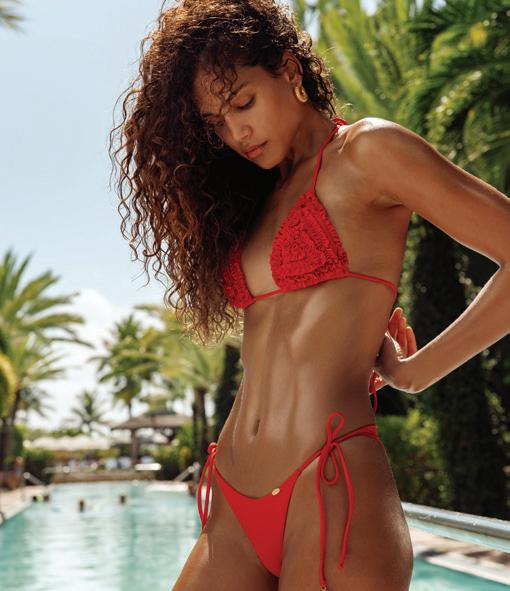


globe, Luli Fama remains firmly rooted in its hometown, drawing inspiration from the city’s vibrant Latin-infused culture, sun-soaked beaches and nightlife that pulses with life.
Framed by the sunlit gloss of South Beach, the collection nods to a more decadent era— neon-lit nights, vintage postcards and the sultry energy of Ocean Drive after dark. Fantasy shimmers through every look, but it’s grounded in something tangible: Miami’s fearless femininity and bold, Latin-infused pulse. This is swimwear with atmosphere.




The palette radiates intensity. Highvoltage reds, saturated pinks, electric turquoise and flashes of molten gold conjure a visual heat wave, while even the neutrals hum with subtle sheen. Color has always been central to Luli Fama’s DNA; it’s never incidental but a declaration of confidence and joy. Silhouettes balance this vibrancy with precision—triangle tops are reimagined with elevated ruching and polished hardware, high-leg bottoms echo vintage beach culture, and sculpted bandeaus and sleek one-pieces introduce strategic cut-outs that feel both architectural and intentional. Each piece celebrates the body with a mix of restraint and empowerment, a signature of the brand’s enduring appeal.
Texture deepens the story. Iridescent finishes gleam like sunlight on water, dense ruching adds movement and signature






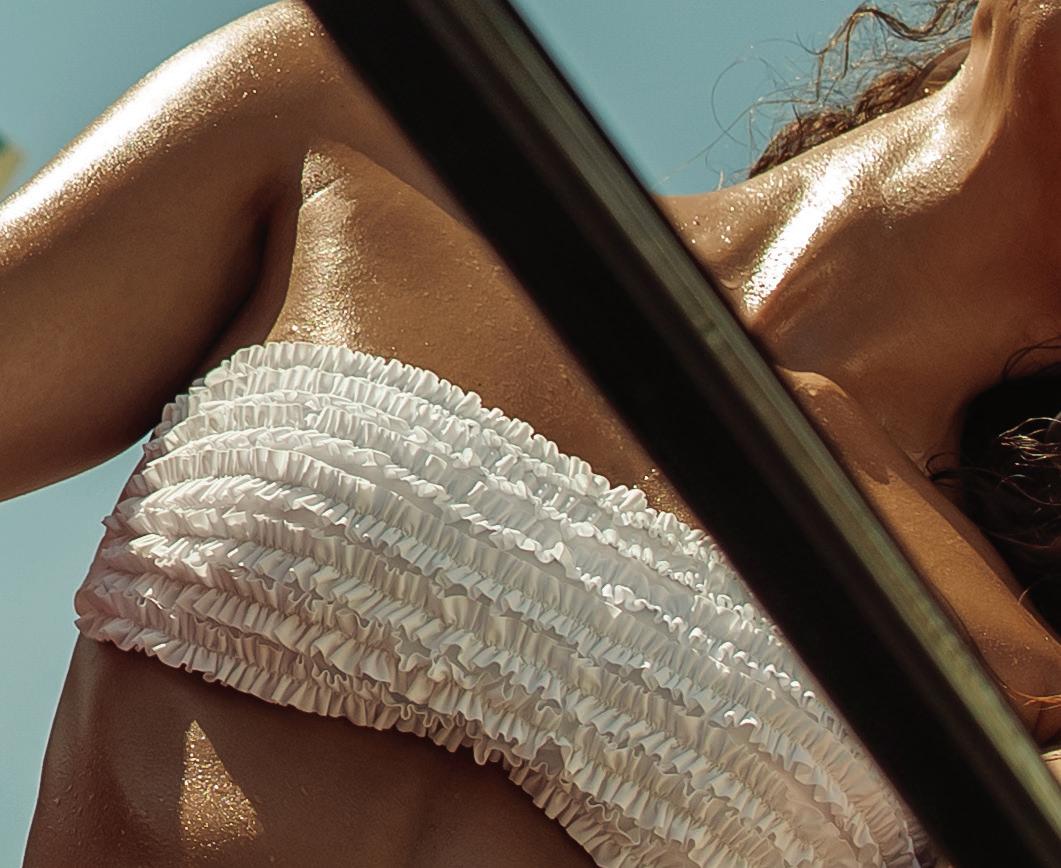





airy and fluid, skimming the frame with ease. This play
feels as much about lifestyle as it does
about swimwear.
Beyond the beach, Miami Fever Dream extends into resort dressing with sheer skirts, body-skimming dresses and breezy layers that transition effortlessly from shore to rooftop. The collection captures the versatility of Miami living, offering pieces that are sensual, self-assured and unmistakably rooted in a city that thrives on glamour and freedom of expression.






The story of Luli Fama mirrors the collections.
From a familyrun brand in Miami’s vibrant swimwear scene to an international label embraced by fashion-forward women worldwide, the label has stayed true to its founding principles: celebrating the body, embracing bold color and channeling the spirit of its home city.
Each collection, including Miami Fever Dream, reinforces this ethos, combining craftsmanship, attention to detail and a deep understanding of the modern






two decades in the industry, Luli Fama continues
to define what it means to be confidently feminine. Its designs transcend trends, offering swimwear and resort-ready pieces that remain relevant season after season. The Spring 2026 capsule is a celebration of all that makes Miami and Luli Fama extraordinary—the glamour, the energy and the unabashed joy of living vividly, under the sun and in color.

Sheila The Label

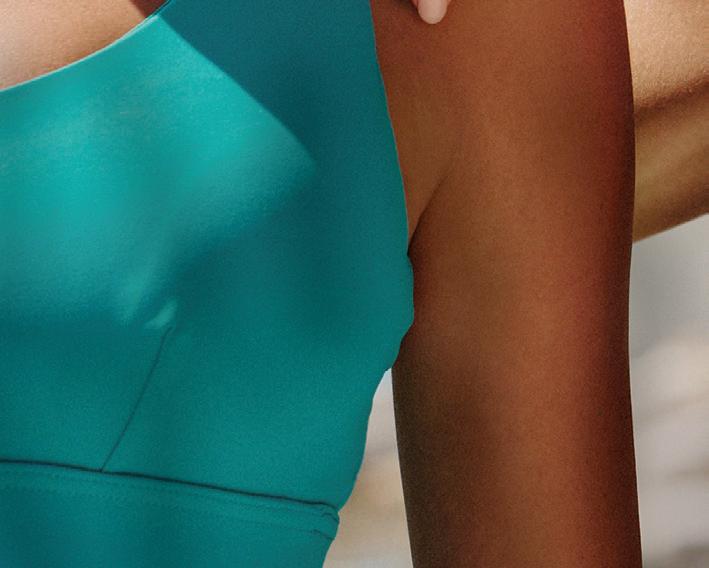
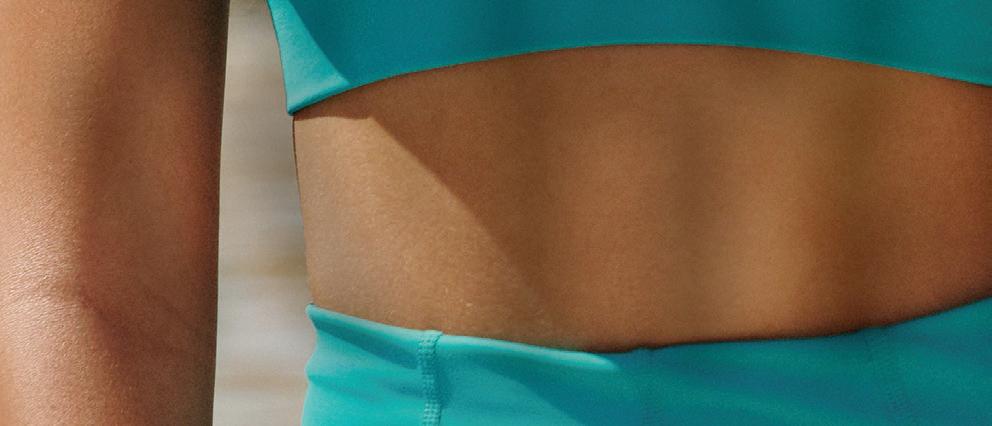




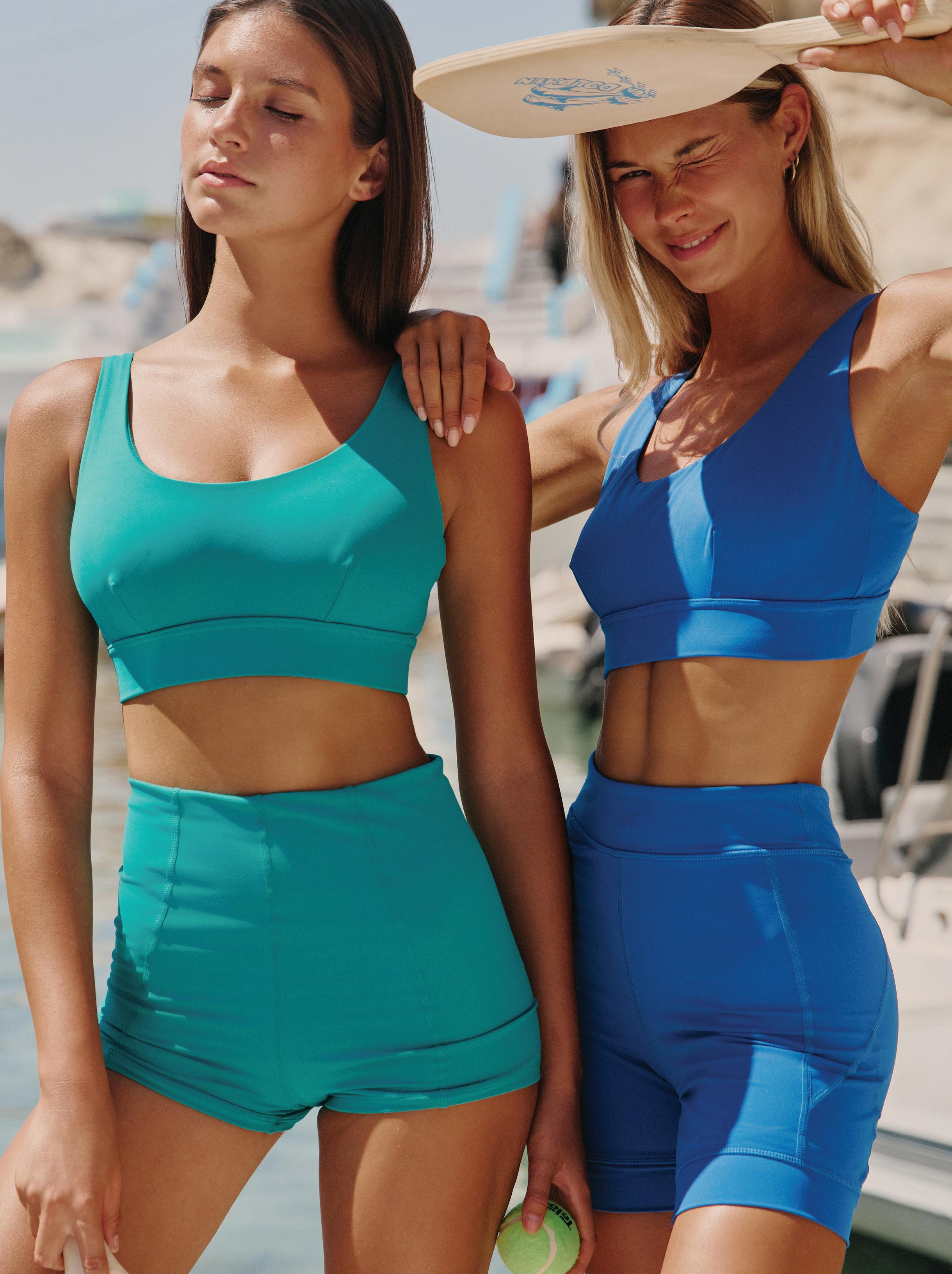



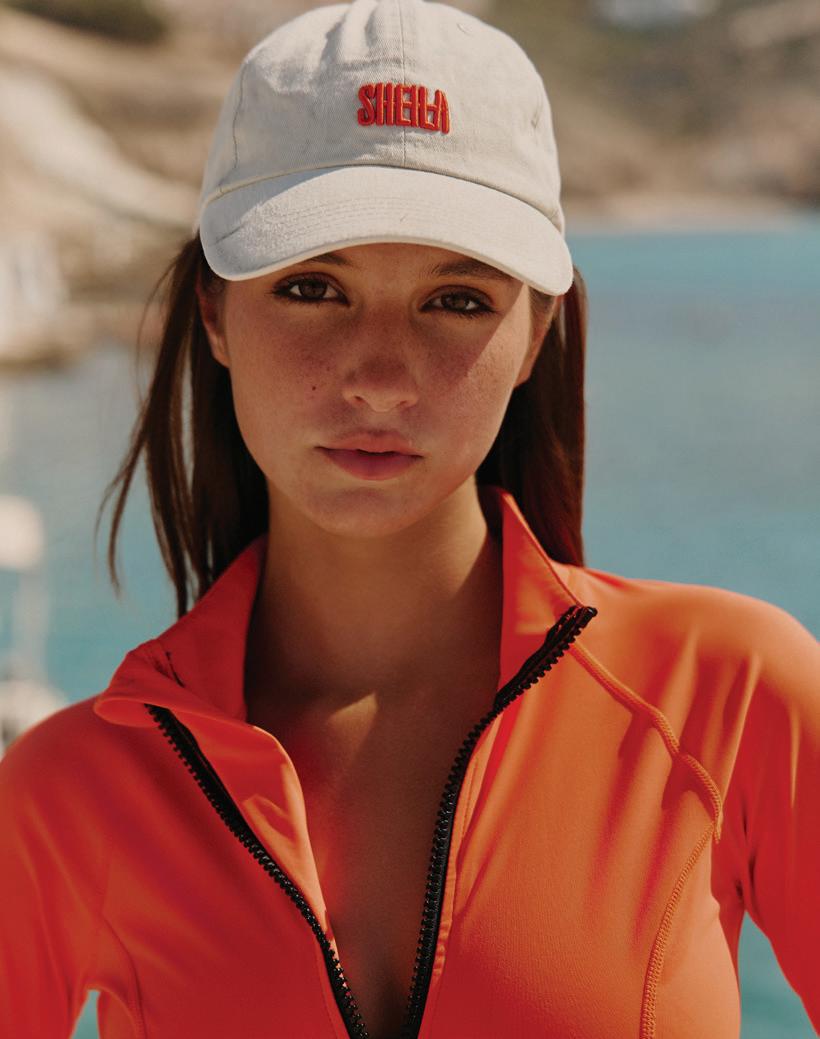
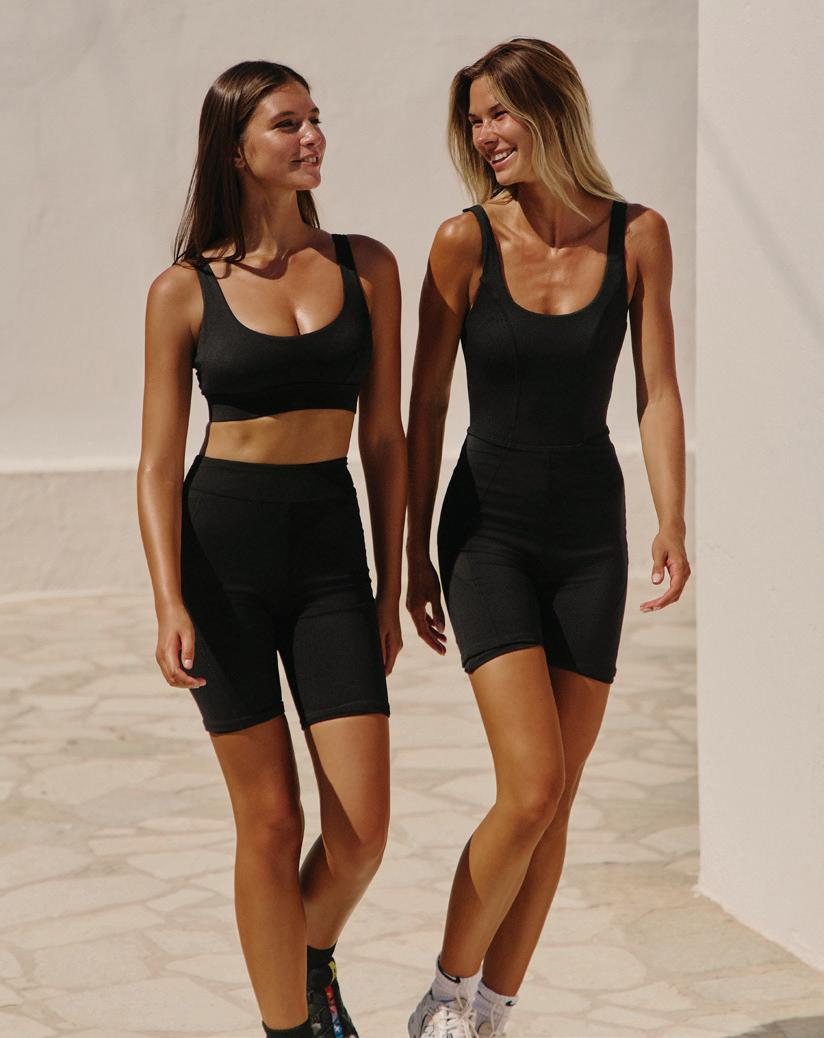
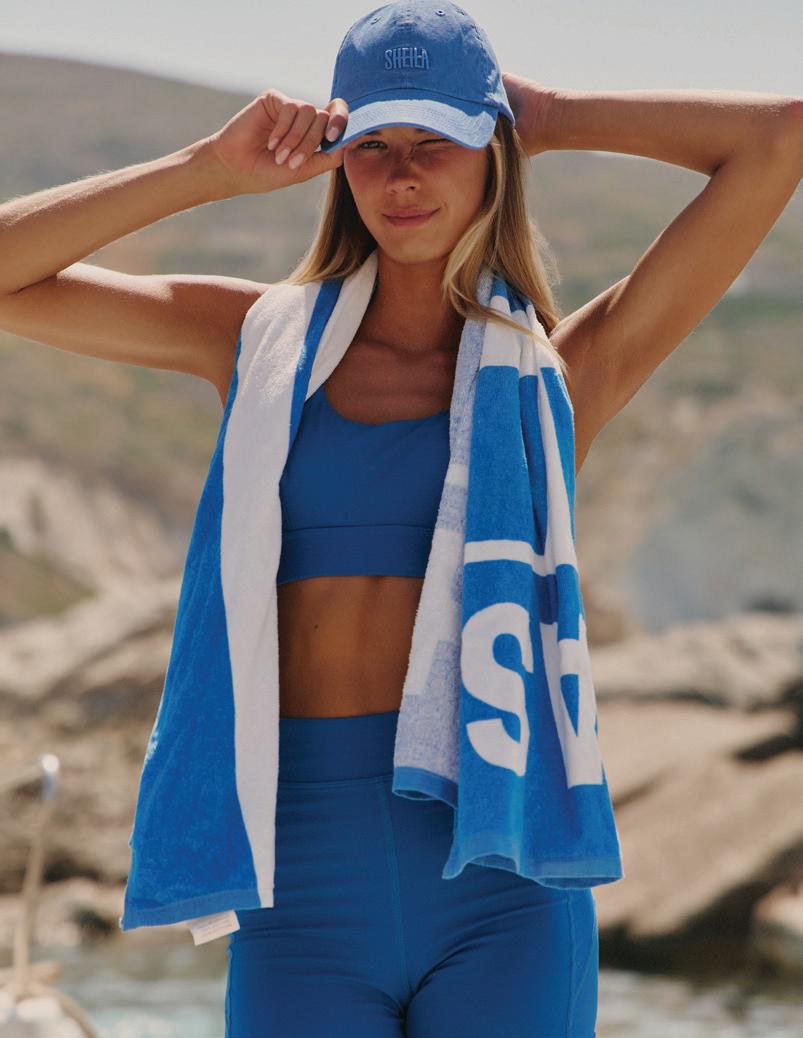
In a market full of less-than-thoughtful designs, narrow size runs and impractical silhouettes, Sheila stands apart. Born from necessity and stitched together with intention, the female-founded brand was launched by Clare Barrins in 2023 after her own personal struggle to find flattering swimwear that could keep up with her life. She was determined to create pieces that move with women, whether they’re catching a wave, sprinting after kids or grabbing brunch from the beach.
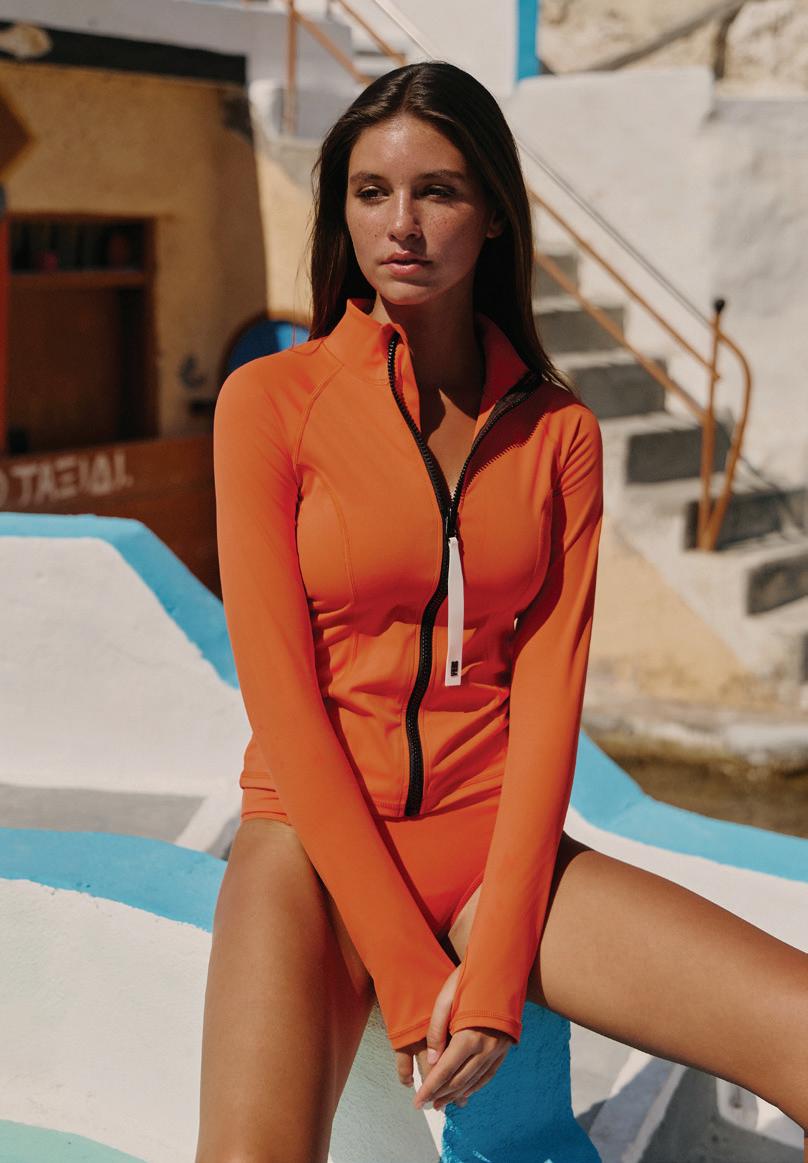
At its core, Sheila is where swimwear meets activewear. Each piece delivers functionality and comfort without compromise. Designed to be secure and true-to-size, the brand offers support in all the right places, holding you with confidence so you can effortlessly move through your day. From streamlined one-pieces to tailored swim

shorts and rash vests, each silhouette promises a flattering fit that honors curves without constriction, ridding you of uncomfortable rideups or wardrobe mishaps. Available in a broad range of sizes, Sheila celebrates every body.
Beyond thoughtful design, the brand is built upon real purpose. After her own personal experience with melanoma, sun protection became a nonnegotiable for Barrins. Each piece is made with UPF 50+ fabric, offering defense against harmful UV rays so women have peace of mind while outdoors.
Sustainability, too, is woven into the fabric itself. Sheila uses luxury Global Recycled Standard (GRS)-certified nylon crafted from discarded fishing nets, plastics and other ocean waste, breathing new life into the materials that could



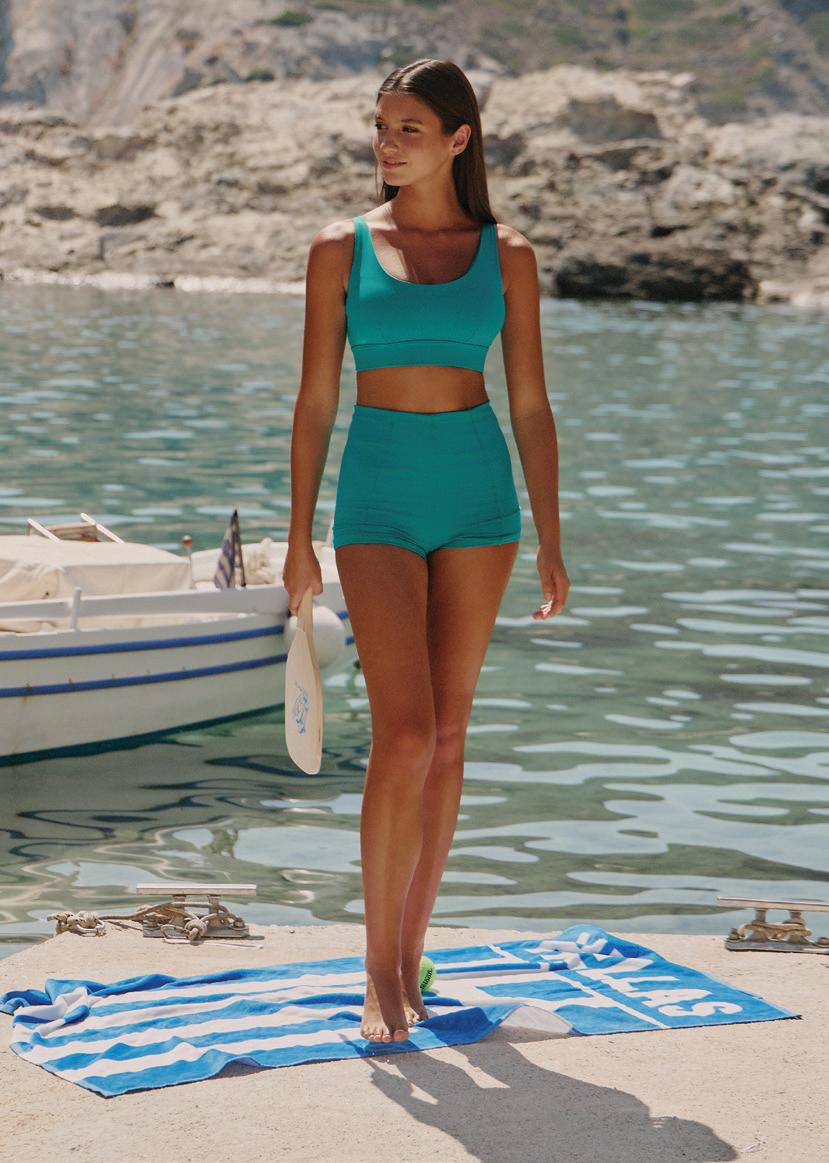
otherwise harm the environment.
Ethical production is another cornerstone of Sheila’s philosophy, as evidenced by the brand’s Standard 100 by Oeko-Tex certification. Every component of the swimwear, from the resilient elastane to the small accessories, is tested for up to 350 harmful substances. This thorough process ensures that the brand’s practices are safe for workers, wearers and the world. In short, Sheila is proof that ethical production and luxury can co-exist.
Sheila doesn’t make you choose between protection and style or between comfort and confidence; it simply delivers. Built for real life and real women, Sheila promises to carry you with ease from moments in the water to everything that follows.


























In the late 1970s, Gary Wassner sat on the floor of an office so new it still lacked furniture. Across from him was Betsey Johnson, a fashion designer with decades of success behind the scenes, who was taking a leap to open her namesake brand. “Gary,” she said, “I have all these orders, and I have no idea how to finance the business.” This conversation sparked a new vision for Hilldun, a family-run business Gary had only recently joined.
Hilldun’s story began in 1932, when department store owner Albert Greenberg had an epiphany. The United States was in the throes of the Great Depression, and the standard sales approach that had guided Albert was no longer the most profitable. He adapted to the times by introducing layaway. “He realized there was more money to be made in layaway than there was in actually selling clothes,” explained Josh Kapelman, Hilldun’s executive vice president and managing director. “That insight is really what gave birth to the business—it was always about understanding the financial side of retail and how critical timing and cash flow are, especially when the world is unstable.”
During World War II, the business pivoted again. With train travel across the U.S. restricted and store managers leaving to serve overseas, Albert decided to sell the company to a partner whose last name was Dunhill, which is a reversal of the compound Hildun. This gave rise to the firm’s name.
In 1952, Hilldun entered its next chapter when Marvin Wassner—Gary’s father—and Robert Greenberg—Gary’s uncle and Josh’s grandfather—took over management. For many years, Hilldun operated far from the runway, functioning as a real estate management and finance company. “It wasn’t always a ‘fashion finance’ business the way people think about us today,” Josh noted. “We were doing accounts receivable lending, chattel mortgages and property management—things with very little resemblance to our current model.”
Hilldun’s shift into fashion began when Gary joined the company, bringing a deep passion for art and a profound appreciation for the artist. It was this sensibility that changed the firm’s trajectory, steering it away from traditional real estate finance and into the world of fashion.
Speaking to Gary’s mindset, Josh explained, “One of the things he has always said, and something we think about constantly, is that it’s not whether or not we like something personally; it’s whether there is a market for that.”

Jeff Kapelman, Josh’s father, joined the firm in the late 1980s, replacing Robert Greenberg. This began a major evolution. Hilldun pivoted one more time, moving beyond general financing and embracing factoring, including handling credit checks, payment collections and credit guarantees. This is necessary because a brand may have a high volume of orders, but retailers often pay on 30-, 60- or 90-day terms. While waiting for those payments, the brand still faces immediate costs, including factory labor, freight, rent and payroll.
“Factoring is really about timing,” Josh said. By turning future receivables into immediate liquidity, Hilldun provides the infrastructure that allows a brand to continue operating and growing without being at what Josh describes as “the mercy of payment timing.”
Today, the firm is run by Gary, now CEO, alongside his son, Cris Wassner, and Josh. Neither Cris nor Josh initially planned to join the family business; both were pursuing their own professional interests until their families invited them to help guide the company’s future. “For both Cris and myself, working with our fathers is and was an incredibly special experience,” Josh said. “You get to know your father in a different way and really respect the hard work they did over the years.”
Cris, who serves as managing director alongside Josh, was the first to join, bringing the skill set he gained in real estate to the firm. For Josh, his prior experience as an entrepreneur in the e-sports market also became an unexpected asset.
“When you build something from scratch, you learn very quickly that success and failure are rarely about the idea itself,” Josh reflected. “They’re about execution, cash flow, timing, discipline and the ability to make good decisions when things get hard.”


This entrepreneurial spirit influences how the team evaluates potential clients. They are not interested in the loudest story or the fastest growth; they are looking for durable, responsibly built businesses. “Our business is not about hitting home runs,” Josh emphasized. “It’s about hitting singles and doubles. It’s about being there, answering the phone, supporting your clients and putting one foot in front of the other. That’s how you build something that lasts.”
The trio’s partnership is built on an alignment of values and a difference in strengths. Gary maintains industry relationships, Cris manages risk and operations with a focus on structure, and Josh oversees long-term strategy and growth. “The important thing is that we don’t operate in silos,” Josh said. “We listen to each other. We debate. And we have to agree before we move forward on something meaningful.”
The company’s commitment to stability is reflected in its staff as well, with many of Hilldun’s 50 employees having been with the company for over two decades. “Our mailroom manager was hired by my grandfather,” Josh noted. “That kind of longevity is rare, and it matters
because this business is built on relationships, and relationships are not built through turnover.”
The firm’s philosophy for client support is to nurture personal relationships alongside providing capital. During times of industry volatility—such as the COVID-19 pandemic— Hilldun acted as a steadying hand. “During COVID, we hosted Zoom calls where we brought together CEOs and chief merchants of major retailers to talk openly about how the industry could address the crisis without hurting independent brands,” Josh explained. “One of the key takeaways from that call was, ‘We are all in this together.’”
Josh believes that this support is critical to the future of fashion. When he looks at how the New York fashion landscape differs from other fashion capitals, it’s the entrepreneurial spirit that stands out. “One of the things that has always been so unique about the United States is that we have great entrepreneurial thinkers and creatives, and we are the builders of contemporary brands,” Josh said. “Europe has luxury. We have contemporary. We invented contemporary, and we sustain it.”


As they look toward the next several decades, Josh remains committed to the family legacy and the longterm view that has sustained Hilldun since 1932. The work remains deeply personal, as they find themselves involved in the day-to-day operations of their clients’ businesses, through both successes and challenges.
“I’ll be sitting in my chair for the next 30 years,” Josh stated. “So shortsighted views have no place here.” With a portfolio of around 450 clients and an average relationship length of 11 years—and some decadeslong client relationships—Hilldun continues to prioritize continuity and discipline, even in an industry defined by the fast-paced cycle of trends.



















Folium is a study in life rendered through metal. Named for the Latin word folium, meaning “leaf,” the studio is rooted in the idea that jewelry should feel alive, imbued with movement, intention and growth. Founder and master goldsmith Myles Ryan chose the name deliberately. “If a plant has leaves, you know it’s alive,” he explained. “It is my goal with my jewelry to capture the feeling of life and growth. When I think [of] Folium, I imagine a tree in the spring with delicate leaves bursting forth. This is an inspiration for me every time I think of the name and how I want to share my work.”


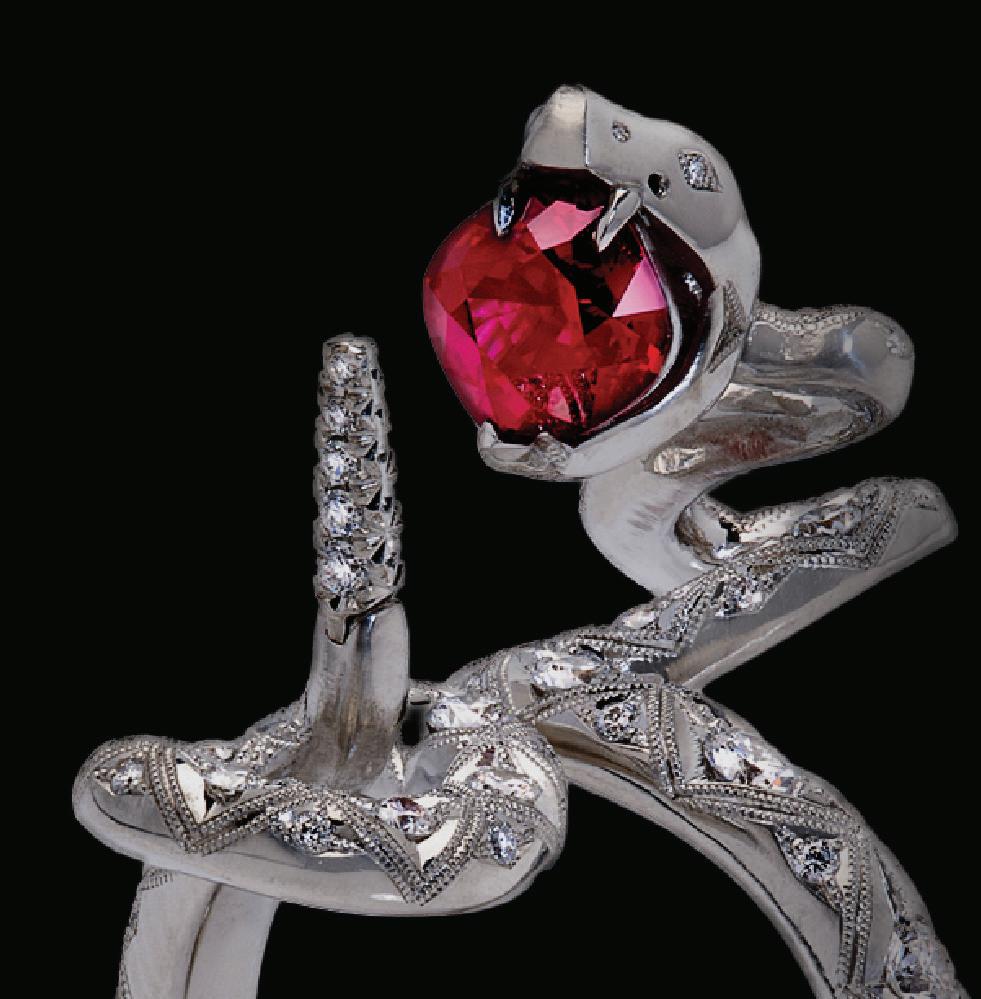
That philosophy finds one of its most powerful expressions in Folium’s newest body of work, the Serpentis collection. At once ancient and strikingly modern, Serpentis is not a literal depiction of a snake but an abstraction of its essence: rhythm, protection and danger held in balance and constant motion. The collection begins as a study of form, of pattern, of meaning—and is ultimately transformed into precious metal through the artist’s hand.




















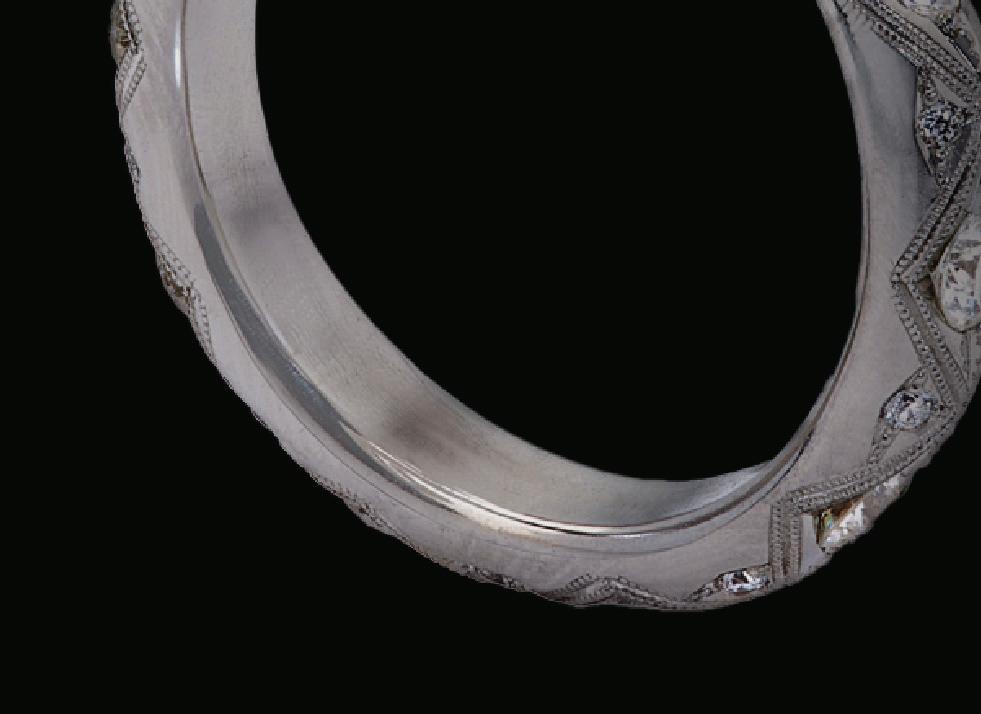





Across civilizations and centuries, the serpent has appeared as one of humanity’s oldest and most complex motifs. It has been revered as a symbol of wisdom, renewal and protection, while also commanding fear for its power and unpredictability. In the American Southwest, the rattlesnake carries particular resonance. Its patterned skin mirrors the geometry of the land itself, and its image appears in early Southwestern adornments and talismanic jewelry, where diamond-shaped scales were believed to guard the wearer and sharpen the senses.
Serpentis carries this lineage forward. The collection draws on the repeating diamond lattice pattern found in a rattlesnake’s skin, a design that subtly shifts in scale along the animal’s body. Ryan engraves each form by hand, carving individual cells with a precision that recalls vintage desert jewelry and ceremonial objects. Diamonds are set within these engraved forms like flashes of light caught between scales, evoking sunlight glancing off a coiled serpent. The effect is hypnotic, tactile and architectural: jewelry that seems to move even at rest. unpredictability. In the American Southwest, the








“Serpentis is more than a collection; it is a feeling and experience,” Ryan said. “The collection came together when I combined my very personal experiences of rattlesnakes, which are so powerful and dangerous only when threatened, with a very unique pattern that I found in a vintage piece of jewelry. I rescued the pattern and combined it with the power of the rattlesnake. It is this combination that sets the collection apart.”


The resulting pieces feel protective without being aggressive, powerful without excess. Bands become continuous loops of engraved scales, encircling the finger with quiet strength. Pendants elongate the pattern into modern talismans, while earrings and one-of-a-kind works push the geometry into more sculptural territory, echoing the serpent’s unpredictable grace. Serpentis is not about mimicry; it is about distillation. The serpent’s form dissolves into pure texture and rhythm, an homage rather than a portrait.
Ryan’s relationship with metal began early. “I got my start as a boy playing at my godmother’s jewelry bench,” he recalled. “The aspect of play has been integral to my growth as a jeweler. When I took up jewelry in earnest, I was 27.” That sense of play, paired with decades of discipline at the bench, now informs Folium’s philosophy. “Folium is an intensification of all my previous work,” he said. “I take the experience of years at the bench and working for other designers, and let my love of the art express itself through the engraving.”
In an era dominated by speed and mass production, Folium
stands firmly on the side of slow craft. Every Serpentis piece is hand-engraved in gold or platinum, materials chosen for their endurance and historical significance. “As everything gets faster and more soulless, more and more people are craving handcrafted things,” Ryan explained. “I know for myself I want things that are made with intention, and it is my core belief that jewelry should be a leader in this. I make jewelry that will endure for people who want the human touch. Gold and platinum have been the benchmark for fine jewelry, and that is why they are the materials I use.”
Ryan’s background in eurythmy, a form of expressive movement, also shapes the work in subtle but profound ways. “Eurythmy is full-body expression,” he said. “My time performing gave me experience and insight into the meaning of gesture and expression that are vital to the way I understand the world and my desire to bring a life element to jewelry.” In Serpentis, that influence is evident in the flow of the engraved lines and the sense of motion embedded in static form.

Ultimately, Folium’s jewelry is meant to be lived in, not simply admired. When asked what he hopes people feel when wearing his work, Ryan shared a quote that has stayed with him: “I feel more myself and ready to take on the world.” He added simply, “This is my goal.”
With Serpentis, Folium offers more than adornment. It presents jewelry as a living object: protective, intentional and rooted in ancient symbolism, engraved forever in motion.























WELLS FARGO CAPITAL FINANCE FACTORING
ASSET-BASED FINANCING
ACCOUNTS RECEIVABLE MANAGEMENT
ACQUISITION FINANCING
INVENTORY FINANCING
IMPORT AND EXPORT FINANCING
LETTERS OF CREDIT

In an industry that endlessly strives for the next big thing, having the flexibility to adapt at a moment’s notice is key to success. With Wells Fargo, you get the strength and stability you need, along with the nimbleness you want. Our flexible financing may support your growth, and our proven track record in factoring and receivables management helps make sure you’re ready for whatever’s next.
Tap into our knowledge, experience, and broad o ering of products so that your business’ success never goes out of style. Learn more at wellsfargocapitalfinance.com/apparel.
Peter Pugliese
Senior Vice President, Regional Sales Manager
212-703-3551
peter.pugliese@wellsfargo.com
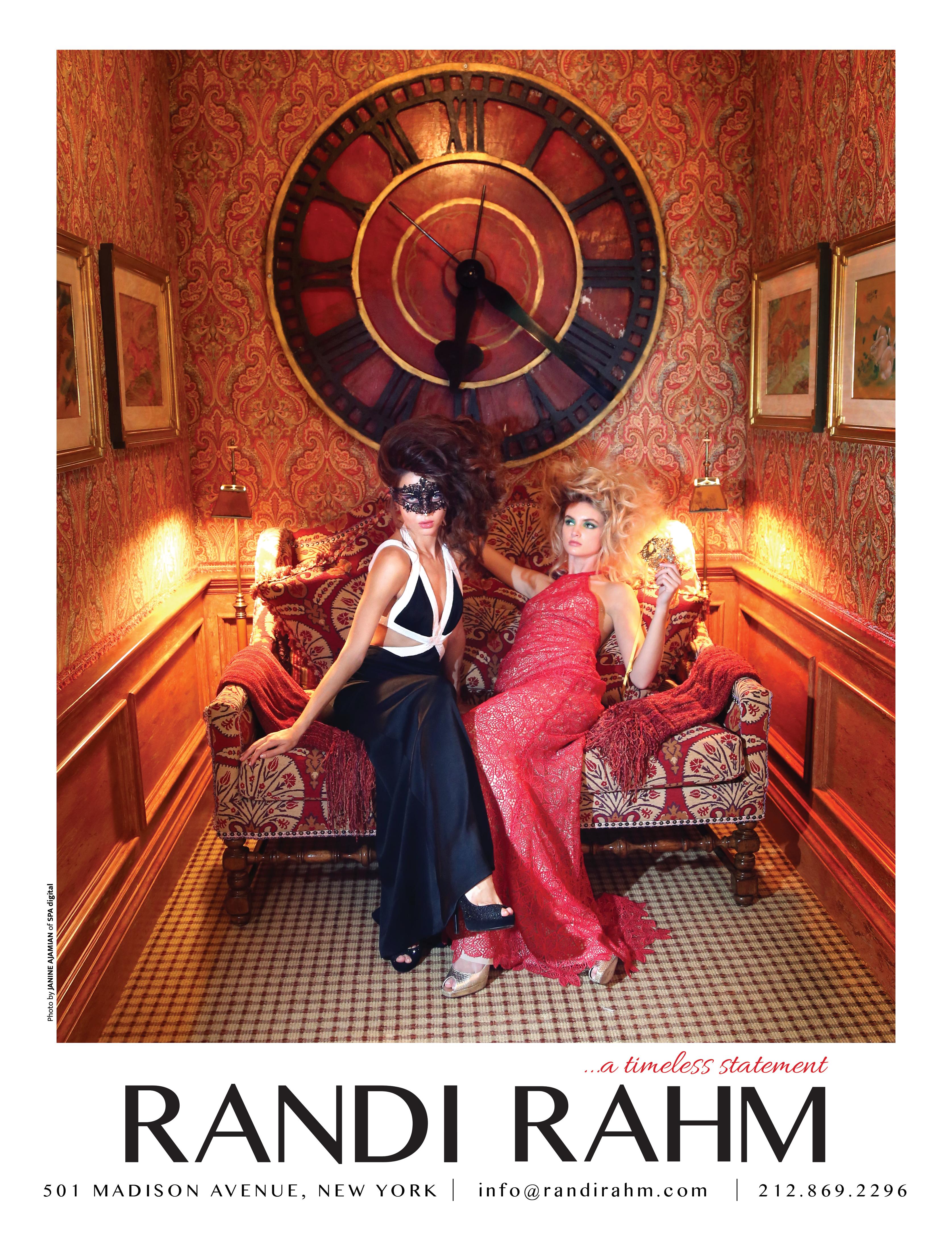

Bringing you the latest breakthroughs in software, I.T. and fashion technology. From creative solutions to insights from experts, we are the source for all things fashion tech.
As a third-generation family-owned business, Aetrex is pioneering what it means to offer proper fit, with every shoe designed for anatomical support and comfort, informed by data and learnings from over 50 million global foot scans collected through its proprietary foot scanners. Each season, the brand pairs its signature fit and comfort technology innovation with ontrend designs, ensuring comfort without compromising on style.
That legacy continues with Aetrex’s Spring 2026 line, which reintroduces Aetrex BioRocker technology in brandnew styles: Savanna, Donna and Jenny. The company originally introduced its rocker construction in 1998 with a collection engineered to reduce pressure in the heel and forefoot as you walk, and to aid stability through its forward-motion design. The new Spring 2026 BioRocker collection brings this technology forward with modern designs, including fashionforward sandals featuring adjustable uppers and accents such as snake prints, buckles and metal grommet details.
The Spring 2026 footwear collection also blends fresh silhouettes with proven consumer favorites. Returning hero styles, including Jillian, Ashley and Sydney, are refreshed with new materials, footbeds and uppers, elevating familiar constructions while preserving the adjustability and functionality the brand is known for.
This season’s color palette draws inspiration from earthy neutrals and summer hues, complemented by tactile novelty prints such as denim, leopard and metallics. The top three-selling sandals—Jillian, a fully adjustable quarter-strap, and Ashley and Sydney,
stylish wedges—are refreshed in these new colorways and textures to reinforce their status as spring and summer staples.
New white outsoles are also seen across the line’s collection, reflecting the aesthetic of Albert Pro and Zoe Pro, the brand’s 3D foot scanners: white, clean and modern.
“Our sandal assortment is diversifying this season, with new constructions and a color range that includes both sun-kissed shades for easy transition and standout prints for novelty,” said Amy Egelja, vice president of footwear design at Aetrex.
Ranging from casual to dressy, this season’s footwear offers consumers options that enhance everyday styles. “From sporty silhouettes to casual staples and dressier options, our goal is to offer more choices that meet a range of style preferences without compromising on our signature support and adjustability,” added Egelja.
Platform sandals like Carmen and Cass offer a pop of fun and height to wardrobes, with features like strappy multicolored uppers and premium leather-wrapped footbeds. The Aria features a leather-wrapped midsole that contrasts with the jute midsole of its sister style, Vania, for a modern twist.
For those who appreciate a lower-profile style and secure, adjustable uppers, Aetrex’s line also includes Hadley, a completely adjustable sandal for personalized support; Kasey, a strappy slide available in multicolor colorways; and Tracey, a toe-post style with side ankle adjustability for a secure fit. Each sandal features a memory foam footbed for all-day comfort.


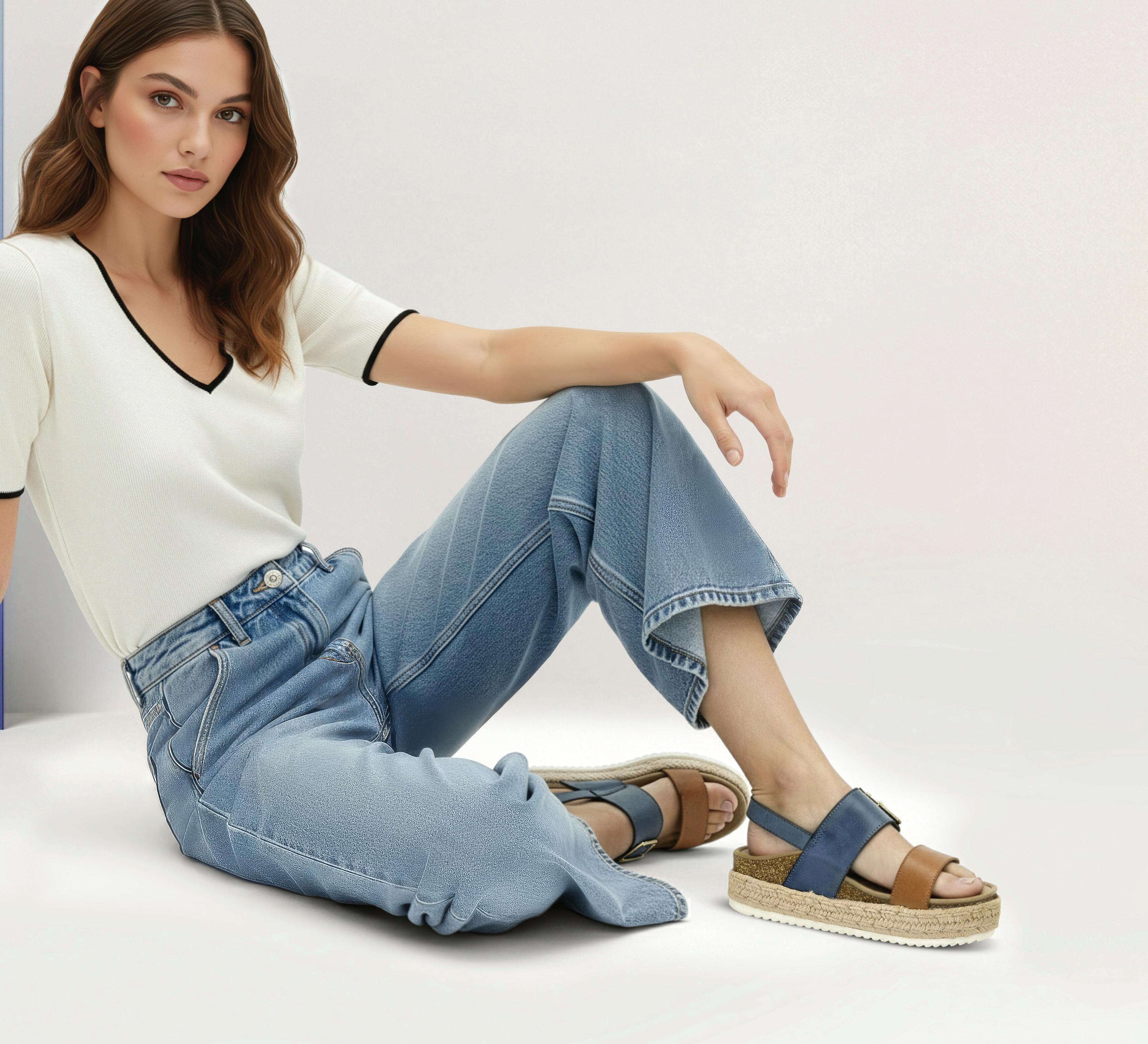

For a more elevated option that transitions seamlessly from resort day trips to a night out, Aetrex has a new line of dressy flat sandals built on a contoured footbed for added support. These sandals offer elegant versatility with stylish features, including Piper, featuring a crisscross upper with an adjustable back ankle strap for added support; Kendal, an ankle-loop thong;
and Blaire, a T-bar slide for added elegance.
With this new line, Aetrex continues to stake its claim as a leader in the comfort footwear space with shoes that meet consumer style demands and demonstrate innovation through new tech-driven constructions.
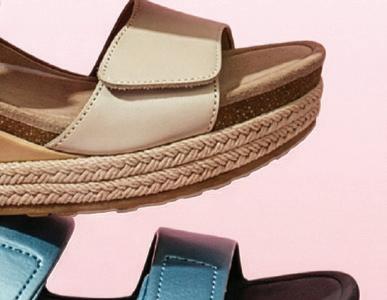


Layer Zero, a new comfort-first performance intimates brand, announced its official introduction with a collection designed to support how women live, move and dress today. Layer Zero delivers weightless, secondskin shapewear that flexes with the body, disappears under clothing and supports everyday movement, all at an unbeatable price point.
Entering a category long defined by either high-priced fashion shapewear or dated, restrictive functionality, Layer Zero introduces a new approach: performancedriven intimates that feel luxurious, look effortless and are designed for daily wear. Each piece balances softness and support without compression or constraint.
“Layer Zero was created to challenge the idea that quality and performance have to come at a premium,” said Carlos Bethencourt, founder and president of Layer Zero. “We focused on how women actually move through their day, designing intimates that feel intuitive, flexible and effortless, while still delivering that support and quality at unbeatable prices.”
At its core, Layer Zero is driven by the belief that comfort is the new luxury and it should belong to everyone. With pieces starting at $8 and no single item priced over $15, the brand sets a new standard by delivering premiumlevel comfort, performance and quality at an attainable price.
Where traditional shapewear constricts and lingerie simply flatters, Layer Zero strikes a balance of invisibility and presence, sleek enough to disappear under clothing yet thoughtfully engineered to support everyday movement.
Designed for real life, the collection smooths and supports without reshaping the body, offering comfort that lasts from morning through night. The debut assortment focuses on essential silhouettes designed to become wardrobe foundations—everyday layers that support without distraction.
Each piece is crafted from an ultrasoft microfiber nylon and spandex blend engineered to mimic the sensation of a second skin. Featuring four-way stretch, adaptive fit technology, moisture-wicking breathability and frictionless bonded seams, Layer Zero’s seamless designs provide the support of premium shapewear without squeeze or restriction. The result is a weightless, barelythere feel that moves naturally with the body.
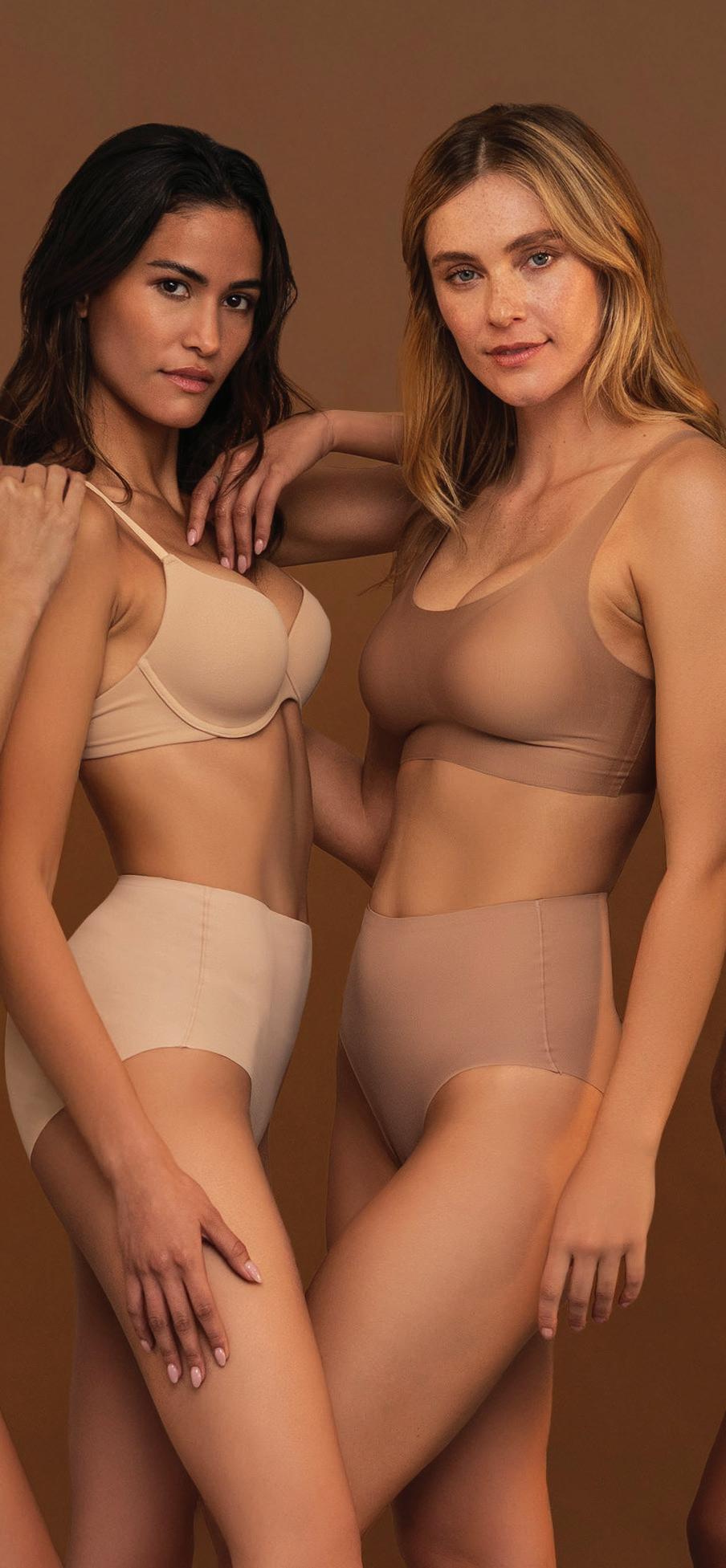
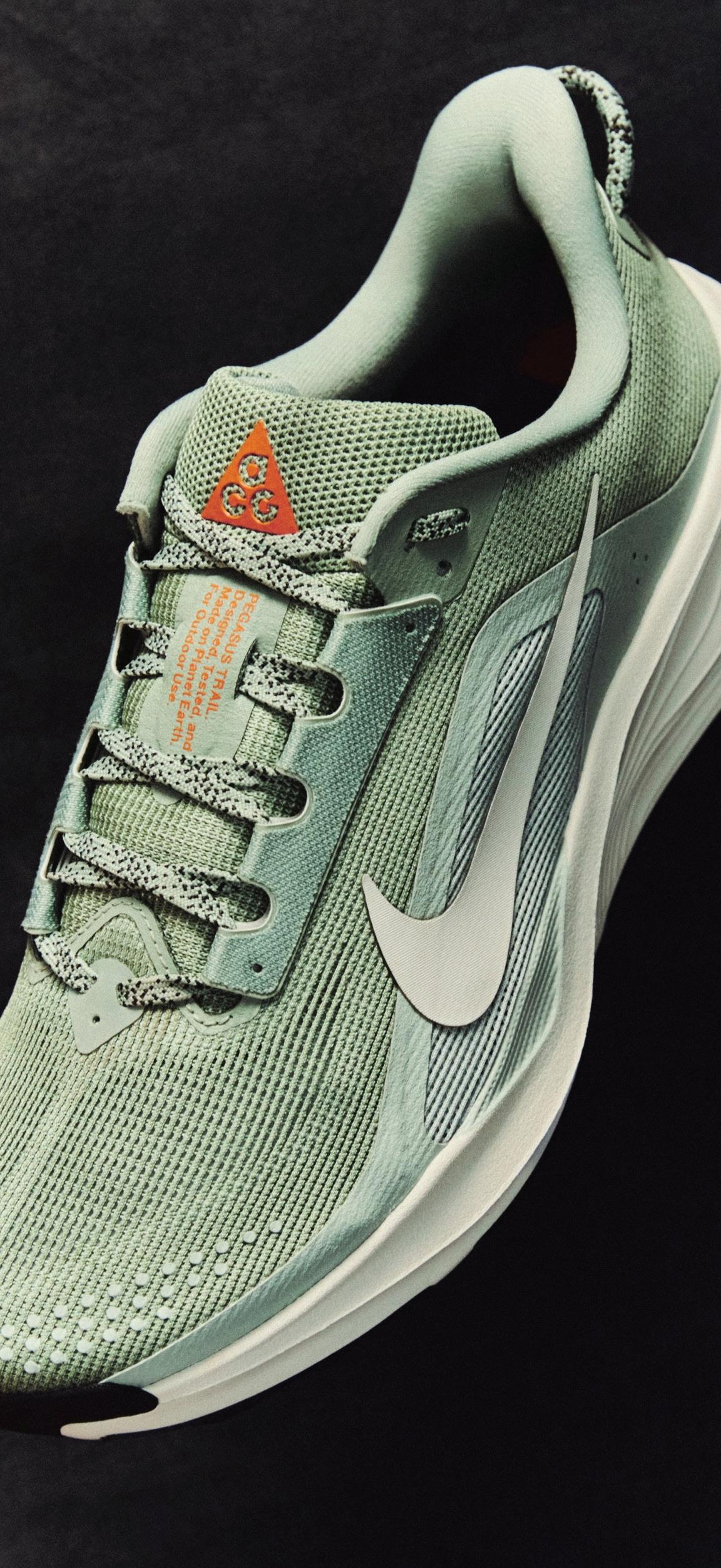
Nike All Conditions Gear (ACG) is introducing the new Pegasus Trail: a lightweight and responsive silhouette that moves seamlessly across all conditions, from trails to pavement, making it the most versatile shoe in the brand’s trail running line.
The ACG Pegasus Trail balances responsive comfort with ample support, offering a trusted ride engineered to help athletes navigate the rigors of new terrain. This shoe pairs the standout performance and consistency of Pegasus road running footwear with athlete-tested, trail-specific innovations that take it to the next level.
“The Pegasus Trail is ACG’s best all-around shoe,” said Lauren Gregory, All Conditions Racing Department athlete and 2025 Golden Trail World Series Final champion. “It’s responsive and comfortable. I use it for everything in all conditions—from trails to gravel roads, pavement and a mix of all three.”
The new Pegasus Trail was developed in close collaboration with Gregory and her fellow athletes from the All Conditions Racing Department, a growing roster of elite trail runners dedicated to high-speed pursuits and chasing the call of the wild. Hundreds of everyday trail runners also tested the new silhouette, helping ACG dial in every aspect of its fit, durability and comfort.
New Nike All Terrain Compound 2.0 outsole rubber delivers improved traction in wet environments, and an updated, trail-specific last provides a wider toe box and more room in the footbed for peak comfort on long runs.
All the while, a breathable, quick-draining engineered mesh upper helps athletes stay cool and dry, no matter what conditions they encounter on their run, and a rubber wrap on the toe adds crucial durability while protecting against trail debris.
The Jade Horizon launch colorway brings each innovation to life in a hue of organic neutrals inspired by Oregon white oak and manzanita trees, species that are resilient, highly adaptive to change and tested by the elements, just like the Pegasus Trail.
“Building on the storied Pegasus foundation, we set out to create our most versatile trail shoe yet—ready for trail, gravel and road alike,” said Brenden McAleese, director of ACG footwear. “It’s our most capable and versatile workhorse to date, thanks to insights from our global testing network and the All Conditions Racing Department.”













Debra Hazel Communications North Las Vegas, Nevada 201-618-5247
The end of a long, cold winter is seeing the coming of new concepts, new flagships and more.
TJ Maxx will occupy approximately 40,000 square feet across the ground and lower levels of Herald Towers under a 10-year lease. The transaction represents TJ Maxx’s first new lease in New York City in more than a decade.
It’s not just for brides anymore. Kleinfeld Bridal, the local bridal fashion legend and home of TLC’s “Say Yes to the Dress,” announced a partnership with Generation Tux, the destination for luxury suits and tuxedos, which will open its first-ever Manhattan showroom inside Kleinfeld’s flagship store at 110 W. 20th St. The new showroom will feature 25-plus suit and tuxedo styles, plus hundreds of accessory colors.
The Vitamin Shoppe announced the opening of an innovation store at 157 E. 86th St. between Lexington Avenue and Third Avenue. This location is the first to introduce Shoppe Advisor, The Vitamin Shoppe’s AIpowered, interactive discovery tool designed to enhance in-store education, engagement and personalization. Via a digital touchscreen, Shoppe Advisor provides instant access to detailed product information and expert-sourced wellness content, including articles and videos searchable by health goals, trends and brands. Willspace, a personal training studio, will relocate from
By Debra Hazel
513 Hudson St. to 150 Barrow St. Hero’s Journey, a technology-driven fitness company built around structured, data-led training, will open its first U.S. location at The Grand Madison at 225 Fifth Ave., with 1,500 square feet on the ground floor and 18,000 square feet on the lower level of the 40,079-squarefoot retail condominium. The flagship will serve as the company’s U.S. entry point and global showcase, designed as a multistudio destination integrating four training modalities with strength training as the foundation, supported by structured high-intensity interval training (HIIT) and Pilates-based conditioning within a single, unified system.
Sprouts Farmers Market made its New York debut at 1934 Middle Country Road in Centereach, Long Island. At press time, discount grocer Lidl was to have opened in February at East 31st Street and Third Avenue.
The Granola Bar, the brunch restaurant concept expanding rapidly throughout Connecticut, Westchester and Long Island, announced the opening of its flagship location at 330 Madison Ave., adjacent to Grand Central. The brand will simultaneously debut The Granola Bar Takeaway, a grab-and-go concept around the corner on East 43rd Street. Clown Car will open a new bar at 31 Second Ave.
The Museum of Ice Cream has unveiled the next evolution of its three-story SoHo flagship. The refreshed experience is bigger, brighter and more playful, and it introduced new experiences, including the Hall of Freezers, where freezers open to secret rooms; Sundae House, a hands-on kitchen of imagination and play; a larger-than-life carnival and playground; an infinite banana split jungle; and an interactive exhibit exploring the history and science of ice cream.
Hudson View Piano Studio, which offers group and private piano lessons for children that blend time-tested techniques with cutting-edge technology, has signed a new lease for 1,013 square feet at 1034 N. Broadway in North Yonkers.
Visual Comfort & Co. launched its new Manhasset
showroom, a 5,000-square-foot destination at 1575 Northern Boulevard, showcasing the company’s portfolio of designer lighting partnerships. The showroom features an immersive demonstration area where decorative lighting, architectural lighting, lighting controls and shading solutions come to life within a home environment.
Curtis and Erica Wright, founders of The Wright Group at Christie’s International Real Estate Group in Montclair, New Jersey, announced the grand opening of Wright Group Gallery at 46 Church St. The inaugural exhibition, “Born to Remember,” by internationally recognized contemporary artist John Ransom Phillips, is inspired by Bruce Springsteen’s autobiography, “Born to Run.” The exhibition was curated and produced by Erica Wright.
French avant-garde fashion designer Rick Owens will come to Chicago at The Fulton, a mixed-use project at 910 W. Lake St. Check n’ Play, a modern, emotionally enriching, screen-free play space and café for children ages 6 and under and their caregivers, has launched its flagship location at the Brea Mall in California. The 6,000-square-foot haven for families pairs immersive, guided play with a thoughtfully designed café created for caregivers.
OCVibe, the 100-acre mixed-use development near Honda Center in Orange County, California, announced six original bar and lounge concepts—Bar Bacchia, Vesper Lounge, Barrel Bar, Rea’s Ranch, a to-be-named gathering space and a high-energy spot— that will operate within Katella Commons, the district’s newly named, 50,000-square-foot, two-story market hall, when it opens in early 2027.
Chanel debuted a 5,370-square-foot boutique at Town Center at Boca Raton. From April 10 through May 10, The Ritz-Carlton, Fort Lauderdale, will debut the “Gibson Guitar Experience,” a resort-wide collaboration with music brand Gibson, celebrating over 130 years. White Castle is expanding its on-thego footprint with a new automated kiosk at Southwest Florida International Airport’s renovated terminal food court in greater Fort Myers. Premium grocery retailer The Fresh Market debuted its first new store of 2026, cutting the ribbon on its eighth location in the Miami-Dade area at 5850 SW 73rd St.


DAVID HAROUCHE
Founder, Chief Executive Officer, Chief Technology Officer, Multimedia Plus
By David Harouche
Retail leaders closely monitor performance data. From store managers to corporate executives, key performance indicators (KPIs) such as sales, traffic, conversion rates and units per transaction drive daily decisions. But one key indicator of performance often goes underused: real-time product training data.
This data is not just about training compliance. When applied with intention, it becomes a forward-facing tool for improving sales outcomes, especially around high-stakes product launches.
Most traditional retail metrics reflect what has already happened. Sales results, for instance, come in after the fact. A product may not have sold through as expected, but by the time the data shows it, the peak opportunity has passed. This is where product knowledge data can offer a crucial advantage. It shows how well store teams understand new products before they are available to customers.
Consider the moment a new seasonal collection drops. Marketing has built momentum. Visuals are refreshed. Customers arrive with intent. These early days are often the most important for full-price conversion. If store associates are not fully prepared to speak to the key features, benefits and selling points of the new products, those early opportunities can be lost.
That is why product knowledge data is so valuable. When available in real time and with question-level detail, it gives leaders insight into how prepared their teams truly are. It can identify which associates or locations may need additional coaching and where specific knowledge gaps exist across the business. This information allows store leaders to take targeted action before the launch, not after sales start to lag.
In many cases, product training is measured solely by completion. A training module is marked complete, and that is considered a success. But completion does not always mean comprehension. Deeper insights into how well associates performed on specific questions can highlight areas that need reinforcement. For example, if a large percentage of staff miss a question about how to position a new performance fabric or what to pair a featured jacket with, that signals a missed opportunity on the floor.
In today’s drop-driven retail culture, where new
product capsules or limited-edition collaborations can arrive every few weeks, readiness is not optional. It is critical. A well-trained sales associate can create urgency, build value and make the difference between a browse and a basket. When they are not prepared, customers may walk away unsure or uninspired.
This is not just about customer experience. It is about protecting margin. Retailers who ensure their teams are prepared to sell new products from day one have seen measurable financial benefit. Some have reported up to a 15% reduction in markdowns during launch cycles, simply because more product was sold at full price before discounts were needed.
Readiness can also play a role in scheduling. Store managers often build shifts based on tenure, availability or sales history. But product knowledge should be part of the equation. If an associate has not completed or understood key training for an upcoming launch, they may not be the best fit for a high-traffic shift. On the other hand, a well-prepared team member can have an outsized impact on conversion and customer engagement during those critical launch days.
The impact of training data does not stop at the store level. District leaders can use it to prioritize store visits and target coaching where it will have the greatest effect. Regional leaders can track readiness trends across geographies and align support strategies. At the head of stores or the corporate level, tying readiness to sales results helps refine future launch planning and performance forecasting.
For this to work, training data must be treated like any other vital metric. It should not be tucked away in learning systems or viewed as an HR compliance function. Instead, it should be surfaced, discussed and acted upon with the same urgency as daily sales numbers.
Retail is moving fast. Product drops are more frequent, and customer expectations are higher. To keep up, store teams need to be more than just informed. They need to be prepared. Real-time product training data gives retailers a chance to shift from reacting to results to actively shaping them. When readiness becomes part of the culture, product launches become opportunities to lead, not scramble.
March
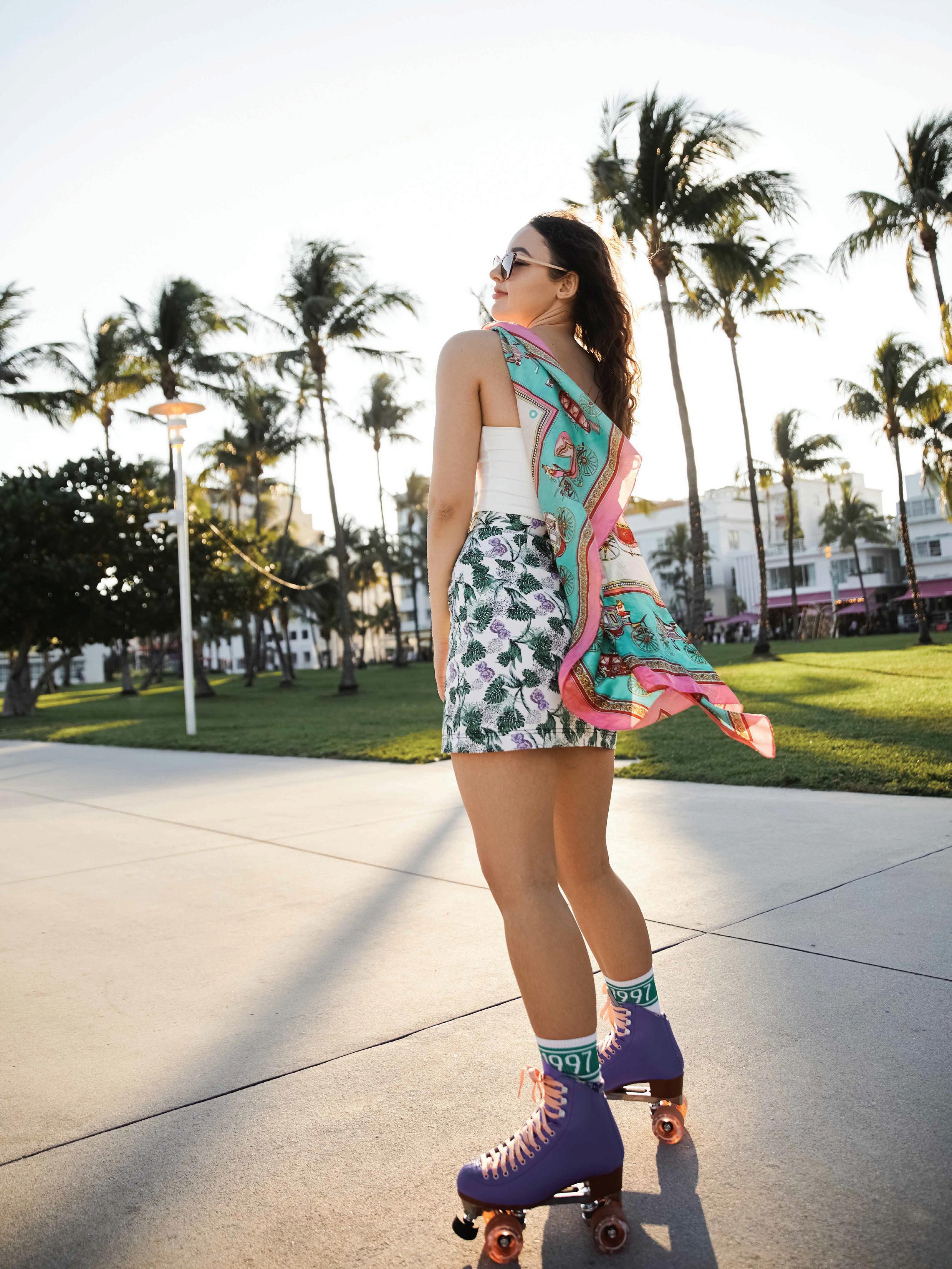

Founder and President
Dora L. International
By Dora Lau
I recently had the incredible opportunity to visit the World’s Fair in Japan. The 2025 World Expo, held on the man-made island of Yumeshima in Osaka, Kansai, is an exploration of the theme “Designing Future Society for Our Lives.” Walking through exhibits featuring over 150 countries, I was struck by the focus on saving, empowering and connecting lives through innovation. What inspired me most was the visionary use of plant-based materials, from algaebased textiles to materials crafted from banana peels, and the groundbreaking ways 3D printing is being utilized to solve complex design challenges.
This spirit of innovation is exactly what the intimate apparel industry needs as we enter a new era. We are currently experiencing a revolution where technology is surpassing advancements made in the last 20 years, shifting the focus from a purely “sexy” aesthetic to one centered on the wearer’s authentic needs and well-being.
In this new landscape, fabric drives function. We are moving beyond standard materials to embrace biobased synthetic fibers and collagen-infused materials, like Umorfil, which is derived from fish scales to be gentle on the skin and fully biodegradable. These next-gen materials offer a “second-skin” feel while also providing active benefits such as cooling sensations, odor resistance and antibacterial properties.
Technology should be used as a catalyst to drive sales by solving real-world problems. For instance, injection gel technology and silicone printing are replacing traditional, restrictive underwires and heavy elastics. By applying different patterns and densities of silicone, we can create targeted support and “zoned” control that adapts to the body’s movement. This allows us to create bras that are as functional as they are beautiful, meeting the needs of a wearer who may be on her feet for a 20-hour shift.
One of our most significant opportunities lies in serving the Baby Boomer generation. This market is often underserved, yet these women are active and social, and they refuse to be defined by their age. They know quality, they value longevity and they want the
support that traditional intimate apparel often fails to provide comfortably.
For this demographic, innovation is non-negotiable. They are looking for solutions to specific life stages, such as wire-free bras made from cooling fabrics to counter the discomfort of hot flashes during menopause. They need intimates that can multitask— providing the lift of a traditional bra for a dinner party while offering the moisture-wicking performance needed for a morning of pickleball.
As we become more specialized, we must focus on categories that require precise engineering. Maternity and nursing wear is a prime example of where specialized design meets critical health needs. For example, experts like Amanda Hunt, founder and CEO of Davin & Adley, emphasize that a bra must truly meet the needs of the wearer and the occasion. In maternity, this means eliminating underwires that can pressure milk ducts and instead using stretchy, supportive fabrics and adjustable straps to accommodate the two or three cup-size fluctuations a woman might experience in a single day.
However, innovation alone isn’t enough. We must take an active role in educating our customers. Retailers and brands need to explain why a gelprinted wing provides better smoothing or how a 3D-printed material offers superior recovery. When consumers understand the features and benefits of these advanced products, they can fully appreciate the enhanced performance and comfort they offer.
Today’s consumer is mindful and empowered. In an economy where price sensitivity is high, price may get the sale, but innovation keeps the customer. We are using tools like 3D virtual sampling to reduce waste and speed up development, ensuring we can deliver high-quality, sustainable products at an accessible price point.
The future of lingerie is about striking the perfect balance between comfort and support, style and affordability.


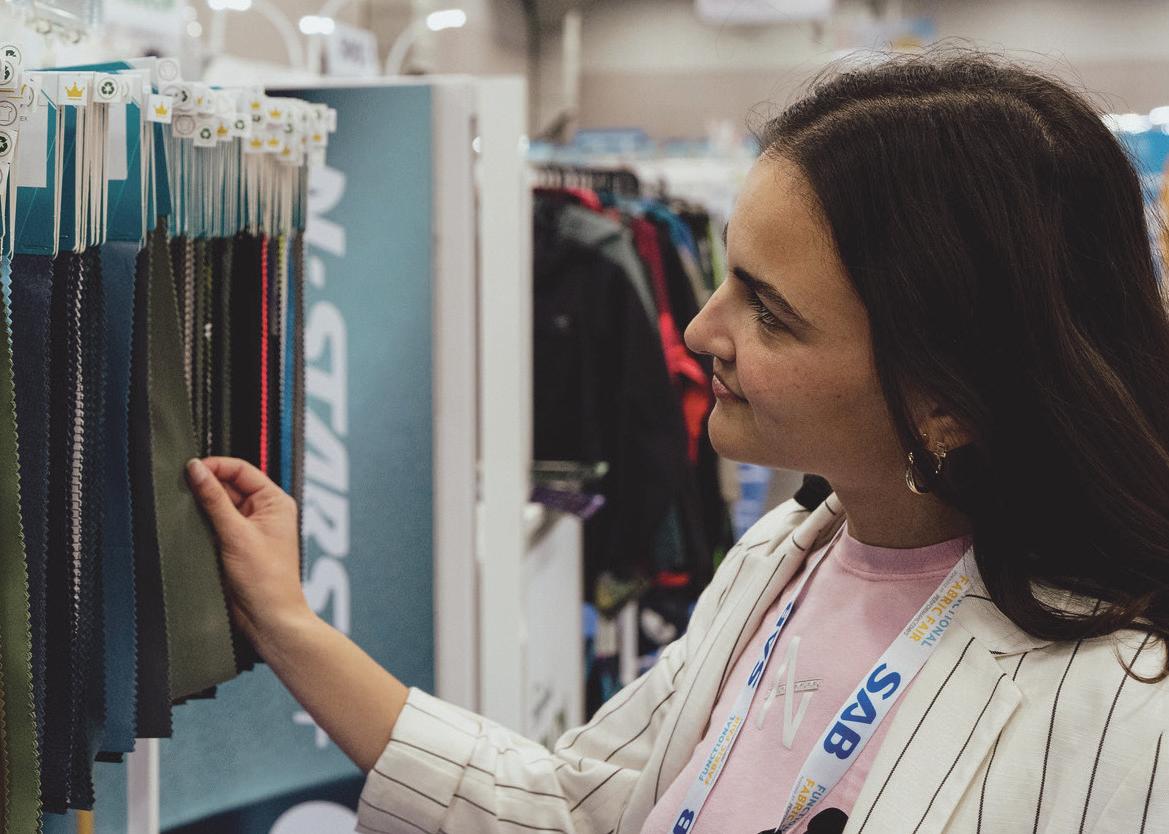

INNOVATION WITHOUT LIMITS. A COMMUNITY MOVING TEXTILES FORWARD—TOGETHER.
Discover what’s next in performance textiles at Functional Fabric Fair. Join us for a curated sourcing event connecting you with top suppliers, industry leaders, and brands driving the future of activewear, outdoor gear, and performance fashion.
Trend Forum


Innovation Zone
Expert Talks
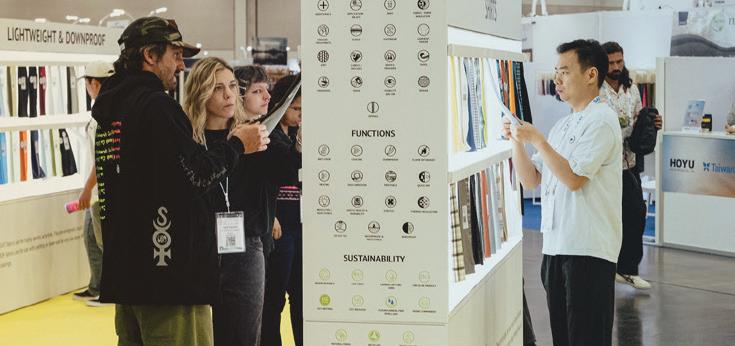

Explore 12 essential fabric categories curated by a jury of textile experts, and experience the season’s most innovative materials—up close and firsthand.

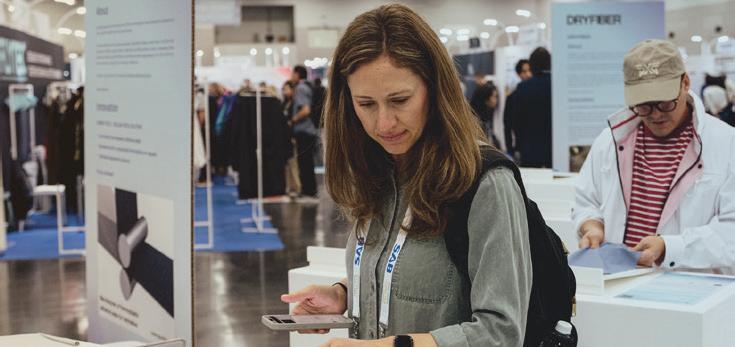
Discover cutting-edge products before they launch and get an exclusive first look at breakthrough materials and technologies shaping the future of performance textiles.

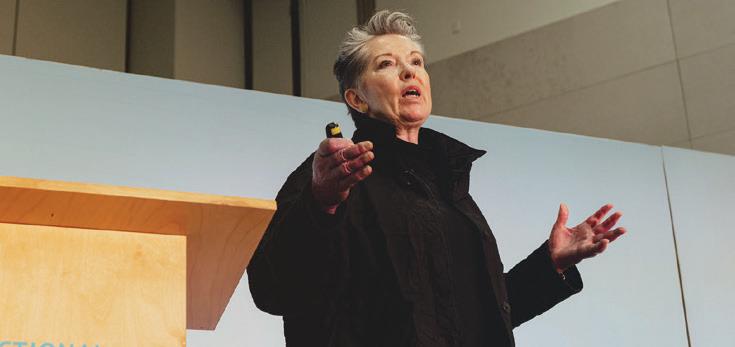

Engage with industry leaders through dynamic sessions that spotlight the latest trends, innovations, and sustainability practices driving outdoor and active textile design.
LEARN MORE AT



1. & Other Stories: Mohair-Blend Jumper in Light Blue
This long-sleeve jumper is knitted from a soft wool-mohair blend and cut in a slim silhouette. A classic round neckline, ribbed trims and subtle cuff slits keep the design clean yet effortless.
$ 119 | stories.com
2. Katharina Lou: Ollyrose Dress in Blue Plaid
Crafted from 100% cotton, this midi dress features eight curved panels that contour the body through the bust and waist. A racerback neckline and a center-back zip keep the silhouette clean and structured, while the pastel plaid adds a soft, feminine finish.
$240 | katharinalou.com
3. Lilysilk: Oversized Double-Faced Silk-Wool Coat in Oat



This Balmacaan coat is crafted from silk and wool, creating a blend that offers natural warmth, softness and a subtle luster. A relaxed silhouette with wide shoulders and clean, minimalist lines feels laid-back yet sophisticated, while the oversized construction allows for easy layering.
$699 | lilysilk.com
4. Aest Studios: Capture Medium Sling Bag in Moss Green Suede
Inspired by the classic camera bag silhouette and crafted from 100% calf leather, this elevated sling bag balances polish and ease. Thoughtful interior compartments, side pockets and a dual-zip closure combine clean design with daily functionality, making it versatile for both daily commuting and casual nights out.
$226 | aeststudios.com
5. Aesop: Eleos Aromatique Hand Balm





This hand balm is enriched with botanical butters to deeply nourish dry skin. Its conditioning formula absorbs quickly without leaving a greasy residue, leaving hands soft and hydrated. A subtly herbaceous, woody and spicy aroma adds a calming finish.
$35 | aesop.com
6. Miista: Inne Boots in Light Blue Brush Off Leather


Inspired by motor-racing styles, these fitted mid-calf boots are crafted from brushed-off leather and shaped with a rounded square, an oversized sole and a 6-centimeter stacked heel. An inside zip, a discreet elastic panel and a cushioned memory-foam insole balance the bold design with everyday comfort.

$390 | miista.com 1 2 3 4 6 5
















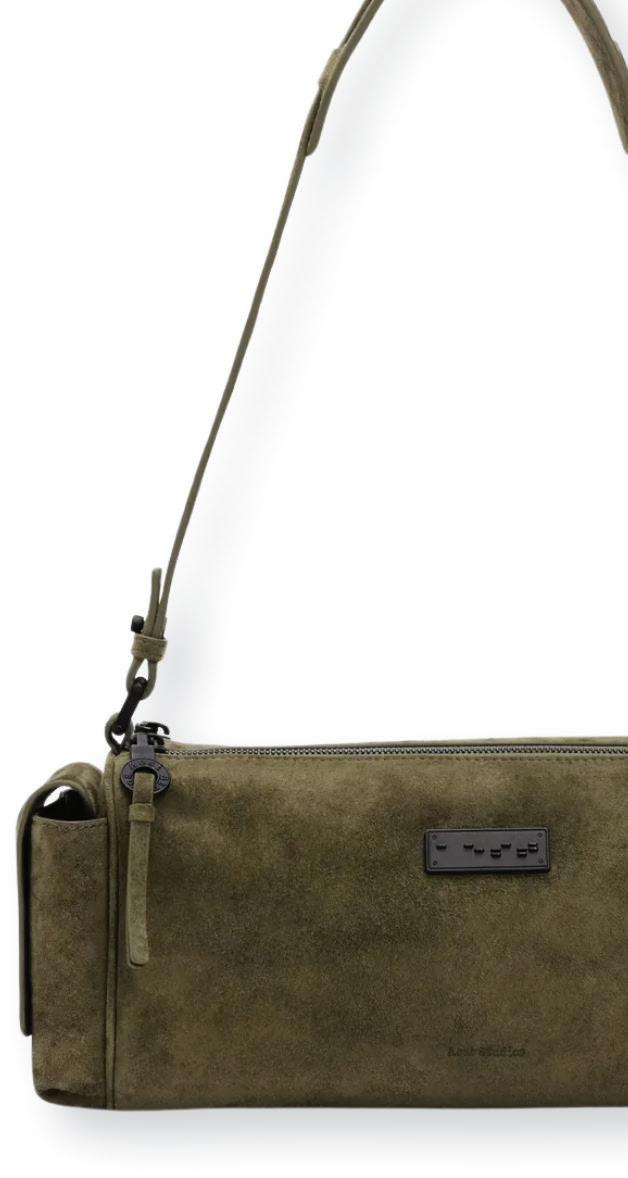






















Desigual unveiled its first collaboration with Masha Popova, a Ukrainian designer based in London. The collaboration is part of the brand’s strategy to strengthen its international positioning and connect with new audiences through creative voices with a strong, contemporary identity.
The collection is born from a creative dialogue between the Desigual archive and Popova’s aesthetic universe. Through in-depth research into the brand’s historical codes, Popova identifies elements that naturally resonate with her own visual language and translates them into a new expression: true to Desigual’s roots but reinterpreted from a rawer, more sensual and rebellious perspective.
The proposal transforms Desigual’s signature bohemian energy into a more assertive and contemporary narrative. It’s a collection where craftsmanship and texture combine with a direct attitude, exploring the balance between softness and character, tradition and provocation. The result is a new vision of the brand’s DNA, evolved from rebellion.
One of the collection’s central codes is the double waistband, a recurring element in Desigual’s archives and a key construction in Masha Popova’s work. From this shared point, an exclusive interpretation of the collaboration emerges: layered waistbands, ultralow silhouettes that reveal higher inner layers, open and peeling effects integrated into the garments’ construction, and ties and side slits that expose the interior.

The bohemian world of scarves and fringe also plays a key role. Drawing inspiration from Desigual’s hippie and artisanal heritage, Popova reinterprets these codes from a more rebellious and slightly grunge perspective. Fringe is crafted using braiding and weaving techniques and integrated as a functional and utilitarian detail. Scarves transcend their decorative role to become a structural part of the garments, appearing on bags or as scarf-like front panels on jackets.
Denim becomes the common thread throughout the collection. Treated as a living material, it is explored through manipulation, aging and bleaching, as well as through layered constructions that reinforce a tactile, organic aesthetic. These developments are complemented by suede fringes inspired by vintage scarves, featured on outerwear such as double-breasted jackets with scarf-style fronts.
The pieces convey a strong sense of handcrafted work and authenticity. Lived surfaces, imperfect textures and visible constructions reinforce an aesthetic that celebrates the process and the artisanal gesture.
The collection is structured around a clear idea: to translate Desigual’s bohemian and eclectic roots into a harder, more sensual and contemporary look, where soft energy coexists with subtly utilitarian structures.
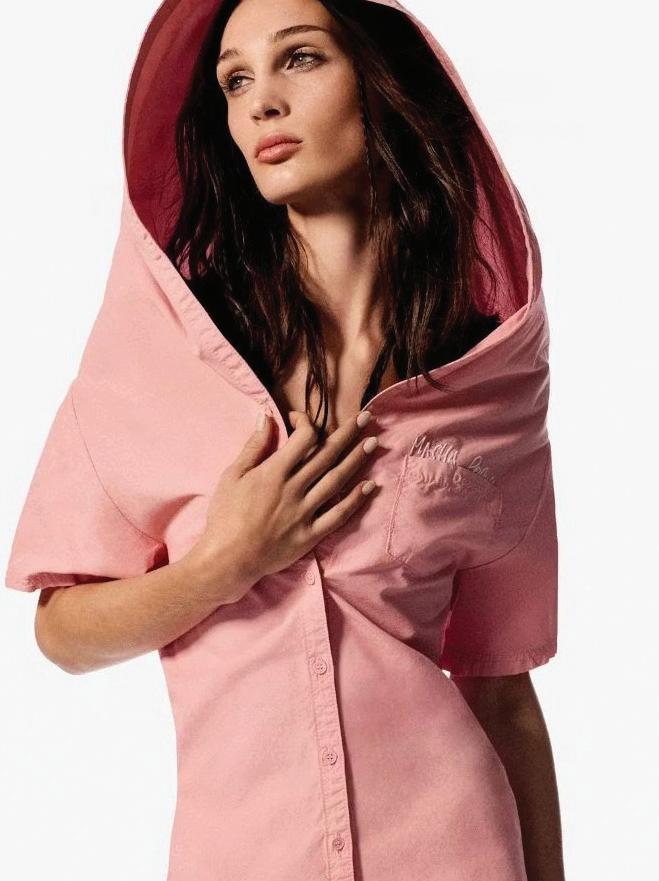



By Merilee Kern, MBA
Long before winter boots became a fashion category, mukluks were a necessity. Designed more than 10,000 years ago by Indigenous peoples to endure the coldest climates on Earth, they blended form, function and deep respect for the land. Manitobah carries that lineage forward not as a nostalgic reference but as a living, evolving practice that connects heritage craftsmanship with modern design, ethical sourcing and measurable social impact.



Founded in 1997 in Winnipeg, Manitoba, by Métis entrepreneur Sean McCormick, Manitobah began as a way to create economic opportunity while honoring Indigenous knowledge. McCormick grew up in northern Manitoba and started selling leather and fur while still in high school. In 1990, he opened a trading post where Indigenous artisans exchanged handmade mukluks and moccasins for tanned leather, skins and furs. He saw not only extraordinary craftsmanship but also unmet global demand for authentic Indigenous footwear. After completing the Manitoba Indigenous Youth Entrepreneurship Program, McCormick built the framework for what would become Manitobah, a global brand rooted in community.
(BCI)-certified cotton to support reduced water use, healthier soils and fair labor practices.


Beyond materials, Manitobah is committed to protecting people and the planet through rigorous safety standards. Every material is screened under a strict restricted substances list, meeting requirements such as California Proposition 65 and avoiding harmful chemicals like PFOS and PFCs. Manufacturing partners undergo third-party audits to ensure safe working conditions, fair wages, gender equity and the prohibition of child and forced labor. Manitobah’s primary manufacturing partner is partly Indigenous-owned and family-run, with over 30 years of footwear experience. The relationship between the Canadian and Vietnamese teams is built on trust, respect and shared values, reflected in every stitch.


Today, Manitobah operates worldwide while maintaining a deep connection to Indigenous culture and values. In 2023, the brand became a certified B Corporation, reflecting verified standards of environmental responsibility, accountability and transparency across its operations. Yet at its core, Manitobah still focuses on what it has always done best: creating footwear that honors tradition while meeting modern needs.
Materials matter deeply at Manitobah, not just for performance but for principle. Leather and fur are sourced as by-products of the food industry, reducing waste and honoring the full life of the animal, in keeping with Indigenous teachings. All leather comes from Leather Working Group (LWG) gold-certified tanneries, and water-based aniline dyes are used to meet strict environmental standards. Real fur is valued for its natural warmth, durability and biodegradability, while shearling is sourced exclusively from certified mulesingfree farms. The brand also uses Better Cotton Initiative


Central to Manitobah’s mission is its Indigenous market, a living platform for authentic Indigenous artistry. One hundred percent of profits from Indigenous market sales go directly to the artists. In the last year alone, more than $271,900 was returned to creators, with over $1.3 million distributed to date. Artists receive not only fair compensation but also mentorship, marketing support and opportunities to grow independent businesses. Programs like the Storyboot School further extend this commitment, offering free education to Indigenous youth and ensuring traditional skills are passed on to the next generation.

Manitobah’s impact goes beyond products. Through its artist ecosystem, the brand supports Indigenous creatives at every stage, from education and trade to mastery and leadership. This circular model fosters entrepreneurship, cultural preservation and community resilience, proving that tradition and innovation are not opposing forces but partners.
In every pair of mukluks and moccasins, Manitobah demonstrates what it means to build with purpose. Indigenous-designed, ethically made and deeply connected to community, the brand stands as a powerful example of how heritage, sustainability and modern craftsmanship can move forward together, one meaningful step at a time.



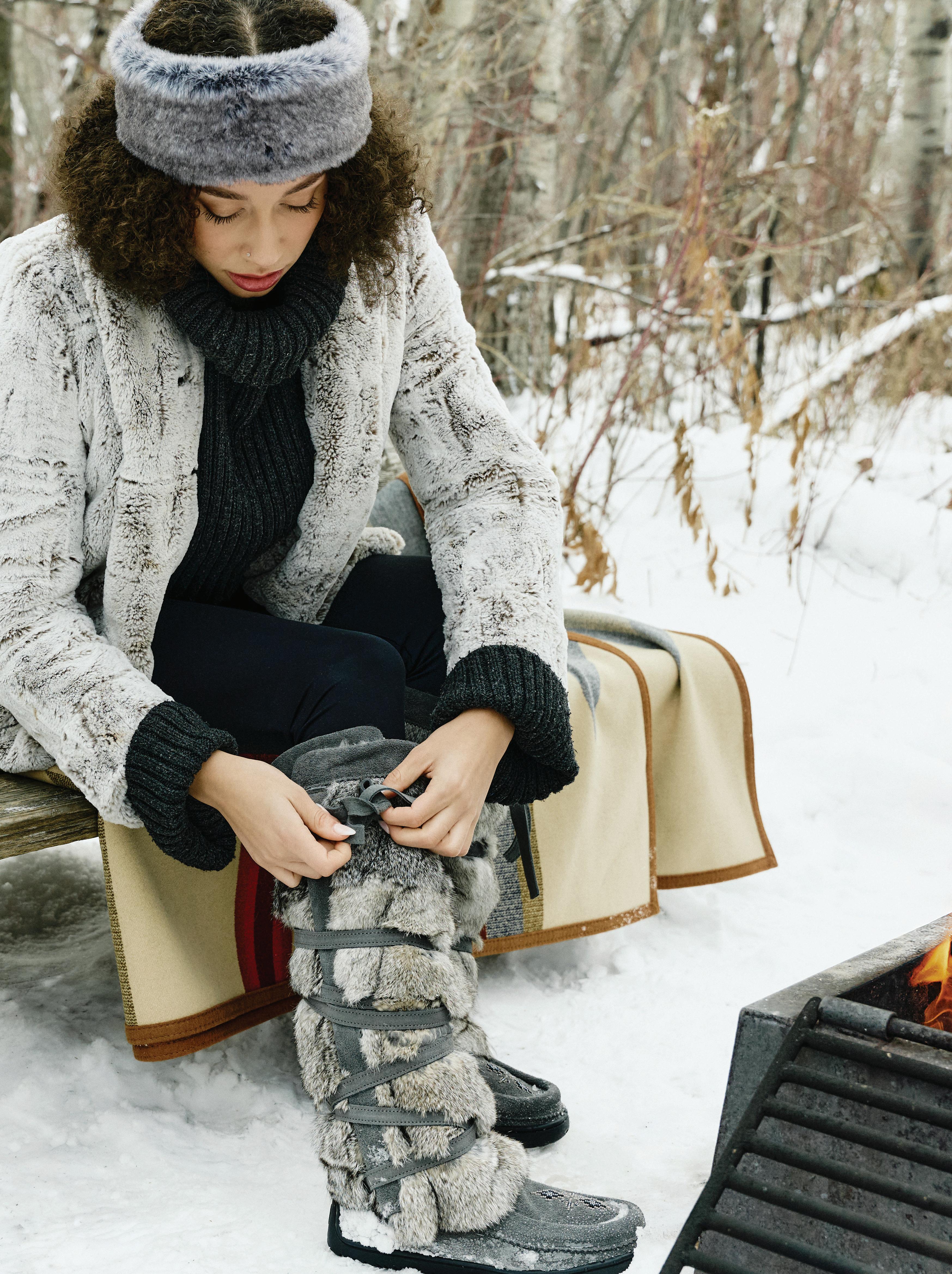







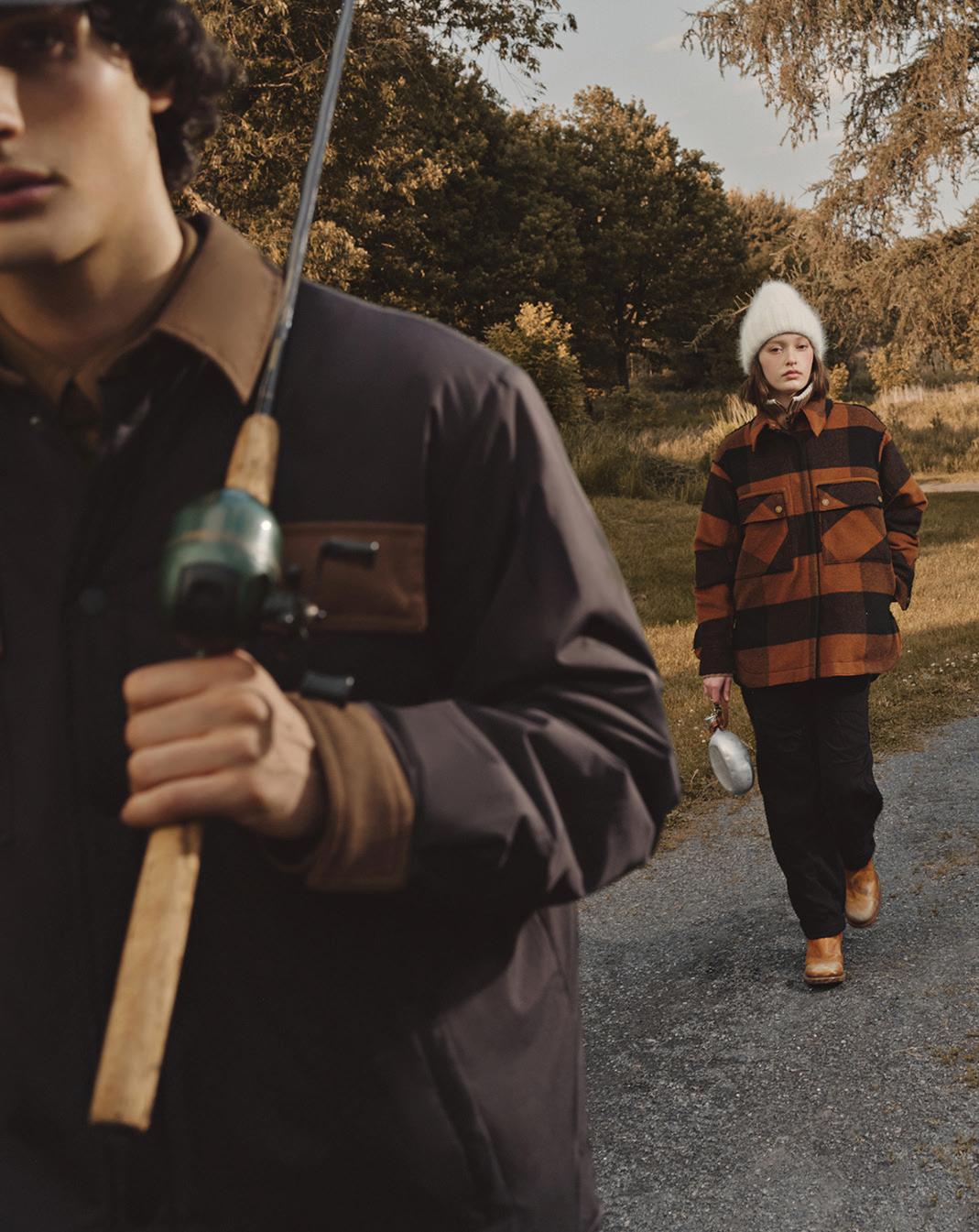
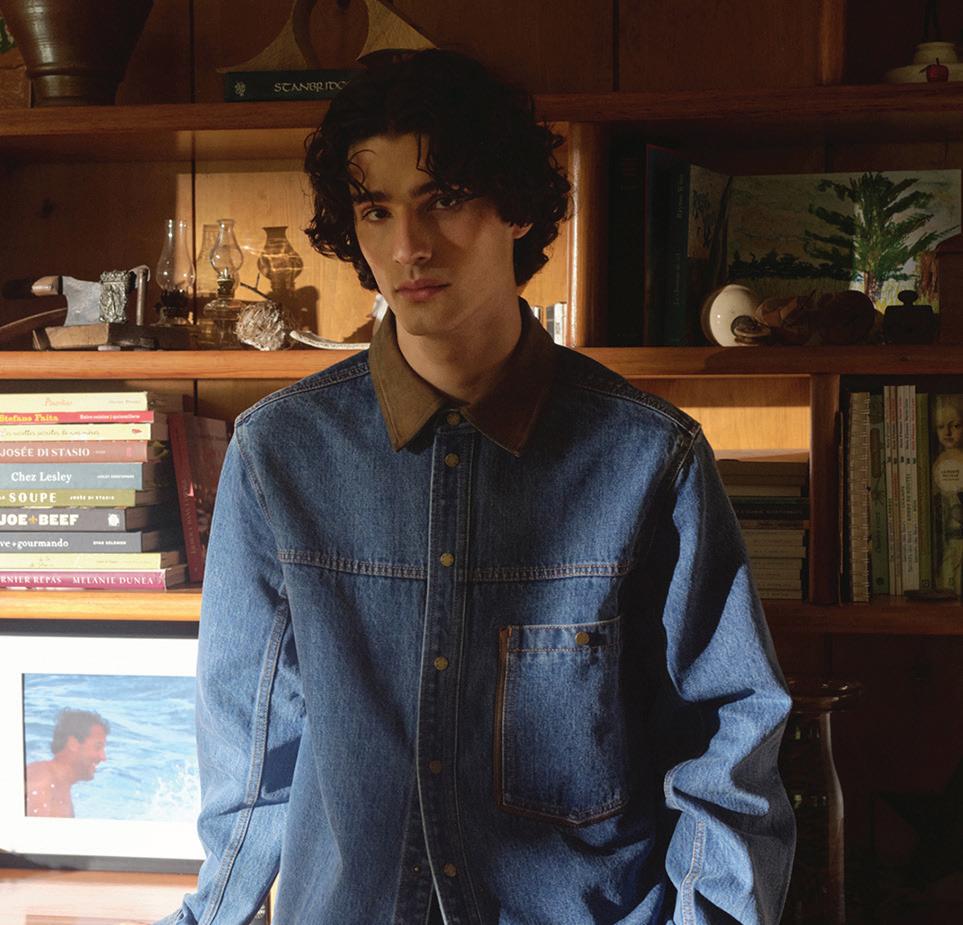
Since 1974, Kanuk has stood as a symbol of Canadian resilience, craftsmanship and everyday elegance. What began as a premier outerwear brand is now evolving into something far greater: a heritage lifestyle brand rooted in modern country living.
Founded in a small workshop in Montreal, Kanuk earned its reputation by doing one thing exceptionally well: creating coats. The brand’s expertly crafted and intentionally designed parkas were built to withstand Quebec’s distinct climate. Over time, the coats became more than winter staples; they became part of daily life.
Today, Kanuk is expanding beyond its iconic roots into a complete lifestyle brand. The shift feels less like a reinvention and more like a natural progression. The new heritage collection features insulated layers, transitional knits,

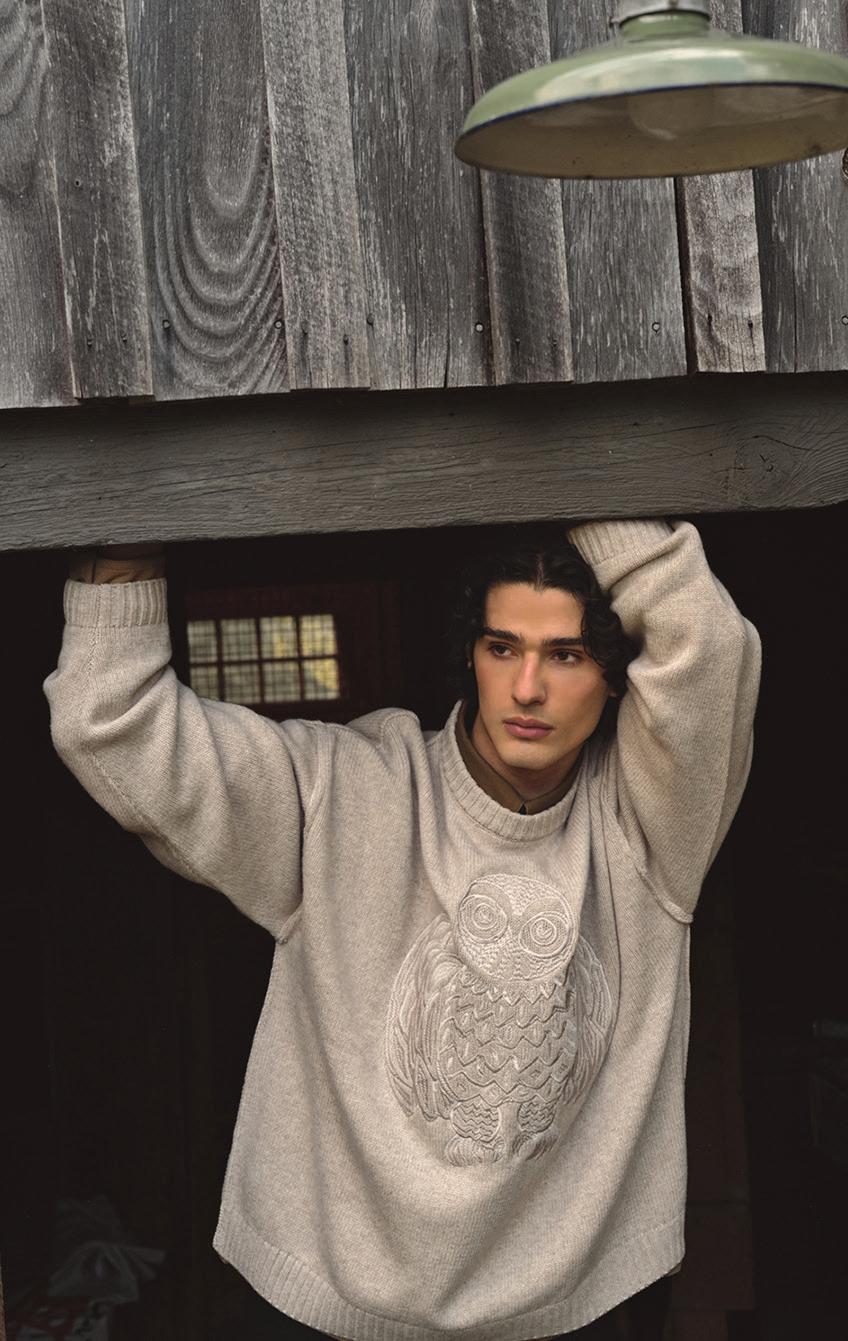

denim separates, lightweight shackets and stylish accessories—pieces that are shaped by the seasons and informed by everyday life in Quebec.
The collection reflects the complexity of Canadian life: harsh winters, fleeting springs, humid summers and crisp falls. It brings that seasonal sensibility into a versatile wardrobe designed to move effortlessly throughout the year.
As always, durability and timeless design remain central to the brand, with pieces designed to transcend generations. In a fashion cycle that rarely slows down, Kanuk is a great representation of the power that lies within longevity, intentionality and emotional connection.
For more than five decades, Kanuk has remained true to its heritage while continually evolving, not just braving the elements but embracing them.



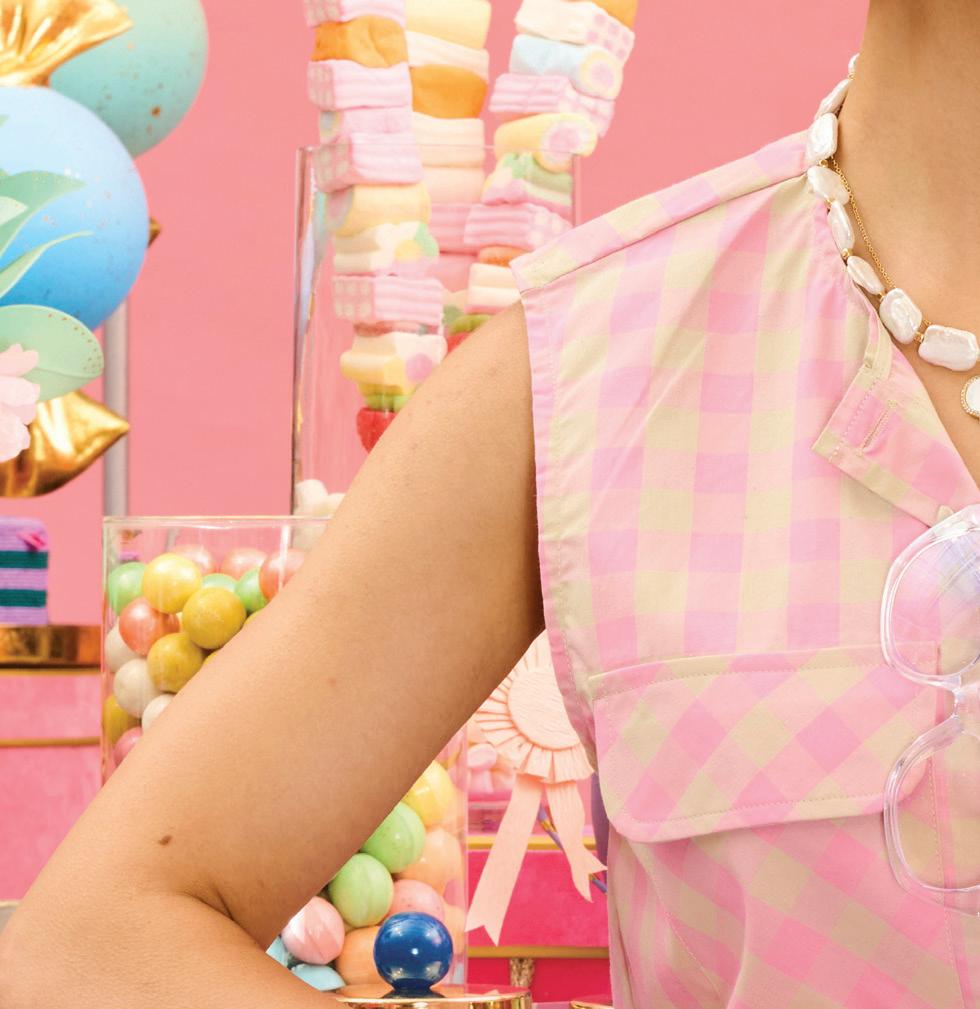

Dallas brings two markets together for an unmatched buying opportunity. TWO MARKETS. ONE VISIT.
Apparel & Accessories
Market + Dallas Gift & Home Market

MARCH 24 - 27, 2026




EXCLUSIVE DETAILS FOR SHOWS IN:
• Dallas
• Denver
• Las Vegas
• Los Angeles
• Nashville
• Orlando
• New York

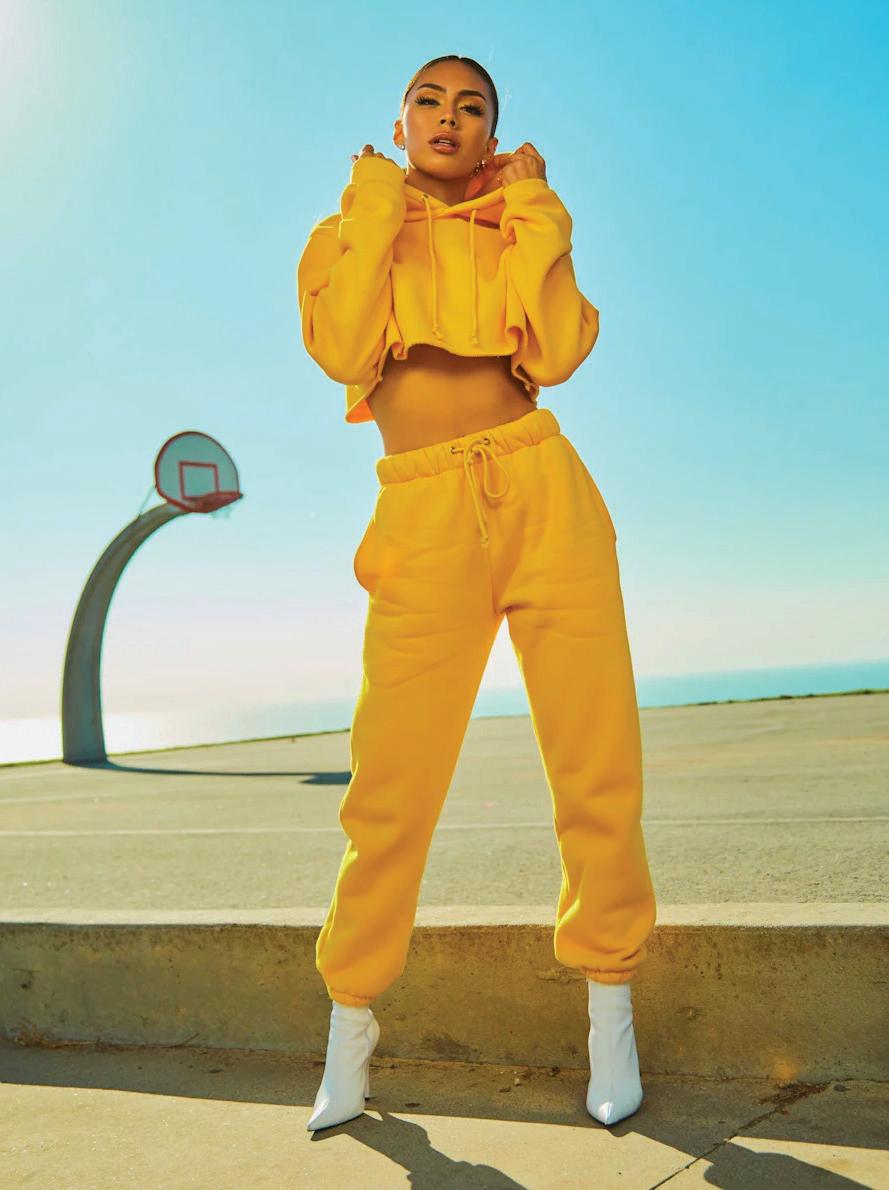
CONNECTING THE FASHION INDUSTRY WITH THE WORLD OF TRADESHOWS
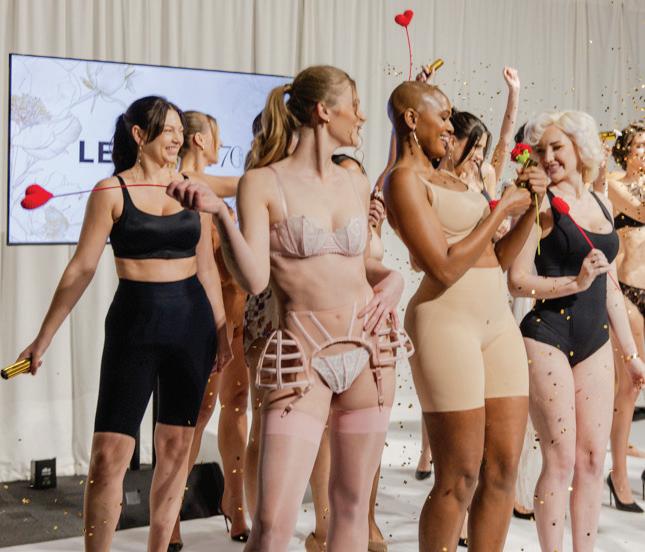
Curve New York transformed the Javits Center River Pavilion into a dynamic hub for lingerie, swim, athleisure and accessories. Bringing together more than 125 international brands, the show served as the official launchpad for Fall/Winter 2026 collections, offering buyers and media a first look at the trends set to define the upcoming season.
This February marked a notable evolution for Curve. Moving beyond a traditional trade show model, the event embraced a more immersive, content-driven format designed to spark conversation, encourage discovery and strengthen industry connections. For the first time, live podcast recordings took place on-site, featuring founders, buyers, stylists, educators and trend forecasters discussing innovation, inclusivity, retail strategy and the shifting landscape of intimate apparel.
Industry anchor brands, including Anita, Aubade, Chantelle, Hanky Panky, Leonisa, Elomi, Louisa Bracq, Simone Pérèle, Lise Charmel and Wacoal, returned to showcase their latest collections, joined by more than 20 new exhibitors, such as Arid Blayne, Lisca, Springrose, Lorette, Ihuoma and Somewhere Never. Over three days, buyers met
directly with founders, reviewed line sheets, discovered emerging labels and forged new retail partnerships.
A standout milestone came as Leonisa celebrated its 70th anniversary with a special fashion presentation at Curve. The brand honored seven decades of innovation with an on-site showcase at the Javits Center, complemented by custom cocktails and a presentation of its high-tech, in-house Colombian designs. Rooted in purpose and empowerment, Leonisa continues to set a global standard in shaping expertise and inclusive sizing.
One of the show’s most talked-about moments was the immersive runway presentation, which unfolded directly on the show floor for the first time. Hosted by bra enthusiast and body-positivity advocate Essie Golden, the curated showcase celebrated lingerie designed to be seen—blending bold expression, innovation and inclusivity in the heart of the marketplace.
The runway opened with Wacoal’s modern approach to fit and coverage, followed by MeUndies’ ultrasoft essentials. Lisca delivered
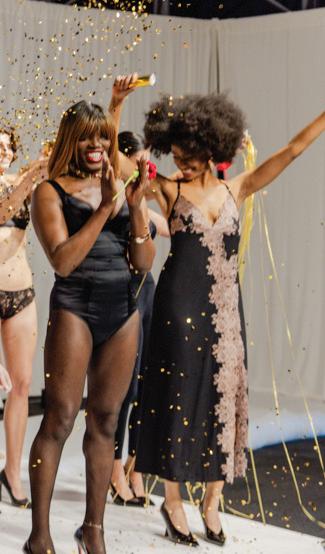
refined statement pieces, while Ihuoma introduced Kaurí, a sensual collection featuring gold and chocolate embroidery on invisible tulle. Effetto debuted Night Bloom with sculptural lace and fluid forms, and Iteration presented everyday intimates co-created with over 1,200 women to address real fit needs.
International brands added further dimension: Cisô Atelier’s Voyager explored lingerie as intimate jewelry, Rolling’s Desfruta balanced sweetness with bold sensuality and Coco de Mer unveiled its jet-black, lace-driven Aphrodite collection. Inclusive innovation took center stage with Figiúra’s implant-based curve engineering, Springrose’s adaptive designs for women with limited mobility and Ms A London’s groundbreaking global sizing system for the transfeminine community. The presentation concluded with Leonisa in an iconic finale honoring 70 years of shaping expertise.
Beyond the runway, Curve delivered robust programming, including buyer speed dating sessions, educational panels and hands-on workshops. Highlights included “The Gen Z Goldmine: How to Profit From the Future of Retail,” “The Rising Emergence of Food and Beauty in Fashion” and “AI Video Marketing for Retailers.”
These discussions underscored Curve’s commitment to supporting retailers with a forward-thinking strategy.
The introduction of live podcast recordings further expanded Curve’s role as a thought leadership platform. On-site episodes covered topics such as the science of fit, the future of lingerie retail, styling lingerie as outerwear, trend forecasting insights from WGSN and the cultural impact of body positivity. These conversations created a dynamic layer of dialogue accessible beyond the show floor.
Another key moment was “The Best of Intima: Best Selling Brands and Styles Awards,” presented in partnership with Intima Media Group. Based on an annual survey of 200 lingerie boutiques across the U.S. and Canada, the awards revealed insights into consumer behavior and 2026 buying directions. Winning brands included Fantasie, Leonisa, Panache, Commando, Chantelle, Mey, Elomi and Anita.
Curve also spotlighted the Accessories Council showcase, presenting a curated edit of jewelry, handbags, footwear and accessories from global brands, reinforcing the growing crossover between intimates and lifestyle categories.
Attendees enjoyed additional experiential elements, including the Curve capsule beauty lounge, which offered daily beauty touch-ups, and curated Valentine’s-themed VIP gift bags featuring premium beauty and lifestyle products.
The February edition also marked the return of Object of Desire for its third installment. The incubator program highlights emerging designers shaping the future of intimate apparel through innovation and inclusive design. Curated in collaboration with Bok Goodall of Ms A London, the atelier-style showcase connected next-generation brands directly with retailers seeking fresh perspectives and modern solutions.
“This February edition reflects how the intimate apparel industry is evolving—and how the trade show experience must evolve with it,” said Raphael Camp, CEO of Comexposium U.S. “Curve is no longer just a marketplace. It’s a platform for education, innovation and community.”
Curve New York once again solidified its position as the most influential trade show in the global intimate apparel industry. As brands and retailers look toward Fall/Winter 2026 and beyond, Curve continues to serve as the definitive platform for connection, creativity and growth.
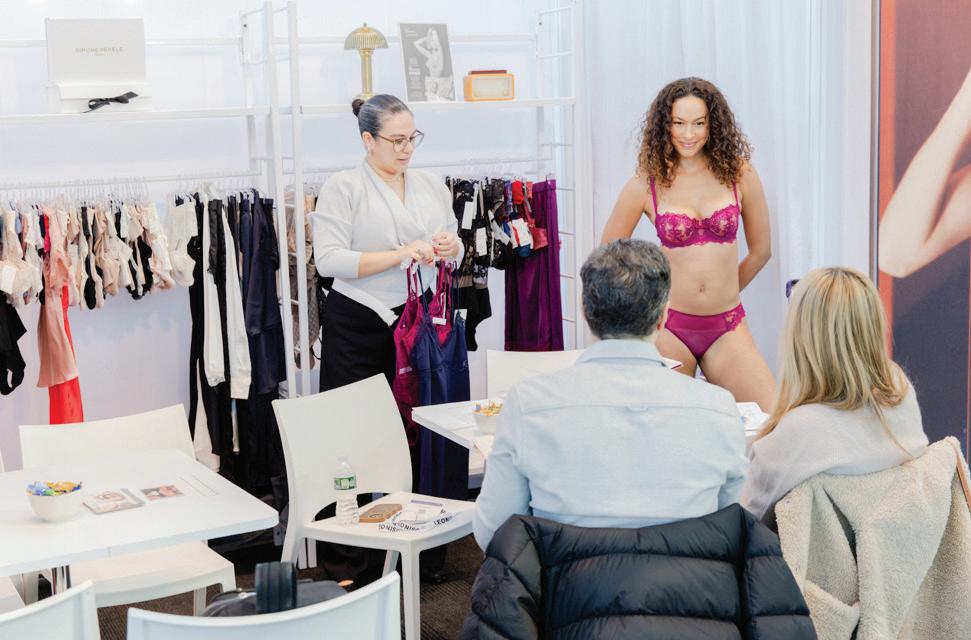
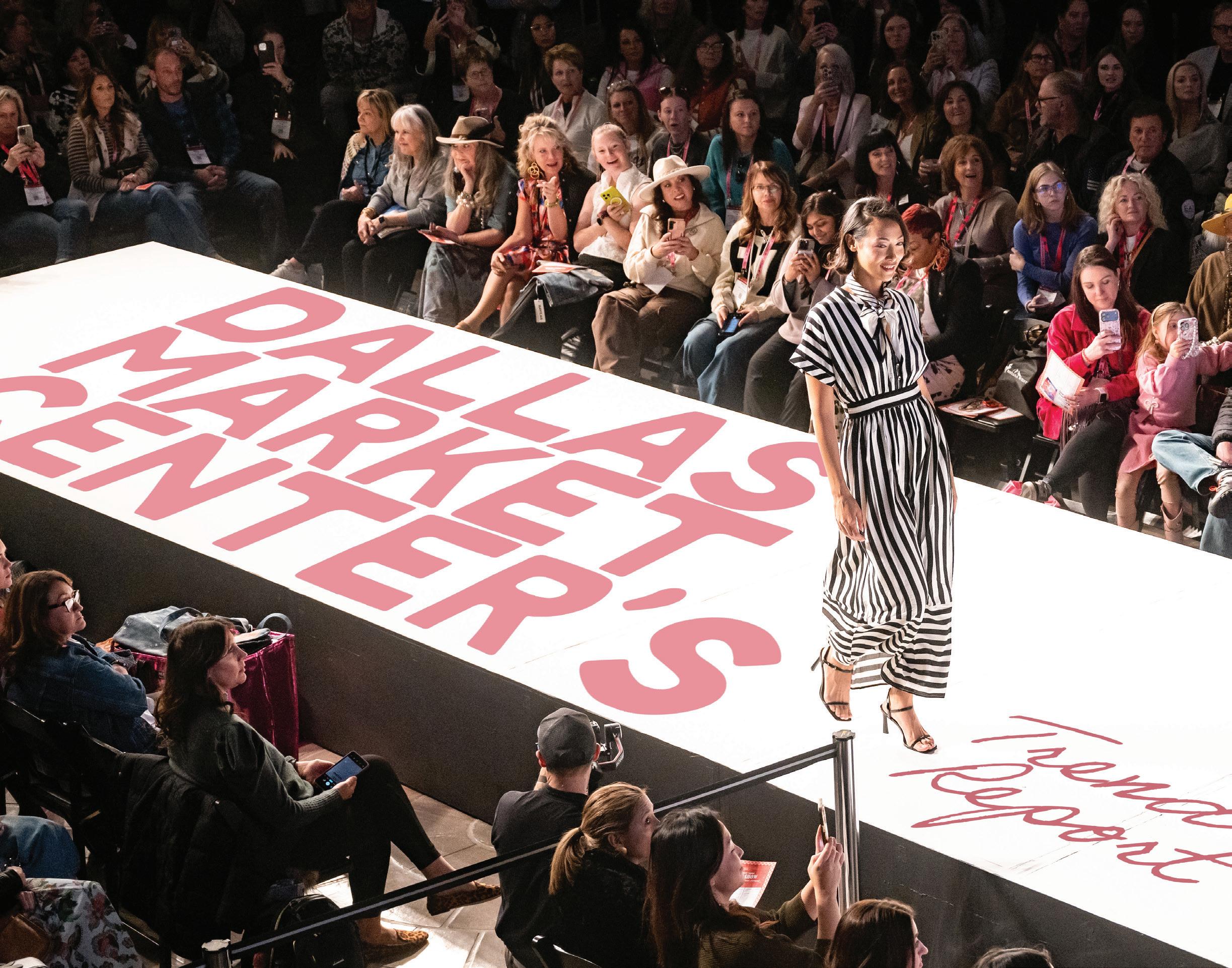
Dallas Market Center’s January contemporary trend fashion show shined a spotlight on new trends defined by contrast and confidence: clean lines meet embellishments, Americana mingles with all-black looks, and structure plays against movement. Spring and summer styles will be about showing personality with bold, statement-making details.
Black and white returns with long lines, crisp tailoring and modern silhouettes. Stripes dominate this trend, proving that monochrome can still command attention. The result is structured, polished and impactful.
Color leads the conversation this season. Bright palettes, mixed prints and bold accessories come together to create expressive and optimistic outfits. Rather than subtle accents, saturated hues and layered patterns create looks designed to stand out.
New styles of denim debut in straight-leg, wide-leg, dresses and skirts, reinforcing its role as a fashion foundation category. Effortless yet elevated, denim appears across silhouettes and styling directions, giving adaptable pieces that transition from day to night and across occasions.
Deep black tones bring a refined edge to Western-inspired influences. Leather accents with strong tailoring and modern silhouettes create contrast against the season’s brighter trends. The aesthetic is rugged and powerful yet polished.
Embellishment returns for a glam look. Sparkle, shine and shimmering details elevate everything from everyday staples to special-occasion pieces. They can be subtle or make a statement, but either way, embellishments













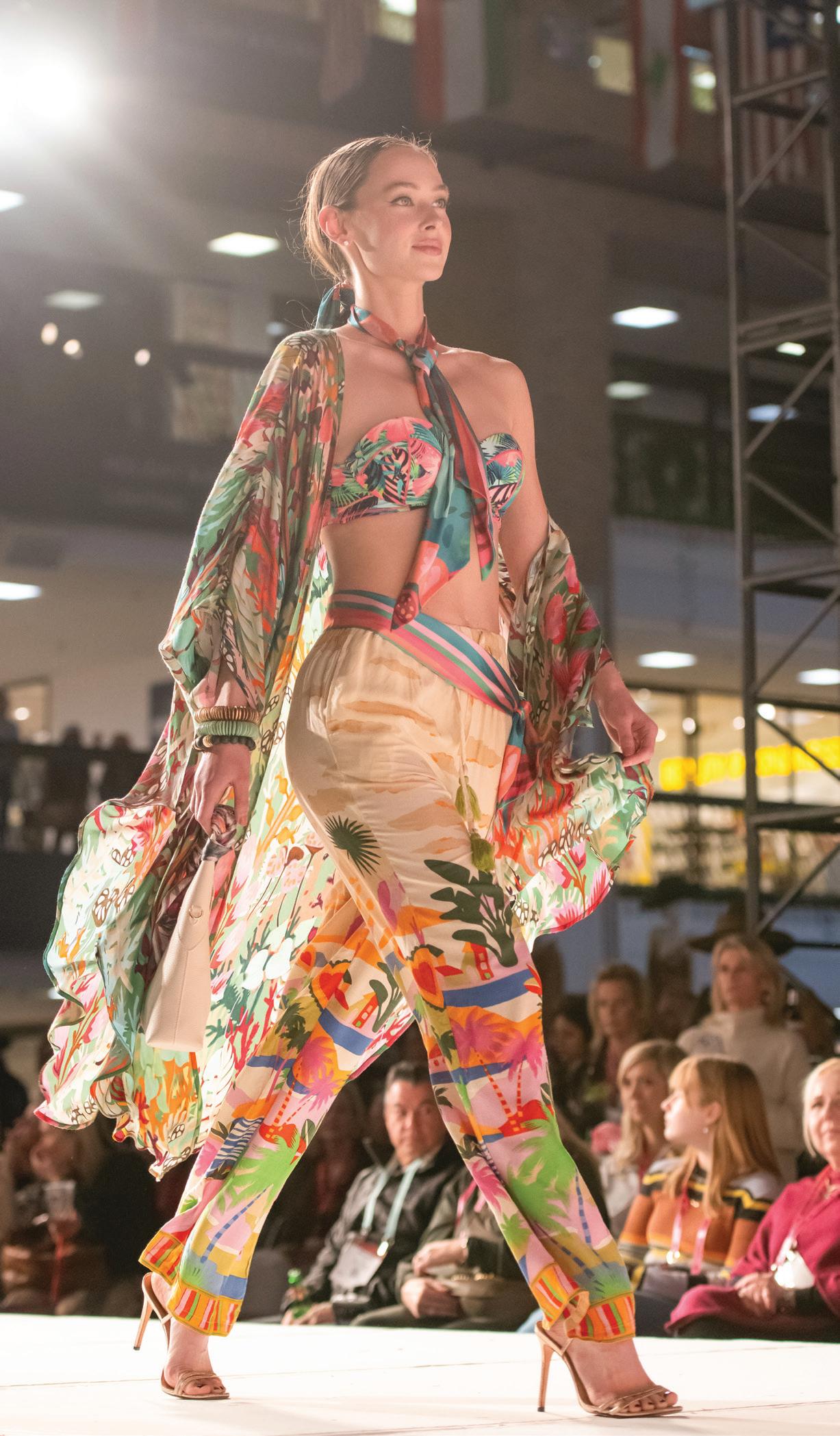






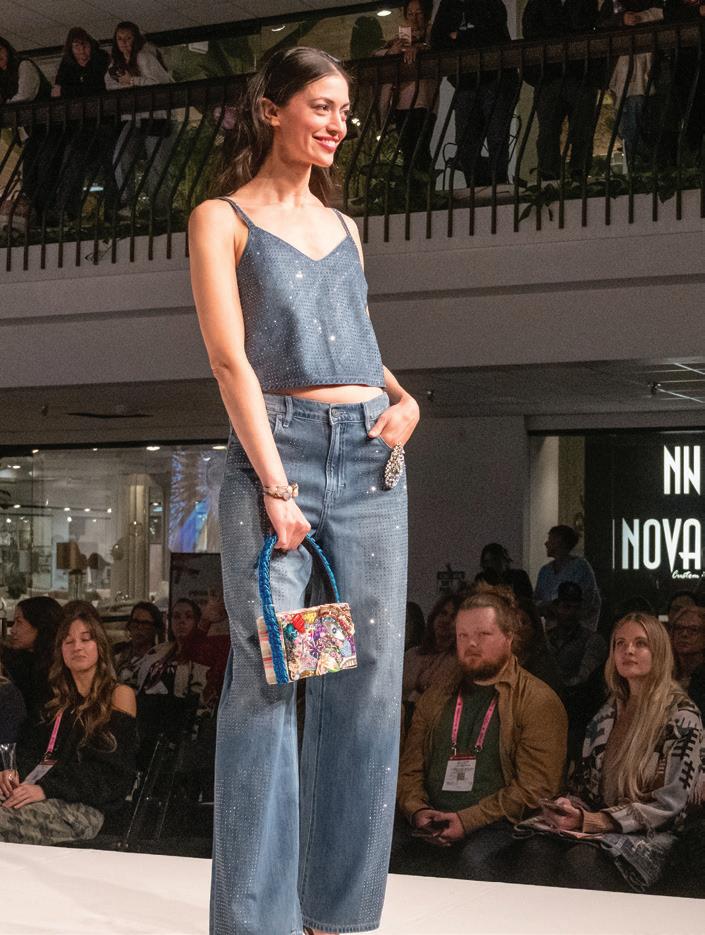





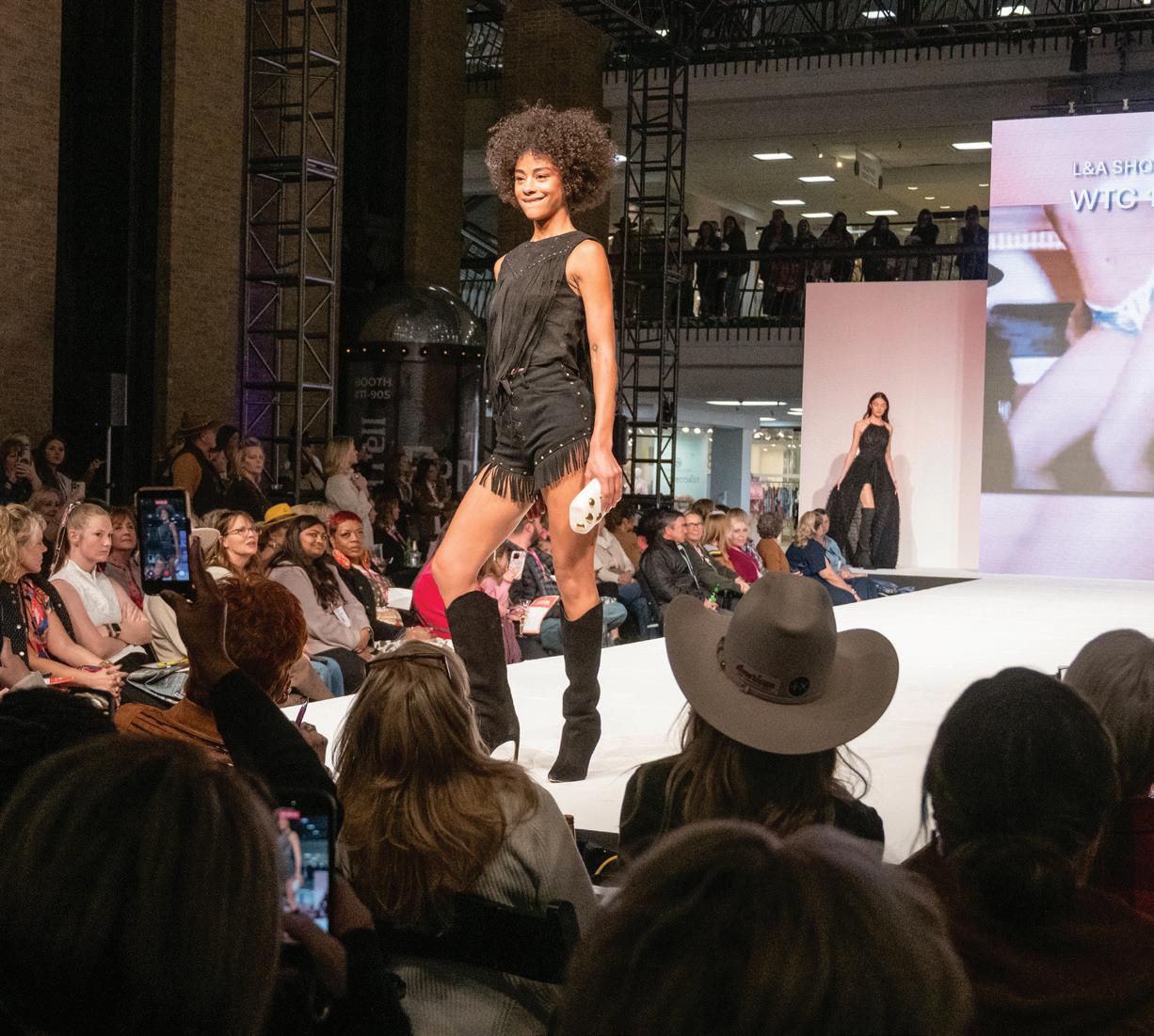



give personality and dimension to even the most basic staples.
In celebration of America’s 250th birthday, red, white and blue emerge as the summer’s defining color story. It can be styled as bold, standout Americana looks or focused on one color heritage-inspired style. The result is patriotic without feeling predictable.
Texture takes the spotlight. Fringe introduces movement and dimension across apparel and accessories, adding visual interest. The result is a fresh style with energy and individuality.
Retailers can bring the trends to life beyond apparel and accessories by layering in coordinating gift and home décor pieces that show the same color story. Merchandising across categories creates a complete lifestyle scene that inspires customers to recreate the full look, not just the outfit.
The February 2026 edition of Las Vegas Apparel (LVA)—co-located with Womenswear in Nevada (WWIN) and The Men’s Edit (TME) at The Expo at World Market Center Las Vegas—concluded four days of robust commerce where a refreshed, high-energy atmosphere allowed boutique owners and major retailers to efficiently secure Spring/ Summer 2026 collections and immediate inventory. This unified West Coast destination fostered steady order writing and product exploration across an expanded range of categories, drawing a global audience of buyers who utilized the reimagined floor layout to maximize their sourcing potential.
From morning welcome moments—music, custom coffee, and complimentary exhibitor and buyer breakfast—to midday touchpoints, including buyers’ and exhibitors’ lunches, brand activations and product demos, the market maintained an energetic pace from open to close. The upbeat environment extended into the evenings, with social gatherings and the market kickoff party drawing strong attendance and creating opportunities for buyers and exhibitors to connect in a relaxed, celebratory setting.
Beyond the transaction of business, Las Vegas Apparel provided a professional backdrop for industry connections and networking. The integration of social spaces, such as “The Social” hub, fostered new connections and strengthened business-to-business relationships in a relaxed environment.
Exhibitor feedback highlighted the importance of these physical touchpoints, noting that the ability to showcase product quality in person remains a critical driver for the wholesale fashion industry.
This season’s programming centered on real-time insights and buyer-led education. A highlight of the week was the boutique hub trend tour, which gave attendees a curated walk-through of the show floor, identifying key items and merchandising strategies for the season ahead. Buyers praised the hands-on, actionable format for helping them make informed buying decisions and spot emerging patterns in silhouettes, fabrication and color.
Experiential activations, including the Bara Boheme permanent bracelet station, Easel’s charm bar and Silver N’ Accessories’ bracelet bar, added interactive elements that encouraged buyers to pause, engage and explore brands more deeply. Sponsored amenities—such as espresso martini and mimosa carts from Timing and Lumiere—kept energy high throughout the week.
“The market was an incredibly successful and energizing experience, offering the perfect environment to discover new brands, forecast emerging trends and build valuable relationships,” said Rosemarie Ursua, senior merchandise manager at Apricot Lane Boutique. “With strong organization and support from the LVA apparel team, I was able to efficiently source women’s apparel, accessories and jewelry that align with the Apricot Lane Boutique model while also uncovering exciting new lines I may not have found otherwise. The opportunity to connect directly with vendors, reps and market partners—and to be thoughtfully introduced to brands that truly fit our customer base—made the experience both productive and inspiring. Las Vegas continues to be a must-attend destination for serious buyers, and it presents a powerful platform for exhibitors looking to connect with engaged retailers who are actively writing business.”
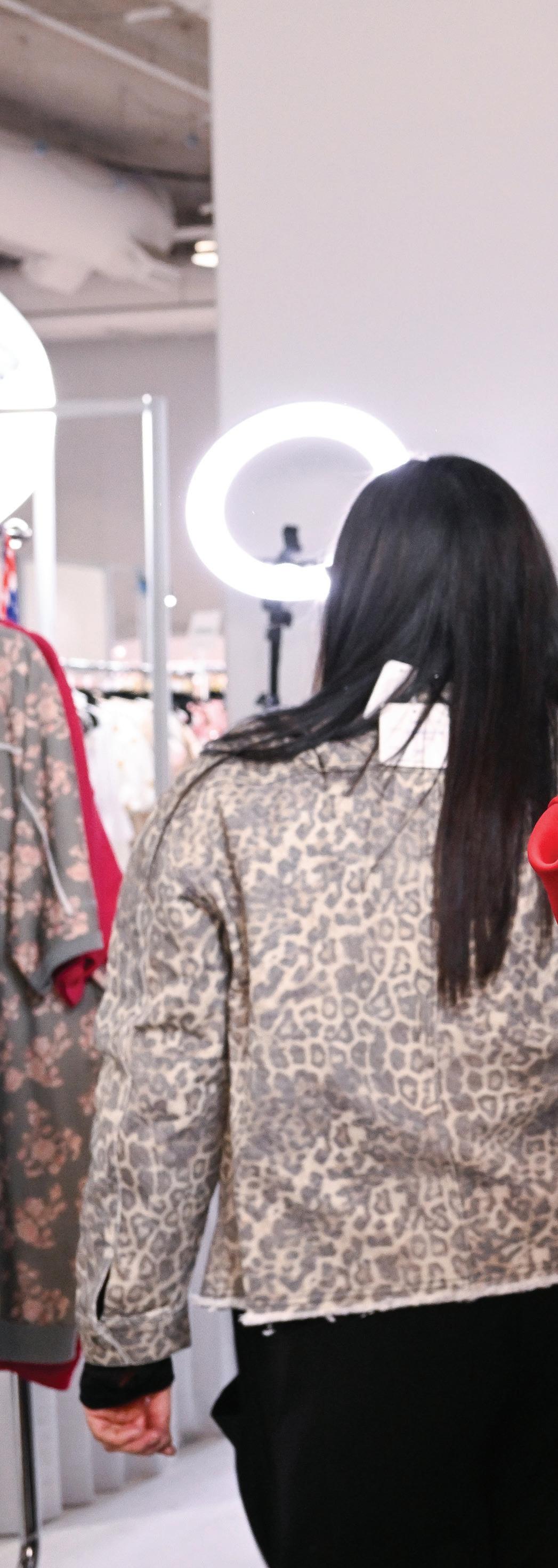
“We have participated in every edition of LVA and witnessed its steady growth into the successful event it is today,” said Albert Chi, president of Spin USA. “The show’s marketing and management places great value on both vendors and buyers, creating a respectful and professional environment. We look forward to returning for the next market.”
Las Vegas Apparel’s new digital partnership with

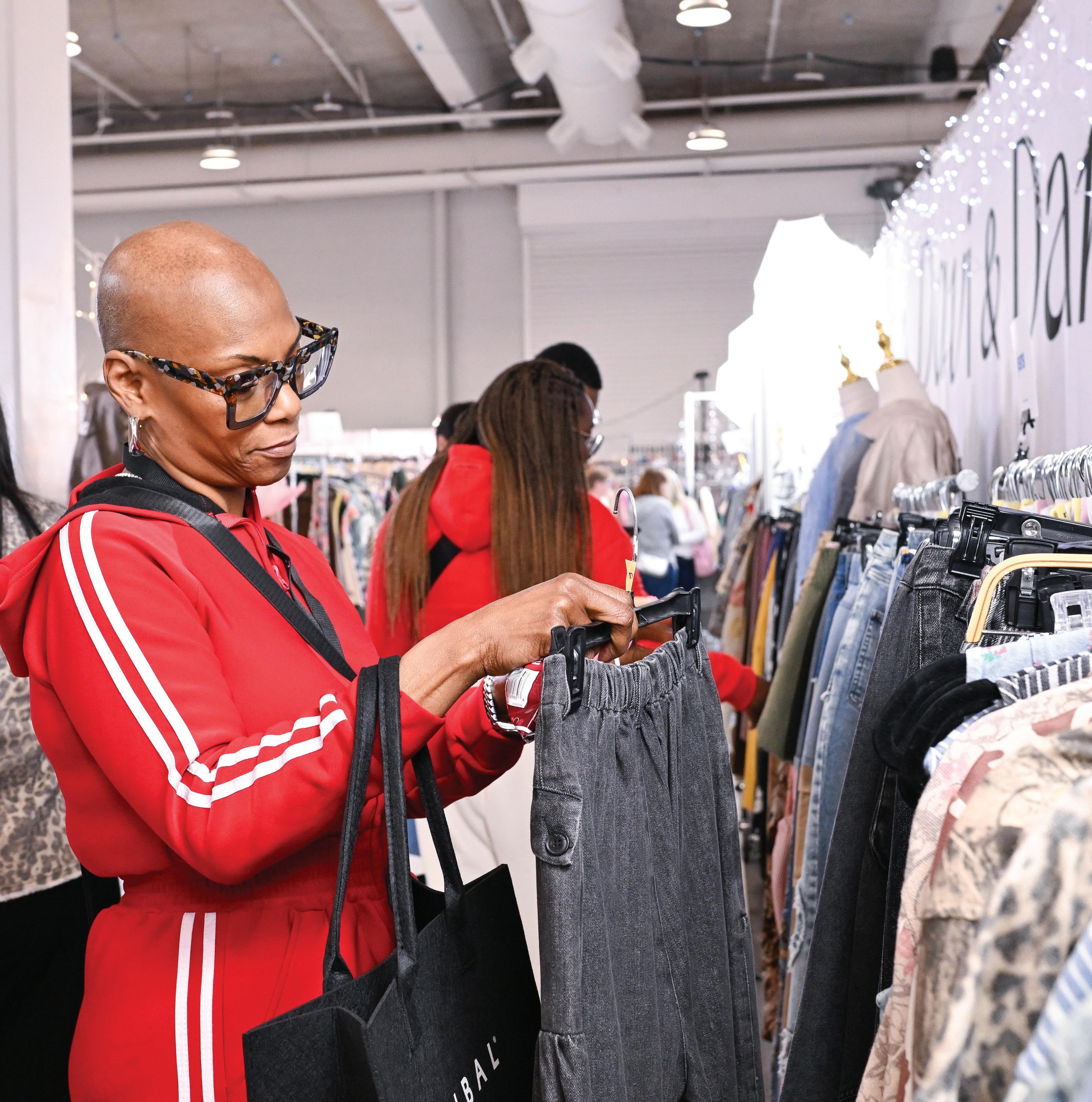
Alison Grooms of Jules and James Boutique brought fresh visibility to the show through real-time Instagram coverage. Grooms’ market finds, trend picks and behind-the-scenes content gave retailers an inside look at mustsee brands and shoppable trends, amplifying the show’s reach and providing buyers with an additional layer of inspiration that extended beyond the show floor.

Building on the momentum of the winter session, Las Vegas Apparel and Womenswear in Nevada continue to evolve as a vital resource for the design and retail communities, setting a promising tone for the duration of the 2026 buying season. Following this successful February edition, Las Vegas Apparel and Womenswear in Nevada are focusing on the upcoming August market cycle to further enhance a comprehensive, buyer-focused Las Vegas Fashion Week experience.
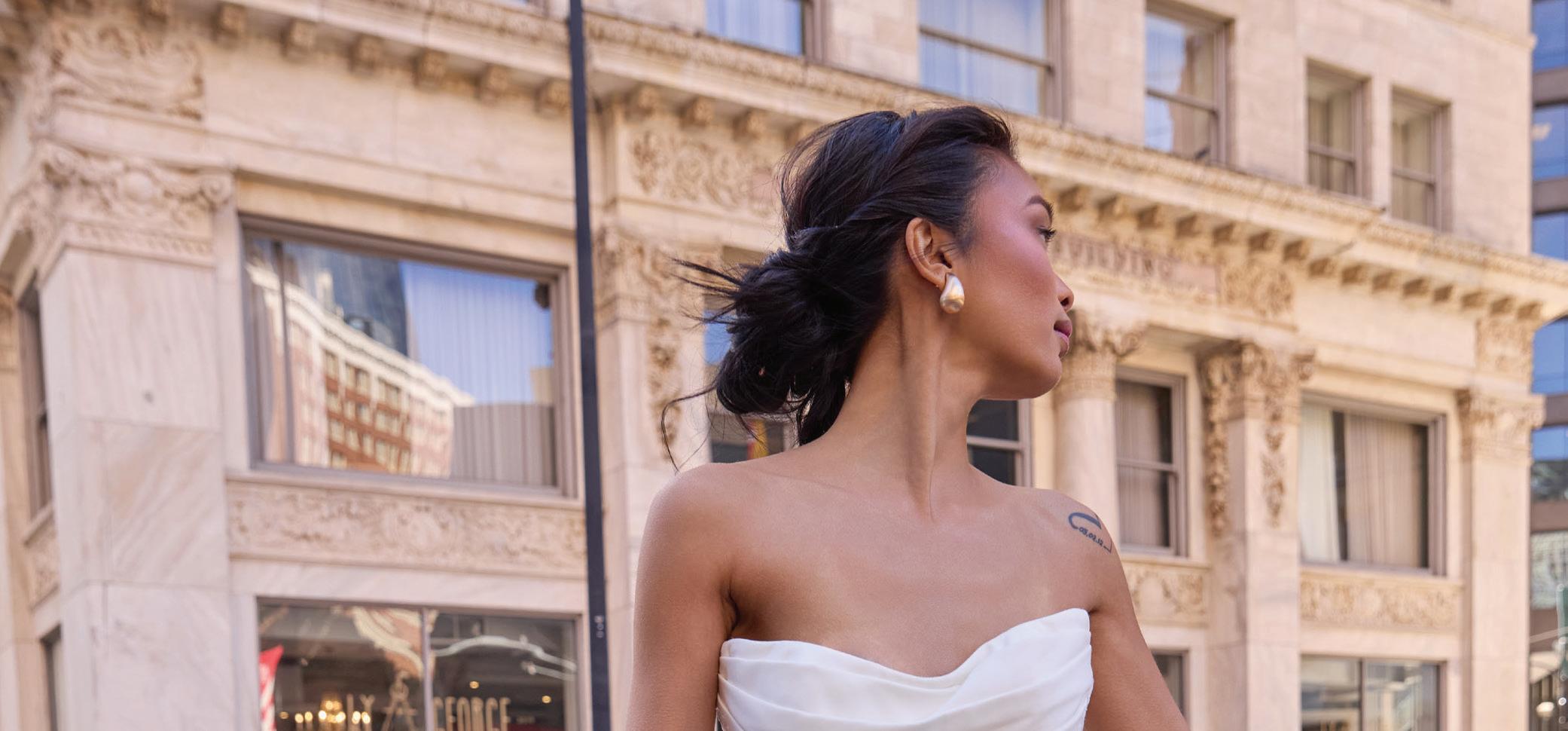
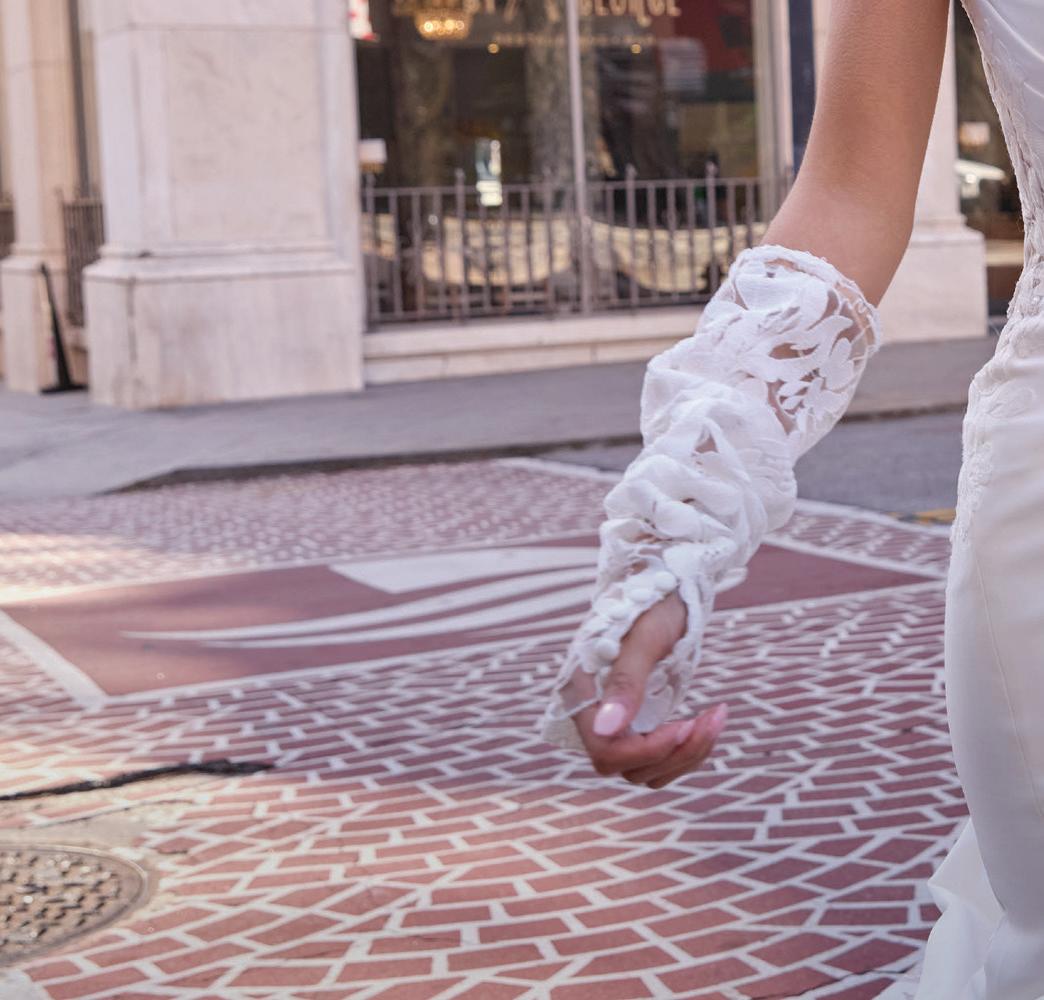
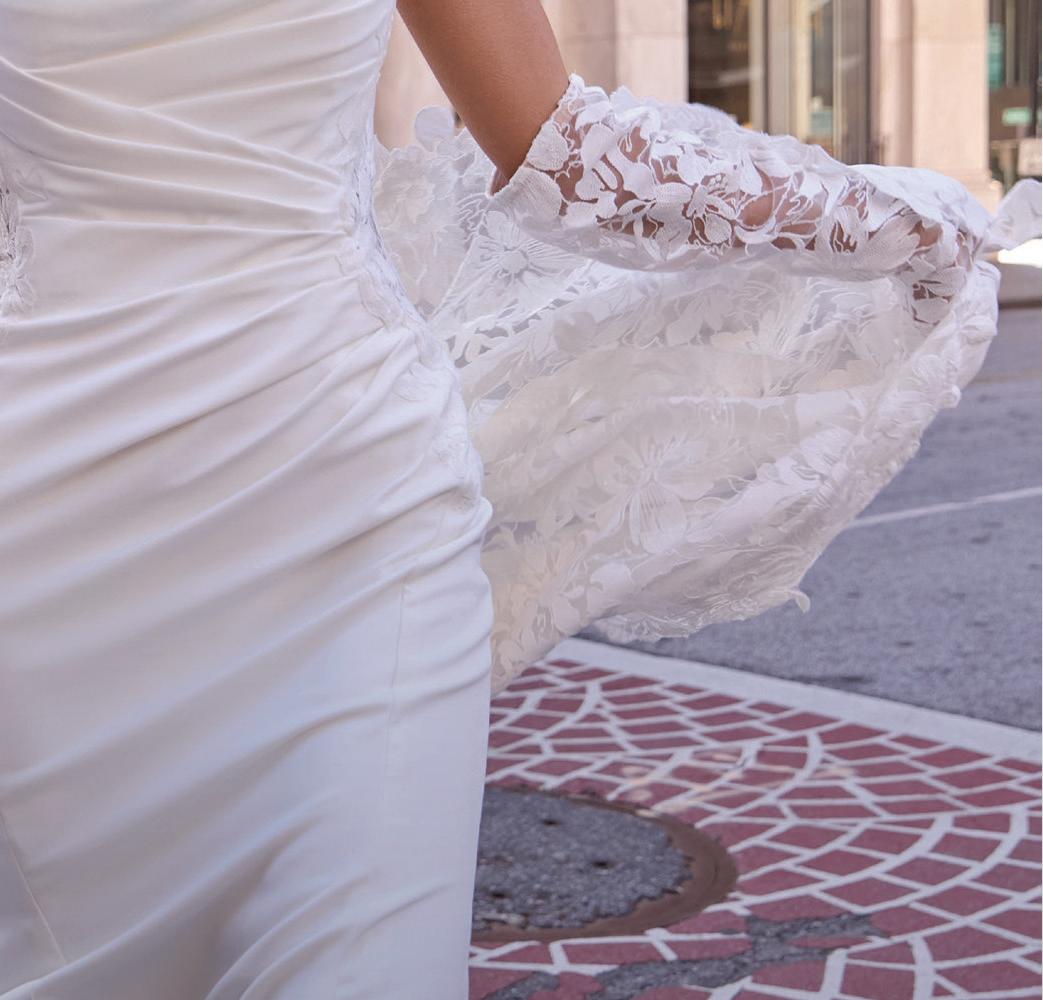
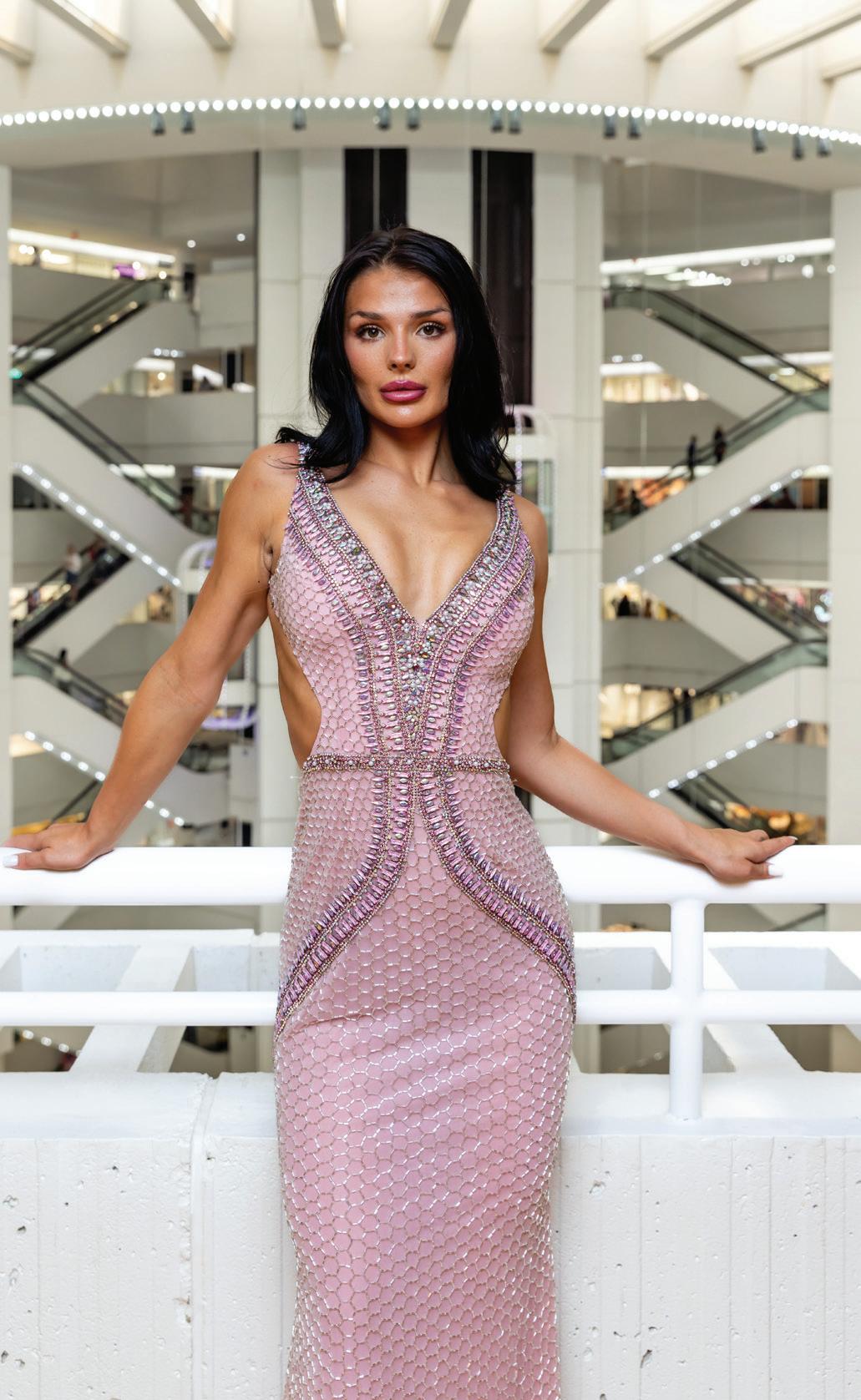
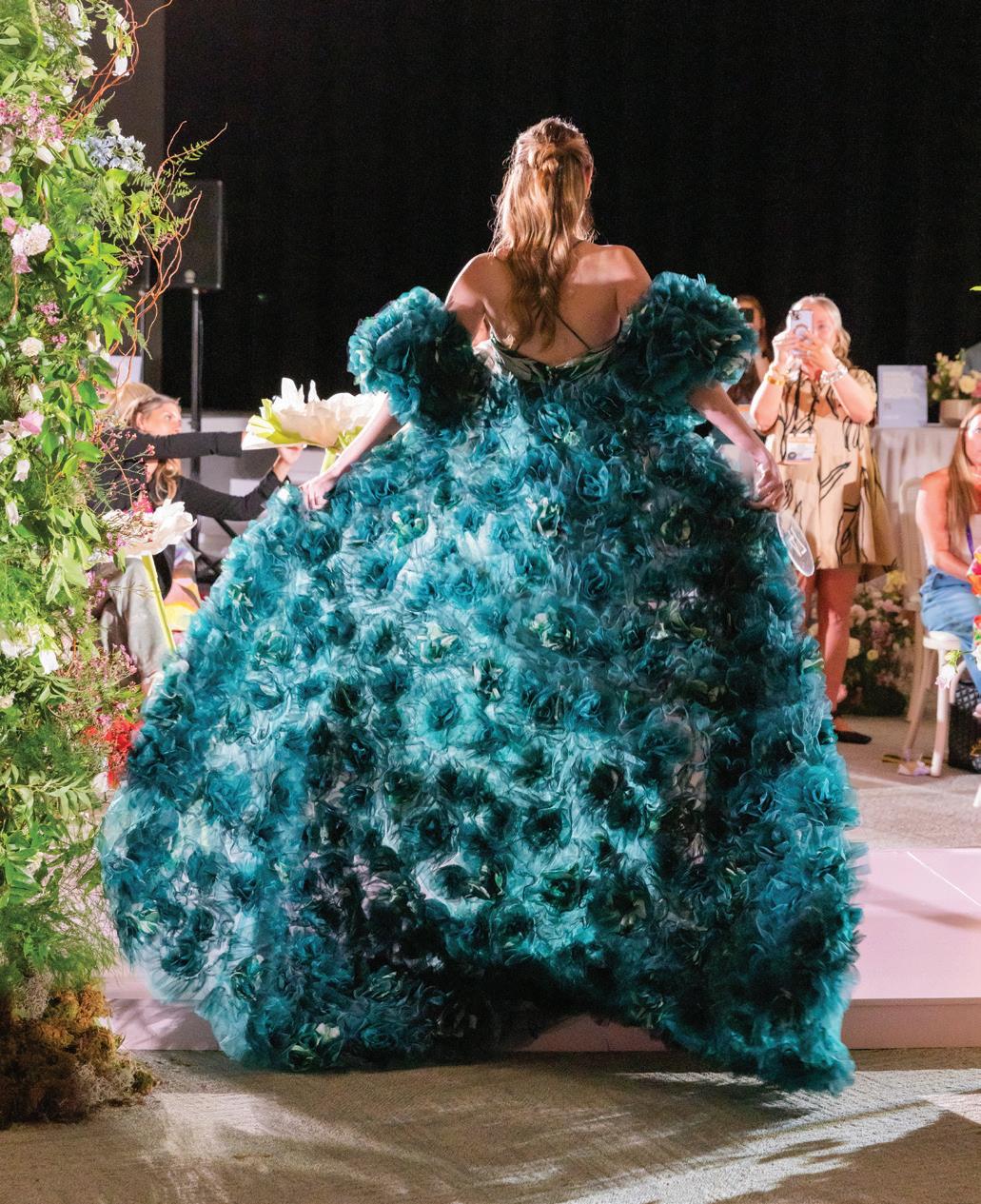












In celebration of its 25th showcase, New York Men’s Day (NYMD) presented seven emerging menswear designers at MercedesBenz of Manhattan.
NYMD welcomed back its returning presenting sponsor, Project by Informa. Project represents what’s new, now and next in men’s contemporary apparel, footwear and accessories. It’s where domestic and international buyers go to get inspired by higher-end brands, find products from relevant mid-market labels and connect with like-minded industry thought leaders and fashion insiders.
NYMD was also supported by returning host and partner, Mercedes-Benz of Manhattan. Rooted in a legacy that began in 1888— making Mercedes-Benz the longest-standing luxury car brand in the U.S.—MercedesBenz of Manhattan employs over 230 team members dedicated to delivering world-class hospitality and craftsmanship to generations of loyal customers.

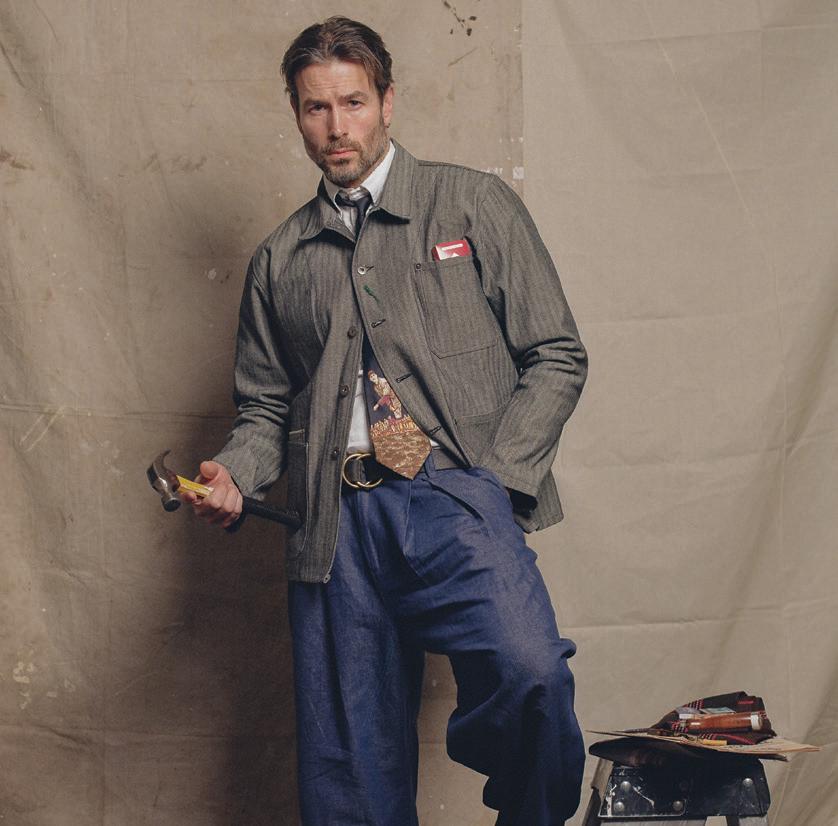




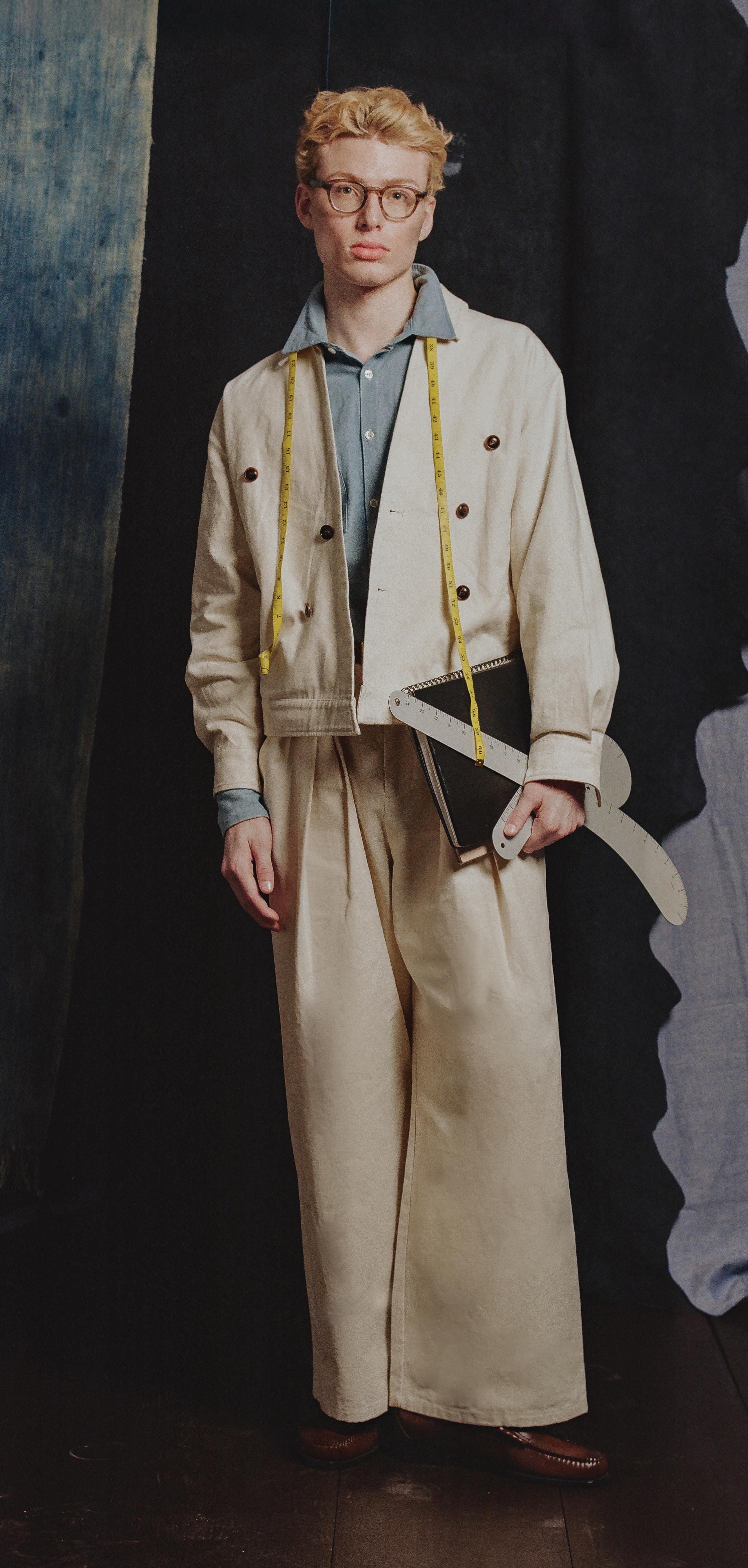

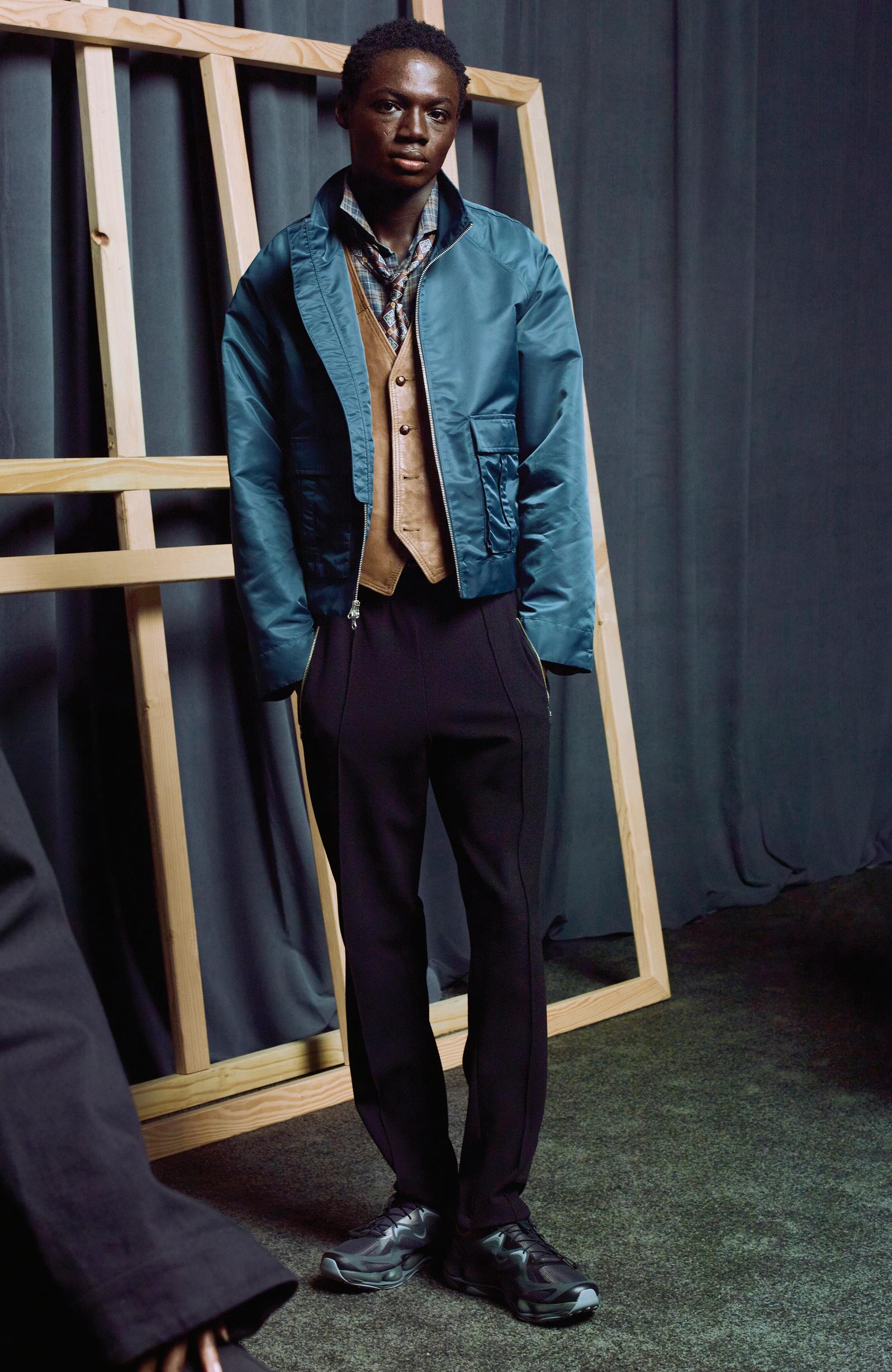



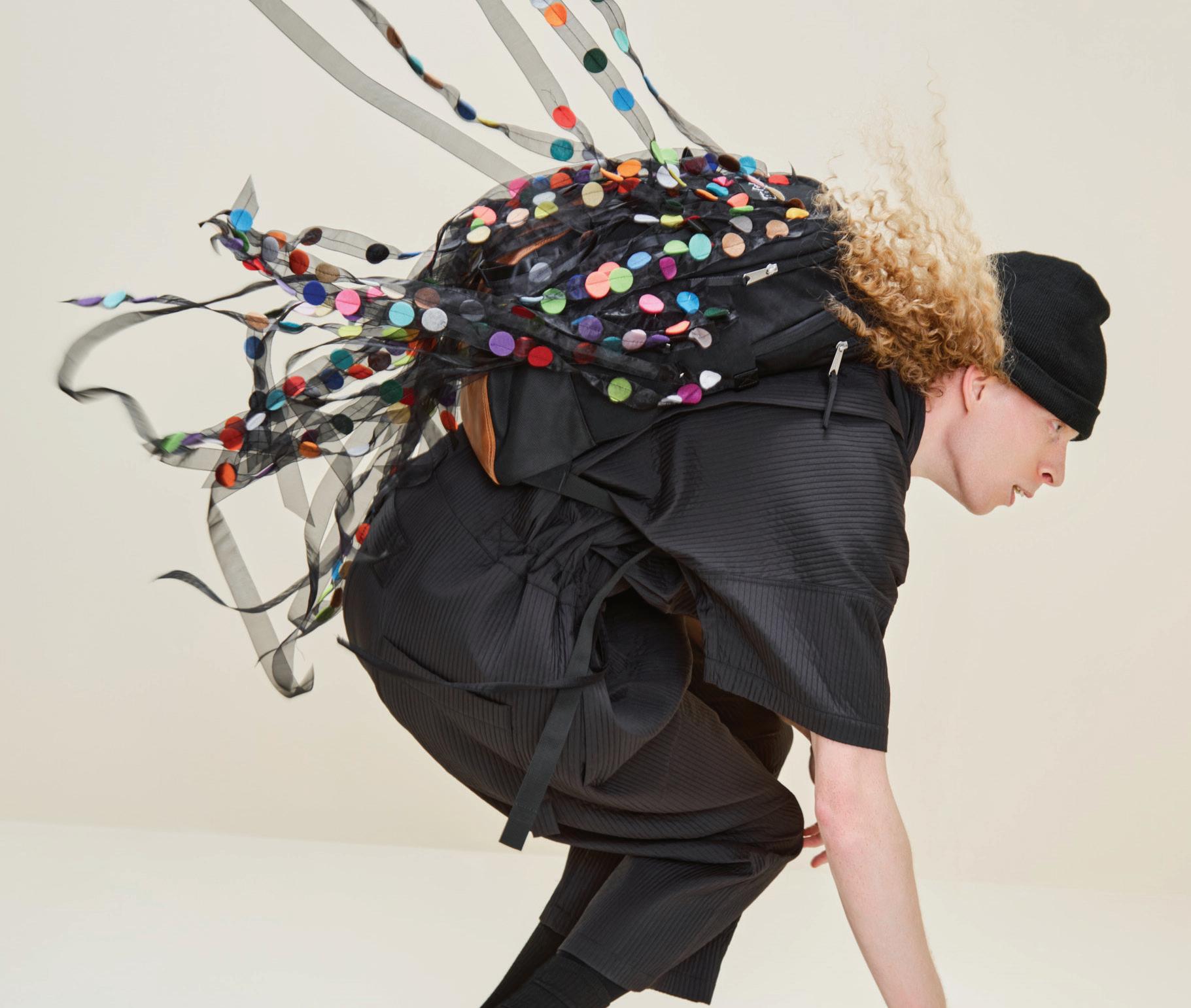


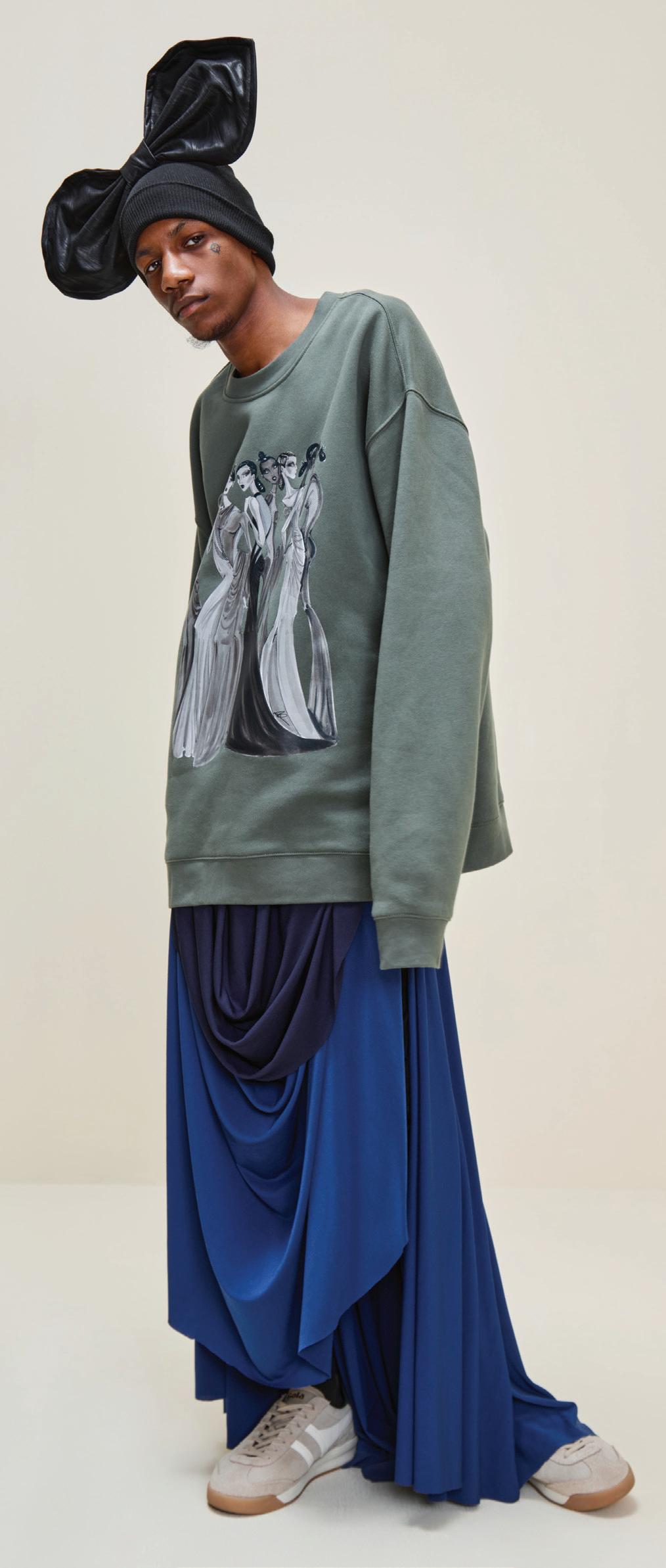



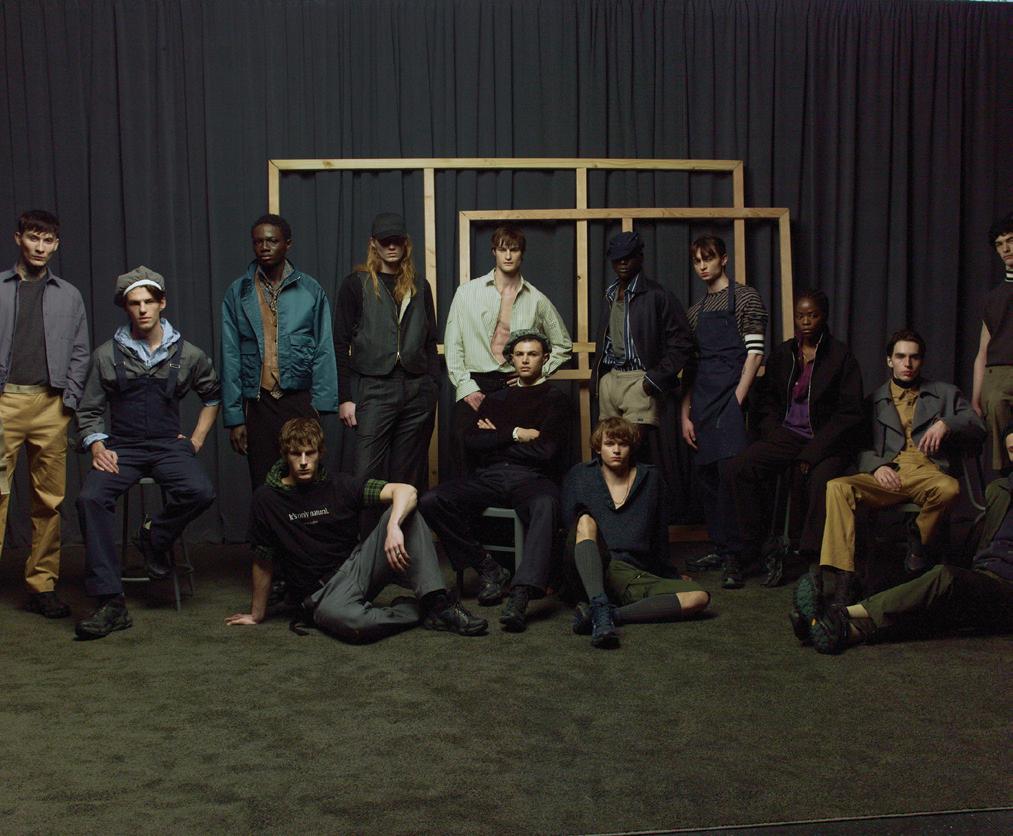


Vogel NYC, America’s oldest custom shoemaker, was a new sponsor this season. At NYMD, Vogel NYC unveiled its Icons collection—a considered lineup of nine timeless silhouettes, each expressed in “work,” “weekend” and “wonder” styles. Designed and handcrafted in New York, the Icons collection represents a bold step forward for the 145-year-old brand as it expands from bespoke shoemaking into a new era of modern American luxury.
Returning sponsors of NYMD included luxury hair care brand Oribe Hair Care, which provided hair care products and teams; Augment, which provided makeup teams and products; and Grimoire, which provided skin care for models and guests.