

E-Newsletter

NEWS AND HIGHLIGHTS
Provincial Flood Bulletin issued July 8
Water levels on most rivers and creeks across Manitoba have now peaked and are declining following the significant rainfall events that affected western Manitoba and the Parkland region in recent weeks. Along the Assiniboine River, peak flows have passed some upstream locations such as Russell and are continuing to move downstream. Manitoba Transportation and Infrastructure’s Hydrologic Forecast Centre advises that water levels are near peak at St. Lazare and are expected to peak in Brandon on or about July 13. Further downstream, peak levels are forecast to occur in the Portage la Prairie area on or about July 16.
MPI Deploying Mobile Services to Westman Region
More than 2,000 claims have been reported to MPI following severe weather on July 5. To help provide customers with local support, MPI is deploying its dedicated hail trailer and increasing mobile estimating services in the Boissevain and Killarney communities.
MPI’s mobile hail trailer will be set up at the Boissevain AG Arena (689 Rae Street) and MPI estimators will be on site in Killarney at the Royal Canadian Legion (112 Finlay Street East) beginning Monday, July 13 to serve customers who have already opened a claim and booked an appointment with MPI.
Province Expands In-Person Flood Recovery Support for Swan Valley Residents
Manitoba’s Transportation and Infrastructure Emergency Management Organization (EMO) is in partnership with the Canadian Red Cross additional steps to provide flood-affected ...
Province Issues Heat Advisory
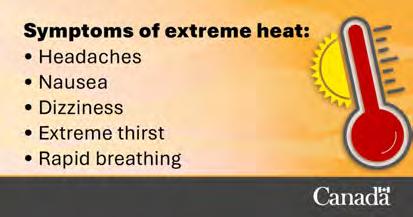
With hot, humid conditions forecast over the coming days, Manitoba Health, Seniors and Long-Term Care is reminding Manitobans to take precautions to prevent heat-related illness ...

of Canada takes action to

Government

Head Office
#180, 6815 – 8th Street NE
Calgary, Alberta
T2E 7H7
Phone: (403) 275-8558
Email: contact@cattle.ca Ottawa Office
#1101, 350 Sparks St.
Ottawa, Ontario
K1R 7S8
Phone: (613) 233-9375
Federal AgriMarketing Funding Announcement
July 8, 2026
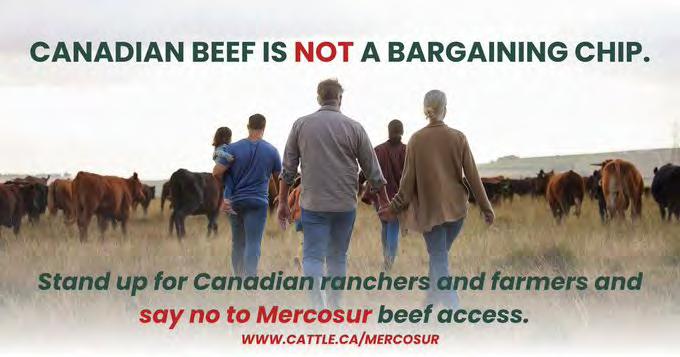
Calgary, AB Today at the Calgary Stampede, Minister of Agriculture and Agri-Food Heath MacDonald announced federal AgriMarketing funding support for the Canadian Cattle Association (CCA). CCA is grateful for the financial support for international travel undertaken by CCA staff and elected representatives to promote Canadian beef production in existing and potential export markets.
Minister MacDonald announced CCA will receive $300,000 over two years for trade advocacy, to strengthen key international relationships and promote evidence-based, trade supportive rules. CCA travels internationally to help promote the Canadian beef advantage and to represent producers in global policy discussions. CCA staff and elected officials bring practical, on-the-ground expertise to inform decisions and ensure science-based data and real producer perspectives are reflected in global policy discussions. Our participation may be the only way to ensure that the Canadian experience, perspective and facts are shared.
The funding announcement specifically covers travel to engage with partners and decisionmakers in the United States and Mexico as well as for the recently completed Team Canada trade mission to Japan and future missions to South Korea and select Indo-Pacific markets. AgriMarketing funding also supports CCA advocacy efforts in attending events hosted by international standard-setting bodies such as the World Trade Organization, Codex Alimentarius, the World Organisation for Animal Health, and the Food and Agriculture Organization Through attendance, CCA is able to establish and build long-term relationships and assure Canadian producers and the Canadian perspective are represented in international policy discussions.
CCA has worked tirelessly over the past 20 years on improved market access. Today, we have preferred access to virtually all important beef-importing countries. In 2025, we set a new record value for beef and live cattle exports in the range of $7.3 billion. Over $6.3 billion of that total was exported to the USA. While we continue to set new records in other markets, our number one export market is and will remain the USA.
Export trade contributes to making food more affordable in Canada. When it comes to beef specifically, we export products that are not highly desired in Canada to maximize carcass value for producers. The types of products that Canada exports to Asia for example are products that are not normally seen on retail counters in Canada. We are largely a steak, roast and ground beef market and they like short ribs, short plate, skirt meat, flanks, and chuck rolls.
“With the support of the AgriMarketing program, the Canadian Cattle Association can invest our producer funding more effectively. AgriMarketing funding allows CCA to participate in federal trade missions, explore potential new export markets, and assure that the Canadian cattle producer voice and perspective is included in global policy decisions,” says CCA President Tyler Fulton. “We are grateful to have this financial support and the flexibility to determine how and where to focus our efforts.”

From Surviving the Thriving:
2025 Benchmark Results
The last few years have brought record cattle prices and strong profits for many cow-calf operations. But high cattle prices will not last forever.
What are you doing today to prepare for the next phase of the cattle cycle? Now is the time to strengthen your business. Which investments will improve long-term profitability? Are you building a business that can remain profitable when prices turn?
Agricultural economist Dr. David Kohl recommends the 60-30-10 rule for reinvesting profits.
• 60% into improvements that make the operation more efficient and competitive.
• 30% into working capital, including reducing debt without creating cash-flow problems.
• 10% to Enjoy. We all need to enjoy what we do. So, treat yourself and don’t feel guilty about the splurge, you've earned it. But keep it within a reasonable amount. 1
What is the COP Network?
The Canadian Cow-calf Cost of Production Network (COP Network) uses standardized data collection which allows for comparison both within and between provinces, and internationally. Since launching in 2021, the COP Network has collected data from over 235 producers contributing to 60 cow-calf benchmark farms that represent various production systems. Each benchmark is based on data from 3-7 producers. Data collection occurs every 5 years with annual indexing of input and output prices, as well as crop and forage yields, in subsequent years. Individual benchmark farm summaries, can be found at: https://canfax.ca/resources/cost-ofproduction/cop-results.html
Producer focus groups from the Canadian Cow-Calf Cost of Production Network showed a similar approach. Over the past five years, producers invested in new technology, feeding systems, grazing management, genetics, herd management and marketing. Labour-saving improvements were a common priority. Looking ahead, producers plan to tighten calving seasons, improve genetics, expand rotational grazing, reduce feed costs and increase productivity. Many also said reducing debt and getting more production from existing land comes before expanding the cow herd. While herd rebuilding remains a consideration, many operations can now cover costs with fewer cows than in the past and are cautious about taking on additional financial risk.
Remember, the decisions made during profitable years often determine which operations remain profitablewhen the cattlecycle turns.
1 Watch at summary at: https://www.youtube.com/watch?v=5P1mOiPSyO4
Ranching for Profit interviewed Dr. Kohl in November 2025 to dig deeper into these concepts. https://www.youtube.com/watch?v=vP9ujzrdqIg
What costs are you covering?
In 2025, revenues increased 44%, while total costs rose only 3%. As a result, profitability improved across Canada. Every benchmark operation covered short-term costs (cash expenses) and medium-term costs (cash expenses plus depreciation). Depreciation deserves attention. It reflects the cost of replacing machinery, buildings and equipment. Depreciation costs increased 7% from 2024 and are up 50% since 2021. Producers using book values may underestimate what those assets will actually cost to replace.
The strongest businesses also covered their opportunity costs— getting a return to their land, labour and capital. In 2025, 93% of benchmark farms achieved this, compared with only 62% in 2024. Covering opportunity costs means the business is generating enough profit to support investment and growth.
Knowing Where You Stand
Knowing your numbers helps gives you confidence to make management decisions and major investments.
The first step toward improving profitability is knowing where you stand. Good records allow you to compare your own performance year after year. Benchmarking shows how your operation compares with similar ranches and helps identify practical ways to improve.
In 2025, average total costs increased 3% to $1,931 per cow. Costs rose more sharply in Eastern Canada, up 8%, while Western costs increased only 1%. Eastern producers saw increases across cash (+8%), depreciation (+10%) and opportunity costs (+7%), while Western producers saw declining cash (-2%) and more moderate increases to depreciation (+5%) and opportunity costs (+4%).

Profitability improved dramatically. Average short-term profit reached $1,796 per cow, up 96% from 2024. Medium-term profit increased 127% to $1,545 per cow, while long-term profit jumped from $146 to $985 per cow.
These averages tell only part of the story. There was still a wide range in profitability between operations. The Canadian Cow-Calf Cost of Production Network benchmarks are based on the most profitable onethird of operations, not simply the most productive. These producers earned:
• 25% higher short-term profits
• 32% higher medium-term profits
• 54% higher long-term profits
Benchmarking and understanding the drivers of profitability are consistently identified as characteristics of strongerperforming operations.
About two-thirds of this advantage came from lower costs, while one-third came from higher revenue.
The top-performing operations had:
• Cash costs of $876 per cow
• Depreciation of $201 per cow
• Opportunity costs of $519 per cow
• Total costs of $1,595 per cow
There is no single secret to their success. The best-performing operations, controlled costs across almost every category. They focused on managing the entire business not just one expense.
Table 1. Summary of 2025 Costs and Profitability ($/cow)
*Total revenue including calves, cull cows and bulls, breeding stock, and productivity from opens and death loss
Don't Let Yesterday's Market Manage Tomorrow's Ranch
You've heard the saying, "Don't waste a crisis." Tough times often push people to change. The opposite can also be true. During good times, it's easy to think, "If it isn't broken, don't fix it." Thinking that what you have been doing is how you got here. But what if you have only been surviving, and a big rally is what really got you here? Don't waste a profitable market. Are you willing to grasp the present moment to go from an operation that is merely surviving to one that is thriving?
After grain prices surged in 2006-08, some farms simply enjoyed the extra income. Others used those years to build stronger businesses. They knew their cost of production, reduced debt, built working capital, adopted new technology and invested where it improved long-term returns. When drought hit Western Canada in 2021 and fertilizer prices soared, those businesses still faced challenges. But they had the financial flexibility to respond instead of react.
The cow-calf sector faces a similar opportunity today. Years of low prices taught producers how to survive by cutting costs and delaying investment. Those decisions made sense at the time. Today's market is different. A profitable mindset doesn't mean spending more money. It means spending it wisely.
Know your cost of production. Ask whether every cow earns her place. Invest in grazing management, genetics and labour-saving technology when they improve long-term returns. Strengthen your balance sheet before the next drought, disease outbreak or market downturn.
Markets change. Weather changes. Costschange.
The producers who thrive through every cattle cycle will be those who use today's profits to build a stronger business for tomorrow. Resilient producers recognize that the biggest adjustment is in the mindset needed to succeed through every market. You've made the money. Now the challenge is to keep it, grow it and pass it on to the next generation.
A profitable mindset means managing differently. Ask yourself:
1. Do you know where you stand: Are you a high-cost or low-cost producer?
2. Are you investing in long-term efficiencies that will improve future returns?
3. Have you built working capital for the next drought or market correction?
4. Are you investing in yourself? Leveling up your management – financially, operationally, mentally?
5. Are you building resilience or celebrating high prices? The producers who thrive over the next cattle cycle will likely be those who adjust their mindset before the market forces them to.

Canfax is funded by Memberships: Subscribe Now: Scan the QR Code for details how.
Disclaimer / Copyright Notice: Canfax Research Services (CRS) tries to provide quality information, but we make no claims, promises, or guarantees about the accuracy, completeness, or adequacy of the information. CRS does not guarantee and accepts no legal liability arising from or connected to, the accuracy, reliability, or completeness of any material contained in our publications. Reproduction and/or electronic transmission of this publication, in whole or in part, is strictly forbidden without written consent from CRS.

Disaster Financial Assistance Launched for 2026
June Heavy Rains

Manitoba has established a DFA program for the 2026 June Heavy Rains.
• Program Announcement Date: June 11, 2026
• Deadline to request DFA: September 9, 2026
Primary residences, farms, businesses and nonprofit organizations
Primary residences, farms, businesses and nonprofit organizations with impacts related to the heavy rains may apply to the DFA program.
Insurable damages are not eligible for DFA. Secondary properties such as cottages are never eligible for DFA. In addition, DFA does not assist with loss of income, revenue, wages, market share or opportunity.
Refer to the DFA webpage for more details.
Community Engagement Sessions: EMO staff will be available to answer your questions about DFA. View the schedule.
Apply for DFA
• Deadline to submit invoices and event related expenses: June 11, 2027
Frequently Asked Questions
AAFC Collecting Agroclimate Impact Reports for June
We are now collecting AIR reports for June.
For much of the country conditions have been cooler and wetter than normal. While this has brought significant drought relief, many areas are now struggling with saturated soils and standing water and flooding. In BC, hot dry conditions have increase the extent and severity of drought.
Help Agriculture and Agri-Food Canada verify the impacts of these conditions in your region. Please respond to one of the links below: English French
As always, please consider sharing these links with your colleagues and networks.
During these extreme weather events knowing the severity and extent of the impacts is vitally important in ensuring producers get the assistance that they need.
To get added to the email reminders, all you need to do is send a quick email to droughtwatch@agr.gc.ca with AIR Reporter in the subject line.
To learn more about AIR, follow this link.
To view previous Agroclimate Impact maps, follow this link. Or see some of the other resources we produce on the AAFC Weather and Drought home page. Thank you for your participation!
Disaster Financial Assistance Facts
Agricultural claim eligibility (for private sector agricultural claims)

When a natural disaster occurs, the Manitoba government may declare the event eligible for Disaster Financial Assistance (DFA). Through the DFA program, the Manitoba government provides financial support for uninsurable losses to basic and essential property to help Manitobans in their recovery from natural disasters.
Who is eligible?
• Farms generating yearly gross revenues of up to $15 million.
What DFA offers?
• Up to a maximum of $3M in response and recovery costs.
• A deductible of $2,500 or 20%, whichever is greater, is applied to all claims.
• Assistance is capped at the lesser of the cost of restoring function; replacing an asset; or the assessed value of land or structures.
Eligible DFA costs but are not limited to:
• Clean up and removal of debris
• Repair and restoration of essential buildings and restoration of damaged pens and corrals
• Harvested and stored crops
• Livestock losses and livestock fencing
• Limited silting, field erosion cuts and cleaning of filed ditches
• Repairs to permanent pre-existing dikes protecting productive farmland
• Emergency feed purchases where access to feed has been temporarily interrupted by the disaster (maximum 30 days)
• Evacuation of livestock like pasture rentals and boarding and transportation costs
• Mental health support
• Financial counselling
• Evacuation costs are eligible for registered evacuees under a mandatory evacuation order
• Sudden and substantial erosion that poses a threat may be eligible
Ineligible costs include but are not limited to:
• Costs related to dry conditions
• Insurable losses (e.g. damaged property or items that could have been insured at the time of the disaster)
• Costs recoverable from any other government program
• Loss of income and opportunity (e.g. reduced crop yield or loss of value of livestock due to early sale)
• Inconveniences and normal operating costs
• Upgrading existing facilities
• Damage that is a normal risk of trade, occupation or enterprise (e.g. losses related to drought or crops remaining on the field late in the season)
• Inability to seed (Farmers have the option to purchase Excess Moisture Insurance to cover this)

Miscellaneous Contact Information and Helpful Websites for Dealing with an Emergency
Last updated July 3, 2026 by Manitoba Beef Producers
Manitoba Beef Producers
220-530 Century Street Winnipeg, MB R3H 0Y4
Phone: 204-772-4542
Toll Free: 1-800-772-0458
Fax: 204-774-3264
http://www.mbbeef.ca/ https://www.facebook.com/ManitobaBeefProducers https://twitter.com/ManitobaBeef https://www.instagram.com/manitobabeef/
General Flood and Disaster Information
FLOOD INFORMATION FOR PRODUCERS
Are you prepared for possible flooding? The following is some information from the provincial government to help you get organized in the event of an emergency such as a flood.
A reminder about individual responsibilities during an emergency:
Step 1: – Producers/Individuals are the first point of responsibility to deal with their own emergency situation.
Step 2: – If individuals cannot provide appropriate response to their emergency situation, their local municipality is the first point of contact for emergency-related information and assistance.
Step 3: – If the local municipality cannot handle the situation, that municipality will contact Emergencies Measures Organization (EMO) for assistance. If EMO requires Manitoba Agriculture’s assistance, they will assign an issue to our emergency coordinator.
Producers who need to transport livestock to an alternate area are encouraged to book a transport company immediately to ensure service.
Below are some useful links related to flooding (forecasts, river and lake levels, etc.), tips for evacuation, Disaster Financial Assistance, etc.
• Flood Information
• Which Level of Government Do I Contact?
• Animal Emergency Supply Kit
Disaster Financial Assistance and Manitoba Emergency Measures Organization
1-888-267-8298 (toll-free)
Phone: (204) 945-3050
Fax: (204) 945-4929
1525 - 405 Broadway
Winnipeg, Manitoba R3C 3L6
Email: emo@gov.mb.ca
Email for Disaster Financial Assistance: dfa@gov.mb.ca
https://www.gov.mb.ca/emo/index.html
https://www.gov.mb.ca/emo/funding/dfa/index.html
Tips for preparing for a flood
Site with numerous information sheets, such as an evacuation checklist, preparing for flood conditions in rural Manitoba, advice on how to secure hazardous materials, etc.
http://www.gov.mb.ca/flooding/preparations.html
Tips for preparing a beef farm for flood conditions in rural Manitoba
http://www.gov.mb.ca/asset_library/en/spring_outlook/preparing_beef_farm.pdf
Manitoba Hay Listing Service
https://web31.gov.mb.ca/haylistclntextrnl
Flooding and Well Water Safety
www.manitoba.ca/asset_library/en/spring_outlook/wellwater_safety_factsheet.pdf
Other General Government and Agency Information
Manitoba Transportation and Infrastructure Water Information and Flood Conditions
This site has detailed information about flood forecasts, flood conditions, river levels/flow plots, lakes information, operation of flood control structures, etc.
https://www.gov.mb.ca/mit/floodinfo/#daily_flood_sheets
Toll free number: 1-855-415-4530
Email: hydrologic@gov.mb.ca
Road Conditions and Closures
https://www.manitoba511.ca/ https://x.com/MBGovRoads
Government of Manitoba
Citizens Inquiry Line: 1-866-626-4862 (toll-free)
https://www.facebook.com/ManitobaGovernment https://x.com/MBGov
https://www.instagram.com/manitobagov/
Manitoba Hydro Emergency Information
1-888-624-9376 (toll-free)
https://www.hydro.mb.ca/safety/emergency/
https://www.hydro.mb.ca/outages/ https://www.facebook.com/ManitobaHydro https://twitter.com/manitobahydro https://www.instagram.com/manitobahydro/ https://www.hydro.mb.ca/safety/pdfs/emergency_preparedness_handbook.pdf
Manitoba Agriculture Services Corporation Service Centre Contact Information https://www.masc.mb.ca/contact/
Manitoba municipalities/local governments contact info www.gov.mb.ca/mr/contactus/pubs/mod.pdf
Manitoba Public Insurance 1-800-665-2410 https://www.mpi.mb.ca/ https://www.facebook.com/mpidrive/ https://www.instagram.com/mpidrive/
Coping with Stress and Anxiety
The scale and scope of flooding can be challenging for affected families. Help is available:
• Shared Health’s Mental Health and Wellness Resource Finder can help you find supports to manage stress and anxiety.
• Manitoba Farm Rural and Northern Support Services offers free, confidential counselling for anyone who lives on a Manitoba farm or in a rural or Northern community. 1-866-367-3276 (1-866-FORFARM) (toll-free);
• Klinic Community Health Centre offers a 24-hour crisis line 204-786-8686 in Winnipeg or 1-888-3223019 (toll-free).
• Managing Personal Stress During a Flood
• Health Links-Info Santé can help find resources through local regional health authorities or community mental-health services offices at 1-888-315-9257 (toll-free).
• Suicide Crisis Helpline
Similar Types of Resources
Do More Agriculture Foundation https://www.domore.ag/
Farm Credit Canada Rooted in Strength https://www.fcc-fac.ca/en/community/wellness.html
Canadian Agricultural Safety Association https://casa-acsa.ca/en/mental-health/
Applications for The Environmental Stewardship Award
Due to MBP by December 18, 2026
Manitoba Beef Producers (MBP) is accepting applications until Friday, December 18, 2026 for consideration for the local awarding of The Environmental Stewardship Award (TESA).
Since 1996, TESA has recognized producers who go above and beyond standard industry conservation practices and set positive examples for other cattle producers and the general public. As stewards of a vast portion of the Canadian landscape, Canada’s beef cattle producers play a significant role in protecting and enhancing the environment. They continuously strive to improve existing stewardship conservation practices to create a sustainable future – always farming for tomorrow.
At the local level, a producer receives provincial recognition for their outstanding environmental contributions. In Manitoba, this occurs in conjunction with MBP’s annual general meeting in February. All provincial award recipients then move forward to compete for national recognition from the Canadian Cattle Association (CCA). The national TESA recipient is announced during the CCA’s semi-annual meeting held in mid-summer or early fall.
Each nominee exemplifies significant innovation and attention to a wide range of environmental stewardship aspects in their farm or ranch operation. Such innovations extend beneficially to areas far beyond their land, including water, wildlife and air.
How to Nominate
All beef cattle operations in Canada are eligible to apply for consideration for TESA. Interested producers can either nominate themselves, or be nominated by another individual or an organization. All methods are equally encouraged. More details and the application form can be found at: TESA Information
Note: If you are a producer who is considering self-nomination, MBP can provide you with guidance and suggestions on completing the application process.
The completed application form, along with all supporting documentation (such as letters of support, photos and/or videos), is to be submitted to Manitoba Beef Producers by email to info@mbbeef.ca no later than Friday, December 18, 2026. If you have questions, please contact the MBP office at 204-772-4542.