E-Newsletter
NEWS AND HIGHLIGHTS
April 14, 2026: Flood Bulletin #1
Manitoba Transportation and Infrastructure’s Hydrologic Forecast Centre continues to monitor the potential for spring flooding. With warmer weather forecasted for this week, there is an ...
Premier & Prime Minister discuss Advance Churchill Plus, Health Care and Agriculture
Premier Wab Kinew met with Prime Minister Mark Carney March 14 for their second quarterly meeting on the Churchill Plus Project, which followed the signing of a “one project, one review” ...
Veterinary Services District Model – Survey Closes May 1st
Federal government suspends Fuel Excise Tax on gasoline and diesel
On April 14 the Prime Minister announced the federal government is temporarily suspending the federal Fuel Excise Tax on gasoline and diesel across Canada. Starting April 20 ...
Canada/ Manitoba sign a new agreement to get projects built faster
On April 14, the Prime Minister, Mark Carney, and the Premier of Manitoba, Wab Kinew, announced the new Co-operation Agreement between Manitoba and Canada on ...
AgriStability Enrolment Deadline is April 30, 2026

Flood Information for Producers
Are you prepared for possible flooding in different parts of Manitoba this spring? The following is some information from the provincial government to help you get organized in the event of such an emergency.
A reminder about individual responsibilities during an emergency:
Step 1: – Producers/Individuals are the first point of responsibility to deal with their own emergency situation.
Step 2: – If individuals cannot provide appropriate response to their emergency situation, their local municipality is the first point of contact for emergency-related information and assistance.
Step 3: – If the local municipality cannot handle the situation, that municipality will contact Emergencies Measures Organization (EMO) for assistance. If EMO requires Manitoba Agriculture’s assistance, they will assign an issue to our emergency coordinator.
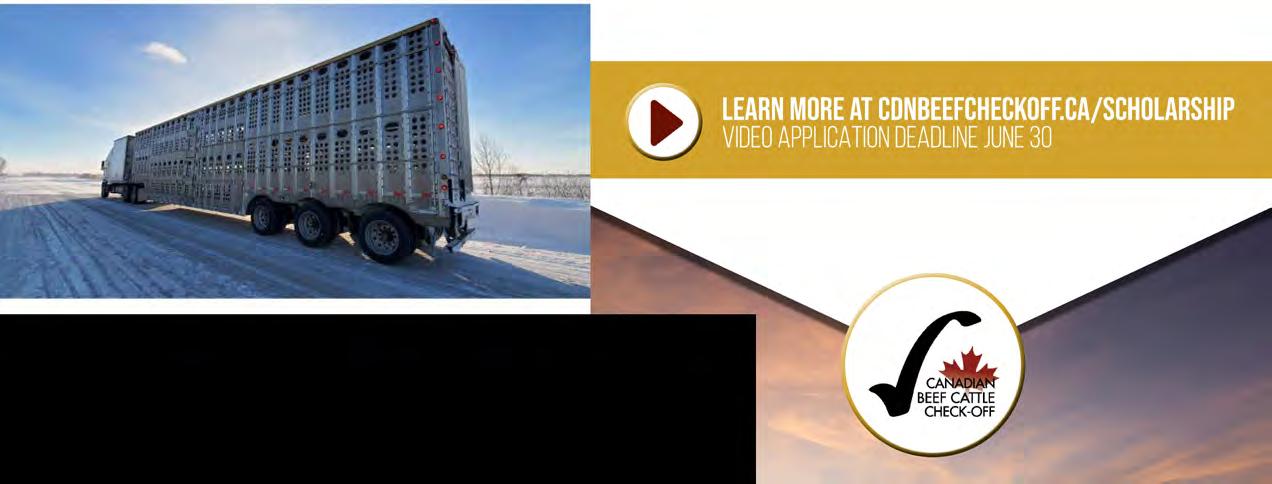
Producers who need to transport livestock to an alternate area are encouraged to book a transport company immediately to ensure service.
Below are some useful links related to flooding (forecasts, river and lake levels, etc.), tips for evacuation, Disaster Financial Assistance, etc.
• Flood Information
• Which Level of Government Do I Contact?
• Animal Emergency Supply Kit
• Caring for Livestock During an Evacuation
• Evacuation Checklist
• Preparing a Beef Farm for Flood Conditions in Rural Manitoba
• Managing Dead Livestock During and After Flooding
• Returning Home
• Disaster Financial Assistance and Farmers
• DFA Program Changes for Farmers
• Manitoba Red Cross
• Contact information and helpful websites when dealing with an emergency
Importance of Documentation During a Natural Disaster Like a Flood
If you do experience flooding and are incurring damages and expenses related to that which may be eligible for a future Disaster Financial Assistance program it is important that you:
• Take pictures of all damaged property and items before you dispose of anything.
• Keep track of all your disaster-related repairs and activities including:
o Labour and equipment hours.
o Materials used, including quantities.
o Specific types of equipment used, including make, model, year, horsepower and attachments.
o Receipts, invoices and other documents you need to support your DFA claim.
• Keep all receipts, invoices and any other documents for disaster related expenses as they are required in order to support your DFA claim. Invoices submitted to Manitoba EMO must be accompanied by the corresponding proof of payment (e.g. credit/debit slip, cancelled cheque) in order to be considered for eligibility.

f-laulino
Cattle



Spring flood bulletin #2
(April 17, 2026 Province of Manitoba media release) Manitoba Transportation and Infrastructure’s Hydrologic Forecast Centre advises that partial snowmelt is underway across parts of southern and central Manitoba, resulting in rising water levels and increased ice movement on rivers and creeks. A high-water advisory has been issued for the Assiniboine River from the Shellmouth Dam to Portage la Prairie, where levels are expected to continue rising over the coming days. Flows and water levels along the Assiniboine River are influenced in part by operations at the Shellmouth Dam, which are carried out in consultation with the Shellmouth Dam Liaison Committee.
The Hydrologic Forecast Centre indicates that as colder weather conditions ease over the weekend, warmer temperatures expected next week will accelerate snowmelt and increase ice movement across southern and central Manitoba. This will elevate the risk of ice jam–related flooding and overland flooding,
particularly in the Parkland region. Runoff is expected to begin early next week across much of central Manitoba, including the Parkland and Interlake regions, as well as the Fisher River and Icelandic River basins.
As the spring melt progresses, conditions can change rapidly, especially if warm temperatures or rainfall occur over a short period. Overland flooding may develop in low-lying areas, particularly where drainage systems remain partially frozen or obstructed. The Hydrologic Forecast Centre will continue to update forecasts as weather and spring runoff conditions evolve. Manitobans are encouraged to stay informed as spring runoff approaches, particularly anyone living near rivers, streams and low-lying areas.
As the melt continues, updated flood information will be available at www.Manitoba.ca/flooding/.
NEWS RELEASE
For immediate release

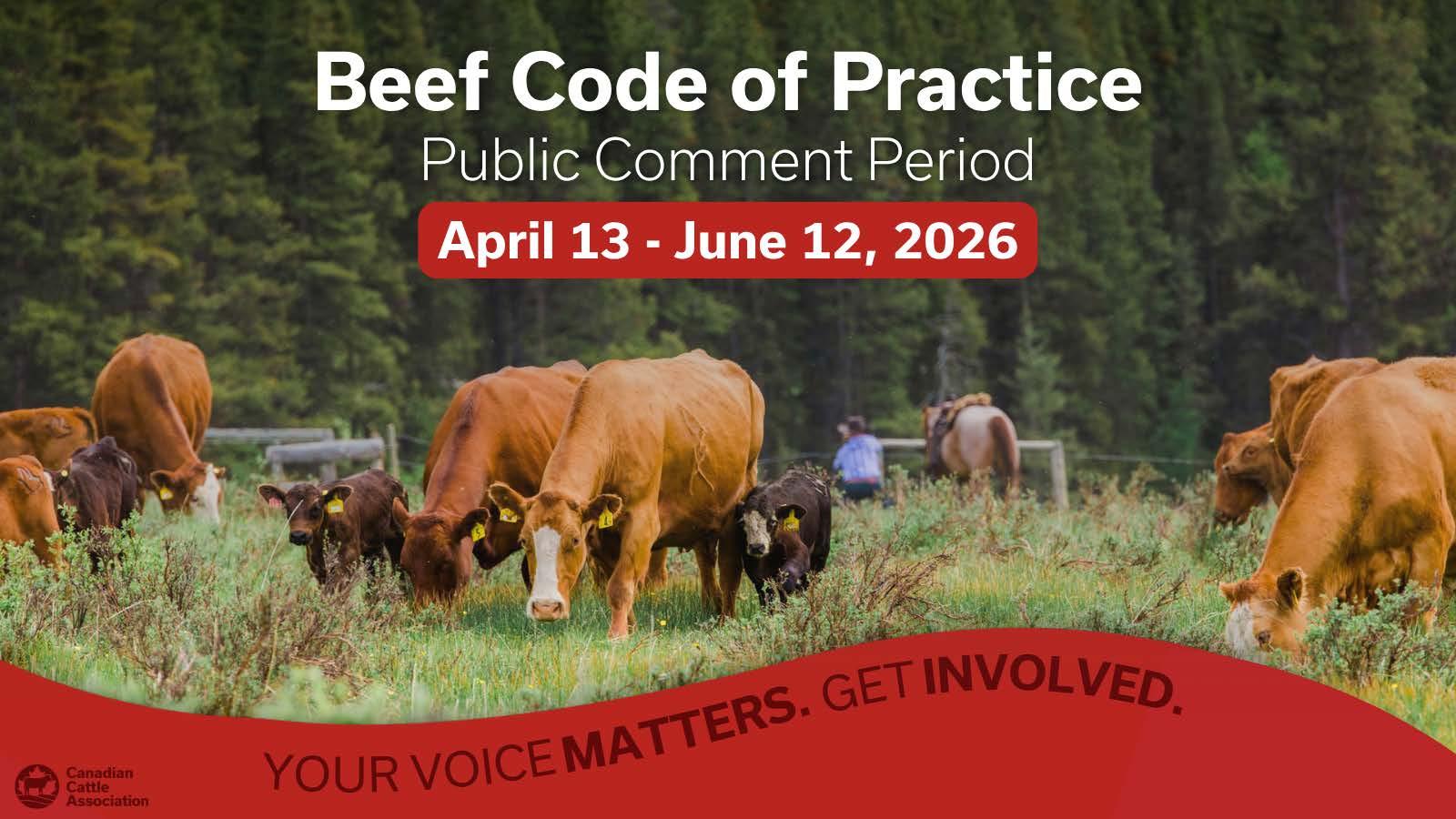
Draft beef cattle Code of Practice released for public comment
(Calgary, AB) April 13, 2026 – The National Farm Animal Care Council (NFACC) and Canadian Cattle Association are pleased to announce the launch of the public comment period for the draft Code of Practice for the Care and Handling of Beef Cattle.
The public comment period allows stakeholders - including producers, consumers, and others with an interest in the welfare of beef cattle - to review the draft Code and provide input that will inform the final version, recognizing that perspectives and experiences across Canada, can differ.
The draft Code and the public comment system are now accessible here. All comments must be submitted through the online system to ensure feedback is consistently reviewed. The public comment period will close on June 12, 2026.
Following the close of the comment period, the Code Committee will review and consider the submitted feedback, and the final beef cattle Code of Practice will be released in 2027.
A Scientific Committee report summarizing research conclusions on welfare-related topics of high applicability to the Code (priority welfare issues) can be found here. This peer-reviewed report informed the Code Committee’s deliberations by grounding discussions in the best available research, consistent with NFACC’s science-informed approach.
“The public comment period is an important opportunity for producers across Canada to review the draft Code and provide feedback on how it applies to their operations. Producer perspectives from across the country help ensure the Code reflects the diversity of Canadian beef production systems and remains practical for producers who raise cattle,” says CCA President Tyler Fulton.
“As a veterinarian, it’s a pleasure to work with a diverse group of people who are all committed to excellence in beef cattle husbandry,” said Dr. Michael Jelinski, representing
the Canadian Veterinary Medical Association on the Code Committee. “The public comment period now allows other stakeholders the opportunity to review and provide input to the Code. Working together, we can develop a Code that is good for producers and the animals in their care.”
Codes of Practice for the care and handling of farm animals are the result of a unique, consensus-based, multi-stakeholder approach that supports respectful dialogue, evidence-based decision-making, and shared accountability. This Code’s update is led by a 15-person Code Committee that includes participants from across Canada; producers, animal welfare and enforcement officials, researchers, veterinarians, and government representatives. More information on the Code process is available at https://www.nfacc.ca/code-development-process.
The beef cattle Code is one of five Codes of Practice currently being updated. Codes of Practice serve as the national understanding of animal care requirements and recommended practices, supporting continuous improvement and public trust in responsible animal care.
NFACC values open, respectful engagement and encourages all interested parties to participate in the public comment process as part of an ongoing national dialogue on farm animal care.
Financial support was provided through the AgriAssurance Program under the Sustainable Canadian Agricultural Partnership.
About the National Farm Animal Care Council
NFACC is a collaborative partnership of diverse stakeholders created in 2005 to share information and work together on farm animal care and welfare. It is the national lead for farm animal care issues in Canada and operates as a division of Animal Health Canada. For more information on NFACC, visit www.nfacc.ca.
About the Canadian Cattle Association
The Canadian Cattle Association (CCA) is the national voice of Canada’s 60,000 beef farms and feedlots. Founded by producers and led by a producer-elected board, CCA works to address issues that concern Canada’s beef producers. For more information about CCA, please visit www.cattle.ca.

Head Office #180, 6815 – 8th Street NE Calgary, Alberta T2E 7H7
Phone: (403) 275-8558
Email: contact@cattle.ca
Ontario K1R 7S8 Phone: (613) 233-9375
Producer Summary of Draft Beef Code Content
About the Code & Public Comment Period
This overview has been prepared to help support beef producers in providing comments during the Beef Code of Practice 60-day public comment period from April 13 – June 12, 2026. The content and layout of the draft code available for public comment remains largely consistent with the current Beef Code. Please note, this is not an exhaustive list. Producers are encouraged to have a full review of the draft content to provide feedback
• The Beef Code of Practice sets the national on-farm standard of care for beef cattle in Canada and has been around since 1981
• An industry-led, up-to-date Code ensures producers remain central to animal welfare discussions, while grounding on-farm care expectations in science and practical approaches to continuous improvement.
• The NFACC Code development process strengthens the credibility of on-farm standards through a collaborative, multi-stakeholder approach while ensuring producers have a clear and ongoing seat at the table.
Chapter 1: Animal Environment
Chapter Desired Outcomes:
• All cattle are kept under conditions conducive to their safety, health and well-being, comfort, nourishment, productivity, and humane handling
• Cattle can express natural behaviour
• Cattle are protected from extremes in weather, such as cold, precipitation, storms, and heat waves.
Cold/Heat: (1.1.1 High Temperature and Humidity & 1.1.2 Extreme Cold)
• New requirements to monitor cattle more frequently during heat waves/high humidity and during adverse cold weather to promptly assist cattle not coping.
• New requirement to provide shelter (natural or man-made) from high winds during cold weather.
New Section on Mud & Moisture: (1.1.3 Mud & Moisture)
• New section added to describe the welfare impacts of mud and moisture, including reduced coat insulation and foot health problems. Includes a requirement that cattle must have access to a dry, well-drained, or bedded resting area. (Updated requirement language moved from another section of the chapter.)
Facilities for all Cattle: (1.2 Facilities for all Cattle)
Phone: (403) 275-8558
Email: contact@cattle.ca
Ontario K1R 7S8 Phone: (613) 233-9375
• Requirements for facilities were updated to emphasize the need for safe, low-stress cattle movement that protects both cattle and handlers, and that a separate area with dry bedding must be available for the recovery of severely sick or injured cattle.
Chapter 2: Feed & Water
Chapter Desired Outcome: Cattle are in optimum health and body condition.
General Notes: This chapter now places greater emphasis on monitoring nutrition, preventing poor body condition, and ensuring reliable water access.
Nutrition, Feed Risks, and Body Condition: (2.1 Nutrition & Feed Management)
• Includes stronger guidance on feed and water testing, toxic feeds, feed bunk management, and use of nutritionists.
• In addition to requiring corrective action for cattle with BCS 2/5 or lower (as in the current code), requirement was enhanced to ensure action is taken to prevent declining bodycondition of cattle with a score of 2.5/5.
Snow as a Water Source: (2.2 Water)
• The importance of attentive monitoring of cattle when using snow as a water source is emphasized. Updates were made to Requirements to provide additional detail around when it is acceptable to use snow as a water source.
Chapter 3: Animal Health
Desired Outcomes: Optimum health and welfare are maintained through a combination of appropriate disease prevention and control measures, as well as prompt treatment of illness, injury, and disease.
General Notes: This chapter was updated around veterinary care and herd health management, disease reporting, and emergency preparedness.
Veterinary Care (3.1 Heard Health Management)
• Requirements and Recommended Practices were enhanced to further emphasize the importance of an active Veterinary-Client-Patient Relationship, working with a veterinarian, and developing and regularly updating a herd health program.
Disease Reporting (3.2 Sick & Injured Cattle)
Head Office #180, 6815 – 8th Street NE Calgary, Alberta T2E 7H7
Phone: (403) 275-8558
Email: contact@cattle.ca
7S8
Phone: (613) 233-9375
• Requirement on Reportable Diseases to raise awareness of importance of reporting. It is currently an industry expectation and enshrined in Provincial and Federal regulations CFIA district veterinarian must be notified of any known or suspected cases of a reportable disease, either directly or through your herd veterinarian.
Expanding Content on Health Conditions (3.3 Health Conditions of Beef Cattle)
• More content was added on several conditions that are important for animal welfare, particularly to expand the current code content that is largely focused on the feedlot sector, with information relevant to the cow-calf sector. New subsections within this chapter to include guidance on reproductive disease, neurologic disease, and pink eye.
3.3.6.2
Managing Pregnant Heifers in the Feedlot
• In addition to working with your vet to develop a strategy for managing pregnant heifers in a feedlot (as in the current code), a requirement has been added in draft code that feedlots must have appropriate equipment and facilities to manage calving.
Updating Emergency Preparedness (3.4 Safety and Emergencies)
• Section content expanded and Requirements enhanced to include emphasis on emergency preparedness plan being updated regularly.
Chapter 4: Animal Husbandry
Desired Outcomes: Cattle experience minimal stress and discomfort, while necessary husbandry tasks are carried out properly, safely, and in a timely fashion.
General Notes: This section emphasizes low-stress handling, a new section for non-ambulatory cattle and includes enhanced expectations for providing pain control for various management procedures.
Pain mitigation expectations have been enhanced: Requirements for pain control to be given in consultation with a veterinarian for:
o castration for all ages of cattle
o branding calves under 6 months (then all cattle starting Jan 1, 2032)
o disbudding/dehorning for all ages of cattle
o assisted difficult calvings for both cow and calf (new)
o spaying (must be carried out by a veterinarian using pain control)
• These draft updates are under section 4.3 Identification (Branding), 4.4 Disbudding and Dehorning, 4.5 Castration, 4.5.1 Spaying, and 4.2 Reproductive and Calving Management.
Phone: (403) 275-8558
Email: contact@cattle.ca
Ontario K1R 7S8 Phone: (613) 233-9375
• Click here to find 2013 Code Painful Procedure Requirements for comparison.
Low Stress Handling (4.1 Handling and Moving Cattle)
• Information was increased on low-stress handling and behavioural signs of stress. Prode use expectations for unacceptable use were rewritten and clarified.
• In addition to willful mistreatment being unacceptable, requirement enhanced that it must also be reported to proper authorities.
New Section on Non-Ambulatory Cattle (4.1.2 Additional Considerations when Handling, Moving, and Caring for Non-Ambulatory Cattle)
• New section drafted, outlining Requirements for prompt care, safe handling, appropriate lifting tools, and access to feed and water for non-ambulatory cattle.
4.2 Reproductive & Calving Management
• Expanded content now includes a calving decision tree resource and updated recommended practices, including reducing the ideal window to receive colostrum from 6 to 4 hours after birth.
Weaning: (4.6 Weaning)
• The section was expanded with new Recommended Practices, as well as a new Requirement for increased monitoring of calves after weaning. This section is subdivided to provide specific guidance on pre-weaning, weaning, and post-weaning periods.
Chapter 5: Preparations for Transport
Desired Outcome: Cattle arrive at their destination in good condition.
General Note: The Humane Transport Regulations have been revised since the 2013 code, which heavily influenced the updates to this section of the Code.
• Regulatory Alignment: New Requirements were drafted to align with updated transport regulations. Some Requirements were removed to avoid duplication of these regulations, while the remaining Requirements were reviewed and updated to ensure consistency and accuracy. The Requirements and Recommended Practices in this chapter focus on assessing fitness for transport and enhanced guidance around preparations for transport.
• Appendices: Transportation appendices were updated to include current CFIA guidance.
Chapter 6. Euthanasia
Head Office #180, 6815 – 8th Street NE Calgary, Alberta T2E 7H7
Phone: (403) 275-8558
Email: contact@cattle.ca
Ontario K1R 7S8
Phone: (613) 233-9375
Desired Outcome: When necessary, cattle are euthanized in a timely and effective manner.
General Note: Chapter updated to include more practical, clear guidance for euthanasia methods and decision making. Updates were made to include references to farmer-specific mental health resources.
6.2 Methods of On-Farm Euthanasia
• Euthanasia methods: The table of acceptable methods for euthanasia was updated to be more user-friendly, while also increasing specificity around appropriate firearms and ammunition for different classes of cattle.
• Updated images: Images depicting the appropriate landmarks for firearm euthanasia were updated.
What happens after the Public Comment Period?
After the comment period closes, the feedback will be compiled and reviewed by the Code Committee. A report summarizing the feedback and outlining how it was considered in the final consensus-based decision making by the Code Committee will also be shared. The finalized Code is expected to be released in the second quarter of 2027.
How to Participate in the Public Comment Period
Visit www.cattle.ca or the National Farm Animal Care website when the code launches on April 13 to find links to access the public comment period, which includes the draft code content and the scientific review created and used in the draft code development.
The 60-day public comment period closes on June 12, 2026.
Learn more about the Beef Code of Practice update at www.cattle.ca
100-day residency requirement
As of Friday, April 10, 2026, the 100-day residency requirement for Canadian cattle going to USA, for Korean export, was officially removed and updated on USDA’s website. This is a positive development which means that all US processors who export to Korea can now bring in Canadian cattle direct for slaughter without any segregation for those cattle that have been in the USA for less than 100 days.
This development was years in the making. In recent years, this has been a constant advocacy push from the Canadian Cattle Association (CCA) to the Government of Canada, embassies in Korea and USA, and partners in the USA to support the change. While in DC in the last year, CCA advocated for the removal of the residency requirement with both officials and stakeholders, to ensure it would get across the finish line.
Background
South Korea previously had unequal BSE related protocols for Canada versus the USA, which significantly reduced the market value for Canada live cattle to the USA. As part of the protocol, Canada had previously agreed with South Korea that should Canada confirm new BSE cases, all Canadian beef shipments to
South Korea would be temporarily suspended pending a determination by Korea that resuming imports poses no risk to their population. The U.S. did not agree with such a condition in its protocol with Korea which resulted in the U.S. requiring segregation of Canadian cattle in U.S. abattoirs for 100 days as a condition for USDA export certification of beef to South Korea. This unequal protocol resulted in some U.S. processors either reducing their offer price or not accepting Canadian cattle all together. This has at times had significant market impact on Canadian cattle producers, particularly producers in eastern Canada who are limited on processing capacity and market buyers which has suppressed market functionality.
Elimination of the practice of U.S. facilities segregating Canadian cattle, as a necessity of exporting U.S. beef to Korea, has been a top trade policy advocacy priority of CCA in regard to both Korea and USA. In 2021, Canada joined the U.S. as a BSE negligible risk country, and as such, CCA increased advocacy efforts to insist on alignment of Canada and U.S. beef access protocols with South Korea.


Contract Part-Time Project Manager
Livestock Inspection Services
Manitoba Beef Producers (MBP) is the exclusive voice of the beef industry in Manitoba. It represents roughly 6,000 beef producers across the province. Based in Winnipeg, MBP is a non-profit organization with four staff and a producer-elected board consisting of 14 district directors, each representing cattle producers in a specific region of Manitoba.
MBP’s mission is to represent all Manitoba beef producers through communication, advocacy, research, and education within the industry to governments, consumers and others; to improve prosperity; and to ensure a sustainable future. Funded by producers through the collection of a cattle check-off, MBP is committed to ensuring a sustainable future for the province’s beef industry for the benefit of our beef producer members and all Manitobans.
THE ROLE:
Manitoba Beef Producers’ membership has given direction to see an expanded livestock inspection service implemented in the province. The contract Project Manager will lead the coordination of this effort with direction provided by the multi-stakeholder Manitoba Livestock Inspection Services Working Group (MLISWG). The development and implementation of a mandatory identification inspection system for cattle in Manitoba will help facilitate livestock tracking and help mitigate potential financial losses to producers and other stakeholders related to theft and fraud.
KEY RESPONSIBILITIES AND ACTIVITIES:
• Lead in the development and coordination of the Strategic Plan for implementation.
• Responsible for the planning, implementation, and tracking of specific short-term and long-term goals for the project, which have a beginning, an end and specified deliverables.
• Working with the proponents, provide input into the development of modernized legislative, regulatory and policy frameworks to support expanded inspection services.
• Assist in the creation and provision of tools needed to support expanded inspection, such as information management systems like digital manifests, communications strategies to inform producers and other stakeholders about the implementation of expanded inspection (including its value to the beef industry), etc.
• Liaise with other stakeholders on matters such as the creation of a Manitoba-based RCMP Livestock Investigation Unit, the modernization of the provincial brand registry system, etc
• Coordinate meetings for the MLISWG to ensure the project remains on track.
QUALIFICATIONS FOR THE POSITION:
• Postsecondary education in agriculture, preferably animal science, or a suitable combination of education and experience;
• Strong understanding of the agriculture/agri-food sector, including beef production;
• Understanding of beef industry supply chain;

• Knowledge of legislative and regulatory processes, including the ability to review and analyze legislation and regulations is a definite asset;
• Experience in writing documents for government and industry an asset;
• Strong oral and written communication skills and attention to detail are essential;
• Skilled in writing and editing research or project reports, including financial reporting;
• High comfort level for public speaking and giving presentations;
• Ability to work on multiple projects simultaneously in a fast-paced environment;
• Experience with organizing and participating in trade shows, extension events, etc.;
• Experience in dealing with producers and the general public;
• Strong technical abilities, i.e. experience with Microsoft Office suite, virtual meeting platforms, etc.;
• Able to build solid relationships with teammates, project partners and other specialists by fostering teamwork, partnership and collaboration in virtual or face-to-face settings.
• A highly motivated self-starter able to work both in a self-directed manner, and as part of a small team.
• Valid driver’s license.
Note: Some occasional travel is required, mostly within Manitoba. Occasional evening work may be required.
COMPENSATION:
This position will be a contracted, part-time term position for 24 months. Compensation will be determined in the interview process.
REPORTING STRUCTURE:
The term position of Project Manager-Livestock Inspection reports to MBP’s Chief Executive Officer.