
BY ANGELA LOVELL
Beef producers should be prepared for continued volatility throughout 2026, but there are some positive fundamentals in terms of the market outlook, with continuing tight global beef supplies that should support strong prices.
Global beef supply increased over the past five years as a result of significant drought that resulted in cow herd liquidation across North and South America and Australia. Even with increased beef supplies, global beef prices increased, indicating the strong demand for beef.
In fact, North America is having a ‘protein moment’ according to Brenna Grant, Executive Director of Canfax, who provided a market outlook for 2026 at the Manitoba Beef producers AGM on February 12.
“There is a lot of push out there to get your one to 1.2 grams of protein for every kilogram of ideal body
Consolidate the pieces of your
weight,” she said. That’s supported by the new USDA Food Guide released in January that now encourages consumption of proteins, dairy and healthy fats, along with fruits and vegetables, at the top of the healthy foods pyramid.
Another factor supporting the demand for protein, added Grant, was the estimated 12 percent of the U.S. population using GLP-1 (Ozempic) – a treatment originally developed for blood sugar control with Type 2 diabetes - to reduce appetite and caloric intake.
“Those consumers that being encouraged by their doctors to eat nutrient dense foods and to prioritize their protein intake to support muscle mass,” Grant said. “As adoption and use of GLP-1 continues to increase not only in the US but also in Canada that this is going to continue to support protein demand” Slightly tighter beef supplies as herd building begins Grant predicts a slight pull-back in beef production for 2026 as improved moisture conditions
Let’s work together to simplify your monthly payments into one and take charge of your budget.
Connect with one of our lending experts today to consolidate your loan.
in many of those drought-ridden area encourage producers to retain some heifers and start rebuilding their herds, which should tighten beef supplies and support prices over the year ahead.
In Canada, there are signs that beef producers are also beginning to retain heifers.
“I would not be surprised if we see a fairly decent percentage increase on the bred heifer numbers [for January], and that’s positive, we want more cows and a larger herd here in Canada, and that’s not going to negatively impact the North American price,” Grant said.
page 8

As I have officially stepped down as President of MBP and transition into the Past President role, it is time to write my final column. While I still have a couple of years left to serve on the board, this is an appropriate time to reflect upon the past three years serving in the chair’s role.
First and foremost, the amazing team around me is the reason that anything can get done. That is the outstanding staff and the great board members that I have been so fortunate to have the pleasure of working with. They are the ones that really get everything done. We are in a great position with such a good team here in Manitoba. That is evident when we see the amount of national leadership roles filled by Manitoba representatives.
We saw two great directors retire from the board this year, in Mike Duguid and Mark Good, and the board really won’t be the same for me without them. They are remarkably similar characters in that while they have their particular passions within the industry, they were both equally engaged on every topic throughout their terms, both with typically few words said, but with a lot of value in everything they did say. It was a pleasure to have sat on the board with them.
It is hard to believe that at this point half of my six years on the MBP board have been in the chair’s position and equally hard to believe that six years have gone by. It has been a very eventful time, with the COVID-19 pandemic, drought, agricultural Crown lands program changes, bovine TB investigations, movement on expanding livestock inspection, US trade, and now proposed traceability regulations as key matters affecting our sector, just to name a few.
The role of a representative group can be a challenging one, as there are very few decisions we actually make as those are made by governments. So our key role is advocacy. This means that often, only a very small number of the things that are being worked on by groups like MBP are ever known or seen and when they are, it is after extensive behind the scenes work: moderating and giving input. Achieving desired

ATKINSON President’s Column
changes can take a lot of time.
This is especially relevant in the current discussions around the proposed changes to federal traceability regulations. This is something that those of us in representative positions have spent quite a lot of time trying to draw people’s attention to in the past and countless of work were invested in getting them to the point they are now and those discussions were not completed. The goals were always to minimize workload to producers and other value chain members, to maintain market neutrality and not impair commerce. Basically, the aim has been to create as easy to use system as possible, one that doesn’t result in extra trips through a chute or cattle standing around which costs us in labour and shrink.
However, the other side to this is that while there has been a significant pushback against any regulatory changes, the reality is that our current bookend system (we know who bought the tag and we know where the tag was retired) leaves us with an awful lot of gaps. Some of us have seen the challenges that this creates in filling the gaps of where those cattle were in the meantime, such as during disease investigations like the one currently underway related to bovine TB. That information still gets found when it needs to be. However, it takes many, many hours to get done and in that time, as more cattle are bought and sold, more folks are needlessly impacted along the way. Where the current system falls really short is with any disease that transfers faster than TB, and that is pretty much anything, including major disease threats like Foot and Mouth Disease which can spread very quickly with major effects, including borders closing to trade.
Why this is a challenge to sit here on a sector organization, as an industry representative, is that
even in my few years here, I have firsthand gone to government seeking support for our industry because of major issues such as market disruption, weather-related issues, both storms and droughts, and animal diseases like bovine TB. This is very significant because -- if as an industry, we collectively want to say that we are not willing to do the types of actions proposed in the regulations to potentially minimize the impact of a disease event, we do not have a leg to stand on to go and ask for aid or support to get through those tough times.
Just to put that in perspective, we have the most valuable calves we have ever seen and everyone is sitting on the most expensive inventory they have ever had. Are we okay standing on our own, without support, if we woke up tomorrow, as many did with BSE in 2003, and the value of that inventory is cut to a fraction of what it is today and stays that way for many years while efforts to restore full trade take place? And if that is the case, and we can’t get support, will producers blame the representative organizations or not? These are the things I worry are at stake here and I present them for your consideration.
As I sign off on my final column as MBP President, I’d once again like to express my thanks to the many different people and groups I’ve had the opportunity to engage with in this role. Thanks to you, my fellow producers and value chain members, to the other associations inside and outside our sector who intersect with our activities, to the academics for their research and extension work, and to the government officials – elected and non-elected with whom we work on regulatory and policy matters. Together we are working to overcome challenges and to advance opportunities in the beef sector. I have valued your insights and the tremendous level of commitment you show to Manitoba’s beef industry. It is truly appreciated. And I would like to wish my successor Arvid Nottveit all the best as he assumes the role of MBP President.


2026 SIMMENTAL bull sales
President: Brooke Canart Secretary: Sandra Brigden sandra.mbsimmental@gmail.com
Mar. 2nd Power & Progress Simmental Bull Sale, FarmGateAuctions.ca
Mar. 3rd Maple Lake Stock Farms Kick off to Spring Bull Sale, Hartney, MB
Mar. 4th Rainbow River Simmentals 11th Annual Bull & Female Sale, FarmGateAuctions.ca
Mar. 5th JP Cattle Co. Annual Simmental & Angus Bull Sale, McAuley, MB
Mar. 8th Premium Beef Simmental Bull Sale, Kenton, MB
Mar. 9th Canadian Central Simmental & Angus Bull & Female Sale, Neepawa, MB
Mar. 9th McIntosh Ranch Online Simmental Bull Sale, FarmGateAuctions.ca
Mar. 11th Mar Mac Farms & Guests Simmental & Angus Bull Sale, Brandon, MB
Mar. 14th 83 South Simmental Bull Sale, FarmGateAuctions.ca
Mar. 14th Rancher’s Select 7th Annual Simmental Bull Sale, Neepawa, MB
Mar. 16th Oakview/Perkin/Triple R Simmental Bull Sale, Darlingford, MB
Mar. 17th Prairie Partners Bull & Female Sale, Killarney, MB
Mar. 18th Van De Velde Cattle & Delight Simmentals Online Bull Sale
Mar. 19th Northern Light Simmentals Bull Sale, Rossburn, MB
Mar. 20th High Bluff Stock Farms Bull Sale, Inglis, MB
Mar. 21st McRuer Simmentals Bull & Heifer Sale, Killarney, MB
Mar. 27th Sunville Simmentals Bull Sale, McCreary MB
April 4th Transcon’s Virden Simmental Bull Sale, Virden, MB
April 4th Lundar Bull Sale, Lundar, MB
April 8th Bonchuk Farms Annual Bull Sale, Solsgirth, MB
DISTRIC T 1 TYLER FEWINGS Boissevain-Morton, Brenda-Waskada, Grassland, Deloraine-Winchester, and Two Borders
DISTRIC T 2 MARK SCHRAM
Argyle, Cartwright-Roblin, KillarneyTurtle Mountain, Lorne, Louise, Pembina, and Prairie Lakes
DISTRIC T 3
ANDRE STEPPLER
Cartier, Du erin, Grey, MacDonald, Portage la Prairie, Rhineland, Roland, Stanley, Thompson, Montcalm, Morris, and Ritchot
DISTRIC T 4
BYRON FALK De Salaberry, Emerson-Franklin, Hanover, La Broquerie, Piney and Stuartburn, Montcalm, Morris, Ritchot, Spring eld, Ste. Anne, Taché, R.M. of Piney and Reynolds
DISTRIC T 5 STEVEN MANNS Cornwallis, Elton, Norfolk-Treherne, North Norfolk, Oakland-Wawanesa, Glenboro-South Cypress, and Victoria

DISTRIC T 6 BRIAN ENGLISH Pipestone, Riverdale, Sifton, Souris-Glenwood, Wallace-Woodworth, and Whitehead
DISTRIC T 7 TYLER FULTON
Ellice-Archie, Hamiota, Prairie-View, Riding Mountain West, Rossburn, Russell-Binscarth, and Yellowhead
DISTRIC T 8 MATTHEW ATKINSON Clanwilliam-Erickson, Glenella-Lansdowne, Harrison-Park, Minto-Odanah, Oakview, North Cypress-Langford, Rosedale, and West Lake-Gladstone
PAST PRESIDENT
DISTRIC T 9 TREVOR SUND Alexander, Brokenhead, East St. Paul, Lac Du Bonnet, Rockwood, Rosser, St. Andrews, St. Clements, St. Francois Xavier, West St. Paul, Whitemouth, Woodlands, LGD of Pinawa, Reynolds, Spring
and Taché
DISTRIC T 12 MIKE BROWN
Alonsa, Lakeshore, McCreary, and Ste. Rose
Greetings folks. I hope the winter has been going well, and you’ve managed the cold and snow as best you can. I want start by greatly thanking all who were able to attend our 47th AGM in Brandon. I know it can be challenging to get away from the farm, but your engagement is very much appreciated. Planning an event where it works for the masses can be difficult. We have had our AGM at different points in the year throughout our organization’s history, but the February window of time seems to work for many. MBP recognizes it doesn’t work for all, but we do our best to host meetings throughout to the year, such as summer workshops and fall district meetings so producers can engage and provide direction. We value your feedback throughout the year.
This year’s AGM was a huge success. Many thanks to our many sponsors, tradeshows reps, producers, value chain members, elected and government officials, other organizers, board members and staff for their participation and support. We changed the format up a bit this year, holding a calving workshop on Wednesday afternoon, followed by a tradeshow networking event in the evening. This gave more time for attendees to interact with tradeshow exhibitors. From there, we hosted an all day Thursday session, with

CARSON CALLUM Chief Executive Officer's Column
speakers in the morning, our business component in the afternoon, and capped off the event with our very President’s Banquet where we announced the winners of The Environmental Stewardship Award, thanked our two retiring directors Mike Duguid and Mark Good, and recognized Canadian Cattle Association Executive Vice-President for his decades of service to
importance to our sector. This included an overview of the review of Canada’s Codes of Practice for the Care and Handling of Beef Cattle. The Codes of Practice for farm animals serve as our national understanding of animal care requirements and recommended practices. These are reviewed and updated on a regular basis to ensure they are relevant and backed by science. The current beef code is under review, with a public comment period coming up for producers and industry stakeholders to take part in. I strongly recommend producers keep an eye out for when this comment period opens up, so we can ensure it is guided by our industry, along with being scientifically informed and practical for beef operations.
This year’s AGM was a huge success. Many thanks to our many sponsors, tradeshows reps, producers, value chain members, elected and government officials, other organizers, board members and staff for their participation and support.
the cattle industry. Mike and Mark were such strong board members and their presence on the board will be missed.
During the business portion of the meeting, we held an industry update session on several matters of


The second industry update related to the work MBP is undertaking on the livestock inspection initiative which is aimed at reducing livestock-related crimes such as fraud and theft. There has been considerable work on this file, building upon the discussions and direction given by our members on this matter at our 46th AGM in 2025. I provided another overview on why we are moving forward with an expanded inspection service, the benefits it provides, and updated timelines for implementation. Stay tuned for further information on this.
The third industry update was on traceability and on proposed amendments to the federal government’s traceability regulations, which are currently on pause. Traceability has been a part of the industry for many years since BSE caused such detrimental impacts on our sector. Since 2016, industry has been providing input to the federal government as it looks to improve the system we have in place. However, producers have expressed concerns about potential details of the regulations that could be more burdensome compared to the possible benefits they may provide. The discussions and feedback we got during this discussion was very helpful. MBP has always been supportive of the concept of traceability, but any additions to the current system need to make sense for the industry. Traceability is crucial for an export dependent industry like the beef sector, but the system must work for producers. It should strengthen animal disease response without becoming burdensome. It is important that the Canadian Food Inspection Agency has paused the regulations for further industry consultations, so MBP and other provincial and national partners can help guide the form of any future regulatory changes so they will provide industry benefit and practical to implement at the farm level. We are planning more meetings to gain further feedback in partnership with auction marts here in Manitoba.
I want to make one last list of thanks for our those who made our AGM go off so smoothly. Thanks to the staff at MBP who make it so successful. Thanks to the board of directors for their support throughout. Thanks to the wide variety of guest speakers who brought great insights and information to our members.
Finally, I want to greatly thank Matthew Atkinson, outgoing president of MBP, for his dedication to the industry. I don’t think most producers would understand how much time and commitment he has put in for the betterment of the industry. He deserves more credit than he receives. I have no doubt Arvid Nottveit, incoming president of MBP, will make just as much of an impact, and I look forward to working closely with him as we move forward.
In closing, I want to quickly touch on other public-focused events we have coming up. MBP will be at Outlet Collection Mall in Winnipeg along with special guest, Clover -- the popular life-size calving simulator, for Discover Agriculture in the City. This takes place Sunday, March 15 between 11 am and 6 pm. We are also looking forward to the Royal Manitoba Winter Fair March 30 - April 4 in Brandon. We hope to see lots of producers and consumers at these events.
Here’s to a good spring!
BY ANGELA LOVELL
Outgoing MBP President Matthew Atkinson highlighted some of the many initiatives the MBP board of directors and staff worked on over the past year. They included establishing a working group with various industry stakeholders to develop an expanded livestock inspection service for Manitoba, and continued discussions with the provincial government about different aspects of the Agricultural Crown Lands (ACL) leasing program.
Atkinson noted that MBP successfully advocated for power source development to be considered when assessing the value of improvements exiting ACL leaseholders have made to their leased lands, as well as a commitment to compensate them for improvements if such parcels are selected for Treaty Land Entitlement.
Wildlife predation remains a serious and ongoing challenge for producers, and MBP has been active on this file, working closely with the provincial government and other agencies on strategies to reduce risk and to provide adequate compensation for losses. As a result of advocacy work, the level of compensation
importance of trade interprovincially, within North America and globally.
Meanwhile drought was a challenge in some areas of Manitoba and MBP successfully advocated for initiatives to help affected producers. This included adjustment to insurance programs to allow damaged crops to be made available for animal feed, and there was costshared funding for water source development projects, and to install aeration systems to improve water quality.
for animals lost or injured by predators increased in 2025 and more species of animals have now been added to the list for which compensation may be paid for livestock death or injuries and for crop damage.
Trade was of course another dominant topic throughout the year, with MBP engaging with federal and provincial governments to reinforce the
“Getting all of this done takes our highly dedicated board of directors and our staff and I thank them very much for their ongoing contributions,” Atkinson said. “Thanks also to our producers, our value chain members, other associations both inside and outside the sector, academics, government officials and others - together we worked to overcome challenges and advance opportunities for the beef sector.”
in Brandon. The resolution was as follows:
Whereas wildlife such as deer and elk can cause irreparable damage to stockpiled feed and to a variety of crops, as well as to farm infrastructure such as fences; and
Whereas elk and deer populations have been rising in different areas of agro-Manitoba in recent years, with large herds congregating on farms and ranches, and there is strong agricultural producer interest in the provincial government more regularly conducting surveys to accurately determine population numbers; and
Whereas the Wildlife Damage Compensation for Crop Damage program currently limits compensation for extended grazing forages to 45 per cent of the value of loss on swathed or baled crops or forage, and suitable standing annual crops (e.g. corn) that are intended for grazing, which is not sufficient to meet the needs of affected producers; and
Whereas there are concerns about the potential for disease transmission between wildlife and livestock, which could be very detrimental to the beef industry, as seen with past experiences in Manitoba related to bovine tuberculosis.
Be it resolved to recommend that Manitoba Beef Producers continue to lobby the provincial government to conduct a thorough analysis of elk and deer populations in agro-Manitoba to determine if there are areas of over-population and if additional management strategies are needed, such as increased hunting opportunities; and
Be it resolved to recommend that Manitoba Beef Producers continue to lobby the provincial government to provide financial assistance for fencing initiatives or other risk mitigation practices to help reduce the risk of wildlife eating stockpiled feed; and
Be it resolved to recommend that Manitoba Beef Producers lobby the provincial government and MASC to make changes to the Wildlife Damage Compensation for Crop Damage program to increase the level of compensation for extended grazing forages so that it is more reflective of the costs producers incur related to the loss of feeding resources.


BY ANGELA LOVELL
Two new directors were ratified to Manitoba Beef Producers board of directors at its recent 47th Annual General Meeting, replacing outgoing District 10 Director Mike Duguid and District 12 Director Mark Good who have completed their terms of service to the board.
Adam Dmyterko - District 10
As a young producer, Adam Dmyterko knows the challenges that face the next generation of beef producers, and that was part of his motivation for becoming a director of Manitoba Beef Producers.
Dmyterko operates a 300 head cow/calf farm with his parents at Fisher Branch and also offers custom farming so he speaks with a lot of producers and is concerned about the future sustainability of the industry.
“With the majority of farmers now 55 or older, there is going to be a major gap if we don’t provide more support for young producers,” he says. “From my own experience, and in speaking with other young producers, when you are in the building phase, that’s
the greatest part, but once you get to sustaining, it gets harder, that’s a challenge.”
Dmyterko believes that building better connections between farmers and urban consumers will help ensure that the industry remains viable and better able to weather or avoid the downturns that it has had in the past. “It’s all about public trust and marketing your product,” he says.
While there are challenges, Dmyterko believes there is a lot of optimism in the beef industry today but it will take everyone across the sector working together to ensure future growth.
“We all need to work together and support each other because there is tremendous potential for selfgrowth and to grow communities,” he says. “I am looking forward to the future.”
Mike Brown – District 12
Third generation cattle producer, Mike Brown is excited about joining the MBP board of directors and is committed to serving the producers in his district.
“We have large cattle numbers in District 12, and I want to represent our area with a cattleman’s voice,” he says. “It interests me to get involved and be able
to hear what my district’s producers have to say and what they would like to do or see.”
Brown, who runs a 160-head cow/calf operation at Silver Ridge east of Alonsa has a particular interest in agricultural Crown lands, cattle identification and traceability, and trade, and is always open to expanding his knowledge.
“There is always so much more to learn, and I’m never status quo, I’m thinking constantly about different technologies, and new types of cattle grazing and managing and so forth, so am keen to broaden my horizons,” he says.
Brown sees many challenges on the horizon for the beef industry, including ongoing trade issues, keeping on top of emerging diseases, and the rising costs of equipment and inputs that are making it tough for young people starting out in the industry. But he sees many opportunities for the next generation too.
“With the cow herd getting smaller, the market is high and it’s finally paying so there are opportunities for young,” he says. “The world is changing so much, being self-sustainable for your family and your farm is the best thing a person can be.”


On Sunday, March 15, Outlet Collection Winnipeg will be transformed into a hands-on event celebrating where our food comes from and the people that help get it to our tables, as the annual Discover Agriculture in the City event showcases the best of Manitoba agriculture and the agri-food sector.
MBP will be there – with special guest Clover! – and we hope you’ll stop by to say hello.
BY ANGELA LOVELL
There were updates from three national beef-related organizations at the 47th Manitoba Beef Producers AGM.
Canada Beef
Canada Beef continues it work to promote Canadian beef quality, nutrition and taste to consumers, and returned to television advertising this year with its Canada Beef Performs campaign featuring some of Canada’s Olympic athletes from the Professional Women’s Hockey League and the Olympic bobsleigh team.
Key health and wellness campaigns included Back-to-School Lunches and Iron Matters
“In September we launched our most comprehensive multi-channel campaign on nutrition and beef and how it fits in for our Back-to-School Lunches campaign,” said Gina Teel, Director, Stakeholder Engagement for Canada Beef. The campaign reach 1.85 million people via various channels. “Even in the high price environment, we find ways to help people understand the benefits to children having beef in their diet and ways to make this happen within a normal family budget.”
Once again, Canada Beef participated in the global, 2025 World Iron Awareness Week, and this year the focus was on the importance of iron for teenage girls. Its Iron Matters campaign reached 1.4 million people.
Technology adds convenience for consumers
Last year Canada Beef launched its Instacart program that integrates this online shopping platform into the Canadian Beef Information Gateway, so consumers can pick a recipe and order the ingredients for it to be delivered to their door. Still with technology, the Canada Beef website now offers an AI chatbot to help get the message out about Canadian beef.
Burger It Forward is a national give back campaign running throughout February helping to address food insecurity. For every campaign featured burger purchased at participating restaurants, of which there are more than 20 in Manitoba, Canada Beef will donate the equivalent of one meal to Food Banks Canada.
Canada Beef is also working to educate consumers about prime grade beef with its Canada Prime campaign, as well as its continuing Around the World with Beef program that focuses on underutilized cuts.
On the consumer marketing side, Pick the Beef with the Leaf and Fueled by Canadian Beef campaigns launched last year with commercials that promote five reasons for choosing Canadian beef, as well as on-pack retail labelling with QR codes that connect to this messaging.
“We wanted to thank Canadians for purchasing Canadian beef during a time where we know beef is a little costly but gives you all the good reasons to feel good about that, and all the ways beef can support proper nutrition and Canadians,” said Teel.
Training and demonstration activities
A new Certified Beef Training Program launched in 2025 for retail and food service professionals that is offered at the Canadian Beef Centre of Excellence (CBCE). Last fall, CBCE also offered outreach training to culinary and butchery schools, teaching how to utilize different cuts and make new recipes, and hosted demonstrations for buyers’ missions from other countries.
To support trade with global markets, Canada Beef has been engaged in marketing and promotional activities throughout Taiwan, Hong Kong, Vietnam, South Korea, the Philippines, Singapore and Indonesia, as well as Latin America and Europe. It also attended Gulf Food 2026 and recently announced the hiring of a new marketing manager for the Middle East based in Dubai, United Arab Emirates.
Celebrating women beef farmers
To celebrate 2026 International Year of the Woman Farmer, Canada Beef has just launched a year-long campaign to feature women owner/operators in Canada’s beef industry.
Finally, Teel reminded producers to complete the Global Stakeholders Satisfaction Survey that will be sent out soon.
National Cattle Feeders Association (NCFA)
A big focus for NCFA this past year has been and continues to be making sure that beef producers concerns are heard during the upcoming CUSMA (Canada United States Mexico Agreement) review.
During his presentation at the MBP AGM, John Vaags, MBP’s representative to NCFA, emphasized the importance of the CUMSA review and preserving the relationship with Canada’s biggest trading partner for the beef industry.
“We are taking a Team Beef approach,” he said. “We work closely with our provincial members, and the other national stakeholders. We’re back and forth on trade missions in different countries and we’ve had representatives on trade missions in Washington and at CattleCon in Nashville, where we had some positive meetings. It’s very important to make sure that we are keeping those lines of communication open.”
Achievements over the past year have included successfully lobbying for an increase to the AgriStability cap to $6 million, although NCFA is continuing to advocate for an even higher cap of $15 million and a more simplified, streamlined program.
The organization has also given input to the federal government about the Temporary Foreign Worker Program and worked on market access. Other priorities include SRM (Specified Risk Materials) regulations and transportation matters.
“We don’t have the same standard when it comes to what is determined in SRM compared to some of our trading partners and that means some of the beef that is coming off feedlots in Canada are at a disadvantage, and more of that product has to go out to a landfill versus into a saleable market, which means producers are getting less dollars for their finished cuts,” said Vaags. “We are also pushing for transportation rates that are equal across Canada.”
Canadian Cattle Association (CCA)
Unsurprisingly, trade was the number one focus for CCA over the past year, as Canada continues to set records each year for its export value.
“The price of beef is going up but we’re getting more for a whole range of cuts by selling the right products to the right customer,” said Dennis Laycraft, Executive Vice-President of CCA during his presentation to MBP AGM delegates. “We sell short blade, short ribs, chuck rolls, and get more dollars for those in Asia than we’ll get for them in North America. In Japan they sell BBQ tongues at a higher price than strip loins. That is why those markets become incredibly important to the value we receive on every animal we produce.”
On the US trade front, Canada is set to import over 500,000 head of feeder cattle from the US this year, a number that will almost balance out the number of slaughter cattle usually sent south annually. “That signifies how integrated our two markets are and how important the Canadian feeding industry is in particular for those northern US cattle producers,” Laycraft said.
A priority for CCA over the last year and today is tariff free access to the US.
“We briefly had tariffs in place just under a year ago,” said Laycraft. “It was costing $40,000 on every load of cattle going south. If there was a 10% tariff on our product going south, our farm cash receipts are going to be close to $20 billion in 2025. That would work out to about a cost of $2 billion for industry. So, by far it is the most important issue that we’re facing as we get into the CUMSA review in July of 2026.”
A volatile year ahead
CCA has been involved in numerous meetings in the US with various agriculture groups including the National Cattlemen’s Beef Association and members of Congress and their staff, and there will be many more to come.
“It’s going to be a volatile year,” Laycraft predicts. “There will be the threat of tariffs, but we’ll be completely prepared and fully engaged to be dealing with that. Every Canadian buys $722 worth of US agri-food products each year, and in the US, they buy $118 worth of Canadian agri-food products. We are by far their most important customer and they’re our most important trading partner. Having that conversation is important as we move forward.”
Other priorities
Laycraft is also hopeful that this summer Canada will make progress on outstanding matters related to SRMs and get closer to harmonization with the US.
CCA will also continue to push for a permanent increase to the interest free limit of the Advance Payments Program to $350,000 maximum, advocate for continued monitoring and preparedness for Foot and Mouth Disease, and work on the Code of Practice for the Care and Handling of Beef Cattle that is up for review this year and will be open for public comment.
On the environmental front, after attending COP in 2025, Laycraft said there is beginning to be a global shift of focus in terms of climate solutions and animal agriculture.
“You are going to see a FAO report come out that is talking about the importance of animal agriculture from a rural and a nutritional perspective, and that’s a big shift from where we were for a number of years,” Laycraft said. “If people feel good about cattle and beef, they eat more beef and that just increases the demand worldwide.”
Part of that messaging is continuing to promote the environmental benefits of beef cattle production, which is having an effect. After a three-year campaign, 80 per cent of people across Manitoba, Alberta and Saskatchewan have a positive attitude about the contribution the beef industry makes to the environment.
“Canadians think positively about you as producers and about the beef cattle industry,” Laycraft said. “That is one of our great stories and a credit to the team that works on this.”
In conclusion, Laycraft urged young people to apply for the upcoming Young Leaders Program and the 2027 Environmental Stewardship Award Program.
BY ANGELA LOVELL
At MBP’s AGM on February 12, Chief Executive Officer Carson Callum provided attendees with updates on livestock inspection and traceability. Traceability
The Canadian Food Inspection Agency (CFIA) has paused proposed amendments to federal traceability regulations to allow for additional feedback from producers, producer associations and other industry stakeholders.
Traceability is a critical element for a robust, internationally recognized animal health and food safety system, and a major goal is to develop a tool that will provide the data required to ensure timely market access resumption in the event of a border closure due to a disease outbreak.
Canada’s current traceability system has gaps that need to be filled especially around animal movement, which is the focus of the proposed changes.
The updated requirements are proposing that producers report new animals arriving on the farm – called a move-in report – within seven days of receiving them. They are not required to report every time they move an animal off the farm, with a few exceptions.
The exceptions include moving animals to community pastures, veterinarian clinics or to fairs or events, when producers just need to do a group movement report. There is no need to report individual animal’s tags.
Callum emphasized that MBP needs feedback from producers and other industry stakeholders into the proposed changes to take to CFIA.
“CFIA is open for engagement, they are seeing the pushback and they want to see it done right too,” he said. “We have a real opportunity, with the pause, to make sure these are done right, done efficiently and are for the betterment of the industry through a traceability system that isn’t cumbersome.”
Callum, along with outgoing MBP President Matthew Atkinson and Rick Wright of the Manitoba Livestock Marketing Association fielded comments
and questions about the proposed changes. There was a broad array of feedback. Some asked whether added requirements are needed on top of Canada’s existing traceability system and questioned whether trading partners such as the United States are demanding this. Some expressed concerns that it would be onerous to have to do more reporting within a shorter period of time than currently required. Some asked if having to report movements to places such as vet clinics, fairs and exhibitions is needed and provides value. There were questions about how the CFIA would enforce the changes at the farm level, and whether stiff fines might be levied for not meeting the required reporting windows.
Others noted the value of having a strong traceability system if there were a foreign animal disease outbreak that shut Canada’s border to trade, such as happened during the BSE crisis which had a devastating economic impact on the beef industry. Some producers commented on how they are already recording a lot of information about their cattle for farm management purposes and improved record keeping options is making this process easier all the time.
Canadian Cattle Association President Tyler Fulton assured delegates that industry organizations like CCA, MBP and others are committed to relaying producers concerns back to CFIA and helping define a traceability system that is practical and works for everyone.
Livestock inspection
Callum explained that livestock inspection is a system to confirm ownership of cattle when they are going to market and is not inspection for welfare or production practices. Incidences of cattle theft and fraud over the past few years demonstrated the need to secure the value chain in Manitoba and provide confidence to lenders. A resolution at MBP’s last AGM led to a working committee that has been exploring options for a livestock inspection service that could potentially be a modified version of the Saskatchewan’s current system.
Livestock inspection could also have benefits
such as streamlining traceability in the event of an animal disease outbreak.
There continues to be discussion about how best to fund the system. Saskatchewan currently levies a per head fee of $3.25, and debate is ongoing about the pros and cons of a system that is wholly industry funded versus some kind of government support.
The current focus is on getting industry alignment, as well as updated provincial legislation and regulations in place that will grant inspectors the power they need to size animals or stop financial transactions. There is still a lot of work to be done to bring expanded services to fruition.
“There are lot of things that have to get done to make this effective and for it to be done properly and I think we are well on the way to seeing that it is done right,” Callum said.
The launch is estimated for 2027, with an extended education period to inform producers about how the system will work.
Melissa Atchison, MBP’s research and extension specialist gave delegates an update on the revision process for the Code of Practice for the Care and Handling of Beef Cattle (COP) that will be open for public comment later this year.
The Code is an evidence-based tool used as a tool for reference, sometimes regulations, extension and education, and reflects expectations related to practices in regard to animal welfare outcomes. COPs are reviewed every five years and updated every 10 years through a consensus-based process involving multiple stakeholders including beef producers, veterinarians, transporters, processors, government and others.
Atchison emphasized the importance of producers providing comments and feedback on proposed changes to the COP during the 60-day public consultation period.
“The consultation is open to the public so others may have different opinions about beef production, so it is very important that we have the producer perspectives,” she said.
• farm operators and industry organizations with crucial information for informed business decision-making;
• all levels of government with high-quality information that they need to develop and implement policies and programs; and
• the agriculture sector, all levels of government and the Canadian public with an accurate statistical portrait of the state of agriculture in Canada.
BY ANGELA LOVELL
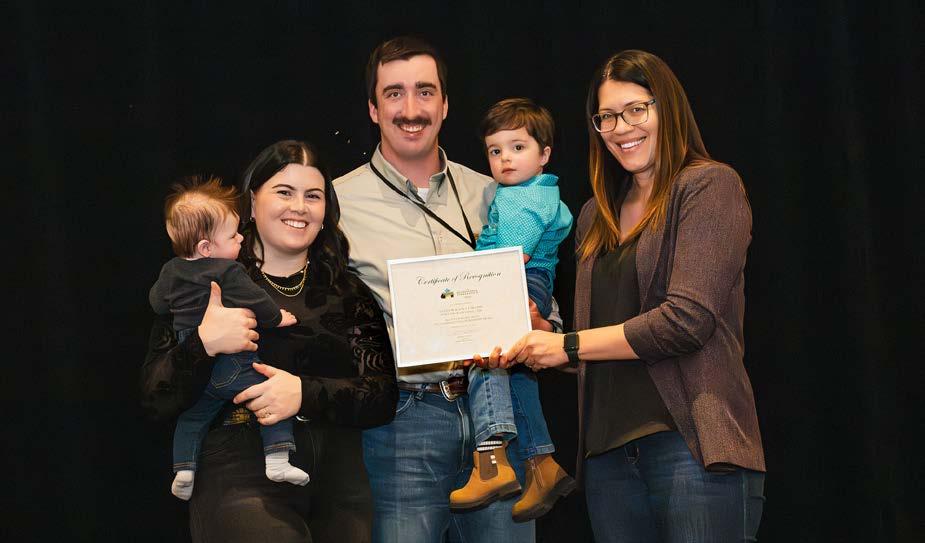
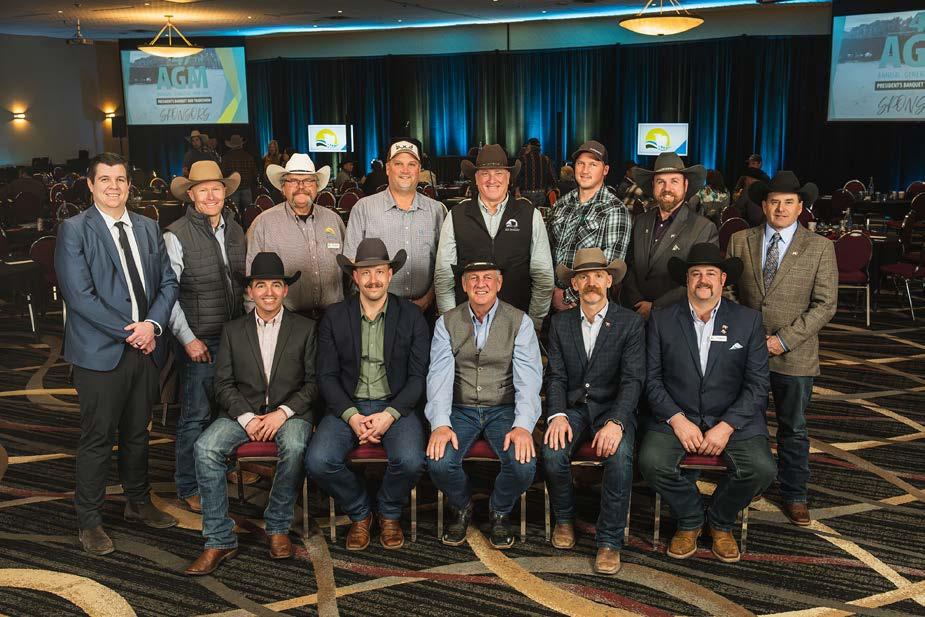
Connor and Kyla English of English Ranching Ltd. accepted the 2025 Manitoba Environmental Stewardship Award (TESA), presented to them by Stacey Stott of MNP, at the Manitoba Beef Producers AGM on February 12 in Brandon.
The couple received the award for their dedication to sustainable farming and adoption of environmentally-friendly practices on their family farm at Bradwardine, Manitoba.
In his nomination of the Englishs, Andre Steppler of Steppler Farms Ltd said they are “thoughtful, motivated and principled individuals whose commitment to sustainability and advocacy clearly sets them apart.”
After Connor rented some pasture and began building his own cattle herd in 2021, he began farming alongside his parents, Brian and Leanne English of Melody Acres Beef, the following year, bringing with him new ideas to enhance the regenerative and conservation practices his dad was already practicing on the original family farm.
That winter, the Englishs grazed standing corn for the first year, and began to convert 80 per cent of their farmland to forages, dividing pastures into smaller paddocks with temporary fencing to allow for daily moves to avoid overgrazing and allow the land to rest and rejuvenate between grazing.
Water management is one of the biggest challenges on their farms, and they have developed two very low flowing water wells that pump water into a buried 15,000-gallon tank for watering the cattle during winter. They have installed solar watering systems for summer and winter watering sites, with both a stationary solar direct water pumping system, and another mobile solar system to move with the cattle.
They practice silage pile grazing as well as bale grazing out on the paddocks, returning manure and urine back to the land to improve soil health and reducing labour and fuel costs for hauling bales and manure.
Proud to reduce food waste
The Englishs are proud to be involved in a national program called LOOP that aims to reduce food waste from grocery stores by feeding it to cattle. “The biggest reward we find is the knowledge that we have
stopped the large tonnage of food from being dumped into our landfills, where it takes years to breakdown,” Connor said in his TESA submission.
In nominating the couple, beef producer (and former TESA recipient) Ryan Boyd said they “actively pursue ongoing education to stay at the forefront of conservation practices, ensuring their methods are innovative and effective.”
Continuous learning is important to Connor and his dad, who frequently attend courses, field days and virtual learning events. They have also hosted a field day to show attendees their many regenerative practices such as intercropping with corn and peas, multi-species cover crops and their watering systems.
They are working towards their goal of raising nutritionally dense, healthy livestock and reducing the use of industrial fertilizer and chemical sprays and having completely eliminated the use of fungicides on both their farms.
Their conservation practices have encouraged wildlife to thrive on their land, where they frequently see moose, deer, rabbits and many new or returning species of birds. It seems that their farms are a great place to live for wildlife, cattle and people.
Volatility related to trade
It’s uncertainty related to trade, though, that is going to contribute to volatility in the markets as it has over the past year. Grant outlines a number of factors that could affect Canadian beef exports both positively and negatively.
China’s new safeguard program, designed to limit beef (and other protein) imports by imposing import quotas and build their domestic supply allows Canada limited access to a market that has been closed to Canadian beef since 2021. Canada didn’t get its own quota, and shares a 172,000 metric ton quota with other countries mainly in Europe.
“Any individual country within the other country category can only ship a maximum of three percent [of the quota allocation], so that’s about 80,000 tons which is well above what we shipped in the past,” Grant says. “It’s definitely a positive in terms of getting market access in 2026.”
Brazil, Grant warns, is one beef exporting country that should not be underestimated. While it may need to redirect around 500,000 tons of beef exports from China due to the new quotas, it has plenty of other market options, and have been working hard to improve their productivity.
“Brazil has shown they can increase their herd, domestic production, domestic supplies and exports all at the same time, and are doing a lot of amazing things to make that happen,” Grant said. “They are a powerhouse in agriculture and particularly in the beef industry.”
Meanwhile, the U.S. beef herd is in a consolidation phase, Grant said, with higher interest rates and input costs, as well as spotty moisture slowing down any rebuild. With the US border remaining closed to Mexican feeder imports due to the New World Screwworm outbreak, and US beef production already down four percent in 2025and projected to be down another one percent this year, that’s adding support for the market and prices.
Domestic beef demand remains high
Canadian domestic beef demand remains high, and is likely to remain so when population growth is factored in.
“The increase in retail beef prices here in Canada with that steady supply is a strong demand signal that we’re getting from our Canadian consumers,” Grant says. “We continue to see strong support in terms of that Buy Canadian movement and overall protein demand as well.”
Affordability is of course a concern, especially as wage inflation lags behind food inflation in Canada, meaning the average consumer can buy fewer pounds of beef per hour worked than in the past. But the overall the message is that they want more beef and are willing to pay for it.
“One of the things that has been supporting that demand story has been the increase in quality grading that provides a consistent eating experience for consumers,” Grant said. “Last fall we reached 12 percent prime [grading] on a weekly basis for several weeks, and it was the first time we’ve ever done that. Overall through the year we’re at about six percent. We have lagged behind on the demand for prime product in Canada for several years so the fact that we’re finally getting there is really positive.”
Where are cattle prices heading?
Grant predicts cow prices could be up around eight percent to $240/cwt after the spring rally, with continued volatility and risk in the fed market. While in the US there is optimism for the fed market to go higher if the border remains closed
to Mexican feeder imports, but in Canada, feedlots paid high prices last fall, and are relying on a spring rally to break even.
“For anyone looking at yearling grassers, we have definitely seen this market bounce back almost to the highs that we saw last October,” Grant says. “Looking at calves, we’re still below that October high that we saw, but we have definitely seen some pick up in the last couple of weeks on the calf market. And last fall, Alberta had a significant premium over both the US and Ontario driving those imports into that market.”
Bred heifer prices have been averaging around $5,600, but whether that price is a good or bad buy is based on many factors including individual producers’ cost of production and the production performance and longevity of each animal.
“Not every cow in the herd is profitable, you just need more profitable ones than unprofitable ones, that’s the goal,” Grant says. “When I am asked by young producers about whether they should buy, my comment is don’t put all your eggs in one basket, spread it around, get a little bit of different things at different prices so that you’re not all-in on one thing. You don’t have to buy your entire herd in one year, spread it over time.”
It’s the cow/calf producers moment
In today’s cattle cycle, it is cow/calf producers who have the most leverage and are realizing the lion’s share of profit in the industry, but it’s not going to last forever.
“The real question for cow/calf guys is what are you doing with it to set yourself up for the next phase in the cattle cycle?” Grant said. “How are you setting yourself up in terms of re-investing those profits to be more competitive and resilient?
Dr. David Kohl from Virginia Tech talks about the 60/30/10 rule of the re-investing of agricultural profits. Sixty percent to go into efficiencies on your operation, 30 percent into working capital because we know that, as small businesses, cash flow can be a major crunch, and then 10 percent into things to enjoy because we all need things that we enjoy in this business.”



BY ANGELA LOVELL
At MBP’s AGM on February 12, Manitoba Agriculture Minister Ron Kostyshyn announced that Manitoba Agricultural Services Corporation (MASC) will pilot a new approach to offering forage insurance for the 2026 crop year.
“Producers
The pilot project aims to reduce reporting requirements and improve production estimates for Manitoba forage producers through advanced satellite-based technology. The project will use satellite-based technology to estimate soil moisture and predict forage production, helping streamline the reporting process while maintaining program accuracy and integrity.
“Producers work hard every day to keep their operations running, and they deserve programs that work just as hard for them,” said Kostyshyn in a press release. “This pilot project is an important step toward reducing paperwork and improving accuracy, so forage producers can spend more time in the field and less time on reporting.”
MASC will use this technology alongside its traditional reporting structure to gather insights and
feedback from participants. This approach will help determine whether the technology can be adopted permanently within the Forage Insurance program.
Producer organizations have identified reporting requirements as a barrier to participation in forage insurance. Working in partnership with producers
lot to approximately 50 forage insurance participants for the 2026 crop year at no additional cost. Working with organizations, such as the Manitoba Beef Producers, MASC will select participants to ensure a representative sample across regions and production systems.
The Forage Insurance program is part of MASC’s AgriInsurance suite, which provides predictable protection against natural perils such as drought, excess moisture and other extreme weather events.
and industry will help to ensure risk management programs meet producers’ needs.
“Manitoba Beef Producers has long advocated for more effective and efficient business risk management tools for the beef industry to use. Evaluating new technologies such as this that could help simplify the administrative burden in forage insurance offerings is a great step forward and we thank governments and MASC for advancing this important pilot project,” said MBP Chief Executive Officer Carson Callum.
MASC will offer participation in the pi-










Eligible cattle producers receive incentives, custom grazing plan and aerial map
The new Ducks Unlimited Canada ‘RangeFlex’ program launching this spring will provide Manitoba beef producers with knowledge and cash to improve their pastures, enabling better profits per acre from grazing herds.
Ducks Unlimited Canada (DUC) will administer the program over five years across the Prairies, in collaboration with national funding partners. In addition to incentive payments for each quarter section approved for development, DUC will provide a grazing plan customized to the individual operation and a large, laminated aerial map of the farm.
Temporary and permanent fencing, virtual fencing, off-site water systems, dugouts, underground water pipelines and sod-seeding legumes into existing rangeland are examples of eligible projects.
Tame and native pastures will be eligible for RangeFlex funding, as both work cooperatively in a well-planned grazing system. Native species tend to see increased growth later in the season and are more sensitive to overgrazing, so careful management is re-
movement of animals negatively impacts pasturelands. When cattle are free to graze without restriction, they go after the more palatable species first which tend to be the ones most sensitive to overgrazing. A comprehensive grazing plan can optimize plant health and productivity while also improving livestock nutrition.
“Farmers can spend the incentive payments where they feel it’s most useful in their operations,” explains Karli Reimer, DUC’s Head of Communications and Outreach for Western Canada.
“This non-prescriptive approach, combined with outstanding extension, will help producers increase the viability of their operations while also supporting biodiversity of prairie grasslands.”
“Farmers can spend the incentive payments where they feel it’s most useful in their operations,” explains Karli Reimer, DUC’s Head of Communications and Outreach for Western Canada. “This non-prescriptive approach, combined with outstanding extension, will help producers increase the viability of their operations while also supporting biodiversity of prairie grasslands.”

quired to preserve species richness. Tame forages are the ultimate complement to native grasslands, taking pressure off ecologically important grasses during critical growth and recovery periods.
To facilitate post-grazing recovery, RangeFlex participants will receive a grazing plan tailored to their operation. Continuous grazing with no controlled
Use the QR code to find out more about RangeFlex or contact Charlotte Crawley at 204-868-5599.


“The biggest thing I’ve learned is to give our pastures and perennial ground that recovery time,” says Cam Hodgins, who runs a cow-calf operation with his family near Lenore, Manitoba. “There’s a difference between rest and recovery. If you broke your arm and continue using it all the time, it’s not going to heal. Same with the grass. We’ve been able to implement recovery time on our farm and it’s really helped our operation grow.”
RangeFlex builds upon a highly successful pasture improvement program offered by DUC in 2022-2024, which funded new infrastructure on 14,000 acres in Manitoba. Intake for the new program began in January at Ag Days 2026 in Brandon, with DUC staff characterizing landowner interest as “phenomenal” and available spaces are filling fast.





(February 25, 2026 Agriculture and AgriFood Canada media release)
Canadian livestock producers play a vital role in ensuring a stable food supply and supporting rural communities across the country. To address the challenges of rising costs and to ensure fairer program support, federal, provincial and territorial governments have made improvements to AgriStability.
Today, the Honourable Heath MacDonald, Minister of Agriculture and Agri-Food, announced that the AgriStability guidelines have been amended to add pasture-related feed costs as an allowable expense under the program, beginning with the 2026 program year. By including pasture-related feed costs, AgriStability will provide more equitable support for producers whose animals graze on land they do not own, particularly cow-calf, sheep, and goat farmers, who rely heavily on rented pastureland. These improvements reinforce the Government of Canada’s ongoing commitment to strengthening risk management tools for farmers and helping the agricultural sector remain resilient.
“Canadian livestock producers deserve risk management programs that reflect the realities of their operations. Adding pasture-related feed costs as an allowable expense ensures fairer support for those who rely on rented pastureland. Our government is committed to supporting producers with effective, responsive programs to protect farming operations.”
- The Honourable Heath MacDonald, Minister of Agriculture and Agri-Food


In response to producer feedback and concern about proposed amendments to Part XV (Traceability) of the Health of Animals Regulations, the Canadian Cattle Association (CCA) has launched an online traceability feedback survey to ensure that producers have an opportunity to share their feedback. This survey is based on the proposed regulations that were anticipated. The proposed regulations are not in place, and the publication date has been paused. Producer feedback collected through this survey will be used to inform CCA’s next steps. CCA will use feedback collected through the survey only in aggregate. No personal information will be shared.
Scan the QR code to participate in the survey.
For reference: CFIA’s statement on the pause can be found at https://www.canada.ca/en/food-inspection-agency/ news/2026/01/statement-from-the-canadian-food-inspectionagency-on-proposed-amendments-to-livestock-traceabilityregulations.html

CCA’s resource for understanding the proposed regulations can be found at https://www.cattle.ca/wp-content/uploads/2026/01/Understanding_Proposed_ Traceability_Rules-15_January_2026.pdf

BY CRYSTAL BERTHELETTE, P.AG. – FARM MANAGEMENT SPECIALIST, MANITOBA AGRICULTURE
Farms are heavily exposed to so many risks – weather, pests, trade, price, human resources, regulatory, cybersecurity, storage/spoilage, predation and others. Managing business risks requires a multi-pronged approach. Producers should be intimately familiar with their production costs and their farm’s financials. Having a business plan, a marketing plan, a team of trusted advisors and a clear understanding of cash flow are major pillars in a successful farm business. Business Risk Management (BRM) programs are also available to help. BRM programs can work together by providing protection for different types of losses, as well as cash flow options. BRM programs for Manitoba producers are cost shared between Manitoba Agriculture, and Agriculture and Agrifood Canada (AAFC) under the Sustainable Canadian Agricultural Partnership. BRM Suite for Livestock Producers:
1. AgriStability
• The program assists in cases of large margin declines and responds to changes in input costs (e.g., fuel, feed.) and commodity prices.
• Sign up for the program is generally due at the end of April.
2. Livestock Price Insurance Program
• This program offers cattle producers protection against unexpected market price declines by setting a floor price.
• Feeder policies are available year-round. Calf policies are available from February to June.
3. AgriInvest
• Contributions to the savings account are based on the participant’s allowable net sales (ANS) and the maximum government contribution is one per cent.
• Initial deadline to submit forms is usually at the end of September. Producers can withdraw funds at any time.
4. Advance Payment Program
• This federal loan guarantee program can provide farms with cash flow until producers are able to sell their agricultural products.
• This annual program opens in April.
5. AgriRecovery
• This is a disaster relief framework designed to help producers with extraordinary costs incurred to help them resume operations after a disaster. Programs are announced only in the event of a disaster.
Producers should familiarize themselves with the different programs available in the BRM suite. A trusted accountant or farm business advisor can also provide advice and support on BRM programs and the application forms. Review and consider the BRM programs on an annual basis to determine if participation makes sense for your farm operation. You can mitigate some of your risk, and plan for an economically sustainable future, using resources available to Manitoba producers including BRMs, grant programs, workshops, calculators, webinars, advisors and more!
Questions about BRMs or other farm business management topics? Visit us at www.gov.mb.ca/agriculture/farm-management or email the team of farm management specialists at mbfarmbusiness@gov.mb.ca
In the next issue of Cattle Country, a Manitoba Agriculture forage or livestock specialist will answer a selected question. Send your questions to Elizabeth.Nernberg@gov.mb.ca.
StockTalk for Cattle Country is brought to you by Manitoba Agriculture. We encourage you to email your questions to our department’s forage and livestock team. We are here to help make your cattle operation successful. Contact us today.
Kristen Bouchard-Teasdale Beausejour 431-337-1688 Kristen.BouchardTeasdale@gov.mb.ca
Cindy Jack Portage 204-768-0534 Cindy.Jack@gov.mb.ca
Juanita Kopp Beausejour 204-825-4302 Juanita.Kopp@gov.mb.ca
Elizabeth Nernberg Roblin 204-247-0087 Elizabeth.Nernberg@gov.mb.ca
Pam Iwanchysko Dauphin 204-648-3965 Pamela.Iwanchysko@gov.mb.ca
Josie Pedersen Killarney 431-266-0171 Josie.Pedersen@gov.mb.ca
Amaglen Limousin
Diamond T Limousin
L&S Limousin Acres


Amanda 204-246-2576 204-823-2286
View bulls & females for sale online at: www.amaglenlimousin.ca
Cherway Limousin
Cheryl 204-736-2878
Bulls & females for sale can be viewed online at: www.cherwaylimousin.ca
Circle Dot Ranch
Wayne Yule 204-383-5390
Breeding Limousin for 45 plus years
Limousin and Limo cross feeder calves for sale
Travis 204-851-0809 Brodie 294-901-1437
2 year old and yearling bulls for sale on farm. email: diamondtlimo@gmail.com
Gutek Limousin
Jeff 204-656-4953
Fork River, MB
2 yr old polled bulls available private treaty on farm Hockridge Farms
Brad 204-648-6333 Glen 204-648-5222
Bulls for sale on farm, feeder calves sell on TEAM Auction. email bradhockridge@gmail.com
Lawrence 204-851-1449
Bulls sell March 28th at Douglas Bull Test Station and private treaty on farm Maplehurst Farms
Bob 204-274-2490 Tim 204-871-0996
Kaitlin 204-871-3489

Bulls for sale on farm, Douglas Bull Test March 28th and Lundar Bull Sale April 4th.
Pine Creek Limousin
William 204-851-1835 Brady 204-851-3121
Bulls for sale on farm & Douglas Bull Test March 28th
www.mbbeef.ca
Proudly hosting the National Limousin Show at MB Ag Ex in Brandon the end of October. See you there! Watch for updates on Facebook
It is March, and the Canadian cattle market is on a “bull” run. Prices have fully recovered and surpassed the market correction in the mid-fall of 2025. The prices have reached new thresholds higher than most of the experts predicted. The message to producers has been very consistent from the many cattle association spring meetings: “The fundamentals that drove cattle prices to record levels are still in place.” There will be continued volatility and some high risk in the cattle feeding business, but cow calf producers can expect strong prices for 2026.
In Canada, many think that the feeder market is getting very close to its peak. The fed cattle market has some room to move upward. Analysts from south of the border are predicting a 10% increase in the price of fed cattle in 2026. That, combined with a favorable exchange rate will draw some fed cattle south to be processed. Canadian packers will have to be competitive, especially for cattle in Alberta and Ontario.

Canada is at the starting gate for herd expansion. We have seen a halt in the contraction section of the cattle cycle and producers are cautiously considering rebuilding their herds. Any major expansion is a few years away. On the American side of the border, the national beef herd shrank an additional 280,000 cows in 2025. The US beef cattle herd is at least 12 to 16 months behind the Canadian shift in rebuilding and expanding their herds. If drought continues, any expansion in the US cow herd will be delayed.
Rebuilding a cow herd takes time when retaining
will take some incentives. For example, a tax credit for producers retaining heifers to breed to expand their herd size. A tax credit for those producers purchasing bred heifers that remain in the herd for a minimum time might create some interest.
No one can predict what President Trump will say next. Tariffs and access to markets will cause uncertainty. The best advice I can give is, don’t panic, the kneejerk reaction to Headline Risk will usually correct itself.
The fundamentals for the feeder cattle market remain firm. Tight cattle supplies, strong demand for beef and reasonably priced corn and feed support strong feeder cattle prices. On the technical side of the market, the feeder cattle futures continue to reflect the supply realities.
heifers. If you start saving heifers from the 2026 calf crop, then breed them in 2027, it is 2028 before the first calf and any influence on the beef production numbers is made. It is my opinion that Canadian producers will try to rebuild their herd inventory back to predrought, but to get them to expand their numbers

When the market is this high, it is very susceptible to volatility. Last October we saw just how sensitive the market can be. There will be potential for short-term disruptions in the cattle markets. A relatively new term has arrived, “Headline Risk.” Simply defined, it means media influence on the market. Last fall President Trump made a number of off-the-cuff statements that the media made into major new stories. Those stories were created with sensational headlines and very little research. Those same stories spooked the traders in Chicago, causing price limit down drops in the cattle commodities on the CME. I would expect that there will be lots of headlines come out of the CUSMA review and future negotiations on the new trade agreement. Not all of the reports will be favorable. If the same scenario repeats, we can expect volatility. No one can predict what President Trump will say next. Tariffs and access to markets will cause uncertainty. The best advice I can give is, don’t panic, the kneejerk reaction to Headline Risk will usually correct itself. The futures market tends to overreact, especially if the news is negative.
Weather conditions will play a major role in the next 12 months. Drought will negatively affect crops and pasture conditions.
The demand for beef appears to be steady. The price at the retail level looks high, but the consumers are willing to pay. Canadian beef is considered very high quality and is safe. Beef friendly diets are changing the way the younger generation looks at beef. Imports of grinding beef will help keep hamburger more affordable.
It certainly looks like there is high potential for profitability in the cow calf sector again this year and probably for the next two to three years.
I was able to attend the Manitoba Beef Producers AGM in Brandon. It was great to see the larger than normal attendance. There were a number of new faces at the event, and the demographics of the attendees appeared to be younger, all promising points for the Manitoba beef business. The discussions on traceability were not as heated as I thought they would be. Producers had a chance to present their concerns or support of the proposed changes to regulations. Many of the comments dealt with pasture movements, local fairs, rodeos, 4-H days and trips to the vet clinic. There were concerns about the seven-day reporting window and proposed monetary penalties for non-compliance, all valid points. A lot of the producers in attendance were working with incomplete information, and there is no doubt that the ball was dropped on the educational program for producers after the publication of the proposed regulatory changes in Canada Gazette 1 (CG1). Following the comment period for the CG1 publication, the Canadian Food Inspection Agency (CFIA) published the “What We Heard” report. In that document, there were many comments on the concerns listed above. Those comments got the CFIA’s attention, and it is my hope that there will be positive modifications in CG2 to address those concerns, but there are no guarantees as to the content of CG2 until it is published.
In closing, I also wanted to recognize Mark Good and Mike Duguid, MBP directors whose terms ended this year. I met both of these fine gentlemen through their work at MBP. They each worked very hard to represent the Manitoba cattle producers on a number of files. Also, a big thanks to Matthew Atkinson whose term as president has ended. He has worked tirelessly advocating for the cattlemen. We get to keep him working and have the advantage of his skills and knowledge for another couple of years in his role as past president. Until next time, Rick
BY: DR. TANYA ANDERSON, DVM
Calf scours remains a major health concern during calving season with a plethora of products available for the prevention and/or treatment of scours. Nothing is worse than trying to keep scouring calves alive during a busy calving season when labour is scarce and all are exhausted. Similarly, dealing with pneumonia outbreaks in young, hard to catch calves can become a logistical nightmare.
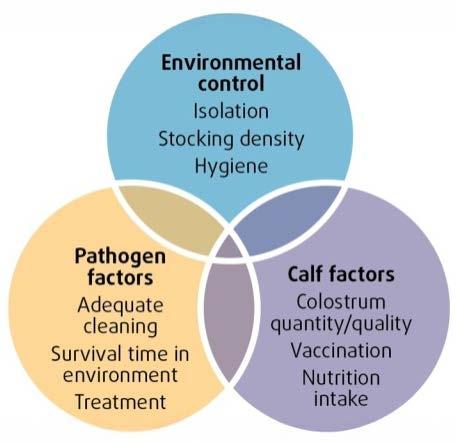
Understanding how to prevent disease and understanding why vaccination of both cows and calves does not always work requires a review of the disease triangle concept. Disease triangles are used to understand how epidemics can be predicted, limited and controlled. Note the three factors in the image below that must all interact to cause disease - a susceptible host “calf”, a disease-causing pathogen “bug” and an environment favouring the development of disease. A fourth element, time, is also especially important during scours outbreaks and creates the disease pyramid. Scour pathogens build up in the environment over time and that is why later born calves in intensive conditions tend to get sick… the calving environment has been contaminated by all those born earlier that season.
If any of these sides is missing or significantly weakened, disease cannot develop or spread. In contrast, if the “negative” side, the pathogen, is strong, disease risk is significantly increased. This can be seen with very virulent strains of disease-causing organisms where fewer bugs can cause disease. If an environment that minimizes the survival of the pathogen or prevents contact
of the pathogen with the host (as in the calf) exists, disease won’t happen. If the calf is well nourished and has strong immunity, it stays healthy.
Understanding the disease triangle concept lets you predict if disease should be expected and what disease prevention strategies you should prioritize based on your individual situation. Calf scours is much more common in winter and early spring calving herds since intensive management is often required to ensure calf viability. Stocking density is higher and often environmental conditions such as excess cold, wind, snow or rain exist that create added stress to the cow/calf pair.
Lack of straw or wet conditions during spring runoff cause chilling and allow scour bugs to better proliferate in the environment. Earlier this year and last fall, the extreme temperature fluctuations, windchills and high humidity created the perfect environment for both pneumonia and scours in cattle of all ages. These are examples of how the weakening of the environment side of the disease triangle makes it easier for disease to develop.


Why do some May/June or summer calving herds have disease outbreaks? Environmental stressors like extreme heat, excess rain or flies can prevent timely intake of colostrum or result in group congregation. Under-nutrition (for all herds) due to drought conditions, poor water quality/quantity or feed quality issues also affects colostrum and milk production. Bringing in new animals to the herd or fence line contact with other herds and wildlife can also introduce disease.
Traditionally we have always focused on the host factors with neonatal disease - ensuring adequate colostrum, vaccination and cow nutrition. But equally important and perhaps more importantly as herd sizes increase and the available labour pool shrinks, we need to focus on another area of the disease triangle - the environment. Next time you are having a health issue in your herd, keep the disease triangle in mind and look at the problem from a new angle. Vaccines and drugs can’t work if hygiene is lacking, sick animals don’t get treated in time or the environment does not support good health. Until all the sides of the triangle are shored up, yearly health issues will continue.




BY DR. YVONNE LAWLEY AND DR. EMMA MCGEOUGH, DEPARTMENT OF PLANT SCIENCE AND DEPARTMENT OF ANIMAL SCIENCE, UNIVERSITY OF MANITOBA
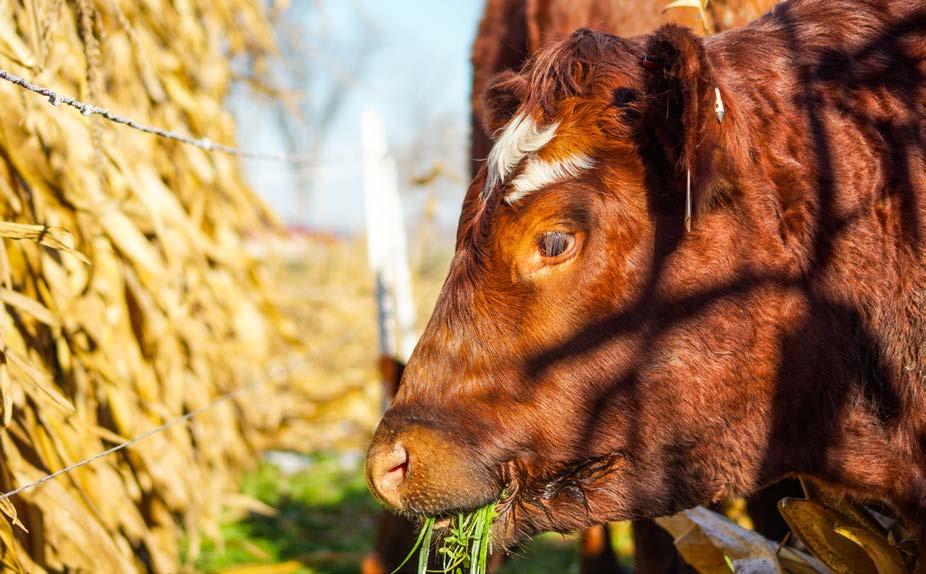
Extended grazing is a key component of many beef operations and corn grazing in late fall/early winter is one such extended grazing strategy utilized on cowcalf operations in western Canada. Benefits of corn include high yields and energy content, and provision of shelter owing to its tall standing height. However, pure stands of corn are low in dietary crude protein, thus their potential for grazing of other classes of cattle with higher nutrient requirements, such as replacement heifers and backgrounded cattle, is limited. As a result, there is interest in the ability to grow high protein forages between corn rows to offer supplemental protein to maximize productivity of corn grazing for not only mature cows but also for growing cattle.
The concept of growing a more complete ration for grazing is appealing but several questions remain about the strategies that will work best to establish and manage corn intercropping for successful grazing. These questions include selec-
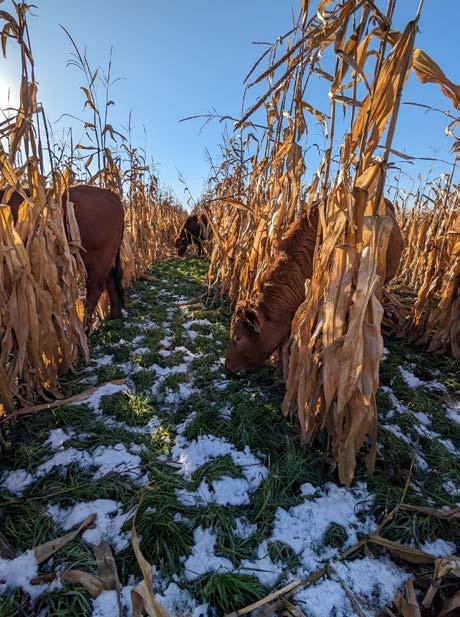
tion of intercrop species, seeding method and timing, optimal row spacing for the corn and intercrop, and weed control options. To answer some of these questions, a Manitoba-based study, led by Dr. Yvonne Lawley, from the Deptartment of Plant Science at the University of Manitoba in collaboration with Dr. Emma McGeough from the Department of Animal Science was conducted from 2022 – 2024 at the Ian N. Morrison Research Station near Carman, Manitoba.
Replicated field experiments compared corn grown on 30 and 60 inch row spacing with and without a five-way intercrop mixture of hairy vetch, crimson and red clover, Italian ryegrass, radish that was seeded at 40 kg/ha. The intercrop mixture was seeded either at the time of planting with the corn (May 13-24) or when the corn reached the V4 stage (June 13 - July 15) after an in-crop herbicide was applied. Two intercrop seeding methods (drill and broadcast) were compared at these two planting times. A dual-purpose grain and silage corn hybrid was used in the experiment with a maturity of 2100 CHU. Corn was planted at 36,000 plants ac-1 in the standard 30 inch row treatment and at 18,000 plants ac-1 for the wider row treatment on 60 inch row spacing in order to keep plant to plant spacing within rows consistent and avoid corn lodging. Corn was fertilized with nitrogen based on soil tests for a target yield of 150 bu/ac.
These contrasting agronomic strategies to establish corn intercrop stands in the study were evaluated based on the ability of the intercrop to establish with the corn crop, the aboveground biomass of the corn and intercrop. As seeing strategies also intersected with weed management, the biomass of weeds was also compared in the experiment.
With such a wide range of seeding strategies for corn intercropping evaluated in this experiment, much was learned about corn intercropping strategies that worked best and strategies to be avoided. As expected, the improved seed to soil contact when drilling the intercrop increased intercrop establishment compared to broadcast seeding, especially under dry conditions.
Growth of the intercrops seeded at planting with the corn was greater than when seeded at V4. However, there were site years where seeding at planting was too successful for the intercrop and it limited the corn growth, especially when corn was seeded on 60 inch spacing. Thus, if seeding the intercrop at the same time as the corn is a priority for logistical reasons, it was better to stick with standard 30 inch row spacing for corn. Seeding the intercrop at V4 on 60 inch rows resulted in a better overall intercrop where both the corn and intercrop mix performed across the three years of the study. One significant advantage of the delayed seeding of the intercrop was to allow for an in-season application of herbicide to limit competition with weeds.
This experiment has helped to identify the seeding strategies to successfully establish corn intercrops for fall and winter grazing. This helps to narrow the focus for future research to optimizing corn and intercrop target populations and fertilization rates. Both of these management decisions impact the cost to establish these intercrops. For any extended grazing strategy, cost is a critical consideration. Corn is typically considered a high input, high-cost crop, however this must be balanced with the potential yield benefits it offers per acre compared to other annual and perennial forage/crops. In this project Dr. Scott Jeffrey with the University of Alberta is currently leading an evaluation of the impact of producer returns of changing fall/winter grazing practices to incorporate corn and annual forage intercropping to quantify risk-return tradeoffs. This information will assess the economic viability of alternative options to contribute to informed producer decision making regarding fall grazing/winter feeding practices.
BY ANNA HYMERS
Do you ever get cooking anxiety? The kind that sneaks up when you’re making a new recipe, or even a familiar one, following it exactly as written, and somehow it looks nothing like the glossy photo in the cookbook. Company is arriving in an hour, nothing is cooperating, and suddenly ordering pizza feels like the most reasonable option. Or maybe you’ve nailed a recipe once, absolute perfection, only to never replicate it again. If that sounds familiar, you’re not alone. It happens to me too.
I like to pride myself on my baking skills. While I’m a chef by trade and classically trained as a cook, baking is where my heart really lives. So when I started developing this samosa recipe, I was chasing the memory of that one time I made the most perfect samosa dough: light, flaky, and crisp. Did I write it down? Nope. Could I recreate it? Also no. As deadlines crept closer, I had to accept reality and pivot.
Plan B was puff pastry. Easy. Reliable. I had even used it successfully in pizza rolls in a previous issue (June 2024). Feeling confident, I stopped at the store, only to find the shelf completely empty. Of course. Deep sigh. Enter Plan C: phyllo dough. That’ll work.
By the time I got home, I was actually more excited than I had been about the original plan. Phyllo turned out to be approachable and user-friendly, exactly what this recipe needed. The result was perfect little flaky pockets filled with warmly spiced beef and potato that were crispy, buttery, and delicious.
Pivoting and adapting is a learned skill in the kitchen, but I always remind myself that there are no rules. If you are the one cooking, you make them. Is phyllo a traditional samosa shell? No. Is it tasty and easy to work with? Absolutely. That is good enough for me.
This recipe does call for a few fun spices I don’t usually keep on hand, but I love an excuse to browse the ethnic aisles. Amchur powder, made from dried unripe mango, adds a bright fruity note, but it is completely optional. Asafoetida, another fun spice, I also couldn’t find, so I swapped in onion and garlic instead. When ingredients are hard to find, a quick online search usually leads to a perfectly acceptable substitute.
This recipe is the result of a little recipe development anxiety, but also a reminder that flexibility often leads to something even better. So, consider this your permission to pivot when things feel stressful. And if all else fails, pizza is still just a phone call away.
Enjoy!


(Makes about 40 pieces)
Ingredients:
2 medium – Russet Potatoes, peeled, large dice (350g)
1 Cup Green Peas, frozen
1 Tbsp Canola Oil
1 tsp Cumin Seeds
1 tsp Fennel Seeds
2 tsps Coriander, crushed
2 tsps Ginger, minced
½ small Yellow Onion, small dice
½ tsp Garlic, minced
1 lb Ground Beef, lean
2 Green Chiles, de-stemmed and minced
1 tsp Coriander, ground
½ tsp Garam Masala
½ tsp Amchur Powder (dried mango powder)
1½ tsp Kosher Salt
1 box Phyllo Dough, thawed
⅓ Cup Butter, melted
FILLING METHOD:
1. Boil the potatoes in lightly salted water until tender and lightly mash with a fork but still leaving chunky. Set aside until later.
2. Add the frozen peas to a bowl of hot (not boiling) water for about 5 minutes. Drain, then set aside.
3. In a large non-tick skillet or cast-iron pan, heat oil over medium high heat. Once oil is hot (shimmering), turn heat down to medium and toast the cumin, fennel and crushed coriander seeds in the oil until fragrant, stirring frequently, careful not to burn. (about 1-2 minutes)
4. Add the onions, garlic and ginger and continue to cook for another 3-4 minutes until softened.
5. Add the ground beef and brown until about 80% cooked.
6. Add the green chiles and remaining spices and salt. Stir until the beef is fully cooked.
7. Stir in the cooked potatoes and thawed peas until evenly combined. Adjust salt as needed.
8. Cool mixture completely before filling the phyllo.
TO ASSEMBLE AND BAKE:
1. Slice your stack of phyllo into four strips, along the shorter side. Remember to cover the phyllo you’re not using with lightly moist (not wet) clean towels as to not dry out.
2. Using two thin sheets of phyllo strips, brush with melted butter.
3. Scoop about 2 Tbsps of samosa filling at the bottom, then fold into triangle folds until you reach the top. (There should be directions on the box). Set onto a parchment lined sheet pan.
4. Repeat with remaining samosa filling and phyllo dough. Freeze whatever filling and/or pastry remaining until next time!

5. Brush all sides of the samosa with melted butter and bake at 375°F for about 16-18 minutes, turning over halfway to brown both sides.
6. Serve with your favourite sauces such as tamarind sauce, mango or mint chutney.