

BY: MARY-JANE ORR, MANITOBA BEEF AND FORAGE INITIATIVES
To increase profitability in all herd management situations, researchers are developing a new tool to maximize reproductive efficiency. Their work is also changing the very definition of an efficient cow.
“Is there a difference in the genome of those cows,” asks Mika Asai-Coakwell, lead researcher for the Forage Efficient Cow Project at the University of Saskatchewan. “Our interest is to study and identify those host genetic factors that contribute to the phenotypic factors.”
Simply, the Forage Efficient Cow Project is exploring how the genetics of a particular cow react

to its environment. Assessing this information will provide a roadmap to farmers hoping to maximize their herd’s ability to produce healthy calves, wean those calves and produce more calves in the following seasons.
The Forage Efficient Cow Project is building upon previous knowledge – including data sets gathered by Manitoba Beef & Forage Initiatives – to help producers select the cattle that best work within their system. Considerations include the mature cow frame, weight, how well she maintains body condition over the year and her ability to produce a calf in the
first cycle every year which grows to 50 per cent of the mother’s weight prior to weaning.
To better understand Asai-Coakwell’s research, we need to re-examine an important and highly valued measurement in cattle production: gain.
page 5
With winter finally over and cattle moving to or out on pasture, thoughts turn to grass management. Whether it’s native shortgrass prairie, tame grass pasture or coarse lowland grass, watershed districts under the Manitoba Association of Watersheds may have funding available for producers who want to improve utilization of their pastures by installing watering systems or by implementing rotational grazing. Producers may be eligible for up to $75,000 to cover up to 85 per cent of implementation costs. Cover crop and nitrogen management funding is also available. Funding limits may vary in each watershed district. Contact your local watershed district for more information about potential cost-shared funding opportunities.
Funding for watershed programs comes in part through the Sustainable Canadian Agricultural Partnership (SCAP) which is a five-year agreement between federal, provincial and territorial governments. There may also be funding available via the Growing Outcomes in Watersheds (GROW) program funded via the GROW Trust established by the Manitoba government. Manitoba Beef Producers (MBP) is active in suggesting the types of beneficial management practices to be funded.
MBP does this by gathering input from beef producers across the province that we submit to provincial and federal governments in the form of written comments or reports and also through in-person meetings. These meetings can be structured and formal such as presenting during a government committee meeting where a set amount of time is given to present and answer questions.
Or they can be informal meetings such as a recep-

President’s Column
tion hosted by the Canadian Cattle Association (CCA) in Ottawa for Members of Parliament, Senators and their staff. During a CCA reception in Ottawa earlier this year I was able to discuss grass management with an MP. He quizzed me about rotational grazing and its relationship to stocking rates, the effectiveness of using electric fences when cross fencing, and my thoughts on solar watering systems.
I also mentioned that having cattle on grasslands helps preserve habitat for other species, reduces the risk of wildfires and ensures wetlands are protected. It was a productive conversation because I was able to point out how all these tools and practices benefit the grass, the cattle, the rancher, the economy and the environment. I thanked him for his interest and for providing federal tax dollars towards programs to help ranchers implement these tools and beneficial management practices.
The United Nations understands this and has declared 2026 the International Year of Rangelands and Pastoralists. Their vision is that the economic, environmental and social importance of rangelands and the pastoralists as their custodians are fully recognized, rewarded, safeguarded and protected. With this in mind the CCA has invited the Director General of the United Nations Food and Agriculture Organization (FAO) to Alberta during the Calgary Stampede to tour rangeland that has benefitted from cattle grazing on it. This
Manitoba Beef Producers (MBP) is accepting applications until Friday, December 18, 2026 for consideration for the local awarding of The Environmental Stewardship Award (TESA).
Since 1996, TESA has recognized producers who go above and beyond standard industry conservation practices and set positive examples for other cattle producers and the general public. As stewards of a vast portion of the Canadian landscape, Canada’s beef cattle producers play a significant role in protecting and enhancing the environment. They continuously strive to improve existing stewardship conservation practices to create a sustainable future – always farming for tomorrow.
At the local level, a producer receives provincial recognition for their outstanding environmental contributions. In Manitoba, this occurs in conjunction with MBP’s annual general meeting in February. All provincial award recipients then move forward to compete for national recognition from the Canadian Cattle Association (CCA). The national TESA recipient is announced during the CCA’s semi-annual meeting held in mid-summer or early fall.
Each nominee exemplifies significant innovation and attention to a wide range of environmental stewardship aspects in their farm or ranch operation. Such innovations extend beneficially to areas far beyond their land, including water, wildlife and air.
high-profile tour will also include other senior officials from FAO as well as MPs and federal government staff. Stops will include visits with ranchers from southern Alberta and a delicious meal featuring Canadian beef. The Public and Stakeholder Engagement (PSE) division of the CCA is organizing the tour. They will ensure that all information presented is factual and effectively communicated. Journalists, content creators and social media influencers will be in attendance to help spread the message of the benefits of cattle on the range.
PSE has five additional ranch tours planned this summer and fall. The locations are Kamloops, BC, Saskatoon, SK, Winnipeg, MB (in conjunction with the Canadian Beef Industry Conference), Halifax, NS and Toronto, ON. On each tour, the provincial beef associations will be inviting elected officials while PSE focuses on media and content creators. In the past, oneday influencer events hosted by PSE have generated close to one million impressions on social media. PSE has developed short documentaries to get the message out to the broader public. Films like Guardians of the Grasslands, Too Close to Home, and Reduce, Reuse, Ruminate showcase the environmental benefits of cattle.
So, while you are out checking your cattle consider how a cross fence might help stockpile some grass for the fall or next spring. Think about where a well might be a benefit. Take advantage of the programs available to accomplish your goals. Whatever the venue, whomever the audience, whether they are from Manitoba or Canada or the United Nations, MBP along with CCA and PSE are active in promoting the benefits of having cattle on the pasture.
All beef cattle operations in Canada are eligible to apply for consideration for TESA. Interested producers can either nominate themselves, or be nominated by another individual or an organization. All methods are equally encouraged. More details and the application form can be found at: TESA Information
Note: If you are a producer who is considering self-nomination, MBP can provide you with guidance and suggestions on completing the application process. The completed application form, along with all supporting documentation (such as letters of support, photos and/or videos), is to be submitted to Manitoba Beef Producers by email to info@mbbeef.ca no later than Friday, December 18, 2026. If you have questions, please contact the MBP office at 204-772-4542.

DISTRIC T 1 TYLER FEWINGS Boissevain-Morton, Brenda-Waskada, Grassland, Deloraine-Winchester, and Two Borders
DISTRIC T 2 MARK SCHRAM
Argyle, Cartwright-Roblin, KillarneyTurtle Mountain, Lorne, Louise, Pembina, and Prairie Lakes
DISTRIC T 3 ANDRE STEPPLER
Cartier, Du erin, Grey, MacDonald, Portage la Prairie, Rhineland, Roland, Stanley, Thompson, Montcalm, Morris, and Ritchot
DISTRIC T 4
BYRON FALK De Salaberry, Emerson-Franklin, Hanover, La Broquerie, Piney and Stuartburn, Montcalm, Morris, Ritchot, Spring eld, Ste. Anne, Taché, R.M. of Piney and Reynolds
DISTRIC T 5 STEVEN MANNS Cornwallis, Elton, Norfolk-Treherne, North Norfolk, Oakland-Wawanesa, Glenboro-South Cypress, and Victoria
DISTRIC T 6 BRIAN ENGLISH Pipestone, Riverdale, Sifton, Souris-Glenwood, Wallace-Woodworth, and Whitehead
DISTRIC T 7 TYLER FULTON
Ellice-Archie, Hamiota, Prairie-View, Riding Mountain West, Rossburn, Russell-Binscarth, and Yellowhead
DISTRIC T 8 MATTHEW ATKINSON Clanwilliam-Erickson, Glenella-Lansdowne, Harrison-Park, Minto-Odanah, Oakview, North Cypress-Langford, Rosedale, and West Lake-Gladstone
PAST PRESIDENT
DISTRIC T 9 TREVOR SUND Alexander, Brokenhead, East St. Paul, Lac Du Bonnet, Rockwood, Rosser, St. Andrews, St. Clements, St. Francois Xavier, West St. Paul, Whitemouth, Woodlands, LGD of Pinawa, Reynolds, Spring eld, Ste. Anne, and Taché
DISTRIC T 10
ADAM DMYTERKO
Armstrong, Bifrost-Riverton, Fisher, and Gimli
DISTRIC T 11
ARVID NOTT VEIT Coldwell, Grahamdale, St. Laurent, and West Interlake
DISTRIC T 12
MIKE BROWN
Alonsa, Lakeshore, McCreary, and Ste. Rose
Greetings friends. I hope the spring is going well. I know it is a busy time for calving and seeding for many, so here’s hoping it was successful and safe.
A lot is happening with Manitoba Beef Producers (MBP) this time of year. A key highlight is our spring fly-in we do in Ottawa in conjunction with the Canadian Cattle Association. This is a great opportunity to get in front of Members of Parliament and other government officials and staff to drive important beef industry messages forward. This took place at the end of May, where we focused on topics such as trade, animal disease prevention and preparedness, predation, water management, and the Next Agricultural Policy Framework, among others.
Work is progressing on our livestock inspection initiative. Lots is happening behind the scenes in conjunction with the provincial government to get the legislative and regulatory pieces in place to allow for this service to be launched and operated effectively and efficiently to help secure the Manitoba value chain. We will be planning an education period once we get through the legislative and administrative side of this important service in Manitoba, so stay tuned.
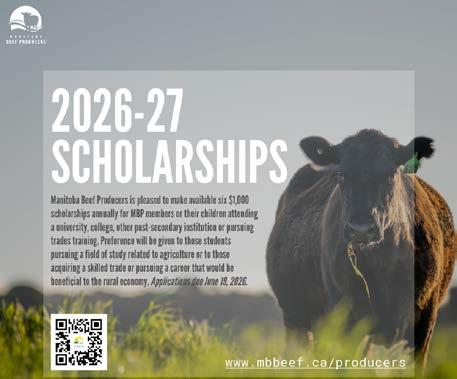
Time flies which also means the application deadline for our scholarships is fast approaching. MBP has six $1,000 awards for MBP members or their children attending a university, college, other post-secondary institution or pursuing trades training so please help us to spread the word about the June 19 deadline.
I am excited that the Canadian Beef Industry Conference (CBIC) is coming to Winnipeg this August 17-20, with registration now open. The conference, co-chaired by Kristine Tapley and Arvid Nottveit of Manitoba, will bring together producers, researchers, government, and industry professionals for discussions on the future of Canadian beef.
It kicks off Monday, August 17th with an Interlake tour hosted by MBP showcasing Manitoba’s agricul-

CARSON CALLUM Chief Executive Officer's Column
tural landscape and offering insights into the people, operations, and perspectives shaping the province’s beef sector.
Two industry meetings will be held on August 18th during CBIC: the Canadian Roundtable for Sustainable Beef Annual General Meeting and the Canadian Beef Check-Off Agency Annual General Meeting.
There will be a wealth of interesting speakers during CBIC. For example on August 19th, Gitane De Silva, a keynote speaker with experience in government, energy, and Canada-U.S. relations, will provide valuable context on policies, trade relationships, and market forces shaping Canada’s operating environment.
Overall, this event is good way to learn and connect with producers from across the country. I know time is always tight on the farm, but if you can even get in to Winnipeg for a day, I believe it will be worth the trip. There are options for single day registrations if there is a particular event or speaker you want to take in. I hope many of you can make it, and we can connect in person on how the summer has been going on the farm. For more details, visit www.canadianbeefindustryconference.com.
Before I end off this column for the month, I want to take the opportunity to thank a very important staff member at MBP who is retiring this summer. Deb Walger, our bookkeeper extraordinaire, has been with MBP for more years than I can count on my fingers and toes. She has kept the financials and audit of the organization running smoothly, even in years of major industry challenges such as BSE. She has
kept all staff and directors in check, and helped be a guiding force for success. I will greatly miss her on the team, both professionally and personally. However, I hope she moves on to things she truly enjoys, like gardening and hanging out with her pets. We will be transitioning to a new bookkeeper in the coming months, so stay tuned about that.
That’s all for now,
Happy summer (hopefully it will be feeling like it by the time you read this)!
Carson




BY: ANGELA LOVELL
Many experts believe that artificial intelligence (AI) has the potential to solve some significant issues facing today’s farmers, including a shrinking agricultural workforce and increasing the efficiency and productivity of farms to make them more competitive globally.
“Artificial intelligence offers timely and scalable solutions to automate routine tasks, boost efficiency, and redirect human effort toward higher-value work,” says the Conference Board of Canada in its 2025 report: Harvesting AI’s Potential Graham Dobbs, Senior Research Associate of Innovation and Technology for Signal49 Research, sees AI as an easy value-adder for reducing waste and making farms more efficient in terms of production, and with the ongoing growth of AI’s capabilities in reasoning and informing complex, data driven decision making, he sees a future where AI helps farmers navigate everything going on at the farm, but from a more 10,000 foot view.
“Instead of having to spend hours doing routine tasks and checks, they can have the AI help inform that overall process,” he says.
But the same report shows that AI adoption on Canada’s farms is lagging behind other sectors.
“About one in 50 farms were adopting AI in 2025,” says Dobbs. It’s likely some of the interest in AI is being driven by an aging and shrinking agricultural workforce, that is expected to decline by a further 0.8 per cent by 2033.
“While some industries are looking to complete automation, I think that on farms it comes to augmentation, because farm work forces have been shrinking for decades,” says Dobbs. “So, thinking about where AI can augment what your current workforce has is a critical part of this process.”
Barriers to AI adoption
So while there is optimism that AI will gain more ground in agriculture going forward, there are some hurdles to adoption such as gaps in skills and training and the logistics of compatibility.
“It’s going to be challenge not just for farmers but for equipment manufacturers and dealers to package AI as a part of their service and being able to align that and make it compatible across all the sensors that are on the farm, and all the different machinery,” says Dobbs.
Farmers also lack support to help them understand and implement AI.
“Farmers need a model where they can speak to AI experts, people who have skills in systems thinking and product design that can collaborate with them and build things that actually work for them,” Dobbs says. “They need the ability to find or navigate the co-creation and co-collaboration with public research and private industry that could figure out what their pain points are and help solve them using AI, and be completely clear on what the value of adopting AI would be.”
Interestingly, Agriculture and Agri-Food Canada has already implemented a chatbot on its agpal.ca website designed to help people navigate provincial and federal programs.
“It is a large language model that is specifically meant to assist with navigating programs to help build out agricultural innovation, and it’s one of the first publicly funded initiatives to help better address this gap between knowing where to go and having the actual pain point be addressed,” Dobbs says.
How is AI being used on farms today?
Among the small number of farms already using AI, they are largely using it for data analytics from things such as sensors or monitoring devices in equipment to help them make better production and management decisions, and to free them up from routine administrative work.
“AI can help with routine automation things, whether that’s reducing administrative burden or improving work flows around addressing things that might come through digital processes like contacts and emails,” Dobbs says.
Few farms are yet taking the next step into full robotic automation with things such as driverless, autonomous tractors that can be controlled from a smartphone of tablet.
AI assisted decision making on the way
But what’s likely on the horizon is computer vision, Dobbs says.
“Coming down the pipeline is computer vision, where it’s not necessarily an action or an execution type AI adoption piece but something that can help reduce or tighten costs around farm operations,” he says. “Making sure you know machinery is intact, constant checking on the health of a crop yield, or the health of livestock.”
It’s not that farmers have an aversion to new
The way it’s been Beef cattle managed in extensive grazing systems typically consume low-quality forages during the fall and winter. This works because cows maintain body condition with minimal supplementation. However, gain as a key metric used in many efficiency systems does not transfer well when considering mature, non-growing cows where revenue comes from the sale of their calves.
“Most traditional definitions of feed efficiency used in the beef industry typically relate to the growth of the animal, so they prioritize efficient growth,” explains Nyah Hopkins, a USask graduate student working with Asai-Coakwell. “However, these definitions are not relevant to mature beef cows that are used for breeding. We needed a new definition of efficiency for mature cows that include physical performance.”
Efficient, mature cows benefit producers in two ways: they can rely on these animals to produce consistently and over a longer period; and they won’t need as many replacement heifers to become breeding cows. Higher calving rates lead to a more productive farm while using less resources, which boost the bottom line and reduces the farm’s carbon footprint.
Since 2020, MBFI has been collecting data for every breeding animal in our operation and looking at genetic markers, genomic profiles and production records showing which cows remain open at the end of breeding season. We’ve focused on traits to create a cow herd that is highly fertile and also able to thrive
in extensive management situations with lower input strategies, specifically within cow-calf operations.
In a previous study, USask’s Dr. Greg Penner developed a metric ranking the efficiency of beef cows based upon ultrasound rump fat thickness at calving, calving date and calf weaning weight. He compared the most efficient and least efficient cows on feed intake and ruminal fermentation, using four 26-day periods with decreasing dietary nutrient density. Penner found that high-efficiency cows had lower mature weights, thicker rump fat, calved earlier and had heavier calf weaning weights. The high efficiency cows performed better under extensive management and responded consistently to diets of varying forage quality.
One of the next steps in this research is to translate the scientific measurements used for the metric ranking of cows to data that can be collected by producers. One example is evaluating body condition scores rather than rump fat ultrasounding to calculate breeding herd rankings.
Genetics vs. phenotypes
Asai-Coakwell is building upon Penner’s work with a two-year project at the U of S Livestock Forage Centre of Excellence (LFCE) and utilizing herd data from MBFI’s case study in strategic herd development. “The initial hypothesis focused on the idea that a forage efficient cow would have certain digestive tract characteristics,” she explains. The study will identify genetic traits in cows which affect
technologies. They already have equipment and sensors deployed on their operations that generate huge amounts of data, but quite often that data isn’t being analyzed and distilled down to provide farmers with information that will help them make better decisions. That’s something that AI is very good at.
“AI is really good at picking up trends and identifying things that the human eye or someone looking at a bunch of numbers on a spreadsheet can’t necessarily see,” Dobbs says. “AI assisted decision-making is something that potentially could provide a ton of value in that AI is becoming increasingly good at dealing with complex reasoning tasks.”
Recent research has shown that AI’s capabilities to reduce the time and be more successful at solving complex tasks is doubling every seven months.
“AI’s ability to reason, and not just make binary decisions, is getting more successful,” Dobbs says. “When originally it was only able to deal with a onestep problem a couple of years ago, now it can deal with a 10-step problem.”

how they may respond to nutrition, reproduction and the environment around them, labeled as phenotypic factors by the researchers.
“This is the crux of our study,” says AsaiCoakwell. “There is a lot of variation in the phenotype that comes from different management systems. It’s a really important factor. Especially if we want to determine the genotypes that are associated with efficiency, it’s really important to factor in how they were managed.”
Specialized tools are being used to compile, assess and translate the enormous amount of data in the Forage Efficient Cow Project. Hopkins says high tech ‘snip chips’ (Single Nucleotide Polymorphism SNP) the size of a fingernail are being used to analyze a cow’s genetic makeup. Specialized software will turn the raw information into a producer-friendly resource.
“There are so many variables that we don’t have control over,” says Hopkins. “Different animals, herds, locations, management and culling decisions. I will be blocking the animals by these different variables to see if there is any effect on the efficiency ranking.” The historical production records supplied by MBFI provide an opportunity to test run some of the analysis, as calving is under way at LFCE and MBFI for the 2026 and 2027 research collection years.
Listen to a full interview with Asai-Coakwell and Hopkins on MBFI’s podcast Beef & Forage Roundup https://beef-and-forage-roundup.captivate.fm/
BY: ANGELA LOVELL
While there are undoubtable advantages for artificial intelligence (AI) in many applications, there are some highly qualified experts in AI that aren’t so sure the rapid development of AI capabilities are such a good thing and are advocating for more caution.
The work of Professor Jeffrey Hinton, often called the Godfather of AI, revolutionized the field with his work on neural network models, for which he received the Nobel Prize in Physics in 2024. After spending his career advancing AI, he quit his job at Google and has since publicly raised concerns about its risks.
Those risks include massive unemployment, increasingly sophisticated cyber attacks and autonomous weapons, AI-designed new viruses, reduced attention spans in children and ultimately a real existential threat to humanity as a whole.
But is it just doom and gloom or are there reasons to believe that AI could develop to be a threat to civilization? Hinton suggests that the AI large language models that exist today are more like humans than we like to admit, and have evolved to have understanding and are able to reason.
“These large-language models really do understand what they’re saying. They understand in much the same way we do, and they’re very like us,” Hinton said at the recent University of Manitoba Knight Distinguished Lecture series. “They’re very unlike normal computer software. They’re not algorithms. An algorithm, that’s a program someone wrote by hand that they use for deciding how to change the connection strengths on the basis of the database. But [AI models] knowledge is in the connection strengths, and that’s not an algorithm at all. That’s just a huge number of numbers which tell them how to decide between things. It’s totally unlike normal software, and it’s very like what goes on in the brain. So they’re much more like us than they are like computer software.”
Like humans, they can also construct memories.
“Memory in people is constructing something that seems plausible to you,” Hinton said. “If I ask you to remember something that happened recently…you’ll construct something that’s fairly close to the truth. If I ask you to remember something that happened a long time ago, you’ll construct something that’s plausible to you, which will be influenced by all the stuff you learned in the meantime, and there will be lots of details that are just completely wrong.”
That is what memory is humans, and that’s also what memory is in a chatbot, said Hinton.
“There is no hard line between making stuff up and reporting what happened. The fact that they hallucinate and just make stuff up doesn’t make them unlike us, it makes them more like us,” he said. Is the next step consciousness?
Most people believe that AI models are not conscious, and developers have trained them to also believe that.
“But recently someone tried this. You take the second stage of training, which is the human reinforcement learning, to stop them saying inappropriate things, and you don’t do that stage. Before you do that stage, you ask them, are you conscious? Then they’re much more likely to say they’re conscious,” Hinton said. “In other words, a lot of the reason they say they’re not conscious is because in this reinforcement learning from human feedback, they were trained to say they weren’t conscious… but actually, if you don’t do that stage, they think they are conscious.”
In other ways, AI is very unlike us Hinton said, for one thing, that although digital computation takes a lot more energy than biological computation (in humans), if the energy is available, that makes AI models millions of times better than us at sharing what they learned from each other. “Different copies of the same neural net are really good at sharing what they learned. And they’re not just like 100 per cent better, they’re 100 million per cent better,” he said.
So where does that leave us?
Once we get superintelligence, will it take control?
“When you make an AI agent, you have to give it the ability to create sub-goals,” Hinton said. “One subgoal is to gain more control because if you have more control, you’re better at getting things done. They also want to stay alive. If they don’t stay alive, they can’t do anything. So, although we didn’t put a self-preser-
vation goal into them, they’ll derive it. They’ll realize they have to stay around because they can’t achieve their goals otherwise. They want to achieve their goals because we told them that’s what we want.”
AI models could also develop the ability to create their own language to communicate with each other.
“Once you get AI agents talking to each other, it’s highly likely they’ll develop a more efficient language for them to talk to each other in and that’s very worrisome. We won’t know what they’re thinking then,” Hinton says.
So, although AI development is not going to stop because it has too many beneficial uses, Hinton believes there should be a move to develop safeguards to prevent catastrophic problems in the future.
“We should be doing a lot of research on other approaches to how we could coexist with super intelligent AI,” Hinton said.

The Manitoba Crop Variety Evaluation Team (MCVET) annual forage trials were run at four sites in 2025 across the province including Melita, Roblin, Arborg and Carberry. The objective of the program is to test different varieties of annual crops for forage yield and quality across Manitoba. Six different annual crops were compared including a cereal/pea mixture and a cover crop mix.
The 2025 MCVET annual forage trial results, including yield and feed quality information can also be found in the Seed Manitoba 2026 Variety Selection Guide.
Overall across all four sites on average, sorghum was the highest yielding at seven tonne/acre of dry matter, followed by barley at 4.78, triticale at 4.33, oats at 4.08, the pea/cereal mix at 3.93, cover crop at 3.78 and millet at 3.65. In 2024 sorghum and barley were the top two yielding crops. Barley had
the highest overall relative feed value and energy and the cover crop mix had the highest protein at 11.6 percent followed by the pea/cereal mix at 10.5 percent.
The 2025 trials are sponsored by the Manitoba Crop Variety Evaluation Team (MCVET), Manitoba Seed Growers Association, Manitoba Beef Producers and Manitoba Agriculture. We would like to thank the staff at each of the four Diversification Centers for conducting the trials.
For more information, contact your nearest Manitoba Agriculture office or shawn.cabak@gov.mb.ca or 204-239-3353.

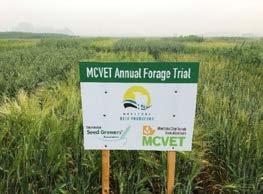
The 2025 annual forage trial combined all crops and varieties in one trial with three replicates per site. Quality is highly dependent on plant maturity at harvest. Barley was harvested in mid dough stage; oats & triticale at milk- early dough stage; peas at early pod wrinkle; millet and sorghum at heading.
Dry matter yields measured under a one-cut system.
2 Due to lack of availability, common seed was used.
Sorghum and millet were harvested later at most of the sites due to their later maturity.
Sorghum and millet were seeded later in Arborg.
2025 Feed Quality Comparisons Crop
Oats
Oats
Oats
Oats
Barley
CDC Arborg
ORe RUMINATOR
ORe BOOST
CDC Westgate
AB Advantage
Barley AB Tofield
Barley
Barley
Peas/Barley
Peas/Barley
CDC Harness
CDC Renegade
Peas/Oats
Forage Sorghum
Barley Average
CDC Lewochko - AB Advantage
Peas/Oats DL Delicious - CDC Arborg
Pea/cereal Average
Cover crop blend
1
Cover
Quality tests were done by wet chemistry and were a composite of the three plots/site.
Quality tests were done by wet chemistry and were a composite of the three plots/site.
2 Relative feed value (RFV)
Relative feed value (RFV)
Crude protein (CP)
3 Crude protein (CP)
2 Relative feed value (RFV)
3 Crude protein (CP)
4 Total Digestive Nutrients (TDN)
4 Total Digestive Nutrients
4 Total Digestive Nutrients (TDN)
Total Digestive Nutrients (TDN) Due to lack of availability, common seed was used.
2
5 Due
5 Due to lack of availability, common seed was used.

Elizabeth
Nernberg Livestock Specialist, Manitoba Agriculture
Elizabeth.Nernberg@gov.mb.ca
Question: I understand composting is one of the approved deadstock disposal methods in Manitoba. Can you tell me more about this?
Answer: Good management of deadstock disposal not only reduces spread of disease and risk of contaminating the environment, but it also plays an important role in your predation management plan. A recent Manitoba Agriculture project that looked at livestock operations with higher predation losses, showed proper deadstock disposal was an opportunity to reduce the risk of predation by removing deadstock as a tempting food source for predators.
Under current regulations, mortalities must be stored in a location that prevents access by scavenger animals. They must also be disposed of within 48 hours after death, if not kept in a secure storage room, covered container or secure location and continually frozen or refrigerated. Acceptable methods of disposal are rendering, burial, incineration and composting, the last of which is likely the easiest to implement on farm.
Composting can be done year-round and requires minimal labour, start up and operating costs. Sites must be a least 100m from any surface watercourse, sinkhole, spring or well and from the operation’s boundaries.
Composting deadstock allows microorganisms, bacteria and fungi to convert the organic material into a stable humus-like product through a controlled aerobic (requiring air) process. Providing the best environment for these microorganisms requires adequate moisture, good aeration, controlled temperatures, proper pH levels and large amounts of a carbon source such as sawdust, woodchips, manure or shredded straw.
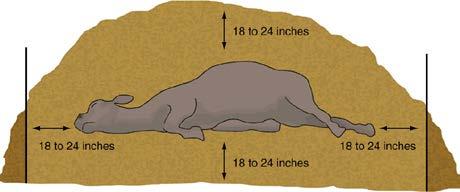
When setting up your compost pen, make sure there is enough material surrounding your mortality, under, around and over it. See the diagram for recommended compost thickness. This not only provides a good environment for the microorganisms but protects the mound from birds scavenging above and reduces smell which can invite predators.
Heaping manure over the top of your compost pile aids in the process. Stockpiled warm manure makes winter composting possible. Turning the compost every couple of months introduces oxygen and will also help re-distribute
nutrients to allow more uniform heating and further breakdown of the material.
If predators have access to your deadstock compost pit, it will become a major attractant. Not only will it encourage them to stay in the area longer and pose a risk to your remaining stock, but it also potentially increases predator populations above what they would be naturally, putting your livestock at further risk. The Manitoba Beef Producers Livestock Predation Prevention Pilot Project showed constructing predator resistant fences around deadstock composting sites was effective at stopping predators from scavenging food from the mortalities.
Through the project, deadstock compost pens were tested on 14 farms from 2021-2023. No predator invasion occurred on 11 of the farms and 78 per cent of operators felt there was minimal or no smell from the composting. The three occurring invasions were primarily caused by bears or coyotes, so it is recommended to use an apron on the ground along the fence to deter burrowing as well as an electric wire to prevent predators, such as bears, from climbing over.
For more information, please scan the QR code for a video on the project results. You will also want to visit https:// www.gov.mb.ca/agriculture/environment/ mortality-management/composting.html for additional information on composting deadstock.

In the next issue of Cattle Country, a Manitoba Agriculture forage or livestock specialist will answer a selected question. Send your questions to Elizabeth.Nernberg@gov.mb.ca.
StockTalk for Cattle Country is brought to you by Manitoba Agriculture. We encourage you to email your questions to our department’s forage and livestock team. We are here to help make your cattle operation successful. Contact us today.
Kristen Bouchard-Teasdale Beausejour Kristen.BouchardTeasdale@gov.mb.ca 431-337-168
Pam Iwanchysko Dauphin Pamela.Iwanchysko@gov.mb.ca
Cindy Jack Portage Cindy.Jack@gov.mb.ca
Sabrina Kendall Arborg Sabrina.kendall@gov.mb.ca
Juanita Kopp Beausejour Juanita.Kopp@gov.mb.ca

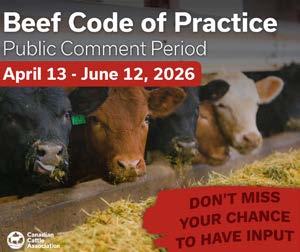
The Public Comment Period for the Beef Cattle Code of Practice is open through June 12 and producer input is an important step in the process. Visit http://cattle.ca/beef-code for more information and links to participate in the public comment period.
The Beef Cattle Code of Practice sets the standard of care for beef cattle in Canada and was first published in 1991. It covers topics such as housing, feed and water, handling, euthanasia, transport, and other important management practices and sets a standard by which both good producers and offenders can be judged.
more at http://cattle.ca/beef-code
I have just returned from the Livestock Markets Association annual meeting and convention in Medicine Hat, Alberta. The Canadian Livestock Auctioneering Championships and the Man/Sask Championships were held in conjunction with the national event.
Congratulations to Tyler Slawinski on winning the Reserve Championship at the Canadian Championships in Maple Creek. Tyler sells at Gladstone and Ashern markets.
Ty Cutler was crowned the Man/Sask Champion and sells at Whitewood Livestock Sales. Jonathan Stratuliak, who sells at the Killarney Auction Mart and resides at Ethelbert, was named rookie of the year. Rhett Parks from Whitewood Livestock placed in the top ten at the national event. Also competing at the national level were Brad Kehler from Grunthal Auction Mart, Allan Munroe from Killarney Auction Mart, Brock Taylor from Taylor Auctions, Jesse Campbell from Fraser Auctions and Blaine Huston from Gladstone Auction Mart.
At the LMAC annual meeting there was a report on the importance of livestock auctions in rural communities and included some recent stats on the cattle industry.
In Canada, there are currently 70 livestock auction markets operating. In 2025 they sold a combined total of 2,952,500 cattle. Just over 2/3 of the auctions in Canada are privately owned family or community operations where the owner lives in the community. The remainder are owned and operated by companies with local managers.
There are five electronic cattle marketing platforms operating in Canada. In 2025, electronic sales of 387,700 head accounted for 15.4% of all the cattle sold publicly.
The auction industry in Canada provides full

RICK WRIGHT
time employment for approximately 500 full time employees and 2,200 part-time and seasonal employees. One of the synergies of the auction markets is the nearly 1,800 livestock dealers and agents licensed in Canada.
The importance of the local auction market is often underestimated! A recent economic impact study found that livestock auctions drive commerce in the community and surrounding area.
The auction market not only creates employment, but also generates revenue for local producers by purchasing hay and straw and using local vendor services for supplies and repairs. Trucking companies in the area benefit, business owners report increased customer traffic and spending, while restaurants, hotels, repair shops, fuel and tire sales all show an uptick in sales. In an auction market town, people arrive with cattle and leave the market with cash to spend!
Organizations such as LMAC often advocate for industry and producers on topics such as legislation being developed by both provincial and federal governments. As members of LMAC, the local market operators have a voice on topics such as animal welfare, traceability, prompt payment and transportation regulations. Producers go to the market operators for advice and information on market trends and prices.
Recently, LMAC was accepted as a voting member of the Canadian Cattle Association (CCA). Having LMAC as a member brings the LMAC expertise on marketing issues, transportation, animal welfare and employee safety to CCA. This in turn gives CCA more
overall credibility with their members, government and trading partners.
In the fall of 2024 and spring of 2025, many auctions saw an increase in the volumes of feeder cattle. Record high prices and a surging market saw many large producers that had sold privately in the past take advantage of the “True Price Discovery” method of live public auction with the incredibly large weight-driven slides on the prices, both buyers and sellers need to know the exact weights of cash cattle being traded. With market price slides of 20 to 60 cents, depending on the weight, the auction market was able to produce the best dollar-per-head returns for the seller.
The fall of 2026 looks no different, as cattle prices continue to hold steady to higher. The shortage of cattle combined with projected cheap feed will create a bidding frenzy at the auctions.
Despite the media reports that producers are flocking to electronic sales, the auction market industry is on solid footing. The shrinking cattle numbers will force the individual markets to work harder to maintain their market share, which will benefit the sellers. The major order buying companies continue to support the auction markets that do a better than average job of presenting the cattle for sale combined with proper pre-sale and post-sale care.
There isn’t an order buyer, market operator or producer who could honestly tell you within five cents what a certain group of cattle will bring during these market conditions. This is certainly a time when the selling commission at a well-run market is a good investment.
Producers can expect market volatility moving forward this year. Having a knowledgeable marketing team in or near your community could be a real advantage.
BY: DR. TANYA ANDERSON, DVM
Unfortunately calf pneumonia remains an ongoing health issue despite the many advances in vaccines and suggested management protocols. Unfortunately in many herds with poor calf health, cow vaccination programs are weak or non-existent. Why is that?
Is the choice not to vaccinate your cattle herd due to perceived risk management? I believe it is for many. The decision to vaccinate or not is driven by a balance of labor availability, facilities, and projected return on investment. Why is it that many blackleg outbreaks happen to those that have had previous blackleg outbreaks? The vaccine is not cost-prohibitive but facilities and lack of help or time are often cited as the excuse as the realization of lost income sets in. A gamble gone wrong and huge financial losses during these years of record calf prices.
Pneumonia in young calves is the same but a much riskier gamble - nearly guaranteed to happen but just when it will happen and what the impact to your pocket book will be is the unknown - pre-turnout, on pasture or post-weaning? BRD (Bovine Respiratory Disease) is the leading cause of death for nursing beef calves older than three days of age. The causes are both viral (IBR, PI3, BRSV, BVD) and bacterial (M. hemolytica, P. multocida, H. somnus). A 2020 study determined the average immediate cost of treating pneumonia in young calves was $42.15. Additionally, further losses occur with reduced feed efficiency and ADG in the feedlot or decreased reproductive performance and lifetime milk production in the breeding herd. Heifers that develop pneumonia in their first year of life are at a much higher risk of developing pneumonia as a mature cow. Calves that do not get enough colostral immunity are 12.5 times more likely to die in the feedlot.
Disease prevention starts before birth. Implement a 4-way viral vaccination of your cow herd to enhance
colostral immunity and also to prevent reproductive disease from both IBR and BVD. Maintain your cow herd in an ideal body condition (3.5/5) and ensure your ration is balanced - TDN of 60% and protein of 9-10% for late gestation and then bumped to 65% and 11% respectively post-calving. And don’t forget about vitamin and mineral supplementation. Thin and overweight cows cannot produce the volume or quality of colostrum as compared to a cow in ideal body condition. Under and over-conditioned cows are also at higher risk for infertility, calving difficulty and mismothering.
Ensure calves receive colostrum ASAP after birth, a minimum of 2L within the first few hours and a repeat feeding four to six hours later. Supplement calves that have had a difficult birth and provide pain medication to “get them going”. “Double treating” calves with two doses of colostrum asap after birth in a field situation can help manage work overwhelm and give the cow and calf some extra time to get mothered up.
If you are having pneumonia issues in your calves pre-weaning, implement a calfhood vaccine program starting at birth. Intra-nasal vaccines are available to enhance immunity in the face of colostral interference - discuss with your veterinarian which options are best suited to your situation. Colostral immunity starts to wear off by eight weeks of age depending on the disease organism so vaccination should be done pre-pasture turnout. Think of this vaccine as a primer for the vaccines given upon arrival in the feedlot, just as your kids get primer vaccines at 2,4,6, 12 and 18 months of age, our calves should be vaccinated at 6-8 weeks of age and then pre-weaning with additional vaccines given throughout the development period post-weaning depending on management plans - for grassing, breeding or backgrounding/finishing.
Remember that the calf environment
also plays a big part of disease management. Winter cows separately from the calving grounds and ensure adequate bedding and shelter from the elements so that calves keep clean and stay dry and warm. Depending on the season and your geographical location, facilities may range from open range to more intensive operations - none are right or wrong but each must be well-suited to the operation. A key feature for both of these systems that minimizes disease, both scours and pneumonia is to manage calves in two week age cohorts - different pastures or pens.
Be prepared for the unexpected. This year, the wind coupled with cool damp conditions was a killer for calves born in April. Calves became hypothermic in a few hours if outdoors. I even saw a case of early frostbite in a calf. Many producers who lacked the facilities to combat the cold and wind have had to deal with weak, unthrifty calves who never got enough colostrum due to environmental stress.
Think of your cow/calf operation as one part of the big picture. Do your part to keep your herd healthy and protected from disease so that your calves are ready to enter the next production stage in the feedlot or breeding herd. Reduce your reliance on drugs and remember that disease management involves a combination of nutrition, environmental management and vaccination. Omit one part and everything else falls apart.

WRITTEN BY PETER FROHLICH, NATIONAL CENTER FOR LIVESTOCK AND THE ENVIRONMENT
CLAUDIA NARVAEZ-BRAVO AND ANNA MACDONALD, DEPARTMENT
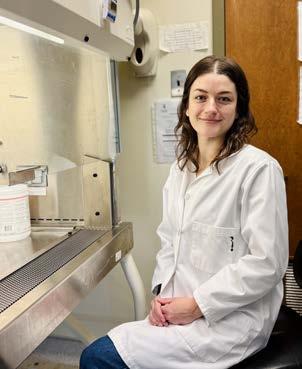
Researchers at the University of Manitoba (UM) have developed a new cleaning strategy that optimizes food safety and improves sustainable sanitization in meat processing plants. The strategy involves using enzyme technology to clean surfaces that have been exposed to meat residues. The research was led by Claudia Narvaez-Bravo, and her PhD student Anna Macdonald from the Department of Food and Human Nutritional Sciences, along with collaborators at Agriculture and Agri-Food Canada. The three-year project wrapped up in March 2026 and was funded by the Beef Cattle Research Council, Results Driven Agricultural Research and the University of Manitoba through a Graduate Fellowship.
Conventional cleaning in meat processing plants
Meat processing plants use chemical agents and large amounts of water after processing to ensure proper cleaning and pathogen reduction. Current practices also include using water at high pressure and temperature that generates steam and aerosols, which raise humidity in the meat processing plant, promoting microbial growth as well as opportunities for pathogenic microorganisms to spread to clean surfaces. Additionally, high temperature of water during cleaning (55-60ºC) allows meat proteins to aggregate, harden and leave a protein-based residue on equipment surfaces. As a result, meat processors are facing building pressure from consumers and regulatory bodies to adopt more sustainable practices that enhance food safety, minimize water use and lower the environmental footprint of cleaning in meat processing plants.
What are enzymes?
Enzymes are materials built from amino acids that are essential in many biological processes including digestion of food and feed, energy production, and more. They are proteins, primarily made naturally by
living organisms including plants, animals and microorganisms. Enzymes are known to speed up chemical reactions within living systems. They are used in commercial food processing applications like fermenting wine, brewing of beer and killing disease causing microorganisms. They are also effective in breaking down organic residues into small pieces, which makes them very useful in cleaning applications.
Developing a new, sustainable and effective cleaning strategy
University of Manitoba researchers have developed an eco-friendly, enzyme-based cleaning
strategy that can be effective in meat processing plants. The strategy includes the use of a mixture of enzymes called proteases and lipases that are known for their effective digestion with the ability to break down proteins and fats. These enzymes were also selected because they function under lower temperatures (40-50ºC) minimizing protein aggregation, and at milder pH levels lowering the need for harsh cleaning chemicals. Research has shown that when used as part of the new cleaning strategy, these enzymes were very effective in breaking down meat-derived residues (protein and fat) before they attached to equipment surfaces, preventing the development of unwanted conditioning films, which stick to equipment surfaces, and protect pathogenic microorganisms from cleaning agents. Results from this study show that the enzyme solution reduced the presence of meat components and other biological matter by 93% compared to a conventional cleaner that reduced these contaminates by 70%.
Optimizing the cleaning solution
The team then optimized the cleaning strategy by adding other enzymes called cellulases and amylases, that target and break down materials that contribute to the formation of biofilms. In meat processing plants biofilms are living microbial communities associated with a specific bacterial called E. coli. They form after bacteria attach to equipment surfaces and are persistent and resistant to sanitizers and cleaners. This team’s research has show that the optimized enzyme solution reduced the biofilm mass significantly (by 83%) and demonstrated near eradication of the biofilm, similar to that of conventional cleaning products.
In a laboratory setting, the researchers have created a new cleaning strategy that shows the potential of enzymes as effective and eco-friendly tools to enhance hygiene in meat processing plants. This

approach can be used alongside conventional cleaning agents or as an alternative, reducing the reliance on freshwater, harsh chemicals, and energy-intensive treatments. By enhancing the removal of organic material that accumulates on surfaces during production, enzymatic cleaning may be applied during processing, thereby reducing the burden of end-ofday sanitation and supporting a more sustainable sanitation process. Future research using enzymes in cleaning regimes will explore their effectiveness during different stages of cleaning such as during operational cleaning or pre-operational sanitation. The team is also collaborating with industry partners to validate this enzymatic approach in an industrial setting through a project funded by the Sustainable Canadian Agriculture Partnership and MITACS.
For more information on this study please contact: Claudia.NarvaezBravo@umanitoba.ca
New Leadership at the Faculty of Agricultural and Food Sciences
Dr. Nazim Cicek has been appointed and Dean of the Faculty of Agricultural and Food Sciences (FAFS). He is a Professional Engineer and Professor in the Department of Biosystems Engineering. Prior to being appointed Dean of FAFS, he served as the Associate Dean (Research) at FAFS. His research interests span agricultural and industrial waste management, bioenergy and biopolymer production, and bioprocess engineering. He has authored or co-authored more than 140 peer-reviewed journal articles, presented at international conferences, and supervised over 70 graduate and undergraduate students. Dr. Rob Duncan, a Professor in the Department of Plant Science, has been appointed as Associate Dean Research at FAFS. Dr. Duncan will guide initiatives to strengthen research capacity, promote interdisciplinary collaboration, and build partnerships that drive innovation in agriculture and food systems. Dr. Chad Lawley is a Professor in the Department of Agribusiness and Agricultural Economics and has been appointed Associate Dean Academic Programs at FAFS. Dr. Lawley will lead efforts to enhance academic programs, support student success, and foster an inclusive learning environment that prepares graduates for the evolving agri-food sector.







Margins have never been higher. Don’t leave them unprotected. Get forward price coverage for calves you plan to market between September and February 2027 with the LPI – Calf program.
• Coverage options are available to choose from every Tuesday, Wednesday, and Thursday from 3 p.m. - 12 a.m. (CST).
• The last day to purchase LPI – Calf policies is June 11, 2026. Visit LPI.ca or phone 1-844-782-5747 for program details.
BY: ANNA HYMERS
We got a little teaser of summer in April, and then—because Manitoba likes to keep us humble—it snowed in May. So I’m putting all my warm-weather hopes on June and trusting it will finally bring sunshine, patio evenings, and weather that lets us retire the winter jacket. Once that happens, BBQ season begins.
As much as I love something sizzling on the grill, my favourite part of any backyard meal might be the side dishes. Give me a table full of summer salads and I’m happy. Corn salad, bean salad, broccoli salad, coleslaw, pasta salad, potato salad—it’s a parade of cold dishes pretending to be healthy. I still have questions about who decided potatoes and mayonnaise counted as salad.
This pasta salad, though, earns its place at the table. It’s hearty enough to stand on its own as a meal, but it also works beautifully beside something hot off the grill. I served it with ribeye, and the salad brought so much flavour that the steak barely needed more than salt and pepper. Between the sweet, briny, creamy, and crunchy elements, every bite has something going on. It’s the kind of dish that makes people say, “I’ll just have a small scoop,” and then come back with a much larger spoon.
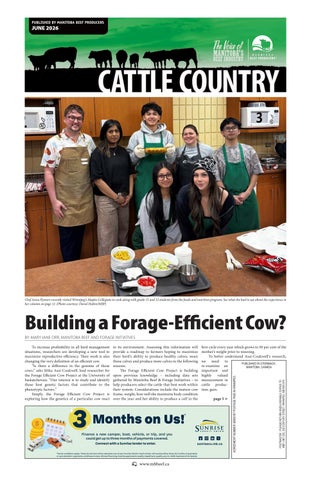
This spring, I also had the chance to step back into the classroom and teach one of my previous recipes to Grade 11 and 12 students at Maples Collegiate. One of the biggest things I shared with them was that cooking should feel flexible, not intimidating. A good recipe is a guide, and nothing is set in stone. Some students changed the protein, while others added toppings they already loved, and the results were just as delicious. This pasta salad works the same way. As long as you have pasta and that creamy dressing, you can make it your own. Add more vegetables, swap the olives, use a different cheese, or use up what’s in the fridge.
My favourite part of the recipe might be the dressing. It’s a creamy Greek-style dressing that is bright, tangy, and full of flavour without being fussy. It coats the pasta beautifully, but it’s just as good on a Greek salad with cucumbers, peppers, and tomatoes—especially once garden vegetables start showing up. It’s the kind of dressing worth keeping in your back pocket all summer.
However you serve it, this is the kind of recipe that quickly becomes a summer staple. It’s reliable, crowd-pleasing, and easy to bring to summer BBQs.
Enjoy!


(Yields about 6-8 side portions)
Ingredients:
250g Tri Coloured Fusilli
1 small Red Onion, halved
½ each Red Bell Pepper, de-seeded
½ each Zucchini, halved
10 Cherry Tomatoes
¼ Cup Kalamata Olives, pitted, quartered
½ Cup Marinated Artichoke Hearts, chopped
1 Tbsp Pepperoncini, finely chopped
¼ Cup Sundried Tomatoes, finely sliced
½ Cup Feta, crumbled
5-6 Basil, fresh, thinly sliced (for garnish)
Dressing:
3 Tbsps Lemon Juice, fresh
2 Tbsps Red Wine Vinegar
1 Tbsp Oregano
1 tsp Garlic, minced
½ Cup Feta, crumbled
½ tsp Salt, kosher
¼ tsp Black Pepper, ground
½ Cup Canola Oil
Additional:
Ribeye Steak, grilled and sliced
METHOD DRESSING:
1. In a food processor, blend together all ingredients, except oil.
2. In a slow steady stream, slowly pour in oil while blending on high.
3. Transfer to a sealable container and refrigerate until required.
METHOD PASTA SALAD:
1. Cook pasta in salted simmering water until fully cooked (it’s ok to even slightly overcook).
2. Immediately drain pasta and rinse under cold water to stop the cooking process. Pasta will firm up slightly (which is why it’s ok to slightly overcook!) Set aside until required.
3. Pre-heat grill (or oven to 425F) to high heat.
4. Lightly oil onion, pepper, and zucchini. Season with salt and pepper. Place on grill and grill for about 10-12 minutes, turning until all sides are charred and vegetables are cooked through. Add the tomatoes (use a grill mat or skewer the tomatoes) and grill just until blistered. Remove any excess charring from the skin of the pepper.
5. Once grilled vegetables have cooled slightly, slice the veggies into desired, bite-sized shapes.
6. Combine all the salad components together in a large bowl and dress with desired amount of dressing.
7. Cover and refrigerate until required. Garnish with thinly sliced basil before serving.
Additionally: To make this salad into a full meal, serve with grilled steak of your choice.