Making the Use of Ultrasound Pay on Your Farm or Ranch
BY: ANGELA LOVELL
Ultrasound is not a tool that all cattle producers use, although it is more common for purebred breeders, especially those with Angus cattle, to use it as both a selection and marketing tool, but it could have value for a lot more producers.
To help demonstrate that value and the many things that an ultrasound can tell producers about an animal, Manitoba Beef Producers recently held an ultrasound demonstration outreach event at the farm of purebred Charolais producer Andre Steppler near Miami, Manitoba. Ultrasound technician, Jamie JensenWhitney performed ultrasounds on four 4H steers that were fed out and presumed ready for slaughter, and ranked them according to the results.
It was quite eye-opening, Steppler says.
“If you evaluated them all visually, without the ultrasound data you would think that they all had a comparable amount of fat and marbling in their loin, but there was one steer that the ultrasound showed had substantially less,” Steppler says. “The technician asked me what the history of this steer was, and he had gotten sick for a couple of weeks in January. She said that was the main reason that steer hadn’t marbled yet because in his lifetime there had been a stressor. To look at him you never would have guessed that.”
It brought home to a lot of the producers present the importance of vaccination and herd health and making sure that healthy cattle end up at the feedlot.

“With technology and traceability getter better and better, it’s probably something that we are going to have
to be looking into to make sure that a quality product is hitting the slaughter plant at the right time,” Steppler says. When to ship and when to feed
Ultrasounds on some heifers also discovered some interesting results. Visually, Steppler and the other producers assessed that one 1,200-lb heifer should be fed for another 100 to 120 days before going to slaughter, but the ultrasound suggested she was ready to go right away.
“The ultrasound data said she needs to go now because she would hit the top grade for marbling and if we were to feed her any longer, we would actually be discounted on that heifer as a result of the yield grade,” Steppler says. “That’s a strong financial tool.”
Those are the main uses for carcass ultrasound says Jamie Jensen-Whitney, ultrasound technician. page 7
www.mbbeef.ca PUBLISHED BY MANITOBA BEEF PRODUCERS SEPTEMBER 2023 POSTMASTER: PLEASE RETURN UNDELIVERABLE COPIES TO: MBP, UNIT 220, 530 CENTURY STREET, WINNIPEG, MB R3H 0Y4 CANADIAN PUBLICATIONS MAIL PRODUCT SALES AGREEMENT NUMBER 40005187 POSTAGE PAID IN WINNIPEG. GET YOUR IN A ROW Car DEBT Ask Sunrise about a consolidation loan that’s right for you! sunrisecu.mb.ca SINCE 1998
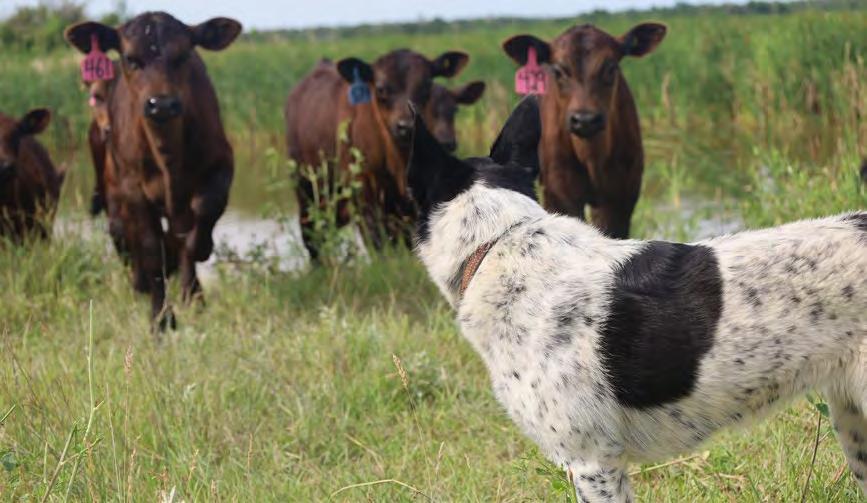
Who’s watching who? Interlake beef producer Theresa Zuk captured this image of Jess, her pasture checking partner and recent addition to the family’s operation. (Photo credit: Theresa Zuk)
Make Your Voices Heard With Provincial Election Candidates
On October 3, Manitobans will head to the polls for the provincial election. I recently had the opportunity to participate in an agriculture-focused, pre-election panel organized by KAP. Including representatives from a few different agriculture sectors such as crops and poultry, it gave us a chance to reflect on the ongoing priorities for agriculture in the province and nation-wide.
It was very thought provoking to be asked questions during the panel such as what is the biggest priority for our sector of agriculture going forward. I admit that as part of the beef sector, I found it a big challenge to narrow it down to one specific priority, given some of the different types of hardships we have faced in recent years. I feel however that more so as individuals in the industry, it would be easier to narrow it down to one or two specific priorities for our own operations, as well as to single out some larger issues and opportunities facing our sector as a whole. Looking throughout the province, I am sure we would see responses like the need to complete the Lake Manitoba and Lake St. Martin outlet channels project, livestock predation, agricultural Crown Lands, the importance of the beef sector having access to equitable business risk management programs, getting recognition for the environmental goods and services we provide in managing our farms and ranches, addressing rural crime, traceability, farm labour shortages and many others.
It’s important to remember that the beef industry is a key economic driver in this province and as such, we are justified in speaking up about our needs. In 2022, Manitoba sold more than 430,000 head, with $688 million in cash receipts for cattle and calves. The direct and indirect contribution of Manitoba’s cattle industry is pegged at $1.1 billion. This is quite significant.
As the election season ramps up and candidates are out in the community and holding public debates,
MATTHEW ATKINSON President’s Column


whether it’s the local candidates, cabinet ministers or party leadership, this is an excellent opportunity to speak to them about priorities and challenges we face, not just as cattle producers, but as rural Manitobans. Issues like rural crime, communications connectivity (in specific cell phone service) and road conditions would be some things at the top of my personal list of things that have a daily impact on my life. All parties will be looking to set their priories for the upcoming government and these events are a great opportunity to make our voices heard.
It’s important to remember that we’d all like all of these issues addressed, but resources at all levels are finite and when we ask for a lot of attention in one specific direction, that is where we are asking for those resources, both time or dollars, to be utilized. This is a challenge in Manitoba, as we see very diverse landscapes, and therefore, very diverse needs throughout the province. For example,
a couple of the topics in the forum were around the need for investment in rural schools and health care. While this is something I can certainly identify with in a general sense, being from the Neepawa region, this as an area where we are quite well-served and seeing more and more investment. However, I recognize that in other parts of the province, there are challenges in areas like these.
We as cattle producers and rural Manitobans will face a number of challenges over the next four years, and there should also be opportunities if the conditions are right. This is a chance for all of us to give those who could potentially be in power after the October 3rd election the feedback that can help our industry not just survive, but thrive.
On the right, Canadian Cattle Association Vice-President Tyler Fulton (who is MBP Past President and District 7 director) met with the new federal Minister of Agriculture and AgriFood, the Honourable Lawrence MacAulay, who was appointed to the role in a cabinet shuffle in late July. Discussion topics included trade, supply chains, sustainability, and the impacts of extreme weather conditions. (Photo credit: Agriculture and Agri-Food Canada)
Applications for Consideration for The Environmental Stewardship Award Due to MBP by December 8


Manitoba Beef Producers (MBP) is accepting applications until Friday, December 8, 2023 for consideration for the local awarding of The Environmental Stewardship Award (TESA).
Since 1996, TESA has recognized producers who go above and beyond standard industry conservation practices and set positive examples for other cattle producers and the general public. As stewards of a vast portion of the Canadian landscape, Canada’s beef cattle producers play a significant role in protecting and enhancing the environment. They continuously strive to improve existing stewardship conservation practices to create a sustainable future – always farming for tomorrow.
At the local level, a producer receives provincial recognition for their outstanding environmental contributions. In the case of Manitoba, this occurs in conjunction with MBP’s annual general meeting in February. All provincial award recipients then move forward to compete for national recognition from the Canadian Cattlemen’s Association (CCA). The national TESA recipient is announced during the CCA’s semi-annual meeting at the Canadian Beef Industry Conference.
Each nominee exemplifies significant innovation and attention to a wide range of environmental stewardship aspects in their farm operation. Such innovations extend beneficially to areas far beyond their land, including water, wildlife and air.
DISTRICT 1 ALFRED EPP
Boissevain-Morton, Brenda-Waskada, Grassland, Deloraine-Winchester, and Two Borders
DISTRICT 2 NANCY HOWATT
Argyle, Cartwright-Roblin, KillarneyTurtle Mountain, Lorne, Louise, Pembina, and Prairie Lakes
DISTRICT 3 ANDRE STEPPLER Cartier, Du erin, Grey, MacDonald, Portage la Prairie, Rhineland, Roland, Stanley, Thompson, Montcalm, Morris, and Ritchot

How to Nominate
All beef cattle operations in Canada are eligible to apply for TESA. Beef producers interested in TESA can apply by filling out the application form found on the MBP website ‒ www.mbbeef.ca.
Producers can either nominate themselves, or be nominated by another individual or an organization. All methods are equally encouraged.
The completed application form, along with all supporting documentation (such as letters of support, photos and/or videos), is to be submitted to Manitoba Beef Producers by email to info@mbbeef. ca no later than 4:30 p.m. on Friday, December 8, 2023. If you have questions, please contact the MBP office at 204-772-4542.
DISTRICT 5 STEVEN MANNS Cornwallis, Elton, Norfolk-Treherne, North Norfolk, Oakland-Wawanesa, Glenboro-South Cypress, and Victoria
DISTRICT 6 VACANT Pipestone, Riverdale, Sifton, Souris-Glenwood, Wallace-Woodworth, and Whitehead
DISTRICT 9 TREVOR SUND Alexander, Brokenhead, East St. Paul, Lac Du Bonnet, Rockwood, Rosser, St. Andrews, St. Clements, St. Francois Xavier, West St. Paul, Whitemouth, Woodlands, LGD of Pinawa, Reynolds, Spring eld, Ste. Anne, and Taché
SECRETARY Armstrong, Bifrost-Riverton,
DISTRICT 7 TYLER FULTON PAST PRESIDENT Ellice-Archie, Hamiota, Prairie-View, Riding Mountain West, Rossburn, Russell-Binscarth, and Yellowhead

DISTRICT 8 MATTHEW ATKINSON
DISTRICT 4 BYRON FALK De Salaberry, Emerson-Franklin, Hanover, La Broquerie, Piney and Stuartburn, Montcalm, Morris, Ritchot, Spring eld, Ste. Anne, Taché, R.M. of Piney and Reynolds
DISTRICT 10 MIKE DUGUID
Committment to the land, water, air, and wildlife is a prerequisite to raising healthy cattle. Sustainability is not a buzzword... it's a way of life.
Clanwilliam-Erickson, Glenella-Lansdowne, Harrison-Park, Minto-Odanah, Oakview, North Cypress-Langford, Rosedale, and West Lake-Gladstone
www.mbbeef.ca
2 CATTLE COUNTRY September 2023
Fisher, and Gimli DISTRICT 11 ARVID NOTT VEIT Coldwell, Grahamdale, St. Laurent, and West Interlake DISTRICT 12 MARK GOOD TREASURER Alonsa, Lakeshore, McCreary, and Ste. Rose
CBIC and CCA Meetings Informative

Greetings all, I sit here writing this column after having just taken part in the Canadian Beef Industry Conference (CBIC). What a phenomenal and well-organized event. It is great to be in the company of like-minded individuals all working to advance the beef industry. There are many challenges and opportunities in the sector, and I am confident we have the leadership in place across the country to meet these issues.
A wide range of topics were presented at the conference. The Canadian Cattle Association (CCA) also held committee meetings in conjunction with the conference, which are always important discussions that help drive industry priorities provincially and federally. I enjoyed the thought-provoking conference speakers. One that really stuck with me was a live recording of RealAg Radio where the topic was battling through adversity. In an industry like ours, this really is a topof-mind theme. Our sector is often thrown curveballs, such as weather challenges or trade issues, so adversity is what we are used to. The main takeaway I got from the session is about embracing adversity and using the stress it causes in a positive, motivating way.
Many other presentations were made that delivered great information. Topics ranging from production tips to environmental sustainability. The keynote session was Diana Rodgers, author of Sacred Cow (the book and

the documentary). I strongly encourage producer and industry colleagues to attend this event in the future. Next year it will take place in Saskatoon, so it’s a good road trip for those in Manitoba.
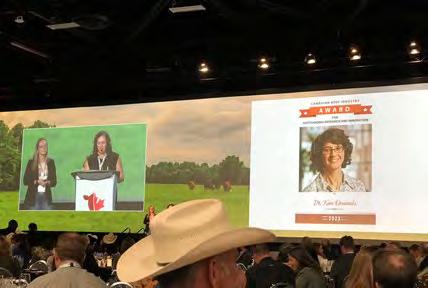
A highlight of week for me was seeing my advisor and dear friend Dr. Kim Ominski of the University of Manitoba be recognized with the 2023 Canadian Beef Industry Award for Outstanding Research and Innovation. Kim is a true industry advocate and her dedication to advancing it through research is second to none. I am honored to have worked with her through my Masters’ degree where I learned a great deal from her mentorship. I am very lucky to get to continue to work with Kim in my current role. She is so deserving of this award. Many of Kim’s former students attended CBIC as well, which shows how much positive influence she has had on the sector.
I want to thank Glen and Pam Lowry for representing Manitoba so well on the national scale for consideration for The Environmental Stewardship Award
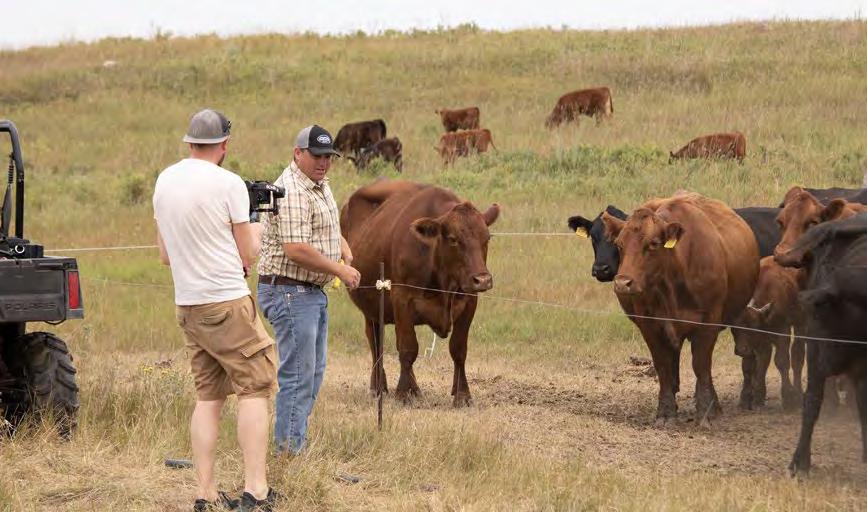
(TESA) competition. I also thank them and Cameron and Lisa Hodgins for their participation in filming farm family profiles for the upcoming season of Great Tastes of Manitoba. These operations truly show the public the dedication and passion producers have for the beef sector. Also stay tuned for our Fields to Forks commercials airing during the month of September on CTV Winnipeg, 103.1 Virgin Radio and 99.9 BounceFM featuring Amanda Hamilton-Seward and family.
Before I finish this column, I just want to remind folks of our fall district meetings coming up in even-numbered districts around the province, plus a virtual meeting. The schedule and locations can be found in this edition of Cattle Country, as well as on our social media accounts and website. We hope to see you there.
I want to wish everyone a safe and happy harvest. I hope enough rain has come in the past few weeks to give you sufficient grass to fall graze. I know certain areas of Manitoba are drought stricken, but hopefully the weather cooperates this fall so you can still have a good amount of feed and water for your stock. Let us know if conditions deteriorate further so we can ensure government knows of challenges on the landscape. All the best!
3 CATTLE COUNTRY September 2023 www.mbbeef.ca
CARSON CALLUM General Manager’s Column
Cameron Hodgins filming his family’s segment for Great Tastes of Manitoba. (Photo credit: Donalee Jones/Frank Digital)
Amanda Hamilton-Seward of Darlingford on the set of Fields to Forks. (Photo credit: David Hultin/MBP)
At the recent Canadian Beef Industry Conference in Calgary, Dr. Kim Ominski from the University of Manitoba was honoured with an award for outstanding research and innovation. Please see the full story on page 14 of this edition. (Photo credit: David Hultin/MBP)
October 3rd is the fixed date for Manitoba’s 43rd election and Manitoba Beef Producers (MBP) encourages producers to speak to the candidates about where they stand on issues affecting the prosperity of the beef industry.
Not sure what kinds of topics to raise? The following is a very brief rundown of some issues of importance to our industry on which MBP advocates with provincial and federal officials. While this article is focused on the provincial election, in some cases both levels of governments are involved in addressing these issues and it can be useful to remind your Member of Parliament about them too, along with the MLA candidates.
Water Challenges
Water quantity and quality issues have a serious impact on the ability to produce beef. The challenges include drought conditions, leading to the need to drill new wells or to rehabilitate reservoirs. MBP advocates for continued cost-shared investments in on-farm water source development projects, such as through the Sustainable Canadian Agricultural Partnership and other initiatives.
Repeated flood events have also contributed to the downsizing of Manitoba’s beef herd. Both the federal and provincial governments have made commitments to flood infrastructure projects to help lessen risk of future damages, but progress has lagged. A key example is completion of the long-awaited Lake Manitoba and Lake St. Martin Outlet Channels project. MBP is asking both levels of government to work collaboratively to address outstanding concerns and to move this needed project forward as soon as possible.
Considerable natural infrastructure is being maintained by beef producers, including grasslands and wetlands. These ecosystem services, which are a public good, include enhancing resilience against natural disasters like floods and droughts, providing habitat for many plant, animal, and insect species, storing carbon, and more. MBP is seeking government recognition of beef producers’ role in providing ecological goods and services.
Agricultural Crown Lands (ACL)
The use of ACL is essential to many producers. In recent years successive Manitoba agriculture ministers have made changes to the Crown lands program in areas such as lease lengths, unit transfers, the rental formula, auction processes, valuing improvements and more. MBP has done extensive advocacy work in this area, and while recent changes are addressing some of these concerns, MBP continues work on this file.
For example, the provincial has temporarily reduced forage lease rents through the 2025 production year. This is a very important first step as the steep and rapid increase in rental rates that took effect in 2020 proved financially taxing for lease holders. Factors such as droughts and floods, stiff competition for the use of private lands beef producers also need for haying and grazing, variations in ACL carrying capacity across the leases, predation pressure, and others have hit producers’ bottom lines, making the steep rate increase difficult to manage. The high rate of property taxes on ACL in Manitoba compared to other provinces is another concern.
Advancing Beef Industry Concerns During the October 3 Provincial Election
To address these concerns, MBP has sought adjustments to the forage rental rate formula. It includes three variables: the average price of beef, the 3.5% calculated rate of return for private use of a public asset (which captures factors such as public good and land stewardship), and, the forage capacity of the land. MBP is seeking to have the 3.5% figure adjusted to better account for the ecosystem services producers provide in managing ACL. MBP also restates its position that when calculating the rental rate, greater consideration must be given to the absence of informed access. Leaseholders recognize Manitobans’ right to access ACL for uses such as traditional use, hunting, food gathering, recreation, and others. Leaseholders carry the costs of improving ACL and maintaining public access to it. Unfortunately, some individuals entering ACL create challenges, such as environmental and infrastructure damage, biosecurity concerns, and endangering livestock. Informed access could help mitigate concerns like these and such policies exist in other Canadian jurisdictions.
Animal Health and Protection
Ensuring Canada’s beef industry is protected from foreign animal diseases such as foot and mouth disease (FMD) is a key priority. MBP, along with the Canadian and other industry associations advocated for govern-
cameras, predator resistant pens, deadstock pens, solar foxlights, GPS collars, fladry wire, electronet, and veterinary assessments. The project is now entering its final stages, with a few more RMPs to be implemented this year, and project analysis and reporting to be completed. MBP continues to examine other programs and strategies to manage problem predators, including trapping. There will be continued discussions with governments as to next steps to help reduce predation risks. Ask your candidates where they stand on predation issues and what initiatives they would support to help reduce the risk of negative livestock-predator interactions.
Other Considerations
A whole host of other matters where the provincial government can be involved affect beef producers. These include the need for investments in building and maintaining infrastructure such as roads and bridges, as well as improving rural connectivity such as cell phone and internet services so critical to doing business on farms and ranches. Education property taxes are a considerable expense, and producers are seeking commitments to an equitable system for funding the education system that is not reliant on property taxes.
ments to provide annual funding to create a Canadian FMD vaccine bank and this commitment was achieved in the 2023 federal budget. Provincial governments are being asked to cost share this initiative, so it is important that the Manitoba government provides funding not only for this initiative, but that it also makes investments in ongoing disease preparedness activities. This includes commitments to surveillance for diseases like bovine tuberculosis, and others. It also means ensuring there are enough resources in place to be able to swiftly respond to disease incursions should the need arise.
Predation Concerns
Wildlife predation on livestock is another key issue affecting our industry. MBP co-chairs the Livestock Predation Protection Working Group (LPPWG). It includes reps from Manitoba Agriculture, Manitoba Agricultural Services Corporation, Natural Resources and Northern Development, Agriculture and Agri-Food Canada, Manitoba Sheep Association, and the Manitoba Trappers Association.
In 2020 MBP received provincial funding for the three-year pilot Manitoba Livestock Predation Prevention (LPPP) Project. Added funding is coming from the Manitoba Sheep Association. The three main project aspects include: On Farm Predation Risk Assessments; evaluating various Risk Management Practices (RMPs); and, communication about management practices that could help reduce risk. Project participants have implemented RMPs to test their effectiveness in reducing predation risk, such as game
Labour supply is an ongoing concern in the agriculture sector and governments have a role to play in helping to address the gaps, be it through local education and training initiatives, recruiting workers from outside the province where needed, and helping to create an environment that encourages workers to remain in Manitoba. That includes ensuring there are strong communities where workers can have ready access to health care, education, child care, recreation, and other services they need. Rural Manitobans are also looking for strategies that will help reduce the risk of crime.
Ensuring beef producers have access to a robust and responsive suite of business risk management programs is also very important, whether that be mechanisms offered via AgriInsurance, AgriStability, Livestock Price Insurance, the Advance Payments Program or others. It is important that beef producers can access programs that help to place them on a level playing field with other commodities.
These are just a few of the topics that you may wish to consider raising with your candidates during the election. It is important that candidates are well informed about agricultural production and how government policies can either encourage or hinder future growth in our sector.
For more information on the main political parties in Manitoba, visit their websites as follows: Green Party of Manitoba www.greenparty.mb.ca
Manitoba Liberal Party www.manitobaliberals.ca
New Democratic Party of Manitoba www.mbndp.ca
Progressive Conservative Party of Manitoba www.pcmanitoba.com
In the weeks ahead monitor MBP’s e-newsletter for updates on the provincial election. If you are not on the distribution list for that, email dhultin@mbbeef.ca to get added to it.
4 CATTLE COUNTRY September 2023 www.mbbeef.ca
Elections Manitoba toll free at 1-866-628-6837 or visit www.electionsmanitoba.ca to get all the information you need on voting.
Not sure if you are on the voter’s list, where to vote or in which constituency you reside? Unable to vote when you normally would and looking for an alternate way and time to cast your ballot?
Call
Evaluating Growth Performance of Implanting Nursing Calves
 BY: DR. MARY-JANE ORR, MBFI GENERAL MANAGER
The use of growth-promotant implants in nursing calves is one of the most cost-effective strategies for improving growth and feed efficiency in the pre-weaning period. Research consistently shows the weaning weight improvements of at least 15 to 30 pounds greater than non-implanted calves. The use of growth implants is widely adopted in feeder cattle, but despite the economic benefits of implants, it is estimated that less than 20 per cent of cow-calf producers use implants in their suckling calves.
As a sub-component of our Strategic Herd Development, Manitoba Beef & Forage Initiatives (MBFI) in collaboration with Melissa Atchison (Research and Extension Specialist, Manitoba Beef Producers) is carrying out a demonstration on the use of growth promotant implants in MBFI’s 2023 calf crop. This demonstration project serves to confirm the cost benefit of implanting suckling calves on farm scale.
As MBFI raises our own replacements, the project will also serve to dispel commonly held beliefs that implanting suckling heifer calves can have negative reproductive outcomes for replacements when products are used according to label. We will track and record reproductive data on selected replacement heifers, documenting any potential differences between implanted and non-implanted heifers through to their first calf.
In developing the project Atchison commented, “one of my favourite things about MBFI is how it can take data from academic research, where variables are tightly controlled, and apply it to field/farm scale implantation to see how the data presents in “the real world”. For producers wanting to try something new, it takes out an element of risk when they can see a concept or practice demonstrated with variables that are similar to their own operation.”
In this demonstration we are using the Ralgro implants, which have been marketed in Canada as a growth promotant for more than 40 years and are versatile for use in both steer and heifer calves. These implants are a Merck Animal Health product and available through your local veterinary clinic. In June 2023, Ralgro Implants were $1.73 per dose with the additional one-time purchase of an implanter gun for $14. Each implant contains 36 mg of zeranol (an estrogenic compound), with a cited market support study indicating the potential of an average weaning weight increase
of 23 pounds in comparison to non-implanted calves. According the Ralgro factsheet, the active compound zeranol stimulates the calf’s growth mechanism to produce more naturally occurring regulators to promote muscle and skeletal growth.
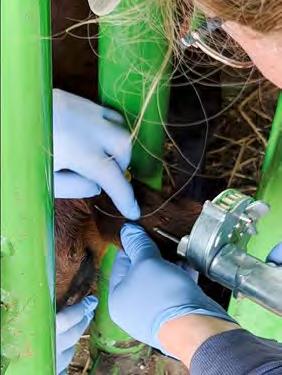
Following product specifications for potential replacement heifers, the suckling calves may only be implanted once between 30 days of age and weaning. Implanting of the Ralgro pellets can only be placed in the ear and cannot be used in calves to be harvested for veal, in dairy cattle, or with bulls. Ralgro has a payout period of 60 to 80 days, and re-implantation can be carried out for feedlot steers and heifers.
Across both farm stations, Brookdale Farm and Johnson Farm, a total of 120 calves are included in the preliminary findings shared here. Date of birth ranged from April 9th to May 15th for Brookdale farm calves implanted on June 15th, with the first month of growth on implants captured on July 19 th weigh day (35 days). Johnson Farm calves were implanted on June 22nd with dates of birth ranging from April 19th to May 19th with the first weigh day being carried out on July 21st (30 days). Later born calves at both farms were implanted on the first weigh day of each group to meet the minimum age requirement of 30 days. Their data is excluded here but will be included in final report data analysis.
Implant day was a fantastic opportunity for our summer students to learn new techniques and was a huge success due to the training support of Merck Animal Health Cattle/Equine representatives Heather Davis and Lee Sinclair, as well as Atchison providing her experience using the practice on her home operation. A big thank you to all involved in making the livestock handling days go smoothly and effectively!
Each farm station’s calf cohort of steers and heifers have a 50/50 split of randomly assigned implanted and non-implanted treatment groups. Preliminary findings, illustrated the bar graphic, show the group averages of calf Average Daily Gain (ADG) over the approximately the first month of treatment. Overall, the variability across individuals is too great to show a statistically significant increase in ADG. We can note a clear trend in both groups of implanted heifers for increased growth (1.8 lb/day vs 1.6 lb/day), which if maintained until weaning in November will be on track to see a 20+ pound advantage.
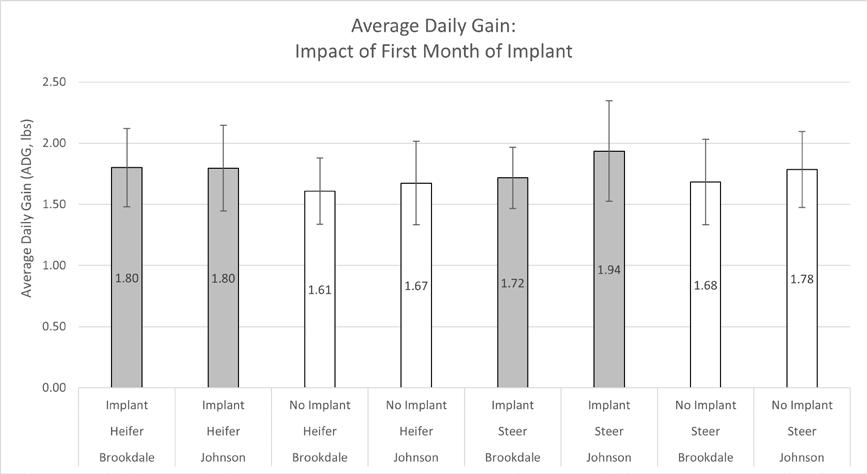
In the steer calf cohorts, we are seeing a difference between sites with the Johnson Farm steers outperform-
ing the Brookdale Farm group. In this early timeframe we are not yet seeing a separation between the implanted and non-implanted steers at Brookdale Farm. There are a number of variables between the farm stations that impact respective livestock performance, including average age of dams, grazing management systems, and forage composition.
Stay tuned for final weaning results and if you are interested in the topic be sure to attend the inaugural Manitoba Beef and Forage Production Conference in December 2023, featuring a breakout session with Dr. Kim Ominski and producer Betty Green sharing knowledge on implanting nursing calves. Check out www. mbfi.ca/conference for more information.
Work at MBFI is made possible by Sustainable Canadian Agricultural Partnership funding through the governments of Canada and Manitoba, as well as partnership with Manitoba Beef Producers, Ducks Unlimited Canada, and Manitoba Agriculture. For more information or to start a conversation please email MBFI at information@mbfi.ca or call at 204-761-3300.
5 CATTLE COUNTRY September 2023 www.mbbeef.ca
Implants are inserted just under the skin of a calf’s ear.
Preliminary findings from the first month of growth following implanting of MBFI calves
Cattle Production: A Crucial Element in Regenerative Agriculture and the Circular Bio-Economy
 BY PETER FROHLICH, NATIONAL CENTRE FOR LIVESTOCK AND THE ENVIRONMENT, UNIVERSITY OF MANITOBA
Researchers at the University of Manitoba along with Canadian and international academic partners continue to generate data that places livestock production as an essential element within sustainable agriculture systems. Regenerative agriculture and circular bio-economy are concepts synonymous with enhancing the sustainability of current agricultural production systems in Canada.
What is regenerative agriculture?
Regenerative agriculture builds on the current production systems and includes processes, practices and on-farm management activities that produce food while at the same time conserving and rehabilitating the land, water, and air. In regenerative systems, conservation is an outcome of production.
What is a circular bioeconomy?
A circular bioeconomy is an economy that is powered by nature. The main players or drivers of this type of an economy are renewable natural capital. In agriculture, natural capital can be the soil, air, water, and all living organisms. A circular bioeconomy focuses on minimizing waste and attempts to replace non-renewable fossil-based products to improve the sustainability of production systems.
Regenerative agriculture, cover crops and cattle
Soil health is one of the cornerstones of regenerative agriculture. Most recently, cover crops, also known as annual forages, have been used by many producers to improve soil quality, prevent erosion, and enhance plant and insect biodiversity.
Martin Entz is a Professor of Cropping Systems and Natural Systems Agriculture and the University of Manitoba. Entz and his graduate students spent over 10 years studying the role of livestock integration in organic cropping systems. Full season or shoulder season legume-based cover crops are critical to supplying nitrogen to organic grains and vegetables. Their research showed that grazing allowed these soil building crops to be profitable, and grazing was found to be an important tool for managing the speed of nutrient flows from these cover crops to other crops in the rotation.
Entz’s team also worked on a 30-year-old crop-livestock system in Uruguay where they measured greater subsoil carbon in rotations where perennial forages were included along with annual grains. The grain-only systems were not able to increase deep soil C due to their shallower root systems. Entz indicated that the mechanisms by which grazing affects soil C are fascinating.
For example, research in Canada and USA has demonstrated that well-managed grazing stimulates the roots of plants causing the plants to release even more carbon into the soil system. Entz states that “This evidence should really not surprise us since the rich Prairie soils were actually developed under grazing”.
How do livestock fit in a circular bioeconomy?
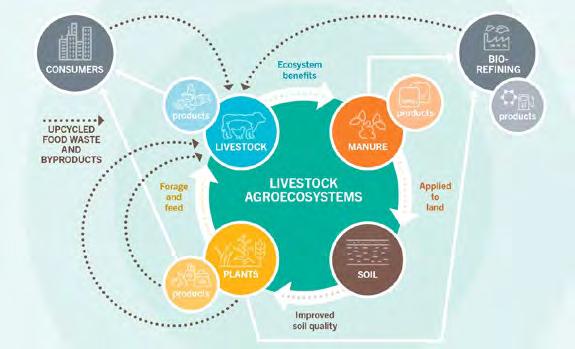
Livestock play an important role in an agro-ecosystem bioeconomy. In the circular cycle, forages, crop residues, and byproducts from commodity processing that are not consumed by humans serve as feedstuffs for livestock. Livestock then convert this human indigestible biomass to protein. The processing of livestock also creates by-products destined for several industries including pharmaceutical, cosmetic, leather and others. The manure created from livestock operations serves as an important source of organic matter, nitrogen, phosphorous and other trace elements essential for soil health and growth of plants. When applied to crops and pasture, manure reduces the need for commercial
chemical fertilizers, lowering the use of fossil fuels for their production and ultimately mitigating GHG emissions. A healthy soil enhances the growth of plants and grassland crops creating feed for livestock while completing the circular bioeconomic cycle.
In fact, according to recently published data, in the US alone 43 billion kg of human inedible food and fiber by-products is diverted from landfills and turned into edible food, pet food or industrial products because of cattle.
Research collaboration and knowledge sharing
Research with cover crops, and alternative feedstuffs including by-products and food waste is underway at the University of Manitoba. Several research teams in the Faculty of Agricultural and Food Sciences continue to take a multidisciplinary collaborative approach and incorporate expertise from plant, animal, soil sciences and economics to examine sustainability of farm practices.
For example, teams work on projects that investigate finding innovative ways to extend the grazing season by intercropping corn with forages for fall/winter grazing or projects that investigate 4R (right rate, source, place, and time) principles of nutrient management.
Many projects draw on the expertise of producers who serve as members of research advisory committees and ensure that the new information generated is
applicable, practical, and economically feasible on the farm. The ultimate goal is for this collective knowledge generated by researchers, producers and the industry to help guide program and policy development.
Enhancing public knowledge about the importance of livestock in sustainable systems
The University of Manitoba has a unique opportunity to share knowledge with the public on sustainable agricultural production systems at the Farm Food and Discovery Centre (FFDC) located at the Glenlea Research Station just south of Winnipeg. In 2022, FFDC hosted over 4,000 visitors and averaged 200 field trips from urban and rural Manitoba schools. The Discovery Centre houses interactive displays generated by commodity groups including the recently installed display from the Manitoba Beef Producers to showcase the sustainability of beef cattle production systems in Manitoba.
In addition, station staff, researchers, graduate students and commodity groups participate and engage with the public at popular events such as Discover the Farm, which alone attracted more than 1,500 visitors last year. The next Discover the Farm event will be held on Sunday, September 17, 2023. Please visit the FFDC website for more information on events, educational programing, and tours.
For additional information on the role of cattle in regenerative agriculture please check out “Do cattle have a role in regenerative agriculture?” a Cows on the Planet Podcast with Kim Stanford, Tim McAllister and Martin Entz.
For more information on recycling food waste in integrated crop-livestock systems please listen to Closing the loop: Recycling food waste in integrated crop-livestock production systems podcast with Kim Ominski, Herman Peters and Tim McAllister
To read more about the circular bio-economy and role of livestock in sustainable food production systems in Canada please follow the link https://podcasts.apple.com/us/podcast/do-cattle-have-a-role-in-regenerative-agriculture/id1576254068?i=1000542118127
To read more on the use of by-products and food waste in livestock production follow the link https://umanitoba.ca/agricultural-food-sciences/research/faculty-seminars Both articles were written by Kim Ominski and colleagues in the Department of Animal Science and Agriculture and Agri-Food Canada in Lethbridge.
6 CATTLE COUNTRY September 2023 www.mbbeef.ca
Insert caption.
Page 1 Value of Ultrasound
“The purebred or commercial sector uses it from a reproductive standpoint to find the cattle with the ultrasound traits that they are looking for to produce the type of beef that they want to produce,” says JensenWhitney. “The feedlot sector uses it for finished or presumed finished cattle to find those cattle that are ready for slaughter versus those that may need a little bit more time on feed to hit their optimum carcass qualities.”
There are lots of options to use ultrasounds in a number of ways though, she adds.
“Some of them we do as a ship now, and then we’ll four-way sort them, so they’re shipped now, ship in 30 days, ship in 60 or re-implant and ship in 90-120 days,” she says.
Bulls and heifers are ultrasounded at around a year of age and is a shortcut to get the data more quickly.
“Every breed has their own guidelines as to an appropriate age window but it’s always around a year of age, give or take anywhere from 60 to 120 days just so that the results are accurate and we can get an idea of how progeny from those animals will do versus having to follow thousands of head of progenies through the entire system from birth to slaughter to get the exact same information,” she says.
Through its Canadian Angus Performance Program, the Canadian Angus Association collects data, including ultrasound results from its producers and shares them with all members. But producers of other breeds are also willing to share ultrasound information, says Jensen-Whitney.

“If you don’t share the information there’s not a lot of value to it to get those data points that you’re looking for,” she says. “Most producers who are doing it on the purebred side will publish the information in their bull sale catalogues to help those purchasing cattle to make their decision.”
Why are more producers not doing ultrasound?

The main roadblock for ultrasound, especially for commercial producers is cost because it currently costs around $30 a head, making it hard for many to see the value in doing it.
Jensen-Whitney admits it can take time to see the return on investment in ultrasound and that there are still many purebred and commercial breeders who don’t fully understand the data that they get back.
“We have to find those things that are going to give us a return for our money, so for some if they don’t sell their bulls for more money in the first year, they don’t see the ROI, and then I have some clients that are com-
ing up on 15 years of scanning every animal, every year,” Jensen-Whitney says. “With ultrasound, we can make big changes in a single generation. A lot of it is about just getting out there and giving the people the education that they need to make these decisions.”
What does an ultrasound tell you?
The ultrasound measures a number of things, and two that are important are back fat (RIB FAT) and ribeye area (REA). Why the amount of back fat is important to measure is because it tells how fast and well an animal will convert feed and finish.
“We can go in and find the bulls that will sire calves that in a feedlot setting will finish faster than it’s bunk mate,” Jensen-Whitney says. “Then with the ribeye measurement, that’s the biggest muscle in a beef animal, so that goes into an equation that tells us lean meat yield along with the amount of back fat that that animal is carrying so we get an idea of how the prodigy from those cattle will yield.”
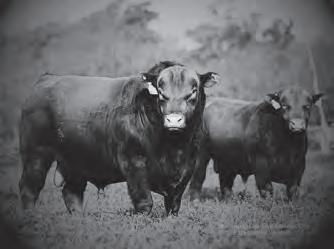
One of the most important from a producer’s perspective is marbling (intramuscular fat or IMF) which is related to the quality of the meat.
“The marbling is related to the eating experience. How much fat is in that meat determines how good it is going to taste,” Jensen-Whitney says. “We can help producers find those animals that fit the market that they are striving for, and that’s generally a “AAA” or Prime carcass.”
The ultrasound results that Jensen-Whitney shared did emphasize the relationship between IMF (expressed as a percentage) and another measurement: yield grade (YG) and how the two combined affect the price that producers will receive. Technically, an IMF over four is a AAA grade, and in the case of Steppler’s cattle, those with an IMF over 5.5% combined with a lean meat yield between one and three would also have qualified for the Certified Angus Beef (CAB) program.
“The first and second place steers were very close [in their IMF score] and they both qualified for the Certified Angus Beef (CAB) program that would give a bonus of $5.64,” she says. “Technically, the steer in second place was the better steer because he had a better marbling score [6.22% compared to 5.84% for number one] but he took a discount because his carcass was considered overweight at over 900
lbs hot hanging weight.”
With the third and fourth ranked steers, the ultrasound demonstrated there was value for both to stay on feed longer.
“With the other two steers, if they stayed under a YG 3 and stayed at an AA marbling, they would take a discount even at YG3 versus if we got them to a AAA marbling score, they would avoid the discount of an AA carcass,” Jensen-Whitney says. “This is where we see the value of putting them on feed longer.”
Steppler says his main takeaway from the day was that, as a purebred producer, ultrasound is an excellent selection tool.
“We can never forget that we are producing meat and we want to produce quality meat and ultrasound data is definitely a way to help us do that,” he says, adding the most important data to producers was dollars per head, and that’s not always something you can predict from looking at an animal.

“We judged them live one way and they way we looked at them after we got the ultrasound data was different, but when you look at the ending column that was total dollars generated per head, that is the most important because it tells you who generated you the most money.”
Jensen-Whitney encourages producers to reach out to an ultrasound technician if they don’t understand the science or how ultrasound could help their operation.
“We’re more than happy to talk to anybody an see what we can do to help out because carcass is the be all, end all but it still has to fit with the rest of your program. You still need cows out in the pasture that fit the picture of what you’re trying to produce, but still give you the carcass quality you want to produce and we can do that. We can find those animals; we can find those outliers if they want to put the time and the money in.”
Keystone livestock

Lois McRae & Joyce Gordon
RR 1 Box 57 Brandon, Manitoba R7A 5Y1
h: 204-728-3058
c: 204-573-5192

f: 204-727-7744
marmacfarms1@gmail.com
7 CATTLE COUNTRY September 2023 www.mbbeef.ca PRODUCTION | MARKETING | RESEARCH & DEVELOPMENT Custom Blending 1-800-990-1390 Fisher Branch, MB PAUL GREGORY P.Ag JAMIE PACKULAK B.Sc. Agriculture, Agronomy Pasture and Hay Blends | Custom Blending Delivery Available Producing high quality seeds to the most demanding specifications in the industry. Grasses | Legumes | Native Species Unparalleled expertise in the production of alfalfa seed. Canadian Angus Association National Show 2023 October 26th, 2023 Ag Ex Keystone Centre Brandon, MB Junior Show October 28th, 2023 Visit www.provincialexhibition.com or www.cdnangus.ca/manitoba-angusassociation/ for more information! Entries open September 1st and close October 1st. Space will be limited so get your entries in early!
specializing in livestock insurance for over 45 years LIVESTOCK INSURANCE
SERVICES
Drought Management Considerations for Your Herd
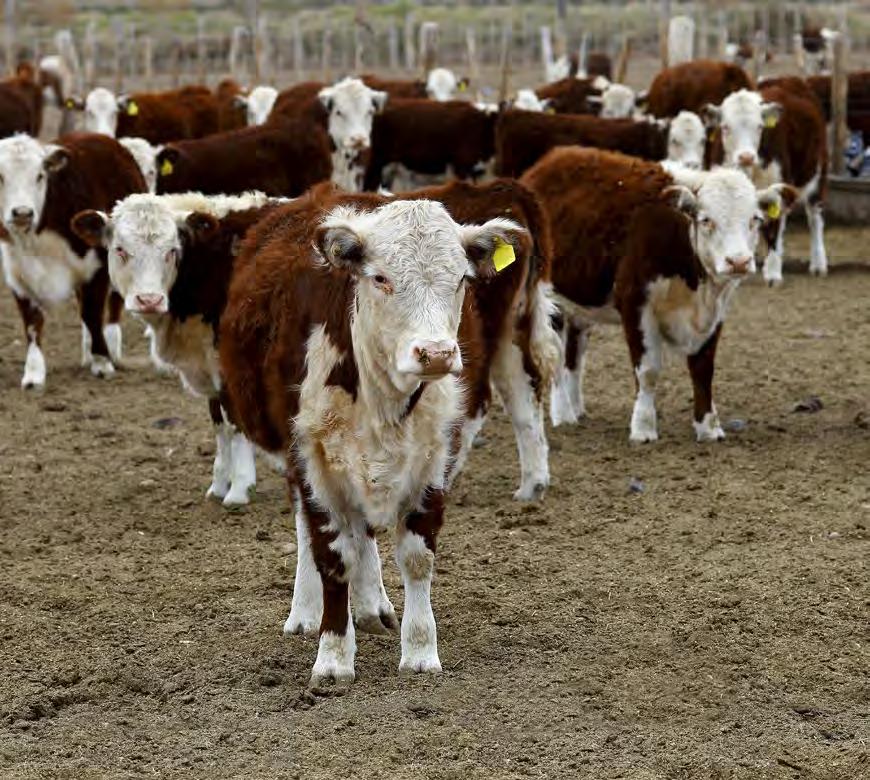 BY: DR. TANYA ANDERSON, DVM
As the summer has progressed and prospects for crop and pasture saving rains have diminished, winter feed management for cow/calf producers has once again become top of mind for much of the province though areas to the north are in much better shape.
Feed testing is advised every year but should be done following an adverse growing season. Never rely on the published averages for feedstuffs. Forage quality can vary significantly within a field and year to year. This year, many producers are considering novel feeds and should seek advice from those familiar with those feedstuffs to avoid production problems like poor gains and reduced reproduction. Developing least cost but nutritionally adequate rations improve profitability and keeps equity.
If you have never feed tested before, contact Manitoba Agriculture and access the information on the Beef Cattle Research Council (BCRC) website for tips on obtaining diagnostically useful feed samples. Purchase a forage probe or arrange to borrow one.
If you can work with a nutritionist, forage testing, sourcing of least cost ingredients and ration balancing is often included in the consulting package. Review the list of labs and services offered to select those offering the testing methodology appropriate for the nutrients you are interested in. Don’t forget to check for nitrates, mycotoxins (especially prevalent this year due to the high humidity and rains earlier this summer) and sulphates if applicable.
If you choose to develop your own rations on your own, have your balanced ration reviewed by your veterinarian or nutritionist. Regardless of how you formulate your rations, look at the animals. Poor performance and health issues mean that something is not right and that something is often nutrition.
Expect deficiency of Vitamins A and E and plan to supplement in the feed or by injection in the fall. Winter rations should provide 100% of the vitamin needs whereas mineral supplementation depends upon the ration, with legumes needing a 1:1 Ca/P ratio and greenfeed, cereal silage and grass mixes require a 2:1 ratio. Ensure that your calcium-phosphorus rations are adequate and tailored to your ration. Sudden ration changes for cows in late gestation and post-calving are less tolerated. This imbalance compounded by energy malnutrition will result in downer cattle.
A solid herd vaccination and health program is important during any weather stress. Mineral and vitamin deficiencies have developed due to poorer pasture conditions late last fall and over this summer. Dust and hot dry windy conditions are hard on mucous membranes. Eyes and the lining of the upper airways need to filter out the dust which causes both mechanical irritation as well as serving as a carrier of disease-causing agents. Pinkeye and both viral (especially BRSV) and bacterial pneumonias have become more common. Short grass means grazing closer to the ground and an increased risk for coccidiosis and endoparasitism (worms), both of which cause further weakening of the immune system. Review your whole herd vaccination program with your veterinarian, especially if you are needing to move cattle elsewhere or are dramatically changing your management program. The merits of pinkeye vaccination, coccidiosis prevention programs and fly and parasite control on pasture should be reviewed during drought conditions.
Another management strategy that is often reserved for extreme circumstances may be to depopulate or destock through the sale of mature cows and early weaning. As cow prices remain strong, identify potential culls if grass conditions worsen. Pregnancy test earlier this season. Ultrasonography allows pregnancy detec-
tion as early as 35-40 days post-breeding. Cull open cows as well as those with poor conformation (bad teats, udders, eyes, feet, and legs), bad attitudes, increased age, and those under-performing. Individual cow records will come in handy this year to help you make critical management decisions.
Remember that calves can be weaned as early as 45 days of age, but their ration must be managed with high quality feed ‒ no slacking on protein, energy, vitamins and minerals in the ration or health problems will develop and growth potential will not be realized. Creep-feeding will also help ease the transition to a feedlot ration. Consider early weaning calves off heifers, older cows dropping in body condition and those cows that were identified at calving or last season as culls. Weight loss below BCS of three-fifths means that additional feeding is required to prepare the cow for calving and rebreeding. Don’t let that happen ‒ it is expensive to “catch up cows,” especially during the colder winter months. Offer grain or quality hay on pasture if cow condition is starting to slide. If an option, consider relocation to greener pastures.
Regularly monitor your water. Dugout levels are low, and availability of water is already a concern considering the extreme heat. Evaporation of water can exacerbate these factors and create issues with increased bacteria, algae, or concentrated TDS levels which can impact cattle health, weight gain and immune function. Monitor the market and ship during peak prices. Research your options for pasture and feed management. Work with a nutritionist to develop alternative rations using the lowest cost ingredients and network with local grain producers. Don’t shortcut on your herd vaccinations nor your mineral and vitamin programs. Know your options so that you aren’t cornered into making costly management decisions and can avoid an animal welfare disaster.
8 CATTLE COUNTRY September 2023 www.mbbeef.ca
2023 Livestock Tax Deferral Initial List of Designated Regions for Manitoba
The Livestock Tax Deferral provision allows farmers who sell part of their breeding herd due to drought or flooding in prescribed drought or flood regions to defer a portion of sale proceeds to the following year.
On August 21, 2023 Agriculture and Agri-Food Canada (AAFC) identified the 2023 initial list of designated regions for Manitoba. They are: Dufferin, Grey, Lorne, Louise, Macdonald, Montcalm, Morris, NorfolkTreherne, North Norfolk, Pembina, Portage la Prairie, Rhineland, Roland, St. Laurent, Stanley, Thompson, Victoria, WestLake-Gladstone, and Woodlands.
How the provision works
To defer income, the breeding herd must have been reduced by at least 15%.
Where the breeding herd has been reduced by at least 15%, but less than 30%, 30% of income from net sales can be deferred.
Where the breeding herd has been reduced by 30% or more, 90% of income from net sales can be deferred.
In a year in which a region has been prescribed, income from livestock sales are deferred to the next tax
year when the income may be at least partially offset by the cost of reacquiring breeding animals, thus reducing the potential tax burden. In the case of consecutive years of drought or excess moisture and flood conditions, producers may defer sales income to the first year in which the region is no longer prescribed.
How are regions prescribed?
Prescribed regions are designated, on the advice of the Minister of Agriculture and Agri-Food Canada to the Minister of Finance, when forage yields are less than 50% of the long-term average as a result of drought or flooding in a particular year. To be designated, the affected area must have recognized geo-political boundaries (for example municipalities or counties) and be large enough to have an impact on the industry. Impacts on individual municipalities/regions would not result in a designation.
A preliminary list of Prescribed Drought and Flood Regions is usually completed in the early fall, for those regions where it appears that the criteria will be met. Since forage yield information is not final until
later in the year, these designations are made primarily on the basis of spring moisture and summer rainfall, and is supplemented with estimates of forage yield. Assessments of areas are reviewed in discussions with federal and provincial staff. A final list of Prescribed Drought and Flood Regions, including previously announced regions, is usually made in December when finalized forage yield information is available.
Additional Information
For more information on the process or criteria to identify Prescribed Drought or Flood Regions, please contact aafc.taxdeferral-reportdelimpot.aac@agr.gc.ca.
For questions related to calculating and/or reporting income deferral for Prescribed Drought/ Flood Regions for income tax purposes, please contact the Canada Revenue Agency (CRA) or consult the CRA publication T4002 Self-employed Business, Professional, Commission, Farming, and Fishing Income, Chapter 2 Income. The Livestock Tax Deferral information is detailed in Line 9470 – Livestock and animal products revenue.
9 CATTLE COUNTRY September 2023 www.mbbeef.ca
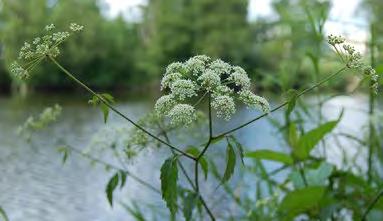
MBP has received calls from producers about the proliferation of water hemlock in pastures & hay land. Learn how to identify one of the most toxic weeds in beef cattle production, the symptoms of a possible poisoning, and how to control its spread. # # # # # # # # # # # # # # # # # # # # # # Windsor Toronto Fredericton Halifax Montreal Ottawa Charlottetown Quebec St. John's Victoria Thunder Bay Vancouver Winnipeg Regina Kamloops Calgary Saskatoon Edmonton Fort St. John Whitehorse Yellowknife Iqaluit Prepared by Agriculture and Agri-Food Canada's National Agroclimate Information Service (NAIS) Copyright © 2023 Agriculture and Agri-Food Canada. www.agr.gc.ca/drought 2023 Livestock Tax Deferral Initial Assessment - Designated Regions Legend Designated Regions Created: 08/10/2023 * This map is for illustrative purposes only # # # # # # # # # # # Victoria Thunder Vancouver Winnipeg Regina Kamloops Calgary Saskatoon Edmonton Fort St. John Whitehorse Yellowknife Prepared by Agriculture and Agri-Food Canada's National Agroclimate Information Service (NAIS) Copyright © 2023 Agriculture and Agri-Food Canada. Agriculture and Agri-Food Canada Agriculture et Agroalimentaire Canada
StockTalk Q&A Feature Brought to you by Manitoba Agriculture
Andrea Bertholet Forage & Livestock Extension Specialist Manitoba Agriculture
andrea.bertholet@gov.mb.ca
Q: What do I need to know when selecting replacement heifers?
Answer: Heifers are the future improvements to the herd. It is important to emphasize selection and development of those heifers to ensure long-term sustainability and productivity of the cowherd.
When sourcing heifers for replacements, there are three common options for producers:
• retain farm-raised heifers;
• purchase open heifers to breed; or
• purchase bred heifers.
Replacement heifers can improve the herd by:
• replacing older or culled cows;
• i ncreasing the herd size; and

• en hancing the genetic and productive potential of the herd.
The latter two can take time to achieve.
Selection
There are four main things to consider when selecting heifers;
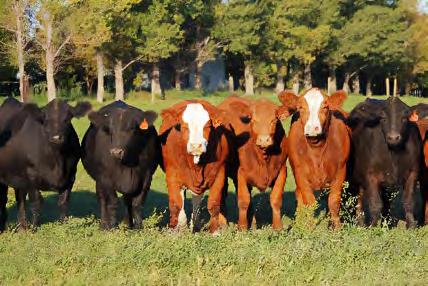
• genetics
• phenotype;
• age; and
• development considerations.
Genetics – What are your production goals and what traits can you select for that will help you achieve those goals? Common traits to assess are milking ability, weaning weight, yearling weight, calving ease and disposition.
Phenotype – Heifers should be selected for structural soundness and growth potential. Heifers should be sound footed, have wide heels and even toes. An indicator of calving ability is the width of the pin bones and the slope from hooks to pins. Heifers that are narrow at the pin bones and have a high set tail head are more likely to have calving difficulties.
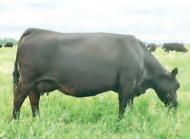
Age – Heifers born at the beginning of the calving cycle came from fertile mothers. When selecting heifer calves, be sure to select heifers that will reach puberty well before breeding.
Development Considerations – When sourcing heifers outside your herd, be sure to select from operations with similar environmental conditions and management practices. This will give you the best chance of the heifers reaching their potential.
Retaining Farm Raised Heifers
Retaining heifers requires less cash up front, but the costs of developing and breeding those heifers needs to be considered. You will find a Beef Replacement Heifer Cost calculator to help you estimate the costs of developing your own replacement heifers on the Manitoba Agriculture website, or by scanning the QR code on this page.
One of the main benefits of retaining replacement heifers is that you have control over the genetic consistency of the herd. Using herd sires with good maternal traits, and utilizing crossbreeding, can lead to more productive replacement heifers. Also, farm-raised heifers will be better adapted to the management and environment of your operation. Keeping good production records can help in selecting the heifers that will have the most potential to be productive in the herd. These records will also make it easier to remove the outliers, such as twins and freemartins. Use these records to select heifers from above average producing cow families and from cows that calve in the first cycle.
Purchasing Heifers
Purchasing heifers can require a large amount of cash upfront. However, it can reduce the post-wean management and health issues as the calves are already over the
weaning process. There are some considerations when bringing in replacements from other herds, such as biosecurity and health. You should also consider the heifers’ vaccination status and history. Try to purchase from herds that have a similar vaccination protocol as your operation. Analyze the dams of the heifers you are selecting from, as they are a good indication of the soundness and productive potential of the heifers.
Purchasing open heifer calves is a good way to introduce new genetics while still maintaining control over breeding decisions, such as timing and genetics. Purchasing bred heifers over open heifers will free up resources such as feed, pen space and bull power.
Every operation is unique. There is no script for selection criteria that will work for everyone. Deciding whether to retain or purchase heifers can look different for each operation and can vary from year to year, depending on available resources and intended goals of the operation. Identify the goals of your operation and select the heifers that will best fit those goals. When deciding whether to retain or purchase, know your costs of both scenarios. Happy heifer selecting!
Share Your Voice
In the next issue of Cattle Country, a Manitoba Agriculture forage or livestock specialist will answer a selected question. Send your questions to Elizabeth.Nernberg@gov.mb.ca.
StockTalk for Cattle Country is brought to you by Manitoba Agriculture. We encourage you to email your questions to our department’s forage and livestock team. We are here to help make your cattle operation successful. Contact us today.
Andrea Bertholet Killarney 204-851-6087
Andrea.Bertholet@gov.mb.ca
Kristen Bouchard-Teasdale Beausejour 431-337-1688 Kristen.BouchardTeasdale@gov.mb.ca

Shawn Cabak Portage 204-239-3353 Shawn.Cabak@gov.mb.ca
Pam Iwanchysko Dauphin 204-648-3965 Pamela.Iwanchysko@gov.mb.ca
Cindy Jack Arborg 204-768-0534 Cindy.Jack@gov.mb.ca

Juanita Kopp Beausejour 204-825-4302 Juanita.Kopp@gov.mb.ca
President: Donovan Hickson 204-570-1862
Secretary: Sandra Brigden 403-638-7741 sandra.mbsimmental@gmail.com
2023 MANITOBA SIMMENTAL DONATION HEIFER
graciously donated by BERT’S NR SIMMENTALS Haywood, MB tickets available now please contact Sandra 403-638-9377
www.mbsimmental.com

We are excited to announce our new MSA Secretary SANDRA BRIDGEN Minnedosa, MB
A huge thank you to LAURELLY BESWITHERICK MSA secretary/treasurer from 2016-2023 for all your hard work, time and dedication to the Manitoba Simmental Association.
10 CATTLE COUNTRY September 2023 www.mbbeef.ca
view our facebook page or website for up to date info!
MODERATE MATERNAL EASY CALVING EASY FLESHING
Our breeding program is focused on creating fertile cows that efficiently raise calves, are reliably repeatable, have excellent udders and feet and require minimal replacements (longevity); traits required to be profitable in the cow business.
www.ediecreekangus.com
ECA DUCHESS 66W
We would like to announce our Fall "Grazing & Genetics Tour" to be held in Late Fall
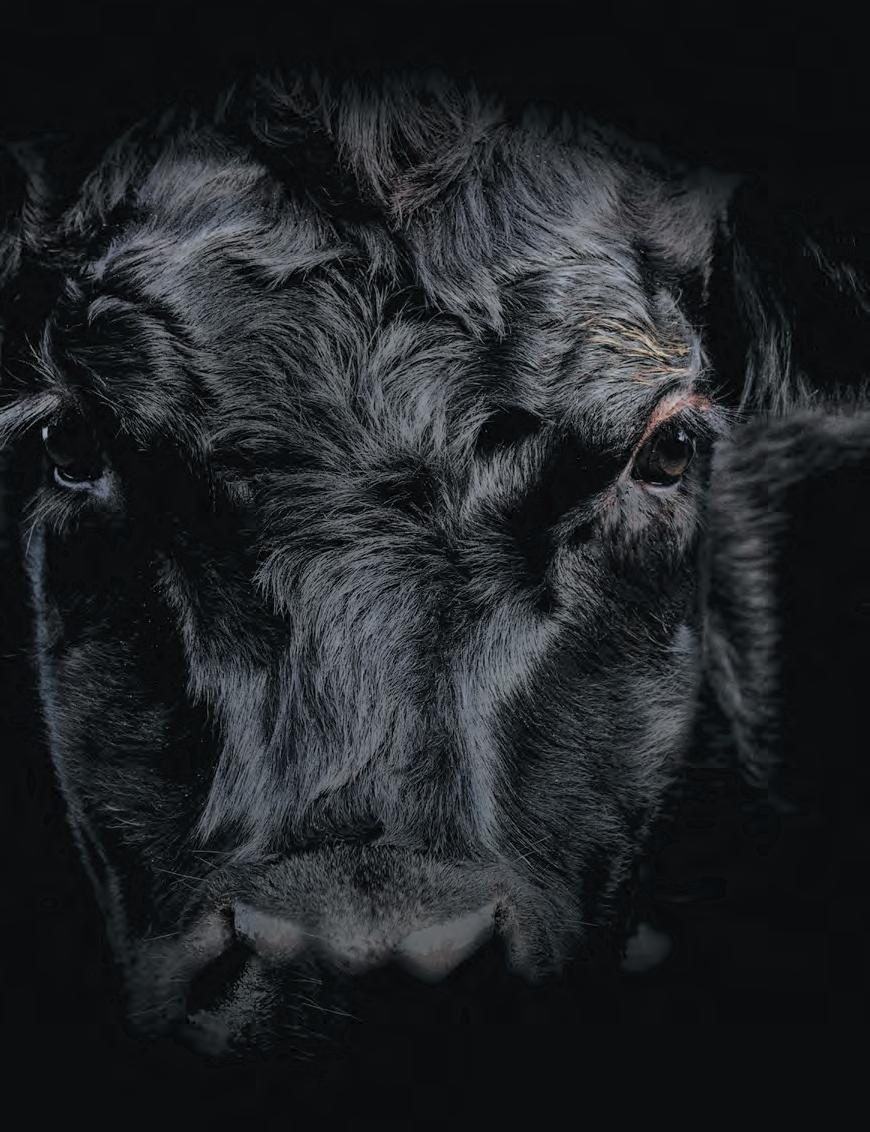
THE EMBODIMENT OF FERTILITY & LONGEVITY At the age of 14, this OCC Legacy daughter sold a bull through the 2023 sale, corn grazed on a quarter section through the winter, and she calved in the 1st cycle again this year.
11 CATTLE COUNTRY September 2023 www.mbbeef.ca A new era of high efficiency feed begins now with Enogen™ corn. A NEW OF FEED BREED For more information about Enogen corn, contact your dealer, your Enogen Technical Sales Representative, or call our Customer Interaction Centre at 1-87-SYNGENTA (1-877-964-3682). Always read and follow label directions. Enogen™, the Alliance Frame, the Purpose Icon and the Syngenta logo are trademarks of Syngenta Group Company. © 2023 Syngenta.
Fundamentals Suggest the Potential for a Strong Fall Run
I have just returned from the Canadian Beef Industry Conference in Calgary where CBIC had an interesting and informative line up of speakers. One of the presenters whom I enjoyed the most was Brenna Grant from Canfax. Brenna is the Executive Director for Canfax, and this year’s report was full of interesting data that reinforces my opinions on the upcoming cattle markets for the fall run.
The good news is that all indications point to these record high feeder cattle prices staying strong for the next two to three years and beyond. Cow-calf producers should be sitting on the edge of their seats this fall enjoying strong cattle prices. Just how high can the cattle prices get? Well, let’s look at the fundamentals that influence the cattle market.

The futures for the fed cattle market support the fed cattle current prices. The live fed-cattle prices for the remainder of the year are projected to average $2.40 per pound. The larger feeders will search for a basis contract from the packers and can get a pretty good idea what they can lock in fed cattle prices for. From that point they will look at protecting the dollar.
The exchange rate on the Canadian dollar is extremely important. In September of 2022, the Canadian dollar dropped six cents from 80 cents to 74 cents; that one move was responsible for 60% of the increased calf prices in the fourth quarter of 2022. If you remember, in a past column I mentioned that the reason the market didn’t drop last fall was dollar driven not supply driven. This year we have been under the five-year average with the Canadian dollar at 72 to 76 cents. If the dollar drops to 72 cents or lower during the calf run, the opportunity is there for steady to higher prices. The lower dollar also helps the export market for Canadian beef. Over the past year, Japan’s currency has dropped in value, giving
RICK WRIGHT The Bottom Line
them less buying power, and resulting in fewer tonnes of Canadian beef going to Japan. In Mexico, the opposite has occurred! The Mexican peso has really strengthened in value, allowing Mexico to import more Canadian beef. Despite the overall decline in the amount of beef being exported from both Canada and the USA, the dollar value of the exports is steady to higher.
The limiting factor on how much the feedlots will pay for calves this fall will be heavily influenced by the “cost of gain” at the feedlot. Each feeding company will have a different feed cost depending on their ration and what kind, if any, by-products they are able to procure. The costs of finishing rations in Alberta are being projected from $1.36 to $1.63 per pound of gain before yardage. All will depend on what risk management the feedlot has taken on as their main feed ration, corn, or barley. Bunk management will be critical to the success of feeding cattle at these prices. The cheaper and more efficient the feed ration, the more money the feedlots have to spend on feeder cattle. Many of the experts are predicting lower feed prices, especially corn from the US, if the dollar lines up to purchase the feed.
The supply of calves this fall will be lower than the past couple of years. The prices will tempt producers to sell all their calves including their heifers. Cull cow prices hit all-time highs this summer at $1.57 per pound, up 60 cents since the start of the year. There has been a slight seasonal drop in the cow prices, but don’t expect
QUARTER CENTURY
For Industry
BY INDUSTRY
A lot has changed since the CCIA was founded 25 years ago, from our corporate logo to our new offices and National Distribution Centre in Calgary. But one thing hasn’t – our commitment to delivering a world-class traceability and ID program that Canada’s livestock industry can be proud of.

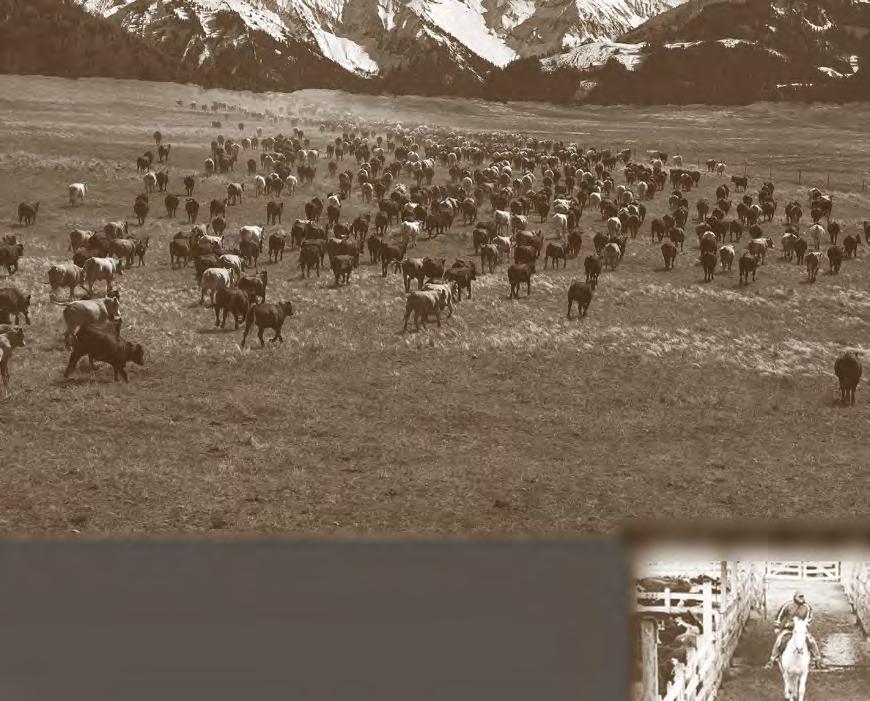
To learn more about our history and our role as a Responsible Administrator, visit canadaid.ca



the cull cow market to drop significantly this fall. The strong cow prices will stop the bottom end of the bred cows from going back to the farms this fall, however you can expect to see a good selection of quality bred cows on offer. There are a lot of producers who feel this is the time to disperse and take advantage of the strong prices. With good quality dispersal bred cows available to purchase, many producers will sell their heifers and buy cows this fall.
With minimal heifer retention, it will be at least one more year until we see herds start to rebuild. When producers start to rebuild by keeping heifers, the volume of feeder cattle available to the feedlots will decrease once again.
The message I got from Brenna Grant’s presentation was that all the fundamentals point to strong prices for the next number of years, as long as we have reasonably priced feed to purchase.
The packers have dipped into their profit pockets and are currently not making huge profits on the beef harvest. Domestic consumer resistance for the current beef prices, and cheap pork prices in the store will hinder higher prices from the packers to the feeders.
It looks like a great fall if you have calves to market. These could be the highest prices you have ever gotten for your calves.
In closing, Canfax has a weekly livestock market report including other reports that are available on a subscription basis. Cow-calf producers can subscribe for $175 per year, and the report will arrive each Friday via email. I would advise taking advantage of this reasonable offer.
Until next time, enjoy the markets. Rick
12 CATTLE COUNTRY September 2023 www.mbbeef.ca
TRACING BACK A OF LIVESTOCK INDENTIFICATION

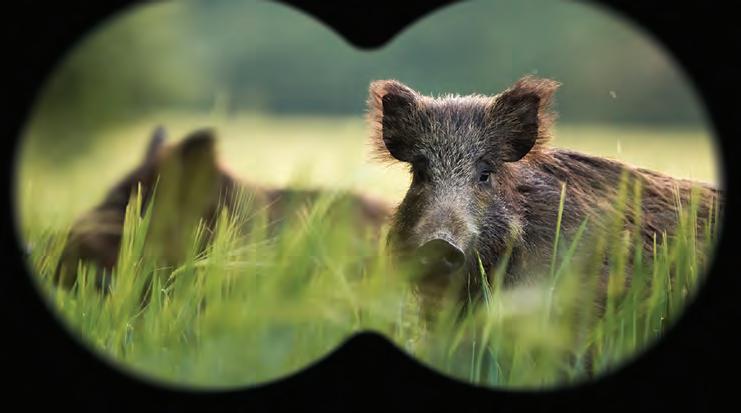


13 CATTLE COUNTRY September 2023 www.mbbeef.ca Manitoba Beef Producers ManitobaBeef @ManitobaBeef Wild pigs are WIDESPREAD in Manitoba LOOK OUT WILD PIGS FOR To learn more or if you see evidence of wild pigs, call 1-833-SPOT-PIG or visit SQUEALONPIGSMB.ORG What are growing conditions like in your area? Good or bad, MBP would appreciate your feedback. Please send comments and/or photos to our email at info@mbbeef.ca
Dr. Kim Ominski Receives 2023 Canadian Beef Industry Award for Outstanding Research and Innovation
(August 16, 2023 Beef Cattle Research Council media release, Calgary, AB)

A leader in furthering the environmental and economic sustainability of forage-based beef cattle production systems has been awarded the 2023 Canadian Beef Industry Award for Outstanding Research and Innovation. Dr. Kim Ominski was honoured at the 2023 Canadian Beef Industry Conference, held in Calgary, Alberta. “Dr. Ominski is sincerely committed to advancing Canada’s beef industry,” said Carson Callum, General Manager of the Manitoba Beef Producers. “Her work is critically important to maintaining the provincial and national research capacity needed to advance our industry and to ensure its long-term sustainability.”
Dr. Ominski is a researcher, professor and acting department head at the University of Manitoba in the


department of Animal Science, where she received her PhD in Nutritional Biochemistry in 1994. Ruminant nutrition is the core of her research program, but she has expanded this base to examine implications for the environment, human health and the broader sustainability of the Canadian beef industry.
“There are few areas of beef production research in which Dr. Ominski has not made an impact: nutrition, greenhouse gas emissions, manure management, feed efficiency, microbiology, farm husbandry practices and transport,” said Karen Schwartzkopf-Genswein, Senior Research Scientist in Beef Cattle Welfare at Agriculture and Agri-Food Canada in Lethbridge. “A clear strength she possesses is the ability to communicate about timely topics in animal agriculture such as greenhouse gas emissions and alternative feed sources related to beef or
ruminant production in Canada.”

One of Dr. Ominski’s research contributions includes co-leading an environmental footprint assessment of the Canadian beef industry. It demonstrated significant reductions in the industry’s carbon footprint over the past three decades, as well as improved water use efficiency and reduced ammonia emissions per kilogram of beef produced. This work provided science-based evidence of ongoing improvements in the environmental footprint of Canadian beef production which has been used by industry and government in program and policy development. The research results are changing the way beef production in Canada is spoken about. For example, the results were shared in advertisements by McDonald’s Canada.
“Her commitment to connecting research questions with primary producer needs, and overall passion for the cattle industry has been an inspiration,” said Mary-Jane Orr, General Manager of Manitoba Beef & Forage Initiatives Inc. “Dr. Ominski’s intuitive ability to recognize research gaps and bring in respective collaborators across disciplines is rare to find and has created the opportunities for research to be carried out addressing industry needs in feed efficiency, environmental stewardship, forage and grassland production, and technology transfer.”
Knowledge dissemination and technology transfer are essential components of Dr. Ominski’s research and training programs. Every research project she leads includes a knowledge transfer plan because the practical relevance of the research to producers is a priority for her.
“Realizing the importance of outreach, Kim has been quick and committed to accessing numerous avenues including newsletters, newspaper articles, presentations, demonstration projects, tours, field days, and hands-on workshops to extend research outcomes to industry,” said Karen Wittenberg, Dean Emeritus, Faculty of Agricultural and Food Sciences at the University of Manitoba. “Dr. Kim Ominski’s enthusiasm for communicating a modern agriculture that embraces sound environmental stewardship while at the same time remaining economically viable, extends beyond research and industry circles to students and our general public.”
Along with her many research accomplishments, Dr. Ominski has mentored 35 MSc and PhD students, six research associates and post docs, and numerous undergraduate students, who are now helping advance the beef cattle industry in their careers. She has served as a mentor in the Canadian Cattle Young Leaders program, actively contributes to the Canadian Roundtable for Sustainable Beef Advisory Committee, and she has served on multiple other committees in the past.
As a teacher, researcher, and mentor, Dr. Kim Ominski has published 82 peer-reviewed publications, 10 book chapters, and over 100 conference publications that have been cited in nearly 1400 documents. Dr. Ominski’s commitment to beef producers and sustainable beef production is evident in her efforts to provide information and advance best practices in the beef industry.
The Canadian Beef Industry Award for Outstanding Research and Innovation is presented annually by the BCRC on behalf of Canada’s beef industry stakeholders. The award recognizes scientists and academics that are actively involved in strong research programs aligned with industry priorities, continually engage with industry stakeholders, and demonstrate their passion and long-term commitment through leadership, teamwork, and mentorship. Nominations are accepted by the BCRC from industry stakeholders and must be accompanied by letters of support from industry stakeholders and scientific colleagues. The recipient is selected by a committee comprised of beef producers, industry experts and retired beef-related researchers located across the country. The award was established in 2015. See past recipients at http://www.beefresearch.ca/about/award.cfm
Nominations for the 2024 award must be submitted to the BCRC by May 1, 2024. Eligible nominations from previous years will be considered for the 2024 award, which will be presented at the 2024 Canadian Beef Industry Conference.
14 CATTLE COUNTRY September 2023 www.mbbeef.ca
Grand Valley Fortifiers has a complete line of products to suit your beef cattle needs. From high quality, palatable premixes, creep feeds and grower-finisher feeds, speak with your GVF Beef Specialist and let us help you select the right products to maximize your beef production. GVF offers on farm consultation with regular service and support to ensure that your herd is performing to its maximum potential. 1-866-626-3933 grandvalley.com Advanced Animal Nutrition for Improved Human Health. Meet Ken Nolan Beef Specialist 431-353-2077 kennolan@grandvalley.com HELPING YOU REACH YOUR BEEF PRODUCTION GOALS. Loading Chutes Complete System Design Call us at 1-800-661-7002 Or visit us online www.hi-hog.com Hi-Hog Provides Free Custom System Design Build the System that Works for You!
• SERVICES: Whether you are a specialty producer looking to get your product to a speci c market or distributor, or if you are producing commodity livestock for sale, we can partner with you. From our multi-species capabilities to our ability to handle smaller volumes, we o er excellent capabilities for producers in the Canadian Prairies to maximize their pro tability.








• FACILITY: We have a state-of-the-art facility to allow us to reach markets across Canada, the USA, and beyond. We understand producer’s needs, their care for their animals, and their honest, straightforward nature. Call us to hear how we can work together to get your product to market.


15 CATTLE COUNTRY September 2023 www.mbbeef.ca Don’t miss out on upcoming editions of Cattle Country! Email info@mbbeef.ca or call toll-free 1-800-772-0458 and update your mailing address.
• GRASSFED: “True North Foods is partnered with A&W Canada to supply Canadian grassfed beef for A&W’s grassfed burger program.
www.truenorthfoods.ca | trever.frattinger@truenorthfoods.ca | 306-536-6193 TREHERNE OFFICE: Kathy Murray (204) 871-1569 RESTON OFFICE: Carol Graham (204) 821-4943 BOISSEVAIN OFFICE: Tom Moran (204) 305-0276 BRANDON OFFICE: Kasie Cullen (204) 724-0583 FOR MORE INFORMATION CALL: MHHC PAYS Landowners to Conserve Wildlife Habitat On Private Lands. Find out more: www.mhhc.mb.ca
Food Fads of Lockdown and Other Trends
BY: ANNA BORYS, MBP FOOD EXPERT
In the last five years, one of the biggest evolutions of the internet has been the birth of cooking fad videos. Then COVID hit, and these fads were exacerbated with lockdown. Everyone suddenly had a lot more time and boredom to deal with hence the creation of some seriously innovative food instructional videos. From whipped Dalgona coffee, baked feta pasta, and nacho tables to pancake cereal, air fryer corn ribs and the myriad of types of “boards” (i.e., candy boards, butter boards and breakfast boards).
Although we are no longer in lockdown, these food trends have not slowed in any way. As someone who works in the food industry, I find the majority of these hard to take seriously, however they’re highly entertaining, a little goofy, but every so often I stumble across one that I kind of want to try.
With smash burgers being a popular food trend, of course someone had to take it a step further and turn them into a taco. And not just a smash burger taco but our favourite “all beef patties, special sauce, lettuce, cheese, pickles, onion on a sesame seed bun” taco. I had been meaning to try these when suddenly, I got a series of pictures via text from my brother that he had made them for his family, and they were a smashing success (see what I did there?)! So, I had to try them for myself.
I will admit, they’re not the prettiest, hard to photograph, and not something I’d typically make but oh my gosh are they tasty and fun. I think the best part was the soft chewy toasted tortilla. Every bite was just a perfect bite. I also threw on a sprinkle of sesame seeds to get the full Big Mac effect.
I’m sure it’s some measure of blasphemy to call it a taco. In fact, I was telling a co-worker about this recipe (she’s originally from Mexico), and she politely smiled and walked away from the conversation. How dare I insult her heritage with this abomination! All in jest though, she’s a good sport and we like to tease with very Americanized dishes claiming they’re “Mexican”. I don’t even think this qualifies as Tex Mex. There’s no question though, that this recipe is tasty.
Big Mac Tacos
• 1 lb Ground Beef, lean
• 5 – 6” Flour Tortillas
SPECIAL SAUCE:
• ¼ Cup Mayonnaise
• 1 T bsp Pickles, finely chopped
•

½ T bsp Onions, finely chopped
• 1 T bsp Ketchup
• 1 tsp Mustard
• 1 tsp Pickle Brine
• ¼ tsp Paprika
• 1/8 tsp Salt
• 1/8 tsp Garlic Powder
• 1/8 tsp Onion Powder
TOPPINGS:
• Shredded Iceberg lettuce
• Pickles, sliced
• A merican sliced cheese
• Onion, small diced
• Sesame Seeds
• To Taste – Salt and Pepper
(Yields five tacos)
METHOD SPECIAL SAUCE:
1. Combine all ingredients together in a small bowl and set aside.
TO ASSEMBLE:
1. Divide 1lb of ground beef into 5 equal portions (about 90 g each). Spread each portion over one side of each tortilla, within about 1cm from the edge, covering most of the tortilla. Liberally salt and pepper the meat.
2. Heat a large non stick pan or cast iron skillet over high heat. Once hot, place the covered tortillas meat side down on hot pan. Once about 90% cooked, flip tortilla over to toast the bottom of the tortilla and finish cooking the pattie.
3. Remove taco from pan and top with 1 slice of cheese, special sauce, lettuce, onions and pickles then sprinkle with sesame seeds.
4. Fold in half and eat like a taco!
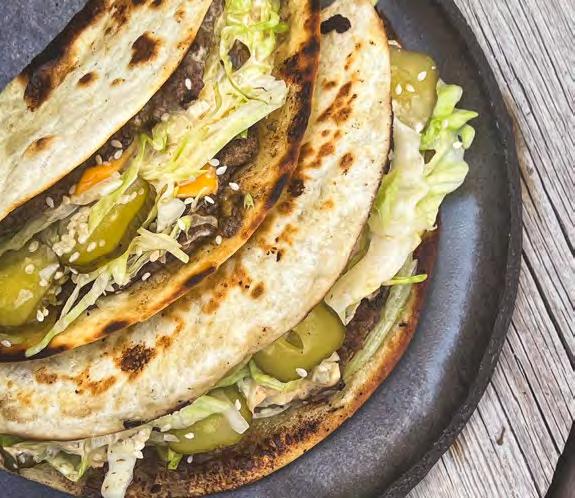
16 CATTLE COUNTRY September 2023 www.mbbeef.ca
Questions about what district you live in? Call the MBP office at 1-800-772-0458 or email: info@mbbeef.ca DISTRICT MEETING SCHEDULE District 4 DIRECTOR Byron Falk 18 OCTOBER Rosa Hall District 10 DIRECTOR Mike Duguid 19 OCTOBER Arborg-Bifrost Community Centre District 6 DIRECTOR Vacant 23 OCTOBER Oak Lake Community Hall District 2 DIRECTOR Nancy Howatt 24 OCTOBER Baldur Community Hall District 12 DIRECTOR Mark Good 30 OCTOBER Ste. Rose du Lac Community Hall District 14 DIRECTOR Dale Cazakoff 1 NOVEMBER Swan River Elks Hall District 8 DIRECTOR Matthew Atkinson 2 NOVEMBER Neepawa Legion All Districts 7 NOVEMBER Virtual Meeting 7:00 pm Start 4:30 pm start time Discover The 15 MINUTES SOUTH OF WINNIPEG ON HIGHWAY 75 Free Entry SUNDAY, SEPT. 17, 10AM-2PM Discover The 15 MINUTES SOUTH OF WINNIPEG ON HIGHWAY 75 Free Entry SUNDAY, SEPT. 17, 10AM-2PM
Photo credit: Anna Borys
