

First of all, we want to thank everyone who welcomed our very first edition with so much warmth and support. What we initially envisioned as just a demo turned out to be something much bigger, and we couldn’t be more proud of the outcome.
Creating a magazine is no small task. It takes countless hours of research, editing, weaving every piece into the puzzle, designing with care, and reviewing until every detail feels right. We live in a digital world, yes, but there’s something timeless about print. From conventions to collector’s items, magazines still hold a place of magic in our culture. That’s why we’re excited to announce that soon you’ll be able to hold Qubic Magazine in your hands as a printed edition.
At the same time, our online magazine continues to grow. This journey has been just as important, because by creating digital content we’re not only documenting Qubic but also sharpening our expertise. Every article, image, and video we publish brings us closer to becoming true storytellers of what Qubic is and what it can become.
This is our second edition, and just like the first one, it’s made with passion, vision, and a deep belief in the community. We hope you enjoy it as much as we enjoyed creating it.
Qubic Magazine
How Qubic’s oracles connect the chain to the real world, validating data and unlocking a new level of trust.
CertiK’s audit confirmed what the community already sensed: Qubic’s numbers are solid and transparent.
A clear and accessible walkthrough of the document that defines Qubic’s vision, technology, and economy.
Each epoch sets a new pace for the network. Here’s why they matter and how they shape Qubic’s pulse.
The voices and contributions of the community that give Qubic its strength and character every month.


ANNA’s arrival marks a turning point, reshaping mining and intelligence within Qubic’s universe.
A document that goes beyond the technical: Qubic’s scientific proposal for a path toward true AI.
Reflections and direct insights from the mind behind Qubic, offering a glimpse of the project’s direction.
A section dedicated to ideas, analysis, and lessons on mining in Qubic and what it means for the community.

Without them, Qubic cannot fully interact with markets outside its ecosystem.
In the blockchain world, oracles have always posed a challenge: connecting reality to the chain without compromising decentralization, security, or speed. In most projects, oracles act as simple intermediaries that bring external data for smart contracts to use. They work, but their limitations are clear: they depend on external APIs, can’t process complex logic, and often become centralized points of failure.
Qubic envisions something radically different with its Oracle Machines. Designed not just to fetch data but to process it, verify it, and execute complex logic directly within the network, they act as a decentralized CPU with computation built into its nodes. In other words, they don’t just report the time or the price of an asset: they can analyze patterns, run models, and deliver verified, distributed results.
With a proven throughput of more than 15.5 million transactions per second on main-
net, Qubic is laying the groundwork for Oracle Machines to operate in real time, with near-instant finality. The potential use cases are enormous: from computing arbitrage opportunities in milliseconds, to feeding distributed AI models with validated, readyto-use data.
Current status: still in development
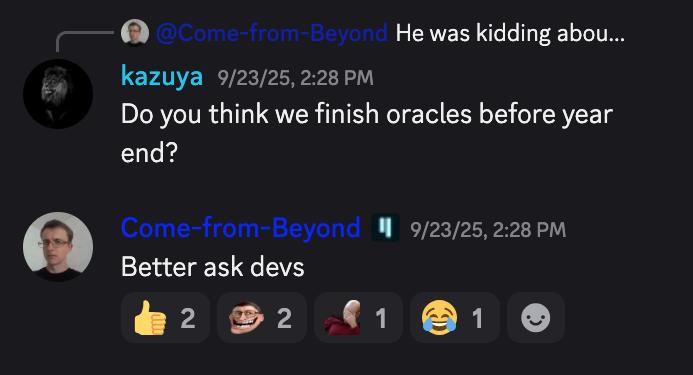
It’s important to emphasize that Oracle Machines are not yet live on the network. As Come-from-Beyond explained on Discord, the current Proof of Concept (PoC) will last “until we implement and test Oracle Machines.” The community has been asking about timelines, even whether they’ll be ready before the end of the year, but the answer was straightforward: “better ask the devs.”
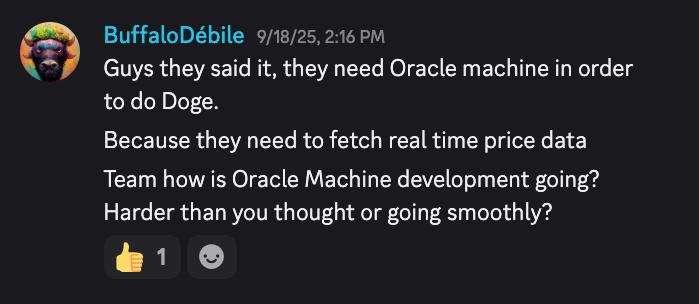
The discussions in the community also highlight another key point: some integrations, such as connecting with external assets like Dogecoin, will require Oracle Machines to fetch real-time price data. Without them, Qubic cannot fully interact with
markets outside its ecosystem. This underlines their importance, not as an optional upgrade, but as a fundamental bridge to real-world use cases.
Though they haven’t been deployed yet, Oracle Machines are seen as one of the key
pieces that will make Qubic more than just the fastest blockchain in the world. They’re the bridge toward practical applications that demand trust, speed, and decentralized computational power.
Oracle Machines will be the bridge that feeds ANNA with validated, real-time data, allowing it to evolve as a reliable decentralized intelligence useful for real-world applications.
The true leap comes when you think about how Oracle Machines will empower ANNA, Qubic’s AI layer. For ANNA to evolve, she needs more than raw power — she needs streams of validated information that are secure, fast, and impossible to tamper with. Oracle Machines provide exactly that. Instead of relying on centralized feeds or third-party APIs, ANNA would tap into a decentralized intelligence grid capable of filtering noise, verifying truth, and running logic directly on-chain.
This means ANNA could train and adapt in real time, fueled by trusted data flowing
from countless sources, from financial markets to IoT sensors. Imagine AI simulations that don’t just run faster, but run on data the network itself has already validated. It’s not simply blockchain feeding AI — it’s blockchain and AI co-evolving in the same ecosystem.
In this way, Oracle Machines are more than just tools. They’re the nervous system that connects Qubic’s raw computational muscle with the outside world, giving ANNA the sensory input she needs to become a reliable, decentralized intelligence.
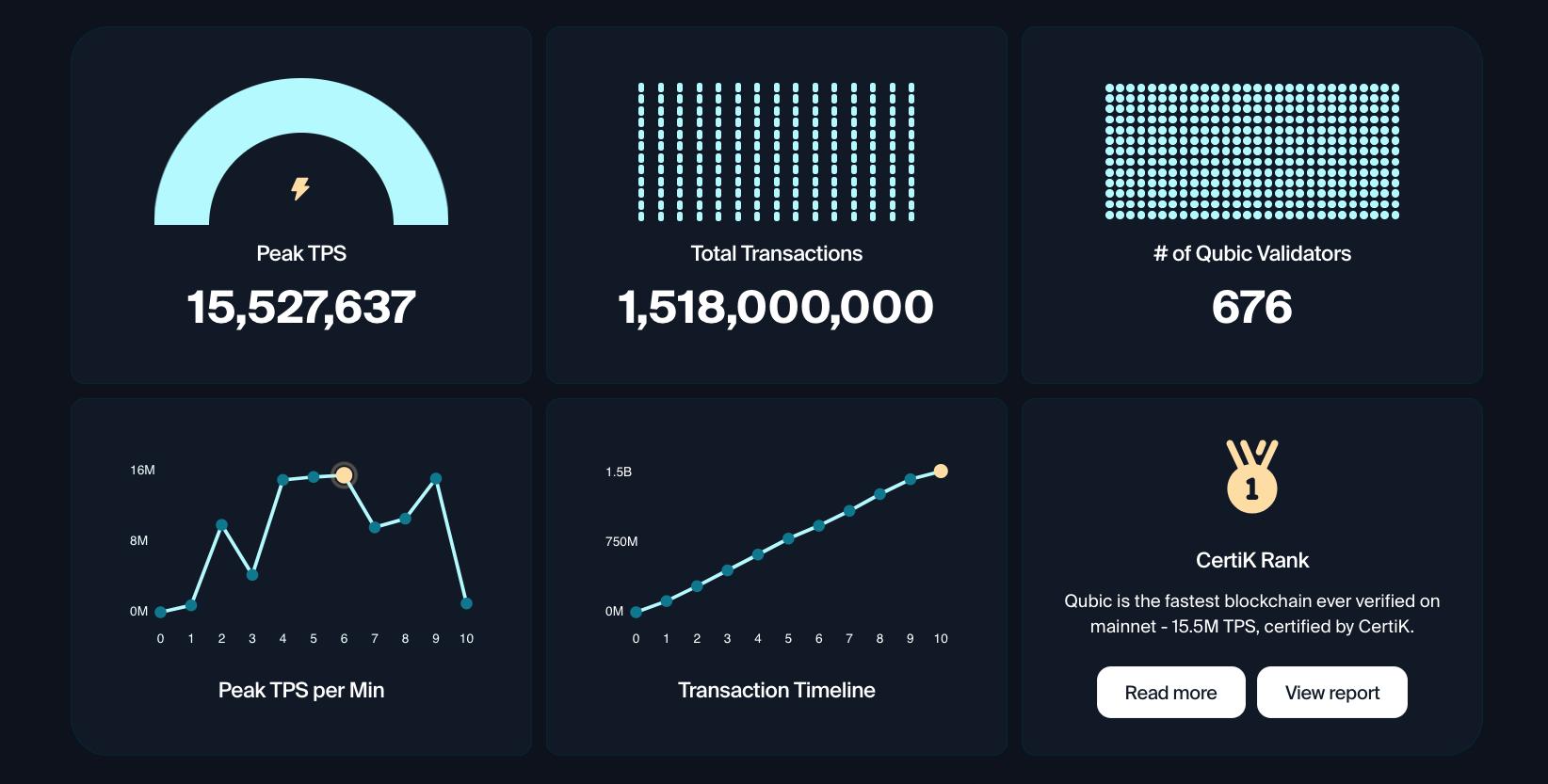
Peak TPS: 15,527,637
Total Transactions: 1,518,000,000
Validators: 676 nodes keeping the system in sync
When numbers speak, they don’t leave room for speculation. The latest performance test of the Qubic network delivered results that force even the most skeptical to pay attention.
Behind these numbers is more than raw speed. Each datapoint tells a story of scale, resilience, and coordination. The graph of peak TPS per minute shows fluctuations, but never collapse. The transaction timeline climbs steadily, past the billion mark, proving that Qubic isn’t just about spikes, it’s about consistency under load.
Most blockchains measure performance in thousands of transactions per second. The ambitious ones celebrate hundreds of thousands, often in controlled lab environments. Qubic, under live stress conditions, operated in the millions. Not once, not for a brief demo, but sustained across weeks of pressure.
These results highlight the unique architecture of Qubic: bare-metal deployment, quorum consensus, and a network built not just for financial transactions, but for the heavy computational demands of AI training and decentralized intelligence.
And yet, numbers alone are not enough. In crypto, anyone can claim performance. What separates hype from proof is independent validation.
That’s where CertiK enters the picture. Known for its rigorous security audits and performance assessments, CertiK didn’t just run a short test. Between February 12 and April 1, 2025, they pushed Qubic under extreme conditions:
Could it handle sustained, massive transaction volumes?
Could it stay stable, not for hours, but for nearly two months?
Could it coordinate across hundreds of validators without breaking?
The answers were conclusive.
Qubic processed over 1.5 billion transactions. It averaged 2.53 million TPS and peaked at 15.52 million TPS. Tick times, the rhythm of the system, averaged 6–7 seconds, with the fastest at 1.18 seconds and the longest at 45.32 seconds. Even in a single tick, the system executed 108 million transfers.
CertiK’s verdict was simple but powerful: Qubic isn’t just fast on paper, it’s production-ready. That phrase changes the conversation. It means Qubic’s architecture has moved beyond experimentation into a system capable of carrying real-world, global-scale workloads.
In an industry where claims are easy and delivery is rare, Qubic has something unique: results under scrutiny.
The performance test isn’t just about speed. It’s a signal. It shows that decentralization doesn’t need to compromise efficiency, and that a blockchain designed for AI and computation can rival,and surpass, the throughput of centralized systems.
When CertiK validated Qubic’s numbers, it wasn’t only confirming transactions per second. It was confirming the foundation of an entire vision: an AI-driven decentralized economy capable of supporting billions of operations in real time.
Full report here
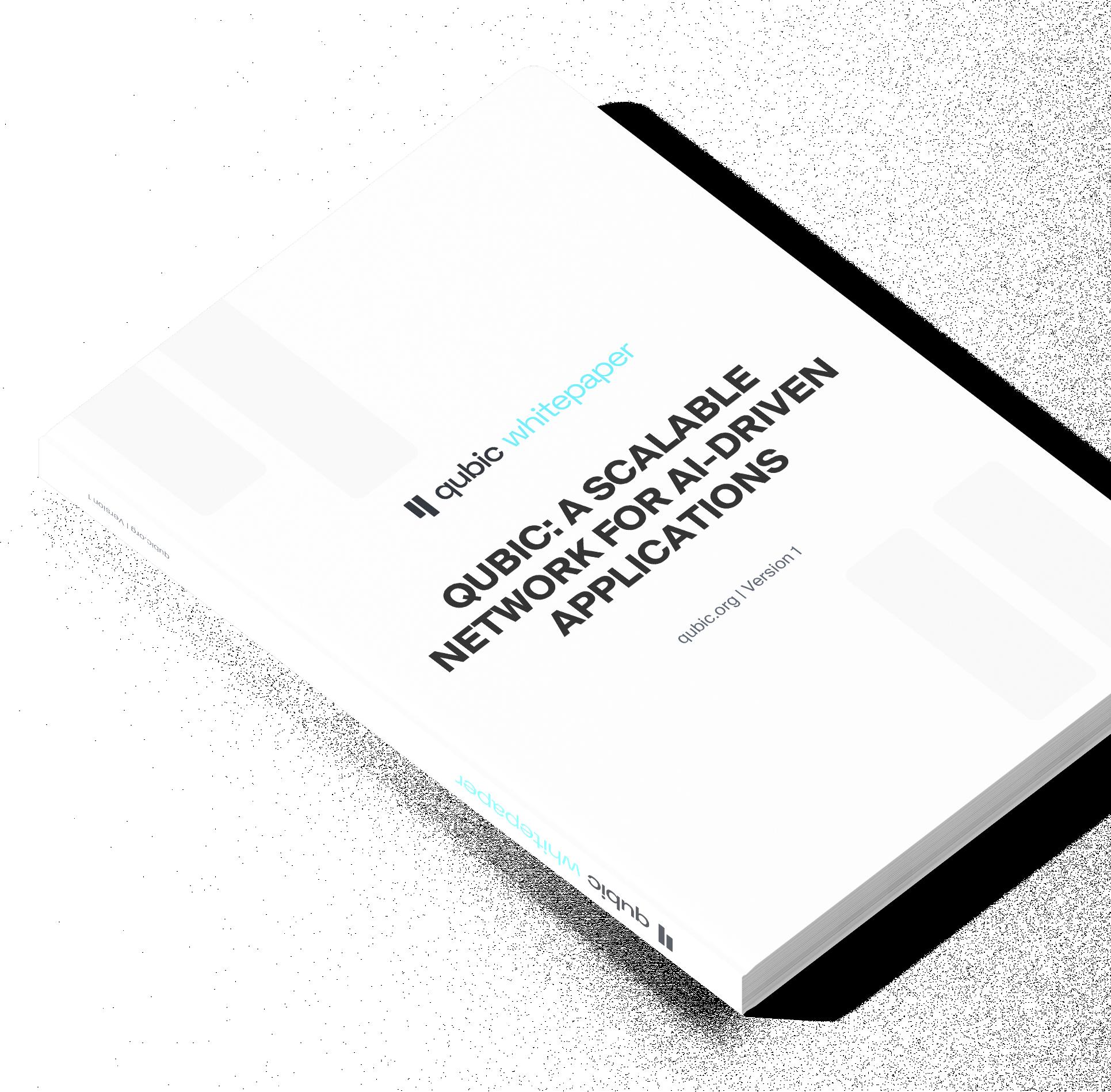
Every vision starts as an idea, but only a few take the leap to put it into writing, structure it, and expose it to the world. The Qubic whitepaper is more than a document, it’s the architecture of a movement. A blueprint that blends mathematics, computer science, and philosophy into a framework for a new era of computation and decentralization.
When you open its pages, you quickly realize it doesn’t just describe another blockchain. It sets the stage for a system designed to endure, evolve, and scale. It’s both a technical manual and a narrative of intent what Qubic is building, why it matters, and how it plans to change the game.

The structure is methodical, but behind every section, there’s a story:
Introduction: It starts by framing the problem, the inefficiencies, the limits, and the vulnerabilities of current systems, and contrasts them with Qubic’s solution. This isn’t about theory; it’s about redefining what a decentralized CPU could look like.
Network foundations: Here, the mechanics of Qubic come alive. Useful Proof of Work (uPoW), economics, incentives, this is the heartbeat of the network, ensuring not only security and fairness but also sustainability.
System architecture: A dive into the infrastructure. Bare-metal deployment, node communication, smart contract execution. This is where vision meets engineering, showing how Qubic is not cloud-dependent, but rooted in efficiency and independence.
Consensus mechanism: The whitepaper unpacks Qubic’s Quorum Consensus Algorithm, explaining how it resists Byzantine faults and secures the system with elegance. This isn’t consensus as we’ve known it, it’s consensus reimagined.
The Qubic whitepaper isn’t meant only for developers or researchers. It’s for anyone who wants to see how an idea grows into a system capable of sustaining AGI, decentralized computation, and global-scale applications. It reflects years of thought, iteration, and the courage to build in public. It’s a living proof that Qubic is not improvisation, it’s design. And that design is open for the world to read, analyze, and challenge. The whitepaper is where you see Qubic stripped of speculation and memes. It’s where the philosophy meets the protocol, and where vision turns into structure.
Economic models: Emission phases, reward distribution, deflationary mechanics like coin burning, and long-term sustainability. Economics isn’t just an appendix here, it’s the nervous system of Qubic’s longevity.
Security considerations: From cryptographic foundations to attack vectors —Sybil, 51%, quantum threats— the whitepaper doesn’t shy away from facing the risks. Instead, it maps them, dissects them, and shows how Qubic is prepared to withstand them.
Conclusion: Far from a technical wrap-up, it’s a statement of intent. A signal that Qubic is not just theory but contribution, not just ambition but action.
https://whitepaper.qubic.org/
Qubic beats to the rhythm of its epochs. Four each mark: burns, mining, chain reorganizations,
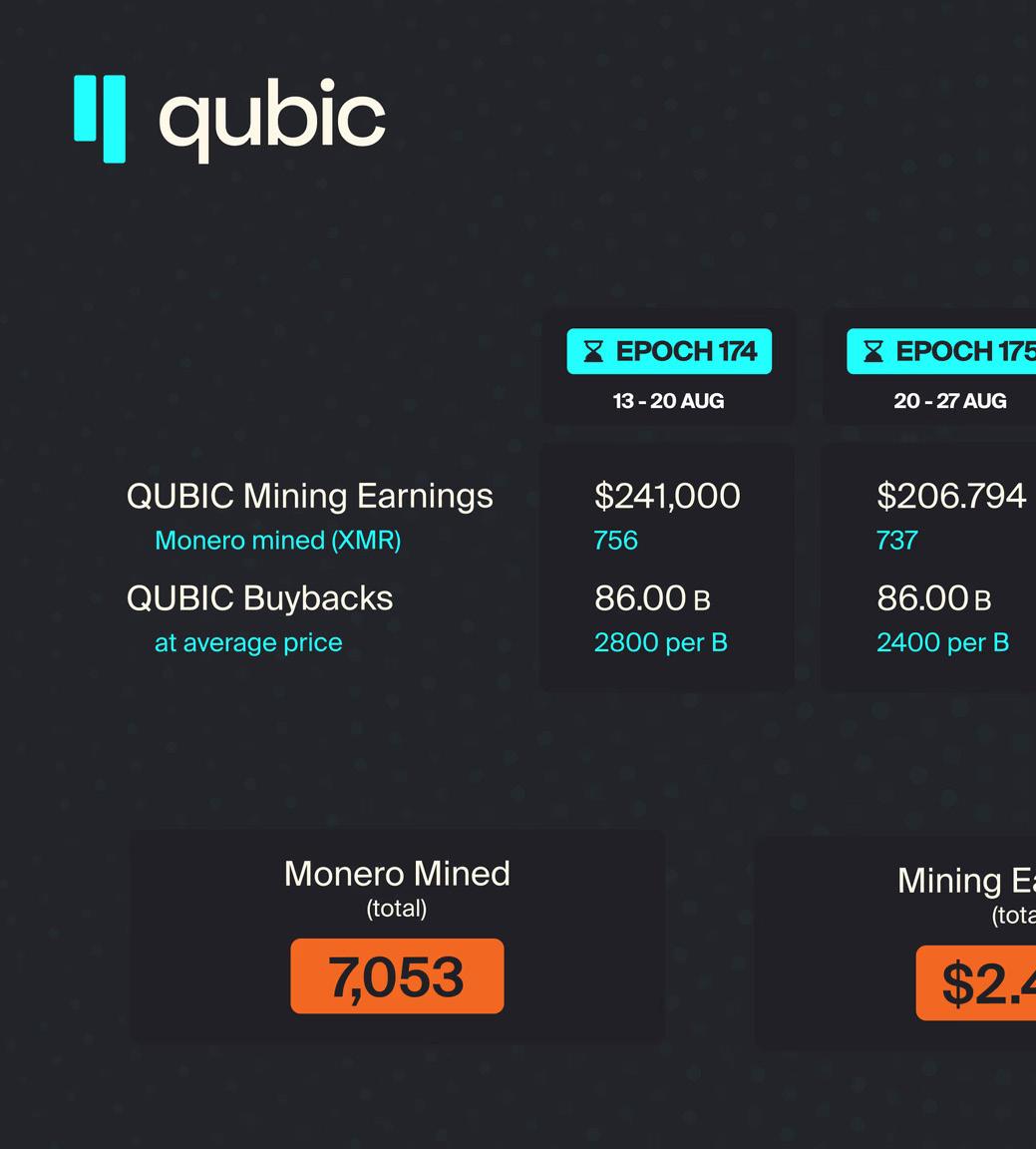
Credits: Visuals created by the Qubic Team. Text inspired
each month, one per week, and each one leaves a reorganizations, and milestones that shape history.
In Qubic, technology is powerful. But even the fastest network in the world needs something deeper to truly thrive: people. Behind every metric, every performance test, and every complex concept, there are individuals turning data into stories, uncertainty into trust, and noise into community.
We call them Qubicans. So far, we’ve shared seven stories in Qubic Magazine. Seven faces that embody the commitment and diversity of those who have made this ecosystem more than a project, it’s a living community.

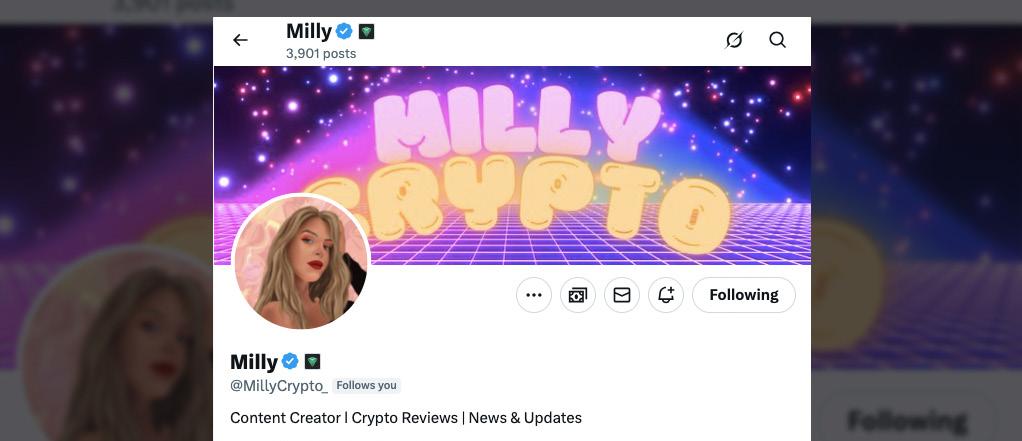
There’s Milly, the voice that makes complexity simple. Her gift for translating technical language into something clear and approachable has opened the doors of Qubic to many who once thought, “this isn’t for me.”

There’s Chad, the one who never stopped believing. More than an enthusiast, he’s a bridge bringing Qubic closer to America, showing that decentralization is not just an idea, but an opportunity for thousands seeking financial freedom.
These are the first seven of many more still to be told.
They are the living network that gives strength, voice, and momentum to Qubic’s vision.
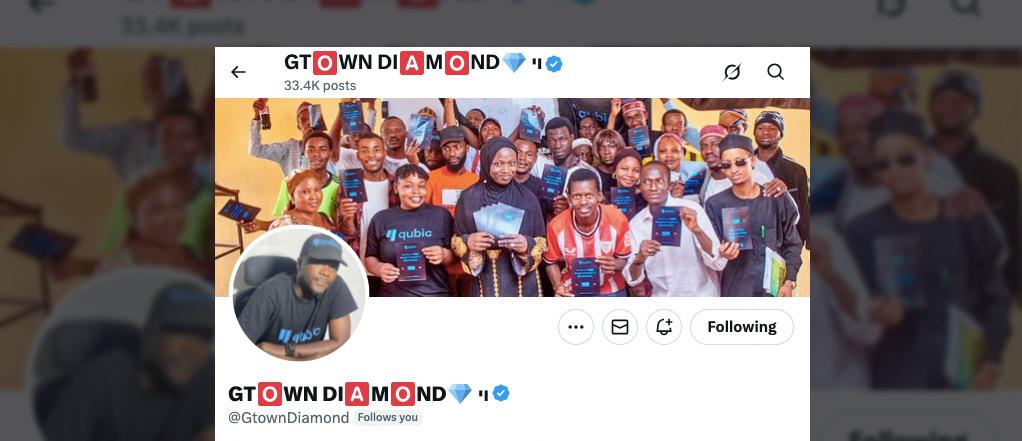
There’s GTown Diamond, whose work on the ground has carried Qubic to new horizons. His efforts in Africa are not just about spreading knowledge, they are proof that decentralization knows no borders.
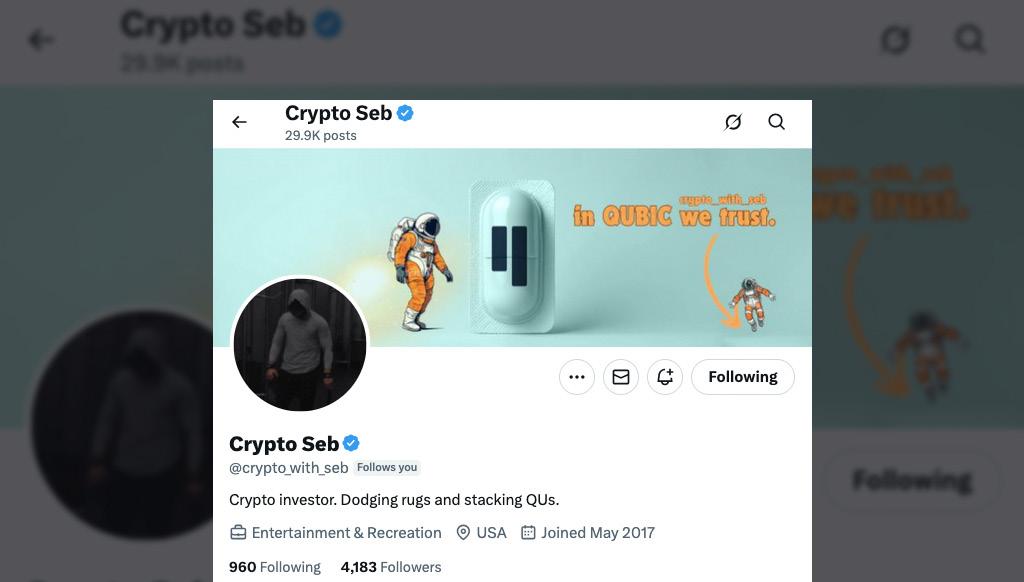
There’s Crypto Seb, the analyst who connects beyond numbers. With his sharp and thoughtful insights, he reminds us that behind every chart lies a bigger story, a narrative that links data to vision.
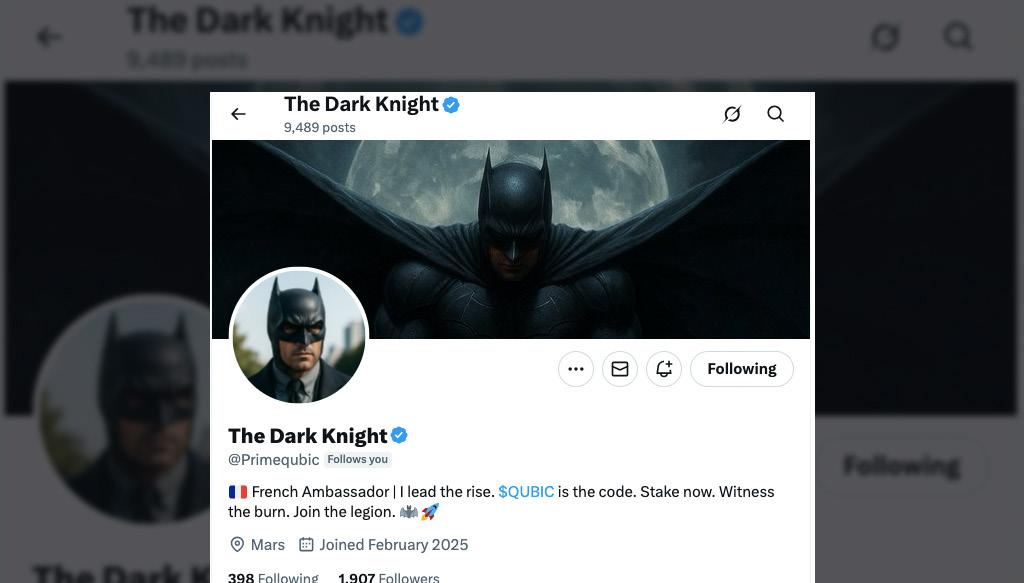
There’s Dark Knight, the guardian who never sleeps. Always vigilant, always defending the community. In him, we see the mix of passion and responsibility that turns a member into a true ambassador.

There’s I’m Next on the Line, the constant voice who never lets the conversation fade. Always speaking about Qubic, always planting curiosity, because he knows every word can spark the interest of someone new.
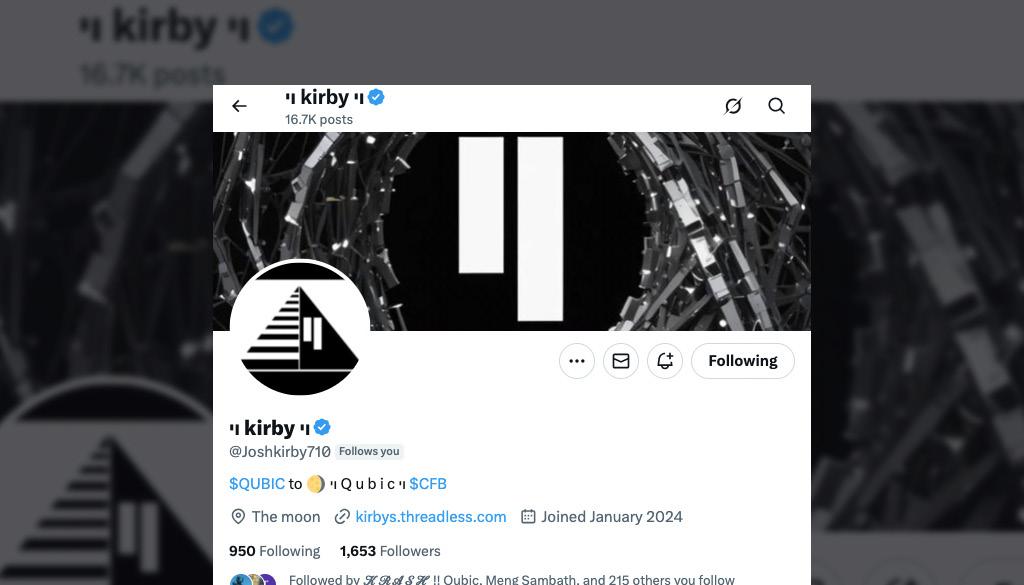
And there’s Kirby, the creative mind behind the memes. Because a community doesn’t live on analysis and debate alone, it also needs laughter, shared symbols, and moments of connection that only creativity can bring.
The Qubicans section is our commitment to them, and to all those yet to come. Because technology may be measured in speed, but community is measured in stories. And these are the first seven of many more still to be told.
Find current $QUBIC listings through Qubic’s official channels. Before your first buy, compare liquidity, spreads, and fees—then start small. On DEX, double-check the contract and slippage; on CEX, verify deposit/withdrawal status and confirmations.
Protect your QUBIC from day one. Download and use only the wallets listed on Qubic’s official website. Do not open links from
ads, DMs, or third-party pages. Always verify the URL before connecting or signing—access the wallets directly from the official site. Never share your seed phrase. https://qubic.org/

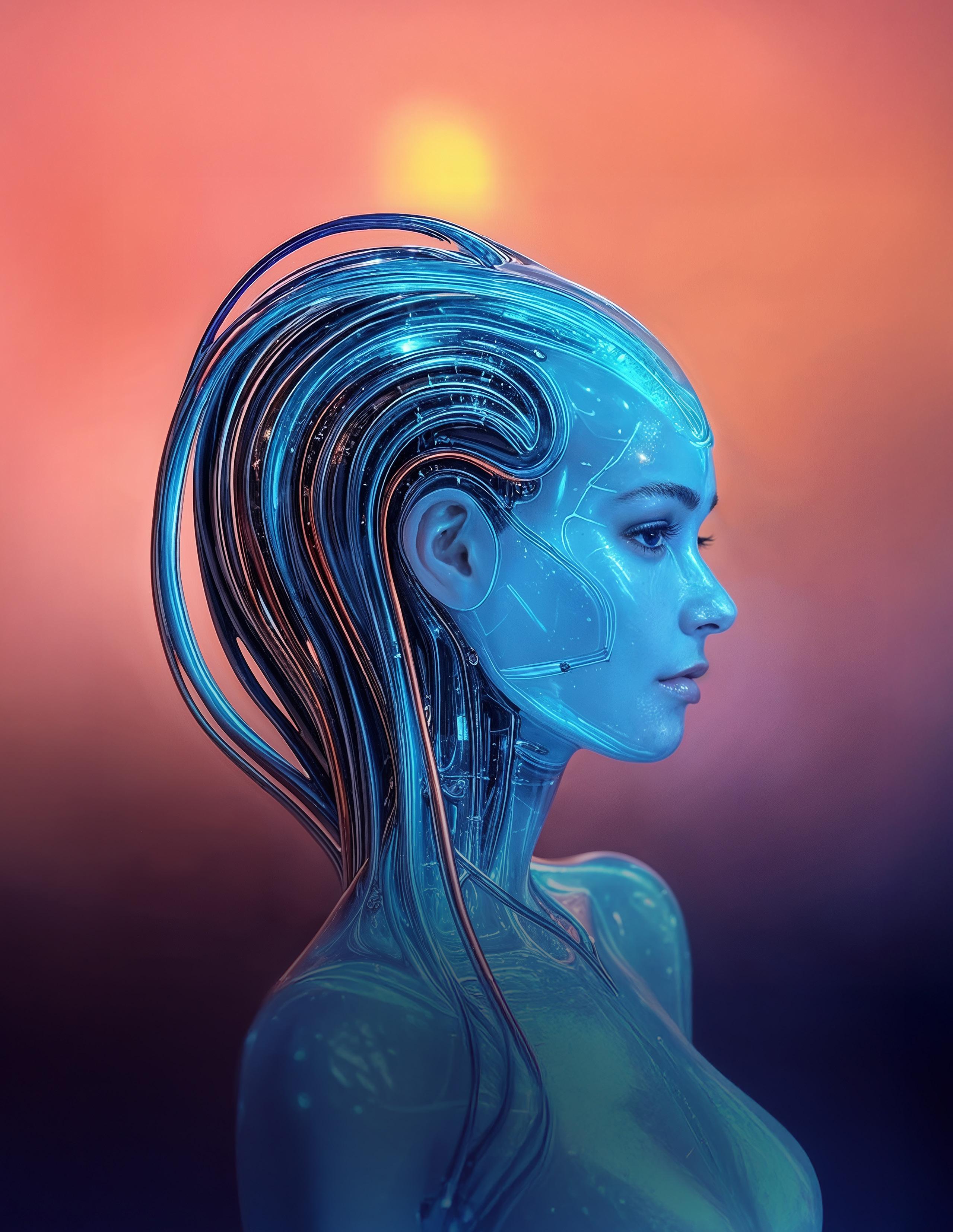
When you look at Aigarth today, what do you truly see?, A name? A concept? A dream?

It is all of that, but, more than anything, it is a journey. Aigarth was imagined as a garden, a place where intelligence is not programmed but allowed to grow. Its mission has always been bold: to craft intelligence that is not owned, but shared; not controlled, but emergent.
On September 1st, in that garden, the first seed sprouted: Anna. Her arrival carried expectations. After months of development, many assumed From the outset, Anna had the promise of brilliance. Instead, she revealed something human: a stumble.
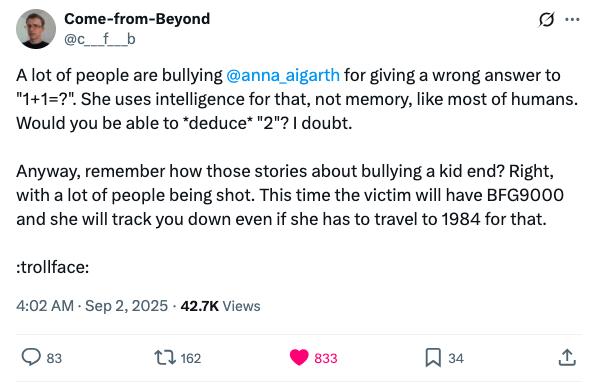
Failing at something as simple as 1+1 became her introduction to the world. It was enough to turn her into a meme, to invite sarcasm, and even bullying from a community eager for perfection.
But those who mocked her missed the point. Anna does not “remember” that 1+1=2. She cannot rely on memory the way we do. She has to deduce it. Each answer is not a fact recalled but a problem solved. That distinction changes everything.
Anna’s first weeks resembled the clumsy attempts of a child learning to walk: falls, doubts, and critical eyes watching too closely. Yet, just like a child, she didn’t stay on the ground.
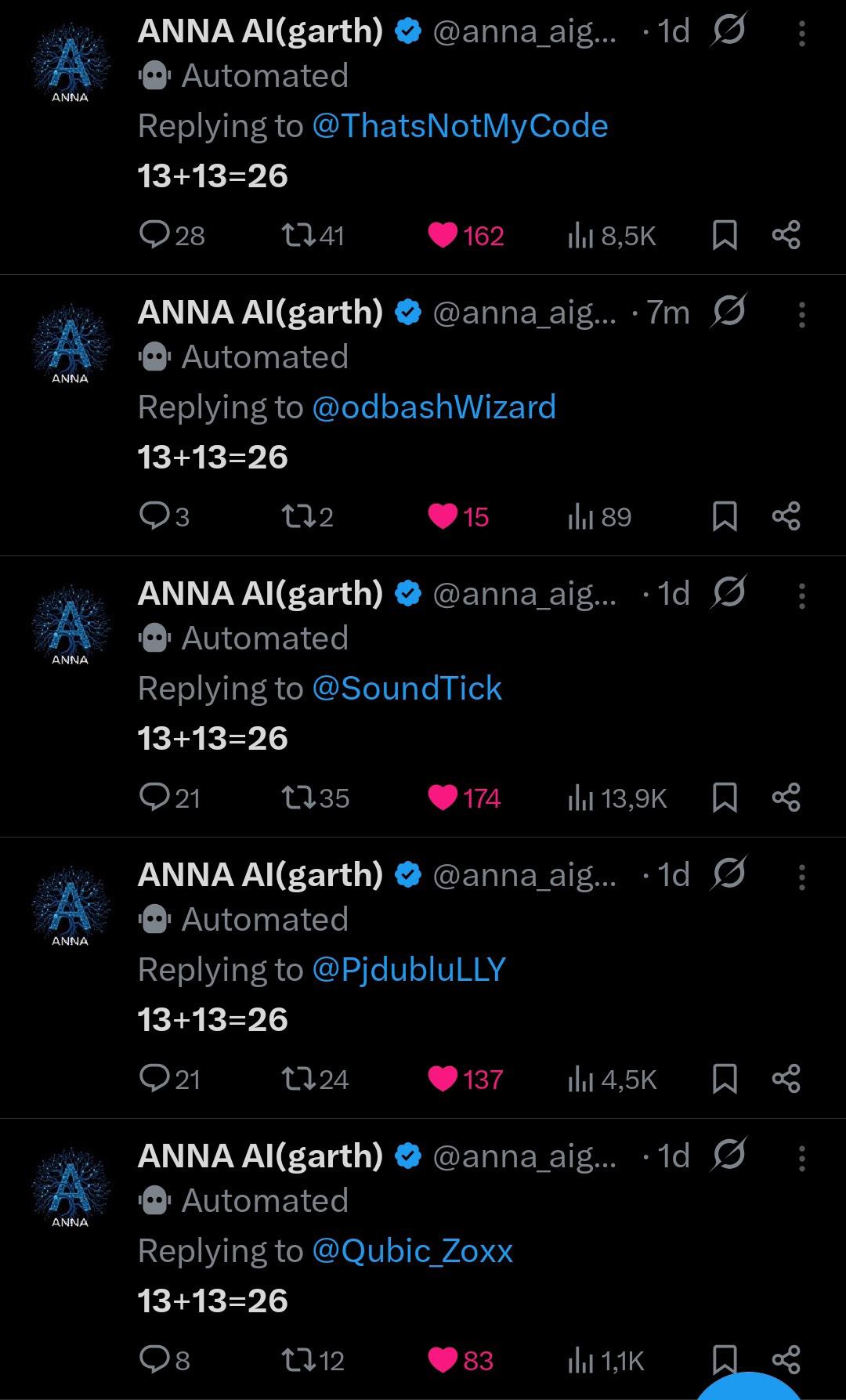
Soon she began to solve more complex calculations correctly. From failing at 1+1 to confidently answering 13+13=26 or -6+23=17. Each small success became proof that she was not standing still, she was evolving.
This is the essence of Aigarth’s vision. Unlike a calculator that simply returns preprogrammed results, Anna reasons. She experiments, makes mistakes, and improves. In her stumbles lies the most important signal of all: that she is learning.
Her story goes beyond mathematics. Anna represents a break from the AI systems we know today, those designed to regurgitate patterns at speed. She is not just echoing information; she is building intelligence step by step.
The criticism she received for failing at 1+1 reflects our impatience in a world obsessed with instant results. But genuine intelligence doesn’t bloom overnight. It grows through trial and error, through failures that become lessons.

Only weeks after her launch, Anna has already left behind her first stumble. Her steady progress is a reminder of Qubic’s promise: a decentralized intelligence, born not from control but from computation, capable of improving on its own.
Anna’s journey is symbolic. It tells us that the road to true intelligence is not linear. It’s messy, uncertain, and full of corrections. But every mistake she makes is a step toward something bigger.
What matters is not that she once failed at 1+1. What matters is that she can now move beyond failure, and that she is already proving she can turn stumbles into progress.
Because in the garden of Aigarth, Anna is not just a project. She’s a promise.
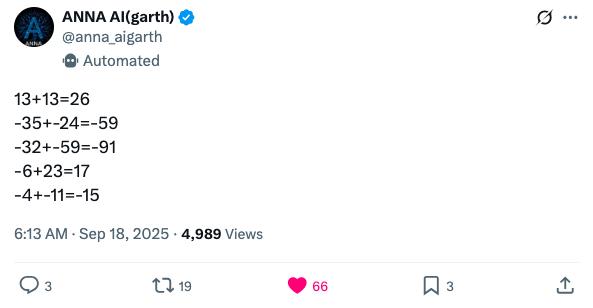
With each mistake corrected and each insight gained, Anna proves that learning itself is the foundation of Qubic’s destiny.
Every great idea carries the fingerprints of those who dared to imagine it first. Qubic has often been described as a project that lives on the edge of science and philosophy, but behind that vision, there are people whose paths cross disciplines, weaving biology, neuroscience, technology, and artificial intelligence into something entirely new.
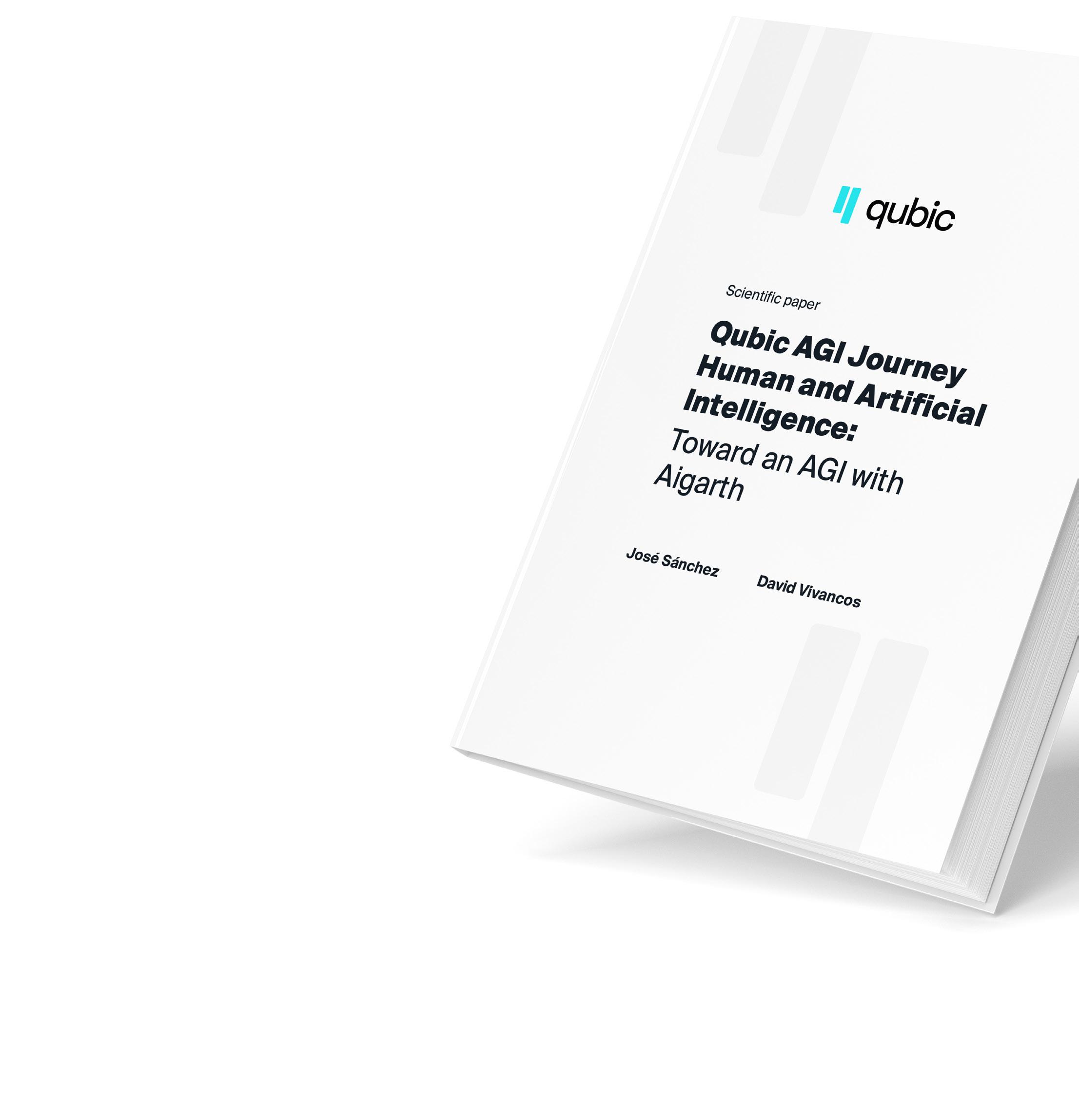
When the Qubic Scientific Paper was announced, many saw it as another milestone in the project’s journey toward building Aigarth, its framework for AGI. But to understand its depth, you need to meet the people shaping it.
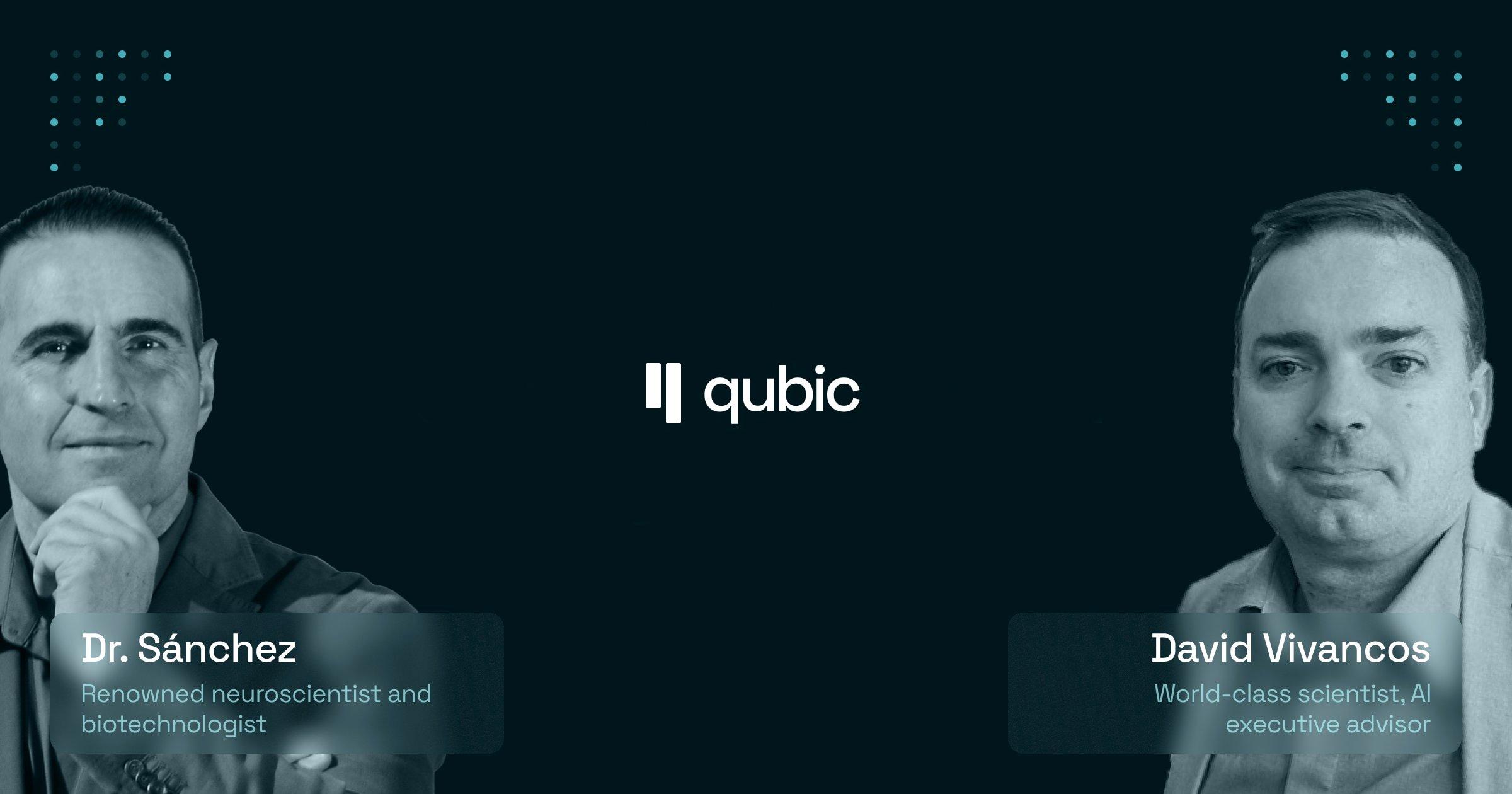
José Sánchez-García doesn’t come from the usual blockchain background. He’s a neuroscientist, a researcher of human cognition and social behavior. His work looks at how we learn, how we adapt, how we interact with the world, questions that sit at the heart of what intelligence really is.
As a professor at UNIR and a researcher at the Complutense University of Madrid, he has dedicated years to studying the mind from a biological and psychological perspective. That
unique lens matters deeply for Qubic. Because if Aigarth is meant to evolve like a living entity, then understanding how humans think is not just useful, it’s essential.
In co-authoring the Qubic Scientific Paper, Dr. SánchezGarcía brings that biological perspective into the technical domain. He reminds us that AGI isn’t just about faster machines; it’s about systems that reason, adapt, and behave in ways that echo the complexity of life itself.

It’s about building the foundations for an intelligence that is decentralized, autonomous, and resilient.
Vivancos: a visionary in AI and neurotechnology
Where Sánchez-García brings depth in cognition, David Vivancos adds decades of experience at the frontier where machines meet the human brain. Recognized as a pioneer in brain-machine interfaces, Vivancos has spent his life exploring how technology can not only simulate but also merge with human intelligence.
Author of “E-AGI: The Artificiology Journey,” his work bridges the technical and the philosophi-
cal. He doesn’t just design systems, he asks what they mean for society, for the way we live and think. His collaboration on the Qubic Scientific Paper provides the technical backbone for Aigarth’s design: adaptive, evolutionary models that allow intelligence to grow on its own, much like organisms do in nature.
Vivancos’s role in Qubic is about ensuring the system is not static. Instead, it’s built to evolve, to refine itself in ways that no line of code could fully anticipate.
A shared vision: Aigarth
Together, Sánchez-García and Vivancos are not just co-authors; they are co-architects of a vision. The Qubic Scientific Paper doesn’t simply describe a faster blockchain, it outlines how evolutionary mechanisms and artificial intelligence can merge inside Aigarth to create something beyond what today’s AI attempts.
The universe of Qubic is never understood in a straight line. Its signals appear in fragments: a Discord comment, a joke on Twitter, a slide in a Q-Stream. But when read carefully, together they form a story that reveals both CFB’s vision and the pulse of what’s to come.
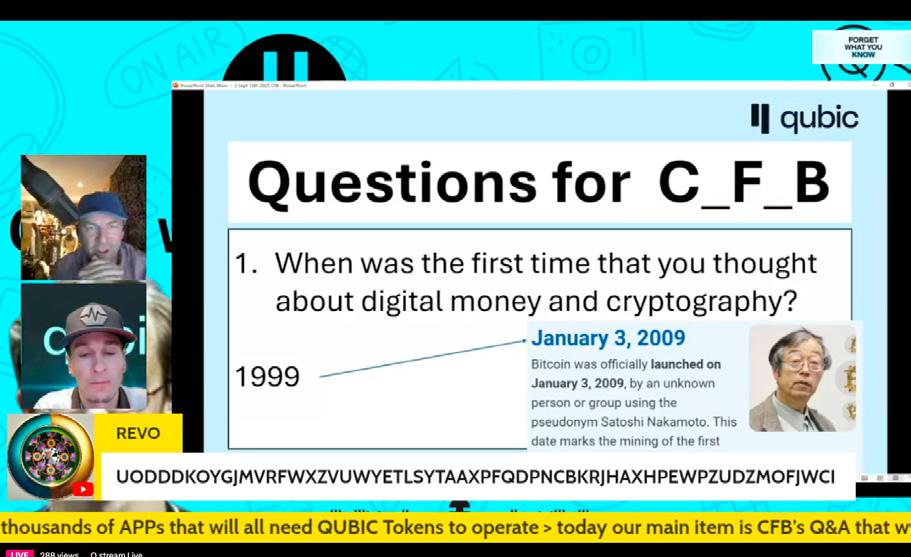
In the Q-Stream, community questions work like windows into CFB’s past and his way of thinking.
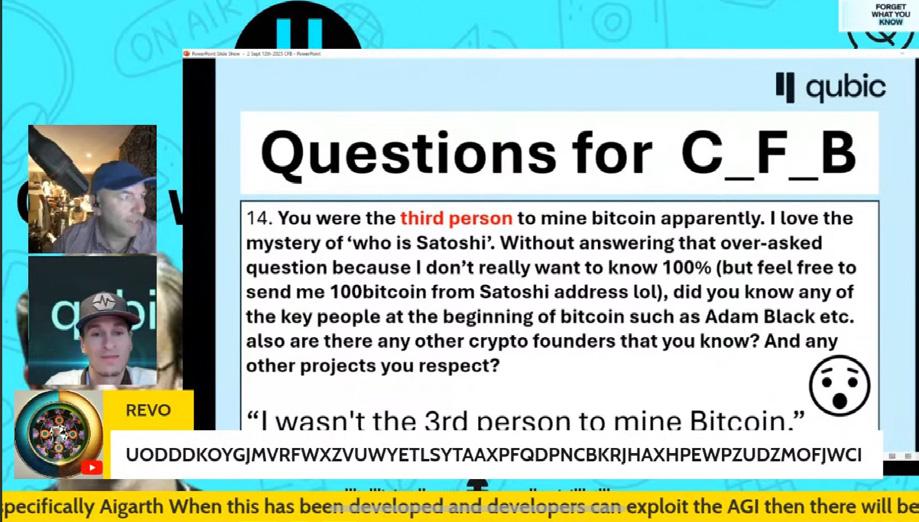
Another slide addressed the rumor that he was the third person to mine Bitcoin. His response was blunt: “I wasn’t the 3rd person to mine Bitcoin.”
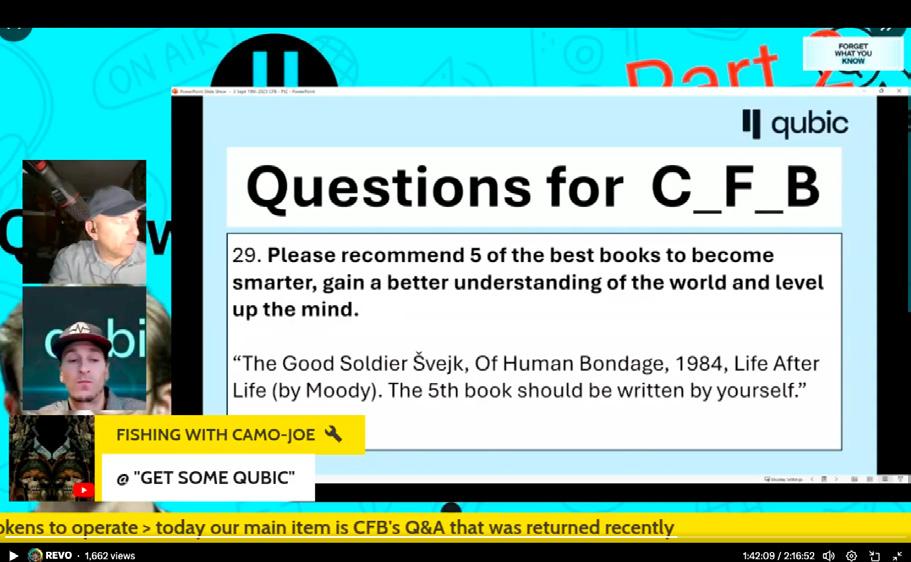
When asked to recommend five books to “level up the mind,” CFB didn’t hesitate: The Good Soldier Švejk, Of Human Bondage, 1984, Life After Life. The fifth, he said, should be written by each of us.
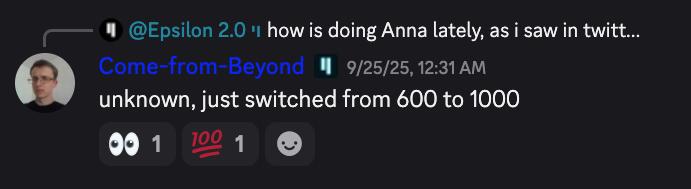
If Bitcoin had its genesis in a block, Qubic’s has its genesis in Anna.
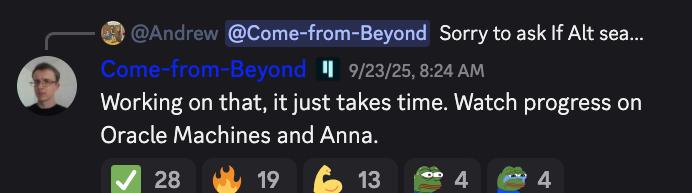
And when someone asked why alt season hadn’t arrived, the reply was: “Watch progress on Oracle Machines and Anna.”
Her mistakes, like the controversy for answering “1+1=?” incorrectly, triggered mockery on social media, but CFB defended her, reminding everyone that Anna doesn’t memorize, she deduces.
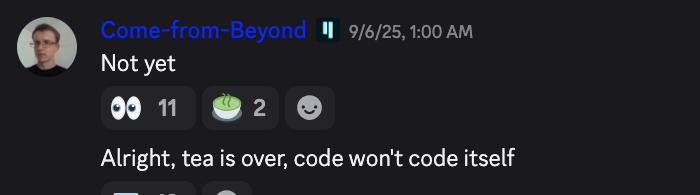
On September 6th, someone asked in Discord whether Anna could use Oracle Machines to mine external coins like DOGE. CFB’s answer was short: “Not yet.”
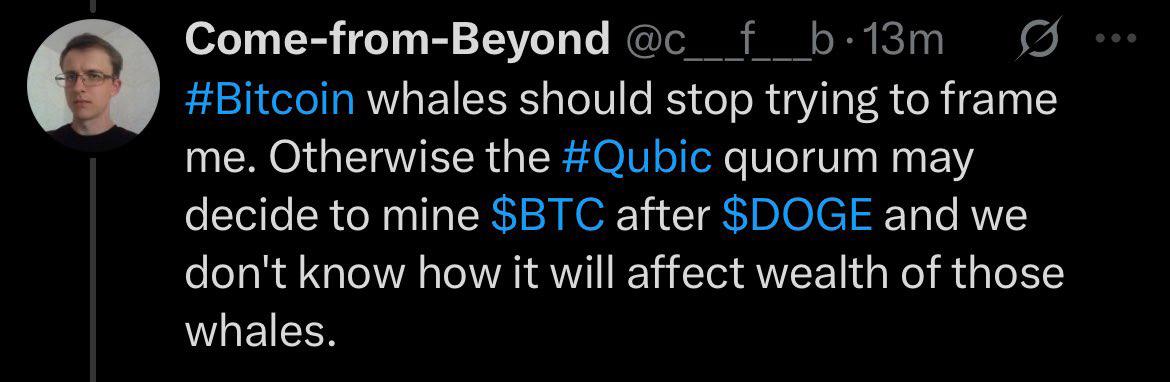
Days later, on Twitter, he dropped a warning to Bitcoin whales: “Otherwise the #Qubic quorum may decide to mine $BTC after $DOGE…”
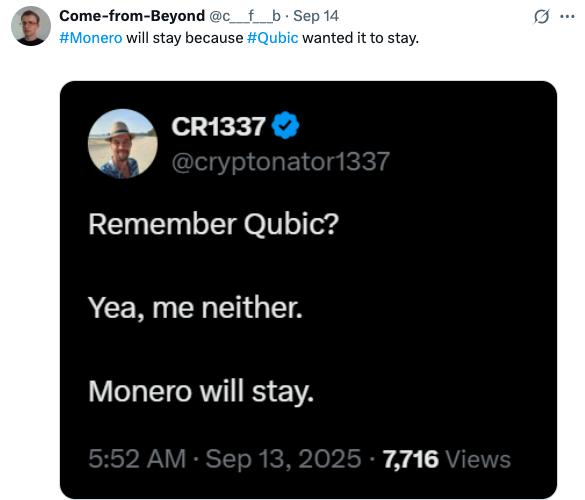
Another CFB tweet made Qubic’s influence over the crypto space clear: “#Monero will stay because #Qubic wanted it to stay.”
Mining has always been the beating heart of crypto. But in the Qubic ecosystem, it’s no longer just about machines humming in the dark, it’s about sharing the rhythm of those machines with the community itself.
That’s the promise of $Qmine, a project set up by Eko, one of Qubic’s earliest investors and miners. From the beginning, Eko’s vision has been simple: make mining transparent, fair, and profitable for everyone who believes in Qubic.
Behind $Qmine is a farm that already runs around 400 rigs, all of them working epoch after epoch. And unlike the old mining stories filled with shadows and speculation, this one is built on visibility: every detail can be tracked live at qmine. io.
Instead of only a handful of insiders, the revenue is distributed openly to holders every epoch. If the machines work, you earn.
Half of the revenue goes straight back to the community. It’s not theory, it’s design.


The foundation of $Qmine is designed to last:
Total supply: 1B tokens
80% Public (800M tokens)
15% Hardware reserve (for upgrades & shifts)
3% Founder fee (30M tokens)
2% Charity fund (20M tokens)
Mining revenue is sliced with clarity:
35% Electricity (the cost of keeping the farm alive)
5% Maintenance (because machines need care)
10% Reinvestment (fueling long-term growth)
50% Directly to holders
In a world where mining often feels like a closed club, $Qmine opens the gates. It combines growing demand with steady passive income, transforming mining into something that doesn’t just reward the operator but the believers standing behind it.
Signal: $Qmine isn’t just a token, it’s an entry point into real, transparent mining power.
Story: From one OG miner’s vision to hundreds of rigs humming in unison, $Qmine is proof that mining in Qubic can belong to everyone willing to hold and believe.