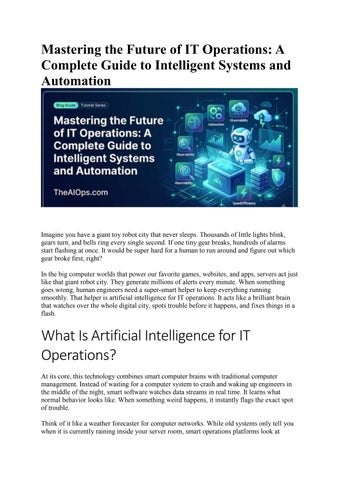
Mastering the Future of IT Operations: A Complete Guide to Intelligent Systems and Automation
Imagine you have a giant toy robot city that never sleeps. Thousands of little lights blink, gears turn, and bells ring every single second. If one tiny gear breaks, hundreds of alarms start flashing at once. It would be super hard for a human to run around and figure out which gear broke first, right? In the big computer worlds that power our favorite games, websites, and apps, servers act just like that giant robot city. They generate millions of alerts every minute. When something goes wrong, human engineers need a super-smart helper to keep everything running smoothly. That helper is artificial intelligence for IT operations. It acts like a brilliant brain that watches over the whole digital city, spots trouble before it happens, and fixes things in a flash.
What Is Artificial Intelligence for IT Operations? At its core, this technology combines smart computer brains with traditional computer management. Instead of waiting for a computer system to crash and waking up engineers in the middle of the night, smart software watches data streams in real time. It learns what normal behavior looks like. When something weird happens, it instantly flags the exact spot of trouble. Think of it like a weather forecaster for computer networks. While old systems only tell you when it is currently raining inside your server room, smart operations platforms look at
clouds, wind patterns, and temperature to warn you about a storm hours before it arrives. It looks at mountains of data, cuts out annoying false alarms, and helps tech teams focus only on real problems.
Why Modern Technology Systems Need Smart Operations Modern digital platforms grow bigger every single day. Millions of users access cloud apps, websites, and databases all at once. Because systems are so complex, human brains alone cannot track every single connection. Without intelligent automation, companies face constant downtime, angry customers, and exhausted engineers who spend all their time chasing random alerts. When organizations switch to automated IT oversight, everything changes. Systems become reliable, resilient, and fast. Instead of reacting to crashes after they happen, teams prevent outages entirely. This means your favorite streaming apps, online stores, and banking portals stay online without sudden glitches or frustrating freezes.
Exploring The Ultimate Learning and Consulting Hub for Intelligent IT To build strong digital systems, companies and engineers need the right guidance, learning paths, and expert strategies. This is where specialized knowledge platforms become essential. A comprehensive destination dedicated to smart IT operations serves as a complete ecosystem for anyone wanting to master modern infrastructure management. Finding the Right Learning Paths and Certifications Learning how smart systems work requires structured education. Professionals often start with foundational concepts before moving into advanced architectural designs. Structured programs help engineers prove their skills and build confidence in handling complex automation tasks. Expert Consulting and Enterprise Services Organizations often struggle to figure out where to start with automation. Bringing in expert consultants helps teams review their current setups, spot hidden bottlenecks, and design custom roadmaps. These services ensure that technology upgrades match business goals without causing disruptions.
Key Pillars of Intelligent IT Operations +------------------------+--------------------------------------------------+
| Pillar Category | Core Function in Modern IT Environments | +------------------------+--------------------------------------------------+ | Monitoring & Metrics | Continuous tracking of system health and uptime | | Anomaly Detection | Spotting unusual patterns before failures happen | | Event Correlation | Grouping related alerts to find root causes fast | | Automated Remediation | Fixing known issues instantly without human touch | +------------------------+--------------------------------------------------+
Understanding how these pillars work together helps teams build rock-solid systems. Every single component plays a special role in keeping digital services safe and speedy. Smart Monitoring and Observability Tools Tools act as the eyes and ears of the digital world. They collect metrics, logs, and traces from every corner of the network. Good observation platforms give teams a clear window into how applications perform under heavy loads. Advanced Platforms and Infrastructure Management Platforms bring all monitoring data into one central dashboard. Instead of jumping between fifty different screens, engineers see a clean, unified view of their entire digital kingdom. This makes decision-making faster and much more accurate.
Major Benefits of Adopting Intelligent Operations Embracing smart automation brings incredible advantages to both tech workers and business leaders. Here are the biggest perks you will notice right away:
Lightning-Fast Problem Solving: Systems pinpoint the root cause of a glitch in seconds instead of hours. Fewer False Alarms: Smart filters silence repetitive noise so engineers only look at real emergencies. Happier Work Teams: Staff get a full night's sleep because automated scripts fix common issues while everyone rests. Lower Operational Costs: Preventing major outages saves companies massive amounts of money and protects their brand reputation. Better User Experiences: Customers enjoy smooth, uninterrupted service every time they visit an app or website.
Step-by-Step Process for Successful System Integration Getting started with intelligent IT management requires a clear game plan. Rushing into new tools without a strategy can cause confusion. Follow this simple path to make your transition smooth and successful: 1. Evaluate Your Current Setup: Look at your existing monitoring tools and find out where your team wastes the most time every day. 2. Define Clear Objectives: Decide what you want to achieve, such as reducing alert noise or cutting down recovery time after a crash. 3. Choose the Right Tools: Pick software platforms that fit your company size, tech stack, and budget requirements. 4. Design the Architecture: Map out how data will flow from your servers into the new analytics engine. 5. Implement and Test: Roll out the solution gradually, starting with a small department or non-critical application. 6. Train the Team: Help your engineers learn new workflows through structured courses and hands-on practice. 7. Monitor and Optimize: Review performance reports regularly and fine-tune your automation rules for better results over time.
Common Mistakes to Avoid During Adoption Even smart teams sometimes make mistakes when upgrading their infrastructure. Knowing what to watch out for helps you avoid frustrating roadblocks.
Buying Too Many Tools Fast: Purchasing every shiny software package at once creates messy data silos and confuses your staff. Ignoring Team Training: Expecting engineers to use advanced platforms without proper education leads to resistance and mistakes. Skipping Baseline Metrics: If you do not measure how your systems perform before the upgrade, you will never know if the new tools actually helped. Over-Automating Too Soon: Letting scripts fix complex issues automatically before testing them thoroughly can break live production environments. Forgetting Human Oversight: Always keep human experts in the loop to make final decisions during high-stakes emergencies.
Frequently Asked Questions
What does the term intelligent IT operations actually mean? It means using advanced data analysis and machine learning to manage computer networks, spot errors early, and automate routine fixes. Do I need to know how to code before starting my learning journey? Knowing basic scripting languages like Python helps a lot, but many foundational concepts focus on system architecture, strategy, and analytical thinking. How do smart platforms reduce annoying alert noise? They group hundreds of related warning messages together into a single incident ticket so engineers see the core problem instead of endless flashing lights. Can small businesses use these advanced tools, or are they only for huge corporations? Companies of all sizes benefit from smart monitoring. Many platforms offer scalable options that grow as your business expands. What is the quickest way to gain practical skills in this field? Taking structured courses, earning recognized certifications, and practicing in real-world lab environments provides the fastest path to mastery. How long does it usually take to integrate a new monitoring platform? Integration timelines vary based on company size, but most teams complete initial setup and data connection within a few weeks. Why is proactive management better than traditional reactive troubleshooting? Proactive management stops crashes before they impact users, whereas reactive troubleshooting only fixes things after damage has already occurred. How do consulting services help during a platform transition? Experts bring years of hands-on experience, helping your team avoid costly mistakes and set up best practices right from the beginning.
Conclusion Stepping into the world of intelligent IT operations opens up amazing possibilities for modern organizations and ambitious tech professionals. By replacing old, noisy monitoring habits with smart automation, predictive analytics, and structured learning, you can build unbreakable digital systems. Take your time, follow a clear implementation strategy, and embrace continuous education to keep your technology running at its absolute best.