How the United Kingdom and the European Union regulate social media to protect young people
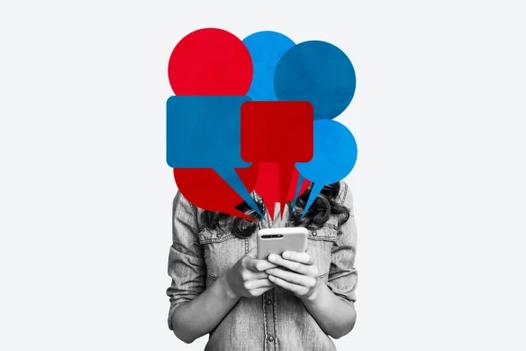
Socialmediaisahugepartofdailylife for young people as they use it to communicate, learn new things and express themselves. However, there are concerns about harmful content, cyberbullying, privacy risk and the effects of social media on mental health. Because of these concerns, governments have created rules to help keep minors under 16 safe online. The United Kingdom and the European Union are taking steps to regulate social media platforms and protectyoungusers.
In the United Kingdom, the Online Safety Act is a major law designed to protect people online, especially children. This law requires social media companies to take responsibility for the content on their platforms. Companies must identify risks and limit children’s exposure to harmful material such as content related to self-harm, bullying, or explicit images. The UK government believes platforms should not leave safety entirely up to users but should activelyworktopreventthem.
The European Union has also introducedimportantregulations,one of the most significant of which is the General Data Protection Regulation (GDPR). This law protects people’s personal data and includes special protections for children. In many EU countries, companies must receive parental consent before collecting or using a child’s personal information. This helps protect young people’s privacyonline.
In addition, the European Union introduced the DigitalServicesAct(DSA).TheDSArequiressocial media platforms to be more transparent about how their systems and algorithms work. It also banstargetedadvertisingaimedatchildren.These rules are meant to reduce manipulation and limit youngpeople’sexposuretoharmfulormisleading content.
Although both the United Kingdom and the European Union aim to protect young people, their approaches differ slightly. The UK focuses more on holding platforms responsible for removing harmful content, while the EU places stronger attention on data protection and transparency.Regardlessofthesedifferences,both governments believe that social media companies shouldplayagreaterroleinkeepinguserssafe.
Supporters of these regulations argue that they help create a safer online environment without banning social media completely. However, critics raiseconcernsaboutenforcementandfreedomof expression. Some question whether platforms can effectively monitor content without limiting people’sabilitytosharetheiropinions
In conclusion, the United Kingdom and the European Union represent two related but different approaches to regulating social media; both are working to balance safety, privacy, and freedom of expression, and as social media continues to develop, the success of these regulations will depend on how effectively they areenforcedandadaptedtonewchallenges
Bad Bunnys Super Bowl Halftime shows impact on American politics.
Bad Bunny's Super Bowl halftime show has made a 13-minute performance a broader argument about what kind of culture and politics should represent the United States on its biggest television stage. While the long-term cultural and political impact remains unclear over the long term, the show has clearly solidified existing splits along lines of identity, language, and "who belongs" in America's publiclife.
Formanyoftheaudience,aSpanish-languageshow by a Puerto Rican artist was a symbol of a more multiculturalworld and a more globalizedAmerica. Supporters preferred to see the performance as normalising Latino culture in the core of US popularculture,notoutsidethemainstream.
Bad Bunny's own activism around Puerto Rican identity and colonial history gave us an added political element in the absence of an explicit campaign slogan to be heard on stage. His visibility may promote Latino audiences of the younger generation to view cultural pride and political applicationasconnected,especiallyacrosstheissues of territorial standing and depictions. In the classroom and virtually, the airing of the show has already sparked discussions about the language, race,andvisibilityinUSnationalcelebrations.
Conservativepoliticiansandmediafiguresreactedsharply,criticisingboththechoiceofartist and the performance itself. President Donald Trump labeled the show "absolutely terrible" anduseditasan"affronttotheGreatnessofAmerica"andturnedanentertainmenteventinto anotherfrontinhislargerculturewarnarrative.
Some comments from MAGA-aligned commentators attacked Bad Bunny for performing primarilyintheSpanishlanguageandhiscommentsonU.S.immigrationpolicy,arguingthat the NFL had given a massive platform to someone they painted as un-American. A RepublicanmemberofCongressevencalledforaninvestigationintothelyricsandcontentof the show, indicative of how the sort of culture quarrels have routinely spilled down to the formalpoliticalarena.ThecontroversyalsomobilisedthefansofBadBunny,whosaidthatan attempttopolicetheperformanceofamusicalactdisplaysintoleranceinsteadofpatriotism.
Polling after the show suggests that reactions are clearly along party lines, with many Democrats approving of the NFL's choice and many Republicans opposing the decision. In one separate survey, moreAmericans said that Bad Bunnybetterrepresents theWebsterU.S. than Trump, a symbolic result that will influence the course of elections categorically, but doeshighlightagenerationalandculturalshiftinhow"Americanidentity"isunderstood. Fornow,themajoreffectonU.S.politicshasbeenindirect:Thehalftimeshowhasbecomea high-profile symbol to use in arguments about immigration, language, and national identity instead of an obvious advantage for one party in November. It demonstrates the use of pop culture moments as"shortcuts"forcomplicated political arguments that turn abstract matters into a sense of personal and emotional experience. As with the previous controversial halftime shows, the real impact maybe found in thewaythe campaigns and media continue to replayand reinterpret this performance in the ongoing struggle overthe cultural future of America.
Multipolarity vs. the Liberal International Order2 perspectives competing of Global Governance
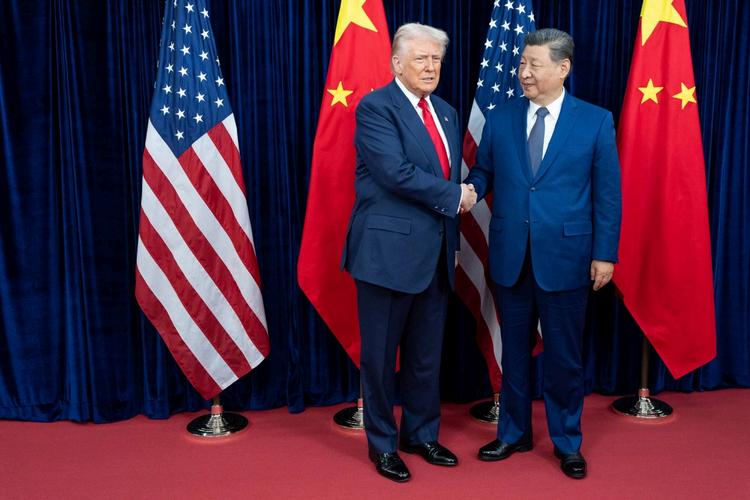
A debate that constantly raises awareness in contemporary Global Politics is the nature of the international order. The rise of China has strengthened arguments between two competing visions: The liberal international order of the West and China's recommendation of an increasingly multipolarsystem.ThecompetitionbetweenChinaandthe West does not suggest the dissolution of the international order but rather the reconsideration of the definitions of power,normativefoundations,andinstitutionalauthority.
After World War II, the liberal international order was formed under the leadership of the United States and its allies. It is based upon multilateral institutions like the United Nations, the World Trade Organization, the International Monetary Fund, and NATO. This system is supposed to be institutionally managed, cooperative, and underpinned by liberal values such as democracy, intervention and human rights conditionality. Western governments claim this system to be neutral, universal, and beneficial to all, implying that global stability depends on equally applied norms among all states. Hypothetically, institutionsforcepowerinordertoreducethelikelihoodof conflict.
Opposing this, China offers a different perspective. China does not fully oppose the international system; in fact, it has even benefited to a large extent from it. However, it claims that the current order supports Western dominance rather than universal consensus. From Beijing’s point ofview, keyorganisationswere established during a periodwhere the economy and military were disproportionately distributed among Western states. This led to global norms mainly aligning with Western strategic interests. Therefore, China suggests a more multipolar world, where hegemonic states do not control international affairs. In concept, significant powers balance one another; there is an increase in support for developing states and stronger sovereignty norms. China calls this: “the democratisation of international relations”.
Rather than taking the existing system apart, China offers alternatives. The Belt and Road Initiative and the Asian Infrastructure Investment Bank show efforts in providing a different source of institutional influence and development financing. This creates dual networks of influence, alternative rule establishment capacity, and economic variance while not rejecting multilateralism.Throughthis,Chinacanplaceitselfasbothacontributortoandareformerof globalgovernance.
Thiscompetitioncanbeseenthroughdifferenttheoreticallenses.Therealistperspectiveviews this as a power distribution where a rising state challenges a hegemonic state. Liberals claim that deep economic interdependence could restrict confrontation. Constructivists underline contending narratives about legitimacy and equality in international rule-making. This controversy, however, does not arguewhetherrules should exist ornot, butwhethertheymust berewritteninordertobeequalforall.
Thefutureofglobalpoliticsisbasedonwhetheraccommodationorconfrontationsucceeds.If key institutions demonstrate a shift in power realities, cooperation could persist. If not, international relations could be weakened, and geopolitical rivalry could increase. The debate over multipolarity vs. the liberal international order should not be seen as regional but as a fundamentalquestionabouttheformationofglobalgovernanceinthetwenty-firstcentury.
The Israel-Hamas war and Humanitarian Law
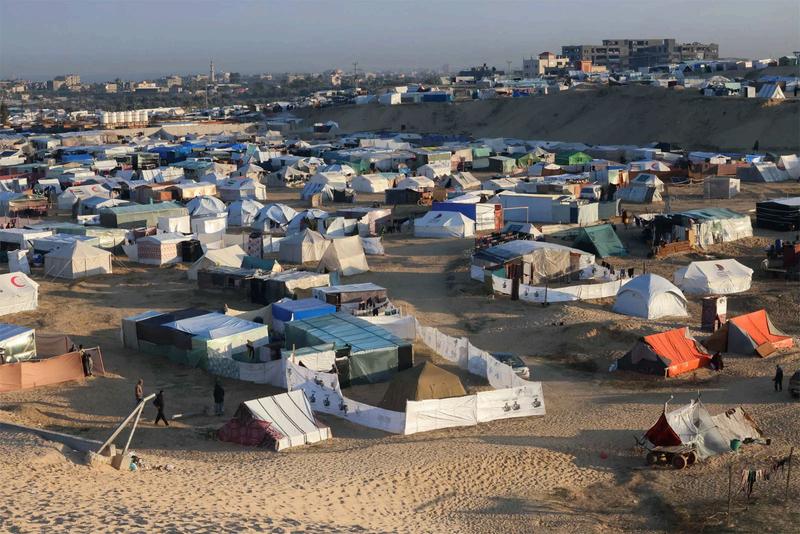
When Hamas launched an assault on Israel on 7th October 2023, followed by an Israeli military response in Gaza, scrutiny focused on international humanitarian law. This article will discuss proportionality, safeguarding civilians, and responsibilityincurrentcombatzones/areas. OnecentralissueiswhethertheactionsofbothIsrael and Hamas comply with the laws governing armed conflicts. When nations engage in combat, international law forces restraint - force must match the threat and be proportional, whilst also protecting civilians whenever possible. The issue lies within the fact that it is extremely difficult to determine and make a judgment on what responses/retaliations are proportionate to each other. Additionally, something that makes this judgment harder to reach is the fact that there are unplanned, yet inevitable effects on civilianpopulations.
The foundation of humanitarian law came from the 1949 Geneva Conventions, which regulate the extent of war by enforcing the idea that both parties within war must separate fighters from civilians while avoiding strikes aimed directly at anyone uninvolved in battle; attacksthatcausesevereciviliandamagegoagainsttheagreementsoftheConventions.
A sudden assault by Hamas - Gaza's Islamist Resistance Movement - initiated the crisis, ending lives and seizing captives on Israeli soil on 7 October 2023. They struck across the borderinto Israel, killingclose to 1,200 and draggingaround 250 backinto Gazaas captives. One day later, Israel answered with war. A full-scale operation started in the Gaza Strip, meant to weaken the course of action Hamas could take. More than 70,000 lives have been lost since 7th October 2023, many being ordinary men, women, children/civilians. Meanwhile, by late 2025, about 1,665 Israelis and foreign nationals had died, the majority becauseofthe7th-8thOctober2023.
From Israel's perspective, the actions that have been taken and their military response stem from the self-defence rights outlined in Article 51 of the UN Charter. Because Hamas operates within populated areas, separating combatants from civilians becomes harder, accordingtoIsraelistatements.SoldiersfromIsraelsaytheytoldmorethanamillionpeople innorthernGazatoleaveinOctober2023.Theysentwarningsviaphone,textmessages,and papers dropped from planes ahead of attacks. However, major concerns remain about how deeplycivilians have suffered andwhetherhelp reaches them - the United Nations reported tensofthousandsofciviliandeaths,large-scaledisplacementaffectingthemajorityofGaza’s population,andseveredamagetohospitals,watersystems,andschools.
Hamas began to face serious legal scrutiny. When nearly 1,200 lives ended, and about 250 hostages abducted, it crossed lines drawn bythe GenevaConventions, beingclassified aswar crimes.Additionally,Hamasisfiringthousandsofrocketsinto Israel (Tel Aviv, Ashkelon) has added to the scrutiny Hamas is facing, because the use of weapons that are not accurately directed at targets raises concerns over the principle of distinction between ordinary people and fighters. Now, international legal bodies like the InternationalCriminalCourthavelookedattheseevents,treatingthemasactsofwarcrimes. When it comes to world events, nations like the United States and several European powers back Israel’s ability to defend itself - yet they also stress following rules meant to protect people duringwar. Oppositely, governments acrossAfrica, parts ofAsia, and LatinAmerican regions focus more on keeping non-combatants safe and demand answers forwhat happens in places such as Gaza.These contrastingviews,when seen side byside, reveal a split in how countriesviewtheapplicationandweightofhumanitarianprinciplesduringwar.
The Politics of Gun Control After the Bondi Shooting
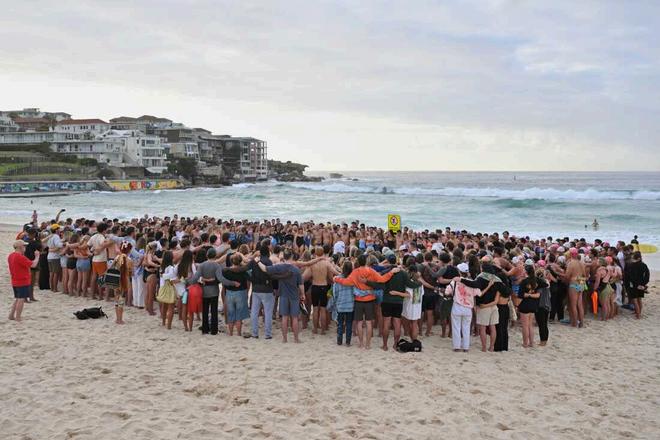
Following the 1996 PortArthurtragedy, majorchangeswere enforced underPrime Minister JohnHoward-banningnearlyallsemi-automaticweapons,standardizinglicenserulesacross states, and launching a government-funded buyback that took over 650,000 guns out of circulation.Theselawshavebeenineffectfor29years;therefore,attentionhasbeenfocused on the access pathway the gunmen had in this attack. The New South Wales Police Force began checking if the attackers’ firearms had legal registration, were passed between authorizedownerscorrectly/slippedinthroughundergroundnetworks,whilstalsoreviewing past interactions with law enforcement or breakdowns in communication between local and federal databases. One report mentioned a straight-pull rifle, alongside shotguns and improvised explosives. Subsequently, Australia’s National Cabinet moved toward stricter firearm rules, possibly introducing a focused firearm buyback and improved instant license verification across state lines.The Prime Minister,AnthonyAlbanese, and state and territory leaders/National Cabinet, looked more closely at how lapses in background reviews, communication across states, and oversight of legal weaponry purchases enabled Sajid and NaveedAkram to gain possession of theirguns.The NewSouthWales Police Force,working with federal officers, traced the guns back to lawful purchases. One rifle came from a valid Category B firearms licence in 2024, while two 12-gauge shotguns were bought separately from licensed dealers after the required background checks showed no disqualifying criminal history. However, information concerning behaviour had not been consistently sharedbetweenfirearmsregistries,meaningthesystemdidnotflagthecaseautomatically. Becauseofthis,changesbegantotakeplaceacrossAustralia’sguncontrollaws.Every5years, permitholdersattendmandatoryreviewsonsafety,andstate-levelweaponregistriesarenow interlinked, triggering and allowing greater immediacy in warnings. Certain rifles, such as straight pull rifles involved in the massacre, have been ‘reclassified’ into stricter categories, askingfordeeperbackgroundscrutiny.
Additionally, authorities in New South Wales increased surveillance and tightened rules around public gatherings, putting them into practice initially at a pro-Venezuela rally and protest against the visit of Israeli President Isaac Herzog in Sydney’s CBD. They declared theseprotestsasunauthorizedunderthenewguidelines-drawingdebateinSydney,assome peoplefeltthattheirindividualrightswerethreatened.
Inconclusion,asaresponsetotheBondiMassacreof14thDecember2025,NewSouthWales increased monitoring and made protest laws stricter, giving more authority to officers. Additionally, gun laws have tightened due to ‘reclassification’ and greater surveillance and control over permit holders. These changes were seen to be enforced during the rallies supportingVenezuelaandinvolvingIsaacHerzoginearly2026.
ByAgnesM
Is The United States justified in acting as a world police force?
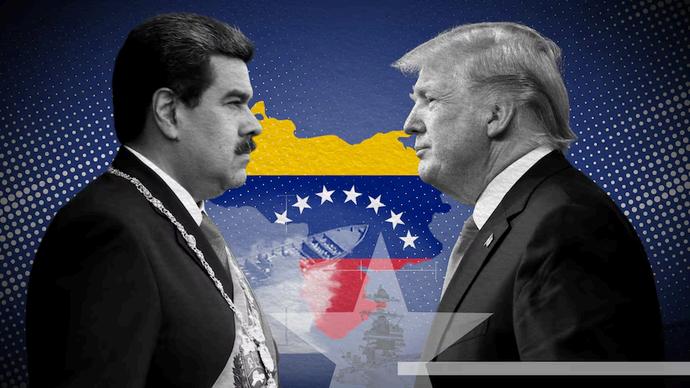
Onthe 3rd ofJanuary 2026, the United Statesconducted a militarystrikeon Venezuela and abductedPresident Nicolás Maduro(presidentofVenezuela)and his wife.Thestrikebeganat2:00amandended three hours later,withbothMaduroand his wifebeing flown toNew Yorktobeput on trial.Madurowas charged withNarcoterrorism,the act ofsmuggling narcotics intoforeign countries toinfluence policies and governing,through violenceand disorder. UnitedStatesPresident Donald Trump justified itbyclaimingitwas a lawenforcement act,and evensayinghehad an ‘inherent constitutionalauthority’to uphold.
Internal
Disagreements within Feminism and their Political Effects
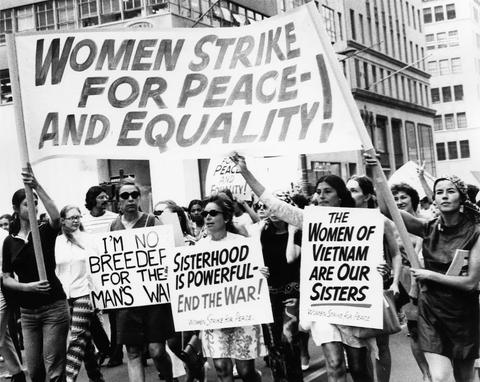
Internal disagreements within feminism have become a key feature of contemporary politics, shaping how states, parties, and international organisations respond to gender equality. In a globalised world, these disputes are increasingly visible through social media, transnational campaigns, and public debates. They not only affect feminist movements themselves, but also influence elections, lawmaking, and the success or failure of policies.
One central area of disagreement concerns the relationship between feminism and trans rights. In the United Kingdom, proposed reforms of the Gender Recognition Act led to a sharp conflict between transinclusive feminists and socalled“gendercritical”feminists.
While LGBTQ+ organisations and manyyoungeractivists supported easierlegal recognition for transpeople,somefeministgroupsclaimedthiswouldthreatenwomenonlyspacesandservices. This dispute has had clear political outcomes: it has divided the Labour Party and the Scottish National Party internally, shaped media narratives, and allowed conservative actors to present themselves as “protecting women” while opposing transinclusive reforms. Similar tensions can be seen in the United States, where debates about access to bathrooms and sports teams have influencedstatelevellegislationandpartyplatforms.
Transnationalfeministnetworkshelpspreadinternaldebatesacrossborders.Campaignssuchas #MeToo and #NiUnaMenos show how feminists use global media platforms to highlight sexual harassment, femicide, and structural violence. At the same time, disagreements appear over strategy and priorities: some groups focus on legal reforms and corporate policies, while others argue that without deeper economic and racial justice, such changes mainly benefit alreadyprivileged women. These discussions reveal unequal power relations inside feminism itselfandreflectbroaderpatternsofinequalityinglobalpolitics.
Despite their conflicts, internal disagreements can also strengthen feminism in certain ways. Critiquesof“carceralfeminism,”whichreliesheavilyonpolicingandimprisonmentassolutions toviolence,haveencouragedsomeorganisationsinNorthAmericaandLatinAmericatoexplore communitybased and restorative approaches. Intersectional critiques have pushed institutions such as UN Women and international NGOs to pay more attention to migrant women, Indigenous women, and women in the Global South when designing policies. In these cases, disagreementhasforcedfeministmovementstobecomemoreinclusiveandselfcritical.
However, the political risks are significant. First, internal divisions can produce policydeadlock. When governments receive opposing recommendations from different feminist groups on issues like gender recognition, they may delay laws, pass weak compromises, or avoid the issue entirely. Secondly, conservative and antigender movements can use feminist disagreements strategically. In several European countries, rightwing actors have amplified conflicts about trans rights or surrogacy to present feminism as confused or extreme, reducing public support for broader gender equality measures. Third, highlyvisible conflicts on social media can create public fatigue and cynicism, making it easier for opponents to dismiss feminist demands altogether.
From an IB Global Politics perspective, internal disagreements within feminism demonstrate thatsocialmovementsarenotunifiedactorsbutcontestedspaceswheredifferentideasofjustice compete. These debates connect to key course concepts such as power, legitimacy, inequality, and human rights. On one hand, internal criticism can make feminism more democratic and responsive to diverse experiences. On the other hand, persistent division can limit its ability to shape lawand policyeffectively. Overall, the internal disagreementswithin feminism showhow interconnectedpolitical,economic,andculturalforcesinfluencenotonlyfeministstruggles,but alsowiderpoliticaloutcomesatbothdomesticandgloballevels.
Has globalisation and an increase in interdependence affected state sovereignty?
Interdependence and globalisation have fundamentally reshaped the nature of state sovereignty in the modern international system. Traditionally, sovereignty referred to the supreme authority of a state within its territorial borders and its formal equality with other states, as outlined in the Treaty of Westphalia. However, increasing economic, political, and technological interconnectedness has complicated this classical understanding.Whilestatesarestilltheprimaryactorsin global politics, their autonomy is increasingly constrained, and sometimes enhanced, by global networksandinstitutions.
Economic globalisation has significantlylimited aspects of state sovereignty. Membership in organisations such as the World Trade Organization (WTO) requires states to comply with trade rules and dispute settlement mechanisms. When states accept WTO rulings, they effectively prioritise international legal obligations over certain domestic preferences. Similarly, participation in the International Monetary Fund (IMF) often entails policy conditions,particularlyforstatesseekingfinancialassistance.Theseconditionscaninfluence fiscal, monetary, and social policies, therefore constraining domestic decision-making authority. From a hyperglobalist perspective, developments such as these suggest that sovereigntyisbeingerodedbyglobalmarketforcesandinternationalgovernancestructures. Regional integration is another example of how sovereignty is shared between states. The European Union (EU) is one of the strongest examples of this. Its member states have given some decision-making powers, such as control over trade rules, competition laws, and, for countries in the Eurozone, monetary policy, to EU institutions. EU law has supremacy over national law in many areas, meaning member states must follow EU rules even if they conflict with domestic laws. However, joining the EU is voluntary, and countries can choose toleave.ThiswasshownbyBrexit,whentheUnitedKingdomdecidedtowithdrawfromthe EU. This demonstrates that although states may share or limit their sovereignty, they still ultimatelyhave the legal right to take it back, even if doing so brings economic and political challenges. Political and normative interdependence also affects sovereignty through the diffusion of global norms. The development of international human rights law, including frameworks such as the Universal Declaration of Human Rights, challenges the notion that states have absolute authority over domestic affairs. The emergence of the Responsibility to Protect (R2P) doctrine further complicates non-intervention principles by asserting that sovereignty entails responsibilities toward populations. In cases of mass atrocities, the international communitymayclaim a legitimate basis forintervention, therefore redefining sovereigntyasconditionalratherthanabsolute.
However, sceptical theorists argue that globalisation has not eliminated sovereignty but transformed its exercise. Powerful states continue to exert significant control over global institutions and shape the rules of interdependence. Moreover, globalisation can enhance state capacity by providing access to markets, technology, and cooperative frameworks for addressing transnational challenges such as climate change and pandemics. For example, participation in multilateral agreements enables coordinated responses that no state could achieveindependently.
In conclusion, interdependence and globalisation have neither fully eroded nor preserved traditional state sovereignty; rather, they have reconfigured it. Sovereignty today is increasingly shared, negotiated, and embedded within international institutions and norms. While states face constraints on unilateral action, they also gain opportunities through cooperation. ForIB Politics analysis, this suggests that sovereigntyshould be understood not asabsoluteauthority,butasdynamicandcontingentwithinaninterconnectedglobalorder.
ByJacobH
Are social media algorithms strengthening political participation while increasing political division among young people?
Social media has evolved into an important platform for young people to learn about political ideas, news, and conversations. Platforms like Instagram, TikTok, and X use algorithms that modifycontent based on userbehaviour,which sets them apart from traditional media. Although the goal of these systems is to increase engagement, their growing influence raises an important question: Are social media algorithms increasing youth political division while simultaneously increasingpoliticalinvolvement?
Algorithms have undoubtedly raised political participation on the one hand. Platforms expose young users to topics they might not normally encounter by tailoring content to individual preferences. Shares and reposts can increase thevisibilityof campaigns, petitions, and awareness campaigns, making it easierthan everforyoung people to engage in political discourse. Social media serves as an introduction to political exposure for many first-time voters, shaping their opinions about political parties, ideologies, and public policy. Algorithms could increase democratic engagement in this way by making politics more interestingandaccessible.
However, political division may also result from the same mechanisms that encourage participation. Since angerand disagreement usuallyincrease engagement, algorithms favour content that triggers strong emotional reactions. As a result, users are more likely to encountercontentthatsupportsratherthancontradictstheirexistingopinions.Digital"echo chambers," where people primarily encounter similar viewpoints, could eventually result from this. Ideological divides can deepen, and opportunities for constructive debate can be reduced when people are not exposed to opposing viewpoints. This could increase political division rather than promote understanding among young people whose political views are stilldeveloping.
The matteris furthercomplicated bythe commercial nature of social media platforms.The purpose of algorithms is to draw attention, not to promote unbiased discussions. Subtle or accurate content may receive less attention than straightforward or emotionally driven content. As younger users interact with personalised political realities rather than collective knowledge, this dynamic poses a threat to public unity. Even though overall engagement appearstoberising,thiskindoffragmentationcanthreatendemocraticunity.
However, blaming algorithms alone would be oversimplified. Users are still in charge of choosing which content to engage with and whom to follow. Young people who receive education on medialiteracycan also develop the abilityto analyse information and seekout different points of view critically. Additionally, social media has improved representation in political discussions by providing platforms for underrepresented voices that traditional mediahaveoftendenied.
In conclusion, social media algorithms have undoubtedly increased youth political participation, but their overall impact appears to be more divisive than unifying. On the surface,greaterparticipationmightseembeneficialfordemocracy,butitdoesnotguarantee deep political understanding. Instead of encouraging beneficial discussion, algorithms' inclination to favour emotionally charged and similar points of view maywiden ideological gaps.Asaresult,socialmediaalgorithmsareincreasingyouthpoliticalparticipation,butthey alsotendtodeepenpoliticaldivisionsratherthanpromotedemocraticunity.
Sign up to be a writer for the upcoming editions of the Malvern Forum!
Share your knowledge of current affairs with the rest of the school and develop yourwriting skills...
To sign up, or for further details message Shaivee Dhakal or Agnes McCreanor via Teams