PORTFOLIO
M.A. INTERIOR ARCHITECTURE AND DESIGN
MARYMOUNT UNIVERSITY
MALLORY MYERS-PAYNE
M.A. INTERIOR ARCHITECTURE AND DESIGN
MARYMOUNT UNIVERSITY
malmyerspayne@gmail.com
571-490-5143
Marymount University
M.A. Interior Architecture and Design
Expected May 2026
• Coursework: Building and Construction Systems, User-Centered Design, Lighting Design,Workplace, Healthcare, Hospitality, Residential
• Kravet Design of Distinction Competition Finalist 2024
James Madison University
B.S. Studio Art, Cum Laude; Biology Minor May 2021
• Figure Drawing Concentration
Marymount University
Graduate Research Assistant Arlington, VA | September 2025 – Present
• LiveTogether Project: assist in intergenerational design research and application to an assisted living facility on a college campus, in collaboration with Marymount faculty and JSR Associates
• Provide administrative support for IA+D department
DesignAgency
Interior Design Summer Intern Washington, DC | May – August 2025
• Assisted in design of luxury hotel and multi-family projects; created renderings, models, and presentations
• Selected and specified materials for hospitality projects; communicated with reps and organized samples in the design library
Artworks IP
Patent Draftsperson, Assistant Project Coordinator McLean, VA | August 2021 – May 2022
• Communication
• Attention to detail
• Schedules
• Construction docs
• Code analysis
• Finish selection
• Drawing & sketching
• Revit
• Enscape
• SketchUp
• Adobe CS
• Bluebeam
• Microsoft OS
• Procreate
• ASID student member
• IIDA student member

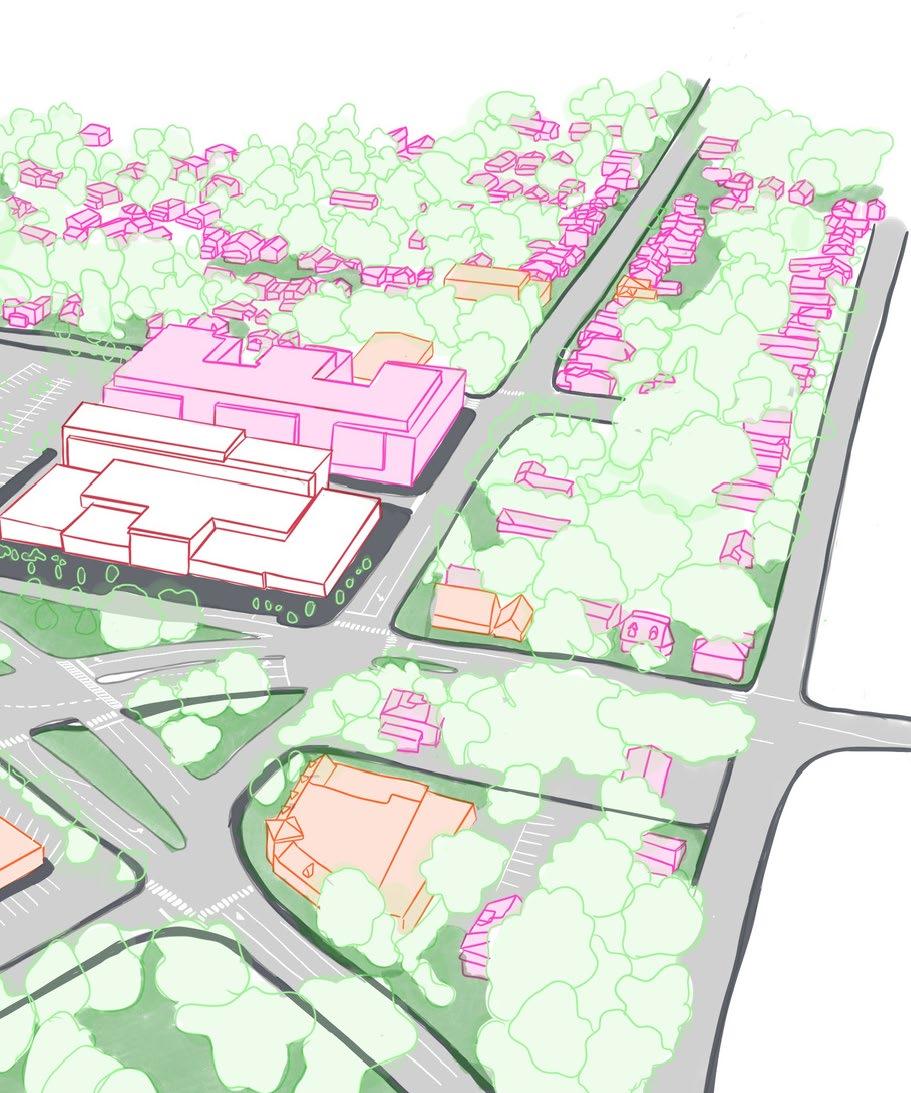
INTERGENERATIONAL WELLNESS AND INNOVATION CENTER
TYPE: Mixed-Use, Healthcare, Civic
SIZE: 10,000 sq ft
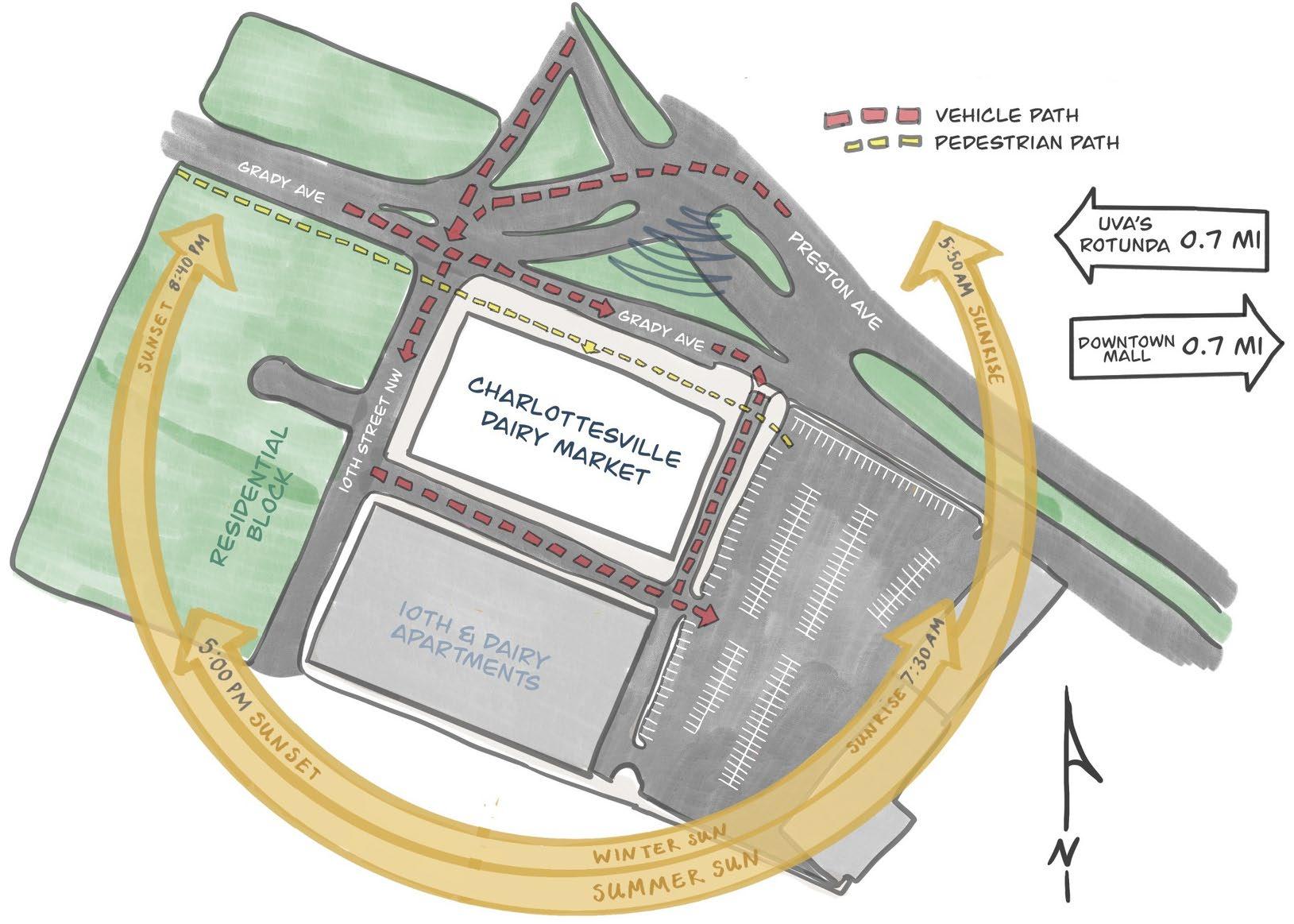
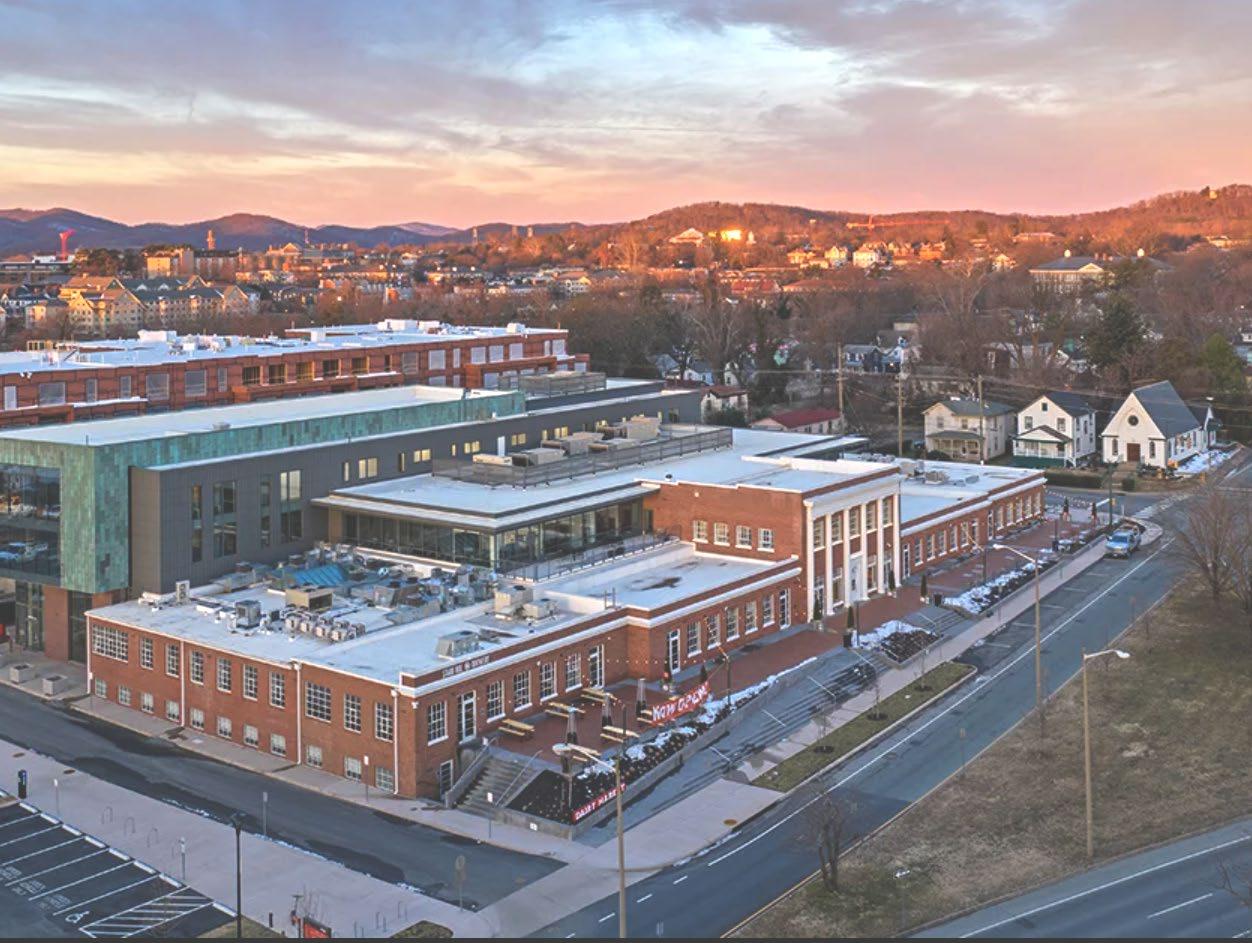
LOCATION: Charlottesville, VA
DATE: Spring 2025
TOOLS: Revit, Enscape, Adobe CS, Procreate
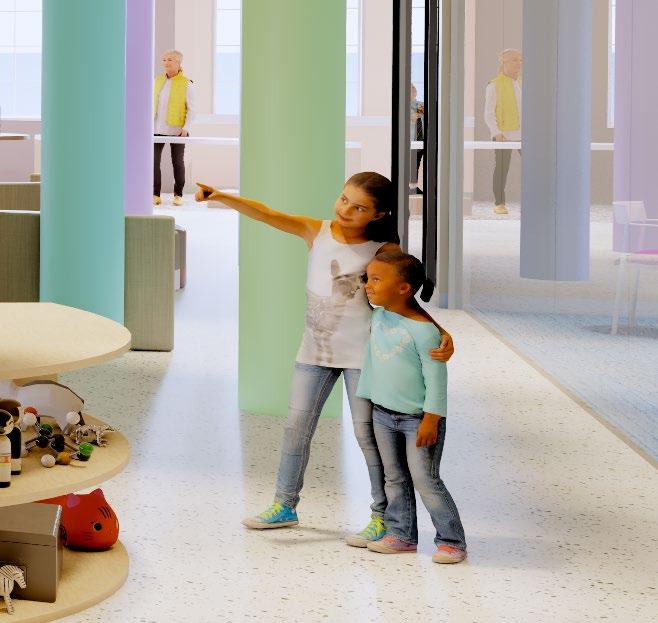
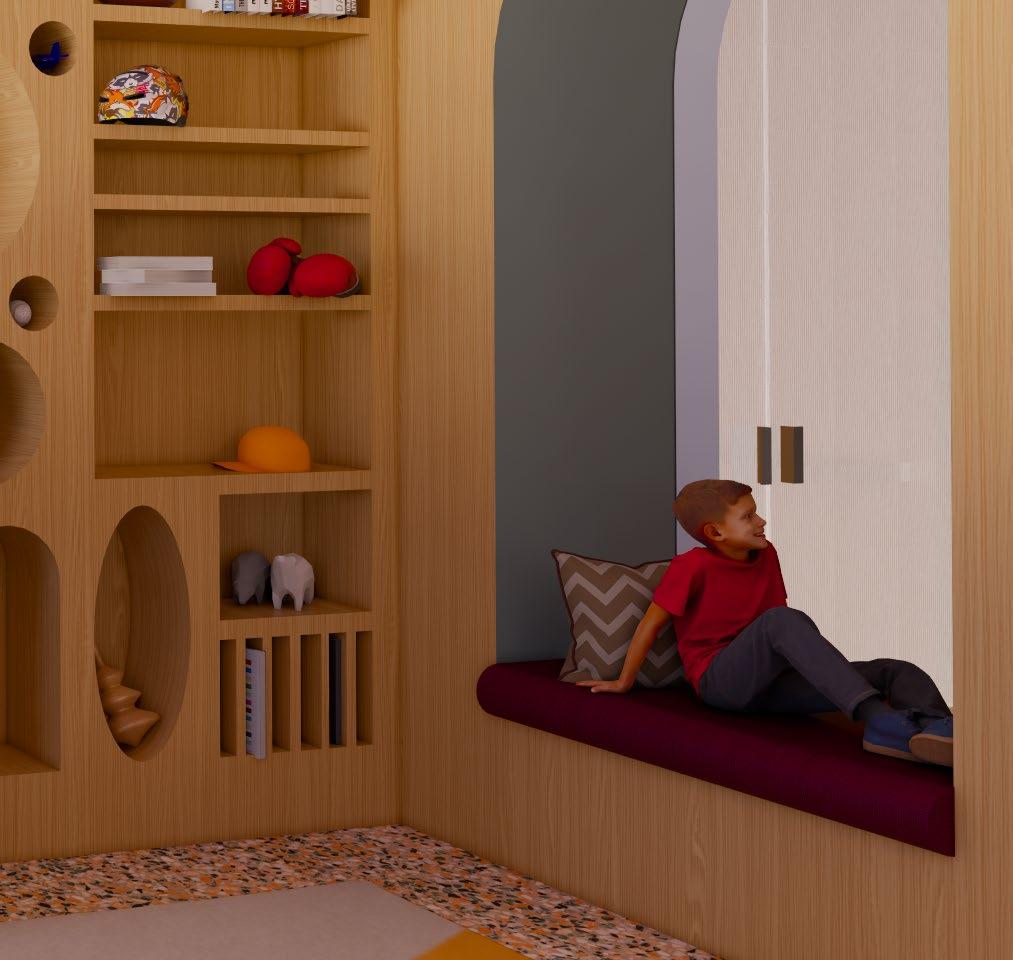
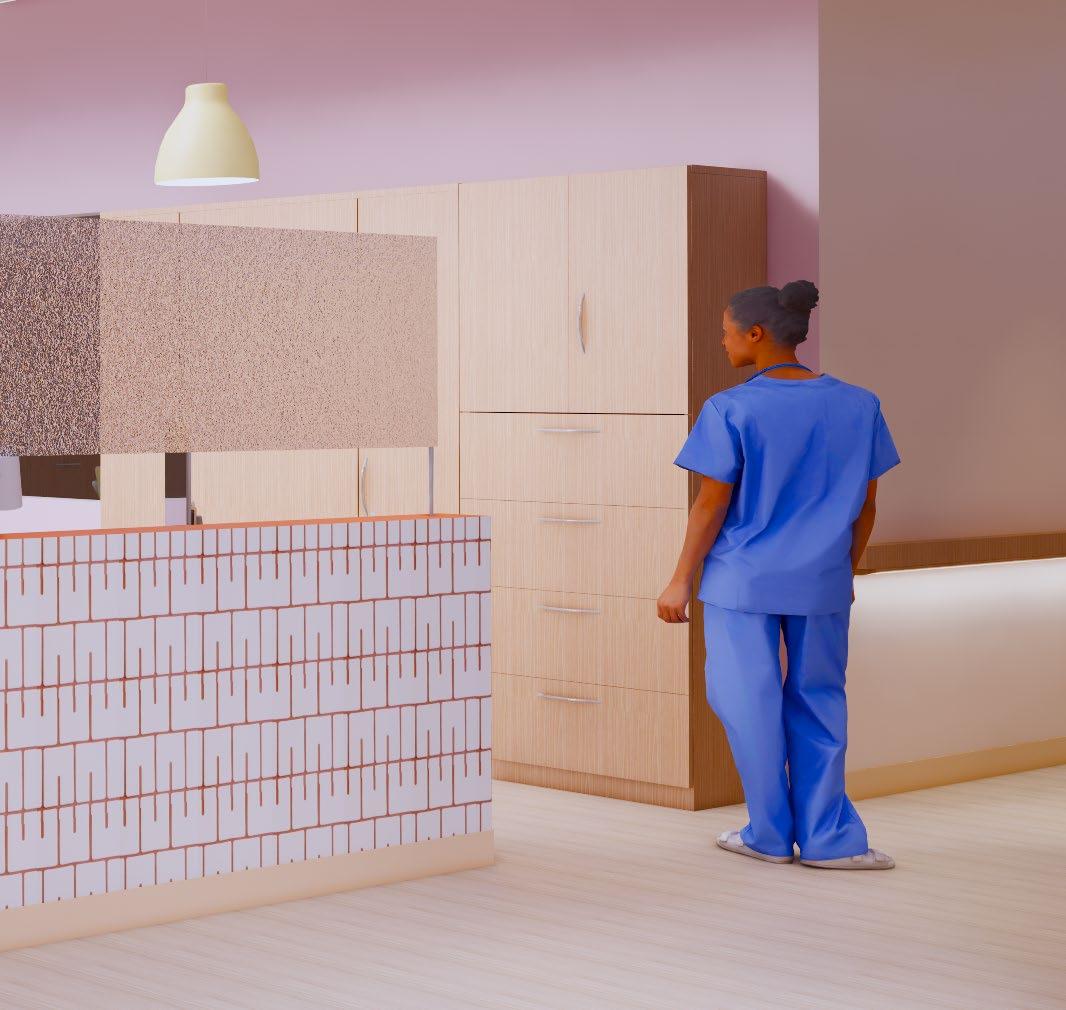
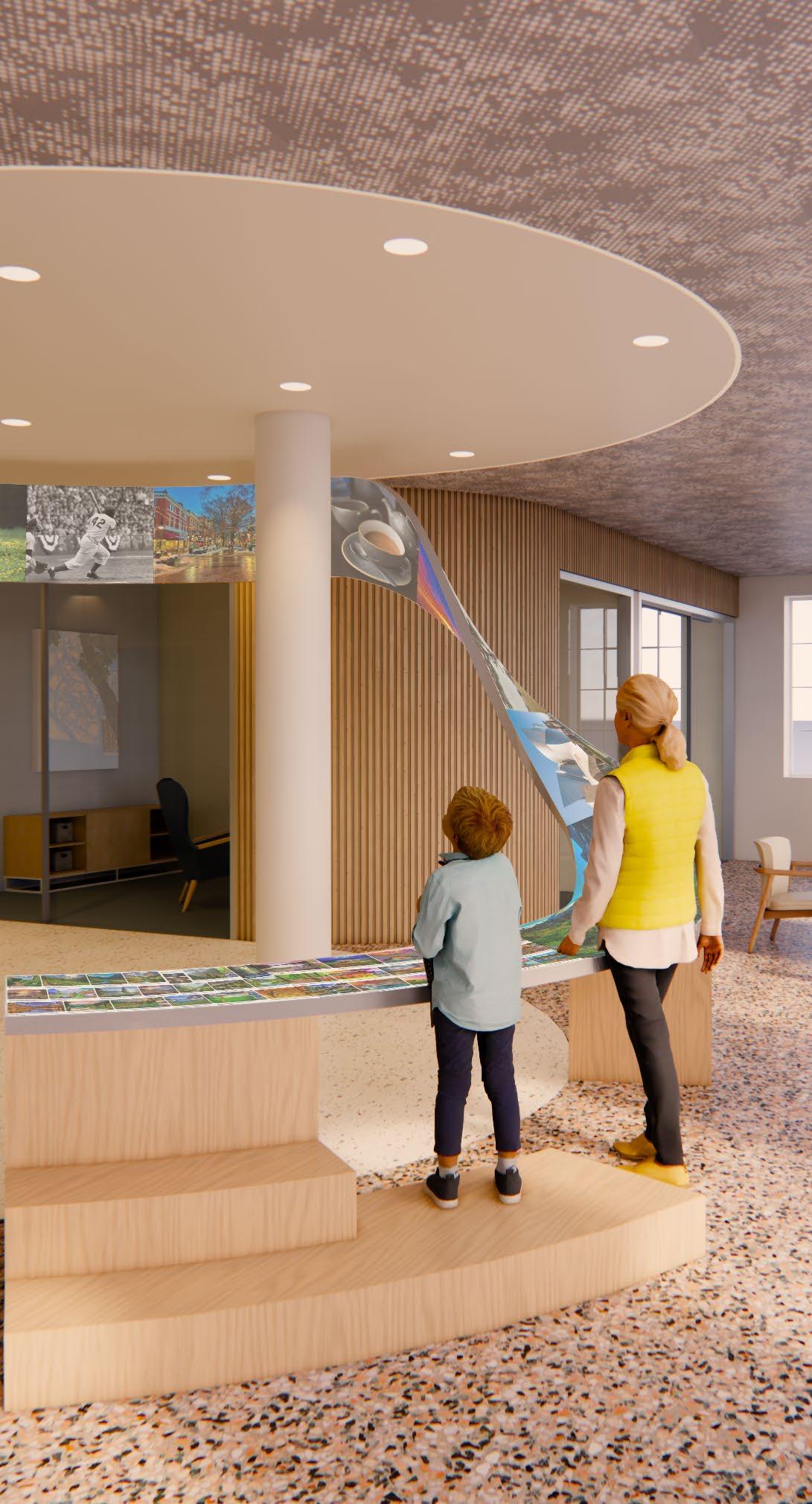
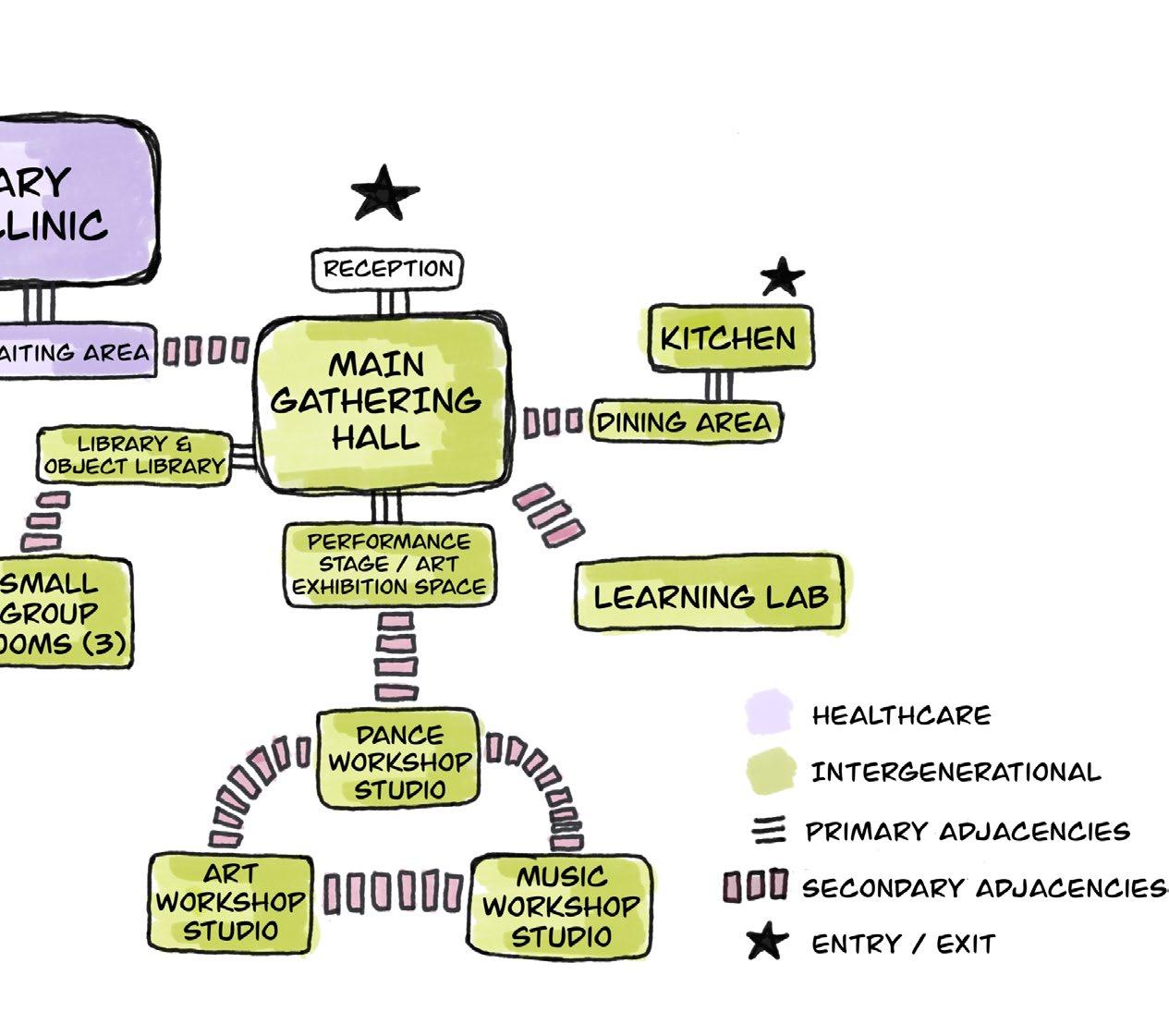
This Intergenerational Wellness & Innovation Center fosters meaningful relationships between children and older adults by creating opportunities for spontaneous connection, multimodal storytelling, mutual learning, and creative collaboration within designated activity and social spaces. These structured environments are connected by a lively social commons, animated by an experiential thread of interactive objects and imagery that serve as vessels for intergenerational connectivity. The clinic prioritizes comfort, privacy, and efficiency through strategic space planning, acoustic treatments, advanced technology, and hospitality-inspired finishes. Wellness is embedded throughout the center with dedicated areas for health education, sensory-sensitive features—such as circadian lighting and acoustic control—and biophilic elements that strengthen connections to nature.
DESIGN PROBLEM:
There is a growing need for spaces that foster meaningful social interaction between generations while simultaneously addressing widespread physical health challenges and improving access to healthcare resources, particularly for older adults.

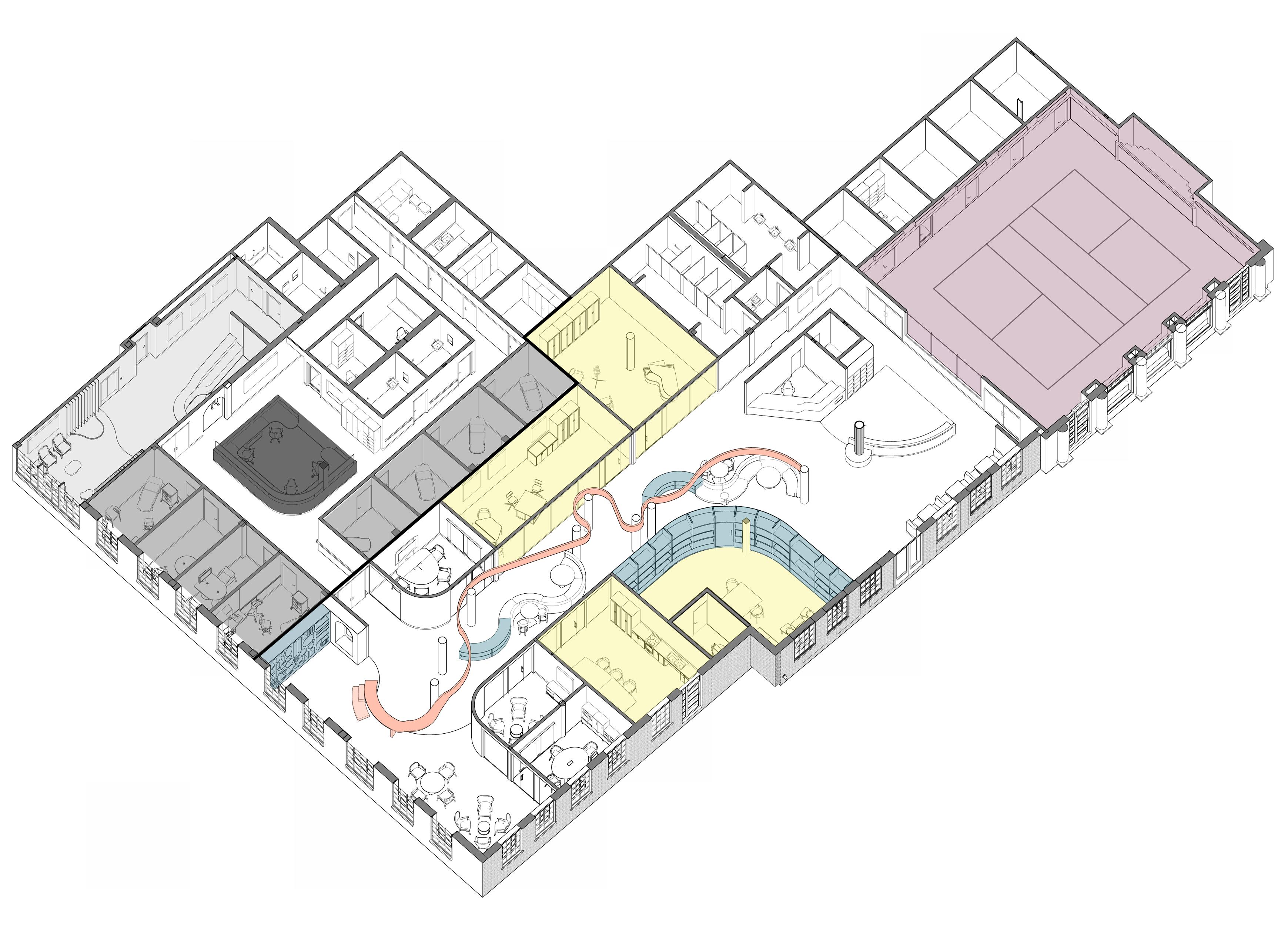
RECEPTION &WAITING ROOM
EXAM ROOMS
PROVIDER HUB
CLINIC SPACES LOBBY
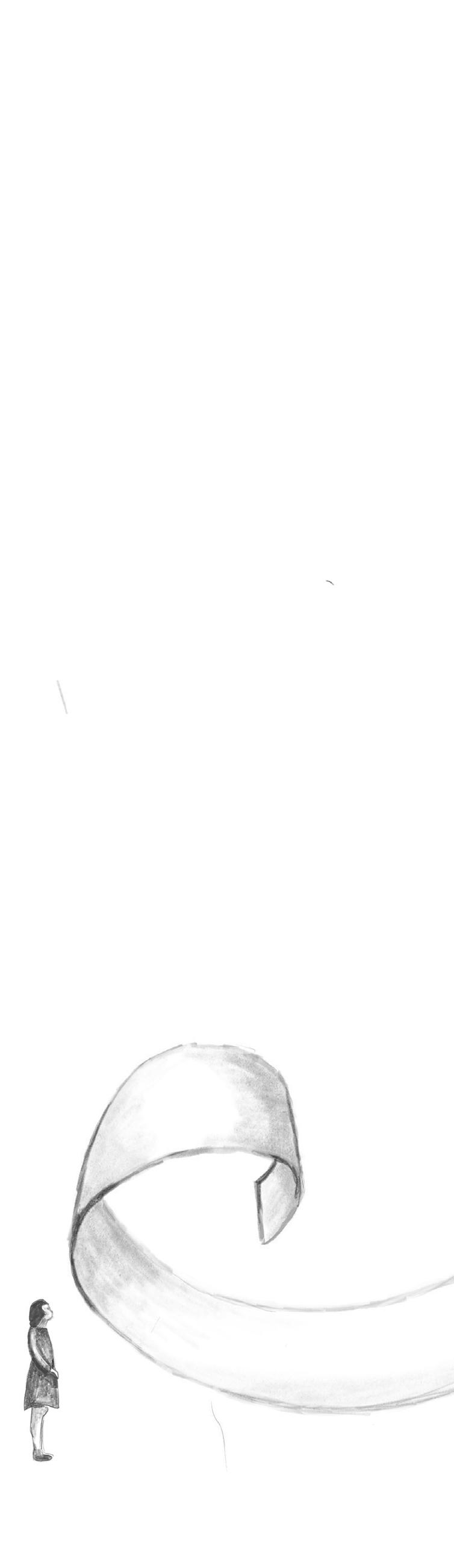
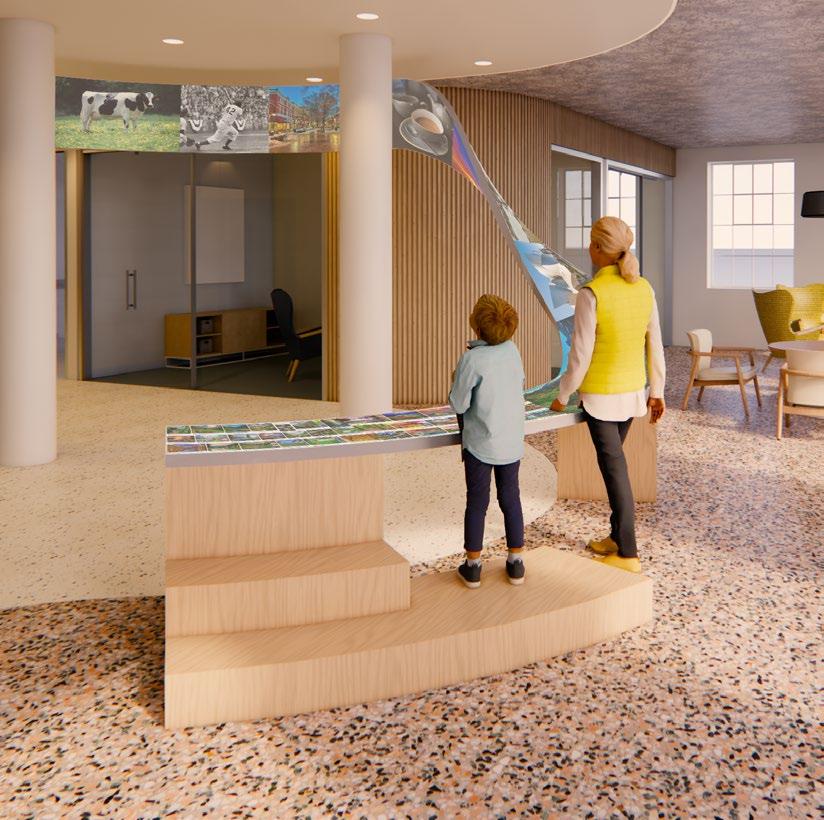
Along both sides of the spaces- each open visually is a key piece in intergenerational sight lines, activities can be OBSERVATION IS PARTICIPATION
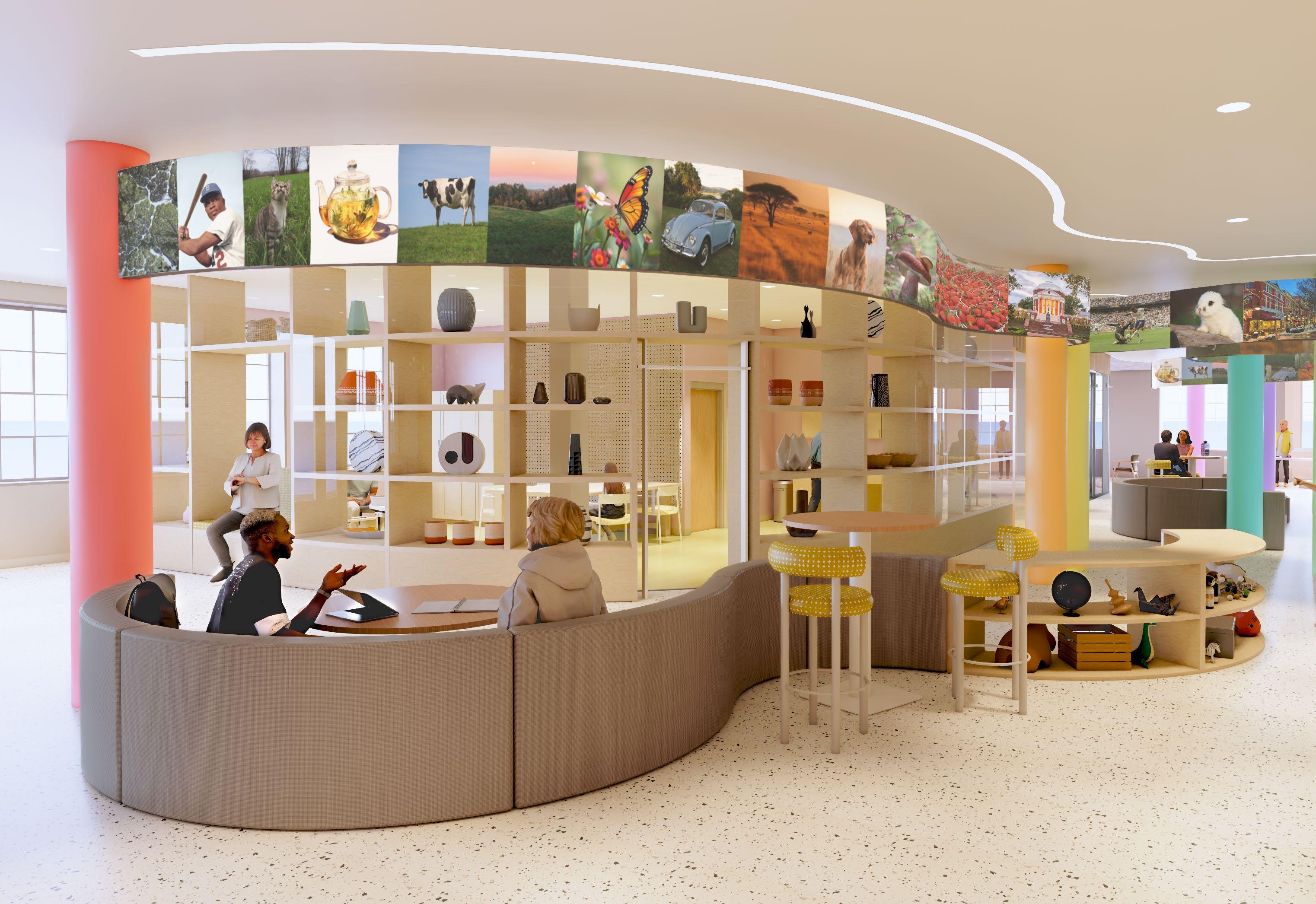

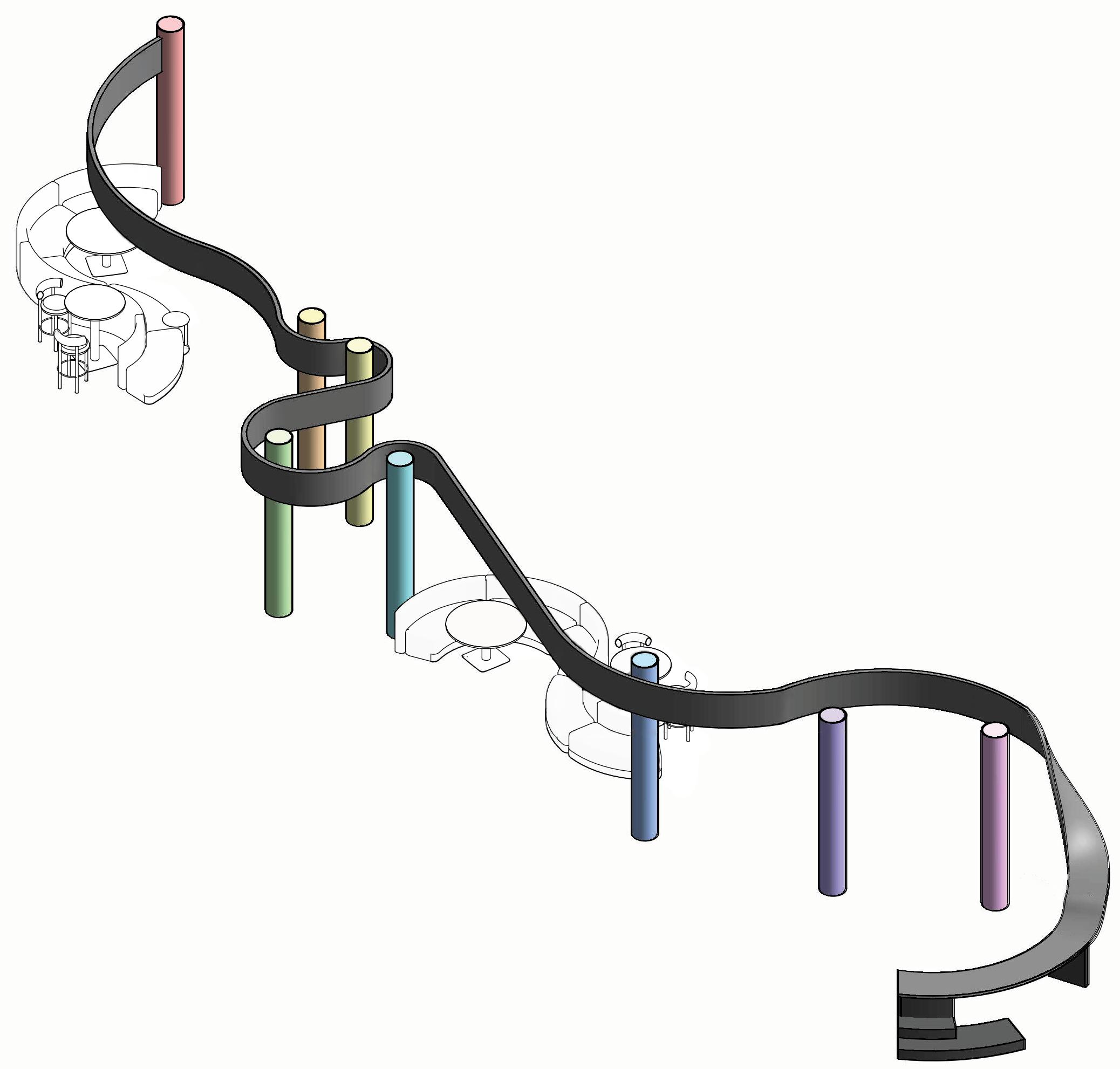
Research shows that images can help children and older adults connect by sparking memories for older adults that can start conversations or stories, and by allowing children to more deeply connect with these stories through visuals.
Community members can upload their own images to share with others on the reel, or they can select from a curated library of nostalgic or biophillic images that intend to spark conversation between people of different generations.
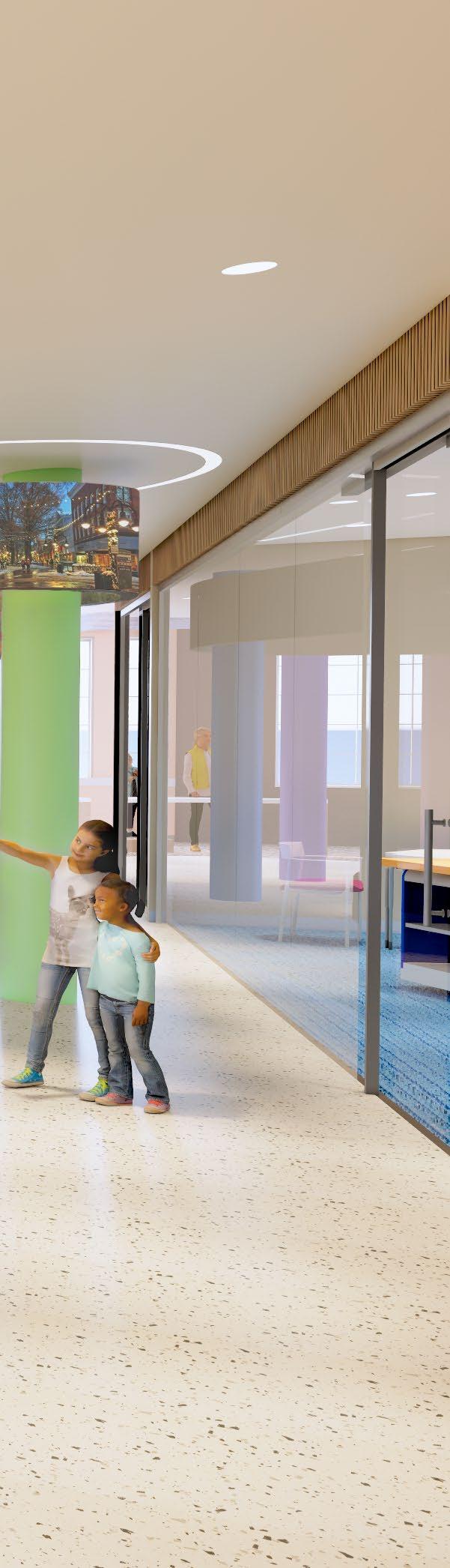
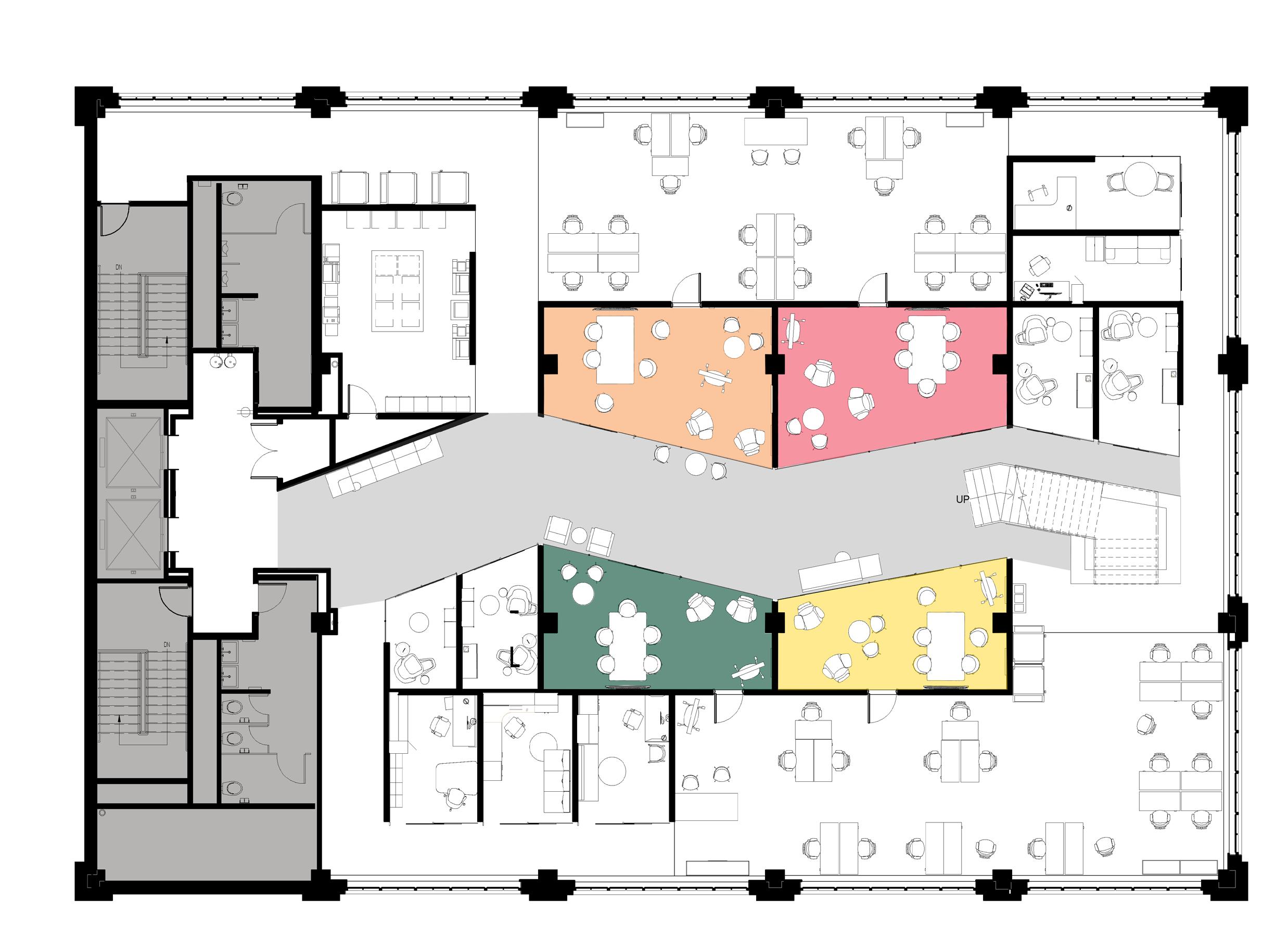
DESIGN CHALLENGE: many disordered columns create a space-planning challenge
WAY-FINDING: column color guides users through the space by following a familiar color order
RIBBON MATERIAL STRUCTURE:
• Wood Body: White Oak
• Protective Surface: Gorilla Glass
• Display: Flexible OLED
• Touch Layer: Indium Tin Oxide
• Core Structure: Carbon Fiber Reinforced Polymer Sheet
• Casing: Magnesium Alloy






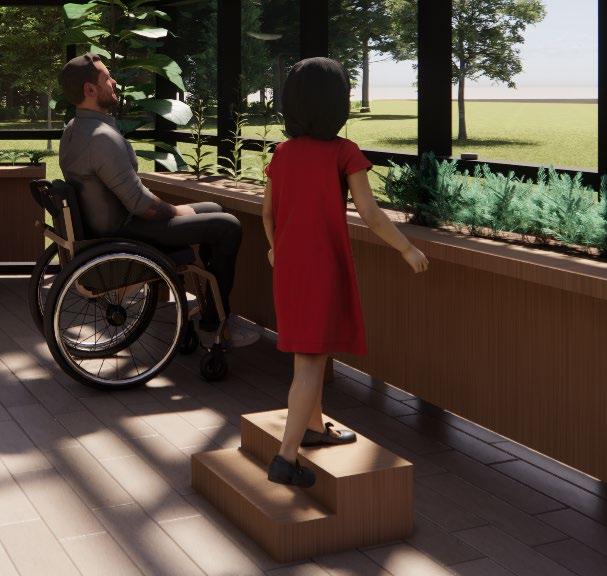
UNIVERSAL DESIGN: Accessible for children, ambulatory� adults, and wheelchair users alike.
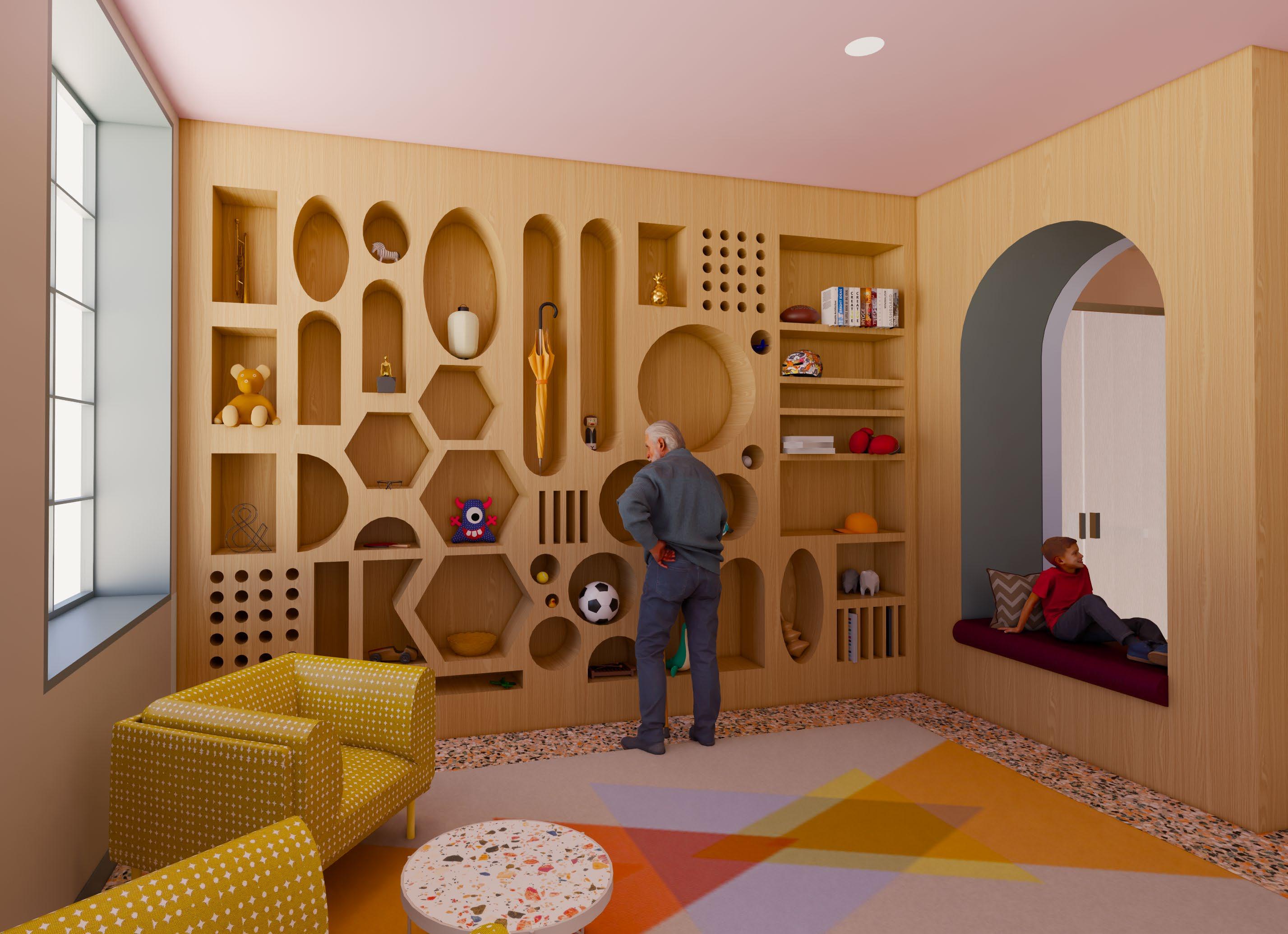
The object library is a place for people to contribute their own things that they would like to share with others. Objects can serve as a vessel for connectivity by giving older adults and younger children something to bond over.
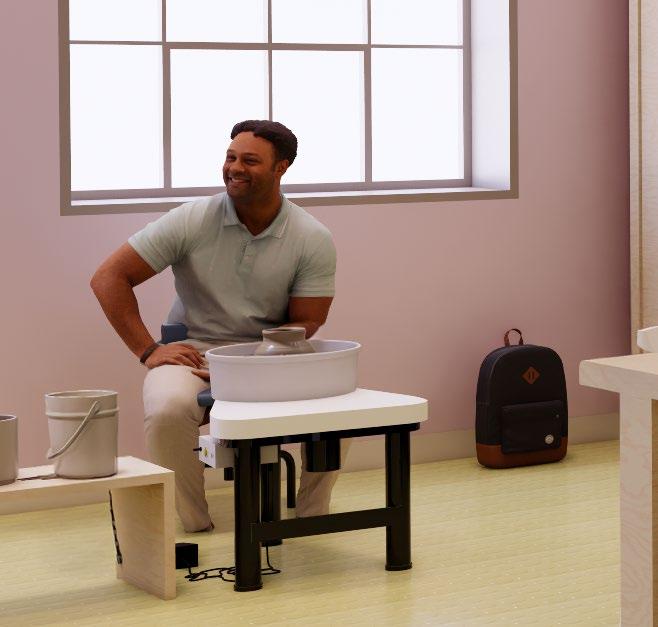
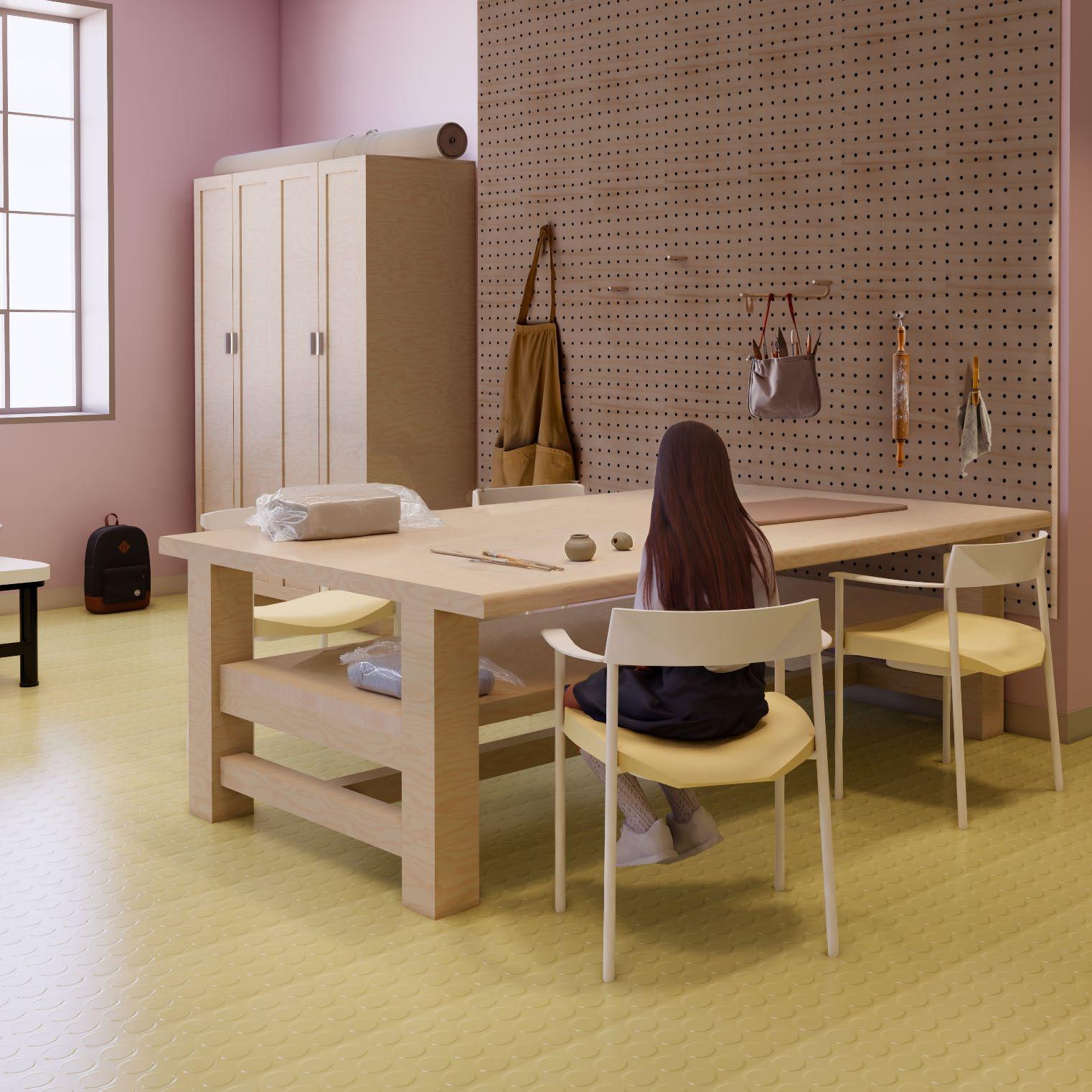
Ceramics is an ideal art form for older adults with mobility issues and it is often used in occupational therapy.
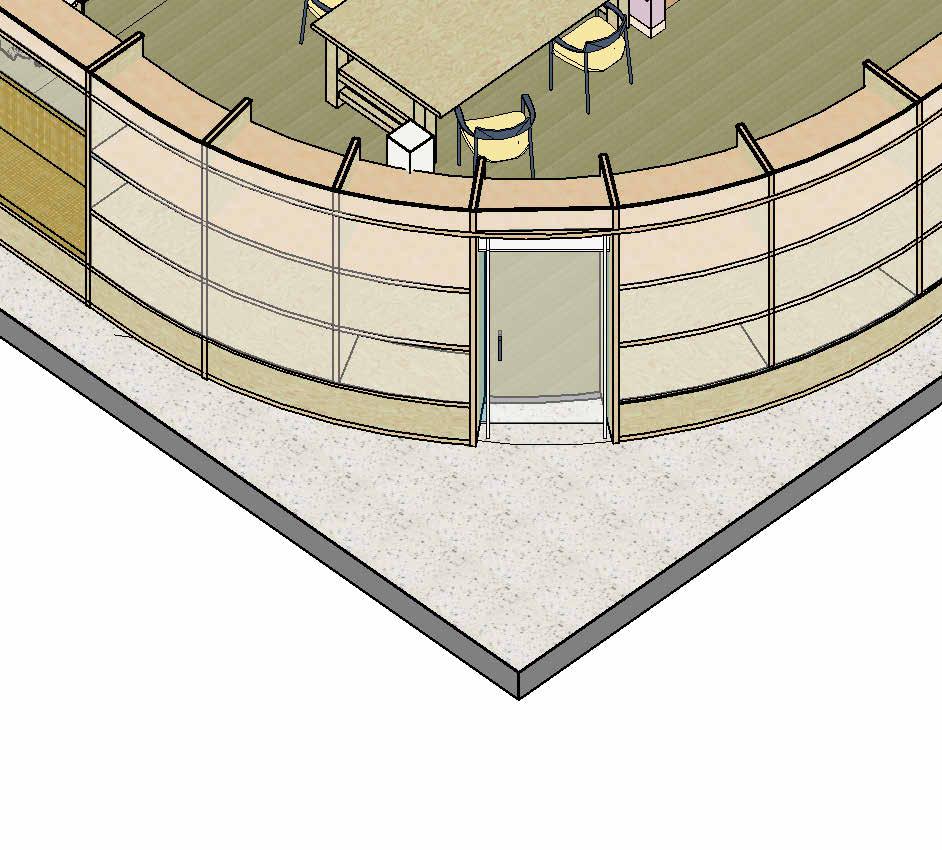
A glass-framed encloses the ceramics presenting artwork and encouraging engage with
they
glass-framed display case ceramics studio, artwork to the lobby encouraging more people to with the space.
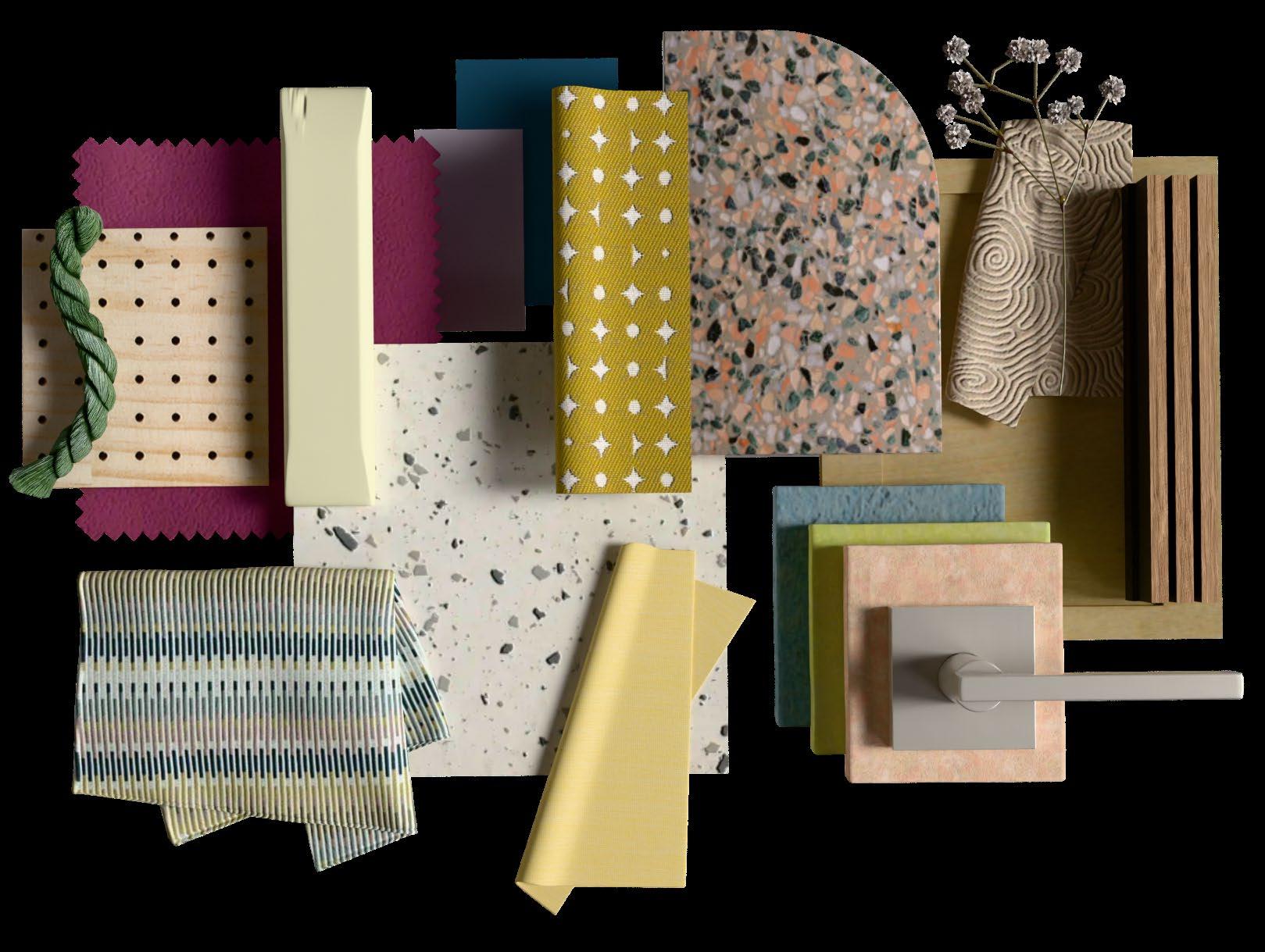
COMMUNITY CENTER MATERIALS
OPEN FLEXIBLE AND SPECIFIC ACTIVITY SPACES FOR INTERGENERATIONAL CONNECTIONS
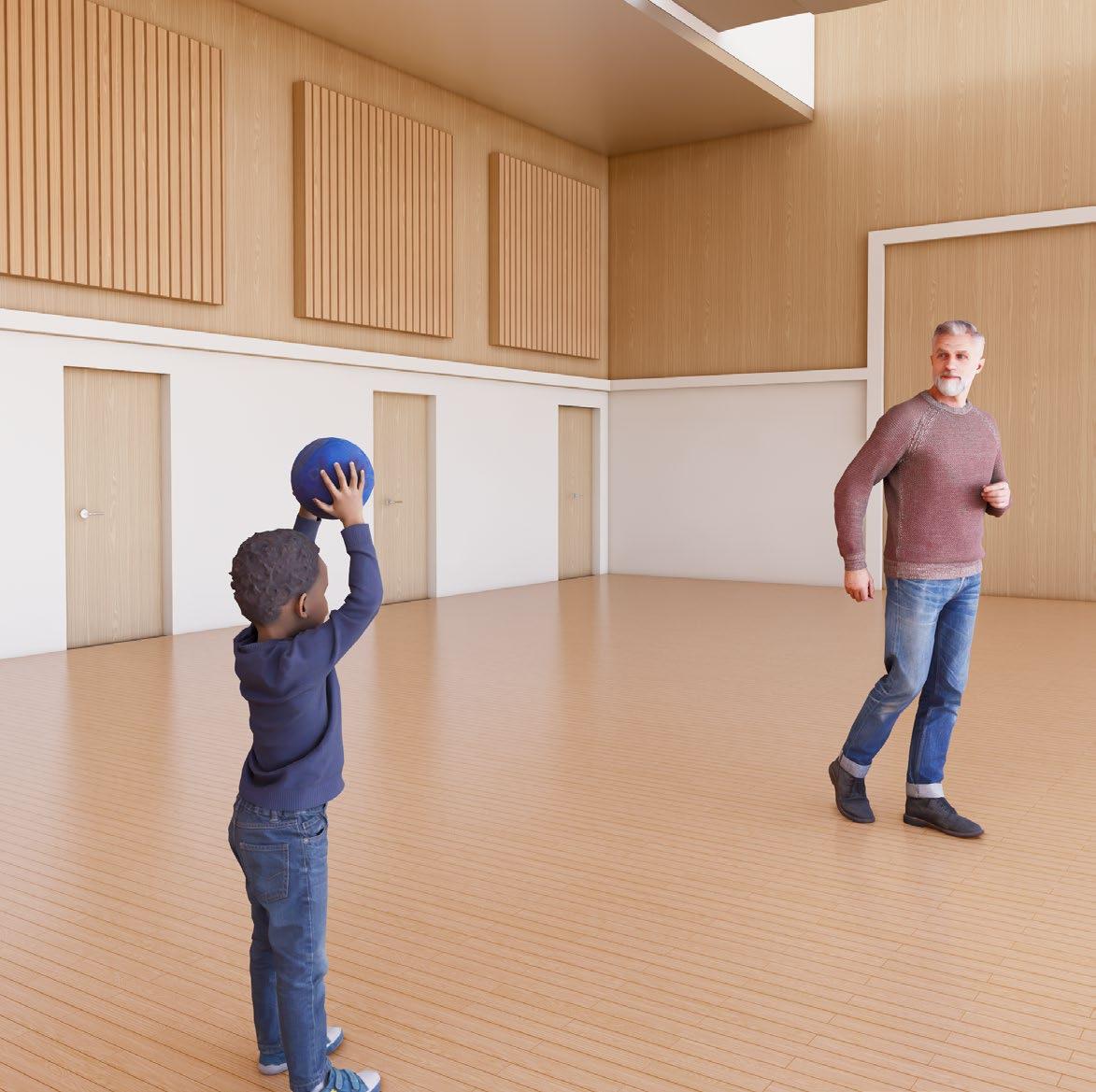
LARGE OPEN SPACES, LIKE A GYMNASIUM, PROVIDE OPPORTUNITIES FOR SPONTANEOUS INTERACTIONS
EVIDENCE:
Researchers have found that intergenerational connections can be created when a structured activity sparks an unplanned conversation or behavior,. This requires flexibility in the space, or a large enough space to accommodate changes in activity. Thus planned and unplanned activities play a role in facilitating connection.
DESIGNATED ACTIVITY SPACES BRING PEOPLE OF DIFFERENT GENERATIONS TOGETHER THROUGH PLANNED ACTIVITIES
All designated activity spaces are creative in nature to enable story sharing through various forms
Redefine healthcare as it shifts away from institutional to more personal and accessible experiences for patients
Improve provider experience in the workplace to reduce burnout and enhance efficiency
Provide flexibility for changing needs
Reduce patient anxiety and stress
Overall shift from to prevention by emphasizing community health focusing on overall Smaller waiting rooms common time spent waiting room is minimized
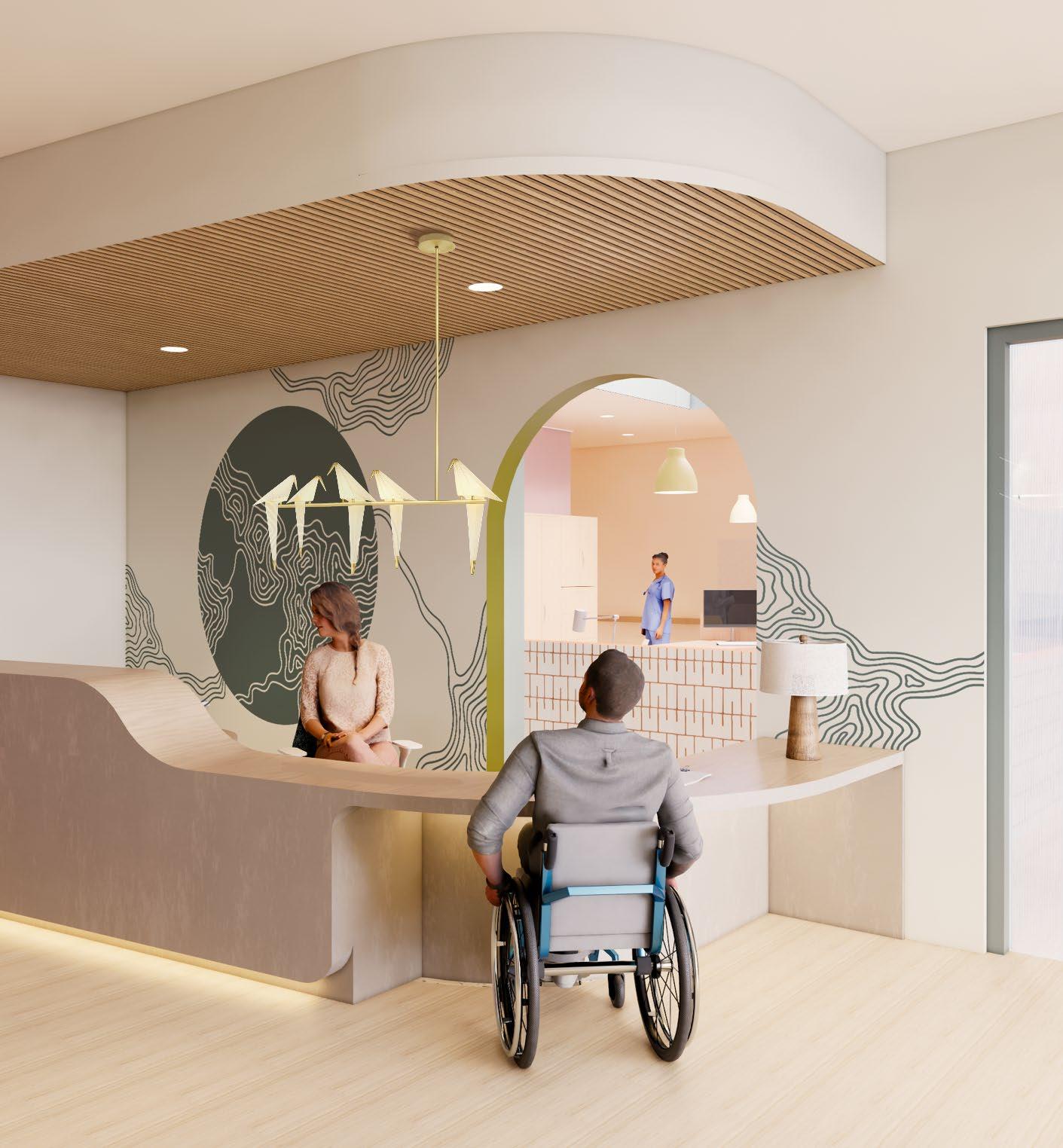
reception desk provides accessibility to wheelchair users with dual-height transaction counters, privacy for the receptionist, and ample space to fill out paperwork
treatment emphasizing health education and overall wellbeing. rooms are more spent in the minimized
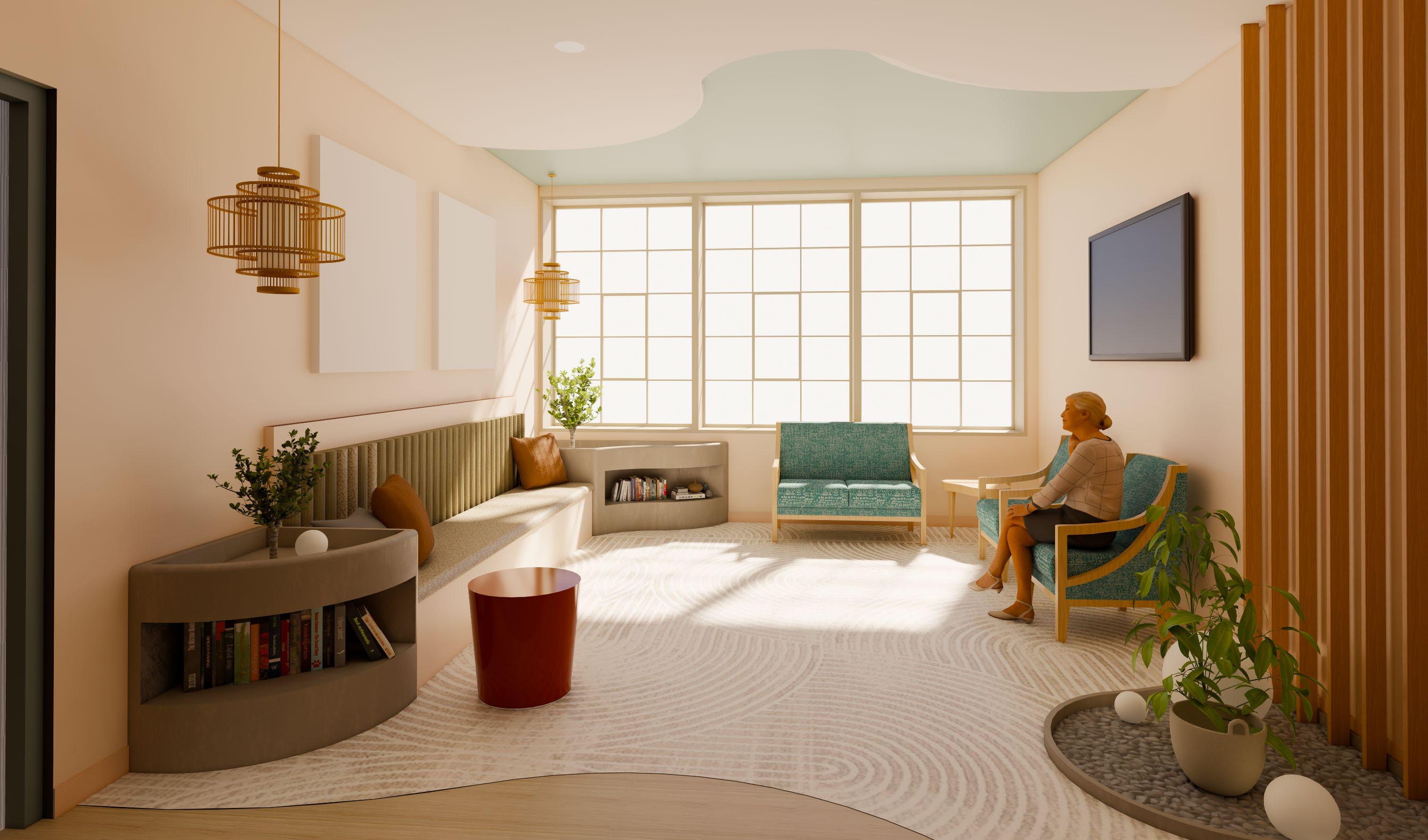
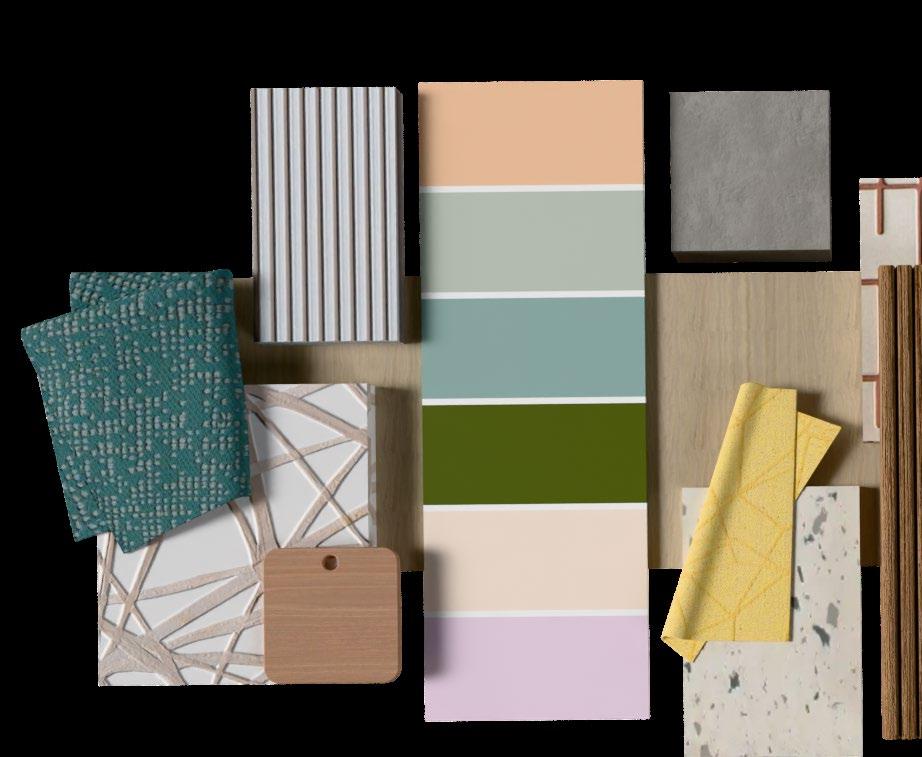
Concept in healthcare design that redirects patients’ attention away from stress or discomfort. A couple methods of doing this include art and unexpected design elements.
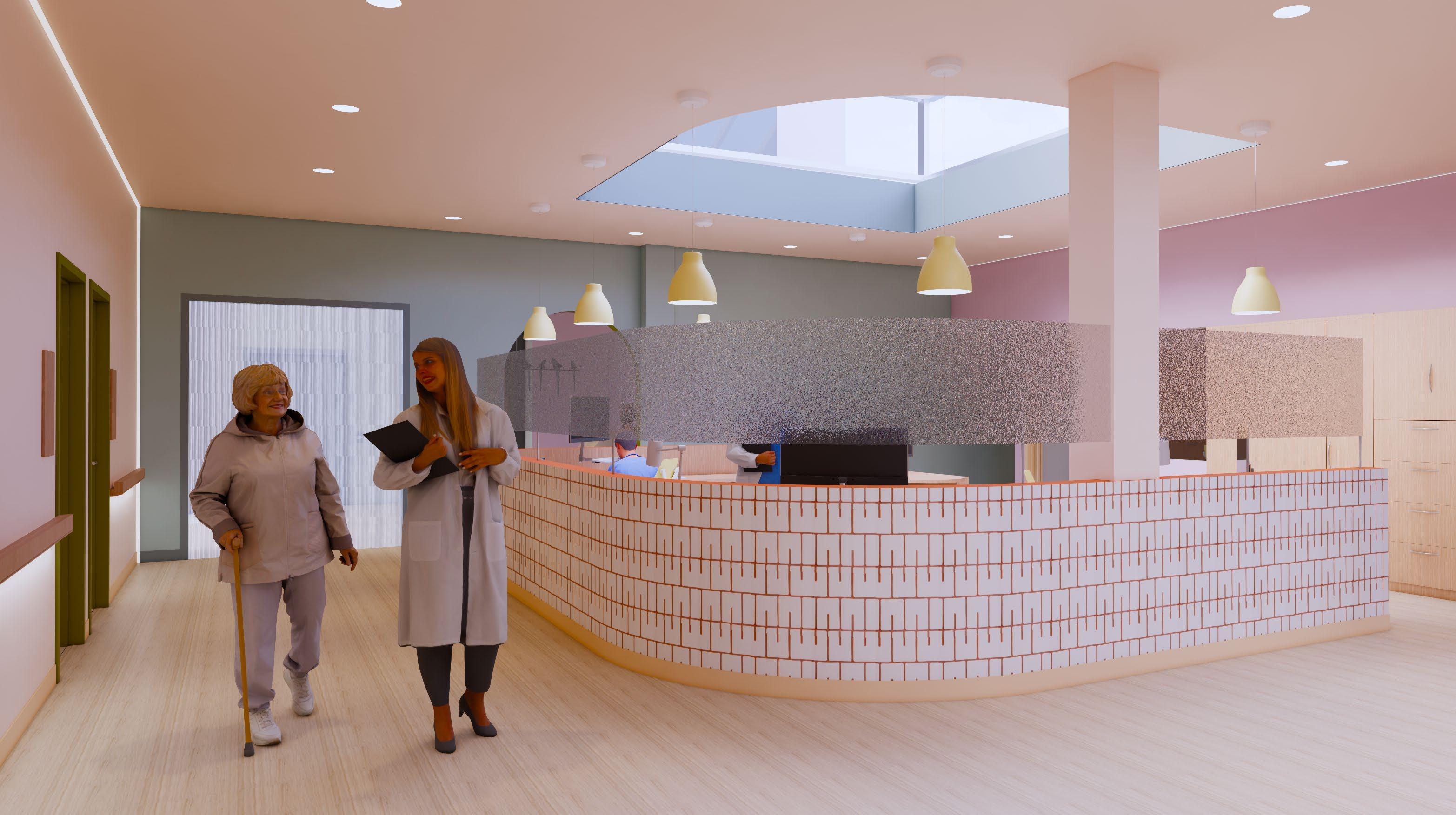

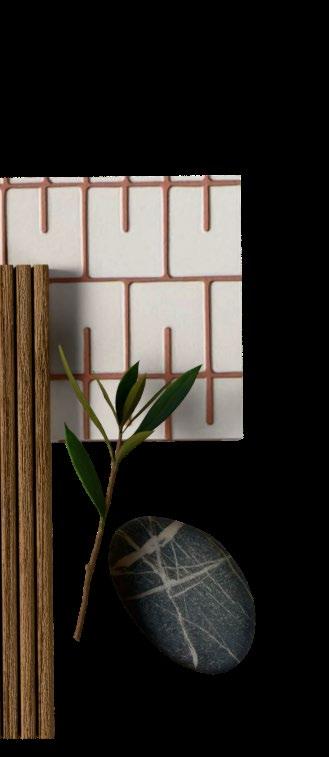
Unexpectedly vibrant color, art, and finishes can be surprising and intriguing, effectively distracting patients from feelings of stress or anxiety. The color palette is soothing yet uplifting.
BARIATRIC SEATING
CLEAR FLOOR SPACE AROUND THE EXAM TABLE
INTEGRATED VITALS SYSTEM
CASEWORK WITH INTEGRATED GLOVE DISPENSER AND TRASH PULL OUT
MOBILE PROVIDER WORKSTATION
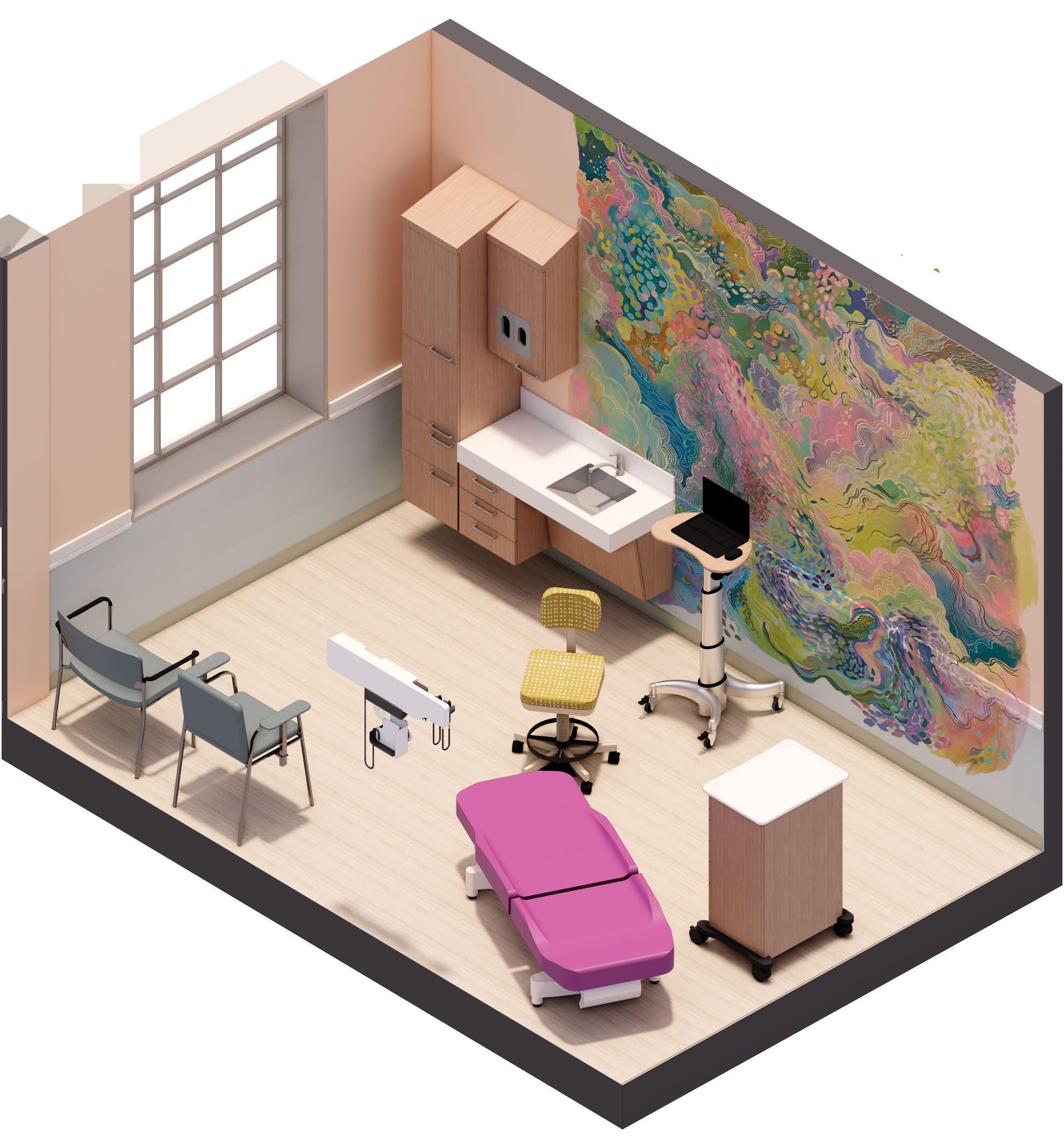
POSITIVE DISTRACTIONLARGE SCALE, COLORFUL MURAL ART
MIDMARK EXAM TABLE IN AN UNEXPECTED COLOR
TYPE: Workplace
SIZE: 16,700
LOCATION: Chicago, IL
DATE: Fall 2024
TOOLS: Revit, Enscape, Adobe CS, Procreate
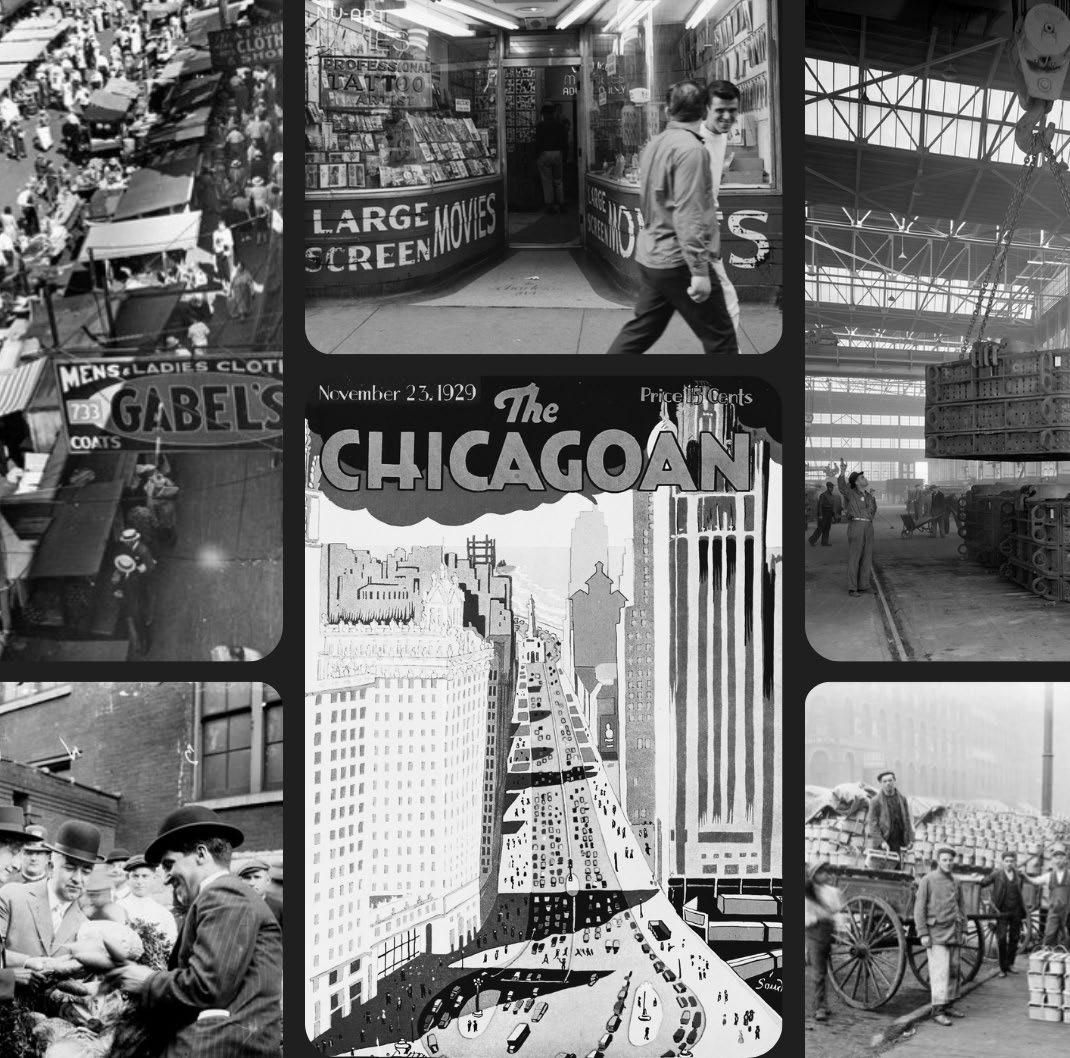
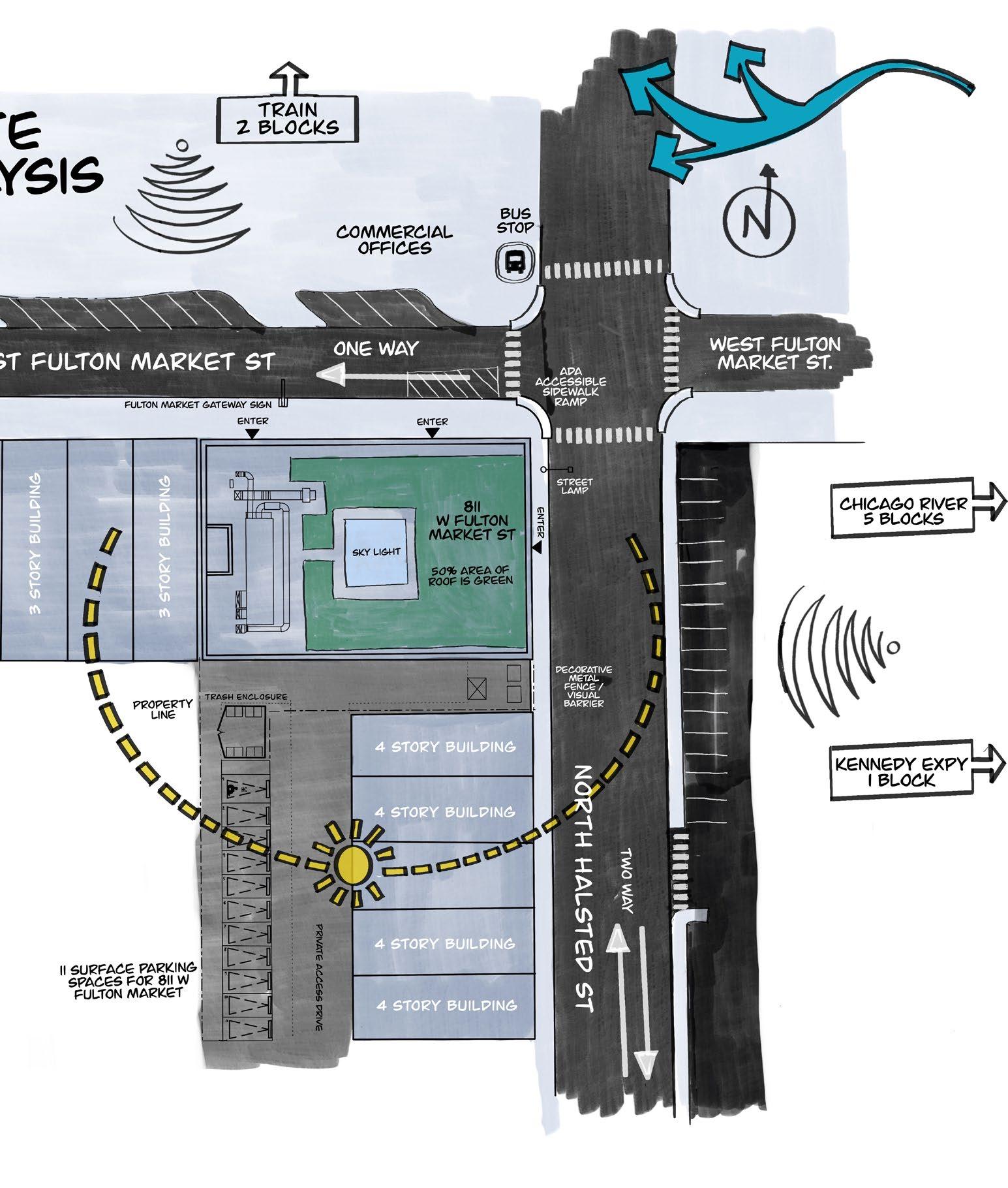
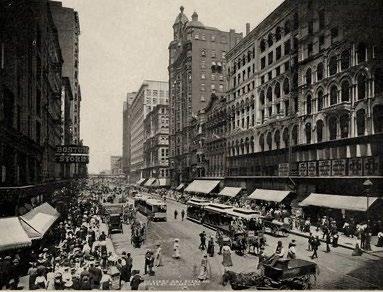
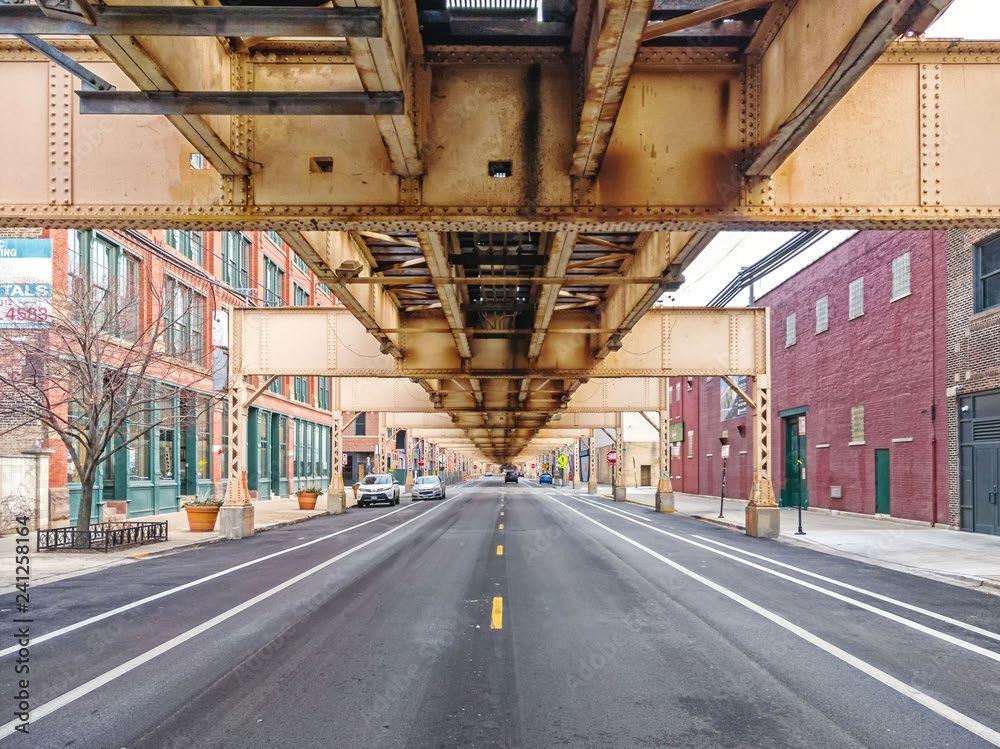
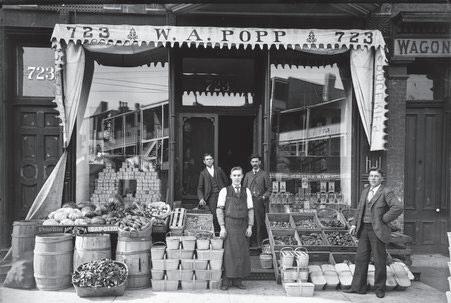
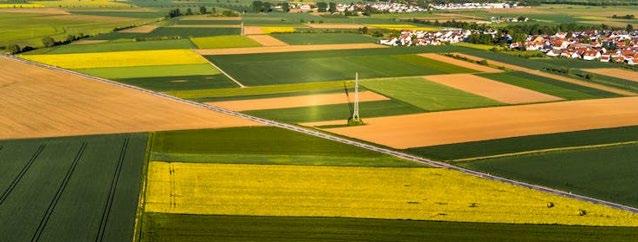
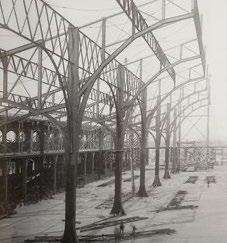
Today the Fulton Market neighborhood is home to some of the most soughtafter commercial real estate in Chicago. Though more than 100 years ago it was the meat-packing district, home to one of the biggest food market places in the country prior to the modern grocery store.
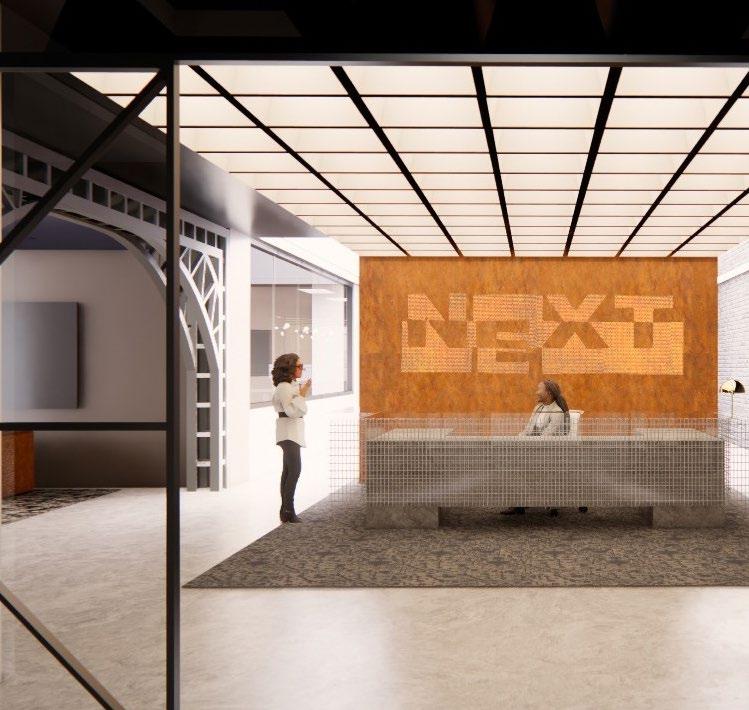
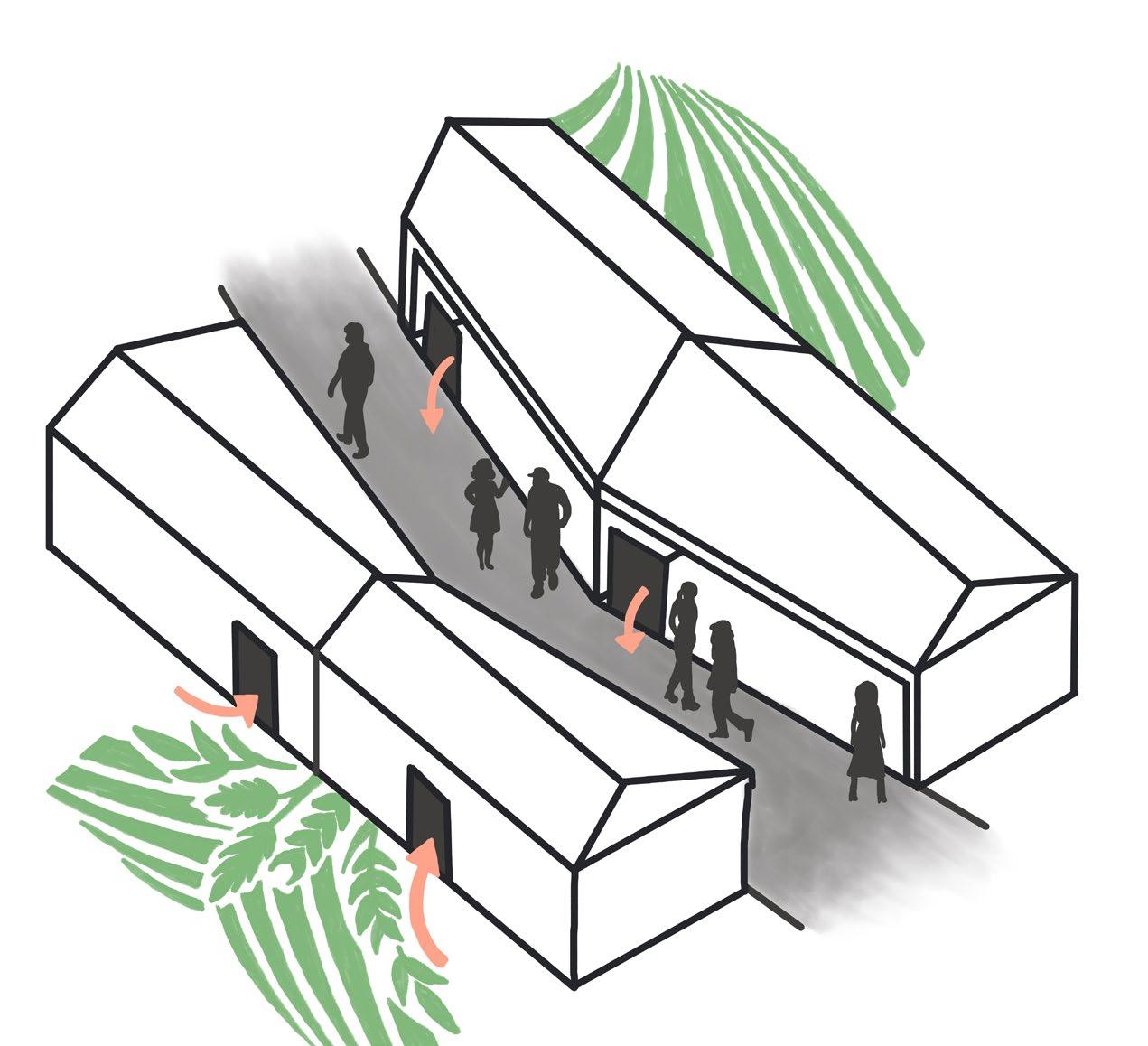
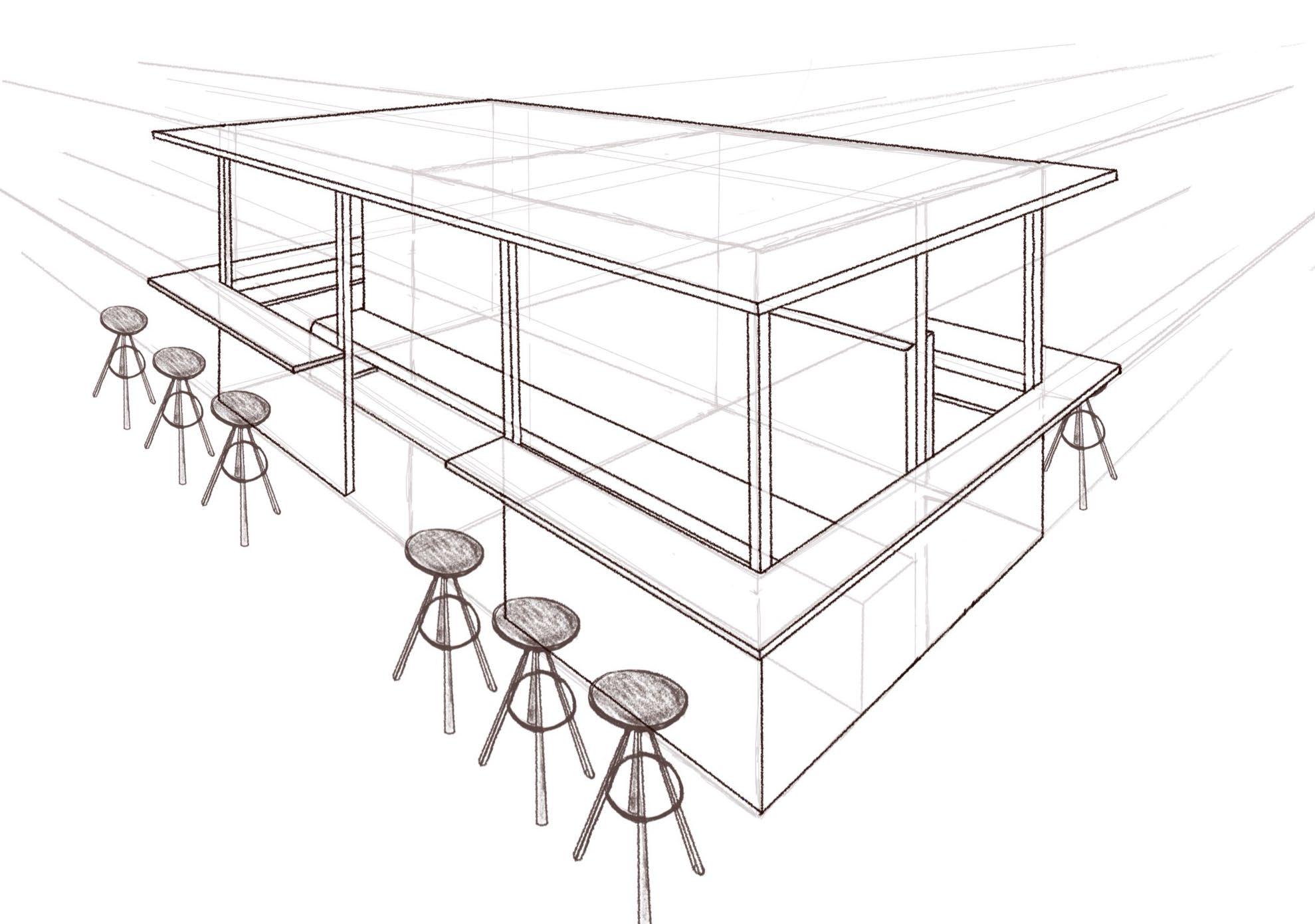
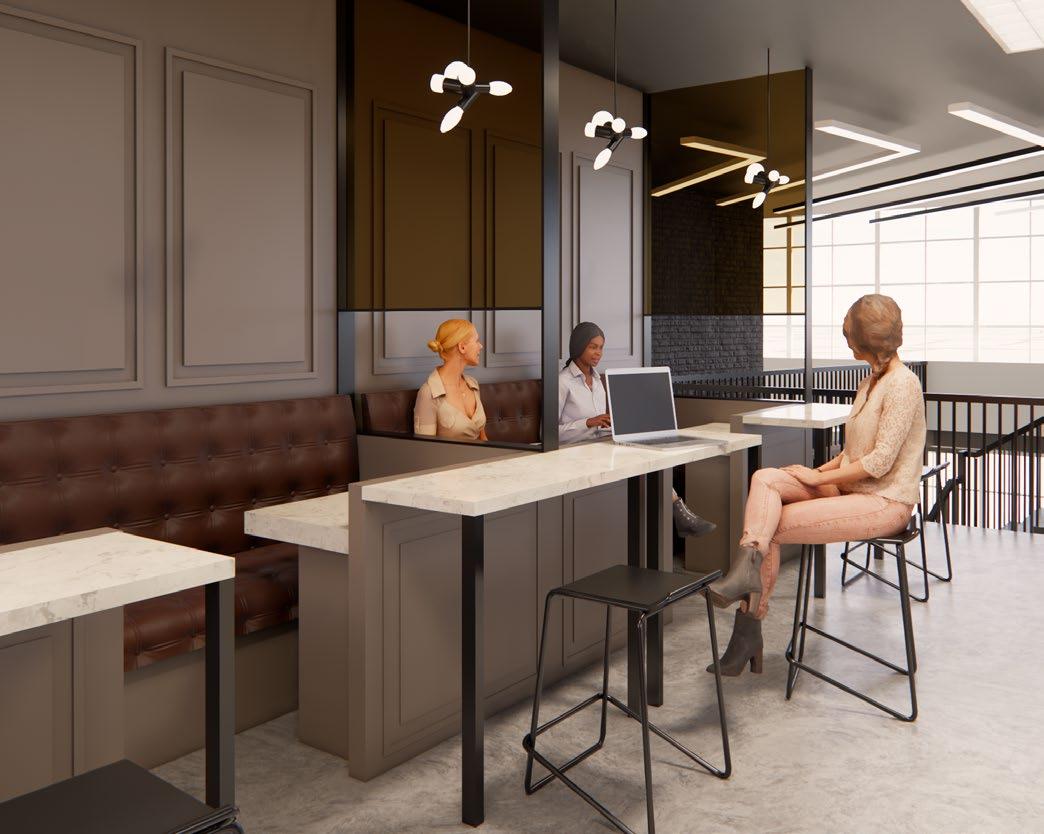
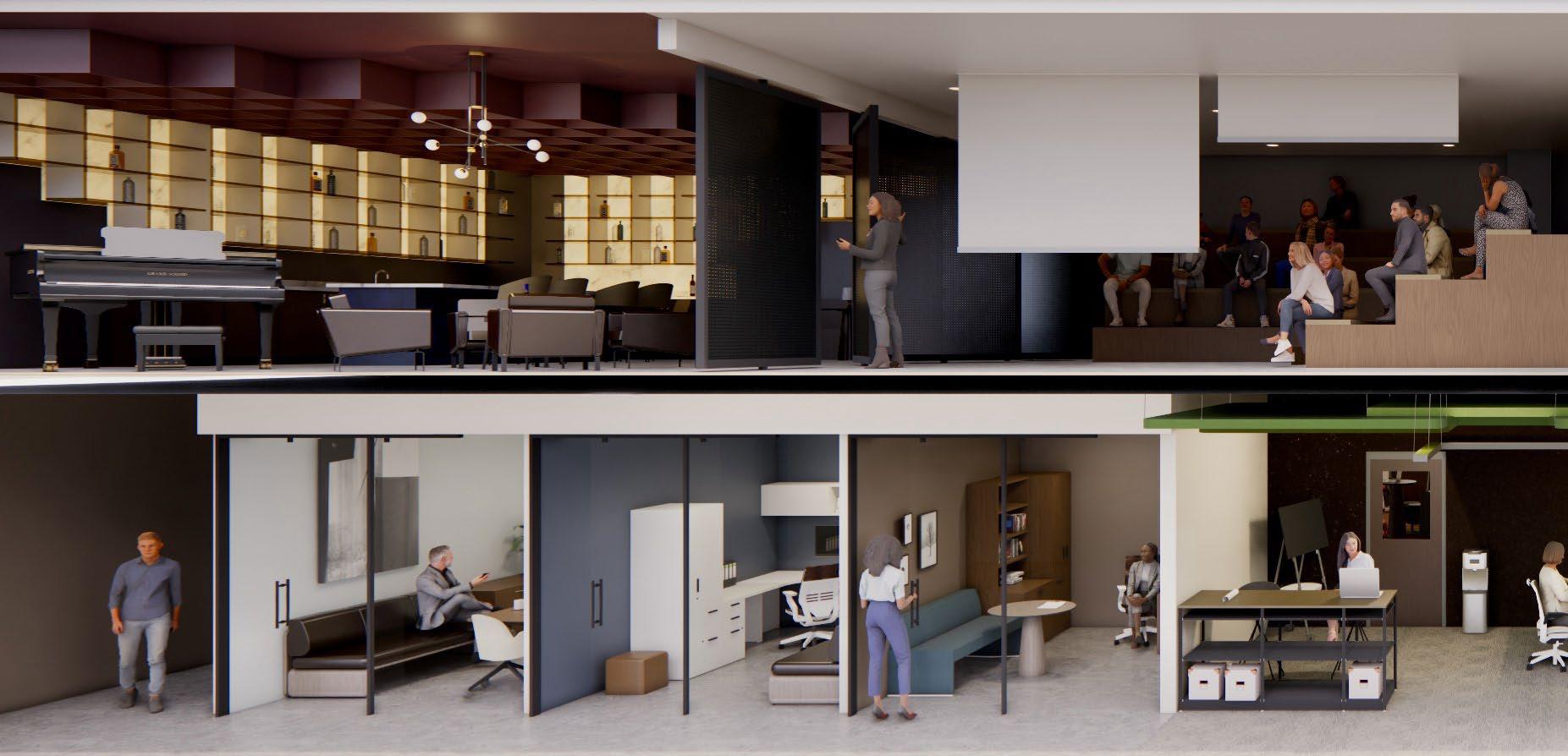
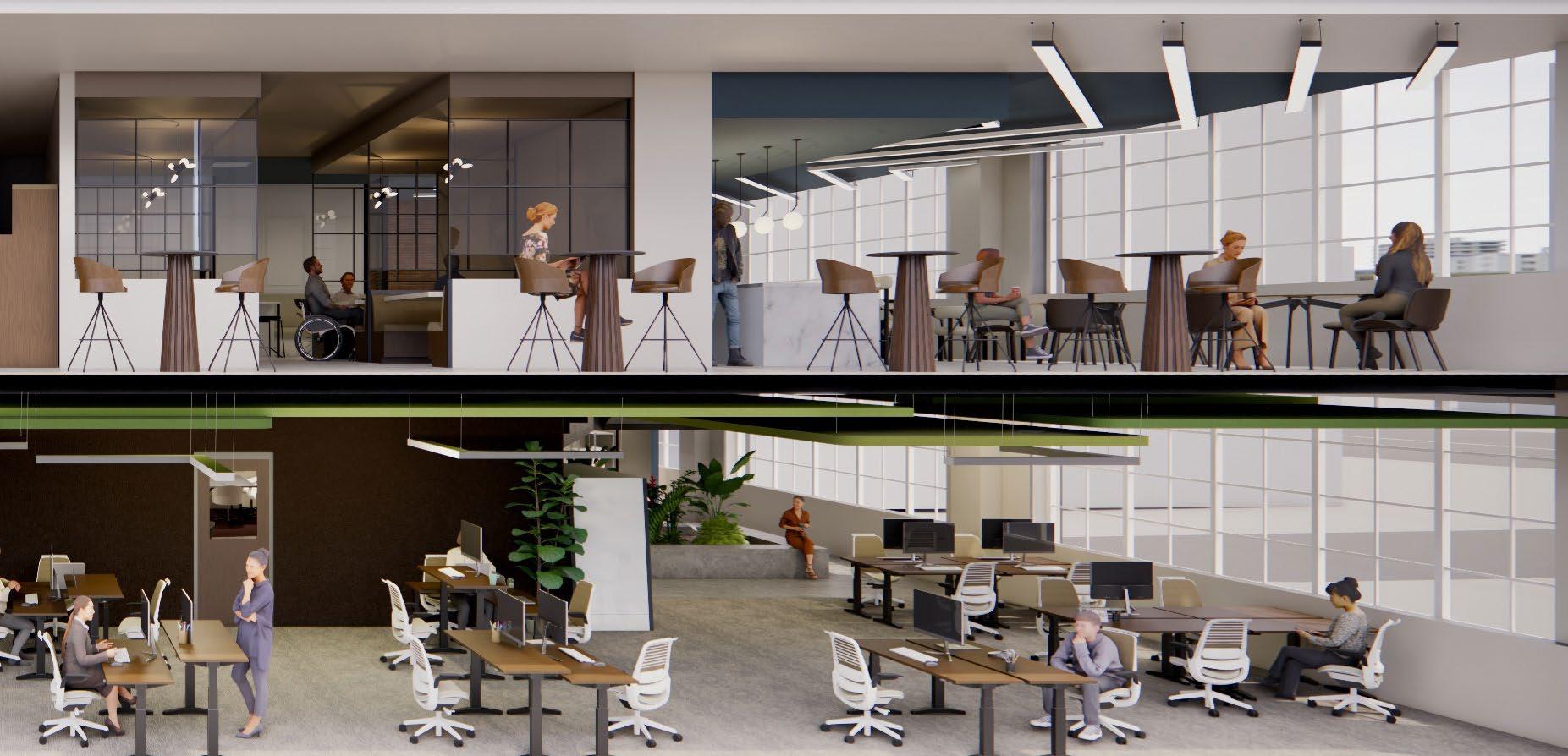
To create a memorable office for a creative advertising agency, the design connects the present with the past by exploring the experience of an industrial-era marketplace. Individual work areas are like Mid-West farms, where produce destined for the market was grown, and where ideas are cultivated in a nature-inspired workspace. Collaborative work areas are like an urban marketplace, where people traditionally met to exchange goods, and employees meet to exchange creative ideas.

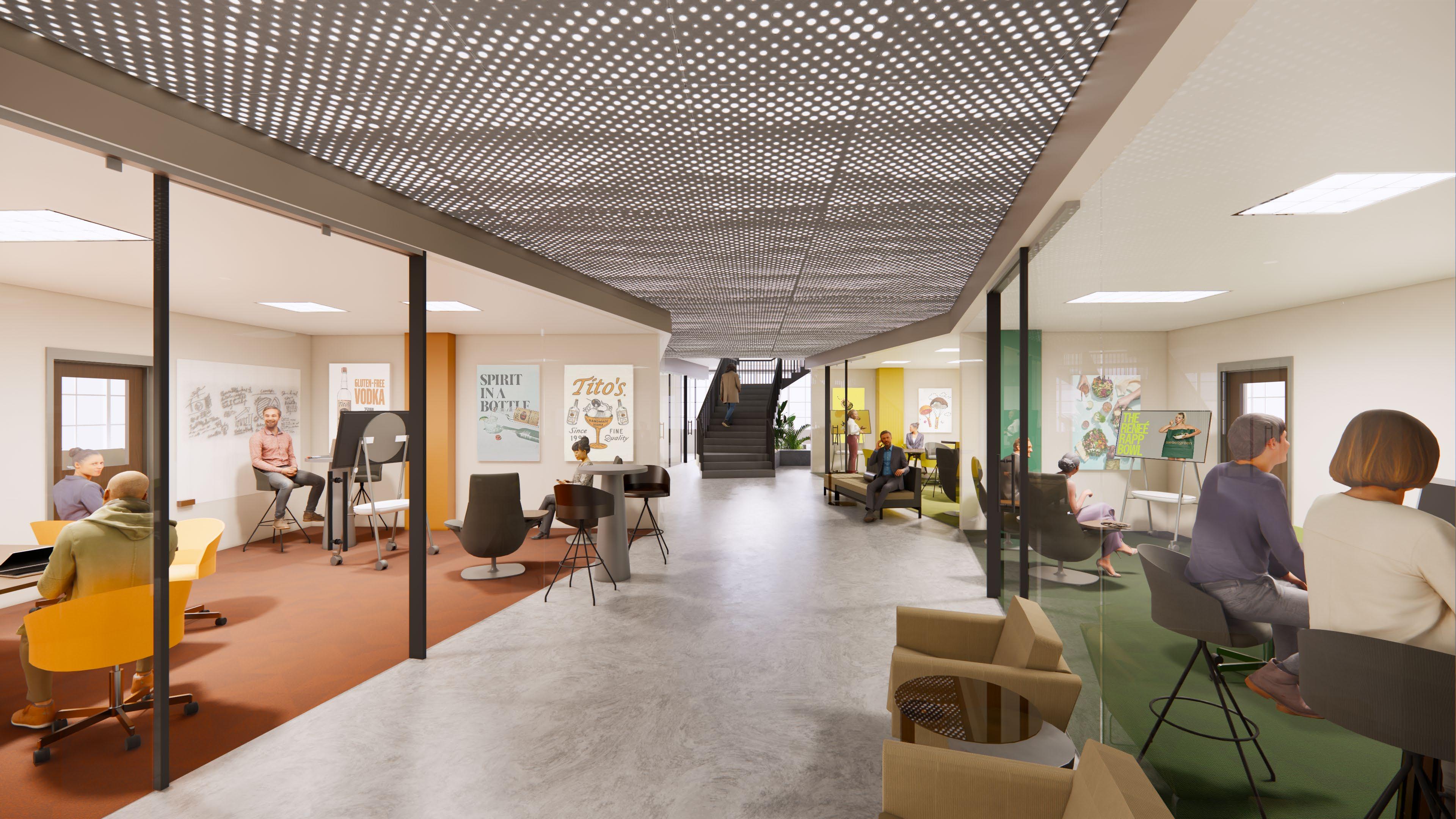
A dynamic workspace where movement is fluid and interaction encouraged. Front porch-style seating along the curtain walls supports spontaneous conversations.
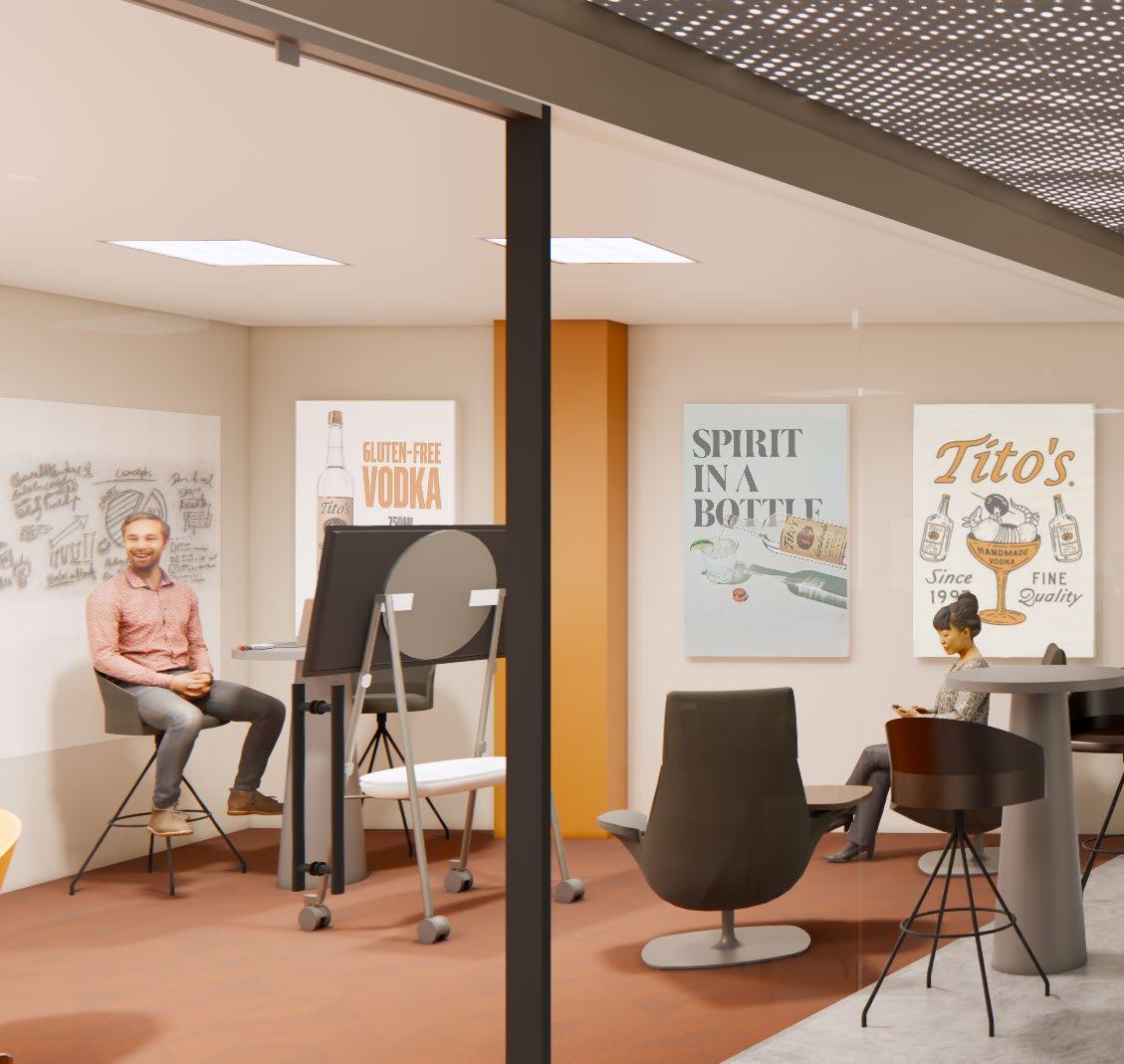
Client-specific team meeting rooms feature branded visuals displayed through a glass curtain wall along a dynamic central corridor. Employees navigate this vibrant space—designed to evoke the experience of walking down historic Fulton Street, once lined with market stalls. The perforated metal ceiling creates an effect of being almost subterranean as if you are under the L
Client-specific team meeting rooms feature branded visuals
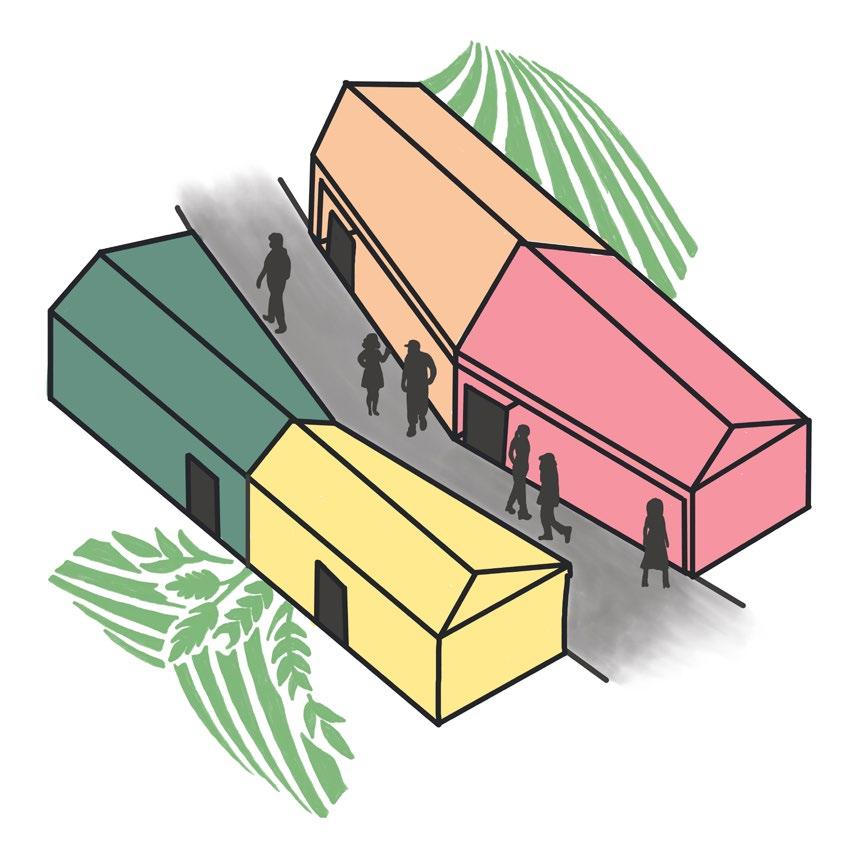
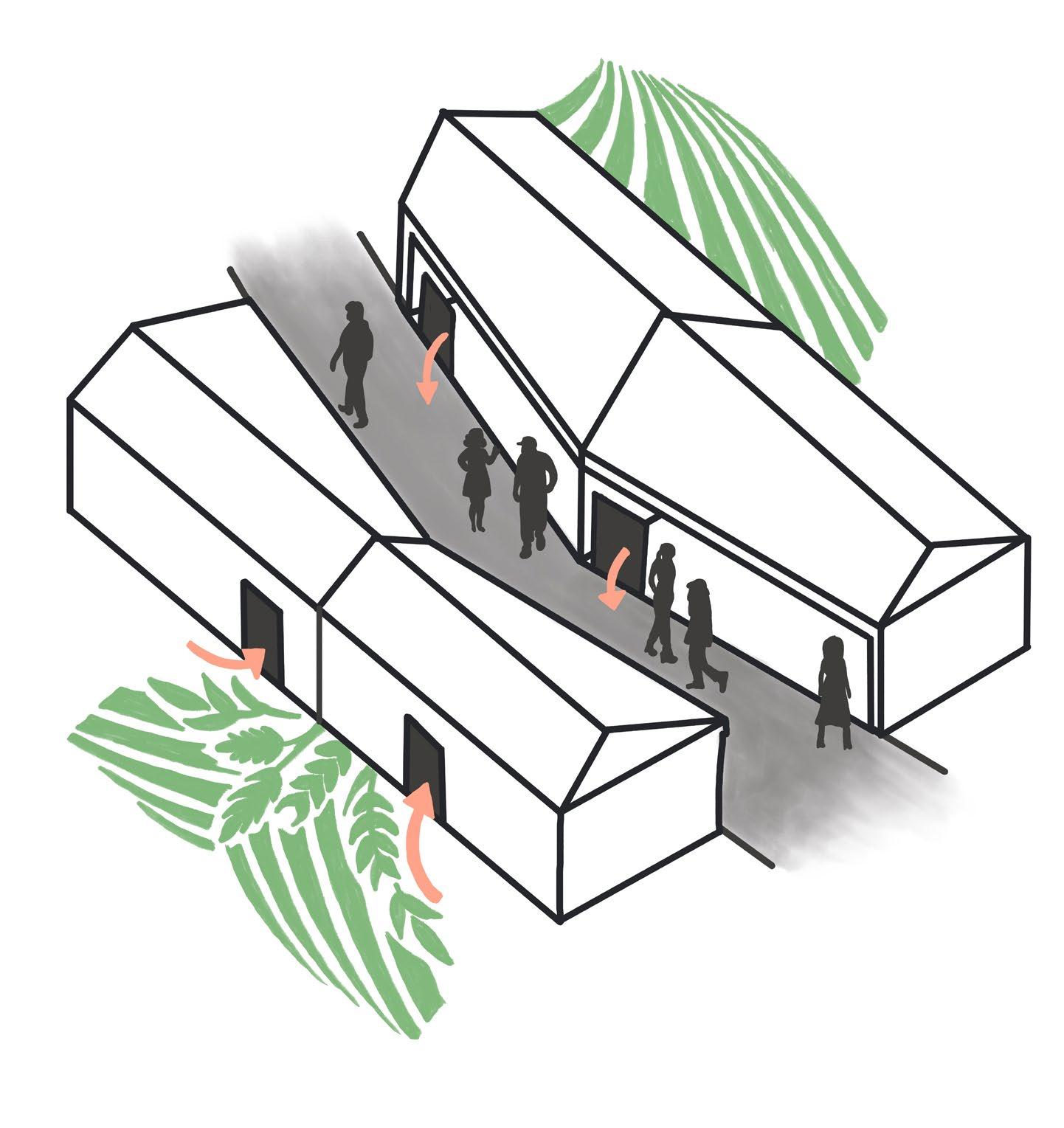
FLOW OF IDEAS
YOU ARE HERE WHERE IDEAS ARE CULTIVATED TO BE TAKEN TO THE COLLABORATIVE MARKET
Midwest farmslate 19th century
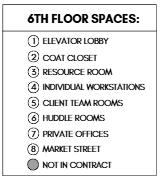
key for key plan with numbers
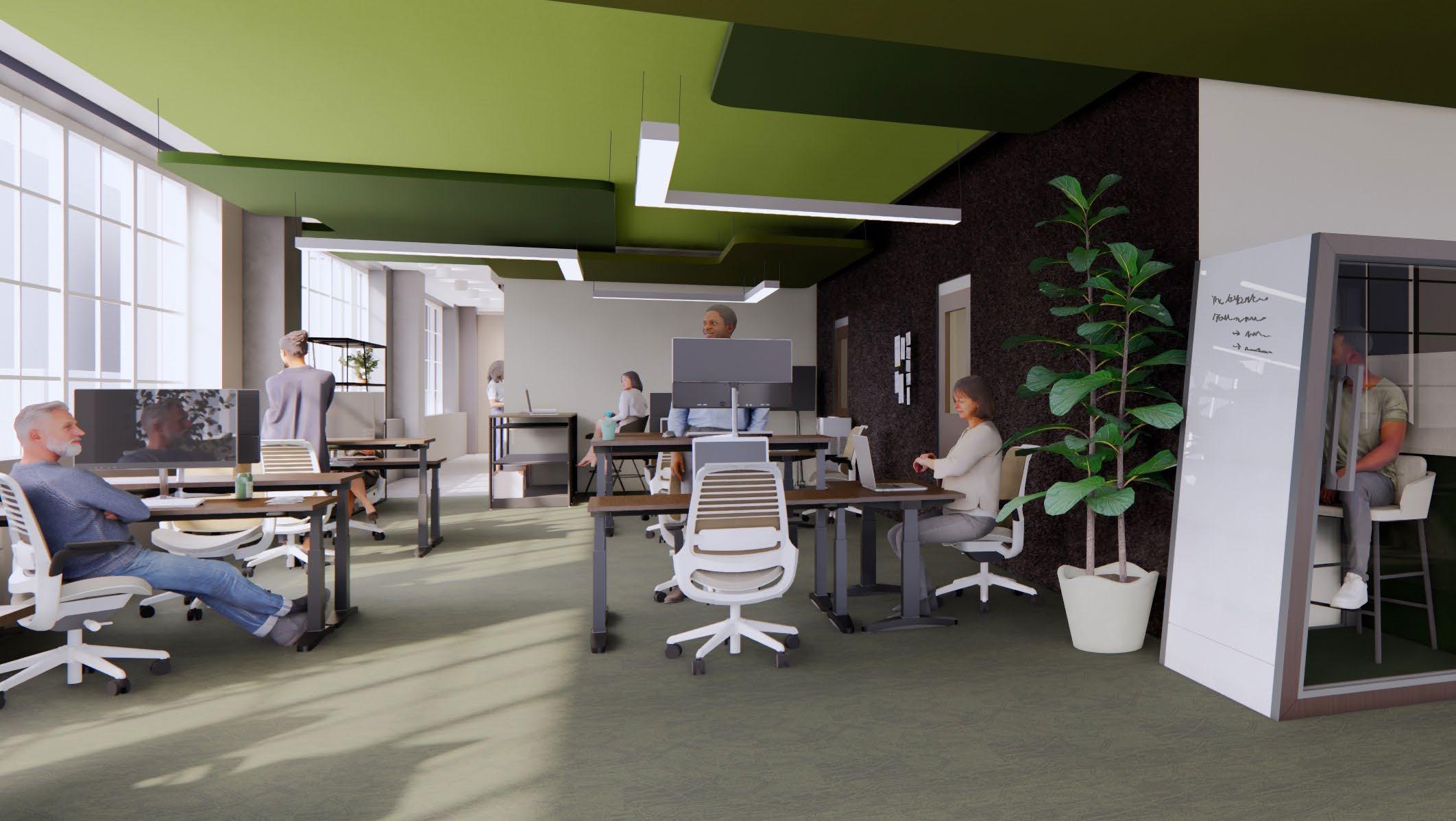
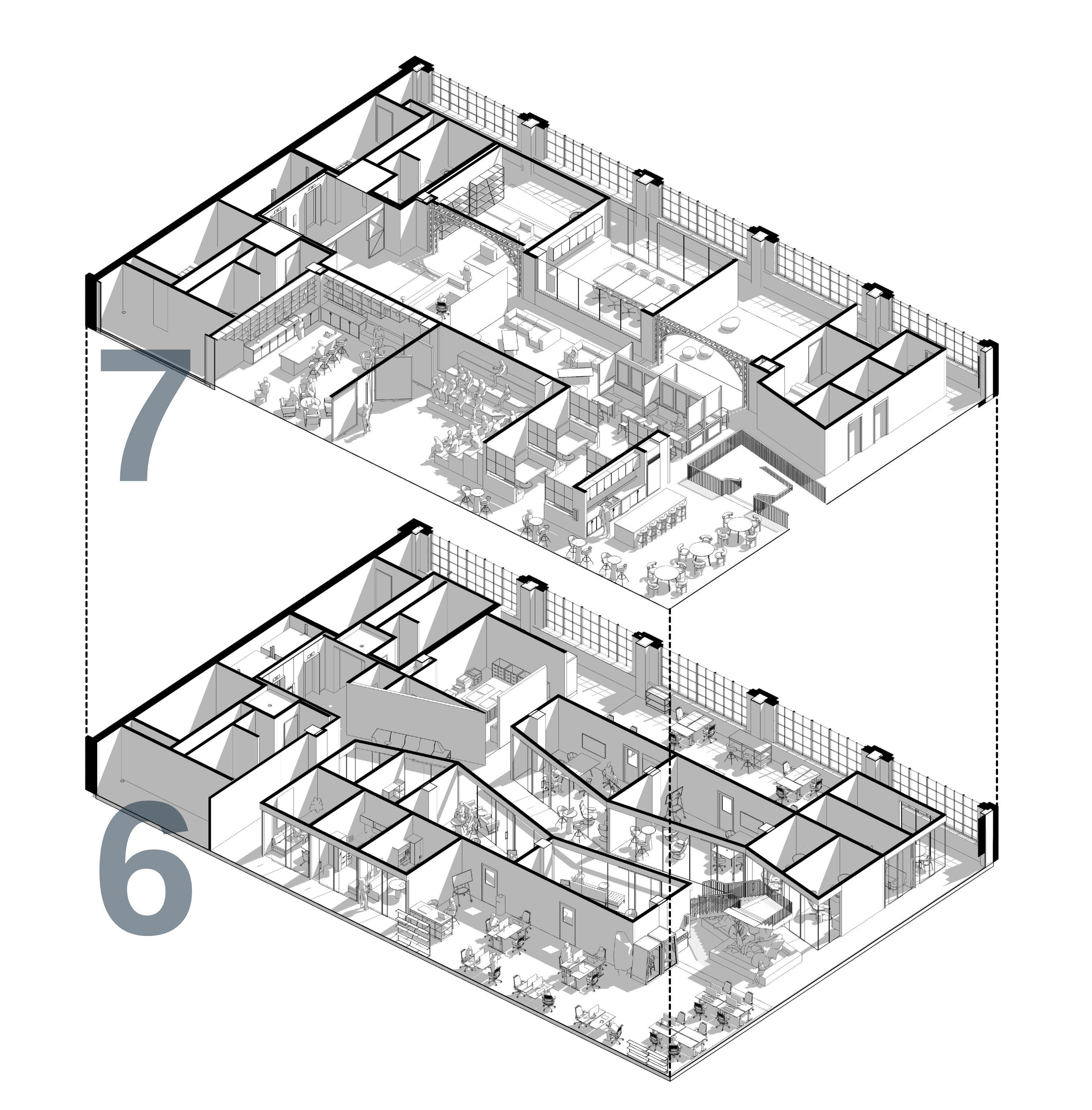
Workstations located on the perimeter of the 6th floor are filled with natural light. A dark cork wall provides ample pin-up space, and backdoor access to the team rooms. Phone booths, layout space, and adjustable height desks provide flexibility.
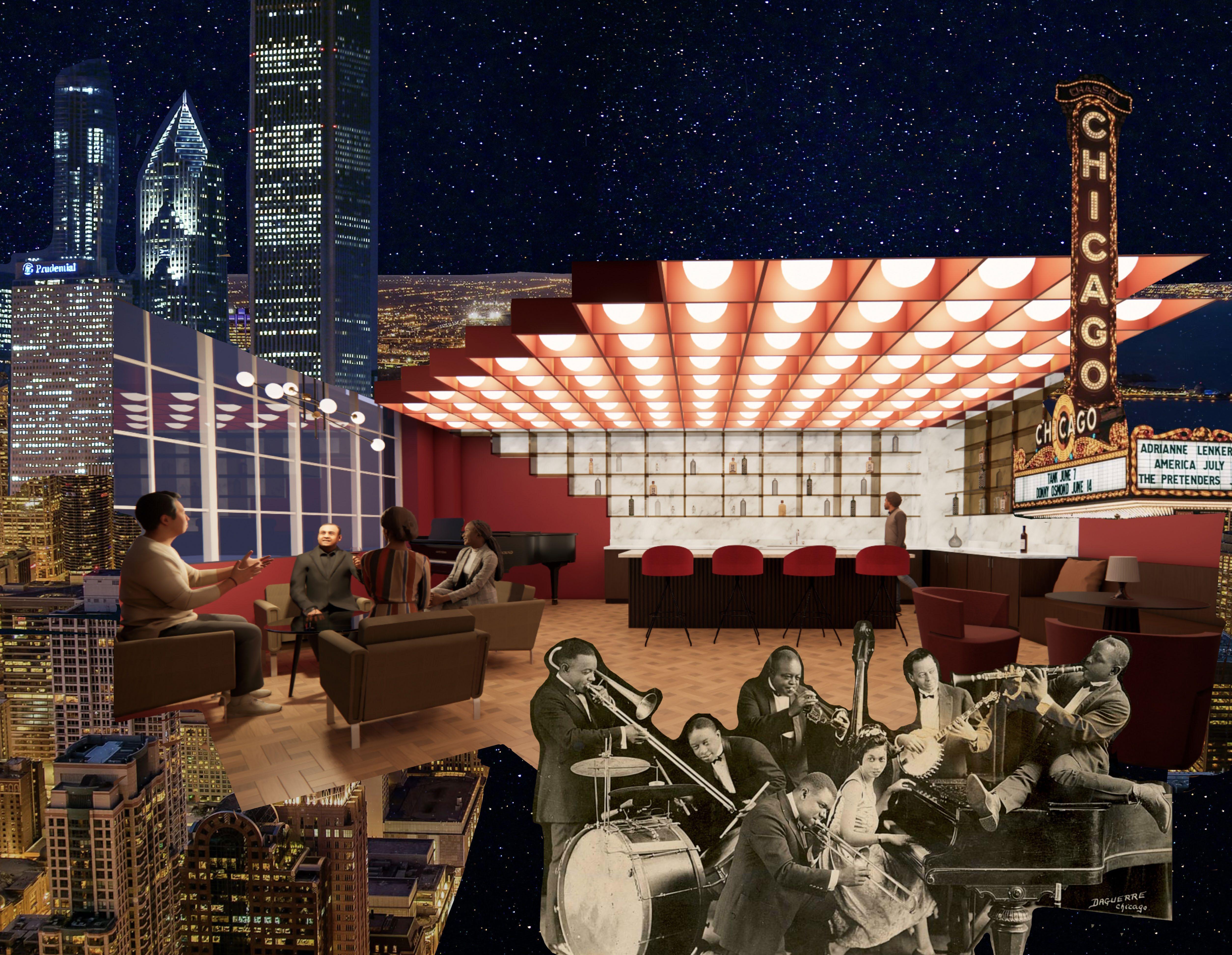

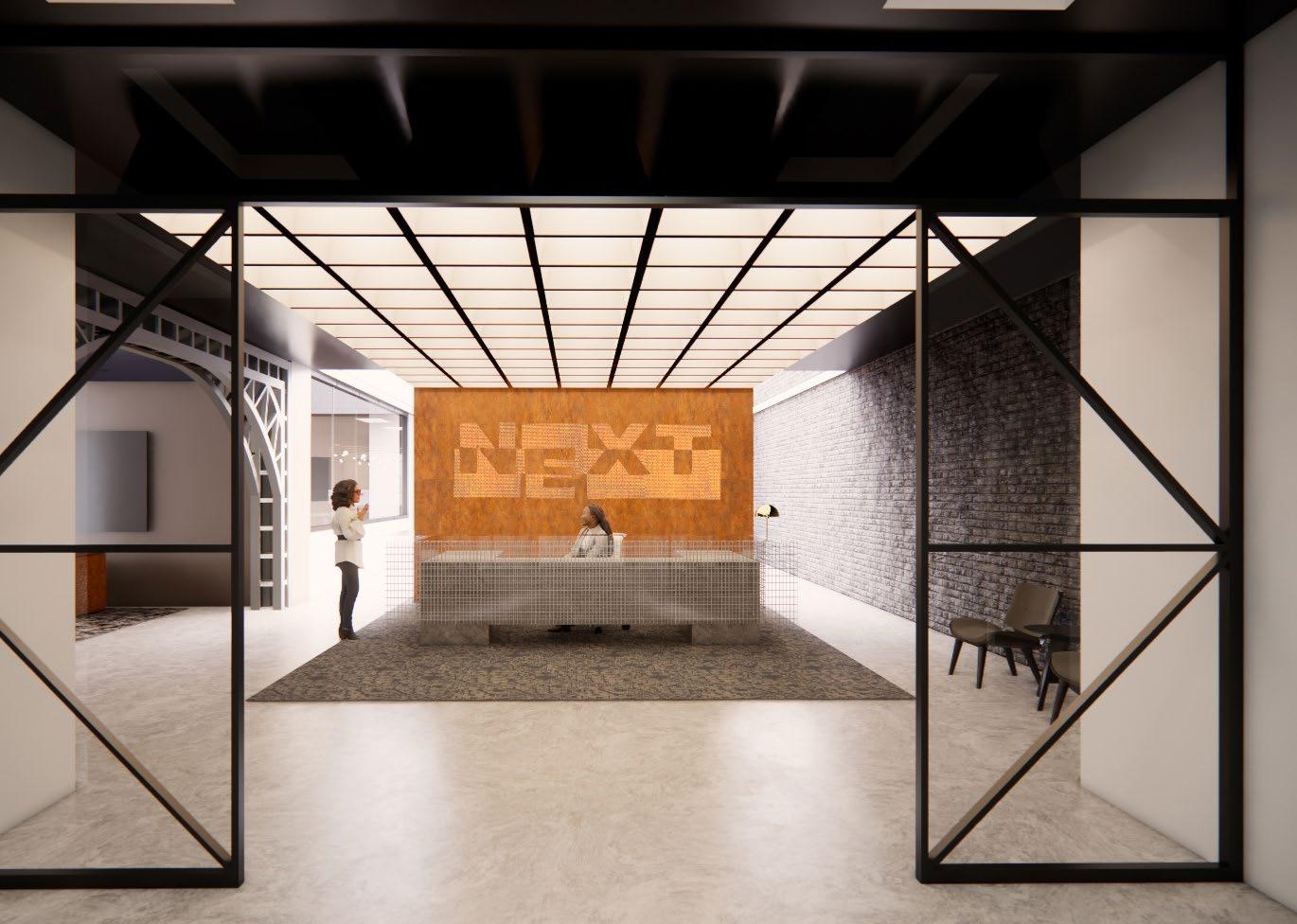
design takes into account the experience of NEXT’s employees as NEXT’s clients, who visit the office often to consult on advertising. The employee experience starts on the 6th floor, or the productivity hub, where all the primary work spaces are located. The experience begins on the 7th floor, which leans into hospitality, offers employees places to socialize, eat, move, or rest.
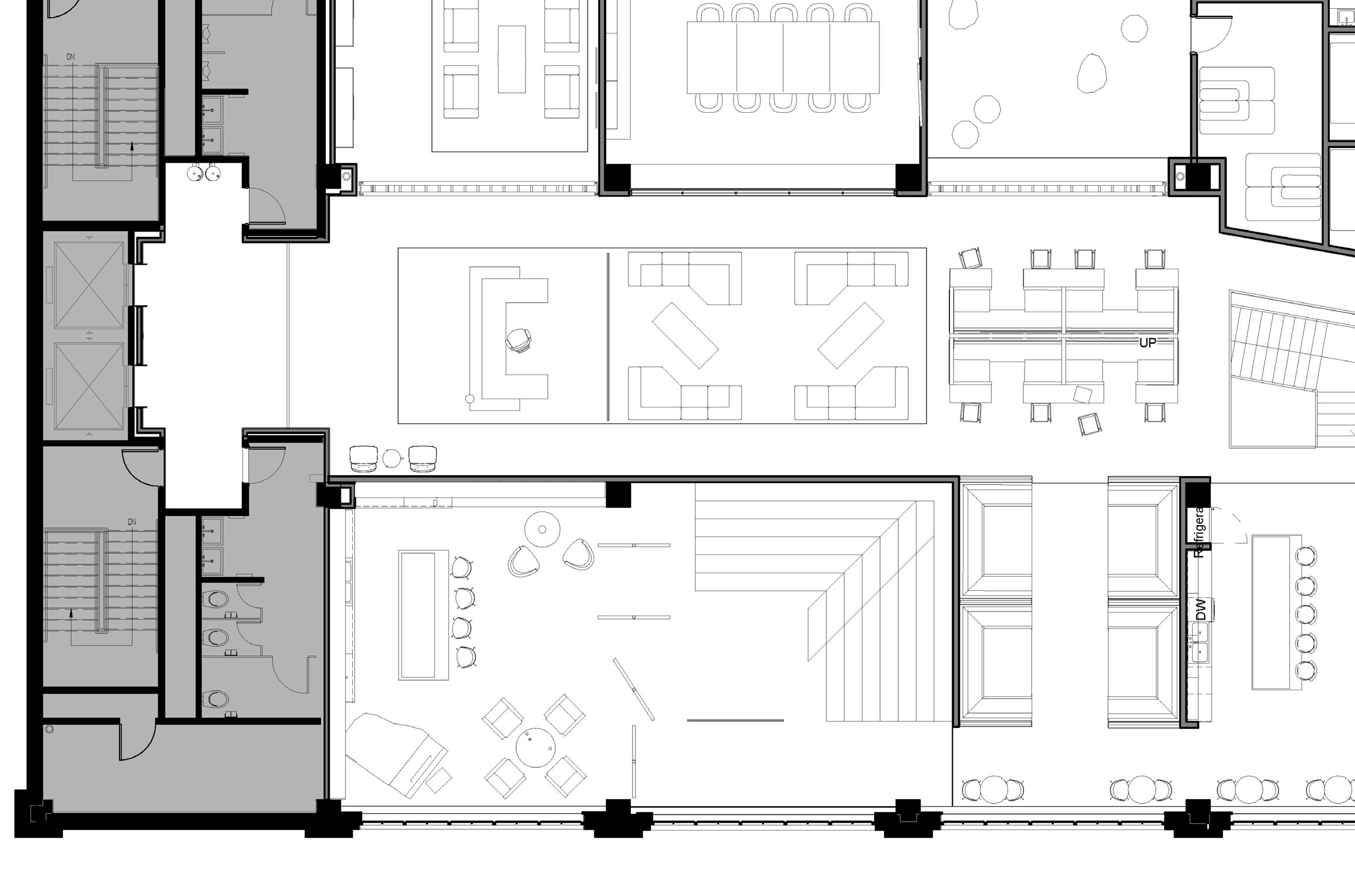

INFORMAL - USED FOR MEETINGS
ASSIGNED PERSONAL WORKSTATIONS
INTERGENERATIONAL COMMUNITY GARDEN AND ACTIVITY CENTER
TYPE: Community Facility
SIZE: 750 sq ft
LOCATION: Arlington, VA
DATE: Spring 2025
TOOLS: Revit, Enscape, Adobe CS, Procreate COLLABORATORS: Bridget Conkling, Terran Quattlebaum
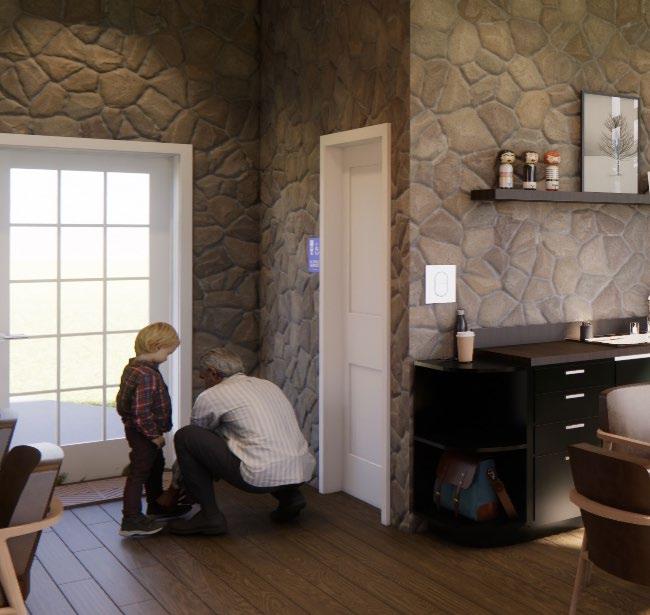
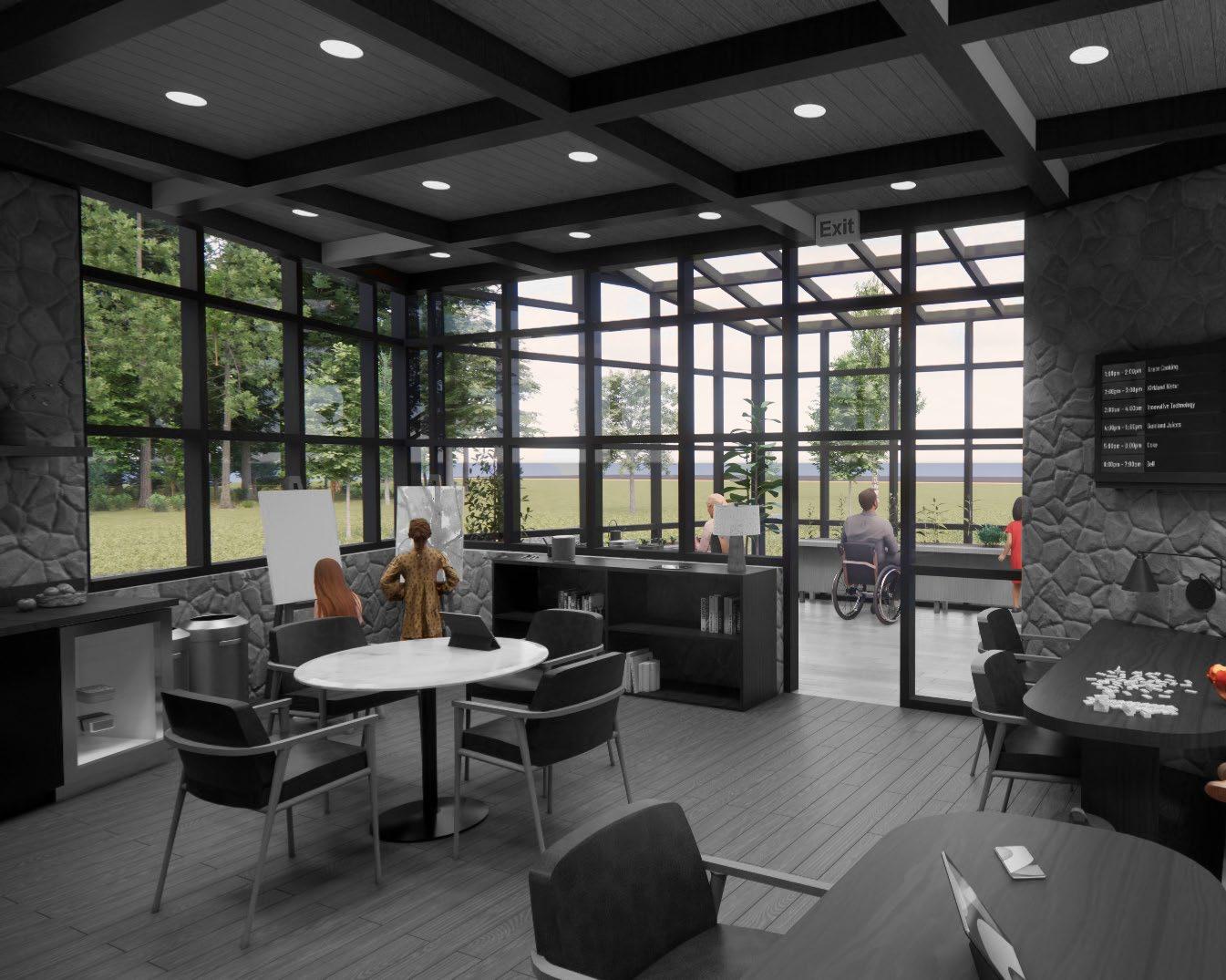
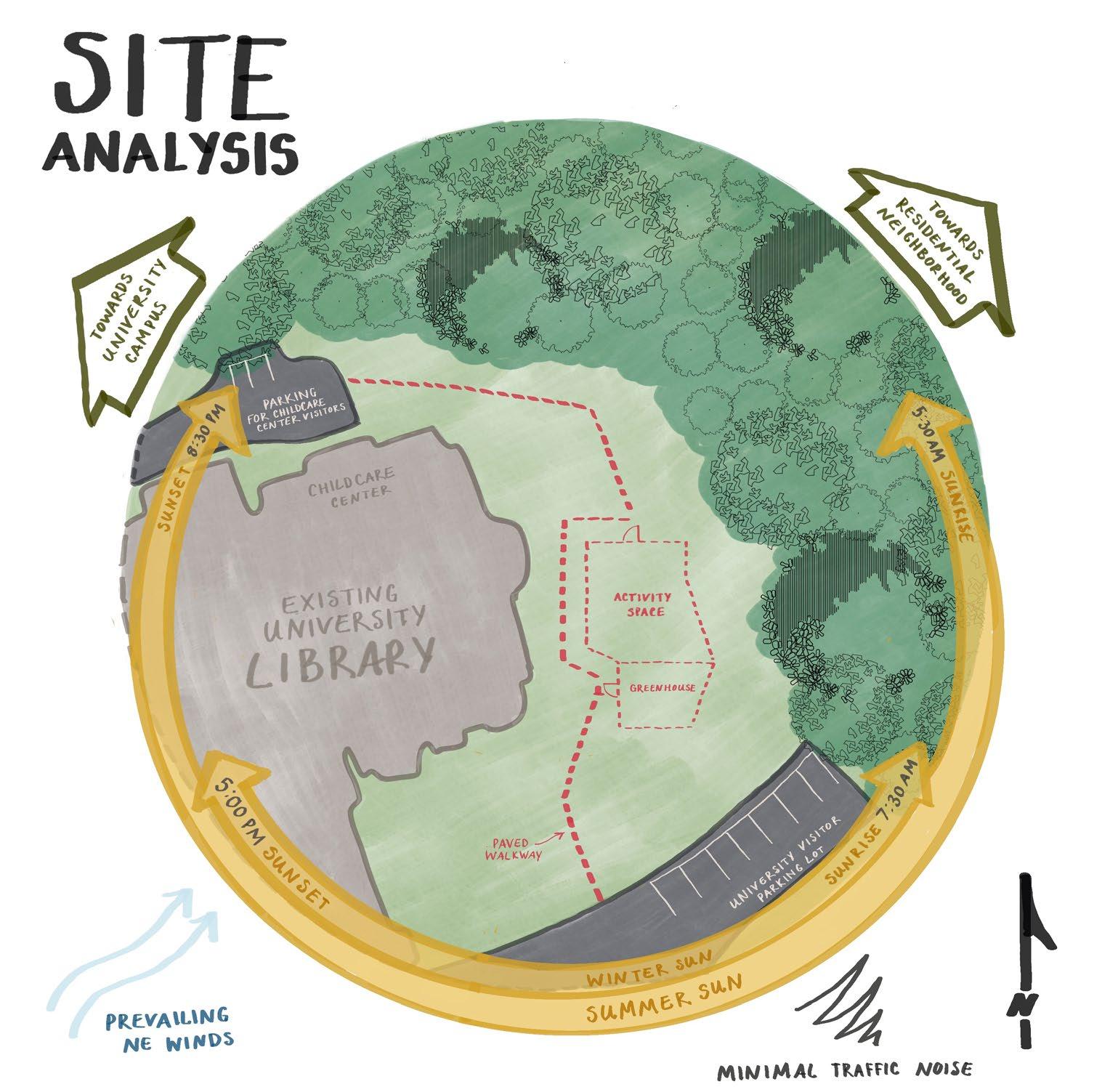
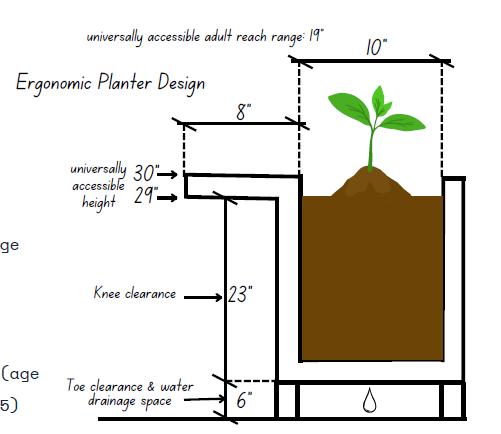
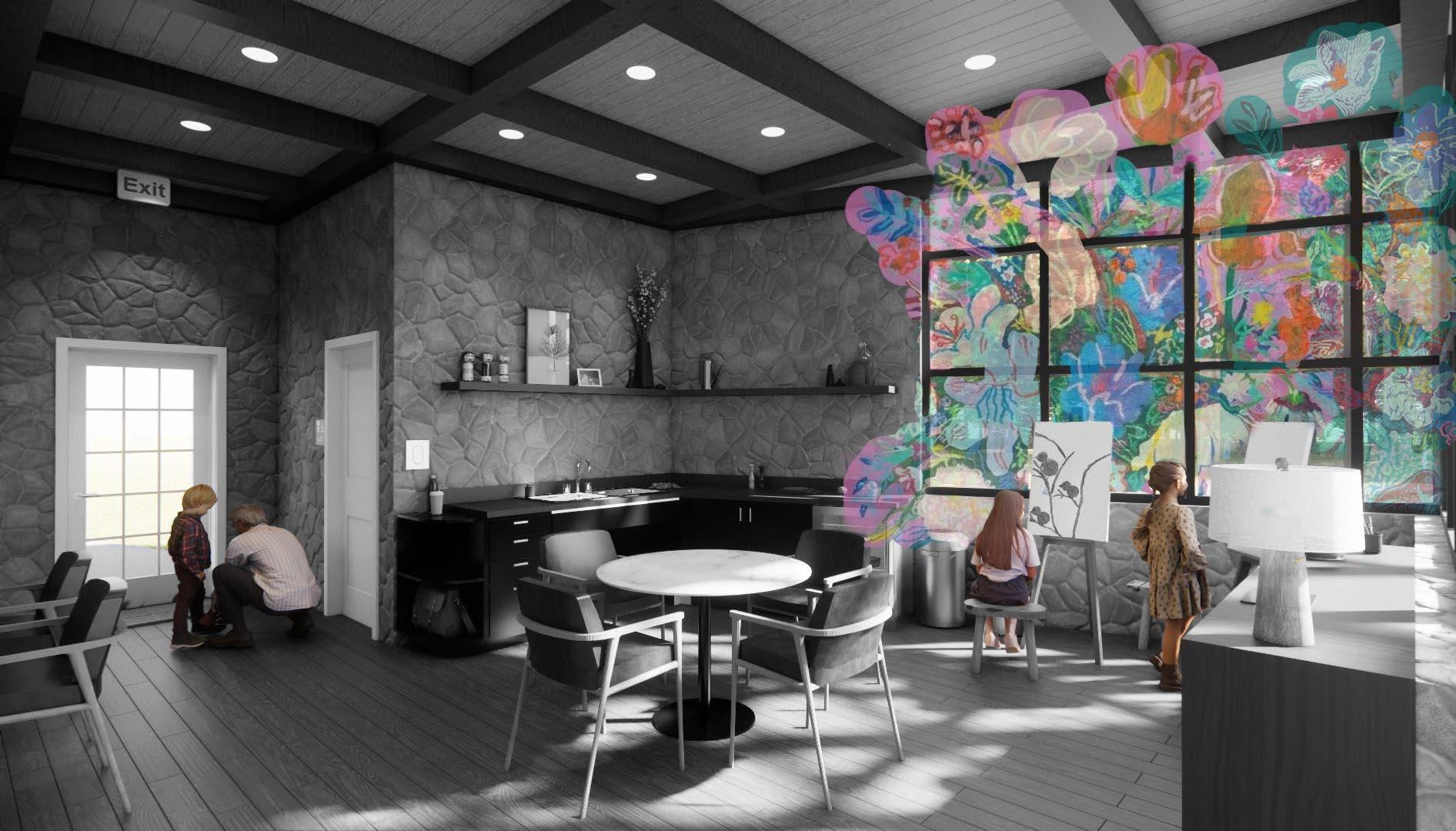
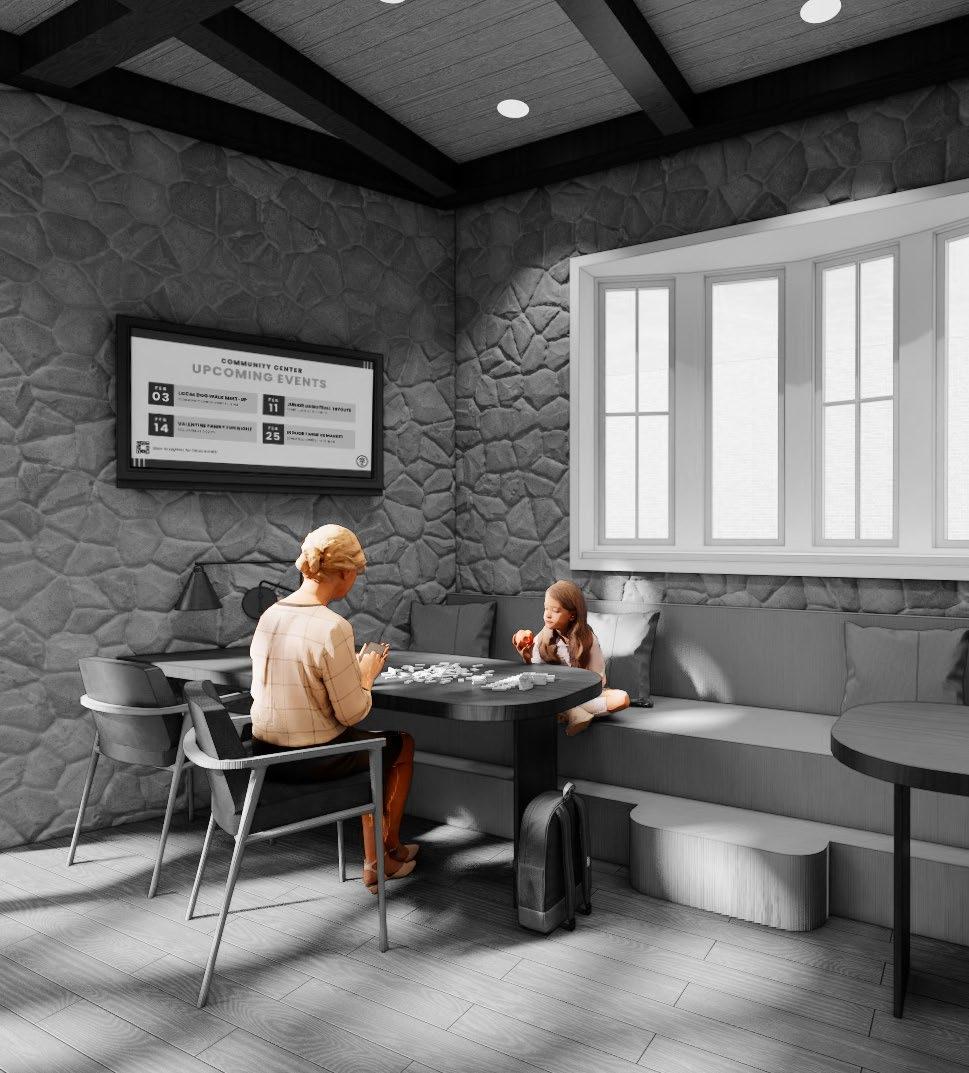
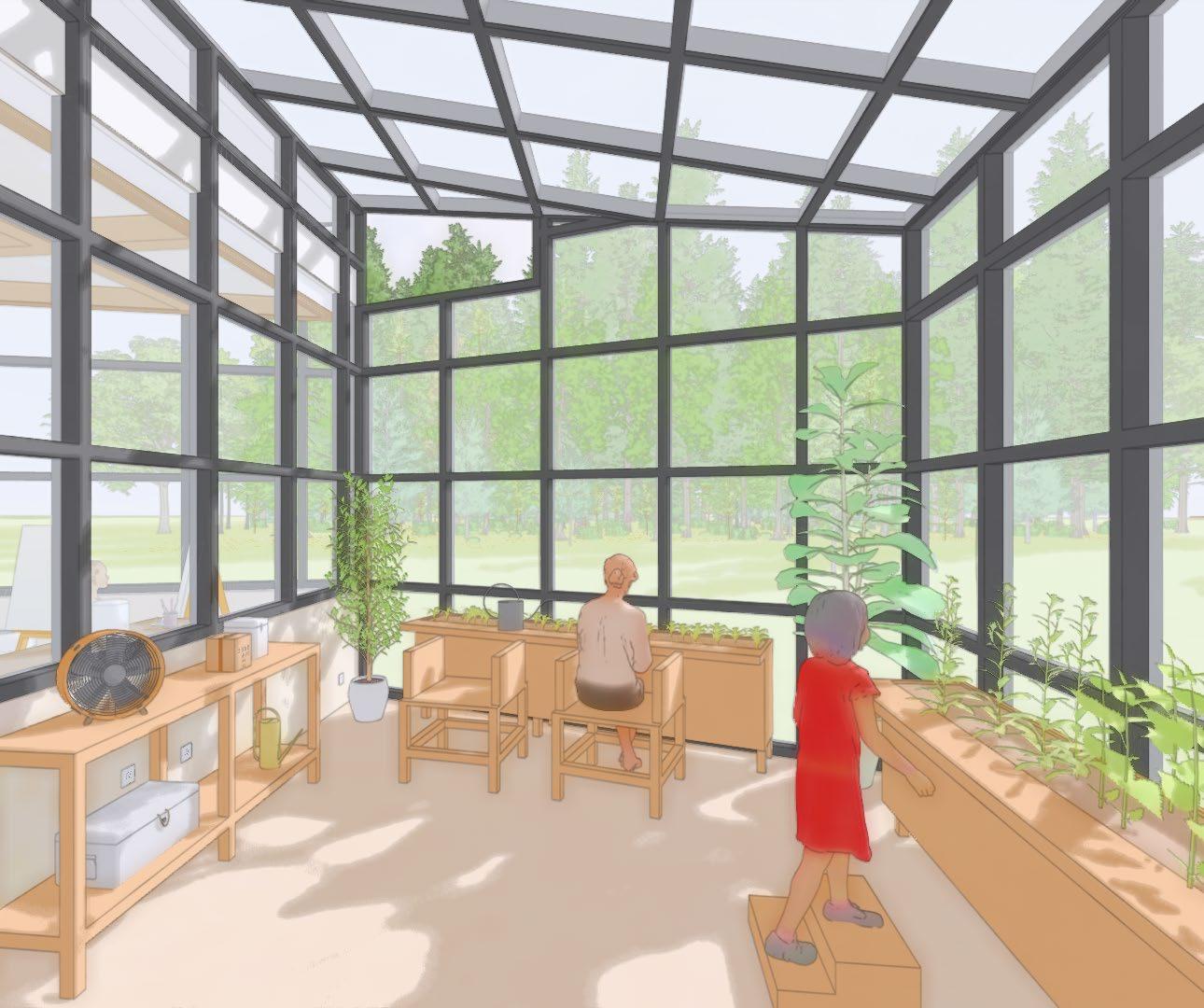
The Green Fork collective is a place where people of different generations work together to cultivate an edible greenhouse garden to improve their health and sense of community, all while learning about sustainability. The collective is divided into two spaces: the greenhouse and the indoor activity space where games, crafts, and home-grown snacks are shared. Custom ergonomic built elements make this space a safe and accessible place for people of all ages and abilities.
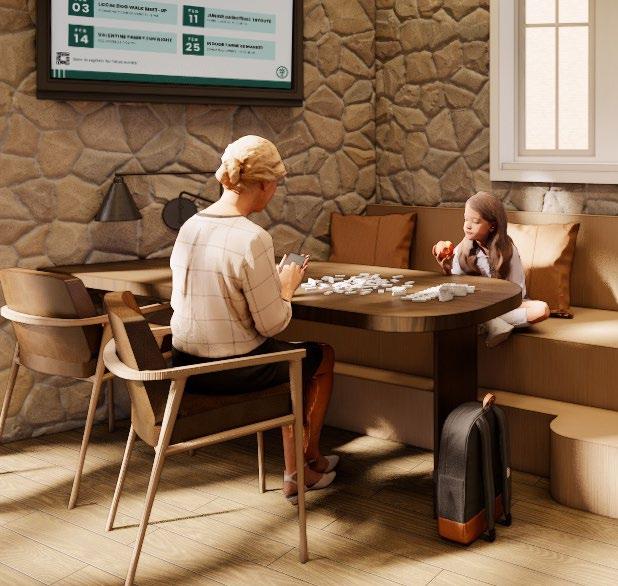
The greenhouse is managed by university agriculture students, but its daily care is shared with local residents, who also participate in harvesting events. Fresh produce is turned into nutritious snacks in the kitchenette, celebrating the collective effort. Inside, the cozy activity room supports games, crafts, and conversation, and doubles as a learning space for university childcare programs exploring agriculture and nutrition. Older adults arrive by shuttle from nearby retirement communities to tend the garden, while after-school groups of elementary students gather here to learn and connect. Parents and caregivers are often present to support meaningful interactions across generations.
There are positive impacts for young people who engage in intergenerational activities, such as improved academic formation, positive perception of the elderly, and positive attitudes towards community activities.
Intergenerational activities such as crafts, listening to music, story telling, sharing skills, and spending time together have positive impacts on older individuals and society. The short term impacts include improvement of physical and mental health, while long term impacts can be reduced loneliness and ageism.
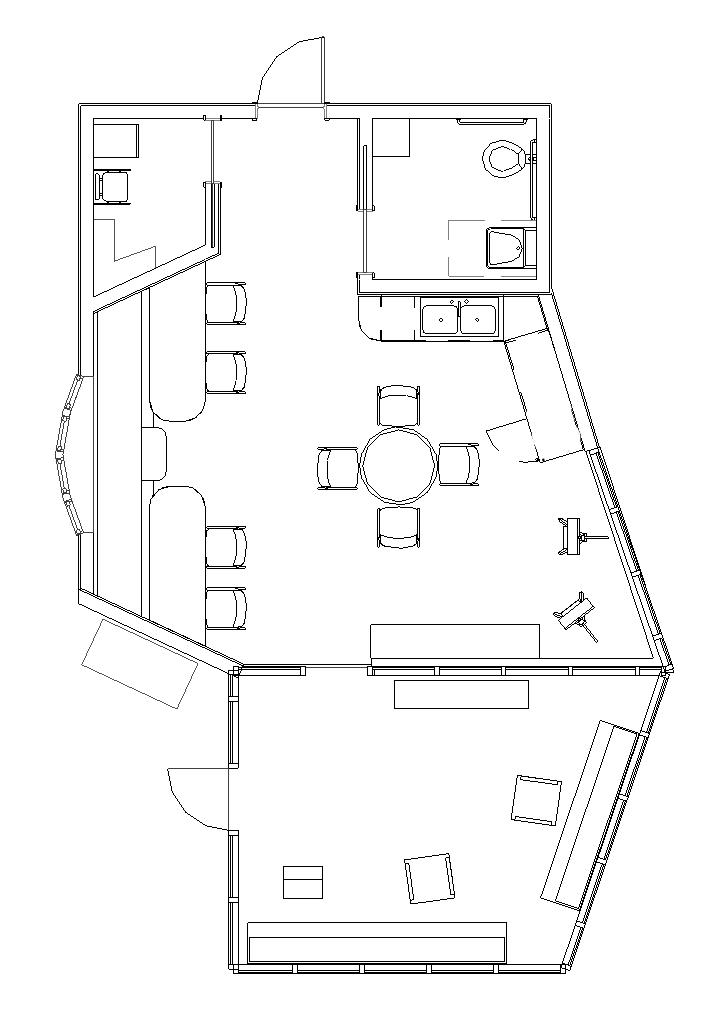
KEY
SUSTAINABLE FEATURES:
• SOLAR PANELS
• PLASTIC-FREE
• MOTION SENSOR LIGHTS
SAFETY FEATURES:
• CLEAR LARGE PRINT SIGNAGE
• SLIP-RESISTANT FLOORS
• VOICE ACTIVATED ALERT SYSTEM WASTE DISPOSAL:
• COMPOST MACHINE
• TRASH COMPACTOR
• RECYCLING SYSTEM
UNIVERSAL DESIGN FEATURES:
• KNEE & TOE CLEARANCES
• 5’ TURN RADII
• CLEAR SPACE
• 30” TABLE AND COUNTER
• 34” DOORWAY CLEAR
Electronic temperature monitoring and regulation system, double paned glass, and sloped floors help maintain a constant internal environment
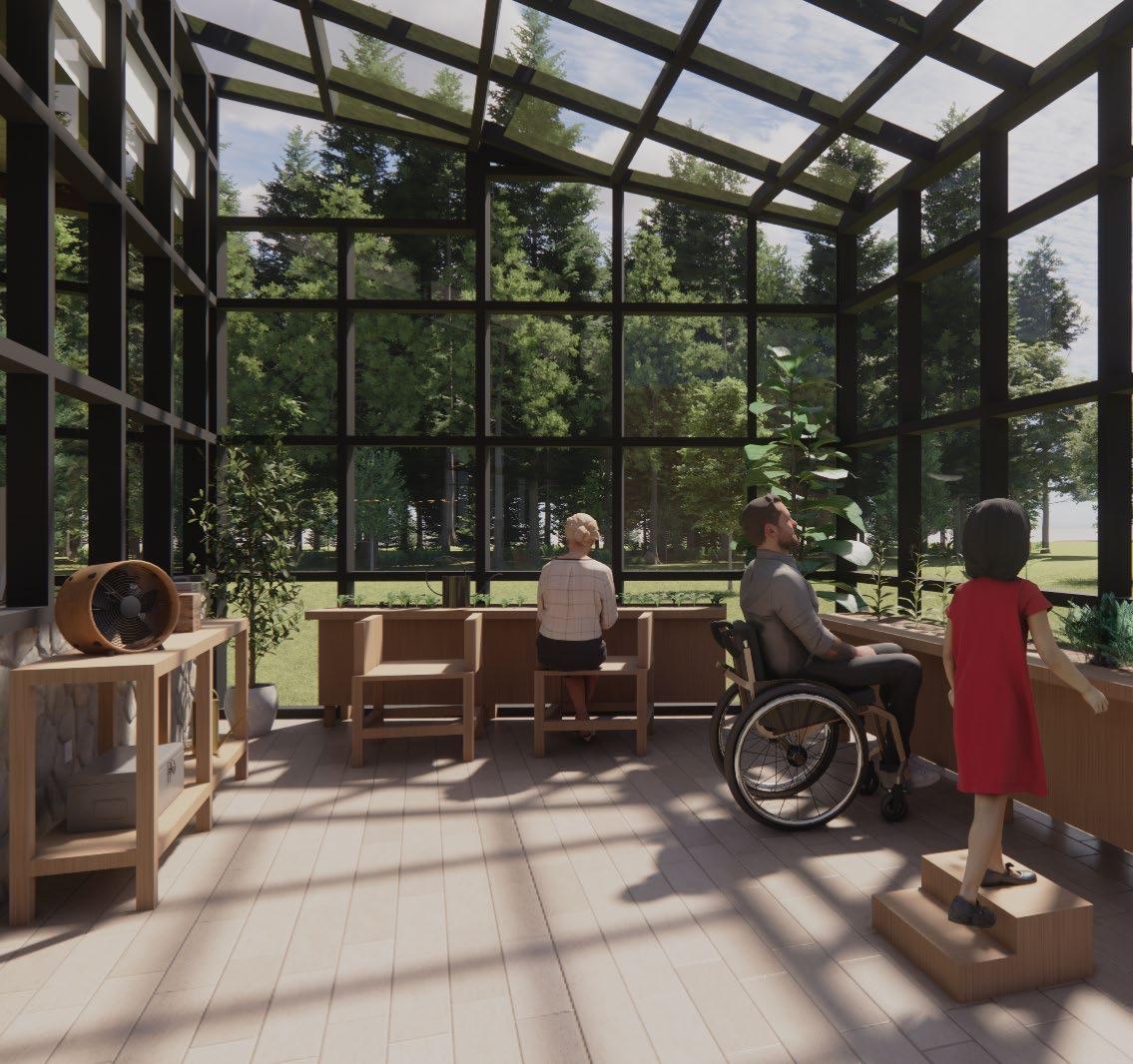
Gardening is an activity that can be made accessible to people of varying abilities, it is ideal for bringing people together who may be otherwise vulnerable to social isolation due to their preclusion from participation in other types of activities. Community gardens enable older adults and children to garden who may not be able to manage a garden on their own.
TYPE: Museum
SIZE: 5500 sq ft
LOCATION: Potomac, MD
DATE: Spring 2024
TOOLS: Adobe CS, Procreate, Modeling
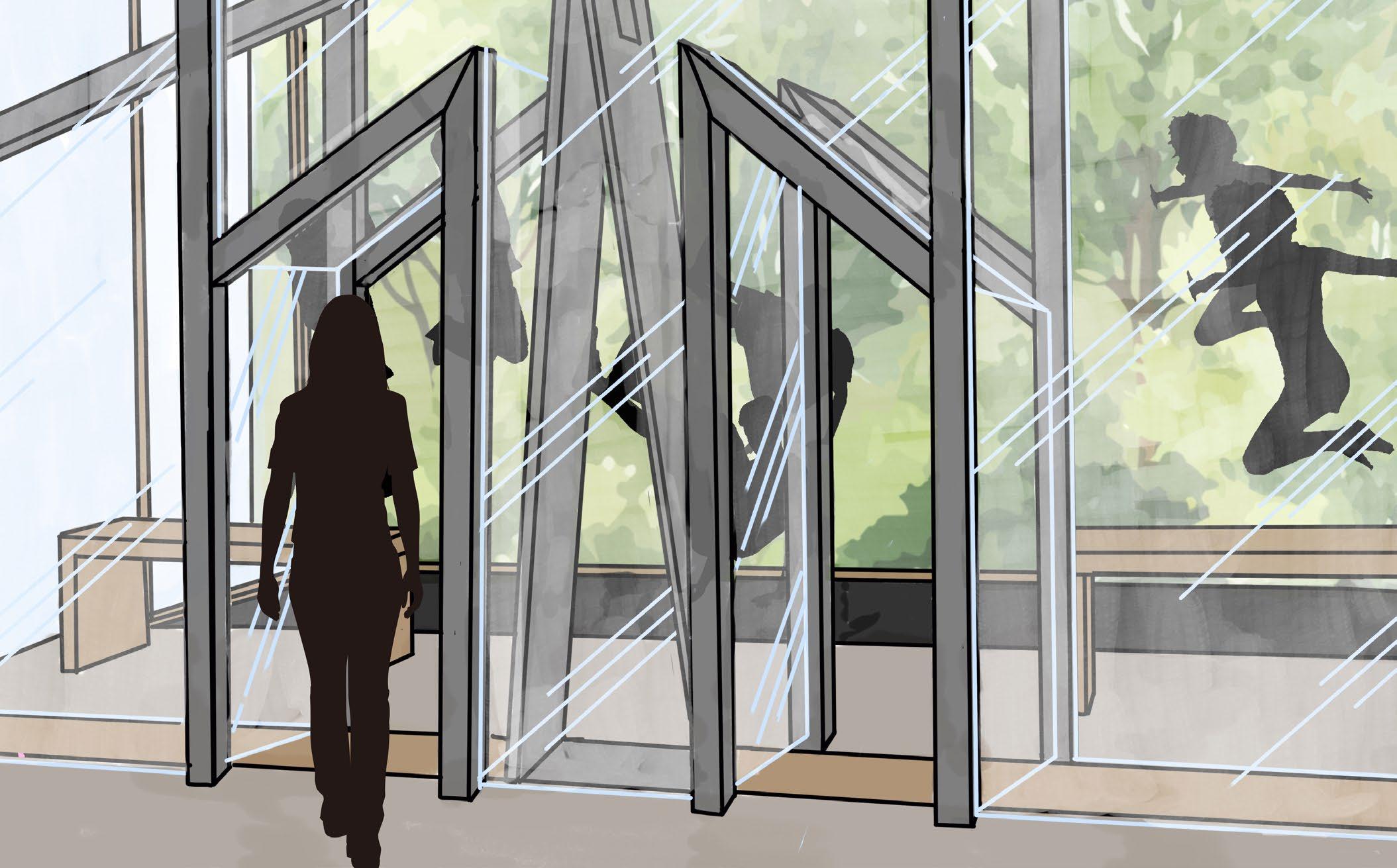
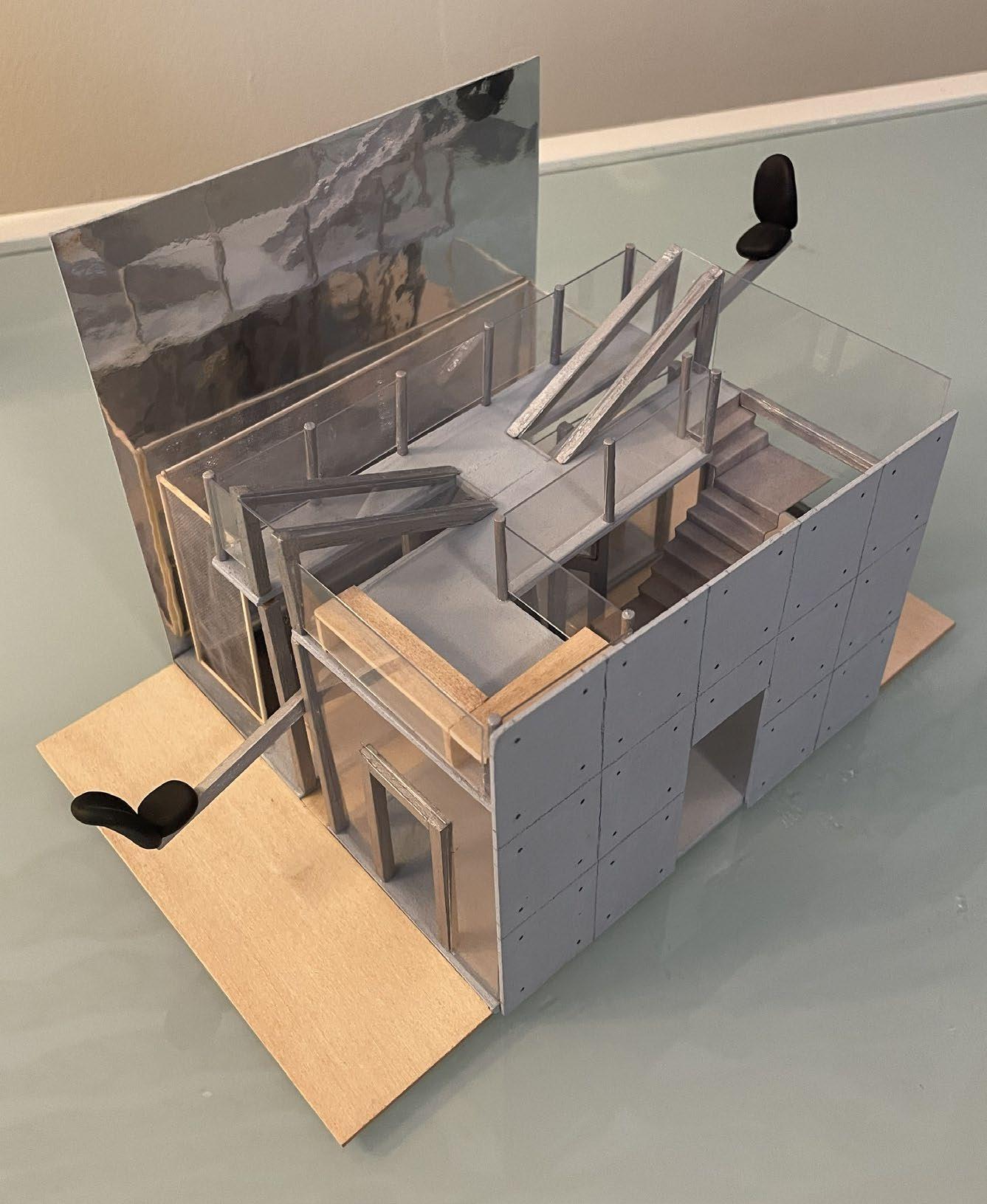
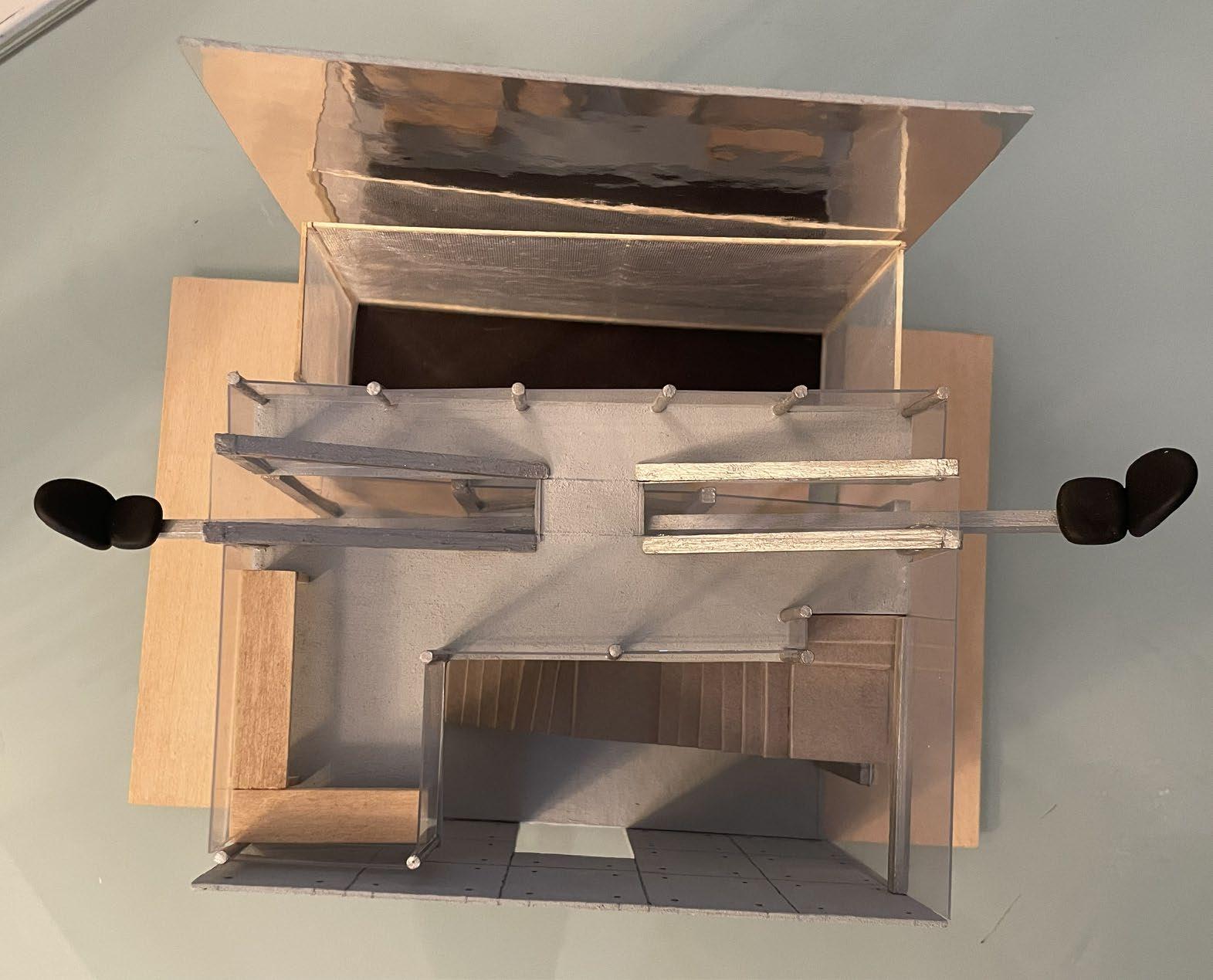
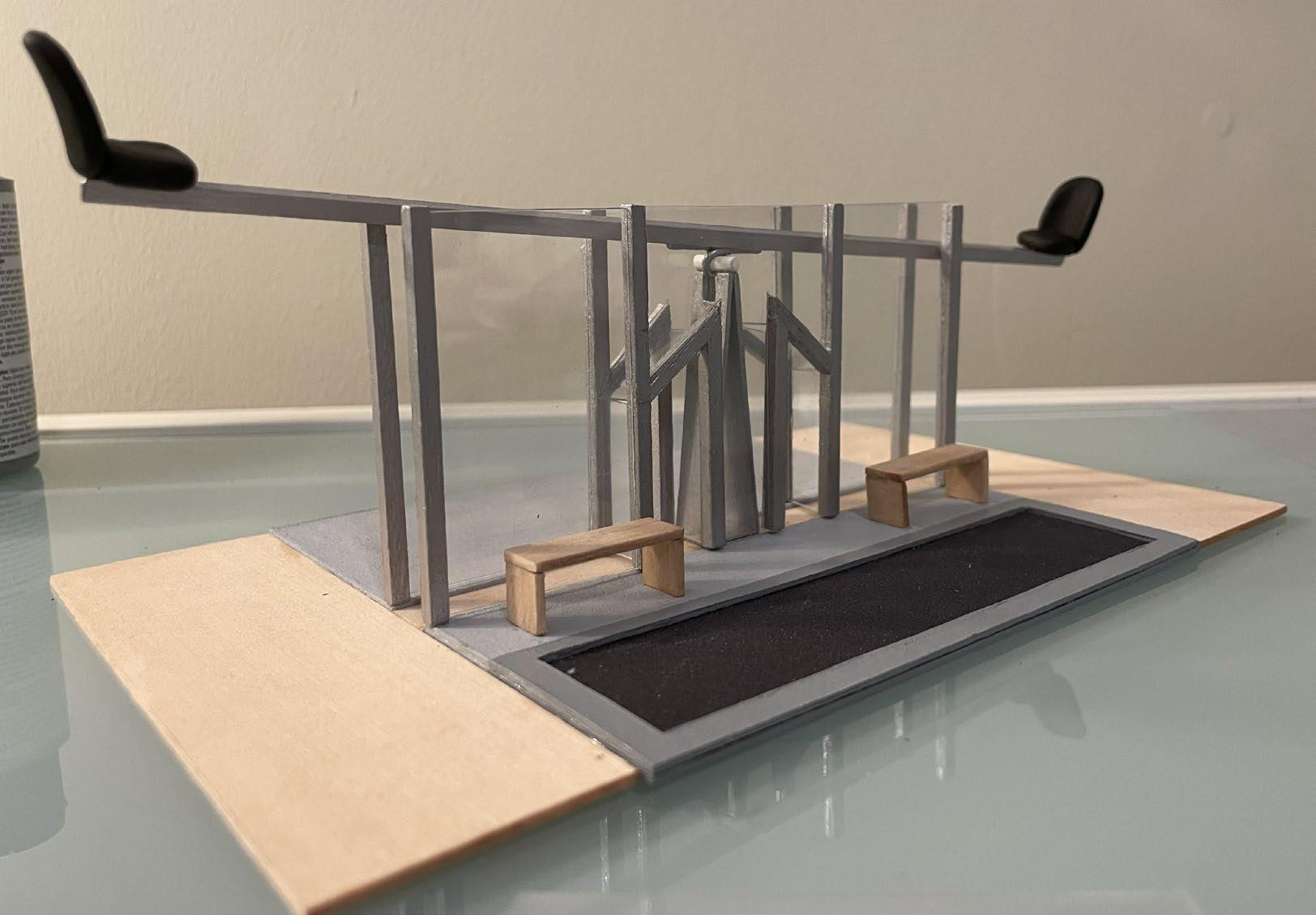
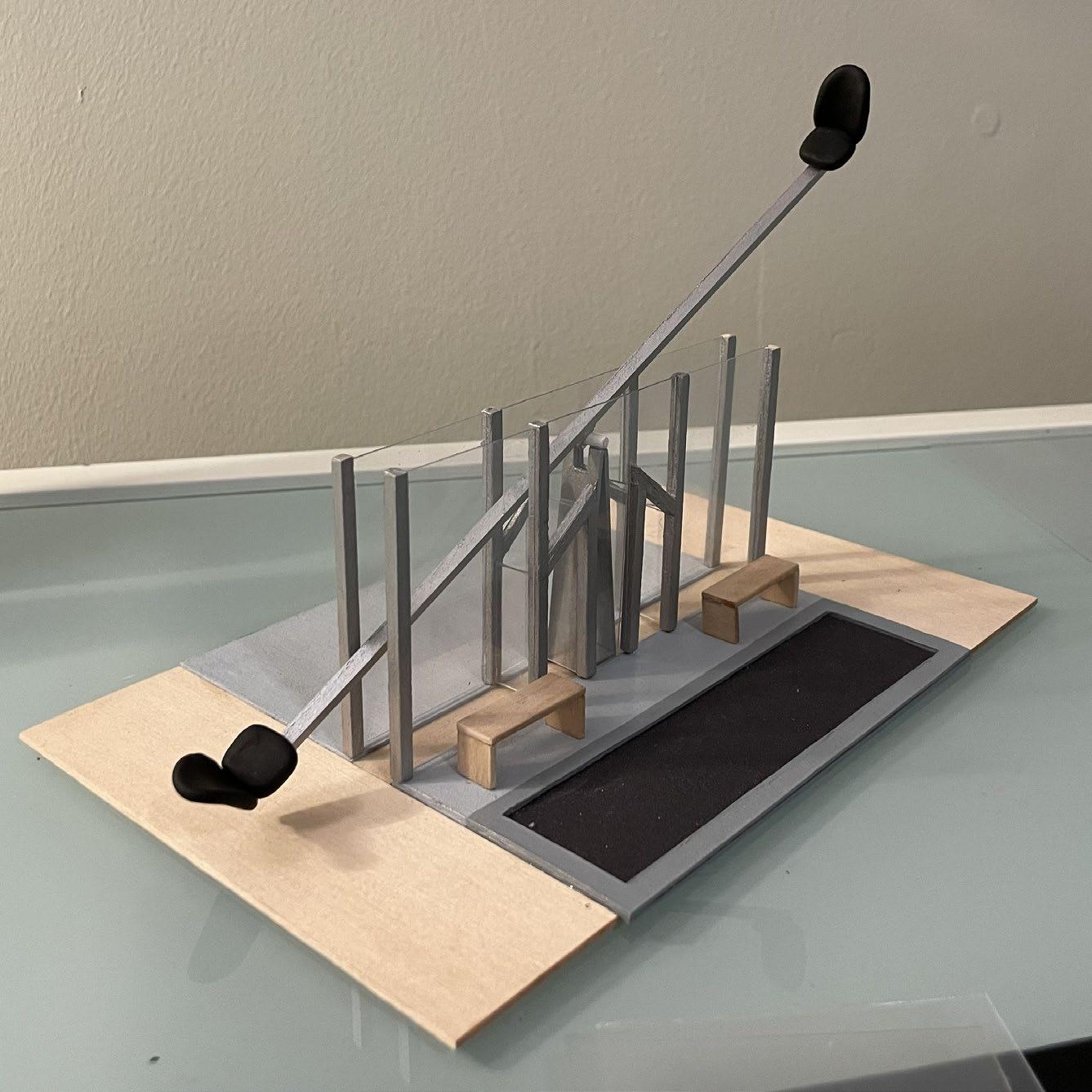
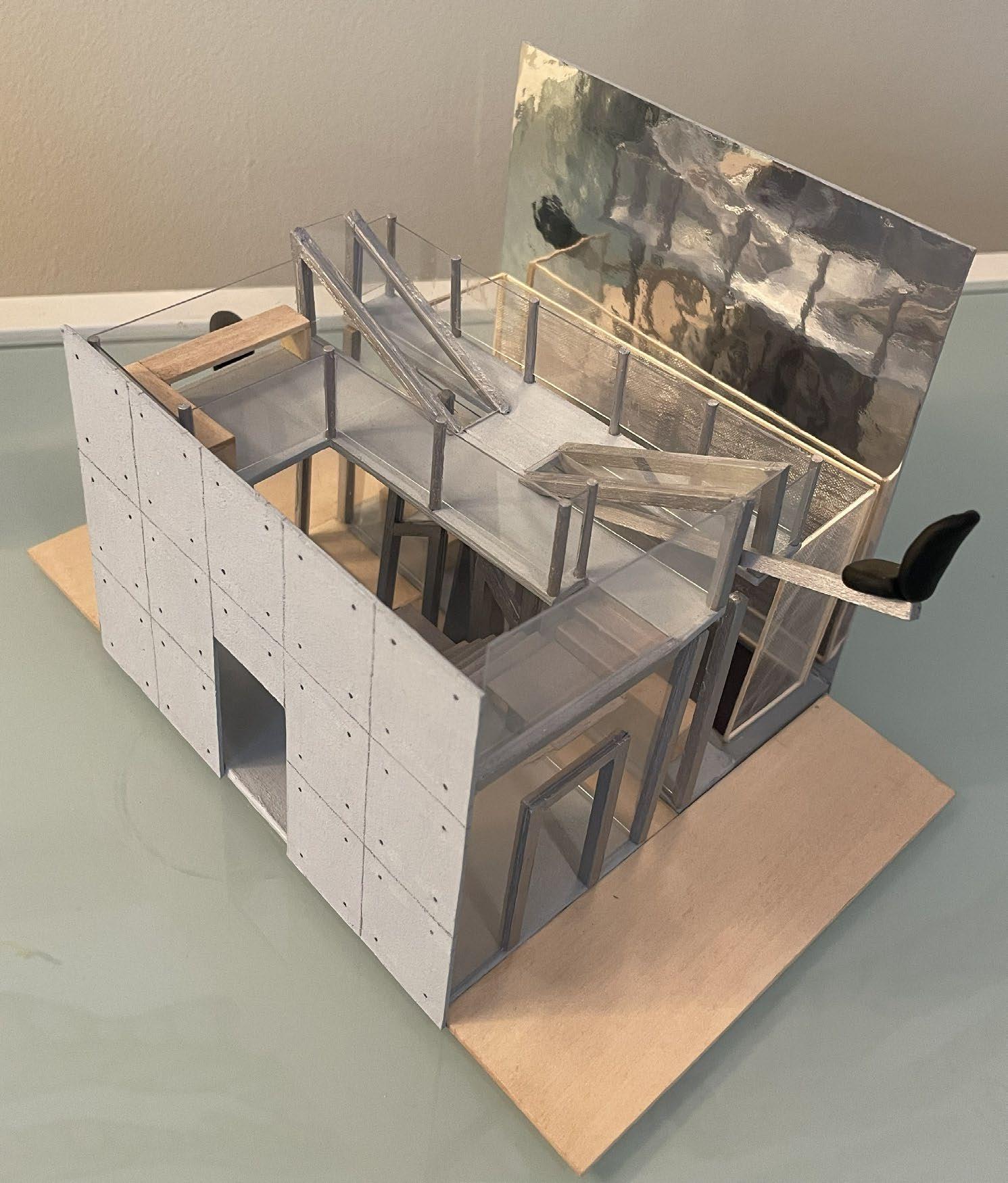
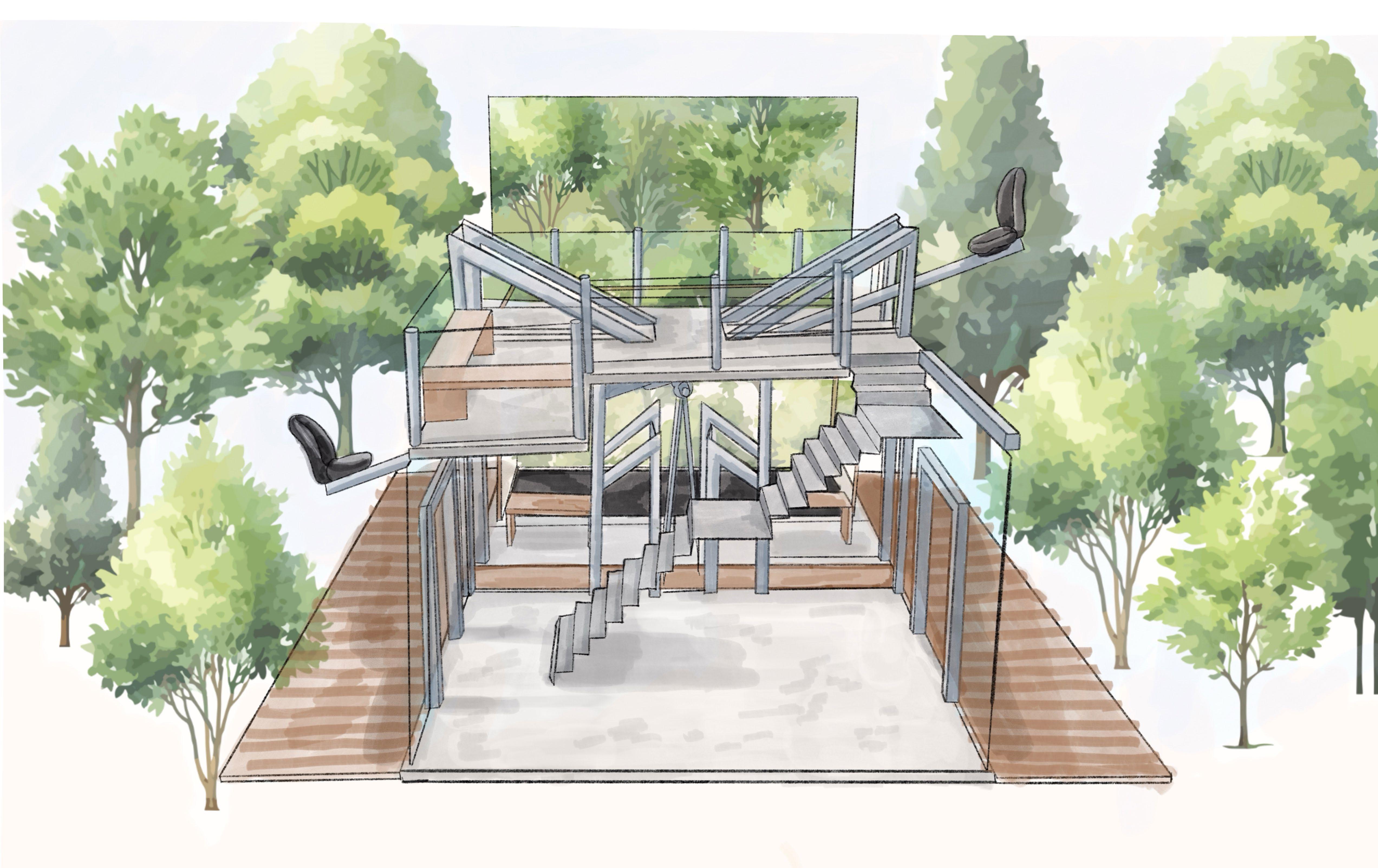
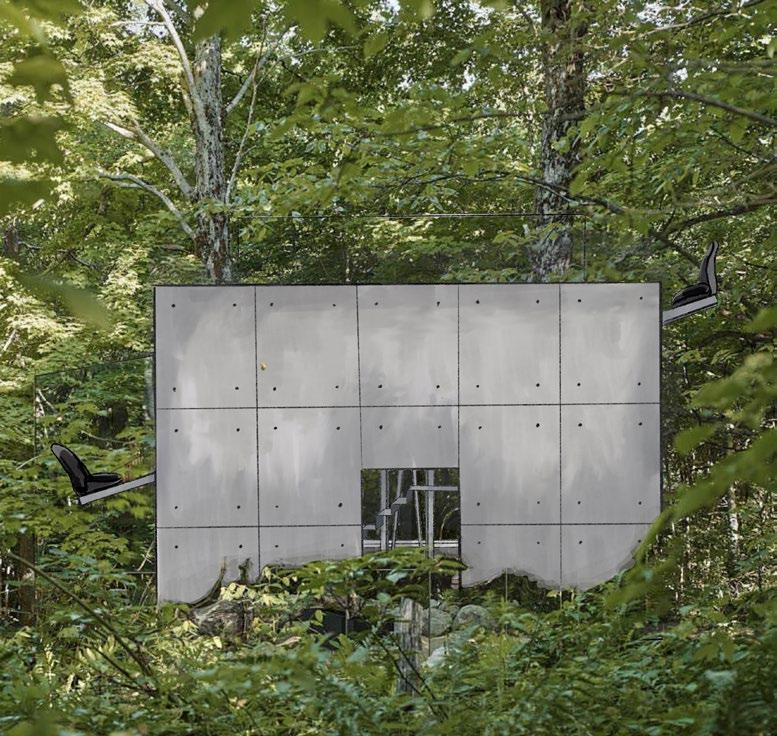
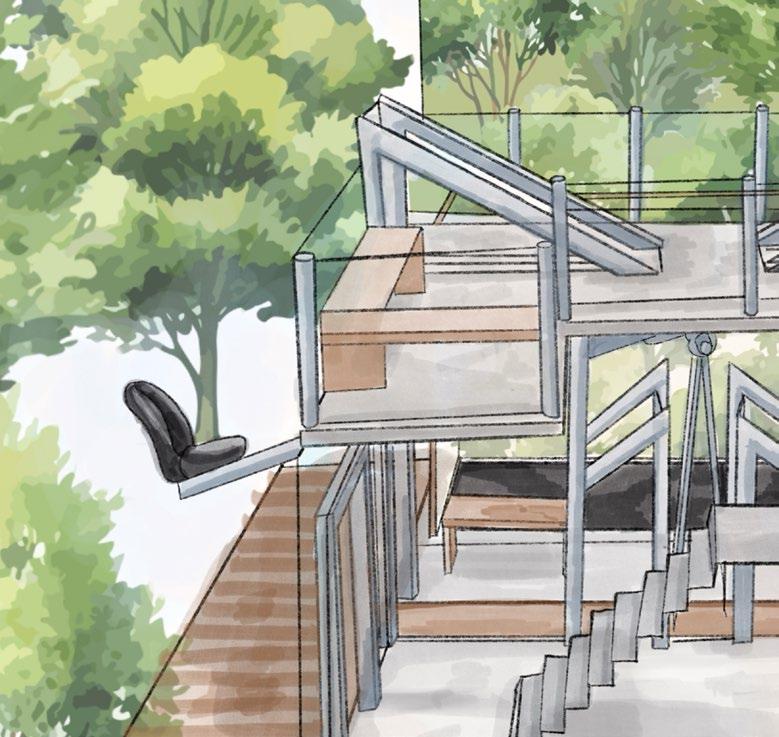
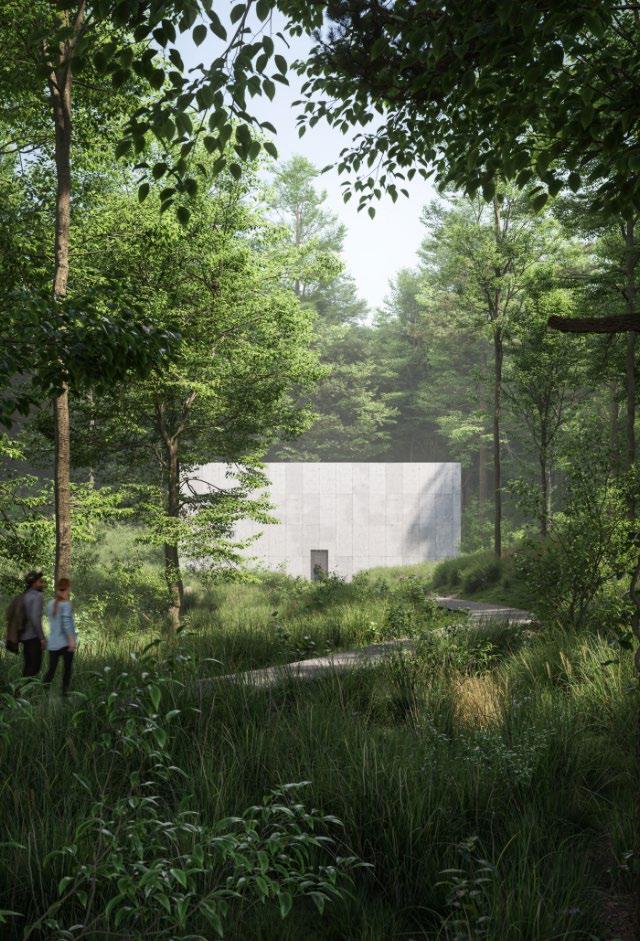
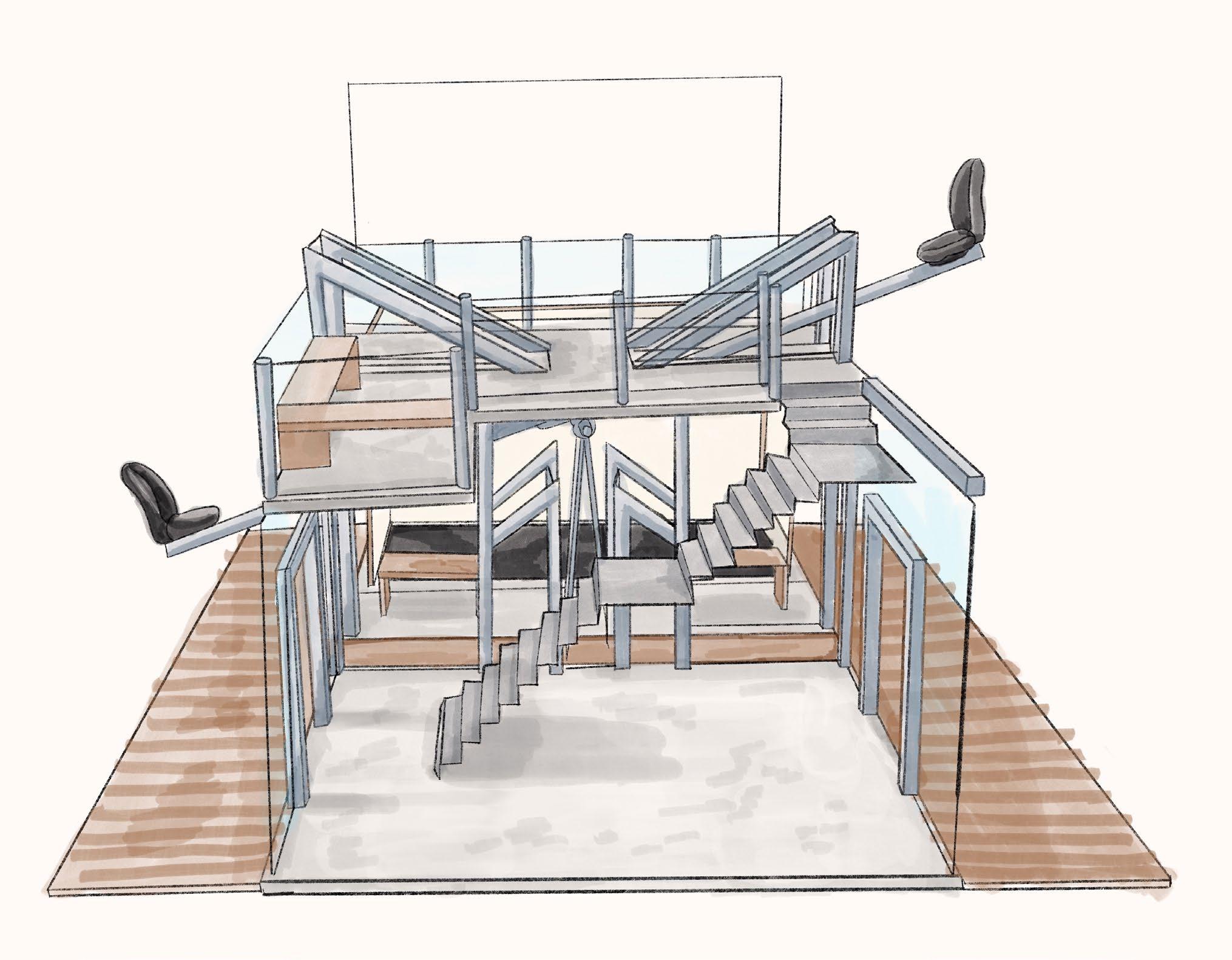
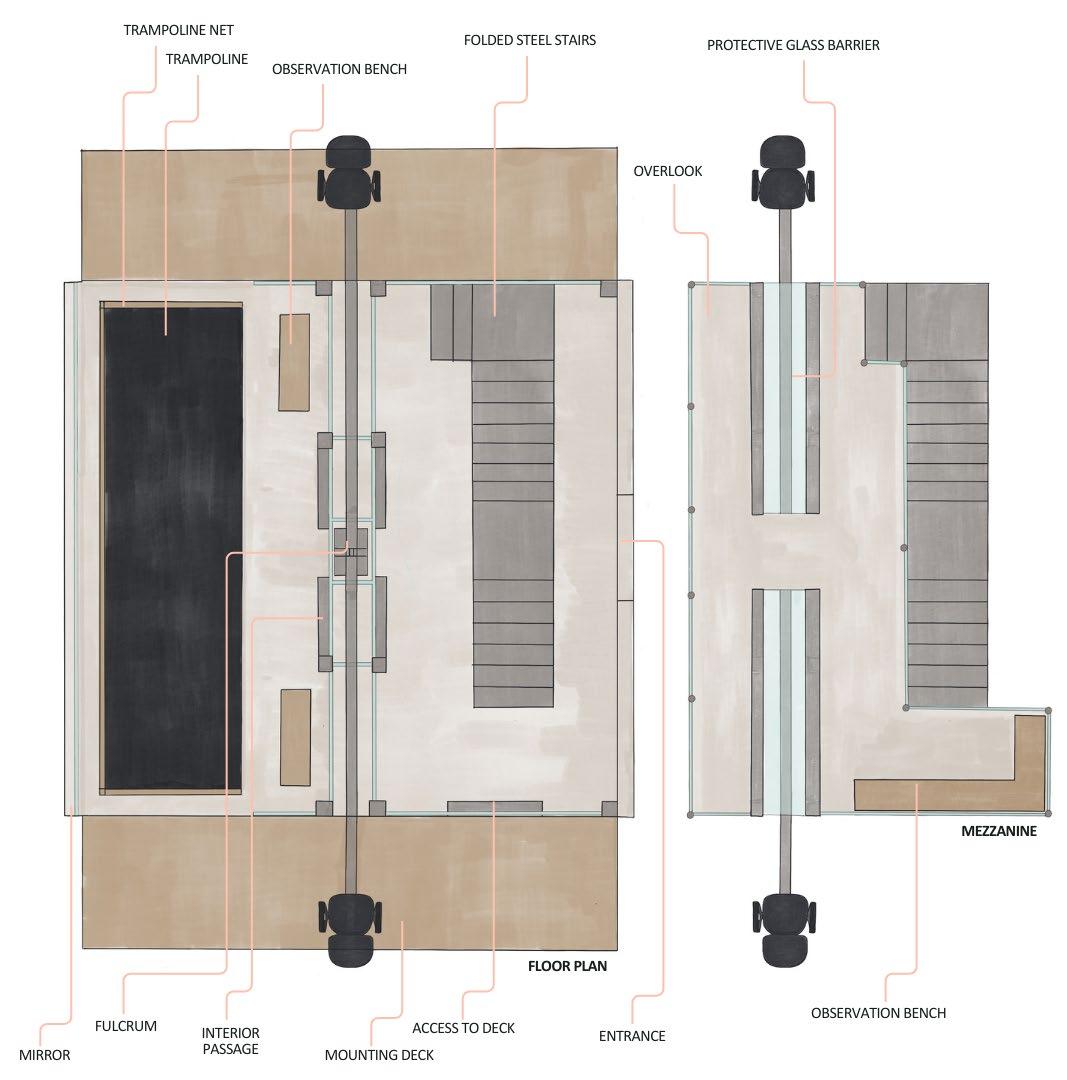
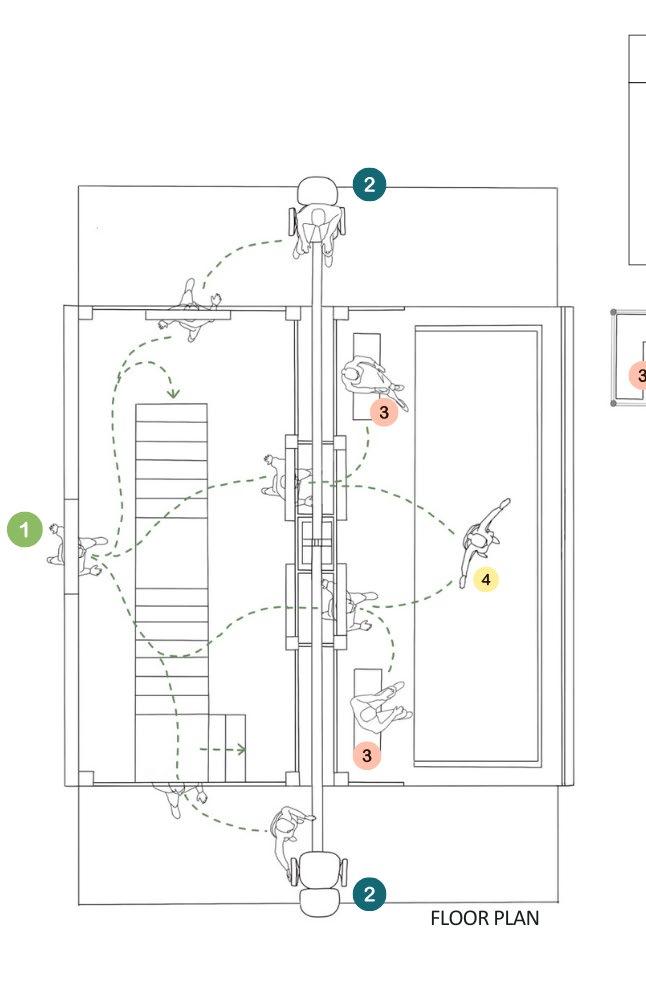
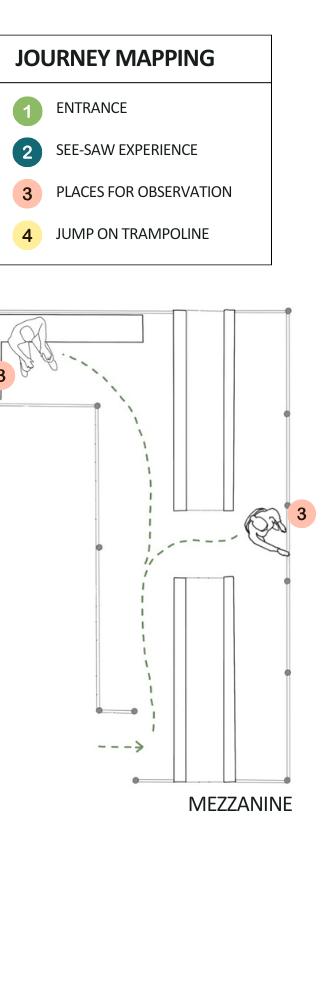
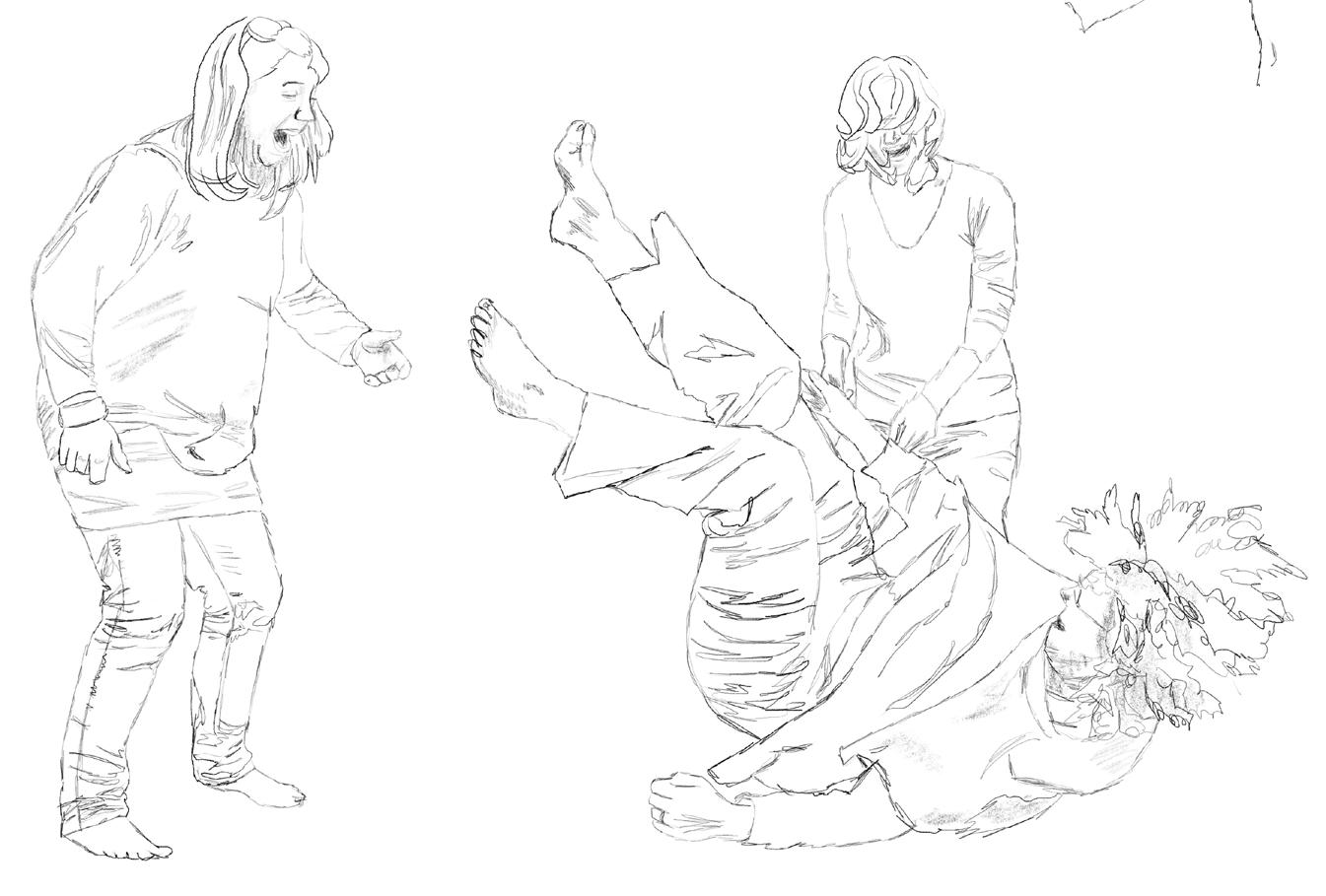
Levity is an interactive art-design installation for Glenstone Museum that re-imagines the role of play in the adult world. While adults rarely recognize their own forms of play- through movement, exploration, creativity, or risk-taking—Levity invites them to rediscover it through physical, emotional, and intellectual stimulation. Anchored by an oversized see-saw that intersects the building, the project draws attention to gravity’s constant yet overlooked presence by creating moments of perceived “weightlessness.” Walking beneath a moving structure or choosing to ride it requires trust, curiosity, and a willingness to engage, evoking a blend of fear, joy, and wonder. Set within a serene forest, the installation harmonizes the forces of gravity with the natural beauty of the landscape, encouraging visitors to feel more connected to, and appreciative of,the earth. Crafted from glass and mirror, Levity amplifies its surroundings, reinforcing Glenstone’s belief that nature itself is art. Whether participating directly on the see-saw, watching from a viewing terrace, or simply observing the shifting reflections, visitors share experiences that rely on cooperation, presence, and mutual interaction. Ultimately, Levity enriches lives by encouraging adults to play like children again—to take a risk, notice the world around them, form connections, and create lasting memories with both nature and one another.
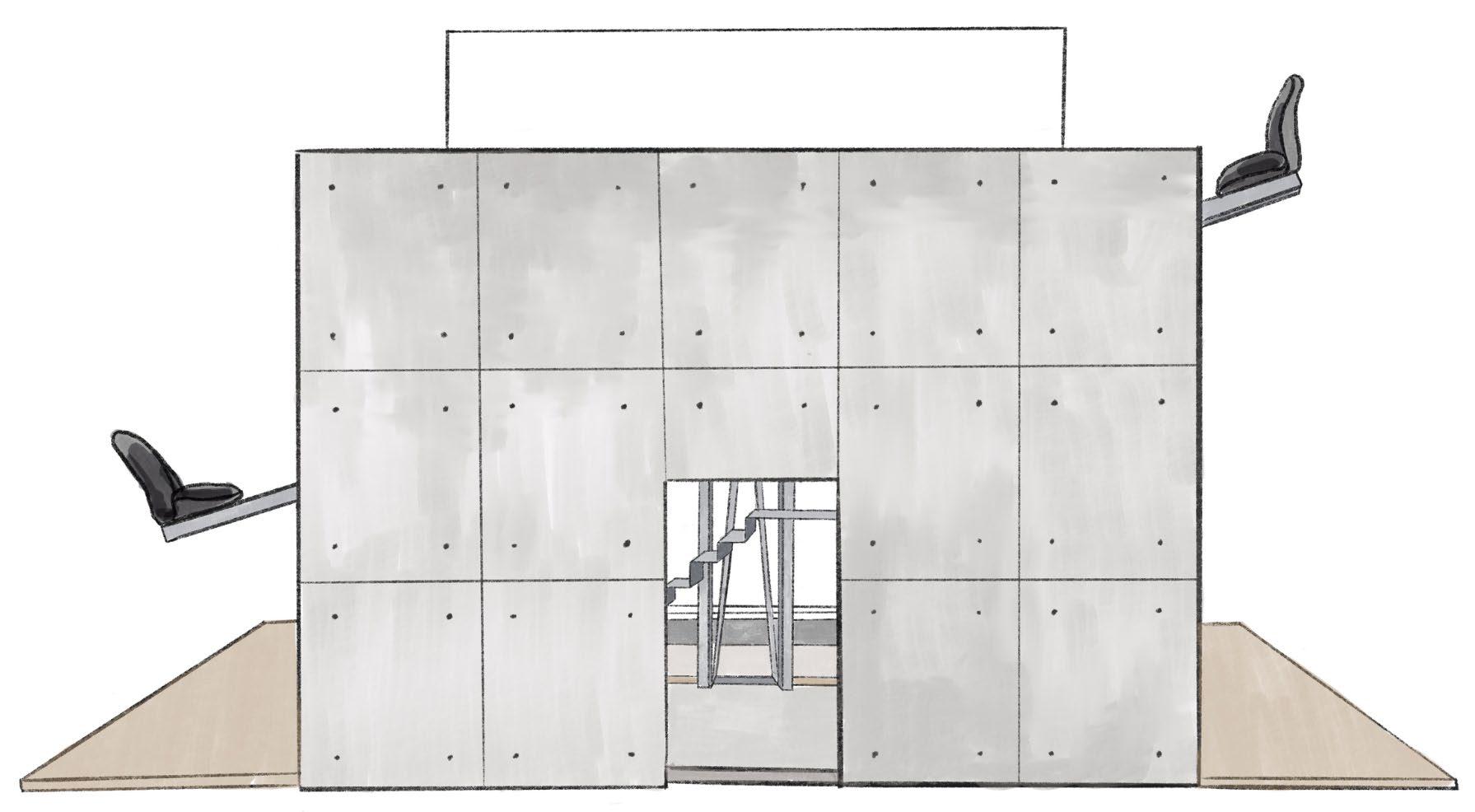
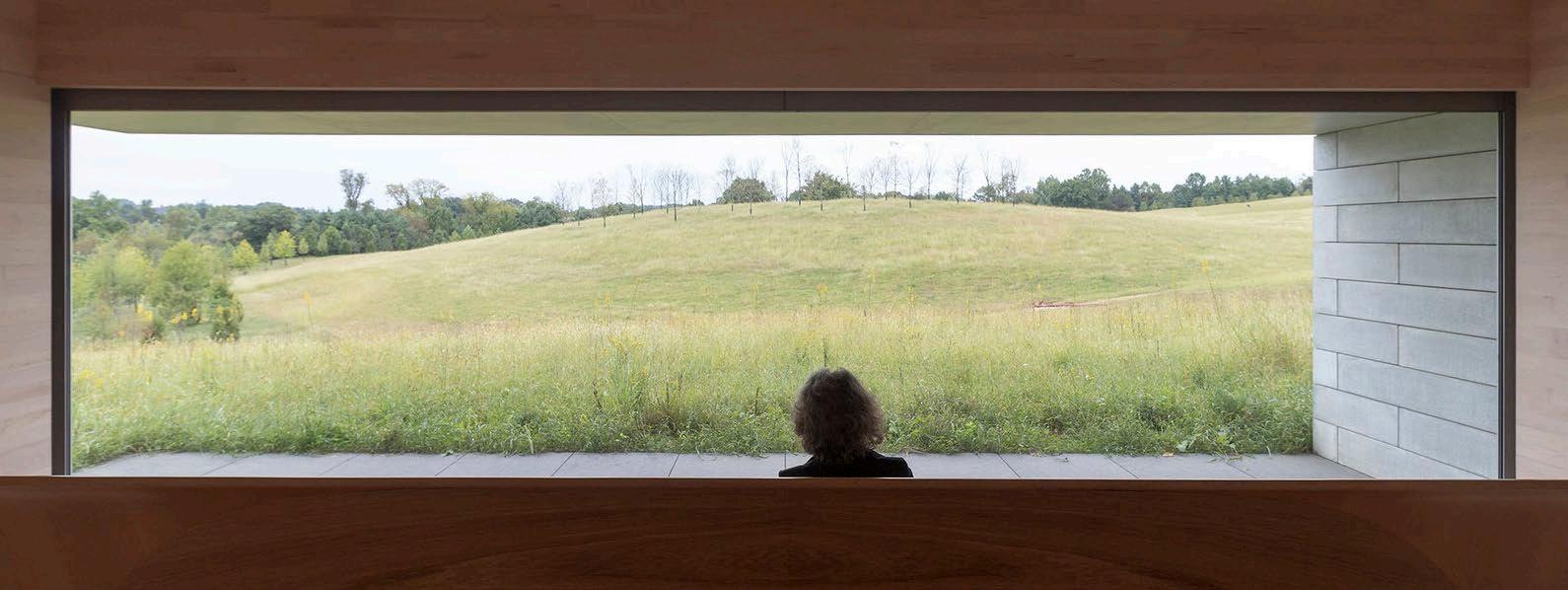
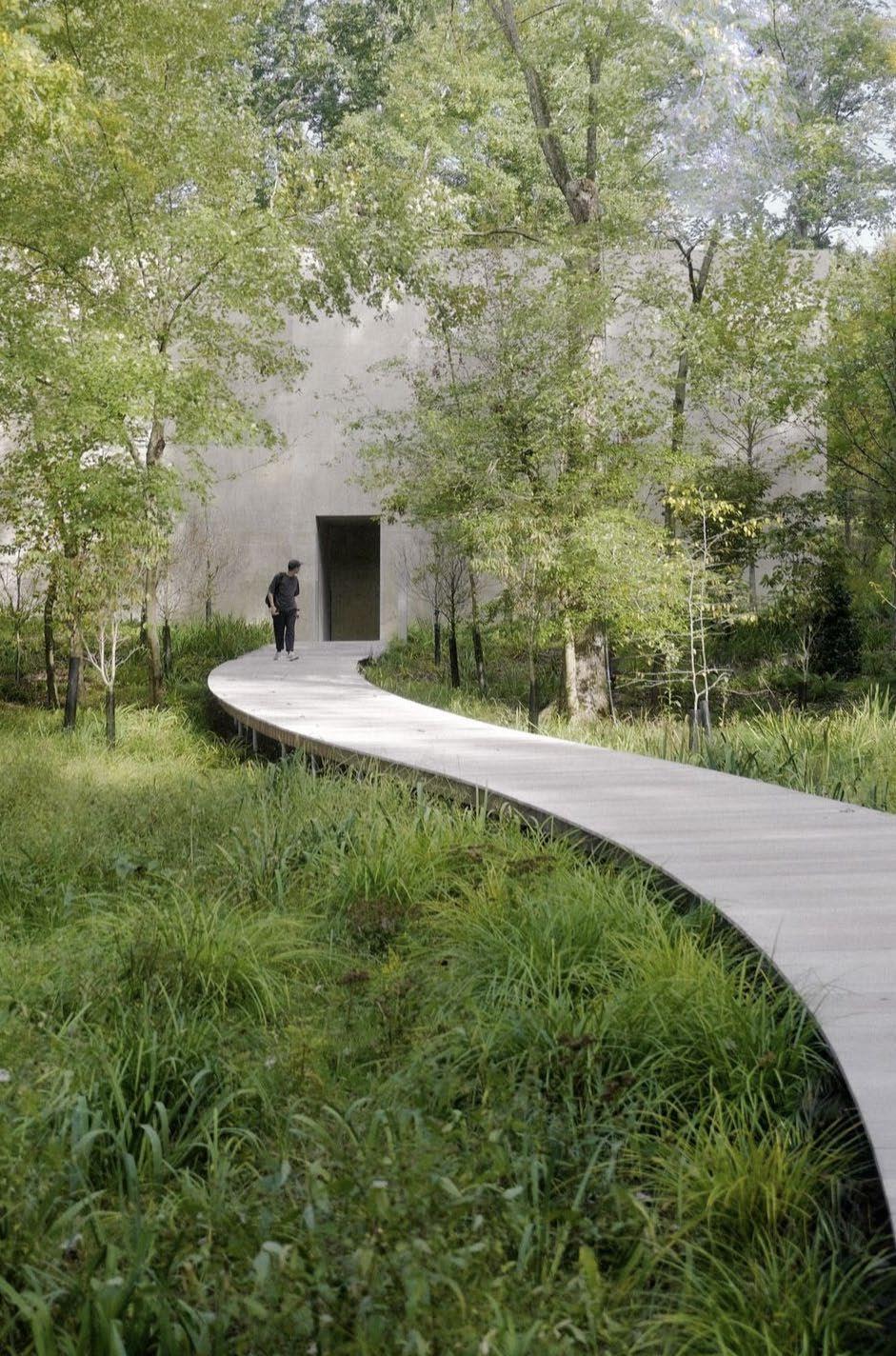
The image above illustrates the serene feeling of experiencing nature as art and using the built environment to frame the natural landscape. This feeling is carried into the experience of Levity.
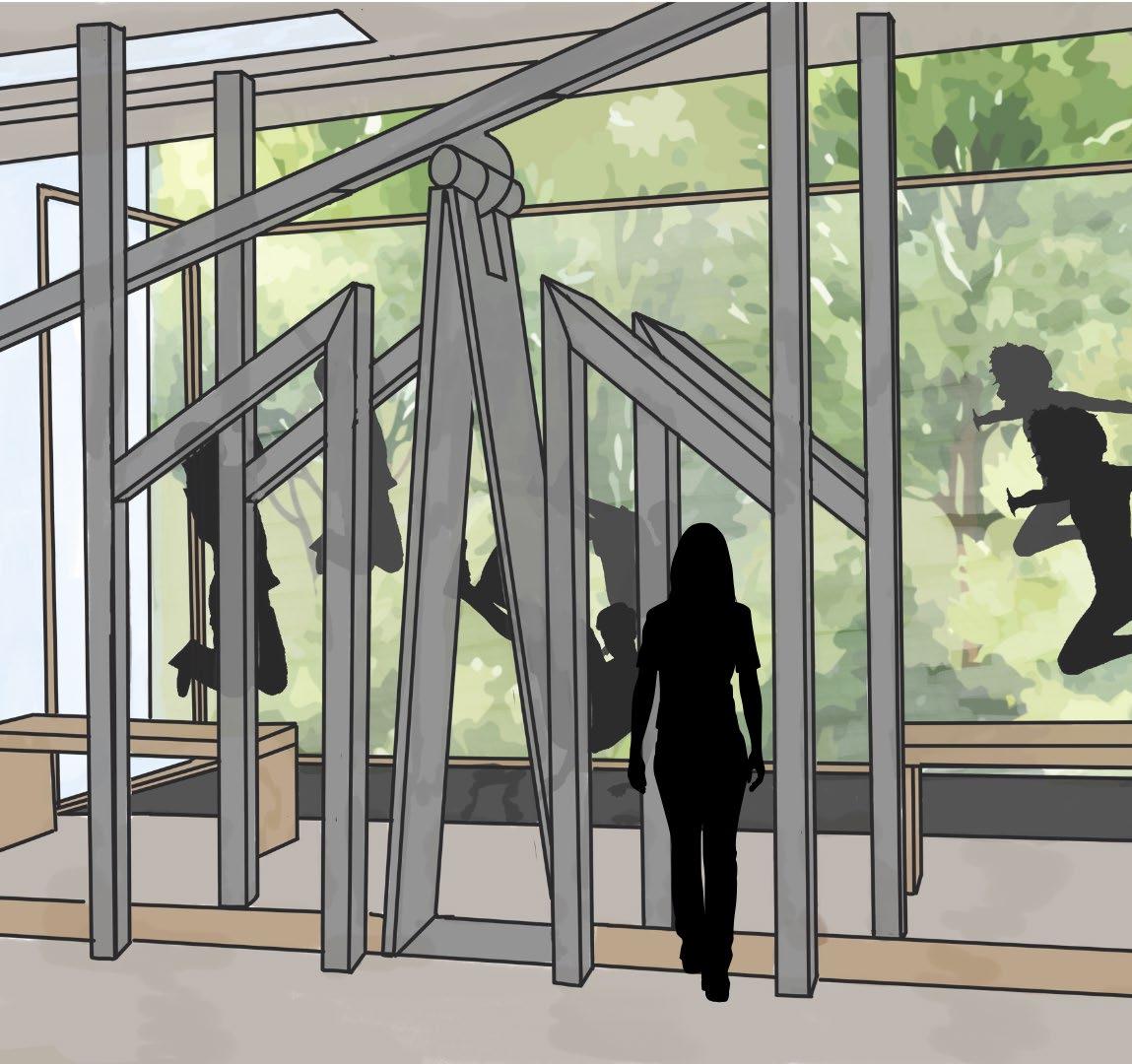
This perspective illustration to the right depicts the fulcrum positioned between two curtain walls, displaying the mechanism as part of the experience. The unique passageway shape is determined by the see-saw’s maximum angles [while one person is getting onto the seat on one side of the building, and another person is at maximum height on the other side], ensuring it never intrudes into the pedestrian space. Benches offer seating for observation, which is treated as an experience itself. The background of this scene features individuals on a trampoline, immersed in the natural environment through a monumental-scale mirror and open construction. A safety net provides protection for trampoliners.