Annual Exhibition
This catalogue is published to accompany the Society’s Annual Exhibition at Mall Galleries, 7 to 19 May 2026 (Closed 12 May) Royal Society of Portrait Painters
17 Carlton House Terrace, London SW1Y 5BD Tel: 020 7930 6844
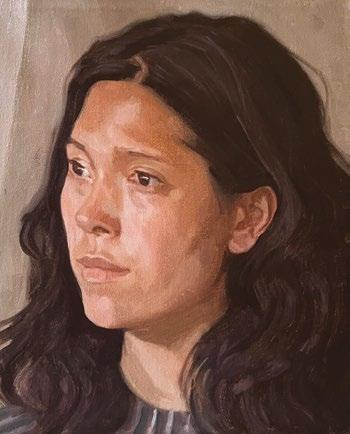
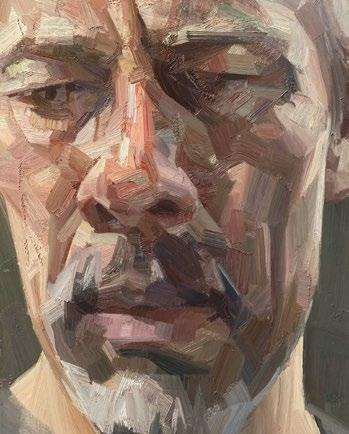
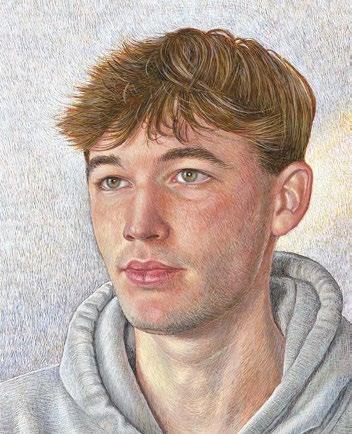
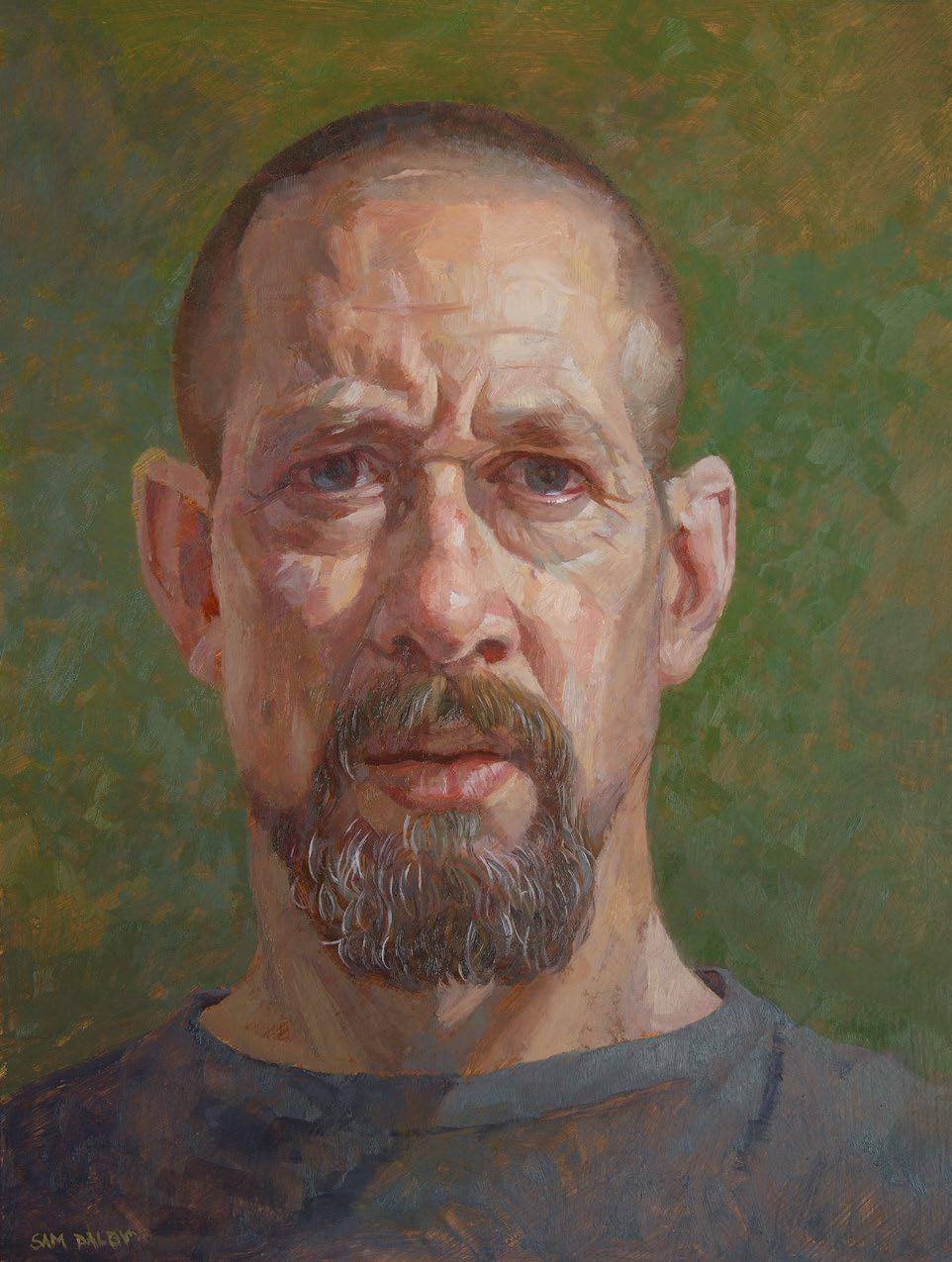
Miki by David Caldwell RP Self Portrait by Tai Shan Schierenberg RP (Honorary)
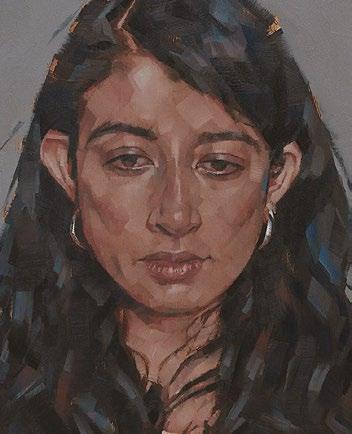
Z by Simon Davis RP
Royal Society of Portrait Painters
Patron: HM King Charles III
Advisory Board
Sally Angel
Christopher Baker
Anne Beckwith-Smith
Damon de Laszlo
Jon Lys Turner
Anne Morrison (Chair)
Philip Mould
Dr. Sarah Moulden
Mark Stephens
Daphne Todd OBE PPRP
President
Anthony Connolly
Vice President
Antony Williams
Honorary Secretary
Saied Dai
Honorary Treasurer and Archivist
Alastair Adams
Council
Paul Brason
Miram Escofet
James Hague
Mark Roscoe
Charlotte Sorapure
Neale Worley
Selection Committee
Frances Bell
Paul Brason
Anthony Connolly
Saied Dai
Simon Davis
Miriam Escofet
Benjamin Hope
Andrew James
Hero Johnson
Kenny McKendry
Jamie Routley
Charlotte Sorapure
Antony Williams
Neale Worley
Hanging Committee
Paul Brason
Simon Davis
Miriam Escofet
Robin-Lee Hall
Jamie Routley
Melissa Scott-Miller
Neale Worley
Prize Judging Panel 2026
Christopher Baker
Anthony Connolly PRP
Neil Davidson (Raw Umber Studios Prize)
Hero Johnson RP
Alison Smith (Director of Collections, Wallace Collection)
Rogier Willems
(Winner of The William Lock Portrait Prize 2025)
RP Coordinator
Luke Alan Mills
Commissions Manager
Martina Merelli-Stevens
FBA Trustee
Anthony Connolly
Deceased Honorary Members
Sir Lawrence Alma-Tadema OM RA RWS
William Bowyer RA RWS NEAC
Maurice Bradshaw OBE
George J. D. Bruce PPRP
Derek Clarke RSW ARSA
Sir George Clausen RA
Sir Arthur Cope RA
Cowan Dobson RBA
William Dring RA RWS
Hugh de T. Glazebrook
Kenneth Green
Sir James Guthrie PRSA RA
Allan Gwynne-Jones DSO RA
J. McLure Hamilton
Claude Harrison ARCA
Augustus John OM RA
Dame Laura Knight RA RWS
Leonard C. Lindsay FSA
Sir William Llewellyn PRA
Leonard McComb RA Hon RBA
Sir John Everett Millais PRA
A. T. Nowell
Herbert A. Oliver RI
Tom Phillips CBE RA Hon PS
Sir Edward Poynter PRA RWS
Hugh G. Riviere
Carlos Sancha
C. Sanders RA
John S. Sargent RA RWS
Howard Somerville
Trevor Stubley RBA RSW RWS
A. R. Thompson RA
G. F. Watts OM RA
T. Fiddes Watt RSA
J. McNeill Whistler HRSA LL.D
Walter Woodington RBA NEAC
Past Presidents
1891 – 1904 A. Stuart Wortley
1906 – 1910 Sir W. Q. Orchardson RA HRSA 1910 – 1924 Sir James J. Shannon RA
– 1930 Sir William Orpen KBE RA RHA
Sir William Hutchison PPRSA
Edward Halliday CBE PPRBA
1983 Norman Hepple RA
1983 – 1991 David Poole PPRP ARCA
1991 Edward Hall
1991 – 1994 George J. D. Bruce
1994 – 2000 Daphne J. Todd OBE
2000 – 2002 Paul Brason
2002 – 2008 Andrew Festing MBE
2008 – 2014 Alastair Adams
2014 – 2017 Robin-Lee Hall
2017 – 2022 Richard Foster
Past Vice Presidents
1898 – 1934 The Hon John Collier OBE 1934 – 1944 George Harcourt RA 1944 – 1952 Sir Oswald Birley RA
– 1953 T. C. Dugdale RA 1953 – 1957 Simon Elwes ARA
1959 – 1964 Sir William Hutchison PPRSA
1966 – 1980 Norman Hepple RA
1980 – 1985 John Ward CBE RA RWS
1985 – 1991 George J. D. Bruce
1991 Edward Hall
1991 – 1994 Richard Foster
1994 – 1999 Trevor Stubley RWS RBA
1999 – 2001 Paul Brason
2001 – 2002 Andrew Festing MBE
2002 – 2008 Susan Ryder NEAC
2008 – 2014 Andrew James 2014 – 2021 Simon Davis
Honorary Members 2026
David Poole PPRP
Tai Shan Schierenberg
Daphne J Todd OBE PPRP
John Wonnacott CBE
Members 2026
Alastair Adams PPRP Hon Archivist and Treasurer
Frances Bell RP ROI
Tim Benson RP NEAC FROI
Jane Bond RP NEAC
Paul Brason PPRP
Keith Breeden RP
Martin Brooks RP
David Caldwell RP David Cobley RP
Anthony Connolly PRP President
Saied Dai RP NEAC Hon Secretary
Sam Dalby RP
Simon Davis RP
Miriam Escofet RP Andrew Festing MBE PPRP
Richard Foster PPRP
David Graham RP Valeriy Gridnev RP PS ROI
James Hague RP
Robin-Lee Hall PPRP
Geoffrey Hayzer RP
Benjamin Hope RP NEAC PS ROI RSMA
Emma Hopkins RP
Sheldon Hutchinson RP
Andrew James RP NEAC
Hero Johnson RP
Peter Kuhfeld RP NEAC
Kenny McKendry RP
Anthony Morris RP NEAC
Anastasia Pollard RP
Mark Roscoe RP
Jamie Routley RP
Susan Ryder RP NEAC
Melissa Scott-Miller RP NEAC RBA
Stephen Shankland RP
Charlotte Sorapure RP NEAC
Benjamin Sullivan RP NEAC
Michael Taylor RP
Joshua Waterhouse RP
Emma Wesley RP
Toby Wiggins RP
Antony Williams VPRP NEAC Vice President
Neale Worley RP NEAC
Robbie Wraith RP
Martin Yeoman RP NEAC
Honorary Friends
Ms Philippa Abrahams
Ms Anne Allport
Sir Ian Amory
The Rt Hon Lord Archer of Weston Super Mare
Baroness Bottomley
Gyles Brandreth Esq
Robin Buchanan-Dunlop Esq
Colonel William Chesshyre
Sir Timothy Clifford
Mrs Peter Cookson
Selina Elwell
The Lady Fellowes LVO
Lord Fellowes of West Stafford
Ms Frances Gandy
Dr Rita Gardner
Martin Gayford Esq
Robin Gibson Esq
Philip Harley Esq
Sir Max Hastings
Sir Michael Holroyd
Ms Sarah Howgate
Ms Dotti Irving
Mrs Lucy Jenkins
Dr Gillian Jondorf
Sir Henry Keswick
Tim Knox
Ms Christina Leder
David Messum Esq
Ms Jans Ondaatje-Rolls
Richard Ormond Esq
William Packer Esq. NEAC Hon PS Hon RBA
Ms Liz Rideal
Dr Charles Saumarez Smith
Sir David Scholey
Robin Simon Esq
Prof. Dame Marilyn Strathern
The Lord Vinson of Roddam Dene LVO DL
Duncan Wilson Esq
Prof. Tim Wilson
Andrew Wilton Esq
President's foreword
Welcome to the Royal Society of Portrait Painters’ Annual Exhibition 2026.
“There are multitudes of people, but there are many more faces, because each person has several of them.” Rainer Maria Rilke
Rilke’s assertion is axiomatic. He goes on to write that some people only ever use one of their faces and that they store the others away. In time their children wear them. To the poet this is unremarkable; ‘And why not? A face is a face.’
A face is a face - until it becomes a portrait. When a portrait is made a face is formalised. It acquires an existence quite separate to that of its model. The face is represented, made again and presented afresh. The portrait is an observation offered to a conversation. To be portrayed by an artist is to appear in public, literally, to be publicised.
All the portraits in this exhibition have entered the public discourse. Unlike more instant forms of publication such as social media, however, the painted portrait is slowly, thoughtfully and often painstakingly constructed. It accrues in its making something beyond the flash of the moment.
Rilke’s near contemporary Oscar Wilde suggested that ‘Every portrait painted with feeling is a portrait of the artist, not of the sitter.’ This idea resonates and further disrupts any reductive notion of the portrait as a simple record of one person’s singularity.
A portrait then is a complex response to a familiar experience, that of noticing each other. Every year in these galleries we gather together a collection of the most remarkable examples of these meditations on likeness.
I feel I may have been somewhat circumspect in previous years when writing this foreword. I perhaps understated the glory of this annual show. I would like to record here and now my considered and unequivocal opinion that this is, without doubt, the very best review of contemporary portraiture anywhere.
2025 was a remarkable year for the Society. It saw the launch of ‘The RP Drawing Prize: Revealing the Human’ and we took the resulting show to Hull, with grateful thanks to the University of Hull and its gallery director, John Bernasconi. The venture was a huge success, and we curated what may well come to be regarded as a seminal exhibition.
2025 also saw the third iteration of The RP Critical Writing Prize. The prize was inaugurated in 2023 with the generous encouragement of, amongst others, the art critic Laura Gascoigne. Sadly, Laura died on 18th October 2025. She was the chief art critic at the Spectator and at the Tablet.
I remember Laura as a brisk and insightful commentator on the many essays we received and for the generous and meticulous way she contributed to our judging panel.
You can read the essays shortlisted for the 2025 prize in this catalogue. The number of entries increased again last year, and I would like to thank our judges, Professor Alexander Marr and Dr Alison Smith. Choosing just three essayists is not easy and the judges perform the task of selection with thoughtfulness and much deliberation. The Society is very mindful of the time
and attention so freely given. David Lee at The Jackdaw continues to support our endeavours and will be publishing the three winning essays again this year.
Entries for the 2026 RP Critical Writing Prize opened on 15th April and will remain open until the close of the RP Drawing Prize exhibition in November.
Have a look at www.therp.co.uk for details.
I am pleased to take this opportunity to congratulate Frances Bell RP, on winning the 2025 Draper Grand Prize at The Portrait Society of America and Tim Benson RP who was awarded second place in the Herbert Smith Freehills Kramer Portrait Award for his remarkable painting titled, Cliff, Outreach Worker.
~ 2026 is an auspicious year in Chinese astrology. It sees the pairing of the element of fire with the symbol of the horse. The Fire Horse is bold and passionate, independent and courageous. With those energies in mind, I have the honour to extend the Society’s welcome to Shengxinyu Art, its director, Zhang Hongbin and the twentyfour Chinese artists who have delivered their works to London for inclusion in this exhibition. The Society has a history of reaching out beyond these shores to outstanding artists, but never before have we extended that welcome as far as China. I am confident that this collaboration will bring something extraordinary to the exhibition, and I hope that this is the beginning of a new and exciting chapter in the history of the Society.
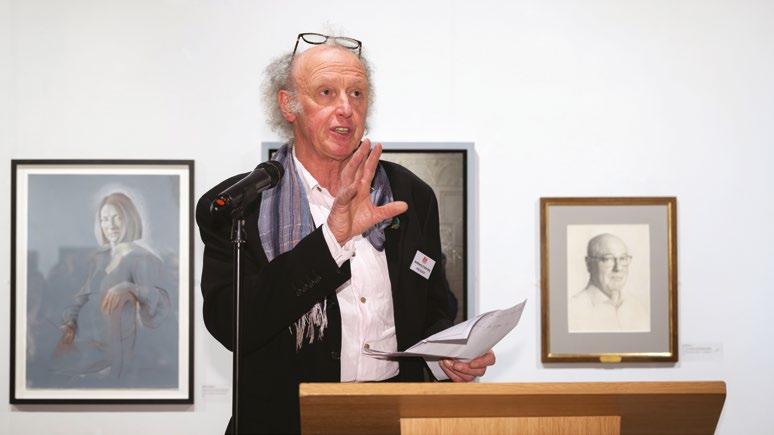
On Thursday 14th May we will welcome Andrew Graham-Dixon to the Mall to give a talk entitled, “Portraits of Women, Portrayals of Virtue: A new way of understanding Vermeer’s depiction of women.”
Andrew’s new book, ‘Vermeer: A Life Lost and Found’ is shifting the ground beneath our understanding of this enigmatic artist and we are very much looking forward to this next instalment.
~ On behalf of the Society, I would like to thank our principal sponsor, Mr. William Lock, who has provided a very generous award for the last six years. His enthusiasm and support for the mystery of paint and observation, which is at the core of this society’s concerns, is invaluable.
I must also thank The Lord Faringdon Charitable Trust for sponsoring a new drawing prize, for which we are particularly grateful.
We also begin a collaboration with The Almenara Foundation which has generously funded a new purchase prize. We are grateful to The de Laszlo Foundation for its continuing support of young artists, to Neil Davidson of Raw Umber Studios, to DalerRowney and to the membership of the RP itself for their continuing generosity.
~ Similarly, I wish to express the Society’s gratitude to the judges this year;
Christopher Baker, editor of the Burlington Magazine, Dr. Alison Smith, Director of Collections at The Wallace Collection, Hero Johnson RP and Rogier Willems, winner of last year’s William Lock Prize and Neil Davidson (The Raw Umber Studios Prize).
Thanks too, to Anne Morrison, who has graciously agreed to chair our revived and refreshed Advisory Board.
Miriam Escofet RP steps down from council at the AGM. The Society is indebted to its members who volunteer year on year
to keep this wonderful exhibition and all the other activities happening and we are grateful to Miriam and to many others who involve themselves so generously and in so many ways.
Welcome and thank you to the FBA’s new CEO, Tom King. Organising the RP Drawing Prize gave me first-hand experience of mounting a major show and it underlined the extent to which we need to be grateful to the entire team at the Mall, and especially to Alistair Redgrift, Head of Exhibitions, for doing so much towards putting together this fabulous display. The Royal Society of Portrait Painters’ Annual would not be possible without their expertise and hard work.
~ On 6th July 1997 the front cover of The Sunday Times Culture Supplement announced, “PAINTING IS DEAD” and the subtitle read, “Hooray! says Waldemar Januszczak.”
With respect, Mr Januszczak, you were wrong. Painting is in excellent heart.
I would be delighted to welcome you to the Mall during this annual celebration of portraiture, just to clarify the matter.
Finally, to everyone who has ever sat for their portrait and especially if one of your several faces appears on the walls of this exhibition, thank you.
Anthony Connolly President
RP President, Anthony Connolly
Prizes and Awards 2026 Award Winners 2025
The exhibition offers prizes and awards worth over £40,000:
The William Lock Portrait Prize
£20,000 for the most timeless portrait with a real feeling for paint and its aesthetic potential. Plus two runner-up prizes of £500 each.
NEW The Almenara
Collection Award
A £5,000 purchase prize will be awarded to a picture which is for sale (at a price not exceeding £5,000) and which, in the opinions of the nominated RP panel and representatives of the Almenara Collection, is agreed to be a worthy addition to the Almenara Collection .
NEW The Faringdon
Prize
£5,000 for the most distinguished drawing in the annual exhibition.
The de Laszlo Foundation Award
£3,000 for the most outstanding portrait by an artist aged 35 years or under, plus four Highly Commended awards of £500 each.
The Raw Umber Studios Prize
Raw Umber Studios believes that the most exciting contemporary portraiture lies at the intersection of technical excellence and creative expression. Their annual prize, inaugurated in 2023, encourages and rewards such work. Value £2,000.
The RP Prize for the Best Small Portrait
A prize of £2,000 for the best small portrait in the exhibition, measuring not more than 38 x 30.5 cm (15 x 12 inches) unframed.
NEW Daler-Rowney Materials Prize
Daler-Rowney materials to the value of £1,000 will be awarded to the artist who in the opinion of the judging panel has submitted a picture to the annual show which is exceptional, either in terms of its imaginative response to the sitter or its technical achievement.
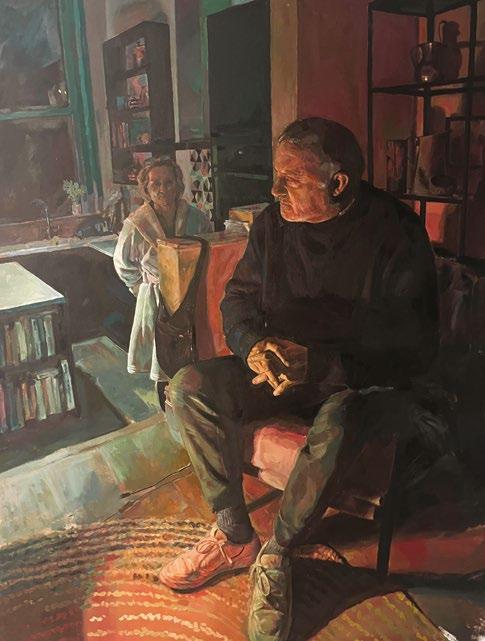
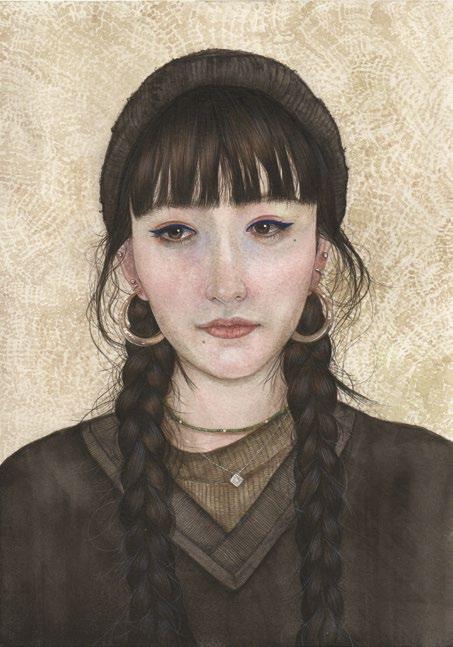
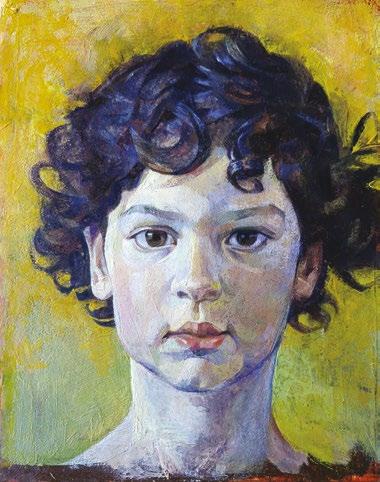
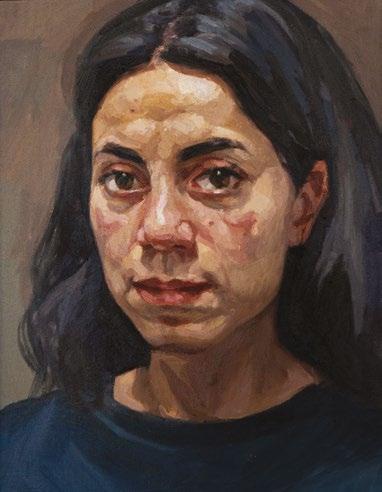
‘Familiar Faces’ by Jacob Skinnard (The de Laszlo Foundation Award)
‘Elvan’ by Rogier Willems (The William Lock Portrait Prize)
‘Self: Familiar Yet Unknown’ by Florence Yuqing RI (The Raw Umber Studios Prize)
‘Ezra aged Six and Three Quarters’ by Toby Wiggins RP (The RP Prize for the Best Small Portrait)
'The Privilege of Slowness' by Enxi Liu
Winner of the 2025 RP Critical Writing Prize
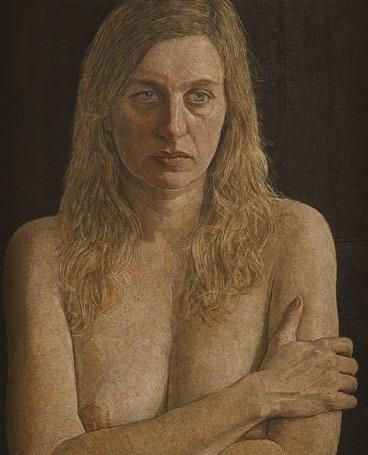
I am standing in front of Antony Williams’ portrait, Emma From a distance, the face seems calm; up close, it trembles. Williams has spent months building it with thousands of spider-web-thin strokes in egg tempera, a medium that dries instantly and cannot be blended. Look long enough, and the skin appears to break into a vibrating mesh of red, blue, green, and ochre lines. Step back, and those discordant hues miraculously resolve; the flesh reignites with life. It feels more real than real.
Outside the gallery, artificial intelligence can generate a “perfect” face in seconds: poreless, symmetrical, effortlessly pleasing, as precise as industrial reproduction. In half a second, our thumbs decide whether that face is worth another glance. In an attention economy where eight seconds can determine the life or death of an image, Williams’ painting feels almost aggressively slow. It asks a question that continues to trouble me: in the twenty-first century, who still has the privilege of being seen this slowly, this expensively?
“Slowness” today is a word that demands deconstruction. If it were merely a matter of duration—four thousand hours versus eight seconds—then we would be discussing nothing more than the logic of luxury craftsmanship: the production of scarcity through un-replicable labor time. But Emma feels different. There is an almost philosophical experience here, what Henri Bergson calls durée Those spider-web strokes are not man-hours waiting to be filled, but creases left by time upon the surface. You cannot see those four thousand
hours, but you feel them, in the moment you are pinned to the spot, in the second your gaze is arrested, in that brief interval where you forget to check the clock.
To be able to read “time” in these strokes is perhaps only possible because the museum has taught us a specific way of seeing: one that treats lingering as a prerequisite for understanding, and the sustained gaze as the inevitable path to encountering a work. We are living through a malady of social acceleration; as diagnosed by Hartmut Rosa, what is disappearing is precisely this thickness of experience filled by time. We have more units of time, yet fewer moments permeated by it.
The problem, however, is that this mode of seeing is itself the result of a filtering process. The “Distinction” defined by Pierre Bourdieu provides a clue: aesthetic disposition is the embodiment of class. To be able to pause before a painting for more than eight seconds, to discern the creases of time within Williams’ strokes, this is not a natural gift, but a bodily marker of cultural capital. The viewer’s eye has been trained by art history education, nourished by museum visits, and polished by countless implicit class filters. Williams paints Emma Emma is painted; and the viewer stands before her, looking. The relation between these three positions begins to sketch a structure of class reproduction. This does not mean the viewer’s experience is “false,” but it carries an indelible social coordinate.
Portraiture has never been merely a storage device for time. Historically, it has played
many ignoble roles in the distribution of time: whose time is worth recording? Whose time is worth gazing upon? In Thomas Gainsborough’s portraits of landed gentry, the tenant farmers tilling the land remain in the background. Behind that aristocratic smile lies a history of other people’s labor time being appropriated without compensation. Anthony van Dyck painted Charles I as a divine monarch, yet he could not hide the trajectory of a dynasty approaching its end within his brushwork. If we are moved by a portrait today, it is perhaps because the filter of time has sifted out these more complex elements. How was
this work commissioned? On whose wall does it hang? Whose gaze does it serve?
This means that when we speak of “slowness,” we are never talking merely about aesthetics, but about the politics of time. Whose “slowness” is endowed with value? Whose “slowness” is deemed a waste? Who is entitled to be gazed upon for four thousand hours? Whose eyes are worthy of responding to such a gaze? These questions permeate the entire history of portraiture.
Within the white walls of the Mall Galleries, the portrait completes its sociological closed loop. It confirms whose face is worth recording for four thousand hours, while simultaneously confirming whose eyes are worthy of this labor. This mode of seeing is itself a kind of “time tax.” When we enjoy this privilege of slowness in the gallery, we are, in effect, exercising a right of amnesty, an exemption from being driven by an accelerated society.
While this privilege objectively protects the depth of art, it also carries an elitist exclusivity. As predecessors have noted, a portrait is not merely an image, but a synthesis of context, interpretation, and art history.
Even more problematic is the discourse of labor. We are accustomed to praising the nine hundred hours of Lucian Freud or the four thousand hours of Antony Williams, calling these hours a “testament to labor”. But this labor is only seen, discussed, and imbued with meaning because it has already passed through the filters of the art market. The uncertified slowness—the slowness that never enters a museum, receives no critique, and commands no price—is the true silent majority of this system. To talk about slowness without talking about this mechanism of selection
is to talk only about the slowness that is permitted to exist. Yet, if we stop at “everything is a filter,” we miss something more vital. Because that moment did happen. The skin did break into lines of red, blue, green, and ochre; the discordant hues did resolve upon the retina, and the flesh did re-ignite with life. In that moment, class did not disappear and theory did not fall silent, but they receded into the background. In the foreground, there was only the eye, and the face before it. Freud, Saville, and Williams produce, through slowness, an un-recuperable surplus, the lingering warmth left by the artist’s fingertips. Unlike the false lightness of digital imagery supported by sheer computing power, we find in Freud’s Benefits Supervisor Sleeping the carnal presence of Sue Tilley, neither “beautiful” nor “ugly,” neither “pitied” nor “objectified”.
In Saville’s mounds of paint, we find the marks of constant revision, struggle, and uncertainty, the evidence of a battle. On the surface of Emma, we find the vibration of colored lines that can never be replicated, visible only to those standing before the original.
This surplus can only be received through a sustained, even coercive gaze, and only through the viewer’s own body. Once received, it plants within the viewer a permanent discomfort with everything that is faster, lighter, and easier to consume. The market has long learned to recuperate everything, but those who have experienced a true gaze can no longer be satisfied by substitutes. This is the defensive line of portraiture: a refusal to be reduced to consumable visual fast food, demanding that the viewer respond to the thickness of the image with an equal intensity of focus.
The viewer is invited to be like an unarmed soldier: to lay down one’s gaze as one might lay down a weapon.
Today, hundreds of millions of faces flow across our screens. Digital images are light, but the algorithms that generate these faces are backed by vast data systems and the labor of tens of thousands of labelers; by billions of images scraped without consent and a continuous infrastructure of computing power. Digital imagery has its own thickness, but this thickness exists not at the level of experience, but at the level of extraction. If the act of viewing on a screen feels light, it is because the weight has been shifted onto invisible infrastructures and low-wage labelers.
When we discuss the “slowness” of portraiture, if we focus only on aesthetics, we repeat the oldest mistake in art history: masking politics with aesthetics. We must ask: who is excluded from this conversation on slowness? Is there any room to democratize this pinned-down gaze, rather than leaving it as the grace of a select few? Emma hangs on the wall. It does not ask the viewer if they have read Bourdieu, nor does it ask if they have seen through the system. It poses a more fundamental interrogation: in the wilderness of acceleration, do you still possess the capacity to be “pinned”? In that moment of being pinned, time changes its mode of existence. It is not eternity, it is merely eight seconds stretched to the length of a lifetime.
If this is a privilege, perhaps it is no longer merely a privilege of money or class, but a capacity to maintain the integrity of human subjectivity in an age of digital extraction. This capacity is becoming like the strokes of an egg tempera painting: both resilient and exceedingly rare.
Emma by Antony Williams 69 × 56 cm Egg tempera on board
The People’s Portraits Collection at Girton College
Conceived as a millennial exhibition by the Royal Society of Portrait Painters, the People’s Portraits Collection has been housed in the red brick splendour of Girton College, University of Cambridge, since 2002.
The founding principle was to create an exhibition depicting ordinary people, from all walks of life, celebrating the rich diversity of culture in the UK as it moved from the 20th to the 21st century. This unique display captures a cross section of society pictured going about their daily lives offering proof, were it needed, that remarkable stories reside in the seemingly ordinary.
The exhibition showcases a broad range of responses to the discipline of portraiture by members of the society. Free from the confines of the commissioned portrait, the paintings gently subvert the more sober side of the profession, telling stories born of love, friendship and respect. These histories offer, by visual means, a rare and important glimpse into people’s lives as we look back at the millennium, but the collection also continues to grow and change as newly elected members of the society are invited to contribute, developing and diversifying the collection.
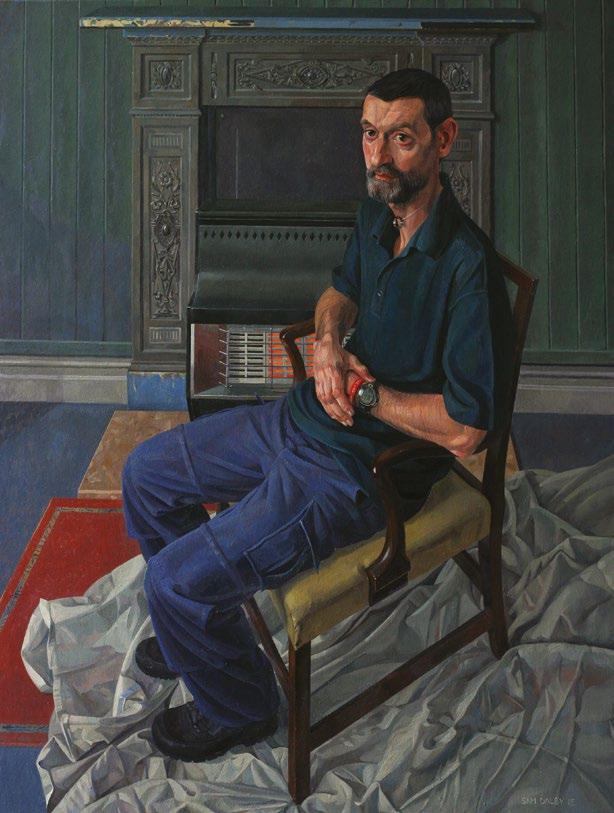
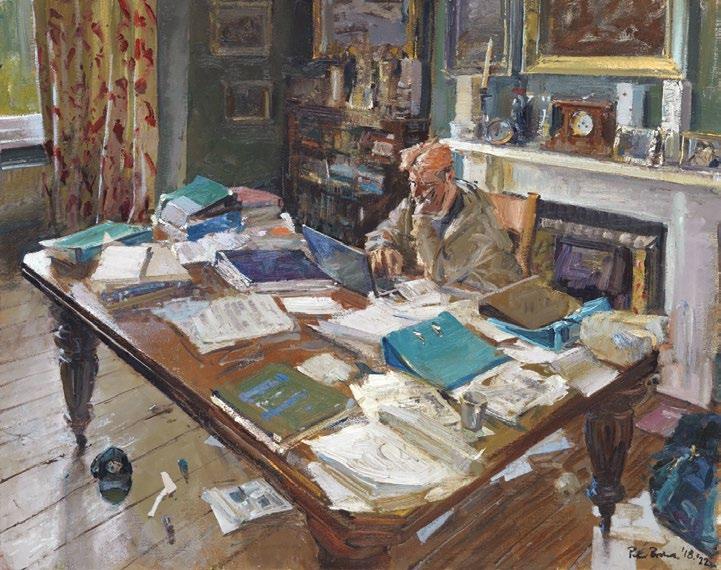
Sam Dalby’s painting of Justin Eckersley, donated in 2017, tells the story of their meeting at a local building supplier’s, and how their friendship developed through their shared love of fell running. In 2022, Peter Brown unveiled a tender portrait of his son, Toby, as he studied for his A-levels which would, coincidentally, lead to his being awarded a place at Girton to study Geography.
Mark Roscoe’s two paintings of Eniola Sokalu, unveiled in 2025, gently convey the interaction between artist and sitter, presenting an intriguing stylistic contrast between the two portraits of this young academic.
These new additions to the collection sit well within the college community as the display grows and snakes along the labyrinth of corridors at Girton College. They expand on the ground-breaking idea nurtured by Daphne Todd OBE, and speak to Girton’s ethos of fostering inclusion and equality.
For Girton College and the Royal Society of Portrait Painters they show confidence in the power of art.
The exhibition is open daily, 9am–5pm, and admission is free. Families are welcome.
People’s Portraits
Girton College, Huntingdon Road Cambridge, CB3 0JG Tel: 01223 338999
Email: peoplesportraits@girton.cam.ac.uk www.girton.cam.ac.uk/peoples-portraits
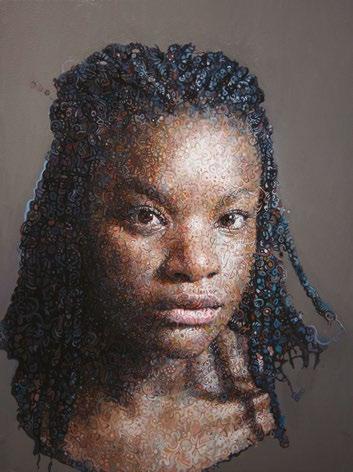
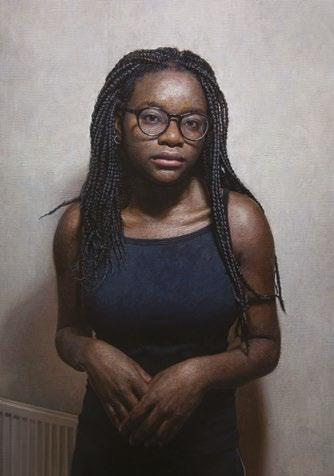
Justin Eckersley by Sam Dalby
Eniola Sokalu 1 by Mark Roscoe
Toby by Peter Brown Eniola Sokalu 2 by Mark Roscoe
'When Portraits Become Mirrors'
by Emecheta Christian
Finalist, 2025 RP Critical Writing Prize
A teenager walks into a London gallery and stops dead in her tracks. On the wall hangs a pencil drawing so precise it might be a photograph, except photographs don't usually spend nine hundred hours looking at you. The subject has vitiligo — white patches scattered across dark skin like paint splashes on canvas. The girl touches her own face, her own patches, and for the first time in seventeen years, she sees herself staring back from a gallery wall.
This is Kelvin Okafor's 'Drawing Awareness' exhibition, and it's asking a question that contemporary portrait painting can no longer avoid: whose face deserves nine hundred hours?
Portrait galleries have always been about power. Walk through the National Portrait Gallery and you'll see centuries of the same story — wealthy men in expensive clothes, their wives posed prettily beside them, their children sitting obediently at their feet. These aren't just pictures; they're declarations. They say: these people mattered, these lives counted, these faces deserved to last forever.
But what happens when an artist turns that power on its head? When someone like Okafor decides that a face marked by lupus deserves the same meticulous attention once reserved for Tudor kings? When nearly six months of full-time work gets devoted to an acid attack survivor instead of a celebrity? The very act of choosing who to draw becomes a radical statement.
Okafor doesn't merely render these faces; he inhabits them. Before a single pencil stroke, he speaks to each subject, learns their story, and absorbs what their condition means to them. He wakes at 5:30am for meditation, begins drawing at 11am, and sometimes works fourteen-hour days on a single piece. "It feels like it's preparing me for something bigger," he says of his grueling routine. That preparation is visible in every mark he makes — not quick gestures of sympathy, but masterworks of technical precision, each one arguing that this particular face deserves the very best an artist can offer.
Consider Katie Piper, whose face was devastated by an acid attack in 2008. Before the assault, she was a model and television presenter — exactly the kind of face our culture already deemed worthy of artistic attention. Afterward, she became invisible to the world that had once celebrated her. In Okafor's drawing, however, Piper's scarred face is neither hidden nor softened. It is examined with the same forensic devotion to light and shadow that the Old Masters brought to their most prized commissions. The scars weren’t flaws to be overlooked; they became features to be understood, each one narrating powerful tales of survival that conventional portraiture would often shy away from.
This is where Okafor's work exposes a tension at the heart of contemporary imagemaking. A photograph captures a fraction of a second; a nine-hundred-hour drawing
captures something closer to childbirth. Okafor works from photographs because his subjects live far away, their lives too complex for a handful of brief sittings. The paradox is deliberate. He takes the photograph's frozen instant and stretches it across months of labor, transforming a mechanical record into an act of sustained human witness. The camera sees; the pencil contemplates.
That contemplation becomes a form of protest in our swipe-and-scroll culture, where faces are judged in milliseconds and forgotten even faster. Spending nearly a year studying a single face insists on slowness, on depth, on the kind of unhurried attention our digital world has largely dismantled. When Okafor renders Winnie Harlow's vitiligo with museum-quality skill, or traces the lupus scarring across Seal's face with months of painstaking care, he is not simply making portraits. He is redistributing dignity, arguing through sheer technical brilliance and emotional conviction that these particular ways of being human merit our deepest engagement.
The impact on those who see themselves reflected is immeasurable. The teenager with vitiligo who encounters Harlow's face elevated to fine art learns something fundamentally different about her own worth than if she had only ever seen conventional beauty celebrated on gallery walls. The boy with facial scarring who
discovers that someone devoted months to features like his begins to carry himself differently through a world that has always stared but never truly looked. Representation in portraiture does not merely mirror lived experience — it has the power to reshape it entirely.
But there is a risk that must be confronted honestly. Tokenism — the single diverse face inserted into an otherwise homogeneous collection — can become its own subtle form of erasure, a gesture that celebrates inclusion without interrogating why exclusion persisted for so long. Contemporary portraiture that genuinely seeks to transform the cultural landscape must go further than simply diversifying its subjects. It must question the institutional frameworks that determined whose faces hung on gallery walls for centuries, and ask why those curatorial decisions were never treated as political until someone finally dared to challenge them.
This is where Okafor's approach becomes most instructive. He does not exploit his subjects' differences for shock value or reduce them to symbols of resilience.
He studies each face with the microscopic precision a botanist might bring to a rare specimen — not to exoticize, but to
normalize through the sheer intensity of his attention. His subjects are not inspirational poster children or objects of pity. They are individuals whose particular experiences of being human have been deemed worthy of the highest artistic commitment. Each face carries its history visibly, and that history has been honored with months of an artist's undivided life.
For someone accustomed to being stared at for unwelcome reasons, agreeing to sit for such a portrait, to willingly invite an artist's prolonged scrutiny, demands extraordinary courage. The subject must trust that the artist's gaze is fundamentally different from the world's — that it seeks not to judge but to understand. Okafor earns that trust through his process: the long conversations, the emotional immersion, the quiet discipline of returning to the same face day after day until its story has been fully and faithfully told. The drawing becomes a covenant between the artist and his subject, a shared insistence that this face, this life, this story matters enough to warrant such devotion.
What emerges from 'Drawing Awareness' is something that permanently alters how you see every face afterward. These drawings were not acts of charity.
They are arguments made in graphite, built over hundreds of hours, defended with extraordinary skill, that the scope of human beauty is far wider than our galleries have historically been willing to admit. They ask us to look longer, to revise our assumptions, and to recognize that the faces we have been conditioned to look away from may be the very ones most worth seeing.
The teenager with vitiligo will leave the gallery changed. She has seen herself reflected not in a mirror, but in art. Someone chose a face like hers and spent nine hundred hours studying it with reverence, and that single fact rewrites the story she has been told about her own worth. Contemporary portraiture, at its most courageous, does not merely depict the world as it is. It insists on a better one.
This essay was inspired by Kelvin Okafor’s latest art exhibition which can be found here: https://edition.cnn.com/style/kelvin-okafor-drawing-awareness-spc
Slowing Time: The Quiet Power of a Portrait Painting
Commissioning a portrait painting is more than acquiring a work of art; it is a deeply personal experience that captures a life, a moment, and a story in a way that few things can. In a world that moves quickly, where photographs are taken in seconds and memories often live on fleeting screens, a painted portrait asks us to slow down. It invites reflection, patience, and presence.
A portrait is not simply about appearance. It is about legacy. Long after trends fade and digital files disappear into forgotten folders, a portrait painting remains, quietly holding the memory of a person, their character, and the time in which they lived. It becomes something that can be passed down through generations, a visual story that future family members can look at and feel connected to.
Part of what makes commissioning a portrait a once-in-a-lifetime experience is the relationship that develops between sitter and artist. The process is collaborative, intentional and thoughtful. Conversations unfold, stories are shared, and gradually the artist begins to understand the essence of the person they are painting. A great portrait captures more than a likeness; it reveals
something of the sitter’s spirit, their history, their being, and the life that has shaped them into who they are.
There is also something profoundly meaningful about being truly seen. Sitting for a portrait requires time and stillness which is an unusual luxury in a frantic world.
In that space, the artist observes, listens, and interprets, translating the sitter’s presence into paint.
In the end, the portrait becomes more than a simple image. It becomes a piece of storytelling. It holds memories, personality, and emotion within every brushstroke. Commissioning a portrait is not just about creating art for today, it is about preserving a life’s story for tomorrow.
If you would like to discuss a portrait idea or find out more about our commission service, please contact:
Martina Merelli-Stevens Fine Art Commissions Manager martina@mallgalleries.com 0207 968 0963
www.mallgalleries.org.uk
Mall Galleries, The Mall St James’s, London, SW1Y
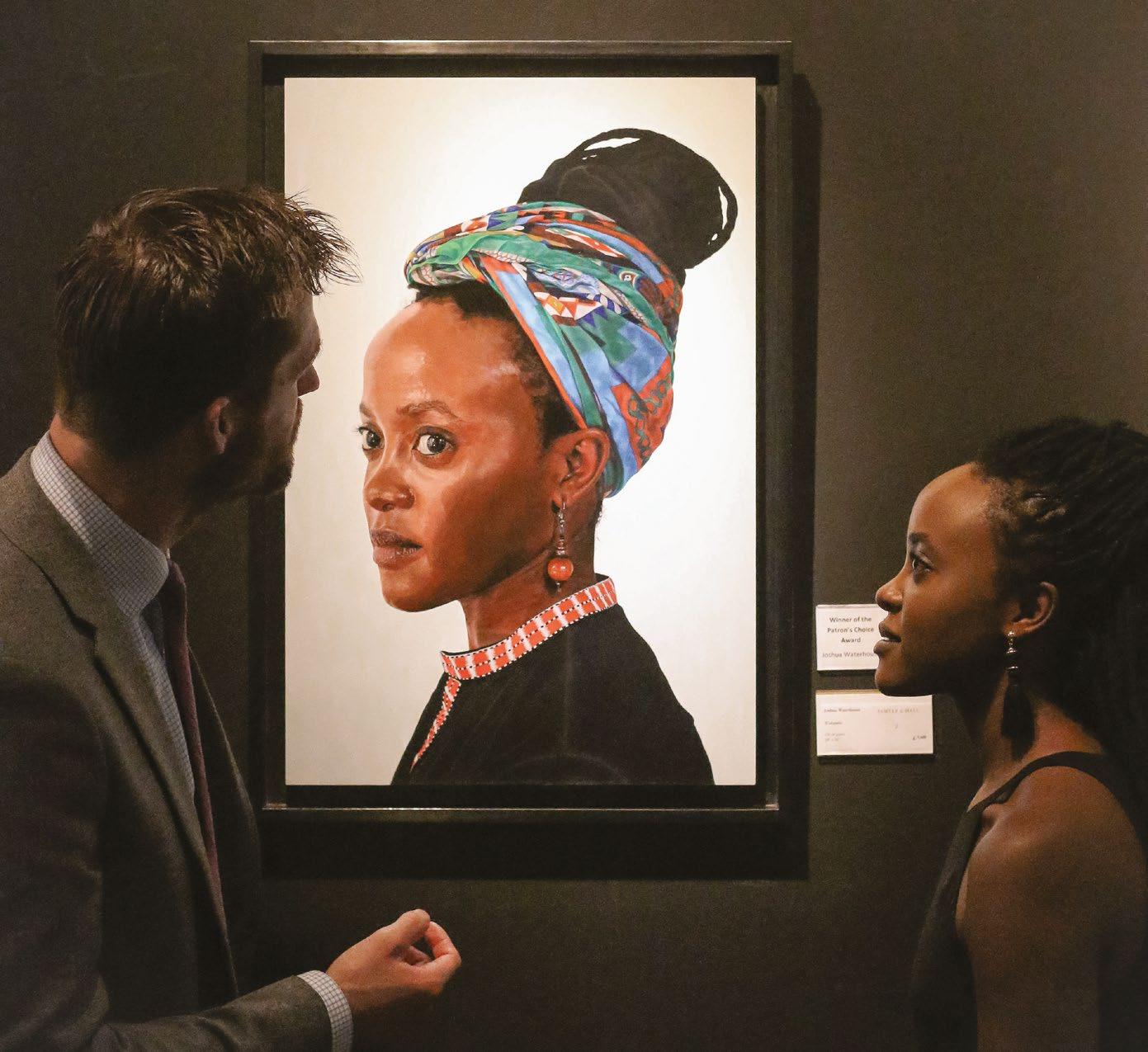
Image: Joshua Waterhouse RP & Patricia Wakaimba with her portrait.
Portrait of a Changing Nation: 'Ireland’s Presidential Portraits' by
Ruth O'Connell
Finalist, 2025 RP Critical Writing Prize
Slender and haughty, she perches her long, elegant arm on an Irish harp, leading our eyes to her delicate face, where large, hazel eyes stare back confidently at the viewer. The palette is muted and her clothing is humble, but despite his best efforts, Sir John Lavery (b.1856) has not succeeded in rendering his wife into an Irish cáilín. This is a 1927 portrait of aristocracy in costume, immortalised as the personification of Ireland on twentieth century Irish banknotes. Let’s fast forward to 2018; thin wisps of white hair escape between wrinkled fingers, softly pressing the temples of a tired and lined face, whose eyes are shut tight behind thin rectangular spectacles. The monochrome colour of the photograph creates a deathly palette; however, this impression is dispelled by the softly parted lips, through which a distressed sigh is almost audible, despite the stillness of the image. It would be an image of elderly vulnerability, were it not for his clothes; nothing indicates strength and power in today’s landscape like a tailored suit. This is President Michael D.Higgins as Ireland’s representative, in an image that could not be more far removed from Lavery’s rendition of Kathleen Ní Houlihan. Sarah Doyle captured the reality of independence and power in this spontaneous shot of the President of Ireland in 2018. As President Michael D.Higgin’s weathered expression betrays, Irish independence, while a fascinating story, has not been the idyllic and harmonious adventure promised by
W.B. Yeats and Sir John Lavery. The nine Irish presidential portraits on display at Áras an Uachtaráin (the President’s house), echo this sentiment. Indeed, unlike mythological personifications, these underestimated presidential portraits offer a contemporaneous window into a nation’s soul; as such, we need only to look at three to understand the complicated story of independent Ireland.
Dark, almost black, eyes stare alertly through a thin pair of round spectacles. Though unevenly shaped, their intense focus is unnervingly rendered. The round spectacles sit on a distinctive, long nose, casting a shadow over thin, unsmiling lips. Seated in a three-quarter length pose on a grand mahogany chair, he wears a three-piece black suit, crisp white shirt and grey tie. With his left hand tenuously placed on his left thigh, and his right hand almost closing into a fist, he exudes a sense of restless tension, leaving one with the feeling that he may get up suddenly and furiously at any moment. The heavy, dark blue curtains that provide the painting’s backdrop, indicate the sitter’s prestige, but there’s no need for them to do so. The formidable Éamon de Valera, uncannily rendered in paint, requires no embellishment. Seán O'Sullivan RHA (b.1906), excelled at portraying the mystery and gravitas of this rebel turned veteran politician, at the height of his powers. However, de Valera was not at the height of his powers when he was inaugurated
as President of Ireland in 1959. Rather, he was effectively retiring from a long and turbulent political career. Having been elected as Taoiseach two years previously, de Valera resigned upon his election to the office of the President of Ireland, allowing the more future focused Seán Lemass to lead Ireland into the brave new world that was the 1960s. Despite the changing times, the Irish people remained largely conservative, Catholic and idealistic; as the image of Lavery’s romantic Kathleen Ní Houlihan was still branded on the Irish pound note, so was the dream of a utopic Ireland, succinctly illustrated in de Valera’s now contentious "Ireland Which We Dreamed Of" 1943 speech. It is therefore no surprise that rather than commissioning a new, accurate portrait of the aging President, an existing portrait (c.1943), which portrayed this highly symbolic political figure in his prime, was chosen instead to hang at Áras an Uachtaráin, thereby encompassing a culture which opted for an unattainable ideal, over crude reality.
As history has repeatedly taught us, bubbles burst, and Ireland’s romantic dream was no exception. From the 1960s onwards, the Catholic Church experienced a gradual decline in influence as it faced the cultural war head on in a rapidly modernising country. To the undiscerning eye, it would seem that the old values were being stripped away as cleanly as Lavery’s Kathleen Ní Houlihan had been from the
Irish pound note. But the truth was less dramatic; the societal shift in the 1990s was more of a political swing than the profound cultural change the country eventually underwent. As any political historian knows, such swings are precarious and impermanent, and, as any art historian knows, this precariousness is often reflected in the relevant artworks; the case in point here being Mary Robinson’s official Presidential portrait at Áras an Uachtaráin, painted by Basil Blackshaw HRHA (b.1932).
It is widely agreed that the election of Mary Robinson to the Office of the President of Ireland was a watershed moment in Irish history. As the first female President of Ireland, the former lawyer and senator was a strong, public proponent of contraception and divorce – a far cry from de Valera’s 1943 dream of Ireland. Her portrait by Blackshaw conveys this modernity, embracing an expressive, sketchy style and an adventurous palette which stands out among the surrounding, comparatively staid presidential portraits. In this seated three-quarter-length portrait, Robinson sits with an almost casual pose; her legs folded, she leans forward in a bright, white pantsuit, wearing a soft and engaging expression which is framed by curated gold jewelry. Although Robinson’s portrait is modern for the context, traditional, feminine traits dominate the work; her features are soft, her pose is welcoming and informal, and the hues of yellow and pink emit a warmth, creating an effect that is jarring in tone when compared to the other male portraits. Despite the social change her election indicated, Robinson was undoubtedly aware that change is
slow and collective memories endure, such as that of de Valera’s dream. As such, the choice to present herself as both traditional and cosmopolitan was likely a tactical one, creating an artwork that masterfully conveys the precarious winds of change that breezed through Ireland in the 1990s.
By 2011, the winds of change had gathered momentum when Michael D.Higgins was elected to the Office of President of Ireland.
A consummate socialist, his election as Head of State signified another significant cultural milestone. Ireland was bolder and the portrait of President Michael D. Higgins by Mick O’Dea PPRHA (b.1958), emulates this boldness. President Higgins stands resolutely in a sharp, three-piece navy suit. Framed by a library of innumerable books, he faces the viewer directly and intensely. In an expansive pose leans his weight on his hands, which are tactfully placed on his desk, leading our eyes from his stern, resolute expression down to explore the array of presidential work it supports. Hanging in Leinster House, this striking image would surely remind Ireland’s elected representatives of their electorate, resolved to continue down the path of the new Ireland, the illusion of the idyllic land of saints and scholars now fully dispelled...or was it? There are stylistic parallels between O’Dea’s portrait of President Higgins and O’Sullivan’s de Valera that may suggest an insecurity in this regard. Both men, rendered in a traditional, representational style, are endowed with a chillingly, authoritative presence. Such a show of authority is generally a necessary response to threat; de Valera worked to curate an Ireland that
aligned with his idealistic vision amidst a chorus of dissenting voices that were strong, albeit a minority. Are we seeing a similarly defensive unease in President Higgins’s portrait? After all, there are some cultural indications that the old bucolic, Catholic dream still lingers in the hearts of the Irish people; Liam O’Neill’s paintings of a vanished Ireland are among the country’s most popular, as are sentimental folksongs such as Kingfishr ‘s 'Killeagh', not to mention that recent milestone referenda were by no means universal in their verdicts. Indeed, while the portrait of President Higgins indicates that Ireland has trekked a 180-degree turn since de Valera’s time in office, there is a potential suggestion that this may be rounded out to a 360- degree turn, as so often happens in history.
Despite its lack of executive power, the Office of the President of Ireland holds immense symbolic power, acting as a manifestation of the nation’s sense of identity and purpose. The significance of the portraits in this regard cannot be understated; approved by the President before being formally accepted, each portrait offers an opportunity for the serving President to surmise their intentions and the values they stand for in a captivating and timeless medium. As such, Ireland’s presidential portraits act as vital records of the collective memory, mirroring the values, anxieties and aspirations of the nation at specific points in time, conveying the tumultuous story of this young republic and, perhaps, even indicating its future.
To read this essay with illustrations, please visit: https://therp.co.uk/the-rp-writing-prize-ruth-oconnell/
Artists’ General Benevolent Institution
Founded in 1814 by JMW Turner, the Artists’ General Benevolent Institution provides help to professional artists and their dependants in times of difficulty.
Funds are always needed, and donations of any amount are gratefully received and acknowledged.
Please send your donation to:
The Secretary
Artists’ General Benevolent Institution
15 Churton Street, Pimlico, London SW1V 2LY
Registered Charity No. 212667
Annual Exhibition 2026
Royal Society of Portrait Painters
You may consider making a bequest to the Royal Society of Portrait Painters, which specifically promotes contemporary portraiture and receives no public funding.
If you would like further information, please write to:
Anthony Connolly RP President
Royal Society of Portrait Painters
17 Carlton House Terrace
London SW1Y 5BD
Telephone 020 7930 6844
Registered Charity No. 327460
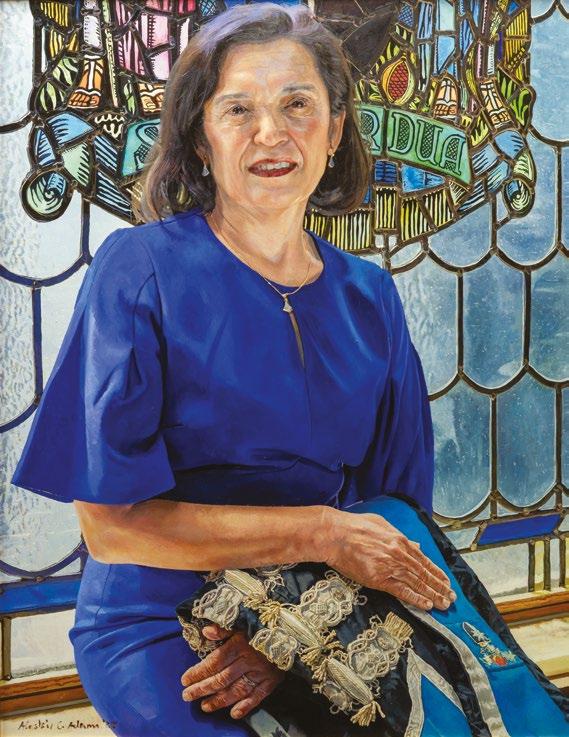
Alastair Adams PPRP
Professor Ranee Thakar MD, FRCOG
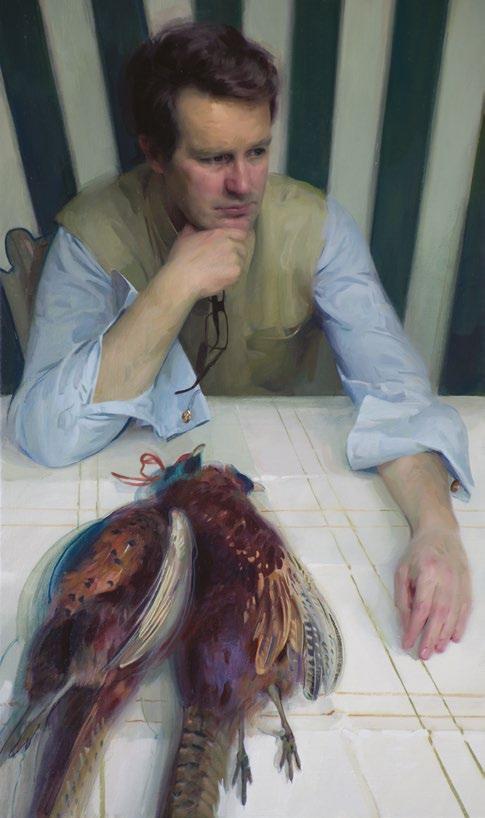
Rob with a Still Life of Pheasants
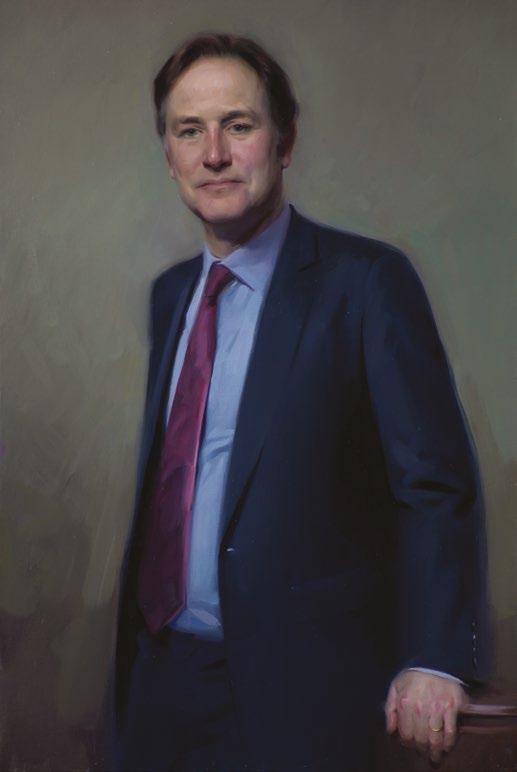
Sir Nick Clegg
Painted for the National Liberal Club.
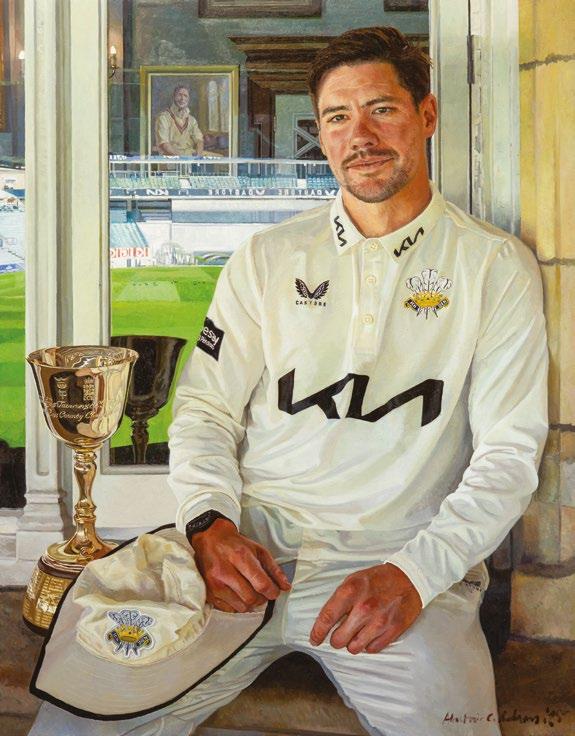
Rory Burns, Captain, Surrey Country Cricket Club
Frances Bell RP ROI
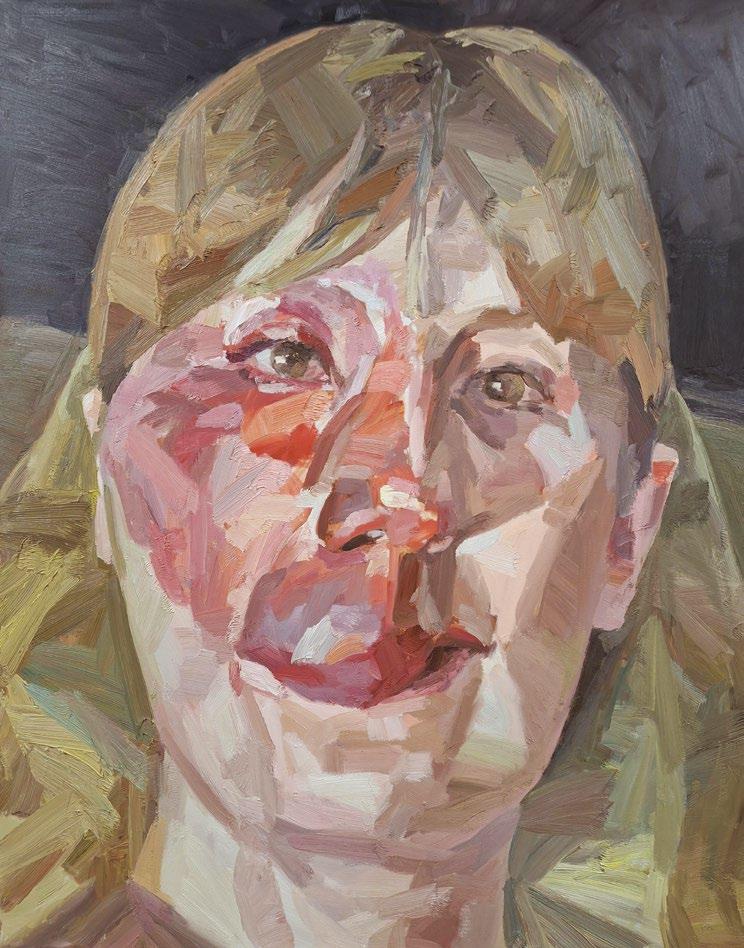
Eleanor
x 123 cm Oil on canvas
Tim Benson RP NEAC FROI
Paul Brason PPRP
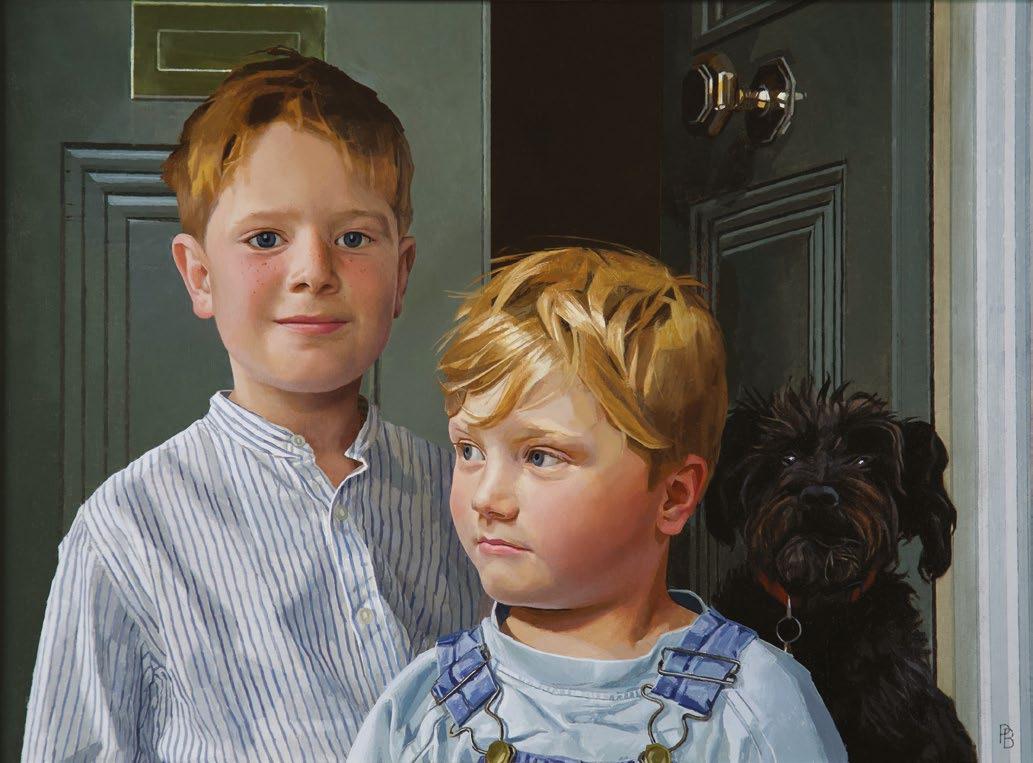
Hugh and Angus
46 x 61 cm Oil on panel
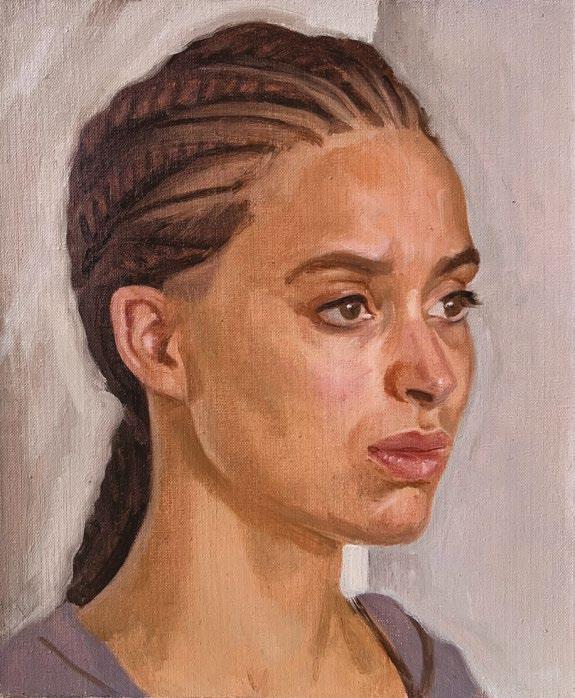
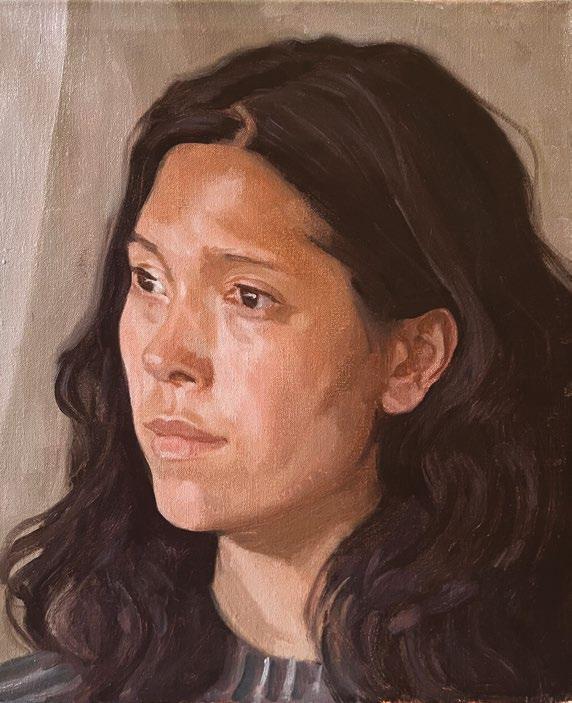
David Caldwell RP
Portrait of the actress Joanna Vanderham as Diana Mitford
This portrait was commissioned to mark the launch of the television series ‘Outrageous’ charting the lives of the Mitford sisters in which Diana Mitford is played by Joanna Vanderham. The portrait was painted using a single pigment: Rose Madder, an ancient pigment known for its beauty and soft transparency, but ultimately flawed (a bit like our protagonist) in that it fades over time, thus ultimately condemning the portrait. The portrait was built up in thin layers of paint with the bare canvas acting as the white. The mirror alludes to themes of vanity and solitude, whilst the pen she holds symbolises her preoccupation as a writer.
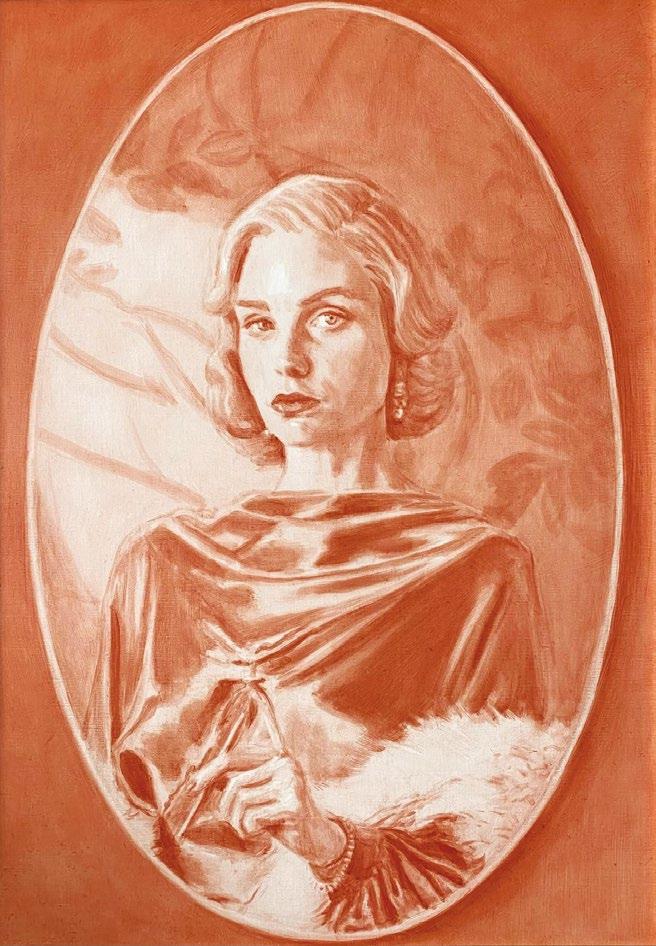
75 x 50 cm Oil on linen
Maya
Miki
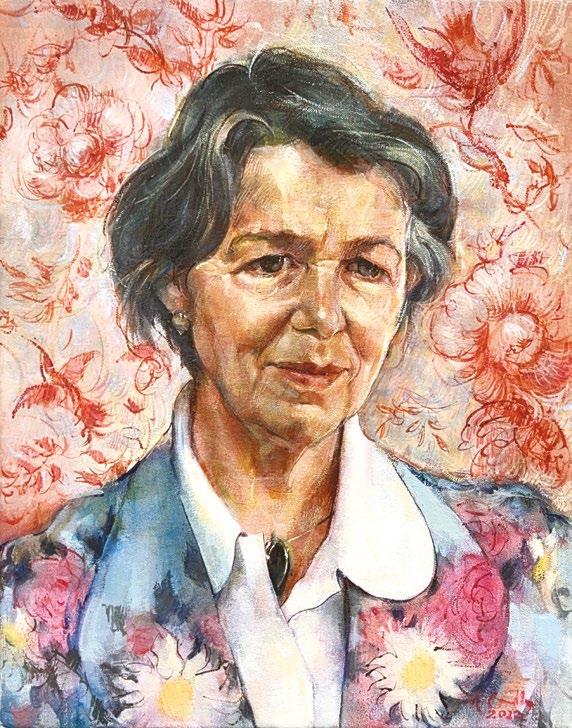
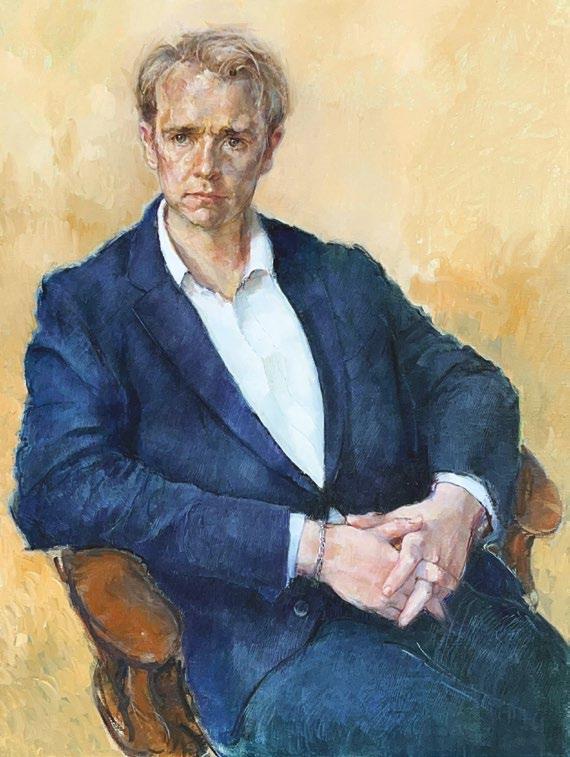
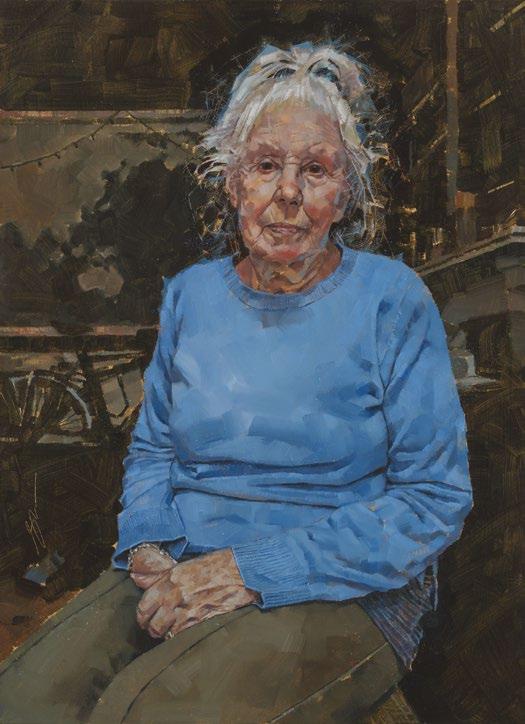
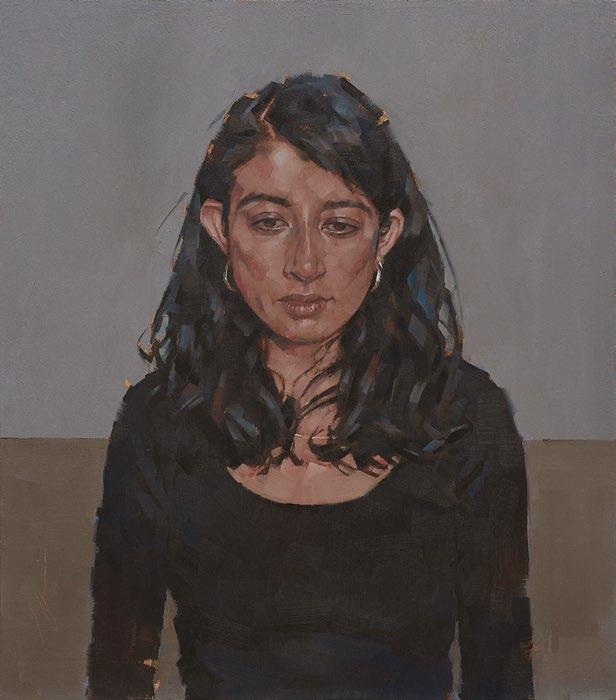
Anthony Connolly PRP
Clare Staughton
John Bilton
Simon Davis RP
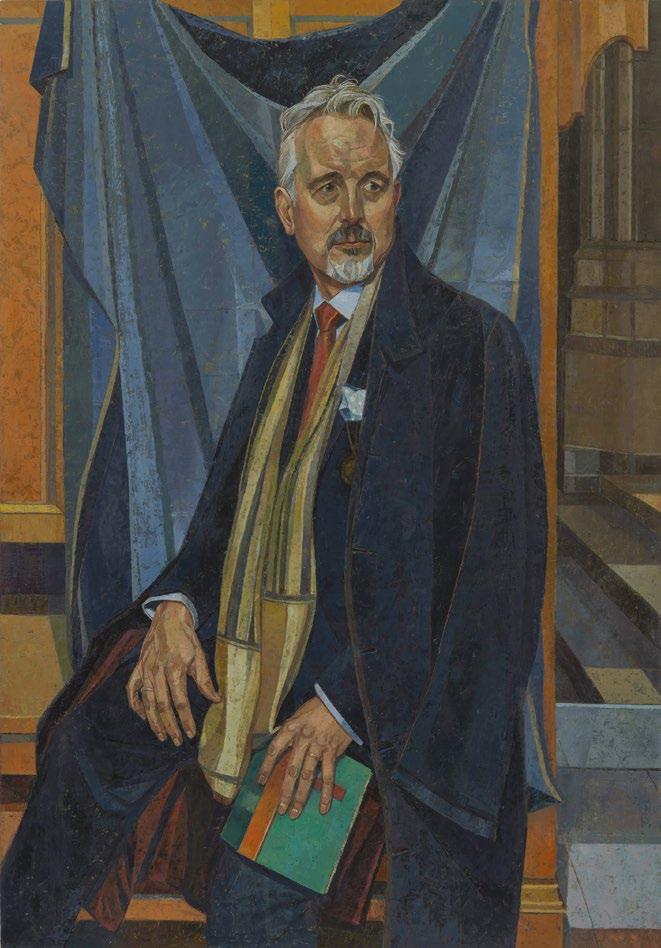
Dominic Oliver, MPhil (Oxon), Headmaster at Lancing College 2014-2025
122 x 85 cm Oil on gesso panel
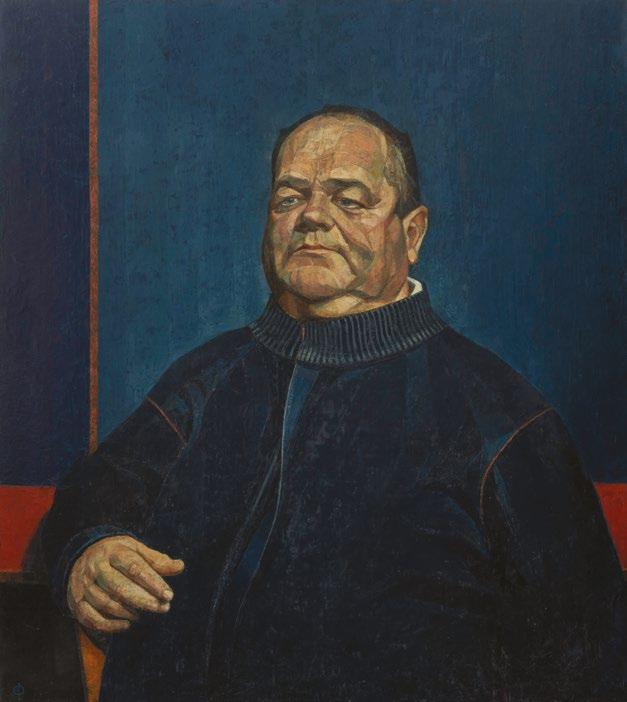
Man in Black 90 x 80
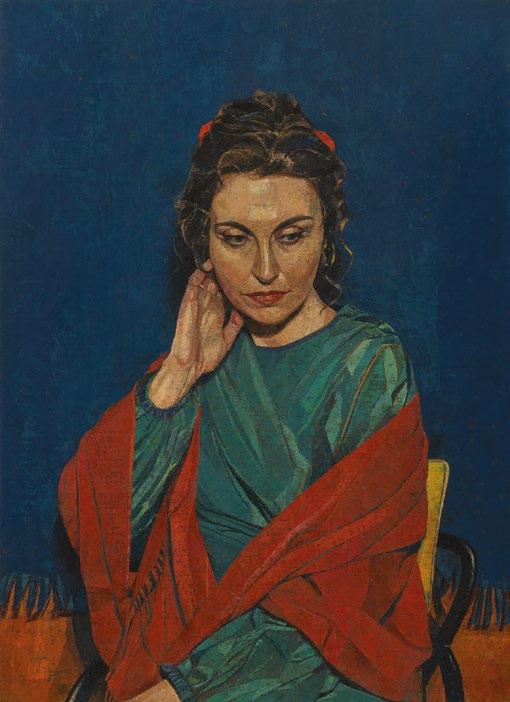
Night Song
Miriam Escofet RP
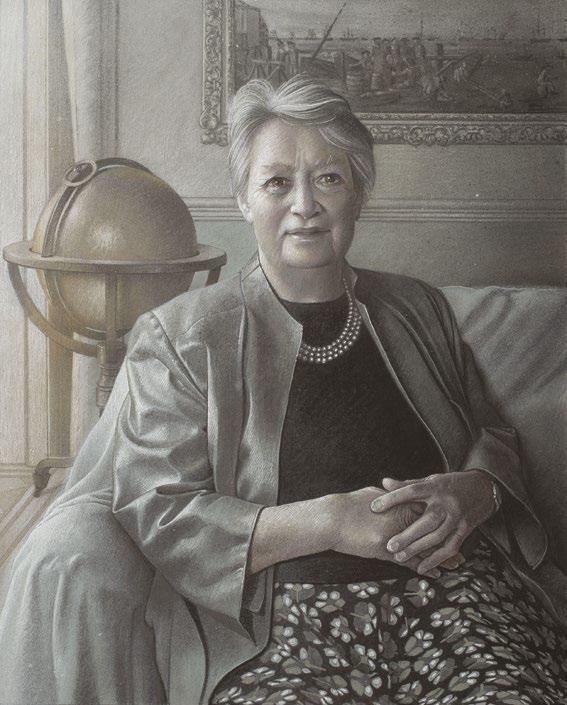
Layout drawing for Margaret Stanley
43 x 35 cm
Mixed media drawing - graphite, ink, charcoal, gouache, conte, pastel
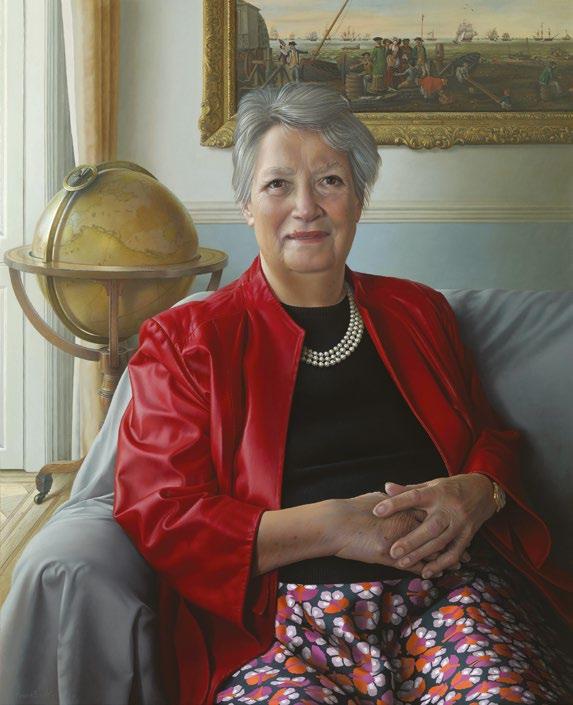
Professor Margaret Stanley, OBE, Honorary Fellow of Christ's College, Cambridge
80 x 65 cm Oil on linen over panel
Richard Foster PPRP
Ladyswood
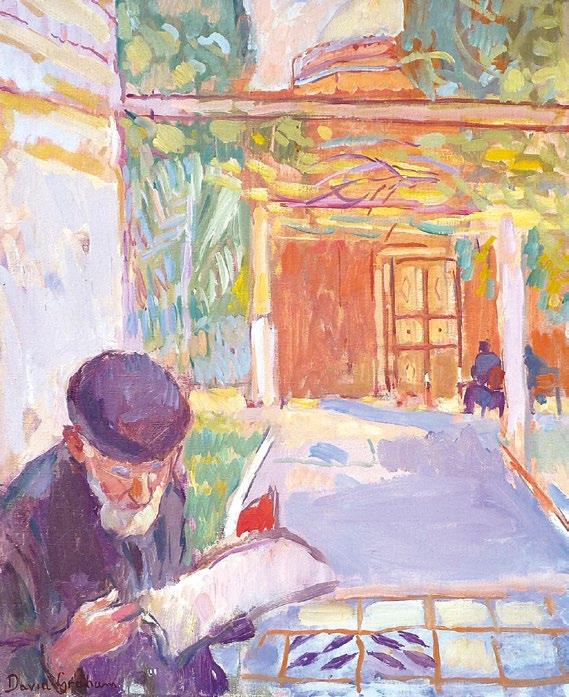
Coptic Orthodox Monastery
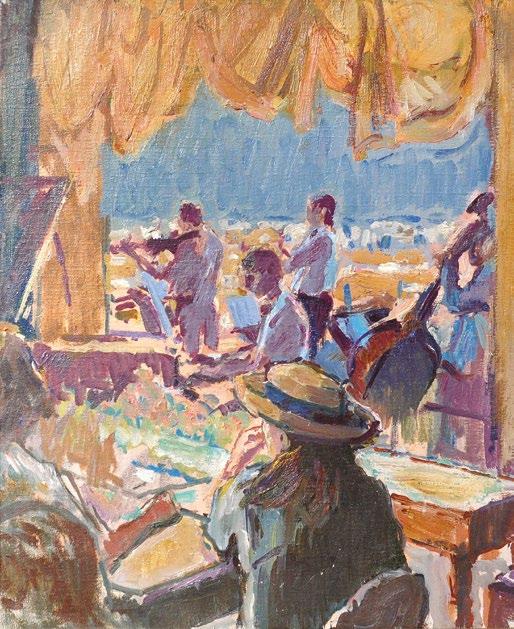
Musicians in Piazza San Marco 51 x
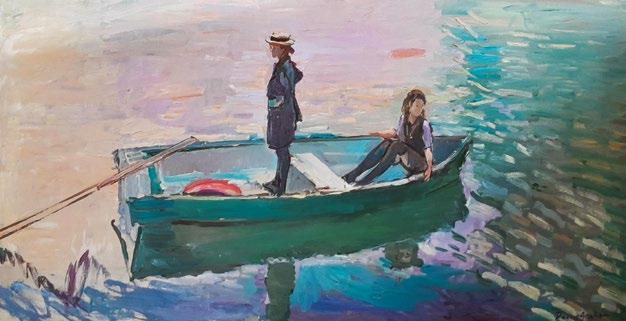
Sisters enjoying Rowing Regents Park
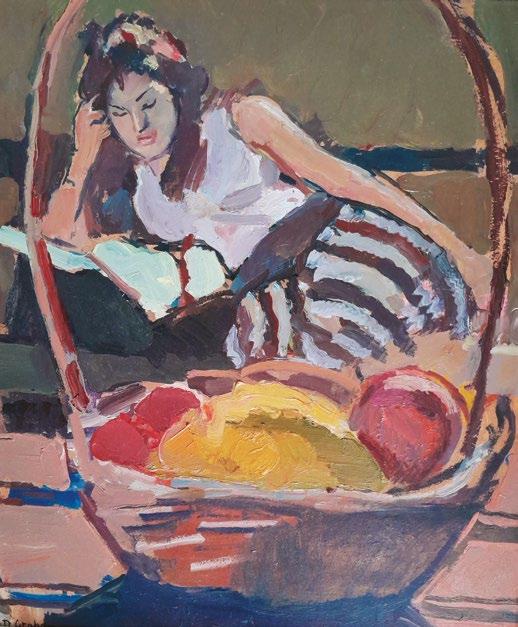
Girl Reading with Still Life
David Graham RP
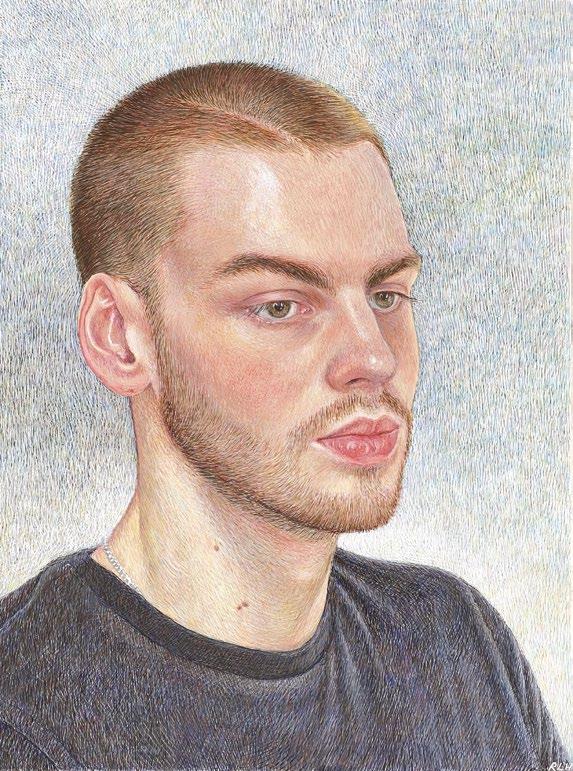
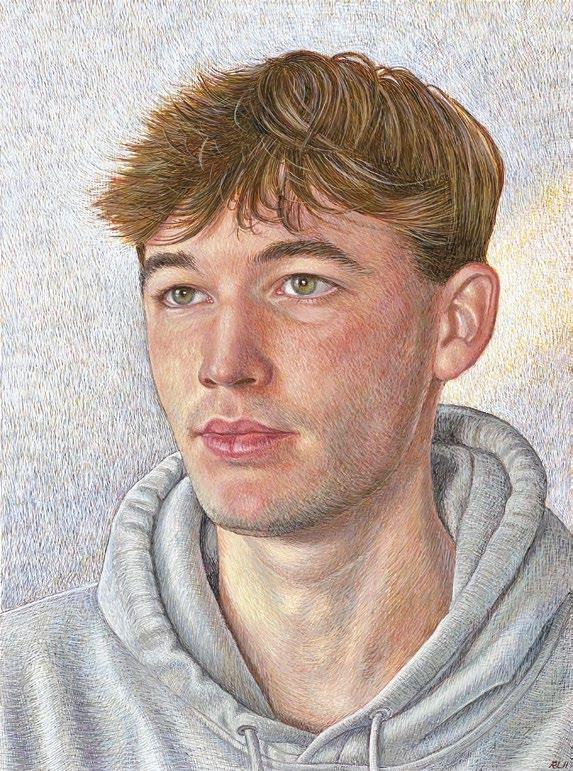
Egg tempera on gesso panel Louis
40 x 30 cm
Egg tempera on gesso panel
Self Portrait in BUFF
37 x 27 cm Oil on panel
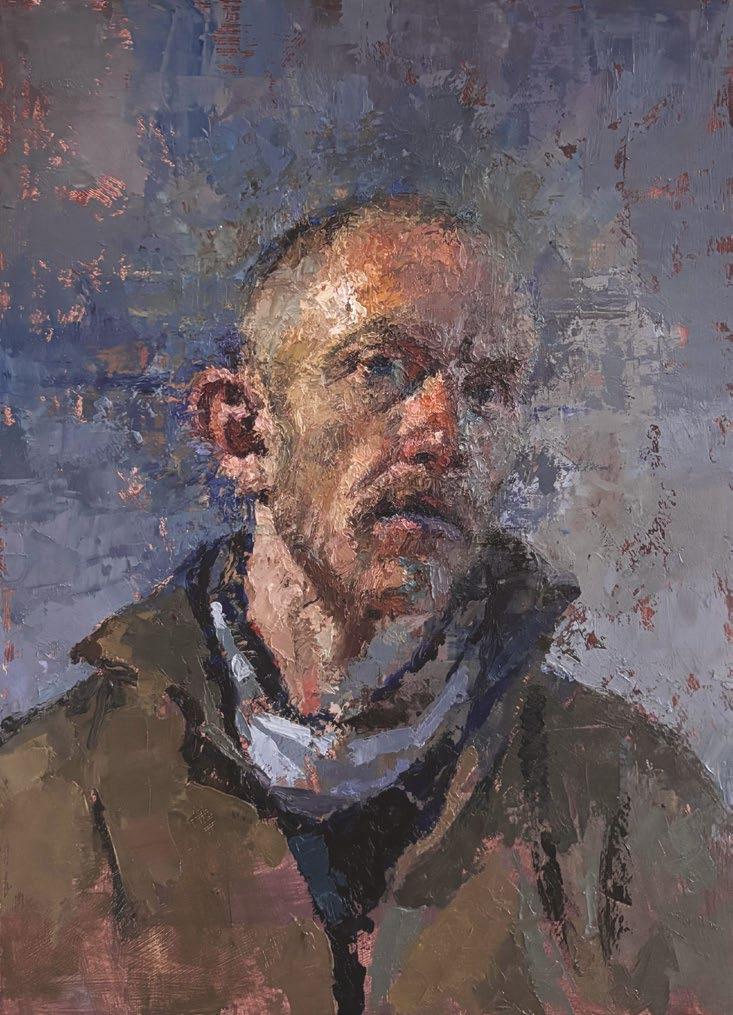
Benjamin Hope RP NEAC PS ROI RSMA
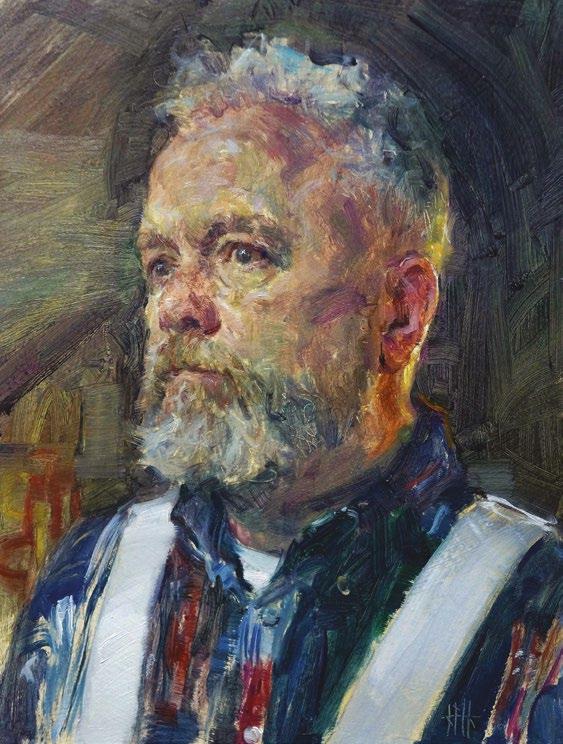
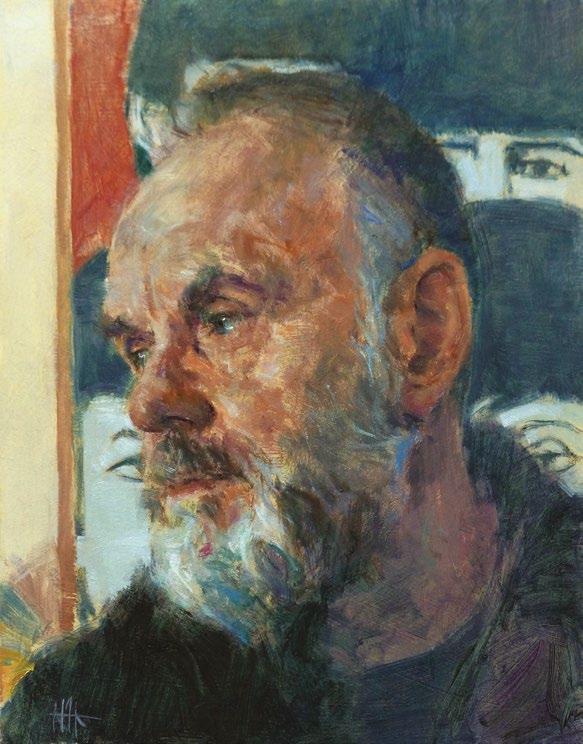
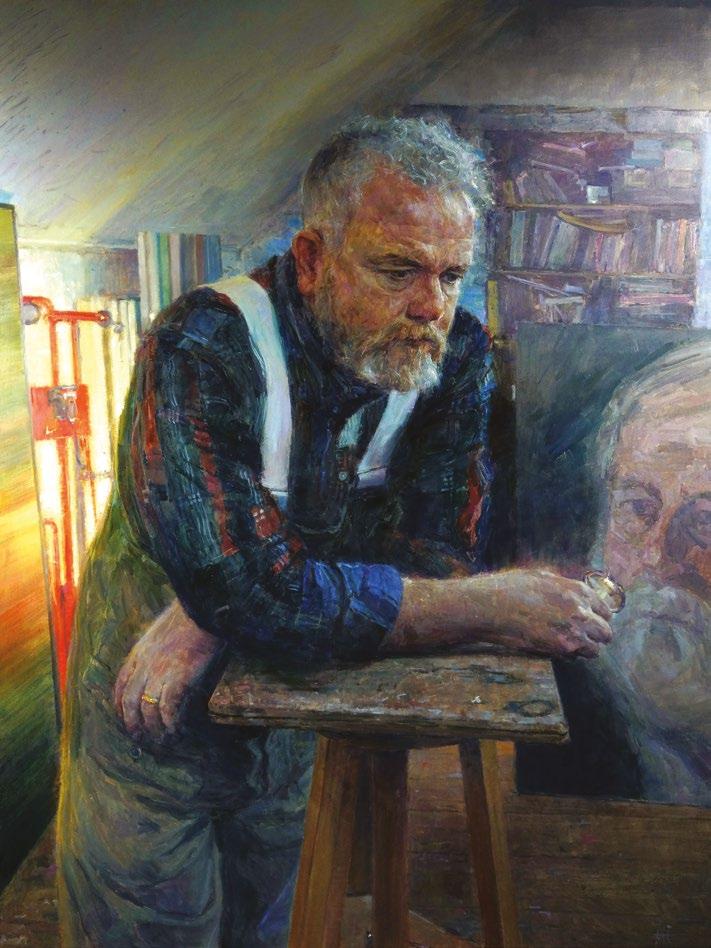
Colin Davidson
100 x 75 cm Oil on panel
The Beatle-ologist, Dr Richard Mills
26 x 20 cm Oil on panel
Colin Davidson, Study
26 x 20 cm Oil on panel
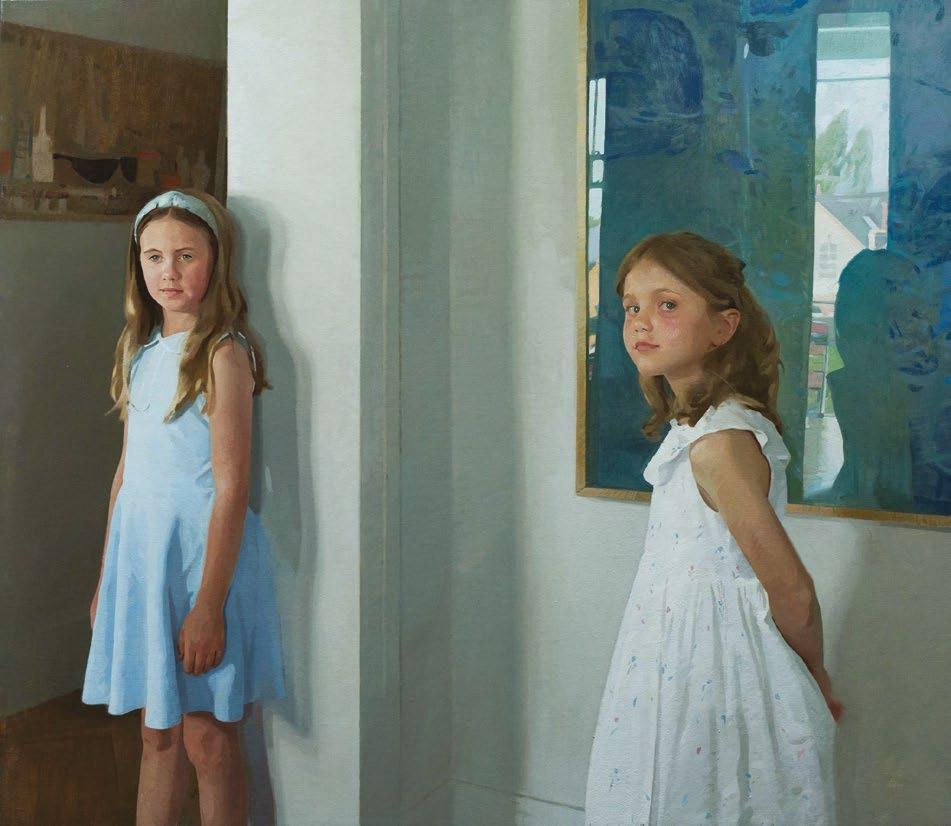
Les Soeurs (The Sisters)
Melissa Scott-Miller RP NEAC RBA
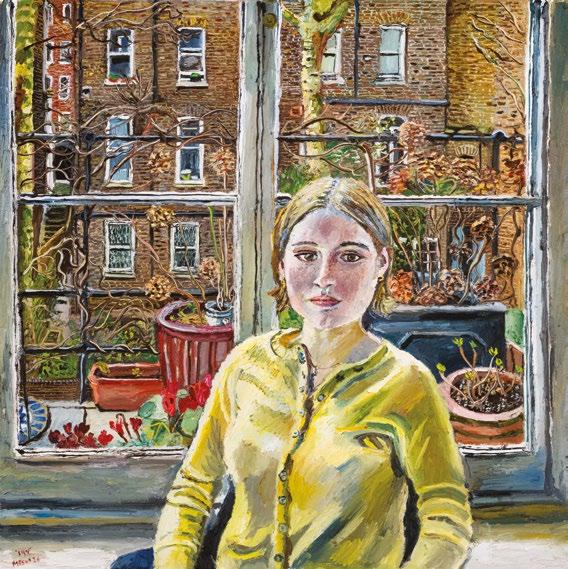
Lily
50 x 50 cm Oil on canvas
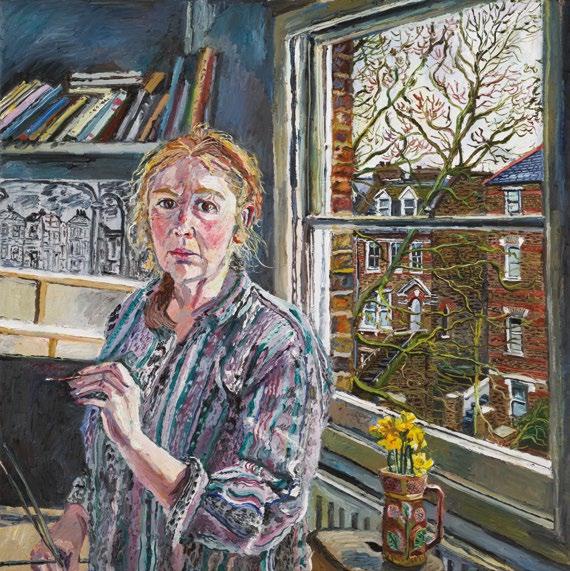
Self Portrait of a Worried Islington Woman Artist, aged 66
x
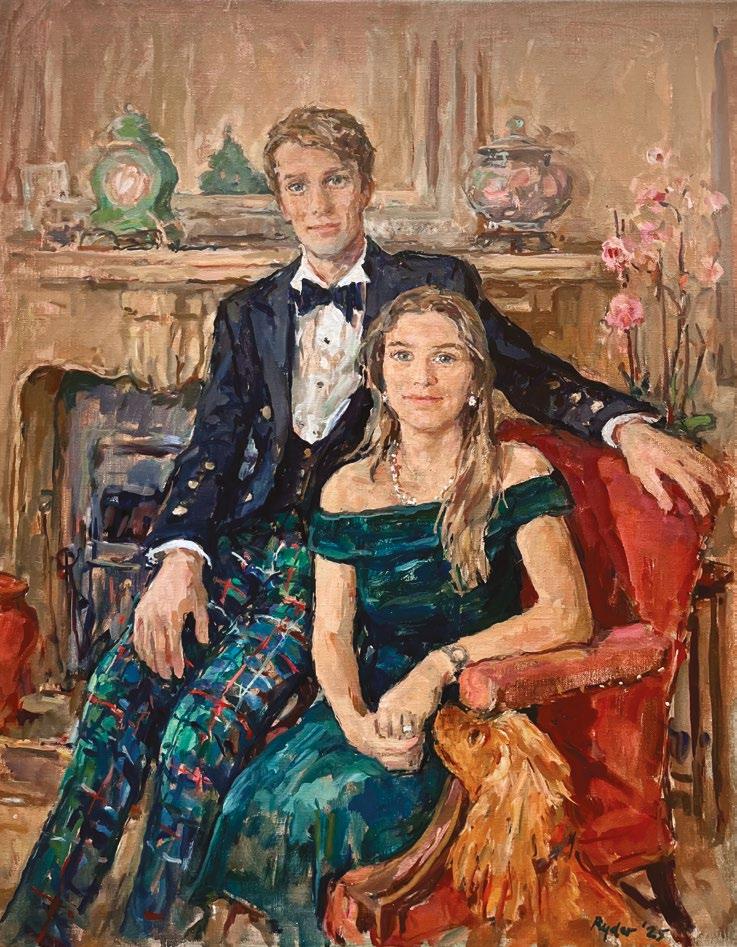
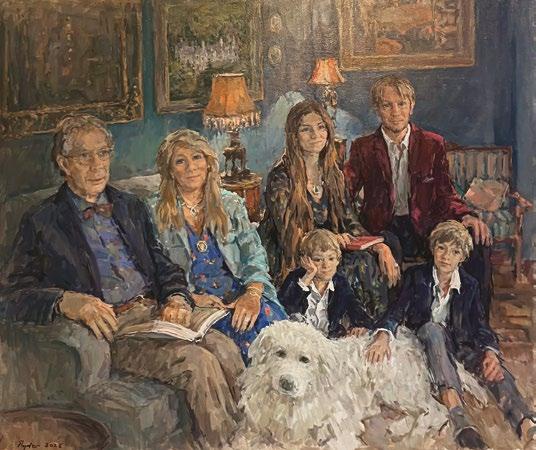
Annabel and Cameron with Winnie
76 x 61 cm Oil
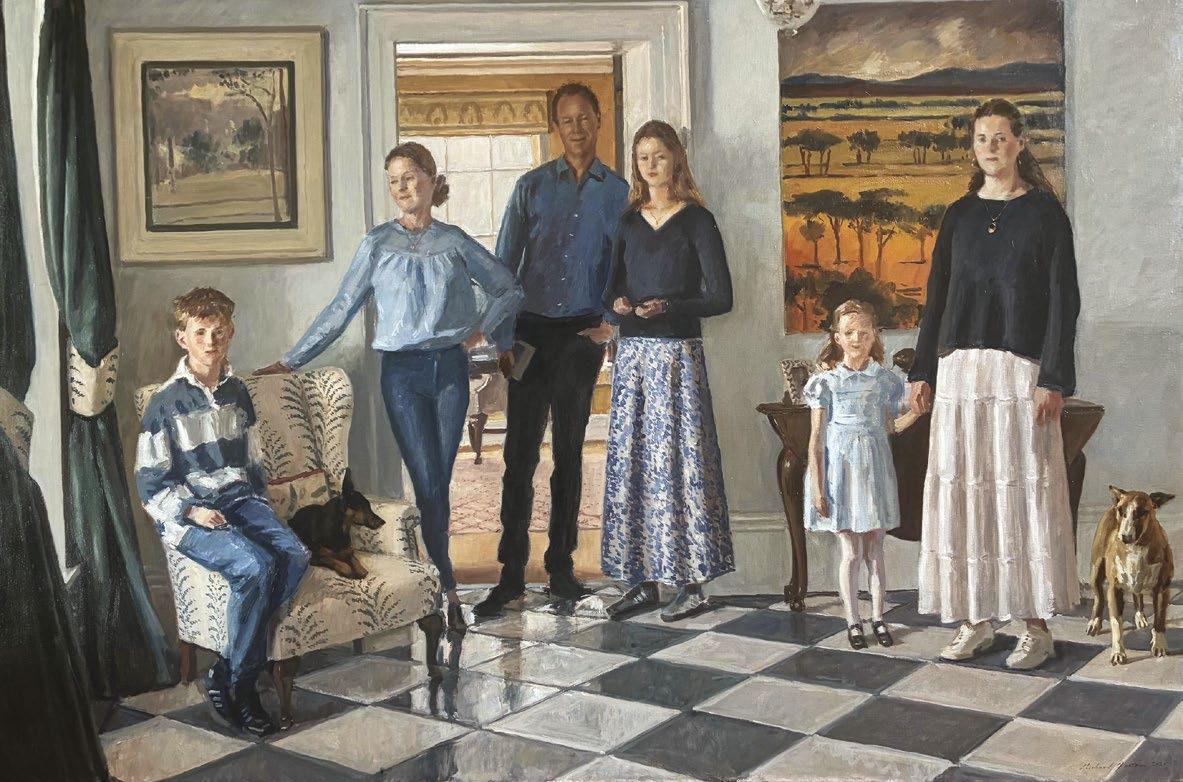
The Congdon Family
91 x 107 cm Oil
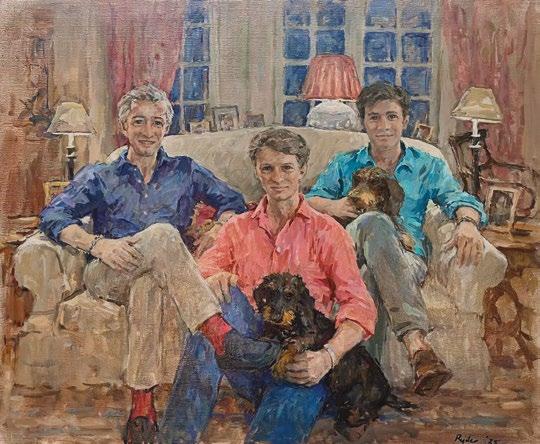
The Nunn Brothers
76 x 91 cm Oil
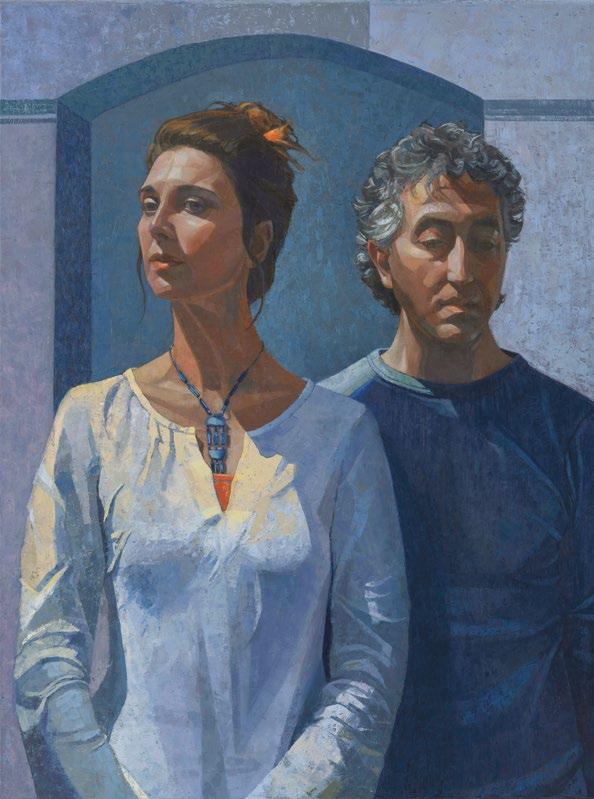
Couple
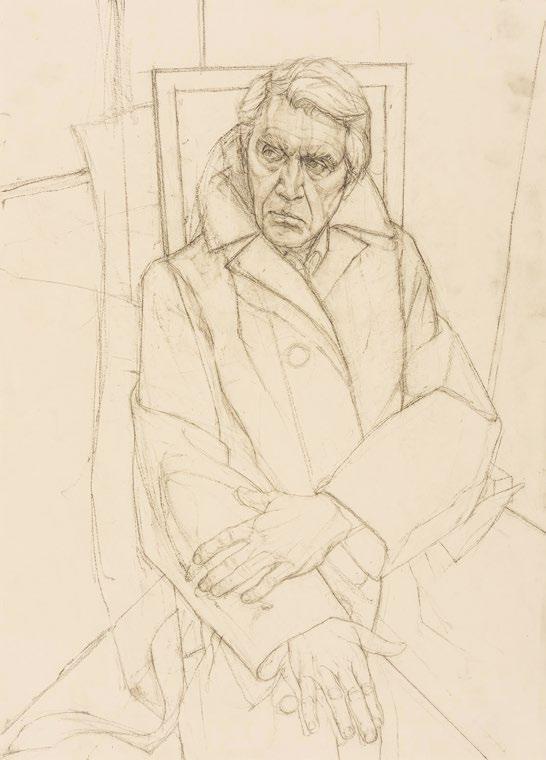
Don McCullin
59 x 42 cm Conte
Emma Wesley RP
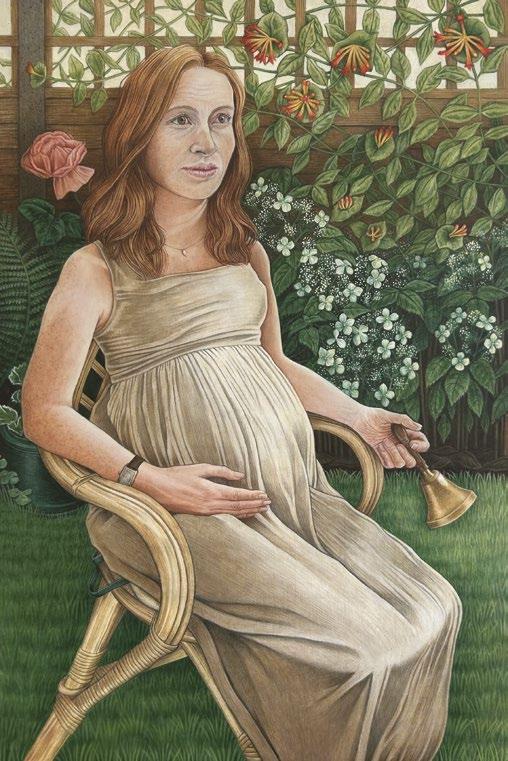
Honeysuckle Rose: Portrait of Catherine Pickles
62 x 41 cm
Acrylic on board
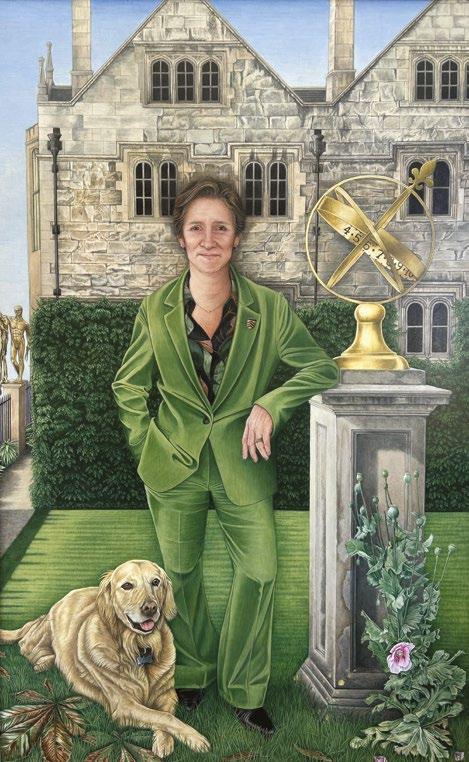
Professor Irene Tracey CBE, FRS, FMedSci, MAE, FRCA, commissioned by the Warden and Fellows of Merton College, Oxford
130 x 80 cm
Acrylic on board
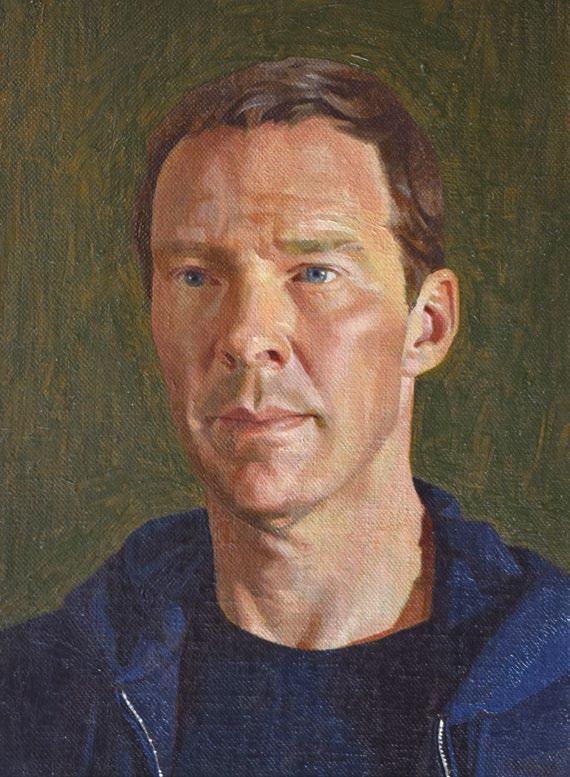
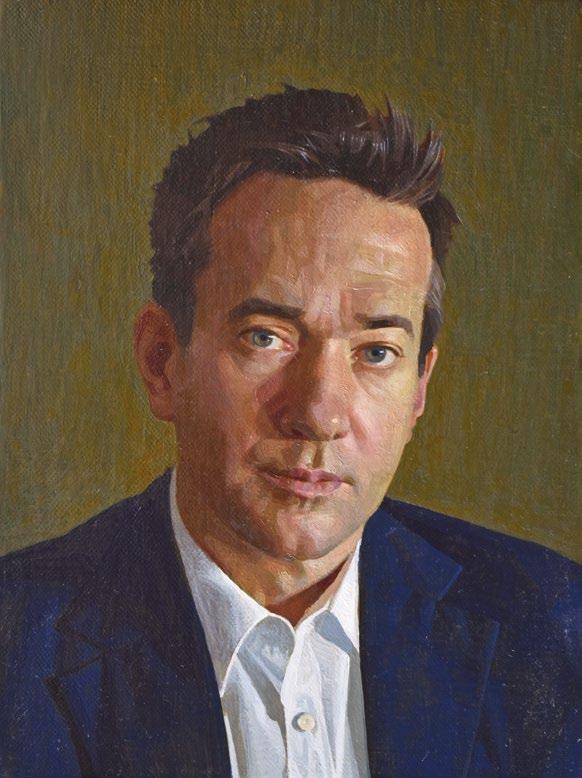
Benedict Cumberbatch 14 x 9 cm
on panel
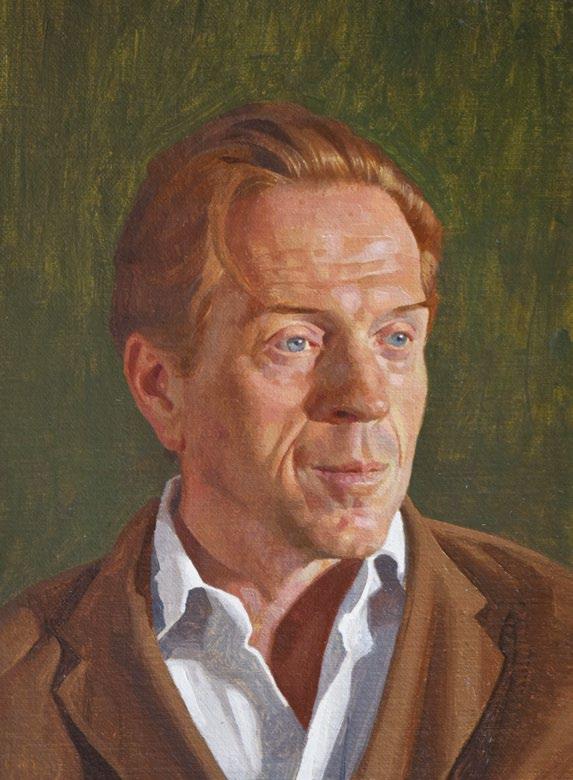
Damian Lewis
14 x 9 cm Oil on panel
Matthew Macfadyen
14 x 9 cm Oil on panel
When Anne was immobilised by foot surgery last summer, she became trapped into sitting for me every day for 3 months. With her magnificent blue cast stretched out before her, this offered a visual gift for any painter. In a second stroke of fortune, I was able to position her in her chair beneath my 1980s painting of a young girl leaping across the Estuary mud flats in the full glory of her youth. This created a bittersweet composition as my beautiful, leaping niece Maria died last year in her 40s, while Anne and I continue on with the infirmities of age.
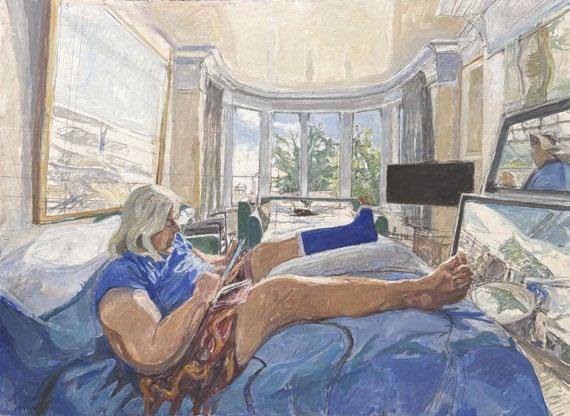
In Blue Foot 2, Anne lies trapped in her temporary bed parallel to the bay window through which outside life proceeds in the sunshine.
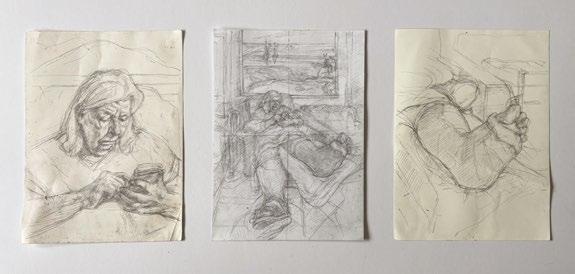
Organising 2 beds into our front room left no space for an easel or 4ft boards, so I drew every day, making dozens of A4 pencil studies to help me as I built the paintings in my upstairs studio.
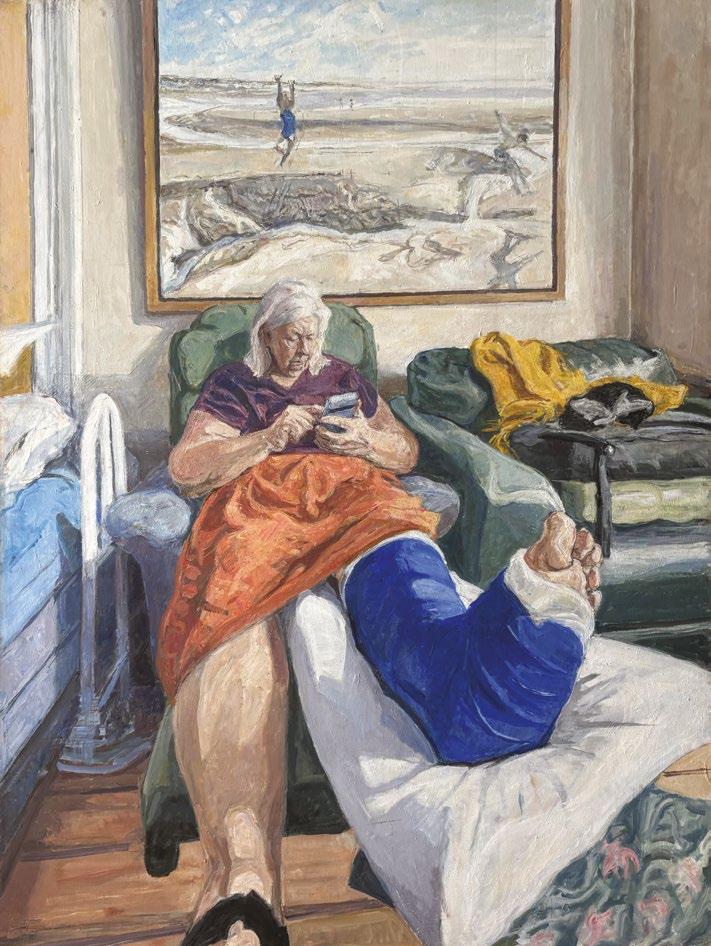
Blue Foot 1
120 x 90 cm Oil on board
Blue Foot 1
Blue Foot 2
Studies for Blue Foot 1
Studies for Blue Foot 1 40 x
Pencil on paper
Blue
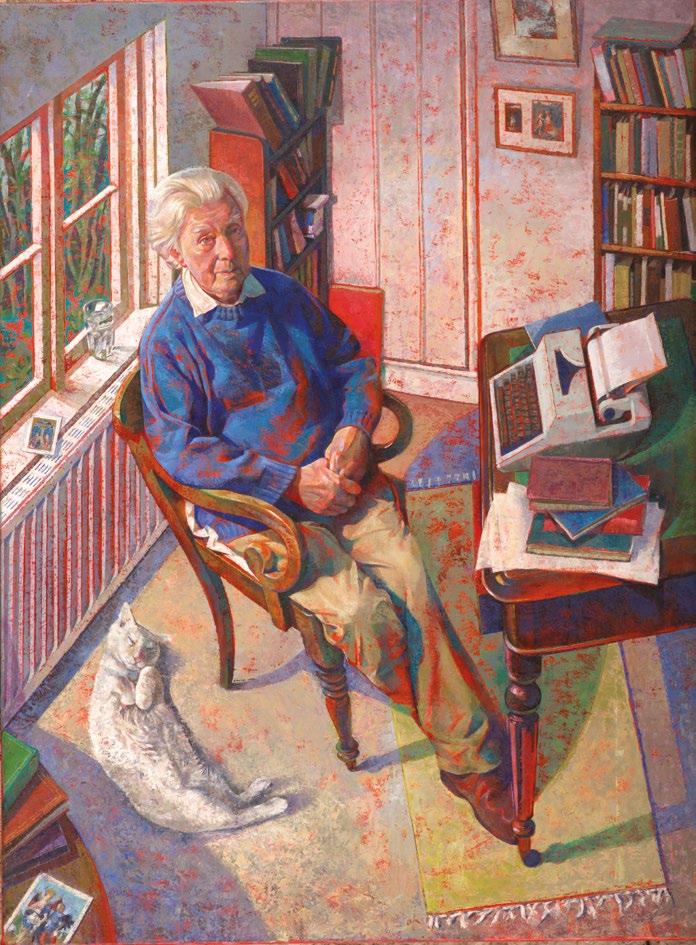
The View in Winter; Ronald Blythe in his study at Bottengoms
135 x 100 cm Oil on canvas
Ronald sat for me in his study, at the top of narrow stairs, his back to a low mullioned window overlooking the garden and illuminating his antiquated typewriter; a hand-me-down from friend and later biographer Ian Collins. He had worked at this table for almost 40 years. He told me that time was precious and you needed lots of it to yourself for writing as well as ‘just a few close and trusted friends’.
Ronald spoke with great affection of friends John and Christine Nash. He gifted me a dip pen from a box of John’s paraphernalia.
After hearing of his death aged 100 on the radio in 2023, I read his final publication ‘Next to Nature; a lifetime in the English Countryside’ (John Murray 2022) and duly unearthed the sketches from 2008 and began work on this final portrait.
“Not for us covetous desires and inordinate love of riches. Nor for us inordinate affection, although quite how one is to keep this within bounds I have failed to understand. Some friends, the cat, some books, this landscape familiar to me since boyhood, are all in receipt of my inordinate affection and the cat would not be pleased with anything less. But if I am not covetous, it is because I have all I need.”
Guest Artists from China
In
collaboration with Shengxinyu Art
Yunsheng Liu Lijian Xie Longsheng Wang Kangwei Zhao
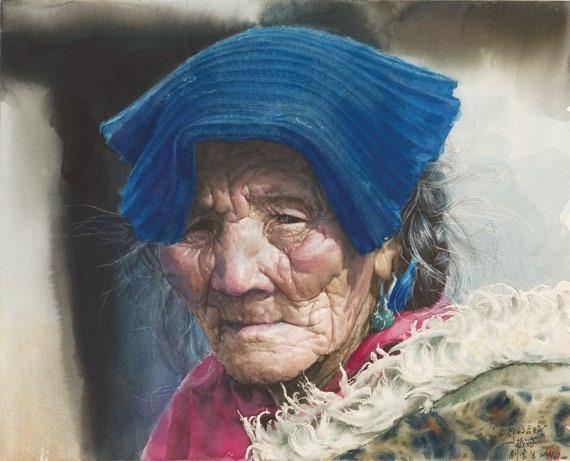
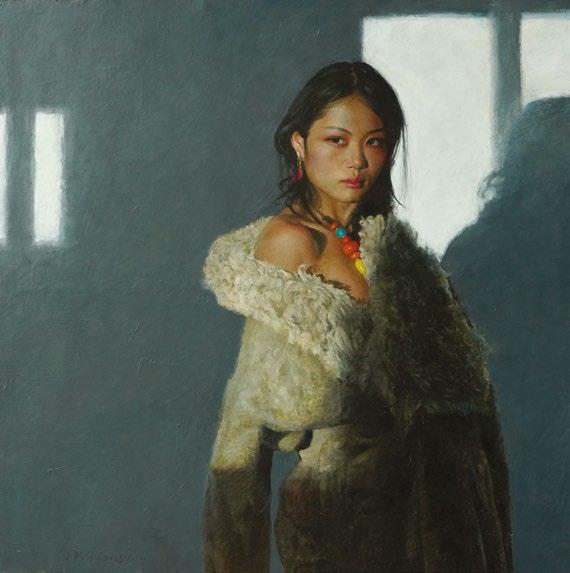
Hidden Mother – The Call of the West
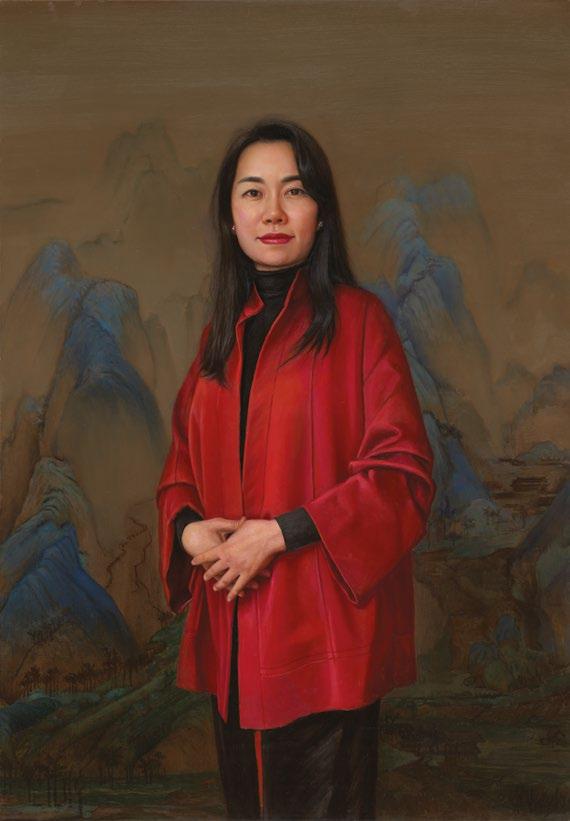
Red Attire Reflecting Mountains and Rivers
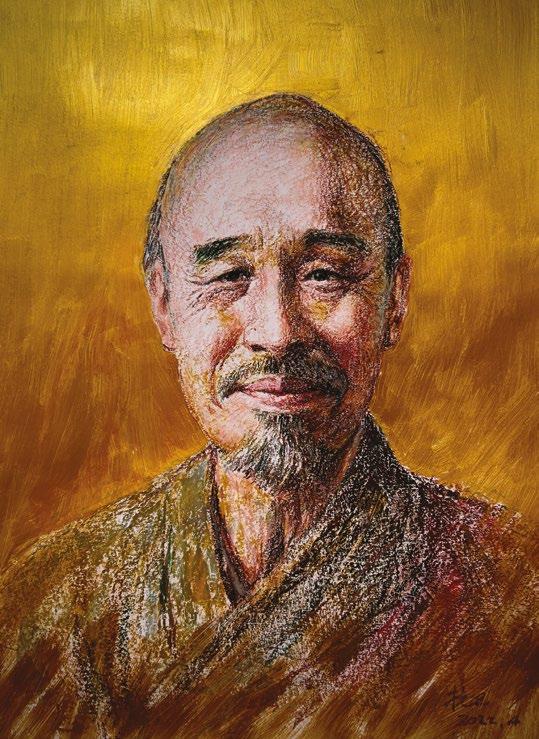
Master Hongyi : The pioneering figure who introduced Western music and painting to China
Zhengyang Yuan Xiaogang Li Ming Qin Qian Li
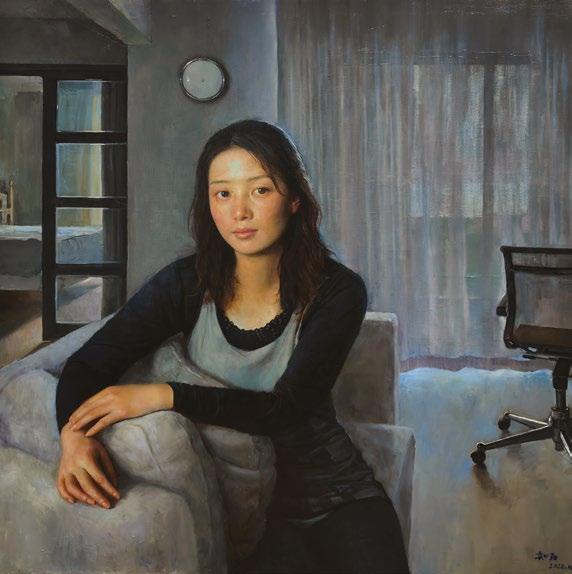
The Clock Without Hands
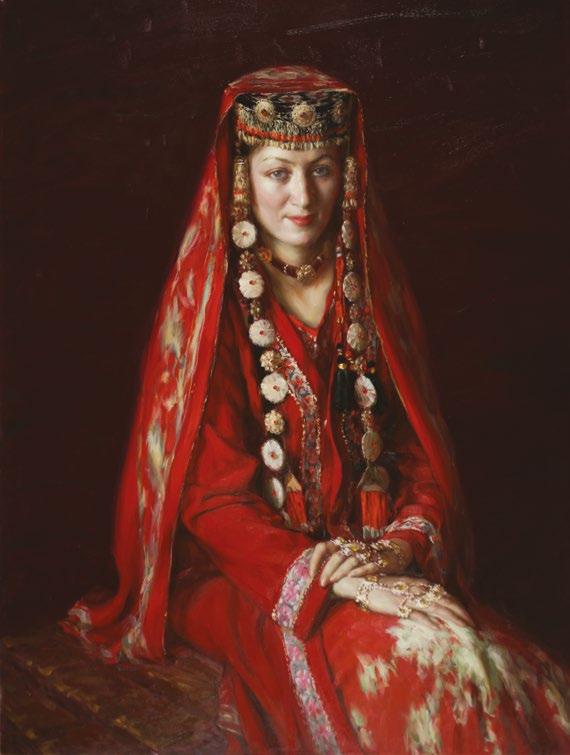
The Bride on the Pamir Plateau
Tajik Middle School Students
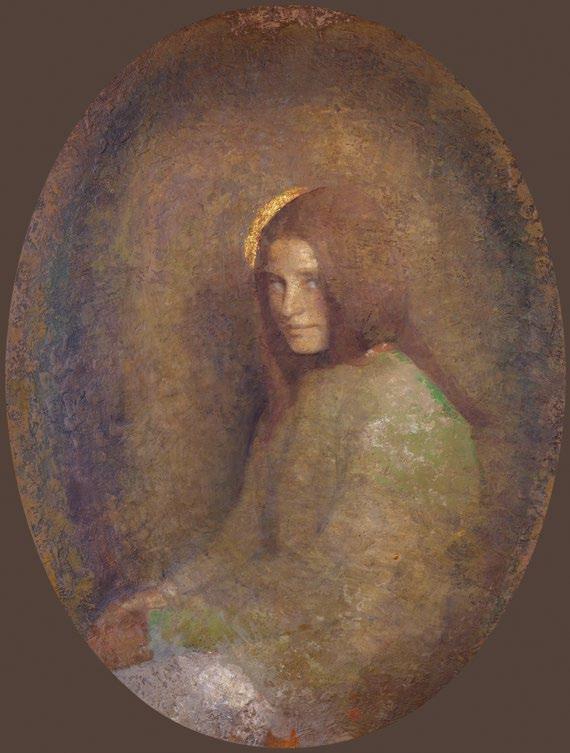
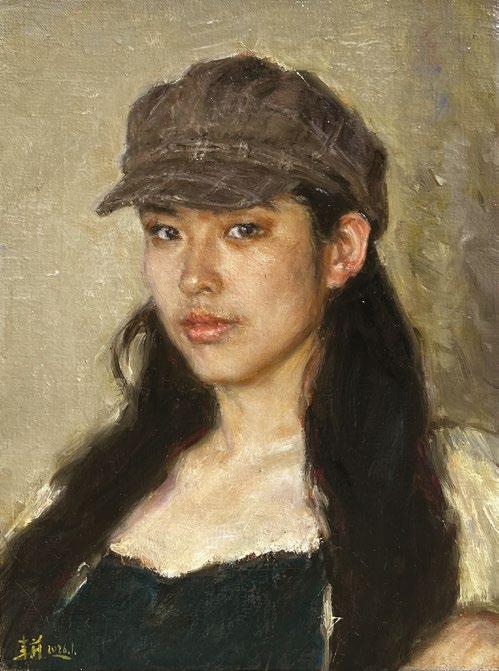
The Girl in the Hat
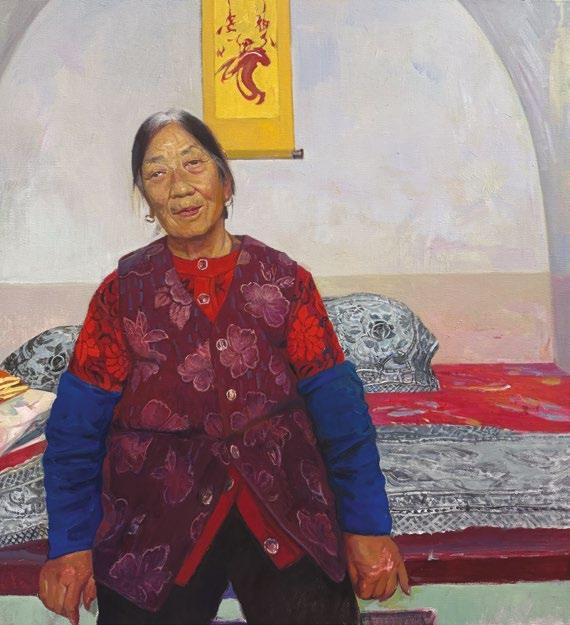
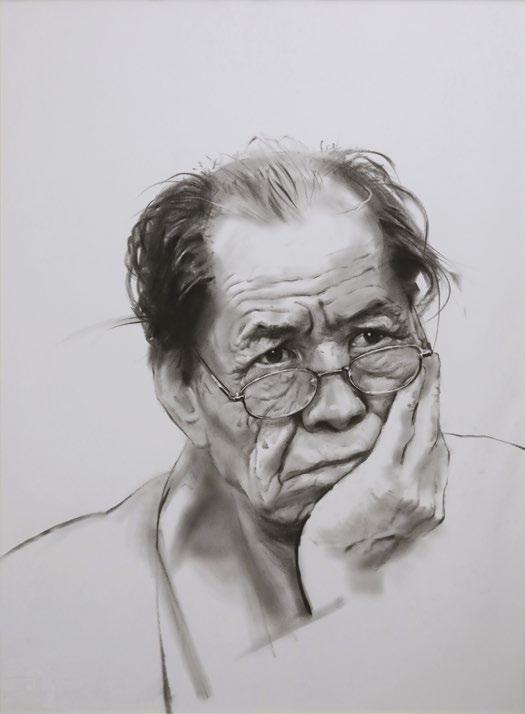
Junming Zhang Hualin Du Zhaohui Zhou Jianqi Du Mother
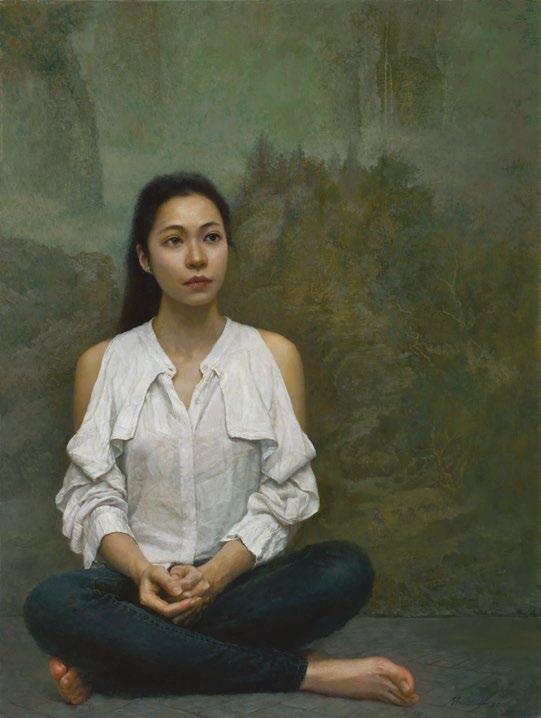
The Girl Sitting in front of the Mural
x
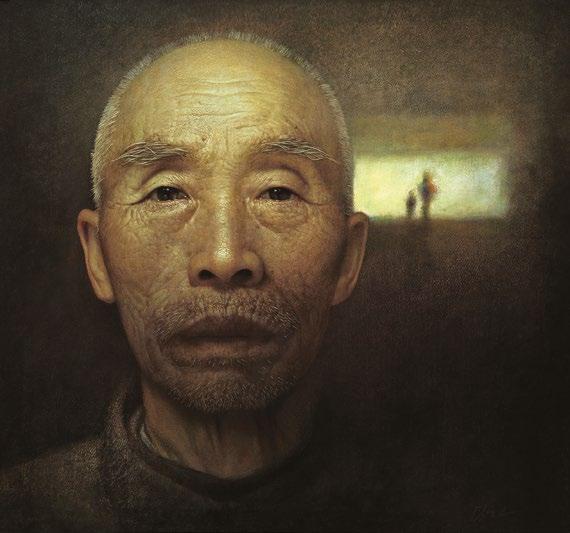
My Father
60 x 56 cm (74 x 71 cm framed) Oil on linen
Chinese Writer Chen Zhongshi
Jinghan Wu Jing An Xiaoyu Li Congxian Dong
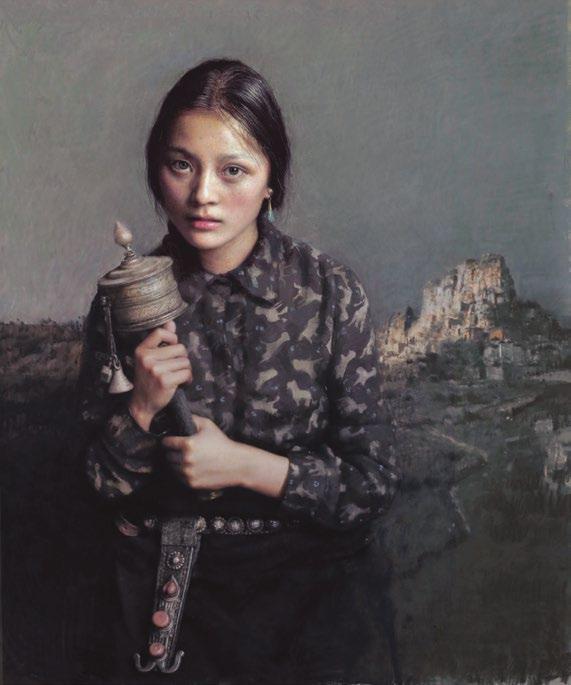
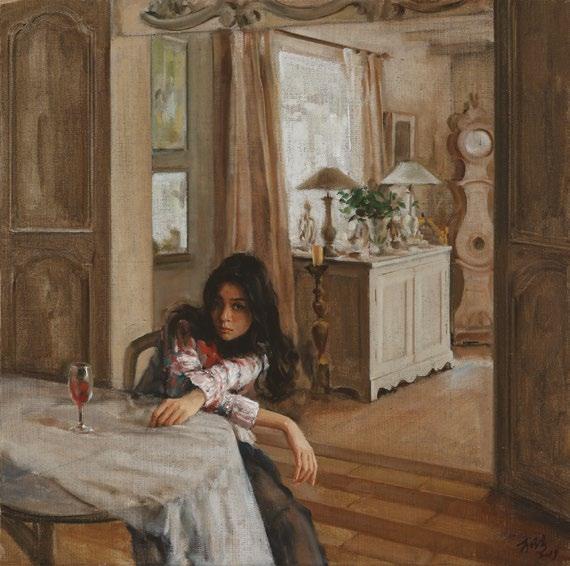
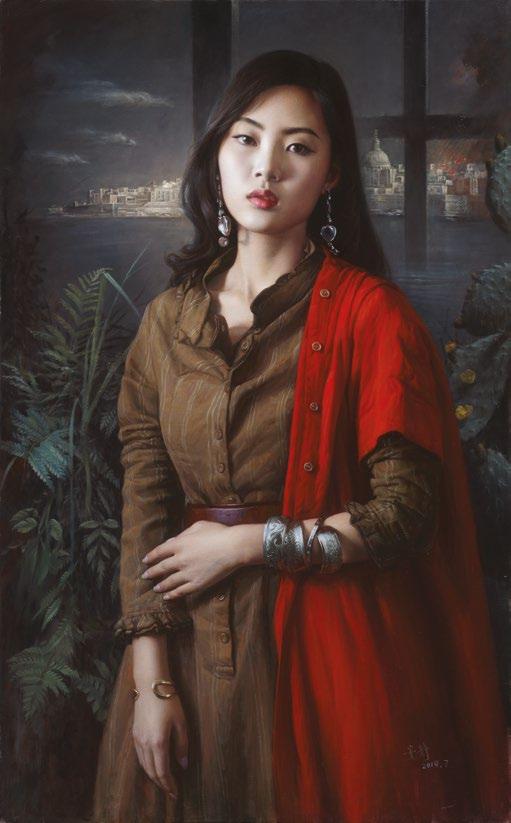
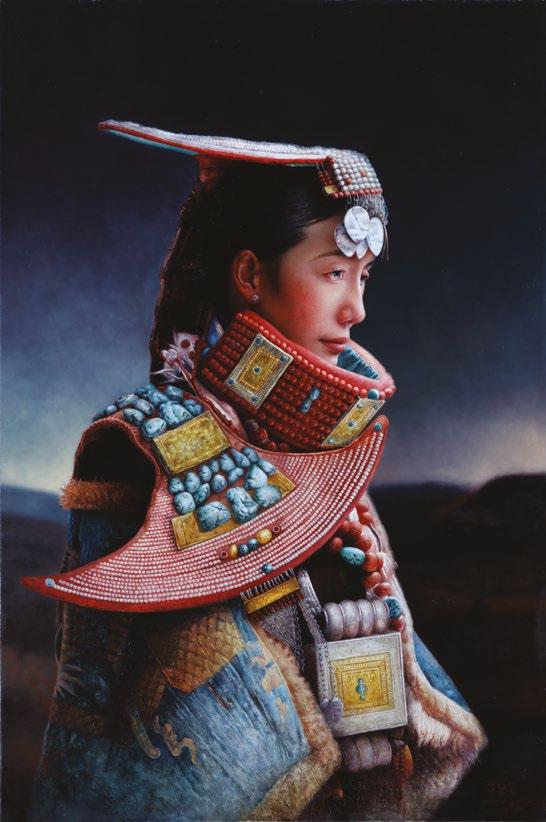
Gaze of the Plateau
The Moment of a Gaze
The Distance (also known as Departure for Malta)
The Wind Blows from Afar
Wanning Liao Shuang Liu Luzhou Chen Siyuan Pan
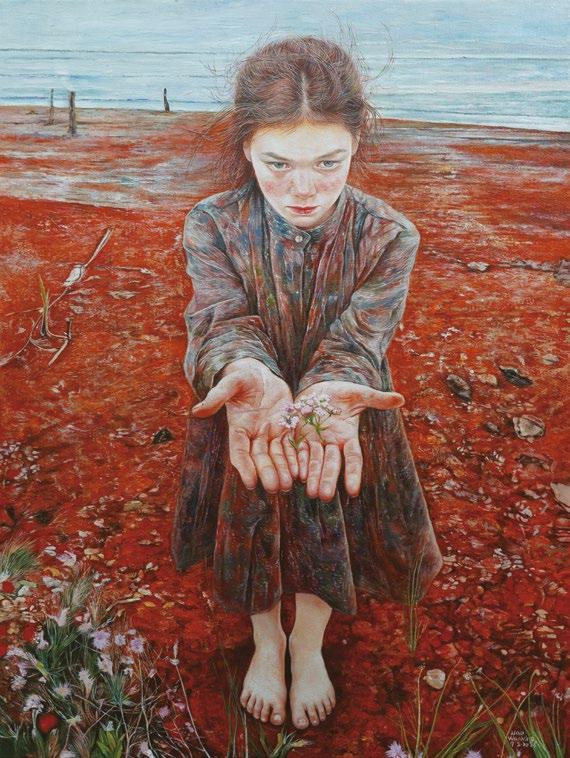
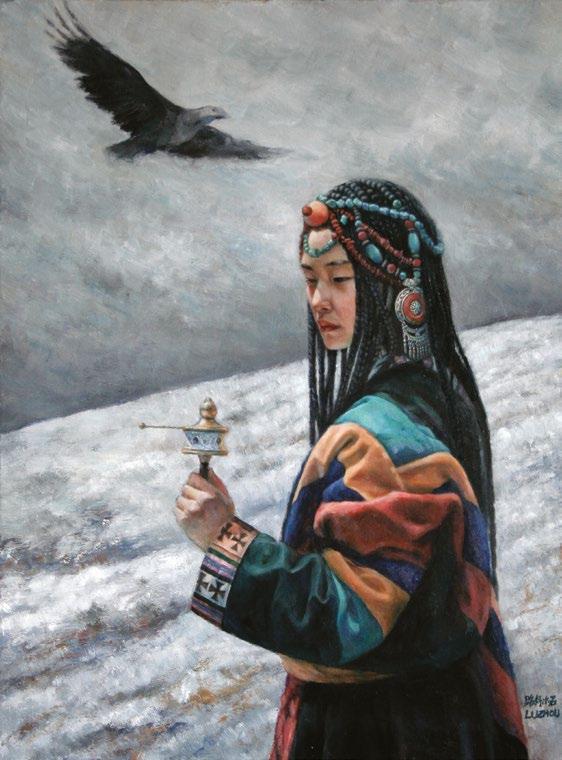
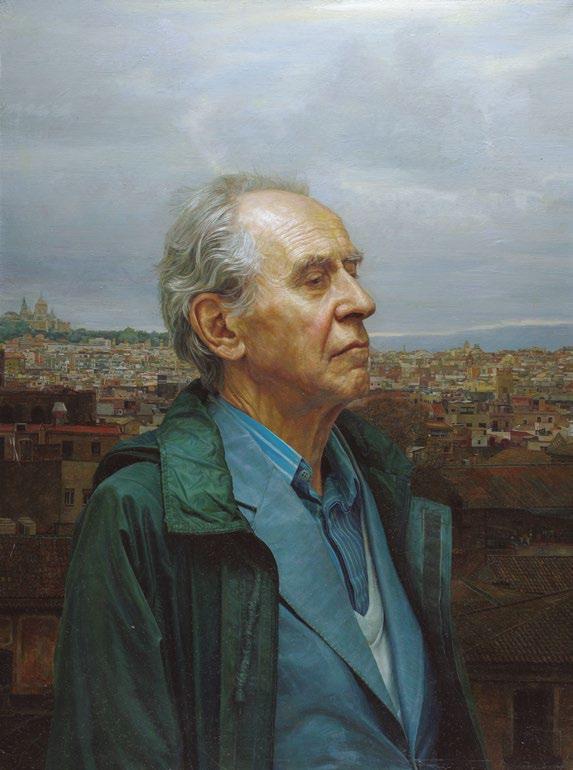
Wildflowers by the Celtic Shore
Prayer in the Wind No.1
Looking up from the Barcelona Cathedral
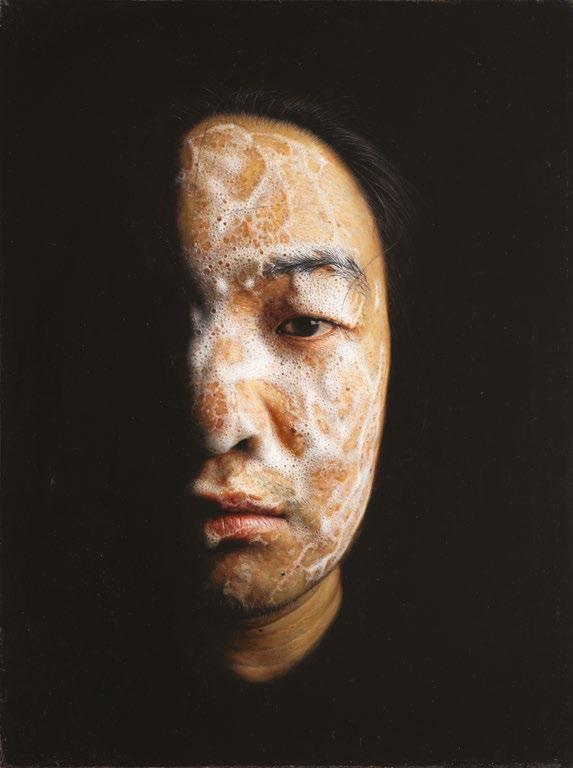
Self-Portrait with Foam
Difei Fan Kaiwen Yuan Guoqiang Liu
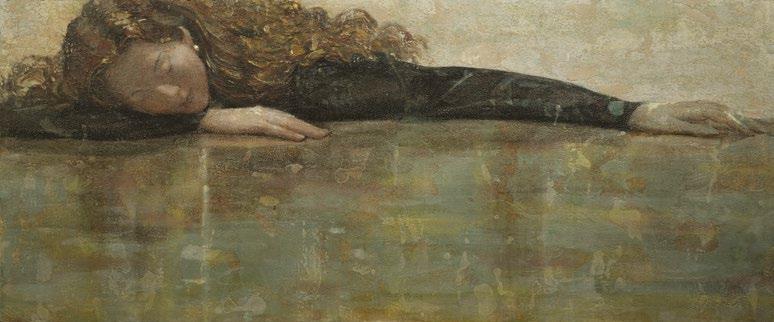
Cong Xie
Portrait of a Woman
Dream and Fantasy
Alastair Adams PPRP
1 Professor Ranee Thakar MD, FRCOG
102 x 80 cm (117 x 95 cm framed)
2 Rory Burns, Captain, Surrey Country Cricket Club Oil 80 x 64 cm (95 x 80 cm framed) NFS
Julia Albo
3 The Glare
on panel
30 x 40 cm (42 x 53 cm framed) NFS
Robert Allman
4 Summer Sun Gouache on paper
23 x 23 cm (29 x 29 cm framed)
£1,400
Jennifer Anderson
5 Presence of Absence
on linen
122 x 190 cm (122 x 190 cm framed)
£6,800
Jeremy Andrews
6 Self Portrait
on clay board
36 x 28 cm (37 x 29 cm framed)
£3,024
Pablo Astrain Gonzalez 7 F01
on canvas
92 x 89 cm (93 x 90 cm framed)
£4,000
Jeff Avila
Diego
and shellac 21 x 15 cm
Jane Beharrell
9 Landlord
on wood panel 24 x 20 cm (35 x 30 cm framed)
£2,500
Ange Bell 10 Gabriel's Journey
and coloured pencil on panel
x 15 cm £1,275
11 Tuesday at Maya's
and coloured pencil on panel
x 24 cm (34 x 28 cm framed) £2,575 Frances Bell ROI RP
12 Rob with a Still Life of Pheasants
on canvas
100 x 60 cm (110 x 70 cm framed) NFS
13 Sir Nick Clegg Oil on canvas
95 x 60 cm (105 x 70 cm framed) NFS
Tim Benson NEAC FROI RP
14 Eleanor Oil on canvas
154 x 123 cm NFS
15 Phil Oil on canvas
101 x 71 cm (111 x 81 cm framed) NFS
Jason Bentley
16 Portrait of Isabella with Dried FlowersDrawing Study
Pencil, graphite and chalk on watercolour paper
54 x 34 cm (74 x 54 cm framed)
£800
Nichola-Rae Bevers
17 Sunday Morning Pencil on paper
49 x 39 cm (72 x 52 cm framed)
£850
Leo Bignell
18 Arnold Turning Crayons and graphite
29 x 29 cm (48 x 48 cm framed)
£950
Anastasia Borodina
19 Gilles Oil on linen
40 x 40 cm (40 x 40 cm framed)
£2,900
Paul Brason PPRP
20 Hugh and Angus Oil on panel
46 x 61 cm NFS
Peter Brown PPNEAC PS RBA ROI
21 Ned studying for GCSEs (More practice papers than you can shake a slide rule at), 2025 Oil on canvas
51 x 64 cm (59 x 72 cm framed) NFS
John Burke
22 Diana Dunn Oil
30 x 20 cm (40 x 30 cm framed) NFS
Hillary Butterworth
23 Aimee Oil on canvas
40 x 40 cm (50 x 50 cm framed)
£500
24 Paper Crown Oil on panel
25 x 20 cm (30 x 20 cm framed)
£350
David Caldwell RP
25 Head in a Painting (Portrait of Aisha) Charcoal on paper
50 x 30 cm (70 x 50 cm framed)
£1,600
26 Maya Oil on linen
30 x 25 cm (50 x 45 cm framed)
£1,800
27 Miki Oil on linen
30 x 25 cm (50 x 45 cm framed)
£1,800
28 Portrait of the actress Joanna Vanderham as Diana Mitford Oil on linen
75 x 50 cm (95 x 70 cm framed) NFS
Steve Caldwell
29 R26
Acrylic on gessoed wooden panel
30 x 20 cm (40 x 30 cm framed)
£1,500
Steve Cannon
30 Self Portrait in Studio Oil on board
30 x 25 cm (36 x 31 cm framed)
£1,100
Jonathan Chan
31 Kehinde Oil on canvas
60 x 50 cm (63 x 53 cm framed)
£2,000
Amanda Coleman ROI
32 Self Portrait in Black Oil
18 x 13 cm (35 x 30 cm framed)
£600
Anthony Connolly PRP
33 Clare Staughton Oil on linen
70 x 50 cm (100 x 80 cm framed) NFS
34 John Bilton Esq. Oil on linen
90 x 60 cm (100 x 70 cm framed) NFS
35 LAM Pencil
70 x 45 cm (75 x 50 cm framed) NFS
Belinda Crozier
36 Harvey, Aged 13 Oil on board
59 x 41 cm (65 x 47 cm framed) NFS
Annabel Cullen
Invited by Melissa Scott-Miller NEAC RBA RP
37 Jo (...and Sevilla's ring) Oil on canvas
86 x 60 cm (92 x 66 cm framed) NFS
Saied Dai NEAC RP
38 Dominic Oliver, MPhil (Oxon), Headmaster at Lancing College 2014-2025 Oil on gesso panel
122 x 85 cm (145 x 108 cm framed) NFS
39 Man in Black Oil on linen on panel
90 x 80 cm (110 x 100 cm framed) NFS
40 Night Song Oil on linen on panel
84 x 61 cm (105 x 83 cm framed) NFS
Sam Dalby RP
41 Self Portrait
on
40 x 30 cm (43 x 33 cm framed)
42 Tegs
on paper
x 32 cm (53 x 37 cm framed) £1,000
David Rees Davies
43 Portrait Of John Cahill & The Ghost Of Pablo Watercolour 28 x 23 cm (35 x 30 cm framed) £1,100
Simon Davis RP
44 Thea Oil on board
47 x 35 cm (60 x 47 cm framed) NFS
45 Z Oil on board 46 x 40 cm £1,800
Tirza Eldad
46 Abigail Oil on canvas 47 x 40 cm £3,500
Miriam Escofet RP
47 Layout drawing for Margaret Stanley
Mixed media drawing - graphite, ink, charcoal, gouache, conte, pastel 43 x 35 cm (55 x 47 cm framed) NFS
48 Professor Margaret Stanley, OBE, Honorary Fellow of Christ's College, Cambridge Oil on linen over panel
80 x 65 cm (96 x 81 cm framed) NFS
Catalogue
Libby Fellingham
49 Sister Oil on linen
30 x 30 cm (34 x 34 cm framed) NFS
Peter James Field
50 Small Midnight Self Oil on wood panel
30 x 20 cm (36 x 26 cm framed) £800
Ruth Fitton ROI
51 What in the World? Oil on panel
33 x 33 cm (48 x 48 cm framed) NFS
Marlies Forster
Invited by The Heatherley School of Fine Art
52 On the Edge of Infinity Oil on canvas
150 x 120 cm NFS
Richard Foster PPRP
53 Ladyswood Oil on canvas
102 x 153 cm (117 x 166 cm framed) NFS
Michael Fullerton
Invited by David Caldwell RP
54 Beatrice Lyall (Survivor of Domestic Abuse from a Women's Shelter in Glasgow) Oil on linen
60 x 45 cm NFS
Joseph Galvin
55 Self Portrait 1 Oil on board
26 x 21 cm (29 x 24 cm framed)
£1,800
56 Self Portrait 2 Oil on board
26 x 21 cm (29 x 24 cm framed)
£1,800
Thomas Golunski
57 Online Induced High Oil
30 x 30 cm (34 x 34 cm framed)
£4,000
David Graham RP
58 Coptic Orthodox Monastery Oil on canvas
61 x 51 cm (74 x 64 cm framed)
£5,500
59 Girl Reading with Still Life Oil on canvas
51 x 41 cm (68 x 56 cm framed)
£3,500
60 Musicians in Piazza San Marco Oil on canvas
51 x 41 cm (67 x 57 cm framed)
£5,000
61 Sisters enjoying Rowing Regents Park Oil on canvas 44 x 62 cm
£7,000
Dominique Grantham
62 Betty Oil on canvas
40 x 30 cm (46 x 36 cm framed)
£950
Evgeny Grouzdev
63 George with Oskar Oil on canvas
112 x 92 cm (116 x 96 cm framed) NFS
Raoof Haghighi
64 The Glass Acrylic
50 x 70 cm (52 x 72 cm framed)
£12,000
James Hague RP
65 Man with Hand Oil on gesso board
31 x 23 cm
£3,500
66 Woman with Plant Oil on gesso board
77 x 77 cm NFS
Robin-Lee Hall PPRP
67 Jude Egg tempera on gesso panel
40 x 30 cm (54 x 44 cm framed) NFS
68 Louis Egg tempera on gesso panel
40 x 30 cm (54 x 44 cm framed) NFS
Clementine Hanbury
69 Sulk Charcoal on hand prepared paper
18 x 12 cm NFS
70 Wrapped Up Charcoal on hand prepared paper
29 x 21 cm (38 x 30 cm framed) NFS
Julia Hawkins NEAC ROI
71 Portrait of Emma Oil
65 x 54 cm (71 x 60 cm framed)
£4,500
Wim Heldens
72 Fever Oil on canvas
45 x 60 cm (50 x 60 cm framed) NFS
Aelfred Hillman
73 A Flautist at Hinton Ampner Oil on panel
60 x 60 cm (62 x 62 cm framed)
£6,300
Benjamin Hope NEAC PS ROI RP RSMA
74 Art Model Mike in 20 and 40 Minutes Oil on panels
62 x 27 cm (72 x 37 cm framed)
£1,800
75 Berenice Oil on canvas
51 x 25 cm (61 x 35 cm framed)
£1,700
76 Nabiha Charcoal on paper
43 x 31 cm (53 x 41 cm framed)
£900
77 Self Portrait in BUFF Oil on panel
37 x 27 cm (47 x 37 cm framed)
£1,700
Emily Hughes
78 Portrait in Lausanne Graphite on toned paper
63 x 48 cm (73 x 58 cm framed)
£2,500
79 Portrait of Roger Oil on canvas paper
35 x 45 cm (45 x 55 cm framed)
£4,000
Owain Hunt
80 Pregnant Lady Blue Oil on linen
90 x 70 cm (96 x 76 cm framed)
£8,500
Invited by Joshua Waterhouse RP
81 We Make Our Own Yarn Oil on linen
100 x 100 cm (104 x 104 cm framed)
£12,000
Andrew James NEAC RP
82 Derly, Summer Meadow Oil on canvas
125 x 90 cm (130 x 94 cm framed)
£14,000
83 James Pencil and charcoal on paper
60 x 42 cm (64 x 46 cm framed)
£2,000
84 James Oil on canvas
94 x 74 cm (98 x 78 cm framed)
£8,000
Olga Kats
85 Portrait of a Gentleman in Hat and Scarf Oil
18 x 13 cm (23 x 18 cm framed)
£450
Diarmuid Kelley
86 Flash Gordon Conquers the Universe Oil on linen 153 x 153 cm NFS
87 Study for a Painting Oil on linen 107 x 127 cm NFS
Jeannie Kinsler ROI
88 Holding: A Portrait of Amy, Frances and Cecily Oil on canvas
122 x 91 cm (125 x 94 cm framed)
£5,800
89 Transient: A Portrait of Byrne, 2025 Oil on canvas
45 x 35 cm (48 x 38 cm framed)
£1,700
Nahoko Komatsu O Invited by Robin-Lee Hall PPRP
90 Mother Egg tempera and urushi on canvas
35 x 28 cm (43 x 36 cm framed)
£1,400
Peter Kuhfeld NEAC RP
91 Florence Oil on canvas
64 x 46 cm (68 x 50 cm framed) NFS
92 Raven Oil on canvas
66 x 61 cm (72 x 65 cm framed) NFS
August Lamm
Invited by Hero Johnson RP
93 Andy with a Sandwich Oil on panel
61 x 44 cm (67 x 50 cm framed)
£1,200
Joe Laycock
94 Self Portrait with Hand Charcoal, graphite, gesso, pastel and oil pastel
48 x 28 cm (53 x 33 cm framed)
£500
Zac Lee
95 Interdependence Oil on canvas
102 x 82 cm
£6,000
96 Arnold in Blue
on paper
16 x 16 cm (26 x 26 cm framed)
Lisle
97 Face to Face with Ada
on canvas
x 60 cm
James Lloyd
by Anastasia Pollard RP
98 Portrait of Ishbel
180 x 120 cm (184 x 124 cm framed) £20,000
Hari Lualhati
99 Washed in the Blood of the Lamb Oil on aluminium panel
60 x 60 cm (72 x 72 cm framed)
104 The Beatle-ologist, Dr Richard Mills
26 x 20 cm (40 x 34 cm framed) £1,600
Jinlyu Mei
103 Colin Davidson, Study
x 42 cm (57 x 43 cm framed)
£1,600
Keith Morton
108 Self 2025 Oil
25 x 21 cm (39 x 34 cm framed) £950
John Murphy-Woolford 109 Grey Mirror
on canvas paper 30 x 21 cm (49 x 37 cm framed) £1,000
Newton
110 Self-Portrait in Lockdown Oil on linen
87 x 86 cm (91 x 90 cm framed) NFS
Li Ning
111 Portrait of the Artist in the Studio at Night Oil on canvas
60 x 50 cm
£4,000
Ashley Ogilvy
Invited by Andrew James NEAC RP
112 Anna and her Portraits
131 x 83 cm (136 x 88 cm framed) NFS
Olivia Pang
113 Matteo
Watercolour on silk with gold leaf
30 x 20 cm (42 x 32 cm framed)
£1,100
114 Spring Is Coming Mineral pigments on paper
68 x 169 cm (74 x 175 cm framed)
£9,300
Harriet Pattinson
Invited by Alastair Adams PPRP
115 Study of Marwa Oil on canvas
45 x 35 cm (45 x 35 cm framed)
£3,000
Lizzie Phillips
116 Self Portrait at 23 Oil on canvas
40 x 30 cm NFS
Anastasia Pollard RP 117 Meredith
x 25 cm
118 Richard's Breakfast
119 Tatiana
x 48 cm
Allan Ramsay
Invited by Neale Worley NEAC RP 120 Finlay Gravette Ramsay Oil
40 x 30 cm (42 x 32 cm framed) NFS
Carl Randall
121 Graveyard Getsuho
Acrylic on aluminium plate
45 x 32 cm (50 x 37 cm framed) NFS
Alex Rooney
122 Gabriella Charcoal on paper
46 x 36 cm (67 x 56 cm framed)
£1,400
Ross Rounsevell
123 Happy Camper Oil on board
46 x 35 cm NFS
Jamie Routley RP
124 Les Soeurs (The Sisters) Oil on linen
100 x 110 cm (105 x 115 cm framed) NFS
125 Private Commission Graphite on paper
35 x 25 cm (45 x 35 cm framed) NFS
126 The Winding Stair - Jesse Norman MP Oil on linen 105 x 105 cm (110 x 110 cm framed) NFS
Noah Rush
127 Self Portrait, 2025 Oil on canvas 26 x 21 cm (28 x 23 cm framed) £320
Susan Ryder NEAC RP
128 Annabel and Cameron with Winnie Oil
x 61 cm NFS
129 The Congdon Family Oil
x 107 cm NFS
130 The Nunn Brothers Oil
x 91 cm NFS
Tai Shan Schierenberg RP (Honorary)
131 A Chinese Memling Oil on board
29 x 21 cm (32 x 23 cm framed) NFS
132 Self Portrait Oil on canvas
x 65 cm NFS
Melissa Scott-Miller NEAC RBA RP
Ikaay Oil on canvas
x 60 cm (75 x 65 cm framed) NFS
Lily Oil on canvas
x 50 cm (55 x 55 cm framed) NFS
135 Self Portrait of a Worried Islington Woman Artist, aged 66 Oil on canvas 60 x 60 cm (65 x 65 cm framed)
Daniel Shadbolt NEAC
136 Large Portrait of Nicholas, Against Orange
on canvas
x 65 cm
137 Self Portrait Wearing a Hat Oil on panel 20 x 20 cm
Ella Sheltawy
Invited by The Art Academy
138 Self Portrait After Munch Oil on canvas 46 x 55 cm NFS
Shields 139 Self Portrait Oil on canvas 30 x 25 cm (34 x 29 cm framed)
Howard Sills
140 Looking and Waiting Oil
20 x 25 cm (22 x 27 cm framed) NFS
Rachata Siriyakul 141 Portrait of a Man
x 121 cm
Sivas
142 Alfred
35 x 40 cm (49 x 54 cm framed)
David Orrin Smith
Invited by Anthony Connolly PRP
143 Tessa, Reading Transparent watercolour on paper
132 x 183 cm (152 x 203 cm framed) NFS Neyha Sofat
144 This Courage Grows
and charcoal on paper
42 x 30 cm (63 x 46 cm framed)
Soltani
145 Waiting Oil on canvas
70 x 70 cm (80 x 80 cm framed)
£1,800
Charlotte Sorapure NEAC RP
146 Couple
on linen
80 x 60 cm (100 x 80 cm framed)
£10,500
147 Don McCullin
59 x 42 cm (78 x 61 cm framed) £3,500
Phoebe-Louise Stewart Carter 148 Jasmine
on linen
75 x 50 cm (85 x 60 cm framed) £9,500 Lucy Stopford
149 Song
charcoal on paper
60 x 50 cm (90 x 80 cm framed) NFS
Benjamin Sullivan RP
150 Benedict Cumberbatch
on panel
14 x 9 cm (40 x 24 cm framed) NFS
151 Damian Lewis Oil on panel
x 9 cm (40 x 24 cm framed) NFS
152 Matthew Macfadyen Oil on panel
x 9 cm (40 x 24 cm framed) NFS
Liam Thomas 153 So, On The Topic Of Self Reliance
x 42 cm
Thompson
Jacquie in Red Oil on linen
x 50 cm (75 x 55 cm framed)
£4,200
Thomas Thyrion
155 Behind the Sun Oil on wood panel
24 x 30 cm NFS
Richard Tomlin Invited by Antony Williams NEAC VPRP
156 Two Black Hearts Oil
92 x 92 cm NFS
Jason Walker Invited by Simon Davis RP
157 Garry Oil on board
50 x 35 cm (56 x 40 cm framed) NFS
Sally Ward
158 How See You Oil on canvas
40 x 30 cm (53 x 42 cm framed)
£6,000
159 Self Portrait: Oil Study Oil on canvas board
25 x 20 cm (32 x 27 cm framed) NFS
Joshua Waterhouse RP
160 Dame Clare Gerada Oil on wood panel
80 x 85 cm (100 x 105 cm framed) NFS
Ada Weng
161 A Friend Graphite
25 x 20 cm (27 x 22 cm framed) NFS
Emma Wesley RP
162 Honeysuckle Rose: Portrait of Catherine Pickles Acrylic on board
62 x 41 cm (77 x 56 cm framed) NFS
163 Professor Irene Tracey CBE, FRS, FMedSci, MAE, FRCA, commissioned by the Warden and Fellows of Merton College, Oxford Acrylic on board
130 x 80 cm (144 x 95 cm framed) NFS
Jeremy White
164 Self Portrait with Bucket Hat Charcoal and graphite on toned paper
38 x 28 cm (49 x 39 cm framed)
£700
Toby Wiggins RP
165 Head of a Girl
Pencil on paper
30 x 21 cm (40 x 31 cm framed)
£950
166 Study of Ronald Blythe, Writer Pencil on paper
30 x 24 cm (50 x 43 cm framed)
£1,250
167 The View in Winter; Ronald Blythe in his study at Bottengoms Oil on canvas
135 x 100 cm (140 x 105 cm framed)
£15,000
Antony Williams NEAC VPRP
168 Jean Egg tempera
46 x 41 cm (56 x 49 cm framed)
£13,850
Sophie Williams
169 Emmy Oil on board
25 x 25 cm (27 x 27 cm framed) NFS
John Wonnacott RP (Honorary)
170 Blue Foot 1 Oil on board
120 x 90 cm (132 x 102 cm framed) NFS
171 Blue Foot 2 Oil on board
90 x 120 cm (102 x 132 cm framed) NFS
172 Studies for Blue Foot 1 Pencil on paper
40 x 80 cm (44 x 84 cm framed) NFS
Neale Worley NEAC RP 173 Anthony Eyton
on canvas
x 86 cm
on canvas
x 26 cm
Robbie Wraith RP
Katy
x 38 cm (62 x 53 cm framed)
176 Portrait Drawing 1
49 x 33 cm (56 x 42 cm framed) £3,500
177 Portrait Drawing 2 Charcoal 40 x 39 cm (61 x 53 cm framed) NFS 178 Studio Portrait
x 25 cm (55 x 45 cm framed) NFS
Craig Wylie
179 Emily – Winter Light
on panel 56 x 38 cm £8,500
Yeoman NEAC RP 180 Paul Pastel crayon
42 x 33 cm (63 x 49 cm framed)
181 Self Portrait
x 46 cm (76 x 61 cm framed)
Jiaxuan Yi
182 Observation No.45 Pencil on paper
40 x 57 cm
£3,000
Florence Yuqing RI
183 Being Watercolour on paper
30 x 21 cm (47 x 35 cm framed)
£1,510
Tatiana Zubova
184 Profile of an Elderly Man Oil on canvas
50 x 40 cm (57 x 47 cm framed)
£1,490
Guest Artists from China
Yunsheng Liu
185 Hidden Mother – The Call of the West Watercolour on paper
44.7 x 55 cm (54.7 x 67 cm framed) NFS
Longsheng Wang
186 Empty Room Oil on linen
80 x 80 cm (84 x 84 cm framed) NFS
Lijian Xie
187 Red Attire Reflecting Mountains and Rivers Oil on linen
x 81 cm (132 x 97 cm framed) NFS
Kangwei Zhao
188 Master Hongyi : The pioneering figure who introduced Western music and painting to China Oil pastels on paper
54 x 39 cm (84 x 69 cm framed) NFS
Zhengyang Yuan
189 The Clock Without Hands Oil on linen
x 100 cm (110 x 110 cm framed) NFS Ming Qin
190 The Bride on the Pamir Plateau Oil on linen
x 76 cm (112 x 86 cm framed) NFS
Xiaogang Li
191 Tajik Middle School Students Tempera casein
80 x 60 cm (82 x 102 cm framed)
Qian Li
192 The Girl in the Hat Oil on linen
40 x 30 cm (60.5 x 50.5 cm framed) NFS
Junming Zhang
193 Mother Oil on linen
Zhaohui Zhou
194 The Girl Sitting in front of the Mural Oil on linen
x 80 cm (79 x 99 cm framed) NFS
Hualin Du
195 My Father Oil on linen
60 x 56 cm (74 x 71 cm framed) NFS
Jianqi Du
196 Chinese Writer Chen Zhongshi Drawing on paper
100 x 72 cm (110 x 82 cm framed) NFS
Jinghan Wu
197 Gaze of the Plateau Soft pastel on paper
90 x 77 cm (100 x 87 cm framed) NFS
Xiaoyu Li
198 The Moment of a Gaze Oil on linen
50 x 50 cm (60 x 60 cm framed) NFS
Jing An
199 The Distance (also known as Departure for Malta) Oil on linen
100 x 62 cm (107 x 69 cm framed) NFS
Congxian Dong
200 The Wind Blows from Afar Oil on linen
60 x 90 cm (76 x 106 cm framed) NFS
Wanning Liao
201 Wildflowers by the Celtic Shore Oil on canvas
54 x 73 cm (57 x 76 cm framed) NFS
Luzhou Chen
202 Prayer in the Wind No.1 Oil on linen
60 x 80 cm (100 x 80 cm framed) NFS
Shuang Liu
203 Looking up from the Barcelona Cathedral Oil on canvas
80 x 60 cm NFS
Siyuan Pan
204 Self-Portrait with Foam Oil on linen
40 x 30 cm (57.5 x 47 cm framed) NFS
Difei Fan
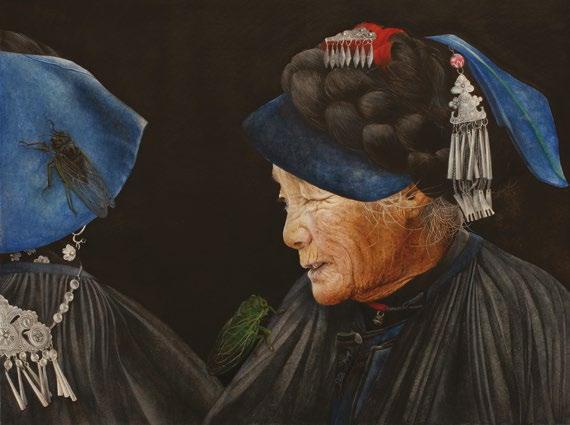
205 Grand Attire Watercolour on paper
30 x 40 cm (41 x 51 cm framed) NFS
Guoqiang Liu
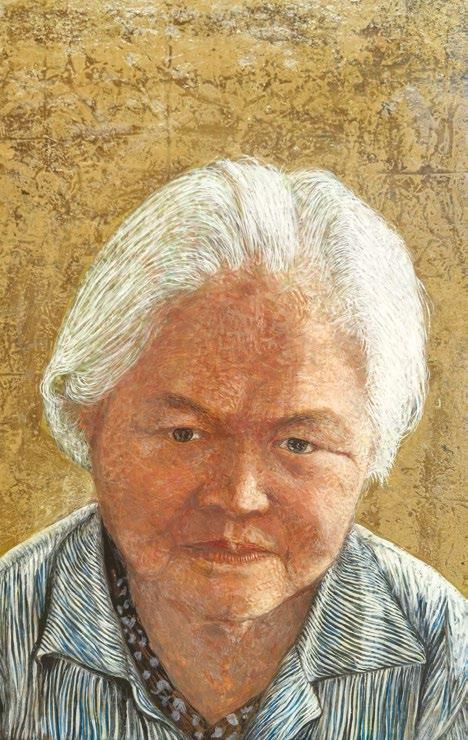
206 Mother
Tempera and oil on wooden board
47 x 21 cm (58 x 48 cm framed) NFS
Kaiwen Yuan
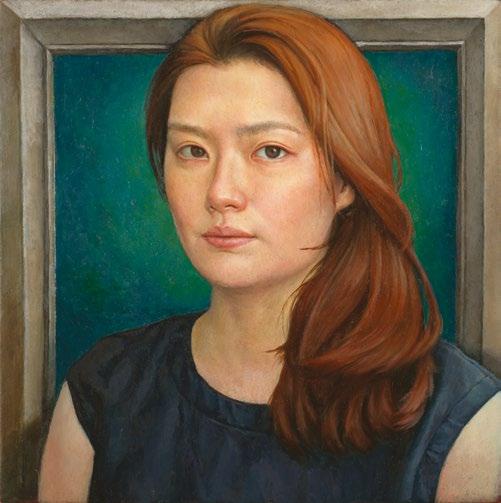
207 Portrait of a Woman Tempera on wooden board
20 x 20 cm (33 x 33 cm framed) NFS
Cong Xie
208 Dream and Fantasy Casein tempera on wooden board
96 x 40 cm (100 x 44 cm framed) NFS
The RP Drawing Prize: Revealing
the Human 2026
Once again the RP opens its doors to the raw delights of drawing. 2025 saw the hugely successful launch of this initiative and we are delighted to be taking the exhibition back to the Art Gallery at Hull University.
This open call welcomes submissions in all drawing styles and techniques.
The selectors will be looking for bold, original, and thought-provoking work. We are keen to explore and expand the idea of what a portrait can be and because drawing is such an immediate, direct response to the human, we’re hoping to receive a wide variety of responses.
The RP Drawing Prize is open to creatives at all stages of their careers in the UK and internationally.
The Call for Entries will open on 30 March 2026.
The RP Critical Writing Prize
Open to all, the prize is for new writing on any aspect of contemporary portrait painting.
Applicants are invited to send a proposal or pitch for a new text.
Three of the applicants will be selected to realise the proposed text and awarded either the first prize of £500 or one of two ‘special mention’ prizes of £250.
All three texts will be published in the RP Annual Exhibition Catalogue.
Submissions will open on 15 April 2026 .
For more information, visit therp.co.uk