KEPROBA Strengthens Export and Nation Branding Engagements in Kisumu.
Recipe for success:Factors Making Kenya a Top Investment Destination in Africa
KEPROBA and TradeMark Africa Empower Migori’s Blue Economy Through AfCFTA Dialogue
Love at First Export: Why the World Chooses Kenya.
EDITORIAL
Maureen Mambo- Editor -in-Chief
Mariam Maina - Editor CONTRIBUTORS
Mariam Maina
Molly Wambui
Irene Van De Graaf
Gertrude Mirobi
Charles Musee
Samuel Njaaga - Layout
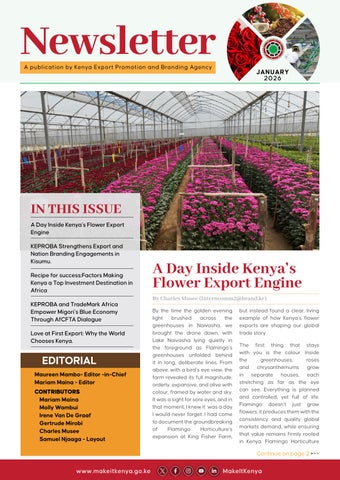
A Day Inside Kenya’s Flower Export Engine
By Charles Musee (Interncomm2@brand.ke)
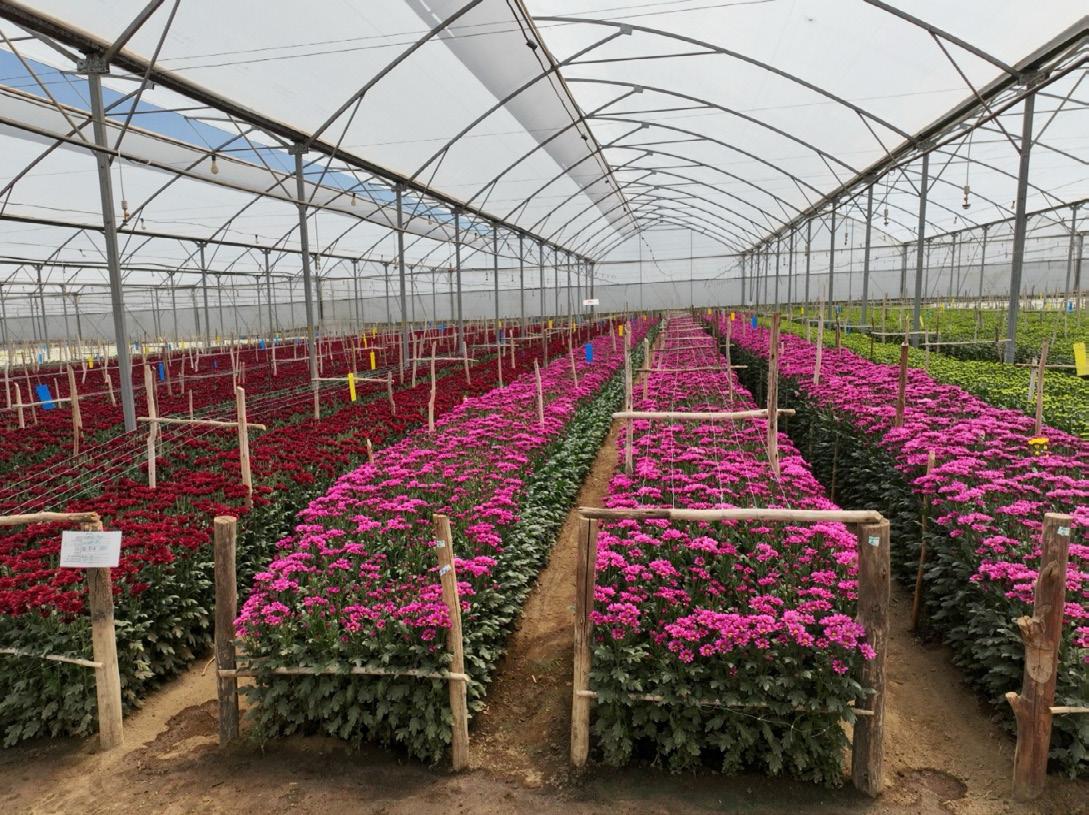
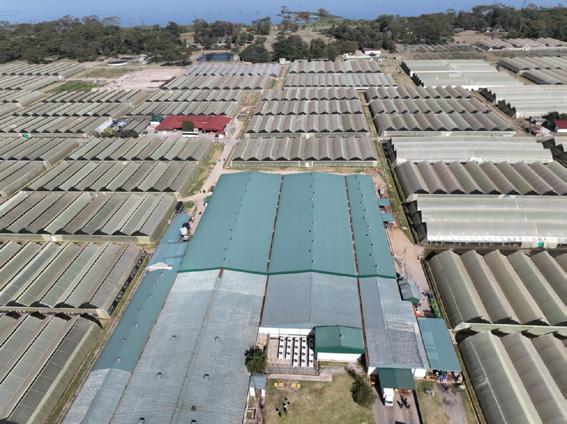
By the time the golden evening light brushed across the greenhouses in Naivasha, we brought the drone down, with Lake Naivasha lying quietly in the foreground as Flamingo’s greenhouses unfolded behind it in long, deliberate lines. From above, with a bird’s eye view, the farm revealed its full magnitude, orderly, expansive, and alive with colour, framed by water and sky. It was a sight for sore eyes, and in that moment, I knew it was a day I would never forget. I had come to document the groundbreaking of Flamingo Horticulture’s expansion at King Fisher Farm,
but instead found a clear, living example of how Kenya’s flower exports are shaping our global trade story.
The first thing that stays with you is the colour. Inside the greenhouses, roses and chrysanthemums grow in separate houses, each stretching as far as the eye can see. Everything is planned and controlled, yet full of life. Flamingo doesn’t just grow flowers; it produces them with the consistency and quality global markets demand, while ensuring that value remains firmly rooted in Kenya. Flamingo Horticulture
operates as a vertically integrated business, managing the entire process from growing to processing, packing, and export. From Naivasha, their flowers and premium vegetables go straight to major retail markets in the UK and Europe, with additional reach into the Middle East, Asia, and Australia. While the group runs farms in other countries, Kenya remains central to its production. That confidence in Kenya was evident throughout the day.
Inside the packhouses, bouquets are packed at the source, cutting out unnecessary middlemen and adding value locally. The work is quick, precise, and confident. The workers operate in synergy to get the job done, but an interesting fact I learned was that many of the groups are led by women. Many of the women leading these operations have advanced through Flamingo’s Inua Dada program, and it shows not just in their skill but in their sense of ownership. These moments, captured quietly between handshakes, here and there, and official speeches and events, revealing how export growth is built one person at a time. It puts a new spin on the African old proverb that says it takes a village to raise a child or even a program of this kind, successfully.
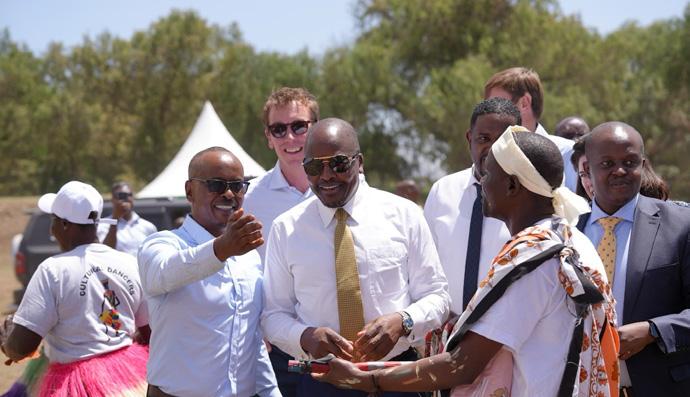
Cabinet Secretary for Agriculture, Mutahi Kagwe (centre), and KEPROBA Board Chairman Dennis Mwirigi Murithi (left) during an official visit to Flamingo Farm, reinforcing Kenya’s commitment to export growth and agribusiness development.
This expansion, he noted, reflects the kind of investment that boosts export volumes while maintaining high standards.
When Hon. Mutahi Kagwe, Cabinet Secretary for Agriculture, addressed the gathering, his message went beyond ceremony. He spoke directly about positioning Kenya to succeed in global markets through updated tax systems, faster export processes, stronger compliance with international standards, and smart investment in climateresilient agriculture. Standing among greenhouses designed for efficiency and scale, his remarks highlighted a simple truth: when policy and private investment work together, exports grow KEPROBA’s Chairperson, Dennis Mwirigi, reinforced this message. He pointed out that flower exports are one of Kenya’s strongest global assets. This sector consistently keeps the country ahead through quality, reliability, and value addition. Kenya’s flowers do more than bring in foreign currency; they create jobs, support rural economies, and enhance the country’s reputation as a reliable trade partner.
As KEPROBA, our role was to document, promote, and place this moment within Kenya’s broader export story. We worked as a team to engage stakeholders, ensure branding visibility, and deliver thorough media documentation to tell a clear story that Kenya is open for business, capable of scale, and committed to value-driven exports.
The King Fisher Farm expansion will create more jobs, increase production capacity, and strengthen sustainable practices in Naivasha, where thousands of families already rely on Flamingo. More importantly, it sends a strong signal to the world: investors believe in Kenya, and Kenya continues to deliver. I came to capture images, but I left with a deeper understanding of the chain reaction that occurs when policies support trade and agriculture, the right people with the right expertise are in place, and every step is aligned. In that moment, you can see how flowers move across borders, carrying Kenya with them.
Flamingo doesn’t just grow flowers; it produces them with the consistency and quality global markets demand, while ensuring value remains firmly rooted in Kenya.
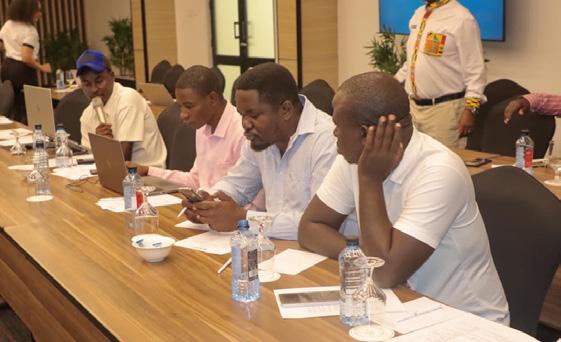
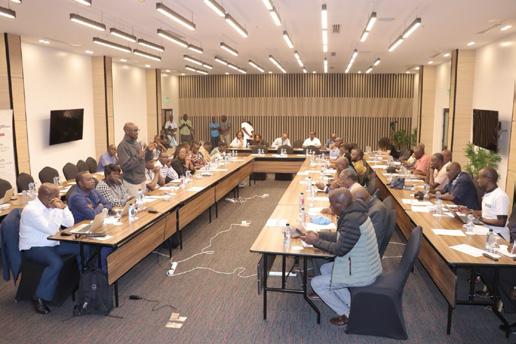
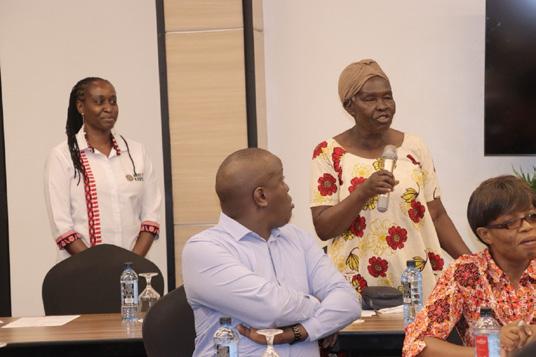
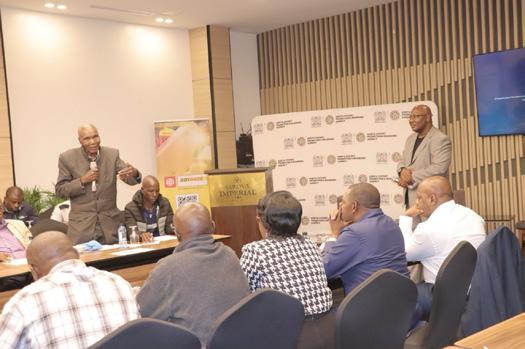
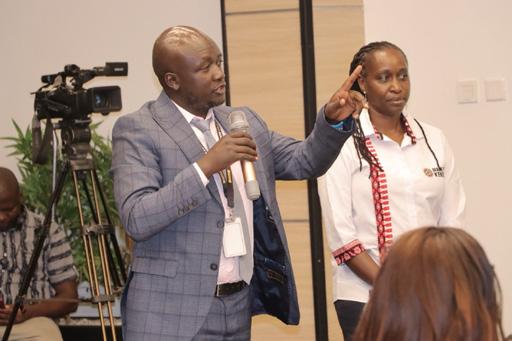
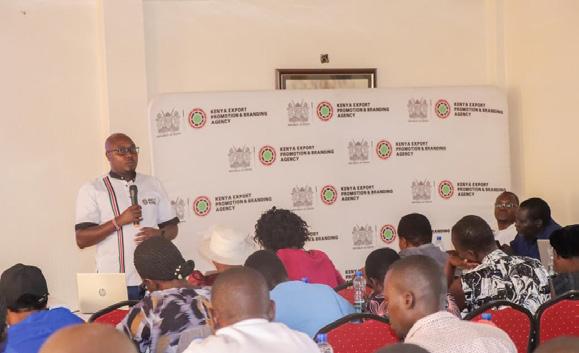
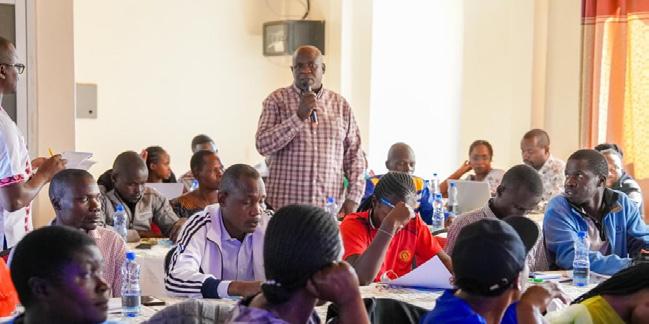
Participants engage in discussions during the Exporters’ Roundtable forum in Kisumu, exploring opportunities, challenges, and strategies to strengthen Kenya’s export ecosystem.
KEPROBA Strengthens Export and Nation Branding Engagements in Kisumu.
By Irene Van De Graaf | irenev@brand.ke
In December 2025, the Kenya Export Promotion and Branding Agency (KEPROBA), convened a series of strategic engagements in Kisumu County aimed at enhancing collaboration between the media, exporters, and key trade stakeholders, while amplifying Kenya’s export and nation branding agenda at the county level. The programme featured a Media Training Workshop, an Exporters’ Roundtable, and exporter familiarization visits, creating a comprehensive approach to building awareness, capacity, and partnerships across the export ecosystem.
The initiative marked KEPROBA’s first county-level media training under its structured national rollout, reflecting the Agency’s deliberate strategy to cultivate informed partnerships that support inclusive and sustained export growth. Journalists from leading Kisumu-based media houses, alongside representatives from trade support institutions and the County Government of Kisumu, participated in the engagements, highlighting the importance of collaboration among stakeholders in advancing Kenya’s export agenda.
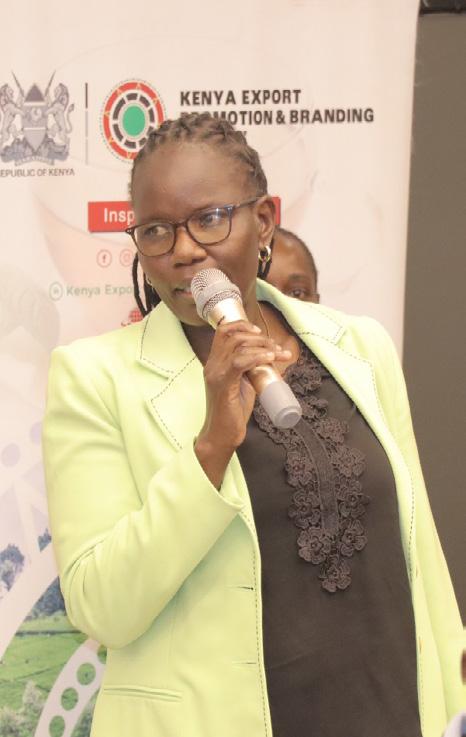
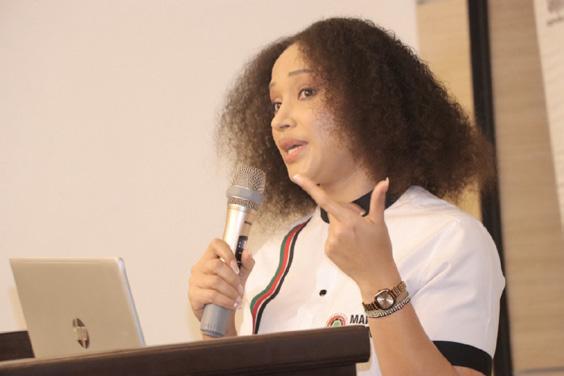
Opening the media training workshop, KEPROBA Chief Executive Officer, Ms. Floice Mukabana, emphasized the strategic role of the media in shaping public understanding of exports, international trade, and nation branding. She stressed that accurate, wellresearched, and contextual reporting is critical in positioning exports as a national development priority and influencing public and policy discourse.
The media is a critical partner in telling Kenya’s export story. Through informed reporting, journalists help shape perceptions, influence policy conversations, and highlight the opportunities that exports present for economic growth and job creation.
Ms. Floice Mukabana
KEPROBA CEO
KEPROBA CEO, Ms. Floice Mukabana, delivering the opening remarks during the media training in Kisumu County.
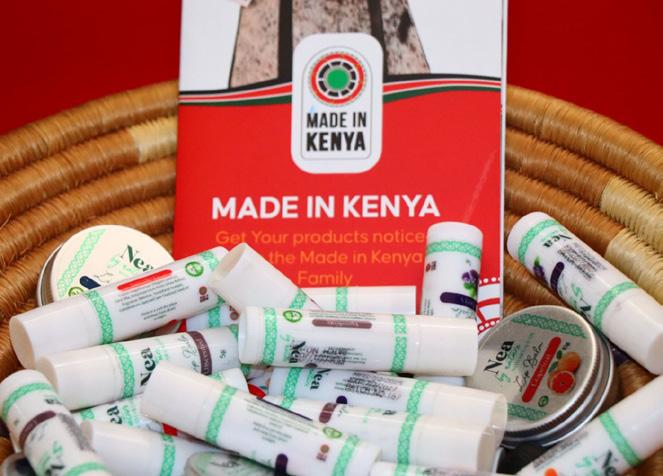
During the training, journalists received structured presentations covering KEPROBA’s mandate, the concept of nation branding, Kenya’s export performance and challenges, export value chains, product and market intelligence, and the Made in Kenya initiative. The sessions enhanced journalists’ understanding of complex trade issues while equipping them with practical tools for crafting compelling and accurate export-related stories. Interactive discussions highlighted Kisumu County’s export potential, the impact of AGOA’s expiry, market diversification strategies, and Kenya’s target of achieving sustained export growth.
Participants then engaged in the Exporters’ Roundtable, which brought together exporters, government agencies, financial institutions, and trade support organizations to discuss market access challenges, competitiveness, and opportunities for growth. Exporters welcomed the platform, emphasizing its value in showcasing their experiences, highlighting progress, and collaboratively identifying solutions to pressing industry challenges. “The Exporters’ Roundtable is invaluable. It gives us a platform to share our realities, shape solutions, and demonstrate the growth we are achieving,” one exporter remarked.
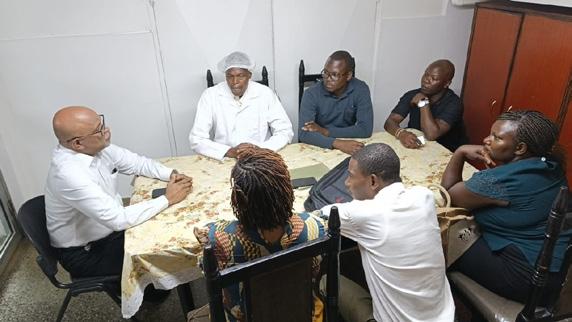
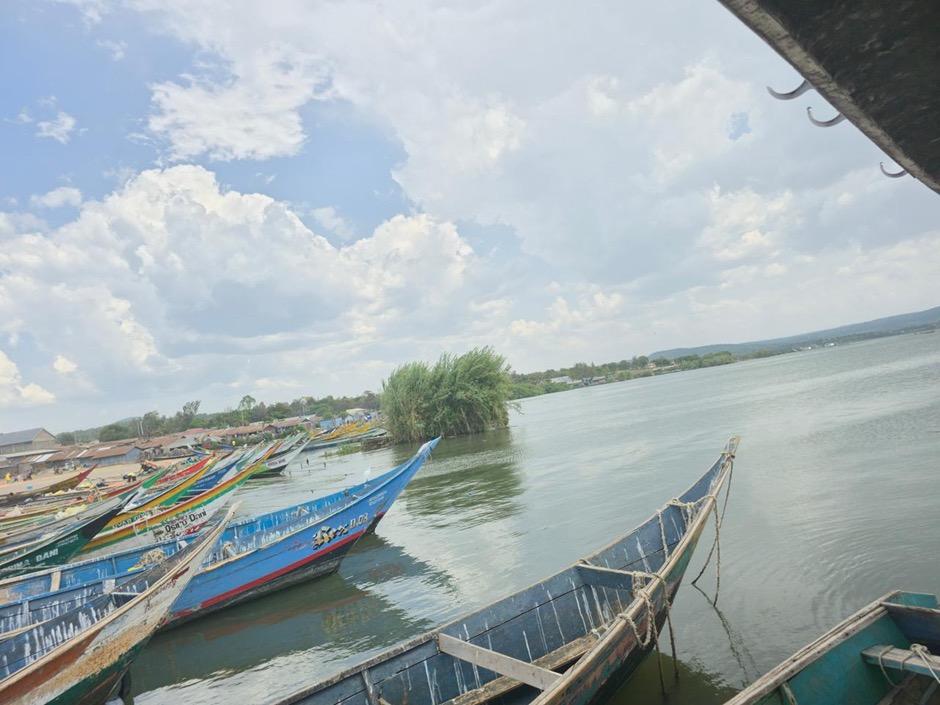
The engagements were further reinforced through exporter familiarization visits, during which journalists and stakeholders visited selected enterprises in Kisumu County, including players in the fisheries sector. The visits provided firsthand exposure
to value addition processes, quality standards, and export operations, enabling participants to connect policy discussions with real production environments and enterprise-level experiences.
The combination of training, dialogue, and experiential learning created opportunities for participants to reflect, interact, and exchange insights across the county’s export ecosystem. Journalists gained a deeper understanding of exporters’ challenges and successes, equipping them to engage more meaningfully with export stories and accurately convey the realities of the county’s trade landscape. Exporters benefited from direct engagement with policymakers and stakeholders, providing insights into operational challenges and cocreating practical solutions to enhance competitiveness and market access. At the same time, representatives from trade support institutions and the County Government gained firsthand exposure to the operational realities of local enterprises helping bridge the gap between policy discussions and on-the-ground practices.
Collectively, the Kisumu engagements strengthened collaboration among KEPROBA, exporters, journalists, and other stakeholders, reinforcing trust, mutual understanding, and commitment to advancing Kenya’s export agenda. Participants left the programme with actionable insights, stronger networks, and a shared appreciation of the opportunities and challenges within the county’s export sectors. The integrated approach of capacity building, stakeholder
dialogue, and experiential learning demonstrated the tangible benefits of combining media training, interactive forums, and enterprise visits. By linking knowledge acquisition with practical exposure and structured dialogue, the programme enhanced understanding and fostered a sense of shared responsibility among all participants to advance Kenya’s export and nation branding objectives.
Overall, the Kisumu County engagements exemplified KEPROBA’s strategic vision of inclusive, collaborative, and impactful interventions. Through these initiatives, the Agency continues to create platforms that strengthen export ecosystems, empower local enterprises, and ensure that the narratives surrounding Kenya’s products and industries are informed, balanced, and reflective of real progress. The success of the programme sets a strong model for future county-level engagements, reinforcing KEPROBA’s commitment to promoting Kenya’s exports and nation brand across the country and beyond.
By bringing together diverse stakeholders, the Kisumu programme highlighted the power of partnership in advancing Kenya’s exports and showcasing local enterprise potential.
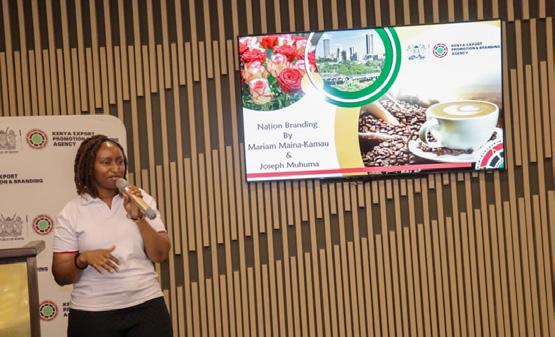
Ms. Mariam Maina, Manager of Corporate Communications at KEPROBA, delivering her presentation on the concept of Nation Branding.
Journalists from various media houses actively engaging during the training session.
KEPROBA CEO, Ms. Floice Mukabana, with the Director of Nation Brand Directorate, Ms. Maureen Mambo, during the media training session
Senior Corporate Communications Officer Ms. Irene Van De Graaf delivering a presentation on crafting compelling messages for export promotion and nation branding during the media training.
Relations Officer,
Participants engage in discussions during the Exporters’ Roundtable forum in Kisumu.
Participants engage in discussions during the Exporters’ Roundtable forum in Kisumu.
Participants engage in discussions during the Exporters’ Roundtable forum in Kisumu, exploring opportunities, challenges, and strategies to strengthen Kenya’s export ecosystem.”
Participants engage in discussions during the Exporters’ Roundtable forum in Kisumu, exploring opportunities, challenges, and strategies to strengthen Kenya’s export ecosystem.
Media
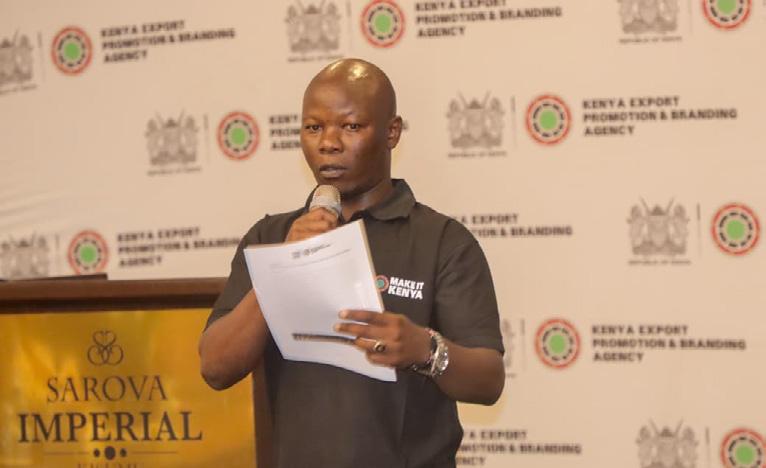
Mr. Jonah Karanja, moderating the media training session.
The KEPROBA team, together with journalists, visited the East African Seafood Company based in Kisumu
Recipe for success: Factors Making Kenya a Top Investment Destination in Africa
Positioning Kenya as Africa’s Investment Gateway
By Molly Wambui | MWambui@brand.ke
Kenya has emerged as a strategic hub for Foreign Direct Investment (FDI) in East Africa, supported by its diversified economy, advanced digital infrastructure, and a robust framework of Special Economic Zones (SEZs). While global FDI inflows have faced double-digit contractions in recent years due to geopolitical tensions and high energy prices, Kenya has maintained a resilient position, with FDI reaching approximately USD 1,503 million in 2024.
By late 2023, the finance and insurance sector attracted the most FDI at 28.1 percent (28.1%), followed by Manufacturing at 14.8 percent (14.8%) and ICT at 12.8 percent (12.8%)
Kenya’s appeal stems from its strategic location as a gateway to the East African market. It serves as the economic, financial, and logistical hub for the region , offering access to over 390 million consumers through the East African Community (EAC) and COMESA.
Kenya offers targeted incentives beyond the formal zones, including a reduced corporate tax rates for certain manufacturers and affordable housing developers, as well as incentives for the ICT and renewable energy sectors.
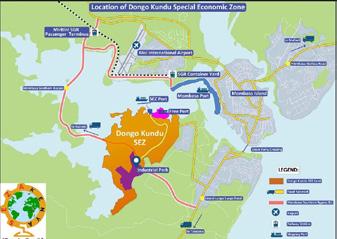
Kenya has 35 gazetted Special Economic Zones (SEZs) at various stages of operationalization, including both public and private developments. These zones are strategically located along transport corridors and regional
trade hubs and are often linked to major infrastructure projects such as the Standard Gauge Railway (SGR) and the ports of Mombasa and Lamu. The Dongo Kundu SEZ is a 3,000-acre development located adjacent to the Port of Mombasa. It focuses on logistics, Agro-processing, pharmaceuticals, automotive assembly, and green energy. Recent developments include major LPG projects and heavy industry pipelines.
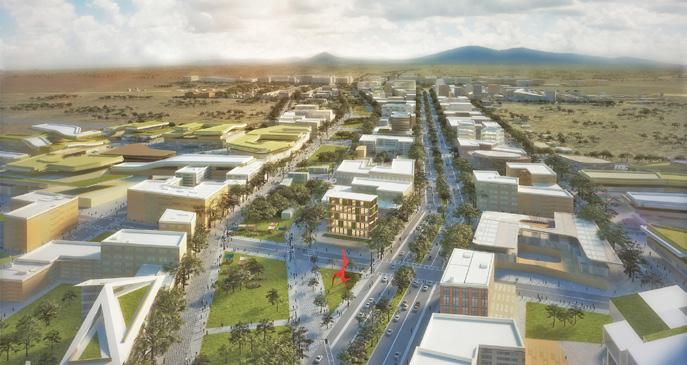
Artistic impression of Konza Technopolis
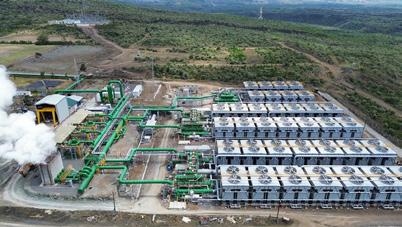
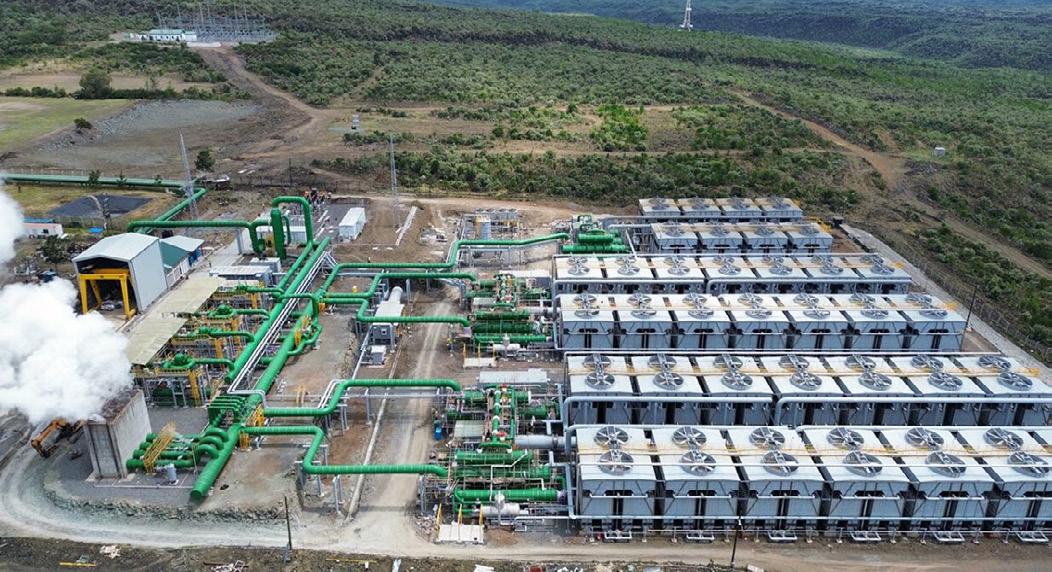
Sosian Menengai Geothermal power plant. Source: Powermag.com
Naivasha SEZ is situated at the Standard Gauge Railway railhead in Mai Mahiu, Nakuru County. It is a hub for green manufacturing due to its proximity to geothermal power. Key sectors include textiles, paper products, iron and steel.
Konza Technopolis, known as Kenya’s “Silicon Savannah,” focuses on ICT, BPO (Business Process Outsourcing), research, and high-tech manufacturing.
Lamu SEZ forms part of the LAPSSET Corridor, focusing on industrialization and value addition to serve the northern trade routes.
In addition to the creation of SEZs, Kenya has undertaken major infrastructure projects to ease the movement of goods and services. The Standard Gauge Railway (SGR) project is Kenya’s largest post-independence project. Phase one of the project, from Mombasa to Nairobi, was completed in 2017 while phase two was completed in 2019, linking Nairobi and Naivasha. The link from Kisumu and Malaba is currently
under development and will link Kenya to the Ugandan border, providing an efficient and cost-effective means of transport to the greater East African region.
Lamu Port forms part of an ambitious multi-billion-dollar PAPSSET Corridor project. The first three berths were completed in 2021, and the government is seeking private investors to develop the remaining 29 berths. The government also commissioned the dualling of the Rironi-Mau Summit Road, which links Kenya and Uganda.
Efforts are also being made to increase power generation at affordable prices to consumers. The Sosian-
Menengai Geothermal Power Plant was completed in 2023 and has a capacity of 35 Megawatts. The ongoing Quantum Menengai projects are part of a strategy to reach 10,000 Megawatts of capacity by 2030.
The rapid growth of industrialization and urbanization requires reliable sources of water for domestic, industrial and agricultural use. The Northern Collector Tunnel is a 12 Kilometre underground tunnel in Murang’a County designed to boost Nairobi’s water supply by 140 million litres per day. Thwake Dam is an ongoing project being built on the Athi River. It is a multipurpose dam that will supply water to homes, farms and hydropower projects on completion.
Kenya is no longer just a gateway to East Africa. It is a sophisticated,investmentready destination. Kenya’s evolution into a premier FDI destination is a testament to a deliberate strategy of economic diversification and structural reform.
KEPROBA and TradeMark Africa Empower Migori’s Blue Economy Through AfCFTA Dialogue
By Gertrude Mirobi gmirobi@brand.ke
In a significant step toward strengthening Kenya’s blue economy exports, the Kenya Export Promotion and Branding Agency (KEPROBA), in partnership with TradeMark Africa, convened a Consultative Forum on the Blue Economy Value Chain and Export Opportunities under the African Continental Free Trade Area (AfCFTA) in Migori County. Held at the Isebania One-Stop Border Point from January 26 – 28, 2026, the forum brought together key stakeholders,
including Kenya Trade Network Agency (KenTrade), Kenya Bureau of Standards (KEBS), Kenya Revenue Authority (KRA), the State Department for Trade, Kenya Industrial Research and Development Institute (KIRDI), and the State Department for Blue Economy and Fisheries. The gathering aimed to advance coordinated interventions to strengthen competitiveness, compliance, and market access for blue economy products.
interventions, MSMEs are better positioned to trade within the region, integrate more effectively along the value chain, and access wider markets for sustainable export growth.
Amidthe discussions, the forum crystallized clear AfCFTA-aligned opportunities for Migori’s blue economy sector. These include the high and consistent demand for dried omena in Rwanda, Burundi, and Eastern DRC as an affordable and shelf-stable protein
The dialogue reframed Isebania’s role from a simple Kenya-Tanzania cross border point into a critical regional trade gateway along the Southern Corridor. This corridor serves as a lifeline connecting Kenya’s abundant fish resources from Lake Victoria, including Nile perch, tilapia, and omena (dagaa), to high-demand markets in Tanzania, Rwanda, Burundi, and the Democratic Republic of Congo. The forum recognised that for Kenya to fully benefit from the AfCFTA’s promise of a unified market of 1.3 billion people, local corridors like Isebania must become efficient, formalized conduits for trade.
The forum focused on building the capacity of Micro, Small, and Medium Enterprises (MSMEs) through targeted training on East African Community trade instruments, with particular emphasis on the Simplified Trade Regime (STR), while deepening their understanding of the vast opportunities under the AfCFTA. Participants were also guided on the importance of branding and packaging for export products, strengthening the Made in Kenyaidentity to enhance competitiveness and market acceptance. Through these
producers and SMEs to meet standards and quality requirements, enhance branding and value addition, and fully leverage AfCFTA opportunities for expanded regional and continental trade.
The forum was graced by Hon. Lucas Mosenda, County Executive Committee Member for Agriculture, Livestock, Veterinary Services, Fisheries and Blue Economy, Migori County, whose presence reaffirmed strong county-
source. Furthermore, growing urban markets in Dar es Salaam and Kigali present expanding opportunities for frozen tilapia and Nile perch, which will require parallel investment in cold-chain logistics. There is also significant potential for branded, packaged smoked or marinated fish products targeted at the burgeoning supermarket retail sectors across East and Central Africa.
Kenya’s blue economy, valued at approximately USD 5 billion annually and supporting over 2 million livelihoods directly and indirectly, is a sector of strategic importance for trade, job creation, and sustainable development. By focusing on hubs such as the Isebania border, KEPROBA is advancing its export promotion mandate. The agency is supporting local
For
national collaboration in positioning Kenya’s blue economy for export-led growth.
Through sustained, partnership-driven dialogues such as this, KEPROBA and TradeMark Africa continue to support MSMEs across the blue economy value chain, ensuring that local enterprises are not only participants but competitive beneficiaries of Africa’s integrated trade future.
Kenya to fully benefit from AfCFTA’s promise of a unified market, local corridors like Isebania must become efficient, formalised conduits for trade.
Love at First Export: Why the World Chooses Kenya
By Irene Van De Graaf (IGraaf@brand.ke)
February has a way of slowing us down. It asks us to pay attention, to notice what we value, who we choose, and why we stay loyal. In trade, these questions matter just as much as they do in love. Buyers do not fall for products overnight. They return because they trust what they receive, because expectations are met, and because the story behind the product feels honest.
That is the space where Kenyan products are increasingly finding their footing globally.
Consumers across global markets are becoming more deliberate in their choices. They want to know where their tea was grown, who stitched their leather bag, and whether the people behind a product benefit fairly from its success. Kenya is increasingly aligned with these shifting consumer expectations, as its products reflect depth, care, and reliability.
At the heart of this work is the role of the Kenya Export Promotion and Branding Agency, whose mandate is to ensure that Kenyan products do not just reach international markets, but arrive prepared. Through export readiness programmes, branding support, and market intelligence, the agency helps businesses understand that exporting is not a single transaction. It is a commitment.
Consider Kenyan coffee, a product that has long been admired but is now being
Trade relationships, like personal ones, are built over time.
rediscovered in new ways. Small and medium producers are moving beyond bulk exports into specialty markets, where buyers are willing to pay for traceability, ethical sourcing, and distinct flavour profiles. When a roaster in Europe or Asia can trace a cup of coffee back to a specific region and farmer, that connection deepens. It becomes personal. What was once just coffee becomes a relationship built on transparency and trust.
The same shift is happening in the textile and apparel sector. Kenyan manufacturers producing garments for export are placing greater focus on compliance, sustainability, and ethical labour practices. International buyers are paying attention. They want partners who can meet delivery timelines, uphold labour standards, and maintain consistent quality. Kenyan enterprises that invest in these areas are moving beyond order fulfilment to become trusted partners in long-term sourcing conversations. That is what loyalty looks like in global trade.
In the processed foods sector, Kenyan brands are also learning the language of modern consumers. Honey that is properly graded and packaged, dried fruits that meet food safety standards, and teas that clearly communicate origin and wellness benefits are finding space on international shelves. These products succeed not simply because they taste good, but because they are presented with care. Labels are clear. Certifications are in place. Packaging reflects intention. Buyers notice these details, and they remember them.
Behind every successful export story is preparation. Global markets are exacting, and expectations are high. Buyers want to know about shelf life, logistics, standards, and reliability. This is where coordinated support makes the difference. Exporters who understand market requirements early are better positioned to adapt, comply, and compete. They avoid costly mistakes and build
confidence with partners who value professionalism as much as product quality.
February also reminds us that relationships thrive when they are inclusive. Women led and youth driven enterprises are playing a growing role in Kenya’s export landscape. From agribusinesses led by young entrepreneurs to manufacturing firms owned by women, these enterprises bring resilience, innovation, and fresh perspectives to global markets. When supported to brand effectively and access accurate market information, they contribute not only to export growth but to broader economic inclusion.
Even in sectors facing challenges, commitment matters. Exporters navigating shifting market requirements are investing in better practices, diversification, and sustainability. These adjustments are not always easy, but they demonstrate commitment. In trade, effort is visible. Buyers can tell when a supplier is invested in doing things right, even when the rules change.
So you might be wondering, what does Valentine’s have to do with all this?
Everything.
Trade relationships, like personal ones, are built over time. They require listening, consistency, and follow through. They grow when expectations are met and when values align. Kenyan products are earning repeat business not because of sentiment, but because they deliver. The affection comes later, when buyers realise, they can rely on what Kenya offers.
This February, as we celebrate connection in its many forms, we also celebrate the quiet work that goes into building Kenya’s reputation abroad. The long hours spent refining packaging. The training sessions on standards and market entry. The patience it takes to build credibility one shipment at a time.
The world does not fall in love with products by accident. It chooses them.
And more often than not, the world is choosing Kenya.