
4th


4th
Contributed by The Department of Transportation & Public Facilities
For many students, choosing a career path can feel overwhelming. While college is often presented as the only option, Alaska offers thousands of well-paying careers in the skilled trades — the same trades that build the roads, bridges, airports, and infrastructure that keep our state moving.
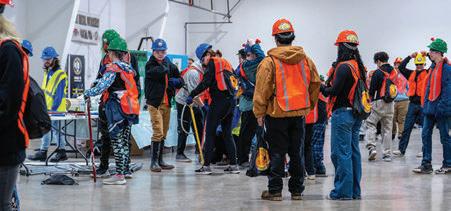
To help students explore these opportunities, the Alaska Department of Transportation & Public Facilities (DOT&PF) is hosting Alaska Construction Career Day on April 8 at Raven Hall on the Alaska State Fairgrounds in Palmer. The afternoon session is specifically open to homeschool students and families.
The event schedule includes Anchorage and Mat-Su School District students from 8am to 1:30pm, and homeschool and rural students from 12pm to 3:30pm.
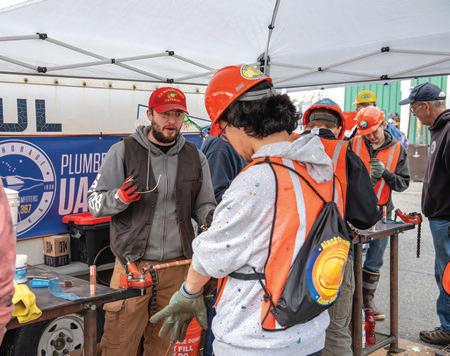
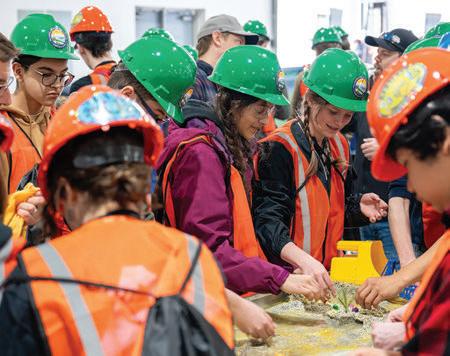
Alaska Construction Career Day is not a typical career fair. Instead of simply walking past tables and brochures, students will have the opportunity to interact with professionals and explore trades through hands-on activities using real tools and equipment.
Students may have the opportunity to explore areas such as welding; electrical wiring; carpentry; heavy equipment; mechanics and construc-
tion tools; and surveying and drilling.
Industry professionals will be on site to demonstrate their work, answer questions, and help students better understand the training and career paths available in these fields. Representatives from construction companies, labor unions, apprenticeship programs, and training organizations will also be present.
For homeschool students who may not always have access to traditional career exploration events, this event provides a valuable opportunity to experience these careers firsthand.
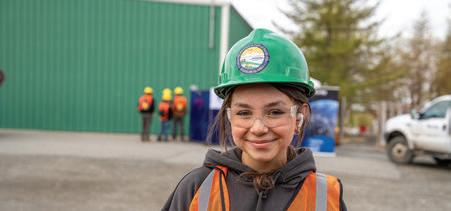
Best of all, the event is completely free for students. Participants will receive safety gear — including a hard hat and other protective equipment — and lunch will be provided.
Events like Alaska Construction Career Day help students see that there are many pathways to success, including skilled trades that offer strong wages, apprenticeships, and long-term career opportunities right here in Alaska. Homeschool families interested in attending are encour aged to register in advance.
To register your student or learn more, contact Zhenia Peterson at 907-269-0844 or zhenia.peterson@ alaska.gov.
Space is limited, and early registra tion is encouraged.





Earn 1% back on purchases over $50 & access digital coupons in the app
Loyalty & Digital Coupons from three Bears alaska




Contributed by Ryanne Ori, Owner of Consign49
Do these sunny, longer days have you in the mood for warmer weather along with a serious seasonal refresh for your wardrobe and home décor? How would you like to shop from a selection of thousands of high-quality items at 50–90% off etail prices, all while directly supporting your local community members? Spring is just around the corner, and so is the 26th semi-annual Consign49 Consignment Sale.

Consign49 is a four-day consignment sale held each spring and fall, where over 300 local community members participate by bringing new and gently used clothing, accessories, and home décor items together to form a large-scale resale pop-up. Each consignor independently prices and prepares items to be brought to the event, and items are dropped off t the event lo -

cation approximately one day before the sale begins. Consign49 team members work to organize all incoming items so they can be easily shopped according to category and size in a retail-like setting. Once the event opens, shoppers can browse the entire venue before bringing their selections to the central checkout station.
Consign49 is a smart, sustainable way to shop, earn money, and extend the lifecycle of high-quality items. Consignors are motivated to do some spring cleaning while also earning extra cash. Shoppers get to browse a large selection of brand names or much-needed seasonal items for a fraction of retail prices. Additionally, many items that go unsold at the end of the event will be donated to local charities in need. For the spring event, a large portion of donations will go to Alaska Adult & Teen Challenge PacWest to support faithbased programs for combating addiction.
The Consign49 Spring 2026 Consignment Sale will be held April 16–19 at Raven Hall at the Alaska State Fairgrounds in Palmer.

Admission and parking are free, all major credit cards are accepted, and dressing rooms will be provided. Event hours are 9am–8pm Thursday and Friday, 9am–6pm on Saturday, and 9am–5pm on Sunday. On Sunday, April 19, many remaining items will be marked half-price, depending on whether the individual consignor has chosen to put the item into the half-price sale. If you are interested in becoming a consignor at a future event, go to consign49. com for more info. Consignor spots are limited and will be on a first-come basis.

Contributed by
Melisa Behrendt
Join the American Cancer Society for the 4th Annual Mat-Su Taste of Hope: A Chef’s Competition, presented by Mat-Su Valley Cancer Center. This anticipated event, now in the spring, will be hosted at Everett’s on Thursday, April 30. Get ready for one of Mat-Su’s most exciting culinary events. The
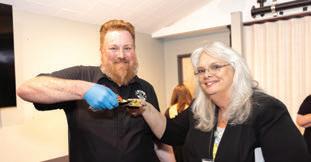
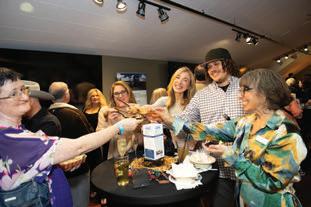
Mat-Su Taste of Hope brings together local flavor and community spirit to support the American Cancer Society’s mission to eliminate cancer. Guests will enjoy a walk-around tasting experience, sampling signature dishes from some of the region’s most beloved restaurants and casting their
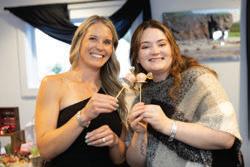
vote for their favorite dish of the night. The full lineup of 2026 food competitors will be announced soon, with local restaurants and vendors preparing to showcase their best bites for guests to enjoy. While the event promises delicious food and friendly competition, it is also an opportunity to support the mission of American Cancer Society Alaska to end cancer as we know it, for everyone. Cancer continues to be Alaska’s leading cause of death, and with over 80% of our communities off he road system, simply getting to treatment can be one of the biggest challenges patients face. Through pro -
grams like free flights to medical care and lodging at Hope Lodge locations, the American Cancer Society helps ensure Alaskans can access the treatment they need. Patients and caregivers can also turn to the Society’s 24/7 helpline (800-227-2345) for guidance, emotional support, and trusted info.
Events like Mat-Su Taste of Hope help make those services possible. By attending, guests aren’t just enjoying an evening of great food and friendly competition, they’re helping ensure that when Alaskans hear the words “you have cancer,” they don’t have to face the road ahead alone.
With delicious food, lively competition, a silent auction, and a game of giving, Mat-Su Taste of Hope promises to be a memorable evening for all who attend. Gather your friends, bring your appetite, and come see what the Mat-Su has to offer at the 4th Annual Mat-Su Taste of Hope: A Chef’s Competition, presented by Mat-Su Valley Cancer Center, on Thursday, April 30 at Everett’s. Visit acstasteofhopematsu.org to learn more and purchase tickets. See you there!
Contributed by Doris Thomas
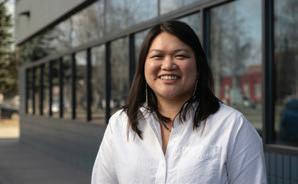
“Challenges and Opportunities in Local News” is the topic for Vicky Ho, editor of the Anchorage Daily News, when she speaks to members and guests of Alaska Professional Communicators (AkProCom) on Saturday, March 21. Her talk, which will also be streamed on Zoom, is at the Glacier Brewhouse, 737 West
5th Ave. Doors open at 11:15am and the luncheon will begin at 11:45am. Space is limited; both in-person and Zoom reservations must be made by noon on March 18. The best way to RSVP is via the AkProCom website, akprocom.org/ lunchpayment.html. Participants may also email akprocom@gmail.com or call 907240-1073 and leave a message, including a phone number. When calling or sending an email, please include how many people are coming and their names.
Ho is responsible for news content across all ADN platforms, as well as newsroom strategy and management. She joined the paper in 2015 after working as an editor at a daily newspaper in Colorado. She previously worked as a coach in the Poynter Institute’s Table Stakes program, helping local news organizations across the country transition to more sustainable digital publishing models. Ho is also a member of the board of the nonprofit Alaska Press Club.









Contributed by Debra McGhan
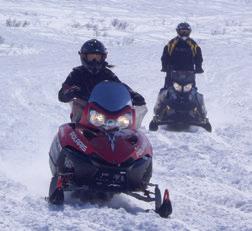
On a snowy April morning in Alaska’s Hoo Doo Mountains near Paxson, thousands of snowmachine engines shattered the silence in a rolling roar. The sound spread across the valley like thunder, echoing off idgelines and glaciers as riders carved across a vast white landscape.
Each spring this remote stretch of Alaska backcountry transforms into the site of Arctic Man—one of the wildest winter gatherings in North America. The event pairs an intense downhill ski race with high-speed snowmachine competition, drawing thousands of riders and spectators eager for adrenaline and deep powder.
But beyond the roar of engines and celebration of speed, the landscape holds quieter dangers. Beneath those endless snowfields lie hidden cevasses, avalanche paths, and glacier drains capable of swallowing a machine or a person in seconds.
I attended Arctic Man for years not to race, but to raise awareness about those hazards. With support from the Alaska Department of Public Safety, organizations like the North America Outdoor Institute, the Alaska Avalanche Information Center, and Alaska Safe Riders bring safety education directly to riders gathered in the mountains. The budget is small, so our team stretches every dollar and leans heavily on volunteers.
In April 2013 we arrived in the middle of a snowstorm. Visibility dropped to near zero, and if the weather failed to clear, the race itself might be postponed. By Thursday the storm began to break. Our team headed into the field o scout locations for what we called our “safety game,” an interactive training activity designed to help riders recognize hidden backcountry hazards.
That evening we hosted a poker-style fundraiser in the big tent, selling tickets for a chance to win a brand-new Ski-Doo snowmachine donated by BRP. The event gave us an opportunity to talk with riders about avalanche awareness and glacier travel while raising funds to support our safety programs in schools across Alaska.
By Saturday morning the skies cleared.
The race wrapped up, the crowd celebrated, and our small team had already connected with more than 2,000 people through the training game. Flyers, banners, and safety reminders reached thousands more. By the end of the weekend we had raised over $10,000 to keep our outreach programs moving forward.
For the first time in dys we also had a few quiet hours. I strapped on my skis and headed out alone for a peaceful Nordic tour—part exercise, part stress relief, part celebration of what our small team had accomplished.
Beyond the energy of the Arctic Man camp, the valley opened into a wide snowfield stetching toward the toe of a glacier. As I skied across the open terrain, I noticed a shallow depression in the snow. Experience told me immediately what it was: a glacier moulin—a vertical shaft where meltwater drains deep into the ice below. Some of these openings
plunge hundreds of feet beneath the surface.
I stopped and took a few photos, thinking they would make powerful teaching images for future training sessions. Around me, snowmachines zipped across the same fiel. Riders accelerated across the terrain, and I realized how easily someone could approach the depression from the wrong angle and miss it entirely until the last second.
In the distance I spotted another lone skier gliding toward the foothills of the glacier. We raised our ski poles in greeting as we passed far across the valley.
Not long after, I turned back toward camp. We still needed to prepare for our final ativities before the awards ceremony that evening.
In an instant everything changed.
Instead of celebration, Alaska State Troopers approached me with a request. A young boy had fallen into a glacier moulin. The lone skier I had seen earlier—an emergency room doctor—had reached the scene first but lacked the technical equipment needed to descend safely into the glacier. Our training team carried ropes and rescue gear, so I sent one of our professional instructors and Wilderness EMT to assist.
Several hours later he returned with news no one wanted to hear. Nine-yearold Shjon Brown had fallen into the moulin along with his snowmachine. Deep beneath the snow and ice, rescuers could not reach him in time.

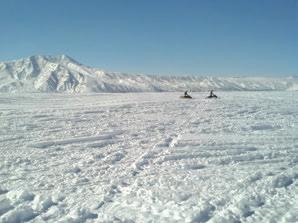
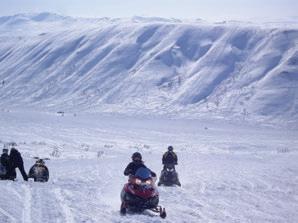
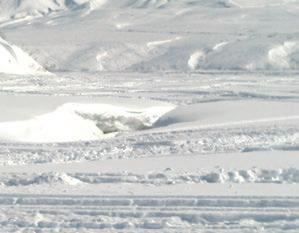
Shjon’s death was not the result of recklessness. Like many tragedies in Alaska’s backcountry, it came from a hidden hazard and a moment of terrible misfortune.
“Shjon was my right-hand man,” his father Roger later said. “We did everything together. He cheered me on when I raced. In fact, he convinced me to enter both Arctic Man and the Iron Dog.”
Earlier that day the group had been riding and towing friends on snowboards. “We were waiting for the skiers and riders to come down,” Roger explained. “Shjon wanted to ride around a little. He’d been riding for years, so I just told him to stay where I could see him.”
Roger watched his son riding about a hundred yards away. “He dropped into a small depression but didn’t come back out. I thought the machine had gotten stuck.” When Roger rode over to help, he discovered something far worse. The glacier had swallowed both the snow-
machine and his son.
Losses like this ripple through families and communities for years. They also remind us why education matters.
Organizations like the Alaska Avalanche Information Center and Alaska Safe Riders continue working to provide free safety training at events like Arctic Man so riders can recognize the hidden hazards that lie beneath Alaska’s snow. Roger Brown now volunteers as a safety instructor for Alaska Safe Riders. He knows that from a distance the valley still looks the same—a wide open, beautiful snowfield stetching toward the mountains, dotted with riders carving across fresh powder. He also knows that sometimes the most dangerous places in Alaska look exactly like the safest ones.
Take time to get educated so that every trip ends with a successful return. Learn more at AlaskaSafeRiders.org.




Contributed by
Selena Ortega-Chiolero
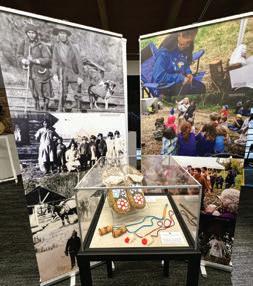
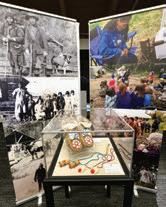
Chickaloon Village Traditional Council (CVTC) invites community members and visitors to experience Ts’utsaetne’: Honoring Our Ancestors, a temporary exhibit now on display at the Wasilla Museum through August.
The exhibit shares the stories, histories, and cultural knowledge of the Ahtna people while honoring the generations who came before. Ts’utsaetne’, meaning “honoring our ancestors” in the Ahtna language, reflects on the lives, resilience, and enduring legacy of Ahtna ancestors and the knowledge they passed down to future generations.
Developed by CVTC’s Culture and His-
toric Preservation Department, the exhibit represents an important milestone for the Tribal Nation. Ts’utsaetne’: Honoring Our Ancestors is the first community-voiced exhibit created by CVTC, meaning the stories and perspectives shared throughout the installation come directly from Tribal citizens, Elders, and community knowledge keepers. Through photographs, archival materials, and cultural narratives, the exhibit explores themes of family, place, and cultural continuity, highlighting the deep connections between the Ahtna people and their homelands. “This exhibit is about honoring the people who came before us and recognizing that their teachings continue to guide our community today,”
said a representative from CVTC’s Culture and Historic Preservation Department. “It is also meaningful because it is the first time our community has had the opportunity to share our history and perspectives in a museum exhibit in our own voices.”
By bringing these stories into a public museum space, CVTC hopes to foster greater understanding of Ahtna culture and history while celebrating the strength and resilience of the community across generations.
Visitors will also find opportunities to engage with Ahtna culture through interpretive materials and hands-on learning elements that encourage reflection and curiosity. Community members, families, educators, and visitors are warmly encour-
aged to attend.
Ts’utsaetne’: Honoring Our Ancestors is on display at the Wasilla Museum, 121 W. Swanson Avenue in Wasilla, now through August. Museum hours are Wednesday through Saturday, 10 a.m.–4 p.m. For more information, please visit the Wasilla Museum.

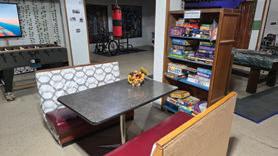
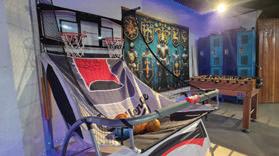
Contributed by Carol Dorman Underground “HIVE” offers affordable fun, parties, and community space for families and youth groups.
A Hidden Place for Young People: March 14 marks the first anniversary of the Youth Archive, Palmer’s newest amusement and party center created specifically for young people. Known as the “HIVE,” it may also be one of Palmer’s best-kept secrets. The Youth Archive is an independent, stand-alone nonprofit and is not affiliated with any larger organization, thus the word has traveled slowly. It is located below ground in the basement of the historic Eagle Hotel and was created to give families and youth groups an imaginative place to socialize without spending a bundle.
A Busy First Year: During its first year of operation, the HIVE has hosted Trick-or-Treat Street, Young Life, choirs, youth groups, family birthday parties, company Christmas parties, youth leader meetings, tourists, and individuals with special needs. New attractions now include a driving simulator and a collection of antique video games for members to enjoy.
Carol continues to improve the space, and visitors are encouraged to share their suggestions.
Open to All Ages: Open hours remain Wednesday through Saturday from 3:00 p.m. to 5:00 p.m. All ages are welcome each day, and there is a $5 cover charge for non-members. Families bringing children under 13 are asked to attend with an adult.
Teenagers and young adults ages 13 and older may attend independently and become members by signing a conduct pledge and submitting a guardian-signed insurance waiver as an emergency contact (available online). Members receive additional privileges; details are available on the Youth Archive website.
Movies, Music, and Memorable Moments:
The HIVE’s movie room regularly shows silent comedy films from more than 120 years ago, as well as classic talking pictures such as Robin Hood and The Wizard of Oz. The music room hosts rehearsals for the Mat-Su Kids Chorus every Friday. Visitors enjoy a wide variety of games and activities, and autistic adults have found the environment especially welcoming.
Memorable moments have already filled the building. One Christmas party guest hilariously received a goldfish during a Secret Santa exchange, and the many vocal
settings on the karaoke microphones have produced plenty of laughter among foster youth.
A Flood—and a Quick Recovery: Even unexpected challenges have added to the story. During a December windstorm, a burst pipe on the second flor floded the basement. Volunteers spent the day slurping up water from the concrete floor with shop vacuums, but despite the setback, scheduled parties continued without interruption.
A Medieval-Themed Party Venue: The HIVE has also become a popular place for celebrations. Its medieval artwork and castle-like atmosphere free up the imagination. Guests can choose from themed events such as Picnic Parties, Stagecraft Parties, Movie Parties, Gamer Parties, or even a Medieval Tournament. The large “King’s Table” seats 14 guests and offers a unique setting for board meetings or royal tea parties.
A Safe and Welcoming Space: The Youth Archive is designed to be a safe place, with security cameras and a volunteer security guard on site. The entrance may feel a bit like the door maze from Monsters, Inc., but those who find the right doorway will discover a hidden medieval world beneath Palmer: the Youth Archive.















Contributed by Doris Thomas, Friends of Nike Site
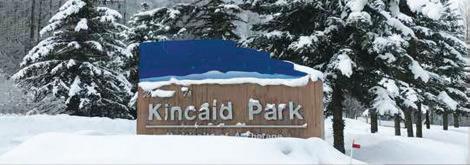
In partnership with the Municipality of Anchorage and the Nordic Skiing Association of Anchorage, Friends of Nike Site Summit offers a unique way to experience
Point
erce
dogs
the
and
Come learn what life was like for soldiers on the site and how the location became a “Swords into Plowshares” success story for Anchorage on Saturday, March 28, 2026, from 1–4 PM. Registration and more details are online at reg.planetreg.com/Kincaid%20Ski. The tour is open to experienced cross-country skiers ages 12 and older. Registration
Contributed by Michelle Sturgeon
On Friday, April 3, from 11 a.m. to 2 p.m., the Mat-Su community will gather in a sea of blue at Newcomb Park, at the corner of Parks Highway and Crusey Street, for one of Alaska’s largest child abuse awareness events presented by The Children’s Place and community partners. This is more than a rally. It’s a promise to our children. Every year, children in our own neighborhoods face abuse, neglect, exploitation, grooming, and child sexual abuse. Behind closed doors and hidden in silence, too many young voices go unheard. The Go Blue Rally is about breaking that silence together.
“The Go Blue Rally is a significant event in our ongoing effort to prevent child abuse and raise awareness in the Mat-Su Valley. Every single day you can open social media and see a new arrest, a new conviction, a new offender exposed. What people don’t always see is that each headline is tied to a child, sometimes multiple children. It represents a terrifying incident or years of unimaginable abuse. For many of us, these children are not just statistics. They have cases that stay with us long after the workday ends. The stories are heartbreaking, and the impact of this work is long-lasting for the professionals who serve on the front lines, who
show up day after day to protect kids.
I’m personally asking you to come stand alongside us and say with your presence, ‘I see you. I appreciate the work you do to keep children safe.’
Our children deserve a community that will support them loudly, boldly, and without hesitation.”
— Michelle Sturgeon, Executive Director, The Children’s Place
Child abuse is not someone else’s issue.
It’s not confined to one family, one school, or one street. It touches every part of our valley, and that means we are the solution. The more education we provide, the more prevention efforts we support, and the more resources we invest in families, the more children are protected.
The Mat-Su Go Blue Rally stands in solidarity with the teams doing the hardest work every single day — law enforcement officers, social workers, mental health professionals, victim advocates, and community members who refuse to look away. These individuals carry heavy stories and difficult cases so children can have a chance at healing and justice. They need to see that the community stands with them.
When you wear blue and stand in the park, you’re sending a message: that child abuse will not be ignored; that child sexual abuse will not be tolerated; that our valley demands accountability for those
by Mallory Saltamacchio
mother, a single parent battling serious mental illness, and his siblings. There was no steady income, no financial safety net, and very little food in the house. What they had came from cans, creative combinations, and whatever could stretch the longest. It wasn’t until Richie started school that the truth became visible. At lunchtime, some children walked up with coins in their hands. Richie and others like him were given something different: a red tag on a string worn around the neck. That tag was the price of a free lunch and the quiet humiliation that came with it. It marked him as different, as less.
Sometimes the shame was so heavy that he chose hunger instead. Walking into the cafeteria meant questions, stares, and explanations he didn’t yet have the words to answer. Food insecurity didn’t just affect
Richie’s body; it shaped how he saw himself. It taught him early that he was on his own and that nothing would be handed to him unless he went looking for it.
During the summers, when school lunches disappeared, hunger became a constant companion. Richie and his twin sister learned to recognize it in others too. They noticed kids in the housing complex sitting on park benches with small paper bags, eating sandwiches. They didn’t ask questions. They followed.
Like ants tracing a trail, they figured out where the food was coming from: adults in the community quietly handing out lunches. A sandwich, an apple, a small carton of milk. It wasn’t fancy. Often the cheese sandwiches smelled strange and tasted worse. But hunger doesn’t care about flavor; hunger only cares about survival.
Those lunches became routine, a lifeline—something dependable in a childhood that otherwise wasn’t.
By age 11, Richie was working, not because anyone told him to but because he understood that if he wanted food,
who harm children; and that we support strong, informed juries willing to prosecute offenders. Most importantly, you’re telling everyone you stand up against child crimes.
This is a family-friendly event. Parents, children, grandparents, neighbors — everyone is encouraged to attend. There will be opportunities to learn practical ways to protect kids, recognize warning signs, and support prevention efforts in your own circles.
The Go Blue Rally also includes a fun community element. This year there will be a contest for the Bluest person in the crowd, with prizes and gear handed out to participants. Meet new friends who share your passion for protecting children and discover ways to stay involved year-round with conversations about protecting kids. Because protecting children isn’t just about awareness — it’s about action.
($25) is a non-tax-deductible donation to FONSS. Total registration is limited to 25 participants ages 12 and older (no babies in carriers) and will close once that limit has been reached. Registration must be completed by credit card online. If you prefer to register and then mail a check, contact Friends of Nike Site Summit (FONSS) by email at site. summit.tours@gmail.com or by phone at 907-717-0117 (leave message). Checks must be received by 3/20/26. If a potential participant has contacted FONSS in advance to ensure space is available, same-day on-site registration is available on a cash-only basis. We hope to see you there.

Stand. Wear blue. Be the change. The Mat-Su Valley is known for showing up
stability, or even a bicycle, he had to earn it himself. He woke before dawn to sort newspapers, then delivered them on foot for miles until he raised enough money for that bike. Once, even after surgery on his foot, he limped through his route in pain rather than give it up. Work meant security. Work meant control.
Still, the anxiety of food insecurity lingered. It followed him into adulthood, shaping how he understood people—especially those who broke rules or struggled to survive. He recognized that same fear in others: the desperation that comes from unmet needs and from never having enough.
Alongside that hardship, Richie learned something else. From his mother, despite her illness, he learned compassion. She brought homeless strangers into their small apartment so they could shower, eat, and feel human again. She stretched pots of onion soup to feed people who had even less than they did. She invited hungry strangers into diners and insisted they be served, even when restaurant owners protested. She taught Richie to notice people, to see beyond appearances, and to understand that everyone has a story.
when it matters, and on April 3 it matters. If you’ve ever wondered how you can make a difference, felt heartbreak over stories of abused children in the news, or believe kids deserve safety, dignity, and a future, come stand with your community. Wear blue, bring a friend, and help turn awareness into protection and education.
That lesson stayed with him. Today Richie is a successful businessman. He built a career, led teams, mentored others, and worked for years in challenging environments where empathy mattered as much as strength. He didn’t just survive; he thrived, and he credits programs like those summer lunches for helping him get there. A fed child can focus, grow, and dream. Richie is living proof that food doesn’t just fill stomachs; it builds futures. Programs like Kids Kupboard exist to make sure no child has to choose between hunger and shame, or survival and success. They ensure that children today have what Richie once needed: consistent access to food, dignity, and the chance to become their own success story.
If you want to be part of stories like Richie’s—stories that begin with hardship but end in hope—we invite you to contact us. Together we can make sure every child has the nourishment they need to succeed. Names and identifying details have been changed to protect the privacy and dignity of the families we serve. For more info on how you can support children in your community, contact Kids Kupboard at 907357-5439 or visit kidskupboard.org.


Contributed by Kaitlyn Klippert
AARS invites local businesses to support “Embracing Sobriety, Building Hope.”
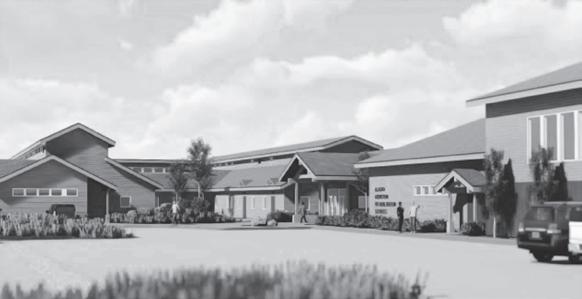
At Alaska Addiction Rehabilitation Services, Inc. (AARS), recovery involves far more than overcoming addiction; it includes recreating lives, strengthening families, and developing healthier communities throughout Alaska. That mission is driving AARS’ ongoing campus expansion in Point MacKenzie through its campaign, Embracing Sobriety, Building Hope.
In the past year, AARS has achieved significant progress in Phase II of its expansion, which will add 26 additional residential treatment beds and nearly double the organization’s capacity to serve individuals across the state. The construction process is moving forward quickly, with crews working to integrate the new building with the existing facility. Upon completion, the expanded residential facility will enable AARS to accommodate more individuals seeking treatment and provide the structured, supportive environment essential for long-term recovery.
The final phase of the Embracing Sobriety, Building Hope campaign will focus on wellness and fostering community connections. AARS is set to build a 14,000-squarefoot gymnasium and recreation center designed to provide a facility for physical activity, recreation, and large recovery gatherings for clients, alumni, and families.
The facility will also serve as a resource for the Point MacKenzie community as a storm shelter and a venue for local meetings, events, and recreational activities.
AARS is currently inviting local businesses and community partners to take part in this effort by exploring sponsorship opportunities. Local businesses play a vital role in
AARS has helped more than 3,400 Alaskans rebuild their lives, but demand now far outpaces capacity: only about 461 treatment beds exist statewide, and AARS alone received 383 referrals last year while operating just 26 residential and 10 outpatient beds at a time. Our expansion will double capacity, increasing residential beds from 26 to 52 and outpatient treatment beds from 10 to 42, so people ready for recovery are not left waiting in danger. Construction is underway, with completion targeted for summer 2026.

At Mat-Su Urgent Care, we're here to help you bounce back! Whether it's a common cold or something more serious, our skilled medical teams offer the care you need, when you need it. Walk-ins are welcome.

supporting recovery in Alaska. Sponsorships provide essential funding for the expansion and resources that enable AARS to expand its treatment services, demonstrating a commitment to strengthening the health and wellbeing of our communities. Businesses partnering with AARS help build opportunities for individuals to recreate their lives and reintegrate into their families and communities with a renewed sense of purpose.
These partnerships also support AARS’ developing vocational training programs, providing clients with practical work experience during treatment. Programs such as culinary arts, carpentry, welding, and small engine repair equip individuals with essential skills and strong work habits, preparing them for meaningful employment opportunities after graduation.
For more than forty years, AARS has relied on strong partnerships with local businesses, community stakeholders, and supporters who believe recovery is achievable. The Embracing Sobriety, Building Hope campaign continues this tradition by bringing the community together to expand recovery services for Alaskans in need.
Mark your calendar! AARS invites the community to one of its most anticipated annual events. Fun Day will take place Saturday, June 6. This free community event brings together clients, alumni, families, and community members for an afternoon of connection and celebration. The event features food, games, and activities for all ages and offers an opportunity to learn more about AARS programs and the impact of recovery throughout Alaska.
Local businesses interested in learning more about sponsorship opportunities for the Embracing Sobriety, Building Hope campaign are encouraged to contact AARS to discuss potential partnership options. By working together, we can continue embracing sobriety and building hope for Alaskans across the state.







Contributed by Shelley Hughes, Republican Candidate for Governor of the Great State of Alaska
On a bright July evening in Palmer, the kind where the sun lingers long after supper, you can watch a farmer pull a carrot from the ground and snap it open. The color is almost electric, and the taste is sweeter than anything shipped from the Lower 48. Moments like that remind us that Alaska can grow remarkable food. The land is not the problem. It never has been.
Yet almost all the food on our plates still comes from elsewhere, and our shelves often hold only days of fresh goods when storms or port delays disrupt shipments. For more than half a century, well-meaning leaders have tried again and again to reinvigorate Alaska agriculture. Every effort fell short, not because Alaskans lack skill or determination, but because the system itself was missing two essentials. There was never enough accessible land, and the state never built the infrastructure required to make farming profitable. Without land, without processing facilities, without distribution networks, even the most resourceful Alaskans could only push so far.
This is what makes this agriculture proposal fundamentally different. It is not another round of enthusiasm without support. It is a plan designed to fix exactly what has held Alaska back.
A Vision for the Future: My goal is that Alaska will have a coordinated, profitable agricultural system that finally matches Alaska’s potential. The plan includes a
by Nancy Racek
Contributed
There’s something pathetic, not to mention sinister about the obsession with banning books. Reminiscent of Nazi Germany, right? Our world is crumbling down around us; masked thugs are roaming the streets of our cities, snatching people out of their homes and cars, strong arming children, murdering our citizens and the focus is on banning books? Really? Seems a little psychotic, doesn’t it? Apparently, one of the reasons behind the mad rush to ban
modern version of the Alaska Homestead Act that places 40-acre farm parcels back in the hands of Alaskans, paired with basic infrastructure such as access roads, utilities, and surveyed boundaries. It includes a merit-based land-release process, so farmers earn these parcels through training and preparation, not through lotteries or luck. It includes shared processing and distribution through a statewide market co-op so farmers can turn their raw products into income without being forced to compete alone. With these pieces in place, an average Alaskan family should be able to earn a six-figure income farming in this state. That has never been possible before, because the structure to support it has never existed.
To make this vision stick, Alaska needs a dedicated Department of Agriculture— not to create regulatory burdens or hand out subsidies, but one to remove barriers and put a commissioner at the governor’s cabinet table. Agriculture has been buried under larger departments focused on other industries for too long. A standalone department ensures farming has a permanent advocate, coordinated planning, and long-term attention. It protects this work from political shifts, ensures land access, provides the Alaska-specific research farmers and ranchers need, and helps guide the infrastructure development ag producers need year after year.
The Weight of Old Failures: Everyone remembers the difficult chapters in Alaska’s agricultural past. The Delta barley initiative, the Point MacKenzie dairy effort, and many
books is “fear”. There’s a whole psychological thing there but boils down to the fear of the written word. I find that so pathetic!
The rational being used is books can harm children! Where is the research that shows books harm children. Books are words printed on sheets of paper contained between two pieces of cardboard. Reading actually stimulates the brain in a good way!
The words paint pictures which opens the imagination.
Do you book banners really want to protect kids? Then you better advocate for
smaller projects all collapsed because the land was inaccessible, roads were missing, processing was absent, and markets were beyond reach. Alaska asked its farmers to perform miracles without giving them the tools they needed.
Yet a few Alaskans managed to succeed despite these limitations and proved that the land itself is not the obstacle. In Delta Junction, Bryce Wrigley built a thriving barley operation and flour mill. He grows, processes, packages, and sells Alaska grain at scale, and he could sell far more if the state had the right infrastructure and distribution in place. His success is proof that when the system works, farming in Alaska can work too.
In Point MacKenzie, a younger farmer tells a similar story. Dylan Blankenship came north from Wyoming at 18 years old, drawn by the opportunity Alaska still offers those willing to work the land. Starting at 24 with just five acres, his operation has grown into one of the largest hay farms in the state. His experience reminds us that Alaska still holds the kind of opportunity that built the American homestead in the first place.
And although Tim and Lisa Myers of Bethel are now retired, their farm demonstrated that creative, locally adapted agriculture can thrive even in some of the most remote parts of the state. Their legacy stands as a reminder of what becomes possible when Alaskans are given the tools to innovate.
What Alaska Actually Needs: Every serious agricultural assessment reaches
removing every electronic device to which they have access. You can’t be so naïve to believe they are not in tune to everything out there! For God’s sake, they’re sexting, sending each other nude photos, displaying acts you have labeled obscene! Get a clue! With books, parents have a modicum of control over what they read.
If you truly are concerned about the well-being of our youth, then shouldn’t you be figuring out a way to address their access to social media. In the vast cyberspace world, the “words” floating around are uncontained. They are visual and graphic; pictures already painted….nothing left to the imagination! Have you seen the research into the damage social media is
Contributed by Patricia Fisher
The Mat-Su Borough School District announced this week the possible closure of three schools: ML Elementary (MLE), Larson, and Glacier View. As a resident of Meadow Lakes, I am very concerned about this possible closure. According to the School District, the closure is based on the decline in enrollment at MLE. The enrollment data does not support that statement.
Here are the statistics for the past five years, provided by the school, based on Oct. 1 enrollment data: 2020–2021: 289 (no
Contributed by Anthony Irsik
The two greatest disasters in Alaska’s history occurred in March, on Good Friday, the first being the Good Friday Earthquake of 1964, the second being the Exxon Valdez Oil Spill in 1989. The earthquake was the first real test of Alaska as a state, and the oil spill was the final payment of the debt of carelessness produced by us. The latter will be the focus of this article.
1968: years before the tanker named Exxon Valdez ever entered Valdez’s waters. oil was discovered in Prudhoe Bay. The Oilmen of Texas and England rushed to find a way to tap into this resource and make use of it. The two biggest problems were how to get the machinery needed to drill for oil up to the North Slope, and how to get the oil to an ice-free port so that use and money could be made. A pipeline is needed. They decide on the final plan by October; Valdez will be the end point. 1973-77: TAPS is completed, and oil begins making its way down to Valdez. Its production had been hampered by a court order preventing its production, but the United States Congress eventually over-
change); 2021–2022: 294 (up 5 students); 2022–2023: 297 (up 3 students); 2023–2024: 286 (down 11 students); 2024–2025: 308 (up 22 students); 2025–2026: 317 (up 9 students).
Quick takeaways: five-year net change +28 students (289 - 317); biggest dip 2023–2024 (−11); biggest jump 2024–2025 (+22). Statistics do not show a decline and certainly do not give a complete picture of the impact that ML Elementary has on our community. It has been a local center and gathering place in our community for decades. Being a rural community without
turned the court order and prevented further litigation against TAPS production. The Congress vote was a close-run thing, after Alyeska gave many promises to use double hulled vessels, filter their ballast water, and be ready at all times to clean up the spill, the vote sat at 49 to 49, the Vice President was the deciding vote giving Alyeska the go ahead.
1989: In January two tankers leaked 1,700 barrels and 70 barrels of oil into Prince William Sound. Alyeska is able to clean up the 1,700 barrels, but due to some particularly bad weather they were unable to clean up the 70 barrels. Also, at this time there have been major questions and substantial accusations that Alyeska is not filtering their ballast water as promised, and pouring dirty, oily water into the pristine Sound. Further, the promise to use double hull tankers (which can almost prevent an oil spill themselves) is fully rejected for cheaper single hull tankers. Additionally, the Coast Guard reduced the quality of their radar due to budget cuts, such that they typically would only look out about 7 miles, and if they observed naval traffic any further, they would not have clear information.
many facilities, MLE has served as a school, meeting place, recreation venue, and garden hub for the Meadow Lakes area. The loss of this facility will be a very hurtful blow to the community. Combined with this loss, it does not appear that closing these schools will have any major impact on the budget shortfall. There will be additional busing and classroom expenses to accommodate students who must be moved to other schools. In addition to the probable limited impact of the closure on the shortfall, the closure will have a number of negative impacts on par-
Enter the Exxon Valdez. A single hull tanker with a damaged early warning system and an exhausted crew (Exxon did not allow for the federally required rest of crew before leaving port) is filled up with 1.3 million barrels of oil and leaves port March 23 around 9:30pm. The skipper, Joe Hazelwood contacts the Coast Guard asking if he can adjust course to avoid ice and he is given the go ahead (this is around 10:20). Hazelwood gives instructions to his crew for the next set of maneuvers before going to his quarters to do some unwanted paperwork. Not long afterward the Exxon Valdez leaves radar range of the Coast Guard, but everything continues smoothly, for a time. A little after midnight the pilot, Murphy (an employee of Alyeska), spots the lighthouse that warns of Bligh Reef, they are way off ourse, and he tries to make adjustments, but it is too late. The single hull of the Exxon Valdez is shredded, and oil begins spilling into Prince William Sound. Hazelwood rushes to the bridge, assess the situation, and reports to the Coast Guard before trying to free the tanker from the reef. He quickly realizes that the tanker is not going anywhere.
the same conclusion. Alaska does not lack potential. Alaska lacks a system. Farmers need accessible, affordable land. They need research and training designed for a northern climate. They need processing and storage, so their crops and livestock do not go to waste. They need roads that reach the land they are granted. And they need a statewide co-op that speaks with one voice to schools, hospitals, grocery chains, and export markets. The new Homestead Act is central to solving these gaps. By opening 40-acre parcels for farming, paired with road access and basic services, Alaska finally unlocks the land that past programs promised but never delivered. This is not a return to the old homestead system. It is the first version built for success.
A Future Worth Working Toward: Imagine Alaska ten years from now. Hundreds of new farms producing vegetables, meat, grain, and dairy. Families building wealth on 40-acre homesteads with real roads and real markets. Schools serving food grown by local hands. A statewide co-op moving Alaska products efficiently across the state. Villages blending wild harvests with reliable greenhouse crops. And a food supply that stays strong even when storms come. Alaska does not need another attempt at reinvigoration. It needs the right foundation. As your next governor, I will work to put this commonsense framework in place. The opportunity is real. And the first shoots of this future are already beginning to rise from the ground.
inflicting on teens and pre-teens? It’s very disturbing “. Not only does it mess with their developing minds/brains, it increases their suicide rates, also exposes them to predators who are capitalizing on their vulnerability to lure them into sex trafficking and other destructive behaviors. So instead of trying to ban books, maybe it would be wise to focus on how to get the thugs out of our cities, protect our neighbors from ICE invasions and to figure out how to protect our children from the harmful effects of the electronic world in which we are all living!! The Alaska State Legislature is! Just stop with the craziness! Do something meaningful!
ents and on the district. Consider a couple of facts. Meadow Lakes Elementary ranks second in poverty in the Borough, and the school rank s first in the number of students with disabilities. Those facts could place a severe burden on parents and on the district, having to deal with students being bused to Big Lake, Tanaina, or Goose Bay/ Knik. I would suggest that the district look at elimination of some of the administrative staff efore they close these schools. If you feel strongly about this closure, I suggest that you attend the School Board meeting on Wednesday, March 4 and speak on the issue. Emails can be sent to the School Board randy.trani@matsuk12.us and Borough Assembly lonnie.mckechnie@ matsugov.us.
It has often been alleged that Captain Joe Hazelwood was drunk throughout this event. This claim is dubious. The only testimony I could find of one of his crew saying that he was drunk was that of the pilot Murphy who said that he “smelled alcohol on his breath”. Hazelwood was not tested for alcohol content until 10 hours after the event, so he allegedly had the chance to go drinking before to calm himself. Everyone on his crew (outside of Murphy) claimed that he was not drunk. The one mistake that he made for certain was leaving the bridge, of that even his fellow captains agreed, but all the other mistakes happened long before this Good Friday morning. The error seems to be one of the leadership’s stewardships, not one captain. Certainly, if Hazelwood had been on the bridge he might have noticed something was wrong sooner, but the pilot was supposed to be the one familiar with the area. What is more apparent is that all the systems that are supposed to be there preventing human error were made inept by the love of money over the love of man and nature.


Contributed by Amy Bushatz
Palmer and Wasilla residents who spotted a giant balloon cruising over their neighborhoods over the last week aren’t imagining things.
A hot air balloon really was floating above Palmer and Wasilla Saturday and again early this week, touching down briefly in a potato field on Bogard Road late Tuesday morning before floating off into Wasilla.
The 85-foot balloon is owned and operated by Alaska Helicopter Tours, which also runs the Alaska Glacier Lodge near the Knik Glacier. The balloon will be used for glacier tours, at events in Mat-Su and Anchorage, and to take tourists on rides in the skies above the region, said Brandon Schmidt, who runs the company’s marketing.
Alaska Helicopter Tours officials started testing the balloon over Mat-Su last week as they learn how to raise, steer and -- perhaps most importantly -- land it, Schmidt said.
The flights immediately drew attention from curious neighbors, some of whom posted pictures of the black balloon with its northern lights-inspired decorations and Alaska Helicopter Tours logo on social media as it meandered on Saturday’s breeze.
Right now, the team’s flights start at the Knik Glacier, where they use a helicopter to drop the basket and deflated balloon, and end wherever the
wind takes them, he said. On Saturday, that stopping point was Finger Lake near Palmer; on Tuesday, it carried them near Lucy Lake off Knik Goose Bay Road.
The balloon’s lift and descent are triggered by turning on and off a 3,500-degree-Fahrenheit flame that generates heated air and pushes it inside the polyurethane-coated nylon. It can take up to five passengers in its basket, travels at about 30 miles per hour, and floats as high as 15,000 feet above sea level, Schmidt said.
Balloon travel is a quiet way to see the area because no rotors or engines are creating extra noise, he said. But yes -- it can also be very chilly despite the hot flame shooting up into the balloon. Ambient air temperature drops about two degrees Celsius per 1,000 feet, and ground temperatures on their recent test days were near 0 degrees in some areas.
Flying a hot air balloon is much simpler than operating a helicopter, he said, but still requires special training.
Trained hot air balloon pilots — known as aeronauts — go through a formal licensing process, he said.
Alaska Helicopter Tours has not yet announced prices or opened bookings for its planned excursions but hopes to offer a special price for locals who want to experience the balloon, he said. A

social media post published about the balloon last week generated a waitlist of more than 500 individuals from around the globe, he said, plus at least one call from officials at Red Bull who want to stage an extreme ski jump over it.
“You get everything from ‘I want to get married and do my vows on the glacier and then jump in a balloon instead of driving off in a car,’ and then on the ski side, that’s when you have pro athletes that want to jump out of it in a wingsuit,” he said.
When trips do become available, scheduling will require flexibility, he said. Hot air balloons require good weather and for Mat-Su’s infamous wind to take a break. And just how long any given journey lasts can be as up in the air as the balloon itself, he said.
“There’s an unknown with a balloon,” he said. “You kind of have to go
Contributed by Alexander Harmon
Our cells run on oxygen and nutrients delivered through healthy blood flow. If circulation is sluggish or blood quality is poor, fatigue follows. That’s why many traditional systems of wellness emphasize “building the blood” and encouraging circulation. Red foods and herbs have long been associated with vitality. Beet root, rich in natural nitrates, helps support nitric oxide production, which encourages healthy blood vessel dilation and improved oxygen delivery. Cayenne pepper has been used for centuries to stimulate circulation and gently warm the body, supporting healthy blood flow to tissues. When blood moves efficiently, oxygen reaches muscles and the brain more effectively — and that’s when natural energy begins to rise.
Beyond circulation, certain botanicals are known for helping the body adapt to stress and enhance stamina.
Ginseng, particularly Asian and American varieties, has been used for thousands of years to support endurance, mental clarity, and resilience. Rather than forcing stimulation, it helps balance the body’s stress response.
Cordyceps, a unique medicinal mushroom, is prized for supporting oxygen utilization and cellular energy production. Traditionally used to enhance stamina and lung capacity, it’s become popular among athletes and those seeking steady vitality without jitters.
Shilajit, a mineral-rich resin formed over centuries in mountainous regions, is valued for its fulvic acid content and trace minerals. It supports mitochondrial function —
the tiny energy factories inside our cells — and has been traditionally used to restore strength and vitality.
For those seeking clean, sustained focus, matcha offers a gentler alternative to coffee. This powdered green tea contains natural caffeine balanced with L-theanine, an amino acid that promotes calm alertness. The result is smooth energy without the crash.
Lifestyle: The Real Energy Multiplier
Even the finest herbs cannot replace the foundations of health. Energy depends on adequate sleep, regular movement, and oxygen intake.
During deep sleep, the body repairs tissues, balances hormones, and produces new blood cells. Without quality rest, fatigue compounds quickly.
Exercise improves circulation and oxygen delivery while stimulating mitochon-
Contributed by Aspire Med Spa
As more people prioritize self-care, there’s a growing understanding
where the wind takes you.”
Like ships, hot air balloons are referred to using female pronouns and are typically given names, local balloon enthusiasts said this week. Schmidt’s team has not yet named its balloon, he said, and might open a naming contest on social media.
Hot air ballooning was all the rage in Southcentral from the mid-1970s to mid-’80s before insurance became impossible to obtain due, in part, to one reckless operator, said Rex Murphy, a Federal Aviation balloon examiner at the time. Combined with development on the ground, which limited landing spots, and the oil boom crash that created a budget crunch, the ballooning businesses floated away.
Contact Amy Bushatz at contact@ matsusentinel.com for more info.
drial growth. Even moderate daily move
ment can significantly impact energy levels. And perhaps most overlooked: breath. Intentional breathing and time outdoors increase oxygen saturation, supporting both mental clarity and physical endurance.
A Community Focus on Natural Vitality
As more residents in the Mat-Su Valley seek natural ways to support their health, conversations about energy are shifting from “What can wake me up?” to “How can I strengthen my foundation?”
Natural energy isn’t about pushing harder — it’s about nourishing deeper. Through circulation-supporting herbs, adaptogenic botanicals, mineral-rich supplements, and attention to sleep and movement, sustainable vitality becomes possible.
In Wasilla, that conversation continues to grow — one rooted in the belief that when the body is supported properly, energy follows naturally.
moments in their week dedicated entirely to themselves. Our space is intentionally unhurried and judgment-free, welcoming clients of all ages and genders. Rooted in the Anchorage community, we prioritize education, connection, and involvement. Through local events and charitable support, we aim to reinforce that wellness is not just personal— it’s communal.
We believe taking care of yourself is an important part of feeling your best—inside and out.
Contributed by Alexander Harmon
History shows that civilizations rarely collapse overnight. They erode slowly through complacency, unchecked power, weakened institutions, and unstable monetary foundations. By the time the warning signs are obvious, the damage is often deep and difficult to reverse.
Across Alaska and the nation, growing concerns about government accountability and economic stability are not fringe conversations — they are symptoms of a public sensing strain in the system. When transparency weakens, when public trust declines, and when financial policy feels disconnected from everyday reality, the foundation of a stable society begins to crack. Accountability is not optional in a free society. It is oxygen. Without transparency in budgeting, judicial conduct, and public finance, confience deteriorates. And once public confidence collapses, markets
follow. Economies do not function on currency alone — they function on trust. At the same time, serious questions continue to surface about the structure of modern money itself.
The U.S. dollar operates as a fiat currency, meaning it is not backed by gold or silver but by government decree and collective confience. Fiat systems allow flxibility — governments can expand the money supply, respond to recessions, and inject liquidity during crises. But that flexibility carries risk. When money creation outpaces productivity, inflation rises. When debt expands faster than growth, long-term stability is threatened.
History offers sobering lessons. Civilizations that debased their currency — from ancient Rome clipping its coins to more modern inflationary spirals — experienced economic dislocation, social unrest, and decline. Currency is more than paper or digits on a screen. It represents stored
Contributed by Gregory Smith
A significant legal challenge is unfolding in the Anchorage Superior Court as Gregory Smith, a pro se litigant, contests the Municipality of Anchorage (MOA) over the 2022 abatement of his residence at Davis Park. The case, Gregory Smith v. Municipality of Anchorage (Case # 3AN-22-06805ci), has evolved into a critique of municipal policy, raising questions about the constitutional rights of the unhoused and the limits of government authority during sub-arctic winters.
At the heart of the dispute is the MOA’s removal of Smith’s tent and personal property—essential survival gear—during a period of extreme cold. Smith asserts this was not a routine “cleanup” but a violation of state, federal, and international law. He argues that his occupancy of the site constituted “involuntary self-sheltering,” a status-based necessity triggered by a lack of viable alternatives.
A Question of Tenancy and Due Process: Smith’s legal argument rests on several pillars that challenge the definition of a “home.” He contends that his long-term residency at Davis Park established a
“Tenancy at Will” under Alaska Statutes (AS 34.03.010). Under the Alaska Uniform Residential Landlord and Tenant Act (AURLTA), Smith argues that a tent used as a primary residence qualifies as a “dwelling unit.”
“When a person has no other place to go and establishes a fixed location for survival, that location becomes their dwelling,” Smith notes. Consequently, he asserts that the MOA was legally required to use formal Forcible Entry and Detainer (FED) court procedures for eviction—the same process used to evict an apartment tenant—rather than resorting to “self-help” methods like summary destruction.
Constitutional Protections and “State-Created Danger”: The lawsuit relies heavily on recent clarifications from the Alaska Supreme Court in Smith v. Municipality of Anchorage (2025) and Aguila v. Municipality of Anchorage (2025). These cases established that survival gear— including tents, bedding, and heating elements—is protected property under the Alaska Constitution. Smith alleges the MOA’s immediate destruction of these items violated the 15-day storage mandate required by state law. He further invokes the “State-Created Danger” doctrine,
labor, stored time, and stored value. When that value erodes, so does purchasing power, savings, and generational wealth.
In contrast, gold- and silver-backed systems historically imposed discipline. Currency tied to tangible assets limited excessive expansion and anchored long-term value. Yet they also constrained governments during emergencies and periods of contraction. No system is perfect, but every system demands vigilance.
What becomes dangerous is not choosing one model over another. What becomes dangerous is disengagement.
When citizens stop asking questions about monetary policy, deficit spending, regulatory capture, or institutional transparency, the guardrails weaken. When public oversight fades, incentives shift away from long-term stewardship toward short-term gain.
Economic instability does not merely mean higher prices. It means shrinking opportunity. It means small businesses struggling under uncertainty. It means families watching savings lose value. It means communities feeling the strain of systems that no longer feel responsive or
arguing that by removing his only source of heat and shelter in freezing temperatures, the MOA placed him at increased risk of hypothermia and death. This act, he claims, violates his substantive due process rights under the Alaska Declaration of Rights, which guarantees the right to “life, liberty, and the pursuit of happiness.”
Jurisdictional Complexity and Federal Oversight: The case also delves into jurisdictional issues involving the land itself. Davis Park is subject to a Memorandum of Agreement (MOA) between the city and Joint Base Elmendorf-Richardson (JBER).
Smith argues the city lacked unilateral authority to enforce local codes on property under federal oversight without following specific Law Enforcement Enterprise Portal (LEEP) coordination mandates. He contends that because the city bypassed these inter-agency protocols, the abatement was void ab initio—legally invalid from the moment it began. This challenge suggests the city may have overstepped its bounds administratively by failing to recognize federal interests tied to the park’s land-use agreements.
Broader Implications for the Unhoused: This case highlights a growing divide between “camping” and “self-sheltering” as a survival necessity. Smith’s brief cites international human rights standards, including the International Covenant on
Contributed by Katherine Baker
Ronald Reagan as POTUS was supported not only by Republicans but also by a portion of Democrats & independent Voters. He was a popular leader who became known as the ‘Great Communicator’!
When Ronald Reagan arrived at the Oval Office, he was concerned enough to work diligently to end the Cold War, & the Soviet Union’s economy totally crashed. Reagan embarrassed the Soviet Union on the World Stage by forcing them back into their original boundaries known as ‘Russia’. Here is a brief summary of some events following the end of the Reagan Administration:
1) They loudly declared across the nation that there would never be another Reagan
in the Oval Office. It wasn’t intended as a compliment. It was being defiantly declared by Reagan’s enemies that there will never be another Reagan elected to the Oval Office, EVER. (interestingly, after RFK declared his presidential ambitions, LBJ stated, no Kennedy would ever be elected to the Oval Office)
2) This was repeated so often & for such a long period of time, who could forget? It was totally an unscientific statement loudly & repeatedly forced into Americans’ ears.
MEN DON’T COMMUNICATE! Tell a man that men don’t do a certain something, especially with everyone repeating it over & over, like brainwashing, & guess what, then men won’t do that! (canceled speech?) Men won’t communicate because, of course, they want to be seen as a man.
And... watch this...if men believe & act on the statement that men don’t communicate then there will never be another Reagan, inside the Oval Office - Reagan, the ‘Great Communicator’.
3) Then it was loudly declared for all the nation to hear (a premature gloat?) that it is the end of the Republican Party. (First no more ‘Great Communicator’ & then the end of the GOP?)
4) Then Donald J Trump was elected POTUS...And we are even now experiencing their loud, obnoxious, disrespectful & repetitive noise as they constantly target him. After two assassination attemptstarget seems to be the proper term. Those in this nation who refuse to acknowledge even proven voter fraud, are guaranteeing voter fraud will contin-
Contributed Lela Ryterski
Since the White House is being turned into Trump’s castle, and our government and rule of law is being destroyed, I don’t think the American people will continue to abide by a dictatorship for long. And when Trump’s rule ends, what are we going to do? Go back to business as usual and what caused this dictatorship in the first
Contributed Paul Johnson
Ever since the Kavanaugh hearings, Lisa’s snootiness and lack of the ability to smile have gotten exponentially worse. It must be the self proclaimed “Higher Standard” she holds herself to as she looks down her nose at the rest of us deplorable MAGA simpletons.
place--corruption in government; money over people? I think we need to start looking at what kind of government we want. How are we going to create it? The majority of the people have to get on board with it. And I think that, basically, we all want the same thing—to be respected, to be offered the possibility of living a comfortable life, peace and security. Peace is another name
One example is Lisa joining with Rand Paul, Thom Tillis, Todd Young, Chuck Grassley, her old Gal Pal Susan Collins and of course, Mitch Mc Connell, to keep the Filibuster, thereby perpetuating D.C. tube lock. I personally have mixed emotions on this subject. At the same time, the Filibuster WILL disappear as soon as the Democrats regain control. With Lisa’s help that will be this Fall! A second example would be her trip to Denmark, again with Tillis and Collins, in an
accountable. Civilizations collapse when people assume someone else will fix the problem. The antidote is not chaos — it is lawful, informed engagement: demanding transparency, supporting investigative journalism, participating in public forums, studying economic history, holding institutions to ethical standards, and encouraging policies that prioritize long-term stability over short-term optics.
Alaskans understand resilience. The state was built by people willing to endure hardship and demand fairness. But resilience does not mean passivity.
If accountability erodes and monetary instability accelerates unchecked, the consequences could be severe — not just for markets, but for communities and future generations. Economic systems can recover. Institutions can reform. But only when citizens remain vigilant. The warning signs are a call not to panic — but to pay attention. Because stable governments and sound economies are not permanent fixtures. They are maintained — or they are lost.
for friendship. I’m happy I opened up discussion. My point is to get people to think about a government (not lawlessness) that we all trust to look out for our best interests; that we’ve put guardrails into place to reduce corruption. That we have checks and balances—overseers. I’m sure there are smarter people than me who can figure this out. I
effort to tank President Trumps Greenland Deal. I can only imagine what her reasoning would be for NOT wanting to protect the Western Hemisphere by way of the “Golden Dome” defense system. Or to help the people of Greenland develop their vast natural resources. Security and prosperity apparently aren’t priorities for Lisa, unless it’s her own.
The third and possibly most telling examples is her outright refusal to support the SAVE Act. The usual cadre of RINOs all
Civil and Political Rights (ICCPR), arguing that the destruction of a person’s home in winter conditions constitutes “cruel, inhuman, or degrading treatment.” The MOA’s current “yellow tag” notification system is also under fire. Smith asserts the system provides no meaningful opportunity to be heard before a neutral magistrate and argues the city’s policy prioritizes municipal aesthetics over the fundamental right to life and bodily integrity.
The Pursuit of Equitable Relief: In his prayer for relief, Smith asks the court for a declaratory judgment that would change how Anchorage operates: recognition that a tent used as a primary residence qualifies as a “dwelling unit”; a requirement that the city seek a court-ordered eviction before clearing long-term campsites; and a permanent injunction preventing future winter abatements involving the destruction of life-sustaining property.
As Smith v. Municipality of Anchorage moves through the Superior Court, its outcome could redefine the relationship between the city and its most vulnerable residents. If the court sides with Smith, it could force cities to provide stronger due process and alternative housing solutions before clearing encampments. For Gregory Smith, the case is a pursuit of a fundamental legal truth: that the protection of the law should not stop at the flap of a tent.
ue. Why? They don’t seem to want real solutions to real problems. Why? Facts & morality are a refused focus that they will not consider or discuss. Why? Reality is replaced by emotional, head spinning narratives. That results in problems which cannot be identified or solved. (One trait of a civilized nation is the ability to conduct an open discussion of the facts.)
Instead, they have defined voter fraud & irregularities as ‘there is no such thing as voter fraud’ and/or ‘it doesn’t affect the outcome of the election’. Neither is a truthful statement. And then they immediately begin inciteful, emotional button-pushing presenting no facts & no logical arguments. Voting is the people’s superpower. Voter fraud is like the kryptonite that drains the people’s power away. It could drain all of it away. Don’t let anyone tell you that your vote doesn’t matter. It does. And they know it does.
suggest we choose which people we trust, who adhere to our values, to look over the Constitution and our laws and work out the kinks. Most people have morals, and a group of people with different viewpoints can work together for everyone’s benefit. Then, we vote on it. If we like the new Constitution and trust it, we can start a new era of peace and prosperity and go on living our lives happier. If we don’t like it, we send them back to the drawing board. What do you think?
joining hands on this one too. With the initial shot being fired by Mitch Mc Connell, who proclaimed last week that he would tank the SAVE Act just to throw a monkey wrench into President Trump’s plans. Here again I can only speculate on why anyone WOULDN’T want ONLY U.S. Citizens to vote in Federal Elections. At least voting FOR the SAVE Act would give you an excuse when you lose your seat this Fall, Lisa.

There is a strange assumption buried in the way we talk about journalism today. Institutions have a habit of inventing stories about themselves.
Over time those stories become history. And eventually they become something even stronger than history - they become assumptions.
People speak about objectivity as if it were something that once existed. Something clean. Something that the press once possessed before things went wrong.
Before the shouting, the outrage economy, the algorithm. In the beforetimes... But history, when you look at it closely, tells almost the opposite story.
The early American press was not neutral. It never pretended to be. At the time, no one expected it to be.
Benjamin Franklin printed arguments. Thomas Paine wrote pamphlets that were meant to provoke and persuade. Newspapers in the eighteenth and early nineteenth centuries were openly partisan enterprises. They were funded by political factions, written by advocates, and read by citizens who understood exactly what they were reading.
No one expected balance.
They expected argument.
Editors were not referees standing outside the game. They were participants in civic life. Writers with opinions. Writers with loyalties. Writers trying, quite openly, to
move the public mind in one direction or another.
And strangely enough, there was honesty in that. Everyone knew where everyone stood.
The reader encountered a writer. A human being. A person with views. And the reader could agree or disagree, argue back, or pick up a different paper whose editor saw the world differently.
What changed was not journalism’s moral compass. What changed was the structure surrounding it. Journalism did not become objective. Journalism became institutional.
The business of news grew larger. Newspapers that had once been local voices became part of expanding chains. Owners began to control multiple papers across multiple cities. Information that once felt like a scattered conversation started to look more like something coordinated.
William Randolph Hearst is the obvious example, but he was not the anomaly. He was part of a pattern.
And when readers began to notice this pattern - when they realized that the paper on their breakfast table might not be a collection of independent voices but rather an instrument of a much larger enterprisepublic trust began to erode.
Partisanship had always existed. But earlier partisanship had been visible. Distributed. Argued over in the open.
Now the concern was different.
It felt as though someone might be managing the conversation.
That perception created a crisis for the press. Not a crisis of reporting, necessarily, but a crisis of legitimacy.
And the response to that crisis was, in its own way, brilliant.
If readers did not trust publishers, perhaps they would trust professionals. If consolidated ownership implied bias, perhaps credentials could imply neutrality.
So in the early twentieth century journalism schools began to appear. Columbia’s School of Journalism opened in 1912 with funding from Joseph Pulitzer, which carries its own quiet irony, since Pulitzer himself was a master of sensationalism and political combat.
But that irony is part of the story.
These schools did not simply teach writing. They did not merely teach reporting techniques. They introduced something new into the culture of journalism:
A professional identity.
Journalists would no longer see themselves primarily as advocates or participants in civic argument. They would see themselves as observers. Trained witnesses to events. Practitioners of a discipline that required restraint, balance, and neutrality.
Objectivity became not merely a virtue, but a credential.
And here’s the paradox.
Objectivity, as a professional standard, did not emerge only from a philosophical conclusion about truth. It also emerged as a practical solution to a structural problem.
The press had become concentrated. Ownership had become visible.
And the public had begun to wonder whose interests were being served.
So the industry responded by shifting the emphasis. If ownership could not easily be changed, presentation could.
The message became simple.
Whatever you think of the owner, the reporter has no dog in the fight.
But the owner did not disappear. The institution did not disappear. What disappeared was the visible position of the writer.
Before professionalization, a reader encountered a voice.
After professionalization, the reader encountered something else entirely. An institution speaking in a voice that claimed not to have a voice.
There is something philosophically odd about that. A perspective that claims to come from nowhere.
Every act of reporting begins with choices. What story matters today. Which facts are emphasized. Which sources are considered credible. Which events are ignored entirely.
None of this is conspiracy. It is simply the unavoidable process of making sense of reality.
Objectivity cannot remove these choices. It can only attempt to discipline them.
But when the person making those choices disappears behind institutional language, the choices themselves become harder to see.
And when those choices become invisible, power becomes harder to question.
In the earlier world of pamphlets and openly partisan newspapers, the public sphere was messy. Loud. Often irresponsible.
But it was participatory.
You did not need credentials to enter the conversation. You needed conviction. Or courage. Or a printing press.
You could write under your own name. Or sometimes under someone else’s. You could argue. You could persuade. You could be wrong in public and corrected by someone else who was equally visible.
The argument belonged to the citizens who were having it. Professionalization changed that dynamic.
It raised the entry barrier. It created a class of authorized voices. People trained within institutions that certified their neutrality and granted them access to the platforms where public conversation now occurred.
Everyone else became readers.
An audience.
And an audience is not quite the same thing as a citizenry.
None of this means the older system was better in every way. The partisan press of early America could be vicious. It could be dishonest. It was entangled in racial and class hierarchies that excluded many people from public life entirely.
Those problems were real. But there was no claim of objectivity, no professional class that wanted the readers trust. No credentials that claimed objectivity.
Professional journalism solved one crisis of legitimacy by creating another kind of authority altogether.
Authority that came not from argument, but from institution.
What emerged in the twentieth century was not the discovery of objectivity itself. People had been trying to write honestly for centuries.
What emerged was something slightly different.
Objectivity as a credential.
A signal that the speaker belonged to a class of professionals trained to stand outside the fray.
Whether anyone can actually stand outside the fray is a question that remains, even now, unsettled. And so the strange assumption remains. That journalism was once objective, and has somehow fallen from that state.
When in reality the story may be the opposite.
Journalism did not lose objectivity. It invented it.

There is a quiet assumption in modern civic life that deserves a little attention.
When something important happens, we wait for someone to explain it.
Not a neighbor, or a pamphleteer. Not the person down the street who has been paying attention.
We wait for a professional journalist. The expectation feels natural now. So natural that it barely registers. But historically speaking, it is unusual. For most of the history of the republic, public life was not interpreted primarily by professionals.
It was argued by citizens. We called that self-governance. Our representatives were informed by a civic discourse.
The early American public sphere was loud, messy, and decentralized. Political writing did not belong to a profession. It belonged to whoever had the nerve to write.
Pamphlets circulated through towns and cities. Broadsheets appeared on walls and in taverns. Letters to editors were often indistinguishable from essays. Local newspapers were filled with voices arguing openly about what the country should become.
This was not a polished conversation. It was not particularly orderly. And it was certainly not neutral.
But it was participatory.
People did not simply read the news. They wrote into it.


ABOUT: “Joshua Fryfogle, the owner of The People’s Paper, Make A Scene Magazine, and Liberty, Liberally, is heavily involved in the local community. In addition to creating a monthly paper that prints what community members submit, he also owns 95.5 The Pass, KNLT, one of the only stations in the nation to play local music in regular rotation! Josh is a lifelong singer/songwriter, and serves as booking agent and sound engineer for countless other Alaskan musicians.”

That difference matters.
Because when citizens write, they are not just receiving information. They are helping to construct the public world that information describes. They are participants in the act of interpretation.
The republic, at least in theory, was built around this idea.
A free press did not mean a professional press.
It meant a press that was free.
Free for anyone willing to risk the embarrassment of being wrong in public. Over time, that landscape began to change.
Newspapers grew larger. Printing became more expensive. Ownership consolidated. What had once been scattered voices became centralized institutions capable of reaching millions of readers at once.
At the same time, journalism began to professionalize, because centralization had made the public question their power.
Schools appeared. Standards were formalized. Reporters were trained to see themselves not as participants in civic argument, but as observers standing just outside of it.
As journalism became more professional, the role of the citizen subtly shifted.
Before, the public sphere was a conversation among many voices. Afterward, it began to look more like a stage. A smaller number of authorized speakers stood beneath the lights while the rest of the population took seats in the audience.
The public still participated, of course. People voted. They attended meetings. They discussed the news with friends and neighbors.
But the act of shaping public interpretation increasingly belonged to a specialized class.
Journalists explained events.
Commentators interpreted them.
Experts analyzed them.
Everyone else listened.
Eventually the new arrangement begins to feel inevitable.
Today it is difficult to imagine a world where ordinary citizens regularly wrote civic arguments that circulated broadly through public life.
But for much of the republic’s early history, that was precisely how the public sphere functioned.
Political debate was not a broadcast. It was an argument.
Arguments have a different texture than broadcasts. They are less polished, less predictable, and far less controlled. But they carry an energy that comes from participation. When people argue openly about public matters, they are not simply receiving the world. They are shaping it.
Professional journalism did not eliminate that instinct. Human beings remain opinionated creatures.
What it did was reorganize where that instinct appeared.
Much of it moved into private spaces: conversations among friends, discussions around dinner tables, arguments in workplaces and living rooms.
The civic voice did not disappear.
It simply moved offstage, and lost its influence over the audience.
The modern citizen lives in a peculiar position. We are surrounded by information about public life. More information than any previous generation could have imagined. News arrives constantly. Stories unfold in real time.
And yet relatively few people believe that their own voice belongs in the civic conversation.
We observe it.
We react to it.
We occasionally shout into it.
But we rarely expect to shape it directly.
The early advocates of a free press did not imagine a society in which citizens were merely informed. They imagined a society in which citizens argued with one another openly about the meaning of events.
They imagined a culture where public life was a shared interpretive act.
And that’s the reason I started The People’s Paper, and Make A Scene Magazine, back in 2007.
You’re welcome...
To contribute at www.makeasceneak.com/ articlecontributions


Contributed by David Haeg
Since 1989, Marla Greenstein has been the sole investigator of every complaint made against every Alaskan judge. She gets about 20 complaints a month, meaning she has investigated over 8,000 complaints so far. Evidence indicates that Ms. Greenstein is falsifying investigations to keep corrupt judges on the bench and is falsifying certified witten documents to hide her tracks. Evidence indicates that judges and officials e covering up for Ms. Greenstein.
In 2010 Superior Court Judge Stephanie Joannides certified the evidene of Ms. Greenstein’s corruption and referred it to appropriate agencies for investigation. No one investigated.
In 2017 Alaskans realized they had a right to appeal this evidence to a Grand Jury directly and that Grand Juries can investigate and make recommendations (see Alaska Constitution, Article 1, Section 8 and Constitutional Convention transcript page 1328: “The power of Grand Juries to investigate and make recommendations concerning the public welfare or safety shall never be suspended. The Grand Jury can be appealed to directly, which is an invaluable right to the citizen.” See also the Preamble of Alaska’s Constitution: “The Grand Jury is preserved, for all purposes,
particularly for investigation of public officia.”)
From 2017–2019, judges and official bar citizens from appealing to the Grand Jury directly. When given a 500-signature petition asking that the evidence be given to a Grand Jury for investigation, official refuse to do so.
Between 2019 and 2021 fie Grand Juries, on their own, decide to start investigating Ms. Greenstein. Judges and other powerful officials der these Grand Juries to stop investigating.
In 2022 citizens start protesting these unconstitutional orders outside courthouses across Alaska. On June 29, 2022, Judge Jennifer Wells stops and disbands a sixth Grand Jury (in Kenai) after it decides, by majority vote, to investigate Ms. Greenstein.
A complaint is filed tht Judge Wells unconstitutionally stopped the Grand Jury investigation of Marla Greenstein. Marla Greenstein dismisses the complaint against Judge Wells.
Citizens organize a statewide courthouse sit-in, to be continued nonstop (even after closing time and arrests) until the Kenai Grand Jury is reconvened and allowed to investigate.
The day before the sit-in, a new Kenai Grand Jury is convened to investigate Ms.
Greenstein.
The Kenai Grand Jury subpoenaed the evidence and witnesses in Judge Joannides’ referral. According to Grand Jury counsel, Ms. Greenstein “lawyered up and refused to testify” after she was subpoenaed. Counsel also stated that the statute of limitations made it difficulto indict Ms. Greenstein, making a Grand Jury report and recommendation even more critical.
For two years the Kenai Grand Jury investigated Ms. Greenstein and judges she exonerated. The Grand Jury indicted one of these judges (Margaret Murphy) for felony perjury after she testifie.
Finally, the Kenai Grand Jury wrote a report and recommendations concerning Ms. Greenstein’s corruption. But before the public could see the report and recommendations, Judge Thomas Matthews sealed them and dismissed the Grand Jury indictment of Judge Murphy. Grand Jury counsel is tape-recorded stating that the Grand Jury wrote their report and recommendations to the public, confiming that the sealing was corrupt.
A state judge will preside over 16,000 to 40,000 cases in their career. If Ms. Greenstein is falsifying just 1% of her investigations to keep corrupt judges on the bench, this means she has already provided over one million corrupt and unconstitutional court proceedings to Alaskan citizens (1% of 8,000 is 80; 80 times 16,000 is 1,280,000).
This incalculable harm to citizens is unacceptable and will get worse if not
Contributed by Joseph T. Hawkins, DC
“Some say the world will end in fire, some say in ice…” – Robert Frost
For three days, power lines had lain across my property in Soapstone. During the storm I called and reported the down lines multiple times and through different channels. I went directly to MEA’s yard to report them and (in error) even reported them to MTA. The whole Soapstone area was out of power, and I understood exactly why my home in particular had no power. Then, at 2:30 in the morning, I woke and saw flames dancing in the darkness of my front yard. Winds were blowing 40 to 60 miles per hour toward dry underbrush—dry grass sticking out of the frozen ground with no protective snow cover. I called 911 and watched helplessly as energized lines burned in the night for more than half an hour. I made calls warning neighbors, knowing there was only one road in and out of the Soapstone area. If the fire reached the brush, evacuation for many residents could have been impossible. Fire crews and linemen had been watching with me until the lines were de-energized. No one could approach them. No one could put water on them. We could
only wait.
Had those flames reached the brush, I am convinced the fire would have moved from Soapstone toward Farm Loop and potentially into the Hatcher Pass area. Hundreds of residents live along that corridor, all in Soapstone only have one way in and out. Without exaggeration, we came dangerously close to a valley-wide disaster beginning in my front yard. I replayed that night for weeks in my mind, asking what more I could have done. I had reported the lines. I had asked that power remain off util repairs were complete. I had called the right agencies, told neighbors… I did everything I could think of to prevent exactly what happened. Still, it happened.
That realization has stayed with me: even when we see danger coming and act responsibly, systems without adequate safeguards can fail—and when they fail, consequences move quickly.
As a chiropractic physician, my work is grounded in physiology—how the nervous system functions and controls all other systems of the body and how it breaks down. I have been studying another system which is increasingly affecting our collective health: artificial intelligence, or AI.
Contributed by Larry A.
McKinstry, Director, Big Lake Community Council / Co-Chair, Jordan Lake Park Development Committee
In November 2024, a committee formed by the Big Lake Community Council began raising funds and planning improvements to Jordan Lake Park in central Big Lake. This effort was initiated in response to the Jolly Creek Diversion Project being undertaken by the Mat-Su Borough beginning in 2025. The project plan called for spring runoff from Jolly Creek to be diverted through a culvert along Hollywood Road, terminating in the southeast corner of Jordan Lake Park, with flows estimated at up to 100,000 gallons per hour. At the time, no plan existed to direct the runoff nce it reached the park.
The area where the runoff ould be released was a former dump site with mosquito ponds, gravel piles, and thick brush and saplings that grew after the 1996 Miller’s Reach Fire. Jordan Lake Park, also
known as the Jordan Lake Nature Area, is a 44-acre parcel in central Big Lake. In 2002, the Mat-Su Borough adopted a comprehensive plan for the site. Improvements included construction of the Big Lake Library, a picnic pavilion, a lake overlook platform, and a short interpretive trail explaining the Miller’s Reach Fire. Since then, the park has remained largely unchanged and underused.
Faced with the potential impact of the diversion project, the Big Lake Community Council renewed efforts to develop the park according to the 2002 plan. Over the past year the committee has raised more than $150,000 in donations and grants, including $26,000 from the Borough and $64,000 from local foundations and organizations.
In 2025, working with Borough staff ad local contractors, the committee cleared, leveled, and hydroseeded approximately four and a half acres in the southeast corner of the park. Contractors also provided more than $13,700 in in-kind services, and another business donated over 320 cubic yards
Contributed by Sammy Taylor
Don’t you hate it when the greedy want more than their fair share?! I know greed is supposed to be part of our nature, but I sure wish it wasn’t a thing. Many have pointed out that if all the resources currently used by humans were divided equally, we’d all
live pretty good lives. The greedy come into our neighborhoods to move us aside and take what they want above and below ground. When that makes us poor and dependent, the greedy either shun us or use us as workers to make more stuff or them. Or they convince us to
addressed. A growing number of good, strong, and true Alaskans have determined to do so, no matter the cost. We mean to restore the integrity of our judicial system, breathe life back into our constitutional rights, and reveal the truth of what Ms. Greenstein has done, even if it means going to prison to do so.
Representative Ben Carpenter, after reading Judge Joannides’ referral: “This is more important than our budget or Permanent Fund, for it concerns the integrity of Alaska’s entire judicial system.”
Our first ation will consist of a peaceful sit-in at noon on December 11, 2026 (just after the new Governor takes office) in Anchorage’s Atwood Building (Governor’s office), until citizens receive the Kenai Grand Jury report and recommendations and until the new Governor appoints an independent “Mollen”-type commission that publicly investigates everything above. Those willing to join the sit-in, please text/email your name, phone number, and email to (907) 398-6403 or haeg@alaska. net.
It’s time for “The Sleeping Giant” to wake up and kick ass. For too long we have “walked softly.” It’s time to swing, with the full might of an outraged public, the “big stick.”
Please forward this on. Facts justifying a sit-in will be archived at alaskastateofcorruption.com.
AI is powerful. I am strongly pro-AI when used wisely. But like electricity, its benefits depend entirely on how it is managed.
High-voltage lines bring light and heat to our homes. Yet when those same lines lie unguarded on dry ground in high winds, they become a source of extraordinary danger. AI presents a similar duality. Properly guided, it offers tremendous good. Left without thoughtful guardrails, it has the potential to reshape cognition, behavior, and community in ways we do not yet fully understand.
We already use language like “neural networks” to describe AI systems. Those of us who study physiology know that repeated inputs shape neural pathways. In simple terms: nerves that fire together wire together. The environments we create—especially for our children—shape how their brains develop and respond to the world.
At present, I see little clear local governance or community discussion regarding AI’s rapid integration into education and daily life. This concerns me not because AI is inherently harmful, but because any powerful system introduced without thoughtful safeguards invites unintended consequences.
The windstorm reminded me that wait-
of topsoil. Volunteers, with support from a Home Depot grant, planted more than 40 flowering trees along the Big Lake Road frontage. Cedar rail fencing was funded through a $10,000 grant from the Mat-Su Valley Community Credit Union.
Additional contributions helped expand the project further. A local resident donated $38,000 for construction of two pickleball courts, and another resident and contractor donated installation of a well that will provide water to the park.
These accomplishments reflect a strong collaboration between the Mat-Su Borough and Big Lake residents, businesses, and nonprofit foundations. Together we are building a park the community can enjoy for years to come.
As the committee moves into 2026, planning and fundraising continue. This year we plan to complete the well installation with construction of a well house and bring electrical service into the park. The Borough’s trail construction crew will build a 1,600-foot perimeter gravel trail for walking, jogging, biking, and winter cross-country skiing, at an estimated cost of $40,000. An 8–10 station fitness course will be installed along the trail with support from a $25,000
ing until a crisis unfolds is not an effective strategy. Safety rails must be established before the current is fully energized. Our community needs open, practical conversation about how to use AI well— what it is, what it is not, and how to implement it in ways that support human health and resilience. The goal is not fear, but preparation. Not resistance, but responsible stewardship. Electricity transformed the modern world. So will AI. The question is not whether we use it, but whether we use it wisely.
To that end, I will host two free community classes on artificial intelligence: Tuesday, February 17 and Tuesday, February 24, 1:30–2:30 p.m., at BIONIC Chiropractic, 108 East Arctic Ave., Palmer. We will discuss what AI is, what it is not, and how it may influence neurological and physical health in our society, along with practical steps for individuals and families to remain healthy and informed as this technology expands. Space is limited. RSVP: 907-745-4357.
The lights eventually came back on, and we are all grateful for its return. But I will not soon forget how close we came to seeing those same power lines ignite something far larger than intended. Power is a gift. Managed wisely, it sustains us. Managed poorly, it can destroy. Let’s choose wisely—before the next fire starts.
grant from the Mat-Su Health Foundation.
Additional improvements include a brick entry gate and driveway, donor recognition plaques, and a permanent kiosk recognizing early supporters of the project. The soccer field and pickleball courts will also be completed and opened for use.
Planning continues for 2027 and beyond. Future goals include a 225-seat outdoor amphitheater and stage for community events, two picnic pavilions, a full-size basketball court, two bocce courts, and additional seating and picnic areas. Plans are also underway for development of a 2.5mile nature trail providing access to Jordan Lake and the surrounding wetlands.
As development of Jordan Lake Park continues, community members are invited to help. Support can include tax-deductible donations, volunteering time on park projects, providing suggestions, or attending monthly Jordan Lake Park Development Committee meetings.
For more info, visit the Big Lake Community Council website or contact Jordan Lake Development Committee Co-Chairs Jim Faiks (907) 354-8482 or Larry A. McKinstry (541) 218-6871.
use our hard-earned money to buy what they are selling, even when it’s harmful to us. The greedy get into positions of power and decide that they are entitled to have all the nice things even when others are using them. Then all the powerful have to do is goad us into hating any other. We can blame the other for our lack of prosperity and then we don’t feel badly when it’s the others who don’t have enough to sustain themselves. Hate keeps us distracted so we don’t see the greedy taking MORE. We need to ignore the greedy no matter how loud or enticing they sound. That way we can get on with the business of living a good life by building a thriving community with ALL our neighbors. We can make the planet healthier and safer for all when we work together. We should remember the sentiment of our first United States Republican president who said something to the effect of ‘united we stand, divided we fall.’ We are everything and everything is us.

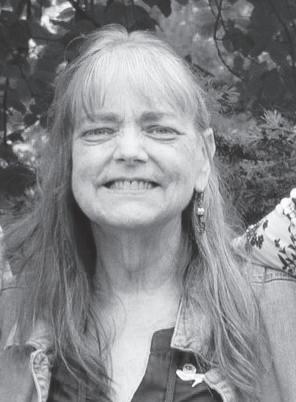
Contributed by Rev. Mindi
Welton-Mitchell
Dr. Sarah Ruth (Withers) Welton was born on May 1st, 1952, in Batavia, New York. The only daughter of Rev. Dr. Robert G. and Ruth Ann Withers, she spent her childhood in
various locations as part of a pastor’s family, finally settling in Utica, New York, where she graduated from Utica Free Academy in 1969. She attended Linfield College (now Linfield University) in McMinnville, Oregon, where she met and married Richard Welton, and graduated cum laude with her B.A. in psychology in 1974. After settling in Eugene, she gave birth to daughter Mindi (1977) and son Travis (1979). In 1983, she and her family set out on the grand adventure and moved to Alaska, first to Anchorage, and then to the Knik area in 1986. After her divorce, she met Gerald Rexrode and after a whirlwind romance, bought a home together in Wasilla in 1993 where she has lived ever since.
Sarah received her master’s degree in counseling psychology from Alaska Pacific University in 1998 and later on her Ph.D. from Northcentral University (now National University) in 2014 at the age of 62. Dr. Welton taught as an adjunct for many years at Mat-Su College and ran her private practice of Alpha Counseling in Wasilla. She served on the Mat-Su School Board
for eighteen years and was active in public education from her days as a PTO parent to working in several elementary schools. In addition to all of this, she was an active member of Church of the Covenant (an American Baptist congregation) in Palmer since 1987 and was first ordained as a deacon in 2002, associate pastor in 2003, and then installed as pastor in 2009. She also preached on occasion at the Lutheran Fellowship in Trapper Creek. Sarah loved the mountains, she loved her family, and she loved her dogs. She started her career after her children were born first as an artist using woodburning and owned a gift shop in Palmer for four years. She also loved to sew and made her children and grandchildren clothes and crafted quilts. She also crocheted and loved to bake. She was an avid reader and even after her terminal diagnosis insisted on joining four book clubs in the valley and tried to keep up with each one.
She was preceded in death by her parents; by her significant other of 26 years,
Gerald Rexrode in 2020; and her three furry children: Sleater, Baxter, and Fiona. She is survived by her companion Jeremy Acota; children Rev. Mindi Welton-Mitchell and her husband Rev. J.C.
son Travis
and his wife Kelly; foster children Lola Vars and Liz Taylor; her three grandchildren: A.J. Mitchell, Seamus Welton and Raleigh Welton. She is also survived by her brothers: Dick Withers and his wife Bonnie; Ken Withers and his husband Harry Henry; Gordon Withers and his wife Cathy; Stephen Withers and his wife Genina; stepmother Barbara Rowe and her husband Bob Wilson; nieces, cousins, and other extended family and the many, many friends she has had over the years.
A Celebration of Life will be held Sunday, March 29th, at 2 p.m. at the Palmer Train Depot, 610 S. Valley Way, Palmer, Alaska. In lieu of flowers, contributions may be made to Church of the Covenant (Palmer, Alaska) or the Wasilla Public Library.
Contributed by Business Connection,
Mat-Su Job Center
The Mat-Su Job Center will host the 2026 Mat-Su Employer Expo on Wednesday, March 25, from 10 a.m. to 3 p.m. at the Menard Center in Wasilla. This free, community-wide job fair will connect employers, job seekers, students, and workforce partners to explore career pathways and job opportunities across the Mat-Su Borough and surrounding area.
The expo supports the department’s workforce planning efforts and statewide initiatives focused on Alaska’s youth while welcoming participants of all ages and experience levels. Employers from multiple industries will be available to discuss hiring needs, career pathways, and advancement opportunities.
School districts are invited to participate, expanding on student involvement from
2025 and encouraging early exposure to career options. The event will include apprenticeships and careers in the trades, reflecting a growing emphasis on skilled trades and college alternatives. Attendees can learn about earn-while-you-learn opportunities, hands-on training, and industry-recognized credentials.
To ensure equitable access to career exploration opportunities, the department is reaching out to organizations working with
at-risk and homeschool students and the school district to encourage these students to attend and to provide transportation. For additional info or to update and print your resume to bring to the job fair, visit the Mat-Su Job Center or call (907) 352-2500.
The Mat-Su Job
Contributed by Sara Williams, Sacred Seeds Foundation
Something new is growing in Alaska, and it’s not just in our gardens. It’s in our fields, our communities, and our imagination about what’s possible here at home. Industrial hemp is starting to take root in our state and could become one of the tools that helps us build a healthier, more resilient Alaska.
At Sacred Seeds Foundation, we see hemp as more than a crop. We see it as a way to care for the land, create local jobs, and move toward real food and resource security for our families. We’re inviting our neighbors to join us through our Adopt an Acre program and help this vision grow.
Industrial hemp is a type of cannabis, but it’s not grown to get anyone high. It contains only a tiny amount of THC and is used for fiber, grain, and natural oils. Farmers around the world turn hemp into rope, clothing, paper, building materials, and health products. Hemp also grows quickly, shades out many weeds, and can help improve soil health when used in rotation with other crops. For a state like Alaska, where we care deeply about clean water,
soil, and air, that matters.
Alaska’s farmers are tough and creative. They already work with short seasons, high costs, and a changing climate. Hemp gives them another option. Imagine more fields around the Mat-Su, Interior, and beyond growing a plant that can be turned into local building materials, textiles, and wellness products. That means more local processing, more small businesses, and more “Alaska Grown” labels going out into the Pacific Rim. It also means more of our money staying in the community instead of leaving the state every time we buy imported goods. Sacred Seeds is working to help build a Christ-centered, hemp-powered path forward for Alaska’s future. Our work focuses on supporting farmers who want to grow hemp for fiber, food, and natural products; encouraging practices that rebuild soil and respect God’s creation; teaching about food sovereignty so more of what we eat and use can be grown and made here at home; building Alaska’s first nutraceutical indoor vertical farm; and creating Alaska’s first hemp manufacturing facility in the Mat-Su Valley for Alaska Grown building materials
Bridgette Preston, Grandmother Raven Productions
A one-woman show is honoring Palmer’s first public librarian and benefiting the new Palmer Public Library Building Fund. Grandmother Raven Productions is proud to announce its upcoming original one-woman show, A Librarian’s Epilogue. Written and produced by Bridgette Preston and performed by Diana Bailey. This heartfelt production celebrates the life and legacy of Sally Gwin, Palmer’s first credentialed public
librarian, who led the community library from 1979 to 1989 through a transformative era of growth and change.
Performances will take place at the Palmer Moose Lodge on April 7 & 8, 2026. Profits from this special event will support the new Palmer Public Library Building Fund. Tickets are $20 plus a processing fee, available through Eventbrite.
Through a rich tapestry of storytelling, humor, and community history, A Librarian’s Epilogue highlights the spirit of small-town life in Palmer, Alaska. The show blends
Contributed by Edna DeVries
What is it? Could it be an answer to Alaska’s budget challenges? Does it address fraud and overspending within the State of Alaska’s budget? I say yes, it does, and it will ensure that each budget item clearly confirms my commitment to responsible spending and financial stability for the State of Alaska.
First – what is” Zero Based Budgeting”? It is a method of examining each line item in a budget every year to determine whether it is still useful and necessary for providing services that the people want – not just repeating a budget item and continuing a program’s existence because that is the way
it has been done for the last 20 + years. So, each line of the budget starts at zero every year – not the amount budgeted last year, or the amount spent last year with an unjustified increase or decrease. The new budget amount must be justified and necessary for services offered to the people of Alaska every year. Once elected, and throughout my time as Governor of the State of Alaska, my commissioners will be using this budgeting practice. The first year in office, we will be working with a budget which will have been prepared and provided to the legislature by the outgoing administration. After the November election, I will be working
through GreenBuild Composites.
We believe these are “sacred” seeds because they represent more than profit. They represent care for the land, opportunity for our neighbors, and hope for the next generation.
Not everyone has land or time to grow hemp, but almost everyone can help plant the future. Through the Adopt an Acre program, supporters help cover the costs of putting industrial hemp in the ground in Alaska, including seed, soil work, and basic support for growers. Participants receive updates and photos from the fields they helped support, invitations to community events where they can see the crops and meet the farmers, and the knowledge that they are helping build a new homegrown industry.
Picture the possibilities: Alaska homes insulated and finished with hemp-based materials grown here; local shops selling Alaska Grown hemp foods, balms, and fibers; young people working summer jobs in fields and processing plants instead of leaving the state to find opportunity; and churches and community groups rallying around the idea that caring for the earth
poignant memories with lively vignettes featuring Alaskan figures such as Ada Blackjack, Wild Bill Nelson, and a Jonesville coal miner—alongside the occasional commentary from a few talkative ravens.
If you lived in the Mat-Su Valley during the 1980’s—or simply love a story rooted in local heart and history—this is a show you won’t want to miss.

and caring for people go hand in hand. If you’ve ever said, “I wish there was something practical I could do to help Alaska,” this is an easy place to start. You can adopt an acre or share an acre with friends or family, spread the word in your church, workplace, or neighborhood, or pray for wisdom, provision, and unity as this effort grows.
To learn more about Sacred Seeds and the Adopt an Acre program, visit sacredseedsak.org or ask how you or your group can partner. You can also join the Alaska Farm Bureau Hemp Program kickoff eeting on February 26 at 6:30pm. Visit alaskafb. org for more info. Big changes often start with small seeds. Let’s plant some together and watch what God can grow in Alaska.

Grandmother Raven Productions has a record of creating meaningful, community-based arts programming and partnerships with local organizations. Including the Palmer Historical Society and Pioneer Cemetery. Past projects include the Stories in Stone Pioneer Cemetery Walking Tours, Agrarian Rhythm Walking Tours, and Alaska Wonder Woman: The Dorothy Page Story, which successfully raised funds for the Musk Ox Farm. Join us in celebrating the stories that shaped Palmer—and help write the next chapter in its literary and cultural legacy.
with the current administration to put Zero Based Budgeting into practice on selected line items in each department. The following years, the entire budget will be based on this practice.
Is it a little unconventional? Absolutely, but that hasn’t stopped us yet. Look at what we have accomplished: election integrity has been improved by removing the machines, using paper ballots, counting ballots at the precinct level, moving our municipal elections to November for better participation; we have provided a second opportunity at regular Borough Assembly meetings for the citizens to address the assembly; we have improved financial transparency by publishing the Matanuska-Susitna Borough checkbook online; we have honored our citizens with proclamations, such as a State Hockey Championship team, Eagle Scouts, Education and Saving; and we have encour-
aged education outside the classroom such treating others as you want to be treated. Currently, three states, Colorado, Georgia, and North Carolina, are implementing Zero Based Budgeting. It has been promoted by and through the legislative branch of government, not the executive branch, but we are stepping out of the boat with an idea designed to rein in spending, increase transparency, eliminate waste, and discontinue outdated programs.
Come along with me as I work to align the State of Alaska budget with your current priorities and force our government officials to rethink how they are operating.
Yours to a better Alaska, with We the People. Edna DeVries for Governor 907-355-3243, ednadevries@yahoo.com, www.ednadevries.com
Contributed by Tyler Ray
There’s a question many in the Christian community wrestle with each year as winter gives way to spring: Why do we celebrate Easter with egg hunts?
Are the popular statements true? Is it a celebration of a pagan holiday? Is it okay to let my kids partake in this event on the most sacred day of Christianity?
You wrestle with the question. You talk it over with friends. If you’re truly desperate, you seek answers online. Each one of those giving you strikingly different opinions and even downright judgement that would make the most pious among us feel shame. In the end we’re still left with our questions unanswered. What’s with the eggs and bunnies?
I took this question, and I went on a historical hunt of my own, and I did it with open hands willing to accept whatever truths I uncovered.
The first thing I needed to do was this: Search the beginning of Easter egg hunts in America.
This took me back to the 1700s, when German settlers arriving in Pennsylvania brought the tradition of “Osterhase”. Translated to English, this means “Easter Bunny” who was known as the bringer of
Easter eggs. Much like today’s practice, the children would go out hunting in their yard to collect hidden eggs. It would appear that for over 250 years, this tradition has remained largely unchanged.
But how far back does this tradition actually go? To truly find its origins, I’d have to look even farther back before the Germans crossed the ocean to the New World.
The first known record of Easter egg hunts, or Osterhase, was written about in 1682 by Georg Franck Von Franckenau, in his work “On the Easter Eggs”. Franckenau, a doctor by trade, documented the cultural moment and the practice of Easter egg hunts. Children would build nests, and a “bunny” would then hide colorful eggs within those nests and gardens, and then the children would all go out and search for them.
I found that after nearly 350 years, the tradition of Easter egg hunts remains largely unchanged from when it was first documented. In a period where the world changed dramatically, this practice did not.
That still didn’t answer my biggest question. Is Easter a pagan holiday?
A popular claim is that Easter and egg hunts originate from rituals honoring the pagan goddess “Eostre.” Hares supposedly represent fertility and eggs new birth, sym-
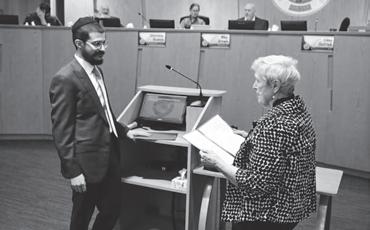
bolizing life emerging in spring.
Hearing each year on social media that Easter was simply a pagan celebration, I wondered why Christians celebrated it. I came to learn that the origin of the word “Easter” is debated among scholars, with evidence suggesting it may come from an old Germanic word connected to dawn or the east.
And Franckenau tells us these early practices were cultural, not religious. Furthermore, instead of using the Germanic word for Easter, he uses the Christian Latin term, “Pashca.”
This was my first hint that this tradition may have had Christian origin.
But why a bunny? Why an egg? These questions still loomed at the forefront of my mind. I’m never satisfid with dead ends, so I kept searching, and what I found took me back to the Middle Ages.
I discovered in roughly 1200 AD, Thomas Aquinas wrote in Summa Theologiae that the Roman Catholic Church declared eggs forbidden to consume during the time of Lent, a roughly 40-day fast.
At the end of the fast on Easter, those eggs were allowed to be consumed during the celebration feasts. Because of their value, some eggs were brought to the church and blessed by the priest and then
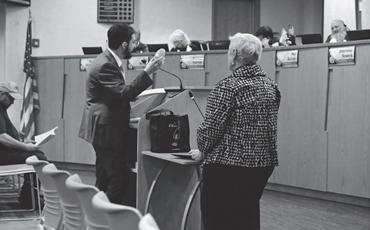
consumed as one of the first items to break their fast.
When I started this journey, I was fully prepared to concede that Easter egg hunts were historically pagan. But what I found next made the truth so clear to me.
As part of the Christian celebration, eggs would be boiled, dyed, and decorated and then given out as gifts.
While this finding doesn’t mention egg hunts or hares, likely Germanic folk additions, I think it shines light on the real historical connection between Easter and eggs passed down for nearly a millennium. One of sacrifice and celebration.
Over 800 years ago people were boiling, dyeing, and gifting eggs just as we do today, but in celebration of the death, burial, and resurrection of Jesus Christ, rejoicing that He conquered sin and death once and for all.
Next time someone asks why we celebrate Easter with egg hunts, you can point them to the rich history of celebrating our Savior.
Summit Worship Center invites you to a traditional egg hunt on Easter Sunday at 10:30AM as we celebrate our Savior’s sacrifice and the gifts He gives us.
Contributed by Rabbi Mendy Greenberg, Mat-Su Jewish Center Chabad
In 1978, the United States Congress established Education and Sharing Day in honor of the birthday of the global spiritual leader, the Rebbe, Rabbi Menachem M. Schneerson. Every year, the day is observed four days before Passover, and this year it falls on Sunday, March 29.
Here in Alaska, Education and Sharing Day is officially recognized through proclamations by Mike Dunleavy, Governor of Alaska, as well as the Alaska State Legislature, the Matanuska-Susitna Borough Assembly, the Mat-Su Borough School District School Board, and the cities of Palmer and Wasilla.
The Rebbe teaches that education must go beyond memorizing facts or preparing for a career. True education focuses on building character, nurturing moral values, and helping each person develop a sense of responsibility toward others. Central to the Rebbe’s teachings are the Seven Noahide Laws, which were given by God to Noah after the great flood and then reinstated to Moses at Mount Sinai. These laws provide a timeless framework for a moral and just society, guiding us to honor the Creator, respect life, reject violence, act honestly, value family, promote generosity, and create a compassionate and ethical
world. They are as relevant today as they were thousands of years ago.
Education and Sharing Day is about the conversations we have every day—around the dinner table, in classrooms, and in the small moments where we interact with our children and students. These interactions shape how young people think, how they act, and how they see their responsibilities to others.
In the Mat-Su Valley, public schools begin each day with sixty seconds of quiet reflection. During this moment, students are free to pause and consider their thoughts. Parents can use this time to guide children in focusing on positive intentions, setting the tone for a day of kindness, integrity, and responsibility. The Rebbe emphasizes that awareness of the Creator—“an Eye that sees and an Ear that hears”—helps children understand that they are never alone and encourages them to act with compassion and mindfulness.
The Rebbe also stresses the importance of action. In 1974, he introduced a global campaign encouraging daily acts of charity. Families are encouraged to place a charity box in their homes, and children are encouraged to give each day. The innovation of this idea is in its focus on the influence giving has on the giver. Even small amounts—a dime, a nickel, or a penny— when given consistently every day have a
Contributed by Dana Raffaniello
A recent column in these pages concluded, with caveats, that ICE agents are essentially comparable to the Gestapo or that we are heading there. I want to respond not because the question is illegitimate, but because the framing carries real-world consequences the column does not acknowledge honestly.
The author concedes that ICE “could carry out their duties legally, quietly, and efficiently, as they have in the past.” That sentence does significant work. It acknowledges that immigration enforcement is a legitimate government function, that most agents are, in her own words, “kind, loving people” who are “our neighbors, friends, ordinary people,” and that her primary objection is to the manner of enforcement, not the existence of immigration law. That is not a Gestapo comparison. That is a policy disagreement and policy disagreements deserve policy arguments, not analogies to Nazi Germany’s secret police.
The Gestapo did not enforce democratically enacted laws. It operated outside the law, answering to a totalitarian party apparatus with no judicial oversight and no constitutional framework. Its purpose was political terror. Comparing agents enforc-
ing federal statutes, currently subject to multiple active judicial challenges in exactly the way a constitutional system is supposed to work, to that institution is not analysis. It is inflammatory language designed to produce an emotional response, and the author is sophisticated enough to know it.
The column even acknowledges the danger directly. She writes that such comparisons “might serve to denigrate” agents “to the point where they are also endangered.” She is aware that the comparison puts human beings at physical risk. She makes it, anyway, wrapped in qualification to provide rhetorical cover. That is not careful moral reasoning. That is having it both ways. Here is what the column does not address: consequences. We have documented evidence from Minnesota of what happens when federal law enforcement is framed as an occupying force that communities have a moral duty to resist. Organized networks tracked agent movements using a database of over 4,600 vehicles. Coordinated teams worked around the clock to physically block enforcement operations. Hotels were stormed. Two people are dead. A leaked communications network showed political operatives directing the operation under code names with emoji-coded roles for mobile patrols, stationary lookouts,
profound impact. Performing a selfless and positive act daily helps shape character and brings forth the inherent goodness within each individual. In other words, the campaign is not just about supporting those in need, but about cultivating the giver, training the heart and mind to naturally act with kindness and generosity.
On that note, whenever Education and Sharing Day is formally declared each year—at a Matanuska-Susitna Borough Assembly meeting, a school board meeting, the Palmer or Wasilla City Council, or at the Alaska State House or Senate—small yellow boxes called ARK, which stands for Acts of Routine Kindness, are distributed to everyone in attendance. Each box is accompanied by a card explaining its significance and its connection to this special day. The idea is simple but powerful: if we want to positively influence our young people, the most successful way is by being a living example—demonstrating through our own daily acts of selflessness and kindness what it truly means to care for others.
While March 29 is the formal observance of Education and Sharing Day, its message applies every day. It reminds us of our ongoing responsibility to nurture moral and ethical education in our children and communities through both example and action.
In Alaska, the Rebbe’s birthday—ob -
and medics.
This did not emerge from nowhere. It emerged from an environment where comparing immigration enforcement to Nazi secret police had become normalized commentary. And it is not contained to adults. Across the country, school staff hve been organizing students to walk out and protest federal immigration enforcement in many cases without notifying parents, using the same advocacy network talking points driving the conflict in Minnesota. When a trusted authorit y figure organizes children to stand against federal law enforcement, the lesson is not civic participation. The lesson is that those agents are an enemy. That framing, carried into adulthood, connects directly to the environment that produced Minnesota.
The author writes that “silence changes us” that failing to speak out makes us complicit. I agree completely. Which is why I am not staying silent: rhetoric comparing American law enforcement to the Gestapo, published in a community where school staff ae organizing students to protest those same officers without parental knowledge, is not speaking truth to power. It provides intellectual cover for an escalation that has already turned lethal. Legitimate concerns deserve legitimate treatment. Are there heavy-handed enforcement cases? Yes, and federal courts are adjudicating them. Have individuals
served as Education and Sharing Day—will be celebrated in several ways. On Wednesday, March 11, the Alaska House of Representatives and the Alaska State Senate will open their sessions with a prayer delivered by my father, Rabbi Yosef Greenberg of the Alaska Jewish Campus, and myself, focusing on the Rebbe’s teachings regarding education, character, and making the world a better place.
In the Mat-Su Valley, a community event will take place on Monday evening, April 27, at 5:00 p.m., at the historic Palmer Train Depot. The evening will feature a lecture and fireside chat with a world-renowned author and lecturer, along with dinner and a simultaneous children’s program. The event is open to the entire community and will highlight how the Rebbe’s guidance continues to actively shape education, values, and community life in our valley today. Education and Sharing Day reminds us that through thoughtful education, meaningful conversation, and consistent acts of charity, we can bring more goodness, kindness, and ethical responsibility into our world every day.
May God bless our efforts to strengthen our communities, and may our collective work hasten the ultimate redemption through the revelation of Moshiach— speedily in our days. Amen.
with legal status been incorrectly detained? Yes, and those cases should be challenged through legal channels Is there a genuine policy debate to be had? Absolutely and it deserves to be made honestly, not dressed up as a moral emergency.
None of that requires the Gestapo analogy. What the analogy does is transform a policy disagreement into a moral emergency requiring immediate resistance and resistance means different things to different people. Some write columns. Some organize walkouts. Others track agents’ vehicles around the clock and storm their hotels. Words create environments. Environments produce behavior. Two people are dead, and those who built that environment are now claiming they only meant to raise awareness.
We can debate immigration policy. We should. But we owe each other the honesty of debating it as what it is: a genuine, difficult question about law, sovereignty, and human dignity. Not a reenactment of history’s darkest chapter, with federal agents cast as villains and organized resistance as heroism. That framing does not inform. It inflames. And the damage does not stop with today’s readers it continues with every student who was handed a sign and told
of history to
on.
Contributed by Sierra Winter, Community Relations Manager
March is Colorectal Cancer Awareness Month, and at Sunshine Community Health Center, we are focusing on prevention with a simple message: No ifs, ands, or butts. Colorectal cancer, which includes cancers of the colon and rectum, affects both men and women and remains one of the most preventable and treatable cancers when detected early. Screening saves lives, plain and simple.
Colorectal cancer is currently the third most commonly diagnosed cancer among both men and women in the United States and one of the leading causes of cancer-related death. In Alaska, the numbers are especially important to pay attention to.
The age-adjusted incidence rate in Alaska is approximately 41 cases per 100,000 people, slightly higher than the national average. Both men and women are affected at similar rates. Among Alaska Native people, colorectal cancer rates are significantly higher than the national average, representing one of the highest incidence rates in the world. These statistics highlight why screening and early detection are critical for our communities.
The good news is that colorectal cancer often develops slowly. Most cases begin as small growths called polyps in the lining of the colon. Over time, some polyps can turn into cancer. Screening allows providers to detect these polyps early — and in many cases, remove them before they ever become cancerous. That means screening
Contributed by Fyzical Therapy & Balance Centers
As the snow begins to melt and longer days return to the Valley, spring in Wasilla brings a renewed sense of energy and opportunity. It’s a time when many Alaskans start getting back outside, preparing for summer adventures, and thinking a little more about their health and wellbeing. This season of renewal also brings a great opportunity for the community to focus on wellness at the Wasilla Community Health Fair, hosted by FYZICAL Therapy & Balance Centers in partnership with Alaska Health Fair.
The Wasilla Community Health Fair will take place April 4, 2026, from 9:00 AM to 1:00 PM, and is designed to bring valuable health resources directly to residents of the Mat-Su Valley. By gathering health screenings and local healthcare professionals in one place, the event helps make preventa-
does not just detect cancer early; it can actually prevent cancer from developing in the first place.
Despite the effectiveness of screening, many eligible adults in Alaska are not up to date. State data suggests that only about 64 percent of adults ages 45 to 75 are current with recommended colorectal cancer screening guidelines. That leaves a significant portion of our neighbors at unnecessary risk.
There are several screening options available and understanding them can help reduce anxiety and stigma around the process.
One common option is the Fecal Immunochemical Test (FIT). This is a simple at-home stool test that checks for hidden blood in the stool, which can be an early sign of polyps or cancer. It is non-invasive, requires no preparation, and can be completed in the privacy of your home. When done annually, FIT testing is an effective screening tool for many individuals at average risk. It is also the easiest screening option for many patients. However, it is important to know that FIT testing has a higher false-positive rate compared to colonoscopy. If a FIT test result is positive, a follow-up colonoscopy is required to determine the cause.
Another option is a stool DNA test, commonly known by the brand name Cologuard. This test looks for hidden blood as well as certain DNA markers associated with colorectal cancer. It is also completed at home and is typically recommended every
tive care more accessible and convenient for busy Alaskan families.
Through Alaska Health Fair, attendees will have the opportunity to participate in a variety of affordable health screenings that provide insight into important health markers. These screenings may include checks for cholesterol levels, blood sugar, thyroid function, and other indicators that can help individuals better understand their overall health. Preventative screenings are a simple but powerful way to catch potential health concerns early and stay on track for the active lifestyle many Alaskans enjoy. In addition to the screening opportunities, the team at FYZICAL Therapy & Balance Centers will be available to connect with attendees and share how physical therapy can help people stay strong, steady, and ready for everything Alaska has to offer.
From hiking local trails to fishing, hunting, skiing, and simply keeping up with daily life, balance and mobility play an important role
three years for average-risk individuals.
Most insurance plans will not cover this test more frequently than every three years.
For some patients, a colonoscopy is recommended. Colonoscopy is considered the gold standard of colorectal cancer screening because it allows the provider to view the entire colon and remove polyps during the same procedure. While many people feel nervous about the idea, the reality is far less intimidating than most expect.
Colonoscopy is an outpatient procedure, meaning you go home the same day. Patients are given sedation to ensure they are comfortable and relaxed during the exam. In most cases, this is not general anesthesia but monitored sedation. The procedure itself typically takes about 20 to 30 minutes. During the exam, the colon is carefully examined and thoroughly evaluated. If polyps are found, they are often removed during the same visit, reducing the need for additional procedures.
After the procedure, patients spend a short time in recovery before heading home. Most people return to their normal activities by the end of the day, although someone else will need to drive them home due to the sedation. For individuals with normal results and average risk, colonoscopy is generally recommended every ten years.
It is also important to acknowledge the stigma that sometimes surrounds colorectal health. Conversations about bowel movements or colon health can feel uncomfortable. However, avoiding the
in staying active and independent.
FYZICAL specializes in balance and vestibular therapy, orthopedic rehabilitation, and neurological recovery. Balance issues, dizziness, and mobility challenges are more common than many people realize and can affect people of all ages. Whether someone is recovering from an injury, experiencing occasional dizziness, or hoping to prevent falls, physical therapy can help improve strength, coordination, and confidence in movement.
Hosting the health fair locally in Wasilla helps ensure that Mat-Su Valley residents have easy access to important health resources without needing to travel far. Just as spring encourages people to shake off he long winter and get moving again, the health fair offers a welcoming opportunity for community members to check in on their health and connect with local providers.
The partnership between Alaska Health
topic does not protect your health. Screening for colorectal cancer is no different than screening for breast cancer, cervical cancer, or heart disease. It is a routine part of preventive healthcare. Choosing to be screened is an act of strength and responsibility — not embarrassment. At Sunshine Community Health Center, we are committed to making screening accessible and supportive for our patients. We provide colorectal cancer screening education and offer stool-based screening tests locally at our clinic locations. Our care teams can help determine which screening option is most appropriate based on your age, risk factors, and personal preferences. If a colonoscopy is recommended, we will coordinate referrals to our trusted partner facilities to ensure you receive timely and professional care. We work closely with specialty partners to make the referral process as smooth as possible and to keep communication clear every step of the way.
Community-driven healthcare, rooted in the strength and resilience of rural Alaska, means we prioritize prevention just as much as treatment. Screening is one of the most powerful tools we have to protect our families, friends, and neighbors.
If you are 45 or older — or younger with certain risk factors — talk with your provider about colorectal cancer screening. Early detection dramatically improves outcomes and can prevent cancer before it starts. This March, let’s take the stigma out of the conversation and put prevention first. No ifs, ands, or butts about it.
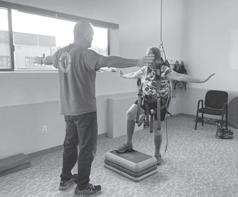
Fair and FYZICAL Therapy & Balance Centers reflects a shared commitment to supporting the health of the community. Together, they hope to create a warm, neighborly event where residents can learn more about their health, ask questions, and take positive steps toward a healthy, active Alaskan season ahead.
Contributed by Doug Ferguson
In the early 1970’s I lived in Japan for two years with my young family on an assignment for my international employer. Being the experience of a lifetime, there are many moments emblazoned in my mind even after all these years. Among these were the rare opportunities to attend performances of the ancient classical forms of Japanese Theatre, Noh and Kabuki, the origins of which go back to the 15th century as the first in the history of stage drama.
Noh is the oldest that still gets performed and is in nature a spiritual drama. Kabuki came somewhat later and is much more dramatic and entertaining, combining also dance and intense choreography. As such today, it is far more appealing to the average Japanese, while mostly the elite class get to watch the Noh performances. Both use a form of the “old” Japanese language of it’s time that even most modern Japanese don’t completely understand. We were fortunate enough to get to watch both, but even though we didn’t understand one word of dialog, we enjoyed the drama of these plays immensely, especially Kabuki!
In most Kabuki plays, the “good guys”, “villains” and other “key” roles are clearly identified by their costumes, movements
and manner of speaking. For example, an “evil” Samurai soldier wearing a dark out fit might make his entrance from the back of the theatre and begin with a shouted challenge to those already on the stage, as the audience spins their heads around to look as he stands there! Then, continuing his rant, he marches up the center isle finally reaching the stage to confront the characters he is challenging! Then the “good guy” character dressed in a bright or light costume issues an equally loud and emotional response!
All very exciting to watch even if you didn’t understand a word said! Often some Japanese Kabuki actors today actually become as famous for their talent in portraying these unique ancient characters as are modern movie stars!
Now about our current U.S. Congress!
Watching many congressional hearings in the past few years has reminded me of these Japanese experiences and the modern similarities to the old Kabuki!
First, like the Kabuki dramas, each participant’s role is usually identified from their first appearance. These roles usually are clear and predictable based on their political party, their sex, their ethnicity, their stated issue, or a combination of these. Secondly, the dialog, whether it be from the congressional questioner or the person
being questioned is always dramatic, loud, challenging and often insulting! Thirdly, no matter how exciting, today the average viewer can’t completely understand all the legal jargon, issues and statistics being argued. Finally, like the ancient dramas, while being sometimes exciting and entertaining to those watching while promoting the individual involved, almost always no tangible outcome ever results from the drama!
These similarities have only been true for a short period during this past decade. For a much longer period of our modern American history, with a few notable exceptions, most congressional hearings were watched mostly on C-Span by a limited audience of people interested in government and political pundits. Under these circumstances congress members from opposite parties were usually respectful of each other creating a climate where compromise to get legislation passed might be difficult but was possible.
What has changed? The recent of the explosion of media technology has enabled both social and mainstream media to capture and rebroadcast edited portions or “Sound bites” from these hearings. The result has been to open up a vast audience of millions for these members of congress to play to for their own personal political advantage. In other words, by making dra-

matic and self-righteous speech and edited dialog to a huge public possible, they can promote themselves while not committing to the real job for which they were supposedly elected to do. Therefore, based on all the similarities mentioned, I say we can label most of today’s congressional hearings as “Modern Kabuki Theatre!” Change my mind!
Area Seniors, Inc. Chore Services Can Help! Daily household tasks can become difficult with age. Wasilla Area Seniors, Inc. (WASI) offers Chore Services to help seniors remain independent in their own homes. If you are a senior, family member, or caregiver looking for support, we are here to help.

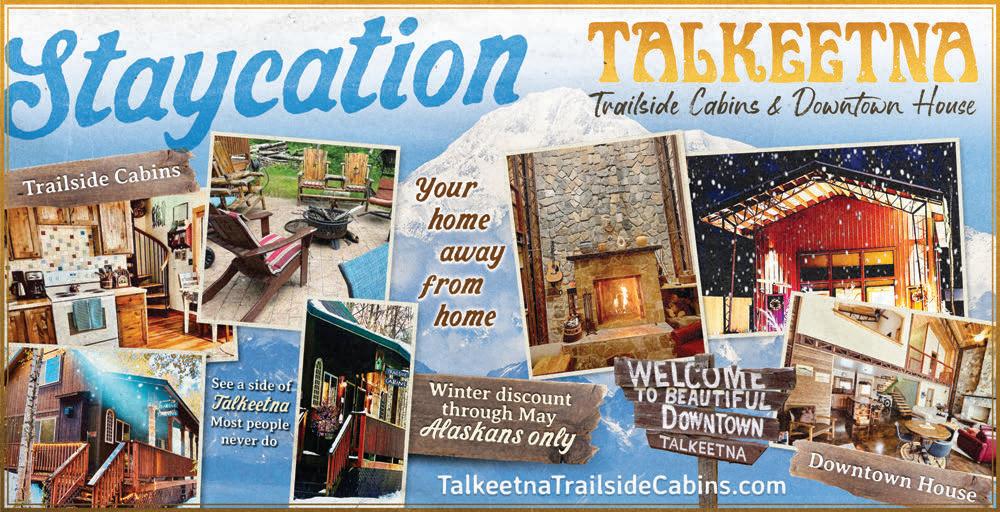











Contributed by Christian M. Hartley
Sometimes just having a reason to come back next week gets a person to next week. As we exit the darkest parts of winter and gain sunlight daily, it’s easy to look back and take inventory of people we know who lost their battle with depression.
Alaska’s suicide rate remains nearly double the national average, with 31.6 deaths per 100,000 people compared to the U.S. rate of 14.2. Rural communities face even grimmer statistics. Traditional mental health services are sparse. Alaska has just 141 mental health professionals per 100,000 residents, the third worst state in the United States. Wait times for crisis counseling stretch for weeks or months, if you can even receive it.
But the data also shows something hopeful: creative engagement works.
A 2019 World Health Organization review analyzing more than 900 publications
found that arts engagement significantly reduces anxiety, depression, and stress while improving wellbeing and quality of life. The research is strong for visual arts, music, and community-based creative activities.
A landmark 2010 study in the American Journal of Public Health tracked 50,000 adults in Norway over a decade. Those who regularly took part in creative activities showed substantially lower anxiety and depression scores and reported higher life satisfaction. The protective effect was strongest among people who reported poor mental health.
University of Florida researchers found in 2020 that just 45 minutes of creative activity significantly reduced cortisol levels, the body’s primary stress hormone. Regardless of artistic skill or experience, the act of creating—not the quality of creation—provided the benefit.
Across Alaska, artists are experiencing what researchers are finding. Group events help people realize they are not alone. Concerts connect people who love listening to music with the people who love to share it. Open mic nights connect otherwise isolated individuals to the community.
These aren’t formal programs with clinical oversight. They are artists recognizing that their studios, stages, workshops, and experience have become de facto crisis centers, and they are often more accessible than actual crisis services.
The research points to several mechanisms. Creative activities provide immediate stress reduction through focused attention and flow states; nonverbal emotional processing for those who struggle to articulate pain; social connection without the vulnerability of direct disclosure; a sense of agency and accomplishment that counters hopelessness; and future orientation, such
as planning next week’s project, that interrupts suicidal ideation.
A 2014 Johns Hopkins study found that group artmaking specifically activates neural pathways associated with reward, social bonding, and emotional regulation. These are the systems disrupted in suicidal crisis and offer insight into why art sometimes succeeds where healthcare access lags. Arts engagement is not a replacement for clinical mental health care. But in Alaska, where professional services remain inaccessible for many, creative spaces are becoming a bridge between crisis and care. Artists are not therapists, but they are present—and in Alaska’s isolated communities, presence saves lives.
As we invest in mental health infrastructure, we should also recognize the infrastructure already here: artists creating spaces where struggling Alaskans can express, connect, and hold on until morning. If you or someone you know is in crisis, help is available. National Suicide Prevention Lifeline: 988. Alaska Careline: 1-877266-4357 (HELP). Crisis Text Line: text HELLO to 741741.
Why Washing Your Vehicle in Winter Is like a Skincare Routine: Protecting Your Investment One Wash at a Time
Contributed by Robbie Cardon R.C. Detail
You don’t stop your skincare routine just because it’s winter, right? If anything, you step it up a notch, adding products to protect against Alaska’s cold-weather elements that can age skin prematurely. The same logic applies to your vehicle. Only its “skin” is paint, and without a regular care routine, corrosion and rust-related damage accelerate fast from exposure to road salt, sand, magnesium chloride, grime, and constant moisture. So let’s walk through why your vehicle deserves the same level of attention as your personal skincare routine, especially in winter.
Protective Layers: Think of it this way: skin is your body’s protective barrier, and paint is your vehicle’s. Alaska’s winter winds, dryness, and irritants are some of the reasons you regularly wash, moisturize, and
protect your skin. Your vehicle faces those same elements, and then some. Road salt, de-icing chemicals, sand and grit, freezing moisture, and traffic grime all accumulate on the surface, slowly breaking down your paint and clear coat. Just like neglecting your skin leads to dryness and damage, neglecting your vehicle’s finish leads to the same slow, preventable deterioration.
Step 1: Cleansing. You wash your face to remove dirt, oils, and pollutants. Regular winter washes do the same thing for your vehicle. Each wash removes the salt that causes rust, the road film that dulls your paint, chemical buildup, and slush and grime that settle into every crevice. Left unwashed, those surface contaminants sit and slowly eat away at your vehicle’s finish and undercarriage, often within just one winter season.
Step 2: Protecting. Once your skin is clean, you protect it with a hydrating
moisturizer, SPF, and maybe a serum for its anti-aging properties. Your vehicle needs that same second step. Wax, sealants, or ceramic coatings create a barrier against winter contaminants that helps prevent salt from bonding to surfaces, reduces staining and etching, makes future washes easier, and preserves both gloss and resale value. Think of it as an anti-aging regimen for your paint.
Skip the Routine, Pay the Price: We all know what happens when you fall off our skincare routine—dryness, irritation, and damage that takes twice as long to undo. Skip your vehicle’s winter routine and the consequences are just as real: rust formation, stained paint, clear coat failure, undercarriage corrosion, and reduced resale value. Just like with skincare, prevention is much easier—and much cheaper— than repair.
Consistency Is the Secret: Healthy skin
doesn’t come from one good wash at the start of the season. It comes from a regular routine. Your vehicle works the same way. Regular maintenance washes throughout winter keep contaminants from building up and protect your investment for the long haul. And if you’re in the “Why wash it when it’s just going to get dirty again” camp, consider this: even a quick wash every couple of weeks can dramatically reduce damage over a full Alaska winter.
Treat Your Vehicle Like You Do Your Skin: Your vehicle is one of your biggest investments, and winter is when it needs the most care. So give it the same attention you give your skin. Clean it, protect it, maintain it. You’ll be thankful you did when spring arrives and your vehicle still has that protected, just-detailed look instead of a season’s worth of damage to undo. Give R.C. Detail a call today at (907) 373-7238.
Contributed by Katrina Wammock, Arctic Chiropractic & Physical Medicine
Life in the Mat-Su Valley asks a lot from our bodies. Long commutes, physically demanding work, snow removal, outdoor recreation, and seasonal shifts in activity all place unique stress on muscles and joints. Whether it’s hauling firewood, sitting longer during winter months, or jumping back into summer projects, many residents experience aches and injuries that gradually interfere with daily life.
When pain develops, people often assume medication or surgery are the next steps. Increasingly, however, healthcare providers and patients are turning first to conservative care — an approach focused on restoring movement and function before more invasive treatments are considered.
Chiropractic care and physical medicine play an important role in this model. Rather than focusing only on where pain is felt, providers evaluate how the body moves as a whole. Focusing on treating the cause, not only the symptoms. Joint mobility, muscle balance, posture, and movement patterns all influence how stress is distrib -
uted throughout the body. When one area stops functioning properly, other regions compensate, often leading to ongoing discomfort.
Many of the most common conditions seen in our community develop this way. Back and neck pain, shoulder injuries, headaches, tendonitis, and jaw tension frequently stem from repetitive strain, past injuries, or prolonged sitting and computer use. Even active individuals can develop dysfunction when breathing, strength, flexibility, and coordination fall out of balance.
Conservative care typically follows a progression. Early treatment may include hands-on therapies designed to reduce irritation and improve mobility. As symptoms improve, care shifts toward guided exercise, stability training, and strengthening so patients can return safely to work, recreation, and everyday activities. This transition toward active rehabilitation is key to preventing recurring problems.
This approach also aligns with a growing national focus on non-opioid pain management and functional recovery. Research continues to support movement-based treatment as an effective way to reduce chronic pain risk while improving long-term
outcomes. Just as importantly, patients learn how to care for their bodies through better lifting mechanics, posture awareness, and practical home strategies.
In a community where independence and activity are highly valued, prevention is just as important as recovery. Many people seek conservative care not only after injury, but to maintain mobility and stay ahead of problems before they limit participation in work or recreation.
Conservative treatment does not replace traditional medical care when advanced intervention is necessary. Instead, it offers a thoughtful starting point — supporting the body’s natural healing process while help -
ing individuals stay active and engaged in the lifestyle that makes living in Alaska unique. Health, after all, is not simply the absence of pain. It is the ability to move well, work comfortably, and continue doing the things that make life in the Mat-Su meaningful.






Contributed by Kelleigh Orthmann
I
At first, I may ignore the other cats in my new home but, after settling in, I am ready to play. I must have a friendly kitty in my new home to make me feel welcome and give me the grand tour of the house. I am fearful of dogs so I must go to a dog free home. A quieter home will best suit me, and older mellow children should be fine. I am around 3 years old and fun fact: I know my name and will gladly run to you when called. A great yard to enjoy sunny summer days with my family will be needed so I can continue to feel fancy and carefree.


I am friendly, outgoing, and confient and the cutest little tabby girl with frosted-off ears. I warm up right away with a new family and adore other kitties, so having a kitty friend in my new home to romp and play with
Calling all animal shelters, rescues, and vet clinics — Paws for Justice, a local community initiative sponsored by Crowson Law, wants to partner with you! We’re building a community campaign to help local pets find lving homes.
Local organizations will feature the adoptable pets in the pages of The People’s Paper and on the airwaves of 95.5 The Pass KNLT-FM—and we’ll help coordinate free adoption events, promote them, and cover adoption costs or other services to help our furry friends find orever homes.
To learn more about Paws for Justice or to sign up to help today - call (907) 373-2698. That’s 3732698. Brought to you by Crowson Law Group— defending the injured and giving Alaska’s rescue pets a voice. Visit crowsonlaw.com to learn more.
is a must. I have some Ninja skills that will keep you entertained for hours including huge jumps up to my high lookout points such as the top of the kitchen cabinets. My favorite toys include little catnip-filled mice and bouncy balls. I am not bothered by loud sounds, have endless energy, and like to chat.
I enjoy naps by the fireplace and will direct you to turn on the fireplace if it’s not on. At bedtime my favorite spot is on the couch snuggled with cozy blankets and pillows. I enjoy sipping water from the sink faucet. I am a sweet girl that enjoys the outdoors with sunshine and fresh air. I should be fine with older kids and a mellow dog who will respect my space. I am around a year old.
This is the love story of Mel and Chippy. And for them, the love will be for a lifetime. They hope they can share it with a happy loving family. When Mel was born, she and her siblings and her mom went into a foster home. They played and cuddled and did the usual fun inside kitten things. Not long after they arrived, another kitten (Chippy) arrived all by himself. He had been found outside in a yard all alone. No mom. No sisters or brothers. He was a sad little kitten who hid behind furniture and avoided people as much as he could. As time went on, Chippy and Mel became inseparable. They are teenagers now. Maybe 7 months old. Chippy is a big-footed, bigeared tiger boy who looks like he might turn out to be a big boy. Mel is a lovely gray tuxedo. They are so cute together. And it’s obvious that the only thing to do is to find them a home together, where they can be happy and have their loved ones with them as they brave the transition to a new place and people and maybe another cat. They
I am a stunning calico queen who’s ready to steal your heart (and probably your spot on the couch)! I am about 8-years-old and the perfect blend of friendly, playful, and loyal. With my striking patchwork coat of bold black, warm orange, and bright white, plus captivating green eyes, I am impossible to ignore. I love nothing more than being close to my people - whether that’s curling up in your lap for pets, following you from room to room like a devoted shadow, or greeting you with enthusiastic head bumps when you get home.
I have a playful side that keeps things lively: I’ll chase toys with glee, bat at dangling strings, and occasionally zoom around the house in a burst of kitten-like energy. But, when it’s time to wind down, I transform into the ultimate cuddle buddy, happy to stretch out nearby or even flop dramatically for belly rubs.
I am an easygoing, low-drama companion who’s already well-adjusted to family life and gets along great with humans. I do have to be the only animal in the house. I will need the opportunity to go outside with my family if I want to.
If you’re looking for a gorgeous, affectionate, and entertaining feline friend who will greet you at the door and keep you company through all of life’s moments, I am hoping you’ll be the one to give me the forever home I deserve. I’m ready to bring joy, purrs, and plenty of calico charm into your life!
To meet us, please call or text 907-980-8898. To see other adoptable kitties, visit clearcreekcatrescue.org or facebook.com/clearcreek.catrescue.






Contributed by Mary Glaves, Yakutat Nature Society
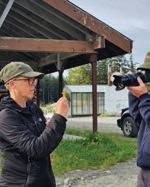
The 15th Annual Yakutat Tern Festival returns May 28-31, 2026. There are some places in Alaska that you don’t just visit, you experience them. Yakutat is one of those places.
Each spring, as seabirds return to the coast and the days begin to stretch longer, Yakutat becomes the gathering place for something special: the Yakutat Tern Festival. Now in its 15th year, the festival has grown into one of Southeast Alaska’s most unique celebrations of birds, culture, and community—and I’ve come to see it as much more than a “festival.” It’s an invitation.
Getting to Yakutat takes intention. There are no roads connecting it to the rest of the state. You arrive by plane or boat, and when you do, you immediately feel the difference. The pace shifts. The noise drops away. What’s left is a place defined by wild landscapes, deep cultural roots, and a community that shows up for each other.
The Yakutat Tern Festival was originally started as a small, community-driven effort to celebrate the natural and cultural resources of the area while supporting the
local economy during the shoulder season
between fish runs. That spirit is still very much alive today. While the festival has grown in reach and recognition, it hasn’t lost its grounding.
At the heart of the festival is the Aleutian tern, a striking seabird that nests in significant numbers along Yakutat’s Blacksand Spit. Scientists are still working to understand population declines in this species, which makes Yakutat an especially important place to see and learn about them. Watching these birds in their habitat—trundling over the ocean, hovering and diving while calling across the wind—is something that sticks with you.
But the festival is not just for birders. Over the course of the four-day festival, Yakutat becomes a hub of activity. There are led birding outings, Hubbard Glacier tours, and hands-on workshops, youth programs that get kids outside and curious, and the same for adults. There are guest speakers and conservation discussions that connect local observations to larger conversations about birds and the wide world they inhabit.
And then there are the moments that aren’t on a schedule—shared meals, conversations that stretch long into the evening, and stories passed between friends old and new.
One of the most meaningful aspects of the festival, in my experience, is the way it centers culture alongside ecology. Cultural programming, dance, art, and storytelling woven throughout. This isn’t something added on—it’s foundational. It reflects a living relationship with the land and waters that define this place and the cultural roots in Yakutat.
Behind it all is the Yakutat Nature Society, a small but deeply committed organization


that has taken on the role of stewarding and growing the festival.
Formed in 2020, the Society emerged out of a need to create a sustainable structure for the event and to expand its impact beyond a single weekend.
The Yakutat Nature Society focuses on connecting people to the region’s wildlife and habitats through education, outreach, and shared experiences. The festival is one expression of that mission.
It’s in the experience of watching birds migrate across oceans and return to the same stretch of coastline each year. It’s in the old-growth forests that provide habitat and stability. It’s in the knowledge held by communities who have lived with and learned from these systems for generations.
Being in Yakutat during the festival makes those connections tangible. It also highlights something important for the future of rural Alaska: the role of thoughtful, community driven tourism. Events like the Tern Festival bring people to Yakutat in a way that supports local businesses, creates opportunities for cultural exchange, and reinforces the value of keeping landscapes intact.
For me, the Yakutat Tern Festival stands out because it feels real. There’s no pretense or overproduction. Just a genuine
coming together of people who care about this place, whether they’ve lived there their whole lives or are experiencing it for the first time.
If you make the trip, you’ll likely come for the birds. But you’ll leave with something more; a deeper understanding of how people, place, and wildlife are connected in Southeast Alaska.
And maybe, like me, you’ll find yourself wanting to return.
You can learn more and register for this year’s Tern Festival at: yakutatnature.org
Mary came to Yakutat in 2016 as a Student Conservation Association (SCA) intern, and soon after, found herself coordinating the annual Yakutat Tern Festival. This will be Mary’s 10th year coordinating, and her fifth year as the Secretary of Yakutat Nature Society. She currently resides in Juneau, AK.









Contributed by David Eastman
It’s the Alaska Christian Homeschool Convention’s 40th anniversary, March 27–28. Get ready for the ultimate homeschooling experience at the 2026 APHEA State Homeschool Convention. Meet and hear from S.D. Smith, author of the Green Ember series; join us for a Family Movie Night host-
ed by The Wild Brothers; and watch or compete in the 2nd Annual State Homeschool Convention Student Chess Tournament.
Muldoon Community Assembly is the place to be for two days jam-packed with workshops, speakers, and resources designed especially for homeschool families. Whether you’re a seasoned homeschooling parent or just starting out, the APHEA Convention is
a place for learning, growing, and connecting with like-minded homeschool families.
Mark your calendars and get ready for an uplifting and inspiring experience. Come be encouraged with sessions, speakers, and workshops focused on nurturing the family from a Biblical perspective. Get hands-on with curriculum, books, and tools in the vendor hall. Let the kids
attend fun classes. Meet fellow homeschooling families from around the state. Talk with representatives from Christian colleges and other destinations for homeschool graduates. Pastors and their families attend free. Join us as we celebrate 40 years of supporting homeschooling freedom in Alaska. Register online at aphea.org.
Contributed by Jessica Stotler
For many children who grow up surrounded by adversity, the statistics paint a difficult picture. Research on Adverse Childhood Experiences—often referred to as ACEs—shows that trauma, instability, and neglect can create significant barriers that follow children into adulthood. Higher risks of mental health struggles, addiction, and instability are well documented. But statistics do not tell the whole story. Resilience changes outcomes, and resilience is often built through relationships.
Growing up, I was one of those kids who had many factors stacked against me. Statistically, the trajectory of my life could have gone in a very different direction. Yet along the way, something powerful happened: adults stepped into my life who chose to see me, invest in me, and believe in me.
Some of those relationships began in places many people might overlook— summer camps, youth groups, and church communities. Safe adults showed up consistently. They listened, encouraged, and created environments where I felt valued and capable. At one point, a couple from church even opened their home to me and provided stability when it was needed most. Those relationships changed everything.
When a young person experiences consistent, caring relationships with adults
they can trust, it can reset the trajectory of their life. The presence of even a few safe, stable connections can help build resilience strong enough to overcome circumstances that once seemed overwhelming.
Today, those same principles guide the work happening through REACH 907, which is expanding its impact in the community through therapeutic foster care. Therapeutic foster care is distinct from traditional foster placements because it surrounds both the child and the foster family with structured support, training, and professional resources designed specifically for youth who have experienced significant trauma.
Families who serve in therapeutic foster care are not left to navigate the journey alone. They receive specialized guidance, ongoing support from professionals, respite care when needed, and a collaborative team that works together to help children stabilize and heal. This level of support allows foster parents to focus on what matters most: building safe, trusting relationships with the children in their care.
The work is not always easy. Welcoming a child who has experienced hardship requires patience, compassion, and perseverance. But the rewards are profound.
Watching a young person begin to trust again, discover their strengths, and experience belonging can be life-changing—not
only for the child, but for the entire family and community surrounding them.
Across Alaska, many children need safe and supportive homes. Some need a temporary place of stability while their families work toward reunification. Others need longer-term care while they navigate complex challenges. Too often, however, the number of available homes does not match the need. This is where community matters. When ordinary people step forward to open their homes, mentor youth, or support foster families, they become part of a powerful chain of resilience that can change a child’s future. Every supportive adult relationship adds another layer of protection and hope.
REACH 907 is now licensed to provide therapeutic foster placements and is actively seeking individuals and families who feel called to make a difference in the lives of vulnerable youth. Those who serve as therapeutic foster parents receive training, resources, and ongoing support to help them succeed in this vital role. These children
Contributed by Joe Kiren
Pioneer Ski Patrol, part of the National Ski Patrol, is the local patrol you encounter while skiing at Skeetawk in Hatcher Pass. We are a group of dedicated volunteers and paid professionals that train and are certified in National Ski Patrol programs in medical care, patient transport, lift evacuation, and mountain safety of guests.
If you have ever been interested in Ski Patrolling or are just looking to help Skeetawk continue to grow and expand opportunities for skiing/ boarding, we are looking for you!
We have a variety of Ski Patrol programs available no matter your skiing/ boarding abilities.
Mountain Safety Program – this is the entry program for any adult (18+) looking to participate in our program. This program covers all the basics of mountain set
up, safety, basic medical and toboggan operation, rope safety, and some rescue techniques.
Ski Patrol – The second step in the program. Here you will have completed the Mountain Safety Program and have passed medical certification, Outdoor Emergency Care. This is medical class necessary to be a certified ski patroller in the National Ski Patrol.
Young Adult Patrol – This is a program for high

are not defined by their past hardships. They are capable, valuable young people with tremendous potential when given the opportunity to heal and grow.
If you have ever wondered how you could make a meaningful difference in your community, consider whether you might have space—both in your home and in your heart—to support a child in need. Sometimes the most powerful change begins with a simple decision to care. To learn more about therapeutic foster care opportunities through REACH 907, community members are encouraged to reach out and explore how they can help restore hope and strengthen the next generation. Contact Kristy@reach907ak.org or call 907-745-6200.
school youth ages 15-18 that over the course of 2 years will be trained and complete medical certification to be a Certified Ski Patroller. This program may also provide some high school credits. Applications for this program are currently open through mid-April to begin the program next ski season.