
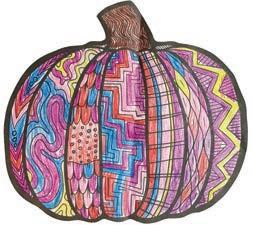
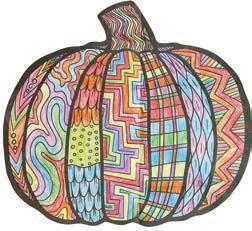
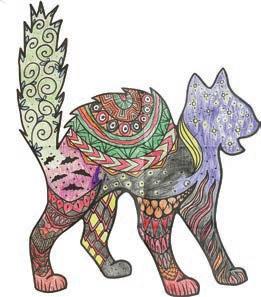
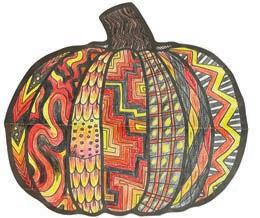

When sending your coloring page please include your name, age, and a good return address!
Contributed by Douglas Girard
1. Raven: Ravens can be found all over North America from the northern forests to the deserts. Ravens have accompanied people around the Northern Hemisphere for centuries, following their wagons and hunting parties in hopes of a quick meal. These corvids are among the smartest of animals, smarter than dogs, and perhaps as smart as dolphins. They can use tools, figure out locks, and know that the sound of a gunshot means an easy meal.
The ebony birds have a complex language they use to communicate with each other. One can often watch Ravens “surf” on the wind currents or play a game of chase as they quork and yell. Ravens will eat just about anything they can find from left out dog food, berries, other birds eggs, and of course discarded fast food. Ravens mean many different things in different cultures. In Norse mythology, Odin has two Ravens that fly over the world each day to gather information for him. They are monogamous and form long-term pair bonds. Pairs typically stay together year-round. Their nests are about 5 feet by 2 feet tall and they lay 3 to 7 eggs.
2. Bald Eagle: Eagles are the most iconic symbol of freedom. Where I live, I see them almost every day. In the spring, the Arctic Terns will dive-bomb them as they sit motionless on the top of a tree surveying their territory. They are the masters of their domain and when you see one soaring overhead it reconnects you to the raw beauty of nature. Rather than doing their fishing, they are like pirates of the sky, snatching fish from other birds like osprey and even humans. For the first four years of their life, they are nomadic with some eagles from California found wandering up to Alaska. They eventually find a mate
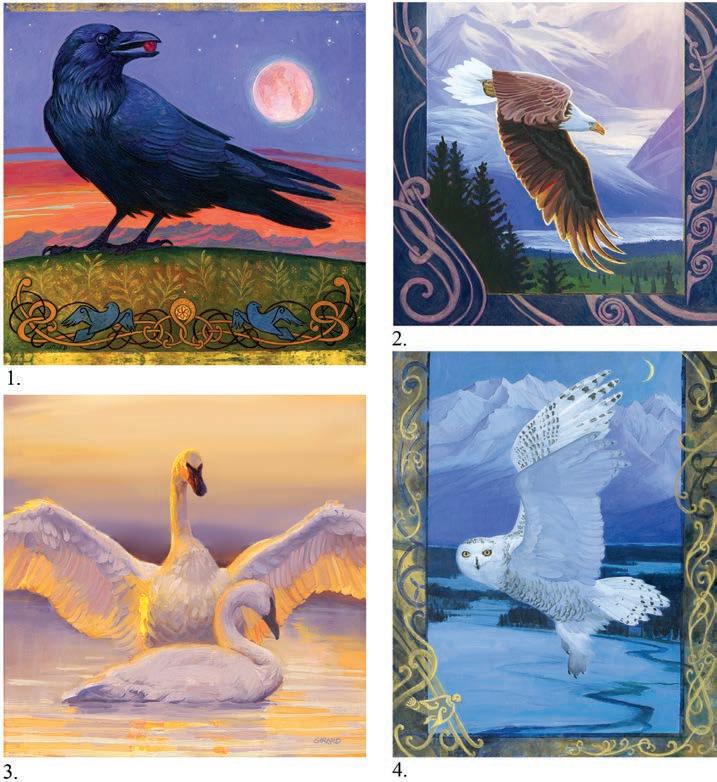
and are monogamous but spend the winter and migration alone until they meet up with their mate again at their nesting site. These nests are fixed up and added to each year and can become quite large, up to six feet tall and six feet wide. They spend about two and a half months raising the young. Eagles can be found all over the United States from Alaska to the Mexico border. They live 20 to 30 years.
3. Trumpeter Swan: Early spring is the time to see the first trumpeter swans arrive in the northland. Their distinct trumpet call lets me know they have arrived at my lake. After the age of four, they find a mate and stay together throughout the year, even
while migrating. Trumpeter Swans mate for life and I like to think the ones that arrive at my lake each spring are the same mating pair I have seen for years. The husband and wife swim side by side bobbing their heads up and down reaffirming their bond. Some males who have lost their mate do not mate again.
They were once endangered, almost driven to extinction in the early 20th century but are doing well now. They are six feet in length and have a wingspan of eight feet. They are North America’s heaviest flying bird weighing about twenty-five pounds and live about twenty-six years. They build their nests in a location surrounded
by water such as on islands or old muskrat and beaver dens. Trumpeter Swans lay three to eight cream-colored eggs. Unlike other birds, they do not feed their young, instead, they stir up the sediment which causes aquatic vegetation and invertebrates to rise to the surface which the cygnets then eat.
4. Snowy Owl: One would think that living in Alaska, one would see snowy owls everywhere. It seems that this is true for some people but unfortunately for me, I am not so lucky. Finally, after living here for 20 years, while driving over the hay flats of the Matanuska Valley, I spotted one chasing a Raven. Look for them in wide-open areas often perched on fence posts or telephone poles.
These owls are very patient, often sitting for hours in the same spot occasionally swiveling their head looking for food, blinking their large yellow eyes to get a better view of any movement. Their diet includes rodents, rabbits, wading birds and squirrels. The male, during the mating season, will rise in the air above his mate with exaggerated wingbeats holding a rodent in his beak or talons, then descend to the ground dropping the rodent for the female to inspect. They nest on the ground and have 3 to 11 eggs. To defend themselves they have been known to attack wolves and even humans.

Artwork by Douglas François Girard. You can order prints of birds, Alaska landscapes, dancers, and myths at studiogirard.com.
Subscribe to my newsletter for 20% off. Please follow me on Facebook and Instagram @studiogirard



Events
2020 NEW RELEASE PUBLISHING PANEL
11/17/2020 - 7PM
Alaska Writers Guild
Zoom
FREE Event www.alaskawritersguild.com
VALLEY REPUBLICAN
WOMEN OF ALASKA MEMBERSHIP MEETING
11/19/2020 - 7PM Sunrise Grill
918 S Colony Way, Palmer FREE Admission
BRIGHT UP THE NIGHT
11/26/2020 - 1/2/2021
Alaska State Fair 2075 Glenn Hwy. Palmer
Tickets: $25-$75 www.alaskastatefair.org
OXMAS
November 27-29, 2020 - 9AM
The Musk Ox Farm
12850 E Archie Rd. Palmer FREE Admission www.muskoxfarm.org
CHRISTMAS BAZAAR
12/5/2020 - 10AM
Big Lake Lions Club East Lake Mall
3261 S Big Lake Rd. Big Lake FREE Admission
VALLEY RECYCLING
RECYCLE REVIVAL 2020
LIVESTREAM EVENT
12/5/2020 – 12PM
Valley Community for Recycling Solutions
Live on Facebook www.valleyrecycling.org



Contributed by Sharon Aubrey, Relevant Publishers LLC.
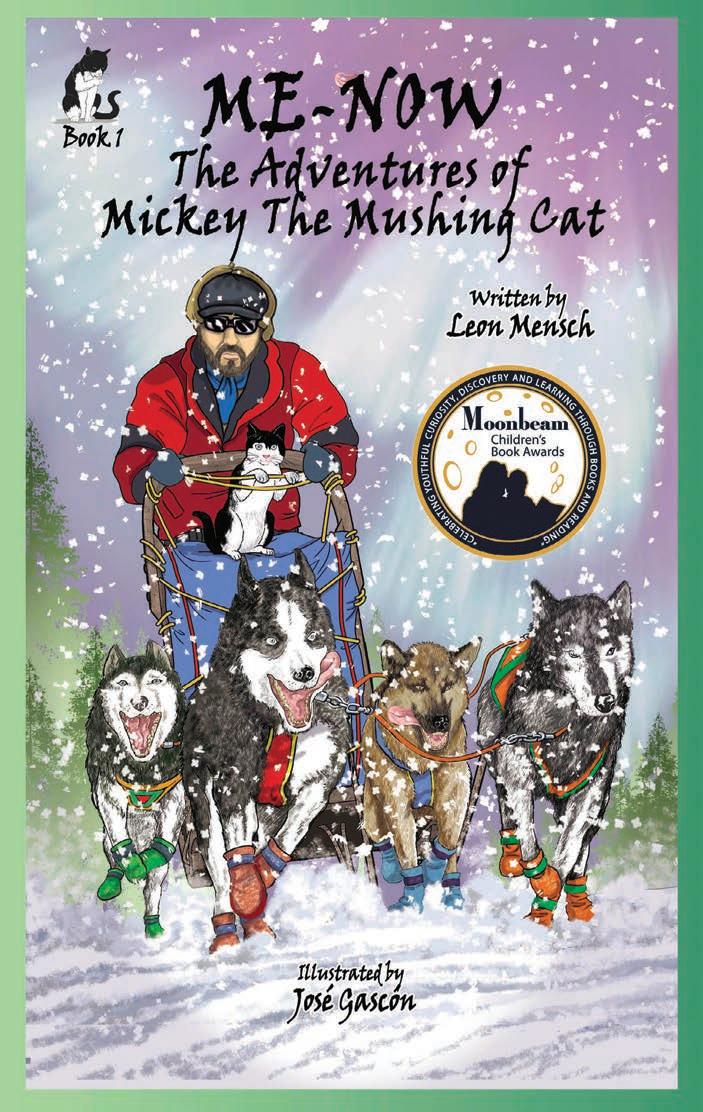
The Moonbeam Children’s Book Awards, hosted by the Jenkins Group, is a national competition celebrating exemplary children’s books for over 14 years. Winners were selected for 30 different categories in October, including a local Alaskan author. Me-Now, The Adventures of Mickey the Mushing Cat, a children’s chapter book, won first place. It received the Gold Award in the Animals/Pets Fiction category. Me-Now was written by Kasilof author, Leon S. Mensch, and published by Relevant Publishers LLC of Sutton, Alaska. The story was originally inspired by Leon’s his real life cat, Mickey, who he and his wife, Beth, rescued. The real Mickey went on many adventures and traveled from the East Coast to Alaska.
Leon’s children’s book is targeted to second through fourth grade readers and follows the life of Mickey the cat who was born a stray and abandoned in Maryland. Later, he is rescued and adopted by a family in Vermont who eventually move to Alaska. There, they open a dog sledding kennel. Mickey is an adventurous feline, who having overcome many challenges early in life, doesn’t want to be left home alone when his family is out on the trail. As any brave cat would do, he sneaks out of the house and learns to ride with the dog team. Later, Mickey accidentally ends up on the Iditarod Trail. He and his team face the harsh challenges of the Last Great Race and the other dog teams that want to eat him. Can he survive? Will his team finish the race or scratch? Young readers can find out what happens to Mickey in his first book, Me-Now.
About Relevant Publishers LLC: Relevant Publishers LLC celebrated five years in book publishing in 2020. They have grown to include nine authors in a variety of genres: Children’s Picture Books, Jewish Children’s Fiction, Youth Chapter Books, Youth Fiction Action/ Adventure, Alaskana, Memoir, Christian Ministry and Theology.
For more information about MeNow, The Adventures of Mickey the Mushing Cat or to inquire about new manuscript queries, please visit www. relevantpublishers.com.

Contributed by Glenda Field
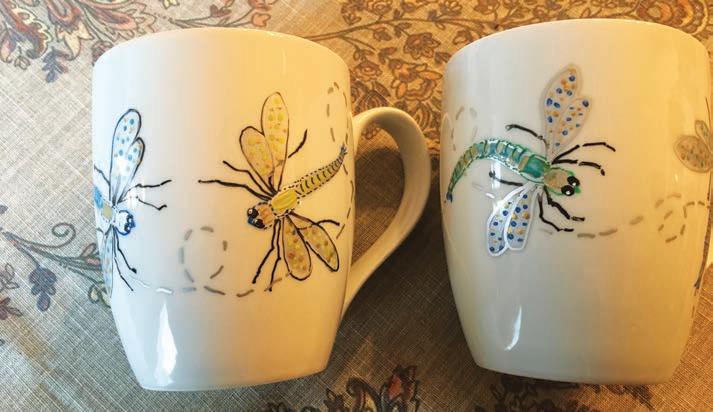
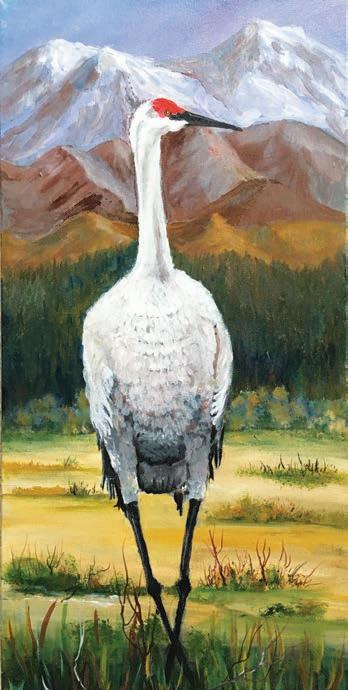
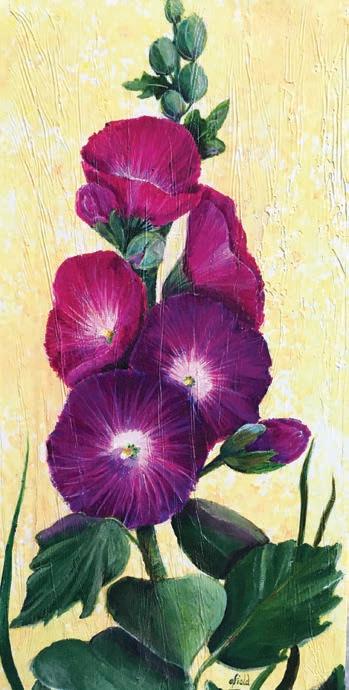
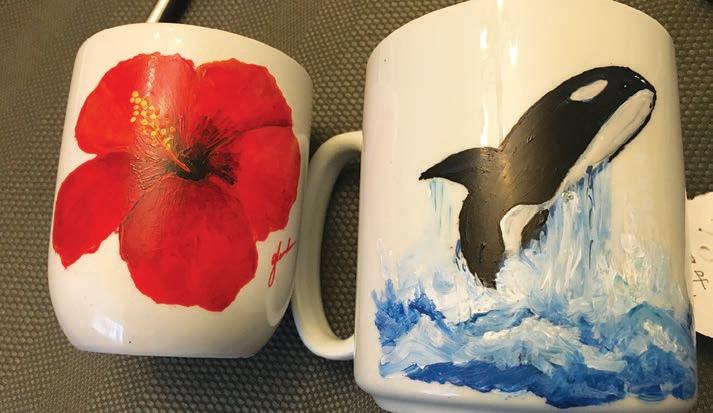
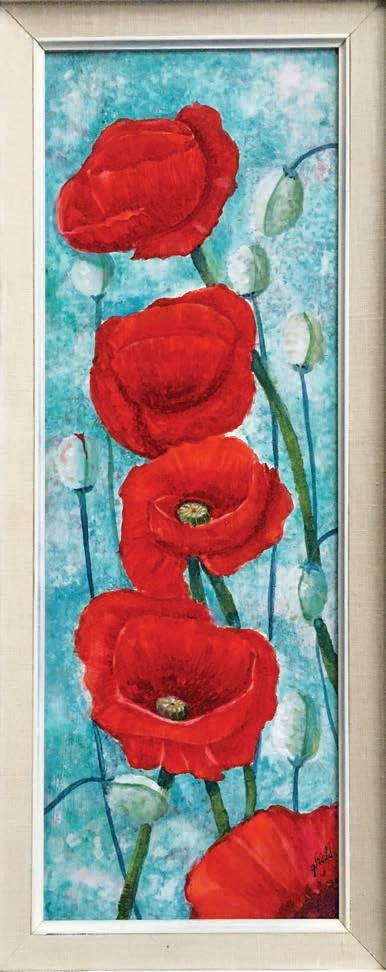
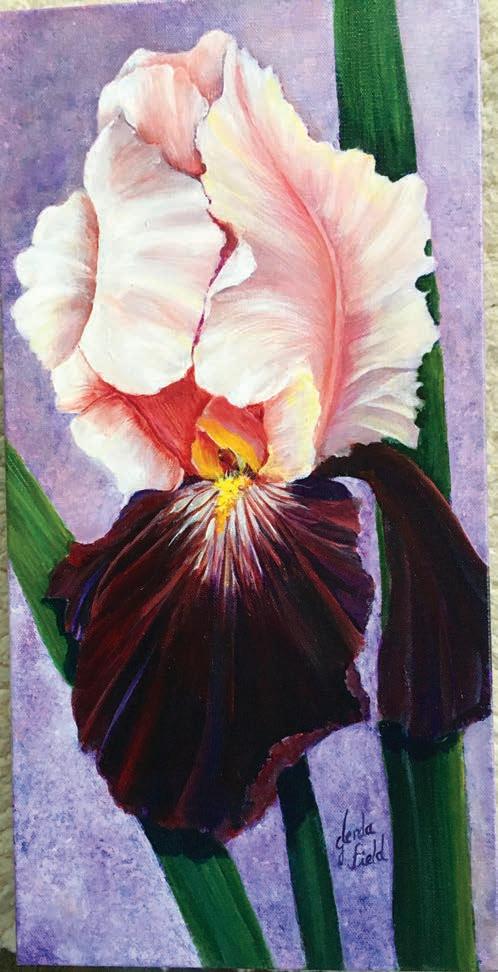
Glenda Field, a local Mat-Su artist, will present her paintings during the month of November at the Bearpaw River Brewery, 4605 E Palmer-Wasilla Hwy. Glenda works mainly with acrylics and watercolors and also paints on glass and porcelain. She is known for her floral art, but also enjoys painting other subjects. Her paintings and glasswork can be seen at the Aurora Gallery in Anchorage and at the Wagon Wheel Store in the Carrs Mall in Wasilla.
She renewed her artistic journey after retiring form the Fairbanks school district, and became more involved in artistic endeavors after moving to Wasilla 7 years ago. She joined the local Valley Fine Arts Society and the Alaska Watercolor Society where she met fellow artists and had opportunities to grow her art. Up until last year, she also taught watercolor classes. She likes bold and bright watercolors and acrylics and works to continually improve her paintings.
The 2018 earthquake was am impetus to change her watercolors. Her home was damaged and her artwork fell off the walls. Acrylics survived, but the watercolors had damage, either broken frames, smashed glass and/or torn paintings. During this pandemic, she has been experimenting to find ways to make watercolor paintings that do not need glass and mats, and in some cases frames, making the watercolor easier to ship, lighter to hang, more durable, and less expensive for the buyer.
After a long experimentation with various surface preparations, she is now able to start selling her new watercolors. Fortunately for her, the Aurora Gallery has taken most of her work, but she has set aside some of her new watercolor paintings for this Bear Paw Event.
Please stop by to see a sample of her work at the brewery. She will be displaying an assortment of acrylic, watercolors and hand painted glass and cups.