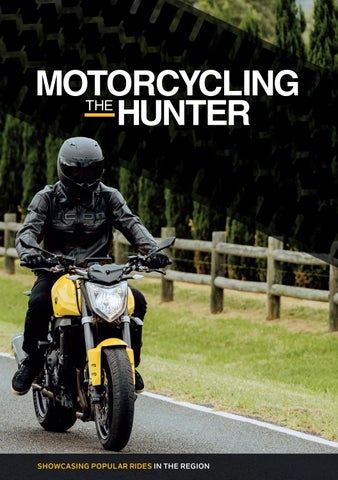
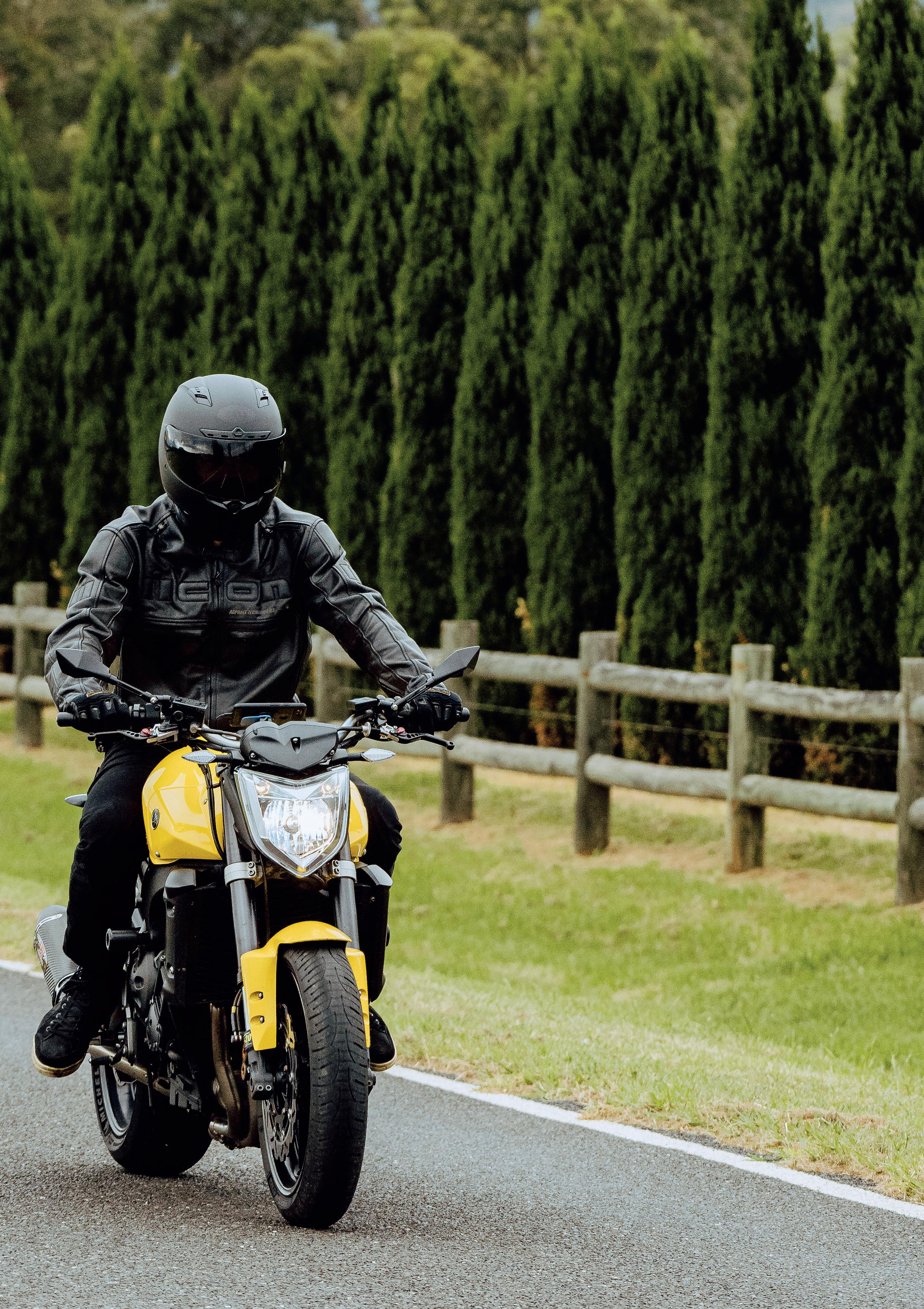
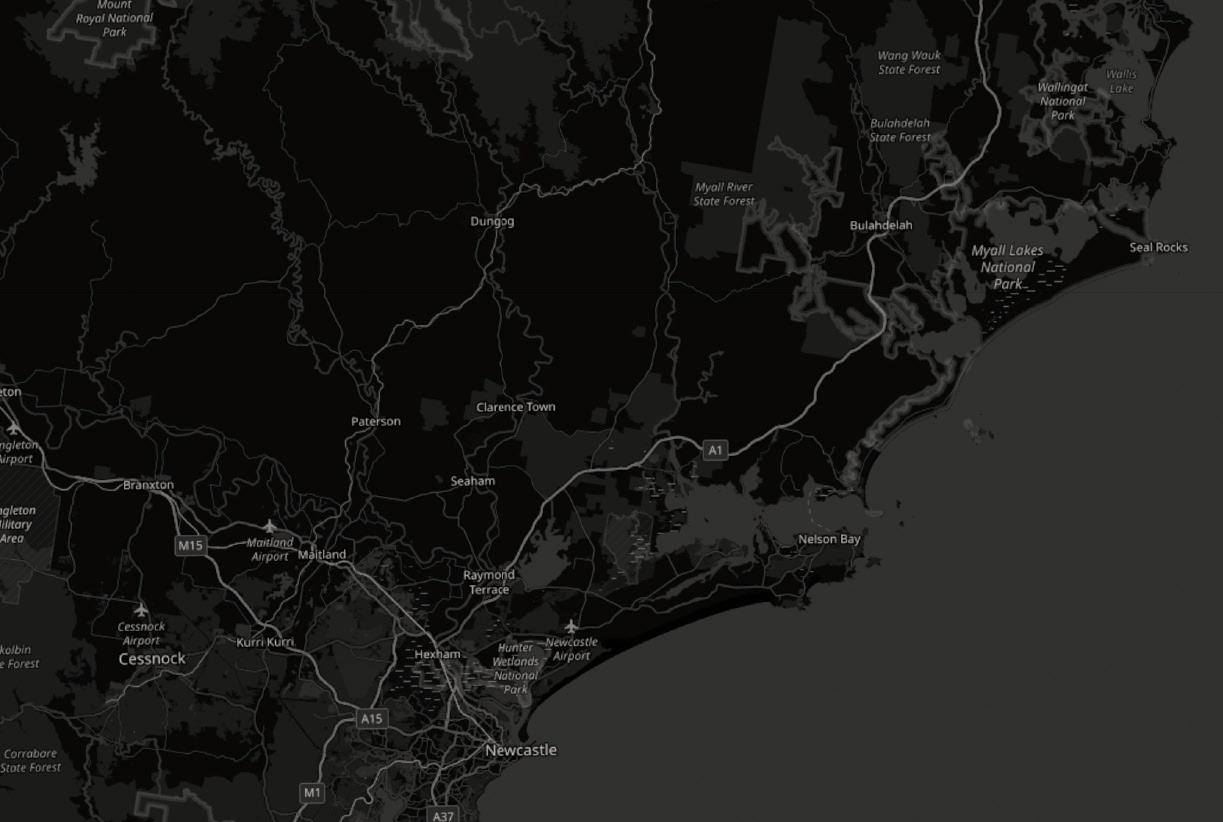
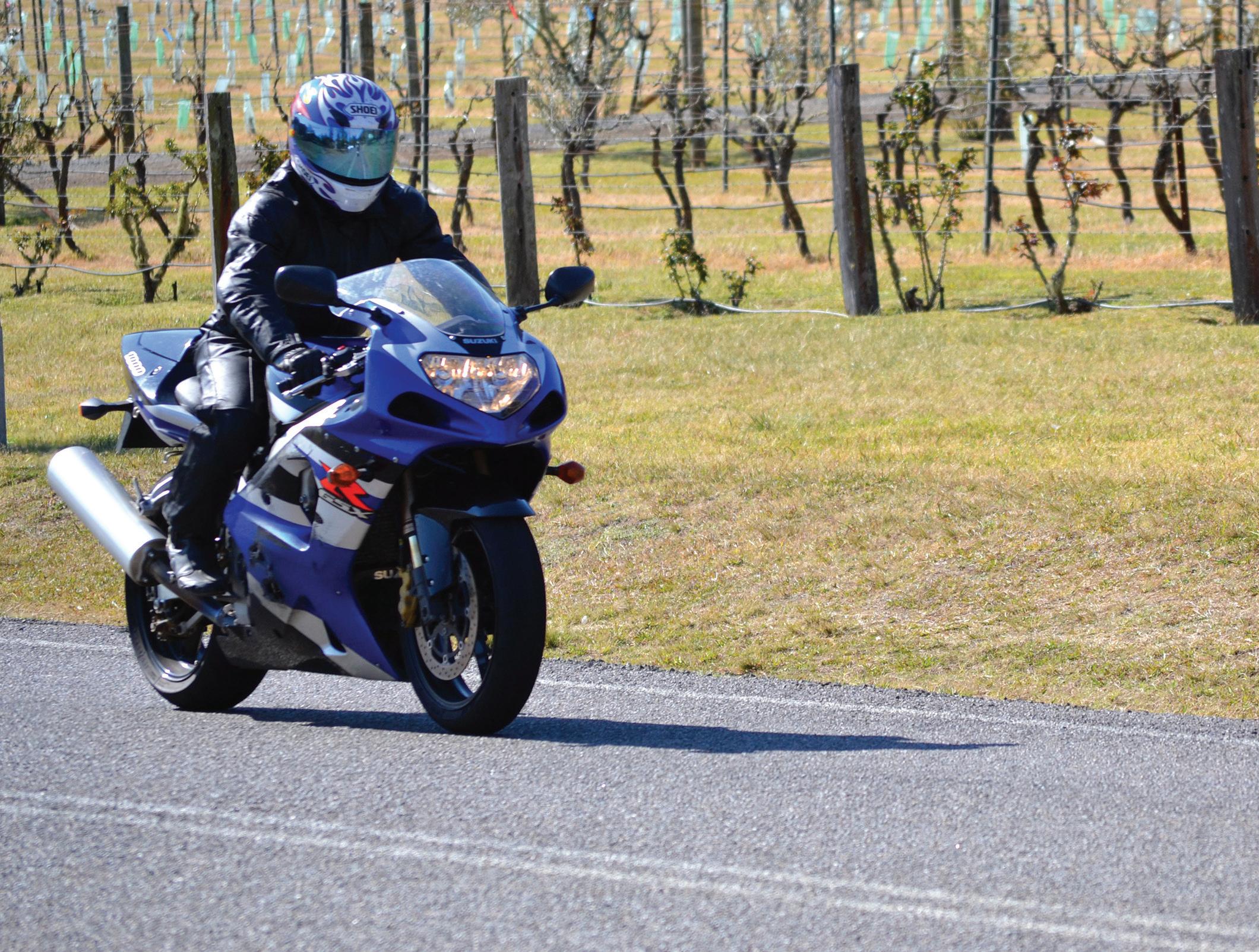
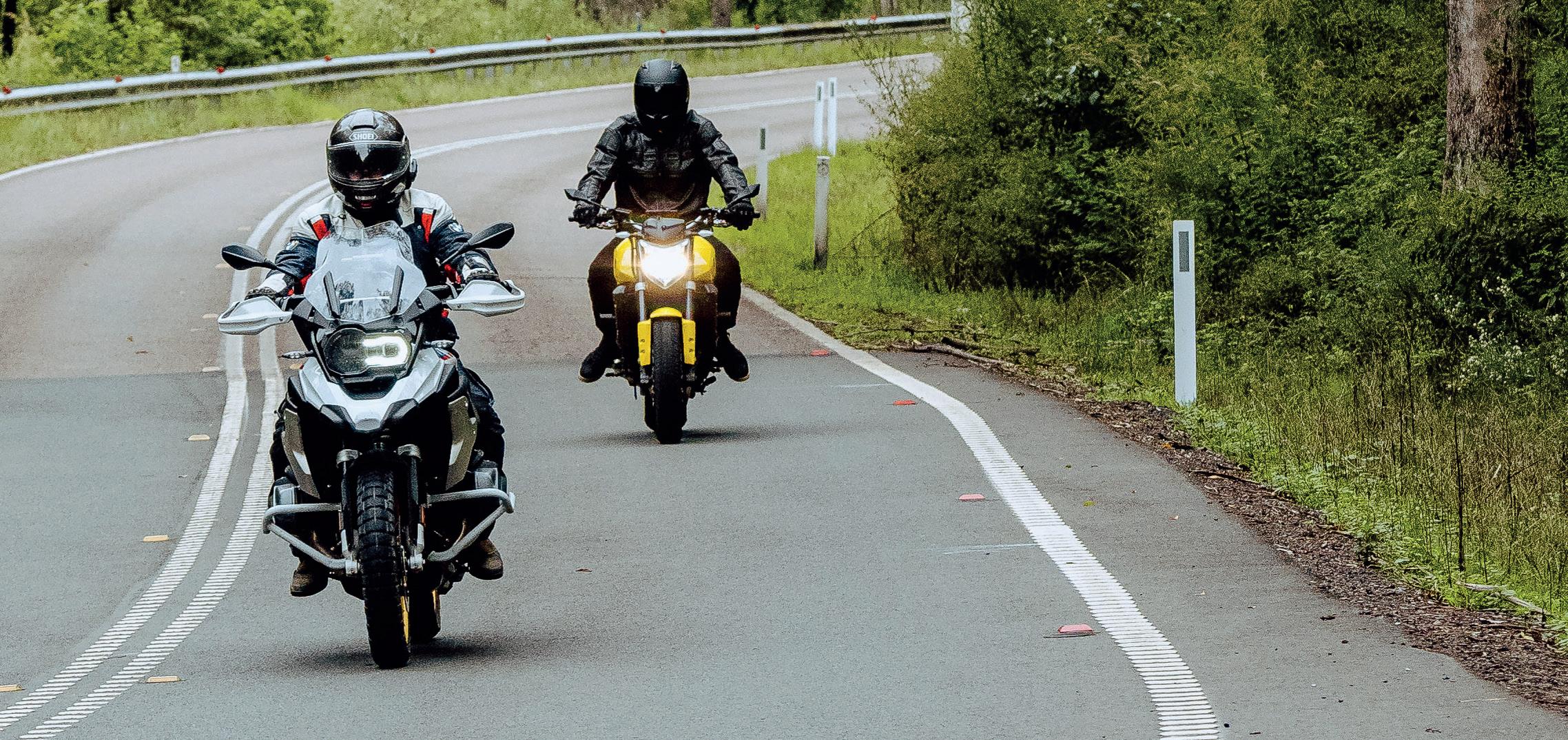
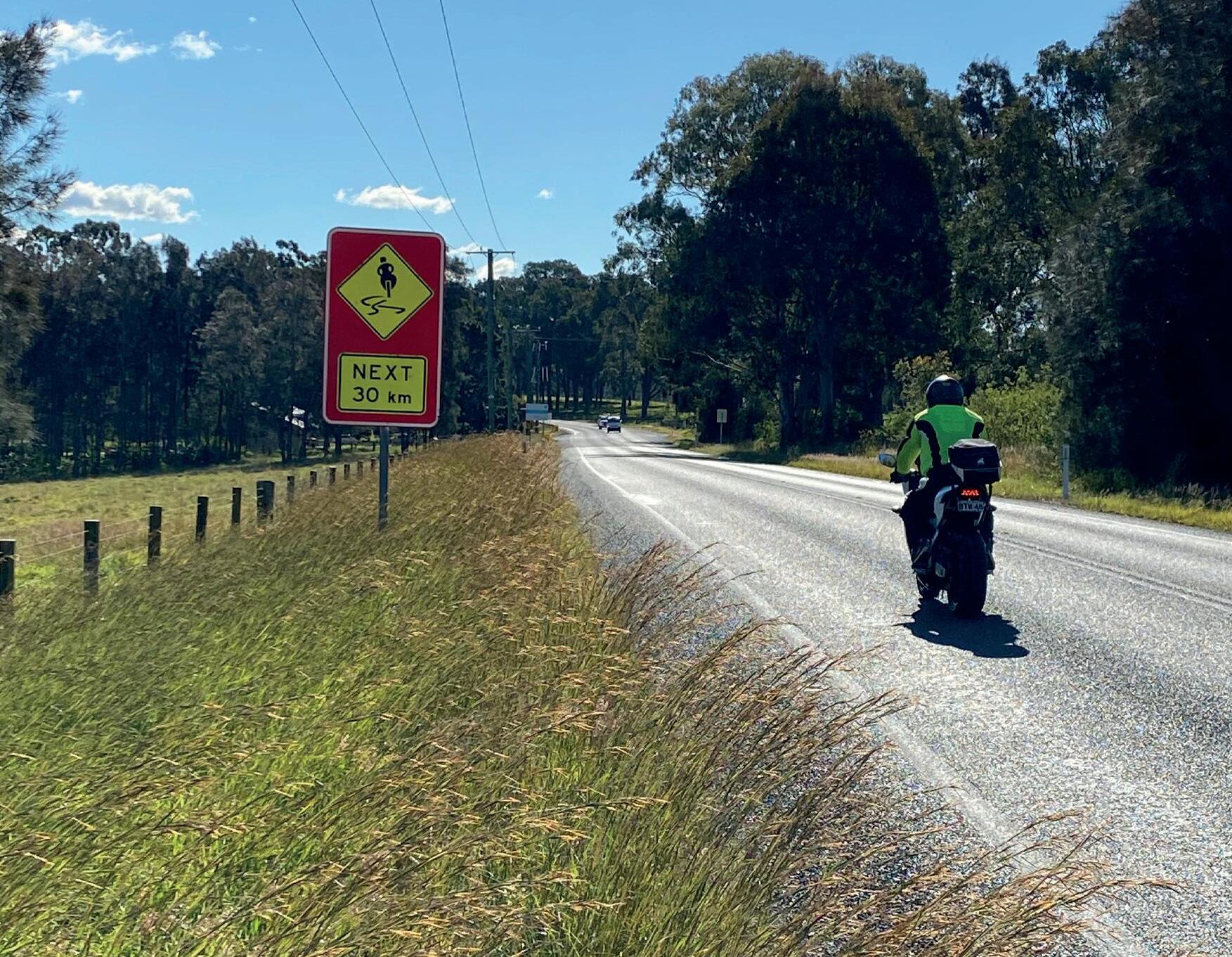
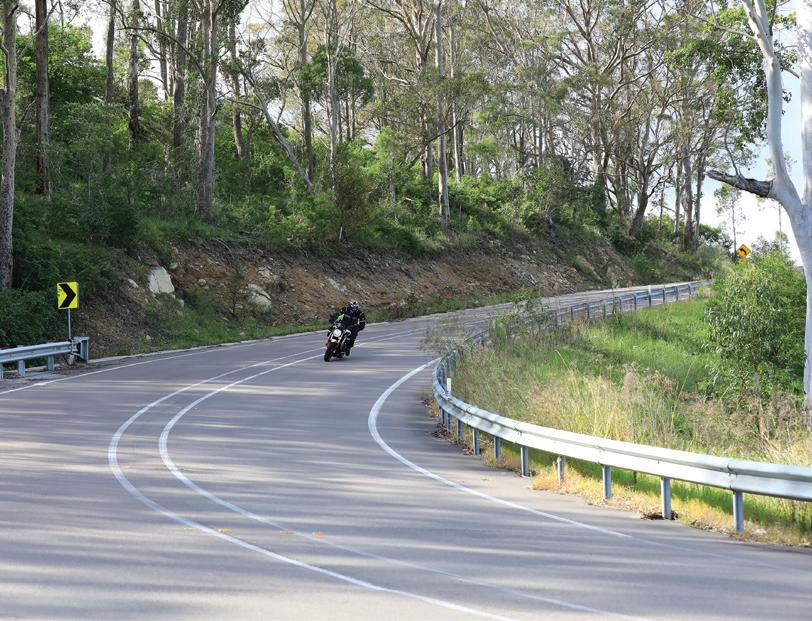
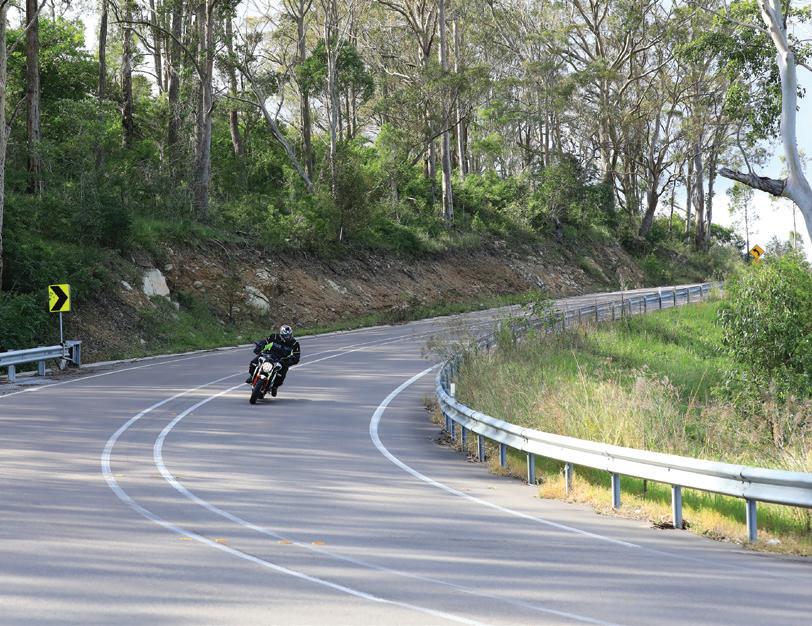
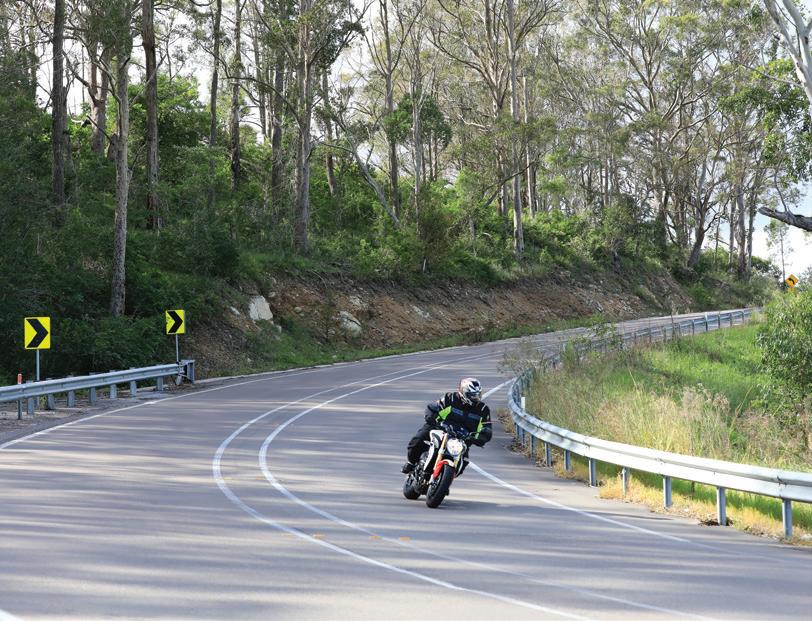
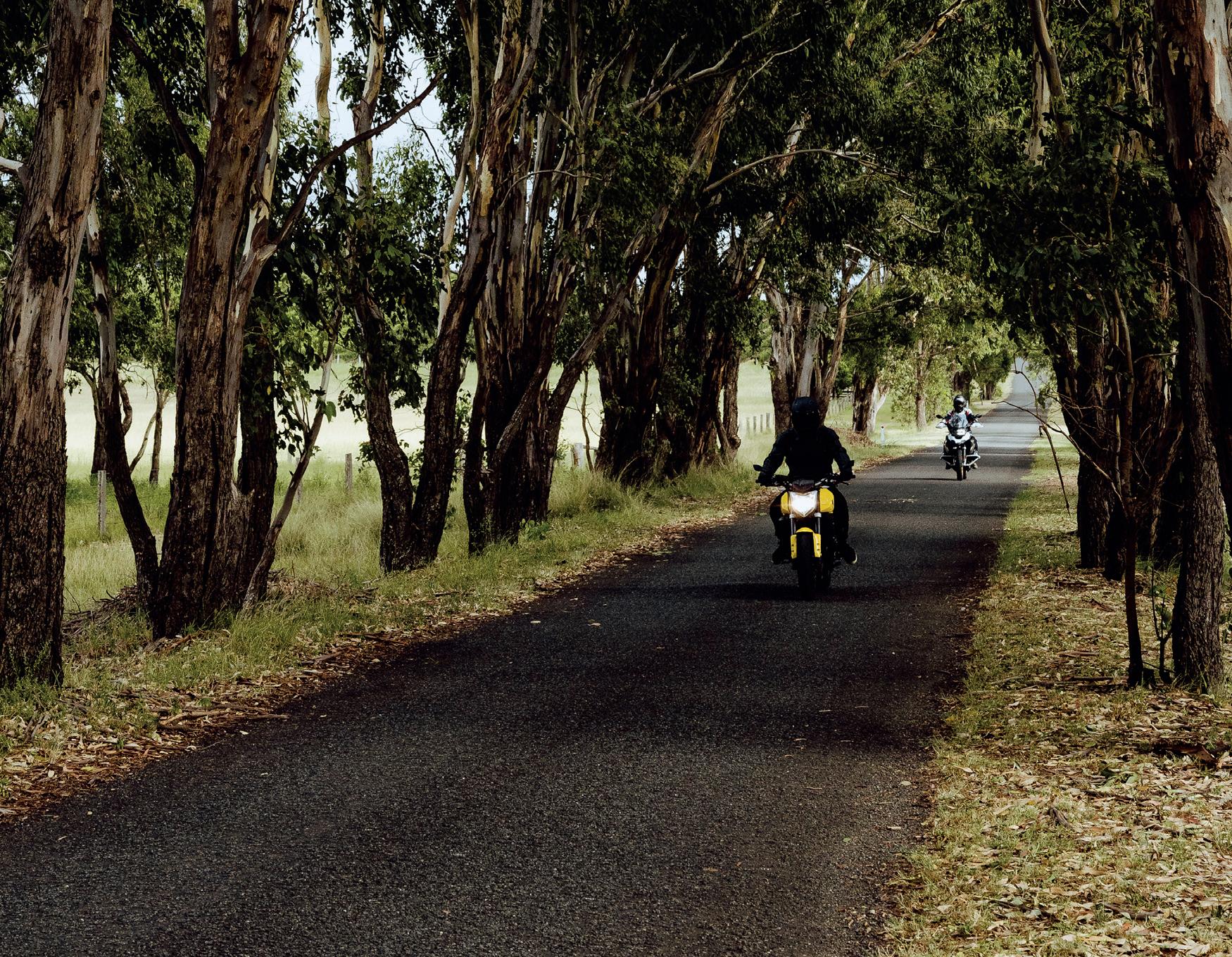
The Hunter Region is home to some of the most scenic and popular motorcycling routes in NSW. Just two hours north of Sydney, the Hunter boasts both coastal and valley landscapes with major urban areas and picturesque country towns. Take a ride through the NSW Hunter Region and you won’t be disappointed.
For over a decade, we have actively worked with the community in the Hunter Region to promote motorcycling and improve rider safety. Our commitment has been recognised at the highest level.
This is the third and most comprehensive publication with multiple Councils collaborating to showcase popular rides in the Region with an emphasis on safety.
We invite you to join us in Motorcycling the Hunter.
CRASH STATS
IN THE 5 YEARS FROM 2015-2019 THERE WERE 1479 CRASHES INVOLVING MOTORCYCLES
• Cessnock
• Dungog
• Lake Macquarie
• Maitland
• MidCoast
• Muswellbrook
• Newcastle
• Port Stephens
• Singleton
• Upper Hunter
INVOLVING
of all serious crashes the Hunter Region had motorcycle involvement involved a single motorcycle occurred on a weekend weather fine
• Ride 12 - Muswellbrook, Bylong Valley Way, Cassilis
46. SINGLETON
Breakdown Safety
• Ride 13 - Putty Road, Singleton, Rylstone
50. NEWCASTLE
Safety around the Light Rail
Scooter Safety
• Ride 14 - Supercars Street Circuit
• Ride 15 - Seven beaches, City Explorer
56. LAKE MACQUARIE
Lane Filtering
• Ride 16 - Loop the Lake
• Ride 17 - East Lake to Catherine Hill Bay /West Lake to Wyong
62. SAFE RIDING
64. MOTORCYCLING INJURIES AND FIRST AID First Aid information
67. ACKNOWLEDGEMENTS
CESSNOCK
The gateway to Australia’s premier and oldest wine region. Explore the picturesque landscape, home to more than 150 cellar doors, wineries, restaurants and cafes.
Visit Cessnock via the scenic Wollombi Valley, the famed motorcycling route surrounded by countryside and wilderness. Enjoy the sweeping corners, twisting mountains and challenging bends before arriving in Cessnock City to refill the tank and relax with a great coffee or refreshment at one or our many local cafes or pubs. Cessnock exudes country charm and hospitality.
Explore our rich convict heritage, striking vistas and world-renowned
cellar doors. The Hunter Valley Gardens will also impress with 60 acres of garden oasis. Hunter Valley Zoo, a wine tour on horseback or hot air ballooning will invigorate the senses. Stay a little longer and enjoy a round of golf at one of our award-winning greens!
Cessnock offers a great motorcycling journey for both riders and passengers. Indulge, escape and explore the beauty of Cessnock and surrounding townships.
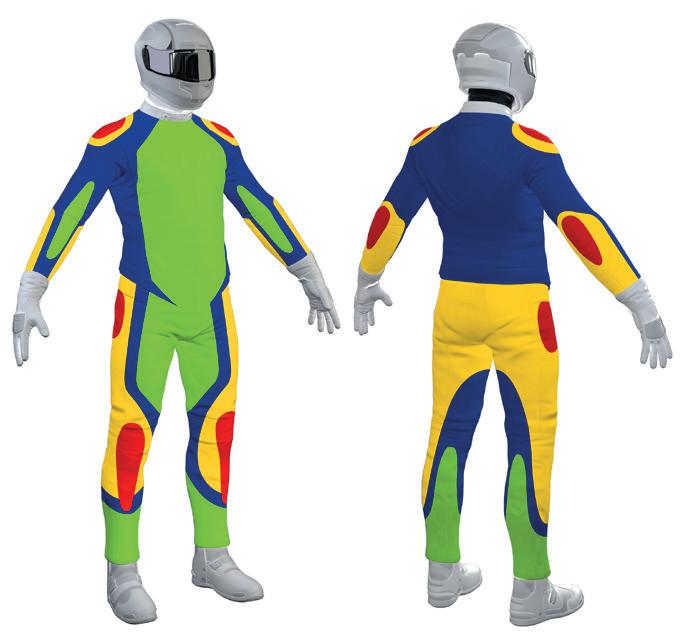
KNOW YOUR ZONES
ZONE 1 has the highest level of injury risk. These areas need impact protectors and highly abrasion-resistant material. The European standards for jackets and pants require a minimum of 4 seconds abrasion resistance: that is, 4 seconds of sliding across the road surface before your gear wears through.
ZONE 2 also has a high injury risk and needs highly abrasionresistant material but no impact protectors. Multiple layers are more likely to be effective than a single one.
ZONE 1 - High risk
ZONE 2 - High risk
ZONE 3 - Moderate risk
ZONE 4 - Relatively low risk
ZONE 3 has a lower injury risk and requires only moderately abrasion-resistant material (minimum 1.8 seconds).
ZONE 4 has a relatively low injury risk. Material to provide ventilation and elasticity can be used in these areas, but they still need to provide a minimum of 1 second of abrasion resistance. Regular denim jeans have only half this resistance (0.6 seconds).
MotoCAP, the Motorcycling Clothing Assessment Program, is a consumer information program designed to provide riders with scientifically based information on the relative protection and breathability on a range of motorcycle protective clothing available in Australia and New Zealand. www.motocap.com.au
MAITLAND
Scenic beauty, heritage buildings, unique villages, welcoming people, an attractive lifestyle and convenient location are just some of the features that lead visitors and residents alike to Maitland.
At the heart of the city is Central Maitland, with its full range of shopping, business and civic functions, as well as education, cultural and recreational services.
Built on the banks of the Hunter River, which brought life and trade to the early city, Maitland is one of the oldest heritage rich regional centres in Australia.
Explore the must-see sights of Maitland Gaol, Walka Water Works, Maitland Regional Art Gallery and the historic town of Morpeth, or just enjoy a coffee by the riverside at The Levee.
Whether you are here for a visit, a short time or a lifetime, the one thing you can be sure of is that you’re welcome in Maitland.
RIDING TOGETHER
Riding in groups can be fun. It is essential to plan ahead and ensure all riders are aware of the route and places to stop. Well communicated planning makes for more enjoyable and safer riding.
• Pre ride meeting and end ride debrief.
• Arrive prepared—pre ride checks completed, fuelled up, all the gear all the time.
• Ensure mobile phone is fully charged with contacts for other riders.
• Appoint a lead rider, corner markers and tail rider. Agree on hand signals.
• Know your group—do head counts at rest breaks and destinations.
• Let someone in your group know if you opt out or head home early.
• Keep group to a manageable size and if necessary break the group into smaller subgroups, each with a lead and tail rider.
• Maintain a minimum three second gap between riders to allow a sufficient crash avoidance space. Avoid riding in staggered formation or side by side as it is difficult to maintain the 3 second gap particularly in corners.
• Be aware of the difference in rider capabilities, experience and bike types when selecting to participate in group rides.
• Carry a first aid kit and basic tool kit.
Branxton to Maitland
PORT STEPHENS
With 26 pristine beaches, a bay twice the size of Sydney Harbour and the largest moving sand dunes in the southern hemisphere, Port Stephens is truly incredible by nature.
Wind your way around the coastal roads of the Tomaree and Tilligerry Peninsulas to uncover their hidden gems. See the incredible dunes of the Worimi Conservation Lands, taste the produce fresh from the sea and get up close with dolphins, whales and our resident koala population.
Port Stephens is truly incredible by nature — from stunning beaches and bays to picturesque country landscapes.
Once you’re done exploring the coast, head inland to discover the
picturesque rural hinterland that features meandering rivers, peaceful country rides and quaint townships.
There’s no shortage of experiences on offer — from fine dining and luxury spas to paddle boarding, sailing and quad-biking.
With accommodation and restaurants to suit all tastes and budgets, it’s the perfect stop for both short and long stays. Come and discover for yourself why Port Stephens is incredible by nature.
KNOW YOUR BUFFER ZONES ON WINDING ROADS
TIP ONE
Start wide. Look through the corner and adjust speed.
For cornering control look through the corner - maintaining a minimum of 5 seconds of vision (if vision is less reduce speed).
TIP TWO
Buffer mid corner. Stay away from the head on zone. Steady throttle.
Reduce speed before the corner, hold a steady throttle through the corner to keep the bike steady and maintain road position and accelerate only when the road and vision permit on exiting the corner.
TIP THREE
Finish tight. Accelerate and maintain vision ahead.
Keep your knees firmly pressed into the tank, sit forward to help keep pressure on the front tyre, keep your arms relaxed with slight weight on the inside curve handlebar to help the motorcycle lean into the corner, keep your back and shoulders relaxed, keep your head level and point your nose at the corner exit or furthermost point in the corner, use your eyes to scan the surface.
By finishing tight this sets you up for what’s ahead.
BARRINGTON COAST
The Barrington Coast encompasses the local regions of Great Lakes, Manning Valley, Gloucester and the Barrington Tops plateau: from high altitude wilderness to the golden sands alongside the Pacific Ocean. We’re famous for outdoor activities: bushwalking in ancient forests, mountain biking, kayaking on lakes and rivers, dolphin and whale watching, boating, fishing, diving and more!
The motorcycle rider won’t be disappointed here either, with routes that seem tailormade for touring: try the coastal Lakes Way from Bulahdelah to Rainbow Flat (80km) or the hinterland explorer Bucketts Way from Twelve Mile Creek to Gloucester and Nabiac (130km). You’ll be rewarded with an everchanging landscape of mountains and valleys, rivers and lakes, farmland and forests. Don’t miss Thunderbolts Way that commences in Gloucester and winds its way up the New England tableland to Walcha and Uralla, stopping at Carsons Lookout for awesome views across Woko National Park, with Barrington Tops in the distance.
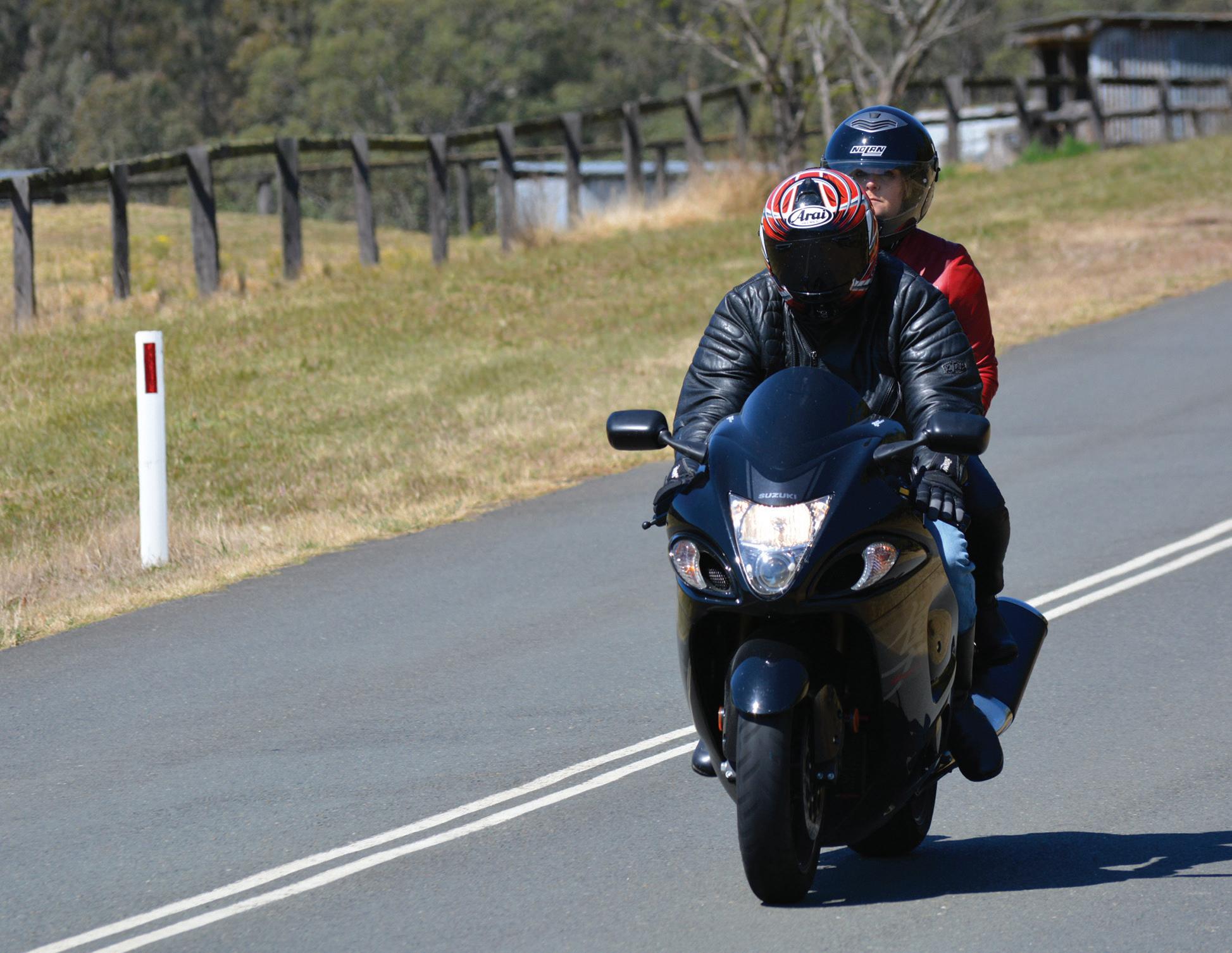
RIDING WITH A PILLION
Riding with a pillion is not the same as riding solo. Consider the following when carrying a pillion.
• Pillion passengers must be at least 8 years of age and able to reach the foot pegs.
• Learner and Provisional P1 riders cannot carry passengers.
• Ensure motorcycle is equipped to safely carry a pillion.
• Your bike will have a lower ground clearance in cornering.
• Braking response will be slower and the performance of your bike will change.
RIDING AS A PILLION
• Your steering movements and bike suspension will be different as the weight shifts from the centre to the rear.
• Smoothness is required in gear changing, braking and cornering to ensure you carry a pillion safely.
• Adjust your tyre pressure for the extra weight you are carrying.
• An inexperienced pillion shifting their weight unexpectedly can cause difficulties for you.
As a pillion, you are also responsible for riding safely. Before undertaking longer rides, begin with short trips to ensure you can both ride in sync. Pre ride communication is recommended e.g. hand signals, Bluetooth systems, expectations, preference of holding on.
• Align your body with that of the rider.
• Use the grab rail, or hold the rider’s waist.
• Pick a shoulder to look over and stick with it.
• Try not to wriggle about when cornering or braking.
• Stay very still as the motorcycle is coming to a stop.
• Keep your feet on the foot pegs at all times, until the rider tells you otherwise.
• Wear all the gear all the time— invest in quality riding protection.
• Grip with your knees when braking.
The Bucketts Way—Twelve Mile Creek, Stroud, Gloucester, Krambach, Nabiac, Bulahdelah
Some rough sections, narrow winding sealed country roads, loose gravel, wildlife/livestock, crests, tight corners some heavy vehicle movements. tourist tra ffic, winter season black ice/fog
Variable road conditions
Take a ride along The Bucketts Way through charming country villages Approx. 230km Day trip or overnight Hotels, clubs, cafes
UPPER HUNTER
With a friendly community spirit, locals are happy to point you to the ultimate ride through the townships which make up the beautiful Upper Hunter Shire.
There are plenty of wide open spaces to explore in the landscape of rolling green hills, rugged mountains and alluring flat roads and highways. Take in the breathtaking scenery through the Barrington Tops or the pristine waters of Lake Glenbawn. Watch the sunset over the golden plains or meander through forests and woodlands in the Goulburn River National Park.
Along the Upper Hunter Shire trail, you will find charming restaurants
and cafés, perfect for the most devoted foodie. Encounter famous country hospitality at any one of our local pubs and boutique shops to find that perfect gift or keepsake, to remind you of your travels.
Whatever your interest, the shire is easily accessible with the New England Highway, Golden Highway and the Main Northern Railway Line traversing the shire. Come on up!
WHAT TO LOOK OUT FOR WHEN RIDING ON COUNTRY ROADS
Country roads are an attraction for motorcyclists with their interesting scenery and winding nature, but they are also full of hidden hazards such as cattle grates, wooden bridges, potholes, gravel edges, heavily off cambered roads and animals.
Cattle grids and wooden bridges
Approach with caution, especially when wet. When riding across a wooden bridge, ride in the vehicle track rather than the middle and look out for slippery metal bolt and rivet heads. Square up the bike and ride across with a steady throttle so the bike is balanced with little chance of wheel spin.
Off Cambers
Anticipate less grip and reduced ground clearance on negative cambers and adjust your speed and lean angle to suit.
Road surface
Many country roads in Australia have poor surfaces. Always scan between the vanishing point and road surface so you can adjust your speed and road position as required.
Hill crests
Be ready for what could be around the corner or over the hill – wildlife, gravel, oil or slow travelling vehicles. Reduce speed on the approach to a crest and regain speed once the road is clear.
ANIMALS IN RURAL AREAS
A collision with an animal can happen at any time, however, riding at night brings additional risks. Be alert at all times and if possible, try to avoid riding between dusk and early morning when animals are more active and difficult to see.
Scan the sides of the road for animals – dead or alive. When riding through areas with unfenced properties or where dense bush is beside the road, be extra vigilant for animals.
Muswellbrook, Aberdeen, Lake Glenbawn, Moonan Flat linking with the Barrington tops or on to Timor, Murrurundi and Scone
Some repaired sections, wash away gravel, level crossings, one way bridges, wildlife and extreme weather including snow. Links to Barrington Tops. Forest Road suitable only for experienced adventure bike riders connecting to Gloucester over the Barrington Tops Approx. 230km Day trip or overnight if continuing on over Barrington Tops Restaurants, cafes and pubs in towns, Victoria Hotel at Moonan Flat, Linga Longa Inn at Gundy
State Highways, winding country roads and some unsealed sections
MUSWELLBROOK
Ride into Muswellbrook on the New England Highway and you will find yourself right in the heart of the Upper Hunter, a powerhouse of innovative new energy projects, mining and agriculture. Olives, award-winning wines and delicious cheeses can all be tasted at restaurants, cellar doors and farm gates while cruising the local roads.
Take a trip down memory lane in Muswellbrook’s town centre and surrounds, where there are 40 different items of historical significance, including fine old buildings and iconic statues –including two of local legend – the Blue Heeler. Take time out to visit the Muswellbrook Regional Art Centre, home of the Max Watters Collection, and explore the significant array or contemporary art.
Cruise to Denman village, nestled at the base of the Wollemi National
Park. Bursting with character, Denman is the perfect stopover on a weekend getaway and boasts regular farmer and artisan markets, excellent pubs offering accommodation and food and dramatic landscapes.
Check out Sandy Hollow, where the dramatic sandstone hills of the Giant’s Leap overshadow the quiet township. Whichever road you choose, you will always be welcome in the Muswellbrook Shire.
TIPS TO HELP RIDERS MANAGE FATIGUE
Riding is more physically demanding than driving a car and you should plan your trip to include plenty of rest breaks, be alert and respond to your body’s early warning signs and not be tempted to push on. Remember, it’s not just the longer rides that put you at risk of a fatigue crash. A lapse in concentration at any time due to fatigue can be costly.
Here are some tips to help riders manage fatigue:
• Ensure you start your journey well rested, with a good night’s sleep.
• Drink plenty of water to keep hydrated.
• Avoid alcohol.
• Avoid too much coffee or sweet soft drinks.
• Eat small amounts of food frequently, avoid fatty foods and large meals before or during a ride.
VARIABLE WEATHER CONDITIONS
Riders are more exposed to the elements and need to be aware of the impact of variable weather conditions.
• Wear the right protective gear to keep you warm and safe but be careful not to overheat.
• Being exposed to cold temperatures for a long period can lead to shivering, exhaustion, drowsiness, stiffness and slow reaction time.
• Layer your clothes and wear lighter, breathable materials underneath a protective jacket without limiting movement.
• Even in warmer weather it is vital for safety to wear all the gear all of the time.
• Consider carrying a second pair of gloves should the weather change or your gloves get wet.
• Flex your fingers regularly on a long ride, particularly if it’s cold, to keep circulation moving through your fingers and prevent your hands locking up when you need them most.
SINGLETON
Built on the banks of the Hunter River and flanked by farmland, wine country and world heritage-listed National Parks, Singleton inspires a sense of discovery and the freedom to explore. From extreme action to extreme scenery, whatever your sense of adventure, you’ll find the experience you’re looking for.
Exploring the Singleton area is best achieved on two wheels. Discover the famed Putty Road from the outskirts of Sydney through the world heritage-listed Wollemi and Yengo National Parks onto Bulga, Milbrodale and Singleton— it is 170km of sealed road with a great mix of high speed straights, epic scenery, sweeping bends and tight, smooth corners.
Tempt your taste buds in Hunter Valley wine country — a food and wine lover’s paradise. Take the scenic route through Milbrodale and Broke Fordwich in the shadow of the Brokenback ranges, past rolling vine-covered countryside and onto Pokolbin, or tour the pastoral paradise of Elderslie, Stanhope and Lambs Valley with sweeping views
of lush farmland, grazing cattle and the stunning mountain landscape.
In the Singleton township, history buffs will love exploring heritage buildings and landmarks, the Singleton Historical Museum and the Australian Army Infantry Museum at Lone Pine Barracks. Take Carrowbrook Road via Bridgman Road to the picturesque Lake St Clair, with stunning views of the lake and undulating hills (the perfect backdrop for taking photos).
With so much to discover, Singleton is a unique destination offering an itinerary filled with adventure, culture, heritage and imagination to keep you entertained, relaxed and inspired.
BREAKDOWN SAFETY
Look for a safe place to stop
• Look for a safe, highly visible and well-lit place to stop and get out of the path of traffic safely.
• Signal others by using your signal blinkers or hazard lights (if equipped) and hand signals too if necessary, whilst getting your bike and yourself to safety.
Stay visible at all times
• Position your bike and yourself as far away from other traffic as possible and try and make yourself visible by wearing a highvisibility vest, if available.
Call for help
• Once you and your bike are safe, secure and clearly visible, call for help at your earliest convenience. Keep a solid support system through your phone and save the hotlines to your preferred roadside services, mechanic and insurance provider.
NEWCASTLE
Nestled on the beautiful, sun-drenched eastern coastline of New South Wales, just over two hours north of Sydney, Newcastle is a vibrant city bursting with things to do, places to stay and fun to be had.
Spectacular beaches and coastal scenery, with ocean baths and some of the country’s best surfing spots, are only just the start. We have museums and art galleries, rich history and architecture to keep the most ardent culture vultures intrigued. Then there’s a dedication to coffee, a thriving bar and restaurant scene, and on-trend designer shops and artisan markets.
For those who enjoy live entertainment, you certainly won’t be disappointed, with almost 80 venues offering live music throughout the week, while our beautiful Civic Theatre offers a whole host of live
entertainment. Best of all, you’ll find all of this within walking distance from the CBD.
Newcastle is an outdoor, actionpacked city – and whether you’re visiting alone or with friends or family, from near or far, there’s plenty to do in the fresh air. From walking along the spectacular coastline walk Bathers Way to cycling our harbourside destination Honeysuckle, surfing the waves, cruising the harbour or simply enjoying one of our many beaches, there’s an abundance of outdoor activities to enjoy.
SAFETY AROUND THE LIGHT RAIL
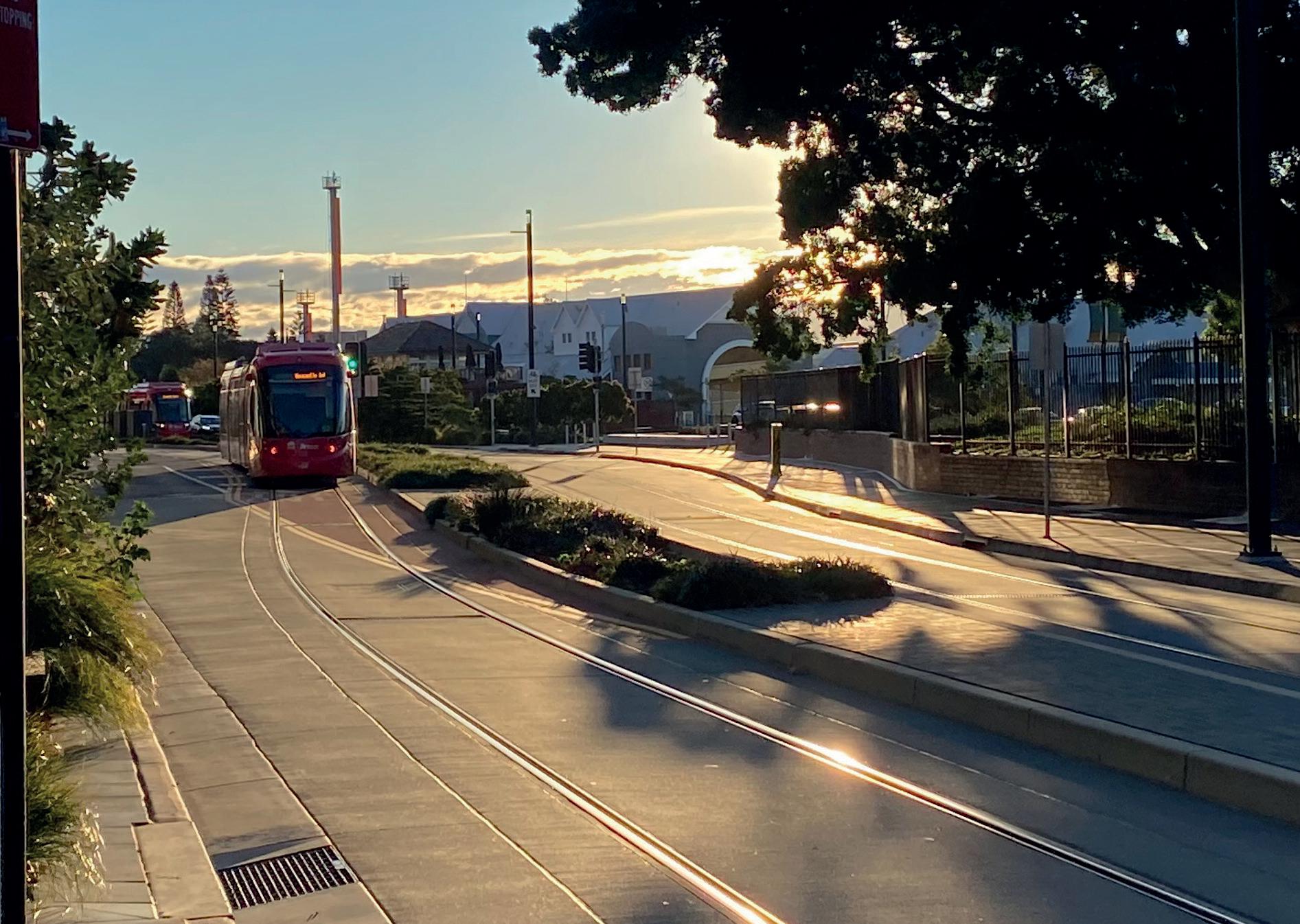
The Newcastle Light Rail network is 2.7km of light rail track operating between the Newcastle Interchange at Wickham and Newcastle Beach. There is a 340m section along Scott Street where the light rail track is shared with road traffic lanes.
Motorcycle riders should;
• Never queue across tram tracks or intersections.
• Always follow traffic signals and signs.
• Never turn in front of a tram.
• Always follow the road rules and ride with care.
SCOOTER SAFETY
• Be aware that tyres may lose traction across sections of road where light rail tracks co-exist.
• Cross the tram tracks at an angle to avoid tyres getting caught in the tracks, particularly narrower tyres on small motorcycles and scooters.
In urban areas scooters provide a cheaper option for efficient and reliable travel. Scooters are vulnerable to changes in the road surface including water, oil, loose gravel and holes as they generally have smaller wheels. Scooters generally have less power and acceleration than other powered two wheel vehicles, are usually automatic and typically have lower horsepower. Riders should be aware that scooters can lose speed dramatically on uphill sections and have limited acceleration capacity.
Scooter riders, like all motorcyclists, are vulnerable on the road and can be difficult to see, so position yourself to be visible to other road users.
If you get into trouble, there’s not much between you and the bitumen. Re-member riders are best protected when their whole body is covered with abrasion resistant materials, with impact protection for joints.
LAKE MACQUARIE
The magnificent Lake Macquarie is the centrepiece for the city, where life by the lake offers a natural playground for residents and visitors alike. The relationship with the lake is particularly special. A source of life for hundreds of years for the Awabakal people, the traditional custodians of the area, it connects the city, its people and its vibrant communities.
Flanked by beaches and forests, it’s easy to see why Lake Mac is renowned as a location for recreation and lifestyle. And having one of the largest salt water lakes in the country means the community of 205,000 people is incredibly active on and off the water, with ample parks, playgrounds and facilities providing endless opportunities to get outdoors and celebrate together.
From sun-drenched beaches, across a glistening lake to the Watagan Ranges, Lake Macquarie is a location alive with natural beauty and the unique and
vibrant communities lucky enough to call this place home.
Excitement and adventure await at every turn in Lake Macquarie. Whether you’re a nature lover or a fullon adrenaline junkie, there are new experiences to be had and memories to be made all over the city. After hitting the road, you can explore by boat, kayak or stand-up paddleboard. Hike through cool rainforest, camp by majestic waterfalls and see the sun rise from ancient sea caves, then see it all from above with an exhilarating joy flight with Australia’s only Red Bull Air Race Team – Matt Hall Racing.
LANE FILTERING
Lane filtering is when a motorcyclist moves between traffic that is stationary or moving slowly.
In NSW, motorcycle riders are permitted to lane filter:
• When both the motorcyclist and traffic are stationary or moving less than 30km/h.
• When a motorcyclist holds an unrestricted licence.
• When it is safe to do so.
• While complying with all other road rules, e.g. stopping at a red light and stop line and sign (never in front or over it).
In NSW lane filtering is NOT permitted if riding:
• In school zones during school zone hours.
• Next to the kerb or parked vehicles.
• While on a Learner or Provisional licence.
In NSW lane filtering is NOT recommended if riding:
• In areas of heavy bicycle and pedestrian activity e.g. CBD, near public transport.
• Beside heavy vehicles such as buses or trucks.
SAFE RIDING
A low risk rider is constantly adjusting or adapting their position with a focus on:
• Observation
• Speed management
Scanning
• Road positioning
• Hazard perception
Sight
• Decision making
Look in the distance, at the road surface, to your left and right, and regularly at your mirrors and instruments.
Space
Give yourself space and buffer from hazards such as pedestrians, parked vehicles, traffic approaching from other directions or about to enter the road.
Surface
Road conditions are constantly changing. Water, oil, potholes, gravel, and patching are all examples of surface changes that a rider has to manage. If you need to ride on a poor surface to buffer a hazard, slow down and avoid sudden movements.
Choose the road position that provides good vision without compromising your ability to buffer from hazards. If your vision is limited, slow down and maintain a buffer from hazards, together with an increased crash avoidance space.
Gap Selection
Select safe gaps when turning, overtaking or changing lanes so as not to rely on another road user changing their behaviour.
Hazards
Maintain your crash avoidance space, identify hazards, slow down, move away and create a buffer by changing your position on the road or by changing lanes.
Urban areas
Motorcycles are smaller and less visible than other vehicles –which makes them more easily overlooked by other road users, particularly at roundabouts and intersections.
In urban areas crashes often occur because drivers can look but not see a motorcyclist. These incidents are often referred to as SMIDSY (sorry mate I didn't see you).
You can reduce the risk of SMIDSY crashes by scanning, being alert and placing yourself in a position on the road to respond to and buffer when approaching intersections, roundabouts, driveways, car parks, or merging situations.
Consider investing in bright and reflective gear.
Riding with the assumption that other road users won't see you will help you Ride to Live.
MOTORCYCLING INJURIES
CAN YOU IDENTIFY SIGNS OF AN INJURY?
TREATMENT FOR MINOR INJURIES
The RICER method is a simple technique that helps reduce swelling, ease pain, and speed up healing.
REST
MODERATE
headache and/or dizziness memory loss confusion
nausea and/or vomiting wounds to scalp/face altered response to commands/touch
ICE
COMPRESSION
ELEVATE REFERRAL
the casualty and the injured part apply an ice pack wrapped in a damp cloth of cold compress for 15min, every 2-4hrs for 24hrs apply a compression bandage firmly to extend well beyond the injury the injured body part seek medical advice
COMPLEX
blood/fluid from nose/ears pupils unequal in size blurred vision
PAIN
at or below site of injury
SENSATION
loss or abnormalities such as tingling in hands or feet
MOVEMENT
loss or impairment below site of injury
QUICK RESPONSE SAVES LIVES
DRSABCD - CALL 000
HEAD INJURY
D ANGER: Check to see if it’s safe to approach
R ESPONSE: Check if person is conscious
S END: For help
A IRWAY: Protect airway, roll person onto their side and keep neck supported
B REATHING: Once on side check that the mouth is clear of obstructions such as blood/vomit and ensure they are breathing
SPINAL
C PR (CARDIOPULMONARY RESUSCITATION): If an adult is unconscious and not breathing, make sure they are flat on back, place heal of palm of one hand in the centre of their chest and your other hand on top. Press down firmly and continue 30 chest compressions: 2 breaths until help arrives or the patient recovers
D
EFIBRILLATION: Attach defibrillator if available and follow the voice prompts. CPR should be delivered until the casualty is breathing and responsive
FIRST AID
Casualties wearing helmets
A full-faced helmet should only be removed if the injured rider does not have a clear airway and cannot breathe. In all other circumstances the helmet should remain in place.
In a situation where a casualty requires resuscitation and is wearing a full faced helmet CPR should be commenced with the aid of a resus mask, this allows the helmet to remain on the casualty, reducing any impact or increased injuries from removal by an untrained person.
If helmet removal is required, this ideally should be attended to by 2 people who have previously attended specialised helmet removal training to minimise additional injuries to the casualty. One person is required to stabilise the neck and head while the other carefully removes the helmet in a way that minimises movement to the neck and head. If there is only a single person, helmet removal should only be attempted if all other avenues have been exhausted and breathing difficulties are life threatening.
Casualties encased in leathers
Bleeding wounds can be hidden from view or disguised by riding leathers. Often the puncture made in the leathers is not a true indication of the severity of the wound.
Remove or cut the leathers to expose the wound and stop any bleeding by applying direct pressure to the wound with bandages, clothing, or if ineffective and worst case, by tourniquet.
Casualties with severe burns
In the event of a crash, it is possible that a rider can be trapped underneath his/ her bike. Extreme heat from exhausts and engine parts can be conducted and contained in leathers, burning the rider.
For all burns it is vital to expose the wound and cool it with running water until the affected area returns to normal temperature. Remove clothing from burnt area if possible. If it is stuck, cut around it, don’t attempt to pull it off. Remove jewellery to prevent restricting circulation. Protect burnt area with sterile or non-stick dressing or closely woven material.
Our thanks go to the many riders and organisations who provided input and offered assistance with the content of this publication. We value the partnerships we have established over the years to assist us in encouraging safe riding in the Hunter.
• NSW Police W police.nsw.gov.au
• Motorcycle Council of NSW W mccofnsw.org.au
• Wheelskills Driver + Rider Training W wheelskills.com.au
• Ulysses Clubs Hunter Region W ulysses.org.au
• Novocycle
• The Red Torquettes
• Old Boars Motorcycle Club
• Motorcycle Accident Rehabilitation initiative (MARI) W drwings.org.au
• First Aid for Motorcyclists W fafm.com.au
• Transport for NSW W transport.nsw.gov.au
• NSW Centre for Road Safety W roadsafety.transport.nsw.gov.au
• MotoCAP W motocap.com.au
• Ride to Live W ridetolive.nsw.gov.au
• Motorbike Writer W motorbikewriter.com
SUPPORTED BY
Dungog Shire Council, Lake Macquarie City Council, City of Newcastle
PROUDLY DEVELOPED BY
Motorcycling the Hunter has been produced to be used as a guide only. Every effort has been made to ensure the accuracy of information. The partnering Councils will not be held responsible for errors, omissions or misinterpretations of information contained within this publication. All original design and images remain the property of the partnering Councils. This publication may not be reproduced in whole or part without written permission from the partnering Councils involved in this publication.