How Woven Baskets Bring Warm Texture
And Artful Balance To Interior Spaces
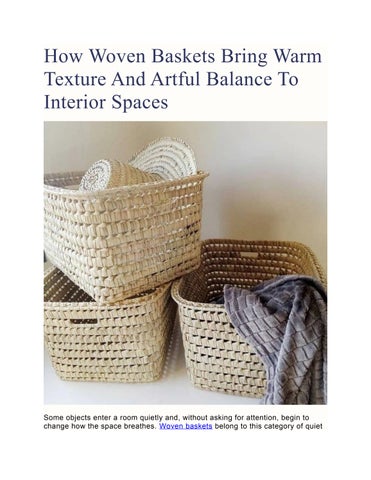
Some objects enter a room quietly and, without asking for attention, begin to change how the space breathes. Woven baskets belong to this category of quiet
presence. They do not function as focal points in the traditional sense. Instead, they operate at a deeper level, shaping the atmosphere through material, shadow, and texture. We often realize their impact only after they are gone. The room feels flatter. Harder. Less grounded.
In interiors that value restraint, mood, and longevity, woven baskets offer something essential. They reconnect us to touch in environments increasingly defined by smoothness and polish. They introduce softness without fragility, structure without rigidity. Their beauty is not performative. It is lived with.
We tend to think of interiors as visual compositions, but they are equally sensory landscapes. We move through them. We brush past surfaces. We sit, reach, and rest. Woven baskets participate in these daily gestures. They hold objects, but they also hold space. They remind us that a home is not meant to be perfected, but inhabited.
This reflection explores how woven baskets bring warmth, texture, and artful balance to interior spaces. We look closely at materiality, function, placement, and emotional resonance. Not as decoration, but as part of a slower, more intentional way of living with objects.
The Artistry Of Woven Baskets In Interior Design
The artistry of woven baskets lies in their restraint. There is no excess gesture, no unnecessary flourish. Their forms are shaped by function, refined through repetition. Each curve and tension exists for a reason. This quiet discipline is what allows them to move effortlessly between eras and aesthetics.
In both modern and traditional interiors, woven baskets act as mediators. They soften the severity of contemporary spaces without undermining clarity. They ground traditional rooms without tipping into nostalgia. Their organic nature allows them to exist comfortably alongside antiques, modern furniture, and architectural elements alike.
We are drawn to them because they feel instinctive. Their presence does not need explanation. A basket resting beside a chair or beneath a console feels inevitable, as though it has always belonged there. This sense of inevitability is a hallmark of thoughtful design.
The Warmth Of Woven Materials
Texture is one of the most powerful tools in interior design, yet it is often the least discussed. We respond to it immediately, before color or form fully registers. Woven baskets offer a tactile richness that softens rooms at an emotional level. Their surfaces absorb light. Their edges are forgiving. Their irregularities create rhythm.
Natural fibers such as rattan, willow, reed, and seagrass carry inherent warmth. They do not reflect light sharply. Instead, they diffuse it. Shadows settle gently into the weave, creating depth without contrast that feels abrupt. When placed against stone, plaster, or polished wood, woven baskets create a dialogue between surfaces that feels calm and considered.
There is also a physical memory embedded in woven materials. The repetition of the weave suggests time, patience, and human presence. Even when the maker is anonymous, the process remains legible. This human trace is what gives woven baskets their quiet authority. They feel made, not produced.
As these materials age, their character deepens. Fibers darken subtly. Surfaces soften. The basket becomes more expressive through use. This evolution aligns with an understanding of beauty that values patina over perfection. We begin to see that wear is not damaged. It is evidence of life.
Organic Beauty And Longevity
The beauty of woven baskets is inseparable from their longevity. These are objects designed to endure, not because they are indestructible, but because they remain relevant. Their forms are not tied to trends. Their materials do not date quickly. They exist comfortably across decades.
This endurance speaks to a deeper connection with nature. Woven baskets are shaped from materials that once lived. They retain an echo of landscape, climate, and place. Even without explicit provenance, their material language communicates something grounded and elemental.
Rather than focusing on sustainability as a statement, we understand woven baskets through continuity. They last because they are cared for. They are cared for because they matter. This cycle creates objects that remain present in a home rather than being replaced.
In interiors shaped by intention, this kind of longevity is essential. It allows rooms to evolve slowly. Furniture can change. Art can shift. But woven baskets remain, quietly adapting to new contexts without losing their identity.
Balancing Aesthetic And Functionality
Few objects navigate the boundary between beauty and usefulness as gracefully as woven baskets. Their function is immediate. They hold. They organize. They contain. Yet their presence never feels purely utilitarian.
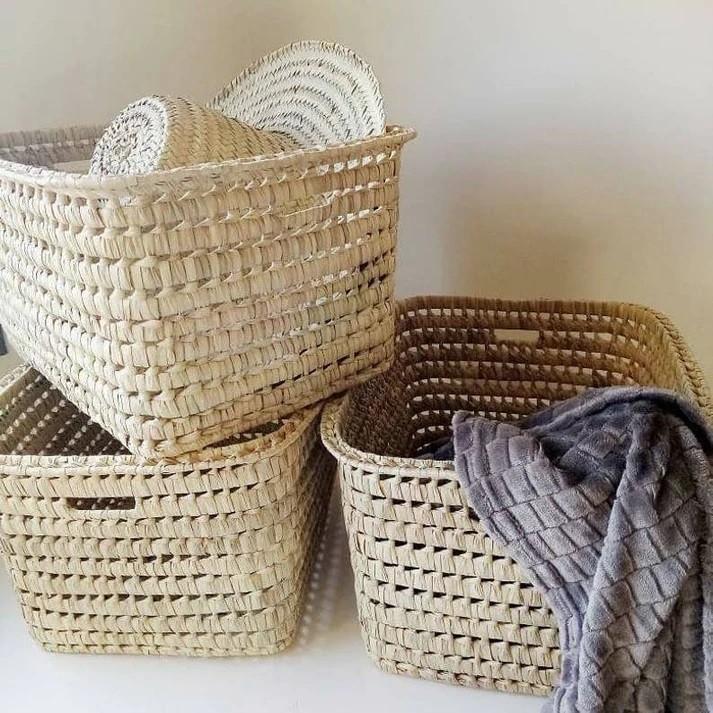
In living spaces, woven baskets hold throws, books, or magazines while contributing to the room’s composition. In bedrooms, they soften transitions between furniture and floor, offering visual rest. In kitchens, they store everyday
items without disrupting the atmosphere. Their utility enhances rather than detracts from their aesthetic value.
Rigid storage solutions often feel resolved too quickly. They impose order in a way that can feel final. Woven baskets, by contrast, remain open-ended. Their flexibility allows them to respond to changing needs. They introduce structure without rigidity, order without severity.
Across different interior languages, woven baskets adapt with ease. In restrained Scandinavian interiors, they counterbalance pale woods and minimal palettes. In European-inspired spaces, they reinforce a sense of collected living. In contemporary settings, they soften clean lines and prevent sterility. This adaptability comes not from decoration, but from material intelligence.
Woven Baskets As Architectural Anchors
Beyond their role as objects, woven baskets function architecturally within a space. Their placement influences balance, proportion, and flow. A low basket near seating grounds the arrangement, drawing the eye downward and stabilizing the composition. A tall basket in an entryway creates vertical emphasis while softening the threshold between outside and inside.
We often underestimate the power of these gestures. Woven baskets do not compete with architecture. They respond to it. Their forms echo curves, counterbalance angles, and soften transitions. In asymmetrical spaces, a single basket can restore equilibrium. In larger rooms, a group of baskets can create cohesion without repetition.
Because they are visually quiet, woven baskets can occupy space without overwhelming it. They shape the room’s rhythm rather than interrupt it. This quality allows them to feel integral rather than added.
Layering Texture And Creating Dialogue
Interiors gain depth through conversation between materials. Woven baskets are particularly effective participants in these dialogues. Paired with linen, they enhance softness. Set against stone, they emphasize solidity. Near-aged wood, they echo warmth while introducing variation.
Layering is not about accumulation. It is about discernment. A single basket placed thoughtfully can carry more presence than multiple decorative objects. The structured rhythm of the weave contrasts beautifully with the fluid drape of textiles or the irregular surface of plaster.