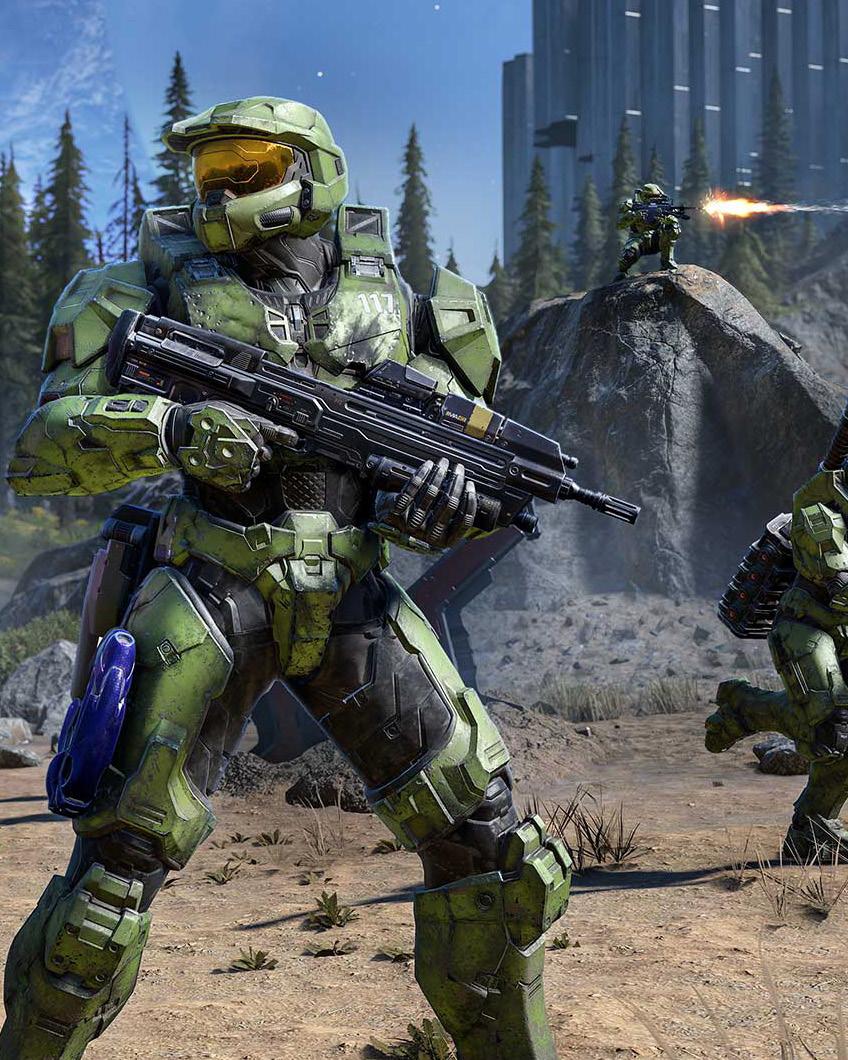
The Path of

What is Halo?
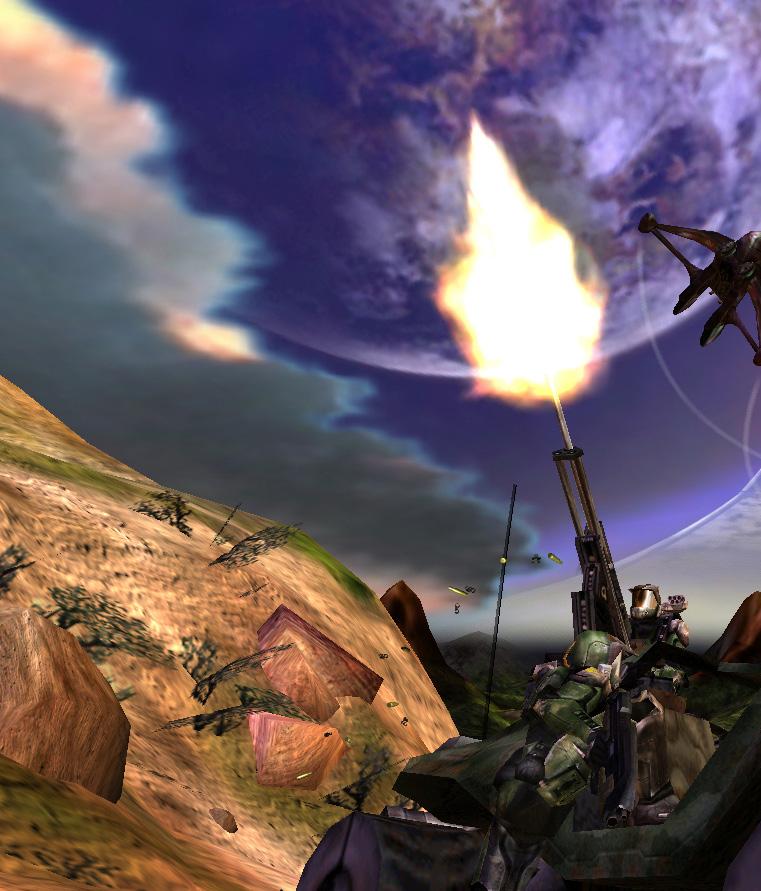
Halo is a military science fiction video game series and media franchise, originally developed by Bungie and currently managed and developed by Halo Studios (previously 343 Industries), part of Microsoft’s Xbox Game Studios. The series launched in November 2001 with the first-person shooter video game Halo: Combat Evolved and its tie-in novel, The Fall of Reach. The latest major installment, Halo Infinite, was released in 2021. Spinoffs include real-time strategy and twin-stick shooter games.
Bungie began as a developer of computer games for the Macintosh platform. After the company was acquired by Microsoft in 2000, their in-progress game, which started life as a real-time strategy game, became Halo: Combat Evolved, a first-person shooter exclusive to Microsoft’s Xbox video game console. Following the success of Halo, Bungie developed additional Halo sequels before and after regaining its independence from Microsoft in 2007. Microsoft established 343 Industries to oversee Halo going forward, producing games itself and in partnership with other studios.

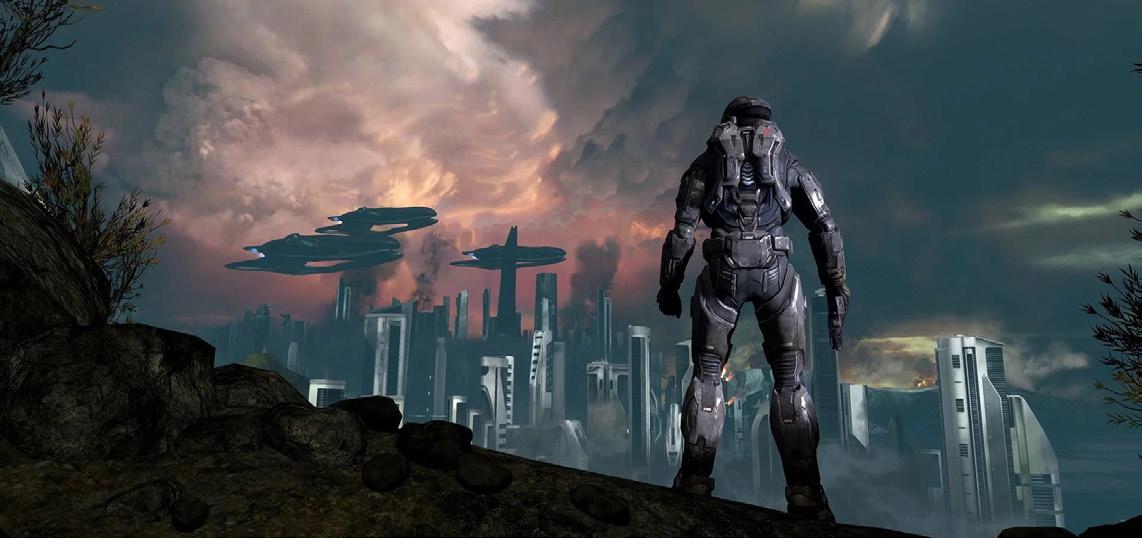
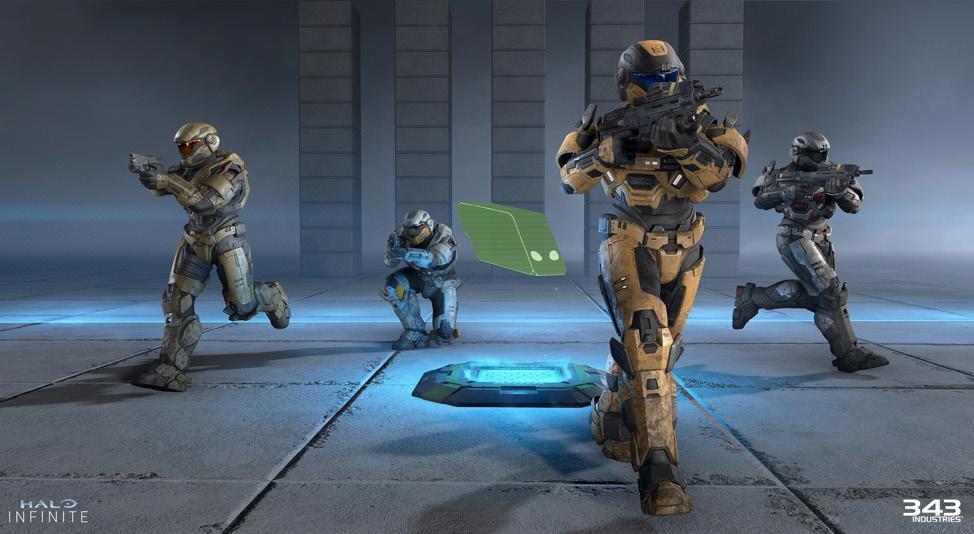
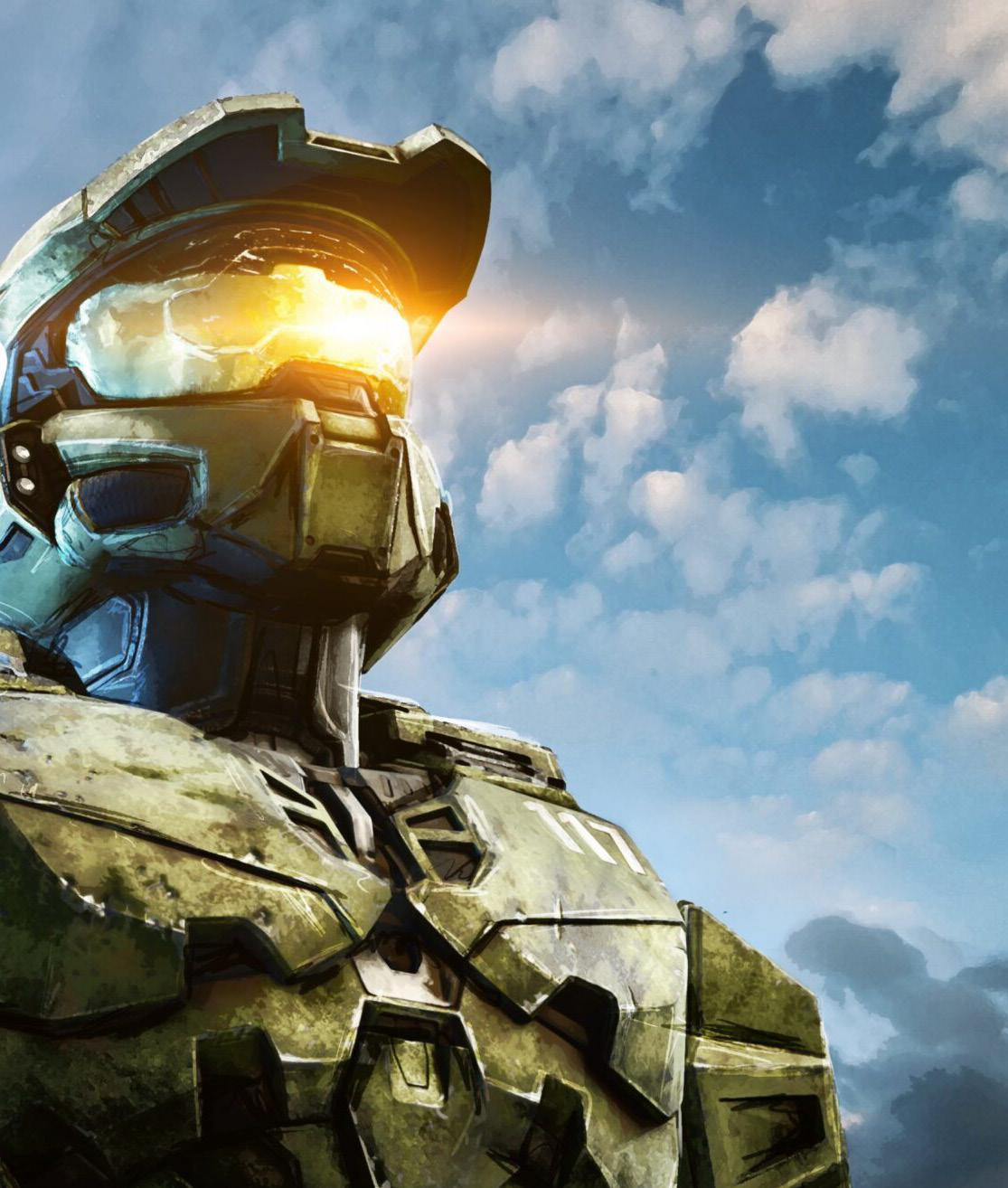
Halo: Combat Evolved was the Xbox’s flagship “killer app” and cemented Microsoft as a major competitor in the video game console space, and its sequels pioneered online matchmaking, social features, and video game marketing. The games have sold more than 81 million copies worldwide. With more than $6 billion in franchise sales, Halo is one of the highest-grossing media franchises of all time, spanning novels, graphic novels, comic books, short films, animated films, feature films, fan-made short machinima animations and other licensed products.
Before the Halo
Video game studio Bungie was founded in 1991 by Alex Seropian in Chicago, Illinois, who partnered with programmer Jason Jones the following year to market and release Jones’ game Minotaur: The Labyrinths of Crete. Focusing on the Mac game market because it was smaller and easier to compete, Bungie became a preeminent game developer on the platform, releasing the successful Myth and Marathon. Bungie began development on a new game in 1998, referring to it by the temporary code names “Monkey Nuts” and later “Blam!” after Jones could not bring himself to say the previous codename to his mother. “Blam!” was conceived as a science fiction real-time strategy game and took place on a hollowed-out world called Solipsis. The planet eventually became a ringworld called “Halo”, in turn giving the game its title.
As the development team began experimenting with incorporating vehicles with realistic physics simulations, they began moving the distant third-person camera closer to the action. Bungie decided it would be more fun to directly control units than direct them, and the game shifted to a third-person shooter. Halo was announced on July 21, 1999, during the Macworld Conference & Expo. The title of the game was finalized only days before it was announced at Macworld.
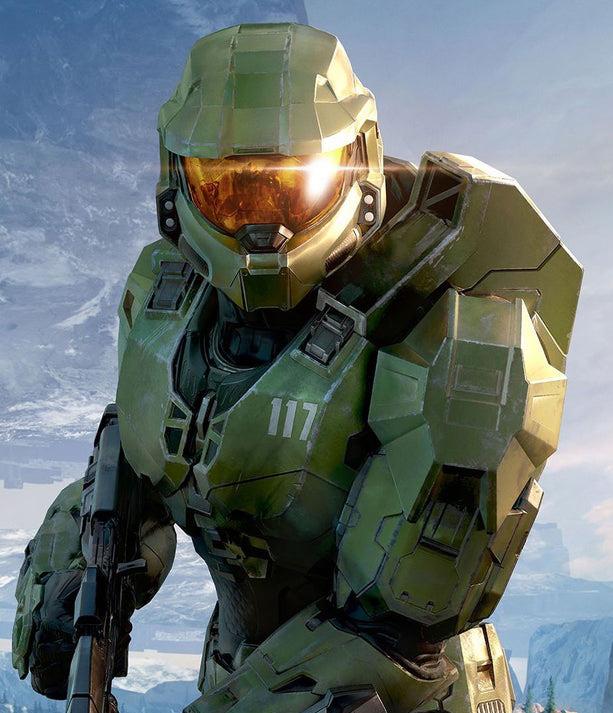
Bungie was undergoing financial difficulties, and Microsoft was looking for games for its upcoming Xbox video game console. In June 2000, Microsoft announced their acquisition of Bungie, and Halo—now having morphed into a first-person shooter—became a launch title for the Xbox video game console. Relocated from Chicago to Redmond, Washington, Bungie had roughly 14 months to finish the game before the Xbox launched. The story slowly began to take shape, with an internal debate at Bungie over how much personality to give the main character. Writer Joe Staten wanted to do more than have the player character be an “empty vessel” like HalfLife’s Gordon Freeman, so they wrote him with a sense of humor. Deciding he should be referred to by his naval rank, Bungie decided on “Master Chief”.
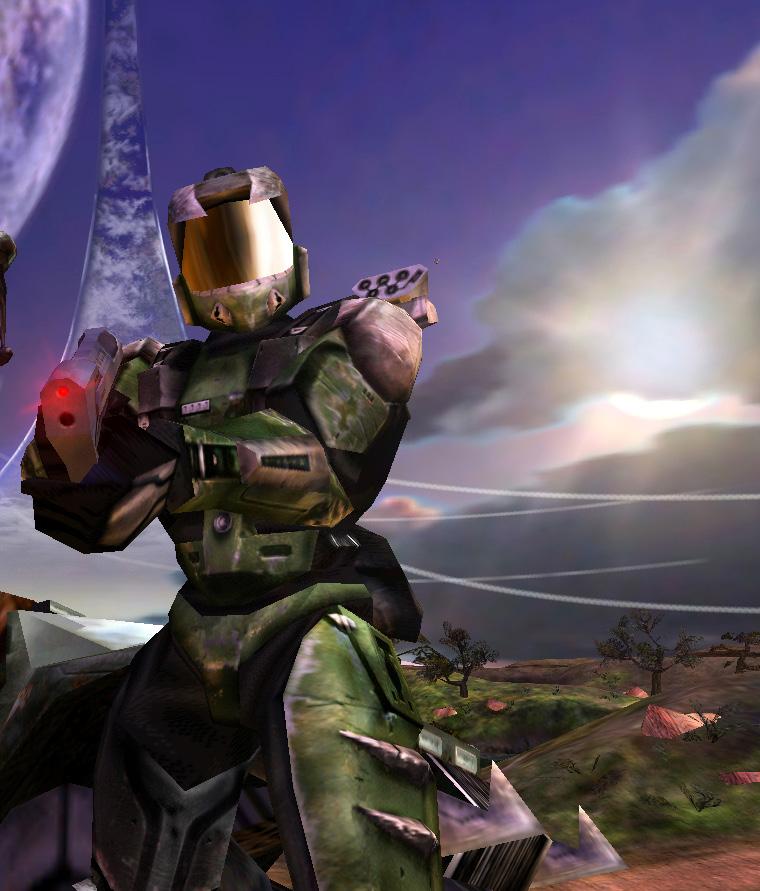
Despite a difficult and hectic development schedule, Halo: Combat Evolved shipped as a launch title for the Xbox on November 15, 2001. 112–113 The Xbox’s marketing heavily featured Halo, whose green color palette meshed with the console’s design scheme.Halo was a critical and commercial success, selling alongside half of every Xbox sold. By July 2006, the game had sold 4.2 million copies and earned $170 million in the United States.
Halo: A New Beginning
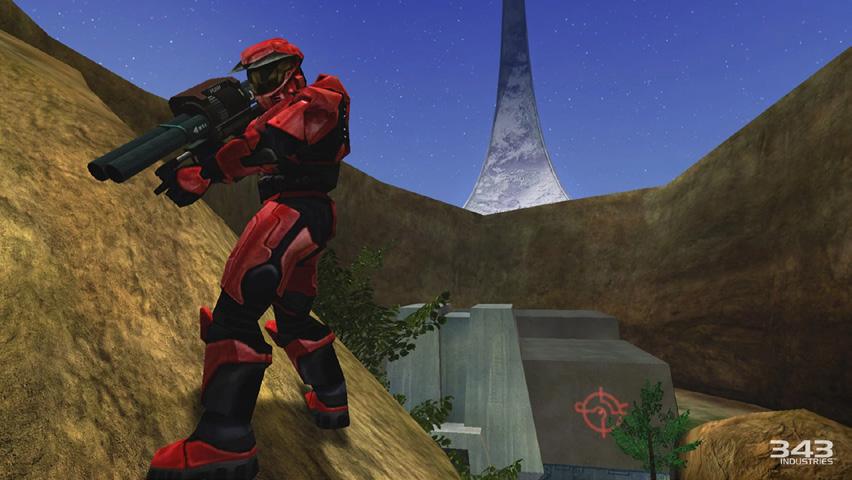
Halo Combat Evoloved was introduced many elements common to the franchise. Players battle enemies on foot and in vehicles to complete objectives across a mysterious alien landscape. Halo limited the number of weapons players could carry to two, forcing them to carefully select their preferred armament.Players fight with ranged and melee attacks, as well as grenades. Bungie referred to the “weapons-grenades-melee” format as the “Golden Triangle of Halo”.The player’s has health measured in hit points that must be replenished with health packs, but also has a perpetually recharging energy shield.



While Halo had not been intended as a franchise, the Bungie team wanted to make an ambitious sequel, looking to story and gameplay ideas that had been ultimately cut from Combat Evolved, and inspired by how fans had received the game. In particular, Bungie was surprised by how many fans used the System Link capability to network consoles together and play multiplayer in LAN parties. With the launch of the Xbox Live online multiplayer service, Bungie wanted to bring Halo multiplayer to the internet.


Halo 2: The sequel of Halo
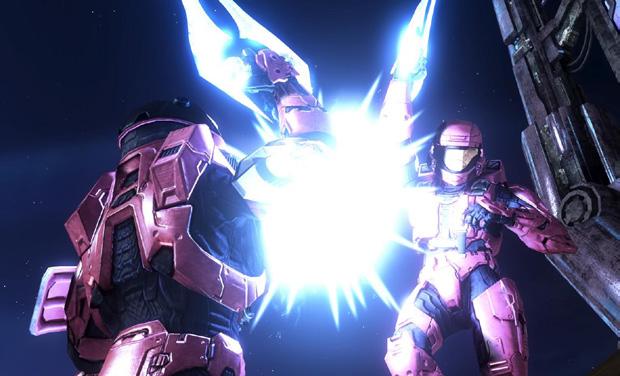
Halo 2 was announced on August 8, 2002, at Microsoft’s X02 press event, and an impressive demo of the game was shown at Electronic Entertainment Expo the following year. The demo showed off new features like dual-wielding weapons and hijacking enemy vehicles, but behind the scenes the game was undergoing a troubled development; Bungie had to scrap the ambitious graphics engine as it would not run effectively on the Xbox hardware, leadership changes resulted in more infighting, and artists and designers wasted time developing assets that would ultimately not ship in the game. A planned massive multiplayer mode was entirely cut, leading to developer Max Hoberman’s smaller-scale local mode becoming the only multiplayer offering. As the game’s release date slipped, the studio entered a sustained period of crunch to finish the game, with other Bungie games being canceled and their staff absorbed into the Halo team. The final act of the game had to be cut entirely in the rush to complete the game.

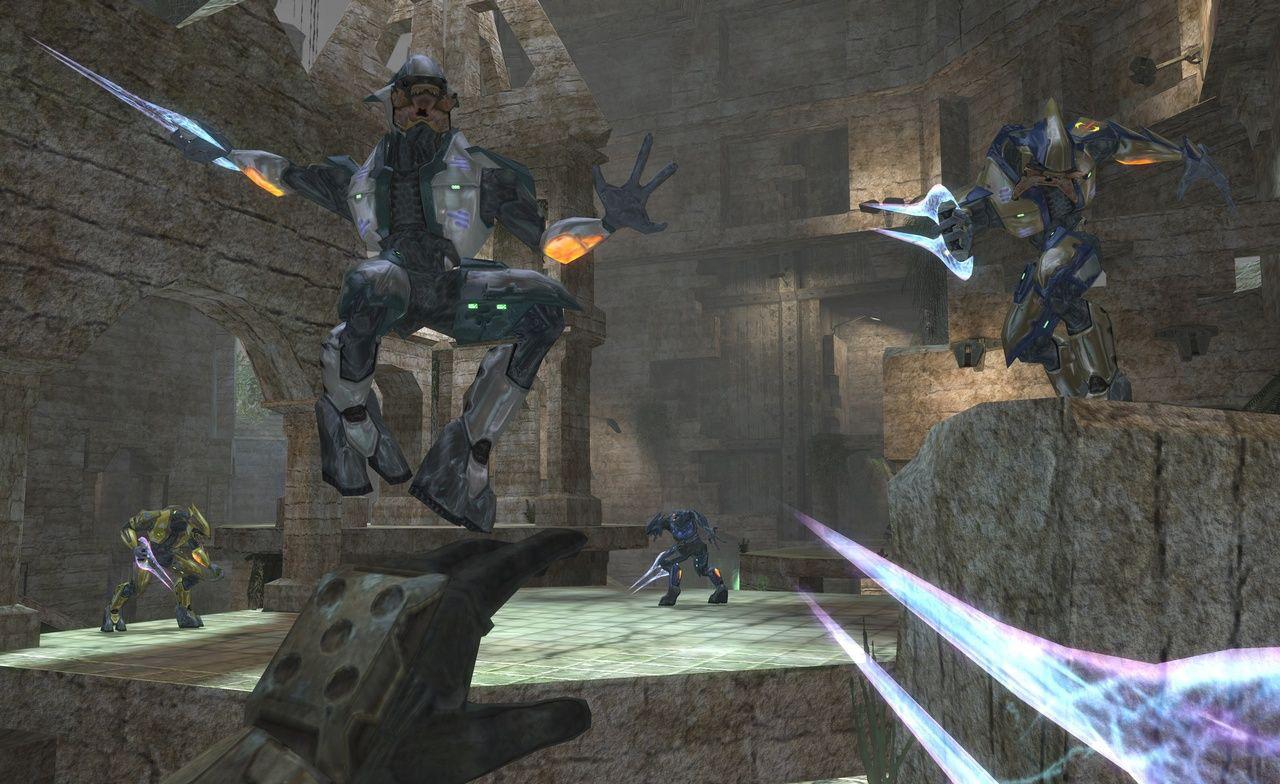

Halo 2 was released on the Xbox on November 9, 2004, and later for Windows Vista on May 17, 2007.Part of the marketing took the form of an alternative reality game, I Love Bees, centered around a website apparently hacked by a mysterious intelligence. Over the course of the game, audio clips were released that formed a narrative set on Earth between Halo and Halo 2.Halo 2 was a critical and commercial success, grossing $125 million in the first day and becoming the highest-grossing release in entertainment history up to that point; it would ultimately sell 8 million copies, becoming the best-selling Xbox game.[citation needed] Halo 2 was also a significant motivator for subscriptions to the Xbox Live multiplayer service.
The New Chapter of Halo
While Bungie finished their association with Halo, the rights to the franchise remained with Microsoft. Bonnie Ross, Xbox general manager at the time, recalled that her colleagues felt Halo was a waning property and wanted to outsource new game development,while Ross argued for an internal studio. Ross’ vision won out, and she was put in charge of a new internal Halo studio, 343 Industries, named after the character 343 Guilty Spark.The studio started with a small staff in late 2007.
While 343 Industries worked with Bungie on ODST and Reach, the new company’s first game project was Halo: Combat Evolved Anniversary, a remaster of the franchise’s debut title. The game was developed in partnership with Saber Interactive, with 343 Industries handling creative and Saber the engineering.
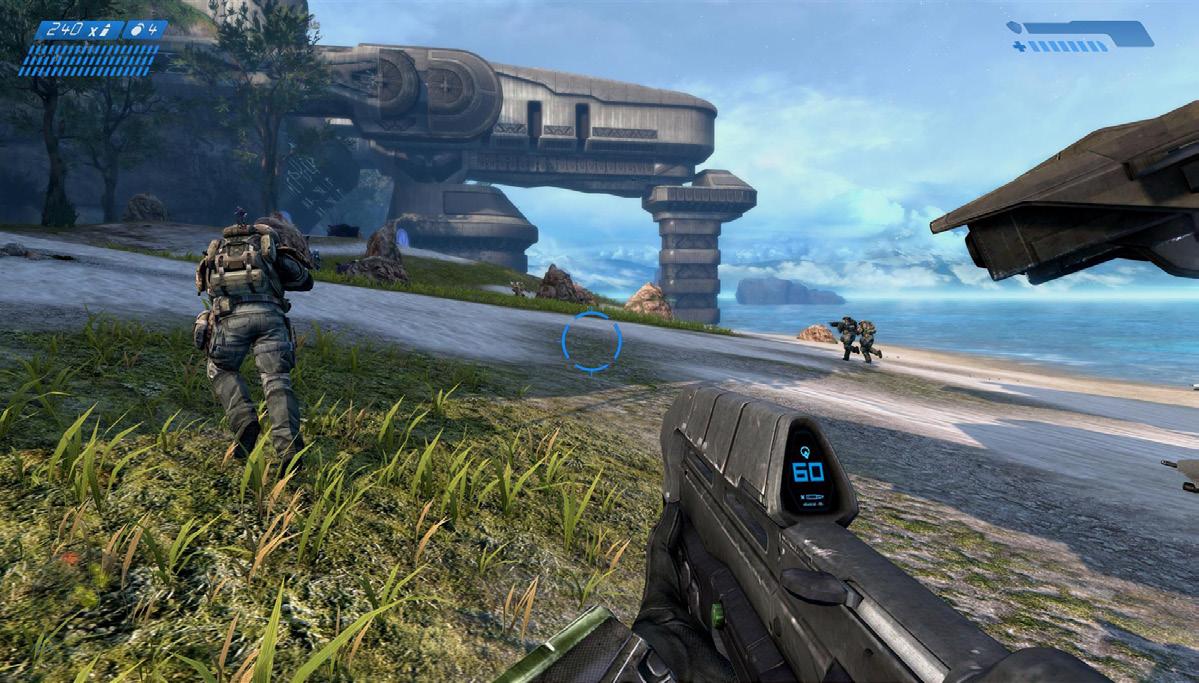
Saber had just one year to develop the game in anticipation of Combat Evolved’s tenth anniversary. Players can switch between the original graphics and updated visuals with a button press.[35] Both classic and new graphics are presented in high-definition, 16:9 widescreen compared to the original game’s 480i resolution and 4:3 aspect ratio.
Certain Affinity helped develop multiplayer maps for the game, beginning a long collaboration between the two studios.
Reviews were generally positive, though critics disagreed if the original, unaltered gameplay held up to modern standards.
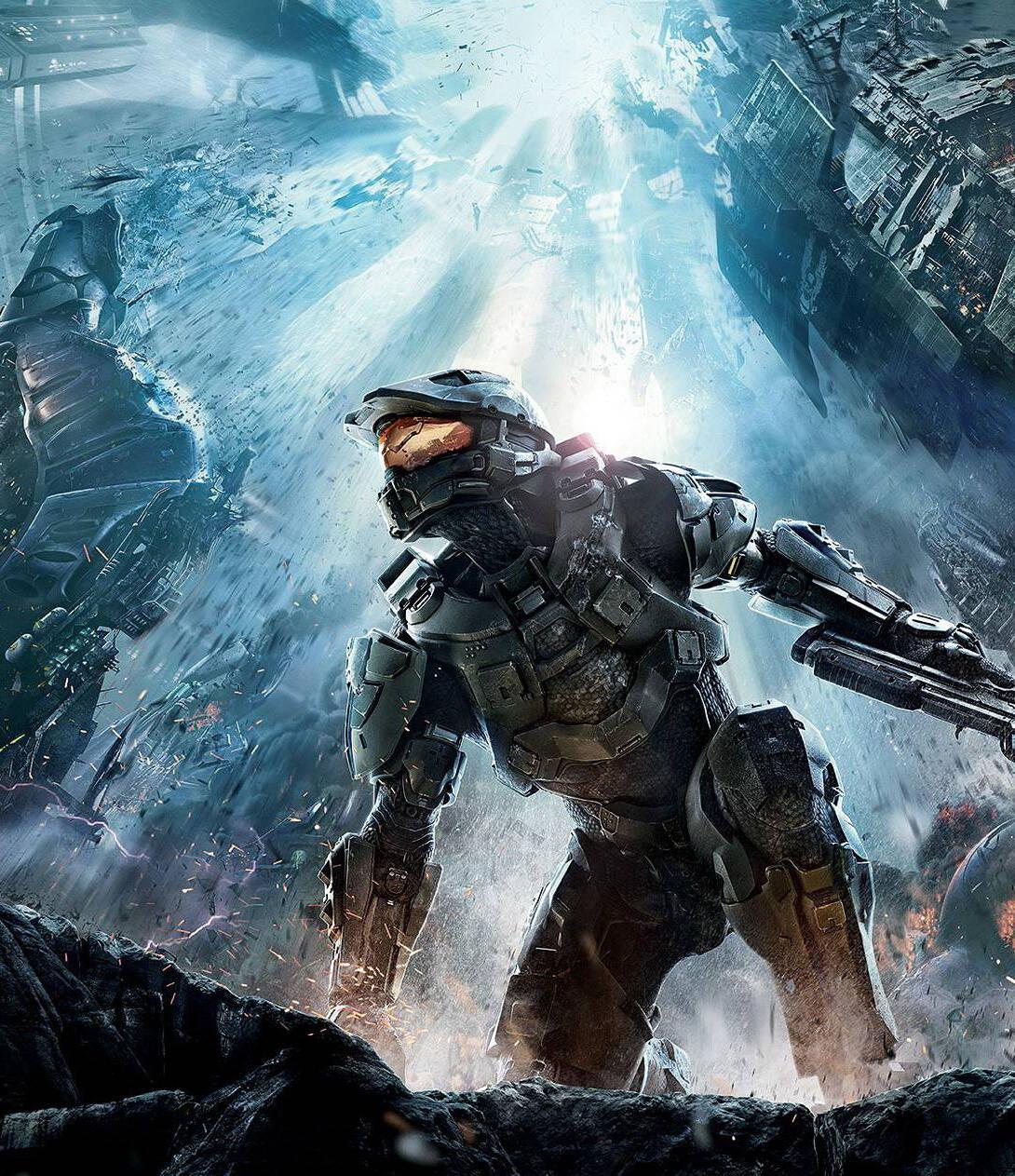
343 Industries began staffing up their studio while beginning development on the next major Halo title, eventually growing to nearly 200, and decided where they wanted to take Master Chief’s story over the course of future games.
Ryan Payton was initially offered the role of creative director, but his ideas for the game did not mesh with the expected first-person shooter focus, and before prototyping was done Payon was replaced and ultimately left in 2011.
Josh Holmes took over as creative designer, and the studio shifted focus from ideating to producing the game in earnest. The end result was a more safe, straightforward sequel to Halo 3.
A Mixed feelings of Halo
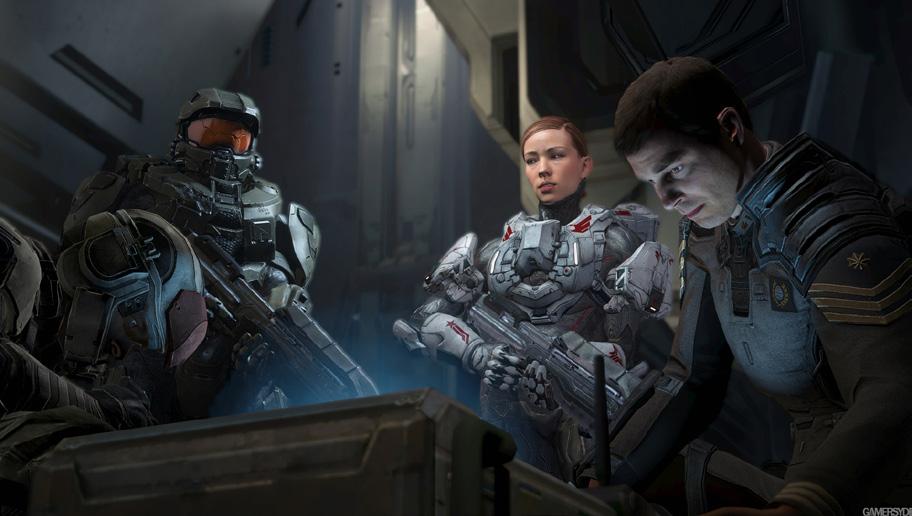
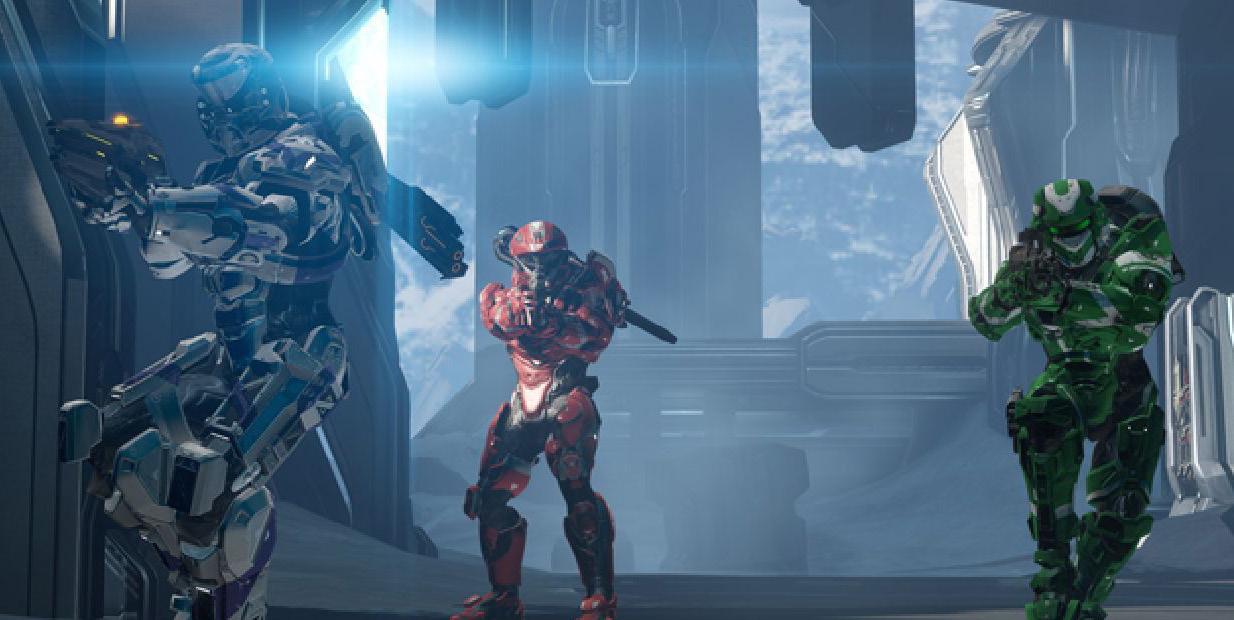
Halo 4 was announced at E3 2011 and released November 6, 2012. The game picks up years after the events of Halo 3, as Master Chief and Cortana fight against a reawakened Forerunner. The game achieved record first-day sales for the franchise.
While reviews were generally positive, the story was dinged for being incomprehensible to casual players and relying on knowledge of the wider franchise media.