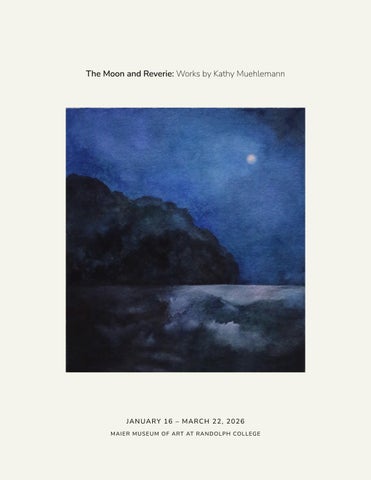
JANUARY 16 – MARCH 22, 2026
MAIER MUSEUM OF ART AT RANDOLPH COLLEGE
the Cover:
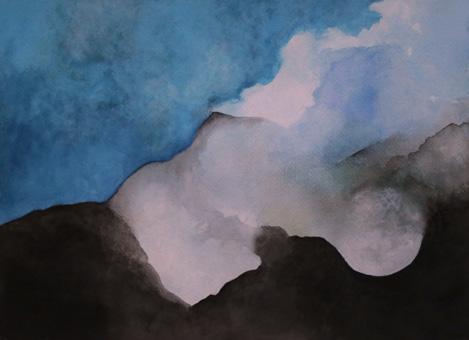
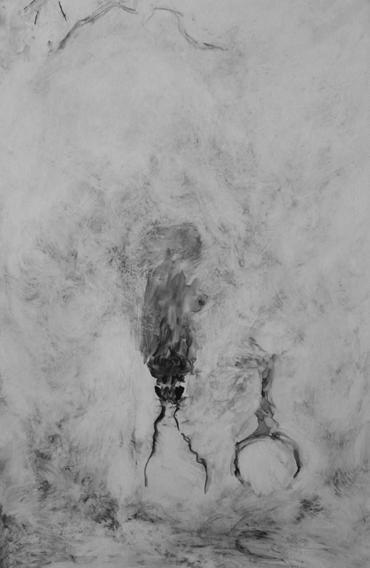
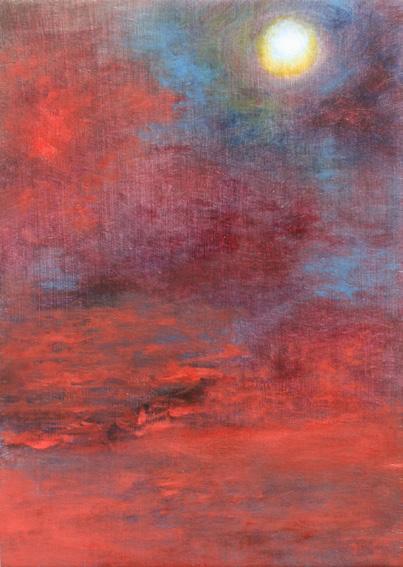
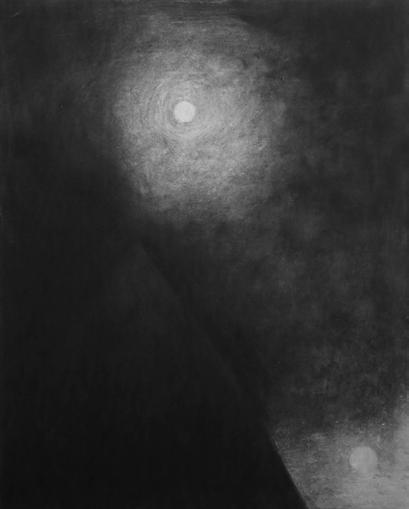
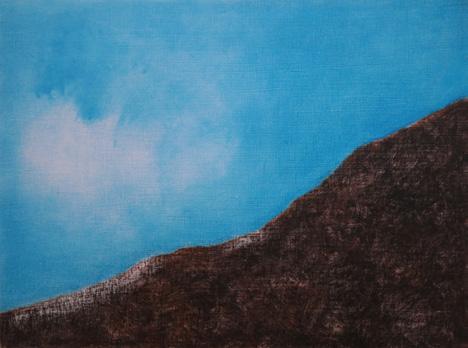
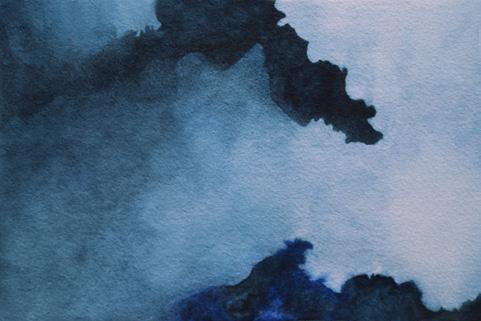
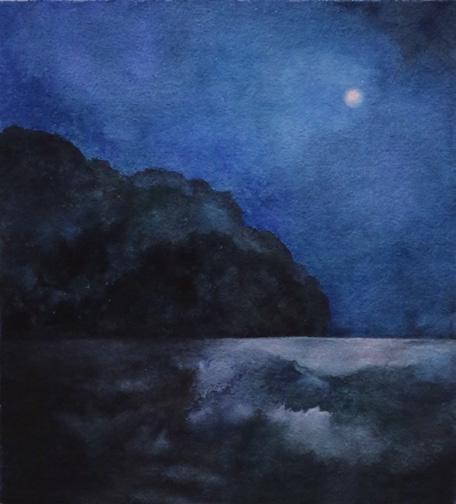
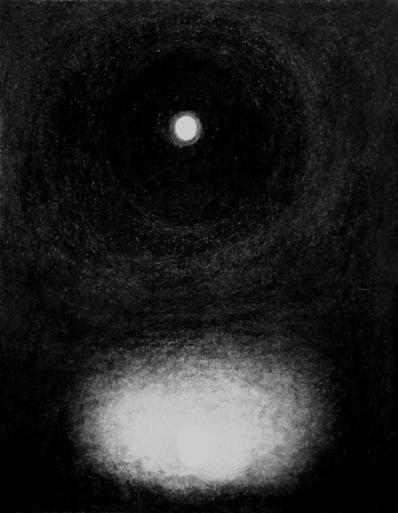
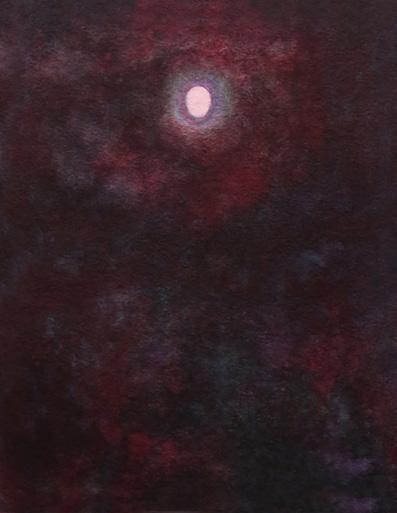
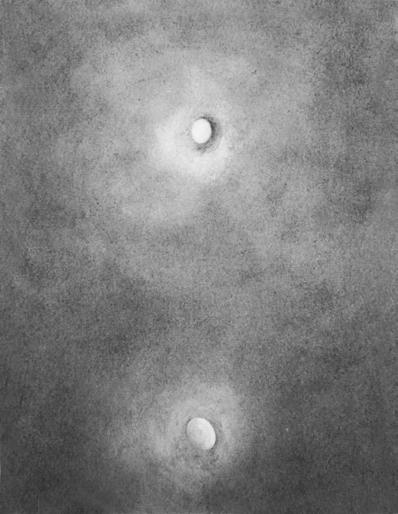
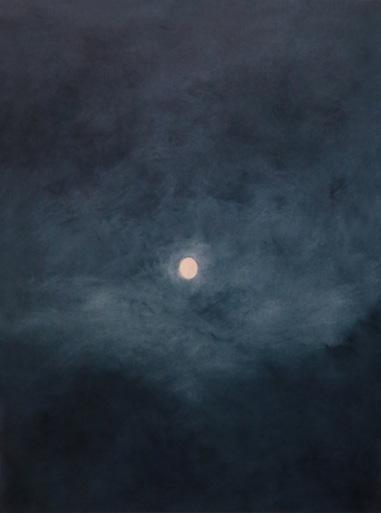
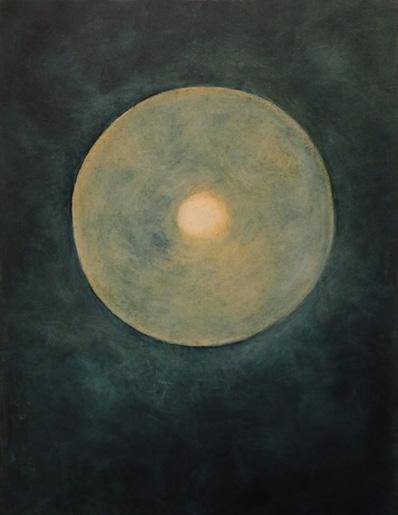
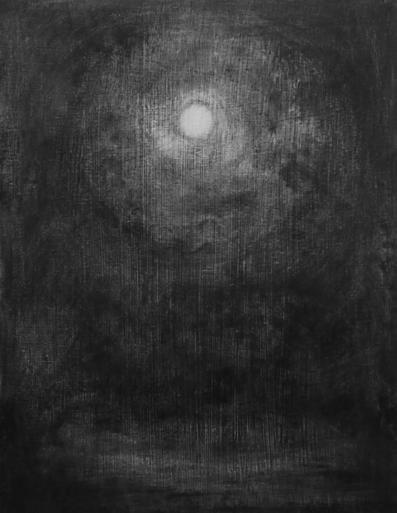
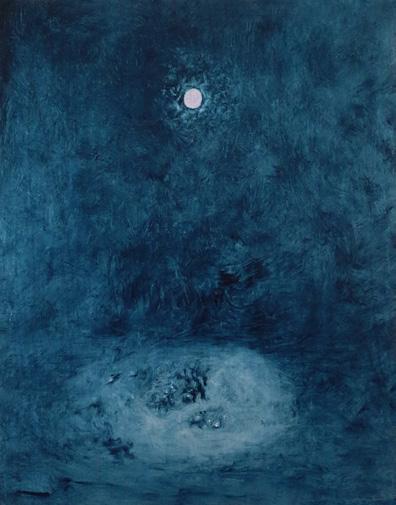
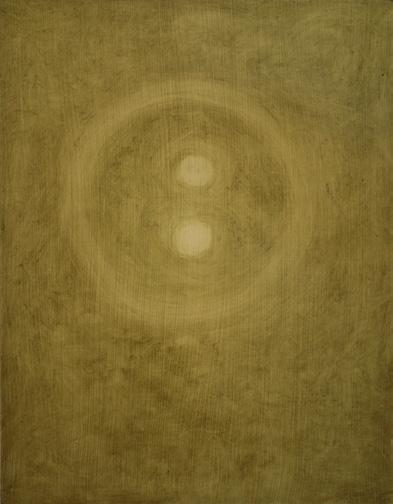
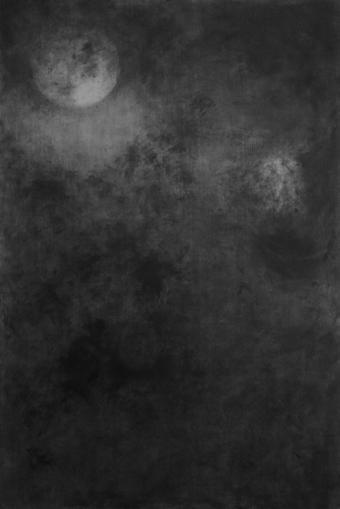
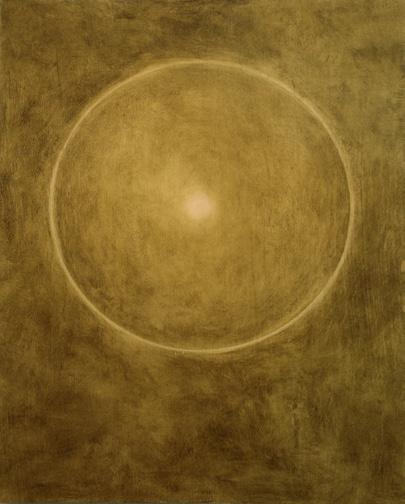
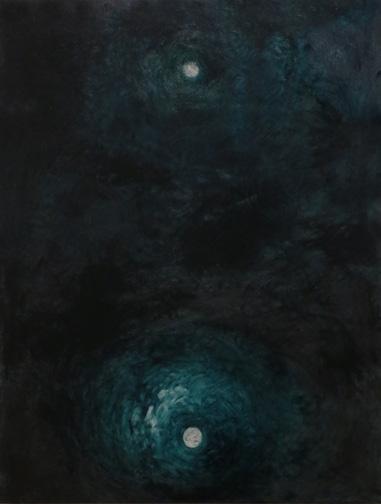
Kathy Muehlemann’s gentle metamorphic abstractions fill space with graciousness. Her delicate, whispery marks are simultaneously strong, wide, and enveloping, despite their modest dimensions. Her work does for us what Dacher Keltner describes in The Quiet Profundity of Everyday Awe, “That feeling — of being in the presence of something vast — is good for us, and can be found in unremarkable circumstances.”
Kathy’s moons, like Georgia O’Keeffe’s flowers, insist that we stop and see and breathe and feel — intuitively creating images that make our cortisol levels drop.
Kathy and her husband, Jim Muehlemann, lived and worked as artists in New York City for twenty years in an intensive era of collaborative community among artists in lower Manhattan. In 1994 Kathy was invited to have a solo exhibition at the Maier Museum of Art at Randolph-Macon Woman’s College to open in the spring of 1995. Subsequently she was asked to apply for a studio art position. She would teach at R-MWC, and then Randolph College, for twenty-five years.
That first exhibition in 1995 which led the Muehlemanns here was staged in the same gallery where The Moon and Reverie: Works by Kathy Muehlemann is now displayed thirty years later.
While at the College, Kathy always described herself as an artist who teaches. Foregrounding her role as an artist benefited her students for whom she modeled a serious commitment to practice. It is important to add that she curated or co-curated many of the Annual Exhibitions of Contemporary Art at the Maier, a series which began in 1911 and continues uninterrupted to this day. That part of her legacy — as a knowledgeable and discerning curator — risks being overlooked in light of her accomplished artistic output and studio pedagogy, but Kathy was responsible for some of the most significant exhibitions to be staged at the College.
Above all — even above her “artist first” identity, Kathy’s role as friend/colleague/ mentor to so many is what really defines her. We are honored to host a gallery’s worth of her restorative magic for a few lovely months. She reminded me the other day: “The moon belongs to everyone.”
Martha Kjeseth Johnson, director
Maier Museum of Art at Randolph College November 2025
In speaking of artists, Philip Guston wrote that “we are image makers and image driven.” I believe this. But I would add that when I start a painting, it is with a vague idea or feeling. I am reassured by Soren Kierkengaard’s question in Repetition that addresses this state of mind: “Is it not mental derangement to be always awake, always clearly conscious, never obscure and dreamy?” There is no guarantee that a painting will arrive, but once started, there is an engagement between us, and what started as a painting ends up as a state of consciousness as well.
Kathy Muehlemann
Kathy Muehlemann graduated from the State University of New York in 1979. Her work has been represented and shown in one-person exhibitions in New York City galleries, including the Virginia Zabriskie Gallery and the Pamela Auchincloss Gallery. She has had one-person exhibitions at museums such as The Nelson-Atkins Museum of Art in Kansas City, Missouri; the Contemporary Museum of Art in Honolulu, Hawaii; the Cedar Rapids Museum of Art in Iowa; the Lannan Museum in Lake Worth, Florida; the Hyde Collection in Glens Falls, New York, and the Maier Museum of Art. Abroad, her work has been exhibited in Australia, China, Finland, and Italy.
Muehlemann’s work has been reviewed in The New York Times, ArtForum, Art in America, Art News, and Arts Magazine, among other publications.
Her work is in the collections of American museums, including the Ackland Art Museum, University of North Carolina, Chapel Hill, North Carolina; the Albright-Knox Art Gallery, Buffalo, New York; the Cleveland Museum of Art, Ohio; the Grey Art Gallery of New York University, New York City; the Contemporary Museum, Honolulu, Hawaii; the Museum of Contemporary Art, Miami, Florida; the Nelson-Atkins Museum of Art, Kansas City, Missouri and the Phillips Collection, Washington, D.C. Muehlemann received fellowships from the National Endowment for the Arts (1987), a Rome Prize from the American Academy in Rome (1987-88), and a John Simon Guggenheim Foundation Fellowship Grant (1994). In 2017, Muehlemann was honored with a Purchase Award from the American Academy of Arts and Letters.

Moon Musing:
On The Moon and Reverie: Works by Kathy Muehlemann
Whoever speaks of the moon garden speaks of the dream garden. Whoever speaks of the shore of reverie speaks of the shore of love.
—from Hàn Mặc Tử’s “Poetry” (tr. Quyên Nguyễn-Hoàng)
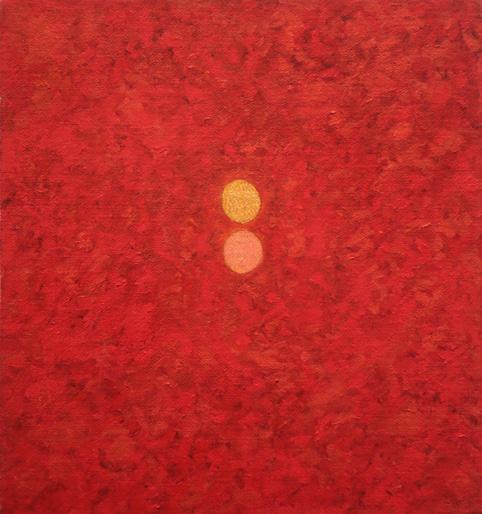
Kathy Muehleman has been looking at the moon for a long time. In her 1990 ARTnews feature, Margaret Moorman recounts that, as a child, Kathy “once spent an entire night … watching the moon move in its arc from east to west.” The earliest painting in this Maier exhibition, Garden of the Hesperides, appeared in a 1988 show at the Lannan Museum. In an interview for that exhibition’s catalog, Kathy describes the way the moon acts as a receptor: “It receives light from the sun and gives it to the earth.” The moon “almost doesn’t exist,” yet its force is palpable.
Moonlight is sunlight distilled, decanted. A reflection, and a reflection of reflection. The moon itself is a canvas, gessoed with sunlight, painted by its shadowed
topography and our imaginations. So the moon is both meaning and metaphor, presence and absence, object and void. The moon is always with us, even when it is not. When it is new or obscured or below our particular horizon, it still exerts influence. Likewise, the moon is present in Kathy’s paintings, even when it isn’t. Visual art depends on and is shaped by light, but Kathy’s work heightens this relationship and meditates on the nature of art. Kathy studies the moon — studies light — with intensity and focus, the way she has practiced Tai Chi for twenty-three years, something I’ve witnessed as I’ve studied alongside her for a fraction of that time. Our teacher, Matt Miller, says that Tai Chi is about “the strength that comes from
opening, softening and releasing,” about “creating space” and doing “more with less and less.” Or as Lao Tzu writes in one of Matt’s favorite passages, “In the pursuit of learning, one increases day by day./ In the pursuit of Tao, one decreases day by day./ Less and less, day after day, until one arrives at wu wei./ Doing nothing but leaving nothing undone.” A description that echoes the waxing and waning of the moon.
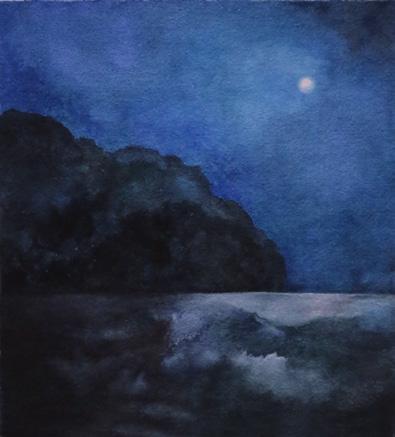
Kathy’s moons wax full. They are attended by spirits, currents, vibrations, wingbeats of brush strokes. They resonate with energy; are belled with light. In her moondog paintings, light wreathes those moons the way the joy of a beloved pet envelops us when we step in the door. Because we see the moon through the lens of our atmosphere, it is also our experience of earth. Moon shine like leaf shiver. Moon dark like a dismal swamp, or the way Kathy described to me feeling like Euridice looking up from a manhole after descending into the catacombs of Rome.
If the sun is epic, the moon is lyric. In her essay “Poetry and the Moon,” Mary Ruefle writes that “lyric poetry begins with a woman [Sappho] on an island on a moonlit night, when the moon is nearing full or just the other side of it, or on the dot.” The moon, moreover, was the first lyric poem,
“an entity complete in itself, recognizable at a glance, one that played upon the emotions so strongly that the context of time and place hardly seemed to matter.” The moon is lyric and yet leads us to epic immensity. A description that echoes the powerful experience of Kathy’s work.
Wu wei (back to Lao Tzu) is active nonaction, which is not inaction but more a quiet persistence: water working assiduously through the most indurate rock, or light seeping and snaking through the faintest fissures. I would call this—and Kathy’s work in The Moon and Reverie— lyric action. To quote Kathy herself, “A painting is something fragile, that barely exists as a surface of material, yet can set up a pull.” Kathy’s paintings are physically small, but they are massive in their fields of gravity. They are intricately, lyrically hypnotic. Each moon, each drawn or painted gesture is a portal, a punch hole, a placeholder for what is missing, for something or someone missed. Until we realize that what appears to be void, blank, a spare button in space, is in fact also the piercingly contemplative eye of a dragon.
Laura-Gray Street
Mary Frances Williams Professor of English
EXHIBITION CHECKLIST
The Moon and Reverie: Works by Kathy Muehlemann
As in a Dream, 2025 oil on panel 12 x 9 in.
Blue Moondog, 2025 oil on panel 12 x 9 in.
Bright Promise, 2017 oil on panel 7 x 5 in.
Cloud Dragon, 2018 watercolor on paper 6 3/4 x 10 1/4 in.
Etna, 2007 watercolor on paper 10 x 14 in.
Garden of the Hesperides, 1985 oil on linen 9 x 8 in.
Gentle Moonrise, 2025 oil on panel 12 x 9 in.
Moondog [Tantra], 2025 oil on panel 12 x 9 in.
Moon Dragon, 2011 watercolor on Yupo 11 x 7 in.
Moon Jewels [For Redon], 2025 oil on panel 10 x 8 in.
Moon Reverberation, 2023 charcoal on paper 12 x 9 in.
Night Passage, 2025 oil on panel 19 3/4 x 13 1/2 in.
Night Traveler, 2024 watercolor on paper 10 x 7 3/₄ in.
Quiet Morning, 2017 oil on panel 9 x 12 in.
Radiant Moondog, 2025 oil on panel 18 x 14 in.
Silent, 1992 watercolor on paper 10 x 6 1/2 in.
Silvered Sea, 2022 watercolor on paper 10 5/₈ x 9 3/4 in.
Sister Moon, 2024 graphite and charcoal on paper 12 x 9 in.
The Night’s Conversation, 2017 oil and graphite on panel 10 x 8 in.
The Subtle World, 2025 oil on panel 12 x 9 in.
All works courtesy of the artist.
Catalog design by Katharine McCann, Kat McCann Design