Well, technically it’s only “almost” spring (as is obvious when I look out the window and see those white traces of winter lingering on the ground). But the anticipation of warm, sunny weather and outdoor patios full of margaritasipping customers has definitely arrived in Chicago (as evidenced by the many young, shorts-clad residents who suddenly appear out and about any time the temperature hits close to 40°!).
No matter how Mother Nature is treating your part of the country right now, it’s the time of year to think about rebirth and renewal — concepts that can apply to most any aspect of your business.
Are you thinking of ways to breathe new life into your menu? Wondering how to refresh sourcing in ways that will bring new ingredients into your kitchen? Looking for ways to freshen up your cocktails? Figuring out a pricing formula that will make your bottom line blossom? We hope the stories in this issue will help you achieve those goals.
You’ll discover how to make the most of the brunch daypart; find ideas for using cocktail garnishes and rimmers in creative ways; grow your own produce to get the freshest flavor for your menu; and learn how to price cocktails to boost your bar’s bottom line.
Happy reading…and happy (almost) spring!
PUBLISHER Ed Avis
EDITOR Kathleen Furore
ART DIRECTOR Ala Ennes
CONTRIBUTING WRITERS
Natalia Otero
MAIN OFFICE phone: 708.267.0023
PRESS RELEASES TO: kfurore@restmex.com
MAILING ADDRESS P.O. Box 13347 Chicago, IL 60613
SHIPPING ADDRESS 1317 W. Belden Ave. Chicago, IL 60614
AD SALES/ENGLISH Ed Avis 708.218.7755 e davis@elrestaurante.com
Suzanne Bernhardt 678.880.9282
suzanne@elrestaurante.com
AD SALES/ESPAÑOL Alfredo Espinola 52-55-4006-9540 alfredo@elrestaurante.com
Published by
Maiden Name Press, LLC Volume 29, Number 2 el Restaurante (formerly el Restaurante Mexicano) (ISSN 1091-5885) is published six times a year by Maiden Name Press, LLC 1317 W. Belden Ave., Chicago, IL 60614
We confess. When it comes to freshpacked flavor, we’re a show off.
Old California® pioneered clear, easy-open pouches for foodservice tomato products in 1999. We figured the vine-ripened quality of the reddest, richest, sweetest, California tomatoes available was something discerning customers would want to see. No wonder the nation’s finest restaurants love us!
For the quality you desire, choose the best ingredients –The Original Old California Freshpack Pouch from Neil Jones Food Company!
For more information, call 800.291.3862 | njfco.com/see2believe
WHOLE FRUIT COULD BE A WHOLE LOT BETTER.
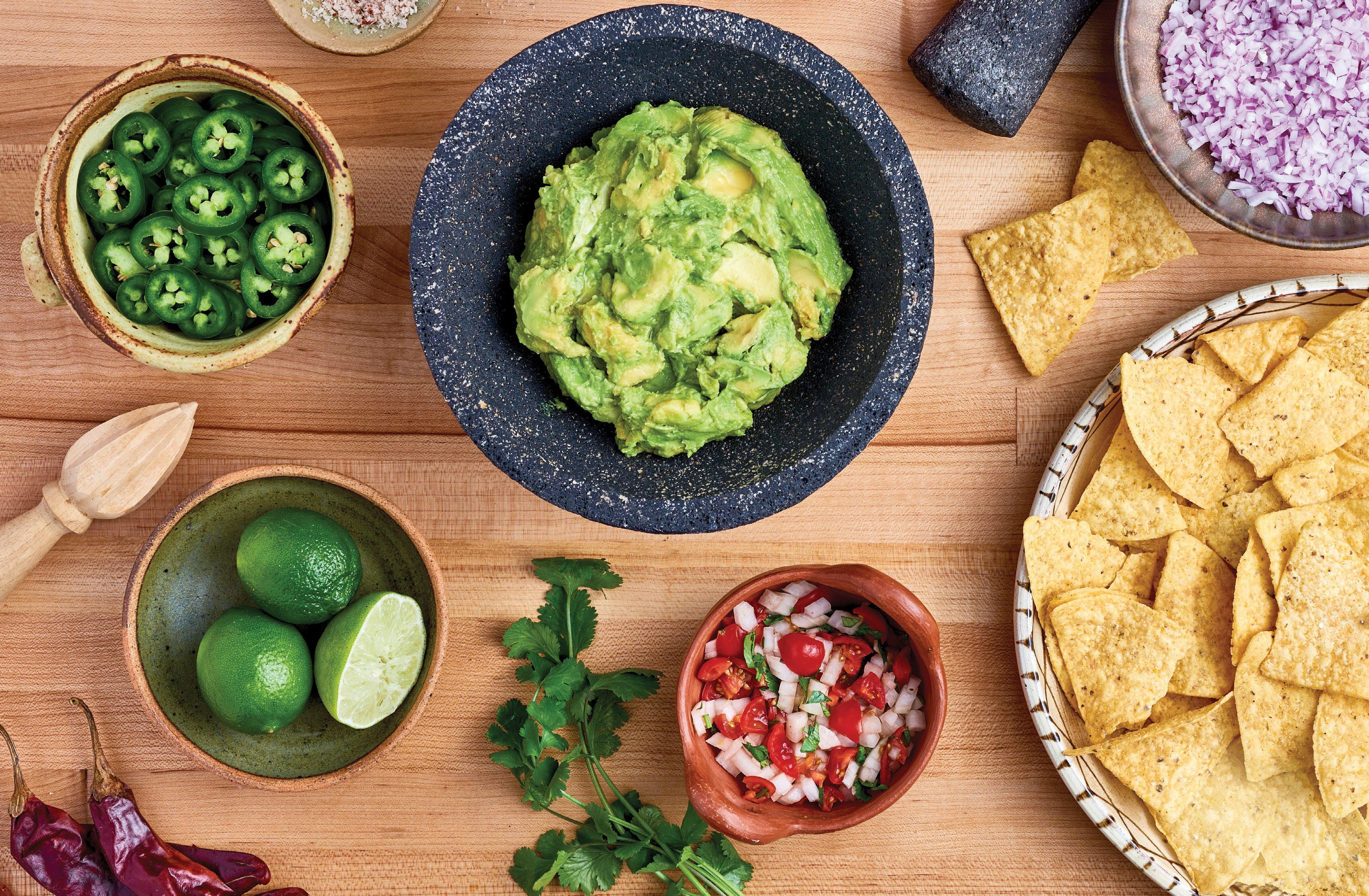
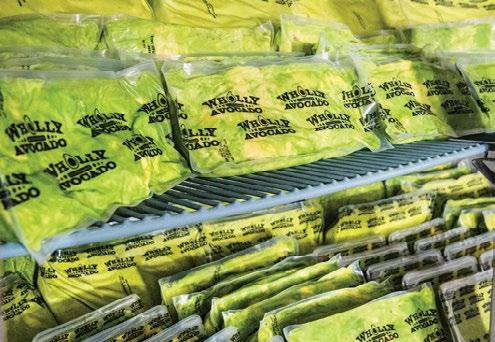
Everyone wants real avocado. But who wants the hassle, mess and cost of whole avocado fruit? Not us. And probably not you. So we made something better: WHOLLY® Avocado products.
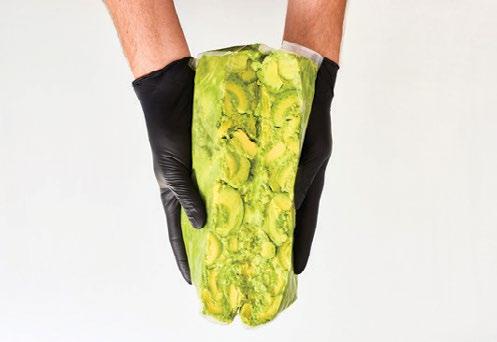
• Picked and packaged at the perfect ripeness for 100% yield.
• Use WHOLLY® products anywhere you’d use whole fruit.
• 100% real Hass Avocados with no added preservatives and nothing artificial.
GET A SAMPLE
WHAT’S YOUR PROBLEM?
If you’re using whole fruit, you’ve probably noticed some challenges.
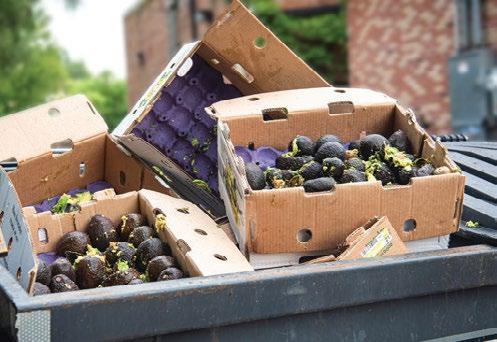
FOOD WASTE
WHOLLY® Avocado products can help you save almost 4 lbs. of product / case.
TIME
No cutting, pitting or scooping means we save you 30 mins. / case.
SAFETY
You won’t need knives, and we pioneered High Pressure Processing, so your food is safer.
New Dietary Guidelines Boost Mexican Food…
Or Do They?
The USDA introduced a greatly revised set of dietary guidelines for Americans earlier this year, with a much stronger focus on animal proteins and certain fats. The guidelines have received mixed reviews, which is not surprising given the disdain of science the Trump administration has shown.
But for Mexican restaurant owners, the guidelines might be good news. After all, a lot of Mexican restaurant menu items are rich in animal protein. Furthermore, avocadoes — proudly featured on nearly every Mexican restaurant menu — are highlighted in the guidelines as a nutrient-dense, whole-food source of healthy, unsaturated fats.
“It’s the dawn of a new nutritional era in Mexican cuisine,” predicts Chef Chuck Hayworth, a private chef and medical meal specialist in North Carolina. “Now is the golden age for fajitas, enchiladas, and non-fried foods in Mexican cuisine such as ceviche and reinvented taco salads.”
WHAT DO THE GUIDELINES SAY?
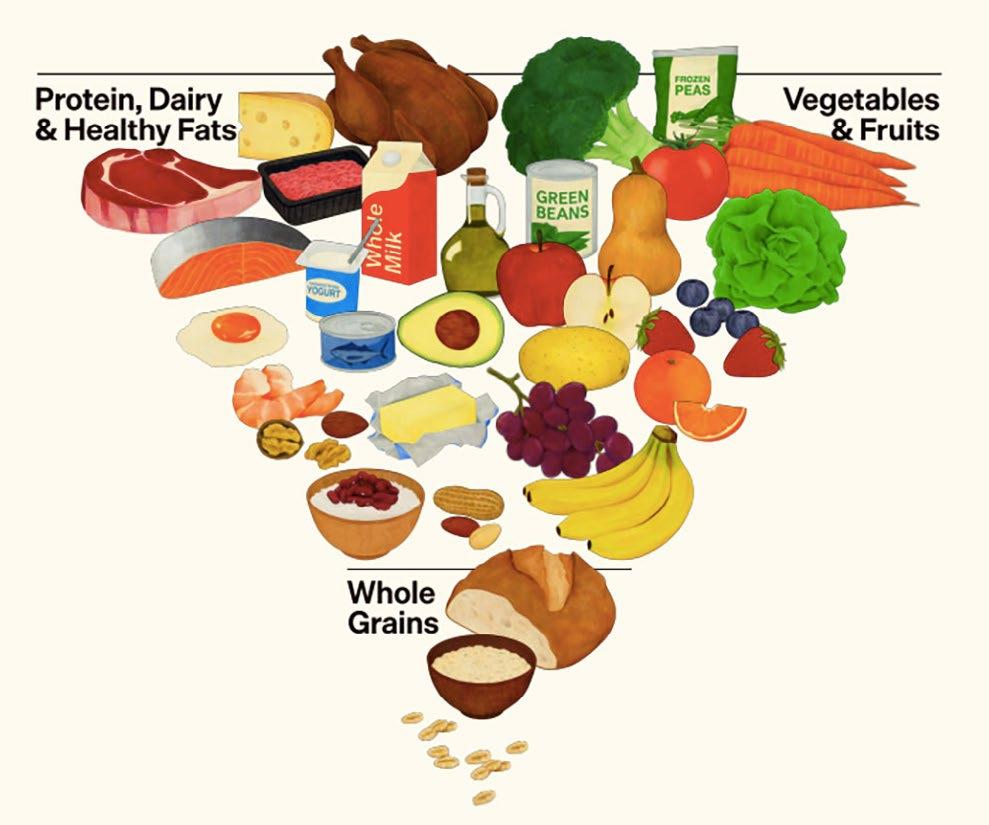
The new guidelines essentially turn the old food pyramid upside down. Now meat and other animal products, such as cheese and eggs, as well as whole vegetables, are highly recommend, while processed foods and refined grain products are discouraged.
In general, the guidelines emphasize “whole” foods over pro -
cessed foods, which means more fresh meat, fish, vegetables, etc., and less factory-made food.
Avocadoes are nicely pictured right in the middle of the new food pyramid image. They are recommended because of their healthy, monounsaturated fat content, and for their fiber and potassium content. The guidelines encourage incorporating them into diets to replace saturated fats and reduce processed food consumption.
Good Mexican restaurants, therefore, should benefit, because of the prevalence of guacamole, entrees with lots of meat and cheese, and the use of animal fat such as beef lard.
“New USDA and FDA advice on the benefits of increased protein consumption (in animal fats) can help sustain the menu items such as carne asada, carnitas, and cheese-based dishes,” says Chad Larson, a naturopathic physician and chiropractor and CEO of The Adapt Lab in Solana Beach, CA.
BUT DO GUIDELINES MATTER?
An important question regarding the new guidelines is: Do people care?
“Federal recommendations seldom change the patterns of ordering dramatically,” Larson says. “The majority of the diners choose within 30 seconds based on the taste, price, and contentment. Assuming that a beef burrito supplies 30 grams of protein and keeps the individual full for four to five hours, the practical value is greater than policy language that most consumers do not read. There might be a slight increase in the popularity of protein-forward meals, about 5 to 10 percent among those who are health conscious.”
However, some research shows that the federal government’s dietary guidelines do play some role in decisions people make.
For example, a USDA study published in 2012 concluded that the 2005 version of the dietary guidelines, which stressed the importance of whole grains, prompted American consumers to reduce purchases of refined-grain bread by 3 percent and increase purchases of whole grain bread by 14 percent.
CONTRADICTORY GUIDANCE
The guidelines have been criticized by many health professionals for promoting animal protein, even though data shows most Americans already get plenty of protein in their diet.
And some guidance is contradictory. For example, the guidelines advise limiting saturated fat to less than 10 percent of total calories, while simultaneously promoting red meat, full-fat dairy, butter, and beef tallow.
(continued on page 10)
(continued from page 6)
“Following these food-based recommendations would make it difficult, if not impossible, for many Americans to remain below the recommended upper limit for saturated fat threshold, making these guidelines internally inconsistent,” according to a statement issued by Stanford University.
PLAY UP THE ADVANTAGE
The bottom line is that the guidelines may have some impact, at least in so far as making people feel better about eating some Mexican restaurant menu items. Mexican restaurants could benefit from the guidelines by adding key nutrition facts to their menus, Larson suggests.
“The description of protein grams, balanced portions, and the fiber of beans and vegetables are credible points,” he says.
Hayworth agrees: “It’s up to the restaurant to paint the healthy aspect onto ingredients and menu items they offer. Create and market healthier menus and the patron will return, especially if these are items you have already featured and have been overlooked in the past.”
Webinar: Take Advantage of the World Cup
The biggest soccer tournament in the world is coming to the United States this summer, and el Restaurante magazine, the Latino Restaurant Association, and the California Milk Advisory Board want to help your restaurant make the most of the tournament.
We are hosting a complimentary webinar on April 21 at 3 p.m. Central (1 p.m. Pacific) that will help Mexican/Latin restaurants prepare for the World Cup. The webinar will offer guidance on:
• Getting properly licensed to show World Cup games on your screens
• Technical advice on becoming a sports-friendly restaurant
• Tips for setting up World Cup watch parties in your restaurant
• Help on finding and securing sponsorship partnerships
• Suggestions for promoting to soccer clubs and other potential viewing groups
• Guidance on getting the word out through advertising, public relations and social media
• Suggestions for game-day food and drink specials
• Information about other World Cup support from the Latino Restaurant Association
Don’t miss this complimentary event that will help you take full advantage of the World Cup this summer! The event is free, but registration is required. Click here to register today.
SHOW OFF YOUR SALSA, WIN CASH AND A BLENDER
Are you proud of the salsa you make in your restaurant?
Then put your salsa recipe to the test and enter the 2026 el Restaurante Sassiest Salsa Contest sponsored by Sammic!
Entering the contest is easy, and the prizes make it worthwhile: The creator of the first place recipe will receive a Sammic Immersion Blender, the ultimate tool for mixing salsa. And the top three winners will get a cash prize: $750, $500 and $250, respectively. To top it off, all winning recipes will be featured in our Recipe of the Week email program and be published in the November/ December edition of el Restaurante
sponsored by Sammic
To enter the contest, click here and complete the form. The deadline is September 30, 2026. Your recipe must be an original creation — and remember that we’ll publish the winners, so don’t send us a recipe that you’re trying to keep secret. The recipes will be judged by experienced chefs, and the winners will be announced in October.
Last year’s winners exceeded expectations with their remarkable salsa creations.
“The varieties of salsa that can exist and be created with imagination were a surprise,” says Enrique Fleischmann, corporate chef at Sammic and one of the judges of the contest. “Smoky salsas, roasted salsas, some with pineapple and others with a dual color...chile peppers presented in a very special way, nuts and seeds, blends of aromas and textures within them...without a doubt, 2025 was a great edition of the Sassiest Salsa Competition.”
To learn more about last year’s winning salsas from Darryl Holliday of Simple Culinary Solutions, Kristofer Jubinville of Bonita Bay Club, and Alberto Arteaga of Pinchis Salsas, click here.
“We know how important great salsa is to a Mexican restaurant, and we are happy to continue supporting a contest that encourages chefs to create new salsa recipes,” says Neal Pearlman, sales director, North America, for Sammic. “And we know that Sammic immersion blenders are an essential tool for restaurants making their own salsa, so offering them as prizes for this contest made sense.”
OLD WAYS, NEW HANDS: Chef Richard Sandoval Talks the Future of Global Hospitality
| BY NATALIA OTERO
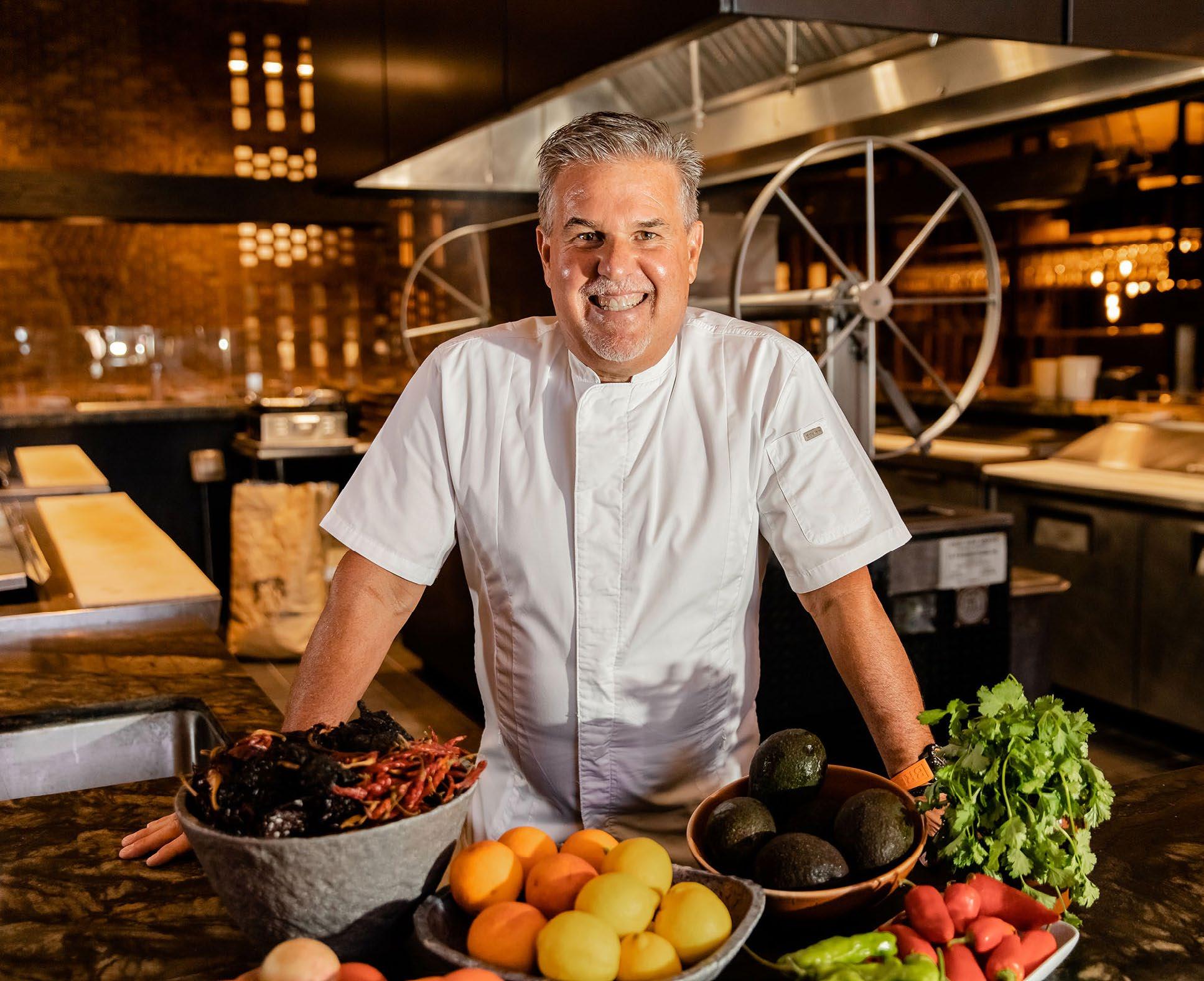
| Few chefs have shaped modern Mexican cuisine on a global scale quite like Richard Sandoval. As the founder of Denver-based Richard Sandoval Hospitality, this award-winning chef has spent decades translating his passion for Latin cuisine into a company with more than 60 restaurants spanning four continents, 13 countries and ten U.S. states — each focused on modern and coastal Mexican, Latin-Asian, Peruvian and/or Pan-Latin cuisines.
His career has been defined not only by culinary excellence, but by an ability to listen, evolve, and lead with purpose. That philosophy is now deeply embedded in Old Ways, New Hands, an initiative that reflects Sandoval’s commitment to mentorship and legacy.
The program’s goal is to support the next generation of Latin chefs, creators, and restaurateurs who are building businesses at a time when cooking is inseparable from branding, technology, and cultural storytelling. The pro -
gram offers participants access to tools and resources designed to sharpen business as well as cooking skills and culminates in an all-expense paid international trip that includes dining at the chef’s restaurants, exploring local markets, and attending culinary and business workshops that Sandoval teaches.
We talked with Sandoval about how the next generation’s path differs from his own, the realities of opening restaurants across the globe, and what it will take for the industry to thrive in the years ahead.
“When I started my career, the focus was almost entirely on the kitchen…Today’s young chefs are entering a world that requires them to think far beyond the stove…Their paths will be more complex and more visible, but also more entrepreneurial. What matters most is that they stay grounded in culture and tradition while using modern tools to build sustainable futures.”
– CHEF RICHARD SANDOVAL
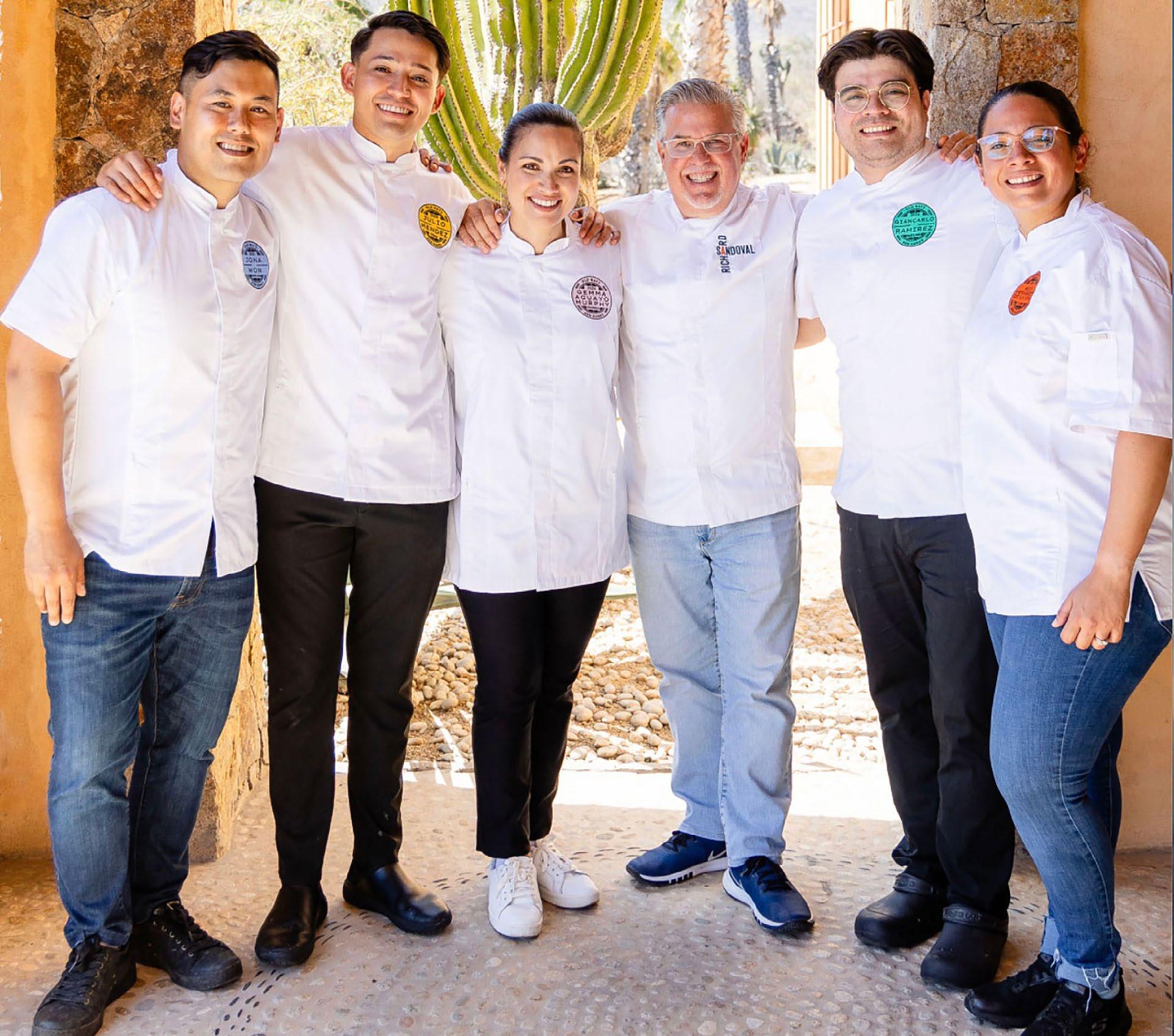
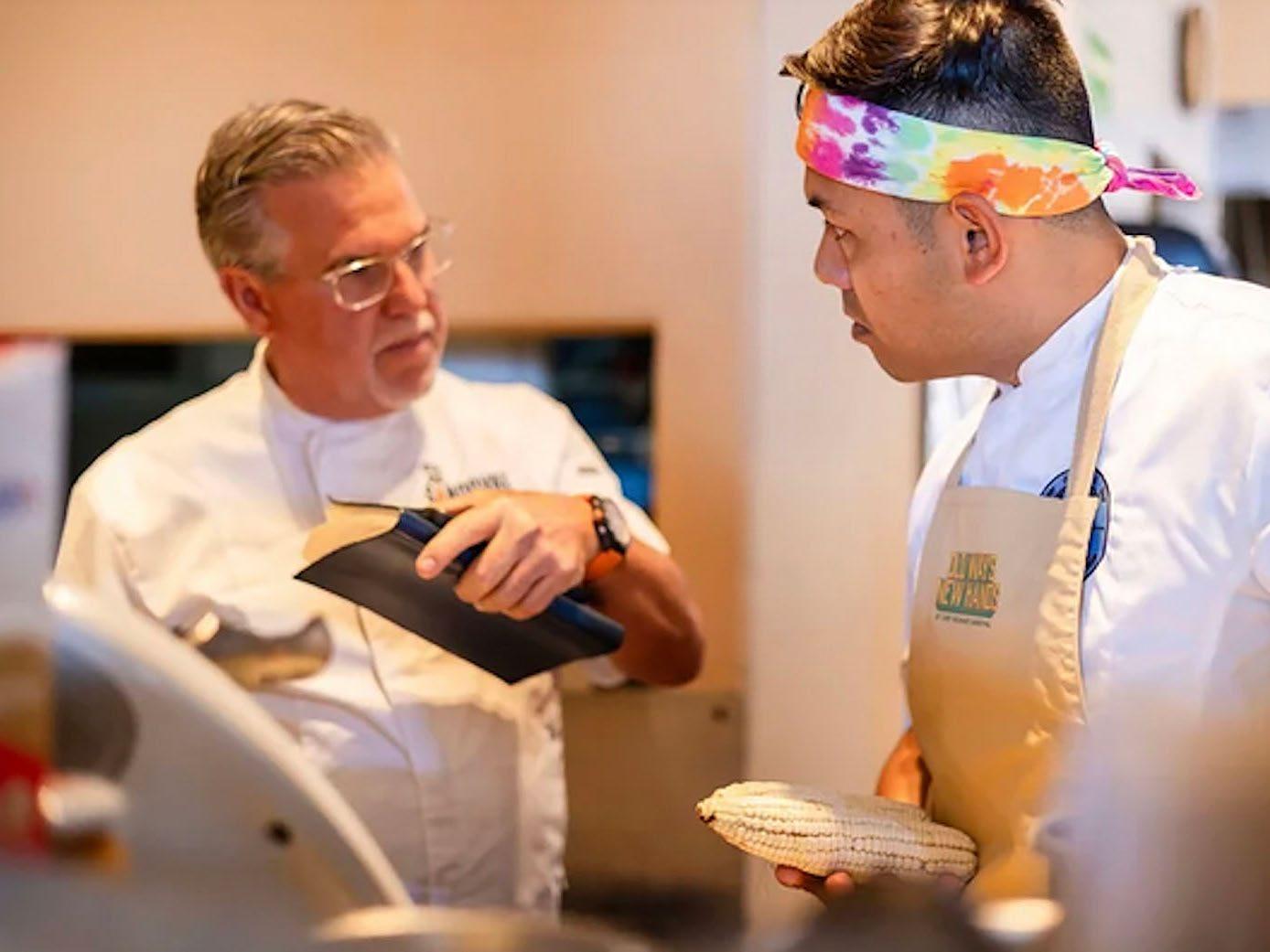
Chef Richard Sandoval (center) with the Old Ways, News Hands 2024 cohort (l to r): Jona Won, Julio Mendez, Gemma Aguayo-Murphy, Giancarlo Ramirez, Mely Hernandez de la Vega
Make Sure Your Restaurant is Prepared!
el Restaurante: The young chefs in your Old Ways, New Hands program are just beginning their careers. How do you think their professional paths will differ from yours, given today’s technological, political, cultural, and economic landscape?
Sandoval: When I started my career, the focus was almost entirely on the kitchen. You learned through repetition, travel, and time. Today’s young chefs are entering a world that requires them to think far beyond the stove. In Old Ways, New Hands, I see founders like Alejandro Macías and Jennifer Camacho of Qué Sazón Foods, Norma Zúñiga of Dulce Dreams Café, and Fernanda Sampson-Gómez of Celzo building businesses that require fluency in branding, finance, digital platforms, and storytelling alongside culinary craft. Their paths will be more complex and more visible, but also
more entrepreneurial. What matters most is that they stay grounded in culture and tradition while using modern tools to build sustainable futures.
ER: You have many restaurants outside the United States. What unique challenges do you face when opening a restaurant in regions such as the Middle East or North Africa, compared to the United States?
Sandoval: The biggest difference is the need for cultural translation. In the United States, systems and guest expectations are familiar. In the Middle East or North Africa, every project requires deeper listening and collaboration. From sourcing and supply chains to dining customs and service style, success depends on respecting local culture while thoughtfully introducing your culinary point of view. You cannot simply replicate a concept. You have to adapt it with intention and humility.
Chef Richard Sandoval works with an Old Hands, New Ways participant.
ER: When you travel outside the United States today, do you notice the effects of the current tense relationships between the U.S. and many other countries? Or do food and hospitality help ease those tensions in some way?
Sandoval: Food has always been a bridge. While global relationships can feel strained at times, hospitality creates a shared space where people connect as humans first. Sitting down for a meal encourages curiosity and understanding. In my experience, restaurants often become places where stories are exchanged and differences feel smaller, even if only for a moment.
ER: Labor issues, particularly those related to immigration, are a priority for many el Restaurante readers. Are these issues different in other countries?
Sandoval: Labor challenges exist everywhere, but they look different in each region based on local systems and workforce structures. What remains consistent is the importance of investing in people. Training, education, and clear pathways for growth are essential across all markets. When teams feel respected and supported, restaurants
become stronger and more resilient, regardless of location.
ER: Where do you see the restaurant industry in five years? Given your extensive career, what do you believe restaurants should be doing now to still be thriving five years from today?
Sandoval: The restaurants that will thrive in five years are those built on purpose rather than trends. Technology will continue to evolve, but it should support the guest experience, not replace it. Sustainability, transparency, and authenticity will matter more, not less. Right now, restaurants should be investing in their teams, clarifying their identity, and building flexible business models that can adapt to change. Those who stay rooted in craft while remaining open to evolution will continue to grow.
In Old Ways, New Hands, Sandoval is doing what he has always done best: building bridges between generations, cultures, and ideas. It is a reminder that while tools and landscapes change, the heart of hospitality remains the same: respect for people, reverence for tradition, and the courage to evolve without losing your roots.
For more information about Old Hands New Ways, visit oldwaysnewhands.com
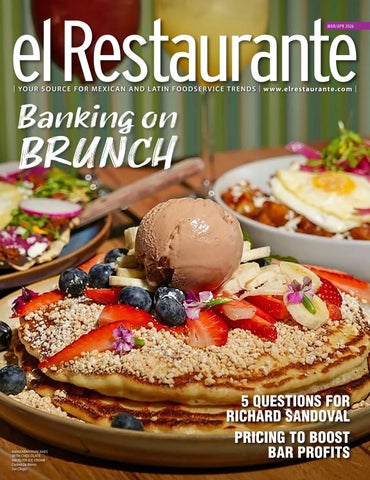
Banking on BRUNCH
EDITOR’S NOTE: With April, National Brunch Month, right around the corner, we thought it only appropriate to break down that daypart in anticipation of all the great brunching occasions coming in April and the spring/summer months that follow — Easter, Mother’s Day, Father’s Day and graduations, to name a few.
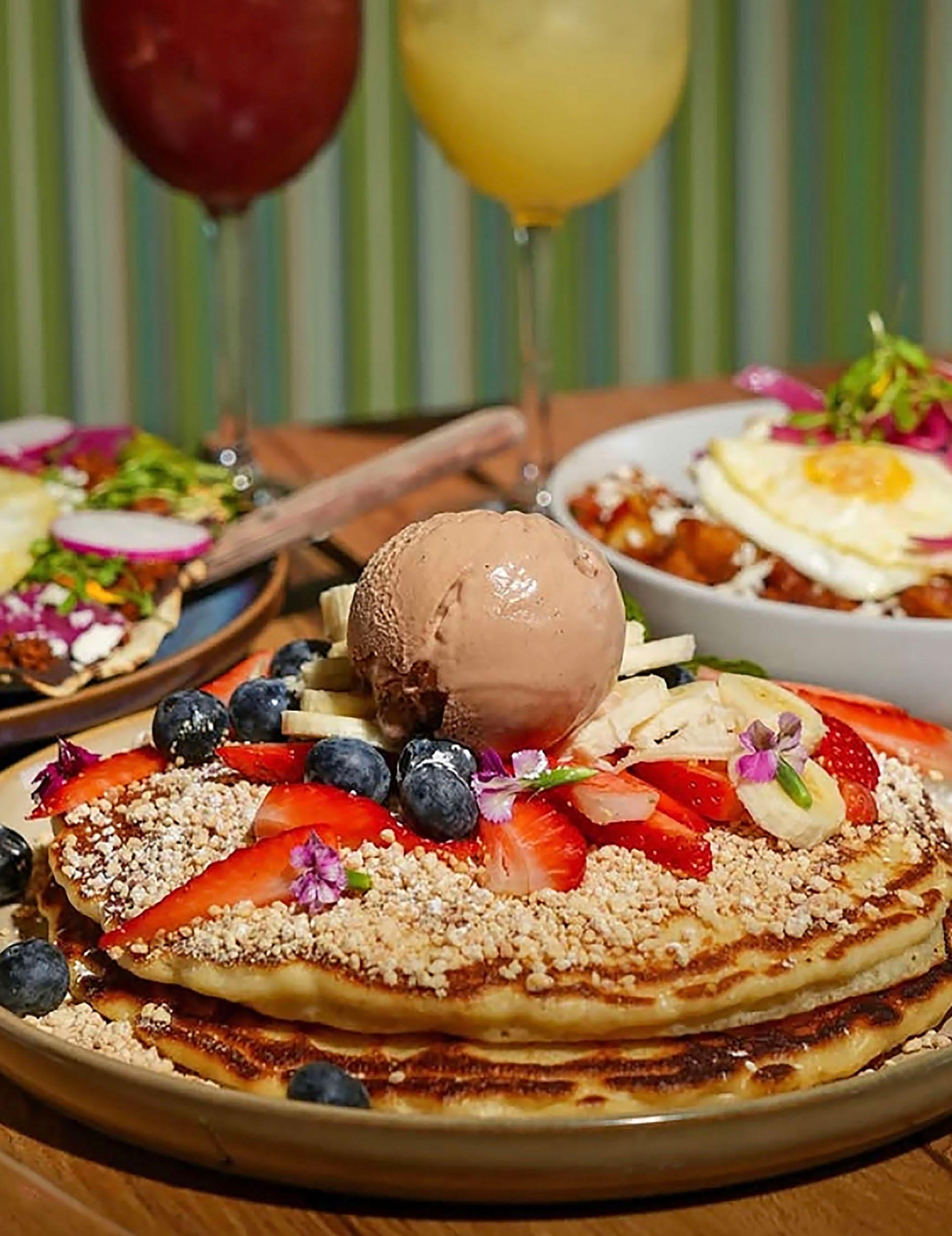
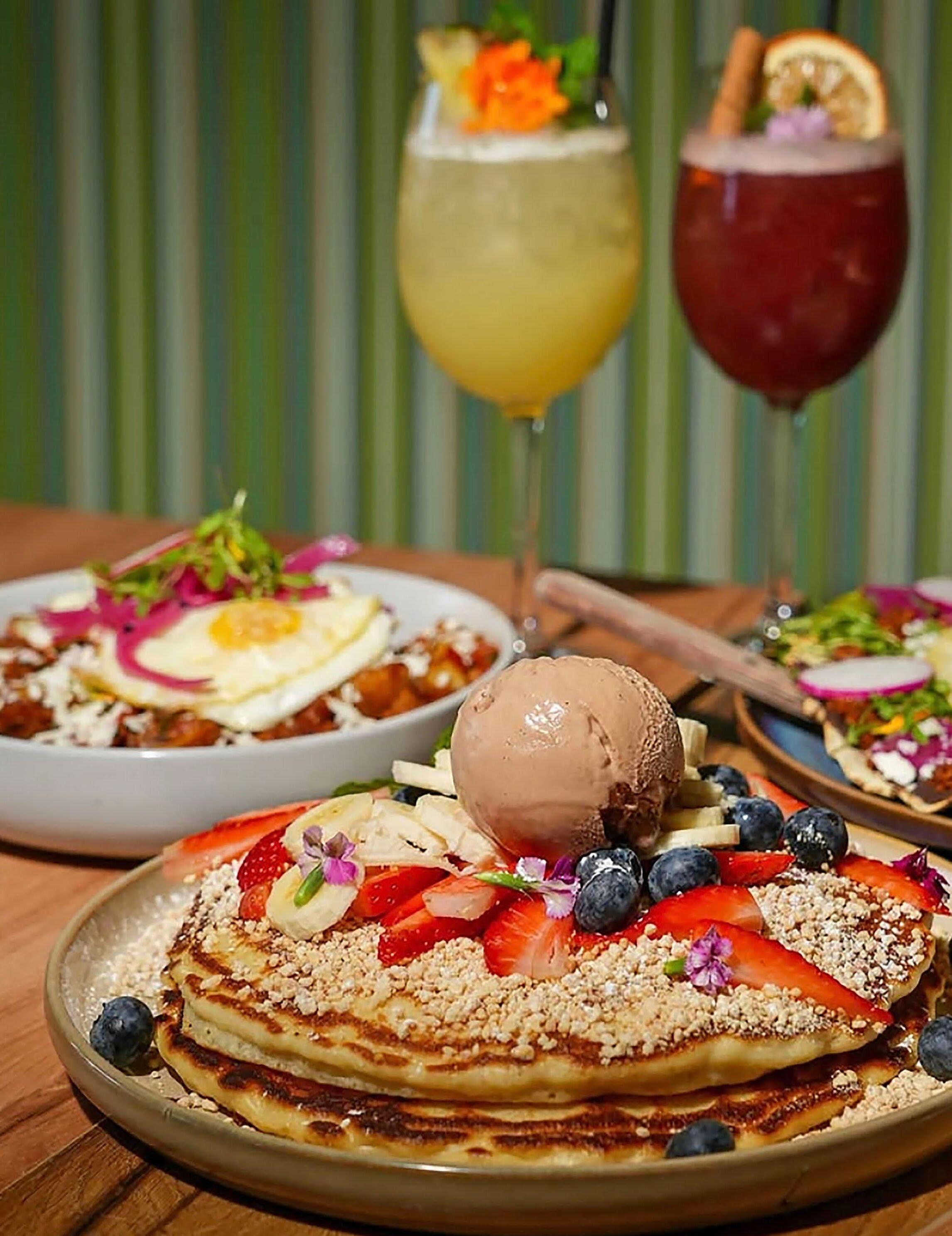
Marzapan Pancakes with Chocolate
Abuelita Ice Cream
Cocina De Barrio
San Diego
| BY KATHLEEN FURORE | Brunch
has moved beyond an occasion once reserved for holidays and special celebrations to a popular, often weekly destination for today’s consumers. That’s the assessment from the “Top Brunch Shop Trends: Trends and Statistics Shaping 2026” report from Toast.
“Brunch has evolved from a leisurely weekend indulgence into a vibrant dining occasion embraced by food enthusiasts everywhere,” information from the POS vendor and menu trend tracker says.
Not only is brunch popular with the dining-out set; it packs a punch where profits are concerned, too.
“Brunch can be a great addition to weekly sales,” says Izzy Kharasch, president of Chicago-based Hospitality Works. Kharasch says he sees more and more Mexican restaurants adding brunch to their weekend lineup. “It tends to be more profitable than the day-to-day menu because it focuses on eggs and breakfast items that carry a lower food cost.”
THE IMPACT OF GLOBAL FLAVORS
So, what is currently wowing customers when it comes to the brunch daypart?
Toast reports that global flavors are hot and lists chilaquiles as one example “of how international flavors are enriching brunch options.”
Mexican- and other Latin-inspired restaurants are in a prime position to capitalize on the popularity of global cuisines in ways that will give them an edge over competitors — as long as they use those flavors to create menus that make their brunch stand out in what has become a crowded field.
“In order to make their brunch different than the general American brunch,
“Brunch can be a great addition to weekly sales. It tends to be more profitable than the day-to-day menu because it focuses on eggs and breakfast items that carry a lower food cost.”
– IZZY KHARASCH, Hospitality Works
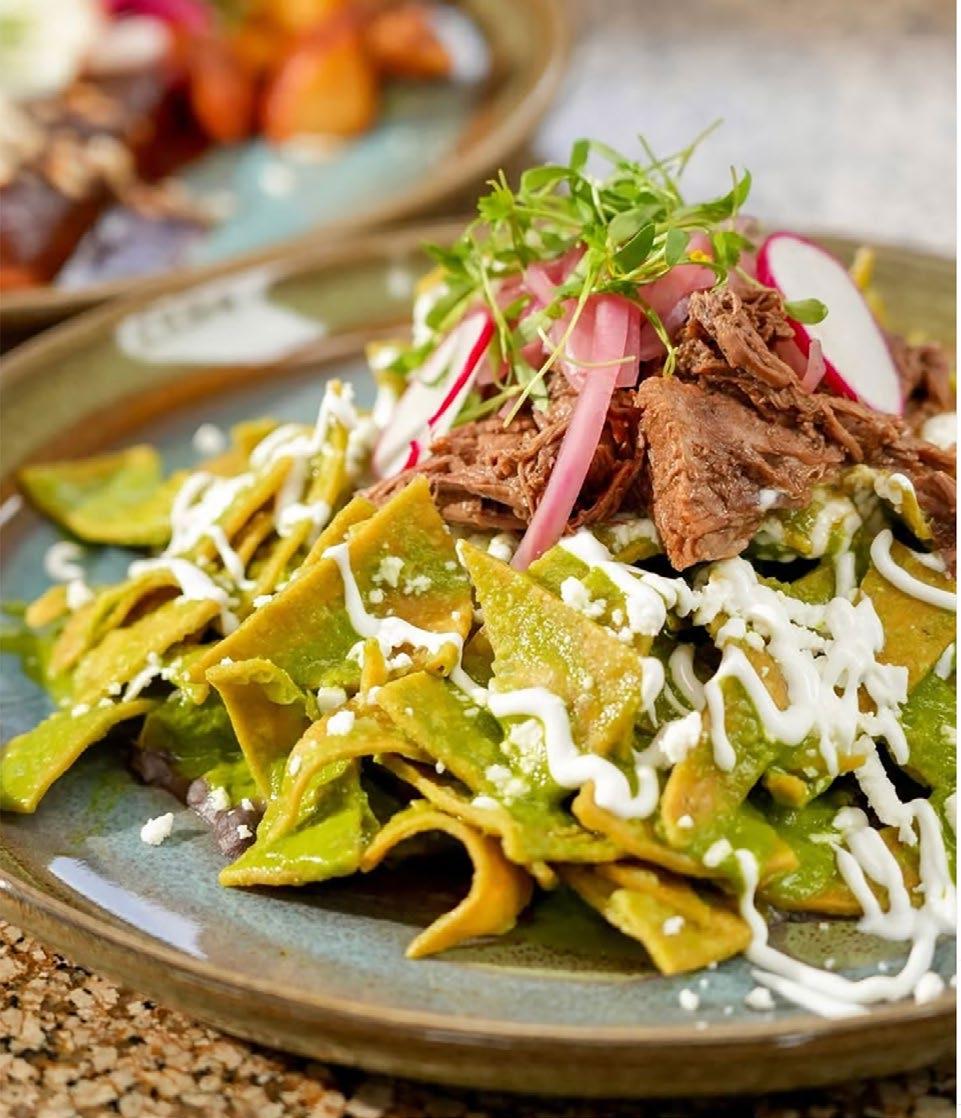
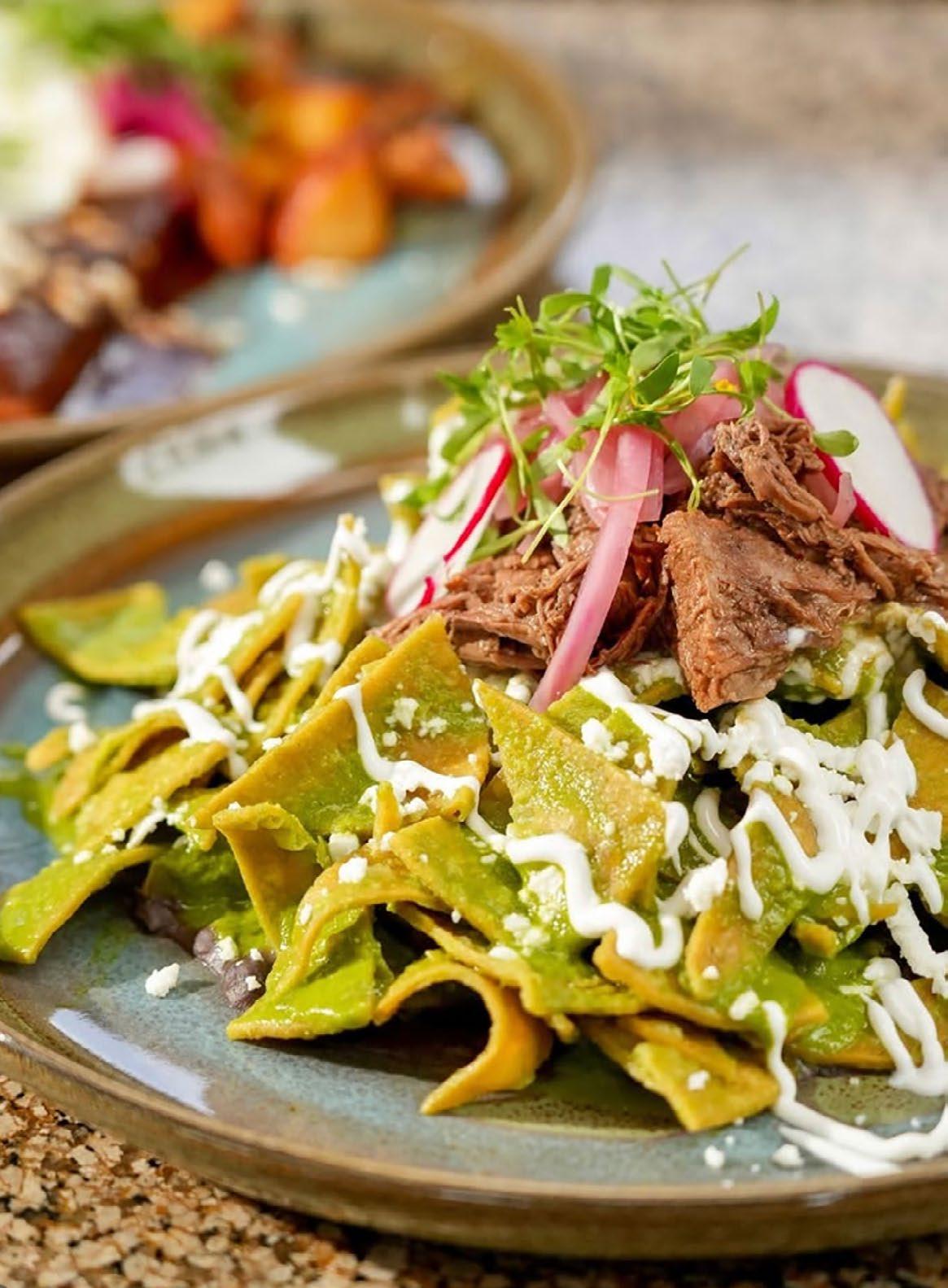
Cocina De Barrio's Chilaquiles Verdes
Trending Items on Brunch Menus
Breakfast sandwiches and dessertinspired dishes are among specific menu items driving brunch sales, according to the “Top Brunch Shop Trends: Trends and Statistics Shaping 2026” report from Toast.
“Brunch has elevated the humble breakfast sandwich into a gourmet experience,” while indulgent, dessert-inspired dishes “appeal to diners who want the decadence of dessert during brunch hours, blurring the lines between savory and sweet,” the report notes.
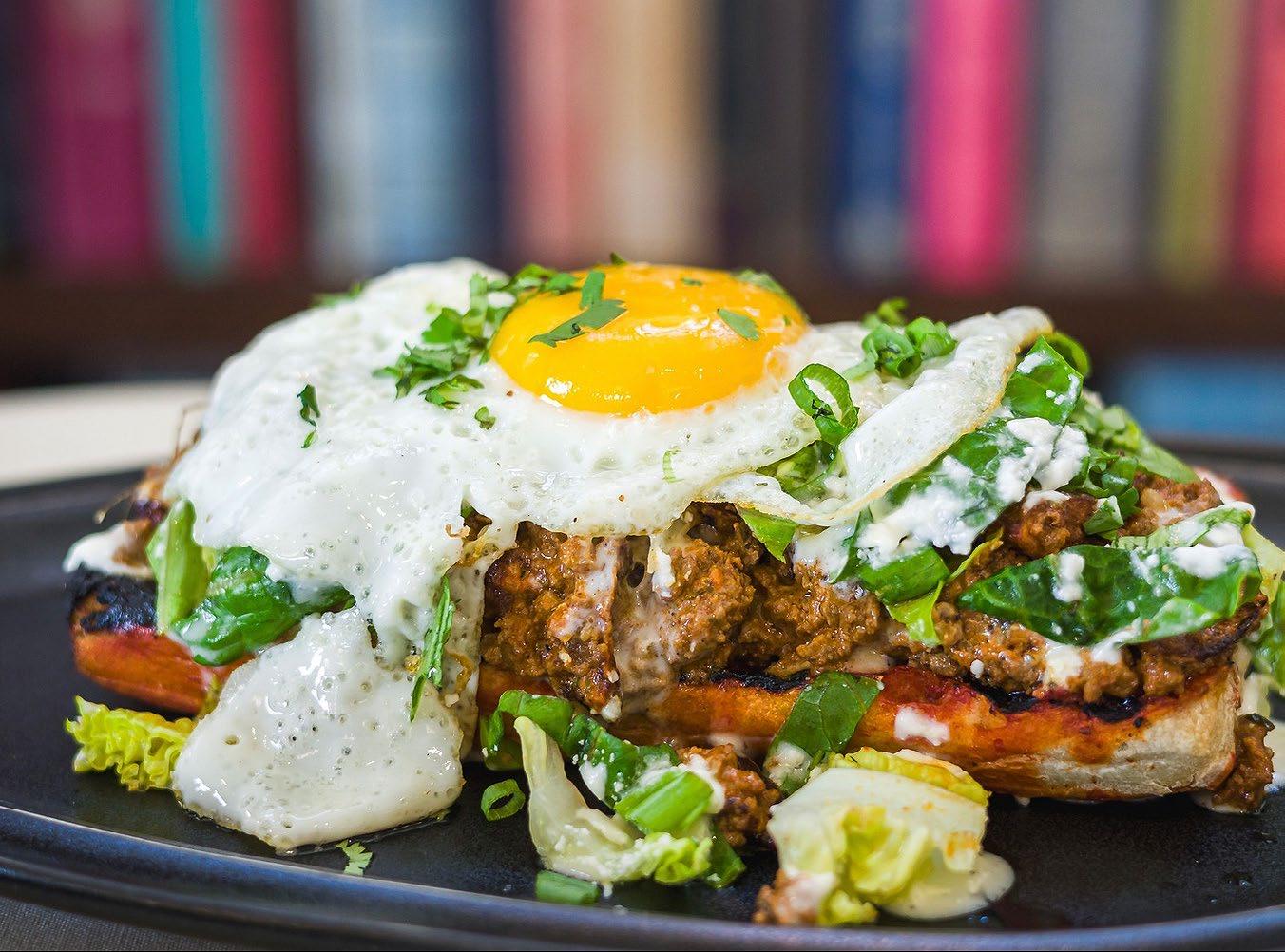
Jesús Latin Grill & Tequila Bar in Mishawaka, Indiana is one restaurant that has taken the breakfast sandwich beyond the ubiquitous egg-and-cheese variety with its Breakfast Ciabatta— a ciabatta roll dipped in salsa roja, then filled with chorizo, pork belly, potato, aji panca aioli (a Peruvian condiment made
from sun-dried red ají panca peppers), lettuce, queso fresco, sunnyside-up egg and fresh herbs.
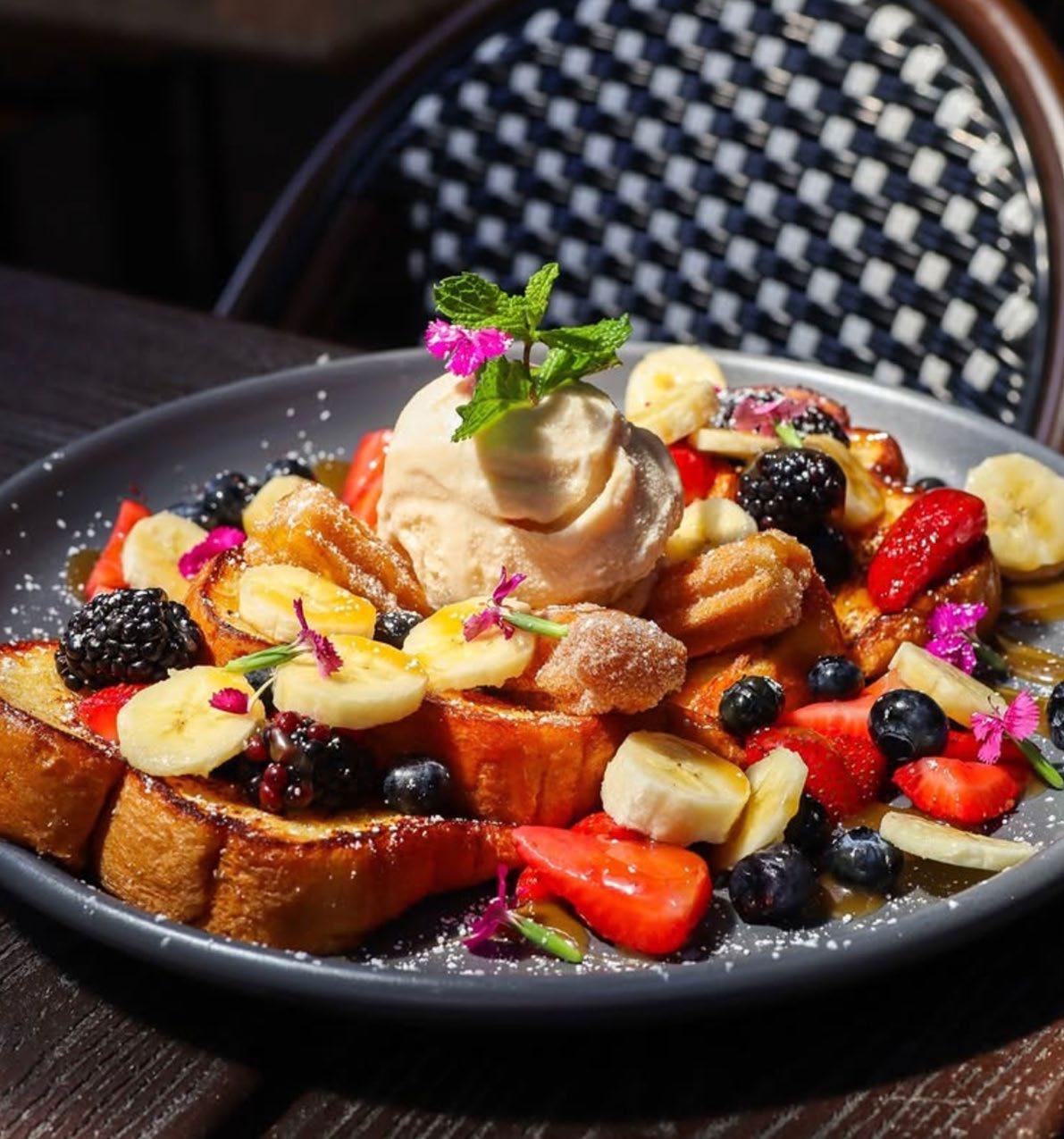
On the dessert-inspired front, Cocina De Barrio in San Diego offers the very popular Churros & French Toast with homemade dulce de leche ice cream, and Marzapan Pancakes topped with fresh berries, bananas and Abuelita Chocolate ice cream.
Tacos are another brunch menu option that is trending — they’re especially pertinent to Mexican/ Latin foodservice operations that can easily create innovative versions that suit the spirit of brunch.
“Tacos, typically seen as a lunchtime or dinner option, have made their way into brunch, with variations featuring scrambled eggs, chorizo, avocado, salsa, and even sweet fillings like cinnamon apples,” the Toast report says.
they should focus on interesting brunch items that may come from their local area of Mexico,” Kharasch stresses. “The restaurants most successful with brunch are those that focus on Mexican breakfast specialties, not just on typical American breakfast dishes.”
That’s just what Cocina De Barrio in San Diego and Jesús Latin Grill & Tequila Bar in Mishawaka, Indiana, are doing.
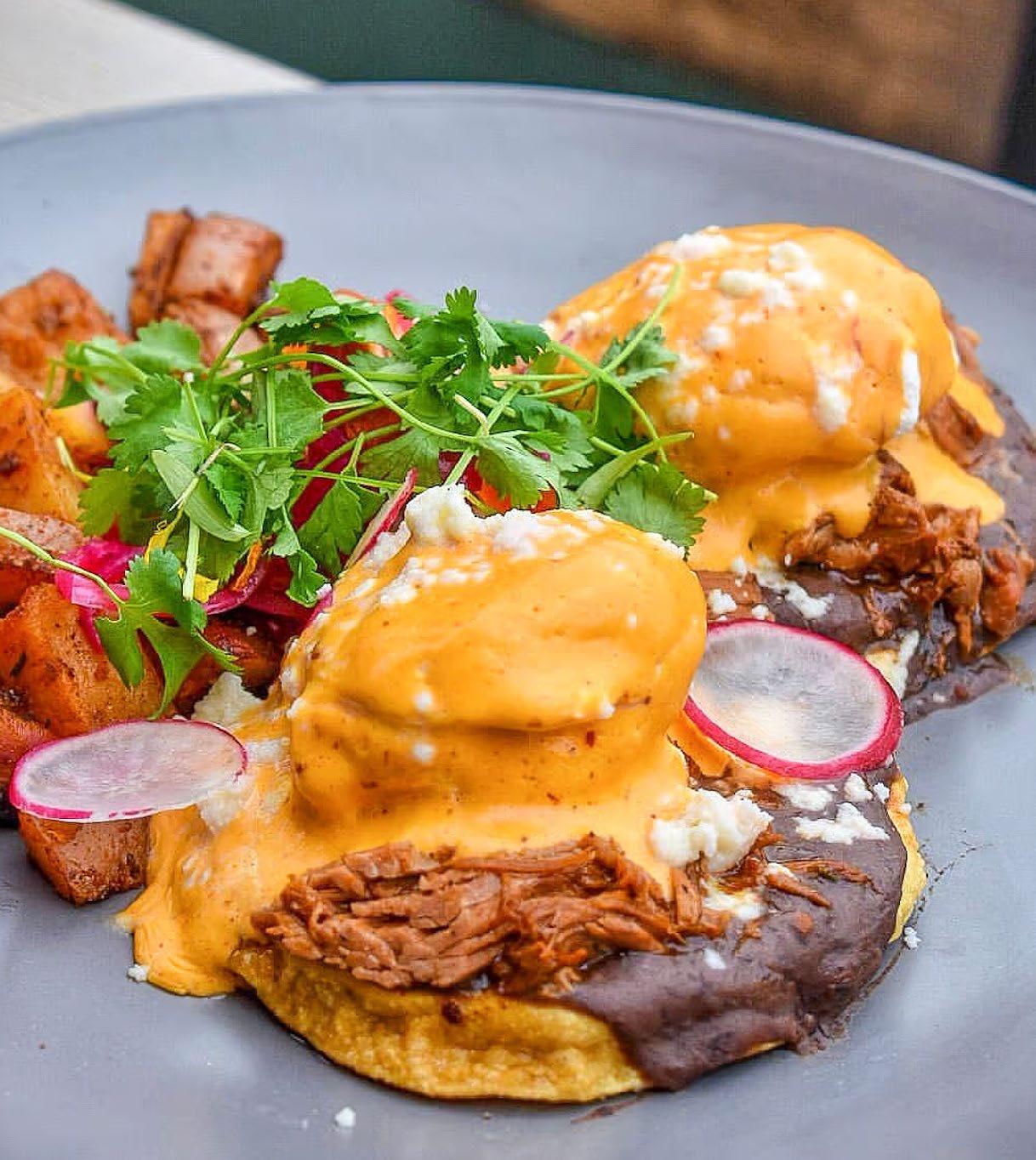
Cocina De Barrio’s Chilaquiles Verdes featuring the restaurant’s award-winning, 10-hour-braised beef birria, and the Sopes Benny — a global-flavors version of eggs
Benedict that’s served with lamb birria, chipotle hollandaise and homemade sopes — are two dishes especially popular with brunch customers, according to corporate general manager Karen Valenzuela.
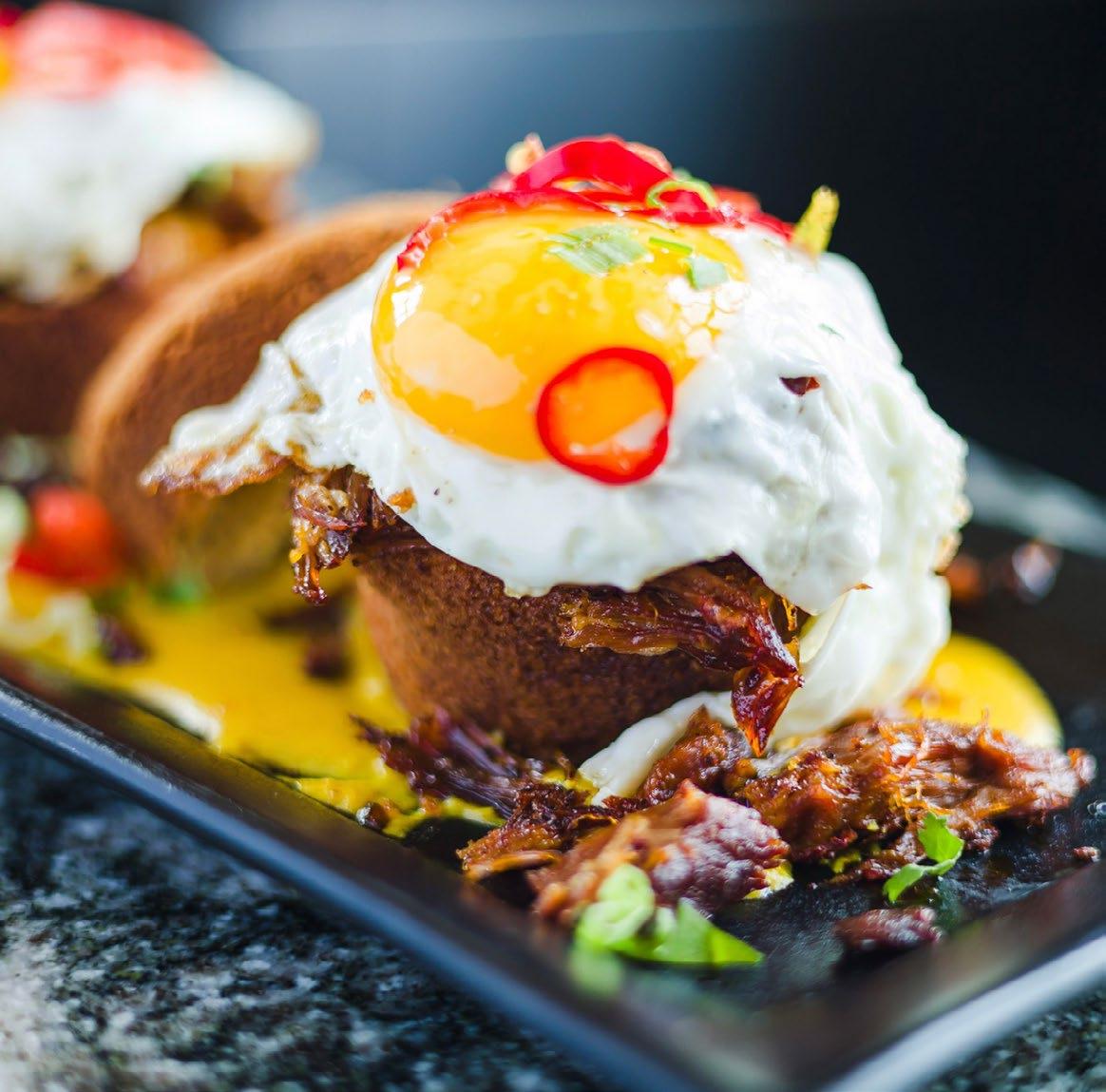
Jesús also offers eggs Benedict-style dishes that fit into the Mexican/Latin specialties category: the Arepas Eggs Benedict made with cochinita pibil, spinach, poached egg, and chipotle hollandaise; and the Cochinita Eggs Benedict with cochinita pibil-filled corn muffins, sunny-side-up eggs, Peruvian hollandaise, pickled fresnos and fresh herbs.
THE APPEAL OF THE BUFFET
According to Toast, brunch buffets are making a significant comeback. The pros are many: They appeal to large groups, families, and diners seeking a multitude of menu options, and they are considered a valuedriven dining experience.
But as popular as those buffets are, there’s a caveat to consider, too: While they “offer variety in a single meal” which “makes them a reliable option for restaurants looking to attract larger groups and family diners,” their popularity can fluctuate “based on health and safety concerns (as seen during the pandemic),” the Toast report cautions. Kharasch concurs on the pros and possible cons buffets offer.
(continued on page 22)
Cocina De Barrio’s Churros & French Toast with Dulce de Leche Ice Cream
“The restaurants most successful with brunch are those that focus on Mexican breakfast specialties, not just on typical American breakfast dishes.” –
IZZY KHARASCH, Hospitality Works
“I have a Mexican restaurant client who has added a limited buffet as an extension to the brunch menu, and that has been successful. The restaurant limits the amount of food items [on the buffet] so that there is very little waste,” Kharasch reports. “However, I would not recommend that restaurants go to a buffet-only format, as the waste typically is so high that it eliminates a lot of the profit.”
TACKLING THE CHALLENGES
What should restaurants who are thinking of offering brunch consider before taking the plunge?
Cocina De Barrio's Sopes Benny
First, realize that creating the perfect Mexican brunch menu is not easy, says Kharasch, who notes that a successful brunch menu should include “great, focused Mexican breakfast items” as well as “some lunch items for those guests who want that option.”
He goes on to offers tips for operators and chefs considering adding brunch:
“First, they should not only develop a great brunch menu but also taste test each item. The chef needs to prepare every dish and then have a tasting with the staff and management so that they can discuss the great new items with the guests. Also, the menu should not be too large, so that the kitchen can get the food to the guests without long waits,” Kharasch concludes, summing up ways restaurants can minimize problems while maximizing the impact brunch will have on their bottom line.
See brunch recipes on page 37.
Jesús’ Breakfast Ciabatta
GROWING HERBS ON-SITE
| BY KATHLEEN
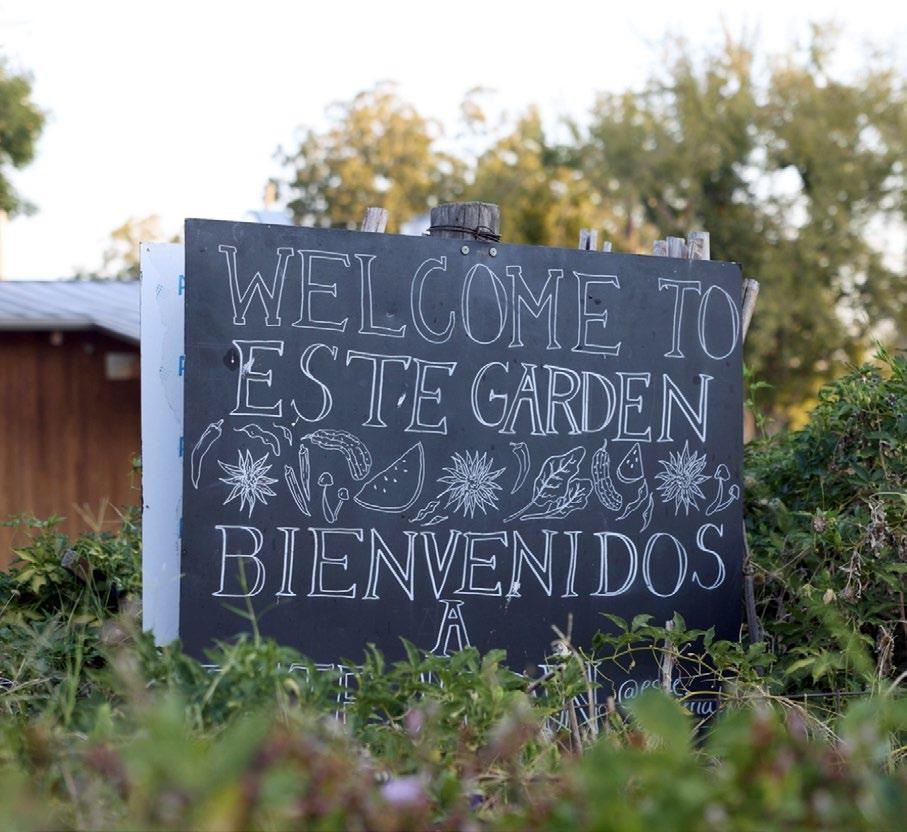
FURORE | When diners visit Suerte and Este in East Austin, Texas, many of the dishes they enjoy feature produce from Este Garden — the sustainable urban farm in East Austin that supplies fresh, seasonal produce, herbs, and edible flowers to both of acclaimed Chef Fermin Núñez’s award-winning restaurants.
Set behind Este, the garden thrives thanks to Garden Manager Anamaria Gutierrez, who in 2020 with fellow farmer Lea Scott dug in to revive the overgrown micro farm at the former Eastside Café — the space that restaurateur Sam Hellman-Mass and Núñez transformed into Este in 2022.
Today, Este Garden produces thousands of pounds of produce in approximately a fourth-acre of space. A January Instagram post announcing that the team was “Starting off 2026 right with native plants” gave a peek into what the year will bring: That first planting included 15 species, six pollinator host plants, five edibles, three species important to native Texas bees, and two endemic Texas species.
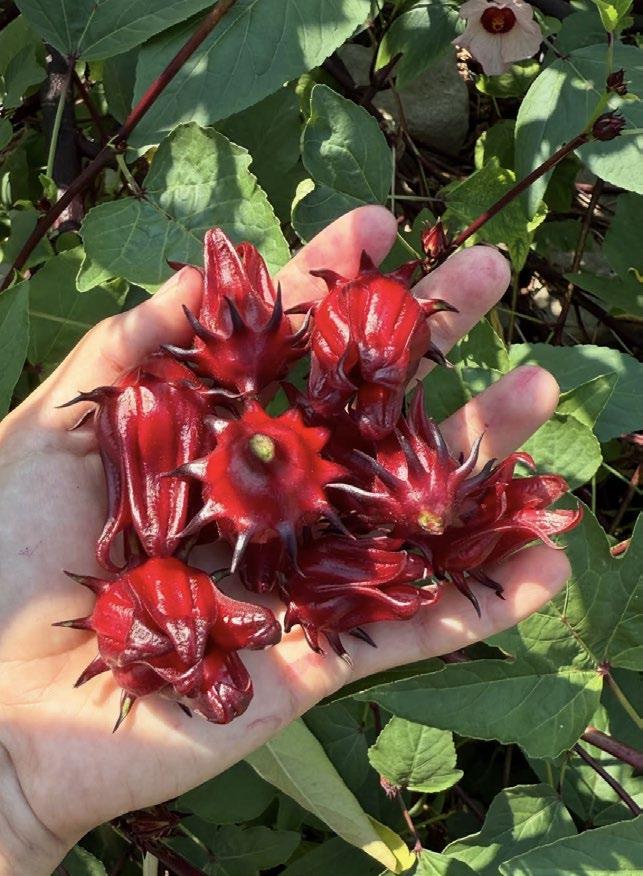
Past harvests have produced Habanadas (a heatless variety of the habanero), okra, Bloody Butcher red heirloom corn, and Flor de Jamaica (which was featured in the restaurants’ seasonal garden sorbet and tuna hibiscus aguachile).
While Este Garden’s approach to growing produce for Suerte and Este is the ideal, it isn’t the only way to take your own farm-to-table approach to sourcing. You don’t
PHOTO COURTESY OF ESTE GARDEN
How Can Your Garden Grow?
Limited space? Not enough light? Tough growing climate? No staff to tend to those herbs and flowers you’d like to grow? That doesn’t have to stop you from growing at least some fresh produce to use in your restaurant kitchen.
These tips from WebstaurantStore’s “Growing a Culinary Garden for Your Restaurant” can help you get started:
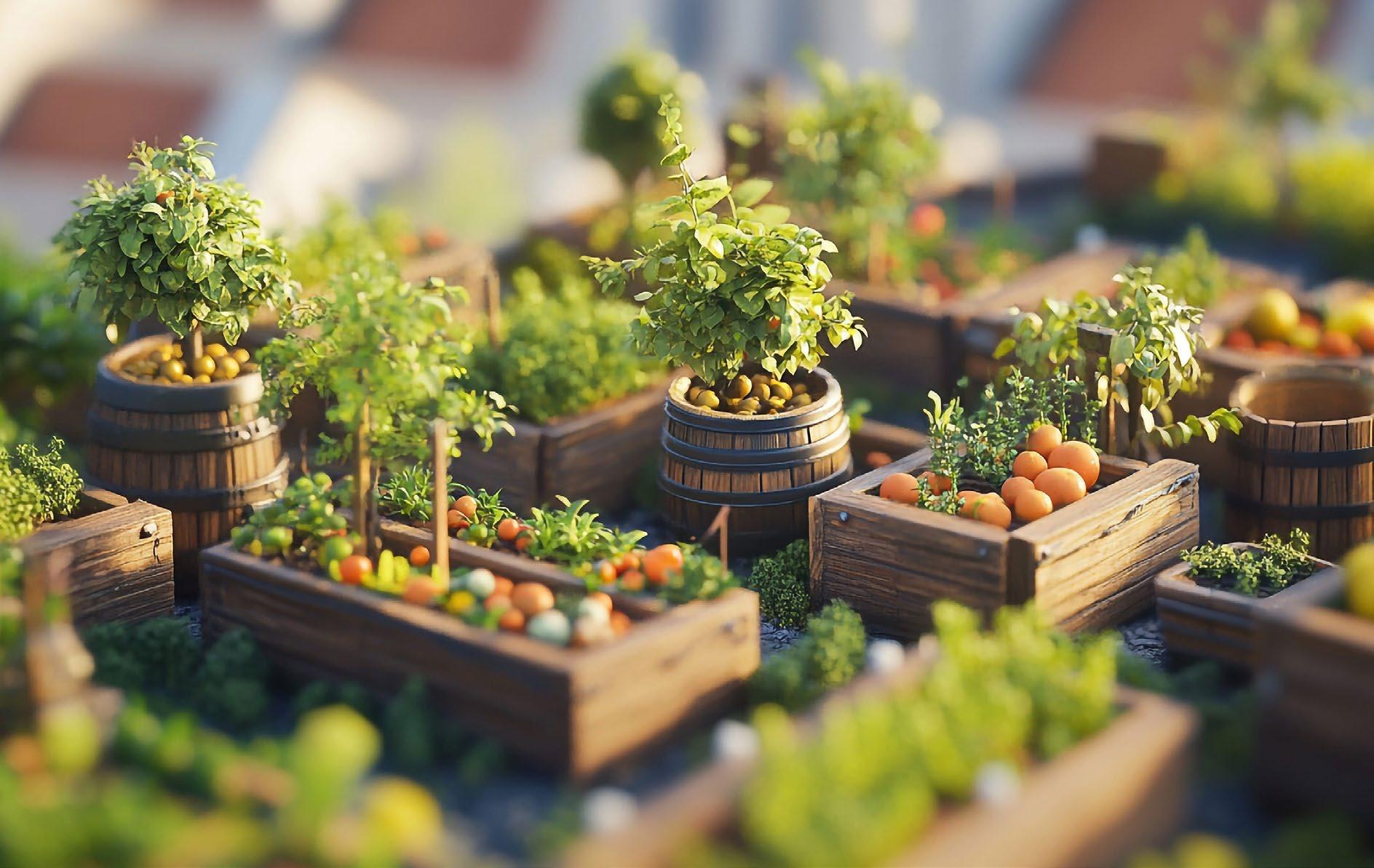
• Try window boxes, rooftop gardens, or even planters on the fire escape. “It doesn’t take very much space to grow fresh vegetables and herbs because just a few planters can be used to grow a wide variety. The plants themselves will stay small because you’ll constantly be using the leaves for cooking,” the blog post says.
• Use planters and small culinary gardens. “Tomatoes, green beans, cucumbers, and peas are all great choices because they can be trained to run vertically up trellises, maximizing your space,” WebstaurantStore notes.
• Plant different herbs in the same bed or planter to save space. “The golden rule for growing herbs together is that you should only combine herbs that require similar conditions,” the WebstaurantStore story explains. “Always be sure to match up the growing information before you combine plants.”
Rosemary, oregano, lavender, sage, marjoram, and thyme, for example, need drier soil and lots of sunlight, while parsley, basil, tarragon, and cilantro like a lot of water and can grow in shadier areas.
• Don’t forget the flowers. Edible flowers are a plating plus, and can add color and flavor to salads, desserts and cocktails — think violets and roses to garnish desserts and bright blue borage petals that taste like cucumbers and can be used in salads, “Growing a Culinary Garden for Your Restaurant” suggests.
have to have a big plot of land or a comprehensive network of farmers and volunteers to grow fresh ingredients that ultimately end up in the dishes on your menu.
That’s something Chef Hugo Mendez of Epazote in Fort Lauderdale understands. When it comes to the epazote that flavors dishes like his sopa de tortilla and esquites, he relies on the supply grown at his small, family-owned restaurant.
(continued on page 27)
A Sammic immersion blender makes your salsa preparation easier than ever! A powerful motor, easy-to-use controls and ergonomic design mean your staff can create amazing salsas, soups and other blended menu items with ease and speed. You will love the labor savings and your customers will love the results!
Learn more at sammic.us
Este Garden’s Flor de Jamaica
Get out your salsa-making ingredients and create a unique foodservice salsa recipe you think has the consistency and flavor to wow the judges. The grand prize winner will receive a Sammic XM-52 Immersion Blender and $750. Second and third place will receive $500 and $250, respectively. Plus the top three recipes will be featured in the NovDec issue of el Restaurante.
All readers of el Restaurante are welcome to enter the contest. The recipe must be an original recipe of your own creation. There are no restrictions on the ingredients of the recipe. All recipes will be judged on taste, creativity and appropriateness for foodservice applications.
culinary trends
(continued from page 25)
As Mendez explained to el Restaurante in a 2025 story about the herb:
“Since fresh epazote is scarce, we grow it ourselves to ensure it’s always fresh and authentic as possible. We grow it at the restaurant to give our dishes that real bold flavor I believe you just can’t get from the dried version. Fresh is the only way to capture the earthy, funky kick that makes traditional Mexican dishes truly authentic.”
WHAT ARE THE BENEFITS OF A CULINARY GARDEN?
Imbuing any dish on your menu with the freshest flavor possible is the obvious perk to picking a sprig of cilantro for your salsa or epazote for your beans from an on-site garden. But there are other just-as-important pluses to cultivating your own produce, as the post “Growing a Culinary Garden for Your Restaurant” from WebstaurantStore notes. It represents the kind of transparent, sustainable sourcing today’s consumers increasingly demand; roughly 59 percent of Americans think it is important to know where their food originates, a 2025 survey from the International Food Information Council says. Other benefits, according to “Growing a Culinary Garden for Your Restaurant”:
• A larger, more diverse stock. “When other restaurants are worried about recalls or shortages, you’ll still be fully stocked. You can also grow uncommon herbs that can give your dishes unique flavors!” the post notes.
• Cost-savings. “Maintaining a small herb garden costs less than buying the same produce in a store or market,” the post says.
• Less packaging, less waste in landfills, fewer carbon emissions from transporting product. Those benefits mean you can make sustainability part of your menu story and build lasting loyalty from environmentally conscious consumers.
Are you growing herbs and other produce on-site? Let us know and we’ll feature your garden at elrestaurante.com! Just email Editor Kathleen Furore at kfurore@restmex.com.
COCKTAIL DRESSING: Bar Drinks Shine with Creative Rimmers & Garnishes
| BY ED AVIS |
Adding accessories has always been the secret to making a basic outfit one that stands out in a crowd. The same can be true of cocktails: Putting a garnish or a rimmer on a cocktail is like adding a beautiful accessory to your dress, according to Karen Sanjuan, restaurant manager at Don Artemio in Fort Worth, Texas.
“The garnish and rim on a cocktail truly elevate the drink and catch the customer’s eye before the first sip is ever taken,” Sanjuan says.
INNOVATIVE RIMMERS
A successful rimmer does two things: It adds visual appeal — often by contrasting with the color of the glass or the cocktail — and it adds a flavor that complements the cocktail.
“When you are walking those drinks across the restaurant, people are going to ask, ‘What is that on top?’ or ‘What is that cocktail that has that red thing? They definitely notice. I believe rimmers and garnishes are very important to a cocktail. They elevate the drink.”
– KAREN SANJUAN, Don Artemio
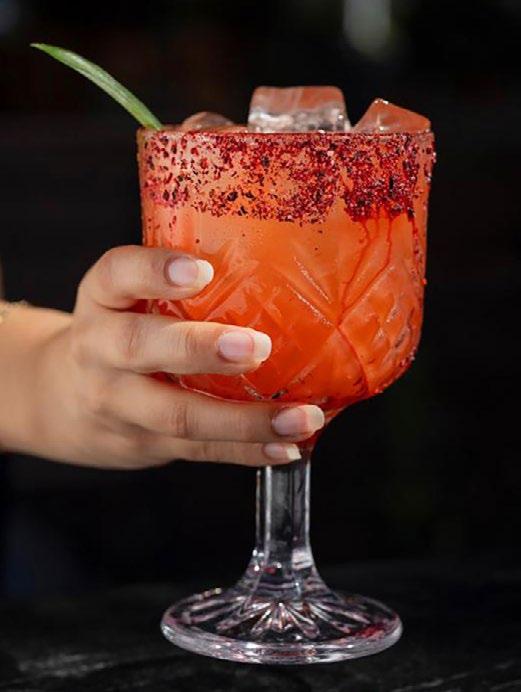
The Saltillo is one of the rimmers that graces Don Artemio’s cocktails. Named for the Mexican hometown of restaurant founder Juan Ramon Cárdenas, Saltillo is a blend of dehydrated hibiscus flowers, salt and Tajin, a combination that provides a vibrant, savory-tart finish.
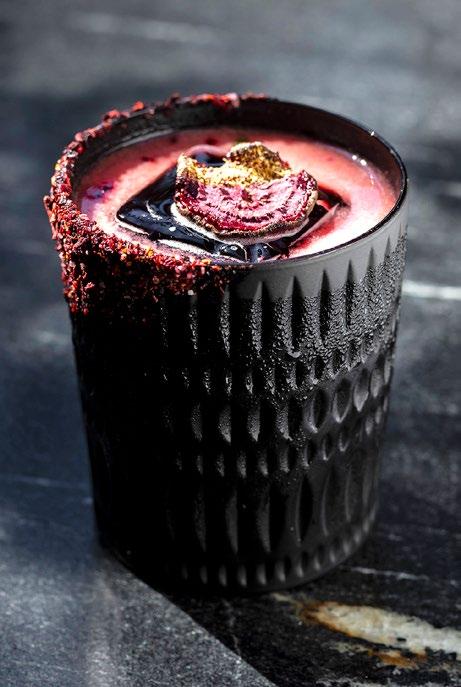
“We grind up the hibiscus flowers really well by hand in a molcajete, and then we put in some kosher salt and Tajin,” Sanjuan explains. The bartender swipes an orange slice along the rim of the glass to provide the moisture that holds the rimmer, she adds. That rimmer is used on El Hunter, a cocktail made with Don Julio 70 Tequila, beet-infused Clamato, lime juice, grapefruit juice and jamaica syrup. The dark red drink is served in a black glass, which makes the bright colors of the ground hibiscus flowers in the rimmer pop against the dark background.
The Saltillo rimmer also adorns the El Zacatecas (Banhez Mezcal Joven, guava puree, lime juice, and chipotle tamarind syrup); El Chihuahua (Nocheluna Sotol, Yellow Chartreuse, lime juice, and Melón Syrup); and Cuatrociénegas (Cañada Rum, raspberry/blackberry puree, lime juice, agave, and Topo Chico).
El Hunter El Zacatecas
El Jarrito
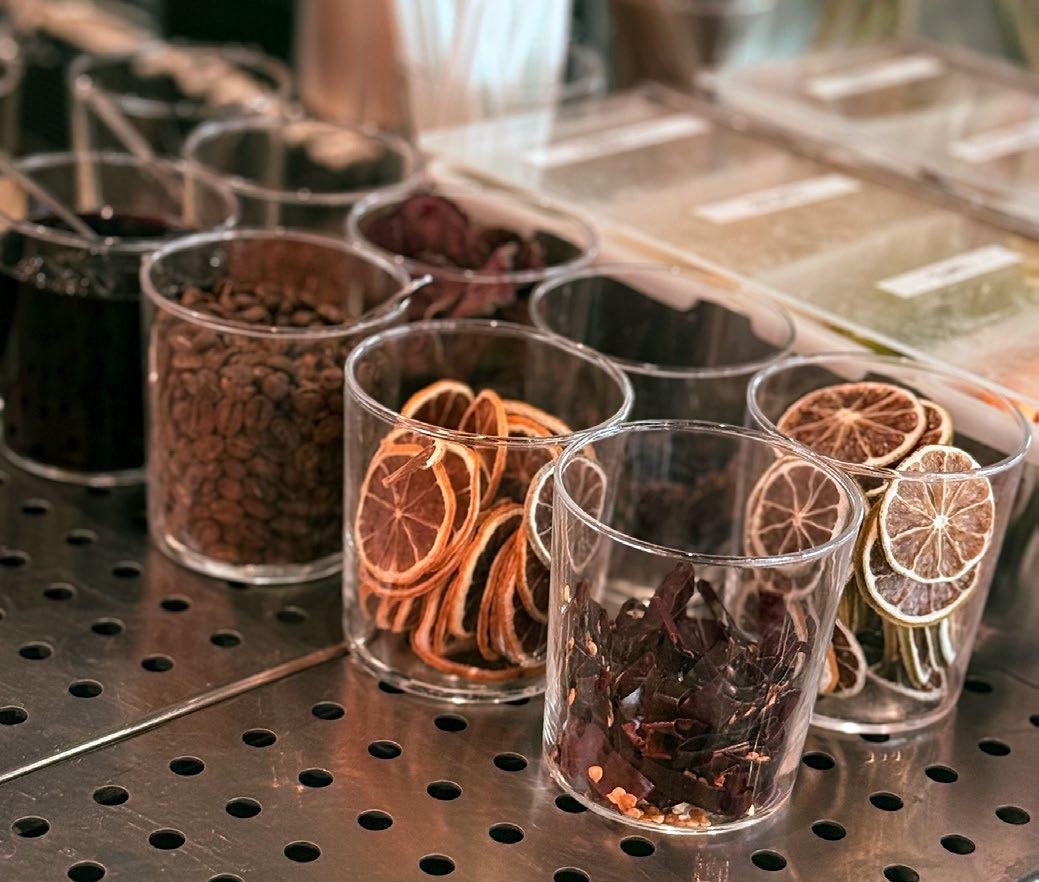
Don Artemio’s selection of garnishes
AN ICON IN AN INSTANT.
DOÑA MARIA® Mole Rojo is not your grandma’s mole. It just tastes that way. But while she may have spent hours over the stove achieving that unique, rich, deep blend of flavors, all you have to do is open a jar and get started. Don’t worry, we won’t tell your customers how easy it is.
GET YOURS ON AMAZON
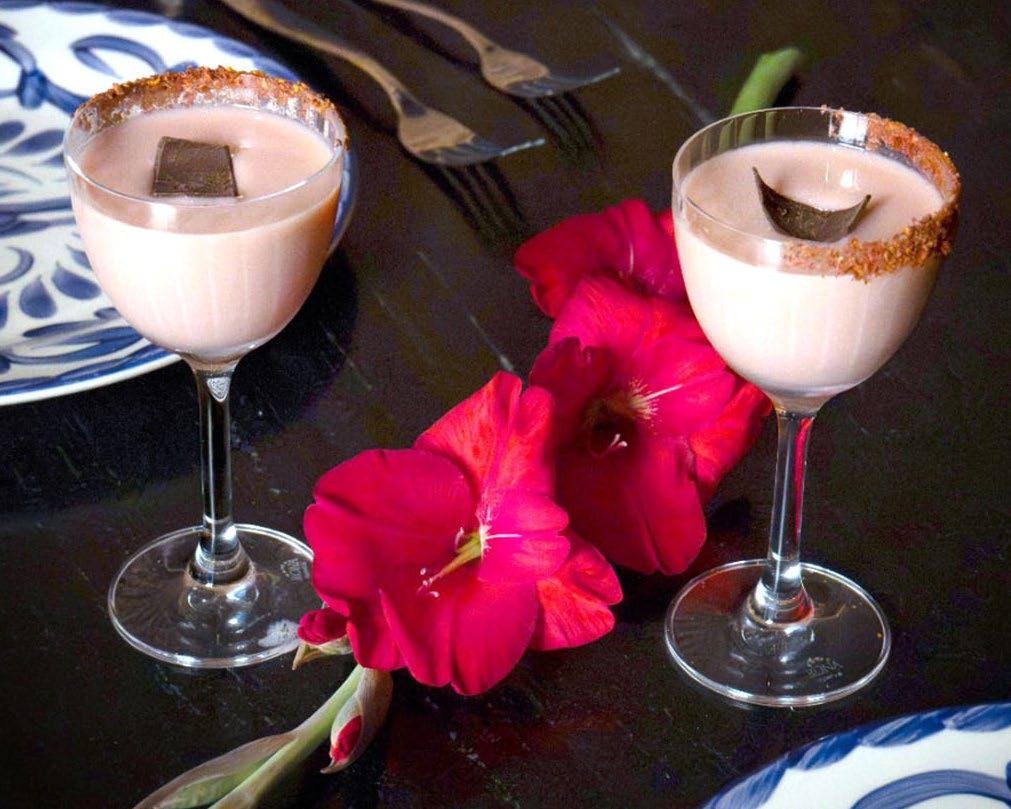
Sweet cocktails are typically enhanced with sweet rimmers. For example, for Valentine’s Day, Don Artemio created the AmorAmor with vodka, chocolate sauce and raspberry syrup, then rimmed it with freeze dried raspberries crushed in a molcajete and mixed with sugar. The moisture to attach that rimmer was homemade tamarind syrup made with tamarind, sugar and hot water, which complemented the sweetness of the cocktail and raspberry rimmer, Sanjuan explains.
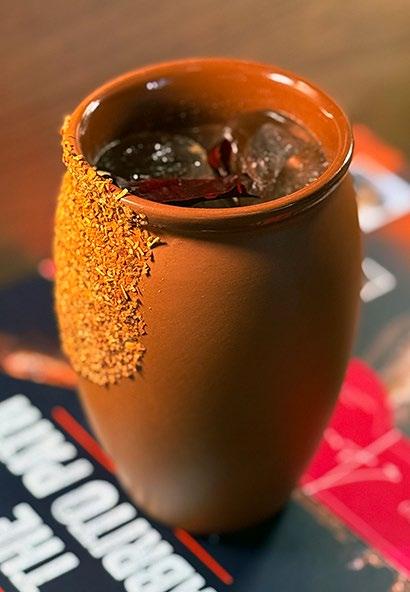
Of course, sometimes a simple rimmer is best. Don Artemio’s zero-proof El Jarrito — grapefruit, lime, tamarind chipotle, guajillo, and sparkling mineral water — is rimmed just with Tajin. However, to add a bit of sweetness, bartenders use tamarind syrup to attach the rimmer. That syrup also is stickier than juice, Sanjuan says, so it works better on the clay pot the El Jarrito is served in.
GARNISHES ADD FLOURISH
Garnishes play a similar role as rimmers — they add visual appeal and, at least in some cases, also add a touch of flavor. Don Artemio bartenders deploy a number of garnishes in their cocktails.
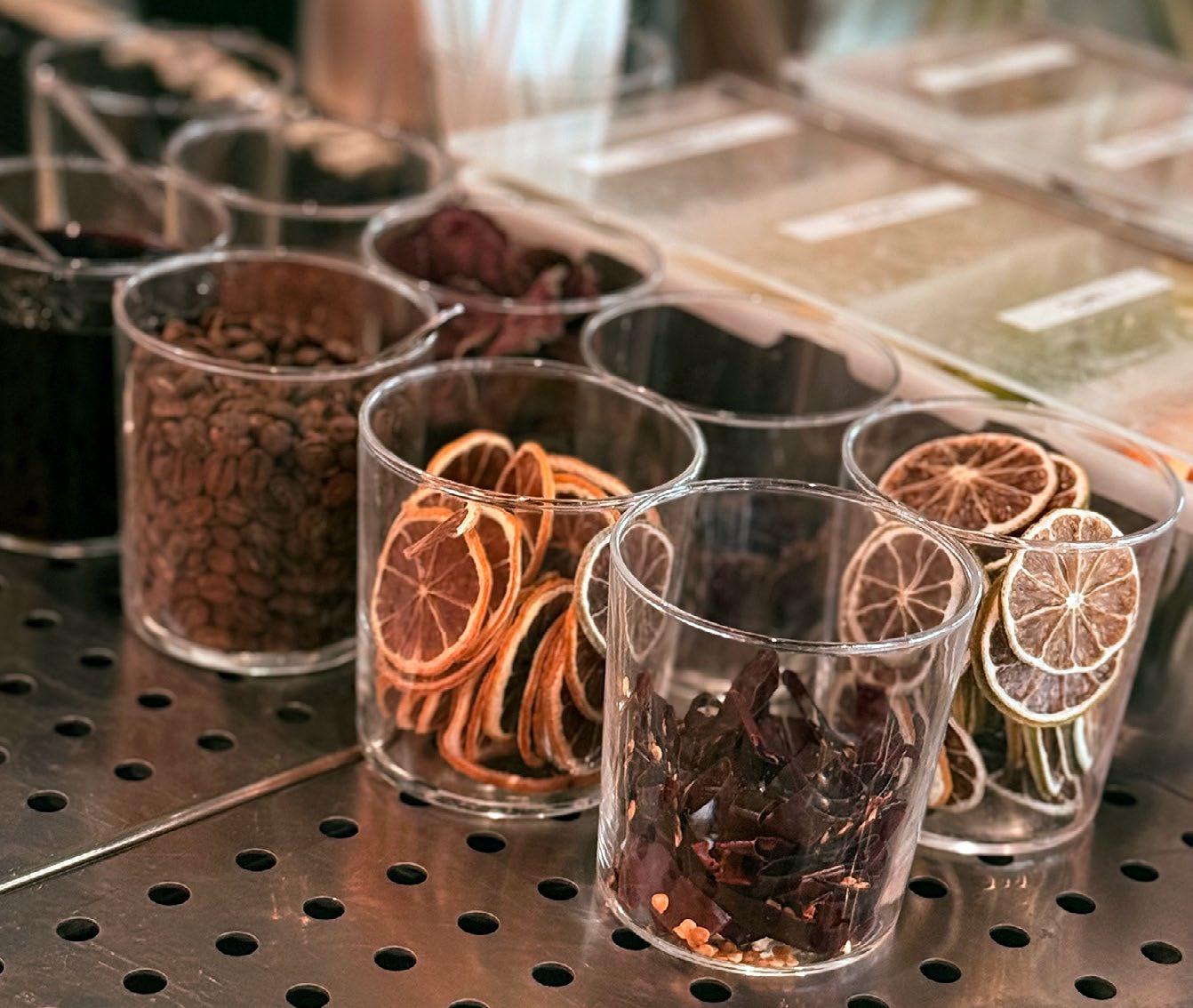
A key tool in the bar is a dehydrator, which bartenders use to create dried slices of orange, lime, lemon and other fruits and vegetables.
“The dehydrator is pretty fast,” Sanjuan says. “To make it perfect so you don’t get soggy fruit, you leave the slices of orange or lime in the dehydrator for 24 hours. We have done guavas, too, but those take a little bit longer because they hold more water.”
Sometimes a dried fruit slice gets a little extra treatment before it’s deployed on a drink. The El Chihuahua cocktail, for example, is garnished with a dehydrated orange slice that has been lightly burnt with a blowtorch to add a smoky aroma.
For the El Hunter, the bar staff dehydrate thinly sliced beets and float a slice atop a square ice cube. And the El Jarrito is fin-
ished with two dried Guajillo chile ribbons.
Sometimes the garnishes at Don Artemio go beyond fruits and vegetables.
For example, the Valentine’s cocktail Amor-Amor is topped with a garnish of shaved chocolate, and the classic Carajillo (a combination of espresso and Licor 43) features three coffee beans riding on a square ice cube.
Whatever the rimmer or garnish of choice, Sanjuan stresses that a quality cocktail must be able to stand on its own — those extras won’t make a poorly made drink much better. But if you’ve made a good cocktail and topped it off with an innovative rimmer and garnish, your guests will notice.
“When you are walking those drinks across the restaurant, people are going to ask, ‘What is that on top?’ or ‘What is that cocktail that has that red thing?’” Sanjuan says. “They definitely notice. I believe rimmers and garnishes are very important to a cocktail. They elevate the drink.”
Ice Cubes Add Something Extra
These days ice cubes do more than chill cocktails; innovative bartenders are using them to add a little something extra to the drinks they’re crafting behind the bar.
For example, at Salazar in Cincinnati, the Bruce Banner cocktail features Elijah Craig small batch bourbon and an ice cube imbued with multiple flavors. That means that as the cube melts, the flavors mix into the bourbon and transform it to a totally different drink. (Comic book fans will remember that Bruce Banner was the mild-mannered guy who suddenly turned into the Hulk when he got angry.)
“It starts very spirit-forward and then kind of evolves into more of a cocktail as time goes on,” explains Nicholas DeFilippo, Salazar’s bar manager. “That cocktail changes seasonally, but it currently has pineapple, black pepper and mint.”
Sometimes it’s the shape of the ice cube that’s innovative. Round cubes are nice, of course, and some restaurants use big square cubes. But Manchamanteles in Chicago takes that idea one step further and puts skull-shaped ice cubes in some cocktails. It’s a fun touch — especially around the Día de Los Muertos time frame — that surprises and delights customers.
So, the next time you’re changing your cocktail menu, keep in mind that your ice cubes can deliver some fun along with their chill.
Amor-Amor
THE NATIONAL LATINO RESTAURANT ASSOCIATION
supports and promotes restaurateurs, small businesses and the entire Latino restaurant community at a national level to ensure the equitable economic growth of the sector. LRA community members come together to network with industry pros, market their brand and learn new ways of making their business more efficient
MEMBER BENEFITS INCLUDE:
BOOTCAMPS
FREE CLASSES FOCUSED ON RESTAURANT INDUSTRY DEVELOPMENT AND EXCLUSIVE NETWORKING OPPORTUNITIES WITH CERTIFICATION UPON COMPLETION OF COURSES
ACCESS TO CATERING RFP'S BID ON CATERING CONTRACTS EXCLUSIVE TO LRA MEMBERS
DINE LATINO RESTAURANT WEEK EXCLUSIVE PROMOTIONS FOR YOUR RESTAURANT DURING THE RESTAURANT WEEK! (SAVE $900+)
GRANT OPPORTUNITIES GRANT ALERTS FOR LRA MEMBERS
EXCLUSIVE ACCESS TO THE LRA MEMBER PLATFORM
GROW YOUR PROFESSIONAL NETWORK BY ENGAGING OUR 8,000+ MEMBER CONTACTS
Set Prices, Enforce Standards to BOOST YOUR BAR’S BOTTOM LINE
| BY ED AVIS |Nicholas
DeFilippo is careful when he determines how much to charge for a new cocktail at Salazar in Cincinnati, where he is the bar manager. He adds up the cost of all the ingredients in the cocktail, from the spirits to the mixers to the garnishes, and divides that total by a predetermined percentage, typically between 18 percent and 20 percent.
“Sometimes we’ll go a little bit lower, sometimes we’ll go a little bit higher, so we can have some room to work with some more expensive ingredients but still meet our margins,” says DeFilippo, who has been the bar manager at Salazar for about four months, and previously worked at its sister restaurant, Mita’s, for seven years.
That effort pays off for Salazar by creating a consistent margin across the bar menu. Below are some tips on how to do that in your restaurant.
DETERMINING THE POUR COST
DeFilippo’s pricing method is typical, though many bars and restaurants only consider the cost of the spirit in the cocktail, not the mixers. Either way, the cost of a cocktail’s ingredients — whether you include all the ingredients or just the spirit — is commonly called the pour cost. You can also call it your cost of goods, which is what DeFilippo does.
The pour cost is expressed as a percentage of the amount you sell your drinks for. Restaurant and bar owners typically aim
for a pour cost of between 18 and 24 percent, long-time bar owner Michael Sanders says in his book Trendy Bar & Nightclub Business Startup
Let’s start with a simple example that only counts the spirit, say tequila. A 750 ml bottle of Patron Silver will probably cost about $40 wholesale. There are 16 shots in that bottle, so each shot costs $2.50. If you want to have a 21 percent pour cost, which is right in the middle of Sanders’ range, here’s the math that will set your price for a margarita with one shot of Patron Silver: $2.50/0.21 = $11.90. Round that up to $12 to make it easy.
Notice this: The lower you set your pour cost percentage, the higher your menu prices, and hence your margin. Using the same example as above, but with a pour cost of 18 percent, the math becomes: $2.50/0.18 = $13.88 (round that up to $14 for the menu).
The math is easy to adjust for different priced spirits. If you’re using an añejo tequila that costs $45 per fifth, at an 18 percent pour cost that works out to $45/16 shots = $2.81 per shot/0.18 = $15.61.
The pour cost is expressed as a percentage of the amount you sell your drinks for. Restaurant and bar owners typically aim for a pour cost of between 18 and 24 percent.
–TRENDY BAR & NIGHTCLUB BUSINESS STARTUP by Michael Sanders
“Sometimes we’ll go a little bit lower, sometimes we’ll go a little bit higher, so we can have some room to work with some more expensive ingredients but still meet our margins.”
– NICHOLAS DEFILIPPO, Salazar
Now let’s return to DeFilippo. He counts ALL the ingredients, not just the liquor. So, if he makes a cocktail that includes a shot of Patron Silver ($2.50), 25 cents worth of mixers, and 25 cents for garnishes, his total cost for that drink is $3. Since he uses a range of pour costs between 18 and 20 percent, he can adjust based on labor or other factors. Let’s say this drink will be easy for his bartender, so he chooses the 20 percent pour cost (remember, the higher the pour cost, the lower the price). At that percentage, the price of the cocktail would be $3/0.20 = $15.
WHAT ABOUT WINE AND BEER?
Wine and beer are easier to prepare than cocktails — just pour them in the glass. Consequently, bars and restaurants can generally afford to price wine and beer proportionately lower than cocktails.
“We definitely aim for a little bit higher profit margins when it comes to cocktails,” DeFilippo says. “Part of that is because there’s more labor involved in making a cocktail, both when it comes to prep and then also when making it during service.”
DeFilippo says their cost of goods (the pour cost) for wine and beer is closer to 25 percent. What’s the price of a pint of Dos Equis on your menu if your pour cost is 25 percent? Let’s say you get a half-barrel of Dos Equis for $175. There are 124 pints in a half barrel, so each costs you $1.41. So, here’s your math: $1.41/0.25 = $5.64 menu price for a pint of Dos Equis.
Wine can be more complicated, especially when you sell it by the glass. You can only keep an opened bottle of wine for a day or two, so if someone orders a glass of wine and you only sell that single glass, you may have to throw out the other four glasses in that bottle (assuming you’re giving the standard 5 oz. pour of wine). If you’re being conservative, that means the first glass must at least cover the wholesale cost of the bottle. Assuming five glasses of wine in a bottle, your pour cost
needs to be 20 percent to ensure that you cover the cost with the first glass. So, if you pay $15 wholesale for a bottle of Bruma “Plan B” Chardonnay, a good Mexican wine, your menu price per glass should be $15/5 glasses = $3 per glass/0.20 = $15 per glass served. If you’re confident that you’ll sell more than just one glass of that wine, increase the pour price to 25 percent and your menu price drops to a more affordable $12 per glass.
The illustration with the chardonnay leads us to a key point: There’s a balancing act going on, right? You probably will sell more wine (or any beverage) if your pour cost is higher (which means the menu prices are lower) — but you’re making more money on each drink when your pour cost is lower. The trick is figuring out your sweet spot to maximize profit.
FINDING YOUR PRICING SWEET SPOT
There are several factors that go into determining the right pour cost for your restaurant.
A key factor is your market position. Salazar, where DeFilippo works, is a fine dining restaurant where people expect topflight food, service and cocktails. That means they can charge more than if they were family-style restaurant or a sports bar.
Another factor is competition, to some extent. If you run a taqueria, you probably don’t want your cocktail prices to be much higher than other taquerias in the vicinity, because customers
THE IMPACT OF GLASSWARE, ICE CUBES & GARNISHES
Bar prices always take the liquor cost into consideration, and sometimes the mixers. But Nicholas DeFilippo, bar manager at Salazar in Cincinnati, says there are other things that often play a role in his cocktail prices.
Quality glassware, for example, elevates a bar program. But good glassware is more expensive than cheapie stuff, and it breaks, so he considers that when setting prices.
Similarly, at Salazar they sometimes use a slice of quality local cheese, Luxardo Maraschino Cherries, or Castelvetrano olives for garnishes, all of which cost more than typical bar garnishes.
Finally, don’t forget the ice!
“We recently switched to using a company called Big Ice that makes really nice, clear cubes, and they etch them with our logo,” DeFilippo says. “It’s a nice little touch, but that is a factor in our costing, because it can cost anywhere from 50 cents apiece to $1.50 apiece.”
expect value from a taqueria. But if you operate a fine-dining restaurant, matching competitors’ prices is less important.
“I like to see what other restaurants are charging just to see how they’re approaching their program,” DeFilippo says. “But it’s not like we’re going to say, ‘Oh, our cocktails are $2 cheaper than this place across the street.’”
ACCURACY AND CONSISTENCY PAY OFF
A final consideration when you’re setting prices is the efficiency and accuracy of your bar staff. Good bartenders can make cocktails quickly and consistently, which means customers are happy, so your prices can probably be a little higher.
Good bartenders don’t just show up that way, however. Management needs to set the bar high.
“We have very clear standards for all of our drinks, very specific recipes,” DeFilippo says. “And part of my job as the bar manager is to make sure everybody’s following the recipes and making things properly. I’ve worked places where bartenders are like, ‘Oh, I know this is how we’re supposed to be doing it,
but I feel like this way is better.’ That’s not something we do here.”
In addition to enforcing the recipes, train your bartenders how to pour properly. Don’t let them use the “count” method (a shot is a six count, for example) when pouring the liquor. Instead, teach them how to use the jigger. Also make sure they don’t “trail pour,” or continue pouring from the bottle as they dump the jigger into the glass. Some customers like it when the bartender is overly generous with the liquor, but that cocktail may not taste the same the next time. And obviously, that extra liquor is costing you money.
Many restaurants help maintain consistency, and keep costs in line, by pre-batching some cocktails. For example, at Mita’s, the Latin-influenced Old Fashioned is made with New Riff Bourbon, Licor 43, chocolate mole bitters, and Angostura bitters. All of that is pre-batched and kept refrigerated so it can be poured and served quickly by staff, DeFilippo says.
The bottom line is that it pays to be deliberate in your bar pricing. Successful programs like what DeFilippo runs are based on knowledge, standards and consistency.
California is a leading producer of Hispanic-style cheeses like Oaxaca, Queso Fresco, Panela and more.
Discover the authentic and flavorful cheeses made in America’s No. 1 dairy state.
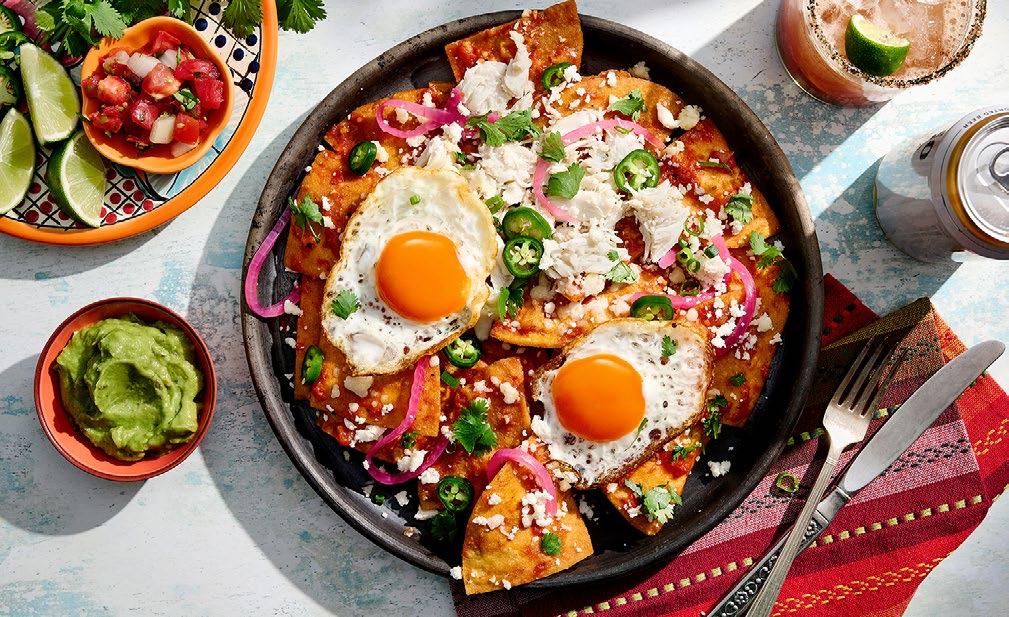
Empire’s Treasure® Crab Chilaquiles
Recipe and photo courtesy of Performance Food Group
5 ea. yellow corn tortillas 6-inch, cut into quarters
Canola oil, for deep frying
3 oz. Empire’s Treasure® Super Lump Crab
16 oz. salsa roja/red salsa
2 T. green onion(s), chopped for garnish
2 oz. cotija cheese, grated, for garnish
1½ oz. queso fresco wheel, crumbled for garnish
1 T. guacamole
¼ ea. jalapeño pepper(s), sliced thin for garnish
½ t. cilantro, chopped for garnish
Pickled onions, for garnish (see recipe below)
1 T. butter flavored oil
2 ea. eggs
Preheat oven to 400°F. Heat canola oil in deep fryer to 350°F, fry the tortillas until they are golden brown and crispy. Remove from oil and place on a towel to absorb excess oil. Transfer the tortillas to a sheet pan lined with a rack or paper towels and season lightly with salt. Heat the salsa in a saucepan over medium heat, until it just starts to simmer. Submerge the tortillas in the salsa and place onto a baking sheet lined with parchment paper.
Top with crab, one tablespoon of diced green onion and a little
cotija cheese. Place tray in oven and bake for 5-7 minutes until the tortillas are softened and the cheese has started to melt.
Warm 1 tablespoon of butter flavored oil in a sauté pan over medium heat. Crack the eggs into a bowl and slide them gently into the sauté pan. Cook the eggs gently until sunny side up. Remove the tortilla tray from the oven and transfer the food to a plate. Spoon a little of the salsa on top of the tortillas and around the plate. Place the eggs on top of the tortilla stack and garnish with a dollop of guacamole, queso fresco, pickled onion, green onion, jalapeño, and cilantro. Serve immediately.
The Pickled Onions
1 ea. red onions
2 oz. granulated sugar
½ oz. salt
16 oz. rice vinegar
Peel the red onion and cut into fine julienne strips. Place the julienne onion into a mixing bowl and toss with the salt and sugar. Allow the onions to macerate in the mixing bowl for about 30 minutes. Transfer the onions and juice to a container and cover with the distilled vinegar. Stir well and place in the refrigerator until needed.
Performance Foodservice brands used in this recipe: Empire’s Treasure ® Super Lump Crab; Contigo ® brand yellow corn tortillas, Cotija, Queso Fresco Wheel, Guacamole, Salsa
Lump Crab; Peak Fresh Produce ® green and red onions, pepper, jalapeño, cilantro; Brilliance Butter Flavored Oil; Nature’s Best Dairy ® Eggs; West Creek ® sugar, salt; Asian Pride ® Rice Vinegar
Cal-Mex Breakfast Crumble
Recipe courtesy of Chef Barbara Alexander; photo by David Siegel; recipe and photo courtesy of California Milk Advisory Board
Makes 25 to 35 servings
3 jalapeños, charred, peeled and chopped
2 pints grape cherry tomatoes
12 garlic cloves, slivered
½ c. olive oil
1 lb. chorizo, casing removed
2 onions, finely diced
2 lbs. kale, Swiss chard or other greens, shredded
12 oz. corn kernels, fresh or frozen
2 oz. Real California Panela Cheese, cubed
4 oz. Real California Queso Requeson
4 oz. Real California Oaxaca Cheese, cubed
4 oz. Real California Crema
10 oz. eggs, whisked
Salt and pepper to taste
The Crumble:
7 oz. oats
4½ oz. coarse ground cornmeal
3 oz. almonds, chopped
1 T. Turbinado or Demerara
Sugar
6 oz. Real California Cotija Cheese, crumbled
2 t. oregano
3 T. chili powder
5 oz, butter, cold, cut into small cubes
1 t. salt
For Garnish:
Tomato confit
Cilantro sprigs
Crema
Preheat the oven to 375°F.
Prepare the Tomato Confit: Place the tomatoes, garlic and olive oil in an ovenproof dish and place in the oven for 12-15 minutes, or until the tomatoes shrivel slightly. Remove and set aside (½ will be for garnish).
Prepare the crumble by mixing all dry ingredients together. With your fingers, rub in the butter until just barely incorporated and you have a chunky mixture; set aside.
Char the jalepeño over a live flame or under a broiler. Allow to cool then peel, de-seed and stem and chop coarsely.
In a large sautoir, brown the chorizo with the onions. Add the shredded greens and cook for 4-5 minutes until the greens are wilted and cooked down. Add the corn and cook for another 2 minutes; remove from heat and allow to cool.
Add the cheeses, crema and eggs. Carefully fold in ½ of the confit tomatoes and all of the jalapeño. Season to taste. Scoop into oven-proof containers or a casserole dish, and cover each with about 2 tablespoons of crumble topping, pressing down just to anchor the chunks.
Bake in a 375°F oven until the crumble is golden brown and the eggs are set (about 15 minutes).
Serve warm or room temperature, garnished with crema, cilantro and a confit tomato.
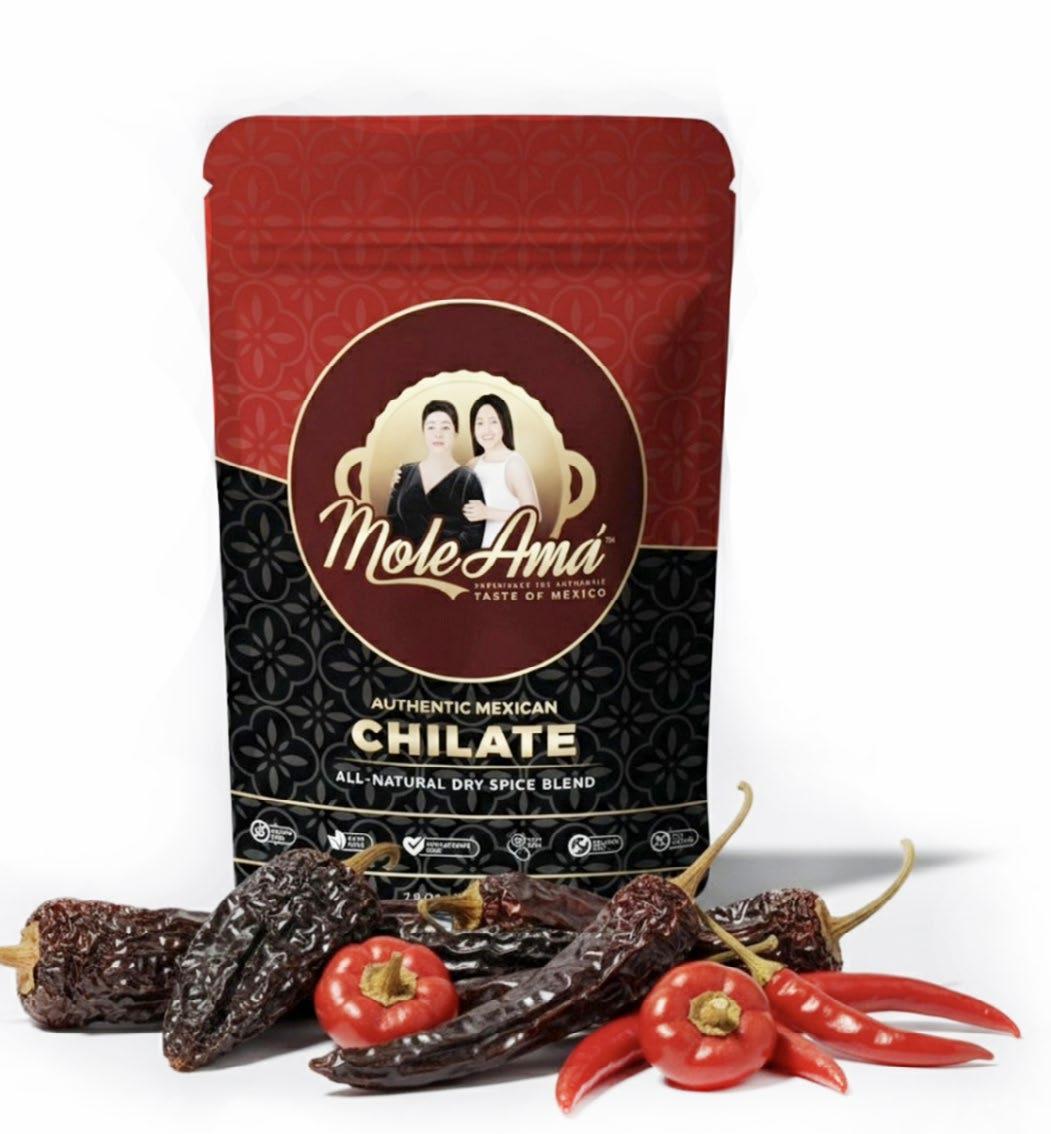
Mole Amá’s Mole and Chilate Powder. Arriving soon! These all-natural spice blends simplify the molemaking process. It takes just 10 minutes to get authentic Mexican flavor and tradition, saving on labor and prep time.
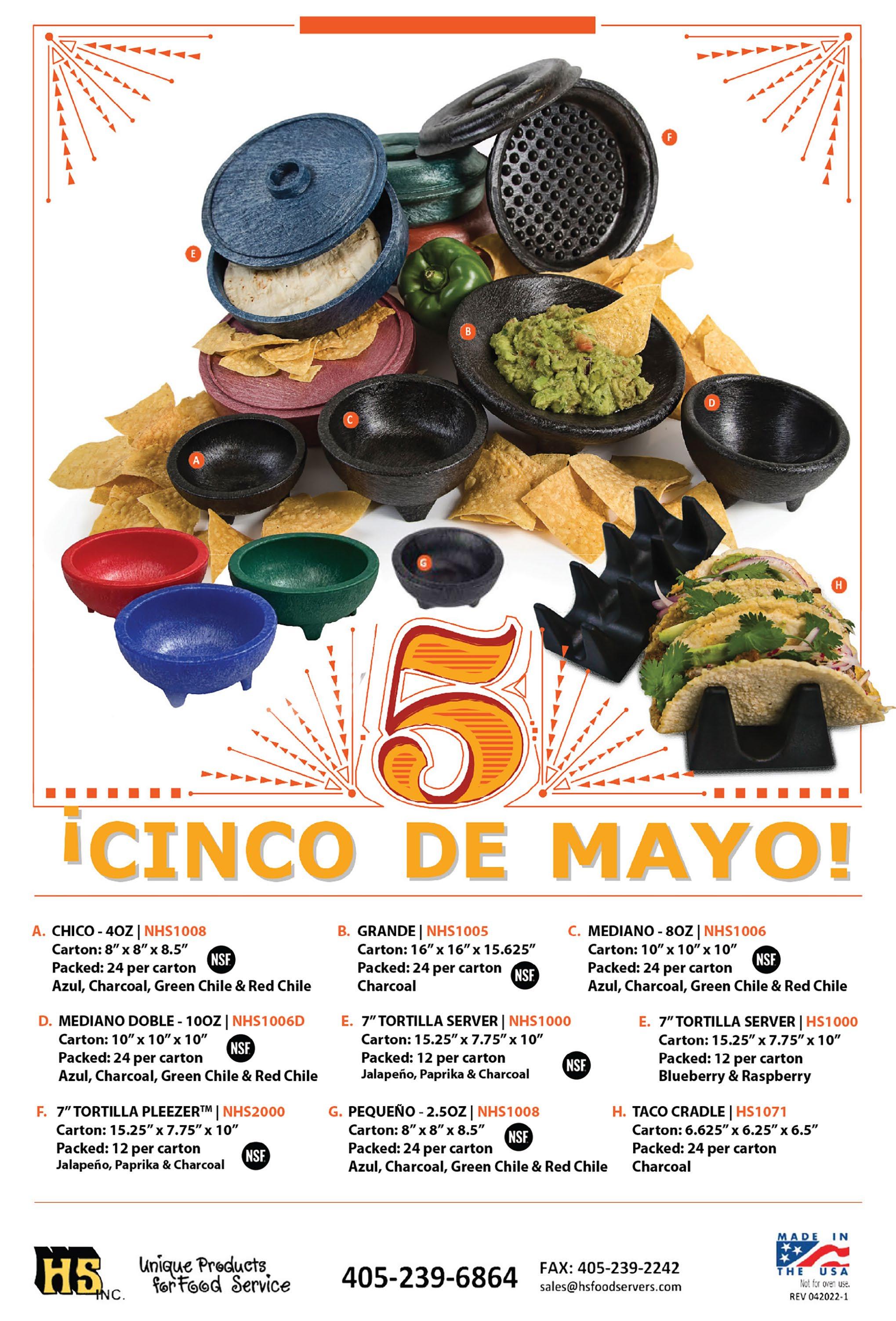
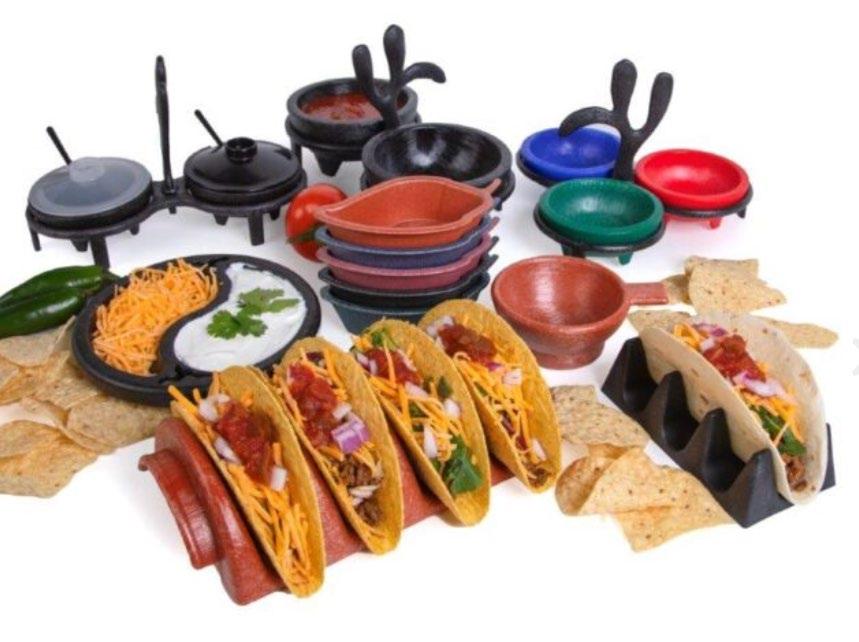
HS, Inc. The company’s line of serving ware is perfect for Mexican restaurants! Products include molcajetes; thermally insulated tortilla servers, and the new Tortilla PleezerTM that combines the thermal qualities and durability of the original server with the added benefit of patented elevators that keep the tortillas slightly raised; taco cradles that hold 3 tacos to keep them separate from rice and beans on the plate; taco servers with 4 compartments, perfect for kitchen preparation; chip and salsa servers; and a cactus style salsa caddie. Custom colors, plus custom logos on the tortilla server are also available. 405-239-6864; sales@hsfoodservers.com; hsfoodservers.com
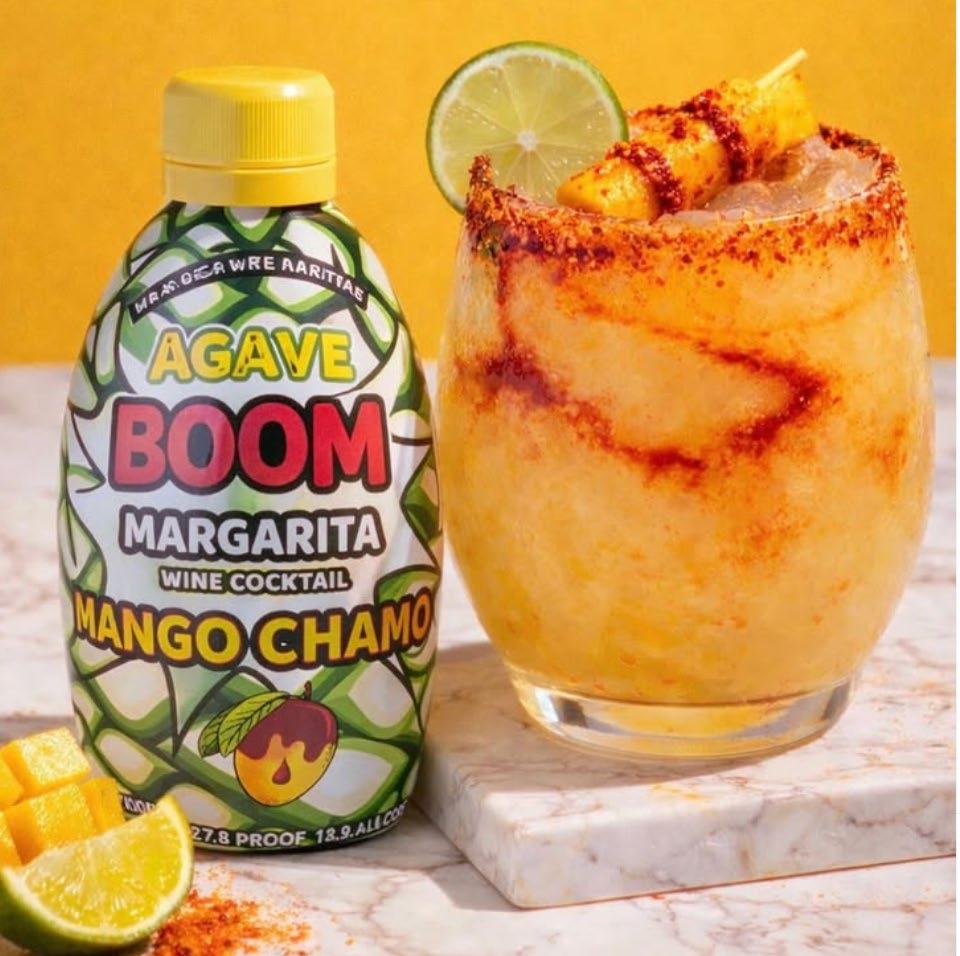
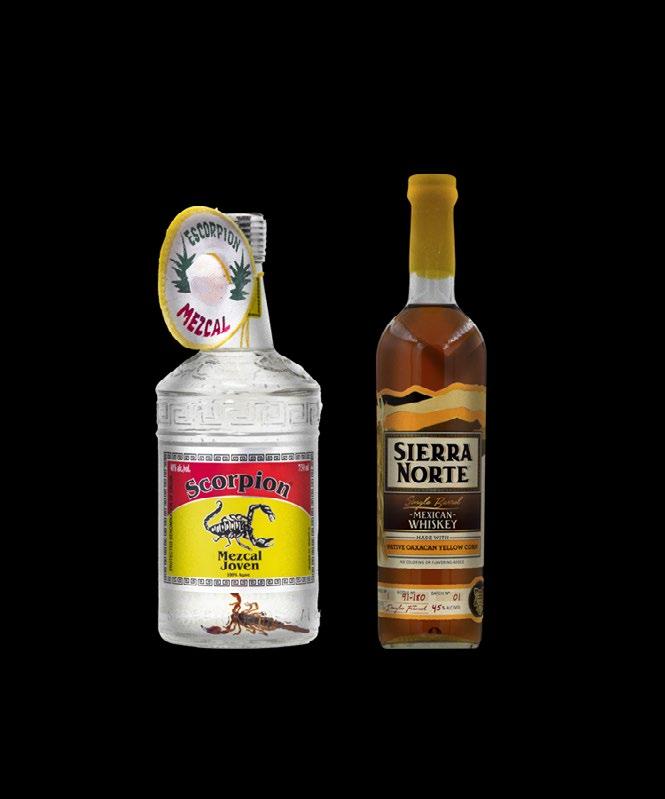
Casa Maestri Distillery’s Agave Boom Margaritas. These ready-to-drink cocktails are crafted with 100% agave wine and made and bottled in Mexico by a certified women-owned company. The kosher, gluten-free, 13.9% ABV cocktails come in eight flavors: Cucumber-Jalapeño, Lime, Mango-Chamoy, Passion Fruit, Piña-Coco, Watermelon, White Peach, Strawberry. Imported in the U.S. by Platinum Brands LLC. jose@ casamaestri.com; agaveboom.com
J. J. Keller & Associates Cut-resistant Gloves. Protect your employees’ hands with these manufacturer-patented BladestopTM cut-resistant gloves made with a high-performance protective material that combines a graphene technology-based engineered fiber with other common fibers like HPPE and recycled polyester. Part of the company’s SAFEGEAR® glove selection. JJKeller.com/gloves.
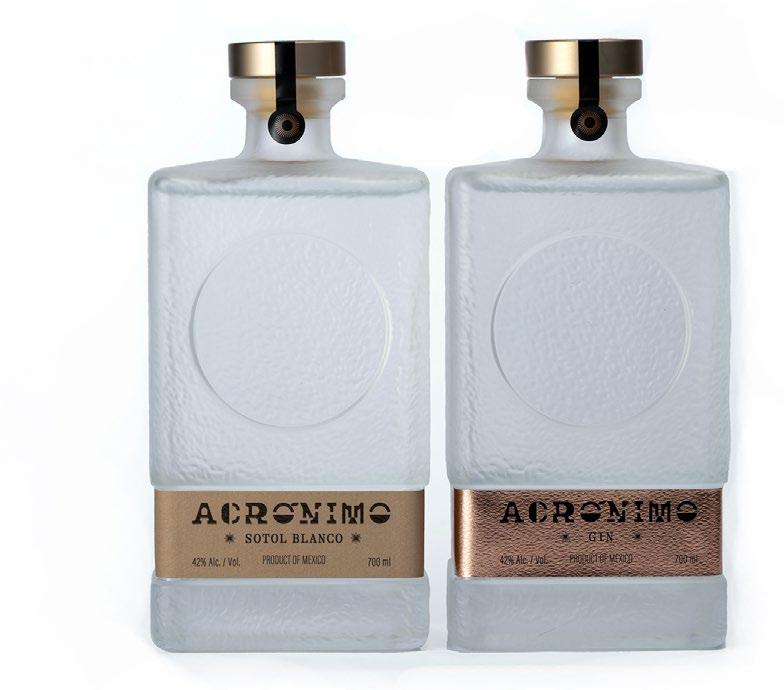
Acrónimo Spirits Gin Finished with Sotol. This new gin — the world’s first gin finished with sotol — is from the Chihuahua, Mexico-based makers of Acrónimo Sotol Blanco. Finished with 17 percent Sotol Blanco and crafted specifically to blend with a gin base; pairs well with a simple tonic or in more elevated drinks like the Paloma Querida made with grapefruit juice, fresh lime juice, agave syrup and a citrus garnish. Acrónimo.com
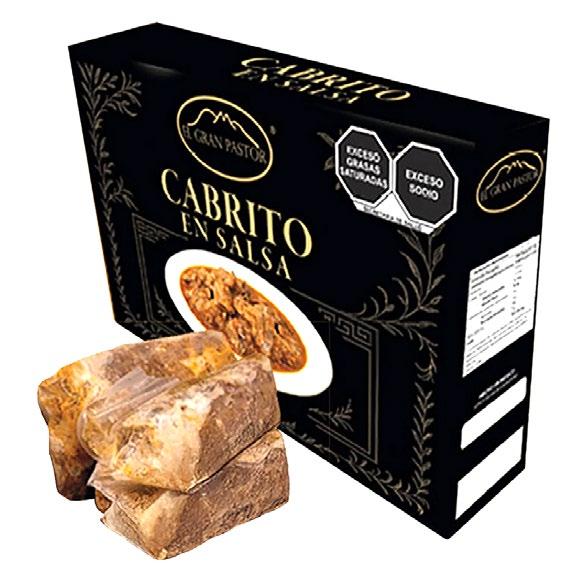
SuCabrito. This 100% family-owned Caprine processing plant, the largest in Mexico, processes over 450,000 cabritos (baby goats) and adult goats per year. Products include frozen goat, plus signature frozen stews for foodservice and retail including Cabrito En Salsa. Represented in the U.S. by its subsidiary company SuCabrito USA servicing mainly Texas, with distributors across the U.S. sucabritousa.com
July 12-13 | San Antonio, TX
TRAVIS BONINO, OWNER
Salsa Leedos Mexican Grill
BUILT ON FAMILY, FLAVOR, AND COMMUNITY
That motto has been at the heart of Salsa Leedos Mexican grill ever since Travis Bonino and his family opened the first location in Riverton, Utah, in 2001. While the business has grown to include a location in nearby Draper, its mission has remained the same: to offer bold, authentic Mexican flavors while maintaining a deep commitment to serving and supporting the community the restaurants serve.
From house-made salsas and sauces to carefully prepared meats and traditional recipes, the restaurant prides itself on delivering authentic flavors and generous portions that have kept guests coming back for generations. But for the Boninos, success has never been measured only in sales or growth, but in the ability to bring people together and make a difference, too.
That spirit of service reached a new level when devastating hurricanes struck Florida. The restaurant organized large-scale donation drives to help those affected by Hurricanes Ian, Helene, and Milton. Thanks to overwhelming community support, Salsa Leedos helped fill and deliver multiple semitruck loads of supplies to hurricane victims in Florida.
Salsa Leedos also helped organize a fundraiser for Deputy Mike Allred, a law enforcement officer who was shot in the line of duty along with his service dog, Azula. Salsa Leedos
provided a beachfront condo for the deputy and his family and rallied local businesses and community members to donate airline tickets, gift cards, and other resources to aid in their recovery.
More than 20 years after opening, Salsa Leedos Mexican Grill continues to provide every guest with an extraordinary experience, both inside the restaurant and throughout the community it proudly serves.
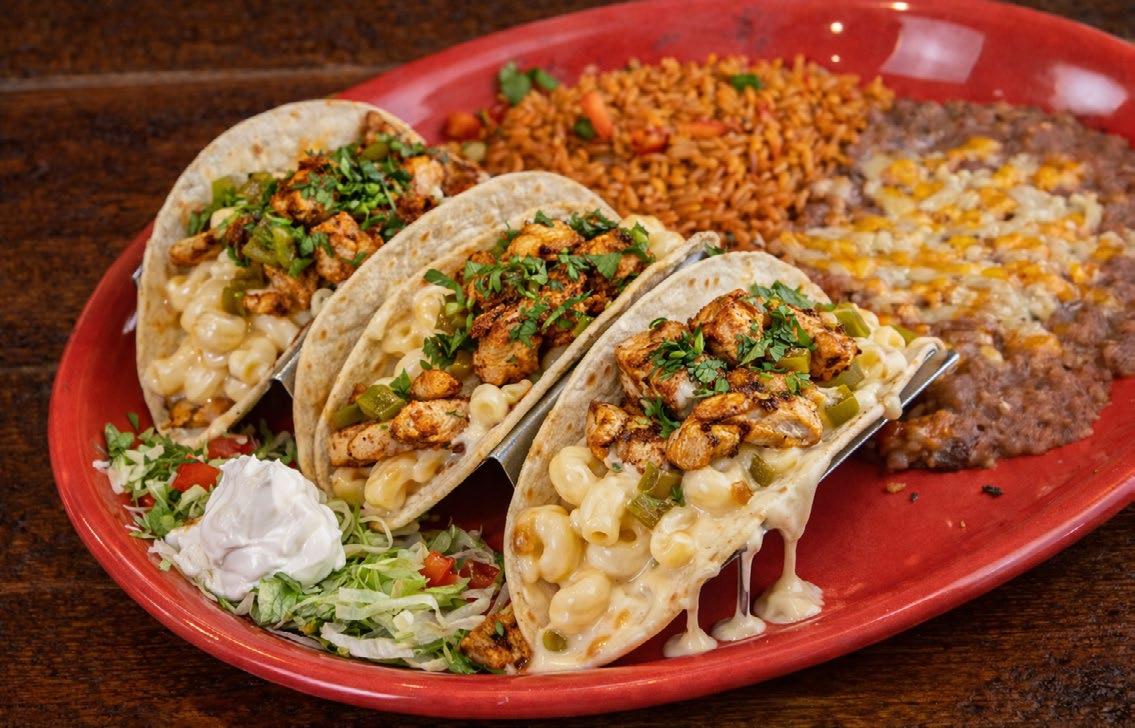
One menu item helping both locations create an extraordinary culinary experience: the Grilled Chicken Mac & Cheese Tacos, which Bonino describes as “a bold comfort-food mashup that features three warm flour tortillas stuffed with our creamy, house-made mac n’ cheese, savory grilled chicken fajitas, fresh diced jalapeños, and cilantro.”
It’s a dish that has quickly become a staff and guest favorite. “The combination of smoky grilled chicken, rich cheesy pasta, and just the right kick of heat creates a flavor-packed taco that’s both indulgent and unforgettable — the perfect example of Salsa Leedos’ fun and creative twist on classic Mexican flavors,” Bonino says.
Grilled Chicken Mac & Cheese Tacos
Makes 6 to 8 tacos
3 to 3.5 lbs. boneless chicken breast, cut into 1- to 2-oz. pieces
2 T. Special Reserve Red Chile Powder (Bueno Foods)
1 T. cayenne pepper
1 T. Season-All
1 T. Cajun pepper
1 T. garlic salt
Oil (beef tallow or cottonseed)
6 to 8 flour tortillas
Macaroni & cheese (make your own; we use white cheddar mac & cheese, but any mac works)
Cut the boneless chicken breasts into 1- to 2-ounce pieces.
In a bowl combine the chile powder, cayenne pepper, Season-All, Cajun pepper, and
garlic salt to make a seasoning mix. Toss the chicken with the seasoning mix until all of the chicken is evenly coated.
Add the beef tallow oil or cottonseed oil until the chicken is fully coated and saturated. Mix thoroughly, ensuring that all chicken pieces are evenly coated with seasoning and oil. Cover and marinate in refrigerator for 24 hours.
When ready to prepare the tacos, make mac & cheese; grill the chicken on a flat top grill until golden brown and fully cooked.
To assemble the tacos: Place 6 to 8 flour tortillas on the flat top grill. Add 1 to 2 ounces of shredded cheddar and jack cheese to each tortilla. Top with grilled chicken. Add macaroni and cheese and finish with chopped cilantro and chopped jalapeños. Serve hot from the grill.