elRestaurante


❋❋ ❋❋
Publisher Ed Avis and I recently returned from a month-long working vacation in Spain . It was a fantastic trip, full of visits to myriad restaurants and beautiful, historic sites in Barcelona, Madrid and Málaga.
But the most memorable parts of our adventure had less to do with touristy excursions and delicious food, and more to do with the people we met along our journey: sweet Joselina, who served us our first dinner of tapas and wine at Bar Universal in Barcelona and remembered us every time we stopped in for a drink; Elena and Juan, owners of the small neighborhood newsstand Ed visited every morning to buy the local paper and to chat with the kind couple he considered his newfound friends; Elias, the charming host of our paella cooking class, who took us from a tour of the famous La Boqueria Market to his lovely apartment overlooking Las Ramblas, where we helped prepare and then feasted on the traditional dish of Spain; and Martin, the interesting, talented artist who taught us the art of mosaic-making in his light- and art-filled home studio.
And then there were all of the others, people whose names we never knew, who so kindly helped us navigate everything from directions to dinner menus. No one expected us to speak Spanish or Catalan, (although we always tried, Ed faring far better than I), and in most businesses, employees almost always asked if we wanted information and menus in English, Spanish or Catalan. And we never once experienced even a hint of the anti-tourist sentiment we’d been warned to expect.

The month was a lesson in life that I won’t soon forget — one so important to learn, especially in the divided times we’re living in: No matter the country we came from, the country we live in, the business we’re employed in, or the language we speak, every one of us deserves to be treated with the same kindness we found in Spain.
For more about the food portion of our adventure, see page 22.
PUBLISHER Ed Avis
EDITOR Kathleen Furore
ART DIRECTOR Ala Ennes
MAIN OFFICE phone: 708.267.0023
PRESS RELEASES TO: kfurore@restmex.com
MAILING ADDRESS P.O. Box 13347 Chicago, IL 60613
SHIPPING ADDRESS 1317 W. Belden Ave. Chicago, IL 60614
AD SALES/ENGLISH Ed Avis 708.218.7755 e davis@elrestaurante.com
Suzanne Bernhardt 678.880.9282 suzanne@elrestaurante.com
AD SALES/ESPAÑOL Alfredo Espinola 52-55-4006-9540 alfredo@elrestaurante.com
Published by
Maiden Name Press, LLC Volume 28, Number 3 el Restaurante (formerly el Restaurante Mexicano) (ISSN 1091-5885) is published six times a year by Maiden Name Press, LLC 1317 W. Belden Ave., Chicago, IL 60614
All contents copyright© 2025 Maiden Name Press, LLC. Nothing in this issue may be reproduced in any form without publisher’s consent.





Kathleen Furore, editor
WE’RE KEEPIN’ IT REAL.

The avocado is known for its flavor, nutrition and culinary versatility. And, unfortunately for its inconsistency, waste and time-intensive labor. If you need a real solution, WHOLLY® Hand-Scooped Avocado keeps everything you love about 100% real Hass avocados, and ditches everything you don’t:
No need to sort, wash, cut, pit or scoop. Easy to store with longer shelf life. Full yield, no food waste.
DEALING WITH ICE AT YOUR DOORSTEP
In April, el Restaurante sponsored a webinar about issues facing restaurants that employ immigrant workers. The webinar, which was led by attorneys Becki Young, Catherine Walker and Mary Pivec from law firm Grossman Young & Hammond, covered a lot ground, but one key area was how to deal with an ICE raid. Here are four key points made during the webinar:

SO, WHAT’S AN “ANGEL SHOT ?”
Would you and your staff members know what to do if a customer covertly ordered an Angel Shot? It is important that you do — because knowing how to respond could prevent a crime from happening!
“An Angel Shot is a drink order made by a customer to inform a bartender that they are in an unsafe situation and need assistance,” explains information from TIPS (Training for Intervention ProcedureS), a leader in education and training for the responsible service, sale, and consumption of alcohol. “A customer asking for an angel shot indicates that they need help but do not feel comfortable outright asking for it in their present situation.”
1. Train your hosts, or any other employees who greets customers, what to do if ICE agents appear. And for every shift, make sure your host knows who in the restaurant – probably a manager – is prepared to speak with the agents. That manager should be someone who is cool under pressure and has your immigration attorney’s phone number.
2. In advance, learn about the different types of warrants ICE agents may provide. If you are given a warrant during a raid, carefully read it. If an agent does something beyond the scope of the warrant, do not interfere. Instead film the event with your phone or take notes, so that your attorney can evaluate the situation and determine if the results of that search are inadmissible in court.
3. During a raid, do not help employees to flee or hide. Your employees have the right to not speak with agents, but do not remind them of that right in the presence of the agents. If you do any of these things, you could be charged with obstruction.
4. If the agents ask for your I-9 forms (Employment Eligibility Verification), remind them that legally you have three days to produce the forms. Then deliver the forms electronically rather than by going to the office in person.
These four tips are just the beginning. To learn more, click here to watch the recording of the webinar
Typically, a bar or restaurant posts signs in women’s restrooms to let patrons know they can order an Angel Shot if they need help. Additional terms are sometimes used to communicate more specifically what the customer needs: the shot “neat” or “straight up” signals the customer wants an escort to their car; “on ice” is for a taxi or Uber; and “with lime” or “with a twist” is when the situation has escalated to the point that a call to police is warranted.
Click here to learn more from TIPS about the Angel Shot.
There’s even a new Angel Shot App that gives patrons the opportunity to “order” their Angel Shot with just a click.
Find out how to register and set up your account to make your venue Angel Shot Friendly at angelshotapp. com/restaurant-owners.php.

3rd Annual ANTOJO INDUSTRY TRADE EXPO
Offers Benefits to Restaurants and Vendors
Plans are underway for the the 3rd Annual Antojo Industry Trade Expo set for October 13 – 14 at the Long Beach Convention Center in Long Beach, California. el Restaurante reached out to Eric Jurado, the show’s producer, to learn more about the show and the benefits it will deliver to members of the Mexican/Latin foodservice industry.

el Restaurante: What makes the Antojo Expo unique in the trade show landscape today?
Jurado: Its laser focus! Antojo is designed to directly connect businesses with the power of the U.S. Latino foodservice and grocery retail sectors. This isn’t just a niche market; it represents a substantial $36.48 billion in 2024, projected to nearly double to $65.41 billion by 2034.
For exhibitors, this means you’re engaging with Latino business owners, procurement specialists, culinary innovators, and key distributors, which streamlines the path to valuable partnerships and sales channels. For attendees, Antojo provides exposure to the products, services, and trends shaping the U.S. Latino food and beverage landscape. We’re not just covering this demographic; we are this demographic’s trade event, offering a genuine first-mover advantage in a market ripe with opportunity.
el Restaurante: How has the show grown and changed since the first event?
Jurado: We initially focused on creating a connection point for Latino-owned businesses, but now Antojo has broadened its scope. We’ve seen a substantial increase in the number of exhibitors and the quality of qualified buyers attending from across the U.S.
One of the most significant changes has been the show’s increasing international appeal. We’re seeing more interest from countries around the globe that recognize it as the gateway into the U.S. Latino consumer base. And while initially centered on Latino-owned enterprises, the show now attracts a growing number of non-Latino companies as exhibitors and attendees. Antojo also has become a key sourcing destination for buyers from chain and independent restaurants, distributors, and brokers from across the United States. In essence, it has transformed from a regional gathering into an internationally recognized business platform.
We’ve also added cooking demos in an area called Cocina Antojo and the Latino Food Industry Association’s Latino Food & Beverage Summit, further enriching the opportunities and insights available to attendees.
el Restaurante: Why is it important for members of the Mexican/Latin foodservice industry to attend?
Jurado: First, in an industry where every dollar counts, Antojo provides an avenue to discover potentially more cost-effective and certainly more distinctive products. You’re connecting with specialized suppliers, including international companies eager to tap into the U.S. Latino market. This direct access can translate into better pricing and the ability to create menu or shelf items that truly stand out.
Second, understanding your customer base is paramount, especially during uncertain economic periods. Antojo offers a direct line to insights about the U.S. Latino market, allowing you to adapt your offerings to meet current demands and
cultivate a loyal customer following.
Third, this is a prime environment for forging partnerships and finding creative solutions by interacting with business owners, suppliers, and industry experts. These connections can spark ideas for streamlining operations, sourcing more efficiently, and developing collaborative strategies to navigate the challenges our industry is facing.
Furthermore, Antojo can help you identify potentially untapped niches within the broader U.S. Latino market. By understanding cultural preferences and regional tastes, you can tailor your offerings to attract specific customer segments and potentially unlock new revenue streams. Antojo this year isn’t just about seeing new products; it’s about gaining the strategic intelligence and connections needed to navigate these times and build a more sustainable future for your business.
el Restaurante: Any final thoughts?
Jurado: My final thought for the food and beverage industry is this: business owners should absolutely maintain a positive outlook, and the data on the U.S. Latino market is the driving force behind that optimism. The dramatic growth in buying power, from approximately $1.2 trillion in 2012 when the population was around 53 million to a projected near $4 trillion today with a current population of over 65 million, speaks volumes. The rising demand for authentic Latino products is no longer a trend; it’s a significant and expanding part of the mainstream, creating vast opportunities for innovation and growth nationwide.
For more information about the show, visit antojoindustry.com

chicken chorizo,
A great alternative to pork and beef
• Made from Premium Cuts of Chicken
• Authentic Mexican Flavor
• Expand Your Menu to Non-Pork and Beef Meat Eaters





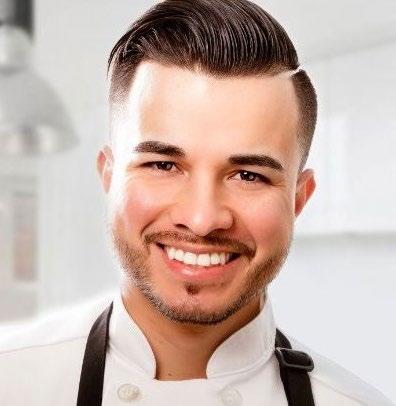
AMBROCIO GONZALEZ
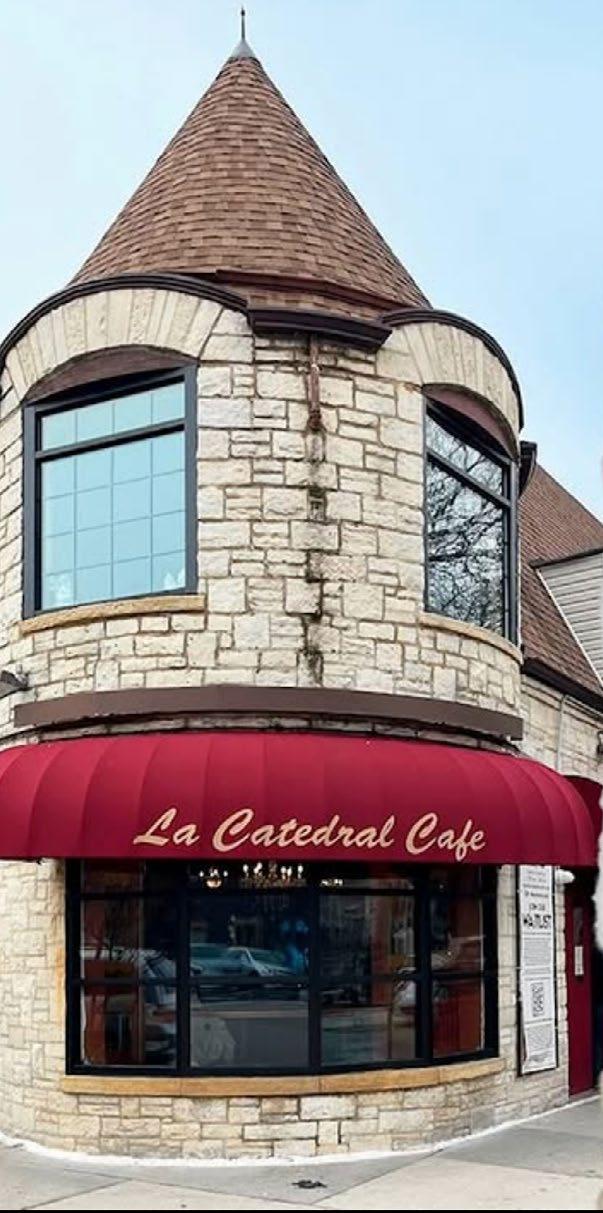
La Catedral Café & Restaurant, Chicago
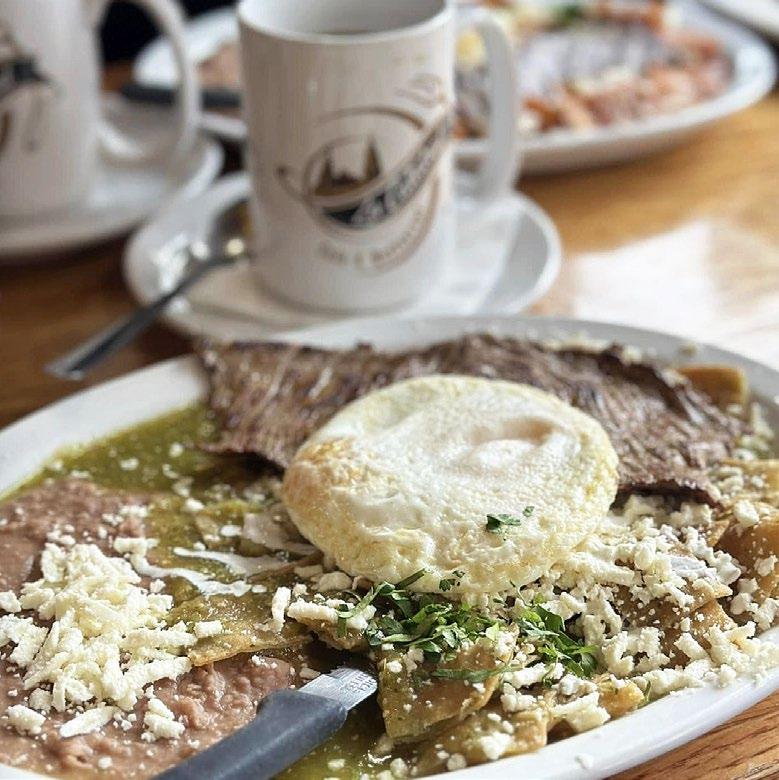
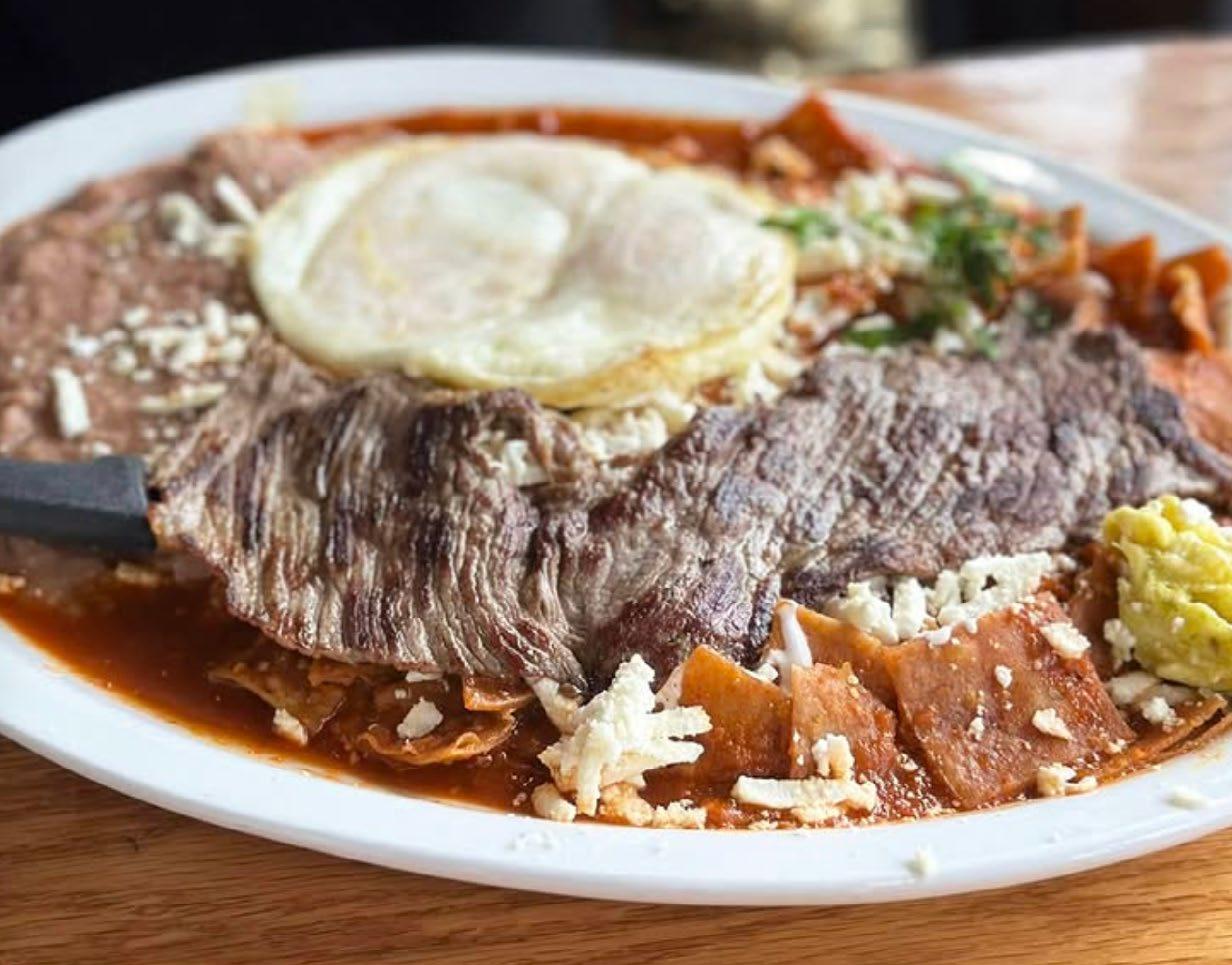
It’s been dubbed “Home of the World’s Best Chilaquiles” — a menu staple that Chicago area food reporter David Manilow highlighted on the April 2 episode of “The Dining Table” podcast that featured his list of the most authentic Mexican restaurants in the city.
“Mostly I go because they have the best chilaquiles I’ve had in Chicago,” Manilow said.
But there’s so much more to La Catedral than the 16 varieties of what the restaurant’s website calls its “Sinful Chilaquiles.”
The extensive menu includes dishes like huaraches, sopes, enfrijoladas and tortas — many inspired by recipes ChefOwner Ambrocio Gonzalez learned from his mother and grandmother as a child in Guadalajara and brought with him when he relocated to Chicago before he turned 16.
His knowledge about and love of cooking led to the debut of La Catedral in Chicago’s Little Village neighborhood in 2009, followed by locations in the city’s North Lawndale neighborhood in 2023 and Brighton Park in 2024. Now, as he prepares to open a new location in Chicago’s Loop, el Restaurante asked Gonzalez to share why he decided to embark on this new venture in spite of the challenges the industry is currently facing.
1What made you decide to open your new location during such a challenging, uncertain time?
Opening a new location during such uncertain times wasn’t an easy decision. There were definitely moments of doubt — thinking about the rising food costs, the economic pressures, and the challenges our immigrant community faces every day. But at the end of the day, my
passion for what we do — serving our community, creating a space where people feel at home — is stronger than any fear. I believe that in tough times, what people need the most is connection, comfort, and a reminder that good things are still possible. Opening this new location is my way of saying we’re not giving up. It’s my way of showing my team, my family, and our community that together, we can keep moving forward — no matter how hard things get.
2
Do all four of your restaurants have the same menu items?
Each of our La Catedral locations shares the heart and soul of our menu — but I do like to adjust a little depending on the community we’re serving. Food is personal, and I believe every neighborhood has its own heartbeat.
(continues on page 14)
“ Opening a new location during such uncertain times wasn’t an easy decision… But at the end of the day, my passion for what we do — serving our community, creating a space where people feel at home — is stronger than any fear. I believe that in tough times, what people need the most is connection, comfort, and a reminder that good things are still possible.”
Chilaquiles Verdes
La Catedral Little Village
“If you truly believe that your food, your vision, your purpose can serve more people — take the risk. Just be sure you’re not chasing growth for growth’s sake…And remember, the most important ingredient in any expansion isn’t the menu or the space — it’s the heart you put into it.”
For the Loop location, we are keeping our classic favorites, the dishes that our loyal guests know and love, but we’re also excited to introduce a few new items that cater to the busy, downtown lifestyle — lighter options, faster pick-up choices, and a few special dishes inspired by the city’s energy. It’s important to me that every plate we serve feels like a piece of home, whether you have ten minutes or an hour to sit and enjoy it.
3
You have such loyal clientele at your other locations. What do you anticipate your biggest challenge will be in building that kind of loyal following for the downtown location?
Building loyalty doesn’t happen overnight — it’s built one customer, one meal, one moment at a time.
Our biggest challenge downtown will be introducing ourselves to a brand-new audience that maybe hasn’t heard of La Catedral yet. But honestly, that’s part of the excitement, too. We
plan to host some special events, little celebrations that bring the warmth and soul of our original locations into the heart of downtown. More than promotions, what we really want to offer is an experience — the feeling that no matter where you come from, when you step through our doors, you are welcome here.
4
I read that you also plan to open another restaurant in Little Village as well as a coffee shop/café. Are those plans still on?
Yes, those dreams are still alive. We’re moving forward with another location in Little Village — that’s been on my heart for a long time. Opening the Loop location didn’t slow down our vision — if anything, it fueled it even more. I come from humble beginnings, and I know what it feels like to have a dream that seems too big. But I also know that our community deserves spaces that are built for them, with love and intention. Every new project is a tribute to the people who believed in us when we were just starting — and to those who are still dreaming .
5
What advice do you have for an independent Mexican restaurant owner who has been thinking of expanding but isn’t sure when the time is right to make that move?
My advice to any independent restaurant owner thinking of expanding is this: Move with your heart but stay grounded in your mission. There will never be a “perfect” time. There will always be challenges, fears, doubts. But if you truly believe that your food, your vision, your purpose can serve more people — take the risk.
Just be sure you’re not chasing growth for growth’s sake. Grow because you have something special to offer. And remember, the most important ingredient in any expansion isn’t the menu or the space — it’s the heart you put into it.
Chilaquiles Divorciados
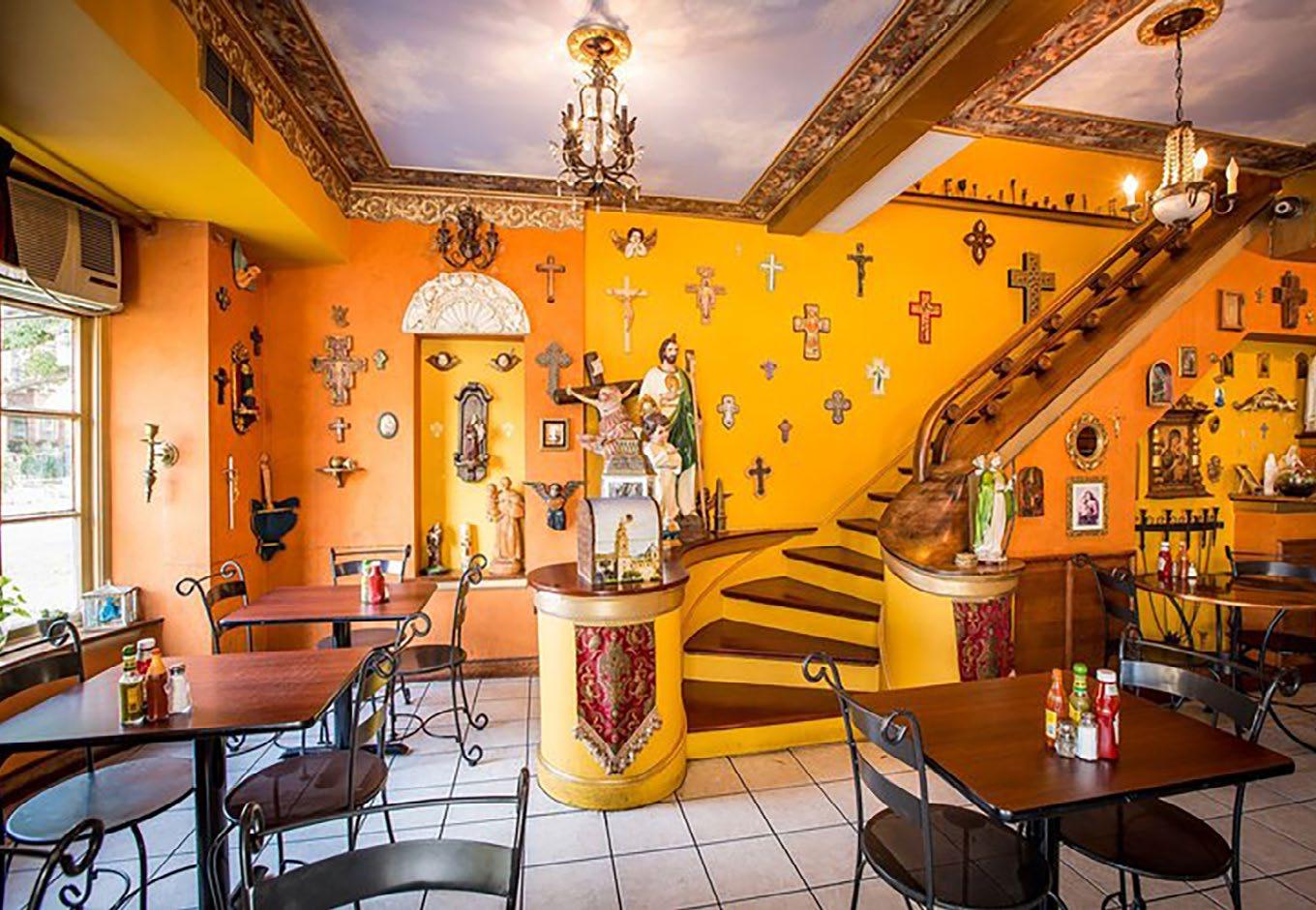
The interior of the Little Village location is filled with Catholic-based, religious artifacts.
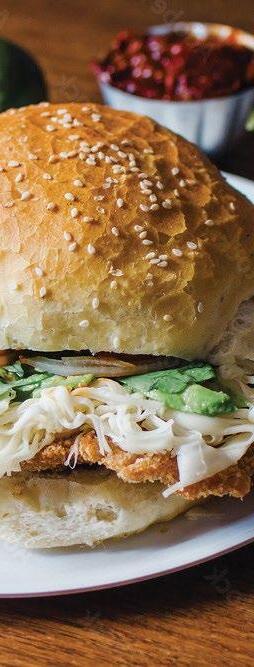
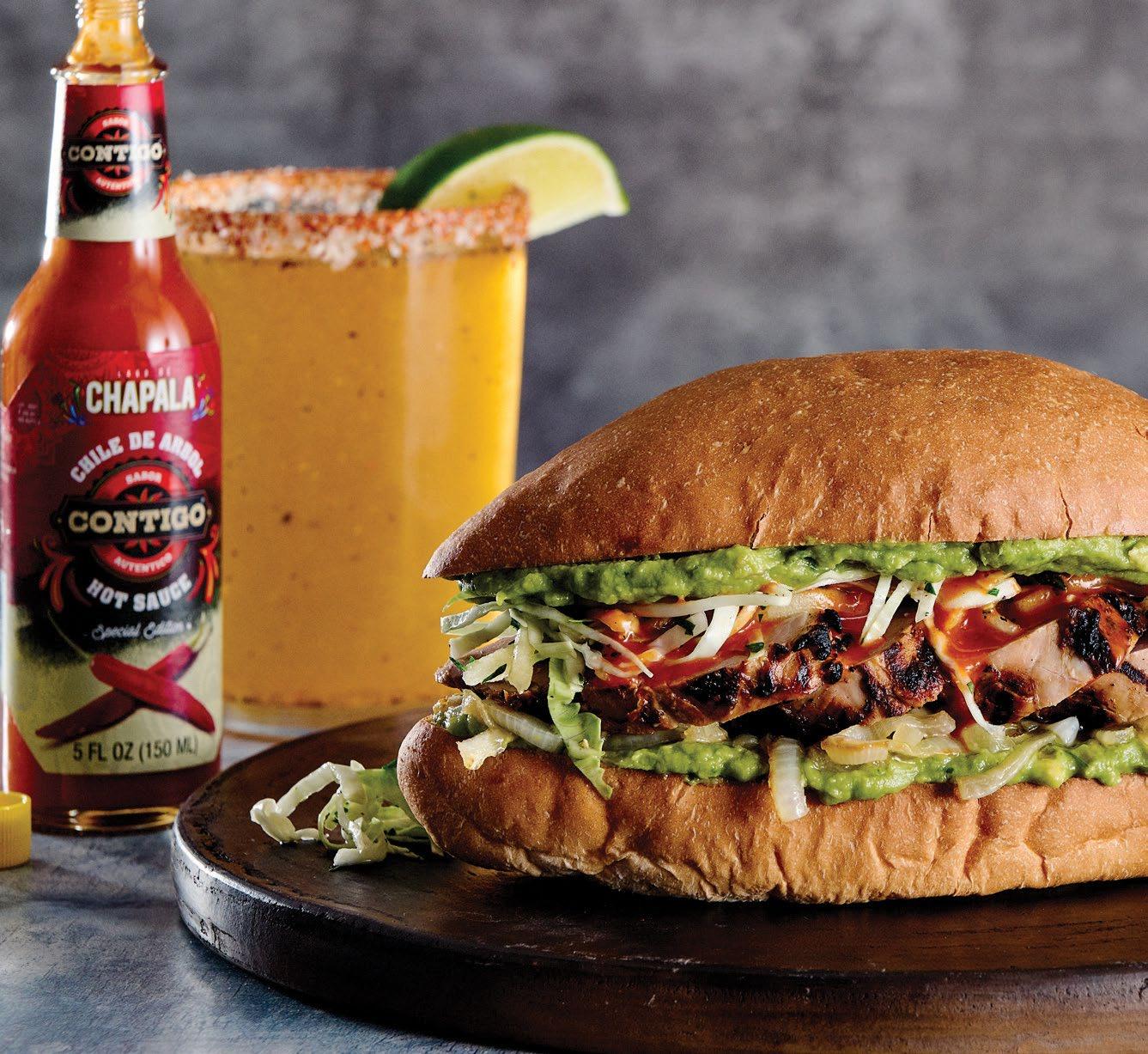
TURN UP THE FLAVOR ON TORTAS & CEMITAS
Elevate your sandwich game with Contigo® featuring authentic, craveable ingredients like seasoned chicken breast, bold al pastor, creamy avocado, fresh cilantro, and rich cheeses. Whether you’re crafting a classic torta or a signature cemita, Contigo brings the real flavor of Latin street food to every bite.
“AS
DINERS CONTINUE TO SEEK UNIQUE DINING EXPERIENCES, SALADS THAT REFLECT GLOBAL FLAVORS ARE POISED FOR LONG-TERM POPULARITY.”
–TOP 15 SALAD TRENDS REPORT, Toast
Salad Season

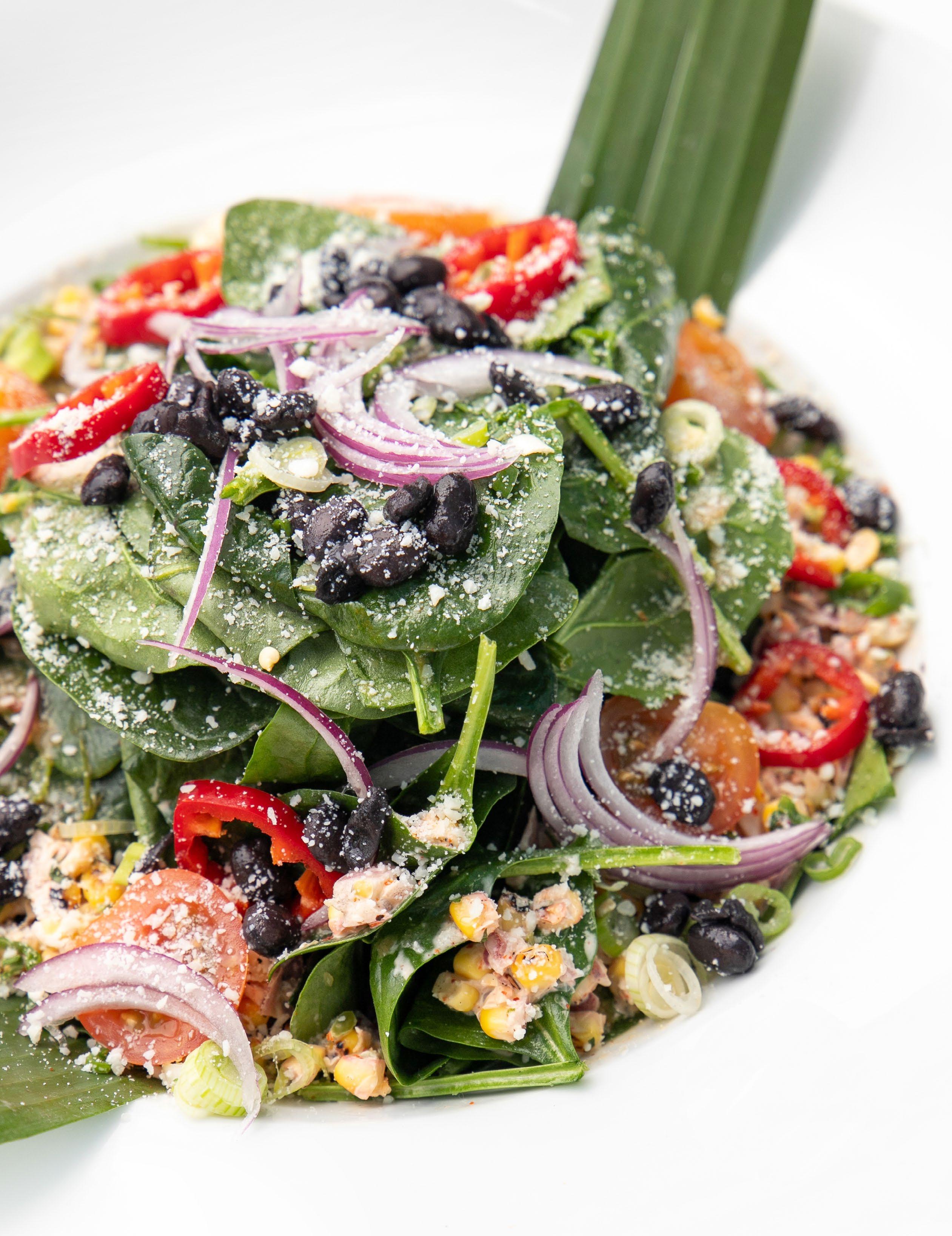
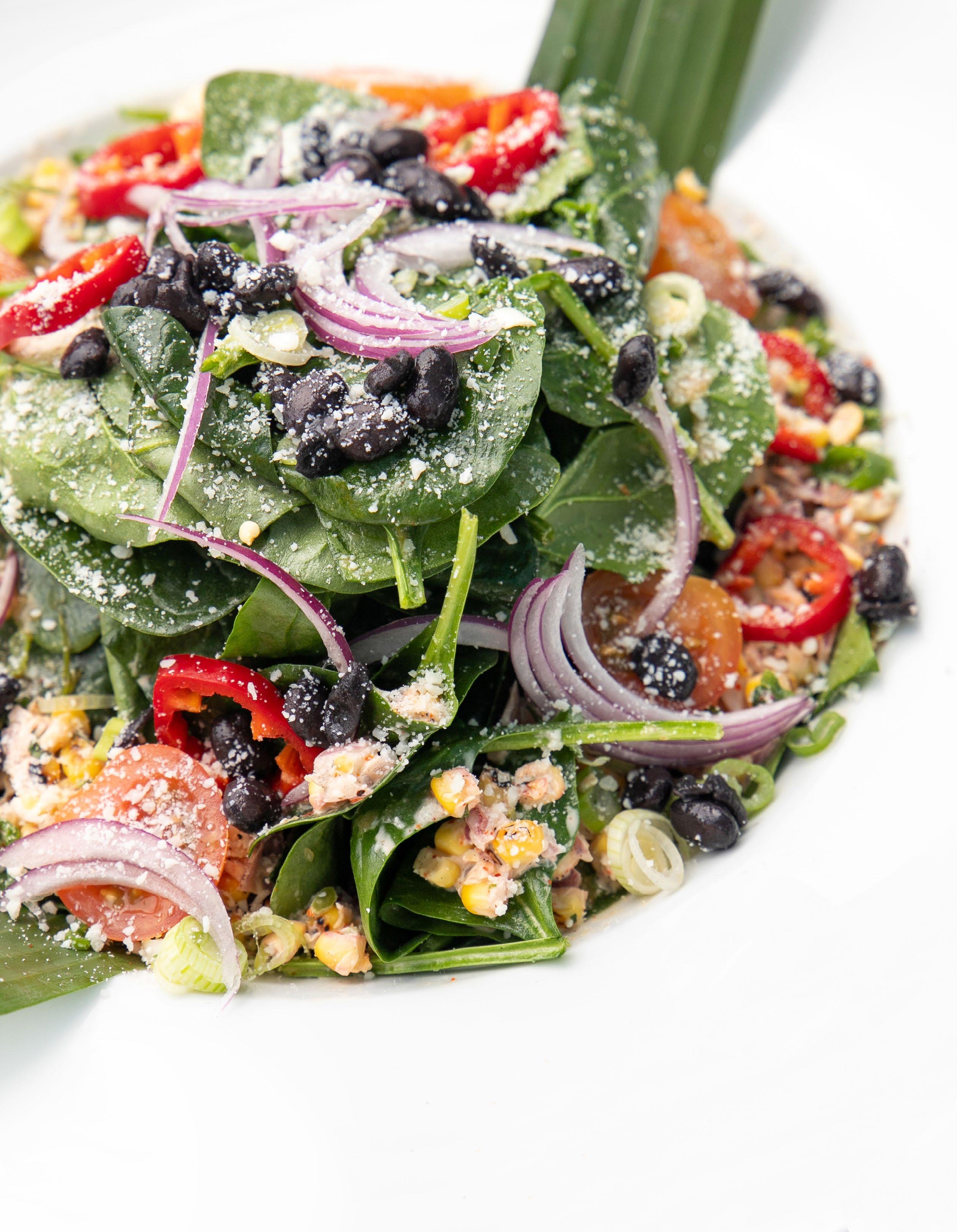
Casa Gabriela’s Mexican Street Corn Kale Salad
PHOTO BY VIANCA DE LA PARRA
| BY KATHLEEN FURORE |
Are you listening to what the dining-out public is saying about salad?
According to Datassential’s 2024 Healthy Food Trends report, 53 percent of consumers say it’s important for restaurants to offer healthful main dish options — and they identified salads as the most important option. Sixty-four percent of respondents said they want salads on the menu, even if they sometimes select more indulgent options.
Data from POS company Toast is equally positive, and cites global flavors as one of today’s top salad trends.
“As diners continue to seek unique dining experiences, salads that reflect global flavors are poised for long-term popularity,” information from the Toast report says.
Those facts make it simple to see why Mexican- and Latin-inspired restaurants should offer a variety of interesting salads on their menus.
EXCEEDING EXPECTATIONS
Two types of salad have always been pretty standard fare on Mexican restaurant menus. Customers have come to expect a basic lettuce salad with carrots and onions served with dishes like enchi-
“I SUGGEST ALWAYS, ALWAYS, ALWAYS USE FRESH INGREDIENTS. NOTHING OUT OF THE CAN, AND EVERYTHING AS FRESH AS POSSIBLE. AND BE CREATIVE. THINK A LITTLE OUTSIDE THE BOX TO CREATE SOMETHING WONDERFUL THAT WILL ‘WOW’ YOUR GUESTS.”
– CHEF GABRIELA LOPEZ, Casa Gabriela
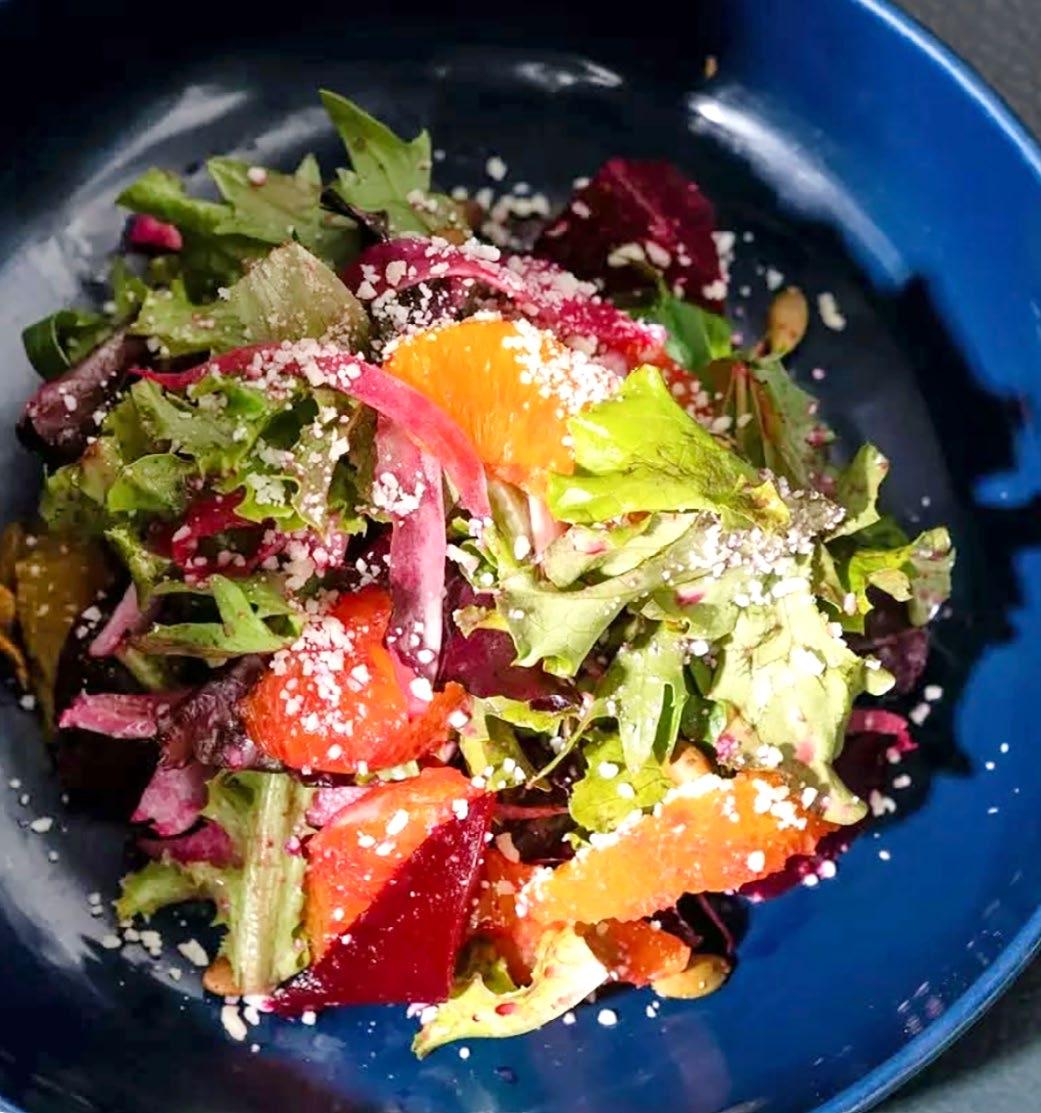
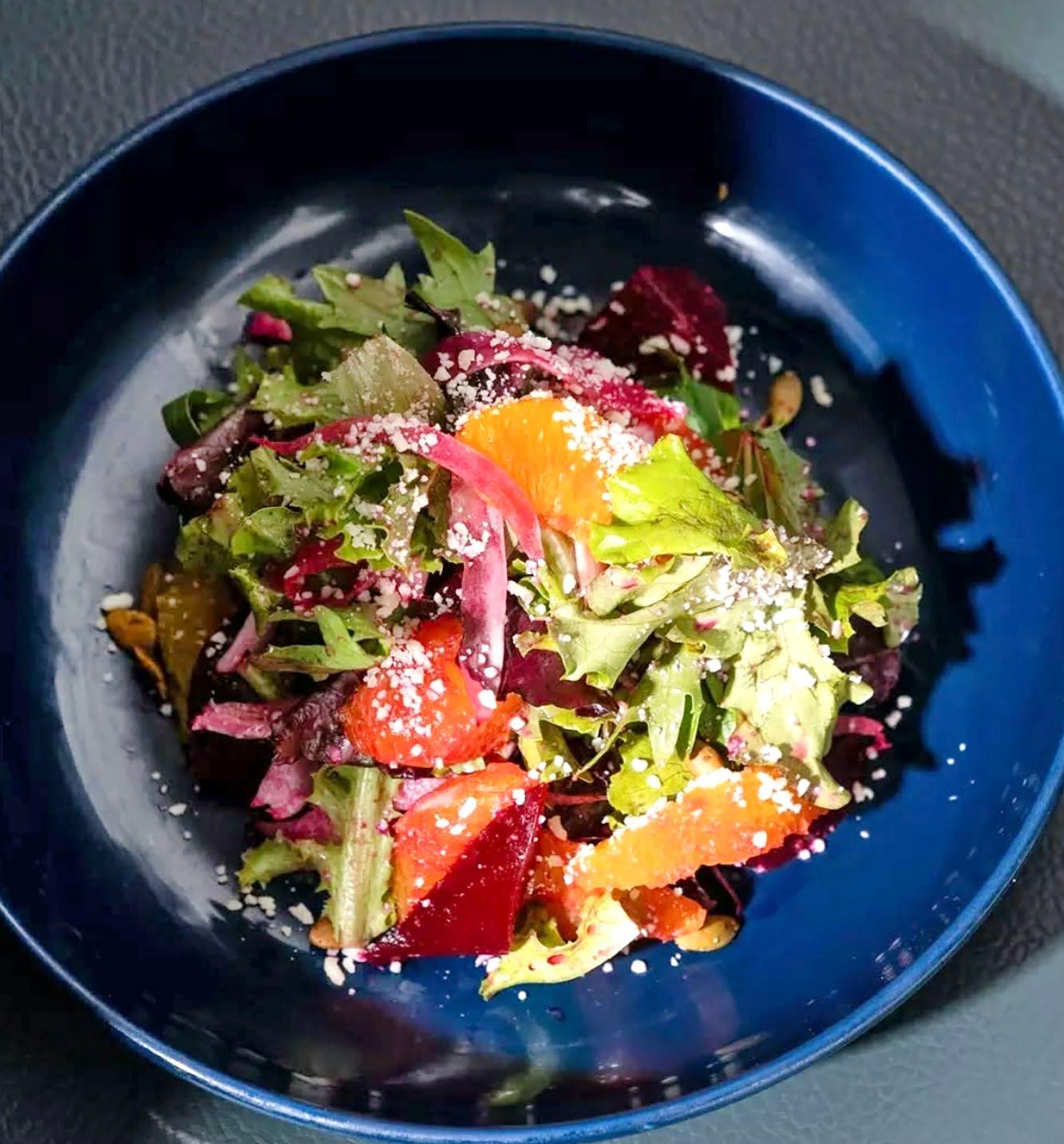
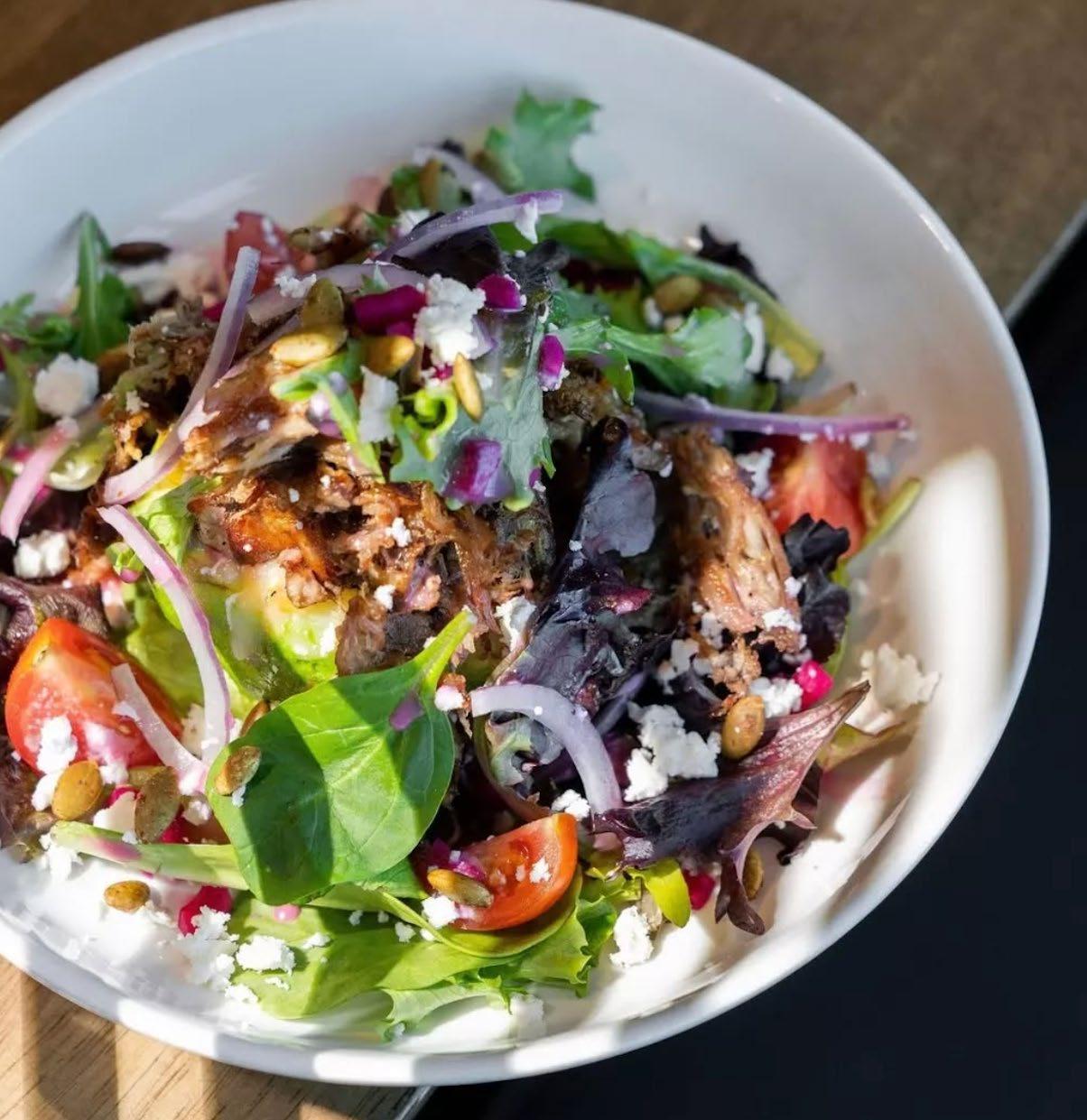
Paraiso Taqueria’s Roasted Beets Salad
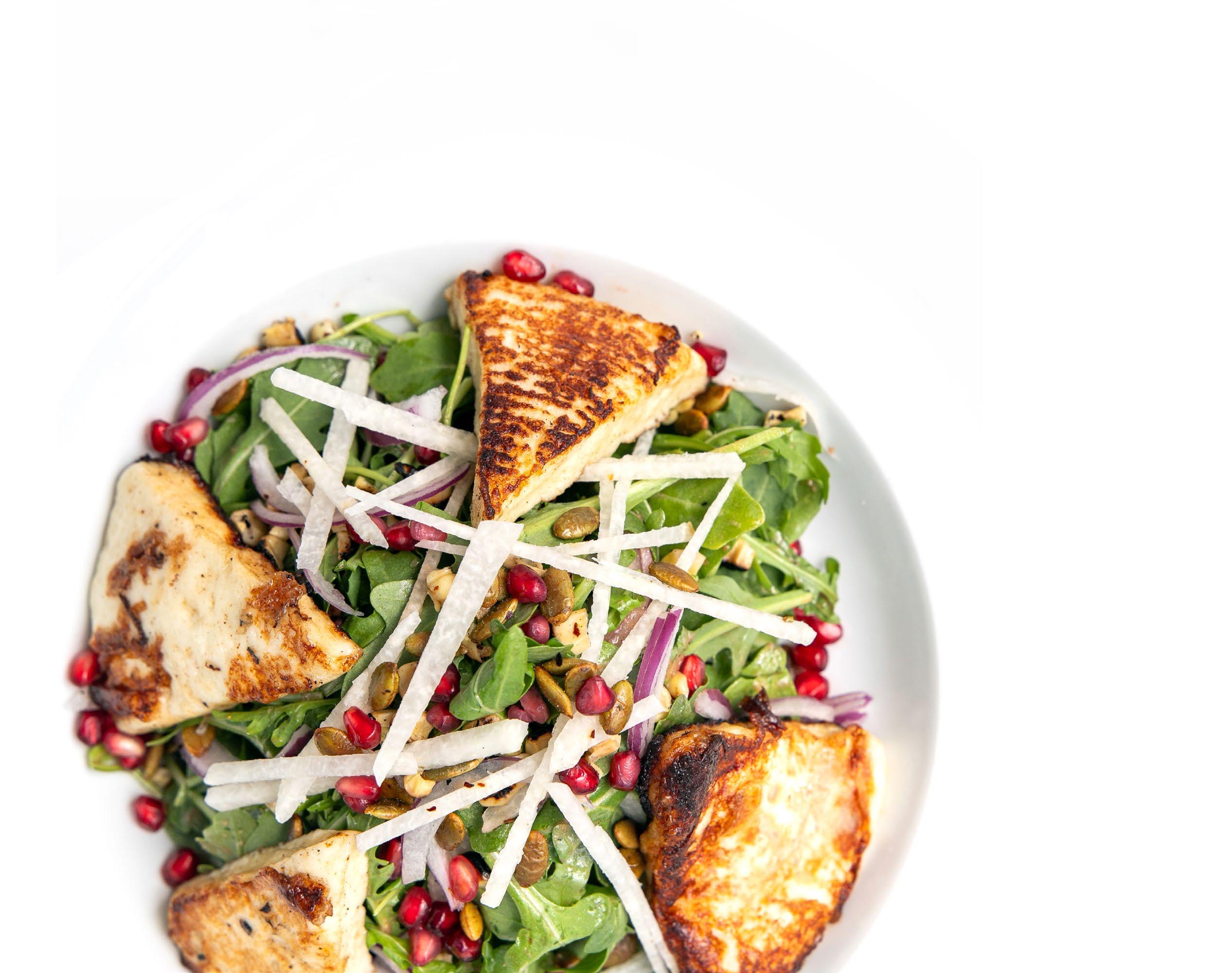
Casa Gabriela’s Panela a la Plancha
PHOTO BY VIANCA DE LA PARA
ladas and burritos, as well as a taco salad.
That’s not what customers find at Casa Gabriela in La Mesa, California and Paraiso Taqueria & Mezcaleria in Washington, D.C.
“We have always offered the three salads since opening in January 2023 — the Caesar Salad, Mexican Street Corn Kale Salad, and Panela a la Plancha,” Casa Gabriela’s Chef-Owner Gabriela Lopez (aka “Chef Gaby”) says. “They definitely do well…I would say at least a third of our covers order a salad, and that is a conservative estimate.”
The Caesar salad is the most popular salad — one she calls “a staple of mi casa.”

Paraiso Taqueria’s Avocado Salad
And while that offering doesn’t change with the seasons, the others do.
“For the Mexican Street Corn Kale Salad and Panela a la Plancha, I go more seasonal. I always use kale for the former, and I always use baby arugula for the latter,” she explains. “Then in fall, for example, I add roasted carrots or roasted butternut squash to the kale salad. I also recently used honey-roasted pear in the panela salad.
The dressings change, too, depending on what is the freshest available. Right now, the kale salad has a pomegranate vinaigrette. Before that it had an ancho vinaigrette.”
At Paraiso, the namesake Ensalada Paraiso — a refreshing mix of greens, cherry tomatoes, carrots, queso cotija, roasted
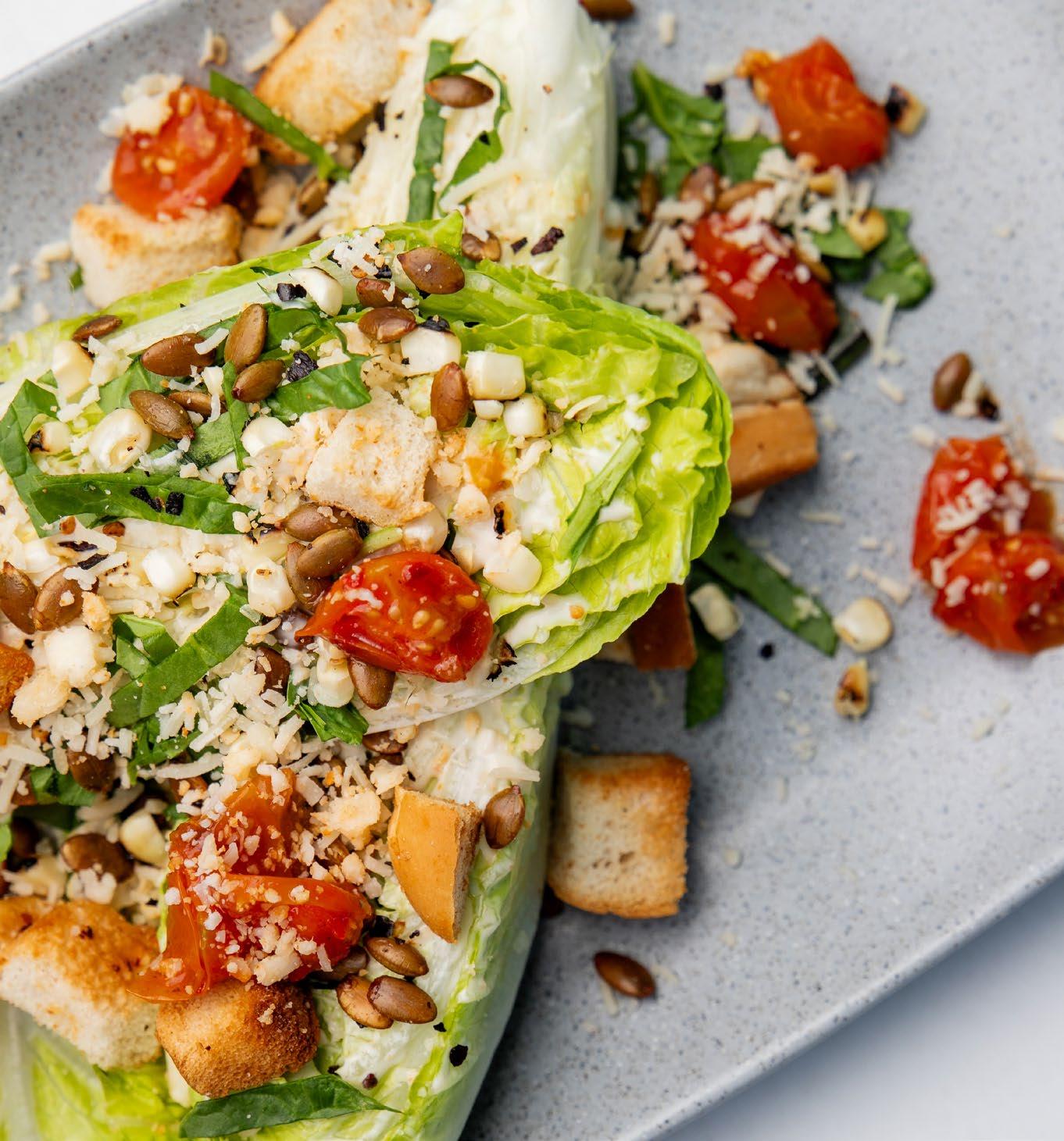

Casa Gabriela’s Caesar Salad
PHOTO BY VIANCA DE LA PARRA


“WE HAVE ALWAYS OFFERED THE THREE SALADS SINCE OPENING IN JANUARY 2023 — THE CAESAR SALAD, MEXICAN STREET CORN KALE SALAD, AND PANELA A LA PLANCHA. THEY DEFINITELY DO WELL… I WOULD SAY AT LEAST A THIRD OF OUR COVERS ORDER A SALAD, AND THAT IS A CONSERVATIVE ESTIMATE.”
– CHEF GABY, Casa Gabriela
pepita seeds and cilantro ranch dressing — is a guest favorite that is always on the menu, according to Tahmina Ghaffer, VP of operations and marketing. Other options, which change seasonally, have included the Roasted Beets Salad with fennel, beets, orange wedges, greens, queso cotija, pepitas and hibiscus vinaigrette and the Avocado Salad, a half avocado stuffed with roasted corn and gratinated cheese, topped with crispy carnitas, cherry tomatoes, red pickled daikon, red onion, feta cheese and beet hibiscus vinaigrette.
THE CREATIVE PROCESS
The salads Lopez and Ghaffer describe are fresh, creative and modern, yet maintain the Mexican spirit of their respective restaurants.
So, what’s their secret to achieving that balance?
“First and foremost, my inspiration for the salads and anything I create comes from my grandmother and mother, who both came from Guadalajara. They taught me so much, and many of my grandmother’s recipes are on my menu to this day,” Lopez explains. “Secondly, since I grew up in Tijuana, I felt it was fitting to have a Caesar on the menu since that was the birthplace of the salad. And I infuse my own flavors like using toasted chile de arbol to make the croutons a little spicy. I also include basil, roasted tomatoes, shaved cotija enchilado, and spiced pepitas. And all the dressings I create are made from scratch with fresh ingredients. I use freshly squeezed juices like from watermelon, honey, garlic, fried garlic. It’s like I come up with something out of nothing sometimes.”
“AT PARAISO, WE OFFER A CREATIVE CUISINE INSPIRED BY THE STREETS AND HOME KITCHENS OF MEXICO. WHEN OUR CHEF DEVELOPS RECIPES, HE SOMETIMES TAKES A CLASSIC RECIPE AND INCORPORATES MEXICAN INGREDIENTS.”
– TAHMINA GHAFFER, Paraiso Taqueria & Mezcaleria
The simplest explanation, she adds, is that the way she creates her salad goes back to her love of playing with textures and flavors. “I’ve done that ever since I was a little girl. Fortunately, I was always good at that. I think I was different than most kids in that I had this palate that was very open,” Lopez says.
“At Paraiso, we offer a creative cuisine inspired by the streets and home kitchens of Mexico,” Ghaffer says. “When our chef develops recipes, he sometimes takes a classic recipe and incorporates Mexican ingredients.”
THE IMPACT OF TARIFFS
Are you finding (or fearful) that the current situation with tariffs and the economy overall will impact your ability to source the fresh ingredients you’ll need for your menu?
The teams at Casa Gabriela and Paraiso aren’t overly concerned but are taking a wait-and-see approach.
“I am not yet concerned about the situation with tariffs. We are lucky to have many options of sources for produce, including a farmer’s market right across the street from the restaurant every Friday afternoon,” Lopez says. “I have a great purveyor, too, called Vesta Foodservice. (For more about the benefits of sourcing from local purveyors, see the story “The Local Advantage” on page 32.)
“We are sure the produce we buy will be affected, but we will see how things go and how we will tackle this challenge,” Ghaffer says.
Whatever happens, they won’t stop creating salads that enhance their menus, and offer this advice for other Mexican restaurants that want to craft outstanding salad options.
“You can always create a non-traditional salad with Mexican ingredients that pairs really well with the rest of the food on the menu,” Ghaffer says.
“I suggest always, always, always use fresh ingredients. Nothing out of the can, and everything as fresh as possible,” Lopez stresses. “And be creative. Think a little outside the box to create something wonderful that will ‘wow’ your guests.”







Mexican Restaurants in Spain:
VARIED AND THRIVING
PUBLISHER’S NOTE: Editor Kathleen Furore and I recently spent a month in Spain and visited several Mexican restaurants during our visit — all in the name of editorial research, of course! Below are the findings of our “research.”
| BY ED AVIS , Publisher | There is rarely a week that goes by that we don’t visit one of our favorite Mexican restaurants in Chicago — so when we arrived in Spain, we knew we would eventually be craving favorites like Cochinita Pibil, Chicken Enchiladas, Pozole and, of course, great Margaritas.
Our first impression was that the only Mexican spots we would ever find were small taco shops — I’m happy to report that was not the case! In Barcelona and Madrid, we discovered restaurants that served high-quality, authentic Mexican cuisine. The supply of quality ingredients appeared solid — avocadoes for guacamole, achiote for Cochinita Pibil, and good tortillas were readily available. We even had huitlacoche at one restaurant.
The strength of the supply chain — whether ingredients are coming from Mexico or closer locales — was confirmed in conversations with restaurant employees and local restaurant reviews. Knowledge of Mexican cooking techniques also was evident. The fact that there is no language barrier means that Mexicans, and other Latin Americans, can immediately dive into the local food scene if they migrate to Spain.
Here is a snapshot of the food scene we found.
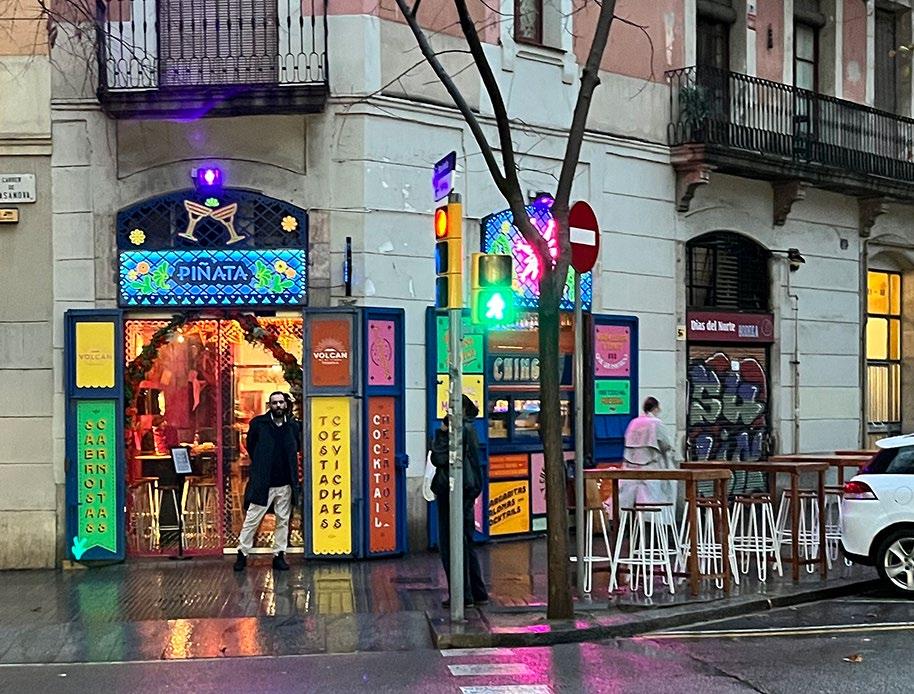
PIÑATA CANTINA, Barcelona
This first Mexican restaurant we tried provided evidence that there are Mexican restaurants in Spain that go beyond the basics. The menu included a variety of ceviches, panuchos, tostadas and innovative tacos, with ingredients ranging
Piñata Cantina Sikil Pak
Piñata Cantina Tacos de Milpa
Piñata Cantina
from cochinita pibil to pulpo to pumpkin and corn.
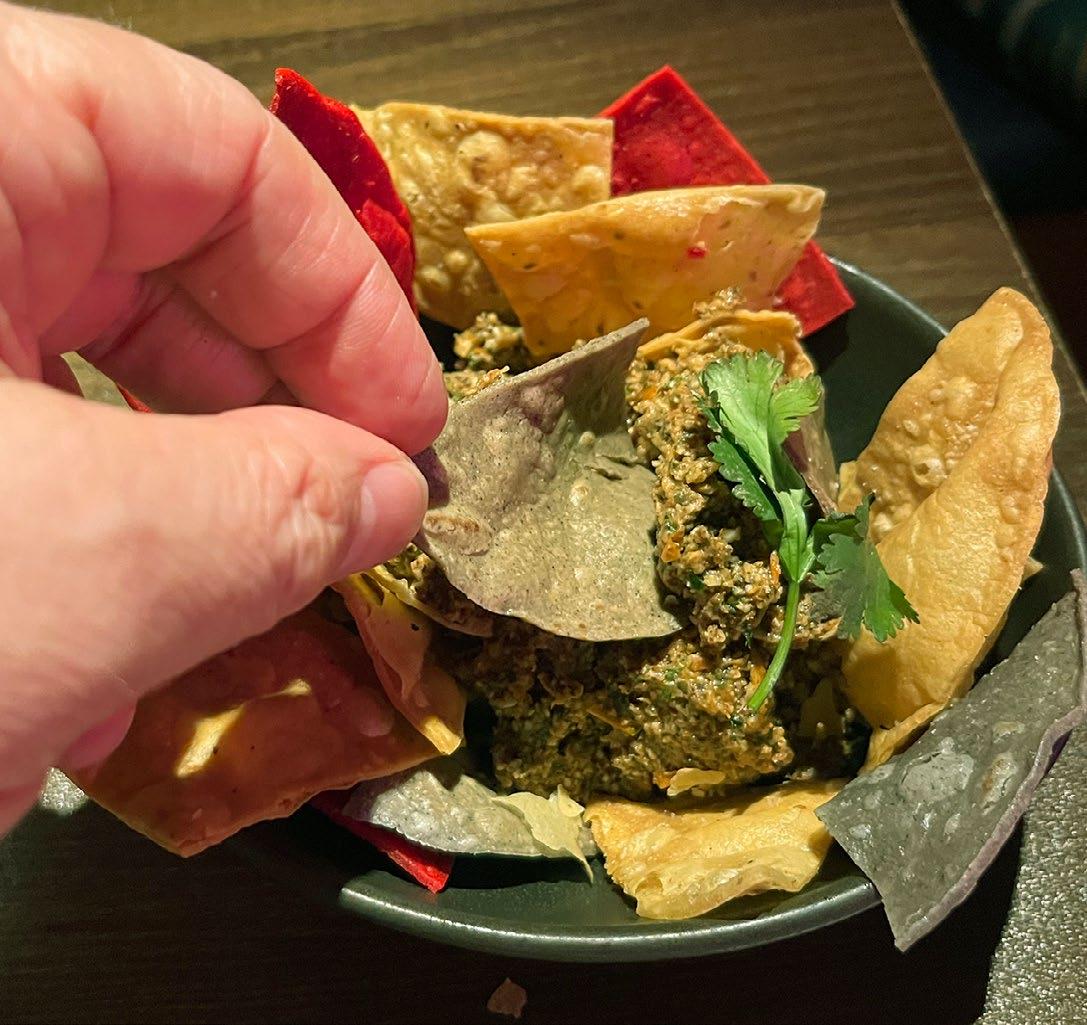
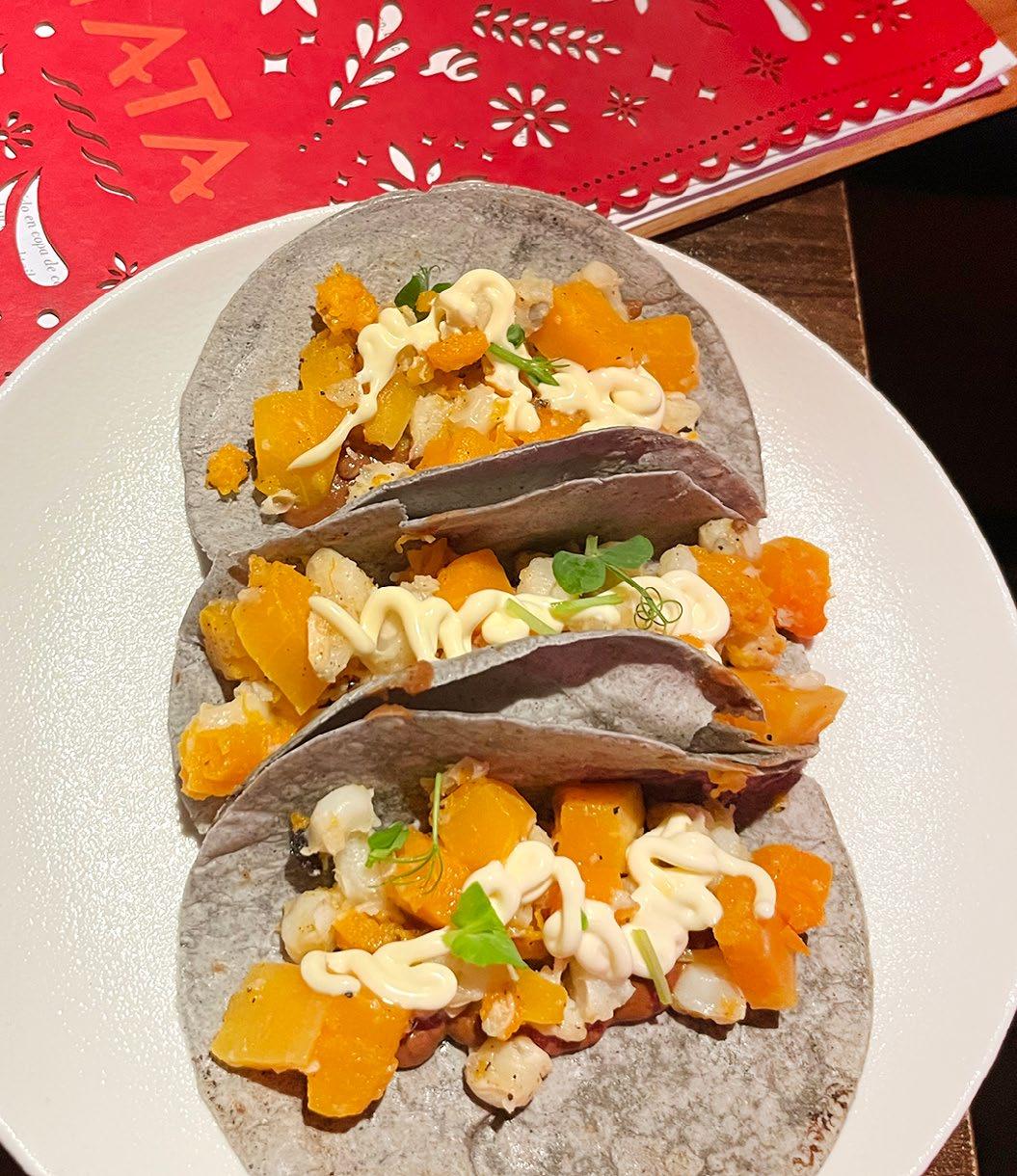
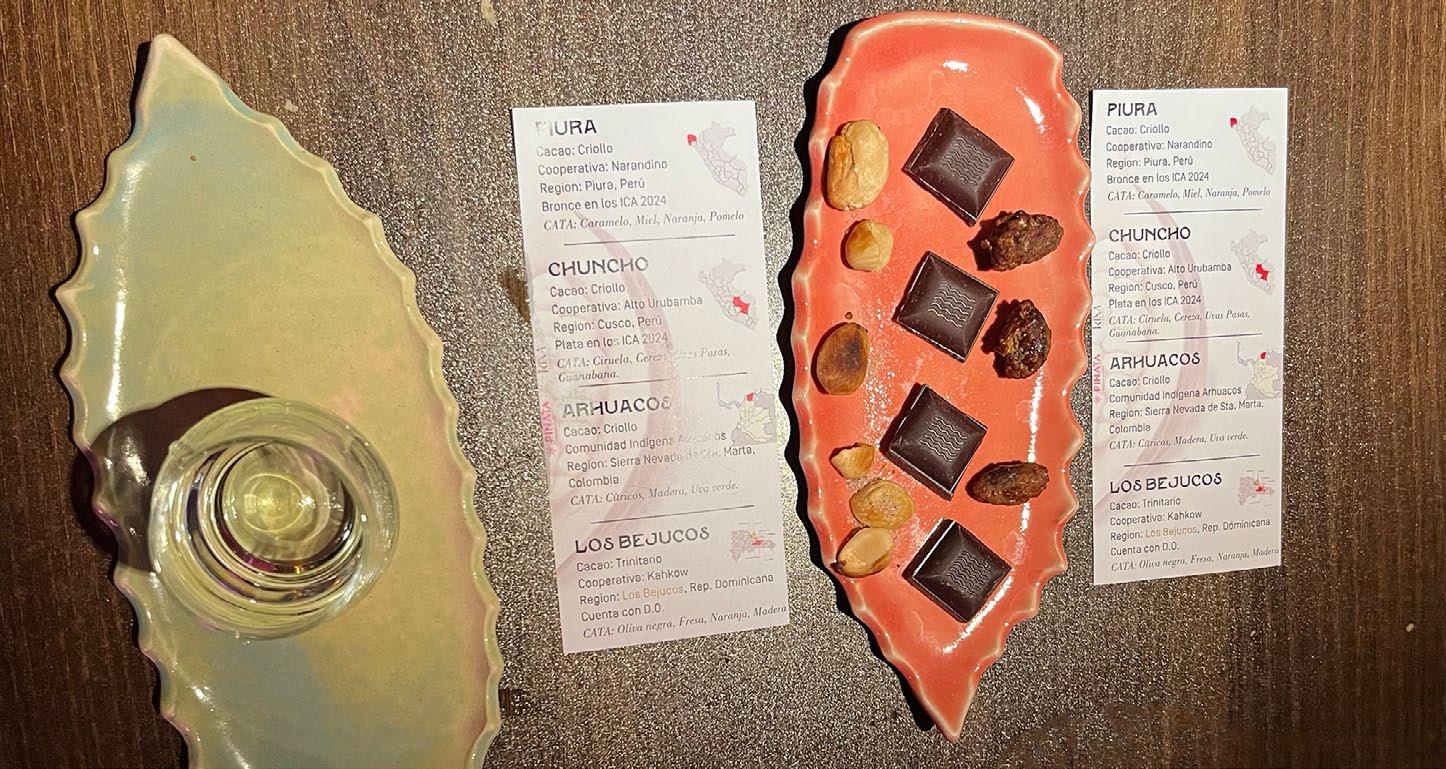
We started with a heaping serving of Sikil Pak, the traditional pumpkin seed salsa, that was significantly spicier than the version we’ve had in the States. Next came Tacos de Milpa — highquality blue corn tortillas topped with refried black beans, pumpkin and slowcooked corn kernels. But the highlight of the meal was the Degustación Chocolates Beans to Bar— squares of four chocolates “de distintos origenes”that were accompanied by two types of roasted almonds and a shot of quality tequila. Delicious, light and innovative.
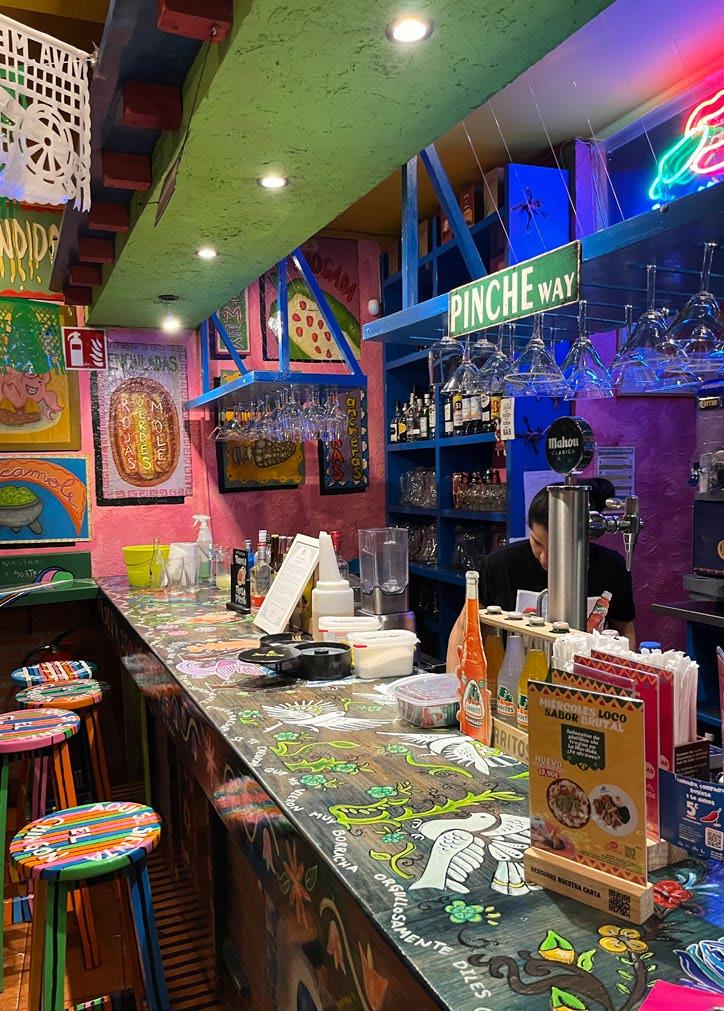
LA MORDIDA, Madrid
This comfortable, casual restaurant, with nine locations in Madrid, offered a menu of elevated basics, including several varieties of sopas, enchiladas and fajitas.
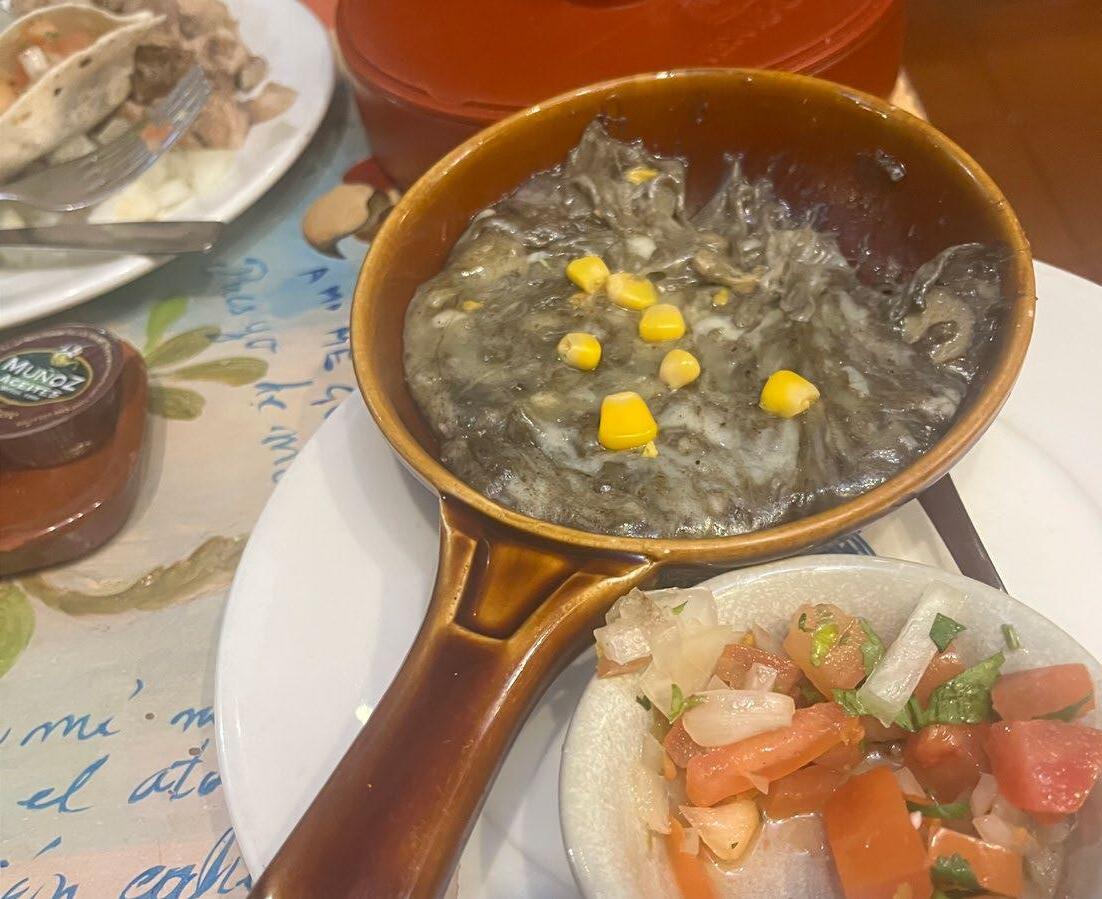
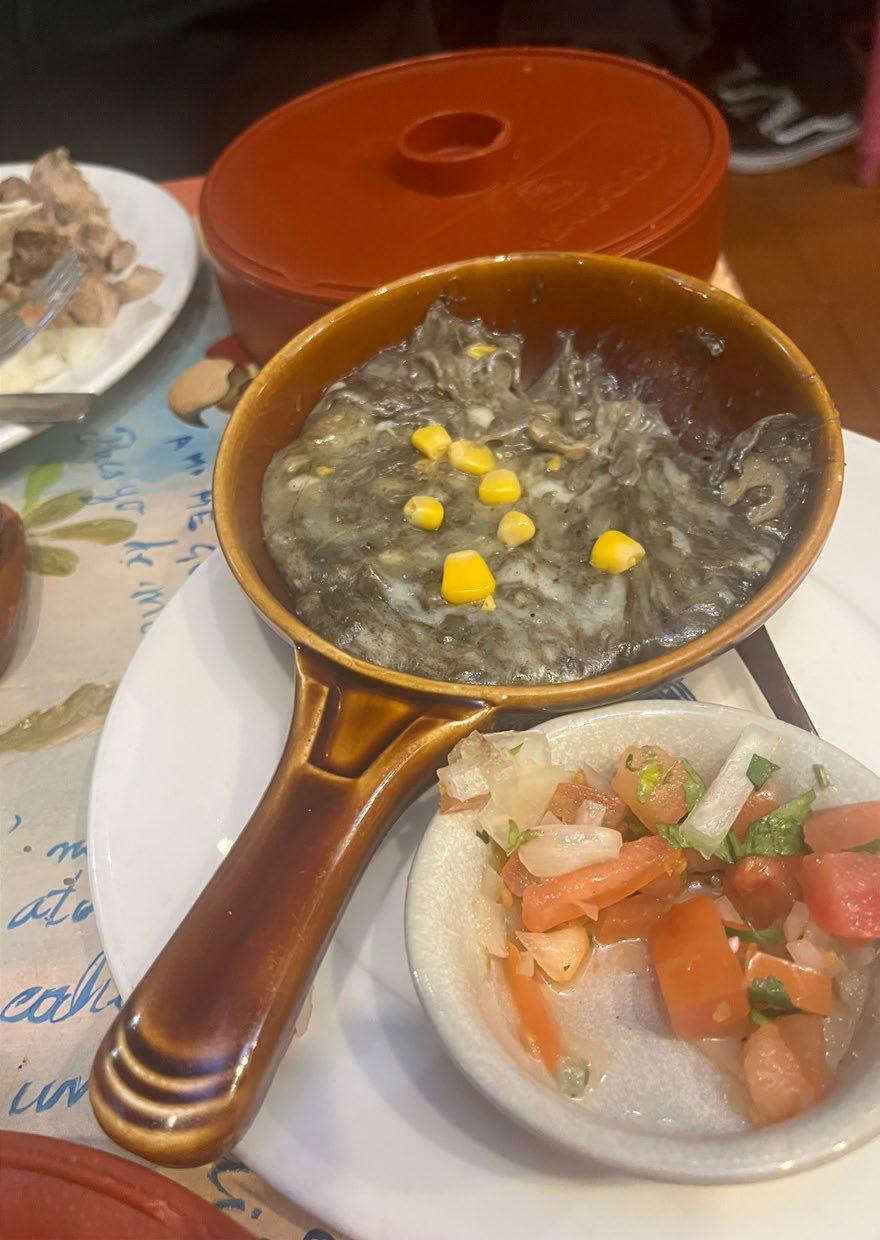
We started our meal with Margaritas (mine made “up,” which I prefer). It was the best Margarita I had the entire trip — strong, delicious, fresh. Kathy started her meal with Pozole (we would have called it “pozole rojo,” but our server wasn’t aware that pozole could be verde, too); I opted for Queso Fundido with Huitlacoche. The queso largely overwhelmed the mild taste of the huitlachoche, but I enjoyed the unusual dish.
(continued on page 25)
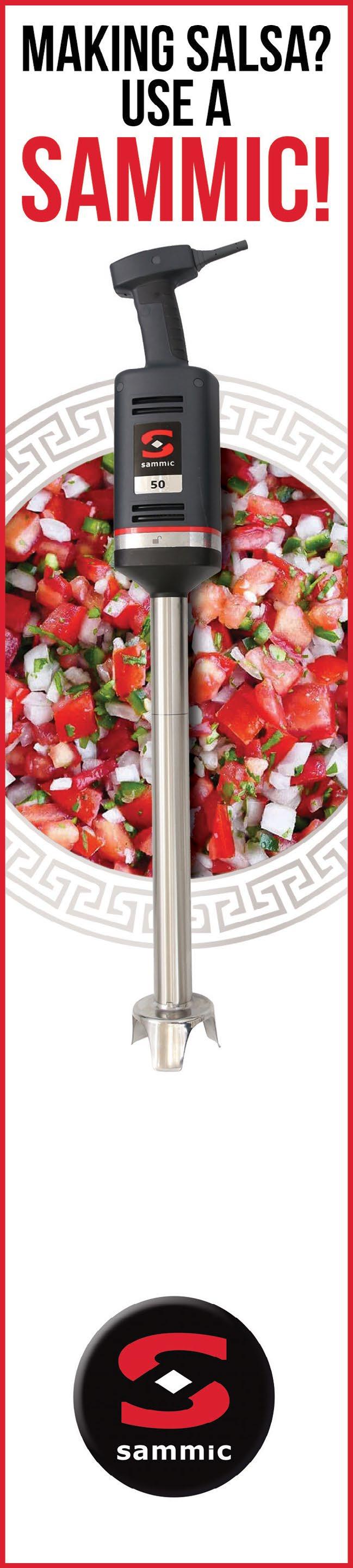
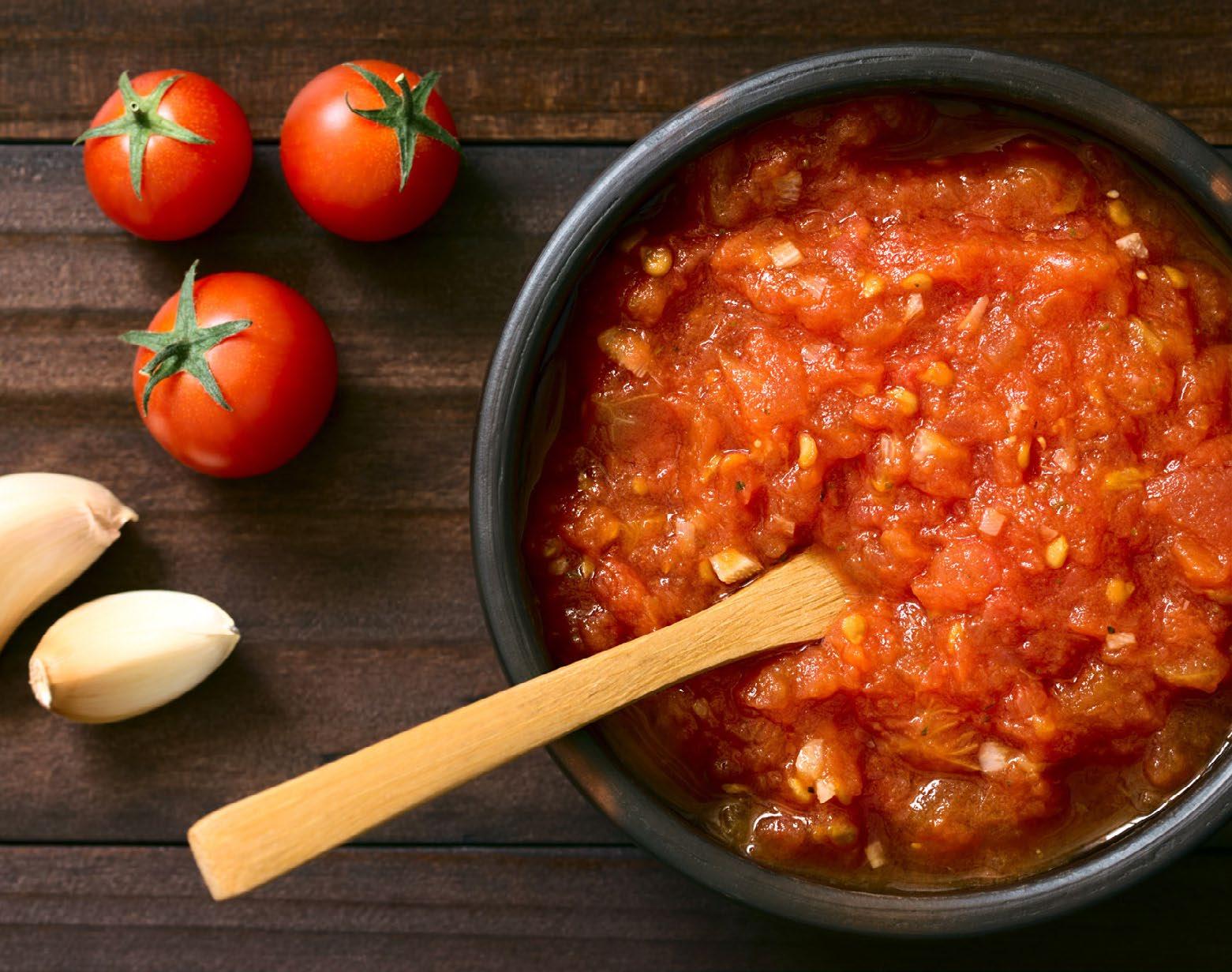
A Sammic immersion blender makes your salsa preparation easier than ever! A powerful motor, easy-to-use controls and ergonomic design mean your staff can create amazing salsas, soups and other blended menu items with ease and speed. You will love the labor savings and your customers will love the results!
Piñata Cantina Degustación Chocolates Beans to Bar
La Mordida Queso with Huitlacoche
La Mordida Bar

Get out your salsa-making ingredients and create a unique foodservice salsa recipe you think has the consistency and flavor to wow the judges. The grand prize winner will receive a Sammic XM-52 Immersion Blender and $750. Second and third place will receive $500 and $250, respectively. Plus the top three recipes will be featured in the NovDec issue of el Restaurante.
All readers of el Restaurante are welcome to enter the contest. The recipe must be an original recipe of your own creation. There are no restrictions on the ingredients of the recipe. All recipes will be judged on taste, creativity and appropriateness for foodservice applications.

Chicken Fajitas and Cochinita Pibil completed our meal.
LA HACIENDA, Barcelona
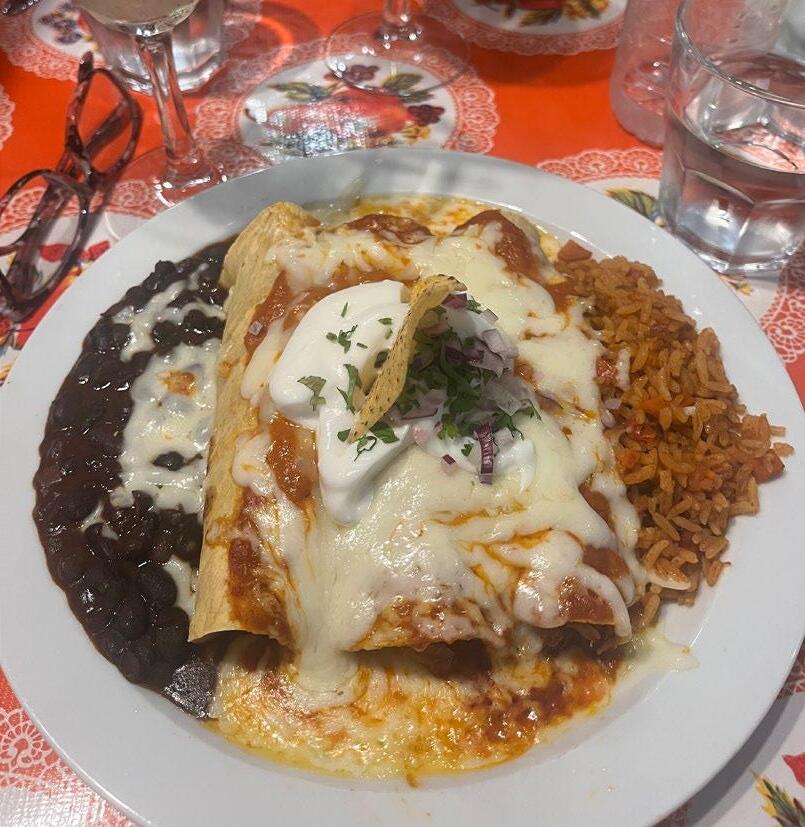
This restaurant has three locations in Barcelona, one near the apartment we rented. My large serving of saucy, shredded Cochinita Pibil — spicier than I am accustomed to — was served solely with pickled onions and tortillas. Kathy’s Enchiladas de Pollo in red sauce came with rice and beans.
“It was very good and very similar to enchiladas I order at some of our favorite, family-style Mexican restaurants in Chicago,” she said when I asked how she would describe the dish. “It felt really good to have something that tasted so authentic and familiar after almost a month abroad.”
The lighting was brighter than we prefer — a situation quite common in many restaurants we visited in Barcelona.
LA ADELITA BOTANERO, Barcelona
At this small spot near our apartment, we started with a generous portion of fresh Ceviche, beautifully presented with slices of avocado and tortilla rounds. This could have been a meal in itself. That was followed by Alambre de Pastor, a fajita-style skillet filled with a mixture of pastor, ham, peppers, onion and cheese, accompanied by flour tortillas. It was delicious and filling and also came in chicken, shrimp and beef varieties. Kathy again opted for Enchiladas de Pollo (this time the verdes
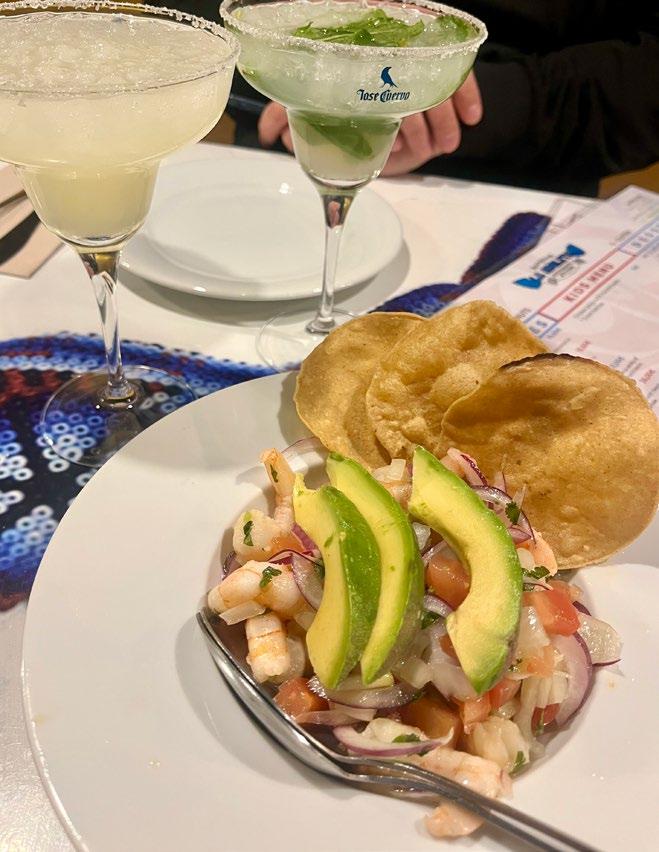
version). The presentation of every dish here was exceptional.
GONZALEZ & CO., Barcelona
This was the closest to American fast-casual TexMex that we tried in Spain. This multi-unit has six locations in Barcelona and one each in Madrid and Valencia. Guests order at the counter and specify
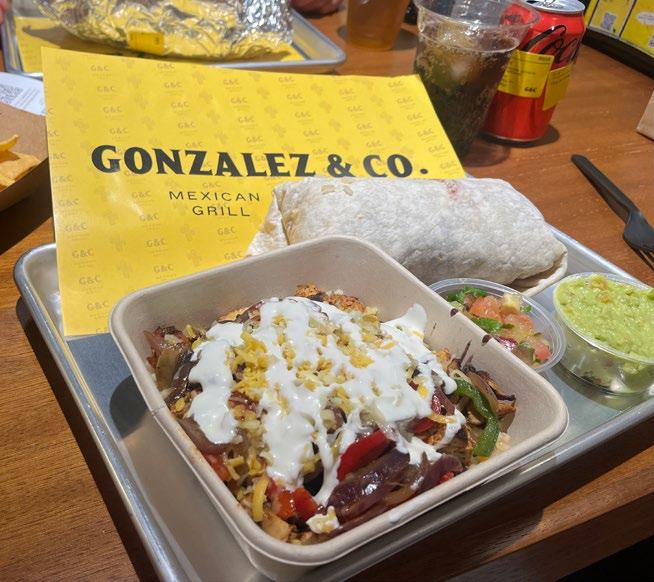
the form (burrito, tacos, bowl, etc.), the protein, the salsa and extras, such as guac or cheese. The experience was similar to Chipotle, and the food was fresh, delicious and inexpensive. When we were there the customer traffic was steady, including a lot of to-go orders.
While we only scratched the surface of Mexican cuisine in Spain, we left knowing that visitors and locals alike can find delicious, authentic dishes that represent the best of Mexican fare.

La Hacienda Enchiladas de Pollo
La Adelita Ceviche
Gonzalez & Co
(continued from page 23)
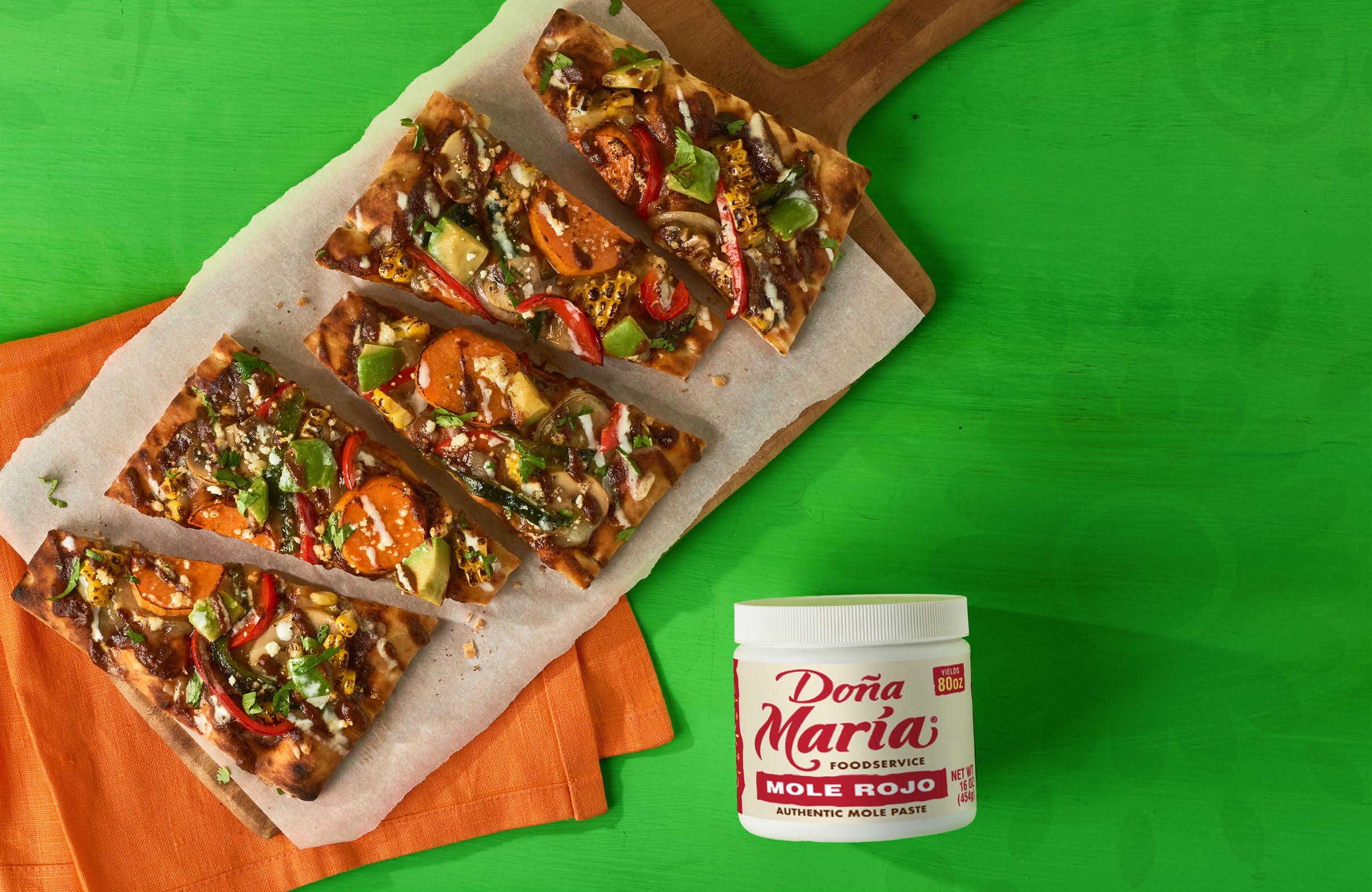

ACTUAL MOLE. IN LITERAL MINUTES
Slow-simmered flavor is a snap with DOÑA MARIA® Mole Rojo. We already spent the time capturing an authentic, rich, time-honored recipe. You just heat it up and heat things up.
• Bold, deep, authentically Mexican flavor.
• Made with real dark chocolate and over 20 traditional spices.
• Versatile enough for sauces, dressings, glazes and more.
Molcajete M A G I C
| BY KATHLEEN FURORE | There aren’t many serving pieces that can transform a menu. The molcajete is one of them, as Adelitas Cocina Y Cantina and its sister restaurant La Doña Mezcaleria in Denver have shown.
“Unveiling the Authentic Molcajete Experience!” read an Instagram post that invited guests to learn about “the incredible vessel” it’s served in.
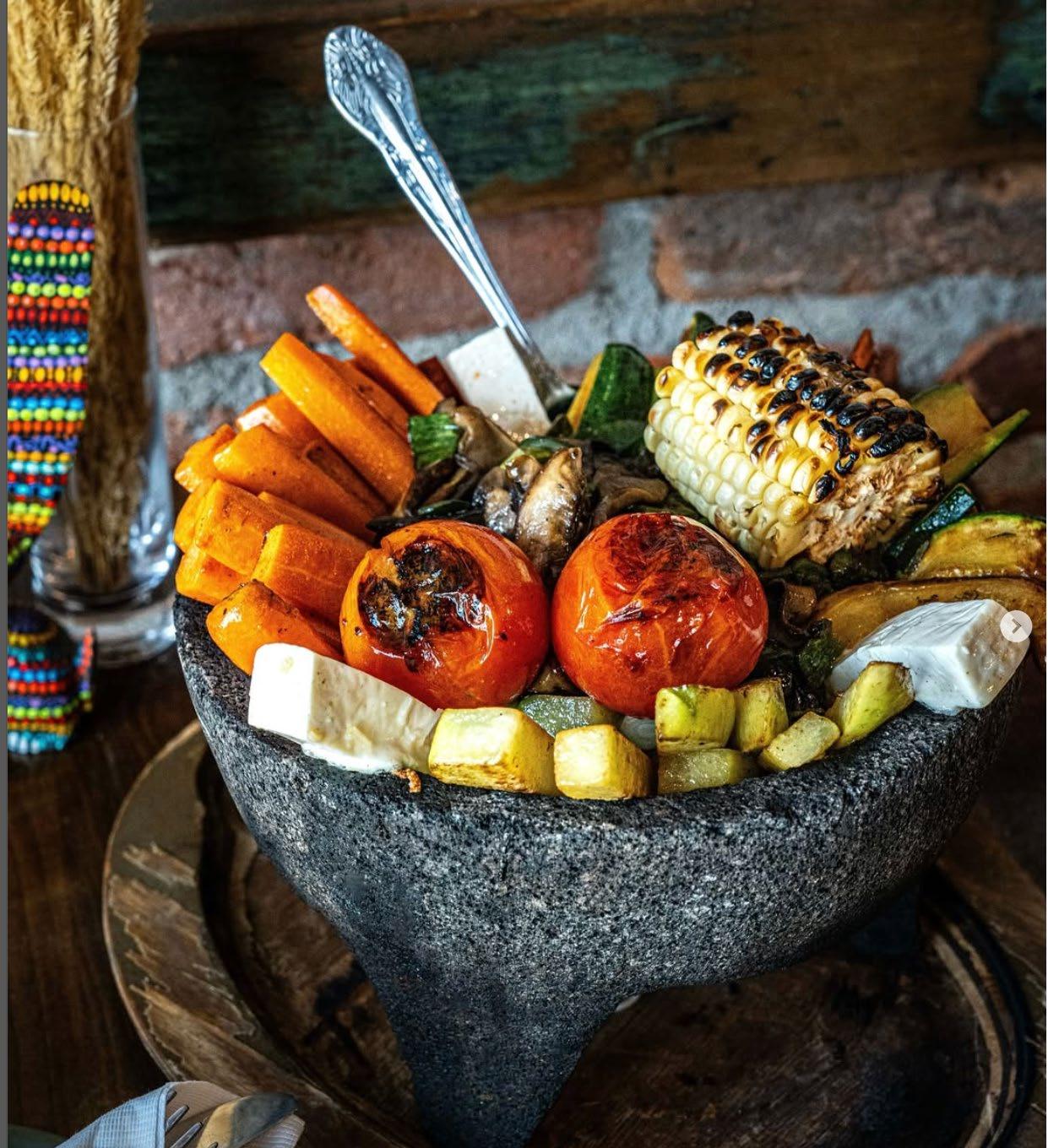
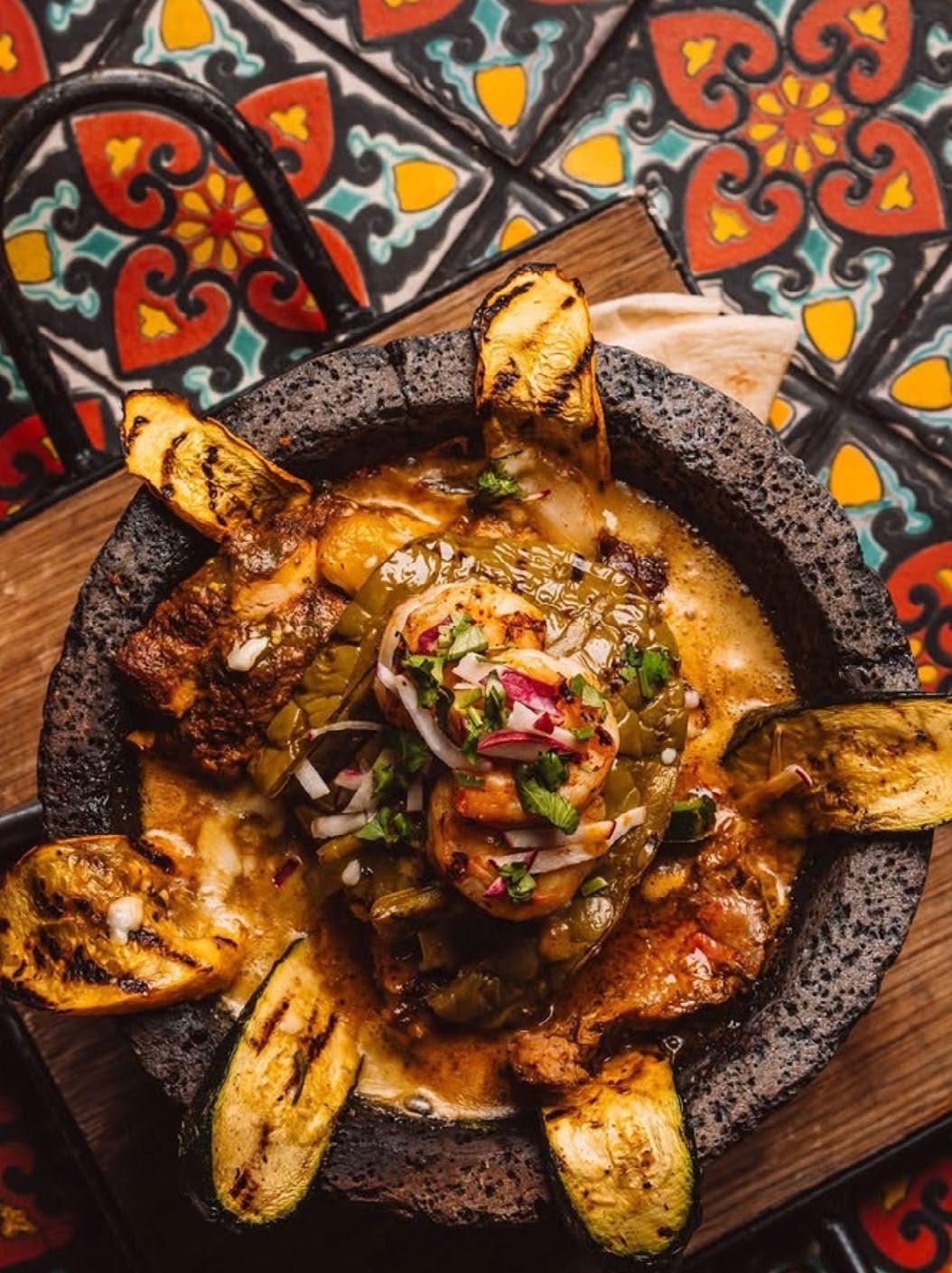
“The Molcajete is a traditional Mexican mortar and pestle made from volcanic stone, and has been used for centuries to create rich, bold flavors. It’s more than a cooking tool; it’s a symbol of heritage and craftsmanship,” the post explains. “As the sizzle and aroma fill the air, you’ll witness the magic of flavors blending together in this timeless culinary masterpiece.”
The “experience” that customers at those restaurants can enjoy includes something for anyone, whether they prefer seafood, meat or vegetables.
• The Molcajete De Mariscos — a volcanic mortar teeming with mussels, shrimp, and tilapia, all steamed with tomatoes, onion, garlic, butter, white wine and red pepper flakes, then topped with cotija cheese and served with toasted bread
• The Cielo Mar Y Tierra Molcajete — “a feast for the senses and soul” that features marinated steak, chicken and shrimp, all simmered in a spicy tomato sauce, all adorned with melted cheddar panela cheese, green onions and tender nopales and accompanied by corn or flour tortillas
(continued on page 30)
Vidorra Cocina’s Verde Molcajete
Adelitas Cocina’s and La Doña’s Molcajete de Vegetales









(continued from page 28)
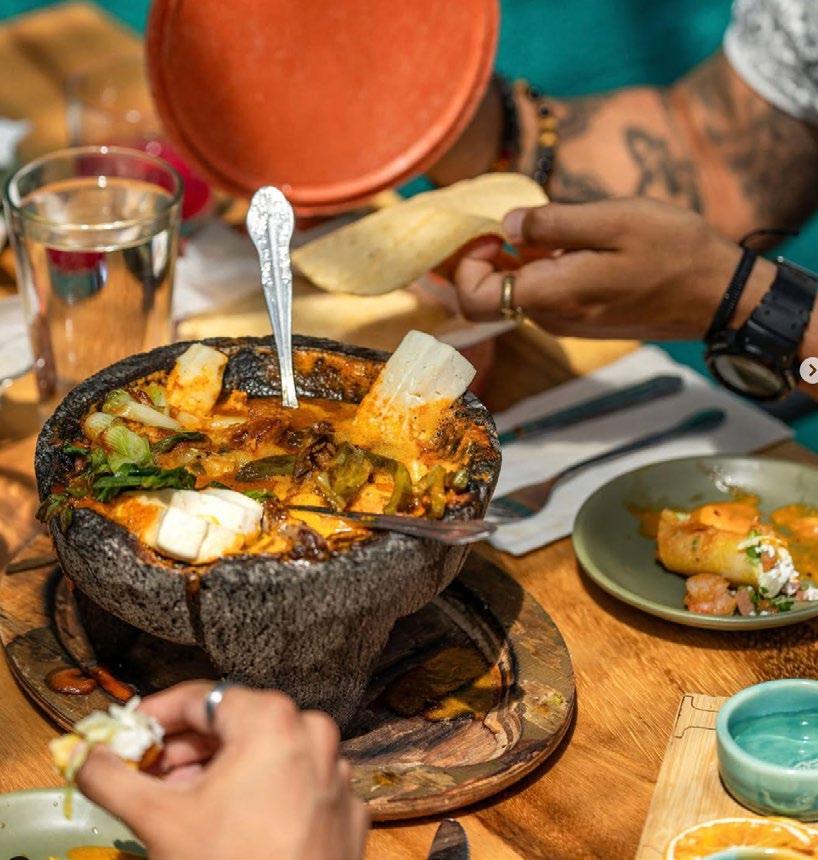
• The Molcajete De Vegetales —spicy tomato sauce combined with chayote squash, zucchini, portobello mushrooms, turnips, carrots, poblano peppers, roasted corn, greens onions and roasted tomatoes. Customers can add white cheddar and panela cheeses to this dish that comes with corn or flour tortillas

Even the warmer weather that’s on its way doesn’t dim sales of dishes made in molcajetes at Vidorra Cocina in Dallas. The restaurant even promotes the offerings: “Summer is heating up and so are the 400° Flaming Fundido Molcajete Bowls,” announced a recent Instagram post. The menu includes several varieties of dishes served in molcajetes — a vessel that “absorbs and retains the flavors and aromas of the ingredients used,” the menu explains.
• The Queso Blanco One of the simplest dishes made with jalapenos, tomatoes, peppers, onions and cilantro
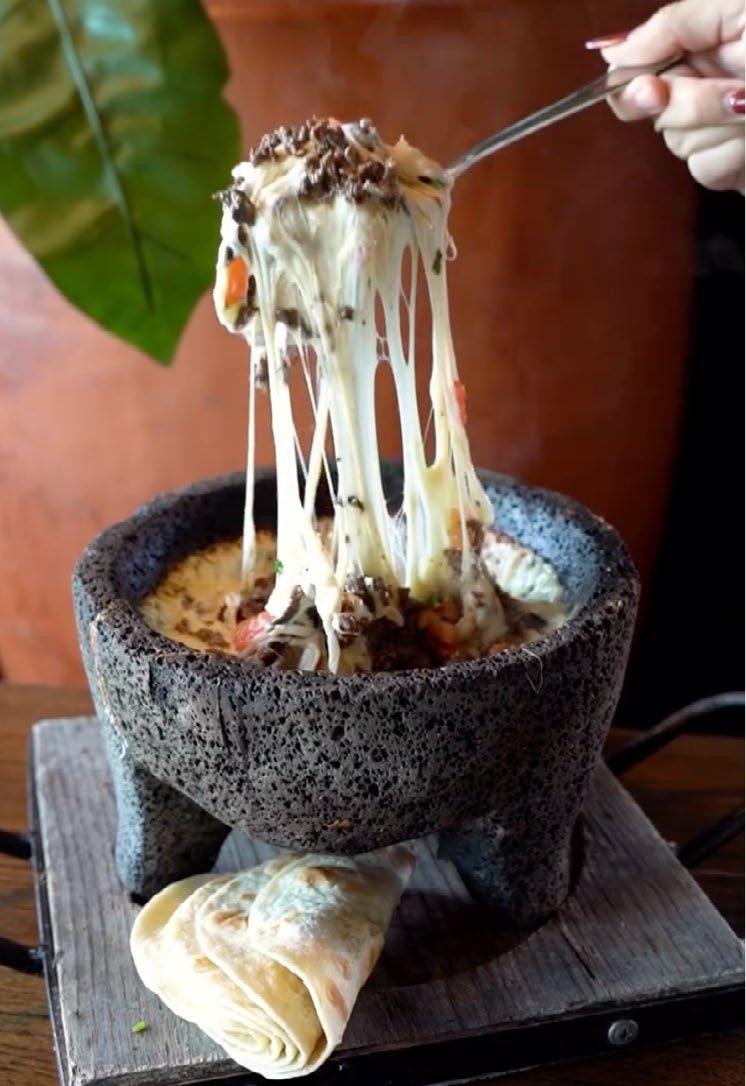
• The Flaming Fundido — Oaxaca cheese, flour tortillas and a choice of trompo pastor, veggies, chicken tinga or chorizo
• The Mexican Alambre — Mesquite grilled steak, fajita veggies, mixed cheese, spicy Vidorra sauce, and flour tortillas
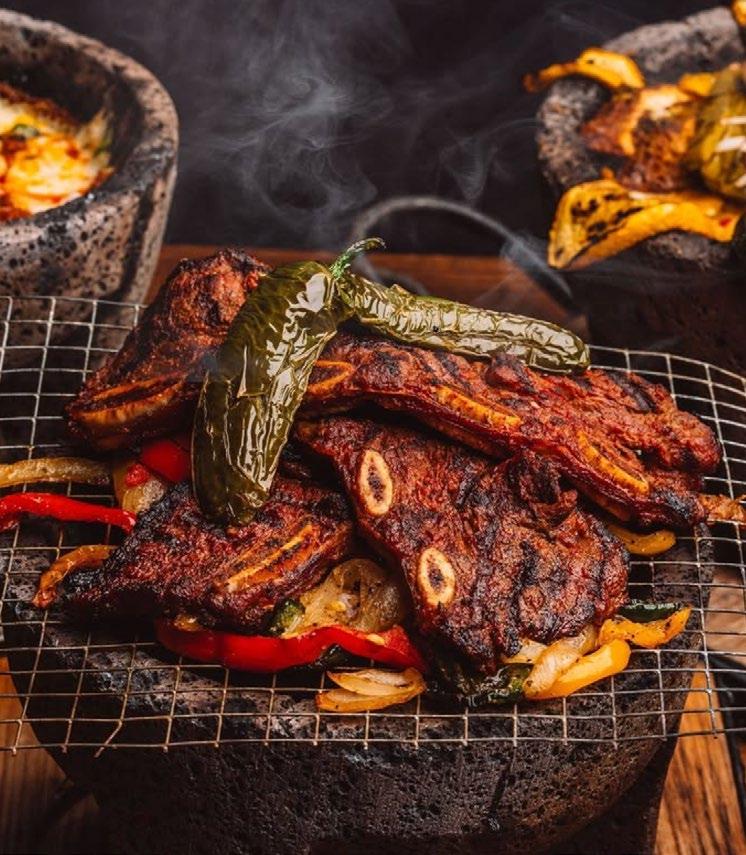
• The Parrillada en Fuego — Hickory grilled marinated beef short ribs, jalapeno-cheddar sausage, chipotle BBQ chicken breast, fajita veggies, garlic butter, flour tortillas
• The Verde — Fajita steak & chicken, grilled shrimp, Oaxaca cheese, grilled onion, zucchini, yellow squash, bell pepper, nopales, and salsa verde
Have you used molcajetes in creative ways in your restaurant? Let us know and we’ll feature some ideas in an upcoming issue and on social media. Email Editor Kathleen Furore at kfurore@restmex.com.
Vidorra Cocina’s Tablitas en Fuego
Vidorra Cocina’s Flaming Fundido
Adelitas Cocina’s and La Doña’s Cielo Mar y Tierra Molcajete
Cemitas
MODERN TWISTS ELEVATE THESE CLASSIC MEXICAN SANDWICHES
BY
ED AVIS | Are cemitas the new burritos? They’ll probably never move burritos off the menu, but more and more Mexican restaurants are adding cemitas, with their distinctive rolls and fillings, to their menus.
Take the appropriately named Cemitas Poblanas, which has locations in the Chicago suburbs of Villa Park and Warrenville. There, cemitas take center stage on the menu that includes five varieties of this classic Mexican sandwich including the traditional Cemita Milanesa de Pollo (breaded chicken breast), the loaded Cemita Cholulita (breaded chicken breast, sausage, pork loin and ham), and the innovative Cemita Hawaiiana (pineapple, ham and wieners).
Based on reviews, Cemitas Poblanas’ focus on that special sandwich is paying off. A recent customer wrote: “Blown. Away. Cemitas are my new favorite thing, or maybe Cemitas Poblanas is my new favorite Mexican restaurant. Either way, I am smitten, and my mouth is burning, and I am happy as heck. Highest recommendation.”
BASED IN TRADITION
as beef, chicken and cheese — fillings the sandwiches are known for today.
SEEDED BUN, CLASSIC FILLINGS
Today’s cemita buns are typically topped with sesame seeds and have a crunchy exterior. Yeast is part of the recipe now, which means these rolls are quite unlike their hard predecessors. And they are traditionally glazed with a mixture of water, corn starch and sugar, giving them a light sweetness.
To make the cemita into a sandwich — often called a cemita poblana — the roll is normally toasted and then stuffed with warm meat (lengua, chicken, carnitas or carne asada), then topped with queso Oaxaca. Very often, the Mexican herb papalo is added, which gives the sandwich a distinctive flavor that resembles a blend of cilantro and arugula. Sometimes chipotle or serrano pepper is added. Sliced avocado, onions, tomato, lettuce and mayo round out the sandwich.
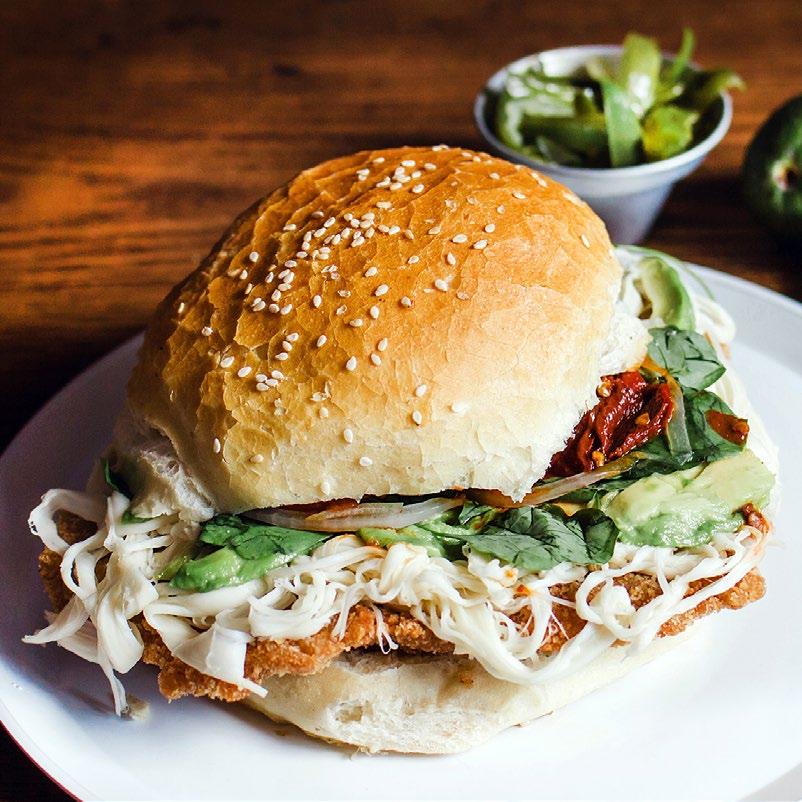
At least that’s how the sandwiches are usually made in the United States. In Mexico, cemitas poblanas are simpler, and more commonly served cold and without lettuce, tomato and some of the other fillings. And a classic protein in the Mexican version is the meat from cow’s feet.
INNOVATIVE VERSIONS
As the menu at the Chicago-area Cemitas Poblanas restaurants reveal, chefs love innovating when it comes to cemitas. The tasty roll stays the same, but why not have fun with the fillings?
Tradition says the precursors to the cemita roll emerged in the Spanish colonial times because they were made without yeast — unleavened — and could thus survive the long sea journey from Mexico to Spain.
In the mid-nineteenth century, the rolls became popular in Puebla, a state in east central Mexico, when craftspeople made sandwiches with them to take to work. These were filled with ingredients of the region, typically potatoes, beans and nopal (meat was scarce at the time).
Eventually cemita sandwiches began being sold in markets. Avocado was added, followed by ingredients such
La China Poblana in Los Angeles sure is having fun: The restaurant offers 16 different cemitas poblanas! Among their more unusual versions are cemitas made with the meat from pig or cow heads; a version with cecina (dried beef); and the Gabacha, chicken breast topped with bacon, mustard, barbecue sauce, and pickles.
Across the country, Cemitas el Tigre in Sunnyside, New York, offers a breakfast cemita with scrambled eggs, bacon or chorizo, onion rings, cheddar jack cheese, pickled jalapenos, and ketchup. But the restaurant is best known for a version that features all the classic ingredients piled atop southern fried chicken.
The bottom line: Cemitas are a delicious, trending menu item your chef will enjoy creating and your customers will enjoy eating!
|
THE LOCAL ADVANTAGE: Buying From Nearby Farmers, Suppliers Pays Off
BY ED AVIS
| Roasted ramps were on the menu at Mita’s, a Latin tapas restaurant in Cincinnati, at the end of April. Chef Jose Salazar says the dish is inspired by calcots, a roasted wild onion dish served in Catalonia, Spain each spring. And just like the calcots served in Catalonia, the ramps at Mita’s are a wild plant.
Where did Salazar get the ramps? Not from Sysco, US Foods or any other commercial provider. Instead, he got them from a professional forager who finds edible plants in nearby wild areas.
“The forager brings us a variety of things,” Salazar says. “This week it’s red buds, which are this beautiful little flower that kind of has an English pea flavor. And he is bringing us wild violets.”
Foraged produce like wild ramps, red buds and violets make Mita’s a true dining destination. And Salazar does not stop there — he also works directly with numerous farmers in his area who provide him with fresh produce and meat.
Salazar estimates that more than a third of the ingredients he uses at Mita’s comes from local sources during the growing

season, and that figure jumps to 50 percent for his farm-totable restaurant called Salazar, which is temporarily closed but will re-open in a new location at the end of the summer.
“The pricing might be a little bit higher in restaurants that focus on locally sourced products, but the reward is there because the costumer is going to get something that is just much more delicious, has a lower carbon footprint, and supports the local economy,” Salazar says. “You’re keeping the dollars in the area where you live. So, it’s a win, win, win.”
HOME FIELD ADVANTAGE
Products bought from local farmers or other providers often have the advantage of being fresher and more flavorful than commercially produced ingredients. Salazar says the produce he gets from local farmers simply lasts longer than the products shipped in from across the country.
“If I buy lettuce from the commodity purveyor, it may only last four or five days in my walk-in,” he says. “If I buy it from the farmer, it’s going to last two weeks. That’s because it hasn’t been sitting in a warehouse in Mexico or California for a week or two before we get it. It was pulled from the ground the day or day before we get it.”
There are other advantages to locally sourced ingredients. For example, the knowledge of where an ingredient comes from, who grew it, and how it was treated before being delivered to the restaurant is important for many chefs.
“This
is
nothing new. We just have to re-strategize and reprioritize
how
we’re going to
do it. I do think it’s possible to stay within your means and at least make a few choices that can push you in that direction, whether it’s buying your meat from farmers you know or working with a farm cooperative. It’s not a new thing — it’s going back to our roots.” – CHEF KARYN TOMLINSON, Myriel
Watercolor by Karyn Tomlinson

“If I buy lettuce from the commodity purveyor, it may only last four or five days in my walk-in. If I buy it from the farmer, it’s going to last two weeks. That’s because it hasn’t been sitting in a warehouse in Mexico or California for a week or two before we get it. It was pulled from the ground the day or day before we get it.” – CHEF JOSE SALAZAR, Mita’s
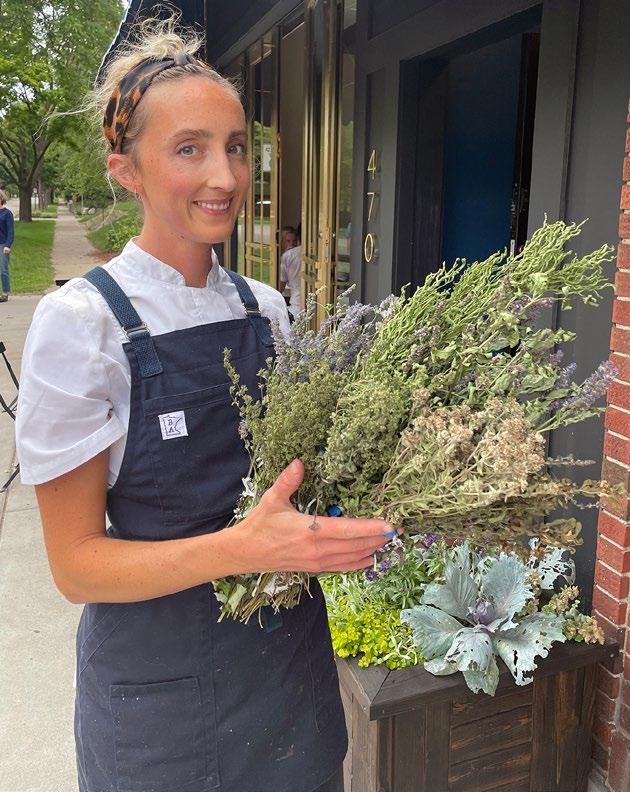
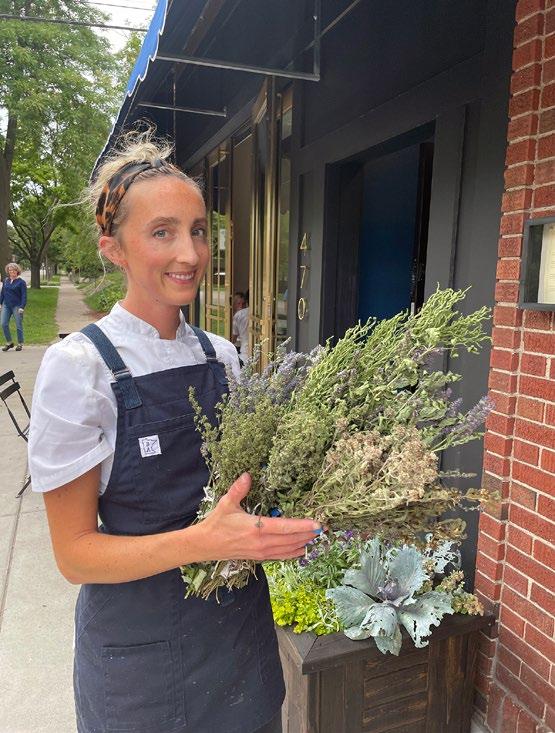
Chef Karyn Tomlinson, owner of Myriel in St. Paul, Minnesota, is a champion of local sourcing, from working directly with farmers
to foraging in the wild areas near her restaurant. She says local sourcing connects her menu to the rhythm of the seasons and allows her to create healthier and more flavorful food.
“When you know the farmer who grew your carrots, it really makes a difference in how you value them and use them,” says Tomlinson, whose restaurant was ranked the ninth best restaurant in the country by Food & Wine magazine.
5 TIPS FOR LOCAL SOURCING
Chef Jose Salazar of Mita’s in Cincinnati and Chef Karyn Tomlinson of Myriel in St. Paul, Minnesota, offer these tips to get started with local sourcing:
Know Your Seasons Figure out what products are normally harvested each season in farms near you and plan your menu accordingly.
Frequent Farmer’s Markets You probably won’t be able to buy enough quantity at these markets, but at least you can see what each farmer offers and then ask them to visit your restaurant to begin a supplier relationship.
Network Talk to other chefs who source locally and ask them for contacts. Similarly, ask farmers for introductions to others who grow ingredients you need.
Work with Cooperatives Some areas have farmer cooperatives that allow you to buy fresh, local produce from a large number of farms on one order. Similarly, some local distributors work with local farmers and provide the same advantage.
Start Small At first, order just a few ingredients from a local farmer. If that works out, expand to more ingredients.
Tomlinson also values the fact that local sourcing allows her to support other local businesses. Many small farms in the St. Paul area do not have access to the normal, commercial food system, she says, so her restaurant represents an important market for them.
THE CHEF-FARMER CONNECTION
The farmers Salazar works with deliver products to his restaurant once or twice a week. During the delivery, he discusses with them what he needs for the next delivery, and the farmers tell him what they expect to have.
Often those conversations lead to menu decisions, as Salazar tries to incorporate ingredients that the farmers can supply.
Tomlinson says developing relationships with the farmers who supply Myriel took a few years, but now they know each other’s needs and capabilities.
“Some farmers ask me what they could grow for me, and others say, ‘Here’s my fresh list, here’s what I’m planting this year,’” Tomlinson says. “We have a positive relationship with these farmers, and they see that we’re innovative and they want to be innovative, too.”
The relationships with local suppliers extends beyond growers of produce, of course.
Salazar works closely with a farm that raises the grass-fed goats he uses for Memela de Cabra, which features blue corn masa topped with braised goat, black beans, ramp salsa verde, and queso fresco.
And Tomlinson buys hogs from a pork farmer she knows and trusts.
“We just coordinate with the farmer, and we know exactly where that pig came from,” she says. “And if we have any questions, that’s one phone call. Sourcing meat from a farmer is a really accessible thing in many places, and I really recom mend that.”
Chef Jose Salazar
PHOTO BY HAILEY BOLLINGER
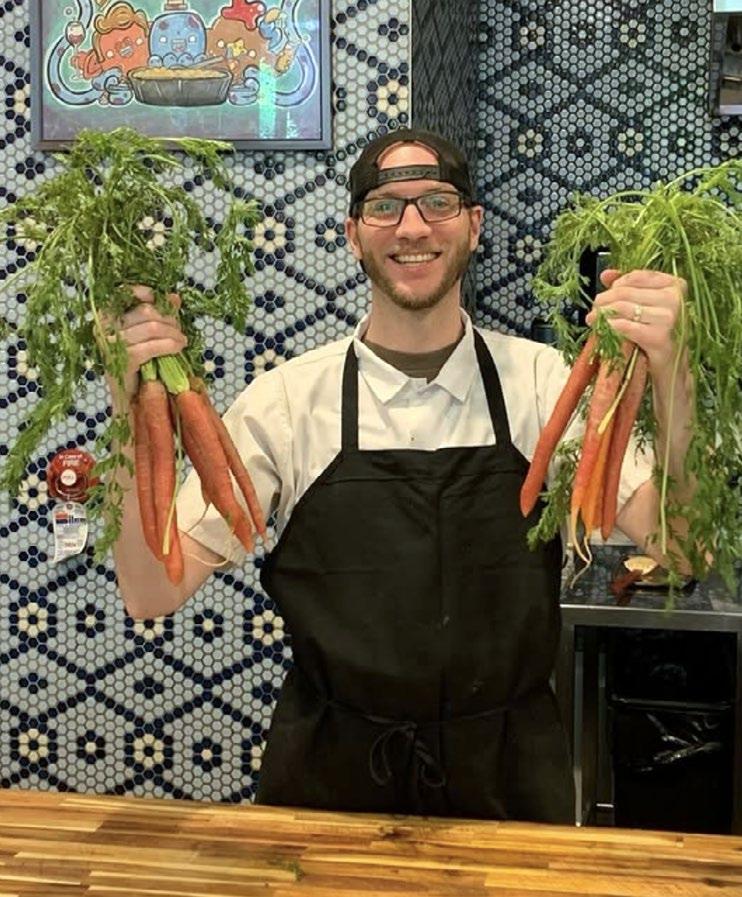
Mita Sous Chef Jordan Kidd with locally sourced carrots
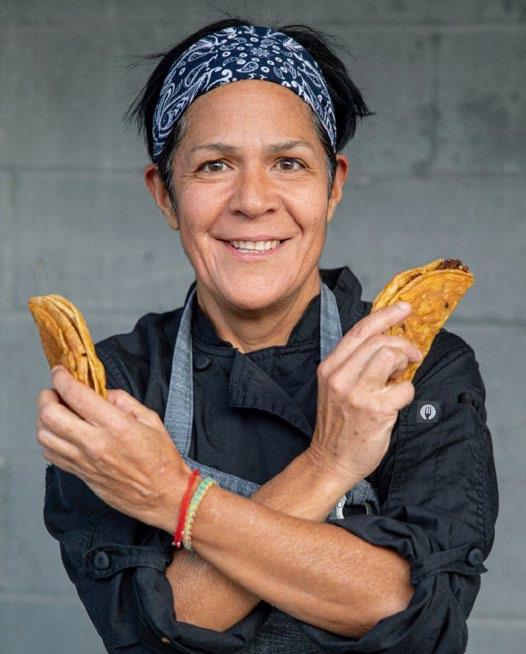
Chef Lucero Martinez, co-owner of Luze Mexicano Cocina and Taqueria La Luz in Atlanta, depends on locally raised poultry for the chicken dishes on the menu at her restaurants.
“You can definitely tell the chicken is better,” Martinez says. “Its color is almost yellowish, and it’s fresher. It’s more local.”
Martinez also sources the bread for her tortas from a local bakery and her tortillas from local tortillerias. One of her tortilla suppliers makes organic tortillas without preservatives, which makes them ideal for some of her menu items.
BACK TO THE FUTURE
Local sourcing seems like a trendy movement, but in reality, it’s what all restaurants did in the days before commercial suppliers.


“This is nothing new,” Tomlinson says. “We just have to re-strategize and reprioritize how we’re going to do it. I do think it’s possible to stay within your means and at least make a few choices that can push you in that direction, whether it’s buying your meat from farmers you know or working with a farm cooperative. It’s not a new thing — it’s going back to our roots.”
Ed Avis is the publisher of el Restaurante
LOCAL SOURCING WEBINAR
Want to learn more about local sourcing? Then click here to register for an el Restaurante webinar on JUNE 10 AT 10 A.M. CENTRAL.

Great tortillas start wi�


Chef Lucero Martinez
PHOTO BY RESTOEXPERIENCE
Ways to Add SOTOL to Your Cocktail Menu
| BY ED AVIS | You already use tequila and mezcal in your cocktails, and probably several non-agave liquors, too. But have you considered sotol?
Sotol is a distillate of the Dasylirion plant, also known as desert spoon, which grows in northern Mexico and parts of the southwestern United States. It tastes different from mezcal and tequila, with a smooth, earthy flavor with citrus and mineral notes.
Putting a sotol cocktail on your menu would put your restaurant on-trend — the 2025 Hospitality Trends Report by AF & CO + Carbonate calls sotol “the next tequila” because of growing interest in the spirit.
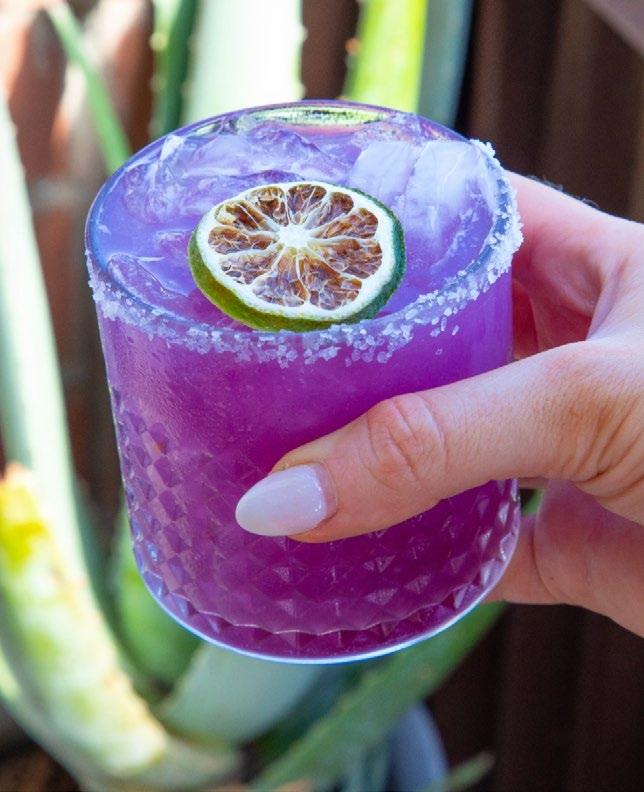
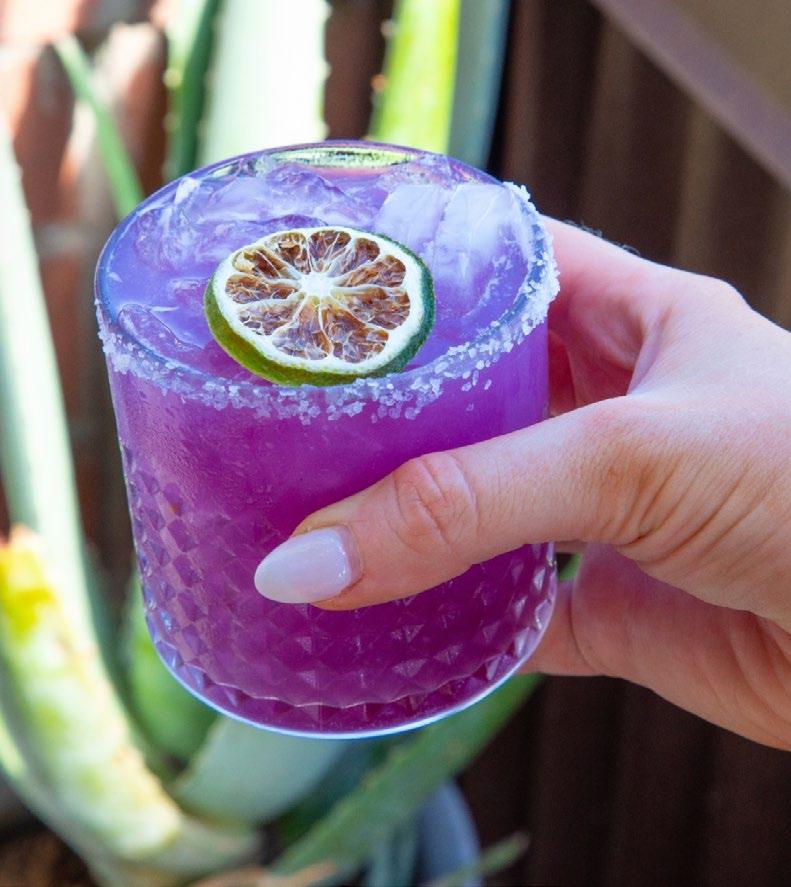
Indeed, some very on-trend Mexican restaurants are using the spirit. For example, Bar Sotano in Chicago, one of Rick Bayless’ creations, serves the Hoja Santa Ramoz Fizz, which includes both sotol and mezcal, together with hoja santa syrup, lime, egg white, heavy cream (infused with sarsaparilla root), and Topo Chico. And the aptly named Sotol Modern Cocktail Kitchen in Gilbert, Arizona features the Sotol So Good, a cocktail with sotol, butterfly pea, coconut rum, pineapple, lime and orgeat.
Sotol is fairly easy to get in the United States; popular brands include Desert Door, Hacienda de Chihuahua and Los Magos.
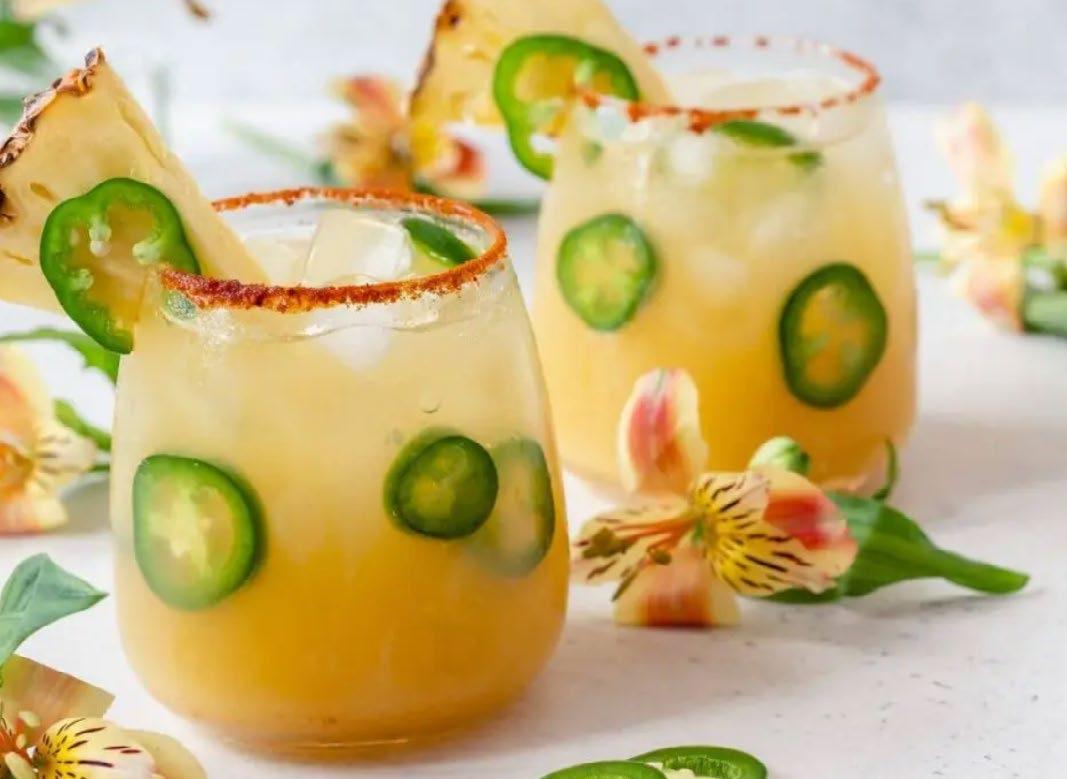
A variation called Crema de Sotol is a mixture of sotol, crema and pecan or chocolate flavor.
Sotol is close enough to agave distillates that it can be used in common agave cocktails, and also in Latin variations of non-Mexican cocktails. But it also is distinctive enough to deserve its own cocktails. Here are five potential cocktail menu additions that include sotol.
1. Sotol Margarita. You can substitute sotol for tequila oneto-one in a Margarita, but do it in your Cadillac version (using orange liqueur and lime juice instead of pre-made mix) so customers have the opportunity to appreciate the difference in the liquor. The sotol will give the Margarita a bit more earthy taste, but without the full smoky flavor that comes with mezcal.
2. Desert Paloma. Palomas are popular cocktails in Mexican restaurants already, so a version with sotol will not be a stretch for your guests. Make this cocktail with sotol, lime juice, grapefruit juice and agave syrup.
3. Ranch Water. This interesting cocktail, offered on Desert Door Texas Sotol’s website, calls for the bartender to pour about two ounces out of a bottle of Topo Chico, then add 1.5 ounces of Desert Door Original Texas Sotol and half an ounce of lime juice to the bottle, and garnish with a lime wedge.
4. Spicy Matador. This cocktail has a kick. According to the recipe from The Mixer by Campari Group, shake 1.5 ounces of sotol, 1 ounce of pineapple juice, 1 ounce of fresh lime juice, and 0.25 ounce of agave with ice, and strain it into a rocks glass filled with fresh ice and rimmed with chile-lime. Garnish with a slice of jalapeño.
5. Liquid Sunshine. This cocktail, from the Cocktails Away website, is made with 1.5 ounces of sotol, 1 ounce of lemon juice, a half ounce of passion fruit puree and 1 dash of spicy bitters. Shake all the ingredients with ice and strain into a coupe glass.
As these five recipes reveal, using sotol in cocktails is not hard. It’s a spirit that mixes equally well with spicy, sweet or sour ingredients. Have fun experimenting!
Campari
Sotol Modern Cocktail Kitchen’s Sotol So Good
GATEWAY TO THE U.S. LATINO FOODSERVICE & GROCERY MARKETPLACE!

LONG BEACH CONVENTION CENTER
LONG BEACH, CA USA
In this issue’s Marketplace, we highlight products that will be showcased at the National Restaurant Association Show May 17-20 in Chicago and at the Antojo Industry Trade Expo October 13-14 in Long Beach, California.
National Restaurant Association Show®
2025 Food and Beverage (FABI) Awards Winners
THE AWARDS HONOR EXCEPTIONAL AND INNOVATIVE FOOD AND BEVERAGE PRODUCTS THAT ARE SHAPING THE FUTURE OF THE RESTAURANT INDUSTRY.
Tajin Twist. The sweet and spicy kick this seasoning blend delivers is a natural fit for everything from fruit, ice cream, and candies to tacos, wings, and cocktails. tajin.com/us/
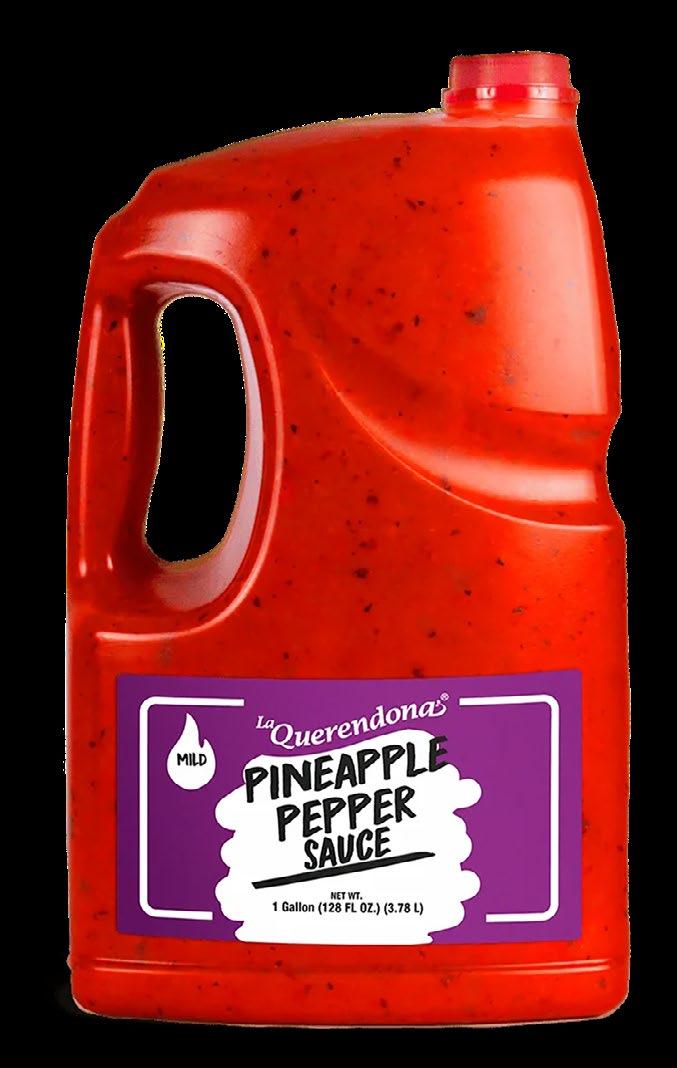
Querendona Pineapple Pepper Sauce. This blend of sweet and heat combines ripe pineapple with a zesty pepper kick and a touch of cayenne — perfect for meats, seafood, snacks, and cocktails. querendona.com/us/

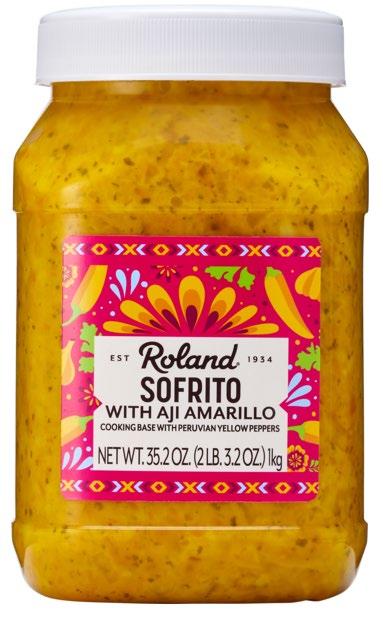
Roland® Sofrito with Aji Amarillo. This sofrito combines cooked-down aromatics and Aji Amarillo peppers for a bright, fruity flavor with moderate spice — enhances dishes as a sauce, protein marinade, ceviche base, or topping for tacos and nachos. rolandfoods.com
Ajinomoto Foods North America Cruncheros. Posada Birria Cruncheros are filled with shredded beef seasoned with cumin, cinnamon, clove, bay leaf, and other spices, dipped in a savory batter. Posada Mexican-Style Hot Chocolate Cruncheros combine the flavors of traditional Mexican hot chocolate with a crunchy exterior and a subtly spicy, sweet filling. ajinomotofoods.com
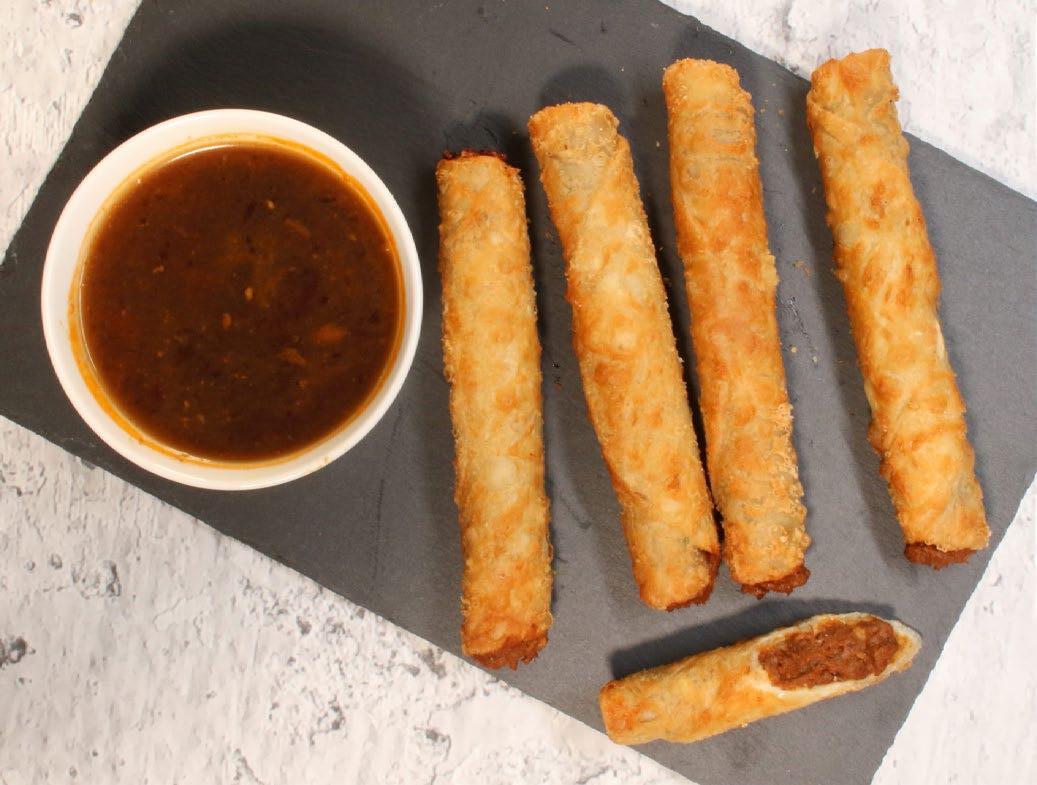
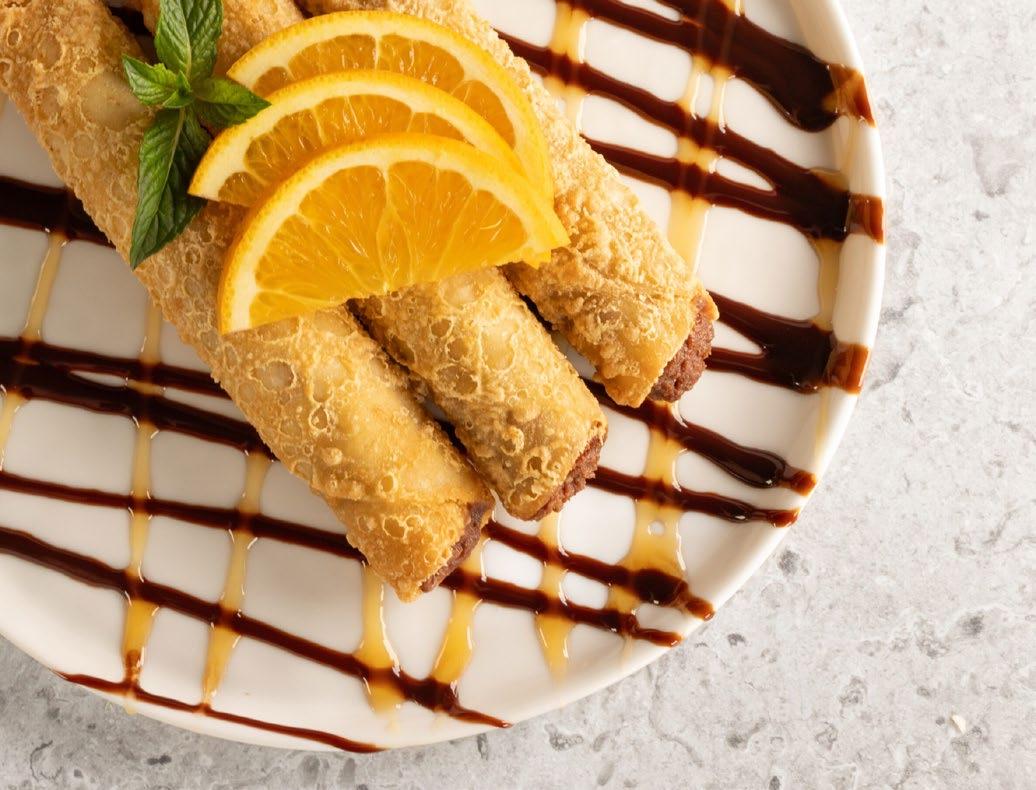
Chocolate Cruncheros
Birria Cruncheros
Antojo Industry Expo Exhibitors
THIS IS JUST A SMALL SAMPLE OF THE FOOD, BEVERAGE AND EQUIPMENT PRODUCTS YOU’LL FIND AT THIS EVENT.

Coriat Kitchen Solutions. Since 1974, Mexico City-based Coriat has been a leading provider of commercial kitchen equipment including ranges, ovens, fryers, refrigeration equipment and more to help restaurants streamline kitchen operations. coriat.com.mx
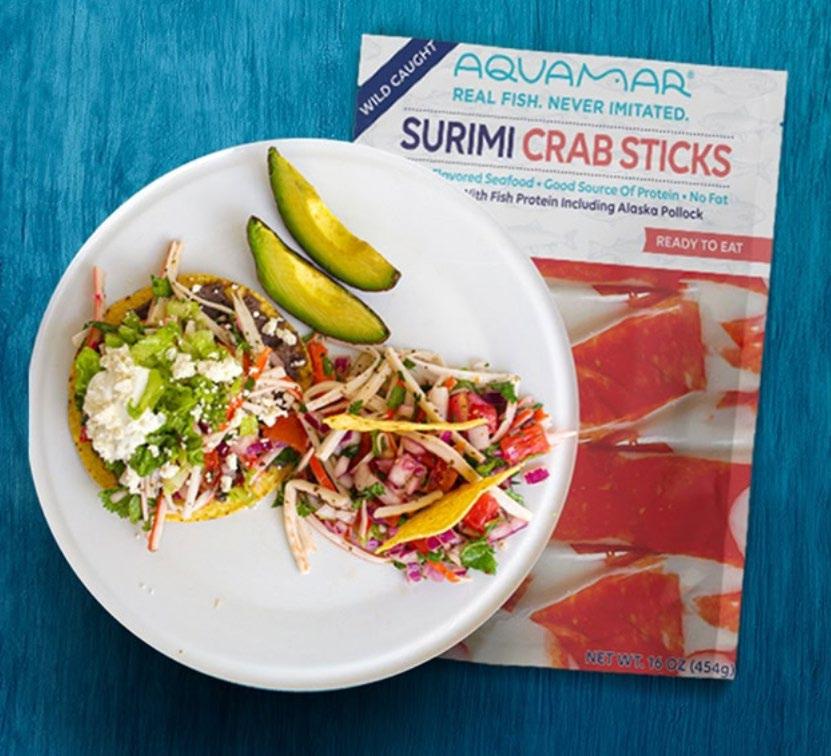
Aquamar Premium Surimi Seafood. The company’s extensive range of frozen and refrigerated crab-flavored seafood products are great for tacos and other Mexican/Latin and fusion appetizers and entrees. aquamarseafood.com
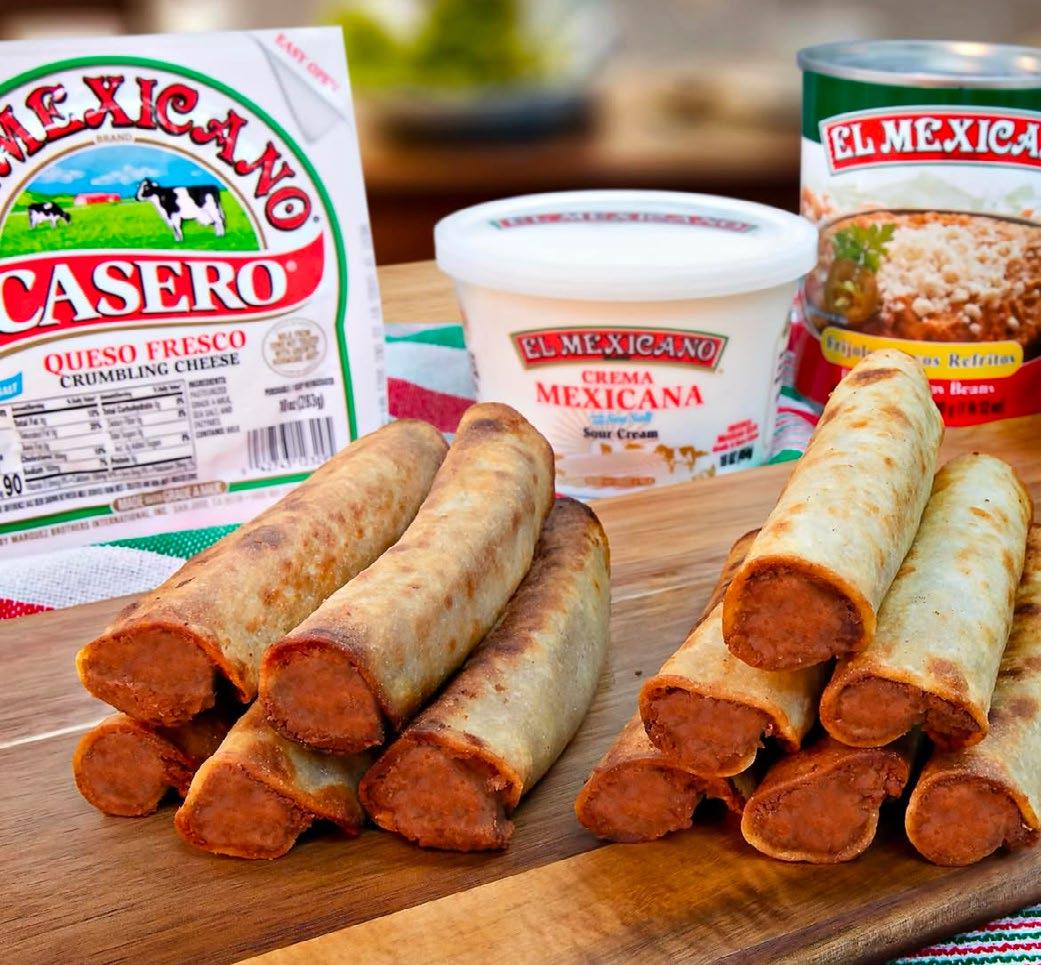
El Mexicano Mexican Dairy Products. Rich, traditional flavors are the hallmark of El Mexicano’s extensive product line that includes queso fresco, crema Mexicana, arroz con leche, cajeta and a variety of other premium dairy items. elmexicano.net
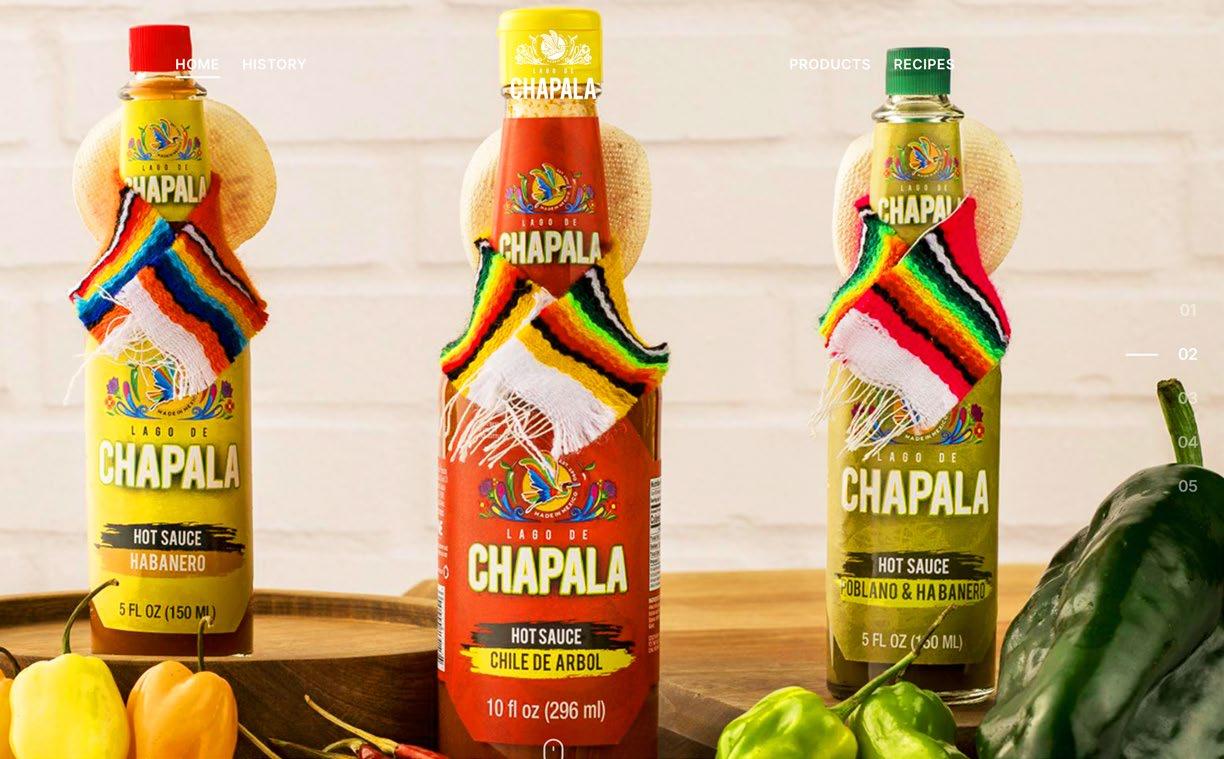
Salsa Lago de Chapala. For nearly 50 years, Salsa Lago de Chapala, a producer from Chapala, Jalisco, has been crafting delicious salsas that can spice up most any item on your menu. Find a list of products plus recipes at chapalahotsauce.com
KEVIN MORRISON Tacos Tequila Whiskey
WHEN KEVIN MORRISON decided to move on from a successful sandwich shop business he’d built, he knew he wanted to stay in the foodservice arena. He decided his next step would be to open a food truck.
In May 2010, Pinche Tacos debuted on Denver’s 16th Street Mall with what was then described as “a vision to serve the best damn tacos you’ve ever tasted coming from a moving vehicle.”
The only problem was that city authorities did not like the name — pinche is considered a curse word in Mexico —and demanded he change it. Morrison ultimately ditched the food truck and opened a brickand-mortar location of Pinche Tacos. Two years later, when he opened a second location, the state liquor board “suggested” a name change.
And just like that, Pinche Tacos became Tacos Tequila Whiskey. The restaurant — known as a destination for “elevated Mexican street food” — now has locations in Denver’s Highlands neighborhood and at Denver International Airport.
While pinche is no longer in the restaurant’s name, it shows up in one of Morrison’s favorite dishes: The Pinche Hash — a weekend brunch dish featuring carnitas, smashed potatoes and caramelized onion with scrambled eggs and roasted green-chile Hollandaise atop white corn tortillas.
“I just tested out some dishes and we had these ingredients left over, so I made it for breakfast the next day at home,” Morrison says of the way the recipe was born. “I had family in town, and they loved it.”
The hash has been part of Morrison’s culinary portfolio ever since. “It appeared on the food truck from day one,” he says.
And why does he count Pinche Hash among his all-time favorite recipes?
“I love this dish because it is simple yet different for a taco joint. It shows the creativity of our kitchen staff. No shortcuts, just a great, simple, rustic Mexican dish with a twist.”
Here, he shares the recipe with el Restaurante readers.
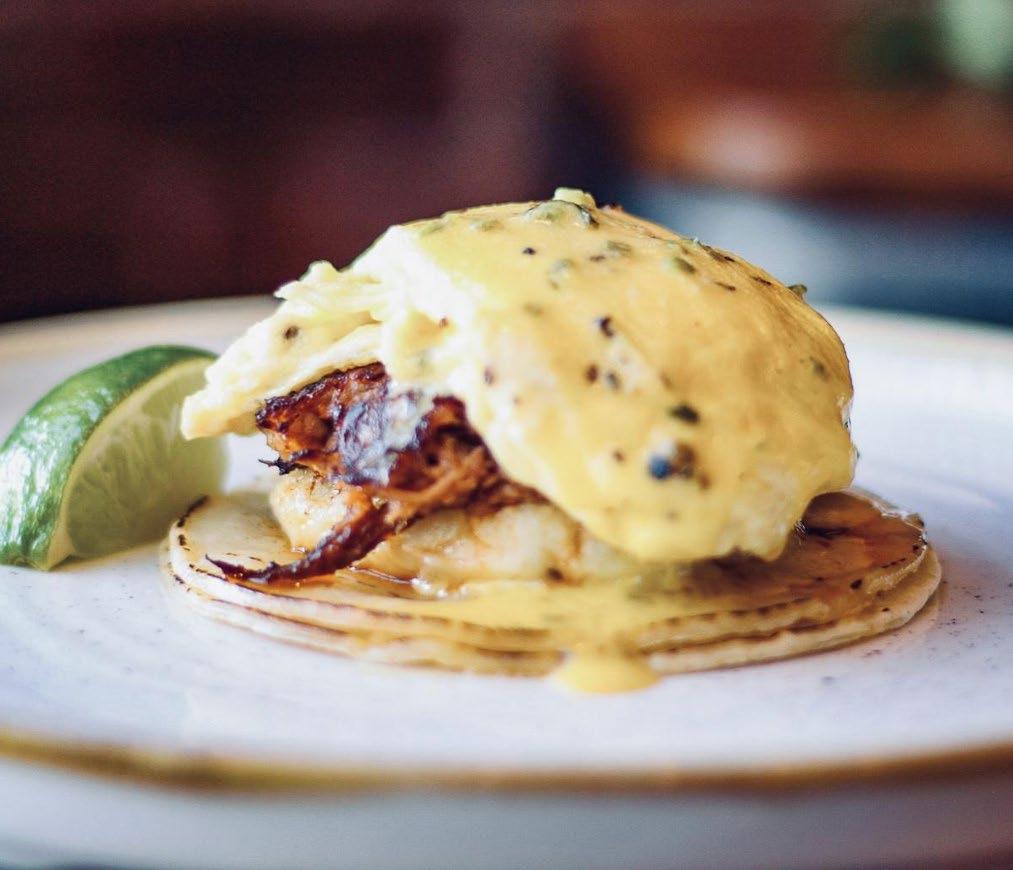
Pinche Hash
Makes 1 serving
2 white corn tortillas (or any tortilla you prefer)
1 oz. potato hash (boiled potatoes mashed with onions, heavy cream, kosher salt and black pepper)
2 oz. carnitas
1 egg, scrambled
1 fl. oz. Hollandaise (made using Hollandaise recipe of your choice)
1 to 3 serrano chiles (depending on your desired spice level)
Using the flames of your stove, a hot cast iron pan, or grill, blister the serrano and set aside to steam. Remove stem and dice. Set aside.
Make your Hollandaise sauce; add roasted serrano and set aside, keeping warm, but not too hot.
Using a hot flat top or griddle, sear
your carnitas until crispy but still moist. While carnitas are cooking, cook your tortilla and potato hash.
For the hash, form the potato mixture into a patty the size of your tortilla and about ½-inch thick. Cook on hot flat top until it caramelizes and becomes light brown in color and forms a light, crispy layer. Make sure you are turning only once!
Scramble one egg and cook with a little butter. Salt and pepper to taste.
When potato and carnitas are cooked to your liking, build your taco.
To build the taco: Add potato hash to the tortilla, then layer on the carnitas and then the scrambled egg. Finish with roasted green chile/serrano Hollandaise Sauce (to your liking).