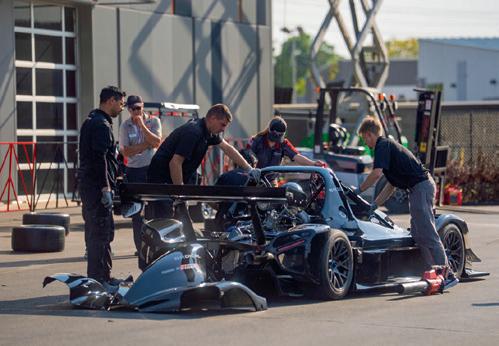
AS WE LOOK BACK ON 2025, IT’S CLEAR that the year was one of significant growth, refinement and new developments for M1 Concourse. Our commitment to creating the preeminent motor sports and experiential venue remains steadfast, and last year we made notable strides to enhance every aspect of our operations – all while focusing on the people who make it possible.
At M1 Concourse, it has always been, and will continue to be, about the people. We’ve made strategic additions to our team to support our mission: to create a world-class venue that embodies our guiding principles of Excellence, Experience and Enhancement.
This expanded team is now working diligently on developing new policies and procedures through our operational manuals. By employing best practices and focusing on continuous improvement, we aim to deliver a seamless, high-quality experience for everyone within our motor sport’s community.
Our hospitality department continues to deliver outstanding service, all while increasing the number of events hosted at our M1 Concourse facility. Through 2025 we hosted over 250 unique events, ranging from corporate functions to social gatherings. These utilized our Event Center, M1 Circuit, Arena, Pavilion
Life in the fast lane
and all the other special spaces we offer. 2025 was a year of significant upgrades to our venue, with several construction projects underway. Here is a quick look at some of the most exciting developments.
PEDESTRIAN BRIDGE CONSTRUCTION
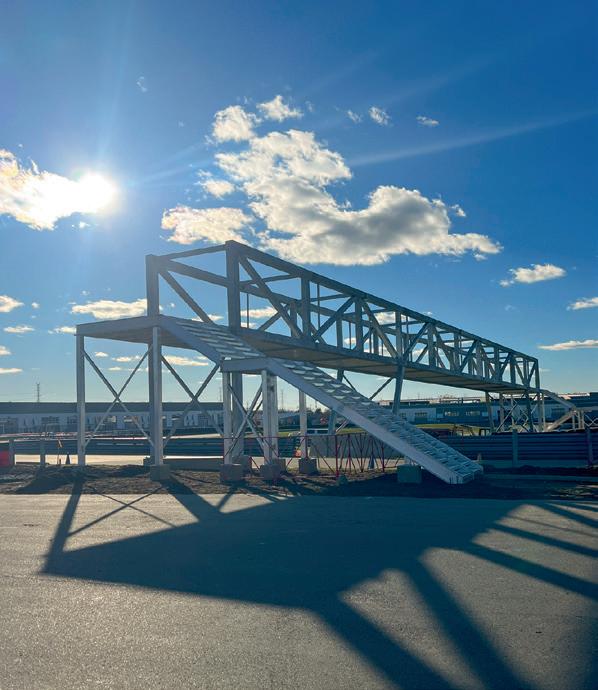
Currently very near to completion, the M1 Concourse pedestrian bridge will span the track, connecting Pavilion Square to the 2.5acre Arena. This bridge will allow easy access between key activity areas during events and festivals, as well as when the circuit itself is in operation. As a prominent focal point at M1, the pedestrian bridge will be available for yearly sponsorship rights, similar to what you will find at other major race tracks.
PADDOCK STRUCTURE
The new M1 paddock structure, scheduled for completion by the end of this year, will provide covered space for up to 80 vehicles. This permanent structure will protect our guests classic and exotic vehicles from the elements during festivals and events.
As we continue into 2026, M1 is dedicated to continuing our expansion and capabilities. Some of the most exciting plans include:
M1 SOUTH
Significant improvements have started, and will continue through 2026, to our adjacent property referred to as M1 South. Previously used strictly for parking, this 5.3-acre space will now serve as a staging area for our guests’ vehicle transporters. The improvements to this area will ensure that all of our visitors and participants experience a seamless, frictionless operation when they arrive at our facility.
Starting in April 2026, M1 will also construct an off-road experience within M1 South that will provide another layer of experiential offerings for our events. While not a racing venue, this area can be used by OEMs to showcase their vehicles’ capabilities to prospective customers in an immersive, offroad environment. This all-terrain section will also include a new training center for offroad motorcycle or ATV enthusiasts; a first of its kind in Southeast Michigan.
M1 X CENTER
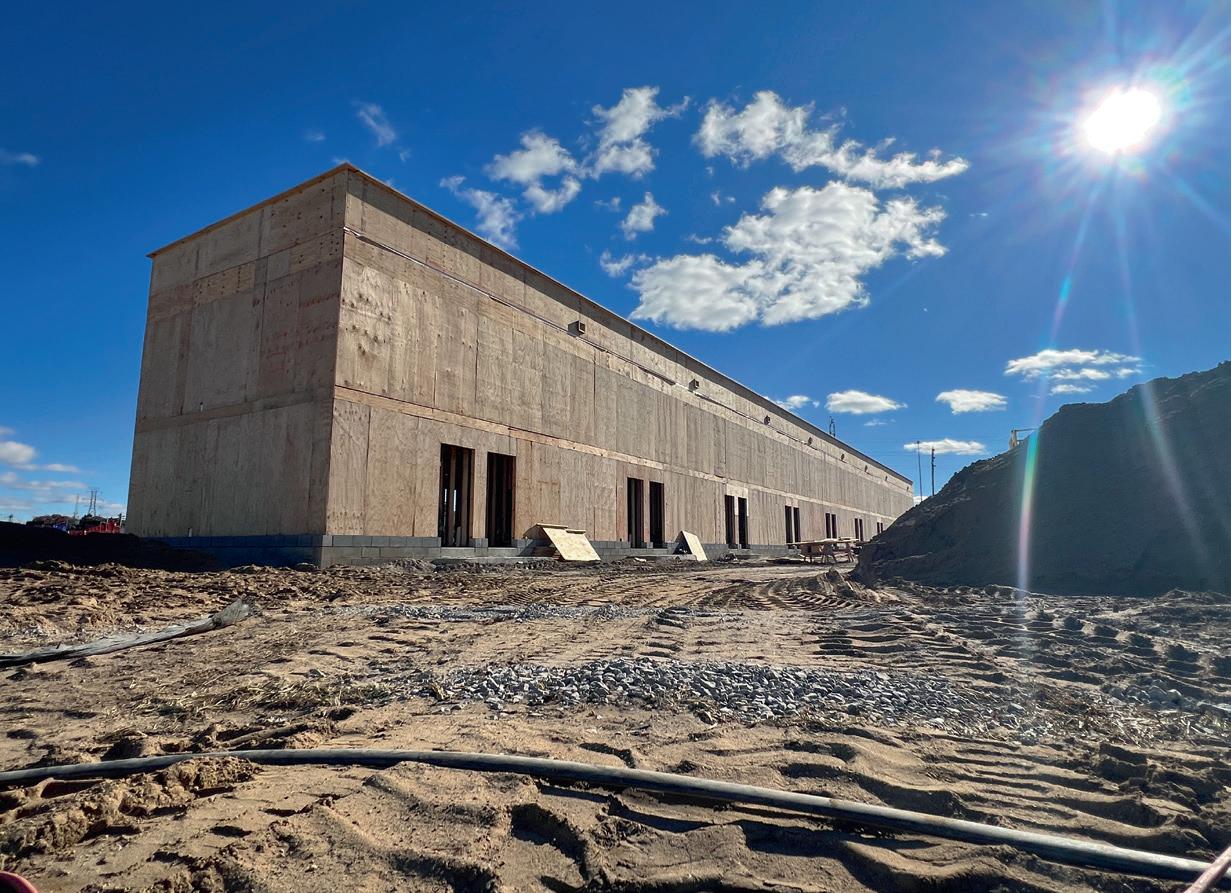
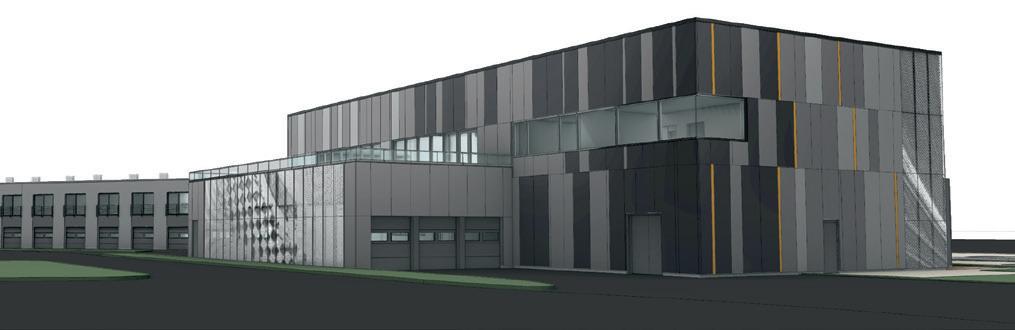
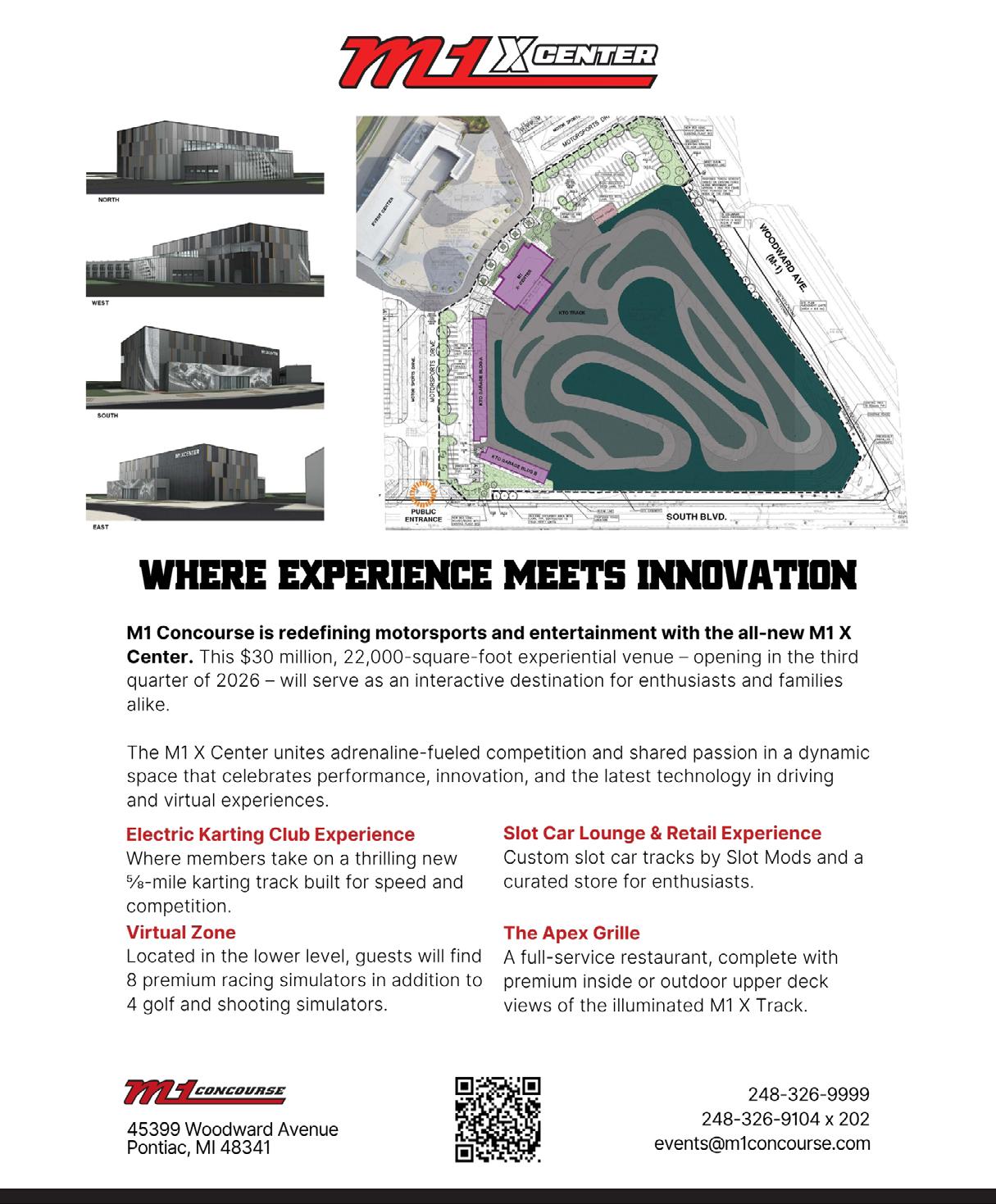
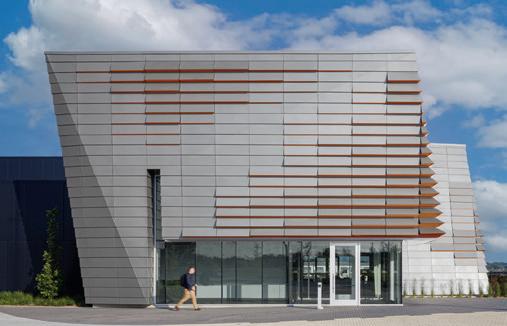
We are also thrilled to announce that the M1 X Center is scheduled to be open to the public towards the end of August 2026. The foundation for the 22,000sq ft, three-level X Center’s main structure is in place, with vertical construction expected to begin over
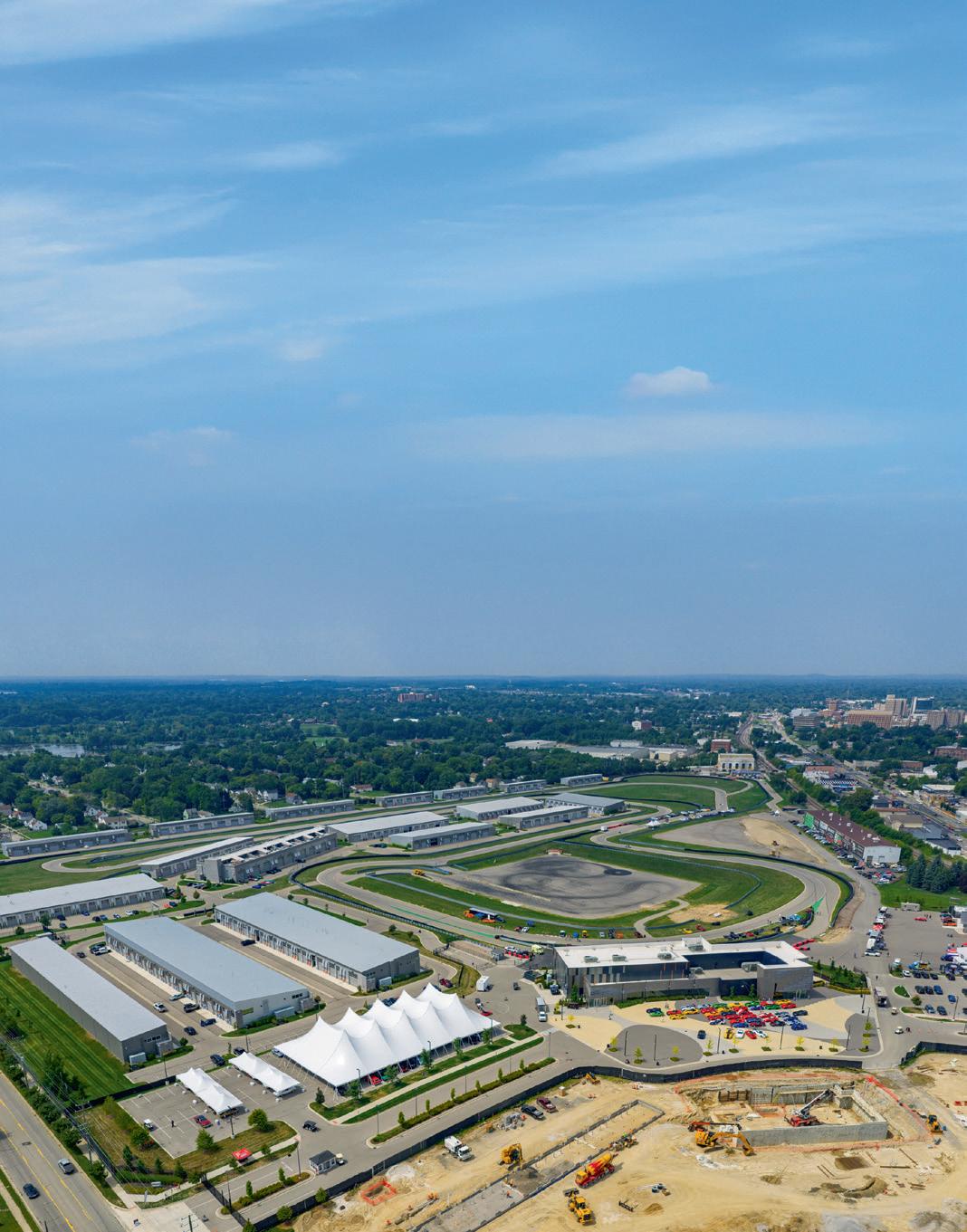
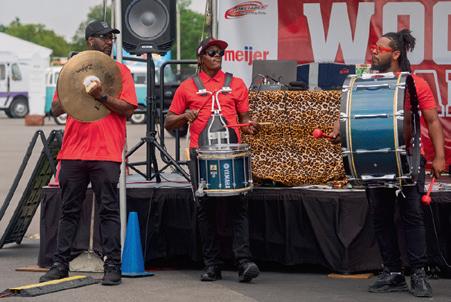
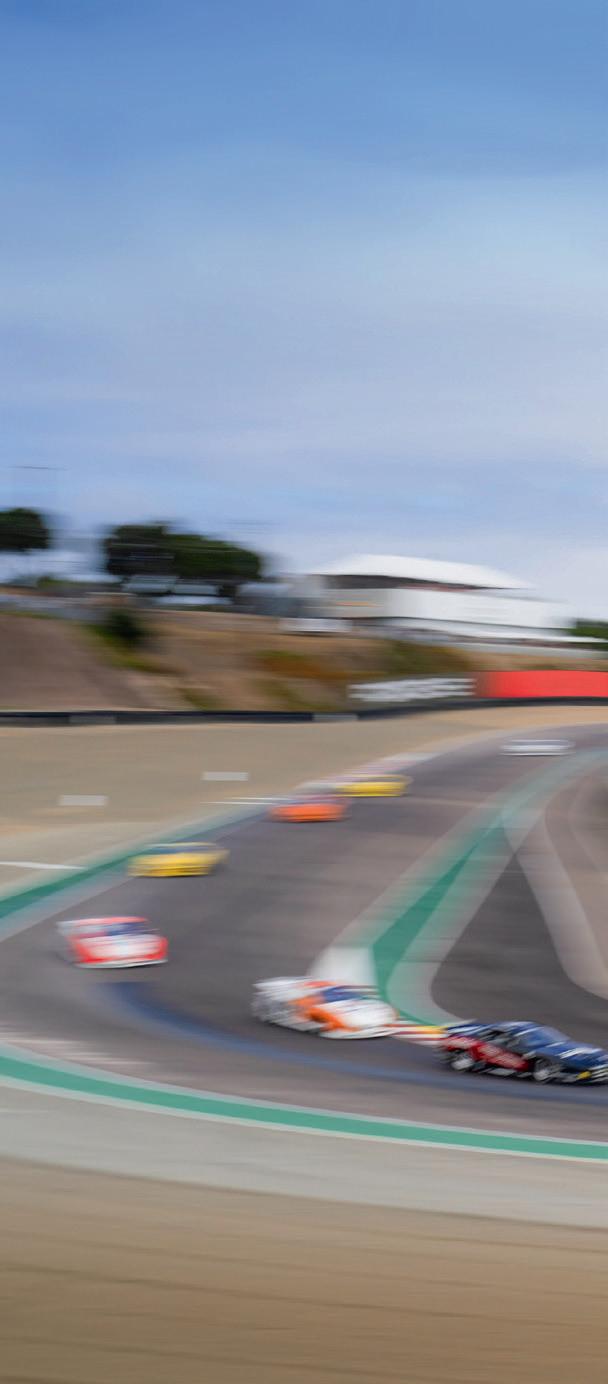
THIS PAGE Construction work is currently being carried out on the pedestrian bridge, while events such as the American Speed Festival continue to draw in the crowds.
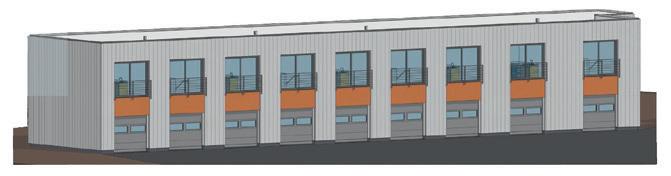
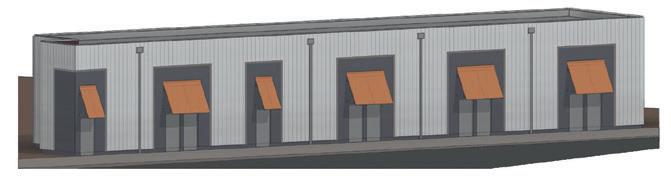
the winter. Our bespoke karting track is already 80 percent complete, and construction of the karting lounges and the attached garages is progressing rapidly as well.
The M1 X Center will offer a variety of motor sport and virtual experiences, and we encourage you to visit our website at www.m1concourse. com for more details and updates. This new experiential facility will be a game-changer – not only for M1, but also for the local region.
LOOKING AHEAD
Planning is well underway for our two flagship events: the Woodward Dream Festival and the American Speed Festival. Final programming and dates for the former, set for August 2026, will be announced shortly, while the American Speed Festival is firmly on the calendar for October 2-4, 2026. Additionally, we’ll soon announce the next Master of Motorsports honoree and reveal the exciting new elements that will be part of the American Speed Festival.
At M1 Concourse, we’re constantly evolving, expanding and refining our offerings to ensure that we remain at the forefront of motor sports and experiential events. We thank you for your continued support, and we look forward to seeing you at our facility in the year ahead.
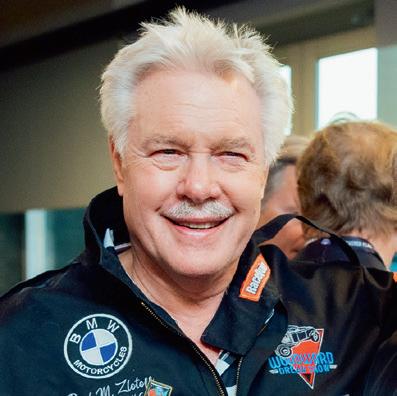
Paul Zlotoff, CEO, M1 Concourse
Bruce Rothschild Director of Hospitality brothschild@m1concourse.com
Jennifer Ruks Director of Experiential Festivals and Events jruks@m1concourse.com
SPONSORSHIP
https://m1concourse.com/sponsorship
Keith Bonn Director of Track Operations keith@m1concourse.com
Bill Lee Director of Sponsor Partnerships blee@m1concourse.com
https://m1concourse.com/carclub
https://shop.m1concourse.com
There's only one word that can describe my Zak Brown Raceway... SPECTACULAR!
Zak Brown CEO McLaren Racing CONSTRUCTORS' WORLD CHAMPIONS
Thoughtful details in the miniature track scapes create a magical and immersive racing experience that everyone can enjoy. The twists and turns, the corkscrews and chicanes, the exciting thrills and spills Slot Mods tracks are more than just entertainment. They’re a legacy. Create your own world of fun and excitement that will be cherished for generations to come.
Scan the code to launch the Slot Mods website and explore the new era of slot car racing. Let's Race!
SLOTMODS.COM
SPONSOR PARTNERS
M1 MOMENTUM IS THE OFFICIAL PUBLICATION OF M1 CONCOURSE, PRODUCED BY HOTHOUSE MEDIA BUSINESS INQUIRIES GEOFF LOVE GEOFF@HOTHOUSEMEDIA.CO.UK EDITORIAL DAVID LILLYWHITE DAVID@HOTHOUSEMEDIA.CO.UK
ADVERTISING SUE FARROW SUE@FLYINGSPACE.CO.UK ROB SCHULP ROB@FLYINGSPACE.CO.UK LIFESTYLE ADVERTISING SOPHIE KOCHAN SOPHIE.KOCHAN2010@GMAIL.COM ACCOUNTS JONATHAN ELLIS ACCOUNTS@HOTHOUSEMEDIA.CO.UK
Over 30+ years combined experience in the vehicle enhancement, protection, and management scene, we’ve performed our services to the most exclusive vehicles in the world.
ABOUT M1 CONCOURSE
The perfect Michigan destination for events, conferences, track days, driving tuition and much more
M1 CONCOURSE IS THE PREMIER EXPERIENTIAL destination bringing drivers, enthusiasts, families and brands together around a shared passion for motor sport and performance.
Located in Pontiac, Michigan, M1 blends worldclass driving experiences, signature festivals, innovative facilities and a strong automotive community within one iconic venue.
At its heart lies the state-of-the-art, 1.5-mile M1 Circuit. Designed for multi-directional use, its 11 turns and 30ft elevation changes provide the speed and challenge for those looking to push their driving limits on the asphalt.
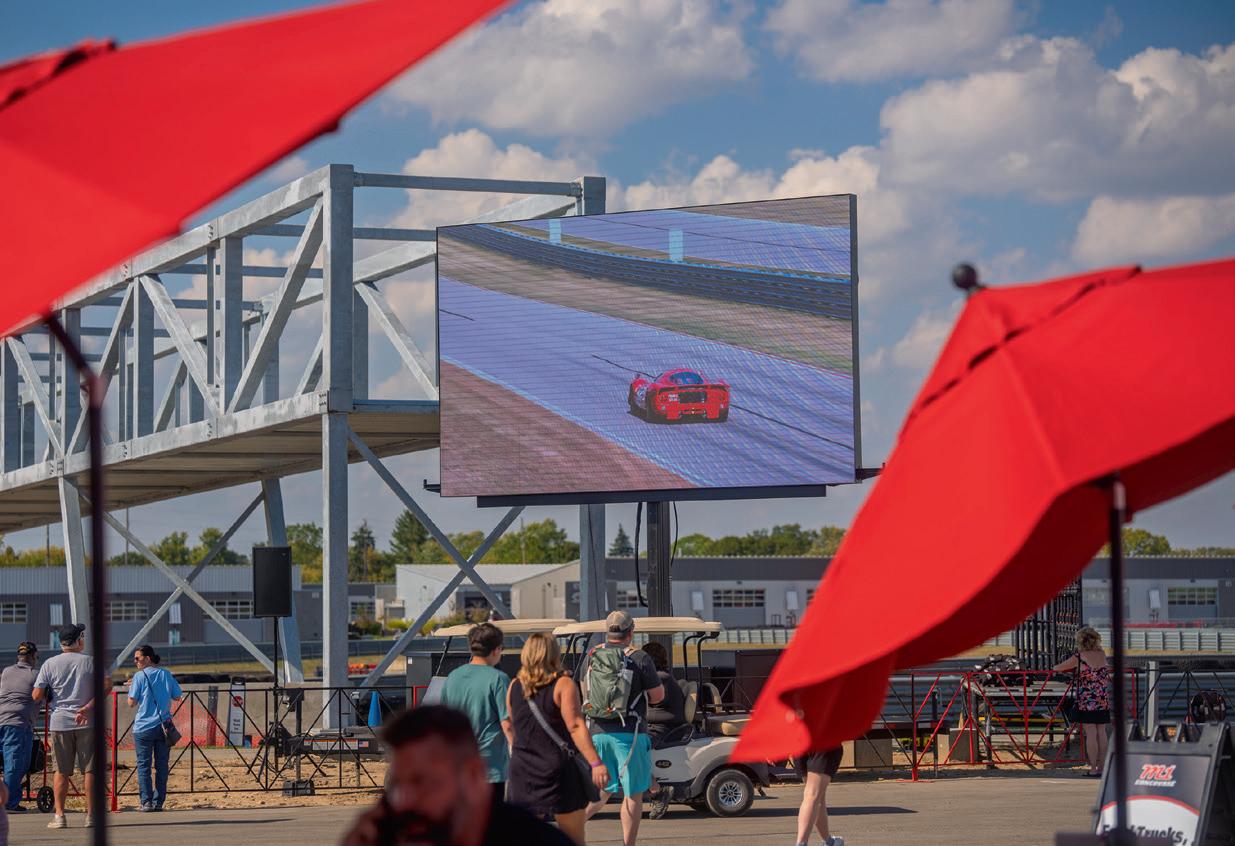
New for 2026, M1 Concourse will introduce the X Center, a multi-level experiential hub and home to a new 5/8-mile karting track featuring high-performance electric karts, virtual attractions and full-service restaurant.
Expanding on the hospitality, the Event Center provides a flexible and visually striking venue for meetings, weddings, galas, product launches and private celebrations. With elevated track views, customizable layouts and premium catering options, the facility is able to host events of all sizes while delivering unmistakable motor sports character.
Two clubs, both open to the public, define the driving community at M1. The Concourse Car Club (M1CCC) connects automotive enthusiasts through exclusive access, premium offers, social events and curated performance-driving experiences. For those seeking deeper immersion, the Motorsports Club (MSC) unlocks expanded benefits including increased track time. Available to both clubs, the M1 Fleet provides a variety
of performance vehicles for track use, so eliminating the need for transport or preparation of personal vehicles.
For advanced skill development, the M1 Radical Academy delivers professional-level driver training in Radical race cars, guided by expert instructors on the M1 Circuit.
Meanwhile, supporting both track and street vehicles, the on-site Prefix Performance Center provides aftermarket installations, routine maintenance, brake and tire services along with technical inspections.
M1 Concourse welcomes guests from around the globe to experience the dynamic blend of entertainment, hospitality, performance and community that has cemented its place as a distinguished automotive enclave.
More details at www.m1concourse.com.
Corporate Events
Reimagined
From boardrooms to ballrooms, Andiamo Catering brings creativity, flavor, and ease to your event. Wow your team with chef-crafted menus, innovative displays, and seamless service that reflect your brand’s excellence. Whether you’re hosting a client reception or a company celebration, we’ll handle every detail — so you can focus on connection, not coordination.
OCTOBER 2-4
FEBRUARY 2026
13-15
Chrome & Ice
Three-day indoor show, Dort Financial Center, Flint, MI.
27-March 1
Here are some of the local and national event highlights of 2026 announced so far, including M1’s very own American Speed Festival
Moda Miami Concours and RM Sotheby’s sale, Coral Gables, FL.
27-March 1
Detroit Autorama Custom car show, Cobo Convention Center, MI.
MARCH 2026
5-8
The Amelia Concours and sales, Ritz-Carlton, Amelia Island, FL.
MAY 2026
17
Distinguished Gentleman’s Ride Charity motorcycle ride, Detroit Metro, MI.
29-31
Greenwich Concours Leading concours by Hagerty, Greenwich, CT.
JUNE 2026
21
EyesOn Design
Car design celebration, Edsel and Eleanor Ford House, Grosse Pointe, MI.
AUGUST 2026
7-16
Monterey Car Week
Ten days of automotive events in and around Monterey, CA.
15
Woodward Dream Cruise Legendary 16-mile cruise via Pontiac, Detroit, MI.
OCTOBER 2026
2-4
American Speed Festival M1 Concourse’s own highlight of the year, Pontiac, MI.
on M1 Concourse’s new experiential attraction, with the public opening set for late summer 2026
CONSTRUCTION IS WELL UNDERWAY
on M1’s next major expansion, the X Center – a $30 million, 22,000sq ft facility designed to broaden the campus beyond private garages and closed events. Having broken ground in April, the project brings together familyoriented kart racing, high-end simulators, slot cars and dining, in a single, purpose-built venue.
“Our purpose is to create the preeminent motor sports venue in the country,” explains CEO Paul Zlotoff. “I am not originally from here, and we have had very little to see in the Motor City from a motoring perspective. One of my objectives was to create something so that when people come to visit and ask what is cool about the Motor City, you can say, ‘I know just where to take you’.”
Unlike much of the M1 Concourse campus, the X Center is intended as a true public
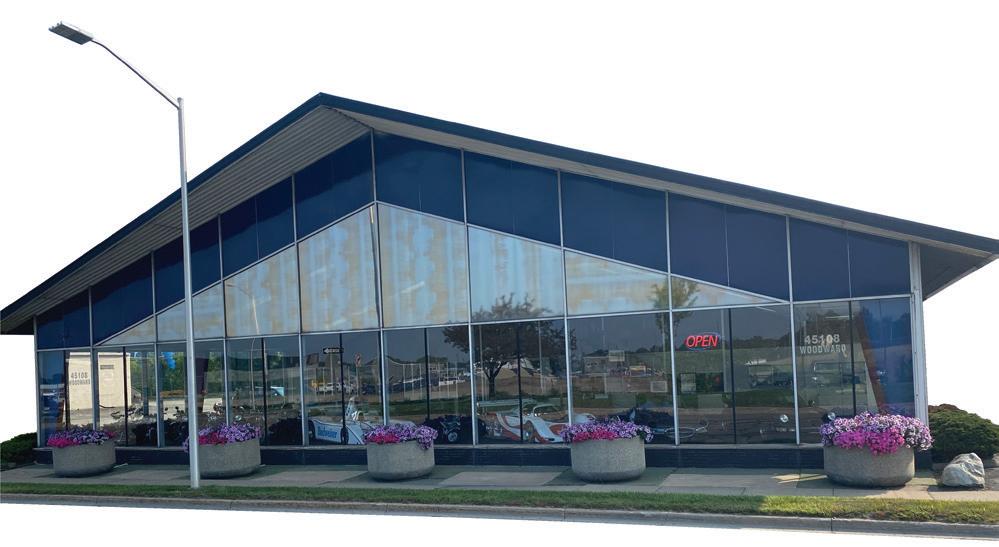
gateway. Open year-round, seven days a week, it will sit at the southeast corner of the site at Woodward Avenue and South Boulevard.
“Last year we had more than 250 events at M1 Concourse, and one of the first things that any event planner asks is, ‘what can we do?’” says Zlotoff. “Well, now we’ve amped that up by a factor of ten. We can bring you over to the X Center and you can go simulator racing, or to the slot-car tracks, and we can get you into electric karts. That is unlike anything else.”
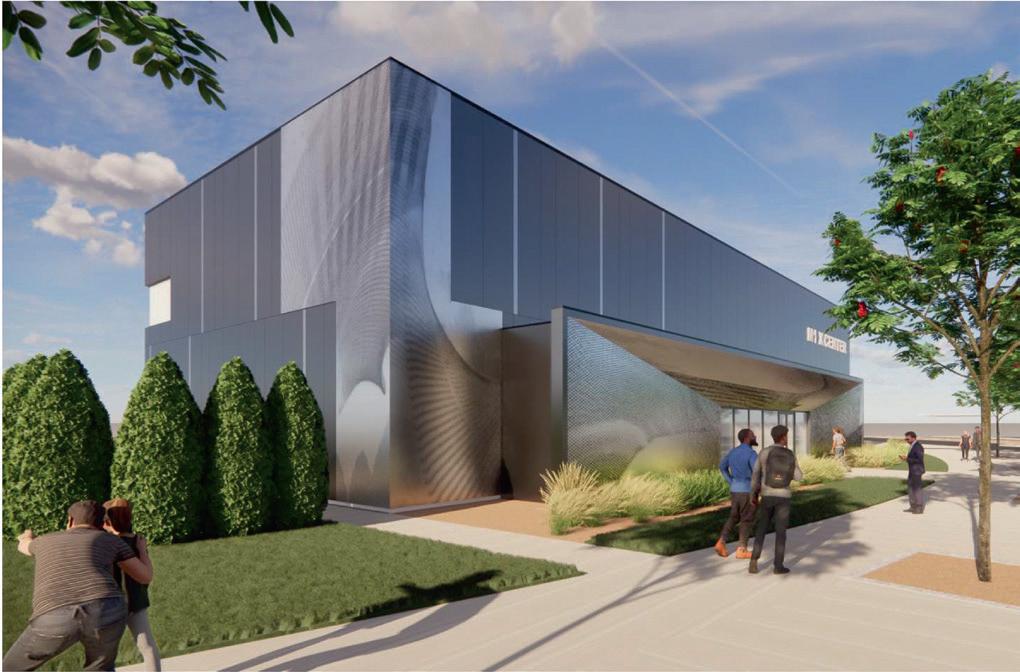
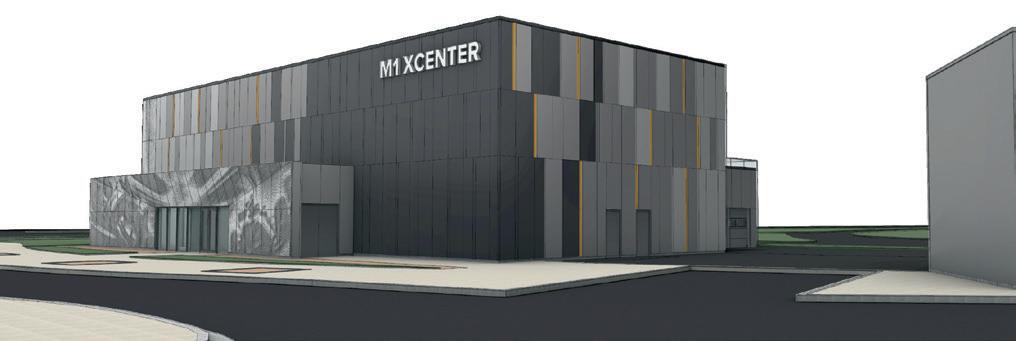
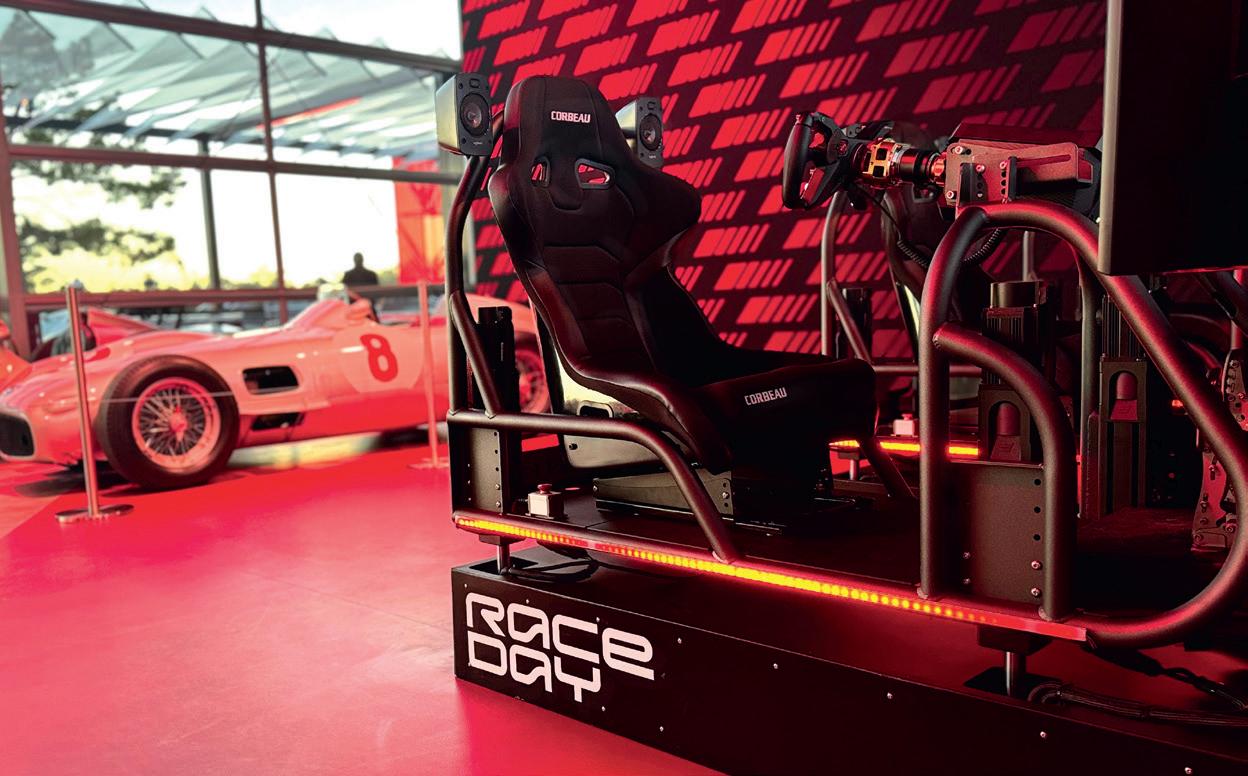
The modern, aluminum-accented X Center building will span three levels, operating with a general admission fee comparable to major cultural attractions. Inside, visitors will find an eight-station racing-simulator suite equipped with Oculus virtual-reality headsets, alongside golf and shooting simulators. Dedicated slotcar tracks add another layer of hands-on
‘When people come to visit and ask what is cool about the Motor City, you can say, “I know just where to take you”’
THIS SPREAD Construction of the exciting new 22,000sq ft X Center facility is well and truly underway.
motor sport activity, while the upper floor will be home to the Apex Grille.
This high-quality new restaurant is planned to feature a balcony dining area that will overlook the X Center’s headline attraction: a 5/8th-mile, illuminated circuit for electric karts. These will be of the highest quality, far beyond traditional amusement karts, and will be capable of being set up to be appropriate for novices and experts alike.
One way to access the electric-kart program will be through a $1,800 family membership, with supporting facilities including classrooms, a driver lounge and pit areas. Enthusiastic karters will also be able to purchase and store their karts on the M1 Concourse site.
The X Center is scheduled to open in summer 2026, with progress available to follow via a live construction feed on the M1 Concourse website. Just scan the QR code on this page and it will take you right there.
THIS PAGE The X Center will span three levels and offer simulator racing, slot-car tracks, a high-quality restaurant and electric karting on a 5/8th-mile, illuminated circuit.
Ladies ROC the world
Thrills and skills in the exciting new Ladies Race of Champions, which took place during the American Speed Festival
WORDS NATHAN CHADWICK PHOTOGRAPHY M1 CONCOURSE
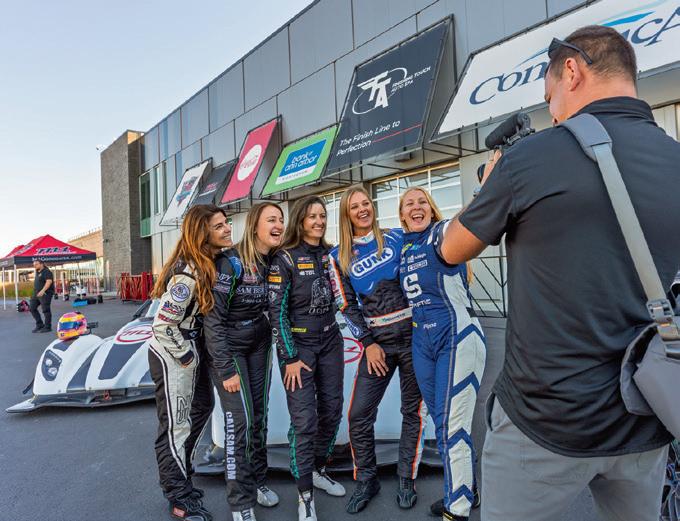
OCTOBER’S FIFTH ANNUAL AMERICAN Speed Festival at M1 Concourse saw the inaugural running of the Ladies Race of Champions. The LROC is part of a new multievent partnership between M1 Concourse and the Shift Up Now Foundation, an organization dedicated to supporting female racers in motor sport by helping them overcome financial barriers and access competitive opportunities.
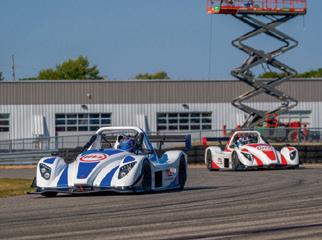
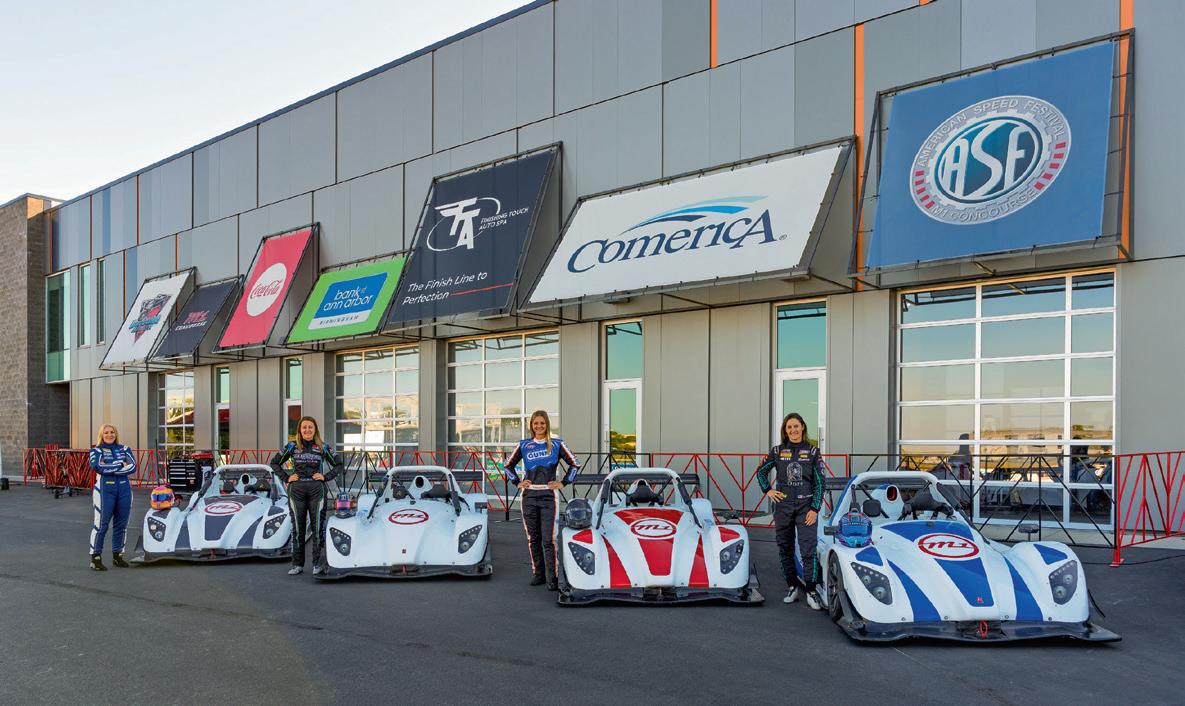
Laura Hayes topped the podium in the LROC, which consisted of four 20-minute sessions pitting Hayes, Pippa Mann, Taylor Ferns and Megan Meyer against the clock, and each other, in identical machinery: the Radical SR3.
Laura’s portfolio includes SRO GT4 America and the Pikes Peak International Hill Climb, where she was named the ‘fastest woman up the mountain’. Meanwhile, in addition to being a seven-time Indianapolis 500 competitor, Mann has also raced in 24-hour events in Barcelona and at the Nürburgring. Ferns has competed in Short Track Midget and Sprint cars, and Meyer is a drag-racing specialist. Fellow Shift Up Now Athlete Loni Unser was also invited to participate but had to withdraw due to illness.
Hayes immediately took command in the Saturday-morning opening session, but Mann stayed close behind, while Ferns and Meyer focused on familiarizing themselves with the
track and the cars, refining their road-course skills and gradually increasing their pace. As the day progressed, rising temperatures and warmer track conditions added an extra layer of difficulty, but Hayes remained unfazed, improving on her morning time. Mann once again was second fastest, while Ferns and Meyer made steady gains.
Sunday morning saw the four Shift Up Now drivers back on track, with Hayes leading the way. She and Mann soon secured the top two podium positions, while Ferns and Meyer
continued building confidence lap by lap.
The Sunday afternoon final session saw Laura match her morning pace and coming just short of her fastest lap of the weekend. Mann recorded her best times in the Radical yet, while Ferns and Meyer also set personal bests.
For Hayes, fresh off a GT4 America victory less than a month before, the dominant weekend highlighted her remarkable versatility behind the wheel. “I can’t say enough about the incredible experience I had with my Shift Up Now sisters at M1 Concourse,” she said after the LROC. “We had an absolute blast driving the Radical SR3s – learning, finding speed and enjoying such a fun platform.
“I want to give a huge thank you to Team Stradale for a first-class experience. Also, thank you to Iris Frase for the inception of the inaugural LROC event, and to Paul Zlotoff and his team at M1 for their warm hospitality and support of the Shift Up Now mission. This was so much fun; I can’t wait to come back next year.”
The LROC took place ahead of the second annual A Night With the Shift Up Now Foundation fundraising event, which took place in Fishers, Indiana on October 25 and raised just over $100,000.
You can find out more information about Shift Up Now at www.shiftupnow.com.
THIS PAGE Four women from different motor sport disciplines took to the M1 Concourse track for the inaugural LROC.
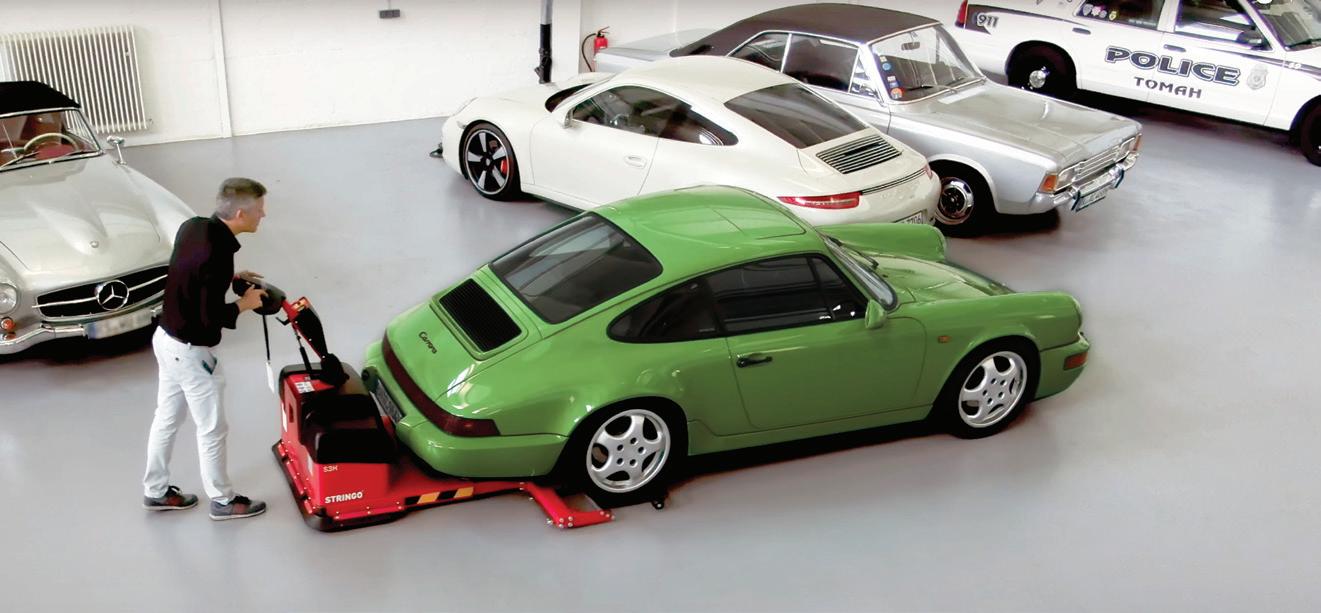
in many cases, vehicles cannot be started in a location where emissions are not permitted. Pushing vehicles around by hand risks damage to the vehicle and injury to employees. Stringo’s safe, single operator vehicle moving with zero emissions is the best way to move vehicles of varying sizes.
Stringo works closely with our customers, to customise each vehicle mover, meeting customer’s requirements and needs.
When you order a vehicle mover from us, we help you choose the model, accessories and modifications you need. We offer full customisation, which means everything is possible from minor changes to fully customised machines and new designs.
MOMENTUM NEWS
Slot stuff
David Beattie of Slot Mods reveals the latest updates on the tracks at M1 Concourse
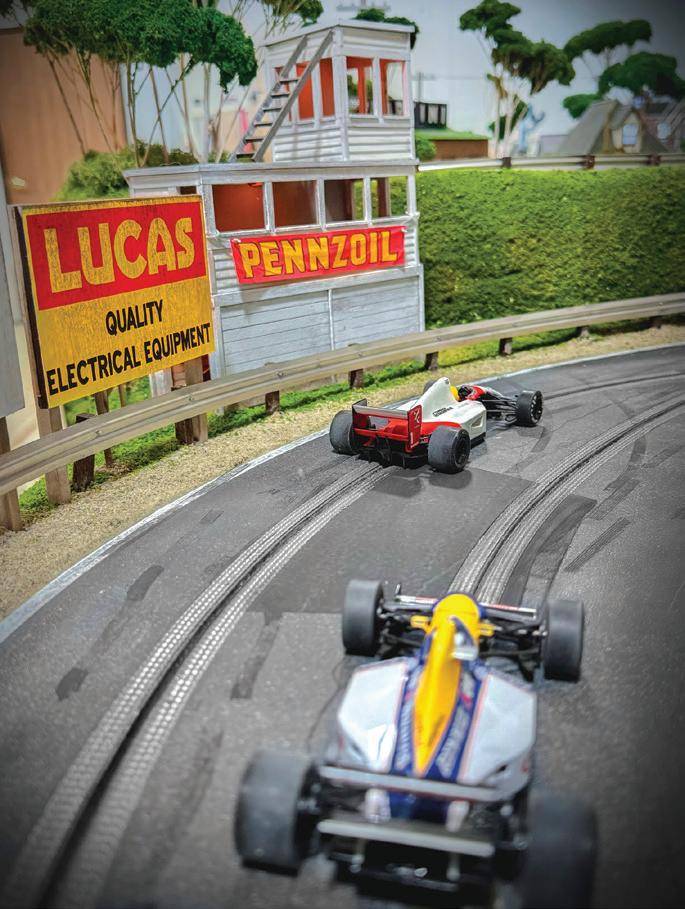
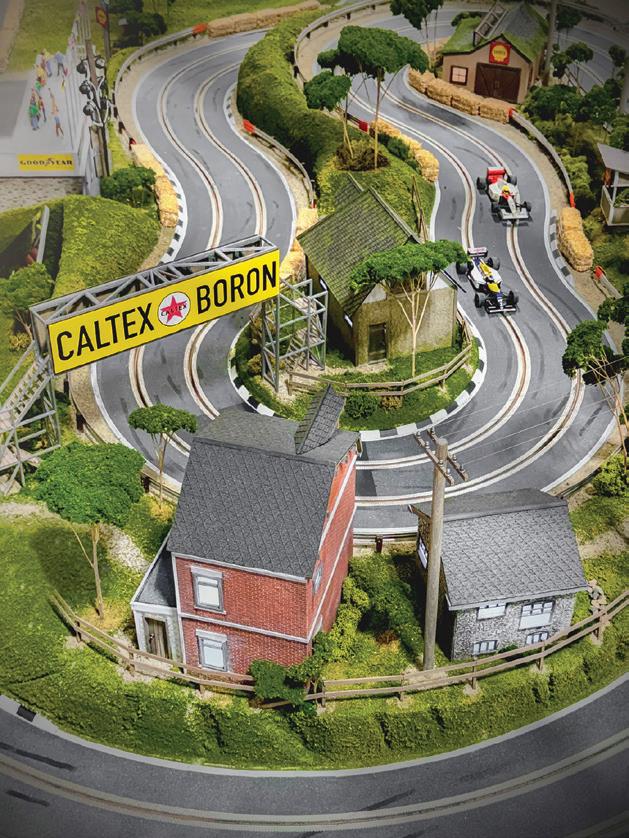
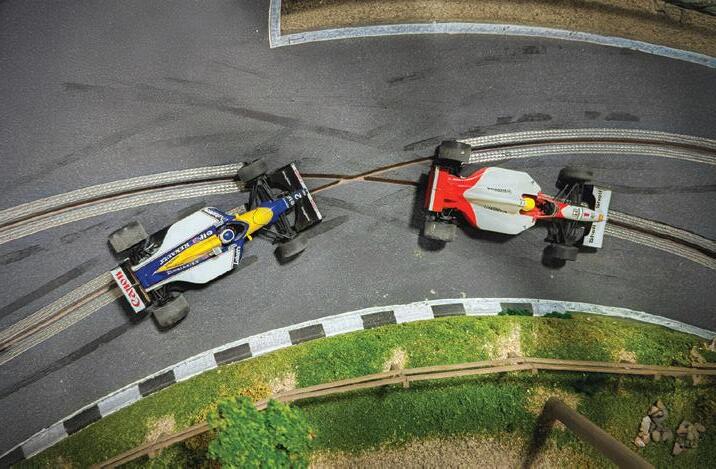
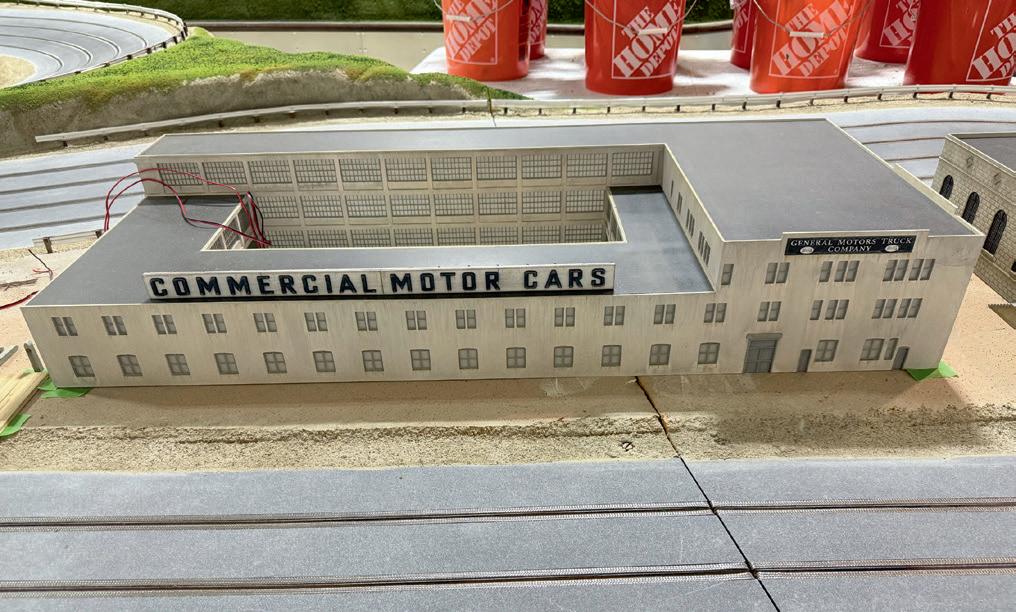
WORK ON THE X CENTER AT M1 Concourse carries on – but there’s a world in miniature that’s also entering the final straightaway. Slot Mods is producing two tracks for the facility: one is a tribute to international motor sport, while the other represents the Pontiac Triangle to celebrate the unique automotive culture of the region. “We are about four or five months from completion –we’ve been hopping from one track to another,” says Slot Mods founder David Beattie.
He explains that the international track is complete already, minus the construction of the buildings. “We are recreating things such as the Le Mans grandstands, the Dunlop tire structures and other elements,” he says. “We have already made the trees, but we still need to develop the main control system that will operate both tracks, and we also have to install the camera systems that will capture the slot cars at ground level.”
One of the most fun challenges for David has been constructing the historic buildings for the Pontiac Triangle. “Each structure was interesting and enjoyable to recreate,” he
explains. “The challenging part was studying the images in the book we were given and figuring out details such as what the back side looked like, the correct scale or the materials – was it made of limestone, for instance? Each building comes from a different period, so there’s a lot of variety to capture.”
Every building on the track tells part of the story of the Pontiac Triangle, which we have covered in previous issues of M1 Momentum. “The fun and challenge lie in translating something that existed before into a smaller scale while still keeping the essence of what the building was and what it represented,” David says. “Each building is from a different era; it’s not just a snapshot of 1920 or any single year. Learning the history has been really enjoyable.”
It’s a busy time for him – not only is he working on a scale recreation of the Targa Florio and Mille Miglia, he’s also producing a special project in collaboration with Rob Ida for Steve Wentz of the Caretakers Collection. “He’s restoring a GM Futurliner, one of only 12 ever made. They had dioramas in the trucks, which unfolded like a carnival display,” David
explains. “We’re recreating a city scene that folds out, and on the opposite side there’s a slot-car track using models made by Michael Niemas at Niemas Racecars in Austria. He is producing diecast cars, too, and we will integrate them into our miniature city scene.”
David is developing a chain-drive system with magnets, so cars can travel around the dioramas. “We now have it working, and when it’s in place the displays will fold up for travel and then roll down when in use,” he says. “When it’s finished, Jay Leno is going to drive the GM Futurliner down Hollywood Boulevard into the Petersen Museum for the big reveal.”
It’s clear David can’t wait for the unveiling of his M1 project, too. “We have been testing the tracks, and they run great – they’re fast and fun, and I think the public is really going to enjoy them,” he says. “People will see the set-up and think, ‘Oh my God, where’s this going?’ and then they’ll walk into the same room. It’s going to be quite captivating, and visitors will be able to walk away with a fantastic experience while also learning a bit of history about Pontiac.”
Find out more at www.slotmods.com.
THIS SPREAD Historic recreations show the attention to detail involved in constructing the new slot car tracks for the X Center.
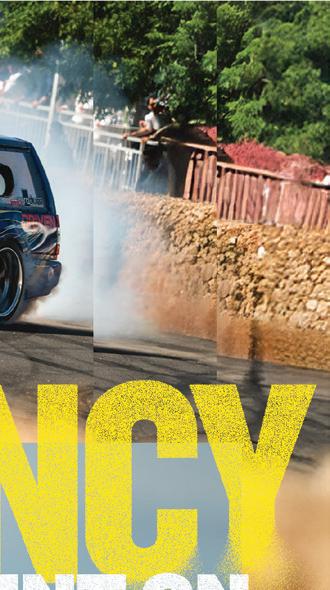
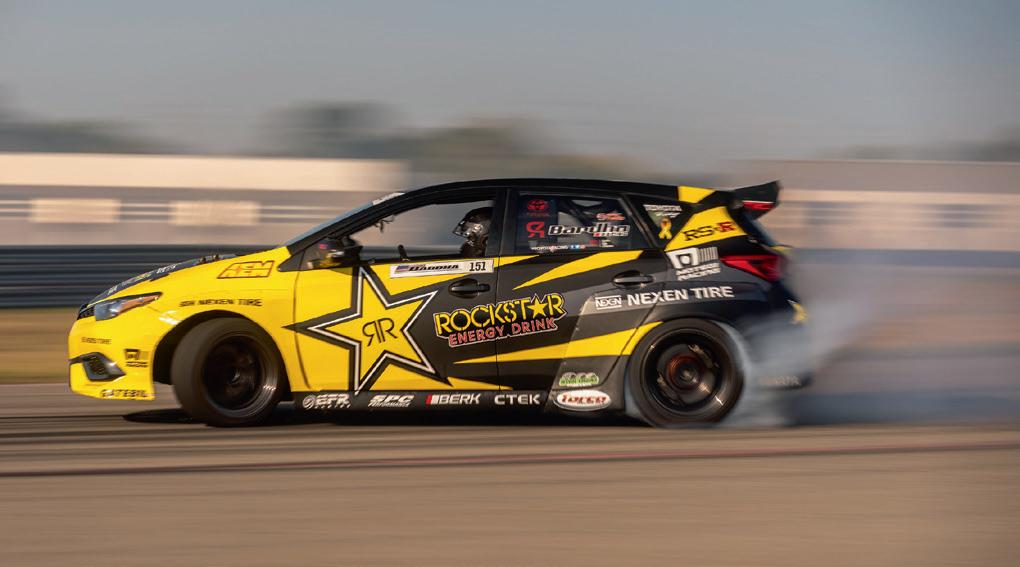
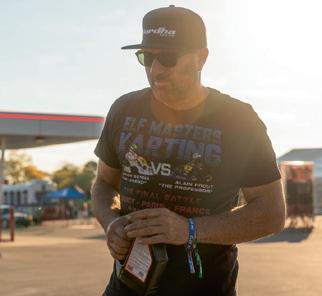
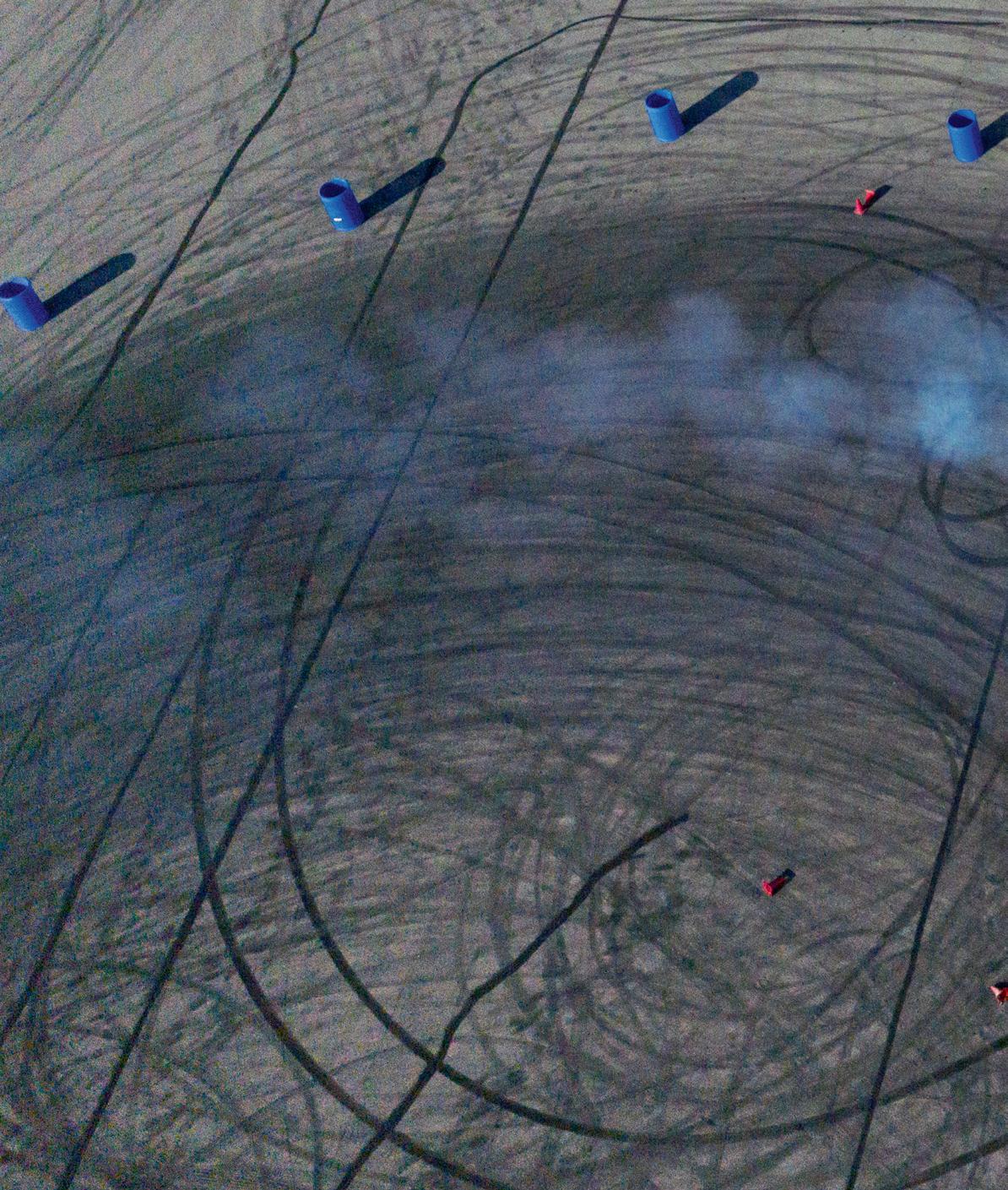
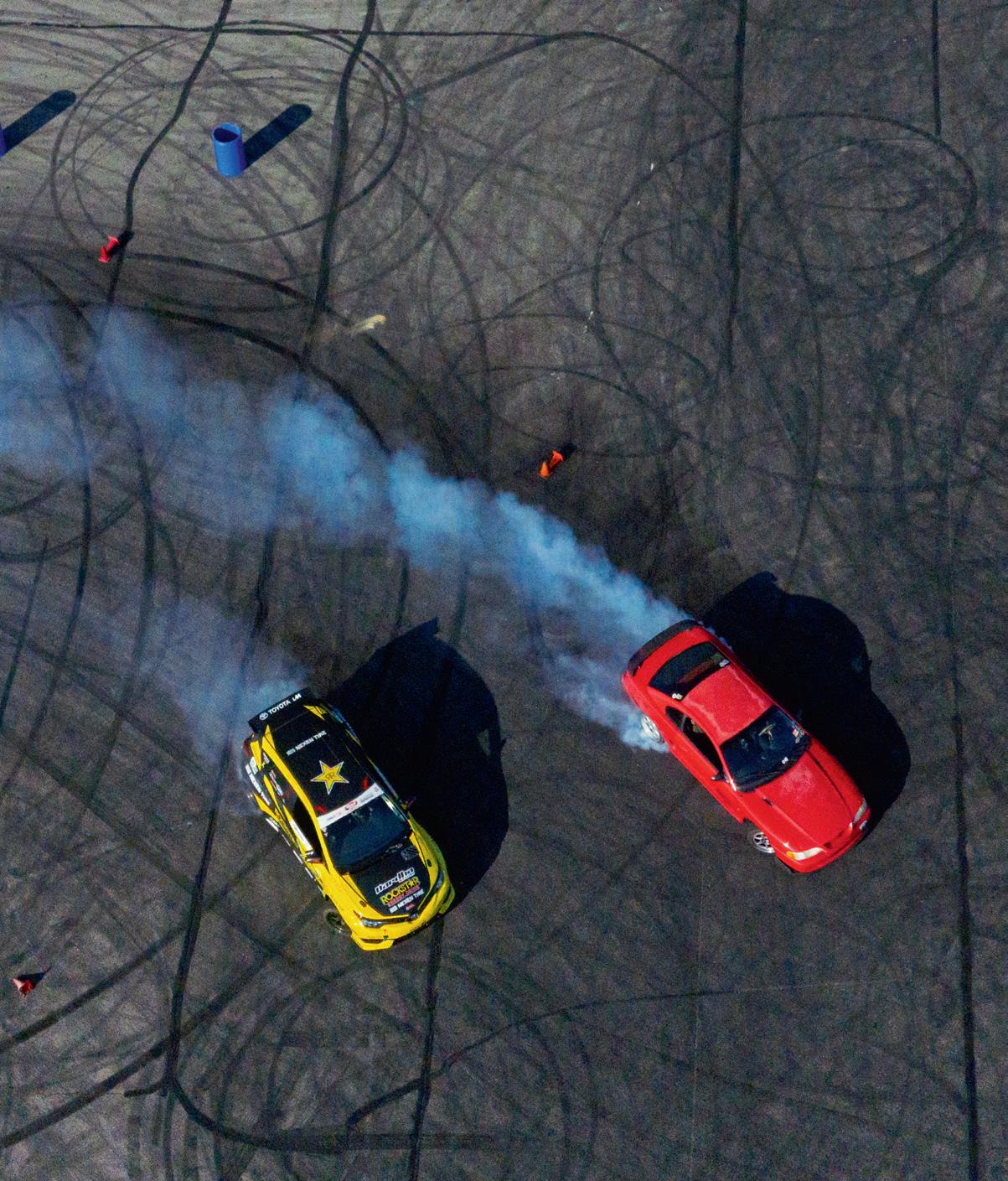
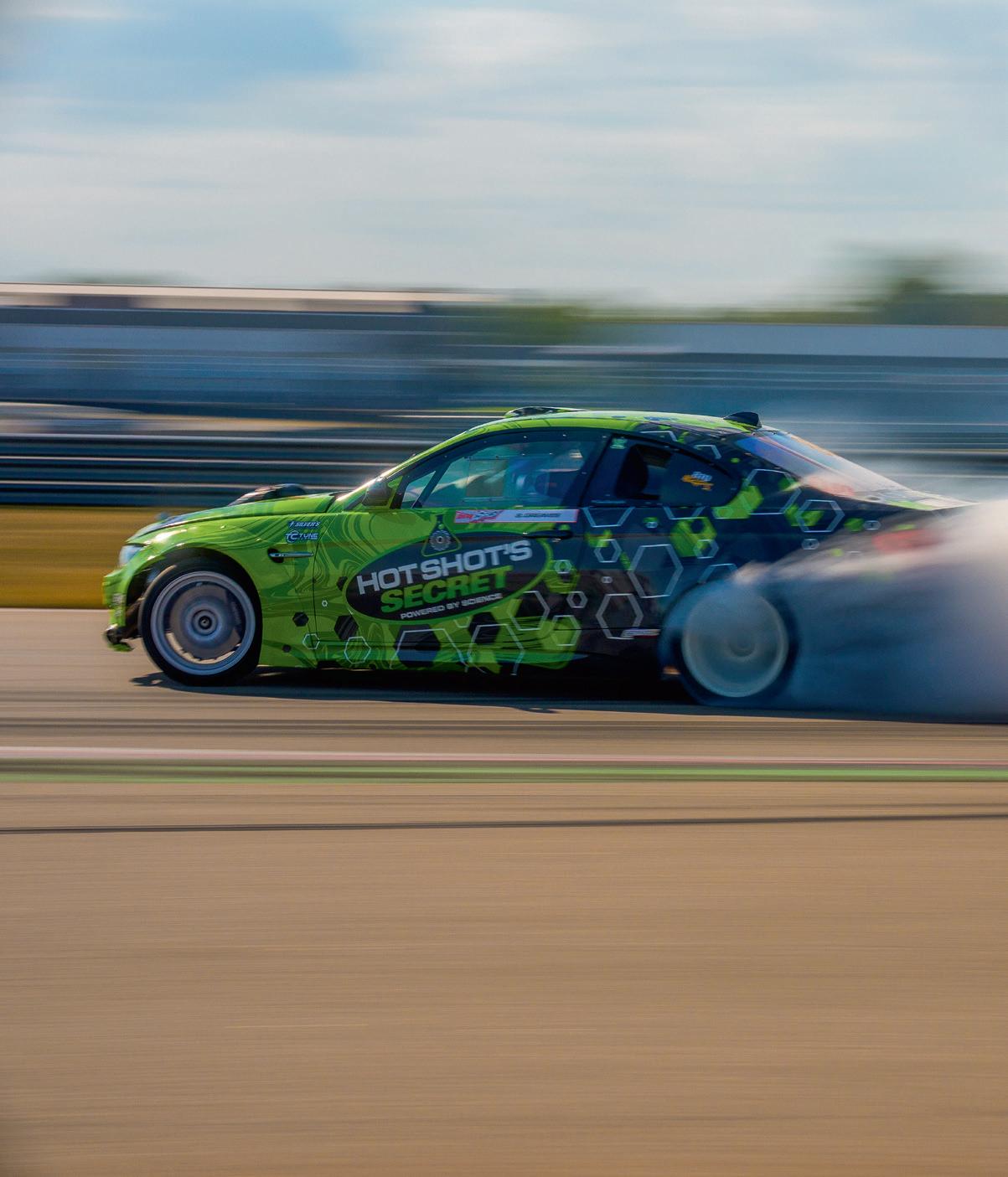
ELE BARDHA, THE 2024 TAURUS WORLD Stunt Award winner, gave a stunning demonstration of drifting delights at this year’s American Speed Festival at M1 Concourse.
Bardha earned recognition in the Best Work with a Vehicle category for his stunt performance in action thriller film Extraction 2. He was part of the stunt team honored for the movie’s high‑intensity vehicle sequence, which featured a dramatic car chase through a forest, executed as a continuous, practical stunt with no obvious cuts. He’s also played an important role in 2023’s Ferrari, starring as legendary 1950s racing driver Jean Behra, while previous roles have seen his skills on show in Need For Speed (2014), The Five-Year Engagement (2012) and Red Dawn (2012) – and he’s got more on the way, in the soon to be released Matchbox, which is due out in 2026.
However, Ele’s other passion is drifting, something he describes as an important skill that feeds directly into his stunt driving work.
“It’s very popular for a director to say, ‘Hey, I want you guys to come into frame sideways, which is drifting,’” Bardha told WXYZ Detroit.
“As that was something that was requested more and more, I decided to get into drifting –and it wasn’t even that long ago. I mean, I’ve
MOMENTUM NEWS
Catch our drift
Award-winning stunt driver and drift star
Ele Bardha gave a smoking demo at the American Speed Festival
been technically drifting for 30 years, but it’s a legitimate sport that’s grown into a huge thing.”
As drifting’s popularity has skyrocketed, Michigan has become one of the major centers in the US: “Drifting is about personality. It’s about bringing who you are with your car and your style out on the track,” Bardha says.
The ASF saw that personality on show in full on smoky style, with Ele leading a team of drifters around the course.
WORDS NATHAN CHADWICK PHOTOGRAPHY M1 CONCOURSE
THIS PAGE Ele says drifting is an important skill that feeds directly into his stunt-driving work; you can see for yourself in films such as Extraction2, Ferrariand NeedForSpeed
SUDDENLY BECOMING STATIONARY IS WHAT WILL KILL YOU
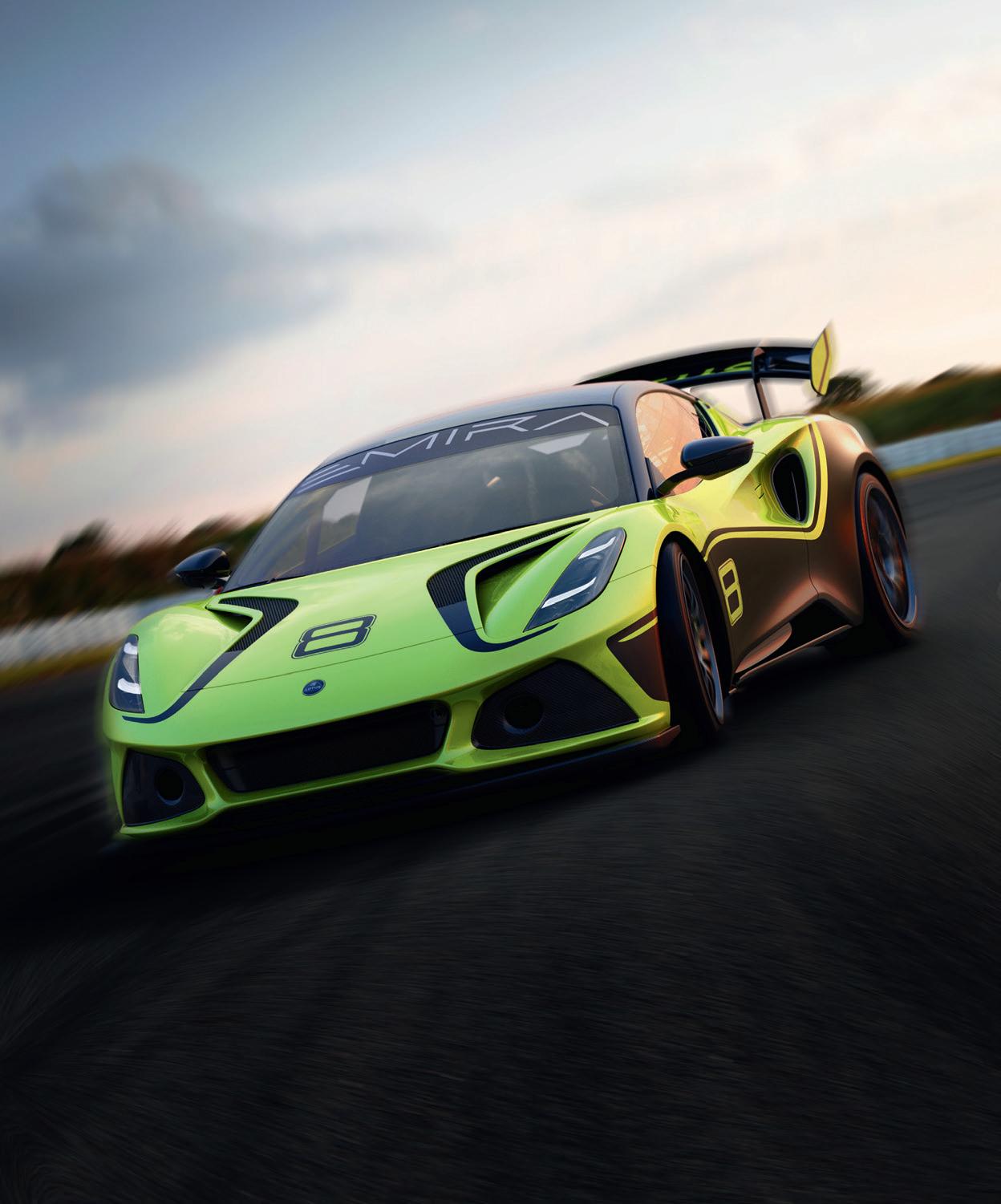
Full throttle from the track to the pit stop, there is no other service that can keep up for your automobile. Auto Europe measures their success from over 60 years of expertise in service and sales of European automobiles. Their commitment to the day-in, day-out, never-stopping, unremitting, persevering passion lead to the added acclaim to be the exclusive authorized dealership in Michigan for Lotus Cars Limited. Come in and check out the entire group today.
American Speed Festival 2025
The annual ASF is a spectacular tribute to the power, precision and passion of motor sport. If you weren’t there, you missed a wild weekend...
THE MOST RECENT AMERICAN SPEED
Festival saw two-time Indy 500 winner Al Unser Jr celebrated as the 2025 Master of Motorsports, as part of an epic October weekend of automotive culture at its finest.
“The American Speed Festival has been an incredible experience for me. Bringing our vintage Indy cars to the track – those from the 1950s, ’60s, ’70s and ’80s – has been a thrill,” Al enthused during the event.
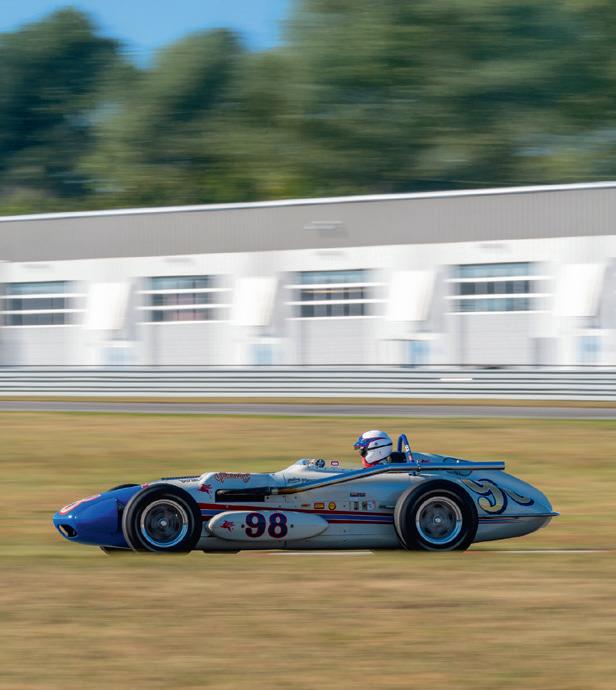
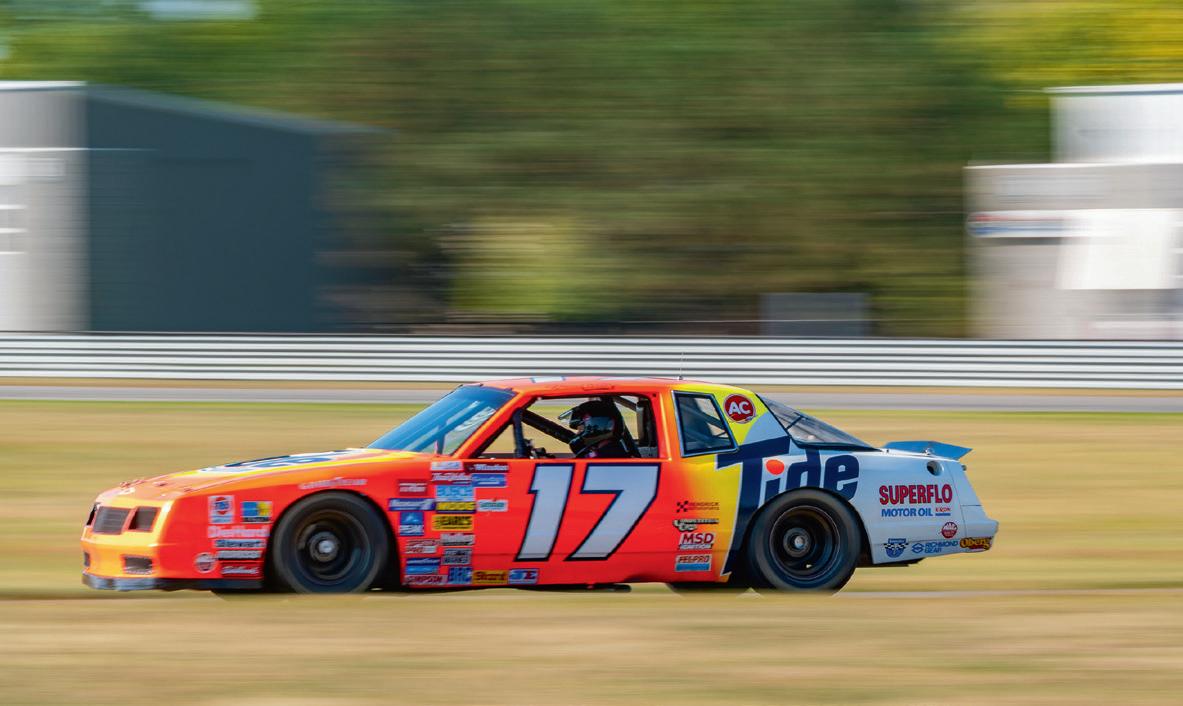
On-track action included iconic machinery from Vintage Indy, stock cars, sprint cars and endurance racers. There was also a chance to sample modern hypercars and prototypes, and 2024 Taurus World Stunt Award winner Ele Bardha led a drifting display that will live long in the memory of all those who watched it.
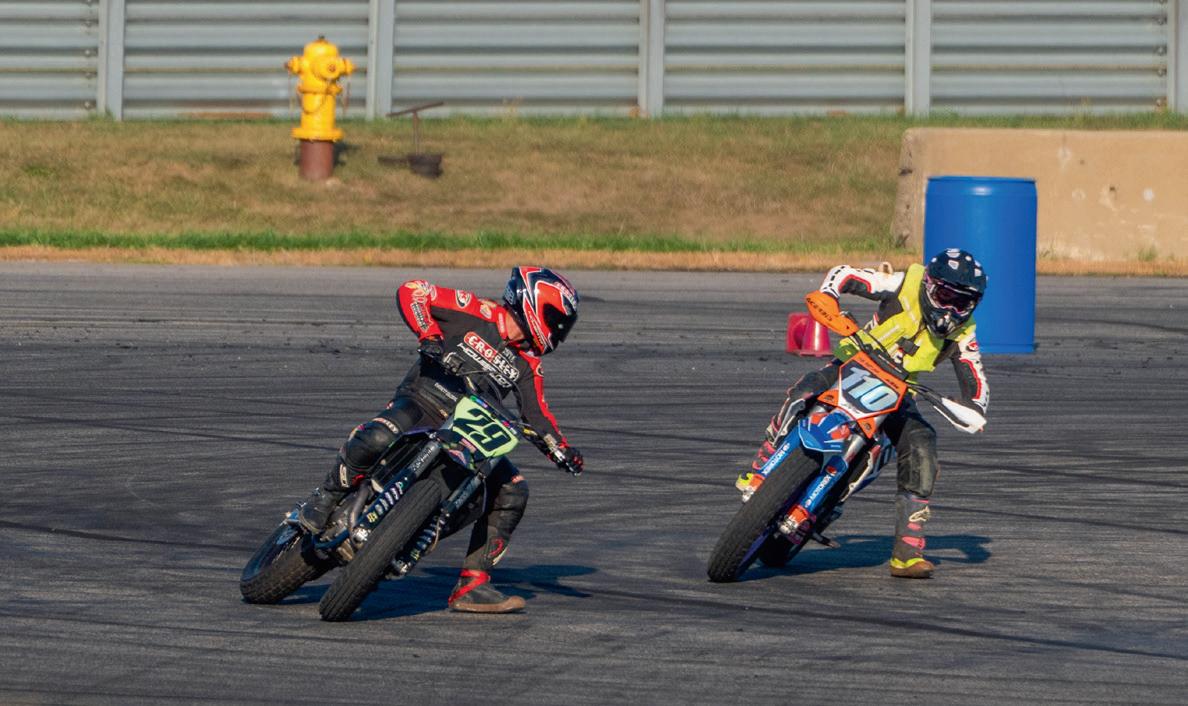
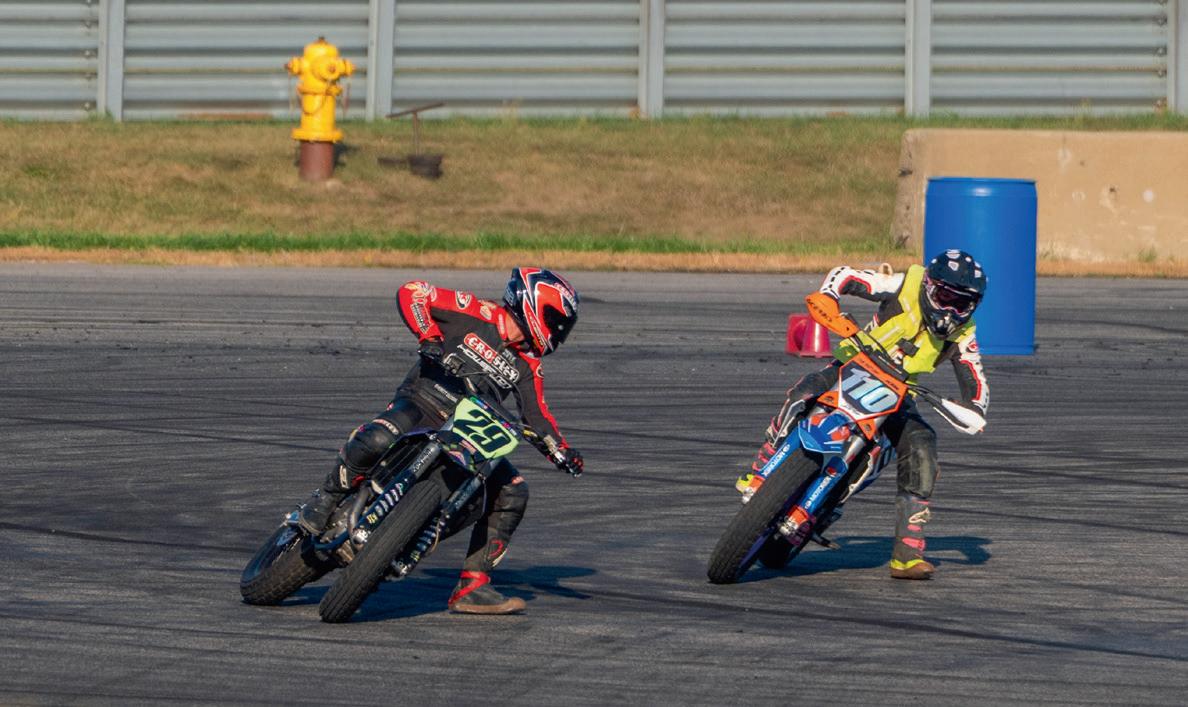
The ASF Cup and Ladies Race of Champions saw intense battles against the clock, while visitors could enjoy the unique delights of flat-track motorcycle racing courtesy of 2016
PREVIOUS SPREAD 2024 Taurus World Stunt Award winner Ele Bardha led a spectacular drifting display.
ABOVE M1 Concourse hosted the fifth annual ASF, thrilling thousands of petrolhead spectators.
Grand National Champion Bryan Smith.
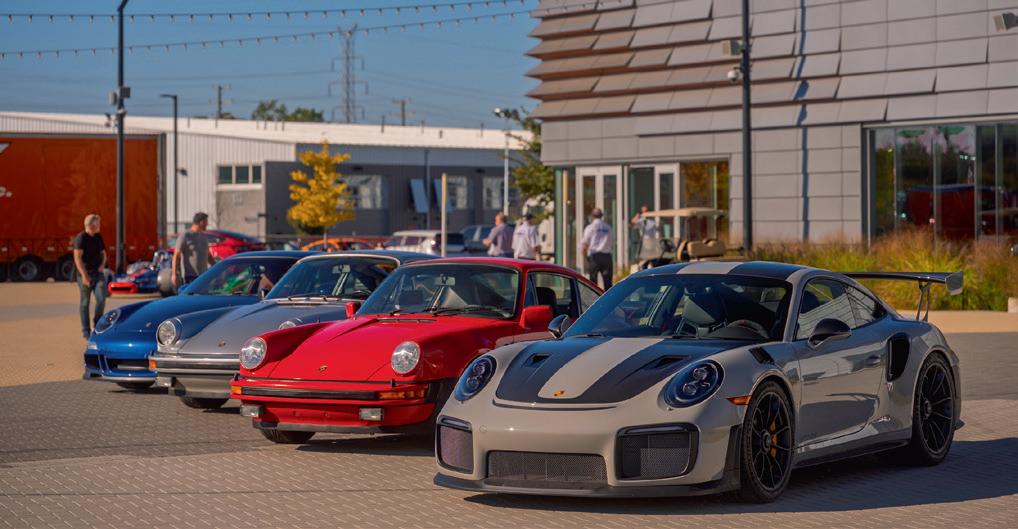
Away from the track action, 50 years of the Porsche 930 Turbo saw a selection of vehicles as wide as this Stuttgart’s sizzler’s rear arches, while in the air the Scream N’ Rebels Vintage War Birds honored US service members with dramatic flyovers.
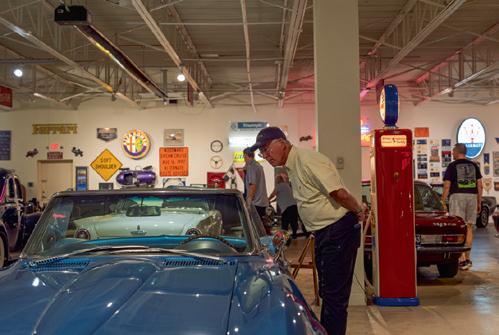
The American Speed Festival 2025 also saw the Dine & Drive Tour, which blended automotive passion with culinary delights and a tour around local scenery, while the Garage Reveal allowed a rare opportunity to see the gems in the M1 Garage Owners Community.
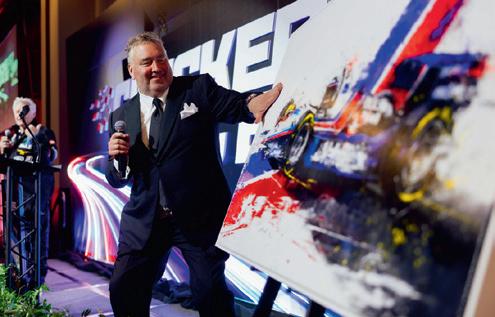
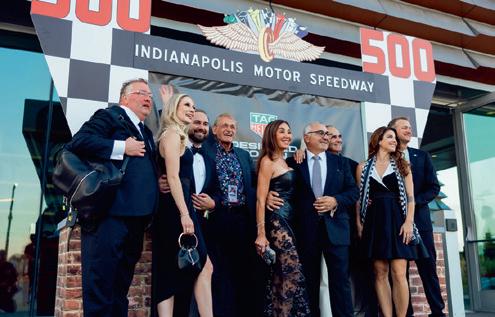
The event’s Checkered Flag Ball, hosted by McLaren Oakland and benefiting M1 Mobility, a free transportation service supporting Pontiac residents through the Pontiac Community Foundation, also saw the official honoring of Al Unser Jr as the Master of Motorsports.
In the early 1980s, a young Al Jr began making waves in the racing world. He debuted
THIS PAGE From Porsche Turbos to period petrol pumps, the most recent American Speed Festival ensured there was something for everyone. The Dine & Drive Tour provided a full-day immersion into Metro Detroit’s automotive culture, featuring scenic drives through Oakland County, gourmet meals at unique spots and parade laps.
THIS
were
represented
SPREAD Historic NASCAR and IndyCar
well
at ASF 2025, which also saw the inaugural running of the Ladies Race of Champions and superb flat-track motorcycle action.
‘I’ve
seen legends like Johnny O’Connell, Jim Hall and Richard Petty inducted here. To be part of that group is humbling’
THIS PAGE Al Unser Jr was honored as the Master of Motorsports at the Checkered Flag Ball, which raised funds for M1 Mobility, a free transportation service supporting Pontiac residents.
in the IndyCar World Series in 1982, and it didn’t take long for him to start turning heads. By 1984, he had claimed his first IndyCar victory at Portland International Raceway. At just 22 years old, Al Jr displayed a smooth, composed and tactical driving style. He wasn’t just fast, he was smart – and the paddock quickly realized that he was a formidable competitor. Over the following years he consistently proved himself on street courses, ovals and road circuits, winning in Long Beach, Toronto and Cleveland, and earning a reputation for remarkable consistency and cool-headedness behind the wheel.
Everything came together in 1990, when Al Jr finally captured his first IndyCar Championship, winning six races that season. However, no event carried quite the prestige of the Indianapolis 500, and victory at The
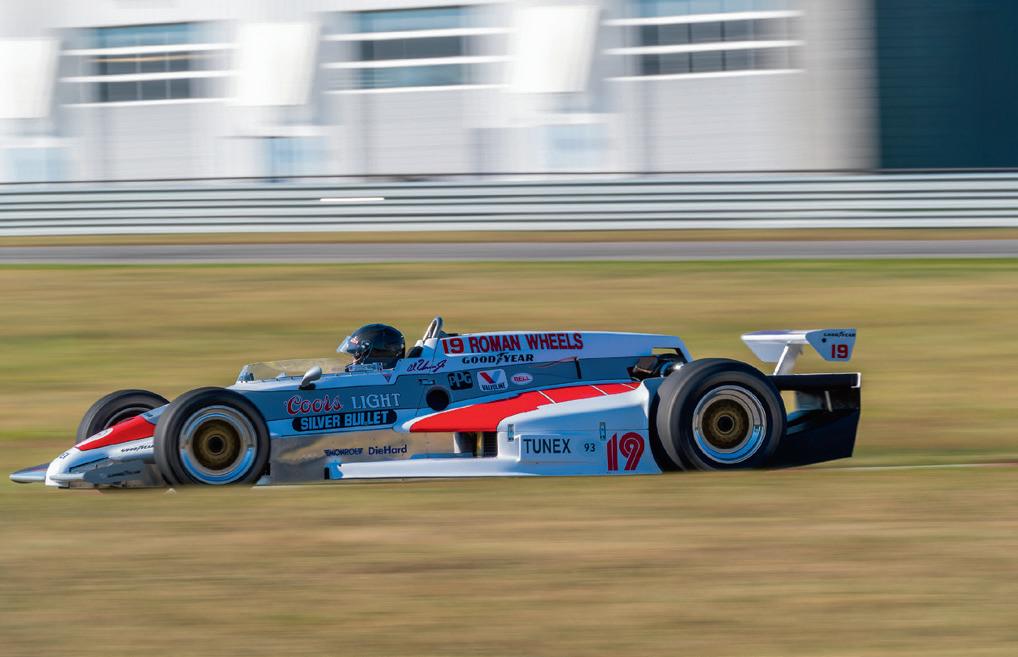
BELOW Al Jr originally drove this 1983 Coors Light Silver Bullet Eagle-Cosworth as a rookie in the Indy 500. Recently restored to pristine condition, the iconic car appeared on track at ASF 2025.
Brickyard had always been his goal. In 1992 that dream became reality. The race was one of the coldest Indy 500s on record, with track temperatures barely reaching 60º. Cars were sliding, spinning and crashing out in what became a race of attrition. Nearly half the field failed to finish, but Al Jr remained calm and controlled lap after lap. In the closing laps Scott Goodyear challenged hard, gaining ground with every corner, but Al Jr held his line. Fans were on their feet as the two drivers came down the front stretch side by side. Unser crossed the finish line ahead by just a few thousandths of a second, the closest finish in Indy 500 history. His talent extended beyond open-wheel racing, however. He also shone in the International Race of Champions, a series designed to test pure driver skill with competitors from NASCAR, Formula 1, sports
ABOVE The drifting display at the ASF will live long in the memory of all those who saw it.
‘In the air the Scream N’ Rebels Vintage War Birds honored US service members with dramatic flyovers’
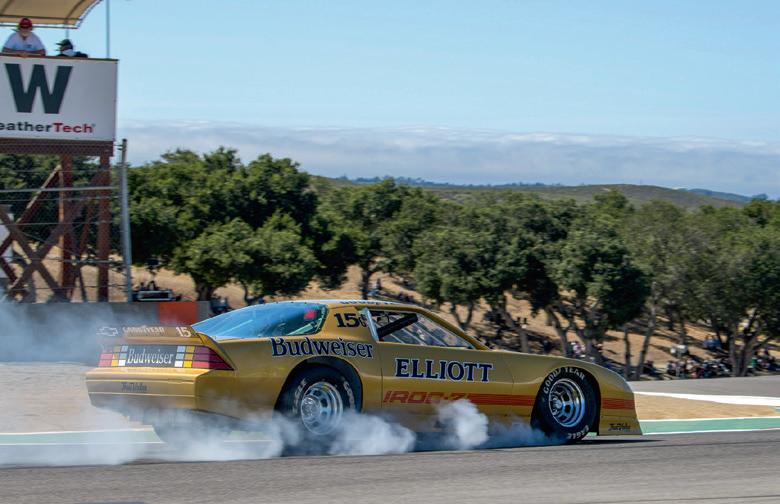
cars and IndyCar racing identical machinery. In 1986 he won his first IROC championship, and he followed it with another in 1988. To see both his IndyCars and his IROC mounts out in force at the American Speed Festival 2025 was heartening for Al.
“The owners are passionate about getting their restored cars out on the track, and in many cases they’ve restored them even better than they were when new,” he said. “It was completely unexpected to see all these different museums and cars. Roger Penske brought one of my 1995 winning cars, and the Museum of American Speed in Lincoln, Nebraska even brought an old sprint car of mine. To see all of that together, to be surrounded by so much history and passion, was truly a great honor.”
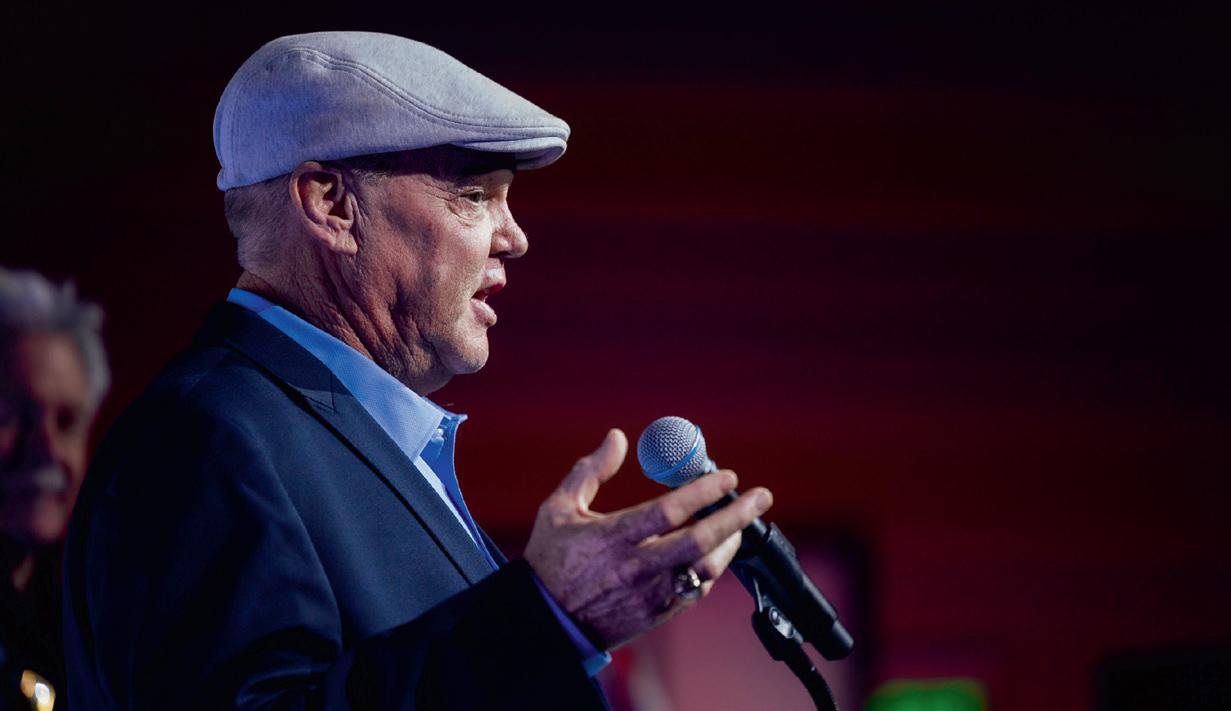
Al was delighted to be declared M1’s Master of Motorsports during the Checkered Flag Ball. “I’ve seen legends like Johnny O’Connell, Jim Hall and Richard Petty inducted here, and to be part of that group is humbling,” he said. “The entire gala supports a fantastic cause, raising funds for M1 Mobility to help families with transportation to work, hospitals and schools. That makes the event even more meaningful.”
EVENT REPORT
Woodward Dream Festival 2025
Love American automotive culture?
M1 Concourse’s special events surrounding the 30th Woodward Dream Cruise were must do’s! WORDS NATHAN CHADWICK PHOTOGRAPHY M1 CONCOURSE
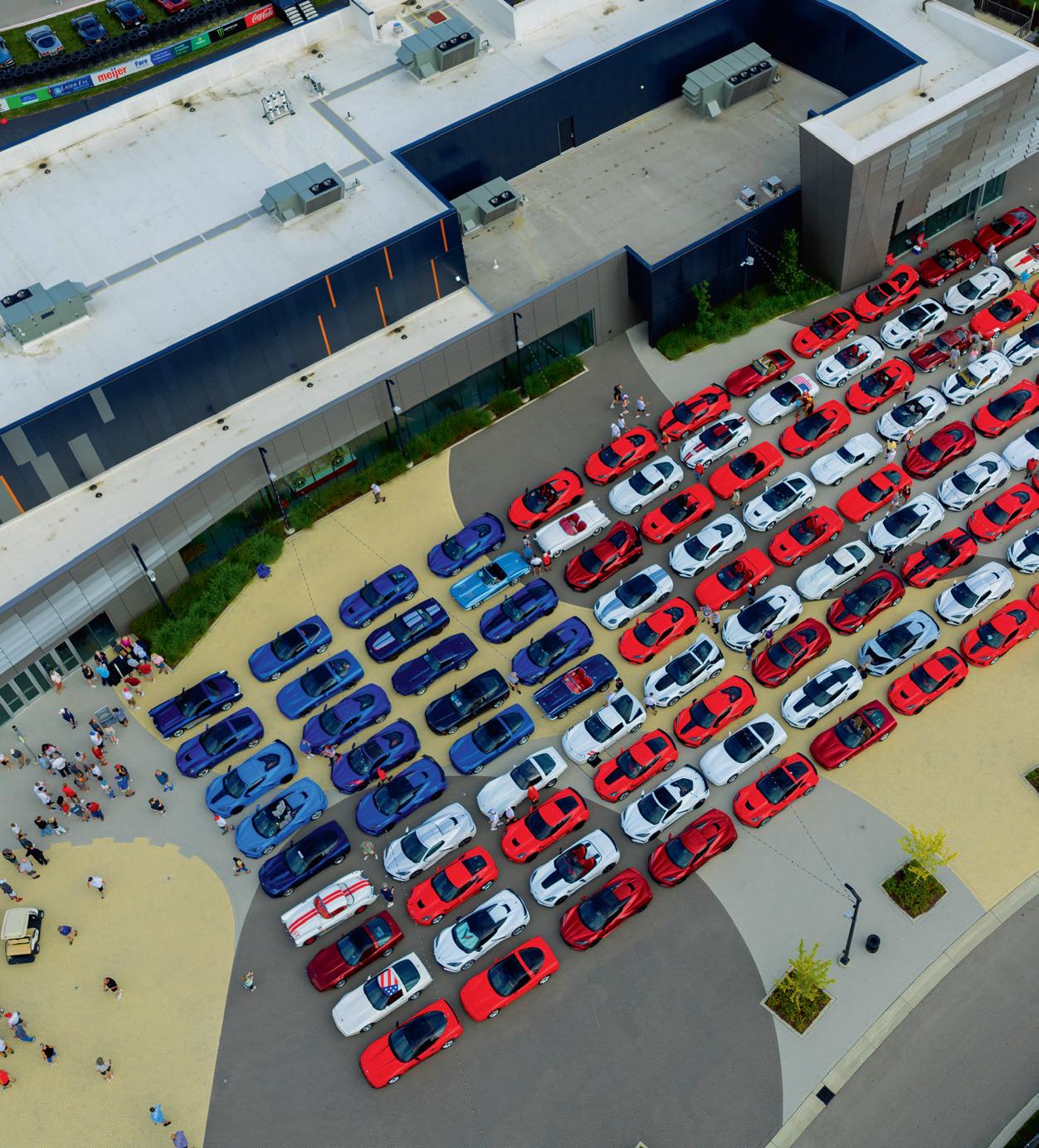
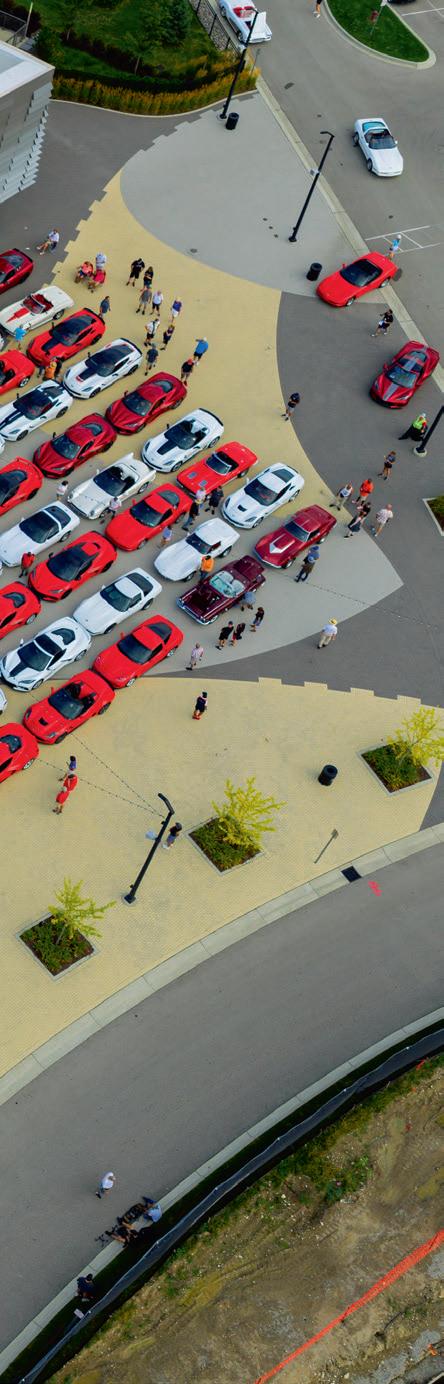
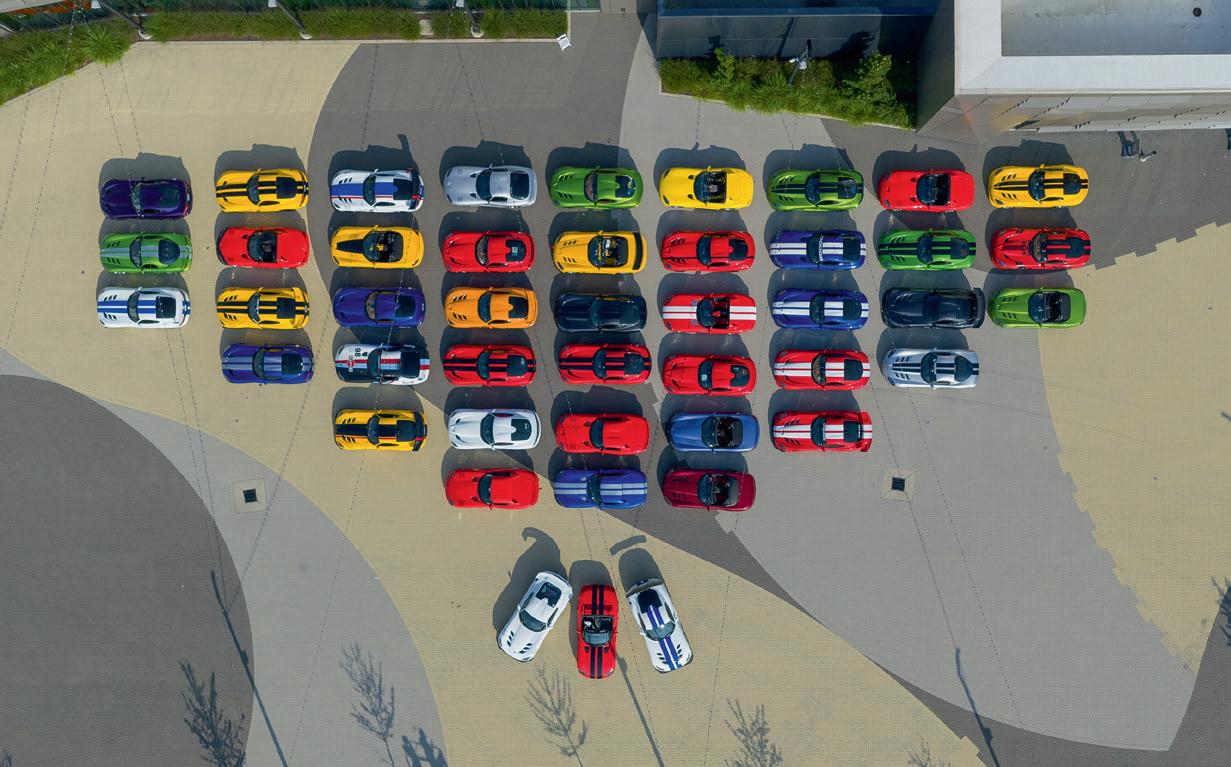
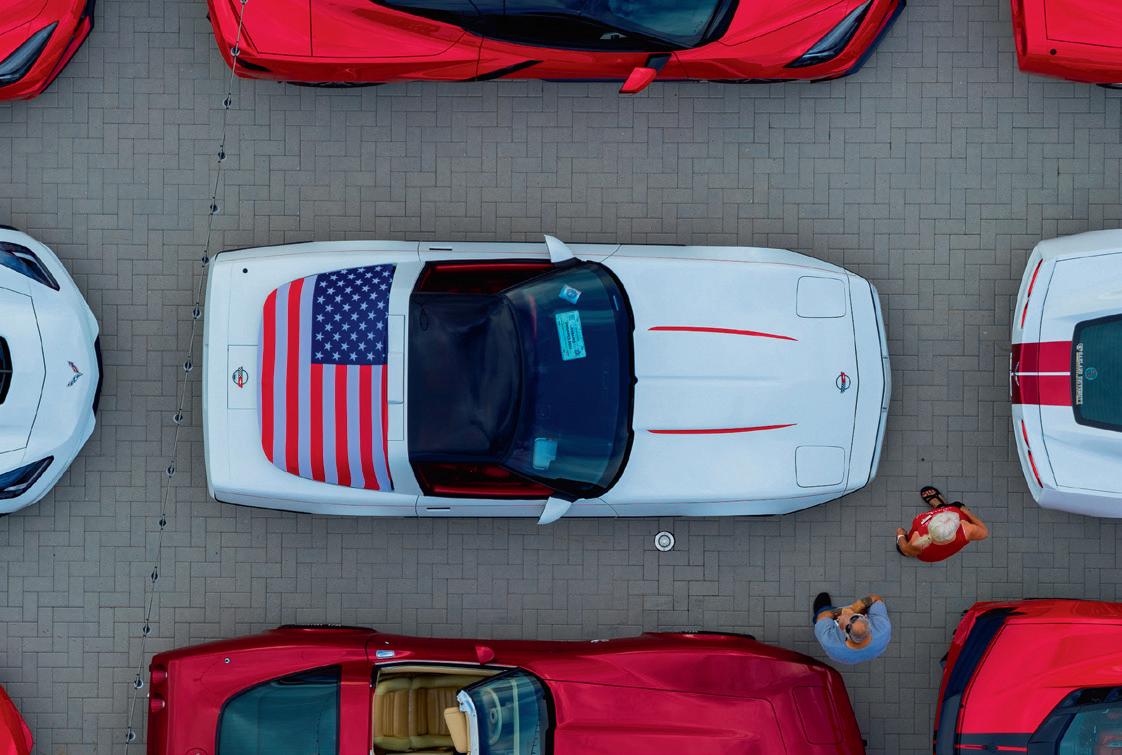
PREVIOUS SPREAD A spectacular American flag display was formed from just some of the Corvettes that assembled at M1 Concourse.
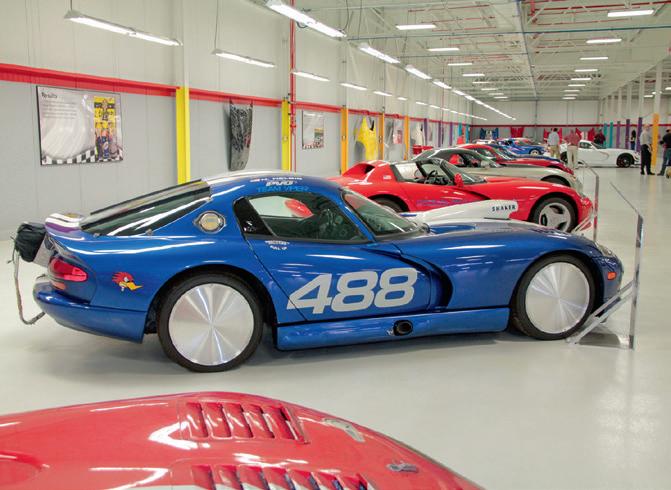
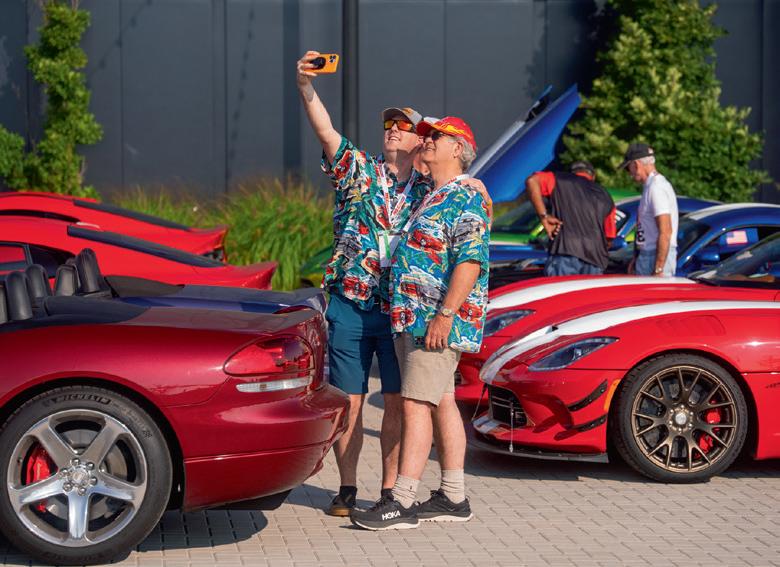
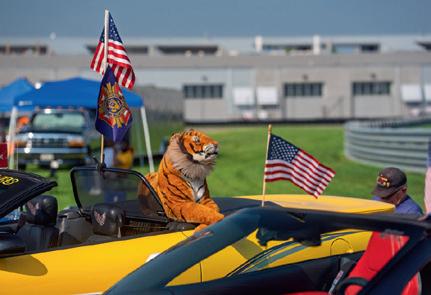
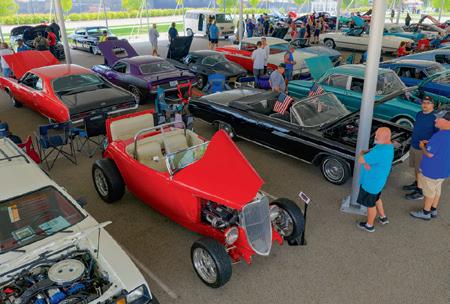
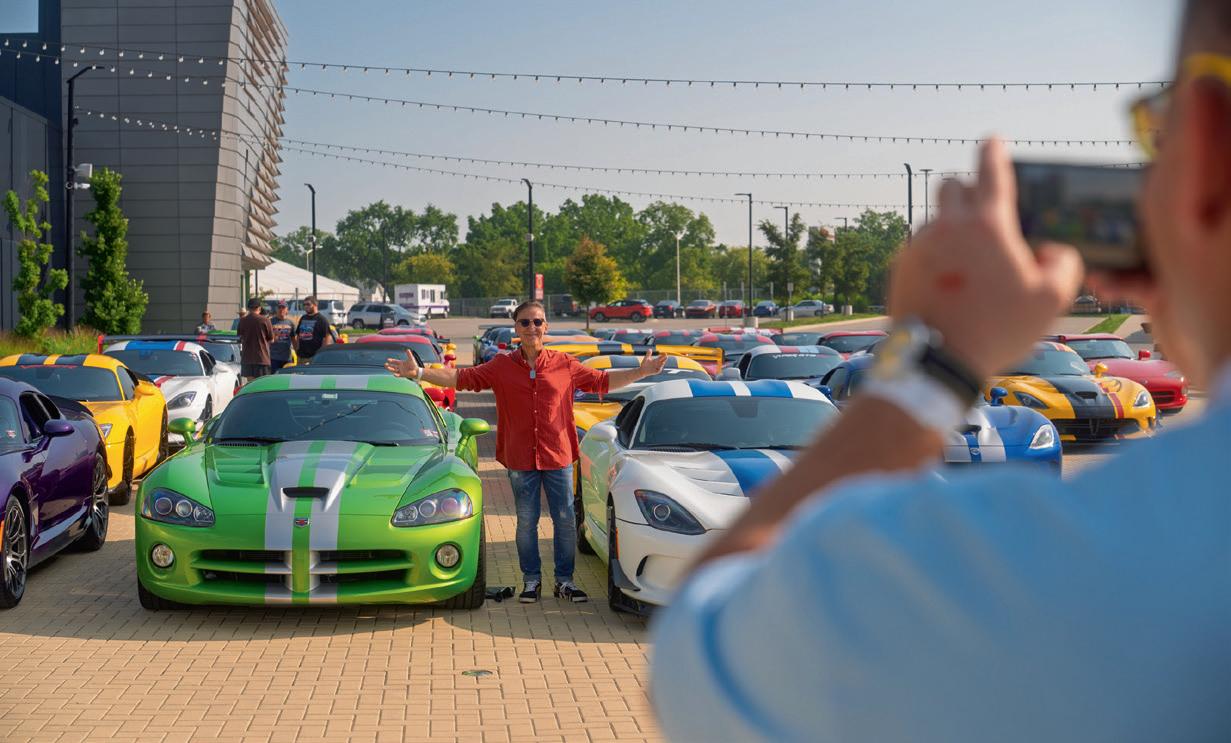
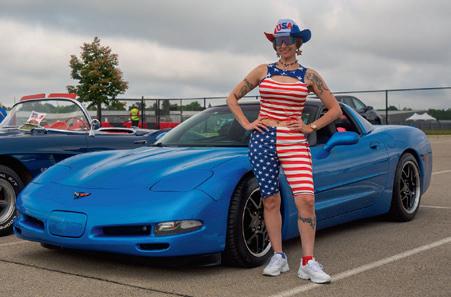
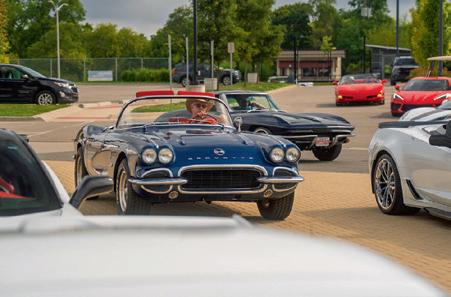
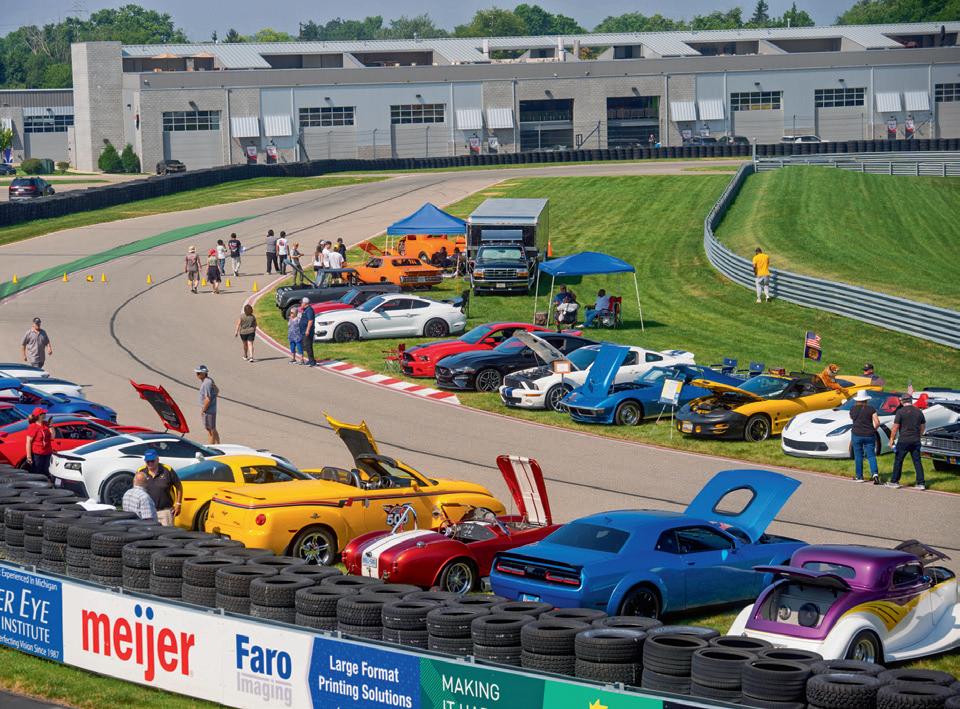
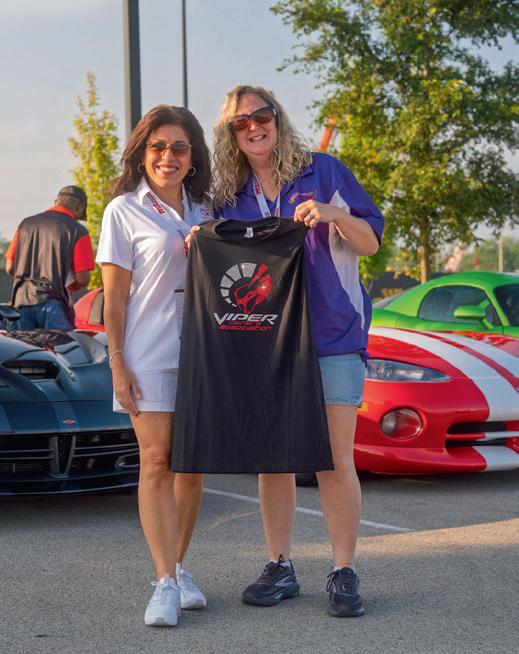
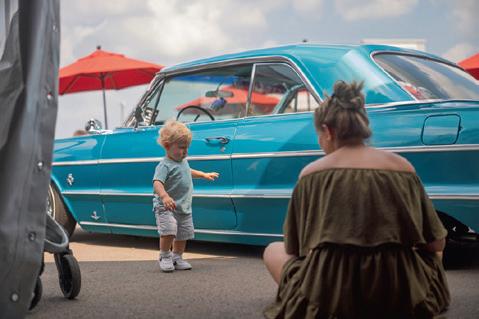
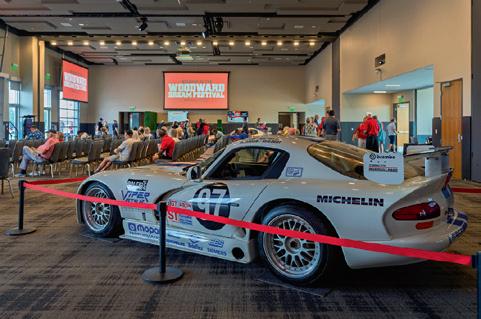
THIS SPREAD American hot rods, classic cruisers and muscle cars were out in force at the family venue, while the Viper was in the spotlight for a special celebration.
2025
MARKED THE 30TH ANNIVERSARY of the Woodward Dream Cruise, celebrating three decades of Detroit’s automotive culture and community cruising along Woodward Avenue. The milestone was a big theme throughout the August event – and with a special spotlight event honoring Martha and the Vandellas and the 60th anniversary of their hit Nowhere to Run, it proved to be a great soundtrack for the thousands of classic, vintage, muscle and specialty vehicles that filled Woodward Avenue — from 1950s and 1960s icons to lesser-seen restorations and special builds, with spectators and participants arriving from all over the world.
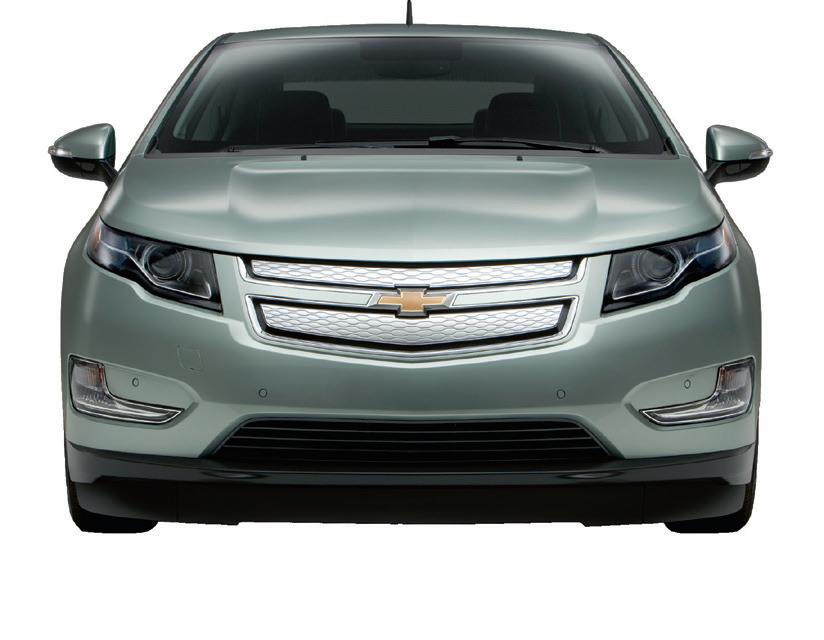
For the first time, a Clean Cruise auxiliary event was showcased with electric vehicles on display to educate and dispel myths about EV ownership, reflecting broader automotive trends. However, for those with a more traditional approach, Dodge brought along its 2026 model line-up – including SIXPACKpowered Chargers and Hellcat Durangos.
M1 Concourse got in on the action of course, with several days of automotive excellence, kicking off with Corvettes on Woodward on the Wednesday. Michigan’s largest ’Vette gathering saw a plethora of Corvettes assemble
WOODWARD DREAM FESTIVAL
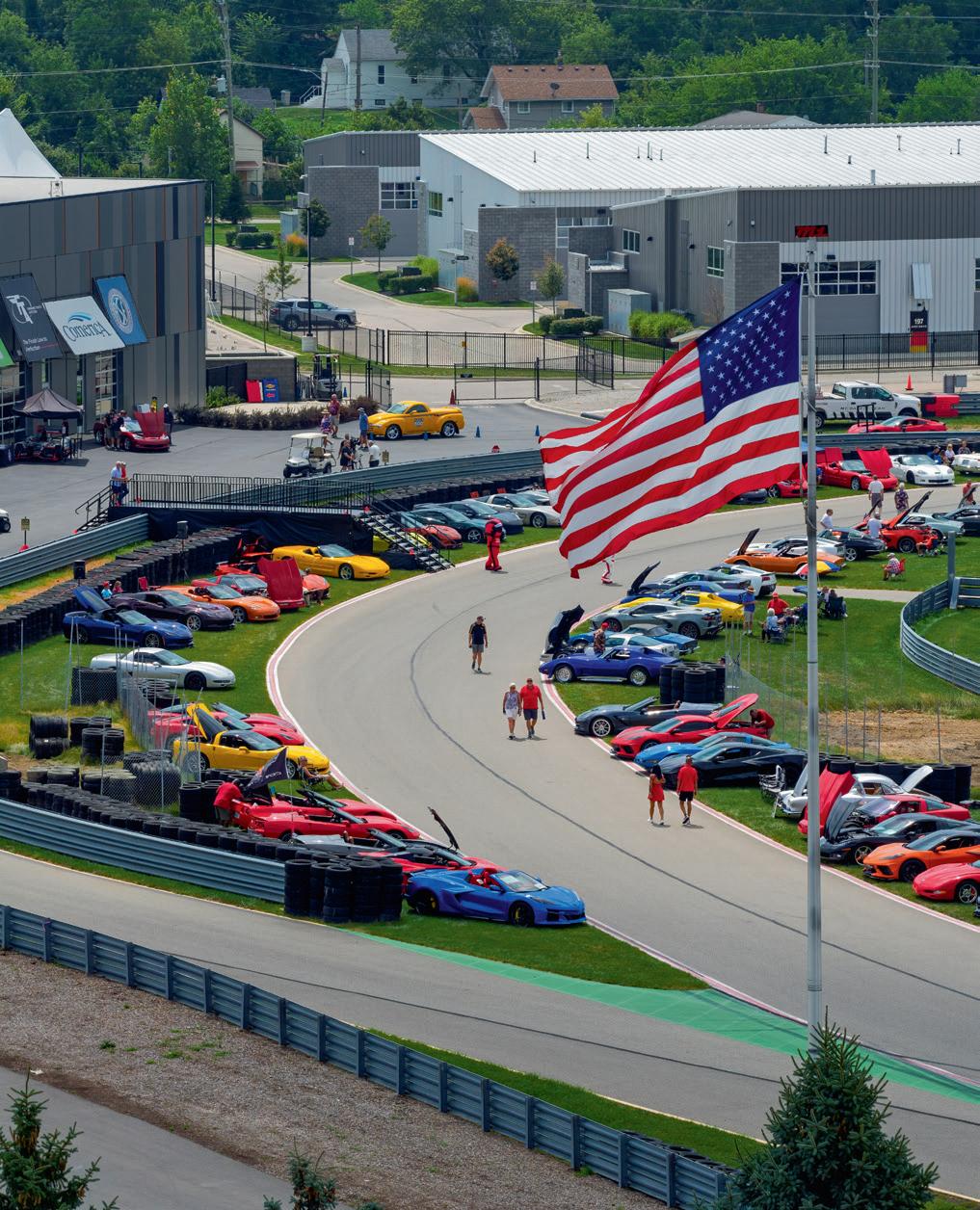
THIS SPREAD The impressive Corvettes on Woodward event was Michigan’s largest Corvette gathering, boasting plenty of model highlights and attractions along with raising funds for important local initiatives.
into a huge American flag display, while featured exhibits included a working 1965 Corvette chassis and a Colin Powell-signed 1995 Indy Pace Car. Proceeds supported charities such as Open Hands Food Pantry and M1 Mobility.
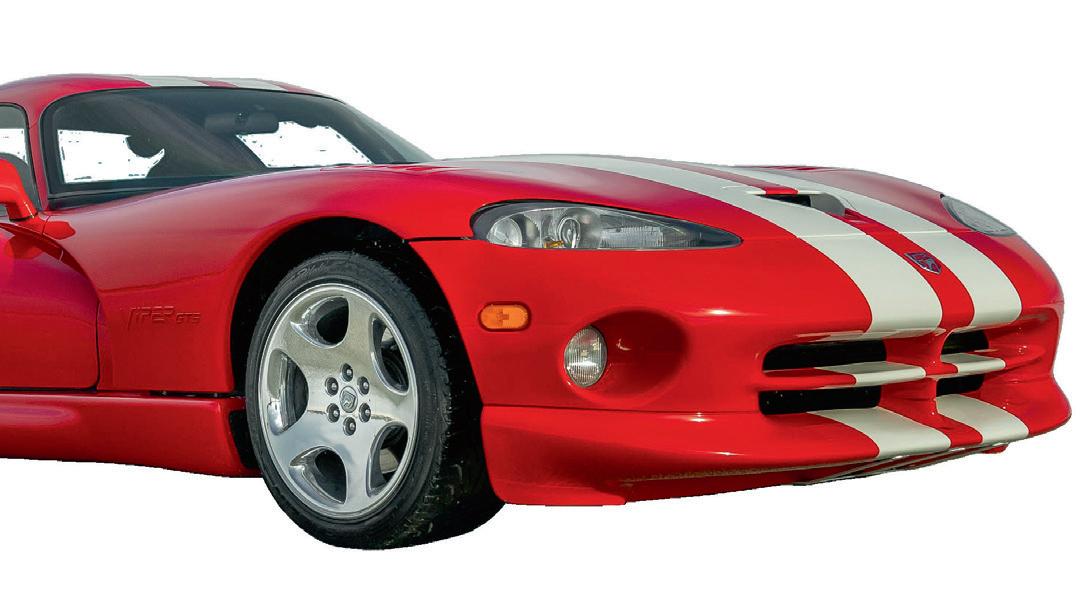
Thursday and Friday saw attention paid to another great American sports car – the Dodge Viper. In addition to a driving tour that took in a visit to Prefix HQ, which played an important role in the car’s development, there was a chat with Viper designer Tom Gale and chief design officer for Stellantis Ralph Gilles.
Friday’s Woodward Dream Festival at M1 Concourse proved to be the ultimate destination during the 30th anniversary Woodward Dream Cruise week. For those showcasing their vehicles or soaking in the sights and sounds, it offered a superb blend of performance, nostalgia and pure car culture.
When Saturday’s Cruise rolled around, M1 – which is located at the northern end of the route – played a key part of the festivities. Just some of the wonderful cars that made an appearance at the venue can be seen on these pages. What were your highlights?
THIS PAGE With its location at the northern end of the Woodward Dream Cruise route, M1 Concourse played a major role in the celebrations surrounding the legendary event, which marked its 30th anniversary in 2025. It’s the perfect venue for gathering the greatest machines from US automotive culture.
HOW THE MUSTANG
Ford’s Mustang was an immense success straight out of the box, but the Blue Oval couldn’t rest on its laurels, thanks in part to the Pontiac GTO. So it turned to Carroll Shelby to transform its pony car into a racehorse
MUSTANG GOT ITS KICK ITS
YOU CAN IMAGINE THE SCENE IN THE corporate boardroom. The Blue Oval’s brightest and best, saluting their achievement – the Mustang cleaning up across America, a success story for the ages. All Champagne, cigars and hamburgers, right?
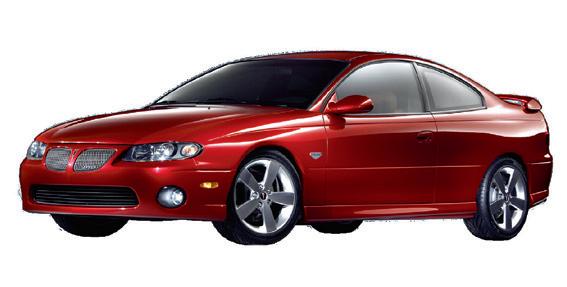
Well, not quite. The rumblings, both real and metaphorical, from Pontiac and the immense success of its GTO couldn’t be ignored. Merely intended as an option package for the Tempestbased Le Mans, the GTO had been projected to sell just 5000 units. Instead, in a year it had sold 32,450; performance could clearly be popular, and Ford didn’t want to miss out. With the Cobra program already delivering major results, Lee Iacocca looked to Carroll Shelby to turn the Mustang into a genuine contender. Shelby’s first reaction was skeptical – “It’s a secretary’s car… you can’t make a racehorse out of a mule” – but Iacocca’s ultimate goal was ambitious: a road-legal machine that could also be capable of winning the Sports Car Club of America’s (SCCA) B-Production class. The plan wasn’t merely to defeat the GTO
on the quarter-mile; instead, Lee’s dream was to build a genuine racing car for the road, specifically targeted at the longer-distance series. Shelby had already been dominating A-Production in Ford-powered Cobras, so despite some hesitancy, Carroll went to work.
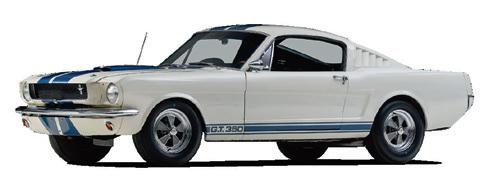
Ford supplied Shelby American with batches of Wimbledon White K-Code 2+2 fastbacks from its San Jose plant. Built without rear seats or sound deadening, and missing most of the decorative trim, these formed the lightweight foundation for Shelby’s transformation.
The engine, Ford’s solid-lifter 289ci ‘HiPo’, already produced 271bhp in standard spec. Shelby American applied what it called the Cobra kit, which saw the installation of a lightweight, high-rise, Cobra-branded aluminum intake manifold, improving airflow and heat dissipation, while the Autolite carburetor was replaced with a Holley 4150 Le Mans 715cfm unit with a higher flow capacity and dual-feed fuel bowls. The dual-point distributor was retained, but Shelby introduced a new curve with a faster initial advance, a slightly reduced
total advance and a stabilized spark at high revs. Combined with the use of colder spark plugs and upgraded wiring, the ignition improvements delivered more consistent combustion under heavy loads.
Although the road-going GT350 retained the standard front-sump system, Shelby added a larger-capacity aluminum Cobra oil pan and fitted internal baffling to reduce lubricant starvation during hard cornering.
The K-Code’s Tri-Y header concept was built upon with freer-flowing pipes feeding a sideexit exhaust with glasspack mufflers, while the cooling system was upgraded with a highcapacity radiator, a five-blade fan and a higherpressure radiator cap to withstand more revs for longer. In all, this set-up delivered 306bhp; each engine was calibrated on in-house dynamometers to keep output within 5bhp tolerances across the production span.
Not only did the GT350 have the power, it had the panache, too – this wasn’t ‘just’ a tuned Mustang, it was a lightened, re-engineered GT platform with a strong emphasis on
SHELBY GT350
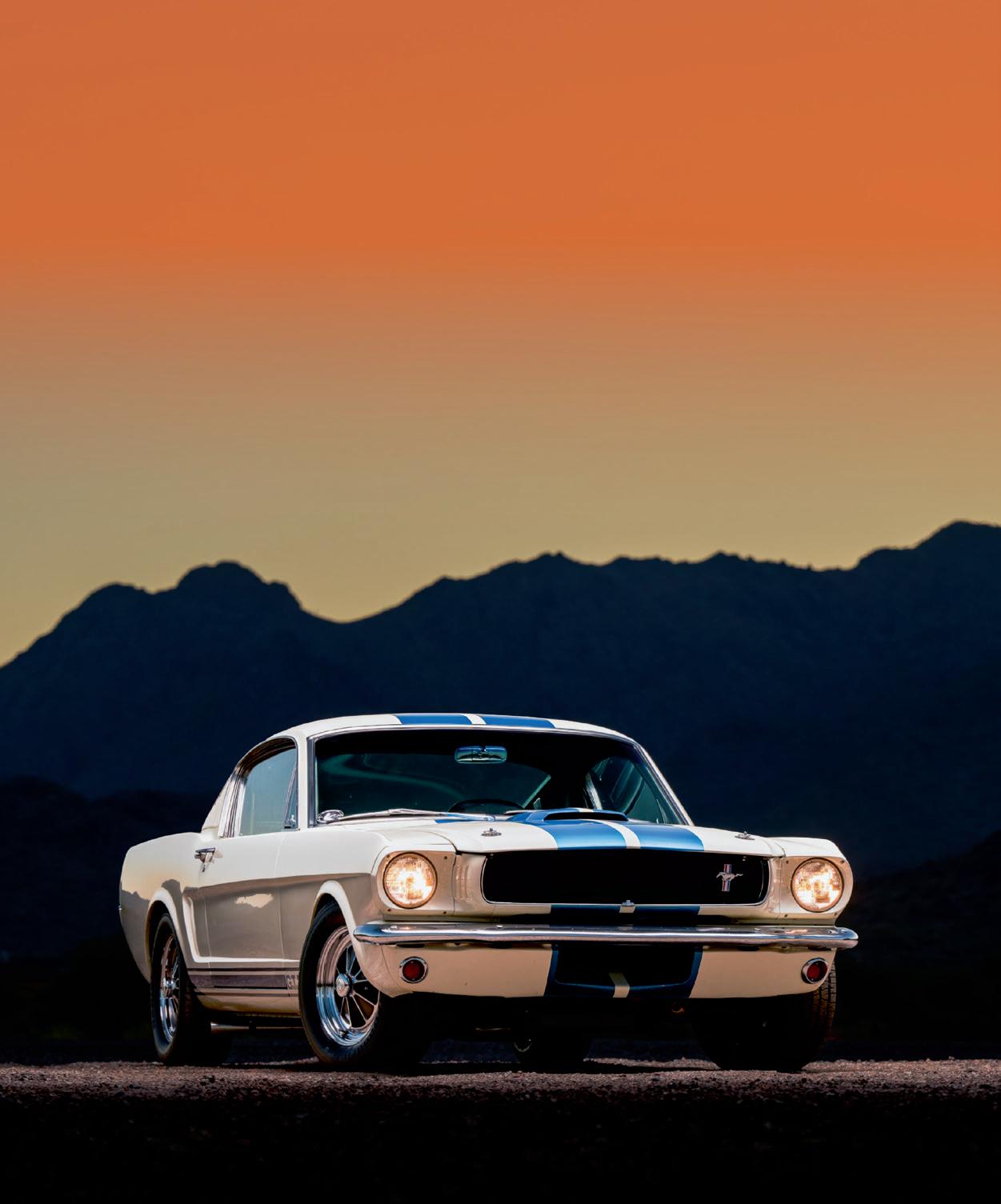
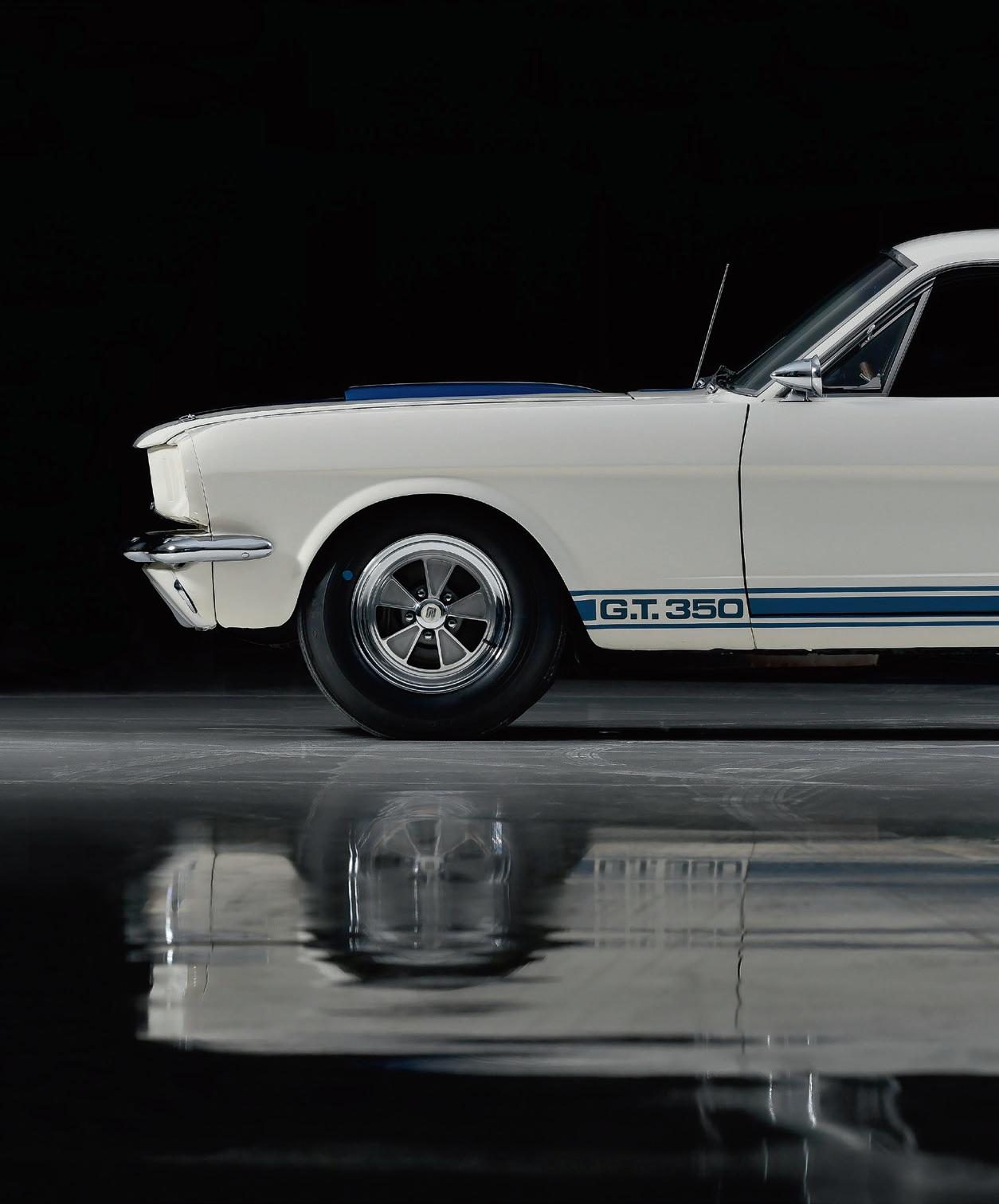
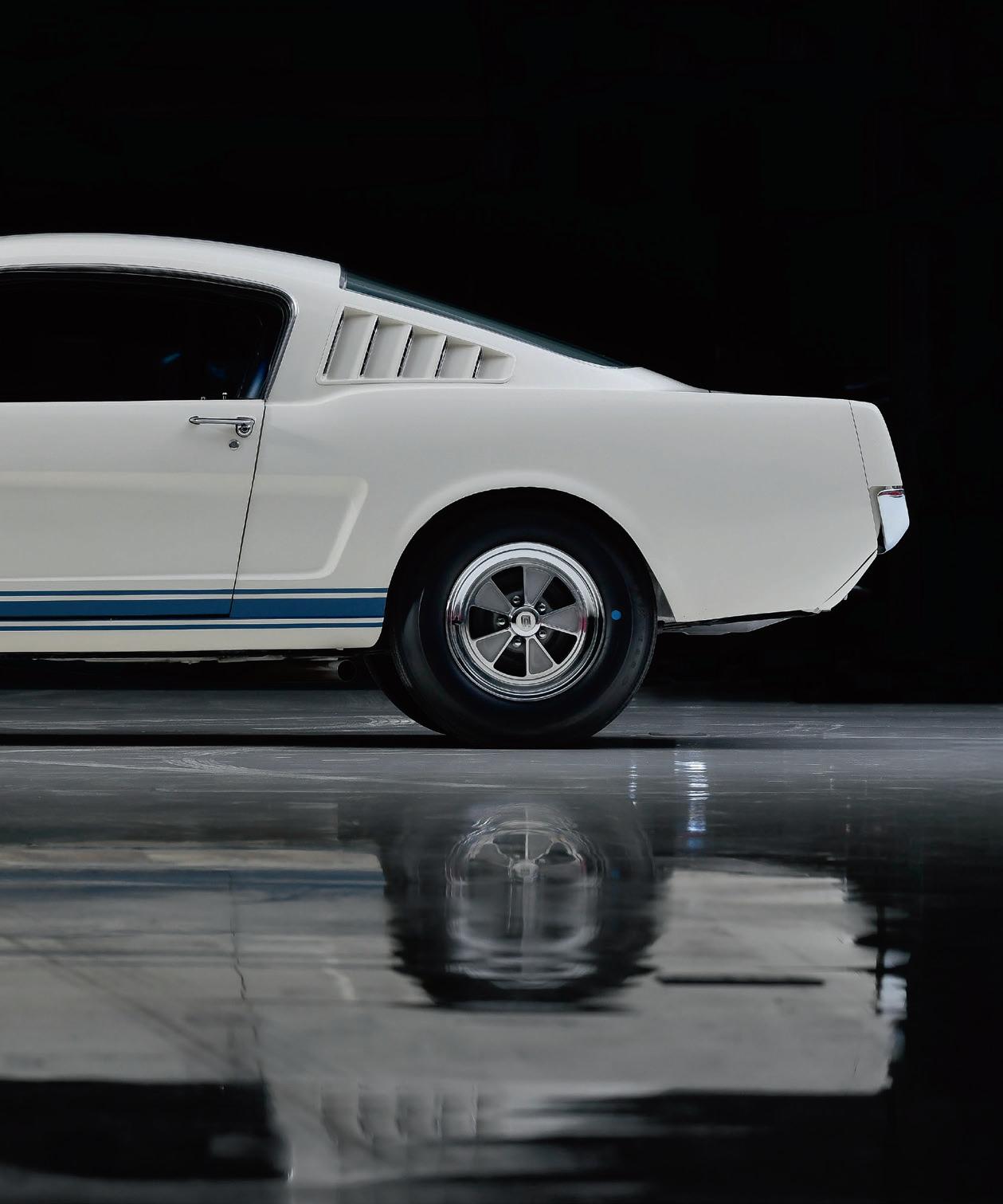
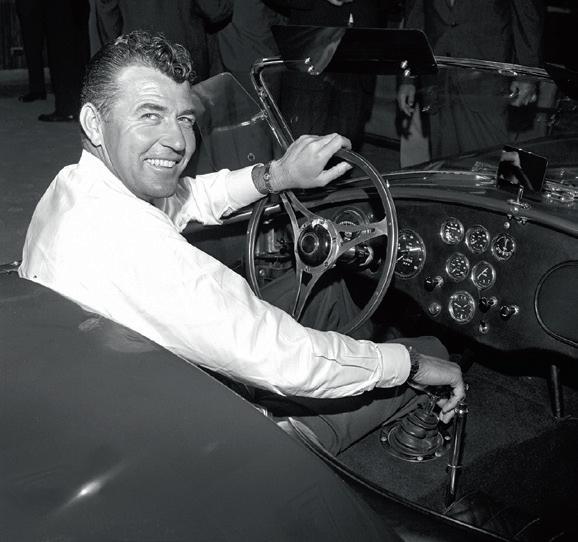
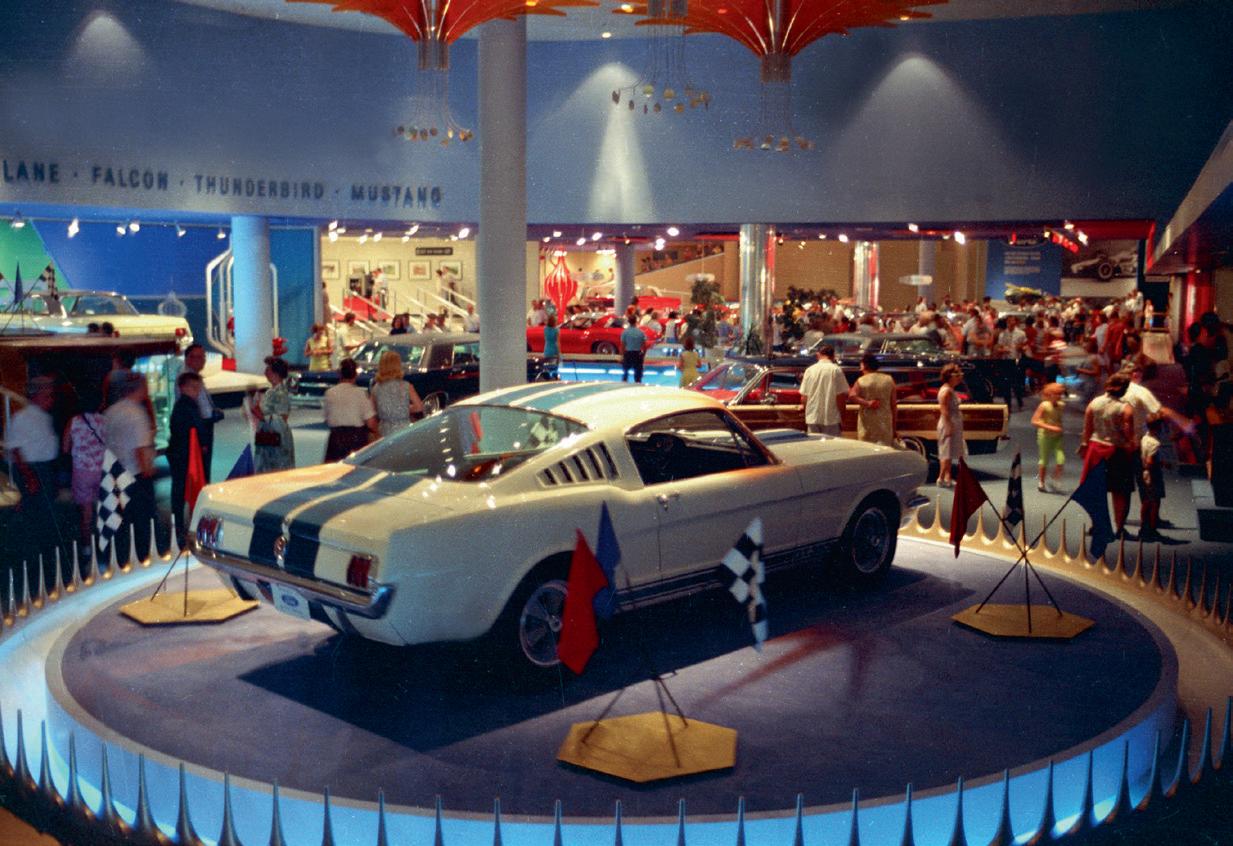
THIS SPREAD With automotive designer, entrepreneur and ex-racing driver Carroll Shelby at the helm of its development, the Shelby Mustang GT350 caused a sensation upon its first public appearances.
‘“It’s a secretary’s car… you can’t make a racehorse out of a mule,” said Shelby. But Iacocca’s ultimate goal was ambitious’
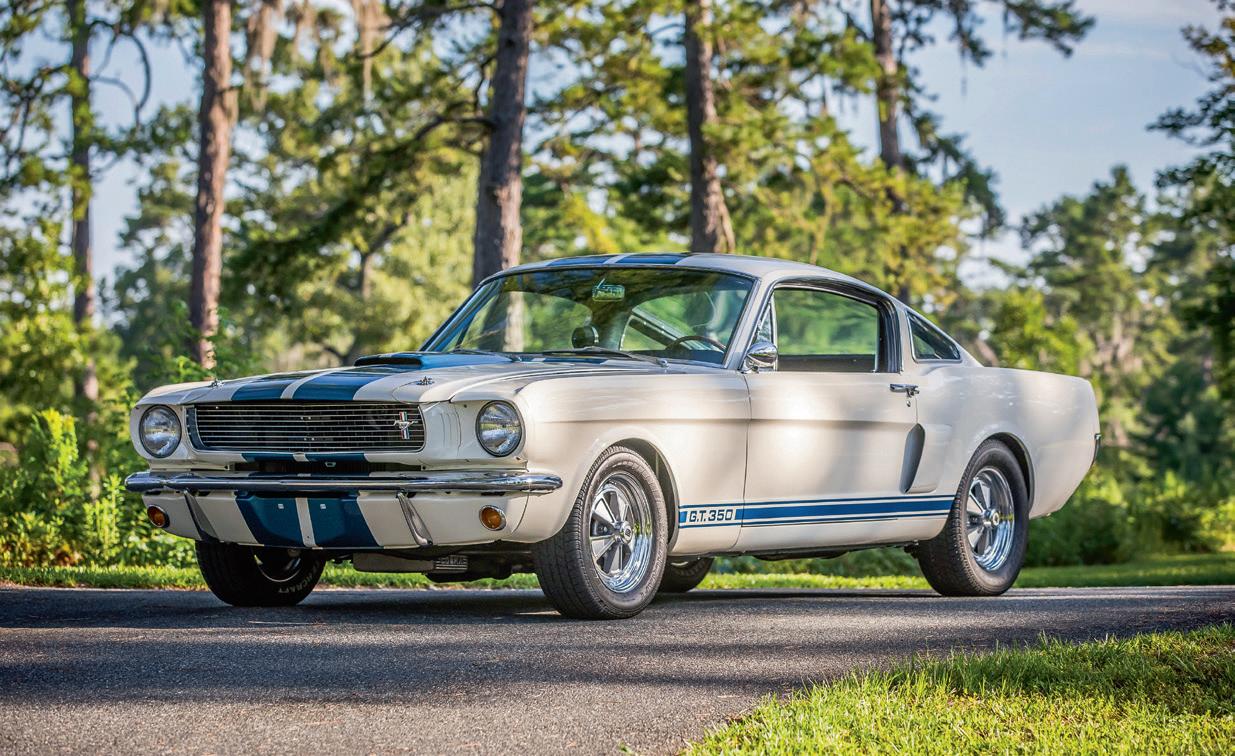
OPPOSITE 1966
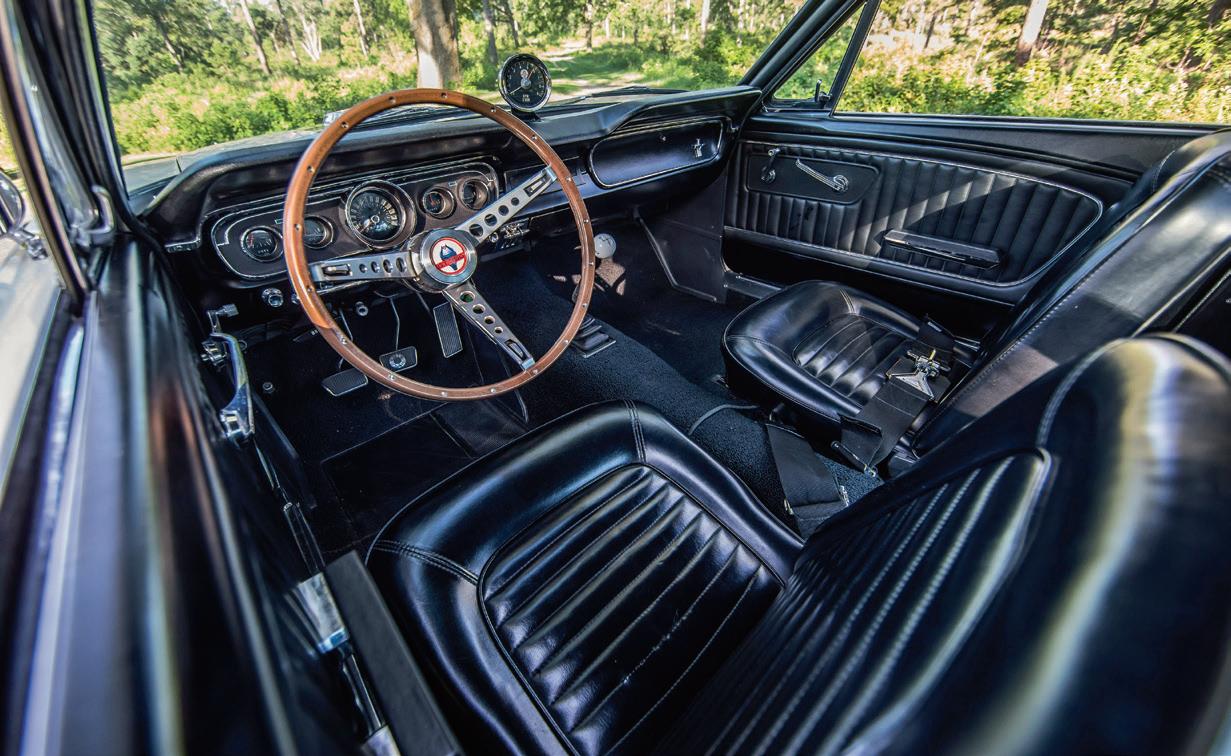
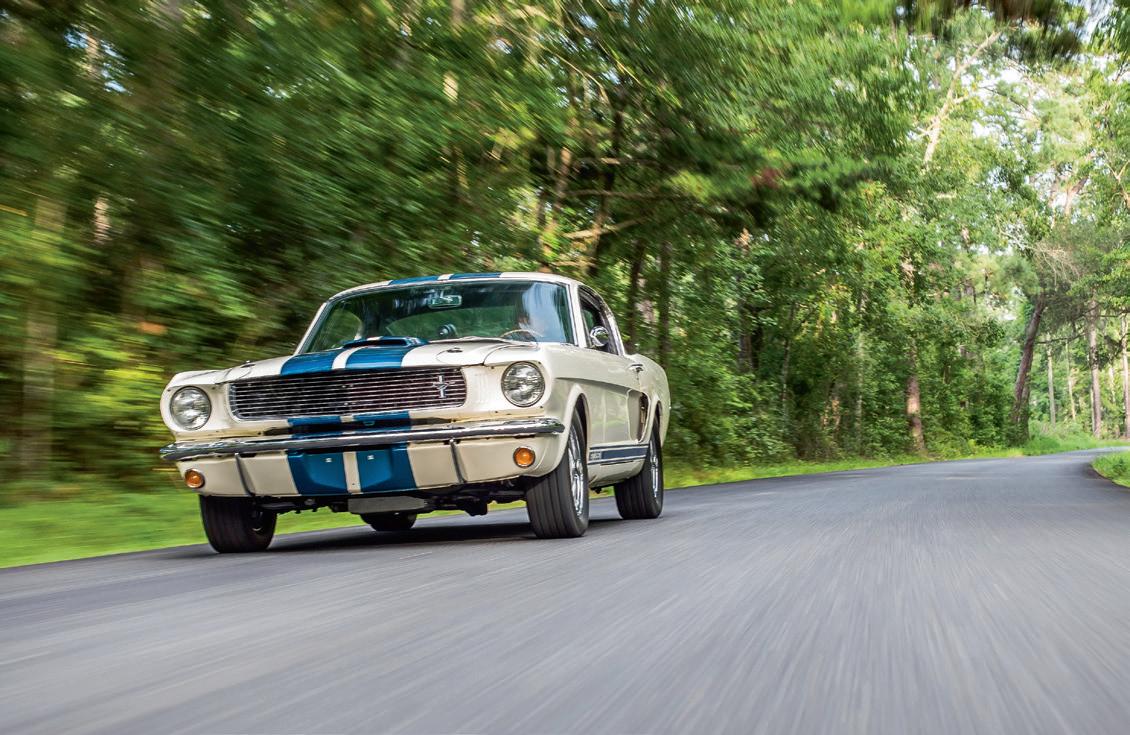
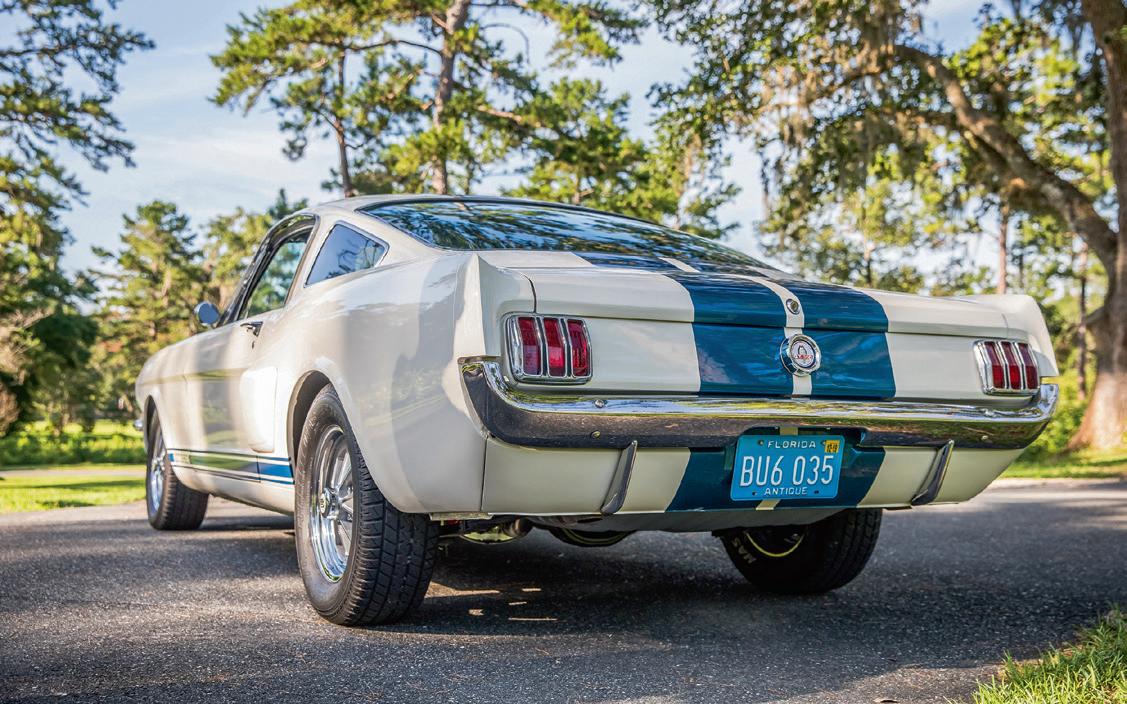
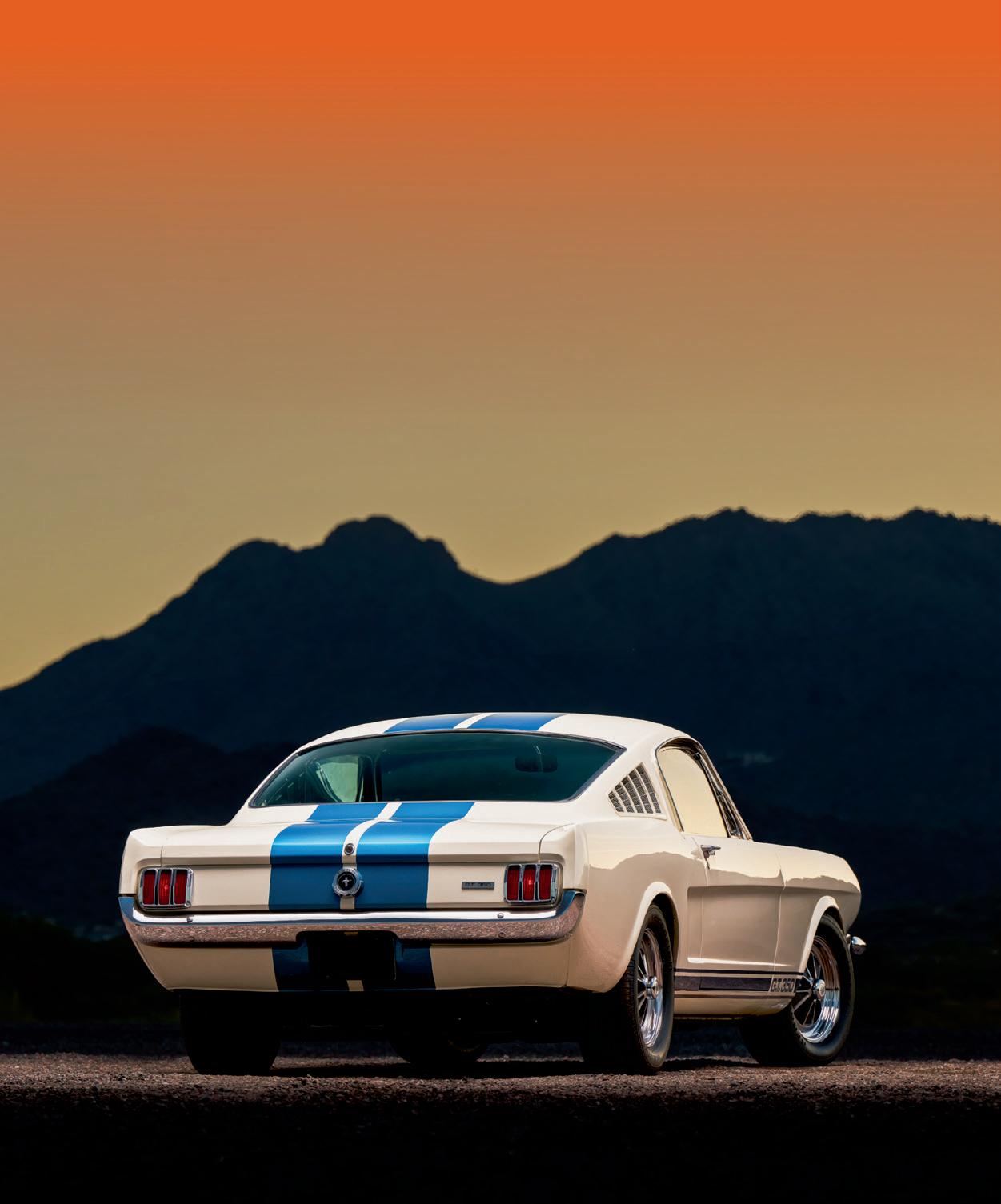
GT350 continued with 1965 car’s Wimbledon White and blue-striped livery, but new colors were also added. Cabin was suitably sporting.
geometry. The problem had been that the Mustang’s monocoque was inherently flexible, with only modest torsional rigidity. The car’s shock towers could shift several millimeters under sustained lateral G, so in order to combat this Shelby introduced what was known as the Monte Carlo bar, a tubular-steel bar between the towers. It also replaced the Mustang’s twopiece brace that connected the shock tower to the firewall, with a welded, triangulated version. Together, these additions increased front-end stiffness by an estimated 20-25 percent.
The next stage was to create more consistent camber behavior and sharper initial response, achieved by the ‘Shelby Drop’ up front –lowering the upper control-arm pivot points on the front subframe by one inch. This helped to decrease the understeer early Mustangs were plagued with, as well as reducing the rollcenter height and improving the camber gain through compressions. Next up came a larger one-inch front anti-roll bar, stiffer coil springs and Kelsey-Hayes monotube dampers valved for higher rebound control.
Out back, the GT350 retained the stock car’s live axle and semi-elliptic leaf springs, but Shelby fitted higher-rate leafs as well as a differential snubber and longer spring shackles, while the Kelsey-Hayes dampers were fitted in the stern, too. To provide extra punch out of corners, the GT350 used a Detroit Locker limited-slip differential and 15-inch KelseyHayes steel wheels, although magnesiumcenter Cragar alloys shod in Goodyear Blue
‘The GT350R was conceived as a competition machine, built to meet SCCA B-Production rules’
Dot tires were an option. Kelsey-Hayes also provided ventilated front discs up front, while Galaxie-sourced drums were used at the back.
Each of the 562 road-going GT350s were finished in Wimbledon White. The key change was the glassfiber hood with a large functional scoop to feed cool air to the high-rise intake and improve under-hood temperatures. Twin pins replaced the factory latch to save weight.
However, the alterations didn’t end there. Although the Borg-Warner T10 four-speed manual was derived from the standard Mustang 289 HiPo transmission, the GT350 featured Shelby-revised ratios to keep the V8 on the boil between 4500rpm and 6500rpm. The close ratios were housed in an aluminum case for lightness, and access to them was via a Hurst Competition/Plus shifter with shorter, more positive throws. Add in an aluminum flywheel and a heavy-duty 10.4in Borg & Beck clutch, and the results were seismic – whereas most muscle cars could really only deliver their punch in a straight line, the GT350 could mix it with European marques on twisty road courses. However, Shelby still thought the package could go further… much further.
The 1965 Shelby GT350R was conceived from the outset as a competition machine, built to meet SCCA B-Production rules and to give Shelby American a car that could win straight out of the box. While the R-Model shared its basic fastback Mustang shell with the road-going GT350, virtually every single mechanical and structural system was revised for circuit use. Only 34 factory-built examples were produced, each of them hand-finished to a specification far more aggressive than the already purposeful street GT350.
At the heart of the R-Model sat an even more highly developed version of Ford’s 289ci V8. Shelby’s in-house race department raised the compression ratio to roughly 11.0:1, reworked the heads with porting and polishing, and fitted a more aggressive solid-lifter camshaft. The Holley 715cfm four-barrel carb, which sat on a further modified high-rise manifold, provided
GT350 THROUGH THE AGES
1966
Shelby GT350
1965
Shelby Mustang GT350
The birth of a legend – Shelby American hones the Windsor 289ci HiPo K-Code V8 with a four-barrel Holley 715cfm carb to make 306bhp. Also boasts a high-rise manifold, Tri-Y headers, Ford Galaxie rear drum brakes and KelseyHayes front rotors. All 562 road cars are delivered in Wimbledon White. A further 34 race-spec GT350R models are built.
Model loses Mustang tag but gains more color options, plus the opportunity to specify a supercharger or three-speed automatic.
1966
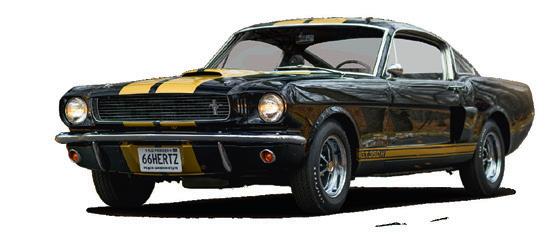
Hertz Shelby GT350H
Ford supplies ‘Rent-A-Racer’ GT350s to hire company Hertz. Early cars boast manual transmissions, but abuse by customers sees a later switch to automatics. Most cars wear distinctive black-and-gold liveries.
19671968
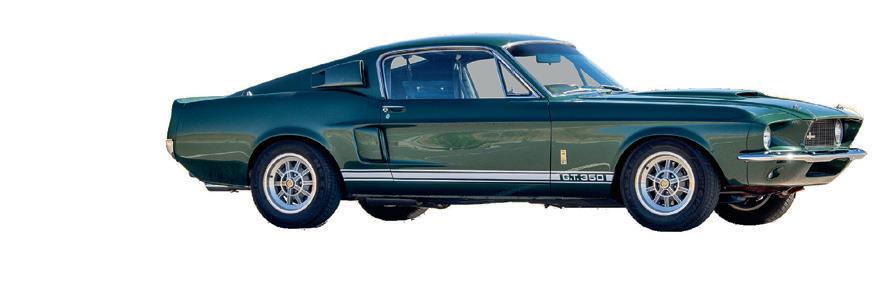
GT350
Ford takes over Shelby Mustang engineering and purchasing in late 1966, and in May ’67 Shelby’s Californian operation is shut down. 1967 GT350 is significantly bigger and restyled to differentiate it from normal Mustangs. In 1968 the 289ci V8 is replaced with a 302ci V8 with an aluminum Cobra intake manifold and Holley 600cfm carb.
19691970
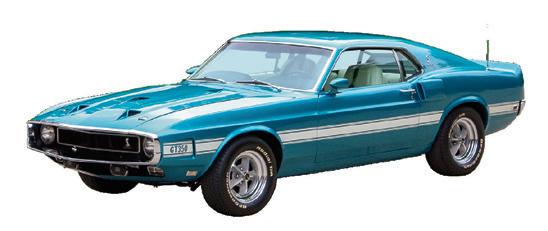
GT350
With Shelby having terminated his agreement with Ford in summer 1969, the ’69 model is developed entirely in-house by the Blue Oval’s John Chun. It is given a major restyle, which sees the length grow by four inches, and a 351ci Windsor V8. All 789 built are constructed in 1969, with 1970 cars given new VINs under FBI supervision.
1971
Shelby Europa
Nine GT350s and GT500s are built for a Belgian importer, based on the 1971 Mustang.
20112014
Shelby GT350
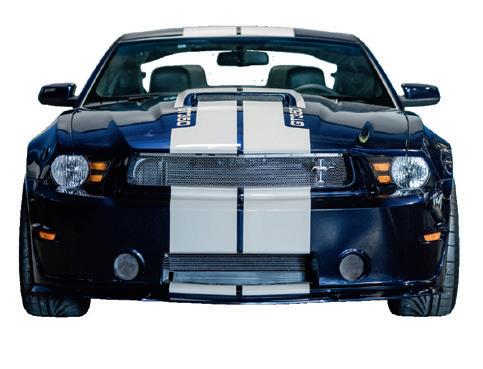
To celebrate 45 years of the GT350 name, Shelby develops a post-title upgrade applied via its Las Vegas facility. Automatic naturally aspirated cars can hit 430bhp, but manual cars have the option of a Ford Racing supercharger offering 525-624bhp and Ford Racing/Eibach suspension. Convertible version is introduced in 2012, along with in-house-
20152020
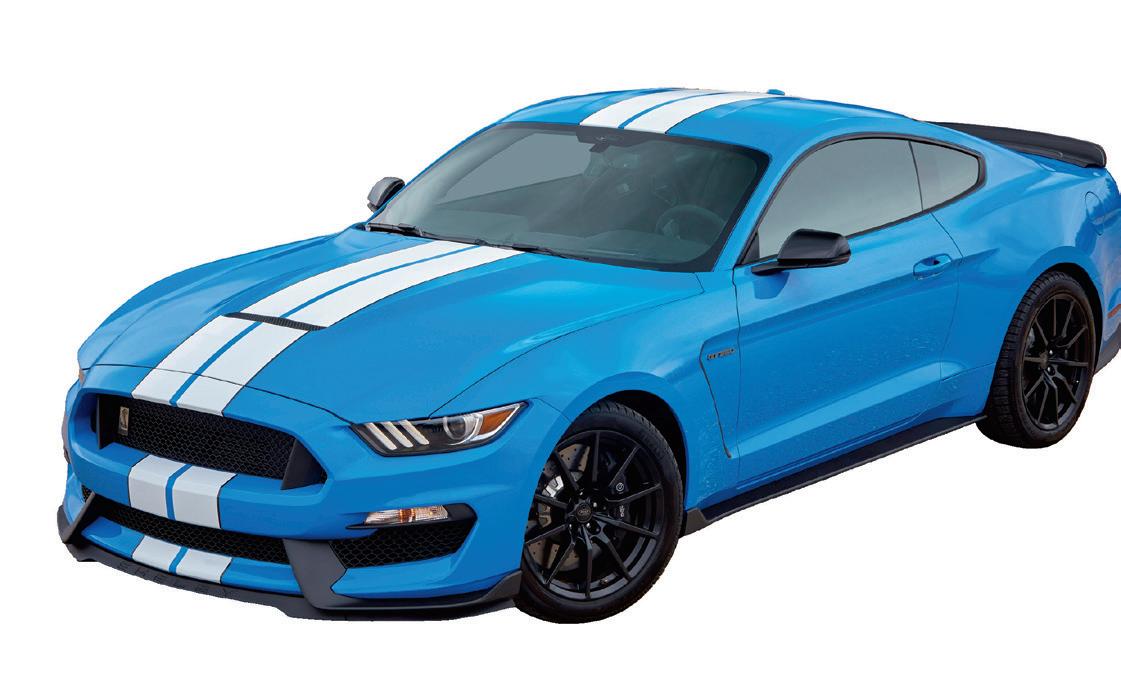
Nameplate returns with track-focused chassis tuning, wider fenders, 526bhp Voodoo 315ci flat-plane-crank V8 and a MagneRide damping option. GT350R amps up the track credentials further with carbonfibre wheels – the first fitted to a mass-
SHELBY GT350
the airflow the motor needed at high revs, while cooling was improved through a larger radiator and revised ducting. In this configuration the engine produced approximately 350-360bhp, considerably more than the street car’s quoted 306bhp. Crucially it would sustain that output under the heat loads of long-distance racing.
To handle all this additional performance, the GT350R’s chassis received significant reinforcement. Shelby seam-welded key areas, strengthened the suspension pick-up points and introduced revised geometry to improve camber control under load. Koni adjustable dampers were fitted all round, along with stiffer springs, a larger front anti-roll bar and adjustable traction bars at the rear. Alignment settings were tuned specifically for track duty.
The bodywork also underwent substantial modification. The steel front bumper and valance gave way to a lighter glassfiber apron with enlarged openings for radiator and brake cooling. Many models were fitted with Perspex rear quarter windows and a lightweight back screen to trim mass. The car featured heavyduty competition hood pins, and some R-Models ran additional splitter or spoiler components
THIS PAGE With its Holley carb, high-rise intake manifold and numerous other Shelby enhancements, the handsome GT350’s 289ci V8 delivered 306bhp.
depending on the circuit. Lightweight door panels further reduced mass, and most GT350Rs wore 15x7in American Racing Torq Thrust wheels, often in lightweight magnesium, shod in Goodyear Blue Streak racing tires –the resulting race weight was around 2450lb, about 300lb lighter than the street GT350.
Having been engineered specifically for victory in the Sports Car Club of America B-Production championship – which was populated with the Chevrolet Corvette as well as the Sunbeam Tiger, Jaguar XKE and various other European GT rivals – the GT350R achieved just that, with Jerry Titus driving 5R002, the second R built. In 1966, the model continued to win the majority of B-Production regional races across the United States, despite increased competition from the Corvettes and improved Tigers.
Despite rule changes in 1967, it was still the car to beat – Charlie Kemp won 17 races in a row, and was clocked at speeds near 180mph at Daytona. In the end, the GT350R delivered just what it set out to do – winning several of the SCCA championships across the US.
This success even inspired the Hertz
‘Rent-A-Racer’ program. The idea was simple and unprecedented: customers could hire a genuine GT350 (dubbed the GT350H) for everyday use at selected Hertz Sports Car Club locations across the US. The rental company eventually ordered around 1000 examples, most finished in Raven Black with gold stripes, although a number were later supplied in white, blue, red and green as Shelby’s production schedule evolved.
Mechanically, the GT350H was close to the standard GT350, sharing its high-output 289ci V8, Holley carb, K-Code internals and most of the Shelby suspension upgrades. Early cars used the four-ratio manual, but Hertz soon shifted to the three-speed auto after customers proved keen to treat them as weekend track rentals. Many GT350Hs were returned with worn tires, burnt-out clutches or evidence of competition use – and some customers even swapped out the hopped-up engine for a noncompetition unit, retaining the original with the intention of using it for racing. When the cars went back to Shelby after their rental lives, most were refurbished and sold as used vehicles.
Although the Shelby Mustang had proven
successful, the GT350 name started to become diluted as time moved on. The 1965 and ’66 variants were converted by Shelby in Venice Beach and later at LA International Airport, but the agreement didn’t last. Plans to introduce a convertible halfway through 1967 came to zero despite the first cars arriving in LA in September 1966, with supply, production and financial problems stated as the reasons why.
A month later, Ford took engineering and purchasing in-house, and just a few months after that it was all over for Shelby – the operation closed down in May 1967. A few staff stayed on, moving to Ionia, Michigan, but how much Shelby was involved in the subsequent, ever-larger, more luxurious GT350s is a matter of debate. By 1969 the man himself separated from Ford, leaving the cars that bore his name if not his identity to live on for another year.
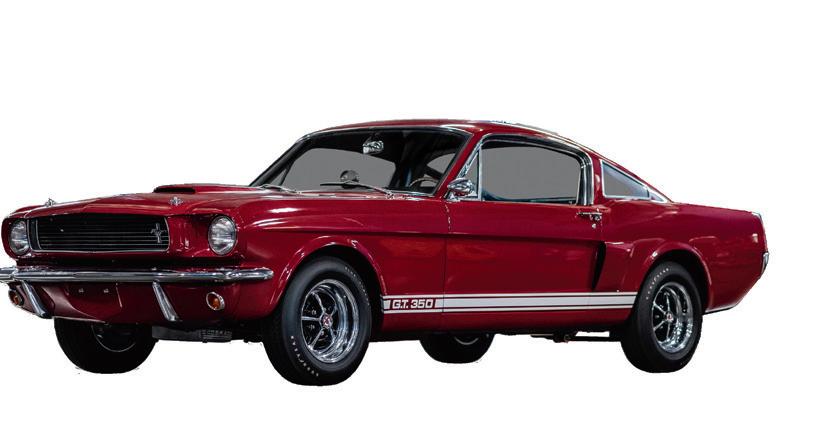
THIS PAGE The earliest GT350s remain the most sought after, although the model name went on for a few more years and was resurrected in the 21st century.
It was a sad end to a collaboration that had done so much for Ford – and not just for the Mustang. However, the legacy of those early models remained: a homegrown secretary’s car that, thanks to ingenuity, grit and steel, rose through the ranks to enormous success. The American Dream with wheels.
SHELBY GT350
WORDS NATHAN CHADWICK
PHOTOGRAPHY
MIKE WILLIAM NICKOPOULOS
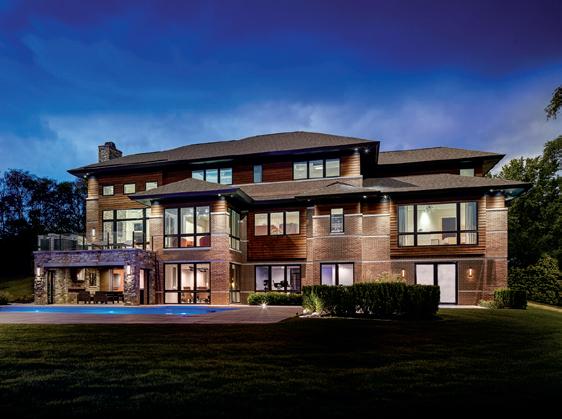
With its high-end showroom feel and superb home comforts, this is a fabulous example of just what can be done with an M1 Concourse private garage
DREAM GARAGE
142
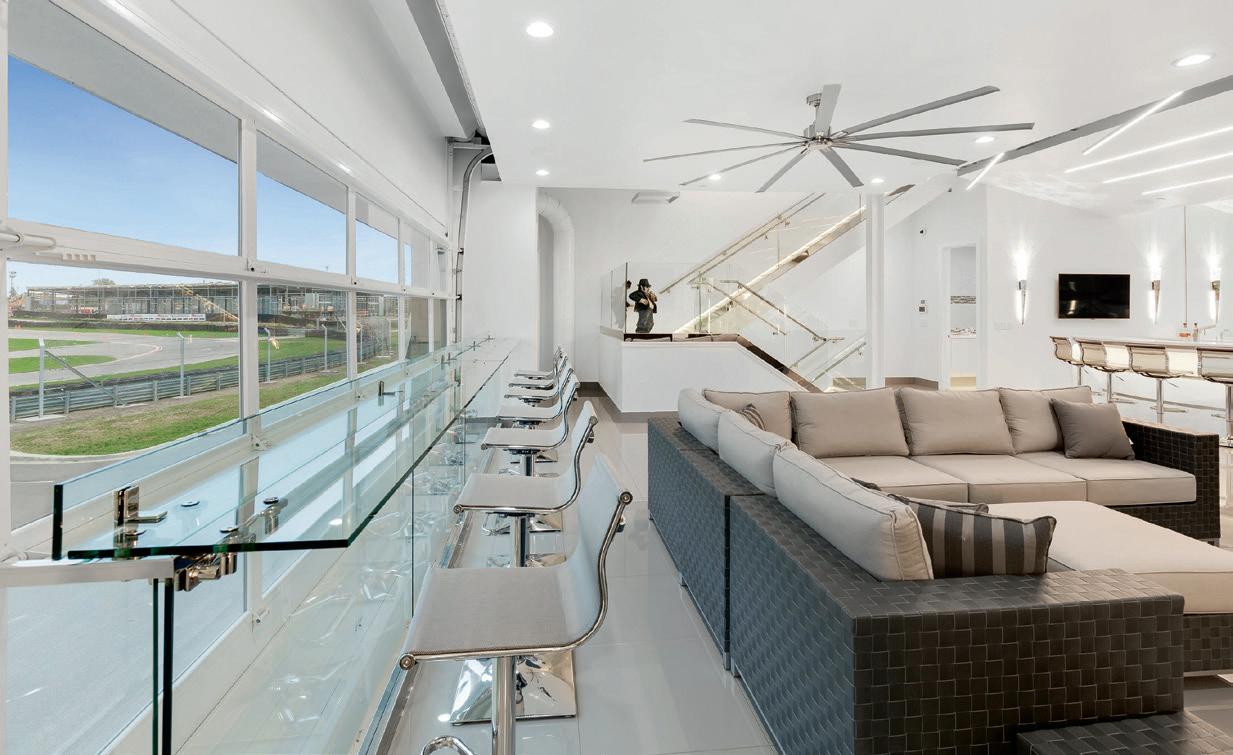
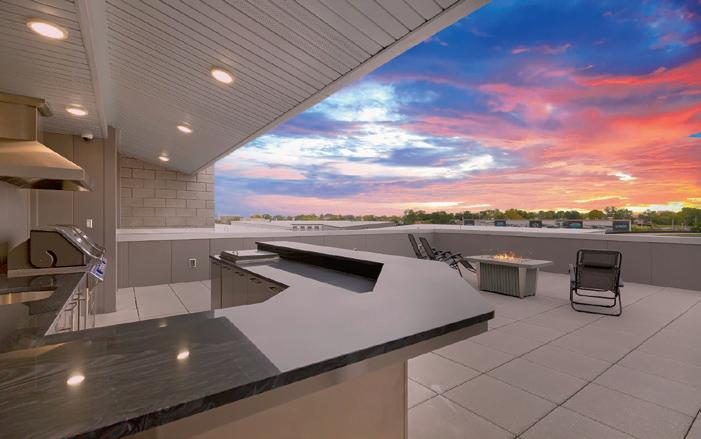
THIS SPREAD “I genuinely thought M1 Concourse was one of the best concepts I’d ever seen,” garage owner Scott says. Specifically selecting this particular unit, complete with rooftop patio, he moved in back in 2018 and has spent many happy days here ever since.
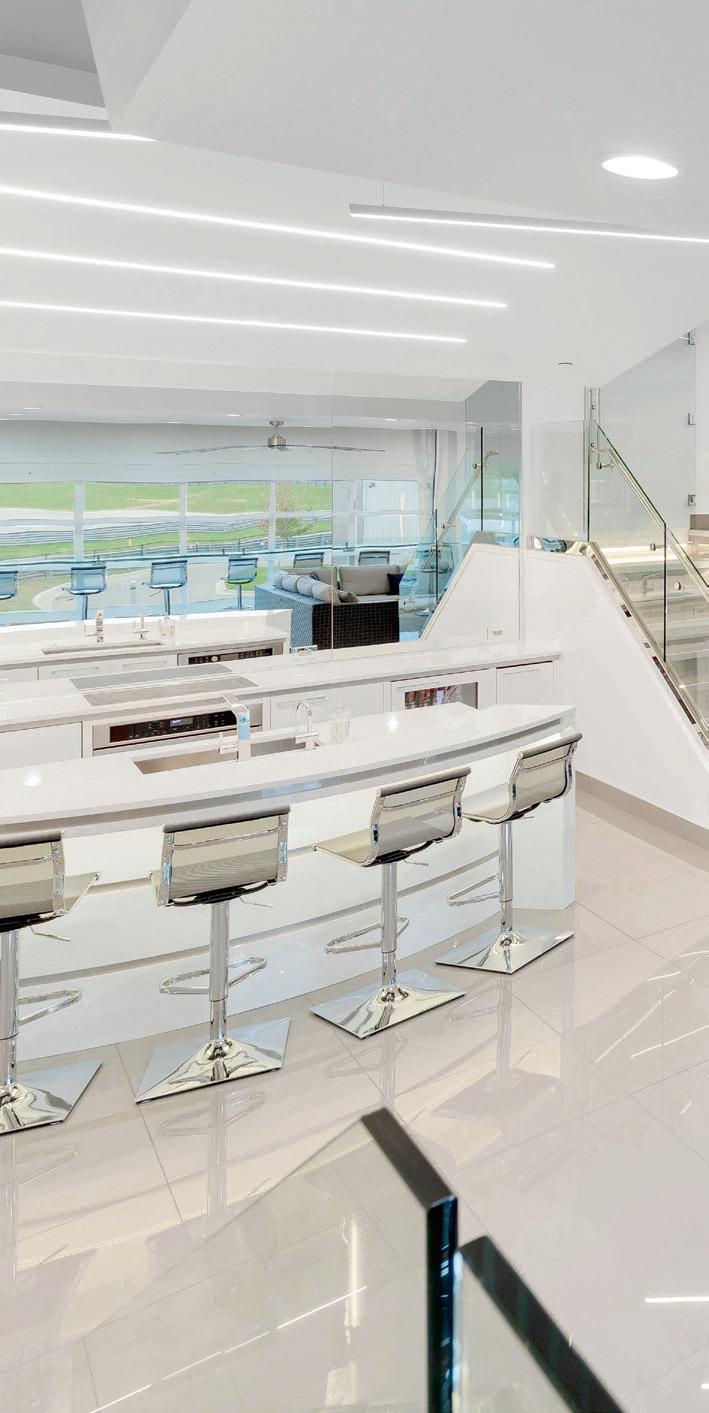
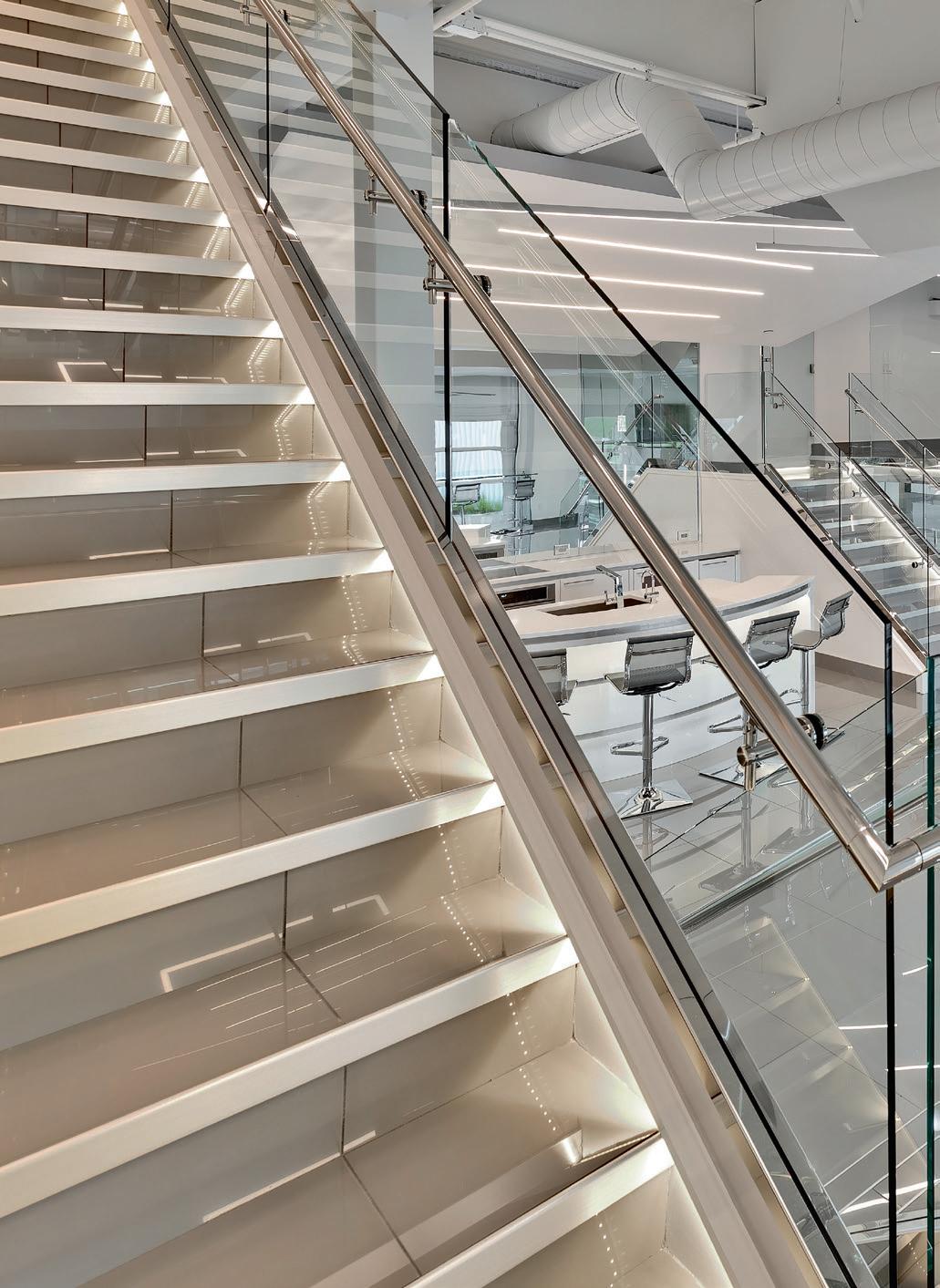
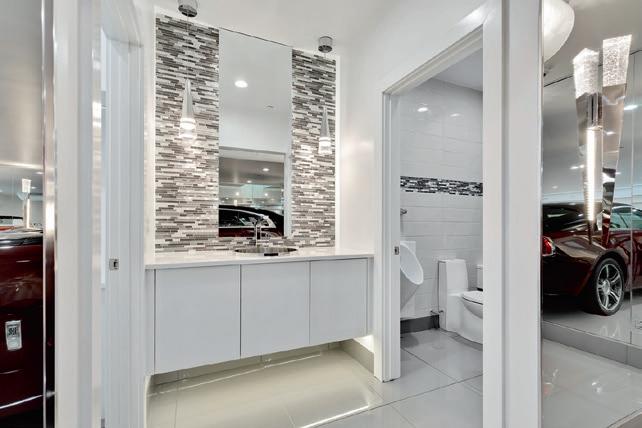
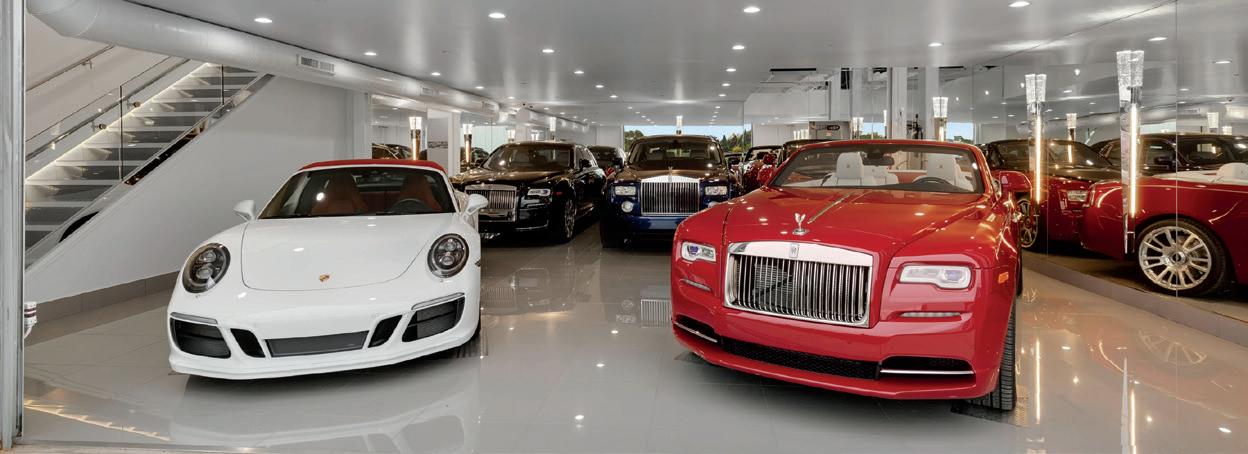
RIGHT Striking high-end finish includes mirrored walls, custom cabinetry, glass staircases and porcelain flooring throughout.
“PEOPLE OFTEN ASKED ME WHY I DID it,” chuckles Scott Baker, the owner of Garage 142. “I already own buildings, I have plenty of places to put my cars, and all of those cars are already displayed in beautiful locations. But I genuinely thought M1 Concourse was one of the best concepts I’d ever seen.”
Scott is a founding member of the M1 Garage Owners Community , and he describes it as a wonderful experience. “The camaraderie is what really makes it special – nobody cares what you own, what you do or how important you are,” he says. “It’s all about personality, which is a rare and wonderful thing in the car world. People really use their imagination, and they share that with everyone else. It’s a fantastic environment.”
His current garage, shared with son Isaac, isn’t his first, having owned a smaller unit previously. “I stayed there for a couple of years, because the building I really wanted hadn’t been built yet – one with rooftop patios,” Scott explains. “That particular building was special to me, so I waited until it was ready.”
Once completed, he designed everything himself, working with Mark Avripas of Avripas Construction to make his dreams a reality. As Mark recalls: “We had already spent time
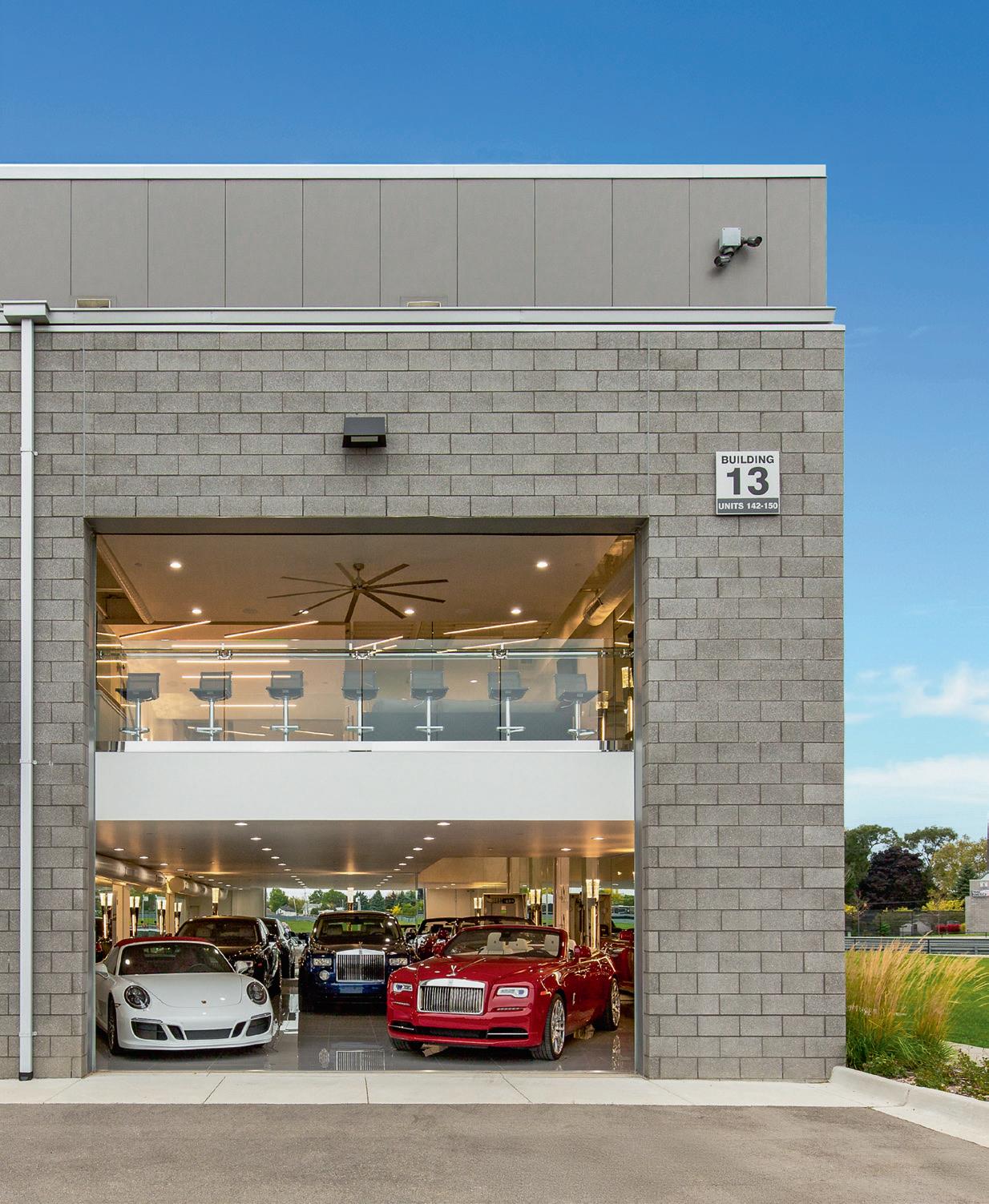
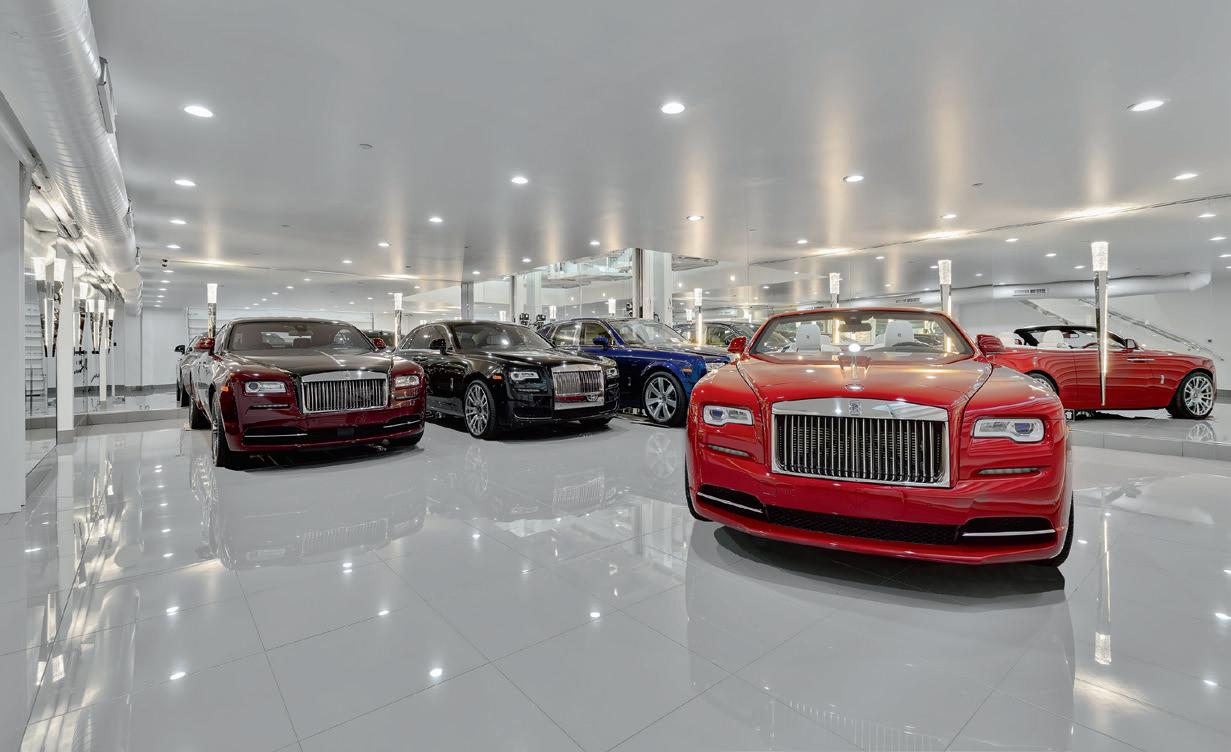
THIS SPREAD Garage 142 is the perfect showroom for Scott’s Rolls-Royceheavy car collection, while its luxe decor, fixtures and fittings provide a fabulous setting for family and friends to enjoy the excitement of M1 Concourse.
‘The garage is very bright, very welcoming and designed for entertaining – which is why I bought it in the first place’
talking with the owner, and we had a very clear understanding of the overall look he was after. It was very much his vision, and our role was to execute that as faithfully as possible. We knew straight away it was going to be a dynamite space. The owner had a great budget, which obviously helped, and everyone involved was excited about what it could become.”
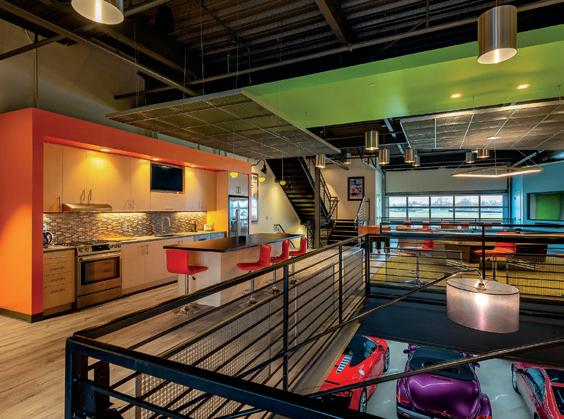
When you walk into Scott’s unit, it’s more like a home, not a garage – there’s no obvious sign it is a garage at all, other than the spectacular collection of Rolls-Royces. “I bought my first Rolls-Royce back in 2010. It had always been a dream of mine,” Scott says. “Once I bought that first Rolls-Royce, I couldn’t stop. I bought a Phantom, then a Ghost and then other models. I have quite a few now. I’m very blessed to be able to do that.” His other great passions are Porsches, Mercedes SLs, Cadillacs and Corvettes – it’s usually the last of these that goes on display upstairs via a custom-built one-arm lift, largely because the Caddies are just too long. “There’s a glass safety barrier, so people can admire the car from the family room,” Scott explains.
Getting the lift to work was the biggest challenge for Mark. “Aligning it properly and making sure vehicles could move cleanly up
to the second floor was a major technical element,” he chuckles. “Beyond that, the owner is incredibly meticulous. Every inch of the space had to be perfect – from the tiles, to the mirrored walls on the first floor, to the secondfloor tiling and all the cabinetry. Everything was dialed in to an extremely high level, which naturally makes the process more demanding.”
Part of the attention to detail was perfecting a minimalist look. Scott says: “The large overhead door lifts completely out of sight, unlike most other units where you can still see the door. I used a lot of glass, glass staircases, mirrors and lighting. It is very bright, very welcoming and designed for entertaining –which is why I bought it in the first place.”
Another challenge was getting the porcelain floor to work – a feature unique to Scott’s space. “I originally wanted marble, but it was too heavy. Porcelain has the same shine yet far greater strength. The manufacturer came in and specified exactly how it needed to be installed so it could handle thousands of pounds without damage,” he explains. “We had to engineer a special cushioning system beneath the flooring to handle the weight. All three levels have porcelain floors, and they still look exactly as they did when I moved in back in 2018.”
For Mark, there are several standout elements. “On the first floor, I love the mirrors – it feels more like a museum or a high-end showroom than a garage. That space is really striking,” he says. “On the second level, the ceiling detail is
ABOVE
‘I can see everything that’s going on, on the track. I don’t even have to leave my unit to enjoy what’s happening – it’s fantastic’
probably my favorite feature. We designed a swooping, suspended ceiling with integrated LED lighting over the bar and kitchen area. It’s a curved ceiling, and it looks fantastic. Every time you turn around in that space, there’s something impressive to look at – it’s very high end, and it really reflects the owner’s lifestyle.”
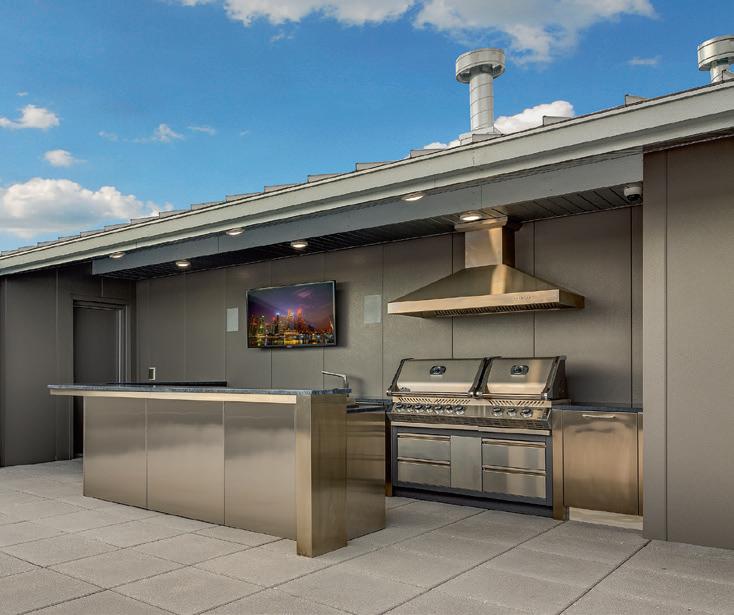
The garage has two full bathrooms, a bedroom, a library, a family room and a full kitchen, but everything is concealed. “All the appliances – refrigerators, ovens, microwaves, dishwashers – are hidden under the counters. You can’t immediately tell there’s a kitchen at all,” Scott says, “The rooftop patio is similar. I built a full kitchen up there, installed TVs, sound systems, built-in barbecues and a large bar for serving. It’s a complete entertainment space.”
For the patio, Mark had to install a large vent hood and run it through the unit’s roof so that when Scott is grilling, all the smoke is properly extracted. “That took some careful planning,” he says. “But the rooftop space is fantastic – it is an incredible area for entertaining, especially in the summer.”
Scott says the July 4 celebrations at M1 are among his favorite garage memories, but it’s the view out over the track that makes it all really worthwhile. “From my unit, I can see everything that’s going on. Guests can watch events from the patio or step straight into them,” he beams. “I don’t even have to leave my unit to enjoy what’s happening – it’s fantastic.” Find out more at www.avripasconstruction.com.
Boasting a full kitchen, TVs, sound systems, built-in barbecues and a large bar for serving, the rooftop patio is a complete entertainment space.
THE START OF IT ALL
That this is the McLaren M1 built for Dan Gurney isn’t in doubt – but could it also be hiding an even greater secret beneath its bodywork? We took a look at M1 Concourse
DAVID LILLYWHITE
PHOTOGRAPHY
MATT HOWELL
EVEN IF YOU HAVE BEEN TO ALL THE American Speed Festivals, you might not have spotted this car, or realized its significance. But if you’d read its modest information board, you know it’s something extra-special.
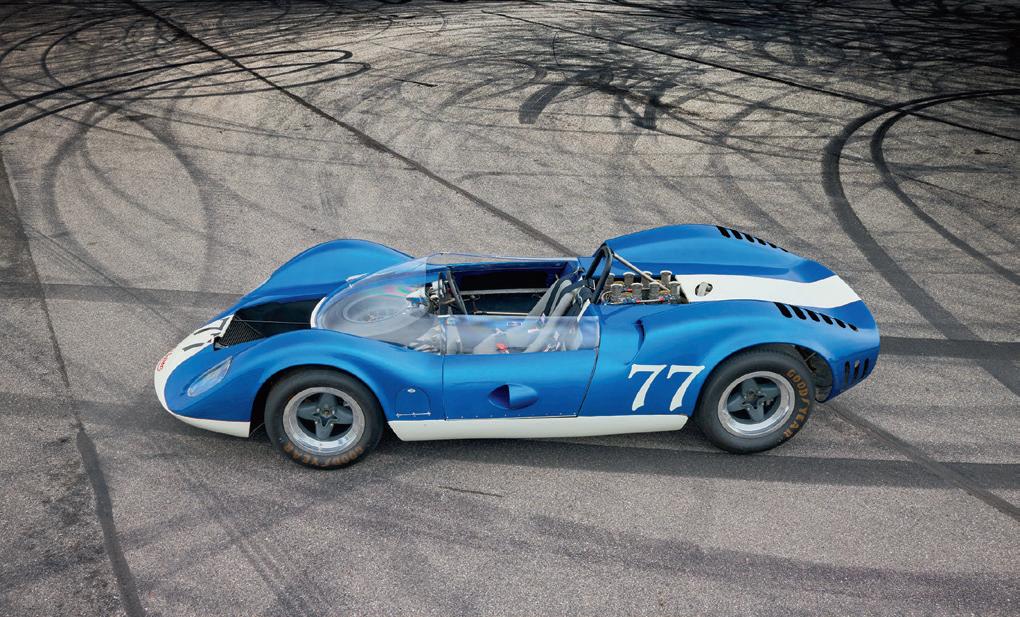
Owner Dean Sellars, workshop proprietor and racer, compiled a compelling book of evidence to suggest that this 1965 Gurney McLaren M1 could have been built on the first chassis ever designed by Bruce McLaren. That would make it the great-granddaddy of the Formula 1 championship winners of today.
The evidence presented is strong, but no one is trying to force through the claim or insist that it’s the truth. Even if it’s not, this is still one of the most important McLarens ever made, and the first one raced by Dan Gurney. It’s a convoluted story, but it’s worth reading...
The McLaren team history starts in the early 1960s, although Bruce had already established himself behind the wheel by that point, driving for Cooper in Formula 2 and then Formula 1. In 1963, while still with Cooper, he set up Bruce McLaren Motor Racing Ltd in order to run himself and friend Timmy Mayer in Coopers in the Tasman Championship of Bruce’s home territory of Australia and New Zealand. But even then he was quietly planning to manufacture his own machinery, initially aiming for sports racing car series.
To this end, McLaren built his own chassis, designed to use a four-cylinder Climax engine, which he’d had great experience of in the Tasman series. This was in late 1963, yet by early 1964 Bruce had realized that his cars would be more competitive using a V8, which prompted a serious rethink. Also at this time, in February ’64, Timmy Mayer was killed in practice for a Tasman race at Longford, Tasmania, driving a Cooper T70.
Timmy had previously driven a car that later became known as the Zerex Special. This, by
‘There is evidence to suggest this M1 could have been built on the first chassis ever designed by Bruce McLaren’
chance, becomes relevant to the McLaren M1 story at this point. It had started out as a fourcylinder Climax-powered Cooper T53 built for the 1961 United States Grand Prix, driven by Walt Hansgen as part of Briggs Cunningham’s team. However, Hansgen had crashed after 14 laps, forcing retirement from the race.
The damaged Cooper was then sold to none other than Roger Penske, who repaired the chassis and fitted it with full-width bodywork. He named the car the Zerex Special and raced it in Formula Libre during 1961. Timmy Mayer then raced it in the same formula during 1962. In 1964, still contemplating his own chassis builds, McLaren approached Teddy Mayer, older brother of Timmy, to buy the Zerex Special. This started a relationship that resulted in Teddy becoming a co-director.
The Zerex Special came fitted with the Climax engine, but with an all-alloy Oldsmobile V8 – the lightest such unit then available –also included in the deal. The McLaren team then replaced the chassis of the Zerex Special with one of Bruce’s own design; remember this, because we’ll be returning to it later...
Although the Zerex Special was initially raced with the Climax engine in place, by May 1964 it had been fitted with the Oldsmobile V8 and renamed the Cooper-Oldsmobile. It took wins in the British Sports Car Championship and the Canadian Sports Car Championship, even beating Penske’s car in the latter. The Zerex Special was then sold on, and raced by Dave Morgan in the US for the 1965 and ’66 seasons, before being sold on to Leo Barboza in Venezuela.
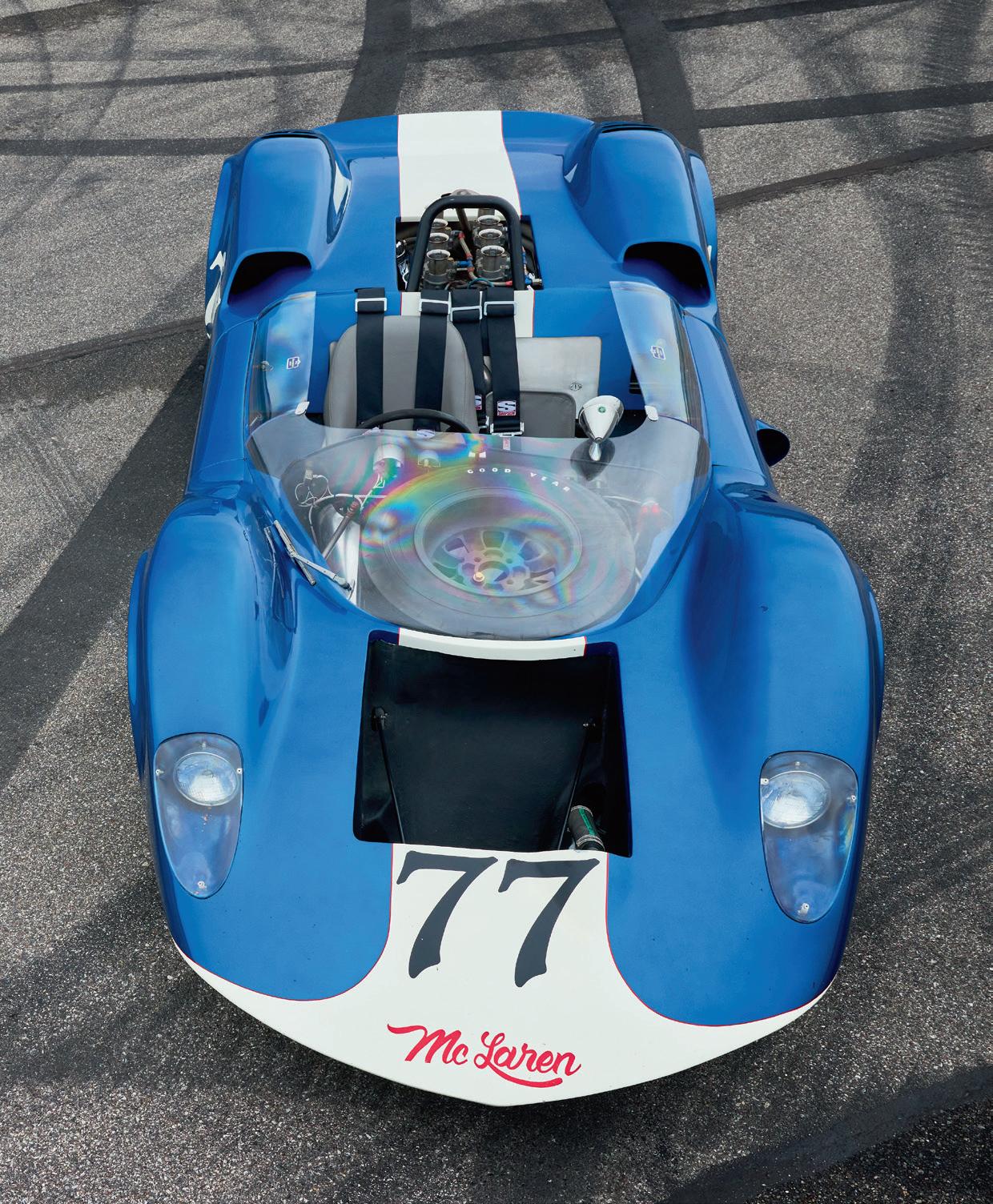
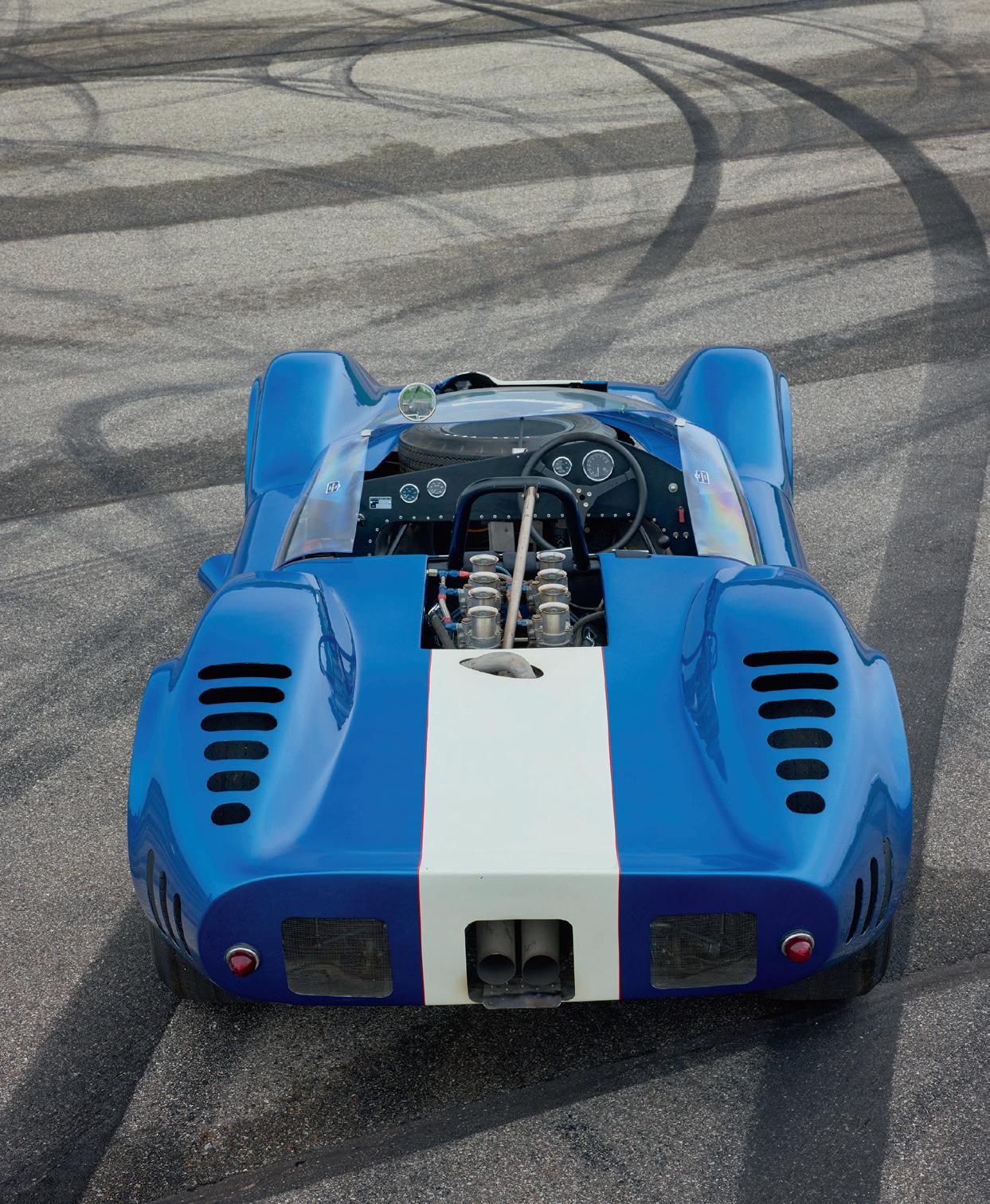
OPPOSITE The unique vents in the rear bodywork were cut by Dan Gurney’s All American Racers team to improve cooling to the engine and the brakes.
The experience gained by Bruce McLaren with the Zerex Special led to the creation of the first McLaren, named the M1 (for Mark 1), chassis BMMR 1-64. It was powered by the Oldsmobile V8 again, with alloy bodywork finished in the black-and-silver racing colors
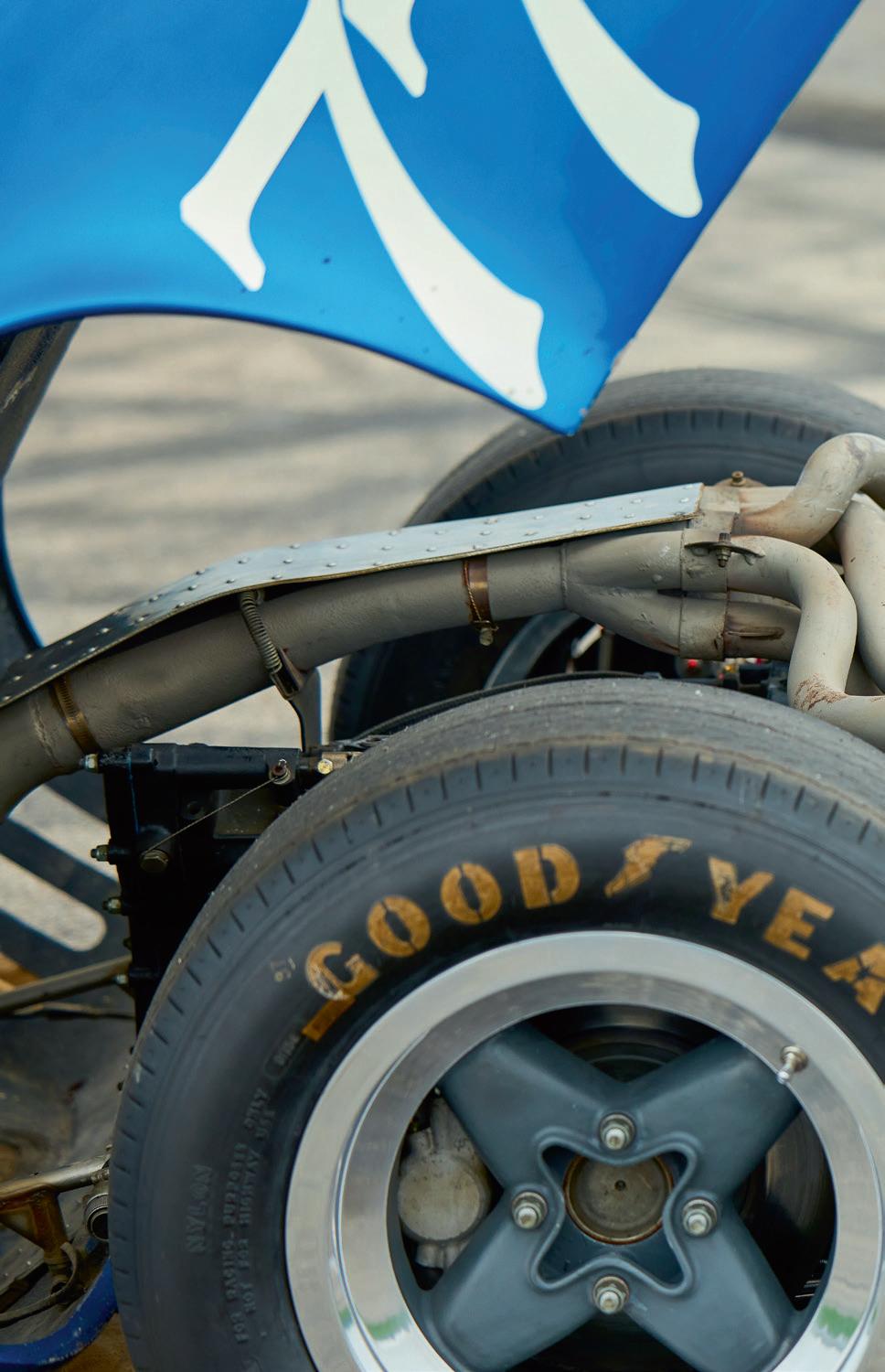
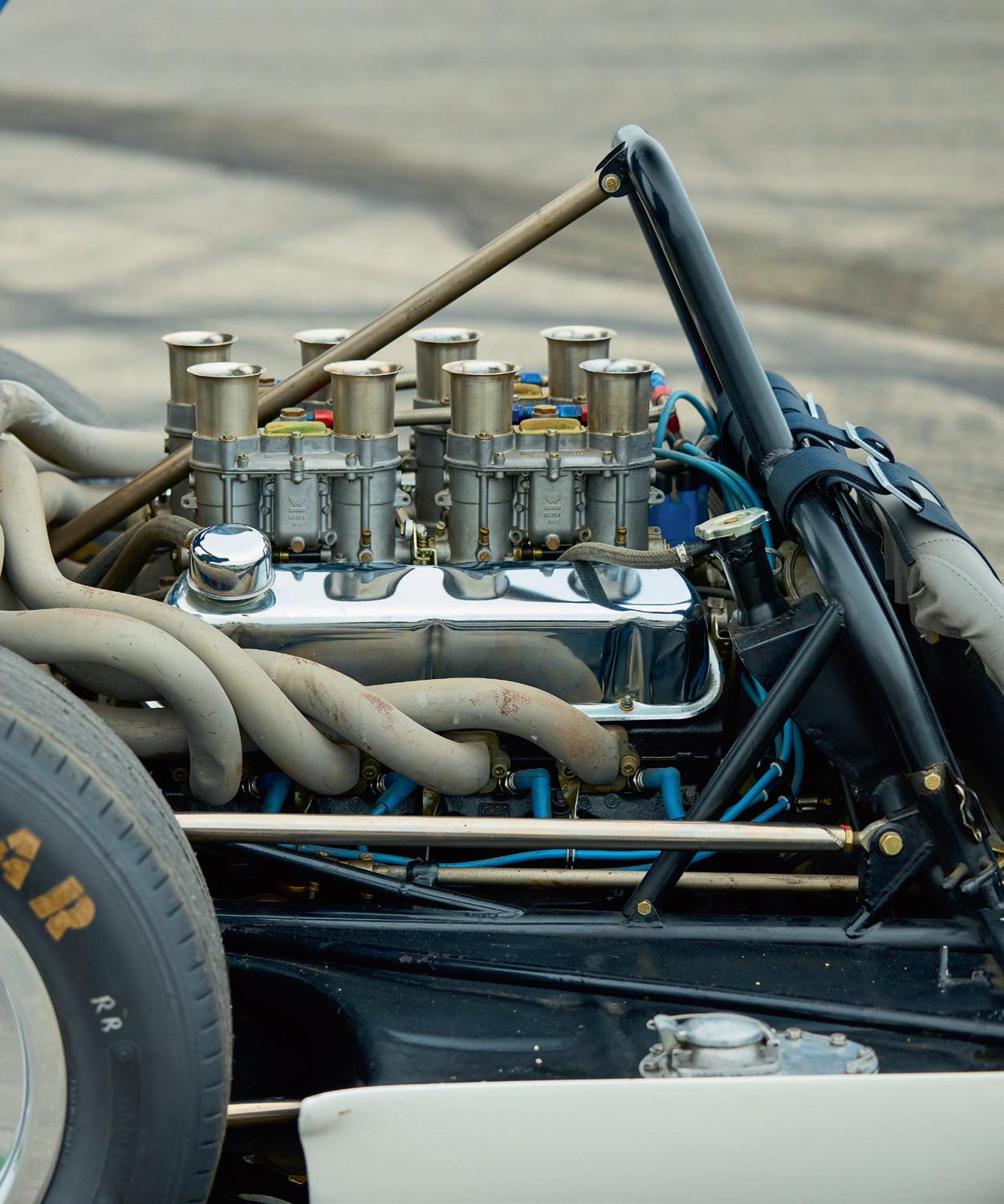
RIGHT Rather than using the all-alloy Oldsmobile V8 favored by McLaren, Gurney specified a Ford 289, built to GT40 specifications, with this wonderful headerpipe system for the unsilenced exhaust.
of New Zealand. In testing at Goodwood, UK, in September 1964, it was three seconds a lap faster than the Zerex Special. Soon after, it made its racing debut at Mosport, Canada, where Bruce beat Dan Gurney’s lap record but finished third due to throttle-linkage problems.
The McLaren team then used parts of the M1 to create the M1A prototype, which became the Works team car raced from early 1965 to August of the same year – after which it was replaced by the all-conquering M1B.
McLaren’s achievements with the M1 and M1A had gained attention in the racing world, and the team started to receive inquiries for customer orders. Bruce McLaren Motor Racing wasn’t set up for this, so an agreement was made with Trojan, a British company that had recently acquired Elva. The deal was that Elva would build customer versions of the next variant of the M1, also to be named the M1A.
It wasn’t an easy relationship, with the firms
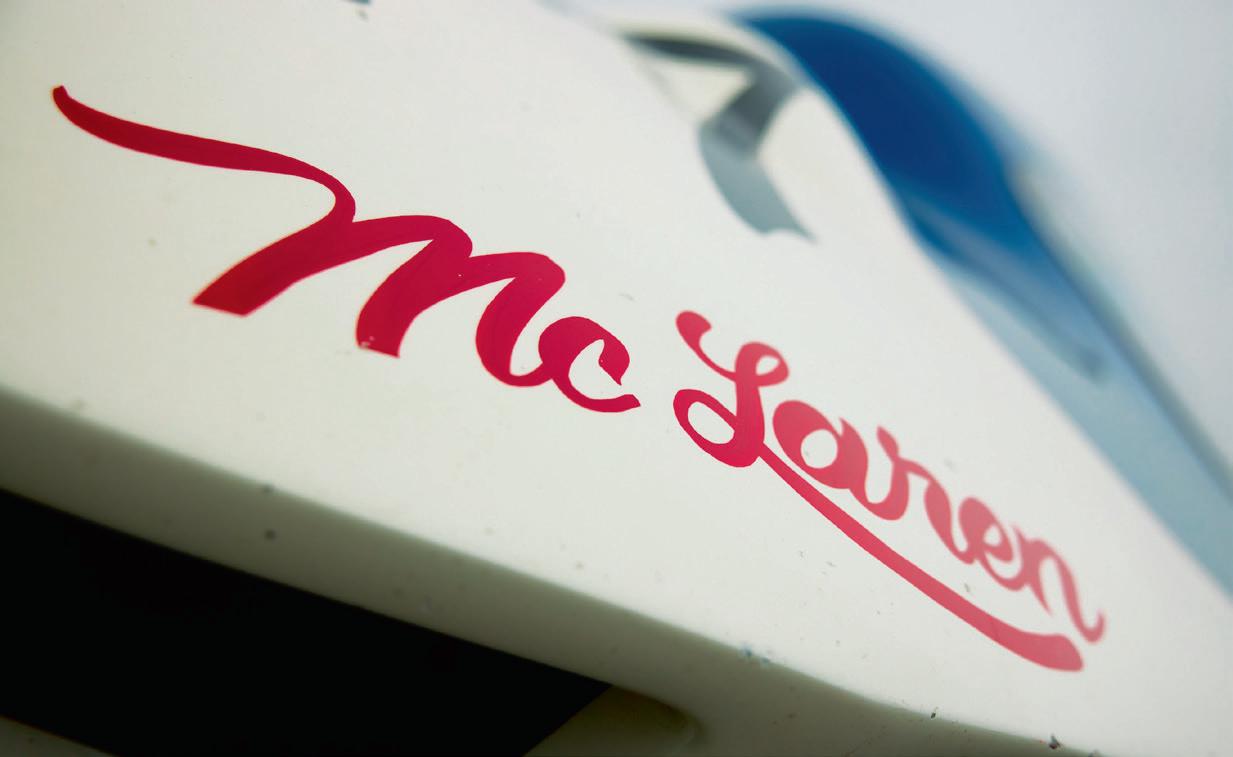
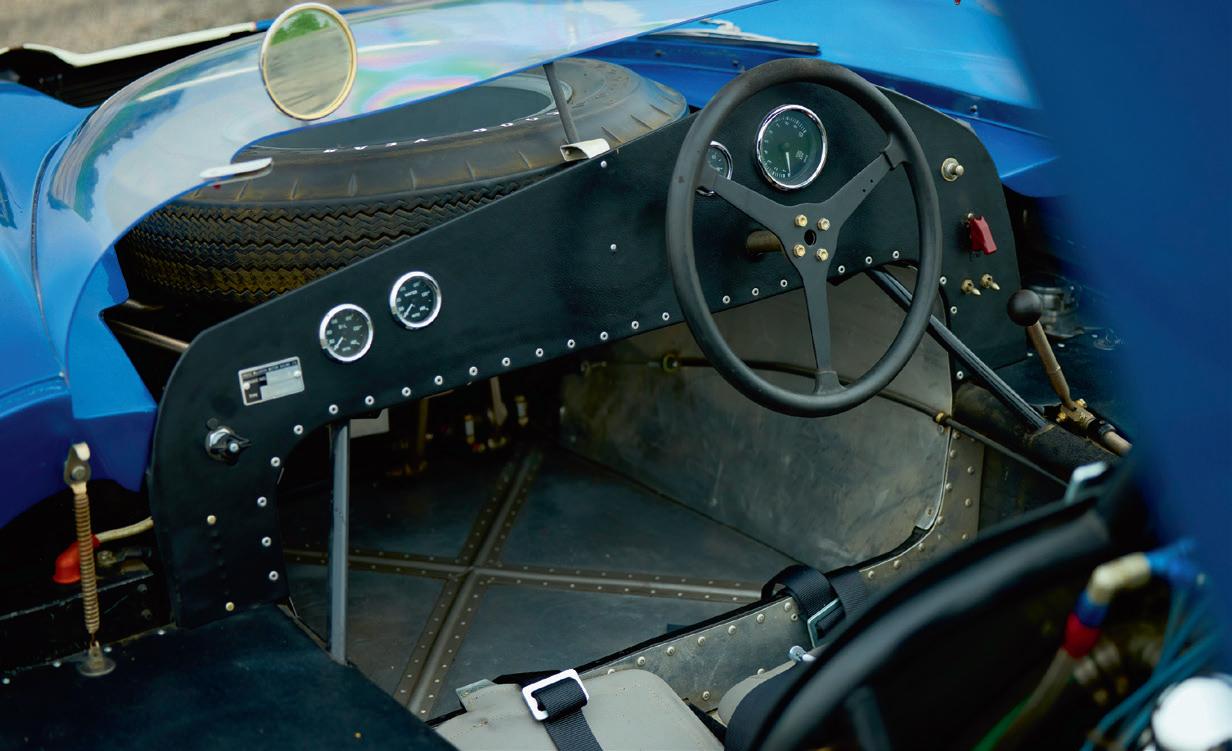
THIS SPREAD The beautiful McLaren logo was hand-painted by a local artist before the final coat of lacquer. The awkwardly placed spare tire, needed to comply with race regulations, is the 1965 original.
‘This is one of the most important cars in the world of McLarens – and perhaps you saw it first at M1 Concourse’
having very different working practices. After legal wrangling over the name, it was agreed that the customer cars would be called McLarenElva M1As; more than 20 went on to be built.
In an already confusing history, with little in the way of records kept, the M1A prototype Works racer was often referred to as a McLarenElva M1A, even though it was built by Bruce McLaren Motor Racing and not by Elva at all.
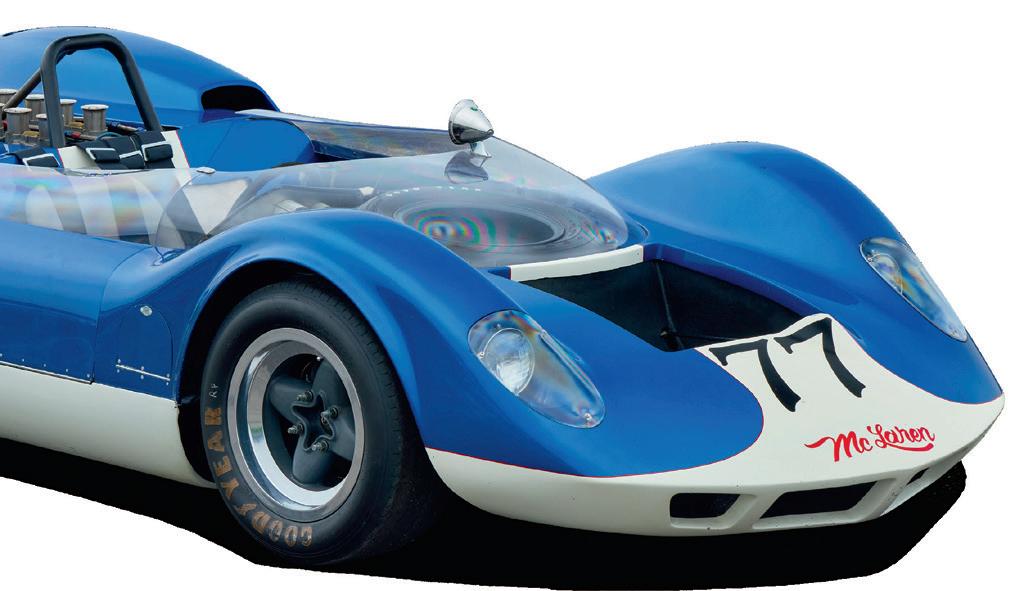
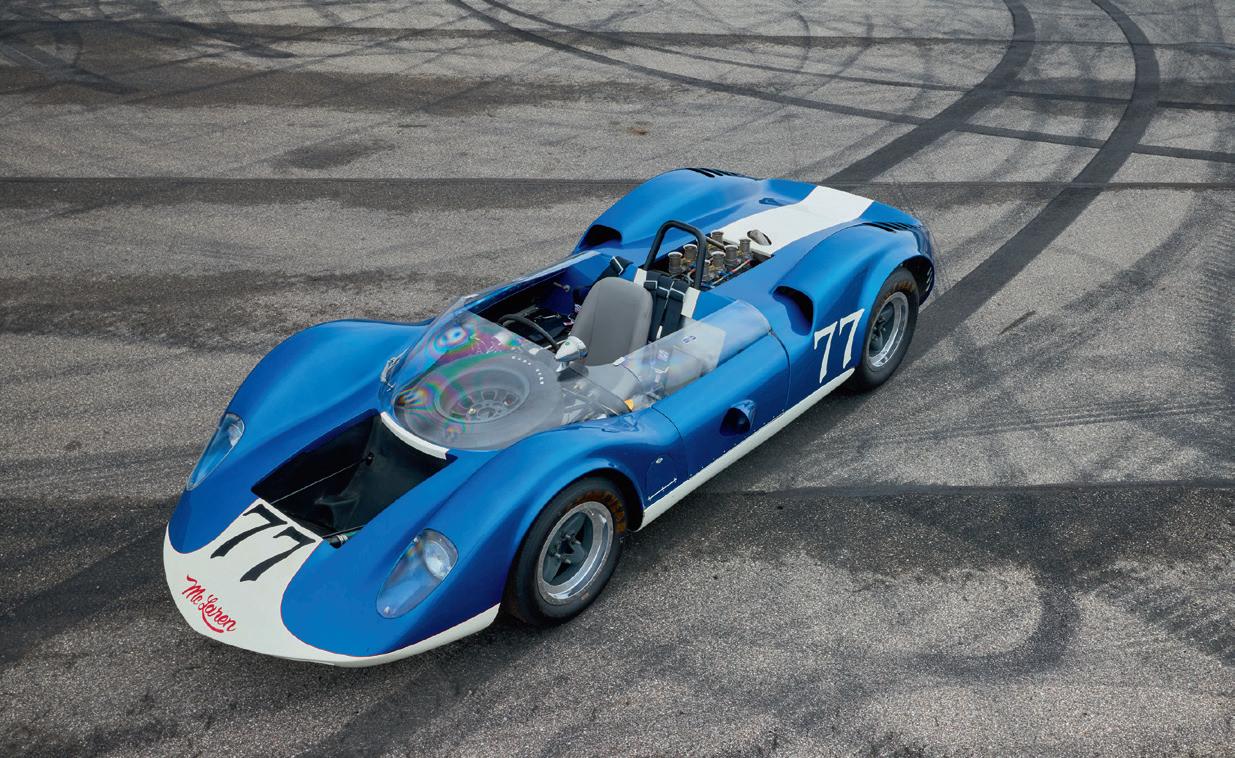
However, even before McLaren and Elva had negotiated that deal on building the customer cars, in 1964 Dan Gurney specified his own McLaren M1. The car he ordered is the one you see here, photographed at M1 Concourse during a previous American Speed Festival.
Gurney’s McLaren, chassis BMMR-2/64, was fitted not with an Oldsmobile V8, but with a Ford 289, built to GT40 specification. It was delivered to him at Brands Hatch on August 30, 1965 for the Guards Trophy race, which was won by John Surtees in a Lola, with Bruce
THIS PAGE Without much in the way of color photography, the paint was mixed to match the ex-Dan Gurney Cobra owned by Lynn Park. The ‘77’ was Gurney’s number at the Riverside race.
McLaren driving the Works M1A to second place. Embarrassingly, Gurney’s car retired with suspension problems.
After the event, Dan shipped it back to All American Racers HQ in Santa Ana, where vents were cut into the rear bodywork to aid cooling, and an extra support bar was added for the roll hoop. He then raced it on October 31 in the LA Times Grand Prix at Riverside, but once again retired, this time with brake issues. Some time after the event, Gurney sold the M1, although it’s not recorded who it went to.
We do know, however, that it was later sold on to McLaren collector Bill Robbins in 1970, around the time that Bruce McLaren was sadly killed in a testing accident, aged just 32.
In 1979 the McLaren moved on again to Jim Wallace, who then sold it to Dean Sellars in 1985. Over the following years Dean remade the bodywork, which had been damaged in a garage fire, and fully rebuilt the M1. During his
restoration work and research, he started to notice little details of the car that made him wonder about the origins of the chassis – and he’s now convinced that it’s the platform of the original M1, the one painted black and silver for its first race at Mosport in ’64.
Why? Well, there are signs of an extra chassis tube having been welded diagonally across the engine bay. This could only have been possible for a chassis intended for a Climax four-cylinder – which is how the M1 chassis started out – and would’ve had to be cut away to fit an Olds V8.
Is this already significant car running on the very first chassis that the now-legendary Bruce McLaren designed and constructed? It could well be – and Dean’s book of evidence certainly suggests so, with further hints of the chassis’ previous use. But even regardless of that, this is one of the most important cars in the world of McLarens. And, if you had your wits about you, perhaps you saw it first at M1 Concourse.
R I O
WORDS
DAVID LILLYWHITE
CRETURNS!
PHOTOGRAPHY
COREY MOORE
DEVON TESSLER
MARC MIRAMONTEZ
Remember the International Race of Champions?
Now it’s back as a Historic race series – and its first meeting saw all seven generations of car on track
“THAT WAS BETTER THAN NASCAR!”
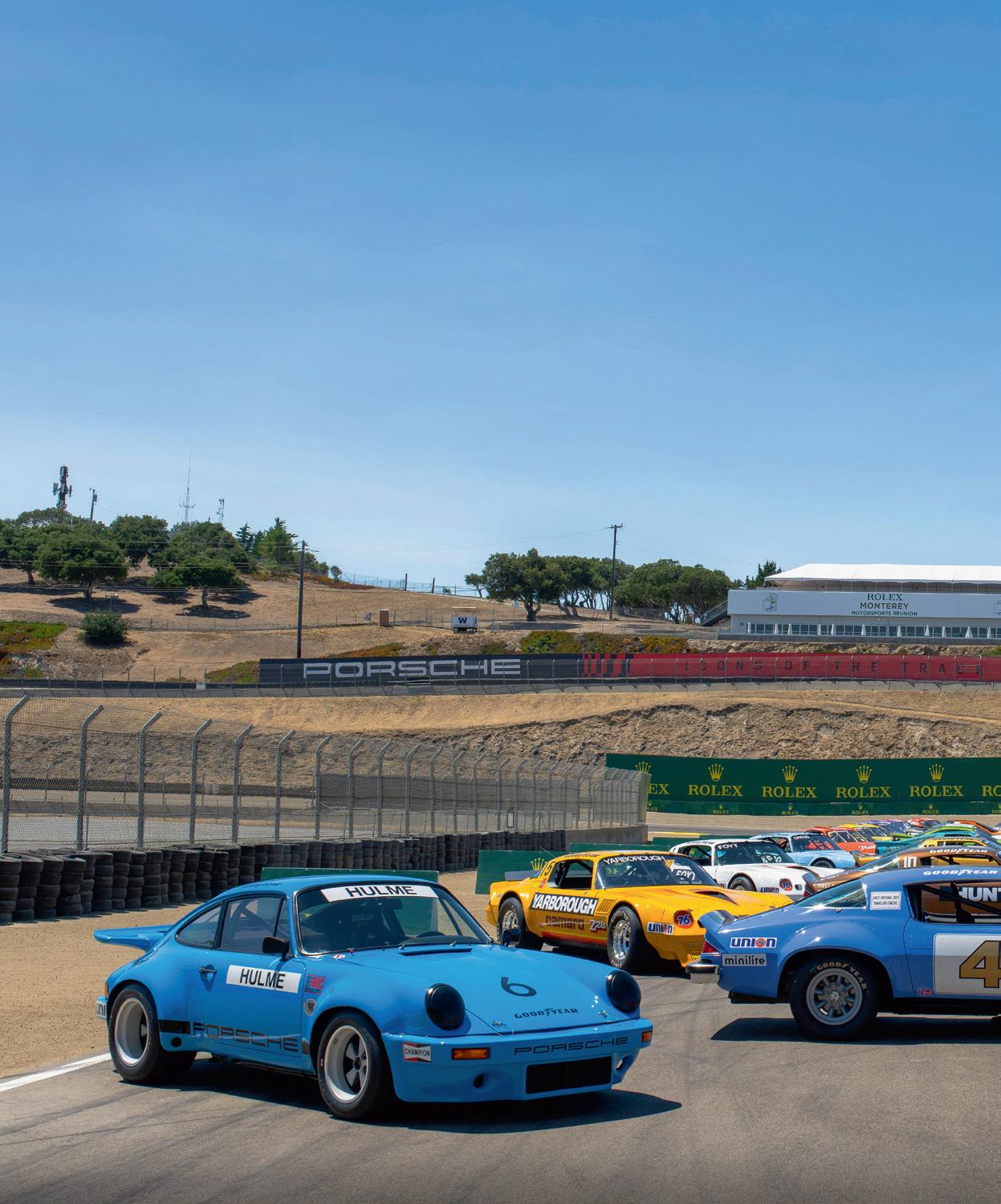
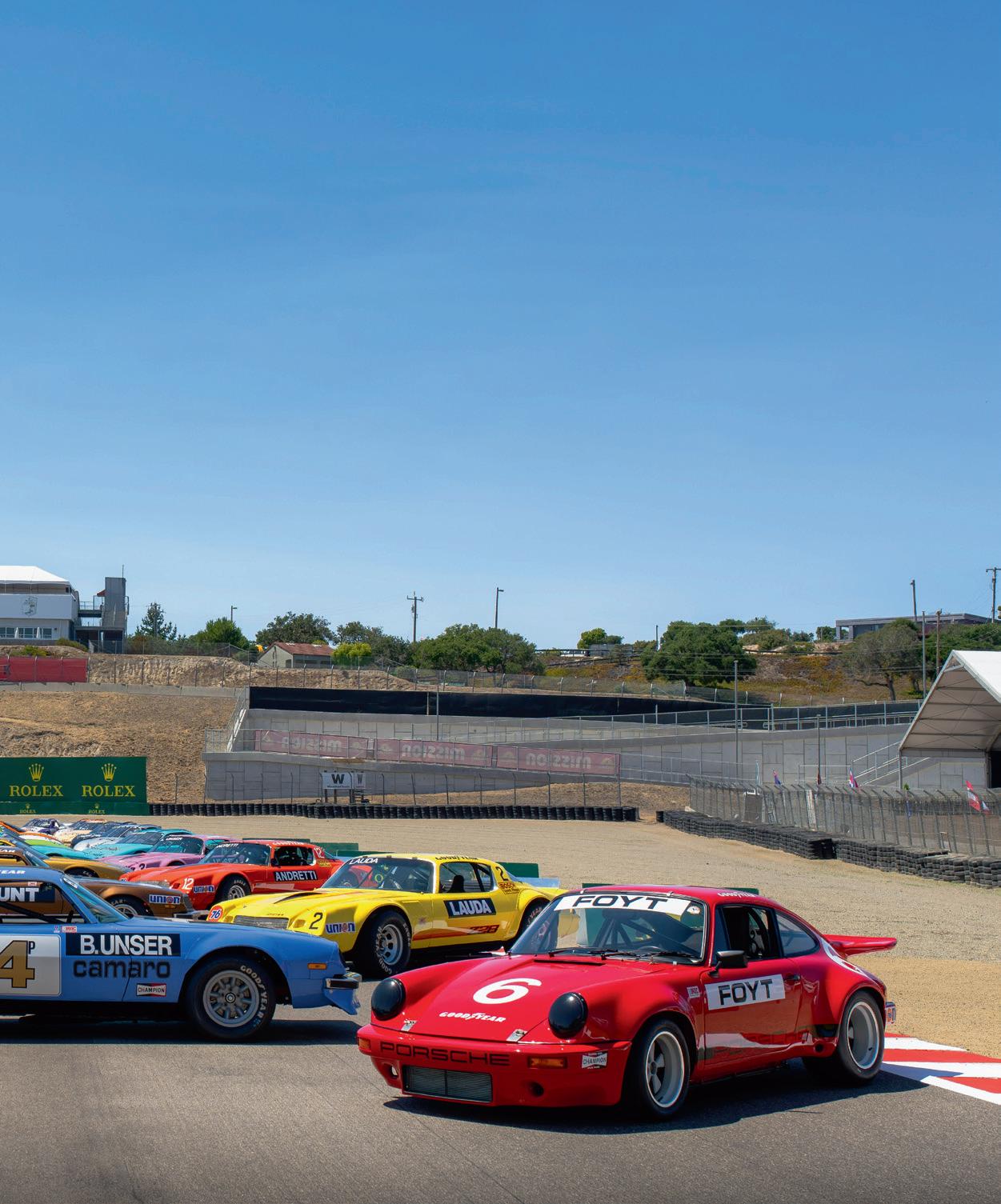
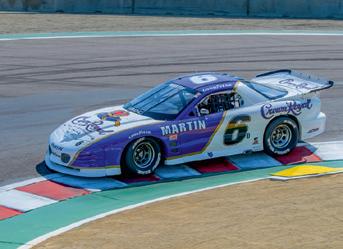
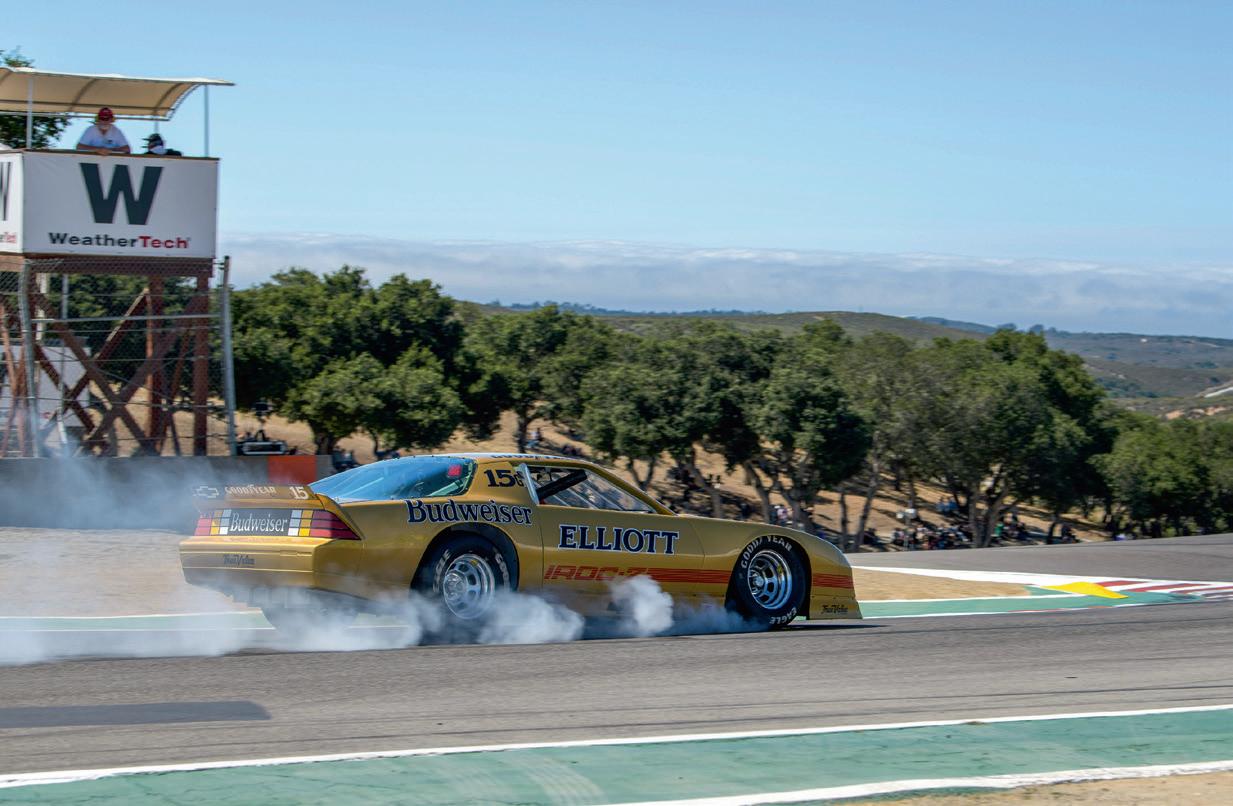
Spectators at the 2025 Rolex Monterey Motorsports Reunion couldn’t get enough of the inaugural IROC Historic race, as 26 cars spanning four decades thundered around WeatherTech Raceway Laguna Seca.
How did this come about? Well, you can thank motor sport enthusiast and venture capitalist Rob Kauffman, along with NASCAR Hall of Fame inductee Ray Evernham. Between them, they cooked up the idea of bringing the seven different eras of IROC cars together for the first time in history to create an allnew Historic race series.
After an introductory gathering at Lime Rock in July 2024, the new series ran the inaugural race – named the Unser Family Cup – in August 2025 at Laguna Seca. It was the first time IROC had ever visited the famous California track.
But let’s rewind a moment, because the International Race of Champions or IROC –pronounced ‘eye-rock’ as you almost certainly know – was founded way back in 1973 by race team owner Roger Penske, former American footballer Les Richter and TV producer Mike Phelps. It brought together top drivers from what is now IndyCar, NASCAR, Formula 1 and sports car racing, to compete four times a year
THIS SPREAD
Former IROC engineer and famed NASCAR crew chief Ray Evernham (below left), is the co-founder of the IROC revival series.
‘I’m just a kid pinching myself. This is way cool. It’s the cars that I used to watch as a kid, and I’m out here racing’
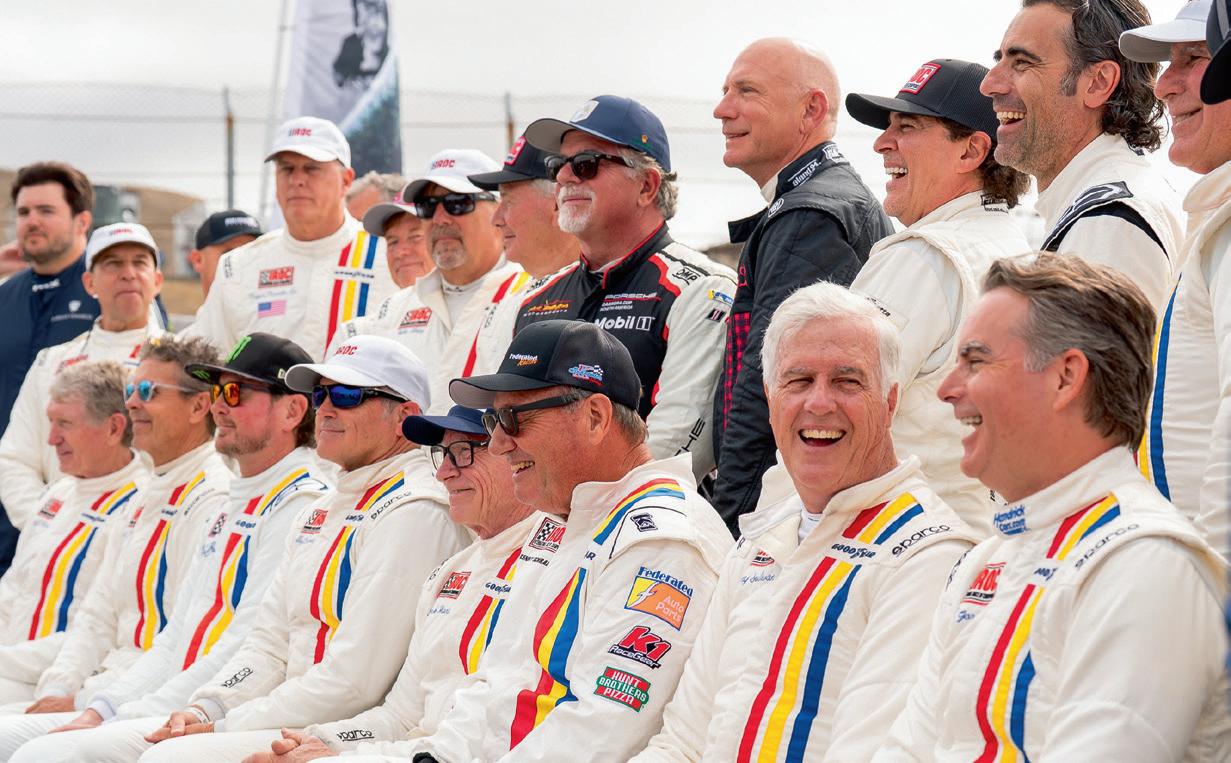
OPPOSITE From left, seated: Bill Elliott, Scott Pruett, Kurt Busch, Bobby Labonte, Mark Martin, Kenny Schrader, Danny Sullivan and Jeff Gordon. Standing: Maxwell Lynn, Rob Kauffman, Roger Penske Jr, Alan Davison, Mike Slutz, Dave Roberts, Carlos de Quesada, Gregor Fisken, Scott Borchetta, Dario Franchitti and Randy Johnson.
in 12 identical cars at tracks around the US. It had its highs and lows, and eventually it was killed off in 2006, unable to bring in the big-name drivers, who were under increasing pressure from the ever-growing racing calendar, while sponsors became equally difficult to sign up. But it’s looked back on with great affection and enthusiasm from motor sport fans, and many of the cars still exist in their evocative liveries.
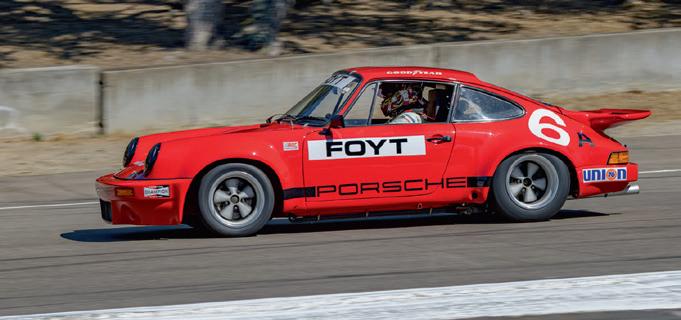
Although we all know IROC for muscle cars, the first season used Porsche 911 RSRs, driven by the likes of Mark Donohue, Bobby Unser, Peter Revson, AJ Foyt, Richard Petty and Emerson Fittipaldi at Riverside and Daytona.
However, the Porsches proved too expensive and high-maintenance to run, so for its second season IROC switched to lightly modified Camaro street cars, all 12 of which were built in just nine weeks. At the same time, oval tracks were added to the race schedule, including Michigan International Speedway. From then on, IROC competed on ovals, road courses and street circuits alike.
The caliber of drivers in this period was off the scale, with all the big names competing. To improve safety for all involved, for the 1977-78 season IROC introduced Camaros sitting on tube-frame chassis built by NASCAR driver
and race-car constructor Banjo Matthews.
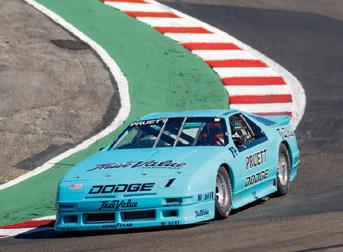
The series went on hiatus after the 1979-80 season, but it returned in 1984 with a new Chevrolet Camaro IROC-Z. Once again it attracted some of the best drivers of the day, including NASCAR champion Dale Earnhardt, CART star Bobby Rahal and IMSA champ Scott Pruett. It continued until 1990, when IROC moved away from its long association with GM to use the Dodge Daytona and later the Avenger.
It wasn’t until 1996 that the series returned to GM, whose Pontiac Firebird continued until IROC’s end in 2006 – by which time it had become little more than a NASCAR sideshow.
Nineteen years later, the IROC revival brought examples of all seven generations of car to Laguna Seca. It was an incredible sight (and sound) that confirmed to co-founder Ray Evernham that the idea cooked up by him and close friend Rob Kauffman while on a flight together has a strong future.
Ray started his motor sport career in IROC, having joined the Penske team in 1983, building up the Generation 3 Camaros until 1989. He went on to become one of the best known NASCAR crew chiefs, but he had always yearned to see the return of IROC.
“When IROC went away it broke my heart, but I understood that times were changing,” he
The IROC generations
1 Porsche 911 RSR: 1973-74
The original IROC cars, built by the Penske team on road-spec 911 Carrera 3.0 models. Penske still owns one, and three others are known to exist in IROC specification and livery.
2 Chevrolet Camaro: 1974-76
The IROC ‘Gen 1’ Camaros were also built on road-spec models. Mark Donohue’s Trans Am team fitted roll cages, uprated brakes and cooling, as well as 336ci small-blocks.
5 Dodge Daytona: 1990-93
IROC switched to the Dodge Daytona, again built on a race chassis with a NASCAR Mopar V8. Daytona IROC and IROC R/T road cars were sold at the same time.
3 Chevrolet Camaro: 1977-80
To improve safety, the IROC Camaro ‘Gen 2’ cars were built on tube-frame chassis, created by renowned NASCAR driver and race-car constructor Banjo Matthews.
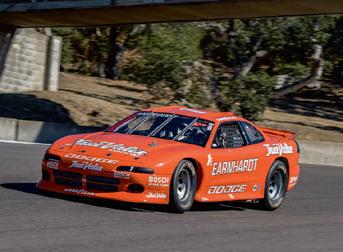
6 Dodge Avenger: 1994-95
With the Daytona road car now defunct, IROC switched to the Avenger, although still with the same race chassis – many of which were simply rebodied.
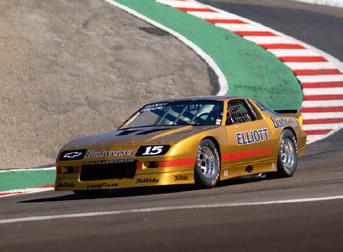
4 Chevrolet Camaro: 1984-89
After a hiatus of several years, IROC returned in 1984 with the new Chevrolet Camaro IROC-Z model on the Banjo Matthews chassis. An IROC-Z road car was sold at dealerships.
7 Pontiac Firebird: 1996-2006
The seventh and final car used in IROC saw a switch back to GM, and lasted until the demise of the series. It sported the race car chassis with a Chevrolet-based V8.
tells us. “The sport was changing, sponsors were bigger, driver contracts were different. Scheduling and all those things really just didn’t line up anymore. But then, after Covid, I started to realize that there’s a space again for motor sports entertainment, and I really started to think about IROC.
“I’ve always been a huge fan of Historic racing. Rob Kauffman is a big vintage racer and historian, so we thought it’d be really cool if we could get IROC going and make that Historic racing series viable again. We bought the rights and located about 65 cars worldwide. The exhibition at Lime Rock was incredibly well received, so we said: ‘Okay, let’s try and put these cars on track at Laguna Seca.’”
The race in California attracted a mix of professional and amateur drivers, including several of the originals such as Jeff Gordon, Kurt Busch, Bobby Labonte, Bill Elliott, Mark Martin, Ken Schrader, Danny Sullivan and Scott Pruett. In addition, other pro drivers who
never had the chance to race in IROC originally took part, including Indy star Dario Franchitti and Formula 1’s Jenson Button.
And the cars? The most plentiful IROC survivors are the Firebirds. About 40 were built, and Ray says that 34 or 35 of them still exist. There are likely to be almost as many of the Banjo Matthews-era tube-frame cars still around, too, but there are barely any of the Dodge Daytonas still in IROC specification
‘IROC is looked back on with great affection and enthusiasm, and many cars still exist in their evocative liveries’
or livery. At the far end of the scale, there may be only four original IROC Porsches left in the world – and two of those were on track that August day at Laguna Seca.
“You talk to some people and they say they have got an AJ Foyt IndyCar, or a Dale Earnhardt stock car, or a Derek Bell Le Mans Porsche,” says Ray. “But what if you had a single car that AJ Foyt drove, Mario Andretti drove, Bobby Unser drove, Stuck, Mass, Ickx, Bell all drove? Oh, then Earnhardt and Waltrip and Allison drove it – that’s what you have with the IROC cars. There is so much history in those vehicles.”
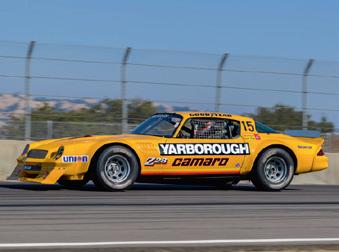
A great example of this is McLaren F1 chief Zak Brown’s Generation 2 Camaro in orange Yarborough livery, which is probably the most original IROC car on the planet. It was used as a practice car, so all the drivers from the 1977, ’78 and ’79 series drove it, and then it won two races, one with Darrell Waltrip, and one with Cale Yarborough – Zak was actually there the
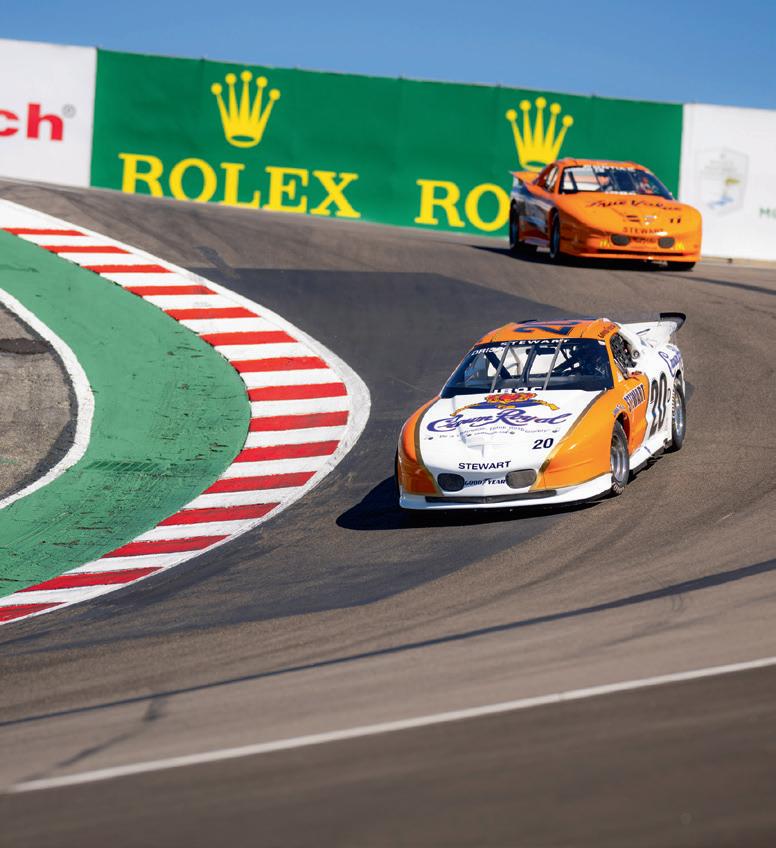
THIS PAGE The battle for first and second was between the two Tony Stewart cars.
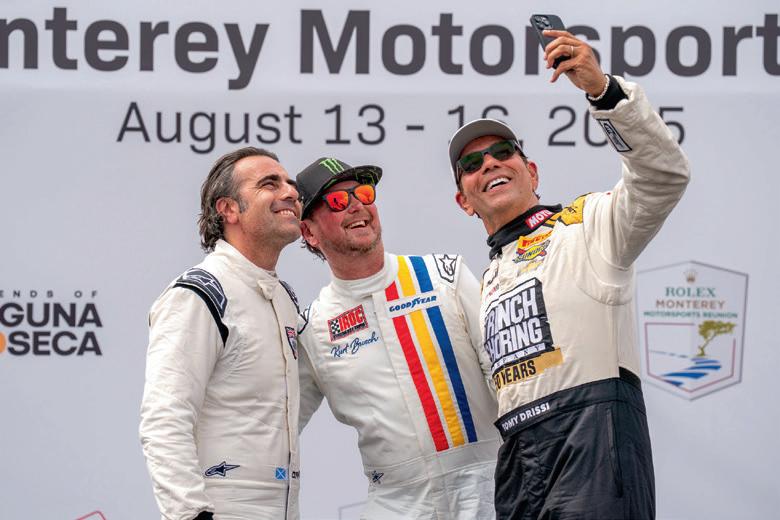
Tomy Drissi, Dario Franchitti and Kurt Busch made it to the podium.
day Cale ran. It was also used as a promotional car for IROC – and on a single day at Sonoma, Paul Newman, James Brolin, Clint Eastwood and Gene Hackman all drove it.
This was typical of the caliber of cars that hit the track for the inaugural ten-lap Unser Family Cup. After a wealth of crowd-pleasing battles, Tomy Drissi scored the victory, just beating Dario Franchitti on the final lap in matching orange No 20 Tony Stewart team cars. Arguably the most dramatic drive was by Kurt Busch, though, in the Firebird in which he won the 2003 IROC finale to take the series championship that year. At Laguna Seca he finished third, having spun earlier on only to fight back through the field and eventually pass Jeff Gordon on the final lap to secure a place on the podium.
“This has been phenomenal,” Busch told RacingAmerica.com. “Congratulations to Ray Evernham, Rob Kauffman, the whole IROC group. The fraternity of drivers that showed up... I’m just a kid pinching myself. This is way cool. It’s the cars that I used to watch as a kid, and I’m out here racing. It’s been fun.”
Ray and Rob can hardly believe how well the series has been received. “Now we have people calling saying: ‘Hey, what’s what? What are you doing? Where are we going?’” Ray says. “We’re still in the infancy of building this thing, but this felt like a very good and fun event.”
The plan is to run three to four events a year. The series will take place at the new Ten Tenths Motor Club in Charlotte on April 26, and it’s back to WeatherTech Raceway Laguna Seca in August – but there are even plans to get it to Goodwood, UK, as well. And the dream scenario? Well that would be to run the Historic series alongside an all-new modern-day IROC. Ray even has a car designed for that… For more information, visit www.iroc-racing.com.
Bob Lutz has worked for Detroit’s big three – and he played a defining role in BMW’s 1970s renaissance, too. Here he reflects on his decades at the top
Bob Lutz A driving force
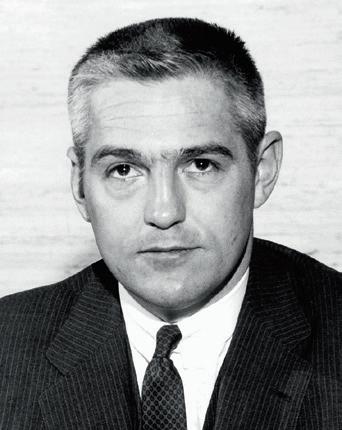
BOB LUTZ HAS SEEN IT ALL –revitalizing BMW in the 1970s, launching controversial Fords in the 1980s, bringing Chrysler out of the K-car doldrums with the Viper in the 1990s, and helping save General Motors in the 2000s. Yet his earliest lessons came from selling vacuum cleaners in California. “If you strongly believe in a product, it’s easy to convey that to the customer,” he recalls. He also learned office politics firsthand: “I outsold the shop owner’s son, which taught me that excelling can provoke hostility from those performing less well.”
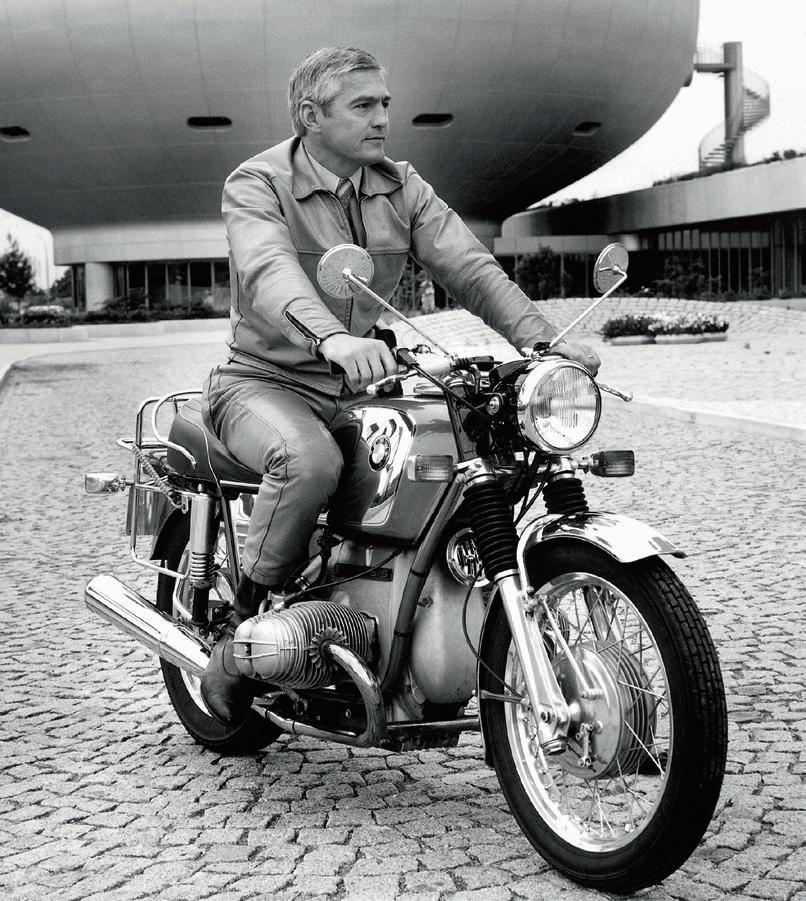
Born in Zürich in 1932, Lutz moved to Scarsdale, New York in 1939, became a US citizen four years after that, and later studied in Lausanne before earning qualifications in production management and marketing while serving in the Marine Corps Reserve in Korea. Bob’s first job was with GM in 1963. “They were impressed that I spoke German and French, so after 18 months in New York, they sent me to Opel,” he recalls. After navigating the very different European car culture, he moved to BMW in 1971. “I went from the world’s largest auto company to one making 180,000 cars and 20,000 motorcycles a year,” he says. Unlike at GM, BMW executives had to do their own homework, with minimal staff beyond finance and legal. “I found that refreshing.” BMW lagged behind industry norms –outside Germany, private importers harmed profitability. “I pushed to change that, and I even stopped a disastrous attempt to redesign the BMW roundel,” Bob recalls. However, he can also claim to have played a key role in two of BMW’s most distinctive brands. “I
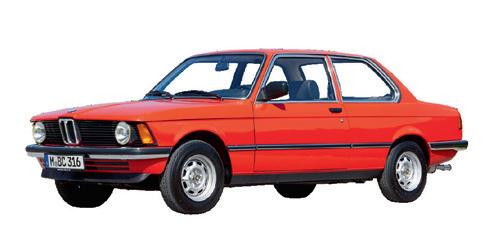
discovered that the planned successor to the 1600/2002, was, frankly, ugly,” he recalls. “I told them it was unacceptable. They said the wood-and-plaster model had taken eight months. I said, ‘Well, start over.’ They told me they didn’t use clay. I was shocked.”
After gaining approval from BMW’s CEO, Bob found acquiring clay to be virtually impossible – so he turned to his old friends at GM. “Opel sent us clay, armature builders, sculptors – you name it,” he says. “In truth, the entire modern BMW design operation was initially set up by General Motors.”
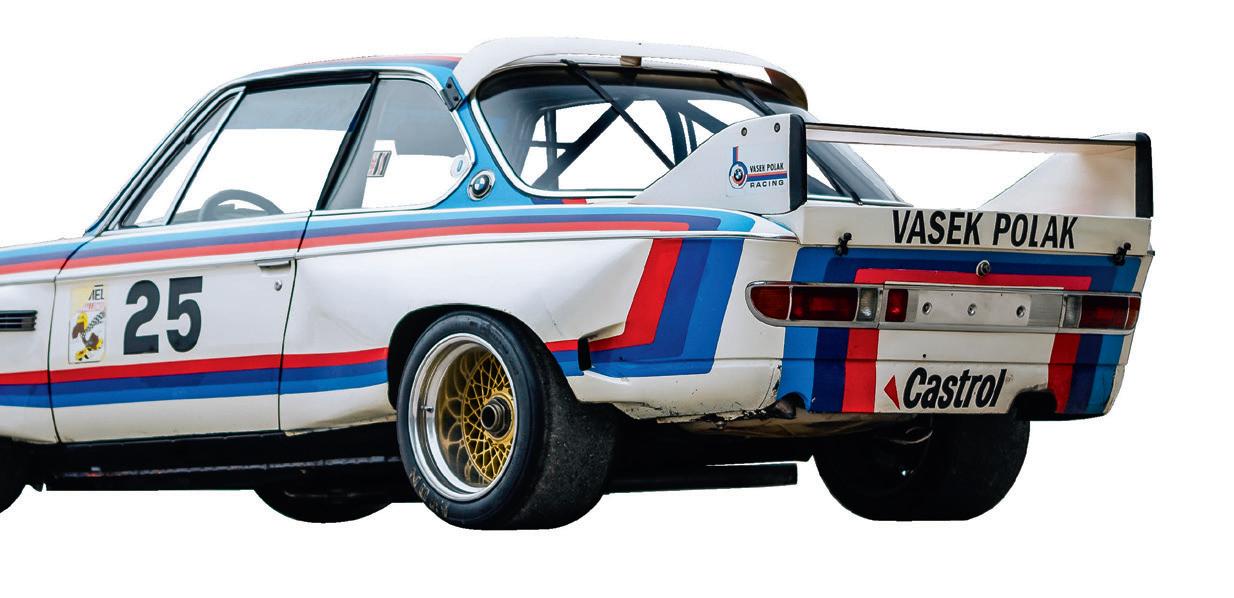
The resultant car – the 3-Series – has gone on to be a defining brand for BMW, as has BMW M. “Ford dominated touring car racing, which was unacceptable for BMW, a brand selling on performance,” Bob says. He brought in Jochen Neerpasch from Ford, giving him autonomy and a strong budget to create BMW Motorsport. Today, BMW M alone is larger than BMW was when Lutz joined.
However, his time at BMW was also spent fighting a very different battle – corruption. “My predecessor had been fired for it, but it ran deep – I must have fired 100 people in my first six months,” Bob says. “I cleaned out sales and marketing, but I couldn’t eliminate it across the whole company – that made me uncomfortable.”
When the Volkswagen diesel scandal emerged decades later, Lutz wasn’t surprised: “In German corporations, the mentality was that cheating is fine if you don’t get caught. In American corporations, the ethic – despite bureaucracy – was that cheating is wrong.”
This placed Bob as an outsider, which he
‘Opel sent us clay, sculptors – you name it. In truth, the entire modern BMW design operation was initially set up by GM’
The BMW era
THIS SPREAD Moving from GM to the far smaller BMW was a culture shock for Bob, but he more than made his mark on both the four- and two-wheeled product base, influencing the 3-Series and BMW Motorsport.
The FORD era
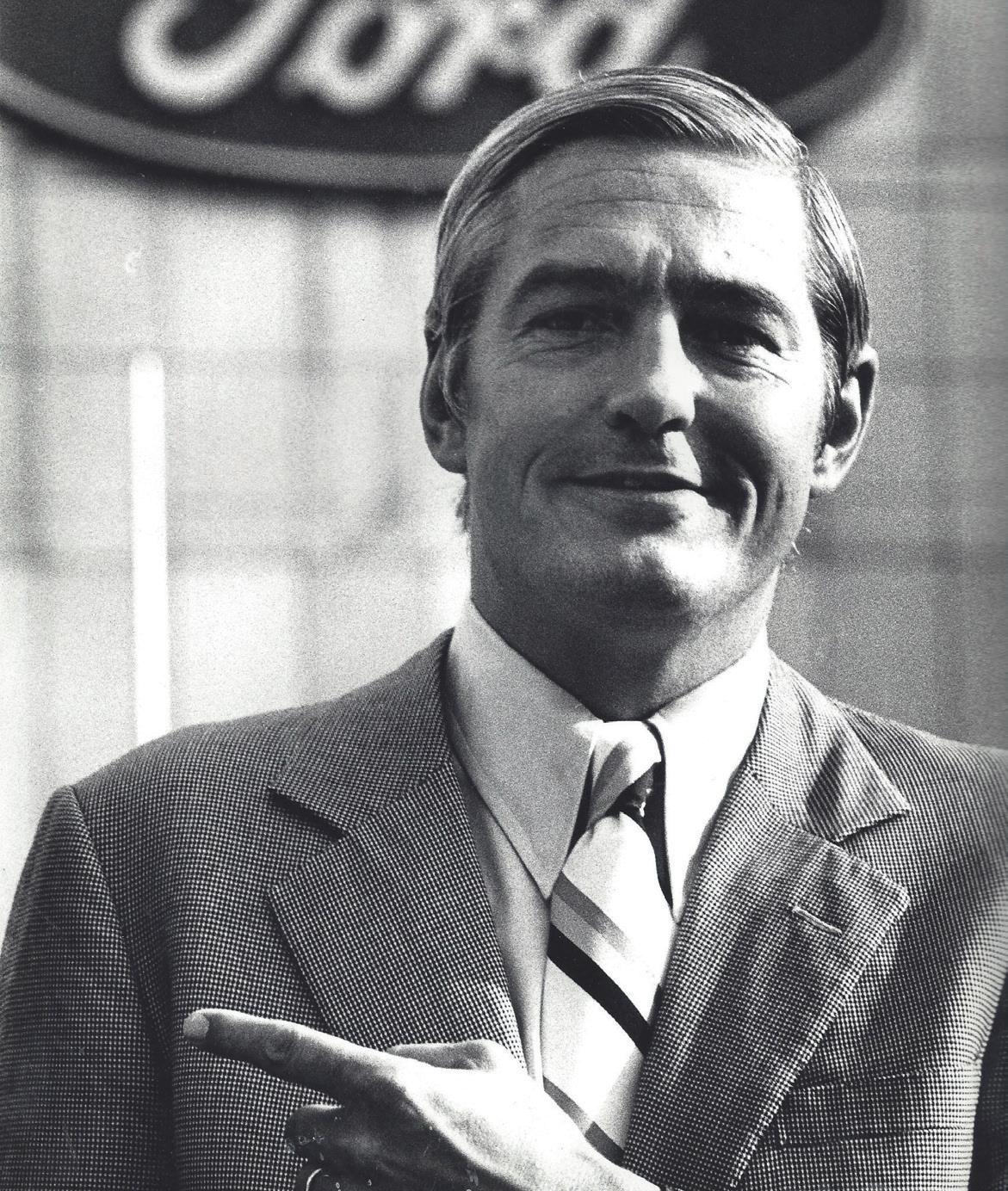
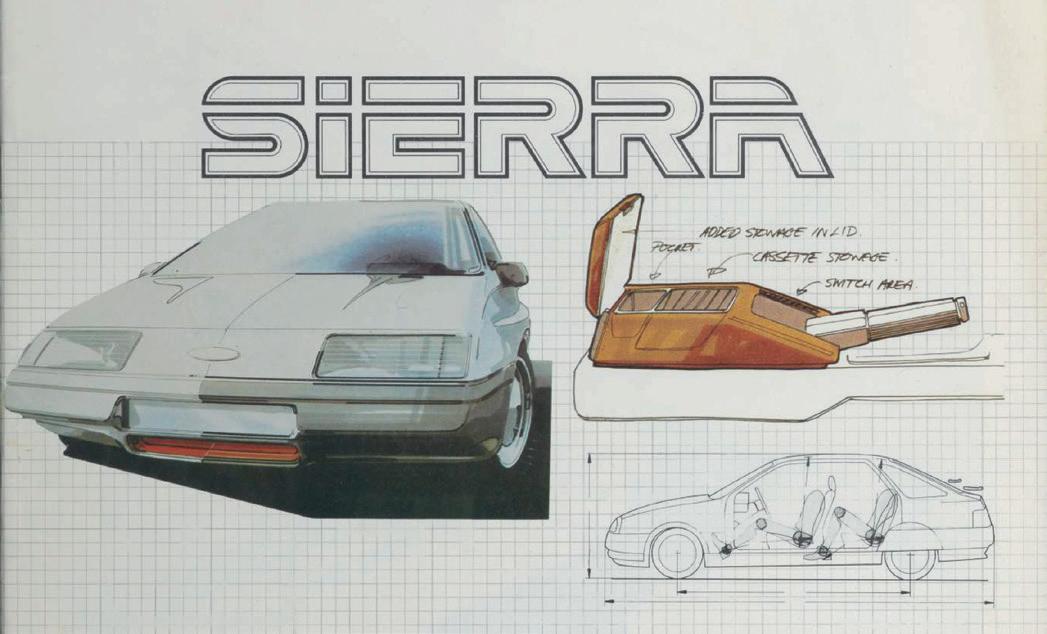
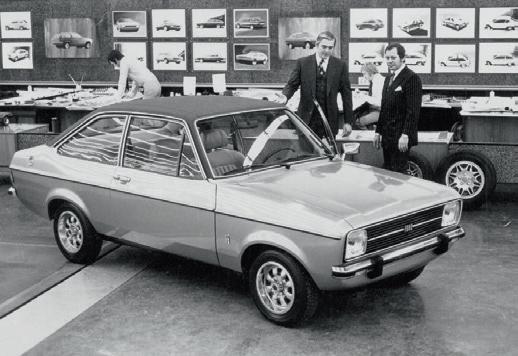
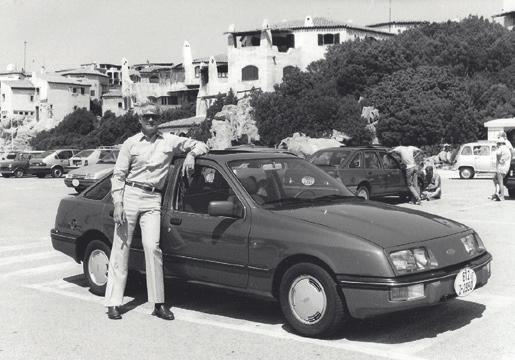
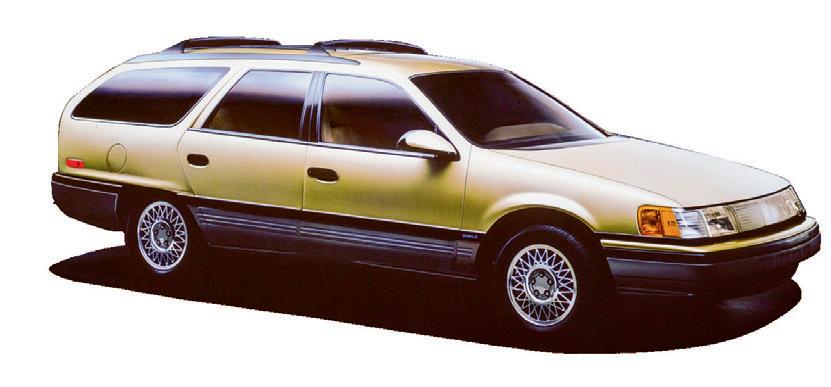
THIS PAGE Lutz’s Blue Oval days, from the mid-1970s to the mid-1980s, culminated in being made head of International and sitting on the board of directors. The Sierra’s design influenced models on both sides of the pond.
admits had its advantages and its disadvantages – but he realized he was wearing out his welcome: “When the Blue Oval offered me the CEO job at Ford of Germany, I took a pay cut and downgraded company cars – but I was glad to return to an American corporation.”
However, this pitched him into an entirely new battle within that giant. In the mid-1970s, Ford of Germany was dominated by Ford of Britain, which outside of the UK wasn’t very successful. “Henry Ford once told me his biggest mistake was placing Ford of Europe in Britain instead of a neutral country,” he recalls. “The Brits, charming as the place is, had little understanding of continental culture or automotive tastes.”
The British hegemony in decision-making was hurting Ford of Germany. “That was the first message the people there gave me: fix it,” Bob recalls. “Bill Bourke, head of Ford of Europe, gave Ford of Germany far more autonomy, especially in exterior design. Interior design stayed in Britain – they did this well.”
Lutz found himself with a lot of leeway in marketing, and one of his key decisions was to get the literal Blue Oval back onto the cars. “At some point it had disappeared – every Ford had its own version of the badge, always just the four chrome letters, F-O-R-D, spaced out on the front and back,” he says. “I told Bill Bourke, and eventually Ford US, that right behind Coca-Cola we had one of the most recognizable brand symbols in the world. I desperately wanted the Oval back.”
That fight took more then six months, but Bob won: “Once the Blue Oval badge became a success in Europe, the US said, ‘You know what? That’s a good idea.’ So it
‘Bean counters are necessary – like brakes on a car. But if you’ve only got brakes and no engine, you’re not going anywhere’
returned to all Fords in the States as well.”
Lutz’s tenure at Ford of Germany saw the launch of several key models, most notably the front-wheel-drive Escort Mk3 and the Sierra (which would eventually come to the US as the Merkur – more on that later). However, the Sierra was controversial, especially in the UK.
“We knew it would be a tough sell in Britain but a smash hit in mainland Europe – and that’s exactly what happened,” Bob says. “In the UK, though, there was some mischief. British dealers bought up the last stock of Cortinas [the Sierra’s predecessor] and sold them at big discounts to undermine the Sierra.
“Was that Ford of Britain getting revenge? Maybe. There was a lot of hostility – I had taken Ford of Germany’s market share from seven to 15 percent in a few years, and some of the British product planners simply did not like me. One Scottish guy said, ‘We are going to give you all the rope you need –eventually you will hang yourself.’”
In the long run the Sierra became just as successful in the UK as it was in Europe. However, Bob’s experience with the model would be repeated in the US with the Taurus and the Sable. “Even though I was only head of International, I convinced Ford to go forward with them – they were pretty radical. And yes, they borrowed heavily from the Audi 100, but that was a good car to borrow from,” he says.
“They looked European, they had flush glass, they were fresh. Red Poling – who later became CEO – once told me, ‘When Ford goes bankrupt after launching the Taurus and Sable, it will be your fault.’ He even started an emergency plan to kill them after two years and revert to GM-style copycat designs. As it
turned out, Taurus and Sable were smash hits – as I knew they would be.”
Not everything during Bob’s tenure at Ford turned out well, though – in particular, the Merkur experiment. “The idea was to boost Ford of Europe’s profitability by bringing the Sierra and Scorpio to the US under an import brand,” he explains. “The US side stupidly put Merkur under Lincoln-Mercury, however, and that killed it.”
Lutz says that the car was positioned wrong, advertised wrong… “Everything was wrong –the marketing was terrible. They ran ads with the headline ‘Bavarian Scream’. I said, ‘Guys, the car isn’t made in Bavaria.’ Their response was, ‘Americans don’t know the difference between Bavaria and Germany.’ But imported-car buyers did know, and the ad turned them off.”
Bob and Poling’s battles at the head of Ford became very well known. “Despite his financial genius, he didn’t understand the car business,” Lutz says. “The best example was when he told me, ‘Your problem, Bob, is that if the devil came to you and said break the cost target by $50 per car and I’ll make it the most successful car ever, you’d take the deal.’ I responded, ‘Hell yes, in a heartbeat.’ He said, ‘That’s your problem – you don’t understand the sanctity of cost control.’ He didn’t get that the $50 you save upfront, you later give away multiple times in incentives when the car underperforms. Bean counters are necessary – they’re like brakes on a car. But if you’ve only got brakes and no engine, you’re not going anywhere.”
His disagreements with Poling pushed Bob in the direction of Chrysler. “Red made it clear I was a misfit at Ford – they were disciplined and procedural; I was a cowboy who trusted
his gut,” Lutz laughs. “I knew I would never be considered for president or chairman. Meanwhile, Lee Iacocca was recruiting me, and Chrysler just seemed more fun – and it was.”
Bob describes himself as being similar to Iacocca – intuitive, outspoken, strong-willed. “He admired those qualities in me but sometimes resented them. For example, when we visited Fiat in Italy, he was treated like the American Italian returning home. But he didn’t speak Italian – and I did,” Lutz says. “He also couldn’t drive for shit – one time, he took home a Lamborghini Countach for the weekend, and on Monday he said he could not understand what the fuss about the performance was about – it turned out he was pulling away in third gear…”
However, Bob had plenty of respect for Iacocca’s marketing acumen. “Marketing and communications were his whole world. He was brilliant, but he knew almost nothing about how cars actually worked. If you asked him to explain the difference between an overhead-cam engine and a pushrod engine, he wouldn’t have a clue,” Lutz says. “I was also a marketing guy, but I had spent my whole life absorbing engineering knowledge. Half the time when people describe my background, they call me an engineer – even though, aside from flight training, I never had any formal engineering education. Iacocca and I were opposites: I was the marketing professional who cared deeply about product, and he was supposedly the engineer who focused mainly on marketing.”
Bob believes that Lee came to resent him because he thought Lutz was going to destroy his legacy. “We never came to blows, but we did have some heated disagreements. My big mistake – and I should have known better – was always challenging him in front of others. One-on-one, he was far easier to reason with. I was usually right, but he hated having his authority questioned in front of his
subordinates,” Bob concedes. “If I had been in his position at succession time, maybe I would have punished the upstart too. It is a very human reaction.”
Bob Eaton ended up becoming CEO when Iacocca retired. “A few years after stepping down, Lee publicly said in an interview that making Eaton CEO of Chrysler was the worst mistake of his life – and that he should have chosen me,” Lutz says. “That was as close to a personal apology as I was ever going to get.”
His time at Chrysler saw the introduction of a run of groundbreaking cars, including the Viper – which we brought you the story of in M1 Momentum Issue 6. “I have always believed in ‘halo’ cars. They don’t cost much if you design them intelligently and plan for low volume, but the payoff is huge. They change how the media sees the company, and how the public sees the brand,” Bob says.
“The Viper, for example, cost $70 million to develop, including the new aluminum V10 engine. That figure is basically one single ad campaign at GM in the early 2000s – GM North America’s annual advertising budget back then was $3.3 billion. For that tiny fraction of cost, the Viper transformed Chrysler’s image. It proved that the company people thought could only spin off K-car derivatives had just engineered the most powerful, fastest production model built in the US.”
Lutz left Chrysler aged 65, just before the Daimler-Benz merger. “Pushing me out was a mistake – I could have helped the merger succeed,” he says. “I’d been a cultural bridge between Americans and Europeans my entire career. Once I left, that role was gone. Clear communication on shared platforms and needs disappeared, costing the company money.”
Bob points to the engines as a good example. “Chrysler had a 3.2-liter 24-valve V6 making about 185bhp. Mercedes had a 3.2-liter 24v V6 making essentially the same power. There was no reason Mercedes couldn’t have adopted
‘I’ve always believed in ‘halo’ cars. They don’t cost much if you design them intelligently, but the payoff is huge’
The CHRYSLER era
THIS SPREAD From 1990’s workaday but highly successful second-generation Town & Country minivan, to overseeing the revolutionary Viper, which transformed Chrysler’s image, Bob’s time with the brand saw some major changes – but he left before the Daimler-Benz merger.
The GM era
PAGE Pioneering projects such as the
THIS
reborn Pontiac GTO and groundbreaking Chevrolet Volt hailed a new era of global product development for GM.
‘Bob sought to revitalize Pontiac, leading to the rebirth of the GTO, which helped revive the brand’s credibility’
Chrysler’s engine, which was built in higher volumes and was easier to manufacture. Customers weren’t going to open the hood and say, ‘Those look like Chrysler cam covers,’” he laughs. “But Mercedes decreed that Chrysler could use German components, while Mercedes wouldn’t use Chrysler components.”
He goes on: “The people there also assumed that Chrysler would teach them how to build cars more cheaply. But once they looked closely, they discovered Chrysler midsize sedans already had the same tech – multi-valve V6s, fourspeed autos, distributor-less ignition, multilink suspensions. Variable costs were similar. What differed were fixed costs and development times – Mercedes engineering was slower, more bureaucratic and more expensive.”
Bob then led Exide, but after three years, in the early 2000s, GM’s Rick Wagoner recruited him, initially as a consultant. “I said no –consultants have no power. I’d only join with a real title, reporting directly to him,” Lutz recalls. Wagoner asked for a memo outlining his plans, which Bob hand-wrote: “I didn’t want it in any computer system.”
“My plan would happen in three phases: first, I’d use my credibility with the press to make the near-term cars look better than they were. Next, I would improve the programs in development. Finally, the programs I initiated would be different from what General Motors had been doing for decades. They hired me as vice-chairman at age 70.”
Lutz found himself inheriting a mess. “None of the brands meant anything. Cadillac had almost no brand value left, while Pontiac, Buick and Saturn were all just variations of the same GM mush. Saturn never should have been a brand, and Saab never should have been purchased,” he says. It was during this
time that Bob sought to revitalize Pontiac, leading to the rebirth of the GTO: “It helped revive the brand’s credibility. More importantly, it forced American product development to work with engineers overseas.”
He continues: “That experience eventually enabled true global product development, something GM had never had. Before that, GM was basically a conglomerate of independent regional companies duplicating each other’s work. We standardized engineering and testing worldwide. The Chevy Cruze came from Asia; the global midsize architecture – Malibu, Vauxhall Insignia – came from Opel. We went from 92 different seat frames worldwide to two.”
Bob’s favorite project was the Pontiac Solstice, although he found his work with Buick more meaningful, restoring the brand to quiet American luxury and near-Cadillac refinement. However, Lutz regrets Pontiac’s death, mandated by the government bailout. “The Obama auto task force knew little about cars and assumed GM was hopeless,” he says. “Once we showed them Detroit’s designs and upcoming products, they became supportive.”
Bob expected the government to cut the Chevy Volt program. “It was a halo car, meant to show GM’s environmental commitment and technological leadership, but it was expensive and was never going to make money,” he says. The Obama team saw its value and kept it alive, however – and it’s the project Lutz says is the most satisfying from his long career: “From a pure challenge and innovation standpoint, the Volt was all-new: batteries, motors, software, systems integration, even the tires. It was a groundbreaking engineering achievement.”
His favorite Volt story comes from a woman with an original example with 275,000 miles on it. “She loved the car – but was disappointed
with her lifetime fuel economy of only 32mpg,” Bob says. “When a friend asked how often she plugged it in, she said, ‘Plug it in?’”
At 93, Lutz consults and serves on various boards, and resides in Ann Arbor. A collector of jets, helicopters, motorcycles and classic cars, he loves his C6 Corvette ZR-1. “The 2020 C8 is more refined,” he says, “but for a visceral, full-throttle thrill, the ZR-1 can’t be beaten.”
He puts his long career down to the Marine Corps. “The best leadership school in the world. They teach initiative, decisive action, clarity, accountability and respect,” he says. “That directness set me apart from most executives.”
Bob’s tenure gives him a unique perspective
ABOVE Bob remains passionate about all things automotive. This is his ’34 La Salle.
‘If you want to be successful in the car industry, you need leadership ability. You also need enthusiasm’
on the industry – and allows him to give timely advice to those looking to make their way in automotive. Funnily enough, it links back to those days selling vacuums in California...
“If you want to be successful, you need leadership ability,” he says. “You also need enthusiasm. You can’t go into the auto industry just because you need a paycheck. If you want to excel, you have to love cars and have a burning desire to contribute – whether the future is electric or gas-powered. You must love the product and want to make it better. If you end up in the industry just because the refrigerator company didn’t hire you but Range Rover did, you’re going to have a mediocre career at best.”
THE F80 IS THE FERRARI THAT’S TOO fast for Fiorano. It’s the latest limited-run, extreme-performance Ferrari of the kind that appears once a decade, a lineage featuring the 288 GTO, F40, F50, Enzo and LaFerrari – and it is the first that hasn’t been demonstrated at Ferrari’s home test track.
Instead it was presented at Misano in Italy, a wider and longer circuit than Fiorano, and more suitable for a car with the F80’s astonishing performance. Misano is very popular with motorcycle racers, and it looked fairly expansive on the video I watched of an Audi R8 GT3 lapping it. As I was to find out, however, in reality the F80’s speed made it feel about half the size.
To the details first, though. The F80’s development timeline almost mirrors that of the 499P Le Mans-winning race car. The two are different – this is not a road-going racer – but there are similarities both in ethos and with some mechanicals.
The F80 has a two-seat carbonfiber passenger tub. This is five percent lighter but 50 percent stiffer than a LaFerrari’s (the next most recent special), with the passenger
‘Misano looked expansive on video. As I was to find out, however, in reality the F80’s speed made it feel about half the size’
slightly offset behind the driver so they don’t bang shoulders in a cabin that is 50mm narrower. The supportive driver’s seat adjusts; the passenger’s pads don’t.
At the front and rear are mostly extruded aluminum subframes, from which hangs double-wishbone suspension all round. This has 3D-printed upper wishbones plus active Multimatic spring and damper units similar to those that made their Ferrari debut in the Purosangue, mounted horizontally to maintain a low center of gravity. As well as having adjustable damping, they extend or withdraw to control pitch and roll, so there are no separate anti-roll bars.
THIS SPREAD The F80 and the Le Mans-winning 499P share similarities both in ethos and with some mechanicals. Its lineage includes the 288 GTO, F40, F50, Enzo and LaFerrari.
The car is 4.84 meters long, 2.06m wide and just 1.14m high, and it has a 2.67m wheelbase. It comes with carbonfiber wheels as standard (you can buy forged alloys to supplement them), wearing 285/30 R20 front and 345/30 R21 rear tires, either Michelin Pilot Sport Cup 2s or stickier Cup 2Rs. Brake discs are a new carbon-ceramic material, 408mm in diameter at the front, 309mm at the back.
In the F80’s middle is the latest iteration of Ferrari’s 3.0-liter 120º V6, which made its
debut in the 296 GTB and also powers Ferrari’s Le Mans challenger. But it has been tweaked here to levels not even found in the 499P.
More than 200 components have been changed over the 296’s version of this engine, so it makes 888bhp at 8750rpm – Ferrari’s meteoric target of 300 metric horsepower per liter. Its two in-vee turbochargers also include a small electric motor to get them spinning quickly rather than waiting for the boost (which I think technically also makes them electric superchargers, but we all understand what an e-turbo means).
The V6 unit is supplemented by an 80bhp crank-mounted electric motor, sited beside the engine so there’s only 100mm between the crank center and the bottom of the sump, in turn meaning the powerplant can be mounted much lower. The top of it is about knee height.
This all drives through an eight-speed dualclutch automatic gearbox with no reverse. At the front is an e-axle with two electric motors of 141bhp each (they do the reversing), and when everything is firing at once the total system output is 1184bhp (or 1200 continental horses).
This, it’s fair to say, is not a hybrid system
OPPOSITE Ferrari broke the launchvenue mold with its F80, presenting the car at the wider and longer Misano circuit rather than Fiorano. Its driving position, controls and performance style reminded Matt Prior of the Audi R10 TDI Le Mans prototype.
that’s been designed for economy; it’s “for performance and nothing else”, according to Stefano Varisco, Ferrari’s manager of dynamics and energetics. The battery, which sits crosswise just behind the passenger cell, is only 2.3kWh. If you tried – and there’s a Qualifying mode in which you can – the car will flatten the battery within a lap.
Then there are the F80’s aerodynamics. Three bargeboards split air at the front and direct it either over the top of the car or underneath to a diffuser that, at 1.8m long, constitutes more than half of the underbody. There’s a rear wing that raises by 200mm and rotates through a 22º angle. In total, at 155mph the F80 makes 1050kg of downforce, split 460kg front and 590kg rear, which is twice as much overall as the LaFerrari.
You don’t get a choice about which aero mode it’s in. The car can easily predict what’s best – and apparently “it’s not so nice” if available downforce disappears mid-corner. The engine is canted 1.2º upwards to the rear, to give the diffuser more room to work.
Stitching all of this together is what must be some heinously complex software and
subsequent tuning. There’s no rear-steer, but there is torque vectoring via braking on both axles, plus a rear electronically controlled limited-slip differential and yet another iteration of ‘slide slip control’. Braking is by wire, with regeneration from all three electric motors, including from the crank-mounted motor that can drag on the engine as a form of traction control. Should you opt to record yourself over a hot lap, the car will decide for itself when it would be best to boost the motors to give you as fast a time as possible.
If all of this sounds very nuanced and complicated, given that Ferrari has a V12 that could more easily blow customers’ minds, you would be right. And if the marque had used this, it would have had “very happy” customers, according to senior product marketing manager Matteo Turconi. “But we would have lost a lot of aerodynamic efficiency.”
The V12 is a big engine and eminently charismatic, yet Turconi says Ferrari has stopped using it for the “top-performing” cars: “We have to be honest to our heritage. This is the best car.” Should ‘best’ be in air quotes? There is a good argument that the F80 is true to Ferrari’s heritage. Each of the previous specials has a link, of sorts, to the maker’s motor sport stars of the time.
‘This, it’s fair to say, is not a hybrid system designed for economy; it’s “for performance and nothing else”’
But the decision to run a hybrid V6 shows a continued commitment to electrification, a willingness to make a nuanced performance car and even, perhaps, a little bravery. Electrically assisted sports cars are the flavor of another month. Ferrari has to sell 799 F80s, and they are $3.7 million a pop before local taxes. If it hits the spot, it could boost the allure of the hybridized SF90 and 296; miss, though, and it’s another sports car that carries more cables and fewer cylinders than it should have. I wonder if there are more than a mere 799 F80s riding on how it performs. Lapping 5.0 seconds faster than a LaFerrari around Fiorano is one achievement; making you buy it is a different one.
The interior is excellent. Buttons are back, the driving position raises your legs so that air can pass beneath the tub, and the steering wheel pulls so close you could almost lick it. It’s
heavily squared but entirely in keeping with the Le Mans-adjacent view out. Paddles are still attached to the column, which usually I like in Ferraris, but here it feels like they would be better on the wheel.
My first go is on track. The first thing of note is that this car is extraordinarily, rocket-ship fast. With motors helping spin the turbos and boost low-rev torque gaps, there is no turbo lag. The engine, regardless of whether you’re at the 900rpm idle or near the 9200rpm rev limit, surges. There are no Bugatti-like delays while it takes a breath. It’s more like a McLaren P1 or Artura, or a 296 GTB, but more so in its immediate punch forwards. The maker’s own figures say it will go from 0-62mph in 2.15sec, but rather more significant is the 5.75sec 124mph time: the LaFerrari took 6.9sec.
Ferrari gearshifts (and the paddles that make them) are usually the best in the business,
and there’s no exception here. Upshifts are immediate, downshifts impeccable. The engine, a variant of the ‘piccolino V12’ – a six that is meant to sound as good as one with twice the cylinders – is engaging, although it headbutts the rev limiter with alarming ease. I don’t mean that as a criticism. I just feel clumsy – until better drivers than me say they repeatedly do the same.
What’s odd is how quiet the F80 is from the outside. Towards the end of the pit straight, where the car must be pulling 140mph, all you hear is the whoosh – vast quantities of air moving, like a fast jet entering the Mach Loop, according to photographer Jack Harrison. At least that will make it easy to adhere to track-day noise limits.
There is a very fast corner at Misano. “It doesn’t look like a corner on the track map,” they say in the briefing, “but when you get
THIS SPREAD With its dramatic styling, state-of-the-art suspension and purposeful cabin that features an offset passenger seat, the F80 is the kind of limited-run extreme machine that Ferrari builds once a decade.
there, it is.” Even I can feel the aerodynamics working as I take it faster than I feel I should. Pitch, dive, roll: all are brilliantly contained. Just a little of each is allowed, for feel, to lean against. With this suspension it would be possible to tilt the car into a corner, which would feel weird. Bump absorption is first class.
The steering is medium weighted and consistent, and although it’s only two turns between locks, as Ferraris seem to be, it is linearly responsive and neither nervy nor over sensitive. Lower-speed corners need less faith than aero-heavy ones, but this car likes precision. Brake feel is brilliant on corner approach, and you can detect something, somewhere easing back an inside wheel to help the F80 turn, but it’s not an open-book hoon machine as with other Ferraris. It wants to put power to the front wheels, wants you to ease open the steering and get it into a straight line, because that way is fastest. And it likes going fast.
Still, if you do switch all the assistance off, it will move around. There’s a touch of steadystate understeer as you begin to turn, but the Ferrari boosts through that easily and adopts a benign slide. Then the front axle decides it has had enough of this and starts to pull back straight, because it would like to accelerate, thank you. So while the car will slide – unlike,
ABOVE As at home on the road as it is on the track, the F80 impresses with its performance and capability rather than its drama.
‘It reminds me of an Audi R10 TDI Le Mans prototype, with immersive, unburstable but perhaps undramatic performance’
say, an F8 Tributo – that’s not its natural state. If the F80 feels like anything else I have driven, it reminds me of an Audi R10 TDI Le Mans prototype. They share a snug, high-foot driving position, precise medium-weighted controls, a steering wheel on which your hands never leave the 2:45 position and immersive, unburstable but perhaps undramatic performance. At 8/10ths effort, an F80 will go 12/10ths faster than almost any other production machine. It’s a brilliant car – but it’s the performance and the capability rather than the drama that impress.
Given all of that, I don’t expect it to be a great road car – but it surprises me. Ferraris tend to ride well and, with three damper settings, the F80 eases over even the gnarliest surfaces. I remain aware of, but not daunted by, its width. And it’s more hospitable than, say, a McLaren F1 or GMA T.50, which seat their passengers further behind the driver. This gives just enough space to clear shoulders while leaving it easy to chat across the cabin, so it is a sociable car, too. There’s only a tiny amount of luggage space behind the occupants’ heads, mind. Enough for 24 hours, it is claimed. But whether on the road or, as with its 499P stablemate, on track, the F80 feels ready for both. It may not be the most dramatic Ferrari, but I think it is the ‘right’ one.
HIP TO BE SQUARE
A
RECTANGULAR SHAPE, CARAMELIZED cheese edges, a deep but airy crust and a method of construction that flips the familiar logic of Italian and New York pies on its head. Detroit-style pizza is as distinctively unique as the city that carries its name – and the rest of the country is waking up to a very different interpretation of a square meal.
It all dates back to the mid-1940s, when the local industries’ 24-hour production-line demands required affordable ‘fast food’ to keep the workers going. Add in returning World War Two soldiers with a taste for European food, and Detroit suddenly became a culinary hot plate all of its own. A mix of cultures from across the US, Europe and the wider world flocked to Detroit to keep the motors running – bringing with them distinct food flavors.
Detroit had a significant Italian-American community, but it was smaller and more dispersed than the Italian populations that shaped food culture in New York, Chicago or New Haven. Detroit’s Italian neighborhoods were on the east side, in and around the area known as Eastern Market and the former Italian enclave of Conant Gardens. Many of these families came from southern Italy and Sicily, bringing with them recipes for breads, pastas, cured meats and pastries – but not the coal-fired, thin-crust New York tradition or the deep-dish style that was evolving in Chicago.
The creation of Detroit-style pizza is widely attributed to Gus and Anna Guerra, an
Detroit-style pizza has spread out of Michigan to become a major US food trend over the past decade –but how did it begin?
WORDS NATHAN CHADWICK
PHOTOGRAPHY
ALAMY / LAURI PATTERSON, GETTY IMAGES
Italian-American couple who bought Buddy’s Rendezvous in the early 1940s. Initially Buddy’s was a speakeasy, but it evolved into a workingclass tavern serving sandwiches, drinks and basic bar snacks. According to oral history, Anna and her mother, who both had experience making Sicilian-style baked goods, began preparing thick, focaccia-like Sicilian pan pizzas at home. Sicilian pizza, or sfincione, is characterized by a rectangular shape, a focaccialike base and toppings layered under or through the dough, rather than sitting on top as they do in a New York-style pizza. While sfincione was common within Sicilian communities, what happened next was highly unusual. When the Guerras decided to introduce this type of pizza at Buddy’s, they lacked the traditional Italian baking pans used to make it. Instead, they turned to a uniquely Detroit solution.
Gus reportedly obtained rectangular steel drip trays from a friend who worked at a local automotive plant. These small steel utility pans were commonly used in car factories for holding nuts, bolts and other parts on assembly lines. They were durable, evenly conductive and readily available in the city. Importantly, unlike cast-iron or aluminum baking pans, the blue-steel trays could both withstand high oven temperatures and develop a seasoning comparable to that used in industrial bread baking.
OPPOSITE With its roots in southern Italy and Sicily, Detroit-style pizza was originally aimed at workers in the city’s 24-hour auto industries.
According to long-standing accounts from the Guerra family along with early Buddy’s
Defining Detroitstyle pizza
First you need a pan – constructed out of blue steel because it heats quickly and evenly, and tolerates repeated high-temperature cycles without warping. It also seasons like cast iron, developing a polymerized layer that functions as a seminonstick surface and builds up flavor over time. Pans usually measure 10 x 14 or 8 x 10 inches, with high, vertical walls.
Detroit-style dough is closer to a focaccia than to New York-style pizza dough. It is ‘high hydration’ – meaning it contains a high ratio of water to flour – producing a light, open crumb when baked. The dough is pressed into the well seasoned steel pans, proofed inside the pan itself and then baked at high heat. This method contributes to its signature fried bottom crust, because oil in the pan cooks the dough directly.
The cheese is Wisconsin brick – a mild, high-fat cheese that melts smoothly and browns evenly. In the early days, brick cheese was readily available in the Midwest, and its melting characteristics were ideal for pan pizza. Crucially, the cheese is spread edge to edge, allowing it to caramelize against the high walls of the steel pan. This technique gives Detroit-style pizza its crunchy, lacy, almost deep-fried cheese perimeter. Finally, instead of being applied under the cheese, the tomato sauce is placed on top, traditionally in two or three long stripes. This reverse layering likely derived from Sicilian sfincione tradition, where sauce is sometimes distributed after the base toppings. It also prevents the crust from becoming soggy during the high-heat bake.
‘The rectangular steel drip trays were commonly used in car factories for holding nuts and bolts on assembly lines’
employees, these industrial steel pans provided the perfect foundation for their new pizza, with a crust that was crisp on the outside but airy inside. Meanwhile, their shape defined the pizza’s geometry – and their thermal properties played a major role in the pizza’s signature caramelized cheese edges.
THIS SPREAD Detroit-style pizza is famous for its rectangular shape and caramelized cheese edges. Huge mural by street artist Fel3000ft marked the 70th anniversary of Buddy’s Pizza’s original restaurant in 2016.
Buddy’s Rendezvous introduced its Sicilianinspired, pan-baked pizza in 1946. It was rectangular, twice-baked, loaded with brick cheese, crisp on the bottom, airy on the inside and topped with streaks of cooked-tomato sauce. It was immediately successful, and Detroit’s families flocked to Buddy’s. A key employee was Connie Piccinato, who standardized the dough formula, refined the fermentation schedules, perfected the oiling and pan-seasoning technique, and developed the consistent crumb structure associated with Buddy’s. Cheese duties were handled by
Jimmy Bonacorse, who ensured consistency in those caramelized edges. Both became key parts of the development of the brand.
In 1953, Gus Guerra sold his stake in Buddy’s to the Jacobs family, and opened a new restaurant called Cloverleaf in East Detroit (now Eastpointe). Guerra brought the recipe and methodology with him. Buddy’s and Cloverleaf each developed loyal followings, although Buddy’s retained broader name recognition and is now a national chain. Later, other Detroit pizzerias – such as Shield’s (opened in the 1970s), Loui’s Pizza (opened by a former Buddy’s pizza maker) and several smaller family-owned establishments –adopted variations of the same theme.
Unlike the styles from New York, Chicago or St Louis, Detroit-style pizza remained rooted in Michigan for decades – the special pans weren’t as readily available elsewhere in the country for starters. However, with a cloud hanging over Detroit for much of the latter part of the 20th century, few outsiders came to sample the city’s culinary delights.
That all changed in 2012, when Detroitnative Shawn Randazzo won World Champion Pizza Maker of the Year, helping to publicize the methodology. The news spread across the country’s internet food culture via social media, bringing Detroit-style pizza to a much wider audience. Jet’s Pizza, which was founded in Detroit in 1978, started selling Detroit-style pizza across the US, and now defined Detroitstyle restaurants can be found in New York, Las Vegas, Austin, Portland and Los Angeles.
As mentioned, Buddy’s, the original name, has much expanded, and it can also ship frozen Detroit pizzas across the country. Since 2020, Detroit-style pizza restaurants can even be found in the UK, in the cities of London, Manchester and Bristol.
Unlike the cars, Motown and techno that put Detroit on the map, the city’s pizza may have taken longer to be more widely appreciated. Now, however, it is one of the most popular food trends across the US – maybe worldwide domination is next?
LOCAL KNOWLEDGE
A SPARK THAT LIVES ON
WORDS NATHAN CHADWICK
PHOTOGRAPHY STELLANTIS
From Champion Spark Plugs, to home of the Viper, to displaying Chrysler’s historic cars, Detroit’s iconic Conner Center has made its mark on automotive history
WITHIN A SHORT WALK
OF DETROIT’S old Conner Assembly Plant you’ll come across a luxury cinema, and just a little further on the site of Eminem’s childhood home. The cinema spins grand tales, while the rapper, songwriter and producer’s narrative arc spilled out from Dresden Street to the world and back again. Yet the Conner site has its own story, too.
It all began in 1966, when Champion Spark Plug expanded to meet soaring demand in a booming Motor City. The company invested $12.5 million in the new facility as both a production and a research center. Measuring 392,000sq ft, it would effectively replace Champion’s Hamtramck plant in 1967.
The good times couldn’t last, however. Shifts in the wider automotive world filtered down to Champion. The facility was built when American streets were filled with V8-engined cars, but the appetite for economical motoring after the 1973 oil crisis – along with rising environmental concerns – pushed automobile makers to downsize its powerplants.
Fewer cylinders meant fewer spark plugs, and the product itself was changing. Advances in materials and designs – longer-lasting plugs, improved insulators, better metals –meant replacements were needed less often, reducing recurring demand. These trends undermined the economics of high-volume spark plug manufacturing for many producers, and Champion was not immune.
Matters came to a head in February 1986, when 2250 members of the United Auto Workers (UAW) across several Champion Spark Plug plants, including Conner, went on strike over a contract dispute. This industrial action stalled production for nearly two months.
The facility never truly recovered. Just months after Champion was acquired by Cooper Industries of Houston in March 1989 in an $800m stock deal, layoffs began, with
THIS SPREAD A cathedral to Chrysler: the iconic Conner Center’s nowquiet halls have hosted some of the automotive giant’s best-ever cars.
THIS PAGE Home of the Viper, back when the Conner Assembly Plant was buzzing with automotive workers, technology and good old US engineering ingenuity.
Champion’s Toledo plant initially suffering the biggest hit. Even that wasn’t enough, and by April 1990 all production in both Toledo and Detroit would come to an end.
Conner lay dormant for five years, until Chrysler acquired the facility. Production of its Viper sports car had previously been at one of the Mack Avenue factories, which were earmarked for refurbishment and would eventually become the Mack Engine Complex and, later, the Mack Assembly plant for Jeeps.
Although 392,000sq ft is relatively tiny for an automotive factory, Conner suited smallscale Viper production well. It also allowed the entire car to be built in one location – and in 2001, construction of the mighty V10 moved from Mound Road to Conner.
The Viper’s success gave Chrysler executives room for creative thinking, and from that freedom the Chrysler/Plymouth Prowler was born. As a halo car, the Prowler was never intended for mass production, and the Conner
‘Although 392,000sq ft is relatively tiny for an automotive factory, Conner suited small-scale Viper production well’
Assembly Plant was the ideal site for this handcrafted neo-hot rod. Around 11,700 Prowlers rolled out of its gates over five years.
The Viper continued to evolve, with a controversial restyling in 2003. It could have been very different – a light yet strong aluminum spaceframe chassis had been developed alongside Mercedes, but Chrysler’s parlous financial state meant that the original Viper chassis was adapted to be stronger and 80lb lighter than the previous model. As for the aluminum spaceframe? Take a close look at the Mercedes-Benz SLS AMG…
BELOW The dozens of historical Vipers in the Chrysler collection include the first model ever to be built.
In 2008 the Viper was updated again, with several engine improvements, but this happened just as the global financial crisis hit – a catastrophe that nearly killed Chrysler itself. The firm’s fight to stave off bankruptcy made the Viper an understandable casualty, and in 2009 it was announced that production would end in July 2010. By then, 28,000 Vipers had been built in total – about 22,000 of them
at the Conner Assembly Plant. It seemed like the end of the line for one of America’s most iconic performance vehicles – but a certain Sergio Marchionne had other ideas…
The Fiat CEO had turned the ailing, lossmaking Italian company around, and he saw an opportunity in Chrysler, acquiring the brand in 2009 in the wake of the financial crisis. For all his business pragmatism – which didn’t always please everybody all of the time – he was a car guy through and through. He greenlit halo projects such as the Alfa Romeo 8C Spider and 4C, and he owned a black Ferrari Enzo that he certainly wasn’t shy about blasting around Maranello’s Fiorano test track after his 6:00am Monday-morning meetings. As such, he took great pride in telling the world that the Viper would be back, just a few months after production came to an end.
It would take another two years for production of the fifth-generation Viper to begin, but despite the fanfare, sales never truly
THIS PAGE Conner Center has been a base for cars dating all the way back to 1902, as well as unusual production machinery and landmark concepts.
took off. Poor demand led to a two-month production halt in 2014, and a year later FCA announced that production would end in 2017. By the time the line stopped, around 2200 fifth-generation Vipers had been built.
That wasn’t the end for Conner, however –the Walter P Chrysler Collection’s cars needed a new home, because the site of the museum had been repurposed as Alfa Romeo and Maserati’s US base. The museum had originally operated between 1999 and 2012, before briefly reopening in 2016. It contained Chrysler products dating back to 1902, as well as landmark concepts and ambitious production cars such as the 1930s Airflow. Although mainly now stored elsewhere, these starred at Chrysler’s 100-year anniversary celebration in June 2025, which took place on Detroit’s Belle Isle.
From the innovative aerodynamic shapes to Chrysler’s fascinating engineering, there was plenty to see – and hopefully the Conner Center itself still provides a spark for future ingenuity.
There’s nothing quite like a deep Michigan winter – but that shouldn’t stop you from enjoying M1 Concourse with these warming options...
M1 Concourse Black Hoodie
Made from a durable 7.5ounce cotton and poly fleece blend, this hoodie is built to last. Raglan sleeves with reinforced cover stitching, a two-panel darted hood plus rib-knit cuffs and hem provide structure, comfort and long-term durability. A rib-knit V-inset at the neck and a reinforced pouch pocket add classic performance-inspired details. Finished with a red M1 logo on the chest and M1 Concourse branding down the left sleeve, and available in Small to 1XL, it costs $45
M1 Concourse Gray Hoodie: Red Logo + Sleeve Print
Subtle, sleek and designed with motor sport enthusiasts in mind, this hoodie delivers a clean, race-inspired look with everyday versatility. A red M1 logo on the left chest is complemented by M1 Concourse lettering on the sleeve. Using a durable 60:40 cotton and poly fleece blend, it’s built for comfort and longevity. A two-panel hood with a shaping dart, raglan sleeves plus rib-knit cuffs and hem provide a structured fit while allowing unrestricted movement and all-day wearability. Available in Small to XL, it’s $45. See shop.m1concourse.com
Pininfarina Nido Chair
Designed by Pininfarina for Reflex Angelo, this armchair combines a rigid outer shell with soft, padded interior surfaces. Its shell and legs are finished in metallic shades such as bronze, brass, dark brass or titanium, while the seat and backrest are upholstered in leather or fabric. A polished steel handle bearing the Pininfarina logo is fixed to the rear of the shell. A fabric version is $2100 pininfarina.it
Top Speed Ford Mustang
This special 1:18 scale model commemorates the no. 65 Ford Multimatic Motorsports Mustang that won the GTD Pro class at the 2025 Rolex 24 at Daytona, as driven by Dennis Olsen, Christopher Mies and Frédéric Vervisch. It’s made from resin with a sealed body, and features detailed race livery, cockpit detailing and accurate scale replica design. It costs $262.95 mintmodels.com
Shinola Poker Set
The Shinola Lacquered Wood Poker Set is a 200 piece kit presented in a hand crafted natural rubberwood case. The lid’s tiled surface features a playing card suits inspired design, while the green velveteen base echoes traditional poker
tables. Its interior is lined in natural grain leather and holds two custom decks of cards, four color sets of poker chips and a stainless steel dealer button. The case measures 11.5in x 8.15in x 1.625in, and the set is priced at $495 shinola.com
EVO SL AMG
Adidas and Mercedes‑AMG Petronas F1 have launched a multi‑year partnership, kicking off with a lifestyle
and performance footwear collection. This Adizero EVO SL AMG features Lightstrike Pro cushioning, which is claimed to be both lightweight and responsive. The upper is
made from a mix of textile and synthetic materials, and the rubber outsole gives good grip. Available in US men’s sizes from 6.5 up to 10.5, a pair costs $160 adidas.com
Adidas x AMG Adizero
Mopar Cheese and Wine Charcuterie
This serving set is made of acacia wood, stainless steel and slate, and includes two cheese knives, a cheese fork and a three function wine opener. A hidden compartment in the tray stores cold cuts or cheese. It costs $79.95 wearmopar.com
Mopar CableKnit Gloves
These gloves are crafted in a thick cable knit style with 100 percent acrylic. They are fully lined with brushed acrylic for extra warmth, and cost $24.95 wearmopar.com
Michigan State of Mind Coffee
Roasted in Alpena, Michigan, Misom’s coffee is offered with several roast and flavor variants, including medium roast (mi State of Mind), dark roast, decaf and seasonal, or novelty flavors such as
Salted Caramel Mocha, Hazelnut, White Chocolate Caramel and Pumpkin Crème. The 8oz ground coffee is priced at $10.95 for a one time purchase, with a subscription option (auto renew) at $9.31 mistateofmind.com
Tamiya MercedesBenz 300 SL ‘Full-View’
This 1:24 scale 300 SL plastic model assembly kit features a clear body, engine hood and gullwing doors so you can see the interior, spaceframe and motor. It includes the detailed multi‑tubular spaceframe, the 3.0 litre inline‑six engine mounted at a 45° angle and movable gullwing doors and hood. It is priced at $49 tamiyausa.com
Sun Star 1955 Pontiac Star Chief
Ferrari F2003-GA Camshaft
This camshaft helped the Ferrari F2003 GA win the 2003 Formula 1 World Championship. Displayed on a transparent methacrylate and aluminum stand, with an engraved description and the Ferrari Prancing Horse, it is priced at $9530 store.ferrari.com
Sun Star’s beautiful 1:18 scale die‑cast model is available in several versions, including a hard top, convertible and police car variants. The convertible features functional doors, hood and trunk, as well as a detailed interior, a well represented V8 engine under the hood, rolling whitewall tires and steerable front wheels. It costs $128 modeltoycars.com
Amalgam Ferrari 499P Lone Star Le Mans Winner
Amalgam’s new limited edition is restricted to just 499 pieces and is based on the no. 83 AF Corse Hypercar driven to victory by Robert Kubica, Robert Shwartzman and Yifei Ye
at the Lone Star Le Mans at Circuit of the Americas on September 1, 2024. Each 1:8 scale model, measuring over 25 inches (63cm) long, is hand built and assembled by a small team of craftsmen. The model features fully opening doors and
engine cover, and is made from the highest quality materials. Developed over 4000 hours and requiring more than 400 hours to build each piece, it incorporates thousands of precisely engineered parts, including castings, photo etched elements
Pure Detroit Pizza Pack
This DIY kit is all you need to cook Detroit‑style pizza at home. It includes a commercial‑grade Detroit pizza pan measuring 10in x 14in x 2.5in, a proofing lid for the dough and the PerfectPanPizza cookbook to guide the baking process. It costs $119.99 without a slicer, or $134.99 with a slicer. puredetroit.com
and CNC machined metal components. Original CAD designs, based on scans of the real car, and official Ferrari paint codes and material specifications are used throughout. The 83 AF Corse Hypercar model costs $23,700 amalgamcollection.com
BOOKS
THE YANKS AT LE MANS
1980-1999
Two-volume set is a tribute to not only the racers that took on the endurance classic, but its late author, too
Le Mans might ‘just’ be a little town in the middle of the French countryside, but in America it represents perhaps the ultimate challenge – even against the US’s own grueling endurance races. Perhaps it’s about putting one over on those snooty Europeans....
Nevertheless, the American love affair with La Sarthe continues to hold a fixation, with big-name makers staking their reputations on taking up the challenge to this day. The genesis for all this could arguably be the era on which this magnificent two-volume set focuses – even if the US makers hadn’t quite made the leap. After all, this was the time in which endurance racing bounced back from a turbulent 1970s with big budgets increasing TV coverage and, most critically, American drivers right at the forefront for the likes of Porsche and Jaguar. It was a spectacle as wild as the speeds and bodywork, and the narratives are just as gripping; Al Holbert’s lastlap dramas in 1983 on the way to victory sit strong in the memory.
Each year is profiled in detail, with every American ‘combatant’ – be it car, driver or team – referenced and detailed. And that is what makes this book so engaging: the joy of the event is not just the battles up front, but the fights further down the field and in different classes.
This means that there’s a wealth of interest, from 1981’s Chevrolet Camaros to the wild Callaway Corvettes and Dodge Vipers of the 1990s, plus the Clayton Cunningham Nissan 300ZXs. The interviews and period photography really immerse you in the subject. Some of these images are pushed a bit beyond their limit in terms of reproduction, but this doesn’t detract from the enjoyment of this 768-page publication.
There’s great insight into not only the races but the story behind the rise, fall, rise and fall of endurance racing. This all neatly happens in the very timeframe of this era, from the meddling that ultimately destroyed the Group C/World Sportscar Championship of the early 1990s, to the FIA overreach at the end of that same decade after the success of the BPR/ ACO regeneration. For fans of stats, there’s an excellent appendix, too.
That this book exists at all is testament to the publishing team. Author Tim Considine passed away a few years ago – but thanks to the efforts of his friends and peers, this $225, two-volume set maintains the quality of his earlier volumes covering the previous decades. A highly recommended read for all lovers of endurance racing. bullpublishing.com
The Spirit of Competition
This second edition of the Simeone Foundation Automotive Museum’s collection overview began work just as the first one was published, and it now stands as a tribute to the late Doctor, who wrote the original guide himself. Updated with the newest additions courtesy of Harry Hurst, it details the lives of some of the world’s most storied cars, which make up the collection. Beautifully illustrated by Michael Furman’s lens over 444 pages, this is far more than a museum catalog – it’s a fitting tribute to one of the greatest collectors. It costs $195 simeonemuseum.org
Pininfarina 95: Timeless Beauty
Pininfarina has had a challenging time of late, with Paolo Pininfarina’s passing in 2024. This book provides a great overview of the
carrozzeria’s origins, work and philosophies. Although the 240-page tome might not get into the juicy period detail, it still prompts surprise and delight at not only the magnificent designs, but also the company’s technical advances.
Luca Dal Monte writes in English and Italian, and at $90 this represents a good way to begin your immersion into the illustrious brand. giorgionadaeditore.it
Class of ’99
The loss of Greg Moore in October 1999 was a devastating one for CART. It was a deeply sad ending to one of the most intensely competitive seasons American open-wheeled racing had ever seen, with a host of homegrown talent facing off against hungry young racers from across the globe. John Oreovicz’s pacey 320-page tome conveys not only the excitement of that season, which went down to the wire, but also the racing duels that fate denied Moore and, more widely, motor sport in both the US and abroad. It costs $34.95 octanepress.com
IMSA 19901999: THE TURBULENT YEARS OF AMERICAN SPORTS CAR RACING
Endurance racing in the US was a rollercoaster ride of acrimony and angst –and some great racing
Racing series always have a short time in the sun before a dark period – whatever the discipline, success is usually fleeting. For endurance racing, however, the 1990s was the definition of a rollercoaster ride – and IMSA was more turbulent than most.
It’s all detailed in this fascinating 242-page book led by series stalwart Mark Raffauf. After the success of the 1980s, IMSA hit its twilight era and its owners sought to cash in and sell up. It was the starting gun for a decade of turmoil involving four different owners in only six years.
The era started with an intense fight between Nissan, Porsche and Jaguar at the head of the field, but behind the scenes financial issues were starting to take their toll. It all came just in time for the Gulf War, a worldwide recession and a dramatic slide in US car sales. The GTP category was not immune from the wider issues affecting endurance racing in the early 1990s. In 1994 the leading prototype class turned to WSC rules – only to be outshone by the GTS-class Nissan 300ZX at a season-opening Daytona (a forewarning of the 1995 Le Mans win for the McLaren F1, perhaps?).
However, the WSC class and the introduction of a new title sponsor put the series on a steady foot – and with it came a game-changing car courtesy of Dallara and Ferrari, with critical input from Tony Southgate – the 333 SP. Strong ‘home side’ competition came from Riley & Scott with its MkIII, setting up a fierce rivalry that kept US endurance racing fans on their feet for much of the rest of the decade.
Yet the problems wouldn’t stay away for long, and the 1997 season under new ownership – and an unloved rebranding to PSR (or “pisser”, as some referred to it) – provides an engrossing read into the politics and challenges of motor racing at this time. While Europe had regrouped with BPR and then the FIA series, IMSA/PSR was beset with unpaid prize purses and organizational challenges that would ultimately lead to the end of IMSA GT in 1998, to be replaced by two series: Don Panoz’s American Le Mans Series (ALMS) and the United States Road Racing Championship.
This is a beautifully researched book, full of insider insight from the organizers, drivers and team principals. While some of the image repro is distorted, the sheer quality of the insight in the reading makes up for it. As this endurance era begins its golden years in Historic racing, at $75 this is a timely and well priced book about a fascinating time. octanepress.com
Wayne Carini: Steering Through Life
Wayne Carini’s had quite a ride – immersed in the restoration world from his very beginnings, to one of the world’s most well known car guys courtesy of his Chasing ClassicCars TV program. Such widespread stardom came relatively late, so this engaging 176-page book is a welcome deep dive into his history and passions. With a wealth of personal archive pictures –including an eyeballsearing shot from Formula 1 – and entertaining memories, this is great value at $59 daltonwatson.com
Molloy: Emmett’s Son, Tom
Tom Molloy grew up in a family steeped in motor racing, through his father’s racetrack ownership and racing team. However, he instead went into the construction industry – but the passion never
dimmed. He started with sponsorship, but the itch to get behind the wheel never went away and at 52 he started Historic racing, and ended up amassing one of the world’s finest collections of racing cars. This rousing story, set over 368 pages, is well told by Jake Grubb. Limited to 500 copies, it costs $95 and is probably more galvanizing than any online self-help course. themalloybook.com
Formula 1: All the Races 2016-2024
Formula 1 has never experienced quite the same shift in popularity as it did between 2016 and 2024, and Roger Smith’s insightful $85 book profiles each individual race, plus the shenanigans going on behind the scenes over each season. Perhaps not a light read for casual observers – the ones Liberty Media has courted so deftly via Netflix – nonetheless this 240-page book provides a great overview of this tumultuous period. It also looks at Formula 1 in the States going back over the decades. veloce.co.uk
WATCHES
Tudor Black Bay 58
Tudor revealed new burgundy colorings for this year, and ref m7939a1a0ru-0002 is a vintage-inspired, 39mm dive watch crafted in stainless steel. Powered by Tudor’s in-house Caliber MT5402, it delivers 70 hours of power reserve and features COSCcertified precision. Waterproof to 200m, the Black Bay 58 offers a faded ‘gilt’ dial, large lume-filled hour markers and the signature snowflake hands. It costs $3950 tudorwatch.com
Luminox Mil-Spec Inspired
Mil-Spec refers to US Department of Defense military standards. The XL.3359.SET has a 46mm CARBONOX+ case, a Grade 2 titanium bezel and 300meter water resistance. It uses a Swiss-made ETA F06.412 quartz movement with HeavyDrive and PreciDrive tech, designed for precision under impact or temperature change. Features include a white strap, bezel markings, a large orange second hand with Super-LumiNova coating and Luminox Light Technology. It costs $895 luminox.com
Mondaine Doppio Solar
This watch has a 41mm case made from 316L stainless steel containing up to 91 percent recycled material. It uses a solarpowered movement, with cells beneath the dial that convert natural and artificial light into energy stored in a rechargeable battery. A full charge provides approximately eight months of power without additional light. The dial is concave with light transparency, and it is protected by a doubledomed sapphire crystal. The hands and indexes feature double lines, and the dial combines a black outer ring with an off-white inner circle. Additional features include a date window, water resistance to 5 ATM and a black strap made from organic wine production waste. It costs $455 mondaine.com
Rolex Oyster Perpetual Land-Dweller
The Land-Dweller revives the integrated-bracelet aesthetic of the vintage Oysterquartz design. It comes in 36mm and 40mm case sizes, crafted in steel with a white-gold bezel, Everose gold or platinum. A new high-frequency caliber 7135 operates
at 5Hz (36,000vph), with the latest Dynapulse escapement, a silicon Syloxi hairspring and a ceramic balance staff. The power reserve is 66 hours. The bracelet is a new Flat Jubilee design with concealed Crownclasp. This White Rolesor costs from $14,900 (36mm) to $15,350 (40mm). rolex.com
Photo courtesy of John D’Angelo
DE TOMASO
WORDS MATTHEW HAYWARD AND NATHAN CHADWICK
PHOTOGRAPHY RM SOTHEBY’S
Tom Tjaarda’s sleek design and Ford’s mighty V8 ensure De Tomaso’s mid-engined sports car has a huge following to this day. Here’s how to buy with your head, not your heart
AMERICAN MUSCLE MEETS ITALIAN beauty: an all-time-great combination. Ford wanted a mid-engined sports car to sell in its Mercury showrooms, while the Pantera was the result of a partnership between Henry Ford and Alejandro de Tomaso, an Argentinian smalltime producer of exotic sports and racing cars.
Ford engineers took a look at the Mangusta, De Tomaso’s previous offering, and thought its backbone chassis was too weak. So Detroit-born car designer Tom Tjaarda, who had just started working for Ghia, was asked to create something more US-friendly, ready for mass production using modern unitaryconstruction techniques. Ford would provide its 351ci Cleveland V8 engine.
Early Panteras hit the streets in early 1971, and Ford officially imported the De Tomaso into the US later that year until 1975, when it withdrew support. Very little could touch the model’s pace at its price point. The Cleveland V8 delivered abundant torque, a thunderous soundtrack and genuine 150mph potential.
Contemporary road tests regularly placed the car alongside Ferraris and Lamborghinis costing far more. It was also an early example of wedge styling in production form, and looked very much the modern supercar. In theory, buyers got a mid-engined Italian exotic without the complexity or parts scarcity of a hand-built
THIS SPREAD Sexy Italian styling and American muscle – what’s not to like?
Potential rusty panels, technical issues and reliability woes aside, of course...
Specifications
1973 De Tomaso Pantera L
Engine 351ci V8
Power 330bhp
Top speed 158mph
0-60mph 5.8 seconds
Economy 14mpg (est)
1981 De Tomaso Pantera GT5
Engine 351ci V8
Power 345bhp
Top speed 170mph
0-60mph 5.4 seconds
Economy 13mpg (est)
1990 De Tomaso Pantera 90/Si
Engine 5.0-liter V8
Power 305bhp
Top speed 165mph
0-60mph 5.2 seconds
Economy 13mpg (est)
European V12. The Ford small-block was simple, robust, tunable and familiar to US mechanics. It didn’t quite work out that way...
The Pantera’s early build quality ranged from inconsistent to downright disastrous. USbound cars often landed at dealerships with badly aligned panels, leaking weather seals, temperamental electrics, stiflingly hot cabins and rust beginning almost as soon as they hit American roads. Many suffered from drivetrain vibration, clutch issues and cooling systems that struggled to cope with real-world use.
For Ford dealers, who were accustomed to selling smooth, dependable Lincolns and Mercurys, the Pantera became a warranty nightmare. The cost of putting each car right routinely exceeded the profit made from selling it. Although significant improvements arrived for the 1973-74 model years, the damage to the car’s reputation had already been done, even if the issues were no worse than one might expect from certain other Italian supercar makers.
The bigger deciding factors were political –the 1973 oil crisis made cars such as the Pantera difficult to sell, and its chief cheerleader within Ford, one Lee Iacocca, was beginning to be edged out – although he’d cling on until 1978, long after the Pantera stopped being imported to the US. However, even if De Tomaso’s problems of supply-chain disruption and inconsistent
Model history
February 1971
First ‘Pre-L’ Panteras launched in Europe. Identifiable today by push-button door handles. Around 382 built.
May 1971
First Panteras sold in US.
November 1971
Pantera GTS launched in Europe, complete with flared wheelarches, wider rear wheels and slightly less restrictive exhaust set-up, as well as minor changes to the suspension and braking system.
August 1972
First models imported into US sporting bigger (and much heavier) 5mph ‘safety’ bumpers, as well as ‘L’ (standing for Lusso – luxury) specification.
1973
Wide-body GT4 launched in Europe, complete with lower-profile Pirelli P7 tires.
1974
Pantera GTS launched in US, with uprated carburetor and wide wheelarches.
1975
Ford USA terminates deal with De Tomaso and US imports cease. De Tomaso sources engines from Ford of Australia instead.
1976
After Ford has pressing tools destroyed and Vignale goes bankrupt, production moves to coachbuilder Maggiora.
1979
Poor-quality work from Maggiora sees production move to Embo SpA.
1981
GT5 introduced, larger rear spoiler and front air dam. New interior, too.
1985
New GT5-S gets integrated steel wheelarch flares. About 180 built up to 1990.
1990
Pantera Si with 5.0-liter injected Ford V8 and Marcello Gandini restyle launched.
1993
Production ends.
FROM TOP From the early 1972 GTS, through the 1974 L, 1984 GT5, 1985 GT5-S and brutal-looking 1991 90/Si, development of the Pantera never stopped.
build quality could have been overcome, to keep selling the Pantera in the US Ford would have needed to fund crash testing, bumpercompliance engineering and ever-stricter emissions certification. On a low-margin, lowvolume car with an already low reputation, the economics didn’t make sense for the Blue Oval.
De Tomaso carried on building the Pantera, continually upgrading the styling and boosting power. In 1985, the GT5-S was launched, with huge flared arches, Pirelli P7s and more than 350bhp to give it an almost Countachlike muscular appearance and performance. Production finally ended in 1993, by which point 7260 Panteras had been produced. Although early cars seemed troublesome to American buyers, with electrical and cooling faults, to this day there is still a huge following all over the globe. Thank that combination of sexy styling and easygoing V8 power.
ENGINE
The engine, originally a 351ci V8, produced 330bhp in standard form and is relatively unstressed. The Ford unit is tough, but it needs regular servicing and setting up like any supercar – it’s not as bulletproof as people seem to think. Things can start to get difficult and expensive when more exotic performance parts are used, and it is sometimes difficult
Values
1972 De Tomaso Pantera Fair
Good
Excellent
Concours
1981 De Tomaso Pantera GT5 Fair
Good
Excellent
Concours
1990 De Tomaso Pantera 90/Si Fair
Good
Excellent
Concours
$49,400
$69,000
$95,000
$142,000
$59,400
$75,000
$110,000
$156,000
$132,800
$161,700
$193,300
$231,400
Averaged over a spread of years/miles
More on www.hagerty.com
THIS SPREAD Sporty trim and evocative controls give cabin a suitably exotic feel, although many parts are now impossible to source.
working out which version of the V8 you have.
The biggest issue is cooling: the stock radiator, long coolant runs and marginal airflow often led to overheating. Many cars have since been upgraded with aluminum radiators, better fans and revised plumbing; an untouched system is a warning sign. The oiling set-up is another vulnerability, because the Cleveland design feeds the valvetrain before the crank, risking main-bearing starvation at high revs. Sensible fixes include a high-volume pump, restrictors and a baffled sump.
Other common faults include worn nylon timing gears, deteriorated head gaskets due to corrosion around water passages and coolant leaks at the intake manifold, which also serves as a coolant crossover. The Holley carb can cause drivability issues if poorly tuned or worn.
The ZF five-speed transaxle ’box is the same unit used in the Ford GT40, although it runs upside down. It’s well built and generally needs little maintenance, yet if it whines or crunches it can be prohibitively expensive to repair. Parts are no longer available from ZF, but certain components have been remanufactured in California, and there are specialists who can rebuild the whole transmission.
Due to the huge number of Panteras that have been modified, it can be difficult to find a completely original one. The nature of the
engine means it’s easy to extract big power, but although appealing, this was often done with reckless disregard for the rest of the car – people didn’t upgrade the suspension and brakes as well as they should.
SUSPENSION AND BRAKES
Parts prices and availability vary wildly: a lot of mechanical components are readily available, and there are various components shared with other Italian cars, which can be a big help. There’s also a reasonable supply of used parts to be found online if you’re patient.
The suspension is mounted directly to the body, so rust in the monocoque can have a dire effect on ride and handling. Check the front and rear control-arm pick-up points, shocktower bases, inner sills and subframe seams.
The Pantera’s standard brakes use a proportioning valve that reduces pressure to the front calipers, inverting the usual front/ rear bias because of the mid-engine layout. Over time this valve can seize or corrode (especially the piston/shaft), causing uneven or weak retardation, strange pedal feel or even loss of front-end braking. When inspecting, make sure the valve is intact, not seized or visibly corroded – and test the brake balance under real conditions. Many Pantera owners long ago removed or bypassed this valve to improve braking, but that must be done carefully and the set-up balanced correctly.
Bushings are usually worn or degraded; cracked rubber or poorly fitted polyurethane causes wandering steering, instability under braking and twitchy rear ends. Control arms often bend from improper jacking or crack at pivot tubes; rewelded or powder-coated arms
with bushings baked in are warning signs.
The original ZF steering rack may have play or leaking seals, and worn tie rods or soft rack mounts create vague steering. Most factory Koni shocks are long dead; look for leaks, collapsed damping or overly low spring setups that induce bump-steer and poor geometry
Over the decades most owners have upgraded the brakes (larger discs, aftermarket calipers, different lines or master cylinders). If so, ensure all modifications are well documented. It’s possible to use modern parts to build a more usable Pantera. One popular upgrade is to source 17-inch replica Campagnolo wheels, which look like the original 15-inch alloys. Modern 17-inch tires are much easier to find.
BODYWORK AND INTERIOR
One important aspect to bear in mind is that these cars used Italian steel. It’s no surprise that they rust, just as badly as any Ferrari from that era – especially if they’re fitted with widearch kits, factory or otherwise. As with all midengined supercars, once corrosion has spread, a full mechanical stripdown will be required before it can be repaired. It is best to check the floorpan and around the sills for any signs.
There are a few problem areas, but the most difficult and costly to repair is the foam-filled box section below the rear of the roof panel. Check the front valance and all major panels; moisture can find its way into the doubleskinned hood and engine cover, causing issues. Certain pieces of trim and body panels are now impossible to find, and many cars have been upgraded – not always tastefully, it has to be said – which means replacing these additions with original items may be a challenge.
‘Later non-American cars – in all their widearched magnificence –have started to arrive on the US market’
Which to buy
Panteras look fantastic, and with that unmistakable Detroit rumble a well kept example is seriously special. They still offer good value compared with other Italian supercars, but prices are on the rise. Original and early examples are starting to be taken seriously for their classic appeal and styling – not just because they can be made to go very quickly. However, with original trim parts and body panels tricky to come by, it’s best to start with a model that’s already got most of its original bits left. That’s not to denigrate modified cars, but this is where the market sees the most value.
Later non-American cars – in all their wide-arched magnificence – have started to arrive on the US market. Here it’s worth taking an avowed Pantera guru along to inspect any prospective purchase, because many aftermarket bodykits were made: are you buying the real deal? Find a good one and you’ll end up with a 1980s icon for a fraction of the cost of a similarly broad-shouldered Countach. The super-rare Pantera 90/Si, which used the Ford 302 engine wrapped in brutalist Marcello Gandini restyling, is a rare sight wherever you are in the world, let alone in the US (where it wasn’t officially imported). By 1990 the essential architecture was 19 years old, but the design brought it right up to date in eye-popping form. Around 40 were made, and we know of a couple that have crossed the Atlantic.
However, it is the clean lines of the original US models that hold the attention most – unadorned and pure, it’s very much the concept car made real.
AUTOMOBILIA
STROTHER MACMINN’S CARS OF TOMORROW
The innovative way in which DuPont pointed to the future by using the leading designer’s concept car ideas in its automotive paint product advertising
TRADITIONALLY, CONCEPT CARS WERE regularly used by automakers to promote their products. This was especially true after the post-World War Two sales boom subsided. Besides being necessary for internal design and styling studies, these prototype models also tested the buying public’s opinion of certain shapes, features, colors, textures and general styling direction.
A willing partner in this effort was the automotive press, because ‘future cars’ would show up often on the covers of publications such as Mechanix Illustrated, Motor Trend, Ward’s Automotive Topics (a trade journal), Car Life, Motor Life and Auto Age. And just as publishers used concepts to sell magazines,
OPPOSITE FROM TOP The Luxury Car, which was part of the second series of prints, appeared in an ad for DuPont Enamel Reducer in spring 1968. THIS PAGE “If plaid finishes ever become popular, you can bet DuPont will be ready with an easier way of doing it.” The Passenger Car was an early print, issued in summer 1963. It featured in this clever fall 1965 advertisement.
plugs, tires, brakes, steel, nickel, chromium and lubricants featured these same fantastical creations in their advertising to spur sales.
Back in the early 1960s, DuPont wanted to identify with the idea of future automobiles – but the huge materials science specialist was presumably not inclined to partner with a big car maker. Instead, its Automotive Finishes Division worked with noted American vehicle designer and educator Strother MacMinn (1918-1998) to conceive a series of futuristic ‘Car of Tomorrow’ vehicle designs for use in its business-to-business print advertising. DuPont utilized these proprietary images in varying colors and backgrounds to promote
its paint products through until 1968.
According to a February 1964 letter from EW Rowe, development and marketing manager of DuPont’s Refinish Sales: “The gist of the ad message was that although we’re not sure how the cars of tomorrow would be designed, we were sure that DuPont would continue to provide the best and most modern finishes... with such famous products as DUCO Lacquer, DULUX Enamel and LUCITE Acrylic Lacquer.” These concept cars appeared throughout
LEFT AND ABOVE The Amphibious Car, designed by Strother MacMinn, was part of the second series of prints to be featured in a DuPont RefinisherNewsadvert for DuPont Automotive Refinishing Products, in spring 1964.
BELOW LEFT AND BELOW The Station Wagon formed part of the first series of prints, while the Commuter Car featured in a DuPont advert in winter 1963-64. MacMinn’s trademark style is distinctive, futuristic and exemplary of the era.
the 1960s in DuPont Refinisher News bulletins. The publications were sent to paint and body shops nationwide several times a year, and they were pre-drilled with three holes to fit into that season’s DuPont paint chips binder.
A total of six cars appeared in the series: three in the summer 1963 Refinisher News and three in spring 1964. In the initial set were the Passenger Car, Sports Coupe and Station Wagon. The second set comprised the Amphibious Car, Luxury Car and Commuter
Car. In addition, prints of the models seen in the ads could be obtained from the Refinisher News editor. These were delivered on thick 11in x 14in pebble-finish paper “suitable for framing”. Today, these prints can be found for sale online at fairly low prices. However, finding a set in mint condition requires some dedication. Many of the prints were faithfully and cheaply framed or tacked up inside smoky, dusty body and paint shops. Individual prints can cost as little as $10 in poor condition to around $50
THIS PAGE The sleek Sports Coupe, which was part of the first series of prints, featured in a centerfold advert in summer 1964, and again on the cover and inside of DuPontRefinisher Newsin winter 1967-68.
for clean ones. I was able to find a set of three in their original envelope for around $80, yet then I subsequently missed out on a second batch of three, also in their original envelope, along with the heavy-paper description of the models, also for around $80. The original envelopes are rarely available, but when they do come up they are valued at $20-$30 each.
As an aside, copies of the older DuPont Refinisher News (originally the DUCO-DULUX Refinisher News), which are in themselves
fascinating windows into the body and paint industry of the day, go for $1-$15 apiece. They are cheaper yet if you can find someone selling a large batch. The publication began in 1928, and many issues from the 1940s and later are available today. Many of the ads for DuPont Automotive Refinishing Products featuring the Cars of Tomorrow can be found inside.
The whereabouts of Strother MacMinn’s original sketches today are not known – at least to the public. Images I have seen indicate
that some of the Cars of Tomorrow were also made into models. None of the folks I spoke with at the ArtCenter College of Design, where MacMinn taught, or at the Hagley Museum and Library (the archivist of DuPont’s corporate records) know the whereabouts of the original prints or any of the models. These would, if they still exist, likely be considered extremely valuable today. Thanks to the excellent Automobilia Resource. More details at www.automobiliaresource.com.
Track tips
Hydration
You wouldn’t go out on track without checking your car’s fluids, so why neglect your own?
IT SEEMS LIKE SUCH AN OBVIOUS OBSERVATION, but hydration really is the unsung key to a successful track day. While most drivers focus on tire pressures, suspension set-ups and lap times – and yes, these are all important – hydration is a critical factor. Staying properly hydrated is not just about comfort; it can significantly impact performance, endurance and safety.
Even in temperate weather (or the freezing blast of a Michigan winter), driving at high speeds requires intense concentration, rapid reflexes and precise motor control. Each lap subjects drivers to multiple forces: lateral Gs through corners, braking forces during hard stops and the strain of constantly operating pedals and steering under pressure. These demands cause subtle but consistent fluid loss through sweat and breathing, and the dry airflow inside a helmet can exacerbate dehydration.
Even mild dehydration – just a two percent loss of body weight in fluids – can impair focus, reaction time and decision making. On the track, a split-second delay in braking or turning could be the difference between a personal-best lap and a spin-out. Beyond mental acuity,
dehydration also affects muscular endurance. The arms, shoulders and neck are constantly working to control the car at high speeds, and low fluid levels reduce muscle efficiency, increasing fatigue and the risk of strain.
Hydration needs vary per individual, but signs of dehydration are universal. Drivers may notice dry mouth, headaches, dizziness or reduced alertness. Some even experience light nausea or a subtle decline in hand-eye coordination. However, while such symptoms are reversible, it’s best to get the preparation right.
Start hydrating well before stepping onto the track. Drinking water steadily in the 12–24 hours prior to a session ensures sufficient baseline fluid levels. On the day itself, bring a high-quality water bottle or hydration pack, and aim for small, frequent sips rather than large gulps that can cause discomfort or sloshing in the stomach.
Electrolytes are also important. Sweat doesn’t just release water – it releases sodium, potassium and magnesium. Consuming electrolyte-infused drinks or light snacks can help maintain balance, prevent cramping and sustain energy levels throughout the session. Rotating in light, hydrating foods such as fruits or energy gels can complement fluid intake and provide quick energy without overloading the digestive system. Keeping hydration simple and accessible is key on track days. Having water within easy reach –bottles in the car, a hydration bladder built into your racing suit or a jug waiting pit-side – makes it far more likely you’ll drink consistently. Dressing smart also plays a role, because breathable, moisture-wicking underlayers inside helmets and suits help manage heat and fluid loss.
Paying attention to track conditions is just as important. High temperatures can dramatically increase dehydration, meaning you’ll need to adjust your intake based on the heat, session length and overall track demands. Finally, a quick and reliable way to gauge hydration is by monitoring urine color. Pale yellow suggests you’re well hydrated; darker shades are a clear sign it’s time to drink more.
Track days are about precision, skill and enjoyment. While tuning the car and practicing racing lines are obvious steps, keeping your body properly hydrated ensures that you’re operating at peak potential. Water and electrolytes are as vital as tires and brake pads, and neglecting them can compromise both performance and safety. You wouldn’t go on track without checking your car’s fluids, so why neglect your own? Before you fire up your engine, make sure your body is as ready as your car.
WORDS NATHAN CHADWICK
+400% additional tyre-bearing surface from these specially designed product lines of cushions to avoid, seriously, the tyre flat spot phenomenon.
since 2009 tyre cushion sets
info@altairego.it www.altairego.it
+400% additional tyre-bearing surface from these specially designed product lines of cushions to avoid, seriously, the tyre flat spot phenomenon.
ALTairEGO cushions sets offer a tyre-bearing surface +400% greater than when the car is parked on the ground, thus avoiding the tyre flat spot phenomenon.
3 product lines, including 21 models in respect to your car’s specific kerb weight category, between 500 kg / 1100 lbs and up to 4000 kg / 8800 lbs.
PARTING SHOT
Henry Ford revealed his Flying Flivver on July 30, 1926. The ‘Model T of the sky’ was designed to be mass produced, to make airplanes available to the public. Sadly, Ford lost enthusiasm after test pilot Harry Brooks died in a crash in 1928. Consequently, the aircraft was never marketed.