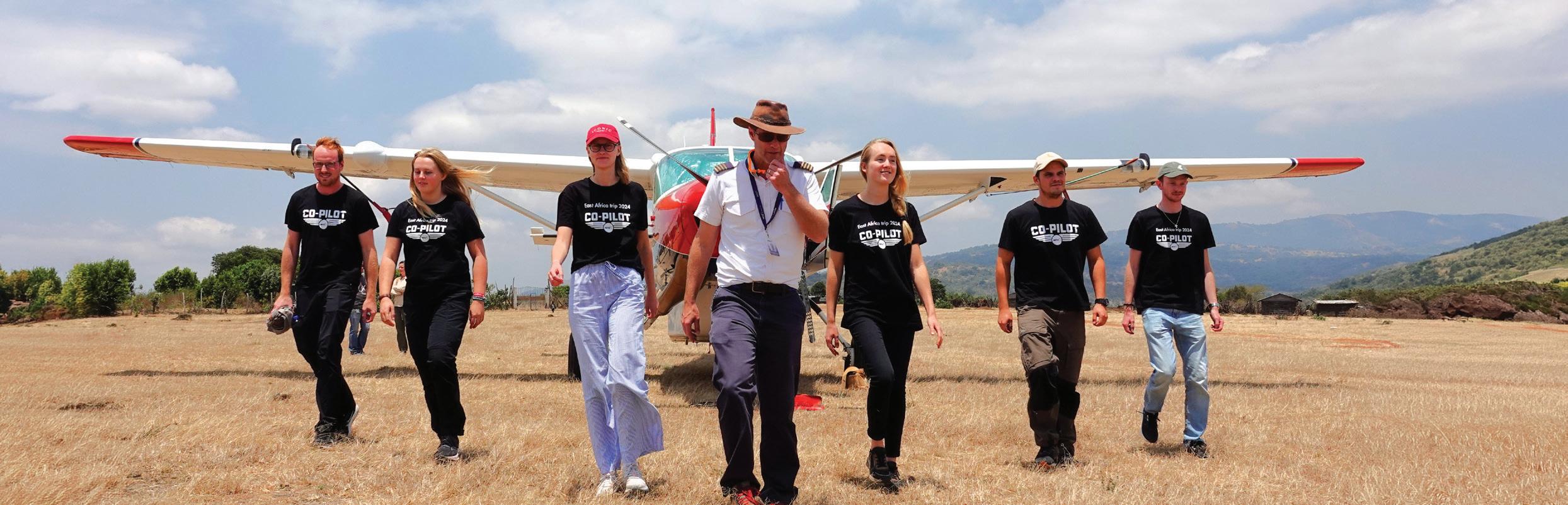
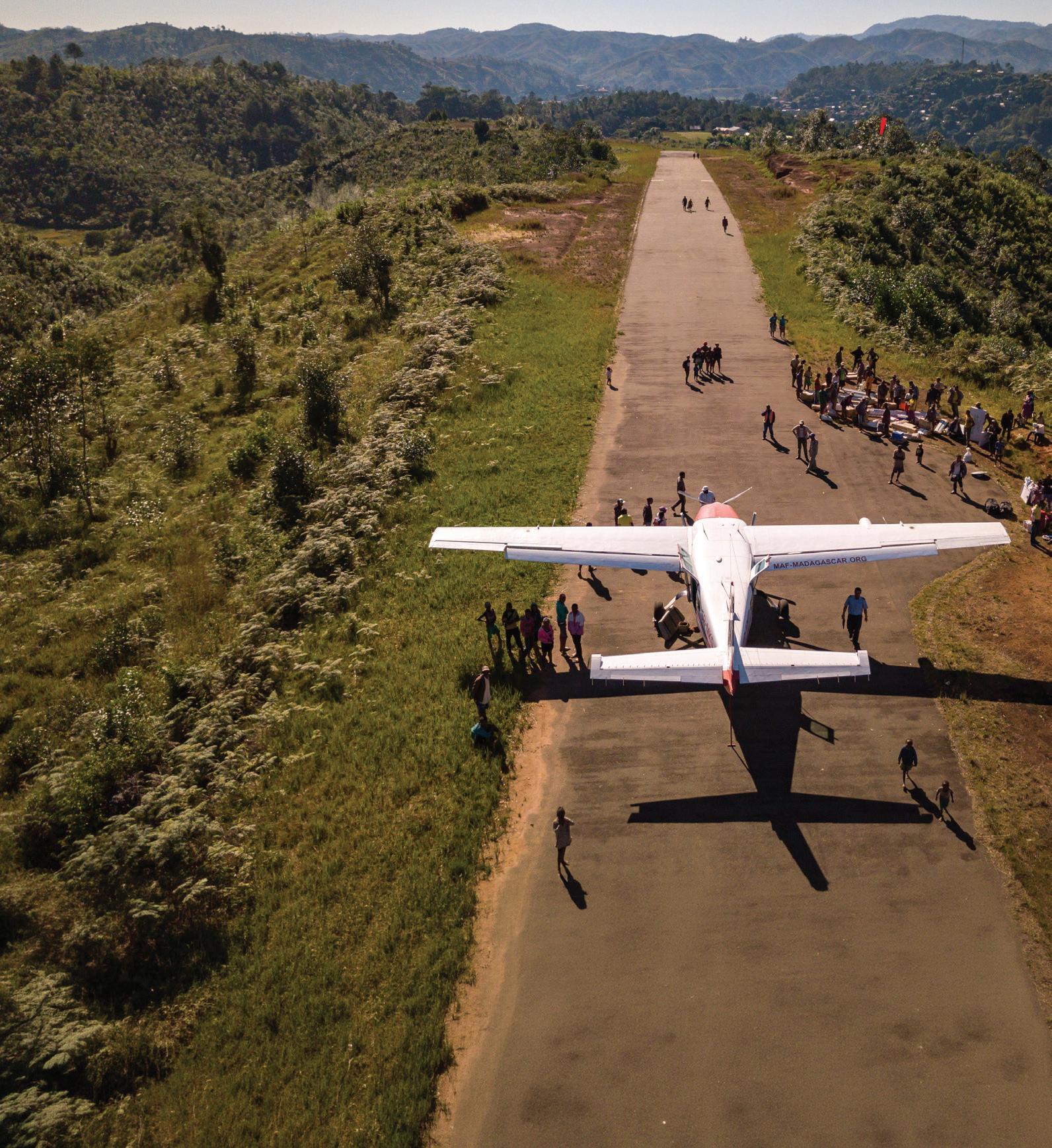
MAF (Mission Aviation Fellowship) is a Christian organisation that is changing the world – one flight at a time. Our fleet of more than 100 light aircraft enables tens of thousands of passengers every year to fly safely and swiftly over derelict roads, violent conflict and natural disasters. We transport food and water, health professionals and medical supplies, emergency workers and Christian missionaries to isolated people in more than 1,000 remote communities.
Practical help. Spiritual hope. Physical healing
MAF is flying for life.
MAF respects the indigenous people of Arnhem Land. We have tried to ensure that names and photographs of deceased indigenous people do not appear in our publications.
cover
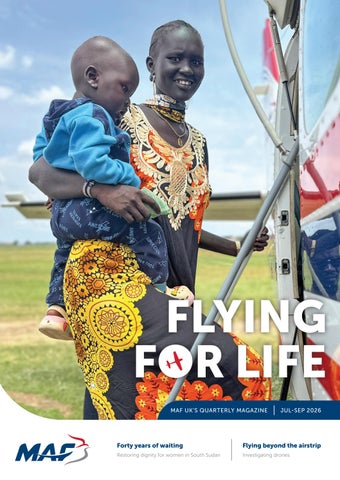
MAF is flying for life in South Sudan
Printer: Fretwell Print and Design Ltd
You’ll notice small square QR codes throughout this issue of Flying for Life. These work like quick links: simply open the camera on your smartphone and hold it over the code. A message will appear on your screen that you can tap to view exciting bonus content, such as videos, podcasts or further reading. It’s a simple way to get more from each story.
Thank you so much for sending in your unwanted foreign currency. In total you’ve raised an incredible £7,379.48 – enough to refuel a Cessna Caravan (like the one above) more than five times!
Jenny Davies Front
The Person Behind the Numbers
At MAF, we deal with numbers every day. Flight hours. Take-offs and landings. Patients, cargo, destinations. They matter. Numbers help us take responsibility for safety, planning, and resources. They show reach. But they never tell the whole story.
Because behind every number, there is a person. Through our work, we constantly glimpse into lives that put those numbers into perspective. We hear stories from places where roads are missing, where healthcare is far away, and where an aircraft can mean the difference between life and death. In those places, statistics are no longer abstract. They take on a face.
In this magazine, you can read about women who have been flown to Juba for fistula surgery. One of them is Ayor, who lived with her injury for 40 years. For decades, she endured pain, stigma, and isolation. When women like Ayor arrive at the hospital, their eyes are often downcast, almost withdrawn. When they return home, something has changed. The difference is not only physical – it is dignity restored.
‘IT’S REALLY GOOD WORK THAT MAF IS SUPPORTING. IT IS SOMETHING I’M VERY PROUD TO BE PART OF.’
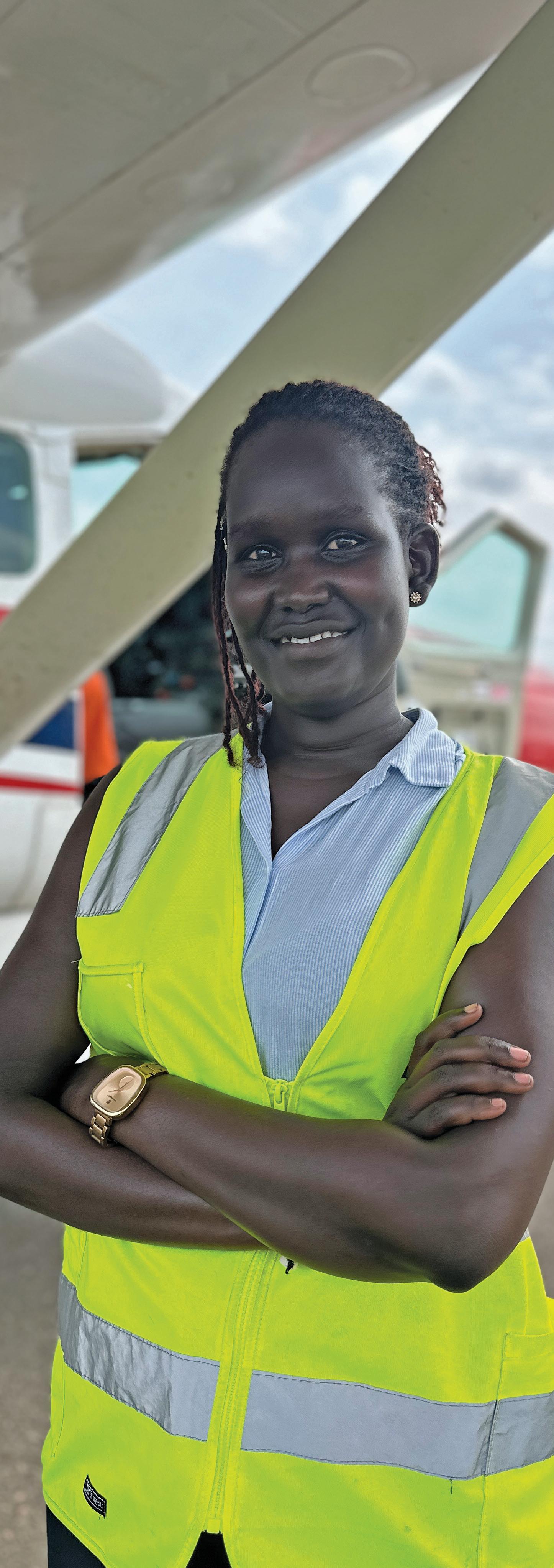
AKOOT, BOOKING MANAGER, SOUTH SUDAN
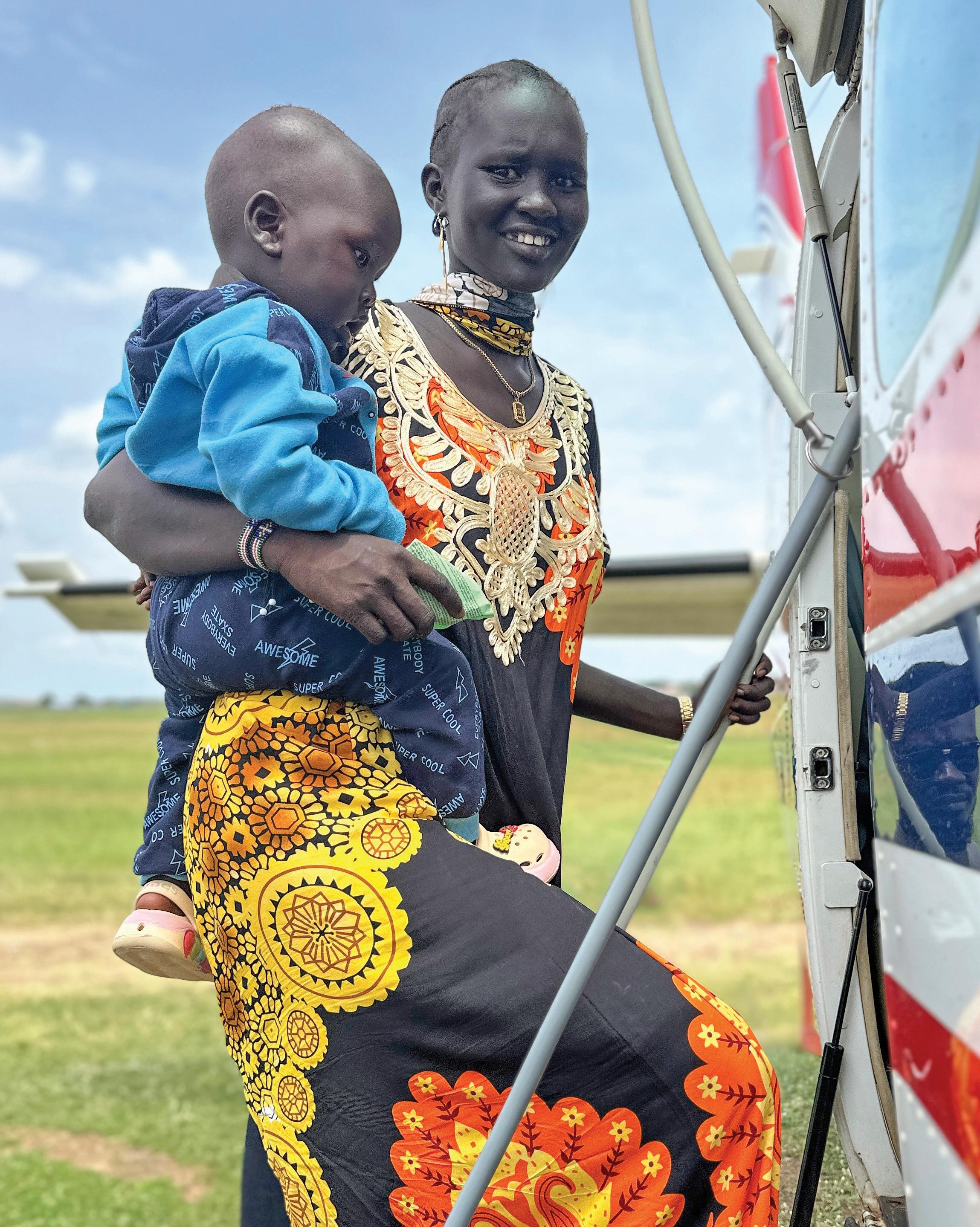
I also think of Akoot, our booking manager in the country, who meets these women again and again. In the heat, she helps load the aircraft and walks passengers all the way to departure. She witnesses transformation with her own eyes – from quiet shame to smiles that cannot be mistaken. When she speaks about the pride she feels in her work, it becomes clear that MAF is not primarily about aircraft – it is about people carrying hope forward.
You’ll also read about innovation, medical evacuations, and partnerships that make it possible to reach hundreds of patients where there are no roads. All of this is real. All of this matters
But what I want you to take with you is this: Every flight lands to meet a life. A face. A story.
Thank you for standing with the numbers and the people behind them. Your commitment to MAF is invaluable. It is life-saving.
Mike Fagg Chief Executive, MAF UK
The flights that built a future for Yambaitok
STORY KOWARA BELL
PHOTOS KOWARA BELL + JAN KLASSEN
In Papua New Guinea’s remote Enga province, MAF flights have helped transform a fragile bush hut into a life-saving health centre, showing how aviation can bring hope, healing and stability to cut-off communities.
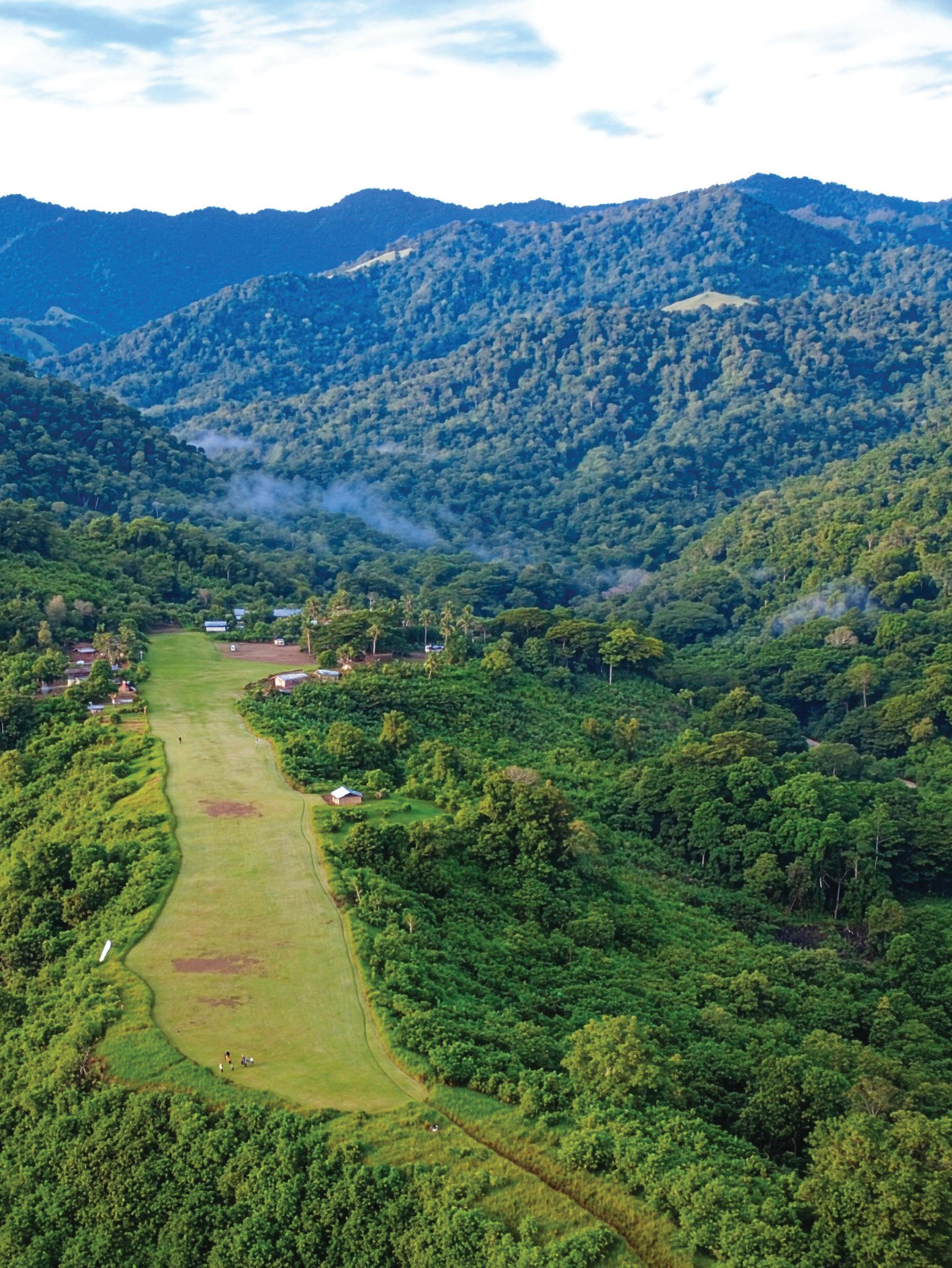
Tucked away in the remote lower highlands of Papua New Guinea’s Enga province, the people of the greater Yambaitok area live in a landscape shaped by rugged mountains, dense rainforest and, too often, tribal conflict. For thousands across this scattered region, access to healthcare comes down to a single place: Yambaitok health centre.
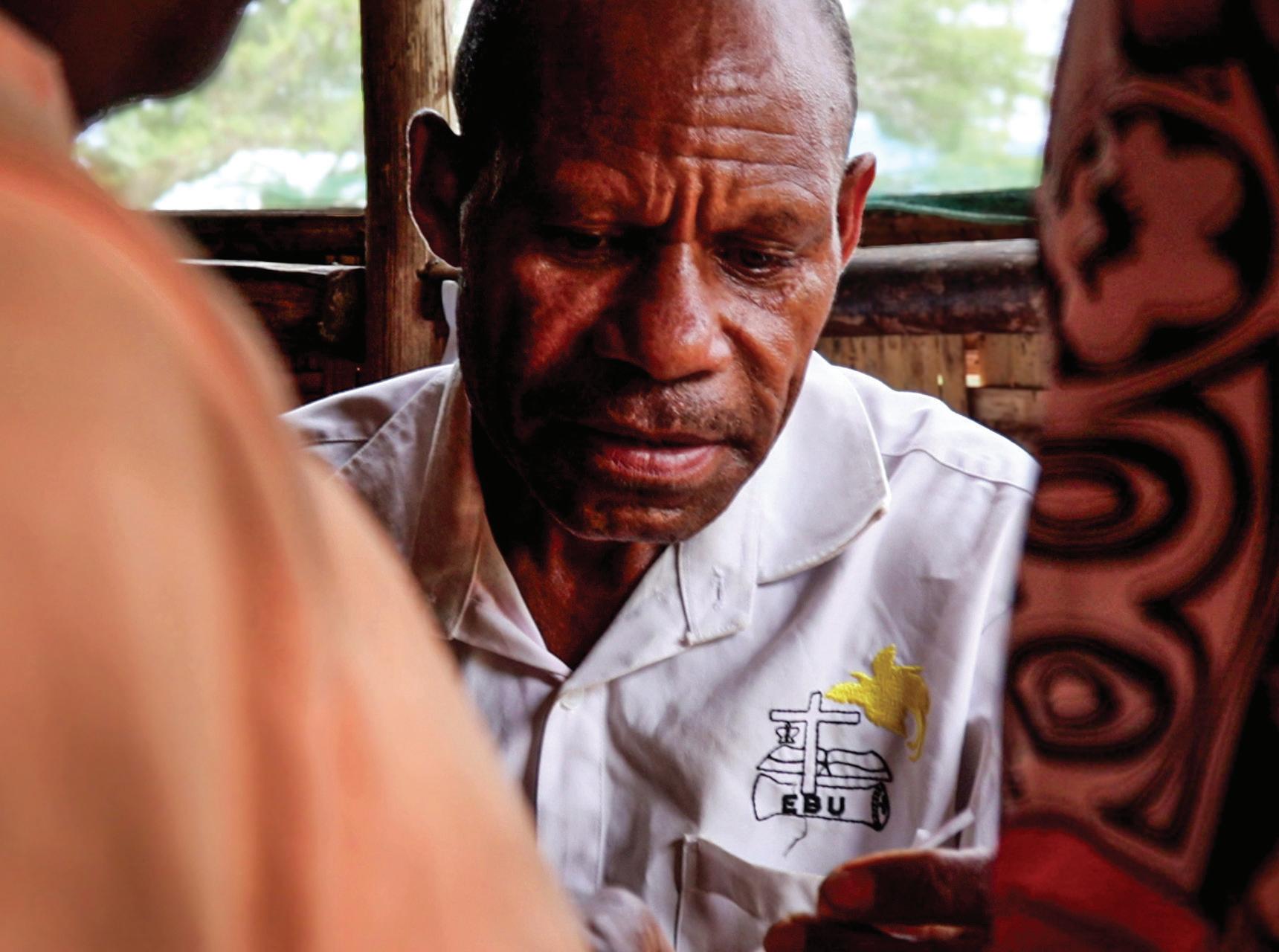
For almost nine years, dedicated community health worker Patrick Dickson has served patients here, working from a fragile, one-room hut made of bush materials. With walls of woven matting and shelves fashioned from small tree trunks, the building has struggled to cope with the needs of a growing catchment area.
’There are no other health facilities nearby’ Patrick explains. ’On a normal day I see around twenty patients. In a month, that can reach four hundred, many of them walking for hours just to get help.’
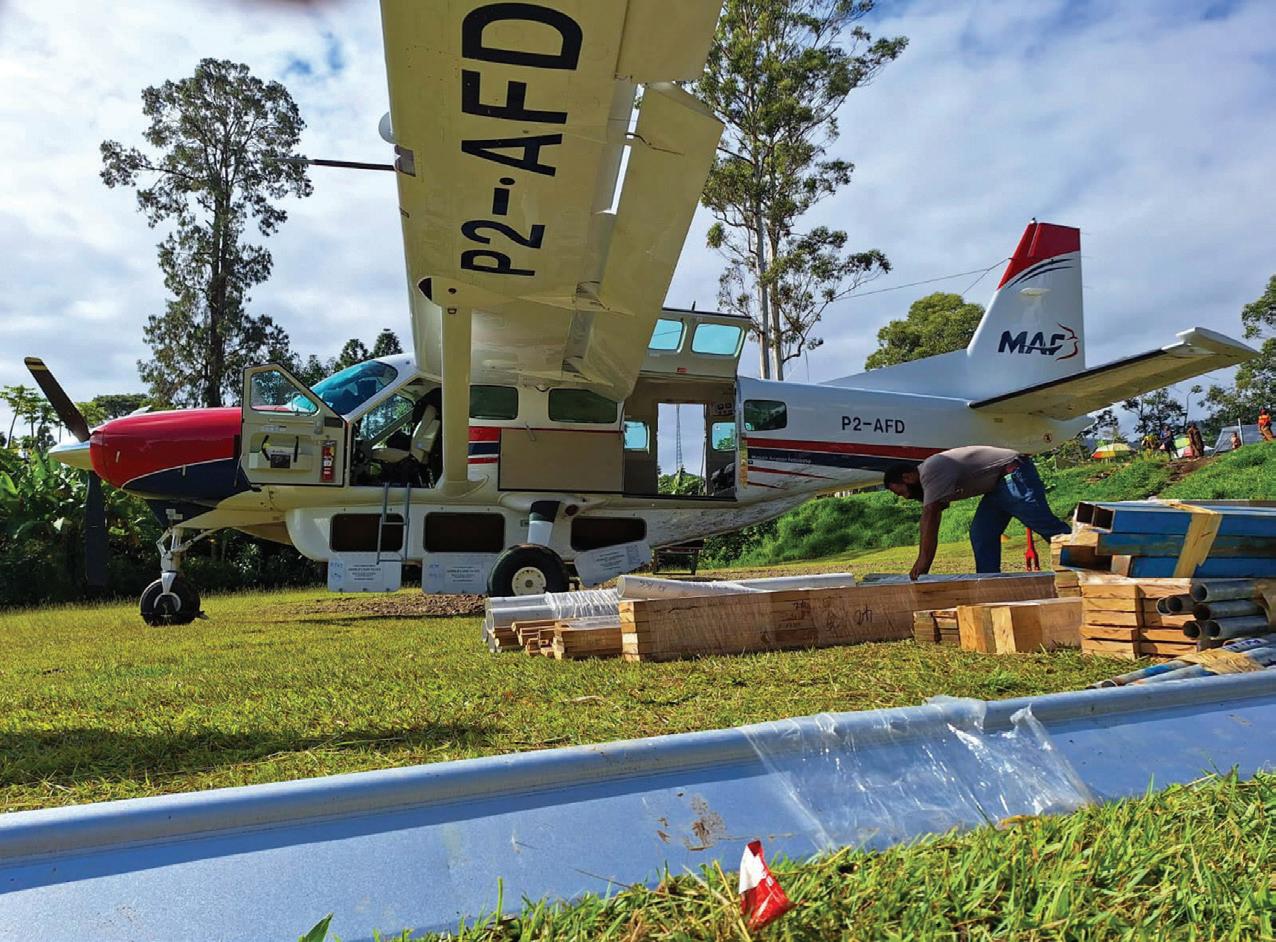
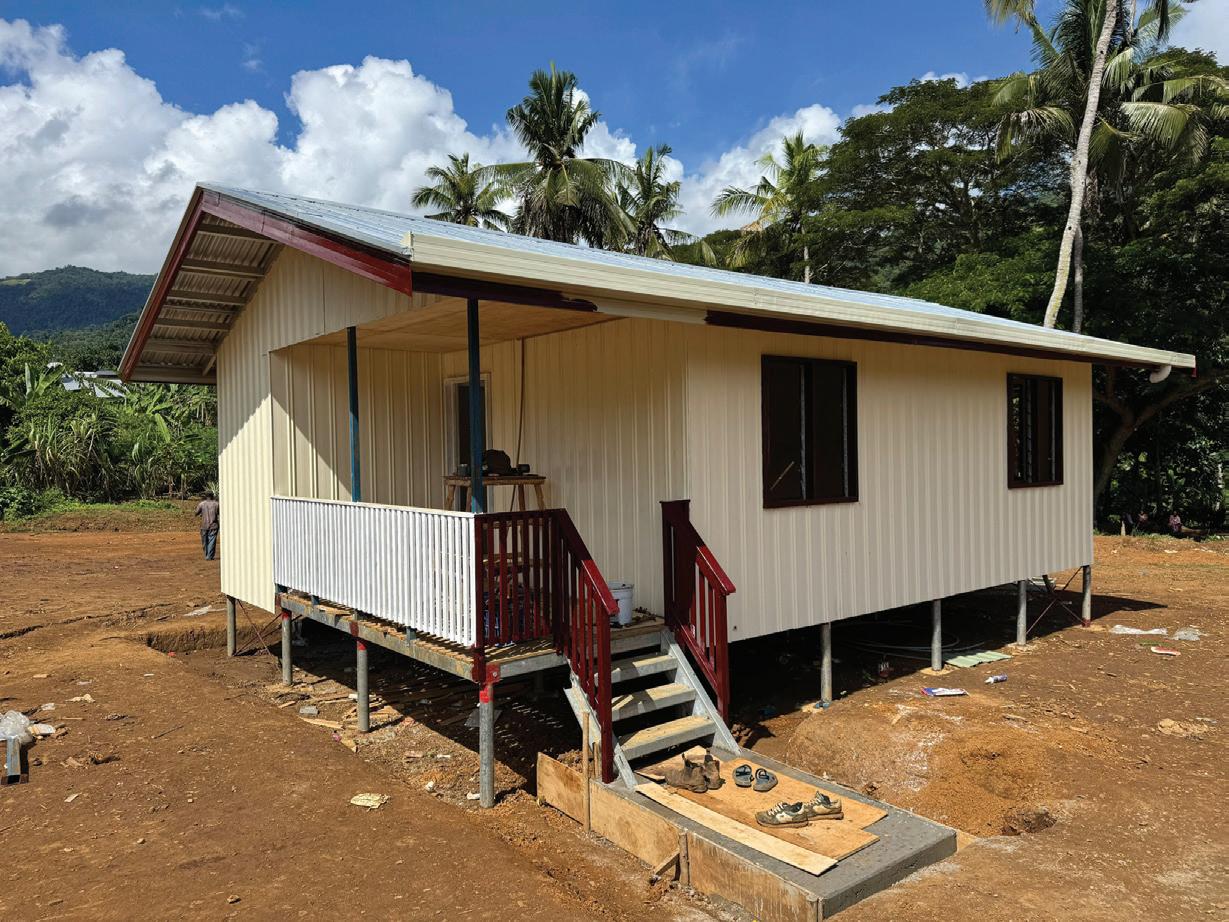
The transformation now under way is nothing short of remarkable and it would not be possible without MAF. These vital flights carried heavy building materials from Kompiam, overcoming terrain that makes road access virtually impossible. Those flights have changed everything.
The new health centre will include a labour ward, outpatient space and rooms to accommodate patients, replacing the tiny hut Patrick has worked from for nearly a decade. It will serve the people of Yambaitok and its neighbouring communities and save them the treacherous trek across rivers and mountains in search of care.
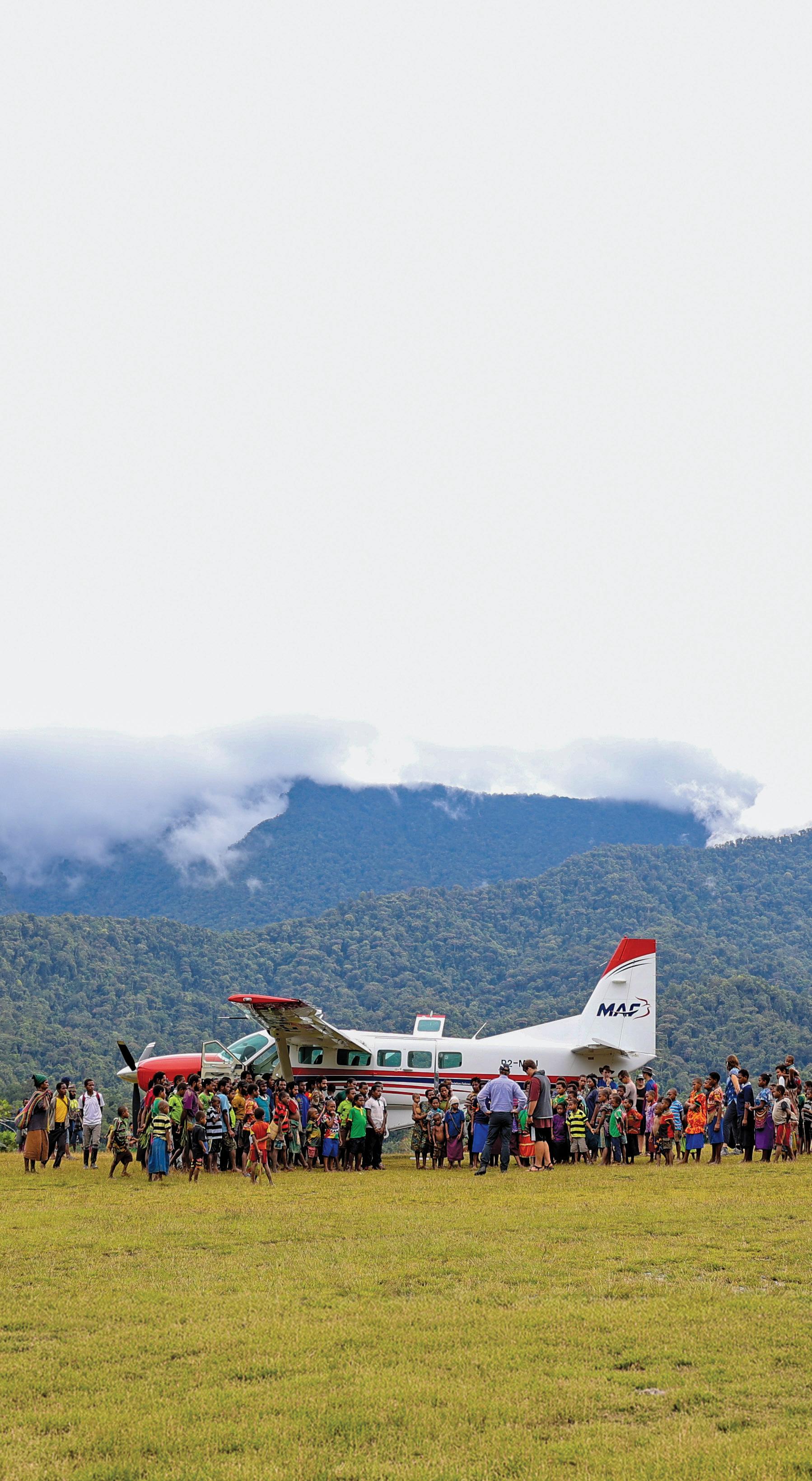
MAIN: An aerial view of Yambaitok airstrip and nearby community
LEFT TOP: MAF’s Cessna Caravan transporting building materials for the health centre
LEFT: The new health centre taking shape
RIGHT: Health Worker, Patrick Dickson
None
of
For some, like Sikit Samo from the village of Elem, the journey is extreme. He walked six hours to Yambaitok to collect medicine for his bedridden sister. ’MAF is the only service that brings medicines and doctors to our communities’ he says.
As the doors of the new clinic prepare to open, Patrick reflects on the change with gratitude. For the people of Enga’s highlands, MAF’s flights have done more than deliver materials, they have delivered hope, stability and the promise of better health for generations to come.
this could have happened without fuel.
Every sheet of roofing iron, every beam and box of supplies that turned a fragile bush hut into a real health centre, all began with the simple ability for an aircraft to take off.
In a region where reaching Yambaitok on foot would mean a four-day journey through mountains, rivers and areas of tribal tension, fuel becomes the difference between isolation and access. It turns the impossible into the achievable. It brings medicines, construction supplies, and the promise of safer births and better health within reach of thousands. These essential flights didn’t just transport cargo — they delivered stability, dignity and a future that once felt out of reach. And every one of them depended on fuel. If these MAF flights can change the course of a whole community, will you help fuel the next one?
In the midst of a global fuel crisis, MAF is determined to keep flying because many lives depend on it. Scan to find out more and help keep our fleet in the air.
The difference you make…
MAF supporters in the UK raised over £30,000 to support Maasai children's education in Tanzania.
Children in remote areas of Tanzania are now getting access to formal education – which was once a distant dream for many families.
Harmful cultural practices including FGM can be devastating for young girls, whose schooling is cut short if their parents force them to marry in exchange for cattle.
Thanks to Help for the Maasai (HFTM), an organisation MAF has been working with for many years, schools are offering the opportunity for learning and growth beyond traditional practices.
In 2025, we asked you to support our partnership with HFTM in Tanzania. Our aim was to ensure that every child connected to HFTM’s primary school, secondary school, medical centre, and orphanage received essential school supplies and medical check-up kits — simple items that make an extraordinary difference in a remote community.
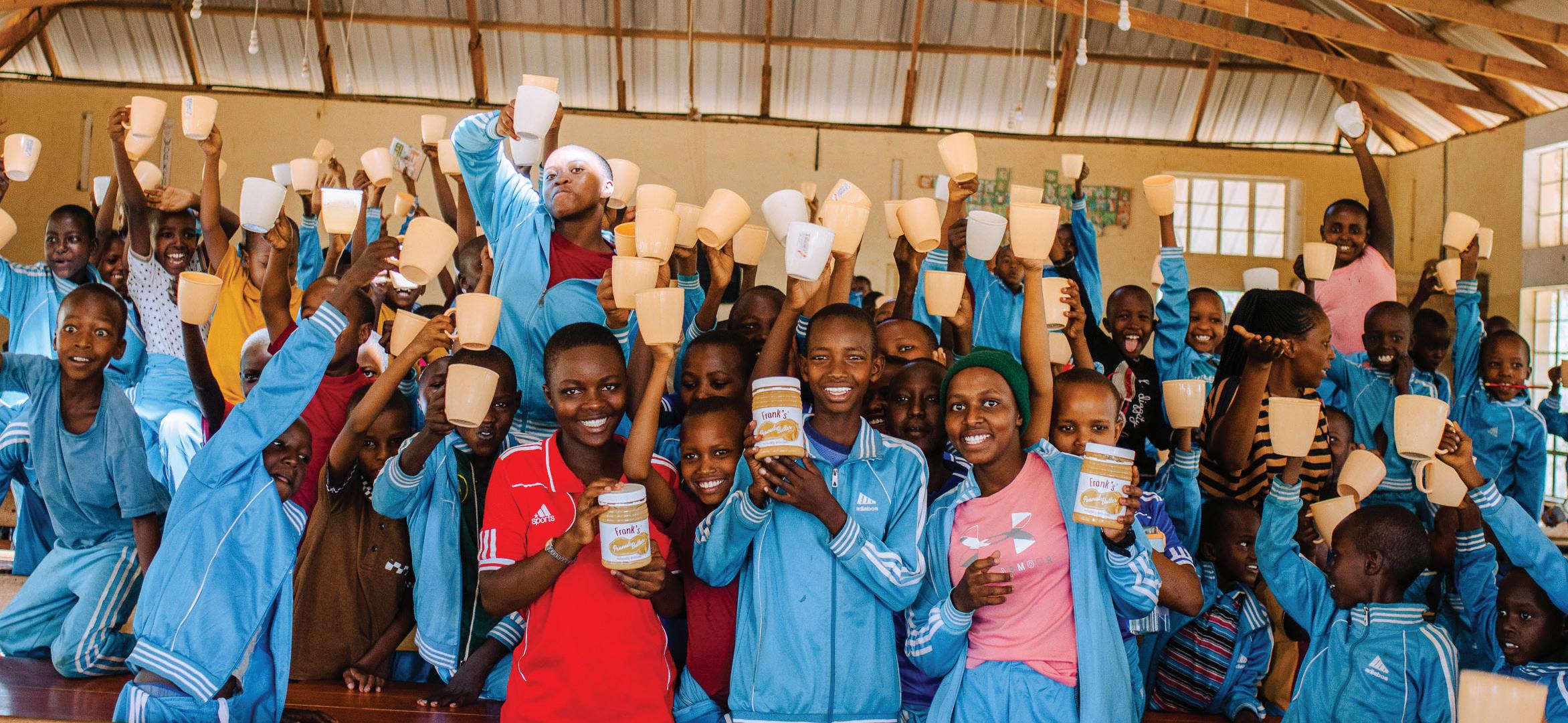
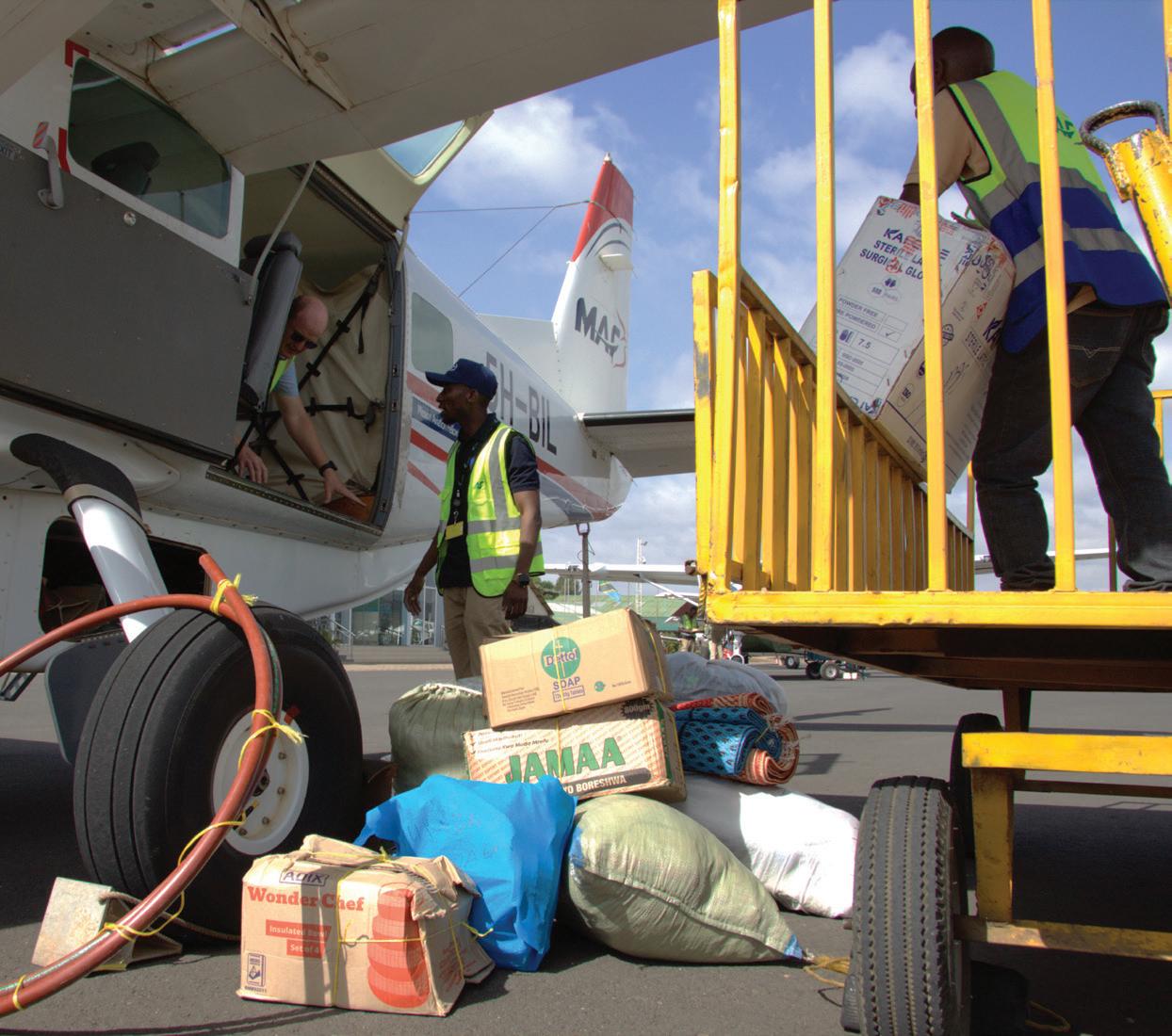
Together, over £30,000 was raised! Because of your generosity, two MAF flights have been able to deliver school uniforms, books, Bibles, medicines, malaria testing kits, nutrition supplements, sport equipment and so much more. These vital items do far more than meet practical needs. They help Maasai girls stay in school, protecting them from the very real dangers of forced marriage. They give children
MAF flights serve more than 1,500 organisations.
hope, dignity, and the chance to imagine a future they never thought possible.
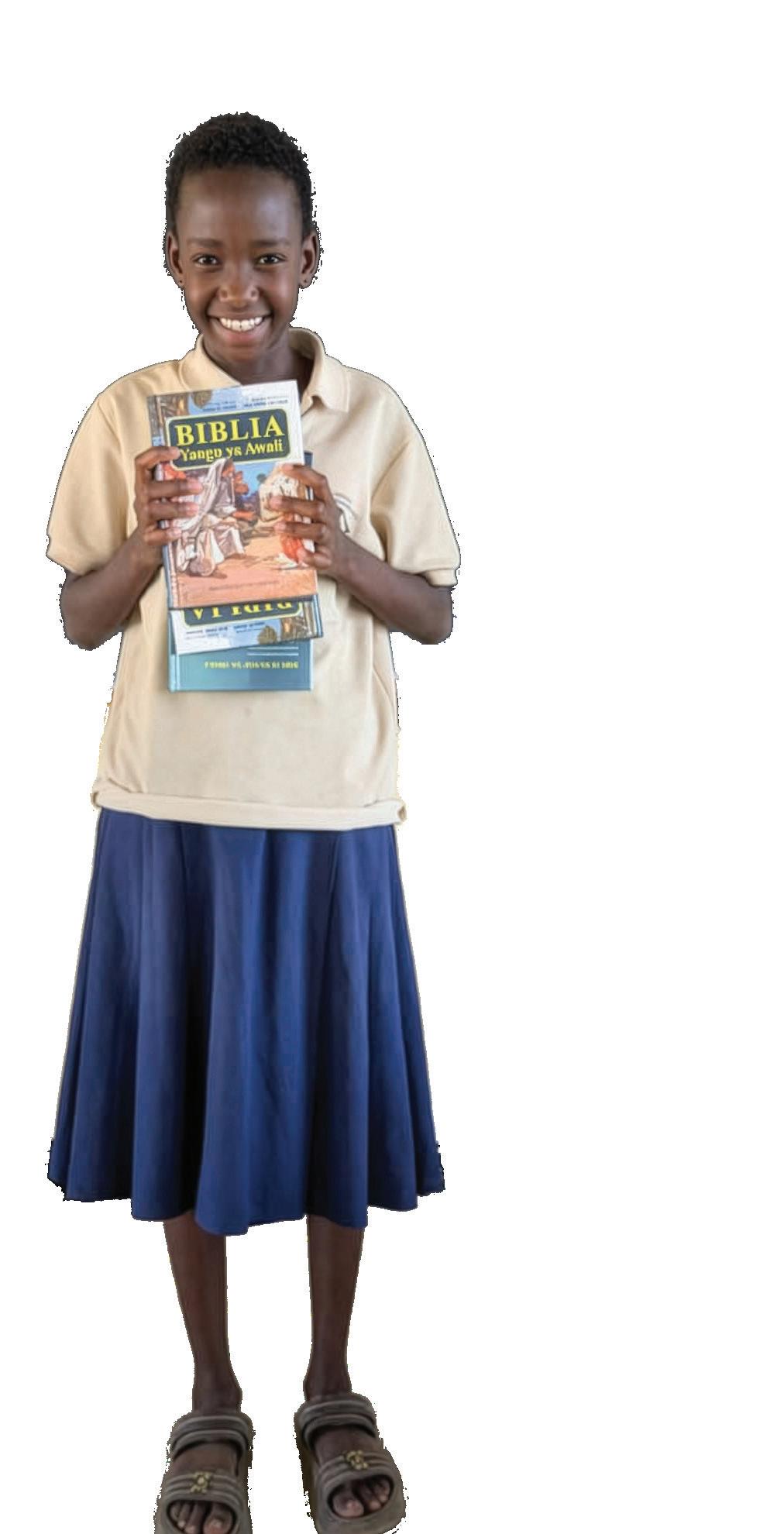
Elinami, a pupil from Naserian Secondary School, shared what your support means to her: ‘I am very thankful for the support from MAF who think about our future and provide what we need for our learning. They show that people care about our education and want us to succeed.‘
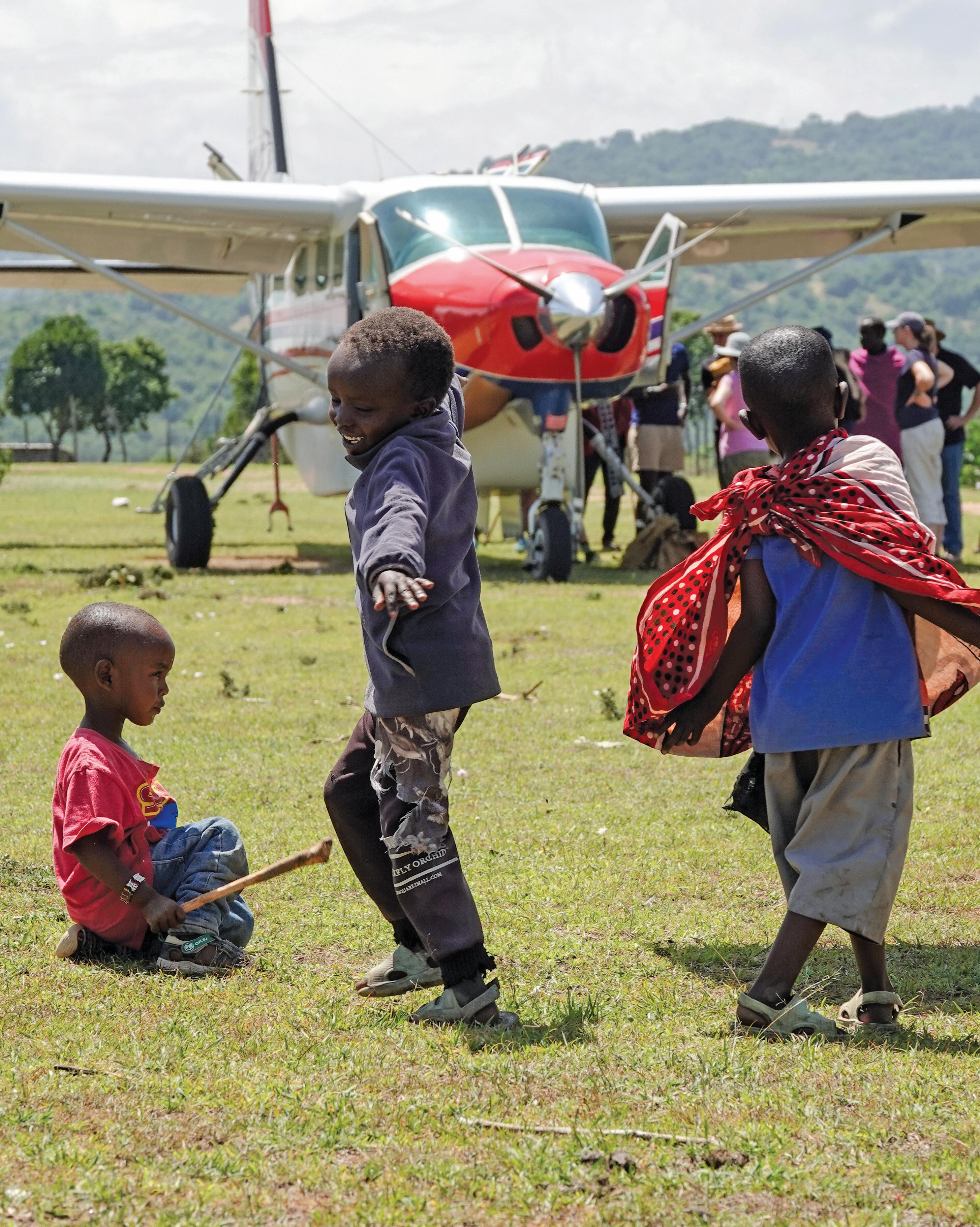
MAIN: Children with peanut butter jars, a nutritious and healthy treat
ABOVE: Loading the cargo onto the aircraft
LEFT: Elinami receives her new Bible
Your support told these children that they matter. That their future matters. That they are not forgotten. Thank you. To find out more about our partnership with Help for the Maasai, please visit MAF-UK.ORG/her-future
Scan the QR code to see more photos from this story:
PHOTOS HELP FOR THE MAASAI
‘I’m really grateful
Burns survivor Daniel owes his life to a medevac
STORY CLAIRE GILDERSON, JENNY DAVIES + DAMALIE HIRWA
PHOTOS JENNY DAVIES, REV CANON PETER MARSHALL + DAMALIE HIRWA
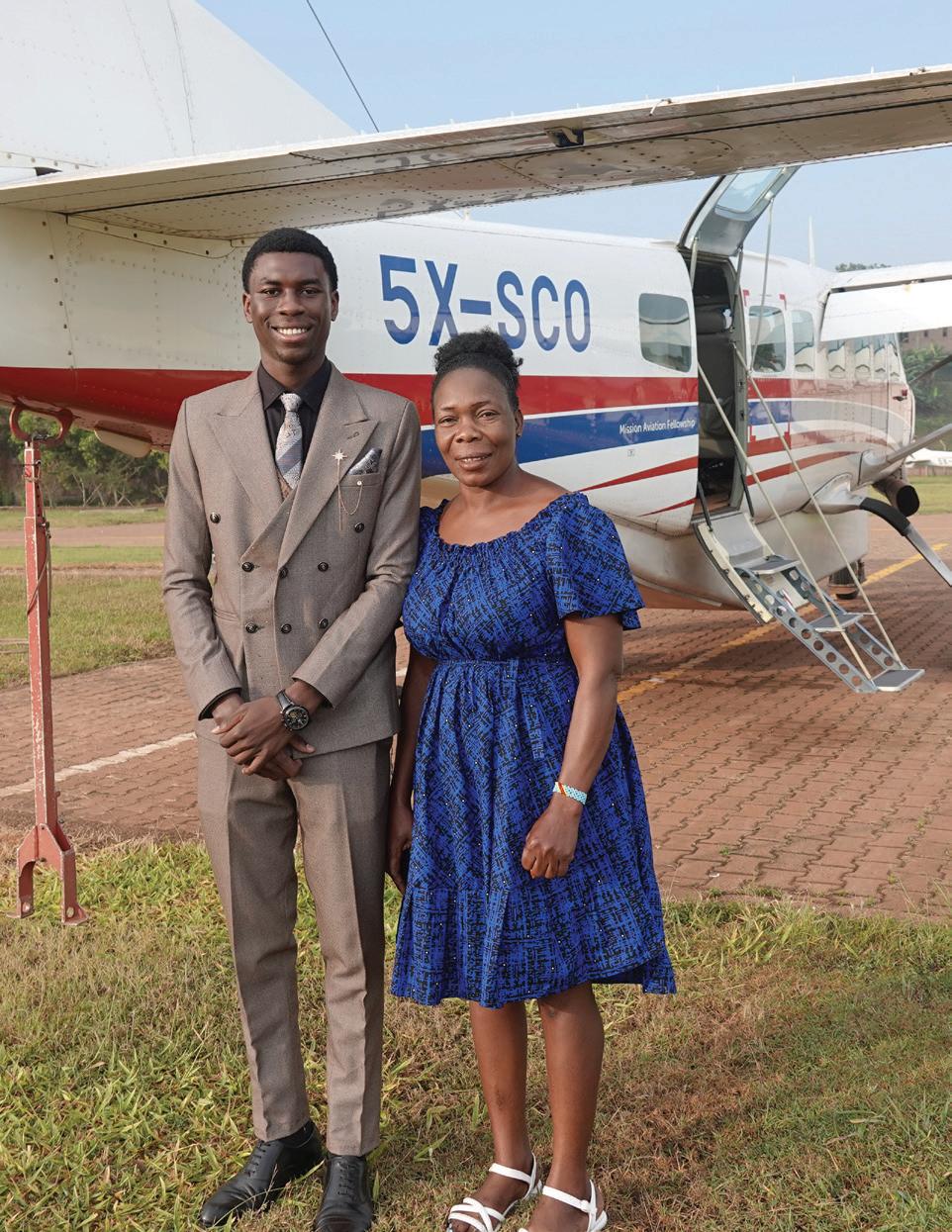
22-year-old Daniel has big dreams of becoming a lawyer and helping his people in South Sudan, but 20 years ago, he nearly died in a terrible accident.
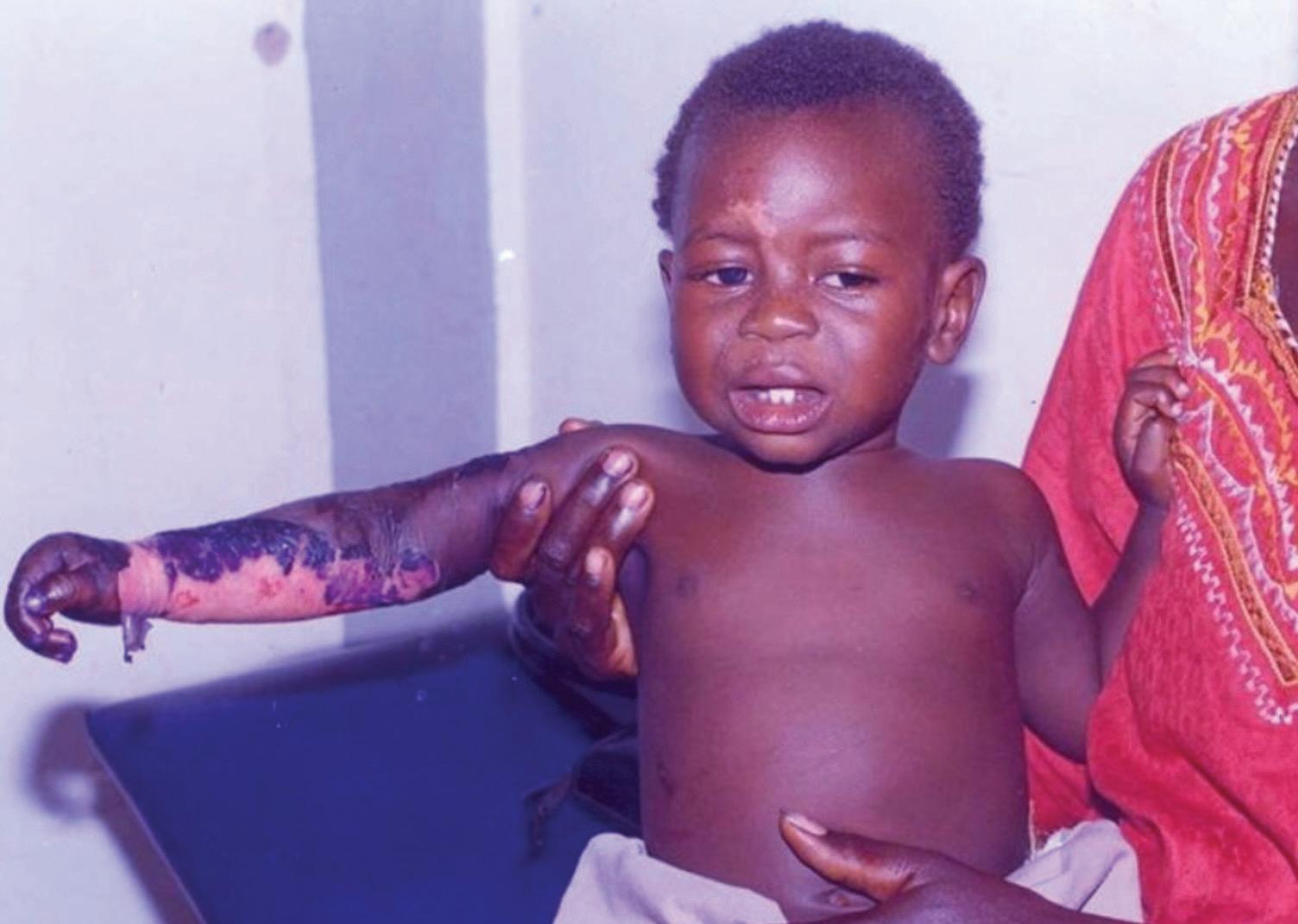
Today, there are hardly any scars from the scalding water and white-hot charcoal, that scalded toddler Daniel when he fell into a fire and knocked over his mother’s cooking pot. But Sentina will never forget her son’s screams on 18 June 2005.
‘Daniel got burnt. In our village, we don’t have those modern kitchens. We cook on the floor with firewood,’ explains Sentina.
‘He had just started walking and fell into the cooking pot. His right side got burnt from his hand to his shoulder. All his skin had gone – it was just white.’
Yambio State Hospital in Western Equatoria was two miles away from their home. When Daniel was admitted, they had run out of paracetamol due to the civil war, which had just ended. Sentina was desperate.
‘We spent five days at the hospital, but Daniel didn’t eat, breastfeed or sleep. His life was in danger. He was in between life and death,’ Sentina adds.
TOP: Daniel and his mum, Sentina
RIGHT: Daniel, five months after his accident
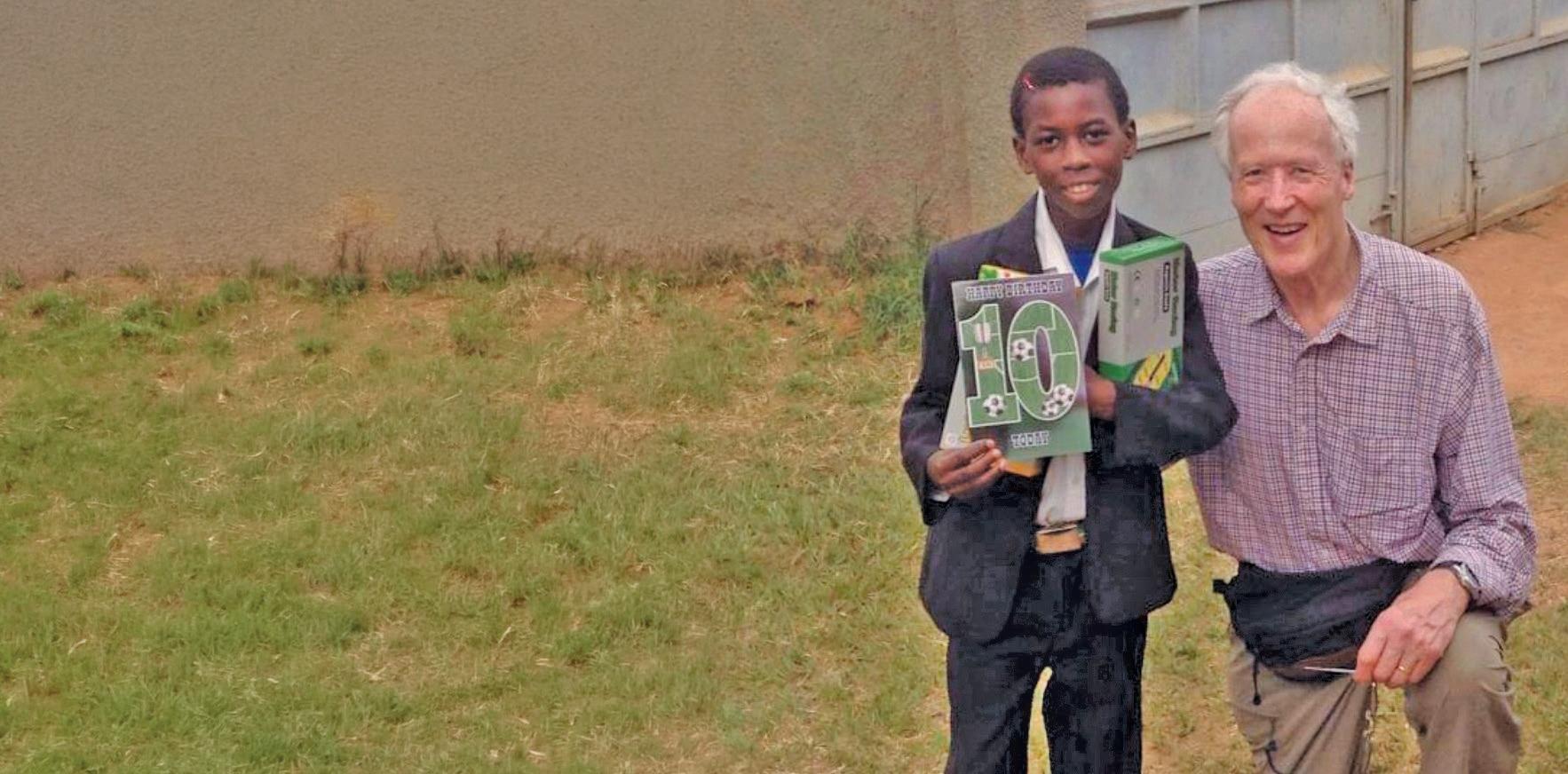
BELOW: Daniel, aged 10, with Rev Canon Peter Marshall
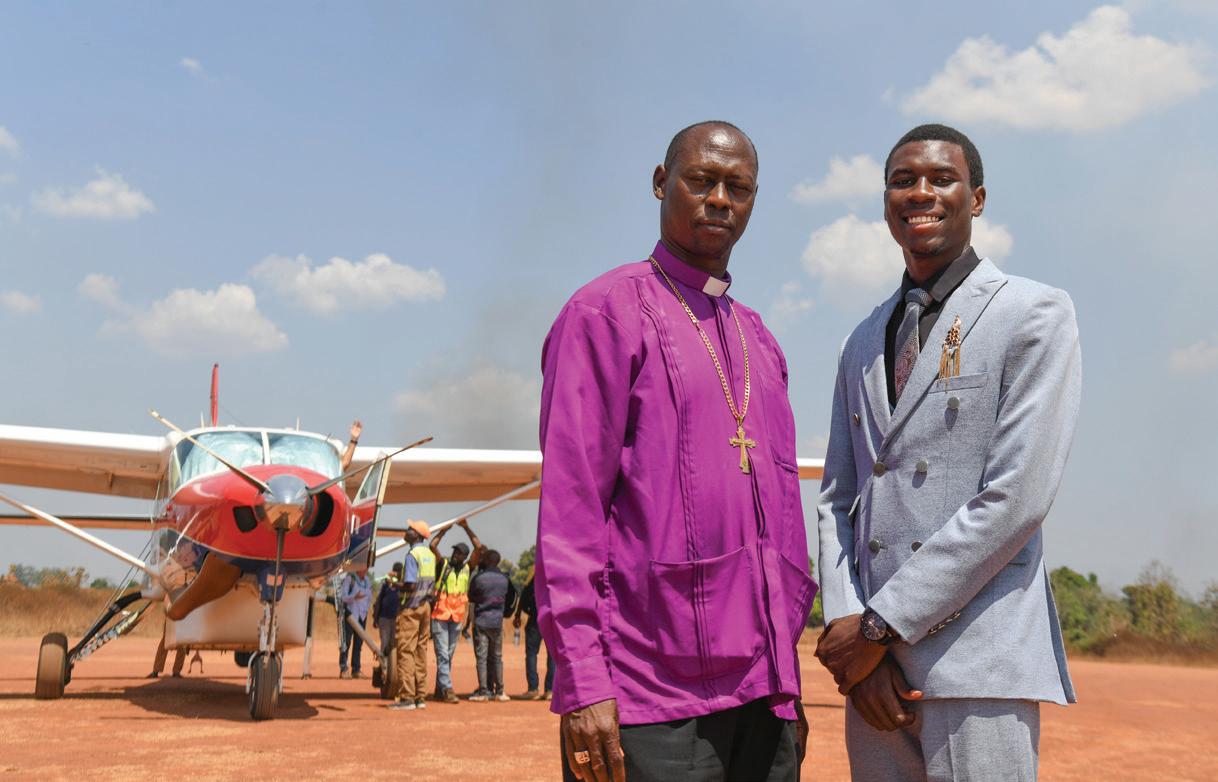
BELOW LEFT: Daniel and his father Archbishop Samuel Peni
to MAF’
Scan the QR code to find out what happens next in this extraordinary story, where an MAF supporter almost 4,000 miles away in the UK triggered a chain reaction to save Daniel’s life.
MAF flew to around 1,000 destinations worldwide in 2025.
Forty years of waiting
STORY + PHOTOS BY JENNY DAVIES
For all her adult life, Ayor has lived with a fistula injury she rarely speaks about. A flight with MAF gave her the chance of life-changing surgery.
he recovery after surgery is slow and painful, and I am aware of this as I walk over to Ayor’s bed in the hospital in Juba. My translator, Garang, asks if she is willing to share her story. Ayor replies with a quiet yes.
Her white hair tells me she is long past the age when women bear children, but her eyes tell a story few other people have heard.
‘The fistula followed the birth of my fourth child, over forty years ago,’ Ayor says.
‘I have been suffering from this condition ever since. My last baby died, and I could not conceive again after that. One of my other children has also died.’
Ayor comes from a village near Yirol in South Sudan. Like many other women in her country, she gave birth without the assistance of a midwife or doctor, and on this occasion it resulted in a serious injury called obstetric fistula.
The injury creates a hole between the birth canal and the bladder or rectum, causing uncontrollable leakage of urine or faeces.
MORE THAN PHYSICAL SUFFERING
For women like Ayor, such an injury brings more than physical suffering – it also brings shame, isolation and stigma. Women do not talk about these kinds of issues in South Sudanese culture – instead, they hide their struggles and pain. I am struck by Ayor’s quiet dignity and her willingness to share.
‘I had surgery before. I was taken to Lokichoggio, but the surgery was not successful, and I did not get well again,’ she says.
Despite the disappointment of the previous failed surgery, Ayor decided to try again after a relative in her village told her about fistula surgeries being offered in Juba.
‘I went to Yirol, and an MAF plane picked me up. I felt sick on the plane, and I was very happy to land in Juba,’ Ayor admits with a smile.
CARE FOR BODY AND SOUL
At Reconciliation Hospital in Juba, the Evangelical Lutheran Mission offers fistula repair surgery three times a year. Training rooms are transformed into hospital wards to host more than forty women who travel there from across the country.
Most of these women are flown to the hospital by MAF, and recently there were ten such flights. For many of them, like Ayor, undertaking the journey by car or on foot would take days and be virtually impossible.
Specialist surgeon Dr. Andrew is able to repair even the most complicated fistulas – including cases where previous surgeries have failed. Mission chaplains and support staff are also on hand to provide counselling and spiritual care to women who have suffered rejection because of their condition.
Ayor is grateful for all the care she has received.
‘I was operated on, and afterwards the doctors came every morning to check on me. I am happy to receive the help from the people here. I have been going for prayers. They share things with us that make us happy.’
GOING HOME WITH DIGNITY
Ayor looks forward to being home and well after decades of hardship.
‘I am happy to stay in Juba for the surgery, but I will be even happier to go home again to the village. I am looking forward to being healed of this problem. They have made my life better now.’
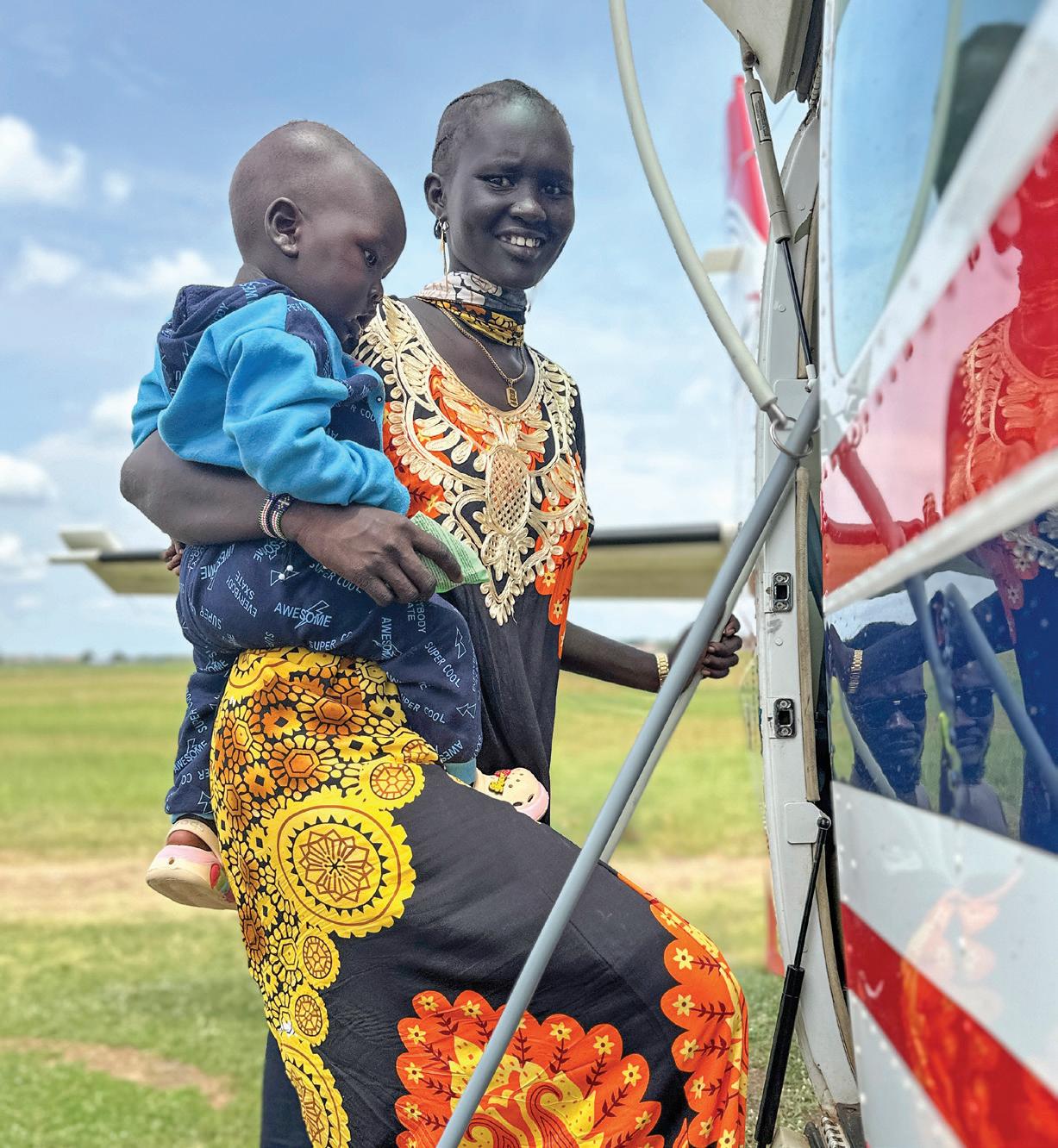
A week later, slowly and with determination, Ayor boards the MAF plane bound for Yirol. Still healing, and probably still in pain, she carefully ascends the aircraft steps.
Then, with the dignity of an ‘abuba’ (grandmother), she settles into ‘business class’ – the seat with extra legroom at the back of the plane.
She is quiet.
And ready to go home.
‘THEY HAVE MADE MY LIFE BETTER NOW.’
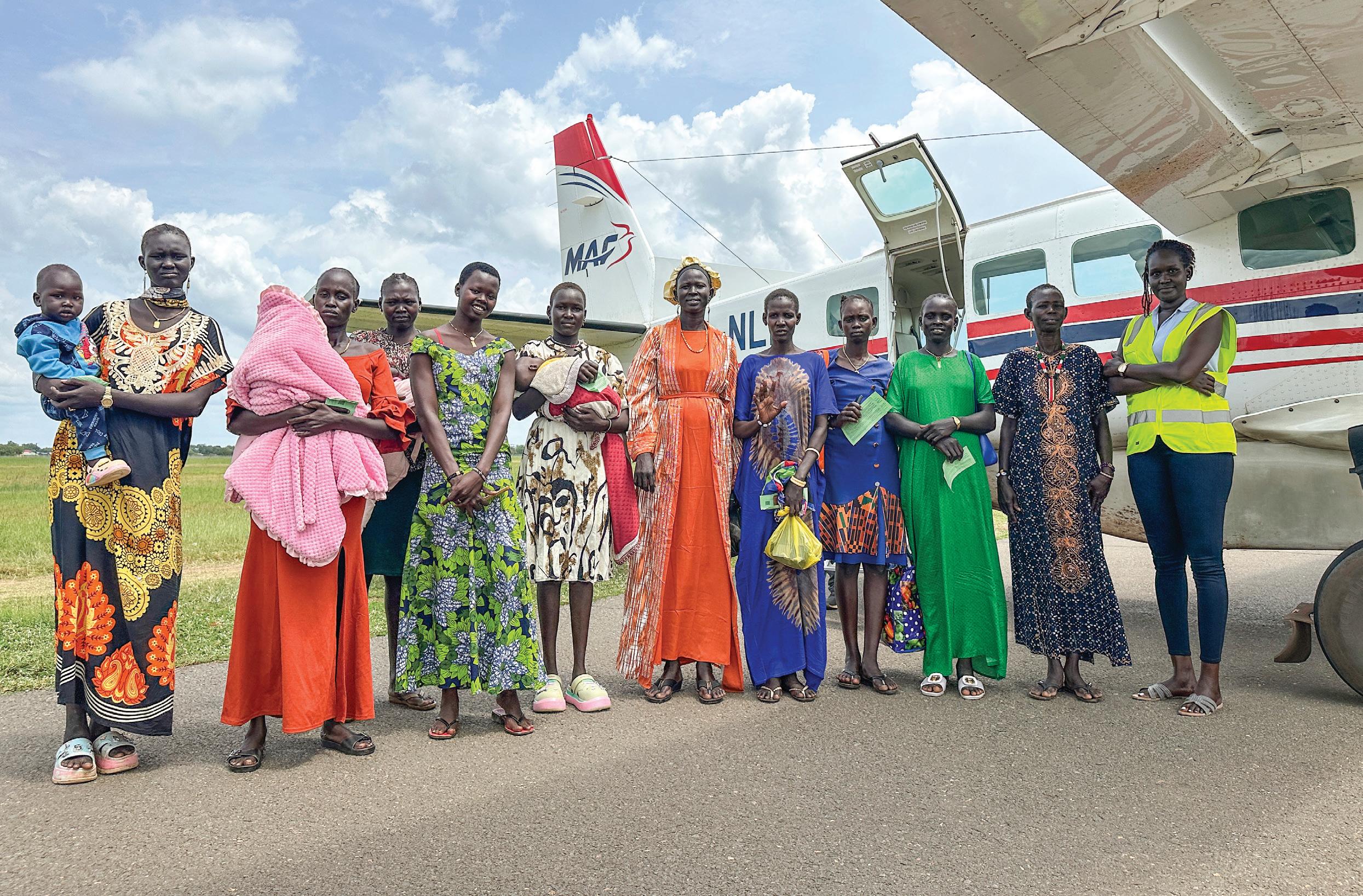
MAIN: Women are ready to return to their homes
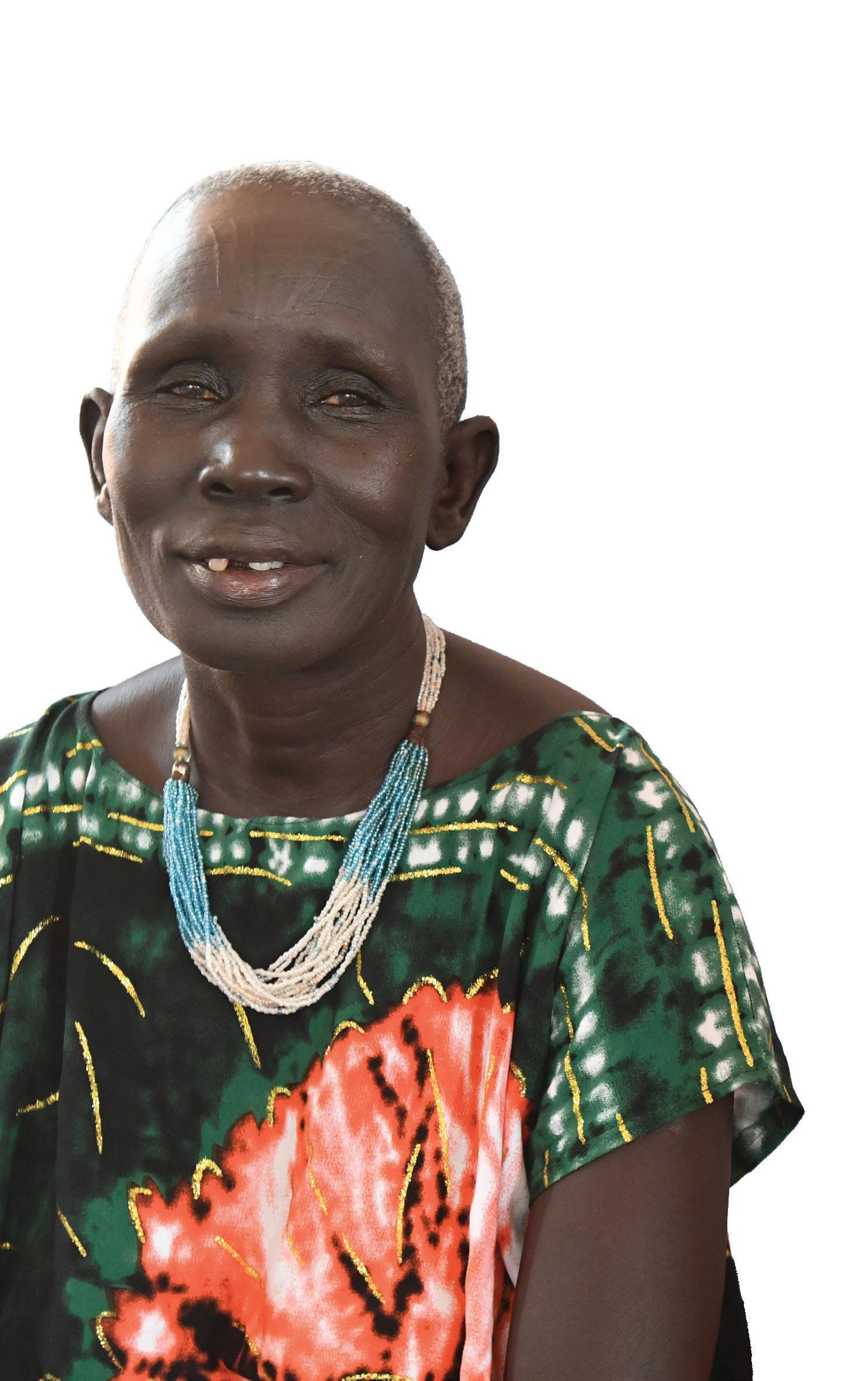
FAR LEFT: Ayor smiles, knowing her life has changed for the better
ABOVE: After previous failed surgery, Ayor found the courage to try again
LEFT: When the women are ready to travel home, the difference is like night and day
Premature death for babies averted
STORY + PHOTOS BY RACHEL GWOLE GEORGE
In the remote corners of Liberia, reaching a clinic or health centre has often been a matter of life and death. Pregnant women from the hard-toreach places of Foya, Lofa County, faced dangerous journeys over rough roads, and everyday motorcycle transport carried serious risks.
Francis Forndia, Executive Director of Foya-Borma Hospital, described what could happen on the way to care: ‘Before they could get to the clinic, the pregnant woman would have lost her foetus. The pregnant mother sitting on the bike would press the baby to its early grave.’
With the only large referral hospital from Foya being a one-day drive away, it causes lots of pregnant women or patients to lose their lives. But the arrival of the first two motorcycle ambulances in the region is changing this reality.
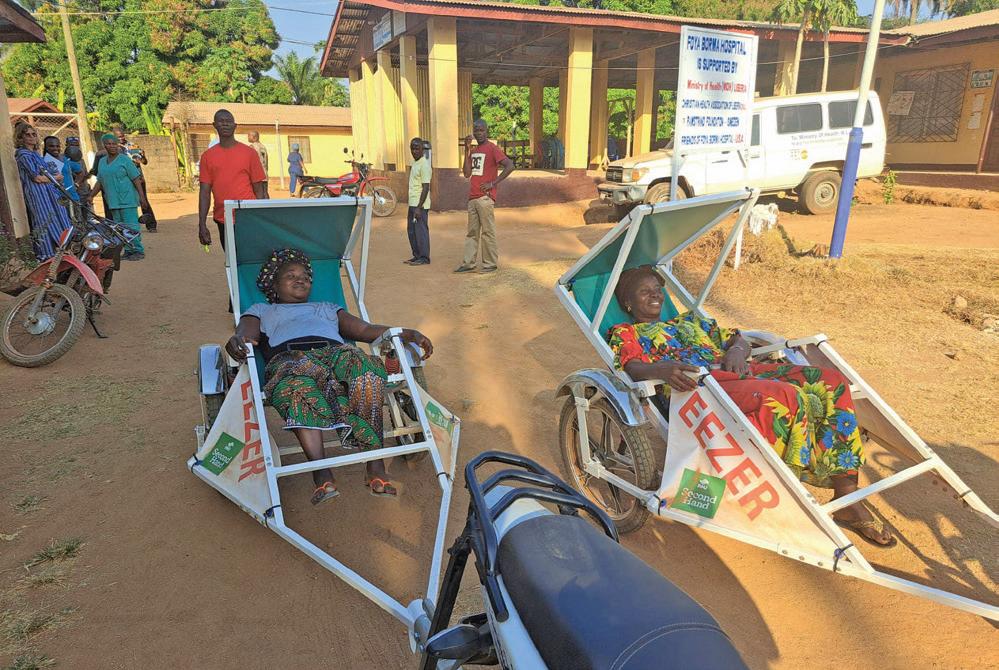
‘The motorcycle ambulance has been a real blessing,’ said Francis. ‘Unlike ordinary motorbikes, these ambulances are equipped with a two-wheeled trailer, allowing patients to lie down safely during transport.’
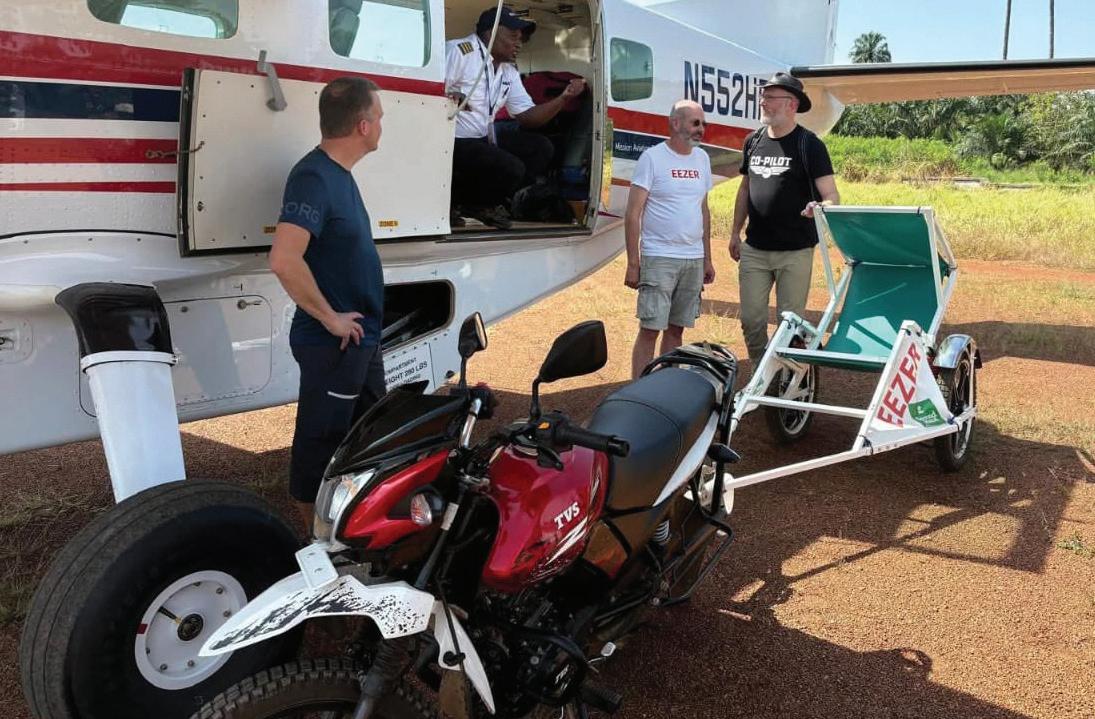
MAF flew two motorcycle ambulances from the capital, Monrovia, to Foya. The ambulances were donated by a Swedish nonprofit organisation and supported by the Pentecostal Church in Sweden.
‘By flying the motorcycle ambulances to help pregnant women access better treatment, MAF has made life change with a deep smile,’ said Francis. ‘We had serious challenges. We were losing a lot of babies due to bad roads. These motorcycle ambulances are going to help a lot of pregnant women.’
BELOW: Two ladies test out the two-wheeled trailer
MIDDLE: Unloading the ambulances from the MAF aircraft
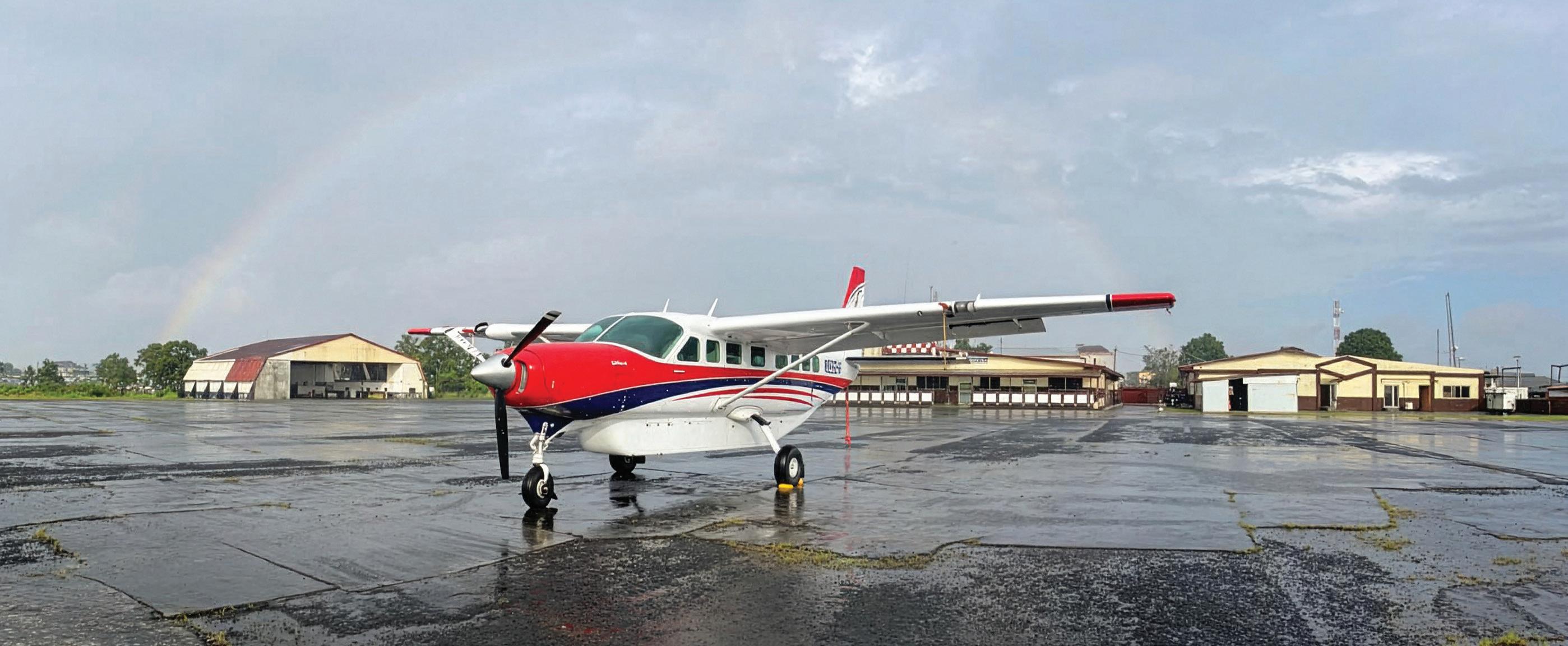
BOTTOM: MAF aircraft under a rainbow before take off
He also emphasises the wider impact: ‘Mothers and children are our future leaders. So, when you save them, you are helping Liberia’s future.’ Francis also praised the availability of MAF flights to airlift critically ill patients from rural areas for more advanced treatment, and to deliver medical supplies: ‘We look forward to doing patient transfers using MAF flights to enable patients access quick health care in the capital.’
‘THANK YOU SO MUCH FOR YOUR SUPPORT TO HELP MEET THE HEALTH NEEDS IN LIBERIA.’
Flying beyond the airstrip
STORY BY SEAN ATKINS
PHOTOS BY DAVE WATERMAN + WINDRACERS
When an isolated clinic runs out of life-saving medicines, when a community lacks essential supplies or when vital machinery needs spare parts – MAF is able to deliver to some of the most remote airstrips in the world. But what happens when there is no airstrip?
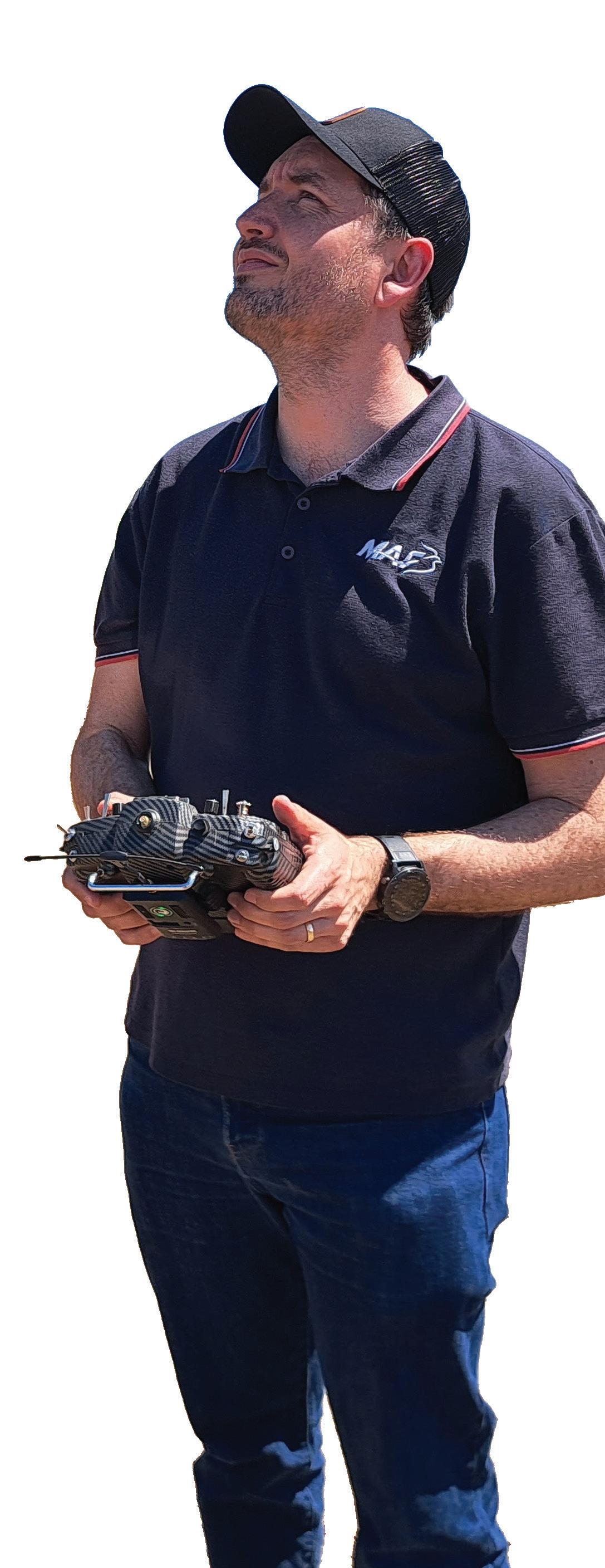
Dave Waterman has served with MAF since 2017, with his first seven years as an engineer based in Uganda and Liberia. Now, as MAF’s Fleet Innovation Project Manager based in Ashford, Kent, his passion is to work with manufacturers developing drones with the potential to bring impact in the nations MAF serves.
‘The only thing that has stopped us serving some places is that we need an airstrip. Now, with drones, you don’t need an airstrip.
‘So, the question is can we go further, can we do more? When we can go beyond the airstrip, we have the potential to break that isolation.’
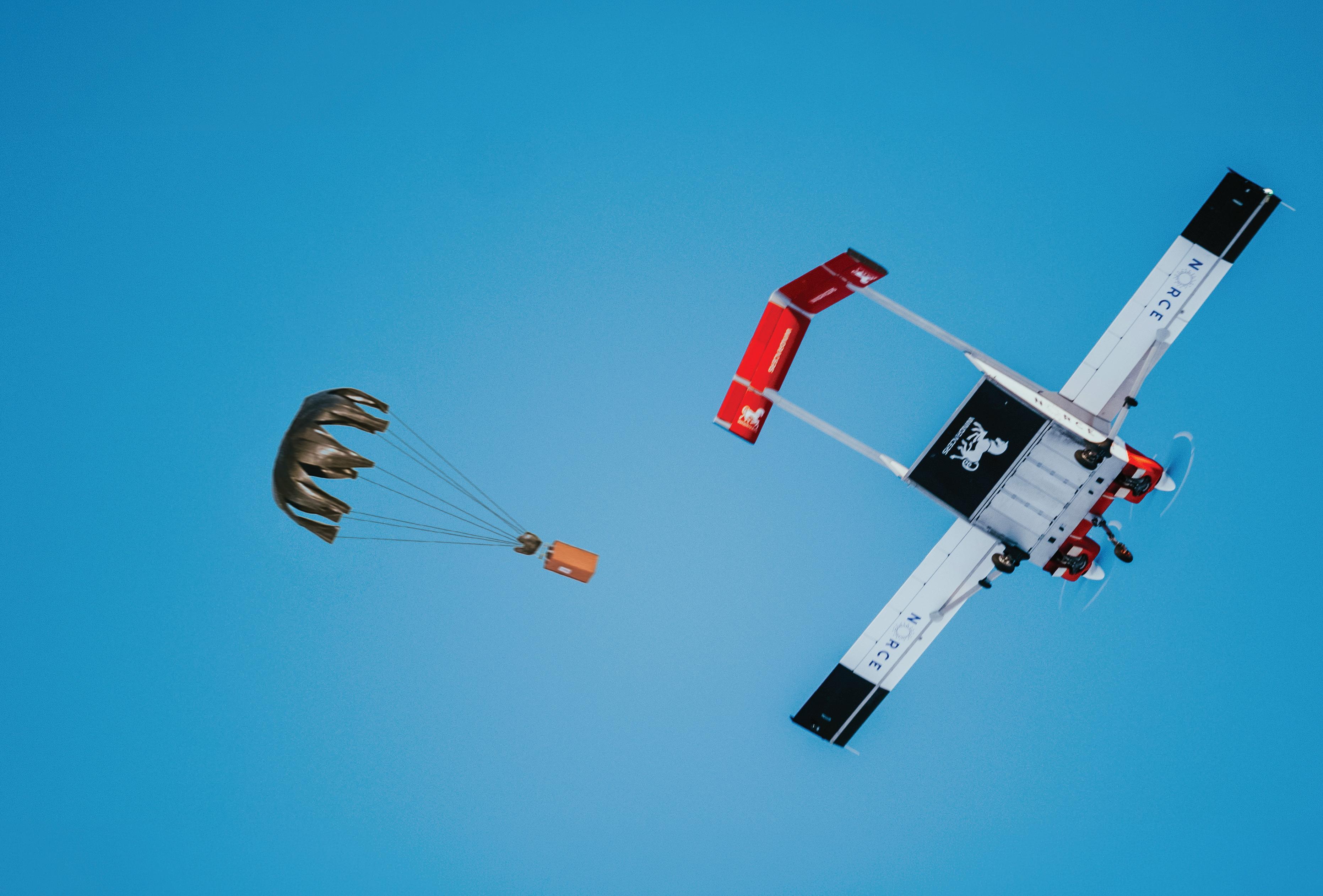
But a drone could eliminate that nervous wait for help to arrive. The capability to gently drop supplies from the air at a doorstep could be a game-changer.
As Dave conducts his research, the focus is on companies developing machines that suit humanitarian purposes and the tough environments where MAF operates.
‘At each stage, we’ll keep asking if we should proceed, and whether this does what we want it to do. If so, I would say in three years we might have a trial going.
‘I would like to say by 2030, if the research proves that they are worth it, we could be operating our own drones – that’s a realistic path to dream towards.’
Dave is certain that, if MAF does start using drones, it would not replace pilots flying to remote airstrips. His research has also found drones are not guaranteed to be a green alternative – they are just more environmentally-friendly for certain loads.
‘It's about the right tool for the right job,’ Dave said.
‘For a delivery of cargo below 300kg it’s efficient to use a drone. If a water filter in a remote location breaks, we could put a new filter on a drone and it'll be with you in an hour.
‘Ultimately, I’ve started to care less what tool we use to get it there. The more important thing is that it gets there to bring the help, hope and healing needed.’
MAF flew more than 6.1 million kilometres in 2025 – more than 152 times around the equator.
TOP: This WindRacers model is one of the drones that MAF has been learning about
RIGHT: Dave Waterman operates a drone
Your MAF story
An MAF flight is more than a transit from A to B. It’s a personal, memorable and transformative journey. Stories about MAF flights give personality to the lifesaving take-offs and landings that happen every day across our broken world – which are only made possible by supporters like you.
Now it’s time to tell us yours…
Whether you’ve personally travelled with MAF or know someone whose life has been changed – we want to hear your MAF story. It will encourage others to continue or join our global mission, which now spans eight decades. Here’s a couple of heart-warming examples from across the years to spark your imagination and thank you for making every flight possible.
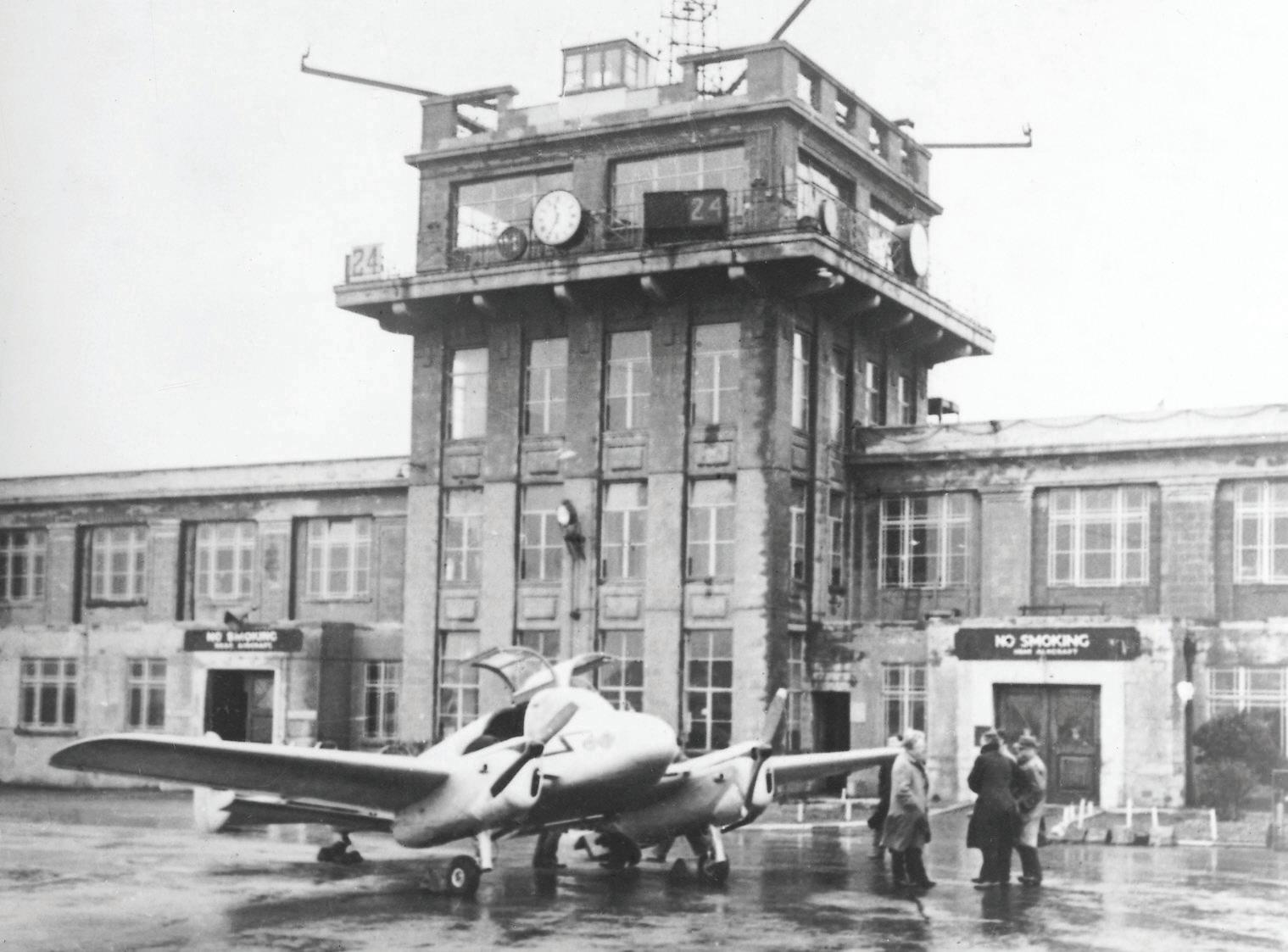
Stuart King London, 1948
‘Jack flipped the undercarriage switch to retract the wheels. After a moment, two green lights came on, showing they were up and locked. He eased the flaps and the plane gained speed. Soon the tossing waves of the channel were beneath us, ahead, the 4,000-mile journey to Africa. There was little time to consider the historic nature of our mission. We were busy surviving.’
ABOVE: MAF’s first flight from London to Africa took RAF veterans Stuart King and Jack Hemmings on an adventure of a lifetime. The pair set off with little more than a map, compass and the River Nile as their guide.
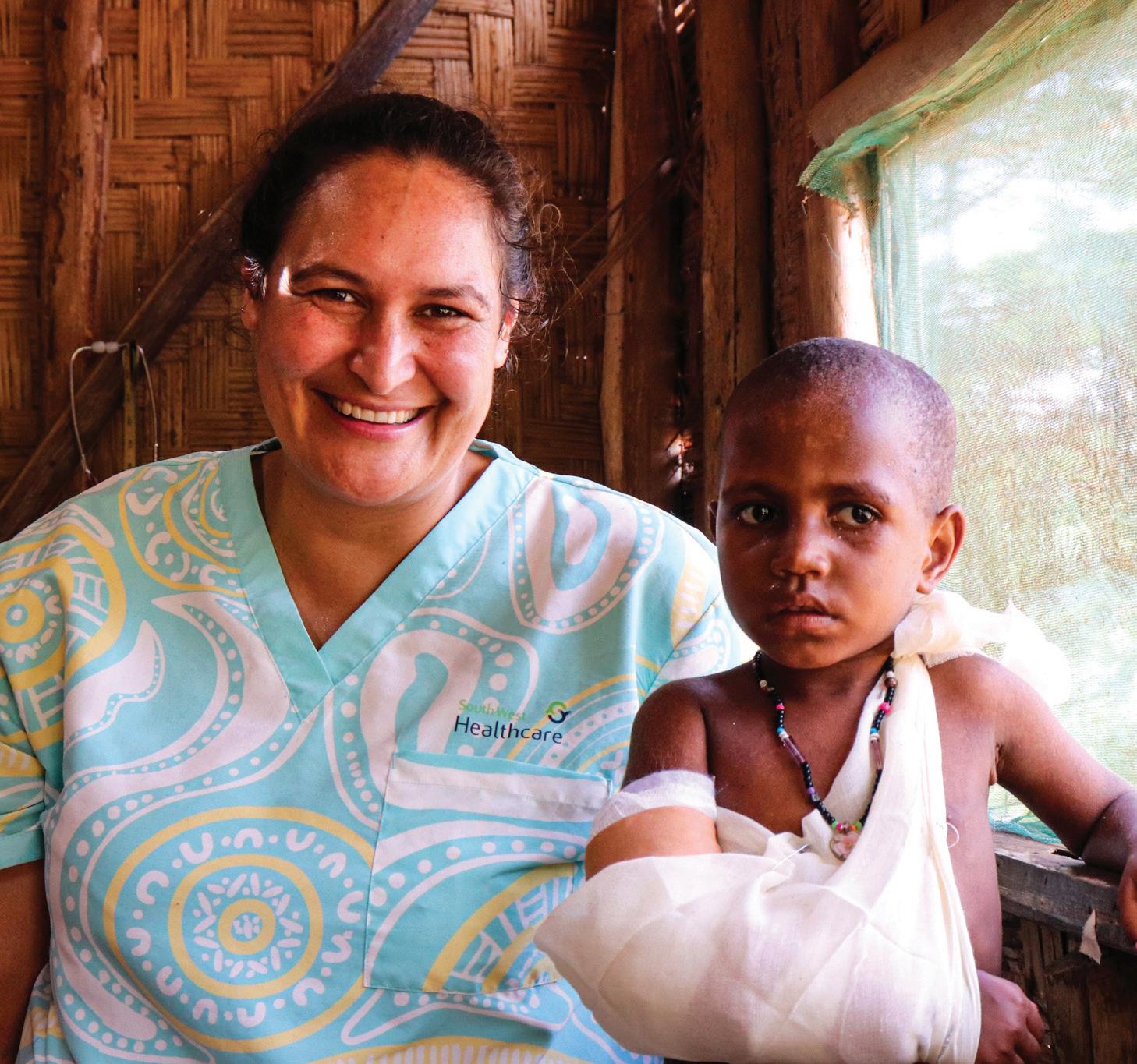
Marino PNG, 2026
‘Flying in an aeroplane is really amazing. MAF is bringing healthcare to the people who wouldn’t see it. They would walk for days to get help.’
ABOVE: Marino and the Health Patrol team provide a fly-in clinic for communities with no roads. Flying with MAF takes just 15 minutes across jungles, rivers and mountains.
Manzi + Uwera * Rwanda, 1994
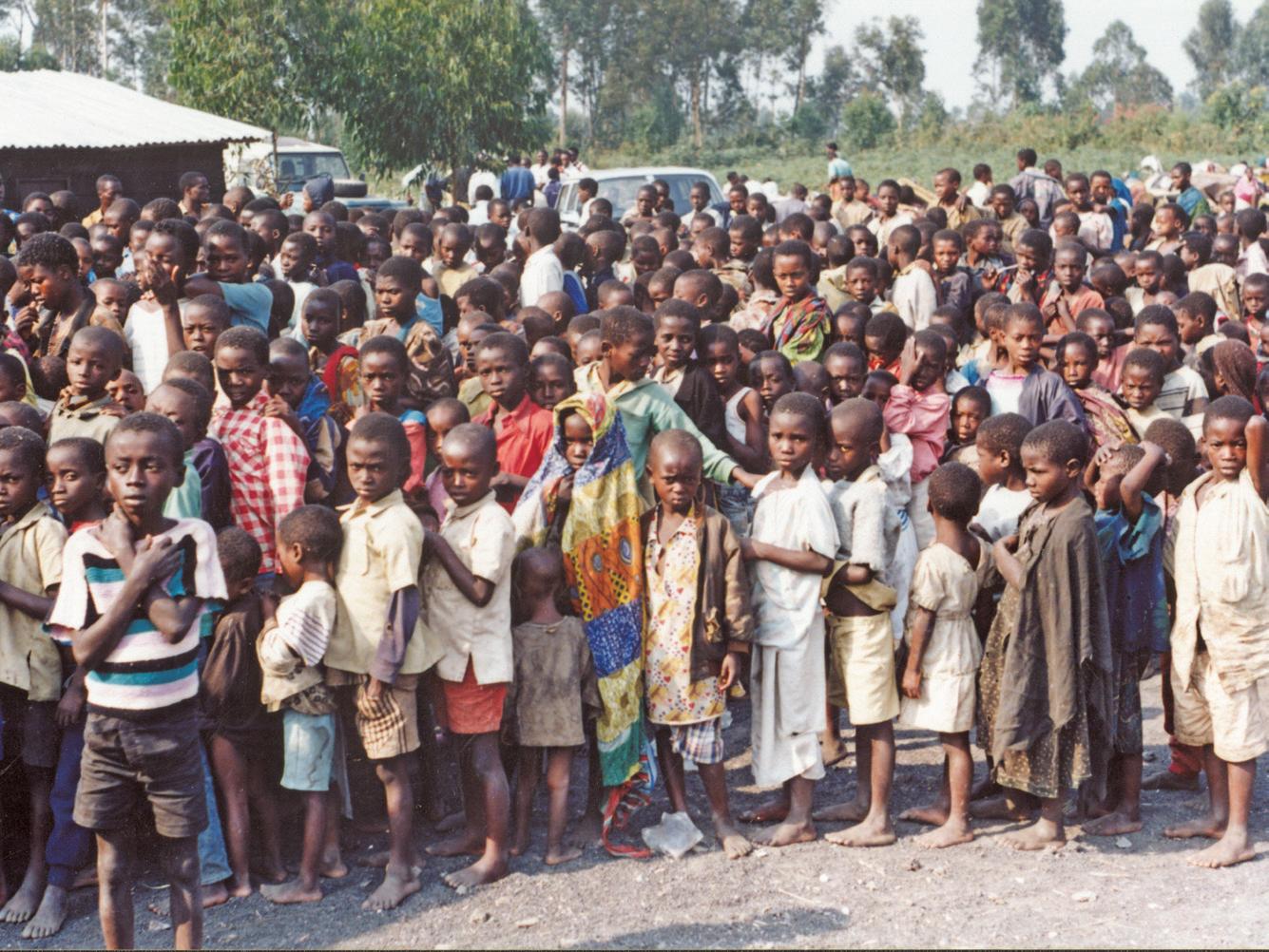
‘In the midst of the 1994 Genocide against the Tutsi in Rwanda, our family were forced to flee. We travelled by car and by foot – we had our children in our hands. Having crossed the border into Bukavu [Democratic Republic of Congo], we found temporary refuge and one week later, contact was established with MAF.
‘When the plane arrived, it was like a miracle. Until then, we didn’t know MAF, but it’s difficult to convey adequately what that journey meant to us. We still regard that moment as a decisive turning point in our lives. As we boarded the aircraft – and we watched the deep forest of the DRC from above, grappling a privilege many victims caught in Rwanda were denied, It was a huge feeling of relief, but I was also saddened, tormented by the horror facing thousands left behind.
‘More than three decades have passed since our family directly benefitted from the ministry of MAF, yet the memory of that intervention remains vivid and deeply cherished. It is a joy to express our enduring appreciation for the life-saving work MAF continues to carry out across remote regions of the world. It is wonderful to know that there is an organisation still working to help forgotten people.
‘Looking back, it is evident that MAF’s courageous service did more than transport a displaced family. It has enabled a journey of scholarship, advocacy and reconciliation that has touched many others. For that immeasurable gift, we offer our heartfelt and abiding thanks.’
LEFT: In April 1994, the death toll in Rwanda surpassed 500,000 and MAF pilot Anne Ezinga flew to Ngara camp, reporting from the air that, ‘All roads are clogged with refugees; a vast sea of humanity.’
Claudine DRC, 2017
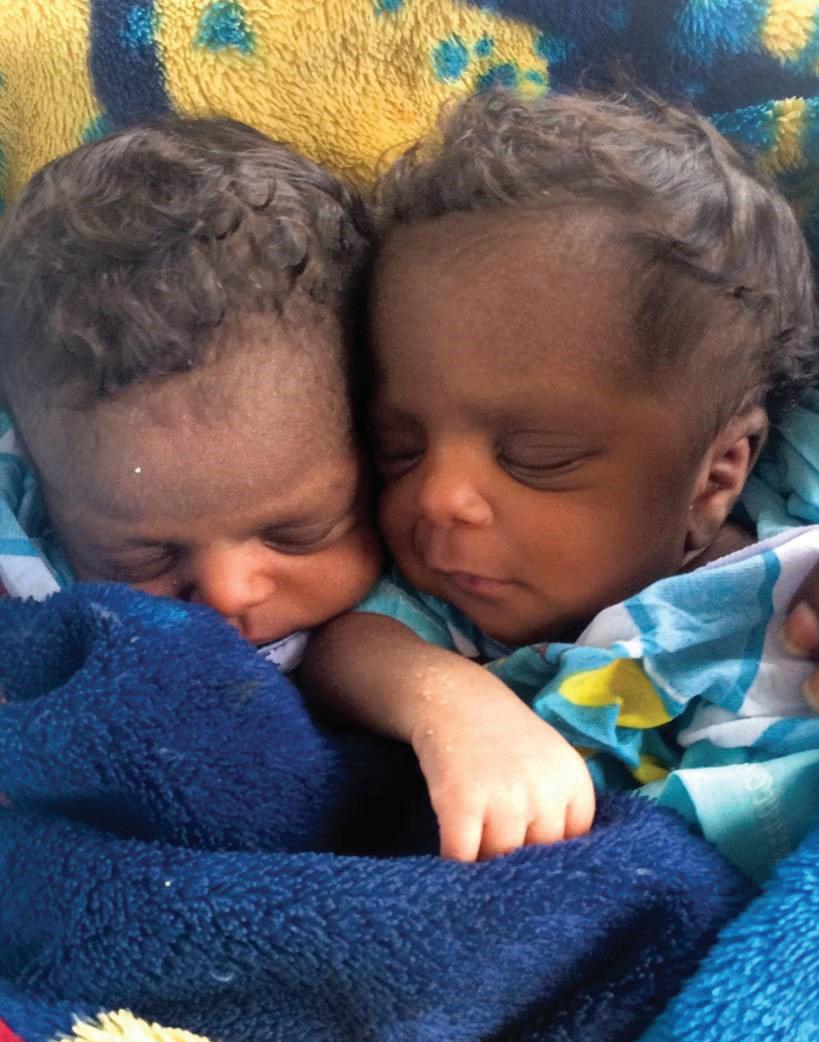
‘We were begging God to help us; we just wanted a chance for our babies to survive. We were praying that the Lord would send angels to save them. We don’t have wings – but God sent us wings.’
MAF flew around 120,000 passengers in 2025.
ABOVE: An MAF flight saved Claudine’s conjoined twins Anick and Destin, who were born naturally in a jungle village. The girls were the first to be successfully separated in Kinshasa, despite being given a 5% chance of survival.
Meet the Isolation Trial team!
For many of us, technology is so embedded in daily life it's hard to imagine living without it – let alone being days from medical care or food supplies.
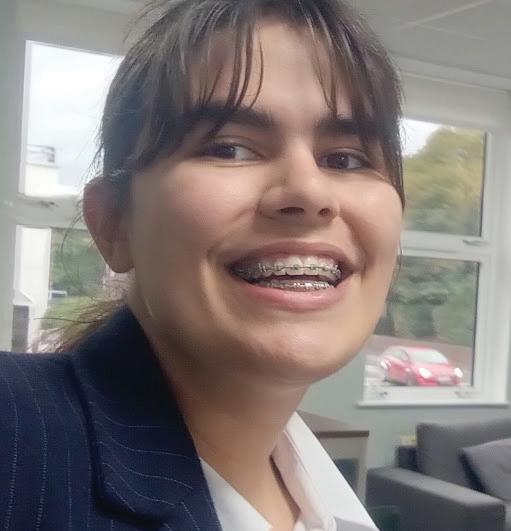
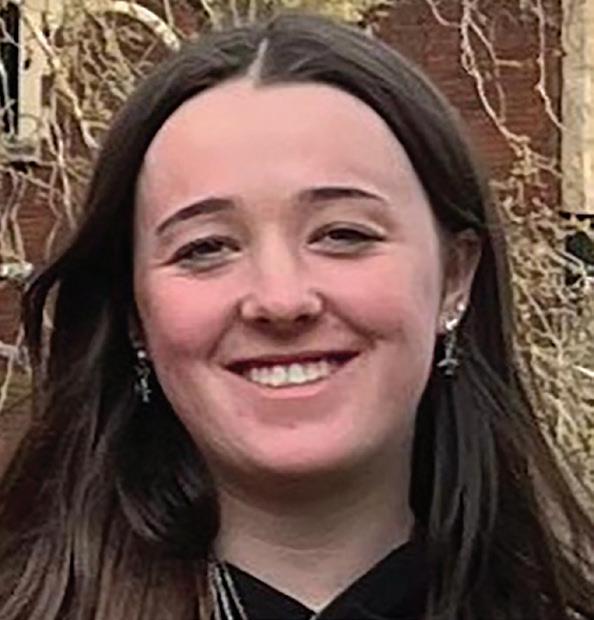
That’s why we created the Isolation Trial fundraising challenge. A small group of adventurous young adults will be taken into the wilds of Scotland to experience a glimpse of the isolation many MAF-supported communities face. No running water. No toilets. No electricity. Just basic shelter, kit and food – and a mystery route with team challenges along the way to bring MAF’s mission to life. We asked three members of the Isolation Trial team some questions about their motivation to get involved and this is what they said...
What do you expect will be the most challenging part of going without everyday luxuries?
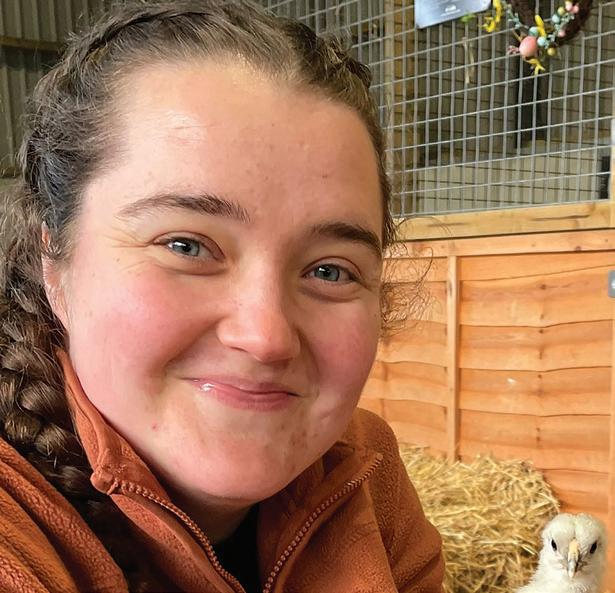
Gracie: I think the hardest thing for me will be going without music. It’s my number one motivator when I’m working out, walking, or relaxing. I think my legs will start hurting much more quickly without that distraction.
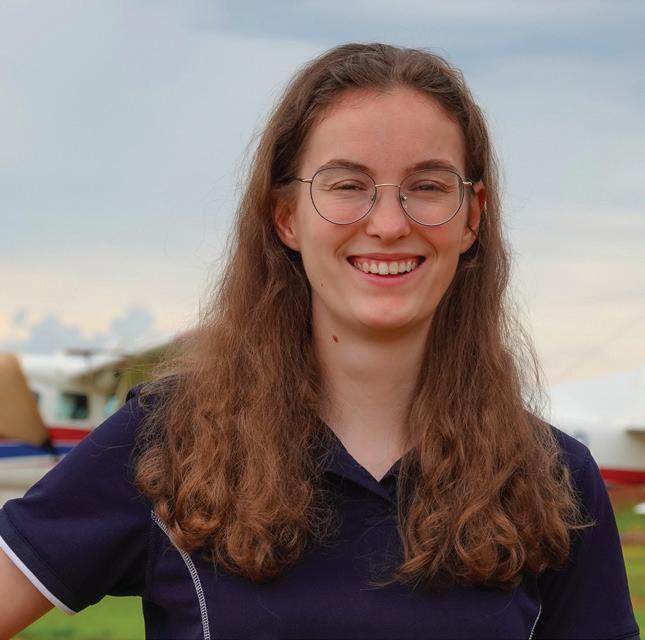
Alice: For me, the lack of regular communication with my friends and family. It’s something we take for granted because it’s so easily available.
Siobhan: Missing my comfy bed! I reckon I'll manage fine without my phone as I'm often misplacing it anyway.
Many people MAF serves live with hardship every day and don’t get to out of into it. How does choosing this experience shape your perspective?
Gracie: I see the Isolation Trial as a privilege. Not many people get the chance to stand in solidarity with those MAF serves. I also recognise this isn’t the same – we’ll have enough food, waterproofs and clean water, and I know many people don’t.
Alice: I think it will help me better understand the depth of the issues people face, as it can be easy to think of those problems as far away from us.
What made you say yes to this challenge, knowing it won’t be comfortable?
Gracie: Modern life prioritises comfort above almost everything. Food can be delivered, the internet is expected everywhere, and people can work from home in their pyjamas. I wanted to prove to myself that comfort doesn’t have power over me.
Siobhan: This is a once-in-a-lifetime experience that I couldn’t pass up!
To find out more about the team and how you can support them, visit
Gracie
Alice Siobhan
Soaring Together: Spotlight on Madagascar
Join us for an uplifting online event as we shine a spotlight on MAF’s vital work in Madagascar.
Learn how your support is enabling us to reach isolated communities with practical help, medical care and the love of God. You’ll also discover how leaving a gift to MAF in your Will can create a lasting impact for generations to come.
WHEN? Tuesday 14 July WHERE? Online, from the comfort of your home
Register now at MAF-UK.ORG/madagascar-online or scan the QR code.
Flying for Life Podcast
In MAF’s Flying for Life Podcast , Josh Carter chats to a range of guests at the heart of MAF’s ministry. Fly around the world with Josh as he explores the issues that matter, and the role MAF plays in delivering help, hope and healing to the remotest people on earth…
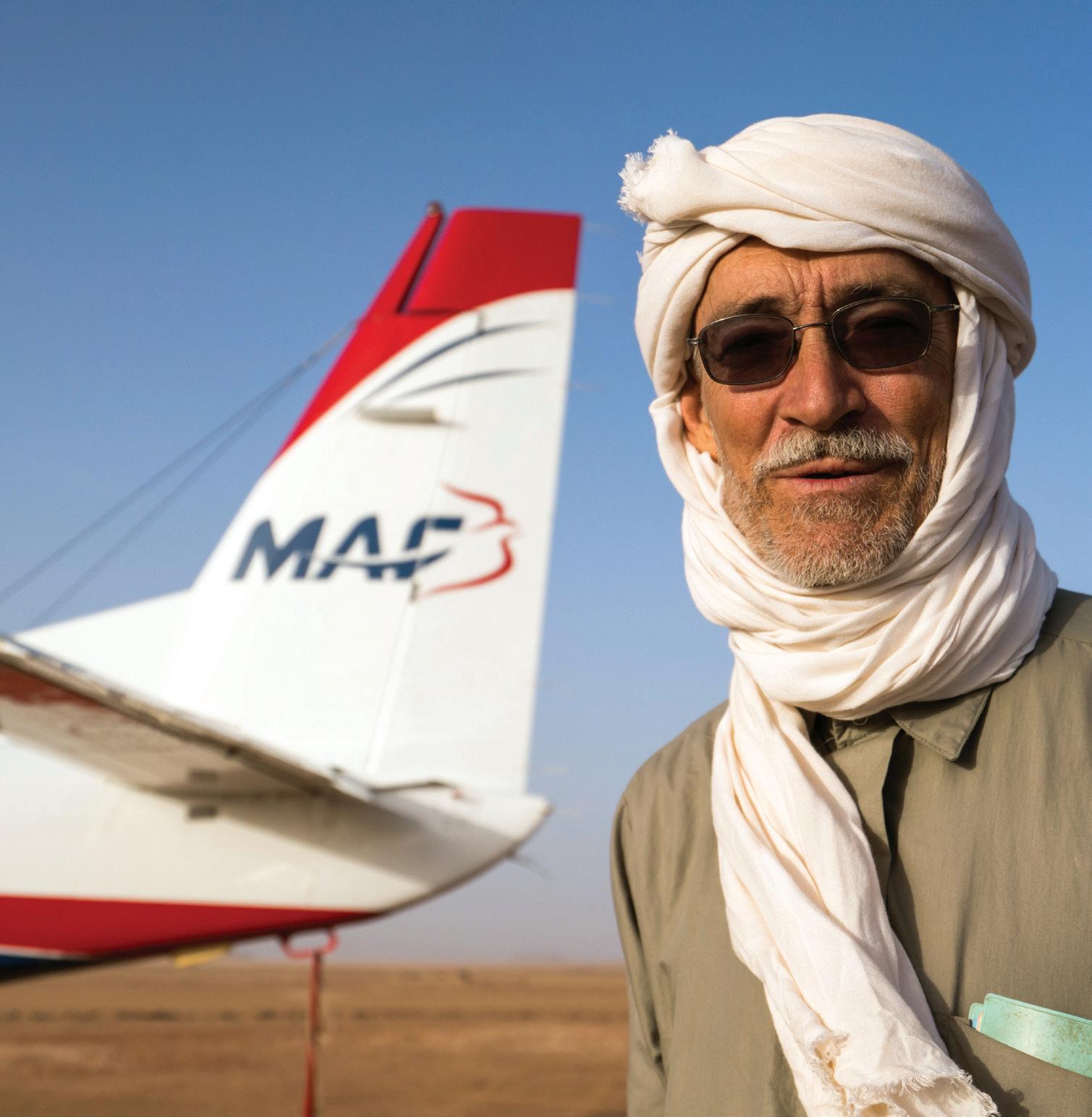
In episode 14, we celebrate 60 years of MAF serving Chad’s most isolated people such as the Teda people in the Sahara. Their language had never been published until linguist Mark Ortman arrived. For 30 years, Mark – enabled by MAF – has developed the Teda alphabet and transformed education in the region.
RIGHT: Linguist, Mark Ortman
LEFT: Esmara, MAF Chad Country Director
Scan the QR code to find out how Mark and Esmara – MAF’s youngest Country Director – are changing lives. Alternatively, if you’d prefer to read about the history of MAF in Chad, please visit MAF-UK.ORG/chad-60
When you give...
...life-saving flights can reach the most vulnerable. In the midst of a global fuel crisis, your generosity helps us ensure we can keep our planes flying.
As you have seen in this magazine, these are flights that can save lives and transform the futures of isolated communities.
Please consider making a life-saving donation today. Scan the QR code or complete the enclosed form.