MISSION AVIATION FELLOWSHIP
WE FLY WHERE ROADS END TO REACH THE FORGOTTEN

FROM THE FRONTLINES OF MISSION AVIATION
WE FLY WHERE ROADS END TO REACH THE FORGOTTEN
FROM THE FRONTLINES OF MISSION AVIATION
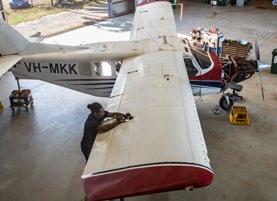
MAF (Mission Aviation Fellowship) is a Christian organisation reaching women, men, and children in over 25 countries. Operating more than 115 aircraft, MAF’s pilots overcome terrain that has become inaccessible due to derelict roads, natural disaster, or violent conflict. MAF aircraft fly into more than 1,000 destinations - transporting food and water, health professionals and medical supplies, and emergency workers and Christian missionaries where they are needed most. Each flight brings practical help, spiritual hope and physical healing to thousands of isolated people in remote communities for whom flying is a lifeline not a luxury.
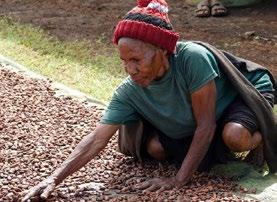
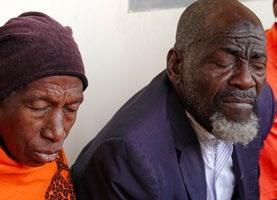
Sowing hope never fails
Dear reader,
She sat on the open walkway outside the hospital in Shabunda, Democratic Republic of Congo, standing up carefully when the MAF pilot and crew greeted her. Nabintu, 32, had endured violence that had broken her body and drained strength from her. The doctor explained that she had waited there for four long months— without a surgeon, without electricity, without medicine. She had hope, but it became weaker with every day that passed.
When she was asked if she would travel on MAF’s plane to Dr. Mukwege’s hospital in Bukavu, her face brightened. “Gather your things and let’s go,” she was told. She remained still. Then she lifted her hands. “This is all I have.” A small bundle of cloth in one hand, a scrap of plastic in the other.
In the plane, she trembled. Before sitting down, she laid the piece of plastic on the seat, wanting to protect it. There was a mixture of shame and courage in her eyes. The MAF crew were left with memories of a woman filled with pain and feeling the loss of her dignity.
Two days later, the MAF crew visited her. She walked toward them with a smile that seemed different.
They asked if she had already had surgery.
“No,” she said softly, “but the doctor who examined me gave me a little hope that I might become whole again.”
Sometimes a tiny flicker of hope - given to an individual or to an entire community - can open the door to life once more.
If the goal is change, then first of all, a faith in tomorrow must first live in people’s hearts. And when it does, almost anything becomes possible.
If we plant a seed of any kind, it will grow.
If we plant hope, possibilities, beliefs, and a future to reach for, then even a community which has been cut off and isolated can begin to grow and flourish.
If we sow knowledge in children, their dreams will have a chance of coming true.
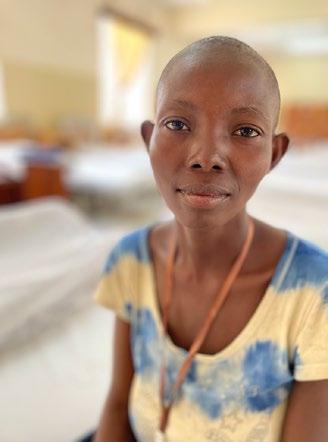

Perhaps a doctor lives within seven-year-old Romash, living in Madagascar.
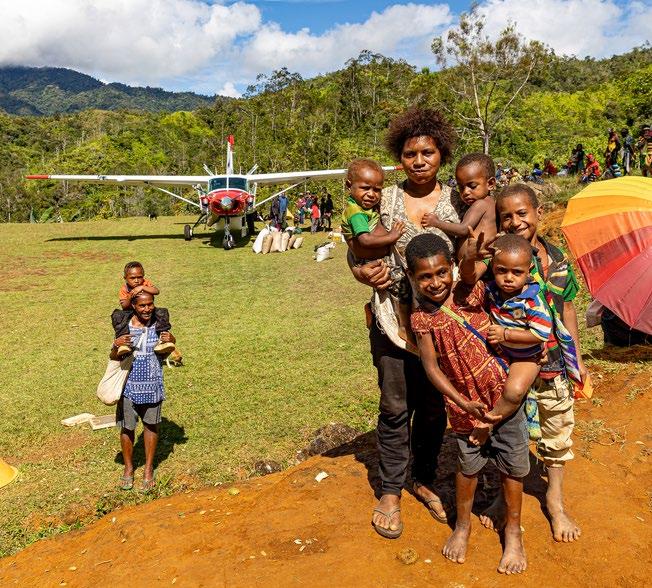
Perhaps a pilot lives within nine-year-old Margret, living in a remote village in Papua New Guinea. Perhaps a pastor lives within nine-year-old Roberto, living in Mozambique.
Not everything we sow will bear fruit. But sowing hope never fails.
All of this is made possible by your generosity. The pilot keeps the aircraft airborne, while your gift sustains the hopes of people who are cut off from the outside world, with no lifeline other than MAF.
Together with you, we are planting seeds that may take years to grow, yet one day become hope, dignity, and new beginnings for people who desperately need them.
Thank you for your kindness.
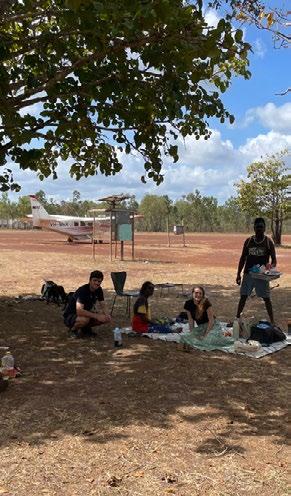
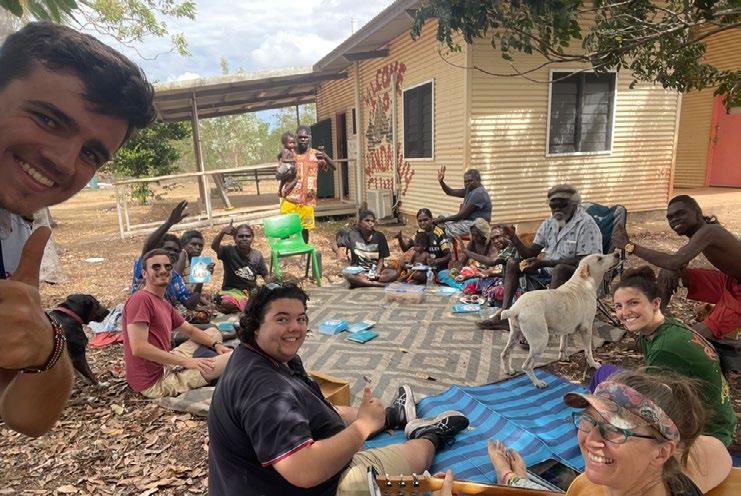
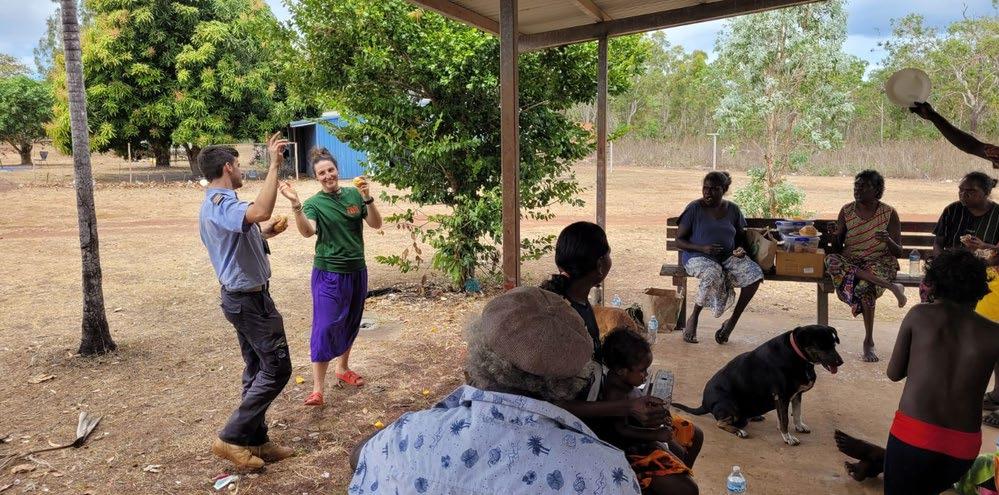
A simple campfire gathering in Wandawuy becomes a beacon of hope and connection as MAF pilots and staff bring faith, fellowship, and practical support to remote Yolŋu homelands.
Located in Australia’s Northern Territory, Arnhem Land is a legally recognised reserve in which the indigenous Yolngu people live on their traditional land and determine their own future.
The area’s vast geography and prolonged wet season make overland travel very difficult and access to healthcare, fresh produce and economic opportunities is restricted for many.
MAF has been serving the people of Arnhem Land since the 1970s. Responding to direct requests from homeland communities, MAF staff regularly lead evangelistic outreach events.
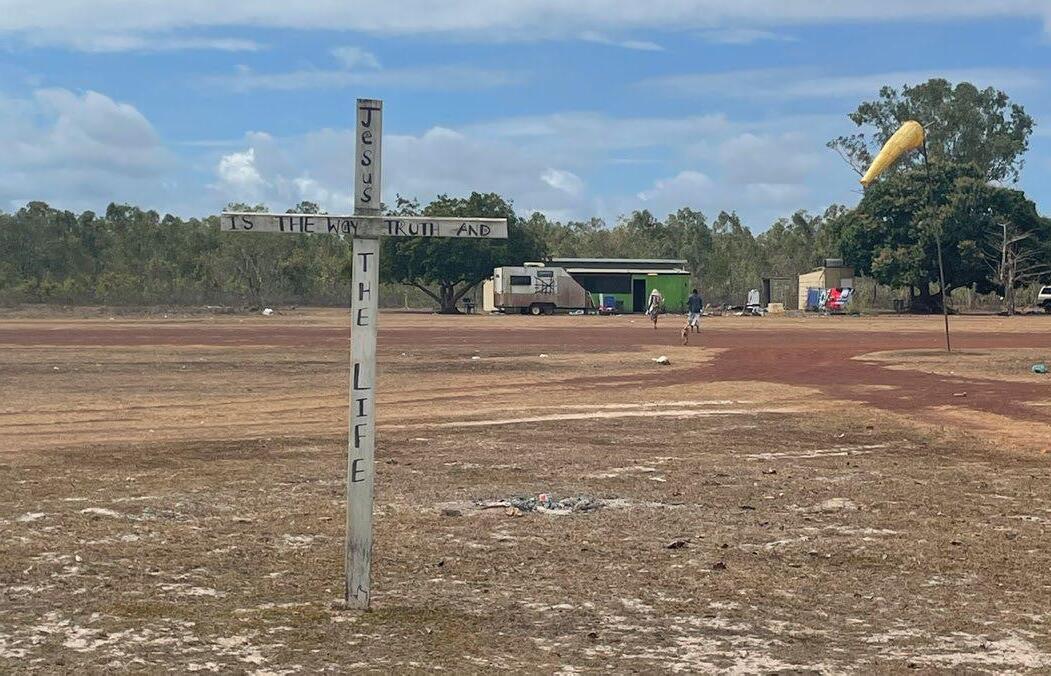
At the edge of a red gravel airstrip in Wandawuy, a crowd gathers beside a plain white cross, with a small MAF aircraft alongside. Here, gospel gatherings take on a distinctly Yolŋu flavourfood, music, and dance blending with stories of faith.
“They’ve been really eager for us to come,” says MAF pilot James Gullett, reflecting on the warm welcome from the community. “The first time, there was a little uncertainty about what exactly this was going to look like. But then we came, and the Yolŋu in Wandawuy really enjoyed what we were able to share—an opportunity for fellowship and a way of getting to know them better.”
James and his colleagues visited Wandawuy, not as part of routine flight operations, but to encourage Yolŋu believers and homeland-dwellers through outreach gatherings. These informal events, shaped by Yolŋu culture’s emphasis on relationships over schedules, offer food, worship, and the sharing of Bible stories.
One moment stood out: after sharing the story of the Good Samaritan, the team distributed copies of Mark’s Gospel in Dhuwaya, a local language. For one believer, this was especially meaningful — her grandmother had translated it years before.
“They were so excited to receive these copies and to share this heritage of faith with their children,” James recalls.
Life in the homelands can be challenging owing to sickness, family violence and the isolation of remote living. MAF’s presence brings more than access to education and healthcare; it delivers a growing hope that can resonate deeply with Yolŋu believers.
“We are so grateful to be part of God’s plan for this remote region,” James says. “We can encourage and share the good news of the gospel with one another in these places.”
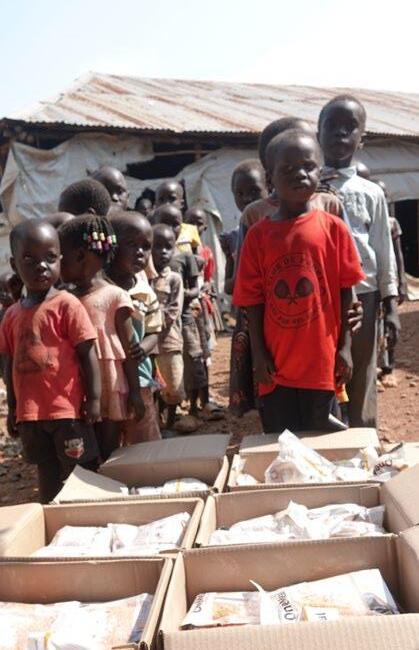
Severe international funding cuts have left many children with empty food bowls and an uncertain future in Uganda. Together with MAF, Kids Around the World (KATW) is providing life-saving food – but the ministry grows far beyond that, offering messages of hope and the healing gift of play.
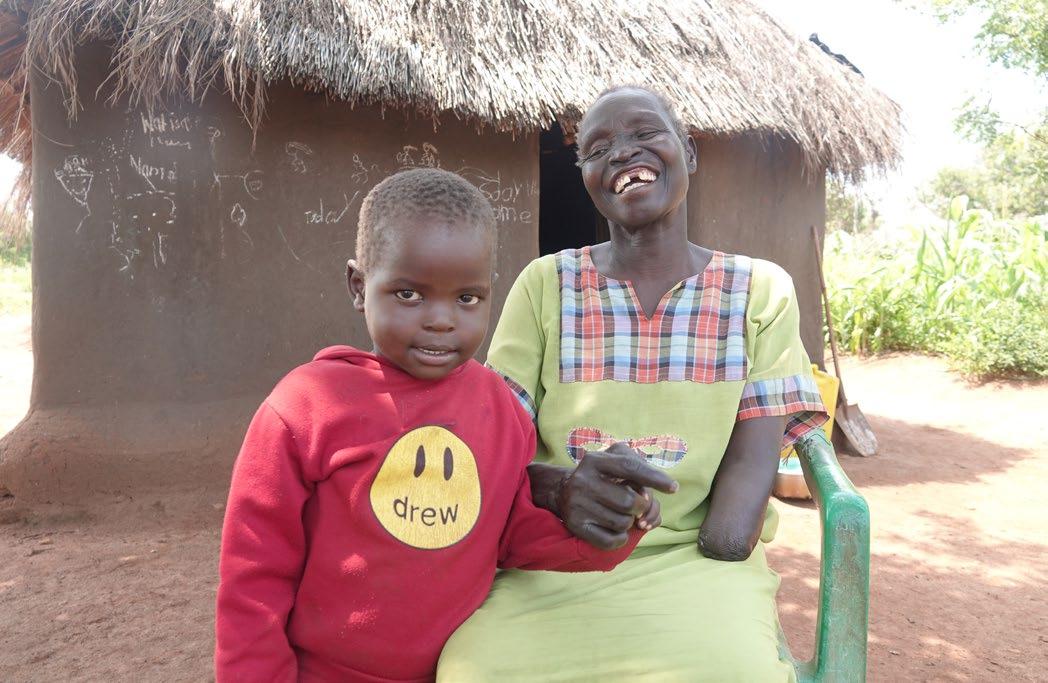
“The children were crying because there was no food to eat,” says 63-year-old Vicky Eimane, a refugee from South Sudan. “Even the portions we used to receive have been totally removed.”
Vicky bears the challenging responsibility of caring for her four grandchildren and her daughter-in-law after her son abandoned the family. Keeping everyone fed has become even more difficult since her arm was amputated as a result of complications from diabetes.
Now, hope is returning. Vicky smiles broadly as she holds the hand of one of her grandchildren. “The food given to us by KATW
is helping us a lot,” she says, expressing deep gratitude for the support her family receives.
In the wake of funding cuts, feeding refugee children is now one of the most important ways aid workers can bring help to refugees in Uganda.
MAF flies KATW to the Adjumani airfield, where they distribute food to more than a thousand children at Pagirinya camp. Here, each child who attends their programme receives five food packs. The packs contain rice, lentils, vegetables, and vitamins.
“We distribute balanced food, and that
makes all the difference. The children’s health has improved greatly, and we’ve been able to curb malnutrition and disease,” says Richard Charles Sekyeru, KATW team leader in Uganda.
In addition, the organisation installs play areas for the children.
“Play is therapeutic – especially for children with troubled backgrounds. Growing up myself, we were so poor, and I always looked forward to playing. I can identify with these children,”
Richard says with a smile.
“When we install play equipment, the joy of seeing a swarm of kids running to use it is priceless.”
KATW partners with local churches to set up the play equipment, and they use this opportunity to share Bible stories with the children.
“This partnership has helped the church to grow. The food distribution and the play equipment greatly encourage the refugee community here,” says Pastor Kato
Everest, himself a refugee who leads a church of about 350 people at Pagirinya camp. Among other organisations, MAF frequently flies KATW to Pagirinya and other refugee settlements in northern Uganda.
Richard is grateful for MAF’s ability to offer affordable and safe transport, which enhances their efficiency:
“MAF has been a blessing, especially in areas where the airfields are close to the places we work. When teams don’t fly in, they waste a lot of time on the road. MAF reduces that time so we can spend more of it doing life-saving work in the communities.”
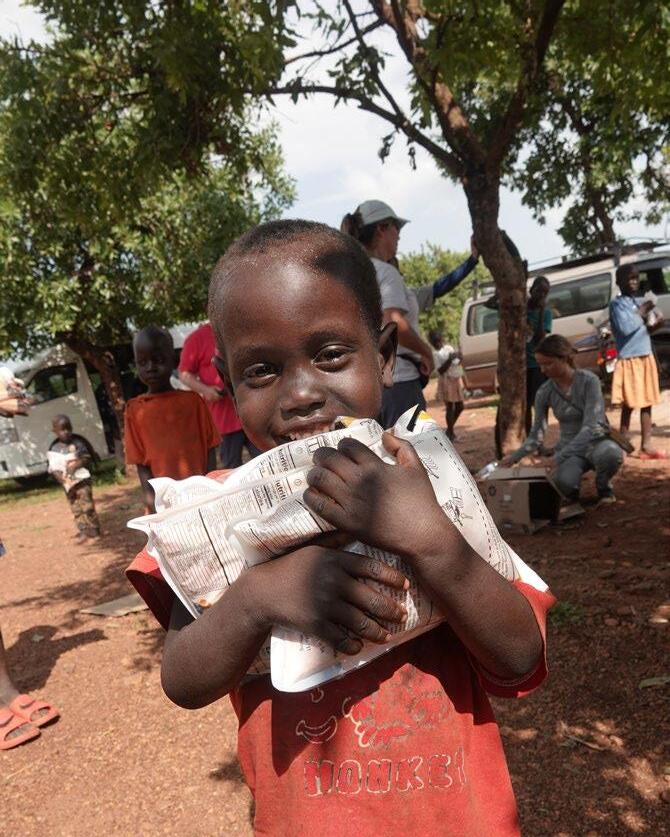
PLAY IS THERAPEUTIC – ESPECIALLY FOR CHILDREN WITH TROUBLED BACKGROUNDS.
Keep planes flying and isolated people helped by giving a regular gift to Mission Aviation Fellowship.
Regular gifts allow us to plan for the future and focus on bringing help, hope and healing to isolated people worldwide.
Fuel the mission and fly hope further by giving a monthly gift: Visit mafsa.co.za/donate or email maf@mafsa.co.za to find out more and become a regular giver today.

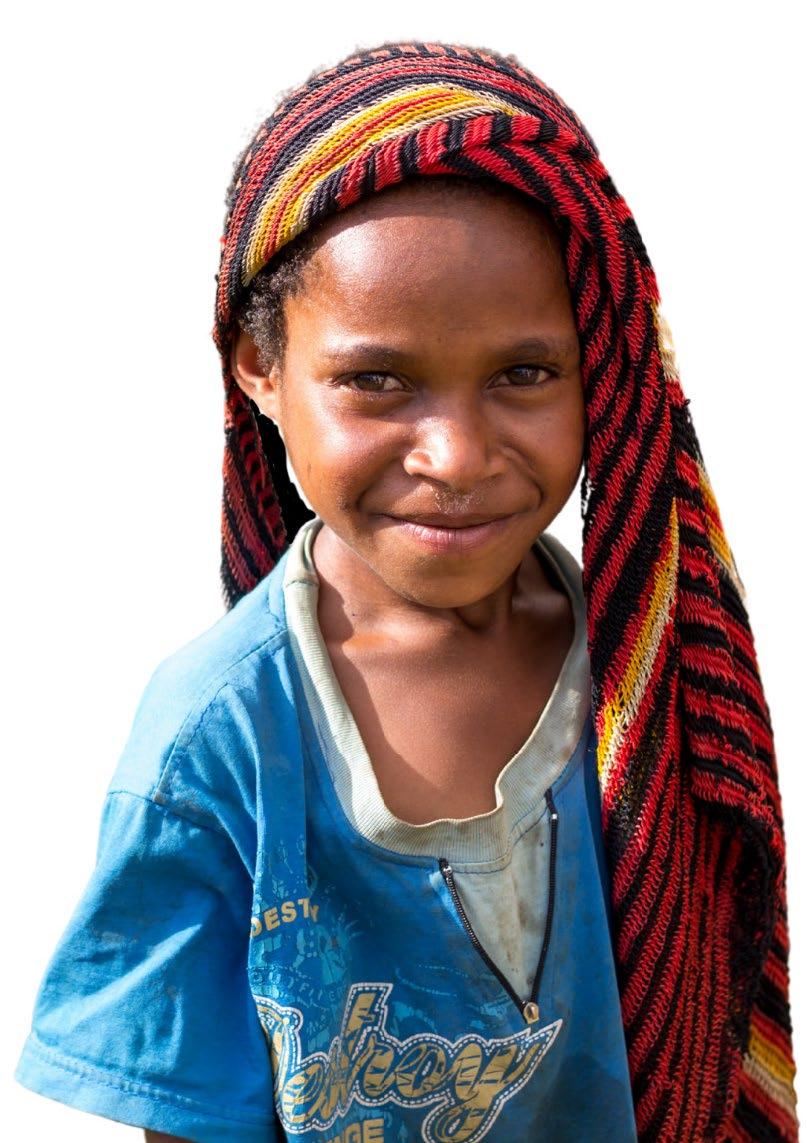
Across MAF programmes, we’re seeing more people from the very regions we serve stepping into vital roles - people who understand their communities deeply. Some, like Papua New Guinean aircraft engineer Amber Mori, are going on to serve in other MAF programmes. Their journeys show how the future of MAF is being shaped by those rising from within.
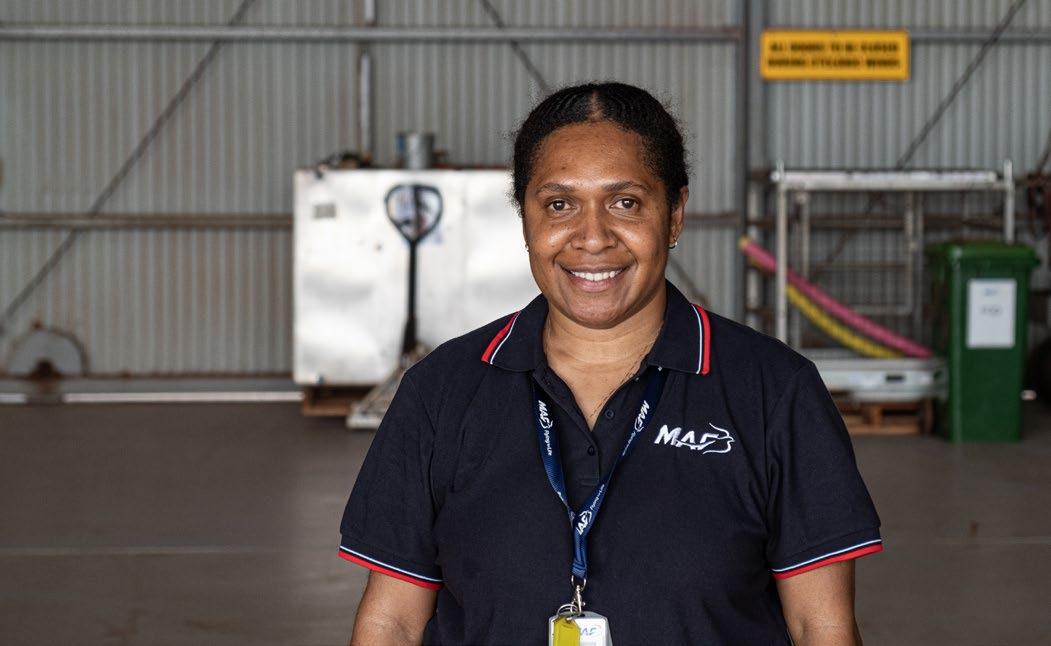
Amber’s path began as a determined young woman with a passion for aviation and a quiet confidence in God’s provision.
“I went to church with a guy called Brenton Paix, who was the Engineering Manager at MAF,” Amber said. “One school holiday, he showed me around the hangar. I thought, ‘This seems pretty cool. I want to give it a go!’”
And so, she embarked on a journey that took her to Brisbane, Australia, where she completed a two-year Diploma in Aircraft Maintenance Engineering before returning to Papua New Guinea (PNG). Soon after, she applied and began her career with MAF.
Her quiet determination became a defining trait - and a testament to her sense of calling. The scheduled maintenance in Mt. Hagen kept her busy, but it was the bush trips that filled her heart. “ I always liked going out to the bush,” she said. “We had ministry trips - showing the Jesus film, spending time with people in remote communities. Those are some of my best moments. They’ll stay with me.”
After nearly seven years with MAF PNG, Amber is now serving in Arnhem Land.
“The work is going to be similar… But people and cultures are different. I’m looking forward to getting to know them,” she said.
Amber’s advice for others seeking their purpose is to learn to trust God.
“Trust in God’s provision,” she said. “If He’s called you, He will provide.”
Her story is proof that when you keep knocking, stay faithful, and lean into God’s plan, He makes a way - often in places you never imagined.
AMBER’S QUIET DETERMINATION AND TRUST IN GOD HAVE CARRIED HER FURTHER THAN SHE EVER IMAGINED. NOW SHE’S SERVING REMOTE COMMUNITIES WITH THE SKILLS GOD PLACED IN HER HANDS.
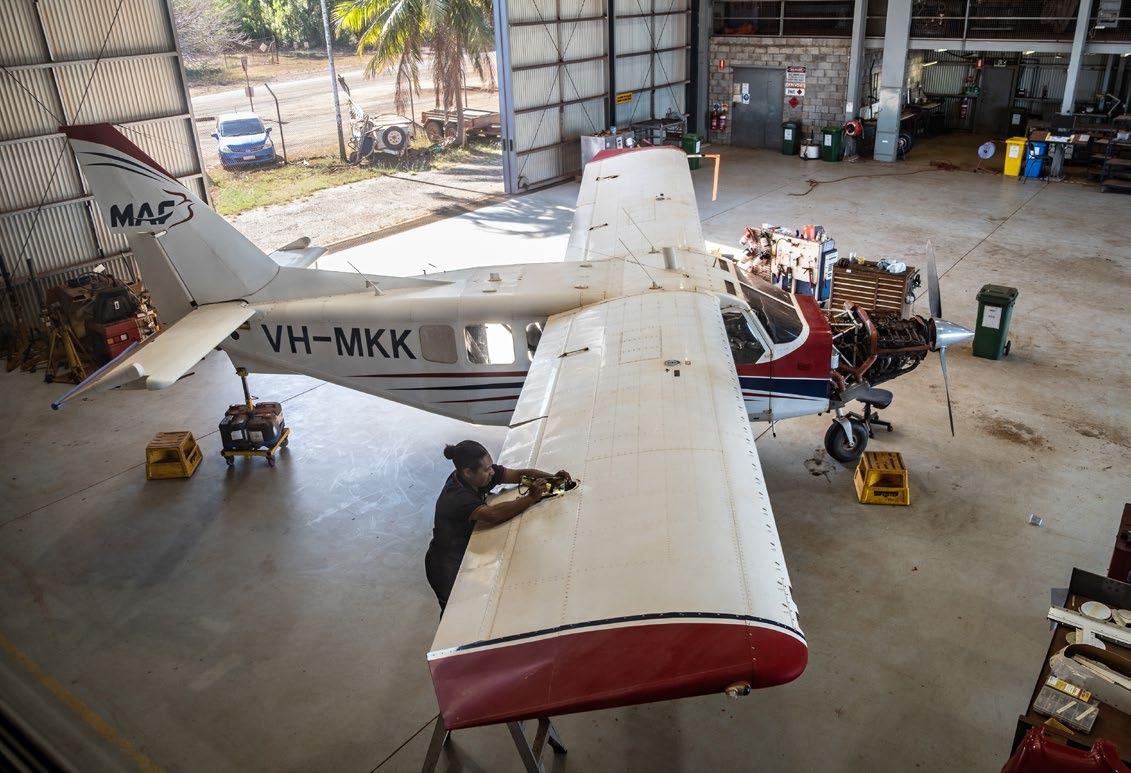
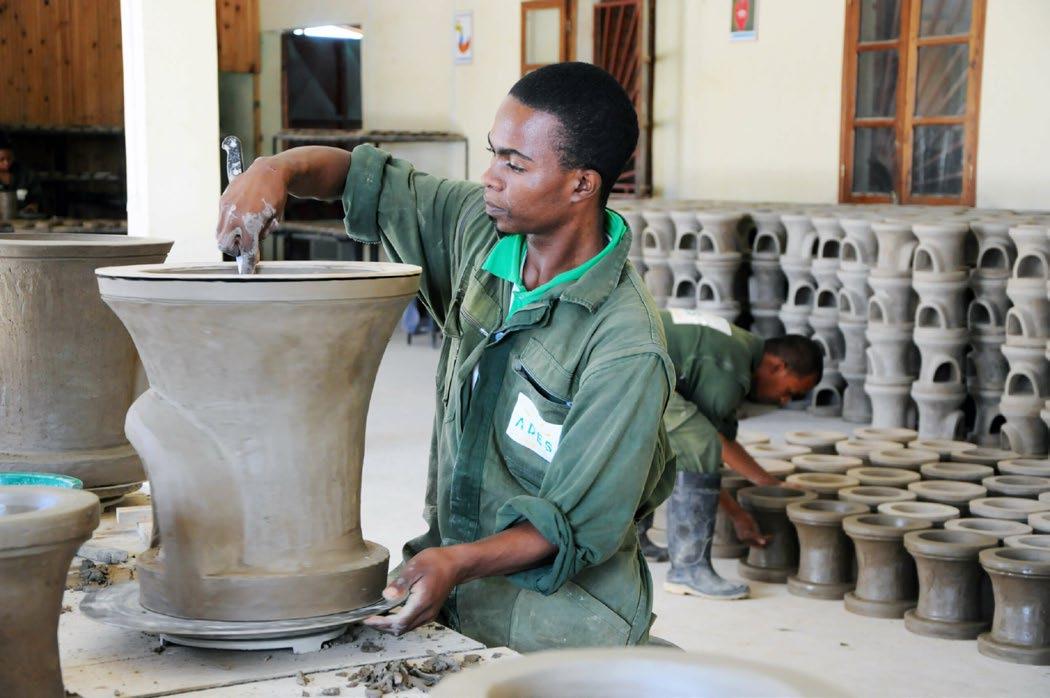
MAF flights make a world of difference to isolated communities – and now a carbon offset scheme is seeking to safeguard the environment and families’ health through a cookstove project in Madagascar.
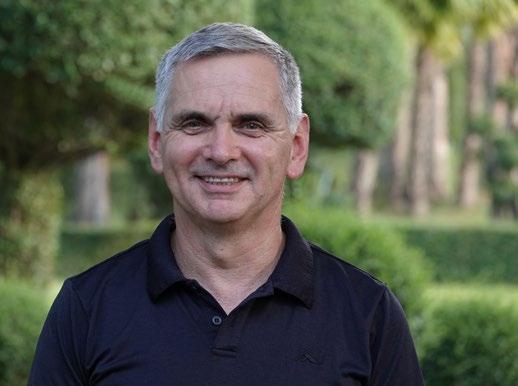
Phil Sproul is passionate about seeing isolated people changed by the love of Christ, and how aviation enables MAF to realise this vision - but he’s eager to address the impact that flying has on our world.
As Director of Technical Operations for MAF International, Phil is responsible for the fleet of aircraft that serve isolated communities, and he is excited that all MAF International flights using the Cessna Caravan are now carbon neutral.
So, why should a humanitarian air operator like MAF International follow commercial airline operators in taking this carbon-offsetting step? Phil is clear on that.
“God gave us a planet to look after - and He asked us to take care of it,” he said.
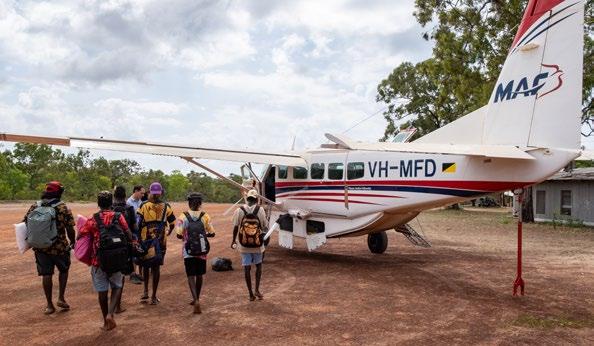
To put it into perspective, all the C02 emissions from MAF International’s aircraft for an entire year are equivalent to fewer than 105 oneway flights from London to New York in an Airbus 350 or a Boeing 787. To look at it another way, MAF International’s carbon emissions equates to 575 families watching a TV streaming service for one year.
And although Phil believes it is vital we work hard to reduce our environmental impact, he says we must never lose sight of the impact every MAF flight makes.
“Without flying it would take a long time to walk or drive when you’re critically ill and you desperately need help, or have vaccines that need to stay refrigerated,” he said.
“So yes, while our activities produce CO2 emissions, the positive impact on people’s lives and holistic improvement in their environment significantly outweighs other considerations.”
The carbon offsetting initiative –affecting all 31 Cessna Caravans, the main workhorse in MAF International’s fleet - will produce funds to support a project to improve the living conditions of families in Madagascar.
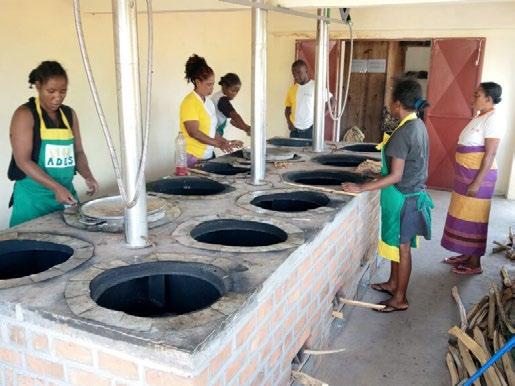
It is being done as part of aircraft manufacturer Textron Aviation’s Sustainable Advantage programme with aviation sustainability leader, 4AIR. Phil said it was important that the carbon offsets would make a “tangible difference in the lives of the people that need it most” and was pleased MAFI could partner with the Sustainable Advantage programme to help achieve it.
The Madagascar project supplies cookstoves to rural households to avoid the need for people to prepare meals over open flames, often inside their homes. This practice leads to respiratory illnesses and heart problems and disproportionately affects women and children.
The cookstove alternative helps reduce firewood consumption and emissions, conserves forests and woodlands, saves families time collecting firewood and improves indoor air quality.
While the carbon offsetting plan is a key, early step in MAF International’s strategy to reduce carbon emissions in proportion to its flying by up to 30 per cent by 2035, Phil is proud of his team’s efforts to also pursue emerging green technologies.
“We are constantly monitoring developments,” he said.
“Sustainable aviation fuel is one. It’s a wonderful thing, but right now it’s exceptionally expensive and very hard to get. There are many people developing other alternatives like electric or hydrogen. One day, one of those will come to fruition. What we’re doing at MAF is monitoring what would make sense in the long run for us as well as evaluating what can be of real value in the near future.”
Local entrepreneurs generate income through the sale of cookstoves. Families save money by reducing reliance on firewood or charcoal. Health benefits from improved air quality and less time spent collecting firewood. For each new stove, two tree seedlings are planted on the island. Increased local access to environmental education.
A two-day walk from the nearest road, Karimui people are far from basic services that much of the chocolate-eating, coffee-drinking population of the world takes for granted. Yet, these are the people growing the cacao and coffee we consume. So we took some time to hear their story, and how MAF plays a key role in their wellbeing.
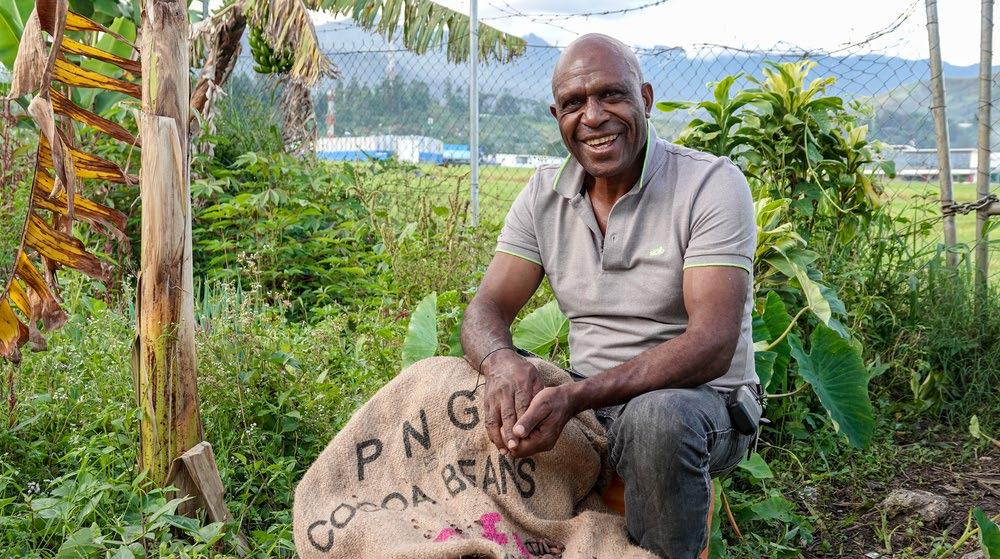
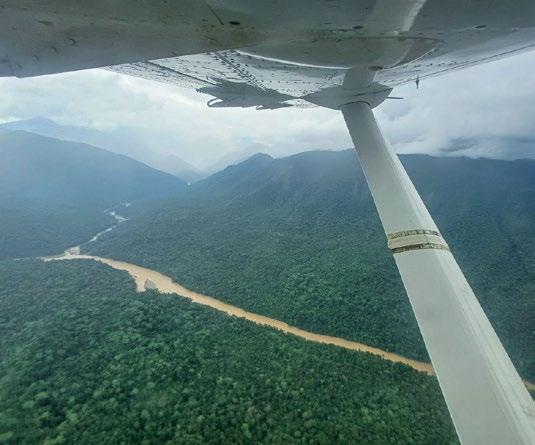
This is the view out of the aeroplane window in Karimui district: a picture of stark isolation.
We flew to Karimui district to discover how MAF plays a vital role in enabling local people’s cash crops to be delivered to market. The crew land on Sorita airstrip, one of several airstrips we serve in the region, and one of hundreds that rely on MAF across PNG.
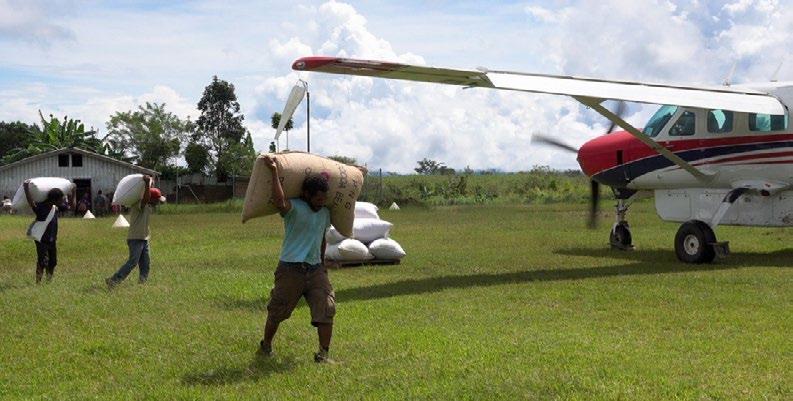
We spoke with Norman Mondo, a cacao farmer here, and one of the leading cacao farmers in the nation. MAF flies his beans to market in 63 kg bags.
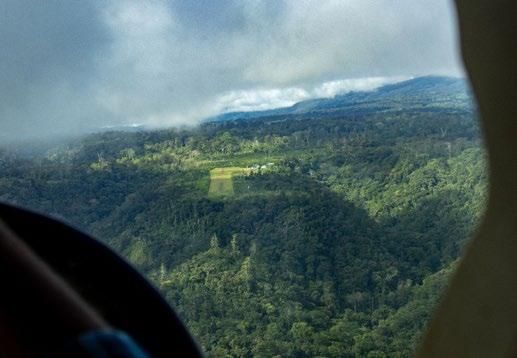
“Money from cacao has paid for all my children’s education and helps cover their daily needs,” he says.
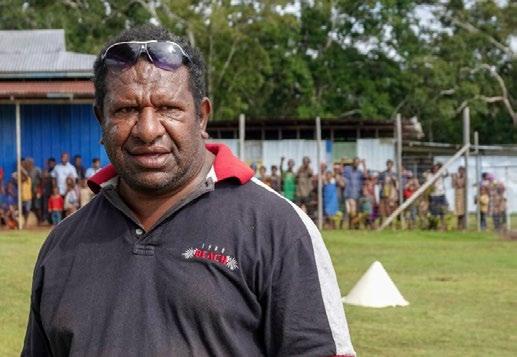
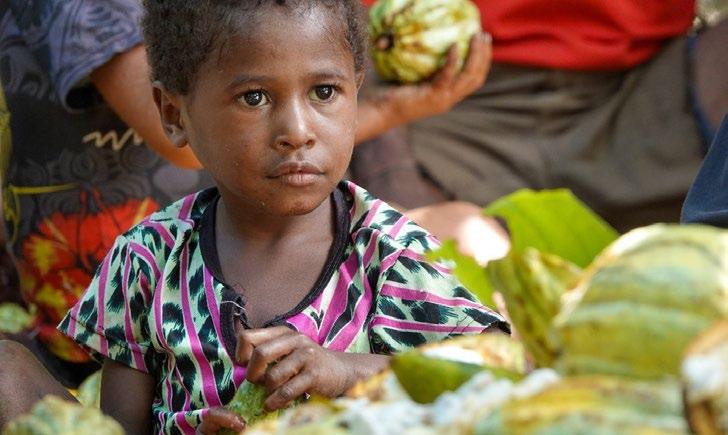
In Sorita, thousands of trees yield quality pods in the excellent volcanic soil.
In 2019, Norman’s cacao was recognised on a global stage. He won first place in the national Cacao of Excellence competition and was invited to the Salon du Chocolat in Paris.
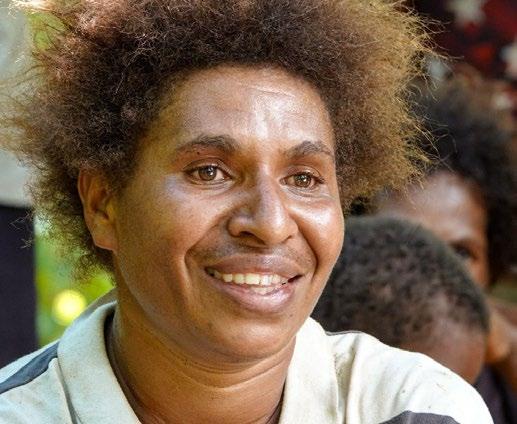
Local people work in all stages of cacao processing, allowing many to earn some valuable cash income to support their families.
“With what I earn, I buy oil, salt, and soap,” says Misis Siwi, who works on Norman’s plantation. “The rest I save for my children’s school clothes and other needs.”
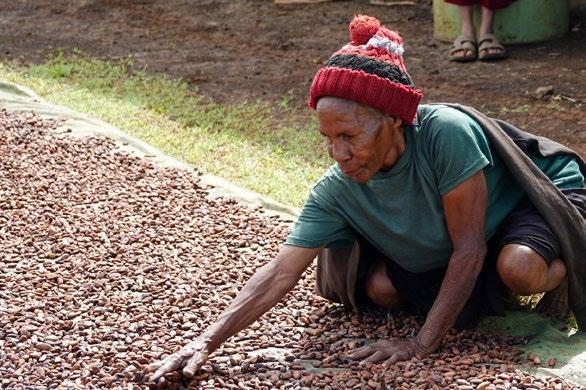
Cacao beans are carried to the airstrip and loaded on MAF aircraft.
But it’s not only cacao that is grown and flown in Karimui district.
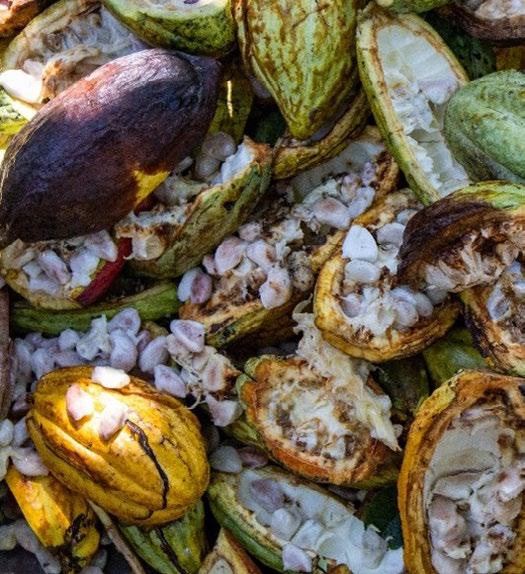
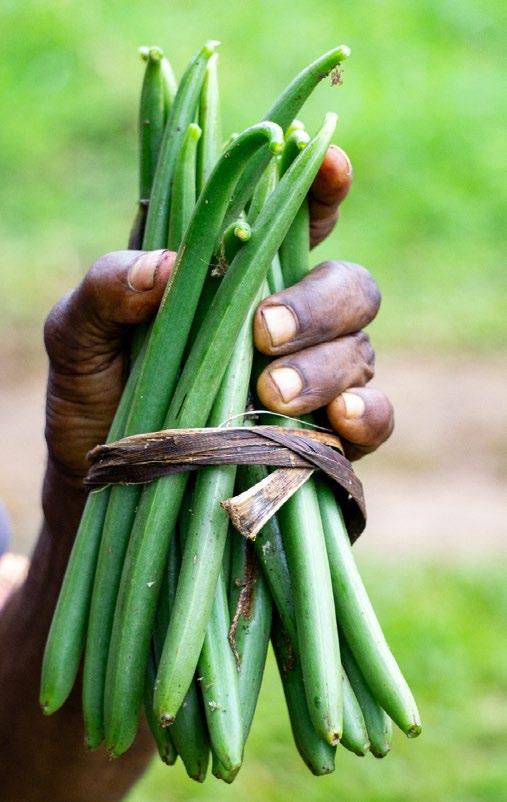
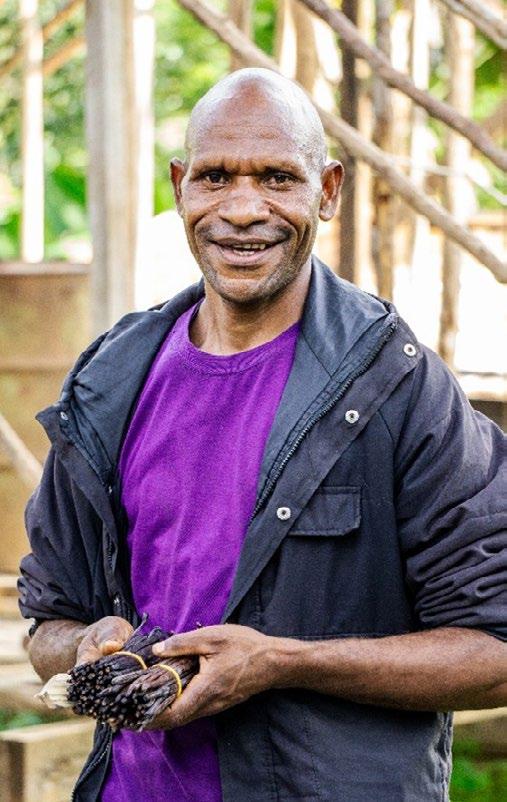
Thousands of farmers in this area also grow vanilla, a valuable cash crop also flown out by MAF. Green vanilla pods are freshly harvested from the vine.
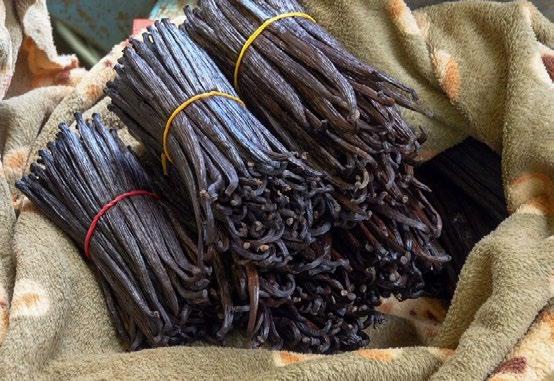
The pods are carefully prepared on site in Karimui, before being bagged and flown. Currently, due to their isolation, farmers struggle to find a market for this product.
Mopa Paleah is the leading vanilla farmer and regularly collects vanilla from neighbouring communities such as Mengino. “I receive their vanilla and sell it,” he says. “I bring the farmers’ money back and they buy their salt, their cooking oil, whatever they need, and they go back home joyful.”
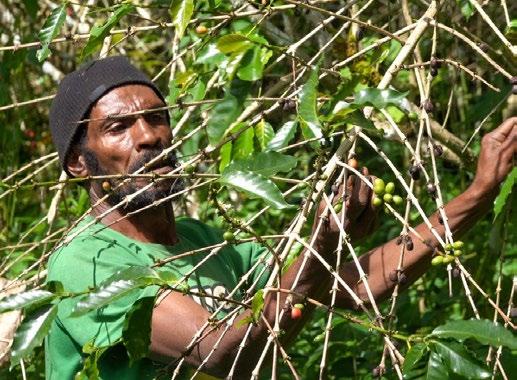
Coffee is another cash crop that is grown and flown here in Karimui. Tobias Kakame picks fruit from one of his trees, sorting the best cherries and rejecting those of low quality.
“We fill three to four hundred 50kg bags of coffee, but without planes, there’s no road, no other way out,” coffee farmer and land mediator Gobu Oropha says.
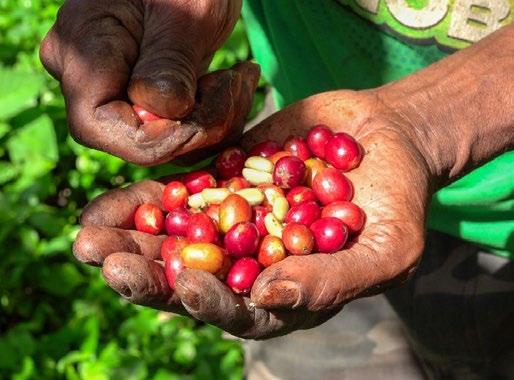
“Since I was a child, coffee has been our lifeline. Now, MAF flies my coffee bags to Goroka, and the income supports my ten children – five in school, five out. It pays for fees, books, and clothes.”

Finally, it’s not all ice-cream, espresso and chocolate. Many people in Karimui district grow peanuts, also – and, you guessed it, MAF flies peanuts, too.
This garden belongs to a local pastor, who supplements his income with money from peanut sales.
Income from cash crops gives the next
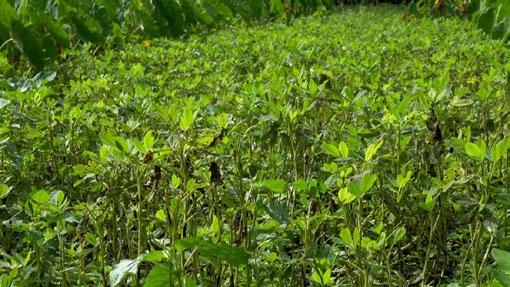
generation access to things much simpler than luxuries like chocolate and ice cream: Cash for people in Karimui district means clothes on your back, soap for your skin and an education for your children.
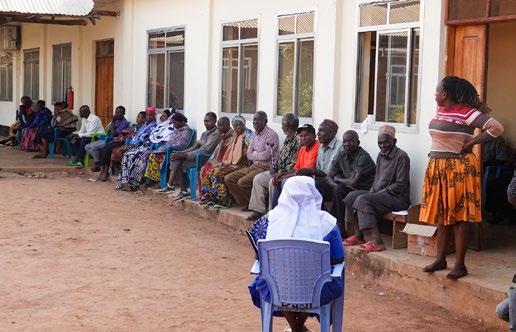
In rural districts of Tanzania’s Tabora region, medical care is often inadequate. Specialists such as ophthalmologists are particularly scarce. For those affected, this means preventable blindness - even though a simple operation could, in many cases, restore their sight.
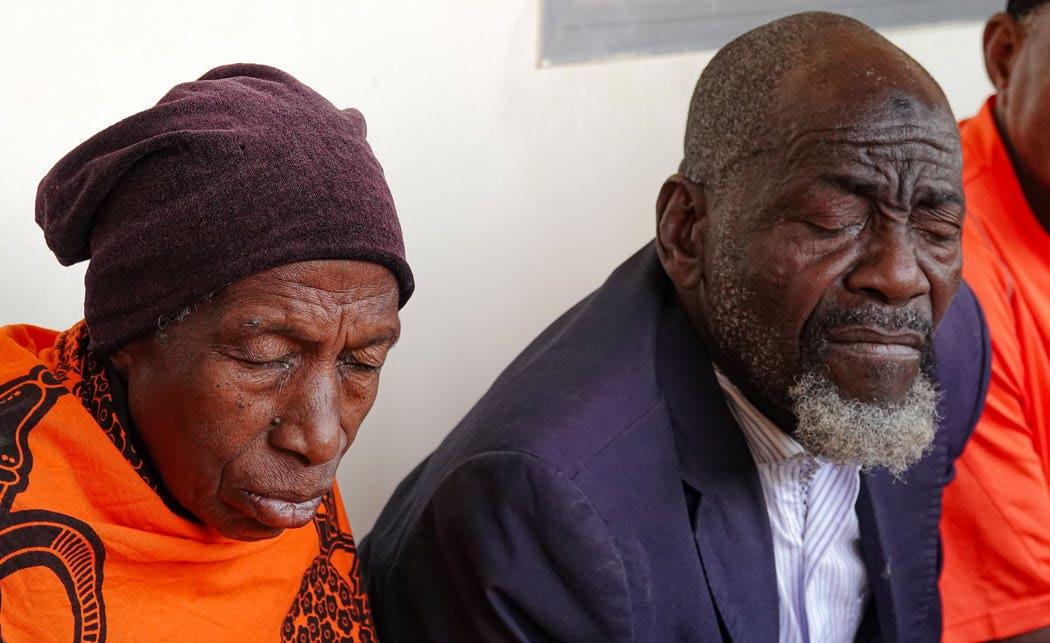
One who sees the effects of this gap every day is Dr. Amos Mahona. “Our patients travel long distances, sometimes 200 kilometres, just to reach this hospital,” he said. “And when they get here, we have to tell them we can’t help. We feel bad because this hospital was built to help the poor. But we don’t have eye specialists.” He is the medical officer in charge of St. John Paul II Hospital, which lies in one of these rural districts in Tabora.
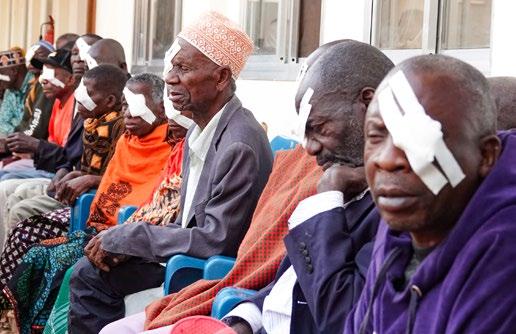
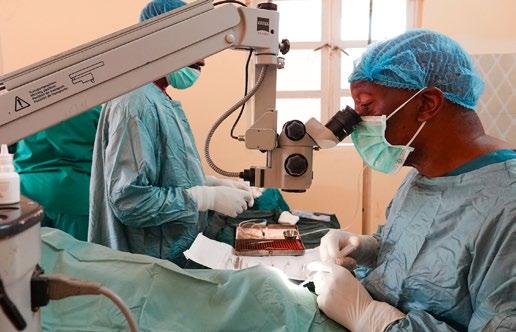
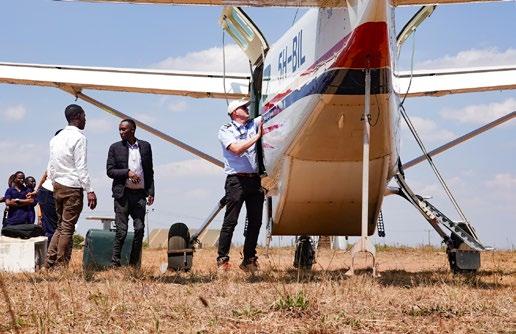
Thanks to MAF, hope for a brighter future is growing among the people in the region. For the first time, MAF flew renowned Tanzanian eye surgeon Dr Erick Msigomba and his team from Njombe to Tabora to carry out eye surgeries.
“Most of the patients here have blindness that can be reversed — simple cataracts,” the
doctor explained. “It’s not total blindness. With just a little help, we can restore their sight.”
Over the course of a few days, Dr Msigomba and his team saw 200 patients and performed 60 cataract surgeries. Among them was Rozalia Masanja Mayunga, who lost her sight two and a half years ago.
She could no longer care for herself.
“Every day I prayed, ‘My God, help me. I am tired of this kind of suffering,” said the 75-year-old.
“I was told by my children that doctors were coming. I made up my mind to go for treatment.
I was so excited about it,” she said.
“ They removed something like a scarf from my eyes, and I started seeing,” she said.
“Now I can walk on my own. I’ll cook and eat instead of begging people. They will see me
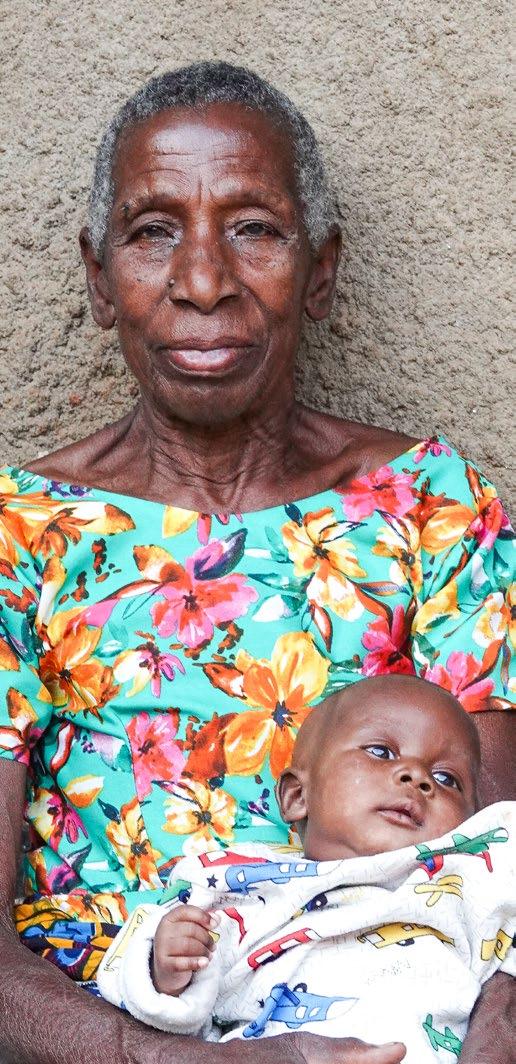
at home walking, and they will be shocked.”
Dr Msigomba would never have made the journey by road; it would have taken two full days, over dusty, bumpy terrain, risking damage to the delicate instruments. The doctor is grateful: “But MAF dropped me safely, with all my tools.”
Despite the success of this mission, Dr Msigomba estimates that many more people await treatment. Stewart Ayling, MAF’s Country Director in Tanzania agrees. “Having seen the impact of the work, our whole team is motivated to ensure this camp is the first of many.”
Mission