DRAWINGS, PHOTOGRAPHS, QUESTIONS
“Really, what’s the point of anything?” “Oh, come on.”
Foreword
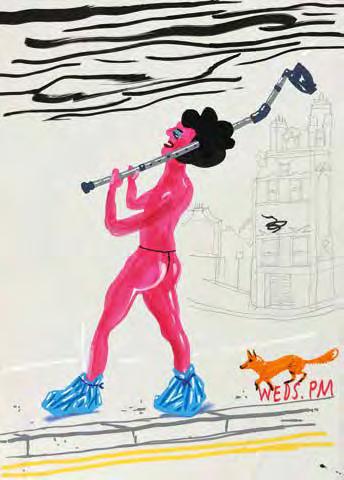
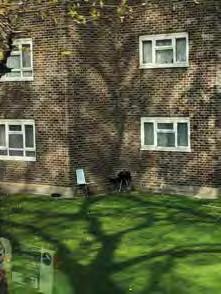
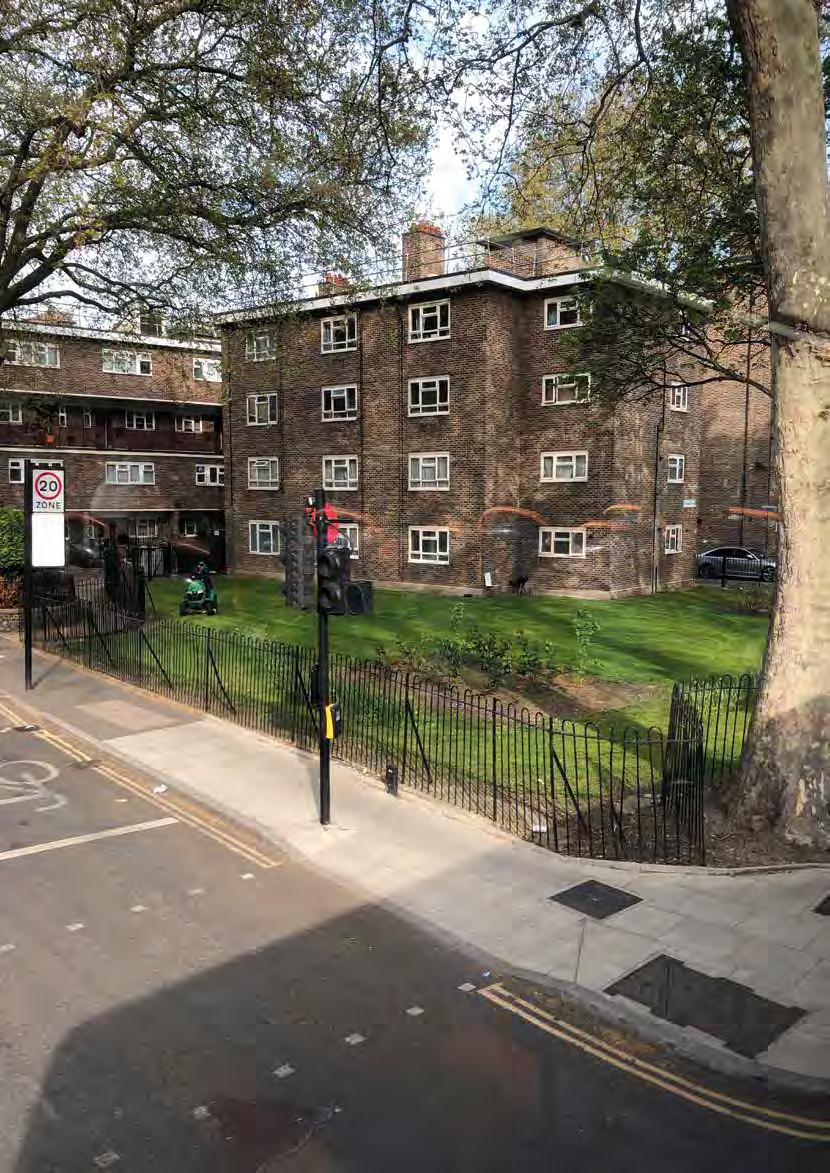
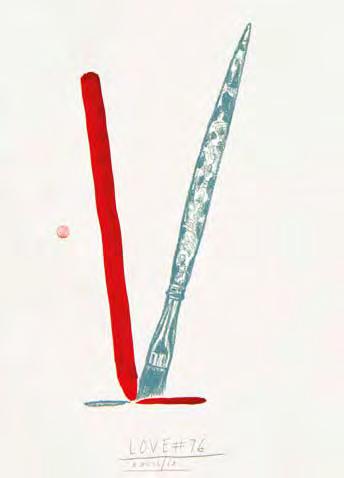
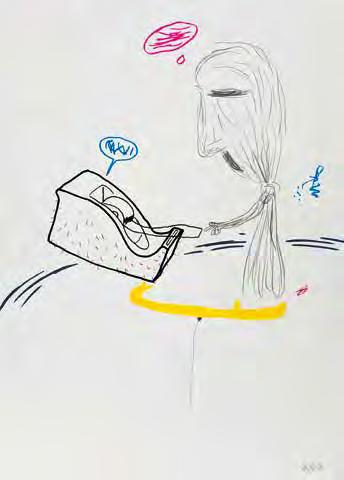
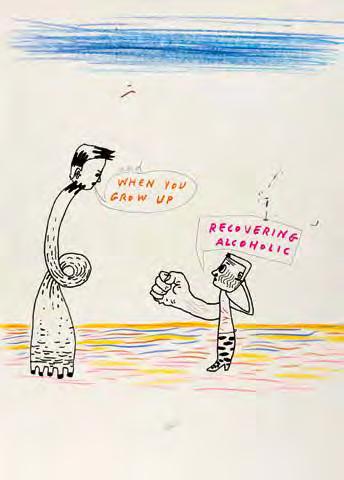
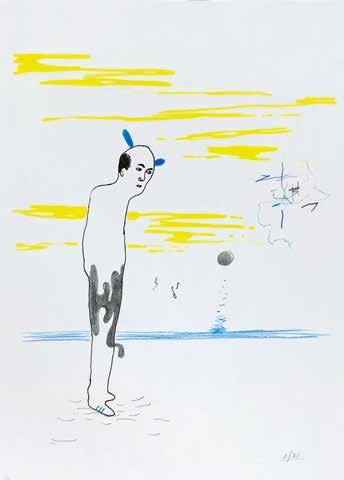
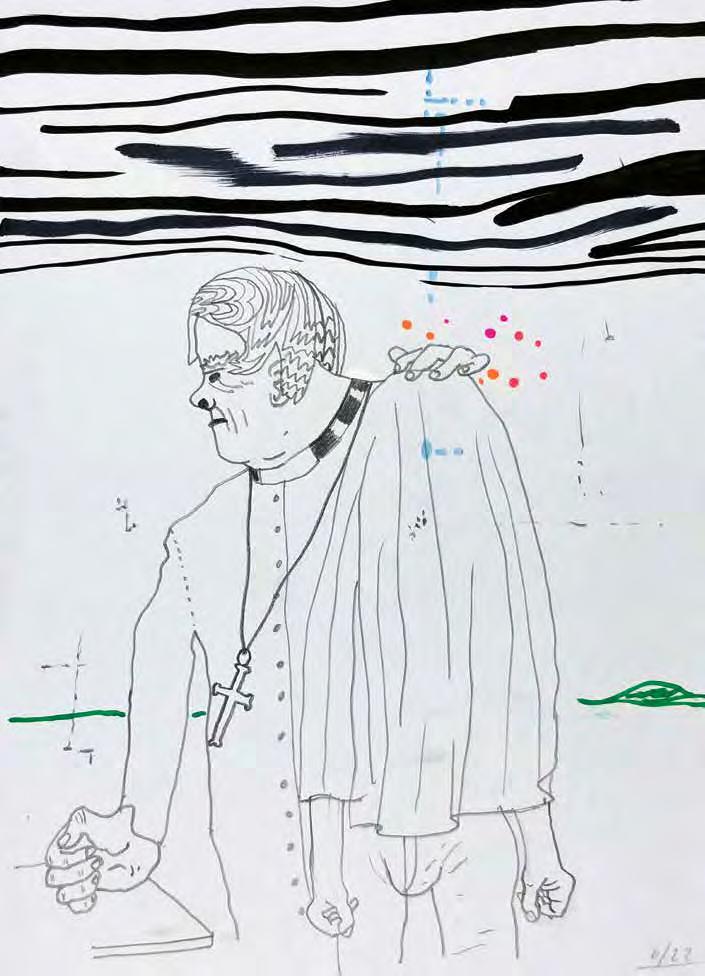
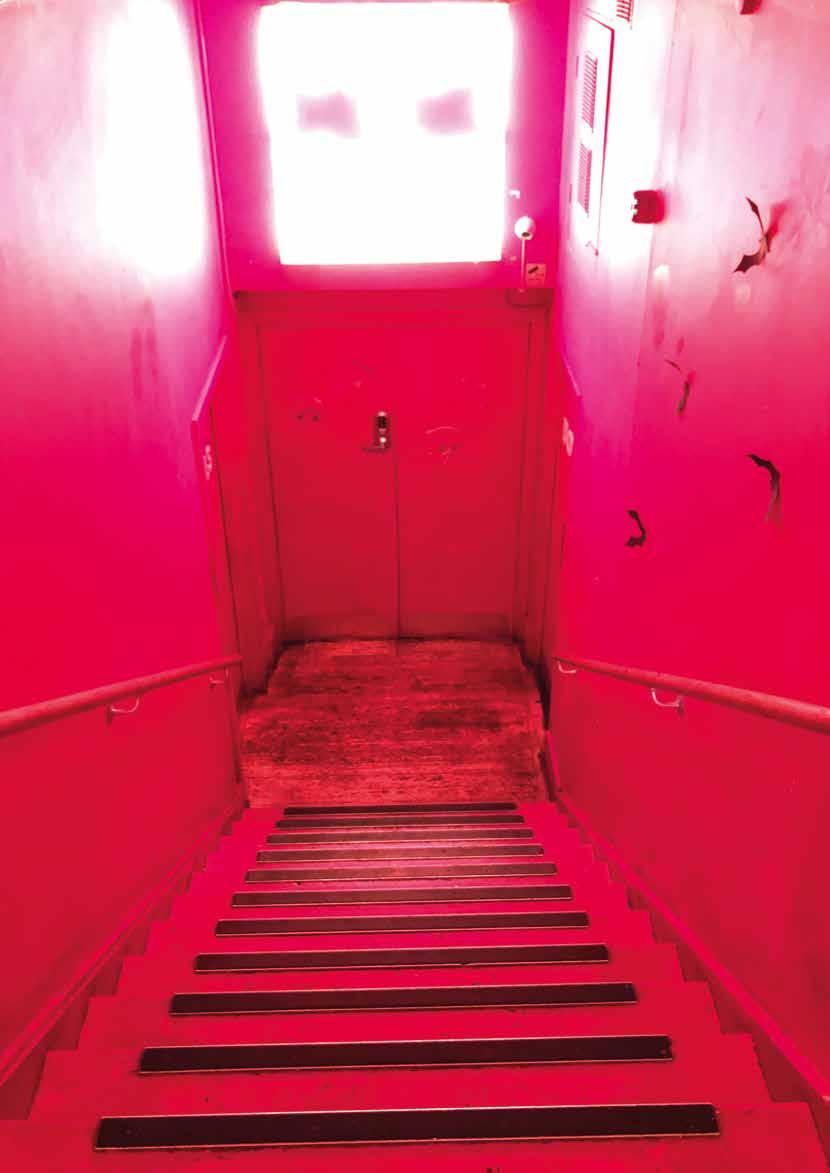
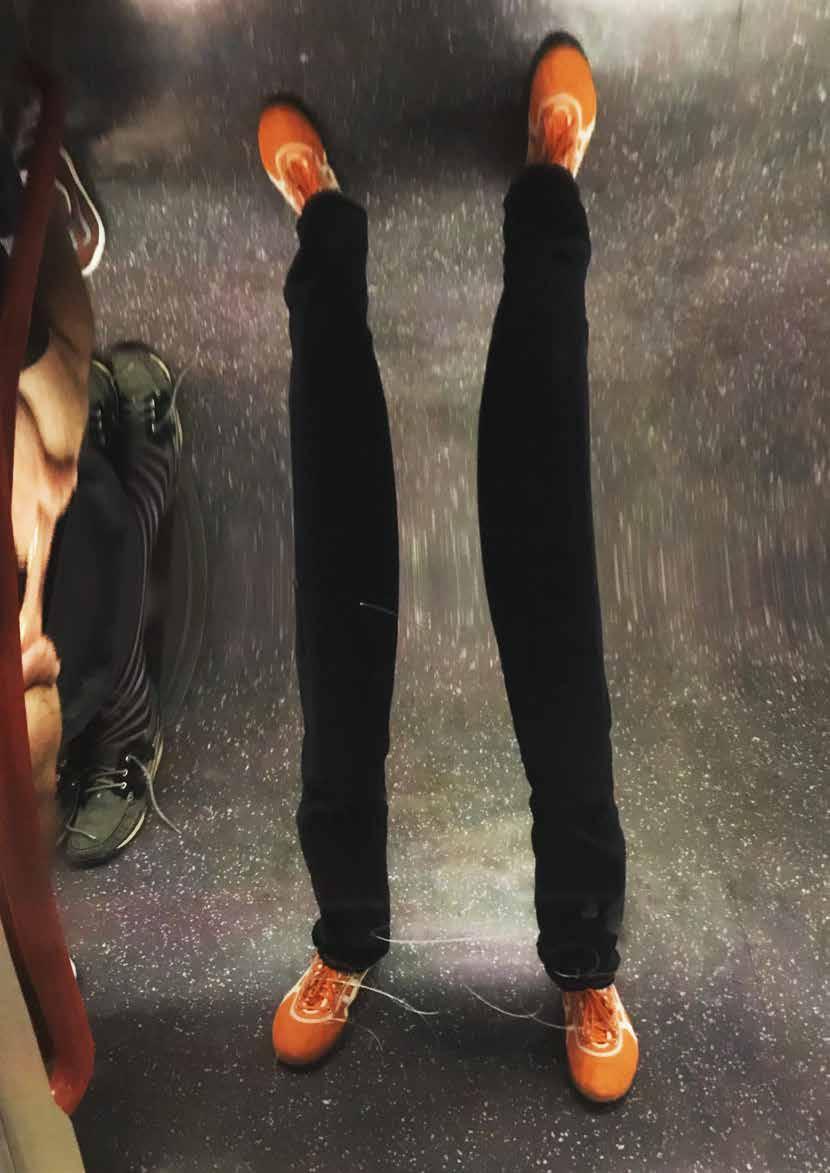
I draw, take photographs and write every day. This book shows a selection of mostly recent work from the thousands of images I produce each year.
Some of these images might convey a sole purpose; others may reveal an unforeseen link or form a spurious narrative based on what was before or what comes next or what’s opposite. There could be some sort of story within these images but, like consciousness, it may or may not make any sense.
A writer said, “When you see his drawings together, the brain somehow starts forming a narrative. It wants to. The images compel you to do so. On their own they work well enough in themselves, but they also cry out for a before and after so we can make our own slightly weird original story from what we gather. And they’d all be different.”
Instead of writing an essay about my work, I decided to ask people to ask me three questions about anything they’d like.
This book would not have happened if Sara and Luis at Stolen Books hadn’t asked me in the first place, and for that I will be eternally grateful. I thank them both for their enduring patience.
Paul Davis, 2022

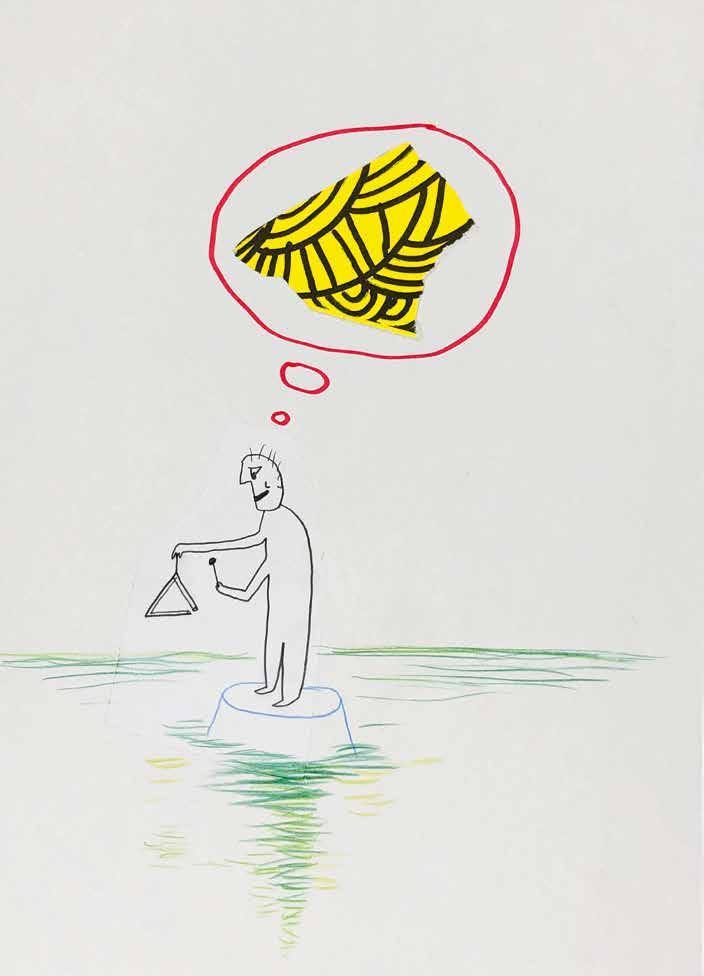
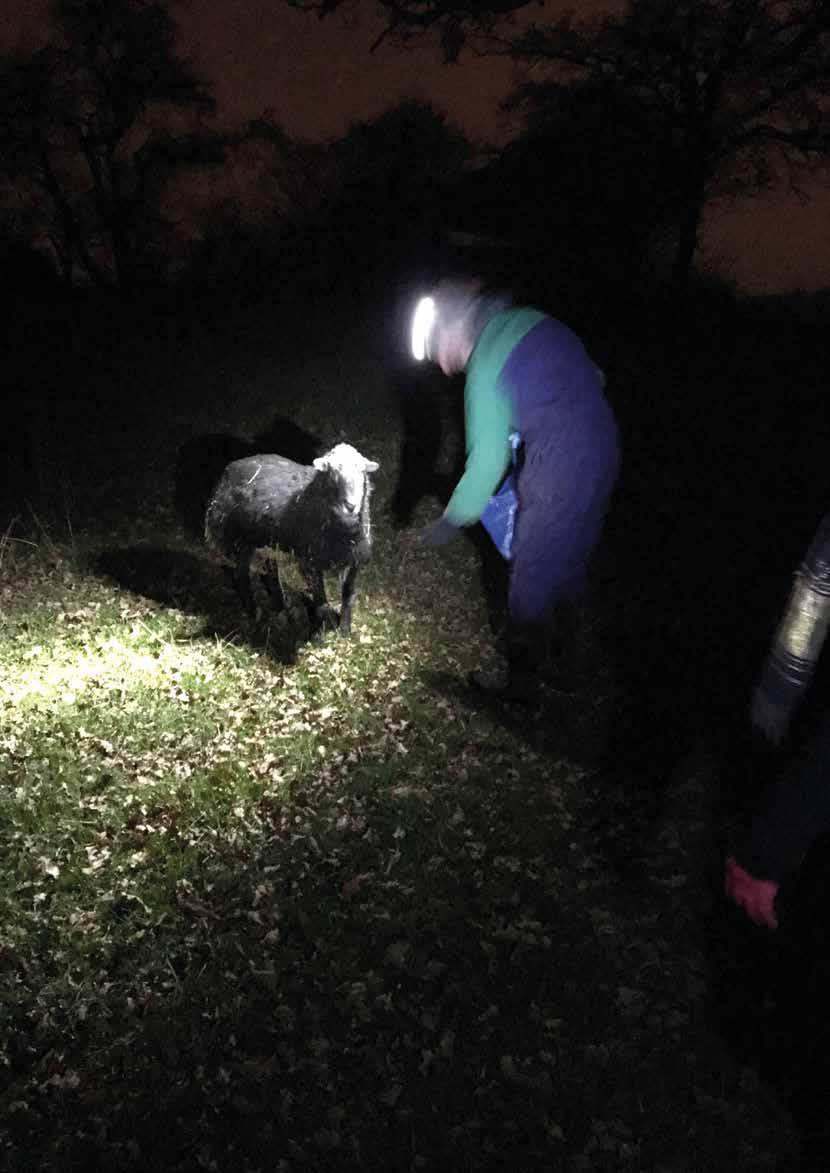
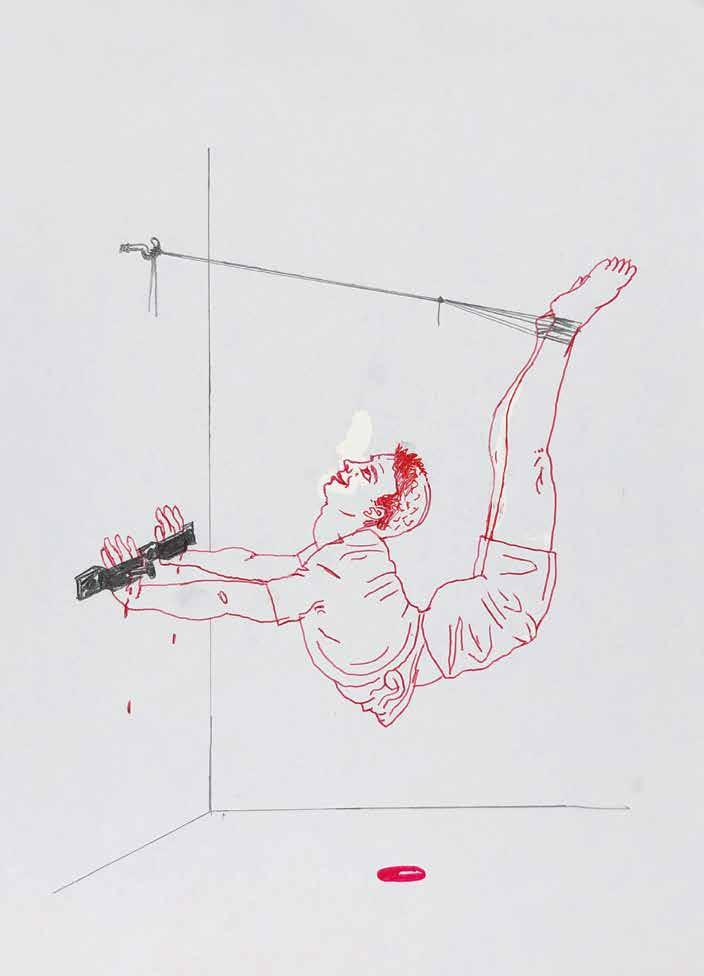
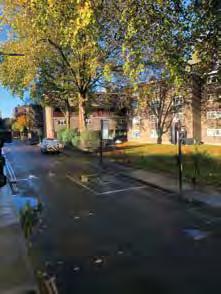

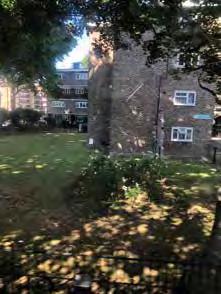




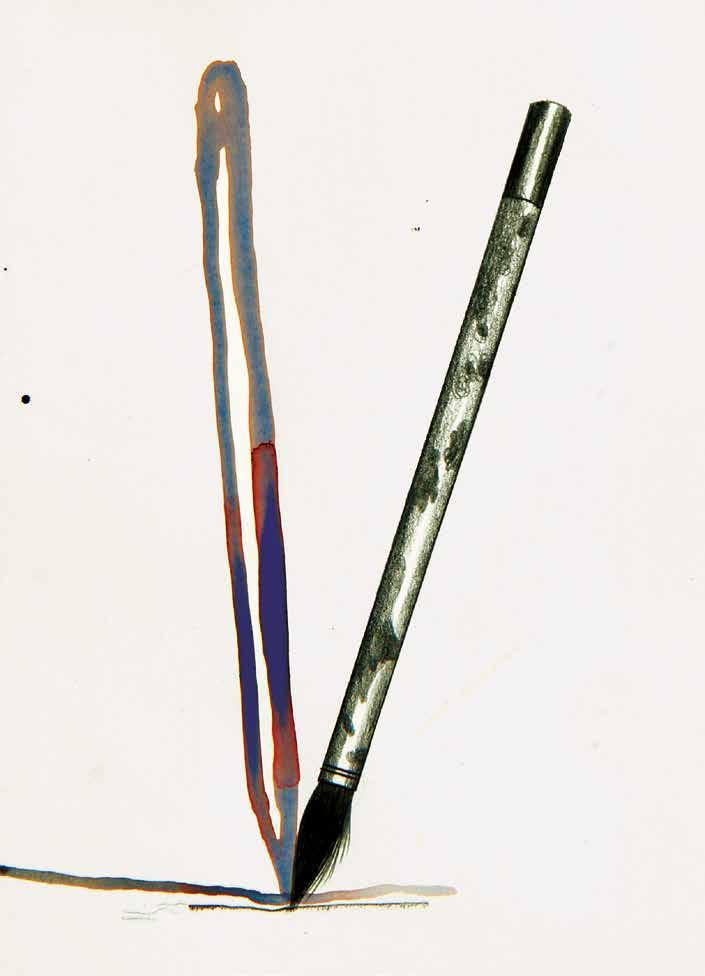
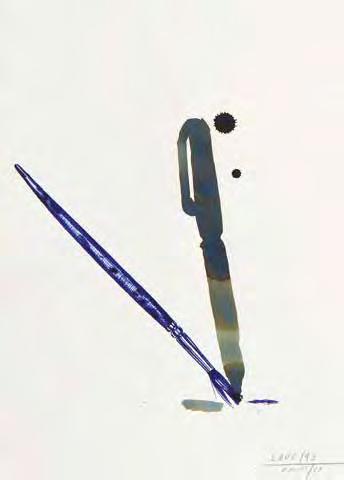
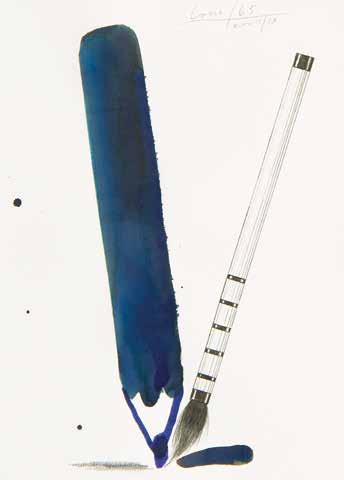
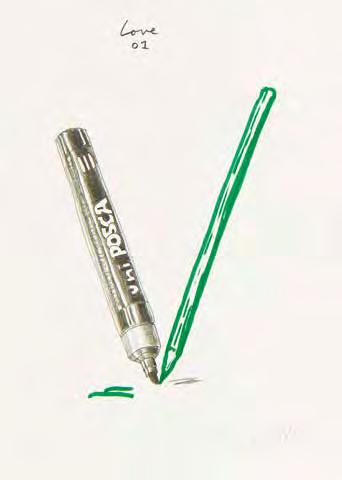



“It’s therapeutic. I’d go mad without drawing.”
Paul Graham Artist Do you own the pencil, or does the pencil own you?
It’s a normally blissful relationship but we do have co-dependency issues: “I’ll do it.” “No, I said I’ll do it.”.
How do you get up every morning to face a clean, blank sheet, for decades, and not have a crisis? It’s therapeutic. I’d go mad without drawing.
How can you touch the place where the colour is formed, and not tarnish it?
Good question, don’t know. Come, photons, rods and cones, synapses: speak thy truth. Even in total darkness I love the way colours can be imagined in the brain.
* * *
David Shrigley
Artist
Helen Walters
Head of curation at TED
How many drawings have you made in your life so far? With pencils, pens and other tools, after inputting the numbers, well over 200,000 which seems ridiculous. Curtains, less.
What’s your least favourite colour and why?
On its own, a cold mid-green. But as soon as another colour edges up to it, emotions can trumpet. Angels might sing.
Would you ever leave London and live somewhere else? If so; where? and if not; why not?
My plan is to leave London. Eventually die somewhere
‘European’, warm and next to the sea. I do love to snorkel. Cornwall is excellent – I know it quite well – but I think the weather will be of paramount importance in the latter stages. * * *
Red or blue?
I’d go for red although I do like blue also and purple can be a revelation depending on where it is and the mood I’m in. Red, although not in its American Republican Party context.
Circle or square?
The circle for its infinite pi-based geometry, interior and exterior equational madness and its perfect physical impossibility except in the mind. And the planets, stars and all that. Squares are good too but maybe a bit right-angulary, a bit dull. The square should know its place. The circle rules. Mind you, to me, a circle within a square looks better than a square within a circle so who wins that particular shape-off ?
In or out? Both, and at the same time.
* * *
Christoph Niemann Artist and illustrator
What the hell? Hell is human.
What time?
When the flimsy arrow of time misses the bogus target of fate and swerves off to thud into the fat arse of absurdity. What for?
For something, surely, but I’m not sure.
Dan
Philips Wine-maker and owner of
Why don’t you make art about love?
I do, all the time. And the lack of it, the searching for it, the madness and joy of it. How it goes wrong, when it goes right, the dark hilarity of things like co-dependency.
How does literature influence your art?
I might read some words that are so powerful they could be a basis for a piece of work. Other times the words I read could make a picture in my head and I might attempt to draw something based on that. So words as ideas and words as images interchange. Or the words may make me go and research who’s responsible for them and then research a certain aspect of the story and get lost in other books or, more often, spend two hours on the internet where I emerge struggling with the rudimentary forces of electromagnetism or laughing uncontrollably at the genius of Schopenhauer. It’s great.
I don’t think my work has ever been influenced by a novel. It’s more likely I steal from psychology and philosophy literature. I do love an accidental discovery of church booklets, investment company hubris or well-being advice pamphlets. A rich seam of lunacy. Anything really can give rise to a drawing.
Have you ever masturbated in a museum? Haven’t we all? *
Craig Taylor Author and editor, Five Dials
When you’re listening to an overheard conversation, when do you know you’ve struck gold? When do you start transcribing?
If anything blossoms in my head based on what I’m witnessing, I write it down or draw it on the spot. It’s like being given free jewels. There are problems: some overheard comments don’t translate well as drawings. Sometimes the sound and place where the drama is heightened are impossible to transcribe. Writing ‘General feeling of gloom within the café’ onto the drawing doesn’t always work. It’s sometimes impossible to catch the world as it does its thing.
How has your view of London changed over the past twenty-odd years?
It’s so much louder than it was. Property development everywhere, constant loudspeaker announcements on public transport, boy-racer solipsists sat hilariously low in loud street cars, loudmouths being loud on their fucking phones all the time.
I don’t like the loud and officious London Transport commands on the tube like the ludicrous one concerning “If you see something unusual tell a member of staff ” and ending with the moronic, “See it. Say it. Sorted.” We all see something unusual on the London underground. Every day. The announcement itself is unusual so I’ve reported it to a member of staff
Why do you satirise ‘business-speak’ so much? What makes it a worthwhile target? Please blue-sky in your answer. Think outside the box. We’ll touch base when you’ve finished. I look forward to your thought shower… It seems to me that the people who are uneasy using ‘business-speak’ are better at their jobs. People who use it –men, mostly – probably experience some kind of unsavoury stirring. Certain bandwagon affectations are ripe for satire.
Francesca
Gavin Curator and author
When did you last cry?
The other day. An enthusiastic three-legged dog really got me.
What’s the story of your first kiss?
If you mean proper kiss then the sorry attempt occurred when I was about thirteen at a large comprehensive in Somerset. It was in the cloakroom. Apparently I was no good and she told me so. And then told others. This news spread like wildfire. The humiliation and confusion for a thirteen year-old, destroyed on a technicality, was deep.
What do you do on Sunday mornings?
Pretty similar to the other days. Drink coffee. Read. Have eggs. Start to worry about everything so do something to take my mind off that.
Peter
Nsanze Designer
How would you stop the West interfering with African governments in order to keep the price of goods in the West low by affecting the price of raw materials?
The present system obviously isn’t working unless you’re profiting from it. Evil colonialism and the setting up of those lamentable systems in Africa (where leaders were pretty quick to take bribes and maintain their own power) seems irreversible. Theft and misery is on a grand scale. Detestable corporations still rampage, shitting on others. The terrible humans who run the vile and exploitative raw material companies can’t stop themselves.
Maybe a World Court for Ending Shitty Exploits should be set up. The role of the court is to bring the past and present offenders to task and expedite reparations. It’ll never happen. How about a miraculous global pandemic that kills, slowly and painfully, only those bastards who are responsible. Wishful thinking for the slightly tipsy conversations around Western middle-class dinner tables – another glass of white?
How should kids learn if we agree that school is a terrible, failed experiment?
Gently ask the kids what they think about school whilst remembering what made you come to believe it was a failed experiment. Maybe ending the mandatory wearing of uniforms. I didn’t like school at all.
What do you have against the Big Collapse?
Nothing. I love it that all galaxies seem to have a black hole at their centres sucking everything in whilst absolutely everything is accelerating away from everything else. Eventually, all things may return to a single point. Perhaps we exist in an infinite multiverse. Or not. Maybe everything continues to expand until the universe becomes a dark nothing. Everything becomes the same temperature and nothing ever happens ever again. Time becomes meaningless. Such a peaceful thought.
Leanne Shapton
Author, artist and publisher
One theme that frequently appears in your work, is the universe and solar systems. What fascinates you about them?
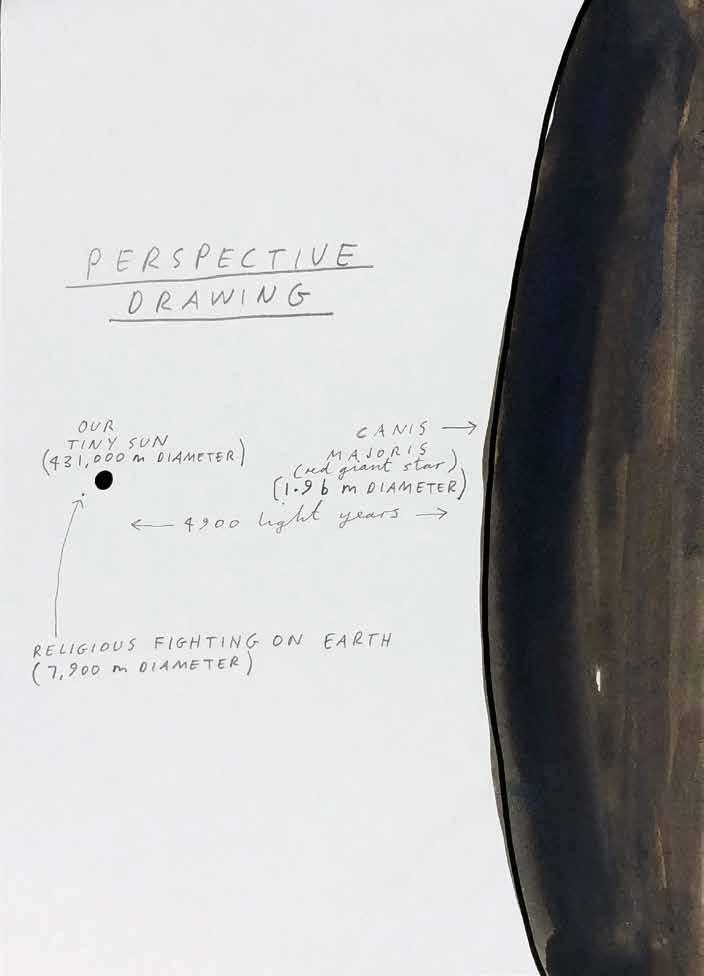
How our sun, a ball of super-hot plasma fuelled by nuclear fusion which radiates different forms of light and electromagnetism from 150 million kilometres away and made life on Earth possible within the structures of perfectly balanced gravitational forces, physics and the available chemical possiblilities, makes my hair stand on end every time I think of it. And we’re on the surface of the only known sphere which supports life. And we’re hurtling really really fast through everything. Even more incredible is that there are trillions of galaxies each containing billions of stars and solar systems. Then my thoughts enter into the atomic structure of reality and there my lack of understanding quantum mechanics takes me into the dark cul-de-sac of ignorance of and I feel overwhelmed, in a good way. Dark matter, dark energy: when will we come to understand these mysterious influences? The sub-microscopic and the colossal. Truly marvellous. And we’re humans within all this.
If you could only capture one moment or scene from your life in a piece of work, what would it be?
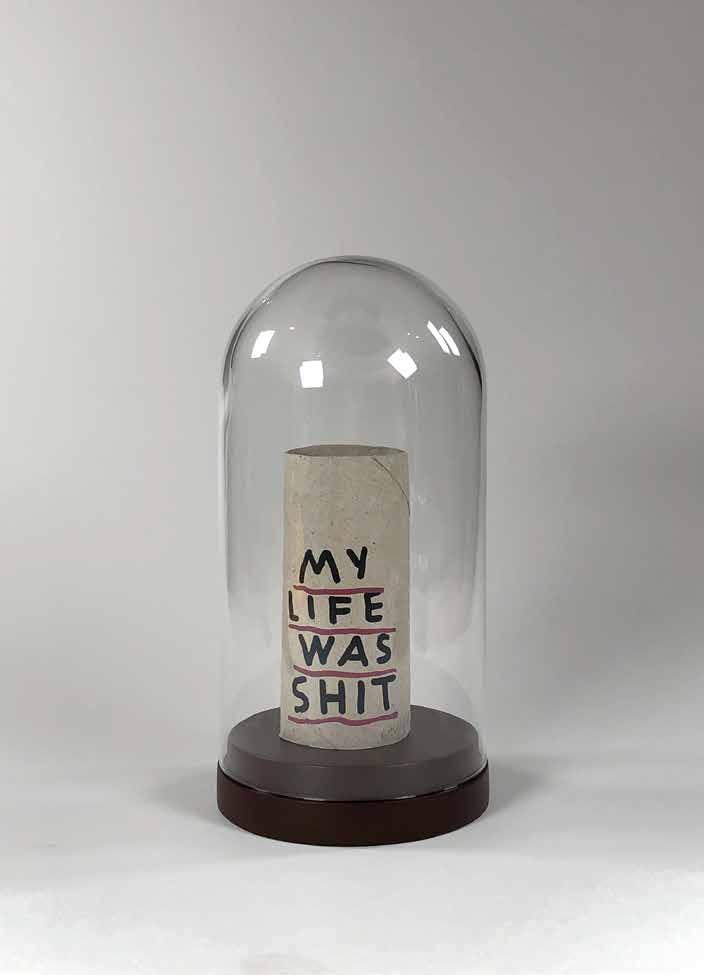
Impossible although I do think my toilet roll sculpture comes close. A single cardboard toilet roll with the words MY LIFE WAS SHIT written on it sums everything up. It’s written in the past tense, its life was literally shit but now it’s a work of art, the idea came out of the blue, it sold well.
What is the secret to a happy life?
Knowing it’s all absolutely priceless and worthless at the same time. With that in mind, be conscious of the undoing of a frown. Be interested within this short time we have; try not to be a mental loafer.
What is your studio situation, is it messy or tidy?
Tidy, then messy with work, then tidy again and so on.
It’s tidal.
How many of your drawings on any given day or project feel “good” vs “crap” and what makes them so?
I suppose doing the work does that. You never know until it goes well or badly. The satisfaction of the artist who made the work is where the ‘good’ v ‘crap’ really lies. Also, if I like one of my drawings and someone else doesn’t then it’s a good and crap drawing at the same time. I’m always surprised when people say they really love a drawing when I think it’s bloody awful.
What are you most vain about?
My gigantic, incredibly soft, bulbous nose.
What’s your favourite
What’s your star sign?
The star sign is, like god or fate, bollocks.
And where do you see yourself in five years’ time? Hedge fund glory.
Dario Illari Founder of Jealous Gallery
John Cuneo Artist and cartoonist
To what extent do these works seek to present your personal idea of who and what we are as a people and if so to what end? Or are the works made primarily for yourself to arrive at a more personal and/or philosophical understanding of what we are? More the latter. Sometimes both. I always want someone to say “I loved that drawing you did.” The drawings I do are an attempt to understand and stage possible truths on paper. Although that in itself leads to all sorts of philosophical questions. ‘What do I know?’ is the question that’s constant and that acts simultaneously as an enquiry and as a rhetorical warning. Sometimes I like to make drawings that look something like a ‘real scene’ but then I can’t help myself introducing something that upsets the narrative. This imagination harks back to the landscapes of my childhood and the healthy imagination of what could happen on and within them. They acted as some sort of stage.
If you had to collect one item of cutlery, (knives/forks/ spoons), which would it be – and obviously, why? Spoon, and I’d sharpen one of its edges. I just looked it up. Slightly disappointed that the Spife has already been invented.
If you could have an extra eye where would you have it and why?
The back of my head for safety reasons. I once got attacked from behind. Or maybe my partner could have my extra eye on the end of her nose so I could learn to stop being a moron as I see myself being a moron. An extra eye on the tip of my finger would be weird as I drew – all a bit micro.
Is there a work ritual that you require to make your art –a certain chair, a specific time of day, a favourite pen, or biscuit with your tea ? Perhaps a pair of lucky pants? It used to be a stiff drink but no longer. A fine coffee after a rare decent night’s sleep. The first drawing of the day is always important no matter where I am. The drawing itself might not work but it’s worth a try. A pencil, pen. Write something. Fear of regret is always a good encourager. If an idea starts hatching based on, for example, an overheard comment, something I read or if the news exposes an item of deranged political idiocy then I have to get the idea down. Other times I just sit and see what brews.
Are you recognised in art supply stores, and how do you manage to navigate that kind of public interaction without offending?
Never happened. Once, I was in a restaurant waiting for some friends and drawing in a notebook when a woman walked by the table and stopped. She looked down at the drawing and I looked up at her. She frowned. I said, “What is it?” She said, “Your drawing looks like Paul Davis did it. Do you know his work?” We remain in touch.
Do you find yourself resisting certain subject matter in your art because it’s just too damn difficult to draw? (Asking for a friend)
Not really. Drawing our glorious leaders in a way that reflects their stupidity, narcissism, hubris and so on in an original way can be hard. When failure eventually arrives I announce to myself that they really don’t deserve our efforts anyway, the shitheads.
Louise Longworth
Harry Ritchie Author
colour?
Deep dark wine-red.
I know you are always listening. What has been your favourite overheard remark or conversation?
Couples arguing. A man said to his partner, “Fuck off ! Of course I love you.” A week later at almost the exact same spot, a different couple were into some sort of seething disagreement when the women angrily said to her partner, “My feelings for you have nothing to do with you.”
You seem very calm but I think you may be paddling hard beneath the surface. Are your volcano drawings self portraits?
Kind of general portraiture. I think volcanoes are incredible in their own right but also work well as a metaphor for humans: explosive temper; simmering resentments; internal rage, the usual dull clichés. The thing is, volcanoes were hugely responsible for forming and maintaining early life on Earth so we humans wouldn’t be here without them. They helped make the Earth’s atmosphere because their eruptions freed water from the Earth’s crust and life followed that. Weather, seas, hydrothermal vents, microorganisms, chemistry, evolution, all eventually conspired to make us. Then, billions of years later, the comic joy in witnessing two humans in cars screaming at each other because of a perceived driving error makes me think of eruptions. I always want to butt in and gently explain the majesty of the geological history of our planet on whose surface they were now arguing about who actually was the “fucking wanker” at the junction.
What did we get up to in noughties Hoxton?
For me, working, drinking, drugs and much laughter. Looking back, the present was, and future seemed, exciting. It was a very creative period.
Fantastic kitchens started up there too. You and I met, I think for the first time, no doubt fabulously, at The Electricity Showrooms – arguably the best bar ever. I remember the 2002 World Cup on TV early in the mornings. Such an excellent way to start the day. I once had a book launch there in 2003 and can’t remember too much about it.
Many friendships were formed back then. It seemed anything was possible and great to see people from that era doing well today. It was pretty down-at-heel before we all moved in. Now look at it. Back then, I heard a wizened property developer advising an enthusiastic young agent about finding your spot, your area, to develop. “Follow the artists, darling,” she growled. It was a wonderful time. I loved it.
How do you think it will all end for you?
The inability to make my breathing work. Or maybe a spectacular accident. Probably a medical opiate-based demise. Smiling, I hope. It would be hilarious to be assassinated by accident.
What haven’t you learnt by your age?
The answer to meaning and the point of it all. Quantum mechanics and its algebraic forms. Algebra in general. Code. Calculus. So much. Nearly everything. Whether or not I need to see a specialist.
Are all artists narcissists?
The size of their work and signature within that might lead us to some sort of conclusion.
Karen Ashton Curator/producer, Art Car Boot Fair Projects
You introduced me to a great publishing project that you were involved in – The Lockdown Diary of the Working Class – I wondered if you can provide the context of your work within that and more broadly whether you think there is such a thing as working class art and if so what it is.
The images we supplied for the Lockdown book were a response to the diarists’ words. I don’t really know whether art would be deemed working class art just because the artist is. It would take a lifetime of study. Just because you’re working class doesn’t mean your art is. I’ve met some very (seemingly) upper class gallerists but not that many posho artists. And then there’s the subject matter or area of interest that the artist is exploring. Would you feel at ease with a rich aristocrat artist making work about the increasing reliance on food banks in Britain? Maybe the work would be interesting. Fuck knows!
Class is an emotional minefield. At the Lockdown book launch Q&A, I said I felt a bit like an imposter because I felt I was “surely lower-middle.” One person laughed, some really glared, most looked blank.
There is a comic thread throughout much of your work, satirical at times and just plain funny at others – how conscious are you of this in the making and do you see yourself in the context of other artists that have gone before you and/or your contemporaries.
Most of the content in my drawings is based on reality or an imagined reality based on reality and if I couldn’t laugh then I wouldn’t want to be here. I hate to sound lazy but life is truly hilarious, absurd and beautiful. And sometimes terrible. I don’t believe in ‘a calling’ but for some reason I have to respond on paper. It’s almost like recording my reactions to life to help me understand it. A bit. Everyone who ever lived had contemporary life to experience and reflect upon. The Pamphleteers were great. Pamphlets were the 17th and 18th century Twitter and Instagram.
Both your text and drawing style is important to much of your art and we talked about your own unique font in our IGLIVE recently, what do you think defines your own style, makes your work recognisable very specifically as yours and differentiates it from other artists that work in a similar orbit?
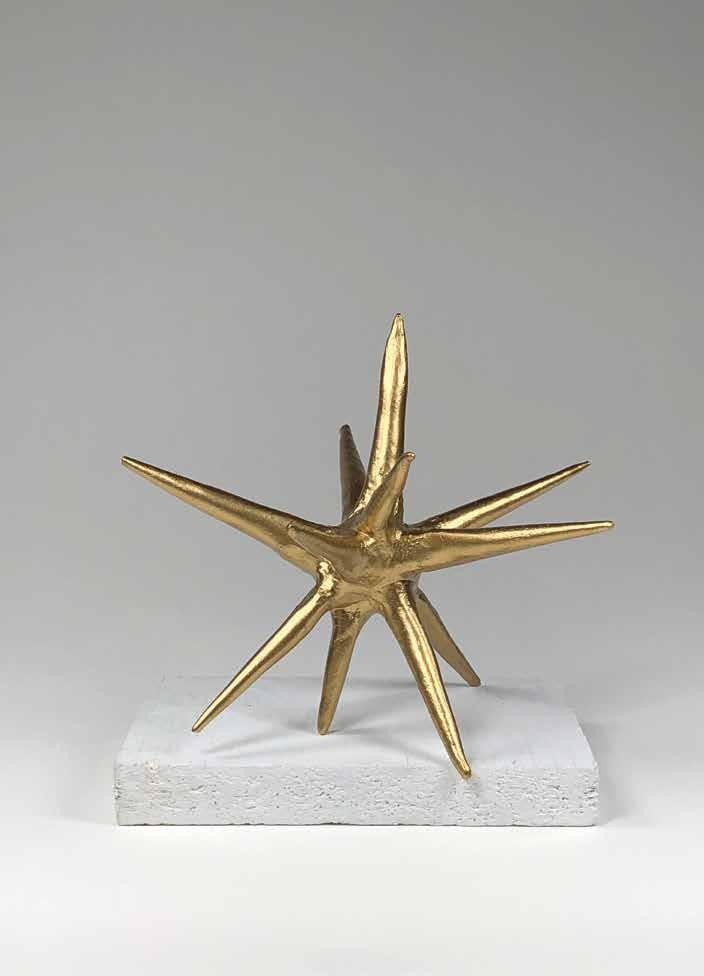
Yes – the handmade-ness. So much of it about. I work in different ways, I’m curious to see how things will turn out but don’t think about it as an exercise in trying to be different in respect to other artists. I suppose if you don’t think about it then your work will naturally become recognisable because it’s you doing it. When my brain lights up with an idea, the medium and size follows. From a nine metre tree made from found wood to a small stoneware starburst crudely depicting the big bang after a billionth of a second. For me, the idea is the thing. And I do love to draw.
George Morton Clark Artist
Why is it so weird to see chairs outside? I mean when they’re indoors you don’t even think about them, but outside suddenly it’s like discovering chairs exist for the first time…
I agree if the chair isn’t outside a restaurant or bar. It’s really sinister when it’s just there as a chair. If there’s a small group of them I feel really uneasy.
Why don’t all chairs stack?
That would be the fault of the substandard leg-splay aspect.
When does a chair become a sofa? I mean at what point, where is the threshold of understanding when a chair becomes a sofa? I believe a sofa is in fact a chair but a chair can’t be a sofa.
I believe Corbusier was right when he said “If it’s got more than one cushion it’s a bloody sofa.” Apart from that one utterance, the whole dilemma will be argued until humanity has sat its last.
How do those little specks of dust we perceive in our field of vision affect how we perceive reality?
The floaters? Normally a harmless posterior vitreous detachment (says the NHS website) or they could be a more serious problem of little bits of peeled off retina. Oh, the irony of the eye’s physicality hampering our actual vision. Looking at my floaters now – I’m staring at a whitish wall –there are serpentine shapes, weird birds and abstract blobs. And they’re getting worse.
What is the role of peripheral vision in the technique you’ve developed?
It started when I made about 400 drawings on paper, about 100 cm by 70 cm, mostly in black and white, for a show at The Wapping Project down by the Thames. As I drew, I kept seeing floaters quite clearly so I began to draw them directly onto what I’d already drawn. I thought those additions really improved the drawings and added a sense of reality because we all have these little specks in our vision. My ego informed me that this was a major breakthrough in the history of art. As you try to look at these little indicators of atrophy, they move away so you only get a sense of what they look like. It’s impossible to study them in any detail although they exist in your field of vision before anything else. Like a fingerprint but a floaterprint.
In which way does the relationship between real experience (assuming there is such a thing) and imagination influence your art?
The day-to-day can be dull, easy, exiting, troublesome and terribly complicated all at the same time. For some reason I’m impelled to react or make stuff up based on that. When I witness a near-miss, imagined or in reality, I often wonder what would have happened; how life would be irrevocably changed if the train had derailed; if the backpack had exploded; whether the two strangers sat opposite each other will talk and be surprised by one another and fall in love, have the best time and then, perhaps because of an unspeakable incident, have to undergo a bitter divorce. We live in ordered chaos. So much happens and so much doesn’t. I try to engage with that.
Carlo Pizzati
Author
Todd Bracher
Industrial designer




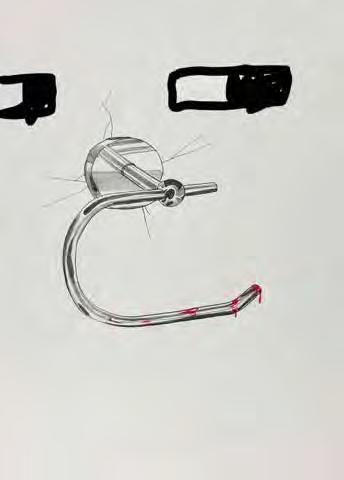
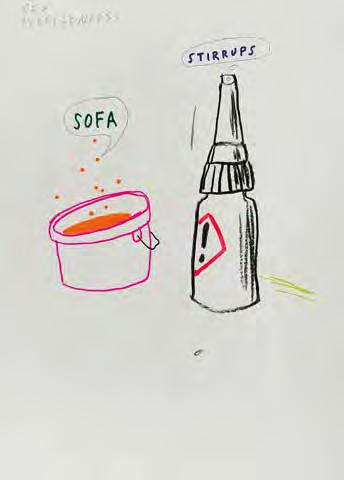

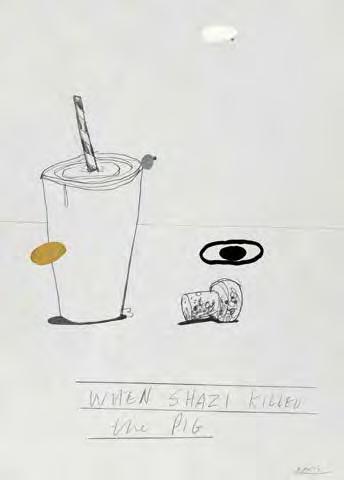
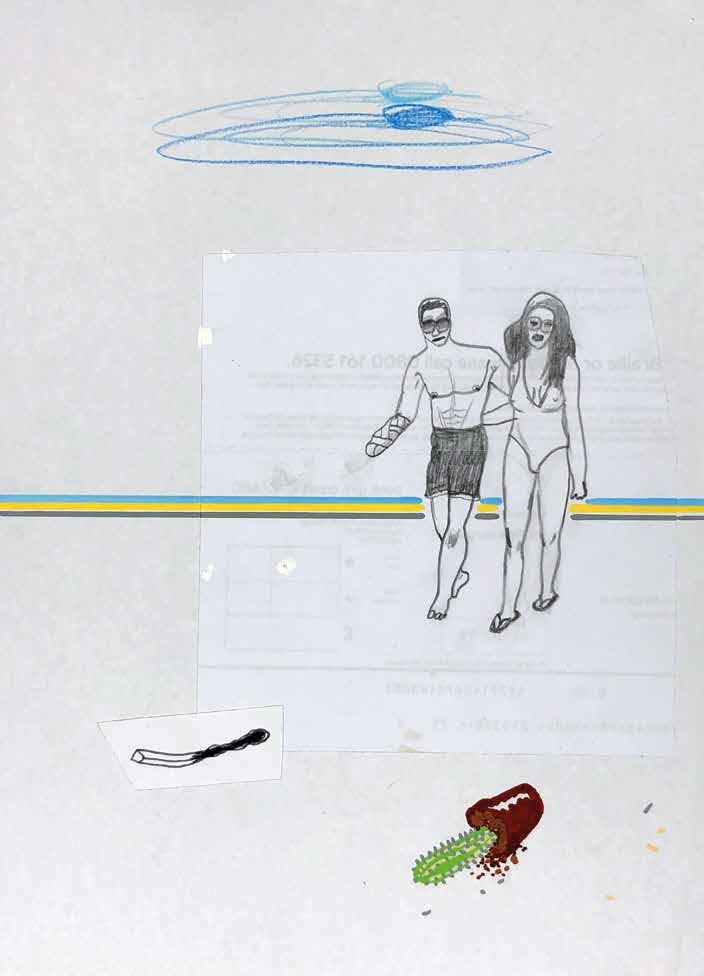


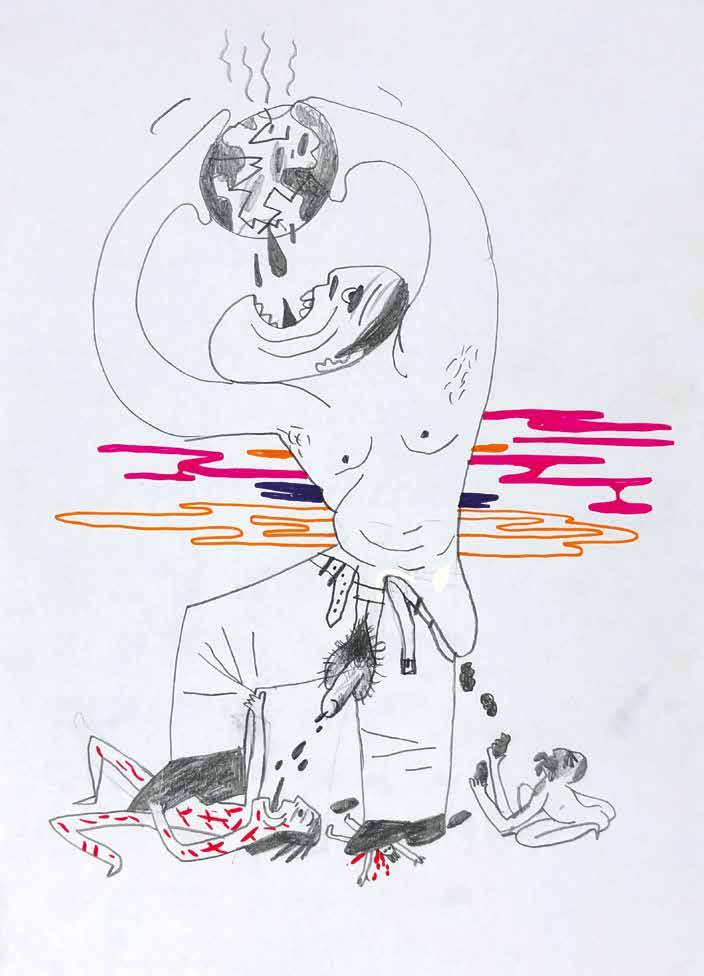
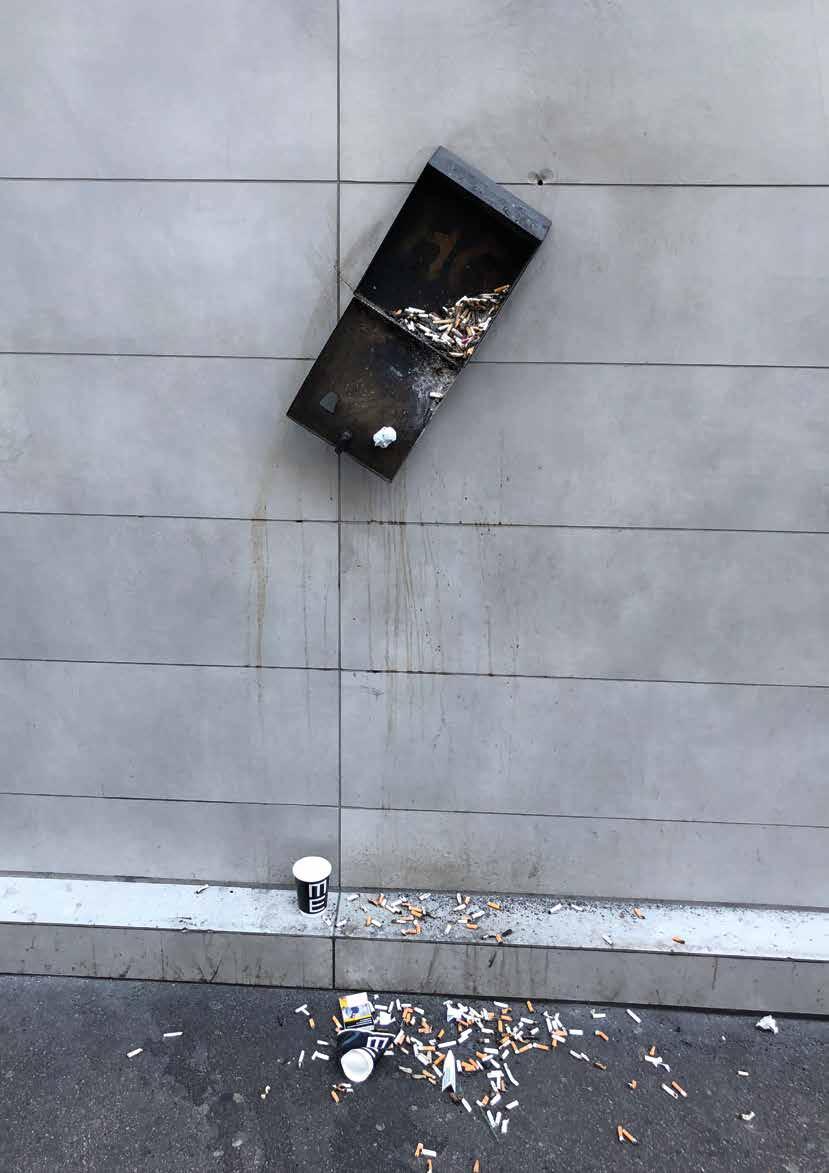
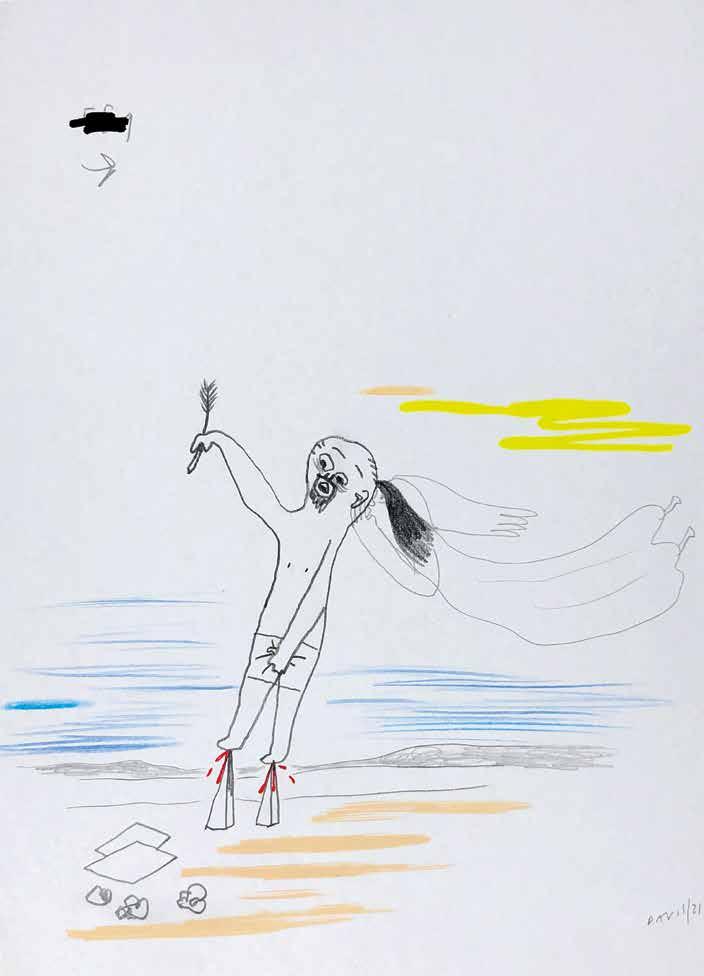
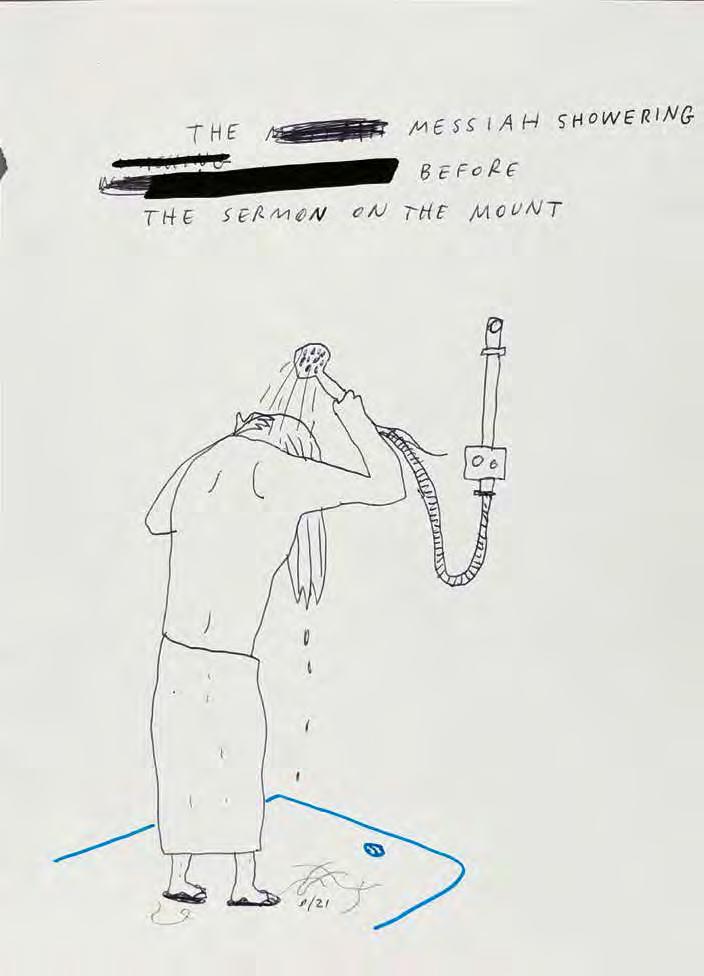
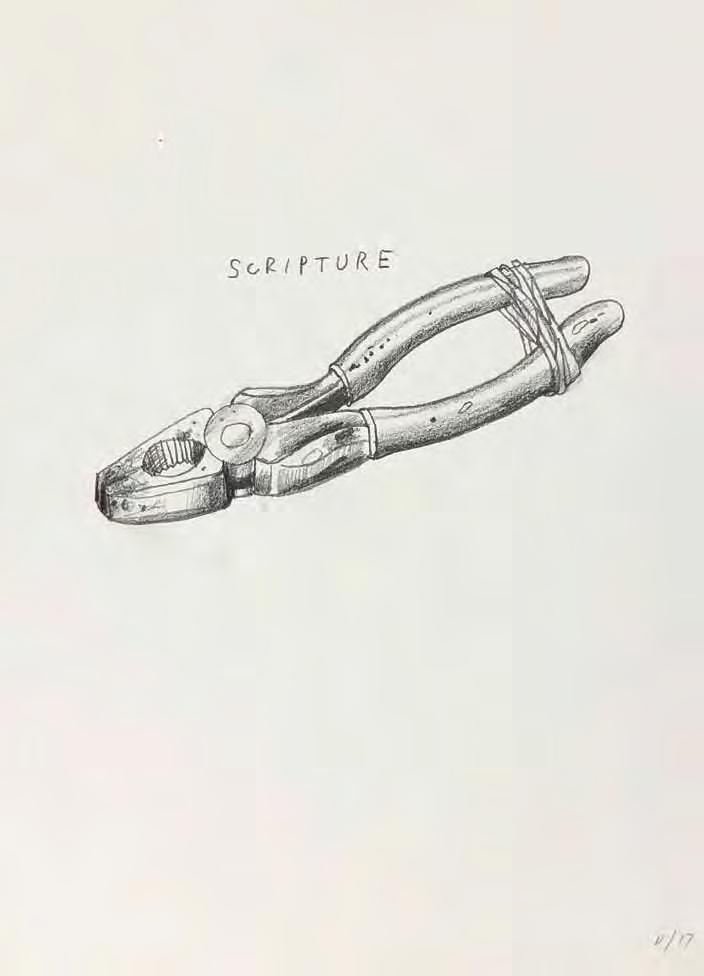
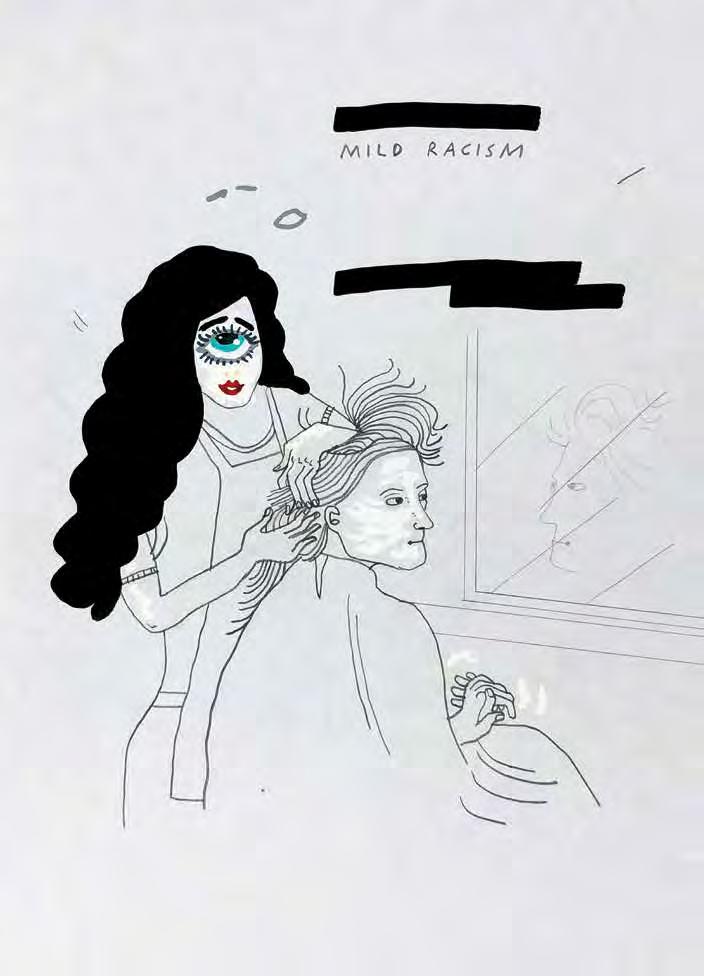

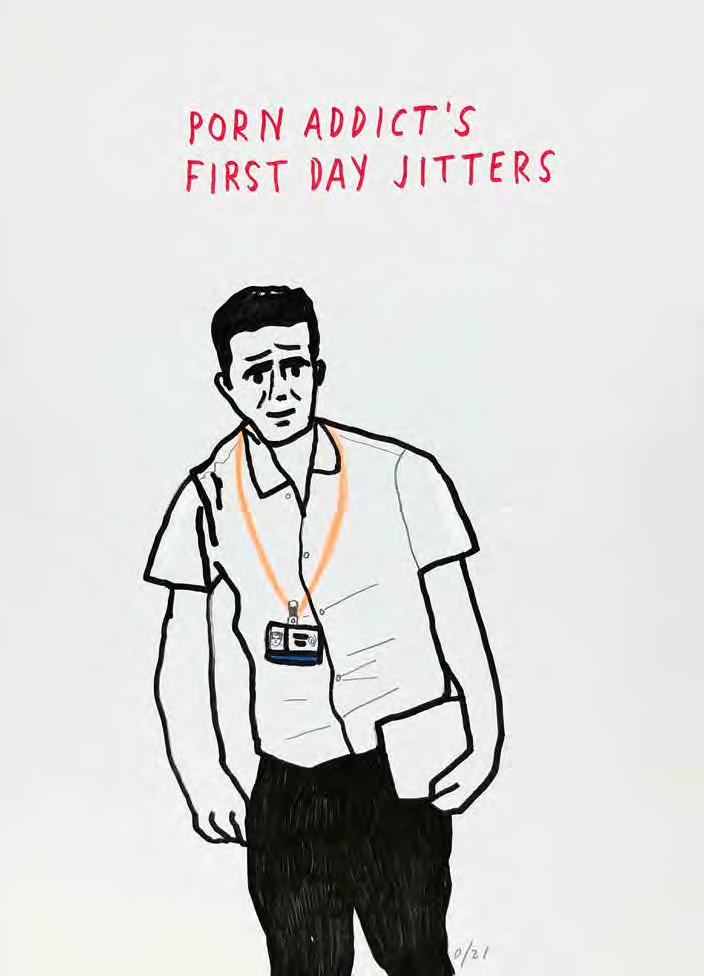



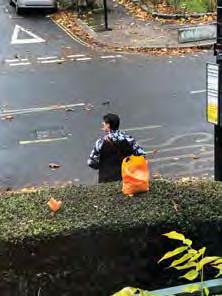

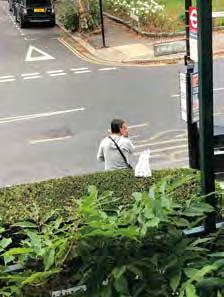
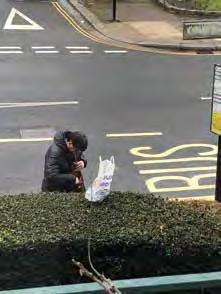
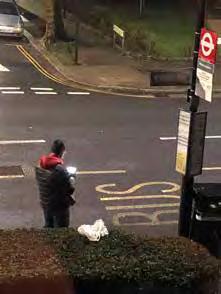
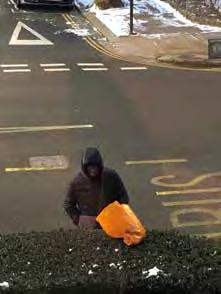

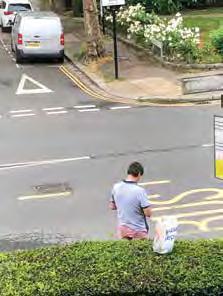
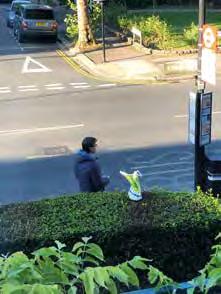
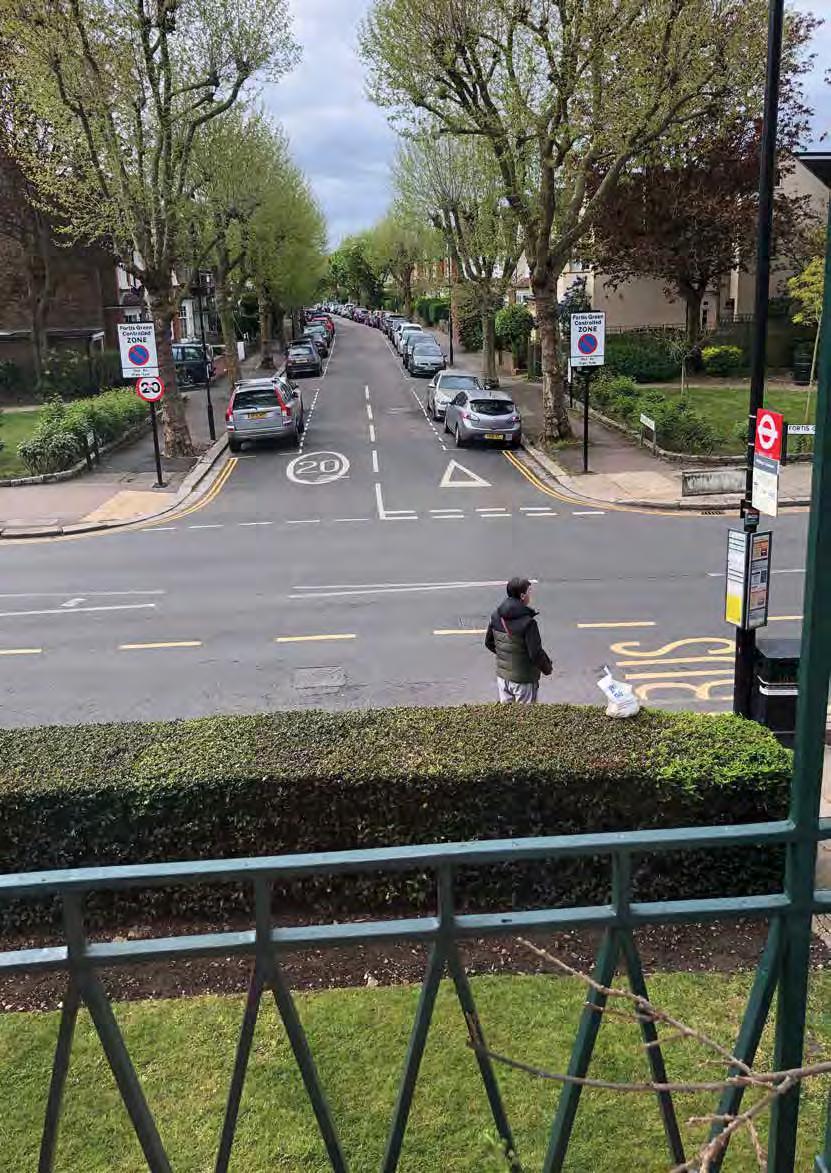


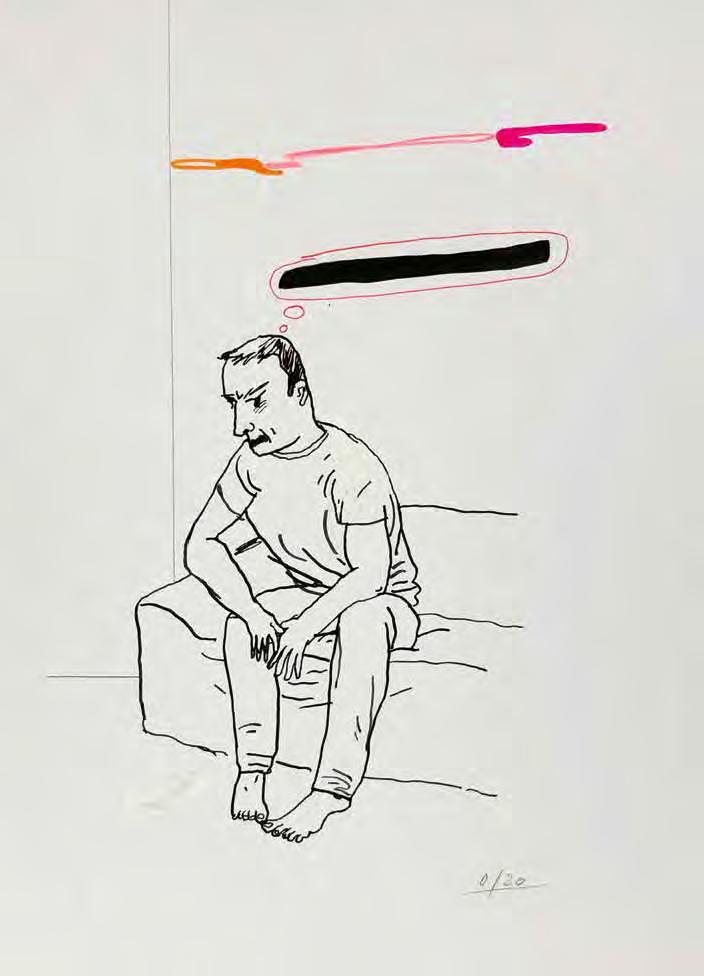
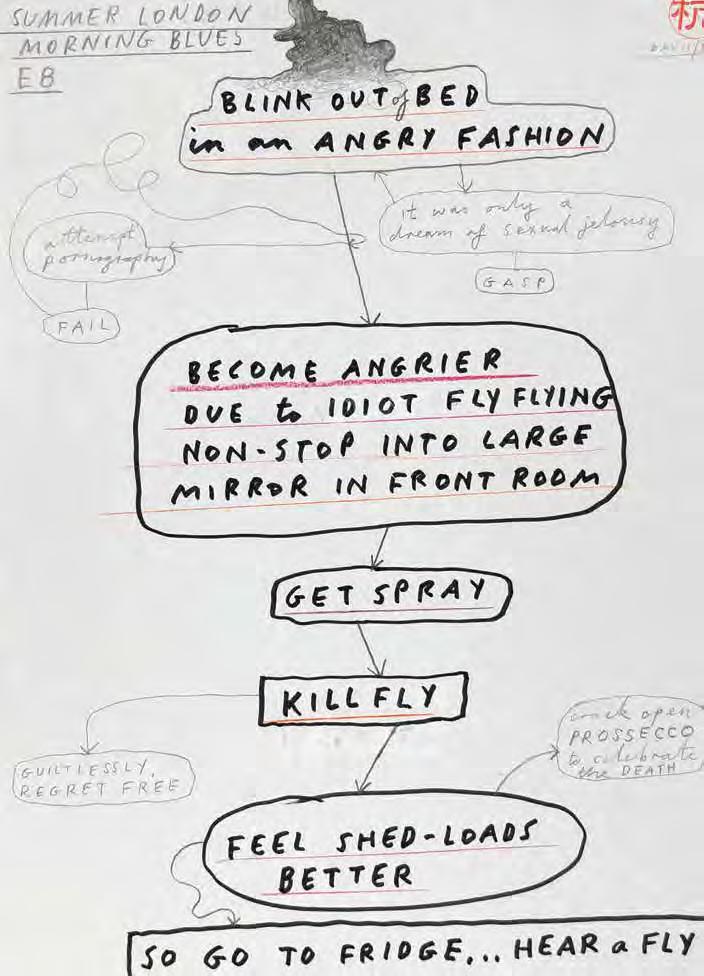

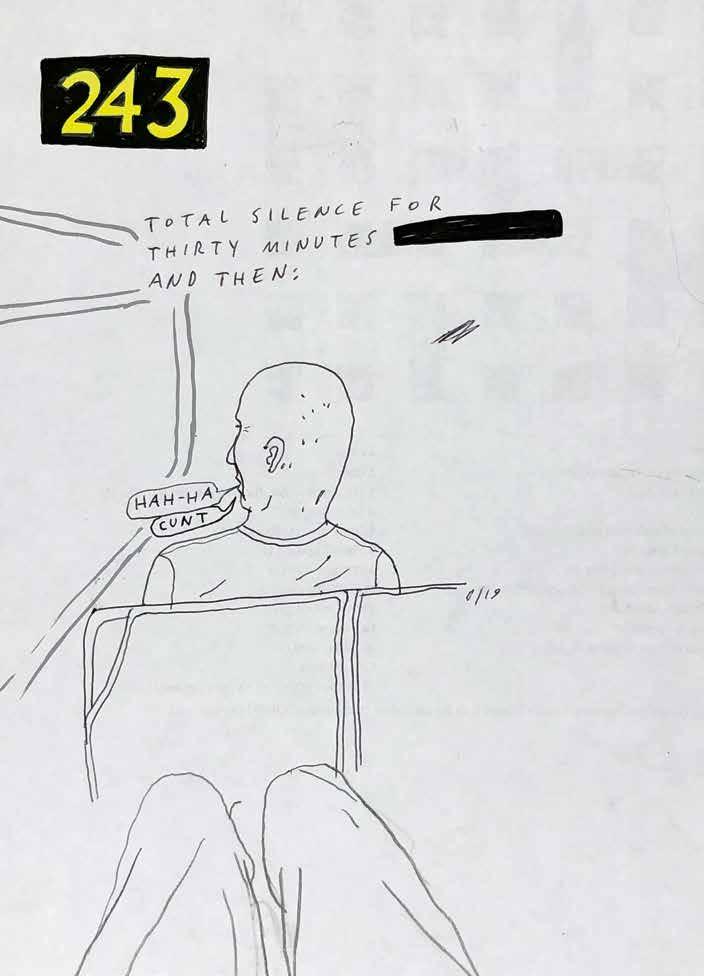
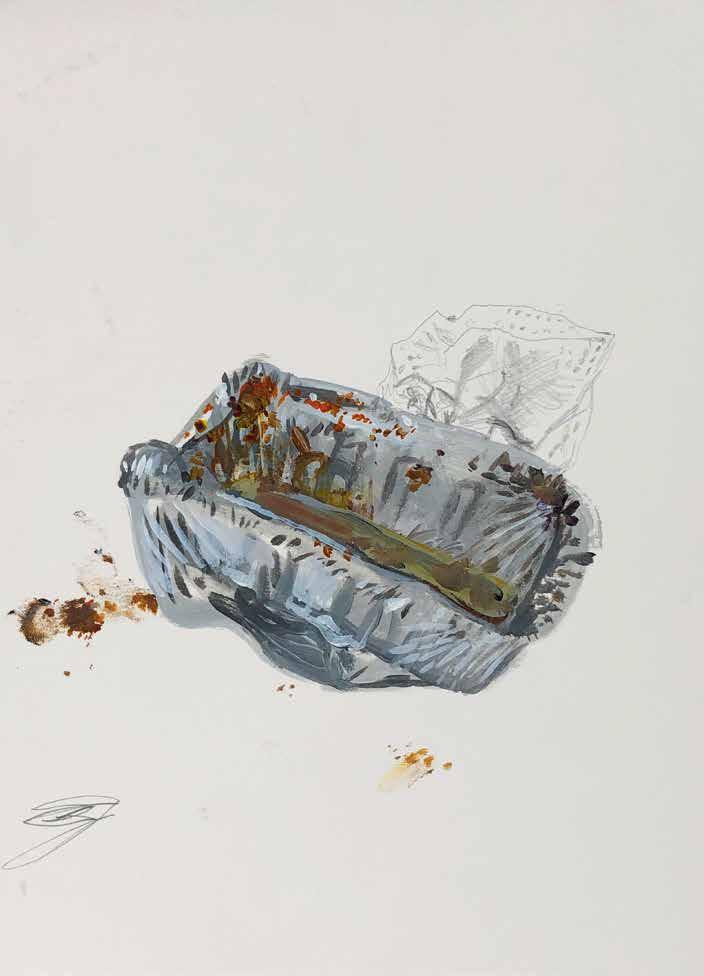
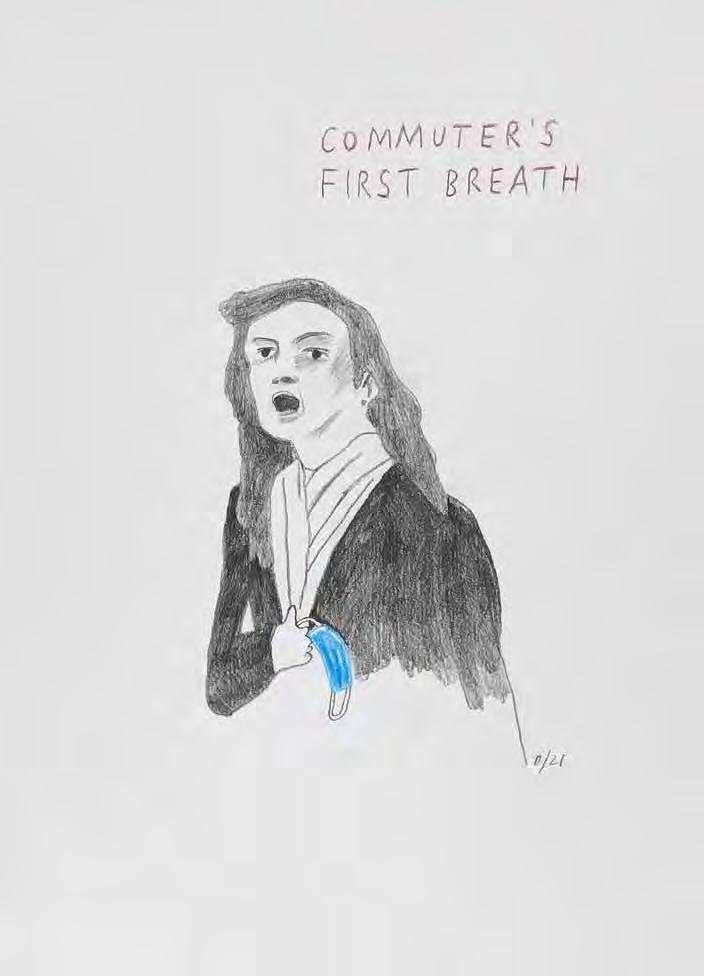
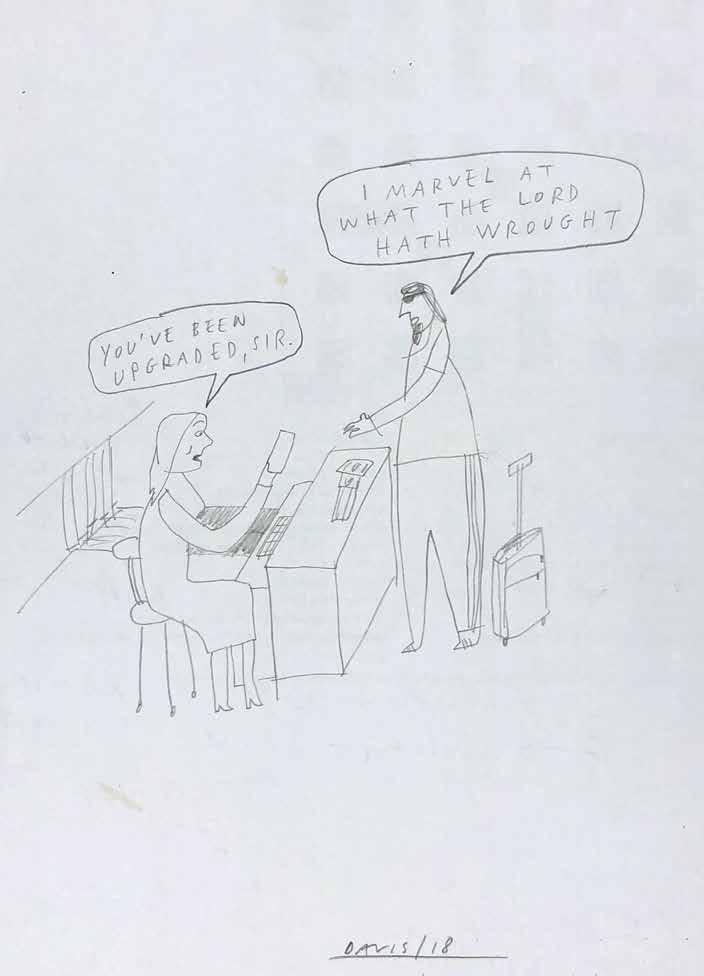
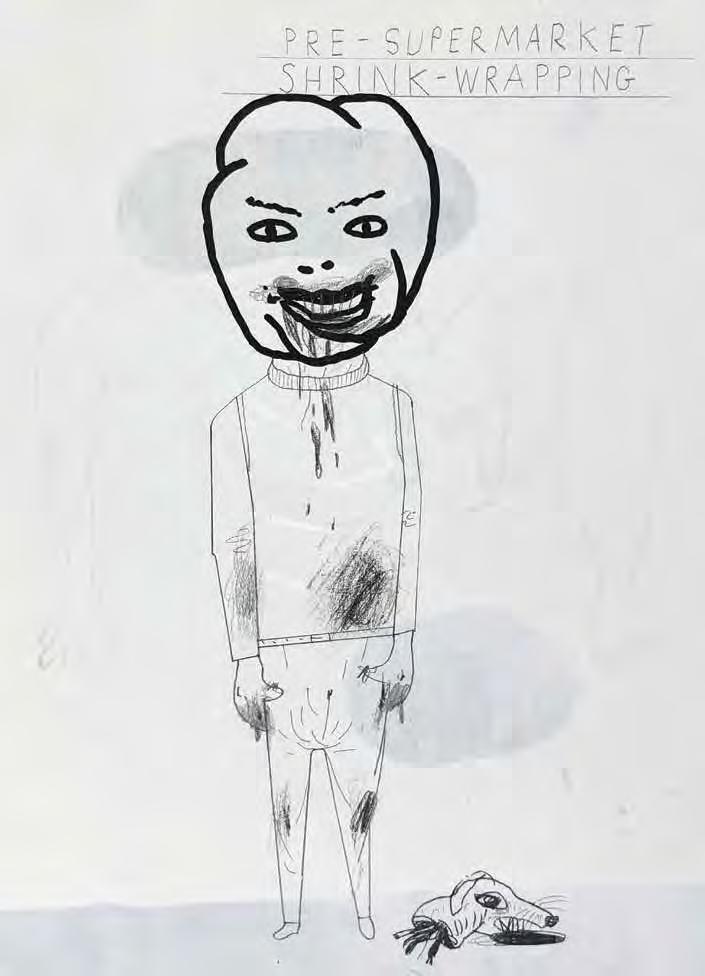
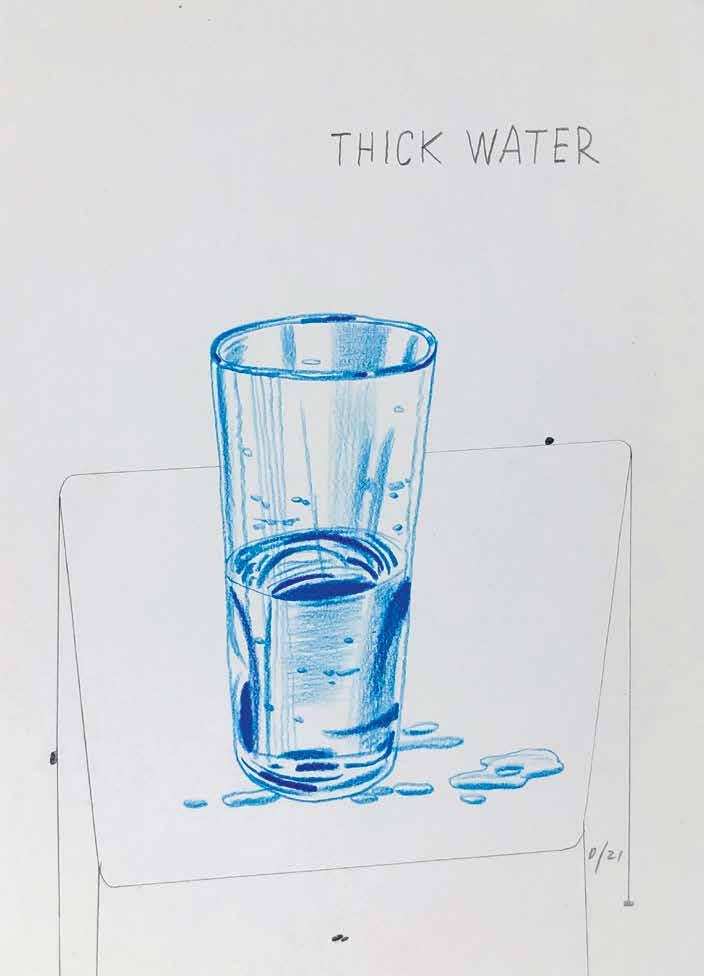
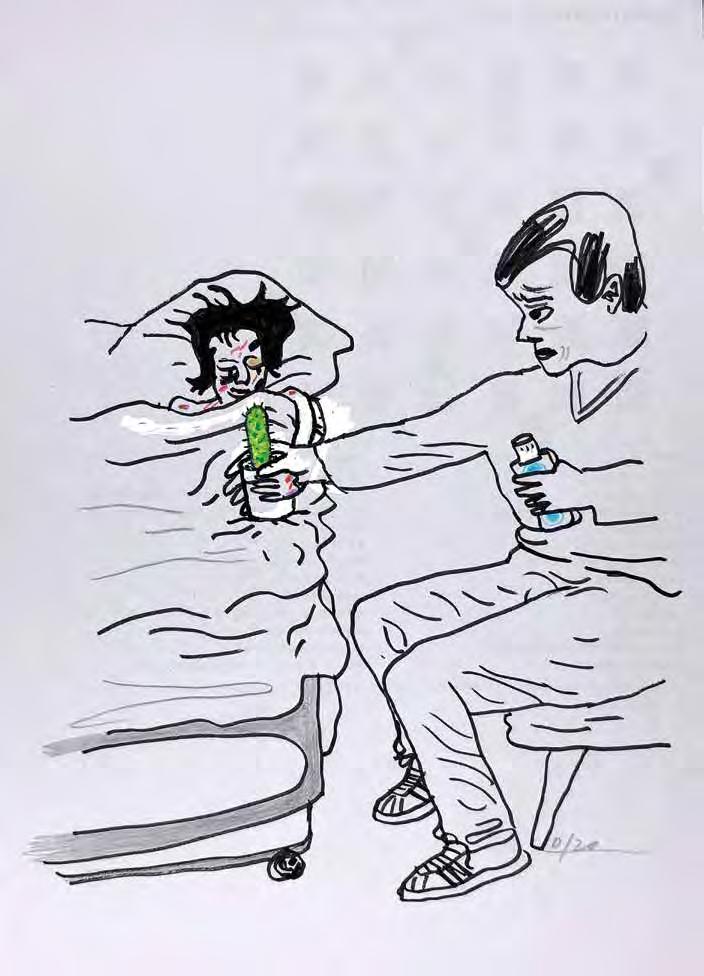
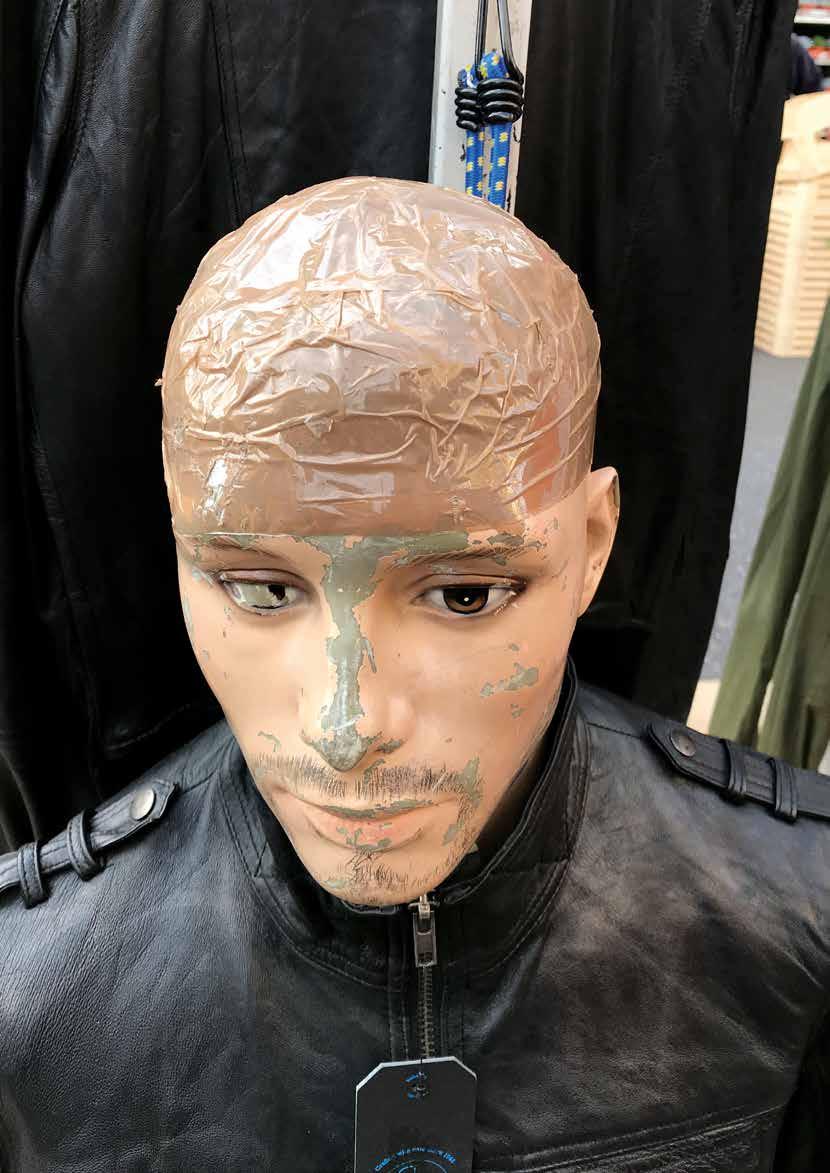
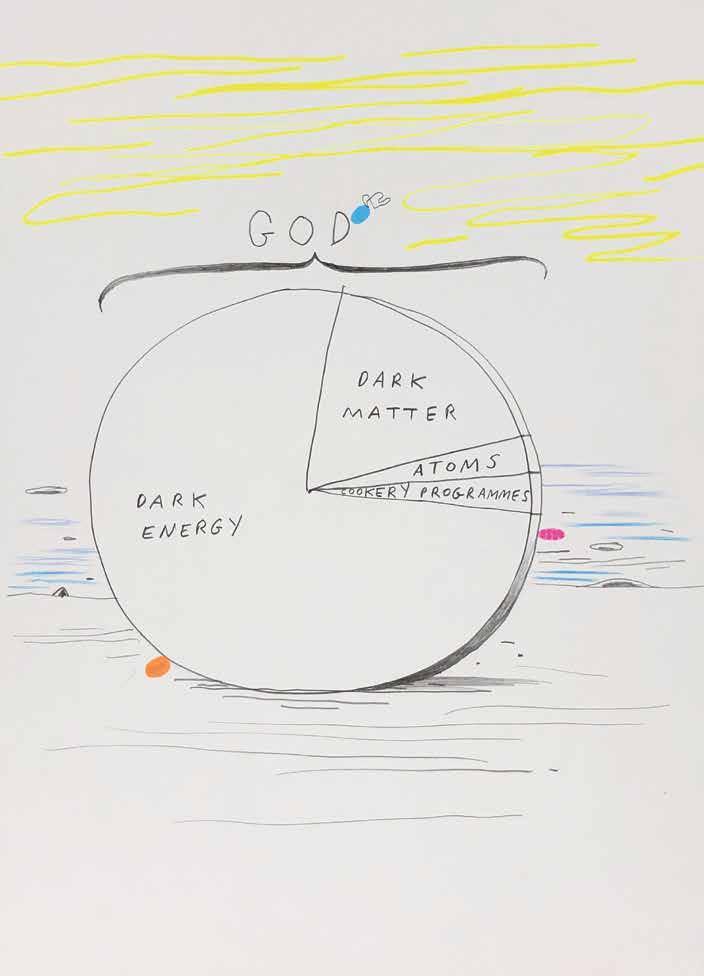

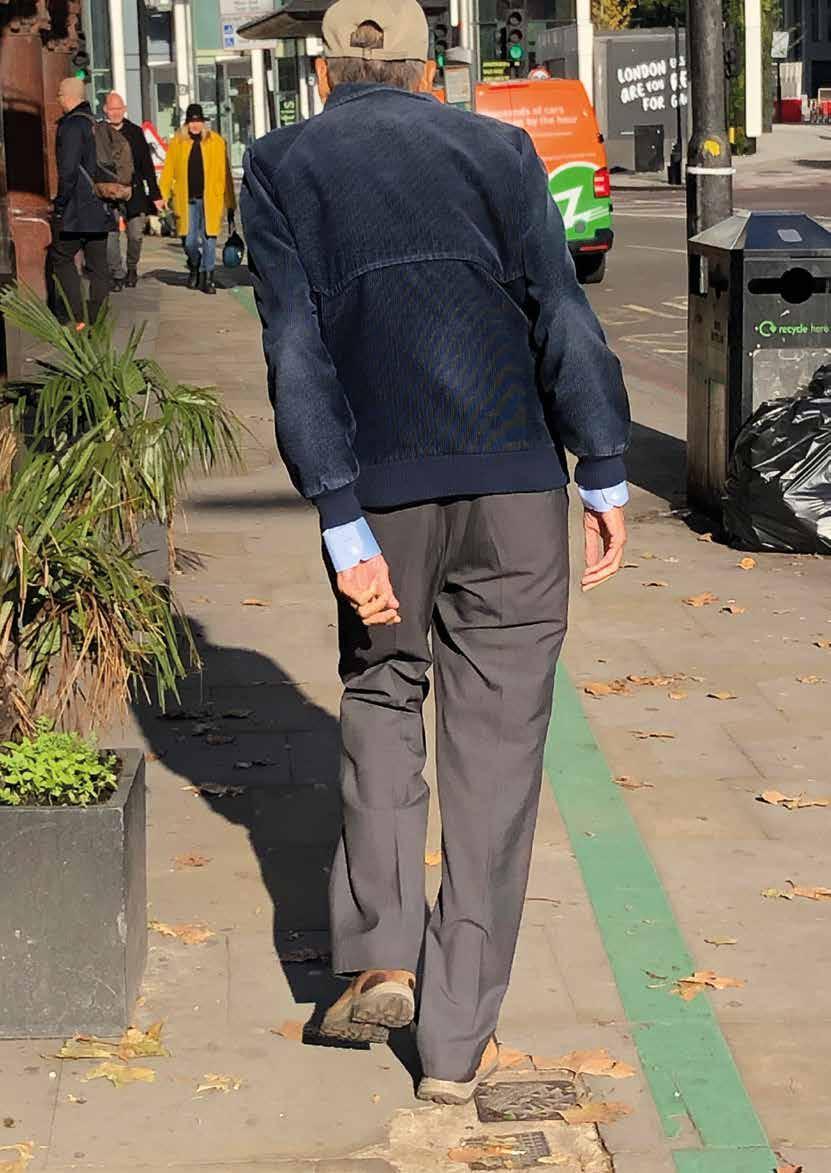
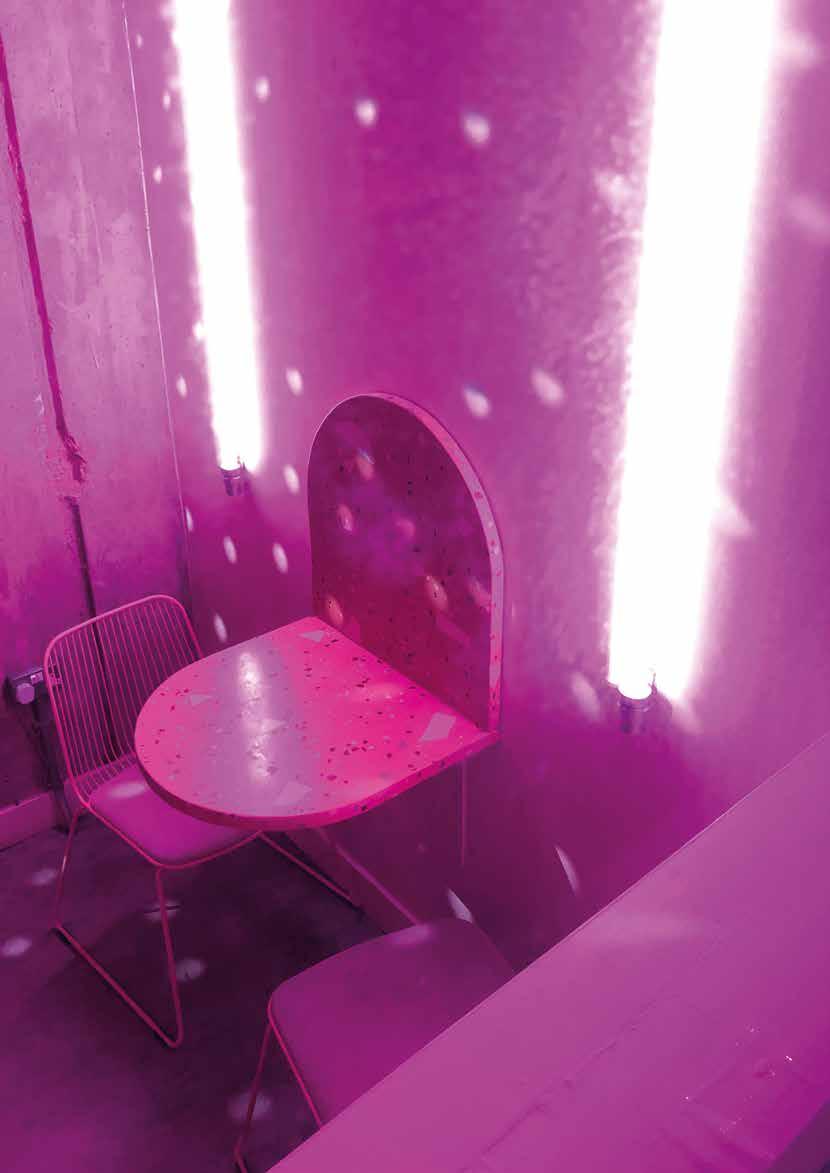
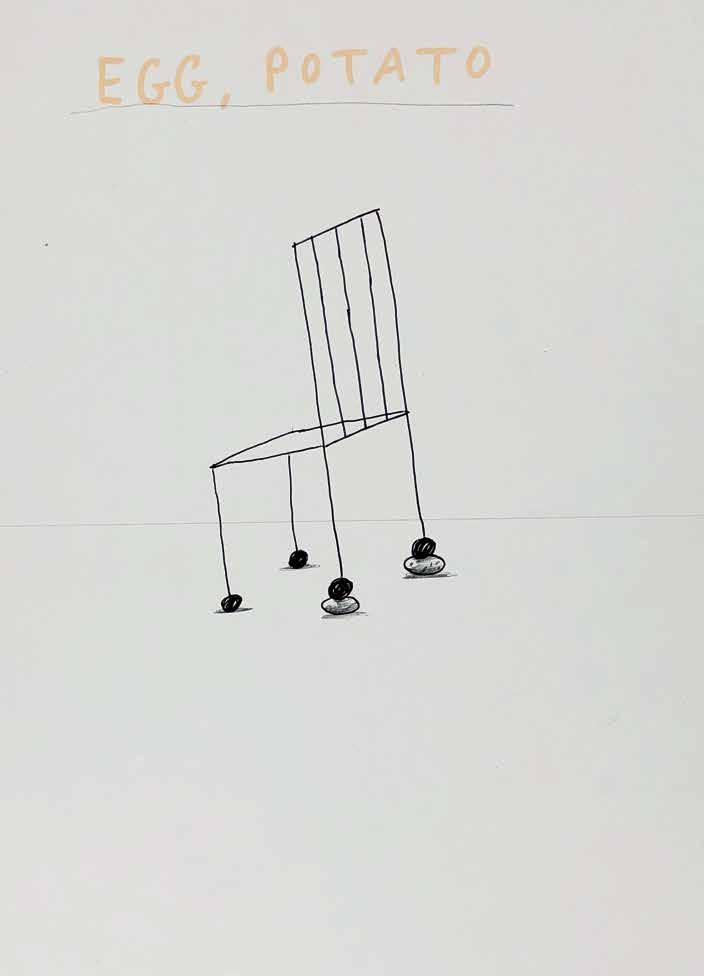
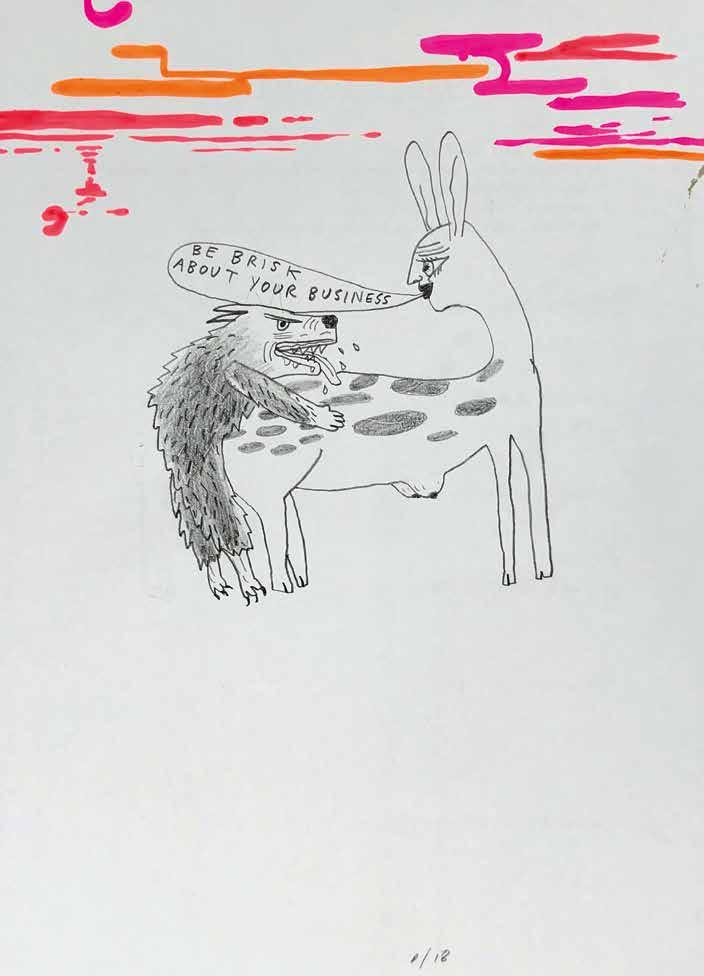

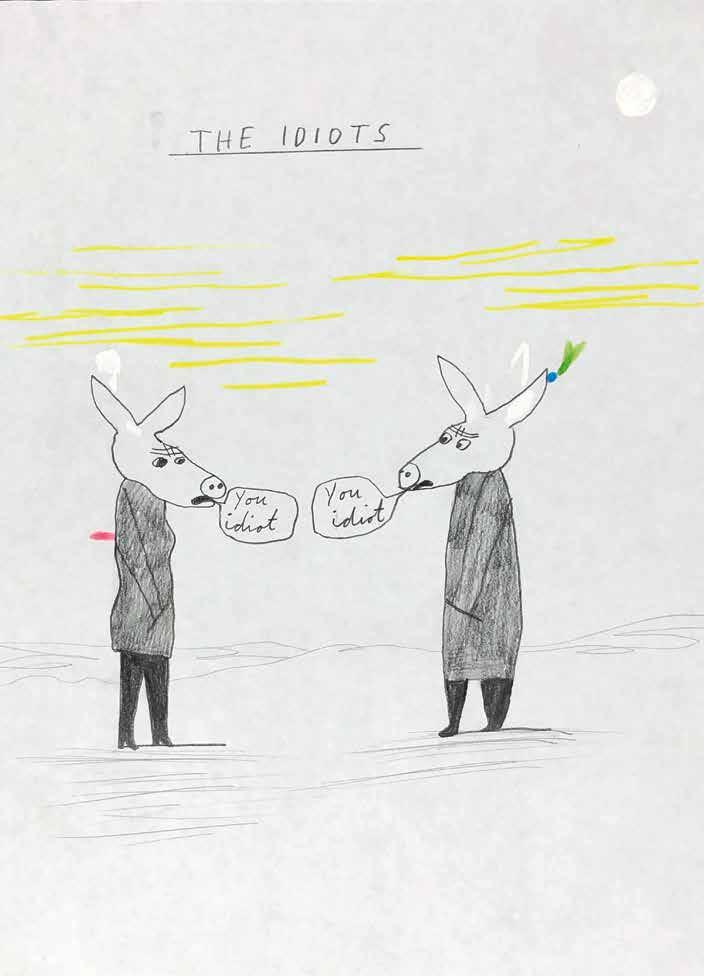
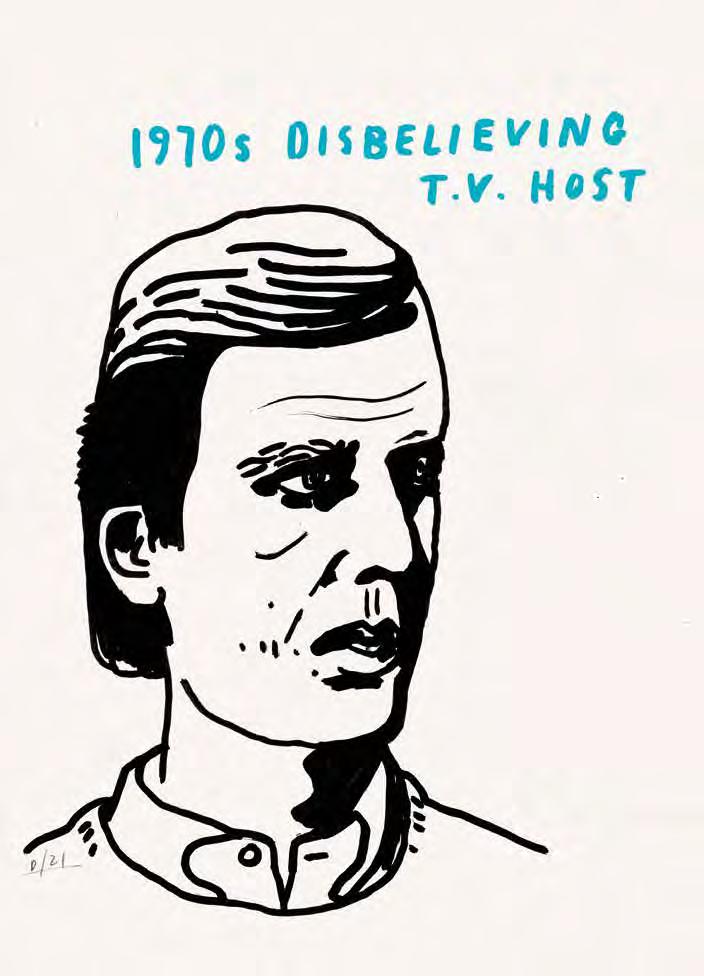
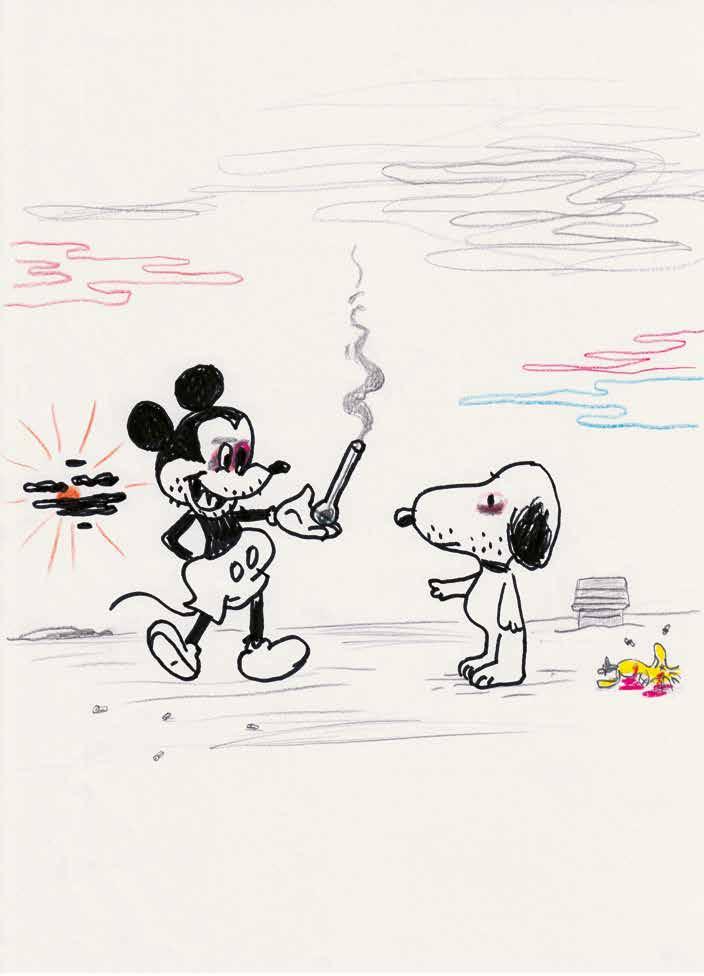
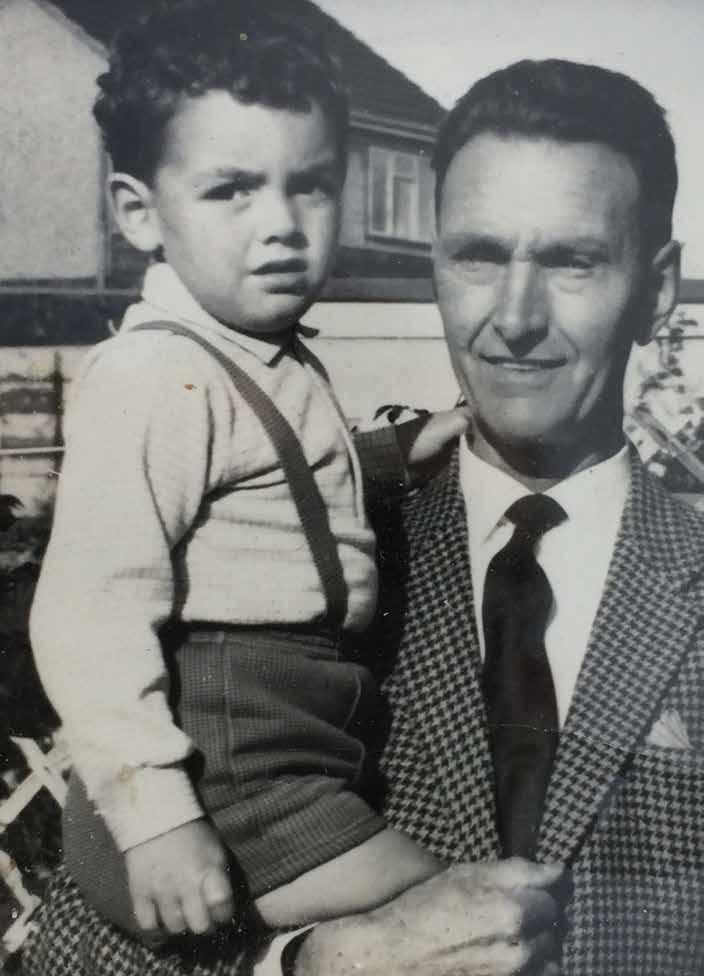
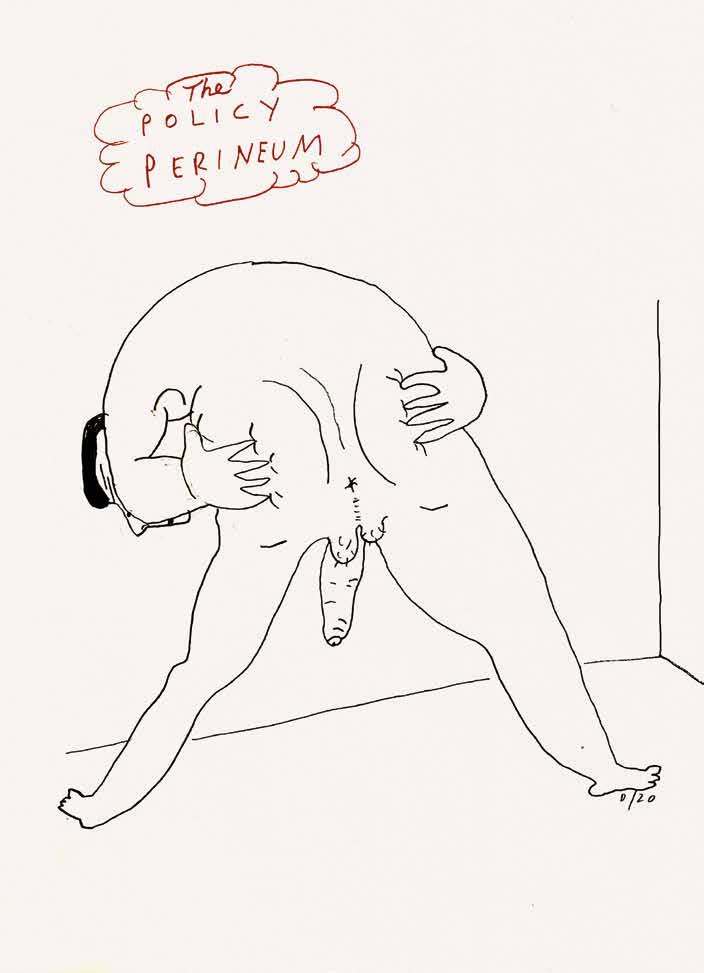
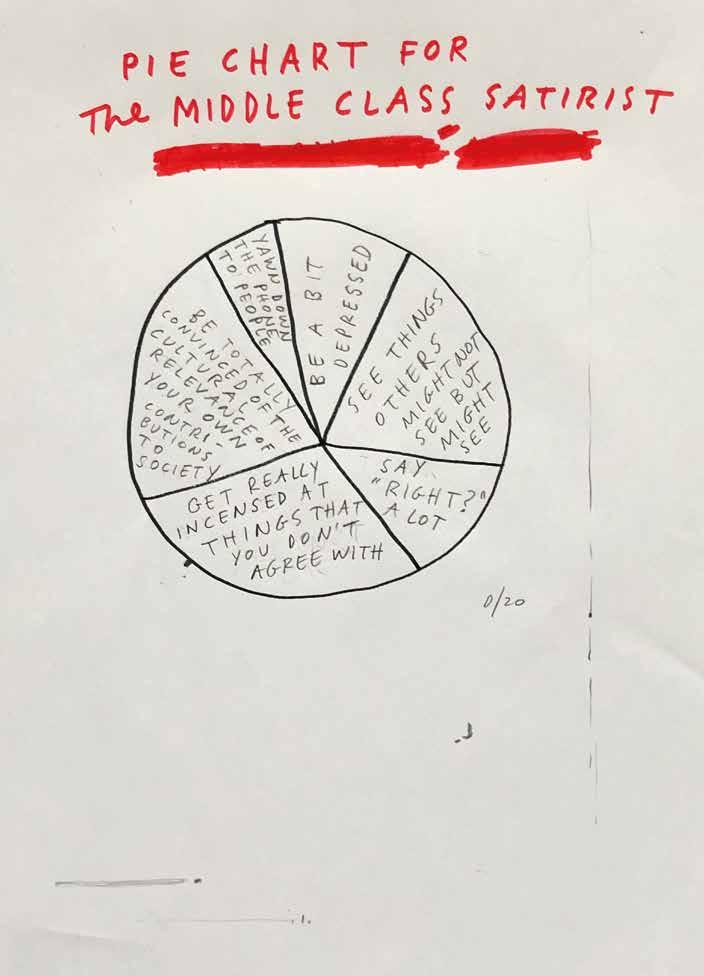
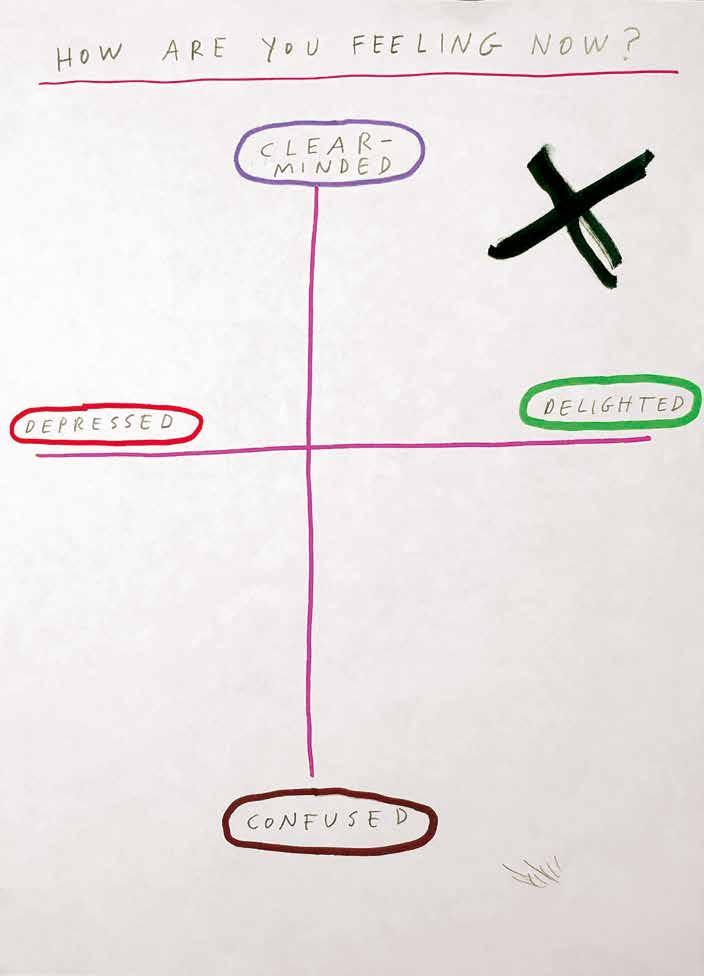
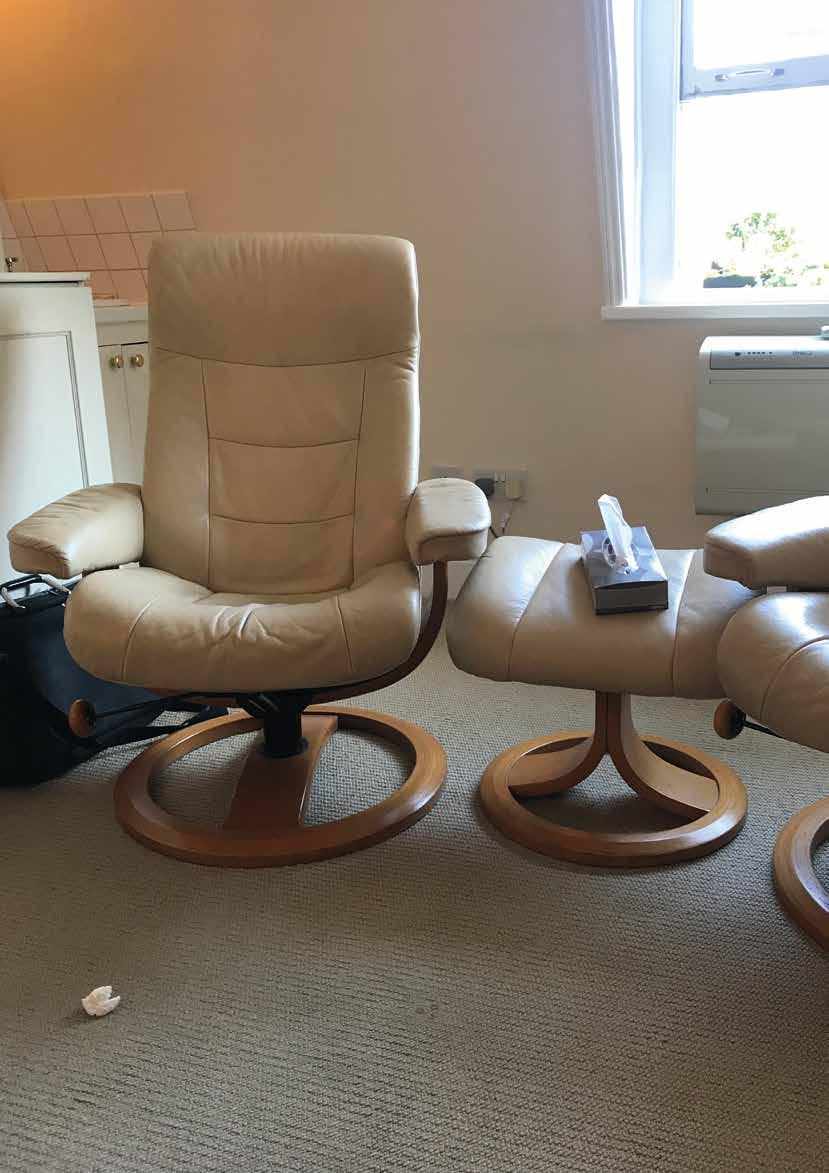
“My drawings are based on reality, or an imaginged reality based on reality.”
List of works
p. 5
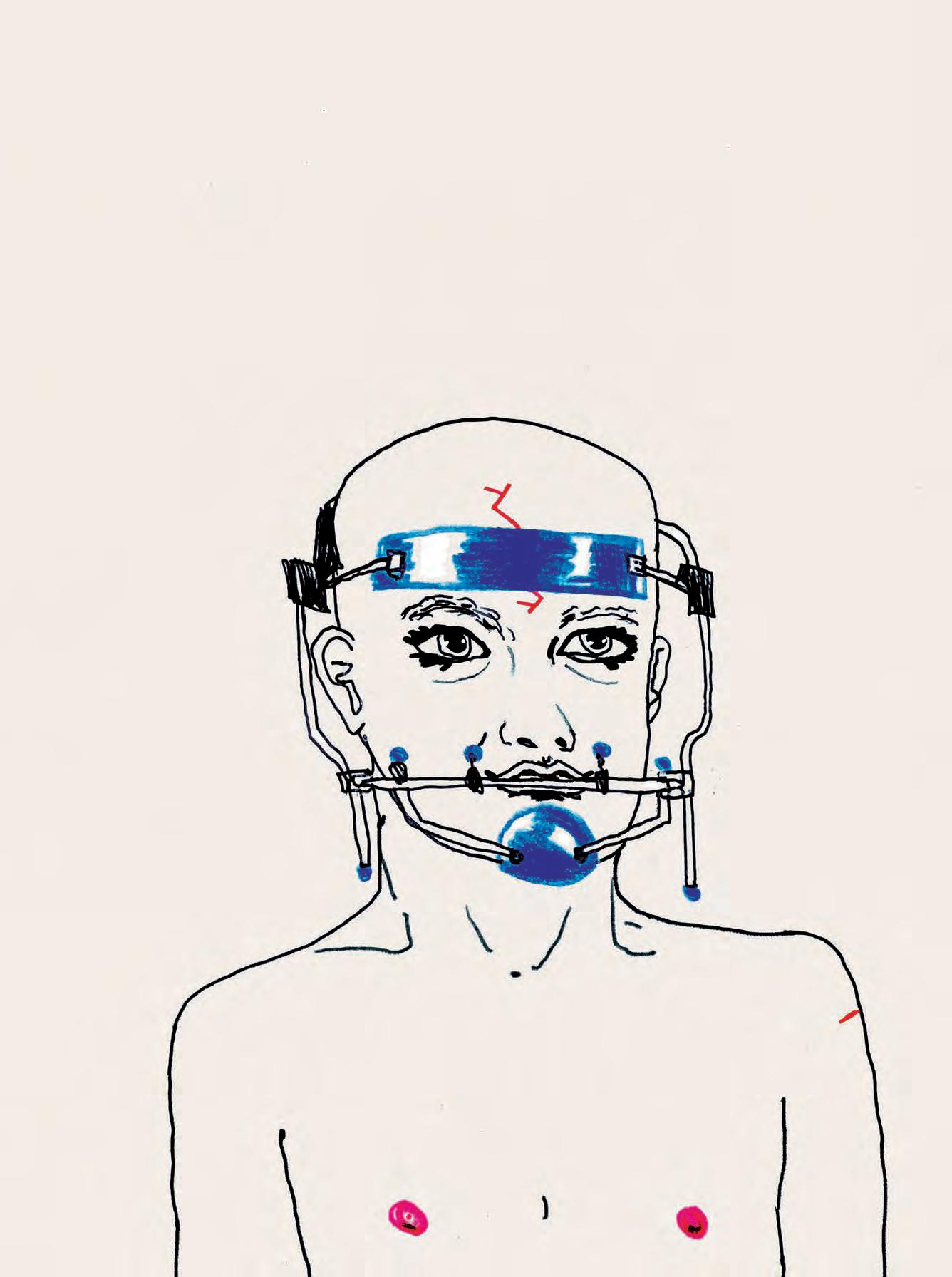
How are you feeling?, 2017
Pencil, ink on paper, 30 x 22 cm
p. 6
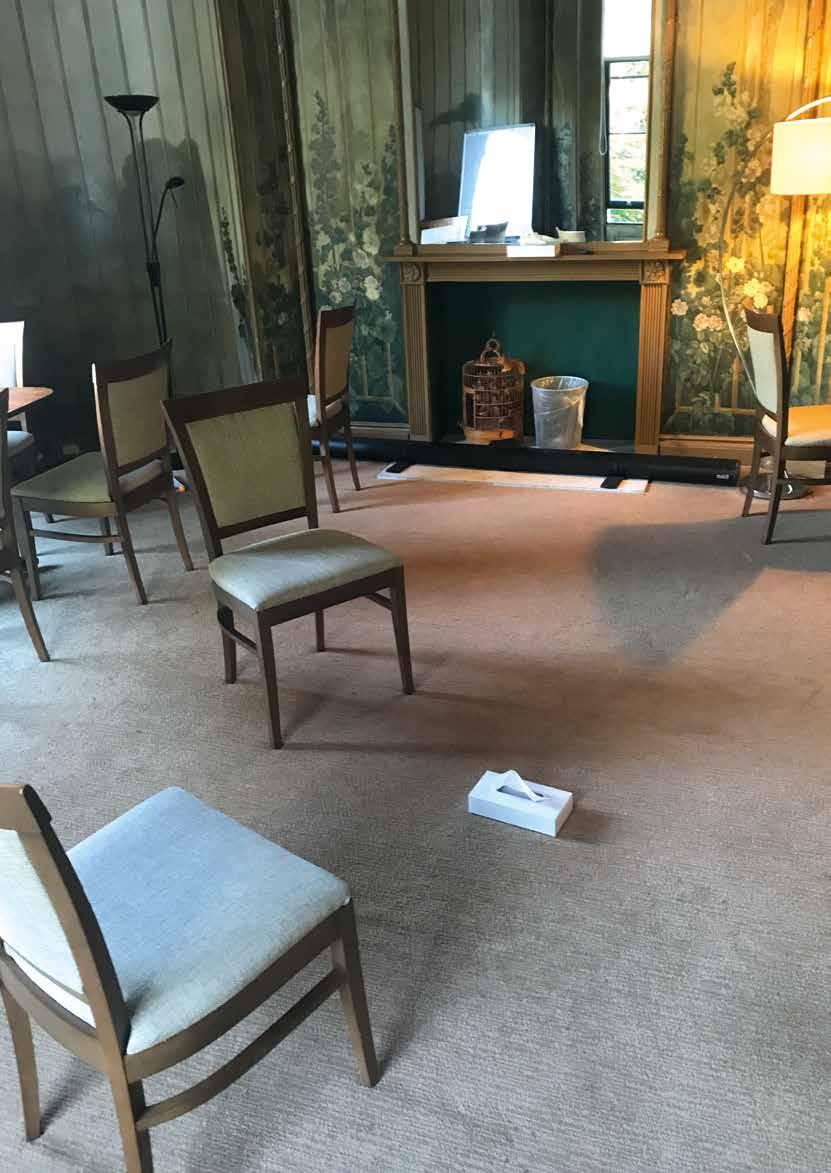
Therapy, 2019
Photograph, 42 x 29 7 cm
p. 7
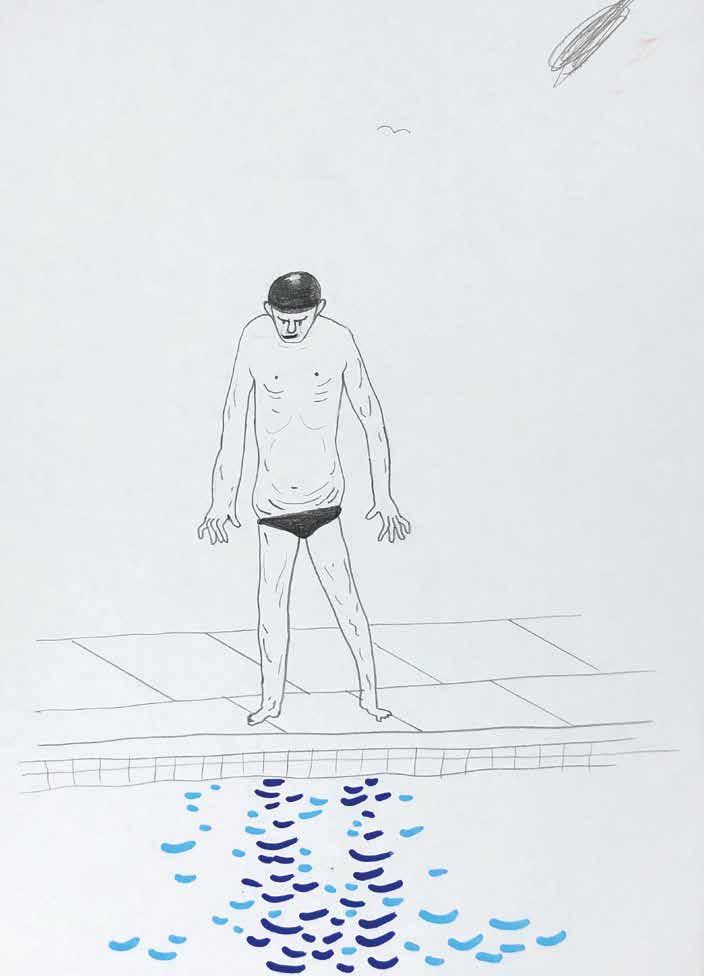
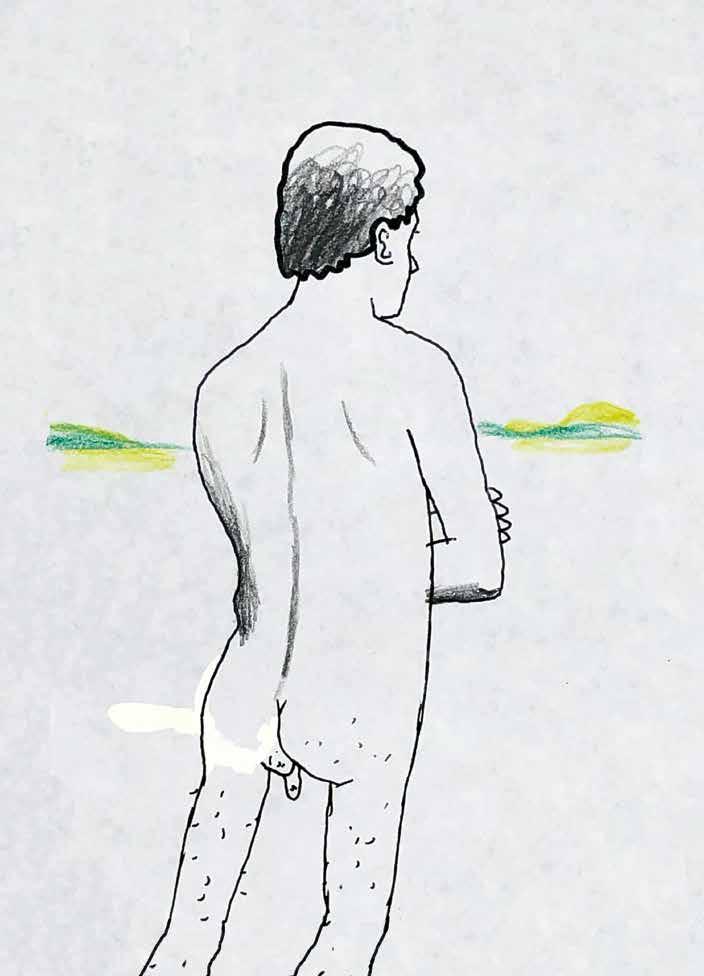
Swimmer, 2022
Pencil, ink on paper, 29 7 x 21 cm
p. 8
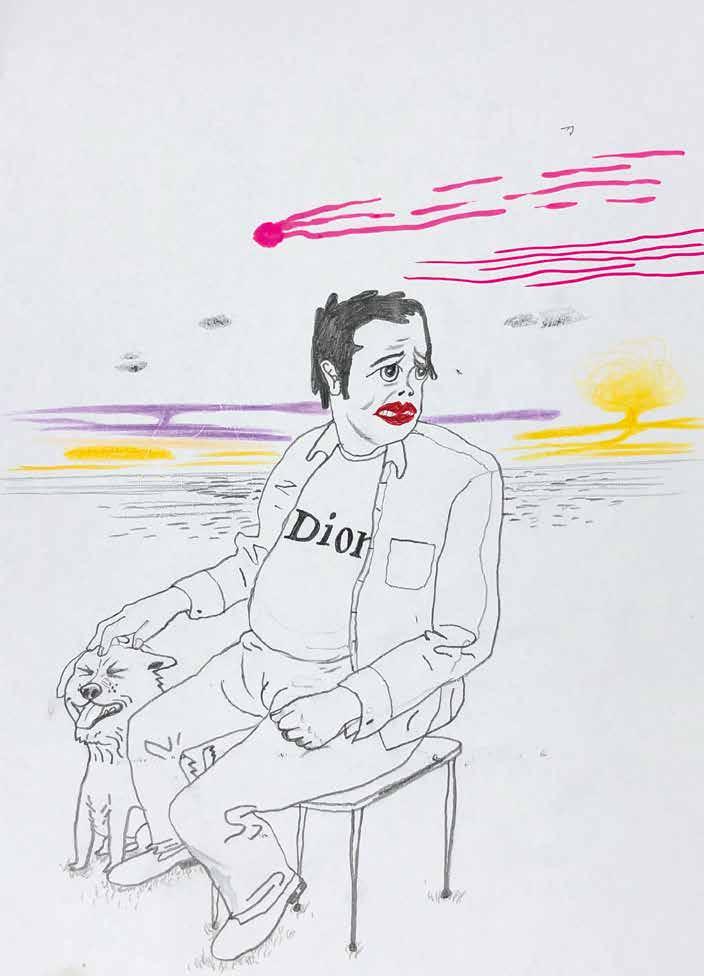
The shore, 2022
Pencil, acrylic ink on paper, 29 7 x 21 cm
p. 9
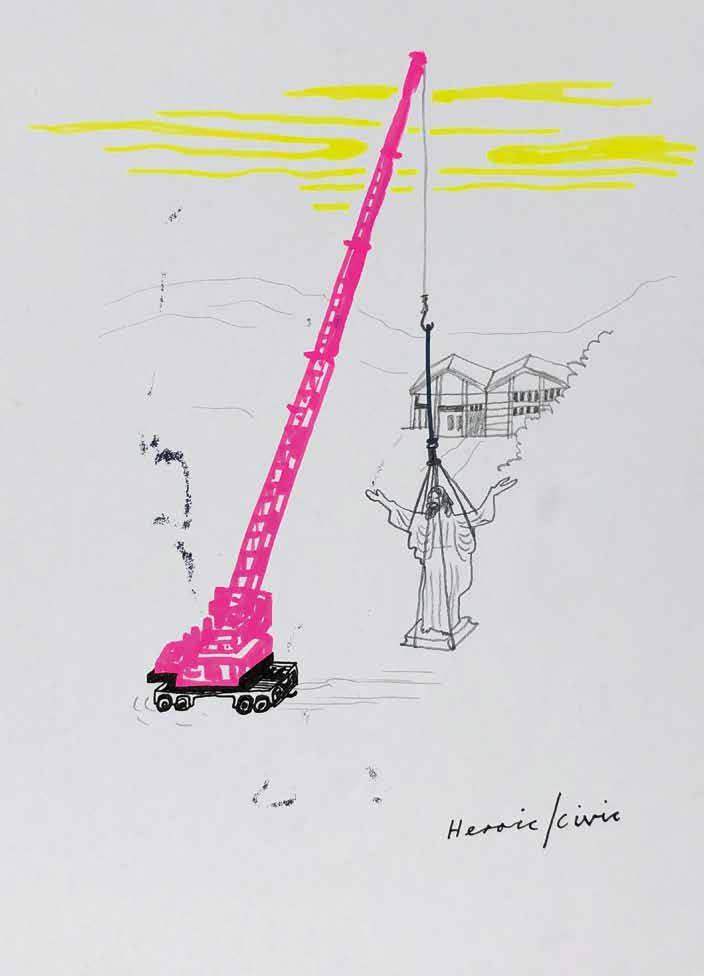
Heroic/civic, 2022
Pencil, acrylic ink on paper, 29.7 x 21 cm
p. 10
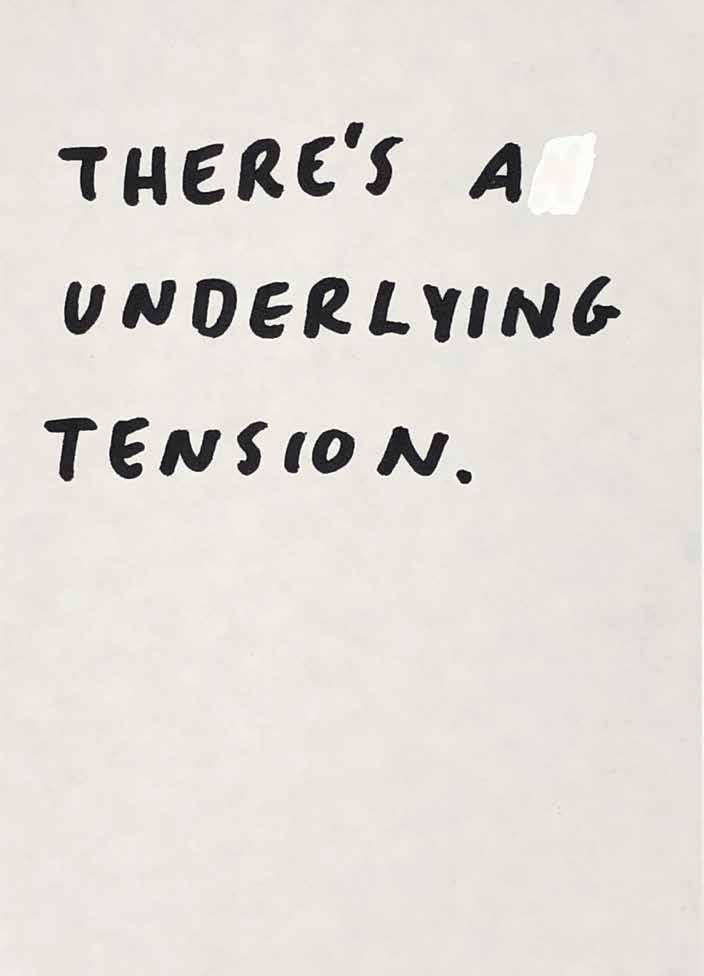
Tension, 2007
Paint on paper, 29.7 x 21 cm
p. 11
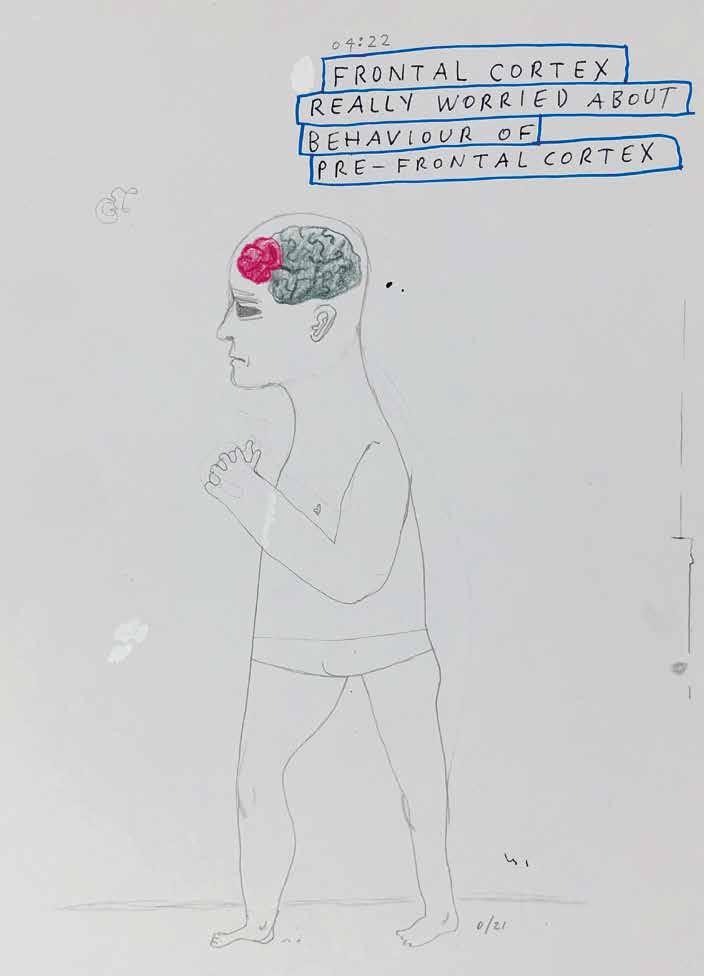
Cortex 2021
Pencil, ink on paper, 29 7 x 21 cm
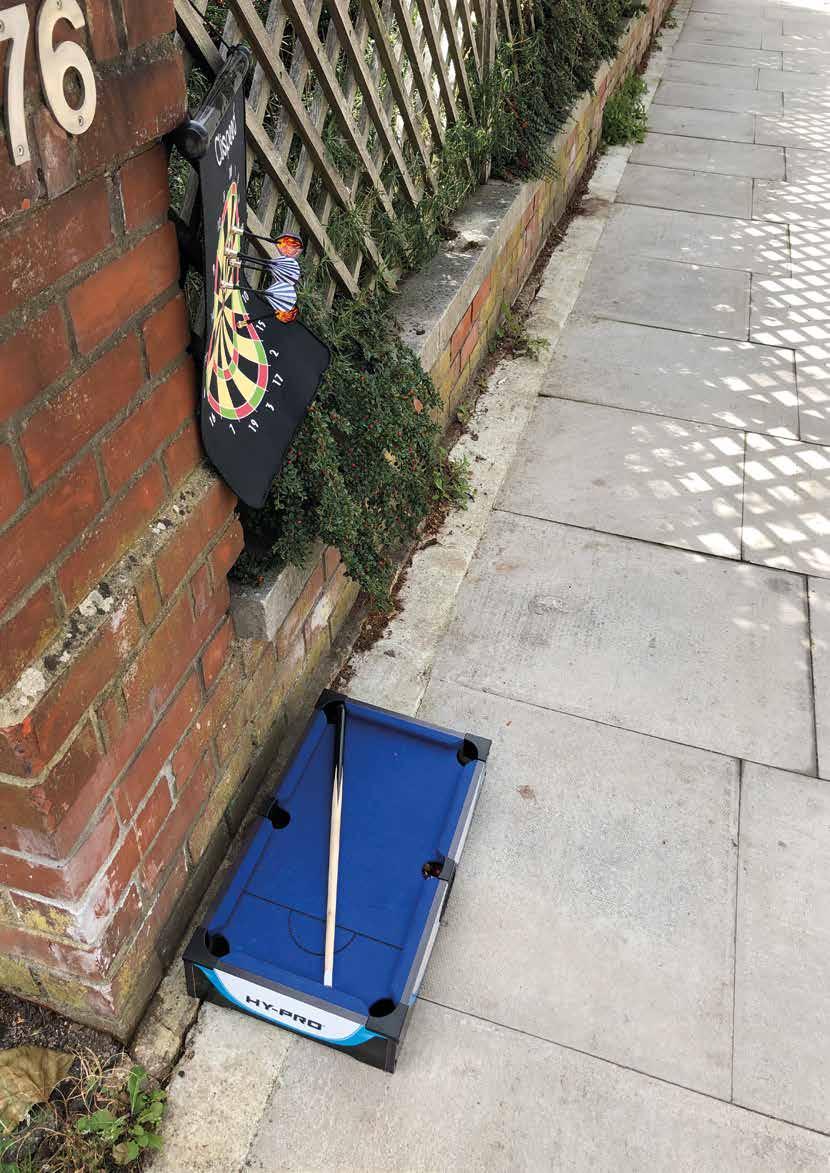
p. 1276, 2022
Photograph, 42 x 29 7 cm
p. 13 (top left)
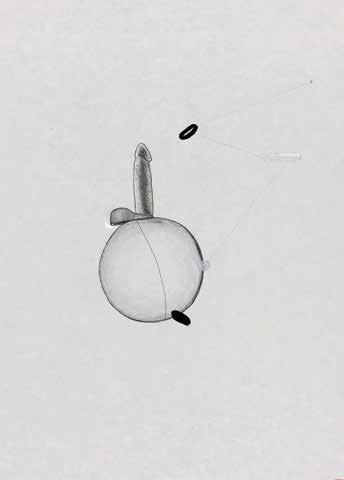
Dildo bouncer, 2008
Pencil on paper, 2 9 7 x 21 cm
p. 13 (top right)
Selfie, 2021
Pencil, ink on paper, 29 7 x 21 cm
p. 13 (bottom left)
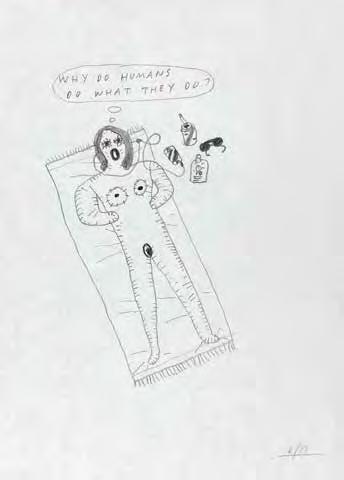
Humans, 2017
Pencil on paper, 29 7 x 21 cm
p. 13 (bottom right)
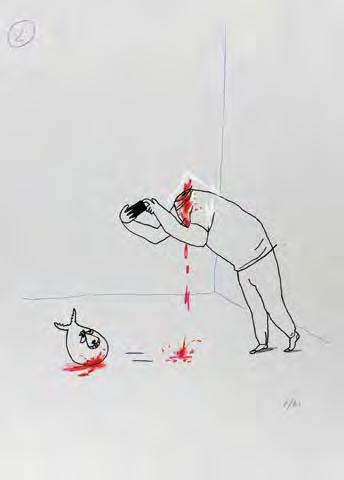
East London, 2022
Pencil, ink on paper, 29 7 x 21 cm
p. 14
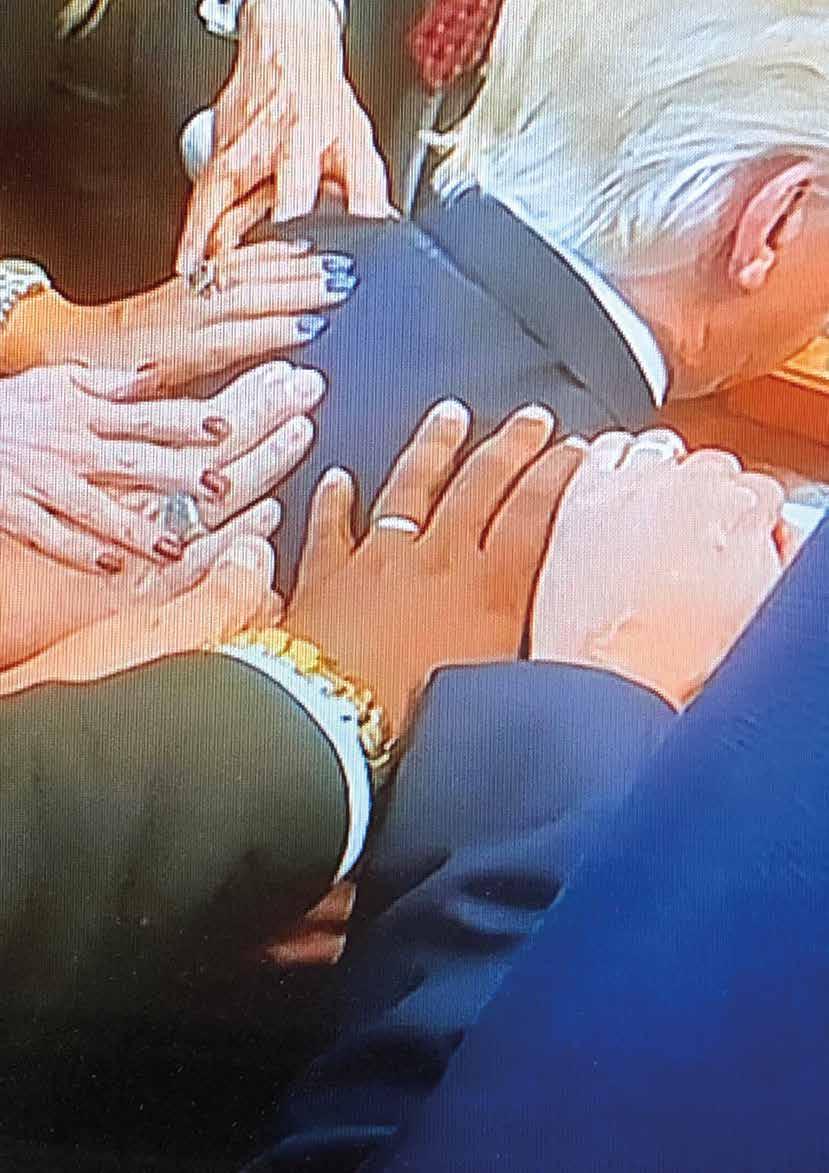
Prayers 2018
Photograph, 42 x 29 7 cm
p. 15
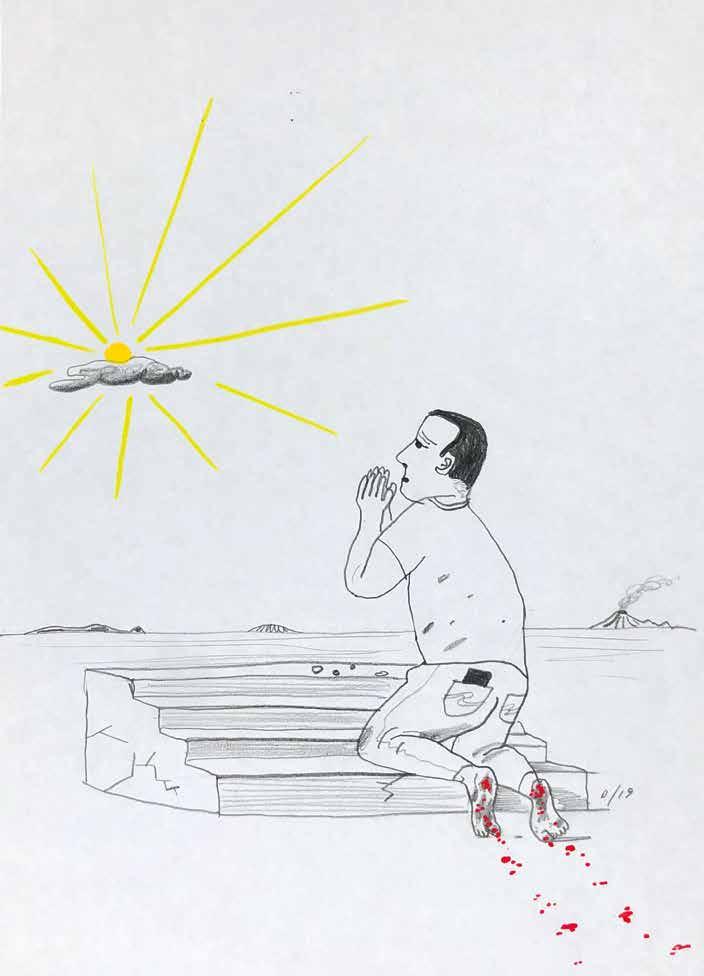
Cloud worship, 2019
Pencil, ink on paper, 29.7 x 21 cm
p. 16
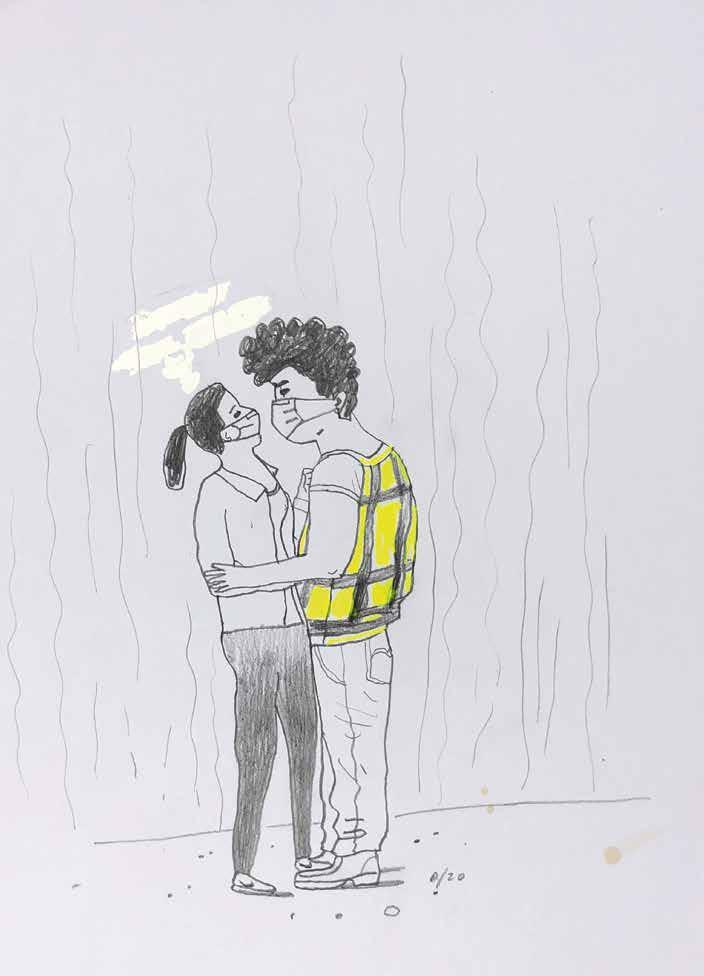
Covid love, 2020
Pencil, ink on paper, 29 7 x 21 cm
p. 17
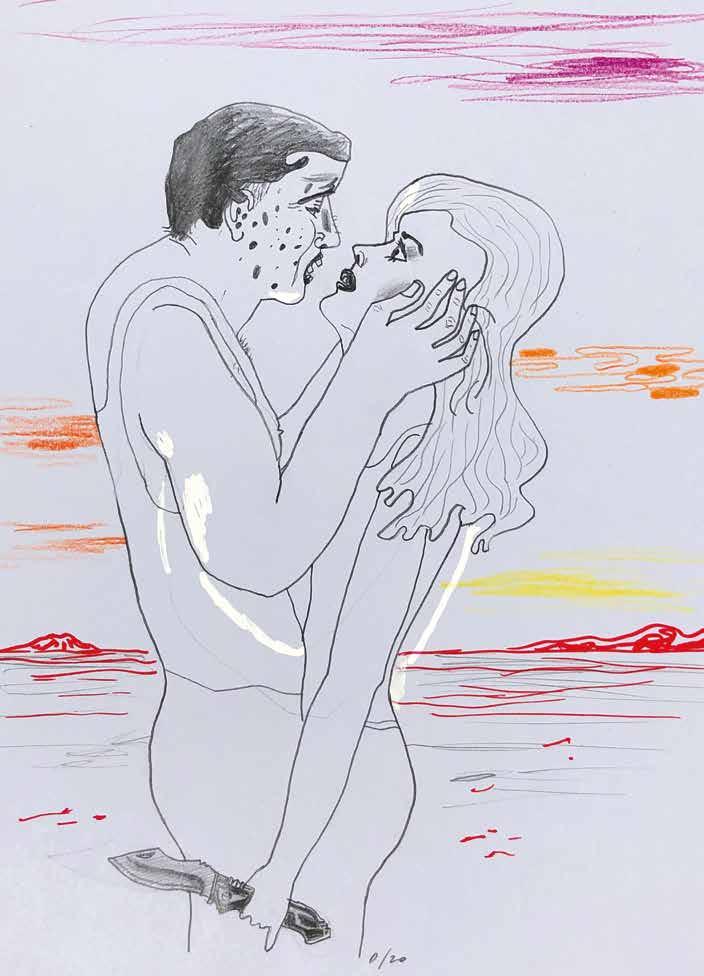
The kiss and the knife, 2020
Pencil, ink on paper, 29 7 x 21 cm
p. 18
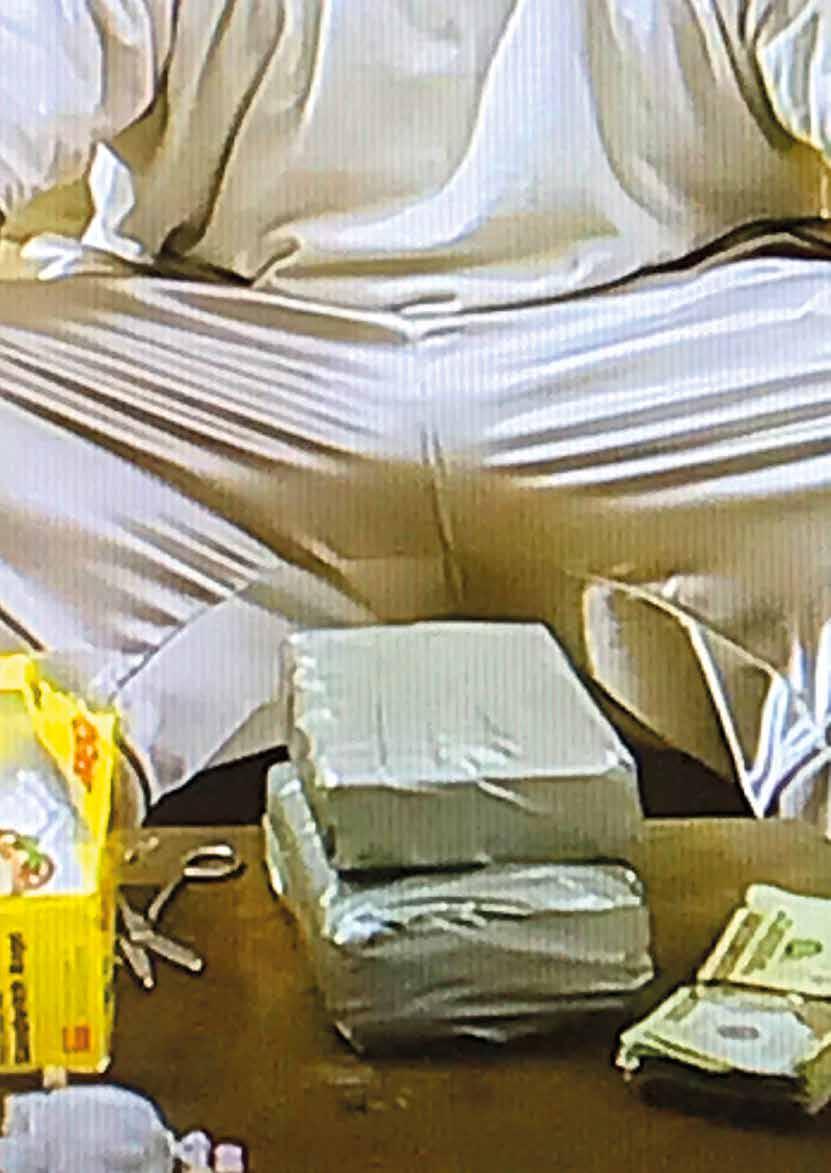
Dealer, 2019
Photograph, 42 x 29 7 cm
p. 19
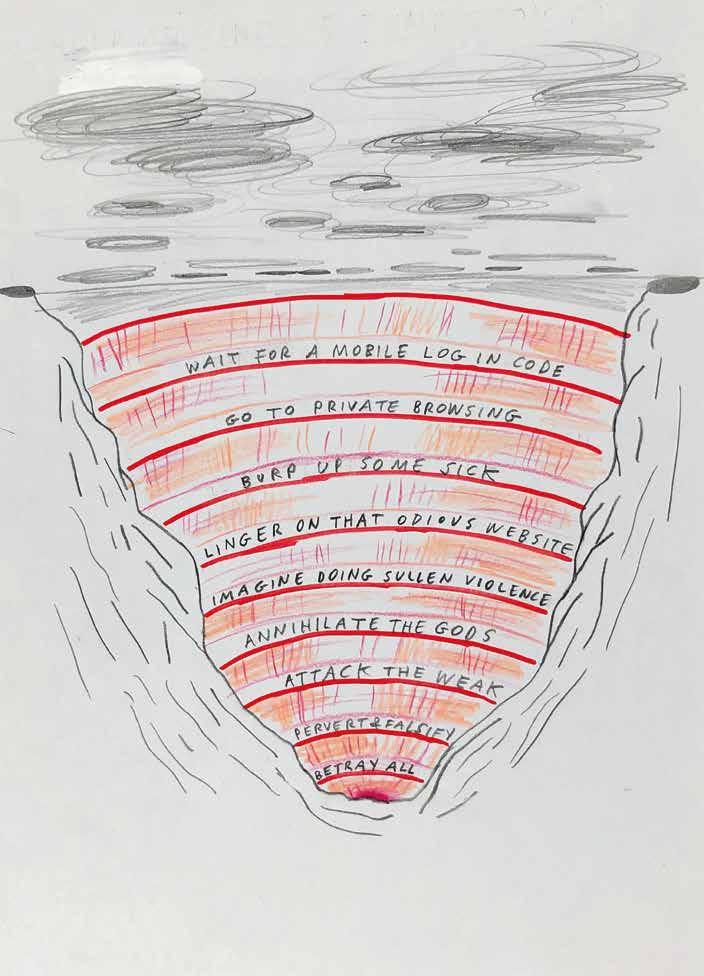
Dante in Surrey, 2022
Pencil, ink on paper, 29 7 x 21 cm
p. 20
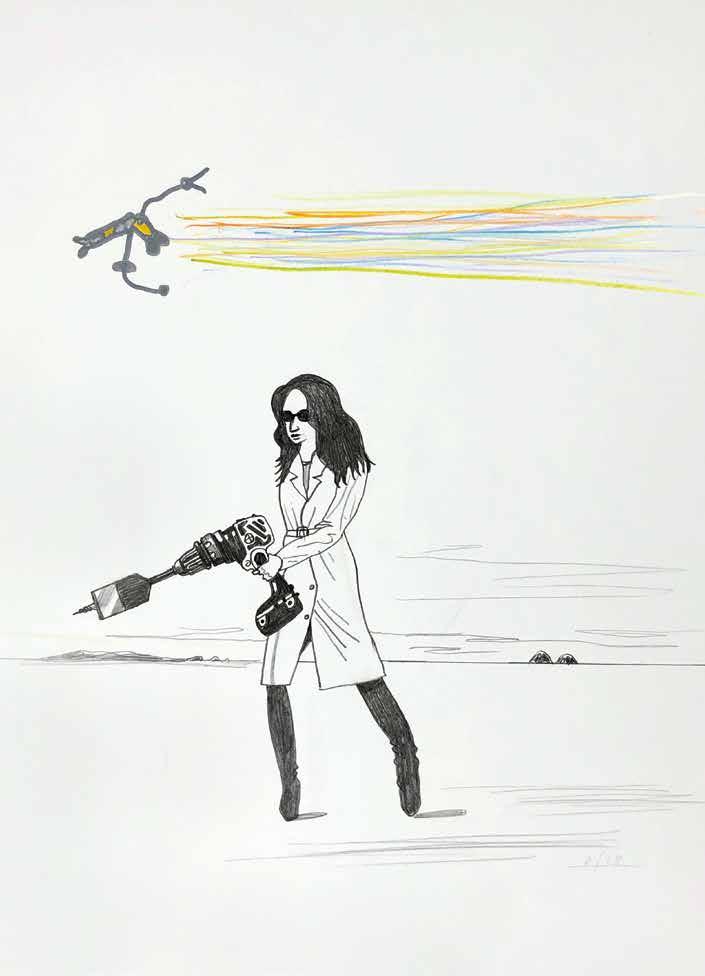
Drillwoman, 2018
Pencil, ink on paper, 29.7 x 21 cm
p. 21
Triangle 2022
Pencil, ink on paper, 29.7 x 21 cm
p. 22
Thomas and Stu, 2020
Photograph, 42 x 29.7 cm
p. 23
Exercise 2022
Pencil, ballpoint on paper, 29 7 x 21 cm
p. 24–25
BBQ 2019–22
Series of photographs, each 42 x 29 7 cm
p. 26
The point, 2021
Pencil, collage, ink on paper, 29 7 x 21 cm
p. 27
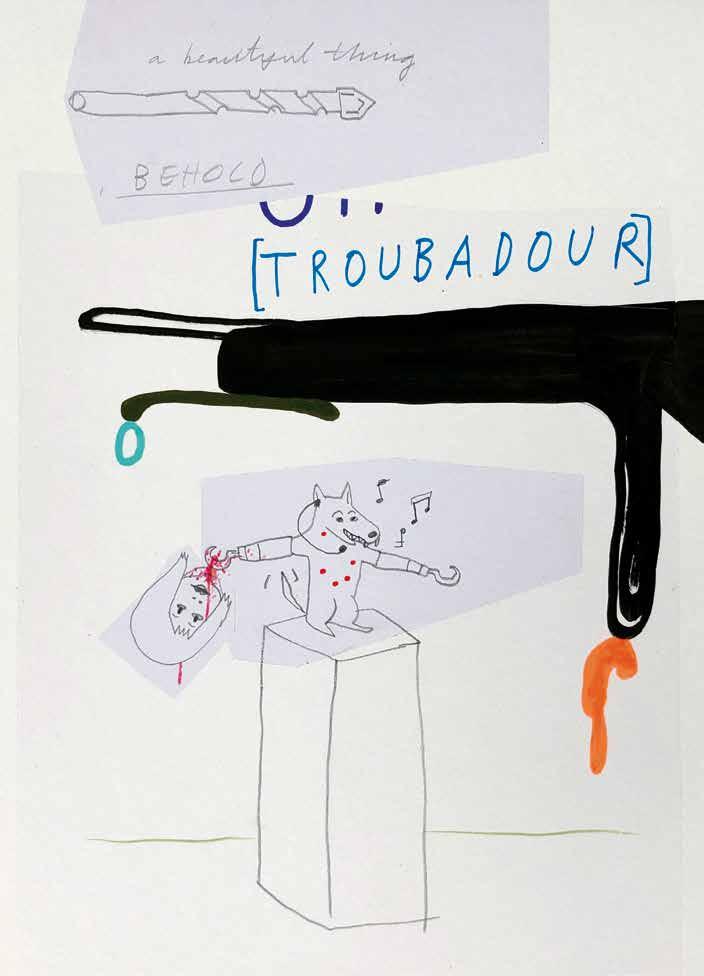
Troubadour, 2022
Pencil, collage, ink on paper, 29.7 x 21 cm
p. 28
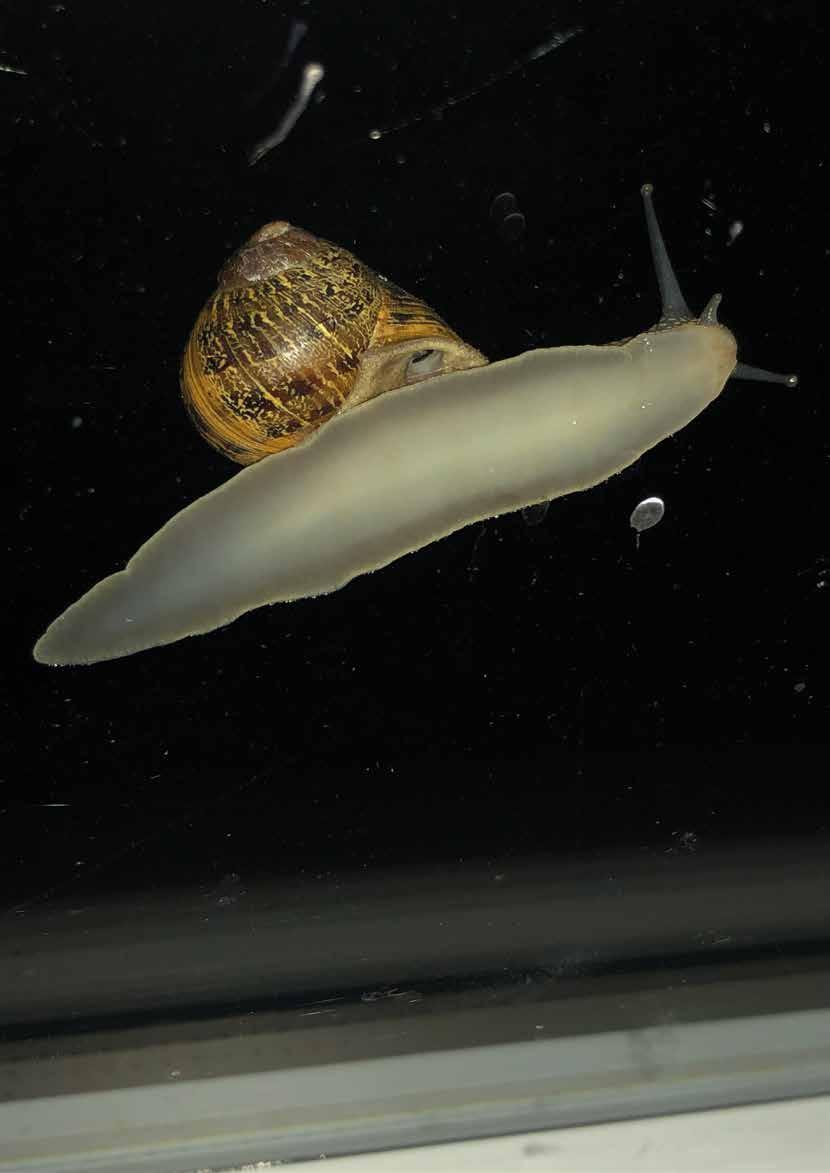
Snail 2004
Photograph, 42 x 29.7 cm
p. 29
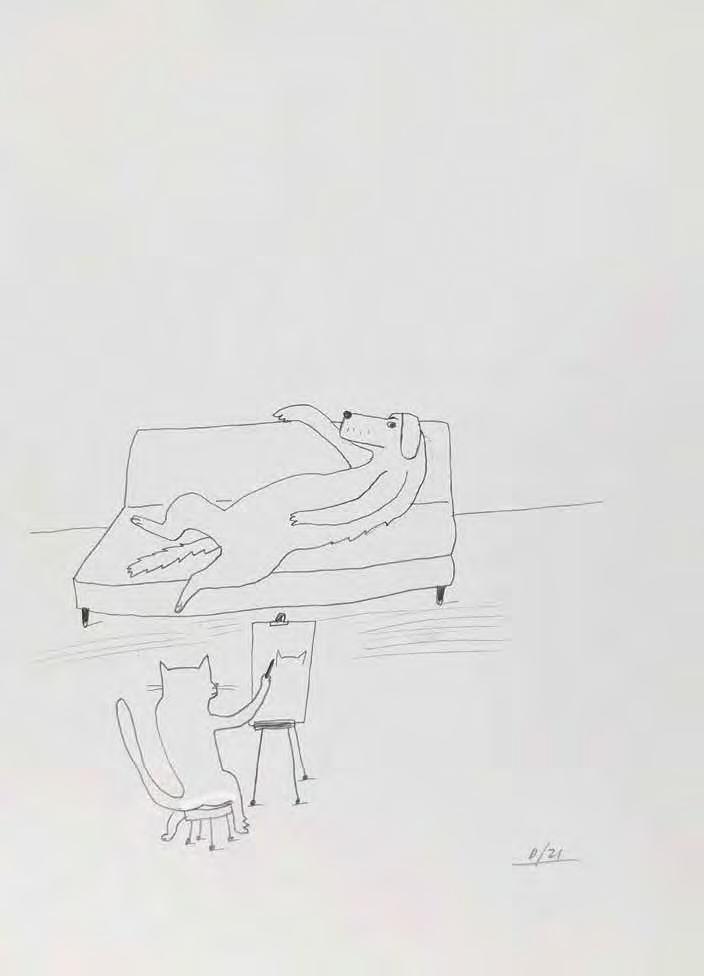
Life drawing, 2021
Pencil on paper, 29.7 x 21 cm
p. 30
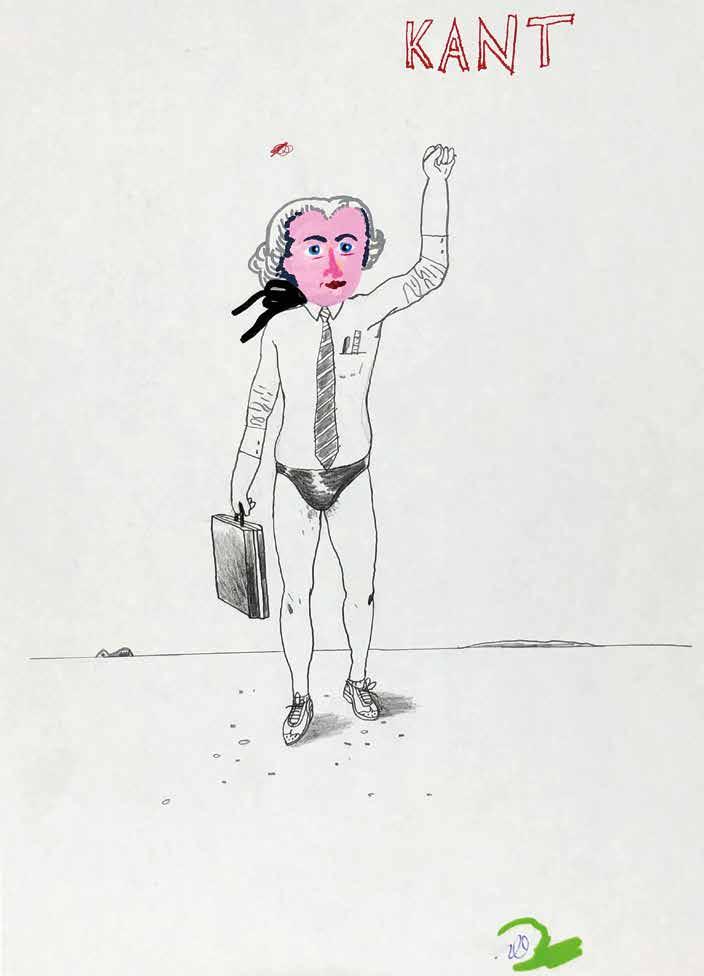
Kant, 2022
Pencil, ink on paper, 29 7 x 21 cm
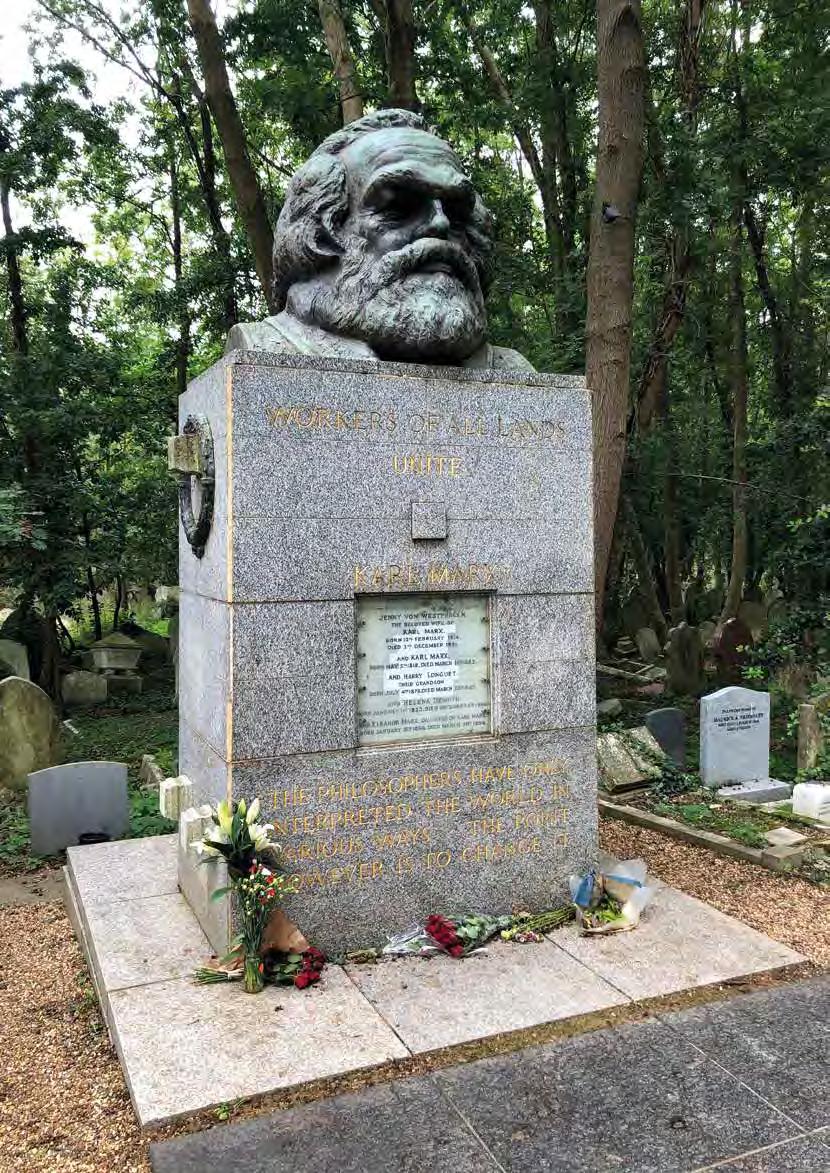
p. 31 Marx 2022
Photograph, 42 x 29 7 cm
p. 32
Actual meaning, 2021
Pencil, ink on paper, 29 7 x 21 cm
p. 33
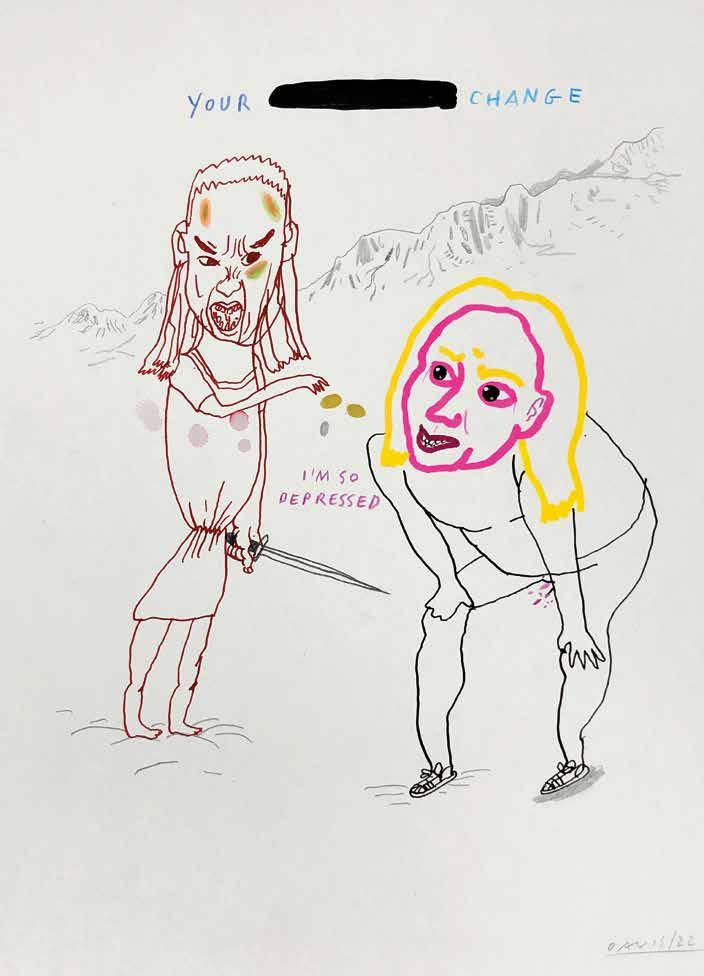
Your change 2022
Pencil, ink on paper, 29 7 x 21 cm
p. 34
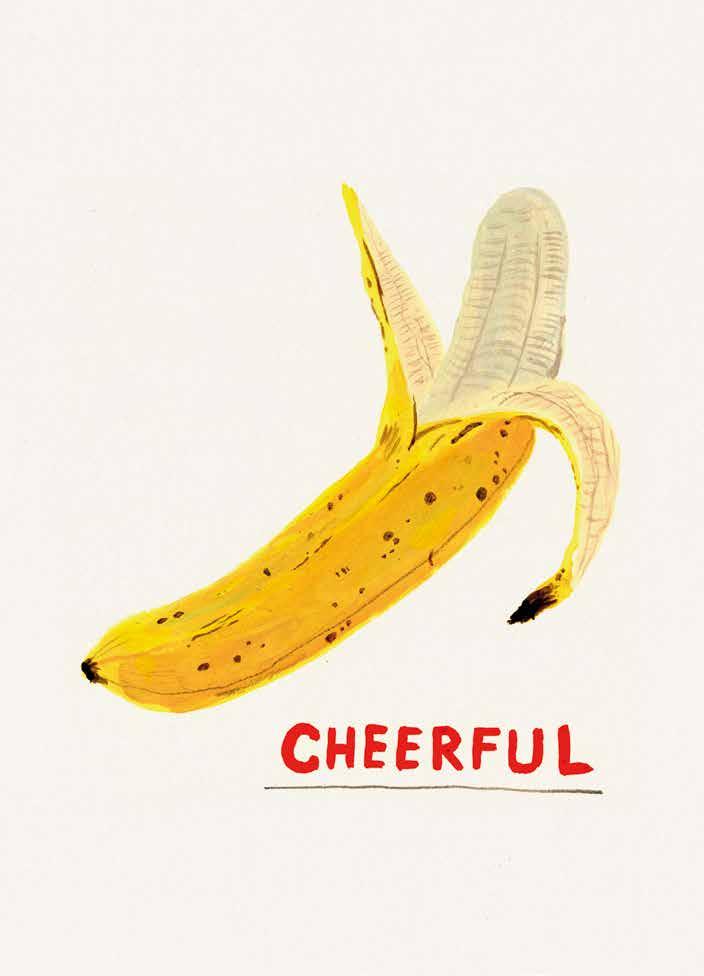
Cheerful, 2004
Acrylic, pencil on paper,
29 7 x 21 cm
p. 35 (top left)
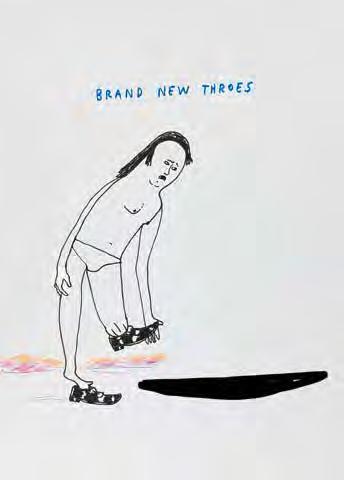
Brand new throes, 2022
Pencil, ink on paper,
29 7 x 21 cm
p.35 (top right)
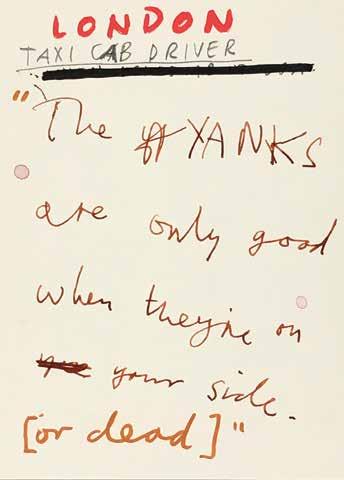
London, 2002
Ink on paper, 21 x 14 8 cm
p.35 (bottom left)
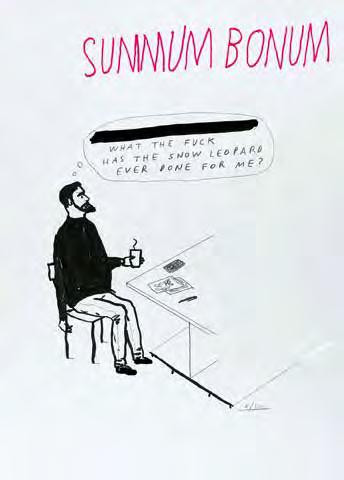
Summum bonum 2020
Pencil, ink on paper, 29.7 x 21 cm
p.35 (bottom right)
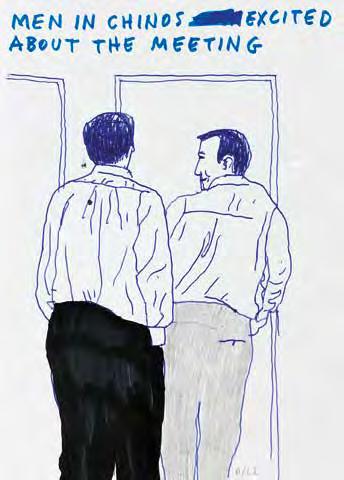
Men in chinos 2022
Pencil, ink on paper, 17 x 12 cm
p. 36
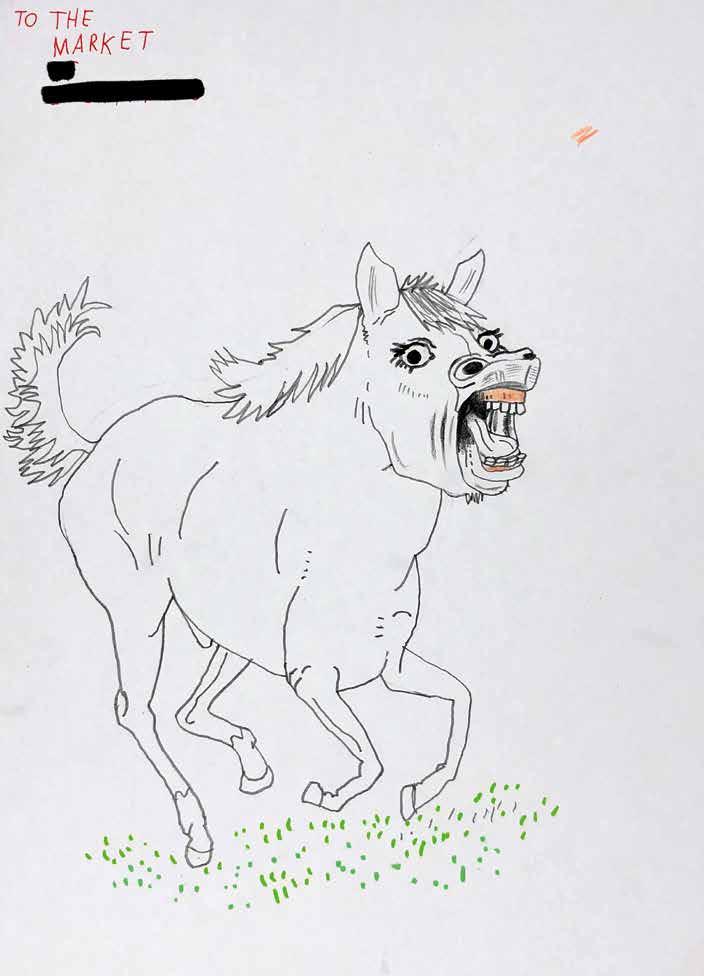
To the market, 2022
Pencil, ink on paper, 29 7 x 21 cm
p. 37
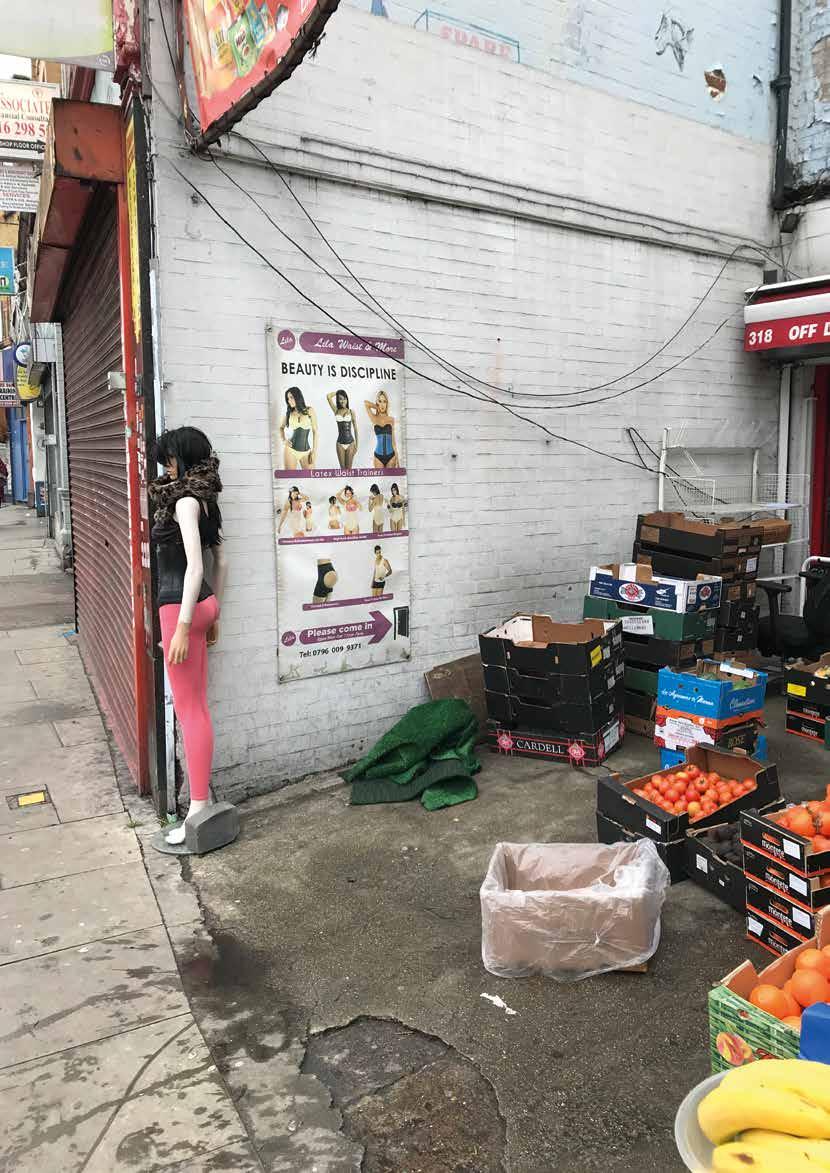
Beauty is discipline, 2018
Photograph, 42 x 29 7 cm
p.38
Pedal, 2022
Photograph, 42 x 29 7 cm
p. 39
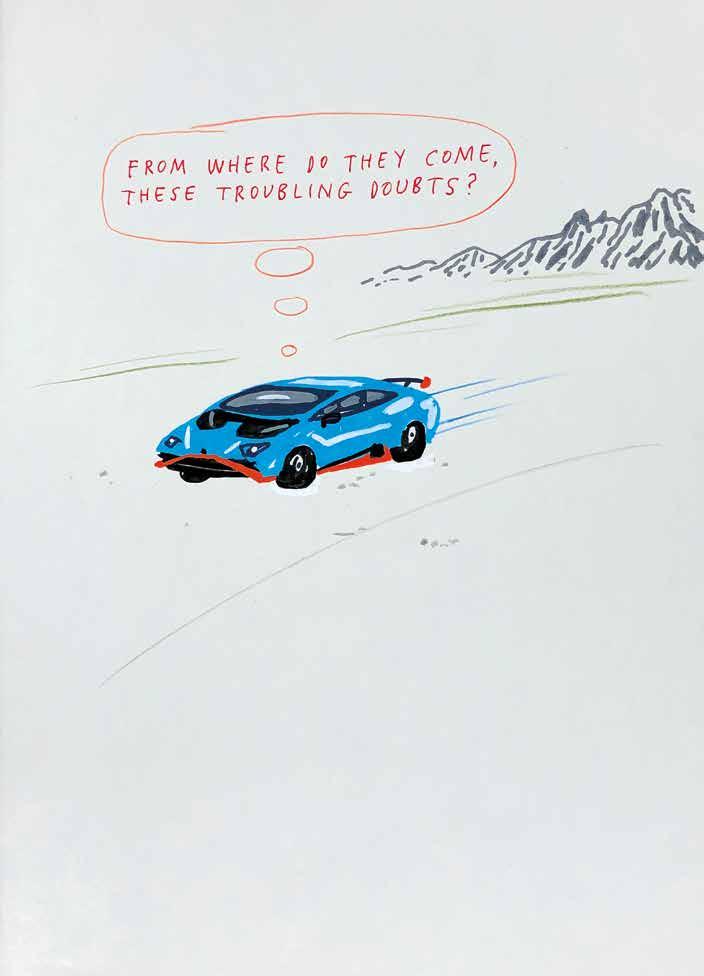
Billionaire, 2022
Pencil, ink on paper, 29 7 x 21 cm
p. 40
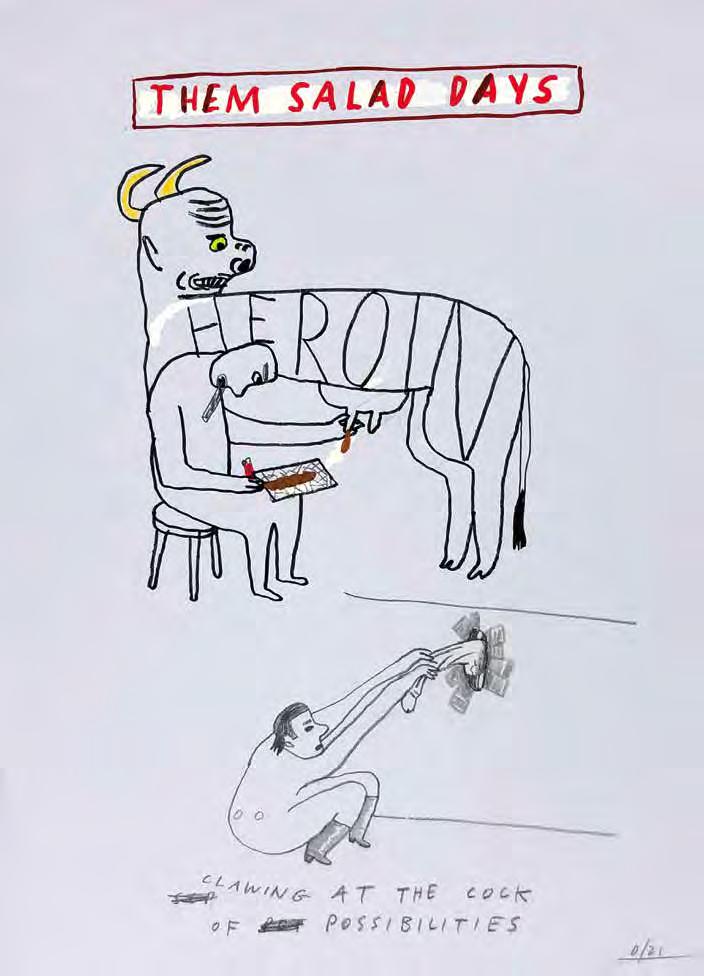
Salad days, 2021
Pencil, ink on paper, 29 7 x 21 cm p. 41
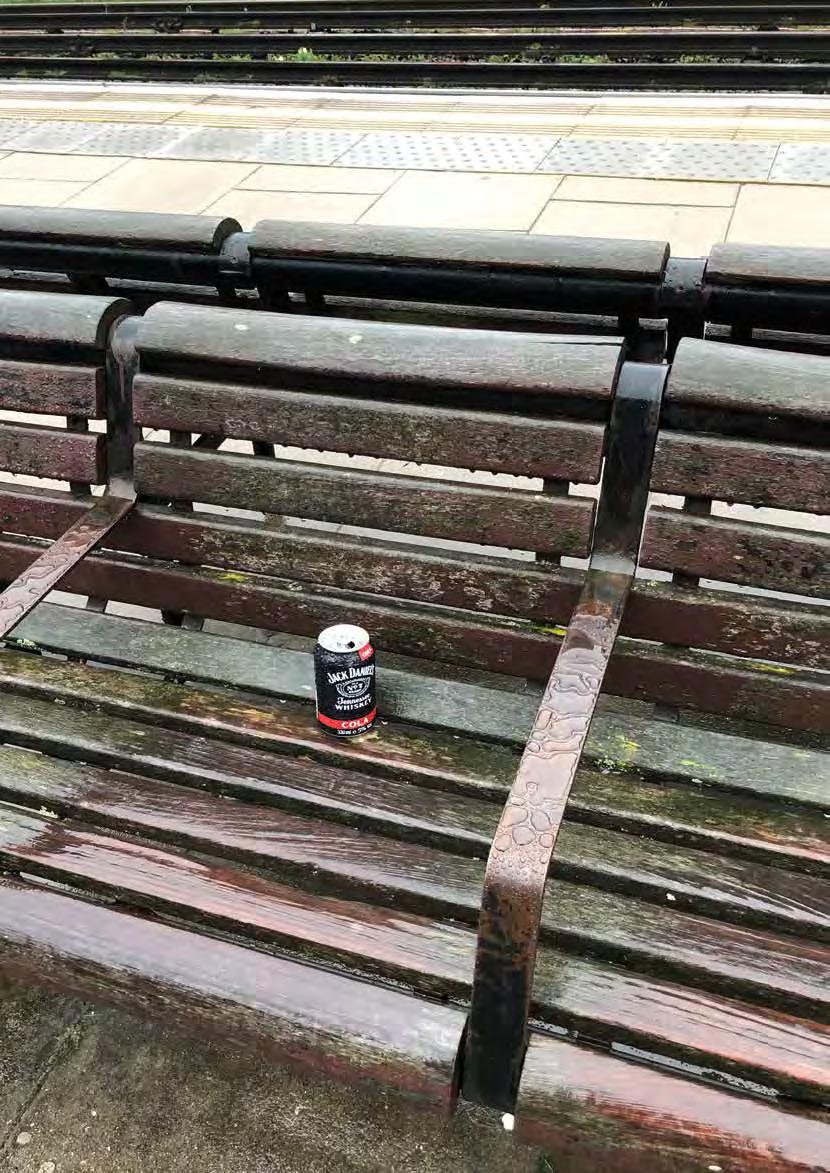
Bench 2022
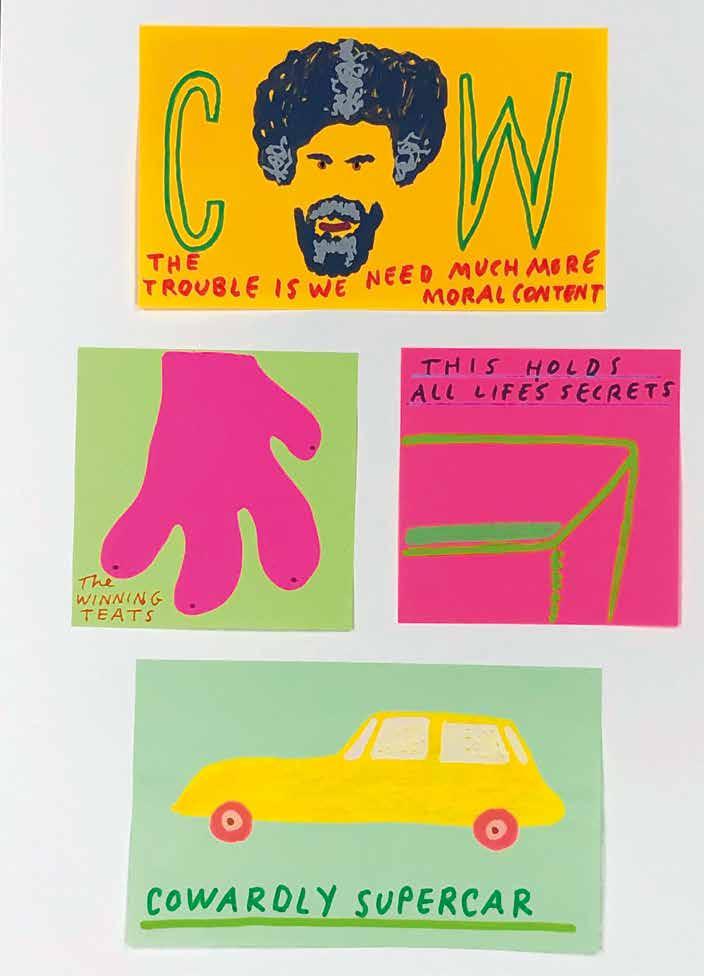
Photograph, 42 x 29 7 cm p. 42 Cornell West, 2022 Ink, crayon, acrylic on Post-it Notes, 29 7 x 21 cm
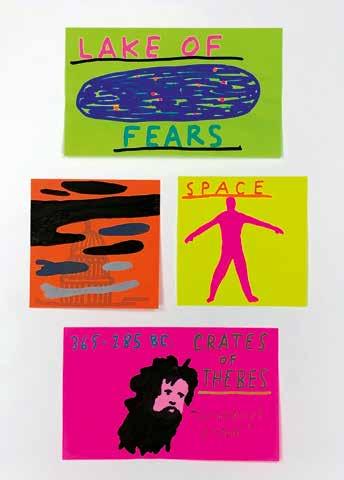
p. 43 (top left) Lake of fears, 2022 Ink, crayon on Post-it Notes, 29.7 x 21 cm
p. 43 (top right) Slaughter thy eyes, 2022 Ink, crayon on Post-it Notes, 29 7 x 21 cm
p.50
mortician, 2012 Pencil, acrylic, ink, monoprint on paper, 29 7 x 21 cm
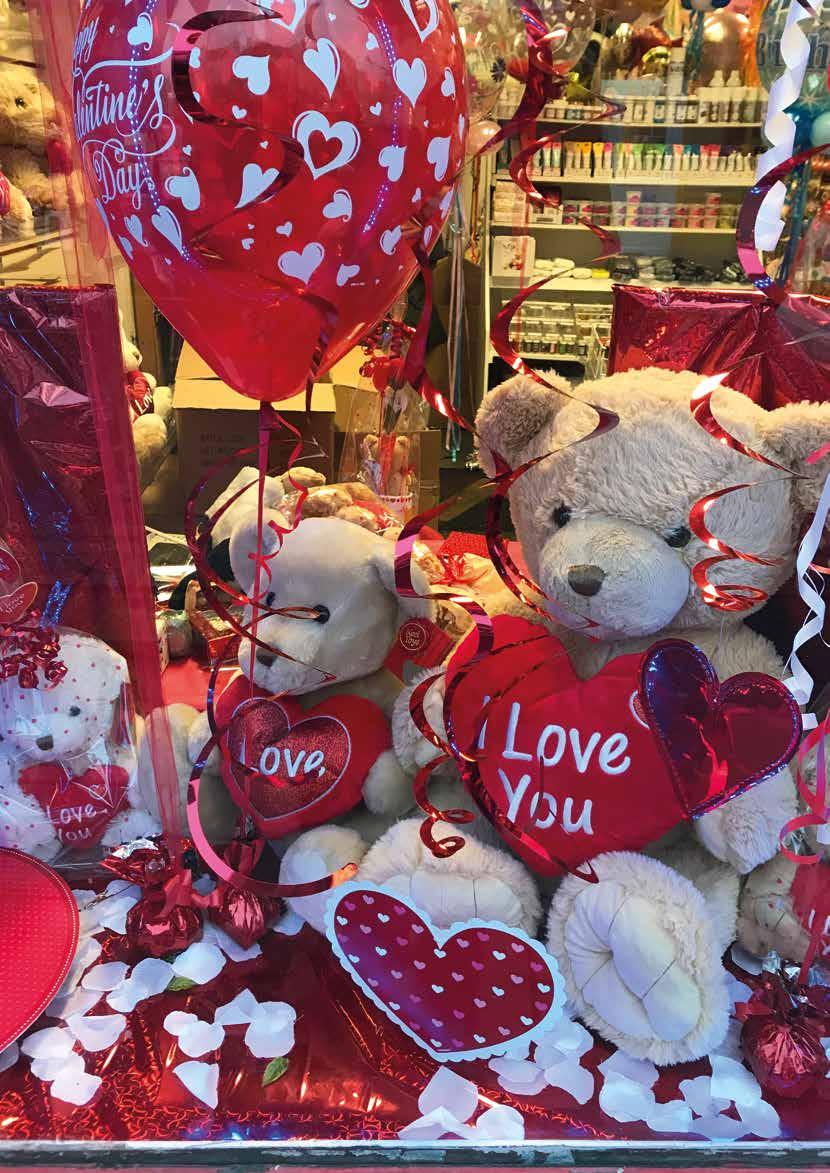
p. 51 I love you, 2017 Photograph, 42 x 29.7 cm
p. 61
Where do we go? 2016 Photograph, 42 x 29 7 cm
p. 62
Little big bang, 2022 Stoneware, gold paint, chipboard, 15 x 15 x 15cm
p. 63
My life was shit, 2018 Ink, pencil, toilet roll, vitrine, 20 x 10 x 10 cm
p. 64
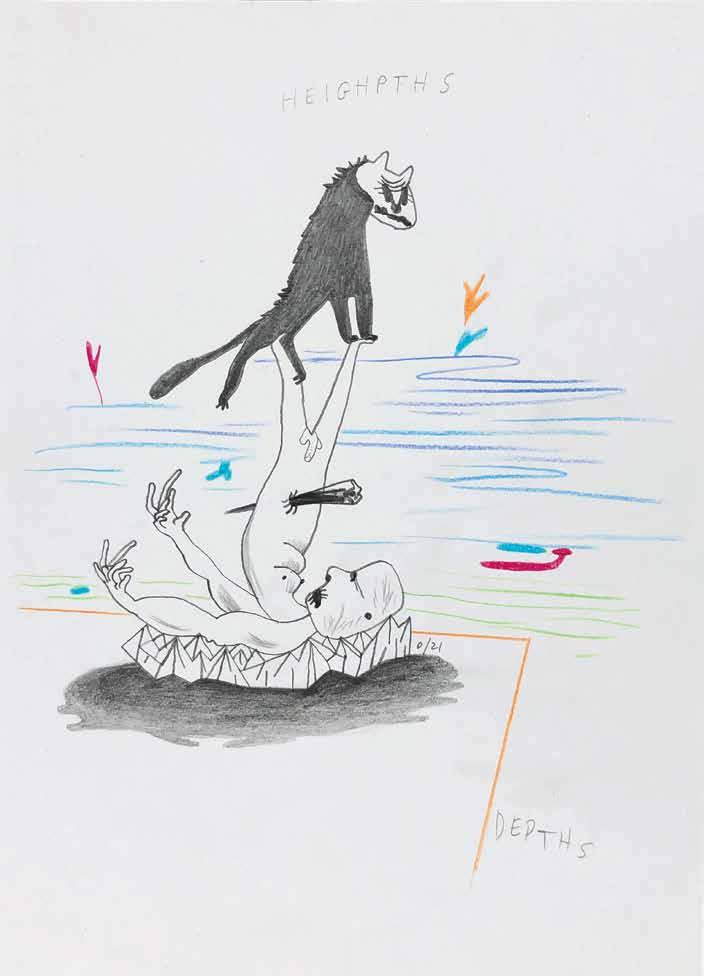
Hieghpths, 2021 Pencil, ink on paper, 29 7 x 21 cm
p. 65 Ceremony, 2021 Pencil, ink on paper, 29 7 x 21 cm
p. 66 (top left)
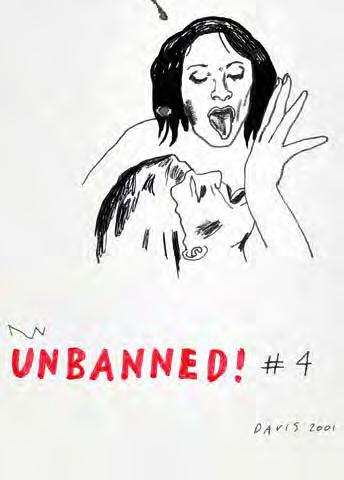
Unbanned! 2001
Pencil, ink on paper, 21 x 14 8 cm
p. 66 (top right)
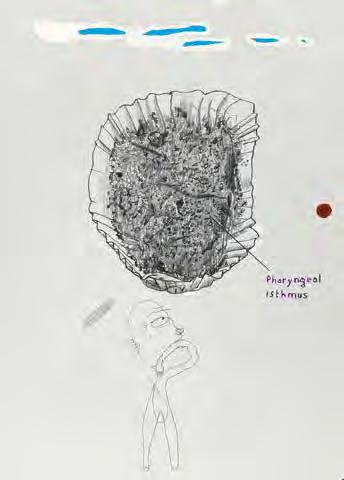
Paryngeal isthmus, 2015 Pencil, ink on paper, 29 7 x 21 cm
p. 66 (bottom left)
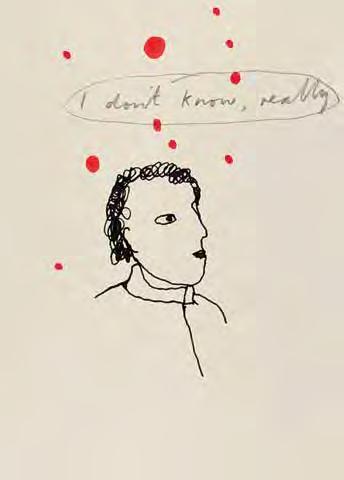
I don’t know, really, 2001 Pencil, ink on paper, 21 x 14 8 cm
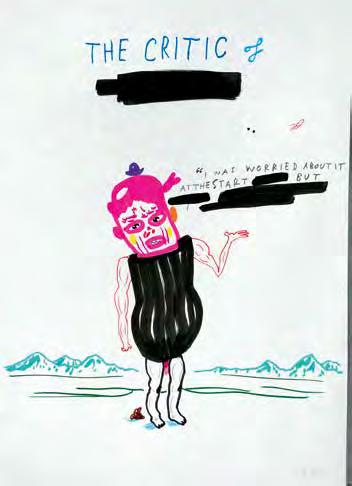
p. 66 (bottom right) The critic, 2022 Pencil, ink on paper, 29 7 x 21 cm
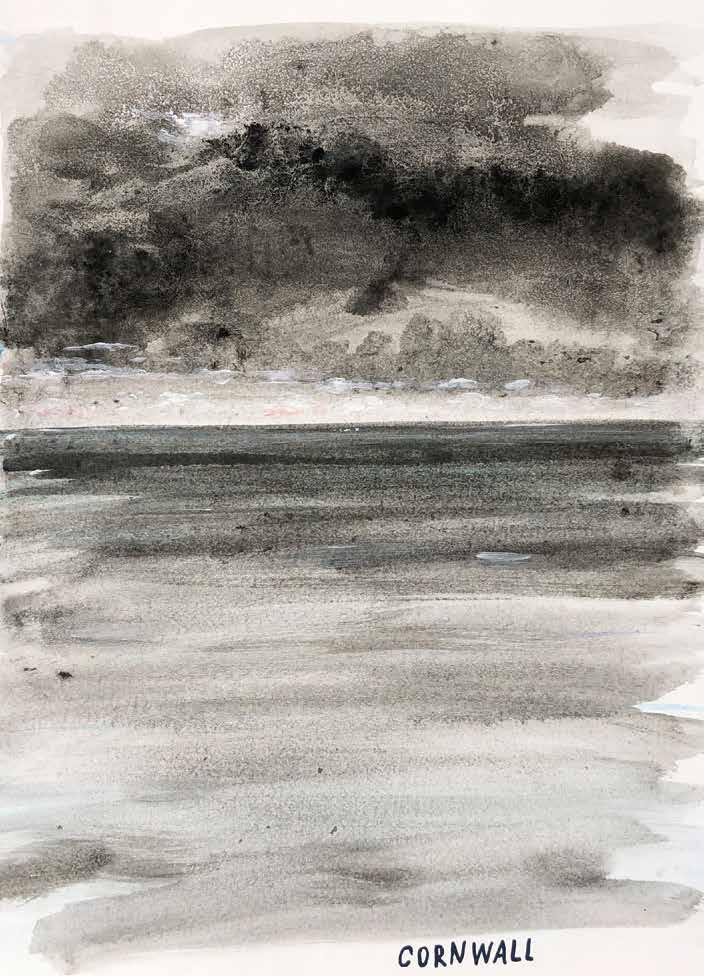
p. 67 Cornwall, 2020 Ink, acrylic, watercolour on paper, 29 7 x 21 cm
p. 68
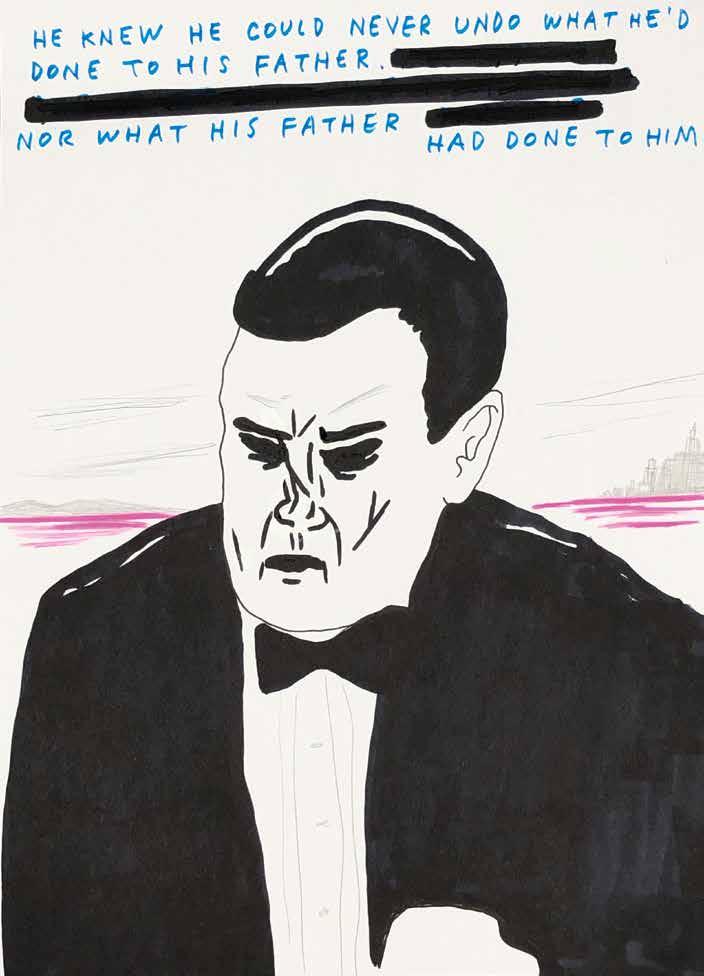
His father, 2022
Pencil, ink on paper, 29 7 x 21 cm
p. 69
Pencil, ink, ballpoint on paper, 29 7 x 21 cm
p. 71
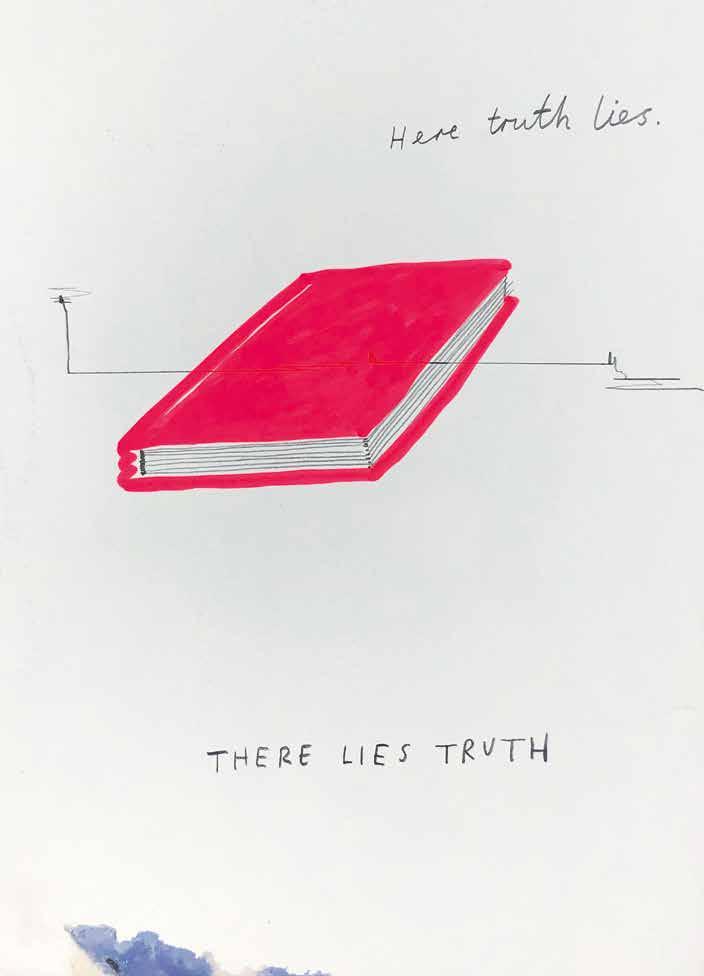
Truth, 2021
Pencil, ink on paper, 29 7 x 21 cm
p. 72
Hen accoutrements, 2019 Photograph, 42 x 29 7 cm
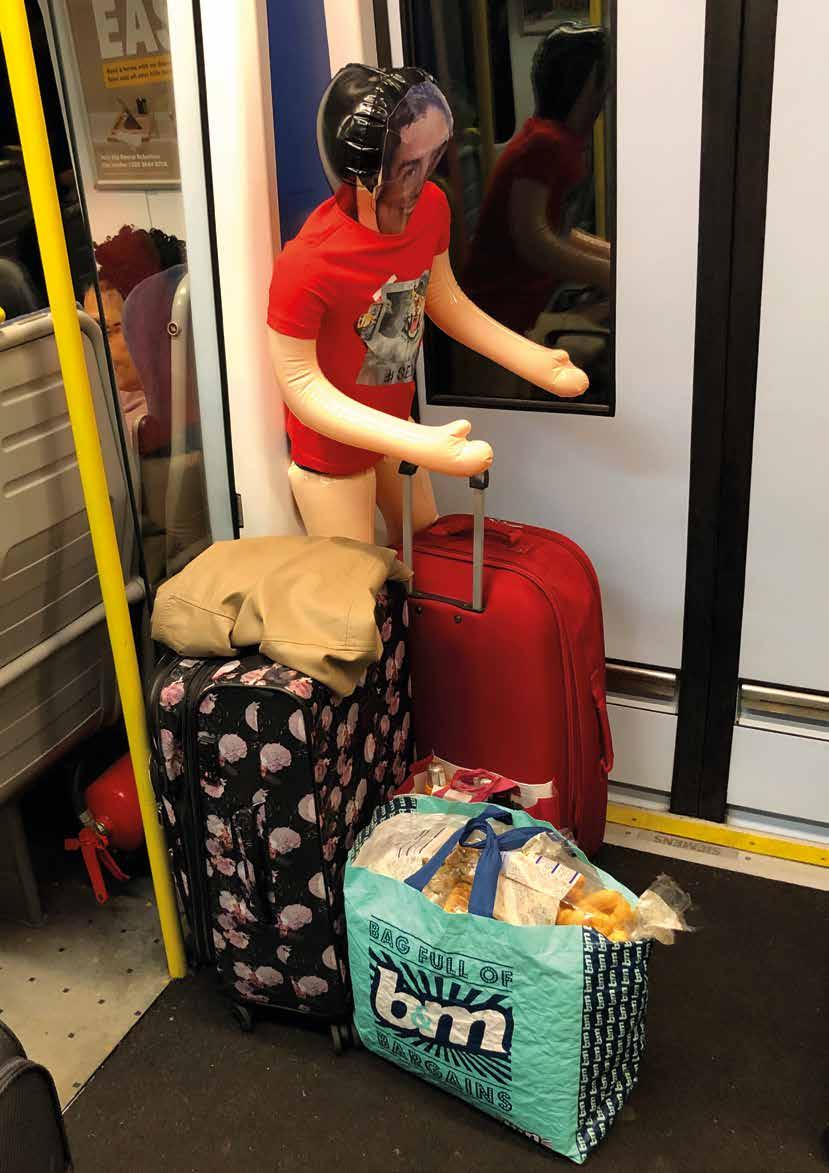
p. 73
Blow up man, 2006
Pencil, correction fluid on paper 29 7 x 21 cm
p. 74 You, desire, truth, 2020
Pencil on paper, 29.7 x 21 cm
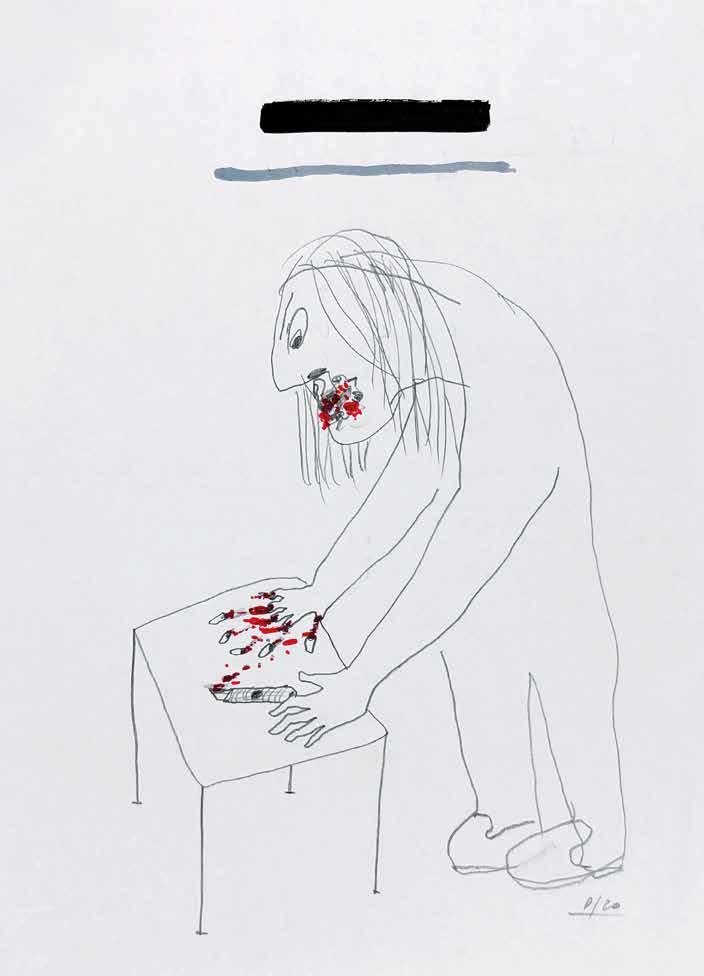
p. 75 Fingers, 2020
Pencil, ink on paper, 29.7 x 21 cm
p. 76
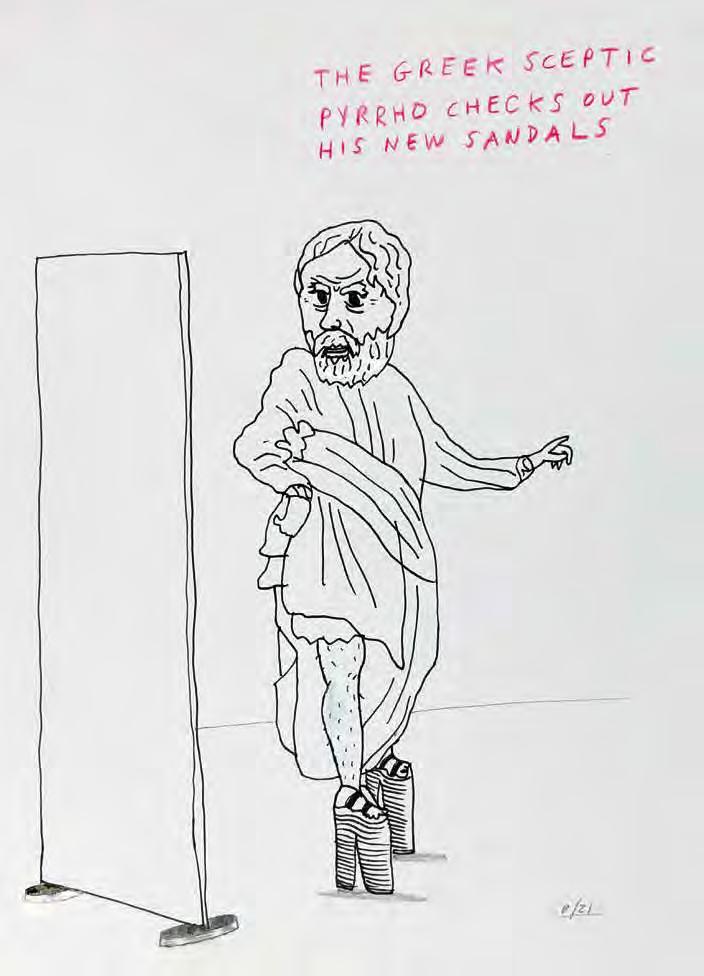
Pyrrho, 2021
Pencil, ink on paper, 29 7 x 21 cm
p. 77
Brain model, 2020 Photograph, 42 x 29 7 cm
p. 78
Insomnia drawing
04 13, 2022
Pencil, ink on paper, 29 7 x 21 cm
p. 79
Thou shalt, 2022
Pencil, ink on paper, 29.7 x 21 cm
p. 80 (top left)
Holder, 2020
Pencil, ink on paper, 29.7 x 21 cm
p. 80 (top right)
Office liar, 2007. Pencil, ink on paper, 29.7 x 21 cm
p. 80 (bottom left)
Sex preferences, 2022
Pencil, ink on paper, 29 7 x 21 cm
p. 80 (bottom right)
Shazi, 2006
Pencil, ink on paper, 29 7 x 21 cm
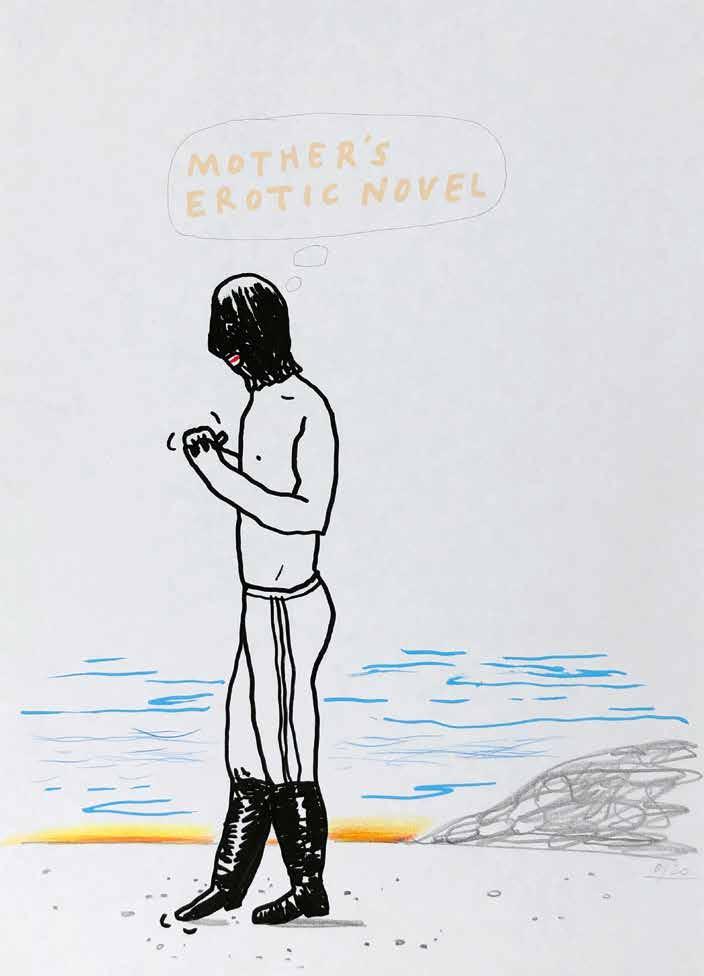
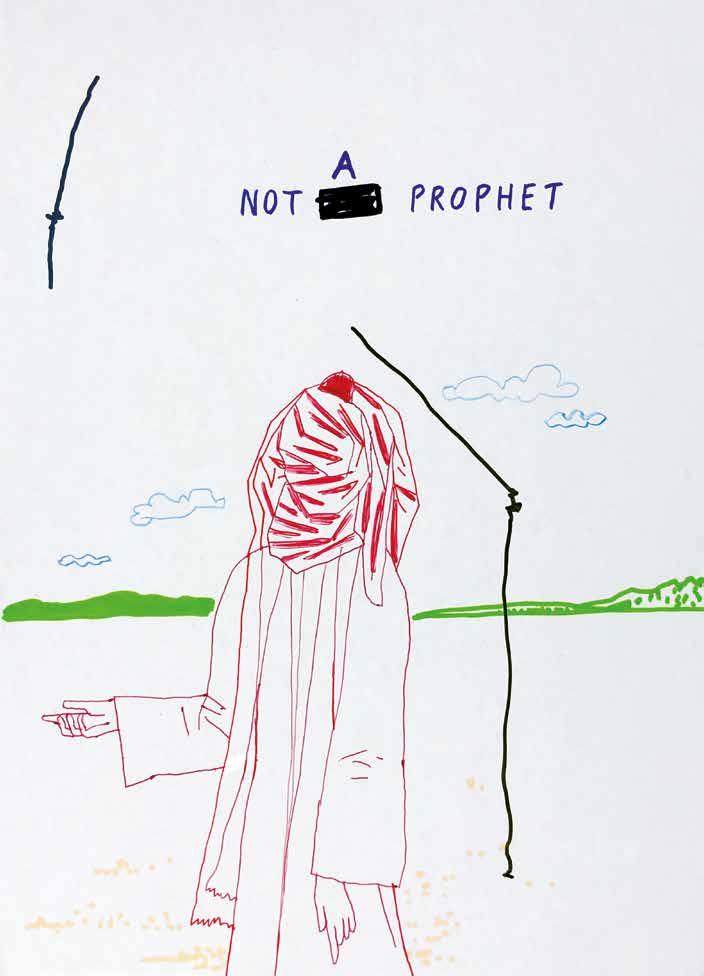
Mother’s erotic novel, 2020 Pencil, ink on paper, 29 7 x 21 cm p. 70 Not a prophet, 2022
p. 81 Couple, 2002
Pencil, ink on paper, 29 7 x 21 cm
p. 82
Grandstand 1, 2020
Pencil, crayon on paper, 29 7 x 21 cm
p. 83
Grandstand 2, 2020
Pencil, crayon on paper, 29 7 x 21 cm
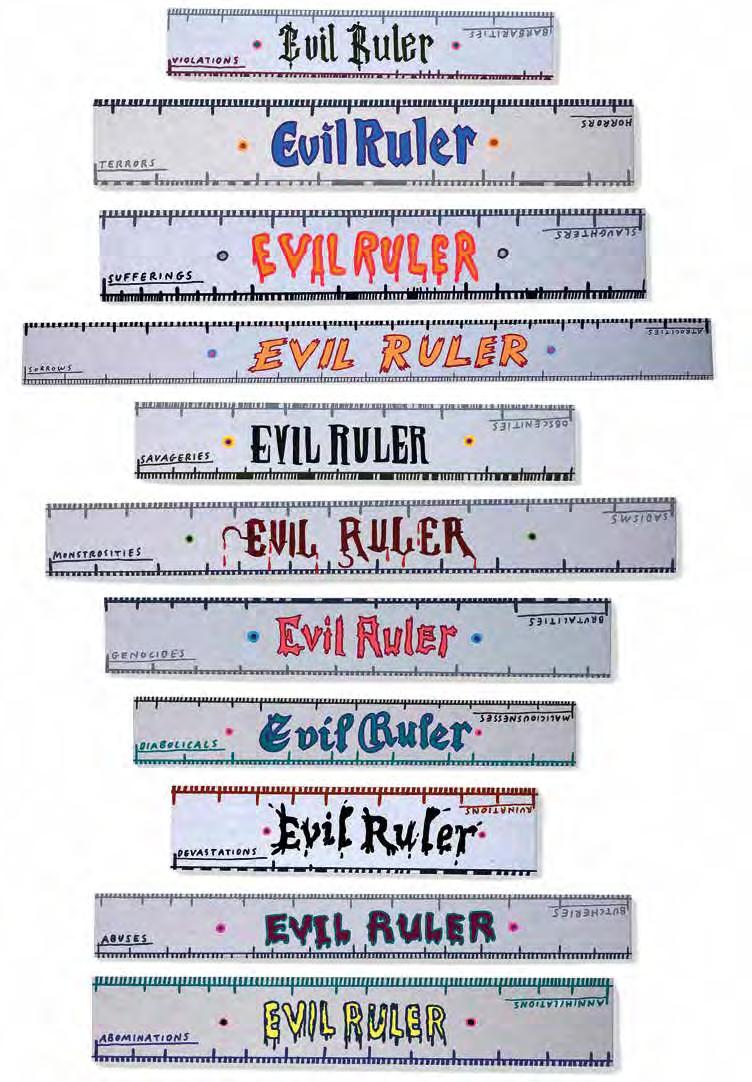
p. 84 Evil rulers, 2022
Acrylic, crayon, pencil on card, varying sizes
p. 85
Feed, 2020
Pencil, ink on paper, 29.7 x 21 cm
p. 86
City of London, 2022
Photograph, 42 x 29.7 cm
p. 87
Missing muse 2021
Pencil, ink on paper, 29 7 x 21 cm
p. 88
The Messiah, 2021
Pencil, ink on paper, 29 7 x 21 cm
p. 89
Scripture, 2017
Pencil, ink on paper, 21 x 14 8 cm
p. 90
Mild racism 2021
Pencil, ink on paper, 29.7 x 21 cm
p. 91 Sunrise 2022
Photograph, 42 x 29.7 cm
p. 92
First day jitters, 2021
Ink on paper, 29 7 x 21 cm
p. 93
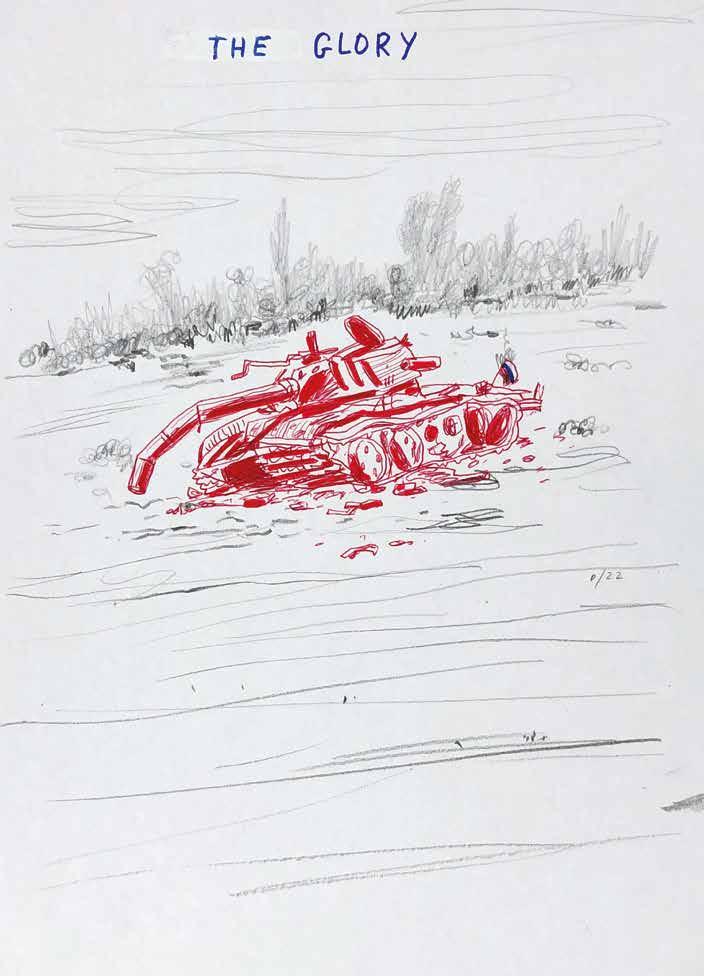
The glory, 2022
Pencil, ink, ballpoint on paper, 29.7 x 21 cm
p. 94
People in power, 2022
Pencil, ink on paper, 29 7 x 21 cm
p. 95
Perspective drawing, 2015
Pencil, ink on paper, 29 7 x 21 cm
p. 96 (top left)
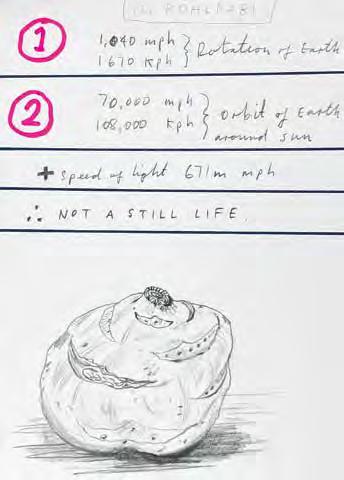
Kohlrabi, 2019
Pencil, ink on paper, 29 7 x 21 cm
p. 96 (top right)
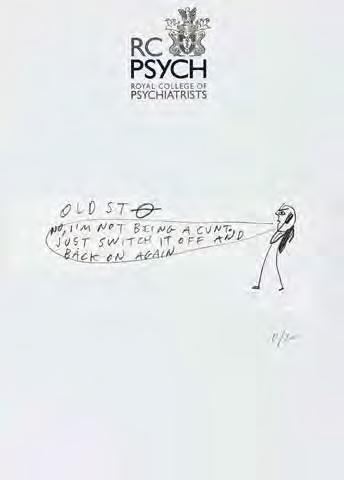
Old Street Underground, 2020
Pencil, ink on paper, 21 x 14 8 cm
p. 96 (bottom left)
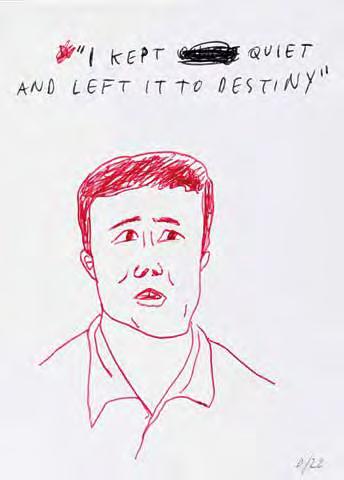
Destiny, 2022
Pencil, ink on paper, 21 x 14 8 cm
p. 96 (bottom right)
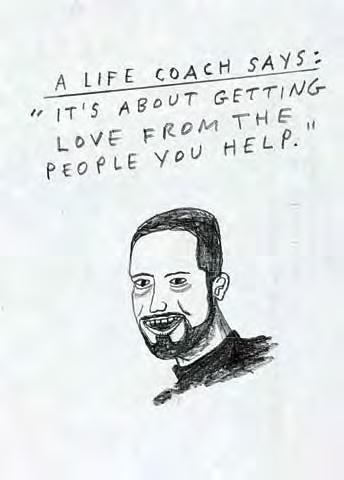
Life coach, 2018
Pencil on paper, 21 x 14 8 cm
p. 97
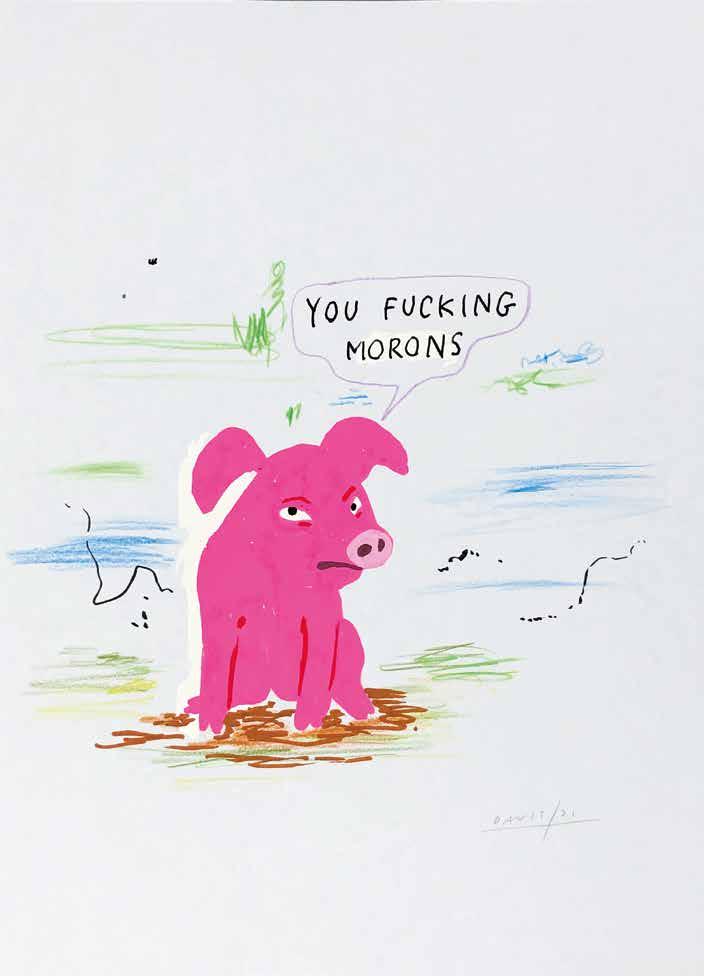
You fucking morons 2021
Pencil, acrylic paint, ink on paper, 29 7 x 21 cm
p. 98
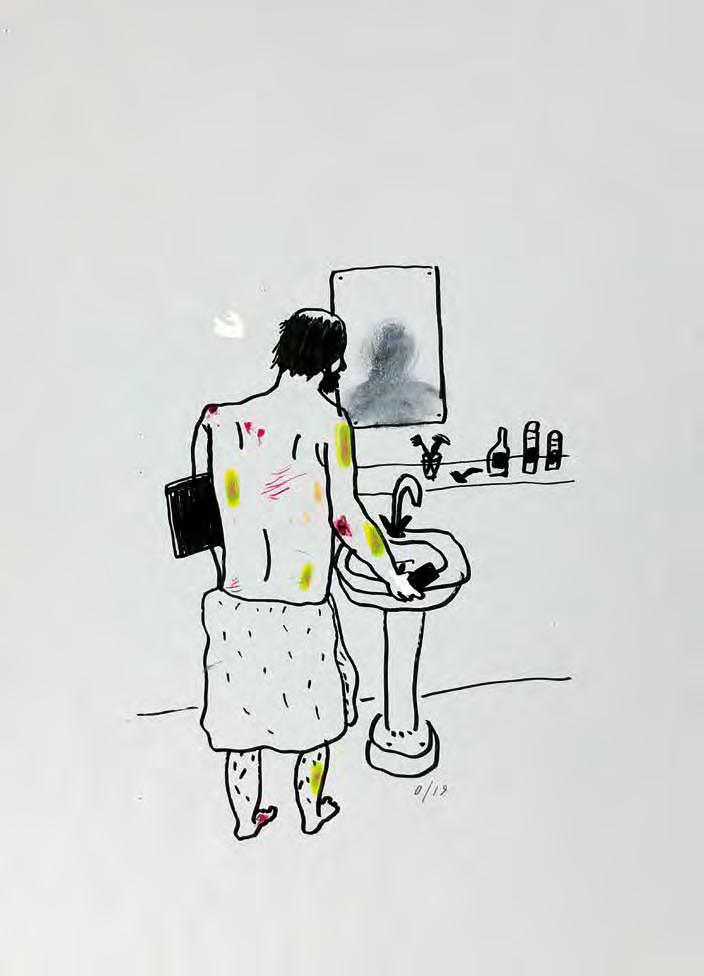
Bathroom, 2019
Pencil, ink on paper, 29 7 x 21 cm
p.99
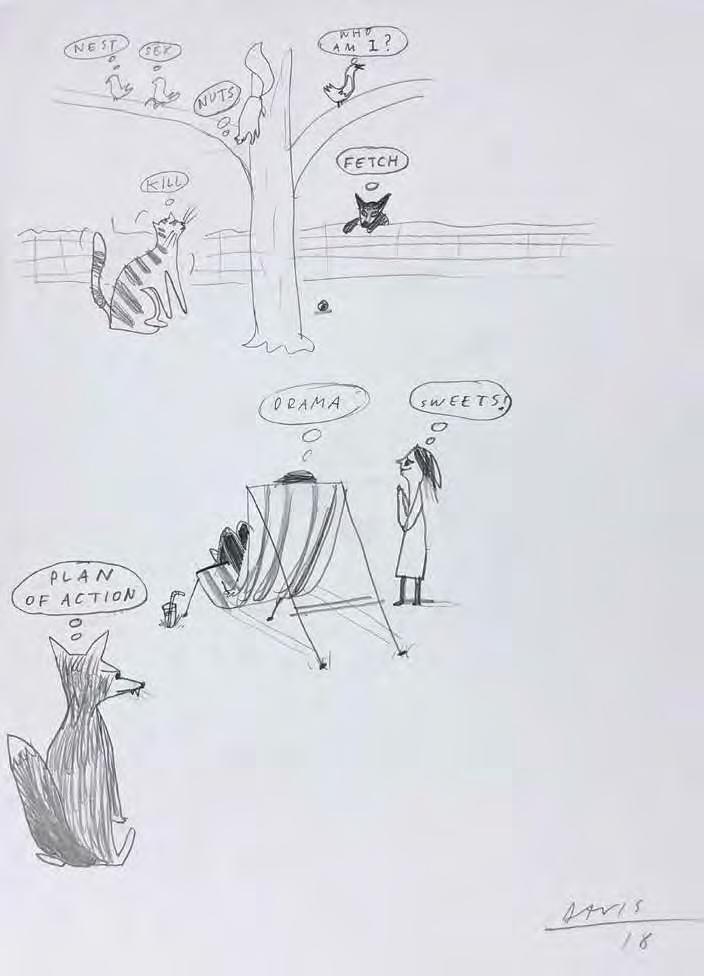
Garden drama, 2019
Pencil, ink on paper, 29 7 x 21 cm
p. 100
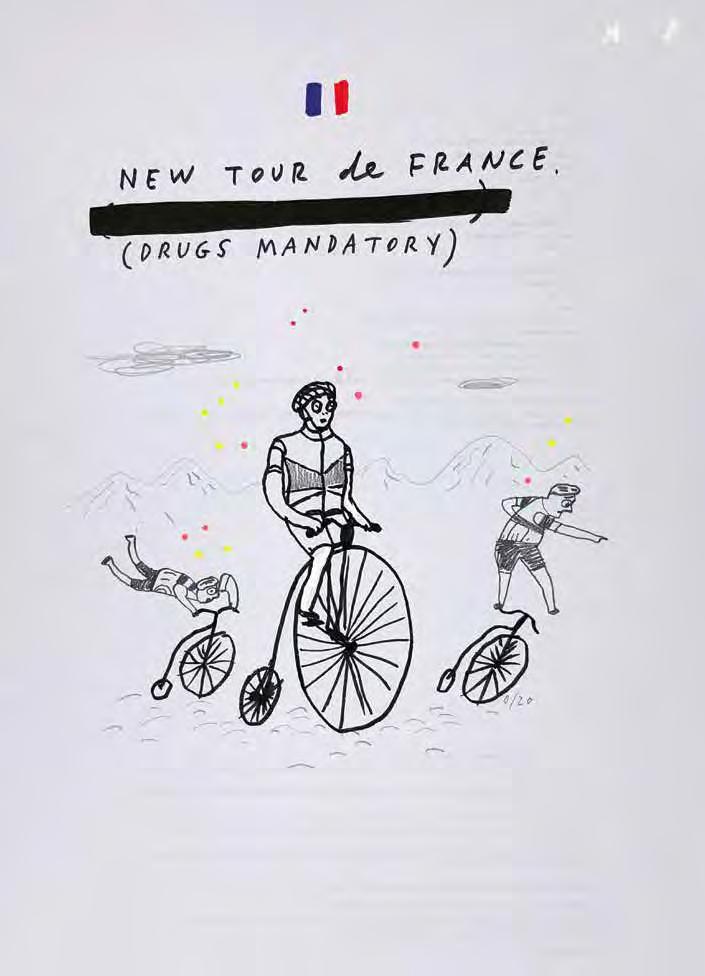
New Tour de France, 2020
Pencil, ink on paper, 29.7 x 21 cm
p. 101
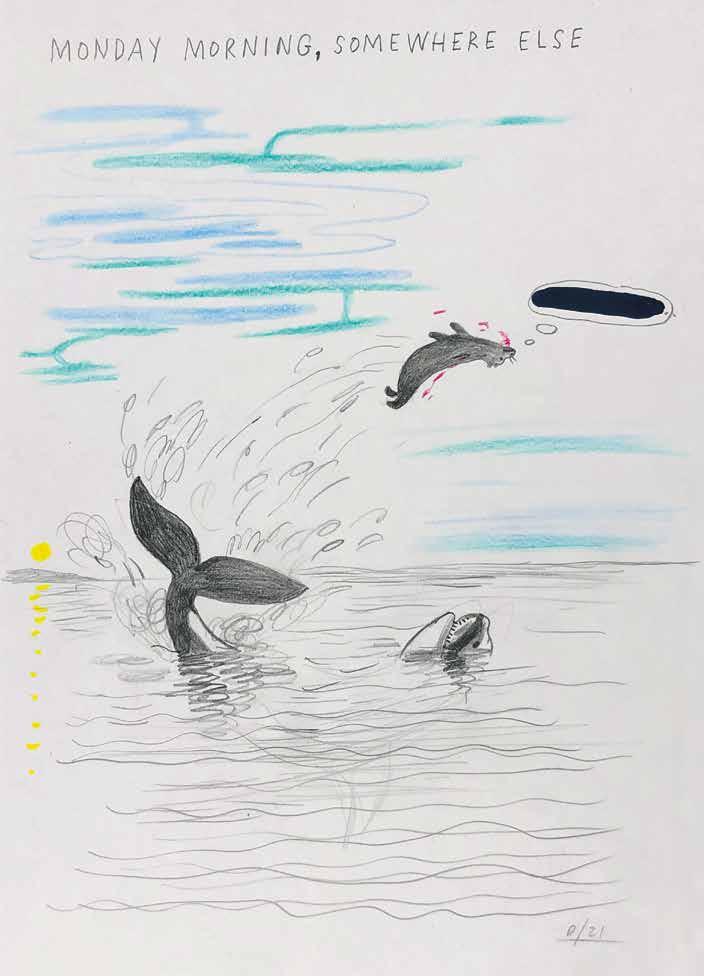
Monday morning, 2020
Pencil, ink on paper, 29 7 x 21 cm
p. 102
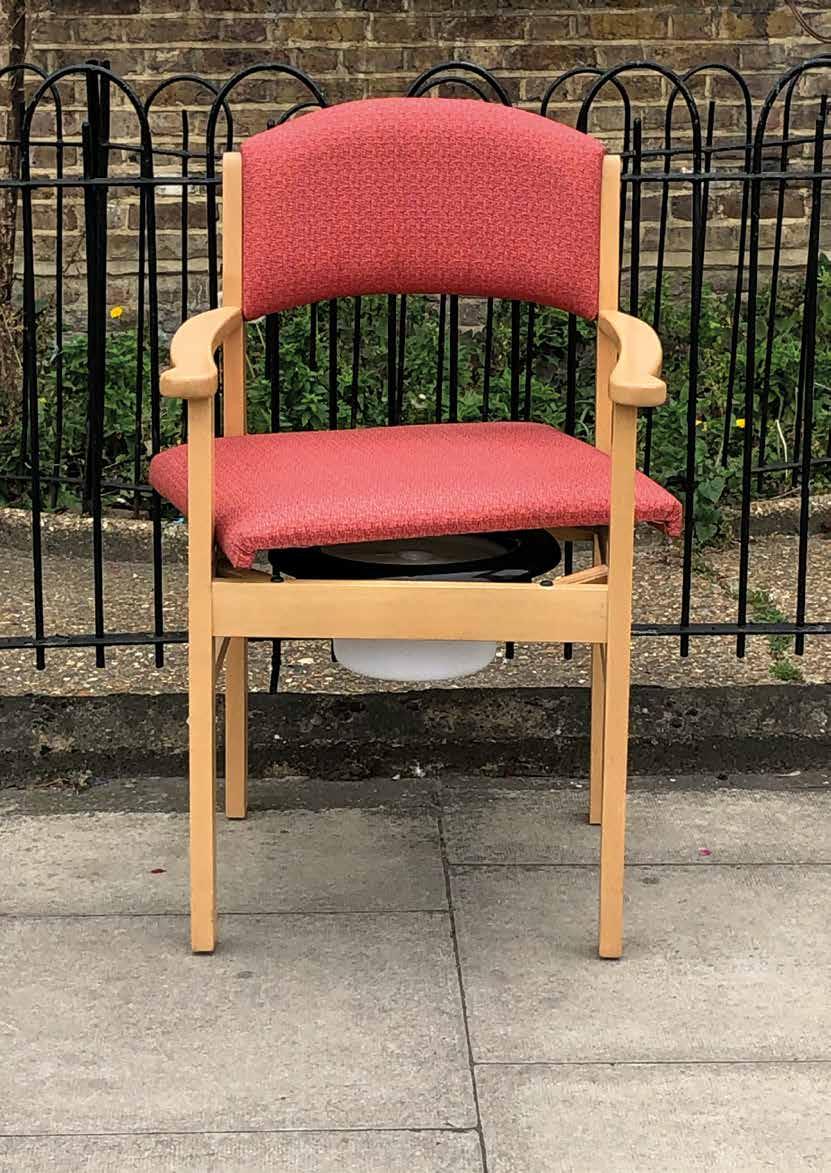
Throne 2021
Photograph, 42 x 29 7 cm
p. 103
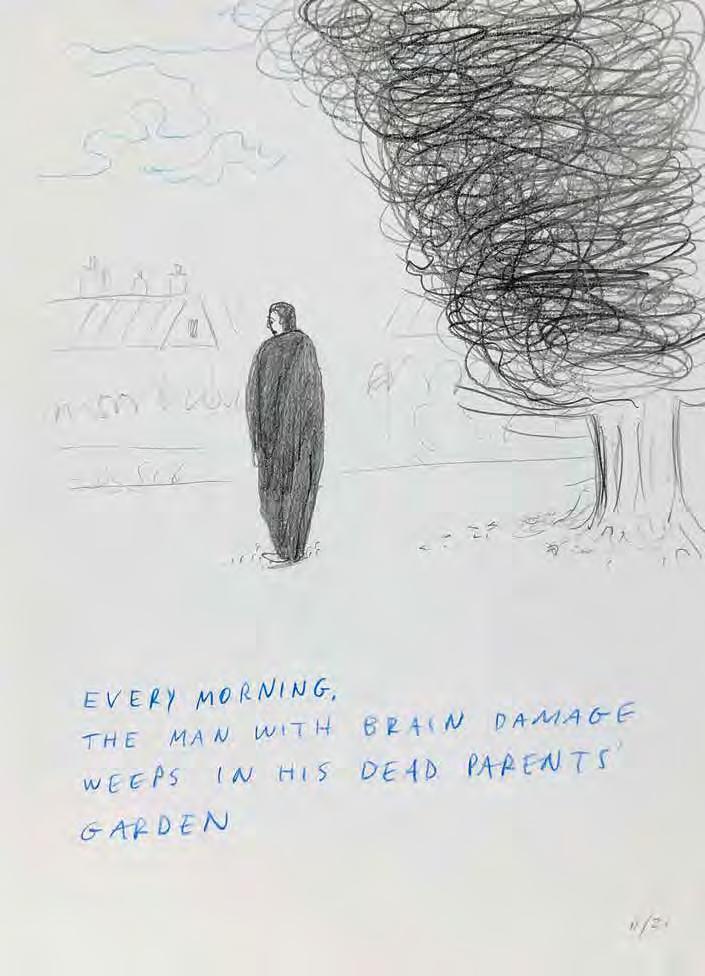
Every morning 2021
Pencil on paper, 29 7 x 21 cm
p. 104
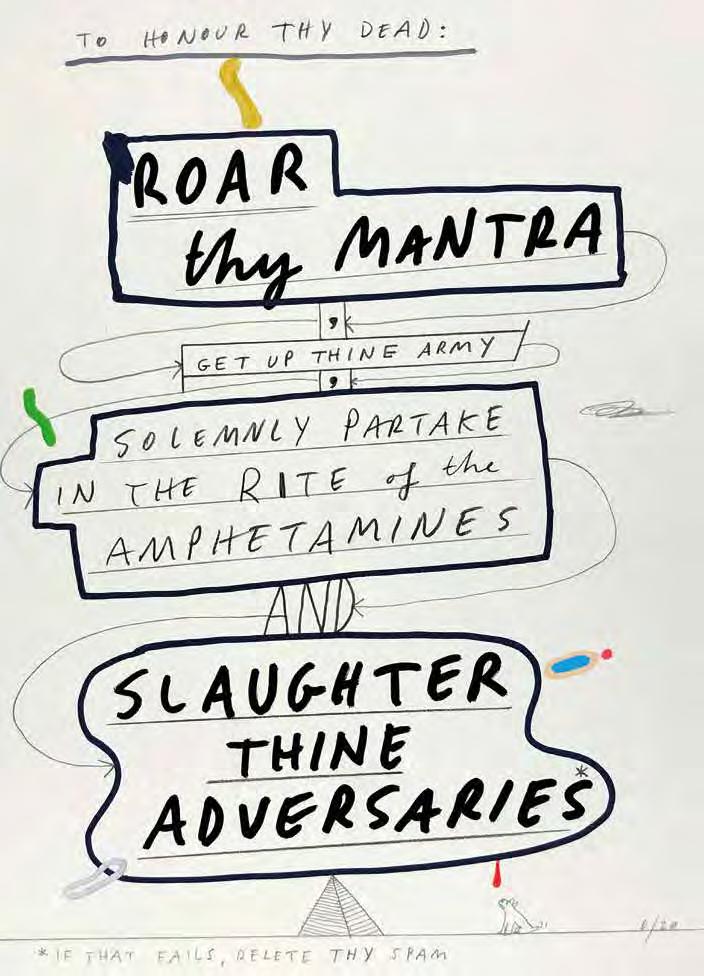
Roar thy mantra, 2020
Pencil, ink on paper, 29 7 x 21 cm
p. 105
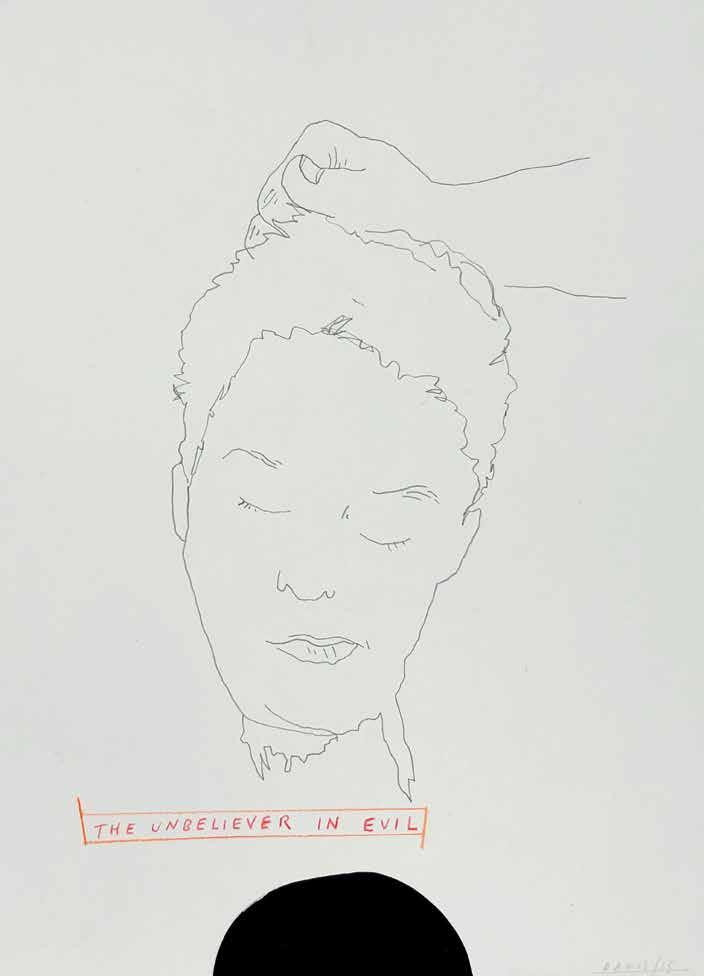
Unbeliever, 2015
Pencil, ink on paper, 29 7 x 21 cm
p. 106
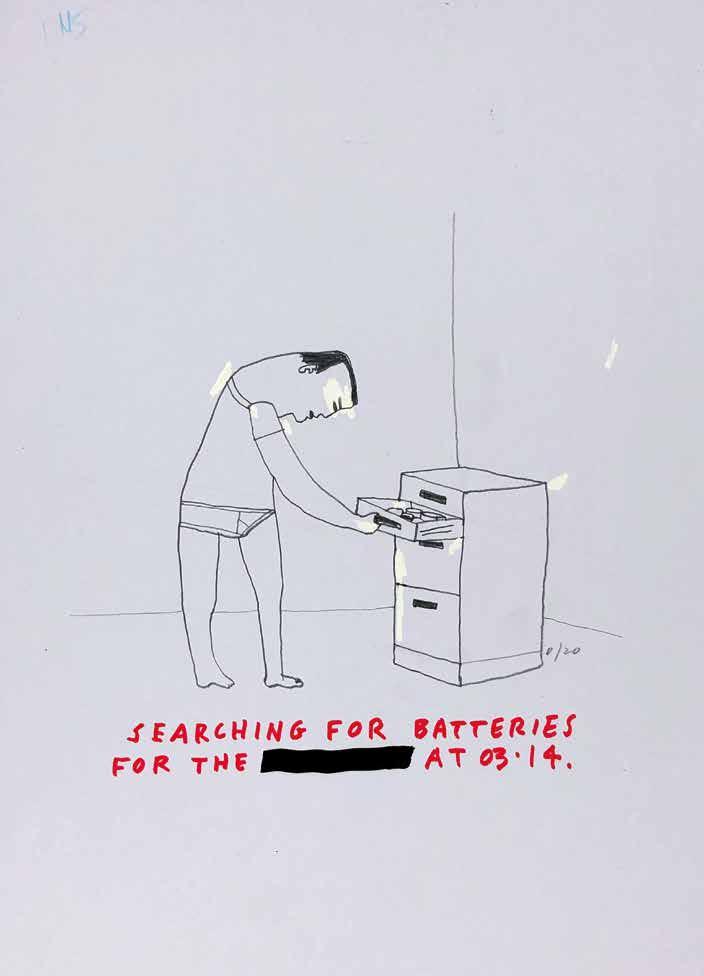
Batteries, 2020
Pencil, ink on paper, 29.7 x 21 cm
p. 107 (top left)
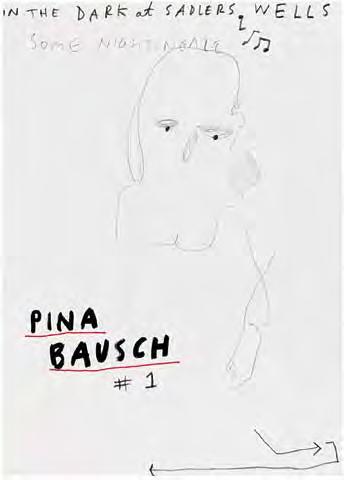
Pina Bausch 1 2002
Pencil, ink on paper, 21 x 14 8 cm
p. 107 (top right)
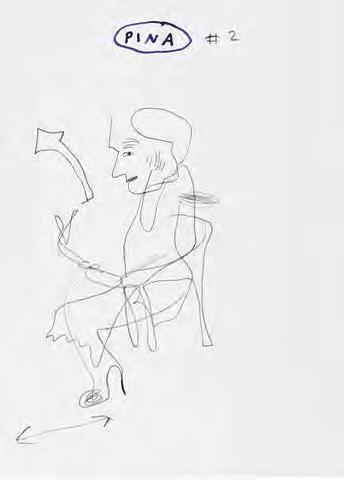
Pina Bausch 2, 2002
Pencil, ink on paper, 21 x 14 8 cm
p. 107 (bottom left)
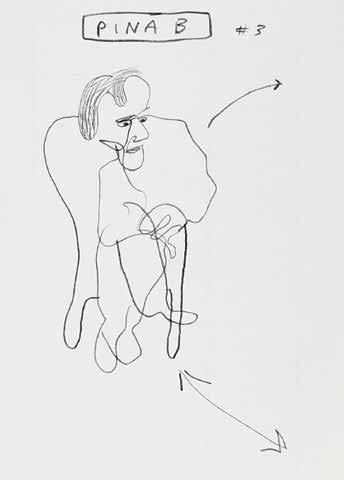
Pina Bausch 3, 2002
Pencil, ink on paper, 21 x 14 8 cm
p. 107 (bottom right)
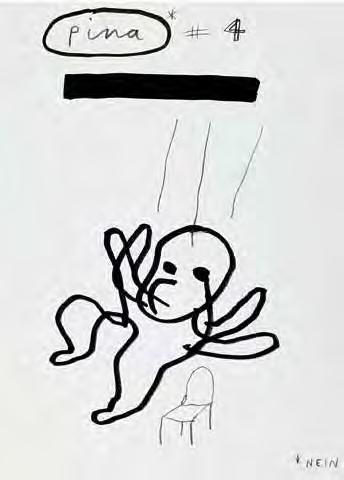
Pina Bausch 4, 2002
Pencil, ink on paper, 21 x 14 8 cm
p. 108
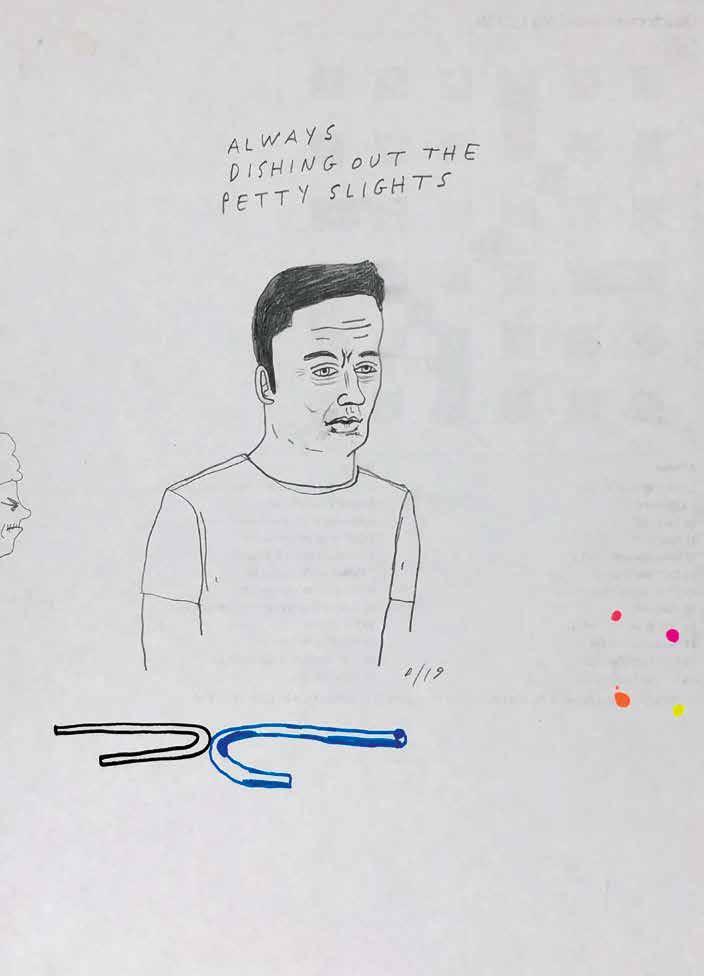
Petty slights, 2021
Pencil, ink on paper, 29.7 x 21 cm
p. 109
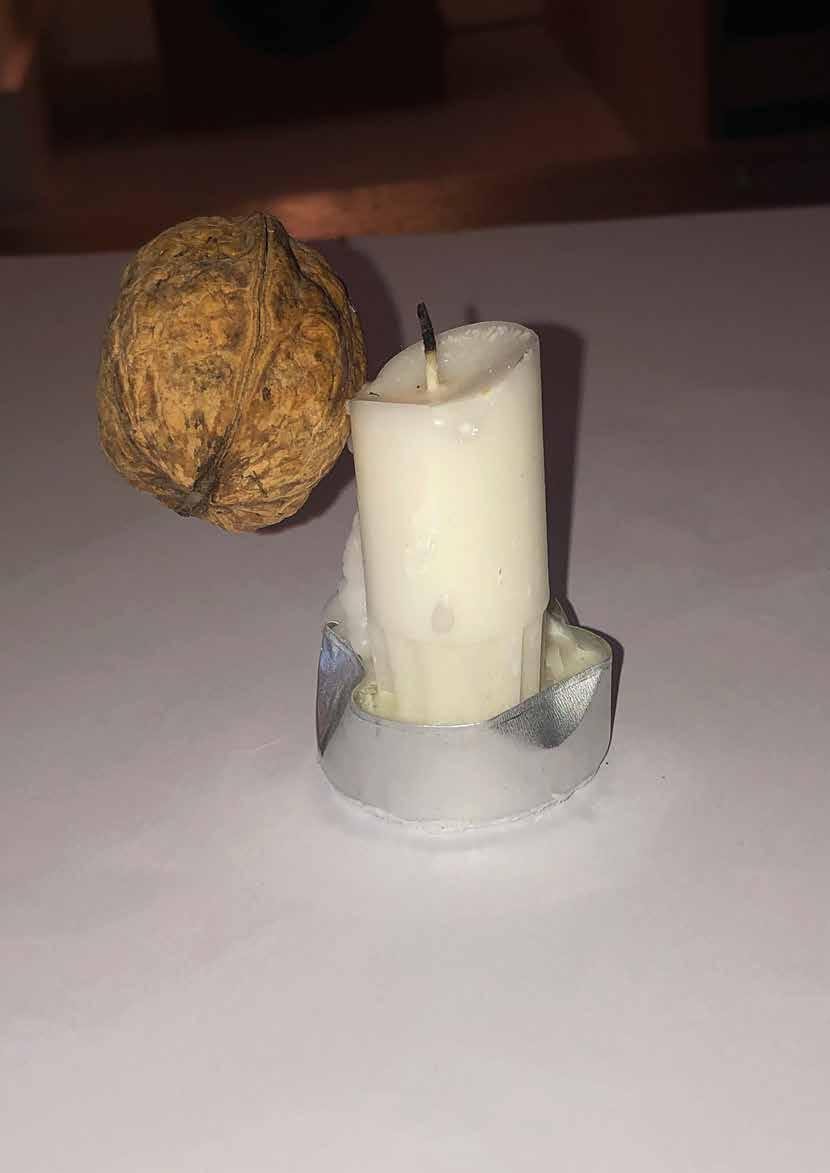
Walnut, candle 2007
Photograph, 42 x 29 7 cm
p. 110
Gymnast 2021
Pencil, ink on paper, 29 7 x 21 cm
p. 111
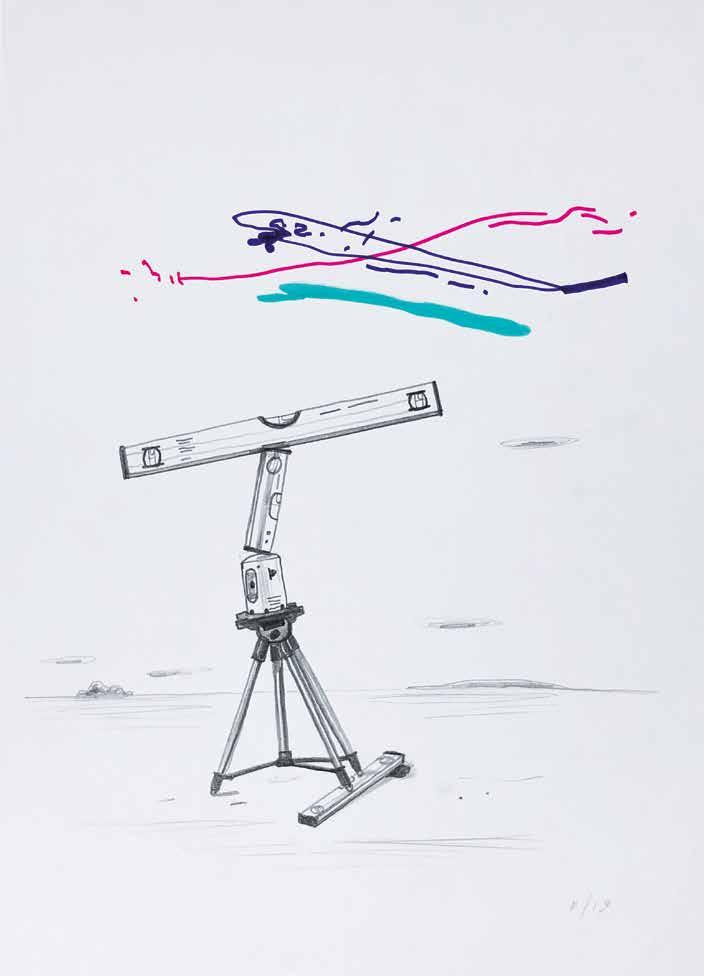
The levels, 2019
Pencil, ink on paper, 29 7 x 21 cm
p. 112
Religious fanatics 2020
Photograph, 42 x 29 7 cm
p. 113
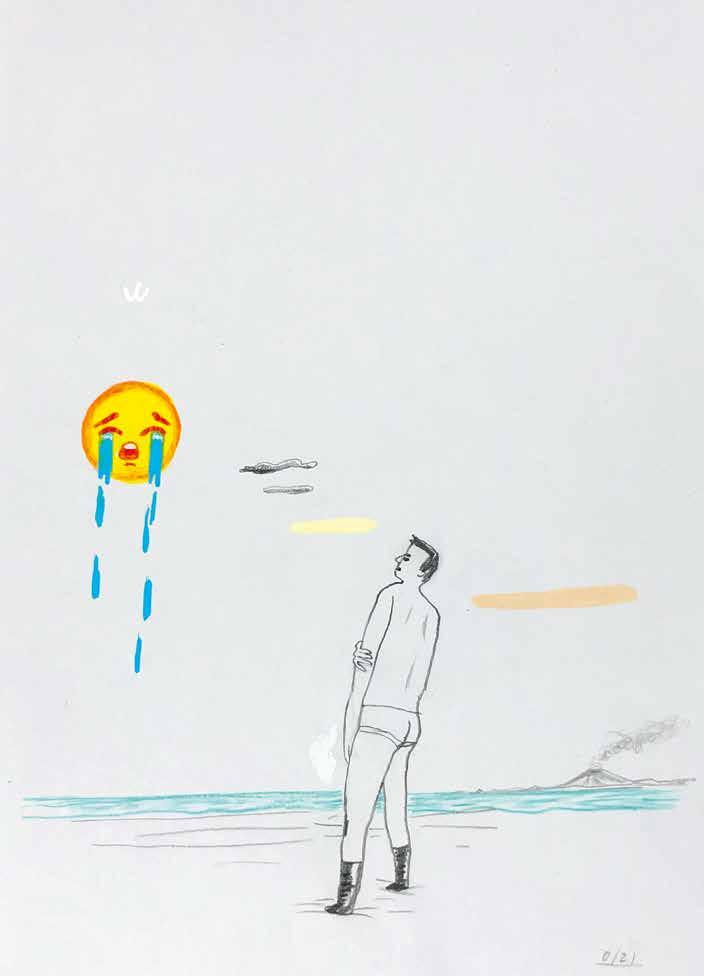
Crying emoji, 2021
Pencil, ink on paper, 29 7 x 21 cm
p. 114
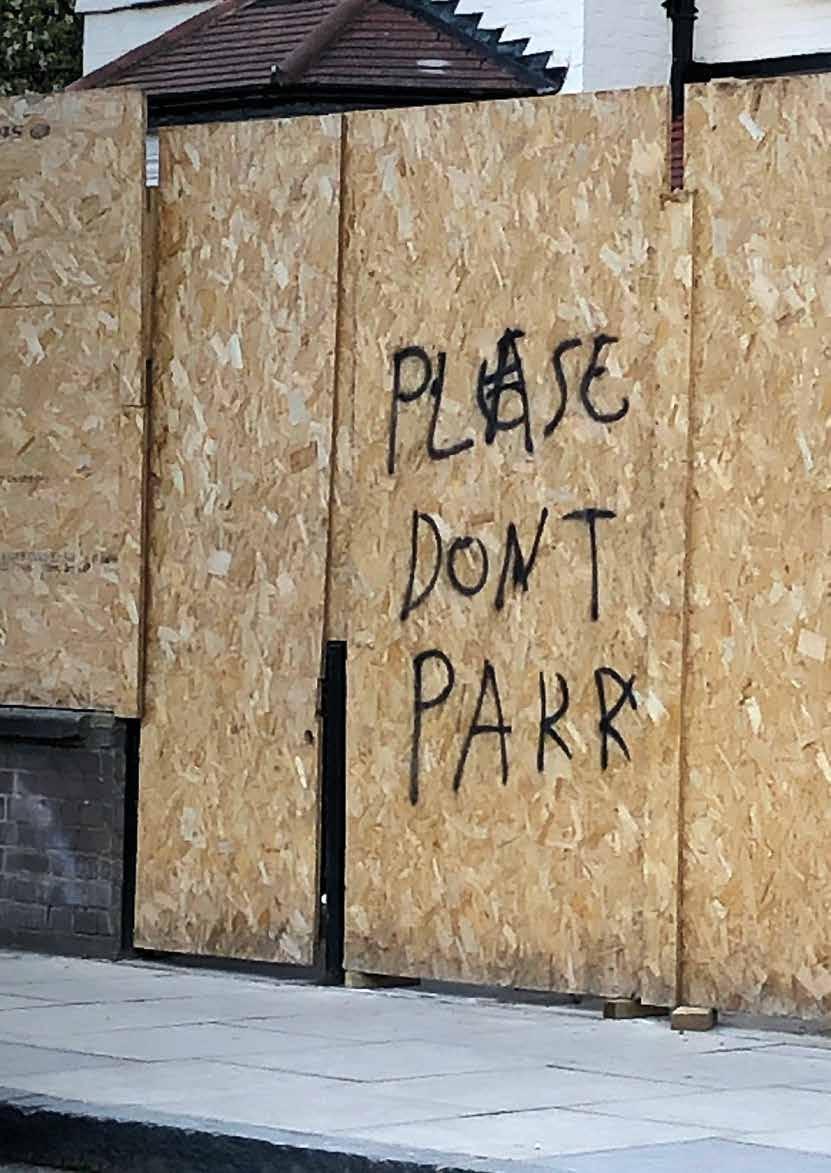
PLÆSE DONT PARR
Photograph, 42 x 29 7 cm
p. 115
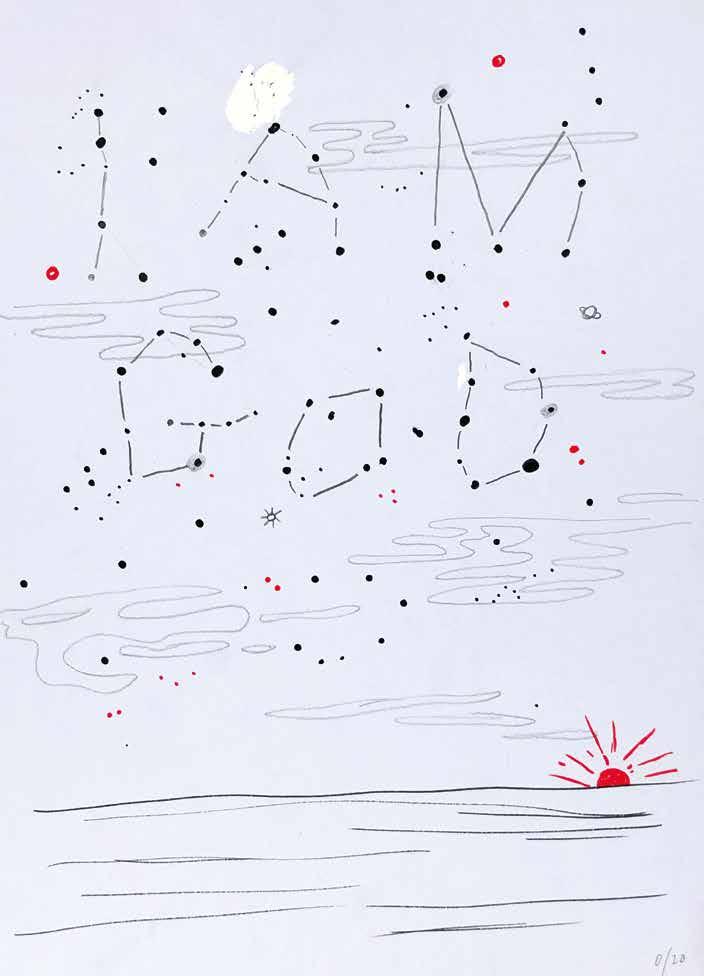
I am god, 2021
Pencil, ink on paper, 29 7 x 21 cm
p. 116 Be kind, 2020
Pencil, ink on paper, 29.7 x 21 cm
p. 117
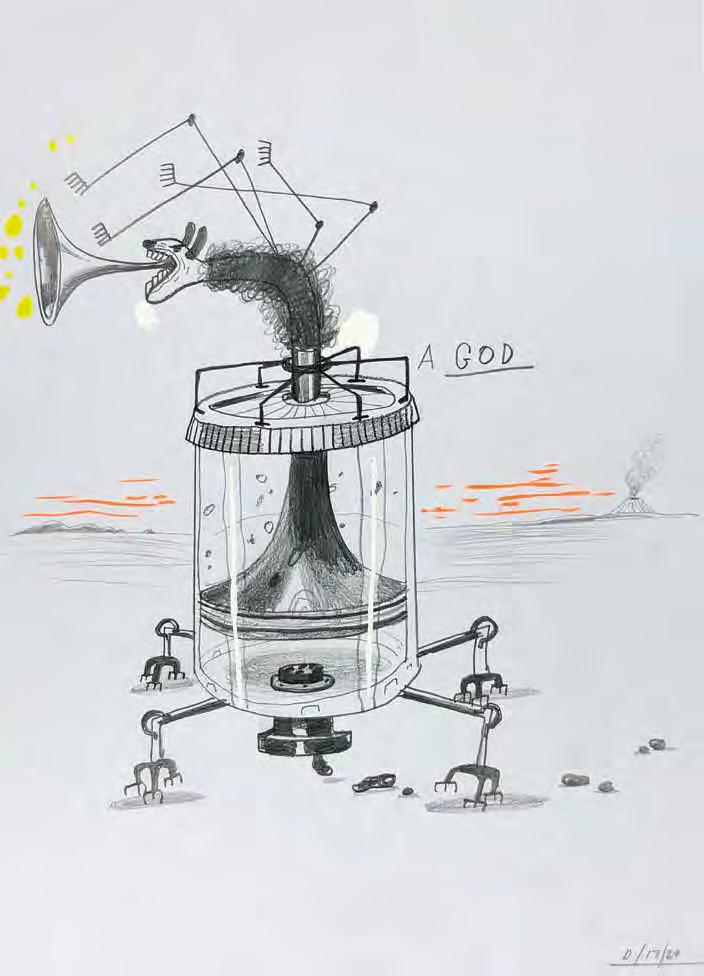
A god, 2017/2020
Pencil, ink on paper, 29 7 x 21 cm
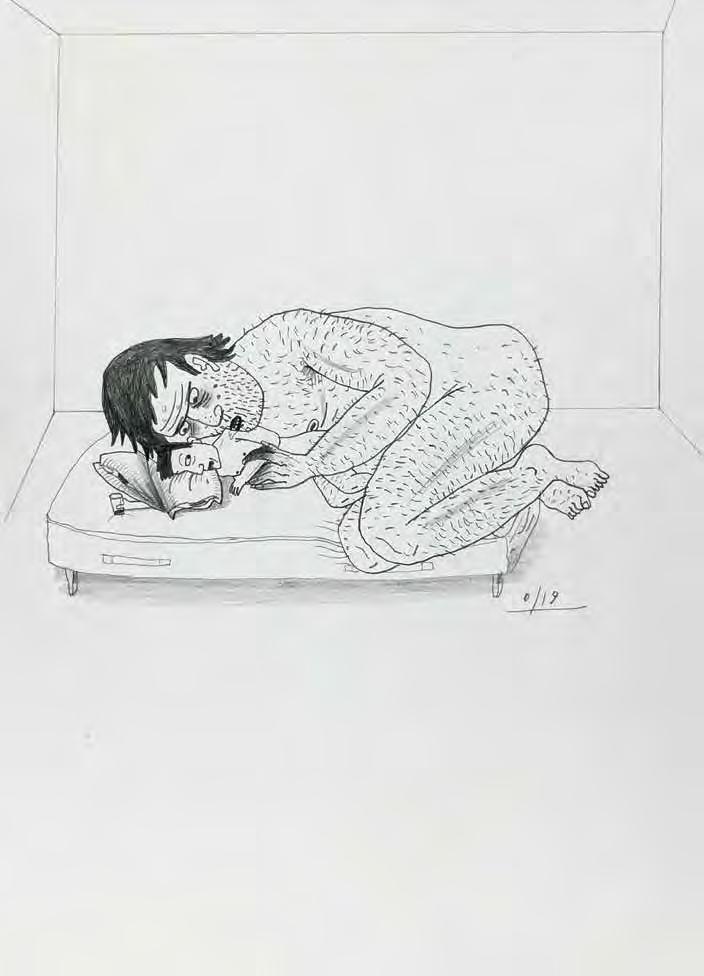
p. 118
Bed demon, 2019
Pencil on paper, 29 7 x 21 cm
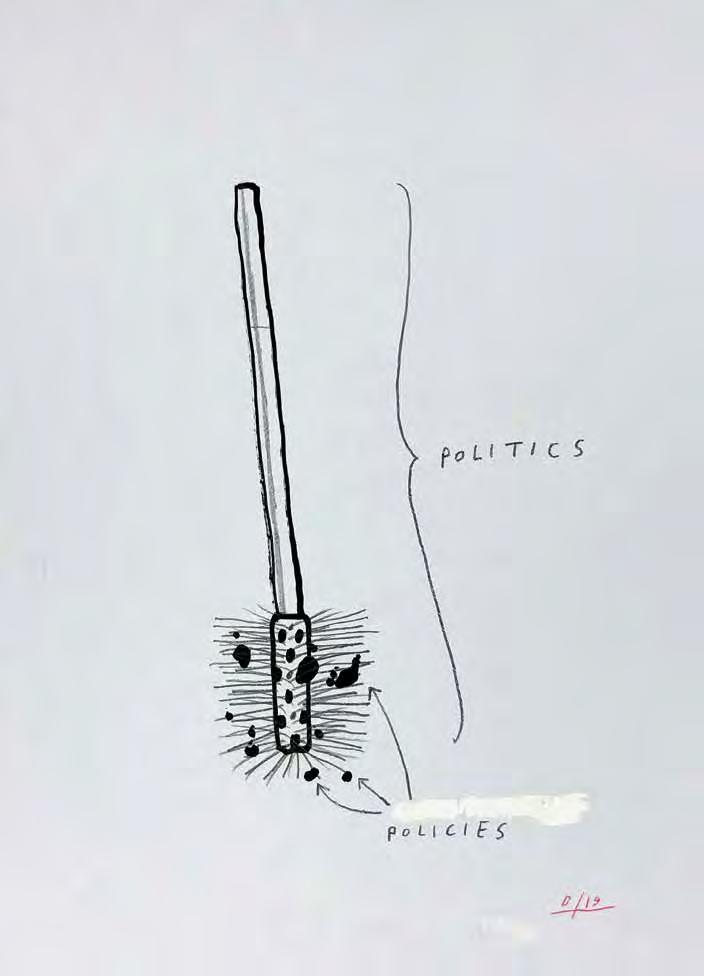
p. 119
Politics, 2019
Pencil, ink on paper, 29 7 x 21 cm
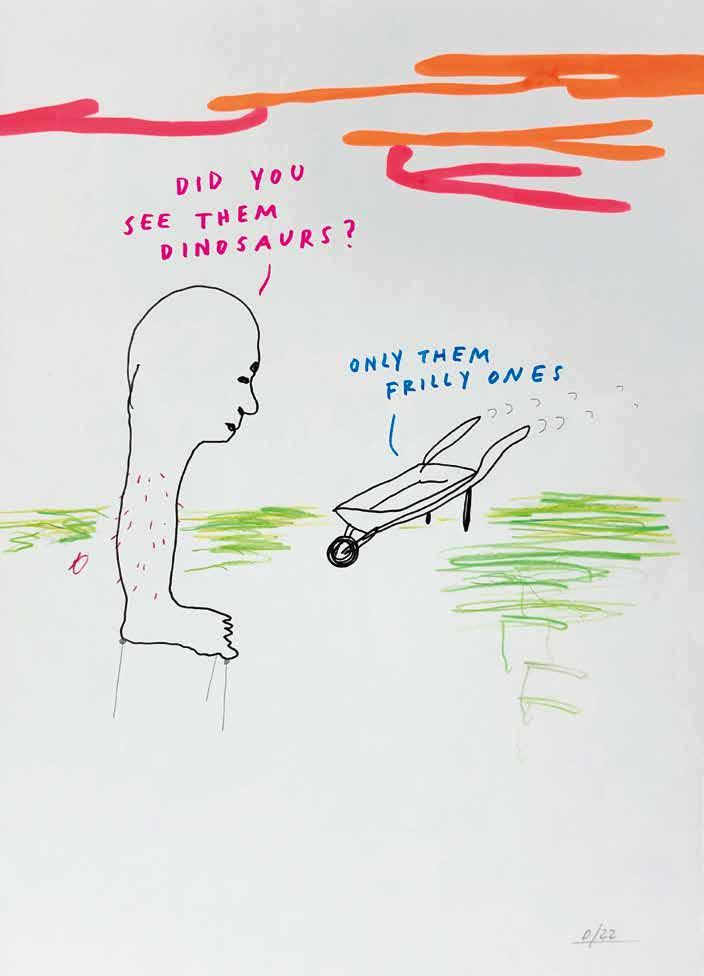
p. 120
Them dinosaurs, 2022
Pencil, ink on paper, 29 7 x 21 cm
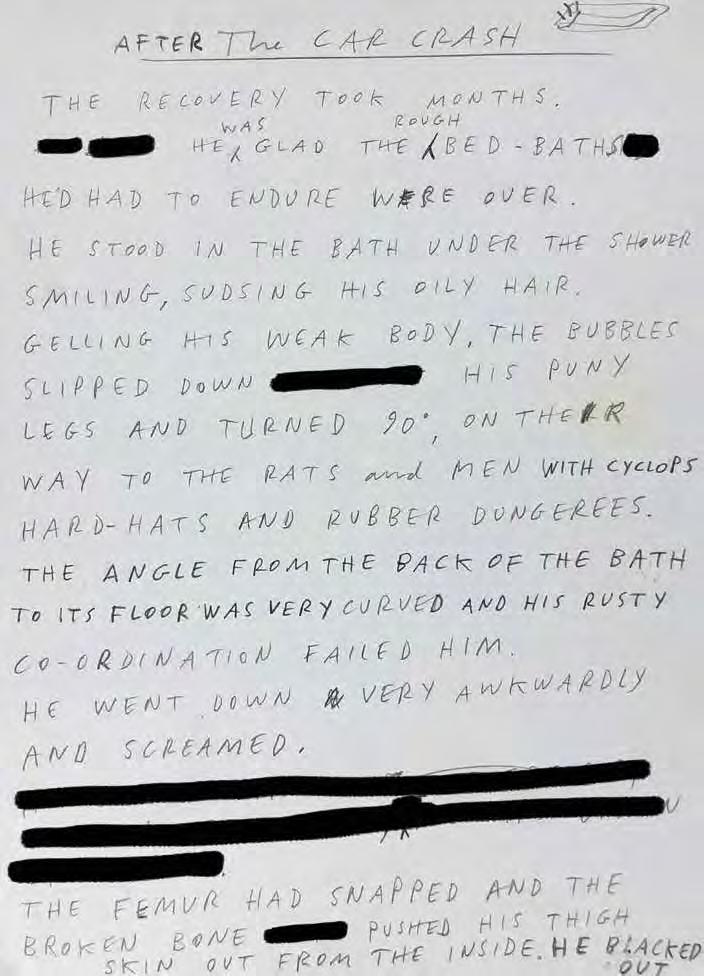
p. 121
After the car crash, 2022
Pencil, ink on paper, 29 7 x 21 cm
p. 122–123
Man at bus stop, 2019–21
Photographs, each 42 x 29.7 cm
p. 124 Man, 2017/2022
Pencil, ink on paper, 29.7 x 21 cm
p. 125
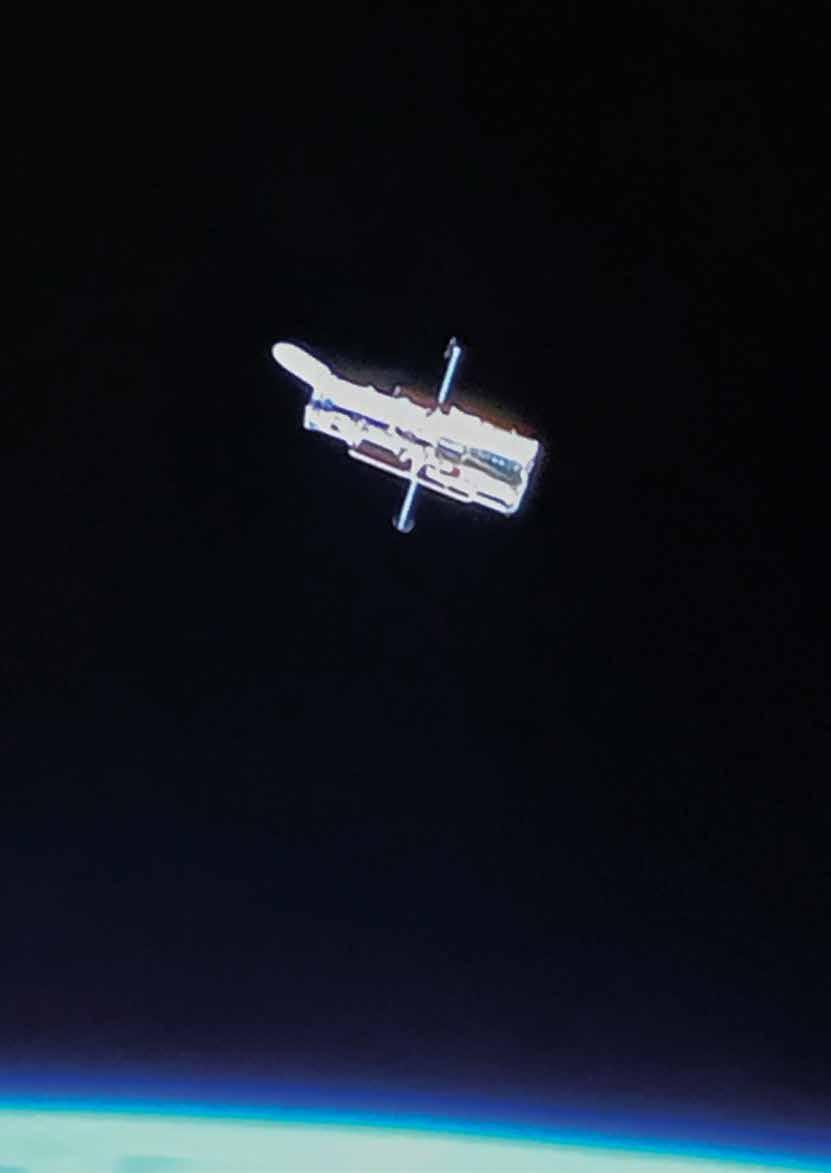
Hubble, 2021
Photograph, 42 x 29.7 cm
p. 126
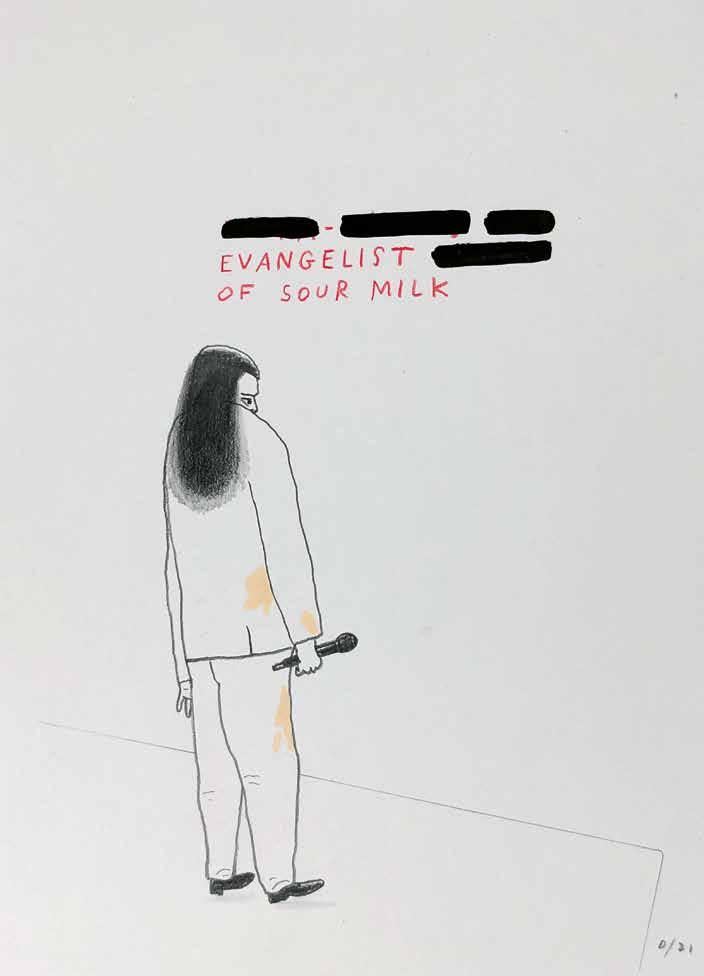
Evangelist, 2021
Pencil, ink on paper, 29 7 x 21 cm
p. 127
Fire, 2021
Photograph, 42 x 29 7 cm
p. 128
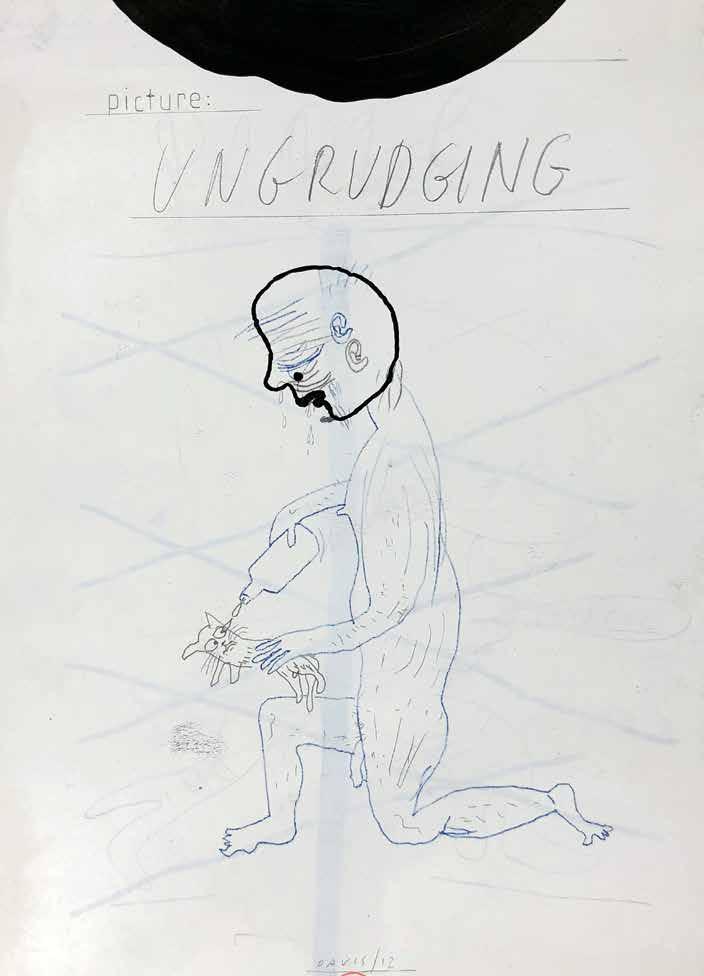
Ungrudging 2012
Pencil, ink, monoprint on paper, 29 7 x 21 cm
p. 129
Murder scene, 2016
Pencil, ink on paper, 29 7 x 21 cm
p. 130
Early lockdown, 2020
Pencil, ink on paper, 29.7 x 21 cm
p.131
Kill fly, 2011
Pencil, ink on paper, 29.7 x 21 cm
p. 132
Land owners of Britain, 2018
Pencil, watercolour on paper, 29 7 x 21 cm
p. 133
The 243 bus, 2019
Pencil, ink on paper, 29 7 x 21 cm
p. 134
Litter, 2015
Acrylic, pencil on paper,
29 7 x 21 cm
p. 135
Commuter 2021
Pencil, ink on paper, 29 7 x 21 cm
p. 136
The Lord hath wrought, 2018
Pencil on paper, 29.7 x 21 cm
p. 137
Pre-supermarket, 2013 Pencil, monoprint, acrylic, ink on paper, 29 7 x 21 cm
p. 138
Thick water, 2021
Pencil crayon on paper, 29 7 x 21 cm
p. 139
The terrible gift, 2020
Pencil, ink on paper, 29 7 x 21 cm
p. 140
Head, 2018
Photograph, 42 x 29 7 cm
p. 141 GOD, 2018
Pencil, ink on paper, 29.7 x 21 cm
p. 142
Executive joy, 2021
Pencil, ink on paper, 29 7 x 21 cm
p. 143
Old man, 2022
Photograph, 29 7 x 42cm p. 144 Bar, 2022
Photograph,
Pencil, ink on paper, 29.7
Paul Davis: Euphoria. Drawings, Photographs, Questions
First Portuguese edition published in 2022 by Stolen Books, a brand by Ideias com Peso, Av. Estados Unidos da América 105 garagem 1700 -168 Lisboa, Portugal
www.stolenbooks.pt www.ideiascompeso.pt
All drawings and photographs © Paul Davis 2022 Text © the authors
All rights reserved
ISBN: 978-989-53767-2-8
Designed by Paul Davis and Stephen Coates
Thanks and acknowledgements
Todd Bracher, Dan Philips, Craig Taylor, Paul Graham, Helen Walters, Karen
Ashton, Christoph Niemann, Harry Ritchie, David Shrigley, Leanne Shapton, Francesca Gavin, Peter Nsanze, Martin Tickner, Louise Longworth, George Morton Clark. John Cuneo, Dario Illari, Polly Morgan, Carlo Pizzati
Special thanks
Sara and Luis at Stolen Books, the studio, Sophe
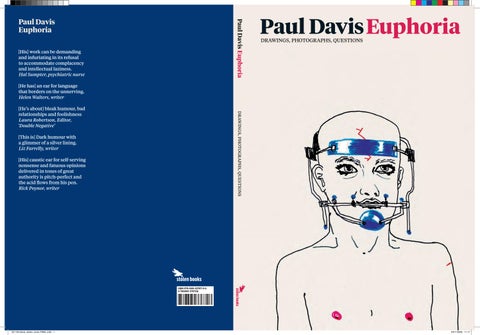
Front cover:
Lucky human, 2022
Pencil, crayon on paper, 12 x 17cm