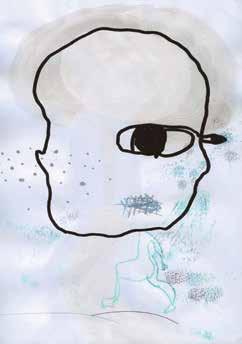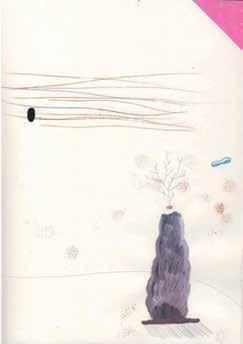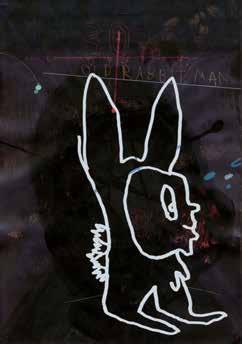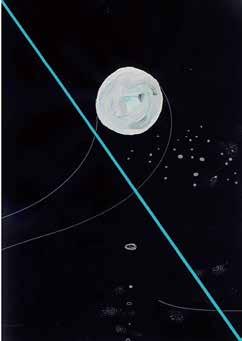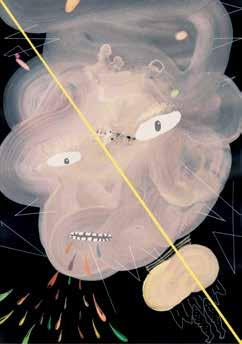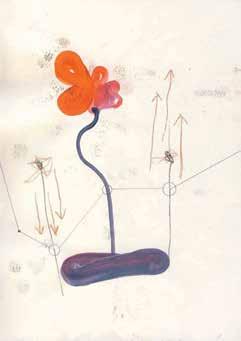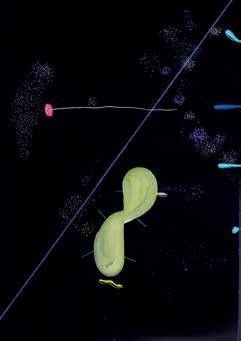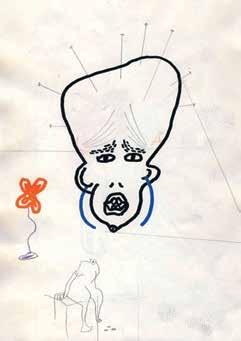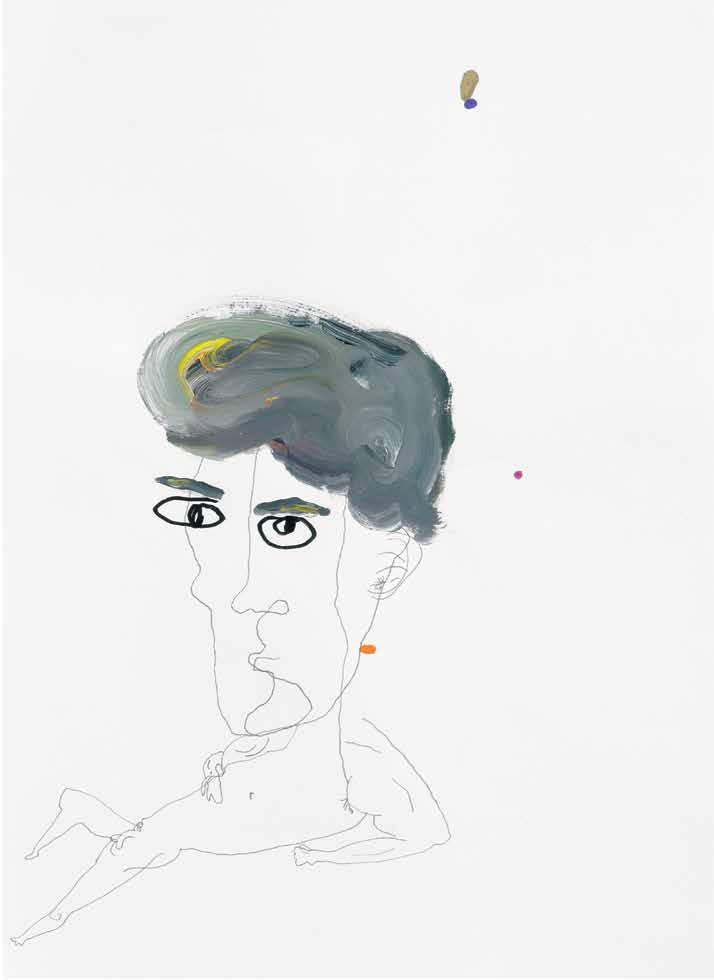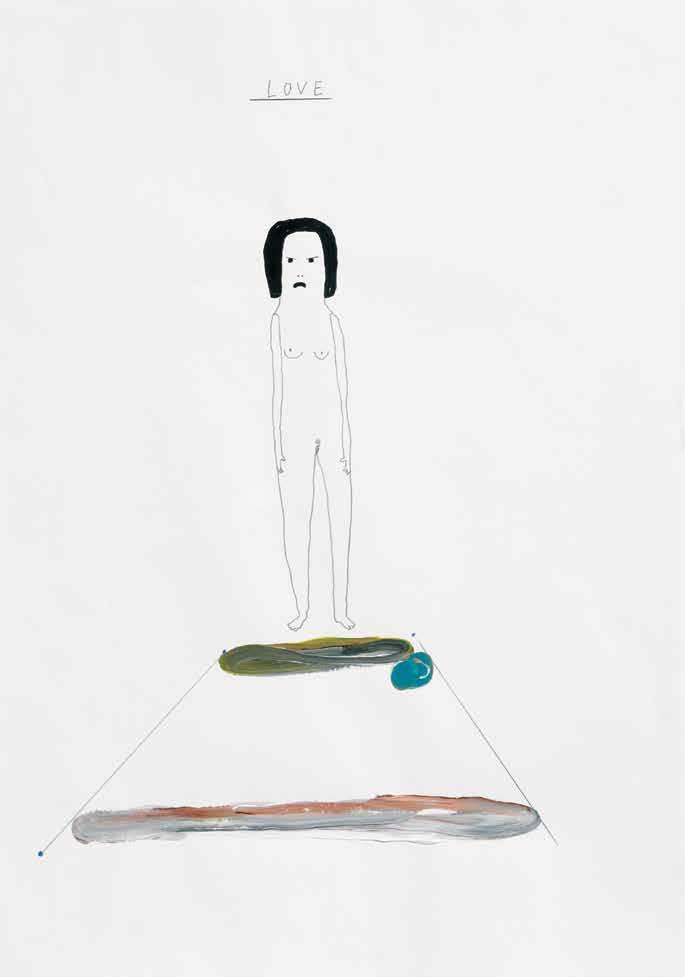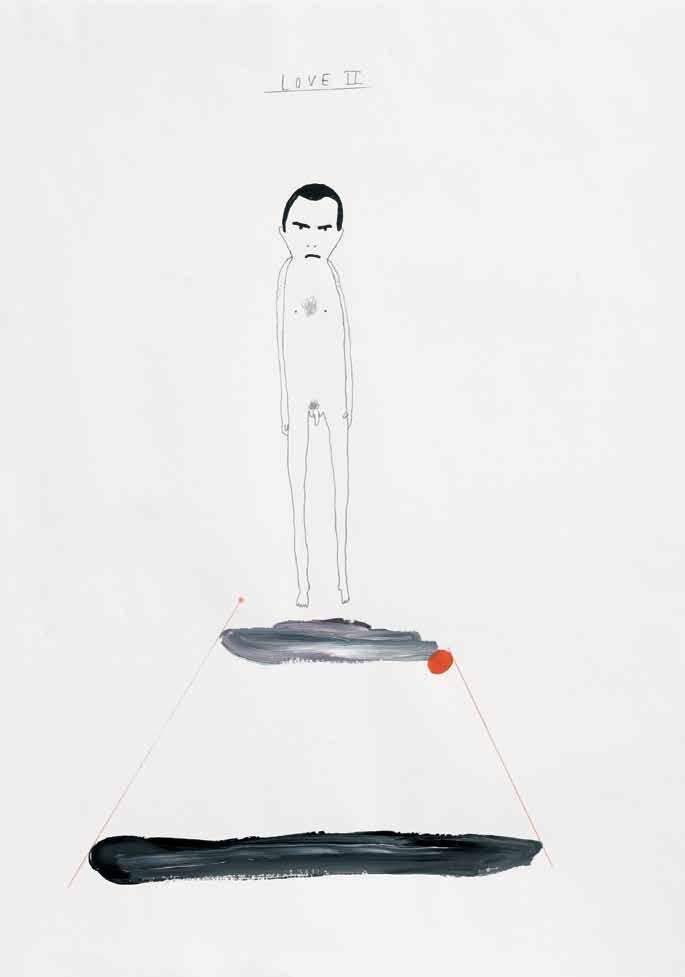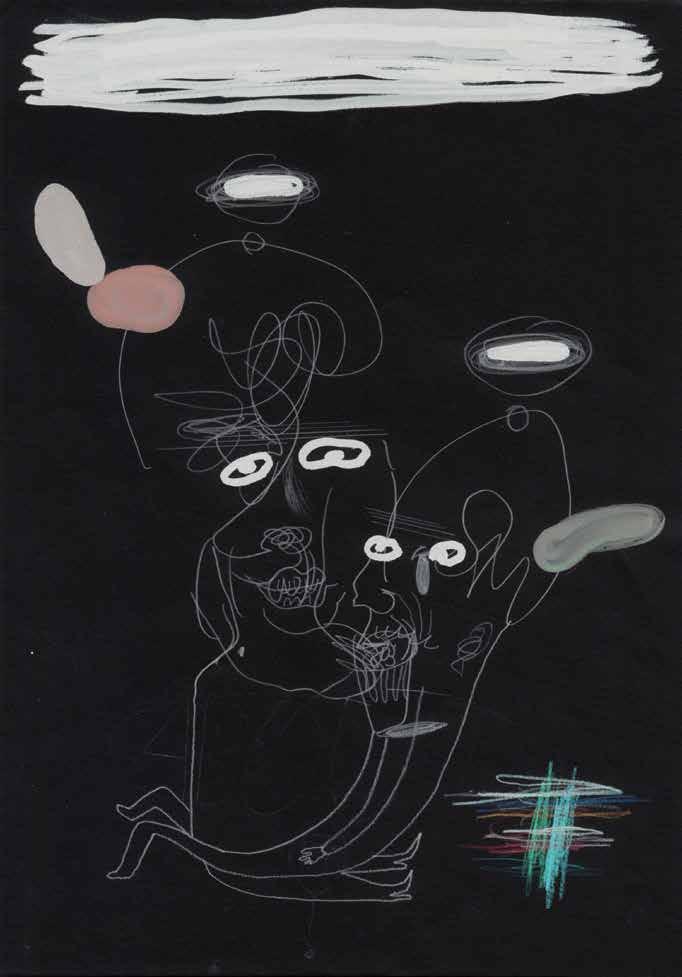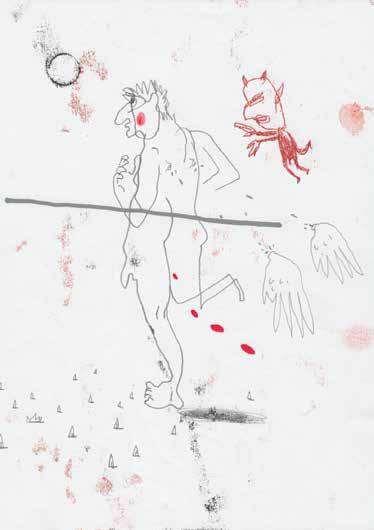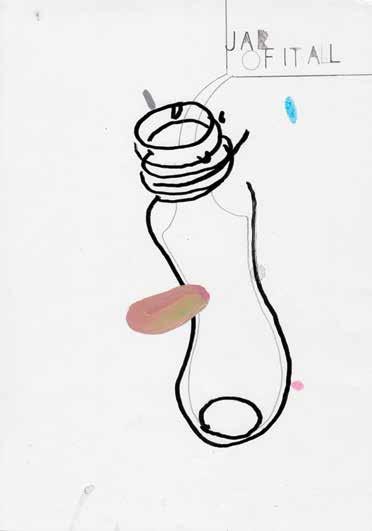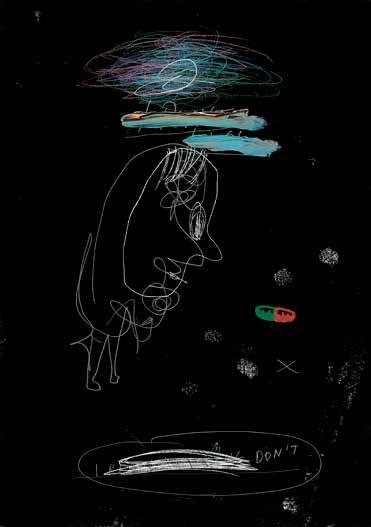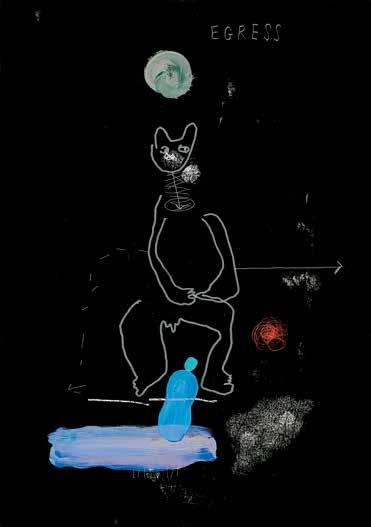
Line in the sand
Paul Davis
6 February – 28 February 2015
ginza graphic gallery
DNP Ginza Building, 7-2, Ginza, 7-Chuo-ku, Tokyo 104-0061, Japan
Tel: +81 3 3571 5206
www.dnp.co.jp/foundation
Organizer: DNP Foundation for Cultural Promotion
Design: Stephen Coates
Text: Paul Davis, John O’Reilly and Tim Rich
Editing: Ally Ireson
Design cooperation: Naoko Okada
Translation: Kayoko Yokota, Toru Yoshikawa and Stuart Munro
Production: DNP Art
Communications Co., Ltd.
Printing and binding:
Dai Nippon Printing Co., Ltd.
Print direction: Kinji Watanabe
Publication: DNP Foundation for Cultural Promotion
DNP Ginza Bldg., 7-7-2 Ginza, Chuo-ku, Tokyo 104-0061
Tel. +81 3 5568 8224
All texts ©2015 the authors All images ©2015 Paul Davis
Printed in Japan
All rights reserved. No part of this catalogue may be reproduced or transmitted in any form without written permission from the DNP Foundation for Cultural Promotion.
ライン・イン・ザ・サンド ポール・デイヴィス
2015年2月6日(金)-2月28日(土) ギンザ・グラフィック・ギャラリー 〒104-0061 東京都中央区銀座7-7-2
DNP銀座ビル Tel. 03-3571-5206 www.dnp.co.jp/foundation
主催:公益財団法人DNP文化振興財団
デザイン:ステファン・コーツ テキスト:ポール・デイヴィス、ジョン・オライリー、 ティム・リッチ コピー・エディティング:アリー・アイルソン
デザイン協力:岡田奈緒子
翻訳:横田佳世子、吉川徹+スチュアート・ムンロ 制作:株式会社DNPアートコミュニケーションズ 印刷・製本:大日本印刷株式会社 プリンティングディレション:渡辺謹二
発行:公益財団法人DNP文化振興財団 〒104-0061 東京都中央区銀座7-7-2
DNP銀座ビル Tel. 03-5568-8224
All texts ©2015 the authors
All images ©2015 Paul Davis
Printed in Japan
本図録の無断複写・複製・転載を禁じます。
Thirty years have gone by since Paul Davis jumped into the world of art and illustration. The intelligence and sophistication of his drawings have enabled him to work on commissions for famous magazines and clients, to mount exhibitions internationally, and to create passionate fans of his work around the world. Ryuichi Sakamoto (who collaborated with Davis on a piece for a relief project for 2011’s Great East Japan Earthquake) numbers among these enthusiasts, confiding in his contribution to Davis’s 2003 book Blame Everyone Else that ‘Yes, I’m addicted to Paul Davis.’
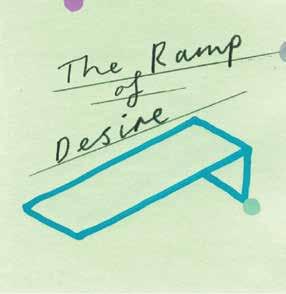
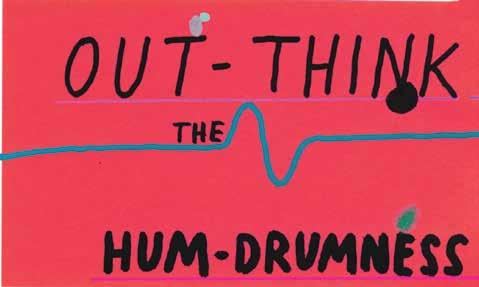
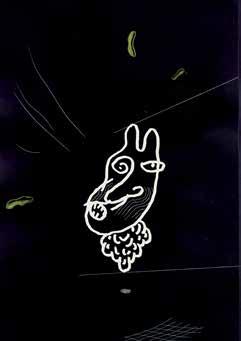
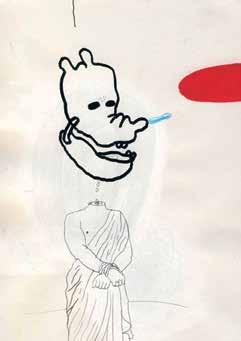
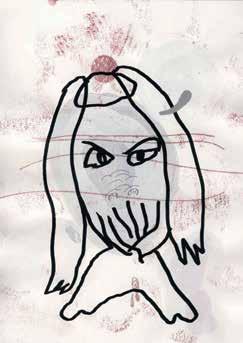
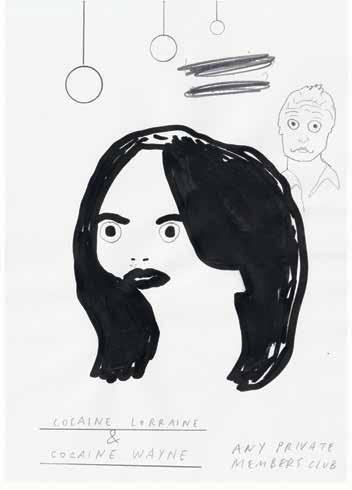
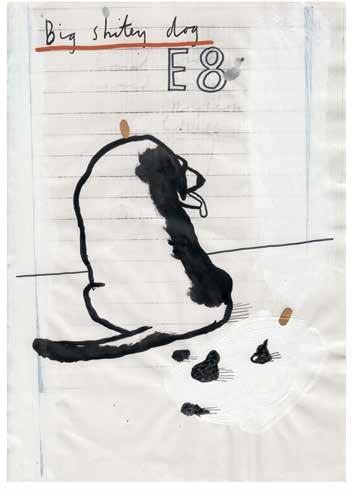
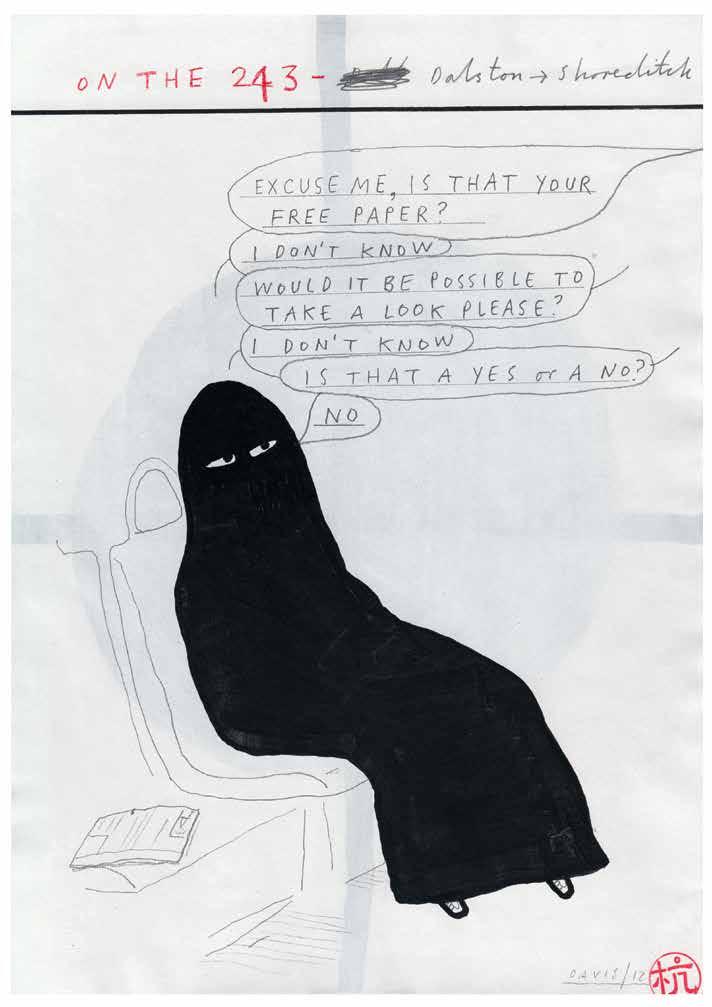
This exhibition delves into Davis’s massive archive, showing a stringently selected set of work that features only those pieces that truly satisfy the artist (most of which have never been published before). The ‘line in the sand’ of the exhibition’s title is a borderline that Paul Davis has drawn in front of himself, one that marks both a beginning and an ending. (It also marks the border between art and illustration, a territory often occupied by New York Times artist Saul Steinberg, whose work Davis greatly admires.) ‘Line in the sand’ embodies the gathering together of Davis’s work at the point just before he crosses this line and sets off into the next phase. These pieces, given life on scraps torn from notebooks, on writing paper and Post-it notes, all possess a somewhat quizzical look, and can cause a slightly unsettling reaction in the viewer as they speak to us, cumulatively telling us that ‘Life is preposterous, but is still madly beautiful.’
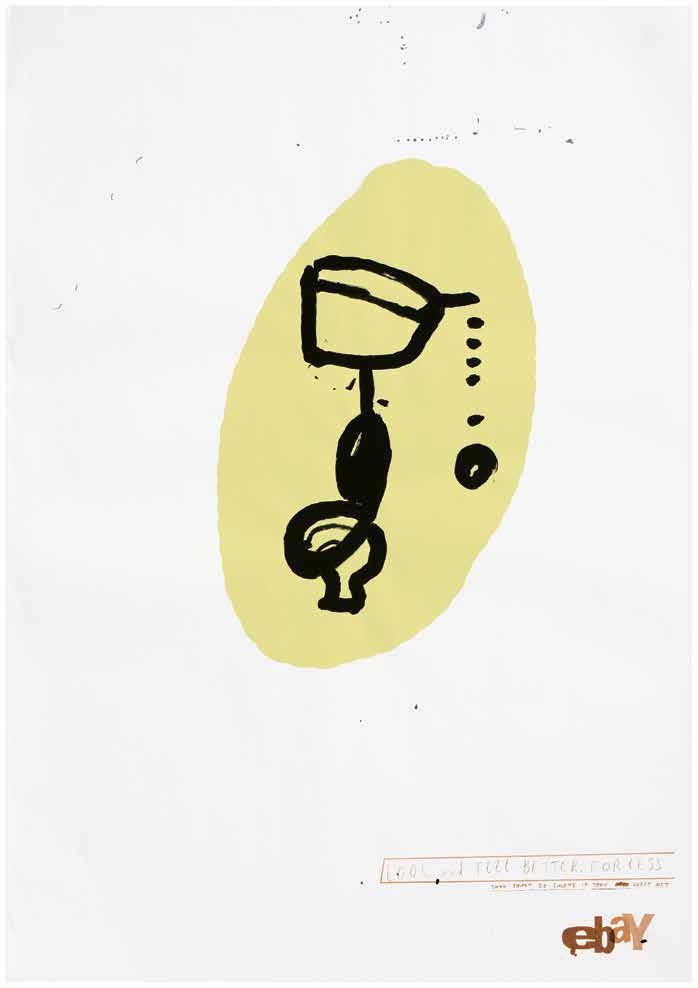
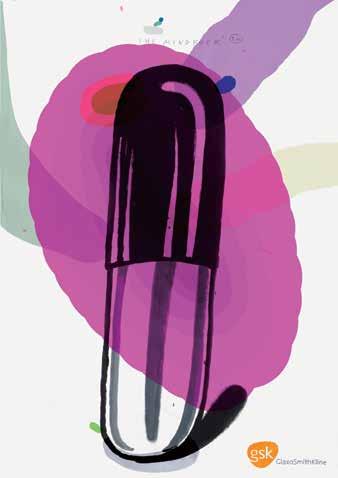
This catalogue features 10 sections structured to aid the deciphering of the incisive social satire and wit of the attractive world of Paul Davis, using both texts and visuals, and including a series of poster collaborations with eminent designers. We wish to thank Paul for dedicating both body and soul in preparing for this exhibition, as well as the many individuals whose unfailing support made it possible.
DNP Foundation for Cultural Promotion
アートとイラストレーションの世界に飛び込んでから30年。ポール・デイヴィス は、その知的で洗練されたドローイングを武器に、著名な雑誌やクライアントの仕事 をこなす傍ら、各国で展覧会を開催し、世界中に熱狂的なファンを増やしてきまし た。“Yes, I’m an addict to Paul Davis.” (「そう、私はポール・デイヴィス中毒なのです」) 作品集『BLAME EVERYONE ELSE』( 2003 )でそう語るように、3.11被災地支 援プロジェクトの一環で、デイヴィスと映像作品を制作した坂本龍一氏もまた、デイ ヴィスの虜になってしまったようです。
本展では、デイヴィス自身が心から満足できる作品のみを、膨大なアーカイブの中 から厳選してご紹介します。そのほとんどが、過去印刷されたことがない貴重なもの ばかりです。『Line in the sand』とは、ポール・デイヴィスが敢えて自ら引いた終わり と始まりの境界線。それはまた、デイヴィスが尊敬してやなまい作家、ソウル・スタ インバーグがしばしば踏み込んだ、アートとイラストレーションの境界線でもあります。 その線を越えて次のフェーズへと旅立つ前の、ポール・デイヴィスの創造物がここに 集結しました。ノートの切れ端や、原稿用紙、ポストイットなどに産み落とされた彼ら は、ユーモラスな表情を浮かべながら、わたしたちに不思議なザワザワ感を持って 何やら訴えかけてきます。「人生は馬鹿げているけど、狂おしいほどに素敵なものだ よ。」……と。
本カタログでは、著名デザイナーとのコラボレーションポスターと合わせて、 ポール・デイヴィス氏の鋭い社会風刺とウイットあふれる世界を10のテーマにより構成 し、その魅力をテキストとビジュアルによって紐解きます。本展開催にあたり、全身 全霊でこの展覧会に臨んでいただいたポール・デイヴィス氏はじめ、ご尽力いただい た多くの皆様に心より感謝申し上げます。
公益財団法人DNP文化振興財団
Thanks and acknowledgements
None of this would have been possible without all the brilliant people who offered their time, energy and advice to help me make both the show and this book.
Most of all, immeasurable thanks go to the incomparable Stephen Coates, who continues to help me understand the design process and the potential beauty that lies within it – and for much, much more. Absolutely could not have done it without him. Lunch is on me forever.
Huge thanks to all the folk at ggg in Tokyo, especially Azusa Ozawa and Miho Takagi, who led me through the whole project with kindness and patience.
Gorgeous thanks to Katherine Rose, whose inventive photography inspired the idea for the dubious fashion shoot, and to Emily Robertson for helping realise all whims.
Urbane thanks to Tim Soar for his beautiful clothes and his unfailing eye for an outfit.
Incisive thanks go to Tim Rich and John O’Reilly for their splendid words, and to Ally Ireson for her lucid editing. And thanks also to Kayoko Yokota, Toru Yoshikawa and Stuart Munro for their translations and to Naoko Okada for Japanese design assistance.
Respect and love to all the brilliant designers who gave up their precious time to make the bespoke posters for the show, an astonishing outcome that surprised and flattered. It’s incredible who you meet over the years – that section of work is a celebration of friendship, intelligence and a lot of laughter.
Thanks also to John Ross for the use of his magnificent studio, and to Tony Hay for his unflappable help.
And to Giuseppe Mascoli for support and hilarity.
Unconquerable love to Sophie Smith, who had to deal with monstrous mood swings and appalling egotism, and did so with aplomb and laughter.
謝辞
今回の一切合切は、展覧会と本の出版を 実現させるにあたって、時間と労力とアドバ イスを提供してくださった、数多くのすばら しい人々なくして不可能でした。
誰よりもお世話になったのは比類なきス テファン・コーツ。デザインプロセスの理解 を深める上で支え続け、その中に潜む美の ポテンシャルに気づくために、到底書ききれ ない程お世話になり続けていますが、その 他の点でも、本当に、本当に感謝していま す。彼がいなければ、絶対に不可能でし た。今後のランチは全てこちら持ちです。
大感謝を東京のgggの全関係者に。こと に尾澤あずさ、髙木美歩のふたりは、プロ ジェクト全体を通じて、優しさと辛抱強さを持 って導き続けてくれました。
ゴージャスな感謝をキャサリン・ローズに。 創意工夫豊かな写真から、怪しげなファッシ ョン撮影の企画のインスピレーションを与え てもらいました。そしてエミリー・ロバートソ ンは全ての思いつきを実現させる助けとな ってくれました。
都会的で瀟洒な感謝をティム・ソアーに。
美しい服、そして絶対に揺るがない装いに 関する目利きのお礼を。
断固とした感謝を、すばらしい言葉を 寄せてくれたティム・リッチとジョン・オライ リー、明快な編集手腕を発揮してくれたア リー・アイルソンに送ります。そして翻訳陣 の横田佳世子、吉川徹+スチュアート・ムン ロ、和文デザインで協力してくれた岡田奈 緒子にも感謝の気持ちを。
信じられないほどの敬意と愛を、貴重な 時間を展覧会用のビスポークのポスターのた めに捧げてくれたすばらしいデザイナーの 方々全員に。驚愕し、そこまでしてくれたあ りがたさを噛みしめる、驚異的な結果となり ました。年月を経て、信じられないほどの 縁と出会いがありました このシリーズは 友情、知性、そして多くの笑いの祝典です。 見事なスタジオを貸してくれたジョン・ロ スにも感謝しています。そして常に落ち着 き払って助けてくれたトニー・ヘイにも。 ジュゼッペ・マスコリのサポートと陽気さに 感謝を。
何事にも打ち勝つ愛を、ソフィー・スミス に。すさまじい気分の振幅と呆れ果てるよ うな自分勝手に付き合わされたものの、い つも悠然と、笑いと共に受け止めてくれま した。
ポール・デイヴィス (文中敬称略)
Being invited by Tokyo’s Ginza Graphic Gallery to have a show gave me the opportunity to think, to reflect, to see what I’ve done, see how it’s gone, whether it was any good, and ask myself what I really wanted to do next.
The phrase ‘draw a line in the sand’ can mean two things: an end of something, a cut-off point; or it can mean the beginning of something once the line has been crossed, an irreversible decision. A footprint on either side of a line comes to mind. It seemed like the right time to consider this.
The work in the show comprises the work I like the best, hardly any of it commissioned. This work makes me realise what I like to do.
Initially, the idea of trawling through my archives filled me with dread, knowing that I’d smile and nod only occasionally, after hours of frowning and flinching. I looked through the countless archive boxes of drawings and paintings, the thousands of files on my computer, and in a dusty storage space with its long-forgotten portfolios.
But I eventually dived in and this show is a result of the ‘No’…‘No’…‘No’…‘No’… ‘Maybe’…‘No’…‘No’…‘No’…‘No’…‘Yes’ approach I took to that edit.
Knowing the drawings would be made into prints filled me with joy: my unpublished work would now be published.
This is not a visual memoir or a chronological look-back. This was an attempt to experience as much pleasure as possible, picking out the work I made because it felt like I simply had to produce it, and then putting on an exhibition and making a book.
東京のギンザ・グラフィック・ギャラリーから展覧会の誘い を受けたことは、考え、反芻し、今までの作品を見つめ、成果 を振り返り、出来の良し悪しをはかり、次に本当にやりたいこ とは何かを自問自答する機会を与えてくれた。
「ライン・イン・ザ・サンド 砂に引かれた線」というフレー ズには、ふたつの意味がある。何かの終焉、断ち切られるこ と、そしてその線を越えた所から何かが始まること、不可逆な 決断が示唆される。線をまたがって両側に残る足跡を思い浮か べることもできる。このことを顧みるのに相応しい時を迎えた ように思える。
展示作品は、一番気に入っているもので構成した。仕事で依 頼されたものはほとんど含まれていない。何をやるのが好きな のか、気づかせてくれる作品群だ。
当初、アーカイブを精査するというのは考えるだけでゾッと した。何時間ものしかめっ面と拒絶反応の連続の後で、本当 にごく稀に笑顔で頷くことになるのが事前にわかっていたから だ。数えきれないドローイングと絵画の箱、数千にのぼるコン ピュータのファイル、そして埃だらけの倉庫スペースに置かれ た、ずっと忘れ去られたままのポートフォリオ。だが、とうと う覚悟を決めて取り組んだ。この展覧会は、「ボツ」…「ボツ」… 「ボツ」…「ボツ」…「キープ」…「ボツ」…「ボツ」…「ボツ」… 「ボツ」…「ヨーシ」という姿勢で編集作業を行った結果である。 ドローイングがプリントされることがわかり、喜びであふれ る思いを噛みしめた。未発表だった作品が、陽の目を見ること になるのだ。
大事な点を強調しておきたい。展覧会とカタログ作成にあ たって、友情がいかに大切だったかということを。友人なくし て、一切が不可能だった すばらしい設備の整ったスタジオ を「貸してもらって」大型作品の撮影を行ったことも、装いを 凝らして似非ファッション撮影をすることも。
これは視覚的な回顧録でもなければ、時代を追って軌跡を振 り返るものでもない。どうしても作らなくては、という衝動に 突き動かされて、生み出した作品を選び出し、展覧会を構成 し、本を作ることを徹底的に楽しむことを試みた。
I’m thinking about calling the show ‘Line in the sand’. It means that once you step over the line you’re into a different realm. Paul Davis
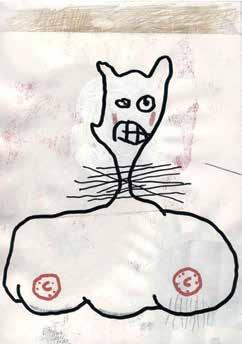
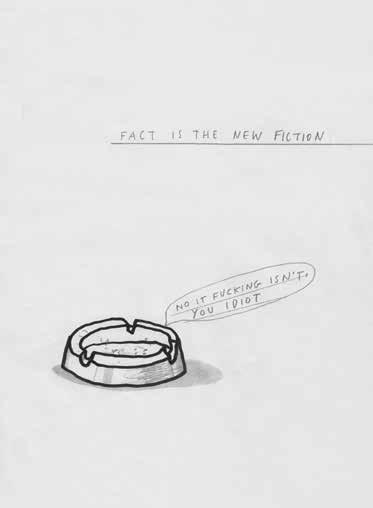
When I imagine Paul Davis’s ‘line in the sand’, I imagine a line that draws an edge between reality and fiction, and a connection between them – and I also imagine that his line in the sand talks back to me. That line would raise an eyebrow, and rather than mocking my metaphysical pretentiousness would point out a flaw in my view of how the universe is arranged. Or the line would offer a more creative metaphysics, like the ashtray’s response in one of Davis’s works to the idea that Fact is the New Fiction, 2004 ( fig.1): ‘No it fucking isn’t, you idiot.’ (That’s what it’s like when you step into the world of Paul Davis: things talk back.) I also think of Davis’s line as something that heads off into the infinite, that doesn’t know where it’s going, but is definitely going to take you places as it maps its way through the themes of life, love, work and creativity, as well as the material aspects of making work.
And of course Davis’s line in the sand, here and now in the gallery space, is the speculative line between illustration and fine art, as he tells me in a conversation that aims to draw the line between Davis the illustrator and Davis the artist. ‘If you put a contemporary artist’s drawing against an article in The Guardian, say, and it seems to fit, then it becomes an illustration,’ he says. ‘This show will have drawings that I love; my illustrations of life are now art because they aren’t illustrations for a client. That’s a blurry line in the sand between art and illustration.’ Whether personal or commercial, Davis’s work is always drawing life. That’s his subject matter. And because he makes images, image-making and creativity is also his subject matter. But the line between art and the world Davis draws is an illustrator’s line – whether it runs through a gallery or an advertising campaign.
Curiosity: from Holocaust to dark matter
When it comes to visual thinking, illustration is often modernity’s medium of choice, as demonstrated, for example, in such formats as the cartoons on the editorial pages of newspapers, which routinely pull together high-minded aspiration and grubby reality. The provocative charm of Davis’s work is that it goes a step further, exploring illustration as a vernacular medium by using humour to unpick the conventions of how it uses image and text. Davis is a modern image-maker in the sense that Baudelaire describes in The Painter of Modern Life (1863). In the writer’s description, ‘Monsieur G’ (a pseudonym for Constantin Guys, an illustrator for The Illustrated London News) ‘does not like to be called an artist.’ What for Baudelaire marks out the illustrator most of all is that he is a ‘man of the world’, an individual driven by a curiosity about the many different things the world throws at us. Imagine a convalescent in a coffee house, says Baudelaire, an individual previously on the ‘brink of total oblivion’ who gazes into the crowd of passers-
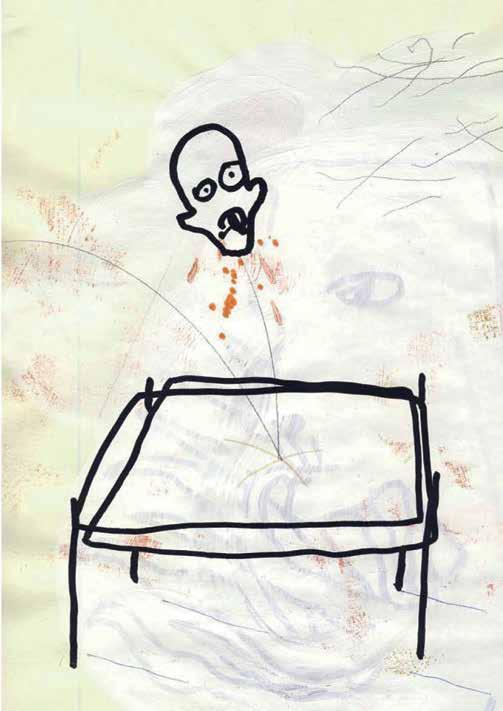
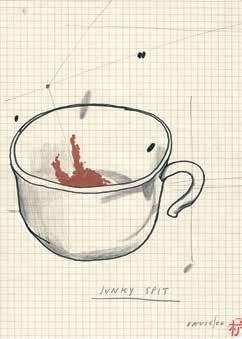
The awkwardness that sweeps over you when contemplating an image such as Junky Spit, 2006 ( fig.3) or Head Bouncing On Trampoline, 2009 ( page 52) seems indicative of the ‘radical awkwardness’ described by writer and theologian Adam Kotsko in his book Awkwardness: An Essay. ‘In contrast to everyday awkwardness,’ he writes,
radical awkwardness arises when there doesn’t seem to be any norm governing a given situation at all. The discomfort of radical awkwardness is therefore much greater than that of everyday awkwardness, because in place of seeing one’s familiar ways of navigating the world flaunted, one feels deprived of them altogether.
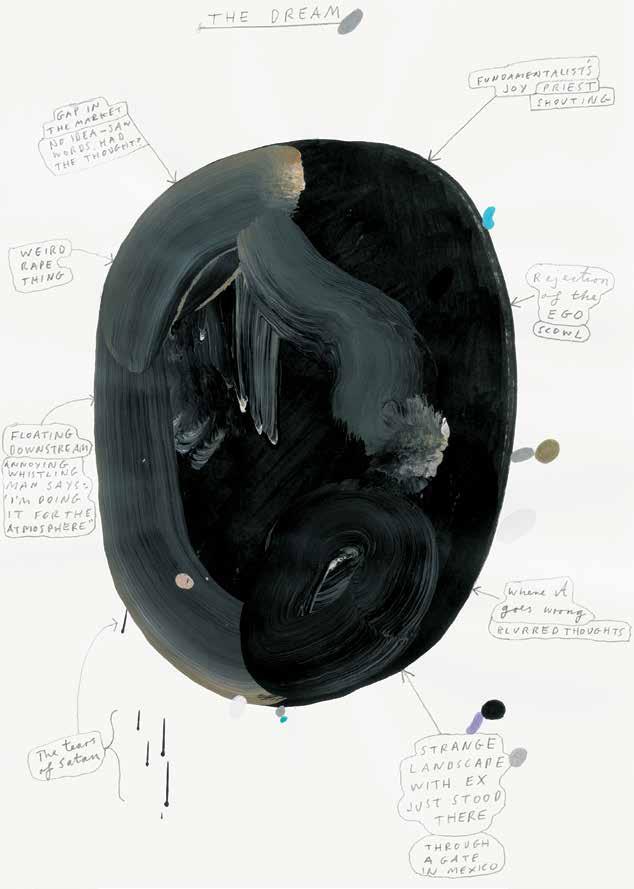
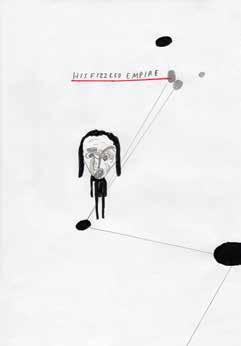
In Davis’s work, the image takes us to this awkward space by seeking out new, unfamiliar visual forms, testing the space and probing volume, figure and objects. There’s a large slice of the artist’s output that explores and creates topology (not least the flow charts). His image The Dream, 2005 ( fig.4) (one of many images in which the materiality of mark-making also insists this is an object, a thing) has a large black blob anchoring it: a mind or brain at sleep? But this is a visual anchor that slips: paint smudges breaks up the surface of the mind/brain while thought bubbles move around it, apparently mapping the random experience of the dreamspace. Or there’s the image His Fizzled Empire, 1997 ( fig.5), in which the blobs form points on narrative lines that pass through a bereft man. These blobs of colour are like stray thoughts looking for somewhere to settle, but which, ever mobile, remain unattached and on the surface.
This is the most exciting thing about what Davis
好奇心:ホロコーストからダーク・マターまで 視覚的な思考となると、往々にして現代が選ぶ表現手段はイラストレーション だということは、たとえば新聞の論説ページの漫画でも証明されている。そこで は、常套手段として高尚な願いと薄汚れた現実がまとめ上げられている。デイヴィ ス作品の挑発的な魅力は、更に一歩踏み込んでヴァナキュラーな表現としてのイ ラストレーションを探り、ユーモアを用いてイメージとテキストの通常の活用方法を 紐解いている点だ。デイヴィスは、ボードレールが『現代生活の画家』( 1863年 ) で描写した意味での現代的なイメージの創り手だ。ボードレールの言葉を借りる と、ムッシュG(『イラストレイテッド・ロンドン・ニュース』のイラストレーターだったコンスタ ンティン・ギースの偽名)は、「芸術家と呼ばれることを好まない」ボードレールにとっ て、イラストレーターの最大の特徴とは、「世情に通じている人物」で、世界が投 げかけてくる様々な異なった事象に対する好奇心に突き動かされていることだった。 コーヒーショップにいる病み上がりの人を思い起こして欲しいとボードレールは述 べている。「完全な忘却の間際に」あった人物が、通り過ぎる群衆を見やり、「そ のただ中に自身を投じる、見知らぬ、なかば見えただけの、瞬時に魅惑された面 影を追い求めて。好奇心は宿命的で抗うことのできない情熱となったのだ!」デイ ヴィスの場合、この好奇心は関係性と営みとクリエイティビティを観察する作品の 中以外でも、人生を創り上げる異なったものごと 凡庸なるもの、悲劇的な事柄、 そして宇宙的なもの をまとめあげる手腕にも見て取ることができる。
話の中で、デイヴィスは最近読んだ本のことに触れた。「ホロコーストの子ども たちが開放される直前の絵について」だという。そして、イラストレーターとしての 頭脳が更に線を引く。
私たちが暮らしていると思っている1300万歳になるコレと、量子物理学とダー ク・マターとダーク・エネルギーの世界のダイコトミー(二分法)があるし、人間 と他の人間のせいで体験させられる最悪なことの間もそうだ。今はちょうど天 文学の本を見ているのだけれど、物理学と赤方偏移 1 についての説明に目が 留まった。一体どうやれば赤方偏移をイラストにできる? 宇宙のどの点から 見ても、モノが離れていっているんだ。
does: the way he works the surface of the figurative image, with stray visual signals and little bits of psychological matter floating on the edges. His image-making always escapes simple figuration because he loves playing with the stuff of imagemaking (paint, papers, tools), and it’s this highlighting of the materiality of the image-making, the fact of making an image in the face of a kind of despair, that’s an affirmation. Davis tells me of
…the absolute joy of using utensils. Whether it’s cooking, or whether it’s drawing or whether it’s changing the gears on a motorbike. The whole thing about life – being alive. What should I do with that pencil? Let’s try some carbon paper. Let’s try acrylic. Let’s try oils. It’s taken me bloody ages to get to a point in my life to be confident in what I’m doing in content as well as process.
It’s why pens and pencils increasingly feature in his work: to him they are objects of creativity that are worthy of fascination.
The topology of commerce and art
The pen is a motif of Davis’s hero Saul Steinberg,2 who used the circular swirl of the pen in his self-portraits as the sign of the mobile, self-creating identity of the illustrator. Like the designer, who is a temporary expert for many different briefs and clients, the commercial illustrator inhabits many different temporary identities in their image-making. Like Steinberg, Davis makes the idea of what it is to be an illustrator – an image-maker – the subject of his work. And, again working in common with Steinberg, he draws a line in the sand between the insider and the outsider – between a commercial illustrator on the ‘inside’ of commerce, and the outsider in that space we call ‘art’. Davis and Steinberg share an interest in topology and mapping, and the work of both men attempts to map the relationship between illustration and art. What makes this aspect of their work truly interesting is that they make these maps as illustrators not artists, as image-makers drawing a line between art and commerce, tracing a path through the different layers formed by human agendas, business transactions and social communication.
Whereas fine artists (we might call them the aristocrats of culture, or the avant-garde), have always done a rather complicated and coquettish dance with money (‘Oh, if you must.’), illustrators have often demonstrated an explicit curiosity about the complexities of money, relationships, power and politics, as relates to both people and organisations. Davis has produced both advertising and editorial work for clients such as IBM, Mercedes, The New Yorker, The New York Times and Vogue, and observes that:
It never fails to amaze me how design works: from tiny, corner-shop receipts, through magazines, newspapers, posters and catalogues to packaging, town planning, etc.,
デイヴィスのイメージは人間と形而上学の間にある、この空間を探っている。例 をあげれば、「男やもめ10月下旬」( Late October Widower )《図2/1999年》で は、イメージとテキストの差異には悲哀が漂い、背中を丸めた中心の人物は作品 の題名が与える定義のせいで小さくみえるだけでなく、ゆらぎ、使いこなせていな いような文字のフォルムも、先立たれる、という経験そのものに定義を与えようと しているようで、その印象を強めている。
クリエイティブにぎこちない
デイヴィスは視覚的な空間をぎこちなく感じさせ、ぎこちなくすることで、見る者 に視覚的な空間を意識させる。ときには滑稽に映り、ときには悲しみをかきたてる が、常に影響を及ぼす。「唾を吐くジャンキー」( Junky Spit )《図3/2002年》や、 「トランポリンの上ではねる頭」( Head Bouncing on Trampoline )《P52/2009年》 のようなイメージをじっくり見るときに襲われるぎこちなさは、作家であり神学者で もあるアダム・コツコが著作の『Awkwardness: An Essay』( 論文「ぎこちなさ」, 2010年)で描写している「ラジカルなぎこちなさ」( radical awkwardness )を示唆し ているようだ。「日常的なぎこちなさと比べると」コツコいわく、
ラジカルなぎこちなさは、特定な状況を統括する規範が一切存在しないと思 われるときに生じる。よってラジカルなぎこちなさ、居心地の悪さは、日常的 なぎこちなさよりも遥かに大きくなる。というのも、世の中を渡っていくときの 馴染み深い方法が無視されると、それを完全に奪われたように思えるからだ。
デイヴィスの作品では、新たな、見知らぬ視覚的なフォルムを探し出し、空間 を試し、ボリューム、人物像、そしてモノの探査を行うことで、イメージが我々を このぎこちない空間に連れ去っていく。デイヴィスの作品にはトポロジーを探検 し、作り出しているものが数多くある(中でもフローチャートがあげられる)。「夢」( The Dream )《図4/2005年》という作品( 生み出される表現の物質性が、これも物体だ、 モノだと更に主張する数多くのイメージのひとつ)では、大きな黒いブロッブが錨のよう にどっしりと構えている。眠れる心、あるいは脳なのか? ただ、この視覚的な錨 はズレていき、擦れた絵の具が心/脳の表面を割り、考えを記した吹き出しが周 りで蠢いていて、どうやら夢空間のランダムな経験をマッピングしているようだ。ま た、「先細った彼の帝国」( His Fizzled Empire )《図5/1997年》という作品では、 複数の染みが、喪失感に打ちひしがれた男性の体を貫くナラティブの線上の点を 構成している。色づけされたこれらの染みは、落ち着きどころを探し求めるバラバ ラの思考のようにも見えるが、常に動き続け、つなぎ止められることなく、表面に とどまっている。
デイヴィスの成すことで一番エキサイティングなのは、バラバラな視覚シグナル や心理学的な事柄のカケラを端に浮かばせつつ、具象的なイメージの表面に取り 組む様子だ。彼のイメージ作成が単なる具象から逃れ続けられるのは、デイヴィス がイメージ作成の道具(絵の具、紙、ツール )と戯れるのが大好きだからで、イメー ジ作成の物質性をハイライトすること、ある種の絶望を直視しつつイメージを作成 しているということ自体が、肯定になる。デイヴィスはこう語っている。
実用的な道具を使うことに無上の喜びがある。料理だろうと、ドローイングだ ろうと、バイクのギアチェンジだろうと。人生のすべてが 生きていること自 体が。あの鉛筆で何をしようか? カーボンペーパーを試してみようか。アクリ ルも試すか。油彩はどうだ。ばかみたいに時間がかかったけれど、ようやく自 分がやっていることの中身にもプロセスと同じくらい自信が持てる段階を迎え た気がする。
作品の中で鉛筆とペンが登場することが増えているのも、そのためだ。本人か ら見れば、魅惑されるに値する、クリエイティビティのある存在なのだ。
etc., etc., and then worldwide branding for a huge global conglomerate in different languages for different cultures.
Davis’s regular column for Varoom magazine3 is where he draws a line from the wide-angled philosophical to the politics of commerce in all its dumb craziness. Like his images, these texts (which are always accompanied by an illustration on the opposite page) are case studies in the art of the anecdote and the narrative vignette. The extraordinary skill of this storytelling journalism is taking a line, a tone of voice, through the sometimes-epic indifference of clients to anything beyond their own self-importance, into discovering a moment of generosity in the world. The relationship between text and image in the layout of Davis’s columns is never simple. A case in point was the one in Varoom’s ‘Taste’ issue (Autumn 2012) entitled ‘Tongue in Pig’s Cheek’, which unpacks issues of taste before arriving at the dénouement, as all good stories do, at a celebratory dinner (this particular one marking the end of an advertising shoot). ‘One night in Paris,’ writes Davis,
we were in a terribly chic Restaurant des Sang-Froids or somesuch, when the director who’d shot the ad generously bought a bottle of antique cognac for the table. There was a ceremonious pouring. Tony got to his feet, fixed his gaze on his glass and toasted the bewildered Parisians. He gleefully roared: “This, mes amis, this beautiful drop, is as old as fucking Proust!”
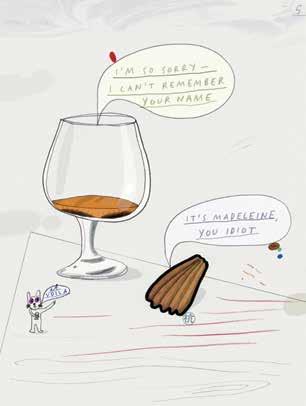
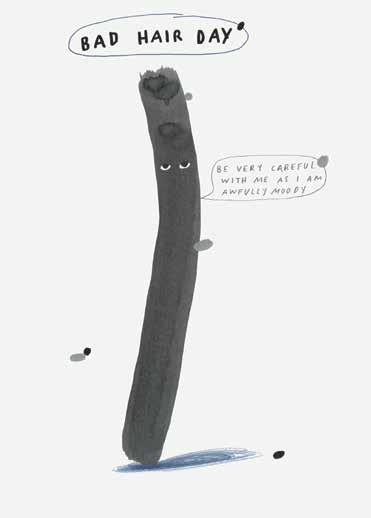
Davis’s visual work for Varoom always ‘ghosts’ the body of the text, but what makes these accompanying images so strange and compelling is that – as with the relationship between people and their dead relatives in those Victorian séances, where a participant was never quite sure they were talking to the right person – they have an autonomy. In the case of ‘Tongue in Pig’s Cheek’, Davis’s opposite-page illustration: a discussion between a glass of cognac and a madeleine,4 ( fig.6) is a classic example of something illustration does well, but which few illustrators do with the same anthropomorphic wit as Davis. His objects all have the capacity for thought (see, for example, the key in The Key, 2007 ( fig.7), the hair in Bad Hair Day, 2011 ( fig.8) and the ashtray in Fact is the New Fiction) and their reflections often express metaphysical ironies. So when the cognac says to the madeleine, ‘I can’t remember your name.’, the cake replies ‘It’s Madeleine, you idiot.’ Davis here uses this famous cake to unravel the idea of Proustian nostalgia, and to make us think again about memory and the complicated relationship we have with things (which for Davis is all of a piece with his curiosity about quantum physics and dark matter). Like all the truly great illustrators and cartoonists, Davis uses images to destabilize a deep-rooted sense of how the world is and our place in it. And he does this through harnessing the imaginative power of the stupid – intelligence’s dark matter.
Intelligence’s dark matter In great literature, such as the work of Samuel Beckett and Flann O’Brien, and in art movements such as Dada, in Andy Warhol’s trademark blankness, and the fathomless magic of Harpo Marx, the power of the stupid fosters a different kind of intelligence and thinking. That this can be also seen in Davis’s work is partly generational, partly a result of the fact that he was a young graduate in London in the mid-1980s and opening himself up to a particular body of work emerging at that time. When I ask him about his image-making approach and whether he always did the kind of drawing that feels awkward and measured, he replies,
Yes I was always a bit tricky. The people from the Royal College of Art at the time were eye-openers – people like Ian Pollock, Robert Mason and Anne Howeson. Not Punk but Alternative. You could see Kurt Schwitters in there and the photomontage of John Heartfield and George Grosz, and all the people that were really pissed off. That leapt into the Royal College at that time. That really influenced me. And Steinberg did, obviously.
Davis’s work has the generational ire of these ‘Alternative’ illustrators but has been increasingly fine-tuned by a creative maturity that enables him to access the rich creative immaturity of the stupid. When I ask him about the work of the current crop of creatives and the changes in the creative industries, he says, ‘Whether it’s just me being a bit older, and still being confused by life (but in a buoyant way), it feels as if the work coming through has lost its edge. It all seems to be a bit smiley.’ For Davis, the artistic and commercial worlds have flattened out: ‘I used to be angry in advertising meetings but I’m not any more. There’s nine people sitting round a table instead of it being a one-to-one with Michael Wolff 5 or some other visionary. It’s changed.’ And when he adds, ‘It’s fair enough’, he says it because of curiosity, because he is a Baudelairean ‘man of the world’ – not in the sense of being a mover and shaker, but in the sense that when the world changes there is even more to be learned.
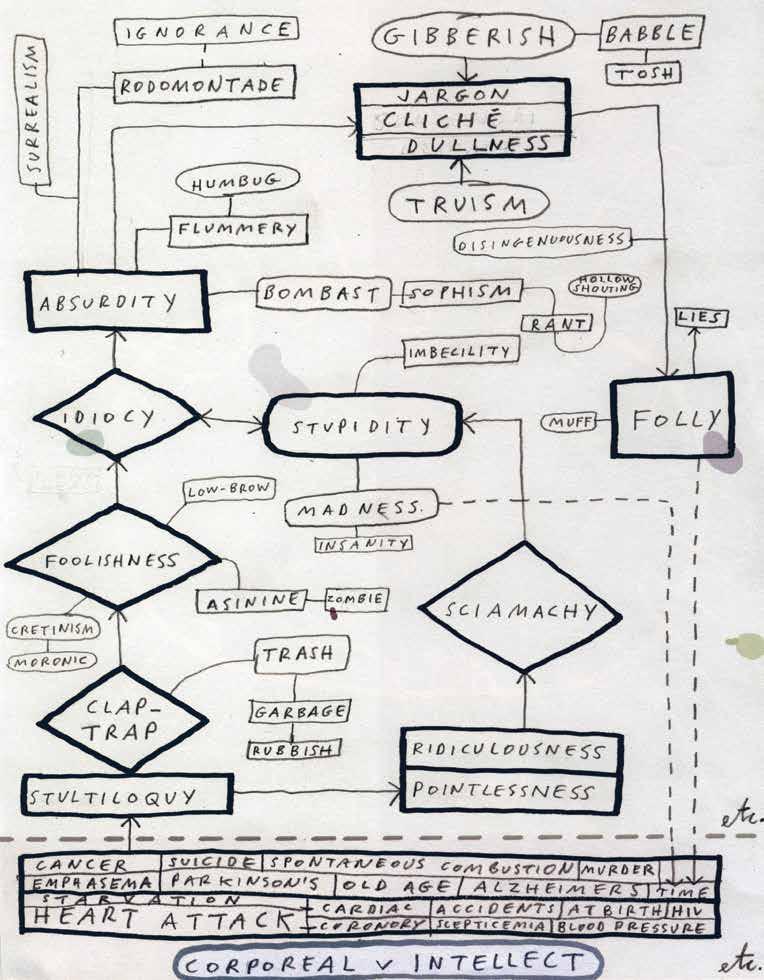
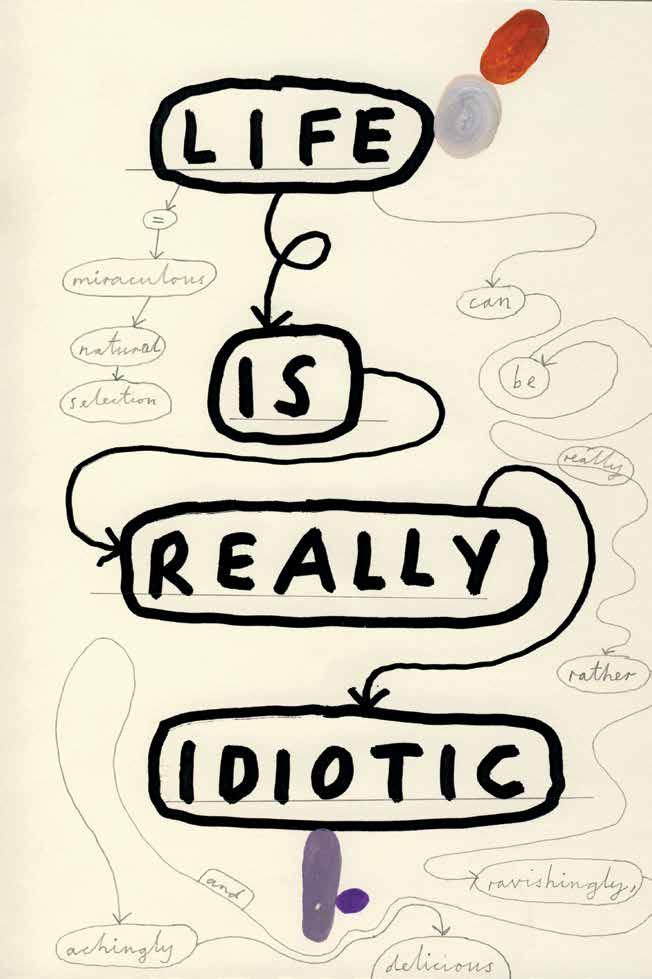
There may be a line in the sand between illustration and fine art, but for Davis the line is institutional and commercial rather than philosophical – regardless of the content of the work, the market for fine art is sustained by originals and editions, not the mass-produced reproductions of newspapers and advertising. Davis’s work inhabits the border created by his own line between curiosity and generosity, between intelligence and stupidity, between the dumb, awkward intelligence of objects and those precarious habits of mind we call ‘human beings’.6 Most of all, Davis’s line in the sand makes the viewer’s thoughts go off in different directions, often more than one at the same time – as the lines in one flow chart from 2009 tell us, Life is Really Idiotic ( fig.9), and it is ‘ravishingly’, ‘achingly’, ‘delicious’, too.
商業とアートのトポロジー デイヴィスのヒーロー、ソール・スタインバーグ 2 のモチーフのひとつは、ペンだ。 スタインバーグは自画像でペンの丸を描く流れを、移動し続け、自らを創り出して いくイラストレーターのアイデンティティのサインとして活用した。多くの異なる依頼 とクライアントのための一時的なエキスパートになるデザイナーにも似て、商業イラ ストレーターはイメージ作成の折々に、様々な異なった刹那的なアイデンティティに 身を預けている。スタインバーグ同様デイヴィスも、イラストレーターとは何か イ メージ作成者 を作品の主題にしている。そしてやはりスタインバーグ同様に、イ ンサイダーとアウトサイダーの間に砂の上の線を引いている 商取引の「中=イン サイド」にいる商業イラストレーターと、「アート」と呼ばれている空間にいるアウト サイダーの間に。デイヴィスとスタインバーグはふたりともトポロジーとマッピングに 興味を持ち、ふたりとも作品の中でイラストレーションとアートの間の関係のマッピ ングを試みた。彼らの取り組みのこの側面を真におもしろくしているのは、あくま でもアーティストではなく、イラストレーターとしてマップが作成されている点であり、 イメージ作成者としてアートと商業の間に線引きをし、人間の立てたアジェンダ、ビ ジネスの取引、そして社会の中のコミュニケーションが形成する異なったレイヤー の間の道筋をたどっている。
美術家( 文化の貴族、あるいはアヴァンギャルドと呼べるだろう)が常にやや複雑で 小悪魔めいた金とのダンスを繰り広げてきたが(「ああ、どうしても、とおっしゃるのな ら」)、イラストレーターは人間と組織の両者にかかわる中での金、結びつき、力、 そして政治の複雑性について好奇心を露わにすることが多い。デイヴィスは広告 とエディトリアルのいずれでも、IBM、メルセデス・ベンツ、『ニューヨーカー』誌、 「ニューヨーク・タイムズ」紙、『ヴォーグ』誌などのクライアントの仕事を手がけ、 次のような感想を述べている。
デザインがどのように機能するのか、いつも驚かされている。小さな街角の雑 貨店のレシートから雑誌、新聞、ポスターからカタログ、パッケージ、都市計 画等々、そして様々な異文化のために異なる言語で展開される、巨大な世界 的グループ企業のためのグローバルブランディング。
『ヴァルーム』( Varoom )誌 3 で定期的に掲載されているコラムは、デイヴィスが 哲学的な広い視野からばかげたクレイジーな商業の政治的動きまでをつなぐ線を 引いている場だ。イメージ同様に、このテキストも(常に見開きのページにはイラストを 伴っている)、小話と切り取られた挿話のケーススタディになっている。語り部として のジャーナリズムの卓越した手腕は、ときには壮大とすら思えてくる、クライアント が自己イメージ以外に無関心でしかないことを貫く線、ある口調を見いだし、世界 の中に束の間の厚情を発見するまでに至っている点にある。デイヴィスのコラムの テキストとイメージの関係は絶対にシンプルには終わらない。たとえば『ヴァルー ム』誌の「Taste(テイスト)」号( 2012年秋号)の“Pig in Tongue’s Cheek”という 記事では、テイスト(趣味嗜好、味)を巡る問題を解体してみせた後、気の利いた 小話の常として、クライマックスの祝賀会の席(この話では広告用の撮影の打ち上げ 夕食会)に至る。「ある夜、パリで」に続けてデイヴィスは次のように書いている。
すさまじくシックな、冷静沈着亭とか、そんな名前のレストランに行ったときだ った。広告の監督が、太っ腹にも、テーブルの皆に年代物のコニャックをボ トルでおごってくれた。仰々しくグラスに注がれた。トニーは椅子を立ち、し かとグラスを見つめ、困惑顔のパリっ子たちに杯を捧げた。嬉しげに吠え立 てたのは「メザミ(友よ)、これが、この美しい一滴が、プルーストの野郎と同 い年なのです!」
『ヴァルーム』誌のためのデイヴィスのヴィジュアルは、いつもテキストをなぞっ ている「ゴースト」となっているが、その奇妙さ、そして強烈さは ヴィクトリア時
代の降霊会で、話している相手がご当人か否か判断が難しかった親族同士の関係 にも似て 自律した存在だということから生まれている。ちなみに、このコラムの イラストではコニャックのグラスがマドレーヌ菓子 4と話し込んでいる。イラストレー ションが得意としている古典的な例だが、デイヴィスのような擬人化したウィットを 持って仕事をするイラストレーターは少ない。彼の描くモノはすべて考えることが でき(「鍵」(The Key)《図7/2007年》、「ヘアが決まらない日」(Bad Hair Day)《図8/ 2011年》、「事実は新しいフィクション」(Fact is the New Fiction)《図1/2004年》の灰 皿を参照 )、 多くの場合、熟考は形而上学的なアイロニーを表現している。そこで コニャックがマドレーヌに対して「名前がどうしても思い出せない」と伝え、マドレー ヌは「マドレーヌよ、バカ」と答える。デイヴィスはかの有名な菓子を使ってプルー スト的なノスタルジーの観念を紐解き、記憶、そしてモノと我々の複雑な関係(デ イヴィスにとっては量子物理学やダーク・マターに対する好奇心の一環 )について再考を 促している。真の偉大なイラストレーターや漫画家同様、世界とはどういうところ で、そこでの我々の居場所という深く根を下ろした捉え方に揺さぶりをかけるため に、デイヴィスはイメージを駆使している。そして、愚かしさの想像的な力、知性 のダーク・マターを活用することでそれを成し遂げている。
知性のダーク・マター サミュエル・ベケット、フラン・オブライエンのような文学の傑作でも、ダダのよ うな芸術運動でも、アンディ・ウォーホルのトレードマークのノッペリとした佇まい でも、ハーポ・マルクスの底知れぬ魔力でも、愚かしさのパワーは異質な知性と 思考方法を養っていく。デイヴィスの作品でも一部見受けられるというのは、部分 的には世代によるもので、部分的には80年代半ば、大学卒業後にロンドンにい た若者で、当時現れ始めた特定の作品群を迎え入れたこともはたらいている。イ メージ作成のアプローチについて、ぎこちなく、じっくりと描き出すドローイングを ずっと続けてきたのか、と尋ねたとき、
ああ、いつだって少しばかりトリッキーだった。当時のロイヤル・カレッジ・オ ブ・アート( RCA )の人たちには、目を開かされた。イアン・ポロック、ロバー ト・メイソン、そしてアン・ハウソン。パンクではなく、オルタナティブ。クル ト・シュヴィッタースも、ジョン・ハートフィールドやジョージ・グロスのフォトモ ンタージュも、本当に激怒している人が全員あそこから見えてきた。当時の RCAは本当にぶっ飛んでいた。実に影響を受けた。そして、勿論だけれど、 スタインバーグにも。
デイヴィスの作品は、上にあげた「オルタナティブ」なイラストレーターが世代と して抱いている憤りも帯びているが、クリエイティブな成熟に伴って微調整が更に 利くようになり、愚かしさの豊かでクリエイティブな幼さにアクセスできるようになっ た。昨今のクリエイティブ世代の作品と、クリエイティブ産業の変遷について意見 を求めたところ、
「自分が少し年をとったからなのか、依然として人生に困惑を(でもいい意味で) 覚えているからなのか、最近の作品はエッジがないように感じている。なんだか ちょっとにこやかなものばかり」と答えが返ってきた。デイヴィスにとっては、芸術 と商業の世界はフラットになったそうだ。「広告の打ち合わせ会議だと前は怒って いたけれど、今は違う。9人でテーブルの周りに座っているんだ、昔ならマイケ ル・ウルフ5とかのヴィジョナリーな人とのサシだったのに。変わったね」とのことで、 「ま、そういうこともアリじゃない」と付け加えるとき、ボードレールのいう「世情に 通じた人物」ならではの、好奇心から出た発言だ。世間に働きかけ、変化を起こ すという意味ではなく、世界が変化すると更に知ることが増えるという文脈で。 イラストレーションとファインアートの間に、砂に引かれた線が存在するかもしれ ないが、デイヴィスにとって、線はあくまでも制度的で商業的なもの、哲学や理 念に依拠したものではない。作品の中身にかかわらず、アートマーケットはオリジ ナルとエディションによって保たれているのだ。大量の複製の新聞や雑誌ではなく。

8
Notes
1. ‘Redshift’ describes the fact that when a star is moving away from our galaxy, the wavelength of the light it emits that we can register back on Earth is stretched towards the red area of the spectrum.
2. Saul Steinberg is widely acknowledged as one of the most significant American illustrators of the 20th century. He contributed work to The New Yorker magazine for nearly 60 years (including almost 90 of its covers); his best-known piece is, perhaps, his map of New York entitled ‘View of the World from 9th Avenue’, a humorous representation of the city’s self-regarding nature.
3. Varoom is a quarterly magazine (published by the Association of Illustrators and supported by a network of art and design schools) dedicated to the illustrated image.
4. In Marcel Proust’s 1913 novel A la recherche du temps perdu (‘In Search of Lost Time’), the narrator returns home and his mother offers him some tea and one of those ‘plump little cakes called “petites madeleines”, which look as though they had been moulded in the fluted scallop of a pilgrim’s shell.’ The taste of that madeleine prompts an onrush of memory that precipitates the rest of the novel.
5. In 1965, designer Michael Wolff co-founded – along with Wally Olins – the highly influential brand consultancy Wolff Olins, and now runs Michael Wolff & Company in London.
6. Echoing a tradition of philosophy from David Hume, through Nietzsche to Gilles Deleuze, Bruno Latour, Jane Bennett and other contemporary philosophers, Davis’s satire pokes fun at the metaphysical exceptionalism of the human, and gives voice to the apparently inert object. While the notion that the object has agency is a recent and increasingly popular idea in philosophy and the social sciences, it’s a thought that has long been explored in illustration and animation, most famously in Disney’s Fantasia (1940).
John O’Reilly is editor of Varoom, a magazine dedicated to the contemporary illustrated image. He is also a consultant, copywriter and journalist, with clients ranging from The Observer to Converse and Sony. John has a Doctorate in Philosophy and a fascination with the creative power of stupidity. He teaches at Central Saint Martins, London on the MA in Innovation Management, where he sometimes successfully hides his own stupidity.
デイヴィスの作品は、好奇心と懐の深さ、知性と愚かしさ、モノの無能でぎこちな い知性と我々が「人間」6と呼び習わしている思考のパターン化された危なっかしい 存在、それぞれの間に自らが引いた線が生じさせた境界に存在し続けている。何 よりも、デイヴィスの「ライン・イン・ザ・サンド」は、見る人の考えを四方八方に 散らし、同時に複数の方向に飛んで行くことも珍しくない。そう、フローチャートの ひとつ、「人生は本当にばかばかしい」( Life is Really Idiotic )《図9/2009年》が 語りかけるように、人生とはまったくばかげているし、同時に“魅惑的に”“痛みを 覚えるほど”“ステキな”ものなのだ。
注釈
1. 赤方偏移は、銀河系から恒星が離れていくとき、地球で捉えることのできる光 の波長がスペクトルの赤に伸ばされることを指す。
2. ソール・スタインバーグは、20世紀のアメリカの最も重要なイラストレーターの ひとりと広く認識されている。『ニューヨーカー』誌の仕事は60年近くに及んだ(表 紙絵は90近くにのぼる)。代表作は、ニューヨークという街の自己評価の高さを ユーモラスに表現した「9番街から眺めた世界」か。
3.『ヴァルーム』(Varoom)は、季刊誌、イラストレーションとして用いられるイ メージの専門誌。(出版はイラストレーターズ協会で、美術とデザイン学校のネット ワークによってサポートされている。)
4. 1913年のマルセル・プルーストの小説『失われた時を求めて』では、ナレー ターが帰宅したところ、母親がお茶と「『プティット・マドレーヌ』と呼ばれる、あの 小さくてふっくらとした、巡礼者の帆立貝の殻を型にしたように見える菓子」を整 えてくれる。そのマドレーヌの味が怒涛のように記憶を呼び起こし、小説の他の すべての引き金となる。
5. 1965年、マイケル・ウルフはウォリー・オリンズと共同で、ブランドコンサルタ ントとして大変な影響力を誇ったウルフ・オリンズを設立した。現在はロンドンで マイケル・ウルフ&カンパニーを経営。
6. デイヴィッド・ヒュームから始まり、フリードリヒ・ニーチェ、ジル・ドゥルーズ、 ブルーノ・ラトゥール、ジェーン・ベネットや他の現代の哲学者へとつながる哲学 の流れに呼応して、デイヴィスの風刺は人間の形而上学的な例外性を笑いの素 材としていじり、一見動かざる無反応な物体に声を与えている。物体にも作用や 働きかけを帯びさせるという考えは哲学や社会学で最近現れ、人気が集まってい るが、イラストレーションやアニメーションでは長年にわたって探究されてきた概 念である。代表的な例としては、ディズニーの映画『ファンタジア』(1940年)が あげられる。
ジョン・オライリー:イラストレーションとして用いられる現代のイメージの専門誌『ヴァルーム』の編 集長。コンサルタント、コピーライター、ジャーナリストとしても活動し、クライアントには「オブザー バー」紙、コンバース、ソニーなど。また、哲学博士でもあり、愚かしさのクリエイティブなパワー に惹かれてやまない。ロンドン芸術大学セントラル・セント・マーティンズ・カレッジ・オブ・アート・ アンド・デザインのイノベーション・マネージメント修士課程で教壇に立ち、己の愚かしさをうまく隠し 通すことに時折成功している。
響きと怒り:ポール・デイヴィス、ティム・リッチとの会話
場所 :ロンドン東部のアパート
時間 :午後5時
目的 :“ポール・デイヴィス”の作品の裏にいる人物を、少し明らかにすること。 調子 :なごやか、水面下には皮肉が潜む。
ティム・リッチ:まず約束しておきたいのが、「一番気に入っているイラストレー ターは?」と「一番気に入っている鉛筆のタイプは?」といった質問はしないよ。
ポール・デイヴィス:ありがたい。
でも、言葉と戯れる有り様については、話をしたい。作品には断片的な会話、そ こかしこで拾い集めた、吐露された思いのカケラが取り上げられているけれど、 おもしろいことを耳に挟むかもしれない状況に意識的に身を置くようにしている?
いや、ただ、いつも耳をそばだてているだけ。いつだってそうだった。サマセット 州の小さな村で育ったせいでしょう。実に静かな所でね。静かな村を卒業して小 さな町に引っ越したら、少しにぎやかになった。次は小さな市、更に音量が大きく なった。そしてそこからロンドンに移ったら、耳をつんざくような騒がしさ。人の言 葉と声のトーンに惹かれてやまない。
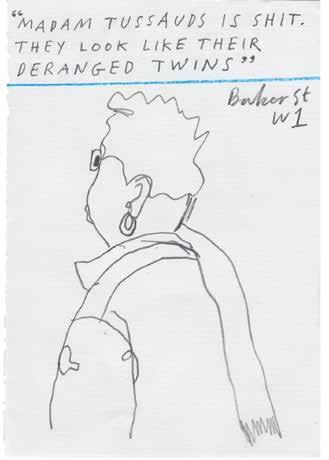
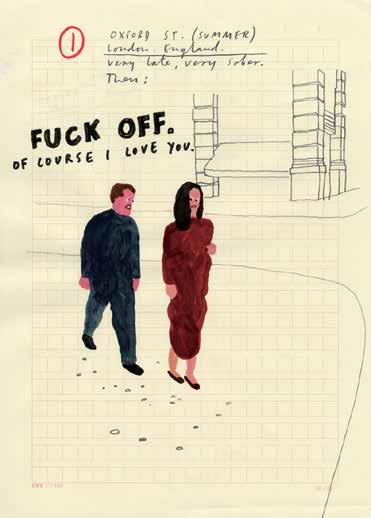
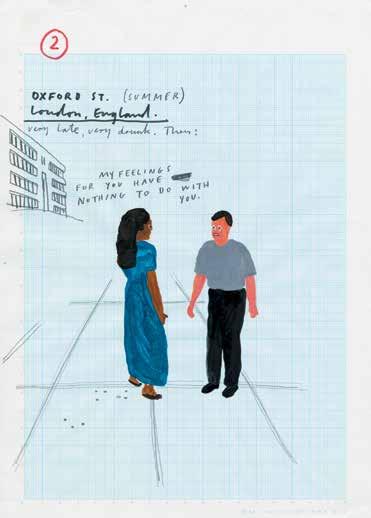
いつも引き裂かれているようなところがあって、ふたつの感情のせめぎ合いを 感じていることが多くて、他人にもそういう様子が見てとれるし、聞こえてくる。で、 ロンドンのオックスフォード・ストリートで、男性が女性に「失せろ、君を愛している にきまっている」( Fuck off, of course I love you )と言っているのが聞こえた。深いな、 と思えて、作品になった《図1》。次の週、ほぼ同じ場所で女性が男性に向かって、 「あなたに対して感じていることは、あなたとは一切無関係」( My feelings for you have nothing to do with you )と言った。そしてドローイングになった《図2》。
陳腐な言い回しや空虚な決まり文句をひっくり返すことも多いでしょう。なぜ僕たち ふたりともそれに苛つくのだろう。かなりの人は気に留めないで無視するけれど。
Location: a flat, East London
Time: 5pm
Objective: throw some light on the person behind the work of ‘Paul Davis’
Tone: convivial with sardonic undertones
TR: Let’s begin with a promise from me: I’m not going to ask ‘Who are your favourite illustrators?’, nor ‘What’s your favourite type of pencil?’
PD: Thank god.
I do want to talk about the way you play with language, though. Your work often features off-cuts of conversations, shards of revealed thoughts you’ve picked up along the way. Do you deliberately put yourself in situations where you might overhear something interesting?
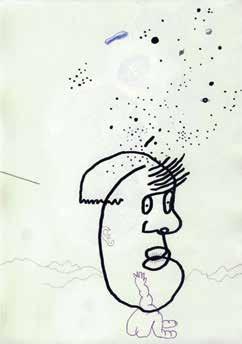
No, it’s just that my ears are always open. Always have been. Growing up in a small village in Somerset did that. It was very quiet there. I graduated from a quiet village to a small town, which was a bit noisier. Then on to a small city, which was louder still. And from there to London, which is deafening. I’m fascinated by people’s language and tone of voice. There’s always a dichotomy in me – I’m often caught between two things, between two feelings – and that’s often what I see and hear in other people. So I was on Oxford Street in London, for example, and I heard a bloke saying to a woman: ‘Fuck off, of course I love you.’ I think it’s profound he said that, and it became a drawing ( fig.1). The next week I was at almost the same spot and a woman said to a man: ‘My feelings for you have nothing to do with you.’ And that became a drawing ( fig.2). You also turn clichés and platitudes back on themselves. Why are we both irritated by that type of language? A lot of people ignore it.
Because it’s boring.
But isn’t it more than that? It’s language as symptom. The words point to a degraded way of thinking.
I aspire to beauty but it can be an ugly world, so I have to record it. With clichés, I dislike them because there are other, better ways of describing things. With advertising and corporate communications, they produce all these words that don’t actually say anything. I blame Apple, fair and square (by the way, that was a cliché: ‘fair and square’). ‘Think different.’ What about the adverb? Put the ‘ly’ in!
You sound like a pedantic, tweed-jacketed grammar-school teacher from Somerset.
That corporate use of language is just lazy. The Expedia campaign says ‘Travel yourself interesting’. The language is ugly and the tone is smug and patronising. I find the whole thing grating.
So would you prefer businesses to speak in a more formal way? Why not? And why not be honest? ‘Buy a BMW because it will make you better than the lesser being next door.’
In your work, as well as the colloquialisms and corporatespeak, there’s sometimes a phrase from really old sources.
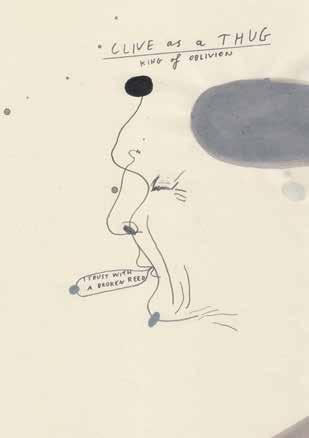
For example, I saw a drawing of yours today where the character says ‘I trust with a broken reed’ ( fig.3). That’s from the Book of Isaiah. The phrase describes the unreliability of things we lean on for support. It’s such a sad, violent image –the Bible talks about the reed piercing a man’s hand – and you’re applying that to a character who’s a thug. I love that blend of ancient and modern.
I was probably drunk, looking through the Scriptures thinking ‘That’s so poetic.’ My favourite lines are the ‘Tomorrow, and tomorrow, and tomorrow,’ passage from Macbeth:
Tomorrow, and tomorrow, and tomorrow, Creeps in this petty pace from day to day, To the last syllable of recorded time; And all our yesterdays have lighted fools
The way to dusty death. Out, out, brief candle! Life’s but a walking shadow, a poor player, That struts and frets his hour upon the stage, And then is heard no more. It is a tale
Told by an idiot, full of sound and fury, Signifying nothing.
Words are beautiful. Dictionaries are fat. We should use them more.
Let’s get back to that dichotomy you described. You chose to go to art school to study Illustration rather than Fine Art. The tension between working on commissioned illustration and freely expressing yourself through art is still in you. Why did you choose illustration?
I did an art foundation shortly after my father died. I wanted to somehow take care of my family – my mother and sister – because I was the only bloke left. It was a rational decision: There will be work.
Looking back, are you happy with that decision? No. I should have been braver. It’s a regret. With art you’re free to do anything you want. That makes art more complicated than anything else. You have a set number of notes in music. You have a set number of characters in language. But in art you have all of that and everything else, too.
But you practice art now, so what’s the problem? A lot of people have other jobs and work as an artist. For a while, Jeff Koons funded his art by working as a Wall Street commodities broker. The writer Charles Bukowski worked for the postal service in Los Angeles. Lots of artists work in a pub or shop or whatever, and they do their job to pay the bills so they can do their art. My job is illustration, and some people have a problem with that because it’s too close to art. It used to concern me, too, but I don’t really care any more. One problem with illustration as a job is that the money has stayed the same for years, so in real terms you now get paid a lot less. Do you worry a lot?
Yeah. I wake up at 4.44am pretty much every morning feeling bewildered.
3
つまらないからだよ。
でもそれだけじゃないでしょう。症状としての、言語。言葉が思考の劣化を示唆し ているわけで。
「目指しているのは美」だけれど、とかく世界は醜悪なことになる場合もあるから、 私が記録しなくてはならない。陳腐な言い回しが嫌いなのは、他にもっと良い説 明の仕方があるから。広告や会社の広報は、実は何も内容のない言葉をやたら 生み出している。Appleこそが諸悪の根源なり、と断固として断言しよう “fair and square”という表現が実は陳腐そのものだった 。“Think different”って。 副詞なんだから、最後には“-ly”をつけろと! 四角四面でツイードのジャケットを愛用するサマセットの進学校の先生みたいだよ。
企業の言葉の使い方はただの手抜きだ。エクスペディアは“Travel Yourself Interesting”というキャンペーンを打ち出した。「旅で自分もおもしろく」という言葉 遣いが醜悪だし、自己満足と上から目線な調子だ。ともかくすべてが気持ちを逆な でする。
企業がもっと折り目正しく語りかけた方が好み、ということ? どうしてそうしない? そしてどうして正直にならないのだろう?「隣の格下の人物よ りも上に立てるようにBMWを買おう」って。
作品では、日常的な言い回しや業界的な表現の他、ときには凄く古いソースから のフレーズが使われることもある。たとえば、今日見ていたドローイング《図3》で は、「折れた葦を頼みとする」( I trust with a broken reed )と語っている人物がいた。
『イザヤ書』が原典だ。僕たちが支えとして頼みとするものがいかに不確かなの かを述べている。あまりにも悲しく、暴力的なイメージで 聖書では葦が人の手 を刺し通すとあって その言葉を、君は暴漢にあてがっている。そういう新旧のミ ックスがすごくいいね。
たぶん酔っ払っていて、聖書をめくりながら、「なんて詩的だろう」と感じたのだと 思う。一番好きなのは、『マクベス』の「明日、そして明日、そして明日」の箇所だ。
明日、そして明日、そして明日 一日一日ごとに、少しずつ進んでいく 記された時間の最後の一刻まで そして過ぎ去った日々はすべて愚か者を照らしてきた 塵芥にまみれた死に向かう道を 消えろ、消えろ、儚い蝋燭 人生とは歩く影法師にすぎない、つまらぬ役者だ 束の間の舞台の上で威勢を張り、思いをあからさまにする その後は二度と現れない 物語を語るのは 痴れ者、響きと怒りにあふれてはいる ただ、何も、意味はない
言葉とは美しいもの。辞書はぶ厚いもの。もっと使うべきだ。
さっきの、「引き裂かれる思い」に話を戻したい。美術ではなく、イラストレーショ ンを勉強するために美大に行くことを選んだけれど、依頼を受けて手がけるイラス トレーションと、アートを通して自由に自己表現することの間の、自分の中の緊張感 は今でも存在している。なぜイラストレーションを選択したの?
4.44am is such a pretentious time for insomnia to wake you up. Are you bewildered because you feel the world is confusing?
It’s basic neurosis. I know people who are worldly wise and can do practical things like buy a house and do it up. I have no problem with that, but I can’t do that. I’m jealous of those who can live in the world that way.
What’s your relationship with money like?
Terrible.
Easily parted?
For some unfathomable reason, yes. Money harangues me. It nags me.
It phones you up at 4.44am in the morning.
Yes! You know, I do find it galling that it’s people like me who start the regeneration of an area such as Shoreditch, and then we can’t afford to live there. I was in a pub the other day and two estate agents were talking, and one was advising the other about how to get on in the job. She said, ‘It’s simple, follow the artists.’
One thing that’s different about you and me is that I’m fundamentally optimistic and believe people are mostly good. You, on the other hand, are a pessimistic misanthrope. I’m definitely misanthropic. But to me misanthropy is like a dull cloud over my system, my cells. It’s there, but the gorgeousness of life – even simple things like a stranger saying ‘Good morning’ and making eye contact – is so beautiful it supersedes it.
I’m really a failed romantic. In This Side of Paradise F. Scott Fitzgerald has his protagonist say: ‘…the sentimental person thinks things will last – the romantic person has a desperate confidence that they won’t.’ I love that line. Actually, the woman he’s talking to then says: ‘Epigrams. I’m going home.’ I love that even more.
The reason I get so disgruntled with the world is that I grew up in a bucolic place. Then I went into my teens and at that age you want to fall in love and have a great time, but it fails miserably. People die.
You mean your dad died.
Yes, a lot of my family did. And I studied and worked, and everything since then has really been about two things: making enough money to live, and love. Both of those have been a struggle until now.
[Paul starts to talk about his girlfriend Sophie, who has come back into his life after many years’ absence. As if on cue, she returns to the flat and we stop for a cigarette break.]
Where were we?
We were having a light conversation, talking about love and death.
Do you know the story of William Collingbourne? In the fifteenth century he was charged with writing ‘rhyme in derision of the king’ and sentenced to death. He was hanged, then cut down while he was still alive, castrated and
父が亡くなって間もなく、アートの基礎コースで学んだ。ひとりきり残っている男とし て、なんとか家族 母と妹 の面倒を見たかった。合理的な判断だった。仕事 はあるから。
振り返ってみて、その選択には満足している? いや。もっと勇気を出すべきだった。後悔している。アートだと何でも好きなことが できる。だからアートは他の何よりも複雑になる。音楽なら決まった数の音がある。 言語なら決まった数の文字がある。でもアートだと、そのすべてと他のモロモロも 全部かかわってくる。
でも今はアートもやっているわけだから、何が問題だと? 他の仕事をしながらアーティストとして活動している人はたくさんいる。しばらくの間、 ジェフ・クーンズはウォール街で日用品の仲買人をして作品のための資金を調達し た。作家のチャールズ・ブコウスキーは、ロサンゼルスの郵便局で働いた。多く のアーティストはパブや店なんかで何かしらの仕事をして、働いて生活を成り立た せて、作品が作り出せるようにしている。自分の仕事はイラストレーションだけど、 アートに近すぎるから問題視する人もいる。昔は自分でも悩んでいたけれど、実は 今は気にしていない。仕事としてのイラストレーションの問題をあげれば、何年も 料金が変わっていないので、実質的な収入が随分少なくなっていることだろうか。
心配症?
ああ。だいたい毎朝4時44分に、困惑しきって目を覚ます。
午前4時44分というのも、不眠症で飛び起きるには随分とわざとらしい時間だけれ ど。困惑しているのは、世の中に混乱をおぼえているから?
基本的なノイローゼ。世知に長けていて、家を買ってリフォームをして、とか実用 的なことができる人っているでしょう。別に問題だとは思わないけれど、自分には 無理。そうやって世間で生きていける人が羨ましい。
お金との関係は? 最悪。
すぐに別れ別れになってしまう?
実に理解しがたいことだが、そうだ。お金に責められている。いつもチクチクと。 朝4時44分に電話をかけてくる、と。
そう! ところで、ショーディッチのようなエリアの再生を始めるのが自分のような人 間で、そのうちにそこで暮らすなんてことが無理になってしまうのが癪にさわる。こ の間、パブに行ったらふたりの不動産屋がいて、片方が成功の秘訣を授けてい た。「簡単よ、アーティストの後について行けばいいだけ」だと。
僕たちふたりの根本的な違いは、僕は基本的に楽観主義で、人間はだいたい善 意のかたまりだと思っている。で、君は悲観主義の人間嫌いだ。
確かに人間嫌いだ。でも人間不信は、身体全体の、細胞の上に被っているどんよ りとした雲のようなものだ。確かに存在しているけれど、生きていることのすばらし
さが 見知らぬ人が「おはよう」と言って目を合わせるようなシンプルなことです ら あまりにも美しくて、そっちに取って代わられる。実は敗残者のロマンチスト だ。『楽園のこちら側』で、F. スコット・フィッツジェラルドは、主人公にこう言わ せている。「・・・センチメンタルな人間は、ものごとは永らえると思っている ロ マンチックな人間は、そうはいかないという必死な自信があるものだ」あのセリフ が大好きなんだ。実は話し相手の女性がそれを言われて、「エピグラム。わたし、 うちに帰る」と答える。そこのセリフはもっと好きだ。
世の中に対して機嫌を損ねている理由は、育ったのがのどかな所だったから。 そして十代になったわけだけれど、年ごろとしては恋に落ちて青春を謳歌したいも のだけれど、みじめなことになるのがオチだ。人間、死ぬものだし。
つまり、お父さんが亡くなったと。
そう。随分身内が亡くなった。で、勉強して、仕事して、その後は実はふたつの ことにつきる。生きていける程度の稼ぎと、愛。どちらも今までは苦しんできた。
(ポール、数年の空白期間の後ヨリが戻ったガールフレンドのソフィーの話を始める。キュー 出しをしたかのように、ソフィーが帰宅し、そこで煙草休憩に入る。)
で、何の話だっけ。
愛と死について軽く雑談をしていたところだった。
ウイリアム・コリングバーンの話、知っている? 15世紀に、「王を哄笑した詩」を 書いた罪に問われて、死刑判決を言い渡された。絞首刑の後、息があるうちに降 ろされて、去勢され、臓物を引き出された。どうやらあまりにも手際が良かったた めに、執行人が心臓を引き出したとき、自分の胸を見下ろして、「ああ、主なるイ エスよ、まだ更に難儀なことが」と言ったらしい。
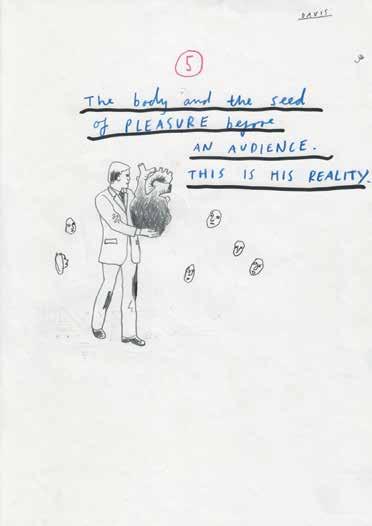
自らの心臓を調べさせるために差し出す人のモチーフ《図4》の話をしてもらえな いだろうか。作品の中で何度か登場しているけれど。
ビジネスマンが人に何かを差し出している、例の退屈なストック写真が元になって いる。心臓は巨大で、言わずもがなだけれど、愛の象徴。頭と心 考えることと 感じることの観念もある。そして父が心臓発作で亡くなったことも。
父は漫画が上手で、いつも「何を描こうか?」と相談していた。そうしたら、「絨 毯はどうだ?」と言われた。ベージュの60年代末の絨毯だった。で、「でも何もな いじゃない!」と言うと「いや、あるよ!」と答えが返ってきた。だから長々と時間を かけて絨毯の絵を描いた。で、突然わかった。言いたかったのは、何か想像で 創り出すのもアリだということだったのだ、と。なので、そうし始めた。毎日窓の外 を眺めて、同じ丘の景色を見つめて、巨大なトースターでも何でも想像で変身させ てみた。で、描いた。すべてがLSDをやる遥か前のことだった。
「目指しているのは美」とのことだったけれど、何を美しいと感じる? 手作りのユニークさが好きだから、廃材を手に入れてベッドやワードローブを作る こととか。この間はベッドをやった。ベッドメイクじゃなくて、本当にベッドを拵えた。 木はとても美しい。自分たちではどうすることもできない。自然のすばらしいところ はそこだ。自分ではどうすることもできない。アズマヤドリのある種の雄は、何ヶ月 もかけて東屋を作り上げて、主に青いもので飾り立てる。青のボールペン、青い ボトルの蓋、青ならなんでも。そして雌のために踊る。若いアズマヤドリにとって 大事なのは、雄がどのように東屋を作るか、雌が一番興味を持っているのはその 点だ。で、年を重ねると雄のダンスが全てになる。愛を語って誘うのに何ヶ月もか
disembowelled. Apparently, it was all done so quickly that when the executioners pulled out his heart he looked down at his chest and said ‘Oh Lord Jesus, yet more trouble!’ Tell me about the motif of a man holding his heart out for inspection ( fig.4). It comes up a few times in your work. Well it’s based on those boring stock-library pictures of a businessman presenting something to people. The heart is massive, and of course the heart is a symbol for love. There’s the idea of head and heart – of thinking and feeling. And then there’s my dad dying of a heart attack.
My dad was a good cartoonist and I used to say to him: ‘What shall I draw?’ And he would say, ‘Why not draw the carpet?’ It was a beige, late-1960s carpet. And I would say, ‘But there’s nothing there!’ And he would say, ‘But there is!’ So I spent a long time drawing the carpet. Then the penny dropped. His point was you can make stuff up. And that’s what I started to do. I would look out the window everyday at the same view of hills and imagine they were huge toasters, or whatever. Then I would draw them. And this was well before I took acid. Earlier you said ‘I aspire to beauty.’ What do you find beautiful?
I like handmade uniqueness, so getting some recycled wood and making it into a bed or a wardrobe. I made a bed the other day – actually made one, I didn’t just tuck the sheets in. Trees are very beautiful; they can’t help it. That’s a great thing about Nature: it can’t help itself. There’s a type of male bowerbird that spends months building his bower and decorating it mainly with blue things. They like Bic pens, blue bottle tops, blue anything. And then they do a dance for the female. In the younger bowerbirds it’s all about how the male builds his bower; that’s what the female’s most interested in. And in later years it’s about how he dances. The courtship can take months and months. And then she might still reject him. If she accepts him, the act of lovemaking lasts about four seconds. Tragically beautiful.
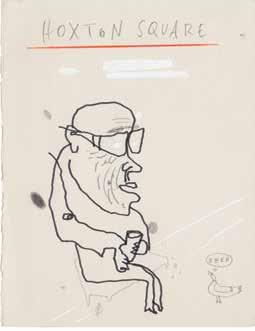
I’m sure we can both think of past relationships like that. Indeed. It’s beautiful waking up after a really good night’s sleep, which is rare for me. I find endorphin-induced euphoria very beautiful, especially as endorphins and adrenaline are always at war in me. In football; the perfect volley. When the rain starts or stops, but not during. With work, the finished article; when you know it’s finished. Weird and unexpected compositions I see in everyday life that will never occur again. For example, I saw a man in Hoxton drinking strong beer from a can. He was trying to hide the can in a plastic bag and a pigeon was just standing there, staring at him ( fig.5).
When you’re with your Love, walking down the street, and you both step on a wobbly paving stone – that’s beautiful. When you get ‘the look’. The smile. The arse of a woman who knows it’s good. When you’re drawing and you get the perfect line. Sophie’s profile – it’s so good to be in love, at last. Thoughtful foreplay and unthinking orgasm. Politeness, which is so rare. Beautiful things have to be rare. Coincidence.
Howling with laughter with strangers. Lapsed zealots. That’s a good 1980s band name: ‘The Lapsed Zealots’. So, you’ll be back in Japan for this show. I’m envious.
けている。それでも雌にフラれるかもしれない。もし雌が受け入れてくれたとしても、 4秒くらいでコトが終わってしまう。悲劇的に美しい。
ふたりとも思いあたるフシがあるような。
まさに。本当にぐっすり寝た後に目覚めるのも美しい。珍しいことだが。エンドル フィンが起こす高揚感を実に美しいと感じる。とくにエンドルフィンとアドレナリン がいつも体の中で戦いを繰り広げているから。サッカーならパーフェクトなボレー。 雨が降り始め、あがったときもそうだけれど、降っている途中は違う。仕事なら完 成品。仕上がったとわかったとき。摩訶不思議で予期しない、日々見かけるけれど、 二度と出会わない構図も。たとえば、ホクストンで見かけた男性は強い缶ビールを 飲んでいた。ビニールの袋でビールを隠そうとしていたけれど、鳩がそこに佇んで、 じーっと見ていた《図5》。
愛する人と一緒で、道を歩いていて、ふたりしてグラついた歩道のタイルを踏 んだとき それも美しい。「あの目つき」をされたとき。ほほえみ。ヒップに自信 がある女性の腰。絵を描いていて、完璧な線が引けたとき。ソフィーの横顔 愛 しているのってすばらしいよ、ようやくね。考えと想いを重ねた前戯と何も考えな い絶頂。礼儀正しさ、稀なものだが。美しいものは希少でなくてはダメだ。偶然。 赤の他人と笑い転げること。堕落した熱狂者。
80年代のバンド名によさそう。「ラプスド・ジーロット:堕落した熱狂者」 で、こ の展覧会のために、またしても日本に行くわけか。羨ましい。
Japan is such a wonderful place. Actually I think Japanese people and British people have a very similar sense of humour: bizarre, surreal and slightly naughty. I’ve produced lots of drawings in Japan but always without words because I can’t write in Japanese. The work is rather pure, in a way. Sometimes when I use words in a picture it’s to justify the drawing, to make a story out of the drawing. My Japanese pictures are more like life drawing.
You said to me recently that you’ve stopped drawing, that this show in Tokyo marks a break in your work.
Well, I’ve stopped drawing for a while, though I’m still making notes. The exhibition itself represents a break because I’m going to show hardly any commercial work, and the commercial work I do show will be projects where I was free to do what I wanted. The work on display is exactly what I want to show. Afterwards I’m going to sell off lots of my archive. Because I’m essentially a superficial person, I’d like you to capture the essence of what you’ve been saying today in one sentence.
I find the whole world preposterous but beautiful at the same time.
Tim Rich is a London-based writer and communications consultant. He has worked and socialised with Paul Davis for more than ten years. Tim writes about language, visual communication and the wider world at 66000milesperhour.com 5
日本は本当にすばらしいところだ。実は日本人とイギリス人のユーモアはとても似て いると思っている。奇妙で、シュールで、ちょっときわどい。日本ではたくさんの絵 を描いてきたけれど、日本語が書けないので一切言葉は添えていない。ある意味、 かなりピュアな作品だ。ときには絵の中で言葉を使うのは正当化のため、その絵 から物語を創り上げることもある。日本での絵は、むしろ生体デッサンに近い。
絵を描くのをやめた、東京展は今までの仕事の分断線にあたる、と最近言ったね。 ま、しばらくは絵を描くのをやめているけれど、メモは取り続けている。展覧会が 分断線というのは、商業的な作品はほとんど展示しないし、商業的なのは、好き にやらせてもらえる自由があったプロジェクトだけだ。紹介するのは自分が見せた いものだけ。後でアーカイブを大々的に売り払うつもりだ。
僕は本質が薄っぺらな人間なので、今日の話のエッセンスを一言にまとめて欲し いのだけれど。
私にとって、世界はとんでもない、と同時に、美しいところだ。
ティム・リッチ:ロンドンを拠点とするライター兼コミュニケーション・コンサルタント。ポール・デイ ヴィスとは公私共に10年以上にわたる親交がある。言語、視覚伝達、そして広く世界のことについ て 66000milesperhour.comで執筆中。
Egomania
エゴマニア
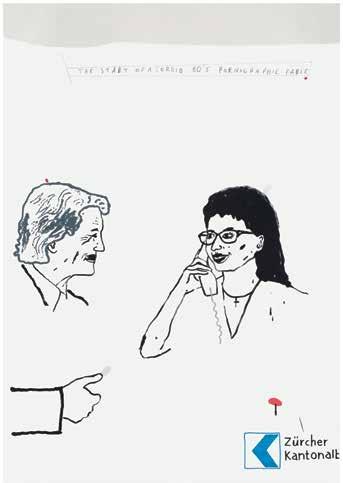
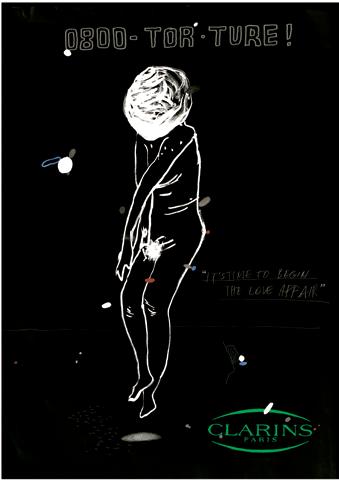
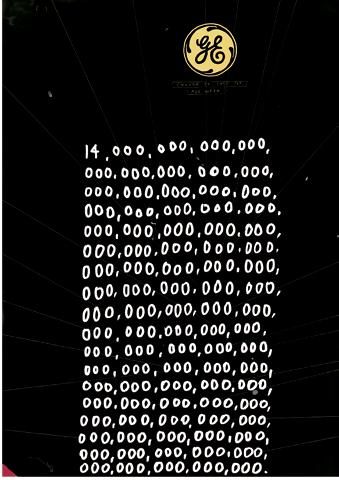
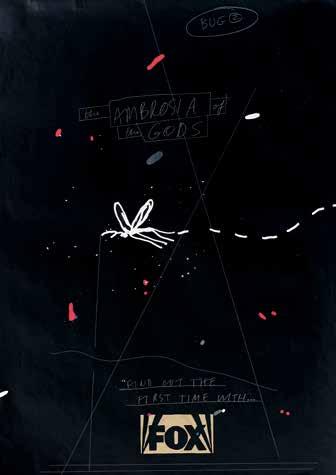
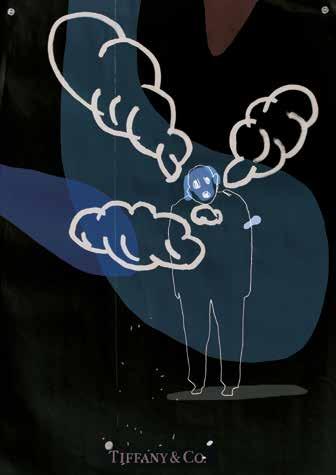
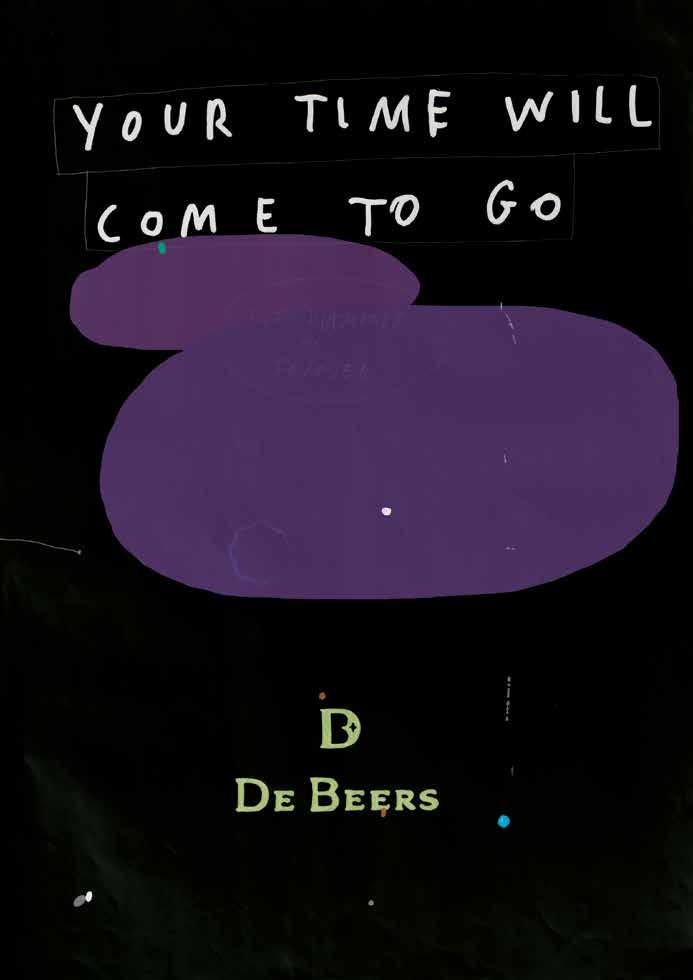
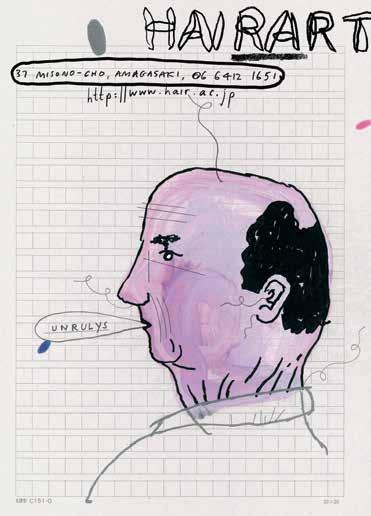
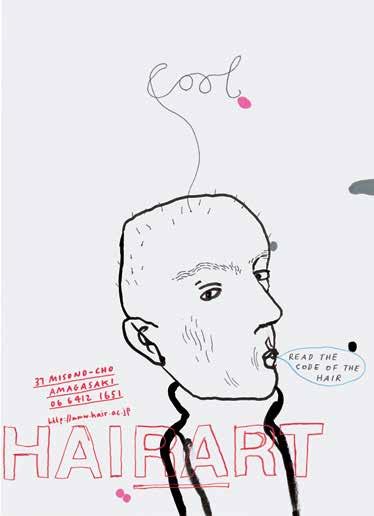
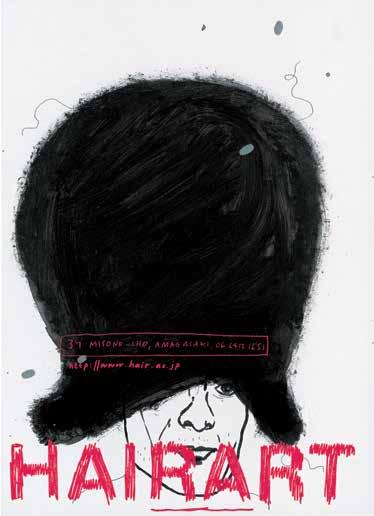
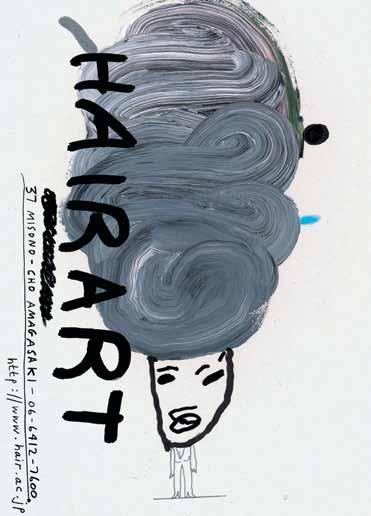
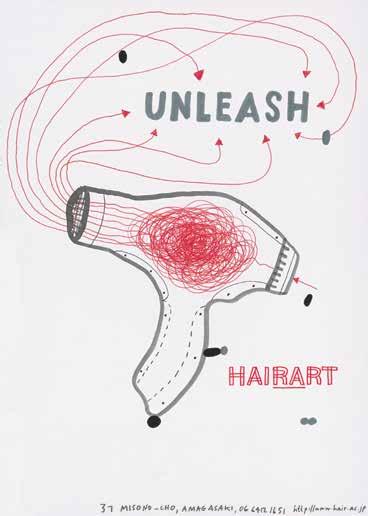
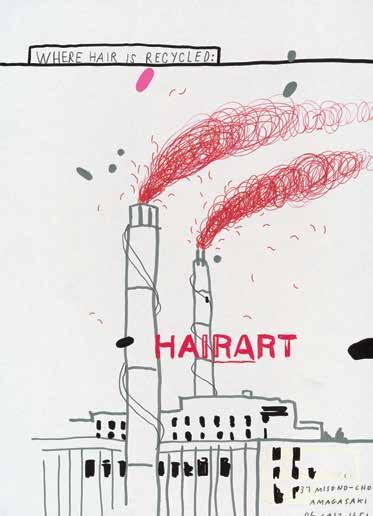
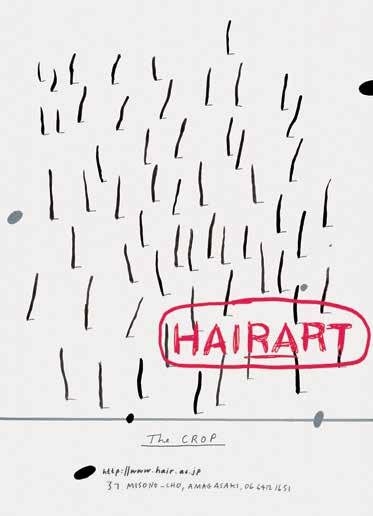
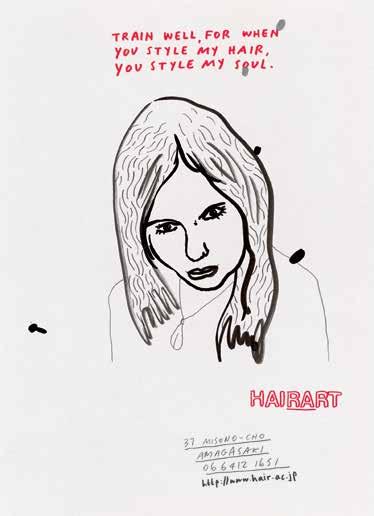
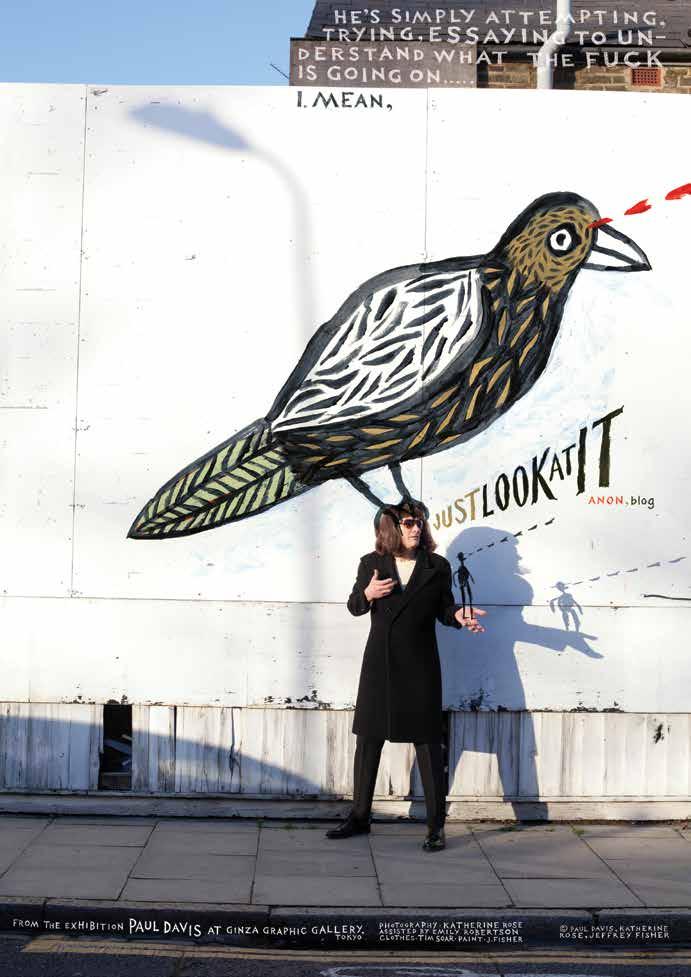
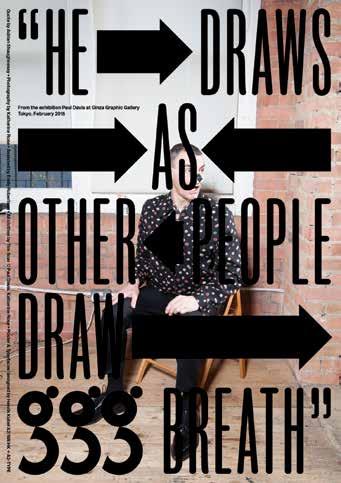
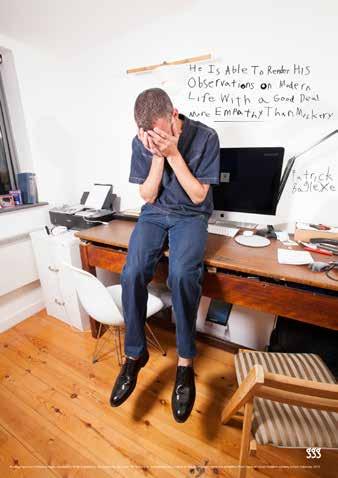
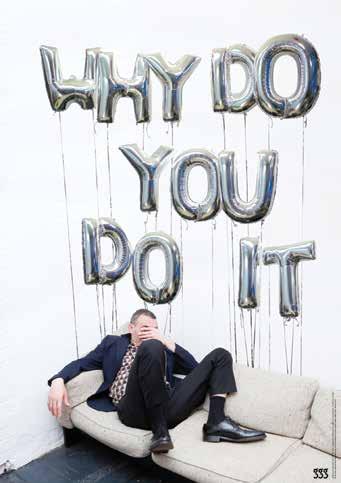
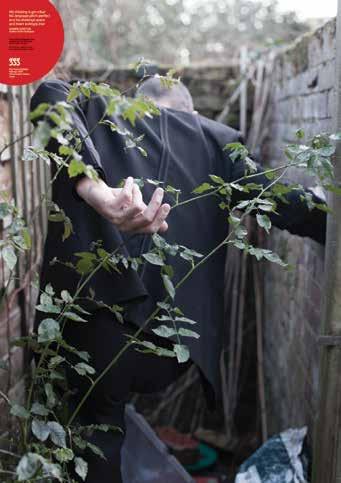
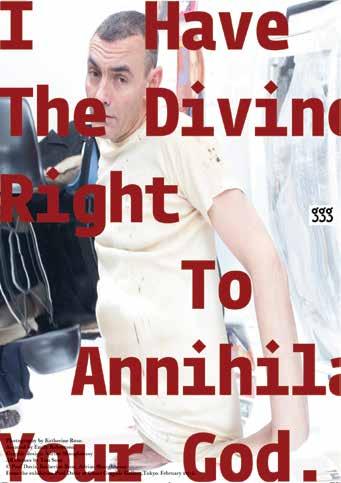
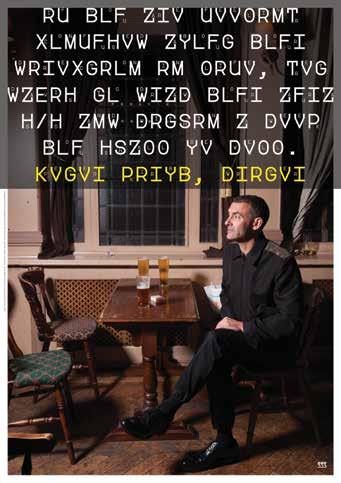
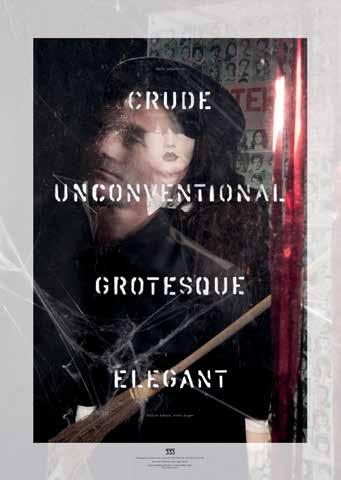
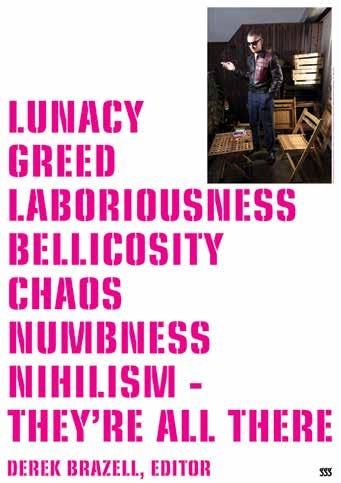
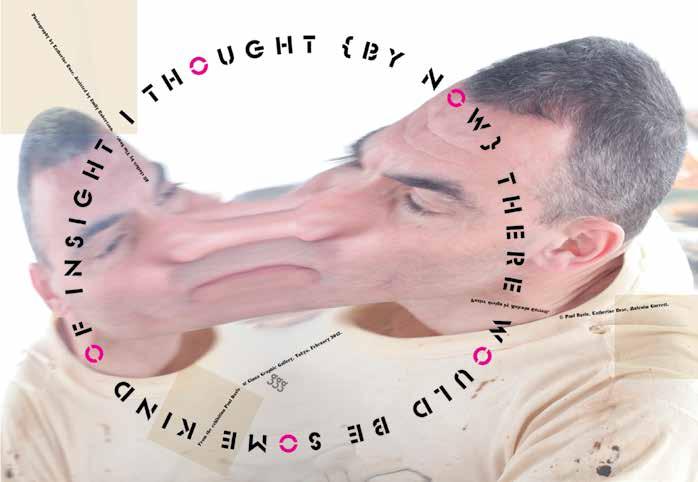
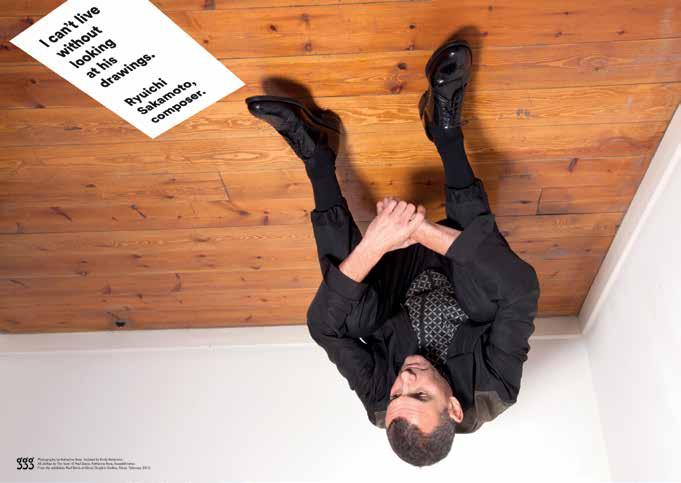
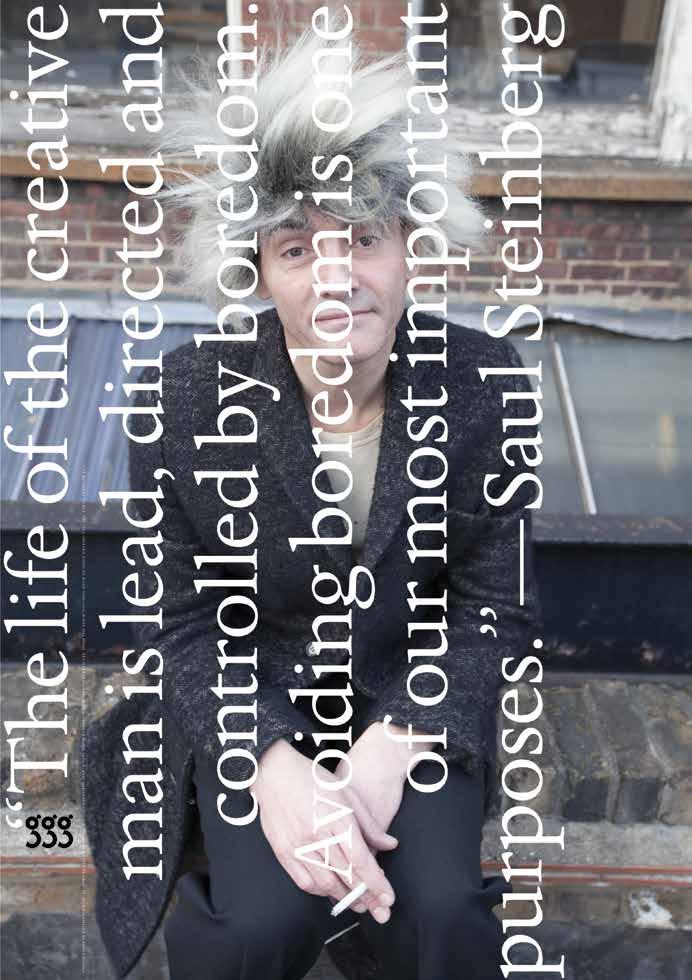
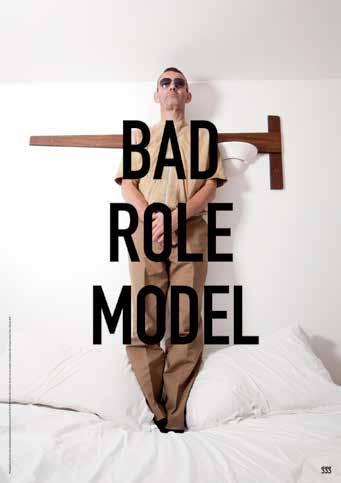
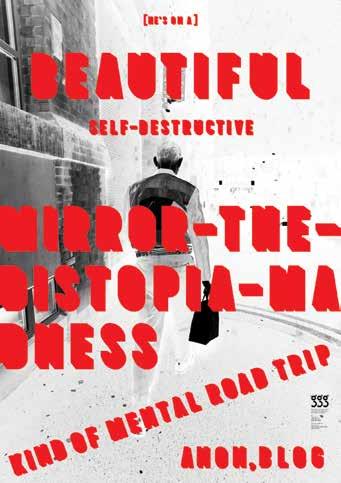
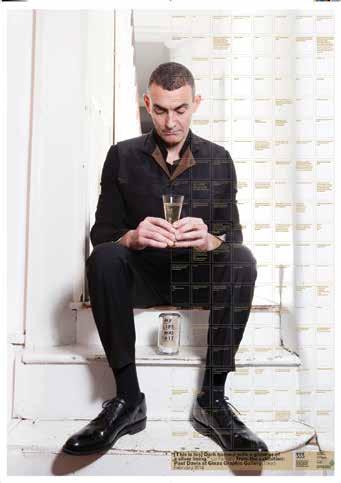
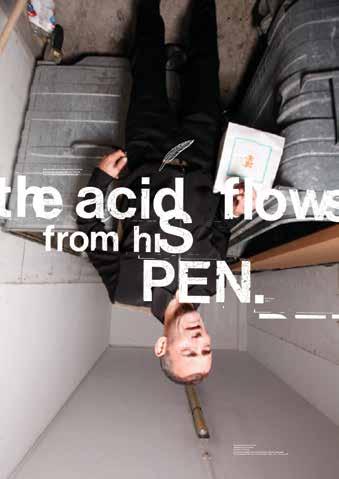
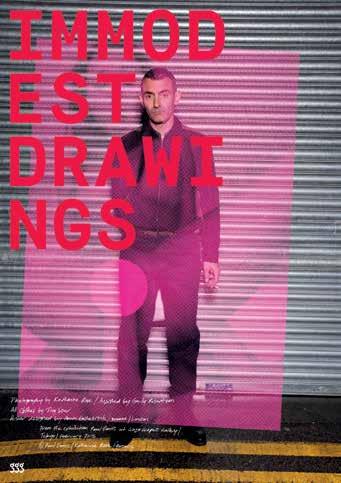
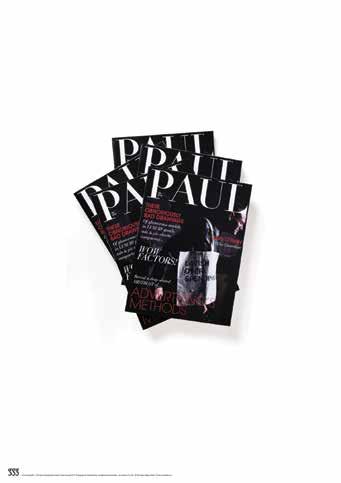
Asking more than 20 renowned graphic designers and artists to produce a poster to be included in the show was a risky business, as it could have just seemed like a lazy ploy to get free work from major talents. But due to the hard work and generosity of everyone involved, the risk paid off.
展覧会のために20人以上の世界の名高いグラフィックデザイナーにポスターを依頼する のはリスキーな仕事だった。優秀な才能をタダで手に入れる小狡い策略と思われてもおか しくないからだ。しかし、全ての関係者のハードワークと寛大さによってそのリスクは報 われた。
1. Jeffrey Fisher
2. Henrik Kubel, A2/SW/HK + A2-Type
3. Staci MacKenzie
4. Callum and Fife MacGregor
5. Kirsten Willey
6. Alexander Gelman
7. Adrian Shaughnessy
8. Angus Hyland, Pentagram
9. Kevin Finn, TheSumOf
10. Scott King
11. Malcolm Garrett, Images&Co
12. Stefania Malmsten, Malmsten Hellberg
13. David Pidgeon, Design by Pidgeon
14. Fernando Gutiérrez
15. Erik Spiekermann
16. Erik Kessels, KesselsKramer
17. Quentin Newark and Matt Hannah, Atelier Works
18. Martin Farran-Lee
19. Mark Farrow
20. Paula Scher, Pentagram
21. Morag Myerscough
22. Robin Richmond
23. Andy Altmann, Why Not Associates
24. Aaron Easterbrook, Browns
25. Andy Stevens, Graphic Thought Facility
26. NB Studio
Fashion: Tim Soar
Photography: Katherine Rose
Assistant: Emily Robertson
Model: Paul Davis
1. ジェフリー・フィッシャー
2. ヘンリク・クベル(A2/SW/HK + A2-Type)
3. ステイシー・マッケンジー
4. カラム&ファイフ・マグレガー
5. キルステン・ウィリー
6. アレクサンダー・ゲルマン
7. エイドリアン・ショーネシー
8. アンガス・ハイランド(ペンタグラム)
9. ケヴィン・フィン(TheSumOf)
10. スコット・キング
11. マルコム・ギャレット(イメージ&カンパニー)
12. ステファニア・マルムスタン(マルムスタン・ヘルバーグ)
13. デイヴィッド・ピジョン(デザイン・バイ・ピジョン)
14. フェルナンド・グティエレス
15. エリック・シュピーカーマン
16. エリック・ケッセルズ(ケッセルズ・クレイマー)
17. クエンティン・ニューアーク&マット・ハンナ (アトリエ・ワークス)
18. マーティン・ファレン・リー
19. マーク・ファロー
20. ポーラ・シェア(ペンタグラム)
21. モラグ・マイヤーズコフ
22. ロビン・リッチモンド
23. アンディ・アルトマン(ホワイ・ノット・アソシエイツ)
24. アーロン・イースターブルック(ブラウンズ)




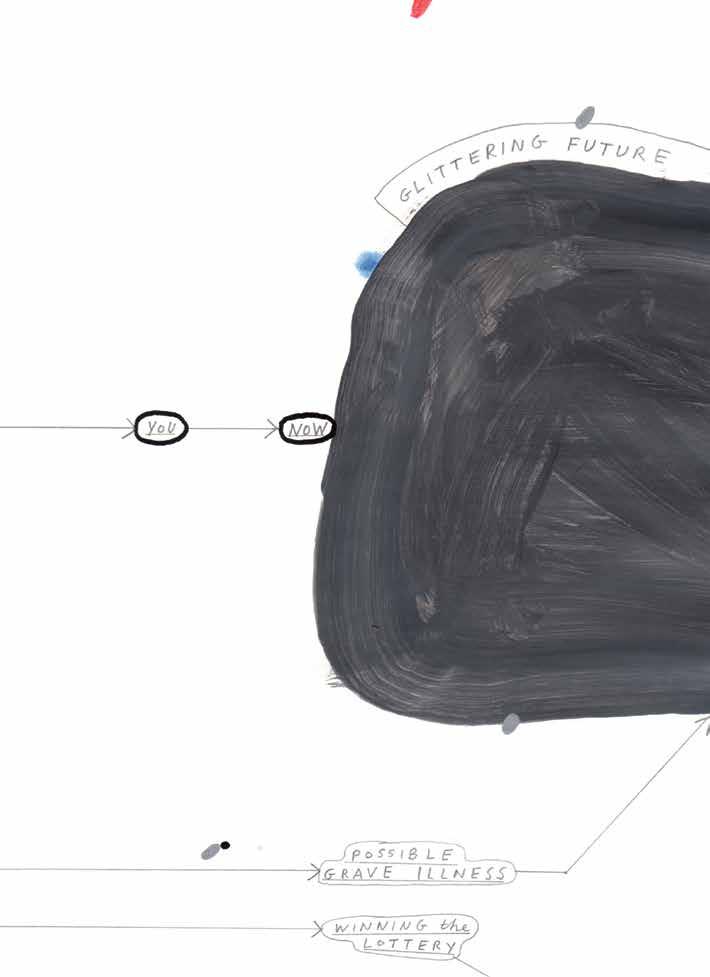
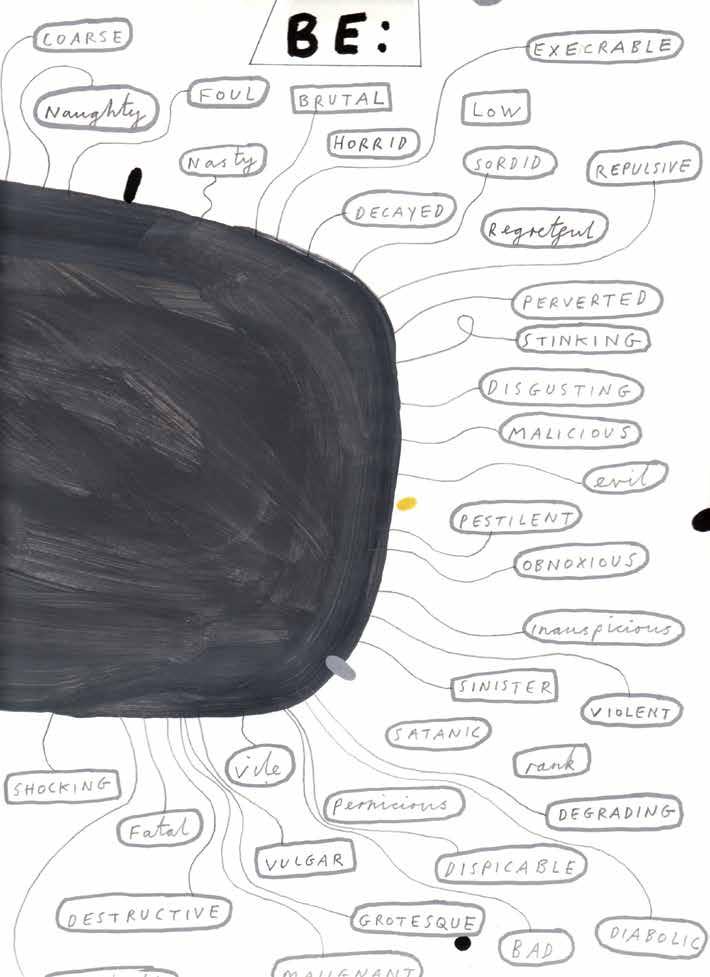
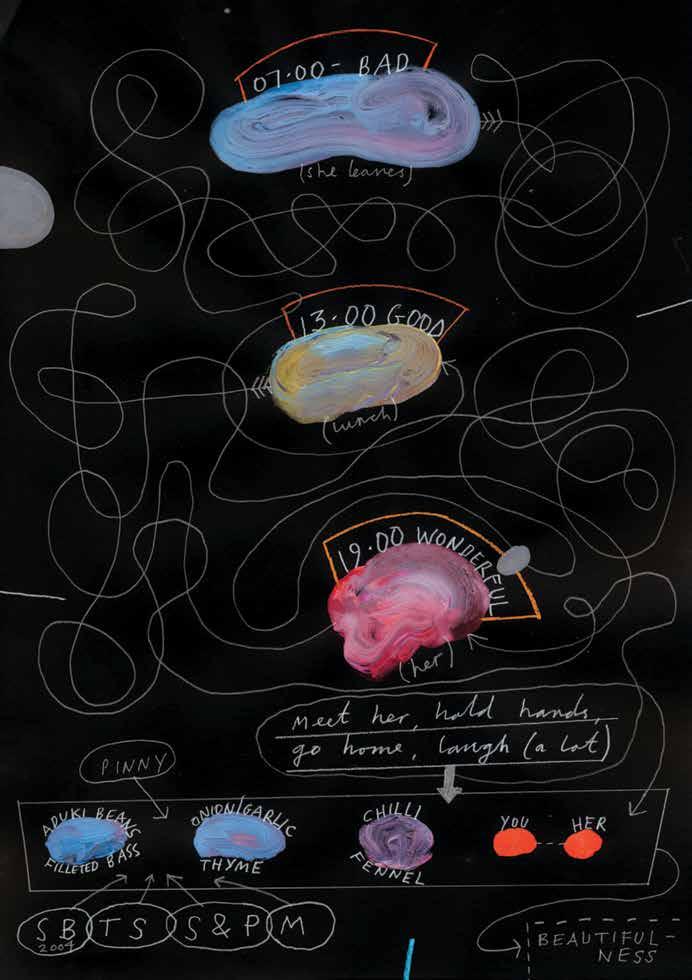
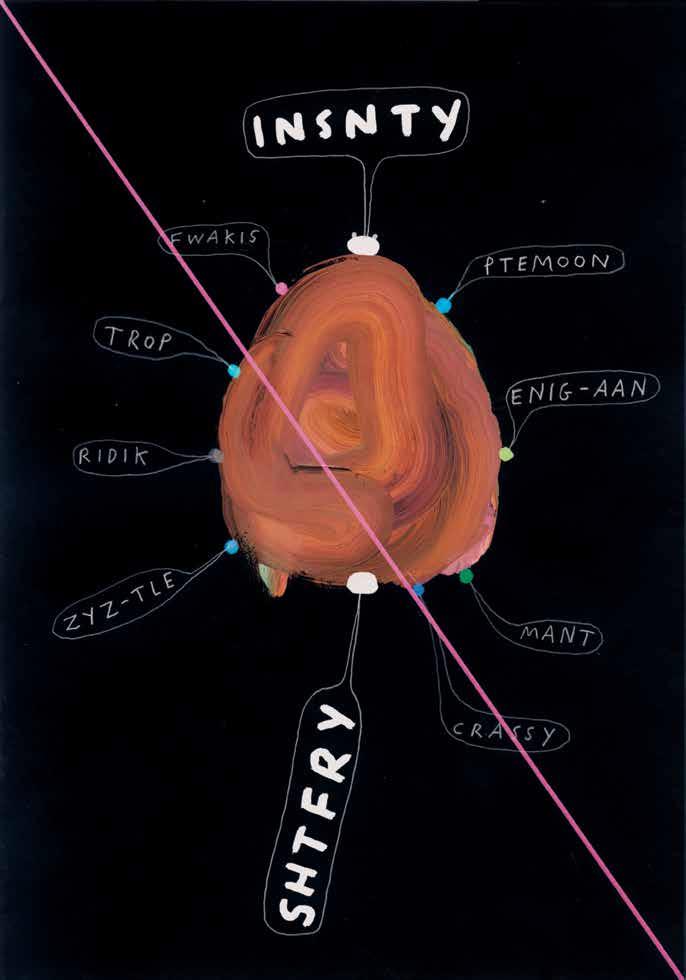
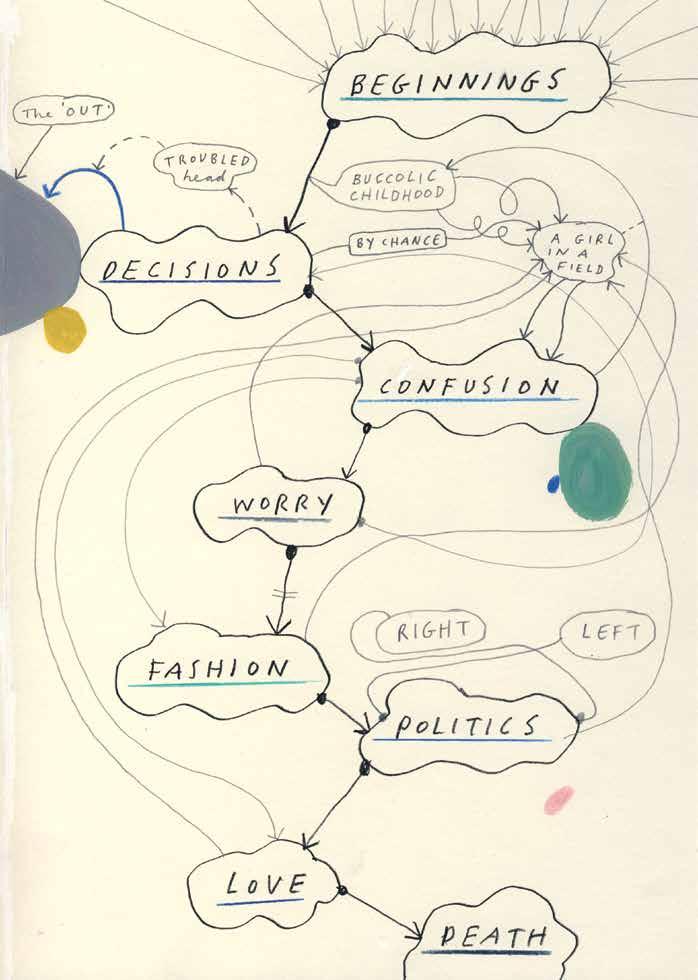
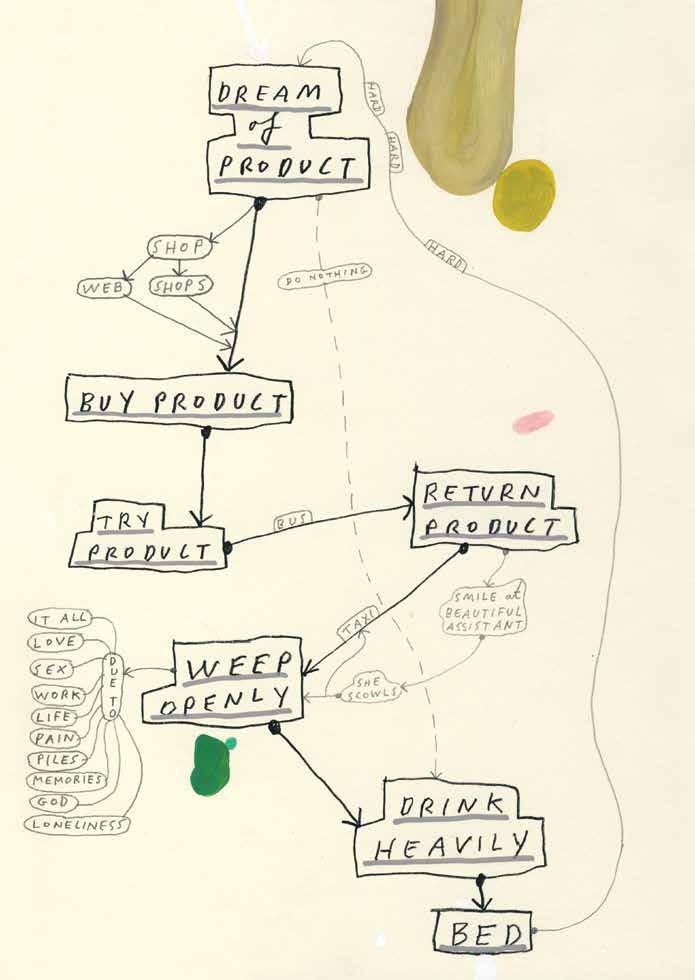
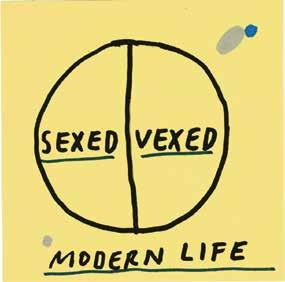
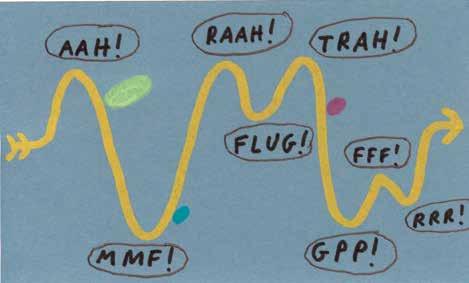
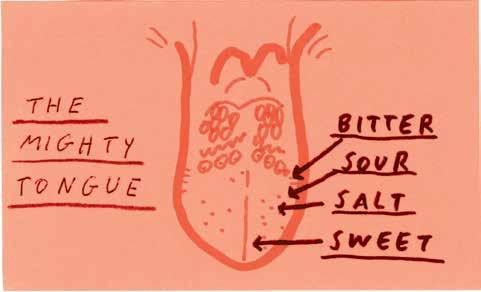
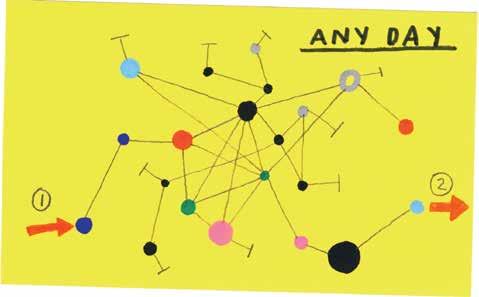
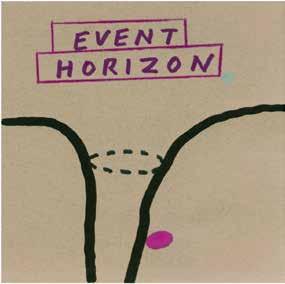
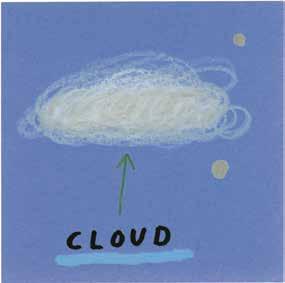
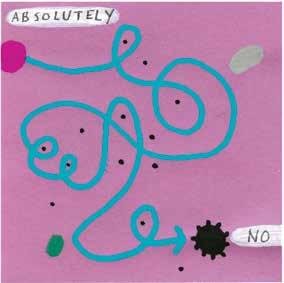
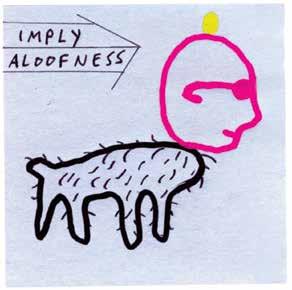
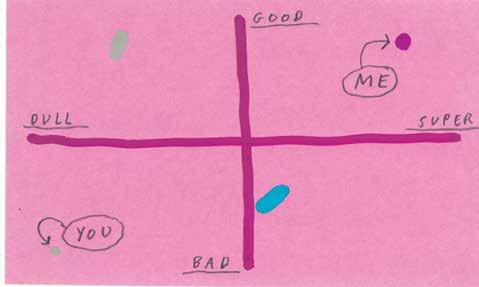
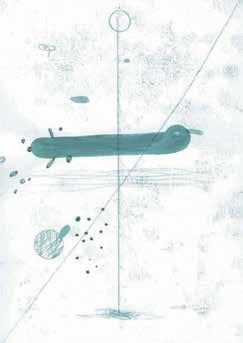
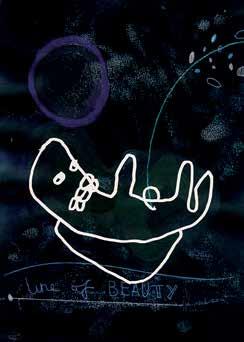
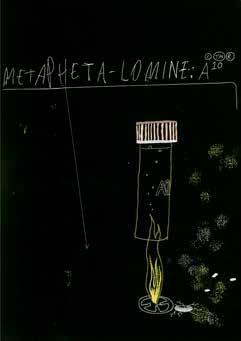
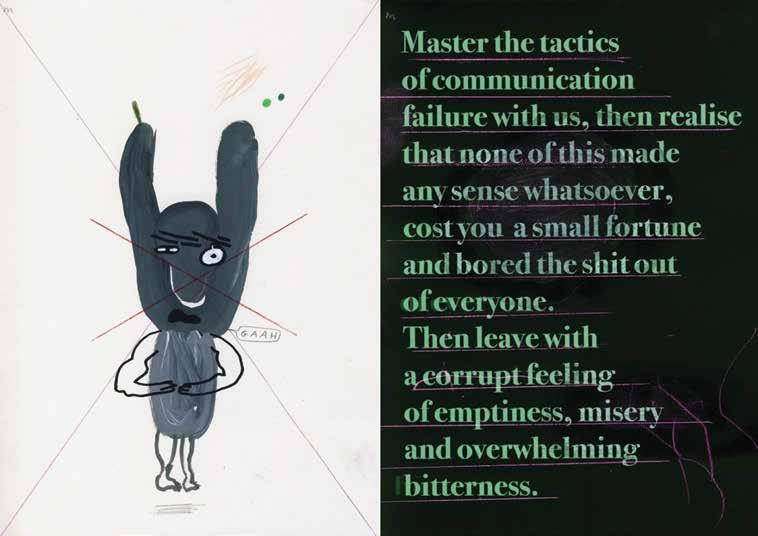
In an attempt to understand what’s occurring on this terrible and tender Earth, we employ diagrams to help us: Venn, flow, graphs, etc. These are mostly unscientific and perverse, sometimes brutal; obsessed with religion, life and death, work, mental stability, money, power, jealousy, the Universe… always searching for some personal or objective semblance of truth. These drawings are an ongoing response to being reactive and alive.
この繊細で悲惨な地球に何が起こってい るのかを理解するために、我々は集合図や フローチャート、グラフなどのダイアグラム の助けを借りる。これらはもっとも非科学 的で邪悪で時に乱暴で、宗教、生と死、仕 事、精神の安定、金、権力、嫉妬、万物にと り憑かれた常に個人的かつ客観的真実の 外観である。これらのドローイングは、リア クティブであること、生きていることへの、 進行中の返答である。