

We have been placed in a created world of wonders. Learning is all about discovering and investigating this world and our place in it.
A formal education provides structured learning about different arenas of knowledge and their associated skills, and this learning continues for our whole life.
At Mackay Christian College, we encourage students to try a variety of subject areas and discern which of these areas they feel most drawn to. Usually, your favourite subjects will then lead you to train and be employed in a workplace that brings joy, satisfaction and personal success.
Engaging in the Subject Expo provides information and suggestions for choosing your subjects and developing a potential career path for your future. It is important to discover which subjects appeal to you and in which subjects you naturally do well.
Father God has a plan and purpose for each created person and subject choices can help propel you into your particular purpose. Whether predominantly academic or a trade pathway, service industry or
Please carefully read the information in this booklet to assist you to select your subject choices.
May your application to learning be a blessing to others.
“For we are God’s masterpiece. He has created us anew in Christ Jesus, so we can do the good things he planned for us long ago.” (Ephesians 2:10, NLT)
Best regards,
Dr Lesley Tunnah College Principal
Thy kingdom come, ‘Thy will be done’, on earth as it is in heaven (Luke 11:2)
Our vision is for an independent Christian school providing excellent, Christ-centred learning opportunities that encourage
The College aims to provide Christ-centred education that assists in revealing God’s personal plan for each student from Pre-Prep to Year 12 through equitable, excellent learning opportunities learners who make a positive impact in their world.
‘Christian education on purpose’
Our students will become:
• Self-directed strategic producers
• Responsive communicators
• Empathetic servant leaders
• Resilient problem solvers
We thank you for the privilege of partnering with you in this important responsibility of educating your children. We look forward to open communication during the good times and the hard times as we support and challenge their academic, emotional and spiritual growth, to ‘become all that God wants them to be’.

Senior School at Mackay Christian College is about providing a Christian Worldview platform for students from which they are able to further develop their knowledge and skills. This enables them to prepare for the future and the challenges that will come their way. We remain focused on providing the best opportunities for young people to prepare for life, work and study beyond school.
We seek to bring a balance of support and challenge to equip students academically, socially, emotionally
At Mackay Christian College competencies such as critical thinking, creative thinking, communication, collaboration, teamwork, personal and social skills, and ICT skills are very much part of our Vision of a Learner. We continue to support and encourage students to become “self-directed; strategic producers; problem solvers.”
We aim to provide opportunity for students to build and demonstrate these skills through a broad scope of senior schooling options and extra-curricular activities while maintaining a strong focus on the core skills of English and Mathematics. This is in conjunction with a cross-curricular approach to mastering a range of IT platforms.
It is exciting to work with the whole dedicated MCC team, to bring all efforts together in working with parents and families to encourage students to test and stretch themselves to ‘Become all God wants them to be.’
Looking forward to working with you.
Yours in Christ’s service,
Ms Debbie Wright Head of Secondary School
The Senior years of schooling are exciting and students can expect many opportunities during these three years to further grow and develop their gifts and talents as leaders and role models in the College community.
Our staff desire to build relationships and foster this growth into young adulthood through the classroom, camping and sports programs, chapel, and extra curricular activities.
Students are taught study skills and are often given greater independence in their learning activities.
With this greater independence also comes greater responsibility, and a whole range of new expectations apply .
Homework: Senior students may be expected to do up to two and a half hours of homework/study per night.
Independent Study: Students are encouraged to become independent learners. This is a key skill which they will need to develop both for tertiary education and to become independent workers in the workplace. This is fostered by the approach which we have adopted in the College whereby the students are encouraged to assume responsibility for their own learning.
Skill Areas: Senior education is a place of acquisition of new skills. For instance, Modern History and Geography foster research and referencing skills whilst Biology and Mathematical Methods focus on process skills. These areas provide growth challenges for students.
Behaviour: A higher adult standard of behaviour and attitude is expected from Year 10s, 11s and 12s, particularly since they now become examples to members of the Middle and Primary Schools. Any students who are not commited to submitting work, participating in class, or demonstrating a generally non-cooperative attitude may be asked to justify their continued enrolment in the College.

Question:
Should I stay at school or leave?
I am aiming for... (tick one or more)
Australian Tertiary Admissions Rank (ATAR) and Tertiary Entrance
School Based Apprenticeship or Traineeship
Full time Apprenticeship or Traineeship
Continue at school until I get a job


issued to eligible students when they meet all the requirements, either at the completion of Year 12 or after they have left school. To achieve a QCE, students must achieve the set amount of learning, at the set standard, in a set pattern, while meeting the literacy and numeracy requirements. Students must achieve 20 credits from contributing courses of study, including Queensland Curriculum Assessment Authority (QCAA) developed subjects, Vocational Education and Training (VET)
Please refer to Appendix for more information
Australian Tertiary Admissions Rank (ATAR) and Tertiary Entrance

TAFE Certificate
Years 11 and 12. This is possible through the Vocational Education and Training in Schools (VETiS) Program per week while continuing their studies at MCC. TAFE the Queensland Government’s VET Investment Budget information, please contact CQUniversity or visit their website: www.cqu.edu.au

The ATAR replaced the Overall Position (OP) in 2020. Eligible students are awarded an ATAR between 0.00 and 99.95 with increments of 0.05. ATARs below 30 are reported as ‘30.00 or less’. The ATAR is calculated by the Queensland Tertiary Admissions Centre (QTAC) based on either:
OR
b.The student’s best results in a combination of four General subjects plus one Applied subject or
Eligibility for an ATAR requires satisfactory completion of a QCAA English Subject (either English or Essential English).
Refer to Appendix for more information
School Based Apprenticeship or Traineeship (SAT) Students in Years 11 and 12 may start their apprenticeship or traineeship while they are at school. A SAT will impact on the student’s timetable as they generally are required to attend paid work or training one day per week during school hours. Students and parents are required to sign the necessary paperwork with a registered Apprenticeship Agency and enter into a training agreement with a Registered Training Organisation.
Students may wish to leave school if they are offered a full time apprenticeship or traineeship.
The Youth Participation in Education and Training Act 2003, which came into effect in 2006, states that students

Year 10 or are 16 must stay in education and training for a further 2 years or until they have gained their QCE, a 17 or are working a minimum of 25 hours per week. Students need to be earning or learning.
Please note: It is common for students to have part time jobs while they complete their senior studies. The Child Employment Act 2006 states that during a school week, a school-aged child can work a maximum of 12 hours per week. During a non-school week a school-aged child can work a maximum of 38 hours per week. While it is a positive experience for students to have a part time job and earn money, it can impact on their senior studies, extra-curricular activities and family time. Balance and time management are important. Senior studies are an investment of time in a student’s future.

Refer to Appendix for more information
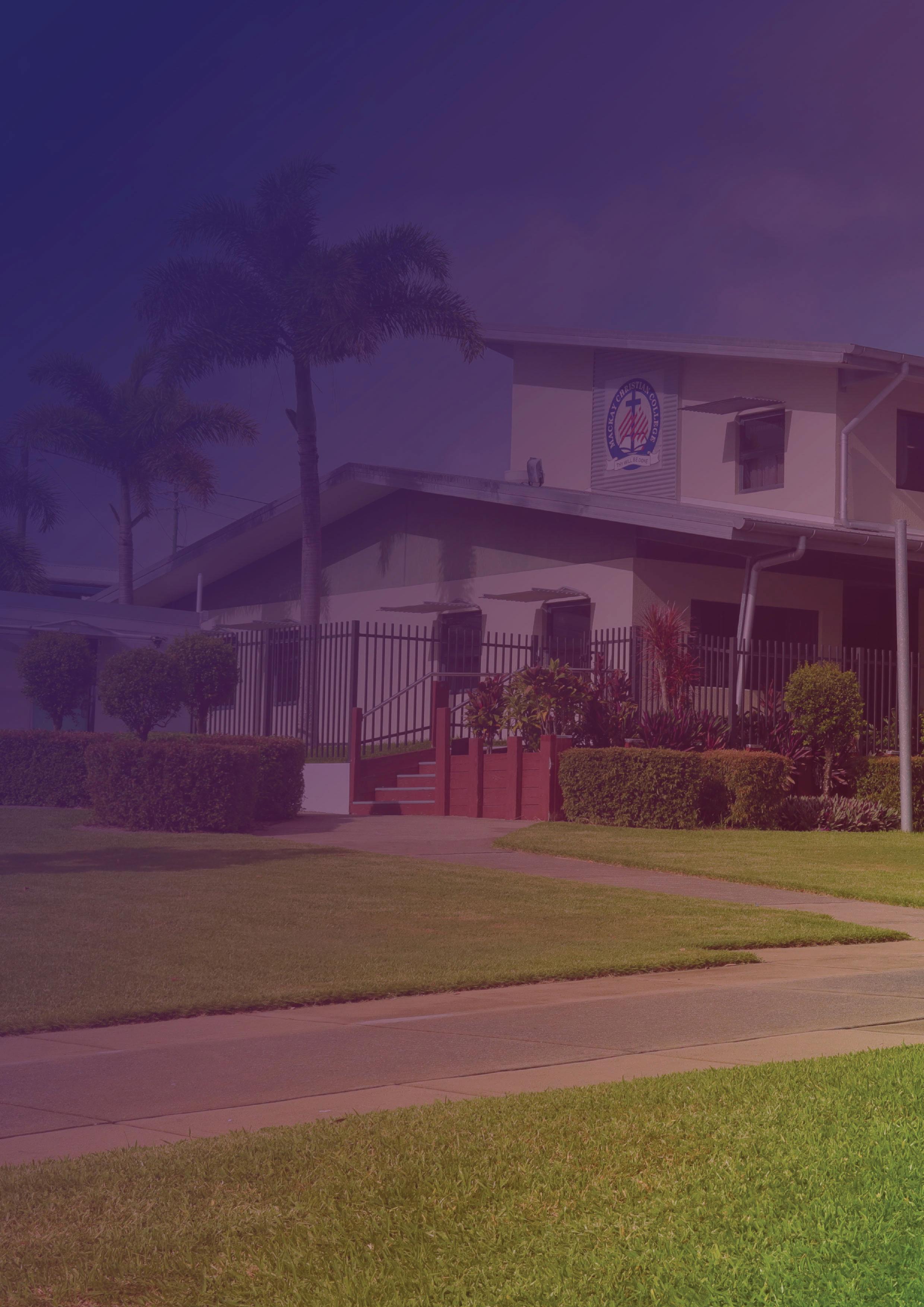



We are committed to preparing all students for succesfull pathways after school and implementing new learning opportunities throughout Senior School.
of learning that will be required to ensure personal success. The core and elective subjects studied by students will provide various learning pathways. Some students will study Numeracy Short Course as an alternative to Year 10 Mathematics and/or the Literacy Short Course as an alternative to Year 10 English.
For Year 10 Humanities, students will study History for Semester 1 and choose one elective from the choices :
• Geography
• Business and Economics
• Civics and Citizenship
Students entering Years 11 and 12, wanting to pursue a university pathway, will need to ensure they qualify for an ATAR to gain entrance to a university course. As part of this preparation, students in Year 10 are given an opportunity to experience subjects that are closely aligned with Senior syllabuses to ensure that students are well equipped to make good choices for Years 11 and 12. In HPE, Science and Mathematics students will be placed in courses according to their performance in Year 9 HPE, Science and Mathematics. Although the majority of students will be studying the Year 10 Australian Curriculum, in some learning areas the content will be covered at a different depth.
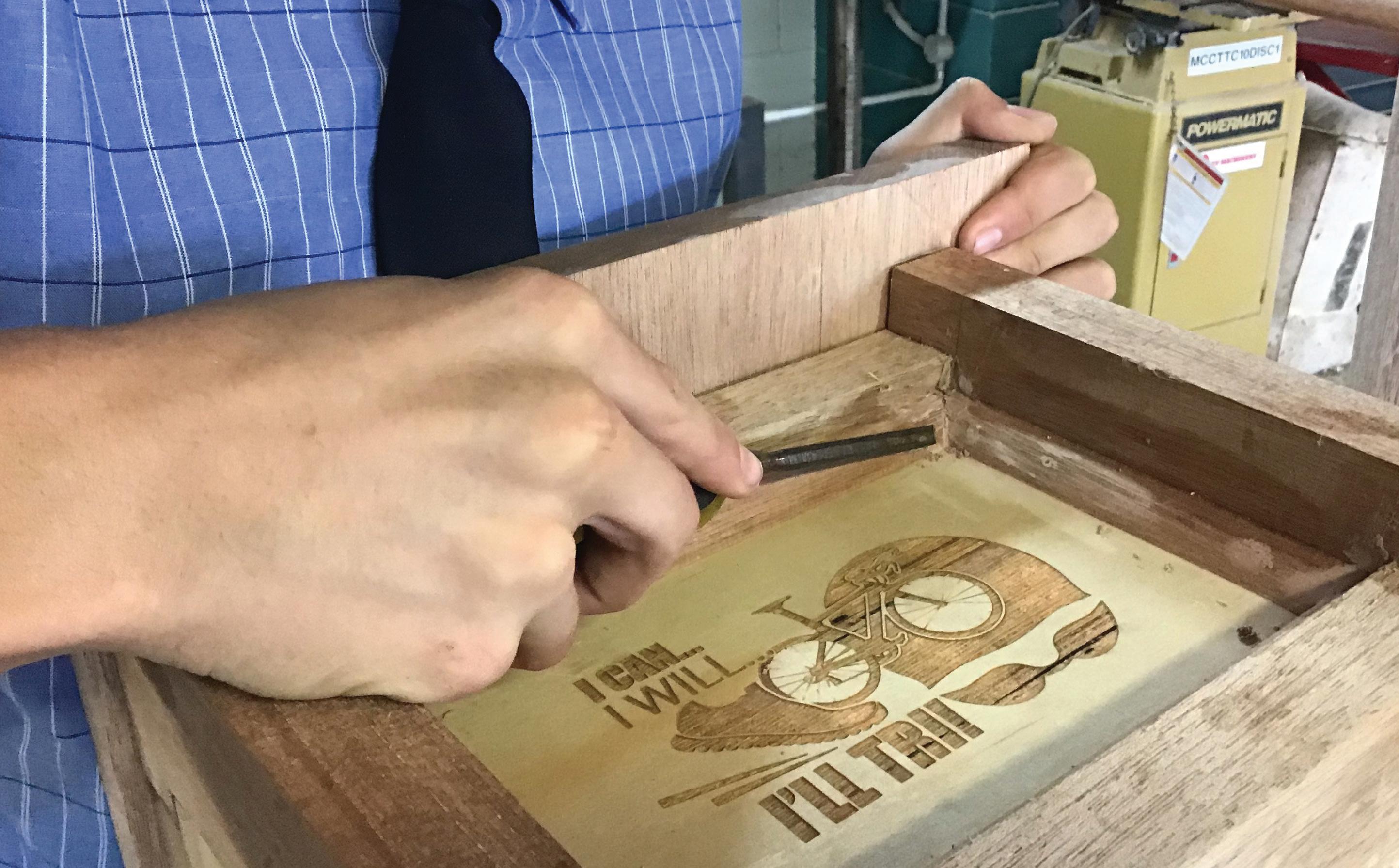
CLEAR is our values-based subject which supports our College values which are: Christlikeness, Learning, Excellence, Attitude and Respect.
At Mackay Christian College we are passionate about helping students grow to become all that God wants them to be.
The program has been developed with an embedded Christian world view with a focus on fostering a student’s academic, spiritual, character and emotional development.
In Year 10 CLEAR, students are given the opportunity to engage in a range of different types of activities that help
During CLEAR, students will also develop their own SET (Senior Education and Training) plan.
This helps students to:
• structure their learning around their own abilities, interests and ambitions
• think about their education, training and career options after Year 12
• set and achieve learning goals in Years 11 and 12, and beyond
• communicate with their parents/carers, or college staff about their post-school plans.
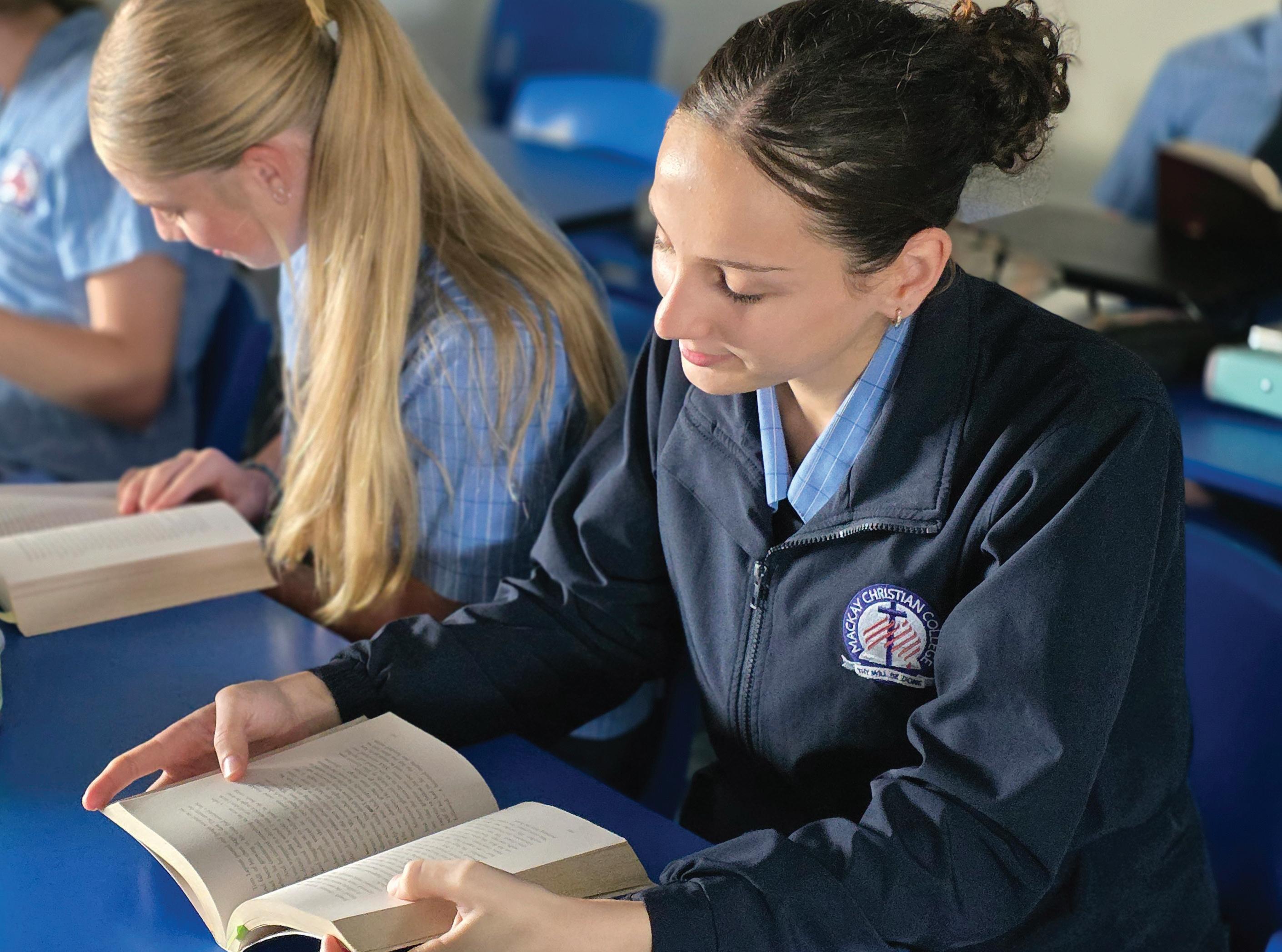
At Mackay Christian College, our Christian faith is at the heart of everything we do. The Bible is our foundation— guiding how we think, learn, and live.
Through Biblical Studies, students grow in their understanding of Scripture while discovering God’s purpose and His apply its teachings both now and into the future.
Our program is designed to nurture faith, build strong biblical knowledge, and equip students to live out their beliefs
• Developing Bible literacy and study skills
• Exploring key stories, historical accounts, and major themes
•
• Understanding the life and teachings of Jesus
• Applying biblical principles to everyday life
• Growing in Christian worldview and beliefs
• Engaging in outreach, missions, and service
At MCC, Biblical Studies is more than a subject—it’s a journey of personal discovery about the Christian faith and how the Bible’s stories and teachings may be applied to everyday life.
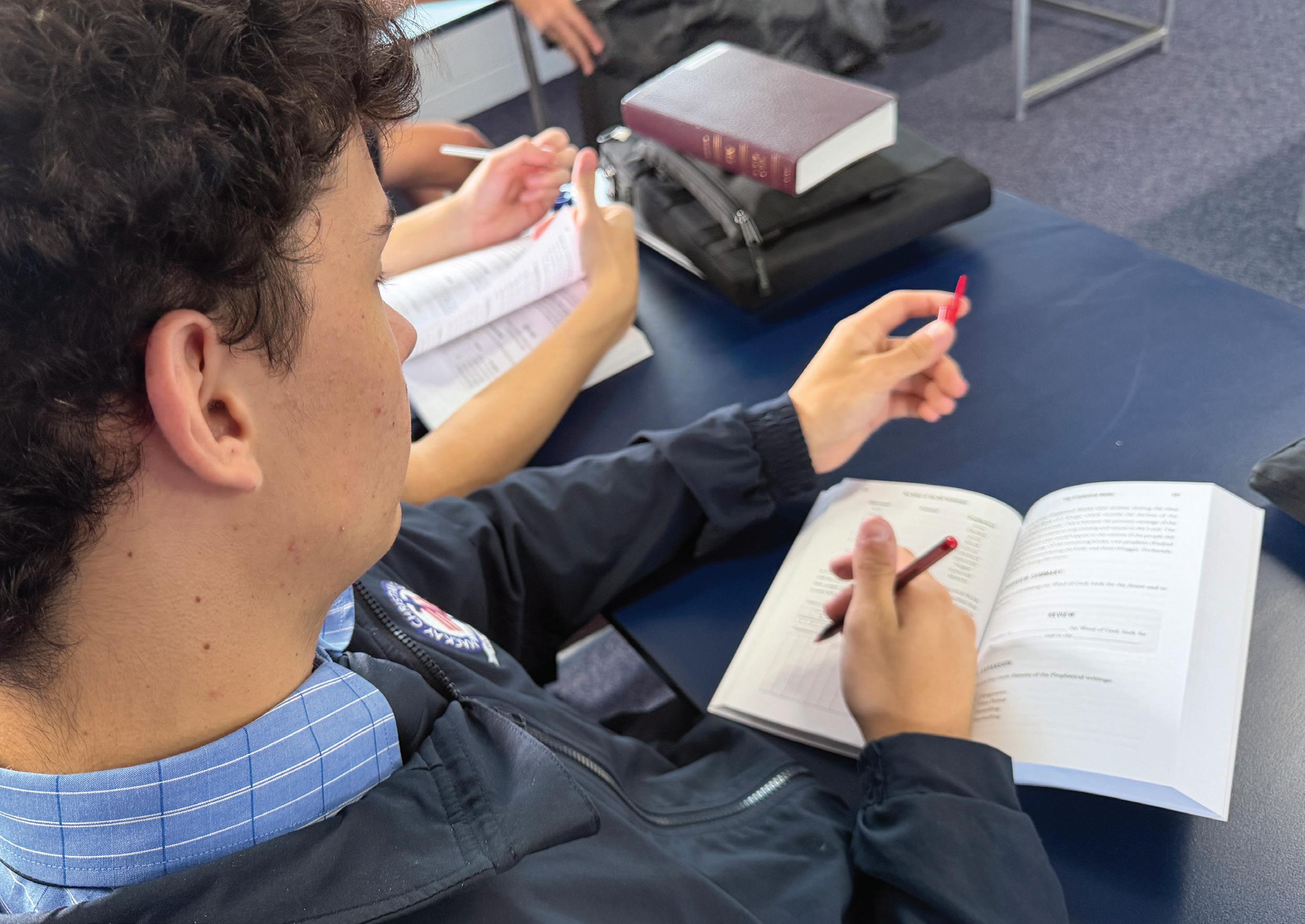
Year 10 English builds on the knowledge, skills and processes developed in earlier years through the study of increasingly complex and sophisticated texts. Aligned with the Australian Curriculum v 9.0, students engage with a diverse perspectives.
Students develop their skills in reading, viewing, listening, speaking and writing as they analyse and create imaginative, persuasive and analytical texts. They are encouraged to think critically and creatively, evaluate ideas and perspectives, and communicate effectively for a variety of purposes and audiences.
Year 10 English provides an important foundation for senior English studies in Years 11 and 12, preparing students for both General English and Essential English pathways.
At Mackay Christian College, English is taught through a Christian worldview that encourages students to CLEAR values by developing Christlikeness through respectful communication and empathy, Learning through critical and creative thinking, Excellence in language use and text creation, Attitude through perseverance and growth, and Respect for diverse perspectives and experiences.
Based on their Year 9 English results, a selection of students may be invited to participate in the Short Course in Literacy.
Students develop practical literacy skills through real-world contexts, learning to interpret, create and evaluate texts for a range of audiences and purposes. They engage with language used across workplace, community and educational
Students are encouraged to monitor their own learning, develop independence and recognise the importance of literacy for future study, employment and everyday life.
Students who achieve a C standard or higher in the Literacy Short Course will be awarded one QCE credit towards
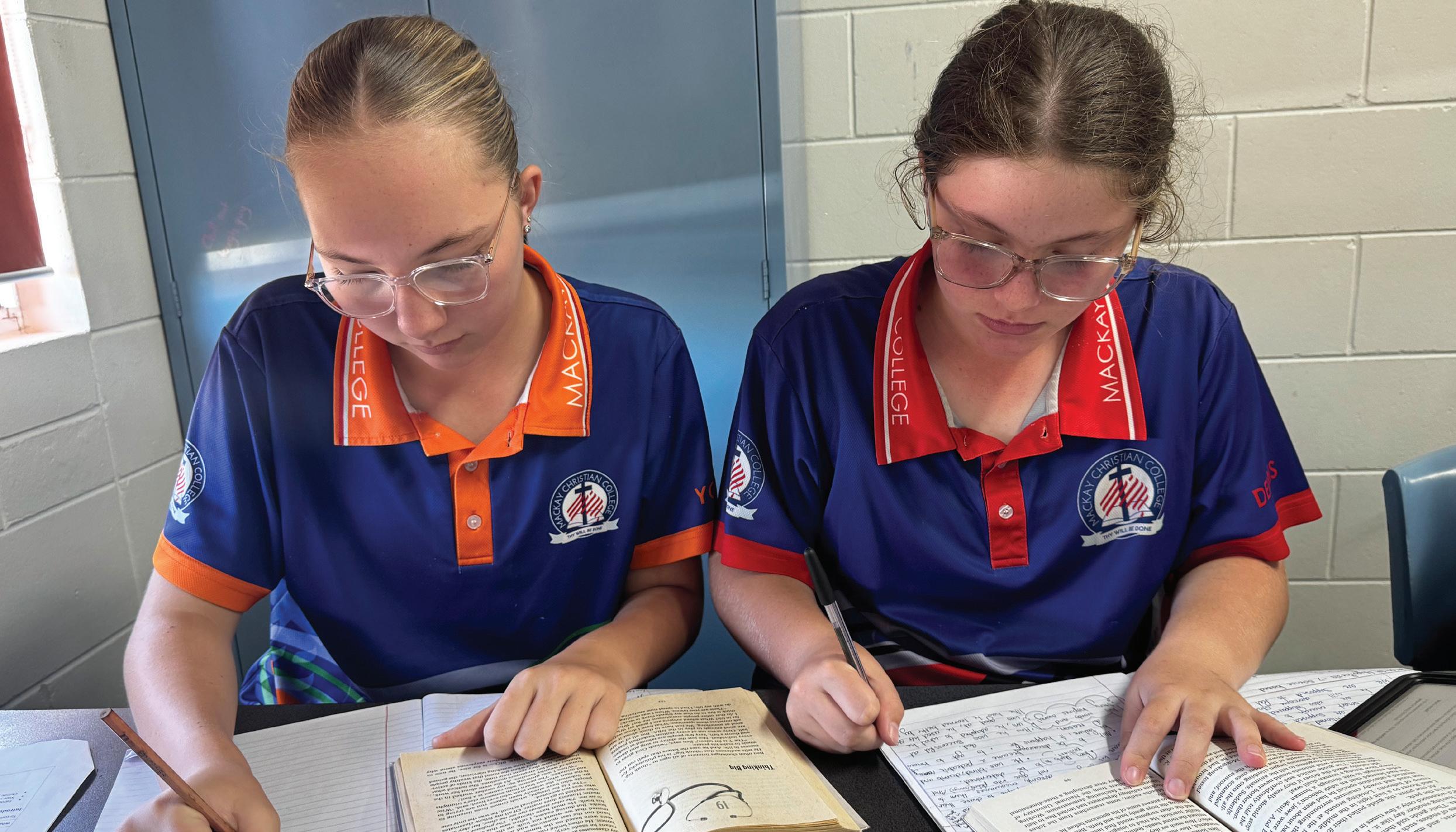
Students will be placed in Mathematics classes based upon their Year 9 Mathematics results. Year 10 Mathematics courses are given the relevant preparatory name to match Senior syllabuses.
The four Year 10 Mathematics courses are:
Mathematics: Extension
This course will provide an in-depth coverage of curriculum and also provide opportunities for extension work that is described in the optional content. This is suited for students considering Mathematical Methods and/or Specialist Mathematics in Years 11 and 12 and will also provide a good foundation for the study of General Mathematics in Years 11 and 12.
Mathematics:
Curriculum level Year 10 Mathematics aims to cover Year 10 content with an emphasis on preparing students for General Mathematics for Senior School.
Mathematics: Essentials
A more foundational approach to Year 10 Mathematics is covered in this course, with an emphasis on preparing students for Essential Mathematics in Years 11 and 12.
Numeracy Short Course:
The Numeracy Short Course is offered to Year 10 students who have struggled to succeed with the academic rigor of the Mathematics learning area of the Year 7-9 Australian Curriculum. Students who achieve a C or better overall result in Years 11 and 12.

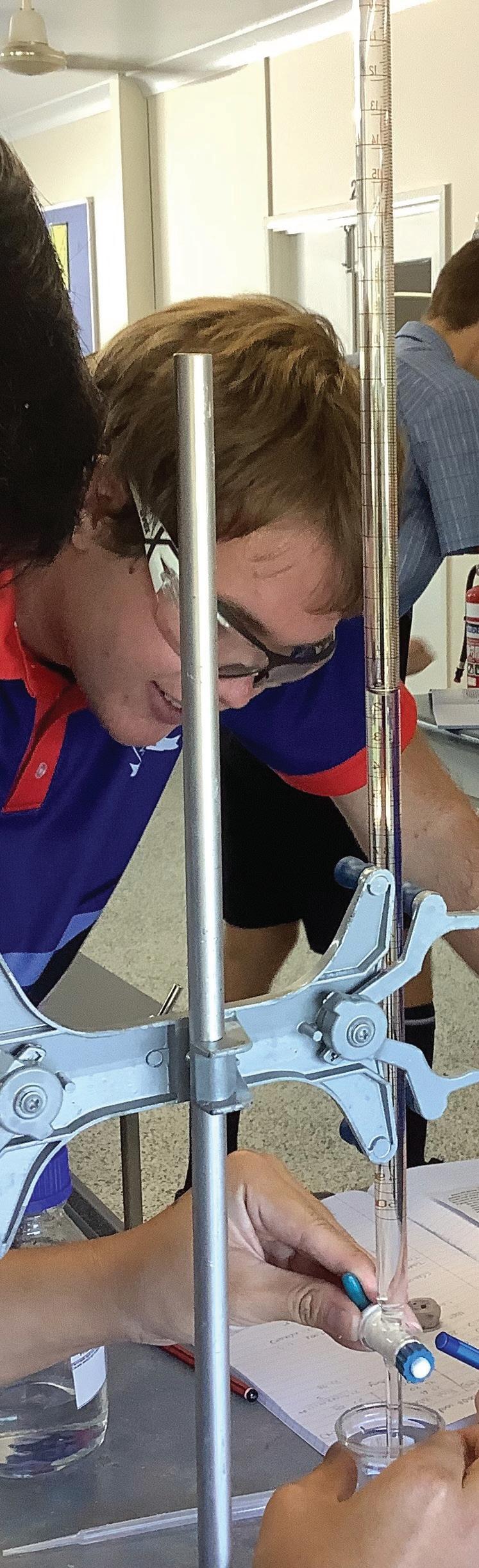
Biology is the science about life. Students will learn Genetics and Diseases. Students wanting to pursue a career in health, amongst others, should consider Biology as one of their choices in Years 11 and 12.
Chemistry looks at the atomic structure and the arrangement of the periodic table. Learners also study molecular bonds and chemical reactions. Students that want to pursue a career in health, amongst others, should consider Chemistry as one of their choices in Years 11 and 12.
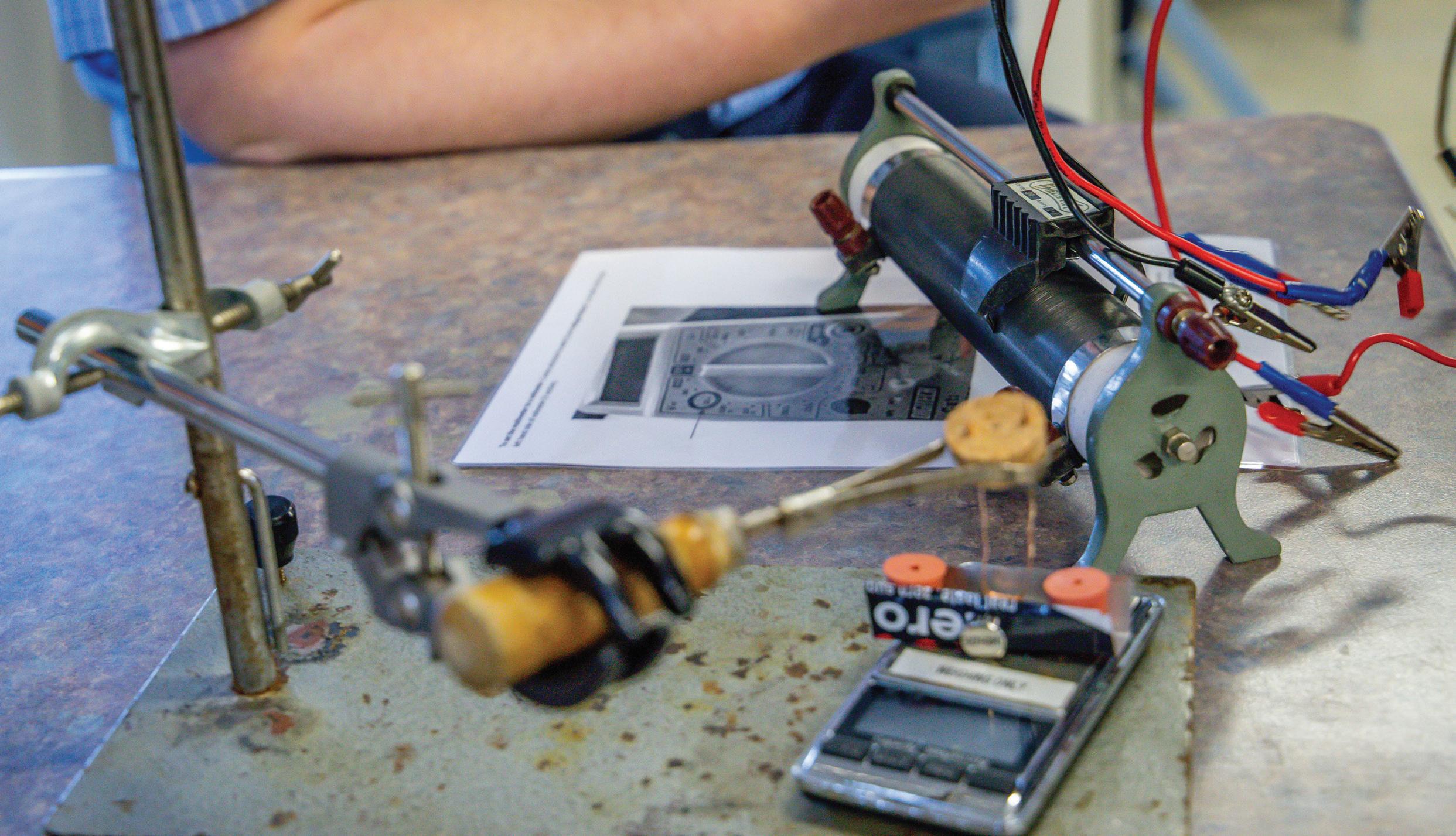
Physics is the study of matter and energy. Students will learn about motion, forces and energy and could include topics such as robotics. Students wanting to pursue engineering or science, amongst others, should consider Physics as one of their choices in Years 11 and 12.
Students will be placed in Year 10 Science classes based upon their Year 9 Science results and intended career pathway.
Throughout the year, students will study different areas of Science in three rotation blocks. These are as follows:
Rotation A: Biology (Extension), Biology (Core) and General Science
Rotation B: Chemistry (Extension), Chemistry (Core) and General Science
Rotation C: Physics (Extension), Physics (Core) and General Science
The extension courses are designed to provide students with an excellent foundation for the study of Senior Science subjects in Years 11 and 12.
General Science is focused on delivering knowledge and skills in an industry or trade context.
The Year 10 Health and Physical Education course provides students with the opportunity to further explore topics and physical activities that promote health, participation and performance in physical activity. The course provides a strong pathway to the study of Physical Education or Sports and Recreation in Years 11 and 12.
Students complete two of the following four units designed to prepare students for Senior Physical Education or Senior Sport and Recreation.
1 - Risks and Challenges in Sport
3 - Movement Concepts, Strategies and Ethics in Sport
4 - Coaching and Leadership in Sport
deeper physiological knowledge of the body and cognitive sporting knowledge.

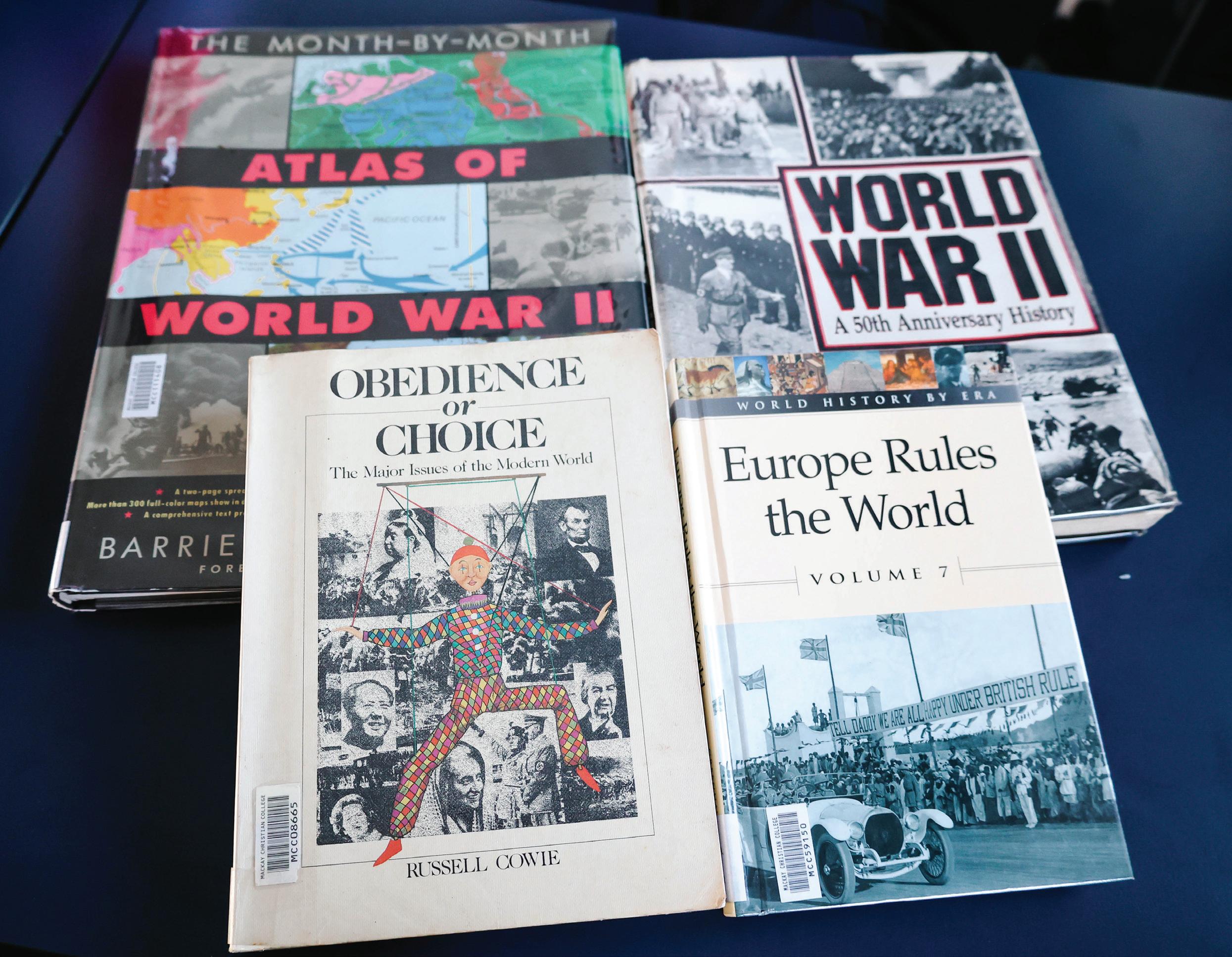
Year 10 Humanities develops students’ ability to think critically and creatively about the world around them while fostering curiosity, inquiry and informed decision-making. Aligned with the Australian Curriculum v9.0, students investigate historical, geographical, economic, business and civic issues that shape contemporary societies and
Students study History and one additional Humanities subject from Geography, Business and Economics, or Civics and Citizenship. Courses are delivered through two semester rotations, providing students with opportunities to explore different disciplines and develop a broad understanding of human societies, environments and systems.
Through inquiry-based learning, students analyse evidence, evaluate perspectives, investigate real-world issues and communicate informed conclusions. These experiences help students develop the knowledge, skills and understanding required to be active and responsible citizens in an increasingly interconnected world.
Year 10 Humanities provides valuable preparation for senior Humanities subjects, including Study of Religion, Modern History, Geography and Business by introducing students to the expectations, skills and ways of thinking required for success in Years 11 and 12.
At Mackay Christian College, Humanities is taught through a Christian worldview that encourages students to understand God’s world, value the dignity of all people, and consider how they can contribute positively to society. The
through inquiry and investigation, Excellence in critical thinking and communication, Attitude through curiosity and perseverance, and Respect for diverse cultures, perspectives and experiences.




Students will investigate animal husbandry and learn practical, transferable skills in the Agriculture Centre. This subject provides the opportunity for students to experience animal husbandry with horses, goats, cattle and chickens. Students will also learn the appropriate and safe use of chemicals.
Agriculture in Year 10 will prepare students for Senior Agricultural Practices. Agriculture will support learning in Science, Maths and other practical subjects. Students may choose Agriculture due to interest or if they are pursuing a career in the agricultural, environmental or animal sectors.
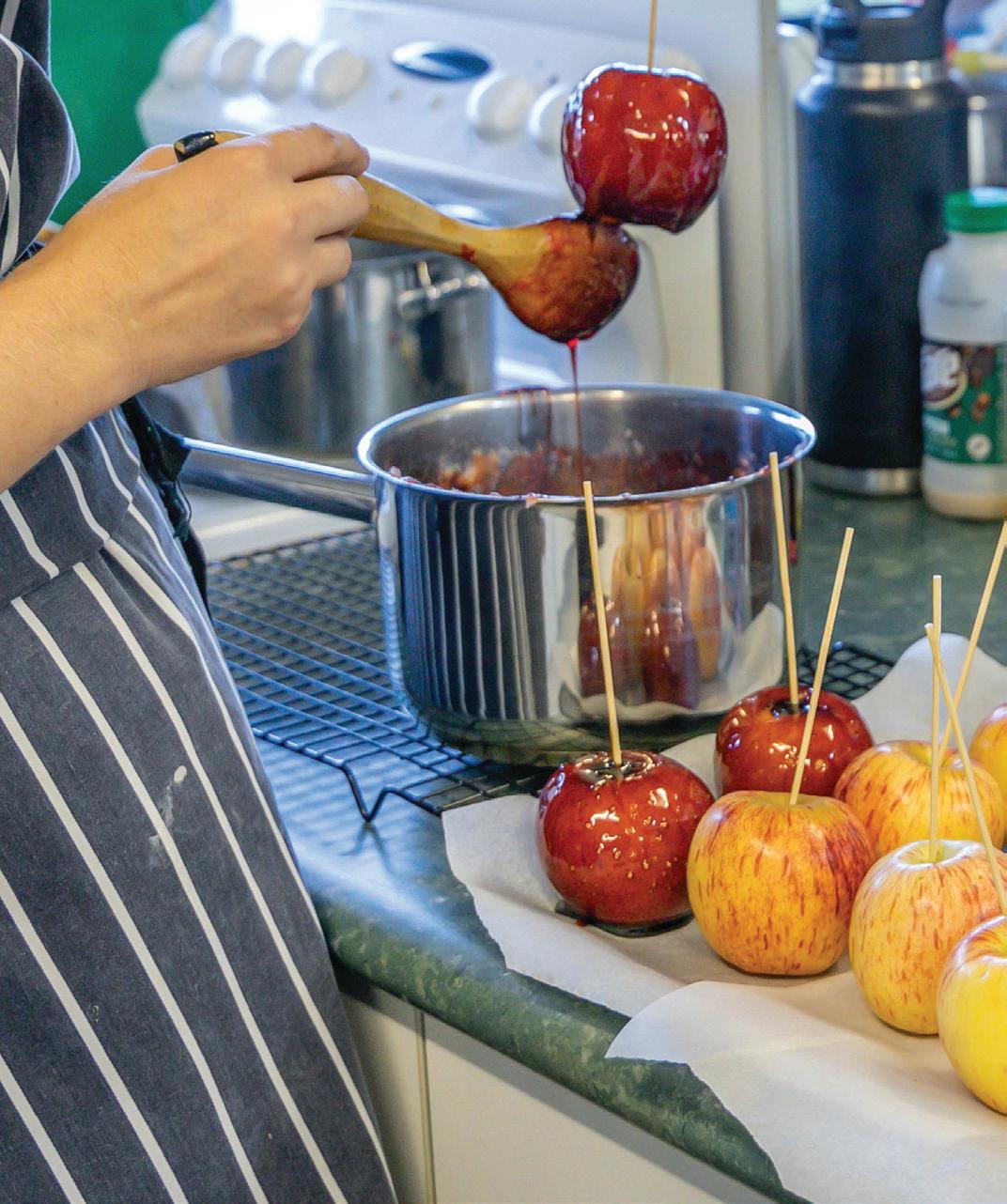
Year 10 Home Economics builds students’ practical skills and understanding of food and textile studies with a focus on sustainability and culture. Students explore Australia’s First Nations Peoples’ cuisines, native ingredients, and sustainable food practices while continuing to develop safe food preparation and hygiene skills, leading them into Hospitality Practices.
creative projects. In the “Gift of Giving” unit, students create a garment for donation, while the “Revitalising the Wardrobe” unit focuses on repairing, redesigning, and upcycling existing clothing items.
The course encourages creativity, sustainability, problem-solving, time management, and responsible consumer choices while developing practical life skills for everyday living.
In STEM, students will develop a sophisticated understanding of the synergistic relationship between Science, Technology, Engineering, and Mathematics (STEM). This will provide a powerful framework for addressing complex global issues through advanced project- and problem-based investigations. Building upon prior knowledge, students will delve deeper into specialised areas within Digital Technologies, Physics, Chemistry, Biology, Mathematics, and Engineering to solve real-world problems. research, and develop solutions for school and community issues. Students will build crucial critical thinking, creativity, collaboration, and problem-solving skills needed for future STEM careers and being informed global citizens.

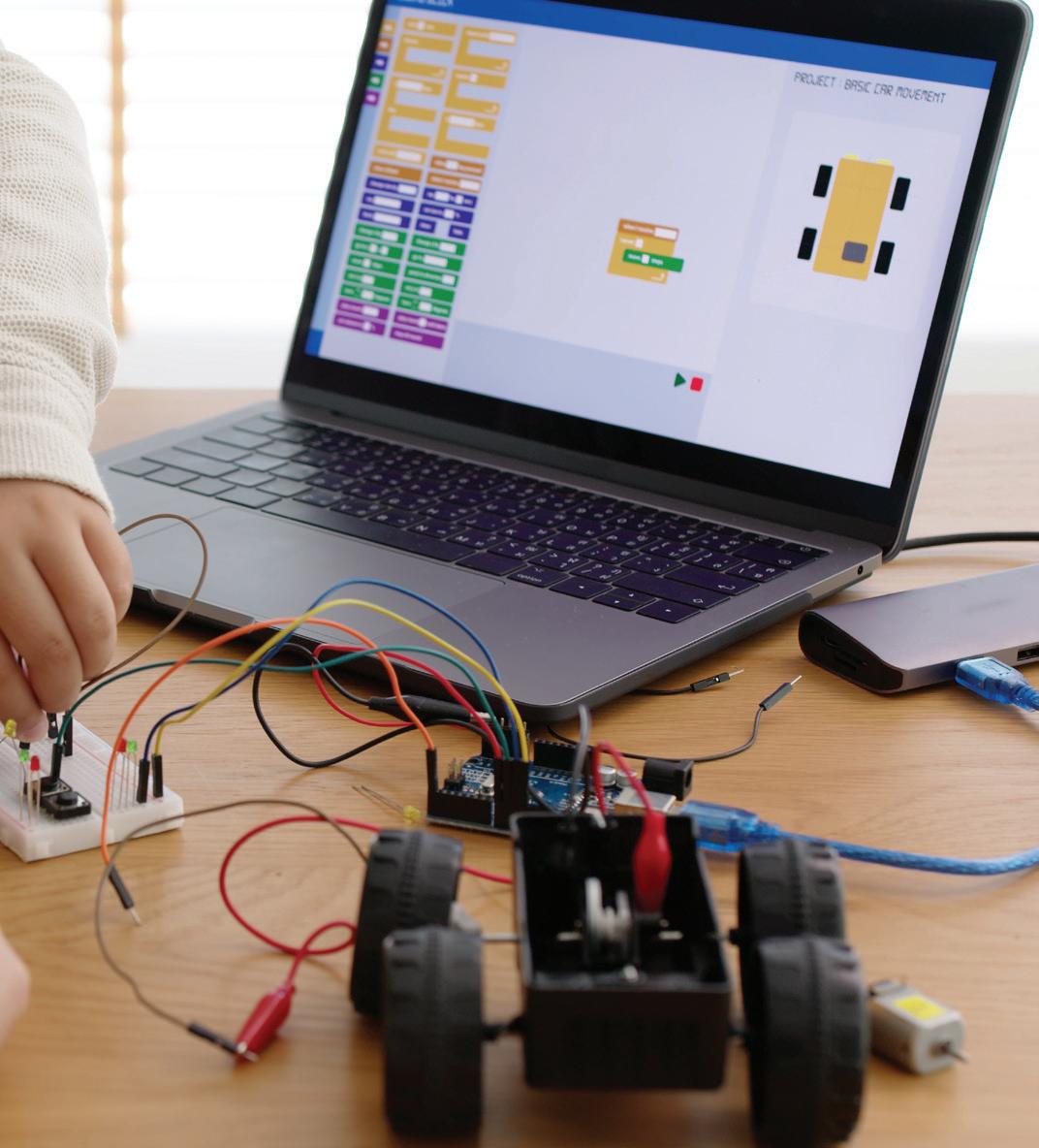
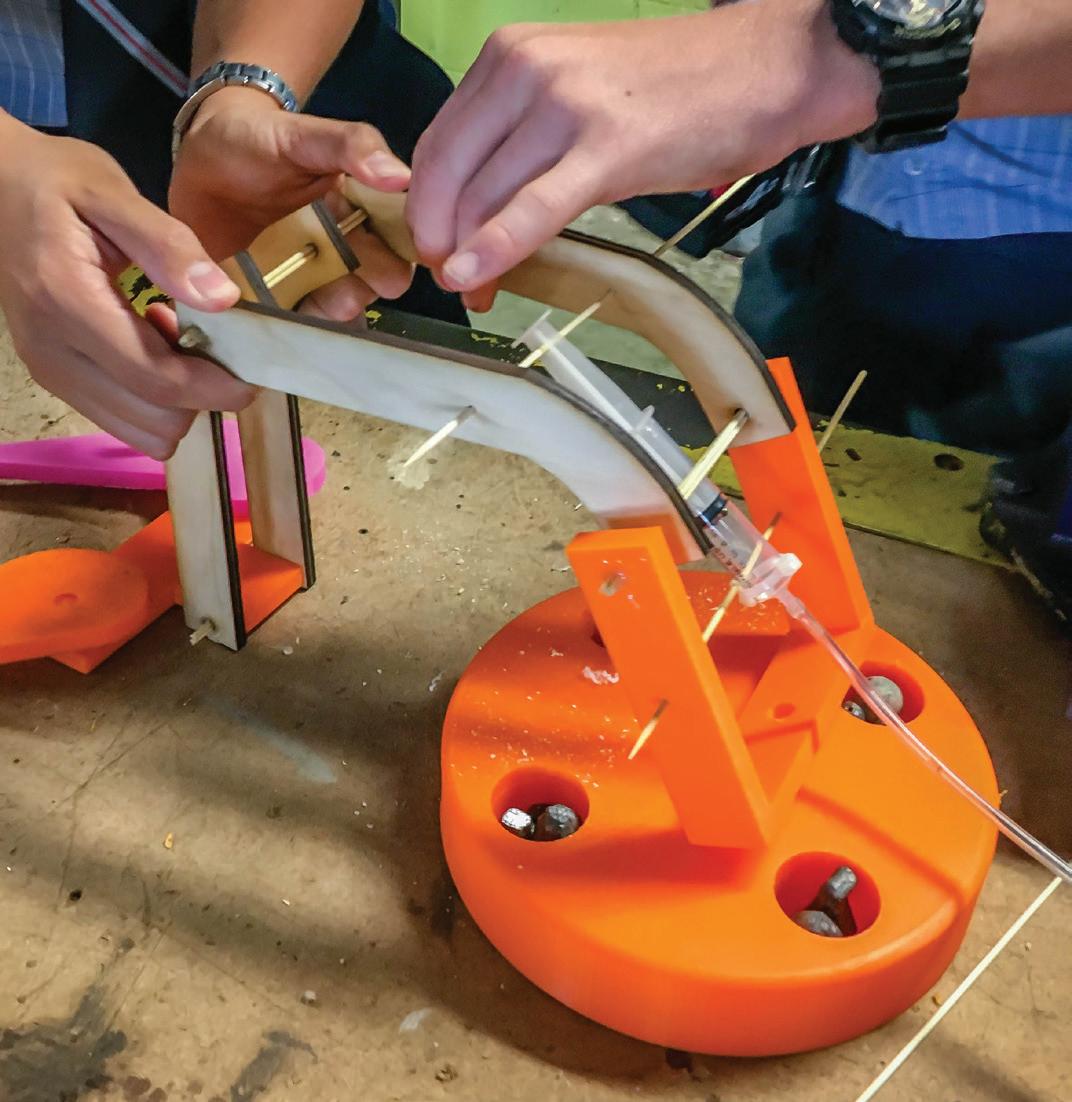
Students will design, fabricate and test ideas that use new technology.
Students use Computer Aided Manufacturing (CAM) and learn the fundamentals of hydraulics and electronics. Students also have the opportunity to create and participate in a Catapult Challenge.
Design Technology will prepare students to undertake the study of Design in Years 11 and 12 and also supports learning in Physics.
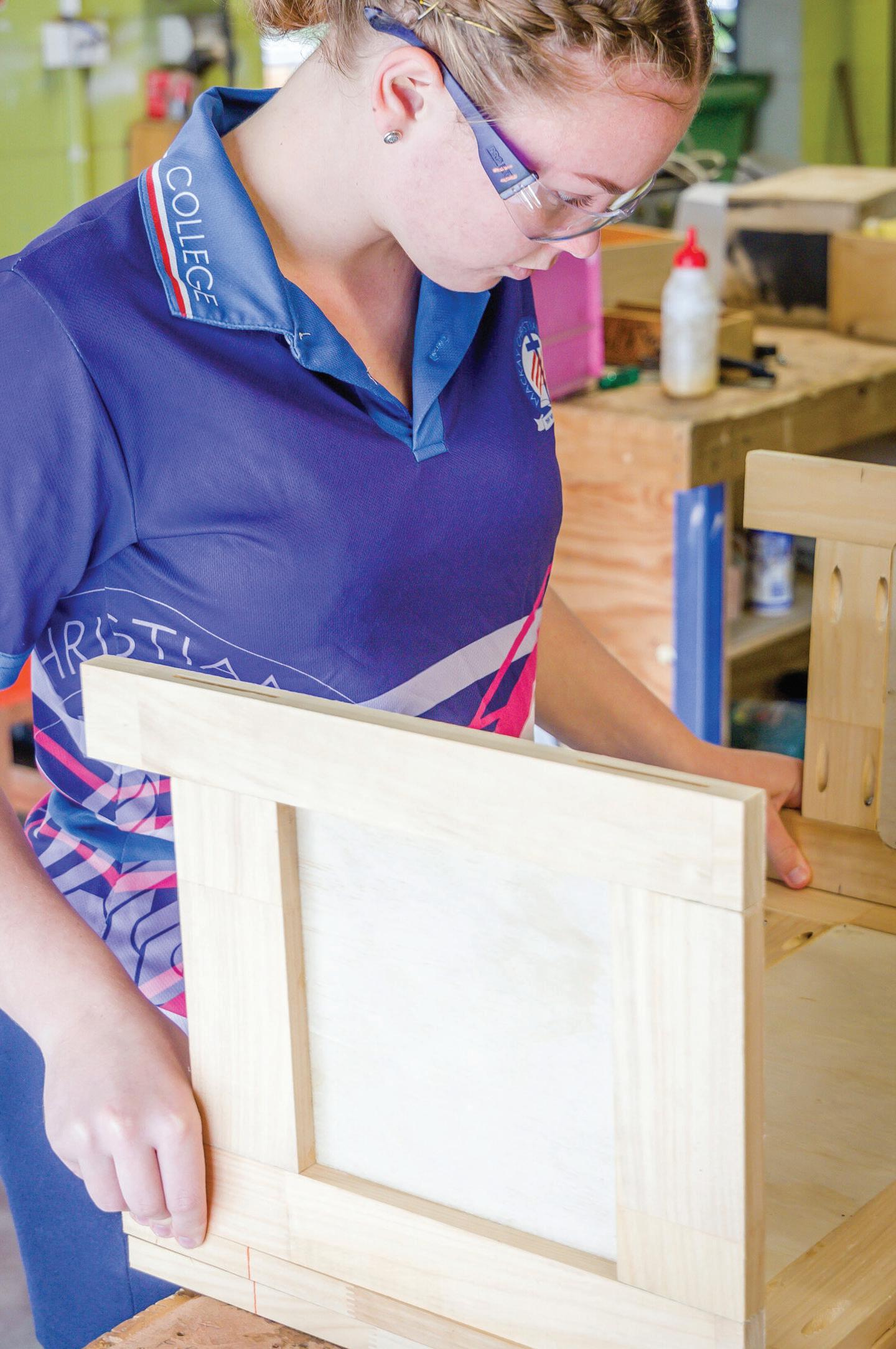
Students build workplace skills and test their design thinking process in Industrial Technology. This subject provides the opportunity to create solutions through design using Computer Aided Drafting (CAD) and Computer Aided Manufacturing (CAM) and then utilise a range of materials, tools, machines and processes to produce quality outcomes. Students undertaking this course may be considering the Trade Training Centre as part of their Senior Learning Pathway.
In Woodwork, students work on traditional furnishing projects. Students gain a good understanding of woodworking joints and technical drawings.
In Metalwork, students will be introduced to metals engineering trade skills. They will be working in the Trade Training Centre to complete a training journal to record the skills they have learned, where they are up to with their project and what they will be doing for the next step. They will also have the opportunity to try welding, machining and the use of hand tools to complete a project.
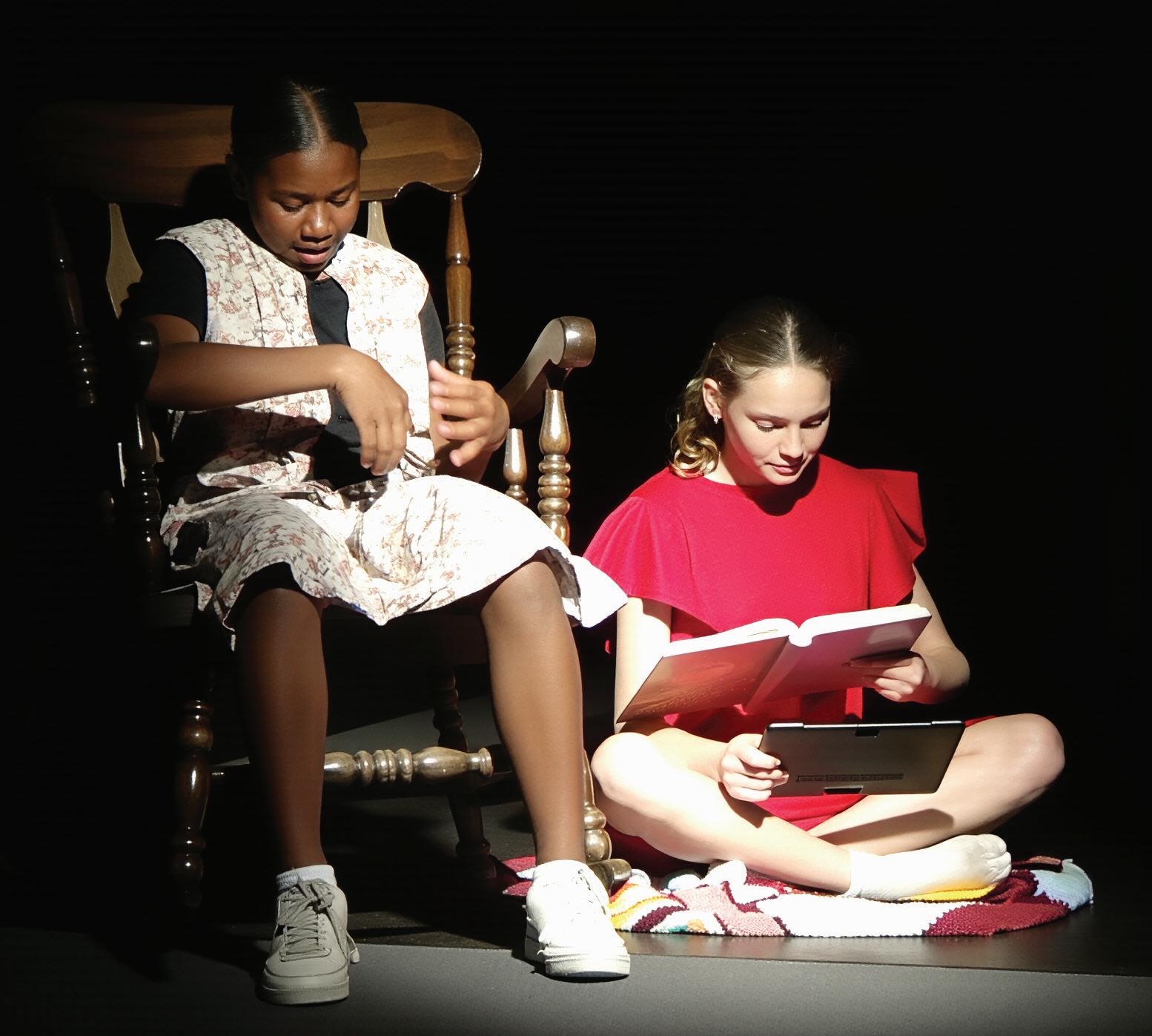
Drama is an exciting course that develops students’ skills and understandings in the making of and responding to dramatic works. Innovation and creative thinking are at the forefront in Drama.
Students will study performance expression and design elements within a variety of artistic styles. They will have an opportunity to explore the expressive capacity of their voice and physical movement to create dramatic meaning for an audience. This course will prepare students for the study of Drama in Years 11 and 12.
This is a creative and dynamic subject area that equips students with practical skills using contemporary technologies and industry practices to communicate ideas, stories, and messages through visual and digital media.
Students participating in this subject will strengthen creative and technical skills for a range of media practices. They will analyse how media arts works communicate meaning and think critically about media representations and their impact on audiences.
media projects as they discover pathways into creative industries and further study.
Major projects have included:
• Video Production and Editing
• Media Text Analysis
• Photography and Digital Manipulation
• Logo Design and Branding
• Promotional Advertising
• Website Design and Digital Publications

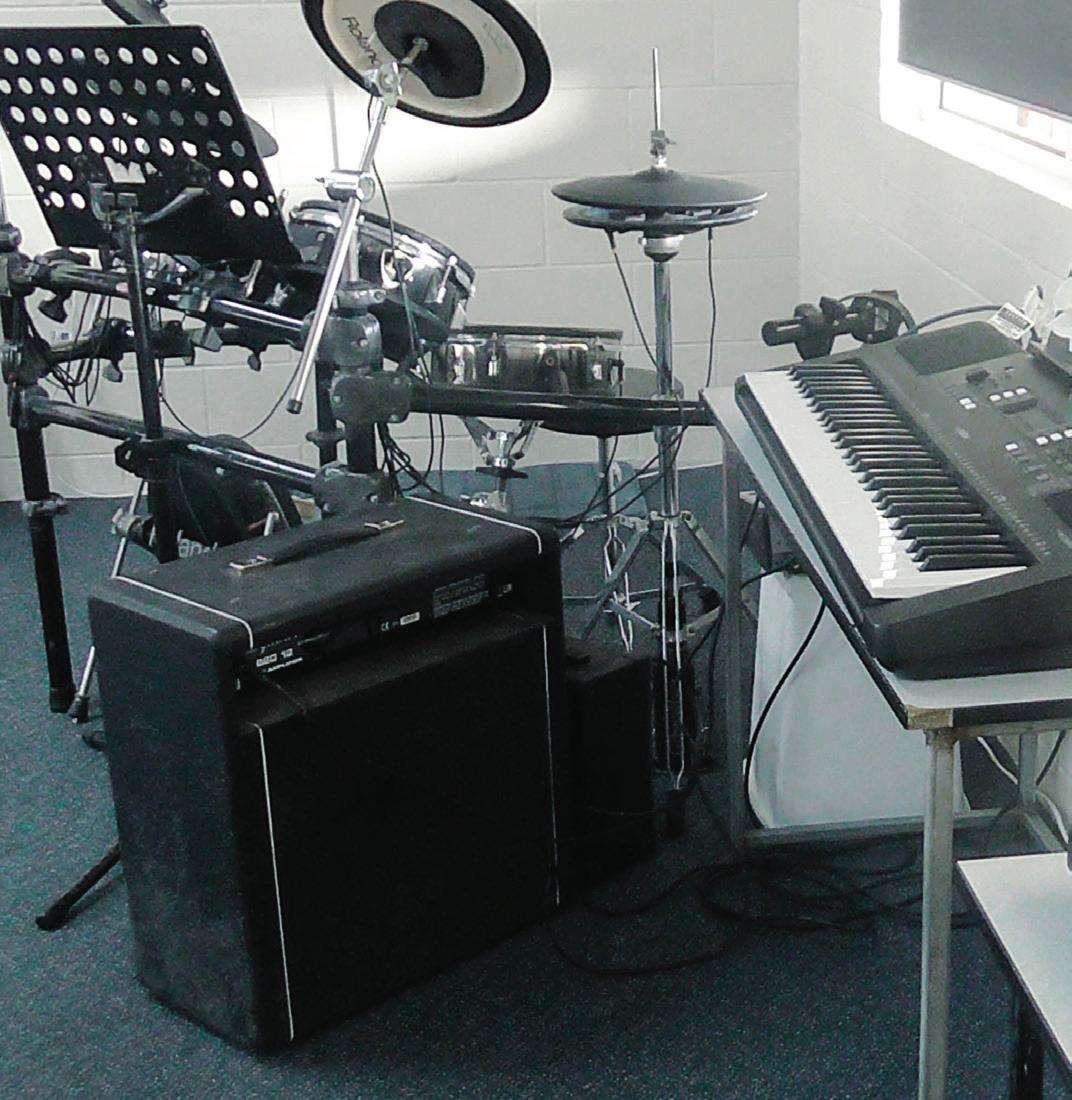
Students will have the opportunity to develop their skills in performance and composition. Students will also explore, write and respond in preparation for musicology tasks in Years 11 and 12.
This is achieved through exploring a variety of music styles and techniques - including the study of Australian music and music through the centuries. This course also allows students the opportunity to develop their potential in their preferred area of musical expertise when performing and composing.
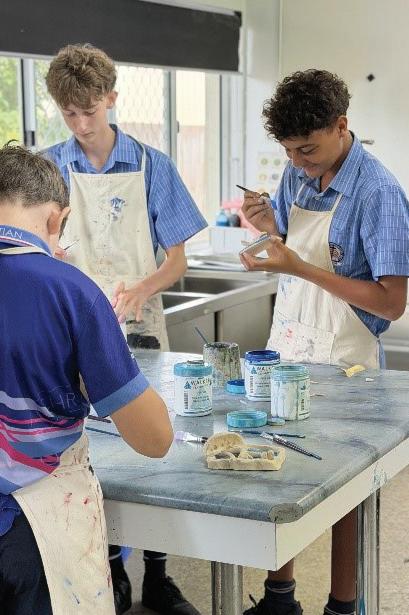
In Year 10 Visual Arts, students explore diverse artistic practices, deepen their understanding of visual conventions, and develop critical thinking skills through analysis and evaluation of artworks and artists. They learn to manipulate materials and techniques, build personal style, and create artworks that communicate ideas. The scope and sequence also include curating and presenting exhibitions to engage audiences.
This subject will prepare students to undertake Visual Arts in Practice in Years 11 and 12.
Creative Thinking
- Analytical thinking
- Problem solving
- Decision making
- Reasoning
- Reflecting and evaluating
- Intellectual flexibility
- Innovation
- Initiative and enterprise
- Curiosity and imagination
- Creativity
- Generating and applying new ideas
- Identifying alternatives
- Seeing and making new links
Communication
Collaboration & Teamwork
- Effective oral and written communication
- Using language, symbols and texts
- Communicating ideas effectively with diverse audiences
Personal & Social Skills
- Relating to others (interacting with others)
- Recognising and using diverse perspectives
- Participating and contributing
- Community connections
- Adaptability/flexibility
- Management (self, career, time, planning and organising)
- Character (resilience, mindfulness, open and fair-mindedness, self-awareness
- Leadership
- Citizenship
- Cultural awareness
- Operations and concepts
- Accessing and analysing information
- Being productive users of technology
- Digital citizenship
General English develops students as thoughtful, creative and critical users of language. Students study a range of literary and non-literary texts to explore how language ethical ways of thinking.
Aligned with the QCAA General English 2025 syllabus, students develop skills in reading, viewing, writing, speaking and listening for a range of purposes, audiences and contexts. They analyse and evaluate ideas, attitudes, values and representations in texts, while also creating their own imaginative, analytical and persuasive responses.
Through this course, students have opportunities to:
•communicate effectively in Standard Australian English when responding to and creating literary and non-literary texts
•analyse how language, text structures, aesthetic features and stylistic devices shape meaning and position audiences
•make purposeful choices about genre, structure, language, textual features and technologies when creating texts
•appreciate the aesthetic and ethical value of language and literature
•think critically and creatively about how texts represent individuals, communities, cultures and the world

• social and cultural assumptions, attitudes, values and beliefs
•develop empathy, discernment and respect by engaging with diverse perspectives, voices and experiences.
At Mackay Christian College, General English is taught through a Christian worldview. Students are encouraged to seek truth, communicate with wisdom and integrity, and consider how texts shape understandings of identity, relationships, justice, culture and human dignity. Through the study of language and literature, students are challenged to value others as image-bearers of God and to engage respectfully with different perspectives.
CLEAR values. Students demonstrate Christlikeness through respectful communication and empathy, Learning through critical and creative engagement with texts, Excellence through careful crafting and analysis of language, Attitude through perseverance and open-mindedness, and Respect through listening to and valuing diverse viewpoints.
A course of study in General English promotes intellectual communication. These skills prepare students for further study, work, local and global citizenship, and lifelong learning across a wide range of contexts.

General Mathematics is designed for students who want to extend their mathematical skills. It incorporates a more detailed approach that equips learners for their needs as future citizens, preparing them for tertiary studies, vocational education or work in a complex and rapidly changing world.
Students undertaking this subject will further develop future focused skills as critical and creative thinkers, innovators and problem-solvers. They develop their ability to take initiative and promote curiosity in an increasingly complex and data driven world. Learning reinforces prior knowledge and continues to develop key mathematical ideas.
Students in Years 11 and 12 study:
Unit 1:
Money, measurement, algebra and linear equations
Unit 2: Applications of linear equations and trigonometry, matrices and univariate data analysis
Unit 3:
Bivariate data and time series analysis, sequences and Earth geometry
Unit 4:
lnvesting and networking
Topics are developed systematically, with increasing levels of complexity and connection as skills in patterns, order and generality and uncertainty are investigated.

Problems are explored and solved through observation, communication system involving written, symbolic, spoken and visual components.
to become well-informed consumers of loans, annuities and perpetuities to assist them in comparing products for best purpose, managing money and compound interest. It also contains foundational statistic topics that will equip students with knowledge to apply formulae to spreadsheets.
Emphasis is placed on the mastery of content, ensuring
This assists students to make connections between related concepts in both complex familiar and complex unfamiliar situations.
•Business, e.g. trades, nursing, tourism and hospitality
•Commerce, e.g. administrative roles
•Education
•Finance
•IT
•Social science
•The creative industries

Students who undertake Mathematical Methods will see the connections between mathematics and other areas of the curriculum and apply their mathematical skills to real-world problems, becoming critical thinkers, innovators and problem-solvers. Through solving problems and developing models, they will appreciate that mathematics and statistics are dynamic tools that are critically important in the future.
The major domains of mathematics in Mathematical Methods are:
•Algebra
•Functions, relations and their graphs
•Calculus
•Statistics
Topics are developed systematically, with increasing levels of sophistication, complexity and connection, and build on algebra, functions and their graphs, and probability from the P–10 Australian Curriculum. Calculus is essential for developing an understanding of the physical world. The domain Statistics is used to describe and analyse phenomena involving uncertainty and variation. Both are the basis for developing effective models of the world and solving complex and abstract mathematical problems. The ability to translate written, numerical, algebraic, symbolic and graphical information from one

representation to another is a vital part of learning in Mathematical Methods.
Mathematical Methods is a General subject suited to students who are interested in pathways beyond school that lead to tertiary studies, vocational education or work.
Students who study Mathematical Methods in Year 11 should have achieved at least a C standard in Prep Mathematics Extension in Year 10. To be successful in Mathematical Methods, students will need to consistently work hard over the duration of the course.
•Natural and physical sciences, especially physics and chemistry
•Mathematics and science education
•Medical and health sciences including human biology, biomedical science, nanoscience and forensics
•Engineering including chemical, civil, electrical and mechanical engineering
•Avionics, communications and mining
•Computer science including electronics and software design
•Psychology and business

Biology provides opportunities for students to engage with living systems.
In Years 11 and 12, students:
•Develop their understanding of cells and multicellular organisms
•Engage with the concept of maintaining the internal environment
•Study biodiversity and the interconnectedness of life
•Concepts of heredity and the continuity of life
Biology aims to develop students’:
•Sense of wonder and curiosity about life
•Respect for all living things and the environment
•Understanding of how biological systems interact through and between these systems, and the processes by which they persist and change
•Understanding of major biological concepts, theories and models related to biological systems at all scales, from subcellular processes to ecosystem dynamics
•Ability to use sound, evidence-based arguments creatively and analytically when evaluating claims and applying biological knowledge

•Appreciation of how biological knowledge has developed over time and continues to develop, how scientists use biology in a wide range of applications, local, regional and global contexts
• and other research investigations, including the collection and analysis of qualitative and quantitative data and the interpretation of evidence
•Ability to communicate biological understanding, appropriate representations, modes and genres.
•Life Scientist
•Anatomist
•Physiologist
•Biochemist
•Biotechnologist
•Botanist
•Marine Biologist
•Microbiologist
•Zoologist
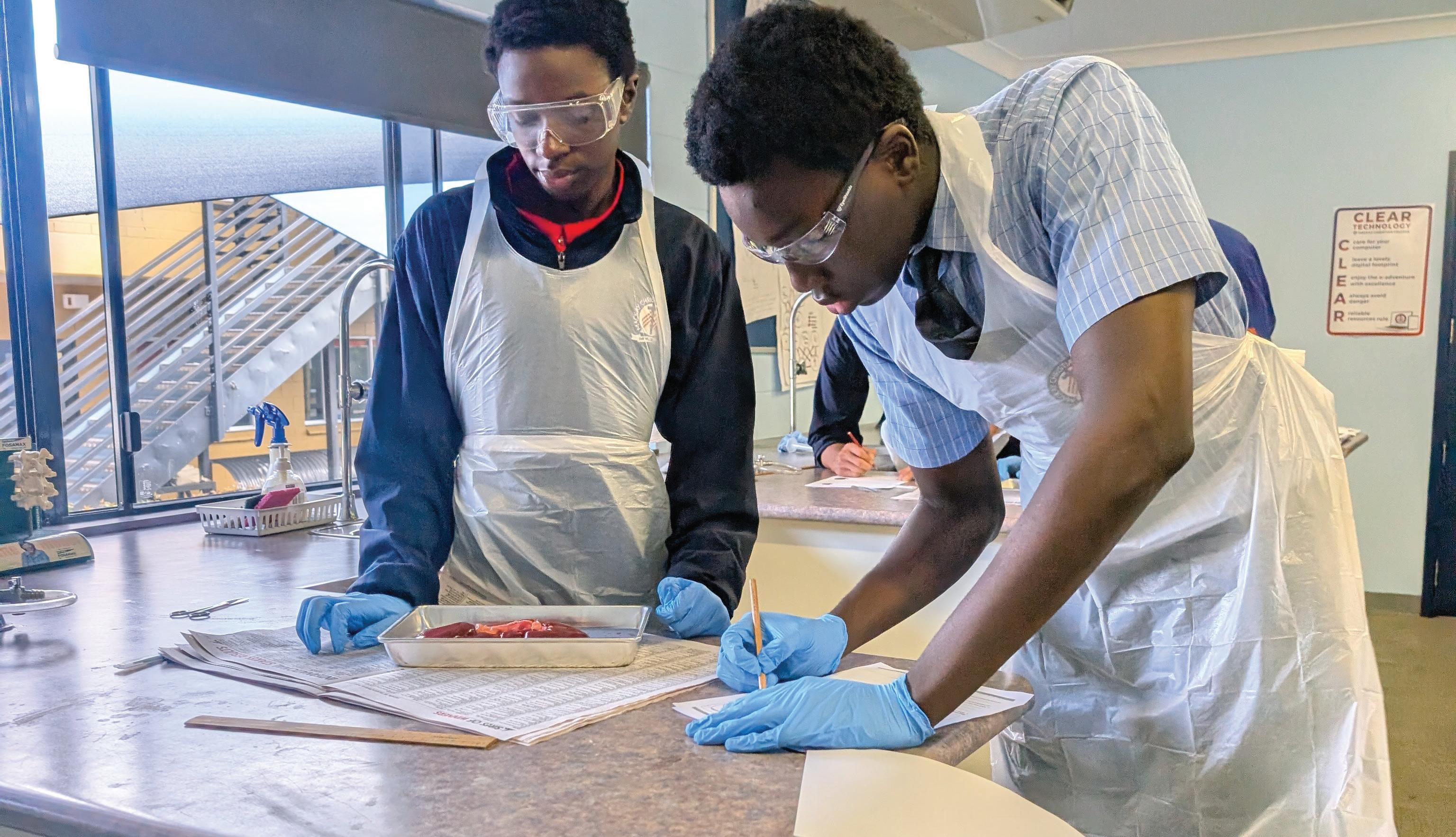
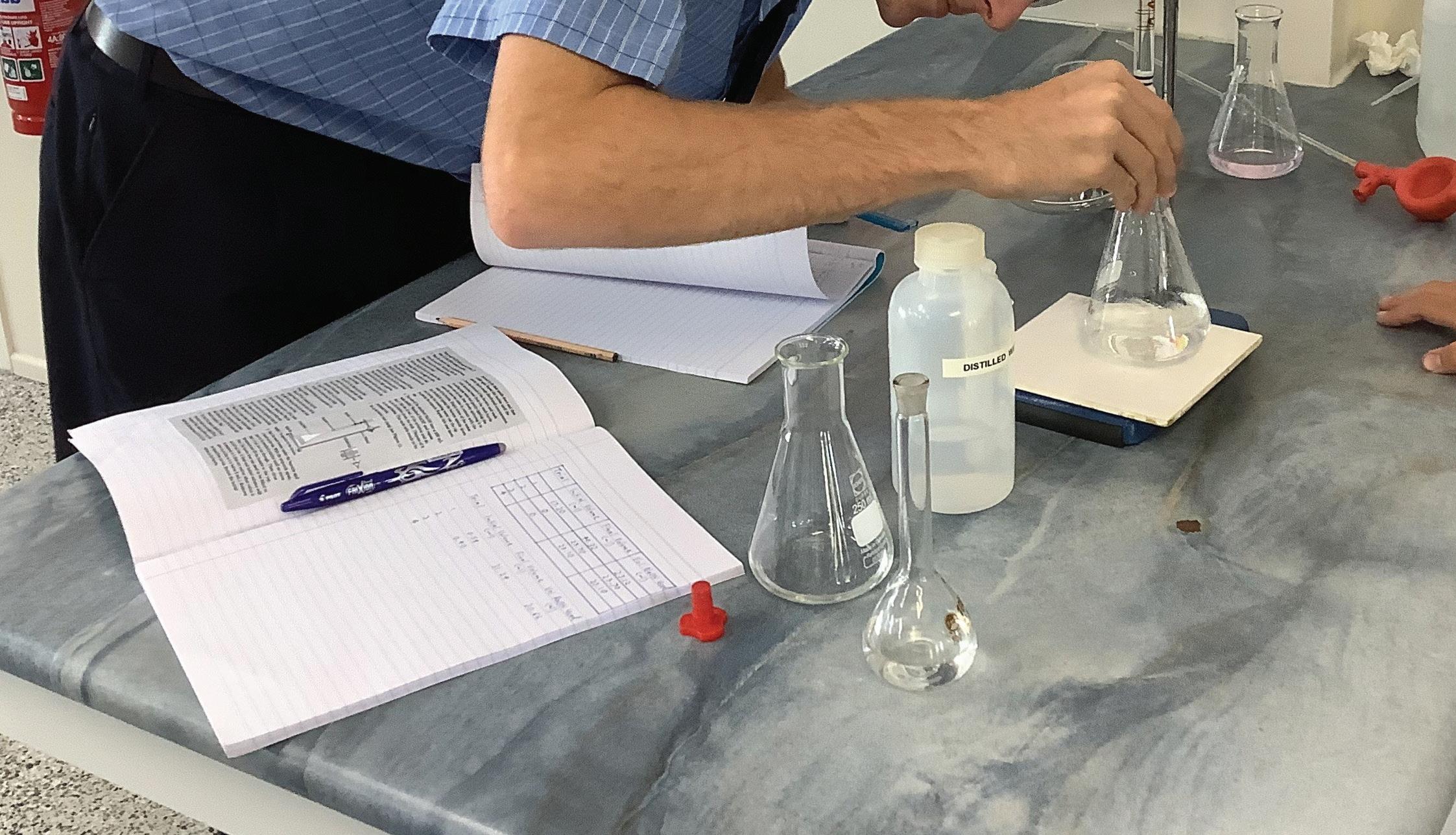
Chemistry is the study of materials and their properties and structure. Chemistry is often referred to as the “central science” because of its role in connecting the physical sciences, which include chemistry, with the life sciences and applied sciences such as medicine and engineering.
Senior Chemistry students participate in a range of experiments and investigations which allow for the progressive development of their suite of science inquiry skills, while gaining an enhanced appreciation of chemical structure and properties. Collaborative experimental work also helps students to develop communication, interaction, and self-management skills.
Students in Years 11 & 12 study:
• Atomic theory, chemical bonding and the structure and properties of elements and compounds
• Intermolecular forces, gases, aqueous solutions, acidity and rates of reaction
•Equilibrium processes and redox reactions
• Organic chemistry, synthesis and design
Studying Chemistry will develop students’:
•interest in and appreciation of chemistry and its usefulness in helping to explain phenomena and solve problems encountered in their everchanging world
•understanding of the theories and models used to describe, explain and make predictions about chemical systems, structures and properties

•understanding of the factors that affect chemical systems and how chemical systems can be controlled to produce desired products
•appreciation of chemistry as an experimental science that has developed through independent impacts on society and implications for decisionmaking
investigations, including the collection and analysis of qualitative and quantitative data, and the interpretation of evidence
arguments and claims in order to solve problems and generate informed, responsible and ethical conclusions
•ability to communicate chemical understanding through the use of appropriate representations, language and nomenclature.
•Research, forensic or environmental scientist
•Engineering
•Health Science - medicine, pharmacy, allied health
•Education
•Veterinary Science
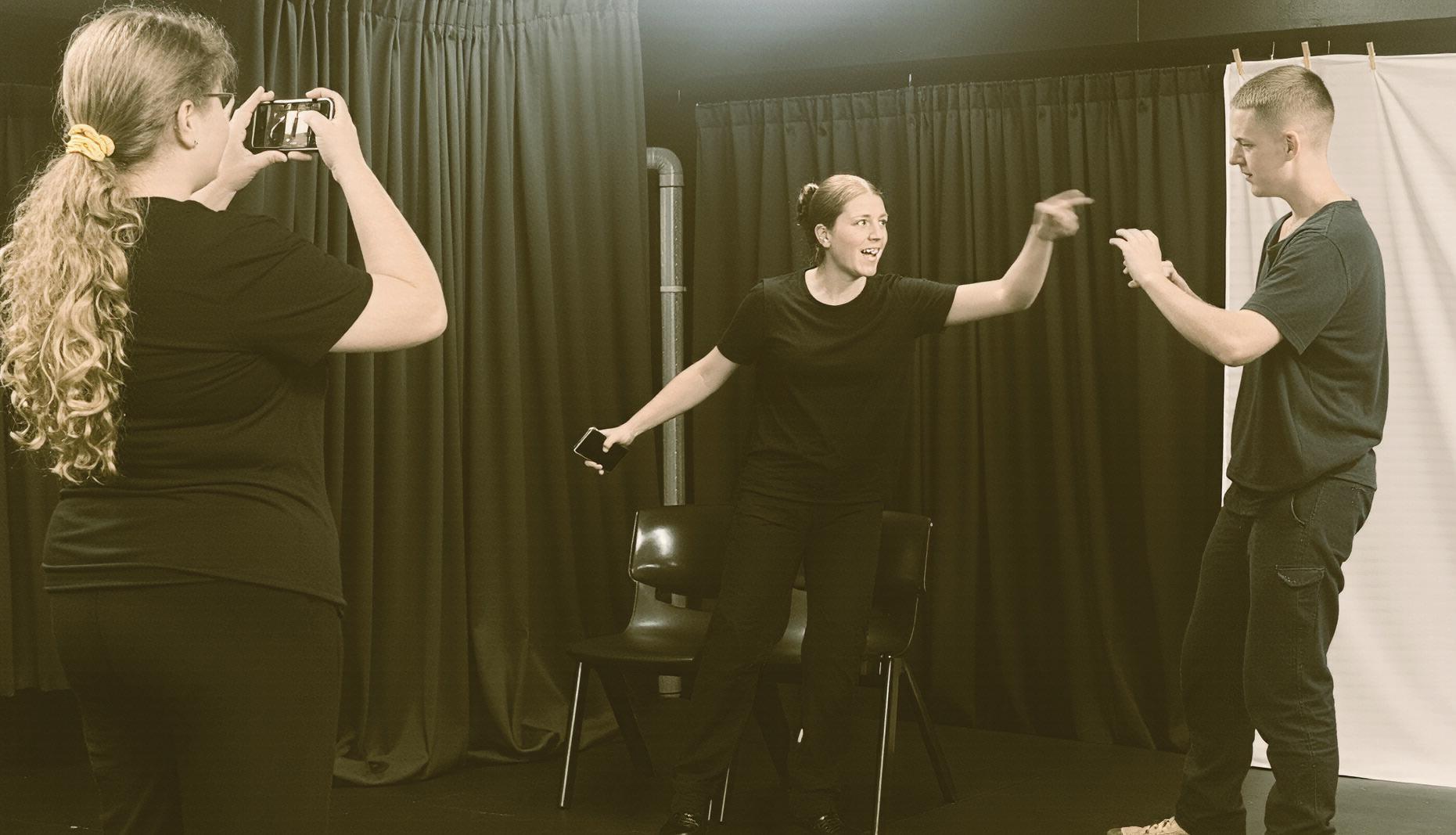
Drama is an exciting course that develops students’ performance and theoretical skills. It gives students opportunities to explore their role within an ensemble and study the design elements of technical production. Students engage in learning experiences that develop the future focused skills of critical and creative thinking, communication, collaboration and teamwork.
In Years 11 and 12, students study:
•How drama promotes shared understanding of the human experience (Contemporary Theatre)
• (Realism Styles)
•How to use drama to challenge our understanding of humanity (Social and Political Theatre)
•How to transform dramatic practice (from Traditional Styles to Current Practices)
Drama engages students in creative processes and involves them using a range of artistic skills as they make and respond to dramatic works. They study a range of forms, styles and their conventions in a variety of inherited traditions, current practice and emerging trends. Students will have an opportunity to explore the expressive capacity of their voice and physical movement to create dramatic meaning for an audience.

•Arts administration and management, e.g. artist manager, arts administrator, booking agent, copyright/royalties manager, tour manager, venue manager, events and festivals manager/ producer, arts and cultural advisor/administrator
•Communication, e.g. writer, communication strategist, arts editor, blogger/vlogger
•Creative industries, e.g. professional performer, actor, director, dramaturge, independent artist, artistic director, costume designer, producer, rehearsal director, theatre technician, stage manager, dialect coach, radio presenter
•Education, e.g. educator in schools, corporate, private studios, community, universities and professional drama company education programs
•Public relations, e.g. campaign manager, publicist, creative director
•Research, e.g. researcher and academic, journalist/critic
•Science and technology, e.g. drama health professional with further specialised training in areas of medicine, health, therapy.
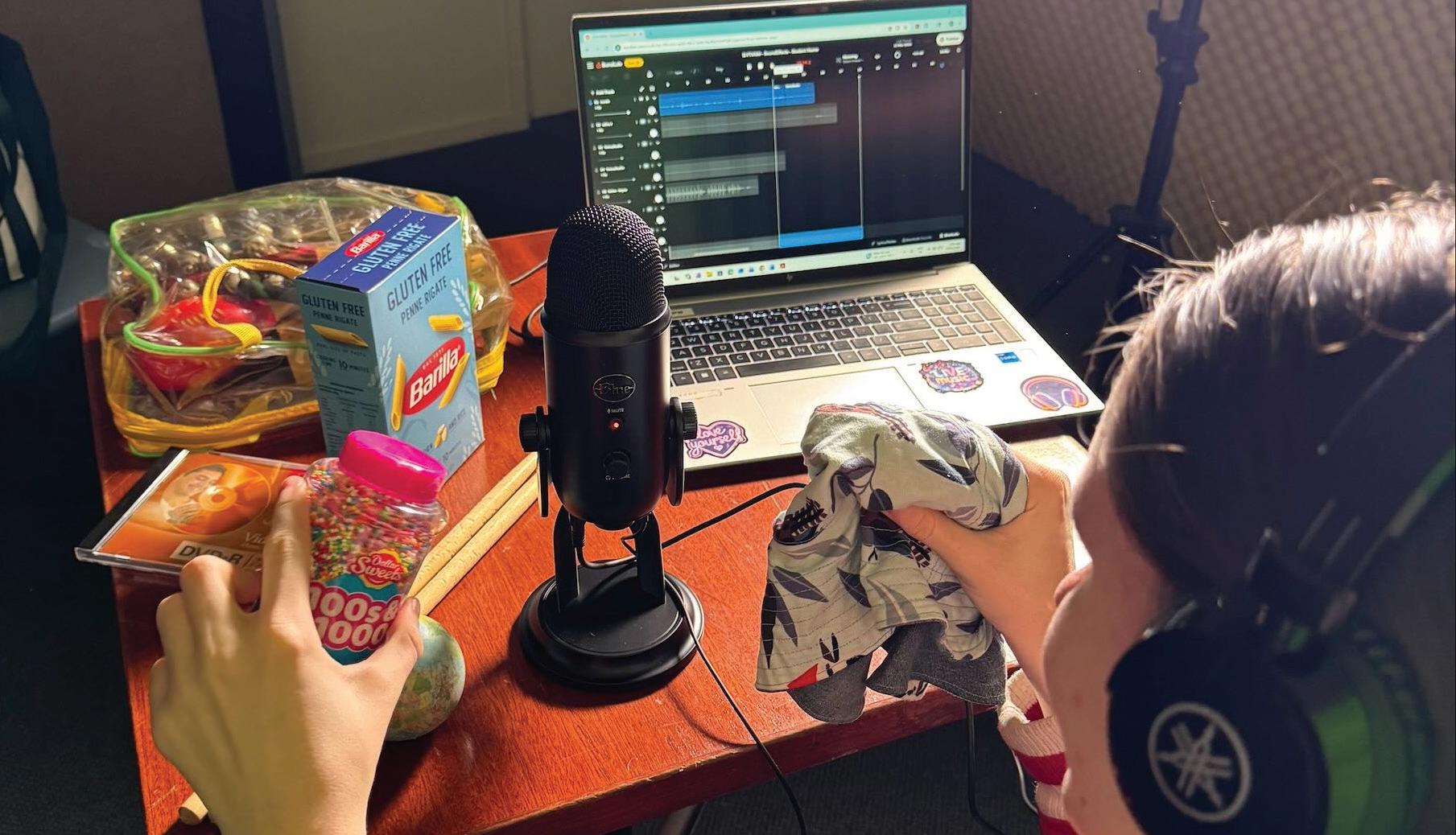
Film, Television & New Media uses an inquiry learning model, developing critical thinking skills and creative that operate in the contexts of production and use.
The key concepts of technologies, representations, audiences, institutions and languages (T.R.A.I.L) are drawn from a range of contemporary media theories and practices. Students will creatively apply Film, Television and New Media key concepts to individually and collaboratively make moving-image media products and will investigate and respond to moving-image media content and production contexts.
In Years 11 and 12, students will:
•Develop knowledge and skills in creative thinking, communication, collaboration, planning, critical analysis and digital and ethical citizenship
•Develop the necessary critical and creative skills
cultures and make sense of what they see and thinking and communication skills

•Advertising, art director, brand specialist and graphic artist
•Film and Television, storyboard artist, producer and camera operator
•Public Relations, publicist, creative director and campaign manager
•Creative industries eg. animator, photographer, game developer and screenwriter
•Education
•Writer, journalist, blogger/vlogger and web content designer
•Graphic designer, set designer or stage designer
Geography enables students to explore and understand the relationships between people, places, environments and the processes that shape our world. Through both practical and theoretical learning, students investigate contemporary geographical challenges at local, national and global scales.
inquiry to examine real-world issues, including natural hazards, environmental change, population growth, resource management and sustainability. Through the study of diverse cultures, people and places, students develop a broader understanding of the world and the interconnected nature of human and physical environments.
This course develops students’ ability to collect, analyse and interpret geographical data, evaluate evidence, and propose informed responses to complex challenges. Students also develop valuable skills through the use of spatial technologies, including Geographic Information Systems (GIS) such as ArcGIS.

A course of study in Geography equips students with the knowledge and skills to understand contemporary global challenges and contribute thoughtfully and responsibly to their local and global communities.
•Urban and environmental design
•Planning and management
•Biological and environmental science
•Conservation and land management
•Emergency response and hazard management
•Oceanography
•Surveying
•Global security
•Economics
•Engineering
•Information technology, and science
•Geospatial Technologies
•Geology
•National Park Service (Park Ranger)

Literature is a subject for students who enjoy reading, discussing ideas, and exploring the way stories connect to people and the world around them.
texts while exploring themes such as identity, power, relationships, culture, morality, and human experience. Literature encourages students to think deeply, share interpretations, and consider different perspectives and ways of seeing the world.
The course combines creativity with analysis. Students complete a range of engaging assessments including analytical essays, imaginative writing, and multimodal projects such as reimagined video tasks where they transform literary ideas for new audiences and contexts.
Literature is highly discussion-based and encourages students to express ideas, experiment with writing styles, and create original responses inspired by the texts they study. It is an excellent subject for students who meaningful ideas.
Literature helps students develop communication, support a wide range of future pathways and careers.
Literature is ideal for students who:
•like exploring interesting characters and ideas
•enjoy creative and imaginative tasks ideas
•are curious about people, culture, and the world around them
English is an asset in almost all professions but features strongly in the following:
• Writing
• Journalism • Librarian • Marketing • Law
Social Work
Travel
Public Relations • Film & Television
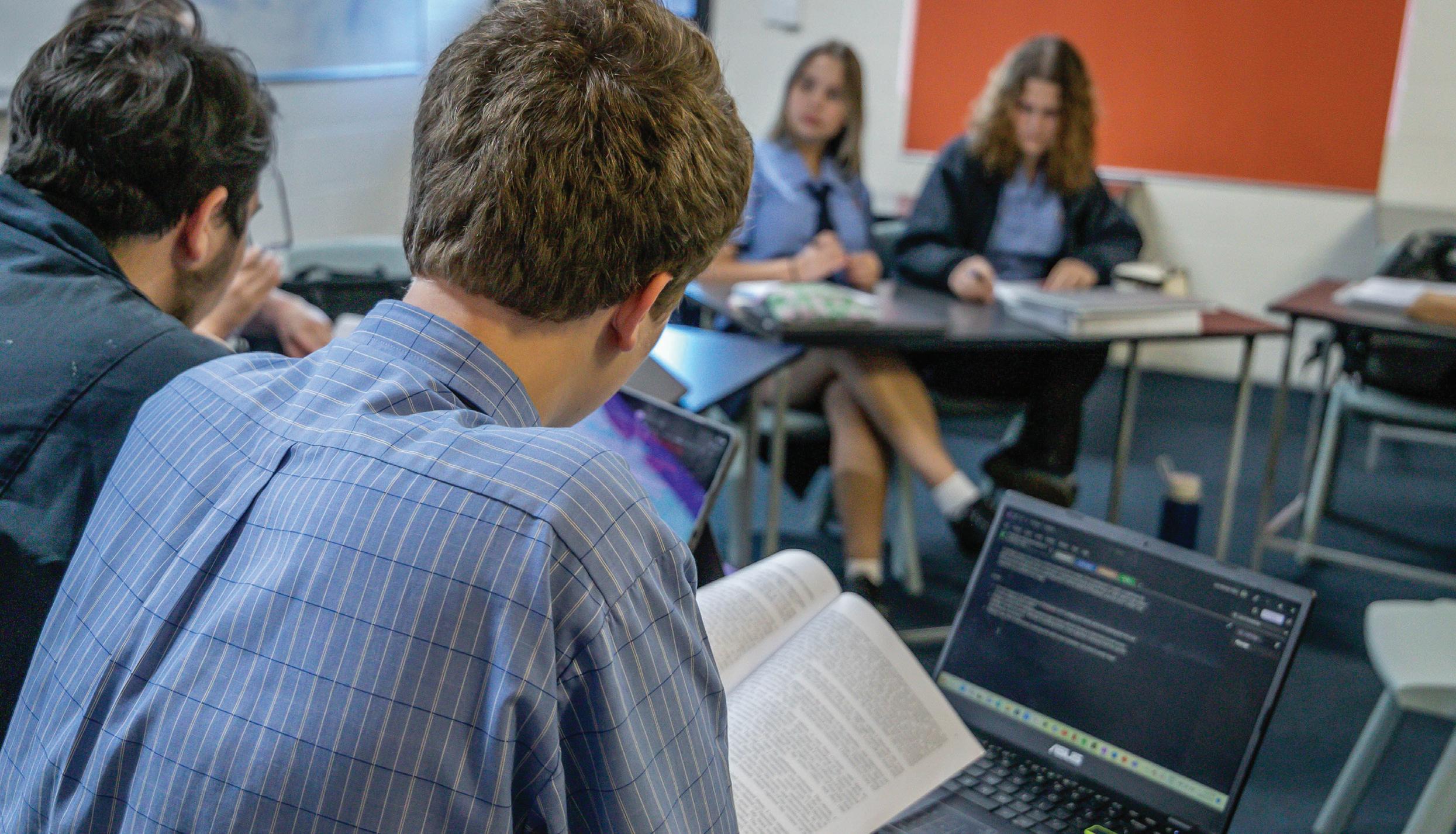

“The more you know about the past, the better prepared you are for the future”- Theodore Roosevelt
Modern History at Mackay Christian College has two main aims:
•First, Modern History seeks to have students gain historical knowledge and understanding about some of the main forces that have contributed to the development of the Modern World;
•Second, Modern History aims to have students think historically and form a historical consciousness in relation to these same forces.
Both aims complement and build on the learning covered
aim is achieved through the thematic organisation of Modern History around four of the forces that have helped to shape the Modern World: ideas, movements, national experiences and international experiences.
The second aim is achieved through the rigorous application of historical concepts and historical skills
uses a model of inquiry learning.
thrive in a dynamic, globalised and knowledge-based world. Through Modern History, students acquire an intellectual toolkit consisting of future focused skills.
This ensures students of Modern History gain a range of transferable skills that will help them forge their own pathways to personal and professional success, as well as become empathetic and critically-literate citizens who are equipped to embrace a multicultural, pluralistic, inclusive, democratic, compassionate and sustainable future.
•Historian / Museum Attendant
•Museum attendant
•Librarian
•Law clerk
•Writer
•Parliamentarian
•Tour guide
•Teacher
•Journalist
•Business / Economist
Physically educated learners develop the 21st century skills of critical and creative thinking, communication, personal and social skills, collaboration and teamwork, and ICT skills through rich and diverse learning experiences about, through and in physical activity. Physical Education fosters an appreciation of the values and knowledge within and across disciplines, and builds on students’ capacities to be self-directed, work towards
lifelong active engagement in a wide range of pathways beyond school.
Units of study include:
•Motor Learning, Functional Anatomy and Biomechanics
•Sporty Psychology and Equity
•Tactical Awareness, Ethics and Integrity
•Energy, Fitness and Training
Students learn experientially through three stages of an inquiry approach to ascertain relationships between
Students recognise and explain concepts and principles about and through movement, and demonstrate and

apply body and movement concepts to movement sequences and movement strategies. Through their purposeful and authentic experiences in physical activities, students gather, analyse and synthesise data to devise strategies to optimise engagement and performance. They evaluate and justify strategies about decision-making.
Schools devise assessments in Year 11 for two units to suit their context, including two Project – folio assessments, one Investigation – Report assessment and one internal examination. In Year 12 students complete four summative assessments including one external examination.
•Sports and Exercise Science
•Sport Psychology
•Biomechanics of Sport
•Primary or Secondary Teaching
•Sports Journalism
•Sports Therapies
•Sport Marketing, promotion, and management
•Event Management
•Sports Development and Coaching

Physics provides opportunities for students to engage with the classical and modern understandings of the universe.
In Year 11 and 12, students learn about:
•Fundamental concepts of thermodynamics, electricity and nuclear processes
•Concepts and theories that predict and describe the linear motion of objects. They will explore how scientists explain some phenomena using an understanding of waves
•The concept of gravitational and electromagnetic
•Modern physics theories and models that, despite being counterintuitive, are fundamental to our understanding of many common observable phenomena
Physics aims to develop students’:
•Appreciation of the wonder of physics and contemporary society
•Understanding that diverse natural phenomena may be explained, analysed and predicted using concepts, models and theories that provide a reliable basis for action
•Understanding of the ways in which matter and energy interact in physical systems across a range of scales

•Understanding of the ways in which models and are developed in physics
•How physics knowledge is used in a wide range of contexts and informs personal, local and global issues
•Investigative skills, including the design and conduct of investigations to explore phenomena and solve problems, the collection and analysis of qualitative and quantitative data, and the interpretation of evidence
•Ability to use accurate and precise measurement, valid and reliable evidence, and skepticism and intellectual rigour to evaluate claims
•Ability to communicate physics understanding, appropriate representations, modes and genres.
•Accelerator Operator
•Applications Engineer
•Data Analyst
•Design Engineer
•Physics Teacher
•IT Consultant
•Lab Technician
•Laser Engineer/Optical Engineer
•Research Associate
•IT Developer/Systems Analyst
Students study this subject in conjunction with Mathematical Methods, ie to study Specialist Mathematics, Mathematical Methods must also be undertaken. A consistent and demanding workload is required, but there are substantial rewards for those students who are prepared to embrace this challenge.
Specialist Mathematics will allow students to further develop their Mathematical knowledge and skills, and Physics or Economics.
The Major domains covered in Specialist Mathematics are:
•Combinations and permutations
•Matrices
•Vectors
•Trigonometry and trigonometric functions
•Calculus
•Complex numbers
•Statistics
Combinations and permutations are essential tools when calculating variations or chance. Management of staff becomes easier when one can calculate easily how many different rosters can be created from a team of 15 people.
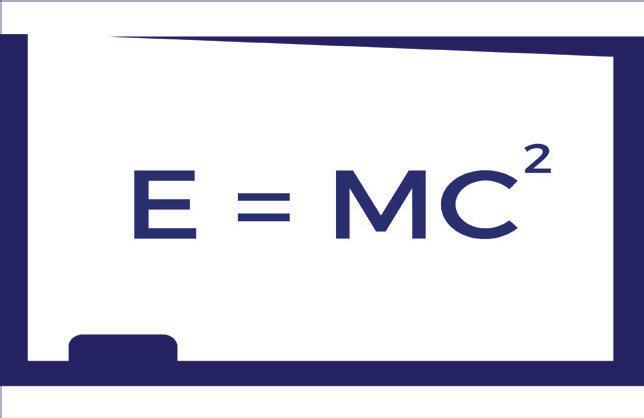
Calculus and trigonometric functions are paramount to the trajectory of an object.
Complex numbers solve those problems that lie outside the realm of “Real numbers”, while Statistics are vital for predicting where new hospitals, schools, and roads should be built.
Specialist Mathematics is a subject suited to students with a passion for Mathematics. Students need to have achieved at least a C+ standard in Mathematics Extension in Year 10, and be interested in tertiary studies beyond Year 12 with a Mathematics, Science or Education base.
•Engineering
•Aviation
•Medicine and Health Sciences
•Education
•Mathematician
•Computer Science
•Economics

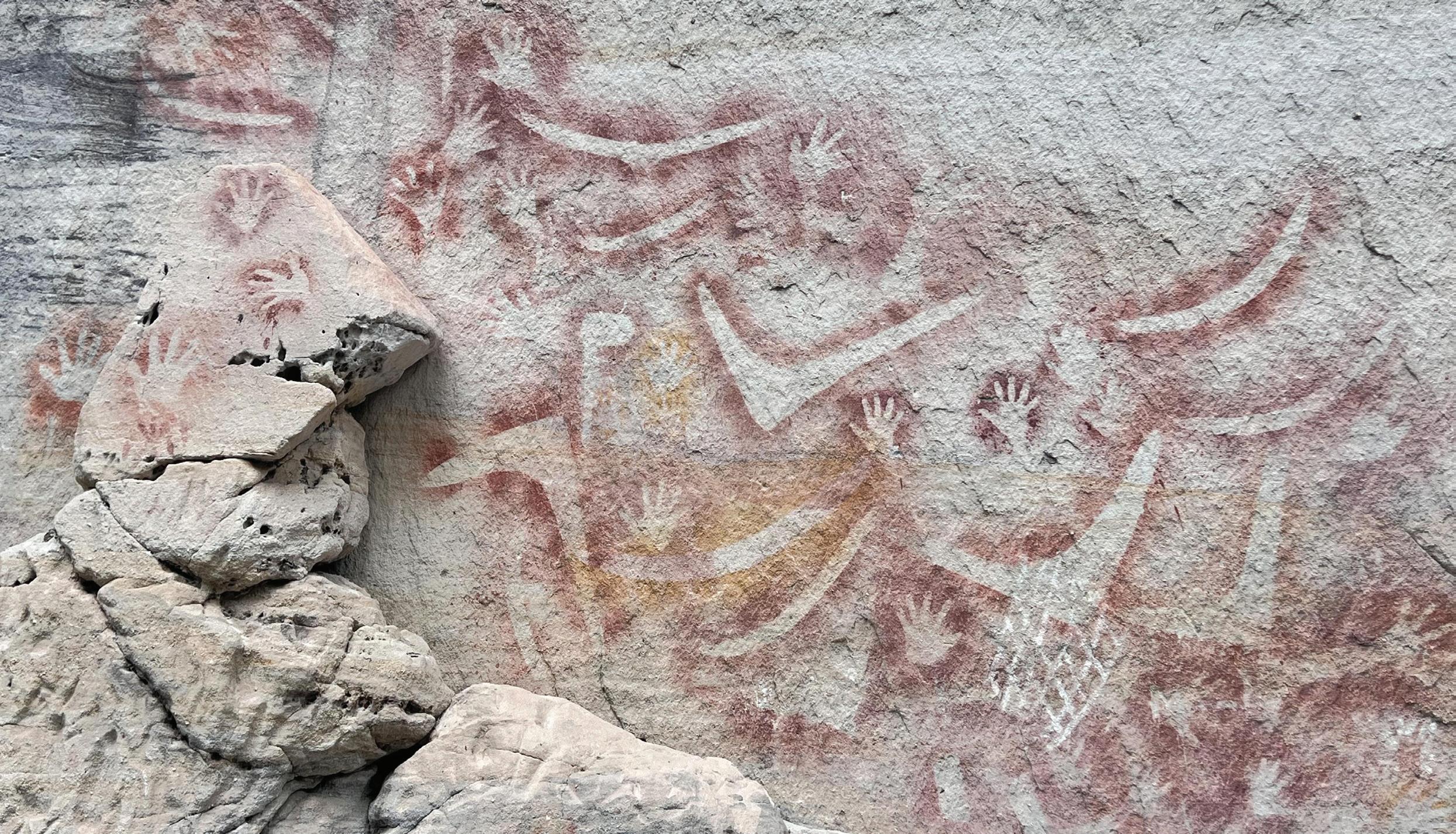
You have set eternity in the hearts of man. Ecclesiastes 3:11.
Since the beginning of time humanity has sought meaning, seeking the answers to the great questions of purpose, creation and eternity. In this course we will explore these powerful belief systems that have shaped the globe.
well as healing and hope. Throughout the Studies of Religion course, students will engage with a wide array of thought-provoking topics, including:
1. Sacred Texts and religious writings:
religions of:
•Judaism
•Christianity
•Islam
•Hinduism
•Buddhism
Australian Aboriginal spiritualities is also covered as a foundation to the course of study.

2. Religion and Ritual:
In Unit 2, students build on their understandings of Judaism, Christianity, Islam, Hinduism, Buddhism, Australian Aboriginal spiritualities and Torres Strait Islander religion as they investigate religious rituals that
itself and in the lives of adherents.
3. Religious Ethics:
In this unit students study the religious foundations that form and inform ethical principles within different religious traditions. Students apply religious–ethical principles and theories to real-life contexts and evaluate
4. Religion, rights, and the nation state:
In Unit 4, students consider how religion affects and politics, and social interaction. Within this context, issues of rights and religion–state relationships are considered. Students investigate how religions seek to shape or are shaped by their social, cultural, and political contexts.
By exploring these key themes and topics, students will gain a deeper understanding of the multifaceted nature of religion and its profound impact on individuals, communities, and the world at large.
Reference: QCAA 2019, Studies of Religion Syllabus.




Essential English develops students’ understanding of language, literature and literacy to enable them to community, workplace and educational contexts. Aligned with the QCAA Essential English 2025 syllabus, the subject focuses on practical literacy skills that prepare students for further education, training, employment and active participation in society.
Students engage with a range of contemporary literary, non-literary and digital texts to develop skills in reading, viewing, listening, speaking and writing. Through responding to and creating texts, students learn to communicate for a variety of purposes and audiences, analyse perspectives and representations, and evaluate
Through this course, students have opportunities to:
•communicate effectively in a range of personal, social, community and workplace contexts
•interpret, analyse and create contemporary literary and non-literary texts
•make purposeful choices about language, text structures and technologies
•think critically and creatively about ideas, issues and perspectives
•develop empathy and appreciation for diverse cultures and experiences
•apply literacy skills in authentic real-world situations.

At Mackay Christian College, Essential English is taught through a Christian worldview that encourages students to communicate with integrity, wisdom and CLEAR values by developing Christlikeness through respectful communication, Learning through practical literacy skills, Excellence in communication, Attitude through perseverance and growth, and Respect for diverse perspectives and experiences.
A course of study in Essential English equips students with the communication and literacy skills needed for success in further education, employment, community engagement and lifelong learning.
•Administration assistant
•Education aide
•Hospitality
•Retail
•Child care
•Transcription typist
•Tour guide
•Trades

Essential Mathematics is designed for students who need to continue developing their fundamental mathematical skills. It incorporates a practical approach that equips learners for their needs as future citizens, preparing them for vocational education or work in a rapidly changing world.
Students undertaking this subject will further develop future focused skills as critical and creative thinkers, innovators and problem-solvers in an ever-changing world.
They develop their ability to take initiative and promote curiosity in an increasingly complex and data driven society. Learning reinforces prior knowledge and continues to develop key mathematical ideas.
Students in Years 11 and 12 study:
Unit 1:
Number, data and money
Unit 2:
Data and travel
Unit 3:
Measurement, scales and change
Unit 4:
Graphs, data and loans

Topics are taught in a context relevant to students’ needs and interests. Students use their knowledge and skills to investigate realistic problems which involve the application of mathematical relationships and concepts.
Emphasis is placed on the competency of content, ensuring key concepts or procedures are learnt. This assists students to make connections between related concepts and complex familiar situations.
•Trades
•Industry
•Business
•Community Services

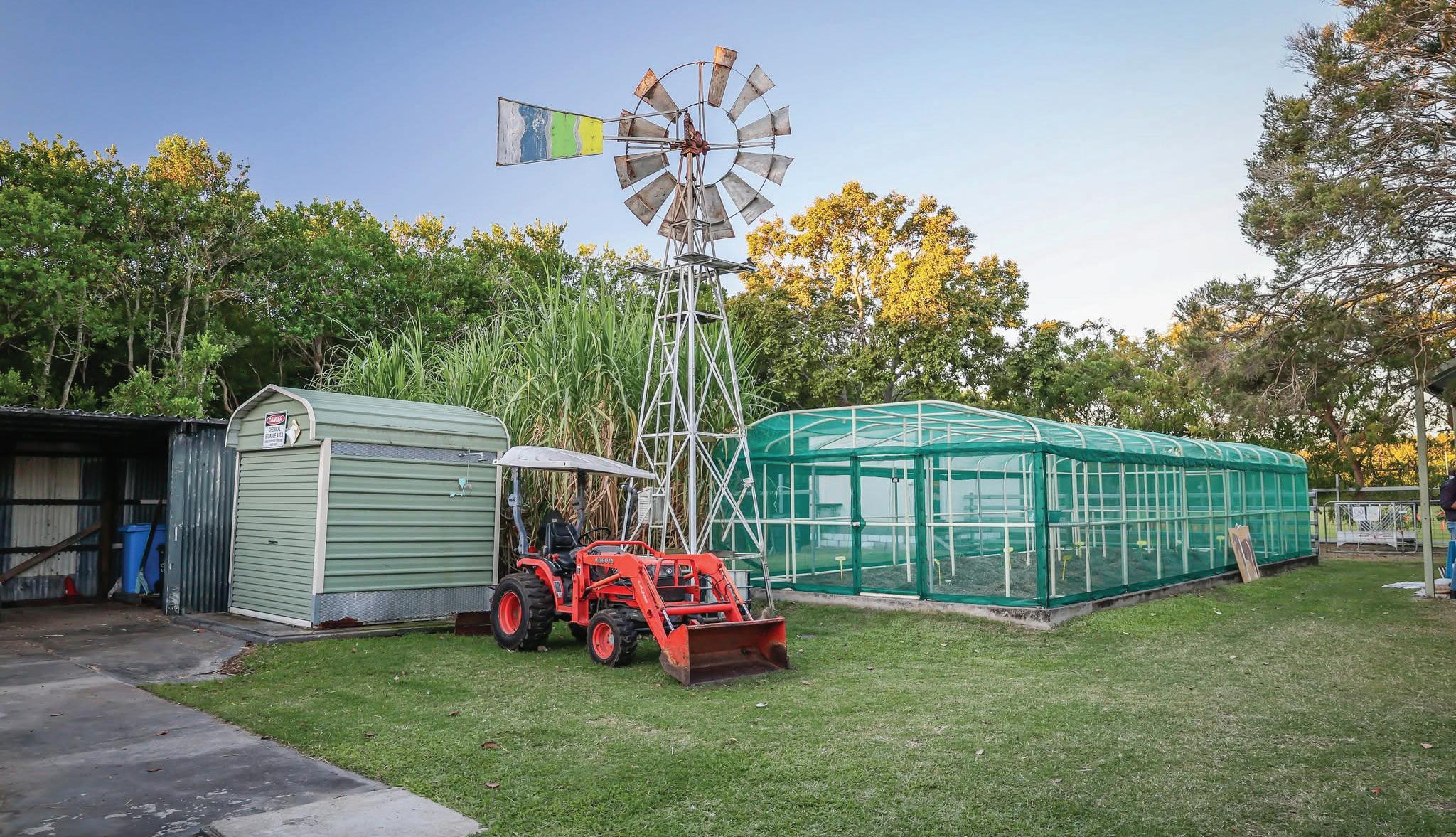
Agricultural Practices provides opportunities for students to explore, experience and learn concepts and practical skills valued in agriculture, workplaces and other settings.
Through the two-year course of student Agricultural Practices students will develop their skills in the following areas:
• creative and critical reasoning
• explanation and execution of procedures
• planning and implementation of projects and investigations
• systematic collection and analysis of data
• use of digital technologies to undertake research
• evaluation of information, procedures and conclusions
Projects and investigations are key features of Agricultural Practices. Projects require the application of a range of cognitive, technical and reasoning skills and practical-based theory to produce real-world outcomes.
develop a deeper understanding of a particular topic or context and the link between theory and practice in realworld and/or lifelike agricultural contexts.
Agricultural Practices students build their understanding of expectations for work in agricultural settings and develop an understanding of career pathways, jobs and other opportunities available for participating in and contributing to agricultural activities. Workplace health and safety practices are embedded across all units and focus on building knowledge and skills in working situations.
Units undertaken include:
• Animal production focusing on cattle nutrition
• Plant industries with sugar cane as the focus industry
• Animal industries involving constructing an aquaponics system
• Plant production with propagation as the learned skill
• Agriculture
• Aquaculture
• Food Technology
• Environmental Management
• Agribusiness
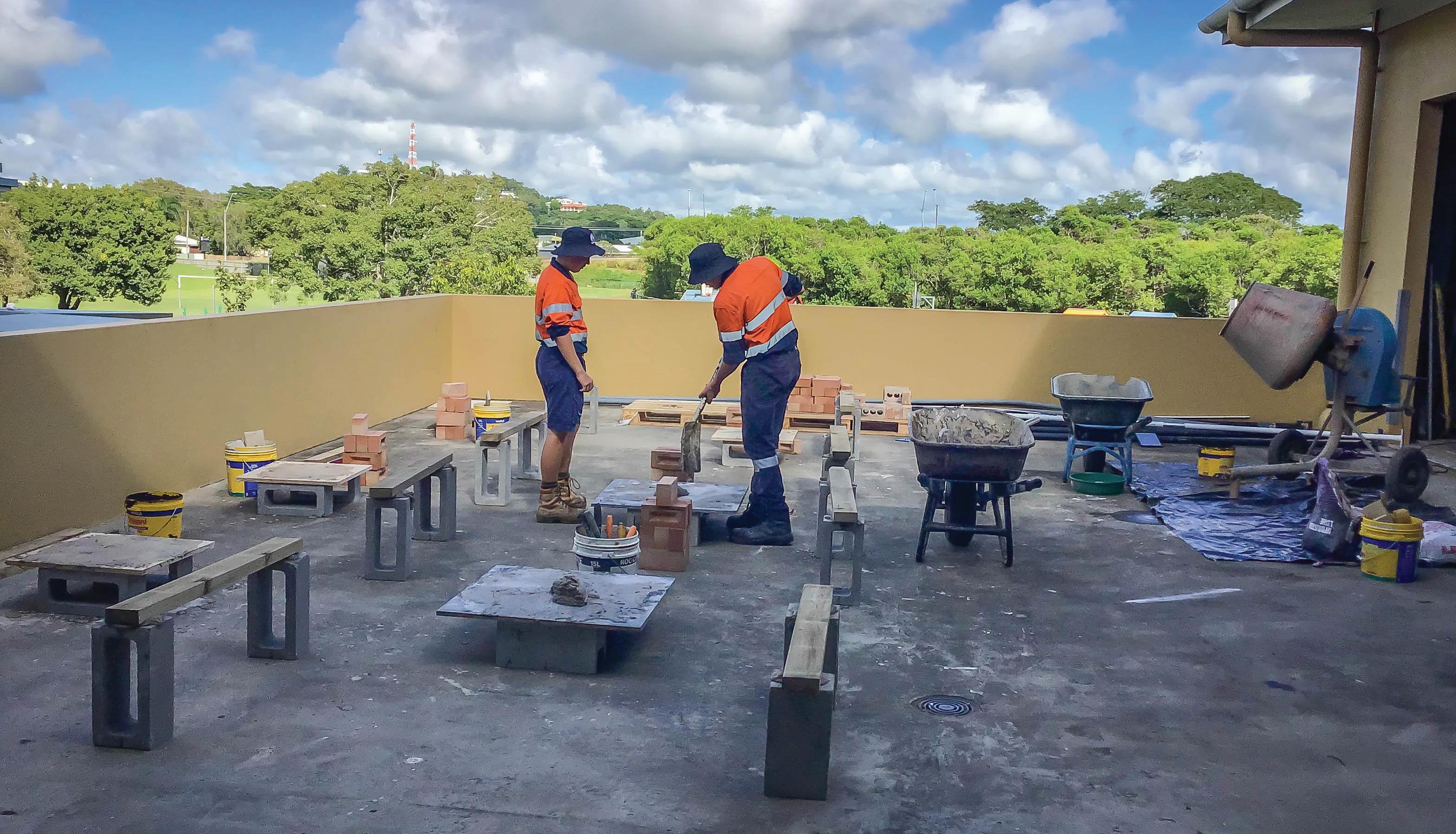
The Building and Construction Skills subject focuses on the underpinning industry practices and construction processes required to create, maintain and repair the built environment. It provides a unique opportunity for students to experience the challenge and personal satisfaction of undertaking practical work while
The new Building and Construction Skills Syllabus covers four units of study across the year including;
•Site preparation and foundations
•Framing and cladding
•Construction in the domestic building industry
Through both individual and collaborative learning experiences, students learn to meet customer
The majority of learning is done through construction tasks that relate to business and industry, and that promote adaptable, competent, self-motivated and safe individuals who can work with colleagues to solve problems and complete practical work.
By doing construction tasks, students develop transferable skills relevant to a range of industry-based electives and future employment opportunities.


They understand industry practices, interpret specifications (including information and drawings), safely demonstrate fundamental construction skills, apply skills and procedures with hand/power tools and equipment, communicate using oral, written and graphical modes, organise, calculate and plan construction processes and evaluate the structures they create using predefined specifications.
Building and Construction Skills can establish a basis for further education and employment in civil, residential or commercial building and
•Bricklayer
•Plasterer
•Concreter
•Painter and Decorator
•Carpenter
•Joiner
•Roof Tiler
•Plumber
•Steel Fixer
•Landscaper
•Electrician
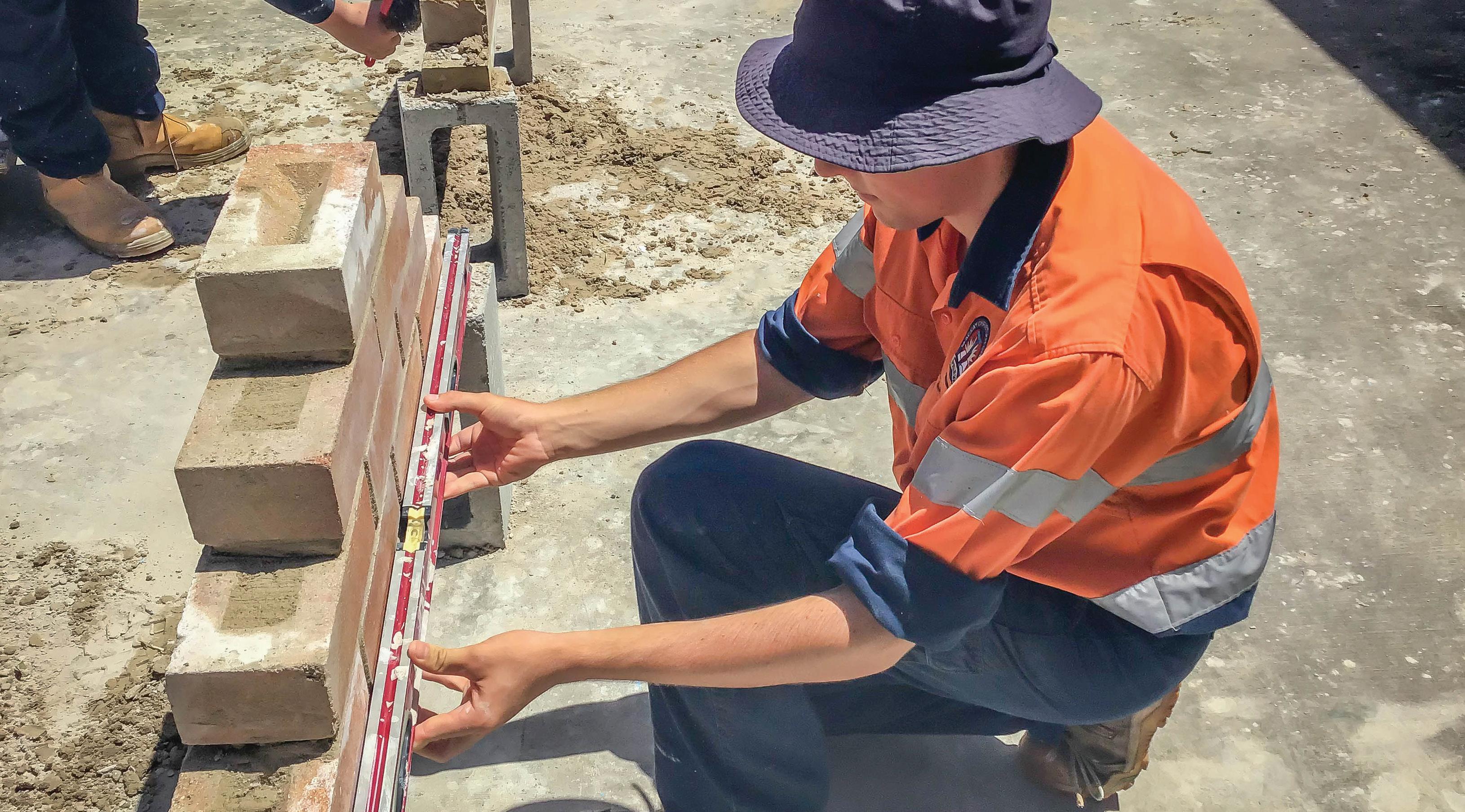
Business Studies provides opportunities for students to develop practical business knowledge, understanding and skills for participation in a range of workplace, community and business contexts. Students explore how businesses operate and develop the skills required to contribute effectively in modern workplaces and entrepreneurial environments.
This course focuses on business practices and communication skills through real-world and simulated business situations. Students investigate areas such as events and entrepreneurship, while developing solutions to authentic business problems.
Through this course, students develop skills in communication, collaboration, planning, problemsolving and decision-making. They learn how to plan, implement and evaluate business practices and outcomes, while strengthening their literacy, numeracy and 21st-century skills. Students also examine business information, interpret data and apply their knowledge to practical business situations.

Business Studies equips students with practical skills and knowledge that support further education, employment, entrepreneurship and active participation in the business world and wider community.
Business Studies can establish a basis for further education and employment in:
•
•Data Entry
•Retail
•Sales
•Reception
•Small Business
•Finance Administration
•Public Relations
•Property Management
•Events Administration
•Marketing

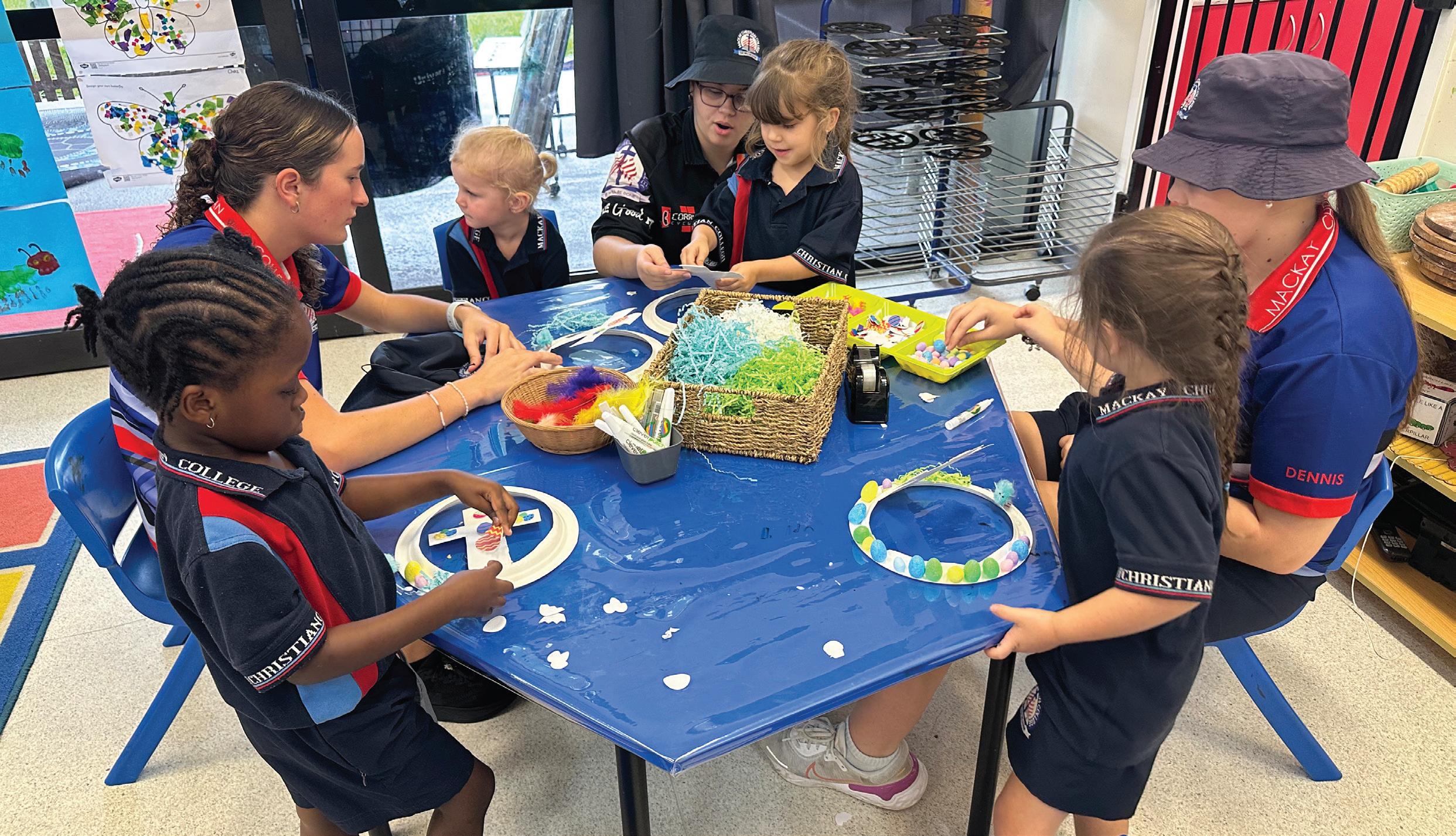
Early Childhood Studies focuses on learning about students to be advocates for the wellbeing of children independent and caring adults.
Early Childhood Studies draws upon the Early Years Learning Framework for Australia.
The course of study involves learning about core concepts and ideas related to the fundamentals of early childhood, and practices in early childhood learning.
the development of children, such as play and creativity, literacy and numeracy skills, being in a safe place, health and physical wellbeing, and indoor and outdoor learning environments. Throughout the course of study, students make decisions and solve problems, and work individually and with others. Throughout the course of study, students make decisions, solve problems, work individually and as part of small teams.
Students examine the interrelatedneass of core concepts and ideas of the fundamentals and practices of early childhood learning.

Students are able to implement concepts learnt during class into our fortnightly visits to our Early Years Learning Centre on Primary Campus. Students prepare age appropriate activities that connect to the Early Years Framework for Australia.
This enables students to develop their understanding of childhood learning.
Early Childhood Studies can establish a basis for further education and employment in:
•Health
•Community Services
•Education
•Early Childhood Educators
•Teacher’s Aide
•Assistants in early childhood settings, childcare facilities, kindergartens and early learning centres.
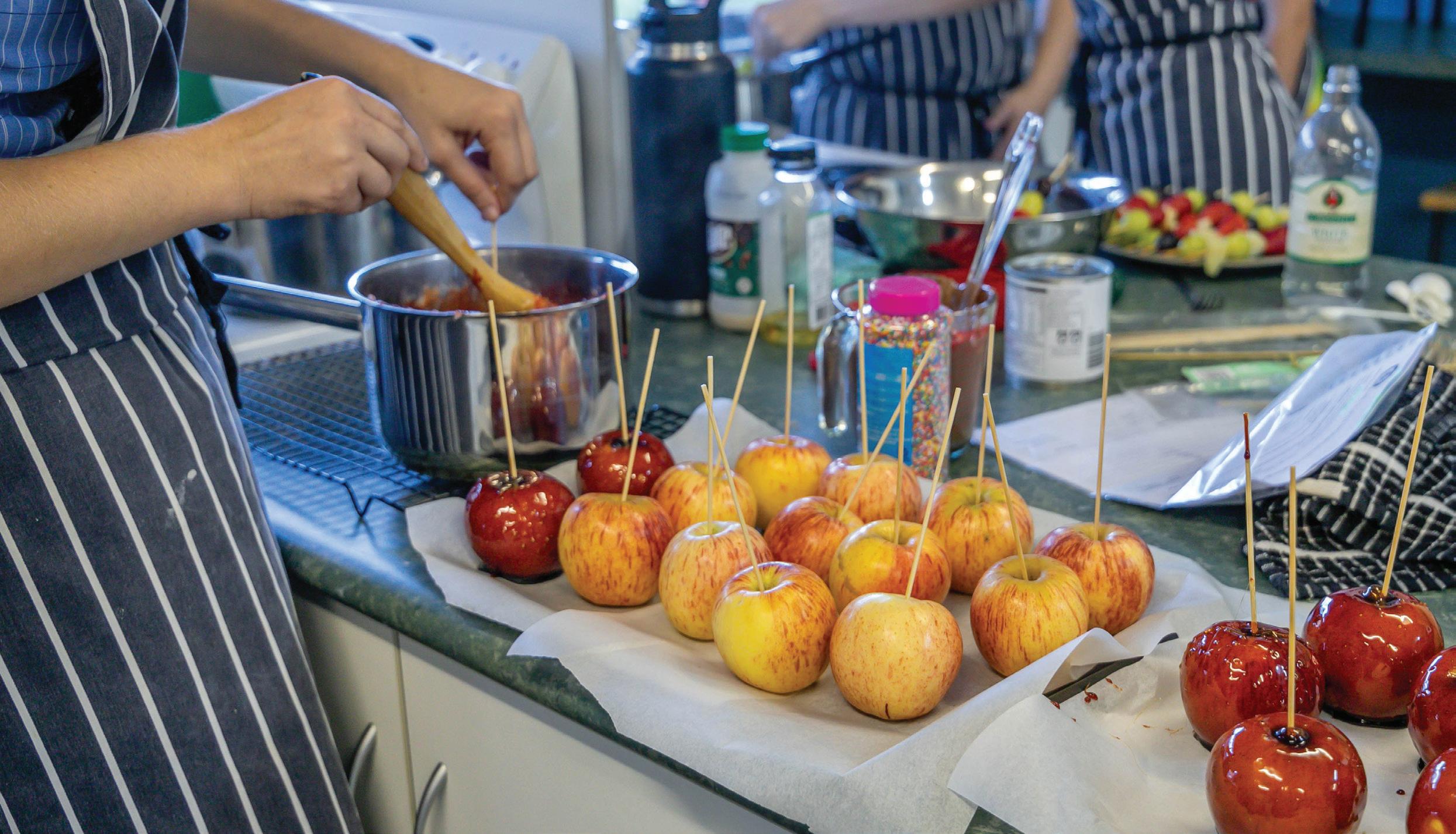
The Hospitality industry is important economically and socially in Australian society and is one of the largest employers in the country. Hospitality Practices emphasises the food and beverage sector, which includes food and beverage production and service. The subject includes the study of industry practices and production processes through real-world related application in the hospitality industry context.
Production processes combine the production skills and procedures required to implement hospitality events. Through both individual and collaborative learning experiences, students learn to perform production and service skills, and meet customer expectations of quality in event contexts.
Hospitality Practices students will develop the following skills:
•Learn to recognise and apply industry practices
•Demonstrate and apply safe practical production processes
•Communicate using oral, written and spoken modes
•Develop personal attributes that contribute to employability
•Organise, plan, evaluate and adapt production processes for the events they implement.

The subject will help students to become adaptable, competent, self-motivated and safe individuals who can work with colleagues to solve problems and practical work.
The course of study in Hospitality Practices can establish a basis for employment in the following industries:
•Business Management
•Hospitality sectors of food and beverage
•Catering
•Accommodation
•Entertainment
•Tourism
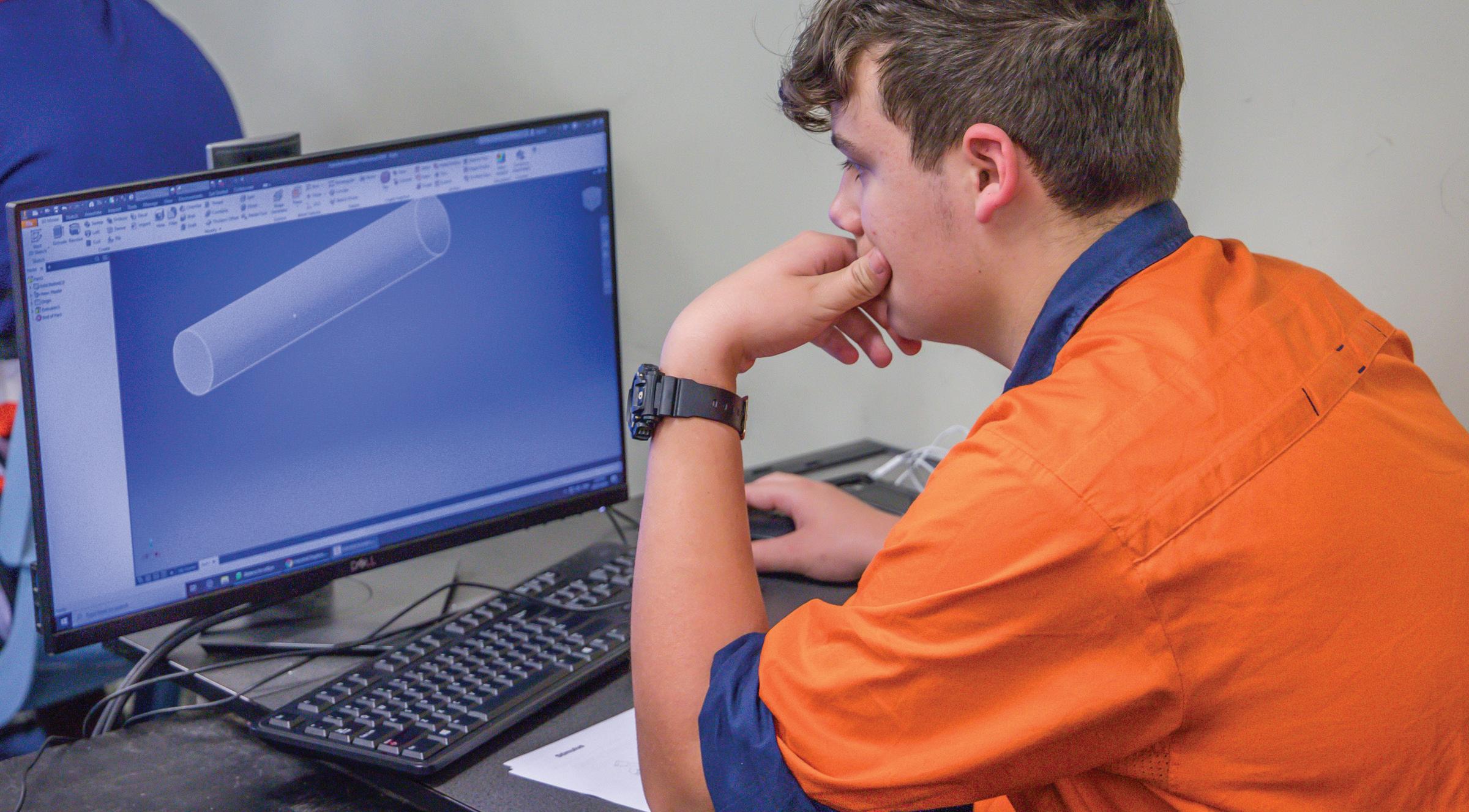
Industrial Graphics is a subject for students who want to develop their graphical communication skills both in freehand sketching and Computer Aided Drafting (CAD).
Students learn job-ready skills through industry based assessments. They will develop their knowledge and skills by undertaking a number of real world drafting challenges in a range of contexts for a variety of end users. The diversity of learning activities will cater to the range of learning styles.
Students will develop the ability to establish and share ideas with others. They will expand the knowledge and skill required to produce drawings and information with enough detail to allow the manufacture of the product they have drafted.
In Years 11 and 12, students learn to:
•Use information to read, interpret and produce formal CAD drawings in both 2D and 3D formats to an acceptable industry standard and conventions. Students manipulate the information gathered and developed into formats that will allow it to be passed to an end user for the manufacture or construction of a product. They will work in both engineering and construction environments.
•Builder
•Engineer
•Carpenter
•Cabinet Maker
•Electrician
•Boilermaker
•Draftsperson
•Interior Designer
•Landscape Designer
Information and Communication Technology (ICT) is an applied subject area that includes the study of industry practices and ICT processes through student application in a variety of industry-related learning contexts. Students enrolled in ICT will participate in product development processes for a variety of product prototypes. They will engage in applied learning to demonstrate knowledge, understanding and skills in units that meet client needs as they access contemporary resources and teacher expertise with real-world experience. Through both individual and collaborative experiences, students learn
Applied learning supports students in their development of transferable 21st Century, literacy and numeracy skills relevant to ICT sectors and future employment opportunities. Students learn to interpret client briefs and technical information, as well as select and demonstrate skills using hardware and software to develop ICT products. The majority of learning is done through prototyping tasks that relate to business and industry, and promote adaptable, competent, self-motivated and safe individuals who can work with colleagues to solve problems and complete practical work.
Senior ICT units target a variety of industry standard practices and processes (from planning and construction to refining and reflection) and include:
Unit B:

App development (investigating and constructing apps that target aspects of both UX/UI design)
Unit C:
Audio and video production (recording both footage and audio, as well as post-production editing using industry standard software)
Unit D:
Layout and publishing (determining placement when working with vector imaging software to construct contemporary published works)
Unit E:
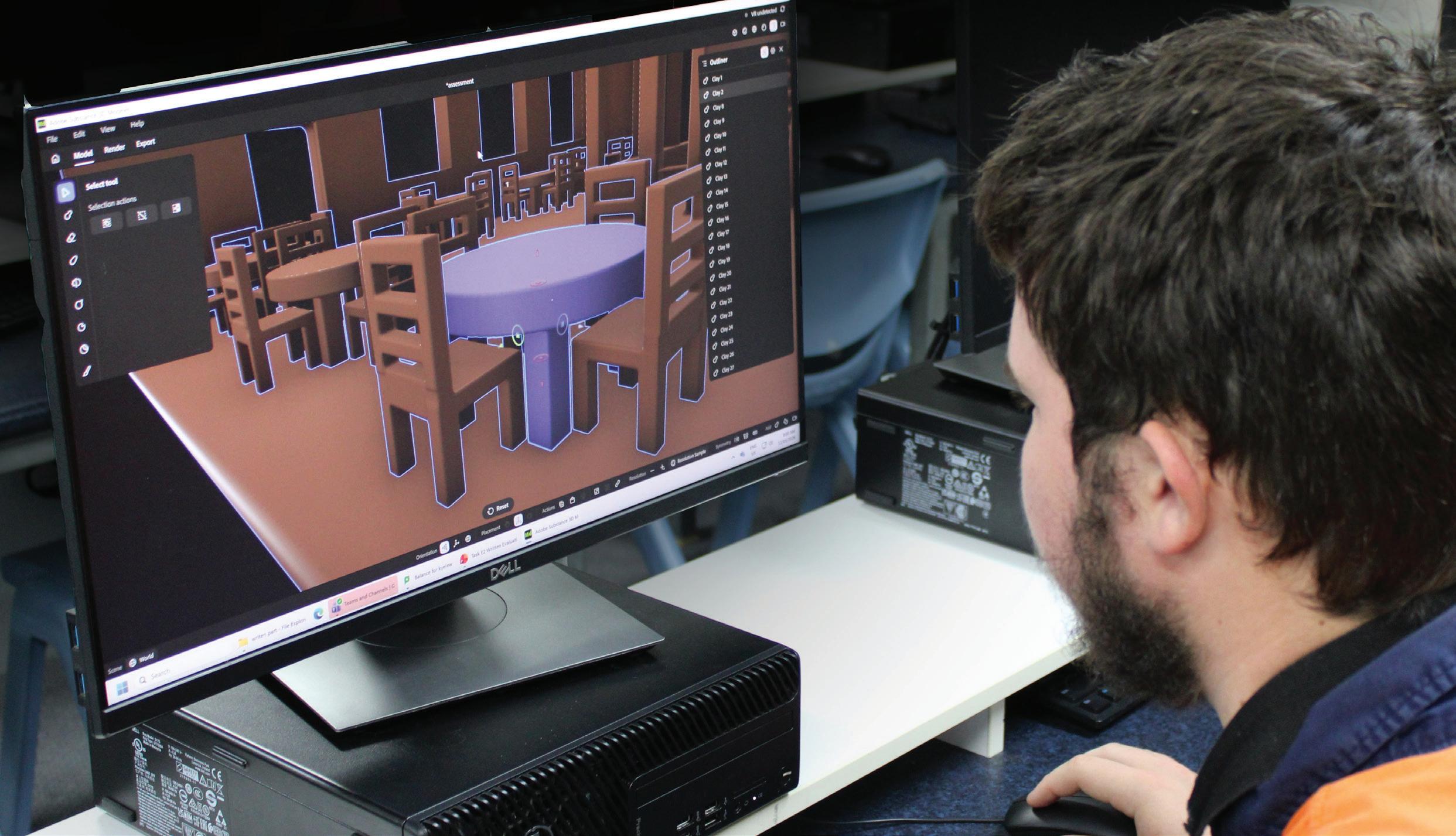
Digital imaging and modelling (exploring and working with 3D modelling and digital imaging software to target a growing industry in 3D design for real-world contexts)
•Digital Media Support
•Graphic Designer
•Photographer
•Digital Content Manager
•
•Sales Support
•Digital Content Creator
•Marketing and Advertising
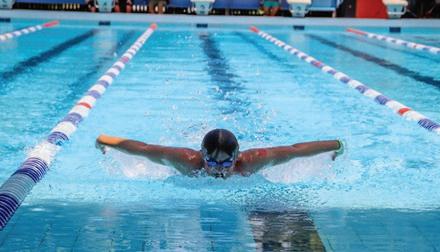
Sport and Recreation activities are an intrinsic part of Australian life and culture. For many people, participation in Sport and Recreation activities including a combination
and outdoor recreation can make a positive contribution to a person’s wellbeing. Engagement in these activities provides a unique and powerful opportunity for students to experience the challenge and fun of physical activity while developing vocational, life and physical skills to enhance their own lives and others in the community.
The skills developed in Sport and Recreation may be
health and wellbeing for the future. Students will be involved in learning experiences that allow them to develop their interpersonal abilities and encourage them to appreciate and value active involvement in sport and recreational activities, contributing to ongoing personal and community development throughout their lives.
There is a clear link between the 2024 Curriculum and the 2032 Olympic and Paralympic Games.

The two-year Sport and Recreation course has a four-unit course of study:
1.Aquatic Recreation
2.Fitness for Sport and Recreation
3.Optimising Performance
4.Challenge in the Outdoors.
Students are required to complete two assessment tasks for each unit, a Performance and Project assessment. For each assessment students will Investigate, Plan, Perform and Evaluate outcomes in the context of the unit. Students will be expected to work individually and at times in small groups, complete a combination of multimodal, written and spoken streams of assessment.
•Fitness and Coaching Instruction
•Personal Training
•Sports Management
•Community or Commercial organisations
•Sports Analyst
•Exercise Physiologist
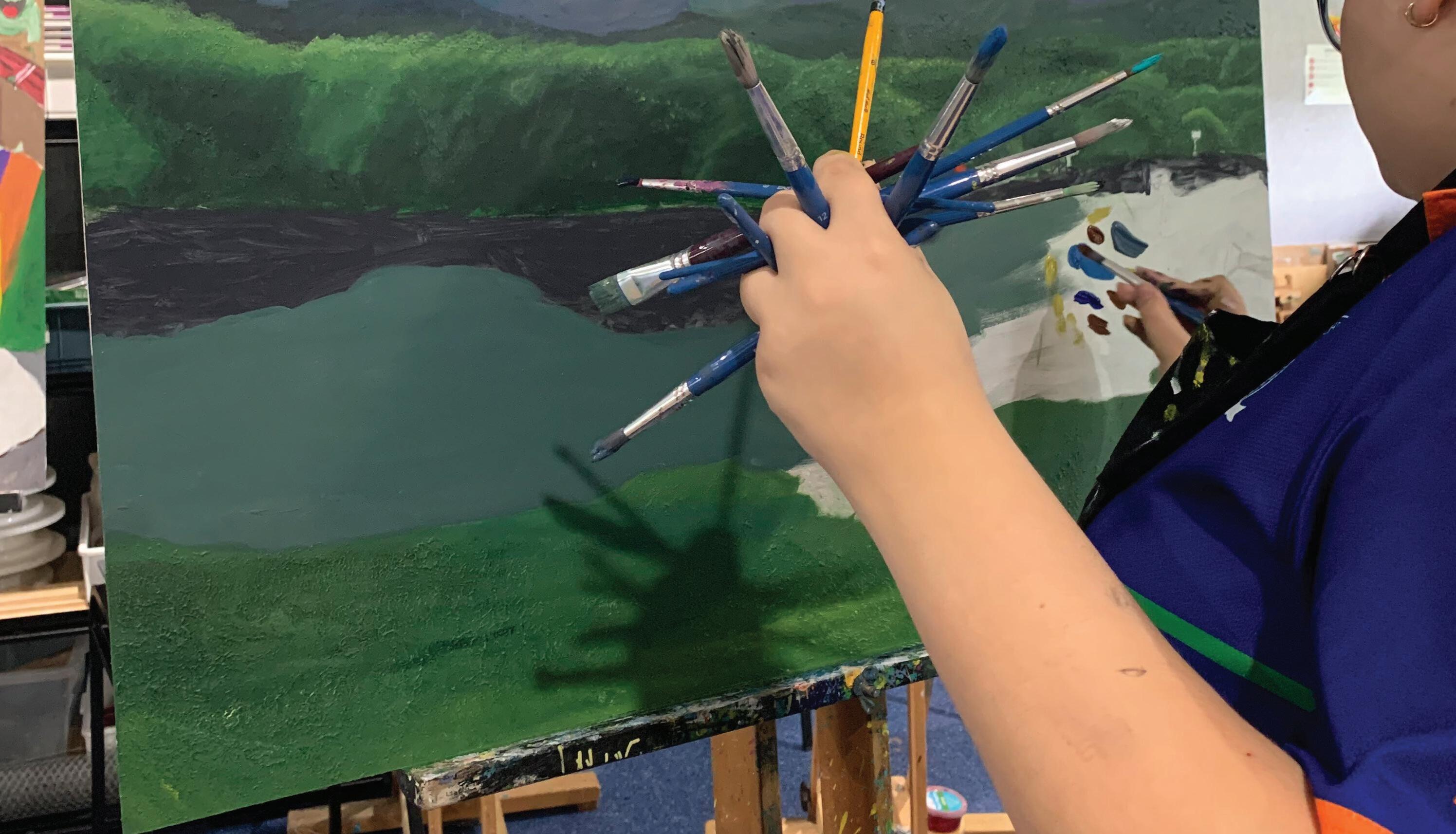
In Visual Arts in Practice, students respond to authentic, real-world stimulus (e.g. problems, events, stories, places, objects, the work of artists or artisans), seeing or making new links between art-making purposes and contexts. They explore visual language in combination with media, technologies and skills to make artworks. Throughout the course, students are exposed to art-making modes, selecting from 2D, 3D, digital (static) and time-based and using these in isolation or combination, as well as innovating new ways of working.
The course is designed to help students develop their knowledge, understanding and skills in the following:
•use analytical processes to identify problems and develop plans or designs for artworks.
•use reasoning and decision-making to justify their their own and others’ art-making.
•examine visual features to communicate artistic intention.
•Independently select media, technologies and skills as they make experimental and resolved artworks, synthesising ideas developed throughout the responding phase.

Learning is connected to relevant industry practice and opportunities, promoting future employment and preparing students as agile, competent, innovative and safe workers who can work collaboratively to solve problems and complete project-based work in various contexts.
•Interior Design
•Styling & Decorating
•Costume Design
•Illustrating
•Floristry
•Visual Merchandising
•Make up artistry
•Advertising
•Photography
•Photographer
•Self Employed Artist
•Teacher
•Advertising
•Photography
•Photographer
•Self Employed Artist
•Teacher




Code: 40548) providing students with basic skills for a career in allied health as well as providing a pathway for
Support Services in Year 11, students can continue to study
in Year 12. Students will receive recognition for units of
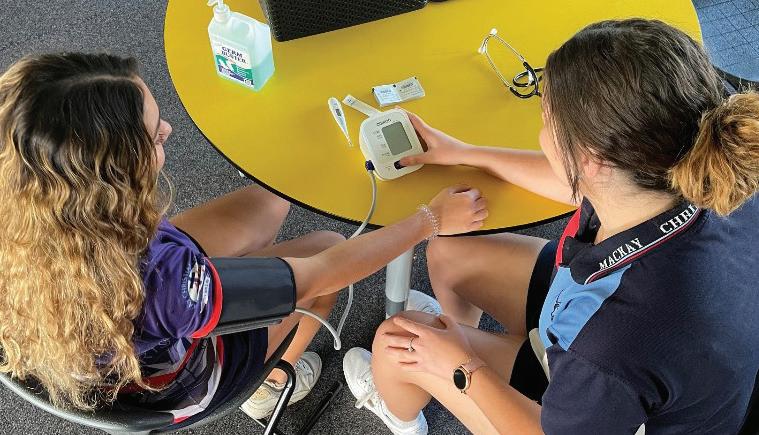
Students have access to a purpose build online simulated workplace via the ‘IVET Super Clinic’ which is an integral facet of the learning and assessment process immersing students in current industry practices, regulations and policies that are implemented in the Health Service Industry.
Students engage in theoretical and practical skills across the following learning areas: Australian healthcare system, interpreting and applying medical terminology, healthy body systems, assisting with movement, communicating with clients, and infection control and prevention. Students also have the opportunity to engage in work placement.
Refer to Appendix for course module details
•Nursing Assistant
•Ward Assistant and Orderly
•Health professional assistances such as Medical Receptionists and Dental Assistants
•Allied Health Roles
The Mackay Christian College Trade Training Centre (MCCTTC) is an exciting facility that provides opportunity for students who enjoy practical learning and have a desire to learn more about the Construction and Engineering industries.
The MCCTTC Trade Pathway program is focused on three core aspects: work readiness, safety, and employability. needs of industry and to equip and prepare students for their preferred career choice.
Students who wish to participate in this program full time will need to select TTC (Dual) on two subject lines. This incorporates Building and Construction Skills in Year in Year 12. They will also be required to select Industrial Graphics. Students are then able to select any subject on the remaining elective lines. Students who choose to participate in this program take full advantage of work placement opportunities with local companies, businesses and organisations.
Individuals who choose to apply for a Trade Pathway will need to attend an interview with a parent/carer and Director of the Trade Training Centre.

This is to ensure that the participant and their parent/ carer are fully aware of the processes and expectations of the TTC program.
MCCTTC also offers a single pathway option to those students who are not necessarily seeking a job in the trade industry but want to learn some practical skills or university or TAFE after school.
Industrial Technology Skills is offered as Single Pathway. Students undertaking this subject are encouraged to choose the Industrial Graphics subject to support this option.
Individuals who choose to apply to become a Single Pathway student will need to apply through the normal subject selection process and are also required to attend an interview with a parent/carer and the Director of the Trade Training Centre. This is to ensure that the participant and their parent/carer are fully aware of program outlines, processes, and expectations.

The component manufacture is broken down into the various step by step work tasks.
foundational skills that open students up to the world of Engineering and Manufacturing.
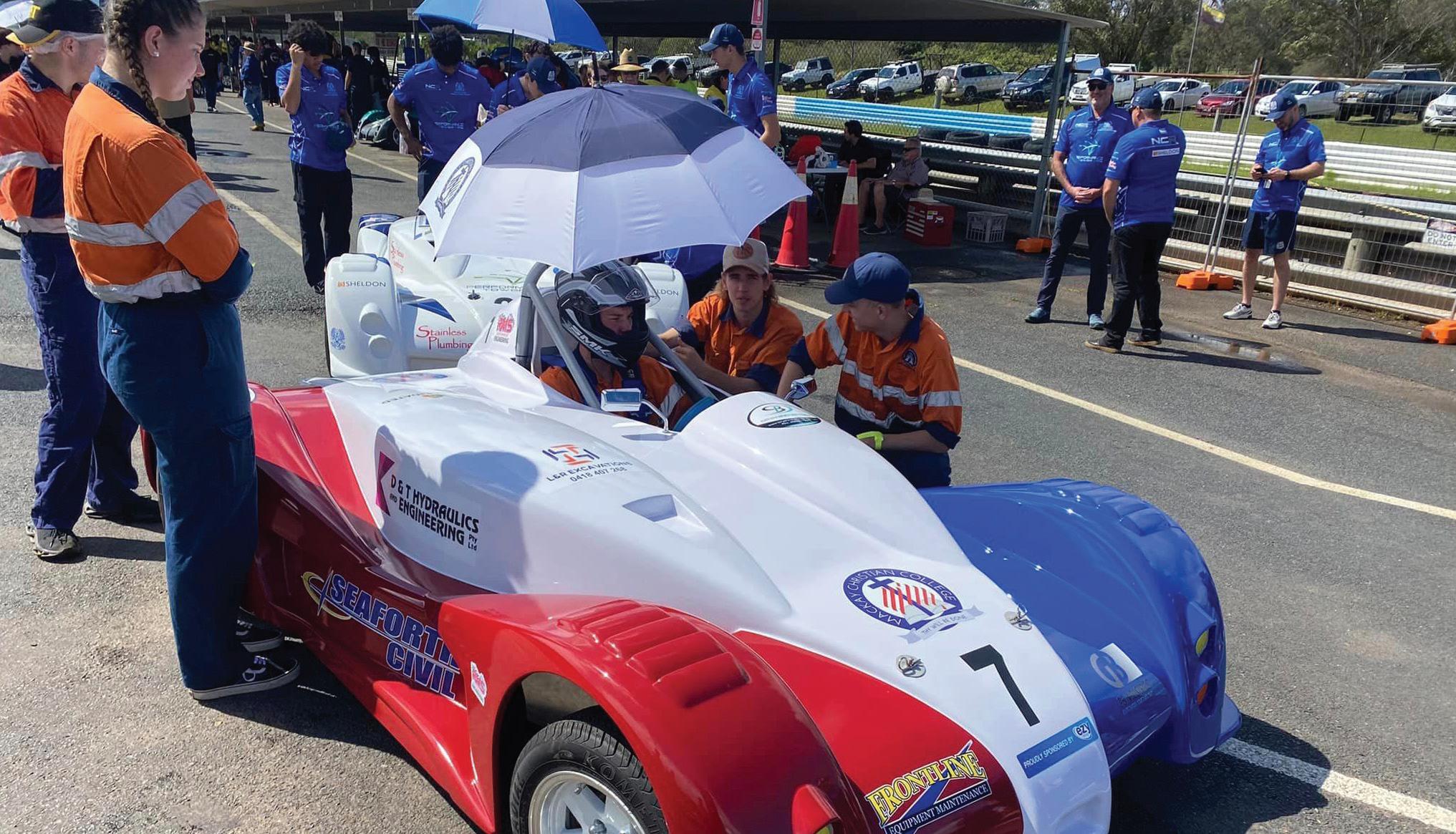
Student (RTO Code: 41124) and has been designed
emphasis is on using current industry practice and safe technological processes to complete tasks through the fabrication and construction of a Formula High School® race car in a workshop or simulated workplace environment.
Projects and practical activities set the context within and provide the means for the consolidation and application of skills and knowledge.
Skills taught are authentic and credible. Students are instructed by the trainers and/or carry out blended learning, utilising video instruction to gain an understanding of the task plus underpinning knowledge and skill of what is required as an outcome. The student is assigned a task to manufacture, and must carry out steps required to achieve the outcome.
skills within the engineering and manufacturing industry, from the language used, to the processes and methods, and the quality assurances around building an item for
new and emerging technologies in the manufacturing industries and the wide range of interests and abilities of the students who study it.
•Boilermaker
•Fitter and Turner
•Technicians and Trades Workers
•Metal Fabricator
•Machinist
•Heavy Vehicle Mechanic
•Light Vehicle Mechanic

The following skills are the ones that employer groups said that they looked for in employees.
You can use this list to keep track of the skills you are learning. Write down times when you have shown these skills either at school or at home. This then becomes a great start to your resume.
Skill
Communication that contributes to productive and harmonious relations between employees and customers
Element (facets of the skill that employers identified as important, noting that the mix and priority of these facets would vary from job to job)
•Listeningandunderstanding
•Speakingclearlyanddirectly
•Writingtotheneedsoftheaudience
•Negotiatingresponsively
•Readingindependently
•Empathising
•Usingnumeracyeffectively
•Understandingtheneedsofinternalandexternalcustomers
•Persuadingeffectively
•Establishingandusingnetworks
•Beingassertive
•Sharinginformation
•SpeakingandwritinginlanguagesotherthanEnglish
Teamwork that contributes to productive working relationships and outcomes
Problem solving that contributes to productive outcomes
•Workingwithpeopleofdifferentages,gender,race, religionorpoliticalpersuasion
•Workingasanindividualandasamemberofateam
•Applyingteamworkskillstoarangeofsituations,eg. futuresplanning,crisisproblemsolving
•Identifyingthestrengthsofteammembers
•Coaching,mentoringandgivingfeedback
•Developingcreative,innovativesolutions
•Developingpracticalsolutions
•Showingindependenceandinitiativeinidentifying problemsandsolvingthem
•Solvingproblemsinteams
•Applyingarangeofstrategiestoproblemsolving
managementtosolveproblems
•Applyingproblem-solvingstrategiesacrossarangeofareas
•Testingassumptionstakingthecontextofdataand circumstancesintoaccount
•Resolvingcustomerconcernsinrelationtocomplexproject issues
Some evidence or events where you have demonstrated these skills
Skill
Element (facets of the skill that employers identified as important, noting that the mix and priority of these facets would vary from job to job)
•Adaptingtonewsituations
Initiative and enterprise that contribute to innovative outcomes
Planning and organising that contribute to long term and short term strategic planning
•Developingastrategic,creative,long-termvision
•Beingcreative
•Identifyingopportunitiesnotobvioustoothers
•Translatingideasintoaction
•Generatingarangeofoptions
•Initiatinginnovativesolutions
• Managingtimeandpriorities–settingtimelines, coordinatingtasksforselfandwithothers
• Beingresourceful
• Takinginitiativeandmakingdecisions
• Adaptingresourceallocationstocopewith contingencies
• Establishingclearprojectgoalsanddeliverables
• Allocatingpeopleandotherresourcestotasks
•Planningtheuseofresourcesincludingtime management
•Participatingincontinuousimprovementand planningprocesses
•Developingavisionandaproactiveplanto accompanyit
•Predicting–weighinguprisk,evaluatingalternatives andapplyingevaluationcriteria
•Collecting,analysingandorganisinginformation
•Understandingbasicbusinesssystemsandtheir relationships
Self-management that contributes to employee satisfaction and growth
Learning that contributes to ongoing improvement and expansion in employee and company operations and outcomes
Some evidence or events where you have demonstrated these skills
Technology that contributes to effective execution of tasks
•Havingapersonalvisionandgoals
•Evaluatingandmonitoringownperformance
•Articulatingownideasandvision
•Takingresponsibility
•Managingownlearning
•Contributingtothelearningcommunityattheworkplace
•Usingarangeofmediumstolearn–mentoring,peer support,networking,informationtechnology(IT),courses
•Applyinglearningto‘technical’issues(eg.learningabout products)and‘people’issues(eg.interpersonalandcultural aspectsofwork)
•Havingenthusiasmforongoinglearning
•Beingwillingtolearninanysetting–onandoffthejob
•Beingopentonewideasandtechniques
•Beingpreparedtoinvesttimeandeffortinlearningnew skills
•Acknowledgingtheneedtolearninordertoaccommodate change
•HavingarangeofbasicITskills
•ApplyingITasamanagementtool
•UsingITtoorganisedata
•BeingwillingtolearnnewITskills
•Havingtheoccupationalhealthandsafetyknowledgeto applytechnology
•Havingtheappropriatephysicalcapacity
CodeTitle
MEM13015Work safely and effectively in manufacturing and engineering
MEMPE005Develop a career plan for the engineering and manufacturing industries
MEMPE006Undertake a basic engineering project
MSMENV272Participate in environmentally sustainable work practices
MEM11011Undertake manual handling
MEM16006Organise and communicate information
MEM18001Use hand tools
MEM18002Use power tools/hand held operations
MEMPE001Use engineering workshop machines
MEMPE002Use electric welding machines
MEMPE004Use fabrication equipment
MSMSUP 106Work in a team
UNIT
CHCCOM005Communicate and work in health or community services
CHCDIV001Work with diverse people
HLTINF006Apply basic principles and practices of infection prevention and control
HLTWHS001Participate in workplace health and safety
BSBINS201Process and maintain workplace information
BSBOPS101Use business resources
BSBOPS203Deliver a service to customers
BSBPEF202Plan and apply time management
BSBTEC201Use business software applications
CHCCCS010Maintain a high standard of service
HLTHSS009Perform general cleaning tasks in a clinical setting
HLTAID011Provide First Aid
Entry requirements
coursework.
Course units Year 1 (Certificate II units)
UNIT CODETITLE

CHCCOM005Communicate and work in health or community services (CREDIT TRANSFER)
CHCDIV001Work with diverse people (CREDIT TRANSFER)
CHCCCS010 Maintain a high standard of service
BSBTEC201Use business software applications
HLTINF006Apply basic principles and practices of infection prevention and control
Course units Year 2 (Certificate III units)
UNIT CODETITLE
BSBWOR301Organise personal work priorities and development
HLTWHS001Participate in workplace health and safety
CHCPRP005Engage with health professionals and the health system
CHCCCS009Facilitate responsible behaviour
HLTAAP001Recognise healthy body systems
HLTAID011Provide First Aid and CPR
BSBMED301Interpret and apply medical terminology
CHCCCSO020Respond effectively to behaviours of concern
CHCCCS002Assist with movement
evidence of senior schooling achievements. To be issued with a QCE, students need to complete a set amount of QCE means that students can choose from a wide range of learning options to suit their interests and career goals.
This student would achieve a QCE as he/she has achieved at least 20 QCE credits, with at least 12 QCE credits from completed Core course of study and has met the minimum literacy and numeracy requirements.
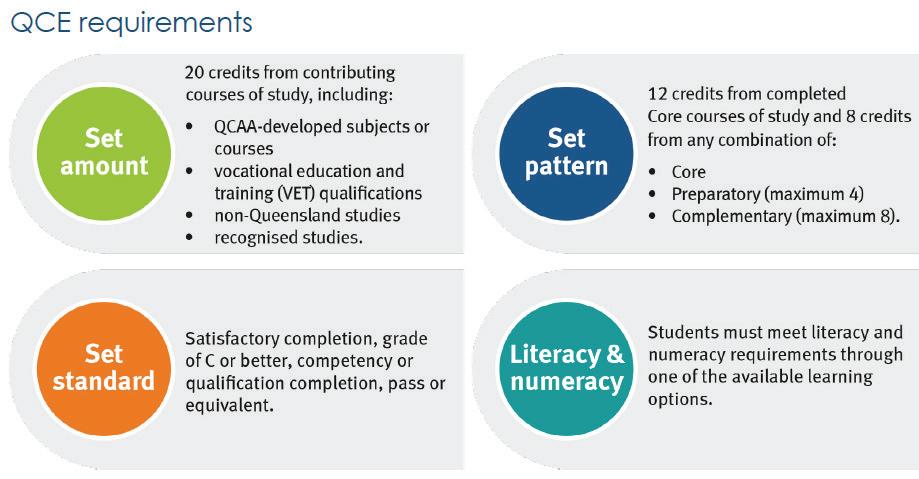
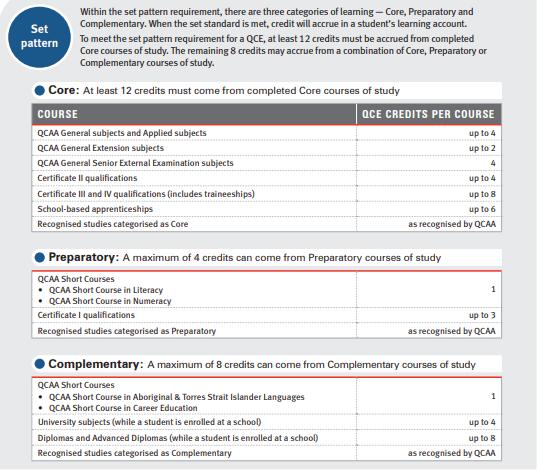
Literacy and Numeracy requirements:
The literacy and numeracy requirements can be met through a range of options, including satisfactory completion of Unit 1 or Unit 2 of an English subject (literacy) and a Mathematics subject (numeracy).
Completed Core requirements:
Completion of Unit 1 and Unit 2 are each recorded as ‘satisfactory’ or ‘unsatisfactory’. Credit only accrues for each of Units 1 and 2 if there is ‘satisfactory’ completion. Units 3 and 4 are graded together as a pair at the end of the course, using A–E grades.
Students must accrue at least 12 credits from completed Core courses. Students must study a Core course from beginning to end to contribute to the 12 credits. For General or Applied subjects, this means studying all four units
change from one Maths subject to another, or one English subject to another.
Consider the following scenario:
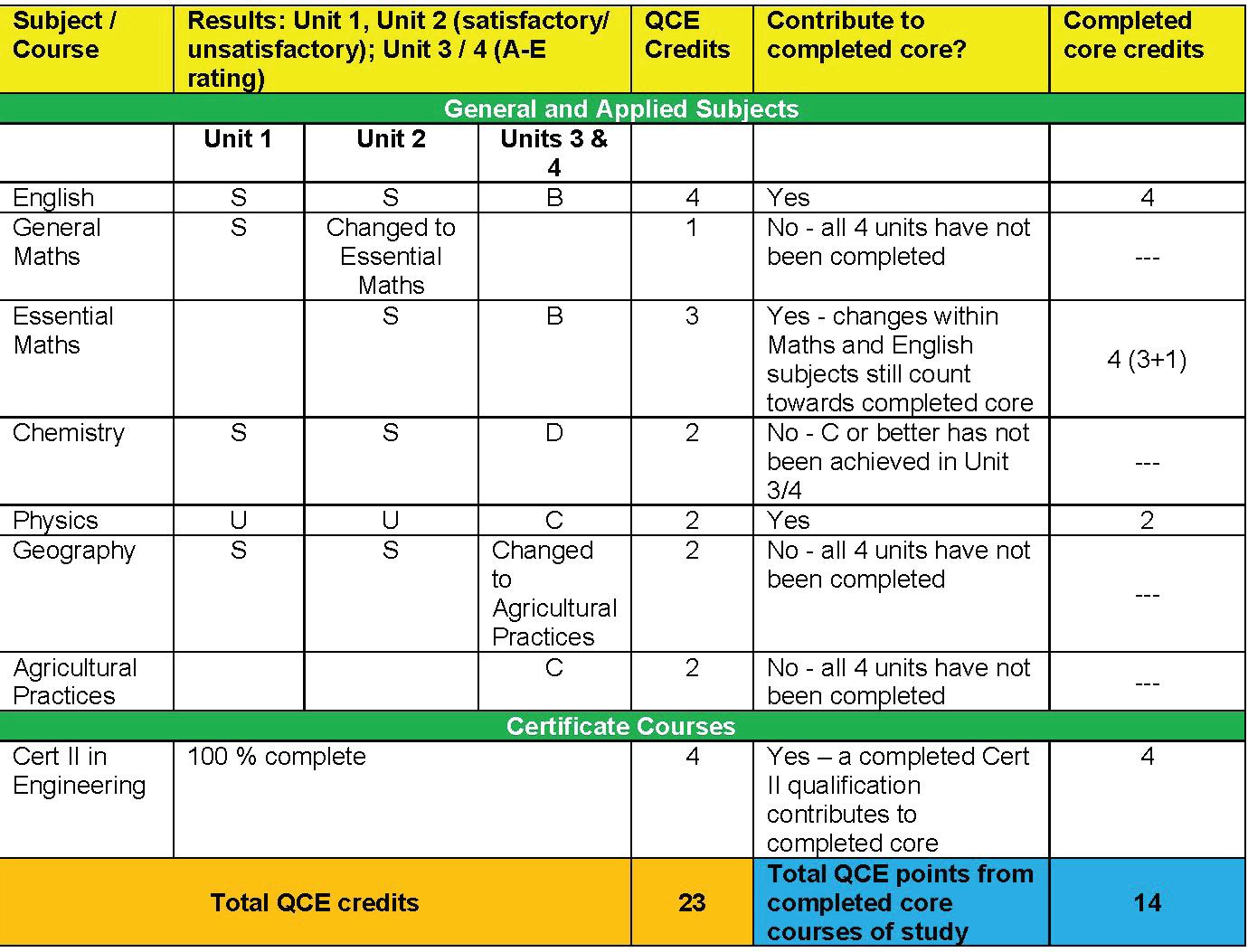
This student would achieve a QCE as he/she has achieved at least 20 QCE credits, with at least 12 QCE credits from completed Core course of study and has met the minimum literacy and numeracy requirements.
Australian Tertiary Admission Rank (ATAR)
The ATAR is used nationally for tertiary admissions, and indicates a student’s position relative to other students.
The ATAR is expressed as a number between 99.95 (highest) down to 0 (lowest). ATARs below 30 are expressed as ’30.00 or less’.
If the demand for a particular university course is greater than the number of places available, the university will use the ATAR to decide which eligible students are offered a place in the course.
Although some universities may allow entry into some courses on the basis of successful completion of a VET courses they are interested in before deciding not to pursue an ATAR.
ATAR requirements
To be eligible for an ATAR, a student must have: •achieved at least a C in an English subject (that is, English or Essential English)
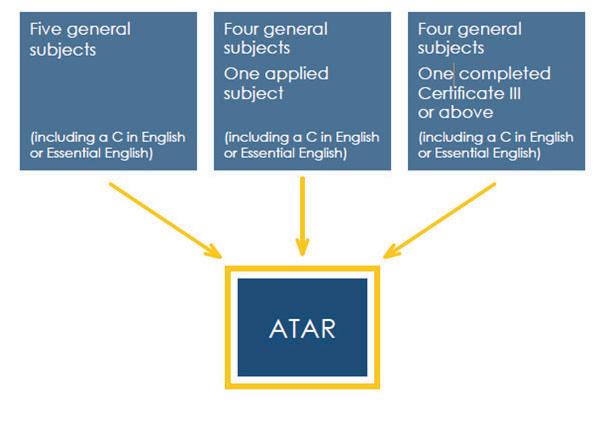
When selecting your subjects, ask yourself:
Do these reflect my strengths and goals?
For existing College students, subject selection for elective subjects is done through online web preferencing as part of the King’s Park Expo. For new students, subject selection is completed as part of the enrolment process.
MACKAY CHRISTIAN COLLEGE
Kindergarten to Year 12
Primary School - Providence Campus
17 Ambrose Way, North Mackay Qld 4740
Secondary School - King’s Park Campus 9 Quarry Street, North Mackay Qld 4740 Mackay Christian Colleges Ltd
Contact Us
+617 4963 1100
mcc@mccmky.qld.edu.au
mcc.qld.edu.au Po Box 3215, North Mackay Qld 4740