Track ever y tool, pallet and machine – indoors, outdoors, and between sites with real-time visibility.
S i t e s d e p e n d o n s m o o t h wo r k f l o ws . T o o l s ,
p a l l e t s , m a t e r i a l s , m a c h i n e s a n d m o r e a r e
c o n s t a n t l y m o v i n g a c r o s s p r o d u c t i o n f l o o r s ,
wa r e h o u s e s , y a r d s , l o a d i n g a r e a s a n d v e h i c l e s .
W h e n t h a t m o v e m e n t i s h a r d t o s e e , i n e f f i c i e n c i e s
c r e e p i n – t i m e i s l o s t s e a r c h i n g , a s s e t s a r e
u n d e r u s e d , a n d p r o d u c t i o n d e l a y s b e c o m e h a r d e r
t o a v o i d .
A B A X S i t e O p e r a t i o n s i s d e s i g n e d t o s o l v e t h i s
c h a l l e n g e . I t i s a p l u g - a n d - p l a y s o l u t i o n t h a t g i v e s
p l a n t a n d o p e r a t i o n s m a n a g e r s a c l e a r , r e a l - t i m e
o v e r v i e w o f e v e r y t h i n g m o v i n g a c r o s s t h e i r s i t e ,
wi t h o u t t h e c o m p l e x i t y o r h i g h c o s t o f t r a d i t i o n a l
R T LS s y s t e m s .
A B A X S i t e O p e r a t i o n s b r i n g s t o o l s , e q u i p m e n t a n d
m a t e r i a l s i n t o o n e u n i f i e d p l a t f o r m . A s s e t s a r e
d e t e c t e d a s t h e y m o v e , c r e a t i n g a l i v e d i g i t a l
o v e r v i e w o f wh a t i s o n s i t e , wh e r e i t h a s b e e n ,
a n d h o w i t f l o ws t h r o u g h o p e r a t i o n s .
A B A X i s t r u s t e d b y t h o u s a n d s o f b u s i n e s s e s
a c r o s s E u r o p e t o d e l i v e r r e l i a b l e t r a c k i n g a t s c a l e . W i t h f a s t d e p l o y m e n t , m i n i m a l m a i n t e n a n c e a n d
t h e a b i l i t y t o g r o w a s s i t e s c h a n g e , A B A X S i t e
O p e r a t i o n s p r o v i d e s t h e v i s i b i l i t y n e e d e d t o r u n
m o r e e f f i c i e n t l y , p r e d i c t a b l y a n d i n c o n t r o l .
w w w . a b a x. c o m
Attachment Issues
Hello everyone! Good to have you all here again in 2026!
Did you have a lovely Christmas? You did? How tremendous!
Now that we have the niceties out of the way, let’s get back to business.
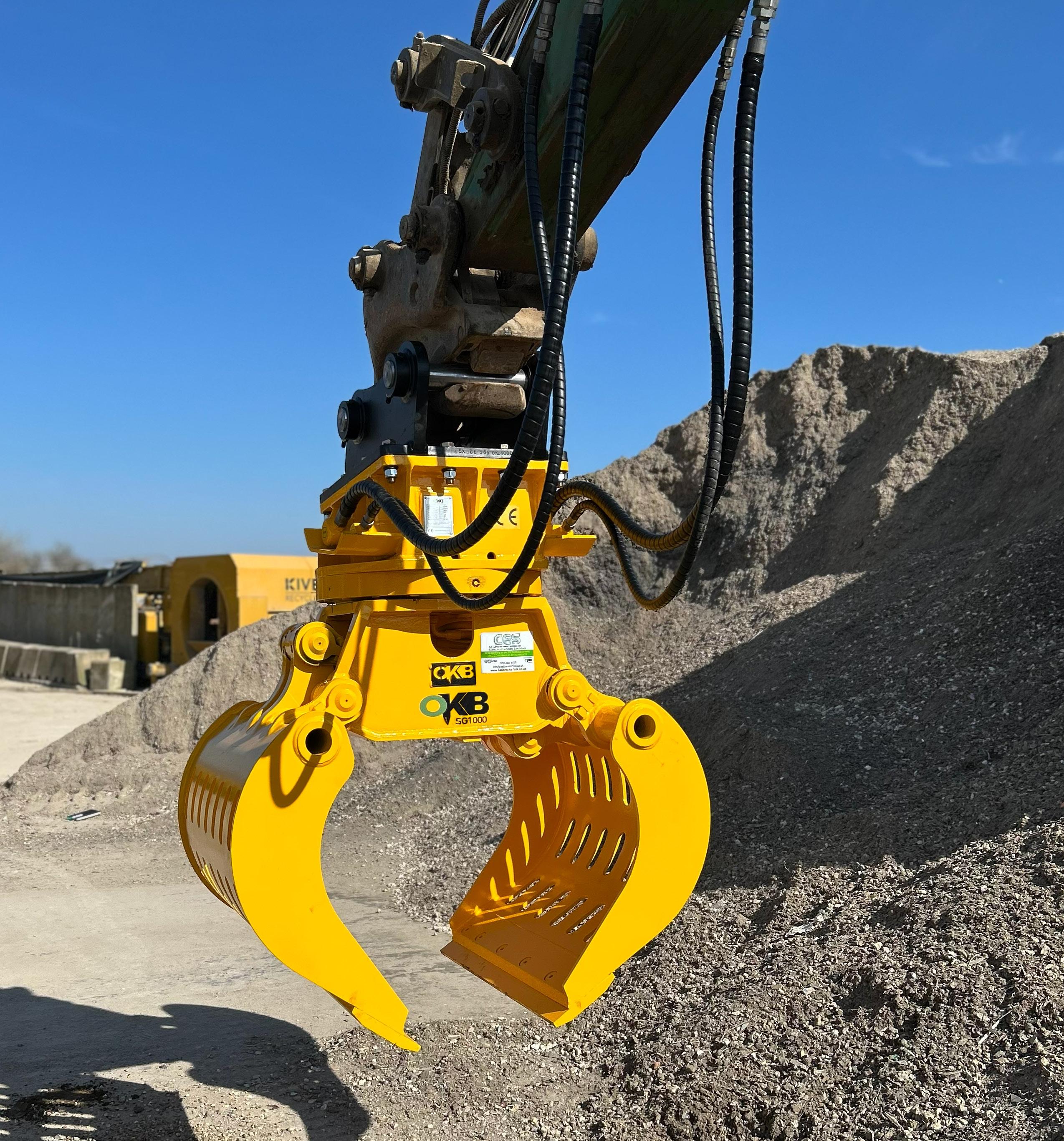
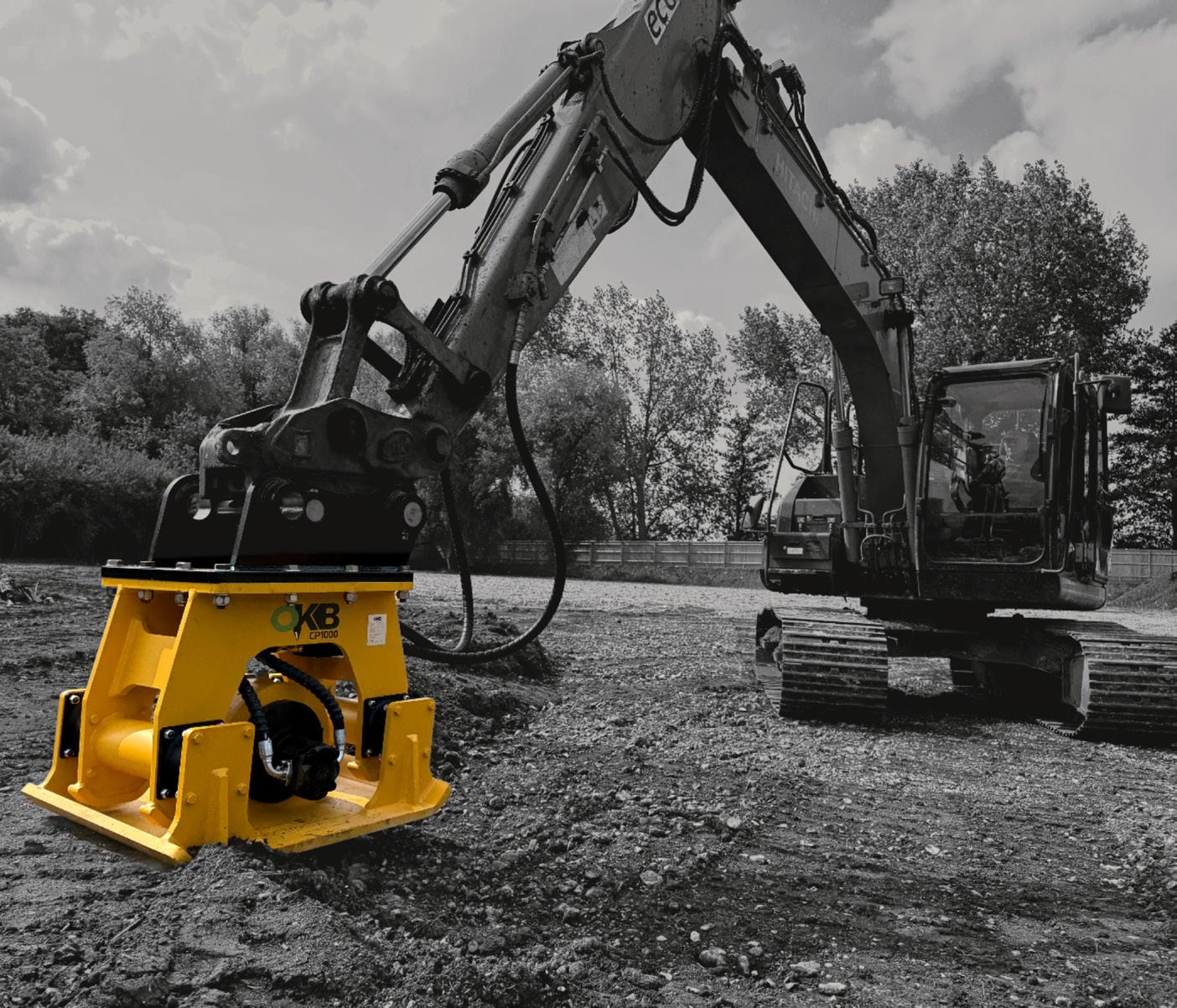
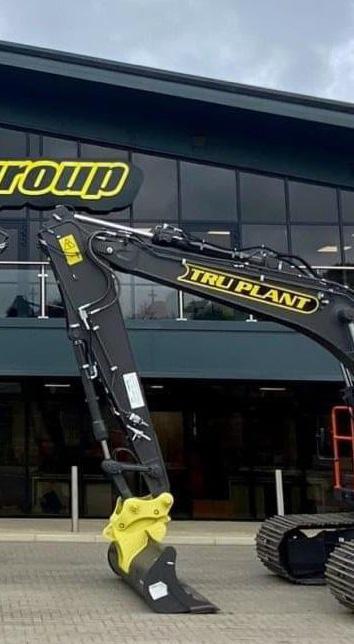
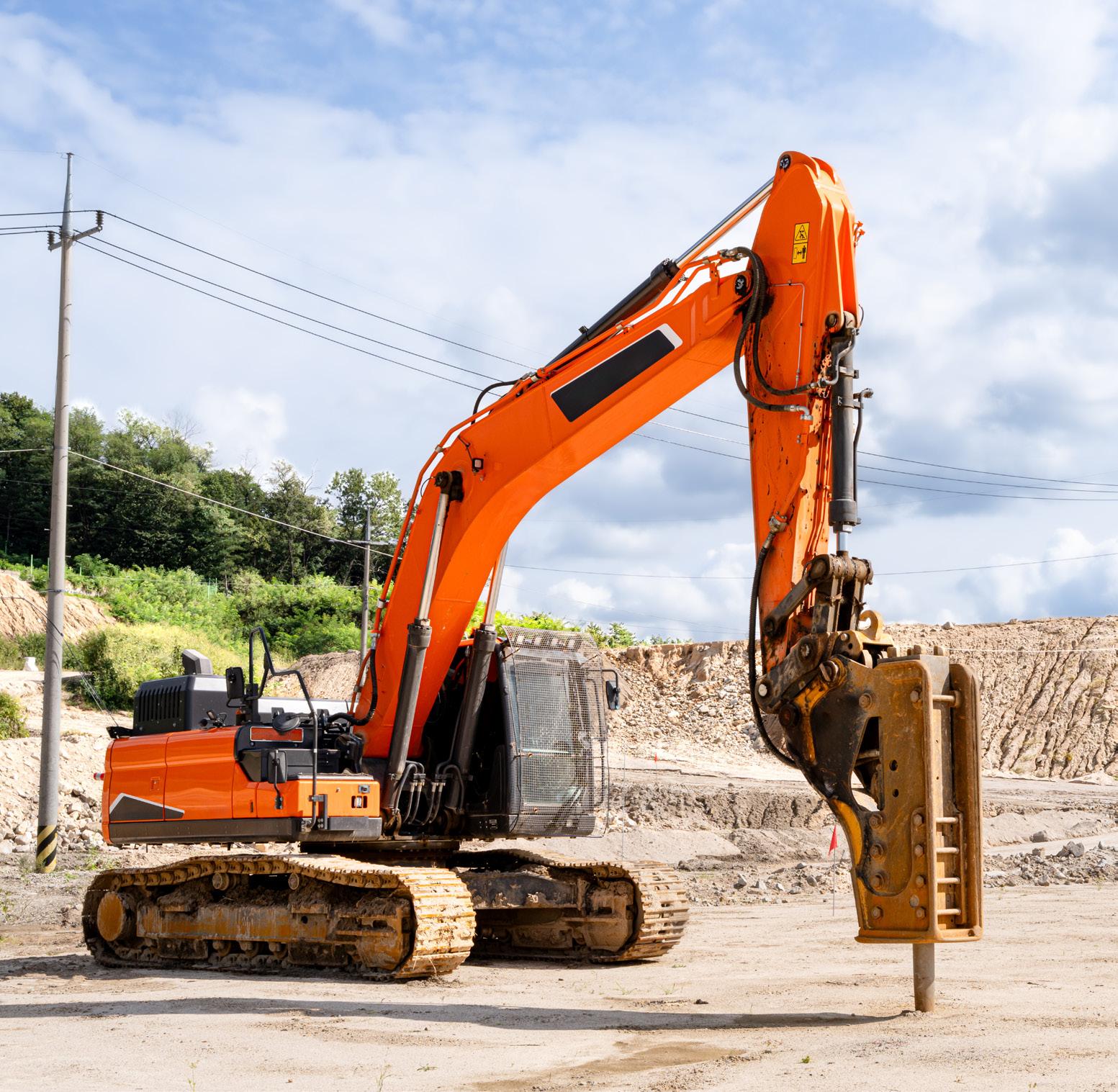
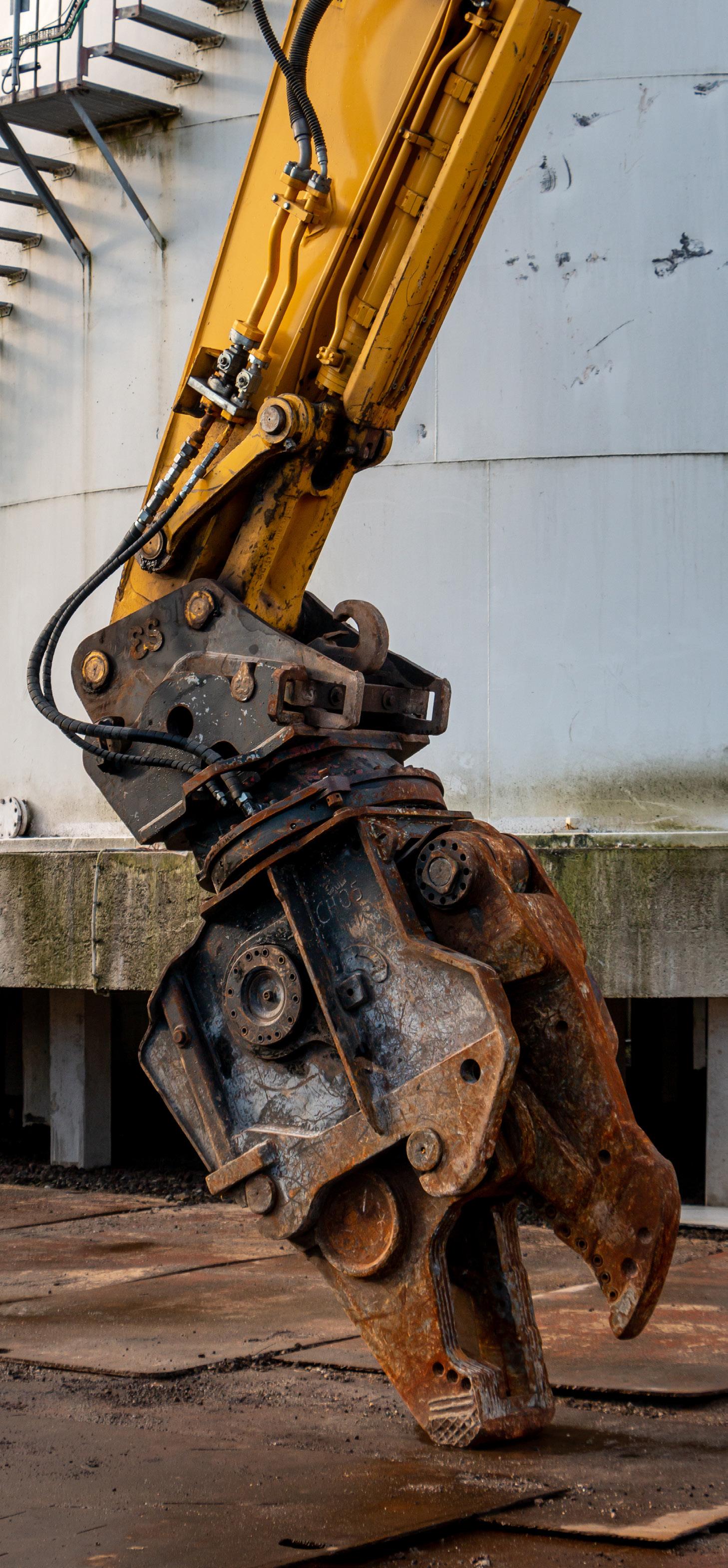
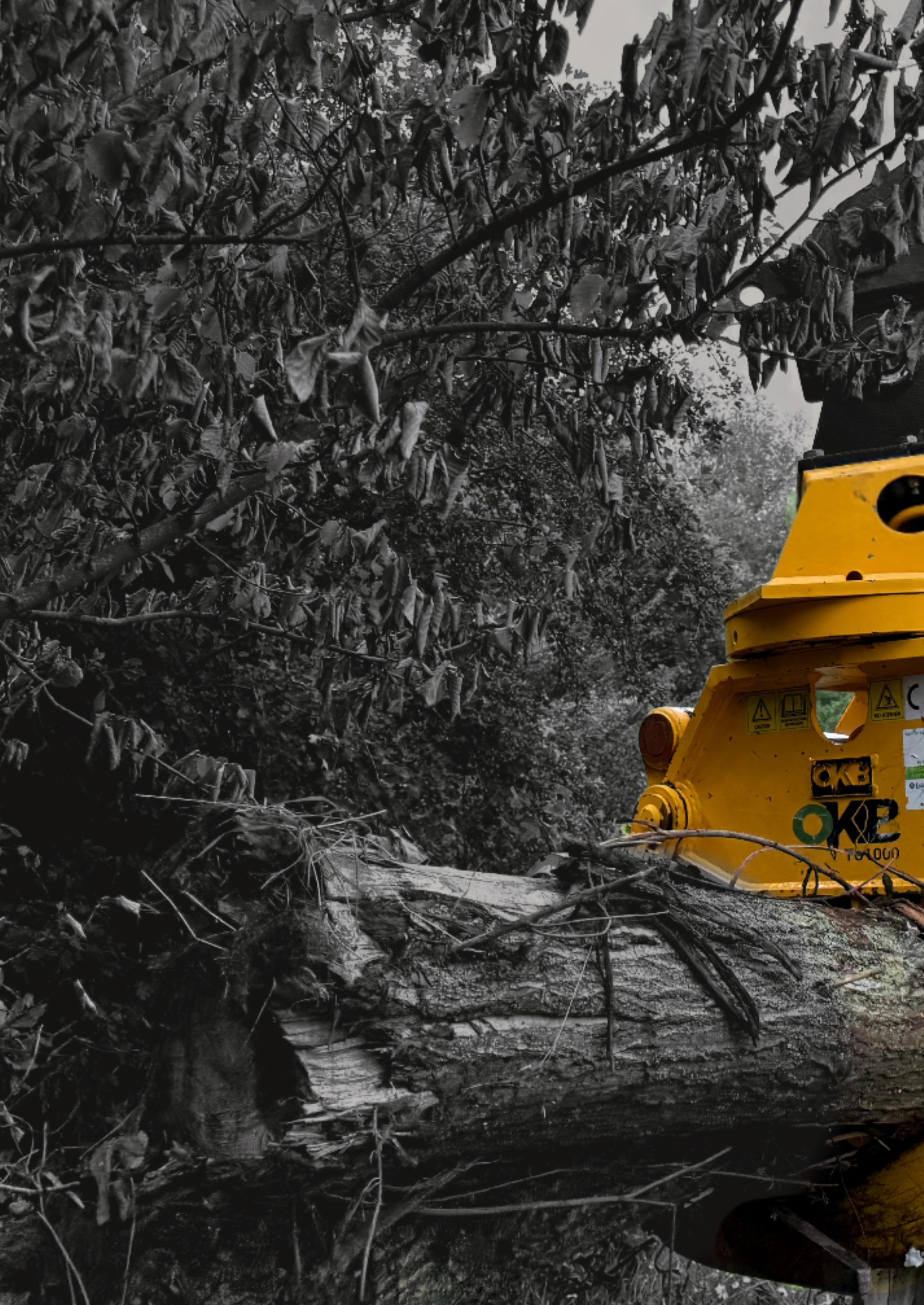
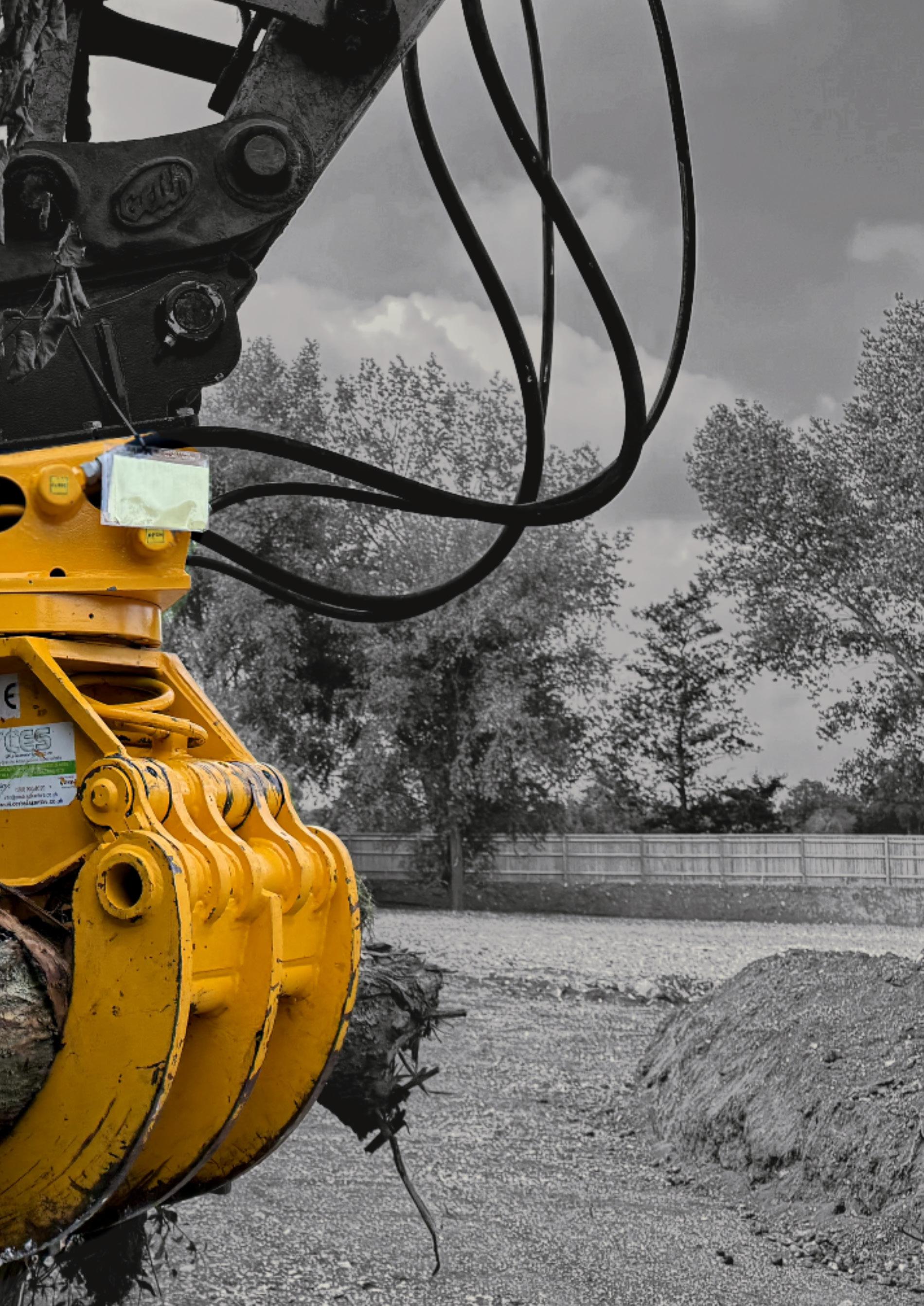
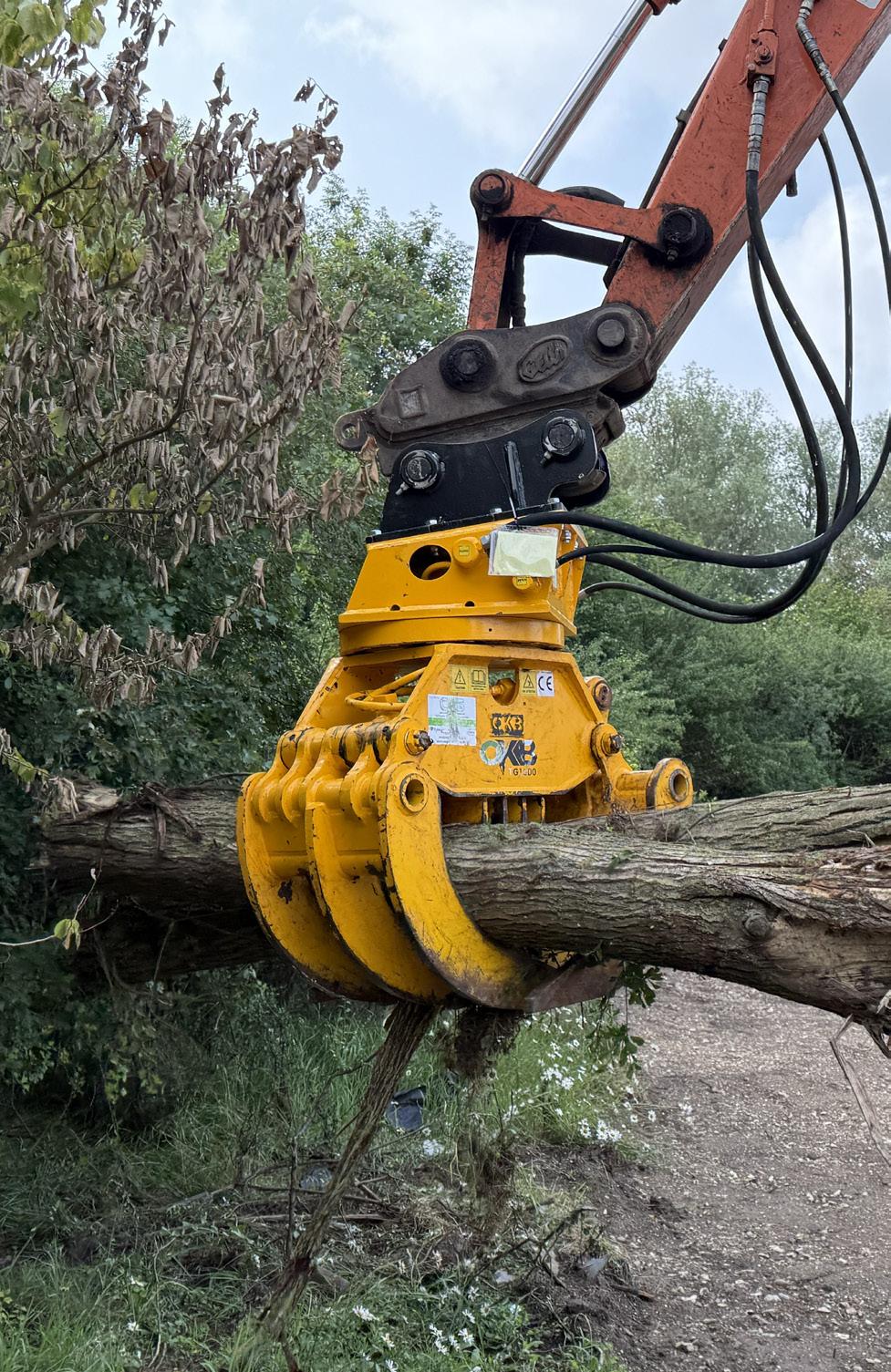
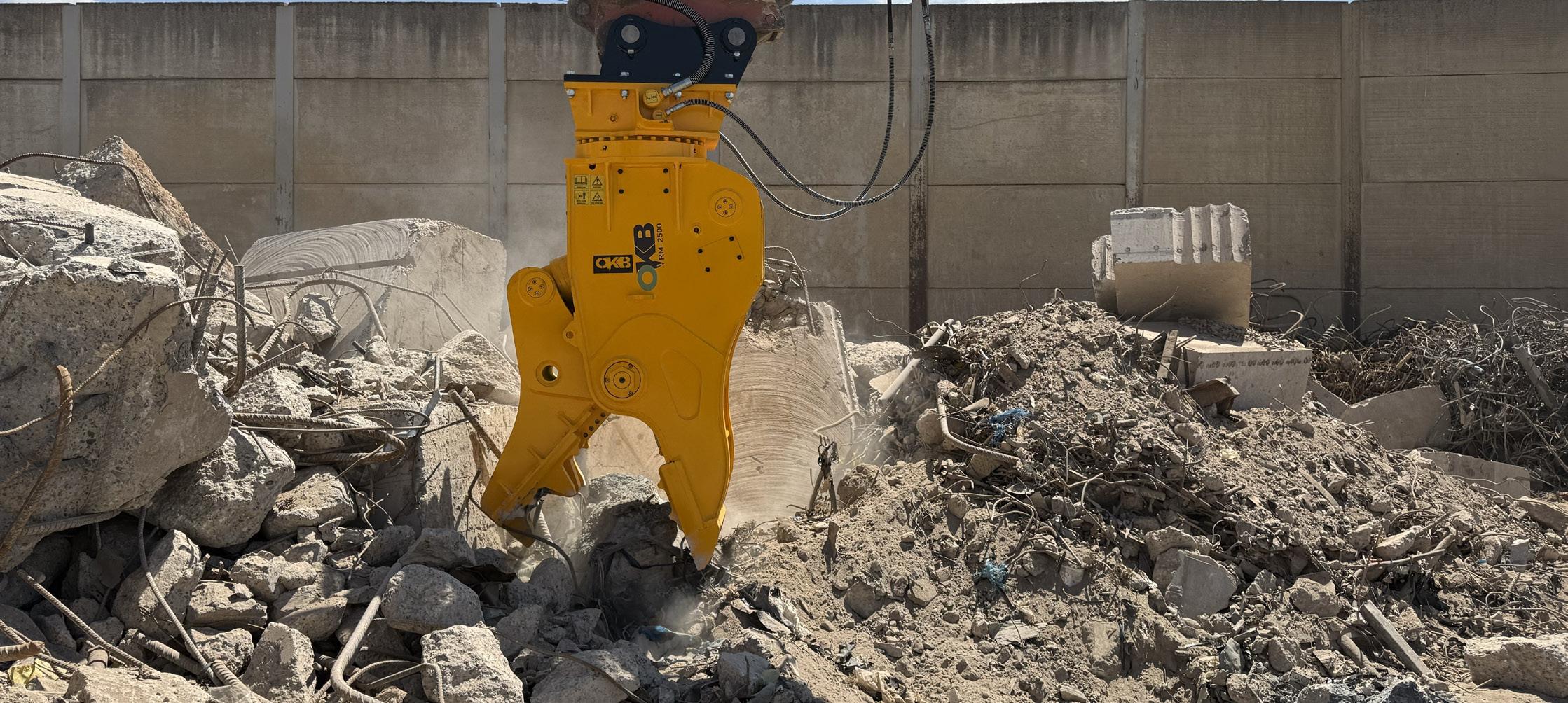
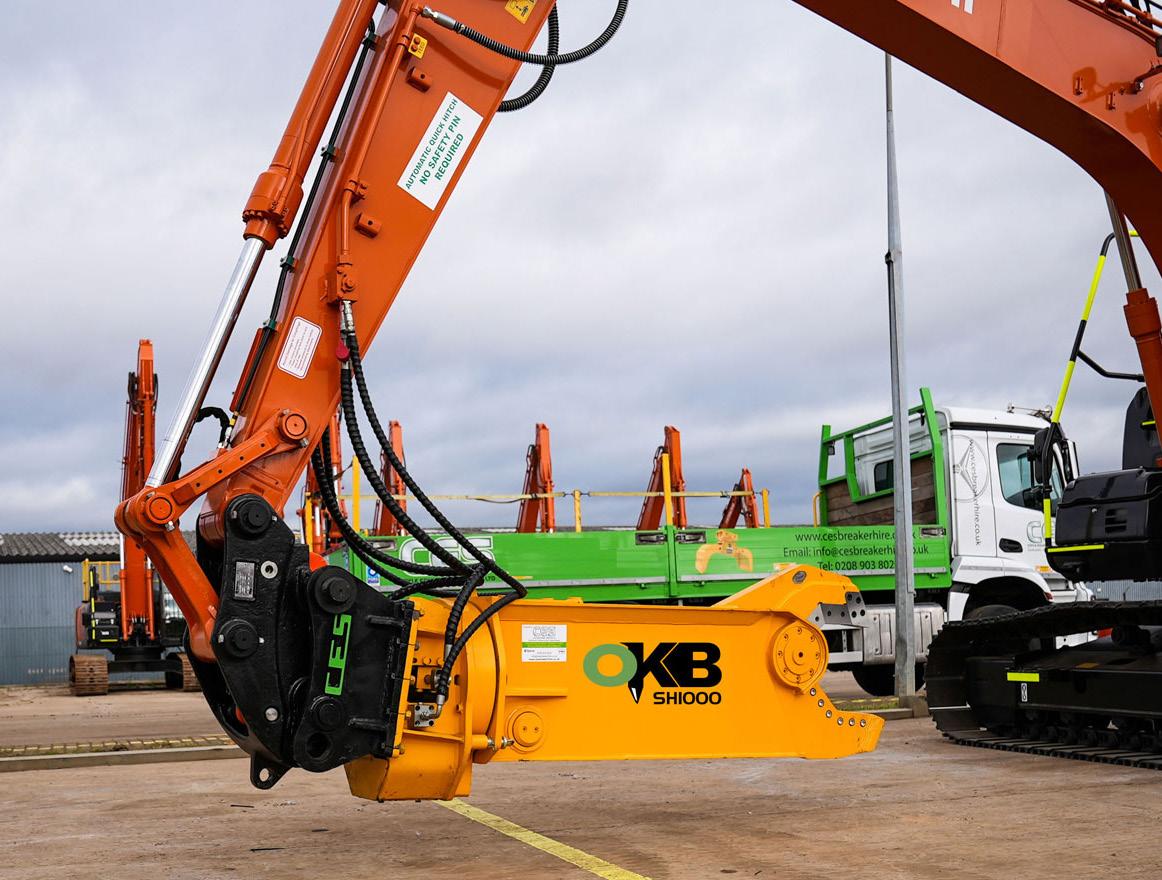
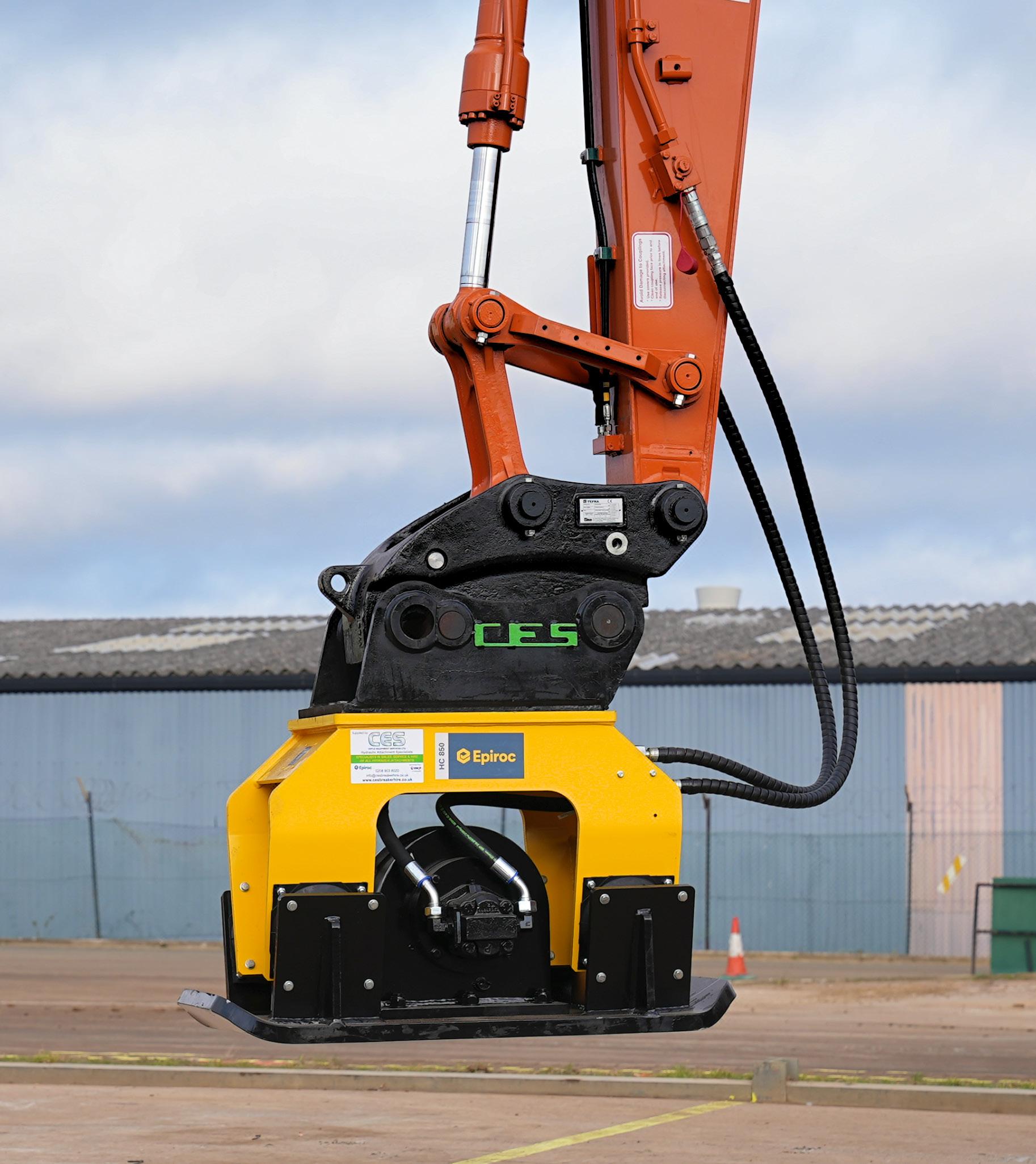
Attachments are severely underrated in the importance chain of a job site. To many, they might seem like ‘just an add on’, and nowhere near as important as the digger itself.
Well, to that I say SHAME!
The type of technology that is available to the market gives rise to attachments being fundamental to jobsite efficiency. Gone are the days of needing to leave the cab to switch attachments or having to suffer through one attachment to get multiple jobs done to a subpar standard. With a myriad on offer, attachments are right at the heart of every construction project, enabling confidence in both operators and foremen alike.
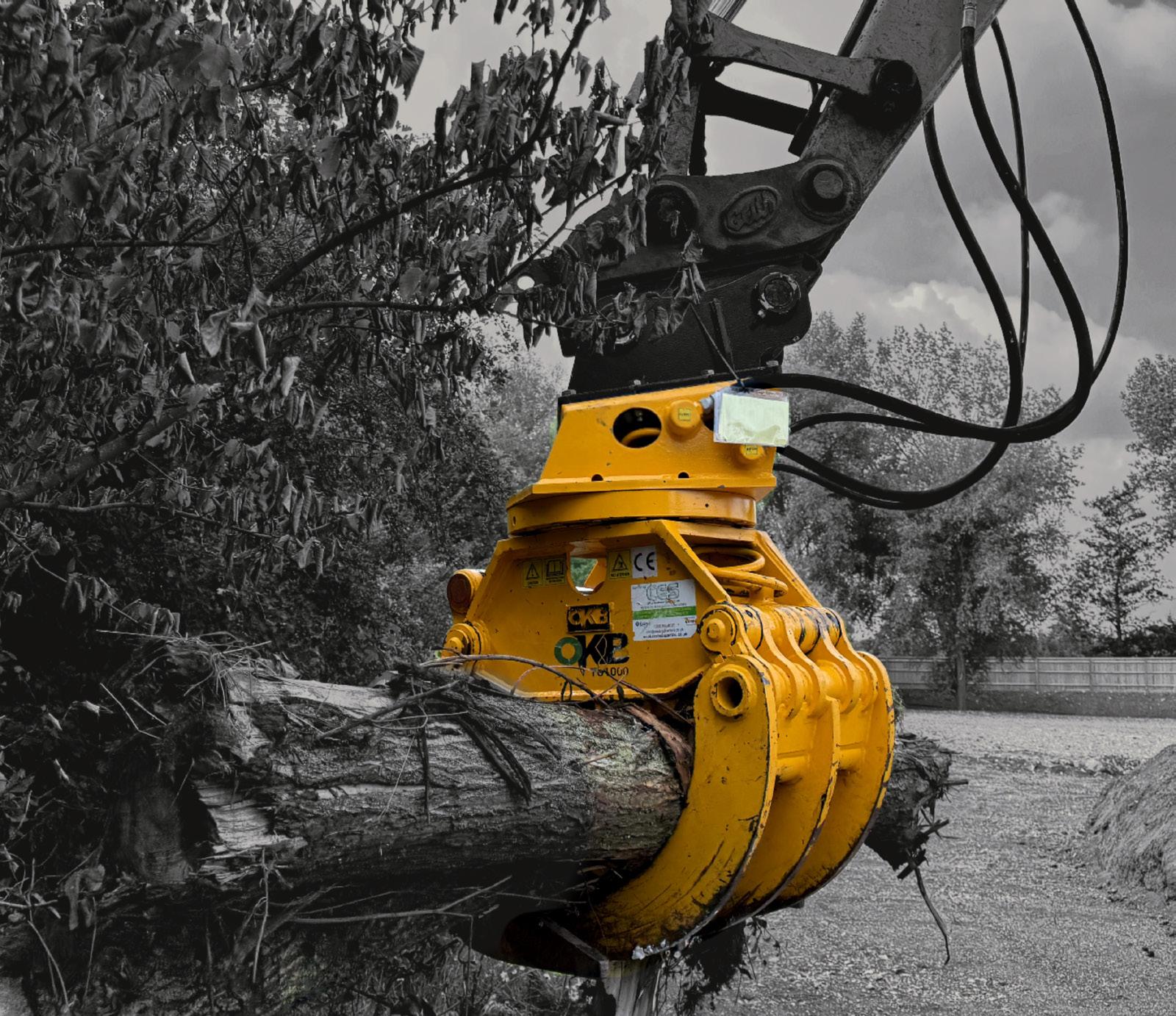
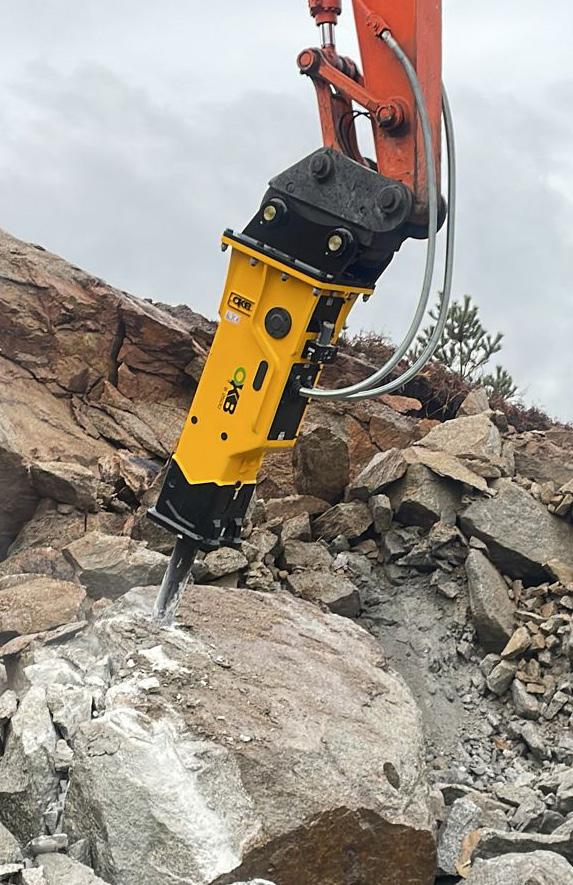
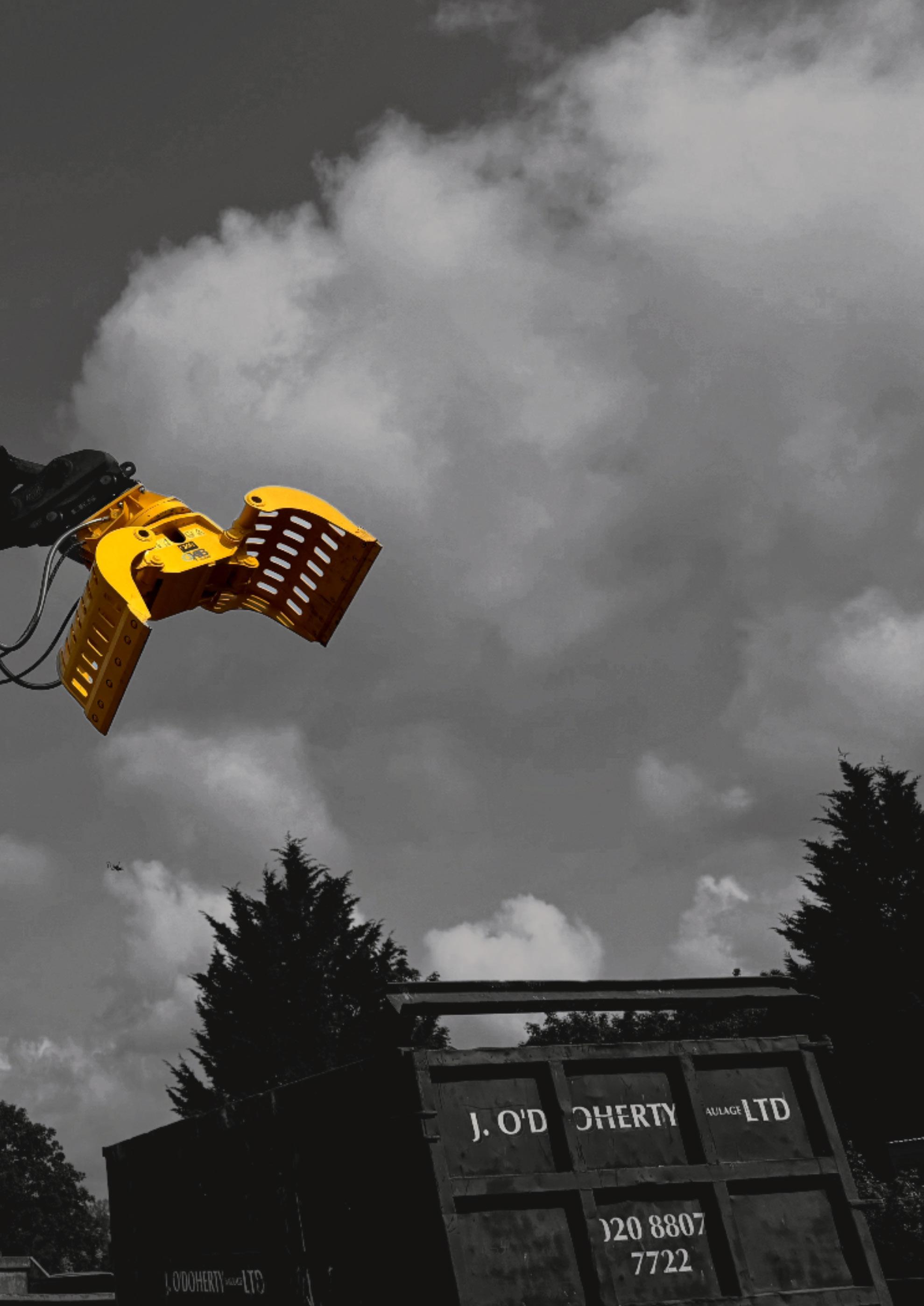
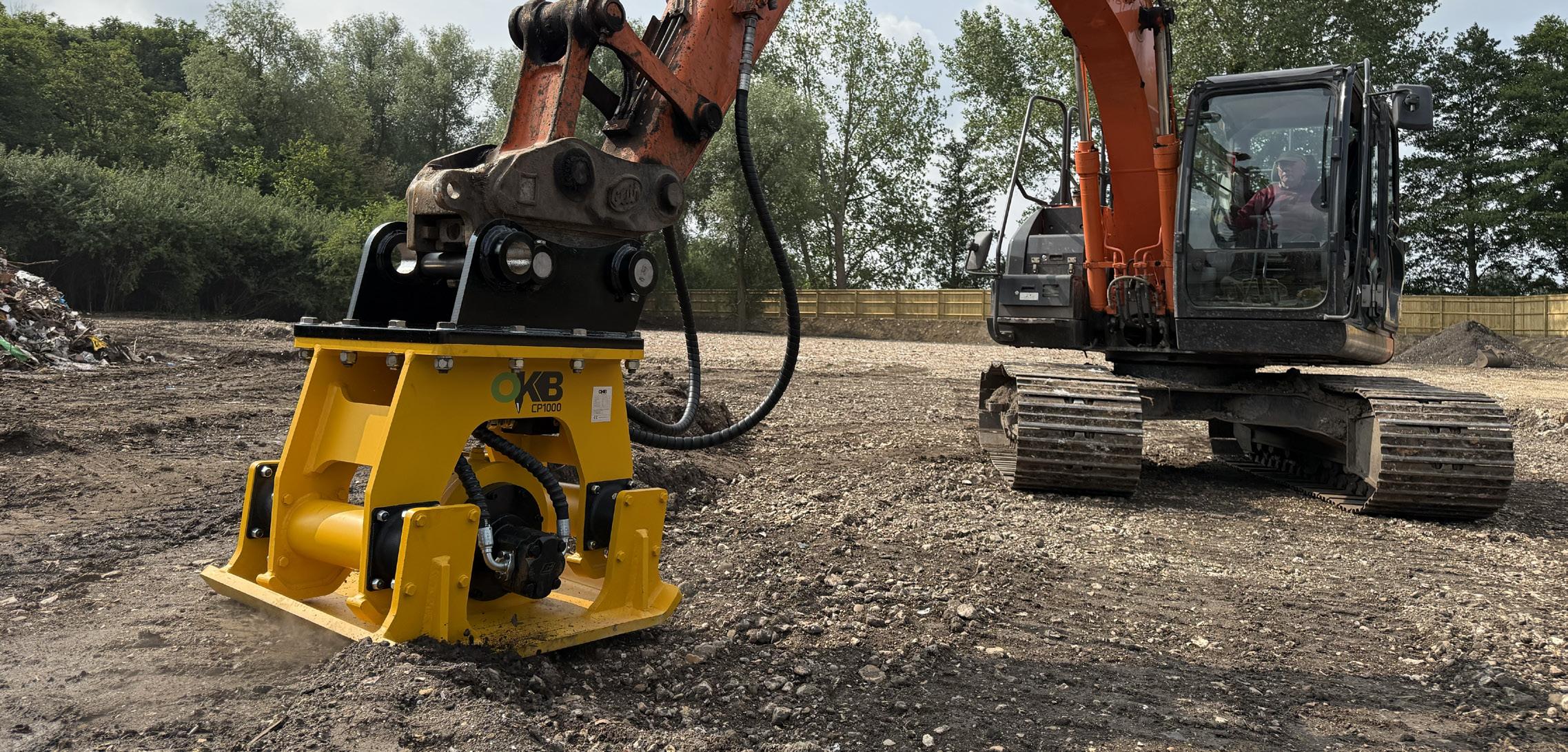
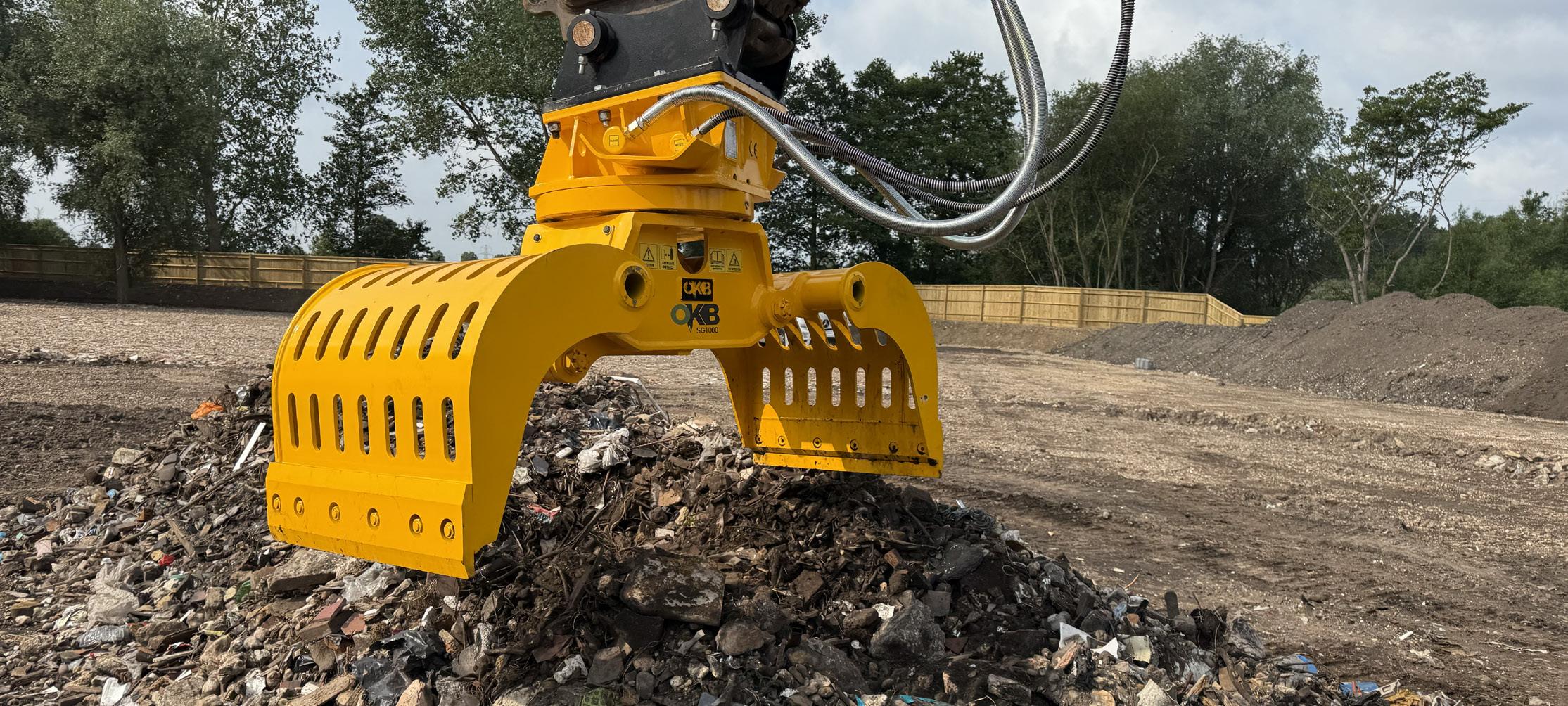
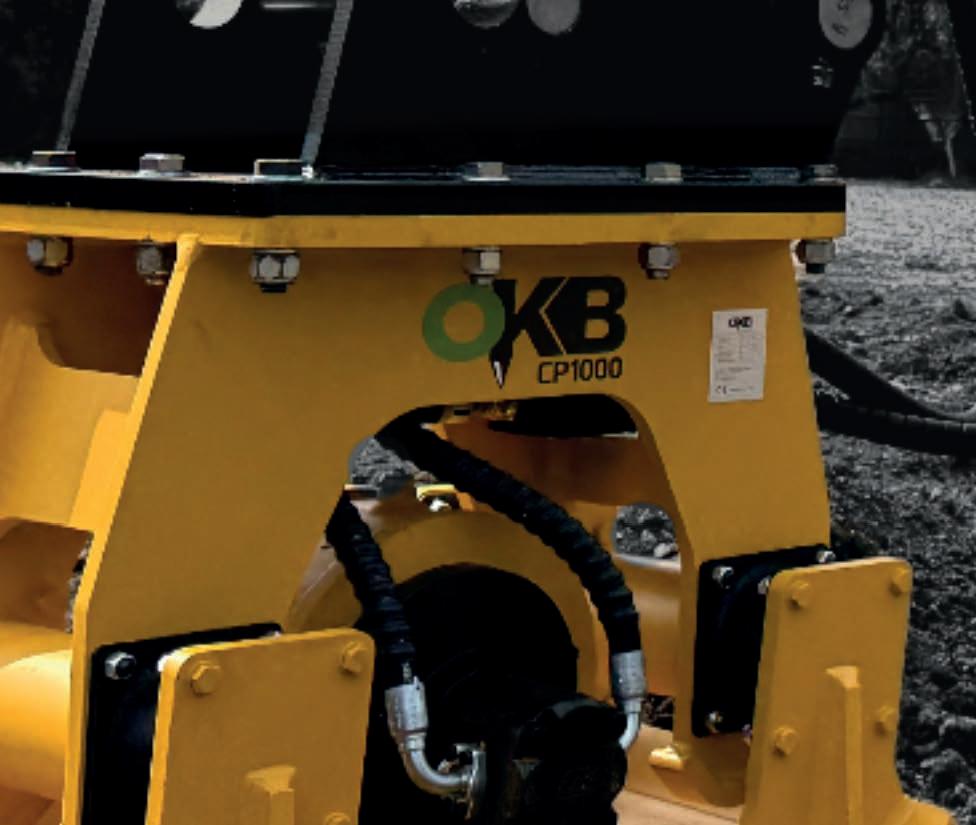
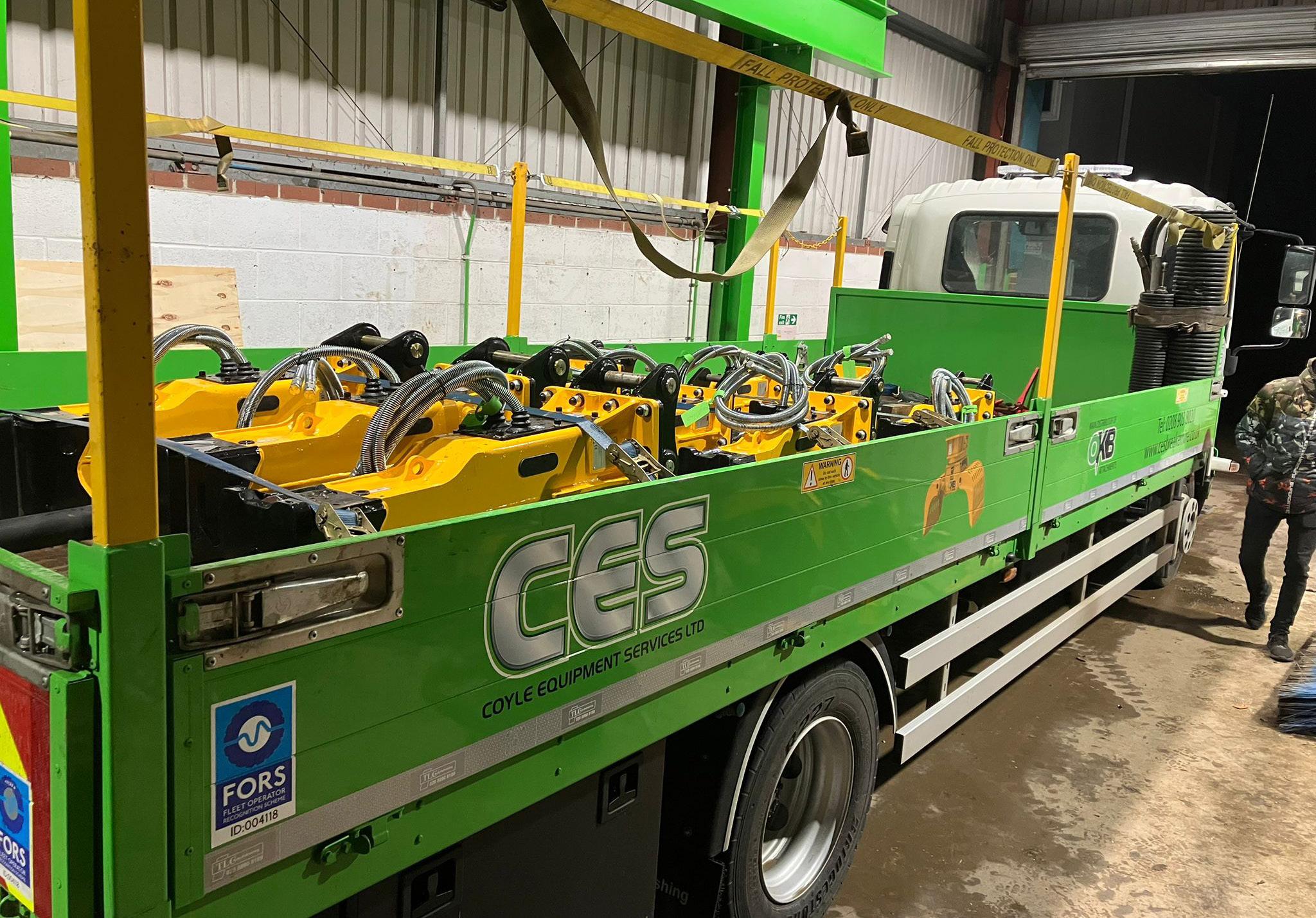
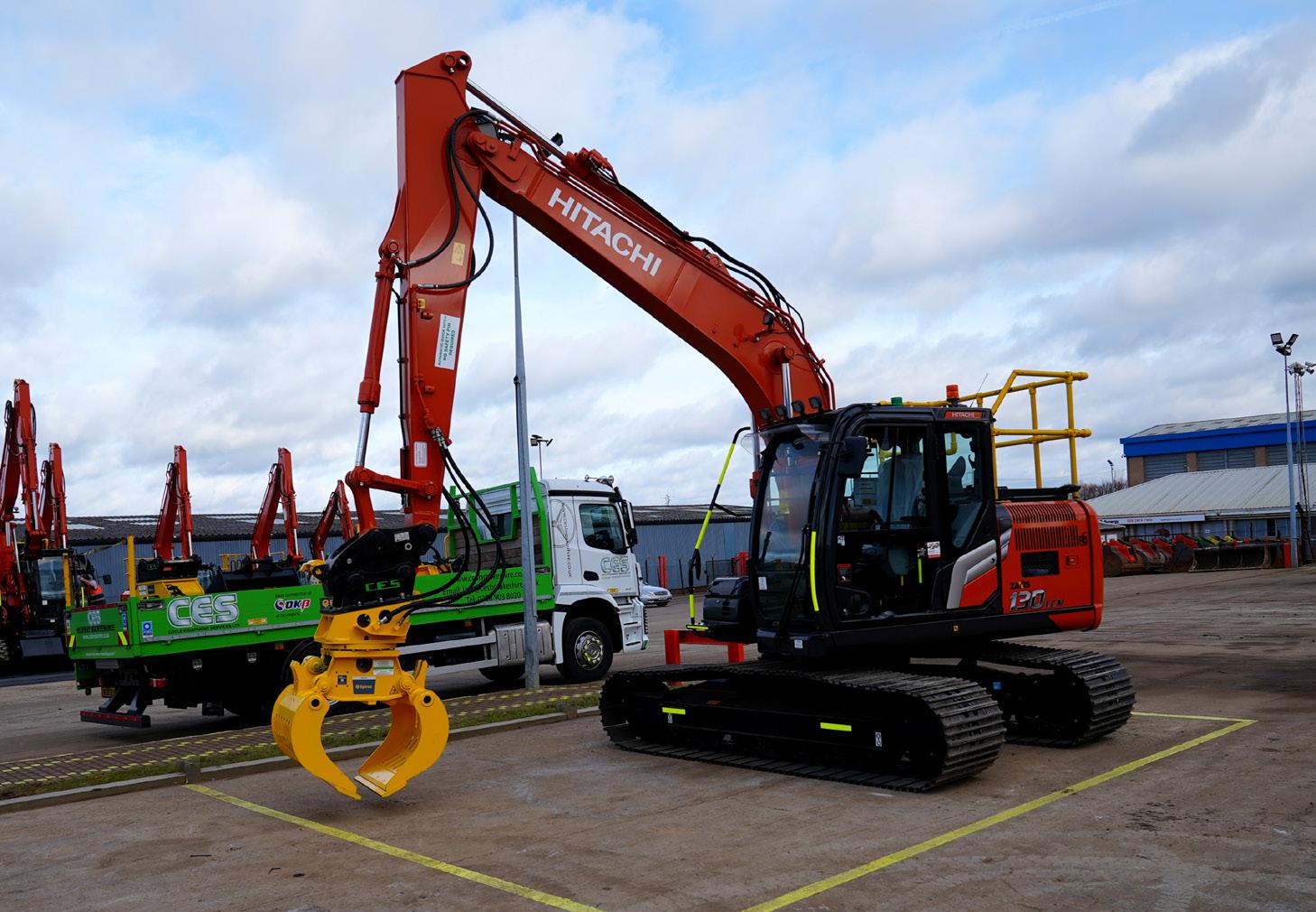
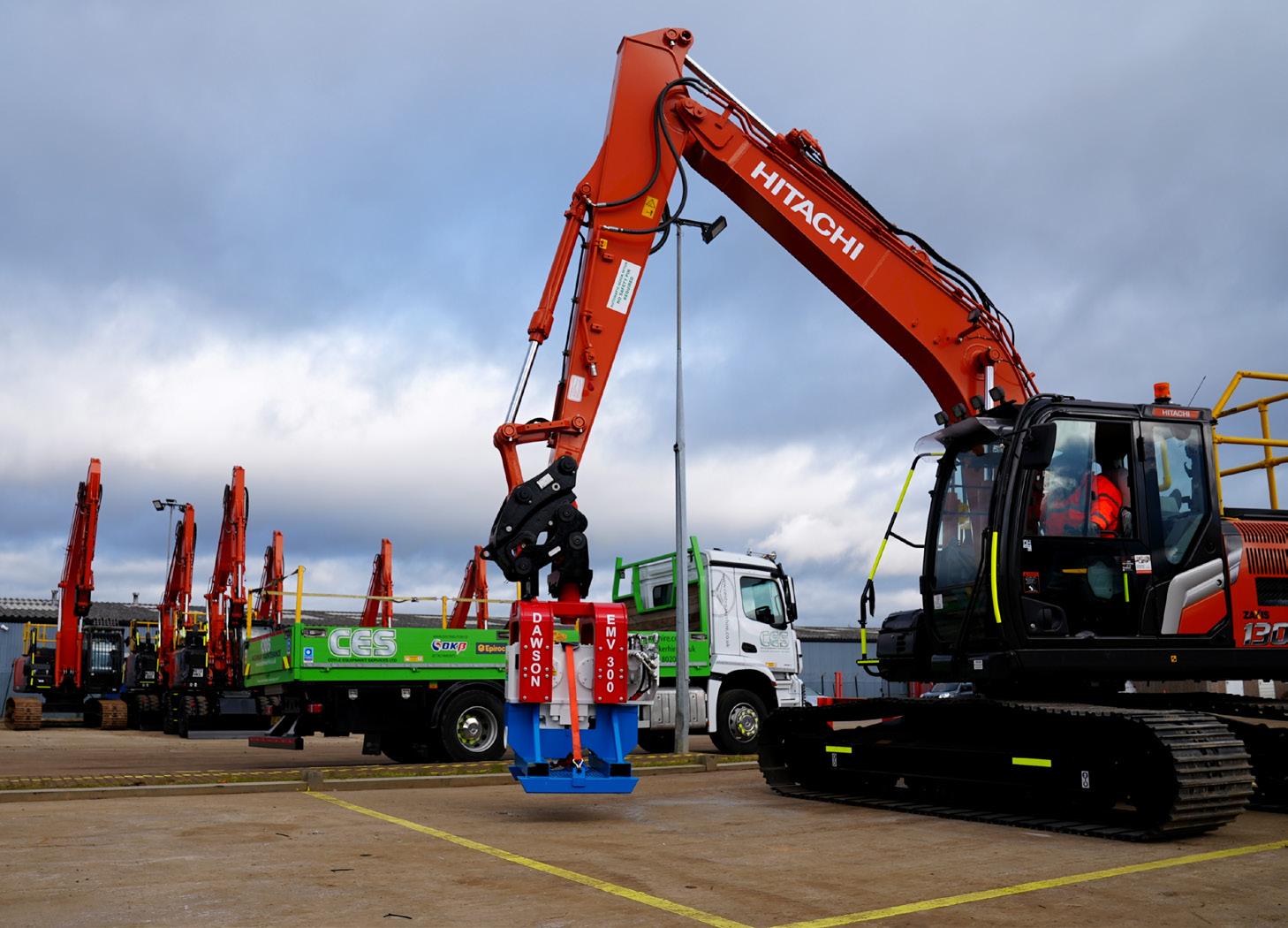
Don’t believe me? Delve into the mag to find out exactly how attachments can boost a project to it’s full potential. With names such as OKB Attachments, CES Breaker Hire, Witham Group and many more, you’d be a fool to miss out on such incredible industry insights.
Happy Reading!
Rebecca Phillips Managing Editor
PLANT PLANET is published by Machine Power Media Ltd.
Unit 5, Basepoint, Enterprise Centre, Terminus Road, Chichester, PO19 8FY 07779 405885
Reproduction in whole or part is prohibited except with permission in writing from the company.
Note to contributors: articles submitted to the Editor for consideration must be the original work of the author.
Where photographs are included that are not the property of the company or contributor, permission to reproduce them must have been received from the owner of the copyright. Any views or opinions expressed within this magazine are not necessarily those of the company. Registered in England No: 16081082
Conditions for Advertising
All advertisements are accepted subject to Machine Power Media’s standard of insertion. For a copy of Advertising Terms & Conditions, please write to: Darren Shelton, Machine Power Media Ltd. Unit 5, Basepoint, Enterprise Centre, Terminus Road, Chichester, PO19 8FY
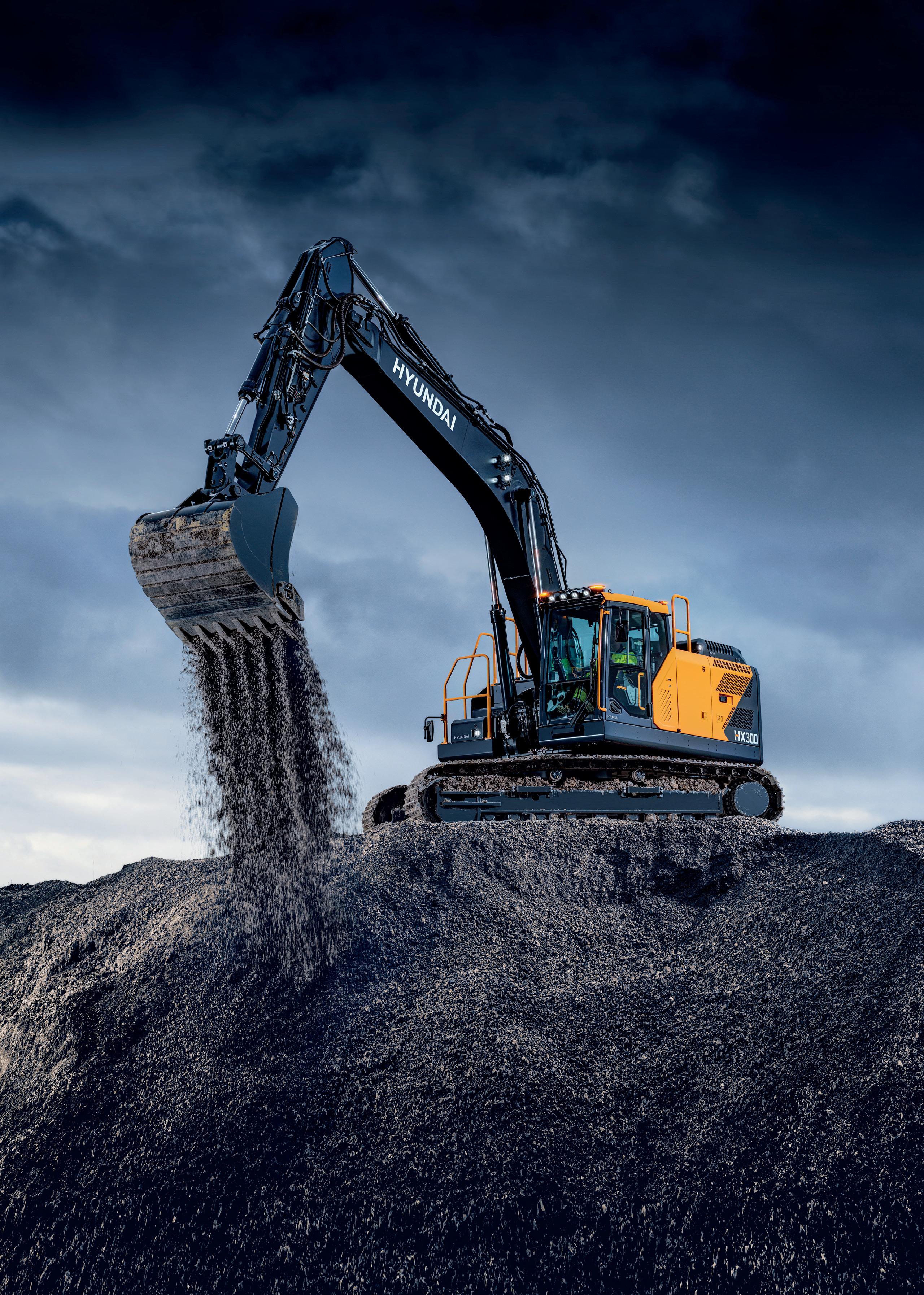
A NEXT LEVEL EXCAVATOR
The new HX300 is the latest addition to Hyundai’s Next Generation excavator range. Alongside the HX360 and HX400, it delivers next level efficiency, comfort, safety and serviceability. The awardwinning DX08 diesel engine delivers up to 10% improved fuel efficiency, while an intelligent electro-hydraulic system provides up to 25% improved productivity. Longer service intervals include 1,000-hour oil changes and safety is enhanced with the SAVM 360° camera system and E-Stop emergency braking.
Go to the Next Level. Contact your Hyundai dealer. www.hyundai-ce.eu
DARREN SHELTON MANAGING DIRECTOR
CHRIS HART SENIOR SALES CONSULTANT
PHIL EVERY GROUP SALES DIRECTOR
MARTINA TONELLI MARKETING SPECIALIST
REBECCA PHILLIPS MANAGING EDITOR
LORNA COWLIN CONTENT CREATOR
ALEX COX JOURNALIST & CONTENT CREATOR
STEVE WILSON DESIGN MANAGER
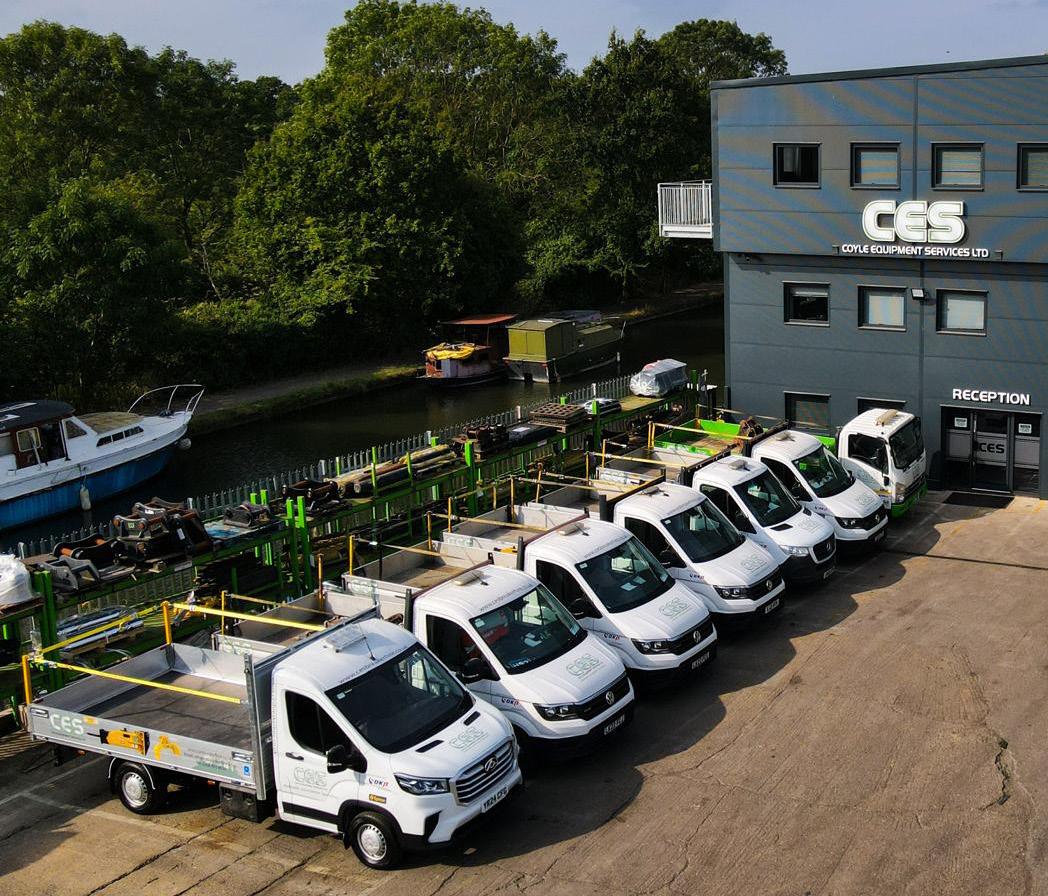
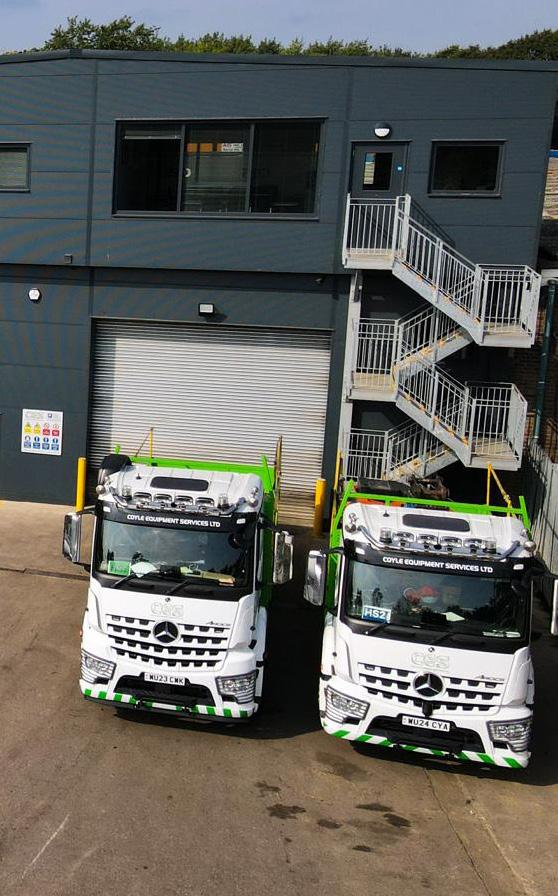
ELLA WOODFORD COYLE EQUIPMENT SERVICES LTD
LOUISE CARNEY CEA
LISA COLLINS CPA
ALI BOTTOM WITHAM GROUP
EDDIE MILTON INDIGO MEDIA GROUP
BRIAN JONES CONSTRUCTION PLANT-HIRE ASSOCIATION (CPA)
Brian Jones is President of the CPA, the largest trade association for the plant-hire sector in the UK with circa 1,900 members. He has worked in plant-hire for over 50 years. Brian was elected to the CPA Council over 30 years ago and has been CPA President since 2017.
RACHEL LAMBERT @KINGSTON PR
Rachel Lambert is a PR consultant and the founder of Kingston PR, a business she started over 30 years ago. A former magazine editor, she is also a freelance writer covering a range of sectors.
LANA EDWARDS
Working with plant machinery since she was 8 years old, Lana Edwards is one of the most well known and respected inluencers in the construction industry. She is the Number One Woman in Construction for Wales as well as a Top 100 Women in Construction for the UK.
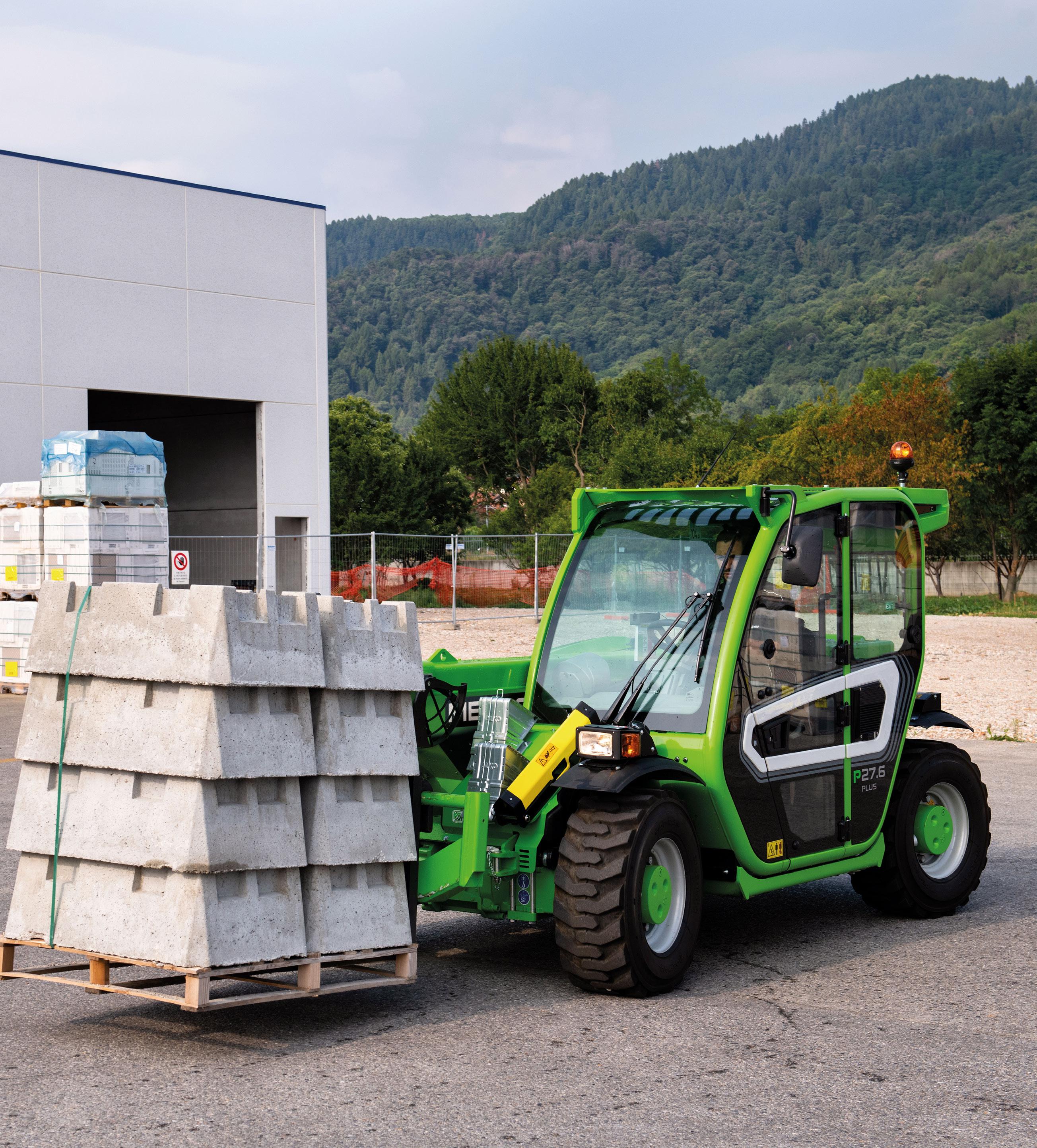
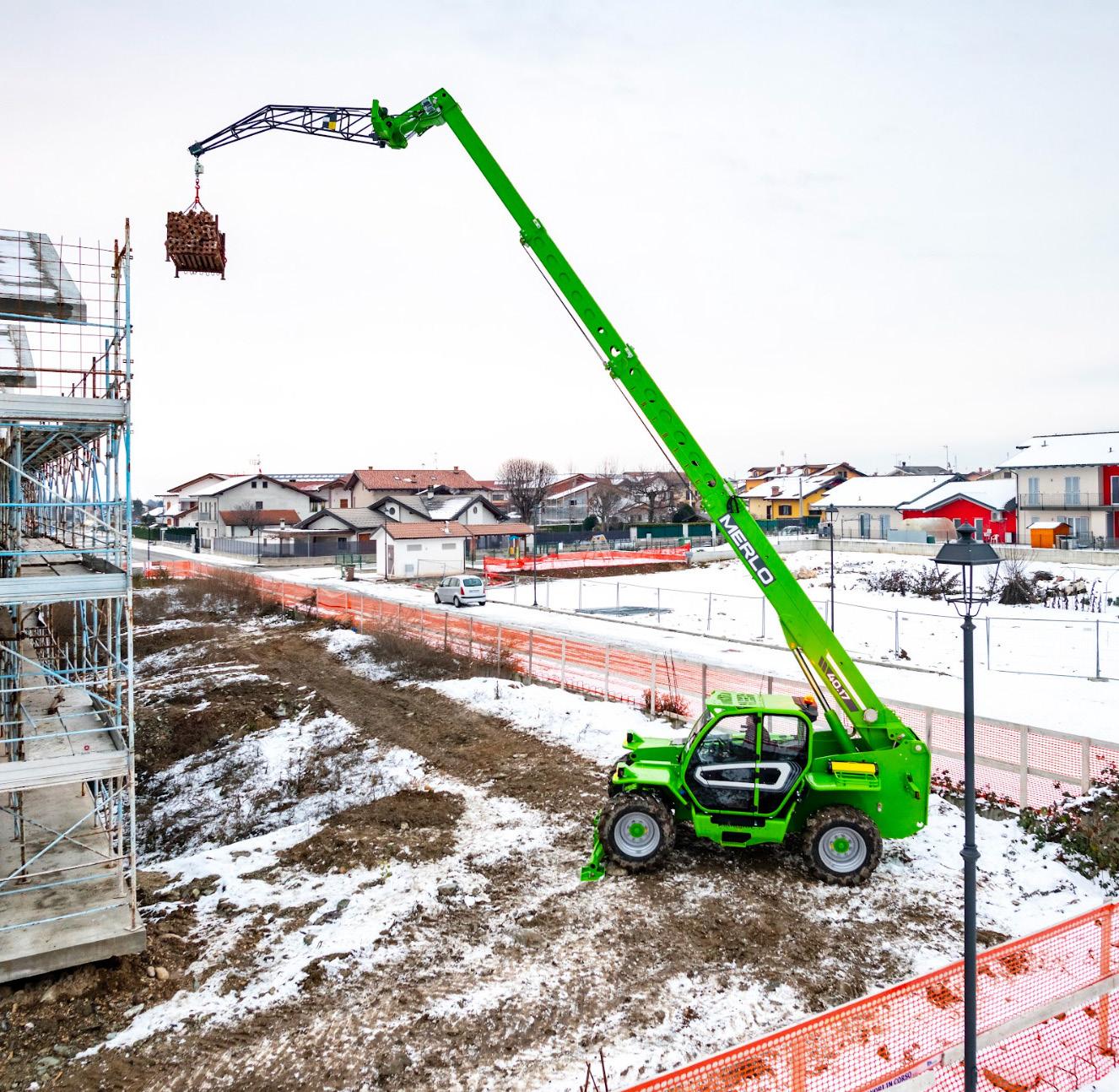
Panoramic 27.6PLUS
Compact, Agile, Powerful
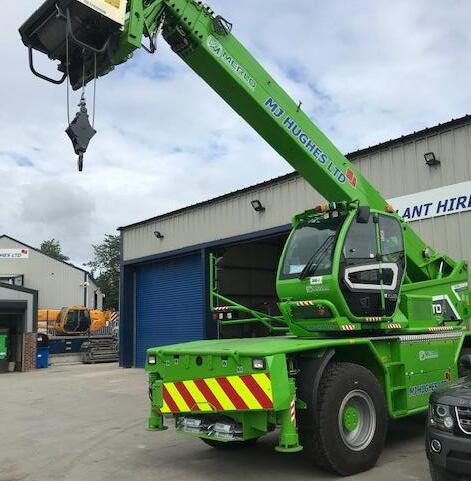
The perfect blend of compact dimensions and heavyweight performance. This nimble workhorse boasts an impressive 2.7-ton lift capacity and 5.9m lift height. At just 1.96 m high and 1.86 m wide, it navigates confined construction zones with ease. Powered by a robust 75 hp Rehlko engine, the P27.6 provides the versatility needed on modern job sites. With a travel speed of up to 40 km/h, it keeps productivity high and downtime low.
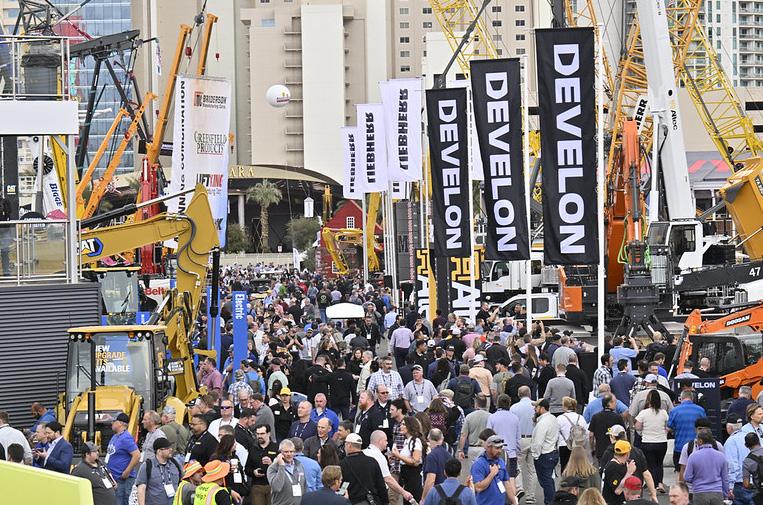
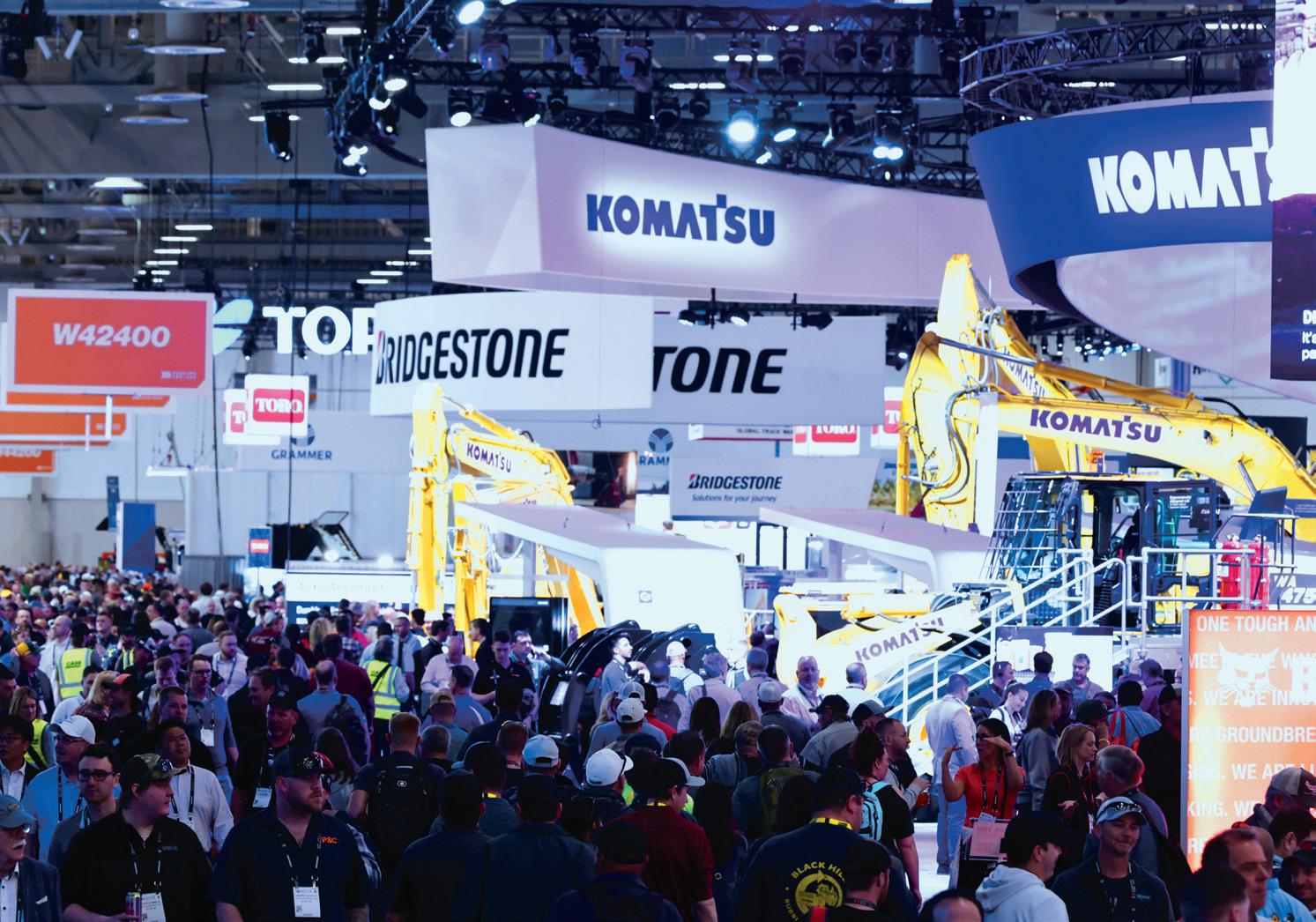
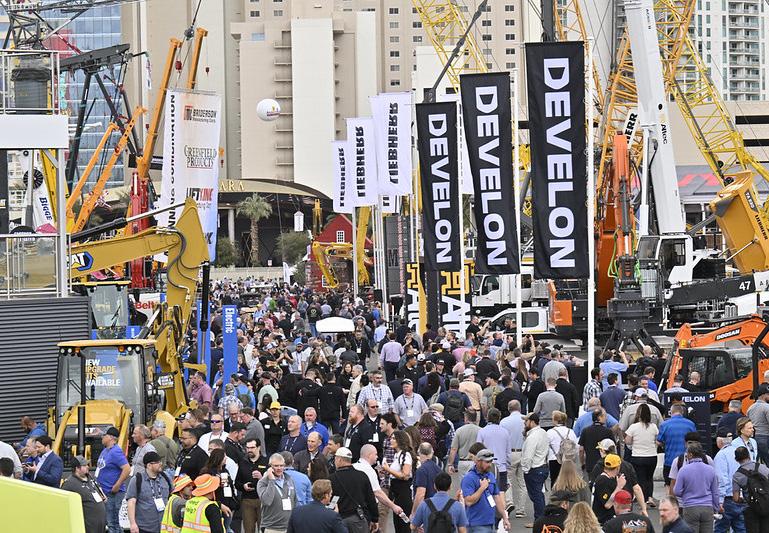
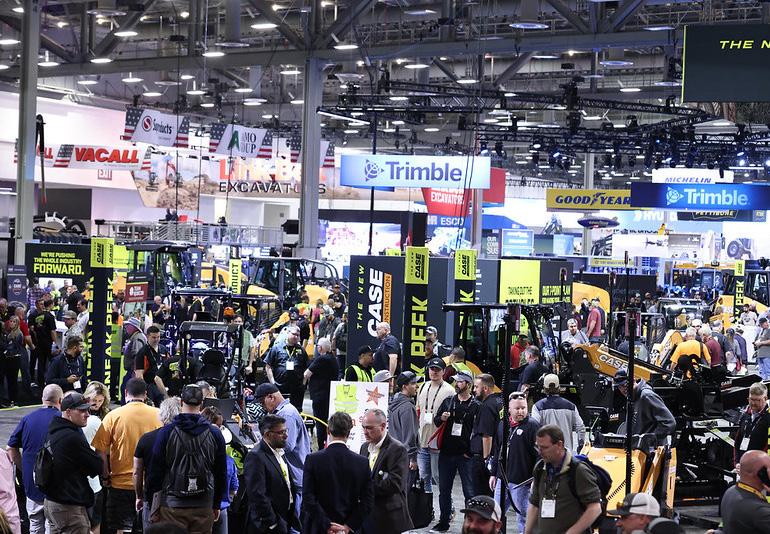
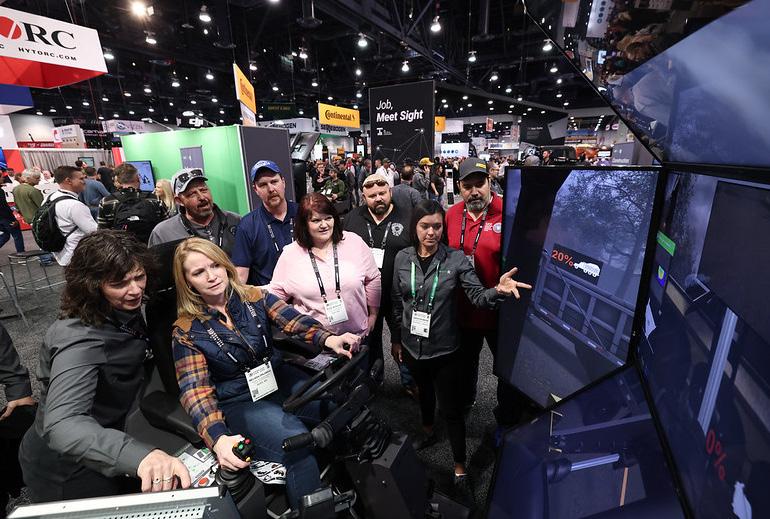
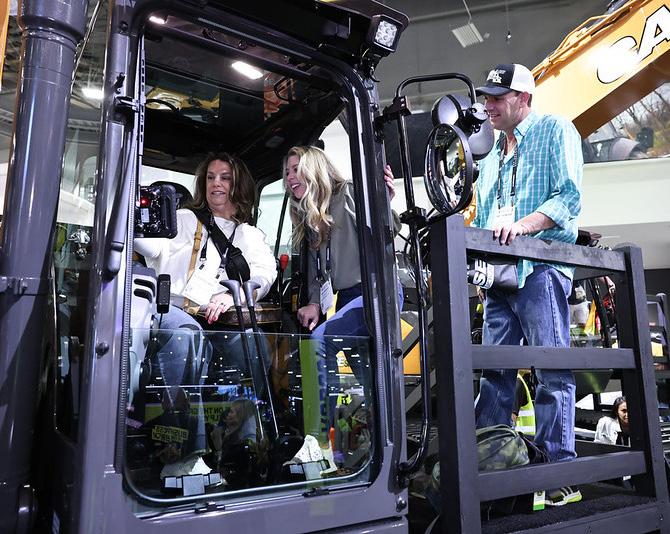
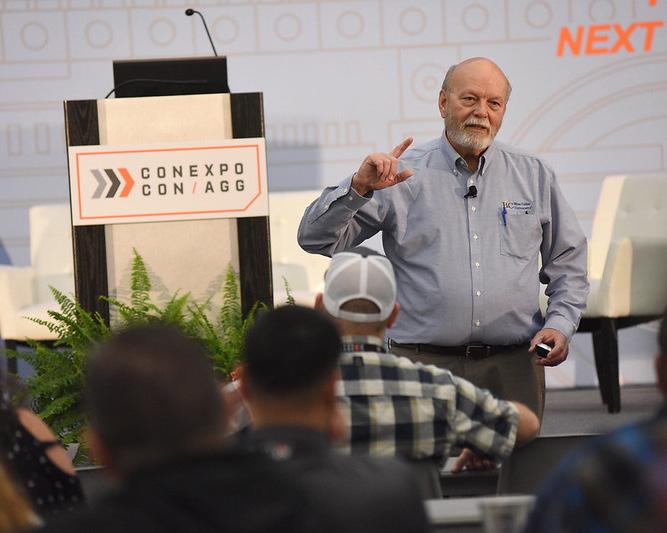
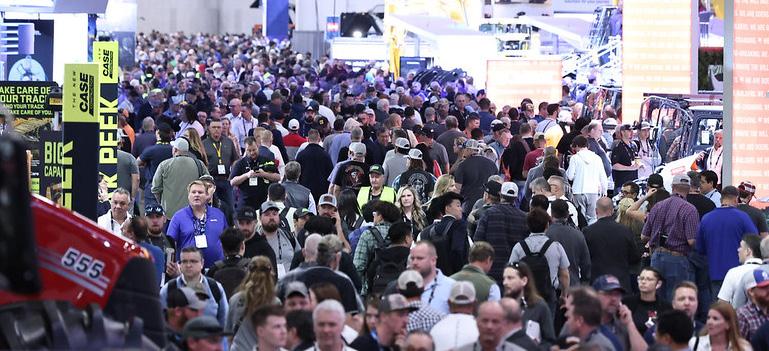
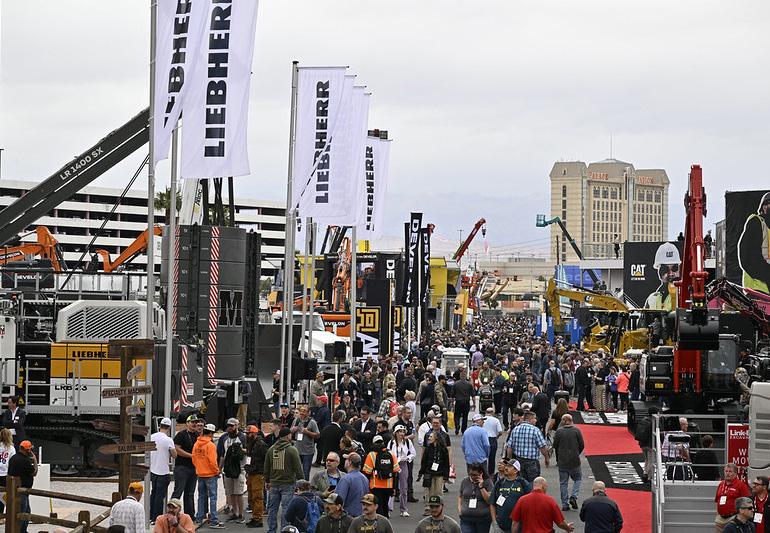
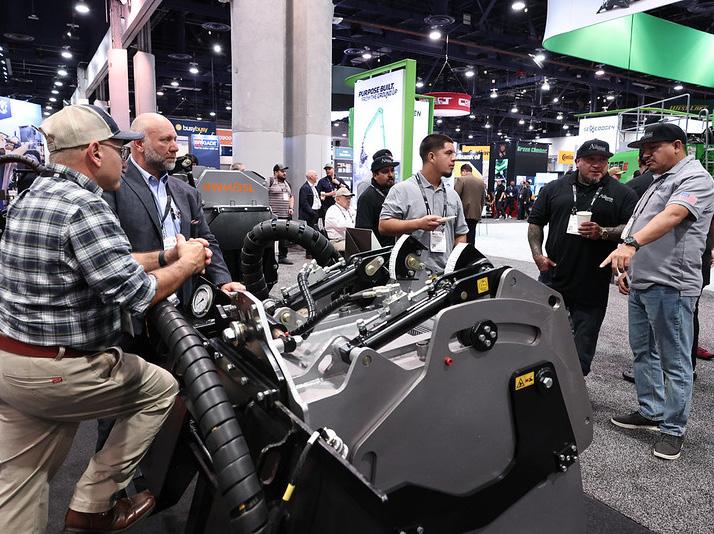
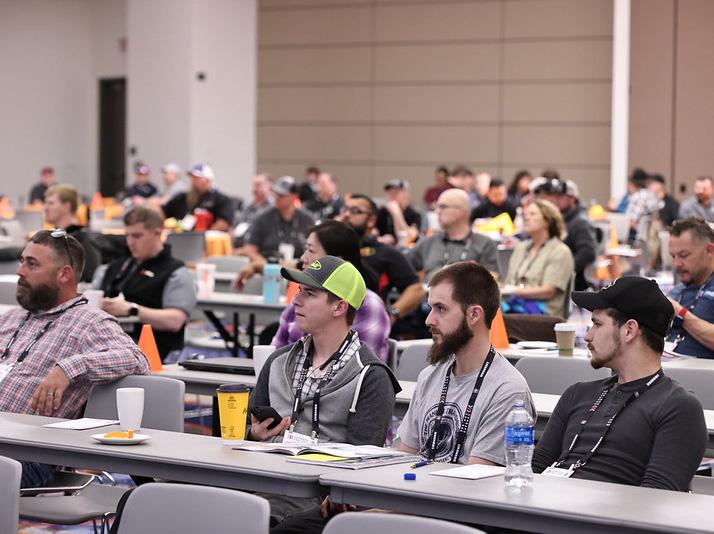
CONEXPO
NORTH AMERICA’S LARGEST CONSTRUCTION TRADE SHOW, RETURNS TO LAS VEGAS.
70
INDUSTRY CORNER
CONSTRUCTION INDUSTRY 2026
BECKS, THE CPA AND THE CEA DELVE INTO THE PRESSURES RESHAPING UK COMMERCIAL CONSTRUCTION AND THE PLANT SECTOR.
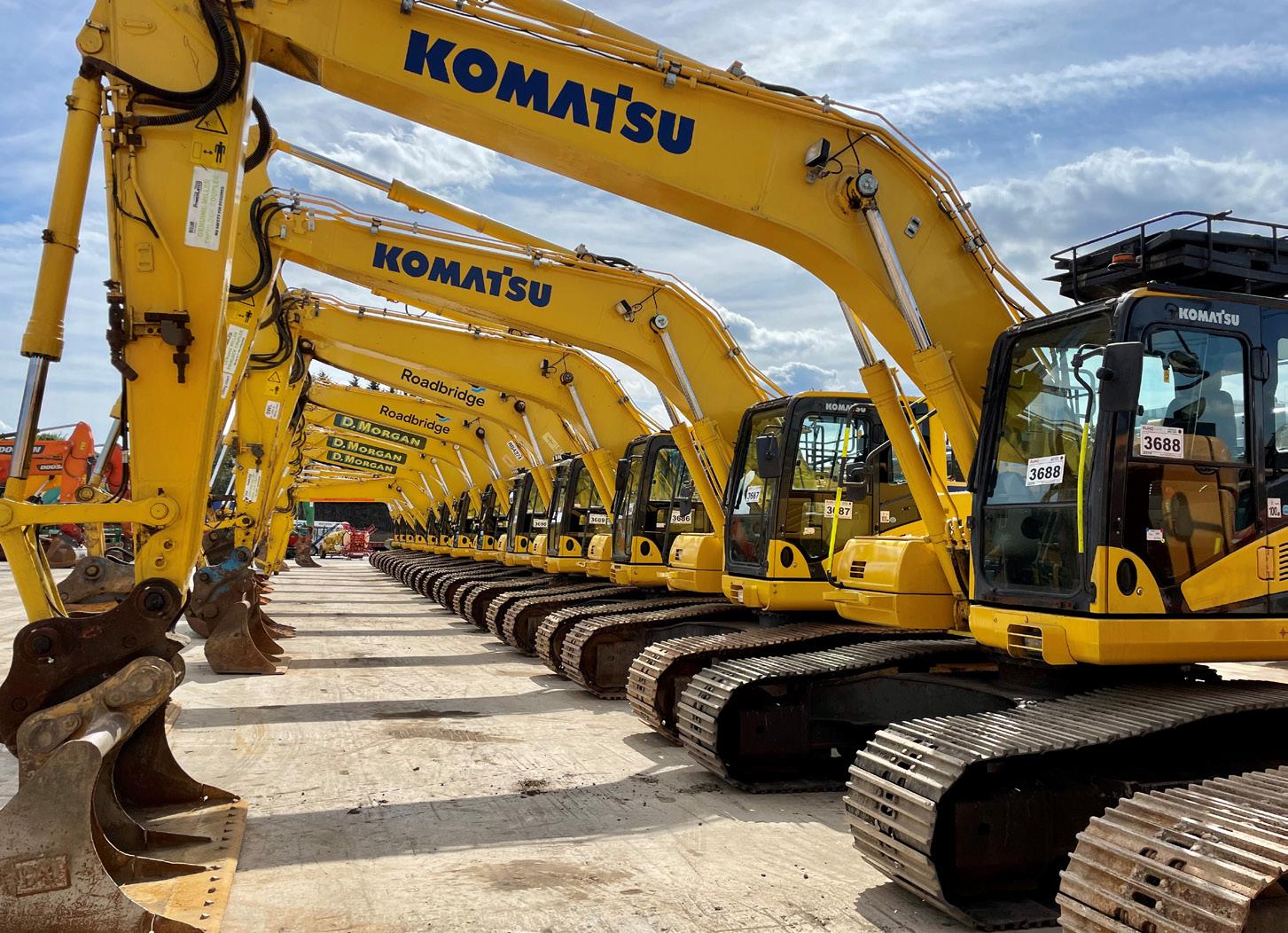
EURO AUCTIONS
UK USED CONSTRUCTION MACHINERY MARKET KICKS OFF 2026 WITH CONFIDENCE AND GROWTH WITH £61.2 MILLION JANUARY AUCTION SALE.
FEATURE 85
AI IN CONSTRUCTION
IS THE FUTURE OF CONSTRUCTION HUMAN-LESS?
MERLO AMERICA SET TO REDEFINE TELEHANDLER EXPECTATIONS AT CONEXPO 2026
As UK and Irish contractors, plant hire companies, and agricultural operators continue to seek smarter, more versatile machinery solutions, Merlo America is preparing to showcase a bold new vision on one of the world’s largest industry stages: CONEXPO 2026 in Las Vegas.
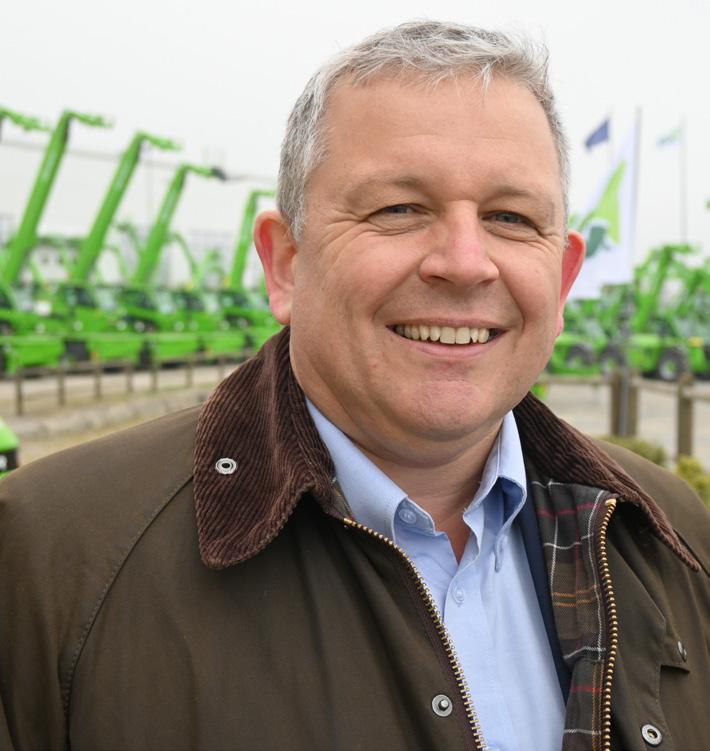
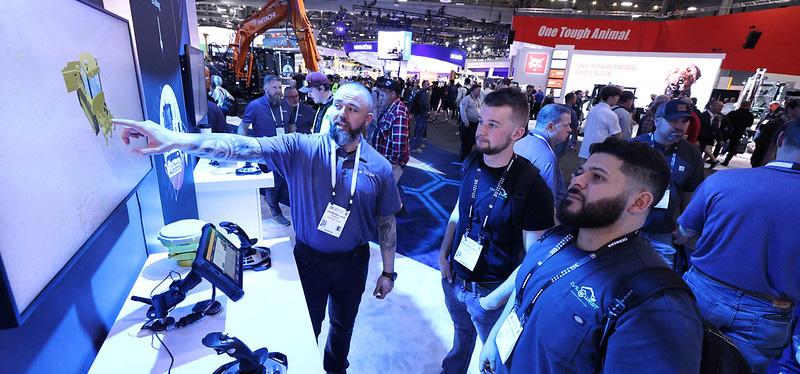
For those travelling from the UK to the show, Merlo’s presence at Festival Grounds, Stand F22041, offers a firsthand look at innovation that is already resonating strongly across Europe. Shaun Groom, General Manager of Merlo UK and Ireland, will be on-site during the event to support visitors and share insights into how Merlo technology aligns with the needs of operators and fleet owners.
A New Era: The Telehandler as a Multi-Application Platform
Although European operators have long recognised the advantages of Merlo’s multi-application approach, that mindset is only now beginning to take hold in the United States. “Merlo machines prove that a telehandler can be far more than a single‑purpose tool—in Europe,
versatility is now the expectation, not the exception,” said Shaun Groom.
In the US, telehandlers have traditionally been viewed as reliable but narrowly focused machines. Merlo’s message at CONEXPO is clear: that era is over. With a stand built around the theme “See Where You Can Go with Merlo,” the company is signalling a decisive shift away from single task thinking.
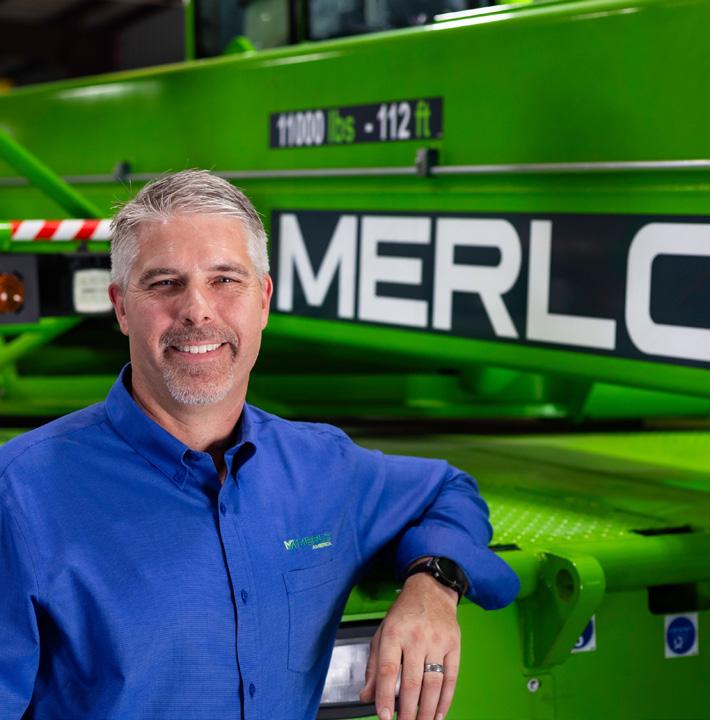
“A Merlo telehandler is not simply a lift and place machine,” said Cole Renken, General Manager of Merlo America. “It is a multi application platform that allows businesses to consolidate equipment, reduce capital expense, and do work they simply couldn’t do before. CONEXPO 2026 is the moment where we show the industry how transformative that shift can be.”
This multi application philosophy is second nature to UK and Irish operators, who have long relied on Merlo’s advanced technology across construction, agriculture, and industrial sectors. At CONEXPO, US visitors will finally see that same capability brought to life on a large stage - demonstrating just how far a truly versatile telehandler can take them.
“We want people to walk away with a new understanding of what a telehandler can be,” said Jennifer Brigman, Vice President of Strategy and Operations at Merlo America. “Choosing Merlo means unlocking greater efficiency and capability across every type of operation.”
Shaun Groom, General Manager of Merlo UK and Ireland
Cole Renken, General Manager of Merlo America
Merlo sponsored Indy Race Car with James Roe and team
Industry-Focused Demonstrations at CONEXPO 2026
Construction
When it comes to construction, Merlo America will spotlight machines engineered for the precision, stability, and multifunctional performance that today’s North American job sites demand including:
• ROTO 50.35SPLUSEE4CVT with the Space 11 work platform
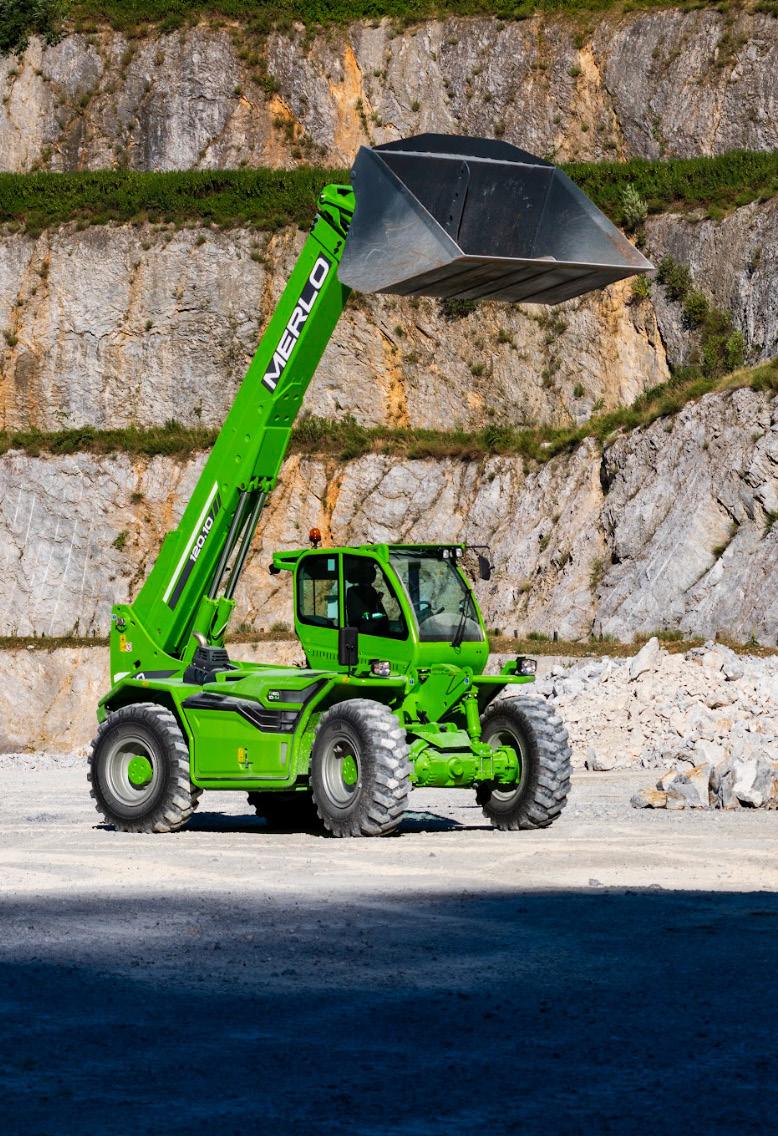
• Panoramic 120.10HM paired with a new-to-the-US Pipe Handler
These platforms highlight Merlo’s expanding presence in utility, infrastructure, and heavy-duty applications. that European customers will recognise.
Agriculture & Forestry
Meanwhile, the agriculture and forestry sectors will experience the same versatility through Merlo’s MultiFarmer technology - already a proven favourite among UK and Irish agricultural customers - demonstrating how operators can load bales, pull trailers, operate shredding machines and manage daily tasks with a single machine, dramatically simplifying jobs that typically require multiple units.
Attachments
Merlo’s attachment innovation will also be on full display, with twelve specialised attachments integrated into the machine’s intelligence and safety systems, each illustrating how quickly and confidently operators can transition between tasks.
Across a 14-machine lineup, Merlo America will deliver one of the most extensive and capability-rich displays in its CONEXPO history, an unmatched demonstration of multi-application performance across industries.
Visitors can also enjoy a high-energy highlight
Visitors can also look forward to a standout attraction: a high-energy simulator showdown featuring Irish-born professional racing driver James Roe. Attendees will have the chance to test their reflexes against a pro and find out: “Are you faster than a race car driver?”
Merlo partnered with INDY NXT driver James Roe in 2025, aligning the Merlo brand with his reputation for innovation, performance, precision, and reliability—values that mirror Merlo’s own commitment to engineering excellence.
There will be two exclusive opportunities to meet James Roe on the Merlo America stand on, Tuesday, March 3: 1:30 PM – 3:00 PM (includes a live Q&A) and Wednesday, March 4: 11:00 AM – 12:00 PM.
Meet Merlo in Las Vegas –3-7 March 2026, Stand F22041
If you’re travelling to Las Vegas, please visit merlo.com or scan the QR code and enter your details so Shaun Groom and the wider Merlo team know to expect you. Representatives from Merlo Group in Italy, Merlo Australia & New Zealand, and Merlo America will also be in attendance.
ATTACHMENT FIRST, MACHINE SECOND
For years, conversations between contractors and hire companies have started in the wrong place.
Rather than describing the job at hand, customers often begin by stating the size of the excavator already on site and that they need a certain attachment that will fit that particular excavator.
Alexandra Trunley, Head of Attachments at Sunbelt Rentals UK & Ireland, says this approach can quietly undermine productivity, safety and carbon efficiency.
“The reality is that the attachment does the work. The demands of the job, whether that’s thicker material or heavier duty cutting, often determine the size of attachment required, and in many cases, that then dictates the excavator size needed to power it effectively.”
With over 10 years in plant hire, progressing from Admin Assistant to leading Sunbelt Rentals’ national attachments operation, Alexandra has seen the consequences of treating attachments as accessories rather than productivity tools.
“The problem shows up in familiar ways: attachments arrive without the right circuit compatibility, ground conditions don’t match the specification, and equipment capable of handling multiple tasks is overlooked. The result is wasted journeys, mismatched kit and unnecessary downtime. While this approach may not always be possible where equipment is already on site,
starting with the task or project allows the right attachment to be identified first, followed by the most suitable carrier.”
The safety case
“Poor compatibility between attachment and machine isn’t only inefficient, it can introduce safety risks. In high risk environments such as rail, certain attachments must be operated in line with specific instructions and controls provided by the hirer. Failure to follow those instructions can quickly create avoidable risk on site.
My thinking has evolved through experience. Early in my career, the priority was meeting customer expectations. Whereas now it’s changed to take a more holistic approach, I pause to think about safety first, as the consequences of an accident will always outweigh the time needed to find the right product.”
From transactional to advisory
“Perhaps the most overlooked aspect of attachment specification is its environmental impact. We are always looking to provide our customers with attachments with multi functional capabilities, reducing the need for single purpose equipment. One attachment, multiple functions, this saves sending multiple vehicles to site. Scale this across projects, and the impact compounds through fewer deliveries, reduced transport emissions, less fuel consumption and reduced site congestion.
This vision to think holistically requires a cultural shift across sites. Hire desk teams need to evolve from order takers to technical advisors, asking the right questions about ground conditions, end goals and space constraints. This means challenging our own thinking and our customers when the usual option isn’t optimal and positioning hire as collaborative problem solving.
Over the next five years I believe that attachment hire will shift from reactive to strategic, with customers expecting earlier engagement and more in depth specification guidance. It will be judged less on simple availability and more on the value it adds: safer decisions, reduced downtime and more efficient equipment use. Our attachments are supplied to work across a wide range of equipment, including third party machines up to and beyond 50 tonnes, where the demands of the task require it. Taking that broader view ensures the attachment is chosen for the job itself, rather than being limited by assumptions about the carrier.
For an industry conditioned to think machine-first, this represents more than process refinement. It’s a recognition that productivity begins with understanding what each project specifically requires.”
ACE PLANT HIGHLIGHTS HIRE SECTOR ‘DUTY OF CARE’ TO WBV AWARENESS
Why 2026 Is a Pivotal Year for Construction and Workforce Health & Wellbeing as ACE Plant Leads Whole Body Vibration (WBV) Campaign
Whole Body Vibration (WBV) is rapidly emerging as one of the most significant occupational health challenges facing the UK construction industry over the last 50 years. While vibration has been regulated for many years, 2026 is shaping up to be a defining moment, as enforcement tightens and expectations increase around monitoring, documentation, and long-term workforce health.
“Whole body vibration is no longer a background issue,” said Neil Hedley, Operations Manager at ACE Plant Hire. “With longer operating hours, increased use of heavy plant, and a stronger focus on occupational health, WBV has become a front line compliance issue. As a hire company, we believe we have a clear duty of care to help the industry understand and manage this risk properly.”
“As a leading UK rental specialist ACE Plant Ltd is leading an industry wide campaign to raise awareness of WBV risks, support customers with practical solutions, and help benchmark best practice across major infrastructure projects.”
Understanding the Risk - Whole-body vibration occurs when operators sit or stand on vibrating machinery such as excavators, dumpers, rollers, tractors, telehandlers, and dozers for extended periods of time. This exposure has been linked to back pain, spinal damage, fatigue, reduced concentration, and longterm musculoskeletal disorders.
Under the Control of Vibration at Work Regulations 2005, employers must assess and control vibration risks wherever exposure occurs. For wholebody vibration, measured over an eighthour working day, the Exposure Action Value is 0.5 m/s² and the Exposure Limit Value is 1.15 m/s². Once the action value is reached, employers must introduce controls, and the legal limit must never be exceeded.
Why Hire Companies Have a Duty of Care
ACE Plant Ltd believes hire companies occupy a unique and influential position in managing vibration risk. They select, supply, maintain, and replace the equipment used daily on construction sites and have visibility of how machines perform in real operating conditions across multiple projects.
“As a rental specialist, we influence the quality, condition, and suitability of
the plant being used,” Hedley explained. “That gives us a responsibility not just to supply compliant machines, but to help customers and operators understand how vibration exposure builds up in real working conditions.”
Communicating with Customers and Operators
As part of its WBV campaign, ACE Plant Ltd has developed a structured programme of communications aimed at raising awareness and providing practical guidance to those hiring and operating its machines, as well as the wider industry.
These communications include clear, accessible advice for operatives using hired plant, guidance for customers responsible for planning work and managing exposure, and wider industryfacing content designed to improve understanding of WBV risks and controls. The focus is on helping users recognise higher-risk activities, understand the importance of exposure time, and know when and how to report concerns.
“Operators are the people most directly affected by vibration exposure,” said Hedley. “If we can help improve awareness at the point of hire and on site, we can make a real difference to longterm health outcomes.”
Neil Hedley, Operations Manager, ACE Plant Ltd
Testing and Benchmarking with Major Projects
To support this approach, ACE Plant Ltd is carrying out vibration testing and dataled benchmarking with major clients and infrastructure projects.
“By measuring WBV exposure across different machines, ground conditions, and operating methods, ACE Plant Ltd is helping contractors move beyond assumptions and base vibration controls on evidence from live operations. This supports stronger risk assessments, clearer RAMS, and better informed decisions around plant and work planning.”
“Whole body vibration is part of construction,” Hedley concluded.
“Uncontrolled vibration is not. By working together, hire companies, contractors, and operators, the industry can protect its workforce and stay ahead of tightening enforcement as we move into 2026.”
Looking Ahead to 2026
While the regulations themselves are unchanged, expectations are shifting. Regulators are placing greater emphasis on occupational health, long-term exposure, and documented evidence of control.
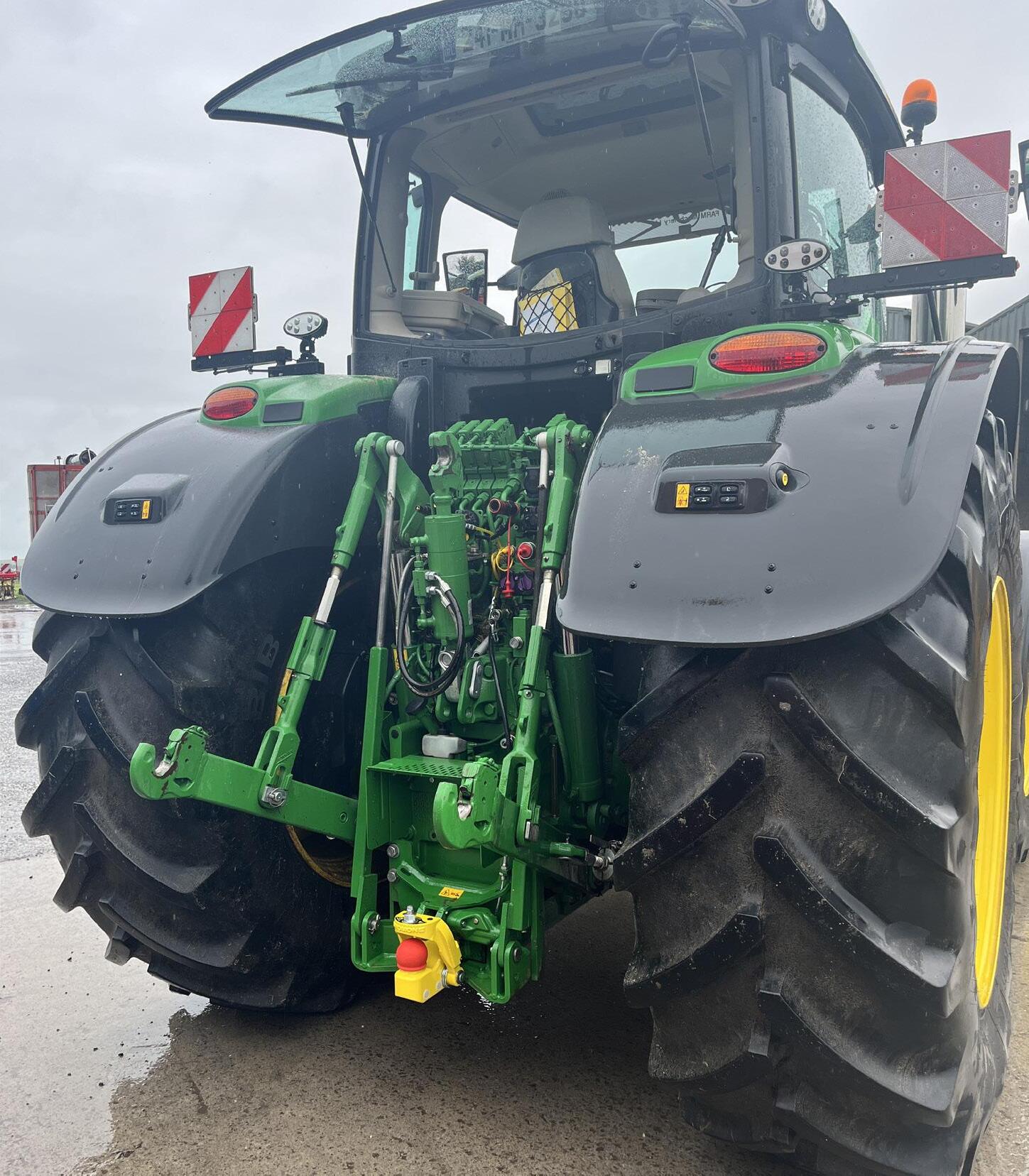
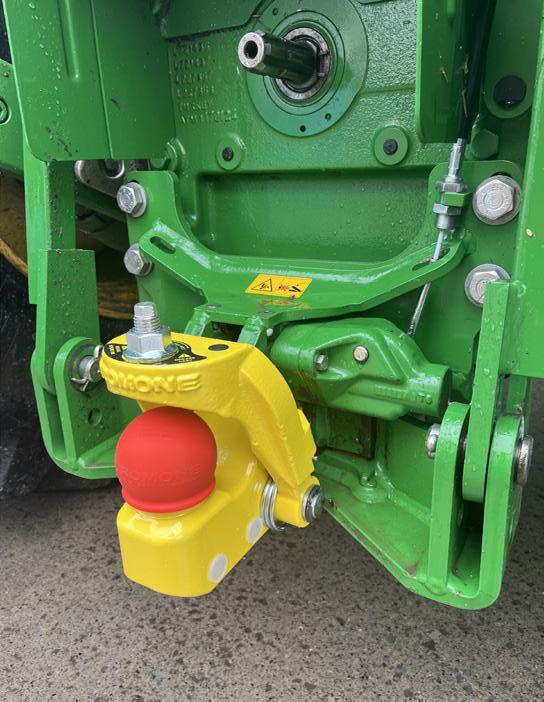
Innovation News from ACE Plant ACE Plant Ltd is pleased to announce the introduction of the Dromone D80 Ball & Spoon Hitch system across its towable plant fleet. Designed to significantly improve towing safety and reduce the risk of trailer breakaways, the system also helps minimise exposure to poor towing practices that can lead to long-term health issues.
Supplied through Lynx Engineering and tailored specifically for ACE Plant’s construction equipment, the D80 represents a major step forward in operational safety and operator wellbeing. Improper hitching and towing techniques are a common cause of musculoskeletal disorders, including chronic back pain, spinal strain, and fatigue. The Dromone D80 addresses these risks through intelligent engineering that enhances coupling security, stability, and ease of use.
By integrating the D80 system, ACE Plant is future-proofing its fleet while setting higher standards in safety, compliance, towing performance, and operator welfare for its rental customers.
To learn more about ACE Plant, please visit: www.aceplant.co.uk
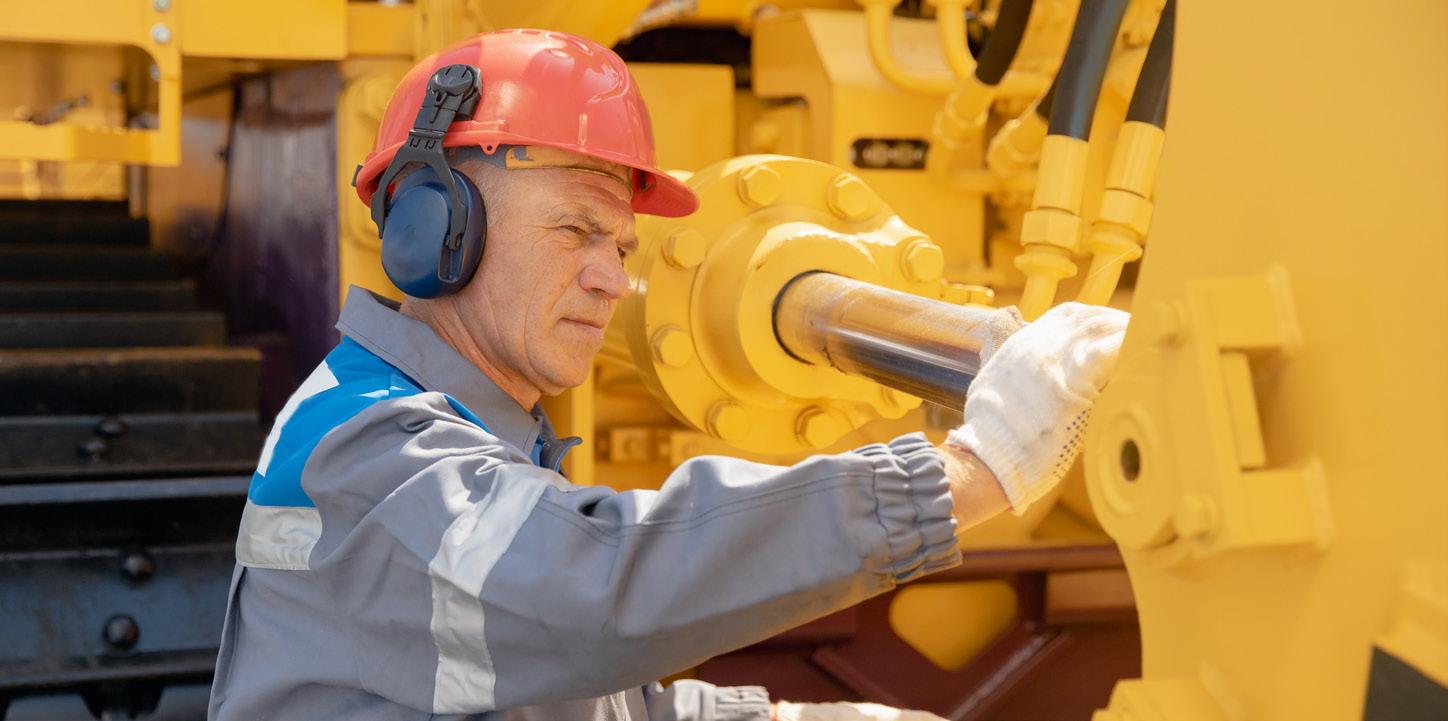
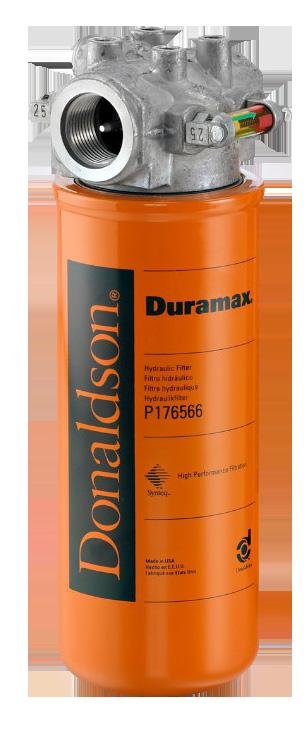
Hydraulic systems are the muscle behind modern machinery, from excavators to heavy-duty construction equipment — and at the heart of every system is its lifeblood: hydraulic fluid.
More than just a power-transfer medium, hydraulic fluid lubricates moving parts, reduces wear, and helps dissipate heat, protecting critical components and extending equipment life. Choosing the right fluid — whether petroleum-based, synthetic, or biodegradable — is essential for performance and reliability.
Yet even the best hydraulic fluid can become a liability when contamination enters the system. Industry studies show that the majority of hydraulic failures are linked to contaminated fluid. Dirt, water, air, and even chemical breakdown of ageing fluid can reduce efficiency, increase wear, and lead to costly downtime. Milky fluid may indicate water ingress, while foaming often signals air contamination — both warning signs operators should never ignore.
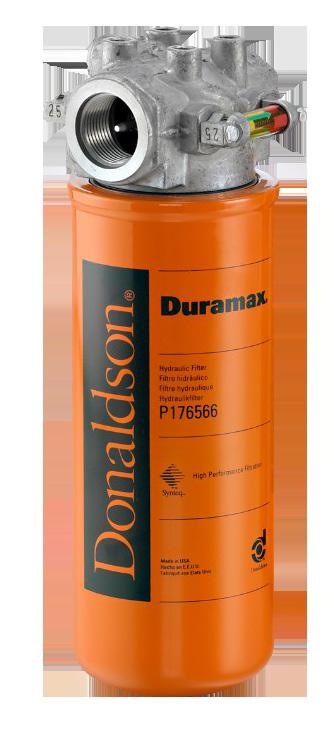
This is where high-quality filtration plays a crucial role. Properly selected
hydraulic filters remove harmful particles, protect sensitive components, and maintain system cleanliness.
Supplemental solutions such as off-line filtration units and advanced breather technologies further help control moisture and airborne contaminants, especially in demanding environments. Regular fluid analysis, timely filter replacement, and flushing after major component failures all contribute to longer service intervals and reduced repair costs.
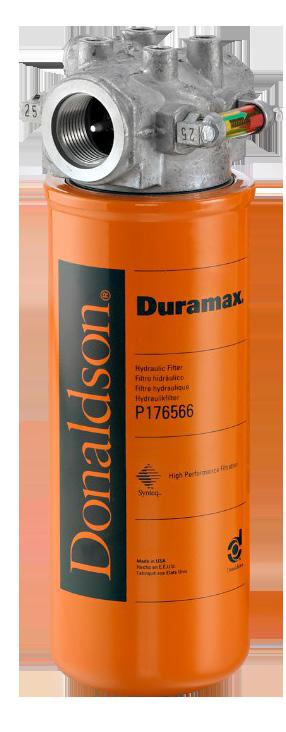
Donaldson provides a wide range of hydraulic filtration solutions designed for both mobile and industrial equipment. From high-efficiency replacement filters to off-line filtration systems and advanced moisture-control breathers, these technologies help maintain fluid cleanliness, extend component life, and keep equipment operating at peak performance in even the toughest conditions.
SCAN TO LEARN MORE
PLANT HIRE SME SAVES £12,500 IN YEAR ONE BY REMOVING BROKER COMMISSION
Lease Finance Limited, a specialist UK asset finance brokerage, has revealed the first-year results of its Business Assist Programme, showing significant cost savings for early adopters and challenging the traditional broker commission model.
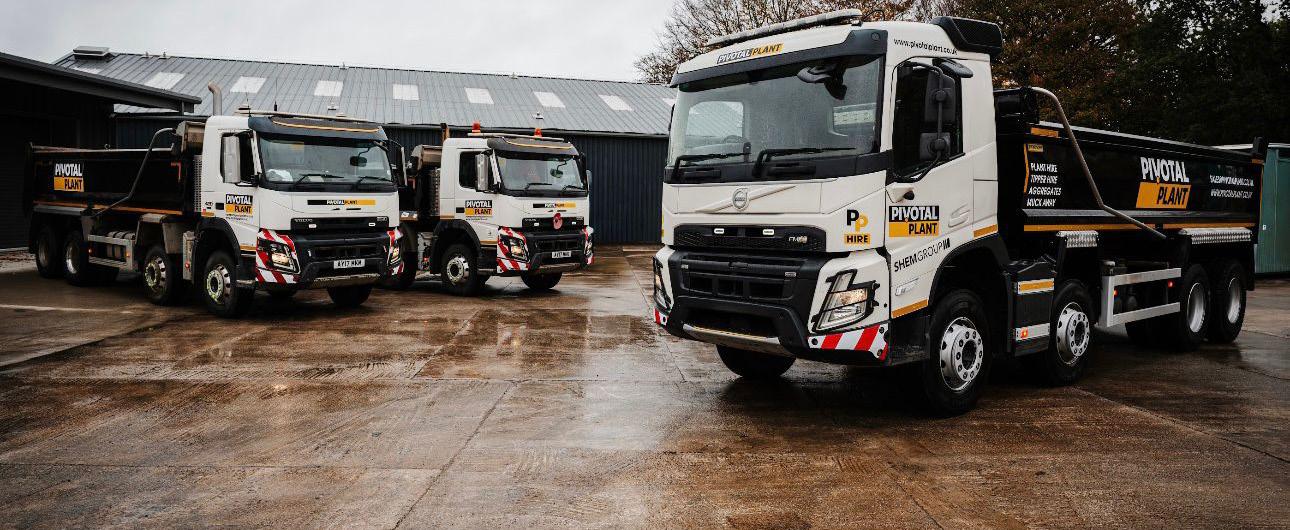
Pivotal Plant Hire Limited became the first business to sign up to the Business Assist Programme in February 2025, paying a fixed monthly fee of £299. Twelve months on, the company has completed 10 asset finance transactions through the programme and has saved in excess of £12,500 in broker commissions alone.
These savings do not include the additional interest costs that would typically be embedded into higher
monthly rentals under a traditional commission-based finance structure.
The Business Assist Programme was designed to give businesses full transparency over finance costs while ensuring they receive market-leading terms — without commissions influencing deal structure or lender choice.
A Different Approach to Asset Finance
Rather than taking commission from lenders and passing those costs indirectly to customers, Lease Finance Limited’s Business Assist Programme operates on a fixed-fee model, aligning broker and customer interests and allowing finance agreements to be structured purely on commercial merit.
For capital-intensive sectors such as plant hire, where repeat funding is common, the savings can be substantial.
Customer Endorsement
Rob Shemilt, Director of Pivotal Plant Hire Limited, said: “The Business Assist Programme has completely changed how we approach asset finance. Knowing exactly what we’re paying and seeing the savings stack up deal after deal has been eye opening. Over the last year alone, we’ve saved more than £12,500 in commissions — and that’s before factoring in the lower monthly rentals we’ve achieved by stripping commission out of the deals.
“The service, transparency, and commercial focus have been excellent, and it’s a model that genuinely works for growing businesses like ours. We have every intention of continuing with the programme for the foreseeable future.”
To learn more about Pivotal Plant Hire, please visit: www.pivotalplanthire.co.uk FOR FURTHER
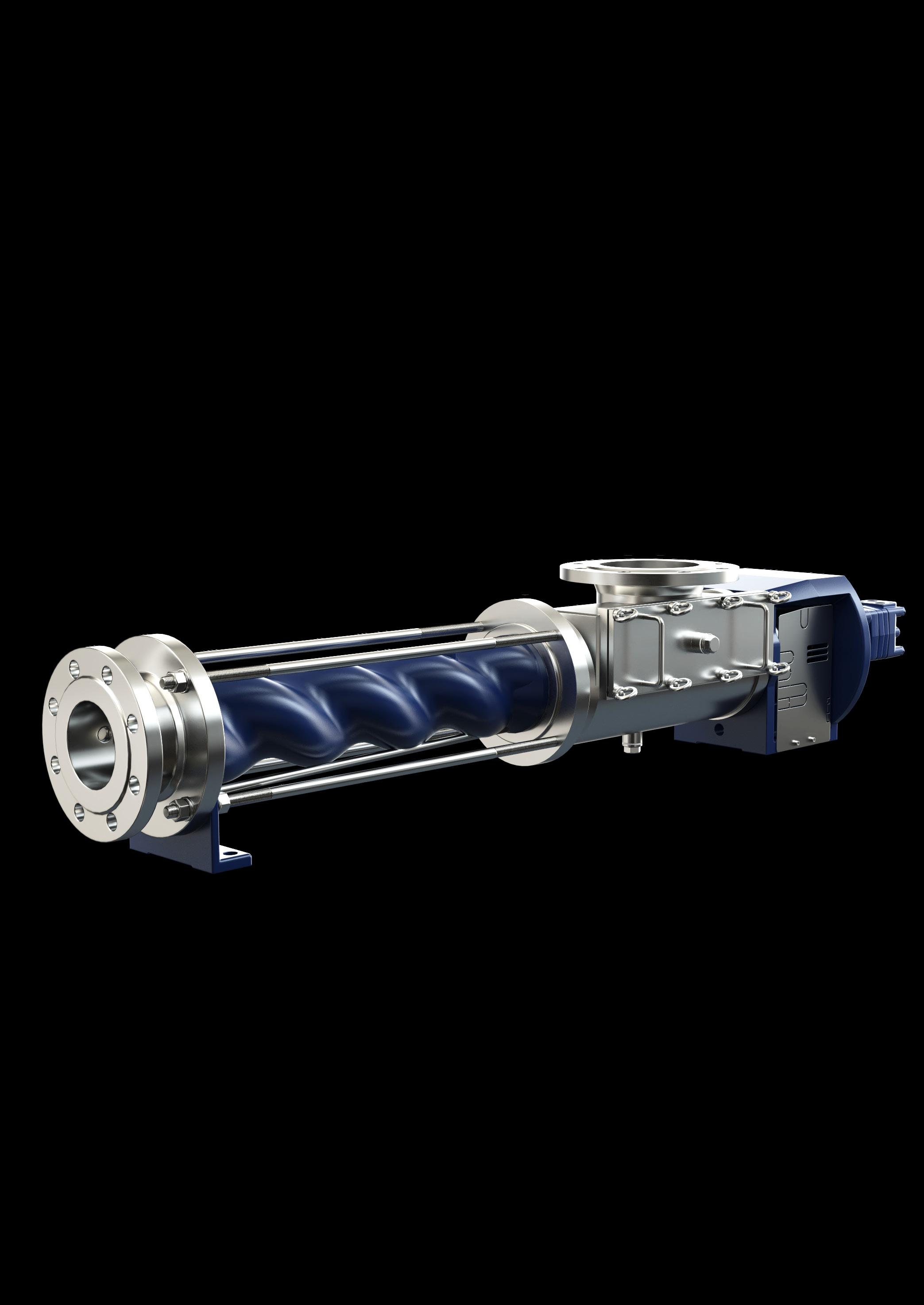
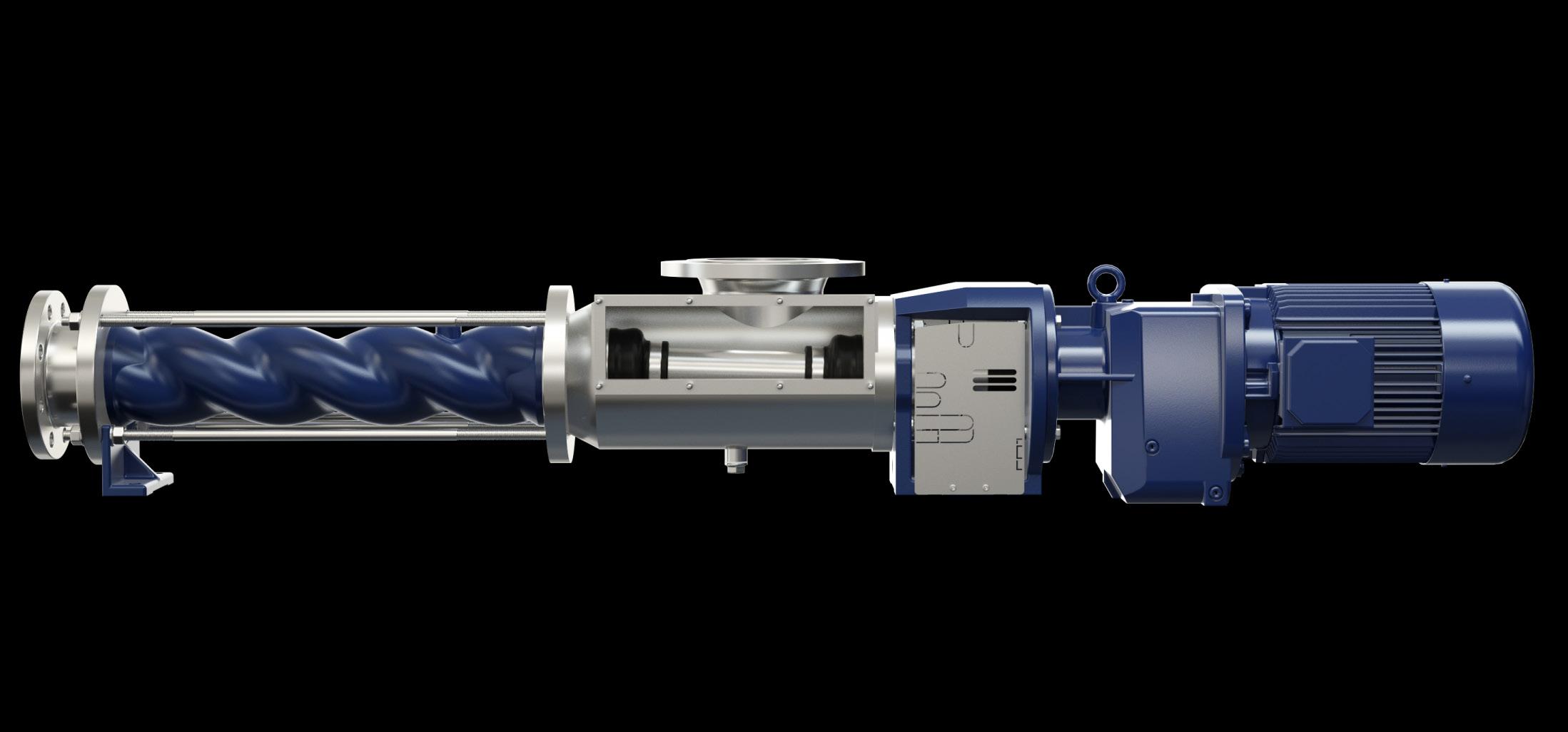
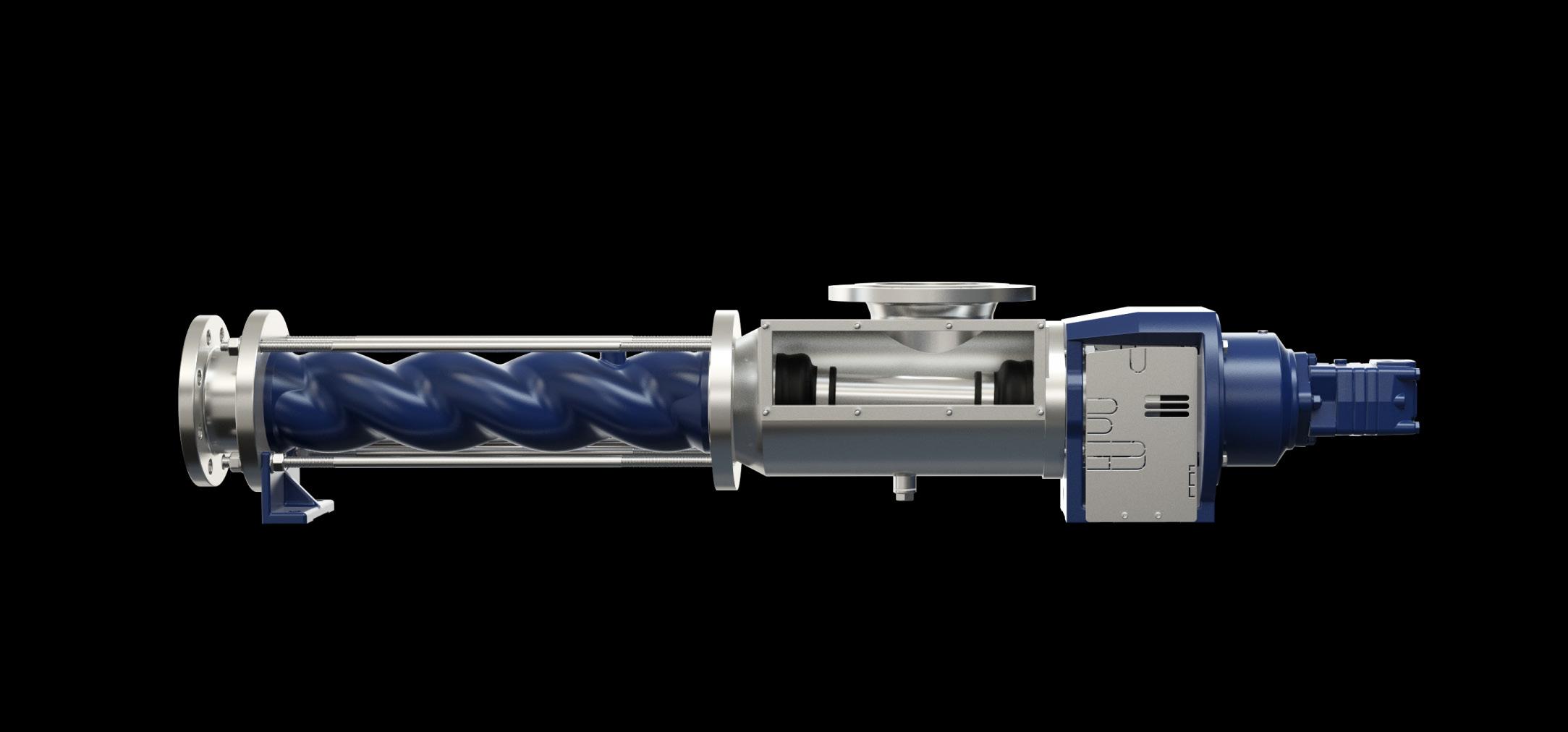
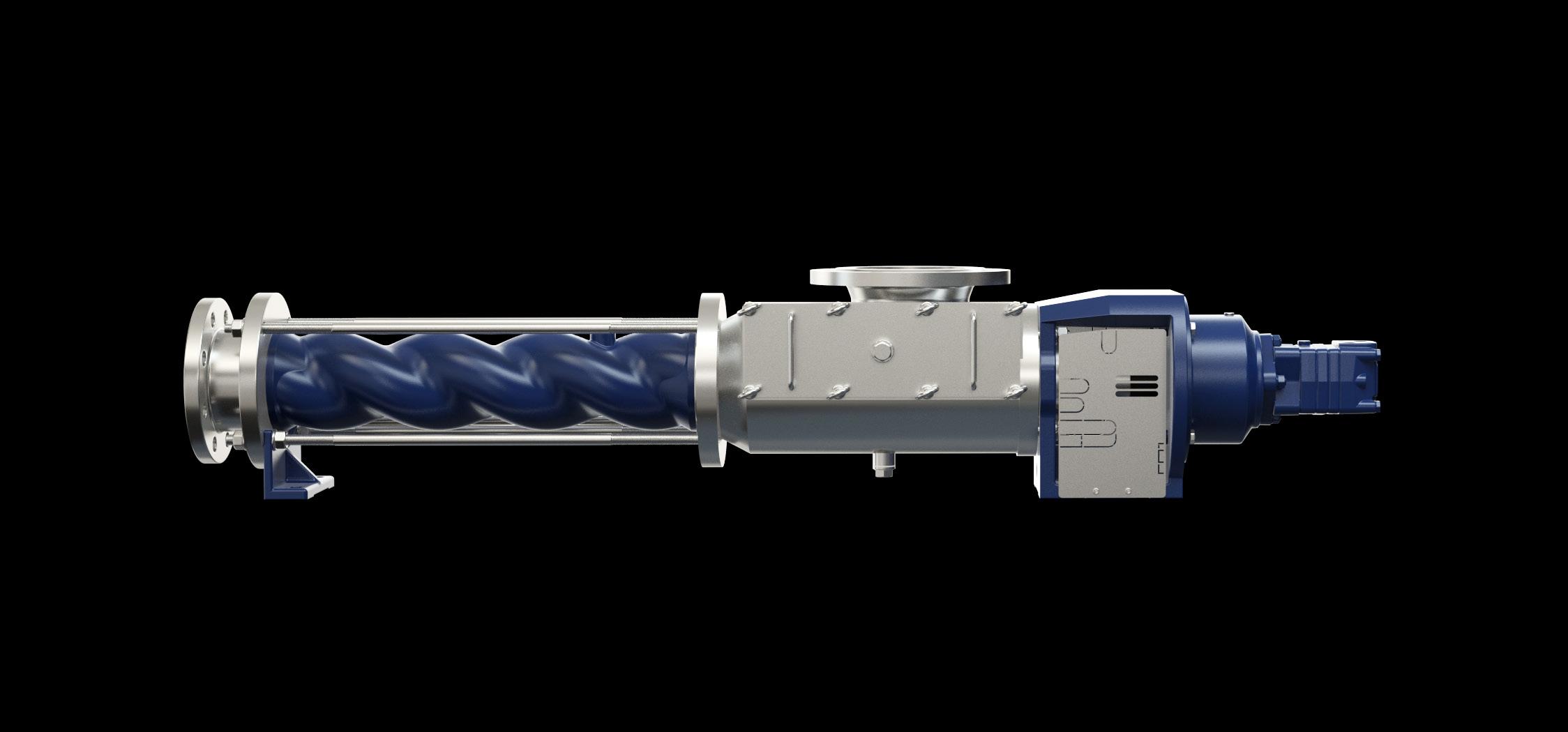
SEEPEX has introduced Smart Joint Access (SJA), a new inspection-friendly pump design developed for demanding industrial environments where uptime and reliability are critical. Integrated into the BN progressive cavity pump, SJA combines a compact footprint with direct visual access to both joints via a large opening in the suction housing. This enables efficient condition assessment while ensuring precise handling of shear-sensitive, abrasive, or corrosive media.
Designed for space-constrained installations, the BN pump with SJA is particularly well suited for mobile manufacturing units, underground installations, and skid-mounted or stationary systems. Flexible integration and low-energy operation support reliable performance in applications where downtime is not an option.
Rock Blasting: Precision Under Pressure
Rock blasting plays a central role in mining, tunneling, and construction, requiring accurate and consistent loading of explosive emulsions to achieve controlled fragmentation and maintain productivity. In these operations, deviations in pumping performance can lead to blast inconsistencies, rework, or delays.
SEEPEX BN pumps with SJA are designed to meet these operational demands. Quick and easy access to the joints supports reliable emulsion transfer and precise dosing, making the pump well suited for blast hole loading and other critical chemical handling processes.
“Smart Joint Access enhances availability and operational efficiency for our customers,” said Magalie Levray, Global Business Development Manager Mining at SEEPEX. “Operators gain direct access to the joints through the large inspection opening, reduce downtime, and rely on consistent, precise pumping of viscous, shear sensitive, and abrasive emulsions. In rock blasting, where every borehole matters, this reliability is essential.”
Smart Joint Access from SEEPEX: direct visual access to both joints through the suction housing
Inspection-Friendly Design for High Availability
Smart Joint Access is designed to simplify inspection routines and save time. The inspection opening in the suction housing provides direct visual access to both joints, supporting shorter inspection cycles and high operational reliability.
An equal-wall stator enables highpressure capability within a compact footprint. The pump can be equipped with a compact hydraulic drive for truckmounted mobile units or an electric drive for underground or stationary installations. The low-displacement hydraulic option reduces oil requirements and contributes to a low total cost of ownership.
SEEPEX progressive cavity pump technology ensures stable, controlled flow and protects product integrity, even when handling highly abrasive or shearsensitive emulsions. A wide range of materials is available, including stainless steel or steel housings, chrome-plated rotors, and stators in NBR, EPDM, or FKM, ensuring compatibility with a broad range of chemical emulsions.
Framework agreements support fast delivery and reliable availability, enabling standardized designs and fleet-wide rollouts with minimal downtime.
Applications
BN pumps with Smart Joint Access are suitable for rock blasting, shotcrete, mine dewatering, tunneling, civil works,
dam construction, and other industrial processes requiring precise and reliable handling of chemical or abrasive media. In blasting operations, routine visual inspection of the joints combined with operational pressure testing is essential.
Smart Joint Access allows operators to assess joint integrity quickly, supporting faster decision-making and continuous operation in uptime-critical environments.
To learn more about SEEPEX, please visit: www.seepex.com/en/contact/ FOR FURTHER INFORMATION
Smart Joint Access with electric drive for stationary and factory-based installations
Hydraulic-drive BN pump with Smart Joint Access, shown with the inspection opening open for direct joint inspection
Hydraulic-drive BN pump with Smart Joint Access, ensuring reliable operation with the inspection opening closed
TRIME GET ‘WELFARE CABIN READY’ WITH A RANGE OF POWER
Trime, a leading manufacturer and supplier of power generation, are continuing to broaden its range of power products.
The company has been designing and developing a line of bespoke sets for several years that provide sustainable, clean electricity to a variety of temporary accommodation facilities, with including welfare units.
The MGTP 6000 SLA, 6kVA generator features a Kohler electric start diesel engine accredited to Stage 5 regulations, enabled to run from sustainable HVO (Hydrotreated Vegetable Oil) fuel. Other features include: engine protection shutdown system, an emergency stop button, and a useful large opening side door for easy and quick servicing. The complete set measures: length: 869 mm, width: 550 mm, and a height of 725 mm, with a low-dry weight of just 178 kg.
Trime’s MG 10000 CUBE delivers 9.8kVA of reliable, clean power from its water-cooled, extra super-silent Kubota diesel engine certified to Stage 5. This
unit has similar features to the 6kVA product with slightly larger dimensions; Length 1100 mm, width 790mm, height 1000 mm and a dry weight of 425 kg.
If extended running is a prerequisite, the Trime’s MGMK 10000-300 will be an ideal solution. This advanced set is fitted with an extra-large 300 litre base fuel tank that will produce continuous 9.8kVA of power for up to 157 hours @ 75% load. Because of the MGMK 10000-300 large fuel tank, its dimensions are slightly larger than those of its MG 10000 CUBE cousin. Length 1115 mm, width 800mm, height 1560 mm and a dry weight of just 465 kg.
If space is at a premium. Trime have two compact welfare generators, the MG 9000 and the MG 12000 compact. The MG 9000 (9kVA/7.2kW) measures: Length: 960 mm, Width: 680 mm, Height: 1785 mm, alongside a dry weight of 478 kg. The larger MG 12000 (12kVA/9.6Kw) measures: Length: 960 mm, Width: 680 mm, Height: 1785 mm and a dry weight of 518kg.
All of Trime’s ‘Welfare Cabin Ready’
generators are delivered with a full warranty and built to Trime’s proven fastidious standards.
In addition, Trime offer a full delivery and installation service by their skilled engineers, either for new build cabins or as replacement generators for existing cabins.
Trime UK are domiciled in a purposebuilt 40,000 sq. ft. facility based in the Hinchingbrooke Business Park, Huntingdon, Cambridgeshire. The Trime production plant is based in Cassinetta di Lugagnano, near Milan, Italy, and Pavia, just south of Milan. Aside from its power generation equipment, the company also manufactures a wide range of site lighting towers, water-recycling wash bays and dust suppression products.
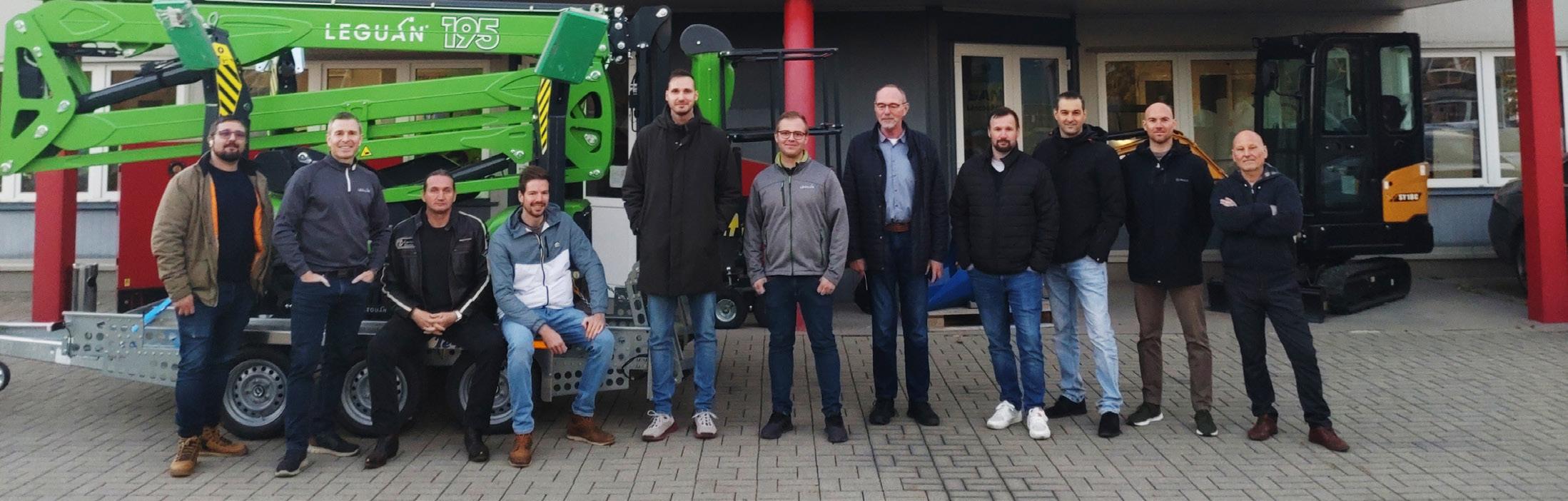
LEGUAN LIFTS EXPANDS TO HUNGARY WITH VERBIS KFT
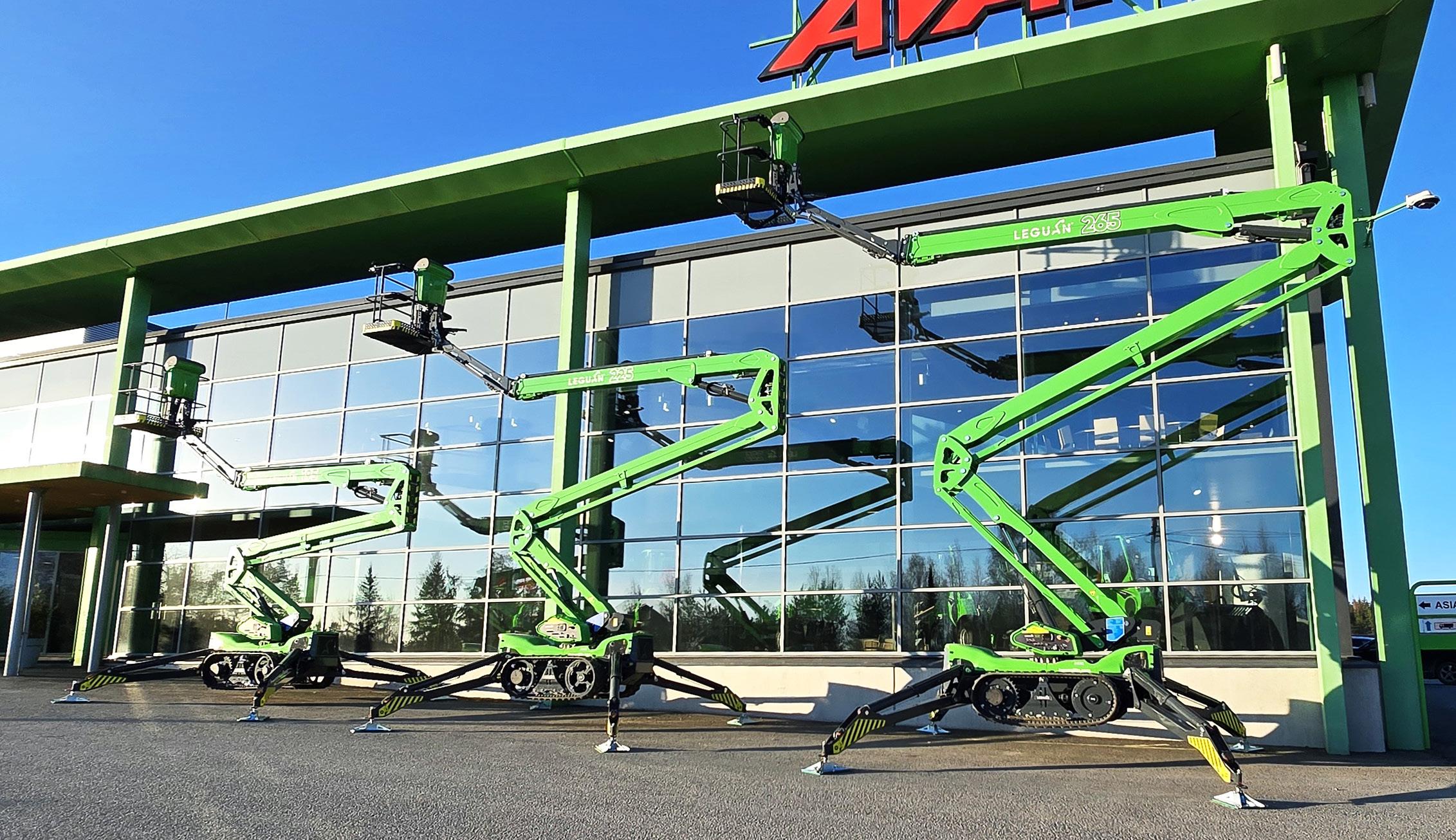
Leguan Lifts, the Finnish manufacturer of market defining all-terrain spider lifts, has expanded its presence in Central Europe by appointing Verbis Kft as its official importer in Hungary. The partnership strengthens Leguan’s distribution network and brings its innovative access solutions closer to Hungarian customers across tree care, construction, maintenance and industrial sectors.
Commenting on the expansion, Hugues Lambert, Export Sales Manager at Leguan Lifts, said: “Hungary is an important and growing market for all terrain access equipment. By partnering with Verbis Kft, we gain a knowledgeable and experienced local importer with a strong service mindset and a proven track record with Avant Tecno Group products. This cooperation allows us to better support Hungarian customers and further strengthen Leguan’s presence in the region.”
Introducing Verbis Kft: A Trusted Hungarian Partner
Verbis Kft is a Budapest-based, familyowned company founded in the late 1990s, specializing in the import, sales and service of construction and industrial machinery. The company has built a solid reputation in Hungary by offering not only high-quality equipment but also reliable after-sales service, spare parts availability and technical support. Verbis Kft is also a long-term partner of Avant loaders in Hungary, giving the company extensive experience with Avant Tecno Group products and a deep understanding of customer expectations for compact, high-performance machinery.
Áron Veres, Managing Director at Verbis Kft, welcomed the new partnership, stating: “We are proud to be appointed as the official importer of Leguan Lifts in Hungary. Leguan’s spider lifts complement our existing product portfolio perfectly, and the strong technical background of the Avant Tecno
Group aligns well with our long term focus on quality, reliability and customer support. We see significant potential for Leguan lifts in the Hungarian market.”
Strengthening Local Support and Market Growth
Through this partnership, Hungarian customers will gain access to Leguan’s full range of spider lifts, supported by Verbis Kft’s established sales network and service infrastructure. The collaboration ensures localized expertise, faster response times and dependable after-sales support.
The appointment of Verbis Kft marks another step in Leguan Lifts’ international growth strategy. By combining Leguan with Verbis’s strong local presence and long-standing experience with Avant products, the partnership is well positioned to support increasing demand for versatile, all-terrain lifting solutions in Hungary.
HOW THE MANUFACTURING SECTOR CAN BUILD SUPPLY CHAIN RESILIENCE IN 2026
Entering 2026, manufacturers are contending with disruption that comes from several directions at once, and that combination is what makes planning harder than it was a decade ago. Longer, more fragile logistics routes remain exposed to geopolitics, climate events are affecting transport corridors and nodes, and highly specialised component supply still carries single points of failure.
The British Metals Recycling AThe UK government has responded by publishing a practical framework for organisations to assess and strengthen resilience, including visibility, risk assessment and planning. DBT’s supply chain resilience framework is a useful baseline because it reflects the reality most plants face, which is that resilience is now a continuous discipline rather than a oncea-year exercise.
Chris Burns, Global Marketing Communications Director at HTL Group, a leading provider of hydraulic torque wrenches and controlled bolting solutions,
looks at how UK facilities can protect output in 2026 by tightening supplier visibility, building credible alternative routes for maintenance-critical components, and reducing dependence on logistics conditions they cannot control.
What recent disruption tells manufacturers
Recent events have shown that logistics disruption can stretch lead times even when suppliers remain capable. The UNCTAD Review of Maritime Transport 2025 describes how Red Sea disruption in 2024 affected container shipping and forced rerouting via the Cape of Good Hope, extending voyage times and affecting reliability. The OECD’s transport body provides additional operational detail in its analysis of the Red Sea crisis impacts on global shipping, while the IMF summary of Red Sea trade disruption underlines how route changes filter into measurable trade indicators.
Component exposure has been just as instructive. The OECD’s work on semiconductor value chains sets
out why concentrated production and complex upstream dependencies create vulnerability, even for well-run procurement teams. These disruptions point to a simple operational truth: plants that rely on one route, one tier, or one narrow supplier ecosystem are the ones that absorb the heaviest impact.
Mapping dependency beyond tier one
Resilience programmes often stall when they focus only on direct suppliers, because multiple “different” vendors can still share the same upstream manufacturer, raw material source, or shipping corridor. UK government strategy explicitly highlights supply chain visibility and risk management as capability priorities. The Critical Imports and Supply Chains Strategy is useful here because it frames resilience as understanding dependencies, not just maintaining vendor lists.
A practical method for plants is to map what actually stops output: longlead controls, specialist bearings, critical valves, electrical modules, and maintenance-critical assemblies.
Securing Alternative Supply Routes
Dual sourcing works only when the second route is genuinely independent and can deliver under stress, which means looking past the contract name to the underlying production location, logistics path, and capacity constraints. UK security guidance recommends watching for vulnerability signals and building structured plans, which aligns with how manufacturers need to treat alternatives. The NPSA supply chain guidance for business is a practical reference because it focuses on warning signs and embedding resilience into risk management.
For many UK facilities, this involves a strategic pivot towards domestic sourcing. As highlighted in the government’s Critical Imports and Supply Chains Strategy, strengthening relationships with British-based suppliers reduces “logistics distance” and eliminates the variables of international maritime disruption and border friction.
When overseas routes become unreliable, maintenance teams fall back on suppliers they already know can deliver within a defined window. That often means components sourced domestically, where lead times, escalation routes and quality checks are already established. Some plants formalise this through call-off arrangements or locally held stock for parts that routinely stop production when they fail. The benefit shows up during disruption, when delivery depends on available manufacturing capacity rather than the movement of goods through congested ports.
Plants that do this well often prequalify alternatives for a defined set of maintenance-critical components, then agree what triggers a switch, who authorises it, and how quality checks are handled. Where a true second source is not realistic, facilities often secure other protections such as reserved production slots, framework agreements, or supplierheld buffer stock under clear terms.
Balancing lean inventory with operational reality
Inventory decisions are becoming less ideological and more risk based. The UK Climate Change Committee’s work on supply chain adaptation notes that businesses can diversify suppliers and also create inventory buffers, particularly where climate risk affects supply reliability. The CCC report on resilient supply chains supports the idea that targeted buffers are a legitimate resilience tool, especially for items with long lead times and high impact on continuity.
This is where a plant-level classification helps: high-frequency consumables can be managed tightly, while low-frequency, high-impact replacement components are treated as production protection. The aim is not accumulating stock but preventing a predictable failure from turning into a prolonged shutdown.
Factoring Climate Risk into Logistics Climate risk is often considered in terms of damage to facilities, while a
significant share of disruption comes from transport corridors, ports, and distribution nodes. The Copernicus European State of the Climate 2024 provides useful context for how severe weather events affect regions and infrastructure at scale, which is directly relevant to UK manufacturers relying on European logistics.
Scenario planning works best when it reads like an operations runbook. A plant benefits from knowing the decision points in advance: when to re-sequence production, when to trigger alternate shipping modes, and who owns customer communication when inbound deliveries move.
The 2026 Resilience Standard
Supply chain resilience in 2026 looks less like a transformation programme and more like disciplined preparation: dependency mapping that goes deeper than tier one, credible alternative routes for critical replacement parts, targeted buffers where lead times create unacceptable risk, and supplier relationships built around response under pressure. The OECD policy work on value chain resilience and the OECD resilience review both reinforce that balanced, evidence-led approaches matter, because over-correction can create new vulnerabilities.
As Burns from HTL Group notes: “Resilience becomes visible when a delayed delivery stays a contained issue rather than escalating into a production incident, which is why the most valuable changes are often the least dramatic and the most operational.”
learn more about HTL Group, please visit: www.htlgroup.com
NATIONAL CIVILS SHOW 2026 UNVEILS DEDICATED ENVIRONMENTAL ENGINEERING ZONE AT EXCEL LONDON
The National Civils Show returns to ExCeL London in 2026 with its most ambitious edition yet, introducing a brand new Environmental Engineering Zone designed to spotlight the technologies, strategies and partnerships shaping a more sustainable future for sustainable civil engineering and our environment.
Widely recognised as one of the UK’s leading events for the civils sector, the National Civils Show is a must-attend opportunity for professionals to discover new technologies, connect with industry experts, build valuable partnerships, gain practical insights and explore innovative solutions that drive project success. With sustainability and resilience now central to every stage of infrastructure delivery, the addition of the Environmental Engineering Zone reflects the evolving priorities of the industry.
The new zone will bring together specialist suppliers, consultants, contractors and innovators focused on environmental protection, low-carbon construction, water management, biodiversity, waste reduction, and climate adaptation. Visitors will have direct access to cutting-edge products and services, live demonstrations, and expertled discussions addressing today’s most pressing environmental challenges.
Co-located with the National Drainage & Floodex Show, the event creates a powerful crossover for attendees, offering a comprehensive look at civil, drainage, flood management and environmental engineering solutions all under one roof. This unique combination makes the show an invaluable platform for cross-sector collaboration and integrated thinking.
Across the exhibition floor, around 200 exhibitors will showcase the latest
equipment, materials, digital tools and services, providing hands-on opportunities to compare solutions and speak directly with suppliers. A robust education programme will feature 50 CPD-accredited presentations, delivering practical knowledge and real-world case studies that professionals can apply immediately to their projects.
A dedicated two-day SuDS Theatre will once again highlight sustainable drainage systems and water-sensitive design, offering specialist insights into urban resilience, regulatory compliance and future best practice. Together with the new Environmental Engineering Zone, the theatre strengthens the show’s commitment to sustainability and futureready infrastructure.
Beyond the content, the National Civils Show offers an exceptional networking environment.
It is the perfect opportunity to stay current with trends, strengthen professional networks, and form relationships that support successful project delivery long after the event closes.
ExCeL London provides a first-class venue with modern infrastructure and outstanding transport links. Now served by Crossrail, as well as the DLR, the venue offers quick and easy rail access for those who prefer not to drive. With plenty to see and do around the site,
and central London and theatreland just 20 minutes away, the show also offers excellent options for client hospitality and team engagement.
Whether you are seeking innovation, education, or meaningful connections, the National Civils Show 2026 delivers it all. Join thousands of civil engineering professionals and be part of the industry’s next chapter.
For more details exhibiting, sponsoring or speaking, contact Paul Shelley on 0787 248 9790 or email paul@ civilsshow.com.
For general enquiries, contact Eddie Milton on 0773 951 9797 or email eddie@civilsshow.com.
Please visit www.civilsshow.com in the meantime, or follow us on our newly launched Facebook, Instagram and LinkedIn pages.
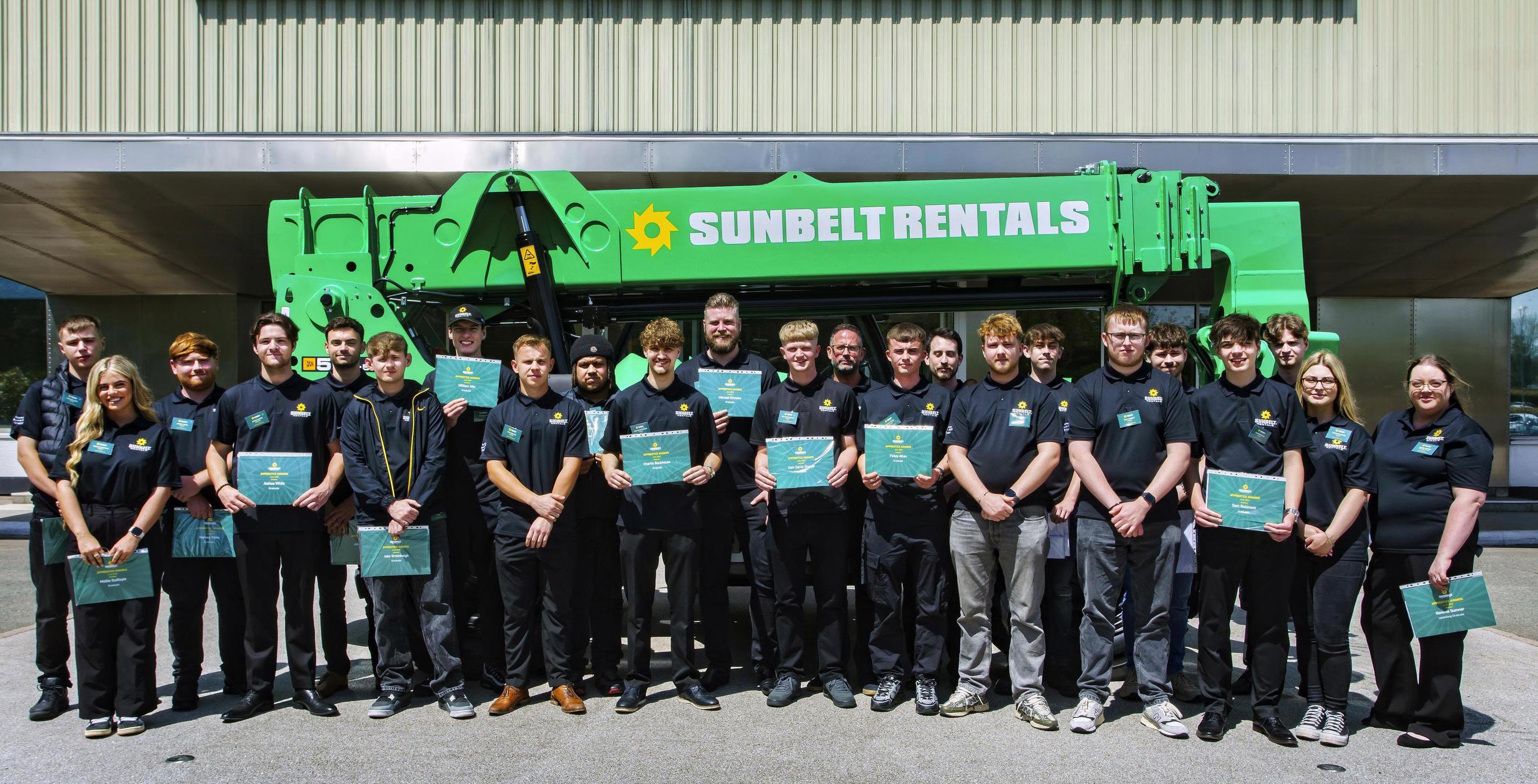
SUNBELT RENTALS OPENS AWARD-WINNING APPRENTICESHIP PROGRAMME FOR NATIONAL APPRENTICESHIP WEEK
Sunbelt Rentals, the UK’s largest equipment rental provider, is inviting applications for its next cohort of apprentices as part of National Apprenticeship Week. The company’s comprehensive apprenticeship programme offers opportunities ranging from early careers to continuous professional development, building skills designed to last a lifetime.
The programme serves as a powerful foundation for career development, enabling apprentices to thrive and succeed within one of the industry’s leading organisations.
Programme Highlights:
• Currently supporting 80 early career apprentices across 19 different apprenticeship courses, spanning technical and engineering specialisms to professional and business-focused skills
• More than 225 internal colleagues currently undertaking apprenticeships, utilising over 20 different pathways to gain additional qualifications and skills
• Over 30 training partnerships underpinning programme quality, with this network continuing to expand
• 60 new apprenticeship roles now available
Our apprentices are mentored by experienced colleagues and supported at every stage by our Early Careers Team. Professional skills development, wellbeing, and the celebration of achievements are central to the programme. A diverse range of workshops and events ensures that every apprentice can reach their full potential.
Julie Harpley, Early Careers & Social Impact Academy Manager at Sunbelt Rentals, commented: “What sets Sunbelt Rentals’ apprenticeship programme apart is the breadth and depth of opportunities we provide. Our programmes span numerous frameworks across our business, ensuring that whether applicants are aspiring to become an engineer, learn a skilled trade, or join our professional services teams, they’ll gain hands on experience and make an impact from day one. We are now actively seeking our next intake of apprentices. This represents an excellent opportunity to join Sunbelt Rentals and build a rewarding career with us.”
In 2025, Sunbelt Rentals achieved Gold Membership of the 5% Club, a significant recognition of our commitment to developing talent through earn-and-learn schemes. This award confirms that more than 5% of their workforce is enrolled in formal development programmes,
whilst also underpinning the quality of the delivery.
Max Doddy, who joined Sunbelt Rentals in October 2023 and is progressing through his Level 3 Mechatronics qualification, shared his experience: “Having heard about Sunbelt Rentals’ reputation as an excellent employer, I knew it would be an ideal place to start my engineering career. What particularly appealed to me was the opportunity to gain qualifications whilst gaining hands on experience working alongside engineers with years of industry knowledge.
This combination of practical and theoretical learning was a significant draw for me, especially having previously studied electrical engineering at college and knowing I wanted to pursue a career in this field. The aspect I appreciate most is the variety, no two days are the same. You’re constantly learning, whether it’s working on different equipment or visiting various sites.”
Sunbelt Rentals offers a comprehensive range of apprenticeships from levels 2 to 6, based at locations across the UK. Vacancies are now open, with roles commencing in September 2026.
To learn more please visit: careers.sunbeltrentals.co.uk/ apprenticeships
Specialist Hire Equipment
TAILORED SOLUTIONS FOR YOUR BUSINESS
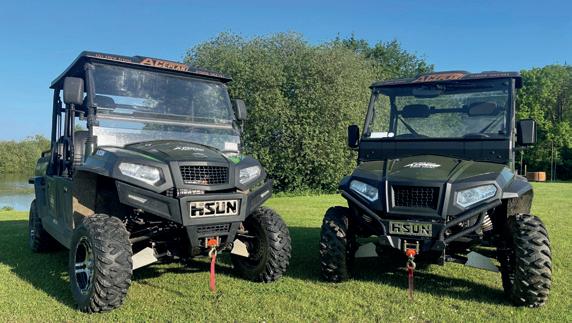
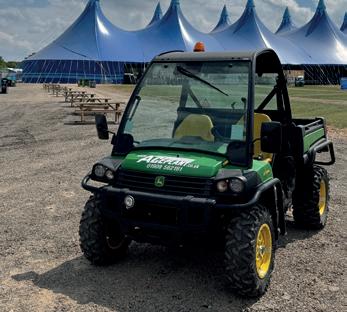
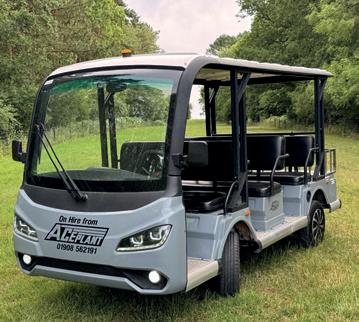
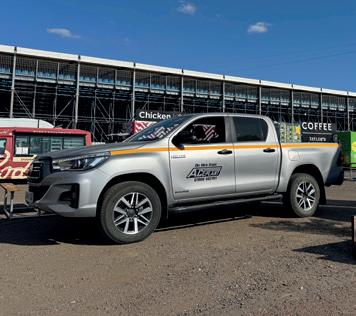
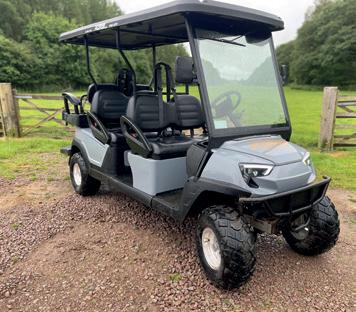
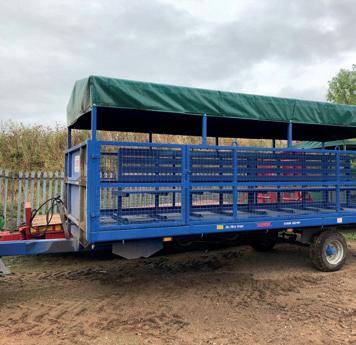
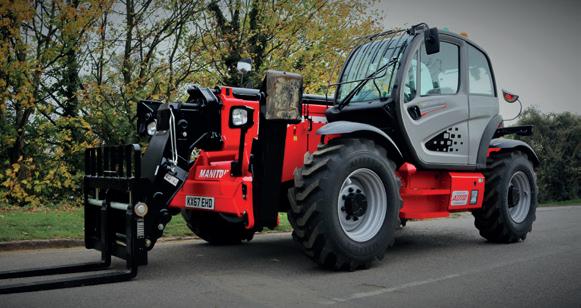
Our Range Includes: Telehandlers, Double Cab Pickups, UTV’s & Golf Buggies, Tractors, People Carrying Trailers, Bulk Fuel Bowsers, Water Bowsers, Tower Lights, Excavators & more...
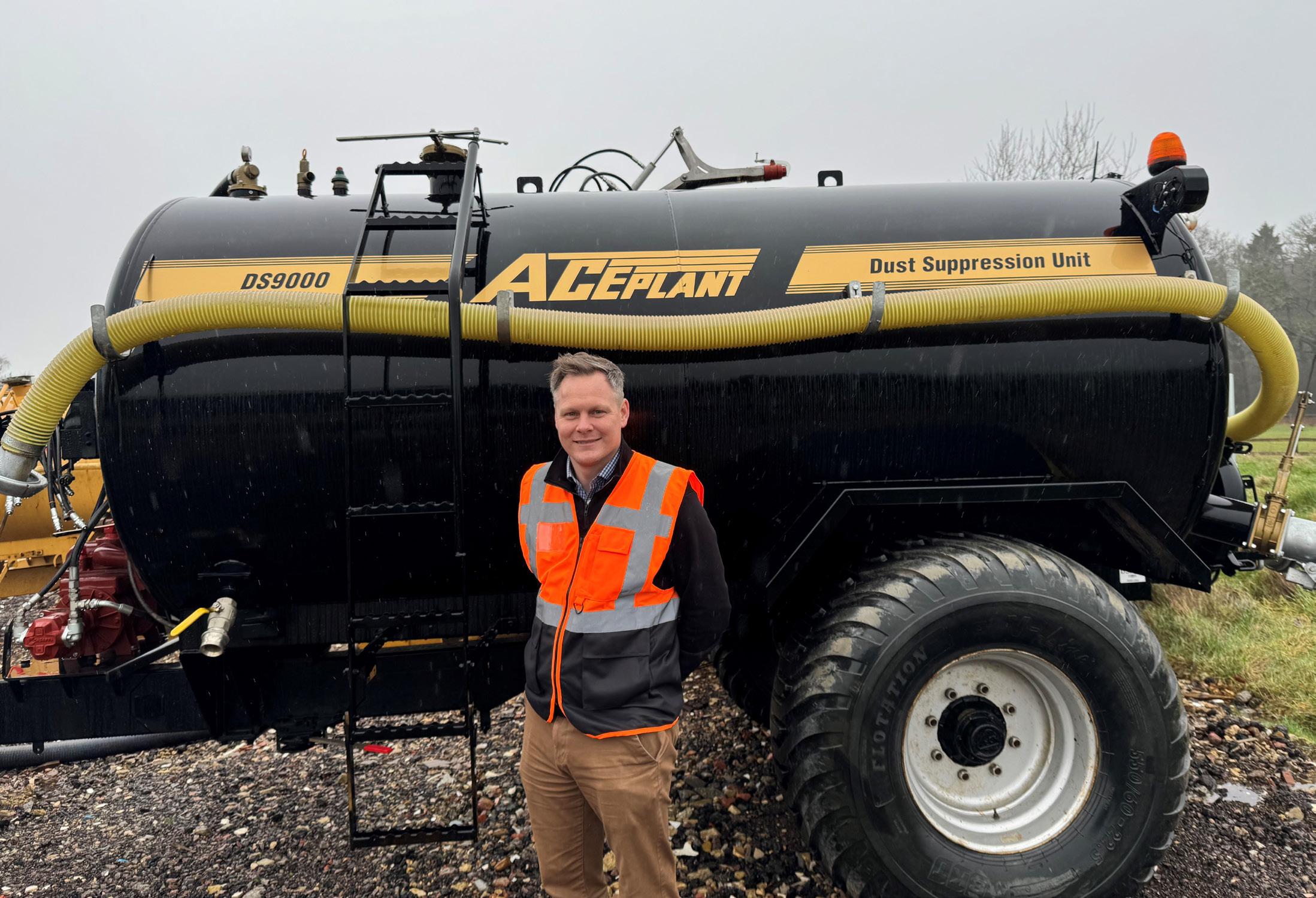
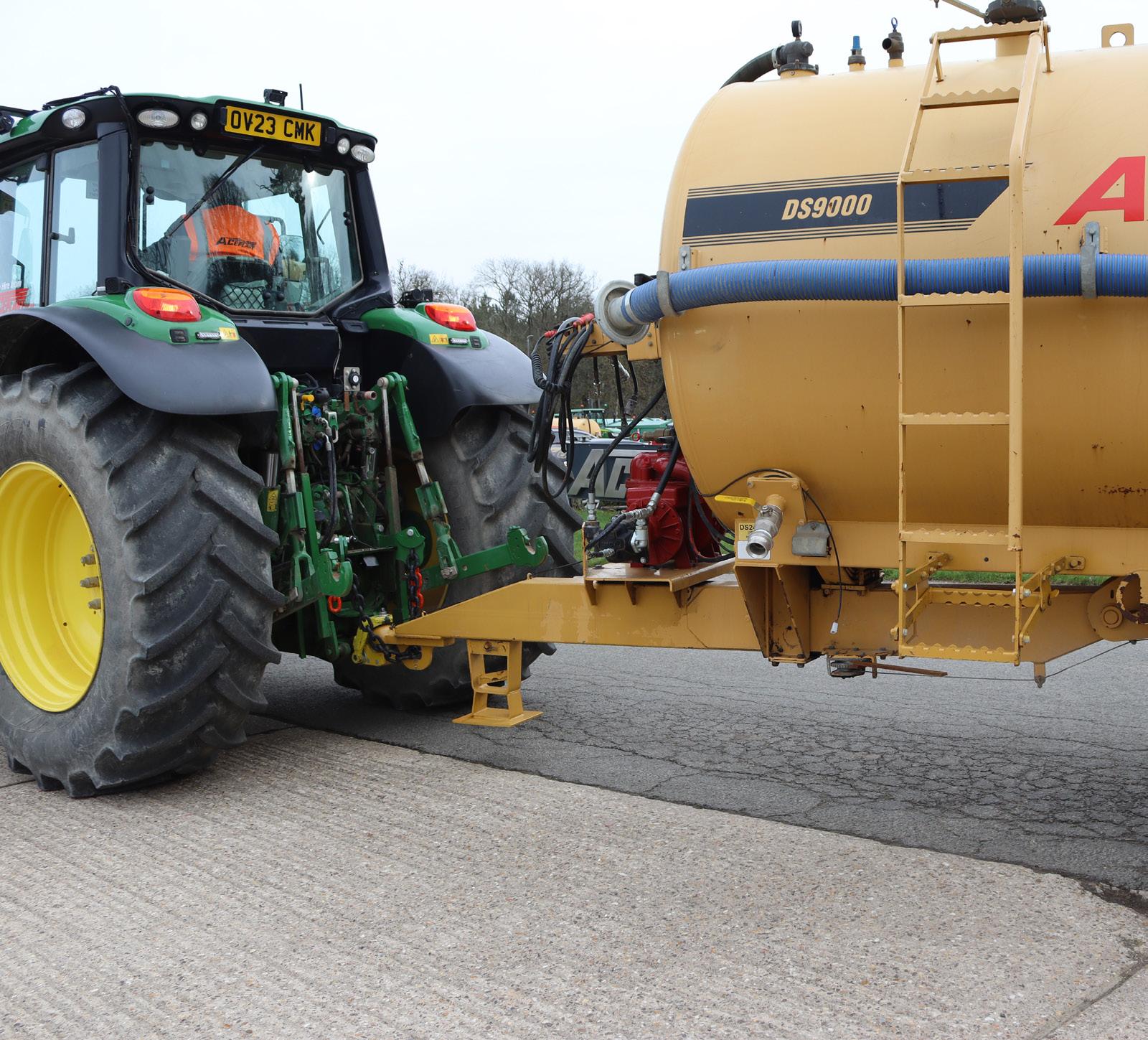
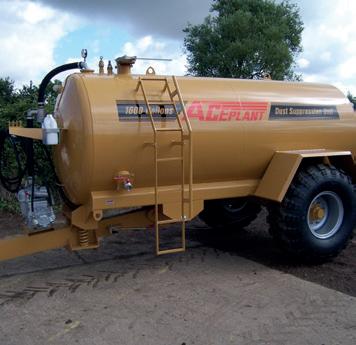
ACE have been industry leaders in bulk fuel storage, loader tractors and dust suppression supplying the construction and quarrying sectors for over 50 years. Delivering reliable service, quality equipment and tailored solutions to a wide variety of customers within the industry. Continuing to evolve and
offering new products, ACE are ready to support your business with it’s equipment requirements whether that be spot hire, contract term hire or purchase.
Our friendly and experienced team are available to support your needs, so contact them today!
TALK TO US ABOUT OUR NEW PRODUCTS AND SUSTAINABLE ALTERNATIVES, DESIGNED TO INCREASE
AND PUSH TOWARDS A GREENER FUTURE IN
CITB’S NEW ENTRANT SUPPORT TEAM SUPPORTS OVER 4,500 APPRENTICESHIPS STARTS BETWEEN APRIL AND DECEMBER 2025
The Construction Industry Training Board (CITB) has shared updated figures for its New Entrant Support Team (NEST), revealing that, between April and December 2025, NEST supported 4,572 apprenticeship starts, exceeding the 2025-26 final target with three months left to go. This is 1,040 more than in the previous period from April to December 2024, representing a 30% increase.
CITB’s NEST continues to make recruiting an apprentice far easier for employers by removing the barriers they may face employing and retaining new entrants, particularly apprentices. The new figures from CITB show that, in the April to December 2025 period, 8,054 employers engaged with NEST – up 40% on the previous period in 2024.
In the same period, CITB’s apprenticeship grants supported 25,550 distinct learners – 11% above CITB’s initial target and a 5% increase compared to the same point in the 2024-25 FY. Of the 9,251 employers supported to date in the period from April-December 2025, 8,170 of these are small and micro.
Additionally, from April to December 2025, CITB provided £53.5 million Apprenticeship Grants in total to employers – an increase from £50.7 million in the same period the previous year.
CITB’s NEST and apprenticeship grants support across England, Scotland and Wales helps to support employers to recruit and retain apprentices and develop the skills they need.
This National Apprenticeship Week, CITB is encouraging employers to engage in the week-long celebration that brings together businesses and apprentices across the country to shine a light on the positive impact that apprenticeships and skills make to individuals, construction employers and the wider construction industry.
Deb Madden, Executive Director, Customer Engagement and Operations, said: “The industry needs a steady and strong flow of talent to deliver critical infrastructure and support the government to reach its goal of building millions of new homes.
“Our Construction Workforce Outlook report highlights the need for around
47,000 extra workers each year by 2029 to meet current construction demand. NEST is a fundamental way in which we start strengthening the workforce, by providing hands on, practical support to employers to help with meeting their skills, training and recruitment needs.
“We look forward to continuing the good work of the NEST team and helping employers to recruit and retain apprentices.”
Find out more about the New Entrant Support Team (NEST) on the CITB website or contact the team directly: Call: 0300 4566431
Email: newentrant.team@citb.co.uk
To learn more please visit: www.citb.co.uk
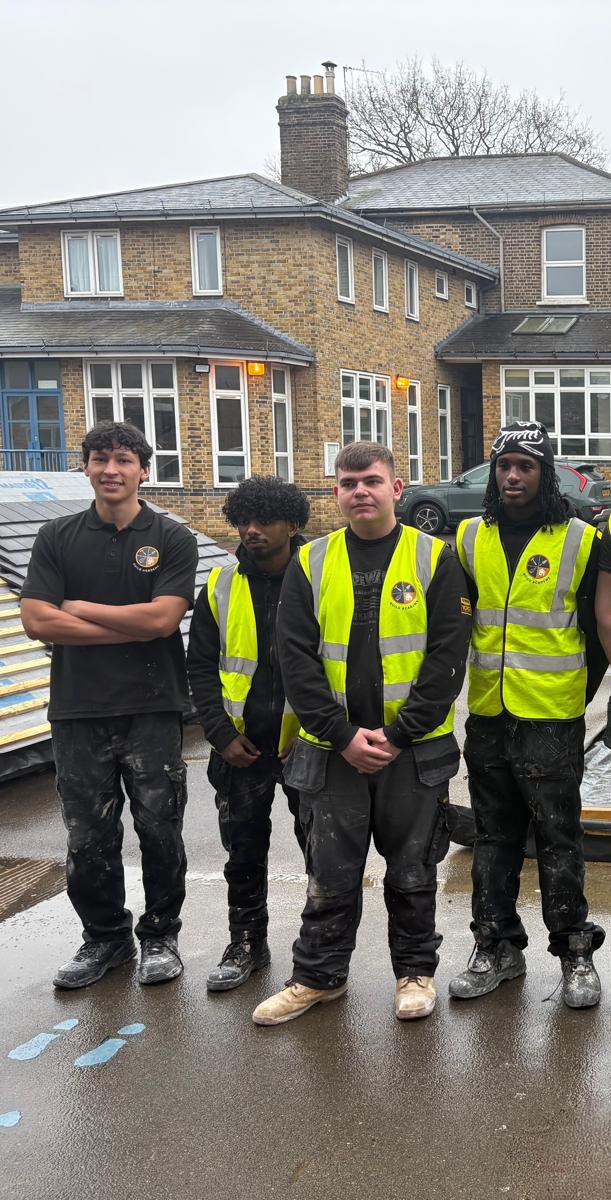
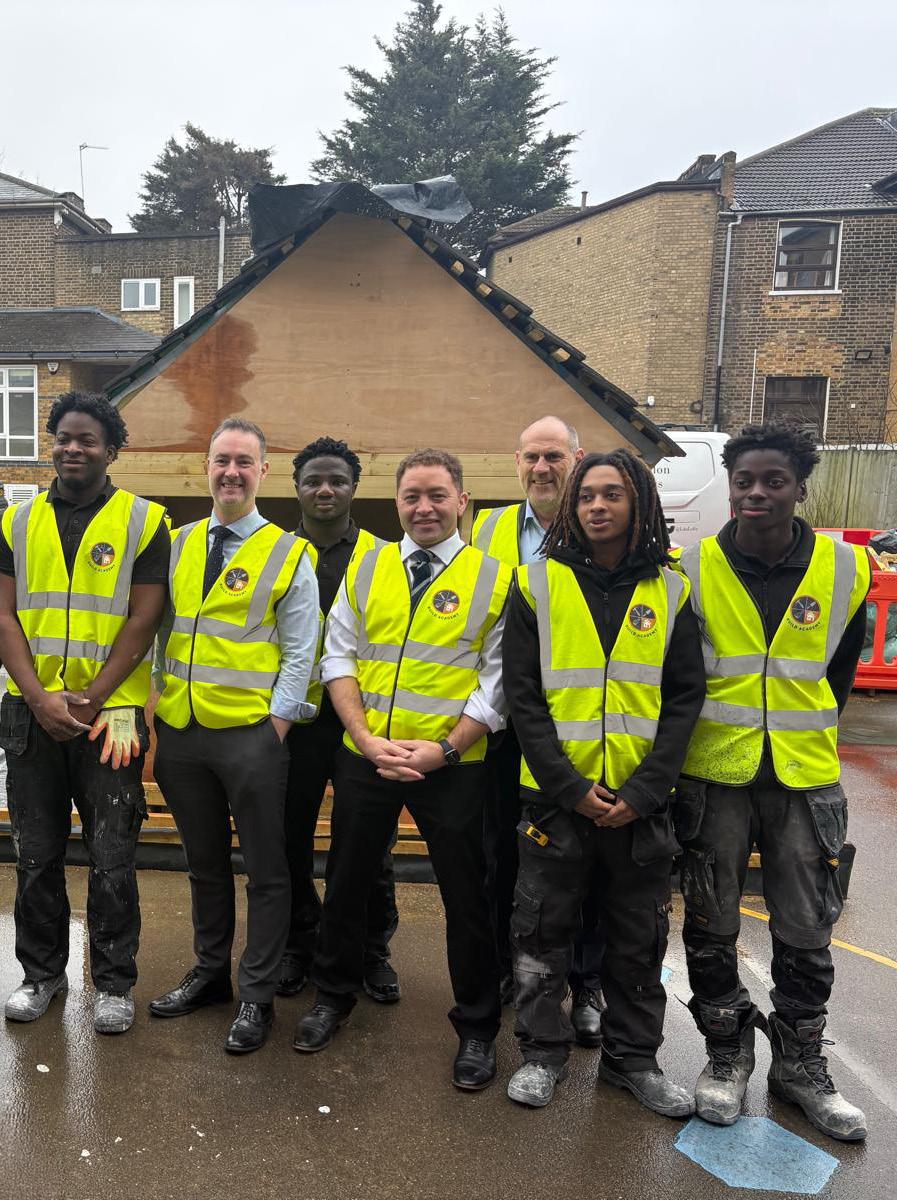
LONDON’S BUILD ACADEMY WELCOMES MINISTER FOR INDUSTRY
The initiative, funded by CITB in partnership with FMB and London’s Shooters Hill Sixth Form College, gives the next generation the practical skills and experience they need for a career in construction
The Construction Industry Training Board (CITB), the Federation of Master Builders (FMB) and Shooters Hill Sixth Form College, in London, welcomed Chris McDonald, Minister for Industry in the Department for Business and Trade (DBT) to the Build Academy. The Build Academy is a unique pilot scheme put together to address the skills shortages in the repair, maintenance and improvement (RMI) construction sector, which includes green skills and retrofit.
The initiative, which is a departure from traditional apprenticeship schemes, connects learners from all walks of life with real SME building firms, offering hands-on experience and helping them become site-ready from day one. It gives local young people the chance to gain hands-on experience, health and safety know-how, business knowledge and
confidence to step onto a live site and get stuck in.
The project works with 20 students at a time and sustains that number as individuals gain employment through the initiative’s network of employers. The aim of the project is to place them into full-time employment with SMEs by June 2026.
The Build Academy pilot is aimed at students between the ages of 16 to 19 who are new to construction. They can be new entrants to the college or progressing from the college’s core programmes. Tom, a current student at The Build Academy, said “it is the right place to be for practical skills.” Tijan, who is also a student gaining experience through the initiative described The Build Academy as “a place to push past your limits.”
The initiative forms part of the domestic retrofit area of the industry led Repair,
Maintenance and Improvement (RMI) Sector Skills Plan, which is supported by CITB. Sector Skills Plans are action plans designed to address the specific needs of different sectors within the construction industry and are owned and shaped by construction industry stakeholders. These initiatives aim to align workforce supply with industry demand, improve training quality, and support the delivery of national priorities.
The availability of fully trained apprentices is becoming a significant issue for the construction industry across the UK. CITB’s Construction Workforce Outlook forecasts over 47,000 extra construction workers are needed in the UK each year by 2029. In London in particular, the forecast shows that recruitment would have to increase by 8,460 workers per year by 2029 to meet current demands.
Chris McDonald, Minister for Industry, said: “Britain needs more construction workers, and that’s why I was pleased to visit the Build Academy today to see the pivotal role places like this are playing in bringing the next generation into this highly skilled profession.
“This Government is fully behind these efforts, in partnership with industry. That’s why we’re investing £625 million into construction skills training, and promoting the great work opportunities in this sector is a top priority of mine as Co Chair of the Construction Leadership Council.”
Tim Balcon, Chief Executive, CITB said: “The Build Academy shows what can be achieved when industry and education work together with real ambition. By giving young people hands‑on experience with employers, we’re helping them become site‑ready from day one and supporting SMEs that urgently need new talent. We’re proud to work with FMB and Shooters Hill College to build a more inclusive, skilled and future‑focused construction workforce.”
Brian Berry, FMB Chief Executive and RMI (Domestic Retrofit) Sector Skills Plan Chair said: “The Build Academy training initiative is a new employer led approach to workforce development in the building industry. Led primarily by FMB members, who are small, local builders that often struggle to hire apprentices due to risk, cost and administrative issues. It is not a traditional apprenticeship scheme; it’s a brand new initiative that creates employment pathways for young people from disadvantaged backgrounds who might otherwise not have the opportunity. Crucially, this is not training for its own sake – it is designed to lead to real jobs and long term careers at a time when our industry is grappling with well documented skills shortages.”
Geoff Osborne, Principal of Shooters Hill Sixth Form College said: “Today is about more than just a ministerial visit; it is a testament to the fact that our construction learners are part of something bigger. At the Build Academy we are transforming lives by preparing our learners for the next steps in a career within the construction industry that offers skills for lifelong learning . Seeing the Minister engage with our learners reinforces that they are the heartbeat of an industry that builds our future.”
FOR FURTHER INFORMATION
It was top of the construction bill once again as the Lighthouse Charity’s highly anticipated premier fundraising and networking event raised the roof at the Westminster Park Plaza, raising nearly £270,000 for the construction community.
Over 950 guests arrived through the doors to a welcome drinks reception and what promised to be yet another fantastic day.
Taking the helm were rugby presenter and commentator David Flatman, ‘Flats,’ along with Ellie Roper, sports journalist and presenter. Sarah Bolton, Lighthouse Charity CEO, opened up proceedings with an update on the help delivered to the industry and a thank you for everyone’s support throughout the year.
The nominees for the charity’s highly coveted ‘Peter Capel’ Cup were announced by Edward Naylor, Co Chair of the Trustees. The cup is awarded each year in recognition of outstanding contributions from organisations that support the charity. Wilson James were worthy winners with their amazing motor racing fundraising days.
Tony Palombo, Managing Director at Wilson James said, “We have supported the Lighthouse Charity for a number of years and we were delighted to be awarded the Peter Capel Cup. We have also called upon their services following some distressing on site situations where they have been extremely considerate in their response, delivering expert support and stabilising the situations.
All of this support requires funding and we are proud to be part of the fundraising effort that ensures Lighthouse Charity can continue their vital work.”
Guests enjoyed a gourmet three course meal and ‘Flats’ orchestrated the audience into some highly competitive auction bidding for unique lots including Gleneagle golf days, luxury sailing days, VIP boxes at Ascot and Monte Carlo race days, raising over £55,000.
Top sporting celebrities then graced the stage to form a world class line up. First out of the starting blocks was Kadeena Cox, Paralympian world record holder and gold medallist in both athletics and cycling. She shared her struggles with mental and physical health in the lead up to and following the Paris 2024 Paralympics and her journey to recovery.
Next up was Phil Vickery, one of England’s most respected rugby figures, earning 73 caps and captaining his country. A cornerstone of the 2003 Rugby World Cup winning squad, he talked of the camaraderie within the team and some of the rugby characters he’d encountered throughout his established career.
Stuart Pearce, one of England’s most iconic football figures then shared some of his history working as a qualified electrician both before and even during the early years of his professional football career. Nicknamed ‘Psycho’ for his passion and commitment, he offered insight into his illustrious career captaining Nottingham Forest under Brian Clough. He also shared his pride at representing England 78 times, along with dealing with the hilarious antics of ‘Gazza’.
Sarah Bolton, CEO of the Lighthouse Charity commented, “This amazing event is always one of our most popular and
biggest fundraisers of the year. It’s a time for our charity to reflect on the support we’ve delivered and the people we’ve been able to help throughout the year. It also gives us an opportunity to thank our amazing volunteers, supporters and partners who ensure our message of support is amplified across our construction community. Thank you so much to everyone that makes our work possible.”
The afternoon was made complete with a rousing performance from ‘We Will Rock You,’ featuring artists from the top London show blasting out the greatest hits of Queen and getting the audience up on their feet. The festivities continued into the evening with guests embracing the Christmas spirit and making the most of the networking opportunities.
Diamond Sponsor; MasterMac Surfacing. Event Sponsors; Ardent Tide, Benchmark Scaffolding, JobMatcha, SPUD, and The Guild.
Live Auction prize donors
CPA, Gallagher Group, Naylor, One Source Events, Superstars, Teamforce, and Promocean
If you or anyone you know is struggling, reach out for 24/7 free & confidential support.
Live chat www.lighthousecharity.org Text HARDHAT to 85258
Find out more at www.lighthousecharity.org
Phil, Stuart & Kadeena
Peter Capel Cup
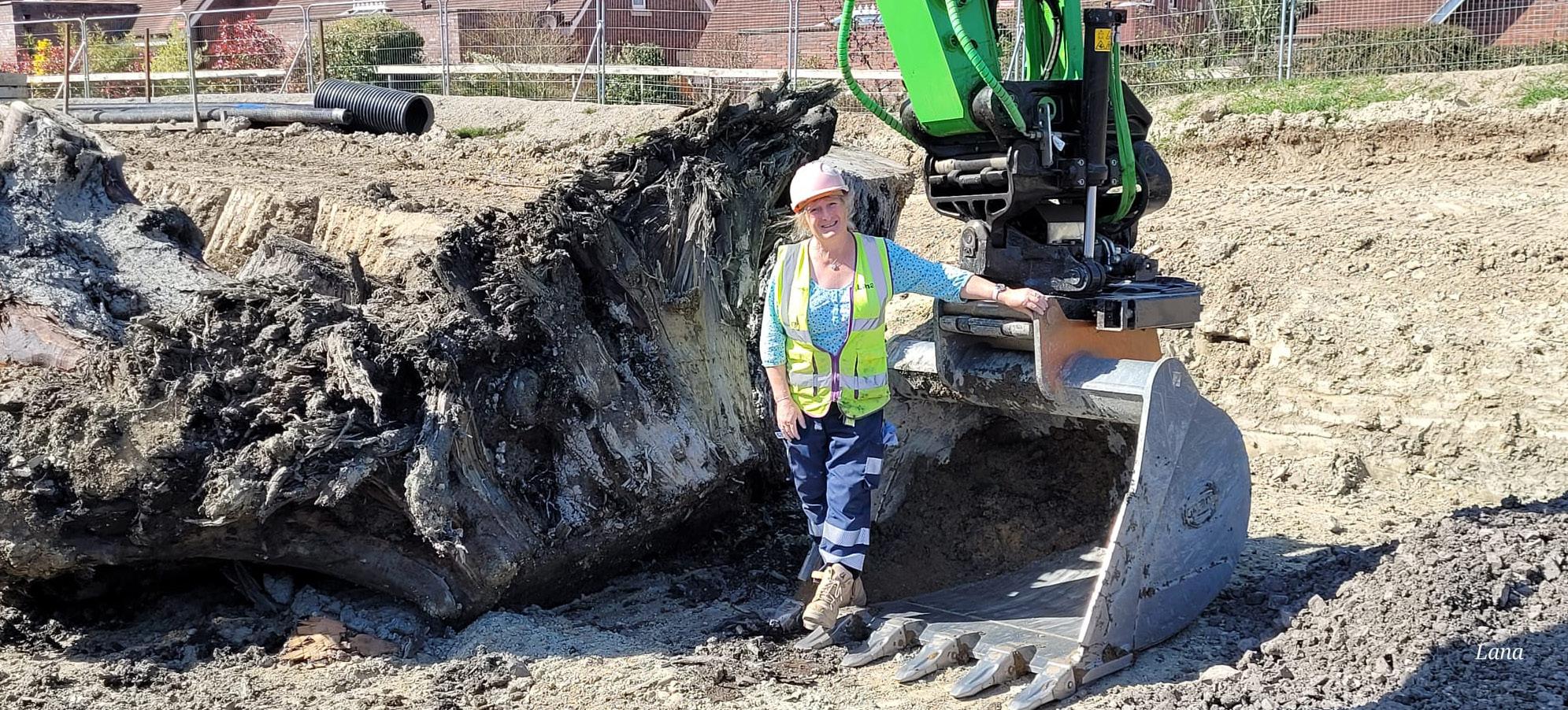
LIFE WITH LANA // Attachments
Attachments seem trivial in some cases, as if they don’t matter or don’t have a set purpose. The lovely Lana Edwards disagrees, though. When Content Writer, Lorna Cowlin, sat down with Lana to discuss this, it felt like this was Lana’s love letter to all things machinery.
By Lorna Cowlin
When I said to Lana “I want to discuss attachments,” I knew it was a very broad topic with multiple avenues. So, when I sat down with her, I wasn’t expecting for me to be asked the questions. I was in the hot seat.
After our greetings and pleasantries, Lana jumped straight in. “What do you think attachments are?” she asked.
Well, I know what they are, but this felt almost like a trick question, as if Lana was going to wow me with her infinite wisdom. Which she did, however, my answer paled in comparison.
“Well, attachments are what fixes onto machinery to do the job at hand. They help the operators complete the job with complete efficiency.”
Lana agreed but said it goes deeper than that. She said that construction begins with attachments, and they aren’t just attachments… they are also workers on-site too. Attachments are essential in construction work to get the job done as efficiently as possible, but some instances aren’t so kind.
Lana said she sees a lot of improper use of the machines, and she hates watching it. She’s seen people using buckets to break rocks and concrete, and it breaks are heart. This does not promote machine longevity, and therefore the attachment no longer performs as it should. “It’s like they take the attachments for granted,” Lana said, as if the attachments “just come with the digger.” Damaging the machine doesn’t get the job done any faster, and does more harm in the long run. She joked that the buckets end up “looking like bananas”, but there was also a hint of seriousness in her words. No operator wants to see any machine or attachment get used improperly, especially Lana who looks after her machinery as though it were a colleague. After all, it is a colleague, and what you treat well treats you well back! Like Lana said herself, “it’s your worker!”
It’s incredible to see the advancements of attachments, and how the development of making it easier for contractors and operators has come on leaps and bounds. It wasn’t always as easy as simply changing the attachment from the machine. Before, it was all done manually. Getting out the cab, take off the attachment, replacing it with the needed one, get back in the cab, and carry on.
Most attachments these days are quick hitch, which allows for easy and rapid connection and disconnection of attachments. Brands like OilQuick and Lehnhoff are examples of quick couplers and attachments in both the construction and demolition sectors. In tractors, it is typically a 3-point hitch that facilitates the attachment of implements, whereas in excavators, it is installed at the end of the forearm and enables quick replacement of working devices like buckets and breakers. Overall, it simplifies the process of switching between various implements, such as buckets and grapples, using a latch and safety pin system. Quick hitches are designed to enhance efficiency by reducing the time and effort required to change attachments. The Health and Safety Executive (HSE) website says, “operators should be instructed not to use the machine unless they are satisfied that the quick hitch is secured in place,” making construction sites safer, and the attachments more secure.
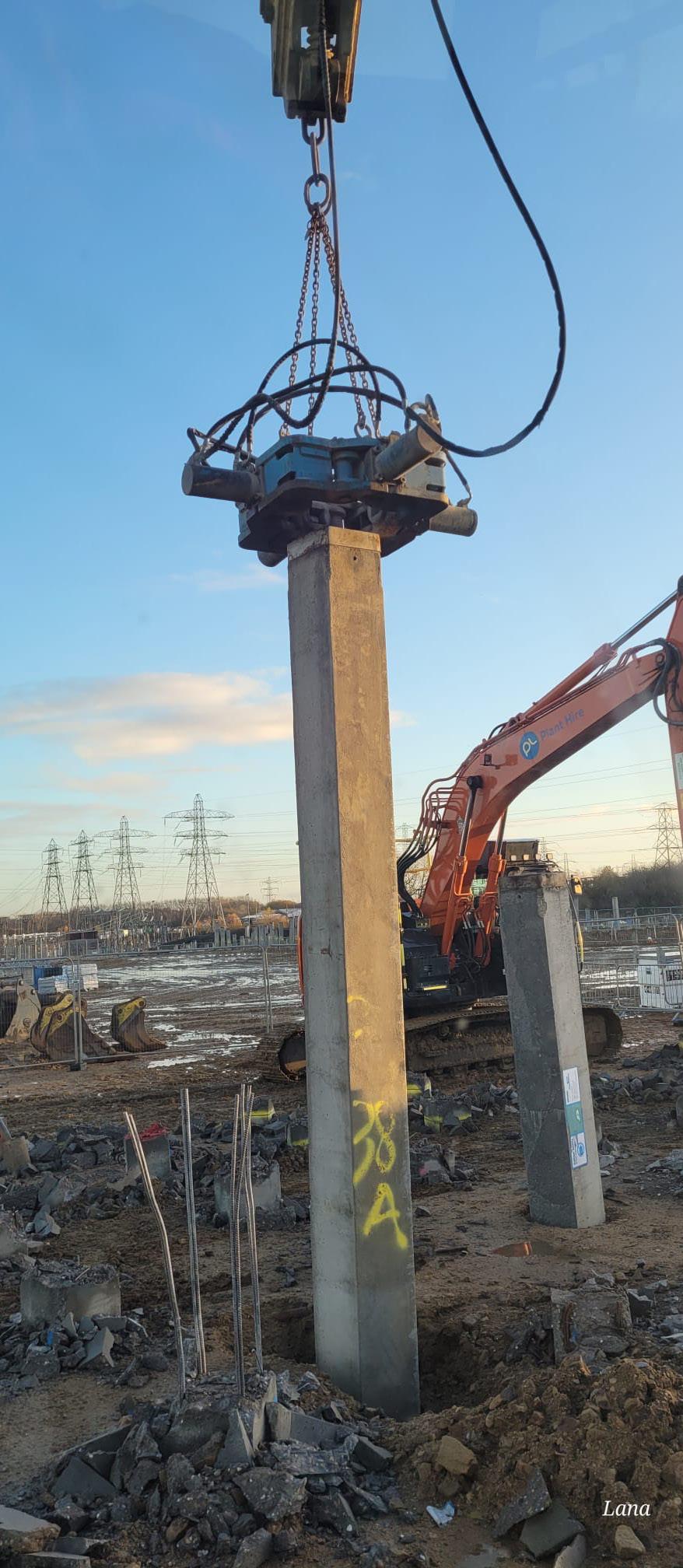
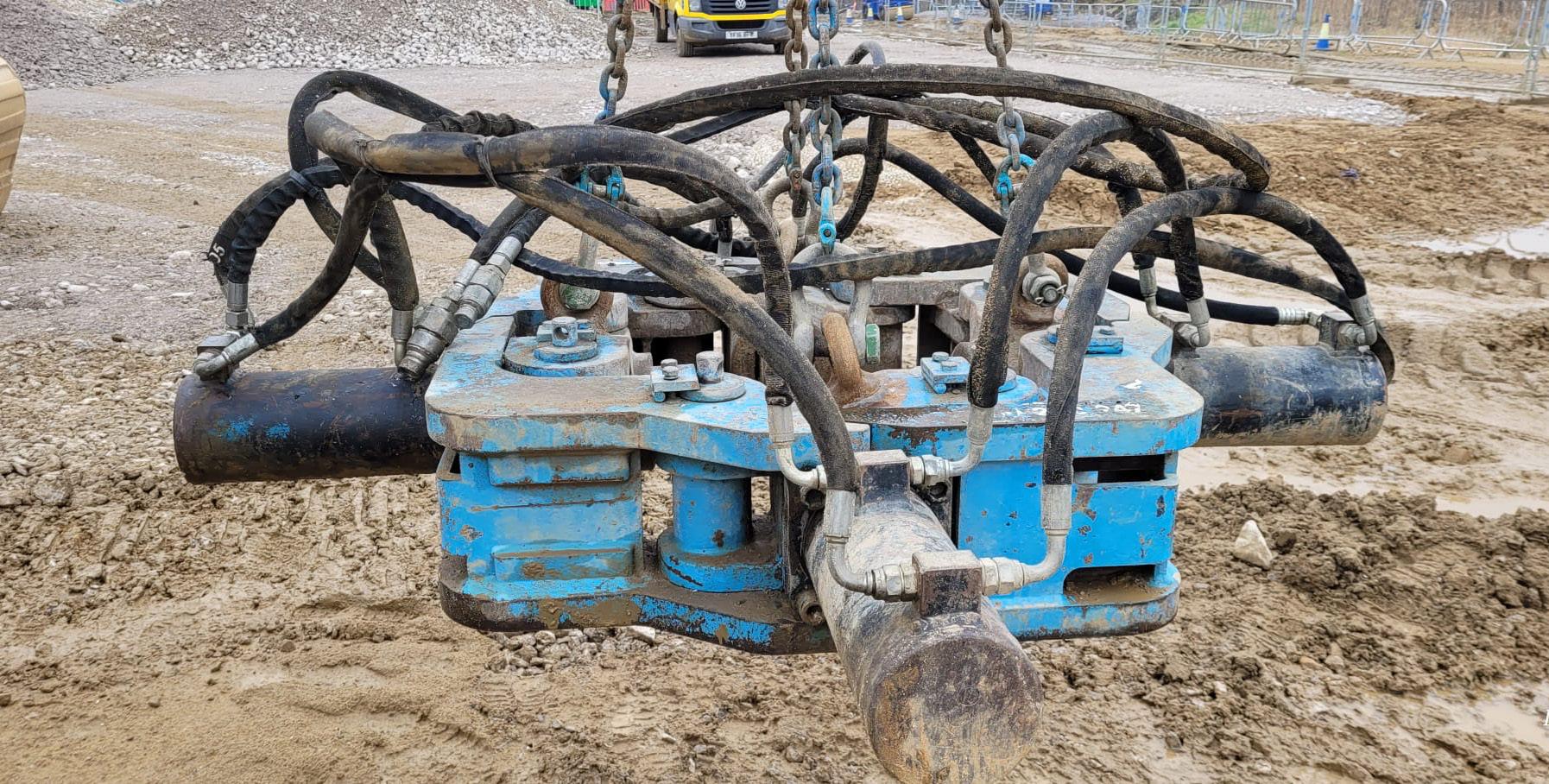
Lana told me a story of when she was put on a job and had to drive a pile driver for the first time. The night before she felt immensely nervous, wanting to do her best work. Of course, as she always does, she aced it, and treated the machine with the utmost care, so the machine reciprocated.
However, the other driver wasn’t exactly doing the same thing…
The other driver was piling too much pressure onto the machine; instead of hammering the pile, he was hammering the machine, which in turn, kept bouncing back at him. Lana had to then become teacher, telling the other operators how to drive a pile driver… a.k.a., a machine she had never driven herself until twenty minutes prior!
To Lana, treating a machine and its attachments with respect is basic, and is second nature to her.
“There’s so much I want to say, how do you conclude this?” Lana said to me towards the end of our call. I smiled and said: “with the fact that you can unscrew and screw back on the lid of a water bottle while sat in the cab?”
Lana laughed. “But that’s just little ole me!”
I don’t know of anyone else that can do that. Lana makes construction work look like a ballet which is only testament to how much she takes care of her machinery and attachments.
So incredibly modest for a woman with many talents!
Why Lubricants Matter More Than Ever for UK Plant Machinery
And what to watch for in today’s evolving lubricant marketplace
For plant professionals across construction, quarrying, waste handling and infrastructure, machinery is one of the largest investments a business will make. Protecting that investment is not just about maintenance schedules and operator skill – it is fundamentally about lubrication. In the demanding operating environments common across the United Kingdom, the right lubricant strategy underpins reliability, efficiency and whole-life equipment cost control.
Yet the lubricant landscape itself is changing rapidly.
Understanding current UK trends, potential risks in the marketplace and the value of a trusted supplier is now essential for every fleet owner and plant manager.
The Critical Role Lubricants Play in Machinery Performance
Every engine, transmission, hydraulic system and bearing depends on a precisely formulated lubricant film to separate metal surfaces, control friction and manage heat. Without it, wear accelerates, efficiency drops and component failure becomes inevitable.
In high-load plant equipment operating long hours under heavy stress, these functions are not optional — they are vital to achieving maximum uptime and productivity.
Lubricants are often judged by how well they perform once they’re inside an engine, gearbox or hydraulic system. But long before an oil protects your machinery, it has already been through a carefully controlled journey—one that has a direct impact on performance, longevity and reliability.
Understanding how lubricants are made helps explain why quality really does matter.
Where Oil Begins: Extraction from the Earth
Most conventional lubricants start life as crude oil, extracted from reservoirs deep beneath the earth’s surface. Once drilled and brought to the surface, crude oil is a complex mixture of hydrocarbons—far too raw to be used directly in engines or machinery.
Crude oil itself varies hugely depending on where it comes from. Some crudes are lighter and cleaner, others heavier and more contaminated. This is why not all base oils—and ultimately not all lubricants—are created equal.
Refining: Turning Crude Oil into Usable Base Oils
After extraction, crude oil is transported to a refinery where it is separated and refined. This process typically involves:
• Distillation, where crude oil is heated and separated into fractions based on boiling points
• Hydrotreating, which removes sulphur, nitrogen and other unwanted compounds
• Further processing, to improve stability, purity and performance
The result is base oil—the foundation of most lubricants. These are commonly grouped into quality categories (Group I to Group V), with higher groups offering better oxidation resistance, cleaner performance and longer service life.
It’s Not Just Oil: The Crucial Role of Additives
While base oil provides the foundation of a lubricant, it is the additive package that gives the oil its personality and purpose. In many modern lubricants, additives can account for up to 30%, and they are the reason one oil can outperform another in demanding conditions.
Additives are highly engineered chemical compounds, each designed to perform a specific task inside machinery. They work together as a balanced system—too little and the oil won’t protect properly; too much and performance can actually suffer.
Key additive types include:
• Anti-wear additives, which form a microscopic protective layer on metal surfaces. This layer prevents direct metal-tometal contact, particularly during start-up, high load or shock conditions where wear is most likely to occur.
• Detergents, which keep internal engine and system components clean by preventing deposits from forming on surfaces such as pistons, valves and bearings.
• Dispersants, which hold dirt, soot and combustion byproducts in suspension so they can be safely removed during oil changes rather than settling and causing damage.
• Antioxidants, which slow the natural breakdown of oil when exposed to heat and oxygen. This helps extend oil life and maintain viscosity over longer operating periods.
• Corrosion and rust inhibitors, which protect internal components from moisture and acidic by-products, particularly important in machines that operate intermittently or in harsh environments.
• Viscosity index improvers, which help the oil maintain the correct thickness across a wide temperature range—thin enough to flow at cold start, yet strong enough to protect under high operating temperatures.
• Friction modifiers, which reduce internal resistance, helping to improve energy efficiency, reduce heat build-up and in some cases contribute to fuel or power savings.
Each lubricant—whether an engine oil, hydraulic oil, gear oil or grease—requires a carefully tailored additive balance. For example, a hydraulic oil prioritises cleanliness, oxidation stability and water separation, while a gear oil needs extremepressure additives to cope with high loads. Greases add another layer of complexity, combining base oils, additives and thickeners to stay in place under demanding conditions. For end users, this is why substituting oils or using ‘near enough’ products can be a false economy. Two oils may look similar on the surface, but their additive systems can be very different—and those differences only become apparent once wear, deposits or premature failure begin to show. Ultimately, it’s the additive package that transforms base oil into a high-performance lubricant—one that protects, cleans, cools and extends the life of valuable machinery.
Oil Blending: Where Performance Is Created
Blending is where base oils and additives are combined in precise ratios to create a finished lubricant that meets exact specifications and industry standards.
This process requires:
• Accurate formulation
• Consistent temperature control
• Thorough mixing
• Rigorous quality checks
Even small deviations can affect performance. That’s why reputable lubricant manufacturers invest heavily in blending technology and testing.
Quality Control: The Final Safeguard
Before any lubricant leaves the blending plant, it undergoes extensive quality control testing. This includes checks for:
• Viscosity
• Cleanliness
• Additive content
• Compliance with OEM and industry standards
These final checks ensure the oil you receive will perform reliably from the first drop to the last.
Why This Matters to End Users
For those running expensive machinery, lubricants are not a commodity—they’re a critical component of reliability. Highquality lubricants:
• Reduce wear and downtime
• Extend component life
• Improve efficiency and fuel economy
• Protect warranties and manufacturer approvals
UK Lubricant Market Trends Shaping the Industry
While the fundamentals of lubrication remain unchanged, the UK market is evolving quickly, driven by technology, regulation and changing machinery requirements. Understanding these shifts helps plant operators make informed decisions about product choice and supplier partnerships.
The Move Toward Premium and Synthetic Lubricants
Modern machinery increasingly demands high-performance synthetic or semi-synthetic lubricants designed for higher pressures, tighter tolerances and longer service intervals. Across the UK, adoption of premium lubricants has accelerated as operators seek improved durability, extended drain intervals and better fuel efficiency.
These advanced formulations offer improved oxidation stability and lower friction, helping plant fleets operate more efficiently while reducing maintenance downtime.
Sustainability and Environmental Pressures
Environmental regulation and sustainability targets are reshaping lubricant choices. Demand is rising for biodegradable, bio-based and low-emission lubricants that support reduced environmental impact and help businesses meet net-zero commitments. As businesses reflect on their own suppliers, finding lubricants that are blended in a low impact or carbon neutral way is increasingly important. Traditionally, lubricant blending relies on heat and energy derived from fossil fuels. However, new approaches are changing how lubricants are manufactured. Blendtek Solutions which was the brainchild of British lubricant manufacturer, Witham Group, represents a modern, forward-thinking blending process that removes the need for fossil fuels
during manufacture. By using advanced ultrasound blending technology and alternative solar energy inputs, lubricants can be produced efficiently while significantly reducing environmental impact.
For customers, this means:
• Lower carbon footprint without compromising quality
• Consistent, repeatable blends made in shorter time frames
• High-performance lubricants made responsibly
Crucially, the finished oil performs exactly as it should, without any performance compromise.
Growth in Specialised and Application-Specific Lubricants
As machinery becomes more complex — from high-torque agricultural equipment to heavy-duty construction hydraulics — demand is growing for tailored lubricant solutions engineered for specific equipment types and operating conditions.
This reflects a broader shift away from “one-size-fits-all” oils toward bespoke lubrication strategies aligned with OEM specifications and working environments.
Industry Consolidation and Service-Led Supply Models
The UK lubricant market has seen consolidation in recent years, with fewer independent distributors and more integrated supply-and-service offerings emerging.
This trend places greater importance on choosing a supplier capable of providing both high-quality products and technical support, rather than simply supplying drums of oil. Knowing your oil supplier and their capabilities and technical abilities are becoming a necessity to ensure you can trust what is in the drum and why you need it.
What to Watch Out for in the UK Lubricant Marketplace
With such rapid change, plant operators must remain vigilant when selecting lubricants and suppliers. Several key risks are emerging in the current market:
Inconsistent Product Quality
As competition intensifies, some lower-cost products may not deliver the performance or specification compliance modern machinery requires. Using off-specification lubricants can accelerate wear, shorten service intervals and ultimately invalidate OEM warranties. Knowing where the base oil and raw materials are supplied from for example can also ensure that quality is maintained. All finished formulations / specifications must be backed by “Candidate Data Packages” which ensures the product has been tested correctly and in full and this can be traced and proved.
Compatibility and Specification Challenges
New engines, emissions systems and hydraulic technologies require precise lubricant formulations, including low-SAPS oils designed to protect after-treatment systems. Incorrect product selection can lead to blocked filters, increased emissions or costly component damage.
Sustainability Claims Without Substance
As demand for “green” lubricants rises, operators must ensure products genuinely meet performance and environmental standards rather than relying on marketing claims alone. Regulatory and disposal requirements also continue to evolve, making compliance an essential consideration. Sustainable practices are important to consider in a lubricant supply chain as there are many gains to be made by using a supplier with best practice in their manufacturing process as well as less environmental impact ingredients. Ensuring suppliers have good industry standards such as ISO14001 as a minimum is a good starting point.
Supply Chain Reliability
With fewer independent distributors and growing demand for premium products, consistent supply availability is increasingly important. Downtime caused by delayed lubricant deliveries can be just as costly as mechanical failure.
Why Trust and Technical Support Matter More Than Ever
In a complex and changing marketplace, the value of a knowledgeable, technically focused lubricant partner cannot be overstated. Beyond simply supplying products, the right partner provides expertise, guidance and long-term reliability — helping customers avoid costly mistakes and optimise their lubrication strategy.
This is where a specialist UK manufacturer such as Witham Group offers clear advantages. Trading since 1921 and celebrating their 105th anniversary this year, Witham Group forges a strong customer base of buying groups, distributors and thousands of different types of businesses across a whole variety of sectors, many of whom they have preserved relationships with for many generations.
Proven Quality and Consistency
Working with a trusted, established UK manufacturer ensures lubricants are blended to stringent quality standards and fully aligned with OEM specifications. Consistency from batch to batch is critical to maintaining predictable machine performance and protecting high-value components.
Nigel Bottom, Witham Group’s MD explains, “The Trust of your lubricant supply is one of the biggest considerations to make. Quality comes not only in a drum or package, but it also comes from the service, product, people, values and expertise behind every delivery.
A knowledgeable supplier understands the diverse operating conditions across UK plant sectors — from abrasive quarry environments to wet, high load construction sites.
This expertise enables tailored lubricant recommendations that maximise equipment protection and service life, so rationalising, saving time and money which is exactly what a business needs.”
Support Beyond the Product
“Modern lubrication is as much about service as supply.”
Nigel continues, “A reputable partner offers technical advice, lubrication surveys, oil analysis and rationalisation programmes to ensure fleets use the right products in the right applications. This proactive approach reduces waste, simplifies maintenance and improves overall equipment reliability. Time and again businesses are left without useable machinery or high repair bills just because the wrong oil or poor product has been used. As the UK lubricant sector consolidates, partnering with a stable, independent manufacturer helps ensure dependable supply chains and responsive customer service — crucial for businesses that rely on continuous machine uptime.”
Lubrication as a Strategic Investment
For today’s plant operators, lubricants should no longer be viewed as a routine consumable. They are a strategic tool for safeguarding machinery, controlling operating costs and ensuring efficient, compliant performance in an increasingly demanding UK market.
By understanding current lubricant trends, watching for potential pitfalls and working with a trusted technical partner such as Witham Group, businesses can protect their machinery investments and keep their fleets operating at peak performance.
Getting a Grip of Things: Attachments in
the Construction
Industry
Attachments are a necessary part of construction, making it possible to get more value from the machinery you already own. But with a choice of so many, how do you know which one will be right for you?
By Lorna Cowlin
The success of a construction project is hugely determined on choosing the right tools for the job, especially when it comes to attachments. Using the right attachments for the task at hand can have a major impact on performance, efficiency and overall project success. However, there is SO much choice, and with this many options available, choosing the correct attachment is not always an easy, straightforward task.
What are attachments used for?
Simply put: to do the job and achieve the best results. Fret not, I will explain better than that though, would be a very short article otherwise!
Construction attachments are an addon tool that is designed specifically to fit onto the machinery, which then expand the capabilities of the machine. This then allows the machine to complete specific tasks with the right tools made for the job, and no need to switch the equipment during the process.
A well-matched attachment will:
- Increase operational speed
- Improve on-site safety
- Reduce manual labour
- Lower machine wear and fuel consumption
Essentially, they make an operator’s job so much easier! So, what kind of attachments are there?
Digging and Groundwork Attachments
Groundwork is literally the foundation of most construction projects, and tough work too. Attachment designed for this help with digging, cutting and preparing for the jobs on top of the ground to come. Augers are used for drilling consistent holes in the soil, meant for posts, piers or even trees. These attachments save operators hours compared to manual digging. There two types of augers: directdrive augers, and gear-driven augers. Direct-drive provide speed for sandier soils and textures, whereas gear-driven deliver torque for rocking terrain.
Trenchers… well, clue is in the name! These attachments are used for cutting, especially when it comes to narrow, straight – you guessed it! – trenches.
Trenchers are relied on for fast roadside repairs when larger equipment won’t fit. These guys are small, smart and nifty.
Backhoe attachments are a popular choice for smaller sites when bigger machinery isn’t practical. These attachments turn a skid steer into a more versatile digger that works on foundations, utility lines, and grading.
Lastly, tillers! Tillers are the one you need if the job is landscaping, as they break up compact soil in compost. Tillers are used a lot by farmers to prepare seedbeds and incorporate fertiliser before planting.
Clearing and Material Handling Attachments
After digging and laying foundations, the lifting and shifting jobs can start to do their thing! Handling materials as efficiently as possible is vital.
Grapple buckets, equipped with hydraulic clamps, secure awkward loads, like logs and scrap metal. These attachments are much like a hand, and have a tight, secure grip on what it is carrying.
Rakes are the hand that smooths. Rakes level uneven ground, breaking up clumps in the ground and collect debris. These are especially useful for landscapers.
Hydraulic pallet forks are also good at carrying, especially when it comes to pallet handling. On construction sites, these pallet forks are especially good at moving materials such as drywall and lumber.
Also good for landscapers, brushcutters clear thick vegetation and smaller trees. This can be used just a general tidy-up or used to reclaim land that has been overgrown. It can also help cut back roadside brush safety and efficiently.
Demolition and Recycling Attachments
Not all attachments are to help construct; some are only there to knock down. And with sites aiming to be greener, recycling is the best approach when it comes to these attachments too!
Hydraulic breakers are the toughest guys on the scene. By using brute force, these attachments are used to fracture concrete, asphalt and/or rock. They can be used for pavement repair, all the way to breaking large boulders.
Multi-processors are the owls of attachments, as they can rotate 360° for cutting steel or crushing concrete. The way they reduce how often the machine needs to be repositioned, so this can save lots of time in structural demolition.
Hydraulic shears can cut through steel beams and other scrap metals, whereas rotating shears can maximise productivity by reducing machine movement on site. When it comes to recycling, you can rely heavily on pulverizers. By breaking concrete into smaller pieces, they can also separate the rebar for recycling. Crushed concrete can be reused, which lowers project costs.
Grading and Surface Preparation Attachments
Once digging is completed, surfaces must be smoothed and stabilised. These attachments then help prep for final work. By pushing and grading material efficiently, blades are perfect as shifting and smoothing. S-blades are used for small backfilling tasks, while U-blades move large volumes of soil or aggregate. Compactor attachments are used to compress soil, gravel or asphalt. Plate compactors handle trench backfilling, drum compactors finish road surfaces, and wheel compactors provide smooth coverage for utility work.
Why do people rent construction attachments?
Renting provides flexibility and cost control, especially for attachments needed only occasionally. It then provides the ease of only using the attachments for the timespan of the project, not overdoing it but still using the correct tools for the job. As a result, there is lower upfront costs, which means attachments are only paid for when needed, avoiding long-term investments when not needed. Expanding service offerings with seasonal tools (like snow blades or forestry cutters), which offers operational flexibility. Plus, a ‘try before you buy’ approach is always more cost-
effective too, as the hands-on testing means you don’t need to commit to purchasing, you are able to ensure they meet your project needs.
When are custom attachments useful?
Standard attachments usually fit the job description, but there are times bespoke attachments are needed. If your site has unique requirements or you are working on a project that standard tools cannot handle efficiently, a tailored solution can make a significant difference.
Custom attachments are ideal for:
- Non-standard trench profiles or digging angles
- Handling unusual materials or load sizes
- Working in restricted spaces or with unique access points
- Maximising performance on specialist machinery
Getting bespoke attachments, when necessary, allows operators and contractors to work faster, safer and gain better results, especially when precision is essential.
ASKA Excavator Attachments
ASKA are all about ease. As the largest excavator attachment provider in the UK & Ireland, they pride themselves on making an already complex job pain-free, making sure everyone walks away with exactly what they needed. They do it all! As said by ASKA themselves, “we hire them, we sell them, we service & repair them. We deliver, fit & test them.” They can even design them! There truly is no job ASKA can’t cater for.
They stock both new and used excavator attachments to hire or buy depending on need. All their equipment is fully maintained by their team of trained service engineers who are always on hand should they be needed. They can even work on an excavator attachment that has been supplied elsewhere, so they will always have your back!
They can offer attachments such as…
- Augers
- Piling hammers
- Breakers
- Clamshell buckets
- Crusher buckets
- Stump grinders,
- Flails
- Land rakes
- Cutter heads
- Demolition shears
- Grabs
- Pile croppers
- Planers
- Post drivers
- Riddle buckets
- Tilting buckets
- Screening buckets
- V buckets
- Pipe lifters
- Ripper teeth
- Pallet forks
- Rock wheels
- Vibrating plates
- …and so much more!
They also have a comprehensive range of parts available that are available for immediate delivery, anywhere in the UK.
Innovations in attachment technology
The construction industry is embracing a wave of innovation, and attachments are no exception. Today’s attachments are smarter, safer, and more versatile than ever before, helping operators get more done, with less effort.
Smart and connected attachments are leading the way. Sensors embedded in modern tools can monitor wear, temperature, and usage patterns, providing real-time data to help prevent breakdowns and schedule maintenance proactively. This technology reduces downtime and extends the lifespan of both the attachment and the machine.
Quick coupler systems have also advanced significantly. Modern designs allow operators to switch attachments without leaving the cab, while automatic locking mechanisms reduce the risk of human error, a critical safety improvement on busy job sites. Multifunctional attachments further streamline operations by combining multiple tasks into a single tool, such as a grapple with an integrated crusher or a bucket that doubles as a grading device.
Environmental and efficiency considerations are shaping attachment design as well. Lighter, more energyefficient hydraulic systems reduce fuel consumption and emissions, while new alloys and wear-resistant coatings extend the life of high-wear components. Some attachments are beginning to integrate with semi-autonomous and AI-assisted machinery, enabling automated grading, precise material handling, and other tasks with minimal operator intervention, which is even more cutting-edge.
These innovations are not just futuristic concepts, they are tools that realworld contractors are using today to improve project speed, reduce costs, and enhance safety. Staying informed about emerging technologies ensures construction teams can leverage the full potential of their machinery and attachments.
Choosing the right attachment
Selecting the right attachment is more than just matching a tool to a machine; it can dramatically impact productivity, safety, and overall project cost. The first step is understanding the specific demands of your project. Excavation work, for example, requires buckets of the correct size and design, whether it’s a trenching bucket for narrow digs, a rock bucket for tough material, or a grading bucket for smoothing surfaces. Using the wrong attachment can slow progress and even damage the machinery.
Compatibility is equally important. Attachments must match your machine’s tonnage, hydraulic flow, and coupling system. A high-powered hydraulic breaker on an undersized excavator, for instance, can compromise both performance and safety. Quick couplers offer flexibility, allowing operators to swap attachments rapidly, but only if the coupler meets both the machines and the attachment’s specifications.
Durability and quality should not be overlooked. Heavy-duty attachments built from hardened steel or reinforced alloys can withstand tough conditions, while lower-quality alternatives often result in frequent repairs and costly downtime. Operator efficiency is another key factor. Features like tilting or rotating mechanisms, multi-purpose designs, and easy-to-use controls reduce operator strain and enhance precision on complex tasks.
Finally, cost considerations are essential. For short-term or highly specialised projects, renting attachments can be the most practical option. For teams that rely on attachments regularly, investing in high-quality, long-lasting tools can yield significant returns over time. Factoring in maintenance, storage, and training costs ensures that your choice provides real value, not just a low upfront price.
Have we got a grip on things?
Much like the attachments themselves, the construction industry now has a firmer grip than ever on how to maximise the potential of modern machinery. From smarter technology to increasingly specialised designs, attachments have evolved from simple add-ons into essential tools that drive efficiency, safety, and productivity on site. As innovation continues to accelerate, the role of machine attachments will only become more critical, shaping the way projects are delivered and redefining what today’s equipment is capable of achieving.
OKB Attachments: Unrivalled Reliability that Exceeds Expectations
With reliability and endurance at the heart of any attachment manufacturer, it’s a market with an abundance of options for the construction and earthmoving sectors. But OKB Attachments brings something more to UK sites, something that the organisation was founded on.
Since increasing the product range and undergoing a rebrand in 2023, OKB Attachments has exceeded expectations on site tenfold. An established network of equipment and attachment dealers has been appointed around the country, and hydraulic attachments are being shipped off to their new owners daily. But what is it that puts OKB at the forefront of attachment sales? Why has this young manufacturer jumped the league table to become a go-to choice for a growing number of plant hire and construction companies?
Attachment sizes across the OKB range vary to suit machines from 0.8 tonnes up to 90 tonnes, a remarkable range for a manufacturer still relatively new to the market. However, what truly differentiates OKB from the competition is its intelligent approach to design consistency. Across each weight class, attachments share the same base plates. For example, a 5-tonne breaker, concrete cracker and pulveriser all use the same base plate, meaning cradles are interchangeable throughout the entire 5-tonne range. This design philosophy delivers major benefits for plant hire companies. Maintaining a consistent stock of base plates across multiple attachments reduces changeover time, simplifies logistics, and helps minimise on-site maintenance for customers.
To further enhance longevity, OKB identified the weaknesses common in existing market offerings and addressed them directly. The range features thicker slew rings, making them stronger and more durable while hydraulic hoses have been repositioned to offer greater protection on site and reduce the risk of damage during operator use.
Looking specifically at the rotating and non-rotating selector grabs and pulverisers, the shells are made from Hardox steel which is more hard wearing than that found on competing attachment brands. This ensures performance remains consistent even in the toughest of operating conditions.
It’s this focus on durability, quality materials and rugged engineering by design that allows OKB Attachments to withstand continuous heavy use without the frequent need for repairs. In essence, the OKB Attachments range has been adapted for the UK hire industry specifically. And if an attachment can withstand the hire market, it can withstand the demands of the end user market. Understanding the need for harder-wearing attachments, interchangeable parts and smarter design has enabled this organisation to scale, but it does so with extremely competitive pricing.
“if it can withstand the hire market, it can withstand anything”
Nationwide Support Through a Trusted Dealer Network
OKB’s dealer network provides comprehensive national coverage across the UK. With specialist partners strategically located, contractors nationwide, from Scotland to Wales, the Midlands to the South-east or London and everywhere in between, have local access to OKB Attachments, backed by expert advice, product knowledge and leading after-sales support.
MH Equipment LTD
Service Area: South-east of England
Telephone: 01634 713 032
Email: lee@mhequipment.co.uk
MH Equipment Ltd is well-positioned to serve contractors throughout the broader Kent and Medway areas and surrounding counties. Their focus is on offering OKB’s range of hydraulic attachments backed by local product support and advice for customers working in construction, demolition and groundworks.
Coyle Equipment Services Ltd
Service Area: Greater London and Home Counties
Telephone: 0208 903 8020
Email: info@cesbreakerhire.co.uk
Operating out of west London, CES acts as a pivotal hub for OKB Attachments across the capital and neighbouring counties. With stock of breakers, compaction tools, grabs and more, they’re a key contact point for contractors on inner-city projects and regional infrastructure works.
Cross Group Aberfeldy
Service Area: Central and Northern Scotland
Telephone: 01887 820775
Email: office@crossgroupaberfeldy.co.uk
Based in Perthshire, Cross Group Aberfeldy provides OKB Attachments to contractors working throughout Scotland, particularly the Central Belt and Highlands regions. Their location makes them ideally placed to support rural and large-scale civil engineering jobs that demand durable, reliable plant attachments.
PES Plant & Engineering Services
Service Area: South-west of England
Telephone: 01392 882220
Email: office@pesplant.co.uk
PES Plant & Engineering Services covers Devon, Cornwall, Somerset and surrounding counties. As OKB’s strategic partner in the South-West, they are known for supplying a broad mix of attachments and plant equipment, with sales and technical support tailored to regional site conditions.
Fitzgerald Plant Ltd
Service Area: Wales and West Midlands
Telephone: 01633 860693
Email: sales@fitzgeraldplant.co.uk
Fitzgerald Plant Ltd serves Wales and the neighbouring West Midlands with OKB’s full attachment range. Well established in the region, the dealer supports customers with both sales and aftersales service across Welsh and adjacent English job sites.
MSMDRH LTD
Service Area: West Midlands
Telephone: 01684 564792
Email: sales@msmdrh.co.uk
The newest addition to the OKB dealer network, MSM have been supplying handling equipment since 1974. With fantastic transport links around their depot in Worcester, they’re ideally located to serve the West Midlands.
Attachment Portfolio
One of OKB’s biggest strengths is the vast product range. Rather than specialising in a narrow slice of the attachments market, it provides solutions that span the full lifecycle of a machine on site, from demolition to material handling and compaction.
Hydraulic Breakers
Designed to take on tough breaking tasks with ease, OKB’s hydraulic breakers are engineered with strength, reliability and consistent power in mind. These tools are made for breaking concrete, rock, asphalt and other hard materials at all stages of construction, making them a mainstay in demolition, roadworks and refurb projects.
Selector Grabs
Selector grabs are critical in applications where sorting and handling mixed materials is required, such as recycling facilities or demolition sites. Made from rugged components including Hardox steel in highwear areas, OKB’s selector grabs offer both resilience and precision which reduces maintenance downtime and improves sorting efficiency in the long run.
Timber Grabs
Not only for forestry contractors and arborists but for agriculture and construction site clearance teams too, OKB’s timber grabs deliver strong clamping force and secure handling. Their scissorstyle design ensures materials are gripped firmly and safely, which improves productivity and operator confidence with uneven or peculiar-shaped material.
Rotating & Static Pulverisers
Pulverisers are indispensable where primary and secondary demolition tasks require breaking down concrete and separating steel reinforcement. OKB’s rotating pulverisers combine versatility with strength, allowing operators to adjust angles for more efficient processing, while static models are ideal for ground-level demolition.
Shears
When it comes to cutting through steel, rebar and other metals on site, robust shears are crucial. OKB’s shears are designed to provide consistent cutting performance and a long service life under continuous high-stress conditions.
Concrete Crackers
A particularly useful hydraulic attachment where precision and controlled fracturing of concrete structures is needed. OKB’s crackers help operators achieve clean breaks while protecting the carrier machine and have proven essential in recycling centres and on demolition projects.
Hydraulic Compactors
Compaction is a critical task on any site. OKB’s hydraulic compactors are built with integrated relief valves and shock mounts to improve force distribution while reducing stress on the carrier machine. Simply put, you’re looking at faster and cleaner compaction on site, ideal for trench work, embankments and utility jobs to name a few.
Pallet Forks
Material handling and logistics on site are made easier with pallet fork attachments, and those from OKB are designed to enhance an excavator or carrier’s ability to move heavy loads safely and efficiently. These forks come with floating tines and LOLER certification for safe working load capacities throughout the varying carrier ranges.
Timber grab (TG1000) to suit 10t to 15t excavators
Breaker (B2500) to suit 18t to 28t excavators
Rotating pulveriser (RM2500) to suit 16t to 22t excavators
Selector grab (SG1000) to suit 10t to 15t excavators
Compactor plate (CP1000) to suit 12t to 25t excavators
ATTACHMENTS BUILT FOR DAILY PRECISION AND ENDURANCE
Designed and manufactured with the ever growing needs of the construction industry in mind, OKB Attachments are manufacturers of high-end attachments built with the ability to outperform existing attachments.
The hard-working and versatile range includes breakers, compactor plates, rotating and static pulverisers, rotating and non-rotating selector grabs, timber grabs, shears, concrete crackers and pallet forks.
London, Scotland, Kent, Wales, South West, West Midlands
COYLE EQUIPMENT SERVICES LTD MARKS 15 YEARS IN BUSINESS
Since its incorporation, Coyle Equipment Services has charted a remarkable journey from a passionate service specialist to one of the UK’s most dynamic attachment hire, sales and servicing companies.
FROM HUMBLE BEGINNINGS TO UK’S HYDRAULIC ATTACHMENT POWERHOUSE
Founded by industry enthusiast William Coyle, Coyle Equipment Services blends technical expertise, customerfirst service and an expansive fleet of attachments to support plant hire firms, groundworkers, demolition contractors, rail specialists and civil engineers across the country. Renowned for the reliability of their attachments, the firm now celebrates its fifteenth year in business, growing from a two-man operation in Greenford to over 50 employees across 4 depots nationwide.
MARKING 15 YEARS OF HIRE, SALES AND SERVICE
The roots of Coyle Equipment Services go back to 2011 when founder William Coyle was offering servicing support for hydraulic breakers with his then only employee, Tom. In those early days, the business focussed on servicing, refurbishing and periodically selling breakers from distinguished brands of hydraulic attachments and was then known as CES Breaker Services. A couple of years in, while servicing a client’s breaker, the customer asked if they could hire a replacement while
theirs was in the workshop, so Coyle did no less than hire out one of the new breakers earmarked for selling. This act of responsiveness sparked a lightbulb moment and the hire side of CES was born. This small but decisive pivot shaped the company’s future and laid the foundations for the hire division that has since grown into one of the largest fleets of hydraulic attachments the UK plant sector has seen over the last 15 years. To this day, Tom has remained an integral part of Coyle’s operations and runs the workshop for the Greenford depot.
FROM BREAKER REPAIR TO FULL-SERVICE ATTACHMENT SOLUTIONS
Over the years, Coyle Equipment Services has expanded its offering far beyond breaker servicing. Today, the organisation specialises in the hire, sales and service of hydraulic attachments for the entire construction industry. From hydraulic breakers and pulverisers to grabs, augers, pilling hammers and specialist rail attachments, the company’s rental fleet is deliberately broad and continuously growing to meet diverse on-site needs. A nationwide ‘Deliver & Fit’ service further enhances convenience, with experienced engineers bringing equipment directly to site and installing it for customers.
The company’s purpose-built workshops situated nationwide handle everything from rapid on-site repairs and maintenance to complex fabricating work, ensuring their own hire fleet is kept in pristine working condition as well as being able to complete major refurb work on customer’s attachments. Whether it’s a regas, chisel and hose replacement or a major rebuild, the technicians at Coyle Equipment Services are well versed in the minimising of downtime and maximising of productivity for their clients.
The team outside the London depot
Tom (L) and William (R) marking 15 years
A UK-wide footprint with multi-depot strength
One of the company’s defining strengths is its geographic reach. What began as a single servicing operation has grown into a multi-depot network supporting clients across the UK:
• London Depot –HQ and central operations
• Birmingham Depot –strategic regional coverage
• Bristol Depot –serving the South-West
• Manchester Depot –the largest and most recently opened facility supporting operations in the north
This expansion reflects Coyle Equipment Services responsiveness to client demand, especially in high-growth markets. The Manchester depot consists of a 34,000 sq ft site, underscoring the company’s commitment to offering comprehensive hire and service support throughout the country.
Aerial view of the London depot
A product catalogue built for every task
At their core, Coyle Equipment Services are renowned for their knowledge in hydraulic breakers. From compact minis for landscaping and home project use to heavy-duty quarrying models capable of tackling reinforced concrete, the breaker brands stocked are at the forefront of technology and are designed to suit every task. Over the years, the company’s product inventory has grown to span a wide array of attachments from respected manufacturers such as Epiroc. Their product range consists of:
• Block grabs, selector grabs and grapples – for material handling
• Breakers, pulverisers, shears, crackers and magnets – for demolition and recycling
• Timber grabs, trenching and fencing equipment – for forestry and agriculture
• Tiltrotators and specialist rail attachments – for precision and niche applications
• Pile croppers – for all augured or pre-cast piling across varying sectors
• Lifting equipment and extension booms – to support lifting and positioning operations
• Screening and crushing buckets – for waste processing
• Flails and mulchers – for land clearance, tree cutting and bush pruning
• Compaction plates, rock wheels and more
Each category is backed by expert guidance from the hire desk and sales team, ensuring customers hire and buy the right tooling for machine class, site conditions and operational objectives.
CES has been recognised by Epiroc, one of the most prestigious names in hydraulic attachment manufacture.
Sales excellence and main dealer partnerships
Beyond hire, Coyle Equipment Services has established itself as a trusted sales partner for leading attachment manufacturers. The company stocks a range of new and ex-hire equipment from respected brands including OKB Attachments, Epiroc, Dawson Sheet Piling Hammers, Auger Torque, Innovex and more. Notably, the company has been recognised by Epiroc, one of the most prestigious names in hydraulic attachment manufacture. In 2020, Coyle Equipment Services was awarded Dealer of the Year by Epiroc in recognition of significant sales growth, local stockholding and the high-quality service backup it provides customers. This accolade highlights the company’s capability not only as a hire supplier but as a commercial engine driving attachment sales across multiple regions.
Service culture and customer commitment
What sets Coyle Equipment Services apart is not just its equipment inventory, but its customer- centric service culture. Whether through quick-response repairs to minimise machine downtime, flexible hire terms, or expert assistance when hiring or buying the right attachment, the team prioritises reliability and responsiveness.
Epiroc compactor plate to suit 10t - 20t excavators
Their purpose-built fabricating shop allows the company to offer bespoke repair solutions and heavy welding work in-house, eliminating the need to outsource complex jobs and further reducing turnaround times. This emphasis on service extends to spare parts provisioning as well. With a well-stocked parts store offering chisels, bushes, diaphragms and other consumables, Coyle Equipment Services ensures customers have readily available access to what they need to keep projects moving.
People, culture and future growth
The exponential growth from this organisation is fuelled not just by equipment but by people. The company actively recruits talent for integral roles such as the hire desk, sales and operations teams, seeking personnel who share its commitment to excellence and teamwork. Looking ahead, Coyle Equipment Services remains poised to continue expanding its footprint and capability. The Manchester depot’s opening shows ambition to support a growing customer base in the North, while ongoing additions to the hire fleet ensures they can meet demand across sectors from construction and groundwork to agriculture, forestry and rail work.
looking ahead
From a solitary breaker servicing business to a multi-depot attachment hire, sales and service leader, Coyle Equipment Services stands as a testament to entrepreneurial insight and customer-first execution. What began with a simple hire request in the very early days has grown into a nationwide operation offering one of the UK’s most comprehensive attachment solutions. For plant hire companies, tier 1 contractors and specialist subcontractors looking for expertise, reliability and breadth of capability, Coyle Equipment Services remains a partner of choice, ready to deliver the right attachment, with the right support, before it’s needed.
To learn more about the services offered by Coyle Equipment Services Ltd, please visit: www.cesbreakerhire.co.uk or call 0208 903 8020
New OKB Attachments breakers ready for delivery
Epiroc selector grab to suit 12t – 20t excavators
Dawson EMV piling hammer to suit 12t – 35t excavators
EMOTIONAL WELLBEING
MENTAL HEALTH
RELATIONSHIPS
LONELINESS
TRAUMA SUPPORT
BULLYING
LOSS & BEREAVEMENT
SUICIDAL THOUGHTS
PHYSICAL WELLBEING
ILLNESS INJURIES
ADDICTIONS SLEEP
EXERCISE
HORMONE SUPPORT
FINANCIAL WELLBEING
FINANCIAL SUPPORT
BENEFIT ENTITLEMENT BUDGETING DEBT MANAGEMENT
TAX & CIS
LEGAL ADVICE
TRAINING & CSCS FEES
CONSTRUCTION EDUCATION ALL IN ONE PLACE
MILWAUKEE – CONEXPO-CON/AGG, North America’s largest construction trade show, returns to Las Vegas March 3-7, 2026, bringing together the people, equipment, ideas, and education shaping the future of construction.
Held once every three years, the show offers construction professionals a single destination to explore emerging technology, workforce development, safety leadership, sustainability strategies, and best business practices across the industry.
Education is a cornerstone of the CONEXPO-CON/AGG experience, delivering a comprehensive lineup of panels, workshops, and keynote conversations designed to help attendees stay ahead of a rapidly evolving construction landscape. From hands-on equipment insights to forwardlooking discussions on artificial intelligence, sustainability, and workforce innovation, CONEXPO-CON/AGG provides learning opportunities for every role and career stage.
“CONEXPO CON/AGG brings the entire construction ecosystem together, and that includes education that is practical, relevant, and immediately useful on the jobsite and in the office,” said Dana Wuesthoff, Show Director of CONEXPO-CON/AGG. “Whether you are focused on workforce development, safety, equipment management, or preparing your business for what’s next, this is where the industry comes to learn, connect, and move forward together.”
EDUCATION AT SCALE: 150+ SESSIONS ACROSS THE CONSTRUCTION SPECTRUM
CONEXPO-CON/AGG delivers more than 150 education sessions, giving attendees unmatched access to industry expertise in one place. Organized across clearly defined tracks, the education program allows construction professionals to tailor their learning experience around the challenges and opportunities most relevant to their role, sector, and stage of business.
From job-site operations to executive strategy, the program is designed to meet attendees where they are – and help them prepare for what’s next.
Materials, Equipment and Technology Education
Sessions within the materials and equipment tracks focus on the technologies, processes, and maintenance strategies that directly impact productivity, uptime, and return on investment. Attendees can expect practical insights into fleet management, preventive maintenance, equipment efficiency, and innovations shaping aggregates, asphalt, concrete, and earthmoving operations. These sessions are built for professionals responsible for keeping equipment running safely, efficiently, and profitably in an increasingly connected jobsite environment.
• Smarter Quarries: AI Solutions Powering the Future of Aggregates: How artificial intelligence improves efficiency, safety, and decision-making across modern quarry operations.
• Eyes on Safety: Enhancing Mobile Equipment with Camera Technology: Real-world examples of how camera systems and visibility technology are helping reduce risk on active jobsites.
• Smart Tech in Site Prep: Accelerate Timelines and Drive Profitability: A look at how connected equipment and digital tools are streamlining site preparation and boosting project performance.
• Building an AI-Ready Team in Equipment Management and Maintenance: Preparing fleet and maintenance teams for data-driven systems, smarter diagnostics, and the next generation of equipment management.
Business & Workforce Education
Business and workforce sessions address the people and systems that power construction companies. Topics include workforce development, leadership, safety culture, succession planning, and operational best practices for growing and sustaining construction businesses. Designed for owners, managers, and emerging leaders, these sessions focus on real-world strategies for recruiting, retaining, and developing talent while strengthening business performance in a competitive market.
• How to Build a People-First Company: Practical strategies for creating a culture that attracts talent, strengthens teams, and improves long-term performance in construction.
• Breaking Barriers: Uniting the Construction Industry for Mental Wellbeing: A look at mental health challenges in construction and the steps leaders can take to support safer, healthier workplaces. REGISTER:
• Heavy Equipment Performance KPIs Every Executive Should Know: Key metrics and performance indicators that help executives make smarter, data-driven decisions about equipment and operations.
• Navigating Seamless Generational Leadership and Succession Planning in the Construction Industry: Guidance for preparing the next generation of leaders while maintaining continuity in growing construction businesses.
• Foundational Success: 10 Strategies for Employee Retention in the Construction Industry: Actionable approaches to retaining skilled workers and building a resilient, future-ready workforce.
Together, these sessions offer just a glimpse of the depth and breadth of education available at CONEXPO-CON/AGG. With learning opportunities spanning technical expertise, business strategy, and workforce development, the show serves as a true one-stop destination for construction education. Attendees leave not only informed but equipped with practical insights they can apply immediately.
Signature Workshops and New Keynote Experiences
Among the most anticipated offerings are three dedicated workshops that have become signature education experiences at CONEXPO-CON/AGG:
• EmpowerHER Workshop, connecting women across the construction industry through peer-led discussions, mentorship, and leadership development.
• Small Business Workshop, tailored to the unique needs of
entrepreneurs, family-owned firms, and growing construction businesses.
• Shop Talks & Walks, a hands-on education experience focused on preventive maintenance, fleet efficiency, and realworld equipment solutions.
New for 2026, CONEXPO-CON/AGG introduces the Ground Breakers Keynote Stage, a high-energy forum spotlighting companies, leaders, and technologies redefining the future of construction. Featuring bold storytelling and future-focused conversations, the stage will explore topics such as artificial intelligence on the jobsite, connected equipment systems, and the evolving sustainability playbook for the industry.
“Construction is changing quickly, and education has to keep pace,” Wuesthoff said. “By bringing education, equipment, and expertise together in one place, CONEXPO CON/AGG gives attendees the opportunity to see what’s next, ask questions, and take ideas back to their teams with confidence.”
THE COMMUNITY ZONE: WHERE CONNECTION MEETS CONVERSATION
The Community Zone serves as CONEXPO-CON/AGG’s gathering place for conversation, connection, and community. Open to all attendees and located near the entrance of the Festival Grounds, the Community Zone offers a welcoming, open-access space to pause, recharge, and reconnect during the show.
Designed as a hub for informal learning and relationshipbuilding, the Community Zone features live podcast recordings, casual presentations, and conversations with industry voices on the Community Zone Stage. Attendees can listen in, share
ideas, and engage with peers from across the construction industry in a relaxed, approachable setting.
More than a meeting spot, the Community Zone reflects the spirit of CONEXPO-CON/AGG – a place where meaningful connections spark new ideas, partnerships begin, and the construction community comes together at a scale found only at CONEXPO-CON/AGG.
FROM THE SHOW FLOOR TO THE JOBSITE: ONGOING INDUSTRY CONVERSATIONS
Extending education beyond the show floor, CONEXPO-CON/ AGG delivers year-round insight through the CONEXPO-CON/ AGG Podcast, offering boots-on-the-ground perspectives from construction business owners, operators, and industry leaders. Hosted by third-generation contractor Taylor White, the podcast explores the real challenges and decisions shaping today’s construction businesses – from leadership and workforce development to marketing, growth, and operational strategy.
Recent episodes have tackled timely topics such as building a modern construction brand, navigating market shifts, and scaling family-owned businesses while preserving core values. Episodes like Building a Social Media Empire from Asphalt and Family Values Built This Company highlight how contractors are adapting to a changing industry while staying grounded in experience and authenticity.
Together with digital content and the CONEXPO-CON/AGG 365 platform, the podcast keeps construction professionals connected to emerging trends, practical insights, and real-world stories before, during, and long after the show concludes.
CONEXPO-CON/AGG takes place March 3-7, 2026, at the Las Vegas Convention Center. Registration and education information is available at www.conexpoconagg.com.
About CONEXPO-CON/AGG
Held every three years, CONEXPO-CON/AGG is the mustattend event for construction industry professionals. The show features the latest equipment, products, services and technologies for the construction industry, as well as industryleading education. CONEXPO-CON/AGG is owned in partnership with NRMCA, NSSGA and AEM and managed by AEM. The next CONEXPO-CON/AGG will be held March 3-7, 2026, in Las Vegas, Nevada.
For more information on CONEXPO-CON/AGG, visit https://www.conexpoconagg.com
About AEM
The Association of Equipment Manufacturers (AEM) is North America’s premier trade organization representing offroad equipment manufacturers and their value chain partners. With a history spanning over 130+ years, AEM serves more than 1,100 member companies across 200+ product lines in multiple sectors including construction, agriculture, mining, utility, and forestry. AEM supports an industry that contributes approximately $316 billion annually to the U.S. economy while sustaining 2.3 million jobs. Through advocacy, market intelligence, and industry collaboration, AEM works to advance the interests of equipment manufacturers and their partners in the global marketplace.
TO LAS VEGAS AS THE CONSTRUCTION EQUIPMENT INDUSTRY’S CENTRAL GATHERING PLACE
MILWAUKEE – CONEXPO-CON/AGG returns to the Las Vegas Convention Center March 3-7, serving as the construction industry’s central meeting place for handson equipment demonstrations, presentations, education, and workforce-driven connections. Held once every three years, CONEXPO-CON/AGG brings together construction contractors, equipment manufacturers, and industry leaders from around the world to explore the technologies, training, and partnerships shaping the future of the industry.
With over 2.9 million square feet of exhibit space, CONEXPOCON/AGG is the largest construction show in North America
and features over 2,000 exhibitors and 150 education sessions, offering attendees an all-in-one environment to see equipment in action, gain practical insight, and connect with peers across every sector of the construction industry. Las Vegas enhances the experience through its accessibility, walkable resort infrastructure, and proximity to the convention campus, allowing professionals to remain focused on the show while making the most of their time in the city.
CONEXPO-CON/AGG is an all-in-one construction industry experience centered on education, construction equipment, business operations and technology solutions, and professional networking. The show features something for everyone during and after show hours.
THINGS TO DO NEAR THE LAS VEGAS CONVENTION CENTER DURING CONEXPO CON/AGG
CONEXPO-CON/AGG attracts a global audience, and many attendees travel with spouses or family members. Las Vegas offers a variety of companion-friendly experiences located near the Las Vegas Convention Center and official host hotels, allowing companions to explore the city during the day while attendees remain focused on education sessions, Community Zone , and the show floor.
These nearby attractions are well suited to daytime schedules and short outings, making it easy to plan meaningful experiences without over-committing time or travel.
Resort Promenades and Shopping Districts
Explore walkable shopping and dining destinations along the Strip, including:
• The Venetian Grand Canal Shoppes, featuring indoor promenades, cafés, and retail.
• Miracle Mile Shops at Planet Hollywood, offering a wide range of dining and shopping options.
• Fontainebleau Las Vegas retail and dining venues, located near the convention corridor.
Art, Museums, and Cultural Exhibits
Las Vegas offers several cultural and museum-style attractions within easy reach of the convention area, including:
• Bellagio Gallery of Fine Art, featuring rotating exhibitions.
• The Mob Museum, offering interactive exhibits about Las Vegas and American history.
• The Neon Museum, showcasing iconic Las Vegas signs and visual history.
• CityCenter Public Art Collection, featuring large-scale works by internationally recognized artists displayed throughout the CityCenter campus.
Attractions and Immersive Experiences
These are a few iconic attractions well suited for half-day outings and tourism located near the convention center:
• High Roller Observation Wheel, offering views of the Strip.
• Sphere, an immersive venue featuring large-scale visual and entertainment experiences.
• FlyOver Las Vegas, a motion-based attraction showcasing global destinations.
• AREA15, home to interactive art, immersive installations, and experiences such as Meow Wolf’s Omega Mart.
Spa and Wellness Experiences
If you’re looking to recharge during the day, take advantage of spa and wellness offerings at convention-adjacent resorts, including:
• The Spa at the LINQ, featuring customized spa experiences, scrubs, facials and massages.
• Reflections Spa at Planet Hollywood, including a steam room, hot tub and a relaxation lounge.
• The Spa at Harrah’s Las Vegas, offering a range of couple’s packages, skincare and body treatments, and custom holistic drinks to help unwind.
Unlock Las Vegas Savings with Your CONEXPOCON/AGG Badge
Registered CONEXPO-CON/AGG attendees can extend the value of their trip through the Show Your Badge Program, which offers exclusive discounts across Las Vegas during the week of the show. By presenting an official CONEXPO-CON/ AGG badge, attendees and their crews can access special pricing on dining, entertainment, attractions, transportation, shopping, and wellness experiences.
AFTER DARK: OFFICIAL CONEXPO-CON/AGG NETWORKING COMES ALIVE IN LAS VEGAS
When the show floor closes, CONEXPO-CON/AGG continues through CONEXPO After Dark, a three-night series of official, attendee-exclusive networking events designed to extend the connections made during the day. Held at premier Las Vegas venues, CONEXPO After Dark programming offers structured opportunities for attendees to unwind, connect, and build industry relationships beyond the exhibit halls.
• Tuesday, March 3, with the After Dark Kickoff Party at Atomic Golf, featuring live music, interactive golf bays, and dedicated networking spaces.
• Wednesday, March 4, the Beer Tasting Experience provides a more relaxed setting with curated tastings, appetizers, and live music entertainment, encouraging informal conversation among industry peers.
• Thursday, March 5, with the Nightlife Experience at LIV Nightclub, bringing attendees together for a high-energy closing event to cap off the CONEXPO-CON/AGG week.
Each After Dark event is open to registered CONEXPOCON/AGG attendees age 21 and older and is designed to complement the show’s education sessions, Community Zone, and other daytime programming. Located near the convention campus and host hotels, the official events allow attendees to stay engaged with the show while experiencing Las Vegas in a way that supports, rather than distracts from, the purpose of the show.
Extend your stay in Las Vegas
For those extending their trip before or after CONEXPO-CON/ AGG, Las Vegas serves as a gateway to the surrounding region. Short excursions to Red Rock Canyon, Hoover Dam, and Lake Mead offer opportunities to explore the area’s natural landscape once the show concludes.
The Pressures Reshaping UK Commercial Construction and the Plant Sector
Let’s kick start 2026 the right way… by delving into the issues facing the industry. ‘What?’ I hear you cry. ‘Have you lost your mind?’ You continue to shout. ‘This is depressing and gloomy and we’re looking for a pick me up not a downward spiral!’
All valid points.
But hear me out.
Fundamentally, the new year is a time for change. And yes, I know that it’s February. But this year is still in its infancy; we’re not at the stage of it growing an awkward teenage moustache yet. We’re probably more at the ‘I can absolutely walk to the shops by myself and not spend all my money on sweets’ stage. What I’m getting at is, there is time to learn, grow and develop.
The full breadth of the issues facing the construction industry is a tough one to call. Depending on who you ask, it changes and coalesces to varying degrees, which makes perfect sense. No problem will affect absolutely everyone, but there are certainly issues that seem more consistent across the board than others. The past year has been one of recalibration for the UK construction industry. While headline forecasts point towards recovery later in 2026, the reality on the ground (particularly in commercial construction) has been far more challenging. For plant hirers, users and manufacturers, the last 12 months have exposed how tightly linked construction output, workforce availability, security, and equipment demand truly are.
So, just for all you lovely readers, I’ve collated the data to present to you the top pressures the construction industry faced in 2025 and has carried into 2026.
But don’t just take my word for it!
The powerhouses of the CPA and CEA have been kind enough to look at this issue alongside me and have shared their take on what issues they have faced this past year.
The past year has been one of recalibration for the UK construction industry. While headline forecasts point towards recovery later in 2026, the reality on the ground — particularly in commercial construction — has been far more challenging. For plant hirers, users and manufacturers, the last 12 months have exposed how tightly linked construction output, workforce availability, security, and equipment demand truly are.
Plant Theft
It is no secret that plant and equipment theft in the UK has escalated over the past 12 months, shifting from an episodic risk to almost a routine offence across construction sites. Taking into account direct losses, project downtime, programme delays, replacement hire, and insurance impacts, it’s estimated that construction related theft now costs the sector in excess of £800 million annually, and £70-80 million monthly. To break that down into incidents, the office of national statistics reports that an estimated 10,500-11,500 construction related thefts occur each year! It’s urban commercial centres and high-density development regions remain the most affected, with organised criminal groups increasingly targeting high-value, mobile machinery. Unfortunately, the trend still appears to be spiking upwards across the whole of the UK, and while England accounts for the majority of these incidents, the theft rates in proportion to population density are disproportionately high in both Northern Ireland and Wales. Recovery rate is also sadly on the lower
end, with less than 25% actually being recovered. It means that the overwhelming majority of losses remain permanent with lasting damage. Parliamentary evidence shows that sole traders losing their entire livelihood overnight after repeated thefts, with many tradespeople report being unable to work for weeks, leading to client loss and reputational damage.
Hire Demand
The current pipeline for commercial construction projects certainly seems to have slowed the past few years, and of course this has a direct impact on the need for plant hire. Fewer project starts, delayed planning approvals and cautious private investment have all contributed to lower utilisation rates across several plant categories.
London and the Southeast, which traditionally has always been a strong commercial market, have seen particular softness in commercial building projects. And while infrastructure led regions have provided some counterbalance, it doesn’t seem to be enough to have a true upward trend in the planthire figures. In fact, an older Oxford Economics study which was supported by the CPA, showed that 45% of plant-hire’s direct workforce came from the Southern regions (Southeast, Southwest, London and East of England). Shorter hire durations, price sensitivity and a shift towards flexible rental agreements have become defining features of the market, squeezing margins for hire companies and influencing fleet investment decisions.
Workforce
I’ve said it before, and I’ll say it again, but there is a workforce retention problem in the construction industry. Labour availability remains a persistent concern, particularly for plant dependent roles such as operators, engineers and maintenance technicians. An ageing workforce, skills gaps and competition from infrastructure projects have combined to limit capacity across many regions.
Bigger than a simple issue in lack of workforce, these constraints are not solely tied to labour retention; they affect plant utilisation, maintenance schedules and project timelines. In some cases, equipment availability has outpaced the availability of skilled operators, undermining efficiency and return on investment.
A lot of these issues are tied to poorer working conditions, mental/physical health issues amongst the workforce and high expectations once you’re tied into the industry. But, as I’ve said before, these are not a simple overnight fix and will take the higher ups of the construction industry banding together to change the face and shape of the world as we know it.
A Cautious but Improving Outlook
A bit of good news for you though; industry forecasts suggest gradual improvement through 2026, supported by infrastructure spending and easing inflationary pressures. However, recovery is expected to be uneven. Private commercial construction is likely to lag behind public-sector-led activity, meaning plant demand growth will remain selective rather than universal. For plant hirers and manufacturers, the challenge is balancing readiness for recovery with continued risk management, maintaining flexible fleets, regional awareness and security resilience while positioning for an eventual upturn.
The last 12 months have reinforced a clear message: the plant sector does not operate in isolation. Commercial construction performance, crime trends, labour availability and economic confidence all directly shape equipment demand and purchasing behaviour. As the industry moves into 2026, those best placed to succeed will be the businesses that adapt quickly!
My advice? Invest in security. Understand regional demand shifts. Align fleet strategies with the changing construction landscape. In other words, don’t expect a simple return to prepandemic norms. The world has changed. We have to push forward.
Now let’s hand it over to the true experts, CPA and CEA, to see what they have to say about the issues facing construction!
CPA
‘We can’t deliver growth with one hand tied behind our back’
Steve Mulholland, CEO, Construction Plant-hire Association (CPA)
Construction is being asked to deliver on some of the most ambitious objectives set out in decades. From building 1.5 million homes and upgrading transport networks to delivering energy security and retrofitting the nation for net zero, the industry sits at the heart of the UK’s growth ambitions.
As a sector, we are more than willing to play our part. But we cannot deliver growth with one hand tied behind our back. Across plant-hire and the wider construction supply chain, firms are facing a convergence of pressures that are slowing investment and stretching capacity. These are not abstract policy debates; they are day-to-day commercial realities affecting the SMEs expected to deliver the country’s infrastructure and housing commitments.
The most immediate pressure is the punitive tax environment. Plant hire - the sector supplying the machinery that keeps Britain building - is the most capital-intensive industry in the UK economy, with an investment ratio more than double that of the next closest sector. In practice, whether it is cranes being replaced, excavators upgraded or entire fleets modernised year after year to meet evolving standards, our members must continually reinvest simply to stand still.
It is precisely because the sector depends so heavily on constant reinvestment that tax policy has such a direct impact. When employer National Insurance contributions rise, when labour costs increase sharply, and when changes to Business Property Relief create uncertainty for family-run firms, retained profits are squeezed. Investment decisions are deferred and fleet renewal slows.
Around 95% of CPA members are SMEs, many built up over generations. More widely, there are around 900,000 SMEs operating across the construction sector - the largest number in any sector of the UK economy. Every additional burden reduces their ability to reinvest in equipment, take on apprentices and expand their workforce.
We are already seeing these pressures play out - not only in reduced hiring, but in firms being forced to close their doors. The latest data shows that construction companies accounted for 15.7% of all insolvencies in England and Wales in November 2025, underlining just how exposed the sector has become.
Construction’s workforce is also ageing rapidly. Just as the UK needs an additional 250,000 workers to deliver planned projects, nearly half a million are set to retire over the next 15 years. Our sector requires structured training, recognised qualifications and ongoing professional development. These are high-quality careers with strong earning potential, yet they are too often overlooked in favour of more traditional academic routes.
Steve Mulholland
Avant compact loaders are built for maximum versatility, minimal ground impact, and all-day efficiency. Whether you’re handling materials, clearing debris, or tackling site prep,Avant’s range of over 200 attachments transforms one compact machine into a powerful all-rounder. Its articulated design, low ground pressure, and tight turning radius make it the smart choice for construction, groundcare, and hire professionals who demand performance where space is tight and terrain is tough.
The industry is committed to apprenticeships and employerled training, but expanding that pipeline depends on financial confidence. When margins are under sustained pressure, training budgets inevitably become harder to grow.
Overlaying both tax and skills pressures is the transition to net zero. The plant sector has already made meaningful progress in reducing emissions, contributing to the UK’s overall territorial emissions falling by around 50% since 1990. Manufacturers are developing electric and hybrid machinery, and hire companies are introducing lower-emission fleets, while contractors across the supply chain are working to reduce on-site carbon and improve efficiency.
However, zero-emission equipment carries a significant cost premium. Charging infrastructure remains inconsistent, and grid capacity constraints in some regions add further complexity. In many cases, SMEs are expected to absorb the upfront cost of innovation before the wider system is fully in place. The direction of travel is clear, but ambition must be matched with practical implementation, realistic timelines and a policy framework that supports, rather than penalises, early adopters.
Taken individually, each of these pressures is manageable. Taken together, they create friction across the system. What the sector needs is stability and alignment. A tax framework that recognises the capital-intensive nature of plant hire. A skills system that genuinely empowers employer-led training and promotes technical careers with the same energy
as university pathways. A net zero transition that supports early adopters rather than placing disproportionate costs on SMEs and an end to boom and bust cycles by creating a policy environment which will help maintain consistent pipelines of work at a local, regional and national level.
This is not about special treatment. It is about coherence. The UK construction sector contributes billions in economic value. If Labour truly wants to go for growth it must work hand in hand with the sector, doing so could generate upwards of £315 billion in long-term economic growth, without adding to national debt. Providing real opportunity for economic growth and confidence to invest in people, plant and equipment. We are ready to build, ready to train and ready to invest and innovate. But ambition must be matched by a policy environment that enables delivery rather than constrains it. If we are serious about turning national targets into tangible progress on the ground, we must ensure the businesses at the heart of construction are equipped - not encumbered - to do the job.
For further information, please contact:
Lisa Collins, Lisa Collins Communications.
Tel: 07968 840390
E-mail: lisa@lisacollinscommunications.co.uk
Plant and Equipment Theft
Viki Bell, Chief Executive, CEA (Construction Equipment Association)
As an industry, we have to be honest about the scale of the challenge we are facing. Plant and equipment theft is no longer an occasional operational risk; it has become a structural issue for the UK construction sector. While direct losses are often quoted at around £100 million a year, the true cost is far higher once downtime, programme delays, replacement hire and insurance impacts are taken into account. Industry estimates put the overall annual bill well in excess of £800 million. Just as important as the headline figures is the reality that theft is now persistent, organised and embedded in the operating environment many of our members and their customers face.
What has changed most in recent years is the nature of the threat itself. Criminal activity is increasingly targeted, with highvalue and mobile equipment, attachments and components chosen for their ease of removal and resale. This is no longer confined to isolated incidents or a narrow range of assets. Data from the National Construction and Agricultural Theft Team (NCATT) shows that, year to date in 2025, recoveries have included hundreds of items across construction plant, attachments and tools, underlining just how broad the exposure now is across sites and fleets.
For businesses, the impact goes well beyond the replacement cost of a stolen machine. In a market where lead times remain tight in several equipment categories, the loss of critical assets can delay projects, increase hire costs and, in some cases, stop work altogether. For smaller firms in particular, the effect on cash flow and delivery can be immediate and disproportionate.
This is why the response has had to become more coordinated and more professional. NCATT, created in 2021 and hosted within Northumbria Police, now provides a dedicated specialist capability focused on tackling organised machinery crime and supporting forces across the UK and internationally. In 2025 alone, the team has supported 40 UK territorial police forces and provided assistance across multiple European countries, reflecting both the scale of the problem and its increasingly cross-border nature.
Vicky Bell
Crucially, this work is delivering results. Year to date (Q1–Q3 2025), NCATT activity has contributed to 1,114 recoveries across all sectors, with a total recovered value of £12.388 million, alongside 155 arrests and the training of 323 officers. Within those figures, construction plant, attachments and tools account for a significant share of recoveries, reinforcing how directly this issue affects the construction supply chain. That growing impact has also been recognised by the industry. In 2025, NCATT was awarded the Rob Oliver Award for its contribution to tackling rural, agricultural and constructionrelated crime across the UK. The award, named after the former CEA Chief Executive, who was instrumental in the creation of the CESAR scheme, has historically been presented to regional police teams. Recognising a dedicated national unit for the first time reflects both the scale of the challenge and the value of a coordinated, intelligence-led approach. Alongside enforcement, better use of data is changing what is possible on the ground. Tools such as the RAPID system enable officers to identify equipment and check assets in real time, drawing on information from CESAR, police systems, and insurers. More than 2,500 officers are now registered to use RAPID, with over 26,500 online checks already carried out. That level of use underlines both the scale of the problem and the practical value of faster, more reliable identification in dayto-day policing.
The CESAR Scheme, which is owned by the CEA and delivered by Datatag, remains a central part of that response. More than 700,000 assets are now protected by CESAR across the UK
and beyond, giving police and industry a consistent way to identify equipment, deter theft and improve the chances of recovery. That scale matters, because it turns asset marking from a nice-to-have into a practical, everyday tool in the fight against organised machinery crime.
There is also a clear commercial dimension to this. Insurers are increasingly focused on asset identification and security standards when assessing risk and setting policy conditions. Schemes such as CESAR provide a consistent, recognised benchmark for identification and deterrence. That matters not just for recovery, but for how fleets are viewed from a risk and resilience perspective. In a market where theft, disruption and replacement delays all carry real cost, identification and security standards are becoming part of the commercial fundamentals of running plant.
We are also starting to see evidence that better standards can make a difference. NFU Mutual’s Rural Crime Report 2025 shows that the total cost of rural crime fell to £44.1 million in 2024, down 16.5% year on year, with agricultural vehicle claims down 35% to £7 million and GPS theft costs down 71% to £1.2 million following a spike the year before. At the same time, the insurer reports increases in tractor and trailer theft, highlighting how criminal focus continues to shift towards high-value and mobile assets. As Hannah Binns, Rural Affairs Specialist at NFU Mutual, has noted, rural crime has become “increasingly organised, serious and persistent”, even as collaboration between industry and law enforcement begins to change outcomes.
Those working closest to machinery crime are consistent on one point: many losses still stem from basic weaknesses in site practice rather than a lack of technology. Ian Elliott, Group Head of Security at Clancy Docwra and Vice Chairman of Combined Industries Theft Solutions, regularly points to the importance of straightforward but disciplined measures. Removing tools and plant from sites where possible, avoiding leaving containers full overnight, moving equipment to more secure locations, tightening control of keys, and making greater use of active and monitored CCTV all make a real difference. From an enforcement perspective, Detective Sergeant Chris Piggott of NCATT continues to stress the value of fundamentals that support both prevention and recovery. Securing and removing smart keys, using recognised identification schemes such as CESAR, fitting immobilisers and tracking devices, and keeping proper records, photographs and serial numbers all make a practical difference when equipment is checked or recovered.
What is also clear is that no single measure is enough on its own. Criminal groups adapt quickly, using techniques such as signal blocking or ID tampering, which is why layered security remains essential. The most resilient sites and fleets combine physical security, identification, tracking and disciplined processes, rather than relying on any one system in isolation. The picture remains challenging, but it is not static. We are seeing sustained criminal activity, but we are also seeing a more mature, intelligence-led response that is delivering results. For the CEA, the priority is to keep raising standards
across identification, prevention and collaboration, because reducing losses, protecting investment and limiting disruption now depends on treating plant and equipment security as a core part of how our industry operates, not a secondary concern.
Louise Carney Press & PR, CEA (Construction Equipment Association) 07730 617258 louise@louise-carney.co.uk
www.thecea.org.uk
UK Used Construction Machinery Market
Kicks Off 2026 with Confidence and Growth with £61.2 million January Auction
Sale
Euro Auctions, Leeds, UK – Delivering a Record Sale in January 2026 Shows the Used Machinery Market is in Good Health in all Sectors, Seeing Strong Demand.
The opening weeks of 2026 delivered a confident signal for the used equipment market. The Euro Auctions, Leeds sale, at the end of January not only became the largest on record but provided a strong indication of positive market conditions as the year begins.
The four-day auction, held from 28–31 January, achieved a hammer total of £61.2 million, exceeding previous Leeds results highlighting a clear upward shift in values and engagement. Beyond the headline figure, the breadth and quality of participation best reflected market health.
This strength was mirrored globally in January, with the Euro Auctions Group achieving total sales revenue of £66 million, including results from its North America operations, ‘Canada Auctions’ comprising of Michener Allen, North Toronto Auctions and Jardine Auctions.
Vendor confidence in the UK was strong, with 691 vendors consigning equipment. Importantly, 12% were first-time sellers, suggesting confidence is broadening rather than relying solely on established participants. Consignments were well balanced across construction, agriculture and surplus assets, pointing to planned asset rotation rather than distressed selling.
Buyer behaviour reinforced this positive picture. In total, 9,100 bidders took part, 73% of buyers returning, including 12% first-time bidders, with over 2,000 buyers successfully purchasing equipment. This blend of repeat and new participation shows a market that continues to attract fresh interest while retaining loyalty.
Online bidding remained a major driver, accounting for almost 69% of the hammer total. Buyers are increasingly confident purchasing higher-value assets remotely, expanding geographic reach and intensifying competition on well-presented equipment.
Demand was broad-based. Agricultural machinery performed particularly well, with strong interest in both new and quality used tractors. Construction equipment also saw consistent demand, with competitive bidding across excavators from minis through to 20-tonne-plus machines. The surplus sector traded solidly, reflecting ongoing fleet optimisation rather than market stress.
Live attendance added momentum, with over 1,200 people on site, creating a competitive atmosphere alongside strong online participation. The buyer base was increasingly international, with the UK and Republic of Ireland remaining dominant, mainland Europe contributed significantly, with strong activity from Poland, Cyprus and Spain (knocking The Netherlands off their customary their ‘number three’ spot in the international buying table), alongside interest from the Middle East and Africa.
“Reflecting on the January Leeds sale, the result was driven as much by market timing as by the scale of the auction itself. Looking back, 2025 was a year of hesitation across the industry. Investment decisions were delayed, construction activity slowed, and many operators chose to hold onto equipment. Following the post COVID period, when prices rose sharply, the market reached the end of a natural four year cycle, with used values not strong enough to encourage fleet renewal, which restricted stock coming to market.”
“By the end of 2025 conditions had shifted, with many businesses that had stood on the sidelines regarding fleet renewals, with equipment that had failed to sell in 2025, were now coming forward. This release of pent up stock was a key reason behind the strength and depth of the January Euro Auctions line up, which attracted intense buyer interest.”
“The larger national operators, particularly those working on major infrastructure projects, have continued to invest confidently in new machinery, this is reflected in forthcoming off-site sales, during March. In contrast, smaller and midsized operators have held onto equipment longer but are now returning to the market to sell ageing machines and acquire replacements at auction.”
“Looking ahead, I believe the January sale has set a very strong platform for the first quarter of this new year. On the back of the January performance, Euro Auctions will be managing a major off-site sale for Charles Wilson on 18 February, followed by a large off-site sale for Flannery in Manchester on the 10th March, before returning to Leeds on the 11th March for the next scheduled auction. Together, these sales are expected to carry forward the momentum established in January, creating a very buoyant first quarter to 2026.”
“You should be selling at the next Leeds sale,” Urgers Chris Osborbne, Territory Manager, Euro Auctions
0044 7769 204 732
chris.osborne@euroauctions.com
“Live attendance was another standout feature at this sale, with all rings and ramps rammed with bidders and spectators throughout the entire sale, with over 1,100 floor bidders attending the sale in person. The strong live presence added competition and energy, contributing to price levels that exceeded expectations and left consignors extremely satisfied. We hit a genuine “sweet spot”, with prices running around 10% to 20% stronger than levels seen during 2025.”
“My advice to anyone with equipment to sell is simple, to engage early, and ‘Get involved in the next Leeds sale as soon as you can’ based on the strength of demand seen in January, as I believe prices may well surprise you, being on the upside. With spring approaching, the financial year end in sight, and ongoing consolidation among larger operators, demand for quality equipment remains strong.”
Volvo A30G 6x6 Articulated Dumptruck, Tail Gate, Reverse Camera, A/C (Reg. Docs. Available, Copy of Declaration of Conformity Available)
Volvo A30G 6x6 Articulated Dumptruck, Tail Gate, Reverse Camera, A/C (Reg. Docs. Available, Copy of Declaration of Conformity Available)
JCB 3CX Sitemaster Pro Turbo Powershift Backhoe Loader, QH, Piped, Power Slide, SRS, A/C (Reg. Docs. Available)
Case Magnum 380 4WD Tractor, 50kph, Bar Axle & Wheel Weights, Guidance Ready, Rear Tyres 710/70R42, Front Tyres 650/65R34, Hydraulic Top Rear Linkage, 6 x Electrical Spools, High Flow Pumps 1937 HRS
(Reg. Docs. Available) (Warranty till March 26 or 3000 h Case Magnum 380 CVX Tracked Dozer
The Next Sales – from Euro Auctions global, Yoder & Frey USA, and Canada Auctions
Euro Auctions Charles Wilson, Fleet Renewal, Leeds
Euro Auctions Australia – Online
Euro Auctions Dromore, Northern Ireland
Euro Auctions
Euro
Yoder & Frey
Euro
Euro
Euro
Canada
– 19 February
– 20 February
– 21 February
– 26 February
Euro Auctions Tiemann Landertechnik, Hamburg, DE 14 March
Canada Auctions Jardine, Canada
– 20 March
Yoder & Frey Atlanta, USA 19 March
Euro
Euro
Canada
Euro
For more information on upcoming auctions or to register, telephone or email: Euro Auctions HQ – Northern Ireland, UK
Established in 1998, Euro Auctions are Europe’s leading auctioneers of used industrial plant, construction machinery and agricultural equipment, and the world’s largest independently owned auction house. Conducting over 300 major unreserved auctions yearly, Euro Auctions has 17 permanent auction sites in the UK, Republic of Ireland, Spain, Germany, the Middle East, Australia, USA and Canada. Euro Auctions markets equipment globally to over 40,000 buyers in over 150 countries and offer an online sales platform that is robust, secure, and free to use.
The Robotic Construction Site
Automation, AI, robotics, and modular technology are advancing so fast that large portions of the construction process could soon operate with minimal human labour. Is the future of construction human-less?
By Lorna Cowlin
Imagine a construction site where drones survey the land, robots assemble prefabricated walls, and autonomous cranes lift steel beams into place, all without a single human worker stepping onto the site. A lot of us have feared the advancement of AI and worry if it will take over completely. Sci-fi films don’t fuel us with much hope, teaching us that robots aren’t to be trusted. After all, it is a scary thought to think that robots could take our jobs. I have written articles previously about how the technological advancements of the construction industry are to be welcomed, not feared, but this time, I want to think about what will happen if we begin to rely too heavily on the everchanging technology…
Automation Today
Modern construction sites already employ impressive technology. Drones survey and map terrain with incredible speed, robotics can lay bricks and weld steel, and AI platforms track schedules, predict delays, and optimise resources. Prefabrication and modular construction allow machines to assemble components with a precision humans alone would struggle to match.
Surveys of UK construction professionals show that digital tools, from BIM platforms to advanced project analytics, are increasingly leveraged to streamline workflows and improve accuracy, with over half of firms using AI in at least some tasks. Robotics startups are emerging too, with UK firms focusing on autonomous vehicles, modular robotics, and AI-assisted construction technologies.
Consider Hadrian X, the Australian robotic bricklayer. It can lay a standard home wall in just three days, dramatically cutting labour and increasing accuracy. 3D-printed homes are emerging as affordable housing solutions in some parts of Europe, with robots layering concrete in structures that once took weeks to build manually. Even concrete pouring, historically a high-risk and physically demanding task, is being automated to reduce injury and improve quality.
Yet, for all these advances, there is a catch. Machines follow rules, and humans interpret them. Robots cannot decide how to adjust a wall for unexpected weather, anticipate structural shifts, or mediate disagreements between subcontractors. They do not see a foundation cracking under subtle stress or notice that the crew morale is dropping because of miscommunication. That is where humans still lead.
When Machines Get It Wrong
Technology is often portrayed as objective and infallible, but realworld construction tells a different story. Machines may reduce certain types of error, yet they introduce new forms of risk.
On complex projects, AI-driven scheduling systems have sometimes produced programmes that are mathematically efficient but practically unworkable. Algorithms may assign multiple trades to the same space at the same time, overlook site access constraints, or underestimate the impact of weather and logistics. On paper, the plan looks perfect; on site, it can become chaos.
When decision-makers place blind trust in algorithms, they may ignore intuition, experience, or early warning signs that data cannot yet capture. In such cases, technology does not eliminate human error… it amplifies it.
These moments reveal a critical truth: construction is too complex, too variable, and too human to be governed entirely by machines. Automation can enhance the industry, but it cannot fully replace the interpretive, adaptive, and ethical capacities of people.
The Value of Human Judgement
Construction is a complex, dynamic process. Site conditions change hourly, materials behave unpredictably, and schedules must adapt in real time. Machines excel at repetition, precision, and speed, but humans excel at judgment, creativity, and problem-solving.
This human element is not just about leadership. Collaboration, communication, and experience shape every stage of construction. Engineers, site managers, and tradespeople notice details that sensors may miss, interpret ambiguous situations, and make nuanced decisions. Technology can inform these decisions, but it cannot replace them.
There is also a moral dimension to human judgement that machines cannot replicate. Decisions on site often involve balancing competing priorities: speed versus safety, cost versus quality, efficiency versus fairness. When a programme is behind schedule, an algorithm may recommend accelerating tasks or reducing contingencies. A human, however, must consider the consequences for workers, safety, and long-term performance. Ethical responsibility cannot be automated.
Paradoxically, the more advanced technology becomes, the more important human judgement may be. As systems grow more complex, someone must interpret their outputs, challenge their recommendations, and take responsibility for their consequences. Automation does not eliminate judgement; it amplifies its significance.
Technology can calculate, predict, and optimise, but it cannot understand consequence in the way humans do.
Collaboration, communication, and experience shape every stage of construction.
A Hybrid Future
The future of construction is not human versus machine; it is human with machine. Automation will continue to handle highrisk, repetitive, and physically demanding tasks. AI will optimize scheduling, logistics, and resource use. Robotics will increase efficiency, reduce waste, and improve safety.
For many in the UK, construction is not merely employment; it is identity, community, and legacy. The sector’s workforce, though growing in some instances, remains significantly smaller than pre-pandemic levels, with hundreds of thousands fewer workers than a decade ago.
But humans will remain central, supervising systems, troubleshooting problems, applying judgment, and collaborating across teams. Construction roles will evolve. The work will change, but the core human skills, problemsolving, creativity, communication, and teamwork, will remain irreplaceable.
Even the most sophisticated AI cannot replicate the subtle decisions that determine a building’s safety, quality, and longevity. Machines can follow codes, but humans interpret them, adapt to the unexpected, and understand the social, environmental, and ethical consequences of construction decisions.
The Social and Ethical Imperative
Ethical and societal considerations add further complexity. Who is accountable when a robot makes a mistake? Relying solely on technology would be not only impractical but risky. Machines lack judgment and intuition, and fully automated construction would reduce accountability, cultural knowledge, and tacit skill. The human workforce ensures that safety, ethics, and quality are maintained. Workers also provide mentorship, passing on skills that no machine can replicate.
Equity is another consideration. Large, well-funded developers may adopt automation faster, but small contractors rely on skilled humans to innovate, adapt, and problem-solve. Humans are the flexible backbone of construction. They are the ones who bridge gaps that technology cannot.
The Knowledge Machines Cannot Learn
Not all knowledge in construction can be digitised. Some of the most valuable expertise in the industry is developed through years of hands-on experience rather than formal instruction. Ironically, the more sophisticated technology becomes, the more it depends on human understanding. Without people who truly understand how construction works at a fundamental level, automation risks becoming detached from the physical world it seeks to control.
The industry must decide how to integrate automation without erasing the people who have shaped it for generations.
More Than a Job
For millions of people around the world, construction is not simply a profession. It is a way of life, a source of identity, and a community built on shared experience, skill, and pride. While automation and artificial intelligence promise efficiency and precision, they also threaten to disrupt something far less tangible but equally important: the human culture of construction.
Construction sites are more than workplaces. They are environments where knowledge is passed from one generation to the next, where mentorship happens informally, and where trust is built through collaboration under pressure. Just like a seasoned carpenter teaching an apprentice how to read the grain of timber, a foreman guiding a young engineer through the realities of site constraints, or a team of tradespeople solving unexpected problems together these interactions form the backbone of the industry. They are moments that no robot or machine can replicate.
The rise of automation challenges this traditional ecosystem. As machines take over repetitive and physically demanding tasks, the role of human workers is changing. Many traditional trades are being redefined, and in some cases, gradually disappearing.
There is also a deeper psychological dimension to this transformation.
Construction offers a tangible sense of achievement that few other industries can match. Workers can point to a building, bridge, or road and say, “I built that.” This physical legacy provides meaning and pride. If machines increasingly perform the visible work, the human contribution becomes less obvious, more abstract. Supervising algorithms or monitoring dashboards does not carry the same emotional weight.
Ultimately, the future of construction is not just a technical challenge but a human one. The industry must decide how to integrate automation without erasing the people who have shaped it for generations. Technology can enhance construction, but it cannot replace the relationships, mentorship, pride, and identity that define it.
Why Humans Still Build the World
Technology will continue to reshape construction, but the most successful projects will always combine human expertise with automation. Machines can build faster and safer, but humans add judgment, creativity, and empathy. Humans see the unexpected, interpret complexity, and make collaborative decisions that no robot or algorithm can.
The buildings of the future will be constructed by both humans and machines. Robotics, AI, and modular systems will support workers, taking on tasks that are dangerous, repetitive, or exhausting. Humans, however, will remain the heart of construction, ensuring that efficiency does not come at the cost of judgment, skill, or human connection.
The most successful sites will be those where technology enhances human capability rather than substitutes for it.
Construction is not just a matter of putting bricks and steel together. It is about problem-solving, collaboration, and vision. Machines may shape the construction site, but humans will always shape the world. In construction, the future is automated, but it is never without people.
Because in the end, the most advanced construction site in the world will still depend on something no machine can replicate: the uniquely human capacity to understand, judge, and care.
The most successful sites will be those where technology enhances human capability rather than substitutes for it.